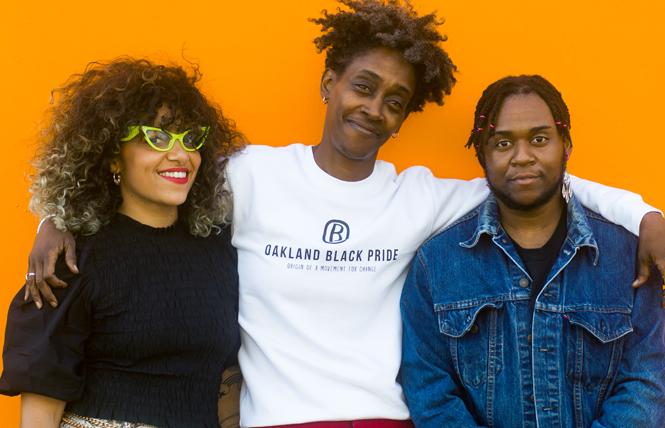
Oakland Black Pride is preparing in-person and virtual events for its inaugural Inside/OUT! Black Pride Celebration June 24-27.
Executive Director Olaywa K. Austin, who is queer, spoke with the Bay Area Reporter to tout the major festivities — including the Queer Expo, Skate for Pride Party, and a grand finale Slayer’s Ball at the waterfront Bridge Yard event venue between the MacArthur Maze and the Bay Bridge Toll Plaza.
Austin likened the ball, scheduled for 8 p.m. to 1 a.m. Sunday, June 27, to those portrayed in the FX series “Pose,” which ended its run earlier this month.
“We are going to have a ball, both literally and figuratively,” Austin said. “We have music, kick-ass DJs, all from the queer community. There’s room enough for folks to be spread out, have a good time, and be in community. A lot of what Pride is is being able to be in community.”
Being in physical community was obviously dangerous last year, at the height of the COVID-19 pandemic.
Austin said that the effect of the disease on the Black and LGBTQ communities spurred her on in the creation of the Oakland Black Pride nonprofit that is putting on the celebration “in partnership with the City of Oakland and the Oakland Parks, Recreation and Youth Development Department,” according to a news release.
“It’s with great pride that we welcome the Inside/OUT! Black Pride Celebration to the ‘town’ of Oakland,” Mayor Libby Schaaf stated in the release. “In a continued effort to combat the effects of racial and gender inequality, we stand with Oakland Black Pride in honoring the unique and beautiful contributions of the Black LGBTQIA+ community.”
The festival was “something as an idea I had for a while,” Austin said. “A lot of what I saw [at Pride events] around my immediate area didn’t look how Pride started — didn’t look as Black, as transgender, as riotous, as inclusive as it had started.
“I’d been thinking about that, and then COVID hit,” Austin continued. “Faced with a pandemic, a lot of the needs of myself and the Black, queer community were exhausted. A lot of our needs — the things we struggle to get anyway — were in jeopardy. So I started working on a project based on my needs and the needs of my immediate community, and three months later I had a nonprofit. This organization was a survival tactic of ours. Fast forward to now, it’s Pride Month, and we have an organization with a full schedule for our community.”
Also on the schedule is a Queer Expo that will take place over two days. The first day of the expo is set for Saturday, June 26, from 11 a.m. to 4 p.m. at The Lot at Tribune Tower downtown. On Sunday, June 27, from 10 a.m. to 4 p.m., the expo takes place at Raimondi Field in West Oakland.
“We have a little bit of everything,” Austin said. “We have a lot of vendors — someone who makes cannabis cream, our own LGBTQ Center is handing out HIV/AIDS information, trans caterers, food trucks, a bunch of creators and makers of earrings and jewelry, arts and crafts, things like that.”
Austin said that in planning the expo, “it was important to have representation of pretty much everything. In true exposition form, we’ve got to have a lot of queer and LGBTQIA vendors.
“Historically, I don’t know if this has ever been done — an expo full of queer vendors for our community,” Austin continued. “This is what I’m most excited about: putting people in the position to thrive economically.”
Joe Hawkins, a gay man who is the executive director of the Oakland LGBTQ Community Center, told the B.A.R. that “we have a booth and are very supportive of what they’re going to be doing.”
“I literally saw the promotion in my feed and wanted to be a part of it,” Hawkins said. “Many years ago, I was involved in Bay Area Black in the Life and the Oakland International Black LGBT Film Festival, so it’s really great to see someone taking up the mantle and taking Black Pride to a new level.”
As the B.A.R. reported in 2005, the film festival at the now-defunct old Parkway Theater was “one of the central events” of the Bay Area Black in the Life Pride Week. (The Historic Parkway Theatre on Park Boulevard is now shuttered. The New Parkway Theatre is open in Oakland’s Uptown neighborhood.)
Hawkins said that at the booth the center is planning on presenting information about its resources, new clinic, sexual health services, and youth services.
“We want the community to be aware of all the services we have at the center,” Hawkins said.
The center will also be providing COVID-19 vaccinations and sexually transmitted infection testing, which people can make an appointment for on its website or call 510-882-2286.
“We do have walk-ups but prefer people make appointments,” Hawkins said.
The center’s booth will also be offering $30 gift cards to Black and Latino gay, bisexual, or transgender individuals who come to test for HIV.
“Any Pride is a huge undertaking but more than ever we need spaces and events like Black Pride to empower our community,” Hawkins said.
Other in-person events will include a Pride benefit dinner at 6 p.m. June 24 at Sobre Mesa near Lake Merritt; a queer pub crawl at 5:30 p.m. June 25 at various locations; Skate For Pride at 6 p.m. June 26 at 7th West in the Acorn Industrial neighborhood; and the Queer Kick Ball Tournament and Black Pride Family Reunion at 11 a.m. June 26 at Raimondi Field.
The virtual events will include a fitness and nutrition class at 2 p.m. June 24 and at 3 p.m. June 25 over Zoom; an inclusive economics presentation at 3 p.m. June 24 over Zoom; and a reclaiming food systems presentation at 4 p.m. June 24.
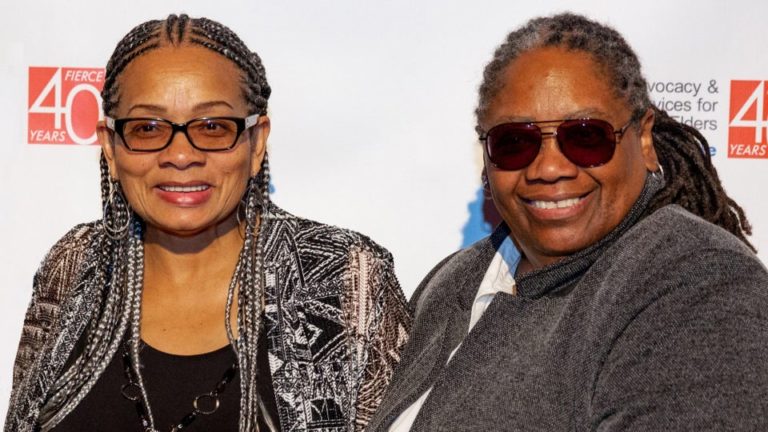
Marie (left) and Donna Sue (right). Photo courtesy of SAGE (Advocacy & Services for LGBT Elders)
Every year in June we celebrate Lesbian, Gay, Bisexual, Transgender and Queer (LGBTQ) Month to “honor the 1969 Stonewall Uprising in Manhattan…[which] was a tipping point for the Gay Liberation Movement in the United States,” the Library of Congress states.
But “[w]hile the public perception of lesbian, gay, bisexual, and transgender (LGBT) people is largely one of a young, affluent community, there are more than 2.7 million LGBT adults ages 50 or older living in communities across the country” according to a report co-authored by the Movement Advancement Project (MAP), a think tank that works collaboratively with LGBT organizations, and Services and Advocacy for GLBT Elders (SAGE), the U.S.’s oldest and largest organization dedicated to improving the lives of LGBT elders.
The Diverse Elders Coalition (DEC), a national group advocating for the interests of racially and ethnically diverse older adults, including LGBT+, is trying to change this narrative. They have submitted a proposal calling for $450 million out of the $400 billion that President Biden allocated toward eldercare in his American Jobs Plan to support equitable access to the Older Americans Act programs and services as well as a series of initiatives that will focus on the actual realities and needs of the diverse elder population, many of whom have faced a lifetime of discrimination.
The proposal specifically calls to allocate funding over eight years to support the National Resource Center for LGBT aging, targeted case management, enhanced capacity for providing technical assistance and training, cyber education to close the digital divide and virtual programming for LGBT+ older adults.
Lauren Pongan, National Director for DEC, has stated that “[w]e’re excited to see the Biden-Harris Administration prioritizing elder services and care in the American Jobs Plan. At the same time, we’re looking to policymakers to invest in expanding care and services for older people from racially and ethnically diverse communities, and LGBT+ elders. With this funding, we have a chance to address some of the longstanding inequities older people in underserved communities face in getting the care and support they need.”
In 2017, NBC reported that while “economic, social, physical and mental health disparities are high among all LGBTQ older adults, the complexities of race, age, sexual orientation and gender identity are especially challenging for many black LGBTQ elders… Advocates attribute the economic disparities of black LGBTQ elders to longstanding race, age and LGBTQ discrimination, which has been exacerbated by a lack of equal protection under the law and social stigma. Neglect and isolation are especially prevalent when their peers—the only support network many of them have due to family rejection—die off or age themselves, as research shows older LGBTQ adults are less likely to be partnered or married or to have children to depend on as caregivers.”
Four years later, unfortunately, not much has changed, especially with the onset of the global COVID-19 pandemic.
Loading the player…
Longtime advocates have reflected on what it means for them to have lived in New York City during both the Civil Rights Movement and Stonewall Riots, and the challenges and obstacles they have faced as a member of the Black LGBT+ community. One key theme was a lifetime of being silenced, disenfranchised and stereotyped, which caused an inability to be one’s authentic self.
Lujira, a member of SAGE, told ESSENCE that “one of the things that we need more of is affordable housing, and especially for seniors, and also…healthcare, and community. I think they all go together,” after describing her own personal experience being houseless for ten months, but who now fortunately lives in a subsidized building.
Donna Sue, a SAGE member, shared her thoughts on the unique experiences of elders as well, telling ESSENCE that “our caregivers are unfortunately nonexistent in some cases…[and] we’re falling through the cracks, free falling through the cracks. And we need to have that safety net so that we can survive, so that we can thrive….We are elders who want to teach others that you can reach your unlimited potential. Maybe we weren’t able to because we were silenced; because we were ignored; because we were discriminated against; because we were disenfranchised. But hopefully we can get the DEC proposal to not just uplift us, but uplift those who are coming behind us.”
Her partner Marie discussed her hopes for this initiative so “that we can get some assistance, because I found that with the lack of being able to communicate [face to face], a lot of us are not financially able to buy certain equipment, you know like laptops or tablets…If we had more funding, then we would be able to offer training and technical assistance to our seniors, and also to their caregivers, and we’re hoping that we can get some funding to help us with these things.”
As these vignettes demonstrate, the challenges so many of our Black LGBT+ elders face have continued to escalate, and the DEC is fighting to preserve a quality of life for these individuals, and reverse the trends of rising poverty levels, poor healthcare and living conditions, and a lowered quality of life.
As Lujira has said, “Older people like myself are more likely to face social stigma, poverty, and poor physical and mental health. That’s why whenever there are public policies related to elder services and care, we need legislators to recognize the concerns we face and make sure no elder is invisible.”
After a months-long battle, a sixth grader at an online-only Wisconsin school has finally been allowed to form an LGBTQ+ club, traditionally known as a Gay-Straight Alliance.
The club has been requested by students and teachers since at least September 2019.
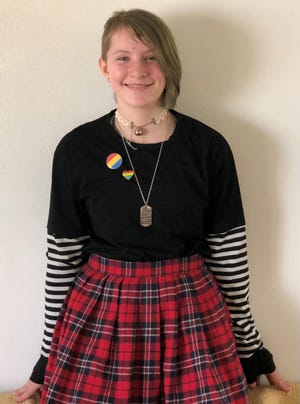
Since the end of this school year’s first quarter, Wren Prahl, who uses they/them pronouns, wanted to form an alliance at iForward, a virtual-only public charter school based in northwest Wisconsin.
“The school didn’t already have one and I wanted to meet more people,” Wren said about their motivation for forming a Gay Student Allliance.
When Wren emailed their principal, Constance Quade, in December, they were initially told that the club would be considered for next semester before being told that they could not form the club because it was non-academic and student-initiated.
In January, Wren asked a school staff member to inform students that they could email them if they were interested in joining the unofficial “Rainbow Club.” Quade emailed Wren informing them that they could not advertise non-school-sponsored activities. Quade suspended Wren for one-school day in February.
Following the sixth grader’s suspension, Wren’s mother, with the help of a school teacher, contacted with the American Civil Liberties Union of Wisconsin.
The ACLU filed an administrative complaint with Grantsburg School District, iForward’s home school district, in March.
Elisabeth Lambert, the ACLU attorney on the case, said that the complaint alleged that iForward discriminated against Wren and violated the federal Equal Access Act, which states that if a school allows for the formation of any non-academic student group, then it must provide equal access to these groups regardless of subject matter, including sexual orientation and gender.
Lambert added that each school district in the state has its own policies for responding to complaints. Grantsburg School District policy requires a meeting between administrators and the organization filing the complaint before other action is taken.
Lambert said that the school district investigated Wren’s case and relevant law before the meeting, coming to the conclusion that it was appropriate to allow for the formation of the GSA. According to a press release from the ACLU of Wisconsin, iForward agreed to allow Wren to form the GSA, expunge the suspension off their record, and provide staff training to “help promote a safe, nondiscriminatory environment for LGBTQ students at the school.”
Grantsburg School District Superintendent Joshua Watt told the Journal Sentinel that “per the advice of the district’s legal counsel, we cannot provide additional information on this issue.”
Lambert thanked Wren for their bravery and their teachers for putting them in contact with the ACLU. Brianna thanked Lambert and the ACLU for their support in standing with Wren.
Wren said that they plan to form the GSA next year.
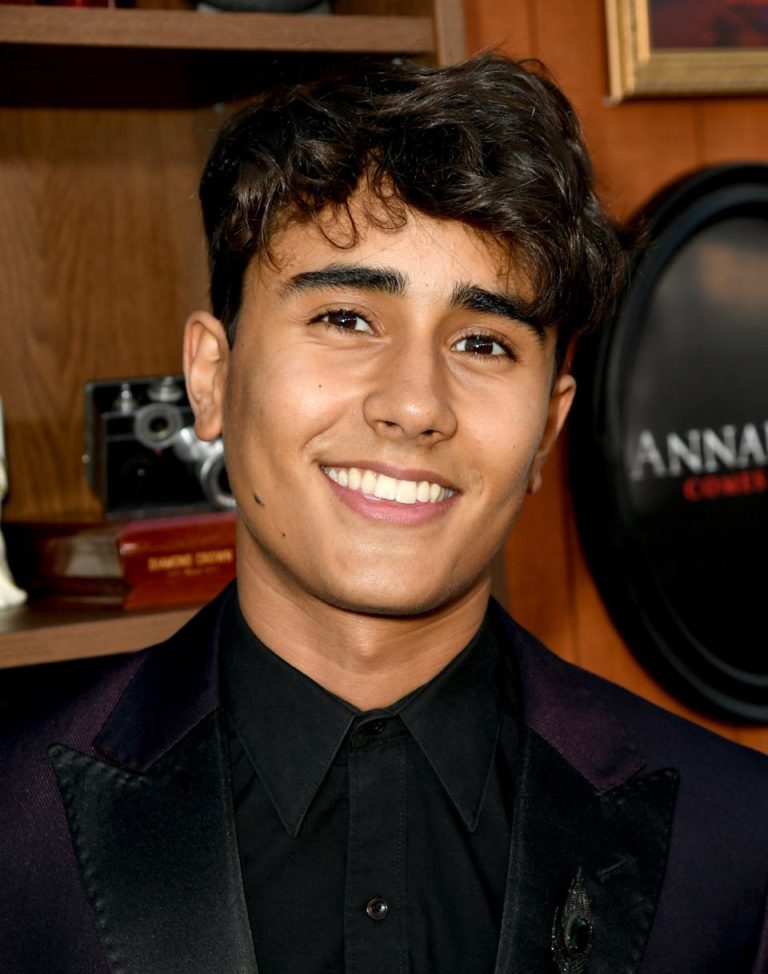
Michael Cimino, who plays Victor on Love, Victor, pictured in 2019. (Photo: Kevin Winter/Getty Images)
Love, Victor is the groundbreaking gay coming-of-age romance series, now in its second season on Hulu, that so many older LGBTQ people yearned for when they were teens. But according to co-stars Michael Cimino (Victor) and George Sear (who plays Victor’s boyfriend Benji), not everyone is feeling so appreciative of the high school drama.
“I got some homophobic comments — I kind of expected that to happen. I didn’t expect it from my own family members, though,” Cimino told gay U.K. magazine Attitude in its new summer issue. “Some of them reached out, saying, ‘You used to be so cool; now you’re so gay.’ I chalk it up to ignorance. People have that programming and they often don’t have to evolve and try to push past that.”
Cimino, who identifies as straight, added, “There’s nothing wrong with being gay. That ignorance is often something that’s been passed on from generations prior. I always approach that [by saying], ‘These are normal people that are struggling and they shouldn’t have to struggle.’” Still, he pointed out, “I have changed opinions. I had some friends who are religious and they’ve changed their perspective on things.”
But still, some advised him to avoid gay roles so he wouldn’t be typecast. “I’ve been advised that you shouldn’t play gay roles, especially [for] your first big role. ‘Everyone will think you’re gay’ or ‘You won’t be able to book anything,’ ‘You’ll never be able to build a fan base.’”
Cimino rejected that, and said, “I’m not a traditional ‘masculine’ man, so that would be people trying to force me into something I’m not. Here I am playing a gay role that might not be considered masculine in an outdated idea of what masculinity is.”
Sear, who also identifies as straight, commented on that issue to Attitude, noting, “Overwhelmingly, it’s been really positive. I love playing this character and I’ve tried to do my best to honor the responsibility of it. But honestly, it wasn’t really a thought in my circle not to even play these characters.”
For Cimino, criticism has come from all sides, including from those who do not approve of him playing gay — and long-running and complex issue within the LGBTQ community.
“I’ve definitely had some criticism from the LGBT community for being in the role… I’ve had death threats, which is horrible. But the show is important to me. The messages of hate— I came into it knowing that would happen, regardless of how good I was,” Cimino said.
“But there are some straight actors who play gay characters, who are all about supporting LGBT rights while they’re promoting their project, but once they’re done, a year later, it’s kind of forgotten. That’s not how [to] be an ally, that’s not how you support LGBT rights,” he said. “If you’re not an actual ally, then what are you doing?”
Cimino added, “It’s an honor to play Victor, and a big responsibility. I went in with the pure intent to represent that correctly. I held myself to a really high standard to make sure everyone going through this story felt represented by the show.”
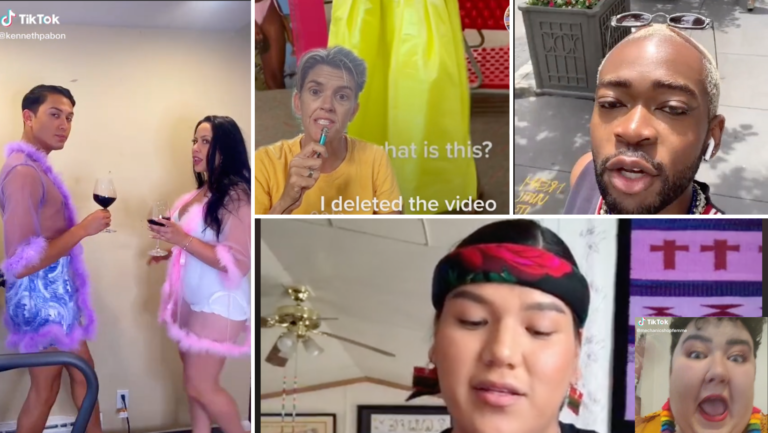
Not sure where to get your queer content fix on TikTok? Look no further than the app’s official list of LGBTQ+ TikTok Trailblazers.
This group of fifteen queer content creators was handpicked by TikTok to represent the queer side of the platform during Pride Month. Their content ranges from comedy to activism and from fashion to mechanics — something for every brand of gay!
On its website, TikTok writes that these are “creators who are at the forefront of the next wave of digital entertainment and defining what it means to embrace self-pride and live their lives freely and to the fullest.”
So, who exactly is getting the spotlight this Pride? Here’s the breakdown:
Luca Coyle and Cooper Coyle are twin brothers — and their drag personas Sugar and Spice are twin sisters. Both sets of siblings serve looks while educating their followers about the queer community.
Jayde Mcfarlane shows her followers authenticity and heart by sharing her experience as a trans woman of color, being absolutely hilarious along the way.
Jesse Sulli is a role model for queer families everywhere, showcasing his life as a transgender dad and his way-cooler-than-I-was-at-her-age daughter Arlo.
Lisa Brezinski and Pope are entrepreneurs, influencers, style icons — basically, they’re the coolest couple you’ll ever meet, and their page is all about inclusivity.
Chaya Milchtein is an educator and journalist providing killer queer representation and providing some much-needed automotive info to her audience — finally, proof that at least some gays can drive.
Sedona Prince is an inspirational collegiate athlete who uses her page to advocate for progress not just in the LGBTQ+ community, but in the world of women’s sports.
Spencer West is an advocate for queer and disabled people everywhere, making change through his activism, motivational speaking, writing and iconic TikTok content.
17-year-old Alex Renee is a jewelry designer, musician and master of the transition, captivating TikTok with “masculine-to-feminine” videos that highlight their genderfluid identity.
Throughout June, TikTok has been posting Q&As with these creators, which you can check out here. TikTok’s other Pride initiatives include live music and programming, new rainbow-themed filters and effects, and efforts to generally make TikTok more friendly for the queer community, a welcome change from its self-admitted discriminatory moderation in the past.
TikTok is also putting its money where its mouth is, donating $500k to LGBTQ+ organizations.
“We’re proud that TikTok creates opportunities for people to create and share content that resonates with others and helps them build a stronger community,” reads TikTok’s website. “We’re continually looking for ways to better ourselves in promoting and building an online destination that is inclusive of all people and voices.”
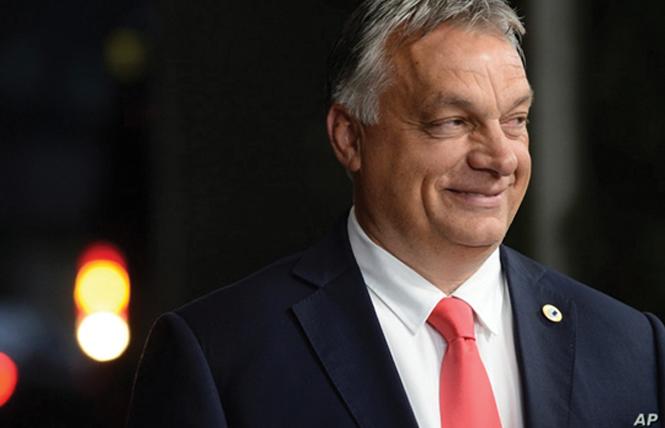
Hungary’s parliament voted 157-1 in favor of the anti-LGBTQ propaganda law June 15.
The ruling Fidesz party submitted the proposed law earlier this month after Prime Minister Viktor Orban claimed the law is needed to protect children from pedophilia. It echoes Russia’s 2013 Anti-Homosexuality Propaganda law.
The bill would ban showing educational materials, advertising, and other “promotion” of same-sex relationships, and/or gender identity to anyone under 18 years of age. It prohibits pornographic material.
LGBTQ and human rights advocates immediately condemned the bill, calling it a tool that will create more discrimination and further stigmatize LGBTQ people in an already hostile environment. They called for the bill’s withdrawal before parliament’s vote.
Luca Dudits, an executive board member with the Háttér Society, a Budapest-based LGBTQ rights group, was worried about the outcome of the bill.
Dudits told the Associated Press there is no similar law anywhere in the European Union “that is so hostile” to LGBTQ people.
Foundation for Rainbow Families representative Marton Pal and his same-sex partner were shocked by the new bill and angered by it last week. The couple has adopted children.
“Yesterday was a hard day. We went to sleep with a lot of anger,” Pal told Hungarian TV channel RTL. “When we read these amendments to the law, we gasped for air at what is happening around us, and why there is this stigma. We are trying to process what opportunity this law creates for power.”
Human Rights Watch called for the bill’s rejection, citing its “sweeping consequences for health providers, educators, and artists, among others,” according to a June 11 statement from the organization. HRW associate LGBT rights director Neela Ghoshal called the Fidesz party’s reasoning for the bill as “cynically deployed.”
She said the efforts to “scapegoat” and trample on LGBTQ rights in the name of children’s rights are “part of a wider strategy to sidestep human rights obligations and cement Orban’s brand of authoritarianism.”
“Children do not need to be protected from exposure to diversity,” Ghoshal, who identifies as a queer pansexual, stated. “On the contrary, LGBT children and families need protection from discrimination and violence.”
Fidesz lawmaker Gabriella Selmeczi denied the bill was discriminatory or anti-liberal.
“True liberalism is when children are left alone with questions about their sexual orientation until the age of 18,” Selmeczi, who was among the team that introduced the legislation, told AP.
Orban and the Fidesz party, which promotes a strongly Christian-conservative agenda, have ramped up their attacks against the LGBTQ community ahead of Hungary’s 2022 elections.
In 2020, Orban’s government banned gender recognition and banned same-sex couples from adopting. Last July, a European court ruled that Hungary must recognize gender identity.
Orban has won three consecutive landslide elections since 2010. However, Reuters reported that for the first time, opposition parties have caught up with the leading party in opinion polls.
Study finds Gen Z the most gender fluid generation Generation Z is the most sexuality- and gender-fluid generation, according to a new global survey. The generation is broadly defined as people born between 1997 and 2015.
Ipsos’ LGBT+ Pride 2021 Global Survey found 1 in 5 young adults identify as non-heterosexual and non-cisgendered and 4% identify as gender-nonconforming. More than 19,000 individuals aged 18 to 74 from 27 countries around the world participated in the global survey conducted on Ipsos’ Global Advisor online platform April 23 to May 7.
Nicolas Boyon, the senior vice president of public affairs at Ipsos, discussed the survey’s findings.
“The patterns that we see in the U.S. are definitely not unique to the U.S.,” Boyon told NBC News, referring to other studies that similarly observed the higher rate of gender and sexual fluidity among Gen Z. “It’s a global phenomenon.”
Ipsos’ findings echo results from other surveys, including a 2020 Gallup poll that discovered 5.6% of U.S. respondents overall identified as LGBTQ, while 16% of Gen Z reported identifying as LGBTQ, reported NBC News. (The Gallup poll was released in February.)
Published June 9, Ipsos’ results discovered sexual orientation and gender fluidity is increasing from one generation to the next, with 87% of baby boomers identifying as heterosexual compared to 84% of Gen Xers, 78% of millennials, and 68% of Gen Z. The biggest increases in sexual orientation were among gay- and lesbian-identified individuals that gradually increased by 1% with each generation, from 1% of baby boomers to 4% of Gen Z. People identifying as bisexual increased dramatically from baby boomers (2%) to Gen Z (9%).
For gender-nonconforming individuals, 4% of Gen Z identify as “transgender, nonbinary, nonconforming, gender-fluid, or other than male or female” compared to 1% among all adults, according to the survey. The survey also found that exposure to and engagement with LGBTQ people varied around the world. For example, 66% in Brazil report having a gay or lesbian relative, friend or colleague versus 7% in Japan and South Korea, according to the report.
Acceptance of LGBTQ people’s visibility varied from public displays of affection (37% support versus 27% opposition) to LGBTQ characters in media (35% support versus 25% opposition) the survey found. A majority of people around the world support LGBTQ rights from anti-discrimination laws to marriage equality, with a few countries that are in hardline opposition.
The survey found that 72% say same-sex couples should be allowed to marry or to obtain some legal recognition, while 15% oppose any legal recognition. The same percentage agree that same-sex couples should have the same rights to adopt children as heterosexual couples do as opposed to 22% who disagree. A high percentage of respondents (60%) support laws banning discrimination against LGBTQ people when it comes to employment, access to education, housing and social services, while 21% oppose them.
Two Pride events support LGBTQ refugees and asylum seekers The Organization for Refuge, Asylum & Migration and RDJ Refugee Shelter in New York City are hosting two separate virtual events to support asylum seekers and refugees in celebration of Pride Month and World Refugee Day, which is June 20.
ORAM is hosting its annual #RefugeePride to support its work in Kenya and at the Mexico-U.S. border Thursday, June 17, at 5 p.m. Pacific Time on Facebook Live and YouTube.
Performances and cameo appearances will be made by comedian Margaret Cho; “American Idol” and Broadway star Frenchie Davis; “RuPaul’s Drag Race” icon and host of “Canada’s Drag Race” Brooke Lynn Hytes; India’s first female Grammy Award-winner Tanvi Shah; and Canadian fashion critic Steven Cojocaru, aka Cojo, during the fundraiser.
LGBTIQ asylum seekers and refugees will also tell their stories, and ORAM’s team will talk about the work the organization is doing to support LGBTQI refugees and asylum seekers during the global pandemic.
On June 20, at 10 a.m. Pacific Time, RDJ Refugee Shelter will host another opportunity to celebrate and support LGBTQ asylum seekers.
Rainbow Railroad client Amin, who survived the purge in Chechnya and is only identified by their first name in the announcement, will tell their story, along with a host of other refugees and asylum seekers.
Immigration Equality paralegal and legal assistant Ricardo Medina will speak about their clients’ experiences and the organization’s work. The event includes a performance by violin-viola ensemble Duo Cenoria.
The event is being sponsored by the Rainbow Railroad, Immigration Equality, All Out, QDEP, Parity, The Brooklyn Community Pride Center, and Lab Shul.
Ireland celebrates Pride Month with special rainbow stamps Ireland’s postal service An Post issued a Pride Month stamp June 10.
Dublin-based Unthink designed the international and domestic rainbow stamps with input from LGBTQ representatives for An Post to celebrate Ireland’s Pride movement, reported the Meath Chronicle.
“We are delighted to join with our staff and customers in celebrating Brod (Pride) and the Irish Pride Movement,” An Post CEO David McRedmond told the newspaper.
Ireland decriminalized homosexuality in 1993. Ireland was the first country in the world to legalize same-sex marriage through a referendum with an overwhelming 62% yes vote for marriage equality in 2015.
The Chronicle reported the United States has never issued a Pride stamp. LGBTQ icons, such as astronaut Sally Ride, politician Harvey Milk and author James Baldwin, have appeared on U.S. stamps. Campaigns are currently underway to have the postal service honor the late gay civil rights leader Bayard Rustin and deceased U.S. drag icons José Julio Sarria, Marsha P. Johnson, and Sylvia Rivera with their own Forever stamps. Canada issued a marriage equality stamp in 2017.
The Irish stamps are available online, along with other Pride merchandise. Proceeds from the stamps will benefit Irish LGBTQ organizations BeLonG To and LGBT Ireland.
Got international LGBTQ news tips? Call or send them to Heather Cassell at WhatsApp: (415) 517-7239, Skype: heather.cassell, or oitwnews@gmail.com
Help keep the Bay Area Reporter going in these tough times. To support local, independent, LGBTQ journalism, consider becoming a BAR member.
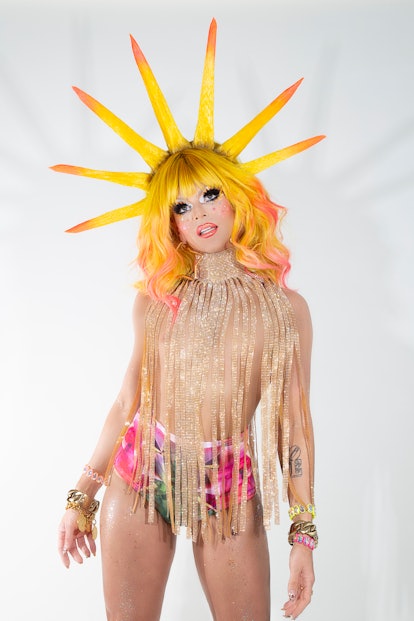
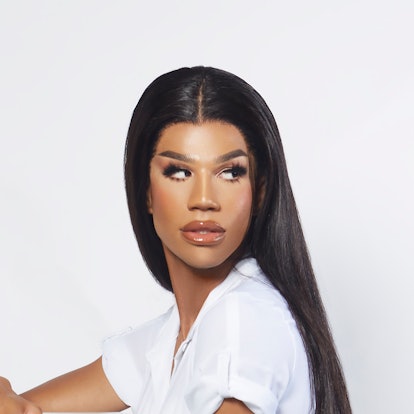
Ladies and gentlemen, please welcome to the stage… Drag, which has completely taken over the world as we know it.
Thanks to RuPaul and his Emmy award-winning series RuPaul’s Drag Race, drag queens are now more popular, visible, and marketable than ever. Where only a few years ago, you’d only be able to see queens in gay bars, they’re now all but unavoidable in mainstream media, and probably in the city you live in as well.
While there is no one way for someone to be a drag performer, the art of drag is inseparable from makeup. There is no better place to see drag’s indelible mark on culture than the aisles of your favorite beauty retailer.
It’s easy to feel like drag was birthed with the premiere season of RuPaul’s Drag Race, but gender impersonation has been present in almost every part of recorded human history, including ancient Egypt, China, and Greece. In Shakespearian times, women were not allowed on stage, so men were forced to wear women’s clothing and play their roles. Even on the vaudeville stages, men performed as women frequently.
Drag is often thought of simply as men dressing up as women, but drag has evolved past the idea of female impersonation into larger-than-life characters that transcend and defy gender, age, and sometimes gravity. RuPaul put it best when he said “I don’t dress like a woman; I dress like a drag queen!”
After over ten years on the air, RuPaul’s Drag Race has introduced an entire generation to not only drag, but the infinite possibilities of makeup.
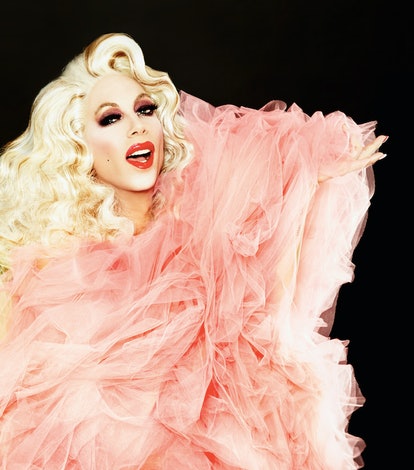
Sherry Vine
The Evolution Of Modern Drag
Many queens originally had to resort to using stage makeup in order to get the bright, vibrant shades they needed to help them transform into their drag personas. Today, we’re lucky to find what is essentially drag makeup in drugstore aisles.
“I think as drag became more mainstream people started to really embrace color,” drag veteran Sherry Vine says. “Not that it was the first time we saw bright vibrant colors in makeup (YSL of the 70’s!), but now you frequently see bright colors purples and oranges and pinks — I love it!”
With today’s access to YouTube and social media, you’ll have a hard time finding someone who hasn’t looked up a beauty tutorial to figure out how to apply makeup. But before beauty fans had digital how-tos at their fingertips, queens had to learn from each other in the back rooms of bars before they hit the stage.
“Now we have tutorials on YouTube, but back in prehistoric times we learned from watching others and practicing,” Sherry says. “I remember Candis Cayne teaching me how to line my lips over and over again.”
Drag’s Influence On Mainstream Beauty
Take one look at television ratings and social media engagement and you’ll see that drag queens have followings that rival pop stars. Because of this, drag techniques are being adopted into mainstream beauty in both overt and subtle ways.
Monét X Change, winner of RuPaul’s Drag Race All Stars Season 4, explains, “Much like fashion, drag is very influential in the beauty industry. I’ve worked with so many designers and makeup artists that say that celebrities are bringing Drag Race pictures for inspo!”
Willam, a multi-hyphenate performer who appeared on season four of Drag Race before continuing her career in television, music, and movies — including appearing in A Star Is Born alongside Lady Gaga — sees drag in people’s makeup every day. “Women have started wearing lashes way more now, and I think that that’s definitely due to drag queens and showgirls. The everyday woman wants to feel more of that glam in her day-to-day too.”
Peppermint, runner-up on season nine and the first out trans woman to originate a role on Broadway says, “Drag definitely has relevance in modern conventional beauty practices. Theories like contouring and highlighting have found a new significance in everyday beauty, especially lashes and lace front wigs.”
William adds, “Drag has always been at the forefront of pushing the limits to what people did with makeup, injectables, and images from top to toes. Drag Queens are the trendsetters.”
William
Drag & Popular Culture
Drag can be seen throughout contemporary pop culture as often as it can on a stage at a gay bar: in the often-referenced contour on Kim Kardashian, the cut crease on Megan Thee Stallion, the draped blush on Doja Cat, the overlined lip on Kacey Musgraves.
“I mean the Kardashians and Real Housewives wear just as much much as the average drag queen,” says William. “Makeup is makeup. Way Bandy and Kevyn Aucoin were doing to supermodels what drag queens have been doing for years. It’s just more evident now with social media and the internet being the conduit instead of just the pages of magazines.”
Drag queen and CEO of DragQueenMerch, Biblegirl, says that she sees drag as more than just the makeup. “Ultimately, I feel like any public-facing celebrity is inherently leaning towards drag. Simply having to be ‘on’ or outwardly perceived on a wide, global level is very drag to me.”
Drag and beauty don’t simply run parallel from each other. Drag increasingly impacts the beauty industry directly with queens being the faces of campaigns, brand collaborations, even launching their own brands.
Drag’s Relationship With The Beauty Industry
What started with RuPaul as the face of MAC’s Viva Glam campaign opened the door for other queens to follow in her footsteps. Brands like NYX, Lush, Anastasia Beverly Hills, Huda Beauty have all collaborated with or featured drag queens in campaigns. Queens like Willam, Kim Chi, Trixie Mattel, and Miss Fame have all started successful beauty brands of their own.
Biblegirl even notes brands have been including queens in PR mailers and paid media campaigns of product launches, like in the case of Sunday Riley, which is working with Shea Couleé, Gia Gunn, and Gigi Goode. “I think beauty brands are influenced by drag even outside of makeup and style. It has also proven a successful branding and marketing tool. I’d be remiss in not acknowledging the boom of inclusion of drag personalities being the faces of beauty brand launch PR rollouts.”
While drag is characterized by full coverage complexion and heavy contours, Gen Z has been focused more on “no-makeup makeup,” clean skin, and more pared-back beauty. Since a lot of drag’s audience is now part of Gen Z, does the clean skin trend ever find its way into drag? Bob the Drag Queen, winner of season eight, thinks so. “For sure. There was a big moment when drag was influenced by neutrals and browns, and wet hair was a huge thing for a while. There’s a lot of intersection between the drag and beauty world.”
Drag & Social Media Influence
Thanks to Instagram and YouTube, consumers and influencers now have the power to create trends and dictate what is cool and relevant, and a queen’s influence can be felt as soon as a new photo is posted.
Naomi Smalls, who appeared on season eight as well as All Star 4, knows firsthand how posting on social media can start a new beauty trend. “With the world of social media, there are drag performers who can leave a huge styling impact by just posting a selfie. That mug, look, or wig can end up on a mood board for an upcoming pop diva or runway show. Everyone wants to be bold when filming a music video or stage performance, so it only makes sense to pull from drag.”
Naomi Smalls
Drag & Black Culture
In the same way that drag influences beauty, fashion, and pop culture, Black culture has been affecting, and really, creating beauty, fashion, and pop culture for even longer. Pop culture constantly steals from Black culture, without credit — does drag take from Black culture in the same way?
“Drag culture is Black culture. I’m a drag queen and I’m Black,” Bob says. “There seems to be this insinuation that queerness and Blackness cannot be the same thing. They’re not mutually exclusive. Sometimes they are mutual, but not always exclusive. …I think sometimes it is Black culture and drag culture at the same time. Black culture and drag culture are not completely different things.
Monét X Change, who co-hosts a podcast with Bob called Sibling Rivalry, expands on this. “There is a long history of society appropriating Black culture. They tell us not to do it, rip it from us, wear it like a costume, then they make it okay. It’s a twisted cycle.”
If you’re looking for a classic trend from the Black community that has re-emerged, leave it to Monet for the tea. “Category is: baby hairs! I do know some who foolishly attribute it to drag culture, but we all know it undoubtedly is a technique popularized by the Black and brown communities in the ‘90s.”
Drag’s Influence On Modern Makeup
Drag’s influence in beauty goes even farther beyond someone recreating an iconic drag look — it is seen and felt in the techniques we use every day, the products brands are putting out to market, and the way the consumer is being spoken to, just to name a few. The influence drag has on beauty, like drag itself, is ever evolving, but in both cases, it’s not going anywhere any time soon.
As Miss Fame, contestant on season seven and an ambassador for Viktor & Rolf, explains, “Drag has forever transformed the relationship to makeup as we know it. People from all walks of life are finding a self-celebration through dramatic makeup looks and potentially liberating their human experience beyond all restrictions that they’d ever known. Drag is a celebration of identity and beyond.”
And Willam, as always, summarizes drag’s overall impact in the succinct way that only she can. “Do what you like and if it doesn’t look good, a drag queen will likely find a way to tell you.”
The comic book industry is jumping into the Pride month celebration full force this year, with the majority of major publishers delivering outstanding stories and artwork highlighting LGBTQ identities from a wide collection of LGBTQ creators. From the spooky and moody to the quirky and heartfelt, dive into these Pride month offerings from the comics world.
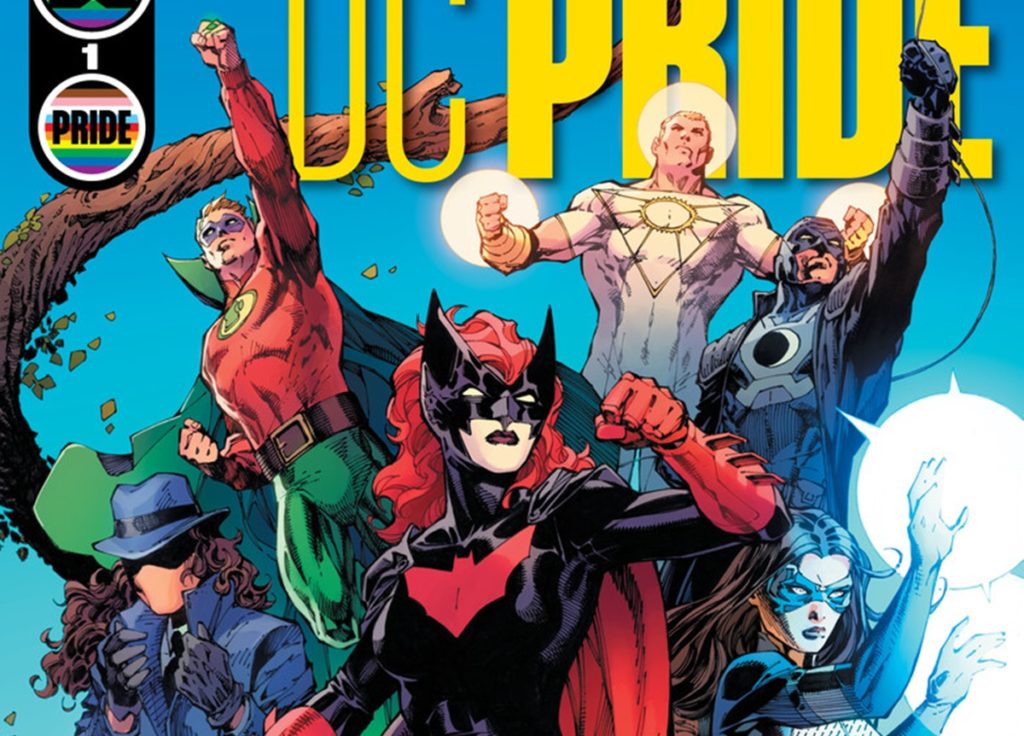
One of the major players in comics has prepared a major slate for Pride month. The headliner is easily the 80-page anthology “DC Pride #1,” one book compiling original stories that place prominent LGBTQ DC heroes and villains in the spotlight. Characters like Aqualad, Batwoman, Poison Ivy and Harley Quinn take center stage is stories from LGBTQ creators including Steve Orlando and James Tynion IV [ONE SENTENCE ON WHAT STORIES THEY HAVE DONE TO MAKE ME GO OOOO]
“DC Pride #1” also features the comics debut of trans superhero Nia Nal/Dreamer. The trailblazing character has to date on been featured in The CW’s “Supergirl” television series, but now makes the jump to the page in a story penned by Nicole Maines, the trans actor that portrays Dreamer on the show.
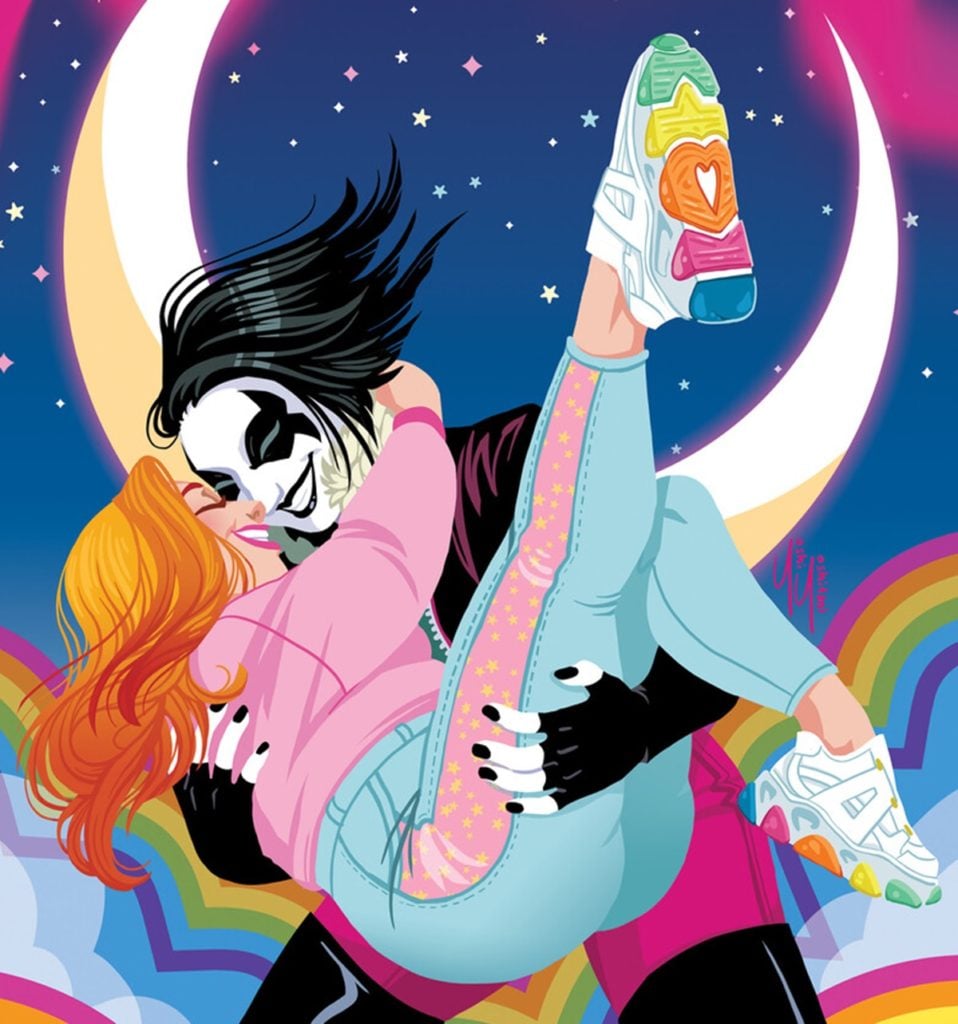
Beyond “DC Pride #1,” there are also a wide variety of Pride variant covers featuring DC heavy hitters, such as Superman, Nightwing and Wonder Woman. A “Teen Titans Academy” spinoff focused on Crush and her anti-hero father, Lobo, is also set to launch during Pride month, with the miniseries running through January 2022.
The company also has a number of graphic novels featuring queer characters and stories set for release. “Poison Ivy: Thorns” kicked off Pride month with a story about young queer love set against a macabre, secret-laden background that reimagines the origins of frequent Harley Quinn lover and Batman villain Poison Ivy. The LGBTQ coming-of-age tale “I Am Not Starfire” is also set to release in July 27.
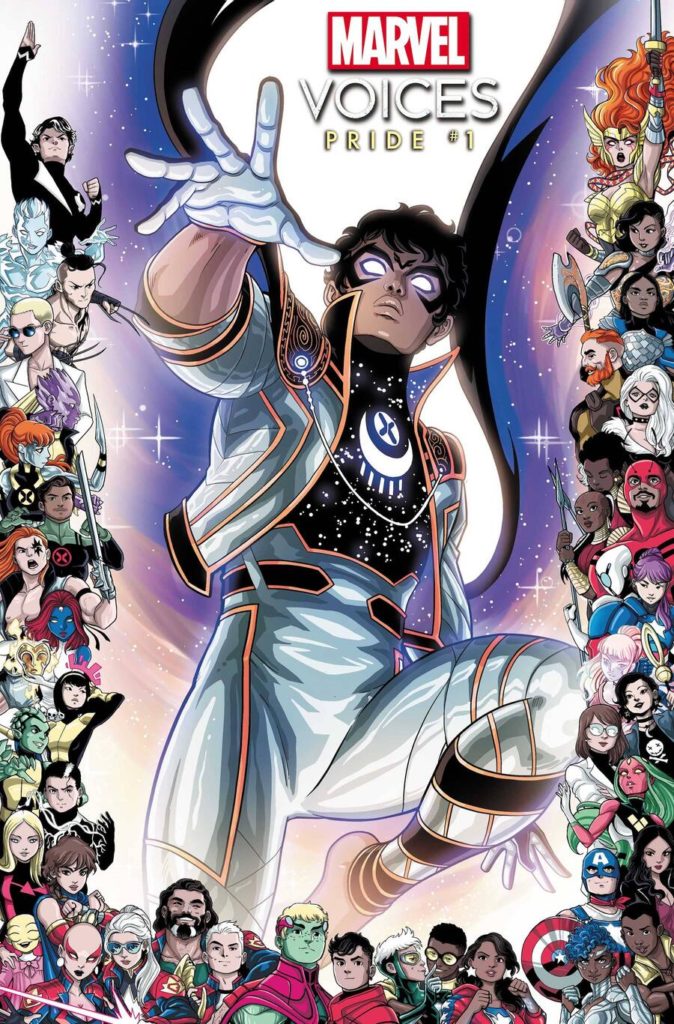
The other comic book giant has its own Pride anthology as well. “Marvel’s Voices: Pride #1” collects a number of stories focused on Marvel’s lineup of LGBTQ characters alongside passages highlighting LGBTQ-inclusive moments in Marvel’s history. Names like Mystique, Iceman and Daken will be featured in stories from LGBTQ creators Anthony Oliveira, Vita Ayala and others.
The publisher will also unveil a brand new LGBTQ hero, Somnus, created by out writer Steve Orlando. Somnus, a mutant who has the power to control others’ dreams, debuts in “Marvel Voices: Pride #1” penned by Orlando and illustrated by Claudia Aguirre.
Marvel also announced a series of variant covers celebrating its queer characters will arrive from fabled LGBTQ comics artist Phil Jimenez. The covers will feature nine notable queer names from its canon, including America Chavez, Northstar and Black Cat.
Dark Horse bolsters its own Pride month set list with a collection of stories that speak to its own unique attitude in the comic book industry. The big ticket of the slate is the “The Pride Omnibus“, which packs the entire run of the series all about LGBTQ superheroes seizing their own narratives and saving the world into one bulging volume.
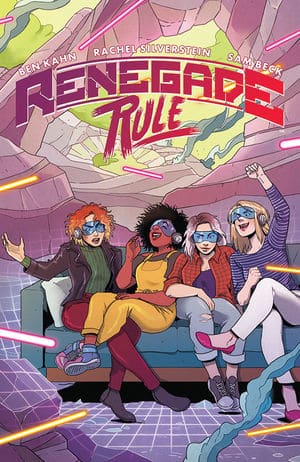
The focus turns to young queer women with the new graphic novel “Renegade Rule.” The story follows the trials and jubilations of four LGBTQ female friends as they compete for glory in the world of virtual reality gaming. Other notable titles coming from Dark Horse are a trade paperback collection of queer coming-of-age tale “Youth,” new intergalactic LGBTQ tale “Killer Queens” and a definitive edition of the company’s groundbreaking LGBTQ graphic novel “Enigma.”
Image Comics, in cooperation with The Walking Dead creator Robert Kirkman’s Skybound Entertainment, are producing a series of variant covers themed to Pride month with a charitable bend. All proceeds from the sale of issues adorned with these variant covers, including issues of popular series “Fire Power” and “The Walking Dead Deluxe,” will be donated to the Transgender Law Center. Skybound stated it plans to continue similar charity initiatives beyond Pride month as well.
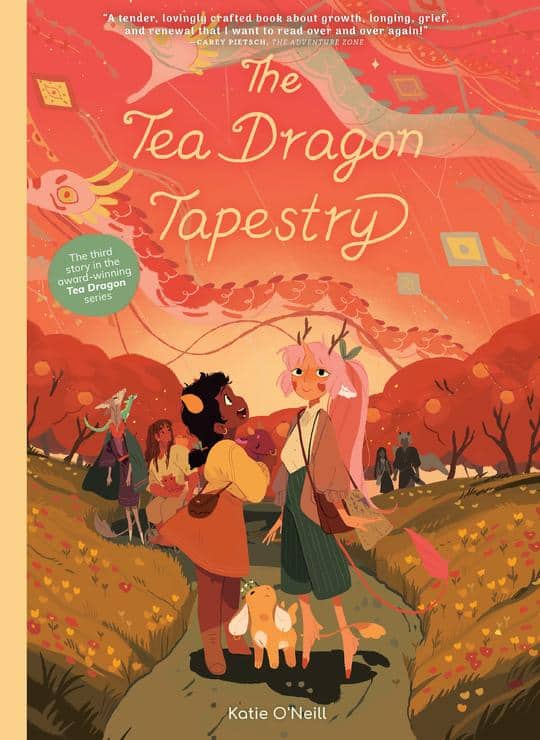
Oni Press adds to its extensive library of LGBTQ titles during Pride month with the release of “The Tea Dragon Tapestry.” The book marks the latest installment in the “Tea Dragon” series of graphic novels and continues the series’ intriguing presentation of queer experiences in an incredibly cute, fantastical package bore out of the mind of writer/artist Katie O’Neill.
The publisher also announced it upcoming lesbian cheerleader young adult graphic novel “Cheer Up: Love and Pompoms.” The book highlights lesbian and trans identities as its characters deal with the rigors of adolescence and life beyond their senior year of high school against the backdrop of cheerleading and the social pressures that come with it. “Cheer Up: Love and Pompoms” releases August 11.
Further Reading
Take it from veteran writer Sam Maggs and check out more awesomely queer comics that fit easily into any Pride month reading list.
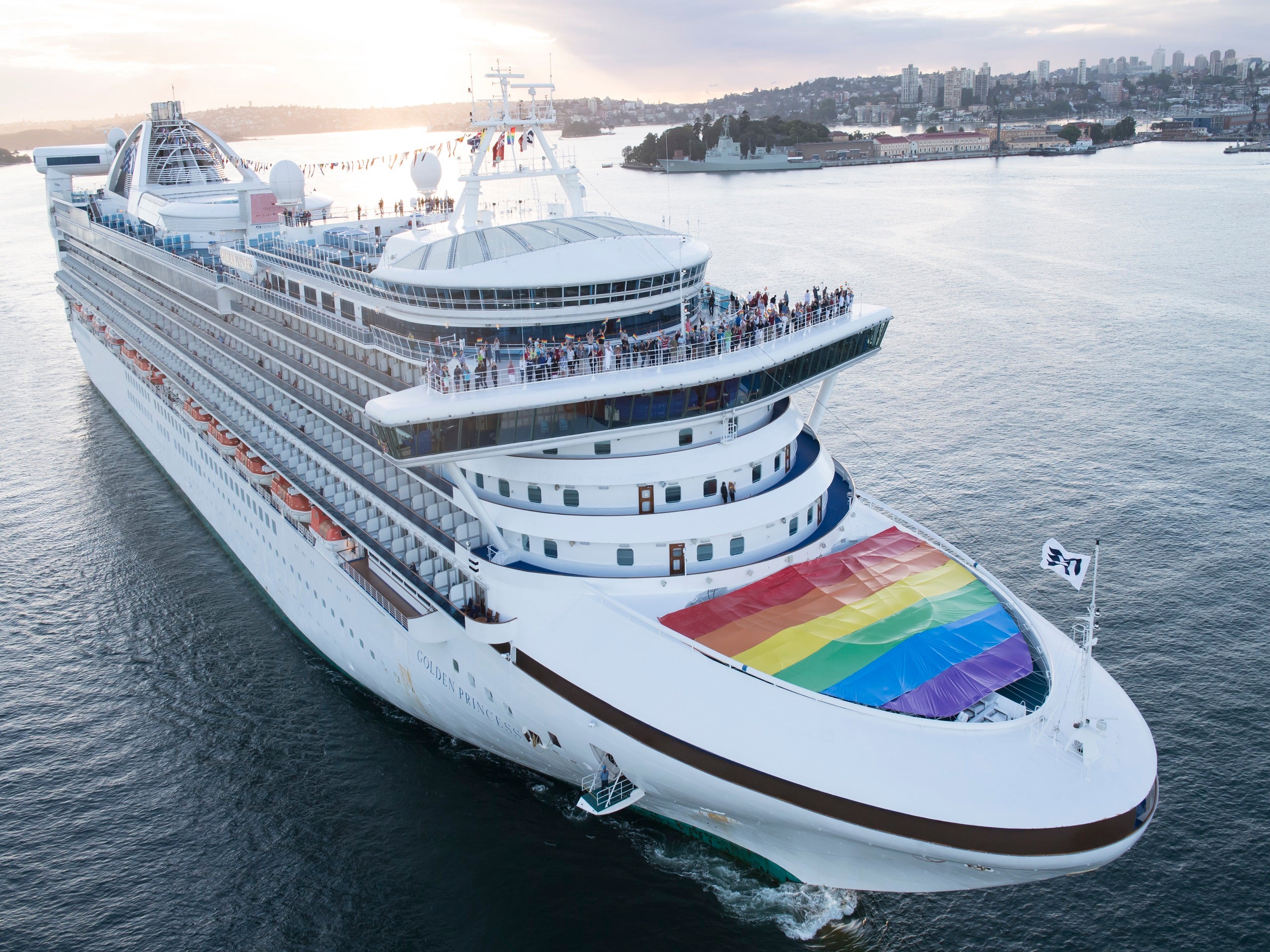
These LGBTQ-focused travel companies can help you plan the perfect cruise
Advertiser Disclosure
Many of the credit card offers that appear on the website are from credit card companies from which ThePointsGuy.com receives compensation. This compensation may impact how and where products appear on this site (including, for example, the order in which they appear). This site does not include all credit card companies or all available credit card offers. Please view our advertising policy page for more information.
Editorial Note: Opinions expressed here are the author’s alone, not those of any bank, credit card issuer, airlines or hotel chain, and have not been reviewed, approved or otherwise endorsed by any of these entities.
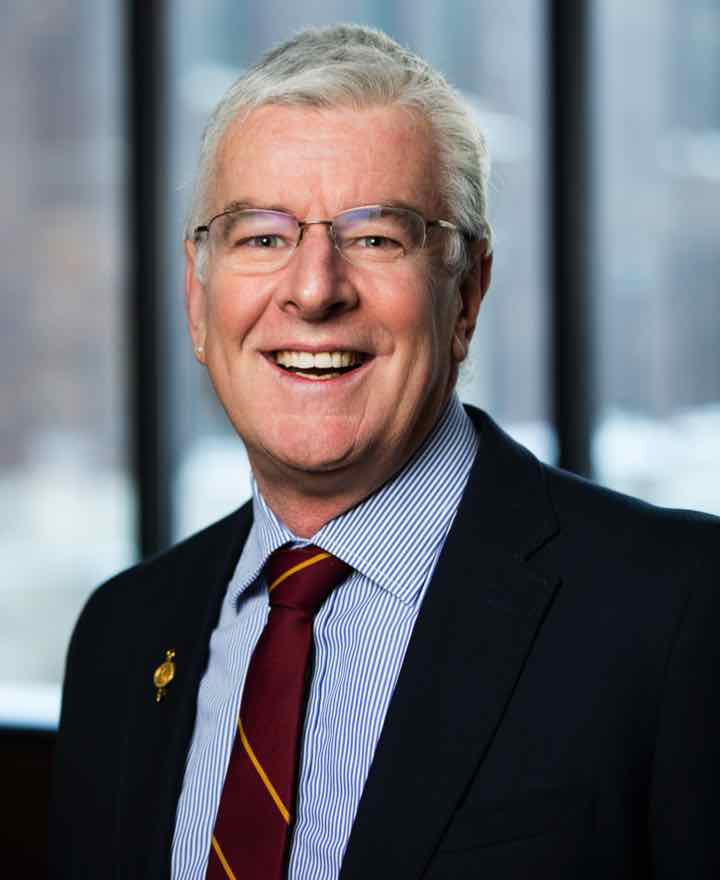
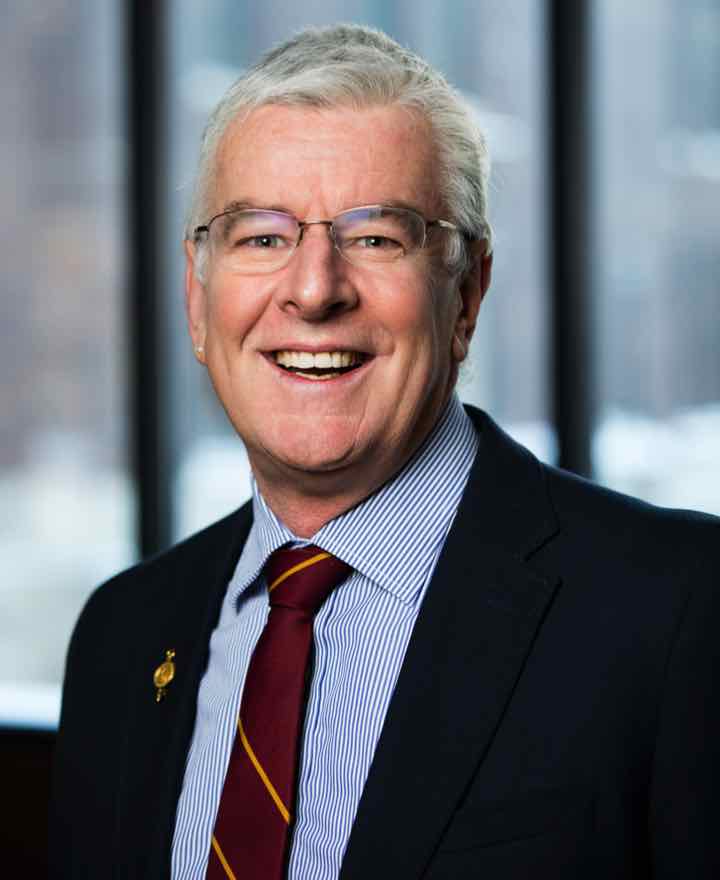
Prostate cancer isn’t just a research topic for B. R. Simon Rosser, PhD, MPH. It’s personal.
Rosser, a pioneering researcher in HIV and LGBT health at the University of Minnesota School of Public Health in Minneapolis, was diagnosed with low-risk Gleason 6 prostate cancer in 2016, at the age of 57, and went on active surveillance. His own father had been diagnosed with early-onset, aggressive prostate cancer at age 62 and died 6 years later.
“My older brother and I, every year on the anniversary of our father’s death, would get tested for prostate cancer. And so, I happen to be one of these people who has charted his PSA’s for about a decade before I was diagnosed. And every year it was sort of inching up to 3.19, and then in 2016, I came in and suddenly it had jumped to 5.09,” he said.
Rosser’s husband is also a prostate cancer survivor. “Bill was diagnosed about 5 years before me and had a radical prostatectomy. When I saw the sexual and incontinence effects of treatment, and its impact on our sex life, that’s when I started researching sexual and urinary rehabilitation for men like us,” he said.
To his knowledge, there was nothing in the scientific literature about gay and bisexual men and prostate cancer in the 20th century. The first tiny studies didn’t appear until 2001, he said.
The public health researcher, who is also the co-editor of the 2018 book, Gay & Bisexual Men Living With Prostate Cancer: From Diagnosis to Recovery, received $2 million in funding for the first large study from the NIH in 2017 to look at how prostate cancer affects gay men and how their urologists treat gay men with prostate cancer.
B. R. Simon Rosser, PhD, MPH
The research is eye-opening for patients and doctors, for straights and gays alike.
Rosser said he has found urology to be “incredibly heteronormative,” meaning those in the field tend to just assume everyone is or should be straight.
Indeed, new research confirms this. In a recent survey of 112 urologists in the U.S., most providers said they do not ask about sexual orientation, are more comfortable discussing sex with heterosexual patients, lack knowledge about sexual minority patients, and feel inadequately trained in sexual minority healthcare.
Rosser said talking to patients may not be most urologists’ strong suit: “A field that is so dominated by men will do some things that may be off-putting to sexual minorities.” The American Urological Association recently reported that for the first time just over 10% of urologists are women.
Rosser continued: “So, we heard participants in our study say their first visit to the urology clinic felt like stepping into a men’s locker room. In the waiting room, the television is on a sports or conservative channel, the magazines are about sports, the men waiting are all silent. It was so heteronormative that anyone who is not heterosexual or a jock may feel alienated.”
The research shows many urologists do not want to discuss sexuality with straight or gay patients.
I can vouch for that as a straight man with low-risk prostate cancer who has seen several urologists over the past decade. My first urologist, a young man in his 30s, wanted to rush me into surgery and “cure” my low-risk prostate cancer. It was 2010, and he, like most urologists, then rejected active surveillance. That’s why I got a second opinion.
When I broached sex issues with another urologist, he preferred not to respond to my questions and deferred to a specialized nurse practitioner at another hospital who he said a lot of urologists found to be helpful in that department.
Rosser said: “I don’t mean to be unfair, but a bunch of urologists think, ‘I’ve done my job if I do the best surgery for each patient.’ I suspect they are also the ones who feel comfortable writing out a prescription for a Viagra, and they think that that’s done something for erectile dysfunction.”
I have filled in a questionnaire on sexuality at each visit to yet another urologist. The questionnaire is never discussed during the exam. Maybe the data is used for research? I’ll have to ask.
Rosser said a commonly used form is the Sexual Health Inventory for Men, which contains six or seven questions that many gay men find they can’t answer.
“The questions are all about what happens when you put your penis into a vagina, or put it into your partner if they use the non-sexist version. Either way, that assumes that you are the insertive partner. It asks no questions about what happens if you’re the receptive partner. It asks no questions about oral sex, which is far more common,” he said. “And literally, the doctor comes away with an impression that they have looked at sexual functioning when they haven’t. They’ve only looked at one component of sexual functioning.”
Rosser said urologists and oncologists along with primary care physicians need to take at least a brief sexual history with all patients.
“Typically, your primary care physician takes a sexual history as part of a more general history when getting to know a patient. We know that about 80% to 85% of gay men are out to their primary care physician,” he said. “That drops to less than half being out to their prostate cancer urologists. So that’s a big difference. And it’s mainly because the primary care physician asks while the urologist doesn’t.”
Rosser said science and patients benefit from research being done on a variety of populations so comparisons can be made and lessons learned, such as comparing gay and straight populations.
Success in HIV Opens Door for New Areas of Research in Gay Men
Rosser remembers his first interview with a teenager who had been diagnosed with AIDS.
“I asked him what he wanted for his life. And his goal was to reach the age of 20, to live until 20. He had become infected from his first sexual encounter — the poor kid,” said Rosser.
Rosser has been involved with HIV/AIDS research and care since 1983, when as a psychology undergrad he first read of a mysterious disease in a local newspaper in Auckland, New Zealand. He would later help found the New Zealand AIDS Foundation.
He has been part of an amazing metamorphosis of HIV/AIDS from a certain death sentence to a chronic disease that patients with proper care can live with.
“In 1995, you had the HIV epidemic in the era of effective treatment. And starting in about 2010, we’re in the current era where we’re talking seriously about eradication and cure. And that’s where the energy is at the moment. Can we get the world to a point where there are no or very few new infections?” he said.
Flash ahead to 2021.
The men who survived with HIV/AIDS from the early days are now living into their 60s and beyond, and face another major sexual health challenge: prostate cancer. But research on the disease in this specific group is limited too.
“Now that we’re in a period of eradication of HIV/AIDS, we can actually pause long enough to say, well, what are the other problems in gay men that we never got around to looking at? And prostate cancer becomes one of those,” Rosser said.
Research Findings
Gay and bisexual men experience worse mental health and greater depression after diagnosis of prostate cancer, according to Rosser’s research.
“That’s consistent with a whole range of literature that says that because of minority stress, that gay men may have worse mental health in general. And so that’s going to be reflected in the population statistics. So that was expected,” he said.
Gay men experience better sexual function after prostate cancer treatment. “Are gay men doing something different after prostate cancer treatment? They may masturbate more. They may be more interested in restoring their sexual function. They may be more committed to it. They may be out and dating more. There’s a whole bunch of reasons why that penis may be getting more stimulation. And that could explain why their erections are better after treatment than heterosexual men,” he said.
Also, gay men have more sexual options after treatment. “What we saw in our qualitative work is that if one guy isn’t functioning sexually in a couple, they’ve got the option of at least trying to see what happens if we reverse roles. So, if my erection isn’t strong enough to be the insertive partner, I’ll try being the receptive partner. Experimentation with roles in sex works for some men but not for others,” he said.
He said most wives in traditional heterosexual marriages “aren’t going to say, ‘Well, why don’t I try being the insertive partner and I’ll use a dildo on you.’ That’s not what most wives do.”
In contrast, he said, there may be a subgroup of heterosexual men who scored worse sexually because they’re not interested or comfortable in engaging in rehabilitation. He said some straight men opt to suffer in silence possibly because they no longer have an active sex life with their spouse.
Rosser also found that gay men may function better than straights in terms of sexuality, but they do worse with incontinence, the other major risk following radical surgery.
Rosser said, “My best guess is that this may be related to gay men having more oral sex with more partners. One of the biggest myths in prostate cancer is that patients are old and asexual. Half of the gay men in our samples are single, and over 90% of our participants report some sexual activity, alone or with a partner. If they’re going to have sex on a casual date, it’s likely to be oral. And if problems with urinary arousal incontinence or climacturia at orgasm are going to cause problems, then, it could be a bigger concern.”
He continued: “Or it could be something that we really don’t know, and we need to go back and do some qualitative research to find out what’s going on, but it’s a very — it’s a reliable finding. So, I think it’s true. We just don’t know what’s causing it yet, which is why we need to do more research.”
An Opportunity for More Research
Straight or gay or bisexual, prostate cancer is a complicated disease with a mix of physical and psychological factors. It stigmatizes because of a combustible combination of sexuality and cancer issues.
Transgender women who have undergone transformative sexual surgery face another layer of issues since they retain their prostates as women. They are subject to embarrassment and harassment as medical office staff ask for their birth names or classify them as men rather than asking about their gender identification.
In a heterocentric culture, it is difficult for those who are non-heterosexual to be seen and heard. Doctors and their staff need to learn to be sensitive to these differences.
Rosser said: “The biggest thing is gay men just don’t want to be made invisible. They don’t want people to assume that they’re straight, and that’s the biggest problem that they come in and they end up feeling devalued, ignored and that no one’s listened to their experience.”
And Rosser said research on gays and prostate cancer, just like in the heterosexual world, has focused on men who have undergone surgical treatment and face risks of impotence and incontinence.
I’ll throw this in: men like Rosser and me who are on active surveillance for low-risk to favorable-intermediate-risk prostate cancer often are lost to research. We now are a largely invisible majority among men diagnosed with prostate cancer.
Prostate cancer isn’t just a research topic for B. R. Simon Rosser, PhD, MPH. It’s personal.
Rosser, a pioneering researcher in HIV and LGBT health at the University of Minnesota School of Public Health in Minneapolis, was diagnosed with low-risk Gleason 6 prostate cancer in 2016, at the age of 57, and went on active surveillance. His own father had been diagnosed with early-onset, aggressive prostate cancer at age 62 and died 6 years later.
“My older brother and I, every year on the anniversary of our father’s death, would get tested for prostate cancer. And so, I happen to be one of these people who has charted his PSA’s for about a decade before I was diagnosed. And every year it was sort of inching up to 3.19, and then in 2016, I came in and suddenly it had jumped to 5.09,” he said.
Rosser’s husband is also a prostate cancer survivor. “Bill was diagnosed about 5 years before me and had a radical prostatectomy. When I saw the sexual and incontinence effects of treatment, and its impact on our sex life, that’s when I started researching sexual and urinary rehabilitation for men like us,” he said.
To his knowledge, there was nothing in the scientific literature about gay and bisexual men and prostate cancer in the 20th century. The first tiny studies didn’t appear until 2001, he said.
The public health researcher, who is also the co-editor of the 2018 book, Gay & Bisexual Men Living With Prostate Cancer: From Diagnosis to Recovery, received $2 million in funding for the first large study from the NIH in 2017 to look at how prostate cancer affects gay men and how their urologists treat gay men with prostate cancer.
B. R. Simon Rosser, PhD, MPH
The research is eye-opening for patients and doctors, for straights and gays alike.
Rosser said he has found urology to be “incredibly heteronormative,” meaning those in the field tend to just assume everyone is or should be straight.
Indeed, new research confirms this. In a recent survey of 112 urologists in the U.S., most providers said they do not ask about sexual orientation, are more comfortable discussing sex with heterosexual patients, lack knowledge about sexual minority patients, and feel inadequately trained in sexual minority healthcare.
Rosser said talking to patients may not be most urologists’ strong suit: “A field that is so dominated by men will do some things that may be off-putting to sexual minorities.” The American Urological Association recently reported that for the first time just over 10% of urologists are women.
Rosser continued: “So, we heard participants in our study say their first visit to the urology clinic felt like stepping into a men’s locker room. In the waiting room, the television is on a sports or conservative channel, the magazines are about sports, the men waiting are all silent. It was so heteronormative that anyone who is not heterosexual or a jock may feel alienated.”
The research shows many urologists do not want to discuss sexuality with straight or gay patients.
I can vouch for that as a straight man with low-risk prostate cancer who has seen several urologists over the past decade. My first urologist, a young man in his 30s, wanted to rush me into surgery and “cure” my low-risk prostate cancer. It was 2010, and he, like most urologists, then rejected active surveillance. That’s why I got a second opinion.
When I broached sex issues with another urologist, he preferred not to respond to my questions and deferred to a specialized nurse practitioner at another hospital who he said a lot of urologists found to be helpful in that department.
Rosser said: “I don’t mean to be unfair, but a bunch of urologists think, ‘I’ve done my job if I do the best surgery for each patient.’ I suspect they are also the ones who feel comfortable writing out a prescription for a Viagra, and they think that that’s done something for erectile dysfunction.”
I have filled in a questionnaire on sexuality at each visit to yet another urologist. The questionnaire is never discussed during the exam. Maybe the data is used for research? I’ll have to ask.
Rosser said a commonly used form is the Sexual Health Inventory for Men, which contains six or seven questions that many gay men find they can’t answer.
“The questions are all about what happens when you put your penis into a vagina, or put it into your partner if they use the non-sexist version. Either way, that assumes that you are the insertive partner. It asks no questions about what happens if you’re the receptive partner. It asks no questions about oral sex, which is far more common,” he said. “And literally, the doctor comes away with an impression that they have looked at sexual functioning when they haven’t. They’ve only looked at one component of sexual functioning.”
Rosser said urologists and oncologists along with primary care physicians need to take at least a brief sexual history with all patients.
“Typically, your primary care physician takes a sexual history as part of a more general history when getting to know a patient. We know that about 80% to 85% of gay men are out to their primary care physician,” he said. “That drops to less than half being out to their prostate cancer urologists. So that’s a big difference. And it’s mainly because the primary care physician asks while the urologist doesn’t.”
Rosser said science and patients benefit from research being done on a variety of populations so comparisons can be made and lessons learned, such as comparing gay and straight populations.
A Door Opens for New Areas of Research: Men With HIV
Rosser remembers his first interview with a teenager who had been diagnosed with AIDS.
“I asked him what he wanted for his life. And his goal was to reach the age of 20, to live until 20. He had become infected from his first sexual encounter — the poor kid,” said Rosser.
Rosser has been involved with HIV/AIDS research and care since 1983, when as a psychology undergrad he first read of a mysterious disease in a local newspaper in Auckland, New Zealand. He would later help found the New Zealand AIDS Foundation.
He has been part of an amazing metamorphosis of HIV/AIDS from a certain death sentence to a chronic disease that patients with proper care can live with.
“In 1995, you had the HIV epidemic in the era of effective treatment. And starting in about 2010, we’re in the current era where we’re talking seriously about eradication and cure. And that’s where the energy is at the moment. Can we get the world to a point where there are no or very few new infections?” he said.
Flash ahead to 2021.
The men who survived with HIV/AIDS from the early days are now living into their 60s and beyond, and face another major sexual health challenge: prostate cancer. But research on the disease in this specific group is limited too.
“Now that we’re in a period of eradication of HIV/AIDS, we can actually pause long enough to say, well, what are the other problems in gay men that we never got around to looking at? And prostate cancer becomes one of those,” Rosser said.
Research Findings
Gay and bisexual men experience worse mental health and greater depression after diagnosis of prostate cancer, according to Rosser’s research.
“That’s consistent with a whole range of literature that says that because of minority stress, that gay men may have worse mental health in general. And so that’s going to be reflected in the population statistics. So that was expected,” he said.
Gay men experience better sexual function after prostate cancer treatment. “Are gay men doing something different after prostate cancer treatment? They may masturbate more. They may be more interested in restoring their sexual function. They may be more committed to it. They may be out and dating more. There’s a whole bunch of reasons why that penis may be getting more stimulation. And that could explain why their erections are better after treatment than heterosexual men,” he said.
Also, gay men have more sexual options after treatment. “What we saw in our qualitative work is that if one guy isn’t functioning sexually in a couple, they’ve got the option of at least trying to see what happens if we reverse roles. So, if my erection isn’t strong enough to be the insertive partner, I’ll try being the receptive partner. Experimentation with roles in sex works for some men but not for others,” he said.
He said most wives in traditional heterosexual marriages “aren’t going to say, ‘Well, why don’t I try being the insertive partner and I’ll use a dildo on you.’ That’s not what most wives do.”
In contrast, he said, there may be a subgroup of heterosexual men who scored worse sexually because they’re not interested or comfortable in engaging in rehabilitation. He said some straight men opt to suffer in silence possibly because they no longer have an active sex life with their spouse.
Rosser also found that gay men may function better than straights in terms of sexuality, but they do worse with incontinence, the other major risk following radical surgery.
Rosser said, “My best guess is that this may be related to gay men having more oral sex with more partners. One of the biggest myths in prostate cancer is that patients are old and asexual. Half of the gay men in our samples are single, and over 90% of our participants report some sexual activity, alone or with a partner. If they’re going to have sex on a casual date, it’s likely to be oral. And if problems with urinary arousal incontinence or climacturia at orgasm are going to cause problems, then, it could be a bigger concern.”
He continued: “Or it could be something that we really don’t know, and we need to go back and do some qualitative research to find out what’s going on, but it’s a very — it’s a reliable finding. So, I think it’s true. We just don’t know what’s causing it yet, which is why we need to do more research.”
An Opportunity for More Research
Straight or gay or bisexual, prostate cancer is a complicated disease with a mix of physical and psychological factors. It stigmatizes because of a combustible combination of sexuality and cancer issues.
Transgender women who have undergone transformative sexual surgery face another layer of issues since they retain their prostates as women. They are subject to embarrassment and harassment as medical office staff ask for their birth names or classify them as men rather than asking about their gender identification.
In a heterocentric culture, it is difficult for those who are non-heterosexual to be seen and heard. Doctors and their staff need to learn to be sensitive to these differences.
Rosser said: “The biggest thing is gay men just don’t want to be made invisible. They don’t want people to assume that they’re straight, and that’s the biggest problem that they come in and they end up feeling devalued, ignored and that no one’s listened to their experience.”
And Rosser said research on gays and prostate cancer, just like in the heterosexual world, has focused on men who have undergone surgical treatment and face risks of impotence and incontinence.
I’ll throw this in: men like Rosser and me who are on active surveillance for low-risk to favorable-intermediate-risk prostate cancer often are lost to research. We now are a largely invisible majority among men diagnosed with prostate cancer.
A young West Virginia state lawmaker came out as gay to his constituents in a video posted to his social media accounts on Sunday.
Josh Higginbotham, 24, who was first elected to West Virginia House of Delegates in 2016, said he had been out privately to some friends and family members before sharing the information publicly this week.
In the two-minute video, Higginbotham said he originally worried his family would disown him for his sexuality, but that they instead supported him.
“We made a decision as a family to be more open about it and make it public, because there’s nothing wrong with it,” he said. “I’m not ashamed of it, I’m not embarrassed by it, part of who I am. And I wanted to share this part about me with you.”
I’m gay. I’ve wanted to tell you this for many years, but I couldn’t be public like I wanted because there were still a few people in my family who didn’t know yet—now they do. So now I’m telling you, too. pic.twitter.com/k1ImZY6qPZ
— Joshua Higginbotham (@Higginbotham4WV) June 13, 2021
Higginbotham went on to say that he remains a conservative Christian Republican and asked his constituents for their support.
“Nothing has changed other than now you know this about my personal life, whereas you didn’t know beforehand,” Higginbotham said. “I’m still the same guy you’ve voted for… and I’ll continue to serve the Kanawha Valley.”
At the time of his first election into the House of Delegates, Higginbotham became the youngest member of the West Virginia Legislature at the age of 19. He is now in his third term and serves as vice-chairman on the chamber’s education committee.
Higginbotham was the only Republican delegate to vote against a bill that forces transgender student athletes to play on teams according to the sex they are assigned at birth as opposed to their gender identity. The bill passed both chambers and was approved by West Virginia Gov. Jim Justice in April, according to the legislature’s website.
Doha Madani is a breaking news reporter for NBC News. Pronouns: she/her.
June 16, 2021, 6:30 PM; Updated: June 16, 2021, 9:57 PM
Lesbian, gay, bisexual and transgender students are protected under an almost five-decades-old law that prohibits sex discrimination in schools that receive federal money, the Education Department said.
The agency’s guidance Wednesday marks its latest reversal of actions by the Trump administration, which scrapped 2016 guidance protecting those students under Title IX and said states could decide. The Biden administration put forth the new guidance as states are seeking measures to restrict transgender students from participating in girls’ and women’s sports.
President Joe Biden in an executive order directed agencies that a U.S. Supreme Court decision from last year on LGBT …
The state Assembly on Wednesday passed a set of Republican-authored bills that would ban transgender athletes from participating in girls and women’s sports at the K-12 and college levels.
Republicans have pressed forward with the legislation this spring even though it has received strong condemnation from the LGBT community and Democrats, as well as from the Wisconsin Interscholastic Athletic Association, which has called the bills “unnecessary.”
The Assembly approved the two bills 59-38 on party-line votes, and they now go to the state Senate.
Democratic Gov. Tony Evers is almost certain to veto the bills if they reach his desk.
Members of the Black Lives Matter movement and supporters of President Donald Trump face off Friday at the Wisconsin State Capitol.
The legislation is part of a nationwide effort in more than 30 states across the country this year to curb the rights of trans people, particularly trans youth.
Republicans and other supporters of the bills, however, say it would help maintain women’s equality in sports carved out by 1972’s Title IX, which gives women athletes the right to equal opportunity in sports in educational institutions that receive federal funds.
“We already have women in Wisconsin who have suffered material damage from not having taken their spot on the podium from biological males competing in their sport,” said Assembly bill author Rep. Barbara Dietrich, R-Oconomowoc. “These bills seek to protect those women and create space that’s inclusive for all, with male, female and co-ed sports.”
Democrats on the Assembly floor slammed the legislation.
“This is political theater, which has turned into an exercise in cruelty and harm for young people and children in the state of Wisconsin,” said Rep. Lee Snodgrass, D-Appleton. “Those who vote yes in support of these bills should be ashamed of themselves.”
Some women also have called on lawmakers to pass the legislation saying that allowing transgender women into women’s sports is unfair because they may have some biological advantages.
Madison mountain bike racer Leia Schneeberger, who testified in support of the bills last month, said losing to a transgender woman was “the most demoralizing thing that has ever happened to me.”
However the bills under consideration wouldn’t address Schneeberger’s specific case, because the legislation covers only K-12 and collegiate sports.
Opponents from more than 30 organizations, including LGBT advocacy organizations, the ACLU and the Madison School District, said the bill is a solution in search of a problem, is discriminatory and further marginalizes transgender children and adults.
The two-bill package would require school districts and higher educational institutions to divide sports into three divisions based on sex: boys, girls and co-ed. The proposal defines “sex” as the sex assigned at birth by a physician.
The bills would prohibit people born biologically male from participating on an athletic team or in a sport designated for people born biologically female.
Opponents of the legislation repeatedly emphasized that transgender girls are girls, and that the law should help protect them, as well. When asked about the potential mental health harms opponents say the bills might cause, Dietrich said youth should be provided adequate mental health services. On Wednesday, members of the Democratic LGBT caucus pushed for passage of bills that would ban conversion therapy, prohibit discrimination on the basis of a person’s gender identity or gender expression, eliminate the gay and transgender “panic” defense, create a transgender equality task force, and update Wisconsin’s statutes and constitution to recognize marriage equality.
Something brewing: 3 takeaways from Milwaukee Brewers’ recent surge
OFFENSE HEATING UP
Updated
AARON GASH, ASSOCIATED PRESS
Unseasonably warm weather moved into the area over the last week and temperatures that climbed into the mid-90s seemed to be just the remedy for the Brewers’ ice-cold offense.
Heading into their series finale against the Padres on May 27, the Brewers ranked near the bottom of the National League in just about every major statistical category and were especially futile with runners in scoring position.
Since then, though, Milwaukee’s .226 team average ranks 10th in the NL (up from .209), and the Brewers’ .471 slugging percentage — a number powered by a league-leading 21 home runs during that stretch — is second only to the San Francisco Giants with a .778 OPS that is good for third.
“It’s been a pretty good run here,” hitting coach Andy Haines said. “It’s just been nice to put some runs on the board for our pitching because they’ve kind of been carrying us.”
STARTERS KEEP DEALING
Updated
JULIO CORTEZ, ASSOCIATED PRESS
The recent offensive surge has been a welcome relief to Milwaukee’s starting rotation, which continues to put up eye-popping numbers.
With Brandon Woodruff (above) — 2 starts, 1.50 ERA, 19 Ks, 12 IP — and Corbin Burnes — 2 starts, 0.69 ERA, 20 Ks, 13 IP — setting the tone, the Brewers’ starters have a combined 3.13 ERA over the last 10 games with a league-leading 7.1 WAR, according to FanGraphs.com. Milwaukee’s starters have struck out 363 batters during that stretch, second among all NL teams, and are second with 10.5 strikeouts per nine innings.
“I remember talking to you (reporters) maybe the first week of May and you asked ‘What are you guys going through right now with this tough stretch?’,” Burnes said. “And I think I basically said, ‘Just hang in there.’ It’s one of those things in baseball — it’s going to come around. I think the last two weeks have kind of shown that.”
JOSH HADER: STILL GOOD
Updated
AARON GASH, ASSOCIATED PRESS
An offense that gives starting pitchers a lead means little if the bullpen can’t protect it and despite having lost two key options when right-handers Drew Rasmussen and J.P. Feyereisen were dealt to Tampa for shortstop Willy Adames, the Brewers’ relievers have not let their teammates’ efforts go to waste.
Closer Josh Hader (above) has been the biggest reason for that success. In five appearances during Milwaukee’s recent hot streak, he hasn’t allowed a single run while striking out seven of 17 batters faced and notching three more saves to give him 14 for the season.
“It seems like it’s kind of the Brewers’ formula when we win: we hit some homers and then get Hader into the game,” Haines said. “I’m all-in on that.”
Hader leads all NL relievers in strikeouts (41), strikeouts/nine innings (15.59), and save percentage (100%); ranks third in total saves and ERA (0.76); fourth in opponents slugging percentage (.163) and fifth in opponents’ batting average (.125).
“He’s just becoming more of an overall pitcher, and I think when you take that stuff and all the things that Josh brings, the unique delivery, the slot, all those things, and now the guy can throw three pitches at any time for a strike,” pitching coach Chris Hook said. “I think that’s a formidable foe.”
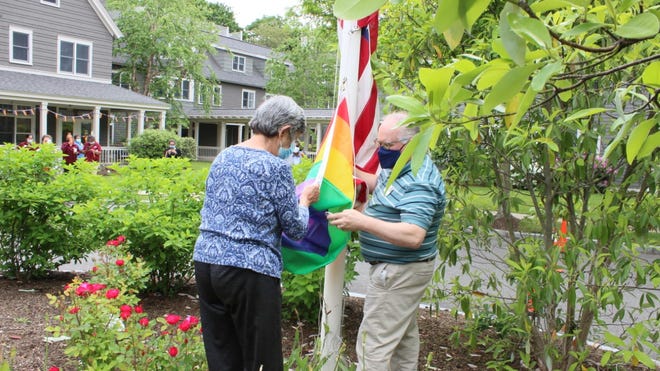
On June 1, Goddard House Assisted Living and Olmsted Memory Support in Brookline held their third annual LGBT Pride Flag Raising to celebrate Pride Month.
Residents and associates gathered to hear from community speakers and to witness the raising of the pride flag, which will remain raised throughout the month of June. Grace Moreno, executive director of the Massachusetts LGBT Chamber of Commerce, spoke at the flag raising ceremony, sharing her own story to detail the unique challenges LGBT individuals face to find acceptance in their families and communities. Moreno also praised the Goddard House team for their commitment to fostering an inclusive community for all older adults, noting that a number of LGBT seniors end up hiding their identities and histories from others in their community as a result of not being accepted. Goddard House was the first Assisted Living community in Massachusetts to receive LGBT Cultural Competency Accreditation, through SAGECare.
Goddard House resident John Kaufman, who runs the community’s Reel2Reel film studies group, also spoke at the ceremony. Throughout the month of June, Kaufman will show films featuring LGBT characters and storylines for residents to watch and discuss.
When it was time to raise the LGBT Pride flag, assistant executive director Lance Chapman and Goddard House resident Linda Shaver carried it together to the flag pole before attaching and raising it. As the flag was being raised, the symbolism of each color was read aloud and explained.