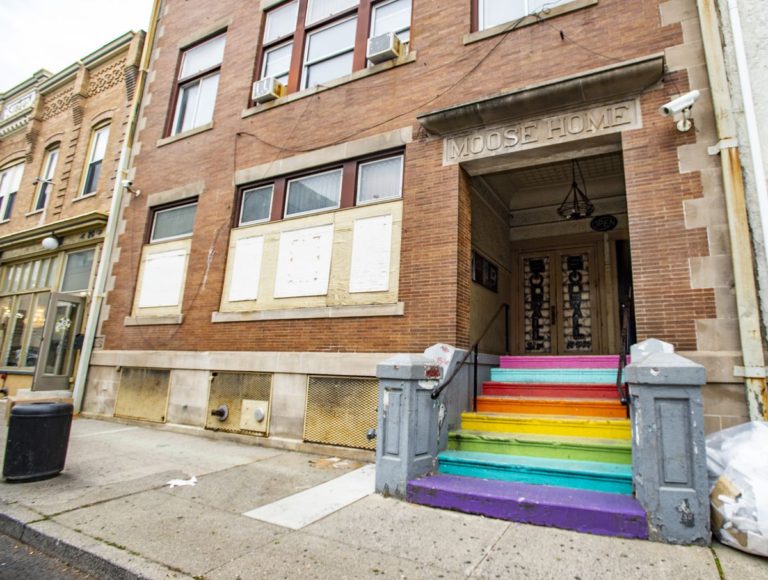
Stonewall, a gay bar with a nearly 50-year history in Allentown, is under contract to be sold. If it closes, the Stonewall would be the third Valley gay club to shut its doors for good in the last five years. Candida’s Bar in Allentown closed in 2017, and Bethlehem’s Diamonz Nightclub closed in 2016.
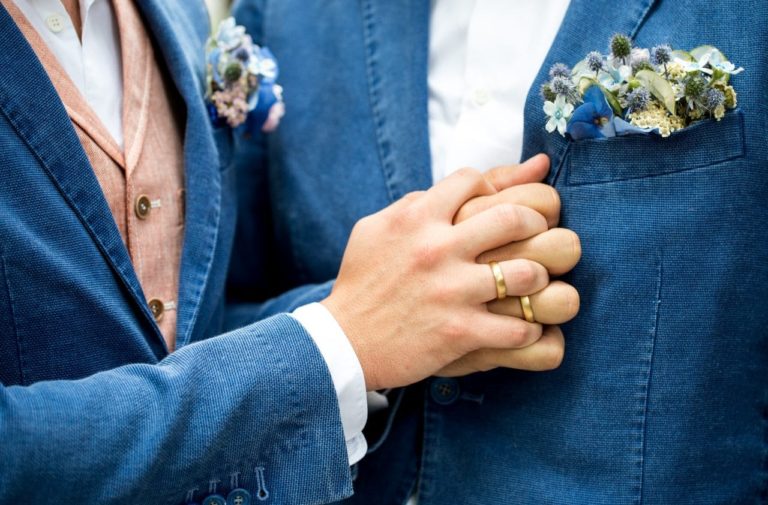
After Croatian courts last year confirmed that same-sex couples have the right to become foster parents, LGBT+ advocacy groups have welcomed a ruling of the Zagreb Administrative Court that they can also apply to adopt.
The Rainbow Family Association, which gathers LGBT couples and individuals who have or want to have children, on Wednesday hailed the ruling as a “historic moment”.
“The verdict opens the door to all gay and lesbian couples” in Croatia who want to adopt, and guarantees that they must not be discriminated on the basis of their sexual orientation, it said.
At the end of last month, it recalled, the court ruled in favour of a same-sex couple Mladen Kozic and Ivo Segota, saying they must not be discriminated against “in the assessment procedure for adoption because they have entered into a life partnership”, referencing the legal term for same-sex marriage in Croatia.
“The child’s right to the best possible adoptive parents remains a priority, and this ruling does not automatically mean that gay and lesbian couples are to become adoptive parents – but life partners can now fearlessly contact their social welfare centre and apply for an evaluation for adoption,” Rainbow Family Association said.
Association president Daniel Martinovic said they expected a long, exhausting struggle that might involve bringing the case to the European Court of Human Rights.
“However, the Zagreb Administrative Court has acted correctly, respecting the Constitution … international conventions and our laws, and has ruled in favour of our members Mladen Kozic and Ivo Segota,” he said.
In May 2016, they filed an application for adoption to the local social welfare centre, but after a few months, they were rejected.
Rainbow Families described the rejection as “absurd” as individuals and single persons in Croatia can adopt. It noted that other members of the association had adopted in the past ten years, by applying individually, not as couples.
Meanwhile, Kozic and Segota have become the foster parents of two children. A Croatian Constitutional Court ruling in January last year obliged courts and authorities to give all competent appliers to foster equal opportunities, including same-sex couples.
A recent study, published in the Journal of Gay & Lesbian Mental Health, underlines the importance of LGBT patient exposure and formal education on LGBT issues in US psychiatry training. The results of a national survey of psychiatry resident’s LGBT cultural competency highlight significant gaps between best practices and the current state of training.
“Since the LGBT population faces significant rates of mental health disparities, psychiatry residents are in important roles as both learners and mental health providers to this population,” the author, Dustin Nowaskie from the Department of Psychiatry at Indiana University School of Medicine, writes. “This study is the first known to examine and characterize psychiatry residents’ involvement and education in LGBT healthcare.”
Gender and sexual minorities often experience discrimination in both day-to-day life and healthcare settings. Research finds that psychiatry and mental health fields exhibit stigmatizing attitudes toward LGBT patients. Knowing LGBT acceptance is a major factor in promoting LGBT mental health and reducing suicidality, healthcare providers have a responsibility to improve their knowledge about LGBT patients and increase their knowledge of LGBT health.
“Healthcare students and provides are in unique positions not only to understand these disparities but also to intervene and alleviate poor health outcomes,” Nowaskie adds. “Both students and provides have been shown to harbor biases and negative attitudes, infrequently inquire about sexual orientation and gender identity, and demonstrate shortcomings in education and cultural competency.”
The current US internal medicine residents have limited education and training on LGBT health, particularly regarding best practices for transgender healthcare. For example, only one-third of emergency medicine residency programs reported LGBT-related topics within their curricula. More than half of US psychiatry residency programs provided less than 5 hours of training on LGBT health, and less than 30% of them offered a clinical LGBT rotation.
“There appears to be a significant lack of educational attention and resident preparedness in LGBT health care,” Nowaskie writes.
Given that LGBT people face disproportionate rates of mental health disorder and suicide, psychiatry residents are in crucial roles as:
Learners to understand the unique associations between demographics, health risks, and psychosocial factors among the LGBT populations.
Providers to utilize this experience and knowledge in the provision of care for the LGBT population.
This study was conducted with an anonymous survey with 304 completed responses. The author collected information on participants’ demographics, their training experiences in LGBT health (experiential variables), and the LGBT Development of Clinical Skills Scales (LGBT-DOCSS).
With the training experiences, the participants were asked to disclose how many hours of LGBT education they had received at their current residency program, how many total hours of LGBT education they had ever received, and how many LGBT patients they had worked with.
The LGBT-DOCSS was used to assess participants’ clinical preparedness, attitudinal awareness, and basic knowledge. The higher the participants’ score in one section, the better capability it reflects in such section.
Overall, the survey showed that psychiatry residents caring for many LGBT patients receive a low number of curricular hours and a moderate number of extracurricular training. Particularly, they reported significantly higher attitudinal awareness compared to basic knowledge and clinical preparedness. For example, in Asia, medical students are pushing for greater LGBT acceptance in their training curricula to promote LGBT health.
In addition, the residents reported significantly less adequate clinical training and supervision, experience, and competence to work with transgender patients compared to LGB patients. This result is consistent with the past literature that healthcare providers are more knowledgeable and comfortable about LGB health than transgender health. This might also explain why transgender youth face a higher rate of psychiatric diagnosis.
The survey showed that psychiatry residents who reported higher scores in LGBT-DOCSS had more LGBT patient exposure and had more formal education on LGBT health.
“Psychiatry residents who had cared for 40 or more LGBT patients reported significantly higher Overall LGBT-DOCSS and Clinical Preparedness, and psychiatry residents who received 20 or more LGBT total hours (training) reported significantly higher LGBT-DOCSS scores except for Attitudinal Awareness,” Nowaskie reports. “Psychiatry residents who had received four or more LGBT curricular hours had significantly higher LGBT-DOSCC scores.”
The author concludes:
“To lessen the current gap of nationally inadequate LGBT cultural competency, psychiatry residency programs should heavily consider an LGBT educational curriculum that is comprised of approximately five annual hours over the course of the typical four-year residency timeline for a total of 20 hours.”
***
Nowaskie, D. (2020). A national survey of US psychiatry residents’ LGBT cultural competency: The importance of LGBT patient exposure and formal education. Journal of Gay & Lesbian Mental Health, 24(4), 375-391. (Link)
Bartender Justin Griffin and manager Ellen Braun are excited to be greeting customers again. (Photo by Darren Andrew Weimert)
This story appears in the May 2021 issue of Town&Gown.
A week before the bar at 108 West College Avenue reopened on April 14, longtime manager Ellen Braun and bartender Justin Griffin took time from their preparations to let me take it all in. The bar is known for its craft cocktails, but Justin was nice enough to pour me a Firestone Walker Union Jack, a West Coast-style IPA. It hit the spot while we chatted. Ellen and Justin were excited to be soon welcoming back all their old customers and show them the new digs, and I could see why.
Gone is the old bottle shop that used to stand next to the entrance to Chumley’s. In its place is an open new front entrance area, which provides more space and visibility. Outside, a rainbow painted on the overhead sign is still there to highlight the bar’s inclusivity.
Inside, a mural on the side wall at the entrance, painted by Natalie Hope McDonald, showcases LGBTQ history and local imagery, such as a reference to central Pennsylvania native author Alison Bechdel’s Fun Home, and the Stonewall riots in New York.
In front of the remodeled bar back, the bar top itself features Scrabble pieces that spell out words that have meaning to Chumley’s, including a spot that is a memorial to the bar’s founder, Liz Pierce, who recently passed away.
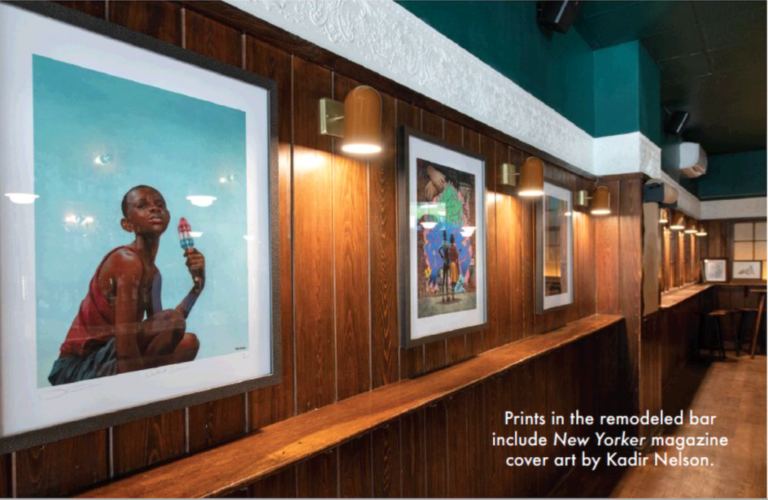
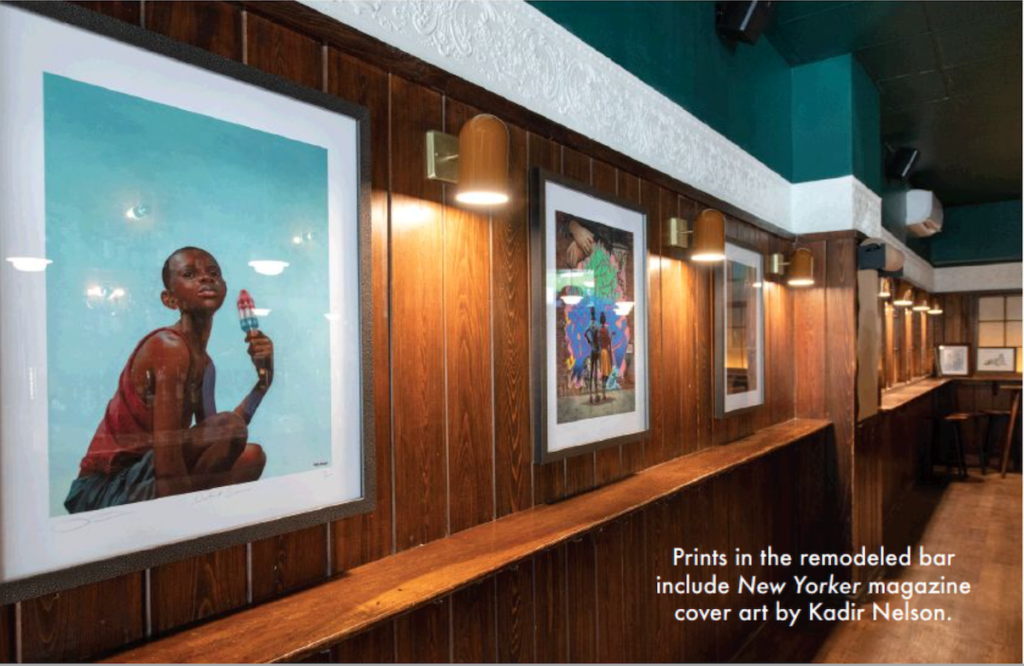
Prints in the remodeled bar include New Yorker magazine cover art by Kadir Nelson. Photo by Darren Andrew Weimert
It was in 1984 that Liz and her husband, Joe Schrantz, opened the little bar in the space that was a longtime newsstand. Before opening the bar, Liz had worked in the nightclub called Mr. C’s in the space that is now The Basement Nightspot, just below Chumley’s.
“They had a gay night on Monday night, and she worked that night, so she had a million gay friends, which I think she always had,” Ellen says. “So, when they opened the bar, they didn’t open it as a gay bar, but immediately all of Liz’s gay friends said, ‘Can this be a gay bar?’ And it was a very natural thing.”
Ellen started bartending at Chumley’s in 1992, coming over from a larger local establishment, The Rathskeller. She wasn’t expecting anything but a new job. At first, she was unsure about working in a gay bar, because she didn’t want to intrude on an atmosphere that wasn’t hers. But, she says, she immediately felt comfortable and in the end found a kind of home, making some great friends along the way.
Over the years, she says, the bar has been a home away from home for many.
“At the time, it was really becoming a tradition for a whole community of people. I really like that about State College as a whole, the way that it is a small enough town where you can sort of start a tradition, and if it is a good enough tradition, it will continue,” Ellen says.
When she first started working at Chumley’s, HIV was still a big concern in the gay community, and Chumley’s served as a place of refuge during a difficult time, bringing the community closer, she says.
“The trauma of that was really part of the community, because of people really supporting each other in a troubled time,” Ellen says.
Evolving with the community
Later on, it was that sense of community that brought Justin into the mix as a bartender after nearly 10 years as a customer.
In large cities, gay bars are not as prominent as they used to be, he says. “When I travel, I am not looking for a gay bar, I am looking for a good bar.”
But in a smaller community like State College, a gay bar still can serve a purpose, as a place that LGBTQ people, from Penn State students to those from surrounding communities, know is inclusive and diverse.
The bar has become even more diverse over the years, offering live music, a carefully curated cocktail menu, and a food menu with an international flair, bringing in a broader crowd. Social media helps patrons stay connected.
Chumley’s continues to evolve right along with the community, which has changed a lot over the decades, Ellen says.
“There are rainbows now painted on the crosswalk on Allen; April is Pride Month at Penn State, so things have changed,” she says.
And while Chumley’s never was hidden in a back alley, like some other gay bars, the new renovations definitely make the bar feel like it has “arrived,” Ellen says.
That feeling started a few years back when a window in front that was previously frosted over was replaced with a clear pane of glass.
“It wasn’t frosted for any privacy reasons; it was frosted just because that is what they picked way back in the ’80s. Our previous owners said it seems like people should be able to see in and they took the frosting out. I think that was a really important first step,” she says.
“That was the beginning. All of a sudden there was more light,” says Justin. Now, the bar takes up two storefronts along College Avenue.
“This is another feeling of arrival, with more visibility,” Ellen says.
While there have been many changes, some traditions continue, such as the nightly Jeopardy! tune-in on the one TV in the bar.
“It is a tradition; if I can think of anything that has been consistent for almost 30 years, it is Jeopardy! every day. … It sort of sets the tone, a little bit, for the night,” says Ellen.
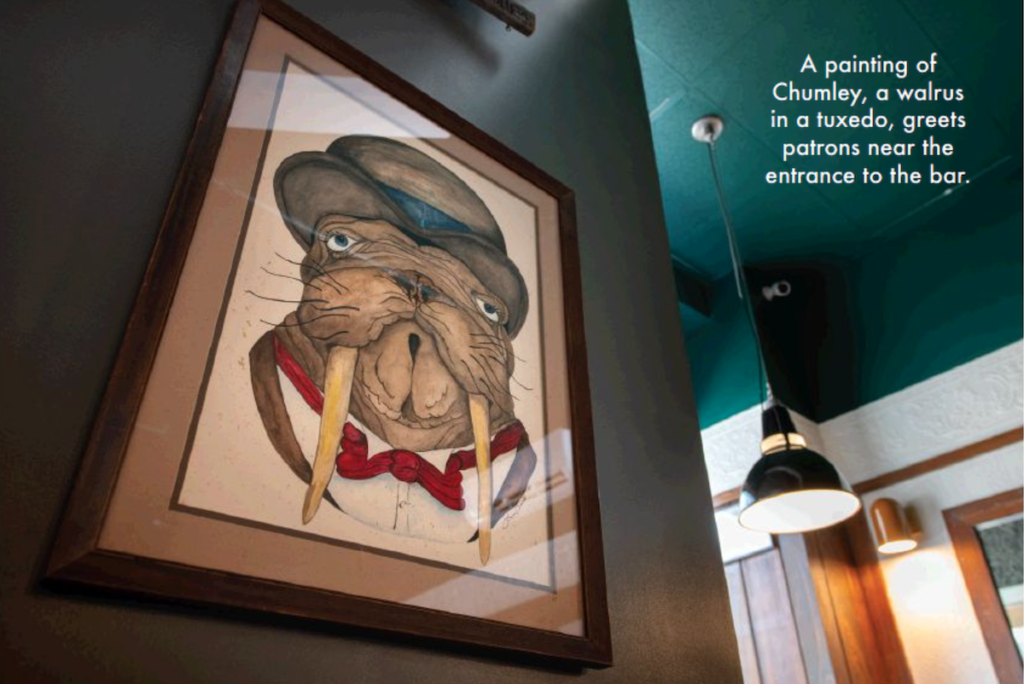
Another tradition still stands near the entrance: A painting of Chumley himself, a walrus in a tuxedo named after a bulldog who belonged to one of the founders’ friends. Now, after a most difficult year, Justin and Ellen are happy to see their friends again at Chumley’s.
“People are excited, and I think for a good reason. This hasn’t been an easy time for anyone,” Justin says. “I think this is a return to form, back-to-normal thing that is really going to be good for anyone involved.”
Duncan James started speaking to a therapist after he got “a bit depressed” in lockdown last year.
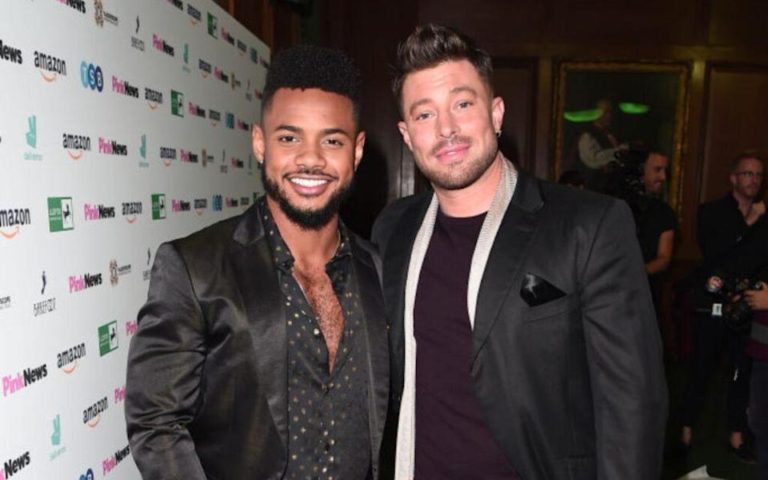
The Blue singer opened up about the impact of being isolated from his boyfriend Rodrigo Reis and his daughter Tianie-Finn during lockdown in an interview with OK! magazine.
“I was getting a bit depressed and a bit crazy,” Duncan James said in a joint interview with his boyfriend.
“Rodrigo said, ‘Speak to someone.’ In Britain, we always think, ‘Oh, you only need a therapist if you’re crazy’. But when you look at people in America, they have therapists for everything. I think it’s been important for us as well.”
James continued: “I started speaking to a therapist online and it really helped. It’s helped with my own anxieties and worries, and it was nice to have someone to talk to.
“It was just a build-up of things. We’ve all struggled with our mental health, especially this last lockdown.
“It’s been tough. It got to a point where I said to Rodrigo, ‘I feel I have no one to talk to. I can’t escape, I can’t do anything. It’s awful.’”
Vile trolls have told Duncan James he is going to ‘hell’ because of his sexuality
Elsewhere in the interview, James opened up about the shocking homophobic abuse fans have hurled at him online.
The singer has been told he is “disgusting” and that he will “go to hell” because of his relationship with Reis.
“A lot of any fans in the UK have been really supportive, but I’ve got a lot of international fans who still find it hard to accept I’m gay.
“Rodrigo and I posted a picture and there were a few bad comments, like, ‘It’s disgusting – look at you two. You’re going to hell.’”
Duncan James’ latest comment came just weeks after he admitted that his teenage daughter has been targeted by homophobic trolls because of his sexuality.
“People can be quite nasty about me being gay and say quite horrible things about the fact that I’m a gay dad,” James told Fabulous magazine in March.
“People have written to her, saying, ‘Isn’t it disgusting your dad’s gay? How do you feel? You must be ashamed of him,’ and stuff like that, and you’re just like, ‘Why are you writing to a kid saying stuff like that? Are you really crazy?’ People are just awful.”
In the same interview, James said he has been told he will be “punished by God” for being gay by vicious trolls.
“I think it’s probably because they’re frightened about it or they don’t have the awareness or their religion has dictated that it’s wrong and it’s disgusting,” he said.
James first came out as bisexual in a 2009 interview with the News of the World, but he later claimed he had been pressured into saying he was attracted to both men and women by tabloid reporters.
Speaking to Gay Times in 2013, he said: “I didn’t decide to come out, I got outed by them. They had a team of investigators and had an inkling I was up to some stuff and they had a file on me.”
James first met his boyfriend in Belgium, where he was performing with Blue. The couple instantly connected when they met at an after party.
The happy couple told OK! magazine that they are hoping to buy a house together in east London when visa restrictions allow Rodrigo to move to the UK.
Hum Bhi Akele Tum Bhi Akele cast, release date- five things to know: Hum Bhi Akele Tum Bhi Akele is an upcoming OTT film starring actors Zareen Khan and Anshuman Jha that is set for an OTT release on May 9. The film boasts of having global recognition for its storytelling.
Speaking about the film, actor Zarheen Khan said that it has been a life-changing experience for her. “I do hope the film is able to relay the message that love is love to even more people as it releases on Disney+ Hotstar VIP,” the actor said. Hum Bhi Akele Tum Bhi Akele was also screened at Kashish, which is touted to be Asia’s largest LGBTQ+ festival. It was also the centerpiece film at 2020 Indian Film Festival of Melbourne.
Here are five things about Hum Bhi Akele Tum Bhi Akele that have us excited about the release of this unique film:
The story of the film revolves around two people from the LGBTQ+ community who set off together on a road trip. Through their journey, the film promises to address and embrace same-sex love and heterosexual friendship. The film stars Zareen Khan and Anshuman Jha in the lead.
Khan plays the character of Mansi who identifies as a lesbian and Jha plays the character of Veer who is gay. Khan said that she chose the film as she was “immediately drawn to the depth and emotionality of Mansi’s character”.
The film is written and directed by Harish Vyas and produced by First Ray Films Production. Hum Bhi Akele Tum Bhi Akele won the Audience Choice Award at the HBO South Asian Film Festival.
Khan won the Best Actress-Hindi films award at Rajasthan International Film Festival, while actor Anshuman Jha won the Jury Award for Best Actor and Harish Vyas won Best Director for this film at the same event.
Hum Bhi Akele Tum Bhi Akele will be available for screening on Disney+Hotstar from May 9.
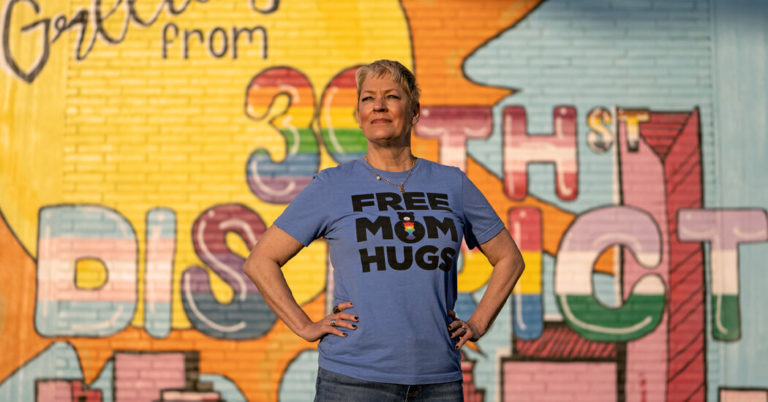
It all started with one mom and one hug. This mom was Sara Cunningham, who lives in Oklahoma City and is married with two children, Travis, 37, and Parker, 32.
“Parker is gay,” she said. “I specify this because he’s the reason we’re having this conversation.”
As a Christian, Ms. Cunningham, 58, fervently rejected her son being gay when he first came out to her 11 years ago at age 21. After much spiritual searching, she embraces him fully, and said she doesn’t want any child to suffer what she put her son through. “There’s a mom out there like me then who needs a mom like me now,” Ms. Cunningham said.
That was why she founded the nonprofit group Free Mom Hugs in July 2018.
After reading stories about L.G.B.T.Q. people whose families refused to attend their wedding, Ms. Cunningham had posted on Facebook one night that she would happily be a stand-in mom at any wedding where she was needed. By the next morning, her post had gone viral.
Under the Free Mom Hugs banner, Ms. Cunningham, who was ordained in 2016 by Neill Coffman, pastor of the Expressions Church in Oklahoma City, now performs and attends weddings, writes books, speaks at various events, organizes local chapters of Mom Hugs, and, yes, gives out a lot of hugs. (“Until we can hug again, we’re going beyond the hug,” she said. For example, they send out care packages to people in need of support.)
She is now working with the actor Jamie Lee Curtis on a movie for the Lifetime channel based on Ms. Cunningham’s book, “How We Sleep at Night: a Mother’s Memoir,” published in 2014, to which Ms. Curtis purchased the rights. An upcoming documentary by director Daresha Kyi called “Mama Bears” also features Free Mom Hugs and Ms. Cunningham.
In a telephone interview, Ms. Cunningham talked about how she works to change the world, simply by showing up.
How did you come to accept and embrace your gay son?
I found faith-based resources to better understand the history of homosexuality. I met other moms of gay children and met members of the gay community. I thought my son was going to burn in hell. So, I needed to reconcile my faith of a loving God with the suggestion that this was an unforgivable sin. The truth is, there is no scripture that condemns homosexuality.
Where did you get the idea for Free Mom Hugs?
It was Saturday, June 20, 2015. I made a homemade button with the words “Free Mom Hugs” and pinned it to my sundress. I stood at the Oklahoma City Pride Festival and offered anyone who made eye contact with me a free hug. The very first hug went to a beautiful girl.
We embraced, and she whispered in my ear, “It’s been four years since I got a hug from my mom because I’m a lesbian.” I must have given hundreds of hugs that day, with each one came a similar story.
What was the first wedding you officiated?
It was in 2016 in Natchez, Miss. The brides were Jill and Denise. We met in 2015 when my husband and I were on vacation in Virginia Beach, and we all just happened to stay at the same hotel. They were the first same-sex couple to be married at their local community center, and they made front page news. They are the reason I got ordained.
How did it go from an idea to an organization?
After making the button and showing up and giving hugs, we had a Free Mom Hugs banner made and walked in the 2016 parade. I was just making it up as I went. But when my friends Pastor Neill Coffman and his husband Dean Coffman, who run a nonprofit called Expressions Community Center in Oklahoma City, invited me to umbrella under their nonprofit, that’s when it became real in my mind.
I met a young, African-American transgender college student at the very first Free Mom Hugs Transgender Valentines Banquet in Oklahoma City. It was his first time “out.” Struggling to keep a job, he became homeless. An agency helped him get an apartment. But it became unsafe because of harassment from neighbors.
Extended family from out of state offered to let him stay with them. Free Mom Hugs bought him a bus ticket. Years later he planned to fly back for the third annual Transgender Banquet. He missed his flight. Feeling discouraged he bought a lottery ticket and won $10,000, enough for top surgery (male chest reconstruction).
What’s your biggest regret?
I missed the entire adolescence of my son’s life. I shamed him with the best of intentions. I shamed him to get rid of his journals. He had to check himself at the door. He had to pretend to be someone else in his own home. It alienated us for a long time. But I’m fortunate that we have a relationship now.
Do you see Free Mom Hugs as particularly vital during Covid?
Yes. Recently, an 18-year-old transgender kid struggling to survive Covid in isolation at home with unsupportive parents told me, “I’m surviving with the hopes of meeting you one day to say thank you face to face.”
If you could speak to parents who don’t support their L.G.B.T.Q. children, what words of support would you offer?
It’s OK to search this matter out. The only other choice is to remain in fear and ignorance. Your child is entrusting you with the most tender and intimate part of his/her/their lives.
If you don’t come to the point where you can celebrate with your child, you’re going to suffer with them.
How can people help?
If you can show up — show up. If you can pray for us — do that. If you can give financially — give.
The state Supreme Court wrangled Wednesday with whether creating a “separate-but-equal” section for female gym-goers discriminates against trans women or men.
HARTFORD, Conn. (CN) — Twisted up in a modern-day Gordian knot, several justices on the Connecticut Supreme Court worried Wednesday that they could open the door for lawsuits involving lesbians, fat men or cordoned-off pools if they OK women-only sections at gyms.
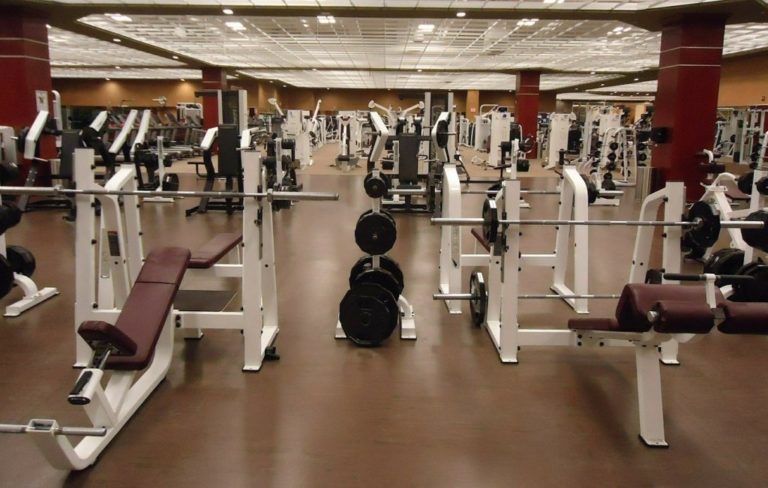
In the underlying case, two gyms run by Edge Fitness set aside special workout areas only for women, catering primarily to devout Muslim and Jewish women who are forbidden by their religious beliefs to exercise with men. Nobody complained to the gyms’ management, according to the gyms’ attorneys.
After the separate sections were created, however, two male gym members filed discrimination complaints with the state Commission on Human Rights and Opportunities. A hearing officer initially concluded the separate workout areas did not violate the state law, likening the areas to single-sex bathrooms and locker rooms.
Testifying for the gyms, one psychologist said that women often feel sexually objectified when exercising alongside men, and a survey found most women who used the separate workout areas did so to avoid judgment. Most women also indicated they would cancel their gym memberships if the separate workout areas were eliminated.
Before the case could go to trial, a state judge found that the workout areas aligned with gender-privacy and religious-freedom interests.
Several religious and transgender-rights organizations filed amicus briefs in the case. Glad Legal Advocates & Defenders, as well as the Connecticut TransAdvocacy Coalition and other gay rights groups, wrote in their brief that the trial court created a new and ill-defined implied right to gender privacy, adding that there were huge differences between a public workout area and a locker room.
“A new ‘gender privacy’ right that is untethered from statutory text and based on the discomfort of others also risks undermining this state’s explicit legislative mandate of equality and inclusion for transgender people,” the brief states.
In their own brief, Jewish, Catholic and Muslim religious organizations noted the importance of modesty for their female members, emphasizing that such tenets “preclude[] them from wearing exercise clothing and assuming the often provocative poses that exercise requires in the presence of men.”
During a hybrid hearing, where some of the attorneys attended virtually, the Connecticut high court fell into a rabbit hole of hypothetical scenarios, including whether lesbians should be excluded from the women-only area if the heterosexual women felt ogled, or if a heavy man felt fat-shamed in the common area should a certain area be set aside for him.
In posing such hypotheticals, Judge Christine Keller noted that “women can feel objectified almost anywhere,” including bars or even on the street. “Why do women need to run and hide?” she asked.
James Shea, an attorney with Jackson Lewis representing the gyms, said current anti-discrimination laws would protect other groups and that there is more of an assumption of privacy in a gym.
Keller later noted that women can be objectified at swimming pools, too. “Should we have separate hours for women at swimming pools, public swimming pools, separate swimming pools for women, screened off from men?”
“No, your honor,” Shea answered. “I don’t think that pools or beaches are traditionally male-dominated environments.”
Other justices were sympathetic to the religious women’s desire for privacy. Justice Maria Araujo Kahn wondered what options religious women would have for gyms if the court barred the single-sex workout areas. “What is left for them? Where do they go then?” she asked.
Human Rights Commission attorney Michael Roberts said that would depend on the individual, but he added that “discrimination on the basis of a protected class is not deemed to be a reasonable accommodation for a religious belief.”
Some justices speculated, however, that not setting aside a special section for women could also pose a problem.
“So what’s the solution?” asked Justice Steven Ecker. Would a woman “who feels she is being ogled by some sweaty guy 6 feet away, she needs to make a complaint about that and earn an enemy in the gym and go through that sort of nonsense?”
Roberts noted there are a number of nondiscriminatory solutions to that problem, including employee training and penalizing clear instances of harassment.
Ecker later hinted that he thought there may be no triable issue at all. “Is there a serious argument that this harms men?” he asked, noting that men have dominated gyms for decades. “I get the principle, it’s very clear, but it’s hard for me to see any practical discrimination going on here.”
If you’re a sexually active gay or bisexual man, or trans, you can’t donate blood right now in Australia.
That’s nothing new.
Gay and bisexual men were banned from giving blood during the HIV and AIDS crisis that gripped the world in the 1980s.
The total ban became a 12 month celibacy period a few years later and earlier this year that was reduced even further, meaning men who have sex with men now need to wait three months since their last sexual contact with a man before they can donate.
But Rodney Croome from national LGBTQI+ advocacy organisation just.equal doesn’t think there should be any “deferral” period in place at all.
“I’d like to see an entirely new policy that focuses on individual risk,” Rodney told Hack.
It’s an idea being embraced by other countries around the world.
The UK recently announced it’s scrapping its three month postponement for gay and bisexual men who have had the same sexual partner for more than three months.
It’s being replaced with an individualised risk assessment that would mean anyone who wants to donate blood would be asked questions about their sexual behaviour.
Rodney Croome thinks that makes sense.
“The overwhelming majority of gay and bisexual men in Australia don’t have HIV and will never have HIV because we practise safe sex or because we’re in monogamous relationships,” he said.
“We’re at very low risk. In fact, much lower risk than many people who are currently able to donate, like many heterosexual people.
France, Italy and Spain, are also part of a group of more than a dozen countries that have removed barriers for men who have sex with men in recent years.
The US could be about to relax its rules too, with a pilot study looking into individualised risk assessments now underway.
Research carried out in countries that have moved towards individualised risk assessments has found the risk of sexually transmitted infections entering the blood supply does not increase.
The UK government has hailed what it calls a “world leading, safe option” that recognises individuals for the actions they take “rather than their sexual preference”.
Rodney says we need to be seeing similar progress in Australia because the current rules around blood donation are damaging to gay and bisexual men.
“There’s a stereotype of gay men that we’re somehow more prone to disease, that we’re somehow more likely to be a threat to the health of others,” he said.
“That’s a long term stigma that LGBTQI+ people have had to bear and I don’t think we should bear it any longer. It’s just not true.”
‘I felt so small’
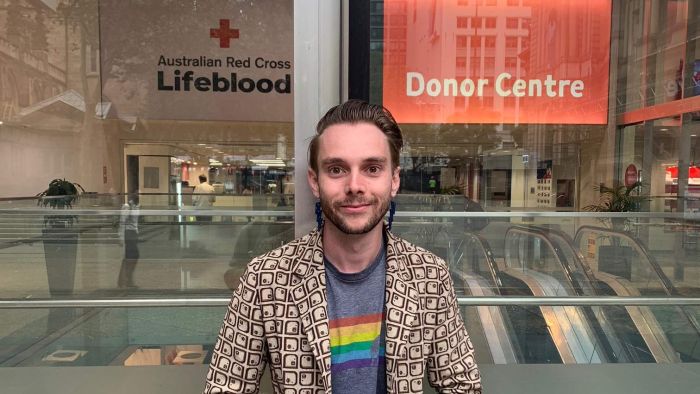
Daniel Cottier was turned away when he tried to donate blood in New South Wales earlier this year.
FireFox NVDA users – To access the following content, press ‘M’ to enter the iFrame.
As a gay man, he followed the rules and gave up sex three months before presenting for his donation.
But when he got to the clinic he found out that he still wasn’t eligible to give blood because he had taken the HIV preventative medication PrEP (Pre-Exposure Prophylaxis) within the last 12 months.
He couldn’t find that information on the Australian Red Cross Lifeblood website.
“I just sat in the office and had a big cry,” he said.
“I said to the nurse, this really sucks.
“I felt so small. I felt a real sense of shame about myself and who I was and who I loved. And that’s really common in the queer community, to feel ashamed of yourself, for being who you are.”
Daniel later got an apology from Lifeblood and they have updated their website to make it clear that under the current restrictions if you are a gay man who uses PrEP, you have to wait a year since your last dose before you can donate.
‘It’s not the safest approach for Australia’
Lifeblood says its policy considers an assessment of risk, and does not discriminate against anyone.
Chief medical officer Joanne Pink says the three month celibacy rule is in place because testing is often not able to pick up early infections.
And the rule around PrEP is in place because there is evidence to show that it impacts the ability of tests to pick up early HIV infection.
Dr Pink says individualised risk assessments that are being introduced in other countries rely on a more even distribution of new HIV infections across the population which Australia doesn’t have.
“We concluded that this approach would likely reduce blood safety if it were implemented in Australia,” she told Hack.
“Eighty four per cent of all newly acquired cases of HIV in Australia are attributed to men who have sex with men.
“This means that we establish whether groups of people who engage in certain activities and behaviours have a higher risk of exposure to a blood borne infection.
“It’s a bit like sending a whole suburb into COVID lockdown.
“We ask groups of people to do things to keep us all safe.”
But Rodney Croome believes the evidence is increasingly showing the advantages of reducing restrictions for gay, bi and trans people and the change would benefit more than just those communities.
“The more important reason is that it means that there will be a greater quantity of safe blood available for those Australians in need.
“So let’s remove these old barriers to full participation in community life.”
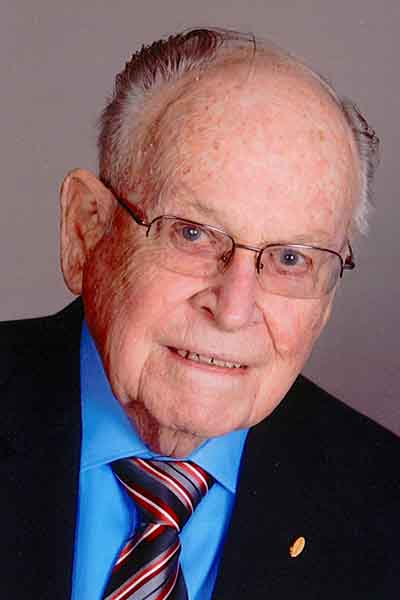
BOARDMAN — Edison G. Lugibihl, 97, formerly of Hitchcock Road in Boardman, passed away peacefully Sunday, May 2, 2021, at St. Elizabeth Boardman Hospital.
Edison, known by his family and friends as “Ed,” was born April 25, 1924, in Pandora, the son of the late Orrie and Lydia Badertscher Lugibihl.
He graduated from Pandora High School in 1942. Edison served in the U.S. Army during World War II.
Following the war, Edison received his bachelor’s degree in education from Bluffton College. He moved to Boardman in 1950 and continued his education, receiving his master’s degree in education and principal certificate at Kent State University.
Edison taught geography at Boardman Junior High and then was an assistant principal at Boardman Junior High School, and later became the principal at Boardman Center Middle School from 1969 to 1991. He served as an educator in the Boardman Local School system for more than 40 years.
He attended Boardman United Methodist Church and was active there for 60-plus years, participating in many activities of the church.
Edison was a recipient of the Rotary International Paul Harris Fellow Award, a Boardman School Hall of Fame inductee, and served as the treasurer of the two-year effort to build a new auditorium at Boardman High School under the banner of Auditorium 2000. He was a 40-year member of the Phi Delta Kappa educational fraternity. In 1957, he helped to organize the Boardman Local Schools Employees Credit Union, serving as the treasurer, while his wife served as manager. In 1992, the credit union merged with the Associated School Employees Credit Union, where he remained on the board of directors until his death. He was an assistant coach under head coach Jerry Thorpe for the 1960 Boardman High School football team that posted an unbeaten 9-0 record. He retired June of 1991 as principal of Boardman Center Middle School, a position held from 1969 to 1991. He and his wife, Katherine, received the Boardman Civic Association’s Lifetime Achievement Award from the Boardman Civic Association for their service to Boardman Township and its public school system. He was an avid gardener and had a perpetual “green thumb.”
Edison is survived by his wife of 70 years, the former Katherine “Kay” H. Chuck, whom he married Aug. 26, 1950; his son, Jay (Jennifer) Lugibihl; daughter, Gay (Robert) Mowery; and son, Tad (Margie) Lugibihl; nine grandchildren, Nicole (Noah) Kenreigh, Michelle Wise, Stefani Lugibihl, Robert (Adrienne) Mowery, Matthew Mowery, Jessica Mowery, Jordan, Kayla and Emma Lugibihl; three great-grandchildren, Robert, Rosemary and Orion; a sister, Dorothy Keifer; sister-in-law, Ellie Chuck; brother and sister-in-law, Gerry and Gail Chuck; and many nieces and nephews.
Besides his parents, Orrie and Lydia, Edison was preceded in death by his in-laws, Joseph and Hazel Chuck; and brothers-in-law, Jay Chuck, Laverne Augsburger and Eddie Keifer.
Edison was loved, admired and respected by all who knew him. He was a faithful Christian and humanitarian. He was most proud of his family and will be sadly missed by all who knew and loved him.
Family and friends may call Thursday, May 6, 2021, from 3 to 5:45 p.m. at Davis-Becker Funeral Home, 8536 Market St. in Boardman. A funeral service will follow at 6 p.m. at the funeral home, with the Rev. Jerry Krueger officiating. Due to COVID-19, the 6-foot rule will be honored, and all guests, whose health allows, are asked to please wear a mask.
The family requests that material tributes take the form of contributions to the Boardman United Methodist Church Memorial Fund, 6809 Market St., Boardman, OH 44512, in memory of Edison.
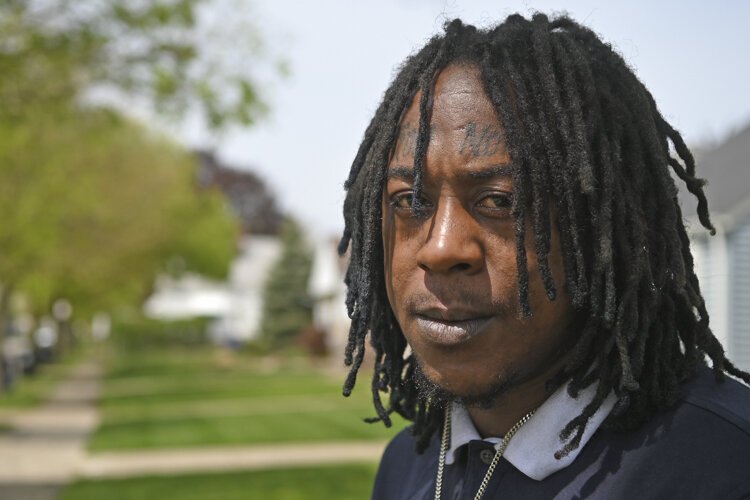
Since his two-year-old son’s routine blood test in November showed the child had been lead poisoned,Charrell Reed and his family have felt like prisoners in their apartment on the city’s West Side.
Reed, 27, who works as a subcontractor for a home renovation company, knows how dangerous lead can be. He and his sister were poisoned as children, and their uncle, Darrick Wade, has been crusading against the toxin since his son, Demetrius, was exposed in public housing in the 1980s and died at age 24.
Using his uncle’s connections, Reed was able to get a lead expert to test the paint in the apartment, confirming his suspicion that the heavy metal, which can cause irreversible neurological and other health effects, was there.
And yet, Reed says he feels stuck. Even though he knows the lead is there, he hasn’t been able to get any help cleaning it up from his landlord or city health officials—partially because of the pandemic.
Charrell Reed The pandemic has made diagnosing lead poisoning and fixing hazards in homes even more difficult than it’s always been, as families are skipping pediatric appointments out of fear, and some lead inspectors and short-staffed health departments have had to delay or halt in-home work.
Much of the drop has been attributed to people’s fears of being exposed to COVID-19, choosing instead to postpone routine doctor visits.
While testing began picking up again as pandemic restrictions eased, experts worry that many children fell through the cracks—either never getting tested, or, if they did, ending up on a list of backlogged cases for overtaxed health departments to inspect.
The pandemic made it harder for families to get their homes tested for lead, and to get the help they need to make repairs when a source of the poisoning is identified in the home—particularly during the first few months of the shutdown.
The CDC reported that local health departments across the country were struggling to conduct in-home lead investigations and other home visits due to staffing shortages and fears of exposure to the virus.
The city of Cleveland declined to comment on its lead poisoning prevention efforts during the pandemic.
For Reed’s family, and for many others in the same situation, the inability to get help from people qualified to clean up the lead in a safe way convinced Reed the family needs to move—as quickly as possible.
“If I can’t get [them] to work with me the correct way, then we’ll just leave [if] it’s going to be a continuing problem,” Reed says. “That’s the main task, just hit the road. If we can be up out of here tomorrow, we are going tomorrow.”
Trying to find help Reed’s personal experience with lead poisoning made him very attentive to a potential problem: When he moved into his apartment last spring he repeatedly asked his landlord to fix the peeling paint he saw on the window sills. His pleas went unanswered.
Reed tried to keep his son away from the area, and got him tested for lead at his annual well visit, just as he had a year earlier and according to recommendations from health experts.
Yet despite his knowledge and initiative, Reed’s family still hasn’t received any help. Though he knows better—lead is impossible to see, and spreads throughout homes in tiny dust particles that are difficult to clean up completely—he still blames himself.
“In Cleveland about 90% of our homes are lead impacted,” Hall says. “And in our first-ring suburbs, it’s about 80%.” In 2019, roughly 1,000 children were poisoned by lead in Cuyahoga County, with another 750 in the city of Cleveland.
In Hall’s eyes, the solution to the reluctance to get children tested at the doctor’s office is to bring the testing closer to parents by having mobile testing stations travel to impacted neighborhoods. Hall says she believes the city can afford the service. “You got the money, do the work,” she says. “There’s no work being done.”
Mobile testing would begin to address the problem that Dr. Aparna Bole has seen throughout the pandemic—parents not bringing their babies and young children in for regular doctor’s appointments. As a pediatrician at University Hospitals Rainbow Center for Women and Children, Bole also is concerned that children have been inside the home more than usual, due to remote learning and other social isolation measures.
Exposure at such a young age can have lifetime neurological consequences that can manifest into lower academic performance, Bole says, and high lead levels have been linked to other health issues later in life—and even adult criminal behavior.
“The pandemic is exacerbating some of these housing-related exposures,” Bole says. “I see a lot of kids in very, very sub-optimal childcare situations because parents have no choice.”
Resources exist to help people once they find out their house has lead or that their child has high lead levels. More needs to be done, however, to prevent the lead exposure in the first place, “instead of testing the kid’s blood, finding out they’re poisoned, and then trying to address the problem,” she says. A law passed in 2019 by the city of Cleveland requires all landlords to pay for private inspections and secure lead-safe certificates for their rental units. The law also requires additional disclosures to renters and homebuyers about whether a home has an identified lead hazard.
The new law went into effect on March 1 this year and is being gradually rolled out by zip code.
For now, a combination of education and in-home preventive measures is the next best way to reduce chances of exposure to lead.
As director of training and healthy homes for Environmental Health Watch, an environmental justice organization, Akbar Tyler sees firsthand the condition of homes where children have been spending all their time during the pandemic. Tyler conducts home inspections and teaches residents how to keep their kids safer when there is lead in the home.
The first line of defense, Tyler says, is to eliminate the most common sources of lead—flaking paint and dust. The second line of defense is to keep floors and other surfaces clean of dust, which can contain tiny particles of lead that are easily transferred from hand to mouth by babies and toddlers. The last line of defense is good nutrition—calcium- and iron-rich diets make it harder for bones, joints, and soft tissue to absorb lead during the 30 days or so that it stays in the blood.
“Eliminating the hazard in a safe way is the way to stop children from getting poisoned,” Tyler says.
The struggle of identifying the hazard of lead—through a blood test, a home inspection, or both—and figuring out what to do next, has been an effort than many parents can’t bear, especially during a pandemic. As people like Reed have discovered, community resources and health department interventions that should be available often don’t arrive until too late.
“A lot of parents, they blame themselves,” says Hall. “[They ask], ‘what could I have done to prevent this from happening to my child?’” Like Reed, the only thing that many families can do to immediately help their children is move, and hope to find a lead-free home, she says.
That’s exactly what Reed and his family plan to do, even if it means breaking the lease, because the longer they stay in their apartment, the more his son’s health is at risk, he says.
“When you have kids, you need to protect them every step of the way,” says Reed. “I just want to get up out of here immediately more than anything—Me, the wife, and the kids, go.”
Sardo-Longo, Tluang, Chau, and Gay are high school students at The School of One in Cleveland and North High School in Akron, Ohio. They were participants in Urban Health Media Project’s workshop, “Home Sick: How Where We Live Impacts Health” in Spring of 2021.
JANELLA GAY PRINCE, age 83, Oneonta, gained her angel wings Friday, April 2, 2021. She was born Feb. 21, 1938, to the late Dewey Gay and Mary Eris Heard Gay. Janella was a member of Oneonta Church of Christ, Oneonta Gardening Club, a Brownie leader, and very active in ladies’ activities at church. She loved to work in her garden, […]
You must be an online subscriber to view this story – Please login below or purchase a subscription.
The full version of this story will be available to all readers after 1 week.
Full versions of news stories from the most recent week are available to online subscribers only.
Access to full versions of news stories from issues older than 1 week are available to all readers for free in our archive of all issues.
JANELLA GAY PRINCE, age 83, Oneonta, gained her angel wings Friday, April 2, 2021. She was born Feb. 21, 1938, to the late Dewey Gay and Mary Eris Heard Gay. Janella was a member of Oneonta Church of Christ, Oneonta Gardening Club, a Brownie leader, and very active in ladies’ activities at church. She loved to work in her garden, […]
You must be an online subscriber to view this story – Please login below or purchase a subscription.
The full version of this story will be available to all readers after 1 week.
Full versions of news stories from the most recent week are available to online subscribers only.
Access to full versions of news stories from issues older than 1 week are available to all readers for free in our archive of all issues.
Before I was a dentist, I was a child who often spent her time reading “Jet” magazine. “Jet” was the pop culture magazine geared toward descendants of American slavery — the majority of Black Americans. In every issue, there were full-page ads of beautiful Black people smoking menthol cigarettes. From taking out advertisements in Black media to sponsoring Black community events to selling cheaper-priced cigarettes in Black neighborhoods, the tobacco industry’s targeting of Black Americans with predatory marketing of menthol cigarettes is well-documented.
Equally well-documented are the devastating results.
Today, more than 8 out of 10 Black American adults who smoke use menthol cigarettes. And Black Americans die at higher rates than any other racial or ethnic group in the U.S. from tobacco-related diseases such as cancer, heart disease, and stroke.
The tobacco industry’s legacy of aggressive marketing to marginalized populations is not limited to the Black community. Tobacco companies have preyed upon people with mental illness, people with low incomes, and in all cases, kids and young adults. Because human brains continue to develop until age 26, young people are extremely susceptible to nicotine addiction. Following this tried-and-true playbook, the tobacco industry has also preyed upon people who are lesbian, gay, bisexual, trans and queer.
The LGBTQ community’s high rate of smoking can’t be explained without accounting for the cynical and aggressive marketing by tobacco companies. In California in the 1990s, the industry’s strategy was to push cigarettes to communities that their executives held obvious disdain for, particularly gay men and homeless people. Their campaign was called “subculture urban marketing,” abbreviated by no coincidence as SCUM. They sponsored Pride Month events and took out ads in “Out” magazine. They manufactured the narrative that to be young and gay or trans was to also be a smoker.
When the CDC released new information on the unequal impact of COVID-19, their findings confirmed what I and other members of the LGBTQ community had thought. LGBTQ people were more likely to contract and suffer severe symptoms of COVID-19. We suffer disproportionately from asthma, chronic obstructive pulmonary disease, strokes, heart disease, and hypertension — conditions all associated with severe COVID-19. Tobacco industry targeting puts us at greater risk for other dangerous health conditions.
It’s unconscionable.
Knowing that the younger generation overwhelmingly chooses flavors (four out of five kids who have used tobacco started with a flavored product), the industry pushes everything from menthol to cotton candy to crème brûlée-flavored tobacco to addict the next generation. There are now over 15,000 flavored tobacco products on the market.
Tobacco smoke destroys cells at the microscopic level and damages our DNA. This leads to greater instances of severe complications that, as a dentist, I’m unfortunately very familiar with — infections, gum disease, tooth loss, and oral cancer. The surge in youth tobacco consumption will make these health problems more common. And that surge is being driven overwhelmingly by menthol, mint, and candy flavored tobacco products that the industry markets to teenagers.
The professional consensus on the harms posed by menthol and other flavored cigarettes is unambiguous. The American Medical Association and the American Dental Association recommend ending the sale of all flavored tobacco products because of their well-documented harm to public health.
Our legislators will have their best chance yet to address this during the current legislative session.
LD 1550, sponsored by Rep. Michele Meyer of Eliot, will finally end the sale of flavored tobacco products in Maine. It takes a giant step toward eliminating health disparities among Black and brown, indigenous, LGBTQ, and other marginalized communities. Getting flavored tobacco off the store shelves will give all Maine kids a fair shot at a healthy, productive future, free from tobacco addiction.
Dr. Florence S. Edwards, DDS, is a dentist practicing in Auburn and Topsham, and a board member of EqualityMaine and Coded By Young Women of Color.
Invalid username/password.
Please check your email to confirm and complete your registration.
Use the form below to reset your password. When you’ve submitted your account email, we will send an email with a reset code.
Jonathan Rauch is a senior fellow at the Brookings Institution.Portrait by Adriana Bellet
It’s not every day that an atheist witnesses a miracle, but I saw one more than five years ago in Salt Lake City.
On March 4, 2015, at a downtown press conference, a group including LGBTQ leaders, representatives of The Church of Jesus Christ of Latter-day Saints and mostly conservative legislators announced they had forged a groundbreaking agreement. A new state law, which would become a model around the nation, extended an array of nondiscrimination protections to lesbian, gay, bisexual and transgender Utahns. The Utah Compromise, as it was called, struck a careful balance. It ensured that certain religious prerogatives, such as allowing religious colleges to limit married-student housing to opposite-sex couples, would be accommodated. With bipartisan support, the proposal became law.
In disbelief, I nearly rubbed my eyes when I read the news.
After all, just a few years before, the LGBTQ and Latter-day Saint communities had been at odds in 2008 over California’s ballot proposition banning same-sex marriage. The disagreements felt more like enmity at times as the debate over defining marriage was channeled into a zero-sum political contest. Within the gay community, including for me personally, the passage of Proposition 8 felt crushing.
Yet by March 2015, just seven years later, everything looked much different.
Local LGBTQ advocates and the church realized there had to be a better way forward. Quietly and cautiously, they began meeting to find common ground. It wasn’t easy, but as time went on the two sides found it: Whatever their conflicting view of marriage, no one should lose a home or a job just for being a member of a sexual minority. In 2009, the church had raised eyebrows in secular circles by throwing its support behind Salt Lake City’s ban on anti-gay discrimination in housing and employment. That provided a foothold, and the two sides decided to deepen it and begin the climb toward cooperation. Building trust and learning to communicate took years, but the efforts came to fruition with the dramatic announcement of SB296, the 2015 Utah Antidiscrimination and Religious Freedom Amendments.
The bargain made national headlines. Immediately, people wondered if the success could be replicated in other states, or even in Congress. No one thought it would be easy. For years, LGBTQ civil rights and religious liberty had been on a collision course. Sexual minorities want the same assurances of access to jobs, housing, schools and commercial establishments that other historically marginalized minorities routinely receive. People of faith already enjoy many of those same protections and sometimes take them for granted. But even today, in most states, sexual minorities lack important anti-discrimination guarantees, except when it comes to employment (which the Supreme Court covered in its historic 2020 Bostock v. Clayton County decision, extending workplace anti-discrimination protections to LGBTQ people).
But religious organizations and faith-based nonprofits have their own worries. They fear being forced by law to provide services to same-sex weddings, open religious schools’ married-student housing to same-sex couples, place adoptive children with same-sex parents and take other steps that violate their religious teachings. They worry that religious nonprofits will lose access to the tax code’s important deduction for charitable giving. They worry that law and secular culture will gradually squeeze them out of civic life by treating their beliefs and religious practices as illegal, immoral or both.
Until now, that disagreement has caused deadlock at the national level. Recently, however, something has stirred. There might — just might — be a shot at negotiating an end to the hostilities. Utah has something to teach the country after all.
I am not the most obvious candidate to make the case for a truce in the gay-religious culture war. When it comes to being an outsider in American life, I won the trifecta: I am an atheistic homosexual Jew. Or a Jewish homosexual atheist. Whichever way you stack the labels, I never felt I had a choice about any of them. I was Jewish, that I knew. But from a young age I also knew I couldn’t believe in God, even if I tried (and I did try in my early teens). I also knew I was attracted to my own sex, and my increasingly desperate efforts to suppress that reality were unavailing. It was clear I would be a misfit, despised from many directions, and so I compensated by rejecting the faith traditions that seemed to reject me. “Of course,” the young version of me would say, “no one should be able to discriminate because of silly superstitions! Of course, no fair and enlightened society tolerates bigotry, with or without biblical proof-texts.”
In those days, I saw little reason to show empathy toward faith traditions that in many cases denounced me as abhorrent. Born in 1960, a very different time, I grew up in a world where homosexuals were regarded as mentally ill. They could not work for the federal government, could not serve in the military, could not even get a security clearance to work as a government contractor. Entrapped by police departments’ morals squads, gay people whose arrests were written up in the newspaper would lose their jobs and become pariahs the next day.
Religious leaders, even those who disapproved of homosexuality, could have preached compassion and toleration, but they very often did the opposite. All I had to do was turn on the radio to hear some preacher dispatching people like me to eternal damnation. During the AIDS epidemic, religious people commonly turned their backs, saying we had only ourselves to blame. Was that, I wondered, what Jesus would have done? I was angry at America’s religious community, and I had reason to be.
So why am I one of the gay world’s more outspoken proponents of a bargain that would allow the faithful to discriminate against LGBTQ people in certain ways and in certain circumstances?
Partly because I’m a First Amendment nut. I am a true believer in free speech, the cornerstone of any society that is free and fact-based. And the First Amendment coequally enshrines religious freedom. They belong together, as the Founding Fathers realized: Expressive freedom and religious freedom are the twin pillars of freedom of conscience, America’s raison d’être since English Protestants arrived in North America to escape persecution back home.
Having spent my first 25 years as a closeted homosexual, trying to be someone I wasn’t, I understand the agony of living inauthentically and denying who you are — and I believe that in the LGBTQ rights struggle we are fighting for all Americans to live as their truest selves. Obviously, conflicts will arise over competing moral standards, but if we can accommodate others’ consciences and lifestyles at a reasonable cost to ourselves, we should. Morally as well as politically, it is in everyone’s interest to share the country. Political theorists call that arrangement pluralism, and there is simply no other way a diverse democracy can function.
Of course, when we talk about making reasonable accommodations, that nice four-syllable word, “reasonable,” covers a multitude of complex and contentious policy choices. Progressive, secular gays may simply never agree with conservative, religious straights on what is reasonable in many aspects of law and policy. Striking a balance we can all live with is hard work.
But there is another reason, besides pluralism, why both sides should do that work. It goes to the very foundation of our democracy — and to the heart of our most important, yet also most misunderstood, constitutional concept.
While reporting this article, I asked a number of Utahns about SB296, the 2015 compromise legislation, and several said something that surprised me. In effect, they commented, “Please don’t call it a compromise.” Stuart Adams, a Republican state senator who was instrumental in forging the agreement (and who today is the president of the Utah Senate), said he didn’t like the term. “My deep-seated religious beliefs are not compromisable,” he said. “We didn’t compromise. We found a way forward where each entity was given additional rights and protections, but no one’s core values were compromised.” Troy Williams, the executive director of Equality Utah, the state’s main LGBTQ organization, told me he avoids the C-word, too: “I’ve always used the phrase ‘collaboration.’ We get around the table and we work together on something. There’s an idea that if you’re compromising on something you’re giving up on your values or you’re not standing with integrity in your beliefs. I don’t think we did any of that.”
In recent years, Americans have adopted the notion that to compromise is to settle for less than is really fair, or to sacrifice integrity for some transactional gain. The most famous tale about compromise in our culture is the biblical story of King Solomon’s suggestion of splitting a baby in two. The point of the story is that the baby’s real mother proved her integrity by refusing to compromise. Americans still support compromise in the abstract, but less so on actual issues. Their unwillingness to vote for politicians who choose negotiating over moral combat has been a long-term cost of the culture wars.
Sometimes it is wrong to compromise on who you are or what you believe. Having lived in the closet, I certainly know what an inauthentic life can feel like. Even so, making compromise into a four-letter word dangerously misconstrues what compromise really is — and why James Madison and his colleagues placed compromise at the very heart of our remarkable system.
The Constitution does many things, but at bottom it is a mechanism to force negotiation. No actor in politics can do very much unilaterally. Congress, the president and the courts can all check and balance each other, as can the federal government, the states and even local authorities like school boards. On its surface, this all seems perversely cumbersome. Why all the veto points, when a monarchy seems so much simpler and more efficient?
Partly to guard against tyranny, of course. But Madison had a bigger idea in mind, too. In our politics, compromise is the balance wheel providing both stability and dynamism, both caution and innovation, both contestation and cooperation.
The reason is that, as any experienced negotiator knows, sitting across the table gives people information and understanding about the other side. Often it builds relationships, and sometimes even friendships. In healthier times, when Congress was less burdened with extreme partisanship, committee chairs and ranking members commonly developed close working relationships even while pursuing their very different agendas. They didn’t necessarily agree, but they understood each other and knew how to disagree.
Simply by being required to interact and do business, the parties to a negotiation develop the civic habits of peaceful coexistence — and they unlearn the habits of domination and distrust. That was what happened in Utah. “To me the process here may be even more important than the legislation,” Williams told me. “When I sit down with folks, I’ll never see them as an enemy or opponent. I’ll see them as future ally, even if we’re not there yet.”
In successful negotiations, a compromise rarely looks like merely splitting the difference. Finding a resolution requires not just arithmetic but creativity. When negotiators hit a snag, they look for workarounds and innovations. They might expand the scope of the deal or reshuffle its elements, throw in some sweeteners, recruit new allies or seek mediators. Sometimes they wind up inventing an approach no one had even thought of before. The U.S. Constitution was born that way. When it was clear revising the Articles of Confederation would fail, the framers tossed them out and started from scratch. If two children cannot agree on whether to play checkers or cards, they might agree to ride bikes instead, or even invent their own hybrid game using checkers and cards. They get creative.
We saw such creativity in Utah. To sweeten the deal, the negotiators developed innovative provisions barring workers from being fired or punished for speaking their mind outside the workplace on political or religious topics. That gave both sides — LGBTQ and religious — a valuable new conscience protection.
Far from being an unfortunate necessity, then, compromise is our political order’s method of constantly learning, adapting and innovating. It is also the way our system accommodates differences while getting enough buy-in to form a governing consensus. If compromise fails, our Constitution and country fail.
So here is a plea from one atheistic Jewish homosexual. Stop apologizing for doing what the Constitution demands. Compromise is the nation’s most powerful force for progress and social conciliation. It is not only creative but often transformative. When I asked Equality Utah’s Williams to name the downsides of SB296 from the point of view of Utah’s LGBTQ community, he couldn’t think of a single one. “The culture has changed here in Utah,” he said. “In every possible way, Utah is now a safer and more welcoming state for the LGBTQ community.” When I asked if the same change would have happened without SB296, he replied with a firm no. “It changed the dynamic forever in the Legislature. I’ve watched so many legislators open up their hearts in this process.” And that openness was a two-way street.
With apologies to King Solomon, that is not splitting a baby.
After the Utah compromise, hopes that it would be widely replicated were quickly dashed. Some observers concluded that unusual conditions in Utah — the powerful role of the church, the structure of the state’s preexisting discrimination laws and maybe some special Utah magic — made such a deal difficult to pull off beyond Utah’s borders. Still, a few years ago, a center-right LGBTQ advocacy group called the American Unity Fund joined with a coalition of conservative faith groups — including such heavy hitters as the Council for Christian Colleges and Universities, the Seventh-day Adventists, the National Association of Evangelicals, and, yes, once again, The Church of Jesus Christ of Latter-day Saints — to quietly hammer out a model federal civil rights bill combining the same two essential ingredients from Utah’s success: anti-discrimination protections coupled with specific religious exemptions. Introduced in the last Congress and again in February by Rep. Chris Stewart, R-Utah, the Fairness for All Act, as it is called, attracted more brickbats than bouquets. Many progressive LGBTQ and civil liberties groups wanted the anti-discrimination protections without any exceptions; many conservative religious groups opposed anti-discrimination measures altogether.
But the climate seemed to improve this spring. It began to look as if the Senate might be able to negotiate a deal. Maybe, just maybe, elements of the Fairness for All Act and the Equality Act — an uncompromising civil rights bill passed by the House — could be creatively combined to get the job done.
Any such deal would be a long shot, but it seems like a shot worth taking. Making a pact on nondiscrimination and religious exemptions would strengthen and clarify the rights of both sides. But equally important, a successful negotiation could reverse the spiral of mistrust and hostility that has characterized relations between LGBTQ Americans and conservative religious denominations for so many bitter and polarized years. That goodwill would do more to prevent real-world discrimination than any mere statute could accomplish.
The biggest gains of all, though, would accrue to the whole country. An agreement could show America what SB296 showed Utah: Even when we disagree on our core beliefs about faith and identity and justice, we can still share the country. We can still reverse spirals of polarization. We might even replenish respect for America’s longest four-letter word: compromise.







 100vw, 1024px” data-recalc-dims=”1″><figcaption>(Image by <a href=) David Mark from
David Mark from 







:format(webp):no_upscale()/cdn.vox-cdn.com/uploads/chorus_asset/file/22491290/Rauch_Utah_Man_RGB.jpg)
Invalid username/password.
Please check your email to confirm and complete your registration.
Use the form below to reset your password. When you’ve submitted your account email, we will send an email with a reset code.