Home Blog Page 307

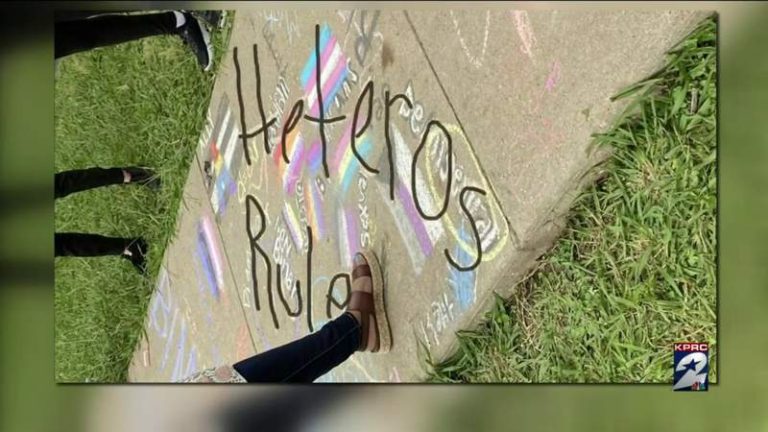
FBISD students accuse teacher of writing ‘HETEROS RULE’ over gay pride chalk art – KPRC Click2Houston

FORT BEND COUNTY – Sartartia Middle School students are concerned over the alleged reaction of a teacher after students drew chalk art, which included chalk drawings of gay pride flags.

Fort Bend ISD sent out an email to parents notifying them about an incident, but the email left out the details of what happened. Students and parents told KPRC 2 that the teacher wrote “HETEROS RULE” on top of the chalk art, causing concern.

“I just got an email that something happened with a teacher and a student,” said one parent.

The email, which came from Sartartia Middle School Principal Cholly Oglesby, stated:

“We have been made aware of an unfortunate incident involving some of our students who reported an interaction with a teacher, which the students stated left them feeling disrespected and marginalized. Keeping in mind that the safety, health, and social and emotional well-being of our students and staff are always our top priority, we were extremely disheartened to hear about these allegations from members of the Sartartia Middle School community as well as some of our feeder pattern high schools.

It is my sincere goal to always maintain an atmosphere of honor, inclusion, support and respect on our campus.

Diversity in our community is to be met with a sense of mutual acknowledgment, understanding and tolerance. I insist that campus leaders, classroom teachers and students exhibit and model this type of behavior without exception. We are exploring opportunities to have a campus-wide event to dialog and foster better understanding, respect, and a healthy co-existence for all members of the Sartartia Middle School community. Please stay tuned for more information about that…”

The email left some parents wondering.

Palm Island council delivers first LGBTQI portfolio in Queensland – ABC News

A North Queensland council has become the first in the state to introduce an LGBTQI portfolio, to ensure the community is represented in all its decisions.

Newly-elected deputy mayor of the Palm Island Aboriginal Shire Council, Cr Andrew Castors, said he was compelled to make the move after identifying a need in the community.

He said LGBTQI people faced unique challenges that needed to be heard by the local government.

“Their issues are different to the straight community and so I thought that we needed a voice on council as well, and we wanted our own safe haven for all people like us on the island,” he said.

Cr Castors said he would like to see more local councils establish a dedicated LGBTQI portfolio.

“I would like to see, especially the Aboriginal communities, really take it on board,” he said.

Portrait of the Deputy Mayor of Palm Island Aboriginal Shire Council, Cr. Andrew Castors.
Deputy mayor of Palm Island Aboriginal Shire Council, Andrew Castors.(

ABC North Qld: Dwayne Wiles

)

More residents getting the opportunity to ‘be’ themselves’

As part of the portfolio, Cr Castors meets with LGBTIQ residents on the island to discuss matters concerning the queer community.

He also educates the younger generation about the history of the ‘sista girls’ and ‘brother boys’ and how they paved the way for today’s LGBTQI residents.

“We’re seeing members from the LGBT community from the mainland [Townsville] coming to Palm Island and some of them have now applied for housing because they feel more accepted here than they do on the mainland with their own families,” said Cr Castors.

‘Accept me for what I am’

Palm Islander Amy Lee Oui walks along a fashion catwalk wearing a hat and dress.
Palm Islander Amy Lee Oui wants to pursue a future in fashion modelling.(

ABC North Qld: Dwayne Wyles

)

Palm Islander Amy Lee Oui, 21, is a transgender woman who came out at the age of 12.

“It was pretty wild (coming out), but all my family accept it. (I’ve) just got a lot of uncles to deal with, but they just got to accept me for what I am, what I’m good at and what I’m best at,” she said.

Palm Island recently hosted a fashion show which included many ‘sista girls’ and ‘brother boys’ strutting their stuff on the catwalk. 

“The fights that some of the older ‘sista girls’ had in the past made it possible for people like Amy to be up on that runway and come out in female outfits,” said Cr Castors.

The Palm Island community wants to establish a local modelling academy to help residents like Ms Oui follow their dreams.

“It will encourage me to be where I want to be and become a superstar,” Ms Oui said.

The group meets fortnightly on the island.

The Ruling Class Only Cares About Democracy When It Helps Them – OpEd – Eurasia Review

By José Niño*

Turkish president Recep Tayyip Erdogan once remarked that ”[d]emocracy is like a streetcar. When you come to your stop, you get off.” Say what you want about the Turkish president and his extravagant political ambitions, but Erdogan’s statement reveals an uncomfortable truth about the present state of democracy in the West.

Irrespective of the political system, be it so-called liberal democracies or the managed democracy Mr. Erdogan presides over, democracy functions as just one of many tools in a ruling class’s toolbox to control their subjects. Even in America, where citizens are constantly reminded, from their high school civics classes all the way to TV broadsides, that democracy is what makes America exceptional among countries, democracy is cynically exploited to advance certain political agendas.

Technocratic administrators frequently pay lip service to democratic values while appearing on TV or during their lucrative speaking tours, but when pitted in the arena of real-world politics, they will quickly change their tune.

The very same technocratic class who hoots and hollers about the sacrosanct principles of democratic governance will go out of its way to denounce voters when they rise up and vote against candidates or proposals the ruling class angles for. Philosophical consistency does not come easily for individuals bent on making public administration the pillar of governance.

On the rare occasions when those dastardly plebeians scuttle the political class’s machinations, they scramble to find ways to “rectify” the behavior of their wayward subjects. One common way political gatekeepers nullify the will of their voters is through the use of federal courts.

Just ask California voters about democratic values. Their democratic input was nullified when they decided to vote in favor of Proposition 187, a ballot proposition that would have restricted public assistance for illegal aliens. Even after a decisive 58 percent–41 percent vote, activist courts were ready to overturn the results of Proposition 187. Federal judge Mariana Pfaelzer issued a permanent injunction of the ballot initiative, which later led to her ruling it unconstitutional in 1997. In the aftermath of Pfaelzer’s ruling, Proposition 187 remained stuck in the appeals process and was finally laid to rest when Democratic governor Gray Davis decided to not appeal the federal court ruling and instead asked a federal court to mediate a compromise in 1999.

Similarly, Proposition 8, a constitutional amendment that would have banned same-sex marriage, faced great resistance from the court after a controversial referendum in which California voters approved the measure by a margin of 52 to 48 percent, with substantial support from minority groups such as blacks and Hispanics. As with Proposition 187, a federal judge struck down Proposition 8 in 2010. The usual litigatory proceedings took place after the federal district ruling, but the gay marriage question would finally be settled once and for all after the Supreme Court’s Obergefell v. Hodges decision. States from California all the way to the reddest of states in the Deep South fell in line with little resistance after this landmark decision that legalized gay marriage nationwide.

The aforementioned examples of judicial overreach highlight a new trend that has taken shape in Western politics in the last century. Historian Paul Gottfried observed that in liberal democracies with strong judiciaries, the prevailing political arrangement in the majority of Western governments, referendums are routinely squelched through political or judicial maneuvers. To further rub salt in the wound, this political interference from the top is usually done in the immediate aftermath of ballot initiatives that did not sit well with the political hall monitors.

The political results of these controversial referendums aside, the most salient consequence we can take away from the last few decades of judicial activism is the emergence of a kritarchy; a political order in which judges rule over the people. The ascendant kritarch class, along with functionaries in the administrative state, has worked assiduously to chip away at the sovereignty of states, counties, and municipalities.

For a country that struts around lecturing other countries about not being sufficiently democratic, it’s amusing how democratic values get cast by the wayside when the regime receives a credible challenge from below. Yet, on issues that remain divisive among America’s many political factions, we are led to believe that nine robed lawyers with lifetime tenure can make rulings that line up with the political values of more than 330 million people; all while comporting with American constitutional principles. Color me highly skeptical of such a prospect.

If the political class were serious about democracy, they would devolve power to legislatures or voter referendums at the state level. America still has a federalist system, despite DC’s constant attempts to gut it, that fosters diverse forms of democratic expression when it’s allowed to operate freely. But that democratic mirage quickly evaporates when the federal government starts overstepping its boundaries and makes attempts to overturn the decisions of state governments or voter initiatives.

There are valid criticisms of democracy and concepts of “popular will” especially in the context of a modern mass democracy largely engrossed by mass hysteria and indoctrination coming from the education system, corporate media, and entertainment. However, ballot initiatives at the state and local level do manifest a more organic form of democratic action that aligns with the parochial interests of voters in a given jurisdiction.

A more practical alternative to the current arrangement is to shift toward small-scale democracy à la Switzerland, which is more in line with the principles of classical liberalism and protects subsidiarity. The notion of using DC governing bodies to pass measures that represent the “general will” of all Americans—a polarized population of more than 330 million people with distinct cultures and political peculiarities depending on the region they reside in—is a pipe dream if there ever was one.

Democracy proponents’ efforts would look more credible if they strived to make, nullification, decentralization, and even secessionism integral parts of regular political discourse. As long as the present managerial model is kept intact, there is scant reason to believe democratic accountability will ever take place in American politics.

American politics is already dominated by pollsters, fact checkers, social media hall monitors, and the corporate press, who are constantly trying to manufacture consent and mold the public’s political views. As the technocratic state cements its hold, the very act of voting will wither away and become a worn-out artifact of a bygone era.

Dwelling on the past and trying to restore a previous epoch of perceived tranquility surely evokes starry-eyed nostalgia, but it’s not a serious answer to the most pertinent issues of our time. The path to bringing about an iota of sanity in American politics will not involve using strategies that are found in your everyday civics textbook. Nor will it be achieved by pulling the lever for whatever establishment-approved candidates are up for federal office.

In all likelihood, Americans will have to piggyback on existing trends—be they successful state measures such as constitutional carry or gradual moves toward the nullification of unconstitutional laws—to fight against government overreach. True resistance will come from state and local governments who reject politically approved behavior and openly start defying the Supreme Court by nullifying its decisions that run afoul of local laws and customs. In the local domains, everyday citizens can at least exert some influence over political bodies.

The key is that local bodies don’t act like doormats when the federal government overreaches. By participating in the federal election circus and allowing it to trample all over the sovereign actions of states, Americans are giving the feds the greenlight to continue pulling unconstitutional stunts.

There’s a much stronger chance of getting the federal government to change its ways when lower levels of government make it sweat by nullifying and refusing to recognize its unconstitutional behavior. Americans who are serious about democracy will find more fertile ground at their state legislatures and city halls than in the Beltway.

The nomenklatura’s hollow appellations to democracy are nothing but a ruse to obfuscate an agenda that’s exclusively focused on centralizing political power. In order to orient America toward more localism, the first step is for people to see through the smoke and mirrors that keeps them wedded to concepts that do not comport with political reality. From there, localist mechanisms can be employed to throw a wrench in the managerial class’s plans and remind DC leaders that their plots will regularly be met with pushback from below.

*About the author: José Niño is a freelance writer based in Austin, Texas. Sign up for his mailing list here. Contact him via Facebook or Twitter. Get his premium newsletter here.

Source: This article was published by the MISES Institute

Gay pride will be on display in Huntington Beach – OCRegister

Huntington Beach soon will join several other Orange County cities in hoisting the LGBTQ flag at City Hall.

Council members voted 6-0 Monday, May 3, to fly the rainbow-striped banner for almost six weeks. The flag will be raised on Harvey Milk Day, May 22, and continue waving through the end of June – LGBTQ Pride Month.

The rainbow flag is a symbol of welcome for lesbian, gay, bisexual, transgender, queer and questioning individuals.

Other cities in the county that exhibit the banner during LGBTQ month include Irvine, Santa Ana and Anaheim. Since 2019, it has flown year-round at the Orange County Fair & Event Center.

Councilman Erik Peterson did not attend the meeting Monday. Over the past year, he has repeatedly complained about the increasingly progressive city council taking up social justice issues, arguing that anti-hate declarations are ineffective.

“I just can’t vote for something that doesn’t do anything, or just because it feels good,” Peterson said in early April about the passage of a declaration condemning white supremacy.

On social media, and at the May 3 meeting, some Huntington Beach residents agreed with that sentiment.

“I’d like to beg this council to please focus on doing the job you were elected to do, which is overseeing public safety, financial solvency and infrastructure,” said Cari Swan, who phoned into the Zoom meeting.

“Folks that fall under your divisive category deserve to be viewed like everyone else in this community under one flag – the flag of the United States of America,” Swan argued. “They don’t need your pity or polarization.”

However, most of the dozen speakers supported the agenda item, authored by Mayor Kim Carr and Councilman Dan Kalmick.

The Huntington Beach City Council voted May 3, 2021, to join other Orange County cities in flying the banner from May 22 to June 30, LGBTQ Pride Month.

Councilwoman Natalie Moser said that much of the criticism she saw on Facebook pages about the flag suggested that council members needed to concentrate on “the real work at hand.”

“We can do more than one thing at a time; we can rub our bellies and pat our heads,” Moser countered, adding, “Our job is to improve the public health and public safety of the community.”

Carr and Moser read aloud letters they had received from young people who are transgender or gay. “I thought I would tell you what that flag means to me as a nonbinary 12-year-old,” one child wrote. “It means you see me. And it means I am perfect the way I am.”

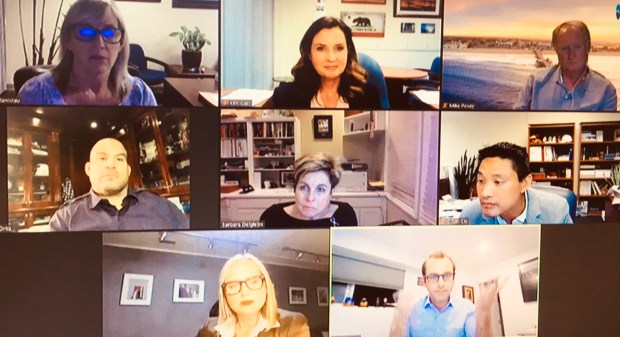
Councilman Mike Posey admitted that he had intended to vote differently, but was swayed, in part, by those who oppose the city’s decision.

“I saw on social media that the pursuit of social justice is not our job, and I have to disagree,” Posey said. The city council, he asserted, is tasked with “ensuring that our friends and neighbors have a high quality of life and part of that high quality of life is to know that where they moved the welcome mat is out.”

Earlier in the evening, Kelly Miller, president of Visit Huntington Beach, discussed rebooting tourism in the city after the coronavirus shutdown. In her comments, Councilwoman Barbara Delgleize said his presentation dovetailed into the LGBTQ flag debate – and the economic benefits of softening Huntington Beach’s image altogether.

“This community is tough,” Delgleize said. “It is not an easy place if you disagree with somebody… We have an opportunity this summer to really knock it out of the park in so many ways – to fill our hotels, beaches, restaurants. This kind of spirit is really what could make a difference.”

Lil Nas X faces divided music industry after expressing openly gay identity – Inklings News

Since his new song release, “Montero”, Lil Nas X has recieved an overwhelming and unjust amount of backlash due to him being one of few gay rappers. “Montero” just hit number one in the world on April 5 for Billboard, but this song is different from his two other number-one-hits since “Old Town Road” in 2019. This song has lap dancing on the devil, pole dancing to hell and a sexual twist to biblical stories with “Satan Shoes” to match. Although this may sound bad on paper, Lil Nas X is being criticized without acknowledgement of the barriers he has broken, which are symbolized in “Montero.”

Lil Nas X was told after “Old Town Road” hit number one that he was a one-hit-wonder at 19. He has since had four multi-platinum songs and continues to prove himself. Now, he is receiving more hate than ever for “Montero” due to its so-called “devil worshipping.”

In reality, Lil Nas X struggled through his teenage years as a Christian, having anti-LGBTQIA+ ideas incorporated into his upbringing. 

I spent my entire teenage years hating myself because of the sh*t y’all preached would happen to me because I was gay,” Lil Nas X tweeted in response to Governor Kristi Noem of South Dakota taking a stance against Lil Nas X. “So I hope you are mad, stay mad, feel the same anger you teach us to have towards ourselves.”

Lil Nas X’s Satanic references throughout “Montero” are symbols of him embracing his gay identity, which was taught as Satanic when he was growing up.

The slant society has against this song is revealed through our hypocrisy. We praise songs by the Rolling Stones, The Beatles, Elvis, Metallica, Grateful Dead, Van Halen and Johnny Cash about the devil; however, when a gay man writes a similar song, he is criticized.

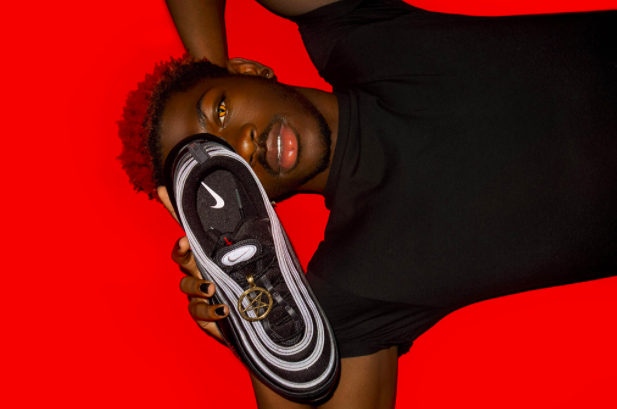
In addition to his recent song release, Lil Nas X created shoes inspired by “Montero,” titled “Satan Shoes”. The majority of the shoes are black with red highlights, containing drops of human blood and references to a Biblical verse which references the Devil by having Luke 10:18 printed on the side of the shoes and likewise setting the price for the shoe at $1,018 price. 

Regarding the Satan Shoes, Nike has recently taken steps to sue MSCHF, the company Lil Nas X partnered with in order to create the shoes. This is due to Nike being affiliated with the infamous shoes through a swoosh seen on the sides, which occurred similarly with Jesus Shoes released one year prior. 

“Over a year ago we released the Jesus Shoes […],” MSCHF stated on their official website where the now sold out shoes still have a web page. “Last week’s release of the Satan Shoes was no different […]  Heresy only exists according to doctrine: who is Nike to censor one but not the other?”

Through Nike taking legal action for the Satan Shoes and not the Jesus Shoes, Nike is granting privilege to the less controversial shoes. Had Lil Nas X chosen to not embrace his past through these Satanic references, he would not have had to deal with this lawsuit.

As a Christian, I am not offended by Lil Nas X’s “Montero,” as I understood his past prior to jumping to conclusions about his latest song; however, so many on the internet refused to acknowledge this and proceeded to use their own prejudices against Lil Nas X, additionally taking hits to the LGBTQIA+ community. It is my hope that we can appreciate art regardless of one’s identity or our own in the future, and hold our reactions back until further investigation into an artist’s cause and purpose.

“It is my hope that we can appreciate art regardless of one’s identity or our own in the future, and hold our reactions back until further investigation into an artist’s cause and purpose.””

— Elle Vail ’23

Tennessee Measure Honoring Gay Country Star TJ Osborne Blocked by House Republicans – Variety

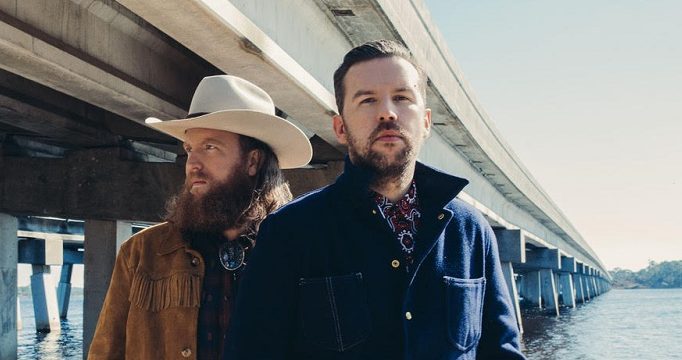
A measure in Tennessee to honor Brothers Osborne singer TJ Osborne, who recently came out as gay, has been blocked by Republicans in the state’s House of Representatives, after it had unanimously passed the Senate.

Rep. Jeremy Faison, chair of the House Republican Caucus, is the lawmaker responsible for blocking — and some say effectively killing — the measure. He cited a procedural objection, although many believe that his history of supporting anti-LGBTQ legislation is the likelier reason for him putting the kabosh on the honor.

Osborne’s fellow country star Kacey Musgraves was among those registering her dismay, writing on Twitter: “Massively disappointed in TN House Republicans for blocking my friend @TJOsborne for being honored because HE’S GAY!?”

Brothers Osborne, on their account, tweeted Faison directly about about the snub, suggesting they meet in person.

“We’ve lived in this state for over half of our lives,” the duo said in a tweet. “@JeremyFaison4TN honored Ben Shapiro who doesn’t even live here. Jeremy, let’s have lunch one day. On us. Would really like to know more about you as a person.”

In blocking the bill on the House floor Tuesday, Faison initially said simply, “We have some concerns on this SJR, and I’d like to send it back to naming and designating.” When he was asked to explain what “the source of those concerns” was, the lawmaker said, “It wasn’t heard in committee, and I feel like it needs to be.”

In response, a Democratic legislator, Rep. Antonio Parkinson (D-Memphis), reacted with incredulity, saying, “A lot of SJRs are not heard in committees and we vote on ’em. We voted on a couple of them today, as a matter of fact. … The country music artist, TJ Osborne? We’re talking about a country music singer, y’all. C’mon.”

The Tennessee Holler, a progressive account that shared video of the interchange on the floor, noted that “the resolution is sent to a committee that has closed for the year.”

Maren Morris, who had Brothers Osborne collaborate on “All My Favorite People” on her most recent album, retweeted the Tennessee Holler’s tweet, which said, “@JeremyFaison4TN and the @tnhousegop block a resolution to honor out gay country music star TJ Osborne of the @brothersosborne for no reason other than blatant bigotry and spite. It passed the senate 30-0. So much hate in our state.”

The tabled legislation, Senate Joint Resolution (SJR) 609, states that “though T.J. Osborne is not the first country music artist to come out as gay, he is the first and currently only openly gay artist signed to a major country label” and adds that “though it may have been merely a consequence of being true to himself, he has nonetheless become a trailblazer and a symbol of hope for those country music artists and fans alike who may have become ostracized from a genre they hold dear.”

Much to the chagrin of the sizable gay community in Nashville and the country music industry, Tennessee has become renowned across the country in recent years for legislature like the so-called “anti-gay adoption bill,” which allowed religious foster care and adoption agencies to continue to receive taxpayer funding regardless of discriminating against prospective gay parents. It was signed into law by Republican Gov. Bill Lee in January 2020.

More recently, the bill HB529 has received national scrutiny for requiring school districts to give a month’s notice before any curriculum involving sexual orientation, to allow students whose families object to opt out — a move that some say could lead to the squashing of teaching on subjects as basic as classic English literature.

In April, more than 40 businesses associated with Nashville’s music industry signed an open letter to members of the Tennessee General Assembly, saying a number of bills under consideration were “misguided and would codify discrimination” against LGBTQ Tennesseans.

Among the bills under consideration, besides the school curriculum opt-out bill, are pieces of legislation described as “bathroom bills” or regulating trans athletes in women’s sports. The open letter pointed out that the music industry is responsible for $5.8 billion of the state’s annual economy and 61,000 jobs. Among the dozens of signees proposing a more “open, welcoming, and inclusive environment” and predicting “disastrous” consequences from slate of bills were Apple, Big Loud, Big Machine, CMT, Curb Records, Kobalt Music, Maverick Management, Q Prime South, Sony Music Nashville, Spotify, Third Man Records, Universal Music Group Nashville, Warner Chappell Nashville and Warner Music.

In 2012, Faison courted national controversy when he argued against a cyberbullying bill after a spate of suicides among LGBTQ and other youth, saying that “they did not commit suicide because of somebody bullying them. They committed suicide because they were not instilled the proper principles of where their self-esteem came from at home.”

CMSA sues treasurer Michael Rice claiming he stole more than $160K – ChicagoPride.com

CMSA, the largest LGBT sports organization in the Midwestern U.S., is suing its former treasurer for allegedly stealing more than $160,000 in funds and concealing his financial activities. Michael O. Rice II was relieved of his duties at the Chicago Metropolitan Sports Association last year after failing to get re-elected.

The Board of Directors issued a statement on May 4 saying, “We took immediate action and secured legal counsel to begin the long process of working to seek restitution for any and all CMSA funds put to an improper purpose.”

CMSA attorneys noted that Rice was treasurer for eight years until July 31, 2020.

According to the complaint, Rice issued checks to himself, invented false justifications for the checks, cashing the checks, and all the while hiding it. 

“Also among the allegations are charges that Rice undertook a two-week campaign between July 21 and August 3, 2020, to alter hundreds of fraudulent checks in CMSA’s accounting system to cover up his activities, and that he worked to delay a formal audit of CMSA as recently as last year. The amount of suspect checks and transactions identified so far in the investigation totals more than $160,000.”

The attorneys said, “Rice acted intentionally, willfully, and maliciously in flagrant breach of his fiduciary responsibilities to CMSA.”

Criminal proceedings will be processed by the Cook County State’s Attorney and will most likely be presented to the Cook County special grand jury—a second grand jury convened in Chicago to indict non-violent offenses like financial crimes. They will decide Rice’s fate in criminal court.

The misappropriation of funds is especially bothersome when membership and participation in its sports leagues are based on collection of dues—from as many as 4,000 people.

Luis Dominguez plays several sports in the CMSA.

“I am shocked,” he said. “I have played soccer and volleyball and worried about how this will impact the league.”

“This discovery was shocking and deeply disappointing to us all,” said CMSA Board President Lindsay Frounfelkner.

“Once the auditor’s review indicated a high likelihood of misconduct, our Board immediately enlisted legal counsel to further investigate and to take action on behalf of CMSA’s members.”

The group is also seeking damages and the cost of its lawsuit.

The Board continues an active investigation, which is being directed by board members whose tenure did not overlap with Rice’s time on the board.

Serving on the independent committee are board members Michael Richardson, Kyle Palmer, Jeremiah Stevens, and Jason Topping.

“As a newer CMSA Board member but a long-time member of the organization, I have been impressed with my colleagues for their commitment to transparency and a careful appraisal of the organization’s policies and procedures from the time I joined in August 2020,” Stevens said.

“We are all extremely saddened and disappointed by the situation that has led to the complaint we filed today, but I am confident that with the support of CMSA’s membership the Board of Directors will responsibly and aggressively address this issue and work to ensure nothing of this nature is able to happen in the future.”

CMSA was established in 1978 as the Gay Sports Association with a flagship softball program. It eventually branched out into bowling, volleyball, football, tennis, racquetball, badminton, soccer, kickball, golf, and dodgeball. In 2020, they added esports.

Entertainment Weekly’s 2021 Pride is a Masterclass of QTPOC Beauty – Autostraddle

Today’s craving? (I know you were wondering) It’s achocolate chip cookie and guacamole. Not together. But you know what I mean!


Queer as in F*ck You

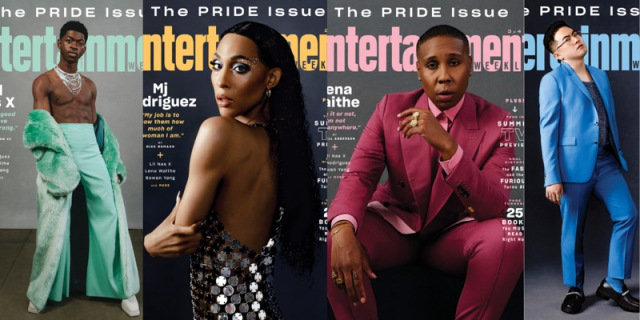
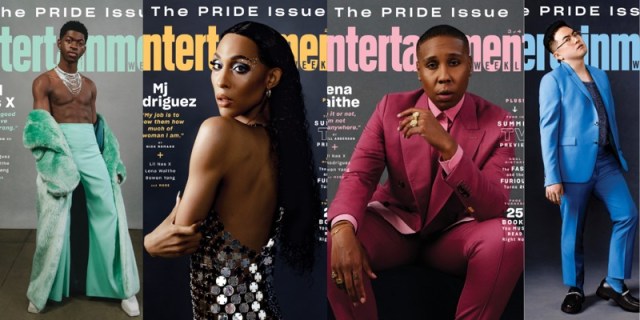
Four covers of the Entertainment Weekly 2021 Pride Issue, from Left to Right: Lil Nas X in green, Mj Rodriguez in shimmery silver, Lena Waithe in pink, and Bowen Yang in blue

Do I love an entire QTPOC Pride issue? Sure the fuck do!

Entertainment Weekly released their new Pride covers with Lil Nas X, Mj Rodriguez, Lena Waithe, and Bowen Yang. And ok I don’t usually get hype over these things — Pride comes every year after all — but these photos are simply gorgeous and you MUST know.

Also(also.also), Lena Waithe’s cover story was written by Tre’vell Anderson and their partner, Texas Isiah, did the photoshoot. Which lead to this extremely cute moment:

How Alison Bechdel Pushes Herself to Turn Her Life Into Art

The story of a lesbian couple ‘adopted’ an older friend into their family so that they can legally take care of her as she ages has just left me FULL of emotion, Couple ‘Adopted’ Their Elder Friend, And Now They Live as a Family

Refuge, Comfort, and Feeling “Held”: What “Home” Means to LGBTQ Organizers by Sam Manzella for Apartment Therapy

“My wife and I (lesbian moms together) have been invited to her cousin’s wedding. She’s marrying the son of a former Republican statewide official who, in the early 2000s, turned the power of his state against gays, especially gay parents.” What’s a Good Wedding Gift for Homophobes?

And speaking of weddings, I super super loved this: From Best Friends to Platonic Spouses

Former ESPN Reporter Says Kim Mulkey Tried to Get Her Fired after a Story Accused the LSU Coach of Telling a Star Player to Hide Her Sexuality. “After Kate Fagan reported that Kim Mulkey urged Brittney Griner to hide her sexuality at Baylor, Fagan said the Hall of Famer asked ESPN to fire her. ”

This Is the Music I Needed As a Queer Teen, you know how “girl in red” has become a code for “is she gay” among Gen Z? Get ready to be introduced to thee girl in red about her song “Serotonin” and vulnerability. (And while we’re here: “girl in red Wants to Follow Her Impulses” by Rachel Charlene Lewis for Bitch Media)


Saw This, Thought of You

Why Indoor Dining Still Makes Public Health Experts Nervous (for Now)

Sort of related? I’ve found the precise “how” of how Americans are getting vaccines and how it’s intersecting with other socio-economic needs, who doesn’t have access, and why, to be important and fascinating: The Era of Mass Vaccinations Is Ending. “To reach the remaining holdouts, America’s approach to vaccine distribution is going hyperlocal.”

From our resident sportsball expert Natalie, “This is going to be awesome” (I gotta say, I agree!) 1996 USA Women’s Basketball Team Set For ESPN 30 For 30 Doc

Ro wanted to know: “Do we still like animal news around here? Because I found some socialist donkeys.” Feral Desert Donkeys Are Digging Wells, Giving Water to Parched Wildlife

I have such a respect for Deb Willis, a true groundbreaker of Black visual imagery and art curation, so yeah I listen to anything she has to say: Reimagining What Monuments Can Be


Political Snacks

States Passed 28 Anti-Abortion Bills in 4 Days. Here’s What to Know about the Surge in Legislation.

As Biden Vows to Have Transgender Kids’ Backs, Advocates Want More Concrete Actions. Talk is cheap.

CN offers pension to widower after claims of LGBT discrimination – CBC.ca

A man in Harbour Grace, N.L., has won the fight to get access to his late partner’s CN Rail pension after initially being denied because he was in a same-sex relationship.

Ken Haire received an offer letter from the railway on Tuesday evening. It recognized him as the common law spouse of Gerry Schwarz, a CN employee for 30 years, and grants him the survivor pension for the rest of his life.

It also includes a lump sum for missed payments in the nine years since Schwarz died, plus interest.

“We’ve won,” Haire wrote in a brief message to CBC News on Tuesday evening. The 71-year-old said he’s going to take some time to reflect before doing interviews.

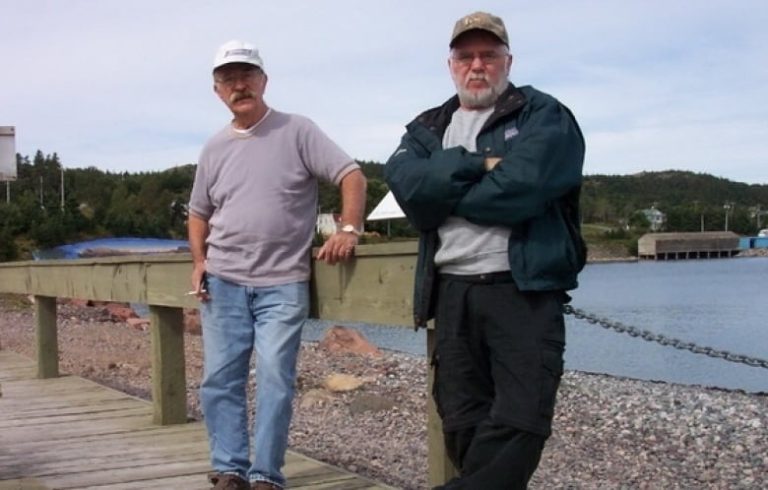
Gerry Schwarz, left, and Ken Haire were in a relationship for more than 33 years. They lived together in Toronto before moving to Harbour Grace, N.L., to be closer to Haire’s family. (Submitted by Ken Haire)

Haire shared his story with CBC News on Monday, explaining how CN rejected his claim to the money because the company did not recognize same-sex relationships when Schwarz retired in 1991.

CN’s pension plan did not include same-sex partners as eligible spouses until 1998. That change was not made retroactive, but the company said a review of how the policy affects employees that retired prior to 1998 is underway.

A spokesperson for CN said the company will have more to say on Wednesday.

WATCH CN earlier said former policies may have to be re-examined:

CN Rail says it’s reviewing its policy that kept a Newfoundland man from getting his deceased same-sex partner’s company pension as a surviving spouse. CN rejected his claim for years, but a legal expert says the company would have little chance in court. 2:10

Haire fought off and on for nine years, quietly trying to gain access to Schwarz’s pension. He said he was crushed by their decision to deny him because it devalued the relationship he shared with Schwarz for more than 33 years.

“After all those years and all the people he had worked with, they still didn’t acknowledge the fact that Gerry and I were a couple,” he said. “We were a couple in every sense of the word. It really did hurt.”

Haire spoke out for the first time last week in an interview with radio station VOCM. His interview with CBC News, which aired Monday, caught the attention of people across the country, including prominent LGBT rights lawyer Doug Elliott.

Elliott called CN’s rejection “bigoted,” and said the company had no legal leg to stand on.

A 2004 decision that Elliott argued before the Supreme Court of Canada made Canada Pension Plan survivor benefits retroactive to 1985, when LGBT people were given rights under the Canadian Charter of Rights and Freedoms.

Haire previously said he would not thank CN’s pension department if the decision was overturned, saying it would only be doing what was right and nothing more.

CN said a review of its policies affecting LGBT employees that retired before 1998 is underway. (Robert Short/CBC)

Read more from CBC Newfoundland and Labrador

Panel Recommends Judicial Inquiry Into Sydney’s Historical Gay & Trans Hate Crimes – Star Observer

A judicial inquiry to investigate historical hate crimes in Sydney against the gay and transgender community should be set up by the NSW government, a bipartisan Parliamentary committee recommended on Tuesday.

Around 88 suspected deaths of men who were victims of hate crimes occurred between 1970 and 2010 in NSW, of which 23 remain unsolved.

“For too long these deaths have remained unresolved and unanswered for, leaving a hole in the lives of victims’ families and loved ones. The committee believes that now is the time to act before the receding window of opportunity to obtain evidence relating to these decades old crimes closes,” the panel said.

The panel chaired by openly gay Liberal MLC Shayne Mallard, was set up in in 2018 by the NSW Legislative Council’s Standing Committee on Social Issues.

‘Gays Go Missing All The Time…’

The committee noted the case of Simon, a gay man from Newton, who went missing in July 2005. When his parents approached the NSW Police they were told “gays go missing all the time… he’ll turn up.

Advertisement

The unsolved cases include those of French national Gilles Mattaini, news presenter Ross Warren and barman John Rusell.

Mattaini, 27, was last seen walking walking along the coastal track at Tamarama in September 1985, but was reported missing only in 2002.

Warren, 24, disappeared after a night out with friends in July 1989. His body was never found though two days later his keys were found on the rocks below the cliffs at Marks Park, Tamarama.

Russell, 31, went missing in November 1989 and his body was found at the bottom of the cliff at Marks Park, Tamarama.

During the panel’s term, the NSW Police arrested a man for the murder of Scott Johnson, whose body was found on December 10, 1988 at the base of a cliff at Blue Fish Point, near Manly’s North Head.

The committee said that its inquiry had “collectively painted a deeply painful and distressing picture of the lesbian, gay, bisexual, transgender, intersex and queer (LGBTIQ) experience of hate crime between 1970 and 2010”.

Police Failed In Its Duty

The committee found that the NSW Police Force had faliled in its duty to properly investigate hate crimes against the gay and transgender communities.

Advertisement

The historical attitude of the police towards hate crimes against the community has led to the community’s lack of confidence in reporting crimes against them. That continues to this day as the panel heard that NSW police had received 16 misconduct complaints relating to LGBTQI+ issues in 2019 and this had gone up to 20 in 2020.

The committee made the following recommendations:

  • NSW government should establish a judicial inquiry or expert review into the killings and unsolved crimes.

  • Update the implementation of the recommendations made in the NSW Police Strike Force Parrabell report.

  • Ensure the adequacy of victim support services for people touched by LGBTIQ hate crimes.

  • Supporting the completion of the Bondi Memorial in Marks Park, Bondi.

  • Ensure LGBTIQ hate crimes are adequately captured and recorded by the police.

Demands For NSW Police and Government To Apologise

ACON said it supported the recommendation for a judicial inquiry.

“The attacks committed against sexuality and gender diverse people in NSW over decades have left a painful legacy for the loved ones of victims, survivors, their families, and the entire community, which was compounded by the slow and inadequate responses to many of these crimes,” said ACON CEO Nicolas Parkhill .

While its demand for a judicial inquiry was accepted, ACON said its other submissions before the committee were not addressed. ACON had sought the setting up of an office for equity, support for a government-funded mainstream education campaign and a public apology by the NSW Government and the NSW Police Force. “ACON will continue to advocate for these omissions through other policy settings and opportunities,” the organisation said.

If you feel distressed reading the story, you can reach out to support services.

For 24 hour crisis support and suicide prevention call Lifeline on 13 11 14

For Australia-wide LGBTQI peer support call QLife on 1800 184 527 or webchat.

Experts: Mass. not equipped for rise in meth, cocaine use – Boston News, Weather, Sports | WHDH 7News

The focus for years in the state’s fight against substance abuse has been on illegal and prescription opioids, but a legislative committee on Tuesday heard from experts that the use of stimulants, particularly methamphetamines, has been quietly on the rise without a system in place to adequately respond.

The Joint Committee on Mental Health, Substance Use and Recovery held a hearing to solicit feedback from experts in the field on the use of stimulants and the state’s preparedness to respond.

After a year of living through a pandemic, the opioid crisis has not gone away, but not every overdose death can be blamed on opioids, with an increasing number of tragedies related to stimulants or the mixing of the two types of narcotics.

“These issues are now more pronounced than ever,” said Rep. Adrian Madaro, an East Boston Democrat and the co-chair of the committee alongside Sen. Julian Cyr.

Fentanyl continues to drive overdose deaths in Massachusetts, according to the experts, but increasingly the opioid is showing up in non-opiate narcotics, like cocaine and meth. The use of meth is also more prevalent among gay and bisexual men, according to researchers, and can lead to spikes in HIV and other health issues if not addressed.

Cocaine and crack seizures have actually declined in the region over the decade from 2000 through 2019, but methamphetamine seizures by law enforcement have climbed between 1,700 and 2,900 percent.

“It’s huge,” said John Eadie, project coordinator for the federal High Intensity Drug Trafficking Areas programs.

The Department of Public Health reported that over the first six months of 2020 cocaine was present in 31 percent of the 1,878 opioid related overdose deaths and amphetamines were present in 6 percent of cases.

Eadie said data on seizures is used by researchers to track supplies of a particular drug, and has been shown to have a very close correlation with overdose deaths in a particular region. While overdose data can lag a year to 18 months, Eadie said seizure data can be obtained through the local HIDTA office much more quickly and be used to warn hospitals and first responders about potential spikes in usage.

He encouraged Massachusetts to set up a system with the Northeast HIDTA to track seizures as Vermont is already doing.

While opioid prescription rates declined in Massachusetts in the second half of the last decade and the state ranked 20th of the 26 states reviewed by HIDTA for opioid prescriptions per capita, Massachusetts ranked first among those same states for stimulant prescriptions.

“They’re riding right along the wave with meth and the wave on cocaine,” Eadie said.

From 2010 to 2019, the number of stimulant prescriptions being written climbed from about 210 to 350 per 1,000 people.

“You’ll want to take a hard look at whether that is due to sudden radical changes in health and the medical diagnoses of the population of your state or whether more likely that is related instead to diversion into illicit use to match the methamphetamine use increase in your area,” Eadie said.

Other issues flagged for legislators included training for police, medical technicians and other public safety personnel and treatment programming designed for stimulant users.

James Cormier, drug intelligence officer for the New England High Intensity Drug Trafficking Area and a former police chief in Reading, said responding to a call for someone under the influence or overdosing on an opioid is very different than if someone had used a stimulant like meth.

“One of the things that we’re going to need to do is prepare public safety people for the increase in stimulants. It’s going to be completely different than what we’ve seen with opioids and it’s important that we get ahead of it,” Cormier said.

Deirdre Calvert, director of the Bureau of Substance Addiction Services at the Department of Public Health, also told the committee that many of state’s substance use treatment programs have been designed for people with alcohol or opioid addictions, but may not be appropriate for people detoxing from a stimulant who needs a different behavioral therapy approach.

“If you’re a polysubstance user or a stimulant user, what I’m hearing is we just don’t have interventions that are going to make a difference,” Cyr said.

Calvert said the federal government recently approved the use of substance use treatment funding for stimulants as well as opioids, which will make a difference. She said the state hoped to expand the use of fentanyl strips for users of stimulants to be able to tests for the presence of the lethal opioid.

“It’s trying to turn the Titanic on a dime,” she said.

Calvert said that 34 percent of admissions into Bureau of Substance Addiction Services programs report using stimulants, with only 7 percent indicating that as their primary drug of choice.

From February 2020 to September, 2020, people admitted to substance treatment programs reporting the use of cocaine increased from 40.3 percent to 50.5 percent, from 42.2 percent to 54.4 for crack cocaine use and from 33.4 percent to 39.1 percent for methamphetamine.

“Based on the data and recent reports, stimulant use and overdoses are occurring with the increasing infiltration of fentanyl in the non-opiate drug supply,” Calvert said.

California State Sen. Scott Weiner, who represents San Francisco and chair’s the California Senate’s mental health caucus, said the use of methamphetamine has been a problem on the West Coast, and in San Francisco, for a long time.

“Opioids understandably have gotten an enormous amount of attention and resources given the train wreck we have seen from Oxycontin and other drivers of this crisis and that is terrific, but I don’t think meth has gotten the focus that it needs,” Weiner said.

Weiner said in San Francisco political leaders like himself and activists are working to open meth sobering centers like the city uses for alcohol to keep people that don’t need to be in the emergency room out of hospitals.

He said he’s also working to pass legislation legalizing safe drug consumption sites, an idea that has been controversially debated in Massachusetts, and to improve private health insurance coverage for mental health and substance use treatments.

Cyr said he hopes the Legislature this session can revisit a comprehensive mental health parity law passed by the Senate last session that stalled as the pandemic arrived.

(Copyright (c) 2021 State House News Service.

Top neighborhoods to explore in New York City – Lonely Planet Travel News

0

With more than 8 million people crammed into five boroughs spanning a mere 300 square miles, New York City is a boisterous metropolis that famously refuses to sleep. Its riot of sights and sounds vary so much from one block to the next – let alone from borough to borough – that you could take a month and visit a different part of town each day, and you’d still only scratch the surface.

Home to Times Square, Rockefeller Center, the Empire State Building, and the Theater District, midtown is an obvious destination for first-time visitors, but don’t stop there – there’s a ton left to discover after you’ve crossed those spots off your list. Here are eight New York City neighborhoods you should make time to explore. 

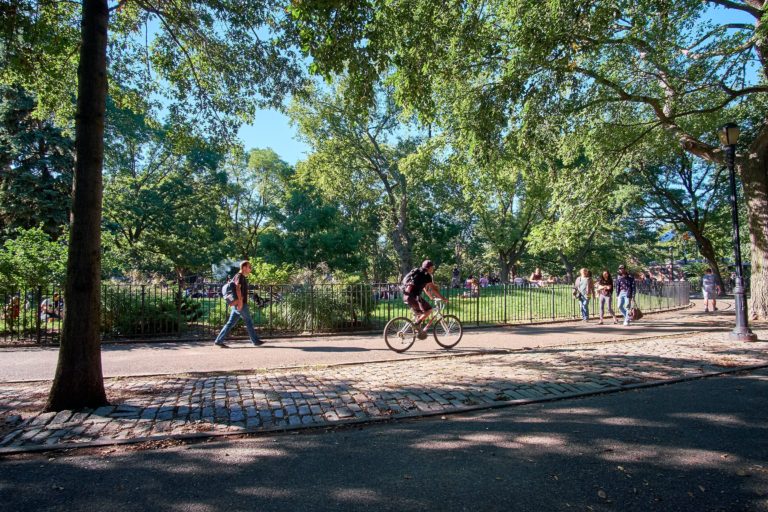
People walking and cycling in Tompkins Square Park in East Village on a warm October day.
East Village has shed its gritty punk-rock image for a trendy upscale vibe © Nielskliim/Shutterstock

East Village and Lower East Side

Best neighborhood for restaurants 

East of Third Avenue, south of 14th Street, and north of Houston is the East Village, once celebrated for its gritty punk-rock scene but now better known for its trendy, upscale vibe – albeit one that still has a hint of an edge. It’s just harder to see it now, thanks to the plethora of restaurants, bars, shops, theaters, and concert venues that have sprung up in the past decade or two.

St. Mark’s Place is one of the main drags, and while it’s jammed with kitschy stores and cheap vendors in spots, there are also some real gems hiding in plain sight, especially as you travel further east toward Tompkins Square Park.

But really, no matter which block you stumble down, it’s hard to go wrong – you’re sure to find something tasty, whether it’s blintzes and pierogi from the legendary Veselka or relative newcomer Empellón al Pastor’s cheeseburger tacos and spicy-cucumber margaritas at happy hour. 

On the other side of Houston and stretching down toward Chinatown, the Lower East Side is a neighborhood molded by immigrants, and its history is a fascinating one best experienced at the Tenement Museum on Orchard Street. (The New Museum and the International Center of Photography Museum are also nearby).

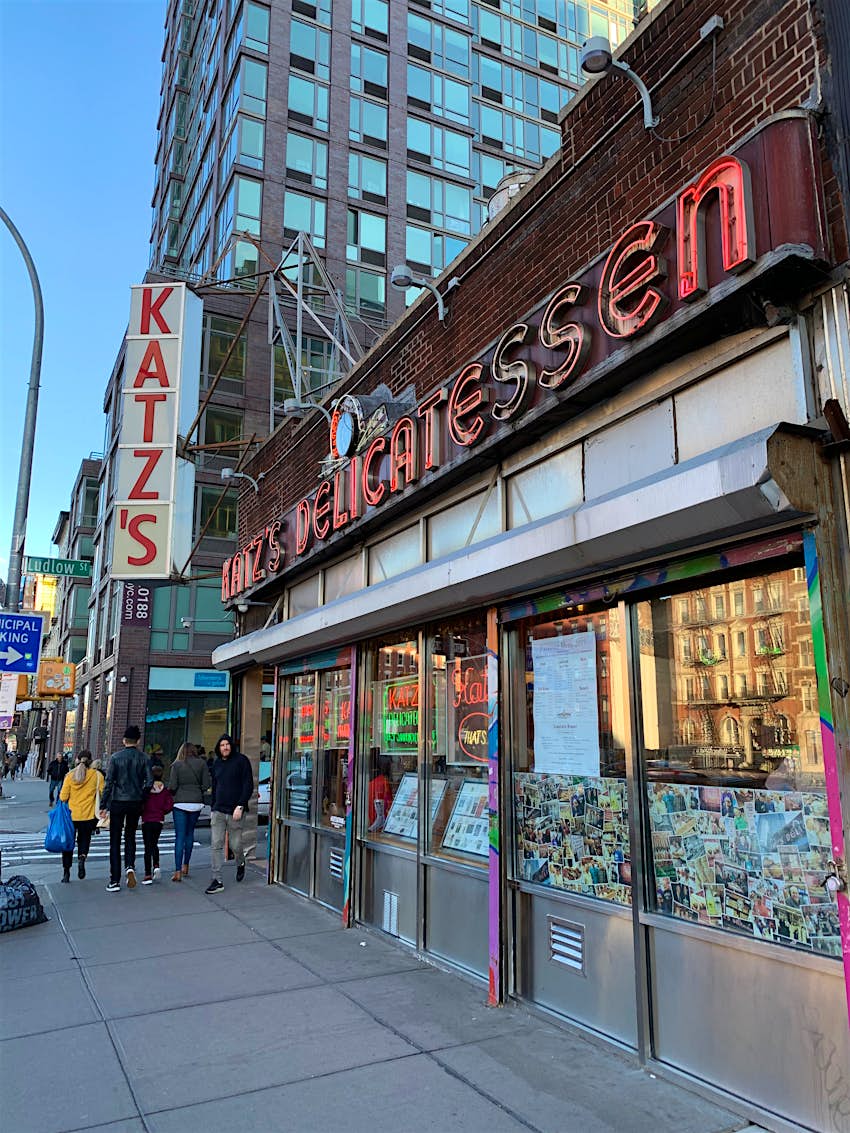
Exterior shot of Katz's Delicatessen
Katz’s Delicatessen has been serving the most famous pastrami sandwich in New York since 1888 © Viktor Fuchs / Shutterstock

On Houston itself, two institutions nod to the area’s Jewish roots: Katz’s Delicatessen, equally beloved for its smoked pastrami and its appearance in the “I’ll have what she’s having” scene from When Harry Met Sally, and Russ & Daughters, an appetizing shop beloved for its caviar, knishes, and smoked fish.

Further south on Orchard Street, Scarr’s Pizza grinds its own stone-milled flour to make the perfect unpretentious slice, while Dirt Candy on Allen Street serves some of the most creative vegetarian food in town. To sample a little bit of everything, check out the new Essex Market and its subterranean food hall, the Market Line, which features vendors from around the neighborhood and across the city. 

A yellow New York City cab drives past a luxury brick building on the Upper East Side
The Upper East Side is filled with luxury apartments and world-class museums © Robert Cicchetti / Shutterstock

Upper East Side

Best neighborhood for museums

The Upper East Side is just minutes away from the scruffier downtown scene, but the neighborhood’s air of quiet sophistication makes it feel like a whole different city, from the well-kept buildings to the (relatively) peaceful tree-lined streets.

It’s a mix of bank accounts with Michelin-starred restaurants and fancy cocktail bars butting up against burger joints and divey sports bars; moneyed families, young professionals, and blue collar workers sharing sidewalk space; and upscale boutiques facing nationally known chains. 

Exterior of the Solomon R. Guggenheim Museum of modern and contemporary art.
The Guggenheim is one of several spots on Museum Mile © Alexander Prokopenko / Shutterstock

To the east is the Asia Society on Park Avenue, and on Madison Avenue, you’ll find the temporarily relocated Frick Collection; further south at Columbus Circle, technically in midtown but still within walking distance, there’s the Museum of Arts and Design, and a few blocks further is the Museum of Modern Art, which reopened in late 2019 after a $450 million renovation and expansion. 

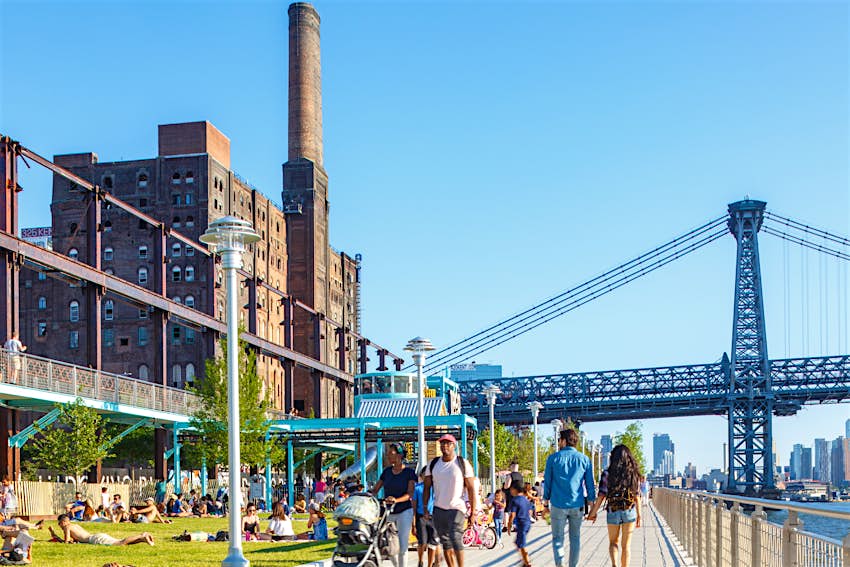
People walk in Domino Park in Williamsburg, Brooklyn on a sunny day.
Williamsburg has quickly become the “it” neighborhood in New York City © solepsizm / Shutterstock

Williamsburg and Bushwick

Best neighborhood for live music

The hipster haven of Williamsburg isn’t exactly an under-the-radar destination – it’s been luring people across the East River for decades now, and its appeal has yet to diminish. The neighborhood peppered with stylish boutiques and eateries, and its music scene is one of the best in town.

On North 6th Street, indie favorites take the stage at the Music Hall of Williamsburg, while a few doors down, the innovative performance space National Sawdust provides an intimate setting for a diverse range of talent, from string quartets and experimental artists to established stars like David Byrne and Liz Phair.

An image of a man with a hat is painted on a brick wall in Bushwick, Brooklyn
Ever stylish Buschwick is a popular neighborhood for the young crowd © Sivan Askayo / Lonely Planet

On Metropolitan Avenue, there’s the Brooklyn outpost of the Knitting Factory, and on Bedford Avenue is the Williamsburg Music Center, a black-owned jazz club that’s been around since 1981 – practically an eternity in the New York’s ever-shifting nightlife landscape. 

If Williamsburg is the elder statesman, Bushwick to the east is the young up-and-comer, full of stylish spots (often former warehouses) to drink, dance, see a show, or simply mingle with the beautiful crowds. To tear it up on the dance floor hit Jupiter Disco, Lot 45, Mood Ring, or the Bossa Nova Civic Club; to catch your favorite band, try Elsewhere, Alphaville, or Market Hotel. 

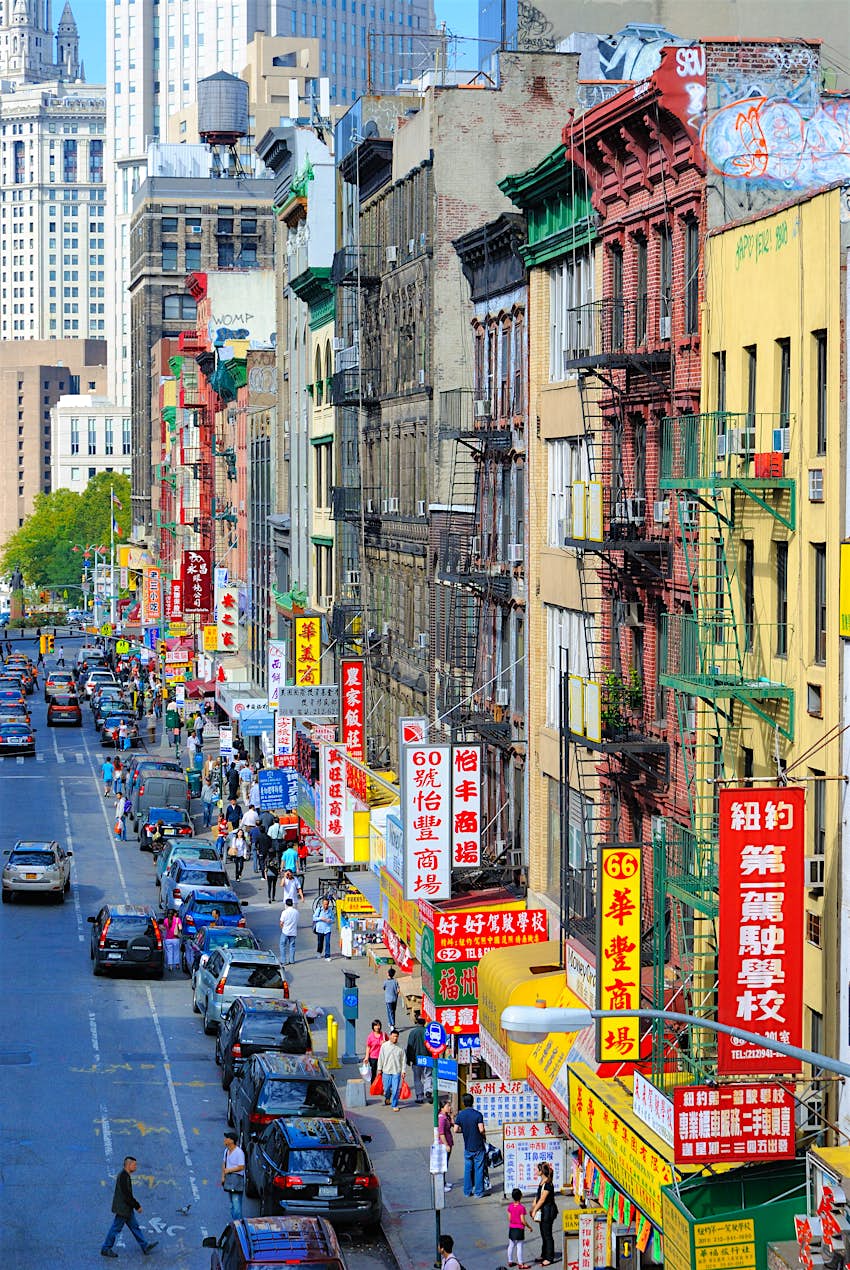
View of shops in Chinatown along East Broadway, a predominately Fujianese neighborhood in New York, New York.
Enjoy fantastic cuisine in Chinatown © Sean Pavone / Shutterstock

Chinatown

Best neighborhood for budget travelers

Bordered by Little Italy and the Lower East Side, Chinatown is like no other place in the city, with heavily trafficked streets and sidewalks packed with fruit-and-vegetable stands, vendors pushing designer knock-offs, and swarms of people in every direction.

The options for accommodations are limited – the Hotel 50 Bowery is a boutique property with a great rooftop bar, the Leon Hotel has views of the Manhattan Bridge, and there’s a Best Western and a Wyndham Garden in the vicinity as well as a handful of Airbnbs – but you’ll have no problems sticking to a budget otherwise, thanks to the inexpensive souvenir shops and, most importantly, the inexpensive dining options.

From dim sum parlors to pho joints to hotpot spots to ice cream shops, bakeries selling sesame balls, custard tarts, and pork buns to holes-in-the-wall slinging hand-pulled noodles, thin-skinned dumplings, and crisp-skinned roast duck, you can easily eat well here without breaking the bank. Just be sure to bring cash, as many places in the neighborhood won’t take cards. 

People walk and a person rides a bike during a summer evening at Washington Square Park in Manhattan
Greenwich Village and West Village are the most popular neighborhoods in New York City © littleny / Shutterstock

Greenwich Village and West Village

Best neighborhood for pretending to be on a film set

New York is highly photogenic, and it’s been memorialized on film innumerable times, but one neighborhood seems to star more frequently than anywhere else in the city: Greenwich Village. And given its quaint, shady blocks, well-maintained brownstones, and chic boutiques, bars, and restaurants, not to mention its (often beautiful, often wealthy) residents, it’s easy to see why so many fictional characters have been made to live here. 

The neighborhood is best seen on foot, so grab a latte from one of the many local coffee shops, put on your best paparazzi-repelling sunglasses, and prepare to lose yourself in the picturesque streets.

Perry Street brownstone facade used in TV series 'Sex and the City'.
Sex in the City was one of a slew of movies and shows that celebrated the West Village © Gary Latham / Lonely Planet

Follow the tour buses to 64 Perry Street, which served as the facade for Carrie Bradshaw’s apartment on Sex and the City, then walk a few blocks south to 90 Bedford Street, where you’ll find the Friends apartment; further east, Mad Men’s Don Draper kept an apartment at 104 Waverly Place, by Washington Square Park.

The park itself is a celluloid stalwart, appearing in films from Ghostbusters II to Inside Llewyn Davis, and a celebrity favorite too, with no less than David Bowie calling it his favorite place in New York. 

Rainbow flag flying from a building on Manhattan's West Side, seen from the High Line Park, near Chelsea.
Chelsea is home to a host of LGBTIQ-owned establishments © Artem Vorobiev / Getty Images

Chelsea

Best neighborhood for LGBTIQ travelers

Historically, Greenwich Village has been a hub of LGBTIQ life in New York for decades: its Stonewall Inn was the site of the 1969 riots that sparked the gay rights movement, and nearby Christopher Park was a popular hangout that saw huge crowds during the uprising.

Today, the two are memorialized as a national historic landmark and a national park, respectively, but while the Village boasts other relevant spots like Julius, one of the city’s oldest continually running gay bars, and Cubbyhole, one of its only lesbian bars, as well as the flagship location of the Big Gay Ice Cream shop (who doesn’t love soft-serve?), much of the community has migrated westward to Chelsea

Aerial of the High Line Park in New York.
The High Line was once a former railway © Alija / Getty Images

Spanning the blocks from 14th Street to 23rd and Sixth Avenue to the Hudson River, Chelsea is home to queer-owned and -run shops, galleries, and restaurants as well as gay bars galore. At Barracuda, which is gearing up for its 25th-anniversary celebration, you’ll find nightly drag shows and 2-for-1 drinks; Rebar is a go-to for dancing and debauchery, and the Eagle hosts a leather scene unlike any other.

In between drinks, soak up some culture with a gallery-hop (there are hundreds in the area, most of which are free) or a visit to the Rubin Museum of Art, and get some fresh air with a stroll along the High Line – a former railway turned elevated park, it offers a different perspective on the neighborhood. 

Colorful street art in Harlem, New York, USA
Harlem is the epicenter of Black culture © Robert Mix / 500px

Harlem

Best neighborhood for Black culture

Harlem has been the epicenter of Black culture in America since the early 1900s, but the neighborhood really came into its own in the 1920s, when the Harlem Renaissance kicked off a decade of unparalleled artistic expression.

From music and literature to art and dance, luminaries including Marcus Garvey, Langston Hughes, Louis Armstrong, Zora Neale Hurston, and Josephine Baker took the spotlight, laying the groundwork for the Civil Rights movement and paving the way for future creatives like James Baldwin, Maya Angelou, Miles Davis, Charlie “Bird” Parker, and Dizzy Gillespie to take the stage. 

The famous Apollo Theater vertical sign in Harlem
Apollo Theater remains a popular destination in Harlem © Rarrarorro / Shutterstock

You can also spend an evening at Minton’s Playhouse, where jazz greats from Miles, Bird, and Dizzy to Duke Ellington, Ella Fitzgerald, and Billie Holiday once performed, or opt for something a bit more modern and hit the iconic Apollo Theater for amateur night, tours, and exhibits on subjects like sneaker culture and Black cinema. Sylvia’s Restaurant is renowned for its soul food, while Marcus Samuelsson’s Red Rooster Harlem puts a modern spin on classic comfort fare.

Exterior of store front in Jackson Heights Queens
Jackson Heights is considered one of the most diverse neighborhoods in NYC © Gus Powell / NYC & Company

Jackson Heights, Queens

Best neighborhood for traveling internationally without a passport

Located in north-central Queens just a short train ride from midtown Manhattan, Jackson Heights is said to be the most diverse part of New York: Some 60% of the neighborhood’s 180,000 residents were born outside of the US, and 167 languages are reportedly spoken here.

While there are ethnic enclaves in many pockets of the city, this is the most you’ll find in one place – and all you need to transport yourself is cab fare or a Metrocard. 

The area is primarily Latino, with representation from Mexico, Colombia, Peru, and Bolivia, and South Asian, with transplants from Nepal and Tibet as well as India, Pakistan, and Bangladesh. Jackson Heights also has one of New York’s biggest LGBTIQ communities, and it plays host to the Queens Pride parade each June.

Roosevelt Avenue is a bit down-at-the-heels, but its lineup of Tibetan, North Indian, and Col0mbian fare makes it well worth a stroll, as does its assortment of stellar taquerias. But to get a real feel for the neighborhood vibe, head north to the family-oriented 37th Avenue, where you’ll find dosas and arepas alongside Uruguayan sweets and Brazilian boutiques, among other mom-and-pop shops. 

Introducing New York City

White House: Biden to use bully pulpit to back transgender youth – Washington Blade

WASHINGTON, D.C. – People around the world have struggled for more than a year while stuck at home for school and work. But this physical and social isolation has taken a particularly tough toll on LGBTQ+ youth, data and interviews show. 

That’s because the pandemic cut many gay and transgender youth off from the places and spaces where they feel free to be themselves and forced them to spend a lot more time with family members who may not accept them.

“A lot of my friends are in the closet…and being stuck at home, they can’t really get out into the world,” said K.C. Elowitch, a 14-year-old transgender student in Rockville, Md. “At school, they were able to do whatever they wanted and be whoever they wanted. Now being stuck at home with [their families] is a lot more stressful.”

Elowitch was one of 11 young people, ages 14 to 22, who participated in a recent LGBTQ+ youth mental health focus group hosted by the Urban Health Media Project, a Washington-area nonprofit that trains diverse high school students from under-resourced communities to do multimedia health and social issue journalism. 

Elowitch’s experience was echoed by others in the focus group. 

“I was in a bad place when I was closeted,” said Wendy Nichols, a 22-year-old trans woman who began transitioning last summer. “Not just mentally, but literally and physically.” 

Living with transphobic parents made it “hard to be comfortable with myself,” said Nichols. 

Wendy (left) is shown with her twin brother (right)

Focus group members honed in on topics that make it hard to be LGBTQ+, including: 

  • A lack of positive and realistic representation of LGBTQ+ youth in media;
  • Being misdiagnosed in doctor’s offices and being treated unfairly due to sexuality, along with other health inequities; and
  • The impact of strict religious beliefs about sexual orientation and gender identity.

Participants were encouraged to share openly, and were led through the 90-minute discussion by professionals, and fellow members of the LGBTQ+ community. The focus group was co-moderated by Heidi Ellis and Josh Rivera. Ellis, who identifies as lesbian, was a senior adviser at the U.S. Environmental Protection Agency in the Obama administration and now runs her own advocacy and consulting company. Rivera, Money & Consumer Editor at USA TODAY, is gay and chairs the newspaper’s diversity committee.  

The focus group participants talked about what they would like addressed by the media and what they would like to see change. They emphasized topics such as safety, gender identity, and safely coming out to others.

Roman Sardo-Longo, a 16-year-old trans male who joined the virtual focus group from Cleveland, said having more LGBTQ+ representation in the media could help other young people more easily accept peers like him.

“It took me a while to come out [as trans] because I was terrified that my friends would not understand, that they weren’t gonna get it, that they would think it was a weird thing they would have to accommodate for,” he said.

Others shared their experiences with religious beliefs that oppose  LGBTQ+ identity and sexuality. 
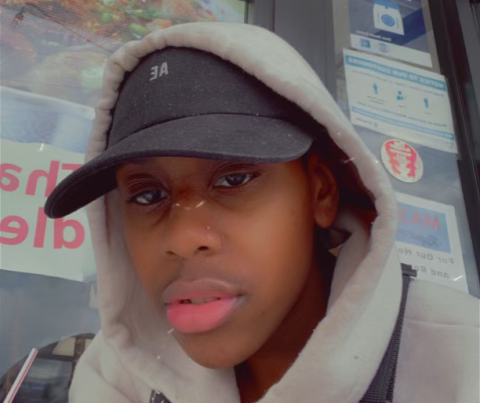
Tris Buchanan, a DC high school senior, is shown in a recent selfie.

Tris Buchanan, 17, lives in Washington, D.C., and identifies as gender-fluid. Buchanan’s parents’ Christian religion played a big role in their struggle to come out.  

“Some die-hard Christians…say God does not like gays, God doesn’t like anyone who’s part of the LGBTQ community,” said Buchanan. “Homophobes use the Bible and use God as excuses.”

Nichols, who also grew up in a conservative Christian household in Texas, said the concept of “toxic masculinity” also greatly affected her as she was growing up. 

“I was told, ‘Men don’t cry,’ ” said Nichols. “I grew up with that and it skewed my views.” 

When Nichols was 16, she finally decided to tell her family she identified as a woman. Her late mother, who had struggled with mental illness since a serious brain injury in a car crash, took Nichols for a drive and threatened to drive them both into the river if her daughter didn’t retract the statement. So Nichols did. 

But last June at 21, Nichols began transitioning to a female by taking hormones she got off the Internet. She didn’t have health insurance and lived nearly five hours from the nearest health care provider who would treat her.  After her father died of cancer last August, she moved to the Washington, D.C., area to live with a friend she met online. 

When that didn’t work out, Nichols became homeless and called the LGBTQ+ youth shelter Casa Ruby. There, she found comfort with others like her and within two months, was connected to the transitional housing where she can now live for the next 18 months, if needed. She begins a new job as a receptionist in early May. 

Nichols, who struggles with substance use and what she believes is depression, said she’s feeling more hopeful than ever that “one day I can overcome it all.” 

“The future seems so bright now,” she said. “I’m not stuck in a place where I couldn’t be myself or dreading the next bad thing as I did for most of 2020 when I was preparing for my father to pass away.” 

UHMP also just completed a workshop on the relationship between housing and health, including LGBTQ+ youth homelessness in D.C. and Baltimore. That story will run soon in the Blade. Another reporting workshop this summer will explore youth mental health, with a special focus on the LGBTQ+ and Black, Indigenous and People of Color (BIPOC) communities. UHMP is seeking applications for 20 high school students to attend.

UHMP is also pursuing reporting on topics proposed by the young people who attended the focus group. Two participants are working on a story about the additional challenges faced by LGBTQ+ youth with learning disabilities. 
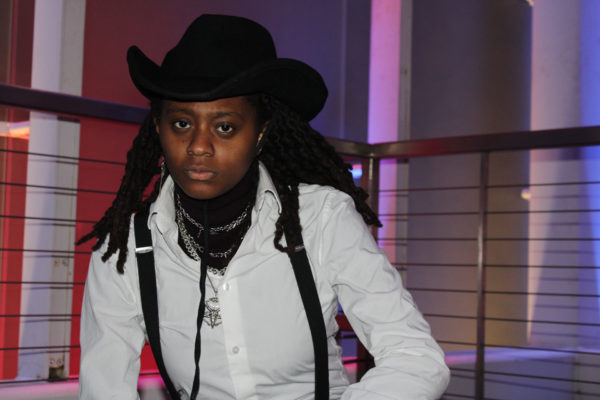
Jojo Brew, 18, is a DC high school senior and photographer.

Jojo Brew, an 18-year-old trans male in Washington, D.C., who participated in the focus group, believes the LGBTQ+ community should produce positive content on social media sites such as Instagram in order to raise awareness and promote understanding of gender and sexuality issues.

To that end, he’s begun interviewing and photographing other LGBTQ+ teens in the D.C. area for visual articles and social media posts and told a little of his own story for Instagram. Brew is also helping plan a June 18 LGBTQ+ event co-hosted by UHMP in Washington, where he hopes young people who may not be out can be “one with the community” even if they don’t speak publicly.  

Having that exposure to other LGBTQ+ people, they’d realize they aren’t the only ones going through a tough time,” said Brew. “They want to be heard and feel some type of love.” 

Brew was recently awarded a Children’s Defense Fund fellowship grant to chronicle the sense of community in Southeast Washington and is working with UHMP to capture and share the stories of LGBTQ+ youth in the D.C. area. 

UHMP is looking for LGBTQ+ people of all ages who are willing to be interviewed about youth mental health. We’d like to hear from youth and adults on all topics, including the impact of the reactions of community, government, parents, religious organizations and peers to youth gender and identity. What helped you weather challenges that could help the next generation?  Let us know at [email protected] 

Vanessa Falcon is a UHMP intern and senior at Miami Lakes Educational Center in Florida. Jayne O’Donnell, former health policy reporter at USA TODAY, is UHMP’s founder.
Sacramento LGBT Community Center – FOX40

Studio40 LIVE

Posted: Updated:

Sacramento LGBT Community Center
Wednesday, May 5, at 6 pm
500 J St, Sacramento, CA 95814

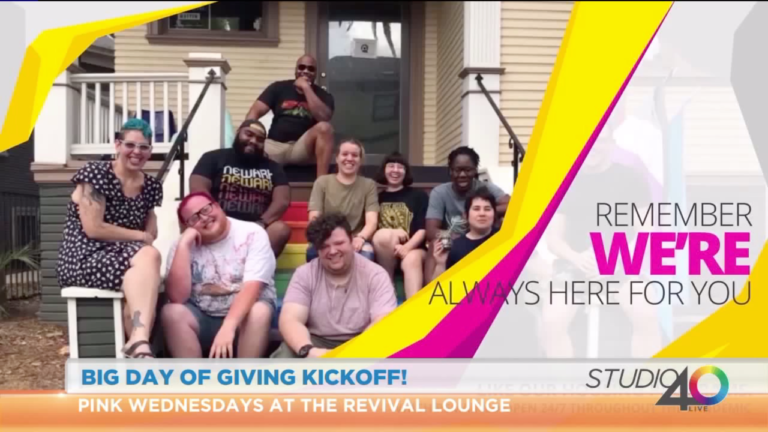
Join us for a pre-BDOG reception at the Revival Lounge, located in the Kimpton Sawyer Hotel. Meet with our CEO, board of directors, staff, and other supporters as we enjoy pink Wednesday cocktails (proceeds benefit the center) and loads of giveaways, doorprizes, and a drag show as we kick off the Big Day of Giving 2021.

Millie Bobby Brown Is Driving Now & The Gays Are Panicking – Pride.com

Millie Bobby Brown Is Driving Now & The Gays Are Panicking

Millie Bobby Brown is now behind the wheel, and the gays better watch their backs!

The 17-year-old Godzilla vs. Kong actor shared a selfie of herself in the driver’s seat of a car captioned, “put ur seat belt on.”

The photo is seemingly innocent enough, though there’s another connotation that comes to mind for the gays.

In 2018, Brown deleted her Twitter account after users made up stories about the Stranger Things star stomping on hijabs and mowing gays over with her car, which reached a boiling point when #TakeDownMillieBobbyBrown began trending. She was just 14-years-old at the time. It’s now a running meme that Brown is homophobic, a pervasive joke on Twitter and TikTok, though completely false. 

@ajguido

she’s coming ##foryou ##foryoupage ##IFeelWeightless ##ChipsGotTalent

original sound aj

It seems Brown anticipated the backlash because she turned off comments on the Instagram post.

Regardless, gays are scrambling in fear. I mean not literally, but like, ironically. 

We love you Millie Bobby Brown!