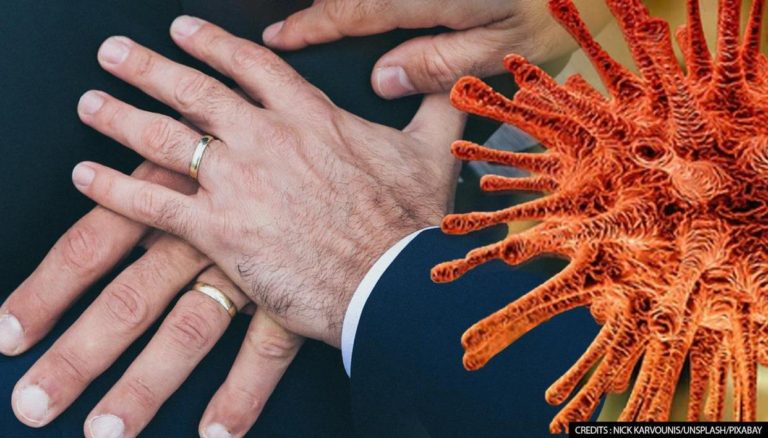
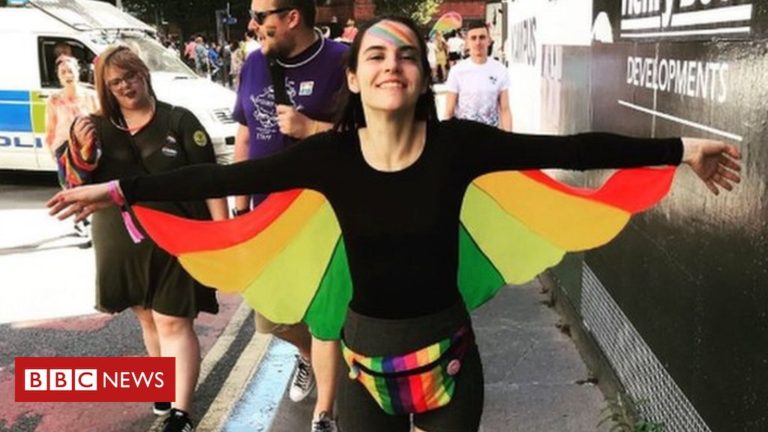
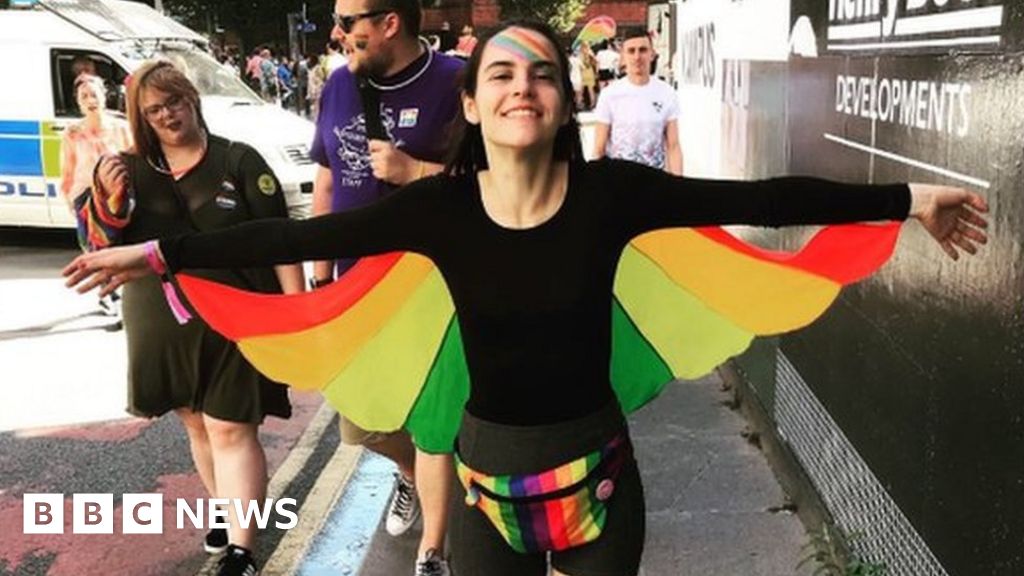
Scottish politician who is an independent candidate from Shetland, Peter Tait has drawn flack against him after he claimed that the COVID-19 pandemic was caused due to gay marriages. He said the coronavirus outbreak, that has rocked the world for more than a year causing millions of deaths was “possibly related” to same-sex marriages.
Tait, who is also a former mussel farmer, made the baseless and shocking remark during an interview with the local newspaper Shetland Times while admitting that his opinion is influenced by his religious beliefs. The Scottish politician also claimed that he was attempting to “represent…things that God would want (him) to represent”.
While speaking on same-sex marriages, he said that he did not support the idea and would also be fighting against the same during the Shetland MSP elections, as reported by Daily Mirror. Tait also said, “Covid is possibly related to it,” acknowledging that he would face stern backlash or his remarks.
LGBTQ+ activists call Tait an ‘idiot’
Several LGBTQ+ activities have denounced Scottish politician’s remarks and called him an “idiot” for promoting such discriminatory views. Daily Record quoted Kerrie Myers, the founder of ShetlandLGBTQ.org.uk saying that it is “obvious” to any person that “Tait is clearly an idiot” by encouraging such “nonsense notion.”
Terming it a “dangerous conspiracy theory”, the founder of Shetland-based LGBTQ organisation said that the “ridiculous” belief of former Mussels farmer could further incite hate of gay persons while contravening the Equality Act 2010. Myers also called for such “hate speech” to not be given any platform as it promotes division.
Further, on Twitter, several internet users lambasted Tait for his views with one of the netizens saying, “Peter Tait, you’re delusional for even thinking gay marriage caused Covid-19.” One Twitter user wrote, “How in modern-day society is such an individual allowed to be a candidate. Being religious is acceptable but why incite such vile and disagreeable behaviour. Let’s see how many narrow mindedness votes you get.”
So Peter Tait, wannabe MSP thinks gay marriage caused covid. I kid you not. If we had such power, don’t you think we would have done something fun with it? What a fruit loop.
A SCOTS election candidate has sparked fury after suggesting gay marriage caused coronavirus.
Peter Tait, an Independent candidate standing in Shetland, said the deadly bug is “possibly related” to same-sex weddings. pic.twitter.com/Gt0gWd7L8n
— The Stark Naked Brief. (@StarkNakedBrief) April 5, 2021
Notably, Tait is not the first lawmaker to have related the pandemic with same-sex marriages. In March 2020, Patriarch Filaret who heads the Ukrainian Orthodox Church blamed gay marriages for the coronavirus pandemic and called it, “God’s punishment for the sins of men, the sinfulness of humanity…First of all, I mean same-sex marriage…This is the cause of the coronavirus.”
Supporters of the Arkansas bill say it would protect young people from undergoing irreversible medical treatments, and the text of H.B. 1570 claims — contrary to the consensus of medical professionals — that “the risks of gender transition procedures far outweigh any benefit at this stage of clinical study on these procedures.”
Medical research shows the opposite.
In a 2019 statement opposing laws that restrict minors’ access to gender-affirming treatment, the American Academy of Child and Adolescent Psychiatry said, “Blocking access to timely care has been shown to increase youths’ risk for suicidal ideation and other negative mental health outcomes.”
More broadly, in an official position paper in 2018, the American Psychiatric Association said there was “significant and longstanding medical and psychiatric literature” demonstrating “clear benefits of medical and surgical interventions” for transgender people.
Sam Brinton, vice president for advocacy and government affairs at the L.G.B.T.Q. suicide prevention organization the Trevor Project, said people who contacted the group for help during mental health crises often cited discrimination and public expressions of anti-trans sentiment.
“When that discrimination is given a bill number, it can be devastating,” Mx. Brinton said, citing research indicating that young trans and nonbinary people who reported experiencing discrimination based on their gender identity were twice as likely to have attempted suicide, and that those who reported having at least one “gender-affirming space” — which could be a doctor’s office — were 25 percent less likely to have attempted suicide in the past year.
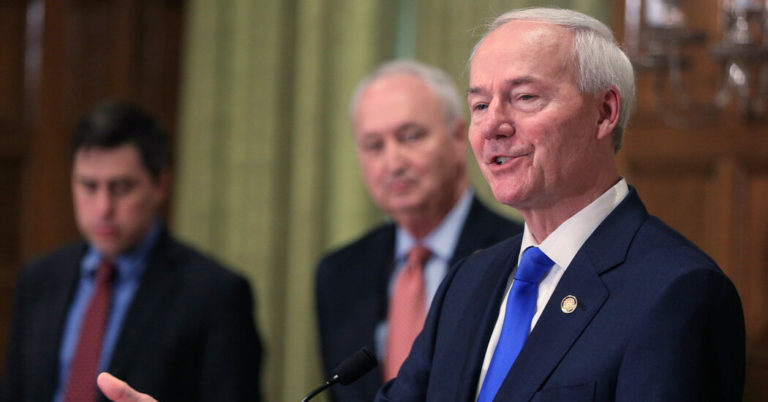
Mr. Hutchinson’s veto was striking not only because he is a Republican, but also because just last month he signed bills that allowed doctors to refuse to treat people based on religious or moral objections and that barred transgender women and girls from competing on women’s sports teams in high school or college. (Such measures have become popular among conservative lawmakers, who have introduced them in more than two dozen states this year.)
He argued that H.B. 1570 was “overbroad, extreme and does not grandfather those young people who are currently under hormone treatment,” and said, “The state should not presume to jump into the middle of every medical, human and ethical issue.”
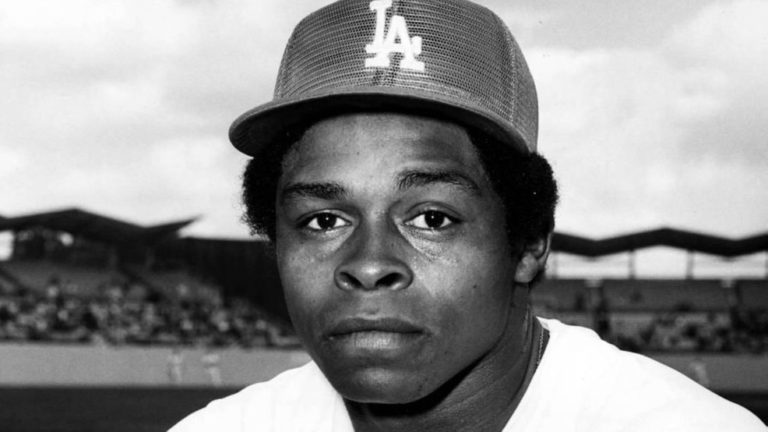
Glenn Burke, one of the most important sports figures to wear a Wolf Pack uniform, slid under the radar, both during his time at Nevada and during his stint in the big leagues.
But Burke’s story, the focus of “Singled Out,” a new book by New York Times bestselling author Andrew Maraniss, gives a fascinating examination of Burke’s life, from the highs of making it to the big leagues by age 23 to the tragic end of cocaine addiction, homelessness and dying of complications from AIDS at 42.
The Oakland, Calif., native was the first openly gay baseball player in Major League Baseball, the inventor of the high five and the first to wear Nikes during a big-league game. A gregarious and amiable man despite a rough childhood (his father was abusive and most likely an alcoholic), Burke overcame great odds thanks to his unconscionable athleticism and magnetic charisma.
“I would describe Glenn as like a glistening mirror ball at the discotheque when the light hits it and all of these different reflections and colors flash all over the room,” former big leaguer Tito Fuentes said.
The book traces Burke being forced into living a double life, a challenge that ultimately pushed him out of the game. He was simultaneously beloved by teammates (for his personality) and degraded by management (for his sexual orientation) throughout his career, at one point being offered a years’ salary to marry a woman.
Burke’s sexual awakening intersected with his brief time at UNR. While Burke made it to the big leagues in baseball, basketball was his first love. One of his dying regrets was pursuing baseball rather than basketball professionally, a result of the Los Angeles Dodgers giving him a $5,000 signing bonus (there’s a funny anecdote in the book about Burke refusing to meet with the Dodgers’ scout because he grew up a Giants fans).
So focused on athletics, Burke didn’t truly realize he was gay until 1974, his third season in the minor leagues. That same year, the NCAA ruled players who were pros in one sport could compete collegiately in another. Burke grew up in the Bay Area playing baseball with Pete Padgett, who was the star of the Nevada basketball team under his father and coach, Jim, who was run out at Cal in part because he recruited too many black players for the liking of some white fans. He even had to check under his car for potential explosives from time to time.
Playing for the Wolf Pack was just a pit stop for Burke, who lasted only a handful of games at Nevada despite averaging 16 points, 5 assists and 4 rebounds per game in his first six contests. He chafed at curfew, class and the structure that came with playing team ball. He was one of the few black students on campus and was grappling with his newfound sexuality, which also was taboo in Nevada. A rift with Jim Padgett — Burke thought he was forcing Pete as the team’s star — eventually led to him quitting the team.
But Burke left an imprint on his Wolf Pack teammates and campus friends, who were devastated by his departure despite his short stay at UNR.
“Glenn is one of those people in your life you’ll never forget no matter how short a time you spent with him,” Wolf Pack teammate Chalmer Dillard said.
With basketball in his rearview mirror, Burke focused on baseball and reached the big leagues in 1976. A year later, he was starting for the Dodgers in the World Series against the rival Yankees. And despite some struggles hitting the ball — he posted a .248 average with the Dodgers — he was an indispensable part of the team, according to All-Star teammates like Reggie Smith, Steve Garvey, Davey Lopes, Don Sutton and Dusty Baker.
“He was the life of the party,” said Baker, one of Burke’s staunches defenders. “He was the most fun-loving dude, and he could dance like James Brown or Michael Jackson. He was so light on his feet. The girls would flock to him and ask him to dance. But at the end of the night, he’d go home by himself every time.”
Everything would unravel after that 1977 season. He was pressured by the image-conscious Dodgers management, namely GM Al Campanis and manager Tommy Lasorda, to marry a woman and was offered $75,000, a full years’ salary to do so. That was, in part, a reaction to Burke having a relationship with Lasorda’s son, Spunky, although the exact details of that relationship remained hazy. Burke was eventually traded to the A’s for journeyman Bill North.
The transaction brought several Dodgers players to tears.
“Glenn? Why? What?” Lopes pleaded with Dodgers management. “You traded our best prospect. Not to mention the life of the team.”
When Baker asked team trainer Bill Buhler why Burke was traded, he answered bluntly: “They don’t want any gays on the team.”
While Burke was beloved and largely supported by his Dodger teammates, the same wasn’t true with the A’s. His fresh start ended up being the end of the road, with teammates (“Don’t bend over in the shower. Here comes Glenn.”), fans (he fought one in a parking lot after being called a f– during the game) and A’s manager Billy Martin (who told his players “That’s Glenn Burke, and he’s a fa—-“) leading him to quit, not once but twice.
In retirement, Burke came out publicly during an interview with Bryant Gumbel on the Today Show in 1982. And while he had many glorious moments after baseball, including captaining a Bay Area softball team to great success and giving the gay community a point of pride and somebody to rally around, his post-baseball life quickly deteriorated.
“He was the gay celebrity in town in the late seventies and early eighties,” said Jack McGowan, a sportswriter and manager at the Pendulum. “He treated us like he was one of us. He didn’t treat us like we were dirt. That was so thrilling for us in the gay community. He was great for our egos.”
But Burke’s celebrity turned into tragedy. He was hit by a car in 1987, breaking both legs, was arrested on drug charges in 1991 as addiction overtook his life and sold his World Series runner-up ring. He contracted HIV and spent his final weeks in his sister’s home withering away, trying to survive long enough to see his biography published (he didn’t make it).
Burke died at 42 best known for creating the high five and being the first baseball player to wear Nikes during a game, both a result of Burke’s magnetic personality (he befriended a concessionaire who worked at a store that would become Nike). Maraniss does an expert job of telling Burke’s life story beyond those headlines, painting a portrait of a man who on the outside was as fun loving a human as you’ll ever meet, but also one who fought with internal demons. It was especially painful to see Burke’s boyfriend use him as a public relations tool, outing him to the San Francisco Chronicle at one point.
“I didn’t know what I’d do for work,” Burke said upon retiring. “But I had been able to put some money away from playing ball. I figured I would amount to little more than a freak. But at least this freak, me, Glenn Burke, was finally going to live his own life. I’d never have to look over my shoulder again.”
The book is interlaced with the stories of Anita Bryant (a beauty queen who ran the anti-gay “Save Our Children” campaign), Harvey Milk (the U.S.’ most pro-LGBT politician in 1970s before his assassination), the disco era and the AIDS epidemic, which helps paint the broader picture of the times Burke was living through as a gay man in a hetero-dominated sport.
Amazingly, more than 40 years since Burke last played in the big leagues, there still hasn’t been an openly gay player in the big leagues while he was an active player, showing the resistance the sport still provides. Burke’s story was both exhilarating and devastating, a once-in-a-lifetime personality being sapped by his sexual orientation.
“He was the most lively personality I ever covered in 45 years in sports,” said journalist Lyle Spencer, who traveled with the Dodgers. “It’s hard to even compare him with anybody.”
Columnist Chris Murray provides insight on Northern Nevada sports. Contact him at crmurray@sbgtv.com or follow him on Twitter @ByChrisMurray.
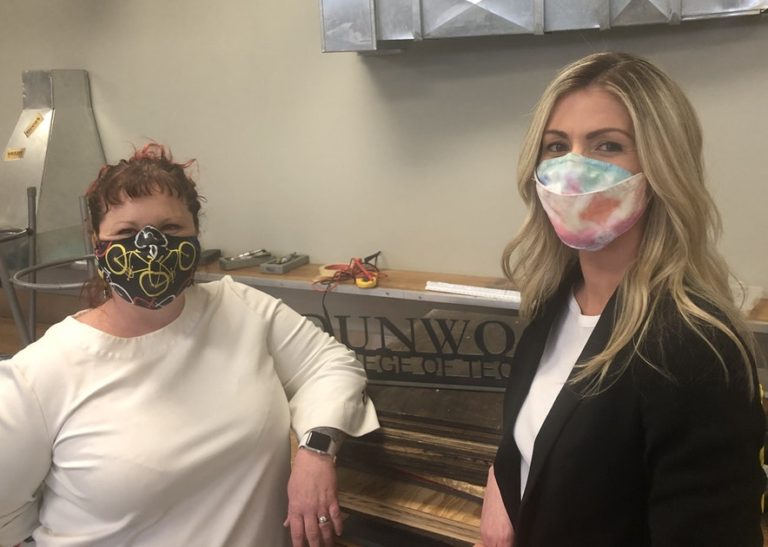
Claire Ferrara, president of Standard Heating & Air Conditioning, is proof that Dunwoody College of Technology is not your grandfather’s trade school.
And Ferrara, 34, a Dunwoody graduate like her father, from whom she acquired majority ownership of Standard in 2019, also embodies the continued slow opening of the predominantly white-male building trades.
Ferrara is a third-generation owner of the Minneapolis-based company, started by her grandfather in 1930. She succeeded her dad, Ted, 63, who bought out his father in 1977.
“I had to prove that I had the technical knowledge, trade school, the street ‘cred’ and knew as much the guys,” said Ferrara, who studied HVAC technology at Dunwoody and also graduated from St. Catherine University in St. Paul.
Ferrara, who remembers going to the office on Saturdays as a kid to clean and file, worked several years in construction and building management for other companies before joining Standard in 2016 as a sales representative.
Her leadership skills were tested last year by the effects of the COVID-19 pandemic and recession. Last April, amid order cancellations, she believed business could be off by up to 50% for the entire year.
Ferrara borrowed more than $1 million through a Paycheck Protection Program forgivable loan to help make April-May payroll at the 100-employee company. She also laid off a few people. But a mass layoff was averted and, fairly quickly, the company recalled workers as business picked up. By summer, a new trend was clear: Consumers decided to invest in their homes since they couldn’t take vacations.
By the end of the year, revenue and employment had actually grown at Standard.
“The employee feedback I got is that the employees were glad a woman was in charge,” Ferrara said. “They felt I was communicative and empathetic. More vulnerable. That’s not a weakness. It was a strength. It was how I got 100 people going in the direction we needed to go. I needed to help people feel safe in the time of pandemic.”
Ferrara sensed there was much pressure on wives, usually primary caretakers of children, and often workers outside the home. She wanted employees to know she supported their mental health as well as economic needs.
“We tried to work with every single employee who had a need with day care; adjusted work shifts, work-from-home, additional time off, and tried to meet them where they were at,” Ferrara said.
Ferrara also long has known she labored in a male-dominated industry. She is grateful for the men with whom she has worked who wouldn’t tolerate harassment or disrespect and saw her as they would their sister or daughter: deserving of a hassle-free workplace.
Heather Gay, who leads Dunwoody’s construction management and civil engineering technology programs, is a college-trained construction manager who entered the industry as a teenager.
“The first job site I was on, the advice I heard from a [supervisor] was ‘Have a thick skin,’ ” she recalled.
Gay and Ferrara, who remains involved with Dunwoody as adviser and scholarship fundraiser, said the school increasingly stresses soft skills that help workers of different genders, race and background establish common ground and respectful boundaries at school and work.
The money is good in the trades, often $30 to $60-plus an hour for plumbers, electricians and carpenters.
“We also have to provide the other things to support a diverse workforce,” said Ferrara, citing predicting job shortages as workers, predominantly white males in their 50s and 60s, age out.
According to Dunwoody and state figures, the number of women working in construction in Minnesota is 19%, nearly double the national average. And the five-year trends show progress in developing a workforce that reflects the growing diversity of the Twin Cities.
Overall, in the fall of 2015, women constituted 14% and students of color 18% of the 1,094-member Dunwoody student body. By the fall of 2020, women were 18% and minorities were 19% of the 1,281 students.
In 2015 in the construction sciences and building technology curriculum, 16% of the 317 students were women and 16% were people of color. Last fall, women were 23% and students of color 22%.
Dunwoody tuition and fees can top $22,000 a year. It also provides need-based scholarships. The school also has completed a $40 million overhaul of its campus southwest of downtown. Dunwoody has added four-year degrees in mechanical and software engineering, as well as electrical engineering. It also is among the few private colleges in the state that has seen enrollment grow in recent years.
Women and people of color won’t soon dominate the construction trades. But it’s good to see the numbers rising, skills and craft spreading to more people. As the economy recovers from the recession, Minnesota will need everyone striving to be as good as we can be.
Neal St. Anthony has been a Star Tribune business columnist and reporter since 1984. He can be contacted at nstanthony@startribune.com.
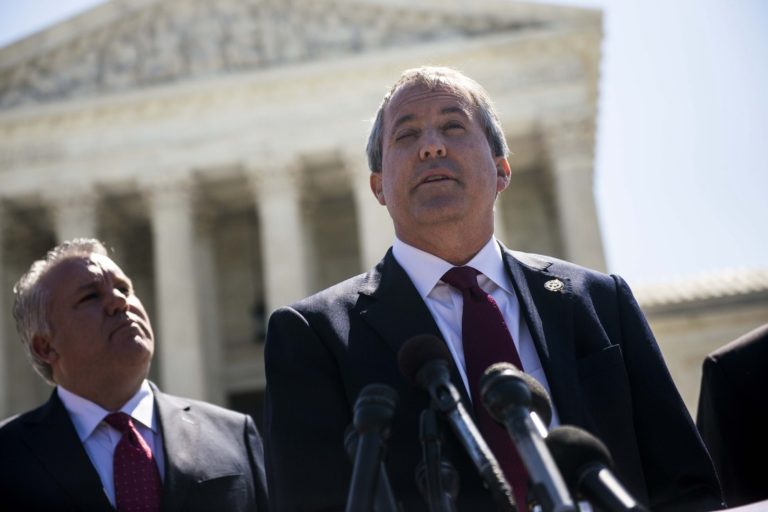
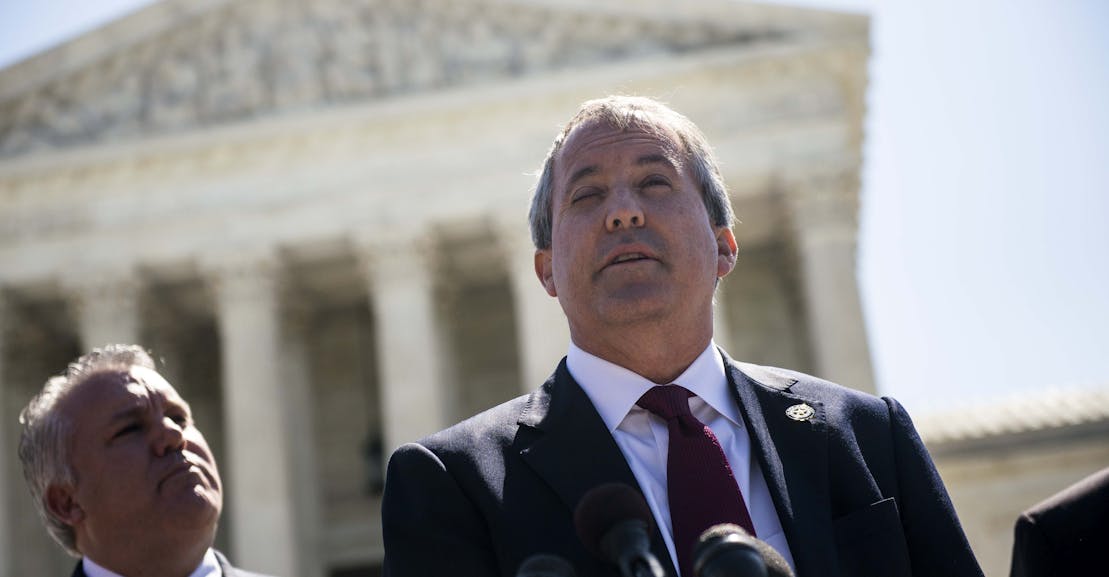
That distinction matters when it comes to whether the Supreme Court should take up this dispute at all. Original-jurisdiction cases are rare in part because they are a drastic and heavy-handed intervention in the states’ internal affairs by the court. California argued that such an intervention was not warranted here. “States in our Union often disagree, sometimes vigorously,” California told the justices. “Neither California nor Texas can make the other conform to its preferred policy views. But each is surely entitled to criticize and decline to subsidize the other’s contrary policies. That is not an ‘attack on federalism.’ It is federalism in operation.”
And despite Texas’s claims of coercion by California, California argued that Texas was effectively trying to “constrain California’s autonomy over decisions regarding how to spend its own funds,” which California described as a “core aspect of its sovereignty.” This interpretation of Texas’s actions has been strongly validated by later events. Six months after these briefs were submitted, Texas asked the Supreme Court to throw out the presidential election results in six other states because Donald Trump had lost. What greater infringement of another state’s sovereignty could there be than that?
If the justices are reluctant to take up this case, California offered a few procedural off-ramps. The Supreme Court has previously held, for instance, that the Privileges and Immunities Clause and the Equal Protection Clause “protect people, not states.” Most of Texas’s purported injuries at the hands of A.B. 1887 are actually injuries to private actors like restaurants and hotels, and not injuries to the state itself. Those companies, California noted, could potentially challenge A.B. 1887 in court on interstate-commerce grounds or sue state officials for implementing it.
Texas has had a powerful friend in this matter before the Supreme Court: the Trump administration. After the court asked for the Justice Department’s views on the matter last fall, Acting Solicitor General Jeffrey Wall filed a brief in December in favor of Texas’s position. He avoided some of the less persuasive aspects of Texas’s argument, such as the allegations of religious animus by California. But he underscored the central claim of coercion against Texas.
The lottery for the much-anticipated LGBT/LGBT-friendly affordable senior housing development in downtown Bay Shore, the first of its kind on Long Island, is now open and accepting applications for eligible seniors. The groundbreaking development one block north of Main Street on Park Avenue will feature 66 rental units and will be anchored by a brand-new state-of-the-art LGBT Network community center.
Occupancy is expected in June for eligible seniors ages 55 and older.
“The new LGBT senior affordable housing development is a very important project and turning point for our regions LGBT seniors. We often hear that our elders are left out, discriminated against and their relationships and lives go unrecognized and are discounted. This is all about our LGBT elders being able to age gracefully without fear of discrimination and to show how their lives are valued and celebrated. We need to take care of them as it was our elder generation who fought so hard for the rights we all have today” said David Kilmnick, resident/CEO, LGBT Network.
Just one block from Bay Shore’s Main Street retail shops, restaurants and medical services, the property will feature Long Island’s first dedicated LGBT Senior Center, an 8,000 square foot state-of-the-art facility that will provide a full range of support, advocacy and case management services and programs related to arts, culture, fitness, food, nutrition, health and wellness. The development will have 63 one-bedroom and 3 two-bedroom units affordable housing units with fully equipped kitchens and baths, laundry room on each floor, security and many other amenities.
Seniors can download the application at www.lgbtnetwork.org/housing and must submit no later than May 3, 2021. A special live Housing Application Workshop and Town Hall will be held on Tuesday April 6 at 11am. with experts providing guidance and information on filling out and submitting affordable housing applications. Register online at lgbtnetwork.org/housing.
Transgender people’s rights are considered protected under Title IX, according to a memo from the U.S. Department of Justice’s Civil Rights Division.
The memo, released March 26, was written in response to questions from federal agencies on how to apply the U.S. Supreme Court’s ruling in Bostock v. Clayton County, which held that Title VII of the 1964 Civil Rights Act protects LGBT employees against discrimination, as well as questions on applying Executive Order 13988, which is geared toward preventing and combating gender identity or sexual orientation-based discrimination.
The memo contradicts the positioning of Gov. Kristi Noem’s coalition to protect women’s sports by defending Title IX. The coalition’s website, defendtitleixnow.com, states that Title IX was passed to protect fairness for women and that the federal government should enforce Title IX “in a way that protects fairness for women’s sports, rather than misusing it in a way that undermines fairness.”
Defense of Title IX was also part of legislators’ reasoning for the necessity of House Bill 1217, which would have disallowed trans girls and women from playing on women’s sports teams. Noem vetoed 1217, instead requesting style and form revisions to the bill which were rejected by the House of Representatives. In 1217’s place, she issued two state executive orders intended to accomplish the same restrictions. Each are based on the assumption that Title IX is only meant to protect women from discrimination.
“Title IX creates an equal playing field between men and women’s sports. In order for women’s sports to be truly fair and equal, only girls should be able to play girls’ sports,” Noem spokesman Ian Fury told the Journal Monday.
“After considering the text of Title IX, Supreme Court caselaw, and developing jurisprudence in this area, the Division has determined that the best reading of Title IX’s prohibition on discrimination ‘on the basis of sex’ is that it includes discrimination on the basis of gender identity and sexual orientation,” the memo, written by Principal Deputy Assistant Attorney General Pamela S. Karlan, said.
The memo clarifies that potential violations of Title IX will “necessarily turn on the specific facts” in any given case and that it does not prescribe outcomes of future enforcement of Title IX.
The federal executive order, which was signed by President Joe Biden on Jan. 20, reads, “Every person should be treated with respect and dignity and should be able to live without fear, no matter who they are or whom they love. Children should be able to learn without worrying about whether they will be denied access to the restroom, the locker room, or school sports.”
You must be logged in to react. Click any reaction to login.
Stay up-to-date on the latest in local and national government and political topics with our newsletter.
WASHINGTON – The culture warriors keep knocking on the White House doors, but President Joe Biden seldom answers.
When the Vatican announced last month the Catholic Church wouldn’t bless same-sex unions, the White House dodged when asked for a response from Biden, the nation’s second Catholic president and a gay rights supporter who officiated at a wedding of two men five years ago.
“I don’t think he has a personal response to the Vatican,” White House press secretary Jen Psaki said during a briefing that day. Psaki reaffirmed the president’s support of same-sex unions: “He’s long had that position.”
A couple of weeks earlier, Psaki punted when asked why Biden made no mention of Dr. Seuss in his proclamation declaring March 2 – the children’s book author’s birthday – as the annual “Read Across America Day.” Psaki suggested a reporter reach out to the Department of Education, which she said drafted the proclamation.
Psaki’s nuanced response to both questions underscores the delicate balance the White House is taking as Biden navigates a minefield of hot-button social issues ranging from the gender of children’s toys (see Mr. Potato Head) to transgender athletes in school sports to GOP complaints about “cancel culture.”
Democrats see the latest culture war skirmishes as a desperate attempt by Republicans to rile up their base against a president who gets high marks from the public for the way he has handled the coronavirus pandemic and who doesn’t incite the kind of vitriol from the GOP rank-and-file as, say, Hillary Clinton or Barack Obama.
“They have no positive policy agenda and no effective criticism of Biden’s work on the pandemic and economy, so they’re flailing and talking exclusively to their hardcore base,” Democratic strategist Josh Schwerin said. “One party is talking about shots in arms and checks in bank accounts. The other party is talking about Dr. Seuss and Satanic sneakers. That’s about as clear a win as you can get for Democrats.”
Democratic strategist Josh Schwerin
One party is talking about shots in arms and checks in bank accounts. The other party is talking about Dr. Seuss and Satanic sneakers.
Matt Mackowiak, a Republican strategist based in Texas, said turning to the culture wars to energize its base is a good strategy for the GOP because it puts Biden in an awkward position politically.
“If you think about it, it’s lose-lose strategically” for Biden, Mackowiak said. “He either puts himself on what I would argue is the majority position on cultural issues and, in doing so, kind of angers the hard left. Or he chooses not to engage, and then he makes no friends on either side.”
Biden hasn’t stayed completely out of the culture wars. Last week, he condemned efforts in Republican-led states to restrict voting rights as “sick” and “un-American.” He called for new gun control measures after mass shootings in Colorado and Georgia. The White House has reiterated his support for transgender rights as GOP lawmakers in more than two dozen states introduced bills that would bar transgender athletes from participating in school sports.
But for the most part, Biden’s response to the culture war scuffles raging on social media and other public forums during the first two months of his presidency has been no response at all.
6 Seuss books won’t be published for racist images
AP
Biden is wise to ignore the culture wars discourse, said Jennifer Mercieca, associate professor of communication at Texas A&M University.
“Biden’s base isn’t interested in the culture wars,” she said. “They support him because of his pragmatic problem-solving agenda. Engaging in the culture wars discourse would just be a distraction from his work and his message.”
By sidestepping the policy debates that often turn into culture wars, Biden denies his opponents the opportunity to set the agenda and control the national debate, said Lauren Wright, a political scientist at Princeton University.
“It’s no surprise that Biden’s next policy push is a broadly appealing one from a public opinion standpoint: infrastructure,” Wright said, citing polling that shows a majority of Americans have consistently been in favor of spending more to fix the nation’s bridges, roads and tunnels.
Infrastructure is “an issue with cross-partisan appeal, where there also tends to be more room for bargaining and more carrots than other policy areas,” Wright said. “Even in a polarized Congress, it’s not out of the question for a few Republicans who want to bring job growth to their states to support funding for infrastructure projects.”
Though cultural issues play well with religious conservatives – a GOP constituency – they have produced mixed results for the party in national elections.
George W. Bush eked out a narrow victory in his bid for a second term as president in 2004 in part because Republicans used state ballot initiatives banning same-sex marriage to drive conservative turnout at the polls.
Bush’s father, George H.W. Bush, lost his reelection bid to Democrat Bill Clinton in 1992 after religious conservatives turned the Republican National Convention into a forum on gay rights, abortion and what political commentator Pat Buchanan sneeringly dubbed “radical feminism.”
Two years later, the rhetoric of cultural conservatives helped fuel the Republican revolution that allowed the GOP to claim a majority in the House and the Senate for the first time in more than 40 years.
Since then, cultural issues have lost some of their political punch. A poll released last month by the nonpartisan Public Religion Research Institute showed that more than three-quarters of Americans (76%) support laws that protect the LGBTQ community from discrimination in housing, jobs and public accommodations. More than two-thirds of Americans (67%) said they support same-sex marriage. For the first time, the survey showed a slim majority of Republicans (51%) backed gay marriage.
During Donald Trump’s presidency, Republican leaders saw no need to rile up the culture warriors, Mackowiak said. Trump did it for them.
Republican strategist Matt Mackowiak
Trump enjoyed getting in the middle of the culture wars. He thought it was good for him politically. … Biden has the exact opposite instinct. The incentives are simply not there for him to engage.
“Trump enjoyed getting in the middle of the culture wars,” Mackowiak said. “He thought it was good for him politically. He thought it angered all of his enemies – the cultural elites, the hard left, the Democratic Party nationally. Biden has the exact opposite instinct. The incentives are simply not there for him to engage.”
Now that Trump is out of office and on the sidelines, the culture wars are back. And there are no signs of a cease-fire anytime soon.
After the company that oversees Dr. Seuss’ estate decided to cease publication and sales of six of his titles because of racist and insensitive imagery, House Minority Leader Kevin McCarthy, R-Calif., tweeted a video of himself reading “Green Eggs and Ham” – a classic book that wasn’t on the to-be-discontinued list.
When the makers of Mr. Potato Head decided the toy should be genderless and dropped “Mr.” from the name, conservatives screamed the move was part of the left’s “cancel culture.” Social media tried to drag Biden into the fray, causing PolitiFact to clarify the change was a company decision.
Hasbro imagines a new Potato Head world.AP
Public ostracism also has been a weapon of the right. In 2003, the Dixie Chicks (now known simply as The Chicks) were blacklisted by thousands of radio stations after lead singer Natalie Maines slammed George W. Bush on stage in London.
During the debate over the Equality Act, a congressional bill that would bar discrimination on the basis of sex, sexual orientation or gender identity, Rep. Marie Newman, D-Ill., placed the transgender pride flag outside her office in support of her transgender child. Across the hallway, Rep. Marjorie Taylor Greene, R-Ga., responded by hanging a sign that proclaimed, “There are two genders: Male & Female.”
In case there was any doubt to whom the message was directed, Greene wrote on Twitter that she posted the sign, so Newman “can look at it every time she opens her door.”
Biden may have stayed silent on many culture issues, but he has spoken through his actions, said Emilie Kao of the Heritage Foundation, a conservative think tank based in Washington.
On his first day in office, Biden signed a slew of executive orders, including one that aimed to combat discrimination on the basis of sexual orientation or gender identity. The order proclaimed every person should be treated with respect and dignity “no matter who they are or whom they love,” and children should be able to learn “without worrying about whether they will be denied access to the restroom, the locker room or school sports.”
“He may not be commenting on specific things like the pope and Mr. Potato Head, but his actions have spoken quite loudly about where he stands,” said Kao, director of the Richard and Helen DeVos Center for Religion & Civil Society. “And where he stands is very, very, very radical.”
Kao pointed to a survey in February by the Heritage Foundation in which a majority of respondents (58%) opposed allowing high school students who were born male but identify as female from playing on girls’ sports teams. A slight majority (53%) opposed allowing students to use private facilities, such as showers or locker rooms, assigned to the opposite biological sex.
State legislative initiatives on transgender sports are a response to Congress and “fear of what the White House is doing,” Kao said.
Wright warned that Republicans could pay politically for “extreme and oversimplified messaging” on cultural issues.
“‘Owning the libs’ is not a serious policy platform,” Wright said. “There’s just no way for Republicans to meaningfully engage in policy debates when a lot of their platform seems to be simply opposing Democratic policies and when they have conspiracy theories and anti-intellectualism spreading in their ranks.
“Under normal political circumstances, a Democrat in the White House and a Democratic Party divided along progressive and moderate lines would be a boon to Republicans,” she said. “But that’s not what we’re seeing right now.”
Michael Collins covers the White House. Follow him on Twitter @mcollinsNEWS.
“If you’ve got a family that you’re not out to, or if you just want to do something a bit private and explore your identity, it’s quite difficult to do that online, if you are stuck at home with parents that can hear you all the time, or you are around family members that you don’t necessarily want to have to come out to immediately.”
A young Russian woman is calling for help. Her uncle has found out that she is lesbian, and unless she has sex with him, he will tell her parents — who will surely kill her.
In remote Chechnya, where persecution of the LGBTQ+ community has long happened but only recently been uncovered, there’s a network of volunteers eager to help shuttle these victims to safety in foreign countries. But when faced with daunting odds, incalculable danger and horrendous instances of loss, the task of even finding those who need help is difficult.
This woman’s journey, among others, is captured in the award-winning 2020 documentary Welcome to Chechnya. And in a March 24 online panel with Yale School of Public Health experts as well as immigration activists, these violent acts portrayed in the film received special attention alongside a spirited discussion about what can be done to stop them.
Filmed with hidden cameras and state-of-the-art digital software that anonymizes the victims’ faces, Welcome to Chechnya highlights the risks involved in bringing big issues to the world stage. But according to YSPH Dean Sten Vermund, M.D., Ph.D., who participated in the panel, this film can help bridge the gap between academia and public health practice, and bring about important change.
“We can pass on facts, we can pass on evidence, we can highlight the plight of vulnerable persons around the world in various conditions,” Vermund said. “But to dramatize it, to have it sink into one’s heart and soul … That may be where the humanities and the arts can help us uniquely.”
Panel participants also included award-winning executive producer Neal Baer, John Pachankis, Ph.D., the Susan Dwight Bliss Associate Professor of Public Health at YSPH, immigration attorney Deirdre Stradone and Russian-American activist Lyosha Gorschkov. Their perspectives on LGBTQ+ persecution and asylum-seekers underscored the difficulties associated with protecting these vulnerable populations.
To Pachankis, who directs Yale’s LGBTQ Mental Health Initiative, stories like Welcome to Chechnya are valuable for creating a safe environment through which people can fully come out.
“The work of people who create conditions where that’s possible is just as important as individuals’ stories, because that work ultimately leads to more stories being told in peoples’ local lives and families and communities,” Pachankis said.
The film also details the struggle involved with rescuing victims from Chechnya’s anti-LGBT violence. Asylum-seekers must travel under disguise and convince other nations to accept them as refugees, ] a risky process that may take an extended period of time. After waiting in seclusion for months in hopes of receiving a visa, for example, the Russian woman fleeing her family disappears entirely — another potential casualty of this persecution.
Baer, who is also a lecturer at YSPH, said he was struck by the way the film gave human faces to the startling data surrounding anti-gay violence. As public health researchers continue to churn out groundbreaking work, he said, it’s important to make sure it gets to the public in a trustworthy manner — and Welcome to Chechnya is an effective way to do that, he added.
The evening discussion was jointly presented by the Humanities, Arts and Public Health Practice at Yale (the HAPPY Initiative), YSPH and the Yale Schwarzman Center. The event was the latest YSPH effort to shed light on key public health issues through art and media.
“That’s where we come in as scientists, as physicians, as researchers,” Baer said, “to bring and marshal the data and use it to tell compelling, emotionally driven stories.”
Thanks to the HAPPY Initiative’s work in connecting the arts and the humanities, Vermund said, YSPH and public health experts across the world can address global health crises in new ways — much like the makers of this documentary.
“Think about what you learned from seeing this film, and think about what kind of tables, or figures, you might have seen that give you the same impression,” he added. “Until you have something that touches you, something that puts yourself in the shoes of the protagonist, it’s going to be tough to really embrace the field fully.”
Athlete Ally releases LGBTQ equality ratings for Division I institutions
An advocacy group for LGBTQ equality in sports that grades Division I athletic departments’ policies and practices is raising awareness about inclusion of transgender athletes and pushing colleges to do better.
April 5, 2021
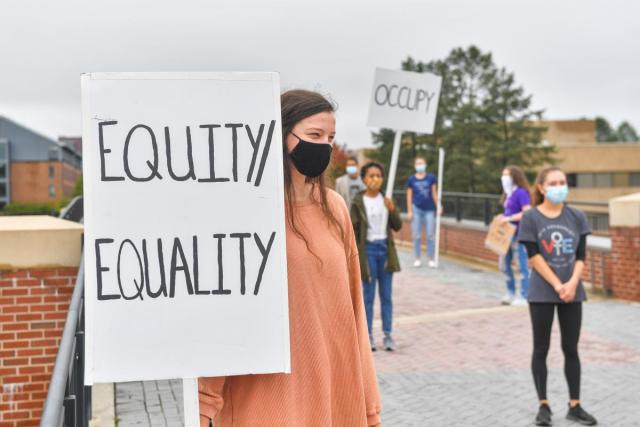
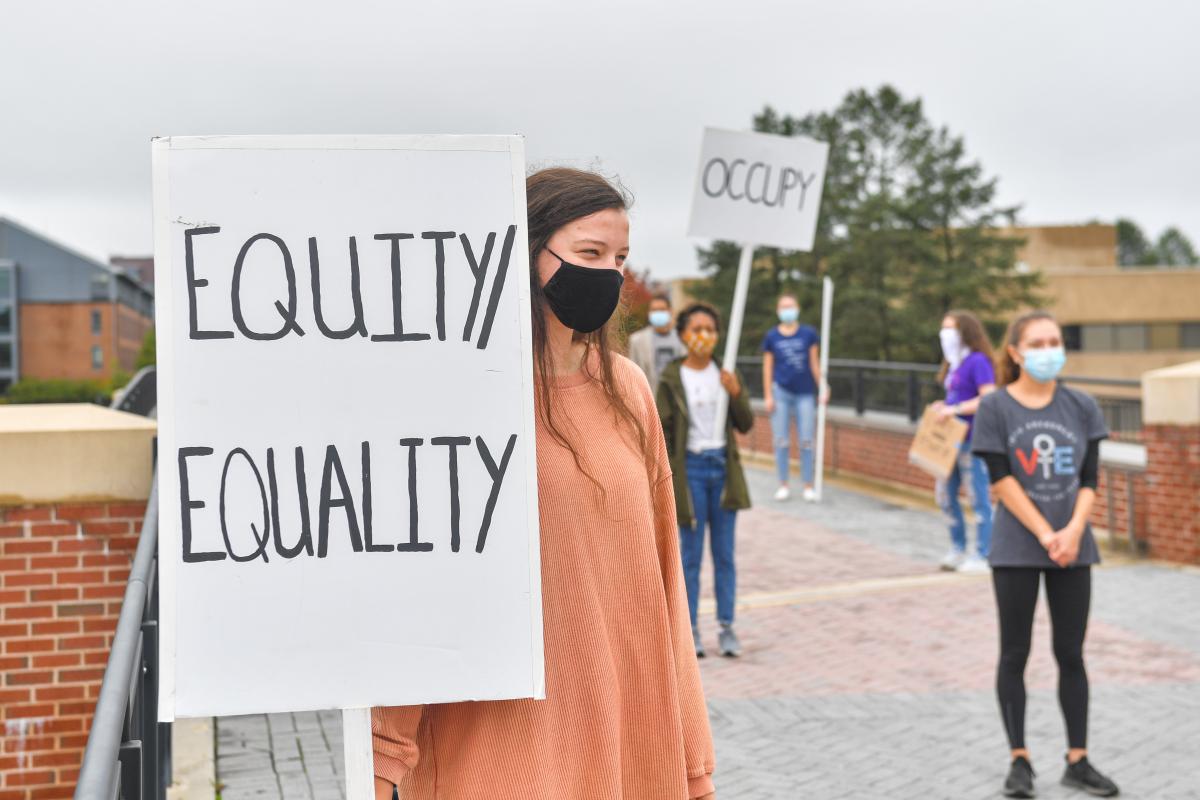
Members of the Towson University Athletes for Inclusion, Diversity and Equity, or TUAIDE, demonstrate at a voting event on campus.
LGBTQ advocacy groups are calling on college athletic departments to support the participation of LGBTQ students in intercollegiate athletics and to affirm their right to protection in the face of growing political hostility.
The demand by advocates comes at a time when lawmakers in various states are proposing or adopting legislation banning transgender women from competing on women’s sports teams and as the Biden administration reviews Department of Education policies on the participation of transgender athletes on intercollegiate and K-12 teams. The LGBTQ advocates are concerned about whether the athletes will be protected from discrimination given the policies implemented under former secretary of education Betsy DeVos that were aimed at preventing transgender athletes from competing in college and K-12 sports programs.
The advocates want college athletics administrators to enact and publicly support inclusive policies and practices that protect LGBTQ athletes and ensure staff members are adequately trained, said Anna Baeth, director of research for Athlete Ally, a national organization that advocates for LGBTQ inclusion and equality in sports. The group released its third Athlete Equality Index today, which rates the policies of all 353 institutions in Division I of the National Collegiate Athletic Association and how they treat LGBTQ students. The index is an accountability measure to ensure the equal participation of LGBTQ athletes in sports programs.
Most Popular
Baeth said more of these institutions now have formal written policies about transgender inclusion on their sports teams than in previous years, which reflects a growing commitment to protect these students in response to policy makers attempting to ban their participation.
However, Athlete Ally reported that overall, 92 percent of NCAA Division I athletic departments did not have “fully inclusive trans athlete policies” as of March 2021, according to a summary of this year’s equality index published online, as a searchable database. Additionally, only 2.8 percent, or 10 Division I athletic departments nationwide, “fully protect and support their LGBTQ+ identities” and received a perfect 100 score based on Athlete Ally’s criteria for inclusive department policies and practices.
“Unfortunately, the overwhelming majority of LGBTQ+ students, particularly those who identify as transgender and nonbinary, face discrimination, harassment or other barriers when they seek to participate in athletics at school,” Melanie Willingham-Jaggers, interim executive director of GLSEN, the Gay, Lesbian and Straight Education Network, said in a written statement. “Every college and university has a responsibility to take these findings to heart, and take active steps to foster acceptance for LGBTQ+ students in athletics through the implementation of inclusive sports guidance.”
Baeth said most of the criteria for the index are based on the NCAA’s existing guidelines for LGBTQ inclusion, which colleges must follow to participate in sports championships. However, many schools simply provide a link to the NCAA policy and do not have their own written policies. The NCAA guidelines also do not require an explicit transgender inclusion policy, which Athlete Ally strongly encourages.
Departments are rated on the existence and public availability of other various statements and policies, including an LGBTQ nondiscrimination statement, a code of conduct for college sports fans that ensures LGBTQ nondiscrimination, and training on LGBTQ inclusivity for athletes and athletics staff, among other assurances, Baeth said.
“We looked at what affects students and what is possible for each and every athletic department, no matter their size, no matter their location,” said Baeth, an expert in kinesiology and sport sociology and a former research assistant in the Tucker Center for Research on Girls & Women in Sports.
Thomas Harris, assistant athletic director for diversity, inclusion and engagement at the University of Arizona, which received a perfect score on the index, said Athlete Ally’s standards for LGBTQ inclusion are “foundational” for every college athletic department and do not require significant investment of resources.
Baeth noted that while many institutions have recently hired athletics staff members exclusively dedicated to diversity, equity and inclusion work, many colleges cannot afford to do so because of the impact of the coronavirus pandemic on department budgets.
Harris said the Arizona Athletics Inclusive Excellence Council, a group of athletics staff members that develop diversity and inclusion programming, began to focus more on LGBTQ inclusion after Athlete Ally reached out to him in 2019 to address his department’s low index score at the time. The department subsequently added a Transgender Participation Policy to its handbook for athletes and updated its nondiscrimination policy and code of conduct for Wildcat fans, which now includes discrimination based on sexual orientation and gender identity.
“What they are grading us on, half of it is something you could do in 30 minutes — updating your policies in your student athlete handbook and updating policies to put on your website,” Harris said of the Athlete Ally index criteria. “The majority of it is interlevel stuff that everybody should do.”
The university’s policy on transgender participation adopts the NCAA’s Policy on Transgender Student-Athlete Participation, which was developed in 2011 and which Baeth argues needs to be reconsidered and updated. The NCAA rules require male-to-female transgender athletes to complete one year of testosterone suppression treatment before participating in women’s sports, and disqualifies female-to-male transgender athletes from participating in women’s sports if they have started testosterone treatment, according to the NCAA’s Transgender Handbook.
Baeth called this decade-old standard “a misstep that many sport legislative bodies have taken” and said it discriminates against male-to-female transgender athletes because of the period they must wait to participate after starting hormone treatment.
“There’s inherent bias in terms of how female and male athletes are treated,” she said. “It’s a bitter pill to swallow, to say that you are creating equal opportunities for male and female athletes and then to read something like that.”
Allowing the participation of transgender athletes in college sports while ensuring cisgender women still have an equal opportunity to compete and succeed in athletics is at the center of heated debates among policy makers, college athletics thought leaders and the general public, and is the basis for many recent state laws and proposals on transgender athletes in women’s sports. Donna Lopiano, president of the Drake Group, a national organization that advocates for college sports reform, has taken on this issue as a member of the newly formed Women’s Sports Policy Working Group, which researches transgender participation in sport and lobbies “to establish middle ground that both protects girls’ and women’s sport and accommodates transgender athletes.”
Lopiano said Athlete Ally’s index criteria are “absolutely essential” for athletic departments.
“There should be better education of athletes, coaches and fans,” Lopiano said. “Nobody should be bullying a transgender athlete.”
However, she’s concerned about full transgender athlete participation without accommodations that maintain a level playing field for cisgender women athletes. Such accommodations could include, for example, creating a separate division for the scores of transgender women athletes to be recorded in individual sports such as track and field. She worries that Athlete Ally’s “standard for inclusivity for competition is that transgender women are treated identically” as women assigned female at birth without such accommodations.
If a college team has a transgender female participant who is not taking hormones to suppress testosterone, “we should talk about that, respect that decision to keep a male body, embrace her on the women’s team, and we have to figure out a way to include her with an accommodation,” Lopiano said.
Baeth said institutions were not penalized in the index ratings for following the NCAA’s current standard for transgender athlete participation based on the hormone treatment requirements outlined in the Transgender Handbook, despite Athlete Ally’s belief that transgender women should be treated equally to cisgender women, regardless of the status of their hormone treatment. The index looked at policies that “are actually within the control of the athletics departments,” she said.
Tricia Brandenburg, deputy director of athletics and senior woman administrator at Towson University, a Division I institution in Maryland, said NCAA rules disqualified an athlete assigned female at birth at the university from playing on the women’s soccer team when the player decided to begin treatment to transition to a man. With no men’s soccer team, the university had to navigate how to keep the player on the team without his participating on the field, Brandenburg said. The player was made a student coach for the team and continued to travel with and participate in team activities, Brandenburg said.
“That really gave me perspective that these are really individual situations and there can’t be a cookie-cutter process for this,” Brandenburg said.
Towson University Athletes for Inclusion, Diversity and Equity, or TUAIDE, an organization recently created at the urging of student athletes, is helping guide athletics department policy on LGBTQ inclusion.
Brendan Farrar, a sophomore on the men’s swimming and diving team and member of the LGBTQ work group in TUAIDE, said he realized the athletic department’s policy shortcomings when it received an index score of 55 from Athlete Ally. But Farrar, who said he is questioning his sexual orientation, is excited that the department is engaging with athletes on how to improve.
Baeth, of Athlete Ally, also noted the importance of including LGBTQ athletes in discussions on how to improve department practices and policies. Farrar said the Towson work group, which launched in January, will bring about positive change for future LGBTQ athletes at the university.
“I’m able to bring more than just one identity to the pool deck and the classroom every day,” Farrar said of his status as an athlete. “When you talk about teacher wages, you want to bring in teachers. When you talk about Black issues, you want to bring in Black figures … This is a great reflection or example for other schools.”
Brian Gay unfortunately was heading toward a crossroads.
In his late 40s, with more than 600 starts on the PGA Tour and his job becoming more of a grind than a joy, doubts about his future in golf crept into his head.
Stay on the PGA Tour or head to the PGA Tour Champions?
Then he went to Bermuda.
On the first day of last November, Gay, after missing nine of his last 11 cuts, defeated Wyndham Clark in a playoff to win the Bermuda Championship, his fifth PGA Tour title and first since 2013.
The victory confirmed to Gay that he still had game on the PGA Tour and didn’t need to join the elder set just yet. And about a year before becoming eligible to play the PGA Tour Champions, he had earned exempt status on the PGA Tour through August of 2023.
And the win got him back into the Masters.
Gay, 49, who spent part of his childhood in Louisville, Georgia, about 50 miles south of Augusta National Golf Club, went to the Masters for the first time in 1979 when he was 8. With his father by his side for the Tuesday practice round, Gay, who said he was just beating golf balls around the yard at the time and just catching the golf bug, was hooked.
And then Andy Bean took him out to the tee box on the second hole.
“That was pretty cool,” Gay said. “That’s when I fell in love with the Masters. It’s great to be going back to the Masters. It’s always been my favorite tournament in the world. I’m from the south and I love the southern charm.
“Love that it’s at the same course every year. The back-nine drama. The history. Know all the shots, know certain putts.”
Gay fulfilled a childhood dream by playing in his first Masters in 2010. But he missed the cut. In his only other appearance, he tied for 38th in 2013 and won crystal when he eagled the 15th.
While he loves the course and everything about the tournament, it’s a tough place for Gay to succeed. He’s one of the shortest hitters on the PGA Tour and despite being one of the game’s best putters, he’s never broken par in any round at Augusta National during the Masters.
“It’s tough on the short hitters, for sure,” he said. “It’s a huge advantage if you can hit it long and high there. Hopefully, for me, it will be warm. I’m not so young anymore. Warm weather will help, for sure. If it’s cold I get a little stiff.”
Gay didn’t play the week before the Masters in the Valero Texas Open, instead planning to head to Augusta for a practice round or two ahead of time.
“I’m looking forward to going back there,” Gay said. “Hopefully I won’t put too much pressure on myself. Hopefully, I’ll go there and really enjoy it and feel good about it and play well.”
Hello and welcome to On Deck Circle for today, Monday, April 5, 2021.
Your need to read time today is 90-seconds.
Today’s LGBTQ Sports History Highlight:
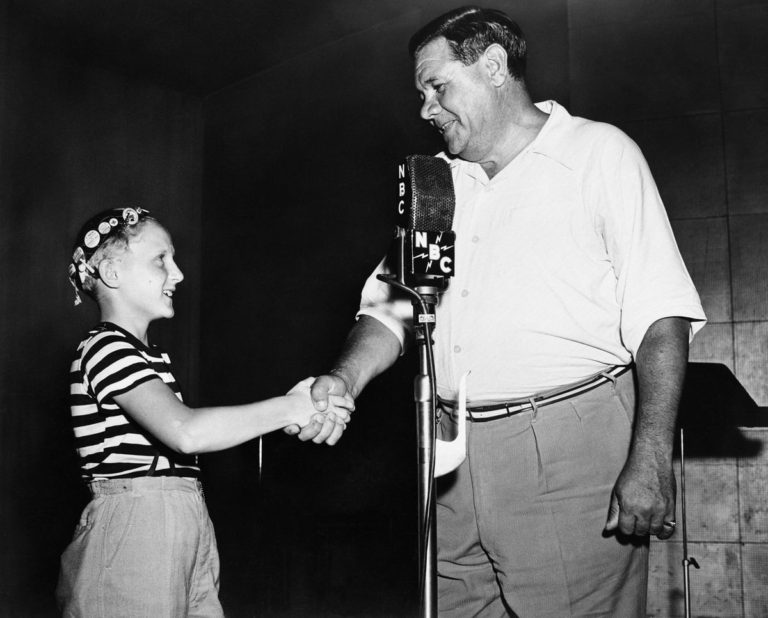
NBC’s Babe Ruth on the air as the host of a radio quiz show in 1944.Photo by: NBCU Photo Bank/NBCUniversal via Getty Images via Getty Images
On this day in 1934, NBC hired Babe Ruth to appear on the radio three times a week for 15 minutes for 13 weeks, for the princely sum of $39,000. That payday was $4K more than the New York Yankees paid him. Today, the broadcasting world is full of ex-ballplayers but there’s a paucity of on-air LGBTQ sports broadcasters, as our Ken Schultz lamented in January.
Jared Max.
One bright shining exception: next month, Jared Max marks a decade since coming out as gay on ESPN radio, as Outsports reported in May 2011. Today, Max anchors sports on Fox News Headlines on SiriusXM, where he’s been on the air for almost six years. Max had previously served as sports director and was morning drive sports anchor for nearly 15 years at New York’s WCBS-AM. A lifelong devotee of the metropolitan area’s sports scene, Max was born, raised and resides in New Jersey, and attended Hofstra University. In addition to his stint at ESPN radio, Max also reported sports at News 12 Connecticut and News 12 Westchester, WFAN-AM, Bloomberg Radio in New York and in 2015 wrote a powerful op-ed for Out Magazine. Congratulations, Jared, on your continuing success in bringing sports news to listeners near and far!
Today’s Outsports Headlines:
AP Photo Rick Bowmer Photo by Marcos del Mazo/LightRocket via Getty Images
Brooklyn Nets power forward Kevin Durant (7) warms up before a game against the Sacramento Kings at Barclays Center on Feb. 23, 2021.Brad Penner-USA TODAY Sports
A banner displays the announcement of the All Star Game being played in Atlanta in 2021 during an MLB game of the Atlanta Braves against the Washington Nationals at SunTrust Park on May 29, 2019 in Atlanta, Ga.Photo by Todd Kirkland/Getty Images
An NWSL logo sign before the quarterfinal match of the NWSL Challenge Cup between the Houston Dash and the Utah Royals FC at Zions Bank Stadium on July 17, 2020 in Herriman, Utah.Photo by Maddie Meyer/Getty Images
Members of the Stanford Cardinal celebrate the team’s win against the Arizona Wildcats in the National Championship game of the 2021 NCAA Women’s Basketball Tournament at the Alamodome on April 04, 2021 in San Antonio, Texas.Photo by Carmen Mandato/Getty Images
If you’re an LGBTQ person in sports looking to connect with others in the community, head over to GO! SPACE to meet and interact with other LGBTQ athletes, or to Equality Coaching Alliance to find other coaches, administrators and other non-athletes in sports.
If you want your social media post to be included here, or to share one showcasing LGBTQ sports, email us the link at outsports@gmail.com or tag @Outsports on Instagram or Twitter!
NASHVILLE, Tenn. (AP) — Tennessee’s Republican-dominant Senate on Monday advanced legislation that would require school districts to alert parents of any instruction on sexual orientation or gender identity, as well as allow them to opt their students out of such instruction.
Backers of the bill argue the measure strengthens parental rights, but critics counter it could further alienate students already marginalized.
The measure is one of several LGBTQ-focused bills that have been filed in Tennessee this year.
According to the bill, school districts would have 30 days to alert parents or guardians of upcoming instruction on sexual orientation or gender identity. Families could then opt their student out of the learning without being penalized.
ADVERTISEMENT
After clearing the Senate, the bill must now pass the GOP-controlled House. Gov. Bill Lee has not weighed publicly whether he supports the measure.











 Towson University Athletes for Inclusion, Diversity and Equity, or TUAIDE, an organization recently created at the urging of student athletes, is helping guide athletics department policy on LGBTQ inclusion.


:format(webp):no_upscale()/cdn.vox-cdn.com/uploads/chorus_asset/file/22421192/143391639.jpg)
:format(webp):no_upscale()/cdn.vox-cdn.com/uploads/chorus_asset/file/22421199/Jared_Max.jpeg)
:format(webp):no_upscale()/cdn.vox-cdn.com/uploads/chorus_asset/file/22419557/Utah_Girl_AP_Photo_Rick_Bowmer.jpeg)
:format(webp):no_upscale()/cdn.vox-cdn.com/uploads/chorus_asset/file/22356367/1224709632.jpg)
:format(webp):no_upscale()/cdn.vox-cdn.com/uploads/chorus_asset/file/22421205/usa_today_15618972.jpg)
:format(webp):no_upscale()/cdn.vox-cdn.com/uploads/chorus_asset/file/22417556/1153729711.jpg)
:format(webp):no_upscale()/cdn.vox-cdn.com/uploads/chorus_asset/file/22421208/1256778501.jpg)
:format(webp):no_upscale()/cdn.vox-cdn.com/uploads/chorus_asset/file/22421217/1310828444.jpg)
:format(webp):no_upscale()/cdn.vox-cdn.com/uploads/chorus_asset/file/22421266/This_Girl_Loves_Her_Mets.jpg)