Fifty-nine percent of 87 local governments that have introduced, or plan to introduce, a same-sex partnership system feel that Japan’s current system for sexual minorities is inadequate, a Kyodo News survey showed Sunday.
The survey, which collected responses from three prefectural governments and 84 municipalities in 29 prefectures from February to March, also found that no local government felt the current system was sufficient.
File photo shows a Sapporo city official (back) giving a female couple a receipt certifying that the city government has accepted their “partnership vow” at the municipal office building in northern Japan on June 1, 2017. Sapporo became the first major city in Japan to officially recognize same-sex partnerships between lesbian, gay, bisexual and transgender couples. (Kyodo) ==Kyodo
The survey found that 36 percent of respondents were undecided, while five cities did not give a response to the question.
With regard to legalizing same-sex marriage, 24 percent of respondents said they felt it was necessary, while the majority at 66 percent were undecided. Nine cities and wards did not answer, and no local government said they felt it was unnecessary.
Maki Muraki, founder and director of Nijiiro Diversity, a nonprofit organization supporting the rights of LGBT people, said that the responses show that “the voices of involved parties have reached the local government through the same-sex partnership system,” adding that “the ball is now in the court of the Diet.”
Another expert on the issue said that while local governments are doing their best, the responses indicate that state government’s initiatives are “overwhelmingly insufficient.”
On March 17, the Sapporo District Court made history when it became the first court to rule that the government’s failure to recognize same-sex marriage is unconstitutional as it violates the right to equality.
The current system in Japan, which is the only Group of Seven country that has not legalized same-sex marriage, includes a special law that allows people to change their gender in the family register and guidelines that designate outings — the disclosure of one’s sexual orientation or gender identity without consent — as an abuse of power.
While some municipalities have introduced a partnership certification system for same-sex couples to recognize family relationships, such certificates are not legally valid.
This means that LGBT people are not granted the same benefits enjoyed by married couples such as medical visitation rights and the ability to make medical decisions for their partners, co-parenting rights and spousal income tax deductions.
Some local governments further stressed the need for same-sex marriage in their survey responses, with Naha in Okinawa Prefecture highlighting the discrepancy in how consent for emergency surgeries and explanations of medical conditions are handled even for those couples who have registered via the partnership system.
Without same-sex marriage, “the disadvantage (LGBT couples face) in terms of spousal rights such as taxes, pension and inheritance cannot be resolved,” Tokyo’s Edogawa Ward also wrote in its response.
Meanwhile, Soja City in Okayama Prefecture cited the issue of couples having to cancel their partnership registration whenever they move to a new municipality, as each one has its own system.
The survey, based on a list published by the civic organization Same-sex Partnership Net, was mailed in February to municipalities in 30 prefectures that have introduced, or plan to introduce, a partnership system as of Feb. 1.
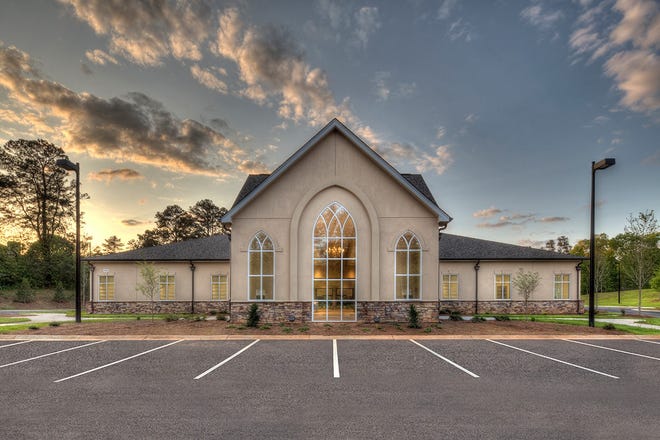
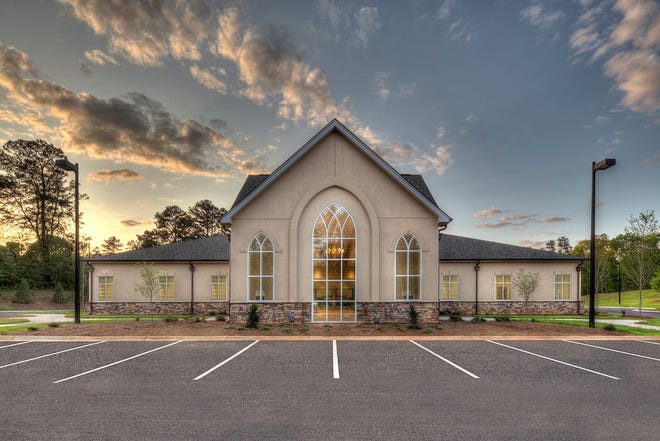
KENNESAW, Ga. – Two weeks after being kicked out of the Southern Baptist Convention, Towne View Baptist Church celebrated its 32nd anniversary by formally accepting members the SBC said they should have turned away.
One by one, Pastor Jim Conrad introduced seven new members, which in the Baptist tradition have to be approved by a majority of the congregation. He didn’t mention that Brockton Bates and his partner, Skyler, were gay nor that another new member was transgender. He didn’t have to. His church knew who they were and had spent the past two years coming to terms with the fact that inclusion for Towne View had to look different from what was required to remain in the SBC, whose bylaws say, “Churches which act to affirm, approve, or endorse homosexual behavior would be deemed not to be in cooperation with the Convention.”
On Feb. 23, the SBC Executive Committee voted to remove Towne View for affirming LGBTQ members, the culmination of a two-year inquiry.
“Essentially, the SBC has decided that because we welcomed these folks into our family that we’re no longer welcome in their family, and we’re OK with that,” Conrad said. “What we decided is that when we say everybody’s welcome, that means everybody.”
The journey to oppose the nation’s largest Baptist convention was an arduous one that cost the church members and financial contributions. Its exclusion from the SBC has sparked wider conversations about what it means to be a Southern Baptist in modern America.
For Bates, a lifelong Baptist who as a child was pushed toward faith-based conversion therapy to “literally try to pray the gay away,” Towne View took a meaningful stand. After he and his partner took the stage March 7, the church “exploded” with applause and approval. For the first time in his life, he fully celebrated his Baptist faith without hiding his sexuality.
“It was different than any other experience of joining a church,” Bates said. “I could authentically be who God created me to be and I didn’t have to hide it.
“To see that happen for us means it can happen for other people as well.”
In 1992, the SBC amended its bylaws to include language opposing LGBTQ members. That year, the SBC used the rules to remove two North Carolina churches, said Curtis Freeman, director of the Baptist House of Studies at Duke Divinity School.
“It’s a contested issue that goes back a number of years,” Freeman said. “Since then, a number of churches have been removed.”
Conrad never imagined it was a rule he would have to contend with.
That changed in May 2019 when he received an email from John Reynolds, a hospital administrator from Indiana who had just moved to Dallas, Georgia, with his partner, John McClanahan, and their three adopted boys.
“His basic question was ‘Would my family be welcomed in your church?’ I’d never had anyone ask me that question before,” Conrad said.
Conrad was aware of the bylaws. As a teenager, he had forged his faith in a conservative Baptist church in Stuart, Florida, when the state Legislature was working to prohibit adoptions for gay parents. He began to reexamine the church’s teachings after the shooting in 2016 that killed 45 people at Pulse, a gay nightclub in Orlando, but he admits he “wrestled with how someone could be gay and a believer.”
“Growing up in a conservative Baptist church, the message of homosexuality was that it was sinful. Period. End of story,” Conrad said.
Conrad connected to Reynolds’ story. Reynolds had spent most of his life attending Baptist sermons despite “living a double life” to avoid ostracization. When he met his partner, they stopped attending because they knew their relationship would not be welcomed. They spent Sundays at home and sent their sons to church with Reynolds’ parents. For a short spell, the couple attended an inclusive Disciples of Christ church in Nebraska – the first church they attended where they could be open about their relationship – but they hadn’t found an inclusive church that “felt like home.”
“There’s a lot about the Baptist faith that we value,” Reynolds said. “When we adopted three boys, we wanted that faith to be part of their life.”
After moving to the Bible Belt, Reynolds scoured Baptist church websites for signs of LGBTQ opposition. He sent 15 or so emails to those that didn’t show red flags. Conrad, whose church was 35 minutes away in the Atlanta suburb of Kennesaw, was one of only “two or three” to respond.
“I was like, I can either tell this guy ‘No’ or say something kinder and say we’re not ready for that,” Conrad said. “And if I’d told him either of those answers, we wouldn’t have had any controversy; nobody would have left and nobody would have known. But I couldn’t have slept at night.”
The family began attending, and in the fall of 2019, Reynolds and McClanahan became the first gay members approved by the church body. Reynolds said the vote was “nerve wracking,” but 70% of the almost 200-person congregation approved their membership after a recommendation from Conrad and the church deacons – who had varied opinions on the matter.
“There was just a huge sense of relief that these relationships that we had formed, that they were real and not just people being nice,” Reynolds said.
Conrad lost a third of his congregation to other churches after some members organized a walkout. Fewer worshippers meant Towne View lost 40% of its revenue, and Conrad was forced to cut some staff. An anonymous report was submitted to the SBC, which notified Towne View that its actions were being reviewed.
“One man came up to me. I had baptized him, performed his wedding, baptized his children, done the funeral for his mother. He said ‘Thank you for everything you’ve done for my family but we won’t be back,’” Conrad said. “We lost some good friends, some good leaders, a good bit of income, but we felt it was the right thing for us to do.”
Reynolds said he and his partner hadn’t gone to Towne View looking to change a church: “We weren’t even looking for one to affirm everything about us and love us. Just a place where sermons wouldn’t tell us our lifestyles were wrong or that we were living in sin.”
Reynolds and McClanahan moved to Indiana to be closer to family during the pandemic.
After the SBC decision, Conrad called them to thank them for moving the church in the right direction.
Towne View has eight LGBTQ members and five who worship regularly but have not joined.
It’s a direction Reynolds said more Southern Baptist churches need to go.
“I feel like most people know or are related to someone who is LGBT, so when you say this group of people is not welcome to be part of our faith tradition, you’re closing yourself off to a very large cross section of the country,” Reynolds said.
Southern Baptists are the largest Protestant denomination in the nation, but they’ve lost 2 million members in the past 15 years, according to SBC data. The denomination saw its largest membership drop in 100 years from 2018-2019, according to Lifeway Research.
Though some of that can be attributed to the overall decline in churchgoers among younger generations, Duke Divinity School’s Freeman said the faith’s hard-line conservative stances don’t help.
“There is a really toxic culture going on right now,” Freeman said. “I think the Southern Baptists have really got some soul searching to do right now, because it’s not just this.”
The SBC has come under fire this past decade for some executives’ stances against critical race theory, an academic movement that examines how systemic racism affects the nation’s laws, politics and culture. The SBC faces criticism for not allowing women to be ordained as ministers. In March, prominent Bible teacher Beth Moore announced she is no longer affiliated with the denomination.
“Add to that they’re divided amongst themselves right now,” Freeman said. “There is a right-flanking movement within the Southern Baptists that says the people in charge now have gotten liberal. Which is unfathomable to me to think of the people in charge as liberals.”
SBC President J.D. Greear addressed the critics in his opening address at the executive committee meeting in February.
“If we are going to be gospel above all people, it means that we will be a church that engages all of the peoples in America, not just one kind,” Greear said. “And that’s hard. Bringing together people of different backgrounds and cultures and ethnicities into the church creates challenges.”
That inclusiveness remains off-limits to the LGBTQ community.
In an emailed statement, Greear said, “Any member of the LGBTQ community is welcome to attend” an SBC-affiliated church, but he doubled down on the SBC’s code of refusing membership.
“When one of our churches chooses to affirm or endorse homosexual behavior through their definition of regenerate church membership, we have clearly come to a different understanding on what we believe is an essential doctrine,” Greear said.
The decision to oust Towne View will not create a stampede of churches fleeing the SBC to promote more liberal ideals, Freeman said. It remains to be seen how church attendance looks once the COVID-19 pandemic slows. The majority of Southern Baptists are older white conservatives, a base that’s difficult to risk offending as the number of teenage baptisms declines.
Freeman said Towne View started a necessary conversation.
It’s a conversation Bates wishes had happened sooner, but he’s thankful he found a church where he no longer hears sermons that threaten his sexuality with hellfire. Bates began worshipping at Towne View in November and knew he was in the right place when, two weeks after meeting Conrad, the pastor voluntarily and unexpectedly attended his grandmother’s funeral.
“This church took a bold stance, a loving stance, that they were committed to faithfully living out the gospel. And it meant the world to me and my partner,” Bates said.
Towne View has the option to appeal the SBC’s decision, but Conrad said the church is confident in its standing. Church leaders are contemplating a membership with the Cooperative Baptist Fellowship, which allows churches to set their own policies.
Conrad said he has received calls and letters from across the country thanking him for taking a risk in the name of equality, and the church has steadily added members while seeing online viewership double.
Occasionally, he’ll think of those who left the church when he opened the doors wider. Then he’ll remind himself of Reynolds who traveled more than 30 minutes to another town to worship without fear – and more importantly, in peace.
“If we can give a message of hope to our LGBTQ community and encourage other churches to have this talk, I don’t know that it will start a wave,” Conrad said, “but maybe it will start a ripple.”
Follow reporter Andrew Yawn on Twitter: @yawn_meister
So, we have nearly made it! The options for vaccines against COVID-19 are coming available, and more people are getting inoculated. That is awesome news, and I am really happy so many people are getting the shots. However, there is one glaring concern I have: people rushing back to the gym or group classes after protracted absences.
First, I strongly urge you not to go maskless. Reputable establishments should still be requiring face coverings, even if limitations on hours and capacity are being loosened. In my opinion, it is happening too quickly, but one must go with the flow, I guess. Aside from continuing the general protocols, I guess there isn’t much to add on this front.
However, if you have not been active for the last year, do be careful about how your enthusiasm drags you into Beast Mode prematurely. It’s quite likely you will need to build back up to what you were doing before, regardless of the activities you prefer. Something I have been hearing with alarming regularity is a terrible turn of phrase from the ’80s: No Pain, No Gain.
Just stop right there. No, no, no. Reject that outright. First, let’s examine the concept of discomfort, especially if you insist on attending ridiculously and notoriously destructive group classes in the Crossfit style. I would whole heartedly push you to do practically anything else, particularly if you are new to or recently returning to fitness training. Crossfit in general does not teach or promote good technique, and its competitive nature leads to alarming numbers of injuries. Just consider it.
Discomfort exists in degrees. Before we go further, remember this: You should feel effort in your muscles, not your joints. Discomfort in your neck, shoulders, elbows, wrists, fingers, hips, knees, ankles, toes and spine is not healthful and should be addressed immediately. Something is amiss with your alignment and/or the direction of the action and/or the amount of resistance. Always protect your joints.
With that in mind, it isn’t pain you should be feeling. When you exercise correctly, there is a burn associated with it. That degree of discomfort is continuous and grows steadily as you approach temporary exhaustion. When you stop, you should feel yourself begin to recover from it immediately. Again, it should be felt in the muscles themselves. Is it a little alarming at first? Sure. But stressing your frame in this way is what will improve your fitness. Your tolerance for it will very quickly adapt.
What you definitely do not want to feel is sudden or extreme pressure, heat, grinding, popping, twinging, tearing, stabbing, cutting or snapping. Your response to that should be surprise and fear. That is different from dreading the mounting burn. You expect the burn, but pain should always be a shock. There is a difference between wondering if the burn is correct and knowing the pain is not. There is a difference between ending and the burning instantly subsiding, and the pain lingering on past the finish. Do not ignore that, and do not work through it.
What I am about to describe is totally subjective and in no way is meant to be a specific measure of discomfort. It’s a clue meant to remind you to pay attention. Your face: What is it doing? If you are making crazy contortions with your eyes, nostrils, mouth or neck, it can indicate that you are working past a safe zone of effort. If you cannot keep your face relatively relaxed, consider where your exertion is actually going. Are you trying to grow your booty or your frown lines?
Also, are you using controlled motion in all directions that focuses on stressing the muscles only? If you are heaving, throwing, rocking, jerking, sliding, mooshing, collapsing, dropping or in any way using momentum or gravity to assist your work, you are likely doing too much. This is nearly always accompanied by poor alignment and increases your risk of injury. Work up to the moment that sits just short of failure, not beyond it.
You should feel gratified on some level when you finish, perhaps relieved. Definitely accomplished. You should not feel destroyed. Definitely not defeated. There may be some swelling and plumping after you are done, but it shouldn’t be throbbing or debilitating.
As you regain your footing, all of this will return and improve. What matters most is that you respond to what your body is telling you. Distinguish in your mind what you mean when you think or say, “This hurts!” Does it hurt? Or does it burn? Is it uncomfortable, or is it painful? Discomfort is growth, but pain is destructive. If I were to offer an antidote to No Pain, No Gain, I would suggest this: No Burn, No Earn.
Jack Kirven completed the MFA in Dance at UCLA, and earned certification as a personal trainer through NASM. His wellness philosophy is founded upon integrated lifestyles as opposed to isolated workouts. Visit him at jackkirven.com and INTEGRE8Twellness.com.
Join us: This story is made possible with the help of qnotes’ contributors. If you’d like to show your support so qnotes can provide more news, features and opinion pieces like this, give a regular or one-time donation today.
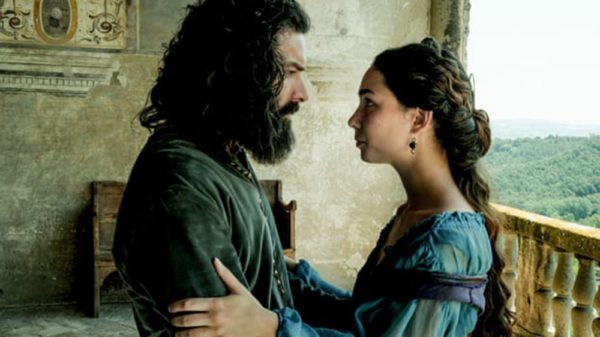
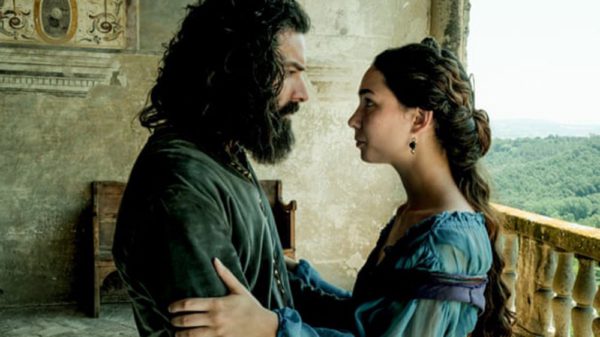
Aidan Turner (L) as Leonardo da Vinci in Amazon Prime’s Leonardo. Matilda de Angelis as Caterina da Cremona, a woman who was not da Vinci’s lover.
By James Finn | The fact that LGBTQ people have traditionally been erased from history is well known. People today generally don’t like it. We want to know about Alexander the Great’s passionate affairs with handsome Hephaestion and beautiful Bagoas the gender-bending eunuch twink. That Roman emperor Hadrian elevated his tragically drowned male lover Antinous to the status of a god is (mostly) no longer suppressed in schools.
The queerness of the Italian Renaissance is a subject once kept quite hush hush. In high school, I dove into Irving Stone’s 1961 novel The Agony and the Ecstasy, hoping to find a role mode in the great Michelangelo, whose rumored gayness I had never found discussed in history books.
Stone wrote delicately, clearly “in the know” but dancing around topics authors today address more clearly. I finished the book disappointed and dove into private research, further disappointed that “respectable” scholars denied all evidence of male/male passion … despite reams of homo-erotic poetry, themes of masculine beauty in paintings and sculpture, and despite the documented fact he was arrested for sodomy by Florence’s deliciously named Office of the Night.
Established in 1432 to root out homosexuality, the Office of the Night had its work cut out. Florence was apparently a cross between San Francisco’s gay Castro and NYC’s artsy SoHo. During the seventy years the office existed, prosecutors accused some seventeen thousand men of sodomy. Even so, sources say Florence remained a “gay” hot spot, possibly because the office was open to political suasion when members of powerful families got caught in their web.
Michelangelo was not powerful, but the young man he was accused of “corrupting” belonged to a wealthy clan that scholars say managed to get the charge dismissed.
Leonardo da Vinci was also caught in the Night Office’s clutches
Leonardo da Vinci was arrested by the Office of the Night when he was 24. He was jailed for only a few hours, but he sweated over his fate for many weeks. Elizabeth Abbott of Carleton University argues the experience terrified him and shaped him in negative ways, making him paranoid and confrontational on the subject of sex with men.
But Abbott and many other experts have concluded that while the concept of sexual orientation did not exist in Renaissance Italy, Da Vinci would almost certainly identify as gay if he were alive today. No evidence from his well documented life shows him falling in in love with or having sexual relationships with women, notable in a day when a man of his status would be expected to maintain mistresses.
His art is so homo-erotically charged that few are surprised by contemporary rumors that the beautiful male models he employed (and dressed like peacocks) were sometimes his lovers.
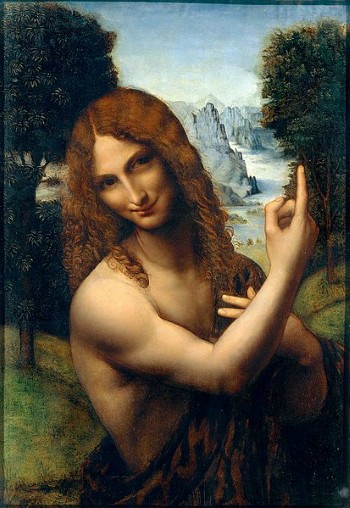
Salai was one model Leonardo particularly favored. He painted him as John the Baptist and probably also as a woman in the Virgin of the Rocks.
As far back as 1550, the biographer Giorgio Vasari reported da Vinci was “besotted” with Salai, “who was most comely in grace and beauty, having fine locks, curling in ringlets, in which Leonardo delighted.”
Like other observers of the time, Vasari notes an absence of women in the great artist’s life, at least in the romantic sense.
Like other observers of the time, Vasari notes an absence of women in the great artist’s life, at least in the romantic sense.
Scholars have lost their reticence, storytellers are free to portray the truth, and LGBTQ kids are free to look up to one of Renaissance Italy’s most luminous artists as a kind of hero. Surely Leonardo is fit for inclusion in LGBTQ history curricula more and more school districts are developing.
We’re not erasing queer history anymore. Or are we?
Not so fast! For reasons unknown, Sony Pictures Television has invented a heterosexual storyline in Leonardo, one of this year’s most anticipated period dramas.
The series is an eight-part dramatization of the Italian master’s life, produced by Lux Vide and Rai Fiction with Big Light Productions in association with France Télévisions and RTVE in Spain. It’s big budget, big glitz, big names, and big promo. While its release date in the U.S. has not yet been announced, it drops on Amazon Prime Video UK April 16.
While the series doesn’t shy away from Leonardo’s queerness, depicting some of his relationships with men, historians say the heterosexual relationship it features as central is fanciful, fictional, and based on the flimsiest of debunked scholarship.
Nothing of course would be wrong with portraying the artist as bisexual if he actually had been. But experts who study the subject are united in observing that he almost certainly never had romantic or sexual relationships with women and — more to the point — could not have had such a relationship with Caterina da Cremona as portrayed in the series.
Jonathan Jones observes that “Caterina is a figment, a fantasy, a complete piece of tosh, invented by a 19th-century Romantic and for some reason given highly unconvincing credence by one modern biographer,” Charles Nicholl in Leonardo da Vinci: Flights of the Mind.
The actual evidence? There isn’t any. An 19th century Italian writer once claimed to have seen “La Cremona” written one time in Leonardo’s notes in reference to a woman lover. But historians searched hard and never found that entry. There’s no way to match it to a historical person if they had, so even in the Romantic age, the theory died fast.
Nicholl tried to revive it by claiming Leonardo couldn’t have painted female nudes without experiencing heterosexual love. Yup, that’s it, that’s all. That’s his argument.
Excuse us gay men as we clutch our pearls and remember George Platt Lynes, Cecil Beaton, and a score of more recent gay artists who somehow manage to represent the nude female form without having sexual affairs with women.
Excuse us also as we ask ourselves why Sony Pictures is inventing a heterosexual relationship out of whole cloth in what they’re billing as a “historical masterpiece.”
Guys, Leonardo da Vinci was gay.
The only intimate relationships he ever had were with men. The evidence is voluminous and convincing. He continued those relationships in spite of the threat of prison and the anxiety the threat produced in him.
He produced gorgeous, luminous, revolutionary art that changed the world, or at least the art world. He did it as as man who fell in love only with other men. And that’s OK. It’s more than OK, it’s to be celebrated. Leonardo is a genuine hero and representative of men everywhere who transgress sexual norms.
When I was in high school, I couldn’t look up to him or his contemporary Michelangelo, because authorities hid their true sexuality, treating it as shameful.
I thought things had changed, but now it feels like Sony Pictures and Amazon Prime are right back at it. Why invent a heterosexual storyline, guys? Leonardo is ours, and you shouldn’t be lying about him.
James Finn is a former Air Force intelligence analyst, long-time LGBTQ activist, an alumnus of Queer Nation and Act Up NY, an essayist occasionally published in queer news outlets, and an “agented” novelist. Send questions, comments, and story ideas to [email protected]
This piece was originally published at Prism & Pen, ‘Amplifying LGBTQ voices through the art of storytelling.’ Republished by permission.
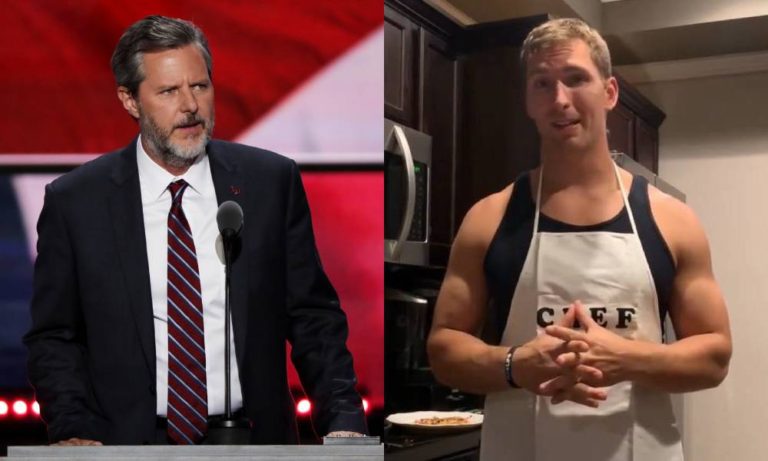
Jerry Falwell Jr’s former personal trainer is suing Reuters, alleging the outlet implied he “unjustly benefited from an intimate personal relationship” with the evangelist.
Filed in federal court, the lawsuit says that Benjamin Crosswhite, the owner of Crosswhite Athletic Club in Lynchburg, Virginia, is seeking $9.35 million in compensatory and punitive damages.
In August 2019, Reuters published an article which alleged that Falwell “personally approved” a real estate transaction by Liberty University that “helped his personal fitness trainer obtain valuable university property”.
Reuters reported that Falwell “urged other Liberty personnel in an email to cut Crosswhite a ‘sweet deal’ allowing him to offer private gym training at the Lynchburg fitness facility”.
The article reported that Falwell wrote in an email: “Becki [his wife] and I wouldn’t mind working out there with Ben as a trainer because it is more private.”
Crosswhite’s lawsuit accuses Reuters of insinuating that he was “another Falwell ‘pool boy’”. This is a reference to Giancarlo Granda, who made explosive claims in a 2020 Reuters article that he had been in a “years-long sexual relationship involving Falwell’s wife [Becki Falwell] and the evangelical leader”.
Granda told Reuters that the “relationship involved him having sex with Becki Falwell while Jerry Falwell looked on”. Jerry Falwell Jr has denied he was involved in the affair.
Crosswhite’s suit states there is “nothing scandalous about the relationship between Plaintiff and his clients, the Falwells”. Uploaded by local news outlet WSET, it claims Reuters “juxtaposed a series of facts so as to falsely imply a defamatory connection between them, including a connection and/or similarity between the Falwells’ notorious dealings with Granda and Plaintiff”.
The suit alleges that Crosswhite “enjoyed an untarnished reputation as a personal trainer and businessman” until Reuters “published the false and defamatory statements”, and accuses the news organisation of “intentionally omitt[ing] material facts because Reuters knew that those facts would destroy its preconceived ‘pool boy’ thesis about Plaintiff”.
A spokesperson for Reuters told PinkNews: “Reuters stands by its story, which was fair, factual and in the public interest.”
The August article published by Reuters mentioned a “relationship between the Falwells and Giancarlo Granda, a young man they befriended while he worked as a pool attendant at a luxury Miami Beach hotel and later backed in a business venture involving a youth hostel”.
It reads: “The support Falwell provided to the two young men, Granda and Crosswhite, has some parallels. Both were aided in business ventures and both have flown on the nonprofit university’s corporate jet.”
But nowhere does article explicitly claim that Crosswhite had an intimate relationship with the Falwells. Instead, the article states: “When Falwell helped Crosswhite, he used the assets of Liberty, the tax-emept university he has led since 2008.”
WSET reported Crosswhite has previously defended the 2016 deal with Falwell and Liberty University for the property, in which Crosswhite purchased a tennis and gym facility for $1.2 million.
The suit claimed that, after Reuters started promoting the August 2019 article, as well as a follow-up piece, on its social media platforms, Twitter users “made disparaging statements about Plaintiff such as ‘Poolboy got to get paid’, ‘Grifters gotta Grift’, ‘Why does he do these ‘acquaintances’ [sic] such huge financial favours while abusing his position with #LibertyUniversity? Hmmmm’, ‘Liberty University now offers a duel major in Personal Fitness and Pool Attendance [sic]’, ‘first the pool boy, now the trainer… who’s next?’, ‘guess it is called @LibertyU and not Integrity U’, and ‘Definitely sounds like he wanted to do his personal trainer. A favour.’”
It argues that Reuters is liable for “the republications of the false and defamatory statements by third-parties”.
PinkNews contacted the counsel for Benjamin Crosswhite.
The recent, tragic death of Chriton Atuhwera, a gay refugee who was the victim of an arson attack in Kakuma refugee camp, Kenya, has caught international attention.
Chritron was one of two gay men who suffered second-degree burns after a petrol bomb was thrown near the pair while they slept on a mattress in the open air, during the attack on March 15 in Kakuma.
This unspeakable and avoidable tragedy is just one piece of the puzzle. LGBTIQ asylum seekers and refugees in Kakuma have faced ongoing violence and discrimination and face elevated rates of economic and social exclusion including barriers to accessing employment and social services and challenges to effective organizing and advocacy for their human rights.
This tragic death and the ongoing threats that the community faces have precipitated the need for a more complete and long-overdue understanding of the situation on the ground for the LGBTIQ refugee community which in turn can lead to more comprehensive and durable solutions to benefit the broader community.
Today, Kakuma refugee camp is home to nearly 200,000 registered refugees and asylum seekers. Many have fled overland from Uganda, South Sudan, Somalia and the Democratic Republic of Congo. The majority of the world’s refugees remain for years, often decades in refugee camps or informal settlements.
In total, there are approximately 300 LGBTIQ refugees and asylum seekers — perhaps more — currently living in Kakuma, which remains the only country in the region to provide asylum to those fleeing persecution based on sexual orientation, gender identity or expression. The situation they face in Kakuma refugee camp is complex and multilayered.
While the goal of most LGBTIQ refugees and asylum seekers is to ultimately be resettled to a safe third country, resettlement slots have drastically fallen and are only available to less than 0.6 percent of refugees, a fraction of the world’s refugees. U.S. resettlement numbers dropped to historic lows during the Trump administration, and the Biden administration recently flip-flopped on its pledge to increase refugee resettlement slots. We urge the administration to honor its original commitment, recognizing that it will still only benefit a tiny fraction of refugees globally.
At the same time, LGBTIQ refugees in Kakuma face immediate challenges including poverty, isolation and lack of access to health and social services.
There are a number of groups of LGBTIQ asylum seekers and refugees scattered in different parts of the camp, and while these communities face many of the same daily struggles of life in a refugee camp, with individuals hailing from a variety of different countries of origin and cultural settings, not all LGBTIQ refugee communities in the camp have the same lived experiences nor do all LGBTIQ groups agree on one basic need and approach to better their lives and safety.
With the increased numbers of LGBTIQ asylum seekers and refugees arriving in Kakuma in recent years, the need has grown for a true and complete understanding of the challenges facing LGBTIQ refugees in Kakuma, uncovering root causes and identifying sustainable solutions. It is vital that this is done.
Especially in light of recent incidents, there is a clear need for further action and support, based on facts, taking into account the current situation on the ground and raising the voices of those groups whose needs are not always in the forefront. The lack of clear, detailed and well-rounded information regarding the situation experienced by LGBTIQ refugees in the camp also creates challenges for those interested in helping to ensure the rights and well-being of this community.
That is why, ORAM together with Rainbow Railroad have announced a joint Kakuma research project. The research project, endorsed by the U.N. refugee agency UNHCR, will provide accurate information on LGBTIQ asylum seekers and refugees living in the camp — a critical piece in more effective advocacy on behalf of the community.
In keeping with the organizations’ focus on local leadership, the research will be Kenyan-led. The researcher will conduct first-hand interviews with LGBTIQ refugees and asylum seekers, as well as community leaders in the camp and lead stakeholders. Based on the information gathered, the report will identify overarching issues facing the community, identify service and resource gaps, pinpoint solutions and make recommendations to address systemic challenges facing the community.
Kakuma refugee camp is a complex and challenging environment for LGBTIQ refugees and asylum seekers. This report aims to provide a deeper understanding that can lead to a number of multifaceted solutions to meet the urgent and critical needs of LGBTIQ asylum seekers and refugees in the camp, from improved living conditions to expedited resettlement.
We all having a duty to look out for the most vulnerable and marginalized among us. We need to prioritize the safety and protection on LGBTIQ asylum seekers and refugees and address the challenges they face on their journey to safety, Kakuma refugee camp, in Kenya in general and beyond. We must promote policies and practices that treat the forcibly displaced as fully human and with all the dignity and humanity that they deserve.
Two hundred LGBTQ Philadelphians will get their first vaccine doses on Tuesday at the William Way Community Center through a collaboration with HIV/AIDS healthcare provider Philadelphia FIGHT.
The April 6 clinic is among the first pop-up vaccination events specifically geared toward queer and trans Philadelphians.
William Way first opened slots last week to people who receive regular services at the community center. Thought its been posting on social media and sharing via email, the center is still working to fill its 200 appointments — so if you’re queer or trans and eligible under Phase 1A or 1B, there might be a space for you.
There’s no centralized link to schedule, but you can call the center at 267-225-7660 or send an email to vaccine@waygay.or. Make sure you do it in advance, since the William Way clinic is not a walk-up operation.
Organizers say it’s crucial for LGBTQ people to access the vaccine from affirming spaces, since they often experience discrimination in the health care system.
“We know that LGBTQ folks, particularly trans folks, experience a lot of barriers trying to get culturally affirming care, and there’s reason to suggest the vaccine experience would be similar,” said Ally Richman, chief operating officer at William Way. The center is located at 1315 Spruce St. in the Gayborhood.
Research shows LGBTQ people more often have pre-existing conditions and lower incomes that have been correlated with COVID risk, plus they’re more likely to work in highly affected industries like food service and health care.
“We don’t want people going to get a vaccine and somebody misgendering them or something happening to them, and they just feel like, ‘I can’t come back to get the second dose,’” said Jane Shull, CEO of Philadelphia FIGHT
Philadelphia FIGHT started sending staffers to Center City gay bars last month, Shull said, to let workers know they were eligible and schedule them on the spot.
Other queer-affirming providers have been inoculating their own patients for the last few months. The Mazzoni Center helped vaccinate the John C. Anderson Apartments, an LGBTQ-friendly housing complex in Center City.
It’s not clear if widespread discrimination has made LGBTQ people any more apprehensive to get the vaccine.
Several LGBTQ Philadelphians told Billy Penn earlier this month that they wanted their own space to get the vaccine. Nationwide, some queer and trans people have expressed hesitancy. A Bryn Mawr researcher recently launched a local survey to see how LGBTQ Pennsylvanians feel about it.
Shull said she hasn’t seen hesitancy at Philadelphia FIGHT, where she estimated about half the patients are LGBTQ.
“I’ve heard stories of people who broke down crying when we called them,” she said. “We have tended to get oversubscribed, actually. There’s a lot of interest in the community.”
For now, there’s just one clinic scheduled at the William Way Center (plus the second-dose day in three weeks). But depending on the availability of doses, Shull is optimistic they could continue to host regular inoculations for LGBTQ people.
William Way COO Richman agreed. “Right now this is a one-time thing,” she said, “but we’re definitely open to having conversations about doing it again.”
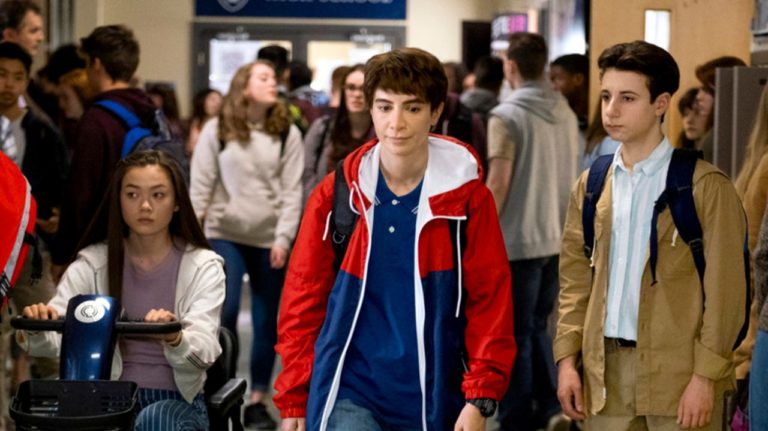
WHAT IT’S ABOUT Chad (Nasim Pedrad) is about to enter high school and has the pre-freshman-year jitters. Will girls like him? Will guys, like the super-cool Reid (Thomas Barbusca)? Pedrad, 39, is a woman who plays this boy. Persian-born, all Chad wants to do is assimilate. Chad’s home life is comfortable but complicated: His mother, Naz (Saba Homayoon) is estranged from his father, who is back in Iran. Along with kid sister Niki (Ella Mika) they live with her kindly, befuddled uncle Hamid (Paul Chahidi). Chad badly wants cool creds, and finally gets those when his mom starts dating Ikrimah (Phillip Mullings Jr.)
Pedrad, a “Saturday Night Live” repertory player back in the early ’10s, also created the show. Like Chad, she was born in Iran before emigrating to Orange County, California, when she was 3.
MY SAY The vast, peopled stage of popular culture is so crowded that it’s easy — no, it’s inevitable for some of those people to get lost in that crowd. Nasim Pedrad is of whom we speak. Nasim who? “SNL” fans certainly remember her but only vaguely. Your handy reminder: A gifted impressionist, she did a killer Arianna Huffington and Kim Kardashian (among many others.) She lasted five or so years, seemed to get along with Lorne Michaels and left in 2014 to join John Mulaney’s new eponymous sitcom for Fox. Smart creative move, less so of a career one. “Mulaney” died fast, and she ended up on “New Girl” for a couple seasons.
But around that time, she pitched her own show, about the sort of boy any pubescent boy just entering the high school jungle might recognize: Pitchy voice, insecure, desperate for social status or at least for someone (anyone) to follow him on Instagram. Fox passed but good well-conceived ideas sometimes have a way of finding homes, and “Chad” finally has.
If there’s any mark against “Chad,” it’s the mark of familiarity: Hulu’s “PEN15” is basically the same show and boasts not one but two remarkable performances by adults passing as 14-year-olds (Maya Erskine, Anna Konkle.) Nevertheless, “Chad” has something no other show possibly could, and that’s Pedrad’s unique comic style.
How best to describe that? Like her longtime friend and colleague Mulaney, she knows the world is mad crazy, but it can be funny, too. Chad is precocious enough to know this as well, but lonely and bereft enough not to care. His absentee father has assumed mythic stature in his mind, and he looks to any other adult male — at least cool, fun ones like Ikrimah — to fill the role. That’s ultimately futile, and Chad (pardon the pun) is left hanging.
To be a fatherless, Persian-born American boy comes with its own unique set of complications. But to be Chad — smart, bratty, pampered (in fact, babied) — even more so. Pedrad has located a sadness at the heart of her character, too. It’s the sadness of knowing this mad-crazy-funny world will ultimately disappoint you. That’s a hard lesson for any 14-year-old. At least she — he — finds some whimsy in it.
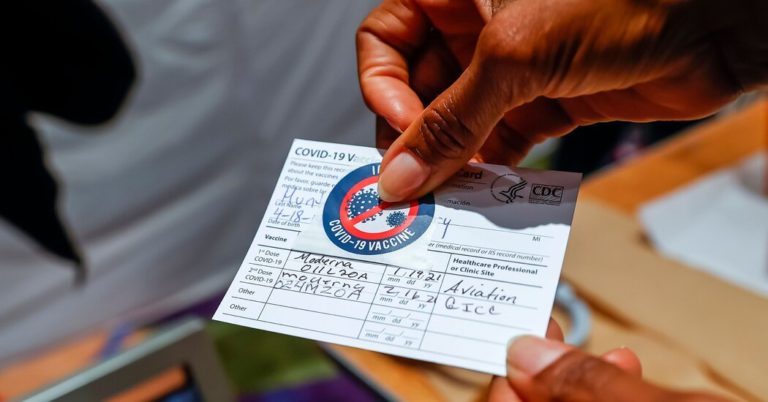
Florida has banned state and local government agencies and businesses from requiring so-called vaccine passports, or documentation proving that someone has been vaccinated against Covid-19.
Gov. Ron DeSantis, a Republican, issued an executive order on Friday prohibiting businesses from requiring patrons or customers to show vaccine documentation,or risk losing grants or contracts funded by the state. It was not immediately clear how the order applied to state and local government agencies.
Requiring proof of vaccination, the order says, would “reduce individual freedom” and “harm patient privacy,” as well as “create two classes of citizens based on vaccination.”
There has been much discussion about vaccine passports, a way to show proof that someone has been vaccinated against the coronavirus, though the passports raise daunting political, ethical and privilege questions. The Biden administration has made clear that it will neither issue nor require the passports, but Republicans have seized on the issue as an example of government overreach.
Mr. DeSantis is seizing on this theme, as the Biden administration tries to set standards for the many private companies that are developing apps and other means of digital verification of coronavirus vaccination. One of Mr. Biden’s executive orders aimed at curbing the virus crisis called for government agencies to “assess the feasibility of linking Covid-19 vaccination to International Certificates of Vaccination or Prophylaxis” and creating electronic versions of them. A wide range of businesses, especially cruise lines and airlines, are eager to have a way for their customers to show proof of vaccination, especially as the number of new virus cases rises across the country.
Federal health officials are expected to formally recommend that states lift the pause.
Administration of the vaccine ground to a halt recently after reports emerged of a rare blood clotting disorder in six women who had received the vaccine.
The overall risk of developing the disorder is extremely low. Women between 30 and 39 appear to be at greatest risk, with 11.8 cases per million doses given. There have been seven cases per million doses among women between 18 and 49.
Nearly eight million doses of the vaccine have now been administered. Among men and women who are 50 or over, there has been less than one case per million doses.
“It’s completely unacceptable for either the government or the private sector to impose upon you the requirement that you show proof of vaccine to just simply be able to participate in normal society,” Mr. DeSantis said at a news conference on Monday.
Some other Republican governors have also come out against the passport concept. Gov. Pete Ricketts of Nebraska issued a statement Wednesday saying that the state would not participate in any vaccine passport program, and Gov. Mike Parson of Missouri told reporters Thursday that he would not require vaccine passports in the state but was also not opposed to private companies adopting them.
The C.D.C. has issued guidance for fully vaccinated people that allows for the resumption of some activities in private settings. And on Friday, the agency said fully vaccinated Americans can travel “at low risk to themselves,” though federal health officials have urged people not to travel at all, unless they absolutely must.
In New York, however, the state recently introduced a digital tool to allow people to easily show that they have either tested negative for the coronavirus or have been vaccinated in order to gain entry into some events and venues.
Walmart, last month, joined an international effort to provide standardized digital vaccination credentials to people. The company joins a push already backed by major health centers and tech companies including Microsoft, Oracle, Salesforce, Cerner, Epic Systems, the Mitre Corporation and the Mayo Clinic.
Mr. DeSantis’s order is likely to draw legal challenges, raising questions about the impact of two Supreme Court decisions. In Jacobson v. Massachusetts, the high court in 1905 upheld the authority of states to enforce compulsory vaccination laws. That ruling for more than a century has let public schools require proof of vaccinations of its students, with some exceptions for religious objections.
In 2018, the Supreme Court ruled in favor of a Colorado baker who had refused to create a wedding cake for a gay couple on narrow grounds, and other courts have struggled with how to balance state laws barring discrimination against constitutional rights like free speech and the free exercise of religion. It is not clear that Florida businesses could invoke a constitutional right to refuse to comply with the new measure.
Some venues and events in Florida had already made plans to require vaccinations. The Miami Heat basketball team said it would give prime seating to vaccinated fans. The South Beach Wine & Food Festival said it would require proof of vaccination or a negative coronavirus test to attend. Nova Southeastern University said it would mandate vaccinations for all faculty and staff members as of Aug. 1 to participate in on-campus learning.
It was not immediately clear on Friday what those businesses would do in response to the governor’s order.
When I remember queer nights and gay bars now, there’s a filter on this category of memory that could be called “glisten.” The thought of even waiting in an interminable line just to go into a queer night club sounds like heaven to me now. But if I investigate an actual, concrete memory from inside the queer night, the flaws creep in from the edges. Looking back, the crowds could be icy or clingy, the only people I liked were my friends, and the atmosphere was sometimes too spiky for me to ever really relax in my own skin, which is often a central premise of queer nights to begin with. So even though I’d give anything to go back to a moody-mean-mediocre queer night now, I also know that when it was available, I often couldn’t wait to leave. I couldn’t wait for it to be better.
Gay Bar, the new cultural-history-memoir hybrid by American-born, London-based writer Jeremy Atherton Lin, is concerned exactly with this quality. The gay bar has a distinctive magnetic push-pull allure to its congregants, and the book contains an almost grueling level of ambivalence. “The gay bar has this cultural presence that’s sort of a joke,” says Atherton Lin over a video call. “It’s passé.” The book reminded me, again and again, even before the gay bars were closed, there was something about them that felt like they were already over. Gay Bar reinforces one of the most comforting positions about the gay bar I’ve ever encountered — that it’s disappointing.
Atherton Lin started writing Gay Bar in 2017, during the collective realization that half of the LGBTQ+ bars and clubs in London had shuttered within the past decade. To use a now-haunted phrase, little did we know, a few years later all the bars would be closed temporarily. And after months of holding on by a string, many more have closed permanently. So even though Gay Bar is written about a growing lacuna, this book feels like a report on the last glinting moments of gay bars.
The book recounts Atherton Lin’s personal hunt for queer spaces in London, Los Angeles, and San Francisco, many of which are long gone. “Gay bars have a furtive unknown history,” says Atherton Lin. “This history is already filled with these ambiguities and secrets and untold stories.” Lin, who is in his mid-40s, went to his first gay bar in Los Angeles about 20 years ago, though he can’t quite pinpoint exactly which was the very earliest introduction. The book follows him on a move to London, where his watchful eye observes a broad cultural shift: In 2005, Westminster City Council orders all gay bars in Soho to remove their gay flags. In South London a decade later, “standard pubs” hoisted rainbow flags casually. As Lin’s partner theorizes in the book: “Maybe the flags weren’t just inviting us in but keeping certain other types at bay. Maybe the flag, which once proclaimed what a bar is, now proclaims what it isn’t — a place for hooliganism, violence, machismo. We don’t want trouble here, the flag now signals. Cheaper than a bouncer.” Lin’s presence is a witness, his analysis almost prophetic.
This constant threat of foreclosure and erasure of the gay bar is what gives this book — an act of archiving and crystallizing memory, gossip, and research — its propulsive urgency. History and memoir converge: In the mid-’90s, at an opening night of an L.A. club called Cherry — which was “gay in a way that co-opted ’70s glam rockers who co-opted gay,” Atherton Lin writes—he runs into famed Warhol actress Holly Woodlawn. Atherton Lin is wearing gym shorts, huge yellow sunglasses and a shaggy coat borrowed from his best friend, “looking like Little Edie Beale forced to step out of the house.” Woodlawn gives him the once-over: “Honey, even I wouldn’t try getting away with THAT.”
Telling the history is liberating, but the bars might not have been. Atherton Lin shows that, as court rulings and social mores in America allowed the gay bar to become more legitimate and established, these places adopted repressive codes from the straight world. They often prioritized white gay men, rich gay men, gay men who presented their masculinity in a particular set of legible ways. In Atherton Lin’s first forays to gay bars in Los Angeles, he describes encountering a social set who “dismissed whole populations with one sting … To have a clear racial preference was a highly amusing character trait.” A lot of the book’s history recounts gay bars with brutal class dynamics, vicious racist policies. “I’m highly uncomfortable in a lot of spaces that are meant to be spaces for people like me,” he tells me over the phone.
If one has high standards for liberation, the gay bar’s failures are all the more embarrassing, its trappings all the more transparent, its symbols as troubled as they are triumphant.Certainly, there are sweeping outside forces — like the gentrification of queer culture — that have irreparably wounded the gay bar’s place in contemporary social life. But the gay bar enacts its own social code. Arguably, in its faults and blindspots, the gay bar has made itself passé.
When we’re able to go back, Gay Bar asks, will we want to? In the most recent pre-pandemic iteration of non-straight night life, a new breed of queer party had begun to emerge: roving nights with “incredible spirit” that often prioritize under-represented groups like trans femmes and queers of color. Atherton Lin characterizes the constantly shifting glimmer of these parties, writing: “To create inclusive spaces for these morphing identities is an ambitious undertaking, like planning a house for a vagabond.” These migrating parties tend to be the imaginative forefront of queer culture, and they aim to solve a problem of the gay bar (exclusivity). Atherton Lin wonders what’s lost when something is always on the move, what reliability is sacrificed by that shape-shifting. But certainly, a way of socializing that’s accustomed to constant adaptation might be best suited to create a party that emerges on just-steady ground. We’re just left asking now, what form will it take, when it meets us on the other side?
Virginia has become the 12th state to ban the use of the “gay/trans panic” defense.
Gov. Ralph Northam signed a bill Wednesday against the defense, which has allowed those accused of homicide to receive lesser sentences by saying they panicked after finding out the victim’s sexual orientation or gender identity.
The bill passed the state House and the Senate in February.
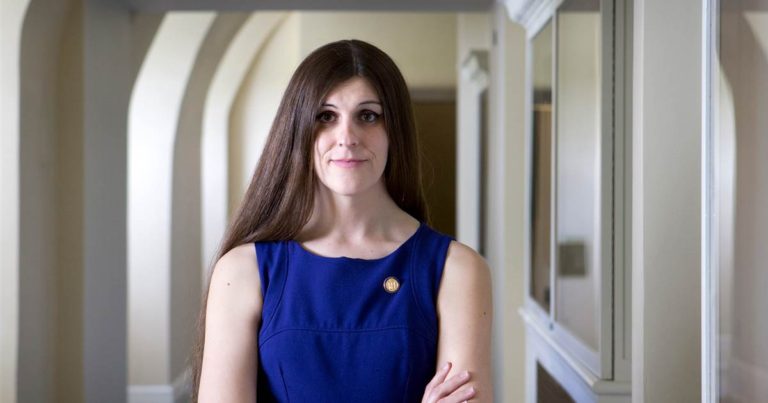
The bill’s author, Democratic Delegate Danica Roem said she first became aware of the defense after Matthew Shepard, a gay man, was murdered in 1998, and the men who killed him used the defense in court, according to the American Bar Association. Then, in 2004, one of the four men who were convicted of killing Gwen Araujo, a trans teenager, also used it.
Roem was a college freshman and knew she was trans when she read about Araujo’s death. It terrified her, she said.
But what made her determined to introduce a bill to ban the defense in Virginia was a letter she has received from a 15-year-old LGBTQ constituent.
“He’s out, and he sent me an email asking me to pass this bill, and I came to realize that in 2021, my out teenage constituents are living with the same fear that I did in 1998, after Matthew was killed, and that I did in 2002 after Gwen Araujo was killed,” Roem said. “And you think of how many other people will stay closeted because they have a fear of being attacked, let alone all the other fears that a closeted person who wants to come out has.”
Roem said that a researcher who studies the LGBTQ panic defense testified that it has been used at least eight times in Virginia. She said some Virginia lawmakers questioned it, arguing that other legal defenses aren’t banned, which Roem said is not true.
“We went through the list,” she said. “The rape shield law — you cannot blame a rape survivor or a rape victim’s past sex life, more or less, for that person’s rape in that encounter. Their sexual history is irrelevant.”
In addition, committing statutory rape against someone 14 or older and then marrying that person does not exonerate the rapist, she said. The marriage “is not a viable defense in court,” Roem said.
“What we were showing was, sometimes things are so egregious that when we have this universal acknowledgement that this shouldn’t be happening, we codify that,” she said. “And so that’s what we did with this bill.”
Though only 12 states have banned the defense, Roem said it’s still progress. And, she said, it’s a sign that the makeup of state legislatures is changing.
In Vermont, Taylor Small, who was elected to the state House in 2020 and is the state’s first openly trans legislator, introduced a similar bill there.
“You’ll notice with me introducing this bill, with Taylor Small introducing this bill in Vermont, that, as more of us who are coming from the very communities that are most affected by legislation like this have that lived experience that we were bringing to the table, we are able to speak to this,” Roem said.
Having more openly LGBTQ representatives, particularly trans people, affects whether constituents feel like their concerns will be heard, she said. “In my case, my teenage constituent — who knows that his delegate is trans, and he as someone who’s out feels safe talking to her — can send me a bill idea and say, ‘Delegate Roem, can you carry this, can you make this happen?’ And my answer to that constituent, my answer is ‘yes.’ And we did.”
Roem said that Virginia, as the first Southern state to pass a ban on the defense, also sets an example for other states. She said Virginia banned the defense before Vermont, Maryland and Massachusetts, though both Vermont and Maryland are considering similar bills. Roem said that once Delaware “gets on board,” she hopes the Mid-Atlantic states can send a message to LGBTQ people.
“I hope that as a region, the Mid-Atlantic can really tell people that you are welcome here because of who you are, and we will protect you here because of who you are,” Roem said. The delegate also said that if an LGBTQ person is killed or hurt, the state will not “let them use your mere existence as an out LGBTQ person — or the perception of you being LGBTQ — be a reason that they can hurt you.”
A woman on TikTok is sharing a jarring video of a man’s alleged creepy gym behavior after she claims she saw him take photos of her while she was working out.
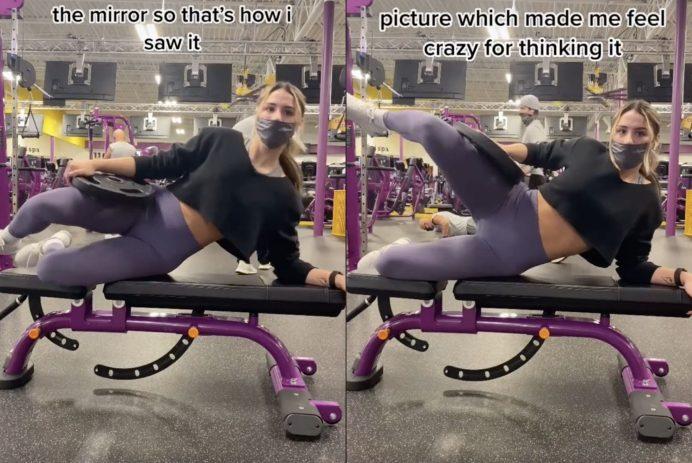
TikTok user @juliaapic, who goes by Julia, is a fitness and lifestyle influencer on the platform. But her most viral video isn’t an exercise tutorial or recipe video — it’s a clip of the time she allegedly caught a stranger at the gym taking a photo of her.
“Was filming a workout back in January when this happened,” Julia wrote in the TikTok.
Related: Husband accused of cheating after item found in gym bag
Her caption explained that she wasn’t sure whether she wanted to post the video when it first happened because “it was a bit too sensitive at the time.”
“Genuinely curious what you guys think,” she added.
In the video, Julia is positioned in a side plank with her front facing the gym’s mirror. As she lifts a weight on her top leg, a man starts walking around in the background, not doing anything. At one point, he squats down behind Julia appears to do something with his phone — although it’s hard to tell because Julia’s body blocks most of him out.
“He denied he took a picture which made me feel crazy for thinking it,” Julia said in the TikTok. “What do you think?”
“100 percent took a photo of you,” one user commented.
“He absolutely did,” another agreed. “Clearly showed his buddy.”
“Some men still don’t get why women are sometimes nervous to be alone,” another chimed in.
In a follow-up video, Julia addressed the numerous comments that said she should contact the gym staff.
“I honestly wasn’t going to report him at first because I was too scared,” she said. “I didn’t want to make a scene.”
As Julia mentioned in her first video, she also started to doubt that the man took a photo of her after — especially after he denied it. However, what changed Julia’s mind was the thought that if she’d seen this happening to another woman at the gym, she would’ve encouraged that woman to report it.
“I told staff and they confronted him about it and he got mad and he left,” she said. “He then came back in to tell the staff that he was mad and I just tried not to watch because I was extremely uncomfortable.”
Ultimately, Julia said the staff “made a note on his account.” She said she hasn’t been back to that gym since.
In an even scarier twist, Julia claimed that she’d posted about the situation on Instagram back when it happened — and the guy somehow found it and messaged her. She didn’t respond.
These eco-friendly gifts are the perfect steps to a sustainable lifestyle:
In The Know is now available on Apple News — follow us here!
HARLEM, Manhattan — The health of businesses and communities has been in the spotlight this past year.
Those concerns merge in the fitness industry and it’s apparent on the streets of Harlem. Studios are fighting for their health and the wellness of their customers. They could open for training and in-person classes last week at 33% capacity.
But the estimate is nearly half of the gyms and fitness studios in the Harlem area have closed permanently.
JTW Fit on Adam Clayton Powell Blvd at West 132nd St. had its grand opening in August 2019.
Owner Jahkeen Washington grew up in the neighborhood.
“We had a ton of momentum before closing. It was devastating to close so abruptly,” he said
Erica Barth just resumed classes inside at Harlem Yoga Studio, which she has co-owned for a decade.
“Harlem is a neighborhood where there’s a need. There are people on front lines and with comorbidities that make covid worse,” Barth said.
Getting online to work out has been a lifeline for the businesses in Harlem and elsewhere.
Uptown Grand Central, which promotes local businesses and activities, has organized three weeks of free sessions on-line. Click here for information and to register for the free Zoom classes provided by Mindful Harlem, Harlem Cycle, Harlem Pilates, Harlem Wellness Center, Harlem Run, JTW Fit and Harlem Yoga Studio.
Prizes and merchandise are also available from Women’s World of Boxing, Bond Street Dojo and Harlem Chi Acupuncture.
Harlem Cycle owner Tammeca Rochester says they’ll keep fighting for their businesses health and the community.
“I’m worried about it everyday. We are on the verge of closing everyday. We haven’t received a lot of help,” Rochester said.
Their classes are all being held via zoom until staff can be vaccinated and the state infection rates decline. They rented out their bikes to keep the business and the work outs going.
D.C. Mayor Muriel Bowser announced on April 26 that the city’s COVID-related public health restrictions are being eased one step further by the lifting of a ban on live entertainment at bars, restaurants and nightclubs beginning May 1.
The mayor’s revised public health order is expected to provide a boost to the city’s gay bars, which will be allowed on a limited basis to resume offering live entertainment, including drag shows, which club owners have said have been a longtime popular form of entertainment.
The new order also expands the maximum number of people allowed to be seated at a single table from six to 10 and lifts a requirement that customers must order at least one food item when seated outdoors. The order leaves in place a requirement that a food item must be served when customers are seated indoors.
While welcoming the limited easing of some restrictions, nightlife advocates expressed disappointment that the new mayoral order leaves in place a 25 percent capacity limit on the number of people allowed for indoor dining and bar service along with a required 6′ distancing between tables and seating areas. Also left in place in the new order is the requirement that all customers in bars and restaurants must be seated at all times.
In addition, the mayoral order leaves in place a ban on seating at or ordering drinks from a service bar if the bar is staffed by a bartender or another employee. It also leaves in place a requirement that bars, nightclubs, and restaurants close at midnight instead of the pre-pandemic closing times of 2 a.m. on weekdays and 3 a.m. on weekends.
Nightlife advocates point out that Maryland has raised its occupancy limit for bars and restaurants to 50 percent and Virginia no longer has a capacity limit, although it requires all patrons to be seated and requires tables to be spaced at a distance in observance of social distancing.
Virginia Gov. Ralph Northam last week further eased the state’s restrictions on restaurants and bars by allowing bartenders to serve customers at indoor bar tops.
David Perruzza, owner of the Adams Morgan gay sports bar Pitchers and its adjoining lesbian bar League of Her Own said he too welcomes the lifting of the ban on live entertainment, which had been in place for about year. Perruzza said he would be offering the first drag show his bars has had in about a year on May 6.
But Perruzza said that like other D.C. gay bars, most of which operate in small or medium size buildings, the requirement that all customers must be seated and that tables must be separated by a distance of at least 6′ limits the number of customers that can enter his establishments, which include dining, even if the capacity limit were to be raised to 50 percent.
He said if a 50 percent capacity limit is put in place, the space in his two bars would only allow a 33 percent capacity due to the 6′ social distancing rule.
“What would help us is to let people sit at a bar,” Perruzza said. “My whole staff has been vaccinated. So why no bar service now?”
Mark Lee, coordinator of the D.C. Nightlife Council, a local trade association representing bars, nightclubs, restaurants and other entertainment businesses, has said the initial closing of all bars and restaurants early last year due to the COVID outbreak and the subsequent 25 percent indoor occupancy limit has had a devastating impact on many bars, restaurants and nightclubs.
Lee and other nightlife advocates point out that many of these venues are struggling to stay in business due to the dramatic loss of revenue brought about by the drop in the number of customers.
“The reality is that D.C. remains an outlier throughout the region and across the nation for the worst restaurant and bar restrictions,” said Lee, who is calling on Bowser to “move the same science-based and health-safe level of re-opening opportunities as in both neighboring and nationwide jurisdictions.”
Added Lee, “As all of the local area health metrics continue to improve and vaccination access is now readily available to all, our city needs to finally and immediately restore indoor capacity to 50 percent, allow seating of guest groups at bartender stations, and return to full operating hours by eliminating the midnight service curfew.”
Dr. LaQuanda Nesbitt, director of the D.C. Department of Health, has said nationwide data have shown that restaurants and bars have been among the high-risk places where the coronavirus is transmitted from person to person. But both Nesbitt and Bowser have said in recent weeks that city health officials are closely observing the declining number of new infections among D.C. residents and will be looking at further easing of the current restrictions within a month or two.
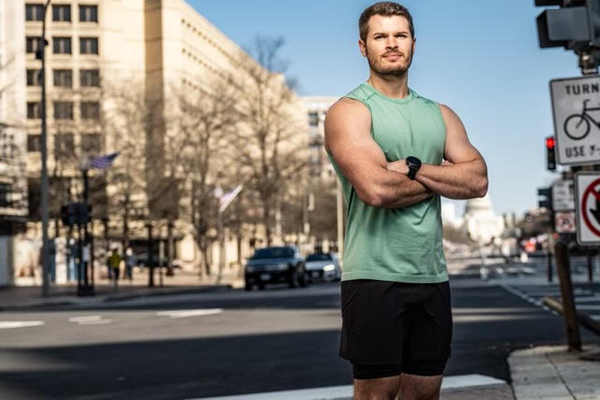
Brandt Ricca (Photo by Jonathan Thorpe/jthorpephoto)
Brandt Ricca will begin a non-stop 100-mile ultramarathon at 6 a.m. on Oct. 7 while most D.C. residents will still be sipping their morning coffee.
In a year of isolation and economic downturn, Ricca decided to run 100 miles in two days to benefit local, LGBTQ-owned businesses affected by the coronavirus pandemic. Ricca, who’s lived in D.C. for 10 years, is donating the money he raises to the Capital Pride Alliance and Equality Chamber of Commerce, where he has been a member since 2018.
The gay entrepreneur and owner of the D.C.-based business Nora Lee by Brandt Ricca understands first-hand how the ongoing pandemic affects small businesses, particularly LGBTQ-owned companies.
“I definitely want to give back to the community and local colleagues, especially because Capitol Pride has been now canceled two years in a row,” Ricca said.
Out of the funds raised, 90 percent will go towards funding 20 small business grants through the Equality Chamber of Commerce and the remaining 10 percent will go towards supporting Capital Pride Alliance.
Brandt, already an avid runner and self-described “fitness explorer,” decided after crowdsourcing ideas to pursue the 100-mile project. Ricca has been a frequent visitor at the Equinox Anthem Row in D.C. to prepare for the run.
“I was looking to do my next fitness endeavor, at the same time wanting to do something to get back to the fellow business owners in D.C.,” he said.
Applications for the 20 grants of various sizes for LGBTQ businesses are projected to open this summer through the Equality Chamber of Commerce, Ricca said. His goal is to raise $100,000 from individuals and companies. The grants will be distributed in October following the completion of the run.
Equality Chamber of Commerce Vice President Riah Gonzales-King is in the process of developing grants and additional summer educational programming to help young LGBTQ entrepreneurs and students start their businesses.
“So much of the culture centers around these businesses, many of which have been around for decades,” Gonzales-King said. “They’re pillars of the community — their owners are pillars in the community. And I think it’s time that we gave back.”
Helping LGBTQ entrepreneurs specifically at this time is essential, Ricca said, especially entrepreneurs in the creative and hospitality industry.
Ricca began training in February with the help of several exercise experts like Brian Mazza, a New York City fitness entrepreneur who ran 50 miles last December to raise awareness for male infertility stigma. The former Men’s Health headliner is guiding Ricca’s physical training, which has been a near-daily routine. Ricca was inspired by Mazza’s run in the first place.
Ricca reached out to Mazza over Instagram to get his assistance and training.
Mazza said Ricca reaching out over Instagram “meant the world.”
“I believe what he’s doing for his cause is remarkable,” Mazza said. “It’s important. I’m happy that he’s standing up for what he believes in and helping these businesses and helping individuals in general.”
Jacob Zemer, a coach and nutritionist, has designed a daily nutrition program for Ricca to prepare him for the run. Zemer and Mazza have been working together throughout the process to track Ricca’s health and progress.
The two fitness experts work with Ricca multiple times a day to monitor his diet, mileage, heart rate and pace monitoring. Both Mazza and Zemer said Ricca’a training has been successful.
“Brandt’s an excellent individual,” Zemer said. “He’s very easy to work with. He’s highly coachable, he’s a pleasure to talk to every day.”
Pacers Running will be sponsoring and designing Ricca’s 100-mile route throughout the D.C. region. The company is also working with Ricca to design specific shoes for the ultramarathon.
“I really wanted someone local who could really guide me on a route,” Ricca said.
Elyse Braner, a community lead at Pacers Running and longtime friend to Ricca, said the local business was excited to collaborate with Brandt because of an alignment of values.
“As a community, inclusivity and diversity is extremely important to Pacers Running,” Braner said. “As a small business, we really appreciated that Brandt wanted to do an event that supported small businesses — specifically LGBTQ businesses.”
Originally an event-planning business, Nora Lee debuted in 2018 on the second annual Allison Gala, a fundraising event benefiting the Triple Negative Breast Cancer Foundation, which Brandt created in memory of a family friend. He’s worked with a range of clients, including the Dupont Circle Hotel and Sotheby’s Real Estate.
Looking back at events on his website, he said he found himself bored with the photography. This led him to focus on creative marketing and decided to pivot his business model at the beginning of the pandemic. Now, Ricca provides photography and video shoots for clients.
“When COVID hit I decided to, like every business owner, I revisited my plan,” he said. “I really enjoyed the creative branding more in the photo shoot. So I decided to pivot strictly to just a full-on creative branding agency.”
The training for the 100-mile run has provided a stable routine for Ricca, which has helped him get through the pandemic, he said. Ricca is planning to create a campaign this summer inviting LGBTQ entrepreneurs to do their version of 100 miles, with the hope it will provide positive stability in their lives as it does in his.
“Obviously, people think I’m crazy for doing this,” Ricca said. “All the uncertainty out there right now – with business, with clients, with whatever; I needed an anchor. Something that was going to be a routine for me that I can control.”