Home Blog Page 391

‘Moffie’ review: The hell of being gay in apartheid-era army – Los Angeles Times

The Times is committed to reviewing theatrical film releases during the COVID-19 pandemic. Because moviegoing carries risks during this time, we remind readers to follow health and safety guidelines as outlined by the Centers for Disease Control and Prevention and local health officials.

Apartheid South Africa was expert at churning out hate in its ruling white minority, and if one happened to be gay — then a literal crime — the loathing was conditioned to turn inward, too, like a self-throttling. Key to the sanctioned barbarism that defined the regime was its conscripting of young white males into their ongoing border wars, a brutalizing passage into toxic hetero-manhood depicted with pressurized sensitivity and artful dread in Oliver Hermanus’ compelling dramatic feature “Moffie,” named for the Afrikaans homophobic slur that followed anyone perceived as insufficiently masculine.

The story, adapted from a memoir-like novel by André Carl van der Merwe, is set in 1981, when fair-haired, soft-featured teenager Nicholas Van der Swart (Kai Luke Brummer) is about to start two years of compulsory military service in the South African Defense Force, feeding a campaign at the northern border (what is now independent Namibia) shooting at USSR-backed Angolans. The patriotic line was about stopping communism; the reality was defense of a racist state. And from the jolting train journey to the first grim days in uniform — intensified by a square aspect ratio that acts as a vise on Nicholas’ viewpoint, and a groaning, plucked-strings score like an upset stomach — these early scenes are a charged sequence of ritualistic brutality and dehumanization, devoid of any hint of basic training as some romanticizing shaper of healthy discipline.

Kai Luke Brummer relaxes in a bar in the movie "Moffie."

Kai Luke Brummer in the movie “Moffie.”

(Daniel Rutland Manners/IFC Films)

Advertisement

These are young men reinforced in violent bigotry. The more wild-eyed conscripts are already equipped enough in hate to gleefully hurl invective at a Black man waiting at a station platform; at camp, they in turn get abused into a more systematic compliance in sour machismo by snarling Sgt. Brand (a pulsating Hilton Pelser), nastily fixated on ridding his ranks of any homosexuality. (One imagines this version of a well-trod military archetype wouldn’t even abide the “this is my gun” gesture in the Marine chant made famous in “Full Metal Jacket” — might lead to the wrong kind of “fun.”)

The atmosphere readily breeds macho policing. For Nicholas, being gay means being hyper-aware, a survival-minded observer shrewd enough to deflect any aggressive jock talk that grows threatening. Though the parting gift of a porn mag from his caring dad initially seemed clueless, at the right moment it proves useful as a badge of straightness. But Nicholas — played with magnetic reserve by Brummer — also recognizes a kindred partner in concealment when he sees one, allowing friendly exchanges with compassionate fellow recruit Dylan Stassen (Ryan de Villiers) to become an unspoken desire and watchful caring. That’s all it may get to be, too, considering the punishment not only meted out in front of the recruits to those caught in homosexual acts, but also the rumors of a horrific place some are being sent to for further “treatment.”

Hermanus, as a Black, queer South African, isn’t about to paint Nicholas’ predicament as on a par with apartheid’s true victims. But the emotional intelligence he infuses “Moffie” with — all the way through its inevitable march to the front line — feels personal nonetheless, and empathetically inquisitive about the kind of masculine indoctrination that fuels oppression through rituals of violence and the criminalizing of identity. It’s especially resonant in the brilliantly shot flashback scenes dramatizing a memory of Nicholas’ from a swimming pool incident — one in which his dad memorably figures — and how distractive curiosity becomes the stuff of abiding, debilitating shame.

Aside from the many fine performances and the aforementioned boxed framing of Jamie Ramsay’s coolly evocative cinematography — a still-refreshing aesthetic choice that rewards attention to close-ups, bodies and landscapes — Hermanus’ use of different music styles is enriching, too, mixing Braam du Toit’s score with recordings (from classical to opera to disco) that atmospherically complement the emotional timeline. Closing the film after an enigmatic, melancholy beach scene is a haunting cover of the Rodriguez song and unexpected apartheid-era anthem “Sugar Man,” like a solemn coda about who we are after we’ve been taught not only to kill others, but something inside us.

‘Moffie’

In Afrikaans and English with English subtitles

Not rated

Running time: 1 hour, 44 minutes

Playing: Starts April 9, Laemmle Royal, West L.A.; Laemmle Playhouse 7, Pasadena; Laemmle Noho 7, North Hollywood; also available on digital and VOD

Hungary questions Germany’s democratic standards in LGBT row – Reuters

BUDAPEST/BERLIN (Reuters) – An aide to Hungarian Prime Minister Viktor Orban called into question Germany’s democratic standards on Thursday after a top German soccer club sacked a Hungarian coach for expressing anti-immigrant and anti-LGBT views.

The Foreign Ministry said it had summoned the German charge d’affaires to express shock over the dismissal on Tuesday of goalkeeping coach Zsolt Petry by Hertha Berlin.

“Expressing your opinion cannot be punished under the rule of law,” Orban’s chief of staff Gergely Gulyas told reporters, asserting that Petry’s dismissal reminded him of Nazi-era Germany’s “totalitarian regime”.

“I think this is outrageous, it is foremost Germany that has to answer whether it still upholds the rule of law,” he said.

A German foreign ministry spokesman said the comments by the Hungarian government were “in no way comprehensible to us”.

“The charge d’affaires communicated this to the Hungarian government in his conversation (at the ministry). We reject the references to National Socialism in the clearest terms,” said the spokesman.

Hertha said on Tuesday that while they were satisfied with the work of the former Hungary international, comments he made that were critical of LGBTQ people and immigrants went against the club’s positions on tolerance and diversity.

Hertha spokesman Marcus Jung said on Thursday Gulyas’ parallel to Nazi Germany was a “bizarre comparison” and that the club “actively promotes social diversity, equal rights and tolerance”.

Many European Union member states, including Germany, have expressed concern about what they see as an anti-democratic drift in Hungary under Orban. His right-wing government has denied such criticism.

The government has been anti-immigration, has excluded same-sex marriage from Hungary’s constitution, limited gay adoptions and legal recognition of transgender people, and often depicted homosexuality as an aberration.

Petry was fired by Hertha for questioning what had made Red Bull Leipzig goalkeeper Peter Gulacsi “stand up” for lesbian, gay, bisexual and transgender people.

In an interview with a pro-Orban Hungarian newspaper, Magyar Nemzet, he also criticised European immigration policies, saying “criminals have flooded Europe”.

Gulacsi had protested over the Hungarian government’s anti-LGBT policies in a Facebook post.

“All people have a right to equal treatment,” Gulacsi had written. “I stand by rainbow families. Let’s speak up against hatred, let’s be more accepting and open.”

Additional reporting by Anita Komuves in Budapest, Editing by Mark Heinrich, Timothy Heritage and Giles Elgood

B.1.1.7 Variant Most Common Source of New U.S. Infections, C.D.C. Says – The New York Times

0

A highly infectious variant of the coronavirus that was first identified in Britain has now become the most common source of new infections in the United States, the director of the Centers for Disease Control and Prevention said Wednesday — a worrisome development that comes as officials and scientists warn of a possible fourth virus surge.

Federal health officials said in January that the B.1.1.7 variant, which began surging in Britain in December and has since slammed Europe, could become the dominant source of coronavirus infections in the United States, leading to a wrenching increase in cases and deaths.

While new cases, hospitalizations and deaths have declined from their peaks in January, new infections have increased after plateauing. The average number of new cases has reached nearly 65,000 a day, as of Tuesday, concentrated mostly in metro areas in Michigan as well as the New York City region. That’s up 19 percent from the figure two weeks ago.

The C.D.C. director, Dr. Rochelle Walensky, who last week warned that she felt a recurring sense of “impending doom,” said on Wednesday that 52 of the agency’s 64 jurisdictions — which include states, some major cities and territories — are now reporting cases of “variants of concern,” including B.1.1.7.

Federal health officials are tracking reports of increasing cases associated with day care centers and youth sports, and hospitals are seeing more patients who are younger adults — people in their 30s and 40s who are admitted with “severe disease,” Dr. Walensky said. Health officials are watching worrisome outbreaks in states including Michigan, Minnesota and Illinois.

At the same time, the nation is now vaccinating an average of about three million people a day, and states have been rushing to make all adults eligible. The C.D.C. reported on Wednesday that about 110 million people have received at least one dose of a Covid-19 vaccine, including about 64 million people who have been fully vaccinated. New Mexico, South Dakota, Rhode Island and Alaska are leading the states, with around 25 percent of their total populations now fully vaccinated.

“These trends are pointing to two clear truths,” Dr. Walensky said. “One, the virus still has hold on us, infecting people and putting them in harm’s way, and we need to remain vigilant. And two, we need to continue to accelerate our vaccination efforts and to take the individual responsibility to get vaccinated when we can.”

In February, a study that analyzed half a million coronavirus tests and hundreds of genomes predicted that the B.1.1.7 variant could become predominant in the United States.

“We knew this was going to happen, this variant is a lot more transmissible, much more infectious than the parent strain and that obviously has implications,” said Dr. Carlos del Rio, a professor of medicine and an infectious disease expert at Emory University. In addition to spreading more efficiently, he said, the B.1.1.7 strain appears to cause more severe disease, “so that gives you a double whammy.”

Eileen Sullivan contributed reporting.

Ogden Street South Sports Bar closes permanently — The Know – The Know

431 Shares

Ogden Street South was known for its weekend karaoke and cheap drinks. (Lily O’Neill, BusinessDen)

After nearly 50 years, Ogden Street South Sports Bar — or OSS to the regulars — in Washington Park has permanently closed.

Tim Fry, the owner of the dive bar, closed Ogden Street South at 103 S. Ogden St. on March 27 and put the business up for sale.

“The industry changed so much, and it’s hard to work with the city,” Fry said. “They clearly say they want to work with mom and pops, but I got bartenders that were making more money than me. But there’s going to be a new owner, and the neighborhood will certainly support it. It will be a neighborhood bar, but it won’t be what it was.”

A potential buyer that would bring a new concept to the location has been selected, but that individual told BusinessDen the deal is not yet finalized.

Ogden Street South had been operating since 1974, and the neighborhood spot was known for wild karaoke weekends and cheap drinks. The Wash Park watering hole had a college feel with 22 TVs to satisfy a wide variety of fans, rows of pool tables and classic bar food to soak up the beer.

“It’s been a staple of that neighborhood forever,” Fry said. “Many people have met there, got married there, but I’m worn out and moving forward with my life.”

The bar doesn’t own its real estate. John D. Balafas and George Andrianakos have owned the bar’s 3,755-square-foot building since 1987, and have no plans to sell it. They originally purchased it for $300,000, according to property records.

Balafas and Andrianakos owned Ogden Street South for about 20 years, selling it in the 1990s. That new owner sold it to Fry in 2003.

“We are sad to see Ogden Street South close, but it’s time for a new generation,” Balafas said.

Subscribe to our new food newsletter, Stuffed, to get Denver food and drink news sent straight to your inbox.

431 Shares

104 Cute Nicknames for Your Boyfriend, Husband, or Partner – menshealth.com

Admit it: you’ve probably used a cutesy nickname for a romantic partner at some point in time. Was it pookie? Schnookums? Sexy McSexypants? We don’t judge.

While you might not love the idea of people knowing the goofy nicknames you use with your boyfriend, husband, or partner, rest assured that your pet names are a sign of a healthy relationship. It’s not exactly a popular area of research, but one widely-cited 1993 study in the Journal of Social and Personal Relationships found that “satisfied” married couples reported using more nicknames and other private idioms than their “unsatisfied” counterparts.

“If we can’t laugh at ourselves and with each other in the relationship, we’re less likely to sustain that relationship in a positive way over time,” study lead author Carol J. Bruess told Scientific American. Plus, it can warm your partner’s heart to know you picked out a pet name just for him. Anyone can call him Kevin, but only you can call him Mr. Snugglebutt.

Need some inspiration for what to call the man of your dreams? Here are 104 nicknames (in alphabetical order!) for your boyfriend, husband, or partner. (FYI, if you’re looking for nicknames for the special woman in your life, head here.) If it’s hard to choose, remember, this isn’t like naming a baby: you don’t need to pick one and stick to it forever. Try a few out and see what feels best!

  • Ace
  • Angel
  • Bae
  • Babe
  • Baby
  • Babycakes
  • Bad Boy
  • BB
  • Big Guy
  • Big Man
  • Boo
  • Boo Bear
  • Booboo
  • Bub
  • Bubba
  • Bug
  • Bud
  • Buddy
  • Bunny
  • Button
  • Captain
  • Champ
  • Charmer
  • Chief
  • Cowboy
  • Cuddlebear
  • Cuddlebug
  • Cutie
  • Cutie Patootie
  • Cutie Pie
  • Daddy
  • Darling
  • Dream Boat
  • Dreamy
  • Dear
  • Dude
  • Dumpling
  • Good-looking
  • Handsome
  • Hon
  • Honey
  • Honeybee
  • Honey Bun
  • Honey Bunny
  • Honey Pie
  • Hottie
  • Hottie Patottie
  • Hotcakes
  • Hot Shot
  • Hot Stuff
  • Hubba Bubba
  • Hubs
  • Hubby
  • Hun
  • Kiddo
  • King
  • Love
  • Lovebug
  • Love Muffin
  • Lover
  • Loverboy
  • Lovie
  • My Boy
  • My Guy
  • My Man
  • Meatball
  • Monkey
  • Muffin
  • My Heart
  • Old Man
  • Other Half
  • Papa
  • Papa Bear
  • Prince
  • Pooh Bear
  • Pookie
  • Poopsy
  • Puppy
  • Romeo
  • Sailor
  • Schmoopy
  • Shnookums
  • Sir
  • Soulmate
  • Snuggles
  • Snuggle Bug
  • Snugglebutt
  • Stud
  • Stud Muffin
  • Sunshine
  • Sugar
  • Sweetheart
  • Sweetie
  • Sweetie Pie
  • Sweets
  • Sweetpea
  • Sweet Thing
  • Sexy
  • Sexy Beast
  • Teddy
  • Teddy Bear
  • Tiger
  • Toots
  • Tootsie Pop

    This content is created and maintained by a third party, and imported onto this page to help users provide their email addresses. You may be able to find more information about this and similar content at piano.io

    When fashion and music meet queerbaiting – The Concordian

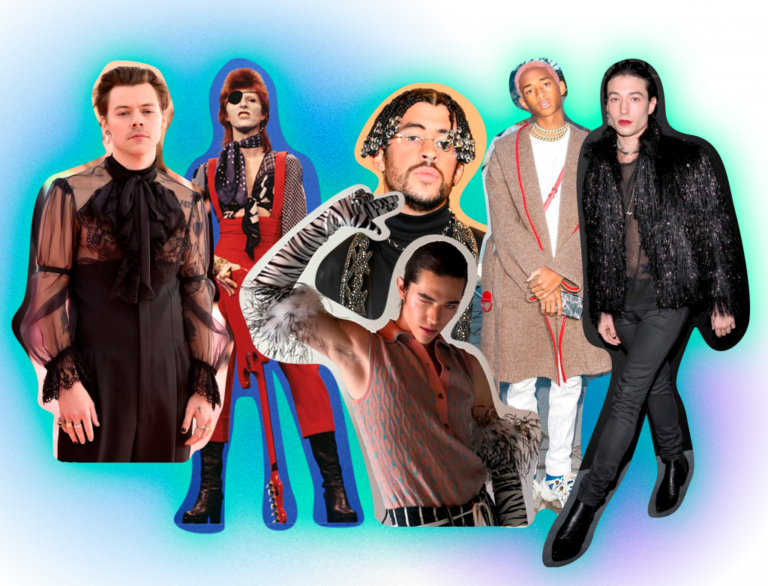
    Why I’m critical of Harry Styles’ fashion

    At 27-years-old, British singer Harry Styles is already a universally recognized fashion icon. In his post-One Direction career, he adopted a more flamboyant and fashion-forward dress, wearing pink suits, pearls, sheer tops, dangly earrings, nail polish, and high heel boots. He’s earned significant praise for breaking away from the strict (and boring) confines of traditionally masculine clothing. The culmination of Styles’ rejection of toxic masculinity through fashion was in December 2020 when he became the first man to grace the cover of Vogue solo — wearing a Gucci gown.

    Others have already pointed out that he isn’t exactly a pioneer; his fashion is inspired by musicians David Bowie and Prince, who were also known for “gender bending” fashion before he was even born. This trio’s fashion isn’t exactly unique or revolutionary either, however. These three are just those who have been uplifted by the industry, and our culture, because they have been deemed more palatable.

    Bowie was white, and although Prince was a Black man, for part of his career he was presented as multiracial due to his lighter skin tone, and his role as a biracial musician in Purple Rain. Bowie and Prince flirted with rumours about their sexuality, with Bowie even stating that he was gay and bisexual in the 70s, but both were ultimately presumably straight, as Bowie later said he was “always a closet heterosexual,” while Prince became quite conservative.

    Despite this, Prince and David Bowie are widely considered to be gay icons. In contrast, Little Richard, a rock ‘n’ roll pioneer remembered for his “fervent shrieks, flamboyant garb, and joyful, gender-bending persona” who inspired Prince and Bowie musically and stylistically, has not been afforded the same status even though he referred to himself as gay and omnisexual throughout his life. Sylvester, an androgynous and openly gay singer best known for his 1978 disco hit (and LGBTQ+ pride anthem) “You Make Me Feel (Mighty Real)” has also been largely forgotten in this discourse.

    Styles has kept his sexuality ambiguous. And while I respect his desire to keep certain details private, there is a long history of bisexuality being used by musicians to seem more interesting and transgressive which has ultimately contributed to stigma that continues to surround bisexuality. He’s denied “sprinkling in nuggets of sexual ambiguity to try and be more interesting,” but I’m admittedly a little weary. Even if Styles is queer, right now, his sexual orientation is ambiguous and he’s only ever publicly dated women. This allows him to benefit from queer aesthetics and allows queer people to identify with him, without Styles having to deal with nearly as much homophobia as other entertainers like Lil Nas X or Billy Porter, who also sport very feminine and androgynous fashion on red carpets and are both openly gay men.

    Styles’ rise as both a fashion and queer icon shows how, despite more representation and diversity in our media, we haven’t made much progress since the heydays of Bowie and Prince.

    Actor and singer Jaden Smith was featured in a womenswear campaign for Louis Vuitton at age 17, wearing a skirt. This made him the first man to model women’s wear for the fashion house. Smith has been wearing outfits similar to Styles for years, once wearing a skirt to his prom and even launching a gender neutral clothing line. But as one Twitter user pointed out in response to someone commenting on Styles’ impact on the fashion industry, “its the way jaden smith has been wearing the outfits harry styles has, but yall called him weird and made fun of him.”

    Fashion similar to Styles’ is common among male K-pop idols, who are frequently criticized for “looking like girls” in the West. G-Dragon, a 32-year-old South Korean rapper and the leader of hip hop group Big Bang, has been called “a chameleon who often makes peak-era Lady Gaga seem staid.” Though, for much of his career, G-Dragon has dressed quite traditionally masculine (albeit much more fun and fashionable then the average male celebrity), he’s also been unafraid to wear makeup, heels, skirts, and drop earrings, or sport long hair and look beautiful. He’s gone way beyond anything Styles has ever done in terms of gender-fluid fashion, but in his more toned down moments he’s dressed very similarly to Styles.

    Despite this, male K-Pop idols like G-Dragon are not considered queer or fashion icons, and neither is Jaden Smith. While there are other factors besides race or xenophobia at play, it would be irresponsible to totally ignore that.

    When it comes to male celebrities — whether we’re talking about Styles, Prince, or Smith — feminine, androgynous, flamboyant fashion is usually exotica. Rarely do they actually dress that way off stage or off the red carpet or magazines. When they dress outside traditional gender roles they do deal with criticism, but they also get attention and praise while regular queer people who dress like that are at risk of violence when they walk down the street. So when our culture puts men like Styles on pedestals, it feels like a way for society to pat itself on the back as super progressive while ignoring the struggles of the LGBTQ+ community, particularly queer POC.

    I think Styles is helping to make fashion less binary and showing a different type of masculinity, and I’m happy he’s dressing however he likes. But that doesn’t mean we shouldn’t be critical and have an intersectional perspective that helps us realize why his fashion is so hyped up. There is a long history of queer and Black culture being appropriated by privileged white cishet people who are celebrated for these aesthetics. And queer people are often so desperate for representation that they will idolize the crumbs they’re given even when it’s obvious queerbaiting.

    So the solution seems simple: you can love and appreciate Styles’ fashion, but make sure you’re uplifting the true pioneers.

    Photo collage by Kit Mergaert

    Post Views: 950

    It Wasn’t About Bathrooms, and It’s Not About Women’s Sports – Slate

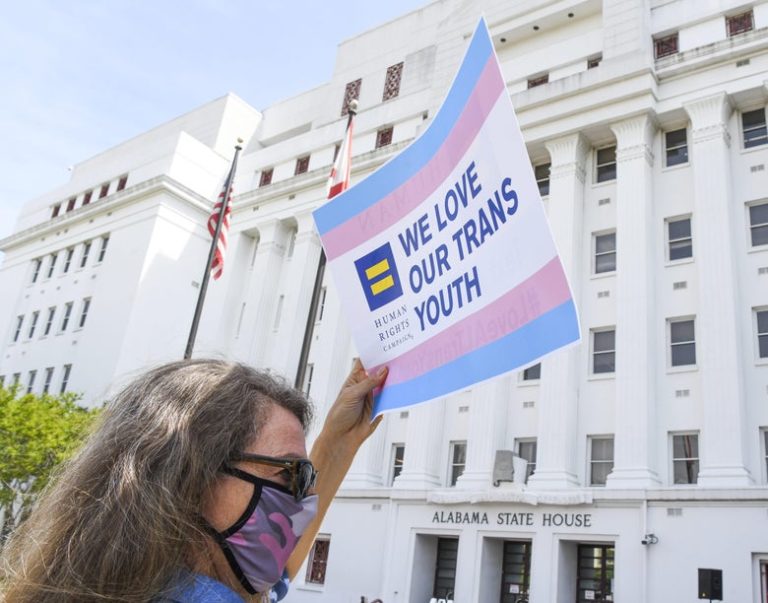
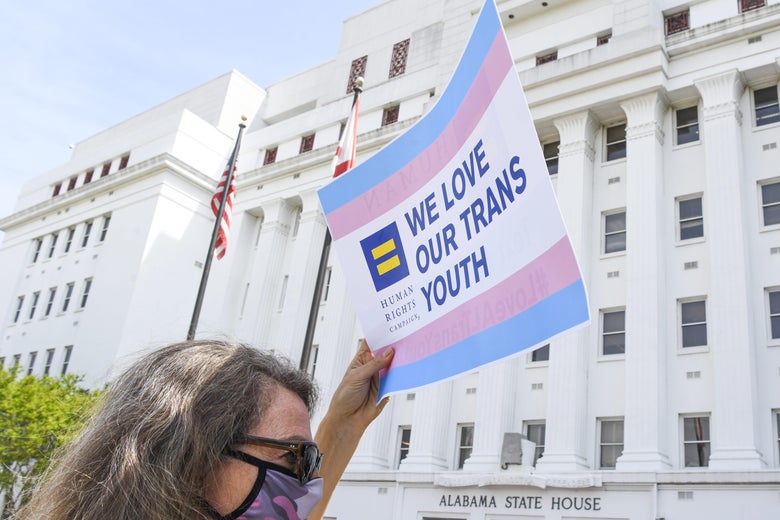
    On Monday, three Republican state senators in North Carolina introduced the Youth Health Protection Act, a perverse title for a bill that imperils youth health. The measure would prohibit all gender-affirming health care for children and adults under the age of 21. It also requires all “government agents,” including school officials, to report a child’s “gender dysphoria” or “gender nonconformity” to their parents—effectively requiring schools to out LGBTQ students. By Wednesday, the act had drawn four additional Republican cosponsors, meaning a full quarter of the North Carolina Senate’s Republican caucus is now sponsoring it.

    Advertisement

    The Youth Health Protection Act is the latest in a spate of anti-trans bills that have emerged in state legislatures over the last few months, all of which seek to wield the machinery of the government to impose rigid gender norms, with severe penalties for all who dare defy them.  The bills all closely resemble one another, which should not be not surprising since many of them were ghostwritten by the same organization, the Alliance Defending Freedom, which has spent years combatting both reproductive rights and gay equality, including birth control access and the legalization of homosexuality. The Youth Health Protection Act is the logical outgrowth of this ideology, but it is not, by any stretch, its endpoint.

    Advertisement

    Advertisement

    Over the last 28 years, the ADF has defended laws prohibiting same-sex intimacy; opposed marriage, adoption, and surrogacy for same-sex couples; attacked LGBTQ non-discrimination laws, as well as bans on conversion therapy for minors; argued in favor of laws that require transgender people to undergo sterilization before legally changing their gender; challenged access to contraception; and supported the criminalization of abortion at any stage of pregnancy. Its work stretches beyond the United States; ADF has, for instance, championed Belize’s archaic anti-sodomy law, which allows for the persecution and imprisonment of gay people. The ADF’s overarching position on gay people is that they should either be converted to heterosexuality or fired from their jobs and imprisoned because of their sexual orientation. This stance has earned the group a controversial designation as a hate group by the Southern Poverty Law Center.

    Advertisement

    When GOP state legislators began to push “bathroom bills” in 2016 and 2017, it was ADF that ghostwrote the model legislation and lobbied for it behind the scenes. These bills forced transgender people, including schoolchildren, to use the bathroom that aligned with their “biological sex,” which ADF defined as their sex identified at birth. One school attempting to implement an ADF-style bathroom policy sought to make trans students wear a bright green wristband so that school administrators could identify them and ensure they did not use the bathroom that corresponded to their gender identity. (A federal appeals court found the school policy unconstitutional, and the school district settled for the case for $800,000.)

    Advertisement

    As these bills illustrate, ADF has long viewed public schools as an ideal testing ground for their ideas, and it’s easy to see why: The government exercises direct control over students—and their bodies—for hours each day. ADF has a clear vision of how these students should act, and how their bodies should look, and it tried to conscript schools to enforce that vision. It was no surprise when, plainly inspired by ADF’s bills, Virginia Del. Bob Marshall sponsored a measure in 2017 that forced schools to notify parents within 24 hours if their child indicates that they are transgender. (In the next year’s election, Danica Roem, a transgender woman, defeated Marshall.) The idea behind the Youth Health Protection Act’s parental can be traced back to the now-ubiquitous laws requiring minors to obtain parental consent before terminating a pregnancy, which ADF also strongly supports.

    Advertisement

    Most of the bathroom bills never actually passed, although plenty of school districts implemented them at the local level, and North Carolina modified its notorious measure after nationwide backlash. These laws were never especially popular, probably because there is no obvious “victim” when a transgender person uses the appropriate bathroom, and thus no apparent problem in need of a solution. They were rooted in fear of the “bathroom predator,” a mythical figure who pretends to be female so he can gain access to women’s bathrooms and rape them.

    Advertisement

    ADF’s crusade against trans athletes has no basis in reality or science.

    But the bathroom predator does not exist. So ADF developed a second generation of anti-transgender legislation, this time identifying an ostensible problem and a victim. The problem: transgender girls and women participating in sports, particularly school athletics. The victim: every cisgender girl and woman forced to compete against trans athletes. The solution: new model legislation drafted and pushed by ADF banning transgender students from participating in women’s sports, from elementary school through college.

    Advertisement

    In reality, this putative problem does not exist. There is simply no evidence that transgender women are dominating student sports and denying cisgender women the benefits that come with athletic excellence, like scholarships. Many states, including California, have long allowed trans athletes to participate alongside cisgender girls, and their policies have not diminished cisgender students’ ability to compete and win. ADF’s crusade against trans athletes has no basis in reality or science. Major athletic bodies, including the NCAA, oppose them.

    Yet Republican-controlled legislatures are racing to pass bills drafted by ADF that forbid transgender students from competing in women’s sports, framing trans athletes as cheaters who use fraudulent womanhood to invade and dominate women’s spaces. Idaho passed such a bill in 2020; it allowed anyone to challenge the gender of a female athlete, forcing her to undergo sex verification including, in some cases, a genital exam. (A court blocked the measure.) Mississippi passed a ban on transgender athletes in in March alongside Arkansas and Tennessee. Then, on Tuesday, the Arkansas legislature overrode the Republican governor’s veto to pass a bill outlawing gender-affirming care for minors.

    Advertisement

    North Carolina’s Youth Health Protection Act takes the principles embodied in previous ADF-approved anti-trans laws a few steps further. Under the bill, it’s not just minors who cannot access gender-affirming care, but also adults aged 18-20. Schools are not only required to discriminate against transgender students, but also to out them to their parents. Schools must also inform parents if their children are gay, bisexual, and nonbinary students, since these identities also qualify as “gender nonconformity.” Several other provisions of the law check other boxes on ADF’s wishlist, including a ban on government-sponsored health insurance coverage for gender transition. (This section violates the Affordable Care Act; the rest of the law clashes with the equal protection clause, as does every piece of legislation mentioned above, although it’s difficult to predict this Supreme Court’s direction on transgender equality.)

    Advertisement

    If the Youth Health Protection Act passes out of the legislature, North Carolina’s Democratic governor will undoubtedly veto it. But these anti-LGBTQ bills build on each other. Soon, another state will consider outlawing gender-affirming care not just for youth or young adults, but for everyone. Schools will introduce harsher and harsher policies designed to identify and discriminate against students who do not perfectly match a cramped conception of gender roles. The government will insinuate itself into parents’ relationship with their children, children’s relationships with their bodies, and LGBTQ adults’ attempts to live authentic and fulfilling lives. ADF’s ascendant ideology demands nothing less. Did anyone really think this was going to stop with bathrooms?

    Not What the Doctor Ordered: Lessons From Physicians’ Low Uptake of High-Deductible Health Plans – AJMC.com Managed Markets Network

    Physicians are one group of individuals who may be particularly well positioned to be cost-conscious consumers of health care and therefore could be more likely to take up an HDHP when doing so would be financially advantageous. Consequently, it is notable that Abrahams et al report in this issue of The American Journal of Accountable Care® that in 2018 nearly 9 in 10 physicians of a large health system who were offered an HDHP chose an alternative health plan, even though this alternative plan would cost $1451 to $3851 more in premium and out-of-pocket costs than the HDHP.8 As with many policy-relevant studies, this research provokes more questions than it answers. First and foremost, why did so few physicians take up the HDHP option, even though it would have been financially advantageous for them to do so? How does this low uptake compare with uptake of the HDHP option among nonphysician employees? What can this study tell us about how HDHPs could be more attractive to, and ultimately work better for, individuals who enroll in them?

    There are a number of potential explanations for why so many physicians chose a plan that was financially “dominated” (ie, more expensive at any level of health care utilization). These potential explanations should not only motivate future research but also be carefully considered by employers and policy makers who strive to help individuals choose health plans that will best suit their needs and preferences. First, the field of behavioral economics has offered important insights into how the environment in which individuals make decisions—even consequential ones such as the choice of a health insurance plan—can lead to choices that deviate from one’s true preferences. For example, in some situations, too many options can make choices more difficult and lead to unintended consequences.9,10 The physicians in this study had a choice of just 3 health plans. Thus, it is unlikely that “choice overload” may have adversely affected their decisions. Beyond the number of health plan options, however, it is unclear how these options were presented to employees and whether the order of options or the information surrounding them could have influenced plan choice. In the future, employers and policy makers should carefully design the environments and processes through which health plans are chosen to maximize the extent to which plan choices reflect underlying preferences rather than the characteristics of choice environments.11

    Second, because the study presented only data on the plan choices of physicians, it is unclear how the uptake of HDHPs among physicians in this particular workplace compared with HDHP uptake among other subgroups of employees. Although physicians in general may be relatively better positioned than others to be well-informed health care consumers, their decision-making can be distorted by the same factors that can affect other people’s choices, such as low numeracy.12,13 Further, some research has suggested that physicians may be comparatively averse to potential financial losses,14 as might be experienced when an individual has a need for expensive medical care that consumes an entire deductible. In light of these considerations, it is perhaps not so surprising that many physicians would choose a “dominated” plan, as is common in other populations.15,16 To better elucidate whether these and other factors could explain the findings of Abrahams et al, future studies should use mixed methods to examine the drivers of health plan choices and how these drivers vary across individuals.

    Third, by virtue of their roles in health care, physicians may be not only better positioned than others to be informed health care consumers in HDHPs, but also well situated to understand the current shortcomings of these plans. For example, at this point it is likely that many practicing physicians have witnessed that HDHPs can lead patients to forgo needed health care services17 such as high-priority office visits18 and long-term medications.19 These reductions in necessary health care services can be even greater for HDHP enrollees with chronic health conditions,20,21 who also face high financial burdens in these plans.22,23

    In addition, although HDHPs seek to encourage enrollees to be cost-conscious health care consumers, at present it can often be difficult for even the most well-informed, highly motivated individuals to successfully engage in the consumer behaviors that these plans call for. Although many plans offer price comparison tools to support consumer decision-making,24 the utility of publicly reported information about health care prices can be variable.25 Further, only about half of HDHP enrollees who report having saved for health care, compared prices for services, or talked with clinicians about health care costs feel that doing so helped them better access needed care or pay less for services.7

    Recent federal policy developments have the potential to address some of the difficulties that HDHP enrollees face in affording needed health care, and help them be more effective health care consumers. On July 17, 2019, the Internal Revenue Service and the US Department of the Treasury issued guidance that permits HDHPs to exempt certain services for chronic conditions from deductibles and still be eligible for linkage to a health savings account (HSA).26 This is a critically important policy change, as it gives HSA-eligible HDHPs more flexibility in exempting selected high-value services from deductibles. As of January 1, 2021, hospitals are now required to publicly report negotiated prices for services, including 300 services that have been deemed “shoppable.”27 Starting on January 1, 2023, health plans will be required to report negotiated prices to their members and provide personalized estimates of their out-of-pocket costs for 500 “shoppable” services.28 These 2 most recent regulatory changes have the potential to make health care prices more consistently available to HDHP enrollees. It will be important for future studies to track the extent to which these policy changes, taken together, affect uptake of HDHPs and outcomes in these plans.

    Absent additional federal policy reforms, HDHPs are likely to soon become the most common private health insurance benefit design. The findings of Abrahams et al that few physicians took up an HDHP, even when doing so could have saved them thousands of dollars, point to the need to better understand the factors that influence choice of HDHPs, as well as to optimize the health and financial outcomes of the growing number of individuals who are enrolled in these plans.

    Author Affiliations: VA Center for Clinical Management Research, VA Ann Arbor Healthcare System, Ann Arbor, MI; Department of Internal Medicine, University of Michigan Medical School, Ann Arbor, MI; Department of Health Management and Policy, University of Michigan School of Public Health, Ann Arbor, MI; University of Michigan Institute for Healthcare Policy and Innovation,Ann Arbor, MI.

    Source of Funding: Support was provided by the Health Services Research and Development Service, Veterans Health Administration, Department of Veterans Affairs. The views expressed in this article are those of the author and do not necessarily reflect the position or policy of the Department of Veterans Affairs or the United States government. The funding source had no role in the design and conduct of the study; collection, management, analysis, and interpretation of the data; preparation, review, or approval of the manuscript; and decision to submit the manuscript for publication.

    Author Disclosures: Dr Kullgren has received consulting fees from SeeChange Health, HealthMine, and the Kaiser Permanente Washington Health Research Institute; and honoraria from the Robert Wood Johnson Foundation, AbilTo Inc, the Kansas City Area Life Sciences Institute, and the American Diabetes Association.

    Authorship Information: Concept and design; drafting of the manuscript; critical revision of the manuscript for important intellectual content; and administrative, technical, or logistic support.

    Send Correspondence to: Jeffrey T. Kullgren, MD, MS, MPH, VA Center for Clinical Management Research, VA Ann Arbor Healthcare System, PO Box 130170, Ann Arbor, MI 48113-0170. Email: jkullgre@med.umich.edu.

    REFERENCES

    1. Cohen RA, Terlizzi EP, Martinez ME. Health insurance coverage: early release of estimates from the National Health Interview Survey, 2018. National Center for Health Statistics. May 2019. Accessed March 3, 2021. https://www.cdc.gov/nchs/data/nhis/earlyrelease/insur201905.pdf

    2. Claxton G, Damico A, Rae M, Young G, McDermott D, Whitmore H. Health benefits in 2020: premiums in employer-sponsored plans grow 4 percent; employers consider responses to pandemic. Health Aff (Millwood). 2020;39(11):2018-2028. doi:10.1377/hlthaff.2020.01569

    3. Lave JR, Men A, Day BT, Wang W, Zhang Y. Employee choice of a high-deductible health plan across multiple employers. Health Serv Res. 2011;46(1, pt 1):138-154. doi:10.1111/j.1475-6773.2010.01167.x

    4. McDevitt RD, Haviland AM, Lore R, Laudenberger L, Eisenberg M, Sood N. Risk selection into consumer-directed health plans: an analysis of family choices within large employers. Health Serv Res. 2014;49(2):609-627. doi:10.1111/1475-6773.12121

    5. Kullgren JT, Volpp KG, Polsky D. Are the healthy behaviors of US high-deductible health plan enrollees driven by people who chose these plans? smoking as a case study. PLoS One. 2013;8(2):e56154. doi:10.1371/journal.pone.0056154

    6. Abdus S. The role of plan choice in health care utilization of high-deductible plan enrollees. Health Serv Res. 2020;55(1):119-127. doi:10.1111/1475-6773.13223

    7. Kullgren JT, Cliff EQ, Krenz C, et al. Consumer behaviors among individuals enrolled in high-deductible health plans in the United States. JAMA Intern Med. 2018;178(3):424-426. doi:10.1001/jamainternmed.2017.6622

    8. Abrahams S, Block LD, Conigliaro J, Block AE. Doctors hate deductibles: physicians pay thousands to avoid high deductibles. Am J Accountable Care. 2021;9(1):9-14.

    9. Iyengar SS, Lepper MR. When choice is demotivating: can one desire too much of a good thing? J Pers Soc Psychol. 2000;79(6):995-1006. doi:10.1037/0022-3514.79.6.995

    10. Peters E, Klein W, Kaufman A, Meilleur L, Dixon A. More is not always better: intuitions about effective public policy can lead to unintended consequences. Soc Issues Policy Rev. 2013;7(1):114-148. doi:10.1111/j.1751-2409.2012.01045.x

    11. Ubel PA, Comerford DA, Johnson E. Healthcare.gov 3.0—behavioral economics and insurance exchanges. N Engl J Med. 2015;372(8):695-698. doi:10.1056/NEJMp1414771

    12. Garcia-Retamero R, Cokely ET, Wicki B, Joeris A. Improving risk literacy in surgeons. Patient Educ Counseling. 2016;99(7):1156-1161. doi:10.1016/j.pec.2016.01.013

    13. Johnson TV, Abbasi A, Schoenberg ED, et al. Numeracy among trainees: are we preparing physicians for evidence-based medicine? J Surg Educ. 2014;71(2):211-215. doi:10.1016/j.jsurg.2013.07.013

    14. Galizzi MM, Miraldo M, Stavropoulou C, van der Pol M. Doctor-patient differences in risk and time preferences: a field experiment. J Health Econ. 2016;50:171-182. doi:10.1016/j.jhealeco.2016.10.001

    15. Sinaiko AD, Hirth RA. Consumers, health insurance and dominated choices. J Health Econ. 2011;30(2):450-457. doi:10.1016/j.jhealeco.2010.12.008

    16. Bhargava S, Loewenstein G, Sydnor J. Choose to lose: health plan choices from a menu with dominated option. Q J Econ. 2017;132(3):1319-1372. doi:10.1093/qje/qjx011

    17. Dixon A, Greene J, Hibbard J. Do consumer-directed health plans drive change in enrollees’ health care behavior? Health Aff (Millwood). 2008;27(4):1120-1131. doi:10.1377/hlthaff.27.4.1120

    18. Hibbard JH, Greene J, Tusler M. Does enrollment in a CDHP stimulate cost-effective utilization? Med Care Res Rev. 2008;65(4):437-449. doi:10.1177/1077558708316686

    19. Greene J, Hibbard J, Murray JF, Teutsch SM, Berger ML. The impact of consumer-directed health plans on prescription drug use. Health Aff (Millwood). 2008;27(4):1111-1119. doi:10.1377/hlthaff.27.4.1111

    20. Galbraith AA, Ross-Degnan D, Soumerai SB, Rosenthal MB, Gay C, Lieu TA. Nearly half of families in high-deductible health plans whose members have chronic conditions face substantial financial burden. Health Aff (Millwood). 2011;30(2):322-331. doi:10.1377/hlthaff.2010.0584

    21. Galbraith AA, Soumerai SB, Ross-Degnan D, Rosenthal MB, Gay C, Lieu TA. Delayed and forgone care for families with chronic conditions in high-deductible health plans. J Gen Intern Med. 2012;27(9):1105-1111. doi:10.1007/s11606-011-1970-8

    22. Segel JE, Kullgren JT. Health insurance deductibles and their associations with out-of-pocket spending and affordability barriers among US adults with chronic conditions. JAMA Intern Med. 2017;177(3):433-436. doi:10.1001/jamainternmed.2016.8419

    23. Abdus S, Keenan PS. Financial burden of employer-sponsored high-deductible health plans for low-income adults with chronic health conditions. JAMA Intern Med. 2018;178(12):1706-1708. doi:10.1001/jamainternmed.2018.4706

    24. Higgins A, Brainard N, Veselovskiy G. Characterizing health plan price estimator tools: findings from a national survey. Am J Manag Care. 2016;22(2):126-131.

    25. Kullgren JT, Duey KA, Werner RM. A census of state health care price transparency websites. JAMA. 2013;309(23):2437-2438. doi:10.1001/jama.2013.6557

    26. Additional preventive care benefits permitted to be provided by a high deductible health plan under § 223.

    Internal Revenue Service. July 17, 2019. Accessed March 3, 2021. https://www.irs.gov/pub/irs-drop/n-19-45.pdf

    27. Hospital price transparency. CMS. January 1, 2021. Accessed March 3, 2021. https://www.cms.gov/hospital-price-transparency

    28. Kullgren JT, Fendrick AM. The price will be right—how to help patients and providers benefit from the new CMS transparency rule. JAMA Health Forum. Published online February 19, 2021. doi:10.1001/jamahealthforum.2021.0102

    Baylor denies health care dependency status to same-sex spouses of university employees – The Baylor Lariat

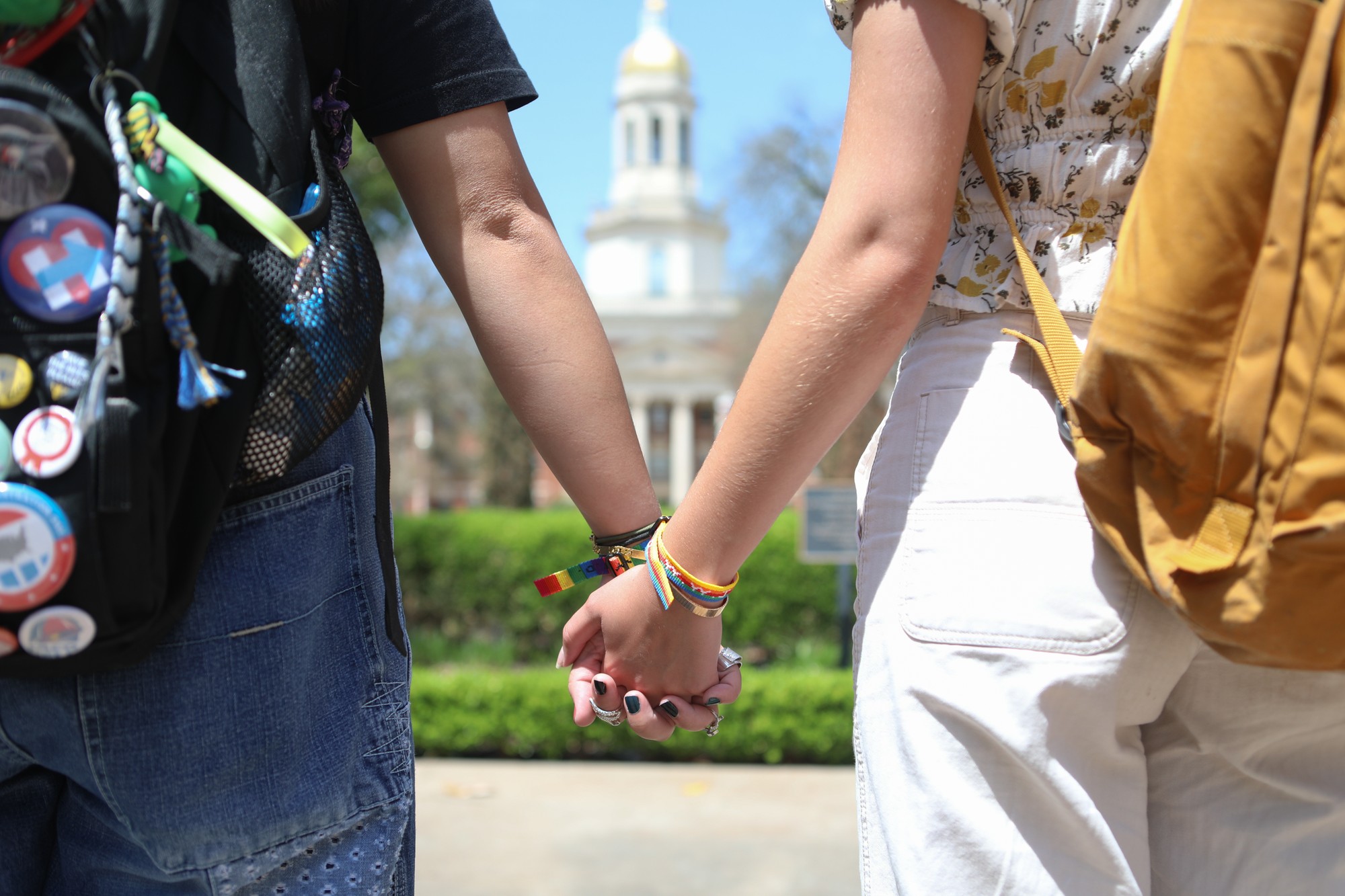
    Under Baylor University’s healthcare benefits policies, an employee’s spouse can be added as a dependent only if the spouse is of the opposite sex. Christina Cannady | Photographer

    By Emily Cousins | Staff Writer

    Under Baylor University’s health care benefits policies, an employee’s spouse can be added as a dependent only if the spouse is of the opposite sex.

    The university’s health care benefits policy defines an eligible spouse who can be added as a dependent as “your spouse of opposite sex to whom you are lawfully married.”

    Baylor’s recruitment policy does not specifically say they will not hire people who are in a same-sex marriage. All position announcements and advertisements include the following statement:

    “Baylor is a Baptist university, affiliated with the Baptist General Convention of Texas. As an Affirmative Action/Equal Employment Opportunity Employer, Baylor encourages minorities, women, veterans, and persons with disabilities to apply.”

    An employee who is gay, who wished to remain anonymous due to fear of intimidation, said the health care benefits policy is exclusionary and has no place at a Christian university.

    “This insurance issue is not a secret. It is pretty out there, and I am concerned that LGBTQ students are going to look at that and go, ‘Nothing has changed,’” the source said. “My question is with marriage equality in place, is this insurance policy legal?”

    Since Baylor is a private institution, it is not governed by constitutional law. However, Baylor does have to follow statutory law. This includes Title VII of the Civil Rights Act of 1964, which, according to the U.S. Equal Employment Opportunity Commission, “prohibits employment discrimination based on race, color, religion, sex and national origin.”

    The Supreme Court ruled last summer to more clearly define what sex-based discrimination includes. In that case, Bostock v. Clayton County, Georgia, the Supreme Court ruled 6-3 in that discrimination based on sex under Title VII includes sexual orientation and transgender statuses.

    “The statute’s message for our cases is equally simple and momentous: An individual’s homosexuality or transgender status is not relevant to employment decisions,” Supreme Court Justice Neil Gorsuch wrote for the majority. “That’s because it is impossible to discriminate against a person for being homosexual or transgender without discriminating against that individual based on sex.”

    Justice Samuel Alito was one of the three judges who voted against the Supreme Court’s ruling to expand the interpretation of what discrimination based on sex meant. In Alito’s dissent, he wrote this ruling was not a victory for “individual freedom.”

    “As the briefing in these cases has warned, the position that the Court now adopts will threaten freedom of religion, freedom of speech, and personal privacy and safety,” Alito wrote.

    Alito also wrote that courts might not allow religious institutions to discriminate based on sexual orientation or transgender status because of this new interpretation.

    “Provisions of Title VII provide exemptions for certain religious organizations and schools ‘with respect to the employment of individuals of a particular religion to perform work connected with the carrying on’ of the ‘activities’ of the organization or school … but the scope of these provisions is disputed, and as interpreted by some lower courts, they provide only narrow protection,” Alito wrote.

    As a religious institution, Baylor does have certain exemptions from Title VII.

    “Under Title VII, religious organizations are permitted to give employment preference to members of their own religion,” the U.S. Equal Employment Opportunity Commission (EEOC) said on its website. “The exception applies only to those institutions whose ‘purpose and character are primarily religious.’”

    The EEOC also outlines in “Section 2: Threshold Issues” of their Compliance Manual, which gives guidelines on how to interpret and enforce federal law, when religious exemptions can and cannot take place.

    “The exemption applies to all positions; however, discrimination is not permitted on any basis other than religion,” the EEOC said. “In addition, the exemption only applies to hiring and discharge, and does not apply to terms, conditions, or privileges of employment, such as wages or benefits.”

    Baylor also affirms on its website it will follow Title VII closely.

    “Baylor is committed to compliance with all applicable anti-discrimination laws, including those regarding age, race, color, sex, national origin, marital status, pregnancy status, military service, genetic information, and disability,” Baylor says on its website. “As a religious educational institution, Baylor is lawfully permitted to consider an applicant’s religion as a selection criterion. Baylor encourages women, minorities, veterans, and individuals with disabilities to apply.”

    Baylor declined interview requests for a university representative and the Office of General Counsel. They sent the following statement in response:

    “The University policies, procedures and plans are designed to comply with the University’s obligations toward its employees and students under all applicable federal, state and local laws and to be interpreted in a manner consistent with Baylor’s religious liberties. As a religiously controlled institution of higher education, Baylor is exempt from compliance with select provisions of certain civil rights laws, and Baylor is also exempt from prohibitions against discrimination based on religion.”

    “As such, the University prescribes standards of personal conduct that are consistent with its religious mission and values and lawfully considers a person’s religion and conduct in the employment context. Baylor’s policy on sexual conduct is interpreted in a manner consistent with the Baptist Faith and Message. Such consideration also impacts benefits eligibility. Accordingly, employment benefits are afforded only to an otherwise qualified person of the opposite sex to whom an employee is lawfully married in the union of one man and one woman.”

    Even though Baylor did not allow the Lariat to speak with the General Counsel, it did suggest Kelly Shackelford, president, CEO and chief counsel for First Liberty Institute, as a source because of his experience defending religious liberty.

    Shackelford was not available for an interview, but he sent the following statement in response:

    “There is almost nothing more sacrosanct than the right of a religious organization, like Baylor, to arrange its organization, benefits and requirements around its religious beliefs, including its Biblical definition of family and marriage,” Shackelford wrote. “Government interference in such matters is prohibited by both the Constitution and by federal law. Baylor has every right to make its own religious decisions and is protected in doing so. If the government were ever to attempt to infringe upon Baylor’s religious freedoms, we would be happy to represent them free of charge.”

    However, lawyer Paul Carlos Southwick, director of the Religious Exemption Accountability Project, said the health insurance benefit policy denying employees to add a same-sex spouse as a dependent is illegal under Title VII, even at a religious institution.

    “The only way that it becomes excusable is if there’s some kind of ministerial exception,” Southwick said.

    Southwick said some religious high schools or elementary schools have employees that are considered ministers by the court, and then they are exempt from Title VII. This would include institutions like Catholic schools where nuns teach students their daily lessons.

    “However, if they’re not considered ministers, then Title VII applies to Baylor. Under the Bostock decision by the Supreme Court, Baylor’s policy is illegal. If someone is an employee who, let’s say is the soccer coach, and they married someone of the same sex, or they’re a janitor or they work in the cafeteria, and they’re denied spousal benefits because their partner is someone of the same sex, that is illegal, and they can sue Baylor.”

    In the Massachusetts court case Margaret Deweese-Boyd vs. Gordon College, the plaintiff, a social work professor, said she was denied tenure for her LGBTQ advocacy and criticisms of the Christian college’s policies concerning the LGBTQ community.

    The Massachusetts Supreme Court ruled that Gordon College is a religious institution, but the plaintiff is not a ministerial employee, which means she does not fall under the ministerial exception.

    The anonymous source who is employed by Baylor said the discrimination at the university is not coming widely from faculty, staff or students. Instead, the source said it’s coming from upper administration.

    “Change is hard for some people,” the source said. “Change is very, very difficult; particularly when that change is going to challenge some long-held tenet in your belief system.”

    The source also said there are other Christian universities, such as Notre Dame University and Texas Christian University, that prove Christian values can be held while also being inclusive of the LGBTQ community.

    Both Notre Dame University and Texas Christian University have Diversity and Inclusivity statements on their websites that include “sexual orientation” when specifying minority groups. These universities also have official LGBTQ student organizations on their campuses.

    “I do think we’re on our way there with both the Student Senate and the Faculty Senate saying yes to the charter the LGBTQ student group,” the anonymous source said. “That is a huge step in the right direction. There’s a tremendous amount of alumni support for this, and I think that a path has begun to be cleared for this change. All people at Baylor need to feel welcome, regardless.”

    Three other LGBTQ employees at Baylor were reached out to for an interview, including those with same-sex spouses. However, they said they declined an interview for privacy reasons and out of fear of the university finding out their marital status.

    Non-LGBTQ employees either didn’t respond or declined going on the record because they feared the consequences of speaking out.

    Walking with Weights: Ankle Weights, Hand Weights, Vests, & Backpacks – Healthline

    Walking is one of the best forms of cardiovascular exercise. It’s weight-bearing yet easy on your joints, accessible to most people, and free (1).

    However, walking requires more time and intensity to increase your heart rate and burn the same number of calories as other forms of fitness like jogging or cycling. That’s why some people consider walking with weights.

    Read on to learn about the benefits and downsides of walking with ankle weights, hand weights, weighted vests, and backpacks.

    For short walks, Sami Ahmed, a physical therapist at The Centers for Advanced Orthopaedics, says adding ankle weights that are 5 pounds or less can increase strength in your calf muscles, quadriceps, and hip flexors, while also challenging your core muscles.

    However, there are also drawbacks. “Ankle weights put more pressure on the knee and could lead to tendonitis, joint issues, or even worsening arthritis,” says Ahmed. That’s why it’s important to discuss adding ankle weights to your walking routine with a medical professional.

    Although ankle weights can add an additional load to your body while walking, Jayesh Tawase, PT, head physical therapist at Theradynamics, says this added resistance can have adverse effects on your functional symmetry if not closely monitored.

    “Adding resistance to an exercise like walking can cause the stronger, more dominant muscles to be overactive during your training cycle,” he explains. Tawase says this can exacerbate muscular imbalances and increase the risk of injuries due to functional asymmetries.

    For example, when wearing ankle weights, the quadriceps will fire more than the hamstrings, which can lead to excessive loads on your ankles, knees, and hip joints.

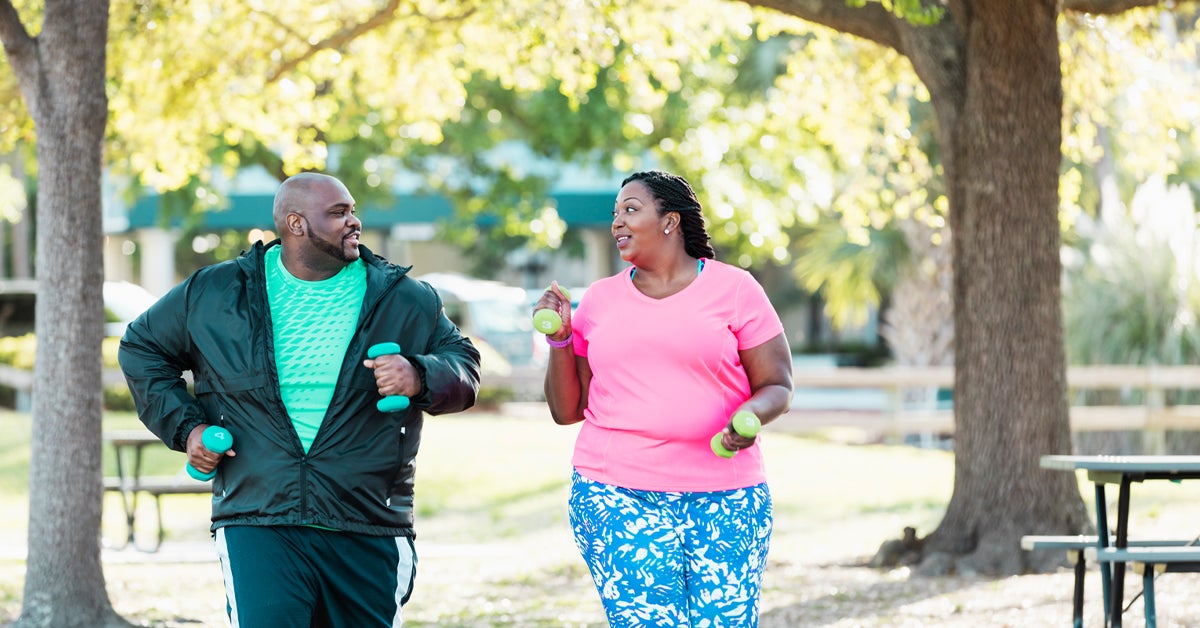
    Hand weights are typically small dumbbells that you carry in each hand. Ahmed says hand weights are a safe option for someone looking to add weight when walking, as they’re easier for your body to tolerate.

    “I typically recommend starting with a 3-pound hand weight in each hand, and increasing the weight once you’re comfortable,” he says.

    If well tolerated, Ahmed says using hand weights can lead to a higher calorie burn due to the added resistance to your natural arm swing when walking.

    Tawase says using very light hand weights for resistance when walking can be helpful after a stroke or for those with Parkinson’s disease or other similar neurological conditions. That’s because it allows you to incorporate multiple functional activities while walking around.

    Although hand weights are one of the easier resistance tools to add when walking, Ahmed says if you’re carrying heavier weights, you may be more likely to experience pain in your elbow and shoulder.

    “The resistance can over-stress the bicep tendon and elbow since they’re forced to keep the muscles flexed,” says Ahmed. Additionally, gripping hand weights can increase the strain on your arm, which can cause tennis elbow.

    If ankle and hand weights are not your thing, consider wearing a weighted vest.

    “A weighted vest is a nice option because it places weight near the body’s center of gravity, which leads to less strain on the joints, unlike hand or ankle weights,” says Ahmed.

    Tawase likes weighted vests because they add a more uniform and controlled resistance throughout the body. They also help improve endurance, cardiovascular efficiency, bone density, and overall strength.

    That said, weighted vests require core stabilization, and as a result, Ahmed says the weight could cause pressure on the knees and hips. “Jumping too quickly to a 25- or 50-pound vest puts you at a greater risk of injuring yourself,” he explains.

    Unless you’re a professional athlete, Ahmed recommends staying away from that weight range and instead opting for a 5- to 8-pound weight vest. You can also choose a weighted vest that’s no more than 5–10% of your body weight.

    Unlike weighted vests that evenly distribute weight to your front, back, and sides, a weighted backpack places the resistance solely on your back. If you decide to go this route, Ahmed says to start with a 5- to 15-pound weighted backpack.

    He also cautions against leaning too far forward or carrying too much weight, as doing so could strain your lower back and stress your joints or ligaments.

    If you decide to walk with a weighted vest, make sure your form is impeccable. Keep your body upright and avoid leaning forward. Also, focus on engaging your core muscles to help protect your lower back.

    It’s critical to use weighted vests and backpacks correctly, especially if you have a history of neck or back problems, such as a herniated disc or spinal stenosis, or you’ve recently had surgery.

    Tawase says this type of loading can change your body’s center of gravity and add excessive pressure on your spine.

    “Carrying extra weight while walking encourages the body to work harder and can therefore burn more calories,” says Ahmed.

    However, as with any exercise routine, he says it’s important to take it slowly and gradually increase the weight you carry and the distance you walk.

    Ahmed recommends starting with a 10-minute bout of exercise, and once you can double the mileage, increase the amount of weight you’re carrying.

    “Carrying weights while walking intensifies the exercise, but remember, as you increase the weight, you increase the risk of injury, too,” he adds.

    It’s also worth noting that the increased energy expenditure when walking with weights is not dramatic.

    A small 2013 study found a slight increase in calorie expenditure when wearing a weighted vest while walking on a treadmill compared with not wearing a weighted vest.

    More specifically, participants who wore a weighted vest equal to 15% of their body weight burned 6.3 calories per minute, whereas participants who didn’t wear a vest burned 5.7 calories per minute (2).

    Walking is one of the easiest and safest ways to exercise. To increase the intensity, some people like to add weights to their routine.

    Walking with ankle weights, hand weights, or a weighted vest or backpack is appropriate for some people — but not all.

    Before walking with any type of added weight, seek guidance from a healthcare provider who can provide tailored recommendations.

    While the benefits of walking with weights are numerous, the added pressure on your joints can increase your risk of injury. As with any new exercise, start slowly and aim for sustainability over time.

    Ever Felt Dizzy After Sex? An Ob-Gyn Explains Why It Happens and What You Can Do – POPSUGAR

    Couple on Valentine day enjoy in love. They are in bedroom and having romantic moment together

    Have you ever sat up or stood too quickly — or pushed yourself too hard during a workout — and suddenly felt dizzy? Turns out, sex can similarly leave you feeling lightheaded and even nauseous.

    While there are a number of reasons someone may feel dizzy after having sex (certain medications, for example), a spike or drop in blood pressure is one of the most common culprits, Denise Moses, MD, FACOG, a board-certified ob-gyn in New York, told POPSUGAR. Dr. Moses explained that standing or suddenly changing positions during sex — from lying down to being on top, for instance — can affect blood flow to different areas of the body, thus altering your blood pressure.

    She added that vertigo could be another cause of dizziness after sex. “Vertigo is a sensation that the room is spinning, or that there is a sense of swaying or tilting,” Dr. Moses explained, which can worsen when you’ve been writhing around in bed. Your breathing may also become rapid during sex, especially with orgasm. This too can be a contributing factor to dizziness.

    All of this to say, most causes of dizziness during or after sex aren’t cause for concern. In fact, Dr. Moses noted that many of these side effects can also occur during exercise. If you notice yourself starting to feel dizzy, she recommends sitting up slowly, drinking water, and eating something easy on the stomach, like crackers. As always, if dizziness becomes recurrent or you’re concerned that it could be a sign of an underlying condition, it’s best to talk to your doctor.

    Up Next Putin formally bans same-sex marriages in Russia – Washington Blade

    0

    Despite having President Biden in the White House and Democratic majorities in both chambers of Congress, efforts to update federal civil rights laws to strengthen the prohibition on discrimination against LGBTQ people by passing the Equality Act are all but dead as opponents of the measure have contorted it beyond recognition.

    Political willpower is lacking to find a compromise that would be acceptable to enough Republican senators to end a filibuster on the bill — a tall order in any event — nor is there the willpower to force a vote on the Equality Act as opponents stoke fears about transgender kids in sports and not even unanimity in the Democratic caucus in favor of the bill is present, stakeholders who spoke to the Blade on condition of anonymity said.

    In fact, there are no imminent plans to hold a vote on the legislation even though Pride month is days away, which would be an opportune time for Congress to demonstrate solidarity with the LGBTQ community by holding a vote on the legislation.

    If the Equality Act were to come up for a Senate vote in the next month, it would not have the support to pass. Continued assurances that bipartisan talks are continuing on the legislation have yielded no evidence of additional support, let alone the 10 Republicans needed to end a filibuster.

    “I haven’t really heard an update either way, which is usually not good,” one Democratic insider said. “My understanding is that our side was entrenched in a no-compromise mindset and with [Sen. Joe] Manchin saying he didn’t like the bill, it doomed it this Congress. And the bullying of hundreds of trans athletes derailed our message and our arguments of why it was broadly needed.”

    The only thing keeping the final nail from being hammered into the Equality Act’s coffin is the unwillingness of its supporters to admit defeat. Other stakeholders who spoke to the Blade continued to assert bipartisan talks are ongoing, strongly pushing back on any conclusion the legislation is dead.

    Alphonso David, president of the Human Rights Campaign, said the Equality Act is “alive and well,” citing widespread public support he said includes “the majority of Democrats, Republicans and independents and a growing number of communities across the country engaging and mobilizing every day in support of the legislation.”

    “They understand the urgent need to pass this bill and stand up for LGBTQ people across our country,” David added. “As we engage with elected officials, we have confidence that Congress will listen to the voices of their constituents and continue fighting for the Equality Act through the lengthy legislative process.  We will also continue our unprecedented campaign to grow the already-high public support for a popular bill that will save lives and make our country fairer and more equal for all. We will not stop until the Equality Act is passed.”

    Sen. Jeff Merkley (D-Ore.), chief sponsor of the Equality Act in the Senate, also signaled through a spokesperson work continues on the legislation, refusing to give up on expectations the legislation would soon become law.

    “Sen. Merkley and his staff are in active discussions with colleagues on both sides of the aisle to try to get this done,” McLennan said. “We definitely see it as a key priority that we expect to become law.”

    A spokesperson Senate Majority Leader Charles Schumer (D-N.Y.), who had promised to force a vote on the Equality Act in the Senate on the day the U.S. House approved it earlier this year, pointed to a March 25 “Dear Colleague” letter in which he identified the Equality Act as one of several bills he’d bring up for a vote.

    Despite any assurances, the hold up on the bill is apparent. Although the U.S. House approved the legislation earlier this year, the Senate Judiciary Committee hasn’t even reported out the bill yet to the floor in the aftermath of the first-ever Senate hearing on the bill in March. A Senate Judiciary Committee Democratic aide, however, disputed that inaction as evidence the Equality Act is dead in its tracks: “Bipartisan efforts on a path forward are ongoing.”

    Democrats are quick to blame Republicans for inaction on the Equality Act, but with Manchin withholding his support for the legislation they can’t even count on the entirety of their caucus to vote “yes” if it came to the floor. Progressives continue to advocate an end to the filibuster to advance legislation Biden has promised as part of his agenda, but even if they were to overcome headwinds and dismantle the institution needing 60 votes to advance legislation, the Equality Act would likely not have majority support to win approval in the Senate with a 50-50 party split.

    The office of Manchin, who has previously said he couldn’t support the Equality Act over concerns about public schools having to implement the transgender protections applying to sports and bathrooms, hasn’t responded to multiple requests this year from the Blade on the legislation and didn’t respond to a request to comment for this article.

    Meanwhile, Sen. Susan Collins (R-Maine), who declined to co-sponsor the Equality Act this year after having signed onto the legislation in the previous Congress, insisted through a spokesperson talks are still happening across the aisle despite the appearances the legislation is dead.

    “There continues to be bipartisan support for passing a law that protects the civil rights of Americans, regardless of their sexual orientation or gender identity,” said Annie Clark, a Collins spokesperson. “The Equality Act was a starting point for negotiations, and in its current form, it cannot pass. That’s why there are ongoing discussions among senators and stakeholders about a path forward.”

    Let’s face it: Anti-LGBTQ forces have railroaded the debate by making the Equality Act about an end to women’s sports by allowing transgender athletes and danger to women in sex-segregated places like bathrooms and prisons. That doesn’t even get into resolving the issue on drawing the line between civil rights for LGBTQ people and religious freedom, which continues to be litigated in the courts as the U.S. Supreme Court is expected any day now to issue a ruling in Fulton v. City of Philadelphia to determine if foster care agencies can reject same-sex couples over religious objections.

    For transgender Americans, who continue to report discrimination and violence at high rates, the absence of the Equality Act may be most keenly felt.

    Mara Keisling, outgoing executive director of the National Center for Transgender Equality, disputed any notion the Equality Act is dead and insisted the legislation is “very much alive.”

    “We remain optimistic despite misinformation from the opposition,” Keisling said. “NCTE and our movement partners are still working fruitfully on the Equality Act with senators. In fact, we are gaining momentum with all the field organizing we’re doing, like phone banking constituents to call their senators. Legislating takes time. Nothing ever gets through Congress quickly. We expect to see a vote during this Congress, and we are hopeful we can win.”

    But one Democratic source said calls to members of Congress against the Equality Act, apparently coordinated by groups like the Heritage Foundation, have has outnumbered calls in favor of it by a substantial margin, with a particular emphasis on Manchin.

    No stories are present in the media about same-sex couples being kicked out of a restaurant for holding hands or transgender people for using the restroom consistent with their gender identity, which would be perfectly legal in 25 states thanks to the patchwork of civil rights laws throughout the United States and inadequate protections under federal law.

    Tyler Deaton, senior adviser for the American Unity Fund, which has bolstered the Republican-led Fairness for All Act as an alternative to the Equality Act, said he continues to believe the votes are present for a compromise form of the bill.

    “I know for a fact there is a supermajority level of support in the Senate for a version of the Equality Act that is fully protective of both LGBTQ civil rights and religious freedom,” Deaton said. “There is interest on both sides of the aisle in getting something done this Congress.”

    Deaton, however, didn’t respond to a follow-up inquiry on what evidence exists of agreeing on this compromise.

    Biden has already missed the goal he campaigned on in the 2020 election to sign the Equality Act into law within his first 100 days in office. Although Biden renewed his call to pass the legislation in his speech to Congress last month, as things stand now that appears to be a goal he won’t realize for the remainder of this Congress.

    Nor has the Biden administration made the Equality Act an issue for top officials within the administration as it pushes for an infrastructure package as a top priority. One Democratic insider said Louisa Terrell, legislative affairs director for the White House, delegated work on the Equality Act to a deputy as opposed to handling it herself.

    To be sure, Biden has demonstrated support for the LGBTQ community through executive action at an unprecedented rate, signing an executive order on day one ordering federal agencies to implement the U.S. Supreme Court’s decision last year in Bostock v. Clayton County to the fullest extent possible and dismantling former President Trump’s transgender military ban. Biden also made historic LGBTQ appointments with the confirmation of Transportation Secretary Pete Buttigieg and Rachel Levine as assistant secretary of health.

    A White House spokesperson insisted Biden’s team across the board remains committed to the Equality Act, pointing to his remarks to Congress.

    “President Biden has urged Congress to get the Equality Act to his desk so he can sign it into law and provide long overdue civil rights protections to LGBTQ+ Americans, and he remains committed to seeing this legislation passed as quickly as possible,” the spokesperson said. “The White House and its entire legislative team remains in ongoing and close coordination with organizations, leaders, members of Congress, including the Equality Caucus, and staff to ensure we are working across the aisle to push the Equality Act forward.”

    But at least in the near-term, that progress will fall short of fulfilling the promise of updating federal civil rights law with the Equality Act, which will mean LGBTQ people won’t be able to rely on those protections when faced with discrimination based on sexual orientation or gender identity.

    6 best outdoor fitness classes in Tokyo – Time Out New York Kids

    Tokyo Trail Running is for those who enjoy getting closer to nature. Locations vary from week to week, but based on previous sessions, expect venues like Mt Takao, the Minato Alps, Mt Tsukuba and Okutama.

    Many trail running events involve a trip to a waterfall or a dip in the river, so expect to get your clothes wet. It’s not required, but it’s a good idea to bring trail running shoes to avoid tripping, and a water pack to keep you hydrated throughout the day. Events are open to all, but we’d recommend having some experience with trail running before you join.

    To sign up, head to the Facebook page, click ‘going’ on your preferred event and wait for a confirmation from the organiser.

    Orbitz Reaffirms Commitment to LGBTQ+ Travel with New Campaign – PRNewswire

    0

    The campaign, titled “Travel As You Are,” invites all people to travel on their own terms, not the ones society created for them. A short brand film and new manifesto premieres on Orbitz’s LGBTQIA+ travel microsite www.Orbitz.com/Pride today with creative appearing online and on streaming video platforms this month. According to Orbitz Brand Director Carey Malloy, the campaign reaffirms Orbitz’s long-standing commitment to inclusive travel, dating back to the early 2000s when the brand launched a series of advertising firsts in support of LGBTQ travelers. 

    “2020 was a year of unexpected and foundational change in the travel industry,” says Malloy. “COVID-19 gave us the opportunity to pause and rethink our business strategy, and we concluded that we didn’t actually want to be travel generalists. We wanted to refocus on our foundational values and the work that the brand started 20 years ago to advocate for LGBTQIA travel, equality and inclusion, but with a new call to action for the times we’re living in.”  

    Rethinking Representation
    Visionary LGBTQ+ photographer and director Cass Bird – known for her work with Dior, Calvin Klein and celebs including The Obamas, Jay-Z and Gigi Hadid – directed “Travel As You Are,” which features a diverse cast of LGBTQIA couples, friends and talent.

    Underpinning the creative is the musical anthem “You Don’t Own Me,” as recorded by rising indie music artist serpentwithfeet, aka Josiah Wise. Wise has earned praise for his musical exploration of Black love and queer identity and is the first Black male LGBTQIA artist to re-record Lesley Gore’s feminist classic.  

    “We sought out a dynamic and diverse cast of talent and creatives from the LGBTQIA+ community to bring confidence, relatability and joyfulness to the campaign,” says Malloy. “And “You Don’t Own Me” is the perfect anthem because it has historically represented empowerment, and more importantly it’s a declaration for empathy.”

    Orbitz’s agency of record, Laundry Service, created the campaign. 

    A New Era in Travel 
    “Travel As You Are” envisions a world post-COVID 19 where queer travelers are celebrated and welcomed, and Orbitz is investing in projects and partnerships to make this vision a reality.

    On Orbitz’s refreshed LGBTQIA travel hub, visitors can browse hotels that have signed the brand’s pledge of inclusion, plan their next trip using the new events calendar or learn about Orbitz’s history and charitable efforts supporting LGBTQIA travel. Orbitz also became a global partner of IGLTA this year, joining an elite group of global brands that have committed year-round support for the association and LGBTQ+ welcoming travel.

    “For LGBTQIA travelers and so many other communities, feeling safe and accepted is still the exception rather than the norm,” says John Tanzella, President/CEO of the International LGBTQ+ Travel Association (IGLTA). “Now more than ever, our industry needs to step up its diversity, equity and inclusion efforts and help rebuild travel in a way that makes everyone feel invited to explore the world.” 

    Follow Orbitz on Instagram, Facebook, Twitter and YouTube for campaign updates and behind-the-scenes videos with the cast and crew of “Travel As You Are”. Visit Orbitz.com/Pride for the latest LGBTQIA travel guides and resources.

    About Orbitz 
    For over 20 years, Orbitz has led the way in advocating for LGBTQIA equality and inclusion in travel. At  Orbitz.com/Pride, travelers can find LGBTQIA-welcoming hotels that have signed our pledge of inclusivity, plan their next vacation with queer travel guides, products and advice, and earn free travel dollars through the award-winning  Orbitz Rewards loyalty program. With Orbitz Rewards, travelers instantly earn Orbucks on bookings which can be redeemed on 385,000+ hotels worldwide. See  Terms and Conditions. Based in Chicago, Illinois, Orbitz is owned by Expedia Group, one of the world’s foremost travel companies. 

    © 2021 Orbitz, LLC, An Expedia Group company. All rights reserved. Orbitz, Orbitz.com, and the Orbitz logo are either registered trademarks or trademarks of Orbitz, LLC in the U.S. and/or other countries. Other logos or product and company names mentioned herein may be the property of their respective owners. CST #2063530-50 

    Contact:
    Mel Dohmen
    [email protected]

    SOURCE Orbitz

    Related Links

    http://Orbitz.com/Pride

    Los Angeles LGBT Center Receives $80,000 Grant | Hollywood, CA Patch – Patch.com

    HOLLYWOOD, CA — The Los Angeles LGBT Center has received an $80,000 grant from Health Net, the center announced Tuesday. The money will be used to increase the availability of quality care to patients especially vulnerable during the pandemic.

    “The ongoing effects of the COVID-19 pandemic have underscored the importance of improving the health and well-being for the LGBTQ+ community, who continue to face widespread disparities,” said Amanda McAllister-Wallner, Director of the LGBTQ Health and Human Services Network. “With this grant, the LA LGBT Center will have additional resources to help ensure that the LGBTQ+ community in Los Angeles County has access to affordable, quality health care through Medi-Cal – taking us another step forward in closing this gap.”

    The Los Angeles LGBT Center is one of 24 organizations statewide receiving funding that totals $1.95 million. Organizations will use the money to increase Medi-Cal enrollment in several ways:

    • Amplifying awareness of available benefits

    • Educating communities about the importance of health care coverage

    • Helping newly eligible people enroll in health care coverage

    • Assisting new enrollees in understanding and navigating the health care system

    • Supporting existing members through the coverage renewal process

    “Data shows that a large number of Californians that are eligible for Medi-Cal aren’t applying for benefits. You wouldn’t expect that in the midst of a pandemic,” said Brian Ternan, President and CEO of Health Net of California and California Health & Wellness. “Our community partners will use these grants to find and enroll newly-eligible people. With Medi-Cal coverage, California’s most vulnerable populations can receive the quality health care they deserve.”

    The Los Angeles LGBT Center has been in operation since 1969 and has facilities in Hollywood, WeHo and other areas of Los Angeles