LGBTQ: lesbian, gay, bisexual, transgender and queer or questioning. There are a host of other ways people in this community identify: including Intersex, Asexual, Pansexual, Agender, Gender Queer, Bigender, Pangender. It’s why some use the more inclusive acronym: LGBTQ+.
It’s certainly not news that growing up this way is complicated and difficult. Stories about the violence and discrimination perpeptrated on LGBTQ+ people are also well-known and well-documented. And while this violence and discrimination is lessening as representation in mainstream culture increases, it’s still here.
It’s still a fight over legitimacy. People who identify as LGBTQ+ must constantly consider whether they are safe – physically, socially, psychologically – in a way that straight people need not.
On this edition of Coastline, we meet two people from this community. One woman, one man. One in mid-life. One a young adult. They both live in the Cape Fear region. And while neither of them would say they feel despised or hunted or under attack here, they still must think about how mainstream local residents might respond to them. And this – the constant, necessary vigilance is the part that should not have been – but was news to this journalist.
Guests:
Vic Roberts: She was born in Cyprus, raised in England, went to University in London, and now lives in southeastern North Carolina because she is married to a woman who was born and raised here. She is a citizen of the United Kingdom, the Republic of Ireland, and the United States of America. And full disclosure, Vic and her wife have also become personal friends of this host.
Tony-Elias Choufani graduated with a degree in theater performance from the University of North Carolina Wilmington, is pursuing a career as a professional actor and will soon head to the American Conservatory Theater in San Francisco to continue his studies. He was also part of Out, NC, a documentary play about being LGBTQ+, produced by Mouths of Babes Theatre Company.
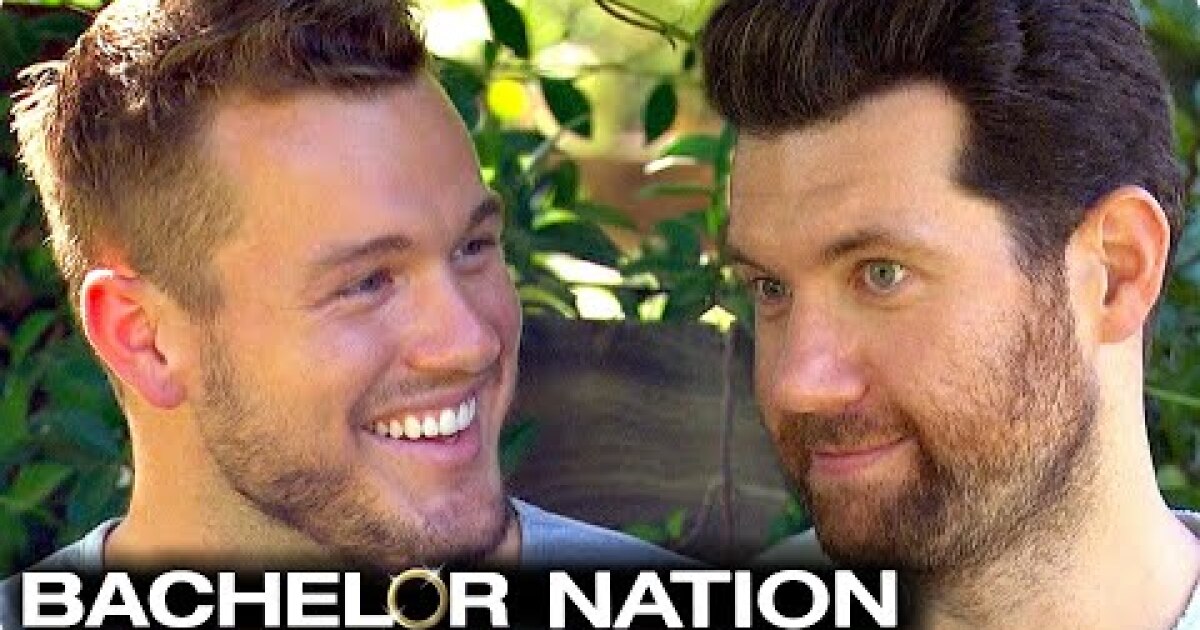
Years before Colton Underwood came out as gay, comedian Billy Eichner told the reality TV star that he could be “the first gay Bachelor.”
While guest starring on Underwood’s season of the ABC dating program “The Bachelor” in 2019, the “Billy on the Street” star offered the leading man some life advice that has taken on new meaning since Underwood announced he was gay Wednesday on “Good Morning America.”
“I’m gay. I know that’s a shock, Colton,” Eichner joked during his “Bachelor” appearance as Underwood laughed throughout the exchange. “That, I think, you should look into. Maybe you’re the first gay Bachelor and we don’t even know.”
The conversation, which has recently gone viral on social media, prompted a response Wednesday from Eichner, who congratulated Underwood on embracing his full identity.
Advertisement
“I’m happy for @colton,” Eichner tweeted. “If you’re gay, be gay! I’ve been gay forever & I love it!”
Eichner was among multiple Hollywood figures — including “Watch What Happens Live” host Andy Cohen and “Schitt’s Creek” star Dan Levy — who applauded Underwood for his courage. In classic Eichner form, the actor followed his initial reaction with a snarky joke about the GLAAD Media Awards, which celebrate LGBTQ representation in film, TV and beyond.
“Here’s how Hollywood works: Colton’s gonna get a GLAAD Award before I do,” Eichner wrote.
As the old footage of Underwood and Eichner made the rounds on social media, several people cautioned against perpetuating the harmful notion that one can predict someone’s sexuality. “We can’t keep doing this to those we see struggling with their own journey,” one person tweeted.
This is actually extremely cringe worthy. I have enormous respect for @billyeichner, but we can’t keep doing this to those we see struggling with their own journey. It’s just *not* how we be allies to anyone.
Eichner later expanded his thoughts in a brief thread reminding folks to respect people’s different coming-out journeys. He also paid tribute to past trailblazers who went public with their sexuality when LGBTQ people were not as accepted in Hollywood.
“Two things,” Eichner tweeted. “Number one, pop culture now sometimes makes it seem like every 14 year old gay boy is flying out of the closet without a care in the world. Some are. And that’s INCREDIBLE. But many are not. So let’s remember that.
“AND let’s ALSO honor and praise those in entertainment who came out years — DECADES — before it was embraced and could be used to professional advantage. I don’t mean me — I mean many others, especially those before me — that took real guts. Let’s put some shine on them too.”
AND let’s ALSO honor and praise those in entertainment who came out years – DECADES – before it was embraced and could be used to professional advantage. I don’t mean me – I mean many others, especially those before me – that took real guts. Let’s put some shine on them too. ❤️
In a candid interview with Robin Roberts on “Good Morning America,” Underwood declared that he is “proud to be gay” after growing up in Catholic and athletic circles that caused him to be ashamed of his sexuality.
Advertisement
The former football player also reflected on his “Bachelor” past, telling Roberts that he thanked God for “making me straight” upon starring in the series’ 23rd season and hoped the show would lead him to marry a woman and have children.
“I’ve thought a lot about this too, of, ‘Do I regret being the Bachelor and do I regret handling it the way that I did?’ I do,” he said before thanking and apologizing to the women he met on the show. “I do think I could’ve handled it better, I’ll say that.”
During his time on the competition program, Underwood was known as “the virgin Bachelor” and made headlines when he jumped the fence surrounding the “Bachelor” mansion in an apparent attempt to escape the production. Throughout Season 23, Underwood’s virginity came up repeatedly, including during his sit-down with Eichner, who took on the role of “camp counselor.”
When asked by Eichner during the episode if he planned on waiting until marriage to have sex, Underwood said he was waiting for true love.
Advertisement
“Fine, you get an award,” Eichner quipped. “But let’s say, then you have sex, and the sex is bad.”
“There’s always room for improvement,” said Underwood, to which Eichner replied, “Not a lot.”
Underwood told Roberts that he chose to remain a virgin as a way to process his sexuality. After hating himself “for a long time,” Underwood said he “came to terms with” his sexual identity earlier this year.
Advertisement
“If I had to go back and give anybody advice … ‘You’re going to get through it’ is what I would tell myself,” he told Roberts. “‘Keep fighting for you. Keep choosing you every morning. And when the time’s ready or when the time’s right and you’re ready, do it on your own time.’”
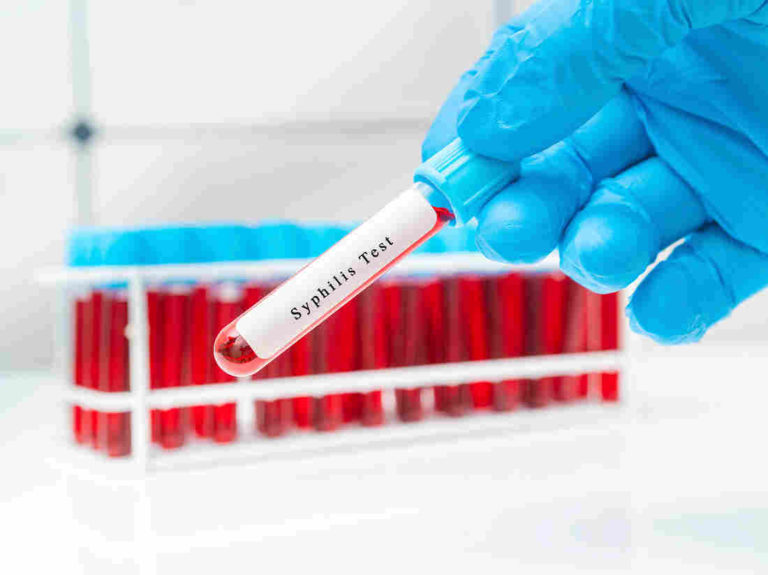
Syphilis cases in California have contributed to soaring national caseloads of sexually transmitted diseases. Experts point to the advent of dating apps, less condom use and an increase in meth. Wladimur Bulgar/Science Photo Library/Getty Images hide caption
Syphilis cases in California have contributed to soaring national caseloads of sexually transmitted diseases. Experts point to the advent of dating apps, less condom use and an increase in meth.
In certain circles of San Francisco, a case of syphilis can be as common and casual as catching the flu, to the point where Billy Lemon can’t even remember how many times he’s had it.
“Three or four? Five times in my life?” he struggles to recall. “It does not seem like a big deal.”
At the time, about a decade ago, Lemon went on frequent methamphetamine binges, kicking his libido into overdrive and silencing the voice in his head that said condoms would be a wise choice at a raging sex party.
“It lowers your inhibitions, and also your decision-making abilities are skewed,” Lemon says.
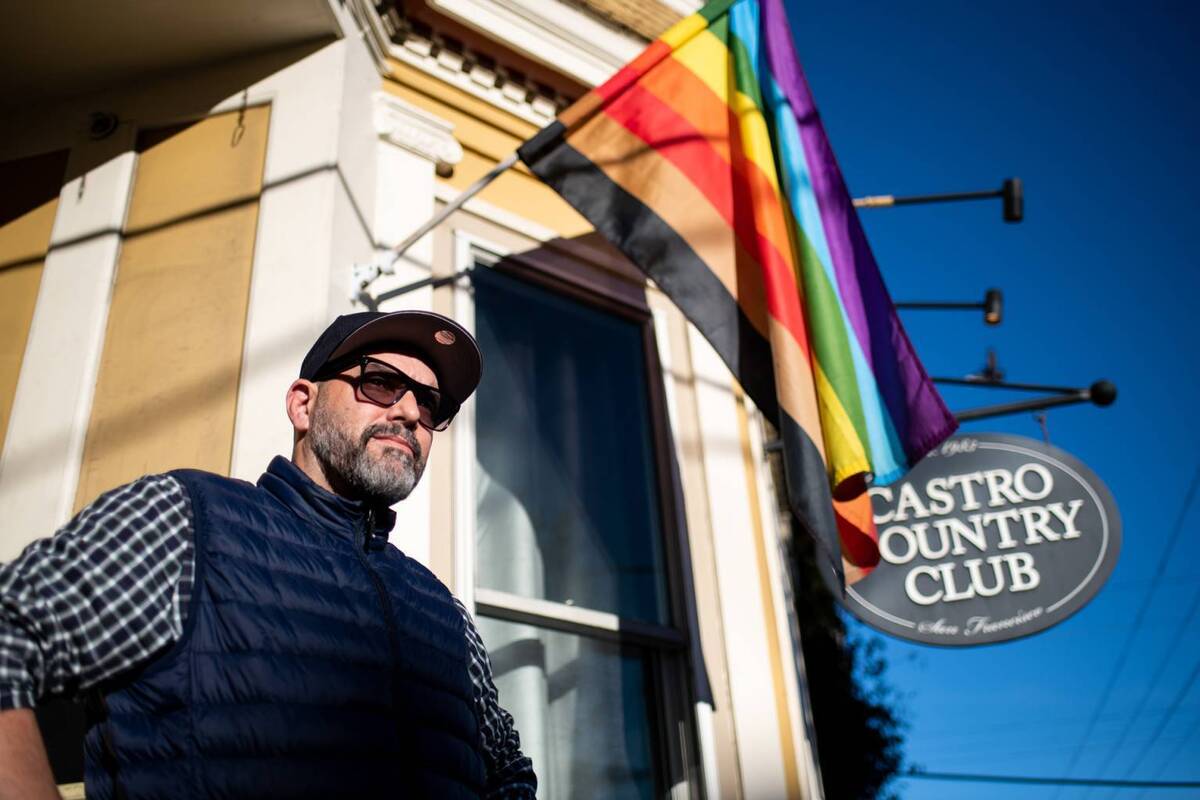
He’s sober now and runs the Castro Country Club in San Francisco, which is not a resort, but a place where gay men can get help with addiction, especially meth. Lemon says syphilis comes with the territory.
“In the 12-step community, if meth was your thing, everybody had syphilis,” he says.
In 2000, syphilis rates were so low that public health officials believed eradication was on the horizon. But the rates started creeping up in 2001, grew steadily for the next two decades, then spiked 74% since 2015. There were nearly 130,000 cases nationwide in 2019, according to data released Tuesday by the Centers for Disease Control and Prevention.
In California and the U.S., about half of syphilis cases are in men who have sex with men. More than a third of women in the western United States who have syphilis also use meth, a drug that has seen its own surge in recent years.
These are just some of the trends causing overall national cases of sexually transmitted diseases to hit an all-time high for the past six years in a row, reaching 2.5 million. And the consequences are now trickling down to babies who are contracting syphilis from their mothers; these congenital syphilis rates nearly quadrupled between 2012 and 2019.
This was all before the coronavirus pandemic took hold in the U.S., and with contact tracers and testing supplies diverted from STDs to COVID, the CDC is predicting 2020 numbers will be no better.
“We are quite worried about this and have seen this trend over time,” says Dr. Erica Pan, California’s state epidemiologist. “Unfortunately, with years of not having enough funding and infrastructure in public health, and then in this past year, of course, both at the local and state level, a lot of personnel who had been focusing on STDs and syphilis follow-up have really been redirected to the pandemic.”
Billy Lemon is executive director of the Castro Country Club in San Francisco, where gay men can get help with addiction. Lemon says that when it comes to methamphetamine use in particular, syphilis often comes with the territory. Beth LaBerge/KQED hide caption
toggle caption
Beth LaBerge/KQED
Billy Lemon is executive director of the Castro Country Club in San Francisco, where gay men can get help with addiction. Lemon says that when it comes to methamphetamine use in particular, syphilis often comes with the territory.
Beth LaBerge/KQED
A number of factors are fueling the syphilis surge
There are many factors that contribute to the rise of STDs, and syphilis in particular.
In the gay community in San Francisco, for example, the rise of mobile dating apps like Grindr and Tinder made finding a date “faster than getting pizza delivered to your home,” says Dan Wohlfeiler, an STD prevention specialist and co-founder of Building Healthy Online Communities, which uses these apps to improve gay men’s health.
When the dating apps first came on the scene around 2009, they made it harder for disease investigators to track the spread of STDs and notify people who may have been infected, because men don’t always know the names of the men they hook up with.
“They sometimes only know their online handle,” says Dr. Ina Park, associate professor at UCSF School of Medicine and author of the book Strange Bedfellows, about the history of STDs. “And if the sex didn’t go well, then sometimes they will block the person from their app and they don’t even know how to reach that person again.”
Online dating began back in the late 1990s, which was around the same time effective medications to prevent the transmission of HIV became available: first, antiretrovirals that suppress the virus in those who are HIV-positive, and then later, in 2012, preexposure prophylaxis, or PrEP, which prevents new infections in people who are HIV-negative, but considered at-risk for exposure to the virus.
With the risk of contracting a deadly disease falling to almost zero, condoms fell even more out of favor than they already were, says Park.
“If one man is taking PrEP and the other one is virally suppressed, there’s no HIV risk at all,” she says. “So why use condoms if you don’t mind having a touch of syphilis?”
Diagnosing syphilis is tricky
While syphilis is not benign — it can cause blindness, deafness, or brain damage — it is easy to treat. Typically, a shot of penicillin in the buttock will cure it.
But diagnosing syphilis can be tricky, says Park, who treats patients with STDs at the San Francisco City Clinic. She often finds herself crouched low in the exam room, “lifting up their scrotum and lifting up their penis,” craning her head to get a look from all angles.
She does these gymnastics to find rashes associated with syphilis. Some are obvious, others subtle. She says doctors in regular family medicine clinics often aren’t trained on where to look, or when.
“The patient came in saying, ‘I’m tired,'” Park says, referring to a common symptom of syphilis. “How many people are going to say, ‘Take off your pants and lift up your scrotum, I want to look? We only do that at the STD clinic because that’s what we do.”
But specialized public STD clinics, like the one where Park works, have been shutting down nationwide. One reason is persistent underfunding of public health programs, a trend laid bare during the coronavirus pandemic. Another reason is the Affordable Care Act. In a strange way, the 2010 law intended to expand access to health care actually contributed to the closure of STD clinics.
“Honestly, I think everyone thought they weren’t going to be necessary,” said Dr. Karen Smith in 2019, when she was the director of the California Department of Public Health. She says once Obamacare was in place, the thought was that STD testing would happen in primary care clinics.
“We sort of all assumed that if you’ve got health insurance and you’ve got access to a doctor, that’s all that you need,” she said. “It turns out that that’s not really all that you need.”
People still had affairs that they didn’t want to talk about with their family doctor. And some family doctors didn’t want to probe into their patients’ sex lives. Young people, in particular, prefer clinics geared to them, out of their parents’ purview.
“That loss of anonymous care really was a problem,” Smith said.
The spread of syphilis is reaching newborns, too
When Christian Faulkenberry-Miranda decided to become a pediatrician, she never thought she’d become an expert in syphilis.
In 2010, shortly after finishing her medical training and starting work at the Community Regional Medical Center in Fresno, Calif., she began seeing babies with a rash on their tummies that looks like a blueberry muffin. At first she thought it was a common viral infection, until these babies tested positive for syphilis.
In those early days, Faulkenberry-Miranda saw perhaps a few instances of congenital syphilis each year. Now she sees two cases every week. It’s important to start the 10-day antibiotic treatment right away to avoid complications, but she still follows her patients through their first year of life, and often through their childhood, to watch for vision and hearing problems, developmental delays, attention deficits and learning disabilities, all of which can result from congenital syphilis infections. In 2019, 128 of these congenital syphilis cases resulted in stillbirth or neonatal death.
“The disappointing thing is that syphilis is very treatable,” she says. “This is something that’s completely preventable with proper screening and treatment of these moms during pregnancy.”
Congenital syphilis cases hit a troubling milestone in 2019, increasing 279% over the previous five years and hitting a high of cases in the U.S. That is more mother-to-child transmissions of syphilis than there were at the peak of mother-to-child cases of HIV in 1991.
“How could this be happening? Testing is cheap and widely available. The same treatment we’ve been using since the ’40s still works,” says Park, who has also seen an increase in congenital syphilis cases in San Francisco. “And yet we have this completely out of control epidemic among the most vulnerable babies in our society.”
Many of the women who give birth to babies with syphilis have had no prenatal care. They often use drugs — mainly methamphetamine — and they are often homeless, said Dr. Karen Smith, former director of CDPH. This makes them more likely to trade sex for housing, food or drugs, prompting Smith to call congenital syphilis a “disease of despair.” Drug use, in particular, makes women less likely to recognize that they’re pregnant at all and less likely to seek health care if they do.
“They’re very concerned about what’s going to happen when they’re found to be pregnant and using drugs,” said Smith. “They’re concerned that their drug use will be reported and then CPS will be involved and their children will be taken away.”
Romni Neiman is a veteran contact tracer with the CDC. Before she got redirected to COVID-19 last year, she was working on STD prevention in California, including the problem of congenital syphilis. Neiman says when she tries to reach pregnant women who may have been exposed to syphilis, it’s extremely challenging.
Neiman remembers looking for one woman in the late ’80s in Chicago. She used drugs, was pregnant and had been exposed to syphilis. The woman’s housing was so unstable that Neiman went to three different places before finding her. The woman had no car, so Neiman offered to drive her to the clinic to get tested. The woman had no safe place to leave her toddler, because a man in the place she was staying was abusive, so Neiman took care of the child while the woman saw the doctor.
“She was just trying to do the best that she can, and she was really afraid,” Neiman remembers. “Sometimes it’s really taxing and really sad. And you come home at the end of the day and you’re like, ‘Wow. Wow.'”
Those challenges, combined with persistent underfunding for public health, are what led to the initial spike in congenital syphilis cases in Fresno County in the 2010s, says Park. Local contact tracers couldn’t keep up, and the state had to step in with reinforcements. After leveling off for a couple of years, congenital syphilis rates in Fresno spiked 900% in 2018.
The state is taking new measures to address the rates, says state epidemiologist Dr. Erica Pan, such as requiring women to be screened for syphilis twice during pregnancy, instead of just once. And rather than waiting for women to come in for prenatal care, the state is doing more outreach and screening pregnant women in the emergency room and in prisons and jails.
Pan believes the coronavirus pandemic has created an opportunity to invest in a more nimble response to emerging and reemerging public health issues such as syphilis and congenital syphilis.
“It’s been a really long, hard year responding to this pandemic, but people have really acknowledged and realized the impact of divesting in public health infrastructure,” she said. “I hope that a lot of the resources that we hope to bring to bear in the longer term after this pandemic will benefit STDs as well.”
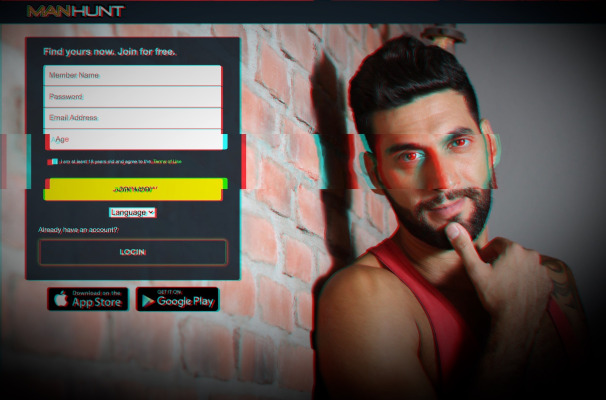
Manhunt, a gay dating app that claims to have 6 million male members, has confirmed it was hit by a data breach in February after a hacker gained access to the company’s accounts database.
In a notice filed with the Washington attorney general’s office, Manhunt said the hacker “gained access to a database that stored account credentials for Manhunt users,” and “downloaded the usernames, email addresses and passwords for a subset of our users in early February 2021.”
The notice did not say how the passwords were scrambled, if at all, to prevent them from being read by humans. Passwords scrambled using weak algorithms can sometimes be decoded into plain text, allowing malicious hackers to break into their accounts.
Following the breach, Manhunt force-reset account passwords and began alerting users in mid-March. Manhunt did not say what percentage of its users had their data stolen or how the data breach happened, but said that more than 7,700 Washington state residents were affected.
Stacey Brandenburg, an attorney for ZwillGen on behalf of Manhunt, said in an email that 11% of Manhunt users were affected.
Read more on TechCrunch
But questions remain about how Manhunt handled the breach. In March, the company tweeted that, “At this time, all Manhunt users are required to update their password to ensure it meets the updated password requirements.” The tweet did not say that user accounts had been stolen.
Manhunt was launched in 2001 by Online-Buddies Inc., which also offered gay dating app Jack’d before it was sold to Perry Street in 2019 for an undisclosed sum. Just months before the sale, Jack’d had a security lapse that exposed users’ private photos and location data.
Dating sites store some of the most sensitive information on their users, and are frequently a target of malicious hackers. In 2015, Ashley Madison, a dating site that encouraged users to have an affair, was hacked, exposing names, and postal and email addresses. Several people died by suicide after the stolen data was posted online. A year later, dating site AdultFriendFinder was hacked, exposing more than 400 million user accounts.
In 2018, same-sex dating app Grindr made headlines for sharing users’ HIV status with data analytics firms.
In other cases, poor security — in some cases none at all — led to data spills involving some of the most sensitive data. In 2019, Rela, a popular dating app for gay and queer women in China, left a server unsecured with no password, allowing anyone to access sensitive data — including sexual orientation and geolocation — on more than 5 million app users. Months later, Jewish dating app JCrush exposed around 200,000 user records.
Updated with comment from a company attorney.
Know something, say something. Send tips securely over Signal and WhatsApp to +1 646-755-8849. You can also send files or documents using our SecureDrop. Learn more.
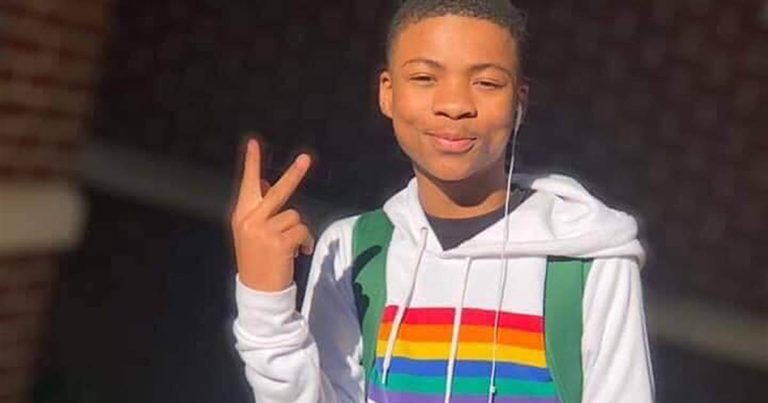
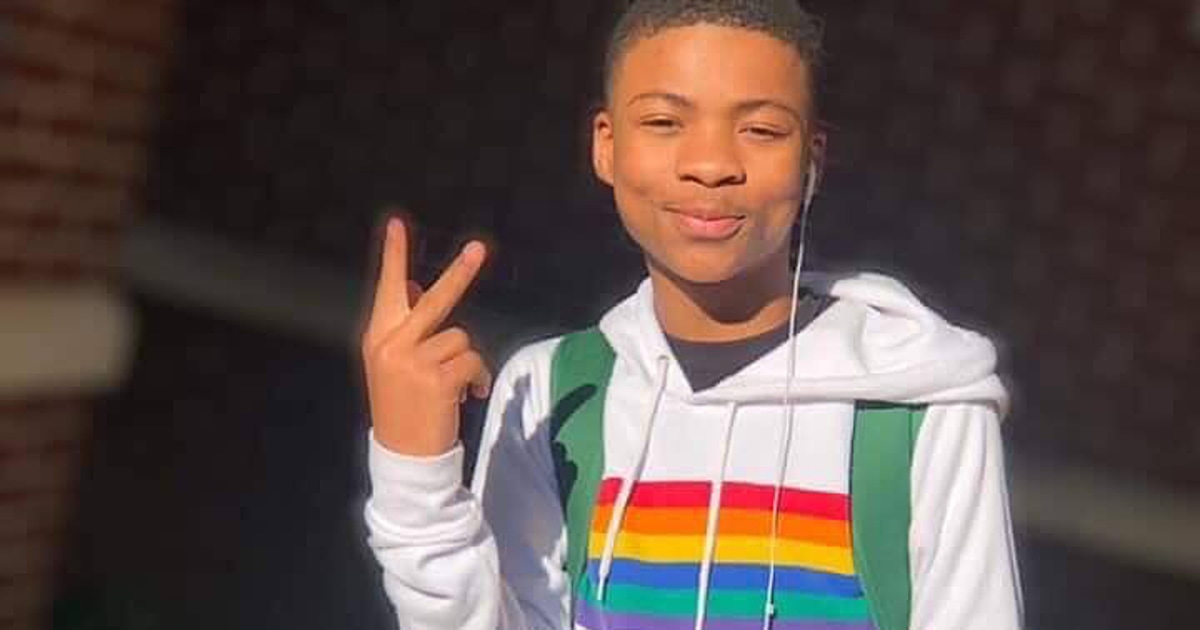
Attorneys for the family of Nigel Shelby said school staff violated Title VI, which prohibits intentional discrimination on the basis of race, color and national origin, and Title IX, which prohibits public schools from ignoring harassment based on gender stereotyping.
The attorneys, civil rights lawyers Benjamin Crump and Jasmine Rand, said Shelby, 15, who was gay, had repeatedly reported being bullied at school and on social media, but was told by Huntsville High School’s then-freshman principal Jo Stafford that being gay was a choice.
The principal “did not offer any assistance or take any responsibility to make sure that this child was protected and nurtured and loved,” Crump said. “He was making all kinds of cries for help.”
Shelby’s family is suing Huntsville City Schools, the Huntsville City Board of Education, the City of Huntsville and several individual school officials.
Nigel Shelbyvia Facebook
Crump, who was in Minneapolis on Tuesday also representing the families of George Floyd and Daunte Wright, two Black men who died at the hands of police, noted that tackling racial bias from school officials was just as important as fighting police bias.
School officials also ignored friends of Nigel’s who came forward saying that they were afraid he was harming himself and “were afraid Nigel would take his own life,” Rand said.
The lawsuit mentions several students who, on separate occasions, reported their concern for Nigel’s wellbeing. NBC News has not verified the accounts from the students, who are not identified.
The lawsuit said Stafford told one student “that she didn’t care,” and that Nigel “was going through one of his episodes.”
Sometimes, the students would accompany Nigel to Stafford’s office when he went to report the physical and verbal bullying, the lawsuit said.
Instead of alerting Nigel’s parents, Stafford told Nigel that if he was going to make adult decisions regarding his sexual orientation, then he had to be prepared to face adult consequences, the suit said.
Another time, when Nigel went to Stafford for help, “she told him that he only had as much time as the hourglass sand timer would allow,” the suit alleged. She “then flipped the timer on her desk over to start the time summarily dismissing and mocking” Nigel’s “desperate cries for help.”
Stafford told Nigel and other students to “dance to Black people music” to feel better in her office, the lawsuit said. The incident humiliated Nigel, the suit said.
“The fact that Defendant Jo Stafford expected to find a suicide note and even knew where to look is evidence that Defendants were well aware that he was at heightened risk of suicide,” the suit said.
“People at his school knew that he planned to take his own life,” Camika Shelby said at the time. “I need to find out who knew and why nobody told me until after he died.”
Shelby said her son had come out to her, and she was supportive. “I just grabbed him and hugged him and told him I already knew,” Shelby told NBC News after his death. She said he told her he was being bullied.
“I reached out to see what was going on at school and I was always told everything was fine, and it wasn’t fine,” Shelby said Tuesday.
“This has been the hardest two years of my life. … The worst part about all of this, I mean obviously is losing him, but it’s the fact that all of this stuff was going on and I had no idea,” Shelby said.
“It hurts even worse because as a parent you want to do everything you can to protect your kid,” Shelby added. “I’m not the type of mother that would have allowed my child to just continuously go through this so it hurts.”
Huntsville school administrators were “fully aware of the risks associated with suicidal ideations, bullying and discrimination, mental health disorders suffered by students, suicide training, signs to be aware of and trauma suffered by Huntsville High School students, and negligently failed to follow the training to the detriment of” Nigel, the lawsuit said.
Stafford did not respond to message requests for comment Tuesday. Phone numbers listed for her went unanswered. Her profile is still posted on the Huntsville High School website, an email sent to her listed school address was returned as undeliverable. The profile was removed by Wednesday.
A statement from Huntsville City Schools released last month before the lawsuit was formally announced and shared with NBC News by the district Tuesday said Nigel’s “loss continues to be felt by both the school and district community.”
“The district wishes to remind students, families, and staff members of the longstanding resources in place to support students,” the statement said.
“Consistent with the district’s Core Values, HHS [Huntsville High School] has a strong Gay-Straight Alliance (GSA) in place to provide support to LGBTQ+ students, and the district has partnered with GLSEN and the Anti-Defamation League to support its schools and students,” the statement added.
On Tuesday, Rand said: “To make a statement and to enforce policy are two different things.
“Nice press statements don’t save lives,” she said. “I hope they will be committed to saving lives.”
Lesbian, gay and bisexual youth are almost five times more likely to have attempted suicide as compared to heterosexual youth, according to the Trevor Project, which provides crisis intervention services to LGBTQ youth.
Meanwhile, in 2018, suicide became the second leading cause of death in Black children aged 10-14, and the third leading cause of death in Black adolescents aged 15-19, according to the National Institute of Mental Health.
Nigel ShelbyGoFundMe
“When I hear everything that was going on at school, it crushes me,” said Nigel’s father, Patrick Cruz, Tuesday.
Cruz said his son was “intelligent, smart, outgoing,” and “he had swagger too.”
“I mean just he was a people’s person,” Cruz said.
“I play this in my head back every day for the last two years … when he was little, he told me, ‘dad, I’m going to be famous one day,” Cruz said. “And I look at this tragedy … this was not the type of famous that I was looking for him to be.”
Nigel’s mother agreed.
“I will do whatever it takes, when Nigel’s name is said it’s not suicide attached to it, it’s change,” Shelby said.
The goal of the lawsuit, Rand said, is to “bring justice on behalf of Nigel Shelby,” make sure “Huntsville and other schools to follow the laws that exist” and to “get greater protection under the law.”
Shelby said she was reluctant to go forward with the lawsuit because of the emotional distress she knew it would cause her, “but if going through with this lawsuit is what I gotta do to bring change, to bring justice then I’m going to do whatever it takes, that’s the bottom line.”
If you or someone you know is in crisis, call the National Suicide Prevention Lifeline at 800-273-8255, text HOME to 741741 or visit SpeakingOfSuicide.com/resources for additional resources.
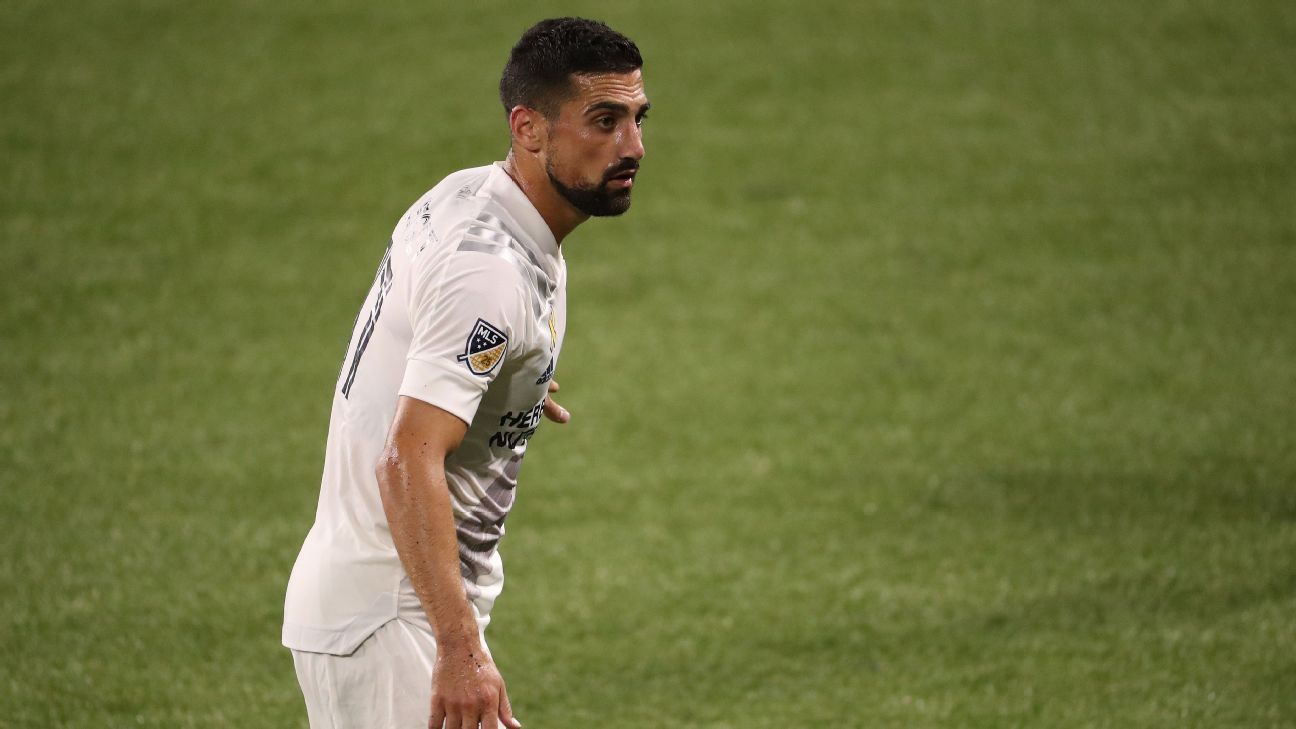
Lletget fought back tears and said he will work with Major League Soccer to try to become an ally for the LGBTQ+ community.
“I messed up and I’m trying to take full responsibility for it,” Lletget said. “I said a word that shouldn’t have been said. And although there’s been a lot of discussion and debate about the meaning of the word because of different dialects in Spanish and cultures, the truth is it’s a harmful word and it shouldn’t have been said.”
MLS previously announced it was aware of the situation and would begin a formal investigation. Lletget said he has been in contact with the league office but has not been notified of any possible disciplinary action ahead of the team’s season opener against Inter Miami CF on Sunday.
“Moving forward, I really do want to do my part,” Lletget said. “I hate that this door has been opened this way, but I’ve always wanted to be involved in social causes and I’ve always wanted to be an ally. I hope there’s a silver lining and now the door is open, and I’m more than happy to walk through it and take it on and help and help different communities.”
Lletget used the Spanish slur as he slapped teammate Julian Araujo on the back of the neck outside a recent Galaxy training session and deleted the video from his Instagram account shortly after posting it.
“This was a poor decision on my end and it was a moment of just pure stupidity,” Lletget said. “I’m a human, I made a mistake and that’s simply what happened. But now I want to rectify that.”
Lletget has played for the Galaxy since 2015, with 151 appearances for the team. Most recently, he appeared for the USMNT during its two March friendlies.
Eight hours before Brockhampton’s new album goes live, frontman Kevin Abstract’s phone rings with a FaceTime call from his friend Jaden Smith.
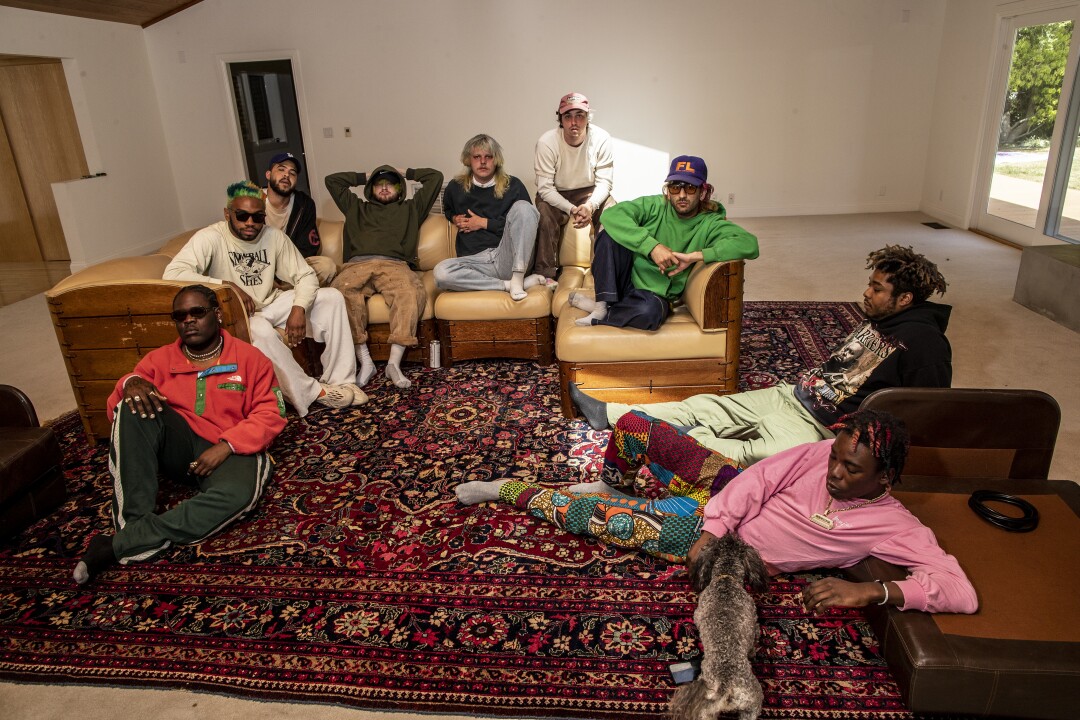
The actor-musician (and son of Will and Jada) is reaching out to congratulate the members of this 13-man Los Angeles rap group — most of whom are sprawled on a U-shaped sofa in Abstract’s Hidden Hills living room — on the release of “Roadrunner: New Light, New Machine,” a vivid and assured collection that wraps searing personal confessions in sumptuous pop hooks and rowdy hip-hop grooves.
“I’m so ready to lose my mind to this album right now,” Smith says as Abstract angles the phone so everyone can see. “And you guys are dropping at the perfect time. N— are getting vaccinated, things are about to open,” he adds.
“Y’all are gonna tear s— up, bro.”
Advertisement
Advertisement
Brockhampton’s sixth studio LP in a whirlwind four years, “Roadrunner” follows the breakout success of “Sugar,” the tender and silky 2019 single that took off on TikTok before finding its way to the Billboard Hot 100 and to a high-profile remix featuring Dua Lipa. The song, which has been streamed more than 300 million times on Spotify, introduced countless listeners to a self-described boy band whose proudly diverse lineup — among its rappers, producers and visual artists are Black, white, straight and gay men — gives it the air of a Gen Z dream team.
Now, as the group’s famous pal suggests, “Roadrunner” is poised to deepen that mainstream impact with sharp-edged bangers like “Buzzcut” and summery bops like “Count on Me,” the latter of which arrives accompanied by a splashy music video starring Lil Nas X and Dominic Fike as lovers on a psychedelic journey.
So why on earth is Abstract telling people that Brockhampton isn’t long for this world?
“You just got to know when to let go,” says the soft-spoken 24-year-old, who recently tweeted, “2 brockhampton albums in 2021 — these will be our last.” Dressed in cozy athleisure wear, his hair dyed like a rainbow snow cone, Abstract is hanging with eight of his bandmates — Romil Hemnani, Merlyn Wood, Joba, Matt Champion, Dom McLennon, Bearface, Jabari Manwa and Kiko Merley, all in their mid- to late 20s — on a sunny afternoon at his rambling yet minimally furnished home on a bucolic residential street. (The group’s remaining members, who handle nonmusical endeavors like photography and Brockhampton’s digital presence, are Henock Sileshi, Robert Ontenient, Jon Nunes and Ashlan Grey.)
“Roadrunner” was to hit streaming services that night, and the next day, Brockhampton was to perform in a ticketed livestream from producer Rick Rubin’s Shangri-La studio in Malibu. Rubin, whom Hemnani refers to as the group’s “Jedi master,” is one of several older admirers, along with Spike Jonze and the RZA, who complement Brockhampton’s mostly teenage and twentysomething audience.
Advertisement
At the moment, though, the members are picking at delivery containers from McDonald’s and Veggie Grill as Abstract explains that, timing be damned, he wants to “leave the group alone” to free everyone “to explore their own thing.”
For Abstract, one of hip-hop’s few artists out as gay, that means directing videos and running his label, Video Store, as well as doing solo records. Watching Lil Nas X’s “Montero” go to No. 1 this month — despite (or more likely because of) a controversial clip in which the rapper gives the devil a lap dance — “was super inspiring to me,” Abstract says.
“I just want to make really big gay pop songs because of what he did.”
Brockhampton performs at the Camp Flog Gnaw Carnival in L.A. on Nov. 10, 2019.
(Allen J. Schaben / Los Angeles Times)
Yet you also get the sense that Brockhampton wouldn’t mind a break from the scrutiny that’s come with its success. In 2018, the group pushed out founding member Ameer Vann, whose face had appeared on the covers of all three volumes of 2017’s “Saturation” trilogy, after several women accused him of sexual misconduct. And now it’s facing questions about its association with actor Shia LaBeouf, whom Abstract described as a “mentor” before LaBeouf was accused late last year by his ex-girlfriend, musician FKA twigs, of a range of abuses.
No act would welcome the trouble these connections have created. But it’s especially uncomfortable for a group that talks about remaking the boy-band framework as a kind of safe space for inclusion and vulnerability.
Asked how it feels to be watched for signs that Brockhampton isn’t living up to its woke branding — “Is Brockhampton canceled?” reads one top Google query — the members go quiet before McLennon volunteers an answer.
“It’s like when you’re driving and the headlights pop up behind your car and you’re not sure if you’re being pulled over or it’s the person next to you,” he says.
“Facts,” Abstract adds in agreement.
Has it been painful to discover that people close to the band may not be who they appeared to be? Abstract sighs and says, “It’s painful,” before Bearface cuts him off.
Advertisement
“I think we should leave it at that,” Bearface says.
Increased attention is certainly what Brockhampton is looking to draw with “Roadrunner,” which features guest spots by Shawn Mendes and ASAP Rocky and delivers on the melodic potential that “Sugar” revealed.
“I’m trying to be like the Bee Gees, man — every part is a hook,” says Hemnani, who co-produced most of the album’s 13 tracks with Abstract and Manwa with occasional assists from outside collaborators such as Chad Hugo of the Neptunes.
Abstract points out that the group relies less these days on the pitch-shifting vocal effects it once favored, and indeed there’s an emotional clarity to the new material — be it the brooding “The Light,” in which the frontman admits, “I still struggle with telling my mom who I’m in love with,” or a breezy flirtation like “I’ll Take You On,” featuring R&B great Charlie Wilson — that contrasts with the willful murkiness of Brockhampton’s early stuff.
Brockhampton, from left: Jabari Manwa, Kevin Abstract, Kiko Merley, Bearface, Joba, Matt Champion, Romil Hemnani, Dom McLennon and Merlyn Wood.
(Robert Gauthier / Los Angeles Times)
The group started around 2014 in Texas after Abstract (whose mates call him by his real name, Ian) asked the readers of a Kanye West message board if anyone wanted to start a band with him. Once assembled, the members of Brockhampton — so named after the street that Abstract grew up on — moved to L.A., where they lived together in a series of houses before scoring a multimillion-dollar deal with RCA Records and eventually scattering across town. Today the group is managed by Christian and Kelly Clancy, the married couple who also oversee the career of Tyler, the Creator; Peter Edge, RCA’s chairman and CEO, sees Abstract in “a lineage of multidisciplinary talents” including Donald Glover and Pharrell Williams.
In spite of the momentum provided by “Sugar,” the musicians say they struggled to get the ball rolling on “Roadrunner,” in part because the pandemic imposed a type of separation they’d never experienced. Yet inspiration finally arrived in the form of tragedy: Joba’s father’s death by suicide, which the musician describes in brutal, gripping detail in “The Light” and the album-closing “The Light Pt. II.”
“Those were the easiest songs I ever wrote,” says Joba (born Russell Boring), who in his verses ponders a complicated relationship with religion that also led Bearface (Ciarán McDonald) to write “Dear Lord,” a gorgeous close-harmony hymn with echoes of Boyz II Men and Bon Iver.
Asked if Brockhampton might secretly be a Christian rap group — even some of “Roadrunner’s” lighter tunes explore themes of faith and the search for meaning — the members smile and shake their heads.
Advertisement
“My family’s Hindu,” says Hemnani. Still, they acknowledge they’re drawn to topics beyond pop’s usual subject matter. “I don’t know if people wanted to hear a gospel album from Justin Bieber,” Hemnani adds of the latest from the former teen idol. (Turns out they did: “Justice” just logged a second week at No. 1.) “But I always appreciate someone who makes whatever they want even if it’s not what people wanted to hear.”
Abstract recognizes that writing about his life represents a challenge to the status quo. “Being queer in hip-hop’s always gonna be risky to a lot of people,” he says. What moved him about Lil Nas X’s “Montero” video was “seeing him be happy while being gay while being a Black man. It’s not a ‘Brokeback Mountain’ story where he’s sad. I think that’s easier for people to process: ‘Oh, it’s so unfortunate that you’re gay.’
“And I think we helped open the door for someone like him,” Abstract continues. “Before our first album, there weren’t many rappers being super stoked on being gay. But the way we talked about it was braggadocious in the way Lil Wayne is. That helps normalize it.”
At that, Hemnani pipes up: “Somebody told me the other day that your verse on ‘Star’” — lines about giving oral sex from the first “Saturation” LP — “was the first time they felt like being gay sounded cool,” he tells Abstract, which seems to leave the frontman unsure of how to respond.
“Yeah,” he says awkwardly after a few seconds, and that makes everybody laugh.
That capacity to change the way people think — particularly young people — is of obvious importance to Brockhampton. Yet when the conversation turns to why they value the opinions of Rubin and his more established ilk, Wood voices a surprisingly curmudgeonly point of view.
“Most youth culture is trash,” he says to immediate groans from the rest of the band. “Most of that s— is here today, gone tomorrow. People think the ’80s was so great. Nah, that’s 5 percent of what was on the charts in the ’80s.”
Wood’s point is that older people — “people with more mature taste,” as he puts it — have a longer view that makes them better equipped to gauge true quality. “They’re less fickle,” he says.
Wood goes on to insist that artists need to feel free to express unpopular opinions and sometimes to work through bad ideas to get to good ones. “How do you expect anybody to get anywhere if they don’t have the ability to go wrong?” he asks — a question often held out as a critique of so-called cancel culture.
Advertisement
But it’s not clear that everyone in Brockhampton shares his attitude.
“When you asked if we feel watched, nobody really wanted to answer because we know that whatever we say could get looked at negatively,” Abstract says. “So it got tense.”
According to the frontman, not much about the way they interact has changed in the years since they met, even as #MeToo and Black Lives Matter have triggered innumerable examinations of how race, gender and sexuality play out in organizations of every size.
Should anything be taken from the decision to use asterisks in place of the N-word in “Roadrunner’s” lyric sheet?
Abstract grins. “Oh, that’s just because the person that typed it out wasn’t Black,” he says.
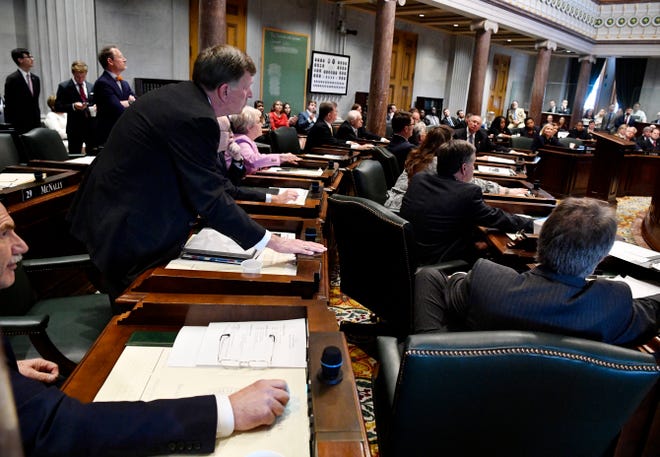
A Tennessee bill allowing parents to waive LGBTQ-related curriculum for their children cleared the legislature 64-23 Wednesday morning.
The bill will head to Gov. Bill Lee’s desk for his signature.
The initiative, championed by Covington Republicans Sen. Paul Rose and Rep. Debra Moody, would require school districts to notify parents of any instructions related to sexual orientation and gender identity. Parents would have the right to excuse their children from the curriculum, and students would be shielded from any punishment because of it.
The bill’s passage marks another major victory this year for conservative lawmakers seeking to restrict LGBTQ rights in the state. Tennessee legislature swiftly passed the controversial transgender athlete bill in March, becoming the third legislative body this year to carry it through.
It also mirrors years of attempts by Republican lawmakers to erase LGBTQ-related content from classrooms. The famous “Don’t Say Gay” bill, which would have barred the teaching of “anything other than heterosexuality,” failed in 2012 and 2013. This year, another bill seeking to ban LGBTQ-related teaching materials altogether is also making progress in the House.
Proponents for Rose and Moody’s proposal have argued the bill allows parents — instead of the government — to make choices for their children. Many of those lawmakers, however, have voted for the transgender athlete law, which requires children to play sports under their sex at birth.
“Government does not own our children,” said Rep. Terri Lynn Weaver, R-Lancaster. “Parents are responsible, and parents have every right to opt their child out of anything that is taught in the school that the parent does not believe their child should be involved with.”
The measure has drawn staunch opposition from multiple groups, including teachers and parents. LGBTQ rights advocates argue the bill would further marginalize gender minority groups and deny all kids the opportunity to understand LGBTQ communities exist.
“How do you try to make people afraid of a certain population? Well, talk about how scary they are in school or refuse to acknowledge that they exist in school,” said Cathryn Oakley of the Human Rights Campaign. “It hurts everybody when LGBTQ people are excluded from those discussions.”
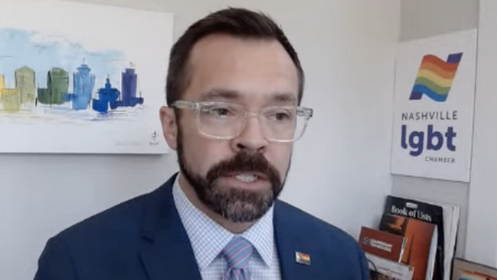
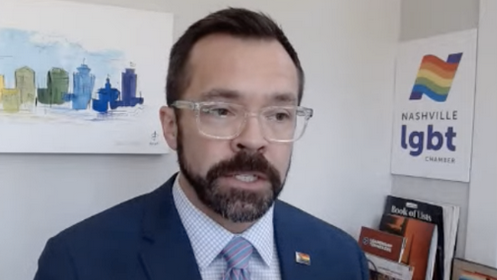
The series of legislation could also affect the state’s economy. In Tennessee, 50 corporations and 134 local businesses have signed onto an open letter protesting anti-LGBTQ legislation. Joe Woolley, CEO of Nashville LGBT Chamber of Commerce, told The Tennessean three conventions are preparing to pull events out of Nashville within the next year — a decision triggered by the transgender athlete bill.
“The business community is overwhelmingly against anti-LGBT bills. Unfortunately, so-called business-friendly legislators are not listening to business or anyone else and continuing to advance discriminatory legislation,” Woolley said in a statement.
Bill passes following confusion, opposition from Democrats
The bill would not bar students from asking LGBTQ-related questions. Schools also would not be required to notify parents when mentioning the sexual orientation or gender identity of a historic figure to provide “necessary context.”
But it appears unclear how teachers should respond if the topic arises in other occasions.
For example, Sen. Jeff Yarbro, D-Nashville, questioned during a floor debate last week if the bill would forbid the teaching of landmark Supreme Court decisions or protests over LGBTQ rights. Rose responded by referring Yarbro to the bill language, which does not define “necessary context.”
Moody also pointed to the bill language when Rep. Sam McKenzie, D-Knoxville, raised a hypothetical scenario. He asked if teachers would be required to notify all parents during emergency situations, where students who identify as LGBTQ may have suicidal thoughts.
Other Democratic lawmakers argued against the bill, saying it would have detrimental impact on gender minority groups. Roughly 40% of LGBTQ youths seriously considered killing themselves in the last 12 months, according to The Trevor Project.
“We continue to stigmatize LGBTQ students and people in our state to the detriment of these students,” said Rep. Bob Freeman, D-Nashville.
Multiple supportive Republicans suggested they are uncomfortable with the topic of LGBTQ people. Rep. Ryan Williams, R-Cookeville, said the bill would allow him to “protect” his child from curriculum he does not want to expose them to.
“As a parent, I find out when my child comes home what video they saw that day, not 30 days before so I can protect my own child from that,” he said. “Our kids are young and impressionable, and what we allow in their minds is important.”
Measure draws objection from educators
During a Metro Nashville Public Schools board meeting Tuesday night, teachers expressed concerns over the bill.
Lindsey Lieck, a teacher at H.G. Hill Middle School, said Tennessee’s anti-LGBTQ legislation is “detrimental to the success and well-being of students and staff.”
“As educators, we have the duty to provide our students with the skills and knowledge they need to navigate the world. This includes recognizing and supporting the LGBTQ community,” Lieck said at the meeting. “While there are people in our districts, our legislature and across the state that disapprove of LGBTQ people, our district has decided many times to support LGBTQ students. Now is a time that we as a district need to take a stand for our students.”
Lieck urged board members to tell lawmakers to stay out of classrooms.
“We don’t want them denying our students access to inclusive materials. LGBTQ students deserve to see themselves mirrored in the curriculum,” she said.
Mae Christiansen, another Metro Schools educator, also argued that the legislation will harm students as lawmakers attempt to use arguments about what is right or wrong to restrict teachers from using materials and affirming LGBTQ students’ identities.
“They are creating policies restricting the freedoms for students to be themselves biding with families that insist their heterosexual or cisgender children should feel comfortable in the school environment, essentially by never interacting with beliefs or people who are at odds with their own,” Christiansen said.
“As a sociology teacher, I tell my students from day one that it is not our job to decide what is right and wrong in our society or culture. We do not debate the existence of groups of people or their right to exist because they exist whether we believe they do,” she added. “We should not be prioritizing one student’s comfort over another student’s very existence.”
Reach Yue Stella Yu at yyu@tennessean.com. Follow her on Twitter at @bystellayu_tnsn.
Meghan Mangrum covers education for the USA TODAY Network — Tennessee. Contact her at mmangrum@tennessean.com. Follow her on Twitter @memangrum.
Want to read more stories like this? A subscription to one of our Tennessee publications gets you unlimited access to all the latest politics news, podcasts like Grand Divisions, plus newsletters, a personalized mobile experience and the ability to tap into stories, photos and videos from throughout the USA TODAY Network’s 261 daily sites.
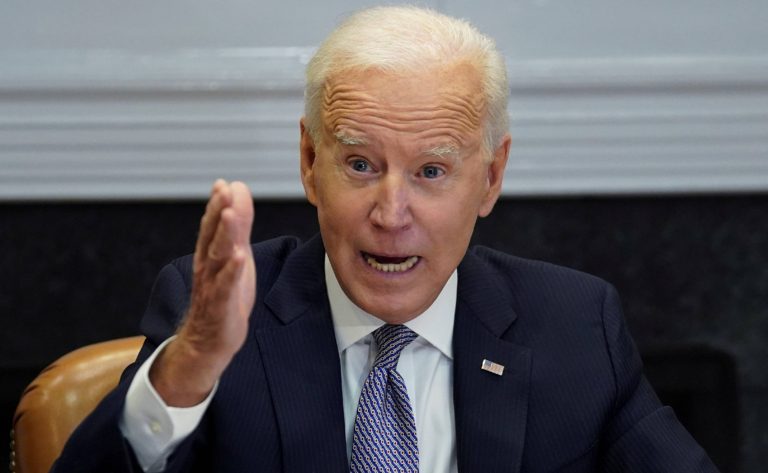
NEW YORK – President Joe Biden vowed on the campaign trail to pass a law protecting LGBTQ Americans from discrimination within his first 100 days in office. But with the Senate’s backing for the Equality Act seen as unlikely, he may already have opted for Plan B.
Biden covered key parts of the civil rights bill — which faces an uphill struggle in a Senate split 50-50 between Republicans and Democrats — with an executive order signed on his first day in the White House.
By extending equal rights safeguards to sexual minorities in health, housing, education and credit in the order, Biden showed his commitment to the act, while placing the onus on Congress to go the whole hog, political analysts said.
“It’s an honest signal from the administration that if more is going to be done, it has to be done through Congress,” said John Hudak, a senior fellow at the Washington-based Brookings Institution think tank.
“What the executive order does is tells the federal agencies to do everything that they can to advance the cause of equality,” Hudak said. “It’s about as far as an administration can go on its own.”
The Equality Act amends the 1964 Civil Rights Act to include sexual orientation and gender identity for protection alongside race, religion, sex and national origin.
It passed the Democratic-controlled House of Representatives on Feb. 25, and has unanimous backing from Democratic senators.
But several prominent Republicans have voiced opposition already, including moderates such as Sen. Mitt Romney of Utah, who said he would oppose the act unless it added a provision giving “strong religious liberty protections.”
Asked to comment on the bill’s progress in Congress, a White House spokeswoman referred to remarks by Biden in February when he said it was “time for Congress to secure these protections once and for all.”
‘Short-term fix’
In the meantime, federal government agencies have been adjusting their guidelines to meet the terms of Biden’s Jan. 21 order, which directed them to include sexual orientation and gender identity when prohibiting sex discrimination.
The Consumer Financial Protection Bureau in March and the Department of Housing and Urban Development in February said they would ensure equal treatment for LGBTQ Americans in banking or when buying or renting a home.
Both entities cited a 2020 Supreme Court ruling that extended workplace protections to gay and transgender people — the biggest moment for LGBTQ rights in the country since same-sex marriage was legalized in 2015.
Biden’s executive action also protects gay and trans students from discrimination in school, which the Department of Justice reiterated in a memo to federal agencies on April 5.
Bias against LGBTQ students has been a contentious point among lawmakers debating the Equality Act. Critics argue that the legislation would allow trans competitors to take part in girls’ and women’s school sports, which they say is unfair.
Ian Thompson, a legislative representative at the American Civil Liberties Union, said, however, that the argument is flawed because the executive order already prohibits discrimination in school, including sports.
“This is the new bathroom argument,” said Thompson, referring to a debate in recent years over whether trans women should be allowed to use women-only spaces such as public bathrooms.
By extending equal rights safeguards to sexual minorities in health, housing, education and credit in the order, U.S. President Joe Biden has shown his commitment to the Equality Act, while placing the onus on Congress to go the whole hog, political analysts said. | REUTERS
But while Biden’s executive action anticipated many of the Equality Act’s provisions to tackle discrimination, it could easily be reversed by future presidents.
“It’s a short-term fix,” Hudak said.
Additionally, the 2020 Supreme Court ruling on which Biden’s order is based does not contemplate discrimination against LGBTQ people in public spaces and services, in addition to taxpayer-funded programs.
That means the protections do not extend to places including restaurants, shops and public transport, as well as government-aided homeless shelters and adoption agencies.
Symbolic victory
And beyond extending the scope of anti-discrimination safeguards, passing the Equality Act would be a symbolic victory for the LGBTQ community, said Gabriele Magni, a professor at Loyola Marymount University who researches LGBTQ representation in U.S. politics.
“It is appropriate to say that it is saving lives because it is sending a message that we value people for who they are and we believe that they belong in this society,” Magni said.
Numerous studies show LGBTQ Americans are more likely to suffer from mental health issues, and gay and bisexual youth are almost five times more likely to attempt suicide, according to the U.S. Centers for Disease Control and Prevention.
At present, only 22 states and the District of Columbia prohibit discrimination based on sexual orientation and gender identity, despite broad public backing for such measures.
An estimated 83% of Americans favor laws that would protect LGBTQ people against discrimination in jobs, public accommodation and housing, including 68% of Republicans, according to a poll by the Public Religion Research Institute.
Lawmakers clashed over the bill in a Senate Judiciary Committee hearing on March 17, with Democrats and Republicans split. Senators are expected to vote on it in the coming weeks.
But with the Equality Act facing Republican resistance, the legislation looks set to join a list of other Democratic-led initiatives — including separate bills on police bias and women’s rights — that are likely to fail.
“Over the next four years, there’s going to be a lot of complaints over whether President Biden is doing all that he can in certain issue areas,” Hudak said, adding that lawmakers should face scrutiny if the act stalls in Congress.
“Criticism around this needs to end up at the other end of Pennsylvania Avenue.”
In a time of both misinformation and too much information, quality journalism is more crucial than ever. By subscribing, you can help us get the story right.
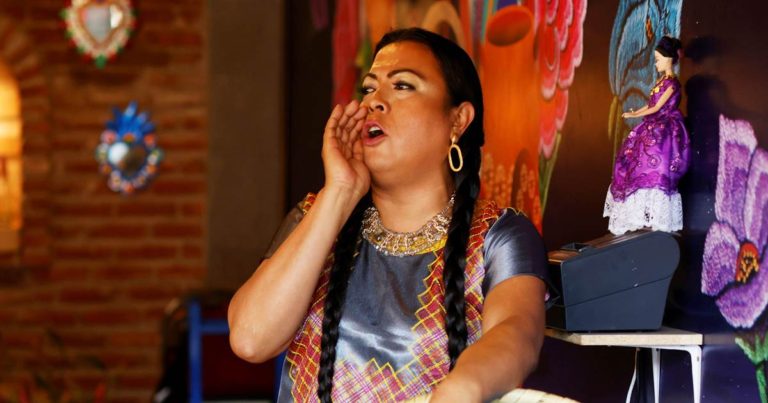
MEXICO CITY – After Mexico City’s “Lady Tacos de Canasta,” a street vendor featured in a Netflix series, stood up to police who she said harassed her on the street, she decided to take her fight for worker and LGBT rights to a bigger stage.
The 36-year-old, who goes by the name of Marven and identifies as Mexico’s ‘muxe’ third-gender, is now running for Mexico City’s congress, one of a bevy of newcomer candidates in midterm elections in June that will be one of the biggest in Mexico’s history.
“All my life I’ve been singled out for my sexual orientation and I’ve been persecuted for selling on public streets,” said Marven, wearing a brightly-colored traditional dress and snapping photos with diners at her small eatery in the capital.
“Why not fight, why not raise your voice?”
Born in the southern state of Oaxaca, Marven is of Mixtec origin and identifies with the neighboring Zapotec indigenous transgender tradition of muxes, who mix gay male and female characteristics.
She earned her ‘Lady Tacos de Canasta’ nickname after appearing in a video hawking soft, steamed tacos from a basket, or canasta, perched on her bicycle, turning heads with both her loud chant of “tacos de canasta, tacos!” and her colorful skirt.
Her fame took off when she starred in a segment of Netflix’s hit “Taco Chronicles” documentary in 2019, opening up about being muxe and the daily grind of traversing Mexico City’s streets as a taco vendor.
During the height of the coronavirus pandemic last year, police officers in the capital’s massive public square tried to confiscate her bicycle and basket, saying Marven’s sidewalk taco sales violated health measures.
She responded that she was just trying to earn a living. In the argument, which she and passersby chronicled on social media, dozens of her tacos went flying and scattered across the ground.
“I do not want anyone else to be humiliated for working honestly,” Marven said, recalling the incident that prompted her to open a small eatery serving Oaxacan food.
She also began crafting her candidacy to become a local lawmaker, vowing to protect the merchants of Mexico’s vast informal economy.
Backed by the fledgling Equity, Freedom and Gender political party, her name will appear on the ballot with her given and family name Juan Francisco Martinez alongside ‘Lady Tacos de Canasta.’
“It’s my way to show the world my gender duality,” she said.
Artists, athletes and beauty queens are also among the first-time hopefuls seeking to capitalize on their popularity to jump into politics.
Marven sees that as a good thing, saying that it could help break the power of traditional politicians she says are ineffective.
“We Mexicans are fed up, we need a real change,” she said.
(Nairobi) – Cameroonian security forces have arbitrarily arrested, beaten, or threatened at least 24 people, including a 17-year-old boy, for alleged consensual same-sex conduct or gender nonconformity, since February 2021, Human Rights Watch said today. At least one of them was forced to undergo an HIV test and anal examination.
Based on Human Rights Watch’s monitoring and discussions with Cameroonian nongovernmental organizations, the recent accounts of abuse documented here seem to be part of an overall uptick in police action against lesbian, gay, bisexual and transgender (LGBT) people in Cameroon. Sexual relations between people of the same sex are criminalized in Cameroon and punished with up to five years in prison.
“These recent arrests and abuses raise serious concerns about a new upsurge in anti-LGBT persecution in Cameroon,” said Neela Ghoshal, associate LGBT rights director at Human Rights Watch. “The law criminalizing same-sex conduct puts LGBT people at a heightened risk of being mistreated, tortured, and assaulted without any consequences for the abusers.”
Between February 17 and April 8, Human Rights Watch interviewed by telephone 18 people, including 5 who had been detained, 3 lawyers, and 10 members of Cameroonian LGBT nongovernmental organizations. Human Rights Watch also reviewed reports by Cameroonian and international LGBT organizations, court documents, police reports, and medical records.
Human Rights Watch shared its findings with the justice minister, Laurent Esso; the state secretary at the Defense Ministry in charge of the national gendarmerie, Yves Landry Etoga; and the delegate general for national security, Martin Mbarga Nguele, in a March 25 letter, requesting answers to specific questions. Cameroonian officials have yet to respond.
On February 24, police officers raided the office of Colibri, an organization that provides HIV prevention and treatment services, in Bafoussam, West Region, and arrested 13 people on homosexuality charges, including 7 Colibri staff. The police released all 13 people on February 26 and 27. Three of those arrested said that police beat at least three Colibri staff members at the police station and that the police threatened and verbally assaulted all those arrested. They also said that the police interrogated them without the presence of a lawyer and forced them to sign statements they were not allowed to read.
One of them, a 22-year-old transgender woman, said: “Police told us we are devils, not humans, not normal. They beat a trans woman in the face, slapped her twice in front of me.”
Police also forced one of the 13 arrested, a 26-year-old transgender woman, to undergo an HIV test and anal examination at a health center in Bafoussam on February 25. She told Human Rights Watch: “The doctor was embarrassed but said he had to do the examination because the prosecutor needed it. He carried out the examination. I had to bend over. The doctor wore gloves and put in his finger. It was the most humiliating thing I’ve ever experienced.”
What this transgender woman experienced is not an isolated case. Human Rights Watch has previously documented that prosecutors in Cameroon have introduced medical reports based on forced anal exams into court, contributing to convictions of individuals charged with consensual homosexual conduct.
Human Rights Watch documented two additional arrests in 2021 and one mass arrest in 2020. In Bertoua, on February 14, gendarmes arrested 12 youth, including at least 1 teenager, on homosexuality charges and subjected them to ill-treatment before releasing them the same day. On February 8, gendarmes arbitrarily arrested two transgender women in Douala, targeting them in the street on the basis of their gender expression. Prosecutors charged them with homosexual conduct, lack of identity cards, and public indecency.
“It is not illegal to be homosexual or transgender,” said Cameroonian lawyer Alice Nkom. “According to Cameroonian law, it is the act which is the crime. So, this is a blatant human rights violation. They should be released immediately.”
In May 2020, police arrested 53 people, most of them LGBT, at a gathering hosted by an HIV organization in a hotel in Bafoussam and charged them with “homosexuality” related offenses. At least 6, including 3 teenagers ages 15 to 17, were subjected to forced anal examinations and HIV tests.
The African Charter on Human and People’s Rights guarantees the right to equal protection before the law and nondiscrimination. The African Commission on Human and Peoples’ Rights, the body charged with monitoring states parties’ compliance with the African Charter, has said that equal protection extends to sexual orientation. It has also stated that the principle of nondiscrimination, including on the grounds of sexual orientation, is the foundation for the enjoyment of all human rights. The commission has called for African governments to end all forms of violence and discrimination on the basis of sexual orientation and gender identity and to bring the abusers to justice.
The International Covenant on Civil and Political Rights (ICCPR), to which Cameroon is a state party, provides for equal protection, nondiscrimination, and the right to privacy. On this basis, the United Nations Human Rights Committee has ruled that the criminalization of consensual same-sex conduct between adults violates the ICCPR.
Forced anal exams constitute a form of cruel, inhuman, and degrading treatment that can, in some cases, rise to the level of torture. In November 2013, Dr. Guy Sandjon, president of the National Medical Council of Cameroon, told Human Rights Watch that Cameroonian doctors should not conduct the exams, as they violate medical ethics, and that the authorities should not order them. Involuntary HIV and sexually transmitted infection tests constitute a violation of the right to bodily integrity and privacy, protected under the ICCPR, and the right to health under the International Covenant on Economic, Social and Cultural Rights.
“The Cameroonian government has an obligation to uphold the rights of everyone in Cameroon, regardless of their real or perceived sexual orientation and gender identity,” Ghoshal said. “The authorities should immediately end arbitrary arrests on the basis of sexual identity and forced anal examinations and should take swift steps to repeal the law criminalizing consensual same-sex relations.”
For more details about the recent human rights abuses against LGBT people and recommendations for Cameroonian authorities, please see below.
Bafoussam, West Region, May 2020 On May 16, 2020, police arrested 53 people, the majority of whom were LGBT, including at least 6 teenagers ages 15 to 17, in a hotel in Bafoussam during a gathering organized by the HIV association, Colibri. They were charged with “homosexuality,” pimping, and complicity in pimping, and were held at the judicial police station. Ten were released on May 17, and the rest on May 21.
Two of those arrested and the lawyer who represented them said that the police beat, humiliated, and threatened many of those arrested, held all of them in a tiny cell, and deprived some of the HIV treatment they needed. One of the men arrested said:
They [police officers] stormed the hotel; they took everyone by force. They forced some of us to undress. They beat a trans woman in front of me, they slapped her twice in the face and ordered her to take off her clothes in front of everyone. They also seized medicine, including antiretrovirals, thermometers, and HIV tests. Then they brought us to the police station and threw us in a very small cell where we could barely breathe. Men, women, children, everyone in the same cell. Police also deprived those who were HIV positive of their life-saving treatment and refused to let any medicine into the cell. It was tough. One year on, they are yet to give us back what they took, like medicine and HIV kits. Also, I am yet to recover from the trauma this incident has caused me.
One of those arrested, a transgender woman, said that on May 18, police forced her to undergo an HIV test and anal examination at the regional hospital in Bafoussam without her consent. She said 5 other LGBT people, including 3 of the teenagers, experienced the same treatment. She said:
The doctor did not want to do the exams because he said he needed my consent, but the police officer insisted and said they needed the exams to provide proof of our sexual orientation for the prosecution. So, the doctor went ahead. I had to bend. I was afraid. I was in shock. I could not believe that a medical professional, who is supposed to be bound by the highest ethical standards, would do this to me. It is such an intrusive, invasive practice.
Human Rights Watch reviewed medical records indicating that the anal examinations and HIV tests were carried out by a doctor at the orders of the regional commissioner of the judicial police. The records confirm that the six people were subjected to digital penetration, a form of sexual assault when conducted by force without consent.
Bertoua, East Region, February 2021
On February 14, gendarmes arrested 12 youth, including a 17-year-old boy, in a restaurant in Bertoua on homosexuality-related charges. Human Rights Watch spoke to a 21-year-old woman, who was among those arrested, who said that gendarmes beat, threatened, and verbally assaulted her and the others at the gendarmerie station:
They ordered us to lay on the ground on our stomachs with our legs bent. A gendarme would put a foot on your back so that you could not move, while another gendarme would hit you on the soles of your feet. That’s how I was beaten up. Everyone was beaten like that. Gendarmes wanted us to confess we were homosexuals. They insulted and threatened us. They said: “You are those destroying our country, we should kill you.”
All of those arrested were released the same day without charge.
A woman working for a local human rights group that provided legal and other assistance to those arrested told Human Rights Watch that some of the youth needed medical care upon their release because of the beatings.
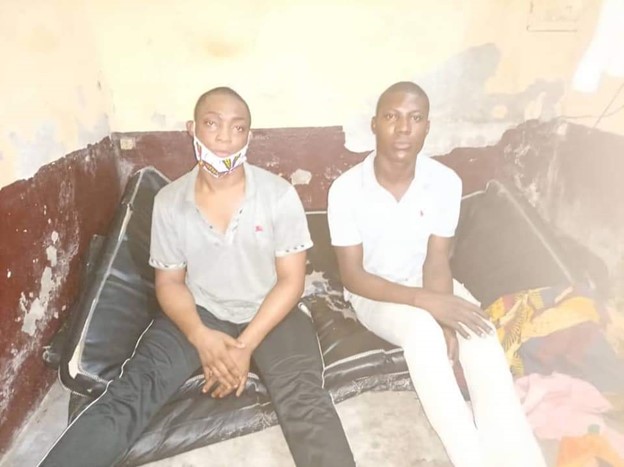
Douala, Littoral Region, February 2021 Gendarmes arrested Njeuken Loic (known as “Shakiro”) and Mouthe Roland (known as “Patricia”), two transgender women, in Douala on February 8.
They were charged with homosexuality-related offenses, lack of identity cards, and public indecency, and taken to a gendarmerie brigade in Nkoulouloun neighborhood, where they spent the night. The next day, a court ordered them to be placed in pretrial detention. They were transferred the following day to the New Bell prison in Douala, where they remain. Their trial is ongoing before the Bonajo Court of First Instance in Douala.
Two of their lawyers and three LGBT rights activists who visited them in prison said that gendarmes interrogated Shakiro and Patricia at the gendarmerie brigade without the presence of their lawyers, forced them to sign statements they were not allowed to read, beat them, and threatened them. A member of a Cameroonian LGBT organization based in Douala said:
I visited Shakiro and Patricia several times in prison. They told me that they were beaten and threatened with death at the gendarmerie station. They said gendarmes twisted their hands behind their backs for almost 30 minutes and hit them with their boots, including on their backs. Gendarmes accused them of being homosexuals and called them “dirty faggots.”
LGBT rights activists and lawyers also said that detainees and prison guards at New Bell prison beat, threatened, and verbally assaulted Shakiro and Patricia repeatedly. An LGBT activist who visited them in prison said:
Their detention conditions are extremely poor. They are constantly insulted by prison guards and other inmates because of their sexual orientation. They were chained up upon arrival at New Bell prison and beaten by prison guards. They are being held with many men in small cells. Shakiro is in a cell with about 70 men, while Patricia in another cell with about 50 men. Holding them with men is problematic, they would prefer to stay with women. They told me inmates always verbally assault them, saying horrible things like they are not supposed to exist.
On March 24, the Bonajo Court of First Instance in Douala denied their bail application, claiming that section 301 of the Cameroonian criminal procedure code, on which Shakiro and Patricia’s lawyers have based their defense, is not applicable. Section 301 states that, “Where a case is not ready for hearing, the court shall adjourn it to its very next sitting and may order the release of the accused on bail, with or without sureties.”
The next hearing in their case is scheduled for April 26.
Recommendations Human Rights Watch urges Cameroon’s authorities to take the following steps:
· The delegate general for national security and the secretary of state for defense in charge of the gendarmerie should issue written orders to all police and gendarmes to immediately stop arbitrarily arresting people based on their perceived or actual sexual orientation, gender nonconformity, or alleged consensual same-sex conduct.
· The judiciary should immediately release and dismiss charges against Shakiro and Patricia and others charged on the basis of perceived or actual sexual orientation, gender nonconformity, or alleged consensual same-sex conduct.
· Parliament should initiate a repeal of article 347 bis of the Cameroonian Penal code, which punishes consensual same-sex sexual relations with up to five years in prison.
· The justice minister should make absolutely clear, in particular to all law enforcement, prosecuting and judicial authorities, that Cameroonian law does not make it a crime or offense to be a lesbian, gay, bisexual or transgender person, or to dress in a way that is perceived as gender nonconforming, and that any official purporting to exercise authority to detain, charge, or prosecute an LGBT person on the basis of their actual or perceived sexual orientation or gender nonconformity, or threatening to do so, is acting without a lawful basis and shall be held to account for abuse of power.
· The National Human Rights Commission should investigate allegations of ill-treatment of detainees on the grounds of real or perceived sexual orientation or gender identity.
Nancy Kelley, chief executive of campaign group Stonewall, who was one of the remaining panel members, said: “Many key commitments from the UK LGBT Action Plan remain incomplete, including delivering an effective ban on conversion therapy, and the pandemic has only deepened the inequalities LGBTQ people experience, particularly in mental health.”
Dozens of big corporations and well-known smaller businesses are emphasizing their stance against anti-transgender legislation by signing on to an open letter to the state of Tennessee authored by the Nashville LGBT Chamber of Commerce.
The letter comes in response to Tennessee being one of at least 11 states considering legislation believed by many to discriminate against the LGBT+ community. The letter was co-signed by Nissan North America, Ryman Hospitality Properties, Amazon, Dell, Mars Petcare, Warner Music Group, AllianceBernstein, Asurion, BMG, Vanderbilt University, the Nashville Symphony and Nashville SC, as well as more than 170 other organizations. (The full list, which includes Post owner FW Publishing, is being updated here.)
Lawmakers recently passed HB 1182, which — with its companion bill, SB 1224 — would require businesses to post controversial signage on all restroom entrances and at each general entrance available to the public related to transgender peoples. Per the legislation, if a Tennessee business allowed transgender peoples to use the restroom of their gender identity, it would have to post this message: “This facility maintains a policy of allowing the use of restrooms by either biological sex, regardless of the designation of the restroom.”
Per the Advocate, the Human Rights Campaign said the bill’s designated signage would be “offensive and humiliating” to the transgender community.
The bill’s progress also comes on the heels of Gov. Bill Lee’s signing of the so-called anti-transgender sports bill the week prior. The Nashville LGBT Chamber claims that these bills are discriminatory, and the chamber organized a press conference with several businesses whose spokespeople joined to express their respective corporations’ disdain for such legislation.
Those businesses — including Amazon, Dell Technologies and TechNet — joined Nashville LGBT Chamber CEO Joe Woolley Monday in warning that laws like these may cost Tennessee a significant amount of commerce and related tax revenue if pro-LGBT+ corporations decide to no longer do business in the state.
Mars Petcare is not only one of the Tennessee companies to sign onto the open letter but also one of the five big corporations to contribute a spokesperson to deliver a public statement in said conference. However, Woolley explained after Amazon’s spokesperson delivered a statement that Mars’ spokesperson had become unavailable upon short notice.
A written version of Mars’ statement is included in the open letter: “At Mars, we believe our business and our community are at their best when we embrace and celebrate all people. We firmly believe that everyone is equal and that every person deserves to be treated with respect, dignity, and fairness. We value our presence across the state of Tennessee and continue to invest here as it has been a great place to do business. Discrimination has no place in our business or our laws. We strongly oppose any bill that would negatively impact our entire community and the thriving business environment that we currently have. We respectfully urge the legislature to reject and Gov. Lee to veto any such bills.”
Mars Inc., the parent company, also contributed an op-ed to USA Today, published Wednesday of last week, headlined: “Corporate leaders: Companies should work against LGBTQ bills in Texas, other states.” They did so in collaboration with three of the other major food corporations in the U.S.: Nestlé USA, Danone North America and Unilever United States. The op-ed assumed an ethical responsibility for all businesses to do likewise and served as a call to arms for all businesses.
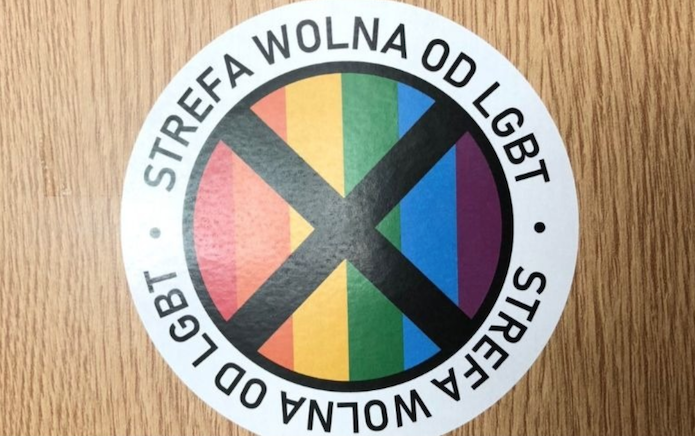
The mayor of Krasnik declared the town as an ‘LGBT Free’ zone in May 2019, but has since admitted the town has become a “laughingstock”.
Krasnik is a Polish town located in southeastern Poland close to the Ukraine border. The town joined a handful of Polish towns which implemented the anti-LGBTQ+ measures to support Poland’s right-wing conservatives and the Roman Catholic Church, which is heavily ingrained into Poland’s religious society.
“We have become Europe’s laughingstock, and it’s the citizens not the local politicians who’ve suffered most,” Wojciech Wilk told The New York Times.
The Polish politician now believes the pledge is a “symbolic and legally pointless gesture” which has caused economic hardship to the town.
Wilk denies the town’s growing reputation as an anti-LGBTQ+ location and has appealed for support for the town of Krasnik.
“My position is clear: I want this resolution repealed because it’s harmful for the town and its inhabitants,” Gscene magazine reports.
In December 2019, the European Parliament has passed a motion condemning Poland after local authorities in the country started declaring themselves as “free from LGBT ideology.”
Most of the 80 ‘LGBT-free’ zones in the country are in the southeast. In these zones, local authorities pledge to refrain from actions that could be seen as tolerant of the LGBTQ community, and prevent financial aid to NGOs helping to promote equal rights.
While the LGBTQ+ community are not strictly banned from these towns, the labelling as ‘LGBT-free zones’ promotes an intolerance to their identities and an active agenda to work against LGBTQ+ education and acceptance in Polish communities.
In the two years following Krasnik’s declaration as an ‘LGBT-free’ zone, the town has faced a loss of million in federal funding, including a $10 million funding grant from Norway, and jeopardised the economic future of the town, The New York Times reports.
Wilks is actively petitioning to have the pledge overturned and is urging councillors to reverse the anti-LGBTQ+ declaration. If successful, Krasnik will not be the first Polish town to rescinded its declaration against “LGBT ideology.”
If you’re WEIRD—Western, Educated, Industrialized, Rich, and Democratic—chances are you aren’t getting enough exercise. And it’s not because you’re bad or lazy; it’s because you’re normal. In this episode, Harvard paleoanthropologist Daniel E. Lieberman, PhD, explains how evolution designed humans to avoid unnecessary physical activity, i.e. “exercise” in the Western sense. In his new book, “Exercised,” he busts 10 common myths about sleep, sitting, and physical activity, using the latest scientific research. If you’ve ever wondered whether sitting is the new smoking, or if you’re getting enough sleep or exercising enough—this episode is for you.
Podcast Transcript
Host: 00:00 From the Mount Sinai Health System in New York City, this is Road to Resilience, a podcast about facing adversity. I’m Jon Earle. My guest today is Dr. Daniel Lieberman. He’s a paleoanthropologist at Harvard University, where he studies the evolution of the human body, especially in regard to physical exercise. Dr. Lieberman’s latest book is “Exercised: Why something we never evolved to do is healthy and rewarding.” In it he uses scientific research to dispel 10 common myths about health and exercise. So if you’ve ever wondered whether you sit too much or get enough sleep, or exercise right, keep listening. Dr. Lieberman, welcome to Road to Resilience.
Dr. Daniel Lieberman: 00:42 Thank you so much for having me.
Host: 00:45 Everybody knows that it’s important to exercise, but most people in America and throughout the industrialized West do not get enough exercise. And I think the culture is very shaming. It says that if you don’t get enough exercise there’s something wrong with you personally. You’re lazy or you don’t plan ahead or something to that effect. But you do not get into the shame game, which is something I really appreciate. You blame evolution.
Dr. Daniel Lieberman: 01:12 Well, I wouldn’t say I blame evolution, but I think we need to, if we want to try to help people understand both how we are and why we are the way we are and how to make the world a little bit of a better place, I think that the current medicalized, commercialized, commodified way in which we approach a lot of topics doesn’t really work because they don’t really explain how and why things are the way they are. And evolution and anthropology give us important lenses to view the world in a better, more broader, more holistic way. And the topic of exercise is no exception. I think it’s actually very important to think more broadly about exercise. And when you do, you learn that people aren’t lazy because they don’t want to get on a treadmill. They’re actually being totally normal.
Host: 02:05 That’s extremely reassuring. Say more about that. What do we learn from evolution in terms of our non-predisposition to exercise?
Dr. Daniel Lieberman: 02:14 Two things. The first is that, remember, our bodies weren’t designed, they weren’t engineered, they evolved. So if you want to understand why we are the way we are, you have to understand that evolutionary history. And then secondly, it’s important to make a distinction between physical activity, which is just moving, right, just doing stuff. All animals have some degree of physical activity. But exercise is a very special kind of physical activity. It’s discretionary and voluntary. It’s the sort of stuff that you choose to do. And until recently nobody did that. Nobody chose to be physically active for the sake of health and fitness. I mean, that’s really what exercise is, right? Instead, people were active because they, you know, in order to get food or avoid being somebody else’s food, or they were active when it was socially rewarding, like dancing with friends and stuff like that. But getting on a treadmill for 45 minutes because it’ll prevent heart disease or something like that is a really strange, modern phenomenon that until recently nobody ever did. In fact, it was a bad idea.
Host: 03:17 Why was it a bad idea?
Dr. Daniel Lieberman: 03:19 Well, because until recently energy was limited. Most people until recently, almost everybody until recently, I should say, struggled to get enough energy to survive. You know, life is a very simple equation. It’s basically: energy in, babies out. That’s what life is all about. And until recently the energy that was available for life was limited. And all the only thing that natural selection cares about is how many babies you have who survive and reproduce. Unfortunately, that’s all mother nature really cares about. And so when you spend a limited resource on one thing, then you can’t spend it on something else. I went for a five-mile run this morning, and the five miles I ran cost me about 500 calories. And if I was energy-limited, those would be 500 calories I couldn’t spend on taking care of my body or reproducing. It would be wasted. It would be a really bad idea. So nobody goes for a five-mile run in many parts of the world where people are struggling to get enough food, whether they’re working in fields or they’re out hunting and gathering or whatever, this is something that we choose to do now in the modern, developed world, the Western world, where we’ve created all kinds of machines that do our labor for us. So today we have to choose to be physically active, because our world is such that we can avoid physical activity all the time.
Host: 04:41 So nonindustrial people don’t have this discreet thing called “exercise” they do from 7 to 10 and lift weights that only exist to be lifted, that sort of thing?
Dr. Daniel Lieberman: 04:50 Yeah, it’s a completely modern, strange, Western thing.
Host: 04:53 So how do they get their exercise? It sounds like simply in the course of normal life they move a lot.
Dr. Daniel Lieberman: 04:59 Well, I mean, they wouldn’t call it exercise. They get physical activity. They get up and they have to go get food. They have to work in the fields. They have to go hunt. They have to gather, they have to take care of their children. They have to make things. Until recently all work was done either by humans or by animals. And all of a sudden, in the last few generations, we’ve created these machines that do all our work for us. You can sit all day. You can get up in the morning and, magically, everything is there for you. You don’t have to do anything. You can go through your entire day without lifting, raising your heart rate, or breaking a sweat.
Host: 05:35 And I think it gets at one of the myths that you bust in the book, which is this myth of what nonindustrial people are like. There is certainly this idea floating around in the culture. Anytime the word “paleo” comes up, I think we imagine these prehistoric He-Men who are climbing trees and running around and look like Arnold Schwartzenegger. But they’re not like that at all, are they? Our preindustrial ancestors were not like that, and it makes sense that they weren’t.
Dr. Daniel Lieberman: 05:59 Yeah, we’ve mythologized them in all kinds of ways that are actually, I think, problematic. Because first of all, it dehumanizes those individuals, treating people from other parts of the world as somehow super athletes who are somehow endowed with special capabilities. It’s just not true. They’re human beings just like you and me, and for them to run long distances requires just as much effort and trouble and determination and willpower, etc. They don’t just magically get up and run ultramarathons or whatever. And they’re not ripped and jacked like Arnold Schwartzenegger. But the other problem is it makes us feel somehow bad, like somehow we’ve been contaminated by civilization so that the shoes that you wear or the Gatorade you might drink or whatever, whether they’re good or bad, somehow they’ve turned us into wimps. And that if we just got rid of those things, we would suddenly, magically be able to swim the English Channel or whatever your fantasy is, and that’s not true at all either. And I think it’s sort of damaging. I think we end up being very non-compassionate not only to others, but also to ourselves. You know, we’ve all experienced being in a subway or a mall or an airport or something like that where there’s a stairway next to an escalator. And there’s that little voice in your head which says, “Take the escalator.” We all know that voice. Even though escalators obviously didn’t exist in the Stone Age. And that’s because it’s a deep and fundamental and basic instinct to avoid unnecessary physical activity. And then we make ourselves feel bad or make people feel bad for that little voice. But we need to understand that that’s a perfectly normal instinct. And it’s just that we now live in a very strange modern world where all of a sudden it’s now beneficial to overcome that instinct. And it didn’t used to be that way.
Host: 07:49 Sitting is another thing that people obsess about.
Dr. Daniel Lieberman: 07:53 Well, yeah, partly because of the way in which health information is provided to the public. We demonize sitting. The expression that is common these days is, “Sitting is the new smoking.” Or, “Your chair is out to kill you.” And I think that’s really problematic for a number of reasons. The first is, look, you don’t have to be a PhD in exercise science or a physician or whatever to realize that’s hyperbole. Your chair is not out to kill you. It’s not a toxin like a cigarette. And furthermore, if you travel around the world, I’ve had the good fortune to spend time in various places where people don’t have chairs even. They just sit on the ground, or if they have chairs, they’re just simple benches and stools, there’s no seat back to their chairs. And they turn out to just sit as much as we do! It’s normal to sit. My dog spends her day sitting all around the house. I mean, let’s not demonize sitting, or say that somehow sitting is a strange, modern Western thing. It is true, however, and we can learn from studying in other cultures, that there are better and worse ways to sit. There’s more active sitting, where maybe not having a backrest. And so you’re using your muscles in your back, or you’re sitting on the ground and you’re using your leg muscles a little bit. And also, certainly, getting up every once in a while, what we call “active sitting,” so interrupting long-term bouts of sitting. In the old days, people didn’t have movies to watch where they sat completely inert for two hours at a time. They had to get up all the time to take care of their kids and the fire—all that little occasional getting up is really healthy. It’s really good for you. So let’s relax a little bit about sitting. Yes, it’s good not to sit all day long. It’s good to get physical activity, but let’s not scare people and make them feel bad for something as natural and normal as sitting.
Host: 09:40 And fidgeters can rejoice, too, can’t they?
Dr. Daniel Lieberman: 09:42 Oh, fidgeting is good for you. There’s no question about it.
Host: 09:45 One of my favorite parts of the book was the sleep chapter. Man, sleep is something for me, personally, I obsess a lot about. I’m all about getting the right mattress, creating the right circumstances. A lot of stress associated with sleep. And you have this great line that I want to read. You write, “If you require quiet and dark to fall asleep, you are evolutionarily unusual.”
Dr. Daniel Lieberman: 10:09 Yeah, in the modern Western world we make people stressed about sleep. And if you go to different cultures and just think about how people sleep in hunter-gatherer groups, or various villages, etc., all over the world, people sleep in very chaotic conditions. They sleep together, there’s outside sounds, etc. But we’ve created this world in the West where we isolate ourselves and we make sure it’s pitch dark and there’s no sounds, etc. We get really nervous about it. And when we hear things, it makes us upset. Of course, when you get upset and nervous, what happens? Your cortisol levels go up. Cortisol is a stress hormone. It’s an arousal hormone. And it goes up when you’re stressed. It doesn’t make you stressed. But it keeps you awake. It keeps you alert. Because it’s a fight or flight hormone. And, of course, once you’re stressed, then your sleep has gone. Sleep has vanished. And so, so much of what we do about people’s sleep today makes them aroused and nervous. We tell them they need eight hours of sleep. We tell them they need to have the perfect mattress, they need to—people can sleep in boats, they can sleep in airplanes, people sleep in piles of human beings and stuff like that. If we just help people relax about sleep, everybody would sleep better. And one of the worst things we do is we tell people they need eight hours of sleep. And that’s just a fiction. It turns out that people in—the idea is that in the modern Western world, where we have telephones, iPhones, electric lights, all these things that keep us up that we now don’t sleep as much as we used to. But when you go out and study people who don’t have iPhones and TVs, it turns out they don’t sleep eight hours. They sleep like six to seven hours. And furthermore, even epidemiological data show us that there’s nothing magical about eight hours. In fact, seven hours turns out for most people to be actually better associated with long-term health outcomes than eight hours.
Host: 12:14 And it’s completely normal, too, for people to be morning people, not morning people. That all makes evolutionary sense, right? To have groups of diverse sleepers.
Dr. Daniel Lieberman: 12:22 Yeah, some of us are larks. Some of us are owls. It turns out to be genetic and there’s a lot of variation within populations. And it’s actually a really good idea because it helps make sure that somebody is awake all the time in a camp. So that if hyenas or lions come, somebody is awake. It’s a good thing. So if you’re a lark or you’re an owl, don’t fight it. Go with it.
Host: 12:44 And there’s no virtue associated with it.
Dr. Daniel Lieberman: 12:46 No, there’s so much virtue signaling associated with health in general, about diet, and the people with the 26.2 stickers on their cars and whatever.
Host: 12:56 The 10,000 steps.
Dr. Daniel Lieberman: 12:56 Yeah, I mean, the virtue signaling doesn’t help. Well, it maybe makes the virtue signaler feel better, but it doesn’t help the rest of us.
Host: 13:03 You must go through the world with a perpetual eye-roll
Dr. Daniel Lieberman: 13:08 Or, yeah, and perhaps I create a lot of eye-rolls, too. But there we are.
Host: 13:12 Again and again in the book, and this is one thing I love about it, it’s just like, what you think is normal, forget that. Lots of things can be normal. Lots of things can work. There are very few, if any, in this book, I think, lines to the effect of, “Something, something is normal. That’s the way it’s done. That’s the way I recommend it.” It’s always, well, there’s a diversity of things that work for people, and that’s very reassuring.
Dr. Daniel Lieberman: 13:36 That’s right, and that’s how evolution works. Look, a colleague of mine coined the term WEIRD: Western, Educated, Industrialized, Rich and Democratic. And that’s the world in which most of the readers of my book and the listeners of this podcast are in. We’re in the WEIRD world. But weird people, which comprise 90 percent of the data that we have on human behavior, on human health, comprise only about 10 percent of the world actually. And, of course, it’s only very recently that we’ve been WEIRD. And so there’s an enormous benefit to step out of our shoes and realize that, you know, how people live in New York or Boston or LA or whatever you happen to be, or even Duluth or Des Moines or wherever you want to be in the U.S., but that’s not a normal way to live from an evolutionary perspective or from an anthropological perspective. And it doesn’t mean there’s anything wrong with the way we live, but we have a lot to learn by looking at variation.
Host: 14:32 It makes me think of a question that I wanted to ask you, which is, you travel around the world studying nonindustrial people—what’s the reaction, or the range of reactions, typically, when you show up to do field work and you have your instruments and you’re measuring feet and you’re asking people to do things that they maybe think are a little strange. What do they make of your curiosity?
Dr. Daniel Lieberman: 14:53 First of all, we always try to work with communities. We don’t just show up. We always work with people and try to make sure people feel valued. But, of course, when you show up with weird machines, you’re a bit of a curiosity. And sometimes they think I’m pretty funny, like when I go for a morning run in some of these places people laugh and tease me. And they wonder why I’m asking these strange questions. But, you know, people are people, and we understand that the world is very different, and people come from different cultures and they’re curious about me just as I’m curious about them. They understand it. The more I travel and the more I experience different cultures, the more you see how variable people are and how varied cultures are. But on the other hand, you also realized that, scratch below the surface, and people are people and there’s a lot more that unites us than divides us. And I guess I don’t think about that very much.
Host: 15:53 This is jumping ahead a little bit to some of the advice that you do give, because you’re very cautious about giving straight up advice. You talk about making exercise social among other things as a way to get over the evolutionary hump. And one example you give is dancing. I love the part on dancing you write, “I know of no nonindustrial culture in which men and women didn’t dance for hours on a regular basis.”
Dr. Daniel Lieberman: 16:18 It’s true. And even in the West dancing is a cultural universal and when people dance, they do it for long periods of time. They don’t just do one five-minute song. I can think back on wonderful occasions in different parts of the world that I’ve been to where people just dance all night long. I’m actually often a wimp and I’m sometimes the first to go to bed. But yeah, I mean, in Africa and in Asia and in Central America, people dance and we did too. I think I mentioned in the book Jane Austin novels. She describes dances and how people dance till three, four in the morning. There’s something very strange about the modern world in which we’re now so isolated and insecure, and I don’t know what’s going on, but we’ve stopped dancing in the same way that we used to. And, I mean, a few people do, but most of us don’t. That’s another weird thing about modern, Western, American culture.
Host: 17:16 So let’s get into some of the prescriptions. Tell us about some of the ways that people can overcome evolution and actually get moving. Well, first, let me ask you what exercises people actually need to do. What is scientifically based?
Dr. Daniel Lieberman: 17:33 So that’s the Western approach to exercise. What do you need? How many pills should I take, doctor? And that’s part of the problem. I think that’s a really bad approach. I mean, yes, I understand why we do it and it’s part of our culture and so on. But the truth is that any physical activity is better than none. So if you are completely physically inactive and unfit, and you just do just a little bit more, you’ll get some benefit out of it. And the World Health Organization and the American Heart Association, and the Surgeon General and every major health organization on the planet recommends a minimum of 150 minutes a week of moderate exercise, which is 21 minutes a day, or 75 minutes a week of vigorous exercise. So moderate is like a brisk walk. Vigorous is like a run. And if you do that, the epidemiological data from large samples suggest that your mortality rate will decline by about 50 percent. But if you do just 60 minutes a week, so that’s just eight minutes a day of moderate exercise, you can still lower your mortality risk by about 30 percent. I mean that’s still an improvement. So there is no minimum. Anything is better than none. And there’s nothing magical about 150. That’s just a general benchmark that everybody’s sort of agreed on, but there’s no magical number there. If you do more, you’ll get even more benefit. Another thing that I think everybody knows is that mixing it up is good for you. Nobody got fit just doing one thing. You know you need to do some strength training to stay strong. Aerobic physical activity is the bedrock of pretty much any exercise routine. So that’s also important. And it’s good sometimes to do a little bit intense, get your heart rate up. So it’s pretty simple: Some is better than none, more is a little bit better than some if you can do it, mix it up, relax, do the stuff that you enjoy, because if you don’t enjoy it, you’re not going to get any reward, you’re not going to do it again. And keep it up as you get older, because the older we get, the more important physical activity is. It doesn’t become less important. It actually becomes more important.
Host: 19:48 Right. True. But since we’re talking to our Western selves, you seem to jive if I’m understanding correctly with the 150 minutes in terms of what the research says is that this is sort of a good benchmark, not a perfect benchmark, but a good one for beginning to really cut into risks of things like cancer and heart disease, etc. Is that accurate?
Dr. Daniel Lieberman: 20:10 Correct. I’m not opposed to the 150-minute benchmark. I mean it’s a very good sensible, normal benchmark. But there’s no magical number and it’s not a magic bullet. But it will decrease your vulnerability to a wide range of diseases substantially.
Host: 20:27 Talk about that part a little bit, because I don’t think that’s something we’ve touched on so far. Certainly I have a vague idea in my head of “exercise reduces your risk of a wide range of diseases.” Can you take us through that a little bit?
Dr. Daniel Lieberman: 20:40 Sure. Well, there’s two issues. One is the epidemiological evidence. How much exercise on the X axis and how much it reduces your risk of, say, Alzheimer’s on the Y axis. And there’s just tons of data which showed that, for example, if you’re worried about Alzheimer’s, pretty much the only thing you can do actually to prevent Alzheimer’s is exercise. And it’s by far the most beneficial thing. Estimates vary, but you can lower your risk between like 30 and 50 percent by exercising moderately. Nothing comes close. The same is true for cancers. Breast cancer, for example, there’s a lot of studies which show that, again, the amounts vary, but you can lower, women can substantially lower their risk of breast cancer by 30, 40, some estimates up to 50 percent by moderate levels of regular physical activity. Why don’t we tell more people this? And the list goes on, right. But the question really is why is that the case? And the reason for that is two-fold. First exercise, physical activity, prevents our bodies from spending excess energy on things that make us sick—you know, too much fat or too many hormones. When you exercise, your levels of estrogen and progesterone, for example, go down to actually normal levels. A better way of saying that is if you don’t exercise your levels of estrogen and progesterone rise to abnormal levels, that’s actually a more correct statement. And, of course, those hormones are mitotic, they cause cell division and increase your chances of cancer. But the other equally important way that exercise is good for you is that it causes stress. But it’s good stress, the stress that the body’s used to. So every time you exercise, you’re producing little reactive molecules called reactive oxygen species that can cause damage throughout your body. It can cause mutations in DNA, it can cause damage to cells, all that causes inflammation, it causes a whole range of pathophysiological processes. But because we always were physically active, our bodies evolved an incredible range of mechanisms to deal with every single one of those stresses. When you exercise, you produce antioxidants. When you exercise, you tamp down inflammation, in fact your muscles are the major organ that regulates inflammation in your body. So all that physical activity does is turns on all these repair and maintenance mechanisms that keep us healthy. And here’s the thing, we never evolved to turn them on to the same extent in the absence of physical activity, because we were never permanently sedentary. So that’s why being relentlessly physically inactive makes you much more vulnerable to this incredibly wide range of diseases.
Host: 23:23 Is it also true that if you are physically active and physically healthy, you are better able to deal with adversity, whether it’s disease or traumatic events or things like that. Have you looked into that at all?
Dr. Daniel Lieberman: 23:35 Well, I’m not an expert on mental health, but there’s a lot of data which shows that physical activity has incredible short-term benefits for mental health. We’ve been talking right now about the long-term benefits in terms of heart disease and diabetes and cancer, etc., but everybody knows that you can go for a walk or run or a swim or something like that and climb a mountain, and you feel better. Everybody knows that. And it’s not simply because you were outside and were talking to friends, though that’s part of it, it’s also because physical activity turns on a whole host of processes in our brains that are good. You produce dopamine, you produce serotonin, you produce epinephrine, you produce this molecule called Brain-derived neurotrophic factor, BDNF, which has been described by some people as Miracle Grow for the brain and it really is. And you produce all kinds of good stuff that happens that has immediate effects on mood. We all know the experience. I often go for runs early in the morning with a friend of mine, and we often arrange to meet at six or seven, some horrible hour early in the morning. And I never want to be there at six in the morning. Never, ever, ever, not once have I ever wanted to run at six in the morning. And yet I’m always glad afterwards that I did. Because when I get back from the run, I’ve got all this good stuff floating around in my brain that makes me kind of happy.
Host: 24:59 So let’s just go through the things that you do at 6 AM to get yourself out the door. So you’ve made it social, you have a plan and a schedule. Do you lay out your clothes or do some of those other tricks that you include?
Dr. Daniel Lieberman: 25:10 Yeah, so I always leave my clothes out. So when I get up to walk the dog and stumble to the bathroom, I put on my running clouds. And then I don’t have an excuse not to go out the door. But also, again, if I have to meet my friend on the corner, I have to be there otherwise my friend will be irritated that I’m not there. So there’s a kind of self-coercion. I sign up for races, not so much because I love the races, but because it forces me to train. It gives me a goal. It’s a carrot or a stick, depending upon your perspective. And also, by being social about it, I kind of then become responsible to others. In my particular case, it’s well-known that I run and I study running and physical activity. So if I don’t do it, I’d be a hypocrite. You laugh, but it’s true. It actually is an important motivator. Nobody wants to be a hypocrite. For example, when I get to my building and I want to take the elevator up to the fifth floor, but if I take the elevator and anybody catches me, I’m in trouble. So I can’t, so I take the stairs and I’m usually glad by the time I get to the top that I did take the stairs, although I kind of grumble for the first few flights.
Host: 26:30 What was the most fun part of the book to work on for you?
Dr. Daniel Lieberman: 26:33 Well, I enjoyed some of the trips I did, which I did in order to write particular chapters. So I really enjoyed going to the Bjorn Borg Sports Company. That was hilarious. For those of you who haven’t read the book yet, I hope you do, that’s a company in Sweden, it’s the only one in the world, I think, that requires all of its employees to exercise. So I went there to see what that was like. I ran in the Man Against Horse Race in Arizona. That was kind of fun.
Host: 27:00 How did that go?
Dr. Daniel Lieberman: 27:00 I beat most of the horses. It was great. Even a middle-aged professor like me. I went to a mixed martial arts fight, which I would never otherwise do to see what that’s like. So I do a lot of participant observation. Once I knew I was writing the book, of course I had been doing lots of stuff beforehand, too. But all of that made it kind of fun because trying to put yourself in somebody else’s shoes or try new experiences. And there are certain chapters of the book I really enjoyed writing. I particularly enjoyed writing the chapter on sports and fighting because I really hadn’t thought much about that. And I’m really most proud about the chapter on aging, because I think really in some ways that’s the most important part of the book, which is the idea that we evolved not to not to get less active as we get older, but to become more active as we get older, just how important that is for our health.
Host: 27:50 So no passive retirement?
Dr. Daniel Lieberman: 27:52 That’s a very modern, weird thing. That’s for sure. There’s this idea out there that until recently humans died young, that lives were nasty, brutish, and short. But that’s actually not true. Before the Agricultural Revolution, before people started farming, hunter gatherers lived typically about seven decades. And that means that people generally lived about two decades after they stopped reproducing. But those grandparent years of 20, 30 years of being a grandparent, weren’t about just retiring and going to Florida and playing golf and basically doing nothing. Those were times when people actually worked to help their children and their grandchildren. So foragers who are elderly, grandparent foragers, go out every day just like when they were younger, and they go out and they hunt, and they gather, they forage, or they work in fields if they’re farmers. And they help provide food and they help take care of children and grandchildren and provide food and calories. And that was normal. And this idea that we can just take it easy when we get older really works to our detriment because it starts this vicious cycle of physical inactivity and then we become frail and then that frailty makes you less likely to be active. But also it doesn’t turn on those critical repair and maintenance mechanisms which keep senescence, which keep us from aging as fast as we do. And so the evidence is clear, there’s no question about it that numerous studies have shown that as you get older, physical activity is more important for preserving health, not less important. And that has an ancient, deep, and basic evolutionary origin.
Host: 29:28 What’s a mystery that remains for you, something that you’re puzzling over or exploring that you haven’t quite answered yet?
Dr. Daniel Lieberman: 29:35 Oh, well I think that an easy one to answer. The biggest mystery still is how do we help people, motivate people who are disinclined to exercise, how do we go help them help themselves? I mean, almost everybody wants to do it. I’ve very rarely met anybody who’s inactive who says, “I’m happy being an active.” They talk about how they’re stressed, they find it hard to find the time. They just don’t enjoy it. They don’t get a reward out of it. And although I’ve been thinking about it, none of us have yet really come up with a really good solution to that problem. How do you help people exercise? That’s to me the key issue. And it may be an unsolvable problem, but I think we need to be much more creative and find solutions. Because what we’re doing today just isn’t working. I mean, it works for a few people, but for the vast majority of people in this country, 80 percent approximately according to the CDC, are just not getting minimal levels of physical activity. So we have a lot of work to do.
Host: 30:36 Do you have any sense of what the solution might look like? Is it a policy solution?
Dr. Daniel Lieberman: 30:41 I think it’s going to be a kitchen-sink approach. There’s going to be no one solution. I think it’s gonna be a cultural solution. I think it’s going to have to be policy. I think schools have to step up to the game. It’s just outrageous how few schools actually have sufficient levels of physical activity for kids. And people develop their habits not just when they’re youngsters, but also in college. And colleges are outrageous. It used to be that every college in America required some kind of physical education, physical activity, and now most don’t. And those that do have just basically pitiful requirements. And you try to, you know, at Harvard, for example, I’ve just talked about my colleagues, and they look in horror and shock like, “Oh, my God, you’d require them to be active?!” And yet these are colleagues who have no problem requiring people to learn languages and learn calculus and learn this, learn that. We’re great at coming up with requirements, but somehow, the body—we have this idea that minds and bodies are totally different things, and they’re not, they’re intimately connected. And so we need to change our culture in a variety of ways and stop being so dismissive of prevention and preserving health, and think more about treating causes, not just symptoms.
Host: 32:03 Thanks so much for being on the podcast, Dr. Lieberman.
Dr. Daniel Lieberman: 32:04 My pleasure.
Host: 32:06 Dr. Daniel Lieberman is a paleoanthropologist at Harvard University. His latest book is “Exercised: Why something we never evolved to do is healthy and rewarding.” That’s all for this episode of Road to Resilience. If you enjoyed it, please rate and review us on Apple Podcasts and tell a friend about us. We’ve also got a listener survey going where you can tell us what you think about the show and recommend guests. We’ll put a link in the show notes. The podcast is a production of the Mount Sinai Health System in New York City. It’s made by Nicci Cheatham, me, Jon Earle, and our executive producer, Lucia Lee. From all of us here, as always, thanks for listening, and we’ll see you next time.