Support the independent voice of Denver and help keep the future of Westword free.
For the past five years, X Bar owner Steven Alix has looked for a spot to open a gay sports bar, and he finally found it, at the former home of Streets Denver. The rock bar, at 1501 East Colfax Avenue, closed last month after more than two decades in business.
Alix, who also co-owns the Squire Lounge a few blocks east on East Colfax Avenue with Sudy Kudva, opened the Tight End in the former punk venue on Monday, April 12.
“We’re really just focusing on the sports thing that’s been a missing niche in our community, and we’re ready to fill that,” Alix says. “It’s been received really well so far. It’s never been done [in Denver], as far as I know, and all the other major cities have gay sports bars. This one doesn’t, so it’s time.”
While the interior and the patios were remodeled, Tight End paid homage to Streets Denver by keeping the former club’s memorabilia, including the venue’s signs and posters.
“We’ll try to keep that memory alive a little bit, because it was such a long time,” Alix says. “We’re hopeful to be inclusive to the previous customers, and we tried to maintain some of the things from the past.”
Two projector screens have been installed, as have a number of TVs around the bar. With four channel options, Alix, who’s from Wisconsin and a big Green Bay Packers fan, says they’ll be able to play different sports, both local and beyond.
While it’s been tough running bars over the past year during the pandemic, Alix notes that X Bar, the gay-friendly hangout he opened ten years ago, is picking up momentum again, but the smaller clubs like Squire and Tight End might be a bit more challenging since they’re both roughly the same size and have smaller capacities because of COVID-19 regulations.
3 Guys Pies, the pizza joint that shared the building with Streets Denver, is still operating as usual and has the same hours as the bar — 3 p.m. to close, seven days a week. Tight End also offers daily happy hours, with $2 off any drink from 3 to 8 p.m.
Keep Westword Free… Since we started Westword, it has been defined as the free, independent voice of Denver, and we would like to keep it that way. Offering our readers free access to incisive coverage of local news, food and culture. Producing stories on everything from political scandals to the hottest new bands, with gutsy reporting, stylish writing, and staffers who’ve won everything from the Society of Professional Journalists’ Sigma Delta Chi feature-writing award to the Casey Medal for Meritorious Journalism. But with local journalism’s existence under siege and advertising revenue setbacks having a larger impact, it is important now more than ever for us to rally support behind funding our local journalism. You can help by participating in our “I Support” membership program, allowing us to keep covering Denver with no paywalls.
The National LGBT Media Association (NGMA), composed of the 12 largest LGBT publications in the nation and the country’s largest LGBT media association, this week approved a resolution to not hold any future meetings in the state of Georgia due to the Georgia Legislature’s recent passage of draconian voter suppression laws which primarily affect communities of color.
“We in the LGBT community built a movement fighting for equality, and we stand with those who fight this ‘Jim Crow, Part 2’ legislation in order to make their voice heard and their vote count,” NGMA members said. “Too many people in power wish to keep marginalized communities invisible and without proper representation in government, and we must be vigilant in fighting against their unjust and unfair discrimination.” NGMA Co-chair Leo Cusimano added, “With these laws, it is now easier to get a gun in Georgia than to vote,” noting that NGMA and its members, which include members in Georgia, will boycotting all future meetings in the state until it creates fair election laws that ensure all people have equal and fair access to vote.
NGMA has members in New York City, Los Angeles, San Francisco, Philadelphia, Washington, D.C., Dallas/Fort Worth, Atlanta, Fort Lauderdale/Miami, Orlando/Tampa, Detroit, Boston and Chicago.
For more information, contact Mark Segal at 215-925-6626 or visit the NGMA website at NationalLGBTMediaAssociation.com.
Mike Zimmer said he received a phone call several months ago from former “Bachelor” Colton Underwood to discuss an important personal matter.
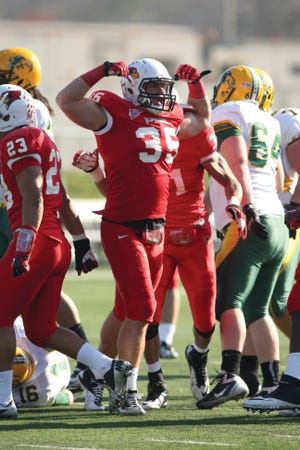
“He seemed super relieved like a huge weight was taken off his shoulders,” said Zimmer, Underwood’s close friend and teammate at Illinois State University where the two played college football together.
“It was a little shocking,” Zimmer said. “It took amazing courage to do that with me and then publicly. I wouldn’t expect anything less from him as a person. He’s been able to navigate his public life and he’s had times in his life where he’s had to dig down deep and fortify himself, to find that strength. That’s what he’s doing here.”
Underwood was a two-time All-American as part of ISU’s program from 2010-13 – recording 215 career tackles while playing as a linebacker and tight end. He helped guide the Redbirds to the FCS playoff quarterfinals in 2012. Underwood latched on with several teams in the NFL after going undrafted— with the San Diego Chargers, Philadelphia Eagles and Oakland Raiders, though he never appeared in a game.
“Everyone knows him as this popular guy,” Illinois State coach Brock Spack said. “He was a poster child for doing everything right on the football field and in training. He was one of the hardest workers I’ve ever coached as both a student and an athlete. I’ve always been very proud of him and couldn’t be happier for him. I think I speak for all of his former teammates in saying that we support him in coming (out as gay). He always led by example here (at Illinois State) and he’s doing that (in his public life).”
On GMA on Wednesday, Underwood described football being his main identity and that locker room homophobic language throughout his high school and college career played a part in him staying closeted. Former teammate Jordan Neukirch said he reached out to Underwood personally to let him know he regretted using any discriminatory language back then and that it wasn’t reflective of how much he respected him.
“You never know what’s going on in someone’s inner world,” Neukirch said. “We used to joke around because Colton was this good looking guy who wasn’t always after girls, they were after him. Looking back, I wish I would have been more sensitive. I just told him anything I said back then was never meant to be (hurtful) or make him feel like he couldn’t be himself. I can see how a (sports) culture could make that hard.”
Underwood was courted by more than 30 women on the 23rd season of “The Bachelor” and notably jumped an 8-foot fence while pursuing his now ex-girlfriend Cassie Randolph. But Underwood said he was lying to himself and the outside world, driving self-hatred to push him to the brink of suicide in 2020. While he was once in a “dark place,” Underwood said on Wednesday he’s the
“happiest and healthiest I’ve ever been in my life and that means the world to me.”
Denver Broncos defensive end Shelby Harris, another teammate of Underwood’s at Illinois State, said his friend’s personal well-being came from being authentic.
“As long as my guy is happy, that’s all that matters,” Harris said on Twitter. “Happy for you bro to live your truth. You still ugly but that’s okay! Love you my guy.”
Zimmer and Neukirch were Underwood’s college roommates for two years and recalled how the now 29-year-old was quiet and soft-spoken in his first few years on campus in Normal, Illinois, before being thrust into a more vocal role as a leader when he became one of the Redbirds’ best players.
“He always wanted to play in the NFL and he always loved the (‘Bachelor’) show,” Zimmer said. “To see him accomplish two of his dreams was pretty cool.”
Spack recalled a memory when Underwood played through a hamstring injury in 2012 and how his mental and physical toughness was so respected by his teammates. That same inner strength is on display now, and as Spack put it, “if Colton’s happy, we’re all happy with him. His happiness is the most important thing.”
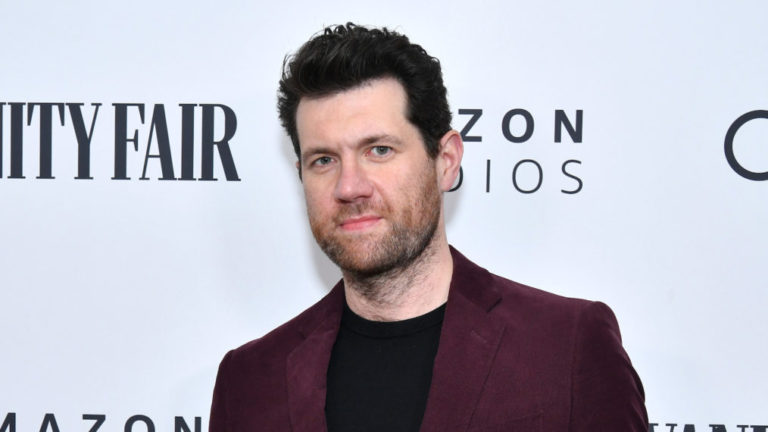
Alongside that clip, Eichner posted his support for Underwood on Instagram, writing, “Congrats @coltonunderwood! If you’re gay, be gay! I’ve been gay forever and I love it!”
“I’m gay. I know that’s a shock, Colton, and that I think you should look into,” Eichner said in the clip. “Maybe you’re the first gay Bachelor, and we don’t even know.”
This comes after Underwood sat down with GMA‘s Robin Roberts for an in-depth interview, “Colton Underwood: In His Own Words.” “I’ve ran from myself for a long time and I’ve hated myself for a long time, and I’m gay,” he said. “I’m emotional, but I’m emotional in such a good, happy positive way. I’m the happiest and healthiest I’ve ever been in my life. That means the world to me.”
“Here’s how Hollywood works: Colton’s gonna get a GLAAD Award before I do,” Eichner tweeted on April 14 before adding two more posts in support of those who have come out in entertainment before now.
“Let’s ALSO honor and praise those in entertainment who came out years – DECADES – before it was embraced and could be used to professional advantage,” he wrote. “I don’t mean me – I mean many others, especially those before me – that took real guts. Let’s put some shine on them too.”
AND let’s ALSO honor and praise those in entertainment who came out years – DECADES – before it was embraced and could be used to professional advantage. I don’t mean me – I mean many others, especially those before me – that took real guts. Let’s put some shine on them too. ❤️
Oregon’s Department of Education must do more to provide comprehensive, LGBT-inclusive sex education in schools. It is common for queer and trans youth to go through their emotional puberty in their early 20′s due to a lack of educational resources. The department’s “Guidance for Creating Safe Environments for Transgender Students,” saysit is committed to affirming LGBT students are treated with respect and dignity and given an equal education on their bodies and their form of safe sex. This stance is cemented by Oregon’s Equality Act.
Despite these words, my experiences, and the experiences of my transgender and queer counterparts in the Oregon public school system’s sex education classes, have been far from inclusive. No genuine effort has been made to include comprehensive sex education for LGBT students, and when subjects are discussed, it is often negatively. During units where we discussed STDs and STIs, HIV/AIDS was portrayed as a disease only gay men could get. This not only breeds discrimination, but it also is false. A 2014 study by the Gay, Lesbian & Straight Education Network found that only 5% of middle and high school students said their health classes included positive discussions of LGBT-related topics. Studies like these only further prove that more comprehensive and more LGBT- friendly laws are needed. This includes more rigid rules about what is acceptable in sex ed classes and updating curriculums (such as explaining safe sex for every body type) to guarantee LGBT students receive equal access to education and resources.
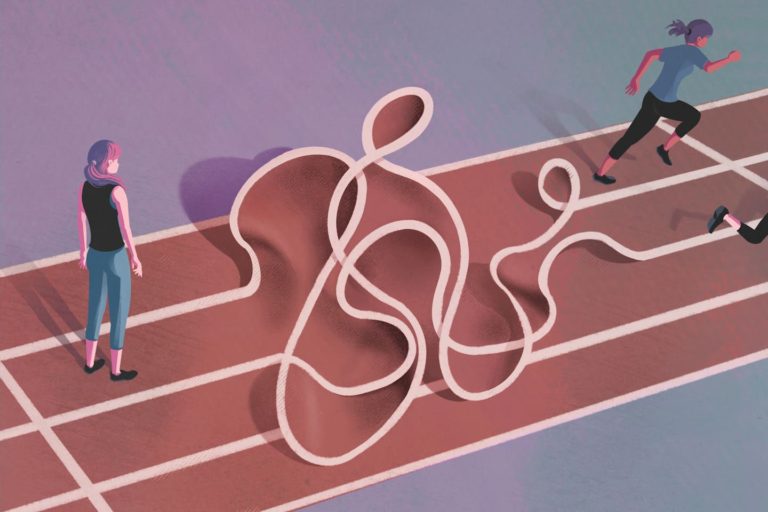
Before that day in early February, they were universally respected as pioneers in the long fight for women’s equality in sports. Then they unveiled their project: changing the way transgender girls and women participate in women’s sports. Almost immediately, their proposal drew bitter criticism in the fraught debate over transgender rights.
For starters, they said, they planned to lobby for federal legislation requiring transgender girls and women, in high school sports and above, to suppress testosterone for at least one year before competing against other girls and women, making universal a policy already in place in some states and some higher levels of sports. For transgender girls in high school who do not suppress testosterone, they suggested “accommodations,” such as separate races, podiums or teams.
“To give girls and women an equal opportunity to participate in sports, they need their own team. Why? Because of the biological differences between males and females,” said Hogshead-Makar, CEO of Champion Women, a women’s sports advocacy organization.
They portrayed their proposals as a science-based compromise between two extremes: right-wing politicians seeking wholesale bans of transgender athletes and transgender activists who argue for full inclusion — and who even dispute what some view as settled science about the relationship between testosterone and athleticism. They quickly drew fierce backlash, illustrating how the issue of transgender athletes has become the most vexing, emotionally charged debate in global sports and why it may prove impossible for schools and sports organizations to craft policies that are both fair to all female athletes and fully inclusive of transgender girls and women.
Transgender and women’s equality activists denounced their proposals as transphobic and accused the women of having a myopic focus on sports at a critical time for the transgender equality movement — as the Biden administration fights to expand federal anti-discrimination protections for transgender people and as conservative lawmakers push bills in more than 20 states seeking to ban transgender athletes and criminalize gender-affirming hormone therapy for transgender youth.
Advertisement
Story continues below advertisement
Critics also pointed to members of the working group with reputations of engaging in anti-trans rhetoric, including Martina Navratilova, the tennis champion whose commentary on transgender athletes has stoked outrage, and a Duke law professor whose work calling transgender girls and women “biological males” is cited in anti-transgender legislation.
Inside the world of sports — where careers are built on split-second wins and governed by rules that measure testosterone by the nanomole — these women’s proposals have gained some surprising voices of support. They have drawn endorsements from the first openly transgender Division I cross-country runner in NCAA history as well as a leading transgender scientist researching the effects of hormone therapy on athleticism. With enduring credibility in the sports world and on Capitol Hill, they have begun meeting with state and federal lawmakers grappling with this issue.
But even advocates who view their proposed policies as sensible for collegiate and professional athletes wonder whether these women have truly grappled with the impact their policies would have on the lives of hundreds, perhaps thousands of transgender girls across the country.
“The folks who are pushing these anti-trans bills … they don’t believe transgender people exist. They think they’re faking it for an advantage in sports,” said Cathryn Oakley, state legislative director at the Human Rights Campaign. “I don’t know how you find a middle ground between a hate group and people pushing for equality.”
A patchwork of policies
Before 2010, few college or high school athletic associations had policies on transgender athletes, according to a report published that year by the Women’s Sports Foundation and the National Center for Lesbian Rights.
Noting that “an increasing number of high school and college-aged young people are identifying as transgender,” the report proposed a set of policies: In college sports, transgender women should undergo one year of hormone therapy before competing against other women, a rule rooted in scientific research that suggested such an approach would mitigate any athletic benefits. The NCAA quickly adopted the policy.
For high schools, the report recommended letting transgender girls compete in sports as soon as they transition socially and begin dressing and acting in accordance with their gender identity. Requiring hormone therapy for adolescents is potentially harmful, experts said in interviews, because not all transgender teens have supportive families or access to gender clinics. Ones who do may not want to undergo hormone therapy, which for transgender girls typically involves puberty blockers that pause developmental changes followed by a combination of testosterone suppressors and estrogen.
According to information compiled by transathlete.com and the ACLU, 10 states let transgender girls compete in high school sports after undergoing some treatment. Twelve states prohibit them entirely, including four that passed new laws and executive orders this year. Nine states have no policies at all. And 19 states, as well as the District of Columbia, let them compete regardless of testosterone level.
Advertisement
Story continues below advertisement
For the past decade, this policy patchwork has developed largely without controversy. Transgender youth are a very small minority of the U.S. population — 1.8 percent of high school students, according to a 2019 CDC report — and the number of those transgender girls likely to play sports and compete at an elite level is even smaller.
But then, a few years ago, a transgender runner took the Connecticut track scene by storm, catching the attention of politicians, pundits and advocates — including Lopiano, a Connecticut resident and Title IX champion.
Running on the boys’ team as a ninth-grader in suburban Hartford, Terry Miller was an average track athlete, online records show, failing to qualify for any postseason events. But in 2018, Miller came out as a transgender girl. In her first season running against other girls, as a sophomore, Miller dominated. She won five state championships and two titles at the New England championships, beating the fastest girls from six states.
The next fall, as a junior, Miller won another four state titles and two more all-New England titles. In several races, she was followed closely by Andraya Yearwood, another transgender girl who had also won three state titles.
In interviews, Miller and her supporters discussed how important track was for her confidence and stability as she transitioned.
“Track helps me forget about everything, and I love it,” Miller said in a 2019 story on DyeStat, a website that covers high school track and field. (Miller and her parents declined an interview request for this story.)
Support for Miller, however, was not unanimous. Girls who lost to her and their coaches complained that she had an unfair advantage. Parents of other girls started online petitions demanding state high school officials add a testosterone suppression requirement for transgender girls.
A lawyer representing a few mothers contacted Lopiano and asked for help. Believing Connecticut’s policy violated Title IX, Lopiano met with state officials and attempted to broker a compromise that would allow the results of transgender runners not to affect the results of cisgender girls.
Title IX doesn’t define what it means to be a girl or a woman. But Lopiano argues Congress intended to restrict female sports to girls and women who haven’t gone through male puberty, when testosterone in boys surges to between four and 10 times the levels found in girls and women.
She points to the 1975 testimony of Bernice Sandler, an activist known as “the godmother of Title IX,” who told Congress that, because of physical advantages men acquire during puberty, any effort to integrate sports between the sexes “would effectively eliminate opportunities for women.”
Advertisement
Story continues below advertisement
“I’m not saying transgender girls are going to take over women’s sports,” Lopiano said. “I’m saying that the law protects girls and women and they shouldn’t have to compete against someone who has an immutable testosterone-based advantage.”
Lopiano’s compromise never materialized. The mothers decided instead to work with the Alliance Defending Freedom, an Arizona-based conservative Christian advocacy organization that supports anti-trans lawsuits and legislation across the country. The Alliance helped three girls who lost races to Miller and Yearwood sue Connecticut high school authorities, arguing their policy on transgender athletes violated Title IX. The case is pending in U.S. District Court in Connecticut.
The ACLU has intervened on behalf of the transgender runners. In an interview, Chase Strangio, deputy director for transgender justice at the ACLU, said courts already have found Title IX protections apply to transgender girls and women in cases involving access to women’s restrooms. He views restrictions on transgender athletes in high school, such as hormone requirements, as discriminatory and probably a violation of the law.
Miller did not begin suppressing testosterone until her junior year, Strangio acknowledged, but Yearwood was on hormone therapy throughout high school. Regardless, Strangio emphasized that his clients didn’t win every race they competed in and they quit the sport after high school.
“Their careers were sabotaged by the rhetoric and the attacks on them,” Strangio said.
In early 2019, Lopiano began meeting regularly with de Varona and Hogshead-Makar to discuss what they believe are looming collisions between the transgender equality movement and Title IX. To them, the Connecticut controversy illustrated what they view as the two extreme positions between which they are trying to navigate.
The Alliance Defending Freedom argues that transgender girls and women always have physiological advantages in sports, even if they have suppressed testosterone. Their advocacy has inspired a wave of legislation across the country targeting transgender athletes since 2019.
“You can’t change a person’s biological sex,” said Christiana Holcomb, an Alliance lawyer working on the Connecticut case. “Nothing can undo the physiological advantages that come from being born biologically male.”
Strangio and the ACLU dispute whether transgender girls and women have advantages in sports, even if they’re not suppressing testosterone. Other prominent transgender activists, making this same argument, have called for the NCAA to remove its testosterone suppression requirement.
“The truth is, transgender women and girls have been competing in sports at all levels for years, and there is no research supporting the claim that they maintain a competitive advantage,” a 2019 ACLU article noted.
“Athleticism is complex,” Strangio said. Referring to Lopiano and her colleagues, he added, “I’m not a scientist, and neither are any of them.”
A growing research field
Benjamin Levine, a professor of cardiology at the University of Texas Southwestern Medical Center, is one of the world’s leading experts on the science of athletic performance. The founder and director of the Institute for Exercise and Environmental Medicine at Texas Health Presbyterian Hospital Dallas, one of the largest institutes of its kind in the world, Levine has published hundreds of peer-reviewed papers and consulted for the NCAA, the NFL, World Athletics and NASA.
In an interview, Levine said he understands why this topic stirs intense emotions. But, he said, there is no debate over whether post-pubescent transgender teenage girls and women have advantages in sports until they suppress testosterone.
Regardless of gender identity, Levine said, people who go through puberty with male levels of testosterone, on average, will grow taller and stronger than cisgender girls and women, with more muscle mass, larger hearts and advantages in several other physiological factors that affect athleticism. Puberty in boys typically begins by 12 and ends by 18.
“This is why, for every single record that you see in athletic competitions, boys and girls before puberty are about the same, and then everything diverges afterward,” said Levine, whose scientific research is cited by the women’s policy group.
Advertisement
Story continues below advertisement
Transgender advocates dismiss Levine’s research as irrelevant because he studies cisgender athletes. But several small-scale studies have found transgender women do have physiological advantages until they suppress their testosterone for at least one year.
The first was published in 2004 by Louis Gooren, a Dutch endocrinologist and founder of the Center of Expertise on Gender Dysphoria in Amsterdam, one of the largest transgender health clinics in the world. “Testosterone exposure has profound effects on muscle mass and strength,” wrote Gooren, who reported that as he gave more testosterone to 19 transgender men, they saw marked increases in muscle growth, as well as hemoglobin and insulinlike growth factor levels, both relevant in athletic performance. As he suppressed testosterone in 17 transgender women, the opposite occurred: Their muscles shrank, and their hemoglobin and IGF levels dropped.
Gooren’s findings were essentially replicated in November by a study published in the British Journal of Sports Medicine examining how 29 transgender men and 46 transgender women in the Air Force performed on routine fitness tests — push-ups, sit-ups and a 1½-mile run — as they transitioned hormonally.
After a year of treatment, transgender men were performing better and the transgender women worse. The transgender women were still running slightly faster than cisgender women, however, so the authors concluded elite sports organizations might need to lengthen testosterone suppression requirements beyond one year. In interviews, two of the study’s authors cautioned against drawing conclusions about high school athletes because their research subjects were all 18 or older.
Other recent research has been conducted by a transgender athlete herself: Joanna Harper, a medical physicist and runner. In 2015, Harper published an analysis of what happened to her and seven other transgender women runners as they transitioned hormonally. Seven of the eight women, including Harper, saw their times slow considerably.
After that, Harper left her job in Portland, Ore., and moved to England to research the effects of hormone treatment on transgender athletes at Loughborough University.
In February, she published a systematic review of 24 studies of the effects of hormone treatment on transgender women. Harper found some athletic benefits — such as higher hemoglobin levels, vital in endurance sports — dissipated after only four months of suppressing testosterone. But other advantages, such as increased muscle area and strength, remained even after 36 months.
Advertisement
Story continues below advertisement
Harper has consulted for the International Olympic Committee, World Athletics and other elite sports organizations, where she advocates for allowing transgender girls and women to compete after one year of hormone therapy. She also has signed on as a public supporter of the women’s policy group.
In a recent interview, Harper said she has been called both “the destroyer of women’s sport” and “a traitor to transgender people.”
“My agenda is to pull people toward the middle,” Harper said. “The science leads me there.”
When asked for experts to support his belief that it’s unclear whether transgender girls and women have competitive advantages in sports, the ACLU’s Strangio mentioned two people: Katrina Karkazis and Joshua Safer.
Karkazis is a cultural anthropologist and bioethicist. She has not conducted original research on testosterone and athleticism, but she has written extensively on the subject, including the book, “Testosterone: An Unauthorized Biography.”
In an interview, Karkazis emphasized many complexities in scientific research of testosterone and athleticism — testosterone alone doesn’t build a better athlete, researchers have found — but did not dispute that transgender girls and women who do not suppress testosterone have advantages in sports.
“Yes, on average … there will be performance differences that will be better,” she said when pressed on this point. “Whether that’s an advantage or not … I actually think that’s a normative statement that involves a value judgment about what is advantaged.”
Safer is an endocrinologist and the director of a transgender health clinic who has served as an expert witness for the ACLU. In court filings, Safer has acknowledged transgender girls and women with higher levels of testosterone will have advantages in sports. But, he has noted, these advantages are less pronounced in high school.
Advertisement
Story continues below advertisement
“Testosterone begins to affect athletic performance at the start of puberty, and those effects increase each year until about age 18,” Safer wrote in a statement challenging a law barring transgender athletes in Idaho. “As a result, testosterone provides less of an impact for a 14-, 15- or 16-year-old than it does for a 17- or 18-year-old.”
In an interview, Safer emphasized that, despite the advantages conferred by testosterone, the list of known examples of transgender girls and women succeeding in sports, at any level, is vanishingly short.
There has never been an openly transgender athlete in the Olympics; the first three, all women, could compete this summer in Tokyo. There has been one openly transgender woman champion in the history of NCAA: CeCe Telfer, a Franklin Pierce University runner who won the Division II 400-meter hurdles in 2019. On the high school level, there are just Miller and Yearwood in Connecticut.
Said Safer, “The important thing to consider here, as it relates to high school sports and teenagers, is are we addressing a problem that actually exists, or are we simply addressing a fear?”
‘Sports does discriminate’
At their opening news conference, Lopiano spoke first and stressed that the group’s proposals represented “respectful inclusion” of transgender athletes.
“These are our kids. And we have to take care of all of them,” she said.
A few minutes later, the women turned the news conference over to one of their lesser-known colleagues: Doriane Lambelet Coleman, a Duke law professor and former elite runner who, in the late 1970s, was one of the first women to receive a track scholarship to Villanova University.
Over the past few years, Coleman has published law review articles and essays defending the preservation of girls’ and women’s sports for athletes with female levels of testosterone.
“I’ve tried to make clear that I support a science-based approach to inclusion, not categorical exclusion,” she said.
But as the debate moves beyond sports and into mainstream politics, more people have begun to see “science-based inclusion” as a form of exclusion. Which is why, to her dismay, her writings are routinely cited by right-wing politicians promoting wholesale bans of transgender athletes. It’s also why some transgender advocates say her and her colleague’s proposals are not only unfair but dangerous.
Research shows that transgender youth struggle with alarmingly high rates of anxiety, depression and suicidality. Emerging research has suggested affirmative transgender care — letting children transition socially for a period of time and then, if prescribed, start hormone therapy — can significantly reduce those mental health problems. A key to affirmative care, experts said, is to avoid situations where a transgender child is treated in any way that invalidates their gender identity.
When briefed on the women’s policy group’s proposals, several experts sharply criticized the idea of transgender-specific sports teams or events as stigmatizing.
“They have to go through so many obstacles just to recognize they are transgender, and for a lot of them, sports is the turning point. … You’d just end up exiling transgender girls from sports,” said Helen Carroll, former director of the Sports Project of the National Center for Lesbian Rights, who co-wrote the NCAA’s policy on transgender athletes.
Advertisement
Story continues below advertisement
And even if they do have physiological advantages, some experts argued, transgender teens face a minefield of challenges, including higher rates of bullying, rejection by their families and homelessness.
“The deck is stacked against them in every single way, so, to me, it seems silly to … look at this physiological advantage but not consider all the other substantial disadvantages these kids face,” said Jack Turban, fellow in child and adolescent psychiatry at Stanford University School of Medicine.
De Varona and her peers conceded that their concerns about high school sports are mostly hypothetical. As the legal and social climate for transgender people improves, they believe, more situations similar to what happened in Connecticut may arise.
But when asked to describe the harms that occurred to the girls who lost to the transgender athletes in Connecticut, they struggled to come up with anything concrete. Neither Miller nor Yearwood, the transgender girls, received track scholarships to college, and the women concede they are unaware of any cisgender girls who missed out on a scholarship opportunity as a result of Miller’s and Yearwood’s success.
There was other harm, the women argued, pointing to dozens of girls who lost races or opportunities to advance to postseason meets because they finished behind the transgender girls. Research has shown, they emphasized, that when girls succeed in sports, they’re more likely to go to college and have successful careers.
“Everybody here … has worked their entire lives to make sure that girls and women have equal opportunities in competitive sports,” Hogshead-Makar said.
And in those moments, these women tacitly conceded that, despite their talk of inclusion, they view transgender girls and women as different from the girls and women to whom they have devoted their careers — at least when they’re on the playing field.
“Yes, it’s important for everyone to have that opportunity in athletics,” de Varona said. “But sports does discriminate.”
From the field to the courts
The IOC is revising its guidelines on transgender athletes and is expected to announce them after this summer’s Tokyo Games. The NCAA also is examining its guidelines after hearing concerns from transgender advocates last fall.
The battle over transgender athletes in America’s high schools is likely to be settled, at least in part, in the courts. The ACLU is challenging an Idaho law that banned transgender athletes from competing in any public school, including colleges. The Connecticut lawsuit challenging that state’s policy also must be resolved.
Since its February news conference, the women’s policy group has had conversations with several members of the House and Senate, on both Judiciary Committees, according to Coleman, but they declined to specify whom or how many.
They also acquired a prominent supporter: Juniper Eastwood, one ofthe first openly transgender women to compete in NCAA Division I sports and the first cross-country runner.
In an interview, Eastwood said she never would have competed against girls or women without suppressing her testosterone. In high school, she set a Montana state record in the 800 meters that, had she been running on the girls’ team, would have broken the women’s world record.
“There’s no way it would have been fair,” she said. “My testosterone levels were so much higher than any of the girls I would’ve been running against.”
A closer examination of Eastwood’s personal story, however, spotlights the ramifications of policies that would separate transgender youth from sports.
Eastwood always planned to transition after she finished her track career because she knew she would attract unwanted attention as a transgender runner. But in her sophomore year at the University of Montana, Eastwood got hurt and had to sit out the season. Running had always been her way of coping with gender dysphoria. Without it, Eastwood began drinking excessively and struggled with depression.
Eastwood decided to transition and then continue running track on the women’s team. As she had expected, she got considerably slower as she suppressed her testosterone. And, as she had dreaded, her performances were closely analyzed by right-wing news sites, track and field obsessives and transgender activists.
Eastwood’s senior track season ended abruptly because of the coronavirus. She’s in graduate school at Montana, studying environmental philosophy, and would like to work somewhere outdoors. Even though she feels a little out of shape lately, Eastwood said, she enjoys running now more than she ever did in high school or college.
She lives not far from several secluded trails where she can run for miles without seeing another person. When she runs now, she said, she feels free from the worry about what someone will write online the next day about her performance.
“It’s just me, the trails and no one else,” Eastwood said. “And I can just run.”
Correction: An earlier version of this article described Juniper Eastwood as the first openly transgender athlete in NCAA Division I sports history. Eastwood is one of the first openly transgender women to compete in Division I sports and the first to run cross-country. The story has been corrected.
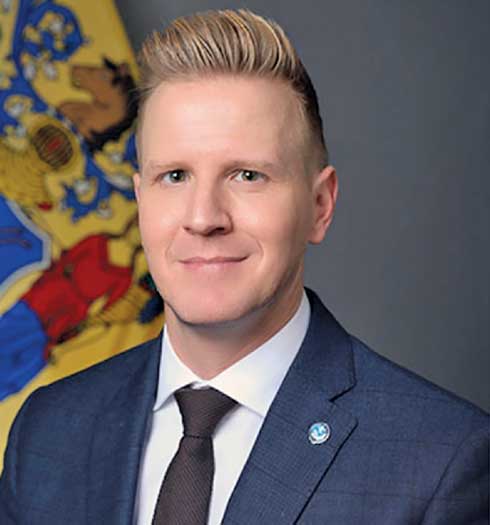
Shawn LaTourette at New Jersey Department of Environmental Protection
Governor Phil Murphy nominated Shawn LaTourette as the next Commissioner of the New Jersey Department of Environmental Protection (NJDEP). LaTourette is the Acting Commissioner of the DEP since Catherine R. McCabe announced her retirement in January 2021.
“To serve the people of New Jersey as Commissioner of Environmental Protection is an honor beyond any I could have imagined,” said La Tourette. “I am grateful to Governor Murphy for his outstanding environmental leadership, and his confidence in mine.”
“New Jersey DEP is charting a new course for the future in our great state, with a stronger, more just environment at its center,” said LaTourette. “I am eager to lead the Department in supporting Governor Murphy in his vision to make New Jersey a national model for its commitment to a more resilient, fairer, greener future for everyone.”
“At a time when the New Jersey legislature is empty from any representation for the LGBTQ community, this appointment is welcomed and appreciated,” said Christian Fuscarino, Executive Director of Garden State Equality. It speaks to Governor Murphy’s commitment to diverse inclusion in our government and also positions New Jersey as the only state in the nation with more than one LGBTQ cabinet member. Highly qualified LGBTQ people like Shawn are ready to step up and serve in leadership positions in the Garden State. We are confident that Shawn will lead with professionalism based on his impressive record while at DEP.”
“The decisions made by the Department of Environmental Protection are not just important for today, but will have far reaching impacts across generations,” said Governor Murphy. “The work we do now for cleaner air and water, to meaningfully combat climate change, to ensure that every community is treated with dignity and respect and that the principles of environmental justice serve us every day, will far outlive us all.
LaTourette began his career partnering with the Erin Brockovich law firm
“Shawn’s passion for environmental protection, coupled with his extensive knowledge on climate, energy, and infrastructure, will help build an environmental legacy that exemplifies these principles,” said Murphy. “I am confident that with Shawn’s leadership, we will create a cleaner, more sustainable New Jersey that we are proud to leave for future generations.”
With 20 years of environmental experience, LaTourette began his career partnering with the Erin Brockovich law firm to organize and defend New Jersey communities whose drinking water was contaminated by petrochemicals. Born and raised in New Jersey, LaTourette graduated magna cum laude from Rutgers University and earned his law degree summa cum laude from Rutgers Law School. He was the class salutatorian and the recipient of multiple environmental and governance awards, and published scholarship on environmental law, natural resource damage, and climate issues.
Before entering public service, LaTourette specialized in protecting the rights of victims of toxic injuries while also advising infrastructure, transportation, energy, and other industries on compliance with state and federal environmental laws and policies. Prior to joining the Murphy Administration, he was a Director of the Environmental Law Department at Gibbons PC, where he focused on brownfields redevelopment projects and litigated environmental cases in state and federal court.
LaTourette first joined DEP as chief legal and regulatory policy advisor to Commissioner McCabe in 2018. He became DEP’s Chief of Staff in 2019 and, in 2020, the Deputy Commissioner responsible for running the operations of DEP.
LaTourette was elected to serve as Chair of the LGBTQ Rights Section of the New Jersey State Bar Association, completing his term in 2020, and will be the first openly gay Commissioner of Environmental Protection in the nation. LaTourette resides in Highland Park with his partner and twin daughters.
“New Jersey has taken a leading role in the legal fight for environmental justice, and that’s because of the close working relationship between our office and Shawn’s team at DEP,” said Attorney General Gurbir Grewal. “We share a total commitment to holding polluters accountable and making them pay for the destruction they caused. As we continue this fight for clean air and clean water, I couldn’t ask for a better partner than Shawn.”
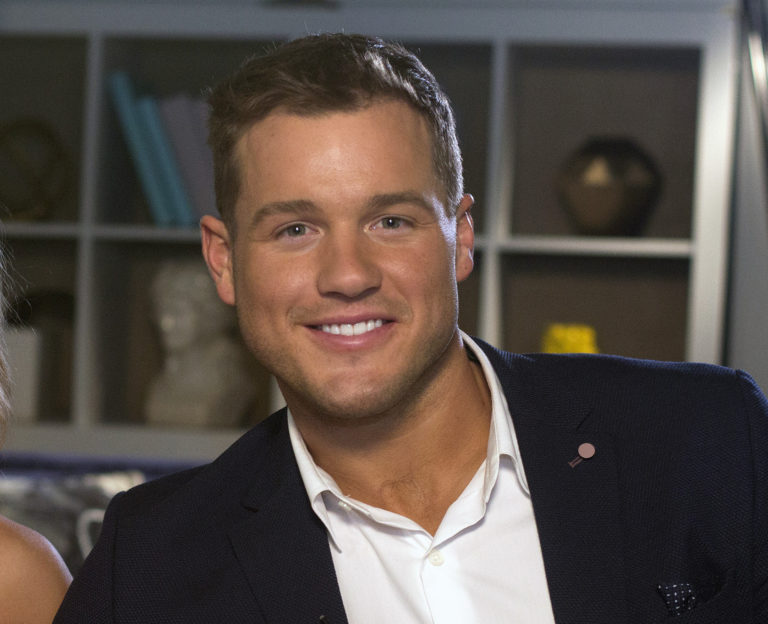
Colton Underwood from the reality series, “The Bachelor,” came out as gay this week. (Gary Gerard Hamilton, Associated Press)
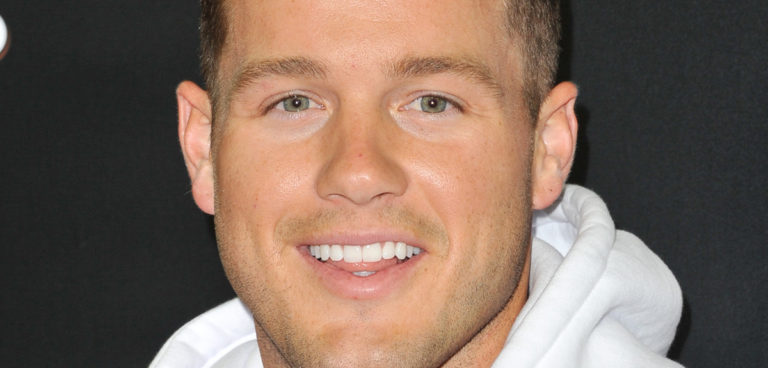
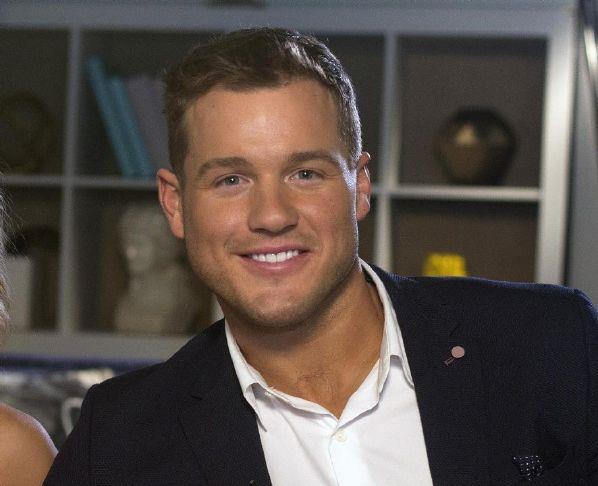
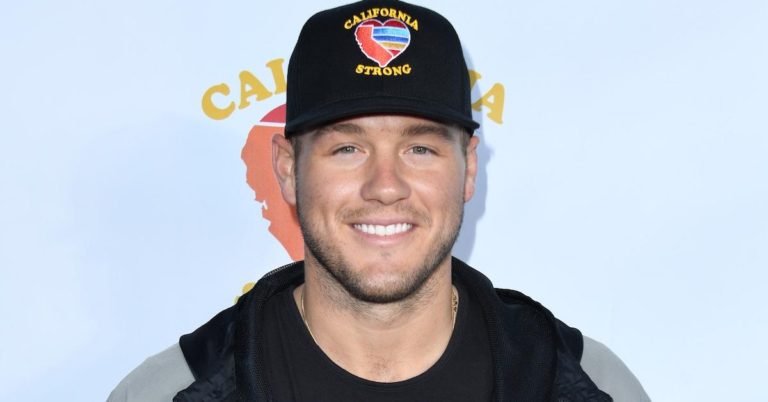
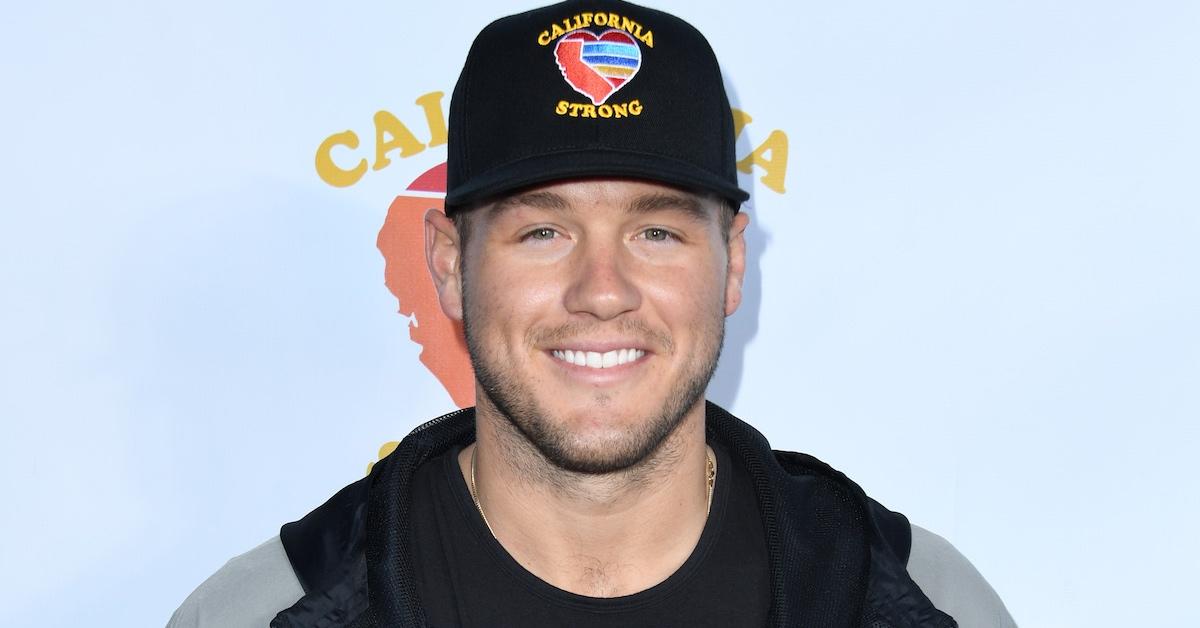
Colton Underwood, a star of “The Bachelor,” a former football player and Colorado resident, came out as gay in an interview with Robin Roberts that aired Wednesday on “Good Morning America.”
He described 2020 as a year of self-reflection, one that “probably made a lot of people look in the mirror and confront what they were running from or what they’ve been putting off in their lives.”
“I’ve ran from myself for a long time,” Underwood, 29, said in the interview. “I’ve hated myself for a long time. And I’m gay. And I came to terms with that earlier this year and have been processing it, and the next step in all of this was sort of letting people know.”
He said that coming to understand his sexuality has been a “journey,” and now he is “the happiest and healthiest” he has felt in his life. He had reached a low in 2020, he said, that led to thoughts of self-harm and suicide.
“I got to a place where I didn’t think I was ever going to share this,” he said. “I would have rather died than say, ‘I’m gay.’ And I think that was sort of my wake-up call.”
In his 2020 memoir, “The First Time: Finding Myself and Looking for Love on Reality TV,” Underwood described being confronted by his parents about his sexuality as a teenager.
“‘You know, Colt, we’d still love you and support you if you were gay,’” he recalled his mother telling him. His father was more confrontational. “He’d pulled up the history of recent Google searches, which included gay porn sites and a variety of questions: ‘Am I gay? How do you know if you’re gay? Why don’t I like having sex with my girlfriend?’ ” Underwood wrote in the book. “At first, I denied responsibility. Then I owned up to having been curious. He asked if I wanted to talk about it. I said no, explaining that I’d figured things out on my own.”
Underwood, who has a home in Parker, appeared on “The Bachelorette” in 2018 and quickly became a fan favorite on the reality dating show. But Becca Kufrin, the season’s star, worried that he was unprepared for a lifelong commitment and eliminated him after their “hometown” date, where she met his family. (The show’s producers had made Underwood’s sexual inexperience a major plot point.)
He starred on “The Bachelor” in 2019, where again his virginity was a central theme. Near the end of the season, as the stress of the show increased, he said he was “done” with filming and “jumped the fence” of a resort in the Algarve region of Portugal in an effort to escape the set.
After the show ended, Underwood and Cassie Randolph, 25, the front-runner of his season, began dating. Randolph’s family helped him recover from COVID-19 in March 2020, around the time his memoir was published.
The couple announced their split in May 2020. In November, Randolph filed a restraining order against Underwood, who she said had placed a tracking device on her car. Viewers of his “Good Morning America” segment inferred that this was the personal low to which he was alluding.
The “Bachelor” franchise had its first on-screen same-sex relationship in 2019 on “Bachelor in Paradise.” Demi Burnett, who appeared on Underwood’s season of “The Bachelor,” and Kristian Haggerty, who was flown out to the set midseason, ended up getting engaged. (They later broke it off.) In its 20 years, the franchise has never featured an all-gay cast.
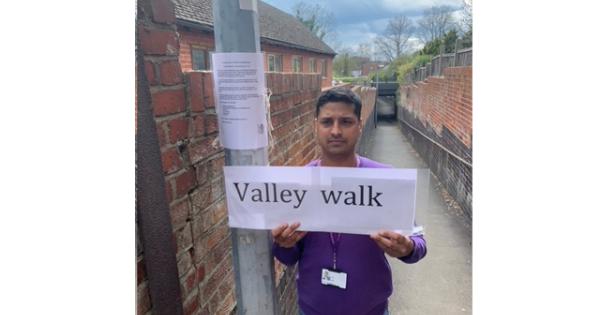
A ‘badly neglected’ alleyway in Maidenhead hopes to improve its reputation by getting a new name.
The pathway, also known as the Alley, links Grenfell Road and Boyn Valley Road, which was an ex-council estate, and could be rebranded as Valley Walk depending on public consultation.
The Alley connects the residential estate to Maidenhead town centre and commuters use the pathway due to its close proximity to the railway station.
Council officers told Boyn Hill and St Mary ward councillors they thought the name was the most appropriate for the path, in recognition of the community living at the bottom of the hill in Boyn Valley Road.
St Mary’s ward councillor Gurch Singh (Lib Dem) said: “This community in Boyn Valley Road has somewhat been forgotten for a number of years and I think this name that officers have come up with, Valley Walk, is a real nice little nod to that community.
“It’s almost like giving that place a little bit of an identity.”
Cllr Singh added the Alley has been ‘badly neglected’ over the years and there has been anti-social behaviour reported at the Alley and hopes this name change, as well as a proposed mural, will improve its reputation and make it welcoming.
As there are two alleyways in Grenfell Road, Cllr Singh said this has caused ‘confusion’ for people and emergency services.
A month-long consultation will be launched where residents can vote on the idea.
Production sources from the show tell TMZ that Colton‘s been getting a lot of support, and “a number of producers” were moved by the announcement, resulting in informal talks over the last few days about a gay season of The Bachelor.
“Our sources say the bigwigs on the show haven’t weighed in and there has been no formal discussion, but creative ideas for TV shows typically begin with shop talk among producers and other staff, and that’s happening now,” TMZ reported.
It’s not yet known if Colton would be interested in participating in another season, but many people on the staff are reportedly very supportive of his decision to come out.
He is also no longer under contract with The Bachelor, and the interview was his own doing. However, TMZ reports that Colton called producers to let them know that the interview was happening one night before.
Six-packs are great and all, but strengthening your core is about so much more than looking good. Your ab and glute muscles (yes, your butt is part of your core!) play a huge role in stabilizing your body, including your pelvis and spine, so it’s always worth throwing a quick core workout into your daily routine to help prevent discomfort and lower back pain.
This TikTok-famous routine from chiropractor Alan Mandell, DC, (aka @motivationaldoc) is a good place to start. The workout, which has been watched over 220,000 times since it was posted in August, is 100 percent seated and consists of just three moves that all target your transverse abdominis (TVA) muscles, aka your deep core. Dr. Mandell notes that strengthening this muscle can help flatten your belly, though it won’t necessarily help you burn belly fat (you’ll also need to focus on your diet and overall workout routine, including cardio and strength workouts, if that’s your goal). The injury and pain prevention we talked about earlier are another major benefit of TVA strength, because this is the muscle that supports and stabilizes your lower back and pelvis.
So let’s talk about this workout. Dr. Mandell recommends doing three bodyweight moves:
Seated arm raise: sit in a chair with good posture, an arch in your back and feet flat on the ground. Lift your arms and hold for one or two minutes.
Seated arm raise and leg lift: Holding the same position as before, lift one thigh off your chair, then the other, keeping your legs bent at 90 degrees. Repeat for 10 reps on each side, alternating sides.
Seated lean-forward: Sit on the edge of your chair with good posture, feet flat on the floor. Extend your arms straight out in front of your chest. Maintain your posture and keep your chest lifted as your lean forward from the waist, tightening your core as you lean. Sit up straight again to complete the rep. Repeat for 20 reps.
After seeing how accessible these moves were, I couldn’t resist trying them for myself. And it didn’t take long to feel my core working — just a few seconds into that first exercise, in fact. Maintaining my posture was the hardest part; I focused hard on keeping my spine arched, chest lifted, and core engaged, and felt those deep core muscles engage during every exercise. (It’s especially tough during the lean-forward exercise. My spine kept wanting to hunch!) The best part? The whole routine only took three minutes to complete, and I could do it right at my desk. Take a quick break, grab a chair, and try the TVA routine for yourself above!
Boston University has received a perfect score on Athlete Ally’s Athletic Equality Index, an indication of BU Athletics’ strong support for its LGBTQ+ college athletes. The University is one of just 10 Division I schools to reach the 100 mark this year.
Veronica Kriss (Sargent’21), president of BU’s Athlete Ally chapter, says this has been a major goal throughout her time as president.
“It means a lot to us as a school,” Kriss says. “What means the most to me is that other people can look at BU and think that it’s a safe place for everyone to be.”
The Index, established in 2017, reflects how well NCAA athletic departments support LGBTQ+ matters through policies and practices. BU’s Athlete Ally group started the same year, with the goal of empowering the BU Athletics LGBTQIA+ community. BU joined the University of Pennsylvania, Arizona, Cal-Davis, George Mason, Illinois Urbana-Champaign, Kent State, Miami, Ohio State, and USC as the only schools, out of 353 Division 1 institutions, to receive perfect marks.
Kriss says the group has grown immensely in her time at BU. “When I was a freshman, it was a super tiny group—maybe five to eight athletes…but we were all pretty passionate about Athlete Ally’s mission,” she says. “Over the years, we’ve tried to spread that message and get more people involved. I think our initiatives and events have made more people realize what we do.”
Education chair Diego de la Torre (SHA’21) says the University’s Athlete Ally has been supported by the BU Athletics administration since its beginning. “They’ve given us both the leeway to do the program and the resources,” he says. “We’re not out here on our own. It’s been really nice.”
Drew Marrochello, director of athletics, says inclusion has become a priority around the department. “Our department prides itself on our inclusive practices,” he says, “and we look forward to setting and reaching new goals within this realm in the future.”
The BU women’s hockey Terriers wore rainbow masks at their game on February 5, one of several actions in support of Pride Week, led by Athlete Ally. Photo by Patrick Donnelly
Sarah Wade (Sargent21), Athlete Ally community outreach chair, says the organization is focused on making everyone feel welcome and included. “Our biggest initiative is, we want everyone to feel safe and authentically themselves,” she says. “We want them to feel like they have a home at BU.”
Wade has personal experience with this mission and its role in the lives of LGBTQ student-athletes. “I wasn’t out the whole time for my BU athletic career,” she says, “but just having a team and a group of people who are willing to show up at these meetings and be there for me as an ally has been super helpful in a lot of ways.”
As Athlete Ally grows and adapts at BU, leaders say, their central goal is to continue education both within the group and around BU Athletics as a whole.
“Education is the best thing we can do at this point. It helps everyone become more inclusive,” Kriss says. “I think more and more people are becoming open to learn, and that’s been really cool to see.”
And the diversity of BU’s student body makes the education component of their work even more important, according to de la Torre. “Everyone comes from all kinds of walks of life when they go to BU, so a lot of people aren’t really familiar with a lot of things LGBT,” he says. “It’s important to educate them to then help build the foundation.”
Their work can be meaningful for future Terriers, too, Kriss says. “I think it means a lot also to prospective students who are looking at BU. They see that and think, wow, that’s a place where I can go and live an authentic life and play my sport and feel safe doing that.”
Looking beyond this achievement, she says, there is still more that Athlete Ally can do. “The work is never done. There are still closeted athletes, and people who don’t feel comfortable living authentically here.”
De la Torre sees a bright future for the group. “This is just the beginning. Now it’s about what else we can do to go above and beyond from here.”
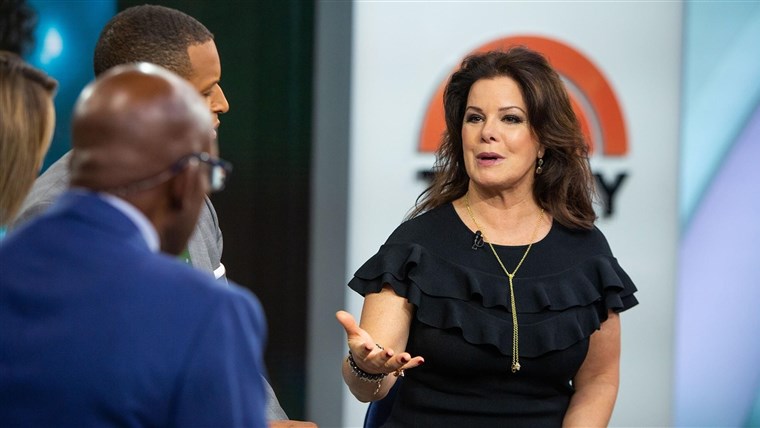
Actor Marcia Gay Harden is setting the record straight after quotes from a recent interview she did went viral.
When speaking with Vulture, Harden, 61, implied that Judi Dench, 86, was upset when she lost to her in the category for best supporting actress at the 2001 Oscars. Harden was nominated for her role in “Pollock” alongside Kate Hudson for “Almost Famous,” Frances McDormand for “Almost Famous,” Julie Walters for “Billy Elliot” and Dench for “Chocolat.”
“It just felt great. And by the way, I felt the girls were really happy for me as well. There was one I will not mention — but it wasn’t Kate — who seemingly wasn’t so happy,” Harden said, before next ruling out Walters.
“And I’m friends with Frances McDormand. There you go,” Harden said.
When the interviewer suggested Dench, the obvious last choice, Harden replied, “Frances doesn’t give a s–t,” adding, “But I don’t want to say anything negative about anybody, honestly. It was my perception that somebody wasn’t so happy, but you never know what people have going on. Whatever.”
Many media outlets widely shared her comments, leading with Harden’s implication in the headline. People magazine wrote, “Marcia Gay Harden Implies Judi Dench ‘Wasn’t So Happy’ to Lose Out to Her at the 2001 Oscars,” while the Huffington Post wrote, “Marcia Gay Harden Suggests Dame Judi Dench Was ‘Not So Happy’ To Lose Out To Her At The Oscars.”
On Wednesday, Harden took to social media to clear the air of any drama, apologizing for her comments that she claims were taken out of context.
“In a recent interview, one of my answers that related to Dame Judi Dench was misinterpreted,” she said. “I have never met Ms. Dench – though if I had, I am certain I would have found her to be as generous and supportive as she is respected. I am deeply sorry for anything that would have led anyone to think otherwise.”
Fellow actors took to the comments section to support Harden in her expression of regret.
Andie MacDowell wrote, “Interviews are so weird and really tricky. Some questions are not worth answering but we don’t know that until it’s too late.”
“Marcia, you are one of the kindest, most supportive people I know,” Camryn Manheim wrote. “You lift people up, you don’t tear them down. I know your interview was misinterpreted and that you have a huge amount of respect for Dame Judy Dench. Knowing what an elegant and gracious woman she is, I’m sure she understands your true heart.”
Alexander Kacala is a reporter and editor at TODAY Digital and NBC OUT. He loves writing about pop culture, trending topics, LGBTQ issues, style and all things drag. His favorite celebrity profiles include Cher — who said their interview was one of the most interesting of her career — as well as Kylie Minogue, Candice Bergen, Patti Smith and RuPaul. He is based in New York City and his favorite film is “Pretty Woman.”
Ever since Colton decided to be true to himself and share his identity, there has been an overwhelming outpouring of support. Fans and Bachelor contestants alike have praised him for his honesty and wished him the best on his journey to find love.
The revelation also sparked support from Bachelor producers. “We are so inspired by Colton Underwood’s courage to embrace and pursue his authentic self,” producers shared in a statement via Page Six. “As firm believers in the power of love, we celebrate Colton’s journey in the LGBTQIA+ community every step of the way.”
Bachelor producers are known to seize every opportunity that comes their way to make the show bigger, better, and more relatable to viewers across the country. So, it only makes sense that they would make history and cast an openly gay bachelor.
TMZ also reports that “producers were moved by Colton’s revelation, and they’ve informally talked over the last few days amongst themselves about a gay ‘Bachelor’ season.”