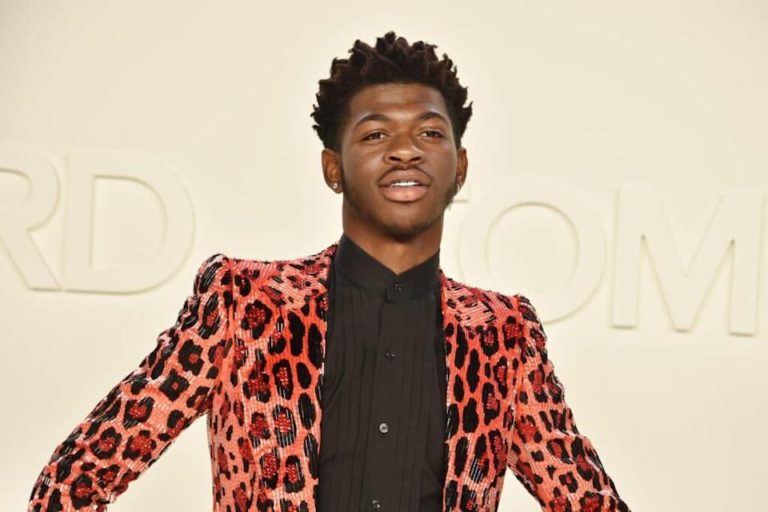
Lil Nas X has shut down the ridiculous theory that he’s only gay to sell records.
Taking to Twitter on Tuesday (20 April), Lil Nas X wrote: “Y’all love saying I’m being gay for success but can’t name five successful gay male artists in the last 10 years to save your life.”
While most of his followers tried, and failed, to list five gay male artists, others continued to insist that the “Montero (Call Me By Your Name)” singer’s “whole brand” was being gay.
One Twitter user, using the name Starbucks Spellman, had a confusing reaction to the tweet: “God you’re so sad, how do you not even realise you’re dissin all the gay artists that came before your a**?”
Lil Nas X responded: “I’m not dissing anyone. I’m acknowledging the fact that we aren’t usually as successful as our peers. What’s not clicking starbucks spellman.”
Replying to even more criticism, he added: “It’s a million n***as in the industry that make nothing but songs about women and y’all don’t complain.
“But I make my first song about a n***a and now it’s my entire artistry. Y’all crack me up man.”
Lil Nas X’s hit new single “Montero (Call Me By Your Name)” has been the most listened-to song in the entire world for the last two weeks. The track even topped the charts in Saudi Arabia, where gay sex is punishable by death.
The song about gay sex hit the top of the Billboard Global 200, which ranks the world’s top tracks based on data from more than 200 territories, on Monday (12 April), knocking Justin Bieber’s “Peaches” down to number two.
“Old Town Road” peaked at 70th position in the global charts.
Upon releasing the video, Lil Nas X released a letter he’d penned to his teenage self.
“I know we promised to never come out publicly, I know we promised to never be ‘that’ type of gay person, I know we promised to die with the secret, but this will open doors for many other queer people to simply exist,” he wrote.
“You see this is very scary for me, people will be angry, they will say I’m pushing an agenda.
“But the truth is, I am. The agenda to make people stay the fuck out of other people’s lives and stop dictating who they should be.”
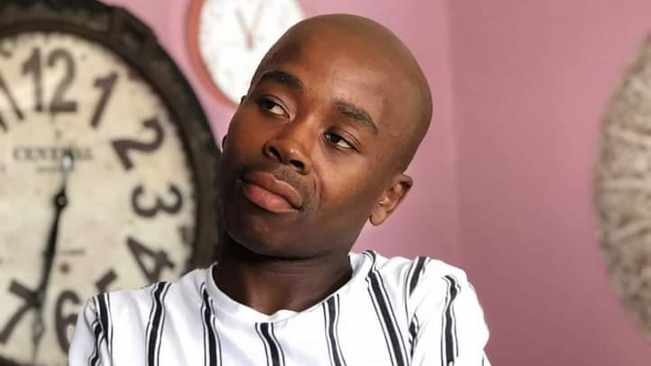
Cape Town – Police are investigating the alleged rape and murder of a 22-year-old gay man after his body was found with stab wounds on Sunday in Mau-Mau, Nyanga East.
Lonwabo Jack was allegedly killed on his birthday while out with friends.
His killing follows a protest by the LGBTQIA+ community on Friday at Parliament demanding the government take tangible action in the escalating hate crimes against queer people in South Africa.
Police spokesperson Noloyiso Rwexana said the circumstances surrounding the incident were being investigated with no arrests yet. Rwexana said allegations of rape also formed part of the investigation.
Lonwabo’s father Mzwabantu said the family last saw him on the day of his birthday on Saturday. He said the family believed that his body had been dumped at the spot where it was found.
“Lonwabo was a nice kid, he was always surrounded by his friends and liked fun and good times. He was a quiet kid and would not say some of the things he would experience because he felt like he could handle them just like any other man.
“However, when he told us that he was raped we knew as his parents that we had to take a stand. Having a gay child has taught us a valuable lesson,” he said.
Jack said the family was still distraught at the manner in which Lonwabo died.
“We also suspect that he was raped because his shorts were taken off. It’s heartbreaking to give birth to a child and also bury them, especially because he was never sick,” he said.
QueerLivesMatter movement representative Kamva Gwana said the movement was in shock at the brutality and gruesomeness inflicted on queer bodies and are crying out to the government to act.
Gwana said young people were dying in the most violent ways in this country for living their truth and officials are not bothered at this plight of this community.
“Hate crimes are perpetuated in this country we believe by the sustained intolerance towards our community by society at large.
“The is also a strong lack of institutional interventions by the government to prevent these crimes and a lack of representation and awareness towards our realities and needs as a community.
“Black queer identities live on the margins of respect in this country and are reduced to caricatures of entertainment in any visibility and representation given to us.
“We believe the intolerance suffered and violence against women in this country mimics the violence we have to endure with little to no recognition of our plight,” he said.
Gwana called on Parliament to hold an urgent debate on hate crimes and the realities of the LGBTQI+ community at large.
LOS ANGELES – Gay and trans panic defenses first appeared in court cases in the 1960s and continue to be raised in criminal trials today. In these cases, defendants have argued that their violent behavior was a rational response to discovering by surprise that the victim was LGBTQ.
Currently, 12 states and the District of Columbia have passed legislation eliminating the use of gay and trans panic defenses, but the defenses remain available in most states.
A new study by the Williams Institute at UCLA School of Law examines current research on violence against LGBTQ people in the U.S. and the use of the gay and trans panic defenses over the last six decades. The study also provides model language that states may use to ban the gay and trans panic defenses through legislation. These laws are one way of addressing disproportionate exposure to violence, including interpersonal violence, for LGBTQ people.
“In many cases where the gay and trans panic defenses have been raised, we see that the victim and the defendant had a relationship prior to the homicide or the homicide occurred in the course of robbery,” said lead author Christy Mallory, Legal Director at the Williams Institute. “These findings suggest that defendants were not surprised or in a state of panic when the homicides occurred.”
KEY FINDINGS
Williams Institute research found LGBTQ people were about four times more likely to experience serious violence, including rape or sexual assault, robbery, and aggravated or simple assault than non-LGBTQ people. LGBTQ people were more likely than non-LGBTQ people to experience violence at the hands of someone well-known to them.
A separate Williams Institute study found that transgender people were more than four times more likely to experience violent victimization compared to cisgender people.
The 2015 U.S. Transgender Survey found 47% of transgender respondents reported that they had been sexually assaulted at some point in their lives. One in ten had been sexually assaulted in the prior year.
A 2017 analysis of 2,144 incidents of LGBTQ intimate partner violence by the National Coalition of Anti-Violence Programs found the majority (59%) of survivors were people of color, including 21% who were Black and 27% who were Latino/a.
2020 research by W. Carsten Andresen, associate professor at St. Edwards University, found that the gay and trans panic defenses were used at least 104 times across 35 states, the District of Columbia, and Puerto Rico between 1970 and 2020.
Charges were reduced for defendants who used the gay and trans panic defenses about one-third of the time (33% of cases).
Over half of the murders (54%) were committed in the course of theft or robbery.
Of the 80 cases where the relationship between defendant and victim was known, the victim and defendant had a preexisting relationship prior to the homicide in 30 of them.
The U.S. Department of Justice will “vigorously enforce” federal prohibitions on discrimination based on sexual orientation and gender identity, an agency official said April 8 during an American Bar Association conference.
Specifically, “we’re going to work to identify areas where we can do investigations and look for employer policies that deny equal employment opportunities to LGBT individuals,” said Pamela S. Karlan, principal deputy assistant attorney general for the agency’s Civil Rights Division. DOJ will be looking at policies regarding health care and bathrooms, among other things, she added.
Karlan identified a few other enforcement priorities for the agency, including Uniformed Services Employment and Reemployment Rights Act noncompliance; physical fitness and paper tests for public safety jobs that may have a disparate impact on protected groups; and workplace sexual harassment.
Dive Insight:
DOJ is tasked with enforcement of some nondiscrimination mandates for the public sector, while EEOC generally has responsibility for the private sector. The latter, an independent agency, has long taken the position that because Title VII of the Civil Rights Act of 1964 prohibits discrimination based on sex, it also necessarily prohibits discrimination on the basis of sexual orientation and gender identity.
That question made its way to the U.S. Supreme Court and in 2019 the two agencies found themselves making opposite arguments to the Court, with DOJ representing the Trump administration’s position against coverage. The Court sided with EEOC in that case, Bostock v. Clayton County, Georgia, finding that Title VII prohibits employers from taking adverse employment actions against employees because of their sexual orientation or gender identity.
A shift in DOJ’s stance was likely given that ruling and President Joe Biden’s request that agencies reevaluate their positions in light of Bostock. Just days before Karlan’s statements, for example, the U.S. Department of Education said it would recognize sexual orientation and gender identity as protected classes under Title IX of the Education Amendments of 1972.
Even before Bostock delivered clarity, however, employment law attorneys generally recommended that employers refrain from discrimination based on sexual orientation and gender identity.
“However, we are concerned at the absence of any clear or evidence-based definition of conversion therapy contained anywhere within the motion. There is a risk that such ambiguity, if translated into legislation, would criminalise legitimate activities or conversations.
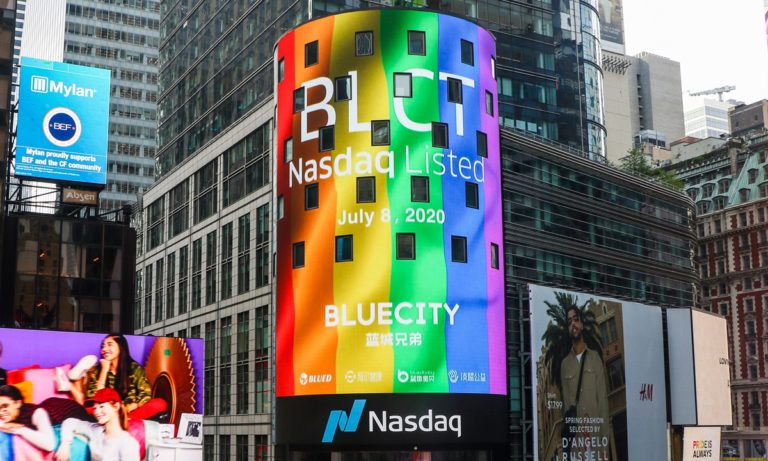
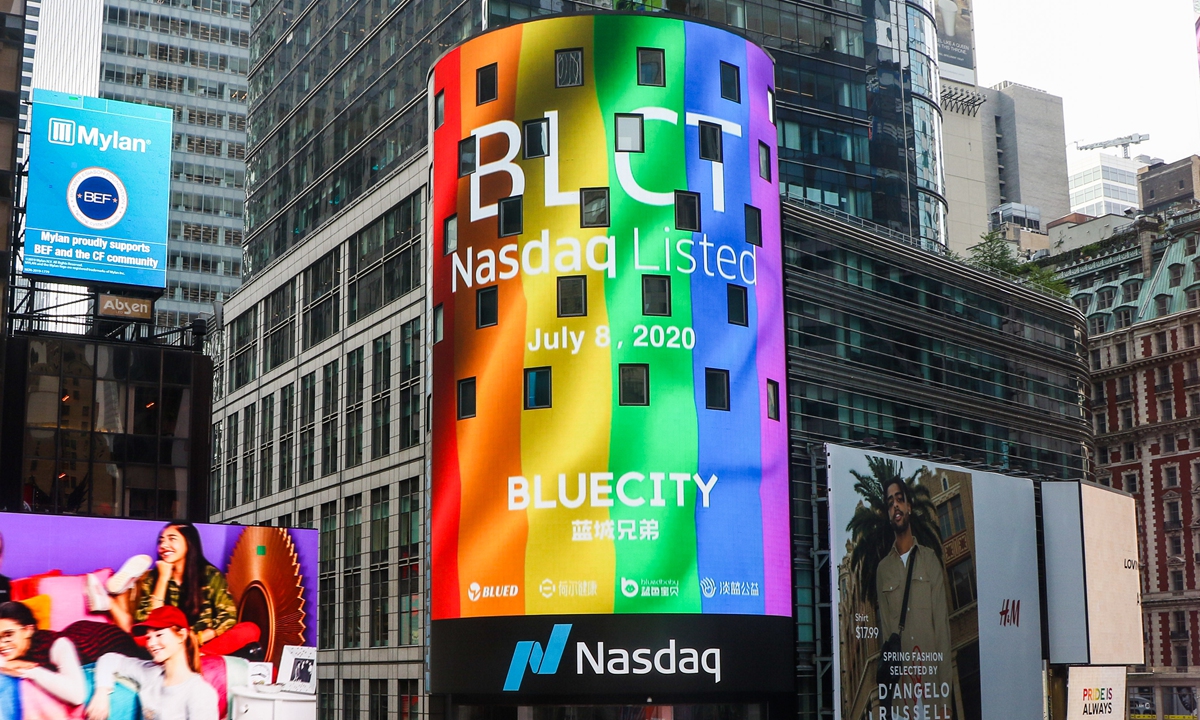
BlueCity debuts on NASDAQ on July 8, 2020, becoming the world’s first LGBTQ-focused company listed in the era of mobile internet. Photo: Courtesy of BlueCity
BlueCity Holdings, owner of China’s biggest gay dating app, Blued, announced on Tuesday that He Health, the brand’s health service platform for men, has officially obtained an internet hospital license in China, joining the wave of online healthcare business.
The establishment of the He Health Internet Hospital means that BlueCity can now offer a more complete set of health services for men, including consultation and advice on issues like erectile dysfunction, premature ejaculation, HIV testing and prevention, as well as drug accessibility services, the company said in a statement shared with the Global Times.
It will close a glaring gap in the field of men’s health in China, a sector that is expected to grow significantly over the next few years.
“We’re delighted to open up what will be China’s first internet hospital focused on men’s health, tapping into a promising sector that we view as a key driver in the brand’s next phase of growth, which is backed up by the eightfold increase in profits BlueCity saw for He Health year-on-year during the fourth quarter of 2020,” mentioned Ma Baoli, founder, Chairman and CEO of BlueCity.
Since its launch in March 2019, He Health has promoted awareness of men’s health and HIV prevention to tens of millions of users in China and its services have gradually expanded from sexually transmitted diseases to wellbeing.
In the fourth quarter of 2020, BlueCity’s revenue, including He Health, increased by 197.6 percent year-on-year to 45.7 million yuan ($7 million).
China’s online healthcare sector began fledgling after the coronavirus pandemic boosted demand for platforms that provide virtual consultations and sell medicine.
According to a report by the business consulting firm Frost and Sullivan, the scale of China’s online healthcare consultations as well as online prescriptions and pharmacy market is expected to reach 523 billion yuan by 2025, indicating that there is a broad space for penetration.
Notably, the report claims that the size of men’s health and healthcare market in China is expected to reach 99.6 billion yuan by 2025.
As one of the LGBTQ+ community’s largest social media companies in Asia, BlueCity owns China’s biggest dating app for gay men.
Monthly active users of BlueCity’s portfolio apps reached 7.6 million in the fourth quarter of last year, an increase of 20.3 percent from the same period in 2019.
BlueCity made its NASDAQ debut in July last year, raising $84.8 million despite the politicized securities regulation by the US to target Chinese stocks.
BBC Three’s Glow Up is here to fill the Drag Race UK-shaped hole in all our lives.
Remember the 10 weeks we all spent locked down, frantically tweeting Bimini Bon Boulash memes and singing Bing Bang Bong until the cows came home?
Things are, thankfully, a little different now. Pub gardens are open, (outdoor) dates are no longer illegal, real life is back on the agenda. Well, in England, at least. But that doesn’t mean we don’t still hanker for a little reality TV escapism.
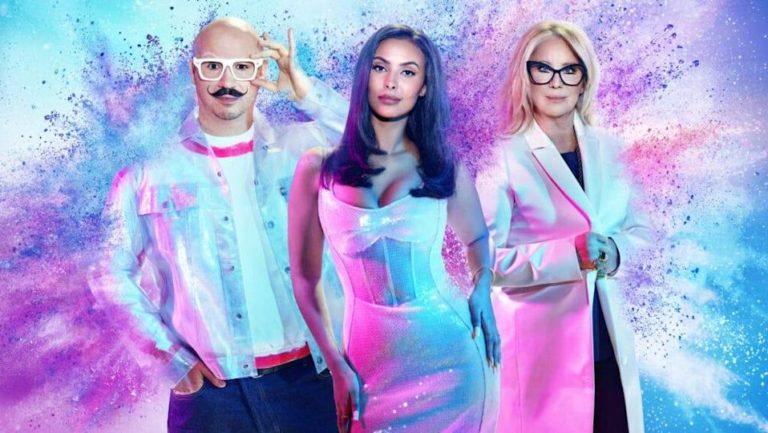
Thankfully, BBC Three’s Glow Up is back for its third season. Ten aspiring make-up artists (MUAs, in the show’s lingo) are put through their paces by returning judges Val Garland, who’s painted everyone from Kate Moss to Britney Spears, and whose signature “Ding dong!” is the show’s highest honour, and Dominic Skinner, global senior artist for MAC. This time around, they’re joined by new host Maya Jama, who takes over from Stacey Dooley.
The cast of Glow Up season three. Top row L-R: Sophie, Nic, Dolli, Samah, Xavi, Craig. Bottom row L-R: Elliot, Jack, Maya Jama, Ryley, Alex. (BBC)
Comparisons with Drag Race UK are inevitable: Glow Up is a reality competition show filled with LGBT+ contestants that platforms diversity, creativity and queer culture (the second episode features a Pose-themed challenge, complete with authentic ballroom performers and a special appearance from the hit show’s head of make-up). But are they earned?
In previous incarnations, not really. But the new season has a different vibe – it feels warmer and more celebratory. The first challenge focuses on the importance of a make-up artist being able to work with any and all skin tones; the second encourages the MUAs to showcase their identities, resulting in some truly astonishing TV moments. There’s Dolli, who blows the judges away with her Afrofuturism-inspired paint; Xavi and Sophie, who both create looks that illustrate their experiences with Asperger’s and autism respectively. We see make-up that tells stories of gender, surviving assault, body modification and social class. In the same way Drag Race uses camp and excess to tell real, personal stories, BBC Three’s Glow Up has learned how to balance glamour with heart.
Dolli’s Afrofuturism-inspired look is a stand-out of episode one. (BBC)
Each of the 10 contestants have their own unique story. Dolli is a young mum who wants to make her daughter proud. Ryley’s experience has mostly been doing make-up on herself, leading her on a journey towards loving her beautiful, prominent port wine stain birthmark. Nic is passionate about the environment, while Samah wants to honour her Moroccan heritage while subverting the expectations place on her as a Muslim woman.
“There’s the stereotype of the lesbian as this big butch, man-hating hairy unfeminine person – and they’re the best type of lesbians to be honest, that’s what my girlfriend’s like – but I’m here to smash that stereotype wide open,” she tells PinkNews.
Alex is a Scouse ‘lipstick lesbian’. (BBC)
Alex has loved make-up since a young age. “I grew up in Liverpool, I came out of my mother wearing two pairs of eyelashes and thick bronzer,” she quips. At school, she was a “big emo and a closeted gay”, who didn’t even realise femme lesbians existed until she was much older. She didn’t come out until her early 20s partly because of this, though her school friends clearly “had a sniff” of her hidden sexuality.
“They were like, ‘we don’t want you to get bullied,’ so I learned to get good at make-up. I’ve always had that interest, but I guess classism and misogyny kept me from following that career path.” After going to university to study something more “academic”, Alex was forced to quit her studies after being assaulted. “I hit my lowest point, and in order to rebuild myself I revisited something I’ve always loved: make-up. Sometimes flowers grow from dirt.”
Another of the MUAs, Jack, was working in a care home when they got the call for Glow Up. They’d worked in retail make-up for major brands in London and Birmingham, but when their grandfather got ill they returned home to Cambridge to help care for him, which led to a job at a home for people with dementia. The BBC show is a return to their first passion, something they’ve been enamoured with since they were “really young”.
Jack is a former drag performer, make-up artist and care worker. (BBC)
“Make-up was an escape,” Jack says. “Being the little queer kid that I was, I didn’t really believe in my gender, I was a bit confused, I felt like I needed to become a woman to fit in with the make-up that I loved, with that femininity. But when I really got into make-up I found I could just be me. I realised that I’m just Jack, I didn’t need to tick male or female, I just need to write my name.” While working in make-up Jack also got into drag, performing as Anna Lies at Birmingham Pride and touring the country with Drag Race stars. They’re no longer a working performer, but a quick look at their Instagram shows that it’s still very much part of what they do.
“As RuPaul always says, you can’t just be a drag queen, you have to be the whole package, to really find who you are and let that spill over. I think the more that happened for me, the more I got confident with who I was.”
Alex, Jack and their fellow BBC Glow Up contenders are clear that make-up is for everyone, no matter your gender, identity, class, race or any other signifier. Even if you don’t wear make-up, or have any real interest in beauty, this show – this season, specifically – is a celebration of those things that make us different, and those that unite us. “And fingers crossed,” Alex says, “some closeted gay teenager is going to watch and think: you know, you can be gay and rolling and glitter every day.”
Glow Up season three launches on BBC iPlayer at 7pm Tuesday (April 20), and airs on BBC One at 10.45pm. New episodes land on iPlayer weekly.
AECOM sustainability manager Lucy Bradbury has been shortlisted as a Top 10 Inspirational Leader by the British LGBT Awards 2021, recognising her work to promote equality, diversity and inclusion at AECOM and as co-chair of the Building Equality Greater Manchester network.
One of the UK’s most publicised LGBTQ+ events, the British LGBT Awards celebrates the achievements of campaigners, celebrities and personalities who work to improve the lives of LGBTQ+ people.
Bradbury is part of AECOM’s LGBTQ+ network and has led a number of initiatives for the company over the past year, including AECOM’s participation at virtual Pride events, online yoga sessions for the LGBTQ+ community during Mental Health Awareness Week and co-ordinating donations for LGBTQ+ youth charity The Proud Trust.
She is also co-chair of the Building Equality Greater Manchester network, which supports LGBTQ+ inclusion in the construction industry. After winning the Building Equality Rising Star award in 2020, she was appointed co-chair of the network in Greater Manchester following just one year as a member. In this role, she helps drive engagement across the industry, encouraging construction and engineering organisations to join the network.
On being named a Top 10 Inspirational Leader, Bradbury said: “Working in an industry that hasn’t historically had many diverse visible role models, I decided to be the change I wanted to see as a queer woman in construction. AECOM’s commitment to fostering an equitable, diverse and inclusive culture enables our LGBTQ+ initiatives to thrive.
“I’m honoured to be recognised by the prestigious LGBT Awards for my work to promote inclusion at AECOM and my involvement with Building Equality. I remain passionate about advancing LGBTQ+ inclusion within the built environment sector.”
The winner of the Inspirational Leader category will be announced at the LGBT awards event later this year.
Mention rugby and most of us will think of a mud-flecked pageant of primal masculinity.
It’s all tree trunk thighs thundering down rain-soaked pitches and shoulder-bashing scrums followed by roars of triumph or rage.
But, for some of us, it’s much more than that: it’s community; it’s a sense of purpose; it’s the difference between life and death.
Steelers, available on Amazon Prime Video from April 16, tells the story of the world’s first gay rugby team.
And yet, it’s so much more than a 75-minute documentary about an individual sport’s team. It is, in the words of its creator, “a story about searching for where you belong and never giving up – because you might just find happiness where you least expect it.”
Here at Indy100 we’ve spoken to three key figures from the movie and the club to illustrate why this is a film for everyone, no matter what your background or sexuality – and even if you don’t like rugby.
The film’s synopsis
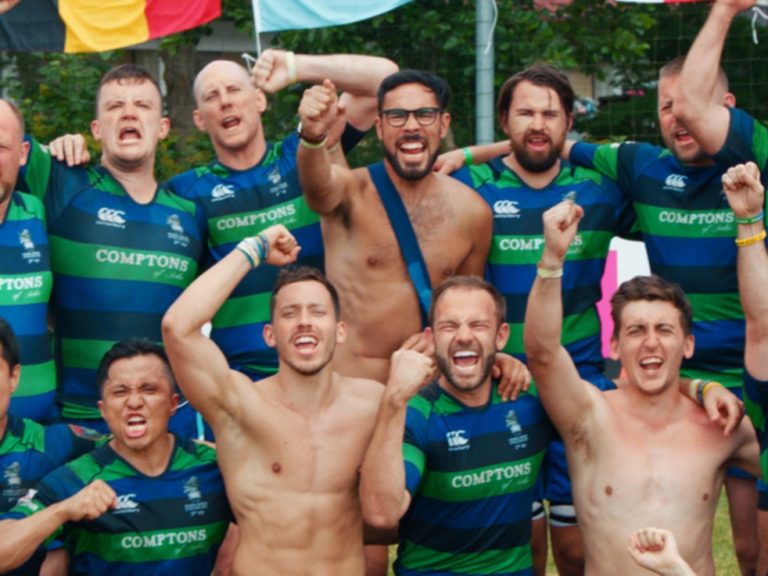
The Steelers were founded inside a gay pub in London’s Kings Cross on November 1, 1995
(Steelers Documentary)
The world’s first gay rugby team was founded in a north London pub 25 years ago.
Its masterminds, a group of six friends, wanted to create an inclusive community where gay and bisexual men could play the sport they loved and prove that they were equal to any mainstream team. And so the Kings Cross Steelers were born.
Fast-forward to 2018, Australian journalist and the film’s director Eammon Ashton-Atkinson accompanies the Steelers to Amsterdam as the team vye for victory at the international gay rugby tournament the Bingham cup.
Recording the team’s ups and downs in their journey to become champions, Eamonn interviews some of the people who make the Steelers what they are, all while teaching the audience a thing or two about resilience, friendship, and self-belief.
How did the documentary come about?
Eamonn Ashton-Atkinson filmed, directed and provided the voiceover for the film
(One Man Band Media LLC)
Eammon should have been playing in the Bingham cup tournament himself. Having moved to London to work as a news correspondent he soon became a proud member of the Steelers’ squad.
But when a concussion ruled him out of the contest the TV reporter decided to pick up his camera and record his teammates’ journey instead.
He didn’t have any grand plans to create a film at the outset. “I just thought maybe I’ll get enough footage and I’ll put together a little 20-minute thing on YouTube,” he told Indy100.
But it was when he started speaking to the players and the three people who were to become his core cast members that he began to realise there was a deeper narrative to be shared.
Still, once the tournament ended (and we won’t reveal any spoilers, don’t worry), he put his camera away in a drawer for a year, leaving the footage untouched.
It was only when, in January 2020, the international rugby star Israel Folau said “hell awaits” gay people that Eammon realised it was time to tell the Steelers’ story.
Who are the central characters and how were they chosen?
Just as Eamonn didn’t have a plotline planned, he also didn’t have his three protagonists lined up when he first started filming.
It was only through having impromptu conversations with each of them that he realised they embodied the movie’s central themes: struggles with mental health, identity acceptance, and fighting misogyny.
Nic learned her love of rugby from her grandfather
( One Man Band Media LLC)
Nic Evans was the head coach of the Kings Cross Steelers from 2014 to 2018, meaning this Bingham Cup tournament was to be her last with the team. Focusing on a woman in a film ostensibly about a male rugby team may seem counterintuitive, but Eamonn explained that her passion for the sport and candid portrayal of her battles against misogyny placed her at “the heart of the film”. That is, after all, something women, trans people and members of the LGBTQ+ community face on a daily basis.
After organising a fundraising concert for the club one year, Drew discovered his love of drag
( One Man Band Media LLC)
Drew McDowell moved to London from the US when he was 25. His love of drag off the pitch – transforming into “Drewalicious” by night – and fierce power on the pitch is a perfect illustration of the pressures of masculinity and conflicts of dual identities endured by so many queer men. At one point in the documentary Drew explains: “There’s this element of being a rugby player – even as a gay rugby player – that there’s a certain masculinity that you need to maintain. To me that’s bollocks. I will be tough and brutal and kick your ass on the pitch, when I’m off the pitch I will be as flagrant and as flamboyant as I want.”
Simon, a lawyer for Google, said the club ‘probably saved his life’
(One Man Band Media LLC)
Simon Jones was initially reluctant to speak to Eammon about his fight to overcome mental health issues but, in the end, it proved a cathartic experience and a reminder of how far he’d come. Finding the Steelers after moving to London from Birmingham in his 20s equipped him with a support network and a safety net which, in turn, gave him a renewed sense of self-worth that he could transfer to other areas of his life. His story shows what happens when a person reaches their darkest point then finds the strength to bring themselves back from the brink. He tells Eammon in the film: “I never had depression before but I was at the lowest of the low. And just when I was about to walk away from rugby something told me that rugby can still help you. So this club, and this season probably saved my life.”
What’s so special about rugby?
Eammon describes rugby as like ‘going into battle with our mates’
( One Man Band Media LLC)
This could have been a film about any gay sports club, about any tight-knit community, but those involved agree that there’s something particularly striking about its focus on rugby.
“It’s such a masculine sport, it’s brutal, you’re slamming each other onto the ground, you’re throwing your body on the line,” Eammon said.
“And I think what makes the sport so special and why it’s been so successful is we’re going out onto the field and it’s like we’re going into battle with our mates. The camaraderie you build doing that is like nothing else you can ever do.
“Queer people are so used to putting their emotional selves on the line but here they’re actually putting their physical selves – their bodies – on the line. And for those that were excluded or self-excluded from the sporting pitch, to be able to reclaim that later in adult life has been very special.”
Rugby embraces players of all body types
( One Man Band Media LLC)
Meanwhile, Simon had a slightly different take.
He told Indy100: “Rugby has always been inclusive in many aspects. Things like body type doesn’t matter – you can be really tall, really short, any body shape and there’s a place for you – so I’d always hoped it would be a really welcoming sport to everyone.
“But there’s something about these sort of macho environments that frightens a lot of people, and so they avoid them.”
However, the Kings Cross Steelers – and the hundreds of gay teams that have emerged since the club’s formation – have proven that there’s an alternative. A male sport’s team can shed the bib of toxic masculinity and be just as fierce, just as ballsy, just as successful.
Simon continued: “I think the film really demonstrates the beginning of something which will be a massive change in the next 10-15 years, where team sports have the opportunity to prove themselves as really welcoming of all sexualities.
“And I think, with that, they’ll see more really talented individuals coming through and, hopefully, being very successful.”
Why has the film struck such a chord with people?
The Steelers now hold an annual drag event at Heaven nightclub
( One Man Band Media LLC)
Steelers has screened at a number of prestigious film festivals, including BFI Flare London, the Boston Globe’s GlobeDocs, and the New Zealand International film festival, to great critical acclaim.
Yet, both Simon and Eammon agree that hearing people’s individual and personal responses has touched them more profoundly than any glowing review.
“My big hope was that it would be well received outside of our community,” Simon said. “And actually, a lot of people who’ve seen it have then spoken to me about challenges of their own, and which are factually completely unrelated to the ones we describe, but there’s so much overlap.
“And so what I’m hearing from people is that they connected with seeing human beings struggle with life, and helping each other to get through. I guess it’s a film that touches a lot of difficult subjects but actually the thread running through is positivity.
“So hopefully what people are taking away is that challenges come and go but you can overcome them. And so whether it’s a rugby club or another kind of community, there are always support networks that can help you get through your own difficulties.”
Drew says he’s created a drag persona off the pitch which is a “wild extension of himself”
( One Man Band Media LLC)
Speaking about the creative process, Eammon said he believed that his shoestring budget and lack of forward-planning contributed to the poignant authenticity of the film.
“One thing I learned as a filmmaker is the power of simplicity,” he said. “It was just me with the camera in the room interviewing Nic, Simon and Drew.
“And I think that if we’d had a producer with a clipboard, a soundman with a boom-mic and a guy checking the lighting, it would have taken them out of it.”
Hailing his three subjects, he said: “People can see that they were so genuine and honest with their stories, and who can’t relate to that?”
He added that he hoped the film would open more people’s eyes to the realities of living as a queer man.
“For people who haven’t had a lot of exposure to the queer community, or who don’t have lot of gay friends, maybe this might be pulling the veil back to really show, hey, actually, we’re exactly the same. We have the same hopes and ambitions, we face the same struggles, we have that same voice in our heads that tells us we can’t do something. And to see people deal with those kinds of things, overcome them and find happiness, is something that can give anybody hope.”
What’s next for the Steelers?
The Steelers continued to support their members through the Covid lockdowns by holding online events
( One Man Band Media LLC)
Last year, the club celebrated its 25th birthday and, despite suffering the effects of three lockdowns it’s still going strong.
The Steelers now have more than 300 members of over 20 nationalities, yet the club still has some way to go before its mission is fully realised.
Chair Matt Webb told Indy100: “We have gay, bi, trans, non-binary and straight members, but can’t call ourselves gay and inclusive unless we welcome absolutely everyone.”
Therefore, they have just announced a partnership with women’s club the East London Vixens.
“As we look to the future, we want to ensure that anyone who wants to play rugby feels welcome,” he said.
“We want to be a model to other teams – both mainstream and within International Gay Rugby (IGR) – because we believe that the more inclusive you make the sport, the more talent you’ll see emerge.
“In essence, we want to build a club for everybody,” he added.
“And hopefully one day we’ll see an LGBTQ+ captain of England.”
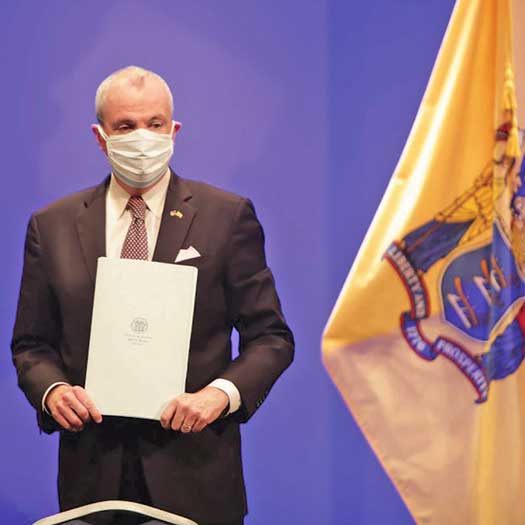
New Jersey Governor Phil Murphy signed S2815, which directs the New Jersey Department of Military and Veterans’ Affairs (DMAVA) to assist former Armed Forces service members who were denied an honorable discharge.
New Jersey Governor Phil Murphy signed a bill which directs the Department of Military and Veterans’ Affairs in the Garden State to assist former Armed Forces service members who were denied an honorable discharge due to their sexual orientation or gender identity. DMAVA will assist veterans with completing and submitting the appropriate forms to petition the U. S. Department of Veterans Affairs to change their discharge designation to instead reflect an honorable discharge.
DMAVA is tasked with creating a uniform and consistent process for providing such assistance to veterans. The bill S2815 was signed by the governor on April 19, 2021.
“Our LGBTQ+ servicemembers made countless sacrifices to serve this nation, yet were discharged and denied the services and benefits they deserved simply because of who they were and whom they loved,” said Governor Murphy. “With today’s bill signing, we are streamlining the process to provide direct assistance to these brave men and women in their efforts to revise their discharge status and attain the benefits they earned and deserve for their service.”
Nearly 100,000 LGBTQ servicemembers were denied honorable discharge prior to the repeal of the discriminatory “Don’t Ask, Don’t Tell” policy. Currently, these servicemembers are ineligible for both state and federal veterans’ benefits. Under this legislation, former servicemembers who have the designation of their discharge changed will be eligible for the same rights, privileges, and benefits that are offered to servicemembers who were honorably discharged.
“Members of the LGBTQ+ community who bravely served our country and who were discharged on the basis of their gender identity and/or sexual orientation were done a grievous injustice,” said State Senator Vin Gopal. “This law won’t right that wrong completely, but it is a step toward ensuring that former service members are afforded the respect and benefits they deserve.”
“Over 100,000 LGBTQ+ vets have been shamefully denied the benefits and support they have earned protecting this country, due to discriminatory discharges over their sexual orientation,” said State Senator Nia Gill. “With this law, the DMVA will be tasked with assisting our service members in obtaining the benefits they are entitled to for their service.”
“It is critical that we stand behind and uplift all those who have the courage to serve in our armed forces,” said Christian Fuscarino, Executive Director of Garden State Equality. “The discriminatory “Don’t Ask, Don’t Tell” policy is thankfully a thing of the past, but the impact on those who courageously served—only to have been dishonorably discharged because of who they love—is still very much an issue today.
“This new bill ensures that every New Jersey veteran, who was ready and willing to fight for the United States and defend our freedoms across the globe, will be assisted in the process of getting the benefits that they are entitled to,” said Fuscarino. “As a military spouse, married to a U.S. Marine, I know first-hand how helpful these benefits will be to military families all over our state.”
“The brave men and women who put their lives on the line to protect our nation should be provided with the respect and support they deserve when they return home,” said Reed Gusciora, Mayor of Trenton. “Sadly, for many LGBTQ+ veterans, they were denied benefits and services due to their sexual orientation, gender identity or gender expression. I want to thank Governor Murphy for addressing this injustice and honoring these veterans.”
“This new law rights a historic wrong and treats all New Jerseyans who have served with dignity and respect,” said Colonel Lisa J. Hou, D.O., Interim Adjutant General and Commissioner of the New Jersey Department of Military and Veterans Affairs. “The Department of Military and Veterans Affairs employs Veterans Service Officers in each county, and we stand ready to assist LGBTQ Veterans upgrade their discharges.”
“I served under the military’s ban on gay and lesbian service members, and I know the heartbreak of so many who served with honor only to be pursued and kicked out,” said Sue Fulton, Chief Administrator of the New Jersey Motor Vehicle Commission. “For those who were dismissed with anything less than an honorable discharge, this restores the dignity of their service. As a practical matter, it also enables them to take advantage of the benefits they rightly earned. This is a proud day for New Jersey military veterans!”
“With the enactment of this legislation, Governor Murphy is once again standing up for the LGBTQ+ community, ensuring that LGBTQ+ people who served our country in uniform can access the benefits they deserve,” said Shawn M. LaTourette, New Jersey Department of Environmental Protection Commissioner-designate and the Immediate Past Chair of the LGBTQ Rights Section of the New Jersey State Bar Association. “This legislation brings us one step closer to the promise of lived equality for all LGBTQ+ people in the Garden State,” said LaTourette.
“Governor Murphy ends a great injustice against LGBTQ+ service members,” said David Mixner, LGBTQ+ rights activist. “The Governor has restored dignity and honor to the thousands who have served and protected America. His actions resonates not only in New Jersey, but around our country.”
State lawmakers are looking over a plan to ban conversion therapy for young people in the state. The issue carries some controversy. Conversion therapy involves assisting, or attempting to change someone’s sexual orientation or gender identity. To be more precise, it is typically viewed as the attempt by mental health professionals, and sometimes clergy, to get young people who believe they are gay to believe they are not. A number of countries have banned the practice. A number of states have banned it. And several cities in Michigan have also enacted bans. The attempt has been made previously in Michigan with no success in the legislature.
The bills are primarily supported by Democrats in the legislature. 50 Democrats have signed on as sponsors of the bill in the State House of Representatives. That includes Representative Jim Haadsma of Battle Creek and Representative Julie Rogers of Kalamazoo. Its companion bill with identical language in the State Senate has the support of 14 Democrats including Democrat Sean McCann of Kalamazoo. Republican Senator Wayne Schmidt is also signing on to that bill.
The essence of the bills is to ban mental health professionals from being involved in the activity. Those discovered to be involved in that kind of work with anyone under the age of 18 would face strict disciplinary action, including losing their state license to practice and a public sanction for unprofessional conduct.
The Human Rights Campaign website proclaims the therapy really isn’t, saying: “So-called “conversion therapy,” sometimes known as “reparative therapy,” is a range of dangerous and discredited practices that falsely claim to change a person’s sexual orientation or gender identity or expression. Such practices have been rejected by every mainstream medical and mental health organization for decades, but due to continuing discrimination and societal bias against LGBTQ people, some practitioners continue to conduct conversion therapy. Minors are especially vulnerable, and conversion therapy can lead to depression, anxiety, drug use, homelessness, and suicide.”
Both bills in the Michigan legislature have been referred to committees for initial review.
KEEP LOOKING: Here are 33 LGBTQ+ charities that need your donation
It was late March, and Mario Smith was staring at an uncertain future.
Mx. Smith, a 20-year-old immigrant from Jamaica who identifies as transgender and nonbinary, was nearing the end of an internship and preparing to plunge into a job market that, even before the pandemic, offered limited opportunities for people like them.
Even in New York City, where young people like Mx. Smith have flocked for decades in search of the freedom to live openly, long-established prejudices about gender identity and sexuality can still be a barrier to professional success.
Finding an inclusive workplace would be important in ways that were both obvious and intimate. Would employers recognize and respect Mx. Smith’s identity, and make sure co-workers did the same? And would bosses be supportive as Mx. Smith, who was taking hormones, went through something akin to a second puberty?
“It can be so hard to navigate that while also being in the workplace,” Mx. Smith said.
This summer, New York City will start an employment development program meant to address the needs of people like Mx. Smith, who identify as lesbian, gay, bisexual, transgender, queer or intersex and are homeless or at risk of homelessness.
The program will arrive in the middle of a turbulent moment for L.G.B.T.Q. children in the United States — especially transgender ones. After a Supreme Court decision guaranteed L.G.B.T.Q. people protection from workplace discrimination, state lawmakers around the country have sought to restrict transgender children’s rights and medical care.
Most such rights have already been acknowledged in New York City, and state lawmakers have taken steps in recent years to address gaps, like barring discrimination based on “gender identity or expression” and repealing the so-called “walking while trans” law.
But many in the L.G.B.T.Q. community say that workplaces have yet to become truly inclusive, and studies show large gaps in hiring and wages. The disparity is particularly pronounced for homeless and runaway youth, like Mx. Smith, who enter the job market with disadvantages that can leave them in dire economic positions.
City officials say the program, Unity Works, goes beyond job training and knits together a number of services in order to meet the needs of a vulnerable population poorly served by federally funded programs.
“The level of support and the resources that young people are getting in this program doesn’t exist in any other program for young people in this country that I’ve seen,” said Ashe McGovern, the executive director of the Unity Project, the city’s initiative focused on L.G.B.T.Q. young adults.
When the program begins July 1, it will connect 90 people between 16 and 24 years old with jobs or paid internships at businesses committed to fostering inclusive work environments. It will provide two years of job training and placement, assistance accessing social services, educational support and mental-health resources, with an additional year of follow-up support from case management workers and mental-health professionals.
Mx. McGovern, who identifies as queer and transgender, said the long runway was meant to ensure that the people involved, many of whom have long faced rejection from family or community institutions, do not feel abandoned or “left behind” when the program ends.
New York City has one of the largest populations of L.G.B.T.Q. residents in the country, and it has long been a haven for queer people escaping hostility in their communities.
“This is the city where everybody sees themselves making it,” said Mx. Smith, who came to New York in 2019. “I had that idea, too.”
When they came to the city, Mx. Smith had been in the United States less than a year. They had arrived, undocumented, from Jamaica at the end of 2018, going first to Florida and then to Massachusetts. As Mx. Smith came to realize they were transgender, they knew their mother would not be supportive.
“She didn’t get it,” Mx. Smith said. “She was still in the customs of home. So I had to leave, because she wasn’t going to understand who I was or where I’m going.”
Mx. Smith arrived in New York with no job and nowhere to say. The Ali Forney Center, a nonprofit that supports homeless L.G.B.T.Q. youth and is partnering with the city’s Unity Works program, provided Mx. Smith with housing and helped them get their green card.
The city’s first lady, Chirlane McCray, started the Unity Project in 2017 to better connect city agencies to young L.G.B.T.Q. people like Mx. Smith, who arrived in the city lacking support from their families.
“When you’re just starting out, and you’re faced with not having support from important adults in your life, and you’re new to the city, you have to navigate figuring out how you’re going to move forward,” Ms. McCray said in an interview.
Homeless L.G.B.T.Q. youth make up about 40 percent of the city’s homeless youth population, according to data. Experts and city officials have attributed the high rate in large part to rejection from family members.
“We’re dealing with young people who are being fundamentally rejected because of who they are,” said Alexander Roque, the executive director of the Ali Forney Center.
For homeless youth, that trauma is often compounded by the instability of sleeping on the street, Mr. Roque said, where young people face safety risks including sexual violence. They also typically lack access to supportive and inclusive community services, including housing, education and mental-health resources.
As those young people reach adulthood and age out of the youth shelter system, jobs can provide them with a path toward stability and economic security.
“Getting jobs is the most concrete response to their family rejection,” Mr. Roque said. “Like, ‘I can still make it. I can still be successful, I am not what you think of me.’”
During the pandemic, the unemployment gap appears to have widened. Last June, the Human Rights Campaign found that L.G.B.T.Q. people were more likely to lose their jobs or have their hours or wages cut because of Covid-19. Mr. Roque said that 90 percent of the young people the Ali Forney Center worked with had lost their jobs.
Even as the pandemic intensified the need for Unity Works, it was also threatening the program’s viability. Last summer, with the city anticipating a massive budget shortfall because of the virus, it put the program on pause.
Elected officials, advocacy groups and nonprofit organizations called on the city to keep the program alive, and the city ultimately funded it for $2.6 million over the next five fiscal years.
Mx. McGovern, a lawyer who works in public policy, said they hoped the program would encourage participants to reach for goals that might otherwise seem distant.
“That core sense of wanting to feel seen and safe and belong and heard about your dreams and aspirations and your right to exist and be in the world — it’s something that I can deeply relate to,” they said.
Former President Donald Trump is calling on Biden to reinstate his travel ban to keep the US safe from “radical Islamic terrorism.”
In a statement released on Monday night, Trump advocated that the controversial policy, which mostly affected those traveling from predominantly Muslim countries, should be put back in place.
“If Joe Biden wants to keep our country safe from radical Islamic terrorism, he should reinstitute the foreign country travel ban and all of the vetting requirements on those seeking admission that go with it, along with the refugee restrictions I successfully put in place,” Trump wrote.
He then added that “terrorists operate all over the world and recruit online.”
“To keep terrorism and extremism out of our country, we need to have smart, commonsense rules in place so we don’t repeat the many immigration mistakes made by Europe, and the USA prior to ‘Trump’,” he wrote.
Trump did not outline in his memo which countries he specifically thought should be banned at this juncture, but most people from Syria, Iran, Yemen, Somalia, Libya, North Korea, and Venezuela were prohibited from traveling to the US in 2017.
The list was broadened in 2020 to include immigrants and those traveling from Myanmar, Eritrea, Kyrgyzstan, Nigeria, Sudan, and Tanzania.
It is not clear what vetting requirements Trump was referring to in the memo released on Monday, but the former president did outline early in his presidency what he called an “extreme vetting” process for immigrants, which included a values test for whether immigrants’ views on gay rights, gender equality and religious freedoms, among other things, aligned with “non-extremist views.”
Insider reported in March that the State Department will now allow those who were earlier denied entry into the US as a result of the travel ban to either re-apply for entry or appeal to have the decision reconsidered.
June is Pride Month, and in celebration, Kellogg’s is releasing a new heart-shaped cereal in 2021! Created in partnership with GLAAD (Gay & Lesbian Alliance Against Defamation), The Together With Pride cereal is berry-flavored, and the colorful pieces are topped with glitter as well.
The cereal will hit store shelves nationwide in mid-May and be available for a limited time. The 7.8-ounce boxes have a suggested retail price of $3.99, and Kellogg’s will donate $3 to GLAAD for every box purchased. Be sure to upload your receipt to Kellogg’s Family Rewards to make sure your donation counts.
“The delicious new recipe features berry-flavored, rainbow hearts dusted with edible glitter,” Kellogg’s said in a statement. “The cereal marks the latest chapter in a years-long partnership with GLAAD and is the evolution of the fan-favorite — All Together Cereal — which previously was only available online.”
Kellogg Wellbeing tweeted about the special-edition cereal, writing, “All are welcome to the breakfast table with our NEW Together with Pride cereal coming to shelves soon. For every box sold, Kellogg is donating $3 to @glaad to support the LGBTQ+ community @KelloggCompany”:
All are welcome at the breakfast table with our NEW Together with Pride cereal coming to shelves soon. For every box sold, Kellogg is donating $3 to @glaad to support the LGBTQ+ community @KelloggCompanypic.twitter.com/jLjw9570aC
The purple box features several Kellogg’s cereal characters, including Tony the Tiger, Toucan Sam and Rice Krispies’ Snap, Crackle and Pop, all coming together to celebrate Pride.
Pride Month has traditionally been celebrated each June to commemorate the anniversary of the Stonewall Rebellion in New York on June 28, 1969, a moment that’s widely considered to be the birth of the modern LGBT movement. Today, Pride Month is celebrated by members of the LGBT community and their allies around the world with parades, parties, festivals and other events.
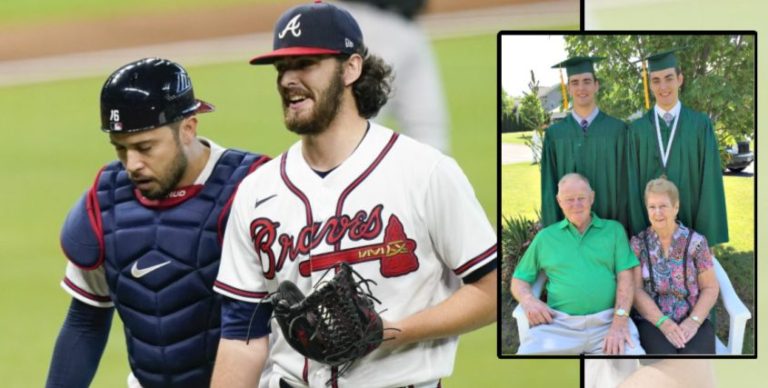
Like a lot of proud grandparents, Bob Anderson Sr. was certain his grandson would become a Major League Baseball player. Before his death in Feb. 2019, he’d regularly make that point to his wife Beverly Anderson.
“He knew this kid was going to make it,” Beverly Anderson said earlier this week.
The grandfather was right — and, on Wednesday, 83-year-old Beverly Anderson will make her first trip to watch in person her grandson Ian Anderson pitch at Yankee Stadium, as the former Shenendehowa High School star will start the night’s game for the Atlanta Braves.
Beverly Anderson, a lifelong Capital Region resident who lives in Rotterdam, will head to the Bronx along with Ian’s parents, Bob and Karen, plus more family members and friends to cheer loudly for the 22-year-old Anderson during the 6:35 p.m. game.
Anderson made his MLB debut last season against the Yankees, but in a much different environment. Last August’s debut start was made in front of empty seats and cardboard cutouts of fans at Truist Park in Atlanta since actual fans were not allowed in attendance due to restrictions related to the novel coronavirus pandemic. Some of Anderson’s family members were able to watch him pitch last season in the playoffs once limited fans were allowed to attend, but Wednesday’s game will serve as the former Plainsmen’s first start in New York with a much bigger fanbase in attendance.
Anderson gets 14 tickets for the game, and Beverly Anderson is among that group of 14 seeing Anderson pitch for the first time in person as a major leaguer. Once offered a ticket for this week’s game, Beverly Anderson didn’t hesitate to accept the chance to watch her new favorite team.
“I watch all his games,” Beverly Anderson said. “I’ve even been watching the games when he’s not pitching.”
A 2016 Shenendehowa graduate, Ian Anderson was the No. 3 overall pick in the 2016 Major League Baseball amateur draft. With the Plainsmen, Anderson teamed with Kevin Huerter — who, elsewhere Wednesday in New York City, will be playing for the NBA’s Atlanta Hawks at Madison Square Garden against the New York Knicks. Huerter was drafted by the Hawks in 2018, the No. 19 overall pick.
While Huerter starred in basketball, he was also the starting center fielder on Shenendehowa’s 2016 state championship baseball team, which Greg Christodulu and Keith Lansley coached.
Christodulu and Lansley will be among the fans heading from the Capital Region to the Bronx to watch Anderson pitch at Yankee Stadium.
“I’ve seen him pitch on TV, saw him pitch Easter Sunday, saw him pitch last year in the playoffs. But to actually be in Yankee Stadium where there have been so many great players on that mound and on that field — and, then, Ian is going to be a part of it,” said Christodulu, whose state championship-winning team also featured Ian’s twin brother Ben who is now a pitcher in the Texas Rangers’ organization. “It’s hard to really grasp. I guess it hasn’t really hit me yet.”
Lansley, Shenendehowa’s pitching coach, will need to work to keep his emotions in check.
“Watching the game with Bob [Ian’s father] gets a little nerve-wracking because he lives and dies with every pitch,” Lansley said. “I think I’m kind of separated enough where it’s more clinical for me.”
The Andersons are Red Sox fans, which dates back to Bob Anderson Sr.’s fandom. Meanwhile, Christodulu is a life-long Yankees fan – but not on Wednesday night.
“I’ve turned into a Braves fan really quick,” Christodulu said. “I’d love to see a Braves-Yankees World Series once again, but just to see him on that stage and compete at the highest level makes us all proud.”
Beverly Anderson has been fielding calls since her grandson made his major league debut last year, from friends all over the country who want to check in to see how he’s doing. Her next round of updates will be extra special.
“I’ve seen him pitch games before,” Beverly Anderson said, “but this is really going to be something.”