Home Blog Page 377

Immigrant Detention For Profit Faces Resistance After Big Expansion Under Trump – NPR

0

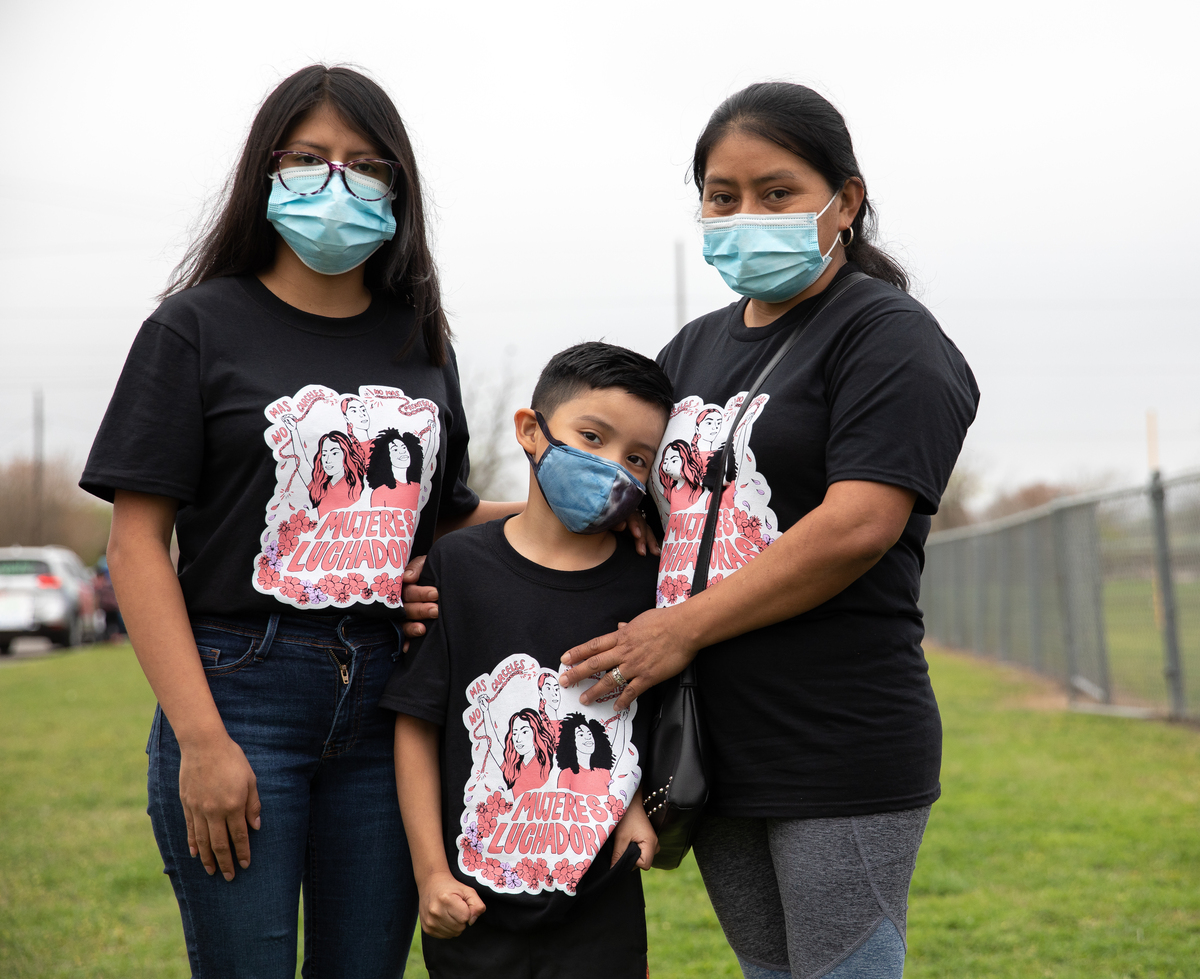
Sulma Franco, an organizer with Mujeres Luchadoras and Grassroots Leadership and an LGBT activist from Guatemala, leads protesters on March 24 to the entrance of the T. Don Hutto Residential Center in Taylor, Texas, where U.S. Immigration and Customs Enforcement contracts for the detention of migrant women. Julia Robinson hide caption

toggle caption

Julia Robinson

Sulma Franco, an organizer with Mujeres Luchadoras and Grassroots Leadership and an LGBT activist from Guatemala, leads protesters on March 24 to the entrance of the T. Don Hutto Residential Center in Taylor, Texas, where U.S. Immigration and Customs Enforcement contracts for the detention of migrant women.

Julia Robinson

A dozen Central Americans in T-shirts that read Mujeres Luchadoras — Fighting Women — marched through a small Texas town last month toward the gates of an imposing private detention center where they all used to be incarcerated.

“Biden, hear us! Shut down Hutto!” they chanted.

They’re referring to T. Don Hutto Residential Center, the former state prison in Taylor — just northeast of Austin — named after the founder of the private prison company that holds the contract with Immigration and Customs Enforcement.

“These corporations are profiting off of our suffering,” former Guatemalan detainee Sulma Franco says into a bullhorn. “We want all the cages shut down now!”

Sonia Mendares, right, is waiting for the release of her 10-year-old daughter from an ICE detention facility in Laredo. Julia Robinson hide caption

toggle caption

Julia Robinson

Sonia Mendares, right, is waiting for the release of her 10-year-old daughter from an ICE detention facility in Laredo.

Julia Robinson

Demonstrations like this are part of a growing grassroots resistance to privately run immigrant jails across the country.

The Trump administration dramatically expanded the detention network — often over local objections — and private prison companies were riding high. Under former President Donald Trump, ICE detained a record 56,000 migrants, asserting they had to be locked up or they would abscond once they lost their immigration cases.

But the political winds have shifted. These days, privately run immigrant jails are facing mounting public opposition, state legislatures are considering measures to shut them down, and the prison industry has fallen out of favor with the new administration in Washington, D.C.

Protesters march outside the T. Don Hutto Residential Center in Taylor, Texas. Julia Robinson hide caption

toggle caption

Julia Robinson

Protesters march outside the T. Don Hutto Residential Center in Taylor, Texas.

Julia Robinson

Phasing out private prisons

President Biden has instructed the Justice Department to phase out private prisons that incarcerate federal offenders, ordered ICE to arrest fewer immigrants, and signaled an interest in alternatives to immigrant detention.

Opponents to detention for profit believe migrants who have committed no crime and who came to the U.S. seeking asylum should not be incarcerated while their cases are pending.

Critics also say private operators prioritize profits over the well-being of detainees. Trump’s separation of families, which led to mothers being locked up in facilities like Hutto, further inflamed opponents.

Protesters march outside the T. Don Hutto Residential Center in Taylor, Texas. Julia Robinson hide caption

toggle caption

Julia Robinson

Protesters march outside the T. Don Hutto Residential Center in Taylor, Texas.

Julia Robinson

Meanwhile, major banks have stopped lending to the two publicly traded prison companies, CoreCivic and GEO Group. And last month, Wall Street further lowered their bond ratings, citing large debt repayments and hostile operating conditions under the new Biden administration.

To try to counter the souring public mood, the four largest prison companies, including GEO and CoreCivic, formed a trade group called Day 1 Alliance.

“There’s been a multitude of misinformation out there, and so I really wouldn’t look to public sentiment for that because there are so many mistruths out there about the industry,” says Alexandra Wilkes, national spokeswoman for the alliance.

But Mark Fleming, associate director of litigation at the National Immigrant Justice Center, which works against the industry, says: “The private prison companies are certainly facing some headwinds here. They are definitely increasingly unpopular in the public sphere.”

Finding ways to keep doing business

Hutto, which opened in 2006, was troubled from the beginning. There was a successful ACLU lawsuit over substandard living conditions, and later, allegations of sexual assaults.

In Taylor, as in many places that have private prisons, the locality acts as a middleman between ICE and the detention company, so there is a forum for public complaints.

In Williamson County, where Taylor is located, immigrant advocates asked the commissioners to sever the contract with Hutto. And in 2018, they got their way when the commissioners voted to wind down the contract.

But the celebration was only temporary. Last year, ICE and CoreCivic — the company that runs Hutto — signed a 10-year contract that bypasses Williamson County and public opposition altogether. Hutto stayed open.

Paola Reyes-Cortes, left, Joshua, center, and Iris, right, migrated to the U.S. from Honduras and were separated during their detention. Julia Robinson hide caption

toggle caption

Julia Robinson

Paola Reyes-Cortes, left, Joshua, center, and Iris, right, migrated to the U.S. from Honduras and were separated during their detention.

Julia Robinson

Prison companies “have found ways to keep doing business,” Fleming says. “They have proven over the years that they are resourceful and resilient.”

As elected bodies in prison towns are becoming more responsive to angry citizens, ICE has increasingly relied on this workaround — the agency contracts directly with a prison operator and avoids messy public meetings. ICE says it has to have a place to detain deportable immigrants, about one-third of whom have criminal charges.

The same thing happened on an even larger scale in California. Two weeks before a sweeping state law that would have phased out for-profit detention went into effect last year, ICE quietly signed long-term contracts with three companies to keep their facilities open.

ICE also tried this tactic in Ionia, Mich., but now the outcome is uncertain.

In 2019, the agency announced its intention to open a 600-bed detention facility in that town between Grand Rapids and Lansing. But local opposition quickly formed, the governor came out against it, and even the all-GOP Ionia County Board of Commissioners gave it a thumbs down.

“We took that as really good news that the proposal was shut down so quickly,” says J.R. Martin, with No Detention Centers in Michigan. “We learned that pretty much as soon as that decision had been made, ICE was working on whatever they could do to go around it and to find some other way of establishing a new facility in that area.”

ICE sidestepped the naysayers and began the process to contract directly with a detention company to build a brand-new, 150,000-square-foot jail in Ionia.

A lot has changed

But since then, a lot has changed. The population of ICE detainees has plunged from a peak of more than 56,000 to about 15,000 today because of concerns over COVID-19 contagion in living quarters.

Ron Vitiello, acting ICE director for 10 months in 2018 and 2019, said there’s no longer a need to expand detention after the release of detainees because of the pandemic and because many migrants are still turned back at the border under a Trump-era health order. Vitiello also noted Democrats now control Congress.

“There’s no need for an increase in bed space. They don’t need more detention space for more adult immigrants who are getting expelled under Title 42,” he said. “Congress isn’t about to add money for ICE detention — not with this crowd. I just don’t see it.”

The contract in Ionia has apparently gone cold. A spokesman for Immigration Centers of America, the company interested in the Ionia contract, tells NPR that ICE has stopped moving forward with all three detention contracts the company was pursing — in Michigan, Illinois and Maryland.

ICE has confirmed that it dropped its plans to build a new detention facility near Chicago.

This is happening at a time when hostility to for-profit immigrant jails is swelling. California, Illinois and Nevada have all taken steps to restrict the business of privately operated jails. Now, New Jersey, New Mexico, Washington state and Maryland are considering doing the same.

“More and more the movement has begun to see that shutting down immigration detention centers was a key part of stopping the deportation machine,” says Silky Shah, executive director of Detention Watch Network.

Asked about growing public and political opposition, an ICE spokesperson responded in an email that “cooperation by local officials and the community at large is an indispensable component of promoting public safety.”

As for the stalled contracts announced under Trump to expand the detention network, the spokesperson said: “ICE is continually reviewing its detention requirements and exploring options that will afford the agency the operational flexibility needed to house the full range of individuals that may be in the agency’s custody.”

Wilkes, the spokeswoman for the industry alliance, says that conditions inside contracted lockups are not as terrible as detainees say and that the facilities are cheaper than government-run jails.

“I would also challenge activists to come up with a solution other than contractor-operated facilities,” she says.

The industry depends on contracts with ICE, which guarantees it will pay for a minimum of about 29,000 beds in the system regardless of how many detainees are filling them.

Watch ‘Old Gays Get Stoned’ in Celebration of 4/20 – Advocate.com

The “Old Gays” love marijuana.

In a new video produced by Grindr, “Old Gays Get Stoned,” a group of queer seniors professes their love for the drug before lighting up and discussing the evolution of its societal acceptance.

The clip was released this week in alignment with 4/20 — the unofficial appreciation day for weed. It is part of a series of viral videos starring the elders, who have weighed in on cultural issues such as Cardi B’s “WAP,” Gus Kenworthy, and gay hookup apps.

“Everything the Old Gays do brings the giggles, but this might take the cake … and the ice cream … and the potato chips,” Grindr’s Ryan Yezak joked in a statement. “While the guys made it clear this wasn’t their first time getting high, it was their first time lighting up on camera — and the results are predictably hilarious.”

In recent months, Grindr has pivoted to creating original LGBTQ+ content, in addition to its core service of being a digital cruising ground. An original scripted series, Bridesman, is forthcoming this fall.

Watch the Old Gays hang out with Mary Jane below.

Bisexual men feel more HIV stigma, are lonelier and more socially isolated than gay men – aidsmap

Bisexual men living with HIV in Australia reported greater levels of self-stigma, worse self-image and poorer emotional wellbeing compared to gay men. They also reported less social support and fewer connections to the LGBTQ community and to other people living with HIV. These men expressed feelings of social isolation and highlighted fears of rejection associated with their HIV diagnoses.

These findings were published by Dr Jennifer Power and colleagues at La Trobe University and published in AIDS and Behavior recently.

Men who have sex with men (MSM) comprise the majority of people living with HIV in Australia and made up over 60% of new cases in 2017. Most HIV-related research tends to group all MSM together and does not differentiate between gay and bisexual men. This means that the unique experiences of bisexual men living with HIV are often marginalised and incorporated under the broader MSM umbrella, even though they may have vastly different experiences when it comes to acceptance within the LGBTQ community, living with HIV and access to support and services.

Glossary

stigma

Social attitudes that suggest that having a particular illness or being in a particular situation is something to be ashamed of. Stigma can be questioned and challenged.

disclosure

In HIV, refers to the act of telling another person that you have HIV. Many people find this term stigmatising as it suggests information which is normally kept secret. The terms ‘telling’ or ‘sharing’ are more neutral.

sample

Studies aim to give information that will be applicable to a large group of people (e.g. adults with diagnosed HIV in the UK). Because it is impractical to conduct a study with such a large group, only a sub-group (a sample) takes part in a study. This isn’t a problem as long as the characteristics of the sample are similar to those of the wider group (e.g. in terms of age, gender, CD4 count and years since diagnosis).

consent

A patient’s agreement to take a test or a treatment. In medical ethics, an adult who has mental capacity always has the right to refuse. 

transgender

An umbrella term for people whose gender identity and/or gender expression differs from the sex they were assigned at birth.

Early on during the HIV epidemic, bisexual men were often portrayed by the Australian media as the ‘villains’ who transmitted HIV to women. Similarly, studies regarding HIV transmission risk reinforced the notion of bisexual men as being the link between gay men and the heterosexual world. This may have resulted in unique forms of stigma that differ to those experienced by gay men. Additionally, in LGBTQ spaces, bisexual men are a small minority, and a certain level of biphobia may be present. Thus, there may be few services specifically dedicated to the needs of bisexual men living with HIV.

Power and colleagues wanted to investigate the unique challenges that these men face, specifically related to stigma, social connectedness and mental health.

The study

Data for the study was taken from the 2015-2016 HIV Futures 8 survey, conducted with a sample of 872 adults living with HIV in Australia. This survey asked varied questions related to the participants’ lives, including physical and mental health, HIV stigma, social support and connections to the LGBTQ community. An open-text question regarding experiences of feeling guilty, shameful or fearful about HIV was also included.

The authors focused on a subset of 48 men who identified as bisexual (6%) and compared these responses to the cis and transgender men who identified as gay (681 men, 87% of the sample).

Differences between bisexual and gay men living with HIV

While there were no reported differences in terms of country of birth, highest level of education and relationship status, bisexual men were on average older than gay men (55 vs 49 years old) and were more likely to report their annual income to be half the average Australian household income or less (AUD$30,000). Of those in a relationship, bisexual men were also much more likely to report that their primary partner was female.

Regarding health, the two groups did not significantly differ in terms of HIV-related areas (such as years living with HIV, use of treatment or viral load detectability). However, bisexual men were nearly three times more likely to report poorer general health, twice as likely to report poorer emotional wellbeing and were also significantly more likely to have used medication for a mental health condition in the previous six months. The men did not differ in terms of alcohol and tobacco use, but bisexual men were less likely to report recreational drug use than gay men.

In terms of social support and stigma, the two groups were similar in terms of reported resilience measures. However, bisexual men were four times more likely to report lower social support than gay men. They were also less likely to spend time with other people living with HIV. Interestingly, bisexual men were nearly four times more likely to report higher perceived levels of HIV-related stigma in all areas. These ranged from areas such as disclosure to concern about public attitudes.

As a result, higher stigma scores were associated with being bisexual, poorer emotional wellbeing, lower social support, lower LGBTQ connection and less time spent with people living with HIV.

While bisexual men did not specifically mention their bisexuality in the open-text responses, their answers highlighted a sense of loneliness, low self-worth and fear of rejection as a result of having HIV, and the challenges associated with disclosure.

“Since diagnosis, I have very rarely socialised. I very rarely leave my home.”

“I feel that no-one worthy will want me as a partner therefore I will be alone for the rest of my life. I am tired of being asked am I ‘clean’ by people who want casual sex, this straight away makes me feel like ‘damaged goods’.”

“Social and community connection remains a crucial and unmet need for bisexual men living with HIV.”

In one instance, a participant reported a relationship breakdown after disclosing his HIV status to a partner, affecting relationships with children and grandchildren and causing a great deal of distress.

“My wife left me … She told the two children and their partners without my knowledge and without my being there when they were told… One partner of a son is still having trouble coping with [my HIV status] and this is starting to interfere with [me] seeing my grandson”.

Some bisexual men also spoke about the need to be vigilant and guarded regarding their status, as they feared the consequences of HIV disclosure – especially in settings such as the workplace. This made them fearful about sharing their status with others. Presumably, being ‘outed’ regarding their HIV status could also lead to being outed about their sexuality.

“Everyone talks about their issues, but I feel worried to expose my feelings like normal people. Constant need to be aware of what I’m talking about.”

“I have felt fearful at work of having my HIV status disclosed without my consent. I have had this happen to me and then my role at work changed after being ’outed’ with weak excuses as to why.”

Conclusion

“It is notable that bisexual men in this survey reported poorer emotional wellbeing, less social connection and higher perceived levels of HIV-related stigma than gay men. This suggests that bisexual men living with HIV may have unique support needs that are not adequately addressed through existing programs, and that social and community connection remains a crucial and unmet need for bisexual men living with HIV,” the authors conclude. They suggest: “Mechanisms to increase social connection should be explored. This most likely includes dedicated initiatives run by and for bisexual people living with HIV given their unique experiences with respect to connecting with both the LGBTQ and HIV communities.”

How We Got to the Equality Act – ChristianityToday.com

Over the past decade, significant pillars of the evangelical community have wavered in their convictions about marriage and human sexuality. In 2014, World Vision announced it would hire Christians in same-sex relationships—only to reverse course after a backlash threatened donations.

Things have gone differently for Bethany Christian Services, one of the country’s leading adoption providers, which recently disclosed its plan to place children with same-sex couples. While the organization stressed that “discussions about doctrine are important,” the decision effectively severs a Christian doctrine of marriage from the practice of adoption.

Conservative evangelicals have reacted by trying to purify the ranks of the faithful. In 2017, the Nashville Statement, put out by the Council on Biblical Manhood and Womanhood, responded to weakening evangelical adherence to Christian teachings on sexuality. The ill-fated effort did little to build evangelicals’ confidence that their witness on sexual ethics would be simultaneously orthodox and also welcoming toward LGBT individuals.

Nonetheless, there is reason to be seriously concerned about the future of evangelical communities in an increasingly post-Christian America. The Supreme Court’s decisions in Obergefell v. Hodges, which legalized and legitimized same-sex marriage, and Bostock v. Clayton County, which extended nondiscrimination protections to LGBT individuals, have ratified the long reshaping of America’s norms on marriage and sexuality.

They have also raised serious questions about the rights of faith communities. Despite enjoying unprecedented access to the White House during the Trump administration, evangelicals secured few religious liberty wins. For example, the First Amendment Defense Act, championed by conservatives as a robust form of protection, never made it out of committee, despite a united Republican Congress. President Trump himself said it was a “great honor” to be called the most pro-gay president ever, and the First Lady publicly endorsed gay and lesbian equality.

Earlier this year, the Equality Act introduced yet another hurdle for orthodox Christians. The bill—which in February passed the first stage of becoming law—would have wide-ranging implications for Christians. Most notably, it would throttle religious liberty protections for Christians who dissent from the emerging regime of LGBT rights.

The Equality Act is unlikely to pass the Senate. (Its outcome is yet unknown at the time of publication.) But even if it doesn’t, the bill carries symbolic and cultural significance. As an inflection point in the life of our nation, we should be unnerved and also chastened by it. The headwinds against socially conservative positions on marriage and religious liberty are stronger than ever.

Evangelicals should unequivocally oppose bills of this nature (and there will be more). But we should accompany those noes with a good-faith effort to live together as fellow democratic citizens with LGBT individuals. One way to do that is by helping to secure nondiscrimination protections for them that simultaneously offer substantive religious liberty protections.

The headwinds against socially conservative positions on marriage and religious liberty are now stronger than ever.

Congressman Chris Stewart recently re-introduced one such bill: Fairness for All, which attempts to expand LGBT rights while preserving religious exemptions. The legislation is imperfect, but it offers Americans a potential way out of the zero-sum game that conservatives and LGBT activists have been locked in for the past 40 years.

Talk of compromise is perilous, of course. Progressives often express open hostility toward conservative Christians. Evangelical activists have also seen those on the Left engage in a disingenuous “dialogue” that effectively aims at changing the church’s teaching on human sexuality.

Article continues below

Given progressives’ disinterest in accommodating religious believers, we have reason to dismiss efforts like Fairness for All. But we might want to reconsider some of the underlying reasons for our aversion to efforts like it. Though conservatives often decry the “victimhood” logic of identity politics, we have at times practiced our own form of it: While denouncing our progressive oppressors, we maintain a powerful narrative about our own moral purity in the sex and marriage culture wars.

Yet the story is more complicated, especially as we look back to the height of the sexual revolution. By adopting a perfectionist, populist politics that often demeaned and disrespected our LGBT neighbors, we evangelicals helped create the conditions for our social marginalization.

Getting behind this history in order to understand the origins of our particular social moment does not mean compromising fidelity to Scripture on sex and marriage. If anything, this diagnostic work is necessary to understand how Scripture might inform our responsibilities to our LGBT neighbors here and now.

As an evangelical theologian, I affirm without hesitation that marriage is between a man and a woman, that biological sex should inform a person’s “gender identity,” and that surgical or chemical efforts to alter a person’s sex are an illegitimate and unmedical means of responding to social or psychological challenges.

Yet as citizens living in a pluralist society, we cannot draw a straight line from these convictions to political judgments. For evangelicals, that means we should undertake the task of understanding where LGBT hostility comes from and what legitimacy it may or may not have.

Only by coming to terms with our own history of engagement on these issues will we be able to speak confidently again about the politics of sex, instead of allowing fear to inflect our speech. An evangelical witness on these issues must still sound like good news. In that sense, it must be marked by mercy. It is bitterly ironic that, having failed for so many years to practice the preeminent virtue of a democratic society, conservative evangelicals now stand in need of it.

The way toward retrieving it, both for ourselves and for the society in which we live, lies through the tangled path of history that brought us to this juncture.

America’s culture war over sexuality exploded in Miami. In 1977, Anita Bryant campaigned against the city’s recently passed nondiscrimination ordinance. Bryant, a beauty contest winner and a Top-40 singer, was the face of the Florida Citrus Commission.

In the years prior, an increasingly confident gay liberation movement had successfully passed nondiscrimination ordinances across the country. But Bryant’s opposition campaign was successful. While concerns about the ordinance’s lack of religious liberty protections buoyed her effort, Bryant’s rhetoric about the threat gay people ostensibly posed to children was the campaign’s lasting legacy. Her victory quickly became a crusade. She established Save Our Children, an organization aimed at restricting LGBT rights, and promised to do for the country what she had done in Miami.

Bryant’s nationalization of her campaign, though, came with collateral damage. Only months after Bryant’s victory, Christianity Today asked Billy Graham about her. His answer was circumspect. While praising her courage and lauding her for “emphasizing that God loves the homosexual,” Graham also suggested that he would not have said “some things she and her associates said … in the same way.”

Article continues below

Graham added that, while he saw his vocation as focused on preaching the gospel, he “was also fearful that her campaign might galvanize and bring out into the open homosexuality throughout the country, so that homosexuals would end up in a stronger position.”

Graham was proved right. Emboldened by successes in overturning nondiscrimination ordinances across the country, conservatives soon overreached. Those actions further intensified the LGBT movement and motivated its fundraising and organizing.

In 1978, for example, California legislator John Briggs proposed a ballot initiative in that state that would have required schools to fire LGBT teachers. Despite favorable polling at the start of the campaign, the initiative failed by over a million votes, as California residents came to realize how punitive it was.

The measure also galvanized the LGBT community. As Tina Fetner argues in How the Religious Right Shaped Lesbian and Gay Activism, Bryant and Briggs inadvertently reinvigorated what had been an increasingly dormant movement, giving it a more militant and oppositional edge than it had previously. Activists personalized the issue for the first time: Openly gay politician Harvey Milk encouraged people to come out of the closet to their friends and neighbors, reshaping public opinion about the challenges they faced.

The template for the culture wars had been more or less set. Conservatives would make inflammatory appeals to populist, anti-LGBT sentiments, in turn fueling opposition.

These dynamics were solidified when the conflict came to Colorado in 1992. Evangelicals concerned about nondiscrimination ordinances in Denver and Boulder followed the same playbook by pursuing Amendment 2, which was supposed to prevent Colorado cities from enacting nondiscrimination ordinances.

While fighting for the amendment, social conservatives distributed 100,000 pamphlets across the state. Written by psychologist Paul Cameron, they emphasized, among other things, that gay men ingest fecal matter in their sexual practices. The television campaign intentionally presented the most flamboyant, non-bourgeois depictions of gay pride parades—ostensibly to show the “reality” of the LGBT movement, but in effect to generate fear.

When Denver television stations declined to play the ads, organizers denounced media bias. The tactic worked. On the night Bill Clinton was elected, Amendment 2 shocked Colorado residents by passing 53 percent to 47 percent. Some 16 years later, California voters reenacted a nearly identical pattern when—after a tumultuous fight—they simultaneously prohibited gay marriage with Proposition 8 and made Barack Obama president.

However, no moment was so discrediting for evangelicals as Colorado’s Amendment 2—in part because the legacy of its rhetoric swallowed up conservatives’ reasonable arguments. Evangelical populism has long faced this dilemma: Careful arguments don’t move votes, but the extremist rhetoric necessary to win tends toward disrespect and also generates a backlash.

Amendment 2’s success in Colorado typified this problem. For one, the animus that conservatives showed toward LGBT people shaped tech entrepreneur Tim Gill, who in response began to devote his vast fortune to the expansion of LGBT rights. In the years to come, his strategic contributions would make him one of the country’s most influential figures in sexual politics.

Moreover, prominent academics became embroiled in Amendment 2’s subsequent legal dispute, which undermined trust and effectively ended any chances of an elite-level consensus on these questions.

Article continues below

Amendment 2’s drafters insisted that its text required no moral judgment about homosexuality. Yet the case hinged upon the question of whether same-sex sexual activity is reasonable. Legal philosophers Robert George and John Finnis gave one reading of the Western philosophical tradition, while philosopher Martha Nussbaum gave another. The debate ended in acrimony and even included accusations of perjury.

George and Nussbaum would go on to effectively set the terms of the debate. While George continued to make the case for traditional sexual ethics, Nussbaum argued that positions like his were probably rationalizations for animus. Nussbaum would eventually win, both in the courts and the culture. The case went to the Supreme Court as Romer v. Evans, giving gay rights supporters their first victory at the Supreme Court and setting the trajectory for all that would follow.

While most evangelicals sought to treat their neighbors with respect, some of their institutions and leaders failed to expunge the dehumanizing rhetoric as they ought to have done. In 2012, for instance, the Family Research Council (FRC) gave an award to pastor Ron Baity for his efforts on Amendment 1 in North Carolina, which prohibited the state from recognizing gay marriages.

When video was discovered showing Baity had compared gay people to maggots, the FRC argued that he was given the award not for his “misstatements” but for “his example of standing for the truth and for his 42 years of ministry.”

From the outside, it was easy to believe that social conservatives tolerated degrading sentiments toward the LGBT community up until those calloused words became a political liability. But even then, the people responsible—like Cameron or Baity—were often quietly sidelined rather than actively repudiated.

The story that evangelicals are (merely) victims of progressive aggressors not only fails to account for the ways in which the LGBT movement was shaped by populist evangelical rhetoric and tactics. It also forgets that the gay liberation movement was a direct response to the systemic and pervasive exclusion of lesbian and gay individuals from the structures of our public life—including from America itself. Perfectionism in politics breeds radicalism in response.

Again, the current shape of the progressive LGBT community cannot be understood without acknowledging the background against which it was formed. While this context has been almost totally forgotten by both evangelical and progressive activists, it was recounted most recently by none other than conservative Supreme Court Justice Samuel Alito.

In his dissent to the expansion of LGBT protections in Bostock, Alito cited a striking litany of past exclusions. In the 1940s and ’50s, gays and lesbians who worked in government were not given security clearances. They were barred from being teachers in some states and also faced the risk of losing their licenses to be doctors, lawyers, or even beauticians for engaging in same-sex sex acts.

They were even denied entry to the country by the Immigration and Nationality Act of 1952 because they were alleged to have been “afflicted with psychopathic personality.” “To its credit,” Alito concluded, “our society has now come to recognize the injustice of past practices.”

Ironically, though, the pathologization of homosexuality used to justify these mid-century restrictions cleared the ground for both the assertion of “gay pride” on the one side and the failings of the “ex-gay spokesmen” on the other. As historian Heather White has argued, pathologizing homosexuality made it central to a person’s character and identity. That move eclipsed any distinction between the act and the person, or the sin and the sinner, which many evangelicals would later try to retrieve. But it also meant that gay people were forced to choose between the shame of being irremediably disordered and the pride of embracing their identity.

Article continues below

Not surprisingly, many chose the latter. The now-outdated slogan “born this way” inverts the therapeutic pathologization of homosexuality, even while sanctioning it with the authority of nature. Rather than disentangling their opposition to same-sex unions from this therapeutic framework, conservative evangelicals openly embraced it. Focus on the Family and other organizations employed “ex-gay” spokespeople to counteract the emerging narrative that homosexuality was both innate and fixed.

But they failed to recognize that ex-gay individuals who made “liberation from homosexuality” their vocation continued to be defined by it. A series of spectacular hypocrisies followed, undermining the movement’s credibility and further eroding the Religious Right’s political power.

Where should today’s evangelicals go from here? One possibility would be the path we did not take, which was originally hinted at by the first editor of this magazine, Carl F. H. Henry, in October of 1980. In an essay reflecting on the emerging Religious Right, Henry welcomes the “resurgent evangelical interest in politics” but worries that this involvement “may eventually become as politically misguided as was the activism of liberal Christianity earlier in this century.” In Henry’s view, the Religious Right’s “social vision is fragmentary, often lacks substance and strategy, and focuses mainly on a one-issue or single-candidate approach.”

A broader social vision, Henry thought, would help evangelicals avoid being reduced to a special-interest group and ensure they focus on those “concerns that transcend self-interest and coincide with universal human rights and duties.”

Henry suggests that the “primacy of the family as a lifelong monogamous union” is one point of evangelical emphasis. Henry infers from this that “legislation should benefit family structures, not penalize them” and that legislation should “preserve the civil rights of all, including homosexuals, but not approve and advance immoral lifestyles” (emphasis added).

Evangelicals once argued that nondiscrimination protections for LGBT people constitute “special rights.” So we should not overread Henry’s caveat. Yet while he often issued jeremiads about the decadence of secular culture, he was just as likely to argue that evangelicals were complicit in American cultural decay. And his denunciations of sexual degradation rarely—if ever—singled out LGBT people for special attention.

While Henry was emphatic about evangelicals’ need for a “social ethic” and for political action, he argued that “evangelical leadership in this reach for political influence and power” missed the “extent to which American evangelicalism was being swamped by the very culture that it sought to alter.” His relative lack of attention to the question of what we now call LGBT rights is indicative of the breadth of his concern: He saw that the fundamental challenges facing America could not be pinned on one group and that evangelicals themselves were hardly exempt from them.

Retrieving such a stance might help faithful LGBT Christians feel more at home in the church. As we evangelicals fought political battles over sexuality, we heightened the contrasts between the two worlds and in so doing ignored people in our own congregations who wrestle with their sexual desires and gender identity. This approach also intensified anxieties about faithful LGBT people in our midst and often alienated those whom we sought to help. As Tanya Erzen notes in Straight to Jesus, her careful depiction of an ex-gay ministry, participants often distanced themselves from the politics of the ex-gay movement.

Article continues below

While the ground has now shifted beneath evangelicals’ feet, we remain trapped in a heated conflict with a progressive LGBT community that has steadily gained the upper hand. An evangelical politics cannot ignore its own precarious position or be sanguine about the prospect of persuading those who strongly dislike our views. Nor are we permitted to be fatalists about finding common ground.

Evangelicals are people who stress the ongoing and never-ending opportunity for conversion, both for ourselves and for those who oppose us. When we come to Jesus, we confess our sins and live within God’s forgiveness—even if not our adversaries’. The gospel has the power to burst apart the ossified categories that limit our political imaginations. In announcing it, we invite the world to consider that, whatever has happened in the past, we can start anew.

A democratic order cannot survive unless its citizens are willing to accommodate each other. As the evangelical theologian Oliver O’Donovan has written, a “liberal society is marked by a mercy in judgment.” Mercy is the highest of all God’s qualities. It is, as Shakespeare understood, “mightiest in the mightiest,” such that earthly power comes nearest God’s when “mercy seasons justice.”

Mercy is an evangelical virtue. It is grounded ultimately within the free and lavish grace of God, who can forgive debts and sins while suffering no harm or loss. Yet evangelicals’ politics have rarely embodied it. We have often used the law to eradicate vices. We now find ourselves in a position where progressive LGBT activists must decide whether to treat us better than we once treated them by extending recognition through protections that they were once denied.

By adopting a perfectionist, populist politics that often demeaned and disrespected our LGBT neighbors, we evangelicals helped create the conditions for our own social marginalization.

For evangelicals to speak uncompromisingly about the goods of marriage and the integrity of the body, we must face up to our failures to do so in the past. The LGBT community has its own missteps and mistakes to account for. But as any good evangelical knows, denouncing the sins of others does not exonerate one’s own.

Mercy needs reasons, so if social conservatives want to live in a world that accommodates us, we must take responsibility for our own errors. Judgment “begin[s] with God’s household” (1 Pet. 4:17). By honestly recounting our missteps, evangelicals might give progressive LGBT activists a reason to look afresh at our convictions about marriage and the body. We exhibit confidence, not accommodation or weakness, when we forthrightly acknowledge our failures to embody the truths we affirm.

It is of course highly implausible that the progressive LGBT community will respond to such a posture. Trust is only gained over time, and it is special pleading for evangelicals to suddenly discover the goods of pluralism or tolerance. Yet there are still reasons to take that stand and to pursue consensus legislation.

For one, while evangelicals have sometimes over-emphasized the legal approach to transforming society, the law is still a tutor. It shapes a culture, even while representing its mores.

Article continues below

If a community is divided, the law might help foster social peace. The genius of the American constitutional system is that radical factions are moderated when they win representation (rather than being handed judgments by a court). Giving a legislative voice to a consensus effort might relieve the social pressure and hostility that have built up between the two communities.

The progressive LGBT community also has pragmatic reasons to extend mercy, though they may not realize it. For one, they stand on the cusp of repeating the Religious Right’s mistakes by embracing a political perfectionism that would stamp out their opponent. We have already seen glimmers of how a backlash against progressive ideologies might take shape. For instance, J. K. Rowling recently created an international storm by voicing her concerns about transgender ideologies. By contrast, it seems nearly unimaginable that a celebrity of her stature would denounce same-sex unions.

The arguments for gay marriage are easy and appeal to widespread intuitions: “Love is love” is insipid but also disarming. However, the arguments for trans rights run against the grain of widely held intuitions that sex and gender belong together. In that context, aggressive efforts to enshrine these ideologies in law and public policy are more vulnerable to populist revolts.

Additionally, the progressive narrative that history will inevitably culminate in the global triumph of LGBT rights is simply hubris. Pride still goes before a fall, and the international advancement of their movement is by no means inexorable.

Yet we should also pursue consensus legislation because the American experiment is worth preserving. The hostility between social conservatives and the progressive LGBT community for the past 40 years has not yet meaningfully imperiled the stability of our political order. But our society’s reserves of social trust are being depleted. When employment was relatively secure, government seemed to function, and we had meaningful, nonpartisan interactions with our neighbors, our fundamental differences on sexuality could be relatively quarantined. But now, as unrest increases, the stakes go up for reaching a settlement that represents all Americans.

We will face greater challenges in the days to come, and we need to face them together. In her poem “The Hill We Climb,” read at President Joe Biden’s inauguration, Amanda Gorman acknowledged the “force that would shatter our nation rather than share it.”

Yet her stirring call for unity held out hope that division would not be America’s final word.

“If we merge mercy with might,” she said, “and might with right, then love becomes our legacy and change our children’s birthright.” It was a bold endorsement of a virtue long neglected—one in desperate need of retrieval.

Regardless of what happens with the Equality Act and other bills like it, evangelicals still face the more fundamental task of forming communities that bear witness to the goods of marriage and the body in ways that are saturated by faith, hope, and love.

Such a task demands an uncompromising fidelity to Scripture and a deferential humility to the theological inheritance we have received. If, as Carl Henry once thought, we live in the “twilight of a great civilization,” we also live in the unending dawn of Christ’s reign—a dawn that must make our hearts glad, regardless of the threats to our liberties. Only when we embrace the joy of the living God, Jesus Christ, will our commitment to marriage between a man and a woman ring out to the world with a clarity and grace that inclines them to take heed and listen.

Matthew Lee Anderson is an assistant research professor of ethics and theology at Baylor University.

Have something to add about this? See something we missed? Share your feedback here.
Is Iggy on ‘New Amsterdam’ Gay in Real Life? Inside Actor Tyler Labine’s Personal Life – Distractify

In 2007, Tyler got married to fellow actor Carrie Ruscheinsky. She’s known for her roles in shows like The X Files and R.L. Stine’s The Haunting Hour, but her IMDb shows that her last role was in 2015. 

Together, the couple have three kids, though they aren’t featured heavily on Tyler’s social media. For the most part, he keeps his online presence about his work. He shares things about New Amsterdam, fans enjoying the show, memes, and has been open about his struggle with disordered eating.

Although Tyler Labine isn’t gay in real life, he is working hard to make sure he plays the character of Dr. Iggy Frome in the most responsible way he can.

Fans of New Amsterdam can watch it on Tuesdays at 10 p.m. EST on NBC. It also streams on the NBC app, Hulu, and on Peacock for free. 

Jordan Henderson and Jurgen Klopp shortlisted for British LGBT Awards ‘Football Ally’ award – The Guide Liverpool


X

Have you seen our video production services?

At The Guide Liverpool, we’ve been helping businesses promote themselves and reach new clients and customers for years. Our professional video crew can help you increase engagement, interaction and revenue by presenting your business to a wide audience with a creative, exciting promotional video for use on multiple online channels.

8 Best Anxiety Support Groups of 2021 – Healthline

Anxiety disorders can lead to feelings of loneliness, isolation, and as though no one understands you. Online anxiety support groups offer a safe setting where you can connect with others and express your feelings without judgement.

In fact, the Anxiety & Depression Association of America estimates that anxiety disorders affect roughly 40 million U.S. adults every year.

2021 research suggests that anxiety and depressive symptoms are even more prevalent due to the pandemic, affecting 4 in 10 adults.

Since seeking help is a big step, choosing your best online anxiety support group should be a thoughtful decision.

Here are the best anxiety support groups you can access from the comfort and safety of your own home.

Anxiety support groups offer people opportunities to attend regular meetings where people experiencing similar feelings and situations can offer support to each other.

Members may share their experiences and coping strategies to reduce the feeling that they are alone.

The medium of the support varies per platform. Many include online discussion forums that are free and anonymous. Some offer virtual meetings or one-on-one chat rooms for real-time support from home.

Online anxiety support groups are best for people who may not have access to other mental health services or who seek supplemental support in addition to their regular treatment.

These groups are also beneficial for people who have successfully managed their symptoms and want to help others.

To select the best online anxiety support groups, we spoke to medical professionals for their recommendations.

We read reviews to determine which groups had the most satisfied participants. We also considered anonymity and privacy within the platforms.

Many online support groups for anxiety take the form of online discussion forums, so we also considered how these groups are moderated and the guidelines for participating.

Best overall

Support Groups Central

Support Groups Central describes their service as “a place where people can come to help and encourage each other with a variety of life issues.”

Available internationally, Support Groups Central help people from more than 120 countries worldwide. Members join via video and audio, and they can maintain their anonymity by turning off the camera and joining with a username.

Meetings are led by trained instructors. Many of them are certified, licensed, or have advanced degrees in their respective areas. Each instructor must take and pass the Support Groups Central training program designed for the platform’s video-based meetings.

According to the site, 95 percent of participants would recommend Support Groups Central to others. Their users report a reduction in symptoms, use of emergency symptoms, and hospital stays.

Price: Joining Support Groups Central is free. Most meetings are free to attend, though some have a small charge that varies.

Best online discussion forum

Anxiety and Depression Association of America

Anxiety and Depression Association of America (ADAA) specializes in managing anxiety disorders and depression. ADAA uses evidence-based programs, including online anxiety support groups, to improve the quality of life for people seeking mental health services.

The site offers free peer-to-peer support groups where individuals can share information and experiences in online chat-based forums. There is also a Spanish-language portion.

Support isn’t led by trained professionals. Administrators oversee the community, and members must abide by the rules.

Users say the online community is a convenient and safe place to relate to others with similar feelings. Since users are all at different places in their mental health journeys, some report feelings of fulfillment when offering support to those who need it most.

While the online community is not a replacement for emergency medical services or professional mental health services, its purpose is to provide a safe space for people who experience anxiety and depression to talk with others who understand.

Price: Free

Best for unlimited access

Mental Health America

Mental Health America is a community-based non-profit organization dedicated to offering preventative, intervention, and treatment mental health services.

The Mental Health America online support group, hosted by Inspire, is a free resource for people with anxiety, depression, and other mental health conditions to ask questions, share experiences, and receive support from a community that understands.

This group uses a peer-to-peer approach and is moderated by group leaders. To determine if you’re experiencing symptoms of a mental health condition, the organization offers free mental health screening tests, including a dedicated test for anxiety.

Price: Free

Best for people also dealing with addiction

SMART Recovery

SMART Recovery offers help for those experiencing addiction and other harmful habits.

While not geared towards anxiety specifically, the tools and resources are beneficial for people who want to sustain successful long-term change or those who experience anxiety as well as addiction.

If you feel reliant on mental health resources for anxiety, SMART Recovery may help you progress. Whether you follow the programs or attend the meetings, you’re in charge of your pace.

According to the site, “SMART is not just any mutual-support program. Our science-based approach emphasizes self-empowerment and self-reliance.”

Meetings are held in-person and online, so members have the flexibility to choose based on their preferences and availability.

To attend a SMART Recovery meeting, view the calendar for online meetings and events. Registering is free and grants you access to more than 40 online meetings per week.

Members also gain access to free 24/7 online discussion forums.

Price: Free

Best for urgent need of support

DailyStrength

DailyStrength is a place where people with a variety of conditions and experiences can find online support. The online anxiety support group is one of DailyStrength’s most popular, with more than 20,000 members.

Members can post anonymously. The site also recommends local mental health professionals for those who need more support.

While DailyStrength doesn’t replace emergency services, users can indicate when they are in a crisis situation, so peers can respond quickly.

A list of emergency medical services is available to all site visitors, including non-members, to help people know what to do in a crisis.

Price: Free

Best app

7 Cups

7 Cups calls their service “the world’s largest emotional support system.” If you’re looking for support from your smartphone, you can download the free app. It’s available on the Apple App Store and the Google Play Store.

7 Cups offers free emotional support by connecting people with trained listeners. You can chat one-on-one with a listener in a private chat room or join the 7 Cups online communities, including a dedicated community for anxiety support.

Each week, 7 Cups holds dozens of free online meetings, including support sessions and sharing circles.

According to 7 Cups research, 90 percent of people feel better after talking with listeners, and 80 percent of people believe listeners can help people with mental health issues.

Price: 24/7 chat rooms and discussion forums are free.

Best for joining multiple groups

SupportGroups.com

SupportGroups.com is a free online hub of support groups, including an anxiety group with more than 100,000 members.

The site offers a list of resources to help people find the specialized care they need and a blog that’s regularly updated with mental health tips.

Members can post anonymously in forums about anxiety, self-esteem, loneliness, and more. Other members can interact with and comment on posts to uplift and relate to people with similar feelings and experiences.

This is a good option if you want to participate in a variety of online support groups. But the site doesn’t appear to be as well moderated as others.

Price: Free

Best for anxiety-alleviating activities

TheTribe

TheTribe offers peer-to-peer support groups for those experiencing addiction, anxiety, depression, HIV, and obsessive compulsive disorder. Additionally, there are groups for people in the LGBT community, people in marriages and raising families, and teens.

The site also offers resources to find online therapy for those who need it.

According to TheTribe, “Members of our support groups have found that, in addition to professional therapy, sharing stories and meeting others with anxiety can be therapeutic.”

TheTribe claims they’re not just a support group. In addition to online groups, TheTribe offers an environment of support and encouragement. Members are prompted to complete fun and inspiring activities, connect with others, chart their mood, and more.

With more than 130,000 tribe members, TheTribe is a large community of people who understand.

Cost: Free

What is the purpose of an anxiety support group?

“The purpose of an anxiety support group is to connect individuals who struggle with anxiety in a community setting that allows them to share experiences, struggles, and coping mechanisms and fosters relationship development between members,” explains Mary Gay, PSYD, LPC, CPCS.

“The aim of these groups is to reduce the feeling of the loneliness and isolationism many feel when they are dealing with anxiety.”

Is an anxiety support group right for me?

Anyone who experiences symptoms of anxiety and feels alone in their experience may benefit from joining an online anxiety support group.

They can be especially helpful to those who may require extra care in addition to therapy and other forms of treatment. Since anxiety disorders can have ongoing symptoms, online support groups can be used as part of someone’s continuing treatment.

How do online support groups differ from in-person support groups?

Online support groups offer more accessibility and flexibility than in-person groups. They also tend to be less intimidating for people who experience social anxiety.

However, the lack of face-to-face interaction can take away some relationship building aspects of traditional support groups that meet in-person.

How do I decide which option is best for me?

Online support groups are free or low-cost and tend to be low-risk, so nearly everyone can access them.

This may be a good starting point for people considering other types of therapy, such as group therapy or conventional counseling.

However, the lack of commitment may be a deterrent to some who need more support.

Taking the first step to seeking help, whether setting up a therapy appointment or logging onto an online support group, can be hard.

Online support groups for anxiety take away some of the intimidation factor of in-person support groups or group therapy.

While these groups don’t replace therapy or other services, they can serve as an additional form of support for those who need it.

If you ever feel lonely as someone experiencing anxiety, anxiety support groups can remind you that you are not alone and there are others who understand what you’re going through.

Lacey Bourassa is a health, wellness, and beauty writer based in Southern California. She holds a BA in English. Her work has appeared in digital publications like Livestrong, Verywell, Business Insider, Eat This Not That, and others. When she’s not writing, Lacey is likely pursuing her other interests: skin care, plant-based cooking, pilates, and traveling. You can keep up with her by visiting herwebsite or herblog.

Watch the confrontation that resulted in the Pacers’ JaKarr Sampson getting ejected – IndyStar

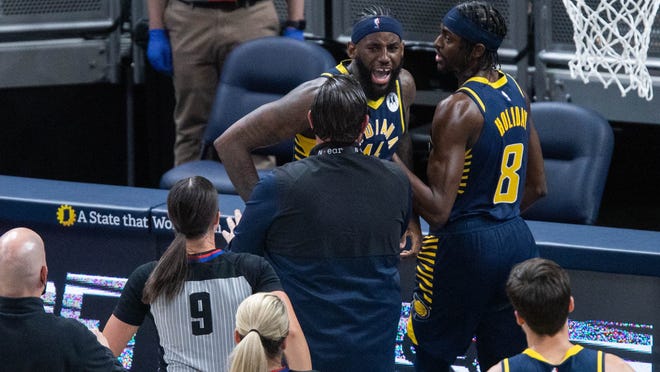
Indiana Pacers center JaKarr Sampson was ejected from Monday’s game against the San Antonio Spurs after a physical confrontation with Patty Mills and Rudy Gay.

With 9:43 left in the game, Aaron Holiday made a layup to bring the Pacers within 84-70 but it appeared Sampson didn’t like the hard box out by Mills on the play. As the Spurs came back down the court, Sampson initiated contact, shoved Mills then got in his face.

“He’s one of those guys that doesn’t get involved in that kind of ruckus,” Spurs coach Gregg Popovich said of Mills in the San Antonio News Express. “He’s too sweet.”

Sampson is 7 inches taller and 35 pounds heavier than Mills, and the Gay stepped in to confront Sampson before teammates separated the players.

Technical fouls were called on Mills and Sampson, another technical was called on Gay and Sampson was assessed a Type 2 flagrant foul, resulting in his ejection.

The Spurs beat the Pacers 109-94

And an injury, too:Myles Turner out indefinitely with toe injury 

Contact IndyStar Deputy Sports Editor Nat Newell at (317) 444-6182 or nat.newell@indystar.com. Follow him on Twitter: @NatJNewell.

California will now ban state-funded travel to North Dakota due to anti-LGBTQ law – Bay Area Reporter, America’s highest circulation LGBT newspaper

0

North Dakota is set for addition to the list of states California bans state-funded travel to now that lawmakers in the Peace Garden State have adopted anti-LGBTQ legislation. It is the second state in recent weeks to pass a bill targeting LGBTQ individuals, thus landing it on the Golden State’s “no fly list.”

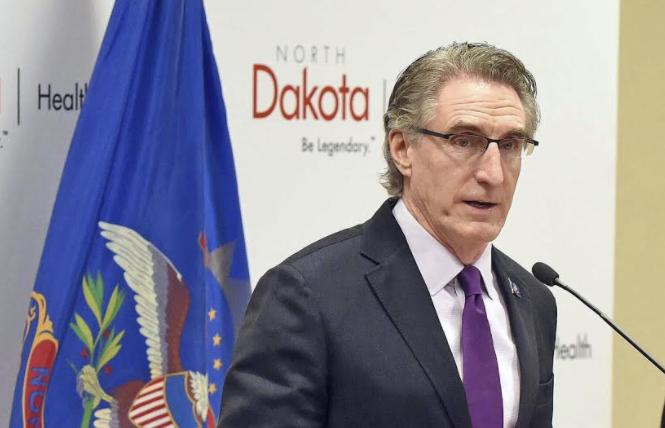
North Dakota Governor Doug Burgum (R) Monday signed House Bill 1503 into law. The legislation permits student groups at colleges, universities, and high schools to discriminate against LGBTQ students.

It is a direct attack against the U.S. Supreme Court’s 2010 decision in Christian Legal Society v. Martinez that upheld as constitutional so-called all-comers policies requiring student organizations receiving financial and other support from their institution not to discriminate against prospective members based on their race, sex, religion, sexual orientation, or gender identity. The North Dakota law undermines inclusive “all-comers” policies at the state’s public colleges and universities by allowing student organizations to cite freedom of speech for discriminating against LGBTQ students.

“North Dakota Governor Doug Burgum’s shameful decision to sign this discriminatory bill undermines non-discrimination policies at colleges, universities, and high schools across the state. Student organizations can now choose to turn away a range of potential members and leaders — from LGBTQ students to students of particular gender, race, or religious belief — and still receive state funding,” stated Alphonso David, president of national LGBTQ rights organization the Human Rights Campaign. “This law is nothing more than a harmful attempt by Governor Doug Burgum and North Dakota legislators to discriminate against LGBTQ and other marginalized communities. No student should be denied full access to and enjoyment of educational, social, and leadership opportunities typically offered by colleges and universities because of who they are.”

Arkansas will also be added to California’s banned travel list due to its governor, Asa Hutchinson, signing into law March 25 Senate Bill 354, which bans transgender women and girls from participating in school sports consistent with their gender identity. The discriminatory law covers extracurricular and school sports at the elementary, middle, high school, and collegiate level.

Depending on when the state laws officially take effect, Arkansas and North Dakota will bring the number of states on California’s “no-fly list” to 14. The office of the state attorney general oversees the list.

Signing off on adding the two Republican-led states to the banned list could be one of the first actions taken by Rob Bonta, currently a Democratic Assemblyman from Oakland who was named by Governor Gavin Newsom as the state’s next attorney general. Bonta’s appointment needs to be confirmed by the Legislature.

The Golden State’s no-fly list covers government workers, academics, and college sports teams at public universities. California lawmakers in 2015 banned state-funded travel to states that discriminate against LGBTQ people with the enactment of Assembly Bill 1887 authored by gay Assemblyman Evan Low (D-Campbell).

There is a waiver for trips deemed essential, such as sending emergency assistance in response to a natural disaster, otherwise any travel to the states on the banned list cannot be funded by public tax dollars. State officials and college sports teams have found ways to get around the travel ban by having alumni associations or other groups pay for the travel costs to attend athletic matches or conferences in the banned states.

The list at the moment covers Alabama, Idaho, Iowa, Kansas, Kentucky, Mississippi, North Carolina, Oklahoma, South Carolina, South Dakota, Tennessee, and Texas.

Texas is suing California in federal court in an attempt to have the travel ban law thrown out. It recently asked the U.S. Supreme Court to hear the matter, arguing in its brief to the justices that “California’s travel ban is an affront to the sovereignty of Texas — as well as the 10 other states that California has blacklisted.”

In its briefings with the court, California has asked the justices not to take up the case.

“States in our Union often disagree, sometimes vigorously,” California argued. “Neither California nor Texas can make the other conform to its preferred policy views. But each is surely entitled to criticize and decline to subsidize the other’s contrary policies.”

San Francisco keeps its own list of “no-fly” states it bans city-funded travel to as well as bans city departments entering into contracts with businesses based in those states. Because San Francisco’s list covers not only states that have adopted anti-LGBT laws since 2015 but also those that restrict abortion access to their residents, travel to both Arkansas and North Dakota is already banned.

The two states landed on the banned travel list overseen by the city administrator’s office January 1, 2020. The city now bans its staffers from traveling on the public dime to nearly half the country, as there are currently 24 states on its list.

Help keep the Bay Area Reporter going in these tough times. To support local, independent, LGBTQ journalism, consider becoming a BAR member.

LGBTQ+ Pay Gap and Unemployment – Investopedia

Although it has received less attention than other notable pay gaps, data shows that pay gaps exist for LGBTQ+ communities in the United States. National studies of discrimination in the private and public sectors have noted widespread employment discrimination going back decades against LGBTQ+ workers, especially against transgender and bisexual workers.

Income inequality refers to an uneven split of income that favors some segments of the population over others. Income inequality connected to discrimination also impacts a variety of job-related areas—including productivity, job satisfaction, earned wages, and job opportunities—as well as other conditions related to prosperity like health.

A pay gap refers to a difference in the average pay between two groups of people. This article will focus on the pay gap between LGBTQ+ people and heterosexual people. Despite recent progress, the data shows that LGBTQ+ communities continue to face discrimination and disparities in income and unemployment.

Key Takeaways

  • The LGBTQ+ pay gap refers to the disparity in earned income of typical households across sexual orientation and gender identity.
  • LGBTQ+ communities continue to face discrimination and disparities in income and unemployment.
  • Job protections for LGBTQ+ are new.
  • Laws and court decisions such as the 2020 Bostock v. Clayton County Supreme Court decision affect progress by guaranteeing job protections, but activists say there’s still work to do.

The Broad Picture of the LGBTQ+ Pay Gap

Before 2017, most studies concluded that gay men faced a pay gap and that gay women earned more income than straight women, although these studies received some criticism for their exclusion of bisexuals and for their embracement of binary views of sexual orientation, which may have obscured the role of family arrangements at play in these observed wage trends.

A Williams Institute at UCLA School of Law report, which surveyed all the available evidence as of the summer of 2011, established that LGBTQ+ workers in the United States had seen staggeringly high rates of discrimination and harassment in the workplace, including the loss of jobs, across both the private and public sectors for the four decades leading up to the report. A review of public sector surveys detailed in the report, for example, showed 380 documented examples of workplace discrimination against LGBTQ+ people in all branches of government across 49 states, including harassment, slurs, threats, and physical violence.

In general, the report said, homosexual men tended to earn less than heterosexual men, and bisexuals tended to earn less than gay or straight people. In contrast, many studies have concluded that lesbian women tend to earn more than heterosexual women, including a 2014 meta-analysis by Marieka Klawitter of the University of Washington that looked at 29 studies.

Reporting on these trends from 2015 suggested a “wage hierarchy” with heterosexual men receiving the most pay, gay men the next most, followed by lesbian women, and then heterosexual women. It is important to note that the factors influencing these gaps are complicated and that there are also pay gaps within and across these categories, especially when accounting for the impact of COVID-19.

Noteworthy Progress

For some LGBTQ+ groups, in some limited categories, the pay gap seems to have narrowed in recent years. National Health Interview Survey data from the U.S. Centers for Disease Control began to show, for the first time from 2013-2015, that gay full-time employed men earned 10% more than similarly employed straight men, controlling for other factors like age, ethnicity, presence of a partner, etc., according to a 2017 study from researchers at Vanderbilt University.

Previous studies had shown that gay men were paid less, even after they controlled for intervening factors. It is important to note, however, that gay men in the study also had lower employment rates than straight men. The Vanderbilt study also reconfirmed that lesbian women made more than straight women, or what is referred to as the “lesbian wage premium.” The reasons for this are somewhat unclear and are debated, but the authors of the Vanderbilt study suggest that it is probably not because of reduced discrimination or changing patterns of household specialization.

The Vanderbilt study also showed the continuation of pay disparities for other LGBTQ+ communities. Bisexual men and women, for example, earned less than gay or straight men and women.

Moreover, studies of earnings of transgender individuals have consistently reported lower income, high rates of discrimination and harassment, and high rates of unemployment. Transgender individuals also face exceedingly high levels of discrimination. According to the San Francisco LGBT Center, for instance, 50% of trans people say they were unfairly fired or denied employment, and 78% say they face harassment at work.

Reasons for the LGBTQ+ Pay Gap

Discrimination and uninclusive workplace climates deserve a share of the blame. The Williams Institute report, which looked at surveys of lesbian, gay, and bisexual people, says that 42% of the people in these communities reported having been discriminated against because of their sexual orientation, with about 16% reporting that they had lost their job because of it.

Transgender people, when surveyed separately, reported even higher levels of discrimination. The Williams study, for instance, reports that 78% of transgender people had faced discrimination in 2011. Almost half of all transgender respondents said that they had suffered from discrimination connected to job retention, hiring, or promotion.

Other factors also play a role. For instance, the rates of discrimination will typically differ by region and by workplace. While 44% of people in national surveys from 2009 reported discrimination, 19% of lesbian, gay, bisexual, and trans staff and faculty at universities and colleges across the country reported having suffered discrimination, suggesting that perhaps academic workplaces may be somewhat less discriminatory.

To compare differences even further by region, in 2010, 43% of lesbian, gay, and bisexual people in Utah said they had been discriminated against, compared to about 27% of lesbian and gay people in Colorado. The picture is further complicated by intersecting factors that affect pay, such as race and ethnicity, particularly since the COVID-19 pandemic.

Unemployment and COVID-19

COVID-19 drove up unemployment rates for LGBTQ+ communities, especially for LGBTQ+ people of color and transgender communities. Activists and watchdog groups have warned that this threatens to further tilt an already unequal situation in the U.S. and across the world.

Importantly, researchers have highlighted that the bulk of the government data on COVID-19 does not incorporate sexual orientation and gender identity measures. This makes tracking the effects or including these communities in recovery efforts more difficult.

A Human Rights Campaign poll from 2020 indicated that, based on the impact of the first wave of the closures, 17% of LGBTQ+ people had lost jobs because of COVID-19, which was higher than the 13% of people who had lost jobs in the general population. People of color in LGBTQ+ communities, particularly Black and Latinx people, were more adversely affected, reporting a 22% job loss for people of color in LGBTQ+ communities and 14% for Whites in those communities. LGBTQ+ people of color were 44% more likely to take a cut in work hours, and transgender people were 125% more likely to do so.

Researchers attempting to put the findings in context told the Philadelphia Inquirer that LGBTQ+ households work in industries that were more severely hit by COVID-19, such as the hospitality sector and the survival gig economy. While there isn’t much data or analysis on these trends yet, reports on the LGBTQ+ community in general hold that COVID-19 exaggerates underlying vulnerabilities: These communities are more likely to live in poverty, more likely to work in industries negatively impacted by COVID-19, more likely to suffer from underlying conditions, and more likely to lack access to medical care or paid medical leave.

Laws that Affect Progress for LGBTQ+ Workers

When some of the studies mentioned in this article were conducted, LGBTQ+ people had no protections against discrimination in employment. Protections against employment discrimination due to sexual orientation and gender identity had mostly fallen through legislative gaps in civil rights protections.

The Employment Non-Discrimination Act, for instance, first introduced to Congress in 1994, failed to pass despite numerous reintroductions. It would have written the protections against employment discrimination due to sexual orientation and gender identity into civil rights laws. There was support from the Obama administration around the time for a version of the bill introduced by Senator Jeff Merkley, which passed the Senate in 2013. Acting Assistant Attorney General for the Civil Rights Division Jocelyn Samuels, for example, praised the bill, commenting that its passing would “move this great nation one step closer to fulfilling our Constitution’s promise of liberty, opportunity, and equality for all.” However, the bill died in the House.

During the Obama administration, the Equal Employment Opportunity Commission had included LGBTQ+ discrimination claims, but these protections aren’t specifically written in the law, leaving LGBTQ+ people vulnerable to executive whims of how to interpret existing laws. The Trump administration reversed this, setting the scene for a Supreme Court case.

In 2020, the U.S. Supreme Court ruled 6-3 that Title VII of the 1964 Civil Rights Act extends protections against employment discrimination to LGBTQ+ people, in Bostock v. Clayton County, Georgia. According to the Supreme Court decision, protections against discrimination due to “sex” include sexual orientation and gender identity. Many states did not offer these protections at that time. On January 20, 2021, President Biden issued an executive order to fortify the decision.

Laws that extended marriage rights, such as 2015’s Oberfell v. Hodges Supreme Court decision which legalized same-sex marriage, are worth noting as well. While this ruling did not directly affect the pay gap for LGBTQ+ people, the financial benefits were enormous. After legalization, same-sex spouses could file taxes jointly and legally receive payouts from their spouse’s retirement accounts without the tax burdens or issues faced by unmarried couples.

The Bottom Line

The 2020 Bostock v. Clayton County decision occurred against a backdrop of rights rollbacks for LGBTQ+ communities. The Trump administration had overseen pushback against the extension of rights to LGBTQ+ people, in part through the extension of religious exemptions to civil rights legislation.

The administration was criticized by pro-LGBTQ+ organizations for a litany of actions that encouraged income inequality, including appointing anti-LGBTQ+ judges, opposing the Equality Act, banning transgender people from serving in the military by citing “health costs,” filing court briefs to support discrimination practices, expanding religious exemptions to federal contractors, and other policies that touched on nearly all spheres of life for LGBTQ+ communities.

Since then, some of these have been reversed by the Biden administration, such as the transgender military ban. The rapid rollbacks in LGBTQ+ protections by the Trump administration and the reversals by the Biden administration point out the vulnerability of these rights and protections. This underlines the importance of Supreme Court rulings and federal laws when it comes to protections for LGBTQ+ people.

With new protections for LGBTQ+ people, perhaps the next decade will see improvements in pay and employment inequality. Despite progress in some areas, activists say that a lot of work remains to secure income and employment equality for LGBTQ+ workers. Some of this work could be achieved by passing the 2019 Equality Act, says Human Rights Watch.

  • The Equality Act would alter the language of the civil rights legislation to explicitly ban discrimination based on sex, sexual orientation, and gender identity.
  • The Paycheck Fairness Act, which other advocacy groups have argued for in order to close the gap created by wage discrimination, would update the 1963 Equal Pay Act. If passed, it would broaden the scope of the Equal Pay Act, clarify some of the language around its provisions, strengthen the remedies for victims and the oversight mechanisms, ban employer retaliation for employee wage disclosure, and also make class actions easier to bring in gender wage discrimination cases.

Corporations ask Legislature to drop bills targeting LGBT Texans – Austin American-Statesman

0

Raising concerns about legislation targeting LGBTQ people, a group of leading corporations is urging Texas lawmakers to focus instead on urgent issues involving the pandemic, electric grid and education.

“We are concerned to see a resurgence of efforts to exclude transgender youth from full participation in their communities, to criminalize or ban best-practice medical care that is proven to save lives, or to exclude LGBTQ people in a variety of other settings,” the corporations said in a statement issued Monday.

“Such legislation would send a message that is at odds with the Texas we know, and with our own efforts to attract and retain the best talent and to compete for business,” said the statement, signed by 41 corporations based or doing business in Texas.

More:Texas House panel backs ban on gender-affirming care for transgender youths

Those corporations included Amazon, American Airlines, Apple, Dell Technologies, Facebook, IBM, Levi Strauss, Marriott International, Microsoft and Silicon Labs.

“We have long strived to make our workplaces safe and welcoming for everyone we employ. But the fullness of our team members’ lives, and the lives of their families, stretch well beyond the workplace,” the statement said. “They deserve to feel safe, welcome, and treated with dignity in those settings, too.”

The Texas Senate has approved Senate Bill 29, banning “biological males” — as determined by their original birth certificate — from competing in girls sports in public high schools and grade schools. A House committee is set to hold a public hearing on a similar bill Tuesday.

More:NCAA warns state lawmakers against limiting transgender sports participation

In addition, a House committee has approved House Bill 1399, banning gender-affirming medical care for those 17 and younger, including reversible puberty blockers as well as surgical procedures and hormone treatments.

The statement was released under the letterhead of Texas Competes, a group of business leaders that promotes inclusion and has identified about two dozen bills that it says target LGBTQ Texans.

Their statement marked the second time this legislative session that businesses took a stand against a Republican priority.

In early April, American Air, Dell and Microsoft issued separate statements condemning GOP bills directed at voting practices. Republicans say stronger voter fraud laws are needed to improve election integrity and bolster flagging trust among voters, while Democrats and civil rights groups say the effort is a bid to suppress voting rights in service of the “big lie” — that Donald Trump lost the 2020 election due to fraud.

The three large Texas businesses lined up with Democrats in condemning the effort, prompting a strong rebuke from Lt. Gov. Dan Patrick, a Republican who presides over the Texas Senate and — like Gov. Greg Abbott — made voting integrity a priority this session.

“Texans are fed up with corporations that don’t share our values trying to dictate public policy,” he said. 

Nationally, Major League Baseball laid down a marker in the voting rights fight by moving this summer’s All-Star Game and draft from Atlanta after Georgia tightened voting laws earlier this year.

“Fair access to voting continues to have our game’s unwavering support,” baseball Commissioner Rob Manfred said April 2.

The NCAA also has warned states contemplating limits on transgender athletes that they risk losing championship events, which can pump millions of dollars into local economies.

Studies show hispanic communities are struggling to talk about mental health with their loved ones – Wichita State Sunflower

Mental health has been at the forefront of many discussions due to the pandemic and all the disruptions it has caused. But for some, the topic of mental health is one that tends to be pushed to the corner.

According to a Hispanic Health and Nutrition Examination Survey, in the United States, 28% of Puerto Ricans, 13% of Mexican Americans and 10% of Cuban Americans had symptoms of depression – yet only 10% of these people actually seek help from a mental health provider.

The Hispanic community has continued to grow significantly in Wichita throughout the years. According to the United States Census Bureau, in 2018 the Hispanic population in Wichita, KS was 70,564 compared to 59,823 in 2010.

Tais Solis, a 20-year-old student at Wichita State University from Mexican heritage considers herself to be someone who often deals with depression.

“I have days where I am extremely happy and outgoing, other days I just want to cry and not be around anyone because I am not feeling happy,” Solis said.

Growing up, she felt that she could not speak about these thoughts with her family because she feared being judged or not understood. As Solis grew older and surrounded herself with friends of different backgrounds, she realized she was not alone.

“It is definitely hard talking about depression with your parents, especially when they don’t understand what it’s like, so their first reaction is to think that you can just get over it,” Solis says.

Every Wichita State student qualifies for counseling at student health for $10 per session. Solis said even though she hasn’t utilized this service yet, she keeps it in mind and is always open to use it if needed in the future.

“I usually confide in my friends. I am surrounded by so many wonderful people and I know I can always count on them to be there for me, give me great advice and not make me feel judged,” Solis said.

Solis said her parents have changed their views significantly towards mental health issues and are supportive of Solis seeking help for her depression.

Solis is able to talk about these issues with her friends. Some who are battling mental health issues themselves, including Solis’ friend Samuel Covarrubias who is a 24-year-old student at Wichita State University.

“My parents are hard-core Mexicans,” Covarrubias said. “I love how passionate they are about their culture, but it makes it hard sometimes to be able to talk to them about certain issues they don’t consider important or even understand.”

Covarrubias also suffers from depression. During the COVID-19 shutdown, Covarrubias felt like his depression got worse.

“It was definitely a difficult time [COVID-19 shutdown] especially because I felt very alone since I could not see my friends,” Covarrubias said.

“I feel like not being able to hang out with my friends as often definitely has contributed to me feeling depressed more often,” Covarrubias said. “I am stuck at home a lot of the time and the only people I can talk to and vent about my issues with are my family members.”

Covarrubias has used the extra time alone with his family to educate his parents and siblings about mental health issues.

Throughout the years Covarrubias has seen a great change in his parents’ behavior towards him. As a part of the LGBT community, he said he feels like his parents sometimes do not fully understand his struggles with depression.

According to the Centers for Disease Control and Prevention (CDC), depression affects members of the LGBT community at higher rates than the heterosexual population. LGBT teens between grades 7-12 are twice as likely to attempt suicide than heterosexual individuals.

As a teen, Covarrubias not only struggled with his identity as a gay person but also being able to be open about his depression with his very traditional parents.

“I am 25 years old now and I accept myself for who I am, but if I would have gone to my parents 10 years ago and told them I was gay and also suffered from depression, it would have been something they would have not been able to understand or help with,” Covarrubias said.

Recently, Covarrubias had to take a break from school and put his education plans on hold. He said that work and school was becoming too overwhelming and he needed to prioritize his mental health.

Covarrubias is one of many students who feels the stress that comes from school and work contribute negatively to their mental health.

According to the latest Association for University and College Counseling Center Directors survey, anxiety is the number one concern among college students (41.6%), then depression (36.4%) and finally relationship problems (35.8%).

“In Hispanic households, school is very important,” he said. “Most of our parents have very little education and not going to school or taking a break is a big no.”

To Covarrubias’ surprise, his parents were very supportive of his decision to take a break from school.

“As important as school is for me, I know it is one of the reasons why I was feeling extremely stressed, which contributes to overall being sad and depressed,” Covarrubias said. “I was feeling like I couldn’t breathe some days.”

Since taking a break from school, Covarrubias said that he feels his depression has gotten better. He is able to focus more of his time on hobbies, friends and family. His relationship with his parents has improved greatly in recent years.

Covarrubias now has an open-door policy with his parents. He feels comfortable enough to talk to them about his sexuality and depression.

“I am old and very traditional,” said his mom, Sofia Covarrubias. “My parents did not tell me about these things growing up, but I know that my son’s well-being is my number priority. I don’t care whether he is gay or straight, or whether he suffers from depression – I love him greatly.”

Covarrubias said he is very proud of how far his parents are willing to go in order to understand mental health issues.

“I love my culture.  As Hispanics, we are very loving individuals and care deeply about our family and because of this we need to normalize having these conversations [mental health] in our families for the well-being of our loved ones,” Covarrubias said. “I know when my family and I finally started having these talks, our relationship got stronger.”

The story of Tais Solis and Samuel Covarrubias is one of many out there within the Hispanic community in the United States.

This story was produced by WSU’s Advanced News Reporting class as part of the Wichita Journalism Collaborative, a partnership of seven media companies, including The Sunflower, working together to bring timely and accurate news and information to Kansans.

Yes, Chlamydia Can Come Back: 10 Things to Know – Healthline

Yes, you can contract chlamydia more than once, although it’s rare for it to reoccur or persist after correct treatment.

Chlamydia is treated with antibiotics, usually azithromycin or doxycycline.

In order to make sure chlamydia is cured, you need to take the full course of antibiotics as prescribed by your doctor. You need to take every single dose — don’t stop taking the antibiotics until there are none left.

If you’ve taken all your antibiotics but you still have symptoms, contact your doctor or another healthcare professional.

According to the Center for Disease Control (CDC), you’ll need a follow-up test three months after treatment to ensure that the infection is cured.

There are a few reasons why you might contract chlamydia a second time:

  • The initial infection wasn’t cured because the course of antibiotics wasn’t completed as directed.
  • A sexual partner transmitted chlamydia to you.
  • You used a sex toy that was contaminated with chlamydia.

A 2014 study suggests that chlamydia can live in the gastrointestinal tract and reinfect the genitals, causing chlamydia symptoms to reappear after the genital infection went away.

However, this study only looked at animal models of chlamydia. Research on human participants is needed.

The symptoms of chlamydia typically disappear once you finish your antibiotics. This can vary in time, as some chlamydia antibiotic courses are one dose taken on one day, while others last longer.

The CDC recommends waiting seven days after a one-day antibiotic, or until the end of a seven-day antibiotic course, before having partner sex again.

No home remedy for chlamydia can replace antibiotics. Chlamydia is a bacterial infection, so you need to take antibiotics to cure it.

However, there are a few ways you can soothe symptoms while you wait for the antibiotics to get to work. For example:

  • Use pain medications, such as ibuprofen to reduce pain
  • Use a cold pack to soothe inflammation.
  • A herb called goldenseal might reduce inflammation and other symptoms.
  • Use an echinacea supplement aid your immune system.

Remember that these home remedies might soothe the symptoms of chlamydia, but they don’t actually cure chlamydia in itself. The best way to soothe the symptoms is to use antibiotics.

If you take your antibiotics as directed, chlamydia is likely to go away. But if it’s left untreated, it can cause a few complications.

For example, if you have a vulva, you could develop pelvic inflammatory disease (PID). PID is a painful infection that could damage your uterus, cervix, and ovaries.

Untreated chlamydia can also lead to scarred fallopian tubes, which can cause infertility.

If you’re pregnant, untreated chlamydia can be transmitted to the baby during vaginal delivery. Chlamydia can cause eye infections and pneumonia in newborns.

Untreated chlamydia can lead to epididymitis, which is when the epididymis (the tube that holds the testicles in place) becomes inflamed, causing pain.

Chlamydia can also spread to the prostate gland, which can lead to painful sex, lower back pain, and a fever.

Fortunately, treatment for chlamydia is relatively straightforward. And if it’s treated quickly, you’re unlikely to experience any long-term complications.

If you have a sexual partner, or if you’ve recently had sex with someone, talk with them about your chlamydia diagnosis. They’ll need to get tested and treated, too.

If your sexual partner doesn’t seek treatment, there’s a risk that they can transmit it back to you, even after your infection has been cured.

Need help starting the conversation? Check out our tips on sharing your STI status.

To prevent chlamydia from reoccurring, there are a few steps you can take:

  • Take all your antibiotics as directed by a healthcare professional, even if your symptoms improve.
  • Ensure your current sexual partner is also treated for chlamydia so you don’t transmit it back and forth.
  • Clean all sex toys thoroughly. Read our handy guide to cleaning sex toys.
  • Use barrier methods like condoms during sexual activity.

A type of bacterium called Chlamydia trachomatis causes chlamydia. This bacterium can take hold in the tissues of your genitals, anus, eyes, or throat.

It’s usually transmitted from one person to another during penetrative vaginal or anal sex or oral sex, although sex without penetration can also transmit it.

Chlamydia can also be transmitted to a baby during vaginal delivery if the person giving birth has an untreated chlamydia infection.

If you suspect you have chlamydia, see a healthcare professional as soon as possible. Abstain from all sexual activity until your appointment.

If you aren’t comfortable getting tested for STIs with your usual provider, you can find a clinic in your area.

There are many free or low-cost clinics. Here’s how to find one near you.

You can also visit GetTested or call CDC Info at 800-232-4636 (TTY: 888-232-6348) to find local clinics.

It’s possible to have chlamydia more than once.

To prevent reoccurrence or reinfection, finish your full course of antibiotic treatment, and talk with your sexual partner(s) about getting tested and treated for chlamydia, too.


Sian Ferguson is a freelance writer and editor based in Grahamstown, South Africa. Her writing covers issues relating to social justice, cannabis, and health. You can reach out to her on Twitter.

Sex Didn’t Stop During the Pandemic; Neither Should HIV PrEP – Medscape

Editor’s note: Find the latest COVID-19 news and guidance in Medscape’s Coronavirus Resource Center.

Nearly 1 in 10 Southern gay and bisexual men reported they’d discontinued use of HIV pre-exposure prophylaxis (PrEP) during the early months of the COVID-19 pandemic, according to data published online in the Journal of Acquired Immune Deficiency Syndrome.

This led lead author Sanjana Pampati, MPH, a PhD student at Emory University’s Rollins School of Public Health, to suggest that now is the time to follow up with PrEP patients to assess their use, their access to testing for HIV and other sexually transmitted infections (STIs), and their sexual behavior as the pandemic continues into its second year.

“It’s not reasonable to assume that for a year and a half people are going to continue to not engage in sexual behavior,” said Pampati. “Now is the time to ensure service delivery, such as home HIV testing, telemedicine, or extending the prescription of PrEP to 90 days to make sure people are receiving these kinds of essential sexual health services.”

The survey began life with another purpose: To track adherence to PrEP in a more nuanced way, said Pampati. With most medicines, adherence is a zero-sum game — either you take it every day or you don’t. That makes sense when the medicine is for an existing condition like heart disease or HIV, where to stop taking triggers disease progression.

The CDC has approved Truvada and Descovy for PrEP as a daily oral dose only. But in practice, research shows that many people take the pills only around the times when they know they will be having sex. It’s an approach called 2-1-1 dosing or on-demand PrEP and has been found to effectively prevent HIV. It’s not yet approved in the US, but Pampati’s adviser, Jeb Jones, assistant professor of epidemiology at Emory, wanted to find out whether PrEP adherence actually aligned with potential risk.

So Pampati and Jones designed a survey that queried participants about their sexual experiences, their experiences of STIs, how often and when they took their HIV prevention pills, and how often they received HIV and other STI tests. They administered a baseline survey in October 2019, and then followed up with an identical survey every 2 weeks thereafter.

“This is what makes the study a little bit different from a lot of other studies on PrEP use” during COVID-19, she said. “[Most] started after the pandemic and they asked people retrospectively, ‘How did your behavior change?’ We were actually doing the collecting before.”

So when COVID did disrupt people’s lives, the researchers added an ad hoc survey in July 2020 and invited the participants to fill it out. It included questions about how COVID-19 affected their access to and use of PrEP; how the pandemic affected their sexual lives, and therefore sexual risk; and what risk they thought different sexual behaviors carried for SARS-CoV-2 transmission. Then Pampati and team analyzed sexual behavior and PrEP use over the previous 8 months.

Seventy-eight participants who identified as cisgender gay or bisexual men, all between 18 and 34 years old and residents of the US South, comprised the overall study. Fewer than half of the participants in the main study were white, 27% were Black, 16% were Latino, and 91% identified as gay.

The 56 participants who responded to the COVID sub-study were less likely to be Black (from 20 participants to 10), less likely to be younger than 25 (from 35 to 22), and less likely to earn below $20,000 a year. This is notable for the epidemic, which right now has its most deleterious impact on young same-gender-loving Black men.

What they found was that 9% of participants had discontinued PrEP during the pandemic and only two (4%) switched to 2-1-1 PrEP dosing. Nearly half — 43% or 24 people — reported that they hadn’t had an STI test during the pandemic. That was less true for HIV tests, but still, just 1 in 3 participants (32%) went without an HIV test — and getting those tests was more difficult during the pandemic, with 20% and 18%, respectively, reporting trouble getting an HIV or STI test.

Most participants reported a decrease in sexual activity early in the pandemic, with 79% reporting that their number of sexual partners had dropped, 68% reporting that they were having less anal sex, 64% reporting less frequent oral sex, and 67% reporting that they were practicing rimming less often.

Still, that same proportion — 79% — reporting having had sex since social distancing guidelines went into effect. Sexual-activity patterns were random before the pandemic, but they showed a clear arc during the pandemic. For instance, in February 2020, 31% reported having two or more sexual partners — a proportion that dropped to 8% by April. But by June, it was back up to 25%.

The good news is that gay and bisexual Southern men who stayed on PrEP through the early months of the COVID-19 pandemic continued to take the pills consistently. In December, participants reported missing only 1.2 pills over the prior 2 weeks. And they did that again in June. Interestingly, mean missed PrEP doses dropped in the initial months of the pandemic, to 0.7 missed in the previous 2 weeks.

“What this data shows is that early in the pandemic, we didn’t see many major differences in PrEP use,” Pampati told Medscape Medical News. But she said that that finding comes with a pretty big caveat: “It’s a possibility that the study ended before we would see those sorts of changes. Maybe people had prescriptions that lasted long enough.”

While the study was small and relied on self-report — a measurement often considered unreliable — the data conforms with other reported changes in sexual behavior by gay and bisexual men early in the pandemic, said Kenneth Mayer, MD, medical director of Fenway Health, an LGBTQ health center in Boston. He pointed to another Emory survey, published just as the pandemic was beginning, showing that by April 2020 access to PrEP and HIV testing had already dropped, especially for young people at high risk for HIV. That’s the same group that fell out of Pampati’s survey.

Last year, Mayer was involved in one of those retrospective cohort studies looking at PrEP access and use in the early days of the pandemic. That analysis, based on Fenway data and presented at the International AIDS Conference (AIDS 2020), showed that new prescriptions for PrEP plummeted by 72% between January and April 2020, and lapses in patients refilling their PrEP prescription rose by 278%. The total number of people taking PrEP shrunk by 17.9%. That paper also found a drop in HIV and STI testing, showing that test positivity rose for other STIs as people who may have had more symptoms were motivated to come in for a test.

And he said he suspects that the rebound Pampati’s data began to see in June likely continued.

“Now, as people are becoming more optimistic and getting vaccinated and less worried about COVID-19, people revert to behaviors that might put themselves at risk,” said Mayer, who was not involved in the Emory study.

That’s not a problem if they’re going through a period of celibacy or if they “have found the love of their lives,” he said. But some PrEP users — before the pandemic and now — have a hard time predicting when they might have sex. So intermittent PrEP use or going off of PrEP for whatever reason during the pandemic, poses a real worry. Studies have found that people who have a history of prior PrEP use but who are no longer on it have an HIV acquisition rate closer to people who never started PrEP, he said.

“So it’s really important for [the patient] and the clinician to think about what are the circumstances of stopping, and what would be a safe way to ensure you don’t get surprised later,” he said. “To me, that’s some of the biggest tragedies — people who knew enough about PrEP to start it, had a perception of their risk to be on PrEP, but then didn’t persist and became infected.”

And this risk is even greater in the South, said Pampati, who highlighted that PrEP rollout has been slower in most Southern states than in Boston, where Mayer is, and especially slow among the people who stand to benefit most: young Latino and Black men who have sex with men (MSM).

“A really important next avenue of research is looking at how the service disruptions layer on to existing barriers to care that Black MSM and Hispanic MSM experience in relation to PrEP and HIV/AIDS prevention services,” she said. “There’s really a potential to sort of magnify disparities.”

Heather Boerner is a science and medical reporter based in Pittsburgh, Pennsylvania, and can be found on Twitter at @HeatherBoerner. Her book, “Positively Negative: Love, Sex, and Science’s Surprising Victory Over HIV,” came out in 2014.

For more news, follow Medscape on Facebook, Twitter, Instagram, and YouTube.

Preventive Health Care Appointments You Should Have Each Year – Integris

04/19/2021

A trip to the doctor’s office shouldn’t happen only out of necessity after years of ignoring your health. Preventive health care appointments are critical in helping detect and diagnose certain diseases, disorders and cancers. Too often, being reactive, instead of proactive, can lead to poor long-term outcomes.

Knowing the importance of preventive health care is only the first step. We’ll help educate you on which doctors you should see and which appointments you should make on an annual basis.

What is preventive health care and why is it important? 

Preventative care is any type of health care that helps prevent disease or illness as opposed to treating a condition when it becomes a problem. Annual health care appointments include wellness checkups, health screenings and immunizations. 

These appointments alert your doctor of potentially serious issues that may need more attention. For example, yearly blood work could detect issues such as abnormal kidney enzyme levels that may indicate poor kidney function. Why is that important? Nearly 90% of patients with chronic kidney disease don’t know they have it.

Preventive appointments and screenings are even more important if you have a chronic disease, such as diabetes, lung disease or kidney disease. Almost half of patients (43 percent) with a chronic condition said they slacked on routine checkups during the COVID-19 pandemic out of fear of exposure to the virus, according to the American Diabetes Association.

Preventive health can save lives

Even before the pandemic began, the Centers for Disease Control and Prevention conducted a study that showed how avoidable some health-related deaths are with simple screenings and preventive health.

More than 800,000 Americans die each year from the five leading causes of death — heart disease, cancer, chronic lower respiratory diseases, stroke and unintentional injuries — yet the study classified 20 to 40 percent of those deaths as preventable.

High blood pressure, high cholesterol, obesity, tobacco use and a lack of physical activity contribute to heart disease and stroke and can also increase your risk of developing certain cancers. Preventive health care appointments can help keep these risk factors low, thus reducing your chance of developing long-term medical problems. 

As an example, if you’re over 40 and have two or more of the risk factors listed above, we recommend a $50 heart scan that screens your vascular health. The imaging measures calcium deposits in your arteries to provide a clear picture of your heart’s health. Call 405-946-2273 to schedule your heart scan at one of our five locations.

Furthermore, the American Cancer Society estimates 42 percent of cancer cases and 45 percent of cancer deaths in the U.S. are due to potentially modifiable risk factors.

For cancer and other serious diseases, early detection limits the possible negative outcomes and equips your doctor with more treatment options. Breast cancer is one of the most notable examples. Early detection of localized breast cancer (meaning it hasn’t spread outside the breast) comes with a 99 percent five-year survival rate. But that figure plummets to just 28 percent in more advanced cases when it spreads to other organs.

Even with these figures, screenings still have room to grow. Only a third of women over the age of 40 reported having a mammogram within the past two years, according to the CDC.

Doctors you should see regularly

Whenever it’s time to flip over the calendar to a new year, make sure to prioritize the following annual doctor appointments.

Primary care physician

Think of primary care physicians as the gatekeepers of your health — everything starts with them. These doctors usually specialize in internal medicine or family medicine and can help screen anything from high cholesterol to diabetes.  

You should see a primary care doctor at least once a year for a general checkup and blood work. These tests screen cholesterol levels, blood pressure, immune system health and kidney and liver function. Primary care doctors will also keep you on schedule for vaccinations, provide dietary recommendations and monitor your mental health. If necessary, they can refer you to a specialist for further treatment.

One important note to consider: Your primary care doctor can only be as helpful as you allow them to be. In other words, be 100% transparent. You may not want to discuss sensitive information that puts you in a vulnerable situation, but it could be the difference in whether a serious medical issue goes unnoticed. 

For children, your child should see a pediatrician regularly following birth. The American Academy of Pediatrics recommends visits at one month, two months, four months, six months, nine months, 12 months, 15 months, 18 months, 24 months and 30 months until they reach three years old. After that, wellness visits should occur each year.

Pediatricians will document the progress of your child as they approach notable milestones, such as learning to crawl, walk and talk. They will also assist you in ensuring your child receives the necessary vaccinations.

Gynecologist

Starting at age 13 to 15, young women should see a gynecologist for annual women’s wellness exams. This will cover everything from education about menstrual cycles to general medical services such as vaccinations.  

Once you become sexually active, women’s wellness exams become even more important. A gynecologist can screen for human papillomavirus (HPV), discuss contraception options and conduct pelvic exams and pap smear tests. The National Cancer Institute (NCI) recommends receiving an HPV test or HPV/Pap cotest every five years for those ages 25 to 65. Alternatively, you can receive a pap smear test every three years. All three tests screen for cervical cancer, and the NCI found the HPV test to be more accurate than a pap smear test. They don’t recommend screening past age 65 unless you’ve had a previous abnormal test. 

A gynecologist can help treat infertility and help with early detection of conditions such as polycystic ovary syndrome (PCOS), endometriosis, sexually transmitted diseases (STDs) and vaginitis. Like your primary care physician, a gynecologist can also perform a mammogram. 

Dermatologist

Your skin is the largest organ in the body. You should take care of it as such. Dermatology is more than treating acne and keeping your skin looking healthy. You may not think a yearly dermatologist visit is necessary, but routine skin exams can help spot skin cancer in its early stages. These visits are even more important if you have a weakened immune system or a family history of skin cancer. 

Aside from skin cancer screening, a dermatologist also helps treat more common conditions such as psoriasis and eczema. They also treat symptoms associated with sexually transmitted diseases since these diseases mostly affect the skin. Most STDs are treatable, and some are even curable, so it’s important to alert your primary care doctor or dermatologist if you believe you’re infected.

Dentist

Regular dentist visits may seem scary due to the cost and fear of pain associated with some of the procedures. But, any dental issues will be more problematic the longer they go undiagnosed or untreated.

Most dental insurance plans cover 100 percent of the costs associated with at least one preventive care/dental cleaning visit a year or two visits every six months. The American Dental Association doesn’t have an official recommendation, instead noting there isn’t a one-size-fits-all schedule. Some people need more frequent visits to address dental hygiene, while others require fewer visits. It all depends on the individual. Talk to your dentist about what works best for you.

Optometrist

Staying on top of your eye health is crucial in diagnosing and treating conditions that may lead to vision loss. 

The American Optometric Association recommends annual comprehensive eye exams for children ages six to 17. Before that, they suggest infants receive an eye screening at 6 and 12 months, followed by at least one visit a year between the ages of three and five. 

For adults ages 18 through 64, you should see an eye doctor at least every two years and once a year if you’re older than 65. All adults in an at-risk category should receive an annual eye exam. The at-risk categories include a family history of ocular disease, certain occupations that are hazardous to your eyes, wearing contact lenses, refractive errors, taking medications with ocular side effects or people who have had refractive surgery.

Pregnant Woman Talking to Doctor about Preventative Healthcare

Annual preventive screenings 

Depending on age, you should have the following preventive screens performed each year.

Blood pressure

Adults over the age of 40 or anyone who falls into a risk category should have their blood pressure checked annually. Risk factors include race (African Americans), obesity, lack of physical activity, unhealthy eating habits, drinking too much alcohol and chronic diseases such as kidney failure, diabetes and some types of heart disease. Adults over the age of 20 with a blood pressure reading below 120/80 mm Hg should be screened every two years.

Breast cancer 

Starting at age 40, women can receive annual mammograms, although the ACS only recommends starting at 45. Women 55 and older can switch to mammograms every other year if they choose to. Screening should continue if you’re healthy and expect to live more than 10 years. 

Lipid panel (cholesterol)

An annual blood draw to check for cholesterol levels should take place if you have a family history of heart disease or high cholesterol, diabetes or are obese. Old age and being a male are other risk factors that can lead to high cholesterol. Adults who are otherwise healthy should have their cholesterol checked at least every five years.

Lung cancer 

Starting at age 55, the ACS recommends yearly lung cancer screening with a low-dose CT scan (LDCT) for people ages 55 to 74 years who currently smoke or have quit in the past 15 years and who also smoked an average of a pack of cigarettes per day for 30 years.

Sexually transmitted diseases (STD)

All sexually active women under the age of 25 should be tested annually for gonorrhea and chlamydia. After 25, you should continue receiving yearly tests if you have new or multiple sex partners or a sex partner with an STD. Sexually active gay and bisexual men should also receive annual sexual health screenings for syphilis, chlamydia and gonorrhea. Everyone ages 13 to 65 should receive an HIV test at least once. Yearly HIV testing should occur for sexually active gay and bisexual men, anyone who has unsafe sex or drug users who share equipment.

What does insurance cover?

The Affordable Care Act requires insurance companies and Medicare to offer preventive services at no cost. That’s why things such as shots and screening tests are free as long as you visit an in-network provider.

Beyond that, many insurance companies will cover routine blood work depending on your plan. While some types of blood work don’t fall under the preventive category, you should still take advantage of these services if they’re free.

Think of it this way: You’re already paying a monthly premium to insurance companies for your coverage, so you might as well take advantage of the screenings and tests provided at no cost. Or, in the case of screenings covered by the Affordable Care Act, your tax-paying dollars are at work.

Visit this link for a full list of which preventive services insurances are required to cover.

To learn more about preventive health care appointments, visit the INTEGRIS Health primary care page.

Subscribe to the INTEGRIS Health On Your Health blog

Subscribe for regular emails full of useful and interesting Oklahoma-centric health and wellness info, from the doctors and health experts at INTEGRIS Health.

Share this page