Home Blog Page 370

Bill Banning Trans Students From Sports Teams By Gender Wins Support Of Missouri House – St. Louis Public Radio

After hours of fierce debate that spanned the course of two days, the Missouri House on Wednesday signed off on a prohibition on transgender students participating on the sports teams that match their gender identity.

The provision, offered as an amendment by Rep. Chuck Basye, R-Rocheport, to House Bill 1141 was adopted by a vote of 100 yes to 51 against, with one member voting present.

Yet for the second time in two days, the underlying bill was tabled before it could be granted initial approval by the House. This time, debate stalled over an amendment that would have barred school districts from teaching curriculum on critical race theory or the 1619 Project by The New York Times, that detailed the United States’ legacy of slavery.

Lawmakers in support of the measure insisted the move was not intended to discriminate against transgender youth, while those in opposition became emotional as they shared the experiences of their own transgender family members and warned the provision would cost lives.

Rep. Ian Mackey, D-St. Louis, cited a 2015 study that found 40 percent of transgender people surveyed had attempted suicide.

“Can we agree that people in our state deserve dignity and respect, especially under the color of law, and on a topic that is so unfamiliar to us,” Mackey said, noting there are no transgender lawmakers in the House.

Basye has sponsored a version of the language as a constitutional amendment that would allow voters to decide the issue. House Joint Resolution 53 was passed out of the rules committee earlier this month, but has yet to be heard on the House floor.

“I’m not a homophobe. I’m not a transphobe,” said Basye, who shared that his younger brother is gay.

Basye argued it comes down to protecting the integrity of women’s sports and stressed that transgender students could still play in co-ed sports leagues.

“I care about everybody. I love everybody,” Basye said. “This is not about ill feelings. This is about doing the right thing and protecting girls.”

House Minority Leader Crystal Quade, D-Springfield, said she had been assured the amendment would not resurface Wednesday afternoon after the House had voted to expel a Republican member who had been accused by his adult children of sexual and physical abuse.

With less than a month left in the session and after conversations with the Senate, “we all know in this body this bill is not going to become law,” Quade said. Instead, she said, the conversation was spanning the course of two days for the sake of political futures and upcoming elections.

“I ask that you think about the children who are listening, the same children that we voted to protect this morning who are deeply at risk,” Quade said.

Transgender youth and their family who testified against the bill last month said it was a solution in search of a problem — noting that the Missouri State High School Activities Association already has a policy in place outlining requirements for transgender youths’ participation.

The association requires an approved application and transgender girls must go through one year of “documented” hormone therapy before they may participate on girls’ teams.

And once granted, transgender girls must document that “the appropriate hormone levels are being maintained,” according to the policy.

Rep. Shamed Dogan, R-Ballwin, said he disagrees with Basye’s amendment and asked if Basye planned to still offer the language as a constitutional amendment, which would put the question on the statewide ballot for voters to decide.

“I would like to do both,” Basye said.

Dogan warned of the potential economic impacts, citing the National Collegiate Athletic Association’s threat that it may move to pull championship tournaments from states that pass such bans.

A wave of anti-trans legislation has been filed in statehouses nationwide this year, with similar bills restricting transgender youths’ participation recently signed into law in Arkansas, Mississippi and Tennessee.

Dogan urged lawmakers to put themselves in others’ shoes, noting that for many of the lawmakers — who are straight, white males — they are in the majority.

“I wonder how many of you have ever walked into a room and been the super minority among people who look like you? Certainly doesn’t happen in this chamber,” Dogan said. “Have you ever been a super minority in terms of the color of your skin, particularly in a room of powerful people? Have you ever been a super minority in terms of who you love? Have you been the only straight person in a room full of gay people? Have you ever been the only super minority in terms of how you express your gender?”

At times amid the debate some Republican lawmakers alluded that allowing transgender youth to participate on teams that match their gender identity would lead to increased sexual assault or indecent exposure in locker rooms.

“As a female, a God-given (gender) that was assigned to me at birth… I represent all the females in Missouri that want to compete and not be forced to be subjected to unpleasant views of male genitalia or anything like that,” said Rep. Suzie Pollock, R-Lebanon, who has sponsored a bill that would prohibit medical care for transgender youth for the purpose of gender confirmation. “Women’s rights are something that we have fought for for years and I think this is a regression on those women’s rights.”

Lawmakers with transgender family members of their own urged their colleagues to consider how the legislation would affect them personally.

“I will look at you. I’ll remember. This is about human rights. It’s about fair treatment. It’s simply being good policymakers. That’s all we’re asking here,” said Rep. Doug Clemens, D-St. Ann, whose brother’s child is transgender. “I get where you’re coming from. I just ask you to have an open mind and learn before jumping to writing something in the law books or changing our constitution for God’s sake.”

Missouri Independent is part of States Newsroom, a network of news outlets supported by grants and a coalition of donors as a 501c(3) public charity. Missouri Independent maintains editorial independence. Contact Editor Jason Hancock for questions: info@missouriindependent.com.

Gaming giant Gearbox threatens to pull headquarters from Texas if vile attacks on trans kids continue – Yahoo Eurosport UK

An exec at gaming giant Gearbox has stated the developer may move outside of Texas if the state continues with legislation targeting the trans community.

David Najjab, the director of institutional partnerships at the Borderlands 3 developer, said in testimony before the Texas House of Representatives that bills like the Texas Senate Bill 29 could force the studio to move elsewhere.

“Again we’re looking at another unnecessary bill. Just like the bathroom bill, this is a solution looking for a problem,” he said.

“Our game company is in competition worldwide. We export more than – we sell more to Asia than we do in the United States. We bring a lot of money into this state, we’re headquartered here.

“Don’t drive us to where we have to start expanding outside of Texas and outside the country.”

Bill S29, the “Fair Sports for Women and Girls Act”, requires public school students to participate in athletic competitions based on their assigned gender at birth.

Gearbox has joined a number of other tech corporations in signing an open letter to oppose the new bill. It includes the likes of Amazon, Microsoft, Dell, HP and IBM.

“We are concerned to see a resurgence of efforts to exclude transgender youth from full participation in their communities, to criminalise or ban best-practice medical care that is proven to save lives, or to exclude LGBTQ people in a variety of other settings, including accessing healthcare, filling a prescription, or seeking legal representation,” reads the open letter, in part.

Gearbox are strong supporters of the LGBT+ community, with last year’s Borderlands 3 DLC Guns, Love and Tentacles revolving around a gay wedding. The game was nominated for multiple LGBT+ gaming awards.

A trans girl in Texas has received death threats for opposing the anti-trans bill.

Kai Shappley, a fourth-grader, spoke before the Texas state affairs committee against the bill on 12 April for “attacking” her identity.

Her mother has since taken over her social media accounts due to threats received.

For more gaming news, follow Gaymeo on Facebook.

International Nominees Brave Travel, Tests and Quarantine for Their Oscar Moment – Hollywood Reporter

0

Many overseas contenders will link in remotely to the 93rd Academy Awards, but a surprising number — from Korea, Romanian, Italy and elsewhere — are determined to be there in person.

If you’re an Academy Award nominee this year and you live outside the U.S., getting to L.A. to attend the Oscars in person has been a major hassle.

COVID-19 travel restrictions and California’s 10-day quarantine rule for anyone arriving from outside the country has meant many of the international contenders for the 2021 awards will be watching from home, or from studio hubs set up by the Academy with broadcast affiliates around the world.

But not everyone is willing to give up the in-person experience of the Oscars.

Contenders from around the globe — from South Korea to Denmark, Italy, the U.K., Romania and beyond — have braved the trials of travel, tests and quarantine to have their once-in-a-lifetime moment.

“It should have been impossible, there wasn’t even enough time for me to get a visa to come,” a jet-lagged Jasmila Zbanic, the director of Bosnian international film contender Quo Vadis, Aida? tells The Hollywood Reporter from her hotel in Santa Monica, a day after arriving from Sarajevo. “We only made it because of the intervention of the U.S. Ambassador [to Bosnia and Herzegovina] who put us — me and my producer [Damir Ibrahimovich] — at the head of the visa queue.”

Zbanic says she tried to get Quo Vadis, Aida? star Jasna Djuricic added to the Oscar guest list, but the Academy was firm. “It was nominees only, no exceptions,” said Zbanic.

Not that she’s complaining.

“I’m just happy to be here. I’ve spent all my life looking at the Oscar ceremony from away, I didn’t want to pass up the chance to be there in person,” she says. “It makes the whole thing seem real.”

For Zbanic and producer Ibrahimovich, the ceremony on April 25 will also be the first opportunity they’ve had to celebrate their film’s nomination.

“Both my producer and I caught COVID the day Quo Vadis, Aida? was nominated,” she recalled. “It was two weeks in bed, sick. So this [Oscar] night is very important to us. After spending five years making this movie, to finally have a chance to celebrate it is a great thing. And coming here in person is also a way to thank the Academy for having looked at our film and to everyone for having voted for us.”

“This pandemic has been difficult for everyone, and traveling during the pandemic to the Oscars has been no different. The testings, quarantines, etc. are definitely necessary so that we can all be safe,” said South Korean star Youn Yuh-jung, a best-supporting actress nominee for her performance in Lee Isaac Chung’s Minari, in an email to The Hollywood Reporter.

“I was in Vancouver shooting [AppleTV+ series] Pachinko, and I just returned to Seoul to quarantine for 14 days. I was not even home for an hour when I found out I had been nominated for an Oscar,” Youn writes. “When I got out of quarantine, I had about one week to do everything before I had to come to L.A. Now I am back in quarantine in L.A., in advance of the Oscars. I have literally not left the house since arriving. So to me, this experience has been one big quarantine!”

But the veteran performer is taking it all in stride and says her main feeling ahead of Sunday’s ceremony is one of gratitude.

“I never imagined that a Korean actress would be nominated, and cannot believe it’s me. Being nominated alongside these other incredible actresses, Glenn [Close], Olivia [Coleman], Maria [Bakalova] and Amanda [Seyfried] I feel that I have already won.”

Youn says she’s not also bothered by the fact she’ll face yet another quarantine when she returns to Korea.

“No one can bother me. I can’t wait!” she quipped.

Romanian director Alexander Nanau, a double Oscar nominee for Collective, which is a contender for best documentary and best international feature, was also happy he is able to travel from Bucharest to Hollywood and has had no problem dealing with the COVID restrictions. Speaking to ABC Eyewitness news in California, Nanau said he was looking forward to meeting in person with the other nominees.

“It was a year where we couldn’t meet face to face and there are great films and incredible talents. I can’t wait to meet them,” he said.

Speaking later to THR, Nanau said that it was actually easier traveling from Romania to the U.S. than to London, where the Academy is setting up a remote operation.

“London made no sense for us as traveling to the U.S. and back isn’t restricted, while Britain is actually on a quarantine list in Romania,” he said.

London-based filmmaker Farah Nabulsi — nominated in the best live-action short film category for The Present, which won the short film BAFTA earlier this month — has also made the trip, and dealt with the required hassles, including the “10-day quarantine on arrival” and the testing.

Like all attendees — in person or via one of the Academy’s international remote locations — she is required to have three negative PCR COVID-19 tests taken through this week and an additional three tests on the big day itself. Nabulsi would also face another 10-day quarantine when she returns to the U.K., though, speaking to THR, she said she’ll be heading elsewhere first.

All international Oscar attendees and anyone traveling to L.A. from outside California will have to comply with the Academy’s COVID safety protocols, which include a strict testing regimen and enforced quarantine, although the length of enforced isolation will vary from nominee to nominee depending on numerous factors, including their country of origin and whether or not they have been vaccinated.

“We have found nominees and their guests are deeply committed to doing whatever it takes to adhere to this protocol to keep people safe,” a spokesperson for the Academy told The Hollywood Reporter, speaking on background.

Many of the nominees for the British title Promising Young Woman are U.S.-based, including producers Ben Browning, Ashley Fox and Josey McNamara, all nominated in the best picture category for the revenge thriller. THR has been told that both lead star Carey Mulligan (best actress) and writer-director Emerald Fennell (best director, best original screenplay) will be at the ceremony. Given that Fennell was in London for the BAFTA awards (accepting her wins from a comically plush room in Claridge’s Hotel), one can only assume she’s also had to quarantine in the U.S.

Another major British film in contention is The Father, up for six Oscars, including best picture. But THR has learned that none of the nominees — including Anthony Hopkins (best actor), Olivia Colman (best-supporting actress), and writer-director Florian Zeller (best-adapted screenplay) — will be at the ceremony, but instead will be split between remote events in London and Paris (Zeller is based in France). Reps for Riz Ahmed, however, tell THR the Brit, nominated alongside Hopkins for best actor for his role in Sound of Metal, has been in L.A. throughout COVID-19 lockdown and will attend the Oscar ceremony in person.

Similarly, most of the nominees for the Italian live-action drama Pinocchio — including Dalia Colli and Francesco Pegoretti (makeup and hairstyle), and Massimo Cantini Parrini (costume design) — will join the awards from the Academy’s local hub in Rome. Only colleague Mark Coulier, nominated together with Colli and Pegoretti for the best makeup and hairstyle Oscar, has flown in from the U.K.

On the animation front, the Wolfwalkers team — based in Ireland — won’t be making it to the Oscars, while A Shaun the Sheep Movie: Farmaggedon will have one of three nominees in the U.S. Richard Phelan and Will Becher, the U.K. based co-directors for Aardman’s claymation feature, will be at the London event, with Paul Kewley, who lives in L.A., attending the main ceremony.

Norwegian director Anders Hammer and producer Charlotte Cook, however, will not make it to Union Station in downtown L.A., the venue for the 2021 Oscars show. Nominated in the best documentary short subject category for their film Do Not Split on the pro-democracy protests in Hong Kong, Hammer will take part in the ceremony via a remote hook-up at a TV studio in Oslo, while Cook will watch from home.

“It wasn’t possible to attend in person, but I’m not disappointed, not in any way,” Hammer tells THR. “We’ve known the reality of this pandemic as long as anyone. We were in Hong Kong in December 2019 when the first rumors hit about this new virus. This is just the situation we all are living in now.”

Even from a distance, Hammer says he’s participating in the ceremony seriously. “I brought my suit to the cleaners, I’ll be all dressed up, it’s just the right thing to do,” he says. “It will be really late in Norway, early Monday morning actually, but I’m looking forward to it.” Hammer will take part with Martin Horntveth, a long-time friend and collaborator, who composed the music to Do Not Split.  “[We’ve] known each other since high school so it will be a beautiful thing to experience this together.”

Just next door, Savan Kotecha and Fatmax Gsus — two of the Oscar-nominated songwriters behind the power ballad “Husavik” from Eurovision Song Contest: The Story of Fire Saga — will be tuning in from Sweden, where they’re based, as travel restrictions prevent them from flying to the U.S. or U.K. However, THR understands they plan to “put a satellite trailer in front of Kotecha’s country home” so they can both attend from there. Their co-writer Rickard Göransson is based in L.A. so he will be attending the ceremony.

But for fellow Scandinavian nominee Thomas Vinterberg, there was never a question whether or not he would attend in person.

The Danish filmmaker, nominated for best director and in the best international film category for his drinking dramedy Another Round, is currently sitting out his quarantine in L.A. with his wife, Helene Reingaard Neumann, who also appears in the film.

When asked if it was tough enduring the hassle of travel, testing and quarantine in order to attend a three-hour awards show, the Danish director brushed it off.

“We are Vikings,” he quipped. “We sailed to America before anyone knew what America was.”

Alex Rodriguez, Europe’s Super League And The NFL Draft: This Week’s Most Interesting Sports Business Stories – Forbes

In this week’s SportsMoney Playbook: inside Alex Rodriguez’s business empire, 30 Under 30 lists and Europe’s Super League fail. Plus: the Forbes NFL mock draft.

Sports Business

Phenix, which reduces the latency of video streams, could enable bettors to wager on the result of a game’s next play. The startup, valued at $90 million after a new funding round, believes that could be a game-changer for sports media.

Arizona‘s new law allowing pro sports teams to directly participate as licensed sports wagering operators could go live by the 2021 football season. It could also be the start of a cross-country trend.

Just weeks after closing a $305 million funding round at a $2.6 billion valuation, Dapper Labs, the Vancouver-based startup behind the leading NFT marketplace NBA Top Shot, is reportedly raising more capital, this time at an eye-watering $7.5 billion valuation.

Pro Football

Trevor Lawrence is sure to be the first pick in next week’s NFL draft—and then the questions begin. See how the first round could shake out in our mock draft, and check out our full draft preview, with analysis of how all 32 teams can find their missing piece.

Soccer

Sunday’s announcement of a 12-team European Super League, using the lucrative U.S. sports model, had its founding clubs looking ahead to huge media deals, perhaps with a new streaming service. Facing fan backlash, however, Chelsea quickly decided to pull out, setting off a domino effect that sunk the initiative and may have cost a Manchester United executive his job. Still, with UEFA making concessions, the Premier League‘s most powerful team owners emerge from the experience with most of what they wanted.

Covid-19 has cost lower-tier women’s pro soccer players in England virtually two years, and the recent decision to discontinue play after lockdown restrictions lifted has left many players contemplating their futures. “I know how devastated our players have been because at this level you’re doing it for the love of the game,” says one club chairman.

30 Under 30

Manchester United striker Marcus Rashford‘s efforts to combat child poverty and hunger impacted the lives of millions affected by the pandemic, earning him a place in the Forbes 30 Under 30 Europe sports and games class of 2021, among others demonstrating leadership in a time of crisis. Another honoree, Jon Rahm, is in the midst of a big month. We also unveiled the 30 Under 30 Asia entertainment and sports list this week, headlined by sprinting star Dutee Chand, India’s first openly gay athlete and a Tokyo Olympics hopeful.

Cricket

After years of inertia and petty internal squabbling, cricket appears a step closer to being included in the 2028 Los Angeles Olympics after a concession from the mighty Indian cricket board.

Pro Basketball

Shaquille O’Neal‘s lavish Florida estate, which was listed for $28 million in 2018, is back on the market after a deal fell through. This time, it’s priced at $16.5 million.


Featured Story

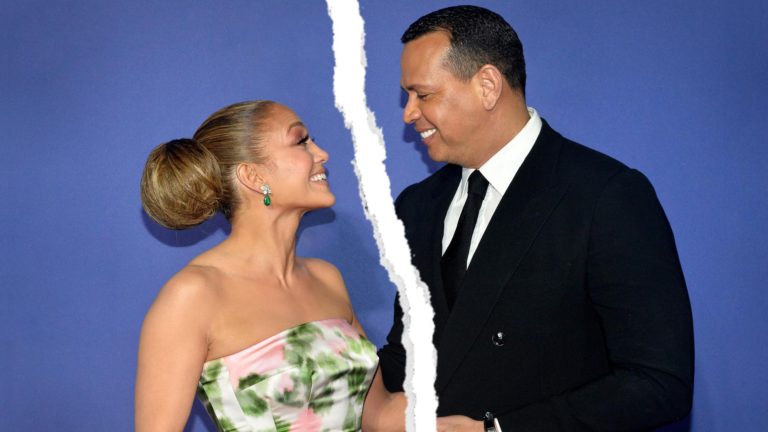
Inside The Half-Billion-Dollar Fortune Of A-Rod And J.Lo: How The Breakup Will Affect Their Business Empires

Alex Rodriguez and Jennifer Lopez’s recent split doesn’t raise too many questions on how their combined fortune of more than $500 million will be divvied up. But it does illuminate Rodriguez’s impact on Lopez’s entrepreneurship and branding, as well as all the time A-Rod put into developing his business acumen, even while still a baseball player. Read more on Rodriguez’s journey from major league slugger to business mogul.

Hot Reads:


Upon Further Review

With a newly appointed board, NBA Hall of Famer Shaquille O’Neal’s foundation is doubling down on supporting underserved youth, primarily in Atlanta and Las Vegas. Why those places? Because that’s where O’Neal lives, and he’s keen on being directly involved with things he’s passionate about. Those things are not limited to basketball and philanthropy, either. Shaq has also drawn crowds as big as 50,000 (pre-pandemic) as a DJ. Read more about the “biggest DJ on the planet.”


The Last Word

“When the pandemic first hit, I was just learning how to walk right before the whole world shut down.” Morgan Stickney

For many Olympic hopefuls, the postponement of the Tokyo Games upended their livelihoods and left their futures uncertain. But others, like Paralympic swimmer Morgan Stickney, were given an opportunity. Stickney, a bilateral amputee who lost both of her legs from a condition in which bones die because of a lack of blood flow, says the year-plus pause has provided much-needed time to better prepare to compete. Read more on Covid-19’s varying impact on Olympic and Paralympic athletes.


You can subscribe to the SportsMoney Playbook here.

Denver Concert Announcements: 3OH!3, Ben Harper, Jukebox the Ghost and More | Westword – Westword

^

Keep Westword Free

I Support

  • Local
  • Community
  • Journalism
  • logo

Support the independent voice of Denver and help keep the future of Westword free.

Ben Harper, who released Winter Is for Lovers last October, headlines Red Rocks on Monday, May 31. Tickets ($59.50-$79.50) go on sale Friday, April 23, at 10 a.m.

3OH!3, the electronic duo that formed in Boulder nearly two decades ago, takes over Red Rocks on Tuesday, June 1. Tickets, $49.95-$69.50, go on sale Friday, April 23, at 10 a.m.

Also, Levitt Pavilion Denver announced its first round of free live shows, including DeVotchKa, Dustbowl Revival, Flobots and more. RSVP for the shows at Levitt’s website.

In the classical realm, tickets just went on sale for the Colorado Music Festival, which takes place at Chautauqua Auditorium from July 1 through August 7. Seventeen guest artists, three internationally acclaimed string quartets and three guest conductors will perform throughout the season. Tickets are also now on sale for Bravo! Vail Music Festival, which runs from June 24 through August 4 at various venues in Vail, and includes performances from the Academy of St. Martin in the Fields, Dallas Symphony Orchestra, the Philadelphia Orchestra and the New York Philharmonic.

NEW SHOWS / ON SALE DATES

AGGIE THEATER

Tab Benoit: Thu., July 1, 8 p.m., $80-$200.

BLACK SHEEP

Mouth for War Album Listening Party: Fri., May 7, 6 p.m.
Powerman 5000: Thu., Sept. 16, 7 p.m.
Wildermiss: Fri., April 30, 6 p.m.

BLUEBIRD THEATER

Cleopatrick: With Zig Mentality, Ready the Prince, Mon., Oct. 11, 8 p.m., $20.
Genesis Owusu: Wed., Jan. 19, 2022, 8 p.m., $18-$20.

BOULDER THEATER

Float Like a Buffalo: With Guerrilla Fanfare, Fri., July 2, 8 p.m., $30-$35.
Green Buddha & Friends and Gasoline Lollipops: Benefit for Colorado Healing Fund with Subbuddha and Danny Schafer, Tue., May 4, 8 p.m., $50-$55.

CERVANTES’ MASTERPIECE BALLROOM & OTHER SIDE

Dopapod: Thu., May 13, 6:15 & 9:15 p.m.; Fri., May 14, 6:15 and 9:15 p.m., $45.
Joey Harkum: Fri., June 4, 6 and 9 p.m., $40.
Johnny & the Mongrels: Thu., May 27, 6 and 8:30 p.m., $35.
Rainbow Girls: With Grace Clark Band, Thu., May 27, 6 and 8:45 p.m., $25.
RVP & Friends: Ft. members of the Jauntee, the Sweet Lilies with Sarah Mount and Armando Lopez, Thu., May 20, 6 and 8:30 p.m., $35.

THE CHINOOK AT TERRY BISON RANCH

The California Honeydrops: With Rebirth Brass Band, The Sweet Lillies (6/11), Lawrence, Lindsay Lou (6/12), Fri., June 11, 7 p.m.; Sat., June 12, 6 p.m., $55-$150.

GLOBE HALL

13 Fridays and the People’s Thieves: Wed., June 9, 7 and 9:30 p.m., $30-$90.
Jackie & the Racket (album release): Thu., June 24, 7 and 9:30 p.m., $24-$72.

LARIMER LOUNGE

Danno Simpson: Thu., April 29, 7 and 9 p.m., $30-$90.

LEVITT PAVILLION

Central City Opera: Sun., May 23, 2 p.m., free.
Colorado Cool Vibes Reggae Festival: Sat., Sept. 18, 2 p.m., free.
DeVotchKa: With Nina De Freitas, Adam Cayton-Holland, Fri., May 21, 7 p.m., free.
Dustbowl Revival: Fri., May 28, 7 p.m., free.
Flobots: With Brothers of Brass, Sat., June 5, 7 p.m., free.
Joe Hertler & the Rainbow Seekers: With Graham Good & the Painters, Sat., May 29, 7 p.m., free.
Neoma: Fri., June 4, 7 p.m., free.
The Pimps of Joytime: With Kellindo, Fri., May 14, 7 p.m., free.
Rock de Mayo: Sat., May 15, 3 p.m., free.

LOST LAKE

Alfred & the Teddinators: Fri., June 4, 7 and 9:30 p.m., $30-$60.
CoreShot (Stone Temple Pilots tribute) / The Pot (Tool tribute): Fri., July 23, 9:30 p.m., $30-$60.
Gunpoint Alibi and Bury Mia: Thu., June 3, 7 and 9:30 p.m., $26-$52.
Mike Ring: With Pie Lombardi, Sun., June 13, 6 p.m., $24-$48.
yeahnoyeah and Night Swim: Fri., April 23, 9 p.m., $20-$60.

MARQUIS THEATER

Deicide: With Kataklysm and Internal Bleeding, Fri., Aug. 20, 7 p.m., $25.

MISSION BALLROOM

Brothers Osborne: With Travis Denning, Tenille Townes, Fri., Oct. 8, 8 p.m., $35-$75.
Marc Rebillet: Fri., Sept. 17, 9 p.m., $25-$35.

OGDEN THEATRE

Jukebox the Ghost: Sat., Sept. 25, 9 p.m., $30.75.

RED ROCKS AMPHITHEATRE

3OH!3:
Tue., June 1, 7:30 p.m., $49.95-$69.50.
Ben Harper: Mon., May 31, 8 p.m., $59.50-$79.50.
The Floozies: With Maddy O’Neal and Bad Snacks, Wed., May 26, 7 p.m., $50-$65.
The Motet: Special guests Eric Krasno, Antwaun Stanley, Jennifer Hartswick, Natalie Cressman & Jason Hann with Eric Krasno and the Assembly, Fri., June 4, 7 p.m., $49.50-$59.50.
Tennis: With Caroline Burch, Thu., June 3, 7 p.m., $45.

SUMMIT

lovelytheband & Sir Sly: Fri., Nov. 19, 7 p.m., $25.

Have events you want included on this list? Send the details to editorial@westword.com. Looking for more to do? Visit the Westword calendar.

Keep Westword Free… Since we started Westword, it has been defined as the free, independent voice of Denver, and we would like to keep it that way. Offering our readers free access to incisive coverage of local news, food and culture. Producing stories on everything from political scandals to the hottest new bands, with gutsy reporting, stylish writing, and staffers who’ve won everything from the Society of Professional Journalists’ Sigma Delta Chi feature-writing award to the Casey Medal for Meritorious Journalism. But with local journalism’s existence under siege and advertising revenue setbacks having a larger impact, it is important now more than ever for us to rally support behind funding our local journalism. You can help by participating in our “I Support” membership program, allowing us to keep covering Denver with no paywalls.

Illinois Bill Would Force Health Insurers To Buy Babies For Gay People – The Federalist

The inability to conceive and carry a pregnancy seems to be on the rise for couples in the Western world, due to the rise in the age at which they seek to conceive and for other known and unknown reasons. But also on the rise is the number of gay couples and single women who wish to conceive, and even though they are not technically infertile, they would like insurance companies to think they are.

A new bill in the Illinois legislature, introduced in February and now standing at 25 sponsors, seeks to wholly redefine what it means to be “infertile.”

The U.S. Centers for Disease Control and Protection defines infertility as “not being able to get pregnant (conceive) after one year (or longer) of unprotected sex.” But this new law is not about that, as Illinois law already requires that Illinois insurance companies cover fertility services for couples who have attempted to conceive for a year regardless of whether those attempts are through sexual intercourse or other means, or where an individual has been diagnosed with a fertility-impacting medical condition.

Through the Illinois Family Building Act of 1991 and 1997, and a 2010 ruling by the Illinois Department of Insurance, the fertility benefit mandate applies to women who are physiologically unable to conceive and carry a pregnancy regardless of how they attempt to conceive.

The new bill in Illinois, HB 3709, actually has nothing to do with infertility. Instead, it would mandate that all health insurance plans sold in the state pay for fertility-related services for single people and same-sex couples regardless of whether, physiologically, they have any impairment in their fertility at all.

The legislation removes the element of the prior definition that included “the inability to conceive after one year of attempts to produce conception” (as a supplemental component of the definition beyond the traditional requirement of unprotected sex) and replaces it with “a person’s inability to reproduce either as a single individual or with a partner without medical intervention.”

If a specific service has been developed for actually infertile couples, services which the law already defines as “including, but not limited to, in vitro fertilization, uterine embryo lavage, embryo transfer, artificial insemination, gamete intrafallopian tube transfer, zygote intrafallopian tube transfer, and low tubal ovum transfer,” then this law deems it available to singles and gay couples too.

The Chicago Tribune’s coverage of the bill profiles the case of a gay couple contemplating hiring a surrogate. They face high expenses for “everything from compensation for the woman who will carry his baby, to in vitro fertilization and genetic testing” without any payments from insurance.

“If Marcus and his husband were heterosexual, on the other hand, at least $20,000 in medical expenses would be covered by his employer-based health insurance, and potentially $40,000 or $60,000,” the story reads. “…The heterosexual sex requirement effectively disqualifies LGBTQ people and people without partners, according to state Rep. Margaret Croke, D-Chicago, who recently introduced a bill that would extend protection to those groups.”

The article also implies the bill would cover egg-freezing costs for single women. Separately, WCIA from Springfield reports:

The proposal would not require insurance providers to cover the cost of surrogate fees, but would require them to provide some form of coverage for in vitro fertilization and other infertility treatments. Croke says the coverage could help pay for expensive things like ‘sperm selection and your egg donor and ovulation stimulation.’

‘This idea of taking [parenthood] away from someone because of who they love is pretty heart wrenching,’ she said. ‘There are people who want to be parents, and I don’t think that we should be determining who becomes a parent because of financial barriers, or because they are in a same sex relationship, or they’re single.’

No one is “taking parenthood away” from anyone merely by the lack of a state mandate that insurance companies pay for fertility-related services for anyone who wishes to use them. After all, health insurance coverage is meant to remedy medical conditions, to treat diseases, or (in its present-day form) prevent them. It is not meant to cover any service that simply happens to be provided by a medical professional or to be regulated by medical regulators.

No one has a “right” to have covered any particular service that is not curative or preventive even when the general terms and conditions of that insurance policy cover superficially similar services that are medical treatments.

More troubling, though, is the utter indifference on the part of Croke, the journalists, and those cited in the article to the plain meaning of the word “infertility.” For a woman to lack a spouse or partner, but wish to have a child, does not mean that she is infertile. For two men or two women to wish to parent a child to whom they have a partial biological connection does not mean that they are infertile.

We see over and over again a process play out in which the political and cultural left redefines basic terminology, then insists that their definition of the word is the only “true” and universal one, even to the point of enshrining it in law. How many more times will this play out before the rest of us manage to stop it?

The Simpsons recasts iconic gay character with proud gay actor in bid to be more inclusive – Yahoo Eurosport UK

The long-running cartoon series The Simpsons has recast the voice actor for the iconic gay character Julio with gay, Cuban actor Tony Rodríguez.

The recasting follows the controversy of The Simpsons voice actor Hank Azaria’s stereotypical depiction of Indian-American convenience store clerk Apu. The controversy sparked a conversation that some of the show’s ethnic minority characters had been historically voiced by white actors and encouraged harmful stereotypes. The Simpsons creator Matt Groening told the BBC in February that “times change”, and the show would be rethinking its casting.

Azaria said in 2020 that he would be stepping down from the role of Apu following the controversy. But his replacement has not yet been revealed. The Simpsons, however, has already recast the voice of the jolly, Black medic Dr Hibbert with Black actor Kevin Michael Richardson.

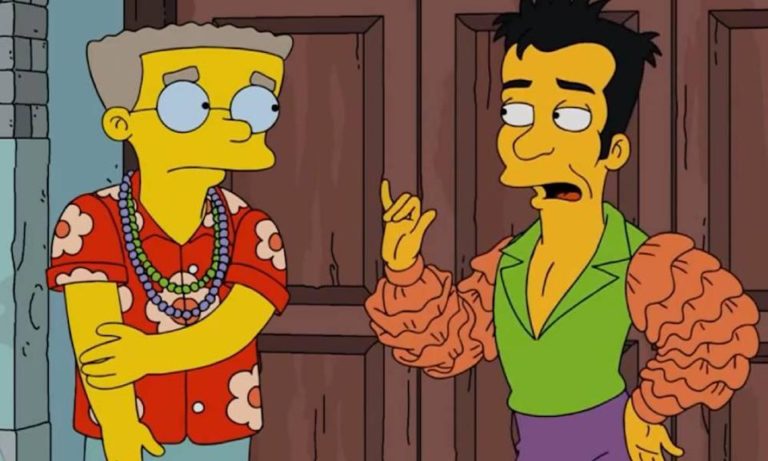
In the latest round of recasts, The Simpsons has also recast the voice actor for the show’s iconic, gay character Julio. Azaria, who previously voiced Julio, was replaced by gay, Cuban-American actor Tony Rodríguez. He made his debut as the character in March during the 32nd season episode of The Simpsons titled “Uncut Femmes”.

Julio is one of two gay men Homer Simpson, the patriarch of the titular Simpson family, moves in with in season 14’s “Three Gays of the Condo”. He has appeared in a multitude of The Simpsons episodes as Marge Simpson’s hairdresser, as part of Springfield’s LGBT+ scene and even as the boyfriend of Mr Waylon Smithers.

In an ‘audition’ video posted on Instagram, Rodríguez shared his love for the iconic show, saying that he has been watching The Simpsons “from the beginning”. He added that the characters, writing and performances on the show are “brilliant”, but he wanted to throw his hat in the ring to voice Julio.

“In the past two years, I have seen myself more in the show, and by that, I mean specifically the part of Julio, who is gay like me,” Rodríguez said. “He’s Cuban like me.”

He joked: “In one episode, he’s Puerto Rican, and I’m pretty sure I’ve had a Puerto Rican in me.”

Rodríguez ended the video by saying he knew The Simpsons creators have tried to become more inclusive in their casting, and he offered his services to take on the iconic role of Julio – which he now does. So dreams do come true.

Matt Selman, an executive producer for The Simpsons, tweeted that a video of “Every LGBT Joke On the Simpsons Ever” – created by Drew Mackie and Glen Lakin of the Gayest Episode Ever podcast – “had a hand” in recasting Rodríguez as Julio.

Gayest Episode Ever is a podcast that looks at and analyses the LGBT+ aspects of classic sitcoms. In this case, the two hosts focused on every LGBT+ joke ever on The Simpsons from season one, which premiered in 1989, up to season 31 in 2019-2020.

‘Mean Girls’ Star Jonathan Bennett Got Rejected From Wedding Venue Because He’s Gay – Yahoo Entertainment

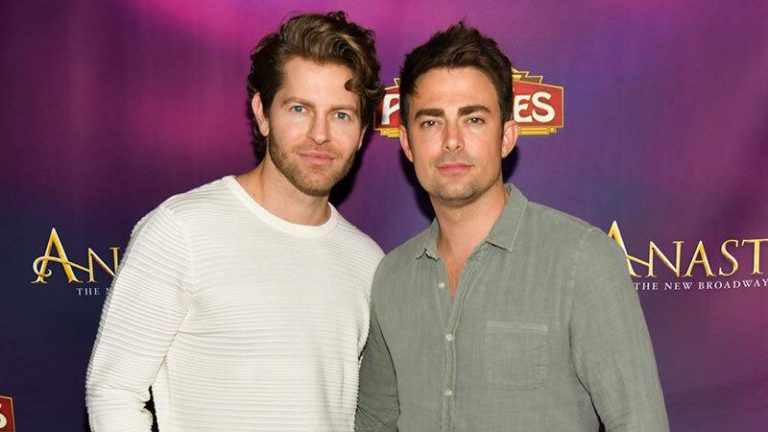
“Mean Girls” star Jonathan Bennett and fiancé Jaymes Vaughan are excited to head down the aisle—but their journey to the altar hasn’t been without some rough spots. In a new interview with The Knot, the couple opened up about being discriminated against due to their sexuality. The interviewer asked the couple if they’ve thought about selecting wedding vendors that align with their values, and they shared that one venue rejected them entirely.

“As a member of the LGBTQ+ community, you don’t just need to feel safe—you need to feel celebrated. For years, we planned to get married at Palace Resorts in Mexico. When we got engaged, the owner said he couldn’t marry us because we’re two men and it goes against his morals. That was a sucker punch to the gut,” Jonathan said. “We decided in that moment that our wedding was bigger than us. It’s our wedding, but it isn’t just about us. It’s about the LGBTQ+ community. We’re really making a point to make this wedding very loud on purpose,” he continued. Jaymes added, “We knew we could go to the UNICO Hotel, because on social and in their marketing, they have shown us that we’re welcome there. When we first started talking about having our wedding there, they were excited for us, which is what everyone’s wedding is supposed to be.”

Jonathan expressed that their main priority is ensuring their wedding is a safe and joyful space, saying, “We want to make sure that there’s never a moment during the engagement or wedding planning journey that LGBTQ+ people aren’t excited. We want to make sure that they are celebrated every moment and don’t feel a sense of otherness. The otherness needs to be removed from gay weddings.” Jaymes proposed to Jonathan back in November, giving the actor the surprise of a lifetime. “When I saw Jaymes take a knee I was so excited I just started hysterically screaming because I didn’t know how to express myself properly,” Jonathan told People. “There was a moment when you feel like ‘Oh, this is forever, I understand it.’ I screamed ‘Yes’ immediately. Actually it was, ‘Yes! Of course!’” [gallery_id value=215279 post_id=215279] Access Hollywood’s podcast “The Vault” features decades worth of A-list interviews and never-before-heard moments with some of the biggest stars in Hollywood. Listen now!

What Runners Want You to Know About Being LGBT in Our Sport – Runner’s Tribe

Coming out as a member of the LGBT community is difficult. Societies and cultures around the world still point to members of this community and think they should not be allowed to do different things. And this only because they are not like the great majority of people, who are attracted by the opposite sex. Moreover, people who do not identify with their sex are also discriminated against and looked at with strange eyes. 

The running community has been like this for centuries, and it still is. However, over the past couple of years, many runners came out as members of the LGBT community. It is not an easy thing to do, but it was the start and encouragement many others felt they wanted to do. Lifting that weight off their shoulders and focusing their attention on running and their wellbeing. So, what should you know about being LGBT in this sport? 

There Are Inclusive Running Communities 

One of the things that LGBT people are surely aware of is the fact that society has put a stigma on people that are gay, lesbian, or transgender. This is because some may think that LGBT people are “not normal”; because they do not follow the general rules or because there are some religious reasons involved. However, running is a nice activity everyone can engage in. It can be the passion many LGBT people adopt as a way of lifting the weight off their shoulders, to relax, to find themselves. 

But many of them were long discriminated against and looked at weirdly. Thankfully, now that many runners such as Addie Bracy and Matt Llano came out, more and more communities of runners are being created. And the thing about these communities is that they are inclusive and non-discriminatory. They can turn out to be the oasis of tranquility many LGBT runners were looking after. Any college student, businessman, worker can join OUTrun, the initiative Addie Bracy and Corey Conner have founded. 

Free-essay-examples and articles on LGBT Topics

If you want to study more about the different psychological mechanisms involved in the LGBT topic, there are many online resources you can read and consult. Getting an education on this topic and finding out more about why people react the way they do can make the process of coming out easier. Many LGBT people fear they will be rejected by their families and friends. But understanding why they do this can help you craft your message so that it reaches them. There are LGBT free-essay-examples you can read anytime. You can find 100% free LGBT essay examples to gain more information about this topic. Maybe finding out more will give you more power over the moment and will help you improve your wellbeing. 

Coming Out Can Improve Your Running Performance 

Knowing that you hide something so important to you from everyone can be stressful and overwhelming. This is because you always need to hide, your feelings and emotions. You do not express yourself freely because others do not know that you are gay, lesbian, or transgender. And this can turn out to be difficult to deal with and handle. It can seriously affect your running performance because you are not 100% there, at the moment. There is always this thing that bothers you, like a burden you have to carry every day. 

But as Addie Bracy has acknowledged, after coming out as a member of LGBT, her running performance has considerably improved. She suddenly left her weight behind and ran freely, winning her first marathon. Even though it may not seem much to carry at times, it is something that is always there and just puts on more weight, making it heavier and heavier. The community of LGBT runners is out there, ready to support you in this tough and challenging process. And to give you the courage you need.

Final Words 

The Earth is changing and so do the communities and societies that live here. Even though over the past years there has been a slow shift in people’s mindset regarding the LGBT community, there is still a long way to go. LGBT runners might feel discriminated against and not included in the community by some people. Coming out as a gay, lesbian, or transgender is also a challenging and difficult process, but many LGBT runners’ communities can support you and help you improve your wellbeing. 

Bio lines: Michael Turner is a content writer. He collaborates with local magazines and newspapers for various articles. Michael’s favorite topics are psychology, sociology, and culture.

Harry Styles ‘excited’ about filming gay sex scenes for new movie: ‘Not much will be left to the imagination’ – Yahoo Eurosport UK

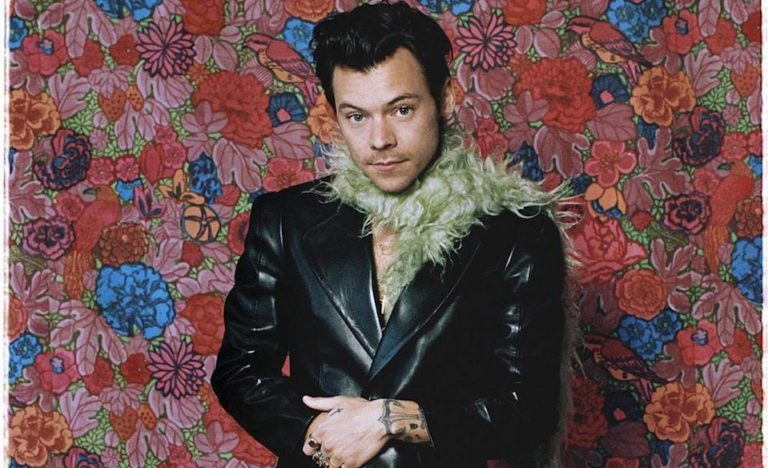
Harry Styles is reportedly “throwing himself” into his new role filming gay sex scenes for his upcoming film My Policeman.

The “Watermelon Sugar” singer and all-round icon is filming two sex scenes with his co-star David Dawson, according to The Sun.

My Policeman is currently filming in Brighton, and an industry insider has insisted that Harry Styles is “really excited about the challenge” of portraying a gay man in the 1950s, when homosexuality was still illegal in England.

The insider said Styles will shoot two sex scenes with Dawson, and he will also film a scene where he is naked on-screen by himself.

“Not much is going to be left to the imagination,” the insider said.

“Harry is throwing himself into this new role and is really excited about the challenge, even though it’s a daunting task.”

The insider said Styles “always wants to do things that people wouldn’t expect” and that his upcoming queer role will challenge people’s perceptions of him.

The Crown star Emma Corrin will play Harry Styles’ wife in My Policeman

My Policeman, based on a 2012 novel, will see Styles star opposite The Crown star Emma Corrin, who rose to fame in 2020 after she played a young Princess Diana on the hit Netflix series.

Styles will play gay policeman Tom Burgess in the film, which is set in 1950s England, while Corrin will play his wife Marion. When Marion discovers that her husband is having an affair with another man, she tries to get his lover arrested.

The news comes just days after Harry Styles was nominated in the music artist category at the British LGBT Awards alongside queer artists such as JoJo Siwa, Lil Nas X and Sam Smith.

The singer, who launched his acting career in 2017 film Dunkirk, has never publicly defined his sexuality – but many LGBT+ people have welcomed him into the community for his refusal to bow down to restrictive gender norms.

Speaking to The Guardian in 2019, Styles said: “Am I sprinkling in nuggets of sexual ambiguity to try and be more interesting? No.

“In terms of how I wanna dress, and what the album’s sleeve’s gonna be, I tend to make decisions in terms of collaborators I want to work with.

“I want things to look a certain way. Not because it makes me look gay, or it makes me look straight, or it makes me look bisexual, but because I think it looks cool.”

He went on to explain that, for him, sexuality is “something that’s fun”.

“Honestly? I can’t say I’ve given it more thought than that.”

Netflix announces cast for live action adaptation of gay graphic novel Heartstopper – Gay Times Magazine

0

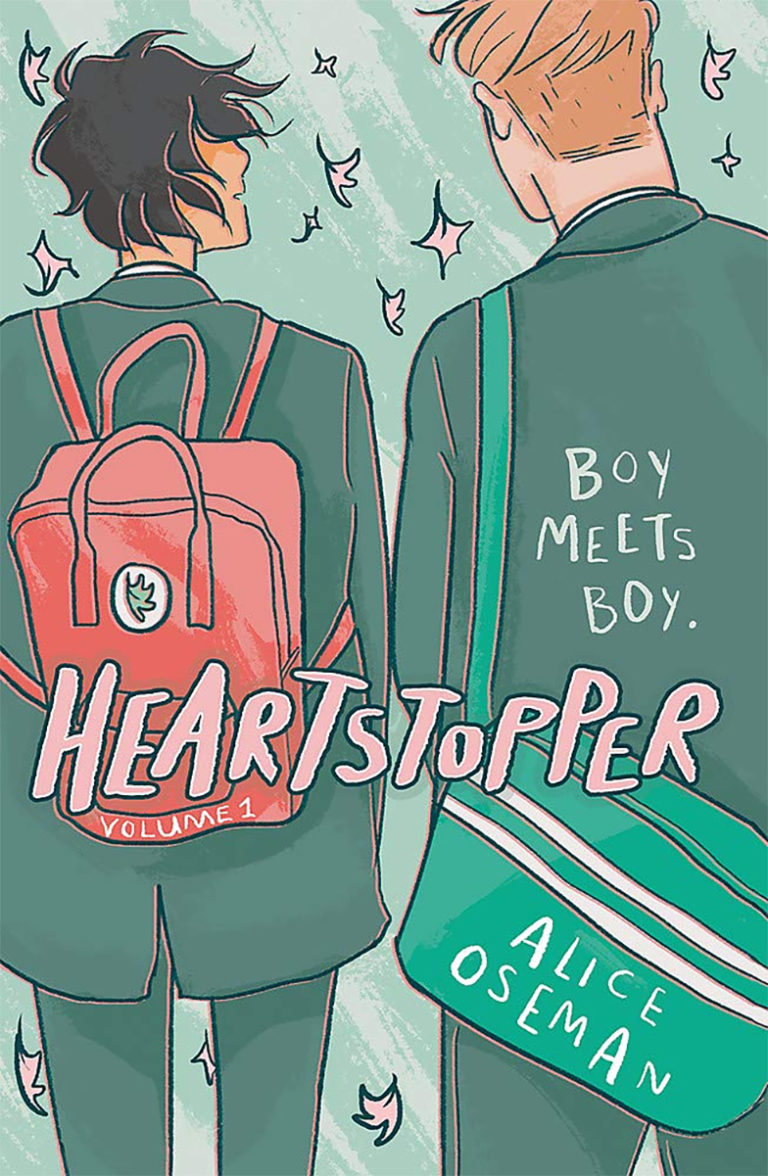
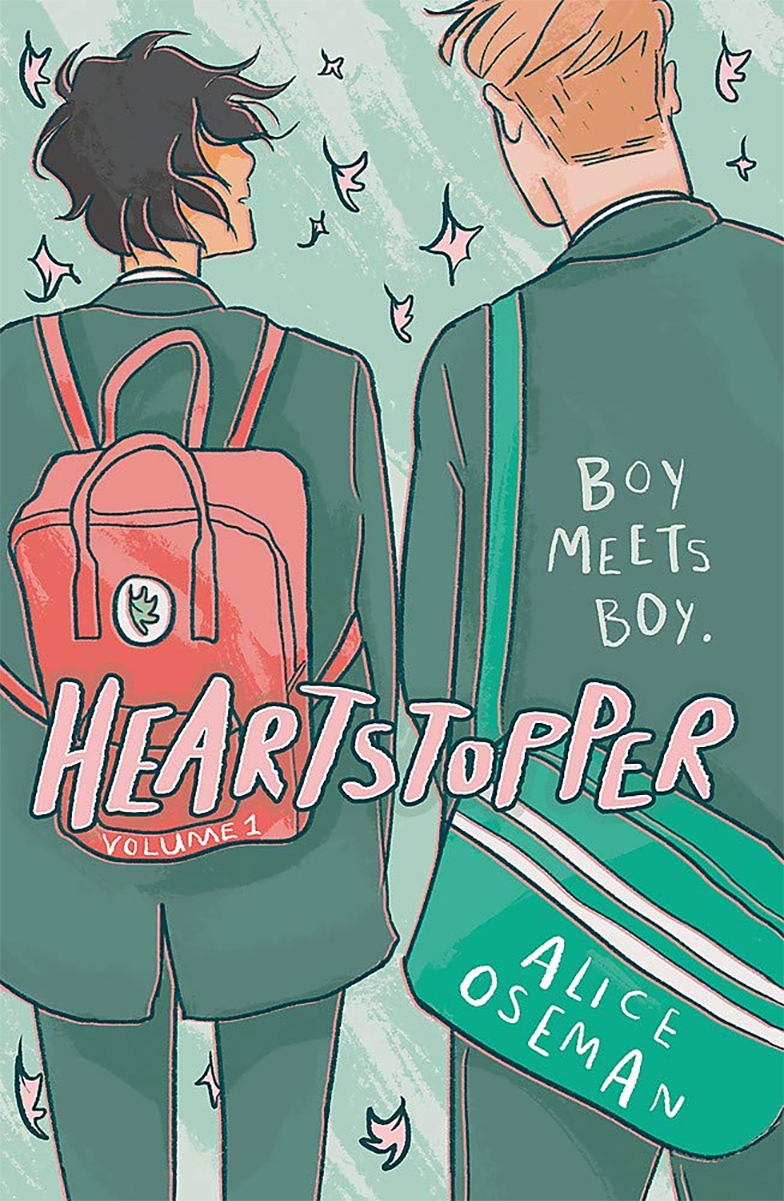
Netflix has announced the cast for the live-action adaptation of Heartstopper.

Kit Connor (His Dark Materials) and newcomer Joe Locke have been cast as the two leads, Nick Nelson and Charlie Spring, following an audition process that saw over 10,000 people try-out for the anticipated teen drama.

Produced by See-Saw Films, the series will adapt the graphic novel of the same name from Alice Oseman, which takes place at a British all-boys grammar school and follows Charlie, who is openly gay, and Nick, a rugby player, as they develop feelings for one another.

Doctor Who and Sherlock’s Euros Lyn has been attached to direct the half-hour series.

Oseman said in a statement: “Nick and Charlie have existed as characters for almost a decade, and are two of my most beloved characters, so I was slightly apprehensive about the casting search, but I am so happy and excited that we’ve cast Kit and Joe.

“They’re both so talented, sweet, funny, and smart, and so perfect. It has been such fun getting to know them and welcoming them into the Heartstopper universe, and I can’t wait to see them bring the characters to life on screen.”

Lyn said he “can’t imagine a more perfect pair than Kit and Joe to play Nick and Charlie, and bring their joyous love story to life on screen.”

When we spoke to Oseman about the charming graphic novel, which has received heaps of critical acclaim, she said it was important for her readers to “learn about the issues and tensions that young LGBTQ+ people face”.

“It’s through stories like this that straight and cis people can improve their empathy,” Oseman told GAY TIMES.

“I’ve had so many people reach out to me saying, ‘It’s so nice to see someone like me in this comic just falling in love and having a cute little romance’, but also from people saying, ‘Nick’s journey has helped me come to terms with being bisexual’, and stuff like that. For me, that’s the most wonderful thing.”

Oseman, who has written four Heartstopper novels (so far), will write the series.

Patrick Walters, Executive Producer as See-Saw, said: “Getting to work with Alice, Euros and actors as talented as Kit and Joe on Heartstopper is a dream come true.

“They both have such passion and consideration for the story and it feels like we are creating something very special. Heartstopper is a celebration of young queer love in all its forms, and we hope audiences will take the actors and this story to their hearts.”

Heartstopper is currently filming in the UK until Summer 2021.

WB Reportedly Wants More LGBT Representation In The Matrix Franchise – We Got This Covered

0

After 20 years, The Matrix franchise is about to be reloaded. The much-anticipated fourth entry in the iconic sci-fi universe – which has still yet to be given an official title – was shot last year, with Keanu Reeves and Carrie-Anne Moss returning as Neo and Trinity. It’s not all about recapturing the past, though, as the pic will introduce a bunch of new characters, too, as played by the likes of Priyanka Chopra, Yahya Abdul-Mateen II and Jessica Henwick.

That cast list immediately makes clear that the movie will be committed to diversifying the franchise more than the original trilogy did, and this is just the start of it, apparently, as there are plans to commit to better representation across the board in future installments. As per the latest rumor shared by tipster Daniel Richtman on his Patreon page, Warner Bros. wants more LGBT representation in The Matrix world going forward.

If this intel is accurate and this is something the studio is advocating for, then it’s unlikely that they’re having to force it on the filmmakers against their will. After all, Lana Wachowski is directing The Matrix 4 – without her sister Lily this time – and the Wachowskis have long been lauded for the strong queer representation in their productions. So, if this is what WB wants for the franchise, then the director will be likely only too happy to oblige. Typically, creators have to fight against the studios on this sort of thing.

The Wachowskis have previously confirmed that The Matrix can be interpreted as an allegory for the trans experience, something which Keanu Reeves has supported. It’s only natural for this to evolve into some actual on-screen LGBTQ+ rep, then. By the sounds of it, the upcoming sequel itself might not provide much on its own, but it’s something that’ll be improved upon in the intended follow-ups, as a full second trilogy is expected.

The Matrix 4 debuts in theaters and on HBO Max this December 22nd.

Source: Patreon

Columbus Gay Men’s Chorus thinks that their concert Saturday offers a sense of hope – The Columbus Dispatch

0
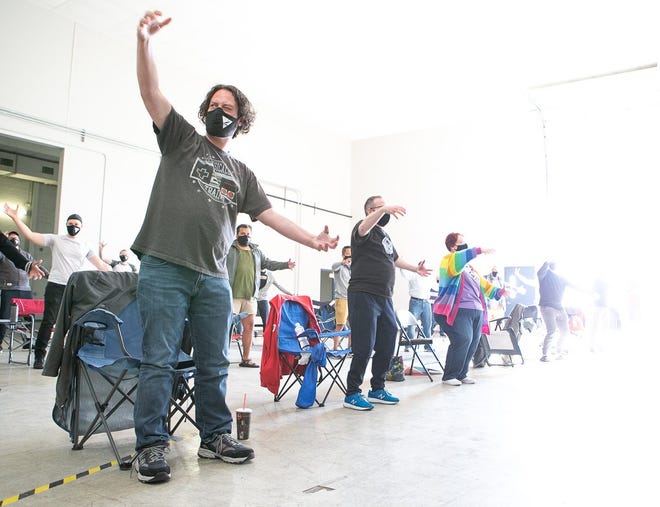
Members of the Columbus Gay Men's Chorus rehearse dance moves to 1993 hit "What's Up" by 4 Non Blondes in preparation for their first performance of the season.

Last summer, when the Columbus Gay Men’s Chorus resumed in-person rehearsals, longtime chorus member David Hayes experienced a mixture of emotions.

“It was a very strange feeling, but it was a very familiar feeling at the same time,” said Hayes, 52, who resides in Lewis Center.

Preparing to return to performing amid the pandemic, the chorus has rehearsed in a succession of large, airy environments — first in a parking garage, then a park and eventually a warehouse. All singers are masked and distanced while practicing.

“This is just a very ‘Twilight Zone’ moment, but then all of a sudden, you’re like, ‘All right, this feels natural that we’re actually able to sing again,’” Hayes recalled of those early rehearsals.

The end results, however, have been worth it: The chorus is not only among a handful of central Ohio performing arts organizations to offer a complete season, but, according to leaders, is unique throughout the nation.

Columbus Gay Men's Chorus members, Michael Schecter and Doug Althauser, embrace after sharing a spoken word piece together during rehearsal.

“We are the only Gay and Lesbian Association of Choruses member that is having in-person rehearsals, and we’re the only ones that have had basically a full, normal season — as normal as you can have,” said Artistic Director Brayton Bollenbacher, 37, a graduate of Ohio State University who had been running a chorus in Tucson, Arizona, before signing up to run the Columbus Gay Men’s Chorus in late 2019. His first show was set for a few months later.

“We were the day before opening night when the governor canceled everything for March,” said Bollenbacher, referring to Gov. Mike DeWine’s initial ban on gatherings last March. “What a weird year to start with an organization.”

Since then, the chorus has performed in a small configuration at Huntington Park in October and gathered to produce a virtual holiday show in December. On Saturday, in its most robust offering since the start of the pandemic, the group will return again to Huntington Park for a concert titled “Light & Love.”

A member of Columbus Gay Men's Chorus reads sheet music arranged by Artistic Director Brayton Bollenbacher during a rehearsal in preparation for their first performance of the season.

The Columbus Clippers’ home has become something of the chorus’ home away from home, too.

“For us, it’s just such a great way to be safe for our audience and our singers,” Bollenbacher said.

For Saturday’s program, 62 chorus members will take the field. Each will don face masks, wear individual microphones and be positioned 8 feet from one another. In most other ways, though, the concert should resemble pre-pandemic performances — something that audiences have been craving, Hayes said.

“Nobody really can say we’re back to any type of normalcy, but it gives them the sense of familiar again — something they have loved to listen to and watch in the past,” Hayes said. “It’s this step forward to getting back to what we used to be able to do on a grander scale.”

The first half of the two-part program aims to reflect on the social upheaval of the preceding 12 months, which have been marked by widespread concerns over racial injustice.

“We’re doing ‘Ball of Confusion’ by the Temptations, which … is very much about racial/social unrest,” said Bollenbacher, who will conduct most of the concert. “We’re doing a song called ‘Overwhelmed’ that’s popular on TikTok right now. ‘I get overwhelmed so easily’ — which, I think, is how most of us have felt all year.”

“Heavy,” a newly commissioned work commenting on the death of George Floyd, will be guest-conducted by Brooklyn Youth Chorus conductor Eric Williamson, who has traveled from New York to join the chorus for this show.

Williamson will also lead a performance of the spiritual “My Lord, What a Morning.”

Upbeat, forward-looking tunes will be featured in the second half, including Dolly Parton’s “Light of a Clear Blue Morning” and “That’s What Friends Are For” from the Disney movie “The Jungle Book.”

“We’re all trying to come out of this crazy time, and we are starting to see hope and light,” Bollenbacher said.

Columbus Gay Men's Chorus Artistic Director, Brayton Bollenbacher, directs a run through of "The Village" by Wrabel during a recent rehearsal.

Singing while masked presents its share of problems, including enunciation.

“Doing an ‘oo’ vowel, like in ‘moon,’ is really hard because ‘oo’ is a difficult vowel to project anyway,” said Bollenbacher, who nonetheless says that there is a silver lining to the experience.

“They have to listen a lot harder and they have to be more efficient,” he said. “There’s less time for them to talk to each other, so I’m actually able to get more things done.”

And the message of “Light & Love” promises to resound through Huntington Park — one that no mask will muffle.

“There is hope,” Bollenbacher said, referring to the present moment in society. “But there’s only hope if we continue working for better.”

Members of the Columbus Gay Men's Chorus during a recent rehearsal.

tonguetteauthor2@aol.com

At a glance

The Columbus Gay Men’s Chorus will perform “Light & Love” at 2 and 7 p.m. Saturday at Huntington Park, 330 Huntington Park Lane. Tickets cost $22 to $32, or $11 for age 18 and younger. Visit columbusgaymenschorus.com.

The tale of Gay capital turned homophobic state – Africanews English

0

Junior is a young Senegalese man who lives with a secret. The truth is, Junior is gay. Just like every other gay person in Dakar, he is afraid of not only rejection, but persecution, and even imprisonment.

“Góor-jigéens” used to move about freely in the streets of Dakar and other towns, dressed as women.

A few decades ago, some Senegalese men openly identified themselves as neither male nor female, but as an alternative gender – the “Góor-jigéen” or “men-women”.

Dakar is now West Africa’s center of gay oppression as it is seen as un-African. This is the story of the colonial roots of homophobia in Senegal.

If you haven’t listened to our previous episodes about the Abatangamuco, a group of men in rural Burundi who decided to stop beating their wives, please, do so in the player below.

Please do not hesitate to listen and subscribe to the podcast on euronews.com or Castbox, Spotify, Apple, Google, Deezer, and give us a review.

TRANSCRIPT

THE GOOR-JIGEEN IN SENEGAL: THE PAST – EPISODE 6

Danielle Olavario: We are at a Senegalese wrestling fight on a beach in Dakar. The men bend as they struggle to fight.

Hands forward, legs back. They start by slapping each other’s hands. Necks snap together. With their fists they try to hit the chest.

The belly. The chin. Blindly. Because they have their heads stuck together. It’s combat, but it’s also a kind of choreography.

This is what masculinity looks like in Senegal.

Senegalese wrestling has become popular since 1914. Sociologist Djibril Seck argues that it was a tool for recovering native African masculinity, wounded by colonisation. During colonial times, popular European representations of African men were feminised and infantilised.

But in the arena, the African warrior was back. Strong, muscular, narcissistic, and stoic in the face of pain. And of course, free of any feminine attributes.

That’s how Senegalese men are portrayed in the 1963 movie by Paulin Soumanou Vieyra ‘Lamb, la lutte senegalaise’.

Welcome to Cry Like a Boy. I am Danielle Olavario and this is the second part of our documentary on the góor-jigéen in Senegal. If you haven’t yet heard part 1, take a listen on euronews.com/special/cry-like-boy-podcasts

In our previous episode, we met Junior, a 24-year-old Senegalese who lives with a secret. A taboo in Senegalese society.

As a young gay man, he lives in fear of being called Góor-jigéen, a “man-woman”; as they are pejoratively called in the local Wolof language. But it wasn’t always that way.

Junior: “Góor-jigéen before meant something different, because they were men who dressed like women and talked like women according to the research I’ve done.”

Danielle Olavario: So how was the situation before? What changed?

Michael Davidson: “In 1949, Dakar was already the “gay” city of West Africa. When I returned nine years later, the French rulers had gone, and Dakar was gayer than ever… For some reason, buried in history and ethnography, the Senegalese […] have a reputation in all those regions for homosexuality, and in Dakar, one can quickly see that they merit this reputation.”

Danielle Olavario: This is an excerpt from the travel essay by English journalist Michael Davidson. He published it in 1970, but it reflects his experiences in his visit to the West African country between 1949 and 1958.

Senegal became fully independent on August 20th, 1960, after centuries under the French colonial rule. So when Davidson was traveling, the country was still a colony.

He wasn’t the only one to observe that the streets of Senegal were particularly welcoming to gender diversity.

Senegalese professor of Pan African Studies Babacar Mbaye from Kent University explains:

Babacar Mbaye: “When I grew up, I mean, in the 70s, I was just a kid, couldn’t do anything. But in the 80s, suddenly, as I was, you know, a teenager, you know, I could see individuals, you see, you know, similar to those that are being described today as a góor-jigéen, you see. You know, I could remember, you know, I could remember and I didn’t remember any violence perpetrated against those individuals.”

Danielle Olavario: Let’s now go deeper. Let’s look a little further back through the words of another English anthropologist Geoffrey Gorer who wrote this in 1935.

Geoffrey Gorer: “They are called in Wolof men-women, Góor-jigéen, and do their best to deserve the epithet by their mannerisms, their dress, and their make-up; some even dress their hair like women. They do not suffer in any way socially… on the contrary, they are sought after as the best conversationalists and the best dancers.”

Danielle Olavario: In his time, the Góor-jigéen, men-women, were integrated in the Senegalese society.

Senegalese culture didn’t just tolerate them but accepted them as an important part of the community. They had a prominent role in life’s ceremonies, such as weddings and baptisms. They also often accompanied high society women and had an influential political position.

That memory is still there somewhere. Not only in studies, diaries, and books. Some Senegalese people like Professor Mbaye still remember it.

Babacar Mbaye: “When they were dancing, everybody was just crossing their arms. And that’s in all watching. You see what nobody was turning their eyes away. You see, you know, and when those individuals walked by, you, you know, as a boy, I dare not, I did not, do anything to insult them. I did not laugh at them because we considered them our fathers, you see. We considered them like our fathers, that we gave them the same sense of respect that we gave to our fathers and our uncles.”

Danielle Olavario: Like the Góor-jigéen in Senegal, we can find examples of people who don’t identify with the category of woman or man throughout Europe.

Historical examples of such figures include il femminiello who, just like the Góor-jigéens, played an important role in ceremonies such as weddings in the 19th century in Naples, Italy.

And some still very current, such as the “sworn virgins” from Albania. Born women but who decide to live like men. They are accepted only if they take a vow of chastity for life. Some do so to live more freely or to be able to provide for their families.

So what we’re seeing in Senegal is a transformation of the term ‘Góor-jigéen’ from meaning gender fluid, or a third neutral gender, to meaning a pejorative term, strictly for gay men.

Today this nuance is lost, as French researcher Christophe Broqua from the French National Centre for Scientific Research explains here:

Christophe Broqua: “They were considered to be men with feminine attributes. But the expression said nothing about their sexuality.”

Danielle Olavario: What’s more, Cheikh Niang, a Senegalese Professor of medical and social anthropology at Cheikh-Anta-Diop university, says that the creation of these kinds of taboos is rooted in colonial influence:

Cheikh Niang: “They took it from the colonial laws. And in the colonial laws, you have all these homophobic dispositions. The laws that you find in the texts and in Africa were not invented by Africans. It came as a result of the introduction of these same laws. We just copied and pasted. We extended laws that existed during colonisation.”

Danielle Olavario: Colonisation has represented a step back in respecting gender diversity and identity. And, in time, it created a void in the historic memory of the Senegalese.

Fast forward almost a century, we are back in 2020. Back in the streets of Dakar at rush hour. People here cannot freely experience their sexuality.

Everyone who is sexually diverse tends to hide it, because they’re afraid of punishment. The slightest hint of a female attribute in a man is seen as outrageous.

Christophe Broqua: “There is a well-known Senegalese artist, Waly Seck, who was wearing a handbag in a clip and in photos. That was considered too feminine and he was extremely stigmatised for it. He even had to destroy it publicly at a concert to end the controversy.”

Friends, The One With Joey’s Bag (1999):

Joey: You think I should give up the bag.

Rachel: Wait Joey I’m sorry. As terrific as I think you are with it…

Ross: Oh hey…

Rachel: I just don’t know if the world is ready for you and your bag.

Danielle Olavario: In societies around the world, in many languages, there are words to demean those who do not fit into traditional male or female patterns.

Femminuccia. Maschiaccio.

Nenaza. Marimacho.

тюфяк. Бой-баба.

Sissy. Tomboy.

Danielle Olavario: In Senegal, the word is Góor-jigéen. A word Junior has probably heard many times. But deep down, this word cannot hurt him.

Junior: “Yes, being gay and masculine is possible.”

Danielle Olavario: He knows his sexuality doesn’t affect his masculinity. Neither does the tone of his voice, his way of dressing, or his hairstyle. He says he is a proud man.

Junior: “I have always lived my masculinity naturally because I played with my friends. I did everything that everyone else did was no different. Do you sometimes wonder when you tend to listen to the radio or TV, or even hear people talking? You can ask yourself questions, but it’s only for a few minutes. After that, it passes. You move on because it’s your life and you are the only one concerned.”

CREDITS:

In this episode, we used music by Sahad Sarr, a Senegalese artist, and songwriter, involved in the development of rural populations. You can check out his work at sahadpatchwork.com.

With original reporting and editing by Marta Moreiras in Dakar, Senegal, Marta Rodriguez Martinez, Naira Davlashyan, Lillo Montalto Monella & Arwa Barkallah in Lyon, Lory Martinez in Paris, France and Clizia Sala in London, UK.

Production Design by Studio Ochenta

Theme by Gabriel Dalmasso.

A special thanks to our producer Natalia Oelsner for collecting the music for this episode. Our editor in chief is Yasir Khan.

The film you hear in the beginning of this episode is Lamb: La Lutte Senegalaise by Senegalese/Beninese film director and historian Paulin Soumanou Vieyra. You can check more information about his work and buy the film in www.psv-films.fr.

For more information on Cry Like a Boy, a Euronews original series and podcast, go to euronews.com/programs/cry-like-boy to find opinion pieces, videos and articles on the topic. Follow us @euronews on Twitter and euronews.tv on Instagram.

Share with us your own stories of how you changed and challenged your view on what it means to be a man. Use #CryLikeaBoy. If you’re a French speaker, this podcast is also available in French: Dans la Tête des Hommes.

Footballers ignite ‘cancel culture’ row in Hungary – CNA

BUDAPEST: When a German football club sacked a Hungarian coach for anti-immigration comments, outraged officials in Budapest rushed to defend his right to free speech against “liberal opinion-terror”.

But Viktor Orban’s right-wing government itself often stands accused of silencing criticism at home as the nationalist premier has sought to shape the country into a “Christian-conservative” bastion against liberalism.

Budapest’s muscular defence of free speech after the dismissal of Zsolt Petry by Bundesliga side Hertha Berlin followed its threat earlier this year to regulate social media giants like Facebook for alleged censorship of conservative opinions.

Orban’s flagship policies include radical pro-family measures aimed at reversing demographic decline, as well as anti-migration and anti-LGBT legislation that has been slammed by rights groups.

Critics also say the self-styled “illiberal” Orban – in power since 2010 and likely to seek a fourth straight term at next year’s election – clamps down himself on opinions he doesn’t like.

The central European country dropped to 92nd position – the second lowest in the EU – in the annual press freedom index of Reporters Without Borders published Tuesday, with the media watchdog calling it a “would-be information police state”.

“TOXIC COUNTRY”

In one recent case of free speech under threat, the pro-government media targeted writer and poet Krisztina Toth after she said a classic novel should be dropped from the school curriculum over its old-fashioned depiction of gender roles.

“Hungary has become a toxic country,” Toth told the Austrian magazine Falter, adding that she has received death threats and dog excrement in her postbox.

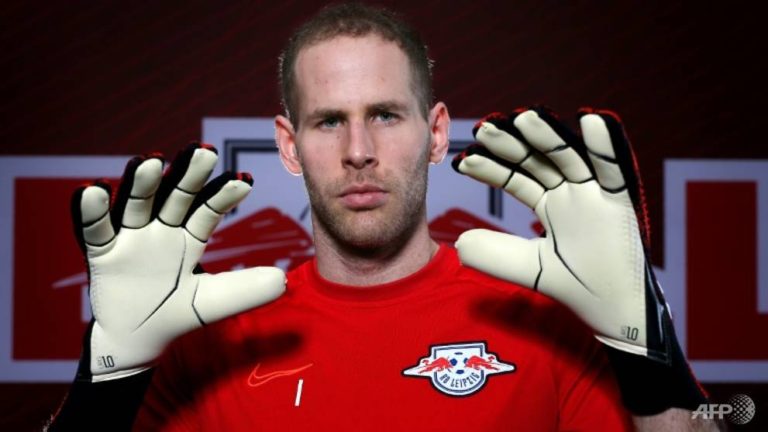
The latest free speech row was ignited February in the world of football, Orban’s favourite sport, by RB Leipzig and Hungary goalkeeper Peter Gulacsi, 27, who expressed support for gay rights in a Facebook post.

His solidarity with “rainbow families” came weeks after the introduction of a law that effectively bans gay adoption.

With Hungarian sportspeople rarely commenting publicly on current affairs, the popular goalie sharply divided fan opinion and drew criticism in pro-government media.

In an interview with the main pro-Orban newspaper Magyar Nemzet early this month, Gulacsi’s German-based compatriot Petry, a goalkeeping coach at Hertha since 2015, cautioned against sports personalities “stirring up emotions”.

“MORAL DECLINE”

But asked for his own opinion on social issues Petry, 54, went on to blast Europe’s immigration policy which he called the “manifestation of moral decline” of the “Christian continent”.

Although Petry said the paper left out comments in favour of “rainbow families” Hertha promptly fired him for “not respecting” its values of multicultural diversity and tolerance.

Orban’s cabinet chief compared the dismissal “for expressing an opinion” to Germany’s “totalitarian” past, while the foreign ministry summoned a German diplomat over the affair.

According to freelance sports journalist Gergely Marosi, Petry was “most likely used by the government”.

“Hertha’s clear explanation for his sacking allowed it to run with the ‘opinion-terror’ narrative,” Marosi told AFP.

“CANCEL CULTURE”

Fallout from Gulacsi’s Facebook message is also believed to have led to dismissals in Hungary itself.

Former Kaiserslautern defender and Hungary international Janos Hrutka was removed from his pundit job by Spiler TV, a sports channel belonging to a media group owned by a pro-government businessman, soon after praising Gulacsi for his “independence”.

A commentator on public media was also let go shortly after “liking” the goalkeeper’s post.

Administrative and organisational reasons for the removals were cited in both cases.

Unlike at Hertha “nobody in Hungary would ever transparently say someone is out because of a political opinion,” Marosi told AFP.

According to political analyst Patrik Szicherle, pro-Orban business and media circles “present a unified worldview to the audience”.

“If someone breaks this unity, they risk their jobs… Budapest’s criticism of cancel culture only applies to so-called ‘liberal dictatorships’ not to someone losing their job here for having a different opinion,” Szicherle said.

Another prominent football journalist Janos Kele says Spiler TV sacked him as a studio pundit three years ago after he wrote on social media about corruption in sport and a sports firm linked to Lorinc Meszaros, Hungary’s richest man and Orban’s childhood friend.

“I never got a straight answer why I was fired, but I was later told by the editor-in-chief that if I behaved correctly I might be invited again. Of course it never happened,” Kele told AFP.

On Hertha’s firing of Petry, Kele said: “We have to keep common sense. So that goalkeeper coaches can remain coaches, and TV commentators as commentators.”