Home Blog Page 365

Food, family and a funny, sweet gay love story make Dearborn filmmaker’s ‘Breaking Fast’ unique – Detroit Free Press

Haaz Sleiman and Michael Cassidy in a scene from "Breaking Fast," a movie by Dearborn's Mike Mosallam.

Dearborn native Mike Mosallam, who wrote and directed “Breaking Fast,” says he wanted to avoid the familiar narrative of a gay Arab Muslim man — or any gay man of any culture or faith — who is not accepted by his family.

Instead, his lead character, Mo, is surrounded by supportive relatives, especially his hilariously outspoken mom, whose only concern is that he be happy.

 In one scene, Mo finds out that she has posted on social media: “I have failed as a mother. My son eats alone every night.”

The movie unfolds during the holy month of Ramadan, during which Muslims fast from sunrise to sunset. Besides being a love story, it’s also a movie about the mouthwatering dishes served at nightly iftars, the traditional meal eaten after sunset.

Food, family and a funny, sweet story make for a familiar and yet very unique romantic comedy.

“Sure, it seems too good to be true,” says Mosallam of the film’s overall tone of acceptance. “But I hope people will understand that it needs to be just true.”

On Saturday, Mosallam finally will get a hometown premiere for his first feature film at Saturday’s virtual screening and discussion of “Breaking Fast” hosted by the Arab American National Museum in Dearborn.

More:Michigan ties to the 2021 Oscars: ‘Minari,’ ‘Onward,’ ‘Trial of the Chicago 7’

More:Oscar predictions: Who’ll win and why in a year that devastated Hollywood but brought vital films

It will be the next best thing to the event that he couldn’t have in person because of the COVID-19 pandemic. Mosallam, who has lived in Los Angeles for nearly a decade, says Dearborn still holds “a very special place in my heart.”

“Breaking Fast,” which got an online wide release in January, has earned a 96% favorable rating from critics on Rotten Tomatoes. The San Jose Mercury News called it “a lovely antidote to the disharmony of these times, a soothing, comforting story about the importance of connection and understanding.”

The Hollywood Reporter asked: “So what makes Mike Mosallam’s debut feature so special? The easy answer is that one of its main characters is a religiously observant, gay Muslim, not exactly a familiar character in such stories. The deeper reason is that it’s a witty, beautifully observed and well-acted film that proves as engaging as it is boundary-shattering.”

The virtual Dearborn event is part of the Arab Film Series of the Arab American National Museum, which also holds an annual Arab Film Festival. 

“We’re always looking to showcase and uplift artists from our community,” says Diana Abouali, noting that “Breaking Fast” fits into both that goal and the current holy month of Ramadan, a period when Muslims abstain from food and drink from sunrise to sunset. 

As for the film itself, Abouali says, “I think what’s most significant about ‘Breaking Fast’ is that it’s a film about Arab Americans made by Arab Americans, and that it tells a story we can all relate to — that of a man and his search for love.”

Haaz Sleiman and Michael Cassidy in a cooking scene from "Breaking Fast."

The story begins as Mo, a gastroenterologist who lives in West Hollywood, is about to find out that his boyfriend of several years, Hassan, plans to marry a woman in order to keep his true self hidden from a disapproving father.

Cut to a year later, when Mo goes to a party and meets Kal, a gay white actor who grew up in Jordan on a military base, is fluent in Arabic and shares his passion for all things related to Superman.

Hesitant to re-enter the dating scene, Mo bumps into Kal again at a grocery store. They get to know each other slowly after Kal offers to cook for Mo.

 As happens in rom-coms, Kal is a veritable gourmet cook who is well-versed in Arab dishes. Soon, the two are preparing meals together each night as their initial chemistry leads to real affection.

But Kal is keeping some secrets that Mo will need to discover. And Mo, who seems so together and in control, is actually a mess. He’s avoiding certain issues that stand in the way of this new relationship. Rom-com fans know this terrain well, but Mosallam gives the journey a nice touch of depth and a fresh point of view.

Mosallam says “Breaking Fast” has a broad appeal on purpose. ”Our motto was the specificity would lend to the universality. The more nuanced and more specific that we made this world, the more (universally) the themes emerged.”

As a student at Dearborn High School, Mosallam was encouraged by his music and drama teachers to keep studying the performing arts. A first-generation Lebanese American, he says that his father and late mother weren’t opposed to his career path. They just didn’t know how it would work.

“Their concern was: ‘What will he do with his life? How will he make a living?’ It was a very standard immigrant parent American dream concern, but they never said, ‘No, you can’t.’”

Mosallam went to the University of Michigan for its acclaimed musical theater program, and his fellow students included Tony winners Celia Keenan-Bolger (“To Kill a Mockingbird), who’s from Detroit, and Gavin Creel (“Hello, Dolly!”). His voice professor was Shirley Verrett, the internationally renown opera star who was a pioneering figure for Black opera singers.

“She was a huge inspiration to my foray into being a person of color in this industry and how she handled that,” he says.

Mosallam moved to New York City in May 2001. Months later, the tragedy of 9/11 prompted him to reconsider his focus. He didn’t want to take stereotypical acting roles as an Arab terrorist or villain that became so prevalent in TV dramas and action movies. He wanted to help reframe the narrative and tell stories about the Arab people he knew and grew up with, stories with nuance and humanity.

He returned to metro Detroit during the heyday of Michigan’s film incentive program, the state’s 2008-2015 attempt to build a new industry here. During that period, he spent about three years heading the Wayne County film office. He learned the ropes of producing projects and built a network of professional contacts.

He also made a splash by creating a documentary series set in Dearborn, TLC’s “All-American Muslim.” Centering on five Lebanese-American families, it lasted one season, earning praise for its depiction of the Muslim communities. Ultimately, it probably wasn’t sensationalized enough to work as reality TV.

Filmmaker Mike Mosallam, writer and director of "Breaking Fast."

In 2012, with Michigan’s film incentives heading toward their 2015 death, Mosallam moved to Los Angeles and worked on the business development side of filmmaking while also writing and pitching his own projects. He made a short film version of “Breaking Fast” that was chosen to be shown at the Cannes Film Festival as part of an emerging filmmaker showcase.

At the time, he described his short film this way: “‘Breaking Fast’ isn’t about a Muslim man or a gay man. It’s a story of what happens when you live outside any one prescribed mold and meet someone who truly piques your interest. It’s a story about human connection above anything else.”

On the plane ride home from Cannes after seeing the audience’s positive reception of the short, Mosallam says he opened his laptop and began writing the screenplay for a feature-length version.

Filming took about three weeks in December 2018. Haaz Sleiman, who played Tarek in 2007’s acclaimed “The Visitor” and whose TV credits include “Nurse Jackie” and “Tom Clancy’s Jack Ryan,” was cast in the lead role as Mo. Michael Cassidy, who co-stars in SyFy’s “Resident Alien,” got the part of Kal.

In a fun twist of fate, Cassidy appeared in the Superman-themed series “Smallville” and was Jimmy Olseon in the Detroit-filmed “Batman v. Superman: Dawn of Justice” — pretty apt credits for a character who shares Superman’s planet Krypton name, Kal-El.

Mosallam says he worked closely with casting director Tineka Becker and provided a list of 22 Arab countries early in the process. “I said the actors for these roles can be from these countries. What I wasn’t going to do was tell an Arab American Muslim story as an Arab American Muslim filmmaker and do a sort of brown-washing that we sometimes see in Hollywood, where somebody who’s southeast Asian or somebody who’s Latino is playing an Arab role. I wanted Arabs to play Arabs.”

Mosallam says he plans to keep working with MMP (Mike Mosallam Productions) to make projects like “Breaking Fast.” Its mission statement is  “to develop, create and produce unique and authentic content that deals with the intersectionality of identities.”

He admits he has been moved by the messages he has received from people in Dearborn and across the country “who have just been so grateful that a film like this exists.”

The same emotion was expressed during filming as the actors gathered to tell a sweet, sometimes poignant, sometimes laugh-out-loud love story.

He still carries with him what actress Rula Gardenier, who plays Mo’s mother, said one day. “I’ll never forget Rula said to me on set: ‘This is the first time I have been asked to be funny. I’m so often putting on a hijab and crying or scared. This is the first time I get to be funny and I’m so grateful for it.’”

Contact Detroit Free Press pop culture critic Julie Hinds at jhinds@freepress.com.

‘Breaking Fast’ online screening and discussion

6 p.m. Sat.

Rated PG-13; language, adult references 

Register for free ($5 suggested donation) at arabamericanmuseum.org
A ‘woke’ museum in an unwoke state: Walmart and the anti-LGBT legislature – Arkansas Times

0

Salon is among the latest to take note of Arkansas’s leadership in the Republican culture war against the tiny number of transgender children.

Advertisement

It chooses for context the generally progressive corporate policies of Bentonville-based Walmart and the huge sums the Walton family has spent to make Bentonville a mecca for the up-and-coming, the better to attract quality workers to Walmart and other major businesses in booming Northwest Arkansas.

The message from the Arkansas legislature — anti-woman, anti-voter and, particularly, anti-LGBT with an emphasis on persecuted trans children — isn’t exactly helping the branding. The article by Katy Henriksen begins:

Advertisement

Until recently, Bentonville was a small sleepy town inside a dry county situated in the northernmost corner of the state of Arkansas. Thanks to Walmart heirs, it’s quickly being transformed into an arts and cultural destination that began in 2011, when Alice Walton opened Crystal Bridges Museum of American Art. With a net worth of currently $66.3 billion, she has enough cash to throw around that she’s just announced a 50% expansion of the museum.

The museum boasts an impressive collection and inclusive programming. Distinguished speakers have included #BlackLivesMatter creator Patrisse Cullors and avant-garde icon Laurie Anderson. A promotional post for a Pride Night event exclaims, “throughout history, the art world often offered ‘safe spaces’ of acceptance for people’s differences, and signified that there was a place of belonging for those who felt outcast and marginalized, a place that was welcome to all, just like Crystal Bridges is today.” A Washington Post editorial even asked, “Is Crystal Bridges, in rural Arkansas, the most woke museum in America?”

This seemingly progressive and shiny cultural mecca, however, feels in direct opposition to the recent spate of anti-trans legislation in the state.

Earlier this month, Arkansas became the first state in the country to ban gender-affirming care for transgender youth. The so-called “Save Adolescents from Experimentation Act” (HB 1570) bans doctors from providing puberty blockers or performing hormone therapy. Other bills passed this legislative session include one that allows medical providers to refuse to treat members of the LGBTQ community and another that bans transgender girls from competing on women’s sports teams in school.

Some organizers point out the disparity between the seemingly performative actions of the many institutions and businesses that espouse diversity, equity and inclusion, as the state rams through the most draconian anti-trans legislation in the country by legislators bankrolled by these same entities.

Uh, well, yes. There’s some consolation for the billionaires. Whatever the legislature taketh away from the “woke” image, it gives some dividends back. The Walton family charter/voucher school agenda, for example. An end to an estate tax worth multi-millions. Income tax breaks that favor millionaires.

For all its efforts at better branding, Walmart and the Waltons have been able to do little about the retrograde legislating from their home region. Theyworst keep getting elected and push the worst of the stuff coming out of this legislature.

Advertisement

The article talks to people adversely affected by discriminatory legislation, including a trasngender woman who believes the legislature doesn’t reflect a more tolerant view among the general population. She said she doesn’t think the average person cares, based on her own experience at work and elsewhere.

The article also notes the “average person” is being priced out of the booming housing market as NWA offers incentives to lure skilled workers. It concludes:

Some lifelong residents have had enough. Though Diane feels comfortable here personally, the recent spate of anti-trans legislation led her to make the decision to move away with her trans husband. They’d dreamed of moving someplace more aligned with their lifestyle before, but felt no urgency about making such a big decision until now.

“It’s literally pushing us out of the place that I’ve lived my whole life,” she says. “I don’t see much hope going forward for the state, unfortunately.”

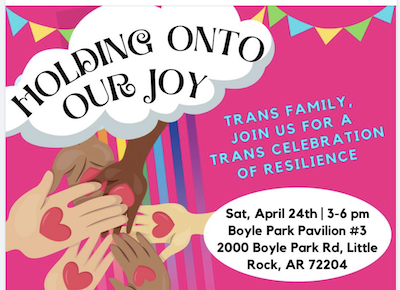
The article notes an event Saturday in support of transgender people.

Advertisement

Swedish LGBT activist convicted of raping four migrants – Big News Network

0

Stockholm [Sweden], April 23 (ANI): A former Swedish LGBT activist has been convicted of raping four migrants during his work on Thursday.

The 56-year-old man was a member of Sweden’s largest LGBT organisation, RFSL, where he allegedly helped migrants obtain asylum on the grounds of their sexual orientation, reported euronews.

In April 2020, he was accused of raping four men and exposing two of them to sexual harassment in his office.

He was found guilty by the Stockholm District Court and sentenced to four years in prison. He will also have to pay damages to the victims, reported euronews.

The crimes all took place between October 2018 and October 2019, the court said.

“The victims had all turned to the migrant consultant with the hope of getting help in their asylum processes,” the court said in a statement.

“They have either been asylum seekers, undocumented, awaiting execution, or worked under a temporary work permit.”The court found that the migrants were in a “particularly vulnerable situation” when they approached the consultant, who had abused his power. Police are now investigating six more potential victims.

RFSL said their Stockholm branch had immediately launched an internal investigation when the first allegations of sexual assault were made against their former employee.

But the organisation acknowledged that the initial probe had been “insufficient” and had not provided enough evidence to take action, reported euronews. (ANI)

Swedish LGBT activist convicted of raping four migrants – Devdiscourse

0

A former Swedish LGBT activist has been convicted of raping four migrants during his work on Thursday. The 56-year-old man was a member of Sweden’s largest LGBT organisation, RFSL, where he allegedly helped migrants obtain asylum on the grounds of their sexual orientation, reported euronews.

In April 2020, he was accused of raping four men and exposing two of them to sexual harassment in his office. He was found guilty by the Stockholm District Court and sentenced to four years in prison. He will also have to pay damages to the victims, reported euronews.

The crimes all took place between October 2018 and October 2019, the court said. “The victims had all turned to the migrant consultant with the hope of getting help in their asylum processes,” the court said in a statement.

“They have either been asylum seekers, undocumented, awaiting execution, or worked under a temporary work permit.” The court found that the migrants were in a “particularly vulnerable situation” when they approached the consultant, who had abused his power. Police are now investigating six more potential victims.

RFSL said their Stockholm branch had immediately launched an internal investigation when the first allegations of sexual assault were made against their former employee. But the organisation acknowledged that the initial probe had been “insufficient” and had not provided enough evidence to take action, reported euronews. (ANI)

(This story has not been edited by Devdiscourse staff and is auto-generated from a syndicated feed.)

Man used gay dating app to steal from foreigners – Bangkok Post

0
Immigration Bureau chief Pol Lt Gen Sompong Chingduang gives details of the arrest of a 29-year-old Thai man accused of stealing from wealthy foreign men he picked up on gay dating apps - but withholds the man's full name (Photo supplied)
Immigration Bureau chief Pol Lt Gen Sompong Chingduang gives details of the arrest of a 29-year-old Thai man accused of stealing from wealthy foreign men he picked up on gay dating apps – but withholds the man’s full name (Photo supplied)

A 29-year-old man who picked up gay foreigners on dating apps and slept with them in hotel rooms has been charged with stealing from his “lovers”.

Immigration Bureau chief Pol Lt Gen Sompong Chingduang on Friday announced the arrest of Sirawit on a warrant issued by the Bangkok South Criminal Court. He did not give a surname for the suspect.

He said police had received complaints from several foreigners that a Thai man using a pseudonym had approached them via dating chat apps for gays, such as Grindr, Blued, Romeo, Aloha and Homet. The man slept with them in hotel rooms, then stole from them.

Investigators learned that the suspect stayed at a condominium room in Chong Nonsi area.  He was arrested, and about 10 bank account books and cash cards were seized from his room.

During questioning, Sirawit admitted preying on wealthy foreign men. He approached them using a pseudonym. After persuading them to sleep with him in hotel rooms, he tricked them into revealing the passwords for the internet banking apps they used. 

He then used them to transfer money into his own bank accounts.

He also drugged some of his victims and stole their cash and other valuables.

He admitted to police he had  been doing it for more than a year.

Pol Lt Gen Sompong said the man had stolen from at least 10 foreign men, making off with more than one million baht.

The suspect was held in police custody for legal action.

The Pandemic Is Easing. Give The ‘NHS Rainbow’ Back To The LGBT Community – HuffPost UK

0

Throughout the never-ending year that was 2020, TV was a massive break from reality. One show we all found comfort in was Great British Bake Off – yet many LGBT viewers were rightly annoyed and mocked Paul Hollywood when he mistakenly claimed rainbow bagels “represent the NHS”.

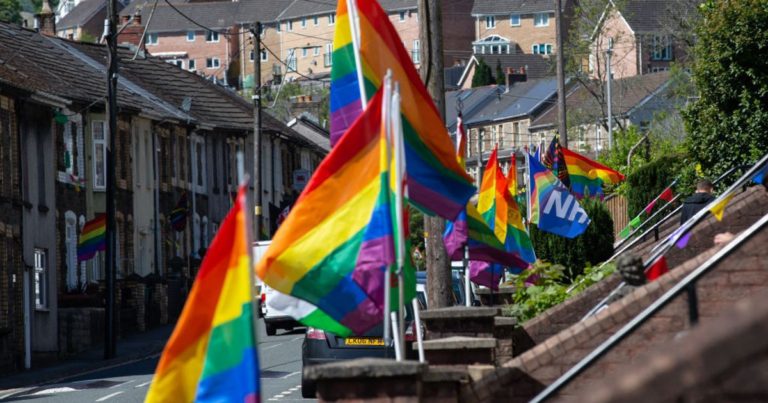
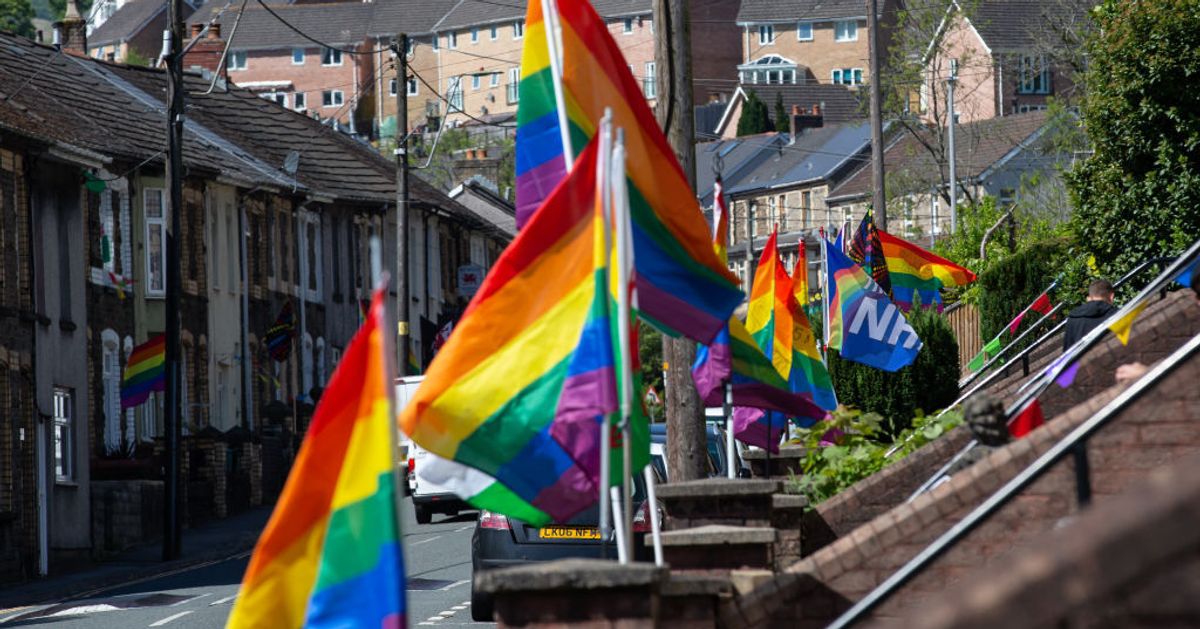
During the first lockdown, everything felt hopeless, but one thing we could all agree on was the debt of gratitude we owed the NHS and all keyw orkers. One way people showed their support, along with the Thursday night clap, was by placing rainbows in their windows. They became a sign of hope in a difficult time, something lovely to spot that cheered us up on our daily walks but most importantly a way to thank the NHS and other frontline workers.

Lockdown is easing, yet the NHS is still under pressure. The rainbow has taken on a life of its own, with supporters of the NHS wearing everything from rainbow facemasks to rainbow trainers

There is a problem with this though: the rainbow is already recognised as the pride flag. To LGBT people like me, it symbolises hard-fought representation, and refusing to live in the shadows. When we saw someone else wearing the flag, we knew this person was either one of us or an ally.

To LGBT people like me, it symbolises hard-fought representation, and refusing to live in the shadows.

Unfortunately, it now feels like it’s been taken from us, and that our message is being shouted over by, for the most part, cisgender straight people who don’t really care about queer issues. Case in point the rainbow bagels; for years these have been sold during Pride month with profits going to LGBTQIA+ charities, but a cis white middle class straight man goes on telly proclaiming them to be “NHS bagels” without even looking into the history of them.

Another layer to this erasure is that there was already a rainbow campaign within the NHS itself. The Rainbow Badge Initiative, created by Guys and St Thomas NHS Foundation Trust in 2018 meant NHS staff could discreetly let LGBT patients know that they can be open and honest with the wearer about their gender and sexuality without judgement.

A Stonewall survey in the very same year found half of LGBT patients faced inequalities in their experience of NHS healthcare. The survey estimates that one in five LGBT people are not out to any healthcare professional about their sexual orientation when seeking general medical care, and one in seven LGBTQIA+ people have avoided treatment for fear of discrimination.

The fear with the general populace adopting the rainbow is that we no longer know who is safe to speak to. Sadly transphobia and homophobia are still very present in the NHS, and even more so widely in society: another Stonewall survey found one in five LGBT people had experienced a hate crime or incident because of their sexuality and/or gender, rising to two in five trans people.

What would have been wrong with a love heart, a dove for peace, or even some flowers? Frankly, anything that didn’t already have such a big meaning.

Here’s my issue: everyone suddenly proclaiming their love for the NHS by wearing rainbows and clapping on their doorsteps feels a bit hollow when we as a society continue to be so apathetic about a government that allowed thousands to die in this pandemic.

I’m not denying that the NHS and key workers don’t deserve our support in the pandemic – but I wish the public had chosen another symbol. What would have been wrong with a love heart, a dove for peace, or even some flowers? Frankly, anything that didn’t already have such a big meaning and symbolic nature would have been better.

I’m not for one moment suggesting that this was done with ill intent, but I think going forward there needs to be more understanding of what the rainbow represents. The rainbow flag is a symbol of hard won freedom, being safe to live and love out loud without shame. 

I applaud the vital key workers in the pandemic, but this was never their flag to wave.

Rachel Charlton-Dailey is a freelance journalist. Follow her on Twitter at @RachelCDailey

R&B Snippets: Ashanti & Kehlani! – 106.3 The Groove – 106.3 The Groove

ASHANTI TRENDS ONLINE AFTER POSTING MYSTERY MAN ON INSTAGRAM: Ashanti was trending on social media last night after she posted a photo with a mystery man on Instagram. The singer posted a photo at a restaurant called Taboo Cancun with the man, along with the caption, “Great times.” Some assumed that Ashanti is dating the man, while others assumed that the man was probably the manager of the restaurant.

KEHLANI OFFICIALLY COMES OUT AS LESBIAN: In a TikTok video yesterday (April 22nd), Kehlani came out as lesbian. She said, “I finally know I’m a lesbian.  I am gay gay gay gay gay.” The singer joked about having a talk with her family and they responded, “We know, duh stupid.” She added, “I want you to fall on the floor and be like congratulations we had no idea.  The f*cking closet was glass.” She added,  “I just wanted y’all to know that everyone knew but me.”

Williamson leads New Orleans into matchup with San Antonio – FOXSports.com

San Antonio Spurs (29-29, ninth in the Western Conference) vs. New Orleans Pelicans (26-33, 11th in the Western Conference)

New Orleans; Saturday, 8 p.m. EDT

BOTTOM LINE: Zion Williamson leads New Orleans into a matchup with San Antonio. He’s eighth in the league averaging 26.9 points per game.

The Pelicans are 14-17 in conference play. New Orleans is fifth in the Western Conference with 26.2 assists per game led by Lonzo Ball averaging 5.7.

The Spurs are 15-20 in Western Conference play. San Antonio ranks eighth in the Western Conference scoring 47 points per game in the paint led by DeMar DeRozan averaging 9.2.

The two teams square off for the third time this season. The Spurs defeated the Pelicans 117-114 in their last meeting on Feb. 27. DeRozan led San Antonio with 32 points, and Brandon Ingram paced New Orleans scoring 29 points.

TOP PERFORMERS: Williamson is averaging 26.9 points, 7.2 rebounds and 3.6 assists for the Pelicans. Ingram is averaging 21.5 points and 3.9 rebounds while shooting 37.1% over the last 10 games for New Orleans.

Derrick White is second on the Spurs averaging 2.4 made 3-pointers while scoring 15.4 points per game and shooting 34.6% from beyond the arc. Rudy Gay is averaging 1.1 made 3-pointers and scoring 9.9 points over the last 10 games for San Antonio.

LAST 10 GAMES: Pelicans: 4-6, averaging 114.9 points, 49.8 rebounds, 26.1 assists, 7.1 steals and 4.5 blocks per game while shooting 47.1% from the field. Their opponents have averaged 116.4 points on 47.0% shooting.

Spurs: 5-5, averaging 108.5 points, 44.2 rebounds, 26.1 assists, 7.7 steals and 6.1 blocks per game while shooting 46.4% from the field. Their opponents have averaged 104.2 points on 44.9% shooting.

INJURIES: Pelicans: James Johnson: out (adductor), Nickeil Alexander-Walker: out (ankle), Steven Adams: day to day (ankle), Josh Hart: out (thumb).

Spurs: DeMar DeRozan: out (quad), Trey Lyles: out (ankle), Patty Mills: out (rest), Dejounte Murray: out (rest).

___

The Associated Press created this story using technology provided by


in this topic

Western Conference Western Conference
Western Conference, Southwest Division Western Conference, Southwest Division
event_preview event_preview

share story


We’re making a space for gay men to be open about addiction without shame or stigma – CBC.ca

This First Person article is the experience of Alexandre Fafard, a men’s health advocate based in Montreal. For more information about CBC’s First Person stories, please see the FAQ.

It’s quite obvious now, our community is once again in danger. As we, gay/bi/trans/two-spirit/queer men, are still picking ourselves up from the AIDS pandemic, now comes chemsex — the use of drugs, often crystal meth, in a sexual context.

While the intention is to experience pleasure and comfort, we are ending up most often disempowered, in pain and lost. Yet again, we are hurting.

I myself am a recovering crystal meth user. I started using it eight years ago, when I was 35 years old. It took me less than a year to realize my addiction was affecting me physically, mentally and spiritually. I thought all I had to do was to stop — and I tried. But nothing worked. And at the same time, I was losing everything around me.

At that time, I was already seeing a life coach, hoping I could become “a better person.” Little did I know, that was the least of my problems. I wasn’t really ready to address the addiction head-on. So instead, she pointed out the plaguing shame beneath every word that was coming out of my mouth.

“Read the book,” she said, referencing The Gifts of Imperfection by Brenée Brown, knowing very well that my bruised ego wouldn’t let me tackle these deeper issues on my own. I read the book, secretly, and everything changed. I realized how shame had been weighing on me all my life. And from that very moment, I started owning my past as a drug user, as a gay man, as a person living with HIV, as a simple human being with struggles.

Shame was moved aside to make room to some genuine self worth. And soon enough, I started asking for help.

The first challenge was surviving my potent addictions, to the substance but also to sex with men. These men were all I had left, and I couldn’t seem to let them go — thinking that if I quit using drugs, even just for a moment, I would also have to quit them.

How was I supposed to get better if recovery implied cutting myself from the only humans that really understood me?

For Alexandre, having a support network of people from his community makes all the difference during his recovery. (Submitted by Alexandre Fafard)

On one of those days where I thought I had lost the battle, my father, still today one of my greatest allies, sat beside me, powerless yet loving, and told me in a very simple way: “You need to find more people to help you. Find your people, Alex.”

My father had shown up for his son, hugged me, and then left, with no certainty of finding me alive the next day. I understood at that moment the battle was mine and mine alone. I wasn’t responsible for the addiction, but I surely was the only one responsible for turning things around for myself. The day after, I started looking for my people — people like me, who were bravely addressing their addiction.

I found them in a support group, Crystal Meth Anonymous. There, I found the same boys I was partying with, with whom I could continue to feel close and intimate, but in another way. In a sober way.

I froze in the staircase heading down to my first support group meeting. I thought of opting out, fearful and weak, not having enough courage to enter the room on my own. As I was bailing out, a group member, Alain S., appeared in front of me and extended his hand to welcome me in.

“Just sit and listen. You are OK here,” he said.

I sat down and quietly listened, voiceless. People were sharing their stories, and they were all genuinely nice to me. I felt safe instantly. I had found my people. I had found community. I had found hope.

Let’s Go9:25Ça prend un village is an advocacy and awareness-raising project for those overcoming addiction

Overcoming an addiction is often the challenge of a lifetime — with the best of help. So when you don’t have access to the right support, where do you go? That’s what a team of now-sober men set out to change. Coming up on Let’s Go, we speak with the co-founder of Ça prend un village. 9:25

Seven years later, I reflect on this condition, the addiction to sex and crystal meth, as a symptom of a greater illness — the lack of authentic connection within our own community. As part of my recovery, I am making a point of reaching out to all my gay brothers in the community. My friend Jean-Sébastien R. and I have created a new platform, Ça prend un village, where we address chemsex and crystal meth use without shame or stigma, engaging with others with radical honesty, vulnerability, kindness and compassion.

We are ready to have those difficult conversations about underlying issues like grief, heartbreak, HIV, mental health, sickness, sex, intimacy. And as a result, we are hoping this conversation becomes public and changes how these issues are seen by society, in turn granting us better adapted services.

Today, my daily life is about taking care of myself and embracing the moment, like this very moment, where I get to share my truth with you. Today, I can be compassionate for myself, for the perfectly imperfect person that I am. Today, I rise up and lend a hand wherever I can be of service. Today, I generate love and surround myself with it. Today, I am a grateful recovering crystal meth addict.


CBC Quebec welcomes your pitches for First Person essays. Please email povquebec@cbc.ca for details.

Update on the latest sports – KVIA El Paso

NBA-SCHEDULE

Bucks beat 76ers

UNDATED (AP) — The Milwaukee Bucks solidified their hold on third place in the NBA’s Eastern Conference, while dropping the Philadelphia 76ers into a first-place tie with Brooklyn.

Giannis Antetokounmpo (YAH’-niuhs an-teh-toh-KOON’-poh) dropped in 27 points and Khris Middleton had 24 as the Bucks downed the Sixers, 124-117. Bobby Portis added a season-high 23 points as the Bucks ended a five-game home losing streak.

Milwaukee never trailed and led by as many as 21 to defeat Philadelphia for the fourth consecutive time.

Joel Embiid (joh-EHL’ ehm-BEED’) scored 24 points for the Sixers, who also received 20 points from Shake Milton off the bench.

Checking out Thursday’s NBA action:

— Luka Doncic (DAHN’-chihch) scored 30 points and the Mavericks spoiled Anthony Davis’ return from a 30-game injury absence by topping the Lakers, 115-110. Davis was rusty in his first game since Feb. 14 because of right calf and heel issues, scoring four points on 2-of-10 shooting while limited to 17 minutes in the first half only.

— Kemba Walker matched his season high with 32 points and the Celtics led by 21 in the second half of their ninth win in 11 games, 99-86 against the Suns. Walker was 11 of 17 from the field, hitting five 3-pointers. Jayson Tatum struggled shooting for the second straight game, going 3 of 17 and finishing with 15 points and 11 rebounds.

— The Bulls handled the Hornets, 108-91 as Nikola Vucevic (nih-KOH’-lah VOO’-cheh-vihch) scored 18 points and matched a season high with 16 rebounds. Coby White and Thaddeus Young scored 18 apiece for the Bulls, who built a 14-point halftime lead and put this one out of reach in the third quarter of their third win in four games. Chicago is 6-10 since landing Vucevic from Orlando.

— Zion Williamson scored 23 points in 23 minutes as the Pelicans clobbered the Magic, 135-100 to end a four-game losing streak. Brandon Ingram added 29 points and New Orleans got double-figure scoring from six players. Eric Bledsoe chipped in 15 points by hitting five 3-pointers.

— Derrick White had 26 points and Jakob Poeltl (YAH’-kahb PUR’-tul) added 17 with 11 rebounds as the Spurs beat the Pistons, 106-91 to snap a five-game home losing streak. Lonnie Walker added 18 points and Rudy Gay had 14 for San Antonio. Josh Jackson had 29 points to lead Detroit.

NBA-NEWS

Hawks’ Young sidelined by injury

UNDATED (AP) — Atlanta point guard Trae Young will miss the Hawks’ next two games because of a sprained left ankle suffered in Wednesday’s 137-127 overtime loss at the New York Knicks. X-rays in New York were negative, but an MRI revealed the sprain.

Young leads Atlanta with 25.3 points per game and ranks third in the NBA at 9.6 assists.

In other NBA injury news:

— Wizards rookie forward Deni Avdija will miss the rest of the season after breaking his right leg in Wednesday’s game against Golden State. The team said the 20-year-old from Israel does not need surgery and is expected to make a full recovery in about three months.

NHL-SCHEDULE

Caps beat Isles in SO, move back into first

UNDATED (AP) — The Washington Capitals are back in sole possession of first place in the NHL’s East Division, one point ahead of the New York Islanders and Pittsburgh Penguins. The Boston Bruins remain four points behind the Capitals.

Evgeny Kuznetsov (kooz-NEHT’-sahv) scored the deciding goal of the shootout to give the Caps a 1-0 triumph over the Islanders. Ilya Samsonov (sam-SOH’-nahv) stopped 26 shots through overtime for his second shutout of the season and third of his career, leading Washington to its seventh victory in 11 games.

Semyon Varlamov (SEHM’-yahn vahr-LAH’-mahv) made 28 saves through overtime before surrendering two goals on three shootout attempts.

Sidney Crosby and Bryan Rust each scored their 19th goals of the season as the Penguins whipped the Devils, 5-1. Kasperi Kapanen (kas-PEHR’-ee KAP’-ah-nehn) added a goal and an assist in his first game since missing 13 straight with a left foot injury. Teddy Blueger (BLOO’-gur) scored a short-handed goal, and Cody Ceci (SEE’-see) also scored for the Penguins.

The Bruins own a season-high, six-game winning streak after David Pastrnak (PAHS’-tur-nak) had a goal and two assists in a 5-1 victory over the Sabres. Matt Grzelcyk (GRIHZ’-lihk) scored the go-ahead goal 12:50 into the second period, and rookie Jeremy Swayman stopped 29 shots. Brad Marchand, with his team-leading 25th for Boston, which also received goals from Nick Ritchie and David Krejci (KRAY’-chee).

Elsewhere on NHL ice:

— Andre Burakovsky (bur-ah-KAHV’-skee) scored twice and the Avalanche wrapped up a playoff berth with a 4-2 victory over the Blues. Brandon Saad (sahd) and Pierre-Edouard Bellemare added goals to help Colorado improve to 18-1-2 in its last 21 games. The Avs returned to the ice for the first time since April 14 after having three games postponed by COVID-19 protocols.

— Sebastian Aho (AH’-hoh) scored two short-handed goals for the Hurricanes in their sixth consecutive win over the Panthers this season, 4-2. Nino Niederreiter (NEE’-dur-eye-tur) and Jordan Martinook (MAHR’-tih-nook) also scored, Alex Nedeljkovic (neh-DEHL’-koh-vihch) made 30 saves, and Martin Necas (mahr-TEEN’ NAY’-chas) had three assists. The outcome puts the Central Division-leading Canes two ahead of the Cats and keeps them three ahead of the Lightning.

— Ondrej Palat (AHN’-dray pah-LAHT’) scored the tiebreaking goal in the third period and Curtis McElhinney stopped 24 shots in leading the Lightning past the Blue Jackets, 3-1. Blake Coleman had two goals, including an empty netter with 25 seconds left for Tampa Bay. Elvis Merzlikins (murz-LEE’-kihnz) stopped 25 shots for Columbus, which is 0-7-1 in its last eight games.

— The Flyers were 3-2 winners over the Rangers behind two power-play goals by James van Riemsdyk (REEMZ’-dyk). Jakub Voracek (JAY’-kuyhn VOHR’-ah-chehk) scored the deciding goal and Brian Elliott made 33 saves as Philadelphia ended a two-game skid.

— Jakub Vrana (JAY’-kuhb vuh-RAH’-nah) scored four goals in a game for the first time to help the Red Wings rout the Stars 7-3 and match their total number of wins from last season. Detroit picked up its 17th victory in its 49th game, a year after winning 17 of 71 games in the previous pandemic-shortened season. Anton Khudobin (hoo-DOH’-bihn) gave up three goals on nine shots in the first and was benched by the Stars.

— Mitch Marner furnished two goals and an assist as the Maple Leafs topped the Jets, 5-3. Auston Matthews scored his NHL-leading 34th goal for the North Division leaders, who are six points in front of Winnipeg. Wayne Simmonds and Jason Spezza (SPEHT’-suh) also scored and Jack Campbell made 34 saves for the winners.

— The Senators posted a 3-0 win over the Canucks as Matt Murray stopped 31 shots for his second shutout in six days. Drake Batherson had a goal and an assist, and rookie Tim Stutzle and Connor Brown also scored as the Senators won the first of four straight games between the teams.

MLB-SCHEDULE

Cubs sweep away Mets

UNDATED (AP) — The Chicago Cubs completed a three-game sweep and beat the New York Mets for the seventh straight time since June 2019.

The Cubs pulled out a 4-3 win over the Mets on Jason Heyward’s pinch-hit, RBI single in the 10th, a half-inning after Dan Winkler stranded the bases loaded. Kris Bryant had two hits and two RBIs and Willson Contreras also drove in a run for the Cubbies, who were in a 3-8 skid before the Mets showed up at Wrigley Field.

In other major league games:

— Jurickson Profar (JUR’-ihk-suhn PROH’-fahr) scored on a double-play grounder in the eighth inning to send the Padres past the Dodgers, 3-2. Trent Grisham hit a solo shot in the sixth to give San Diego a 2-0 lead, but AJ Pollock and Sheldon Neuse (NOY’-zee) hit back-to-back homers in the seventh to tie things up after Ryan Weathers held Los Angeles to one hit over 5 2/3 innings.

— Curt Casali caught his fifth consecutive shutout, guiding Aaron Sanchez and four relievers in the Giants’ 3-0 win over the Marlins. Buster Posey’s backup is the fifth catcher since at least 1900 to backstop a shutout in five straight starts.

— David Peralta (peh-RAHL’-tah) had five hits and a career-best seven RBIs, including a three-run triple in the 10th inning of the Diamondbacks’ 14-11 win over the Reds. Arizona erupted for six runs in the 10th to complete a three-game sweep and earn their fourth straight win. Carson Kelly followed Peralta with a two-run homer as the Diamondbacks opened a 14-8 lead.

— Sam Haggerty furnished a go-ahead double in the 10th inning before scoring on Mitch Haniger’s three-run homer in the Mariners’ 7-3 downing of the Red Sox. Rafael Devers (DEH’-vurz) homered for the Red Sox, who were cruising behind Nick Pivetta but couldn’t hold leads of 2-0 and 3-2.

— Rougned Odor’s (ROOG’-nehd oh-DOHRZ’) two-out, two-run single broke a seventh-inning tie and sent the Yankees to a 6-3 win over the Indians. Kyle Higashioka homered in the eighth for New York, which entered with its worst record to open a season since 1991 before winning for the second time in eight games.

— Alex Bregman had three hits and three RBIs as the Astros ripped the Angels, 8-2 to end a three-game losing streak. Cristian Javier struck out a career-high nine in five scoreless innings of Houston’s second win in 11 games.

— Phillip Evans made a great defensive play before Colin Moran and Erik González hit RBI singles with two out in the eighth inning of the Pirates’ 4-2 victory over the Tigers. Evans reached his glove above the fence in to keep Akil Baddoo’s drive to left field in the park in the seventh before Pittsburgh stranded Baddoo at second.

MLB-NEWS

Springer nearing return

UNDATED (AP) — Blue Jays outfielder George Springer will play in an intrasquad game Friday, the next step on his return from two strained muscles that have delayed his Toronto debut.

Springer signed a team-record $150 million, six-year deal with the Blue Jays this offseason but missed time in spring training, first because of a strained oblique and later because of a right quadriceps strain.

General manager Ross Atkins says the 2017 World Series MVP could return in this weekend’s road series against the Tampa Bay Rays.

Elsewhere around the majors:

— Dodgers slugger Cody Bellinger is still uncertain when he will return from a hairline fracture in his left leg, saying he can’t do much until the bone heals. Bellinger is hitting in the batting cage and playing catch, but running is still not perfectly comfortable. He was injured April 5 when Athletics reliever Reymin Guduan (ray-MEEN’ goo-DWAHN’) inadvertently spiked him at first base.

— The Padres have placed right-hander Dinelson Lamet (dih-NEHL’-suhn) luh-MEHT’) on the 10-day injured list with right forearm inflammation, a day after he came out of his season debut after just two innings. The Padres also put reliever Keone Kela (KEe’-oh-nee KEHL’-uh) on the IL with right shoulder inflammation.

NCAA-RULES CHANGES

NCAA tweaks college football OT format to shorten games

INDIANAPOLIS (AP) — College football teams will have to go for 2 after touchdowns starting with the second overtime possession, and beginning in the third round each team will get one play to score from the 3-yard line.

The NCAA playing rules oversight panel approved a proposal made last month by the playing rules committee to tweak the overtime format. The new rule will have teams run alternating 2-point plays in the third overtime instead of starting another drive at the opponent’s 25-yard line. The 2-point shootout currently starts in the fifth overtime.

COLLEGE FOOTBALL-WEST VIRGINIA-BROWN COUNTRACT

West Virginia coach Neal Brown gets 2-year extension

MORGANTOWN, W. Va. (AP) — West Virginia coach Neal Brown has received a two-year contract extension through the 2026 season despite a mediocre 11-11 record in his two years at the helm.

WVU went 6-4 last season after a 5-7 mark in 2019.

Athletic director Shane Lyons says he’s pleased with the upward trajectory of the program and its culture under Brown.

COLLEGE BASKETBALL-NEWS

Loyola Chicago star Krutwig is turning pro

UNDATED (AP) — Loyola Chicago star Cameron Krutwig says he has decided to enter the NBA draft and forgo his final year of eligibility.

Krutwig helped the Ramblers reach the Final Four as a freshman and return to the Sweet 16 as a senior this year.

The 6-foot-9 Krutwig was the Missouri Valley Conference Player of the Year last season, averaging a team-leading 15 points along with seven rounds and three assists.

NFL-SEAHAWKS-SMITH

Smith staying with Seahawks

SEATTLE (AP) — The Seattle Seahawks have brought back quarterback Geno Smith to serve as the backup to Russell Wilson.

Smith has signed a one-year deal to stay in the role he’s held for the past two seasons with the Seahawks.

Smith has appeared in just one game with Seattle, completing four of five passes for 33 yards in last year’s blowout win over the New York Jets.

PGA-ZURICH CLASSIC

Co-leading teams at Zurich Classic

AVONDALE, La. (AP) — Two teams share the lead through one round of the Zurich Classic.

Brice Garnett and Scott Stallings birdied eight of their last 11 holes for a 10-under 62 that leaves them tied with Viktor Hovland and Kris Ventura. Hovland and Ventura had nine birdies on their last 12 holes.

Ventura made a 36-foot birdie putt from the fringe on 15 and a 19-footer on 16 for his seventh and final birdie of the day in the best-ball format played on the first and third rounds. Players will alternate shots in the second and final rounds.

Seven teams shot 63, including two-time Zurich champion Billy Horschel and teammate Sam Burns.

10 Queer Indigenous Artists on Where Their Inspirations Have Led Them – The New York Times

Though the pandemic’s grip is starting to loosen, and relief finally feels within reach, this past year has underscored our country’s long history of violence, new examples of which serve as reminders of older ones. Among them are the myriad atrocities perpetuated against Indigenous people in what we now call America (and beyond), individuals whose experiences are to this day too often distorted or left untold. Lately, though, there have been some hard-won gains on that front, from professional sports teams finally changing their names to the Metropolitan Museum of Art hiring Patricia Marroquin Norby as its first curator of Native American Art. It is not necessarily the job of the artist to shine a light where others have not, but self-expression — especially that of individuals who, whether because of their race, gender, sexuality or any other marker of identity, some might seek to deny — can be an inherently radical act, one to which attention should be paid. For this story, we asked 10 queer Indigenous talents from different parts of North America to share one of their artworks and talk about its genesis, and about their practice at large. Like the selections themselves, the conversations, which touched on materials, color schemes, gender fluidity, decolonization, oral history and more, were testaments to the strength — and beauty — of a multiplicity of voices.

These interviews have been edited and condensed.

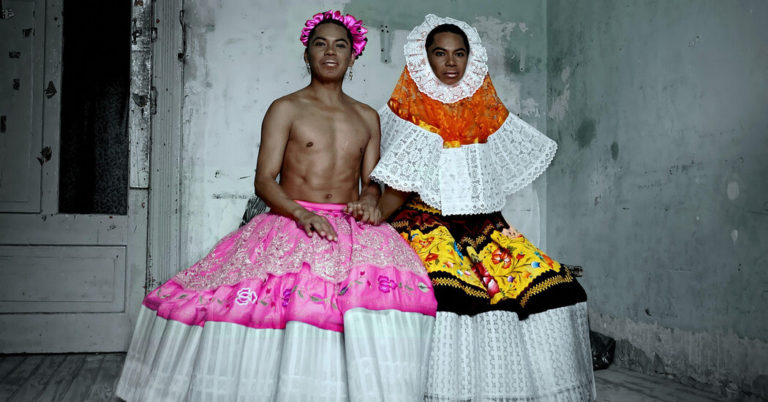
I’m a performance artist, but this photograph, “Lukas y José,” was shot as a kind of outtake from my performance piece “Réquiem Para un Alcaraván” (“Requiem for a Stone Curlew,” 2017). I appear twice in this composite image, wearing the sort of clothing traditionally worn by Zapotecan women on the Tehuantepec Isthmus, with the important distinction that the figure on the left appears bare-chested (something a Zapotecan woman would never do). This choice was meant to add to the discourse around how gender is constructed in this part of the world — being a woman in Tehuantepec is not the same as being a woman in India, or Japan, or the United States. Though whether being muxe is a third-gender identity is a complicated question. When I approach the idea in my work, I don’t want the viewer to think that what they are seeing is a man trying to appear like a woman. It’s also important to me that those who aren’t familiar with Zapotecan culture don’t think I’m trying to imitate Frida Kahlo.

As a muxe, your identity doesn’t just come from within, it’s always a social, collective fact. The image that has been exploited by the media, and by academics, too, is that of a person born with male reproductive organs who, through anything from high heels to gender-reassignment surgery, tries to appear closer to a female gender identity — but a female identity with no links to the local culture. And yet, the word “muxe” doesn’t mean anything in Castilian Spanish — it’s a local term that weaves together many threads, like a tapestry: There’s a thread that represents masculinity, a thread for femininity — and still more related to customs and usages, festivities and religion, our social systems of duty and obligation. Then there’s a thread of sexuality. When I combine the traditional garb of Zapotecan women with my bare body, I think this brings us closer to that kind of complexity.


I’m a transdisciplinary artist, and my practice is concept driven. Of course, these are Western terms taught by the art school industrial complex. But my refusal to be one thing — a visual artist, a poet or even a cosmic being — is part of an ongoing Decolonial Indigenous practice. This neon sculpture, “my ancestors will not let me forget this,” was partially commissioned for the 2019 Honolulu Biennial. The words — “EVERY AMERICAN FLAG IS A WARNING SIGN” — were lifted from an ekphrastic prose poem I wrote titled “AN INFECTED SUNSET,” which explores intergenerational ancestral trauma. Living in a colonized country, Indigenous peoples are forced to relive atrocities that are still being perpetuated today. The use of yellow in this work is a reference to Indigenous Diné color symbology, and its ties to our creation stories, but it also references the uranium extraction that has taken place on Diné land, as well as the lands of other Indigenous cultures.

There are so many ways that Indigenous peoples have been tricked into performing the so-called United States’ brand of whitewashed patriotism, even if this is only a minute part of their brilliant and complex history. Combining text and neon in this way connects my work to contemporary traditions in “American” society, like the nostalgia of driving along Route 66. To this day, when you’re on the route — which passes through my hometown, Gallup, N.M. — you can see neon signs in the windows of white-owned businesses that read “Indian jewelry” and “Indian rugs.” These signs promote the exploitation of Indigenous peoples, with shop owners grossly marking up prices and profiting off Indigenous art objects without giving back to the community. I want my sign to disrupt that narrative, and stand as a defiant refusal to accept such exploitation, while simultaneously holding the settler colonial nation state and its cheerleaders accountable.

Part of my practice revolves around the tension between the handmade and perfectly measured geometry. I love formal abstraction and what appears to be controlled. Pieces of vintage beadwork and textiles counter this because of their materiality and the presence of a previous history. The materials and color in my work position viewers to see it through the lens of Native American histories and aesthetics. In pow wow culture, some dancers are meant to be highly visible in the arena, and I apply a similar kind of thinking to my practice. I opt for fluorescence or really high contrasts. But there are plenty of other references, too, everything from punk rock, disco, R&B, Op Art, the Pattern and Decoration movement and various fashion histories. I’m creating a hybrid aesthetic that reflects my own narrative.

I made this painting last year as part of a larger body of work recently shown at Roberts Projects in Los Angeles. The idea of a chosen family is often referred to in the L.G.B.T.Q.Q.I.P.2S.A.A. community — and it’s also very personal to me. My husband and I have two amazing children whom we adopted, and that experience has radically shaped our perspective on family and extended family. Another important element of the work is its focus on pronoun usage as it relates to gender and to queerness. Culturally, the popular acceptance of self-identified pronouns is really one of the biggest changes we’ve made in a long time. It allows people to be more open and fluid, but also more specific, which relates to how I think about Indigenous communities. We’re often referred to as one collective Native American group, but in reality there are hundreds of tribes — I’m both Choctaw and Cherokee. The perceptions about Indigenous individuals and communities would broaden and be more supportive if each of us were able to identify more specifically, to self-identify.


This piece, “Mana Māhū,” combines handmade plant dyes and earth pigment paints on hand-beaten kapa bark cloth. It’s about how the spirit and the energy (or mana) of being māhū — a nonbinary third-gender identity in Native Hawaiian culture — is closely tied to one’s relationship with the land. Kapa is very ingrained in our culture. Before the arrival of textiles like linen or cotton, it was used for clothing, bedding, ceremonial burial purposes and, later, as paper. In this new series I’m exploring a hybrid use of kapa as both textile and paper. You can see this in the patterns, which are very important in my culture — we use them as a way of telling stories.

The materials come from lands I’ve either visited or that are close to my heart. All of the bark that I have was gifted to me or collected in person with my teacher, Wesley Sen. I’m the first kapa maker in my family in seven generations. In the past, there were entire kapa-making houses that men were banned from entering. So, customarily, this is a woman’s craft, but since I don’t identify as a woman, and since I also make all my own tools — something historically done by men — my work exists in a sort of middle ground. And yet having this strong connection to the materials and processes has only helped me realize my identity more fully.


I work through music, installation, creative writing, poetry, video and dance, and I see these media as tools for expressing my traditional values and worldview. “Ancestor From the Future” is a rap song I wrote, and this is a photo of the regalia that I wear when I perform it. In the work, I’m channeling the character of an elder who comes so far from the past that it’s the future — in this character’s story, which I created, time is a circle, and there’s the hyper-future and the hyper-past, and at some point they loop around and almost touch each other. A lot of our prophecies — not just in my culture, the Iñupiaq, but in many other Indigenous cultures, too — say that we’re going to go back to the old ways: We’re living with all this modernity and technology, but we’re going to return to the ways our ancestors lived on the land.

She’s very funny, this elder, and very sweet. Her song is basically: “I’m here to send you a message from your people. Love yourself, follow your dreams, be who you are.” And everybody has ancestors, so she’s also saying, “No matter who you are, you have a connection to this wisdom.” I believe that all humans are connected to something greater than themselves, especially to their own ancestral lines. The Iñupiaqs have an inherently inclusive culture, so my work is for everyone.


My work is an attempt to decolonize art history and challenge preconceived ideas about Indigenous people and our sexuality, and to create paintings that explore the missing narratives that were never depicted in the art history of this continent. In “The Deluge,” my alter ego, Miss Chief Eagle Testickle, is lifting two children to safety and about to place them into the arms of their ancestors. I’m a representational painter, an observer of Western art history, so when I created the Miss Chief persona about 15 years ago, I was looking at the art made by white settlers on the subjects of the American West and Indigenous peoples. Many of these pieces focused on the land, and artists like George Catlin were making so-called documentary paintings of Indigenous people. I wanted Miss Chief to look back at the European settlers and turn them into her subjects — to reverse the gaze. And I wanted her to represent an Indigenous understanding — a broader understanding — of gender and sexuality that didn’t exist in European thought: the third gender, or someone who lives in the opposite gender. We refer to this type of person as being Two Spirit. I’m Cree, and I think of Miss Chief, in cosmological terms, as having come from the stars and existing in this parallel universe with the other legendary beings from Cree cosmology — like wîsahêcâhk and the mîmîkwîsiwak — who have all been present since the beginning of time, and witness to all periods of history.

This image is about connecting the past with the future, and keeping our cultures alive through the knowledge passed on by our elders. It’s based on a painting I love by Anne-Louis Girodet — an apocalyptic image depicting the biblical flood in which a family clings to a cliff while the waters rise. My version was born out of a visit to Crystal Bridges Museum in Arkansas a couple of years ago. The first question I asked the staff was “Who are the Indigenous people of this territory?” They said, “We don’t have Indigenous people — they were pushed out of the state.” That, of course, was because of ethnic cleansing. This image speaks to the deluge of settlers that displaced Indigenous peoples on this continent, threatening our futures and lives. In Canada, Indigenous peoples have been pushed onto 0.2 percent of the land that we once occupied. The settlers have told their version of history, which is the dominant version, and the one we see in our museums, so I look at my work as challenging those institutions as well as the art they continue to uphold as authoritative.


I tend to work site specifically, and this piece came out of the fact that AS2 Gallery, where I was asked to show last June, is really close to a sacred ancestral site, known as Stluputqu, or “swift water,” which is a naturally occurring falls along the Spokane River. We used to gather there once a year, in June or in July, to fish and trade, but the Chinook — a type of salmon, and a big deity for the Salish people (I’m a descendant of the Flathead Salish Tribe of Montana, and I’m also Red River Métis) — don’t run through there anymore because the river is dammed. So now we all gather in August for one of the last pow wows of the year, called the Gathering at the Falls. When I made this piece, I knew the pow wow was going to be canceled because of Covid-19, which was a huge loss: People work all year to sew, bead and mend their regalia, and to practice their dancing and singing. So I made this work and another, “pow wow songs No. 1” — both are part of a series I plan to continue — from gouache as a way of processing that loss. I’m a self-taught artist, and this work consists of symbols: I think of it as a sort of cryptosymbology. The little stars represent the drumming — most songs start out with a series of beats — and the circles are the voices, while the dashes are pauses. So the image as a whole, read from left to right, is a visual translation of a pow wow song. This one is specifically for the jingle dress category. The two pieces in this series remind me of the vibration of the drumming and singing that can be felt in your body. There’s something so deeply healing about being Indigenous and hearing your own music.


This performance, “dah ‘iistł’ǫ́ [loomz], weaving dance (fig.1),” which took place at the Sanitary Tortilla Factory in New Mexico in January 2018, was about three hours long and marked the beginning of how I’ve come to think of my entire practice, in which nothing is static — nothing lives on the wall — or is ever really finished. Instead, everything is unmade and then remade into new forms. For instance, as I perform, there are all these new sounds that the regalia sings to me. I’ll record them and that’ll become a score for another performance, and then the images of that subsequent performance will become a collage. It’s also crucial that my work always be activated through my body in some way — everything from the regalia to the physical objects I make is either worn or carried. It’s a gesture I return to again and again, and it’s probably the most intimate thing we can do for another human, like carrying a lover to bed or carrying a baby. As with those acts, feeling the weight of my work allows me to radiate strength.

With “dah ‘iistł’ǫ́ [loomz], weaving dance (fig.1),” I wanted to celebrate the process of carding wool — shearing, washing, carding, spinning, warping the loom — and then weaving. My body acted as the fiber, interacting with the looms, the regalia and the installation. I’m someone who shares stories that have been passed on orally, and it’s the tactile quality of my work that allows that history to come flooding back. So much of my memory, and the collective memory of Diné people, lives in objects and clothes and fiber and jewelry: It’s how our holy people recognize us and view us from the plane they’re living on.


I am a photographer living in the ancestral, unceded and occupied territory of the xʷməθkʷəy̓əm (Musqueam), Sḵwx̱wú7mesh (Squamish) and sel̓íl̓witulh (Tsleil-Waututh) Nations. The name “Vancouver,” as it’s commonly referred to, is one I wholeheartedly reject, as it derives from a long history of colonialism and violence. My father is Kaska Dena from Daylu, and my mother is Jewish from Transylvania. My work revolves around uplifting BIPOC community members, focusing on femme, nonbinary and trans people. This image, of Audrey Siegl, is a tintype photograph that was commissioned by the Bill Reid Gallery of Northwest Coast Art in honor of Audrey, who is such an important part of the Musqueam community. She spends much of her time on the front lines, fighting for our land and our people, especially for missing and murdered Indigenous women, girls, trans and queer folks. So often these communities have been misrepresented or portrayed inappropriately: The medium of photography has been a particularly violent tool in the history of colonialism, so part of my process is about creating safe spaces. I’m careful with the language I use — for example, I don’t use the word “subject,” or ask if I can take someone’s photo. Instead, I’ll ask someone if they want to make a photo with me. I view everything in my practice as a collaboration, to the point of going into the darkroom and developing the images together. I’m trying to achieve honesty and truth.


For this piece, I made my own versions of toys out of found plastic collected from Dead Horse Bay, which sits just south of Brooklyn’s Barren Island, once home to fish oil and glue factories. In the 1950s, Robert Moses decided to expand the peninsula to create an airfield. The site is currently part of the national park system, but it remains an uncapped landfill. You can see the roots of the trees growing into glass bottles, with shoes, clothing and housewares on the shore. It’s a beautiful nightmare, where nature and garbage intersect. “Toy Stories” is about eight feet tall and 10 feet long and wide (we’re looking at two details of the exterior of the work here). It’s shaped like an octagon, and you can walk around the perimeter or step inside the structure. The interior is my fantasy version of a toy collection, with all these toys encased in white, looking as though they’ve never been touched. But when you walk along the outside, it’s clear they are made from remnants of discarded plastic. The work itself is about our relationship with toys, and uses plastic toy parts collected from our past to envision a future where plastic has been replaced by more sustainable alternatives, making it a rare and almost valuable commodity.

As an artist, I love materials for the stories they tell us, and a lot of that comes from my ancestors. Kānaka Maoli, or Native Hawaiians, were excellent storytellers. They lived simply and found the most inventive ways to use what was available to them. Everything was made of natural materials and had a purpose — and would then be repurposed. So a gourd wasn’t just a gourd. It could be a musical instrument, a cup or a container. When I came to New York City for graduate school, the thing that struck me was how much garbage there was: Every day, it would pile up to be taller than I am. Since then, I’ve wanted to find new uses for it, and have made it my mission to use trash as a primary material in my work. If my Kānaka Maoli ancestors were here now, this would be their new normal. So in my own way, I’m paying homage to them.

SA Fitness Centre Objects To Gay Man’s Tom Of Finland Bag – Star Observer

0

A South Australian gay man’s  ‘Tom of Finland’ bag has raised the hackles at a sports and fitness centre in suburban Adelaide. 

Jeff Trahair’s visits to the gym and swimming pool were an important part of his health and well being as an elderly and openly gay man aiming to remain fit, mentally and physically. 

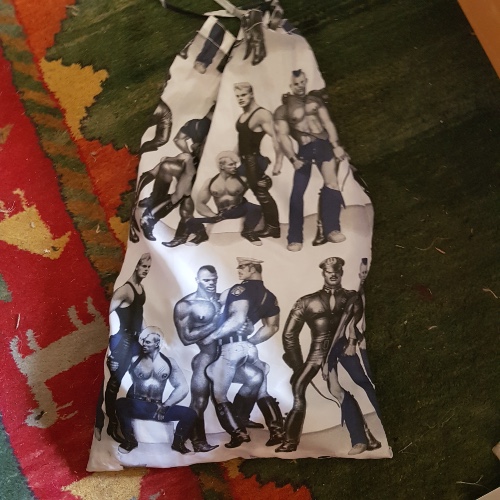
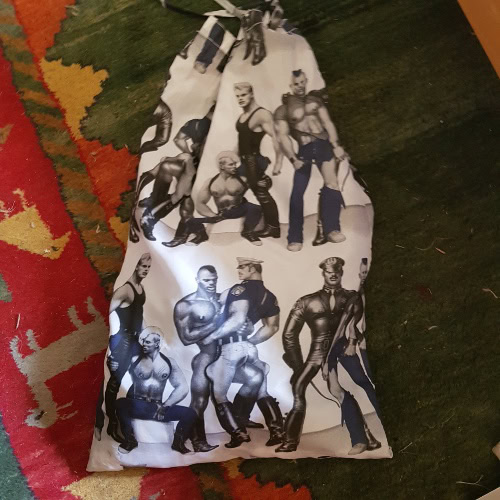
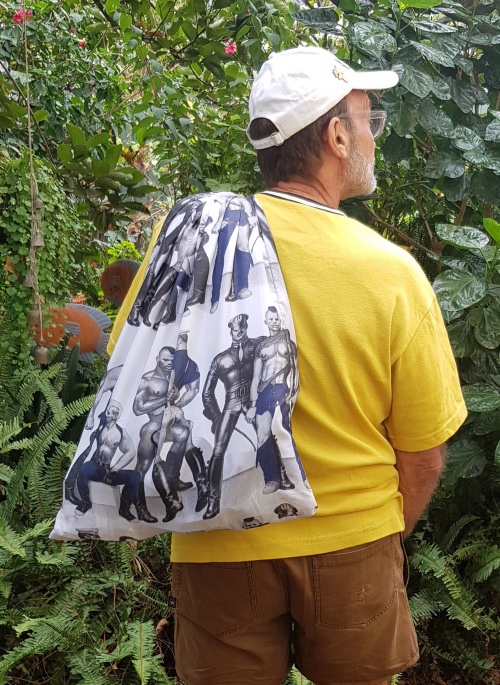
But, when Trahair fashioned a kit bag from a shower curtain with “very PG Tom of Finland images” to carry with him on his visits to the Aquatic and Recreation Centre in Campbelltown, he never expected that it would end up with him feeling “denigrated, humiliated and harassed”. 

The management of ARC Campbelltown, located around nine kilometres from Adelaide, deemed the bag “inappropriate” for children and asked Jeff to refrain from carrying the bag on his visits to the gym and the swimming pool. 

Left with no recourse against the complaints from unknown persons, Trahair finally decided to cancel his membership this week. “Feel utterly harassed and bullied, and can definitely live without that,” Trajair told Star Observer in an email interview. 

Anonymous Complaints And A Vigilante Witch Hunt

Trahair termed the management’s action a “vigilante witch hunt” based on homophobia. “The images are not explicit sexual ones at all! They are all very PG and good fun. I have used the bag for years in all Adelaide pools and never experienced anything like this. In fact, quite the opposite – people usually comment positively,” said Trahair. 

The centre confirmed that they had asked Trahair to stop carrying the bag to the premises. 

“Following a number complaints received from members of the public and staff, Mr Trahair was contacted and requested to refrain from wearing and displaying items that were considered by the complainants, and following investigation by management, as inappropriate. Mr Trahair responded to and argued against this request and chose to cancel his membership,” Chelsea Bevitt, Acting Manager Leisure Businesses, said in a statement to Star Observer. 

“As a Department of Education swim facility and the provider of a large Learn To Swim program we are required to maintain a child safe environment and act on complaints made to us. The items of graphic content displayed, worn and carried by Mr Trahiar were not appropriate within a community recreation setting,” added Bevitt. 

Bag Fashioned From Tom Of Finland Curtain

The bag at the centre of the controversy was made by Trahair from fabric from a ‘Tom Of Finland’ shower curtain manufactured by 200-year-old Finnish textile and homewares company Finlaysons. The images were prints from the collection of homoerotic art created by Finnish artist Touko Valio Laaksonen, better known as Tom Of Finland. 

On March 26, 2021, Trahair received an email from ARC Campbelltown staff that claimed the centre had received “received feedback from patrons that some of the attire that you have been wearing whilst in the pool area is not very child friendly.”

Days later, in another email on April 1, the same staff member asked Trahair to not wear or display the item. “For example, I have personally seen your bag which has a graphic image of males on it as well as a broach of male genitalia.”

In a subsequent email, Bevitt said “my overall view is that we are an environment with children present in all departments and it would be inappropriate for us to allow the display of the content we have witnessed in your possession.”

Trahair responded to the emails denying the allegations and calling out the “ad hoc and subjective” decision taken by the management on the basis of anonymous complaints without giving him a hearing. Trahair pointed out that when he is at the facility he spends most of his time at the gym and at the pool he usually places the bag under the towel. 

‘Bag Not Family Friendly’

“I now feel very unwelcome and stigmatized attending the ARC,” Trahair wrote. “It appears to me that the processes you have used have been covert, amounting to not much more than the compiling of a secret dossier about me by a highly opinionated vigilante witch hunt.”

ARC Campbelltown claimed to have ben motivated by its desire to keep the premises “child friendly”, but Trahair pointed out that it was not the bag that was harmful but homophobic attitudes. 

“Children might actually need protection and safety from adults making discriminatory judgments which affect their lives in major ways. I think kids and families stand to benefit from people ‘like me’, for I live happily and fully, as a senior, enjoying diversity and respect and creativity,” said Trahair. 

Though he decided to cancel his membership to put a stop to the harassment, Trahair has left open the option of approaching the state equal opportunity commission against the discriminatory treatment meted out to him. 

Biden will allow US embassies worldwide to fly Pride flag, reversing a Trump administration decision – Business Insider

0
  • Secretary of State Antony Blinken has given US embassies the greenlight to fly the Pride flag.
  • This reverses a decision from the Trump administration, which rejected requests to fly the flag.
  • The Biden administration is not making this mandatory, but allowing diplomats to decide. 
  • See more stories on Insider’s business page.

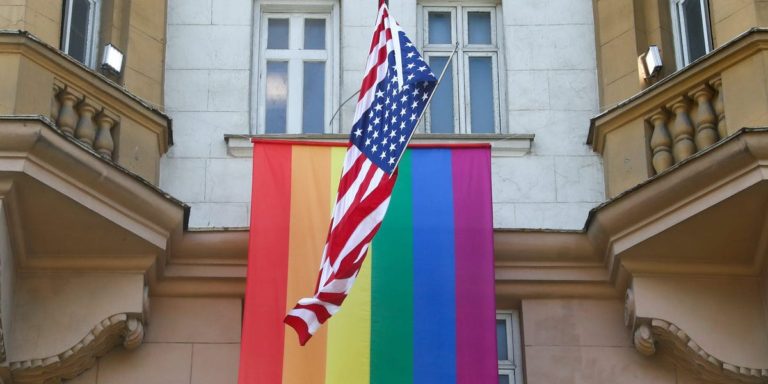
Secretary of State Antony Blinken has authorized US embassies to fly the Pride flag, according to a State Department cable first reported by Foreign Policy

Blinken gave US diplomatic outposts the greenlight to fly the rainbow flag before May 17, the International Day Against Homophobia and Transphobia, and to keep it on display through Pride Month in June. But the top US diplomat in the cable also said that this was not mandatory, leaving it up to diplomats to “determine that such a display is appropriate in light of local conditions,” per the New York Times, which also reviewed the cable. 

The State Department confirmed to Insider that the Biden administration authorized embassies to fly the Pride flag.  

“President Biden believes that America’s strength is found in its diversity. America is stronger, at home and around the world, when it is inclusive,” a State Department spokesperson told Insider. “Recognizing that each country context is different, U.S. embassies and consulates develop individual plans to raise awareness of violence, human rights abuses, and discrimination targeting LGBTQI+ persons, including appropriate exterior displays. ” 

“If Chiefs of Mission determine that it is appropriate to do so, they may fly the Pride flag on external-facing flagpoles below the U.S. flag at U.S. diplomatic facilities overseas,” the spokesperson added.

This move reverses a decision from the Trump administration, which rejected requests from US embassies to fly the Pride flag. Then-Secretary of State Mike Pompeo, who publicly opposed same-sex marriage, said only the US flag should appear on the flagpole at US embassies. 

Vice President Mike Pence, who’s espoused anti-gay views and supported anti-LGBTQ legislation, in a 2019 NBC News interview backed the Trump administration decision to prohibit embassies from flying the Pride flag. “When it comes to the American flagpole, and American embassies, and capitals around the world, having one American flag fly, I think is the right decision,” Pence said at the time. 

Some embassies sought to circumvent the Trump administration’s directive by displaying the Pride flag on the building rather than the flag pole, such as the US Embassy in South Korea. But the embassy in Seoul ultimately took the Pride banner down as the Trump administration simultaneously ordered it to remove a Black Lives Matter banner also hanging on the building’s facade.

The Biden administration’s stance toward the LGBTQ community has shifted drastically from its predecessor. 

During his confirmation hearing in January, Blinken pledged to defend the rights of LGBTQ people and said he would allow US embassies to fly the Pride flag. 

“We’ve seen violence directed against LGBTQI people around the world increase. We’ve seen, I believe, the highest number of murders of transgender people, particularly women of color, that we’ve seen ever,” Blinken said. “And so I think the United States playing the role that it should be playing in standing up for and defending the rights of LGBTQI people is something that the Department is going to take on and take on immediately.”

LGBT activists not excited by Jenner’s campaign for governor – The Associated Press

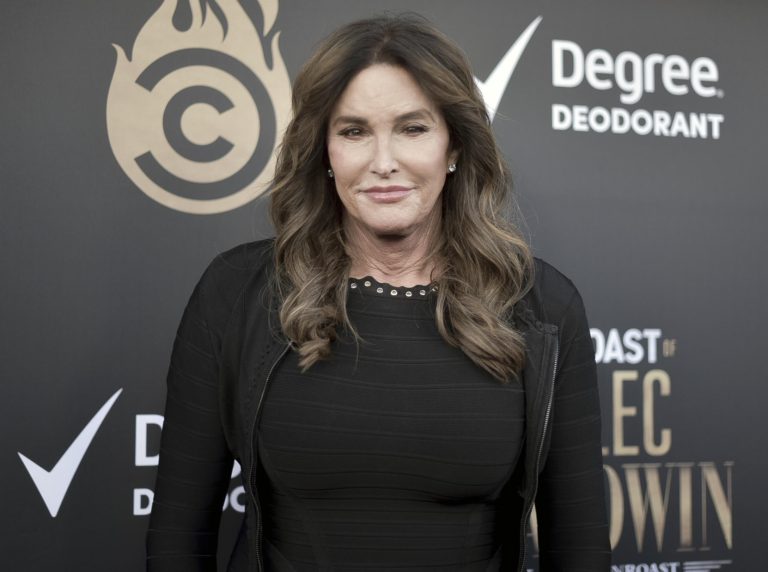
Though Caitlyn Jenner is one of the most famous transgender people in America, the announcement of her candidacy for California governor was greeted hostilely by one of the state’s largest LGBTQ-rights groups and by many trans activists around the country.

“Make no mistake: we can’t wait to elect a #trans governor of California,” tweeted the group, Equality California. “But @Caitlyn_Jenner spent years telling the #LGBTQ+ community to trust Donald Trump. We saw how that turned out. Now she wants us to trust her? Hard pass.”

Jenner – the former Olympic gold medalist and reality TV personality — is a Republican and supported Trump in 2016. She later criticized his administration for some discriminatory actions against transgender people, but has failed to convince many trans-rights advocates that she is a major asset to their cause.

ADVERTISEMENT

“Caitlyn Jenner is a deeply unqualified hack who doesn’t care about anyone but herself,” tweeted trans activist Charlotte Clymer. “Her views are terrible. She is a horrible candidate.”

Jennifer Finney Boylan, a transgender writer and professor at Barnard College, appeared on multiple episodes of Jenner’s TV show, “I Am Cait” and considers her a friend. But she’s not an admirer of Jenner’s politics.

“I wish her well personally,” Boylan said via email. “But I can’t see how the conservative policies she is likely to embrace will help Californians.”

Wyatt Ronan of the Human Rights Campaign, a major national LGBTQ-rights organization, said Jenner “is not the leader California needs.”

“Her support of Donald Trump, the most virulent and vocal anti-LGBTQ president in American history, and her decision to hire Trump’s inner circle for her campaign are just two examples why,” he said.

David Badash, editor of an LGBTQ-oriented news and opinion site called The New Civil Rights Movement, noted that Jenner’s campaign website outlined no policy positions and offered two options to those visiting the site: “Shop” and “Donate.”

Badash questioned why Jenner would run as a Republican at a time when GOP legislators in more than 20 states have been pushing bills aimed at curtailing transgender youths’ ability to play school sports and receive gender-affirming medical care.

Some activists found reason to welcome Jenner’s announcement, saying it was further evidence that transgender Americans are running for office more frequently.

Rodrigo Heng-Lehtinen of the National Center for Transgender Equality Action Fund noted that in the 2020 election, Sarah McBride of Maryland became the first openly trans person elected to a state Senate seat and Stephanie Byers of Kansas became the first openly trans Native American elected to a state legislature.

In Vermont, Christine Hallquist won the Democratic gubernatorial nomination in 2018, but lost the general election to incumbent Republican Phil Scott.

“Voters want leaders who will deliver results for their communities, no matter who they are,” Heng-Lehtinen said.

Attorney Sasha Buchert, co-director of the Transgender Rights Project at the LGBTQ-rights group Lambda Legal, said when the public sees transgender people in public life it “serves to expand public awareness of the reality and diversity of trans lives.”

“It matters to us what policies candidates support — and what their track record might be — on a full range of issues, not just trans rights and inclusion,” Buchert added. “That is the lens one should always use in evaluating any candidate, including Caitlyn Jenner.”

What’s the Difference Between Gen Z & Millennial Gays? – Pride.com

What’s the Difference Between Gen Z & Millennial Gays?

Comedian Michael Henry tackles one of the great questions of our time: what do you do when your friend starts dating a 21-year-old and you don’t understand their cultural references? 

In a new sketch titled, “I’M DATING A 21-YEAR-OLD,” Henry’s friend’s boyfriend graces the friend group with his presence, though it might not be that welcome. “I love femmes but I don’t like mean,” says Henry.

“It’s like he learned how to be gay from a 1999 episode of the Sex in the City.”

With Henry’s usual wit and comedic timing, this generational clash is simply hilarious to witness. It’s the constant TikTok jokes and references for us. 

“But maybe he’s just trying to figure out who he is as a queer person,” Henry points out.

Aren’t we all?

Watch Michael Henry’s latest sketch below, and for more gay comedy, make sure to subscribe to his YouTube channel here!