Arkansas’ law limiting transgender-affirming treatments for minors was crafted in the Natural State, not imported from elsewhere, its sponsors say.
Unlike the legislation addressing transgender athletes, which largely mirrors a 2020 Idaho statute, Act 626, the Save Adolescents From Experimentation Act, is the first of its kind to become law.
The sponsor of Act 626, which originated as House Bill 1570, said there wasn’t an existing template.
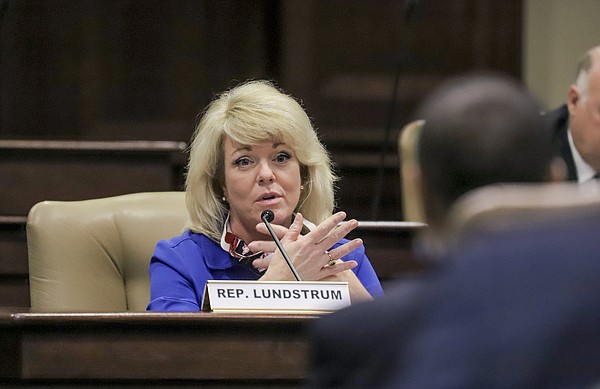
“Mine was more of a blank slate,” said Rep. Robin Lundstrum, R-Springdale. “Usually, you can look at what other states are doing; things take a while to brew. But this is something that’s coming along very fast.”
The new law bans the use of puberty-blocking drugs on minors and also prohibits surgical interventions, including breast reductions.
Lundstrum said she follows health-related issues closely; she holds a doctorate in health sciences from the University of Arkansas, Fayetteville.
When she learned that puberty-blocking drugs and cross-sex hormones were being given to minors, she became concerned, she said.
Around August, she began looking into possible legislative fixes.
She was driven, she said, by “pure science and pure health.”
She consulted with doctors, psychiatrists and fellow legislators as well as the Bureau of Legislative Research, prior to introducing the legislation, she said.
“I can’t take credit for it. If you’re a medical expert or somebody that’s been in the [medical] field and you stood still long enough, I probably asked you a question,” she said.
While the ultimate legislative wording may be unique, the concept is one that is being debated in state legislatures across much of the country.
Arkansas is one of at least 20 states that have looked at limiting medical options for transgender young people since 2020, according to Cathryn Oakley, state legislative director and senior director of the Human Rights Campaign.
South Dakota was the first, with legislation introduced in 2020, Oakley said. It did not pass.
While the wording may vary somewhat, “we are absolutely seeing similarities with the legislation,” Oakley said. “It is extremely similar from state to state.”
In many states, there are competing pieces of legislation focusing on the treatment of transgender children, Oakley said.
That was true in Arkansas.
Sen. Alan Clark, R-Lonsdale, said he had initially come up with a bill of his own before joining forces with Lundstrum.
“They were not different in theory, but hers was much more comprehensive,” Clark said.
“She had done her homework and really had a good bill,” he said.
Oakley said Arkansas is at the forefront when it comes to anti-LGBT legislation.
In previous years, gay marriage was a popular wedge issue, she said. But it no longer moves voters, she said.
“They lost in the courts. But I think, more importantly, they lost in the hearts and minds of the American electorate,” she said. “The electorate’s in a different place now than it was 25 years ago. Those arguments just don’t work. They sound ludicrous now.”
Conservative social warriors “have to find something new to make people afraid of, and they’ve settled on trans kids,” she said.
Lundstrum and Clark both say their goal is to safeguard young people.
“What people do as adults is really their business, but we should protect children,” Lundstrum said.
Minors shouldn’t be able to make these types of life-altering decisions, Clark said.
“I want them to be able to grow up and be able to make that decision as an adult. Teenagers change their mind every day,” he said.
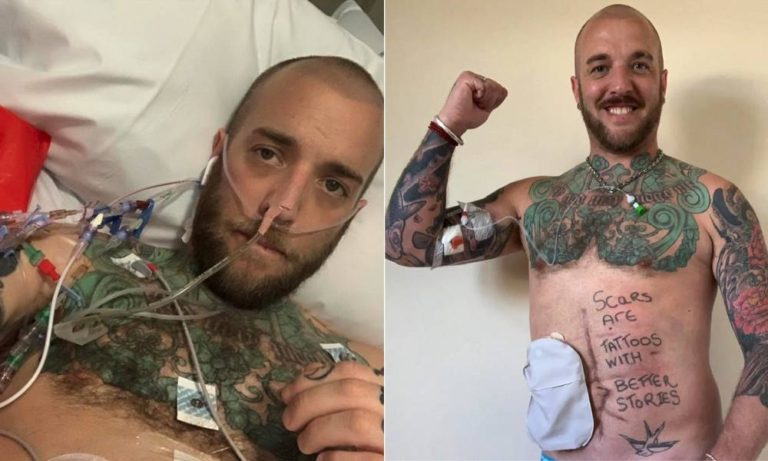
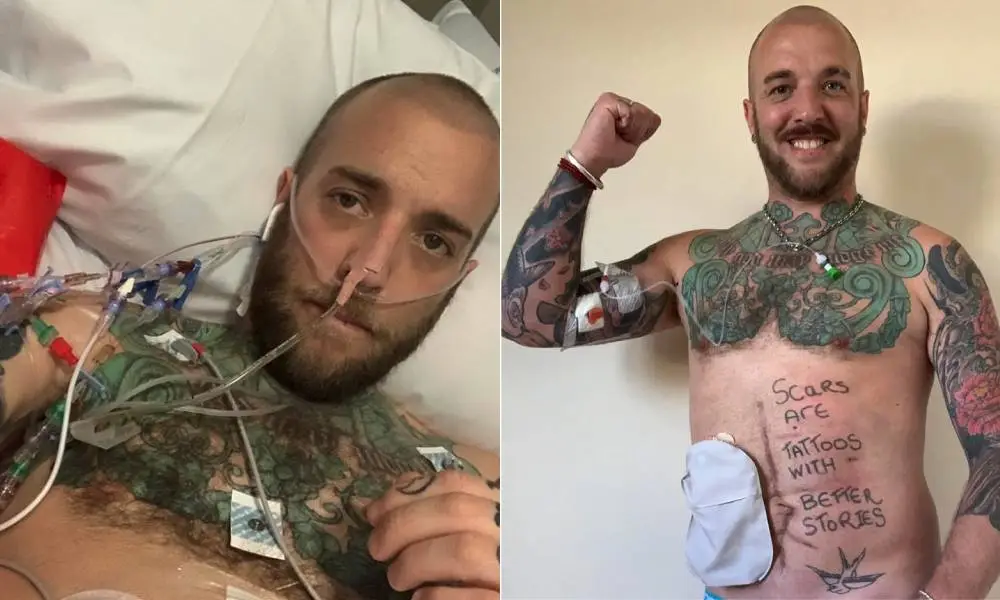
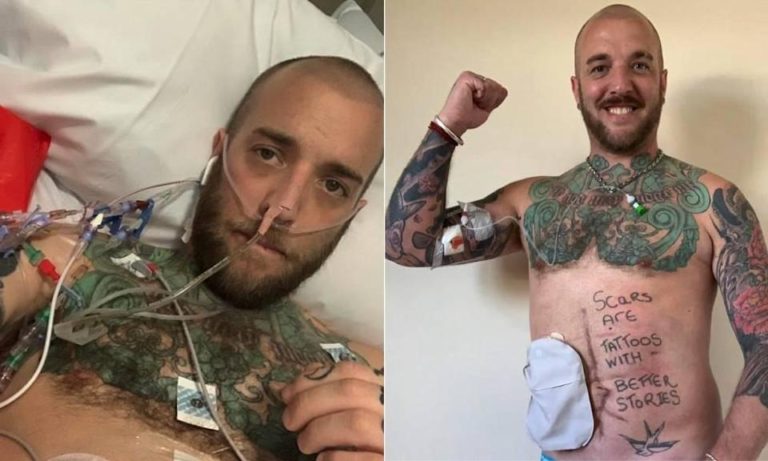
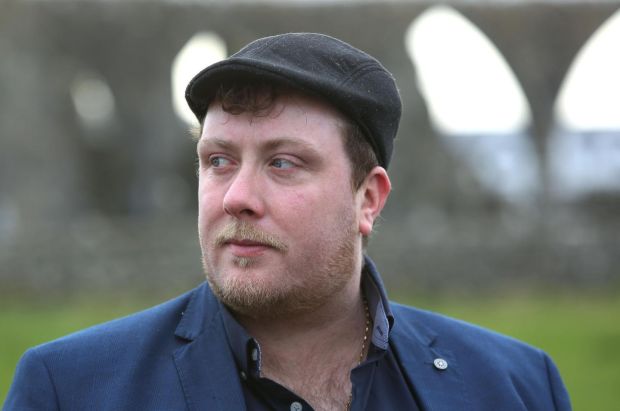
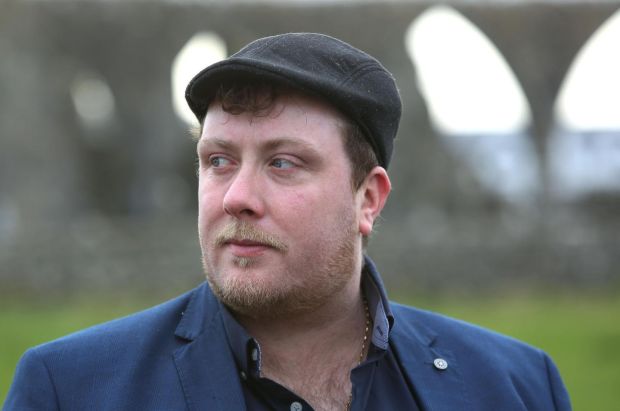
Dean Scott Richardson, 38 from Brighton, shares what his life has been life since he was left with a stoma after a botched surgery in 2019. (Supplied/Dean Scott Richardson)
A gay man from Brighton says he felt like he was “labelled as the gay guy with a bag” while trying to get back on his feet and find love after a horrific operation that left him with a stoma.
Dean Scott Richardson, 38, told PinkNews that he has lived with Crohn’s disease, a type of inflammatory bowel disease (IBD), for most of his life after being diagnosed in 1996. He even had to have part of his large intestine removed during surgery in 2000.
But he explained that he suffered from a horrific set of circumstances that left him disabled after a botched surgery in 2019. He told PinkNews that he had been working in China frequently and decided to undergo a “small, routine operation” before he returned to the country from his home in the UK. Richardson explained the planned surgery, which should have taken “5-10 minutes”, was to remove a tiny bit of scar tissue left behind by his previous operation.
He went under the knife in December 2019, and his small surgery took a turn for the worst when the surgeon unknowingly perforated his bowels. Richardson said he woke up after the 12-hour operation and knew something was wrong.
“I kept saying to the doctors and the staff that I didn’t feel well, and there was something wrong,” Richardson said. “Nobody would listen to me for 10 days, and my stomach was getting bigger. I’ve known my body for a long time, but none of them would listen to me.”
But then, Richardson was rushed in for a life-saving surgery, which he said he had a “20 per cent chance of survival”. In the end, he woke up with a double jejunostomy – which is a stoma – and a peripherally inserted central catheter (PICC), a narrow tube that is put into a vein that allows medicines and antibiotics to be given directly into the bloodstream. Richardson was left with a bag attached to his abdomen to collect waste diverted by the stoma.
He told PinkNews that he woke up to “hell” after his surgery as he didn’t even know he would get a stoma or PICC line, which he said was “never on the cards” for him.
“Most people in the IBD community will have a choice to get a bag or have time to come to terms with it,” Richardson said. “It was never on the cards to me because I was going for a very small, routine operation, and then I just woke up to what I can only describe as being the last year of hell.”
After his surgery and eventually being transferred from Brighton to a specialist hospital in Oxford, Richardson said he felt “isolated” and “invisible”. He said he couldn’t find anyone in the LGBT+ community who had similar experiences online who were being “open and honest about their health conditions”.
So he decided to set up an Instagram page, @chrons_come_back_kid, to chart his recovery and health journey. He told PinkNews that he’s met “so many beautiful” people through his social media escapades, but he has received backlash and vitriol from the gay community because he is honest about his condition.
“I was very down and depressed because I lost my job and my home while I was in the hospital, and then I suddenly had this bag of s**t sticking on my stomach,” Richardson said. “I just felt very lost and alone.”
He eventually decided to download dating apps, like Grindr, to connect to others while he was in the hospital. But Richardson said he would be “ghosted” or blocked the moment he would mention his stoma. He said: “People would make some excuses or stop talking to me, and that affected me mentally because I’m the same guy.
“All I could think in my head was: If I was to have sex, I will be the best bottom in town because it doesn’t get used.
“So I couldn’t work out why, all of the sudden, I was being ostracised and treated like this.”
Then, he connected with a woman had the same surgeries as Richardson. She invited him to participate in a couple of photoshoots, and he decided to put the images onto his dating profiles so he wouldn’t have to ‘drop the bomb” that he was unwell.
But he said he was immediately met with vitriol with people asking him why he chose to put “pictures like that” on the apps. Richardson said he felt like he “just got labelled as the gay guy with a bag” after he posted the pictures.
“Nobody took me seriously or wanted to date me the minute I put the pictures of my bag online,’ he explained. “I was going through such a difficult time losing my job, losing my home, my identity, and the one community that would be there for me just turned its back.”
Richardson told PinkNews that he was able to have his stoma reversed in July 2020, but his life has been forever changed by the experience. He still lives with the scars and the life-altering health consequences of the operations.
But he said he ultimately doesn’t regret being so open about his stoma and health journey. He said he has made a group of close friends through his Instagram account, and he’s continued to dip his toes into the dating pool.
“I would love to meet a nice guy and plan my future, but it’s just so difficult,” Richardson said.
If you need support or have questions about living with a stoma, you can find more information through Crohn’s & Colitis UK’s guide or by calling their helpline number: 0300 222 5700.
A gay man from Brighton says he felt like he was “labelled as the gay guy with a bag” while trying to get back on his feet and find love after a horrific operation that left him with a stoma.
Dean Scott Richardson, 38, told PinkNews that he has lived with Crohn’s disease, a type of inflammatory bowel disease (IBD), for most of his life after being diagnosed in 1996. He even had to have part of his large intestine removed during surgery in 2000.
But he explained that he suffered from a horrific set of circumstances that left him disabled after a botched surgery in 2019. He told PinkNews that he had been working in China frequently and decided to undergo a “small, routine operation” before he returned to the country from his home in the UK. Richardson explained the planned surgery, which should have taken “5-10 minutes”, was to remove a tiny bit of scar tissue left behind by his previous operation.
He went under the knife in December 2019, and his small surgery took a turn for the worst when the surgeon unknowingly perforated his bowels. Richardson said he woke up after the 12-hour operation and knew something was wrong.
“I kept saying to the doctors and the staff that I didn’t feel well, and there was something wrong,” Richardson said. “Nobody would listen to me for 10 days, and my stomach was getting bigger. I’ve known my body for a long time, but none of them would listen to me.”
But then, Richardson was rushed in for a life-saving surgery, which he said he had a “20 per cent chance of survival”. In the end, he woke up with a double jejunostomy – which is a stoma – and a peripherally inserted central catheter (PICC), a narrow tube that is put into a vein that allows medicines and antibiotics to be given directly into the bloodstream. Richardson was left with a bag attached to his abdomen to collect waste diverted by the stoma.
He told PinkNews that he woke up to “hell” after his surgery as he didn’t even know he would get a stoma or PICC line, which he said was “never on the cards” for him.
“Most people in the IBD community will have a choice to get a bag or have time to come to terms with it,” Richardson said. “It was never on the cards to me because I was going for a very small, routine operation, and then I just woke up to what I can only describe as being the last year of hell.”
After his surgery and eventually being transferred from Brighton to a specialist hospital in Oxford, Richardson said he felt “isolated” and “invisible”. He said he couldn’t find anyone in the LGBT+ community who had similar experiences online who were being “open and honest about their health conditions”.
So he decided to set up an Instagram page, @chrons_come_back_kid, to chart his recovery and health journey. He told PinkNews that he’s met “so many beautiful” people through his social media escapades, but he has received backlash and vitriol from the gay community because he is honest about his condition.
“I was very down and depressed because I lost my job and my home while I was in the hospital, and then I suddenly had this bag of s**t sticking on my stomach,” Richardson said. “I just felt very lost and alone.”
He eventually decided to download dating apps, like Grindr, to connect to others while he was in the hospital. But Richardson said he would be “ghosted” or blocked the moment he would mention his stoma. He said: “People would make some excuses or stop talking to me, and that affected me mentally because I’m the same guy.
“All I could think in my head was: If I was to have sex, I will be the best bottom in town because it doesn’t get used.
“So I couldn’t work out why, all of the sudden, I was being ostracised and treated like this.”
Then, he connected with a woman had the same surgeries as Richardson. She invited him to participate in a couple of photoshoots, and he decided to put the images onto his dating profiles so he wouldn’t have to ‘drop the bomb” that he was unwell.
But he said he was immediately met with vitriol with people asking him why he chose to put “pictures like that” on the apps. Richardson said he felt like he “just got labelled as the gay guy with a bag” after he posted the pictures.
“Nobody took me seriously or wanted to date me the minute I put the pictures of my bag online,’ he explained. “I was going through such a difficult time losing my job, losing my home, my identity, and the one community that would be there for me just turned its back.”
Richardson told PinkNews that he was able to have his stoma reversed in July 2020, but his life has been forever changed by the experience. He still lives with the scars and the life-altering health consequences of the operations.
But he said he ultimately doesn’t regret being so open about his stoma and health journey. He said he has made a group of close friends through his Instagram account, and he’s continued to dip his toes into the dating pool.
“I would love to meet a nice guy and plan my future, but it’s just so difficult,” Richardson said.
If you need support or have questions about living with a stoma, you can find more information through Crohn’s & Colitis UK’s guide or by calling their helpline number: 0300 222 5700.
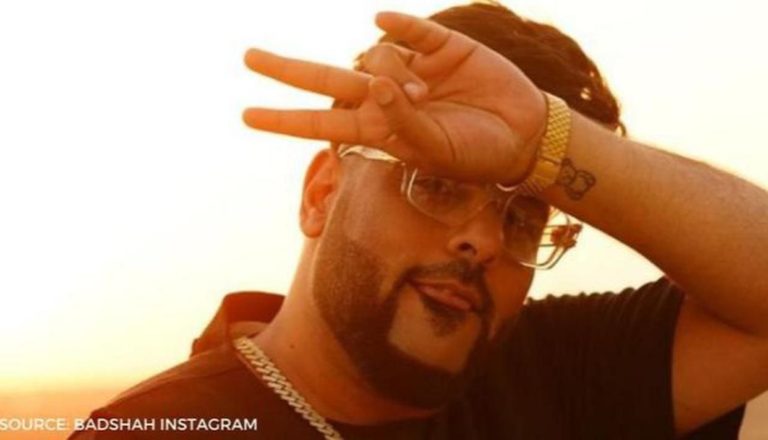
Badshah is known for successful songs such as DJ Waley Babu, Saturday Saturday, She Move It Like and more. He made his acting debut in 2019 with the movie Khandaani Shafakhana featuring Sonakshi Sinha in the lead. At the time of the film’s release, he appeared in an interview and opened up about his first-ever rapping/singing performance. Read ahead to know more.
Badshah’s first-ever public performance
In an interview with Firstpost, Badshah was asked about his first-ever singing or rapping performance. He revealed that there were 20 people when he performed publicly for the first time. When asked for details, he said that he went to perform at a club where there were a lot of boys. While he was performing, the boys complimented him which made him feel like he did a great job. After the performance, he came to know that it was a gay club and revealed that he was paid Rs 1500 for the gig. He stated that the name of the club was Lizard Lounge. Before the performance, the promoter had told him that there would be many guys and he thought it was normal.
A look at Badshah’s career
Badshah is known for his Hindi, Haryanvi, and Punjabi songs and started his career in 2006 alongside Yo Yo Honey Singh in his hip-hop group Mafia Mundeer. Badshah released his independent Haryanvi song Kar Gayi Chull in 2012 which was adapted to the Bollywood film Kapoor & Sons. He has sung songs for films such as Ae Dil Hai Mushkil, Badrinath Ki Dulhania, Mubarakan and more. He has received various awards including the Best Punjabi Music of The Year for his song Wakhra Swag in collaboration with Navv Inder. His latest Bollywood track was the chartbuster Garmi from the 2020 film Street Dancer 3D.
Badshah played the character of Gabru Ghaatak in his 2019 debut film Khandaani Shafakhana which was directed by debutante Shilpi Dasgupta. Badshah also sang and penned the lyrics for a few songs in the film. In the same year, he worked as a producer and music composer for the Punjabi film, Do Dooni Panj.
Was he concerned about image trap — that he could be stuck with only similar offers in future? “Honestly, I did not think about it, and I do not fear to get stereotyped after playing a gay character on screen. I am not hesitant to play a gay character. The issue of getting stereotyped exists everywhere, with any character we play,” Mrinal told IANS.
He continued: “If we do it correctly and get the audience’s appreciation, makers tend to cast us in similar roles. No point in fearing that. I am never afraid to do bold characters, and I want people to feel uncomfortable if they feel so. It is important to understand that a homosexual love story is as normal as a heterosexual love story.”
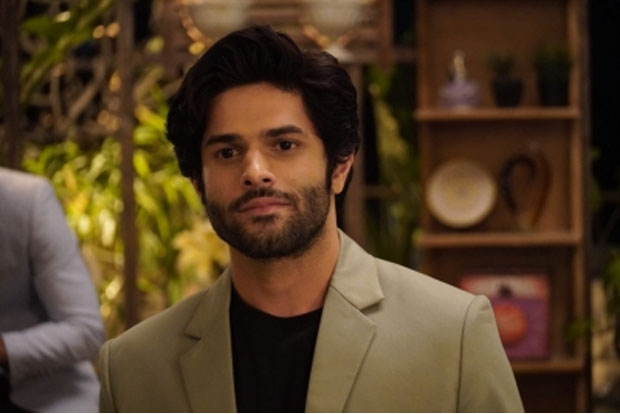
The show revolves around two men, Preet and Kunal. Preet, played by Mrinal, is a food critic, blogger, and a traveler. Kunal, played by Satyadeep Misra, is a man who, after over a decade of happy married life, realises he is gay when he falls in love with Preet.
Did Mrinal feel an added sense of responsibility while portraying a gay character on-screen? “The most important part, the responsibility that we all felt, was to represent the LGBTQ community in the right manner to the mainstream. I knew that if it was coming from Ekta (Kapoor) ma’am’s production house, they are known for being sensitive towards every story,” he replied.
“The basic thing needed to be understood is whether someone falls in love with another person of the opposite sex or the same sex, the feeling of love is similarly intense and organic in both situations,” Mrinal added.
“His Storyy” also features Priyamani, Charu Shankar and Rajiv Kumar. The show will release on ALT Balaji, on April 25.
Actor Mrinal Dutt plays one of the protagonists in the upcoming web series “His Storyy”, a homosexual love story. He says a gay romance should be treated as normally as a heterosexual love story, adding that he had no hesitation playing a gay character.
Was he concerned about image trap – that he could be stuck with only similar offers in future? “Honestly, I did not think about it, and I do not fear to get stereotyped after playing a gay character on screen. I am not hesitant to play a gay character. The issue of getting stereotyped exists everywhere, with any character we play,” Mrinal said.
He continued: “If we do it correctly and get the audience’s appreciation, makers tend to cast us in similar roles. No point in fearing that. I am never afraid to do bold characters, and I want people to feel uncomfortable if they feel so. It is important to understand that a homosexual love story is as normal as a heterosexual love story.”
Adv.
The show revolves around two men, Preet and Kunal. Preet, played by Mrinal, is a food critic, blogger, and a traveler. Kunal, played by Satyadeep Misra, is a man who, after over a decade of happy married life, realises he is gay when he falls in love with Preet.
Did Mrinal feel an added sense of responsibility while portraying a gay character on-screen? “The most important part, the responsibility that we all felt, was to represent the LGBTQ community in the right manner to the mainstream. I knew that if it was coming from Ekta (Kapoor) ma’am’s production house, they are known for being sensitive towards every story,” he replied.
“The basic thing needed to be understood is whether someone falls in love with another person of the opposite sex or the same sex, the feeling of love is similarly intense and organic in both situations,” Mrinal added.
Adv.
“His Storyy” also features Priyamani, Charu Shankar and Rajiv Kumar. The show will release on ALT Balaji, on April 25.
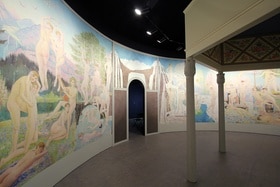
The circular painting Il Chiaro Mondo dei Beati [The clear world of the blessed] by Estonian artist Elisàr von Kupffer (1872-1932). Ars Artis Ag
After a lengthy restoration, visitors can once again admire the 26-metre circular painting Il Chiaro Mondo dei Beati [The clear world of the blessed] by Estonian artist and LGBT pioneer Elisàr von Kupffer (1872-1932) at the Monte Verità museum complex near Ascona, in southern Switzerland.
This content was published on April 25, 2021 – 10:00
Gerhard Lob, Ascona
The polyptych depicts 84 male nude figures relaxing in idyllic scenery. It was produced in the region between 1920–1939 by Elisàr von Kupffer, a painter, poet, historian and playwright from Riga, Estonia, who has over the decades become an LGBT icon. Itwas rediscovered by legendary art historian and curator Harald Szeemann in the late 1970s, and has been renovated several times. Today, it sits in the Elisarion Pavilion on Monte Verità, the hill that overlooks the resort of Ascona on Lake Maggiore.
The verdant hill in Italian-speaking Switzerland has always had a unique pulling power. In the early 20th century it became known as an alternative vegetarian colony, attracting artists, anarchists and intellectuals from around Europe. A small art centre was built on the Ascona hill in the early 1920s; later it became a hotel and seminar centre. Today, Monte Verità is a modern congress and cultural centre spread over seven hectares, run by a foundation of the same name.
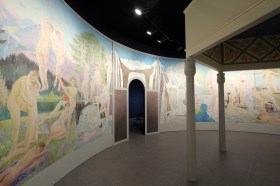
Part of the painting Il Chiaro Mondo dei Beati [The clear world of the blessed] by Estonian artist Elisàr von Kupffer (1872-1932). Claudio Berger
Gay paradise
Von Kupffer’s circular 26-metre-long polyptych is made up of 16 canvases. It presents the artist’s ideal of a gay paradise, with 84 young male nudes relaxing in idyllic scenery. It includes glaciers, coastlines, flower-covered meadows and mountain lakes. The human figures appear in 33 different scenes, which the author describes in verse.
“It’s a timeless work. It is unique. There is nothing like it,” says art historian David Streiff, former head of the Federal Office of Culture and who oversaw the latest restoration.
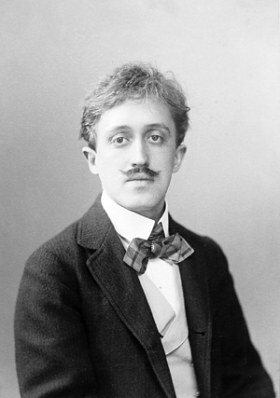
Elisàr von Kupffer in 1902. elisarion.ch
Von Kupffer founded Klarismus (Clarity), a philosophical-religious movement oriented towards social and sexual emancipation, together with German philosopher and writer Eduard von Mayer (1873-1960). The two men met in 1891 and became lifelong partners from 1897. Klarismus (Clarity), like Helena Blavatsky’s theosophy or Rudolf Steiner’s anthroposophy, was a movement created as a reaction to positivism and scientific worldviews, as well as to the predominant moral ideas of the time.
“A very interesting iconography emerged from Klarismus (Clarity), which leads you from darkness to light and takes in many aspects of European art history, including religious ones, to create something extraordinary,” says Streiff.
Spreading Clarity around the world
After travelling around Europe, the couple arrived in canton Ticino in 1915. Their plan was to spread their ideas from the Locarno district of Minusio, where they lived, to the rest of the world. “At the time, he and his partner were trying to live in Ticino as a creative homosexual couple. This was quite extraordinary in a Catholic canton,” says Streiff. Elisàr von Kupffer was one of the pioneers of the LGBT movement, he adds.
The Sanctuarium Artis Elisarion in Minusio in canton Ticino. elisarion.ch
Back in 1925, von Kupffer and von Mayer built the Sanctuarium Artis Elisarion in Minusio to house the circular painting. It was installed in an annex at the end of a pathway aimed at leading visitors from the “Chaotic World” to the “Clear World”.
Upon their death, the painting – together with the sanctuary – was donated to the Municipality of Minusio. The polyptych was removed from its original location in 1977 for a refurbishment and was later rediscovered by Szeemann.
He included it in his traveling exhibition “Monte Verità – the breasts of truth” dedicated to the history of the unique community from the region. Following his exhibition – which was shown in Zurich, Berlin, Vienna and Munich – a permanent location was found for the painting at the Casa Anatta in Ascona. He had a wooden pavilion built to house the painting, but it remained inaccessible for years.
“When Szeemann died in 2005, it was clear to me that it was now up to others to look after Elisarion’s legacy [von Kupffer’s pseudonym],” says Streiff.
At the time his painting was in a poor state. Streiff has helped raise funds for the project and has found huge support from Switzerland’s gay community, of which he himself is a part.
The wooden pavillon that houses the circular painting on Monte Verità. Gerhard Lob
Extensive restoration
The painting, which is overseen by canton Ticino’s cultural heritage office, has since been restored. The work was financed by the Monte Verità Foundation and the Pro Elisarion Association, founded in 2008 preserve the works of Elisàr von Kupffer and Eduard von Mayer.
“Restoring the painting was not easy because the material was badly damaged and the canvases had folds. A small part of the painting was completely missing and had to be redone,” explains Christian Marty, who was in charge of the restoration with his partner Petra Helm.
Both are internationally recognised specialists in landscape painting restoration. In Switzerland they are well-known for bringing the Bourbaki PanoramaExternal link, exhibited in Lucerne, back to life. The 112-metre circular painting by Edouard Castres portrays the internment of 87,000 French soldiers who fled to Switzerland during to winter of 1871.
But it’s not just von Kupffer’s painting that has been restored. The entire pavilion that houses the work has been renovated and new visitor panels have been installed. Visitors can also see a film about von Kupffer and some of his other paintings are also on show.
Translated from German by Simon Bradley
The Monte Verità museum complex
The Monte Verità museum complex, near Ascona in canton Ticino, is open from April 1-November 1. It includes the following exhibitions:
the Casa Anatta Museum, which houses the historic exhibition “Monte Verità. Le mammelle della verità” by Harald Szeemann and “Le verità di una montagna” by Andreas Schwab;
the Casa Selma “air-light hut”, built in 1904 by the first settlers, where it is possible to see a film on the history of Monte Verità;
the House of the Russians (Casa dei russi), whose name pays tribute to the presence of numerous Russian students at Monte Verità after 1910. Today it houses temporary exhibitions;
the Elisarion Pavilion, which houses the work “Il Chiaro Mondo dei Beati” (1920-1939) by Elisàr von Kupffer.
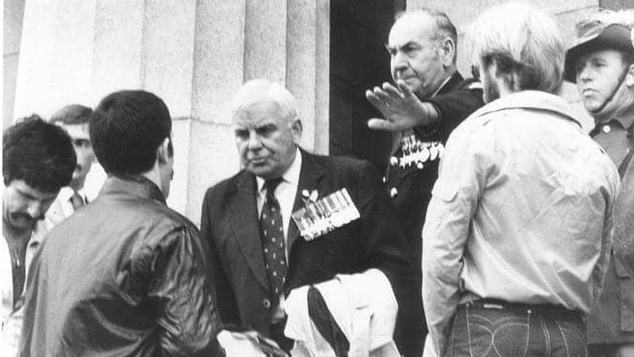
In 1982 Bruce Ruxton stopped gay and lesbian service personnel being recognised
Today is ANZAC Day in Australia, a time when we recognise the service of those in the armed forces in times of conflict and times of peace.
Australia has been progressive in allowing gay, lesbian, and transgender people to serve in the military, but it’s not that long ago that people kept their sexuality a secret, and lived in fear in order to be on Australia’s frontline.
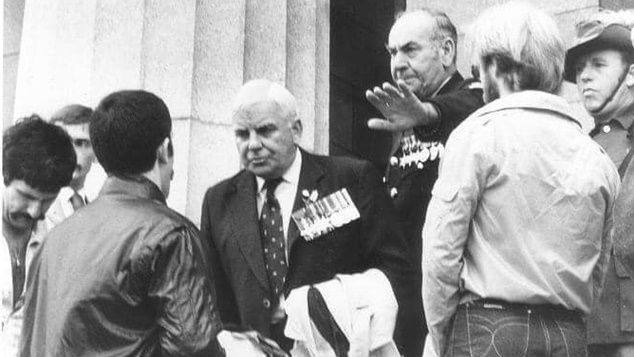
The Australian Queer Archives have highlighted that back in 1982 the situation was very different. At the ANZAC Day Service in Melbourne a group of men from the Gay Ex-Services Association attempted to lay a wreath remembering gay men and lesbians who had died in conflict. As they climbed the steps of the War Memorial, a voice cried out “Stop those men!”.
Returned Services League President Bruce Ruxton barred their path and stopped them honouring the war heroes. Ruxton would later tell The Age newspaper “I didn’t mind the poofters in the march, but they must march with their units.”
“We didn’t want them to lay a wreath because we didn’t want them—and they are just another start to the denigration of ANZAC Day,” he said.
The image of Ruxton stopping the wreath being laid was captured by Jay Watchorn from the publication City Rhythm. The photo, and others in the series are now part of the collection at the Australian Queer Archives.
Ruxton’s views on homosexuality were well-known at the time, he’d previously told broadcaster Derryn Hinch that if he had a gay son, he shoot him. Ruxton famously claimed there were not gay people serving in the armed forces during World War II, but there are many accounts of gay and lesbian people serving across all conflicts.
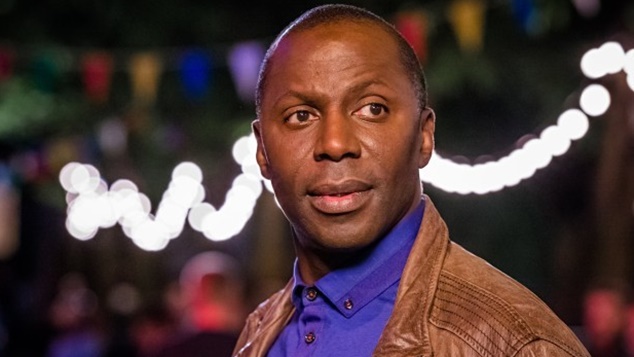
British actor Cyril Nri is celebrating his 60th birthday today. He is known for his roles as Chief Superintendent Adam Okaro on long running series The Bill.
His career has seen him appear regularly on British TV series over the decades including memorable roles in This Life, Law and Order UK and the Russell T Davies penned series Cucumber.
Nri’s role of Lance, an older gay man who has to return to the world of dating after breaking up with his long term partner, in Cucumber saw him receive high praise and award nominations.
Born in Nigeria, he moved to Portugal when he was seven years old, and later his family moved to London.
In 2016 Gay magazine publisher Xulhaz Mannan was brutally murdered
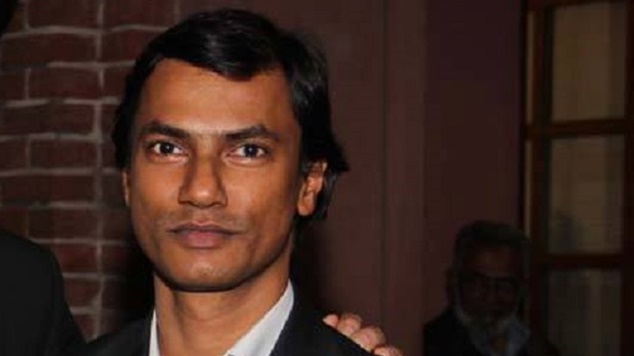
Xulhaz Mannan was the publisher of Roopbaan, the only LGBTI magazine in Bangladesh. He founded the magazine in 2014, a groundbreaking move that have the local LGBTIQ+ community a voice.
In 2016 he received death threats after he tried to organise a youth LGBT Rainbow Rally in early April. On 25th April Mannan was killed in his apartment along with LGBT activist Mahbub Rabbi Tonoy in a stabbing attack shortly after he had posted pictures of himself on the Internet and openly declaring he was gay.
Witness claimed they saw several men leaving his apartment shouting “Allahu Akbar” – Allah is great. Ansar-al-Islam, a terrorist organisation linked to Al-Qaida, later claimed responsibility for the killings.
In 2019 eight men were identified and charged by Bangladeshi police, four of the men were in custody, while police searched for the remaining offenders.
OIP Staff
Do you need some support?
If you are struggling with anxiety or depression, support and counselling are available from:
QLife: 1800 184 527 / qlife.org.au (Webchat 3pm – midnight) QLife are a counselling and referral service for LGBTQIA+ people.
DISCHARGED: 9364 6909 / waamh.org.au / [email protected] Discharged is a trans-led support service with peer support groups for trans and gender diverse folks.
Though Caitlyn Jenner is one of the most famous transgender people in America, the announcement of her candidacy for California governor was greeted hostilely by one of the state’s largest LGBTQ-rights groups and by many trans activists around the country.
“Make no mistake: we can’t wait to elect a #trans governor of California,” tweeted the group, Equality California. “But @Caitlyn_Jenner spent years telling the #LGBTQ+ community to trust Donald Trump. We saw how that turned out. Now she wants us to trust her? Hard pass.”
Jenner – the former Olympic gold medalist and reality TV personality — is a Republican and supported Trump in 2016. She later criticized his administration for some discriminatory actions against transgender people, but has failed to convince many trans-rights advocates that she is a major asset to their cause.
“Caitlyn Jenner is a deeply unqualified hack who doesn’t care about anyone but herself,” tweeted trans activist Charlotte Clymer. “Her views are terrible. She is a horrible candidate.”
Jennifer Finney Boylan, a transgender writer and professor at Barnard College, appeared on multiple episodes of Jenner’s TV show, “I Am Cait” and considers her a friend. But she’s not an admirer of Jenner’s politics.
“I wish her well personally,” Boylan said via email. “But I can’t see how the conservative policies she is likely to embrace will help Californians.”
Wyatt Ronan of the Human Rights Campaign, a major national LGBTQ-rights organization, said Jenner “is not the leader California needs.”
“Her support of Donald Trump, the most virulent and vocal anti-LGBTQ president in American history, and her decision to hire Trump’s inner circle for her campaign are just two examples why,” he said.
David Badash, editor of an LGBTQ-oriented news and opinion site called The New Civil Rights Movement, noted that Jenner’s campaign website outlined no policy positions and offered two options to those visiting the site: “Shop” and “Donate.”
Badash questioned why Jenner would run as a Republican at a time when GOP legislators in more than 20 states have been pushing bills aimed at curtailing transgender youths’ ability to play school sports and receive gender-affirming medical care.
Some activists found reason to welcome Jenner’s announcement, saying it was further evidence that transgender Americans are running for office more frequently.
Rodrigo Heng-Lehtinen of the National Center for Transgender Equality Action Fund noted that in the 2020 election, Sarah McBride of Maryland became the first openly trans person elected to a state Senate seat and Stephanie Byers of Kansas became the first openly trans Native American elected to a state legislature.
In Vermont, Christine Hallquist won the Democratic gubernatorial nomination in 2018, but lost the general election to incumbent Republican Phil Scott.
“Voters want leaders who will deliver results for their communities, no matter who they are,” Heng-Lehtinen said.
Attorney Sasha Buchert, co-director of the Transgender Rights Project at the LGBTQ-rights group Lambda Legal, said when the public sees transgender people in public life it “serves to expand public awareness of the reality and diversity of trans lives.”
“It matters to us what policies candidates support — and what their track record might be — on a full range of issues, not just trans rights and inclusion,” Buchert added. “That is the lens one should always use in evaluating any candidate, including Caitlyn Jenner.”
In this Feb. 7, 2019 file photo, Cromwell High School transgender athlete Andraya Yearwood, right, braids the hair of teammate Taylor Santos during a break at a track meet at Hillhouse High School in New Haven, Conn. Between 2017 and 2019, transgender sprinters Yearwood and Terry Miller combined to win 15 championship races, prompting a lawsuit on behalf of four cisgender girls. (AP Photo/Pat Eaton-Robb, File) (Pat Eaton-Robb/AP)
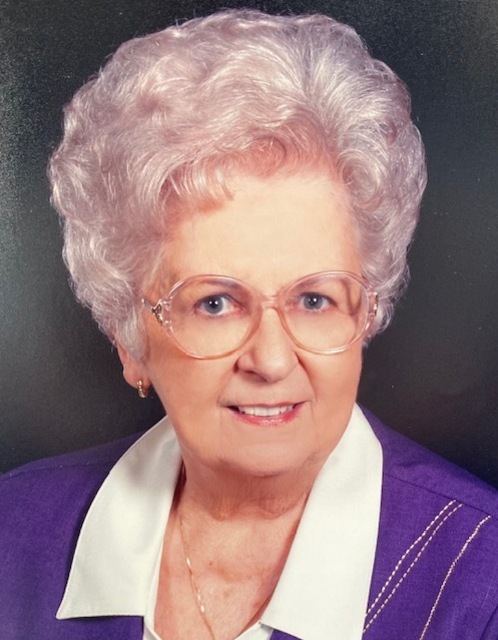
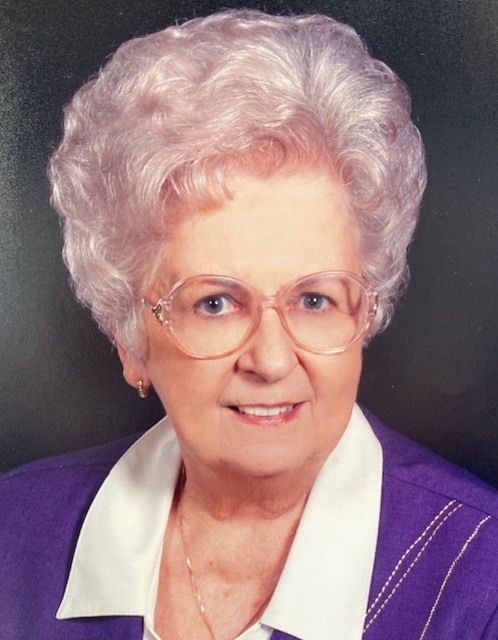
Marion Gay passed away April 25, 2021, at her home in Ada, OK. Marion was born Dec. 7, 1927, in Depew, OK. to Charles Albert and Hazel Eileen Thompson Long. She was an only child. Marion’s entire childhood up through high school graduation was spent living outside of Depew on an oil lease where her father was employed by Getty Oil. Later on, Marion met and married Hughie Thomas Gay, Jr. of Bristow, OK. who had been recently honorably discharged from the U.S. Navy and began employment with the Oklahoma Department of Public Safety as a Dispatcher and later the Oklahoma Highway Patrol, as Trooper. Mr. Gay was initially stationed in Pawnee, OK., but later reassigned to Ada which became his and Marion’s permanent home. Marion was an outstanding seamstress and an absolutely wonderful cook. Many young ladies in the Ada area attended high school proms wearing a dress professionally stitched by Marion. Marion’s food, especially her rum cakes became pretty near famous throughout Pontotoc County around the Thanksgiving and Christmas holidays. She would spend countless hours in the kitchen baking the cakes for anyone who requested one. Throughout college, her son’s friends referred to his mother’s house as “Marion’s Country Kitchen” where chicken fried steak, mashed potatoes, and gravy along with all the fixin’s, as well became quite known and revered. Marion absolutely loved spending time with family and friends enjoying nothing more than sitting around the table telling stories on each other and laughing almost to the point of bringing tears to the eyes. Marion played basketball at Depew High School and that paved the way for her love of sports. She truly enjoyed watching her grandkids play high school athletics and enjoyed watching sports on television, especially the OKC Thunder and Texas Rangers. Her son always told her that if she had won the lottery and had to go pick up the money if a Thunder game was on she would tell the lottery commission “I can’t come get the money until the Thunder game is over”. Marion was preceded in death by her mother, Hazel Long, her father Albert Long, her husband H.T. Gay, daughter-in-law Sandy Gay and her loving companion, her dachshund Buddy. She is survived by her daughter, Nancy Johnson and husband Bruce of Ada, Ok. and a son, T.R. Gay of Jesse, Ok. Three grandchildren, Chris Johnson and wife Amber of Ada, Ok., Lisa Wilson of Denton, TX. and Maris Montoya and husband Dan of Powder Springs, GA. as well as eight great-grandchildren – Jalen, Jace and Jevin Wilson; Conner Johnson; Ashley and Hayley Gregg; and Evan and Cole Montoya. The family will receive friends from 6 to 8 p.m. Friday, April 30 at Criswell Funeral Home. Graveside services will be held at Memorial Park Cemetery at 10 a.m. Saturday, May 1, 2021 In lieu of any flowers, the family requests donations are made to the American Cancer Society.
PHILADELPHIA — The Queer Spaces Project is a new initiative recently launched to celebrate, document and and explore “the diverse histories, material culture and narratives of recreational spaces activated by Philadelphia’s queer communities.”
Bill Adair, an independent museum consultant, Alex Conner, an arts educator, and Bob Skiba, the archives coordinator at the William Way Center, spoke with the Philadelphia Gay News about the importance of both celebrating and preserving our history.
“This project will be a laboratory for how to present and interpret queer history in a way that is more inclusive and creative, hopefully bringing everyone to the table,” Adair explained, adding that he’s “interested in how cultural organizations can experiment with engaging audiences in new ways.”
That sentiment goes for all members of The Queer Spaces Project who are lending their time and passions for LGBTQ+ history in addition to Adair, Conner, and Skiba. They include James Claiborne, director of public programs at the African American Museum of Philadelphia. Susan Ferentinos, queer scholar and author of the book “Interpreting LGBT History in Museums and Historic Sites,” John Anderies, director of the archives at William Way Center, and Gary Hines, host of the Catacombs online radio show and community historian of Black LGBT history.
His colleagues attribute the original idea — deemed as “fantastic” — to Alex Conner.
“I had brought a project about researching the material history of gay bars in Philadelphia to Bill Adair,” Conner explained that it had to be postponed due to projects each of them had at the time. “The steering committee we’ve been working with helped us to expand the depth and breadth of our focus, but we realized we wanted to project to stay grounded in spaces where queer communities were active.”
Narrowing history to the scope of our bar scene would likely cut out the contribution to “gay life” made by the trans community, women, and LGBTQ+ people of color. An article from The Washington Post in 2017 highlights racial disparities among queer communities. The article opens with the addition of the black and brown stripes to the Pride flag made that year after racial issues in Philly’s own Gayborhood as having been considered controversial by “white gay men.”
To include more than gay bars and similar venues, Bob Skiba has expertise as a local historian. Skiba runs another website called the Queer Mapping Project, and in 2015 he curated “Speaking Out for Equality,” at the National Constitution Center. That year he also helped with creating an LGBTQ+ rights exhibit at the Liberty Bell Pavilion.
A permanent exhibit space at the Liberty Pavilion dealing with LGBTQ rights opened a few years ago, most certainly thanks to his collaboration with the National Parks Service.
“I feel that queer spaces encompass everything from huge popular discos and nightclub complexes, to Fairmount Park playing fields where gay softball teams practice once a week, to the suburban kitchen where a trans teen comes out to their parents. Every story out there is part of the queer community’s history and every story needs to be told and celebrated.”
As Philadelphians, we are used to historical markers lining the sidewalks. We have diversity among some of those markers: Billie Holiday’s former apartment just off of Broad and Spruce, the resting place of prominent Jewish educator Rebecca Gratz, and one on Independence Mall noting the earliest gay rights demonstration are all familiar sights. The Queer Spaces Project however, wants to use their website to promote history as a living thing.
With how the queer community lives, congregates, and meets due to social media in an era of more social acceptance The Queer Spaces Project recognizes the need for documentation.
“Now known as “Midtown Village” by realtors and developers, the Gayborhood is in fact being de-queered. It’s basically becoming a gay theme park for straight people,” Adair states, echoing the talk of many long-time locals. “We know that the gayborhood has often been an unsafe space for women and people of color but as a community we need to work on becoming more inclusive, not disappear.”
Some might assume (incorrectly, as did this writer) that New York City, 99 miles north of us, would be better at documenting the powerful history of queer rights and gay activisim. The Marsha P. Johnson State Park in Brooklyn became “the first New York state park to be named after an LGBTQIIA+ person.” But, thanks to the work of Mr. Skiba, we have slightly more than their roughly 350 map highlights as part of his Queer Mapping Project.
“When I heard that New York was thinking of doing a mapping project and was planning on listing several hundred places, not to let Philadelphia be outdone, I went to work on the Philadelphia LGBT Mapping Project and, within a short time, had documented well over 1,000 locations.”
Of course, as a city of firsts, we do have in the form of the Walt Whitman Bridge the only known structure of the sort to be named after a homoerotic-descriptive and homosexual-leaning poet.
The trio PGN spoke with admit the current website is still in the beginning stages. They encourage would-be historians and queer history buffs to reach out to them via email with tips and of course check out their website.
They already have several plans on the way, said Conner, who is an arts educator and team lead for Art Stewards, a volunteer organization promoting galleries in the city.
He reveals the group already has exciting projects including, “Creating several Podcasts with Bob that range from historical documentation, to storytelling and beyond. Host a town-hall where we get input from the community on our project. Have the website and social media launched and working. [And to] collaborate with the Attic Youth Center.”
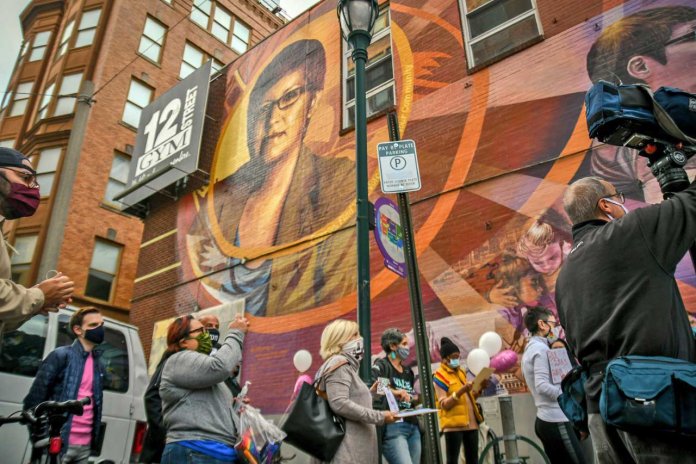
Conner confirmed they’re currently in talks with the organization. They also plan to finalize a project documenting the many lives and rich history of 254 S. 12th Street, host to famed bars such as Hepburn’s, Equus, 12th Air Command, iCandy, and now Tabu.
Gay Travellers are a minority within a minority. Ruby, who is trans, faces another level of prejudice
Imagine a world where you live in fear, and with each waking hour that fear grows to a point where the only escape comes from the promise of closing your eyes forever. Imagine being born into a life without choice or consultation, without the option of bartering the terms and conditions.
Imagine then, that you persevere through the hardships and navigate your way through the obstacles on a perilous journey that you had no part in choosing. While people from many backgrounds in modern Ireland must make this journey, it is a common experience for the LGBT+ community, who do so without any chart or map.
Martin Warde: ‘I had a positive experience of coming out. ’ Photograph: Joe O’Shaughnessy.
Martin: ‘My mother asked who else in our town was gay’ I myself was in my 30s when I publicly came out for the first time, and I chose to do it at an LGBT pride comedy event where I was performing. I came out because it was safe to do so, and while it was not the easiest thing I’ve done in my life, it was definitely the most liberating.
I was joined onstage by a friend and fellow performer, Katherine Lynch, who coincidentally was also the same person to bring me to an LGBT venue in Dublin for the first time, back in 2006.
Within days of my story reaching the local newspapers I was inundated with messages from the Traveller community, some nasty and homophobic, but the majority messages of support and hope. One mother wrote to me to tell me that her daughter was gay, and that if more Travellers came out, it would do a lot in stemming suicide amongst LGBT Travellers.
I was lucky, privileged even, that I had such a positive experience of coming out. The worst I got from my mother was asking me who else in our town was gay. A typical “Irish Mammy” response: “Gimme the gossip, son.” Of course, I chose not to indulge in that bonding session with my mother, as the idea of outing other people was a stretch too far for me.
My father’s reaction was different. We didn’t talk about my sexuality, not because he was homophobic, but because speaking about it would mean he would have to wrap his head around the physicality of me being gay, and that was far too an awkward conversation for both of us.
In the week that the article about my coming-out was released, I called my mother for a chat, and in the background I could hear my father shouting: “Is that Rory. Is he coming down for dinner?” My father, a big fan of the TV sitcom Mrs Brown’s Boys, felt that calling me Rory (an openly gay character in the show) was enough for me to understand that he knew I was gay. Again in typical Irish fashion, making a joke about it at my expense was his way of saying: “It’s grand.”
I recently made a podcast for my HazBeanz show, and invited other LGBT+ Travellers to discuss the issues we face.
Hughie Maughan. Photograph: RTÉ
Hughie: ‘You fear your parents will never understand’ Hughie Maughan (26), who has appeared on Big Brother, Eating with the Enemy on Virgin Media and First Dates Ireland on RTÉ, speaks of the homophobia he has experienced. While he admits that homophobia in Ireland is not as bad as it was, in the past he faced heavy abuse from within the Traveller community.
‘The homophobia I faced in the community made me feel at that point that I would have rather been dead. That’s how bad it was’
“I faced homophobia from settled and Traveller communities, but if I am being honest, I definitely faced it more from other Travellers. Its also tough to experience it in school, because if you can’t go home and talk about it it becomes 10 times worse.
“One of the reasons it is worse is not because you think your parents don’t care about you, it’s more because you fear they will never understand. When you are listening to your father speaking with his friends, for example, and how they might have banter between them, and how if someone used a homophobic word against someone, it makes you think that you can’t speak to them about being gay.
“The homophobia I faced in the community made me feel at that point that I would have rather been dead. That’s how bad it was.”
Ruby O’Brien
Ruby: ‘It took me years to see that I wasn’t gay, I was trans’ Ruby O’Brien (21), a trans Traveller from Co Kerry speaks about being physically assaulted by a group of Traveller men in London, simply because she was trans and a Traveller.
“I was attacked one time in London, while out with my female cousin. It came from Traveller lads driving around in a van. I even had to call the police. They firstly threw eggs at me as they drove past while also shouting transphobic slurs at me, words like “tranny” and others. Then when they stopped driving, one of the men got out and came towards me, and then punched me.”
Ruby says that even now in her hometown of Tralee, Co Kerry, there is a lot of hate directed towards her. “A lot of the Traveller community here are ignorant towards the issue.”
Coming out for Ruby was tough. She came out first as a gay man, simply because she felt it was an easier process to engage her parents and family with. “I came out first as being gay, because it is easier to come out as gay. When I came out in my hometown, a lot of people accepted me as being gay, but when I came out as trans, a lot of people stopped talking to me. They acted like I was a stranger, and a lot of them were family members.”
“When I was growing up, I never knew what transgender meant. I only knew what being gay meant. I didn’t grow up seeing trans people, and it took me years to see that I wasn’t gay, I was trans. I thought I was just a feminine gay boy, but I was actually truly transgender.
“I feel that people need to explain to young people what transgender means, because I have friends that I believe are trans, but they feel that it’s just worse to come out as trans, so they live their lives as gay men, because there is no one explaining the difference to young Travellers.”
Stories like Ruby’s – believed to be the first Traveller to come out publicly as trans – remind us that we are allowing this hatred to continue, merely by allowing ourselves to be removed from the issue.
Oein DeBhairduin from Galway who won the Enterprise and Employment awardis seen speaking at the Traveller Pride awards 2019 in the Pillar Room at Rotunda Hospital. Photograoh: James Forde
Oein: “There is an information gap in the community’ Oein DeBharduin (36) is a co-founder, with myself of LGBT Tara (Traveller and Roma Alliance). He has been working tirelessly for over a decade, with little to no funding or support from Traveller or LGBT+ organisations.
He speaks of the importance of LGBT Travellers having their voices heard in LGBT spaces and groups. There are very few LGBT Travellers working in any LGBT organisations, meaning an understanding of Traveller culture is at a minimum and preventing those organisations engaging in specific issues faced by LGBT people from the Traveller community.
‘Some people may feel their identity is under attack because someone else is freeing theirs’
“In Ireland … people don’t have the awareness or competency to support us appropriately. For example, we arranged a social gathering several years back with a collection of LGBT+ Travellers in Dublin city and we were refused entry into an LGBT+ Bar because there was an assumption that LGBT+ Travellers wouldn’t enter those spaces” .
The denial of access to public spaces and bars is of course not unique to just LGBT+ Travellers, there are numerous cases where Travellers have been discriminated against when trying to access services such as hotels, bars and restaurants. I faced that very issue myself with scores of venues in 2019, when I tried to book venues to host my comedy shows.
Speaking on ignorance within the Traveller community towards LGBT+ people, Oein says: “There is ignorance in the community, there is an information gap … Some people may feel their identity is under attack because someone else is freeing theirs.”
James Lawrence
James: ‘I was more feminine than other Traveller men’ James Lawrence (23), a Traveller from Bristol in England, describes coming out as a gay man.
“I had a lot more experiences of homophobia before I came out as gay, I suppose because I was more feminine than other Traveller men. When people picked up on those less masculine traits, you would get called names like “nancy boy”, but when I came out, everyone seemed to ease off because they were all saying that they knew that about me already.”
James has been actively working on highlighting mental health issues among Travellers. “ I think with Travellers, we like to sweep poor mental health topics under the carpet, until it is at such a point where there is a mountain of rubbish under that carpet. So it is very important that we speak about the issues and not shun people for having them.”
Traveller organisations: ‘The culture is one of masculinity ’ When Ireland was going through the legal process of changing homosexuality from being a crime in the mid 1990s, Irish Travellers were only just beginning to emerge with organisations aimed at highlighting human rights issues faced by the Traveller community.
There is a sense from the LGBT+ Travellers that they cannot trust Traveller organisations to act on their behalf because the Traveller community would not then support them
There was an inevitable prioritisation of what rights were fought for, and like in every situation throughout history, LGBT+ people were the last to be thought of. Unfortunately, the majority of Travellers have suffered serious mental health issues and have at least once had a period of their lives shrouded in suicide ideation or some connection to suicide and poor mental health.
Irish Travellers are six times more likely than the rest of Irish society to take their own lives, with LGBT Travellers even more likely to do so. If Traveller organisations want to seek change in relation to how LGBT Travellers are viewed by mainstream society, then we must take a leap towards practising some introspection, because being a minority within a minority means LGBT+ Travellers face a dual oppression.
As a first action towards preventing suicide and self-harm, Irish Travellers as a community and as a network of organisations, need to admit the failings. We need to collectively call out the physical attacks on LGBT+ Travellers, and we need our organisations to take a stance.
Unfortunately, there is a sense from the LGBT+ Travellers that they cannot trust Traveller organisations to act on their behalf because the Traveller community would not then support them. It is ludicrous that consensus and stagnation is favoured over the prevention of homophobic and transphobic abuse of our most marginalised members.
That is not progression, it is the protection of that which we seek to remove, discrimination. It is fair to say that there are fantastic people working in Traveller organisations that have made huge efforts in tackling the issues, and there are brilliant organisations that are now reaching out to groups like LGBT Tara – which is still Ireland’s only LGBT Traveller-led group.
I reached out to Pavee Point to find out what supports or services they provide to LGBT+ Travellers who present themselves in need of help. Martin Collins of the organisation had this to say,
“In the promotion of the rights of Travellers who are LGBTQI, Pavee Point has over many years participated in Dublin Pride. We also as an organisation supported marriage equality.
“Our strategic plan acknowledges diversity in the community, but to be honest, the issues and needs of Travellers who are LGBTQI are not imbedded in the struggle. This is because of a lack of funding and staff but also homophobia.
“As you know, the culture that prevails is one of masculinity which we are all damaged by. I had my own personal journey when my nephew came out. I was the first he confided in. I did my best to support him. He got a hard time but he’s in a good place now.”
John Paul Collins of Pavee Point says: “Over the past two or three years, Pavee Point has passed many of the requests we receive for representation / inputs over to the action group as we feel it is best placed coming from a Traveller who has lived experience and also to give the group visibility.
“When we receive calls for supports, we work to support the individual / or family member as best as we can which also includes an onwards referral / signposting to the relevant support agency, and we continue to offer that support until it is not needed anymore. A lot more mainstream/ targeted support in services is needed for LGBTQ Travellers and Roma.”
We also asked The Irish Traveller movement for a comment. They said: “The Irish Traveller are active members of the National Action Group for LGBT+ Traveller & Roma Rights. It is committed and actively participated and contributed to its objectives and activities since its establishment. The Irish Traveller and the action group recognises there are no specific LGBT+ Traveller and Roma supports currently available, other than support from LGBT+ organisations and Traveller organisations respectively, and is concerned about this gap and where LGBT+ Travellers and Roma may fall through.”
While I have no doubt that Pavee Point, and indeed all Traveller organisations, do their best to help LGBT+ Travellers as the need arises or as the LGBT+ Travellers present themselves, it does not go far enough in challenging homophobia and transphobia within the community, something that could be done through hard-hitting social media campaigns highlighting the issues.
Homophobia/transphobia is a mentality based on either ignorance or misinformed hate, which can be changed only through engagement and through proactive approaches via dialogue and policy changes. A lack of funding will inevitably lead to fewer hours being spent on LGBT+ Traveller issues, which is why it is now imperative that funding be made available to allow for LGBT+ Traveller health and community workers.
However, we need to aim to have LGBT+ Travellers represent themselves, empowered by the full collective support of Traveller and LGBT organisations. Traveller culture requires the consensus of the community, as culture is an adaptive term that is fluid over time.
LGBT+ Travellers are equally part of the Traveller community, and without our membership being acknowledged, there will be no consensus.
JORETTA JOY BUTCHER, 83, of Louisville, Ohio went home to be with the Lord on April 21, 2021.
Joretta is survived by her husband of 66 years, Jerry Clyde Butcher; sisters, Mary Helen Conrad Peterson of Tallmadge, OH and Ruth Ellen Walker of Watkinsville, GA; brother Joseph Allen (Rachel) Conrad of Wooster, OH; brother-in-law Gary “Sonny” (Joyce) Butcher of Ivydale, WV; beloved friend Kim Haverstock of Canton, OH; and many nieces, nephews and friends who loved her dearly.
Joretta is proceeded in death by her parents, John Albert Conrad and Dollie T. Stout Conrad Doss; in-laws, Dowell “Dink” Butcher and Gay Butcher; daughter, Ellen Joy Butcher; and brothers, James Franklin Conrad, John Albert Conrad, Jr., and Arthur Damon Conrad.
Joretta was born on November 20, 1937 in Clay, WV. She attended Clay County Schools for 11 years, and it was here that she met Jerry, her high school sweetheart. On January 1, 1955, Joretta and Jerry married, and she joined him in Germany where he was completing his tour of duty with the Army. This was the beginning of their life long journey and love of travel. After Jerry’s discharge, they returned to Morgantown, WV to continue their education. Joretta received her diploma and then attended West Virginia University, where she also was employed.
In 1960, Jerry started with Goodyear Rubber and Tire Company, and Joretta began a 36-year journey as a loving and supportive wife, while also being employed with House of Lloyd toys where she became a successful supervisor. Jerry’s career with Goodyear allowed Joretta, Jerry and Ellen to live in many different parts of the country, including Cumberland, MD, Point Pleasant, WV, Tyler, TX, Akron, OH and Logan, OH. Both of their careers allowed them the opportunity to travel abroad, which Joretta enjoyed immensely.
Upon Jerry’s retirement from Goodyear in 1996, Joretta and Jerry settled in Louisville, OH where they enjoyed hiking through their woods, watching the deer and birds, entertaining family and friends, and attending church. Joretta was a member of the Mount Tabor United Methodist Church in East Canton, OH and The Woman Freemasons.
Joretta will be remembered as a loving wife, mother, sister, aunt and friend. She had a compassion for others that all admired and led her to be a faithful caregiver to her mother and mother-in-law and also her many pet companions throughout the years. Joretta was dearly loved and will be greatly missed by all that knew her.
Services will be held on Monday April 26, 2021 at Wilson and Smith Funeral Home in Clay, WV. Viewing will be at 11 a.m., and services will be at 1 p.m. Burial will take place at The Harold Cemetery in Uler, WV. Rev. Doug Burdette will be officiating.
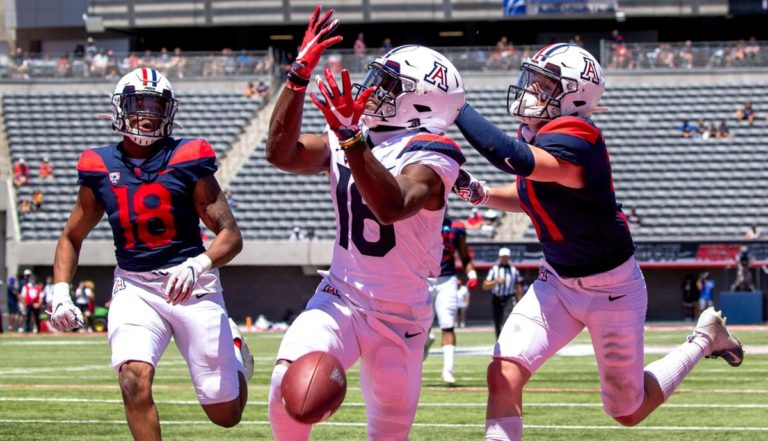
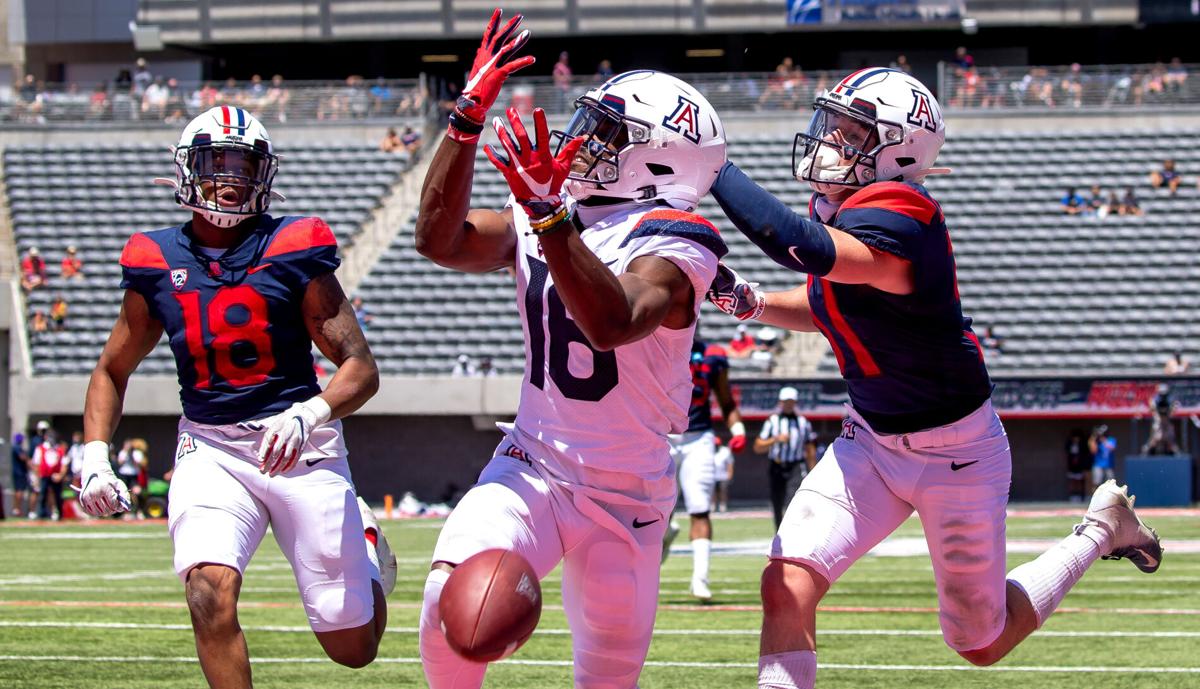
Wide receiver Thomas Reid III (16) misses a catch near the end zone during Arizona Football’s 2021 Spring Football Game at Arizona Stadium, 545 N. Championship Dr., in Tucson, Ariz., April 24, 2021.
The Star columnist shares how Jedd Fisch and the Arizona Wildcats football program is in the “little by little” stage. Plus, a perspective of Adia Barnes’ new contract, James Akinjo’s role at Baylor, Aari McDonald’s pro career and a historic season for the UA tennis team.
To showcase Rob Gronkowski’s attempt to gain entry in the Guinness Book of World Records, UA football coach Jedd Fisch hired Liquid Light, a Hollywood production firm whose advertising tenet is “We Sell The Stuff.’’
The SoCal group, which represents actor Kevin Hart and NFL all-pro receiver DeAndre Hopkins, among others, created a scenario in which Gronk would catch a football dropped at 620 feet from a helicopter.
And so Gronk did, standing near the 50-yard line at Arizona Stadium, which unfortunately may be the best play made by an Arizona football man for, what, five years?
For four months Fisch has “sold the stuff’’ from his office at the Lowell-Stevens Football Facility. But sometime this weekend, Gronk will return to the Tampa Bay Buccaneers and fellow Spring Game coach Tedy Bruschi will fly to the East Coast to help with ESPN’s coverage of the NFL Draft.
When the Wildcats open the 2021 season Sept. 4 against BYU, Gronk and Bruschi won’t be walking through the locker room door.
“Some of the experience I have and some of the things I can see, can help (the UA football program),’’ Bruschi said after the Spring Game. “You can have the plans; you can have the excitement, but there comes a point. …’’
His voice trailed off.
After Fisch’s impressive work rebuilding the foundation of Arizona’s football program, Bruschi aptly triggered Stage 2 of Fisch’s project — “There Comes a Point.”
By this time next April, it will be imperative that Fisch concludes his summation of spring drills by talking about a break-out pass rusher or a game-changing quarterback or a seek-and-disrupt linebacker.
Bruschi, Gronk and Fisch all have lineage to the mighty New England Patriots, but Bruschi added the proper context by saying it’s not about “the Patriot Way here; I want the Wildcat Way.’’
The Wildcat Way is under construction. Hard hats required.
UA receiver Stanley Berryhill, who caught a 43-yard pass to highlight Saturday’s scrimmage, said that “there’s going to be 57,000 fans here’’ when the Wildcats open the ‘21 season. But, c’mon, that’s not going to happen that quickly. Not yet.
The roster Fisch inherited doesn’t have many, if any, “next level” guys and few, if any, all-conference players. Climbing out of last place will require far more than Fisch’s unprecedented blast of energy and enthusiasm.
The loudest ovation from Saturday’s crowd of 5,000 at Arizona Stadium wasn’t for a quarterback or for a touchdown run, but for UA women’s basketball coach Adia Barnes.
Bruschi arrived in Tucson in the fall of 1991, a season in which the Wildcats went 4-7 and lost back-to-back games 54-0 and 54-14. Gronk moved to Tucson the fall of 2007; Arizona went 5-7 to extend its string of non-winning seasons to nine years.
Little by little, it all changed. That’s where Arizona football is again: The Little By Little stage.
Even with new contract, Barnes may not be paid enough
Arizona guard Helena Pueyo (13) and guard Aari McDonald (2) talk with head coach Adia Barnes, right, during the first half of the championship game against Stanford in the women’s Final Four NCAA college basketball tournament, Sunday, April 4, 2021, at the Alamodome in San Antonio.
Morry Gash
Adia Barnes’ success and popularity is the feel-good story of the year — the last three years — in UA sports.
The school paid Sean Miller $1.4 million to go away and close to $7 million to part ways with Kevin Sumlin. With that much money floating around, it might be time to pay Barnes a bonus for generating one positive story upon another.
What do you think? Maybe $1 million?
The extras in Barnes’ contract extension are not close to the bonus clauses in the new contracts of UA coaches Tommy Lloyd and Jedd Fisch.
For example, Barnes would be paid $40,000 for reaching the Final Four again. Lloyd would get $175,000.
If Barnes wins the Pac-12 regular-season championship, she will be paid $20,000. Lloyd would receive $50,000. Fisch would get $200,000. Yet given Stanford’s excellence, it’s probably more difficult to win a Pac-12 women’s basketball championship.
And if Barnes’ team finishes in the top 10 of the final AP poll, she will be paid $10,000 compared to $30,000 for Lloyd and $50,000 for Fisch.
Arizona head coach Adia Barnes reacts during the first half of a women’s Final Four NCAA college basketball tournament semifinal game against Connecticut Friday, April 2, 2021, at the Alamodome in San Antonio. (AP Photo/Eric Gay)
Eric Gay / Associated Press
It’s true that women’s basketball is not a revenue-producing sport and that football and men’s basketball float the UA’s athletic department budget. But the ever-changing 2020s, inequities in compensation are sure to create sensitive feelings in the Arizona athletic department and in the community. The challenges of being an athletic director will become even more complex.
The salary structure of women’s basketball, especially in the Pac-12, has evolved significantly the last few years. Oregon’s Kelly Graves signed a contract through 2029, one that will ultimately pay him $1.3 million per year in base salary.
Although Stanford, a private institution, does not make coaching contracts public, it is believed women’s basketball coach Tara VanDerveer reached $1 million in compensation a few years ago.
Arizona head coach Adia Barnes hugs guard Aari McDonald (2) as they celebrate their win over Indiana in a college basketball game in the Elite Eight round of the women’s NCAA tournament at the Alamodome in San Antonio, Monday, March 29, 2021.
Eric Gay
Barnes signed at Arizona in 2016 for $240,000 per season. She is to be paid $580,000 in base compensation next season, the first season of a contract extension that will be capped at $770,000 in 2023.
Underpaid? You decide. Lloyd is to earn $700,000 in “additional duties,” such as appearing at fundraising events and speaking engagements. Fisch is to be paid $400,000 in retention bonuses if he remains at Arizona through 2024. Barnes? None.
Barnes would’ve been a leading choice to replace Sherri Coale at Oklahoma, who recently retired with a salary of $1.33 million. The school expressed interest in Barnes. But the timing wasn’t right.
Moreover, had the timing not been so close to Barnes’ contract extension and the UA’s berth in the NCAA championship game, she surely would’ve been the No. 1 target for LSU’s women’s basketball coaching vacancy.
Stephanie Rempe, LSU’s COO and executive deputy athletic director, is a UA grad and former volleyball player who worked in Arizona’s athletic department when Barnes became Arizona’s career scoring leader in the late 1990s.
What’s the value of three years of positivity as UA women’s basketball climbed from 6-25 to the national championship game while the school’s two power sports were embroiled in controversy?
It’s a sensitive topic that may become more dicey as time goes on.
Tate still pursuing chance to play in NFL
Khalil Tate would have a lot to learn about playing wide receiver, but he has the athleticism to play in the NFL.
Josh Galemore / Arizona Daily Star 2019
In October 2017, Arizona quarterback Khalil Tate was the best player in college football, any level, no contest. The Wildcats swept Colorado, UCLA, Washington State and Oregon State and Tate became the only man in Pac-12 history to be named the league’s offensive player of the week four consecutive weeks.
After that, the 2017 Wildcats went 1-4 and Arizona went 9-19 in Tate’s final 28 games as the school’s quarterback of record.
Last week, Tate joined Yogi Roth of Pac-12 Networks for a 68-minute podcast in which Roth referred to Tate as “Mr. October,’’ “Mr. Everything’’ and “Rockstar.’’
Tate, now a free agent trying to make the Philadelphia Eagles roster as a wide receiver, wore a T-shirt that said “Mr. October.’’
To his credit, Tate remains a UA loyalist. “I’m super excited how Jedd Fisch has excited the fan base,’’ he said. Tate did not say a negative thing about his two seasons under Kevin Sumlin, nor the way offensive coordinator Noel Mazzone tried unsuccessfully to turn Tate into a pocket quarterback.
It all goes back to October 2017. “Those four weeks, while I was in it, I will say it was like a movie,’’ said Tate. “I don’t know anybody who had done what I was doing at the time.
“Looking back now, it just kind of amazes me more because it was rare. I didn’t realize how rare it was. I was the face of the school; I felt like I had the whole Pac-12 behind me.’’
Ultimately, Tate was not drafted last April, but he believes the onset of COVID-19 restrictions cost him a chance to be fully evaluated as a quarterback.
“We didn’t have a pro day at Arizona,’’ he said. “I believe one of those 32 NFL teams would’ve seen me as a quarterback if I had a pro day. I never got to showcase my quarterback talents. I treat this opportunity at Philadelphia as a walk-on experience.
“I’m being humble about it, grinding, trying to get a spot.”I never blamed anybody for what I went through.’’
Akinjo may find better fit at Baylor
Arizona guard James Akinjo (13) gets manhandled splitting the lane between Washington guard Marcus Tsohonis (0), left, and guard Quade Green (55) in the second half of their game at McKale Center, Tucson, Ariz., February 27, 2021.
Kelly Presnell / Arizona Daily Star
Former Arizona point guard James Akinjo became just the second first-team All-Pac-12 player to transfer to another school. Stanford’s Reid Travis transferred to Kentucky for the 2018-19 season; his scoring average dropped from 19 points per game to 11. He was not drafted and now plays for the Susanoo Magic of the Japanese professional league.
Akinjo probably made the right decision by leaving Arizona. He’s a shooter and dribbler, a point guard who eats up the shot clock looking for a shot or a pass. In Tommy Lloyd‘s first workout with UA players last week, he stressed “if we make quick, simple decisions, we will get great shots.’’ That isn’t Akinjo. Only two previous Arizona athletes transferred after becoming first-team all-conference athletes: Volleyball’s Erin Aldrich left Tucson in 1997 to play at Texas, and softball’s Shelby Pendley left the UA in 2012 to play at Oklahoma. Both became All-Americans.
Scurran takes his talents overseas again
Former Salpointe High School head coach Dennis Bene, left, and former head coach at various schools in the area, Jeff Scurran, chat on the sidelines in as Wyoming takes on Georgia State during the third quarter of the Arizona Bowl, Arizona Stadium, December 31, 2019.
Kelly Presnell / Arizona Daily Star
Three-time state championship football coach Jeff Scurran resigned his position as director of the June 4 Southern Arizona All-Star Showcase, to be played at Tucson High School. He will be replaced by Del Arvayo, COO of the Arizona Bowl. Scurran is returning to Germany to coach the Stuttgart Scorpions in the European League of Football.
It will be Scurran’s second term coaching in Germany. He previously coached in the Italian pro football league. The man who coached Sabino, Santa Rita and Catalina Foothills to state championship games made inquiries about becoming the head coach at Tucson High School but said he withdrew before THS targeted two-time Sunnyside High state championship coach Richard Sanchez.
Aari McDonald gears up for pro career
Guard Aari McDonald holds up the wildcat sign while posing for a photo with the trophy following Arizona’s arrival ceremony at Arizona Stadium, 545 N. Championship Dr., in Tucson, Ariz. on April 5, 2021. Roughly 1,200 fans cheer for the Arizona Women’s Basketball team as they arrived home after their run in the 2021 NCAA Women’s Basketball Final Four and Championship game.
Rebecca Sasnett / Arizona Daily Star
UA All-American point guard Aari McDonald had little time to rest from the UA’s burst to the Final Four. The WNBA’s Atlanta Dream begins play May 14 and opens training camp this week. McDonald will have to yield her familiar No. 2 jersey to wear No. 4 in the WNBA; Atlanta’s Shatori Walker-Kimbrough is a returner who wore No. 2 last season. McDonald’s club will play 32 regular-season games through mid-September. Her only appearance in Arizona will be an Aug. 15 game against the Phoenix Mercury. Competition for playing time will be intense; Atlanta returns four guards from 2019-20 and referred to McDonald as a “security blanket’’ in a news release.
UA softball holds on to historical record
Head coach Mike Candrea watches his players batting during a practice at Hillenbrand Stadium on January 23, 2020.
Mamta Popat / Arizona Daily Star
UA softball coach Mike Candrea‘s treasured 47-game winning streak of 1996-97 — an NCAA record — was seriously threatened until Oklahoma’s 40-game winning streak was snapped Tuesday in an extra-inning loss to Georgia. The Sooners also had a 41-game winning streak two years ago. No other school has reached 40 consecutive wins in college softball. Oregon won 35 straight in 2017 and UCLA also won 35 in succession, in 1999.
My two cents: Cats can make history with Pac-12 title
“We really just built our culture around trying to excel in the areas we can be better than other teams,” says UA men’s tennis coach Clancy Shields, right.
Arizona Athletics
Arizona’s men’s tennis team entered the Pac-12 championships this weekend in San Diego with possibly its best team since joining the league 43 years ago.
The 20th-ranked Wildcats, coached by Clancy Shields, are 18-6 and beat ASU last week for the first time since 2006. Shields tweeted: “The boys were motivated especially after seeing a particular billboard on the drive up on I-10.’’
That, of course, is the billboard funded by Sun Devil fans touting the 70-7 Territorial Cup football victory over Arizona last week. Touche’, right?
Arizona was the No. 2 seed entering the conference championships, its highest seed ever. Shields was the 2019 Pac-12 coach of the year and should be a no-brainer to repeat this season. Gustaf Strom, a freshman from Sweden, entered the tournament 16-1 singles and could become the UA’s first-ever conference newcomer of the year.
Overcoming perennial national tennis powers Stanford and USC to win the Pac-12 championship would require something equal to Arizona’s victory over UConn in the women’s basketball Final Four. But, never say never.
Contact sports columnist Greg Hansen at 520-573-4362 or ghansen@tucson.com. On Twitter: @ghansen711