
Home Blog Page 351

Irish moves to ban LGBT ‘conversion therapy’ will help silence religion, critics warn – Catholic News Agency

Officials at Ireland’s Department of Children, Equality, Disability, Integration and Youth are also preparing a paper on a “conversion therapy” ban and are working with the Department of Health. The ban includes as “conversion therapy” any form of treatment to change a person’s sexual orientation or gender identity.

Minister for Children Roderic O’Gorman told the Irish newspaper The Journal that the government “must be proactive in banning practices that not only propagandize harmful and discriminatory messages, but ones that also have serious negative consequences on a young person’s mental health, with the potential to inflict long-lasting damage.”

“Legislating for a ban on conversion therapy will send a clear and unambiguous message to everyone, both younger and older, that a person’s sexual orientation, gender identity or gender expression is not up for debate,” O’Gorman said.

Bochanski told CNA the Irish proposal resembles legislation in several U.S. states and other countries and defines ‘conversion therapy’ much too broadly.

“Rather than restricting itself to protecting people from harmful treatment that would clearly be considered professional malpractice or even assault, it defines ‘conversion therapy’ to encompass ‘any practice or treatment by any person’ that addresses a person’s experience of same-sex attraction or gender identity discordance, unless it affirms that person’s identity as LGBTQ,” he said. 

“Whether by accident or intentionally, the plain language of the bill – ‘any practice’ — could easily be construed to include conversations in pastoral settings, homilies, catechesis of children or adults, or even the advice given to a person in confession, if these present the Church’s teaching about sexual attraction, sexual identity, and chastity,” said Bochanski. “Surely there are other ways that the state can protect people from harm without so widely chilling honest conversation and compassionate pastoral care.”

More in Europe

Bochanski said backers of a ban often use several definitions of “conversion therapy.” In discussions for the general public, advocates of a ban “typically focus on stories of horrible treatment carried out by individuals and groups (some religious, some secular) with little or no psychological training or expertise.”

“Such stories, which have been featured in articles, books and blog posts, as well as news documentaries and feature films like ‘Boy Erased,’ are alleged to include ‘boot camps’ and other programs that use public confession, physical and mental punishments, exposure to pornography, shaming and other techniques to ‘make a person straight’,” said the priest. “Such harmful practices deserve the condemnation of the Church’s pastors, and regulation by the State, which has a duty to protect its people from harm,” he said.

However, the bills are often presented to legislatures in terms of “regulating medical doctors, psychiatrists and psychologists, and others in the healing professions.”

“People seek the help of such professionals for various motives: to better understand and meet their emotional and relational needs; to find healing for wounds of trauma, abuse or neglect; and to overcome bad habits of anger, greed, lust or intemperance,” said Bochanski. “People who are troubled by their experience of same-sex attractions or gender identity discordance sometimes seek out therapy to understand this experience better and to achieve the integration of sexuality that is at the heart of the Church’s definition of chastity.  But unless the counselor affirms that such experiences are natural, inborn and perfectly healthy, their discussions with their patients or clients are often considered ‘conversion therapy’.” 

Both political rhetoric and the legislative scope of the bill are likely to have broad influence, Bochanski said, and there is a risk of mischaracterizing Catholic approaches.

“Proponents of the legislation have been increasingly successful in convincing the general public that whenever a parish priest, a college chaplain, or an apostolate like Courage talks to someone about the importance of living virtuously and choosing chaste friendship instead of same-sex intimate relationships, what they’re really doing is practicing ‘conversion therapy’,” he said. “This is a serious mischaracterization, and gives people the mistaken impression that the Church and its ministers are intentionally harming people and trying to ‘pray away the gay’.”  

There is some question over what practices even have existed in Ireland. The Irish government’s Department for Equality told The Irish Catholic that the prevalence of conversion therapy is not known.

Patricia Casey, a professor of psychiatry at University College Dublin, told The Irish Catholic she has “never seen conversion therapy for gay people in Ireland or Britain, in my whole career.” She objected that the bill is an “unacceptable intrusion” into psychology, suggesting that it appeared to be “a ruse to try and promote more gender ideology.”

“It’s doing far more than banning conversion therapy, it’s actually dictating how doctors and mental health professionals must interact with people who have gender questions and issues,” Casey said.

The evangelical Christian groups Affinity and the Fellowship of Evangelical Churches also criticized the Irish bill. The ban’s backers include the Anti-Conversion Therapy Coalition, which is active in both Northern Ireland and in the Republic of Ireland.

On April 20 the Northern Ireland Assembly passed a non-binding resolution calling for a ban on conversion therapy “in all its forms.” The motion, which passed 59-24, said that “it is fundamentally wrong to view our LGBTQ community as requiring a fix or cure,” BBC News reports. It called on Communities Minister Deirdre Hargery to put forward legislation to ban the practice. The assembly rejected an amendment that said “legitimate religious activities” like preaching, prayer and pastoral support do not constitute conversion therapy.

Ulster Unionist Party assembly members proposed the original resolution, while Democratic Unionist Party members proposed the failed amendment.
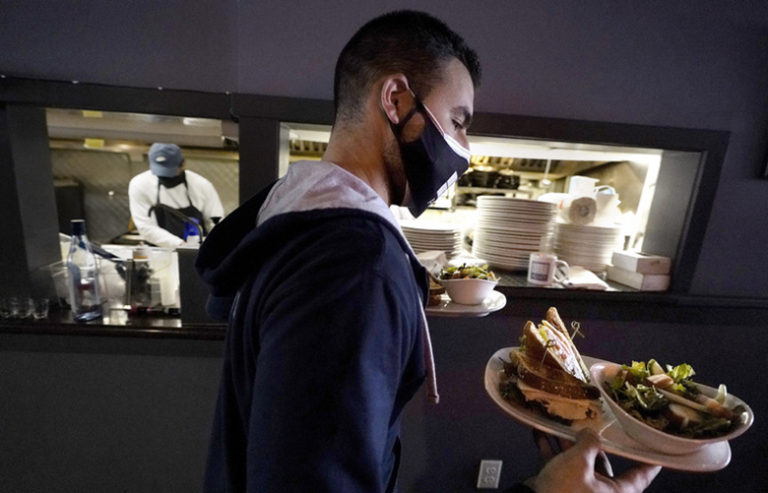
Help Wanted: In pandemic, worry about finding summer workers – The Seattle Times

0

BOSTON (AP) — The owner of seafood restaurants on Cape Cod has eliminated lunch service and delayed the opening of some locations because his summertime influx of foreign workers hasn’t arrived yet.

More than a thousand miles away, a Jamaican couple is fretting about whether the rest of their extended family can join them for the seasonal migration to the popular beach destination south of Boston that’s been a crucial lifeline for them for decades.

As vaccinated Americans start to get comfortable traveling again, popular summer destinations are anticipating a busy season. But hotel, restaurant and retail store owners warn that staffing shortages exacerbated by the coronavirus pandemic could force them to limit occupancy, curtail hours and services or shut down facilities entirely just as they’re starting to bounce back from a grim year.

The problem, they say, is twofold: The annual influx of seasonal foreign workers has stalled in places because of the pandemic. Businesses have also struggled to attract U.S. workers, even as many have redoubled their efforts to hire locally amid high unemployment.

“It’s the ‘Hunger Games’ for these employers, fighting for getting these guest workers into the country while also trying everything they can to recruit domestically,” said Brian Crawford, an executive vice president for the American Hotel and Lodging Association, a Washington, D.C.-based industry group. “It’s really frustrating. They’re trying to regain their footing after this disastrous pandemic but they just can’t catch a break.”

Earlier this month, President Joe Biden let expire a controversial ban on temporary worker visas such as the J-1 program for students and the H-2B program for nonagricultural laborers imposed by former President Donald Trump.

Advertising

But American embassies and consulates remain closed or severely short-staffed in many countries. The U.S. has also imposed restrictions on travelers from countries including the United Kingdom, Ireland, Brazil and South Africa because of the emergence of new virus variants or rising COVID-19 cases.

Advocates for the J-1 program, which brings in about 300,000 foreign students annually, urged the State Department in a letter Thursday to exempt the applicants from the travel bans and provide other relief so they can start their summer jobs. Ilir Zherka, head of the Alliance for International Exchange, which sent the letter along with more than 500 supporting groups and companies, argued the J-1 program doesn’t just benefit local economies, but also helps strengthen national security by promoting understanding and appreciation of U.S. culture.

Supporters of the H-2B program, meanwhile, have renewed their call to overhaul the program, which is capped at 66,000 visas per fiscal year. The Biden administration, citing the summer demand from employers, said Tuesday it will approve an additional 22,000 H-2B visas, but lawmakers from New England and other regions that rely on the visas for tourism, landscaping, forestry, fish processing and other seasonal trades say that’s still inadequate.

“That’s infinitesimal. It isn’t anywhere close to the need,” said Congressman Bill Keating, a Democrat representing Cape Cod.

Cem Küçükgenç (Gem Koo-CHOOK-gench), a 22-year-old engineering student at Middle East Technical University in Turkey, is among thousands of foreign students worldwide awaiting approval for a J-1 visa.

He’s slated to work at a waterfront restaurant in Sturgeon Bay, Wisconsin, this summer, but the U.S. Embassy in Ankara recently announced that it won’t be unable to process temporary work visas in time for the summer season.

Advertising

Turkey has imposed a partial lockdown as the coronavirus surges there, but Küçükgenç is still holding out hope the embassy might relent if virus cases subside.

“I graduate next year,” he said. “I’m not sure when I’ll have another chance.”

In Jamaica, Freda Powell says she and her husband have secured their H-2B visas and will arrive on Cape Cod, where they’ve worked in retail stores and restaurants for roughly 20 summers now, in early May.

But the 55-year-old worries her siblings and other relatives might not be so lucky. The U.S. Embassy in Kingston has temporarily halted visa processing because of rising COVID-19 cases in her country, she says.

“In Jamaica, you can work, but it’s hand to mouth,” Powell said. “With the money you make in the U.S., you can buy a car, fix the house, send your kids to school and build savings.”

The uncertainty around international hires has forced American businesses to redouble their efforts to hire domestically, or make tough compromises until reinforcements can arrive.

Advertising

In New Hampshire’s White Mountains, the Christmas-themed amusement park Santa’s Village is promising college students free housing and utilities.

In California’s Sonoma Valley, business leaders in the famous winemaking region are exploring the idea of pooling employees, among other workforce initiatives.

Mark Bodenhamer, head of the Sonoma Valley Chamber of Commerce, said a restaurant that serves breakfast and lunch could possibly share employees with one that does the majority of its business during evening hours.

Most Read Business Stories

“Those solutions are complicated and costly,” he said. “But at this point, it’s all hands on deck.”

In North Carolina’s Outer Banks, the tourist season is already in full swing, but staff shortages abound, according to Karen Brown, head of the beach region’s chamber of commerce.

Some restaurants have been forced to shut down once a week or halt curbside service, while in some hotels, managers are helping maids turn over rooms, she said.

“Everyone is pitching in where they can just to keep the wheels on the bus,” Brown said.

Mac Hay, who owns seafood restaurants and markets on Cape Cod, is among the business owners who have their doubts that extra efforts to hire American workers will pay off.

On a given year, he estimates about a third of his 350-person summer workforce ultimately has to come from seasonal visa workers from Mexico, Jamaica and elsewhere when the jobs aren’t filled locally.

Hay argues the foreign workers are the “backbone kitchen staff” — the line cooks, food prep workers and dishwashers — who make it possible for him to hire Americans for jobs they’re seeking, such as waiting tables, bartending and management.

“We simply won’t be able to meet demand without an increased workforce,” he said.

Business owners and experts say there are myriad reasons why U.S. citizens aren’t rushing to respond to the job boom, from COVID-19-related worries to child care issues or simply a decision to collect unemployment benefits, which have been increased and extended through the summer season in most places.

Advertising

But the need for international workers on Cape Cod — where soaring housing costs have been a major barrier to generating a substantial homegrown workforce — boils down to a simple math problem, Hay said.

Provincetown, a popular gay resort community at the very tip of the cape, has just 2,200 year-round residents, yet restaurants like Hay’s employ about 2,000 workers in high season alone.

“We’re on a dead-end street up here, basically,” he said. “There’s no one else coming.”

Biden to Send Coronavirus Vaccine Abroad – The New York Times

Senior Biden administration officials, asked by a reporter on Monday whether they had a “moral obligation” to ease the patent restrictions, said they had no new information to share. But Jen Psaki, the White House press secretary, defended the president’s response.

“The United States has been one of the largest providers of assistance to address the Covid pandemic around the world, including to India, and we have obviously taken some significant steps over the last couple of days to address their immediate needs,” Ms. Psaki said.

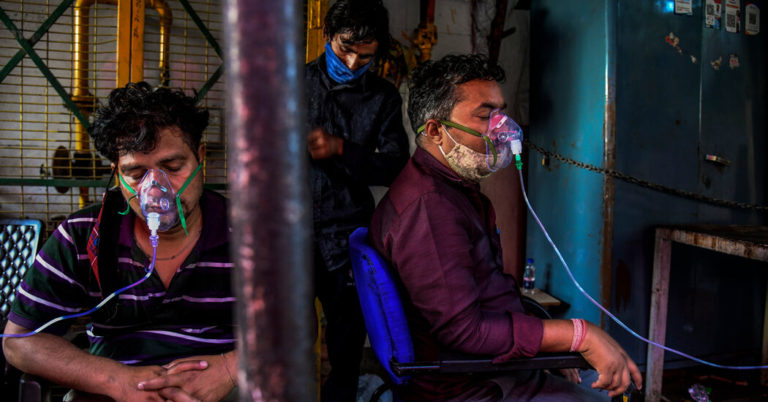
The situation in India is especially dire. The country is experiencing what may be the worst crisis any nation has seen since the pandemic began. Hospitals are overflowing, and desperate patients are dying as they wait to see doctors. On Monday, India broke the world record for daily coronavirus infections for a fifth consecutive day, reporting nearly 353,000 new cases. And it added 2,812 deaths to its overall toll of more than 195,000, which experts say is likely to be a vast undercount.

“The crisis in India is a humanitarian disaster unfolding before our eyes,” said Tom Hart, the acting chief executive of the ONE campaign, a nonprofit dedicated to eradicating world poverty. Based on an analysis of contracts signed by Mr. Biden’s most recent predecessor, the group estimates that the federal government has secured 550 million more doses than it needs to cover every American.

With worrisome variants spreading in the United States and around the world, public health experts say vaccinating people overseas is not only a moral imperative, but it is essential to protecting Americans. J. Stephen Morrison, the director of the Global Health Policy Center at the Center for Strategic and International Studies, said Mr. Biden needed to offer a more sweeping vision of how the United States can help the world.

“We are approaching these colossal, complex problems in an ad hoc, reactive, short-term manner,” Mr. Morrison said. He called the announcement on Monday a “further incremental step by the Biden administration toward fuller engagement internationally to address the dire vaccine gap.”

On a conference call with reporters on Monday, senior Biden administration officials said that in addition to the money pledged to the international vaccine initiative, known as Covax, the administration intended to spend $11.5 billion, appropriated by Congress as part of the $1.9 trillion stimulus package, on helping other countries fight the pandemic and administer vaccines.

Sacramento DA Anne Marie Schubert To Challenge Attorney General Rob Bonta For Job In 2022 – Capital Public Radio News

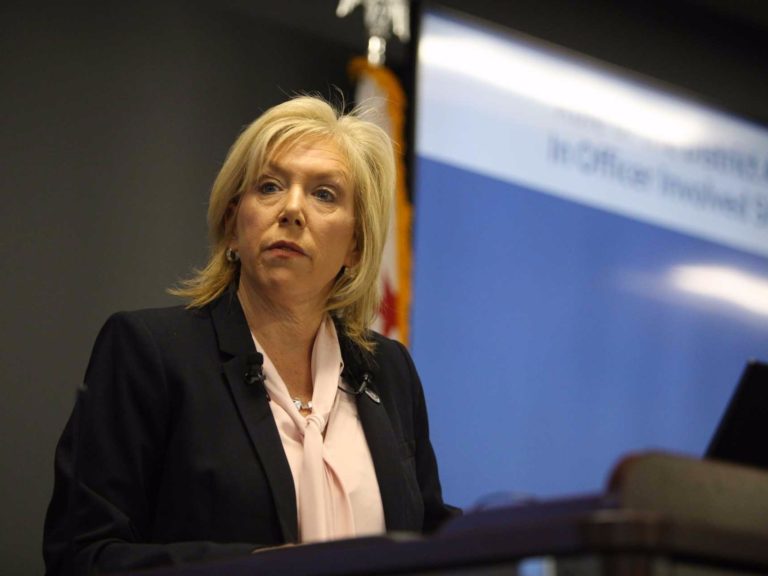
Sacramento County District Attorney Anne Marie Schubert announced on Monday that she is running for attorney general, challenging the recently appointed incumbent Rob Bonta.

Schubert made her official announcement while standing in front of families of violent crime victims, whose perpetrators she helped lock up during her 30 years as a career prosecutor. She didn’t take long to send shots at her opponent and other progressive prosecutors across California.

“Let me be clear, the newly appointed attorney general has voted for and supported policies and laws that are not only destroying the rights of crime victims, but are destroying public safety in this state,” Schubert said. “Here is the truth: California’s criminal justice system is in chaos.”

Bonta was sworn in last Friday to replace Xavier Becerra, who moved on earlier this year to join President Joe Biden’s cabinet as the U.S. Health and Human Services secretary.

Dana Williamson, a political advisor for Bonta, said Schubert’s attacks on the attorney general’s record are “Trumpian lies” by a “tremendously flawed” candidate.

“She has refused to bring excessive force cases and serves as treasurer of an organization that misspent millions meant to prosecute polluters,” Williamson said regarding an ongoing investigation about whether the California District Attorneys Association improperly used money. Schubert is the organization’s secretary-treasurer. 

Williamson added: “Now she wants to lead the Department of Justice — the same entity that is investigating her organization’s misdeeds.”

The race to be California’s top cop in 2022 will be a contentious battle of firsts. Bonta, a progressive East Bay Democrat, is the state’s first Filipino American attorney general. Schubert would be the first openly gay attorney general.

Beyond that, the two candidates stand in stark contrast to each other. 

Schubert is a 57-year-old former Republican, who announced in 2018 after she won re-election that she was registered as No Party Preference. She’s a self-described tough-on-crime candidate who, in recent years, has helped put the Golden State Killer behind bars, pushed for the death penalty in California and investigated the massive fraud case involving the Employment Development Department.

She’s also been criticized for refusing to file charges against Sacramento County police officers who have used deadly force.

Most notably, Schubert said two Sacramento police officers acted lawfully in 2018 when they shot and killed Stephon Clark, an unarmed 22-year-old Black man whose death led to months of massive protests in the city.

Cristine Soto DeBerry, executive director and founder of the progressive Prosecutors Alliance of California, said Schubert’s “dated way of thinking” would lead to overcrowded jails and prisons and “racial disparities that have come to define our system of justice.”

“She’s also taken substantial resources from police unions and looked the other way when police kill unarmed men of color,” Soto DeBerry said in a press release.

Bonta is a progressive prosecutor who has supported bills to increase police oversight and accountability. In October, he unveiled a proposal to require prosecutors who accept campaign donations from police unions to recuse themselves from investigations into police misconduct. 

Gov. Gavin Newsom appointed Bonta to attorney general after Becerra left for the Biden administration.

Bonta has listed criminal justice reform, environmental justice, consumer protection, human trafficking and protecting the rights of immigrants and workers as among his top priorities for the position, which oversees more than 4,500 employees in the state Department of Justice.

He’s been criticized for being too lenient on crime as he pushes to reform the criminal justice system.

Former federal prosecutor Nathan Hochman is also running for the seat as a Republican.

Investigating Police Shootings

Since 2015, when her office began investigating police use of force, Schubert has reviewed over 40 cases of police killing citizens, but she has never filed charges against those officers.

That includes the investigation into the death of Stephon Clark, a 22-year-old Black father who was killed by two Sacramento police officers in his grandmother’s Meadowview backyard in 2018.

Nearly a year after his death, Schubert held an hour-long press conference detailing the events leading up to Clark’s death. In the end, she said it was clear that Sacramento police officers acted lawfully and did not commit a crime.

Schubert had not previously made announcements in that fashion, but has said that she did so because the case “has really affected our community and really affected our country.”

Schubert was criticized by local activists, organizers and the Clark family, who accused her of a “smear campaign” after she made public and referenced personal text messages between Stephon Clark and his girlfriend, which suggested that Clark struggled with his mental health in the days before his death.

Then-California Attorney General Becerra also announced that his office would not file criminal charges against the two officers who killed Clark.

The Arrest Of The Golden State Killer

It had been 40 years since Joseph DeAngelo began his spree of rapes and murders across California when Schubert’s office renewed its efforts to capture the man known as the Golden State Killer and East Area Rapist.

That was in 2016. Two years later, Schubert announced an arrest in the case. DeAngelo was connected to at least 12 murders and do rapes in the 1970s and 1980s, more than half of which occurred in the Sacramento region.

“The answer has always been in Sacramento,” Schubert said during a 2018 press conference announcing the arrest. “We all knew we were looking for a needle in a haystack, but we also knew the needle was there.”

Schubert has been credited with leading those efforts. 

The investigation used DNA that came from a sample submitted by a relative to a genealogy website, which was then used to match samples in rapes committed decades prior.

For decades, Schubert has used DNA evidence to arrest criminals in similar cold cases.

DeAngelo pleaded guilty last year and was sentenced to multiple life sentences for 13 murders and 13 rape-related charges.

Investigating Massive EDD Fraud

California’s unemployment department has had massive failures during the pandemic. Schubert has been at the forefront investigating it’s largest problem to date: rampant fraud.

She and other prosecutors said prison and jail inmates incarcerated for rape, murder and other crimes requested and received hundreds of millions of dollars in unemployment funds, in what could be the biggest taxpayer fraud scheme in state history.

“There was money sent actually to prisons,” Schubert said at the time. “Paid and sent to inmates in prison. There’s evidence that true names of inmates and true social security numbers have been used,” as well as fake names, including John Doe and Poopy Britches, she said.

Schubert has since announced arrests of several people in Sacramento County in connection to the unemployment fraud, including a former EDD worker who allegedly filed 100 fraudulent unemployment claims — one of which was filed under U.S. Sen. Dianne Feinstein’s name.

Montana expected to be added to California, San Francisco travel ban lists – Bay Area Reporter, America’s highest circulation LGBT newspaper

0

Due to the passage of a law that LGBTQ advocates contend grants Montana residents a license to discriminate based on a person’s sexual orientation or gender identity, the Mountain West state is likely to be added to the travel ban lists kept by California and San Francisco officials.

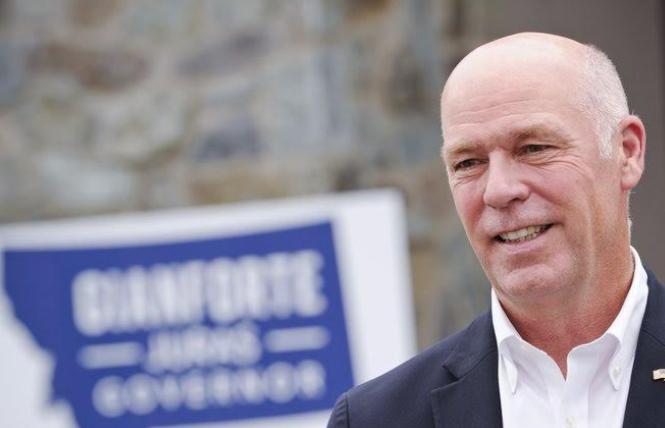
Montana Governor Greg Gianforte signed Senate Bill 215 into law April 22. National LGBTQ rights advocacy organization the Human Rights Campaign blasted his doing so over the weekend, contending the legislation is an expansive religious refusal bill that could grant a license to discriminate against Montanans and visitors, including LGBTQ people, people of faith, and women, across a wide range of goods and services in the state.

“SB 215 will have a significant impact on vulnerable communities in Montana — including people of faith, women, and LGBTQ people. It will also jeopardize Montana businesses that voted for Governor Gianforte with the hopes of getting the state’s economy back on track,” stated HRC President Alphonso David. “Let me be clear: religious liberty and equality are not mutually exclusive, and Montanans will not stand by as Governor Gianforte and fearful legislators seek to actively discriminate against the LGBTQ population.”

As the Helena Independent Record noted, Montana is now the 22nd state that has adopted what is known as a Religious Freedom Restoration Act or RFRA bill. Gianforte’s office refuted it is meant as a license to discriminate against LGBTQ people.

“The governor signed SB 215 into law to protect the freedom of people of all faiths to exercise their sincerely held religious beliefs,” an unnamed spokesperson for the governor’s office told the paper. “Montana joins 21 other states with RFRA laws, where it has historically been used to allow Native American children to wear braids in school, Sikhs to wear turbans in the military, and Christian employers to refuse to cover abortions under their health insurance policies.”

Once enacted, the Montana law will be reviewed by both the offices of California Attorney General Rob Bonta and San Francisco City Administrator Carmen Chu to see if it requires placing the Big Sky Country state onto the “no-fly lists” kept by each office.

California lawmakers in 2015 banned state-funded travel to states that discriminate against LGBTQ people with the enactment of Assembly Bill 1887 authored by gay Assemblyman Evan Low (D-Campbell). The Golden State’s no-fly list covers government workers, academics, and college sports teams at public universities.

There is a waiver for trips deemed essential, such as sending emergency assistance in response to a natural disaster, otherwise any travel to the states on the banned list cannot be funded by public tax dollars. State officials and college sports teams have found ways to get around the travel ban by having alumni associations or other groups pay for the travel costs to attend athletic matches or conferences in the banned states.

San Francisco not only bans taxpayer-funded travel for non-essential trips to states that have adopted anti-LGBTQ laws since 2015 but also outlaws city departments from contracting with businesses located in those states. The city also now bans its employees from using taxpayer dollars to travel to states that restrict access to abortion services.

There are currently 24 states on San Francisco’s list, thus Montana would become the 25th state to be added to it. There are only 12 states at the moment on California’s list.

It covers Alabama, Idaho, Iowa, Kansas, Kentucky, Mississippi, North Carolina, Oklahoma, South Carolina, South Dakota, Tennessee, and Texas. North Dakota and Arkansas are expected to join it after their governors recently adopted anti-LGBTQ laws.

North Dakota Governor Doug Burgum April 19 signed into law House Bill 1503, which permits student groups at colleges, universities, and high schools to discriminate against LGBTQ students. Arkansas Governor Asa Hutchinson March 25 signing into law Senate Bill 354, which bans transgender women and girls from participating in school sports consistent with their gender identity.

Because the two states have restrictive abortion policies in place, North Dakota and Arkansas have been on San Francisco’s banned travel list since January 1, 2020. They should now receive a double asterisk marking to note each state has enacted both anti-abortion and anti-LGBTQ laws.

The “no fly lists” will likely be around for the foreseeable future as Monday the U.S. Supreme Court opted against taking up a lawsuit filed by Texas state officials seeking to have California’s travel ban be deemed unconstitutional. Conservative Justices Samuel Alito and Clarence Thomas dissented from the 7-2 majority decision and would have heard the case.

Help keep the Bay Area Reporter going in these tough times. To support local, independent, LGBTQ journalism, consider becoming a BAR member.

Viral Video Shows Failed Armed Robbery Of Gay Politician – Instinct Magazine

Images via Facebook and the Policia Nacional Civil (PNC)

A gay politician is thankful for his bodyguards after they protected him from an armed robbery attempt.

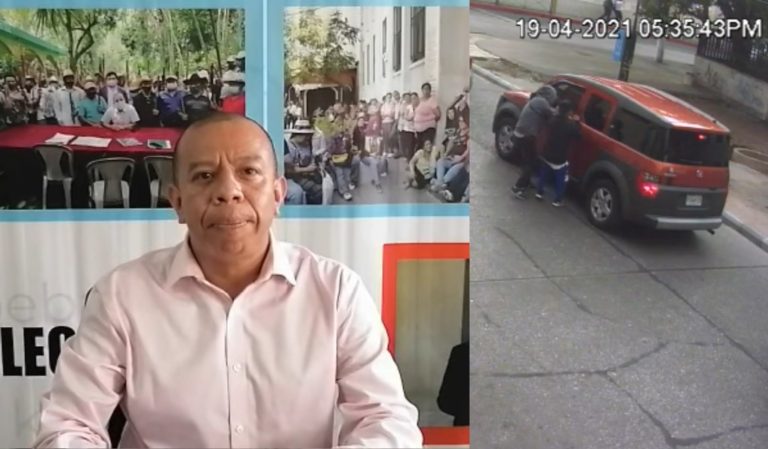
Aldo Dávila currently serves as Guatemala’s first openly gay Congress member. According to Newsweek, Dávila was traveling within Guatemala City on April 19 when a group of armed thieves surrounded his vehicle.

Video surveillance of the incident, which has circulated on the Reddit & Facebook social media platforms, shows the three men surround the car while it is stationed at a red light. One man then pointed a bagged weapon while looking inside the car’s windows.

Thankfully, Dávila was not alone and was accompanied by his security team. The driver quickly pulled out his own gun and shot at one of the suspects. The two uninjured men then ran away while a female bodyguard checked the wounded suspect on the ground.

Warning: the following video includes violent content.

“I’m fine, a little scared,” Dávila told The Associated Press. “They approached from various sides, I threw myself to the ground and my guards, fortunately, repelled the attack.”

While it’s currently unknown if Dávila’s sexuality or political policies factored into the attack, many online commenters are suspecting at least one, if not both, were involved. Guatemalan activist group Patzun OBAP argued on Facebook that Dávila’s work made him a target.

“There are many discrepancies since he has been a person who has brought to light and has fought against various anomalies of the current government,” they wrote.

Dávila is a member of the leftist Winaq party, as the Washington Blade reports. Before running for office, Dávila was the executive director of Asociación Gente Positiva, a Guatemala City-based HIV/AIDS service organization. As such, his policymaking and advocacy have been for minority groups in the conservative-led country.

The investigation into the attack and the search for the two remaining assailants continues. Meanwhile, a police report identified the wounded thief as Fernando José Barreno. The 20-year-old sustained an injury to the back and right shoulder and was taken to an emergency room for his gunshot wounds.

“I am thankful for life,” Aldo Dávila said in a Facebook video after the attempted robbery. “I will continue working, I will continue speaking out and I will continue speaking for people who have been historically excluded.”


Source: Newsweek, The Associated Press, The Washington Blade,

Homophobic Laws Are Preventing a Gay Couple in Africa From Bringing Their Child Home – Chaos and Comrades

0

A same-sex couple in Southern Africa has made international headlines and created the viral hashtag #BringPaulaAndMayaHome as they struggle to bring their children home to Namibia.

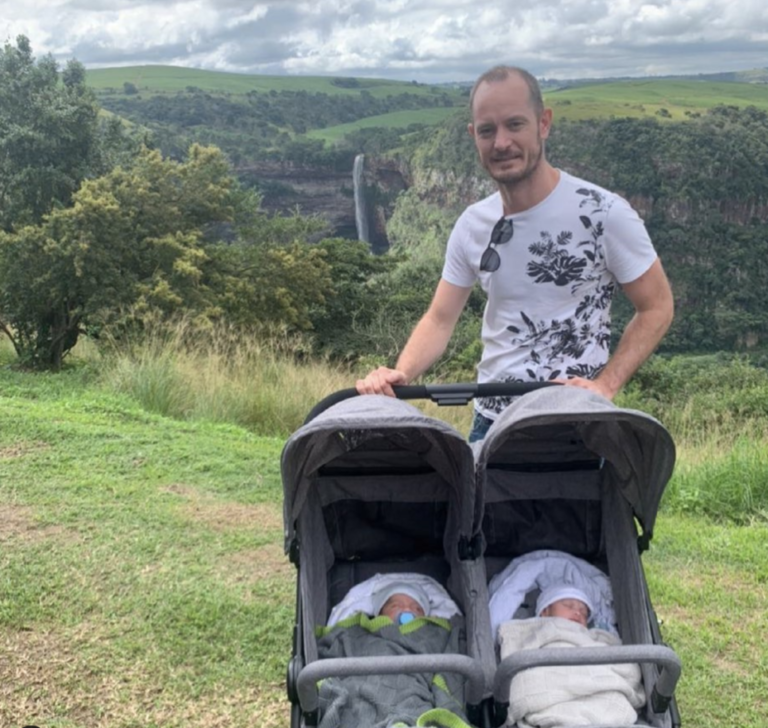
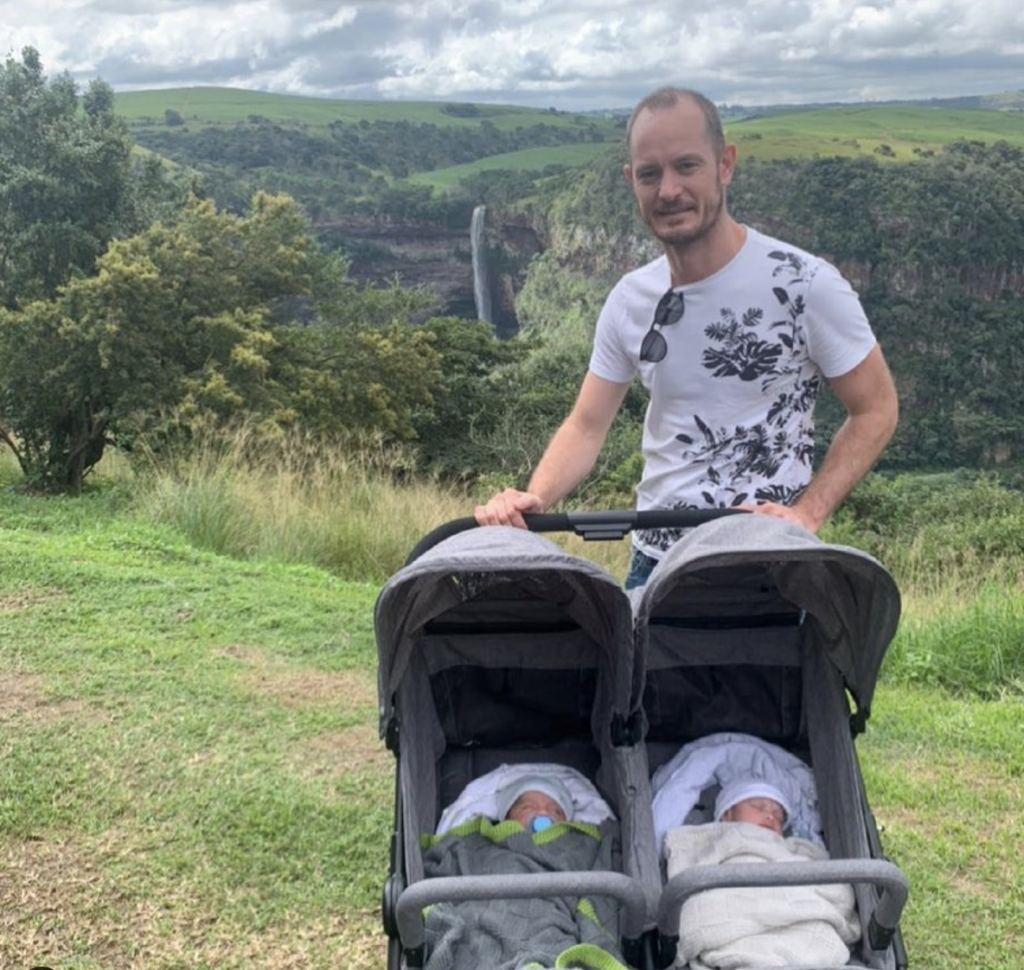
Philip Lühl is currently stuck in South Africa where he and his partner’s twin daughters, Maya and Paula, were recently born through a surrogate. Although Lühl and his partner’s names are both listed on the twin’s birth certificates, Namibia does not recognize same-sex marriage or adoption by same-sex couples as legimiate. Under this pretext, Namibian citizenship and the proper travel documentation is being denied to the couple’s young daughters.

In order to be granted Namibian citizenship, authorities are demanding genetic proof of Lühl’s biological relation to them. Lühl has stated he does not believe the same demands would be required of a heterosexual couple–particularly as it violates Article 14 of the nation’s constitution in which in which citizenship by descent is granted to adopted children.

Lühl has filed for emergency paperwork in order to bring his daughters home since March. But his attempts have been stopped by the country’s high courts. Meanwhile, Guillermo Delgado, the babies’ other father, is currently in the Namibian capital of Windhoek as he and Lühl two-year-old son wait for an August court date to determine whether Namibian citizenship will be granted to him as well. 

Lühl has called Namibia’s declaration of his children as “stateless” an extension of state-sanctioned homophobia in a country where same-sex contact remains illegal. But even in countries with seemingly more accepting laws like the U.S., attempts to make the children of same-sex couples stateless can be spotted across homophobic legislations.

In a similar American case, one of the children of Andrew and Elad Dvash-Banks was nearly denied U.S. citizenship. Each of the partners, one of whom was an American citizen and one of whom was Israeli, had one biological son. The biological son of the American father was granted citizenship while his brother was almost refused citizenship by the court. The Trump administration eventually lost that battle and both of the boys were granted citizenship. However, the seed for the future of homophobic leglistation was planted. 

Lühl, a university lecturer, has been vocal on social media regarding he and his family’s battle, which has received much support from LGBT+ people worldwide under the hashtag #BringPaulaAndMayaHome. From physical to digital protests, the camaraderie amongst queer families can be felt internationally. The outcome of Paula and Maya’s cause could lay the groundwork for the separation or unification of same-sex families worldwide. An online petition has been started by the Namibia Equal Rights Movement and has received more than 5,000 signatures.

Harry Styles To Film Gay Sex Scenes For ‘My Policeman’ – Star Observer

An upcoming Amazon Prime movie has cast British singer Harry Styles as a bisexual policeman, and news has trickled in that things are heating up on the sets of the film that has just started filming in Brighton, United Kingdom. 

The Watermelon Sugar star is said to be a part of two sex scenes opposite his co-star David Dawson in the film My Policeman

The movie is based on a 2012 novel of the same name by British author, Bethan Roberts. Set in 1950s, when homosexuality was illegal in the UK, the novel explores the life of a policeman Tom Burgess who gets married to Marion, a schoolteacher. However, Tom falls for a museum curator Patrick Hazelwood and the two of them are caught in a torrid love affair.

‘Realistic Gay Sex Scenes To be Filmed’

Harry Styles and David Dawson

Harry  is set to play the role of officer Tom Burgess, whereas The Crown star Emma Corin will play the role of Marion and David Dawson will play Patrick.

“Harry will be having sex on screen and they want it to look as real as possible. The plan is to shoot two romps between Harry and David, then another scene where Harry is naked on his own. Not much is going to be left to the imagination,” said one movie insider told The Sun.

He also added that Harry is thrilled to play such a challenging role, even though the act is daunting. “He always wants to do things that people wouldn’t expect and challenge what people think about him and challenge what people think about him-and this film will really do that.”

Considering that this is the first steamy scene Harry Styles is set to shoot for in a film we are sure there are many fans that are waiting to see the film that is yet to have a release date. 

Harry Styles on gender fluidity

Harry Styles has evolved from a sensational One Direction singer to a solo musician and actor who firmly stands against gender constraints. The 2020 Vogue cover of him in a dress made him the first solo man to be featured on the cover. In an interview with L’Official, Harry spoke about his expression of masculinity without limiting himself.

“I think there’s so much masculinity in being vulnerable and allowing yourself to be feminine, and I’m very comfortable with that,” he said. “Growing up you don’t even know what those things mean. You have this idea of what being masculine is and as you grow up and experience more of the world, you become more comfortable with who you are.”

As a major pop-culture icon, Harry Styles has certainly made an impact on peoples’ notions of gender and sexuality. 

In a 2019 interview, Harry addressed questions about the sexual ambiguity that he portrays. “Am I sprinkling in nuggets of sexual ambiguity to try and be more interesting? No… in terms of how I wanna dress, and what the album sleeve’s gonna be, I tend to make decisions in terms of collaborators I want to work with. I want things to look a certain way. Not because it makes me look gay, or it makes me look straight, or it makes me look bisexual, but because I think it looks cool. And more than that, I dunno, I just think sexuality’s something that’s fun. Honestly? I can’t say I’ve given it any more thought than that.”

Cameroonian LGBT activist champions imprisoned transgender women – Reuters

Coming from Cameroon where letting it be known that she was a lesbian could lead to prison time, activist and social media influencer Bandy Kiki struggled to adjust to her newfound safety after emigrating to Britain a decade ago.

Homosexuality is a criminal offence in Cameroon, punishable by up to five years in prison.

“I kept thinking, ‘Aren’t the police going to show up and arrest everybody?'” she said about gatherings she would attend with members of the lesbian, gay, bisexual, and transgender (LGBT) community in Manchester.

“My friends kept saying, ‘Kiki, it’s legal in this country, chill.’ But I said, ‘No, because sometimes the law will say one thing and the police will do something else’,” she told Reuters in an interview via Skype from Manchester.

As LGBT rights have advanced in countries around the world, Kiki said she had watched with disappointment as her own government doubled down on homophobic policies.

In recent weeks, she has been promoting a high-profile case from Cameroon in which two transgender women were arrested in February for wearing women’s clothing at a restaurant and were charged this month with “attempted homosexuality”. read more

The two women, Loic Njeukam, a local social media celebrity known as Shakiro, and Roland Mouthe, who goes by the name Patricia, have spent more than two months in prison waiting for their trial to begin.

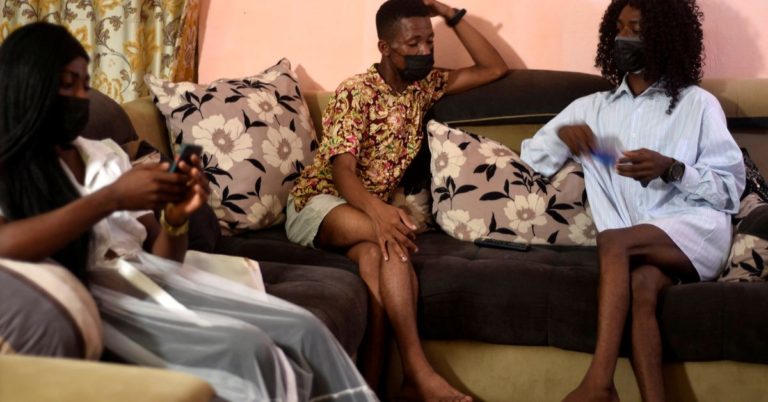
Transgender women Lumiere, 24, Blanche Bailli, 26 and Shakira visit their friend Nkwain Hamlet, a gay-rights activist in Douala, Cameroon April 24, 2021. REUTERS/Chantal Edie

‘LIFE IN HELL’

The court, in the coastal city of Douala, is expected to hear arguments on Monday. A guilty verdict could carry a sentence of up to five years.

Loic and Roland’s experience in jail, their lawyer Alice Nkom said, resembles “a life in hell”. They are mocked and threatened by prisoners and guards alike, and are kept safe only by paying for protection, she said.

Fifty-three people have been arrested in raids on HIV and AIDS organisations since May 2020, with some reporting having been beaten and subjected to forced anal examinations to confirm accusations of homosexuality, Human Rights Watch said.

The arrests seem to be part of “an overall uptick in police action” against sexual minorities, it added.

Kiki says the crackdown on Cameroon’s LGBT community is just a symptom of a larger problem throughout Cameroonian society.

“Homophobia is like a binding glue when it comes to Cameroonians,” Kiki said. “When it comes to hating LGBTQ people, they all come together.”

Our Standards: The Thomson Reuters Trust Principles.

Higher polyunsaturated fat consumption may decrease suicide risk – Healio

April 26, 2021

2 min read

An increase in the consumption of foods rich in polyunsaturated fats may decrease suicide risk, according to a study results featuring a large military personnel sample published in Journal of Clinical Psychiatry.

“[Fatty acids] are implicated in biological systems associated with depression and suicide, including neurotransmitters, cell membranes and the immune system,” Arthur Thomas Ryan, PhD, of the Veterans Affairs VISN 5 Mental Illness Research, Education and Clinical Center in Maryland, and colleagues wrote. “Individuals with mental illness have altered levels of various [fatty acids] as compared with healthy controls. The levels of several [fatty acids], particularly n-3 [fatty acids], have also been associated with suicidal behavior; however, the relationship between various [fatty acids] and suicidal behavior has been somewhat inconsistent across studies.”

Various Veterans and Health Care Images
Source: Adobe Stock

The investigators aimed to assess whether having distinctive fatty acid profiles was linked to observed fatty acid levels among a sample of 800 U.S. military members who died by suicide between 2002 and 2008 and 800 demographically matched living controls, as well as whether an association existed between those latent classes and suicide and mental health diagnoses. They collected participants’ serum samples from a large military serum repository, assayed them for 22 different fatty acids and conducted a latent class cluster analysis using values of six fatty acids previously individually linked to suicide. Following identification of the latent classes, the researchers then compared them in terms of suicide decedent proportion, demographic variables, estimated fatty acid enzyme activity, diagnoses and mental health care usage.

Findings demonstrated that a six-latent class solution best characterized the dataset. The researchers noted a lower likelihood for suicide decedents to belong to two of the classes and a higher likelihood for them to belong to three of the classes. Further, they observed a difference on nine fatty acids and on estimated indices of activity for three fatty acid enzymes between the low- and high-decedent classes. These were 14:0, 24:0, 18:1 n-9, 24:1 n-9, 22:5 n-3, 22:6 n-3, 20:2 n-6, 20:4 n-6, 22:5 n-6, elongation of very long chain fatty acids protein 1 (ELOVL1), ELOVL6 and Delta9 desaturase. They also noted a consistency between the fatty acid profiles of the latent classes and biological abnormalities previously linked to suicidal behavior.

“These findings suggest the possibility of [fatty acid]-related biotypes with suicide-relevant biological alterations,” Ryan and colleagues wrote. “The existence of research showing that the effects of [fatty acid] supplementation may depend on the genetic makeup of an individual further suggests the possibility that some individuals might be more or less likely to benefit from [fatty acid] supplementation. Future research is needed to replicate our findings and simultaneously measure biological alterations (eg, inflammation) that might be associated with the [fatty acid] profiles of our [latent class cluster analysis] identified classes.”

Divided US Supreme Court Won’t Let Texas Sue California Over LGBT Travel Ban | Texas Lawyer – Law.com

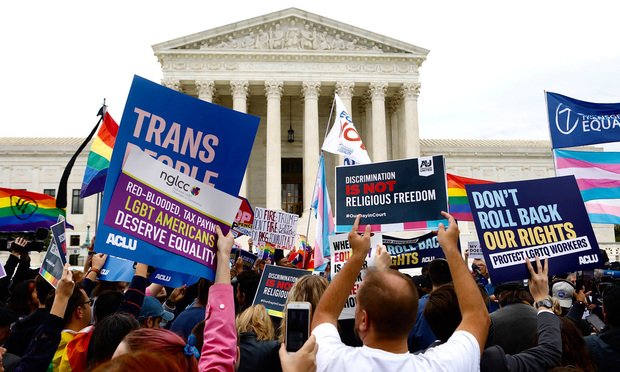
Demonstrations outside the U.S. Supreme Court on the day of arguments in the workplace discrimination cases involving gay workers, on Tuesday, October 8, 2019. Demonstrations outside the U.S. Supreme Court on the day of arguments in the workplace discrimination cases involving gay workers, on Oct. 8, 2019. Photo: Diego M. Radzinschi/ALM


Although two conservative justices dissented, the U.S. Supreme Court on Monday refused to allow Texas to sue California over an LGBT antidiscrimination law.

The 2016 California law in dispute said that the state could not pay for anyone to travel to Texas or 10 other states that were allegedly discriminating against people because of sexual orientation, gender identity or gender expression.

Judge sides with trans-identified boys as female athletes’ high-profile case is dismissed – The Christian Post

Selina Soule | Alliance Defending Freedom

A federal judge has tossed out a high-profile lawsuit filed on behalf of four female athletes suing to stop a Connecticut high school athletics association policy allowing biological males who identify as females to compete in girls’ sports at the K-12 level. 

Lawyers representing the athletes plan to appeal the ruling.

Judge Robert Chatigny, a federal judge in the United States District Court for the District of Connecticut, issued a ruling Sunday determining that the lawsuit filed against the Connecticut Interscholastic Athletic Conference and the Connecticut Association of Schools was “not justiciable at this time.” 

He contends that “courts across the country have consistently held that Title IX requires schools to treat transgender students consistent with their gender identity.” 

Appointed to the bench by former President Bill Clinton, Chatigny faced criticism last year from Alliance Defending Freedom, the legal nonprofit representing the plaintiffs, for telling ADF attorneys to refer to biological male athletes as “transgender females.” His insistence that the attorneys avoid referring to the athletes as “males” led to demands that he be removed from the case due to a lack of impartiality. But those calls went unanswered.

The plaintiffs, who were all high school students when the lawsuit was filed, contend that allowing biological males to compete in women’s sports violates Title IX, which was designed to provide equal opportunities for females in education. 

ADF announced the intention to appeal the ruling Sunday, stating that its lawyers “will continue to challenge the policy before the U.S. Court of Appeals for the 2nd Circuit.”

“Our clients — like all female athletes — deserve access to fair competition; that means authentically equal opportunities to compete, achieve, and win. But competition is no longer fair when males are permitted to compete in girls’ sports,” said ADF Legal Counsel Christina Holcomb. 

“Males will always have inherent physical advantages over comparably talented and trained girls; that’s the reason we have girls’ sports in the first place. Unfortunately, this court has chosen to ignore our clients’ demoralizing experience of losing to male runners.”

Holcomb argued that while the case centers on female athletes in Connecticut, there is more at stake. 

“Girls and women deserve opportunities that are truly equal — without being sidelined or dominated by males choosing to join their sport,” she added.

According to the ADF, Selina Soule, Chelsea Mitchell, Alanna Smith and Ashley Nicoletti have been “deprived” of “honors and opportunities to compete at elite levels.” Mitchell would have won the 2019 state championship in the women’s 55-meter indoor track competition, ADF reports. However, two biological male competitors took first and second place. Meanwhile, Soule, Smith and Nicoletti “have been denied medals and/or advancement opportunities.”

The ruling states:

“Chelsea Mitchell would have finished first in four elite events in 2019, and qualified for the 2017 New England Regional Championship in the Women’s 100m; (2) Selina Soule would have advanced to the next level of competition in the 2019 CIAC State Open Championship in the Women’s Indoor 55m; (3) Ashley Nicoletti would have qualified to run in the 2019 CIAC Class S Women’s Outdoor 100m; and (4) Alanna Smith would have finished second in the Women’s 200m at the 2019 State Outdoor Open.”

ADF states that due to CIAC’s policy, two males were permitted to compete in girls’ athletic competitions starting in the 2017 track season, who have taken 15 women’s state championship titles previously held by nine different girls between 2017-2019. The law group contends that the two athletes have taken away 85 opportunities to participate in higher-level competitions from female track athletes from 2017 to 2019. 

“Today’s decision ignores the unfairness of the CIAC’s policy, which allows biological males who identify as female to compete in the girls’ category,” said Soule, one of the four athletes who challenged Connecticut’s policy. “During all four years of high school, I worked incredibly hard to shave fractions of a second off my time, only to lose to athletes who had an unfair physical advantage.” 

“I don’t want any other girl to experience the pain and heartbreak I had to go through, and I will continue to stand up for fairness in women’s sports for as long as it takes,” she vowed.

Smith, another plaintiff, described the decision as “disheartening for athletes like me who train hard every day to be our physical and mental best at the starting block.”

According to Smith, “biological unfairness does not go away because of what someone believes about gender identity.”

“Biology — not identity — is what matters on the field, and that’s why I will continue to stand up to restore fairness to my sport,” she said. 

Mitchell called the ruling “discouraging,” claiming the judge “ruled to dismiss my right to compete on a level playing field.”

“Today’s ruling ignores the physical advantages that male athletes have over female athletes,” she argues. “Female athletes like me should have the opportunity to excel and compete fairly. No girl should have to settle into her starting blocks knowing that, no matter how hard she works, she doesn’t have a fair shot at victory.”

Nicoletti warned that girls like her “have suffered countless losses because of the CIAC’s policy.”

“[A]nd today’s ruling ignores this fact,” she stated. “I will continue to tell my story and fight for fairness in women’s sports.”

While female athletes decried Sunday’s decision, LGBT activists reacted very favorably to Chatigny’s ruling. 

“This is good news for transgender students in Connecticut and around the country,” declared ACLU Staff Attorney Joshua Block in a statement. “Today’s ruling shows that allowing transgender students to participate in school — including sports — is consistent with existing federal law. This is yet another sign that lawmakers attacking trans youth in states around the country have no legal basis for their claims.”

Additionally, Rahsaan Yearwood, the father of one of the two biological male athletes who now identify as females who are also named defendants in the lawsuit, cheered the decision.

“One of our most marginalized communities has the opportunity to rejoice in their authentic being and feel affirmed in doing so,” Yearwood was quoted as saying. 

As the debate about women’s sports continues across the U.S., several states have passed laws restricting participation in women’s sports to biological females. 

This year alone, Alabama, Arkansas, Mississippi and Tennessee have already passed such laws. State lawmakers in more than two dozen other states have introduced similar legislation.

Meanwhile, Democrats in Congress want to pass the Equality Act, which would codify nondiscrimination protections for the LGBT community into federal law. 

Critics of the sweeping legislative initiative argue that the protection from discrimination based on sexual orientation and gender identity will require biological males who identify as females to compete on sports teams that correspond with their gender identity as opposed to their biological sex.

Even though the Equality Act has failed to become law because of opposition from both Republicans and Democrats in the U.S. Senate, President Joe Biden has already signed an executive order prohibiting discrimination based on sexual orientation and gender identity. 

“Children should be able to learn without worrying about whether they will be denied access to the restroom, the locker room, or school sports,” the order stated.

‘The Simpsons’ producer says LGBT podcast led to gay actor replacing Hank Azaria as gay character – Deltaplex News – Deltaplex News

While much has been made about Hank Azaria stepping down from playing Indian American character Apu on The Simpsons, the versatile actor will no longer voice another character from the animated show, and a gay actor has taken his place. 

Starting with an episode that aired last last month, actor Tony Rodriguez now voices Julio, a gay friend of Homer’s and a fellow resident of Springfield.

According to a tweet from Simpsons producer Matt Selmana video supercut compiled by Drew Mackie, plus Glen Lakin‘s podcast Gayest Episode Ever, “definitely had a hand” in the change.

Much as the documentary The Problem with Apu shed light on the negative impact Azaria’s characterization of the character has had on Indian Americans, the supercut exhaustively compiled every gay joke made in the 31-year history of the Emmy-winning series — and like many things viewed through a more modern lens, some of the lines are cringe-worthy. 

The Apu flap led the long-running series to declare it will no longer employ white actors to voice non-white characters, breaking with the tradition of Azaria and Harry Shearer voicing show characters of every color. Azaria has since apologized for his part in the Apu controversy.

For his part, Shearer told the U.K.’s Sunday Times he didn’t agree with no longer playing Dr. Julius Hibbert or other characters of color. “I think there’s a conflation between representation,” he insisted. “People from all backgrounds should be represented in the writing and producing…so they help decide what stories to tell and with what knowledge…The job of the actor is to play someone who they’re not.”

Copyright © 2021, ABC Audio. All rights reserved.

‘The Simpsons’ producer says LGBT podcast led to gay actor replacing Hank Azaria as gay character – connectradio.fm

While much has been made about Hank Azaria stepping down from playing Indian American character Apu on The Simpsons, the versatile actor will no longer voice another character from the animated show, and a gay actor has taken his place. 

Starting with an episode that aired last last month, actor Tony Rodriguez now voices Julio, a gay friend of Homer’s and a fellow resident of Springfield.

According to a tweet from Simpsons producer Matt Selmana video supercut compiled by Drew Mackie, plus Glen Lakin‘s podcast Gayest Episode Ever, “definitely had a hand” in the change.

Much as the documentary The Problem with Apu shed light on the negative impact Azaria’s characterization of the character has had on Indian Americans, the supercut exhaustively compiled every gay joke made in the 31-year history of the Emmy-winning series — and like many things viewed through a more modern lens, some of the lines are cringe-worthy. 

The Apu flap led the long-running series to declare it will no longer employ white actors to voice non-white characters, breaking with the tradition of Azaria and Harry Shearer voicing show characters of every color. Azaria has since apologized for his part in the Apu controversy.

For his part, Shearer told the U.K.’s Sunday Times he didn’t agree with no longer playing Dr. Julius Hibbert or other characters of color. “I think there’s a conflation between representation,” he insisted. “People from all backgrounds should be represented in the writing and producing…so they help decide what stories to tell and with what knowledge…The job of the actor is to play someone who they’re not.”

Copyright © 2021, ABC Audio. All rights reserved.

‘The Simpsons’ producer says LGBT podcast led to gay actor replacing Hank Azaria as gay character – Everett Post – Everett Post

While much has been made about Hank Azaria stepping down from playing Indian American character Apu on The Simpsons, the versatile actor will no longer voice another character from the animated show, and a gay actor has taken his place. 

Starting with an episode that aired last last month, actor Tony Rodriguez now voices Julio, a gay friend of Homer’s and a fellow resident of Springfield.

According to a tweet from Simpsons producer Matt Selmana video supercut compiled by Drew Mackie, plus Glen Lakin‘s podcast Gayest Episode Ever, “definitely had a hand” in the change.

Much as the documentary The Problem with Apu shed light on the negative impact Azaria’s characterization of the character has had on Indian Americans, the supercut exhaustively compiled every gay joke made in the 31-year history of the Emmy-winning series — and like many things viewed through a more modern lens, some of the lines are cringe-worthy. 

The Apu flap led the long-running series to declare it will no longer employ white actors to voice non-white characters, breaking with the tradition of Azaria and Harry Shearer voicing show characters of every color. Azaria has since apologized for his part in the Apu controversy.

For his part, Shearer told the U.K.’s Sunday Times he didn’t agree with no longer playing Dr. Julius Hibbert or other characters of color. “I think there’s a conflation between representation,” he insisted. “People from all backgrounds should be represented in the writing and producing…so they help decide what stories to tell and with what knowledge…The job of the actor is to play someone who they’re not.”

Copyright © 2021, ABC Audio. All rights reserved.