Home Blog Page 336

6 LGBTQ+ Runners Explain How the Sport Gave Them Support When No One Else Would – runnersworld.com

0

Editor’s note: This story discusses death by suicide.


In early December, a survey published in the Journal of American College Health found that physical activity of LGBTQ+ and non-LGBTQ+ college students differed significantly, with the latter getting more aerobic and resistance training overall.

The researchers didn’t dive deeper into the possible reasons, saying only that perceived barriers should warrant more research. But runner Joy Puleo, Balanced Body education program manager, wasn’t surprised by the results.

“Some of this may be built into the need to be with likeminded individuals who may or may not be going to the gym,” she tells Runner’s World. “It may be due to feelings of displacement, other-ism, or of not belonging. They might find the gym environment harsh and unforgiving.”

For some, that changed with running. Not because it was something they could do solo, away from crowded gym spaces and potentially non-welcoming sports teams—although that can provide its own balm—but because many found groups that provided the kind of support they didn’t think they’d find. Here are a just a handful of the stories of those who have embraced the sport, and the allies who run alongside.

Boost your running performance and find your community with Runner’s World+!


John Ladesic, 39, Washington, D.C.

lgbtq runners

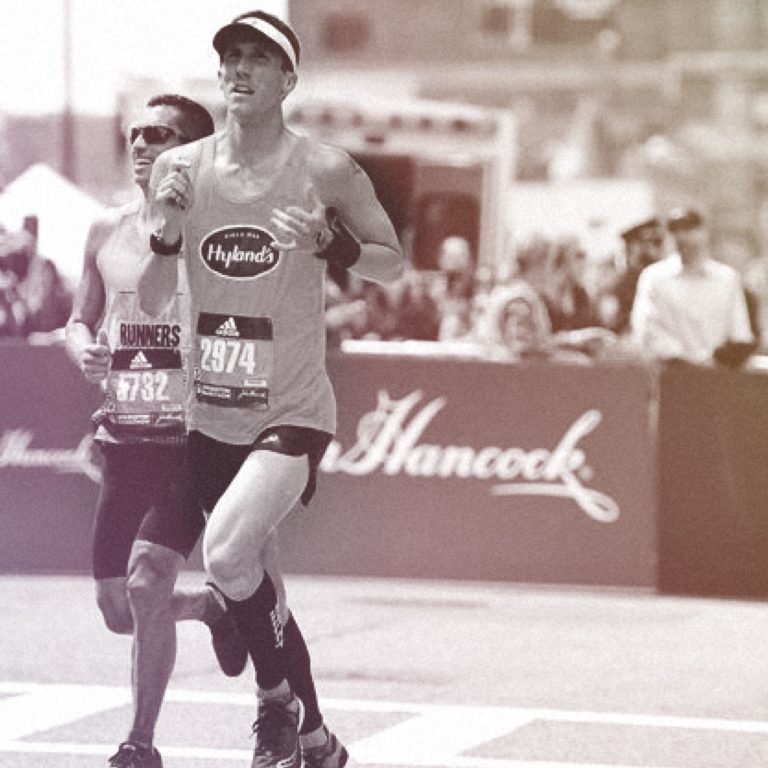
MarathonFoto

Even when I was in elementary school, coaches realized I had a natural talent for running, but they didn’t realize a major part of that was because of how much I was bullied. All the pain, the anxiety, the fear about being different, I could burn it off through running. Sometimes, I would pretend each light post was a specific bully in my class, and I would run past them to show myself that I could leave them behind.

Ironically, the better I got, the more positive attention I received, but only when I was setting county records or contributing to a team’s score. Even then, I made sure never to use the locker room or go to the bathroom because kids had been talking about me being gay since I was 6 years old, and I was terrified of being in a situation where they would accuse me of looking at other boys.

This was strengthened by hearing some of my teachers put me down for “acting gay,” and supporting one of the darkest parts of my story, which was being sent to conversion therapy when I was 15. Through it all, I kept running. It’s always been a way to get away and feel free.

After I got older and became a first-grade ESL teacher, the brand Hyland’s partnered with the Boston Marathon to hold a contest for teachers in 2018, and I entered and won a spot. In my profile, I talked about being bullied, and it forced me to reflect on my life—it made me tell my story in a new way. But it wasn’t until I got back to my school after the marathon that everything really changed.

The principal at my school asked me to do an anti-bullying assembly, along with discussion and role play that would help kids talk about their emotions and how they can channel that into something positive, like running had been for me. Seeing this get recognized was incredible, and it inspired me to start a running group for kids called Let Me Run, as a way to debunk masculinity in sports. For example, before a run, the kids write positive comments to each other, to let boys know it’s okay to support each other—it’s okay for them to talk with kindness.

Running has always been my safe haven, but for a long time, it was what I did to get away. Now, it’s become this amazing force that’s helped me build a community of other runners, and to start this group where I hope I can inspire kids to feel secure in who they are.


Sammie Bennett, 32, Grand Rapids, Michigan

lgbtq runners

Andi B Photography

Although I’ve only come out in the last year, I didn’t feel like I could be my full self in the gym before that. It just didn’t feel welcoming somehow, and I was concerned that once other people knew I was gay, that would only get more pronounced. That may be, in part, because I live in a very conservative part of Michigan where I feel like I can’t be out in general. But I wondered if maybe running could help me find my community.

“If you haven’t found your community, create your own.”

Running has always been an outlet for me, especially through struggles with depression and anxiety. I had some dark years of suicidal thoughts and attempts, but in addition to getting help through therapy, running helped me process emotions—it’s where I thrive. So, even in the middle of pandemic, I thought it would be good to put a group together.

In late summer 2020, I created a trail running group through Trail Sisters, and said all are welcome. We meet biweekly, wear our masks, and keep a good distance—and our numbers keep growing. Sometimes we have up to 25 women on a run, and some of them are gay, but even those who are not are supportive. When I first started talking about myself, I was nervous, but the reactions were so positive and friendly that it was a huge relief. There’s something intimate about talking when you’re running with a group, people are so open in a way they may not be otherwise.

My advice to other LGBTQ runners would be to find a group and take a chance. I spent a lot of time being afraid of other people, but maybe that’s because I wasn’t talking to the right ones. If you haven’t found your community, create your own. She used the online resource Trail Sisters, but you can also create local Facebook groups, talk to the owners of the nearest running store to put the word out, even put up fliers in places where other runners are likely to see them—like coffee shops close to a well-traveled running route.


Douglas Otero, 47, New York City

lgbtq runners

Cassidy Sparrow

For most of my life, I was an anti-runner, I didn’t understand why people did it. I liked working out, but not every gym feels welcoming, and I know I’m not alone in saying that. There are just many spaces where you immediately feel uncomfortable.

“Running with people who support who you are is just the epitome of love.”

I’m a professional makeup artist for Broadway, and in 2014, one of my clients, Amber Sabathia—who is on the board of NYRR—talked about the running group she had with her husband, CC Sabathia, who’s a retired pitcher for the New York Yankees. They also have a nonprofit, called PitCCh, where they give back to inner-city kids, and I just appreciated their whole positive approach, so I thought I’d give it a try.

I began running races to help the nonprofit raise money—that was seven years ago, and joining them opened me up to what running is really about. I realized that running physically felt like dancing, and the group that came together felt like the theater community. You’re around people who lift you up and make you feel like you have a purpose. It doesn’t matter who they are, gay or straight, they’re there for you.

I’m proud when I look at my race medals, but most of all, I feel like I have these best friends, and I didn’t expect that at all. That’s been especially valuable in the past year when we’ve all been trying to cope with the pandemic, and if anything, I’ve become more passionate about running because of that.

Running with people who support who you are is just the epitome of love and inclusivity, and that’s not just for LGBTQ people. It’s for everyone.


Jenny Thomas, 49, Montana

*Name and location changed for anonymity

Right now, I’m only out to my running group. No one else in my community knows, including people at my work, and not even my kids. There will come a time when I’ll tell them, but for now, I’m getting the support I need when I run, and that’s important to me.

What’s funny is that I was actually out in college but then it started to feel difficult with people judging me, and I decided it would be easier to live a straight life. So, I got married and stayed married for 20 years, with two kids along the way. But I was so unhappy all the time. Every counselor I saw told me, “You’re not going to fix this until you start living who you are.”

I joined the running group a few years ago as a way to cope, but I didn’t know how much it would help. We’re about 15 women of all different professions, backgrounds, and political views. We run about five miles every day and spend the whole time talking—the understanding is that what happens in run group stays in run group.

When I began talking about being gay, I didn’t even know at first why I brought it up, except that we were all discussing our struggles. And there was such an outpouring of support and zero judgement. People stepped up for me, and I can’t even describe how grateful I felt for that.

That gave me the courage to end the marriage and to keep navigating toward who I am and what I want. I’m in the middle of this journey of coming out, but it means everything to me to run alongside people who will support me every step of the way.


DJ Pulce, 27, Atlanta, Georgia

lgbtq runners

DJ Pulce

After I graduated from college, I realized how hard it was to make friends as an adult, and back then I felt like the only place to interact with others was at a bar or a club, which didn’t lead to the most in-depth conversations. Then I met Thomas Barker, the president of Front Runners Atlanta, and he suggested I join their run group.

I wasn’t a good runner, and I was afraid they’d all leave me behind, but I was excited about the chance to be around people who wanted to do healthy things together, not just hang out and drink. In August 2018, I gave it a try and was relieved to be greeted by LGBTQ people of all ages, shapes, and sizes who genuinely loved connecting with others while running.

Everyone was so happy and positive, and what stuck with me is that from day one, you could tell they were looking out for each other. No matter how slow I was, someone would run with me and actually tell me to go slower so we could talk. They taught me how to pace myself, and I couldn’t believe they’d take the time to do that for someone in the back of the pack, but they did. Because of that, I went from 10-minute miles to 7:30 times on casual runs in about six months.

Now I’ve become one of the people who’s supporting those who are new. I know what it’s like to be intimidated when you’re starting out and you just want to feel comfortable. As a gay person, having this group has really helped me feel like I’m part of the community, like I’m not alone. These are definitely my friends, and it feels like we’re united not just because we’re all gay, or because we’re all runners, but because we care about each other.


Joy Puleo, 55, Sacramento, California

lgbtq runners

Scott Kartagener/Balanced Body

When I was in the process of coming out, running was my respite. I was married to my childhood sweetheart, had an 18-month-old son, and both our families to come out to. During that time, I was married to my childhood sweetheart, had an 18-month-old son, and living the hetero-suburban “dream,” but it didn’t feel right.

“Running truly saved my life, gave me perspective, and helped me organize my thoughts.”

It was running on the track where I was able to close my mind to the onslaught of questions, needs, pleas, and general feelings of disappointment and anger to figure out my path—my next steps and my feelings about who I was. When I put on the headphones, the world around me disappeared, and all I could feel was my own heartbeat in time with the rhythm of whatever anthem I was playing.

Running truly saved my life, gave me perspective, and helped me organize my thoughts, which, in turn, helped me navigate through all the drama until everyone—husband, child, parents—ultimately came to a place of acceptance and love.

It does not surprise me that LGBTQ college-aged students do not frequent the gym as much as their straight counterparts. The images of buff, strong, masculine/feminine are what sells fitness, and are not often what is experienced or felt by the individual.

Sports are even more skewed toward the “ideal,” and being competitive and athletic is imperative. When coming out, finding community and feeling supported is important, and these environments may not inspire self-acceptance and love. For me, while I was actually working in a gym at the time, my feelings of strength, solace, and optimism, came from shutting out all the images of what I was supposed to be, what I was supposed to look like, and what I was supposed to want, and to see my world for what it could be.

Fitness, movement, exercise, sport, and health are important for the LGBTQ community to embrace. These can empower not only our physical being, but our emotional being as well. However, the environment matters—the type of exercise needs to resonate, and the way we see ourselves needs to expand beyond the picture perfect poster that greets you in the gym lobby.


If you or someone you know is struggling with mental health, reach out for assistance. There are hotlines you can call right now for free. Contact the NAMI HelpLine (800) 950-6264 that can be reached Monday through Friday, 10 a.m.–8 p.m., ET. If it’s an emergency, call the National Suicide Prevention Lifeline—(800) 273-8255or 911, available 24/7. The Trevor Project can also help.

This content is created and maintained by a third party, and imported onto this page to help users provide their email addresses. You may be able to find more information about this and similar content at piano.io

Reopening News: Long Island Pride returning as in-person event this year – WABC-TV

0
EAST MEADOW, Nassau County (WABC) — After going remote last year, Long Island Pride will return as an in-person event this June.

The celebration will be June 13, from noon to 4 p.m., at Eisenhower Park’s Harry Chapin Lakeside Theatre in East Meadow.

The event will have strict 500-person capacity under current protocols. Proof of vaccination will be required to attend.

A recent survey by the New York LGBT Network found more than 70% of respondents were hopeful of an in-person event and more than 80% supported vaccination as a requirement to attend.

The survey received more than 500 responses in one day.

Tickets and sponsorships are available at prideonthebeach.org.

Remote participation will be available via livestream.

The annual Long Island Pride event, which was about to celebrate its 30th anniversary last year, was postponed amid the coronavirus pandemic.

national geographic covid newsletter sign up

MORE CORONAVIRUS COVID-19 COVERAGE

New York City COVID-19 Vaccine Tracker
New Jersey COVID-19 Vaccine Tracker
How to get the vaccine in NYC, Tri-State area
Do you have coronavirus symptoms?
WATCH: Eyewitness to a Pandemic
Centers for Disease Control and Prevention on coronavirus
Submit a News Tip or Question

Copyright © 2021 WABC-TV. All Rights Reserved.

NC House speaker: Transgender sports bill set aside – Spectrum News

RALEIGH, N.C. (AP) — The North Carolina General Assembly won’t advance legislation this year preventing transgender girls and women from competing in school sports labeled for biologically female athletes, a top legislative leader said.

“The House will not be taking up that bill,” House Speaker Tim Moore told The Associated Press in an interview. “We’ve spoken with the bill sponsors and others and simply believe that there’s not a need to take it up at this time.”

The inaction marks another decision by state Republicans to step away for now from controversial LGBT legislation rather than face criticism that GOP leaders in other states have experienced. Those actions, however, have failed to generate broader backlash.

Senate leader Phil Berger’s office said last week that there would be no votes on a bill that sought to limit medical treatments for transgender people under 21 and punish doctors who facilitate that treatment, adding that there was no pathway for it to become law.

The House is setting aside the “Save Women’s Sports Act,” which was pushed by social conservatives and other groups who said young women were in danger of losing spots on high school and colleges teams and sports titles to athletes who were born male, creating inherent unfairness. LGBT-rights groups strongly opposed the legislation. Parents and children told a judiciary committee hearing this month that the prohibition would harm transgender girls who want to fit in and would amount to discrimination. No similar bill was filed in the Senate this year.

Moore expressed skepticism that the sports bill would have had enough votes to be adopted into law. Vetoes by Democratic Gov. Roy Cooper, an LGBT rights supporter, are tough for Republicans to override because their majorities aren’t veto-proof.

Moore called the transgender sports bill a solution in search of a problem that hasn’t yet surfaced in North Carolina as in other states. Since 2019, the North Carolina High School Athletic Association has received less than 10 requests from teenagers who identify as a different gender than on their birth certificate and seek to participate in formal athletics.

“We’re not really hearing any complaints about that where it’s an issue,” Moore told the AP late Wednesday.

Moore moved the transgender sports bill from the Judiciary Committee to the Rules Committee, where measures that the majority party doesn’t want to take up often get sent to die. That action happened Monday, the same day Apple Inc. announced the construction of its first East Coast campus in the Raleigh-Durham area and the creation of at least 3,000 jobs over the next decade.

Berger and Moore told reporters at a Monday news conference celebrating the Apple expansion that the company demanded no actions on legislation. Cooper did say that Apple CEO Tim Cook told him the repeal of North Carolina’s 2016 transgender bathroom bill was “important in their decision making,” as was the recent end of a moratorium on local government nondiscrimination ordinances.

Moore told the AP that parking the transgender sports bill had no connection to the Apple announcement. Rather, he said, the decision was the result of discussions within the House Republican Caucus.

Rep. Mark Brody, a Union County Republican and chief sponsor of the legislation, said Wednesday that he feels pretty confident the measure got derailed because “Apple’s come to town” but lacked hard evidence. Brody said the measure would have gone all the way to Cooper’s desk if House leadership had given the green light to vote on it, but a veto would have occurred.

“I’m disappointed that it isn’t moving,” Brody said, adding that the conflict will resurface when a transgender girl wins a state championship in a sport designated for women. “I think the issues are not going to go away.”

Fed up with Tel Aviv’s ‘liberal homophobia,’ a queer scene thrives in an unlikely Israeli town – Haaretz

News and Partnerships

Life and Culture

Columnists and Opinion

Haaretz Heb and TheMarker

Haaretz.com, the online English edition of Haaretz Newspaper in Israel, gives you breaking news, analyses and opinions about Israel, the Middle East and the Jewish World.

© Haaretz Daily Newspaper Ltd. All Rights Reserved

‘It gave us hope’: Biden tells transgender youth he’s on their side. Advocates say that’s huge for the community. – USA TODAY

Harleigh Walker never expected the president of the United States to speak directly to her community.

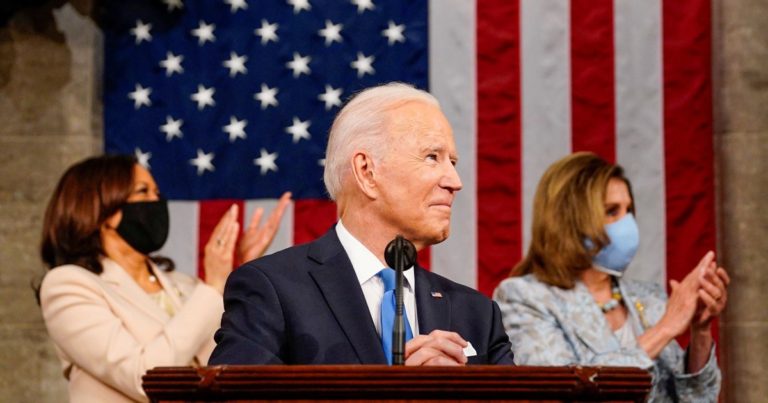
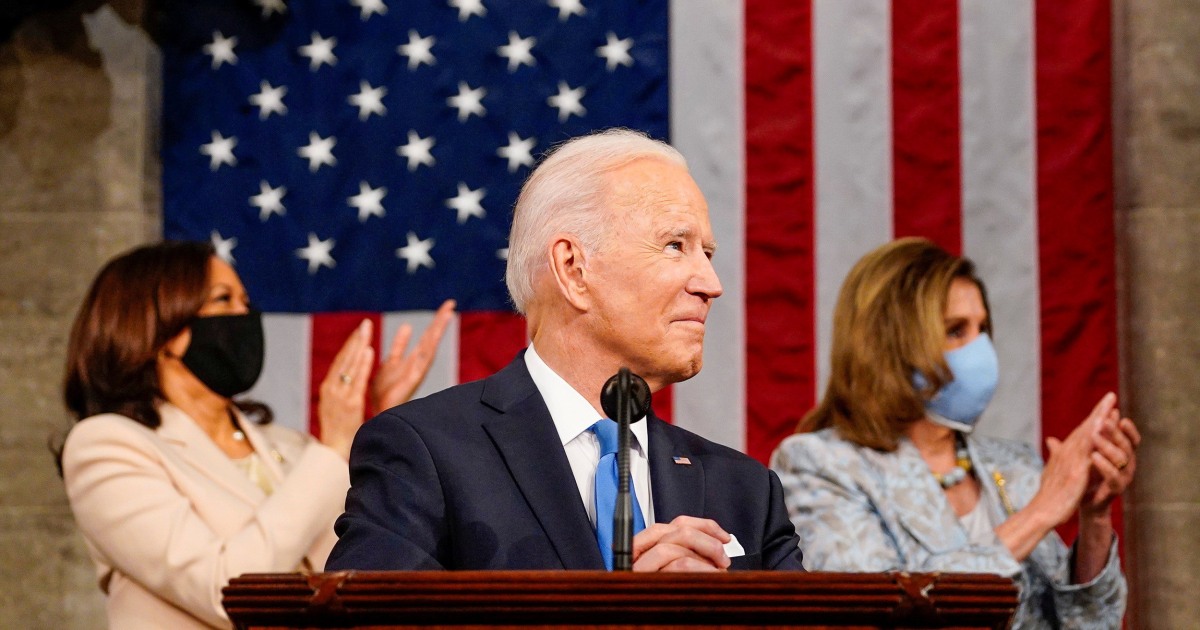
The 14-year-old from Alabama said she felt recognized when President Joe Biden called young transgender people “brave” as he urged Congress on Wednesday to pass the Equality Act during his first address to a joint session of Congress. 

“Especially with recent anti-trans legislation,” Harleigh said. “For the president to recognize us in that way, and tell us he was on our side, was so great. It was empowering. It gave us hope.”

Her father said he felt relief when he heard Biden. “To see that at a federal level, my daughter has that support, was so heartening,” Jeff Walker said. 

“I just hope it trickles down and affects lawmakers on a state level,” he said. “This is just the beginning of the road.”

Advocates say Biden’s acknowledgement of trans people is a big step forward for visibility and acceptance.

“To all the transgender Americans watching at home, especially the young people who are so brave, I want you to know that your president has your back,” Biden said Wednesday.

In his address, Biden said he hopes Congress will pass the Equality Act “to protect the rights of LGBTQ Americans.”

The landmark legislation would expand federal civil rights to prohibit discrimination on the basis of sex, sexual orientation and gender identity, protections many Americans believe had already been enshrined into law, lawmakers say.

More:Why President Joe Biden’s speech to Congress was unlike any other in modern history

Serena Sonoma, communications coordinator of the national advocacy group GLAAD, said it’s still legal to discriminate against LGBTQ people in almost 30 states. 

“The Equality Act would secure those basic core values of equal treatment into law,” she told USA TODAY.

Sonoma said she hopes Biden’s words lead to greater safety and acceptance for trans people.

“I hope that transgender people, and especially trans kids, see and hear that they are welcome and they belong just as they are,” Sonoma said.

The Equality Act is the next step in making “significant progress in building a more inclusive world,” said Karen Graci, of chapter president of the LGBTQ advocacy nonprofit PFLAG in Charlotte, North Carolina. 

Biden’s remarks may help the country reach that step more quickly, she said.

Biden has fallen short of his pledge to sign the Equality Act into law in his first 100 days of office, which would be Thursday. The House passed the bill in February, but it faces an uncertain future in the Senate, which is split 50-50 between Republican and Democratic members with Vice President Kamala Harris in a tiebreaking role.

The House passed a similar version of the bill in 2019, but it died in the then-Republican-controlled Senate.

Biden’s comments come at a time when states consider legislation preventing transgender Americans from accessing gender-affirming health care or participating in sports under their gender identities.

Kansas:Governor vetoes transgender athletes ban, saying it ‘sends devastating message’

Alabama:Gov. Kay Ivey signs bill banning transgender youth from public school sports

Florida: Bill bans transgender female athletes from women’s teams

His address also follows a violent year for many trans Americans with at least 44 known transgender people killed in the U.S. in 2020, according to the Human Rights Campaign, which has tracked this data since 2013.

Just four months into 2021, there have been at least 17 transgender people killed. Both numbers are expected to be undercounts as “too often these stories go unreported or misreported,” according to the Human Rights Campaign.

The HRC noted that LGBTQ people continue to face violence as well as discrimination in health care, housing and education. 

“It’s been a very hard year for trans people, especially for trans children and their parents,” Mara Keisling, executive director of the National Center for Transgender Equality, told USA TODAY.

“State legislators are attacking and bullying trans kids for political purposes. It’s shameful, disgusting and unconscionable, and it has a psychological impact on these children,” she continued. “But you know what helps trump that? The president telling them he has their back.”

Following Wednesday’s speech, the Human Rights Campaign praised Biden’s support for the Equality Act

“Equality and justice are not partisan goals – they are the bedrock on which our country was founded,” said HRC President Alphonso David in a statement.

History Education:Kids aren’t learning LGBTQ history. The Equality Act might change that.

DOJ on Ashley Diamond lawsuit:Prison officials obligated to protect transgender prisoners from harm

LGBTQ advocacy nonprofit PFLAG said Biden’s support of transgender youths means a lot to their families. 

“We are also moved by his vocal support of our trans kids, whose rights and very lives have been under assault with hundreds of dangerous and damaging bills,” said Brian K. Bond, PFLAG National executive director, in a statement. 

One of Biden’s earliest acts supporting the transgender community was lifting President Donald Trump’s ban on transgender troops. On his first day in office, he signed an executive order implementing a Supreme Court ruling that declared anti-LGBTQ job discrimination to be illegal as a form of sex discrimination.

Last year, Biden nominated Rachel Levine as assistant secretary of health, making her the first openly transgender federal official confirmed by Congress.

First lady Jill Biden also invited Stella Keating, a 16-year-old transgender teen who testified against anti-trans bills before the U.S. Senate, as a virtual guest to the address Wednesday.

On Transgender Day of Visibility in March, Biden in a statement acknowledged “the generations of struggle, activism, and courage that have brought our country closer to full equality for transgender and gender non-binary people in the United States and around the world.”

Keisling, of the National Center for Transgender Equality, said she appreciates Biden listening to trans people.

“I spent the last eight years saying President Obama was the best president for trans people and that no one is even in second place,” she said. “And I have to say that President Biden is off to a faster start.”

But while the Equality Act is important, it’s far from the final step, she said. Next, she wants to see  a “comprehensive plan to end violence against Black trans women.”

Human Rights Campaign’s analysis of fatal violence against trans women in 2020 found “it is clear that fatal violence disproportionately affects transgender women of color — particularly Black transgender women.”

“There has been a long history of violence against Black trans women in this country,” Keisling said. “These women deserve better protection.” 

For resources for transgender people, visit GLAAD has compiled a list here.

Contact News Now Reporter Christine Fernando at cfernando@usatoday.com or follow her on Twitter at @christinetfern.

Fact check:Biden’s speech to Congress included claims on economy, immigration, 1994 assault weapons ban

Florida Senate Passes Anti-Trans Sports Bill – Human Rights Campaign

The legislative fight to pass discriminatory anti-transgender legislation has been fast and furious, led by national groups aiming to stymie LGBTQ progress made on the national level and in many states. There are so far more than 250 anti-LGBTQ bills under consideration in state legislatures across the country. Of those, more than 120 directly target transgender people and at least 66 of those would, like SB 1028, ban transgender girls from participating in sports consistent with their gender identity.

Despite the Florida Senate rules committee deferring SB 2012 and HB 1475 last week, Florida state senators passed this legislation despite fierce bipartisan opposition from lawmakers across the country, professional and collegiate sporting organizations including the Miami HEAT and Misfits Gaming Group, world-renowned athletes, faith leaders, legal scholars, medical professionals, and over 90 major corporations.

Biden to transgender Americans: ‘Your president has your back.’ – NBC News

In his first joint address to Congress, President Joe Biden on Wednesday sent an unequivocal message to the transgender community: “To all transgender Americans watching at home, especially the young people. You’re so brave. I want you to know your president has your back.”

His remarks come amid a wave of state bills targeting transgender people, particularly trans youth. As of this week, at least six states have signed bills into law that restrict gender-affirming care for minors or ban trans student athletes from competing on school sports teams that align with their gender identity. On Wednesday, hours before Biden’s speech, West Virginia’s governor signed a bill into law that prevents transgender students from competing on girls sports teams from middle school through college.

There are currently over 200 anti-LGBTQ bills under consideration across at least 30 states, with more than half of these bills targeting transgender people, according to the Human Rights Campaign, the country’s largest LGBTQ advocacy group.

During his speech, Biden also reiterated his support for the Equality Act, federal legislation that would modify existing civil rights laws to add protections against discrimination on the basis of sexual orientation and gender identity. The Equality Act passed the House in 2019 but has yet not received a vote in the Senate. With Democrats now in control of the Senate, the bill’s supporters are more optimistic than ever about its chances of becoming law.

Following Biden’s speech, Alphonso David, president of the Human Rights Campaign, said the administration has “made it clear through their actions that they are allies in the fight for equality and justice for LGBTQ people.”

“Especially in this moment, when LGBTQ rights are under attack in several states across the country, it was important to see President Biden make it clear tonight that his priority would be continuing our shared fight to ensure that every American has access to the fullness of opportunity our country affords,” David said in a statement. “To that point, we were especially heartened to hear the president specifically uplift his support for transgender people and particularly affirm transgender kids.”

Some transgender advocates, however, wanted more specifics from the president.

“I’m very thankful for this. But what does having my back mean? Like, if the bills pass in Texas will you keep them from putting my mom in jail?” tweeted Kai Shappley, an 11-year-old transgender girl who testified before the Texas Legislature against a bill that would make it a felony for doctors and parents to provide gender-affirming care such as hormones or puberty blockers to trans minors.

Gillian Branstetter, media manager at the National Women’s Law Center and a longtime transgender advocate, said Biden’s message to trans people was “a long-overdue recognition by an American president of trans people’s fight for safety, dignity, and equality under the law.”

“But amid a coordinated onslaught of anti-transgender legislation, those words would ring a little truer once backed by actions from his Cabinet and, specifically, the incredible team of civil rights leaders he’s appointed at the Department of Justice,” Branstetter said in an email. She added that Vanita Gupta, who was confirmed last week as associate attorney general, led the Justice Department’s lawsuit against North Carolina over House Bill 2, which required transgender people to use the bathroom of the sex listed on their birth certificate.

Follow NBC Out on Twitter, Facebook & Instagram

Florida legislature passes transgender sports ban – Al Jazeera English

A controversial bill banning transgender athletes from women’s and girls’ sport in Florida has been sent to Governor Ron DeSantis for his signature.

The bill was passed by the Republican-controlled Florida legislature in a surprise move on Wednesday night. If DeSantis, a Republican, signs it into law, Florida would become the largest US state to enact such a ban this year.

The bill has prompted an outcry from transgender rights advocates who warn of a coordinated attack on LGBTQ rights in states nationwide.

“Republicans followed their marching orders to implement this orchestrated culture war against the transgender community,” said Gina Duncan, a director at Florida Equality, an LGBTQ equal rights advocacy group.

There were “impassioned pleas by legislators, who have gay and transgender kids and grandkids, imploring them to understand the harm this bill does”, Duncan told Al Jazeera.

The proposed law seeks to prohibit athletes designated as male on their birth certificates from participating in women’s and girls’ sport.

Republican legislators who supported the transgender ban said it was necessary to protect fairness in women’s competitions.

Florida state Senator Kelli Stargel, a lead Republican sponsor of the bill, said Wednesday the law was needed to ensure “women are going to play with other women that have the same physiological make up”.

“I know it’s unfortunate for the number of students who are transgender, but we are doing this so that women have the opportunity to participate, to get scholarships, to excel with other women of like strength capabilities,” Stargel argued, according to the Miami Herald.

A coalition of sports organisations including the NBA’s Miami Heat, NHL’s Tampa Bay Lightning, Major League Soccer and the National Collegiate Athletic Association had opposed the legislation.

Nationwide, similar bills have been introduced and are seriously being considered in as many as 30 states, drawing national opposition from LGBTQ rights groups and corporate leaders.

More than 70 major US companies including Twitter, Apple, Microsoft, Hilton, AT&T, American Airlines and others have signed on to an April 20 position statement opposing such transgender sports bans.

New anti-transgender laws have been enacted this year by Republicans in Alabama, Tennessee, Mississippi, West Virginia and Arkansas. Montana’s governor has a transgender ban bill ready for signature on his desk. South Dakota’s Republican governor vetoed a transgender ban but issued a similar executive order.

“These bills that are sweeping the country attacking the transgender community are basically throwing red meat at a particular ideology in preparation for the elections of 2022,” Duncan said.

“State lawmakers should be focused on passing laws to protest Americans livelihoods, not threatening to pass laws that discriminate against LGBTQ people,” said Kasey Suffredini, CEO of Freedom for All Americans, a national LGBTQ rights advocacy campaign that helped organise the business statement.

Florida high school sports authorities had already put in place guidelines for the participation of transgender athletes. About 11 transgender students are now competing under those rules, Duncan said.

“We already have rules in place that allow everyone to be able to play. And we have had no complaints,” she told Al Jazeera.

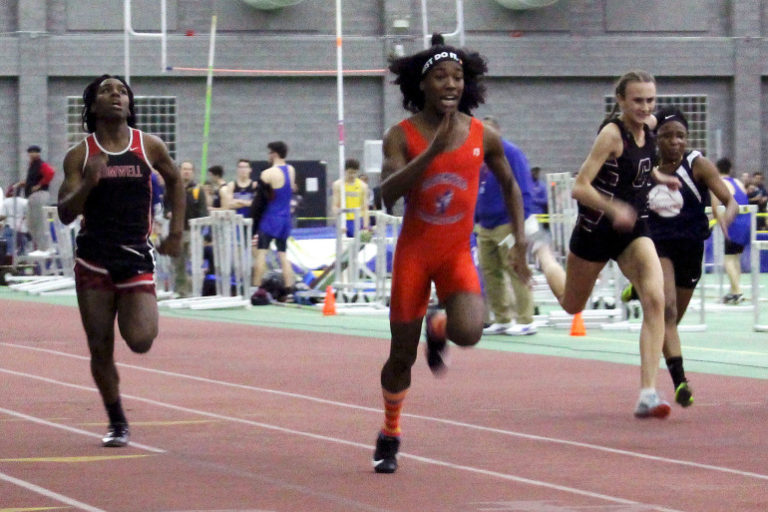
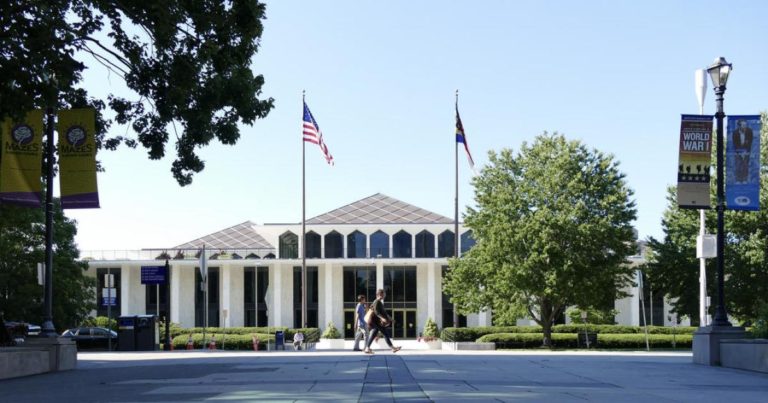
Connecticut high school transgender athletes Terry Miller, second from left, won the final of the 55-meter dash over transgender athlete Andraya Yearwood, left, and other runners in a 2019 Connecticut girls competition [File: Pat Eaton-Robb/AP Photo]
The new state laws are likely to generate court suits under federal anti-discrimination laws. A transgender sports ban in Idaho, passed in 2020, is presently on hold pending a federal court ruling on its legality.

In February, the Biden administration withdrew US government support for a lawsuit in Connecticut brought by women athletes seeking to block transgender competitors.

On April 26, a US District judge dismissed the Connecticut lawsuit on procedural grounds without addressing the substantive merits of the case. Plaintiffs said they would appeal.

President Joe Biden has issued executive orders prohibiting gender discrimination on the basis of sex or identity in federal policy and reversed a Trump ban on transgender people serving in the US military.

“Children should be able to learn without worrying about whether they will be denied access to the restroom, the locker room or school sports,” the Biden policy said.

Transgender Sports Bill Won’t Move Forward In North Carolina House – WFAE

The North Carolina General Assembly won’t advance legislation this year preventing transgender girls and women from competing in school sports labeled for biologically female athletes, a top legislative leader said.

“The House will not be taking up that bill,” House Speaker Tim Moore told The Associated Press in an interview. “We’ve spoken with the bill sponsors and others and simply believe that there’s not a need to take it up at this time.”

The inaction marks another decision by state Republicans to step away for now from controversial LGBT legislation rather than face criticism that GOP leaders in other states have experienced. Those actions, however, have failed to generate broader backlash.

Senate leader Phil Berger’s office said last weekthat there would be no votes on a bill that sought to limit medical treatments for transgender people under 21 and punish doctors who facilitate that treatment, adding that there was no pathway for it to become law.

The House is setting aside the “Save Women’s Sports Act,” which was pushed by social conservatives and other groups who said young women were in danger of losing spots on high school and colleges teams and sports titles to athletes who were born male, creating inherent unfairness. LGBT-rights groups strongly opposed the legislation. Parents and children told a judiciary committee hearing this month that the prohibition would harm transgender girls who want to fit in and would amount to discrimination. No similar bill was filed in the Senate this year.

Moore expressed skepticism that the sports bill would have had enough votes to be adopted into law. Vetoes by Democratic Gov. Roy Cooper, an LGBT rights supporter, are tough for Republicans to override because their majorities aren’t veto-proof.

Moore called the transgender sports bill a solution in search of a problem that hasn’t yet surfaced in North Carolina as in other states. Since 2019, the North Carolina High School Athletic Association has received less than 10 requests from teenagers who identify as a different gender than on their birth certificate and seek to participate in formal athletics.

“We’re not really hearing any complaints about that where it’s an issue,” Moore told the AP late Wednesday.

Moore moved the transgender sports bill from the Judiciary Committee to the Rules Committee, where measures that the majority party doesn’t want to take up often get sent to die. That action happened Monday, the same day Apple Inc. announced the construction of its first East Coast campus in the Raleigh-Durham area and the creation of at least 3,000 jobs over the next decade.

Berger and Moore told reporters at a Monday news conference celebrating the Apple expansion that the company demanded no actions on legislation. Cooper did say that Apple CEO Tim Cook told him the repeal of North Carolina’s 2016 transgender bathroom bill was “important in their decision making,” as was the recent end of a moratorium on local government nondiscrimination ordinances.

Moore told the AP that parking the transgender sports bill had no connection to the Apple announcement. Rather, he said, the decision was the result of discussions within the House Republican Caucus.

Rep. Mark Brody, a Union County Republican and chief sponsor of the legislation, said Wednesday that he feels pretty confident the measure got derailed because “Apple’s come to town” but lacked hard evidence. Brody said the measure would have gone all the way to Cooper’s desk if House leadership had given the green light to vote on it, but a veto would have occurred.

“I’m disappointed that it isn’t moving,” Brody said, adding that the conflict will resurface when a transgender girl wins a state championship in a sport designated for women. “I think the issues are not going to go away.”

Do you want to stay up to date on politics? Our weekly Inside Politics newsletter takes you on a deep dive of North Carolina politics with reporter Steve Harrison. Sign up here to have politics news delivered straight to your inbox.

Talk Hole: White Hole Summer – Interview

0

Talk Hole is the bi-weekly spoken column of New York’s alt-comedy darlings Eric Schwartau and Steven Phillips-Horst, offering their oracular powers of cultural analysis on all corners of the zeitgeist (high, low, top, bottom). From a Zoom call in Brooklyn, Schwartau and P-H (as Steven is lovingly referred) prove talk is chic and drop references to hot trends, hotter temperatures, and scalding political debates. This time around, Talk Hole gears up for the summer of New York City: masks are off, the mayoral race is on, and everyone is getting #YangGanged. 

———

[Background voice] Tax, as opposed to, or, in addition to, our property taxes went up…

ERIC SCHWARTAU: Are you at a community board meeting?

STEVEN P-H: Sorry, I was cramming for this session by watching a video of Dianne Morales. I’m looking forward to sharing my extremely informed views on the NYC mayoral race.

SCHWARTAU: I found it rude when you asked me to study up on the candidates. You said, “We’re looking for opinions and hot takes,” as if I’m just a contestant in your little column race. 

P-H: A column is always a race. It’s a friendly competition that you aim to finish as quickly as possible.

SCHWARTAU: Gentlemen, start your engines. And may the best columnist win!

P-H: I’m nervous to speak. The slightest thing could set you off. You’re ready to blow.

SCHWARTAU: I’m an instant pot filled with shrapnel.

P-H: Just like Northern Ireland. Did you hear the IRA is back?

SCHWARTAU: You’re the first to tell me. I guess I’m not on their mailing list.

P-H: It’s in Gaelic so maybe it went to your spam filter.

SCHWARTAU: “Gaylic”—isn’t that a dying language?

P-H: It’s transitioning to “Queer-lic.”

SCHWARTAU: So the Catholics and Protestants are fighting again. This is news?

P-H: Well, Brexit is making it harder to cross the border, which does feel very contemporary and “you’re not on the list” vibes.

SCHWARTAU: New York’s hottest club is… Northern Ireland.

P-H: There’s a lot of sectarian violence once you get past the bouncer. 

SCHWARTAU: Catholic muscle gays vs. Protestant ketamine theys.

P-H: My sense is these places grappling with independence and self-determination—Northern Ireland, Catalan, Scotland—will be irrelevant battles pretty soon. We’re heading towards a global corporate hegemony where everyone is stateless, and Google or Facebook’s Terms of Service are the only laws that matter.

SCHWARTAU: We’re either debt-exposed, testosterone-boosted Tesla crash test dummies or ambiently-enslaved Netflix junkies watching a doc on Tesla’s poor safety record thinking it counts as activism.

P-H: Test-watching a Netflix original series about Irish Amazon workers who decide to stop being mad at Protestants so they can meet their shipping quotas. 

SCHWARTAU: And they did it all without a union!

P-H: I will confide that most of my knowledge of The Troubles comes from Derry Girls.

SCHWARTAU: I’ll always remember when the IRA assassinated Lord Mountbatten in 1979.

P-H: With a name like that, you’re kind of asking for it.

SCHWARTAU: If you’re high on your “mount”? Honey, take several steps down.

P-H: At the very least, you’re asking to be mounted.

SCHWARTAU: Speaking of getting mounted, did you see Colton Underwood from The Bachelor came out?

P-H: Statistically, it was bound to happen.

SCHWARTAU: “Bachelor” has been code for gay for a long time. An unmarried man over a certain age with a chic, modernist “pad”? You’re either gay or a serial killer—your family doesn’t care which one, but either way, you’re out of the will.

P-H: After a certain amount of weeks living in a mansion with 16 women and not fucking them you start to wonder… what’s this guy’s deal?

SCHWARTAU: Right. Why are all his roommates girls? Why is he always surrounded by women? In high school, that meant gay.

P-H: The Bachelor franchise’s idea of women is definitely a gay man’s idea of women: Barbie dolls in evening gowns who can’t bend their knees or elbows.

SCHWARTAU: I like the idea of Colton telling the producer how to arrange the girls in the mansion. “Okay, now put Stacy and Katie together in the dressing room to comb each other’s hair, have Tammy meet Courtney for afternoon cokes in her convertible, and let’s just lock Rachel in the bathroom.”

P-H: And the only way they can interact is sort of banging their bodies against each other. 

SCHWARTAU: That sounds like when I went—as a chaperone, of course—to this midnight gay orgy at [redacted location] last week.

P-H: Was Colton there?

SCHWARTAU: It was very dark, so I’m not sure. It was right in the middle of [redacted location] but it was completely silent. All you could hear was the wind in the trees, and the occasional performative moan—no well drinks, no “yass queen,” no yelling in someone’s ear over Drag Race: All Stars remixes. Honestly, it was beautiful.

P-H: The silence is important because then the mayor doesn’t have to come down and say, “Hey kids, knock it off! Mom’s trying to sleep.” You give dad plausible deniability.

SCHWARTAU: And a lot of dads were actually there.

P-H: Cruising is so important to a properly functioning society. It requires a confrontation with fear that our layers of technology and avatars and passwords are so keen to stamp out. Fear of violence. Rejection. Errant fingernail scratches. Someone turning out to be less hot in the light of day. You have no choice but to face those fears. It’s liberating.

SCHWARTAU: There’s an ordered chaos to cruising, unlike the chaotic order of regular life. There’s a spiritual element—a guiding purpose and a heightened sensory experience. And cum.

P-H: And thank god we don’t have to wear masks anymore.

SCHWARTAU: Or condoms?

P-H: Our emotional walls are finally crumbling.

SCHWARTAU: Mine are still up. I did a lot of renovations during the pandemic.

P-H: Cruising is back. The Troubles are back. Cocaine is back. It’s 1986 all over again! 

SCHWARTAU: AIDS is back—we both just got that Sarah Schulman book on Act Up, Let The Record Show, thanks to our friends at Farrar, Straus & Giroux publishing.

P-H: It’s quite simply a huge book.

SCHWARTAU: Thicker than anything I’ve seen.

P-H: Even at the orgy?

SCHWARTAU: Unfortunately.

P-H: Didn’t Sarah Shulman write Conflict is Not Abuse?

SCHWARTAU: Yes, and a thick book is not abuse.

P-H: Depends on what you do with it. 

SCHWARTAU: I’m bringing mine to cruise in the park. Holding a book is code that you’re gay and bored. In fact, I hooked up with a guy I met on a plane because he was reading The Ethical Slut.

P-H: You hooked up on the airplane?

SCHWARTAU: It’s actually not ethical to have sex on a plane because it holds up the bathroom line. We went to his hotel in WeHo.

P-H: Now, how thick was that book?

SCHWARTAU: It’s not the size that matters—it’s the eye-catching title.

P-H: I was in Central Park recently during the all-ages shift, and there were aspiring influencers parked in front of every single cherry blossom tree—armed to the teeth with selfie sticks, makeup kits, tripods, ASOS dresses in bright colors that’ll read on camera. They were ready for social media war.

SCHWARTAU: People really think they invented spring. They act like they’re in the group show at a blossom launch.

P-H: Interrogating spring by contextualizing their work within the square crop of Instagram.

SCHWARTAU: Tik-Tokking the Trees: How Gen Z is Redefining Nature and Revolutionizing Nurture. 

P-H: I saw one mom creative directing her six-year-old daughter. “Okay now, give me arm. More arm!” This poor Kindergarten nodal was just dangling off a cherry tree. We’re starting them very young.

SCHWARTAU: What I’ve learned from having a dog for three weeks is that you have to start training early. Sit. Stay. Lengthen. Find your light. Good girl.

P-H: Now I know why George Washington chopped down that cherry tree. His influencer daughter was too busy taking selfies in front of it.

SCHWARTAU: Speaking of politics, I want to talk about the mayor’s race.

P-H: It’s finally time for a new dad.

SCHWARTAU: It’s finally time for Ranked Choice Voting!

P-H: If there’s anything Drag Race fans are good at, it’s ranking people.

SCHWARTAU: If we’re going to make a day of it, we might as well get more bubbles to fill out. We could rank them in different categories—charisma, uniqueness, resource management, police defundment, etc… 

P-H: I’d love to vote for Miss Congeniality. There should be a mini challenge and a maxi challenge. 

SCHWARTAU: I think City Council is the mini challenge.

P-H: So who’s in your final four?

SCHWARTAU: I’ve basically only heard of Yang.

P-H: That seems to be the trend. People have heard of him.

SCHWARTAU: It’s so convenient to have heard of someone.

P-H: Building a national profile with a presidential campaign just to come down to some local office with all this name ID is admittedly a smart strategy.

SCHWARTAU: I hope he knows this is his last stop on the campaign trail. You don’t go anywhere after being Mayor of NYC. It’s a real dead end. You make a lot of enemies.

P-H: What about Guiliani? He went to Ukraine. I’m sure that was fun.

SCHWARTAU: And poor de Blasio. He tried to leave early and got sent right back.

P-H: At least he’s still tall.

SCHWARTAU: How tall is Andrew Yang? He has a very big neck. That sort of implies height.

P-H: Judging by neck vibes alone, I’d say 5’10”. That’s what Reddit says as well, but it’s not official.

SCHWARTAU: I love that even in an age of satellite photography, his height is still speculation. 

P-H: So you’re voting for him?

SCHWARTAU: I like his plan to send one New Yorker to Mars per week by 2022. I appreciate that type of forward thinking.

P-H: Only one a week? We’ll need to pick up the pace if we want to clear out all the influencers.

SCHWARTAU: Andrew Yang represents my own interests as a fellow former founder of a company that’s not real and is now just a column. 

P-H: Andrew Yang represents your interests, which include people knowing who you are and moving backwards in your career.

SCHWARTAU: It’s very endearing that he acts like an alien who’s just discovering what bananas and bodegas are.

P-H: But does he really enjoy it? One of my problems with my old boss Bill de Blasio is that he’s very smart but obviously not that into being mayor. Bloomberg was a bitchy bully who had a real disdain for the people of New York. Most liberal politicians come off as egghead scolds. I think it’s time for someone who genuinely enjoys the vibe of mayoring. Which is why I am drawn to another former boss of mine, Scott Stringer, who conveniently for the relevancy of this column, was just Me Too’d.

SCHWARTAU: So are you against him now?

P-H: Well, he never touched me, so I’m definitely feeling left out.

SCHWARTAU: Right, to be a politician you either need to touch everyone, or no one. That’s why Elizabeth Warren did the selfie line—managed and documented mass-touching. 

P-H: It’s interesting that his accuser says she was an intern on his campaign and he says she was 30 at the time. That seems like something you could fact-check. 

SCHWARTAU: Okay, I’m fact-checking whether an intern can be 30. 

P-H: The reality of local New York races is literally no one votes in them, so unless this scandal balloons it might not even matter either way. If anything, I should be biased against him—I was fresh out of college and he paid me a $21,000 annual salary. I worked 10 hour days, six days a week. One time I organized a fundraiser in the Hamptons for him and he admonished me for having a glass of wine while I was gathering checks. And I raised $20k that night! Now that I think about it, I’m pissed.

SCHWARTAU: Let the gays have their grigio.

P-H: But I’m sorry, Andrew Yang is a carpetbagger. His connection to New York is so inauthentic. He’s like if the Taylor Swift song “Welcome to New York” ran for mayor. 

SCHWARTAU: I would vote for “Delicate” if it ran for mayor.

P-H: I would vote for “exile (feat. Bon Iver).” 

SCHWARTAU: Which would make Bon Iver the First Lady?

P-H: Yes, and just like Chirlane, he’ll direct the city’s mental health initiative. Sad indie guitar for all those who are struggling.

SCHWARTAU: It just seems like Yang is the only one making waves. There’s a lot of progressives trying to ride the AOC train, but no one is giving me that star power.

P-H: There’s Maya Wiley who’s a professor at The New School, which is truly the last thing we need. Another Warren-esque schoolmarm telling us what to do, sending every infraction up the HR chain of command.

SCHWARTAU: I feel like she’s referenced “Zoom fatigue” an impeachable number of times.

P-H: I could get into Dianne Morales—her positions seem fine—but she comes from that messy non-profit world. Lots of moral superiority and grant proposals, but where’s the money, honey? Where’s the power? Where’s the glam?

SCHWARTAU: It’s in L.A.

P-H: Which brings us to Caitlyn Jenner’s run for governor.

SCHWARTAU: Jesus take the wheel. Like, actually, please take control of her Chevy Tahoe this second.

P-H: That amazing campaign ad you created—where you spliced together Caitlyn’s reality show promo with the Lana music video—really made me wanna vote for her. Wafting through a Malibu beach house before blowing up a helicopter with a bazooka is exactly what a governor should do.

SCHWARTAU: She should really tap into her Lana side.

P-H: Just like Lana, Caitlyn is an icon of isolation. Even when she was Bruce she was always off somewhere else in the Kardashian mansion, grumpy, alone, antagonized, in a golf shirt. I mean, what’s lonelier than golf?

SCHWARTAU: Her politics are classic 90s grumpy old man—fiscally conservative and socially liberal. But she actually needs to switch it up. Socially trad and fiscally reckless.

P-H: I agree. Let’s make it rain subsidies for mass transit, but keep sexuality binary. I feel like she’s very “you should only be a woman if you can pay for it, sweetheart.”

SCHWARTAU: Same goes for running for governor. 

P-H: Speaking of California… 

SCHWARTAU: Hashtag #oscarssoboring.

P-H: Did you watch? I didn’t see you live-tweeting.

SCHWARTAU: The whole show felt like a live tweet—hastily constructed, obscure references, very few likes. I had no idea what was going on.

P-H: I kept waiting for them to mention a movie I’d seen, or heard of, or a friend’s roommate had read an article about, but nothing recognizable materialized.

SCHWARTAU: I just read the article that inspired Nomadland about roving bands of seniors living in RVs, working $12 per hour seasonal jobs at Amazon warehouses who will never be able to afford to retire. 

P-H: Retirement is for suckers. Imagine if Anthony Hopkins had retired before making The Father.

SCHWARTAU: I still wouldn’t have seen the movie.

P-H: I loved that everyone thought Chadwick Boseman would win, and then Anthony Hopkins wins for a movie no one’s ever heard of, and not only is he not in the room, but he doesn’t even Zoom in. He’s asleep at his cottage in Wales. He cucked us all so hard. We pathetically cared about the Oscars, desperately live-tweeting, waiting for the actor with the viral death to go viral one last time—and Anthony was like, “Girl, I’m not even awake.”

SCHWARTAU: It was a great reminder to both have a cottage and go to bed.

P-H: It’s funny that people said it was rude to Chadwick because Anthony didn’t appreciate his own win enough. I’m pretty sure the dead guy wouldn’t have appreciated it either.

SCHWARTAU: Hollywood really went headlessly woke kicking homeless people out of Union Station to host the ceremony then paying tribute to them with Nomadland.

P-H: Representation matters.

SCHWARTAU: I feel like Nomadland is probably bad based on the amount of self-congratulatory moralizing surrounding its win.

P-H: I’m sure it’s horrible. The last Oscar-winning Frances McDormand parable about American society was Three Billboards and that was the worst film I’ve ever seen in my life.

SCHWARTAU: Worse than it’s prequel, Two Billboards?

P-H: My personal Oscar will be getting rid of my quarantine love handles by following the diet Riz Ahmed went on to get shredded for The Sound of Metal, which is a movie I learned about while watching the Oscars. 

SCHWARTAU: I’m going to say something a little controversial here, which is that I don’t think having a perfect body is attractive.

P-H: Wow, the brave body positive warrior. Maybe you should run for mayor, I hear there’s an opening.

SCHWARTAU: People who have really chiseled bodies are often super unapproachable, deeply boring, and not that fun in bed. 

P-H: But a perfect, Riz Ahmed in The Sound of Metal body isn’t just something you get to lure NYC primary voters into your bedroom. A good body can have other benefits. For example, looking good in clothes.

SCHWARTAU: Looking good in clothes can add years to your life.

P-H: That’s what Dr. John Galliano said at the last WHO meeting.

SCHWARTAU: Which brings me to my last topic, which is that Europe will be open for business this summer!

P-H: The collective sigh of relief amongst disposable income coastal millennials is deafening.

SCHWARTAU: Earth is going to just like, tip over from how many gay guys go to Europe this summer.  

P-H: She hasn’t been tested for this amount of weight. The protein powder kegs alone will push her right off her axis. 

SCHWARTAU: I’m bringing my Andrew Yang-branded poppers to spread the gospel.

P-H: Getting Yang-Ganged in Greece.

SCHWARTAU: Follow my travel vlog, Greased up in Greece.

P-H: I’ll be headed to Croatia, France, Cyprus, Portugal, the WHO secret lab for my sixth vaccine, and of course Northern Ireland, where I will be fighting for both sides because, much like Andrew Yang, I believe in having fun and creating a future that brings everyone I know nothing about to the table. 

SCHWARTAU: Sounds like a real Digital Nomadland, which is a movie I would actually see.

P-H: I’ll book Chloé Zhao to shoot it. It’s mostly just me in different outfits in various cities, doing my Kamala stomp.

SCHWARTAU: Can’t wait for your Belfast look.

P-H: It’ll be a custom piece that represents the two sides of war, and it’s just two different plaid shirts buttoned together.

SCHWARTAU: I think it should be more of a linguistic pun on Belfast, and you’re literally wearing bells.

P-H: And they’re moving really fast!

SCHWARTAU: They’re blowing in the air.

P-H: Just like you in the airplane lavatory.

SCHWARTAU: That’s why they call it cruising altitude.

P-H: Mask off, pants down, wheels up!

SCHWARTAU: See you in Belfast.

P-H: Cheerio. Don’t forget to vote.

SCHWARTAU: Don’t forget to rank.

There’s a gay wage gap – and it’s linked to discrimination Gay men earn 11% less while – The Conversation UK

The wage gaps that exist between men and women and between white and black people have received a lot of attention in recent years. But there’s another wage gap that tends to be overlooked – between heterosexuals and LGBT+ people.

Interestingly, it works in two different directions: most studies show a wage penalty for gay men but a wage premium for lesbian women compared with their heterosexual counterparts. One analysis of 32 studies from several countries found that on average, gay men earned 11% less than heterosexual men, while lesbian women earned 9% more than heterosexual women. Studies and surveys have also shown a negative wage gap for bisexual and also for transgender people, though the evidence is much more limited, particularly for transgender people.

Within the data on gay people, there are also variations between countries and depending on how exactly sexual orientation is classified, for example whether it’s based on survey evidence or cohabitation – and there are studies such as this one from the US that found gay men actually earning more. But if the numbers above reflect a broad average, why do such differences arise?

One possible explanation is the work choices that gay people make. Research suggests gay men are more likely to avoid occupations that are more male-dominated than other men (which includes the best paid jobs), while lesbian women are more likely to avoid female-dominated occupations than other women (which are typically worse paid). Lesbians may also earn more because they tend to work longer hours.

But why do gay people enter different professions? It may be because they make different educational choices. For instance, LGBT+ students in the US are less likely to finish school and attend university than other students. American men in same-sex couples are more likely to obtain a bachelor’s degree than men in different-sex couples, but they are 12 percentage points less likely to complete their degree in a STEM subject.

The role of discrimination

A key question is whether these differences in wages and choice of employment are driven by prejudice, or whether they are the result of some innate, work-relevant traits of gay people related to their preferences or skills. If gay men are paid less because of prejudice, then society is not making the best use of their skills and productivity. This would be economically inefficient and would hold back output, because it would suggest that gay men are not making the contribution that they could.

It’s not easy to get to the bottom of why these differences in wages and employment exist. But recent research using various methods has certainly found that discrimination is a key driver.

I will highlight three examples. First, research from Australia has shown that gay and lesbian workers choose to enter occupations with fewer prejudiced workers, with male-dominated occupations more likely to feature discrimination.

Second, in a research experiment in the US, participants were asked to evaluate CVs. Some of the CVs made references to LGBT+ activities while others did not. Male participants penalised CVs that included an LGBT+ activity.

Third, discrimination of LGBT+ people emerges in workplace surveys. For instance, Stonewall and YouGov found in 2017 that 18% of LGBT staff in the UK had been a target of negative comments or conduct from work colleagues in the previous 12 months because of their sexual orientation.

Inclusion and economic benefits

Discrimination against gay people is a global issue. The Franklin & Marshall Global Barometer of Gay Rights gave 62% of countries a failing grade on legal and social protections afforded to LGBT+ people in 2018. Contrasts among countries are wide. For example, Finland scored 96% in the barometer, while Russia scored just 19%.

This raises the question of whether it is possible to quantify the potential economic consequences of this discrimination, particularly in countries that lag the world’s leaders in both economic output and LGBT+ rights.

One approach is to estimate the lost productivity due to discrimination among gay people, based on research from countries where such data are available. These estimates can then be applied to the GDP of other countries. Open For Business, a global coalition of companies, on whose research advisory board I sit, has just done exactly that for Hungary, Poland, Romania and Ukraine – four countries with GDP per capita and LGBT+ inclusion ratings well below the European average.

At the low end, the report estimates that LGBT+ discrimination costs the Hungarian economy between 0.1% and 0.2% of GDP each year, or around £200 million. At the high end, the estimated cost to the Romanian economy is between 0.6% and 1.7% of GDP, or up to £3 billion.

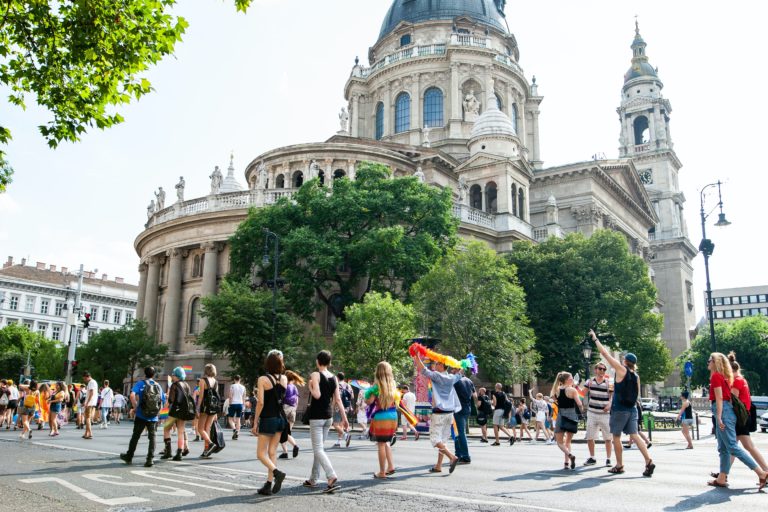
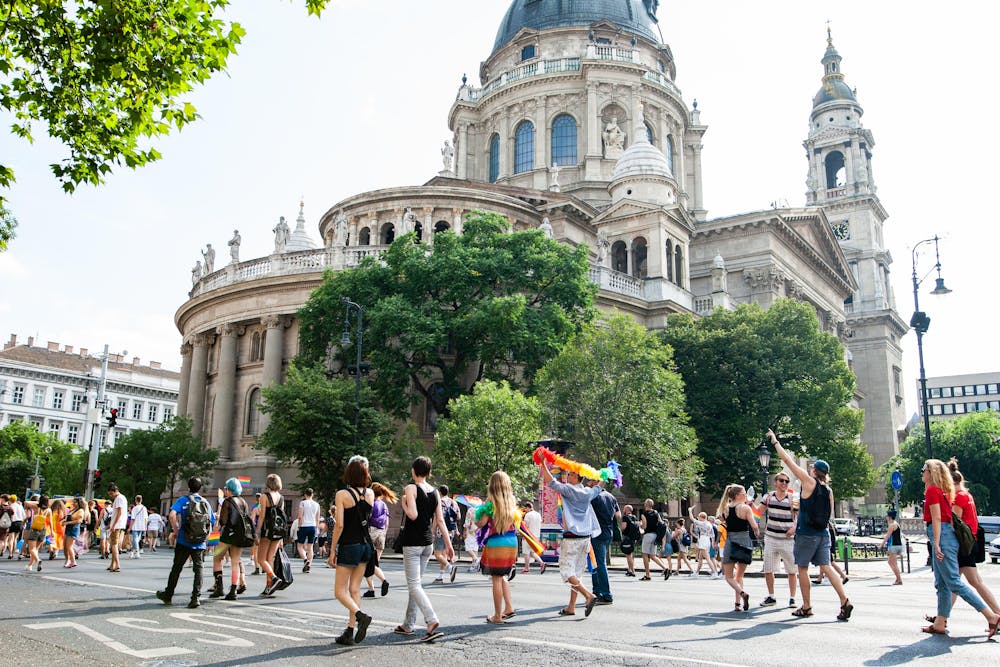
Men and women walk through city street, some with rainbow flags and clothing.
Pride march in Budapest, Hungary, 2019. Zoltan Galantal/Alamy

While these figures are unlikely to make or break a country’s economy, they are substantial in context. For instance, the Romanian government’s spending on education was 3.1% of GDP in 2017. Lost GDP from limited LGBT+ inclusion could fund half of that spending every year.

Moreover, these estimates only represent direct costs of exclusion. There could be additional, indirect economic costs related to brain drain, adverse effects of discrimination on well-being, or even foreign investors going elsewhere because they worry that the prejudice in a country’s workforce could harm their reputations.

One thing that this report does not consider is the potential negative effects of inclusion. For instance, could higher participation of gay people in the workforce actually deter prejudiced heterosexual people from, say, working as productively, or even working at all?

There are two reasons why this is unlikely. First, several studies on the legalisation of same-sex marriage in the US have found no effect on different-sex couples, including no impact on the probability of whether they are employed.

Second, even though prejudice does exist, attitudes do shift as LGBT+ rights evolve. Recent research has shown that attitudes towards LGBT+ people turned more positive after laws recognising same-sex relationships were enacted across Europe. More inclusive laws led to more tolerant views – not the opposite.

One explanation is that equality laws confer legitimacy toward sexual minorities – and attitudes adjust in response. This suggests that such laws could eventually be accepted, even in countries where acceptance of LGBT+ people is low.

If so, and given the potential economic benefits, it is another reason why greater inclusion is worth pursuing. Beyond the level of individual countries, this could also bring benefits for the global economy.

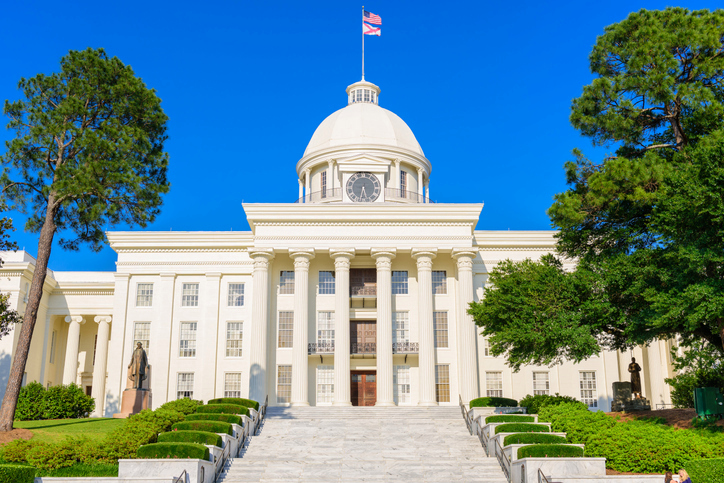
Alabama removing anti-gay language from state’s sex ed law – WHNT News 19

Alabama removing anti-gay language from state’s sex ed law | WHNT.com


Honey Bear Mural Painted Over By SF LGBT Center; Artist fnnch Responds – KQED

The mural project “was already an idea the Center had conceptualized” before June of last year, Danielle Siragusa, the LGBT Center’s director of development and communications told KQED in an email. “As we were beginning to put an implementation plan in place, we were approached by fnnch at the beginning of shelter-in-place who offered to do the mural cost-free for us. We then decided this would be a great fit to be the inaugural mural to kick off the annual rotating mural project.”

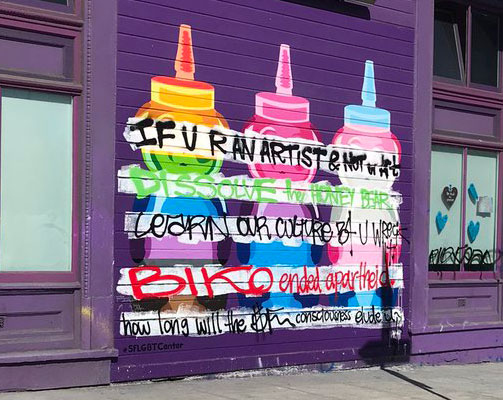
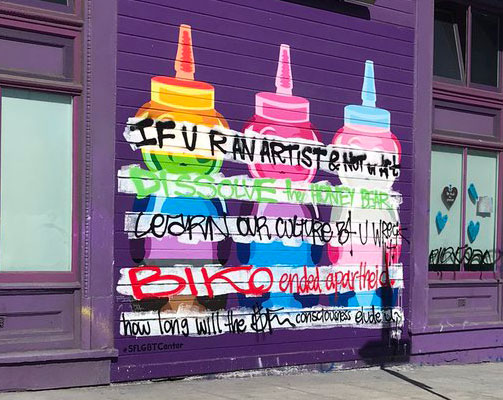
A mural of honey bears by street artist fnnch is defaced on the side of the SF LGBT Center.
A mural of honey bears by street artist fnnch is defaced on the side of the SF LGBT Center. (Twitter/@Tosa_Dad)

Over time, though, the fnnch mural became the site of contrasting visions of San Francisco. It was both a background in photo ops for local leaders and the repeated target of graffiti, with San Francisco street artists focusing on the honey bears as a symbol of gentrification. Before it was painted fully white on Tuesday, messages written across the mural read “Dissolve the Honey Bear” and “Learn Our Culture B4 U Wreck It.”

When asked how the controversy over the LGBT Center mural might change the way he approaches future projects, fnnch wrote in an email, “I am still learning from this experience. The clearest learning so far is to collaborate with artists from the communities I hope to uplift.”

An open letter to the LGBT Center, written by “members of the native SF community and those fighting to preserve it” and distributed by hand during a Wednesday afternoon gathering across from the site of the fnnch mural, called for the center to “reevaluate who you choose to represent the city you service.”

As part of yesterday’s statement, the LGBT Center added that the next set of artists have been selected (a yet-unnamed collaborative duo) and that “they are both members of the LGBTQ+ and BIPOC community.” Their mural is scheduled to be unveiled in June for Pride month. The center also plans to hold open applications for future murals. “Our goal is to showcase a variety of perspectives, art and artists representing our diverse communities,” the statement reads.

Read fnnch’s full statement provided to KQED below.

A year ago I brainstormed with my publicist, a community leader in the LGBT community, how we could celebrate the 50th anniversary of Pride. I have been creating Pride art and donating to LGBT charities as long as I’ve been creating street art, and last year was of particular importance to me as the 25th anniversary of my uncle’s death from AIDS. We decided that a mural was something people could enjoy in a socially distant fashion, and so he approached the SF LGBT Center, asking if we could paint one there. Their wall, like most walls, had sat empty for over 100 years, and while they had discussed the idea of a rotating mural there, they had no concrete plans to do one but were generally open to the idea. I worked with them on the design over the period of months and we settled on one that they not only approved but ran by members of their community. I painted it for free, donating my time, team and materials, and it was generally well received. Throughout the year, over 100 community leaders came out to take photos with it, including London Breed, Mark Leno, Deborah Walker, Sister Roma, Paul Henderson, and Clair Farley. I also helped fundraise over $20k for The Center through t-shirt sales, painting donations, and my partnership with Humphrey Slocombe. The plan was always to rotate the mural after a year. It has now been a year. I am thankful to the SF LGBT Center that they let me paint this mural, and I am proud to have helped kick off a program that will bring public artwork to this incredible mural wall.

The World’s Oldest LGBTQ Bookstore Is Still a Toronto Icon – Thrillist

0

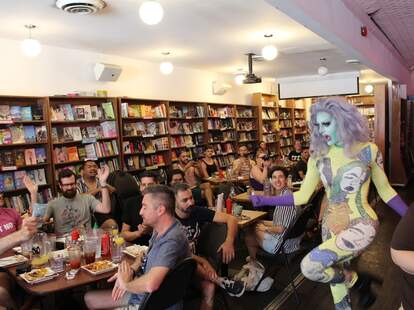
And in normal times, they throw the best dance parties in the city.

Something fun is happening. | Photo courtesy of Glad Day Bookshop

Something fun is happening. | Photo courtesy of Glad Day Bookshop

Note: We know COVID-19 is impacting travel plans right now. For a little inspiration, we’ll continue to share stories from our favorite places around the world. Be sure to check travel restrictions, protocols, and openings before you head out.

Sometimes a bookstore is more than just a bookstore. This is especially true in the queer community, where bookstores can function as safe spaces for activism and socializing—a place to check the bulletin board for a new roommate, a place to discover new topics and recommendations, a place to hold union meetings and even drag brunches. 

In Toronto, Glad Day Bookshop is all of the above and more. At 51 years old, it is the longest-running queer bookstore in the world, a trajectory that parallels Canada’s gay liberation movement itself. Co-owner Michael Erickson still remembers his first visit, when he first realized a representation he didn’t know was missing.

“My memory is that I was just astonished at the sheer number of books that had been written by and about gay, lesbian, bi, and trans people,” Erickson says. “I was overwhelmed at the amount, and then that also comes with a little anger and resentment because well, all these books are here, why did no one tell me? It was a mix of excitement and anger [over] your own history being denied to you.”

Photo courtesy of Glad Day Bookshop

Glad Day’s story begins in 1970 with a guy and a backpack. Frustrated by the lack of access to queer books in Canada, activist Jearld Moldenhauer turned himself into a mobile library, hauling books and manifestos to gay liberation meetings. Eventually the backpack gave way to a permanent space on Toronto’s Yonge Street. 

The year was 1981—the year of Toronto’s bathhouse raids, and a turning point in the liberation movement. On February 5th police barged into four gay bathhouses, harassing bathers, prying open lockers, and gathering names of their families and employers. Just under 300 men were charged, the largest single arrest in Toronto history at the time.

toronto

The bathhouse raids became a catalyst for revolution akin to the Stonewall riots in New York, and the bookstore, a hub. “Glad Day was a site where people would gather and organize and mobilize,” explains Erickson. “It was people finding information about the next demonstration and protest.”

The Yonge Street location later included a third floor meeting and event space. The wall of the staircase became a community board where people sought and found roommates, lovers, friends, jobs, and support. “I think bookstores become like a home base for a lot of people’s journey of self-awareness,” says  Erickson. “It also ends up being a place where people can gather for free any time. The place where they can go where there’s a problem.”

Limber! | Photo courtesy of Glad Day Bookshop

The original spirit of Glad Day still persists today, so much so that it is quite literally owned by the community. When the bookstore was in danger of closing in 2011, Erickson corralled a group of over two dozen people to pool their money and purchase the space. Four years later, Glad Day relocated to Toronto’s prominent gay neighborhood of Church and Wellesley, to a former bar about five times bigger “and about five times the rent,” jokes Erickson. 

Bookcases are on wheels, rendering the space entirely malleable for its 75 or so monthly events. “It really has a multipurpose function, where you come for a drag brunch on a Sunday and it’s always sold out and packed, and twelve hours earlier there may have been a bear bash dance party, or a lesbian hip hop night.” Most of the events have no cover charge. 

In 2015, Glad Day created Naked Heart: LGBTQ Festival of Words, one of the largest queer and trans literary festivals in North America. In a typical year, they host 40 events and over 70 authors over a weekend in November. They’ve started hosting events on their Facebook page, so even in the pandemic, folks around the world can partake in everything from writing workshops to burlesque. Meanwhile their non-profit, Glad Day Lit, has raised over over $250,000 for drag queens and queer artists who are currently out of work.

And in non-Covid times during Toronto’s Pride—one of the largest Pride festivals in the world—they also provide some respite from the thronging crowds. At least, some of the time.

“We’re right in the heart of Pride [on Church street], so on Pride weekend we can’t do quiet readings anymore,” says Erickson. “We do it leading up to the event. They can kind of duck out of the crowds, so it can be a little bit of an oasis. But then at night we just have raging parties. It’s a really huge gathering and mix of people which includes not only travelers around the world, but people who live in rural communities all across Canada too. It’s just as wild, wet, and sexy as the rest of the city.”

What a delightful crosswalk. | Anna Kraynova/Shutterstock

Michael Erickson doesn’t just work on Church Street; he calls this neighborhood home.  Here are some of his favorite restaurants, bars, and businesses to visit next time you’re in The Village (post-lockdown).

Pegasus  
Four billiard tables, dart boards, pinball machines, and trivia nights (including the upcoming “Are You Smarter Than a Scottish Guy?”) make this bar a chill alternative to the more cruisy spots in the Village. 

Woody’s  
A Church Street institution opened in 1989, Woody’s is a must-visit for out-of-towners, who may recognize the bar from the television show Queer as Folk. (Though the series was set in Pittsburgh, it was filmed in Toronto.)

Dudley’s Hardware Paint & Decor
The oldest business on Church Street opened in 1934, Dudley’s is a one-stop-shop for all DIY and Pride parade needs. 

The Black Eagle 
Leather and/or denim is the demo of this two-floor industrial bar and dance club, though a simple jockstrap would work just fine. Heavily cis-male, with theme nights from Kink 101 to RuPaul’s Drag Race screenings. 

Buddies In Bad Times 
An alternative theater spotlighting queer voices for the stage, plus more well known fare like a staging of Larry Kramer’s The Normal Heart and a performance by porn activist Annie Sprinkle.

barchef

Crews & Tangos
A two-floor space known for lively drag shows, plus karaoke nights and a dance floor when you’d rather be the one doing the performing. 

Hair Of The Dog
This gastropub’s spacious, ivy-laced outdoor patio is often voted the best in the city and pairs well with the notable wine list and hearty fare. 

Craig’s Cookies
You can have your Pop Tart or rainbow chocolate chip cookies stuffed with unique ice-cream flavors like Ube, but if you just want the cookie dough—a family recipe—you can do that too (they say it’s to bake at home but what you do with it is up to you). 

Spa Excess 
Toronto’s largest bathhouse for men, with over four floors including a whirlpool, billiards table, full bar and gift shop for all your bathhouse curio needs (and wants). 

Express Pizza 
“After clubbing, people flock to this place called ‘gay pizza’ by the locals,” says Erickson. “It is actually Express Pizza at 447 Church Street) and they serve simple slices to soak up the booze in your belly.”

Want more Thrillist? Follow us on Instagram, Twitter, Pinterest, YouTube, TikTok, and Snapchat!

Vanita Salisbury is Thrillist’s Senior Travel Writer. She knows that Spa Excess isn’t for her but there are some things in there she’d really just like to see for herself.

Our Newsletter

Florida moves to ban transgender athletes from high school sports – New York Post

Florida is the latest state to advance a measure that would ban transgender girls from competing in high school sports.

The measure was passed by the state’s Republican-led legislature Wednesday night, and will become law when signed by GOP Gov. Ron DeSantis, according to The Orlando Sentinel.

The bill was reportedly passed mostly along party lines after the stalled measure was amended into a charter school bill.

Similar bills have been passed in recent months by Arkansas, Mississippi and Tennessee, after Idaho approved a transgender sports ban last year. A federal judge issued a temporary injunction against the law in The Gem State.

More than two dozen other statehouses are considering a copycat ban.

Proponents claim the legislation is needed because transgender female athletes have greater strength, bone mass and muscle volume than their peers.

LGBT advocacy groups and civil rights advocates say the measures are discriminatory and not addressing a real problem, as most lawmakers sponsoring the bills haven’t cited problematic instances in their states.

“We don’t need to wait until there’s a problem in Florida for us to act,” Republican Rep. Kaylee Tuck, the sponsor of the original bill, reportedly said.

“If they want to play, let them play, there’s nothing to stop them,” Democratic Sen. Victor Torres, who has a transgender granddaughter, said according to the newspaper. “We thought it was dead, but obviously some don’t care.”

The revised measure removed a clause that would allow schools to examine the genitals of athletes suspected of being born male, according to the article.

Under the new resolution, a student’s birth certificate will reportedly be sufficient.