Home Blog Page 335

The Sports Report: Lakers fall to Washington Wizards – Los Angeles Times

Howdy, I’m your host, Houston Mitchell. Let’s get right to the news.

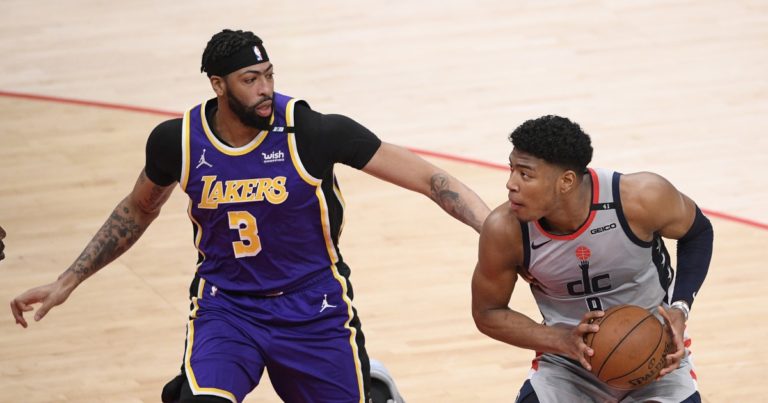
Broderick Turner on the Lakers: Anthony Davis sat on the Lakers’ bench for a few seconds after they had lost to the Washington Wizards, his head down and his hands crossed.

When the Lakers forward eventually got up, the sting of a 116-107 defeat resonated with Davis as he walked back to the locker room at Washington’s Capital One Arena.

Advertisement

It was his fourth game back after missing 30 with a strained right calf, and it was his best game on the four-game trip.

But Davis’ 26 points weren’t enough to prevent a defeat that gave the Lakers a 1-3 record on the trip.

Davis’ 10-for-20 shooting, two-for-five on three-pointers, five rebounds, three steals and one blocked shot couldn’t stop the Lakers from dropping their fifth game in seven outings.

“Just that we let it get away,” Davis said about his thoughts after the game. “I think our second quarter kind of just killed us. We didn’t play with any pace. Our defense was pretty poor and then coming out in the third quarter, kind of the same thing. I think our effort wasn’t there in the third quarter as well.”

————

A Black LAPD officer wants LeBron James to listen to his view of policing and race

Enjoying this newsletter? Consider subscribing to the Los Angeles Times

Your support helps us deliver the news that matters most. Become a subscriber.

CLIPPERS

Dylan Hernández on the Clippers: He’s still the guy who hit the side of the backboard.

Advertisement

Doesn’t matter how many points Paul George has scored this month or how many rebounds he’s pulled down.

Until the Clippers take down the Lakers in a postseason series, George will be the player who spectacularly misfired a corner three-pointer on one of the worst nights in franchise history.

And they’re still the team that blew a three-games-to-one lead.

Doesn’t matter the Clippers remain in third place in the Western Conference after 109-101 loss to the Phoenix Suns on Wednesday or how many games they’re ahead of the Lakers.

Advertisement

Until they reach the NBA Finals, the Clippers will be, well, the Clippers.

On its own, their track record presents formidable obstacles. The team’s health is threatening to make it insurmountable.

Which made coach Tyronn Lue’s pregame update on the sidelined Kawhi Leonard particularly disconcerting.

Basically, there was no update.

Advertisement

Asked when Leonard could return, Lue replied, “I’m not sure.”

DODGERS

Mike DiGiovanna on the Dodgers: The release was almost cathartic, the frustration of a brutal homestand filled with blown leads and late-inning losses and the tension of another tight game dissipating with every clutch two-out hit by the Dodgers in the eighth inning Wednesday.

First came the tack-on runs, a Chris Taylor run-scoring triple and an AJ Pollock RBI single that turned a two-run lead into a four-run cushion. Then came the “jug runs,” as manager Dave Roberts calls them, baseball-speak for “going for the jugular,” two-run singles by Matt Beaty and Mookie Betts.

By the time the inning was over, the Dodgers sent 11 men to the plate and scored six runs for an eventual 8-0 victory over Cincinnati, a taut pitchers’ duel between Dodgers left-hander Clayton Kershaw and Reds right-hander Sonny Gray ending with a position player on the mound for the Reds.

Advertisement

“There was a little exhale, I think, guys kind of let loose,” Roberts said after the Dodgers snapped a three-game losing streak. “I love the handshakes and the air high-fives from second base. We haven’t had a whole lot of those this past week.”

The Dodgers had lost seven of nine, three to the National League West-rival San Diego Padres, and through the seventh inning Wednesday, they were batting .183 (15 for 82) with runners in scoring position in their last 10-plus games. They had not scored a run after the seventh inning since April 17.

ANGELS

Jack Harris on the Angels: Alex Cobb got an arm around the shoulder when he returned to the dugout. Chris Rodriguez got pats on the head.

Such was the contrast between the Angels’ starting pitcher and bulk reliever on Wednesday night. Cobb looked shaky over just two innings, getting a quick hook after yielding three runs. But Rodriguez was stellar, pitching 3 1/3 scoreless innings of relief on a night the Angels’ bullpen lifted the team to 4-3 win over the Texas Rangers.

Advertisement

At first, it looked like the Angels (12-11) might roll to a rubber-match win at Globe Life Field. They scored four runs in the top of the first on two-RBI singles from Anthony Rendon and José Iglesias, then escaped a jam in the bottom of the inning with Cobb giving up only one run.

But after Cobb got in trouble again in the second, surrendering two more runs while failing to fool the Rangers lineup, Angels manager Joe Maddon took a gamble. He handed the game over to the bullpen, asking the relievers to protect a one-run lead over the final seven innings.

“Alex was not going to go much more deeply into the game,” Maddon said. “I went up to him after the second and said, ‘I don’t think it’s going to get a whole lot better.’ He agreed with me.

KINGS vs. DUCKS

Cam Fowler scored with 1:01 remaining and the Ducks ended a five-game losing streak by defeating the Kings 3-2 on Wednesday night.

Advertisement

Sam Carrick and Sam Steel also scored and John Gibson made 28 saves for the Ducks.

Gabriel Vilardi and Adrian Kempe had a goal for the Kings, who have lost three of four. Cal Petersen made 19 saves.

Fowler scored on a wrist shot at 18:59 of the third period to cap a rally after falling behind 2-0 in the second.

The Ducks scored twice in a 3:42 span late in the second tie the score. Carrick beat Petersen between his legs to get Anaheim on the board at 12:53, and Steel made it 2-all at 16:35 after being set up by Rickard Rakell’s clever pass from behind the net.

Advertisement

The loss left the Kings eight points behind St. Louis for the final playoff spot in the West Division despite getting two goals on special teams.

NFL

Chuck Schilken on the NFL Draft: The 2021 NFL draft is going to be quite different from last year’s edition.

That is, this year’s draft is returning to normal … or at least much closer to normal than the 2020 safer-at-home (or in Dallas Cowboys owner Jerry Jones’ case, safer-inside-a-$250-million-yacht) version of the annual event.

Sure, it was fun to peek into New England Patriots coach Bill Belichick’s kitchen and see whatever it was the teenagers at Tennessee Titans coach Mike Vrabel’s house were up to during last year’s remote draft.

Advertisement

But there were no festivities. No war rooms. No opportunities for fans to boo Roger Goodell (the commissioner performed his duties from the friendly confines of his own basement).

All of that is returning this year, although with certain COVID-19 protocols still in place, as the NFL takes its biggest offseason event to Cleveland.

Here’s everything you need to know to watch and enjoy the 2021 NFL draft.

When is the 2021 NFL draft?

Advertisement

It’s this week!

Thursday: First round, 5 p.m. PDT

Friday: Second and third rounds, 4 p.m. PDT

Saturday: Fourth through seventh rounds, 9 a.m. PDT

Advertisement

How can I watch?

The event will be broadcast on NFL Network, ABC, ESPN and ESPN Deportes. It will be streamed on the NFL and ESPN apps and on fubo TV.

If you can’t watch, or if you want to enhance your viewing experience, you can follow the first round of the draft with our live blog at https://www.latimes.com/sports. Our Pro Football Hall of Fame honoree Sam Farmer will provide instant analysis for every pick.

Read more details here

Advertisement

UCLA SOFTBALL

Thuc Nhi Nguyen on UCLA softball: Before she faced Maya Brady in the close-knit California softball circuit, Delanie Wisz knew plenty about the talented prospect. Brady was going to UCLA, where she committed as a freshman at Oaks Christian. She was also Tom Brady’s niece. She must be really good, Wisz thought to herself before playing Brady in high school.

Brady proved her future UCLA teammate right on a single play, bare-handing a high chopper to shortstop and gunning the runner out at first in a feat that is fresh in Wisz’s mind even years later. It showed Wisz who Maya Brady was.

“Regardless of her last name, she’s a great player on her own,” the UCLA infielder said.

Brady has embraced her famous last name and is starting to cast her own shadow alongside her famous uncle. Maya is not just “Tom Brady’s niece.” Try calling her Softball America freshman of the year, UCLA’s power-hitting left-hander or a do-it-all defensive spark plug. All apply to the budding star.

Advertisement

THIS DATE IN SPORTS

1901 — His Eminence, ridden by Jimmy Winkfield, wins the Kentucky Derby by 1 1/2 lengths over Sannazarro in the only Derby ever raced in April.

1961 — ABC’s “Wide World of Sports,” debuts.

1970 — Lakers guard Jerry West hits a 60-foot desperation shot at the buzzer to tie Game 3 of the NBA Finals against the New York Knicks. The Knicks outscore the Lakers 9-6 in the overtime for a 111-108 win.

1985 — Tony Tubbs captures the WBA heavyweight title with a unanimous 15-round decision over Greg Page in Buffalo, N.Y.

Advertisement

1986 — Roger Clemens set a major league record by striking out 20 batters as the Boston Red Sox defeated the Seattle Mariners 3-1.

1988 — The Baltimore Orioles end their 21-game losing streak by winning their first game of the season, 9-0 over the Chicago White Sox.

1990 — Pat Riley becomes the winningest coach in NBA playoff history as the Lakers beat the Houston Rockets 104-100. Riley’s 100th victory put him ahead of Red Auerbach.

1998 — For the first time in the 124-year history of the Kentucky Derby, a redraw is ordered during the post-position draw. Churchill Downs officials allowed ESPN to control the announcing of the draw. Commentator Chris Lincoln called the No. 15 pill twice while picking the draft order for post positions.

Advertisement

2000 — Lennox Lewis knocks down Michael Grant three times in the first round and knocks him out at 2:53 of the second at Madison Square Garden in New York to retain his WBC and IBF heavyweight titles. The combined weight of 497 pounds made it the heaviest title fight ever.

2003 — Indiana outscores Boston 5-0 in overtime for a 93-88 victory, cutting the Celtics’ first-round series lead to 3-2. It’s the first overtime shutout in NBA playoff history.

2007 — Phoenix guard Steve Nash has 23 assists, one shy of the NBA playoff record, to help Phoenix to a 113-100 victory over the Los Angeles Lakers.

2010 — The NCAA’s Board of Directors approve a 68-team format for the men’s basketball tournament beginning next season. It’s the first expansion since 2001 when the tourney went from 64 to 65 teams.

Advertisement

2013 — NBA veteran center Jason Collins becomes the first male pro athlete in the major four American sports leagues to come out as gay. Collins writes a first-person account posted on Sports Illustrated’s website. The 34-year-old free agent played for six NBA teams in 12 seasons.

2014 — Clippers owner Donald Sterling is banned for life by the NBA in response to racist comments he made in an audio recording. The Clippers’ owner is also fined $2.5 million, the maximum amount allowed under the NBA Constitution.

And finally

Jerry West makes a 60-foot buzzer beater in the playoffs. Watch it here.

Bonus: The opening of ABC’s “Wide World of Sports” in 1974. Watch it here.

Advertisement

Until next time…

That concludes today’s newsletter. If you have any feedback, ideas for improvement or things you’d like to see, email me at houston.mitchell@latimes.com, and follow me on Twitter at @latimeshouston. To get this newsletter in your inbox, click here.
Anne Heche: Ellen DeGeneres didn’t want me to ‘dress sexy’ – Inside NoVA

Anne Heche claims Ellen DeGeneres didn’t want her to “dress sexy” when they were dating.

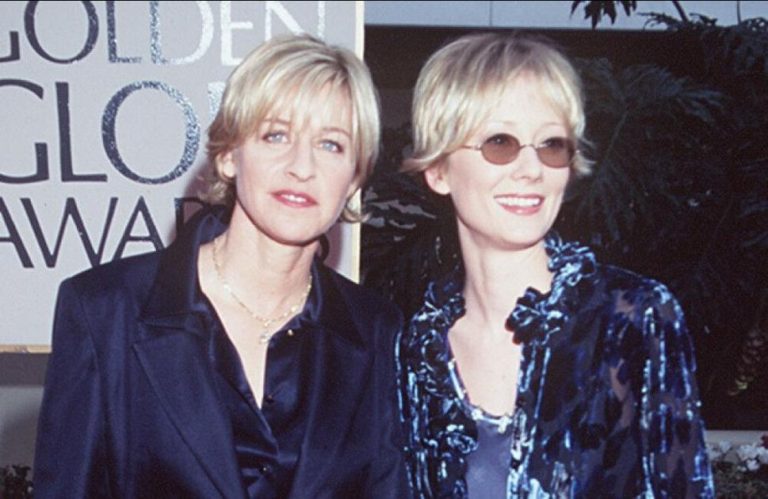
The ‘Volcano’ actress – who dated the talk show host from 1997 to 2000 – recently reviewed her “most iconic fashion looks” in a funny TikTok video and when looking back at the outfit she wore to the Golden Globes in 1998 with her then-partner, she made the revelation.

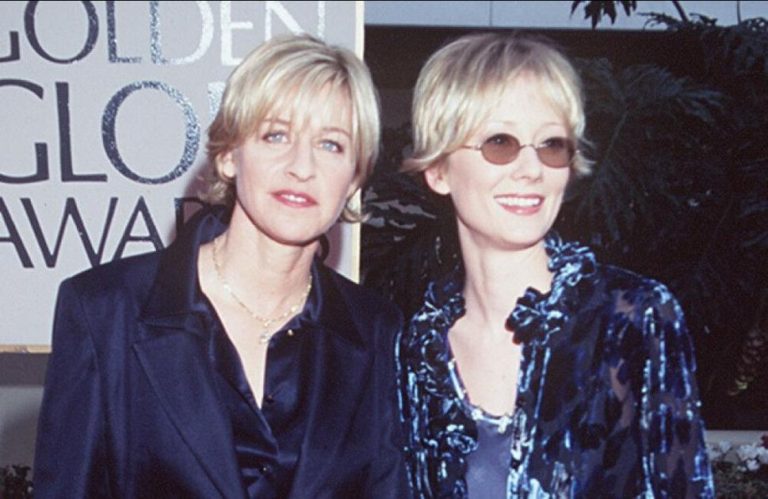
Showing a picture of Ellen in a silk navy suit and Anne wearing a matching dress, sheer duster coat and sunglasses, the actress said: “Why do I look like a hippie? It’s because Ellen didn’t want me to dress sexy.”

She gave her look a zero out of 10 and put her thumbs down as she said: “Bye, no.”

But while Anne didn’t rate that look, she felt the red Prada outfit she donned to present with P. Diddy at the 1998 VH1 Fashion Awards was a “total hit” and a Versace cut-out gown she wore for an HBO afterparty was worth a full 10 out of 10.

The ‘Donnie Brasco’ actress concluded her review with a look back at one of her most iconic ‘Dancing With the Stars’ outfits.

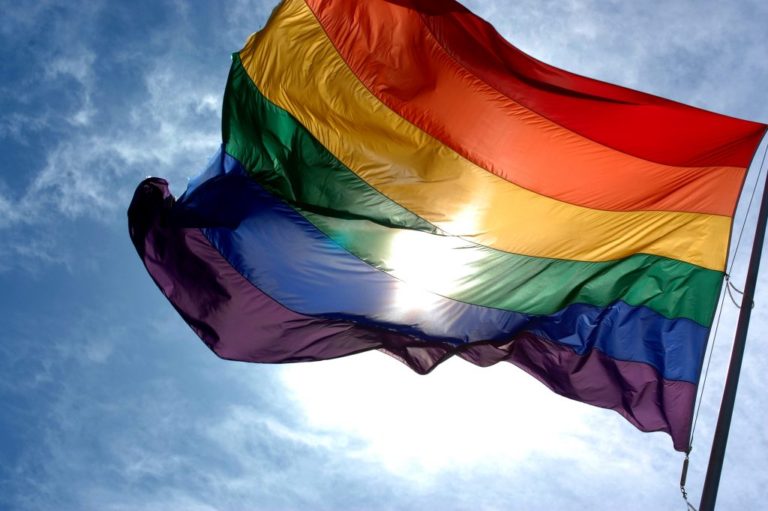
She said of the rainbow-caped ensemble: “What better time to have you go inside out, upside down and backwards for gay rights and human rights. I am the flag.”

During her time competing on the show last year, the 51-year-old star claimed she lost a multi-million dollar movie contract because of her relationship with Ellen and wasn’t even allowed to attend the afterparty of her own movie because bosses were concerned about negative publicity.

And after defying the ‘Finding Dory’ star’s advice to keep their relationship under wraps for the sake of her career, Anne experienced tough consequences to her career for the next decade.

She reflected: “My story is a story that created change in the world, moved the needle for equal rights forward

“In 1997, I met Ellen DeGeneres at the Vanity Fair party and that was the night that changed my life forever.

“My movie premiere for ‘Volcano’, I had told them that I was taking Ellen as my date and I was told if I took Ellen I would lose my Fox contract

“At that moment, she took my hand and said, ‘Do what they say,’ and I said, ‘No thanks.’

“I took Ellen to the premiere and I was ushered out by security before the movie even ended and was told I was not allowed to go to my own after party for fear they would get pictures of me with a woman… she was warning me, ‘This is going to happen.’

“I was in a relationship with Ellen DeGeneres for three-and-a-half years and the stigma attached to that relationship was so bad that I was fired from my multi-million-dollar picture deal and I did not work in a studio picture for 10 years.”

Anne Heche: Ellen DeGeneres didn’t want me to ‘dress sexy’ – pdclarion.com

Anne Heche claims Ellen DeGeneres didn’t want her to “dress sexy” when they were dating.

The ‘Volcano’ actress – who dated the talk show host from 1997 to 2000 – recently reviewed her “most iconic fashion looks” in a funny TikTok video and when looking back at the outfit she wore to the Golden Globes in 1998 with her then-partner, she made the revelation.

Showing a picture of Ellen in a silk navy suit and Anne wearing a matching dress, sheer duster coat and sunglasses, the actress said: “Why do I look like a hippie? It’s because Ellen didn’t want me to dress sexy.”

She gave her look a zero out of 10 and put her thumbs down as she said: “Bye, no.”

But while Anne didn’t rate that look, she felt the red Prada outfit she donned to present with P. Diddy at the 1998 VH1 Fashion Awards was a “total hit” and a Versace cut-out gown she wore for an HBO afterparty was worth a full 10 out of 10.

The ‘Donnie Brasco’ actress concluded her review with a look back at one of her most iconic ‘Dancing With the Stars’ outfits.

She said of the rainbow-caped ensemble: “What better time to have you go inside out, upside down and backwards for gay rights and human rights. I am the flag.”

During her time competing on the show last year, the 51-year-old star claimed she lost a multi-million dollar movie contract because of her relationship with Ellen and wasn’t even allowed to attend the afterparty of her own movie because bosses were concerned about negative publicity.

More from this section

And after defying the ‘Finding Dory’ star’s advice to keep their relationship under wraps for the sake of her career, Anne experienced tough consequences to her career for the next decade.

She reflected: “My story is a story that created change in the world, moved the needle for equal rights forward

“In 1997, I met Ellen DeGeneres at the Vanity Fair party and that was the night that changed my life forever.

“My movie premiere for ‘Volcano’, I had told them that I was taking Ellen as my date and I was told if I took Ellen I would lose my Fox contract

“At that moment, she took my hand and said, ‘Do what they say,’ and I said, ‘No thanks.’

“I took Ellen to the premiere and I was ushered out by security before the movie even ended and was told I was not allowed to go to my own after party for fear they would get pictures of me with a woman… she was warning me, ‘This is going to happen.’

“I was in a relationship with Ellen DeGeneres for three-and-a-half years and the stigma attached to that relationship was so bad that I was fired from my multi-million-dollar picture deal and I did not work in a studio picture for 10 years.”

The Quick Rise and Quicker Fall of Michael Sam – Sports Grind Entertainment


The annual National Football League draft is a reminder of perhaps the prototypical example of our media’s desire for a perfect narrative over what is actually happening before them — the lightning-fast rise, and equally speedy fall, of Michael Sam.

For a few months in 2014, Sam — the first openly gay athlete selected in the NFL draft — was one of the biggest names in the sports world. ESPN gave him the Arthur Ashe Courage Award, he was a finalist for Sports Illustrated’s Sportsman of the Year, and he was one of GQ’s Men of the Year. When he was drafted by the then-St. Louis Rams, President Obama issued a statement declaring it “an important step forward in our Nation’s journey.” Shortly after the draft, Sam’s jersey became the second-highest-selling one in the league, after . . . er, Johnny Manziel.

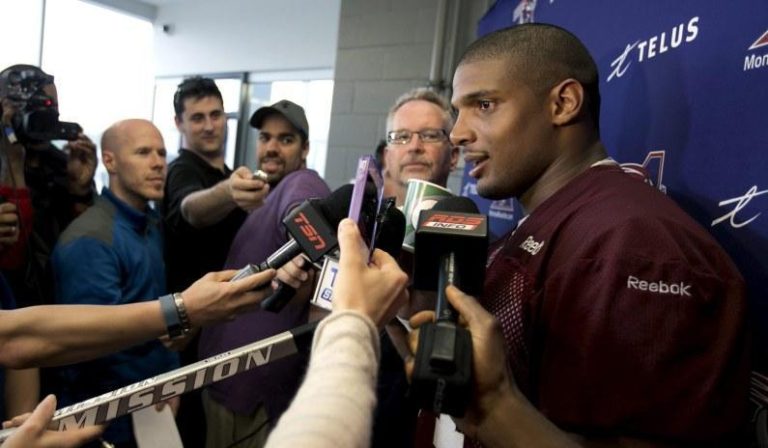
The reason you probably don’t remember much about Sam on the football field is because he never played a single snap in a regular-season game in the NFL. The Rams drafted him in the seventh round, the 249th of 256 players. Sam played a little in preseason, then the Rams released him before the season started. The Dallas Cowboys signed him to their practice squad — extra spots for players who practice with the team but do not participate in games. A few weeks later, the Cowboys released Sam from the practice squad, and that was the end of his career in the NFL. The only photos you can find of him playing in an NFL uniform are from meaningless preseason games. Sam did sign with the Montreal Alouettes of the Canadian Football League and make the roster, but he played in only one game before quitting the team.

The problems with Sam on the field were there for anyone who watched him closely.

Before Sam was drafted, Greg Bedard of Sports Illustrated watched game tapes of Sam playing college football at Missouri and concluded that, while Sam played hard and made some big plays, he would have difficulty transitioning to the NFL:

Sam was a good player for one season in college. He was productive, so the accolades he received were earned. But being a good college player and becoming a good NFL player are two different things (see Tim Tebow). Sam did well for Missouri with a lot of talent around him. A majority of his production came in three games against inferior competition without a need to show much of a pass-rushing repertoire. He doesn’t show much of what the NFL looks for on special teams, and it’s difficult to project a position for him on the next level. For those reasons, Sam would project to be no better than a mid- to late-round pick. He could go undrafted. To my eyes Sam is decidedly average, with nothing exceptional about his game — though he will be helped by the fact that this draft is not deep with pass rushers, and those are always needed.

There’s no particular shame in Sam only briefly appearing on an NFL team’s roster. Lots of players who excel at the college level never make the jump to the pros. Playing and breaking into the starting lineup of an NFL team is really difficult. But the expectations for Sam were off the charts. Some of that might be his fault; before getting drafted, Sam had been in talks with Oprah Winfrey’s OWN network to create a documentary series chronicling his life in professional athletics — something the Rams didn’t know when they drafted him. Sam at least had the good sense to drop plans for the series after a discussion with the team. But the white-hot spotlight probably didn’t help him in those consequential first moments of his career.


In 2015, as Sam prepared for a usually little-noticed event called the Veteran Combine — an organized workout for cut players looking for another shot with a team — Bleacher Report’s Mike Tanier contended that all of the media attention designed to celebrate Sam was hurting him. He was a marginal, bottom-of-the-roster player who brought superstar media scrutiny with him. Tanier predicted Sam would get “passed up in favor of some anonymous defensive ends with roughly similar resumes. If only we had kept our mouths shut. It’s a self-fulfilling prophecy. We can only defy it by keeping quiet and adopting a ‘no biggie’ attitude toward Sam’s comeback. You and I are Sam’s biggest problem right now. If we treat him like just another guy, maybe the NFL will, too.”

Many, many people in both the national media and sports-media world wanted Sam to be the next Jackie Robinson — to not merely break a metaphorical barrier, but to be a superlative star in the game. That was probably always an unreasonable expectation.

And then there was the heavy cloud of identity politics floating over Sam, and the knee-jerk accusations at those who evaluated him. More than a few folks insisted that Sam’s not getting drafted until the seventh round, and getting cut by the Rams, was the result of homophobia. The Guardian contended that by coming out, Sam had dramatically lowered teams’ interest in drafting him.

Those arguments look ludicrous in retrospect. By professional standards, Sam just wasn’t that good. Put very simply, he was too small to be a defensive end and too slow to be a linebacker. That has nothing to do with Sam’s personal relationships.

To believe homophobia was the driving force behind his short career, you have to believe that every NFL general manager and coach prioritized keeping a gay player out of the league over having a good defense.

By August 2015, after Sam departed the Montreal Alouettes, Kate Fagan at ESPN could acknowledge what had been fairly clear all along: Sam had a lot of interests outside of football, and being a professional-quality athlete just wasn’t high enough among his priorities.

He performed poorly at the rookie combine. He was run ragged making media and commercial appearances in the months leading up to, and after, the 2014 NFL draft. At the NFL’s veteran combine, in March, Sam ran a 5.07 in the 40-yard dash, killing his short-term NFL chances. The team of advisors around him jumped at every contract placed in front of them, including appearing on ABC’s “Dancing with the Stars,” which ended only one month before Sam signed with the Alouettes.

Sam was a football player who never appeared ready to play football. Everyone around him seemed to have many different interests — and too few involved the game itself.

Fagan acknowledged an ironic truth: “Being a gay athlete is hard. But the thing too few people are talking about is that the biggest hurdle isn’t winning over teammates and coaches inside the locker room. It’s keeping the crush of requests — many of them from LGBT-friendly organizations wanting to champion the athlete — from becoming a distraction.” There was so much insistence that Sam had to be the next Jackie Robinson that he couldn’t be the first Michael Sam — a gay man who was drafted near the end of the NFL draft, was just good enough to make his team’s roster, and worked as a backup. That kind of career wouldn’t have been glamorous but would represent a breakthrough achievement, nonetheless.


The quick rise and quick fall of Michael Sam illuminates the distressing trend of the media — not just sports media, but all media — seeing the narrative they prefer to see instead of the reality in front of them.

More from National Review

The Quick Rise and Quicker Fall of Michael Sam – Yahoo Sports

The annual National Football League draft is a reminder of perhaps the prototypical example of our media’s desire for a perfect narrative over what is actually happening before them — the lightning-fast rise, and equally speedy fall, of Michael Sam.

For a few months in 2014, Sam — the first openly gay athlete selected in the NFL draft — was one of the biggest names in the sports world. ESPN gave him the Arthur Ashe Courage Award, he was a finalist for Sports Illustrated’s Sportsman of the Year, and he was one of GQ’s Men of the Year. When he was drafted by the then-St. Louis Rams, President Obama issued a statement declaring it “an important step forward in our Nation’s journey.” Shortly after the draft, Sam’s jersey became the second-highest-selling one in the league, after . . . er, Johnny Manziel.

The reason you probably don’t remember much about Sam on the football field is because he never played a single snap in a regular-season game in the NFL. The Rams drafted him in the seventh round, the 249th of 256 players. Sam played a little in preseason, then the Rams released him before the season started. The Dallas Cowboys signed him to their practice squad — extra spots for players who practice with the team but do not participate in games. A few weeks later, the Cowboys released Sam from the practice squad, and that was the end of his career in the NFL. The only photos you can find of him playing in an NFL uniform are from meaningless preseason games. Sam did sign with the Montreal Alouettes of the Canadian Football League and make the roster, but he played in only one game before quitting the team.

The problems with Sam on the field were there for anyone who watched him closely.

Before Sam was drafted, Greg Bedard of Sports Illustrated watched game tapes of Sam playing college football at Missouri and concluded that, while Sam played hard and made some big plays, he would have difficulty transitioning to the NFL:

Sam was a good player for one season in college. He was productive, so the accolades he received were earned. But being a good college player and becoming a good NFL player are two different things (see Tim Tebow). Sam did well for Missouri with a lot of talent around him. A majority of his production came in three games against inferior competition without a need to show much of a pass-rushing repertoire. He doesn’t show much of what the NFL looks for on special teams, and it’s difficult to project a position for him on the next level. For those reasons, Sam would project to be no better than a mid- to late-round pick. He could go undrafted. To my eyes Sam is decidedly average, with nothing exceptional about his game — though he will be helped by the fact that this draft is not deep with pass rushers, and those are always needed.

There’s no particular shame in Sam only briefly appearing on an NFL team’s roster. Lots of players who excel at the college level never make the jump to the pros. Playing and breaking into the starting lineup of an NFL team is really difficult. But the expectations for Sam were off the charts. Some of that might be his fault; before getting drafted, Sam had been in talks with Oprah Winfrey’s OWN network to create a documentary series chronicling his life in professional athletics — something the Rams didn’t know when they drafted him. Sam at least had the good sense to drop plans for the series after a discussion with the team. But the white-hot spotlight probably didn’t help him in those consequential first moments of his career.

In 2015, as Sam prepared for a usually little-noticed event called the Veteran Combine — an organized workout for cut players looking for another shot with a team — Bleacher Report’s Mike Tanier contended that all of the media attention designed to celebrate Sam was hurting him. He was a marginal, bottom-of-the-roster player who brought superstar media scrutiny with him. Tanier predicted Sam would get “passed up in favor of some anonymous defensive ends with roughly similar resumes. If only we had kept our mouths shut. It’s a self-fulfilling prophecy. We can only defy it by keeping quiet and adopting a ‘no biggie’ attitude toward Sam’s comeback. You and I are Sam’s biggest problem right now. If we treat him like just another guy, maybe the NFL will, too.”

Many, many people in both the national media and sports-media world wanted Sam to be the next Jackie Robinson — to not merely break a metaphorical barrier, but to be a superlative star in the game. That was probably always an unreasonable expectation.

And then there was the heavy cloud of identity politics floating over Sam, and the knee-jerk accusations at those who evaluated him. More than a few folks insisted that Sam’s not getting drafted until the seventh round, and getting cut by the Rams, was the result of homophobia. The Guardian contended that by coming out, Sam had dramatically lowered teams’ interest in drafting him.

Those arguments look ludicrous in retrospect. By professional standards, Sam just wasn’t that good. Put very simply, he was too small to be a defensive end and too slow to be a linebacker. That has nothing to do with Sam’s personal relationships.

To believe homophobia was the driving force behind his short career, you have to believe that every NFL general manager and coach prioritized keeping a gay player out of the league over having a good defense.

By August 2015, after Sam departed the Montreal Alouettes, Kate Fagan at ESPN could acknowledge what had been fairly clear all along: Sam had a lot of interests outside of football, and being a professional-quality athlete just wasn’t high enough among his priorities.

He performed poorly at the rookie combine. He was run ragged making media and commercial appearances in the months leading up to, and after, the 2014 NFL draft. At the NFL’s veteran combine, in March, Sam ran a 5.07 in the 40-yard dash, killing his short-term NFL chances. The team of advisors around him jumped at every contract placed in front of them, including appearing on ABC’s “Dancing with the Stars,” which ended only one month before Sam signed with the Alouettes.

Sam was a football player who never appeared ready to play football. Everyone around him seemed to have many different interests — and too few involved the game itself.

Fagan acknowledged an ironic truth: “Being a gay athlete is hard. But the thing too few people are talking about is that the biggest hurdle isn’t winning over teammates and coaches inside the locker room. It’s keeping the crush of requests — many of them from LGBT-friendly organizations wanting to champion the athlete — from becoming a distraction.” There was so much insistence that Sam had to be the next Jackie Robinson that he couldn’t be the first Michael Sam — a gay man who was drafted near the end of the NFL draft, was just good enough to make his team’s roster, and worked as a backup. That kind of career wouldn’t have been glamorous but would represent a breakthrough achievement, nonetheless.

The quick rise and quick fall of Michael Sam illuminates the distressing trend of the media — not just sports media, but all media — seeing the narrative they prefer to see instead of the reality in front of them.

More from National Review

Can you make yourself sound more attractive? – BBC News

0

If you need another reason not to put on an accent, there is evidence it pays to be completely average. People with average looks and average voices are thought to have more heterozygous major histocompatibility complexes (MHCs). This is a sequence of DNA that codes for cell-surface proteins that help our immune systems detect which cells in our bodies belong to us and which are outsiders. Being able to do this means we can quickly identify pathogens and destroy them. Therefore, average individuals are better placed to pass on useful genes for a healthy immune system.

It could also be that average-voiced individuals are easier to understand, in part because we are exposed to the average more frequently than people at the extremes. “We really don’t like what we don’t know,” adds Barkat-Defradas.

Much of this research, you might note, has been conducted on heterosexual people, in part because evolutionary biologists want to find explanations for modern human behaviours in the selective pressures our ancestors were exposed to. Our female ancestors would have looked for masculine qualities, the theory goes, as stronger men can take better care of their families, while men sought young women who have more child-bearing years ahead of them.

When I put this to Pisanski, she agreed that there was a bias towards studying men’s voices. What research has been done on homosexual people has largely looked at male preferences – and found broadly that gay men have similar tastes to straight women. Meanwhile little research has been conducted on LGBT+ women.

These theories are based on purely biological explanations of desirability. But is that still relevant today? Only if your biggest motivation is to mate with someone who will give your children good genes.

For the rest of us, maybe we find satisfaction with a good conversationalist.

* William Park is a senior journalist for BBC Future and tweets at @williamhpark

This article is part of Laws of Attraction, a series co-produced by BBC Future and BBC Reel that explores the roles our senses play in how much we like each other. The articles and films were written by William Park. The films were animated by Michal Bialozej and produced by Dan John. 

Join one million Future fans by liking us on Facebook, or follow us on Twitter or Instagram.

If you liked this story, sign up for the weekly bbc.com features newsletter, called “The Essential List”. A handpicked selection of stories from BBC Future, Culture, Worklife, and Travel, delivered to your inbox every Friday.

What is the world’s sexiest accent? – BBC News

0

If you need another reason not to put on an accent, there is evidence it pays to be completely average. People with average looks and average voices are thought to have more heterozygous major histocompatibility complexes (MHCs). This is a sequence of DNA that codes for cell-surface proteins that help our immune systems detect which cells in our bodies belong to us and which are outsiders. Being able to do this means we can quickly identify pathogens and destroy them. Therefore, average individuals are better placed to pass on useful genes for a healthy immune system.

It could also be that average-voiced individuals are easier to understand, in part because we are exposed to the average more frequently than people at the extremes. “We really don’t like what we don’t know,” adds Barkat-Defradas.

Much of this research, you might note, has been conducted on heterosexual people, in part because evolutionary biologists want to find explanations for modern human behaviours in the selective pressures our ancestors were exposed to. Our female ancestors would have looked for masculine qualities, the theory goes, as stronger men can take better care of their families, while men sought young women who have more child-bearing years ahead of them.

When I put this to Pisanski, she agreed that there was a bias towards studying men’s voices. What research has been done on homosexual people has largely looked at male preferences – and found broadly that gay men have similar tastes to straight women. Meanwhile little research has been conducted on LGBT+ women.

These theories are based on purely biological explanations of desirability. But is that still relevant today? Only if your biggest motivation is to mate with someone who will give your children good genes.

For the rest of us, maybe we find satisfaction with a good conversationalist.

* William Park is a senior journalist for BBC Future and tweets at @williamhpark

This article is part of Laws of Attraction, a series co-produced by BBC Future and BBC Reel that explores the roles our senses play in how much we like each other. The articles and films were written by William Park. The films were animated by Michal Bialozej and produced by Dan John. 

Join one million Future fans by liking us on Facebook, or follow us on Twitter or Instagram.

If you liked this story, sign up for the weekly bbc.com features newsletter, called “The Essential List”. A handpicked selection of stories from BBC Future, Culture, Worklife, and Travel, delivered to your inbox every Friday.

As travel opens up, glamping is helping ‘indoorsy’ families get outside – National Geographic

0

Lauren Gay’s first experience tent camping left her cold.

“The temperature plummeted that night,” says Gay, who blogs at the Outdoorsy Diva. “We didn’t own sleeping bags, we just had tons of blankets, and it was not sufficient. It was a long miserable night.”

These days, glamping—camping with amenities, whether with a real bed, electricity, or a touch of glamour—is more her style.

Ever since pandemic guidelines indicated outdoor spaces were safer than indoor ones, families have been packing their cars and heading for the hills. The call of the wild rose to a roar as typically “indoorsy” folks went in search of space to breathe—comfortably.

“One of the best glamping experiences we had gave us fur electric blankets for overnight and gourmet chocolate to use for the s’mores,” Gay recalls. “I like that I can still hear the sounds of nature and walk right out and see the stars in the sky or sit around a fire, but I’m still comfortable and not roughing it.”

The glamping surge

A 2019 North American Glamping Report found that couples with children led the way among glampers (45 percent) and almost half (42 percent) were non-white, but the pandemic seems to have hastened the trend.

The 2020 KOA Camping Report notes that 25 percent of North American campers went on their first camping trip in 2020. Among them, millennials (55 percent) and families (82 percent) were on their first trip. One in three prospective campers is interested in trying glamping and nearly half of current tent campers say they’re now more likely to try a deluxe cabin (full service with a bathroom), the study found.

National parks are seeing a surge in interest too. Fifteen U.S. National Parks set new visitation records last year despite the rolling closures and blackouts. This year, securing an overnight site at a park might feel a lot like winning the lottery.

(Thinking about roughing it? Here’s what you need to know.)

A recent survey from Campspot found that more than 80 percent of Americans are saying they might go camping this spring or summer. Campspot reservations, as of February, were already 38 percent higher than they were in 2020.

For new campers, options that aren’t dependent on their ability to pitch a tent or start a fire by rubbing sticks together, are appealing.

Margaux Bossanne, of Huttopia, describes it as the “wild side of glamping, or the more polished side of camping.” The company says they are already seeing triple the bookings of previous years, “even for stays in September or October.”

Easy entry also makes it more appealing to communities that haven’t traditionally camped, notes Hipcamp founder Alyssa Ravasio. “We’re really interested in making the outdoors feel accessible and safe and welcoming for people, even if they weren’t fortunate enough to be raised with the outdoors as part of their culture and upbringing,” says Ravasio. “So the majority of our business is either glamping or RV sites.”

(These top tips can help you plan an RV vacation of a lifetime.)

While unprecedented interest has meant less availability overall, Hipcamp has been working with private landowners to create new spaces. Partnerships with farms and ranches to build canvas tents on lands in areas where there is increasing demand allow for more outdoor overnight stays. In March, the company added 6,500 campsites to its offerings. “That’s about half the size of California State Parks’ entire system today,” says Ravasio.

Craft beer and saunas

Many of the glamping options on the market would make a traditional tent camper cringe. In Arizona, you can tuck into a safari-style expedition tent, a retro trailer on a family farm, or an earth hogan on Navajo land. In Maine, you can be spoiled with post-hike craft beer, waterside lobster bakes, or specially packaged kits which ensure that even novices become grill masters.

In British Columbia, an A-frame cabin in the Great Bear Rainforest comes with sauna access and glacier views. In Northern B.C., a VIA Rail train drops you at the door of a 122-year-old salmon cannery turned glamping camp on the Skeena River.

Even Canada’s National Park System is upscaling some of its options. Parks Canada representative Eric Magnan says there is an increasing interest in the parks’ “unique accommodations.” In B.C. alone, these include two historic 1896 homes in Fort St. James National Historic Site, “micrOcube” tiny houses in Mount Revelstoke National Park, canvas A-frame Otentiks in Kootenay National Park, and more. This summer, British Columbia will get its first Oasis, a teardrop-shaped duplex on stilts.

“By offering a broader range of accommodation, we’re able to help people get to our site and have the possibility of staying overnight without all the hassle of pitching a tent,” says Magnan. “It’s really a matter of accessibility.”

(These are the top 10 things to do in Canada’s national parks.)

Building a nature-loving community

But don’t be fooled by these seemingly fancy stays and amenities, says Ravasio. They all work toward the greater good: building a community of people who care about climate change and biodiversity loss.

“My belief is people only protect what they love, and they only get to fall in love with nature if we get them outside,” she says.

(Inspire young nature lovers with these creative camping hacks.)

A new offering from ROAM Beyond helps forge those connections by including curated and self-guided activities at the company’s mobile dwellings in Washington and Montana this summer, with plans to expand into Utah, Arizona, and Southern California.

“We’re reimagining what adventure travel can be by providing elevated lodging combined with adventures in some of the most remote and beautiful destinations in the United States,” says co-founder Corey Weathers.

Whatever your glamping choice, be prepared to act on it quickly. Parks Canada’s reservation system went from handling about 100,000 reservations annually to 400,000 in recent years, and park locations still sell out within days of being released. Being flexible with your choices as you book and understanding each site’s COVID protocols will help. 

“We’re outdoorsy people, but we also appreciate a good bed,” says Howard. “After a big day of adventures, I’m tired. I don’t want to be trying to figure out how to make my WhisperLite stove work.” 

The Howards became such fans that they literally wrote the book on it. Comfortably Wild features over 70 destinations across nine countries at a variety of price points.

“We have places in there for as little as $35 a night. We also have places that are $2,000 a night. You’re paying for an experience, but it doesn’t have to be expensive.”

(Find adventure at these least-visited U.S. national parks.)

Gay recommends bunking with friends to split the cost or checking out yurts and state park accommodations for more affordability. She scoffs at those who argue that anyone seeking luxury should stick to hotels.

“A luxury hotel won’t allow you to still feel the closeness to nature,” says Gay. “It’s the immersion into nature that makes glamping so wonderful.”

And if these new offerings kill the image of the outdoor space as a place where only the tough survive, so be it, says Ravasio.

“There is this growing awareness that the outdoors is just so good for you physically, mentally, and spiritually,” she says. “It doesn’t have to be a hard experience. It can be really comfortable.”

The coronavirus pandemic has disrupted travel. When planning a trip, be sure to research your destination and take safety precautions before, during, and after your journey. Click here for National Geographic reporting on the pandemic.

Heather Greenwood Davis is a National Geographic contributing editor. Follow her on Instagram.

Caitlyn Jenner has no chance – The Week

Only a few episodes remain of the final season of Keeping Up with the Kardashians. But will the Kardashians ever really go away?

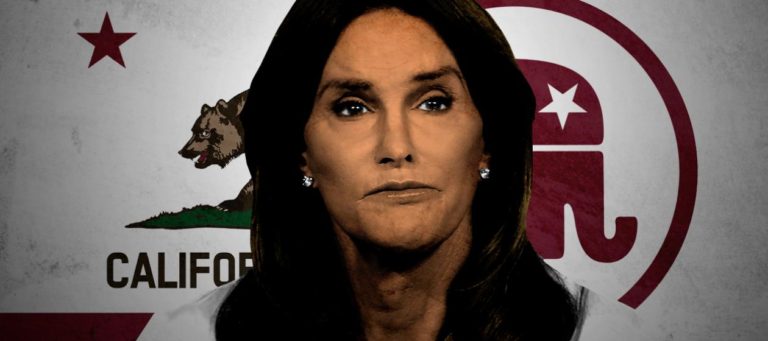
Last week, Caitlyn Jenner, former spouse of Kardashian “momager” Kris Jenner and the most famous transgender person in the world, announced her decision to run as a Republican candidate in California’s special recall election of Gov. Gavin Newsom this November. In her announcement on Twitter, Jenner described herself as a “compassionate disrupter” and “proven winner,” a nod to her Olympic gold medal in the 1976 decathlon event. “This will be a campaign of solutions,” she promised, “providing a roadmap back to prosperity to turn this state around and finally clean up the damage Newsom has done to this state.”

That seems unlikely. Despite mounting criticisms that Newsom has run the state’s pandemic policies with an iron fist, a poll last month from the Public Policy Institute of California showed that 56 percent of Californians planned to vote against his removal from office, just a small drop from the 60 percent who gave Newsom his landslide win back in 2018. Those who do want him out can choose among a handful of prominent Republican politicians who are running, including the popular former mayor of San Diego, Kevin Faulconer.

Less clear is which voters a Jenner candidacy attracts, and what experience the reality television star has that makes her ready to run the state. “Possibly the most unqualified person to ever run for California governor,” read one response to Jenner’s tweet.

In a post-Trump age, we very well may see more celebrities vying for public office, an unfortunate consequence of both the news media’s tendency to treat American politics as entertainment and Americans’ ongoing fascination with the famous. (Last month, Matthew McConaughey indicated he was “seriously considering” entering the race for Texas governor.) As the home to Hollywood, California has been comfortable electing movie stars since well before Trump came along, of course. Ronald Reagan and Arnold Schwarzenegger both served as the state’s governor. Other stars like Sonny Bono and Clint Eastwood also have held public office. But even given that history, Jenner’s bid may strike many as the ultimate example of celebrity entitlement, a vanity project that uses the political spotlight to stay relevant — or at least, in the news.

Early clues suggest she’ll run as a social liberal and fiscal conservative, a positioning that could have traction in the state. But Jenner’s past actions have probably alienated nearly every voter across the political spectrum. Her one-time support for Trump — she stumped for him in 2016 and attended the Republican National Convention in Cleveland that year — angered most of those who had cheered her gender transition just the year before, especially those in the left-leaning LGBTQ community. And her turn on Trump after he struck down federal guidelines permitting transgender students to use whichever restroom they chose in 2018 got her quickly dumped from the MAGA fold.

Not that she ever belonged — and that’s the real lesson to take from Caitlyn Jenner. For all the talk of possible political realignment and the Republican Party’s recent shot at rebranding itself a “workers party,” it’s the same old culture war stuff, particularly anti-gay politics, that’s still fueling the GOP. If Jenner’s candidacy is prompting eye rolls on the left, it has, more tellingly, elicited vociferous denunciations on the right. “We cannot allow the Party of Trump to become the party of…Caitlyn Jenner,” the prominent white nationalist Nicholas Fuentes tweeted. “I’m not a huge fan of the Republican Party getting behind Caitlyn Jenner,” Charlie Kirk ranted on his popular radio show.

It won’t. But the right’s ugly reaction to Jenner gives the lie to whatever LGBTQ-friendly image the Republican Party has recently tried to put forward, however halfheartedly. Under Trump, the GOP made attempts at changing its reputation when it came to gay Americans, a strategy that involved directly courting LGBTQ voters in 2020, an unprecedented move for a Republican presidential campaign.

Yet when it came to gay rights, the record was abysmal. Behind Trump’s occasional gay pride flag waving and his much-hyped appointments of a few gay men to his administration, the Trump administration waged a steady attack on LGBTQ rights, including stacking the courts with anti-gay judges. Transgender rights suffered the most. From almost the moment he took office, Trump began reversing the small number of Obama-era protections with a focus that was as chilling as it was cruel. At one point, the Trump administration even went so far as to propose a new rule that would have allowed tax-supported homeless shelters the right to deny transgender persons access to their facilities.

This quiet assault has now become the full-throated battle cry of the Republican Party in 2021. Already this year a slew of Republican-led state legislatures have passed or proposed a range of anti-trans bills. The president of the Human Rights Campaign, the nation’s largest LGBTQ advocacy organization, recently said that 2021 was shaping up to be “the worst year for state legislative attacks against LGBTQ people in history.” This anti-trans fervor, rather than its high-profile transgender candidate, is what truly represents the Republican Party today.

If only Caitlyn Jenner would get the message.

Why Having More Gay Women In Finance Is Important For Diversity – Forbes

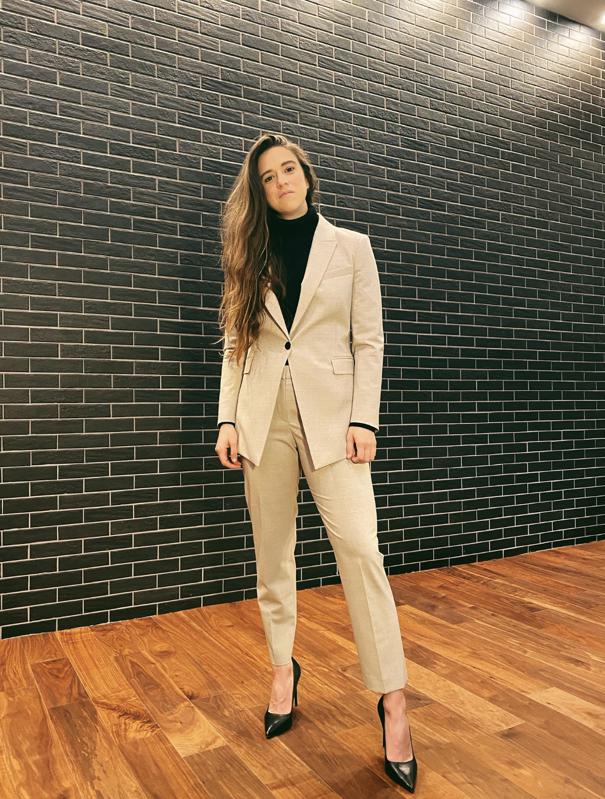
Stephanie McCaffrey, a former professional soccer player now on her way to Wall Street for her next future, has no shame about pursuing a career that will make her financially successful. Stephanie is a current second-year Wharton MBA and will work for Goldman Sachs as a full-time associate this summer. Her biggest goal is to help move the needle towards LGBT people and women in finance.

Stephanie wants to lead by the power of example. The mentors that she had the pleasure of meeting at Goldman Sachs during an internship she held at the firm last summer inspired her to lay the foundation for other LGBT women so they, too, can identify with a career in finance.

In the past month, Stephanie has used social media to start being more open about her life with her girlfriend on her social platforms. Having quite a substantial following, she says the support she has received thus far for her decision has been overwhelming.

Stephanie says, “I remember when I was grappling with the decision to come out, one of the biggest fears I had was around the different lifestyle that would come with being a gay woman. Growing up and in my community, the vast majority of partners providing financial security for families were male. I think for me, there was something very scary that that familiar sense of security wasn’t going to be a part of my own life.” 

For every dollar a man in a married-opposite-sex couple earns, a woman in a same-sex couple earns $0.79 whereas a man in a same-sex couple earns $0.98. The pay disparity for lesbian couples is even more significant.

MORE FOR YOU

Joe and Jill Biden hosted two women professional female soccer players, Meghan Rapinoe and Margaret Purce, to speak before congress on equal pay for women. They talked about how women have filled stadiums, become role models, all with no investment, and succeeded, yet still aren’t paid their fair share relative to men

Motivated by these statistics, Stephanie is determined to ultimately debunk the myth that men represent financial security or should be at the helm of providing when it comes to finances in a relationship, saying “there’s no true equality without financial equality.

“I hope my decision to go into finance/ go to Wall Street can help even one girl who is struggling with coming out, sees that gay women having successful careers and providing for their families is certainly possible. For that reason, loving whomever you want and living your truest self can be done without the fear of the lifestyle that may come with it. If I can move the needle even one inch for the LGBT community in empowering others to be who they truly are, without any apprehension of its deviation from “normal” and the perceived difficulties that may bring, it will make me more fulfilled than any on paper success could ever bring.”

Stephanie offers some well thought out tips to other LGBT women:

Every team is better off when every member brings their unequivocally truest self to the table

This allows team members to feel comfortable with who they are, safe to be themselves, and feel accepted within a team environment. It also allows everyone to bring their unique perspective to the table, thereby benefitting the company they are working for in that unique perspectives attract a diversified clientele.

Have confidence to take the leap in applying for and trying for things you don’t feel 100% ready for, because you’ll never feel fully ready

The anecdote to fear is action. The fear will never truly go away, so there’s no point in waiting for that. It’s just wasted time. Feel the fear and do it anyway. You may be pleasantly surprised by what is on the other side of that fear.

For students, take classes and seek out peers/ mentors going into quantitative/ financial fields, even if it isn’t what you end up doing

Finance skills should be essential for everyone as they are a lifelong skill to have. It is not wasted education to

The bottom line is diversity increases employee morale, which makes employees more productive and happier at work. This will instil a desire in your team to work more efficiently and will significantly increase the productivity of your business.

Improving on a good start: Scotland examines its first four years of PrEP – aidsmap

Scotland was the first country in the UK and one of the first in the world to provide PrEP via sexual health clinics as a standard provision of its national health service. In January this year, it became only the second place in the world, after New South Wales in Australia, to be able to show that the introduction of PrEP had led to a significant fall in HIV infections, not only in gay and bisexual men taking PrEP, but also in men who did not, proving that PrEP could have real population-level effectiveness in preventing HIV.

This success was reviewed in a lunchtime workshop and a couple of other presentations at last week’s joint British HIV Association and British Association of Sexual Health and HIV virtual conference.

The Scottish PrEP programme: achievements so far

Professor Nicola Steedman, Scotland’s Deputy Chief Medical Officer, outlined the recent history of HIV diagnoses and PrEP use in Scotland since the PrEP programme began in July 2017.

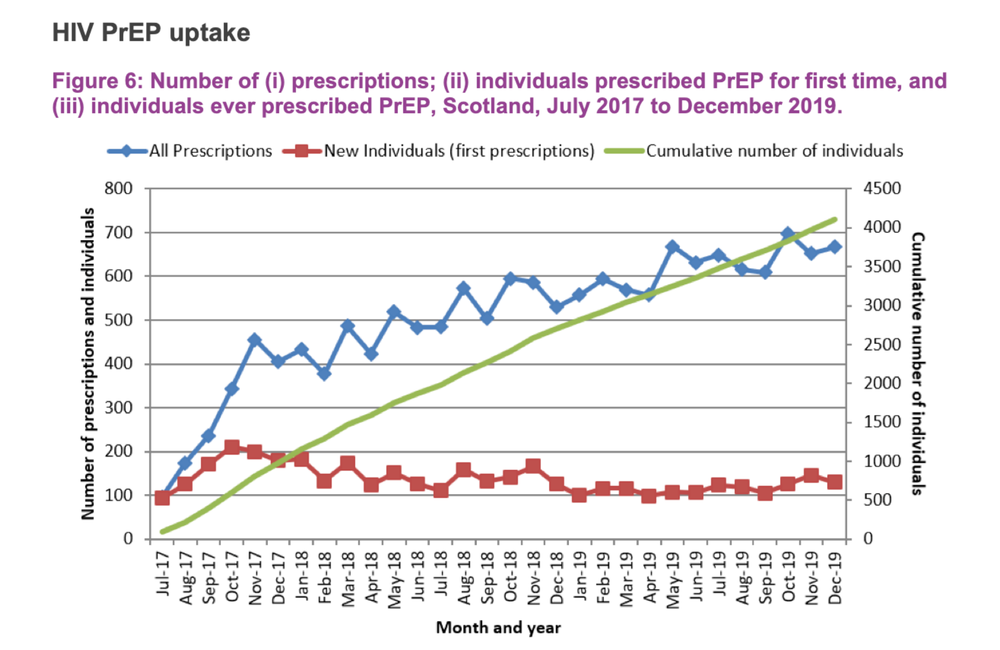
There are currently 5600 people living with HIV in Scotland, and 167 were newly diagnosed in 2019, the last year with full data. In 2017 half of all new diagnoses were in gay and bisexual men but by the end of 2019 this had declined to 37% of the total. The proportion of infections in people who acquired HIV heterosexually did not decline, and in people who inject drugs it rose, from 12% to 16%.

Glossary

transgender

An umbrella term for people whose gender identity and/or gender expression differs from the sex they were assigned at birth.

stigma

Social attitudes that suggest that having a particular illness or being in a particular situation is something to be ashamed of. Stigma can be questioned and challenged.

qualitative

Qualitative research is used to explore and understand people’s beliefs, experiences, attitudes or behaviours. It asks questions about how and why. Qualitative research might ask questions about why people find it hard to use HIV prevention methods. It wouldn’t ask how many people use them or collect data in the form of numbers. Qualitative research methods include interviews, focus groups and participant observation.

safer sex

Sex in which the risk of HIV and STI transmission is reduced or is minimal. Describing this as ‘safer’ rather than ‘safe’ sex reflects the fact that some safer sex practices do not completely eliminate transmission risks. In the past, ‘safer sex’ primarily referred to the use of condoms during penetrative sex, as well as being sexual in non-penetrative ways. Modern definitions should also include the use of PrEP and the HIV-positive partner having an undetectable viral load. However, some people do continue to use the term as a synonym for condom use.

retention in care

A patient’s regular and ongoing engagement with medical care at a health care facility. 

As explained in our previous report, the proportion of newly diagnosed infections that were recently acquired declined by 35% over this time. This allowed annual incidence – the proportion of the tested clinic population who acquired HIV during the previous year – to be calculated. This fell by 75% in gay and bisexual men taking PrEP, but also by 32% in gay men not taking PrEP.

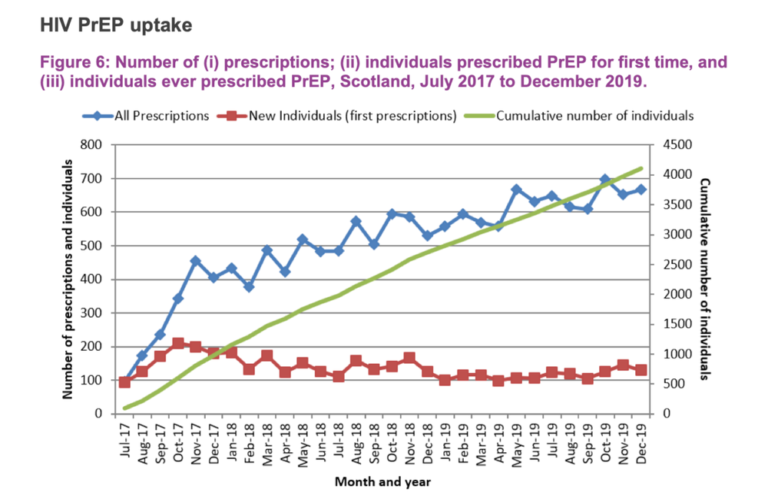
There are roughly 4500 people who have ever been prescribed PrEP at least once in Scotland (per head of the adult population, this would equate to about 50,000 people in England). Each month, about 125 people get their first prescription. Professor Steedman said it was estimated that there was a stable cohort of about 2000 people in Scotland taking PrEP regularly. The vast majority were gay and bisexual men, with only 45 people prescribed PrEP falling into other categories. 

The most common reason for prescribing was that the person had had condomless sex with more than one partner in the last year and thought they were likely to do so in the future. Most of the others were people with partners diagnosed HIV positive.

Among the gay and bisexual men – the group for whom this is an option – only 26% initially wanted event-based dosing, but over the two years surveyed this rose to 44%.

Who didn’t get PrEP, and were opportunities missed to offer it?

The rest of the PrEP presentations looked at who was being left out of Scotland’s PrEP success story – namely, anyone other than gay and bisexual men.

Dr Ceilidh Grimshaw of NHS Glasgow had conducted an analysis of those diagnosed before 2017, compared with those diagnosed in 2019, to confirm the apparent decline in the proportion that were gay and bisexual men. She found that people diagnosed after the PrEP programme began were less likely to be men, less likely to report sex between men as their exposure category, were more likely to have acquired HIV outside Scotland, and were more likely to be Black African. There was no change in terms of age or deprivation.

One part of the explanation for this was only 1% of people were prescribed PrEP using the ‘catch-all’ criterion that, in the opinion of their physician, they had been ‘at equivalent risk’ of HIV to people in the other categories. In other words, the health system’s criteria for PrEP concentrates on exposures more likely to have happened to gay men. 

Introducing broader criteria was only part of the answer, however. One really interesting finding was that there was only a small extra proportion of people diagnosed with HIV whose infections could have been ‘potentially prevented’ by existing PrEP services. These potentially preventable infections were defined as people who had attended a sexual health clinic and had had a (negative) HIV test in the last year.

To the surprise of the researchers, only 8.6% of infections diagnosed before the introduction of PrEP, and 6.6% of those diagnosed afterwards, fell into this category (though 29% of recently-acquired infections did, probably because these are more likely to be found in frequent testers – who are also more likely to be gay men).

This was primarily because, by and large, the people diagnosed were not regular users of sexual health clinics – only a third of people diagnosed with HIV had attended a Scottish sexual health clinic pre-diagnosis and only one-seventh of heterosexual men and women had done so.

In other words, people who could potentially benefit from PrEP are not being detected, evaluated and offered it partly because the way current criteria are used excludes them, and partly because they do not seek health care at the clinics where PrEP is currently offered.

Community voices

Professor Paul Flowers of Strathclyde University summarised the findings of three qualitative studies of people’s opinions about PrEP, covering Black women, people who inject drugs, and trans and non-binary people.

There were findings in common, particularly the fear of stigma, exposure and shame that might accompany seeking PrEP. The people of colour added that PrEP education was not conducted within their social networks – they had to venture into the world of health care to encounter it – and that PrEP criteria and the way PrEP was presented were not attuned to community norms and expectations of safer sex and behavioural norms, particularly for women. 

The participants stressed that community norms should be seen as an asset, not as a barrier, to PrEP education: that publicity material should be designed to reinforce rather than challenge these in a way that laid emphasis on PrEP as a self-protective behaviour.

The people who used drugs were keen to engage with PrEP and saw it could have substantial benefits, but noted that the unpredictability of their lives as substance users would make accessing PrEP through a clinic difficult. They wanted to see PrEP offered in the places where other harm reduction resources were provided – within community pharmacies, via street outreach, and even via peers.

The trans people laid emphasis on PrEP being part of an integrated service that provided not only STI and HIV prevention but also gender-affirming therapy and mental health support resources, but it should be based clearly in resources run within their community, ideally with peer-delivered models of care.

Recommendations for improvement

Professor Claudia Estcourt of Glasgow Caledonian University presented the results of a qualitative study that asked people to focus specifically on the Scottish PrEP programme as it has been. They were asked to identify barriers to and facilitators of better awareness and access, uptake and initiation, and adherence and retention. The researchers interviewed 39 people who were using or had used PrEP, 54 healthcare professionals, nine largely female and Black African service users of HIV community-based organisations who did not use PrEP, and 15 staff of those organisations. The 39 PrEP users included five transgender people.

“People who could potentially benefit from PrEP are not being offered it because they do not seek healthcare at the clinics where PrEP is currently offered.”

Certain themes stood out. One was that PrEP’s introduction had been under-resourced and overly rapid, at least to reach communities not already aware of it. PrEP was deliberately introduced with little advance publicity for fear services would be overwhelmed, but this had perhaps missed out on raising awareness.

It was not just the community of potential PrEP users who were not well prepared enough. Healthcare workers felt in general under-skilled in talking about sexual health risk, and identified two specific knowledge gaps. One was how to use intermittent PrEP, a subject both they and their patients found confusing. The other was about when it was safe to stop and re-start PrEP, and how. This was an area where healthcare professionals found themselves lacking in ways to accurately estimate and explain the risks and benefits of PrEP, versus the risks and benefits of no PrEP.

Service users found the system inflexible, particularly as they could not have PrEP prescribed at any appointment but only at designated ones, and also that the sessions were too short to explore other sexual and general health concerns. They valued practical adherence tips such as pill boxes and diaries, but also wanted more advice on coping with stigma. They commented that this came from both directions: people had experienced being shamed both for using PrEP, and for not using it.

Professor Estcourt also presented a poster at the conference which included a more detailed set of 25 recommendations for how Scotland’s PrEP service could be improved. There are too many to report in detail, but there is a big emphasis on the education and skilling-up of healthcare workers to be equipped with the latest evidence-based research on PrEP and HIV risk, as well as accurate and reassuring messages for users (such as how to start and stop, and reassuring users about transient side effects). 

The recommendations conclude that “PrEP should be provided within care models which users and potential users find acceptable and which health services can roll out efficiently…These evidence-based recommendations could help optimise PrEP uptake and initiation to enable PrEP to reach all who may benefit.”

Since Scotland’s PrEP programme was introduced, just four people prescribed PrEP – one in a thousand – have acquired HIV, and all during periods when they were not taking the medication or had poor adherence. The aim of the proposed improvements to Scotland’s PrEP service was, as Dr Rak Nandwani, Scotland’s clinical lead for sexual health, said, was “To bring those four infections – and infections in general – down to zero”.

Hillsborough to Purchase, Fly Pride Flags Throughout June – Chapelboro.com

This June, the Town of Hillsborough will pursue a new strategy to publicly display its support for the LGBTQ+ community.

During a virtual work session on Monday, the Hillsborough Board of Commissioners voted unanimously to purchase and fly rainbow Pride flags throughout the town during the month of June, the nationally-recognized period of LGBT pride.

LGBT Pride Month was only declared in Hillsborough beginning in 2019. While Mayor Jenn Weaver and Town Commissioner Matt Hughes intended to acquire and fly a set of rainbow flags last year, the plans were put on hold due to the COVID-19 pandemic. This week, Hughes officially brought the proposition to the board.

“Hillsborough has long supported LGBTQ+ rights as an organization, just more quietly,” Weaver told 97.9 The Hill’s Brighton McConnell. “The friendliness as an organization has long-existed, but I do think it’s really important to be visibly supportive, especially with the climate of oppression and violence toward the LGBT community.”

“It feels a little bit overdue,” Weaver said during Monday’s remote work session.

Hughes suggested flying approximately 30 of the flags throughout the month, and expressed the desire to source them from the Hillsborough-based Carrot-Top Industries or another local business.

“I think that this would be a very visible sign for folks regarding the inclusivity of Hillsborough,” said Hughes.

Earlier this year, Hillsborough became the first municipality in North Carolina to pass an ordinance protecting its LGBT residents from discrimination after a key provision of House Bill 142 expired.

The full work session can be viewed on the town’s YouTube channel. More information about Hillsborough’s Board of Commissioners and its activities can be found on the town’s website.


Chapelboro.com does not charge subscription fees. You can support local journalism and our mission to serve the community. Contribute today – every single dollar matters.

Sinn Fein Senator admits he prayed not to be gay – IrishCentral

Sinn Fein Senator Fintan Warfield told of his own past torment, while expressing his concern over a new sex education program for Ireland’s Catholic elementary schools.

The program, unveiled by the Irish Bishops’ Conference, describe sex as a “gift from God” that belongs in a committed relationship, while marriage is defined as a “sacrament of commitment.”

The sex education resource, entitled Flourish, has been drawn up for all Catholic elementary schools on the island of Ireland.

But nearly six years after same-gender marriage was made legal in Ireland under an overwhelmingly popular public vote, it seems clear that traditional Catholic teaching remains very much at odds with the views of most of the Irish public.

One central message in the program is that the Catholic Church’s teaching in relation to “marriage between a man and a woman” cannot be ignored.

It also states that “puberty is a gift from God,” adding, “We are perfectly designed by God to procreate with him.”

The new sex education program has triggered unhappy memories for Warfield, who revealed he had prayed for years not be gay because of a sense of shame.

The Sinn Fein senator, who serves as the party’s spokesman on LGBT rights, said there was “a lot to unpack in the news that the Irish Bishops’ Conference has developed what it refers to as a voluntary resource for primary schools,” according to a report in The Irish Times.

Calling on the government rather than the church to take ownership of sex education, the 29-year-old LGBT activist continued, “I do not profess to have all the answers, but this is not it.”

He added, “I prayed for years that I would not be gay.  I did so because of shame, much of which I can place blame for at the door of the church.

“Prayer and religious ideology do nothing to protect children or young people.  Prayer and ideology do nothing to protect kids against sexually transmitted infections or HIV.”

Iht 600x300px with button2

Opinion Lesbian Visibility Week: Dear younger me, it’s great being gay! – Thomson Reuters Foundation

* Any views expressed in this opinion piece are those of the author and not of Thomson Reuters Foundation.

One day you’ll embrace being a woman, being gay and being half-Indian

Tara Suri is Senior National Account Manager at Procter & Gamble

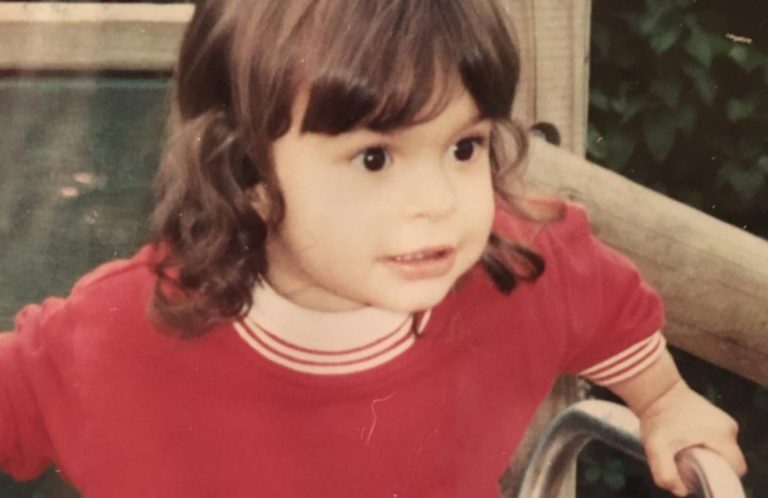
Dear Little T,

I’m writing to you from the year 2021 with, would you believe it, curly hair. Turns out that despite a decade of straightening, you have great natural curls… embrace them! It’ll save you a lot of time in the mornings. Besides, Jess loves them and that brings me to the more important point.

Throughout your teenage years, you’re going to realise that you’re a little different from some of your friends.

A guy called Zac Efron is going to become famous soon and all your female friends are going to be obsessed with him. You’re going to wonder why you don’t feel the same, and why you’d rather have a poster of Sophia Bush on your bedroom wall.

It’s totally natural to feel that way, and I promise it’s nothing to feel ashamed of. You are free to trust your feelings, whoever they manifest towards – be it a boy, a girl, or nobody at all. Your attraction to girls will ultimately guide who you fall in love with later in life, and that’s where Jess comes in.

Despite what you think and feel right now, I promise, you’ll meet her one day and it’ll feel like all the elements in your life have fallen into place.

Before that though, there are a few tricky years where you come to terms with the idea that you’re attracted to girls. And then you’ll have to tell your friends, family, mum and dad. You’re going to struggle with your self-identity for a while and try to hide it by telling people you like boys too.

Honestly, labels aren’t important, but society wants you to pick one. The one you end up feeling most comfortable with is “gay”.

On the topic of “coming out”, some people think it’s a phase at first, but they soon understand you’re serious. In fact, mum, dad and Harsha are all incredibly supportive of your relationships from day one.

Unfortunately, “coming out” doesn’t stop at mum, dad and your friends at school. Every time you meet somebody new; whether that be friends, teammates or colleagues, they’ll assume you’re heterosexual until told otherwise.

Luckily, so far nobody has really been that bothered about it. Especially the rugby girls, they embrace diversity from all walks of life, and you’ll feel right at home with them! The fear of coming out never goes away, but just remember that being gay is something to be proud of.

As you get older, you’ll start to notice that being a woman, being gay, and being half Indian, are all parts of who you are. You can’t change that.

Eventually you’ll learn to embrace these things, even though your tolerance to spicy food never really improves. The sooner you learn that having straight hair, wearing clothes from Tammy Girl, and painting your bedroom pink are not really the things that make you happy, the better.

Your love for David Beckham isn’t a phase though, that one sticks for life!

The world is changing in so many ways, and women’s voices are stronger than ever. But sometimes, even in 2021, it’ll feel like you’re the only gay woman in the world. That most certainly isn’t the case, but every now and again you’ll look around and feel a little bit out of place.

I don’t really have the answer for you on that one, but we’re still working on it.

RELATED STORIES

My decision as headmaster to come out reveals the importance of role models for young people

LGBT+ literature taught me to love myself

Schools around the world must teach LGBT+ acceptance

Colton Underwood Shows Off New Physique After Prioritizing His Health “Physically and Mentally” – E! NEWS

This has been quite the year of new beginnings for Colton Underwood

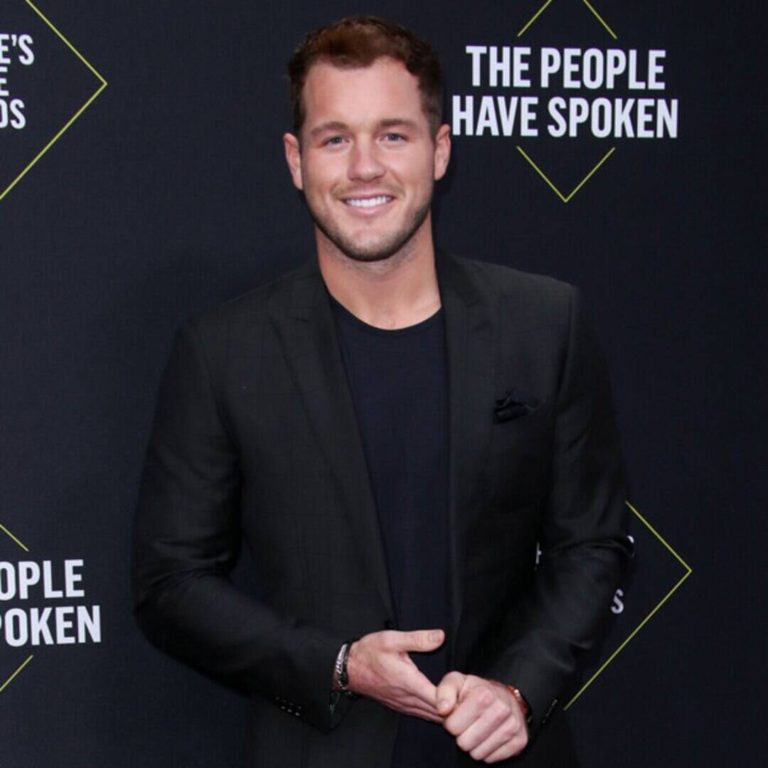
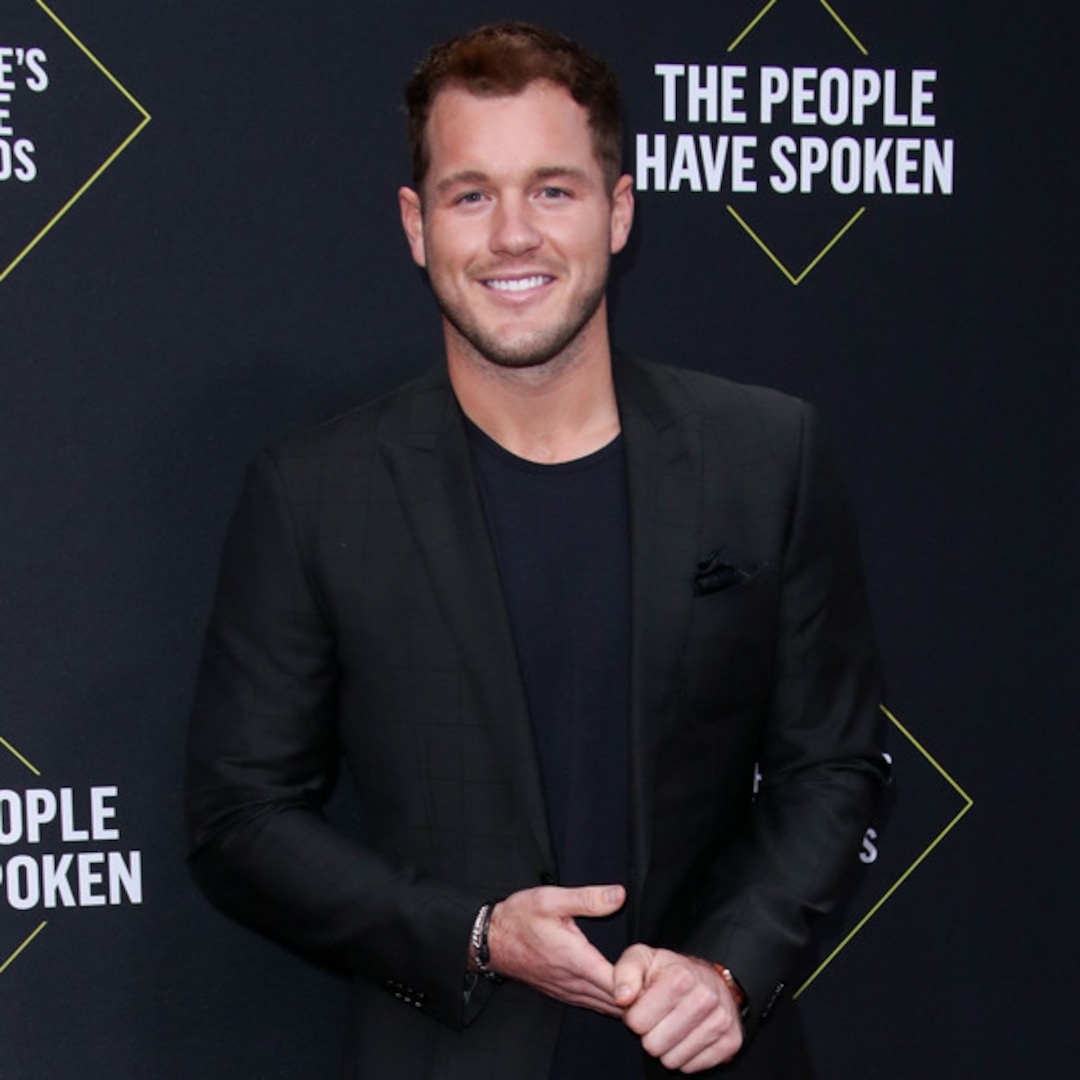
The 29-year-old former star of The Bachelor shared a carousel of photos to Instagram on Wednesday, April 28 that showed off his recent body transformation. This follows Colton coming out as gay during a Good Morning America appearance on April 14. 

“this year i prioritized my health. physically and mentally,” the former NFL player captioned his post. 

The eye-catching pair of shirtless pics revealed Colton currently has abs for days, and indeed, one of the images was a close-up of his midsection that also featured his impressive biceps. 

A number of Bachelor Nation favorites took to the comments to praise his muscular look. “Drop that ab workout bro,” fellow NFL alum Clay Harbor wrote, along with an eyes emoji. 

“That peloton is working doeeeee,” Blake Horstmann shared. And Chris Randone commented, “Bro…..chill.”

In coming out during a sit-down with GMA‘s Robin Roberts earlier this month, Colton said, “I’m the happiest and healthiest I’ve ever been in my life.”