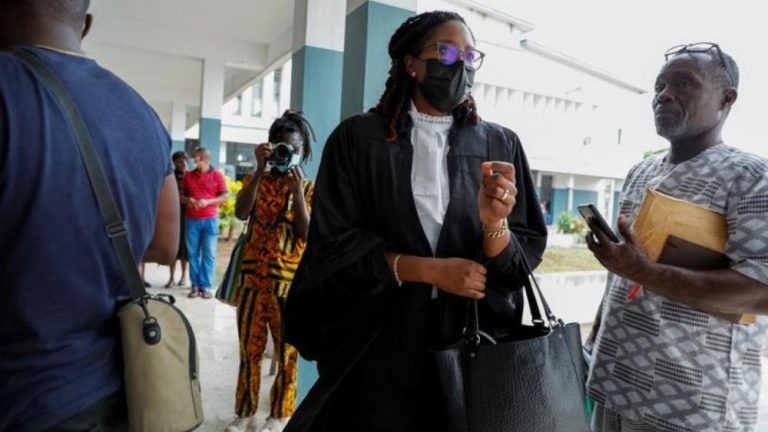
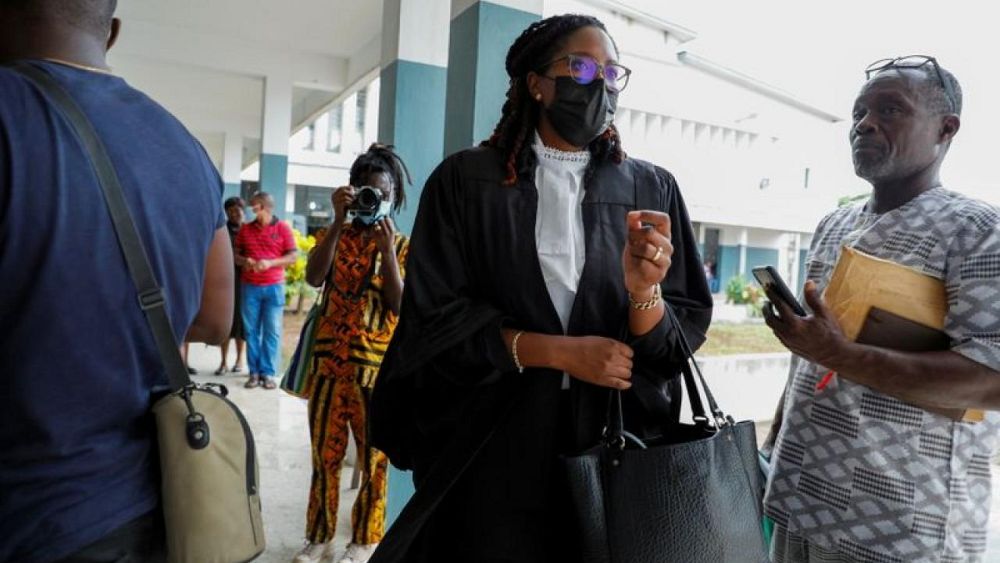
HO, Ghana – A Ghanaian court on Friday delayed its ruling on a bail application for 21 Lesbian Gay Bisexual and Transgender (LGBT+) activists detained two weeks ago for an allegedly unlawful gathering, which rights group deny.
The delay will mean the group will have to spend at least four more days in detention.
LGBT+ people face widespread persecution in the West African nation where gay sex is punishable with up to three years imprisonment. Community members have reported a crackdown by authorities and increased abuse by the public in recent months.
The 16 women and five men were arrested on May 20 at a hotel, police said in a statement, alleging the group had gathered illegally. It also said the group was advocating LGBT+ activities with books and flyers with titles including, “Coming out” and “All about Trans”.
Promoting gay rights is not illegal in Ghana and LGBT+ Rights Ghana said the arrests were unlawful. The organisation said the activists had met for a workshop on how to document and report human rights violations.
“We cannot condone a situation where people attend a workshop on rights only to be arrested and have those very human rights they were learning about be trampled upon,” said Julia Selman Ayetey, a lawyer for the defendants.
A judge in the district court of Ho said the court would consider the bail application carefully and that there would be a ruling on whether or not to grant bail on June 8.
Ghana has not prosecuted anyone for same-sex relations in years, but LGBT+ people face frequent abuse and discrimination, including blackmail and attacks, human rights researchers say.
The recent crackdown began in February after LGBT+ Rights Ghana opened the country’s first LGBT+ community centre. It was forced to close after three weeks after an uproar from church groups, politicians and anti-gay rights organisations.
Ghana’s President Nana Akufo Addo, who was reelected in December for another five-year term, vowed during a church ceremony in February that same-sex marriage will never be legalised during his time in office.
The statement stirred up homophobic sentiment and emboldened a group of lawmakers who want to criminalise the promotion of LGBT+ rights in the country, said community members and activists.
“The arrest of the 21, just like the closure of our office, are all deliberate actions by very powerful forces to break down the LGBT community,” said Suhaidatu Dramani, programmes director for LGBT+ Rights Ghana.
Under a veil of great progression, gay dramas of the early 21st century often depicted doomed victims of their own repressive societies, characters caught between the past and present who couldn’t seem to drive forward. From Jonathan Demme’s Philadelphia, released at the turn of the century, to the groundbreaking Brokeback Mountain, these films rarely depicted joyous love stories and were often tinged with the prejudiced values of modern society.
On the other hand, the latter half of the 21st century has seen some of the greatest achievements in LGBT filmmaking, with films such as Barry Jenkins’ Moonlight and Luca Guadagnino’s Call Me by Your Namereflecting shifting attitudes towards such sexualities. Whilst evidence of prejudice remains, and justly so, these stories focus more on the unabashed pleasures of gay relationships, elevating themselves beyond their LGBT labels to become simply captivating love stories.
Such films may have never had such a platform had it not been for William Friedkin’s 1970 film The Boys in the Band, a story known as a significant milestone in gay representation in Hollywood following the removal of the prohibition of “sexual perversion” in cinema. Films depicting homosexual relationships no longer had to be covert and subtle, and Friedkin’s film was one of the first to proudly announce itself on the Hollywood stage.
Adapted from Mart Crowley’s 1968 off-Broadway play, its story is a bitter and unflinching one that focuses largely on the great hardships of gay men during the 1970s. It all starts when Michael (Kenneth Nelson), a recovering alcoholic, gathers several friends together to celebrate his friend’s 32nd birthday. As the night grows longer, the guests of the party become increasingly drunk and their demeanor ever-more venomous, mocking a young sex worker who turns up at their door, along with a heterosexual friend who is invited.
It’s a spiky film that speaks of the isolation and fear of gay men in the 1970s, many deeply unhappy, and rightfully hurt by the prejudice of a contemporary society. This is likely why a large number of gay audiences didn’t celebrate the film upon its release, believing it was too self-loathing, perpetuating a fatalistic attitude and a negative gay stereotype. Though this criticism is certainly valid, such a story is necessary in order to understand, sympathise and fight against the plight of a dejected group of people. The Boys in the Band recognised and established the fact that the dismay of so many gay men and women was not the result of individual suffering, but of the oppressive prejudice of the system above them.
When discussing conversations regarding homosexual rights was still taboo, Friedkin’s film opened a dialogue, making the troubles of the gay community visible for all to see. Just like Brokeback Mountain 35 years later, The Boys in the Band was a gay tragedy that evoked sympathy and spoke of the vast intolerance that existed in relation to such a community.
Contemporary films such as Moonlight and Call Me by Your Name have the chance to rejoice in gay culture only because of these historic, provocative pieces of LGBT cinema that came before them. It’s a testament to how far we’ve come from the 1970s that stories of gay characters are now becoming commonplace, but it would be foolish and dangerous to assume that such intolerances have now expired.
The Bridgerton books don’t spend a huge amount of time on Violet and Edmund Bridgerton’s story, but with the casting of Rupert Evans to play the Bridgerton patriarch in season two, it looks like we’re going to get at least a little more information about the Bridgerton family’s beloved parents. Edmund has been dead for over a decade when we first meet the Bridgertons, but if you can’t wait til season two to get all the details about his life (and death), here’s what you need to know, straight from Julia Quinn’s novels!
The Viscount Who Loved Me, the novel on which much of season two will be based, opens with a prologue that explains the Bridgerton family backstory. We learn that Edmund and Violet married and became parents very young; Edmund is 20 and Violet is 18 when their first son, Anthony, is born. They have a total of eight children, the youngest being their daughter Hyacinth, who is born in 1803, the same year that Edmund dies.
Anthony, as the oldest son, has a particularly close relationship with his father, and it’s through his eyes that we learn what kind of man Edmund was. In the prologue, he describes his memories of his childhood with Edmund:
“Edmund Bridgerton was, quite simply, the very center of Anthony’s world. He was tall, his shoulders were broad, and he could ride a horse as if he’d been born in the saddle. He always knew the answers to arithmetic questions (even when the tutor didn’t), he saw no reason why his sons should not have a tree house (and then he went and built it himself), and his laugh was the sort that warmed a body from the inside out.”
In 1803, when Anthony is barely 18 years old and his youngest sister, Hyacinth, is an infant, there is a terrible accident: Edmund is stung by a bee while walking outside, and he dies almost instantly, baffling everyone from his family to the doctors. It’s at this point that Anthony, devastated by that sudden loss, becomes completely convinced of one thing: he can never surpass his father, including in age. From then on, he’s absolutely certain that he, too, will die at age 38. (And, yes, this backstory is the reason for that bee motif that’s threaded through the first season!)
Anthony’s trauma from losing his father, and his certainty that he will die young, too, drives a lot of his behavior early on. By the time The Viscount Who Loved Me picks up, Anthony is rapidly coming up on age 30, and he’s decided at this point that he needs to get married as quickly as possible, to the most suitable wife possible, and start bearing heirs — after all, he thinks, he only has eight years left to secure the Bridgerton line. Because he’s so sure he won’t live long, he specifically does not want a love match, not wanting to leave anyone behind mourning so deeply, like his mother did for his father. Of course, this is Bridgerton we’re talking about, so that won’t last long, but it explains a lot about him that we can’t wait to see developed over the next season!
LBGT charity Stonewall has advised government departments and companies to swap the word “mother” for the gender-neutral “parent who has given birth,” or risk slipping down its exclusive “equality index.”
As LGBT groups go, Stonewall is held in high regard. Multiple corporations, universities and government departments, including the Ministry of Justice, MI6, and the Greater London Authority, pay more than £2,500 ($3,542) per year to become “diversity champions” – a badge that earns them advice from Stonewall on all things LGBT, and a chance to appear on the charity’s “Workplace Equality Index.”
The cost of appearing on that prestigious index is more than just a financial one. Stonewall attempts to dictate how these companies and departments talk about sexuality and even gender. According to a Telegraph report on Thursday, Stonewall recently messaged organisations on its list, asking them to drop the word “mother” from their literature, in favor of the sanitized and gender-neutral “parent who has given birth.”
Stonewall demand those looking to rank on its Workplace Equality Index remove ‘gendered language’ and allow those self-identifying as a woman to use female toilets and changing rooms. No public body should pander to this extreme, dangerous & divisive guff. https://t.co/ta2fKWPGob
After poring over documents obtained through Freedom of Information Act requests from other organisations, the Telegraph found that dropping gendered language is just one of a litany of demands Stonewall makes of companies hoping for a spot on the list. These include “ditching all gendered language [and] outlawing single sex toilets and changing rooms,” running rainbow-colored shoelace campaigns, avoiding terms like “husband or wife,” and providing “multiple passcards with different forms of gender expression” for those who identify as a different gender on certain days.
Additionally, board members and senior management are asked to attend pride parades, and to make speeches and social media posts containing “specific messages of bi, nonbinary and trans equality.”
Organisations applying for a place on the list were eager to tout their compliance with Stonewall’s demands. In its application for last year’s list, the Welsh government wrote that its maternity policy was rewritten to “incorporate gender neutral language, removing binary gender references wherever possible.”
“Breastfeeding” was dropped for “nursing,” though “specific references to chestfeeding” were left intact for the sake of trans employees. “All pronouns were updated in line with all of our HR policies (they/their instead of gendered he/she/his/her etc),” the application continued.
After London’s Metropolitan Police didn’t make Stonewall’s shortlist in 2020, an internal review suggested inviting the charity to review all of its human resources policies to bring them up to a higher standard of wokeness.
Not every organisation is as keen to toe Stonewall’s line on gender issues. The Equality and Human Rights Commission pulled out of Stonewall’s paid programme earlier this year, stating that membership “did not constitute best value for money.” Equalities Minister Liz Truss has also advised all 250 government departments who pay to take part in the scheme to withdraw, and feminist activists have accused Stonewall of “Orwellian” silencing of viewpoints critical of trans ideology.
The feminist backlash against the trans movement – which posits that a biological male identifying as a woman is every bit as female as a born woman -– has grown louder in recent years, with ‘Harry Potter’ author JK Rowling one of its most recognizable faces. Rowling’s opposition to the excesses of trans ideology has earned her death and rape threats from its most zealous adherents.
Named after the 1969 Stonewall riots in New York, Stonewall is the largest LGBT charity in Europe. Despite the growing controversy around its stances on transgender issues, it remains partly funded by the British taxpayer, both through government departments paying membership fees, and through direct cash grants.
Think your friends would be interested? Share this story!
In honour of Pride month 2021, brands across the globe have announced new collections and limited edition items to celebrate and give back to the LGBT+ community. While some have made one-off donations to charities, others have vowed to donate proceeds from sales.
Pride is celebrated every year as a tribute to those who were involved in the Stonewall Riots. Also known as the Stonewall Uprising, the movement saw members of the LGBT+ community fight back against continued harassment from the police in Greenwich Village, New York, in June 1969.
The incident, which saw protesters take a more militant approach in which they demanded respect and equality, has long been lauded as a major moment in the LGBT+ community’s campaign for wide-scale social change.
While some brands have faced backlash online, with members of the LGBT+ community accusing them of cashing in on the movement for one month a year, there are some companies that get it right by donating proceeds to worthwhile causes.
So, while everyone chooses to celebrate the occasion differently, one simple way you can support the LGBT+ community is by spending money on brands that are giving back. Here are some of our favourites.
Happy Socks
HappySocks Pride 2021 collection
(Happy Socks)
In May, Happy Socks announced it will be taking a different approach this year and will forgo its usual Pride Month campaign.
Instead, it has donated the budget it would have spent on marketing to Inter Pride, an international organisation that produces events for the LGBT+ community.
The brand will still be selling its rainbow-themed Pride collection all year round, donating 10 per cent of the profit from each pair sold to Inter Pride.
Michael Kors
Michael Kors Pride 2021 collection
(Michael Kors)
Michael Kors’ Pride capsule collection features a special edition white t-shirt with a rainbow-coloured heart, which retails for $68 (£48).
The brand has announced that all proceeds from sales of the gender-neutral t-shirt throughout Pride Month will be donated to OutRight International, an organisation that fights against human rights violations in the LGBT+ community.
Nails Inc.
Nails Inc. Pride 2021 collection
(Nails Inc.)
London-based nail polish brand Nails Inc. has released a new four-piece set, Relationship Status: Proud, in honour of Pride Month 2021.
The brand announced that 25 per cent of all profits will be donated to Stonewall, the UK’s biggest LGBT+ charity.
Crystal Head Vodka
Crystal Head Vodka Pride edition
(Crystal Head Vodka)
For those raising a glass in celebration of Pride, Crystal Head Vodka has launched a limited-edition Pride bottle featuring the Pride rainbow.
Proceeds from the bottle, which first went on sale in May, will be donated to the UK-based charity Kaleidoscope Trust. The brand has not specified what percentage of profits will be donated.
Outside of Pride Month, Crystal Head Vodka also supports the Stonewall Sports programme, the Test Positive Awareness Network and Lurie Children’s Hospital Gender and Sex Development Program.
Levi’s
Levi’s 2021 Pride collection sports bra
(Levi’s)
Levi’s is one of the few fashion brands we found which is pledging 100 per cent of net profits from its 2021 Pride collection to LGBT+ causes.
The 20-piece collection, which asks people to “respect all pronouns” features a range of t-shirts, a sports bra, socks and hoodies.
The denim brand has also chosen to donate proceeds to OutRight Action International.
Vans
Vans Pride 2021 collection
(Vans)
In celebration of Pride Month, Vans has donated $200,000 (£141,000) to four organisations across the world, including US-based GLSEN, Casa 1 in Brazil, Tokyo Rainbow Pride and Where Love is Illegal, a project which documents stories of discrimination around the world.
The brand has also released a Pride collection, refashioning some of its classic silhouettes, such as the Slip-On, Era, Sk8-Mid, in the Pride rainbow colourway.
NYX
NYX Welcome To The Ballroom collection
(NYX)
Over in the beauty world, NYX is celebrating Pride Month with its new “Ballroom Makeup” collection which includes an eyeshadow palette, lip liners, a new highlighter, and a range of brightly coloured eyeliners.
In an Instagram post announcing the collection, NYX said it will be donating $100,000 (£70,000) to LGBT+ charities across the world.
Apple
Apple 2021 Pride band
(Apple)
In May, Apple unveiled a new Pride edition rainbow-themed watch band.
Unlike its previous bands, this year Apple has also included colours to symbolise Black and Latinx communities and those who are living with HIV and AIDs. The addition of light blue, pink and white represents transgender and non-binary individuals.
Apple said proceeds from sales of the band will build on its ongoing financial support of LGBTQ+ advocacy organisations, such as GLSEN, a US-based non-profit which aims to increase LGBTQ+ inclusion and awareness in schools.
Fenty x Savage
(Instagram/@quillemons)
Rihanna’s latest Fenty x Savage collection in celebration of Pride Month has landed. Featuring thigh-high stockings, crop tops, bralettes and boxers, the latest drop hopes to champion a range of body types, shapes, and identities.
Just like previous Savage collections, most of the items are available in a wide range of sizes from 30A to 42FF and XS to 3XL.
The brand has pledged to donate $250,000 from sales of the collection to a range of LGBT+ organisations, including CLAAD, The Caribbean Equality Project and the Trans Wellness Center.
Converse
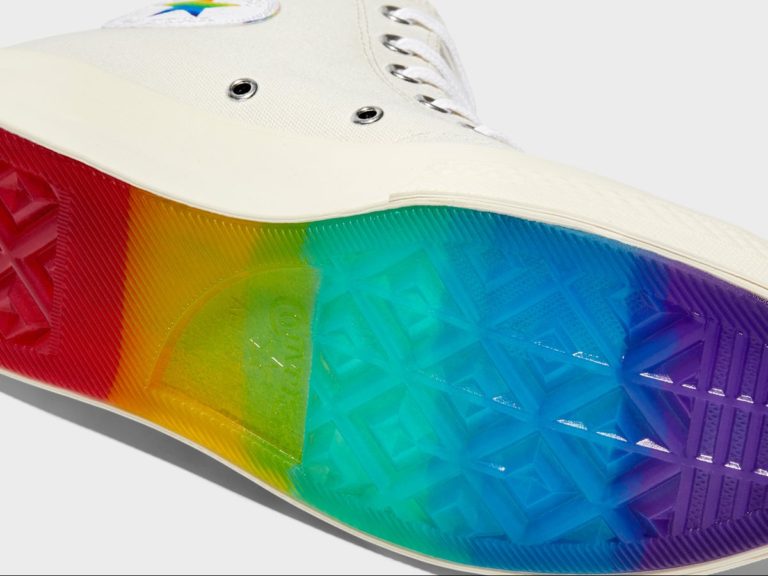
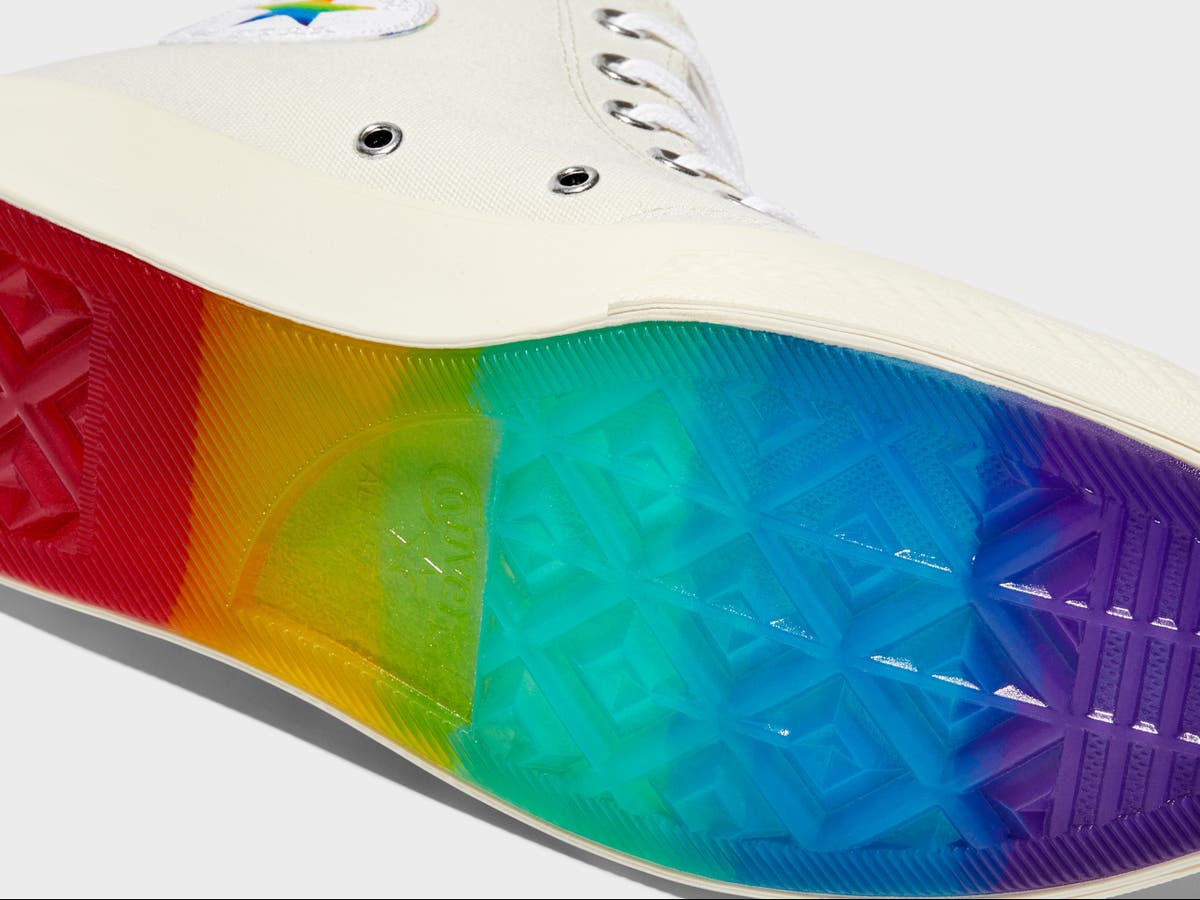
Converse 2021 Pride collection
(Converse/Nike News)
The brand’s sixth annual Pride collection pays homage to the “path of self-love“, transforming its Chuck 70, Chuck Taylor All Star and Run Star Hike silhouettes with Pride-themes colourways.
Converse said it will continue its partnership with the It Gets Better Project, a US-based LGBT+ charity, this year focusing on education initiatives on TikTok and Twitch to help young people “pursue their greatest potential”.
It also announced new grants in support of a number of LGBT+ youth organisations in the US, including the Ali Forney Center and BAGLY.
Harry’s
(Harry’s)
The maker of high-quality shaving and grooming products is selling a “Shave with Pride” set featuring a limited-edition brightly-coloured razor. Its brightly coloured packaging, which encourages users to be “vivacious” and “proud” has been designed in collaboration with New York artist Zipeng Zhu.
From every sale of the £28 set, £10 will be donated to the Albert Kennedy Trust, an organisation that helps vulnerable LGBT+ youth.
Skittles
During June, Skittles is selling grey sweets in matching grey packaging to ensure that the only rainbows receiving attention are those associated with the LGBT+ community.
For every grey pack sold, the company will donate $1 to GLAAD up to the value of $100,000 (£70,000).
H&M
This year, H&M has enlisted the help of technology to encourage members of the LGBT+ community to share their stories.
“Pride is not only a celebration, but it’s also a fight. For rights, respect, support, love and life itself. With all of the colour and attitude and passion that comes with Pride, it becomes all too easy to forget the hard parts and focus on the fun,” the brand said.
As part of its Beyond The Rainbow campaign, the brand has developed an app that allows users to scan its web-based QR code and enter a “Pride portal”, where they can read and share their stories.
H&M will also be matching all donations made to The Trevor Project, a suicide prevention and crisis intervention organisation for LGBT+ people.
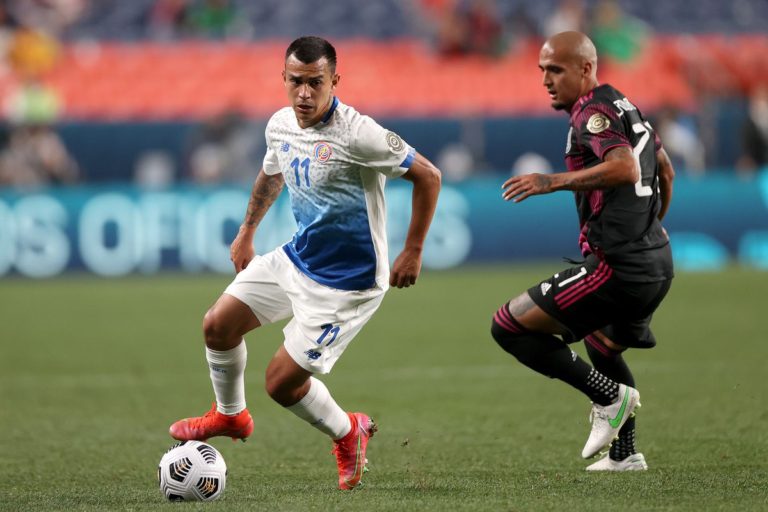
Randall Leal #11 of Costa Rica advances the ball against Luis Rodriguez #21 of Mexico in the second half during Game 2 of the Semifinals of the CONCACAF Nations League Finals of at Empower Field At Mile High on June 03, 2021 in Denver, Colorado. (Matthew Stockman/Getty Images)
The city’s newest dance club opens, Pride Month streaming is pumping, and outdoor events are back, baby. Here’s what’s poppin’ in Atlanta’s LGBTQ weekend events.
Scroll down and click on each event for more information.
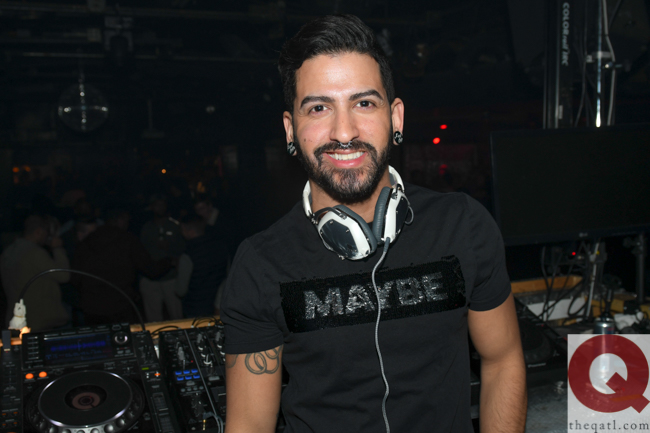
DJ Cindel does the first official afterhours duties into the wee hours of Saturday morning at Future. (Photo by Russ Bowen-Youngblood)
Friday, June 4
Future Opening Weekend.Start early and stay late at Atlanta’s new gay dance club and show bar. Friday kicks off with Fantasy Girls dinner shows @ Future, 6:30 p.m. and 9 p.m. Then it’s DJ Ed Wood on the dance floor, 10 p.m. and Xion Afterhours with DJ Cindel, 3 a.m. Take a Q-exclusive tour of the new digs.
Friday BBQ. Atlanta’s gay sports bar does in-person as well as to-go food and cocktails. Fridays are extra special with a taste-escape to backyard ‘cues @ Woofs, 11:30 a.m. – 10 p.m.
F*ck It Friday. Drop in on a full day and night of specials. Andrew opens, then JayR and Eric bring it home with a different guest VJ every week. Anything goes @ Hideaway, 2 p.m. – 3 a.m.
The Lesbian Bar Project. Lea Delaria’s documentary to supplement the country’s remaining lesbian bars – including Atlanta’s My Sister’s Room – takes a look behind the scenes at the clubs as a benefit. Stream it online through June.
It’s Not a Burden.Michele Boyaner and her partner Barbara Green bring this intimate, humorous and heartfelt documentary about adults caring for their aging parents @ On Demand, all month.
Out Front Theatre Stream Festival.Atlanta’s LGBTQ playhouse makes all of its productions from the pandemic year available again for streaming. See the ones you missed or catch your favorites again. Virtual online downloads @ Out Front, all month.
Feel Good. The second season of the complicated queer love story debuts @ Netflix, runs all month.
Glitz & Glam Dinner Theater. Dinner and a show amid the fancy theater experience of Atlanta’s premiere drag restaurant and bar. Make Reservations @ Lips Atlanta, 6 p.m., 9 p.m. and the Taboo Show at 11:30 p.m.
Queer Bait. East Atlanta’s gay bar limits capacity but is reopen with $5 cover and per-drink pricing @ Mary’s, 7 p.m. – 10 p.m.
Not the Real Jupiter. Lesbian murder mystery writer Barbara Wilson in conversation about her new book. Virtual event with the Charis folks @ Crowdcast, 7 p.m.
Atlanta Fringe Festival. The always queer-inclusive, always left-of-center theatrical event stays online one more year. Enjoy new content every day through June 13.
Atlanta Rainbow Trout Water Polo. The LGBTQ team practices every week @ @ Georgia Tech Aquatic Center, 7:30 p.m. Same again on Tuesdays, 7:30 p.m. First two practices free.
Fem Friday. The backyard and patio are open for women who love women who love open-air parties, with two socially distanced and masked levels indoors @ My Sister’s Room, 9 p.m. – 3 a.m.
Sin Friday. Dancers, drinks and DJ Rob Reum @ Ten Atlanta, 10 p.m.
What you need is a margarita bust at Zocalo. Front Runners has you covered on Saturday. (Photo by Russ Bowen-Youngblood)
Saturday, June 5
Margarita Bust. Front Runners Atlanta hosts your fill of the green icy stuff to raise money for this year’s Atlanta Pride Run & Walk. Drink up @ Zocalo, 3 p.m.
NFFLA.The gay and allied National Flag Football League of Atlanta fields its teams in 10 weeks of matchups @ Silverbacks Park, 9:30 a.m. – 2 p.m. Check our photo gallery of Opening Day.
Front Runners. One of two weekly group runs with Atlanta’s LGBTQ @ John Howell Park, 9 a.m. They also start their Couch to 5K, getting you in shape for this year’s Pride Run in June.
Hotlanta Soccer.Weekly practice until tournament play is safer. Every week @ Central Park, 10 a.m.
Spring Festival on Ponce. The gay-run Atlanta Foundation for Public Spaces hosts one of its signature arts-booth and vendors fair @ Olmstead Linear Park, all day.
A Better Buzz Yard Sale. The local gay graphics tee designer celebrates five years with beer, art and t-shirts to benefit Pets Are Loving Support @ 173 Gibson St. SE, 12 noon.
#Daydrunk. Drink specials put you to bed early or make you the life of the party when the sun drops @ Mary’s, 3 p.m.- 6 p.m. Followed by Night Shift, 7 p.m. – 12 midnight. Mary’s reopens with limited capacity and per-drink prices.
Glitz & Glam. Charlie Brown and her girls give you dinner and a show in Atlanta’s drag restaurant and bar. Make reservations @ Lips Atlanta, 6 p.m., 9 p.m. and the Taboo Show at 11:30 p.m.
Atlanta United Tailgate.The local pro soccer club plays its home opener, and the LGBTQ tailgaters of All Stripes are all over it @ 487 Magnolia St NW, 5 p.m. There’s also a socially distanced All Stripes Watch Party on the TVs @ Coda Collective, 8 p.m.
MSR: Brigitte Bidet. Atlanta women who love women who love Saturday night @ My Sister’s Room, 8 p.m. doors, 11 p.m. show.
Heyday. DJ Kimber, her gays and their every-fkn-body-else ‘80s dance party returns with pandy protocols @ The Basement, 9 p.m.
Pop! DJ Nova does the music and video party gays and gals need @ Blake’s 9 p.m.
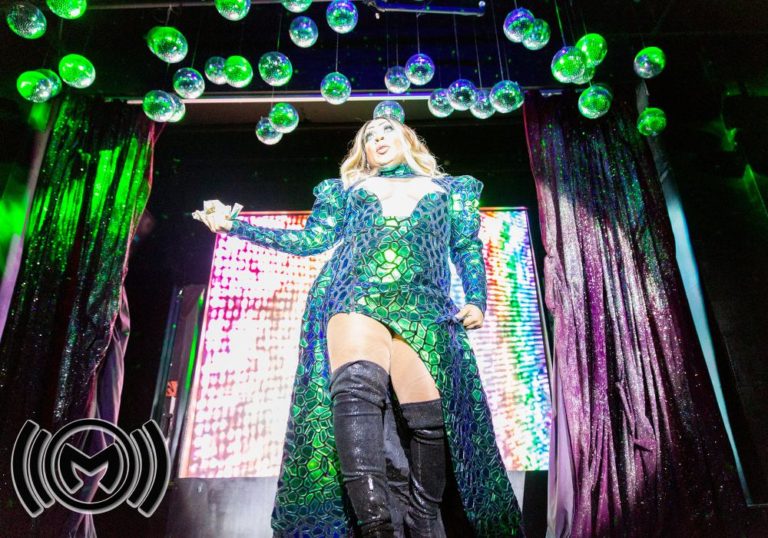
Future Opening Weekend.Atlanta’s new gay dance club and show bar continue the fun with Fantasy Girls dinner shows @ Future, 6 p.m. and 8 p.m. Then it’s DJ Joe Gauthreaux with Underground Circuit Saturday on the dance floor, 10 p.m. and Xion Afterhours with DJ Nina Flowers (photo), 3 a.m. Take a Q-exclusive tour of the new digs.
DecadeDance.DJ Mike Pope takes you from the ‘70s through the ‘10s with a time hop every hour @ Heretic, 10 p.m.
Love Saturdays. Tristan Hartment hosts, and DJ Darlene spins tunes. Drink specials, too @ Hideaway, 10 p.m.
Divas of the Moonlight. Myah Ross Monroe, Angelica D’Paige Brooks and more cast a spell @ Midtown Moon, 10 p.m.
Stand Out Stand Up. It’s an LGBTQ+ comedy show running every Saturday through the end of July @ Role Call Theatre, 10:30pm.
DJ Ree de la Vega corrals the party people for the return of Chaka Khan Hacienda on Sunday at 8Arm. (Photo by Russ Bowen-Youngblood)
Sunday, June 6
Chaka Khan Hacienda. DJ Ree de la Vega and her gang return to the post-pandemic scene with the outdoor dance party and vendor pop-ups you so frickin need right now @ 8Arm, 5 p.m. every Sunday in June.
Hotlanta Softball League. The pitchers and catchers of Hotlanta Softball League begin their masked and distanced return to post-pandemic play @ Tolleson Park, 8 a.m. Check out our photos from Opening Day.
Drag Brunch. The Sisters of Sequins perform with Bubba D. Licious at the wheel while you eat in dinner-theater style @ Lips, 12:30 p.m.
Atlanta Rainbow Trout Swimming. The local LGBTQ swimming club practices @ Georgia Tech Aquatic Center, 12 noon. Same again on Tuesdays and Thursdays, 7:30 p.m. First two practices free.
Stoli Sundays with Mother. Get the day going with drink specials and Mother Malloy at the helm, then keep it going with Tim and Victor’s Honey Pot Bear Night @ Hideaway, 2 p.m. and 8 p.m.
Shameless Sunday. Kyra Mora hosts the fun with Brigitte Bidet and Shawnna Brooks in the cabaret and DJ Kevin Durard in the club @ Future, 8 p.m. The dance floor pops anew with DJ Karlitos, 12 a.m.
Sunday Funday. Gather at the rainbow crosswalks, then step into one of gay Atlanta’s biggest bar traditions. Cocktails, food, shows and fun @ X Midtown, through 12 midnight.
Fire City Comedy. Queer comic Karen Felix curates a cast of comedians for your entertainment. This week’s set also includes LGBTQ comic Storhm Artiste @ Wild Heaven Brewery West End, 6 p.m.
Beatz Sundayz. MSR does what they do with a few extras for Sunday Funday. You can knock back $3 mimosas with DJs and brunch @ My Sister’s Room, all day.
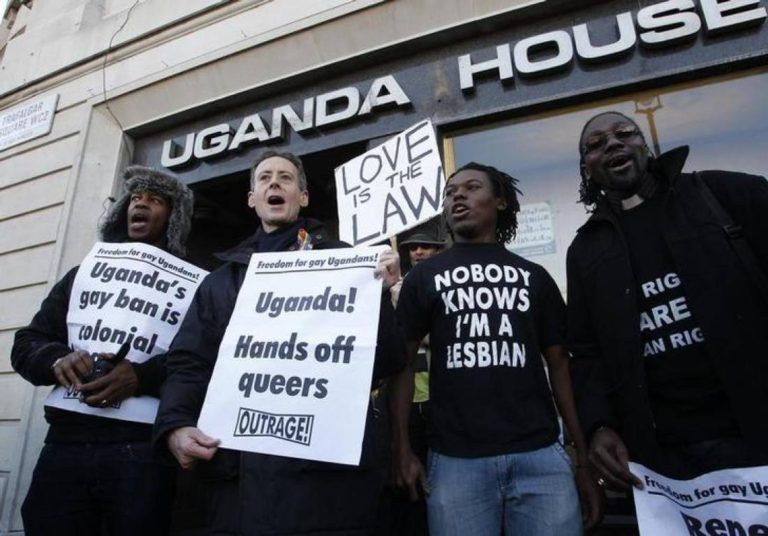
Same-sex intercourse is illegal in Uganda, and President Yoweri Museveni has campaigned against gays
KAMPALA, June 4 (Reuters) – A court in Uganda granted bail on Friday to 39 people, most of them gay men, held for days after what police said was a raid on a same-sex wedding that violated coronavirus rules, but which a rights group described as a round-up at an LGBT shelter.
Frank Mugisha, Executive Director of rights group Sexual Minorities Uganda (SMU), told Reuters 17 of the men had been subjected to rectal examinations in police custody, in what he called a “witch hunt against the LGBT community”.
Police spokesman Luke Owoyesigyire denied that the arrests were linked to the sexuality of the people who were detained, or that any of them had been subjected to rectal exams. The group “were charged with engaging in activities likely to spread an infectious disease” for breaking coronavirus rules at a same-sex wedding in a suburb of Kampala, he told Reuters.
The defendants did not appear in court because of COVID-19 restrictions. Adrian Jjuko, a lawyer for some of the defendants, told Reuters that he and other lawyers for the group had begun processing their release from jail after Friday’s hearing.
Same-sex intercourse is illegal in Uganda, and President Yoweri Museveni has campaigned against gays.
Although the government has typically held back from prosecuting people solely over their sexuality, many LGBT+ Ugandans, facing ostracism and threats, live in shelters funded by rights groups.
Mugisha said remarks by Museveni during an election campaign this year had provoked more anti-gay sentiment.
In 2014, Uganda’s parliament provoked an international outcry by passing a law imposing a life sentence for certain categories of same-sex intercourse. That law was voided by a court ruling. (Reporting by Elias Biryabarema Editing by Maggie Fick and Peter Graff)
Sustainability has been a hot-button topic in the fashion industry for years, and at long last, the practice is finally starting to influence the way brands produce clothes. But what does it all mean for the average consumer? Shopping sustainably not only requires money — it takes time to thoroughly research each product: where it came from, how it was made, etc. This can be a deterrent for even the most well-intentioned fashionista.
Enter Good On You. Founded in Australia by Sandra Capponi and Gordon Renouf in 2015, the app makes it super easy to determine whether a brand is ethical — and finds substitutes if it isn’t. The company is redefining what sustainable fashion means as a whole, focusing largely on environmental impact, labor rights, and animal protection. And it’s got celebrity support, too, from Emma Watson to Olivia Rodrigo’s stylist Laura Sophie Cox, who recently told POPSUGAR that Good On You does “all the hard work for you.”
Keep scrolling for six reasons why we love the game-changing app.
Casa Ruby, the D.C. LGBTQ community services center, filed an administrative complaint on March 29 against the D.C. Department of Human Services, charging the agency with ignoring and failing to stop one of its high-level officials from allegedly engaging in anti-transgender discrimination and retaliation against Casa Ruby.
The six-page complaint, which was drafted by Casa Ruby’s attorneys and signed by Casa Ruby founder and CEO Ruby Corado, says the DHS official in question has acted in an abusive and discriminatory way toward Corado and other Casa Ruby employees while overseeing three DHS grants awarded to Casa Ruby that fund shelters to provide emergency housing for homeless LGBTQ people.
Corado provided a copy of the complaint to the Washington Blade on May 27 in which the name of the DHS official accused of discriminatory and abusive actions is redacted by being blacked out in dozens of places where it appears in the six-page document.
“Casa Ruby’s staff has repeatedly found [the unnamed official’s] demeanor and conduct toward them to be unprofessional, harassing, abusive, and discriminatory,” the complaint says.
“Further, [the unnamed official] has taken actions that are inconsistent with the DHS response to the outbreak of Novel Coronavirus (COVID-19) by failing to follow COVID-19 protocols and by failing to provide needed testing and other resources during this time, which has endangered the clients and staff of Casa Ruby,” the complaint alleges.
The complaint says the alleged COVID protocol violations occurred when the unnamed DHS official transferred clients from another shelter in which a COVID outbreak may have taken place to one of Casa Ruby’s shelters without having the clients tested for COVID.
Corado told the Blade that as of this week, neither she nor her attorneys with the D.C. law firm Van Ness Feldman have received a response to the complaint from DHS in the three months since it was filed. When contacted last week by the Blade, DHS spokesperson Lauren Kinard said DHS would have no immediate comment on the complaint while it is under investigation.
“The complaint is under investigation,” Kinard said. “So, we cannot comment on an investigation.”
However, Kinard said DHS could provide a response to a question by the Blade about DHS’s record of providing funding for other organizations that provide services to LGBTQ people in need.
Kinard said that among the organizations DHS has provided funding for transgender related services is Us Helping Us, People Into Living, a D.C. LGBTQ organization that provides health and social services to LGBTQ clients.
She said DHS also provides funding for the LGBTQ youth advocacy group SMYAL and the LGBTQ group Wanda Alston Foundation for transitional housing services for LGBTQ youth and adults. Kinard said Us Helping Us in partnership with the local group Damien Ministries received a DHS grant to provide employment related services and support for transgender and gender nonconforming D.C. residents.
Kinard said she would also try to provide a response this week to a separate question by the Blade asking about another Casa Ruby concern that DHS is now proposing to reduce its grant funding for the current fiscal year by 50 percent or more. But in an email to the Blade on Thursday, Kinard said the Casa Ruby letter was being reviewed by DHS officials and no immediate response could be given.
In a May 20 letter to DHS Deputy Administrator Hilary Cairns, Casa Ruby attorneys Jacob Cunningham and Ani Esenyn dispute claims by DHS that the funding cut was due to Casa Ruby’s alleged failure to provide a sufficient number of beds at its homeless shelters funded by DHS grants.
“Casa Ruby rejects your modification of the Grant Award, which is in violation of the clear language of the Grant Agreement,” the attorneys state in their letter. “Therefore, this decision is arbitrary, capricious, and not in accordance with D.C. law,” the letter says.
Corado said she believes the proposed funding cut is based on retaliation for the Casa Ruby complaint filed in March. She said aside from the DHS proposed funding cut, the agency has withheld all of its scheduled grant payments to Casa Ruby for the past four months.
In its March 29 complaint against DHS, Casa Ruby makes these additional allegations and requests for DHS to respond to the complaint:
• The DHS official who is the subject of the complaint has “unnecessarily inserted herself in the management of these grants,” creating tension and making it difficult for Casa Ruby employees to carry out the grant’s emergency housing program.
• The DHS official has failed to adequately screen clients from other shelters that the official transferred to Casa Ruby facilities, some of whom “used homophobic and transphobic slurs and assaulted two Casa Ruby clients.” The complaint says Casa Ruby welcomes all clients in need to its facilities, but it alleges that the DHS official’s “careless transfer of clients from Covenant House inflicted additional trauma and stress on some of the most vulnerable individuals in the LGBTQ community.”
• On several occasions during conference calls and meetings with representatives of other shelters hosted by the DHS official, individuals misgendered Corado, a transgender woman, and the DHS official did not correct the misgendering. The complaint says the DHS official’s decision not to correct the misgendering is a sign of the official’s own anti-trans bias.
“Finally, these and other instances have made it clear to Casa Ruby staff that [the DHS official] harbors anti-transgender bias, in violation of D.C. and federal civil rights laws,” the complaint says.
Among other things, the complaint calls on DHS to consider terminating the DHS official from her position or at the very least, remove her from having any interaction with Casa Ruby. It also suggests the DHS official and other DHS employees be required to undergo bias and sensitivity training related to the LGBTQ community provided by transgender women of color.
Corado said that depending on the outcome of the complaint and DHS’s ultimate response, she will consider whether to file a lawsuit against DHS based on the allegations made in the complaint.
The proposed DHS funding cut for Casa Ruby comes at a time when Casa Ruby has been in negotiations with the landlord of its headquarters building at 7530 Georgia Ave., N.W. in a dispute over who should pay for needed building repairs, including repairs of the electrical wiring system found to be in violation of the city building code.
Corado said an agreement has been reached where the landlord and Casa Ruby will share the costs of the repairs based in part on the terms of the Casa Ruby lease for the building, which holds the tenant responsible for most infrastructure repairs. But Corado said the DHS withholding of its grant funds for Casa Ruby and its proposed cutting of the funds for the remainder of the fiscal year could make it difficult for Casa Ruby to pay its share of the building repairs.
As a frequent reader of our website, you know how important America’s voice is in the conversation about the church and the world. We can’t do it without you—America Media relies on generous support from our readers. Please visit our membership page to learn how you can invest in our work by subscribing to the magazine or making a donation.
If you’re already a subscriber or donor, thank you! If you login and register your print subscription number with your account, you’ll have unlimited access to the website. Please contact us at members@americamedia.org with any questions.
When it comes to finding a gay bar or night club, Buffalo’s Allentown neighborhood is the spot. As home to a handful of classic, reliable gay bars and clubs, in this neighborhood and some nearby establishments you’re sure to find a friendly crowd and an inviting atmosphere.
Did we miss one? Did one of these places close? Send us a note!
Cathode Ray has been Buffalo’s premiere Gay Bar & Nightclub for over 25 years. We are open every day and feature Video DJ’s playing all of your favorite …
The LGBT community is celebrating Pride Month, and to highlight those who have brought visibility to it, Variety prepared a list of the 50 most powerful and influential personalities who have fought for their rights and that of others. Among those who appeared on the list in the middle we find actors, singers, producers and more, but Elliot Page, an actor who revealed that he is transgender in December 2020, occupies a very prominent place.
You may also like: Elliot Page says that since he was a child he knew he was trans
The Case of Page, known for his roles in Juno: Growing Up, Running and Stumbling – 94%, X-Men: The Final Battle – 58% and The Origin – 86%, has represented an important step for the trans community, since their openness to speak about themselves and show themselves to the world as they are, encourages others to do the same without fear of exclusion. Fortunately, on social networks he received a lot of support and that is why he has continued to share photos and give statements.
Variety says that Page “made Hollywood history as one of the most visible artists to reveal that he was transgender,” and he himself has stated that revealing his true self sparked an explosion of creativity in his life, thanks to which he is working on several Projects. In the future we will see him in the third season of The Umbrella Academy – 93%.
Another trans person on the list is Lana Wachowski, who is known for being one of the creators of the Matrix franchise – 87%, and responsible for films such as Cloud Atlas – 66%, Meteor, The Movie – 39% and The Fate of Jupiter – 26%, and the Sense8 series – 88%. Variety calls her “one of the most successful directors of all time,” and in December we will see her new installment of The Matrix, which brings back Keanu Reeves and Carrie-Anne Moss in their roles as Neo and Trinity respectively.
Also read: Las tracks de Blue celebrates Pride Month with a song about diverse families
Demi Lovato is another important case, the singer announced on his social networks that he identifies as a non-binary person and that thanks to a work of healing and self-reflection he came to the conclusion that the pronouns they / them represent him better. The news was, similarly to the case of Elliot page, received with expressions of support from her fans and the community in general.
Also among the most popular celebrities on the list is Jodie Foster, known for her roles in films like Taxi Driver – 98%, The Silence of the Innocents – 94% and more recently the drama The Mauritanian – 55%. Foster is openly lesbian and married the actress and photographer Alexandra Hedison in 2014. At the most recent Golden Globe Awards (via Zoom), where he won the Best Supporting Actress award, he celebrated by kissing his wife.
Variety also includes Casey bloys, producer and current Head of Content for HBO and HBO Max, known for being behind hits like Big Little Lies – 90%, Euphoria – 76% and Watchmen – 80%, among others. Last year he was interviewed by The Hollywood Reporter and said that he will only be satisfied with inclusion in Hollywood when “all members of the LGBTQ community feel represented.”
We are in a good moment for the LGBTQ community, although still a long way from achieving an ideal representation. In Hollywood, several studios like Netflix have fully embraced progressivism and prioritized inclusion, while others like Disney take more timid steps and in some cases are accused of only queerbaiting.
Celebrities like Elliot page, Lana Wachowski, Demi lovato Y Jodie foster are just some of those who are helping to give visibility and representation in the media to the LGBTQ community, to know the rest you can see the complete list that Variety has published to celebrate this Pride Month in this link.
Don’t leave without reading: Rugrats reboot confirms one of the characters is LGBTQ
There are as many paths to exploring queer history as there are people who have lived it, and many legends we’ve nearly forgotten about who, in a more just world, would be household names. History can provide inspiration, and can also help us to avoid making the same damn mistakes again and again—mistakes like forgetting that trans people of color were at the vanguard of gay liberation.
Pride is a time to celebrate, honor, and remember all of it, whether you’re trans, bi, ace, poly, pan, intersex, nonbinary, or anywhere else on the gender and sexual identity and expression spectrum… or just proud to support your queer friends.
These 30 movies reflect elements of modern queer (LBGTQ) history—sometimes dramatized, sometimes documentary, and sometimes because the film itself made history. They reflect decades of love, sex, activism, and artistry. Some call for tolerance, while others throw up a middle finger in response to narrow-minded bigotry. Many ask us to love one another, but others demand that we take up the battle cry: Be gay, do crimes.
Or just put on your cha-cha heels and watch some good movies. You do you. (And feel free to let us know your own favorites in the comments.)
The BDN Opinion section operates independently and does not set newsroom policies or contribute to reporting or editing articles elsewhere in the newspaper or on bangordailynews.com.
If you or someone you know needs resources or support related to sexual violence, contact the Maine Coalition Against Sexual Assault’s 24/7 hotline at 800-871-7741.
If you are experiencing a mental health crisis, call the Maine Crisis Hotline at 888-568-1112.
To reach a suicide prevention hotline, call 888-568-1112 or 800-273-TALK (8255), or visit suicidepreventionlifeline.org.
Dana Montalto is a clinical instructor at Harvard Law School’s Veterans Legal Clinic, which published the OutVets report “Turned Away” with Veterans Legal Services. This column was first published by the Los Angeles Times.
A veteran with a fever and hacking cough that suggests a possible coronavirus infection tries to make a doctor’s appointment, only to be turned away by a receptionist who personally decides the would-be patient can’t see a physician.
A former service member and sexual assault survivor at risk of suicide is denied access to mental health services by a bureaucratic gatekeeper stationed at the therapist’s front desk.
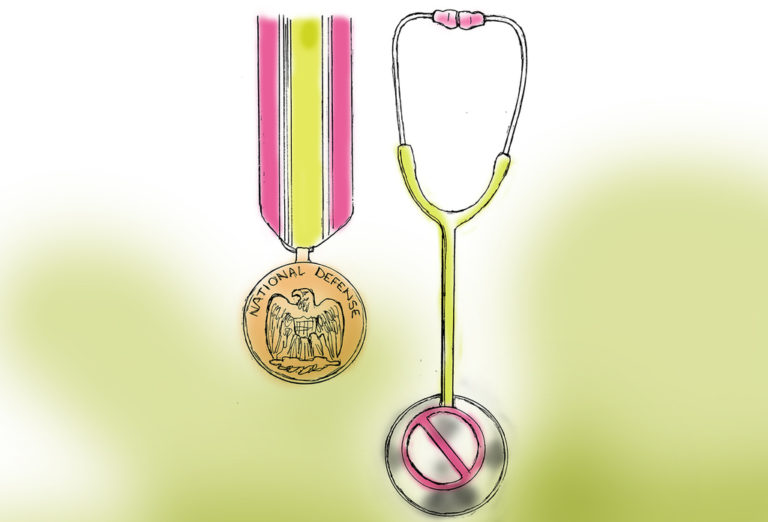
These are two of thousands of examples of veterans seeking the Veterans Affairs health care to which they’re legally entitled — and being wrongly refused it. This is due to a pervasive misunderstanding, and misapplication, of the rules regarding other-than-honorable discharges.
Among veterans this refusal is based on what is known as having “bad paper.” The “bad paper” designation can be based on minor misconduct, such as being late to morning formation, showing disrespect to a superior or one-time drug use.
Being turned away is an institutional shortcoming that can be easily remedied — not by an act of Congress, or time-consuming changes to federal rules, but instead through administrative corrective steps that can be taken at the Department of Veterans Affairs.
An estimated 400,000 former service members are at risk of wrongly being denied VA health care and other benefits, according to a 2020 study by OutVets, a group of LGBTQ+ military veterans. It showed that gay and lesbian veterans and victims of military sexual assault are disproportionately at risk. So are veterans who served in the Navy or Marines, the wars in Iraq and Afghanistan, and those with post-traumatic stress disorder.
Once burdened with “bad paper,” such veterans are more likely to be homeless and suffer mental health problems, and are at greater risk of suicide.
Here’s how the denial of care happens. Veterans who receive other-than-honorable discharges — a designation applied to roughly 7 percent of them since 1980 — can still qualify for VA health care and are legally entitled to individualized eligibility reviews and written notification of the determination.
Though that group includes some with bad conduct and dishonorable discharges, which can involve the commission of serious crimes while in uniform, more than 80 percent of them bear the burden of an administrative determination made without full due process.
The majority of “bad paper” veterans includes many of the estimated 100,000 LGBTQ service members discharged for purported misconduct between the end of World War II and the 2011 official repeal of the “don’t ask, don’t tell” policy that banned gay people from openly serving in the military.
Though there should be consequences for military misconduct, they shouldn’t include an across-the-board denial of health care — especially if a person has a service-related disability, is experiencing homelessness or dealing with the effects of military sexual trauma or PTSD.
Yet the OutVets study found that VA gatekeepers in more than a dozen states — including California, Florida, Missouri, New York, Pennsylvania and Texas — incorrectly told “bad paper” veterans they were ineligible for benefits.
In one case, a Vietnam veteran endured untreated PTSD for more than 50 years after he was wrongly told he didn’t qualify for VA health care. The situation was rectified only after a pro bono lawyer intervened. Just as no one should need a lawyer to apply for a driver’s license, or enroll a child in public school, a veteran shouldn’t need an advocate solely to access VA health care for which they qualify.
A new report released by Legal Services Corp.’s Veterans Task Force further documents the lingering stain of “bad paper” on veterans. The report notes that, often because of service-related mental health conditions and other hardships, these veterans are often in greater need of supportive services. Yet their “bad paper” status prevents them from receiving the vital assistance they need to recover and reintegrate into civilian society.
In response to the OutVets report, VA officials described an “updated enrollment system” that would better identify and track those with other-than-honorable discharges. Such promises aren’t enough.
The VA must also work to overhaul the training, guidance and oversight of its staff and improve how it communicates with veterans. Its outreach to those who have been unlawfully refused care should include social media campaigns and easy-to-understand letters that outline who is eligible to receive care.
Congress and the military have started to take notice of the need for reform. In April, a federal court in Connecticut approved a class-action lawsuit settlement requiring the Army to reconsider thousands of less-than-honorable discharges issued over the last 20 years after failing to properly account for whether mental health conditions played a factor in those discharges. A similar class-action suit on behalf of Navy and Marine Corps veterans is pending.
Military service members dedicate their lives to defending our country. Once they return home, they shouldn’t have to fight for access to justice and basic benefits earned from their selfless service.








 86%, has represented an important step for the trans community, since their openness to speak about themselves and show themselves to the world as they are, encourages others to do the same without fear of exclusion. Fortunately, on social networks he received a lot of support and that is why he has continued to share photos and give statements.