Home Blog Page 83

Hungary: Reject Bill Banning Discussion of LGBT Issues – Human Rights Watch

(Berlin) – Hungary’s parliament should reject a bill that would prohibit discussion of gender identity and sexual orientation, and violates Hungary’s international legal obligations, Human Rights Watch said today. The law targets content “promoting” or “portraying” sexual and gender diversity and could have sweeping consequences for health providers, educators, and artists, among others.

The draft “Laws enabling stricter action against pedophile offenders and the protection of children” bans the “portrayal and the promotion of gender identity different from sex at birth, the change of sex and homosexuality” aimed at people under 18. The bill, sponsored by Fidesz, the ruling party, is due for a vote in parliament on June 15, 2021.

“Hungary’s ruling party is cynically deploying a ‘protection of children’ narrative to trample on rights and try to render LGBT people invisible,” said Neela Ghoshal, associate LGBT rights director at Human Rights Watch. “Children do not need to be protected from exposure to diversity. On the contrary, LGBT children and families need protection from discrimination and violence.”

The draft law is the latest in a series of attacks on LGBT equality under Prime Minister Viktor Orban’s government. In May 2020 the government rushed through an omnibus bill that included provisions preventing transgender and intersex people from changing their gender marker on official documents, in defiance of their obligations under the European Convention on Human Rights (ECHR). In December, parliament adopted an amendment to the constitution effectively banning same-sex couples from adopting children.

Orban’s government has sought to scapegoat LGBT people as part of a wider strategy to sidestep human rights obligations and cement Orban’s brand of authoritarianism.

In the case of the current bill, Fidesz members of the legislative committee added language on “portrayal and promotion” of diverse gender identities and sexual orientations at the last minute to an existing draft bill on pedophilia. The bill already contained provisions hostile to LGBT people, including one that the state should protect “family relations based on parent-child relations where the mother is a woman, the father is a man,” and another aimed at “ensuring the right of children to an identity in line with their sex at birth.”

The new provisions take aim at any discussion of diversity, and seem to stem in part from efforts by artists and advertisers to promote inclusion and acceptance of sexual and gender minorities. In 2019, Fidesz threatened a boycott in response to Coca-Cola advertisements featuring same-sex couples sharing a soft drink. In 2020, when Labrisz, a lesbian, bisexual and transgender women’s organization published a fairy tale anthology entitled “Wonderland is for Everyone” featuring some LGBT protagonists, the government forced it to attach stickers to the books with the disclaimer that they contained “behaviour inconsistent with traditional gender roles.”

Hungary’s draft pedophilia law introduces provisions into the Child Protection Act, the Act on Business Advertising Activity, the Media Act, the Family Protection Act, and the Public Education Act that would establish administrative sanctions for licensed professionals or institutions that violate it, threatening the right to education and the right to health, including the explicit right to health information under international law. In addition, the law is likely to contribute to violence and other forms of harassment against LGBT youth, in violation of the rights to security of person and freedom from violence.

Fidesz efforts to silence speech acknowledging the existence and human rights of LGBT people echo the so-called “gay propaganda” law passed in Russia in 2013. Human Rights Watch has extensively documented how that law exacerbated hostility toward LGBT people and stifled access to LGBT-inclusive education and support services, with harmful consequences for children.

Russia’s propaganda law has been used to shut down online information and mental health referral services for children and to discourage support groups and mental health professionals from working with children. It stigmatizes LGBT children and their families and has had a chilling effect on mental health professionals who work with LGBT youth. The European Court of Human Rights ruled in 2017 that the law was discriminatory and harmful to children. It held that authorities adopting such laws are seeking to reinforce stigma and prejudice and encourage homophobia, which is incompatible with the values of a democratic society.

The proposed bill in Hungary similarly violates the rights to freedom of expression and freedom from discrimination guaranteed in the European Convention on Human Rights, Human Rights Watch said. As the Council of Europe’s Steering Committee for Human Rights has observed, “authorities have a positive obligation to take effective measures to protect and ensure the respect of lesbian, gay, bisexual and transgender persons who wish to … express themselves, even if their views are unpopular or not shared by the majority of the population.”

The right to freedom of expression includes the right to seek and receive information and ideas of all kinds. The Committee of Ministers of the Council of Europe has noted the right to seek and receive information includes “information on subjects dealing with sexual orientation and gender identity.” In recognition of children’s particular need for information, the Convention on the Rights of the Child requires states to ensure children’s “access to information and materials from a diversity of national and international sources.”

In June 2020 the European Court of Human Rights found that Hungary violated its obligation under the European Convention on Human Rights to respect transgender people’s private lives, and has to provide a procedure to allow them to have their gender identity legally recognized on documents.

The EU Commission adopted in November 2020 its first-ever five-year LGBTIQ Equality Strategy and in March, the European Parliament declared the EU an “LGBTIQ Freedom zone.” This latest anti-LGBT attack in Hungary triggers a responsibility for the European Commission and other EU member states to take action and hold Hungary’s government to account. EU’s Equality Commissioner, Helena Dalli, should strongly denounce Hungary’s latest attack against non-discrimination, a core right under the EU treaties, and call on the Hungarian parliament to reject the draft bill.

“Equating sexual and gender diversity with pedophilia is in itself a frontal attack on the basic dignity and humanity of LGBT people, and poses real risks to their safety and well-being,” Ghoshal said. “Hungarian members of parliament should reject this effort to silence marginalized people and should instead redouble their efforts to protect the basic human rights of everyone in Hungary, including people who are lesbian, gay, bisexual or transgender.”
 

WBGO Celebrates Lesbian, Gay, Bisexual, Transgender and Queer Pride Month – wbgo.org

June is Lesbian, Gay, Bisexual, Transgender and Queer (LGBTQ) Pride Month, and so timed to honor the 1969 Stonewall Uprising in Greenwich Village. WBGO stands in support of the LGBTQ community — and celebrates the vital work of musicians in its ranks, who have often had to fight to carve out a space. “Make Them Hear You” is how jazz singer Aaron Myers articulates it on the first track of The Pride Album, which he’ll discuss with Keanna Faircloth on The Pulse later this month.

WBGO has a longstanding commitment to celebrating LGBTQ artists, all year round. It extends to Jazz Night in America profiles of Gary Burton, Fred Hersch and Andy Bey, and video shorts like this one, featuring Allison Miller.

Miller has played several times in our studio, as a leader or a member of a band. With pianist Carmen Staaf, she performed the last WBGO Yamaha Salon before the pandemic lockdown last year; here is the full concert, emceed by Nate Chinen.

Allison Miller and Carmen Staaf at WBGO’s Yamaha Piano Salon

WBGO’s Pride Month programming is ongoing. Among the highlights:

  • Billy Strayhorn spotlight on air
  • June 7: Michael Mayo album spotlight in Take Five
  • June 9: Patricia Barber track feature and album announcement
  • June 23: Aaron Myers interview on The Pulse

See WBGO’s Diversity, Equity and Inclusion statement for more information.

Sha-wing, batter! – Dallas Voice

Billy Bean

Queer facts about America’s favorite pastime

MIKEY ROX | Contributing Writer
mikeyroxprs@gmail.com

After a season-long hiatus from hosting in-the-stands fans at its 30 ballparks and stadiums due to the Covid-19 pandemic, Major League Baseball (and its Minor League Baseball feeder system) is back — and you know what that means: All them butts!

Aside from gawking at your favorite players’ posteriors in form-fitting pinstriped pants — while following CDC protocol, of course — there are plenty of queer cheers to give for America’s national pastime. These are gayest things you didn’t know about pro ball.

Glenn Burke broke the first barrier, but it may have cost him
As an outfielder for the Los Angeles Dodgers from 1976 to ’78 (and widely regarded co-inventor of the high-five — true story), Glenn Burke broke ground as the first active MLB player to come out as gay to his teammates and bosses. While he was asked to refrain from making his sexual orientation public by Dodgers’ top brass, Burke told People magazine in 1994 that his “mission as a gay ballplayer was to break a stereotype,” and he thought it worked.

In other interviews and in his autobiography, however, Burke suggested that prejudice drove him out of the sport, not the injury that sent him back down to the minors after a year with the Oakland Athletics.
The A’s released Burke from his contract before the end of his injured farm-team season, and he retired from the game in 1980.

In the initial years following his retirement, Burke competed in 100- and 200-meter sprints at the inaugural Gay Games in 1982 and in basketball at the 1986 Games, and for many years he played for the San Francisco Gay Softball League. Burke died of complications from AIDS in 1995.

Burke befriended Tommy Lasorda Jr., and Tommy Senior wasn’t happy about it
Legendary Dodgers manager Tommy Lasorda Sr. — who led the team to two World Series championships, four National League pennants and eight division titles during his 20-year stewardship from 1976 to 1996 — had a gay son. Burke befriended the younger Lasorda, which angered the “family values” manager, causing a rift that likely contributed to Burke being traded to the A’s after three seasons in Los Angeles.

Lasorda Jr. died of AIDS complications in 1991 at age 33. Lasorda Sr. died earlier this year without ever having admitted he had a gay son.

It’s been 22 years since the second MLB player publicly acknowledged his sexual orientation
Billy Bean, an outfielder for the Detroit Tigers, L.A. Dodgers and San Diego Padres from 1987 to 1995, came out in the Miami Herald in 1999, four years after retiring. Besides Burke, he remains the only other former MLB player to publicly acknowledge his homosexuality post-career.

No active player has ever come out publicly, and no former players have come out since. In 2003, Bean released his autobiography Going the Other Way: Lessons from a Life in and out of Major League Baseball, and in 2014 he was named MLB’s first Ambassador for Inclusion.

In 2016 that role was expanded to vice president of social responsibility and inclusion, and today Bean serves as vice president and special assistant to the commissioner.

The L.A. Dodgers are the only team for whom both players who have come out as gay played
Both Burke and Bean played for the Dodgers during their MLB careers — and as history tends to repeat itself, maybe there’s a gayby on the Dodgers’ roster right now. If that’s true, here’s hoping he has the courage to come out and make history while an active player, put the final nail in the coffin of the Dodgers’ homophobic past and serve as an inspiration to aspiring young pro ball players everywhere.

No pressure.

Statistics suggest there are dozens of closeted pro baseball players
In a 2015 article for the New York Times, economist and public policy scholar Justin Wolfers wrote that, based on the proportion of American men who have admitted to being gay or bisexual (though not necessarily out), there must be closeted MLB players actively taking the field. Thirty MLB teams each have 40-men rosters, equaling 1,200 players who don’t publicly identify as queer.

“If baseball players are as likely to be gay as other men their age — let’s go with an estimate of 1 in 25 — then the odds that none of these men are gay is one in two sextillion,” Wolfers wrote. “A sextillion comes after a trillion, quadrillion and quintillion; it is a thousand billion billion.”

Of course, there may be gay or bisexual men in MLB who have ripped a page from Burke’s playbook and only confided within their own club. Time will tell.

Lower-level pro ball has a much better coming-out average
Since Sean Conroy, former pitcher for the independent Sonoma Stompers, came out publicly in 2015 while still on the team’s roster — the first-ever active pro ball player to do so — a handful of others have followed in his pioneering footsteps (at various stages of their careers), including MiLB players David Denson, Tyler Dunnington, Jason Burch and John Dillinger.

The San Francisco Giants made rainbow history for Pride 2021
MLB teams are known to incorporate cause-based logos and patches into their uniforms throughout the season — like the pink breast cancer awareness ribbon, for instance, or camouflage to show military appreciation.

But on June 5, 2021, the San Francisco Giants became the first team in big-league history to rainbow-ize its uniforms, including a right-sleeve home jersey patch in Pride colors and a matching logo on players’ hats, in celebration of its LGBTQ+ fans.

“We are extremely proud to stand with the LGBTQ+ community as we kick off one of the best annual celebrations in San Francisco by paying honor to the countless achievements and contributions of all those who identify as LGBTQ+ and are allies of the LGBTQ+ community,” San Francisco Giants CEO Larry Baer said in a statement.

A scripted series about gay professional ball players may be coming soon
Author Peter Lefcourt’s novel, The Dreyfus Affair: A Love Story (1992), about homophobia in baseball that follows two MLB players who get caught up in a sex scandal should be required reading for any on-the-spectrum queer sports fans, but if you’re adverse to cracking open a dusty book, the live-action TV adaptation may be coming to a streaming service near you.

Universal Television has optioned the novel for development with Oscar- and Emmy-winner David Frankel (The Devil Wears Prada) tapped to direct and co-write the pilot with Lefcourt.

The project has been in development in some form for the past 28 years. Studios put the kibosh on Lefcourt’s and Frankel’s original movie scripts in 1996 — Disney was even interested at one point — citing lack of commercial appeal.

But we all know that’s just industry code for “We’re too pussy to make this gay movie, so here’s Evita.”

These are the best butts in baseball according to Us magazine
There’s no definitive queer ranking of the best butts in baseball (and it’s a shame there isn’t), but a few years ago Us magazine asked its readers, majority females, to rank MLB’s greatest assets.

Phillies left fielder Rhys Hoskins, Cincinnati Reds pitcher Matt Harvey, New York Yankee Giancarlo Stanton, Nationals right fielder Bryce Harper and Dodger Cody Bellinger rounded out the top five — figuratively and literally.

Perfectly acceptable. Fine badonkadonks all around.

But are there better booties at-bat?

Consider Diamondback David Peralta, Los Angeles Angel Mike Trout and Orioles first baseman Chris Davis the next time they take the plate.

Seventh-inning stretch, anyone?

Mikey Rox is an award-winning journalist and LGBT lifestyle expert whose work has been published in more than 100 outlets across the world. He currently works for the Atlanta Braves. Connect with Mikey on Instagram @mikeyroxtravels.

LGBT community: How to find your LGBTQ+ community – cosmopolitan.com

I came out as queer about a year and a half ago, at the age of 18. For the most part, I just started dropping allusions to it in conversations and allowed the people around me to work it out for themselves. Initially, I struggled with finding queer spaces that felt truly accessible to me, largely due to feeling hyperconscious of my skin. This was although they had come highly recommended to me by friends (who were often white themselves). It was only once I got to university that I found a community of queer people of colour. Being able to laugh and make plans with my friends for celebrations like Eid and Ramadan, treating them as my found family, is what makes me feel at home.

Coming out can be a difficult experience. While it can be freeing and is often upheld as ‘The Queer Milestone’, it’s perfectly fine to not come out if you don’t feel safe or ready to unveil your identity. Mainstream narratives often focus on coming out as a one-off event, followed by life continuing as normal and searching for a partner. In reality, it’s a process, and this is a truth that I wish would come through more often. We learn more about ourselves everyday, and that’s healthy. Although having the freedom to find a partner who fulfils you is important, coming out is about more than that. It’s also about forming lifelong memories and relationships with friends who have your back. It’s about forming a network of support for one another.

lgbt community how to find your lgbtq community

Zave Smith

Jason Park is a psychotherapist working in youth, LGBTQ+, sex and relationship therapies. “We’re led to create community spaces which form a safe basis for us to engage with our lives, should we be attacked,” he says. “How are you meant to find a positive affirmation for yourself when you don’t have that around you?” Unfortunately, this Stonewall study points out that LGB people are twice less likely to see biological family than their heterosexual peers, making found family and community even more important.

LGBT community: How to find your queer community

The LGBTQ+ community is often spoken about like it’s some kind of mysterious monolith, but there’s no one way of getting involved. The examples listed below aim to provide you with a starting point for your journey, but the beauty of coming out is how unique it is to you.

Note, when looking at these spaces and resources, it’s okay to feel that they aren’t for you. Recommendations aren’t the be all and end all. When it comes to finding your LGBTQ+ community, you need to centre yourself and choose the options which make you feel safe and the most authentic version of yourself.

lgbt community how to find your lgbtq community

Paula Daniëlse

Charities

For some, coming out is a time of acceptance. For others, it might lead to displacement. The work that charities do in supporting and creating LGBTQ+ community is vital.

While there are some great charities for the wider LGBTQ+ community, such as Stonewall, it’s also useful to find charities which cater specifically to your needs. For example, MindOut is an LGBTQ+ mental health charity. Coming out is hard, and you need to take care of yourself throughout the experience.

This content is imported from Instagram. You may be able to find the same content in another format, or you may be able to find more information, at their web site.

There are also charities which cater to specific parts of the community. For example, Hidayah is an LGBTQ+ charity which caters to the Muslim community, and Keshet is one for Jewish LGBTQ+ groups. These organisations often run meetups and events in safe spaces, making them an ideal place to start finding your feet.

Clubs, bars and parades

Strobe lighting, sticky floors and rainbow flags: queer nightclubs are a great place for LGBTQ+ joy. As a newbie, it’s normal to feel intimidated, but there’s also something magical about the queer joy in these spaces once you’re more comfortable. They’re largely welcoming spaces, and you’re likely to end up being absorbed into a group of friends on a night out. Sometimes, you may find that they lean towards the cliquey side, but it’s all about finding the spaces that work for you.

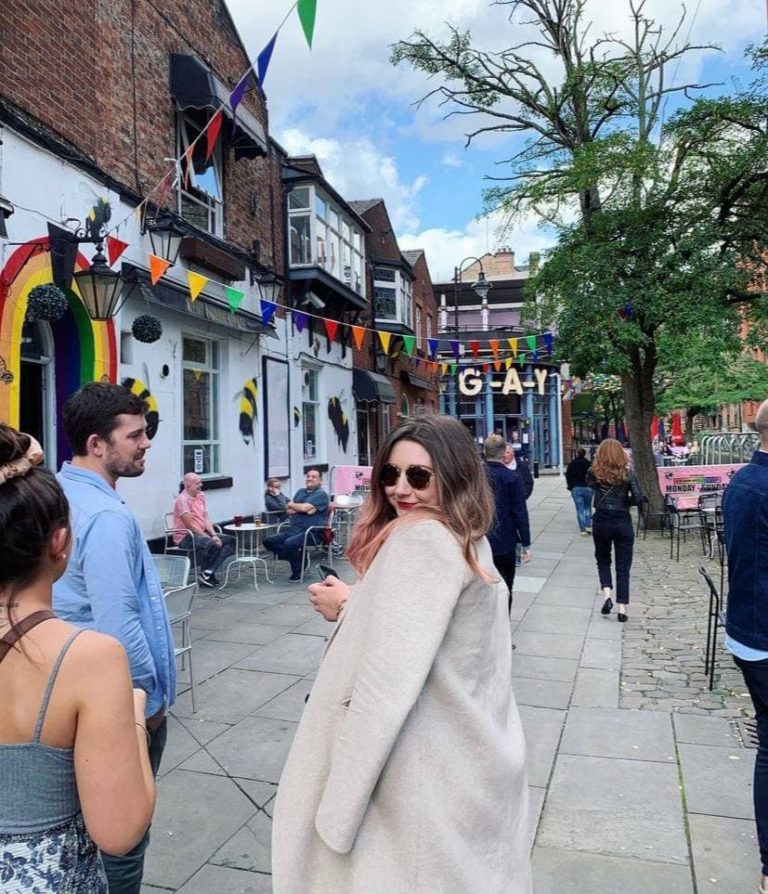
In the UK, some names have become synonymous with queer nightlife. London’s G-A-Y and Pussy Palace, Bristol’s Eat Sleep Drag Repeat, Liverpool’s GBar and Birmingham’s Glitter Shit are all great places to start. Some of these spaces, however, such as G-A-Y, are fun byt do cater mainly to cis white gay men.

This content is imported from Instagram. You may be able to find the same content in another format, or you may be able to find more information, at their web site.

There are also clubs which cater specifically to subsections of the LGBTQ+ community. For example, Club Kali started off in London, but has grown to nurture the biggest Asian LGBTQ+ community in the world. Similarly, the Cocoa Butter Club is a cabaret group for black and brown performers who seek to change the face of their industry.

Unfortunately, these clubs tend to be limited to cities. However, many have been running online events, which is still a great chance to get stuck in. They tend to announce such events on an ad hoc basis, so following their socials and checking their sites regularly is a good idea.

Media

The lack of representation of LGBTQ+ identities within the media isn’t a new development. Unfortunately, there remains a lot of work that needs to be done. Still, finding media which mirrors you and your experiences in some small way can be a great route to feeling less lonely. Queer Talk, a great podcast hosted by friends Spencer and Mufseen, explores various facets of queer identities through positive news stories and interviews. ‘Gender Stories’ explores how gender affects different aspects of our lives.

This content is imported from Instagram. You may be able to find the same content in another format, or you may be able to find more information, at their web site.

The Gay Times, Attitude and Pink News offer great journalism for the LGBTQ+ community. Shows like Pose and RuPaul’s Drag Race are also hugely popular, with vast fanbases to join. You can join fanbases by using the shows’ hashtags on social media like Instagram or Twitter, looking at replies to the people featured, or using purpose-made sites like Archive of our Own (often stylised Ao3).

Online historical resources

The LGBTQ+ community has a long, rich history. Unfortunately, it’s not one that’s taught as widely as it should be. When trying to find where you fit within the wider community, it can help to look back and root yourself in time as part of a proud culture.

Particularly for people of colour, who face compounded erasure of our identities and history, archives can help you feel less alone. Jason Okundaye and Marc Thompson joined forces to create the archive ‘Black and Gay Back in the Day’. Shon Faye’s podcast, ‘Call Me Mother’, features chats with queer elders, discussing what it means to be LGBTQ+ in the world today. Looking through these archives and seeing yourself mirrored in history can help you feel less adrift. Nurturing an interest in queer history can also put you in contact with LGBTQ+ elders, a great way of knowing that you’re on the right path and things will all turn out okay.

Follow Mishti on Twitter.

SUBSCRIBE HERE to have Cosmopolitan delivered to your door.

Like this article? Sign up to our newsletter to get more articles like this delivered straight to your inbox.

This content is created and maintained by a third party, and imported onto this page to help users provide their email addresses. You may be able to find more information about this and similar content at piano.io

5 Beauty/Fashion Podcasts You Should Tune Into – HelloBeautiful

Receiving your daily dose of beauty and fashion expertise audibly instead of visually may seem challenging to grasp.  However, when it comes to stylish expertise and intriguing content, the beauty and fashion industry are the voices to be heard.  Whether you are in need of some sheer entertainment, pop culture tea along with the latest fashion trends, fashion history, or looking for ways to enhance your beauty internally, here are five beauty/fashion podcasts you should tune into.    

You know how it feels when you get together with the girls and discuss ANY and EVERYTHING?  Well, this podcast is that – an ongoing conversation with your good girlfriends.  From love, to eating too much, beauty hacks, the latest tea, and more – this podcast covers it all.  Be prepared to relate, laugh, and get in your feelings with this one.      

NAACP Image Award-nominated and best selling author Curly Nikki is guiding her listeners through a mind and spirit journey with her new podcast Go(o)d Mornings.  Instead of focusing on external beauty, Nikki is helping her listeners cultivate the beauty within.  She will share the knowledge she has gathered from reading hundreds of books and traveling to different countries to help others live an abundant life from the inside out.  Zen out with this podcast which begins on June 14th.        

It’s only right that the television series Legendary is accompanied by a podcast that is just as enticing as the show!  With its second season underway, there is a lot to chat about.  The show follows LGBT fashion contestants as they explore the world of ball culture and compete against each other in dancing, voguing, and walking events – of course while decked out in couture.  The show is jammed packed with spiciness so you know the podcast is just as hot.  With behind the scene interviews, a little shade, and some venting sessions, entertaining is an understatement for this podcast.  

Hosted by content creator Taniqua Russ, Black Fashion HIstory is a podcast that explores the contributions of black people to the luxury fashion industry.  When high fashion is discussed black people are often left out of the conversations, but Taniqua is putting an end to that.  She enlightens her listeners with information on black designers, educators, stylists, and more.  If you are interested in our culture’s major role in fashion, this podcast is for you.

Beauty enthusiast Brooke DeVard Ozaydinli breaks down everything beauty with her podcast.  From selfcare, to bridal makeup, wellness tips, and recommended products, this podcast is jammed packed with good content.  If you are obsessed with all things beauty and want to know tips, tricks, and more – this podcast awaits you.  

Which podcast fits your lifestyle? 

DON’T MISS…

‘More Than That With Gia Peppers’ Is Soul Food In A Podcast

Zuri Hall Gives Us The Scoop On Her Podcast “Hot Happy Mess”, Her Must-Have Beauty Products, And Her Favorite Red Carpet Looks

No rainbows in Ranger land – Dallas Voice

Rafael McDonnell

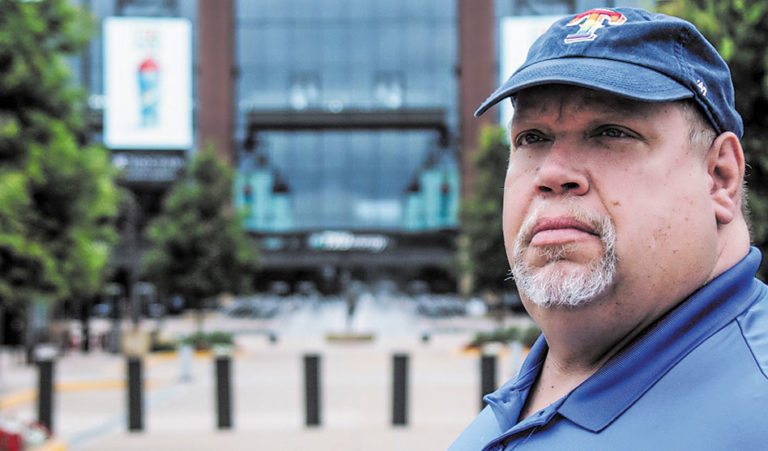
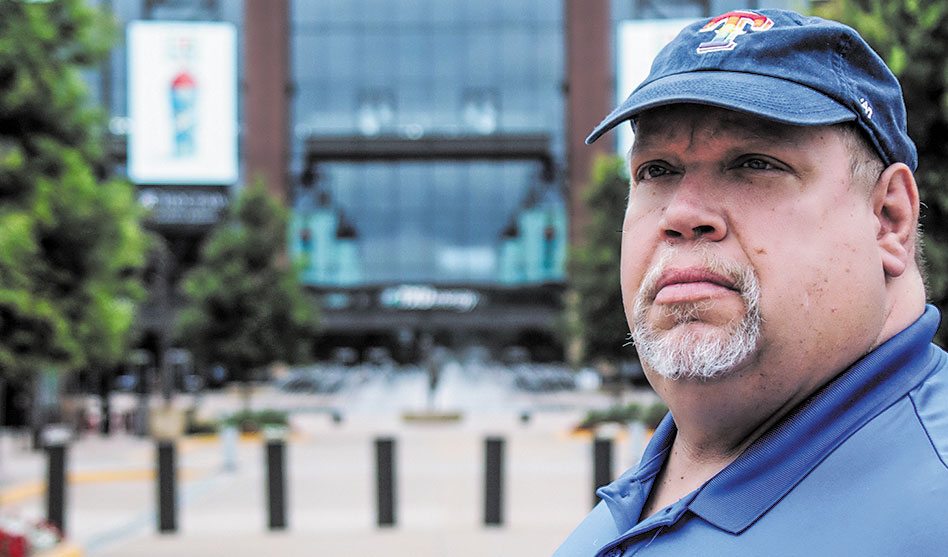
The Texas Rangers are the only Major League Baseball team NOT to have an LGBTQ Pride event

DAVID WEBB | Contributing Writer
DavidWayneWebb@yahoo.com

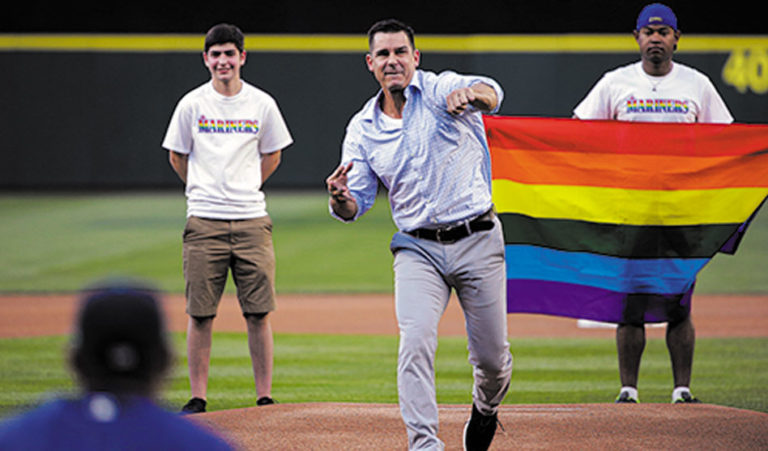
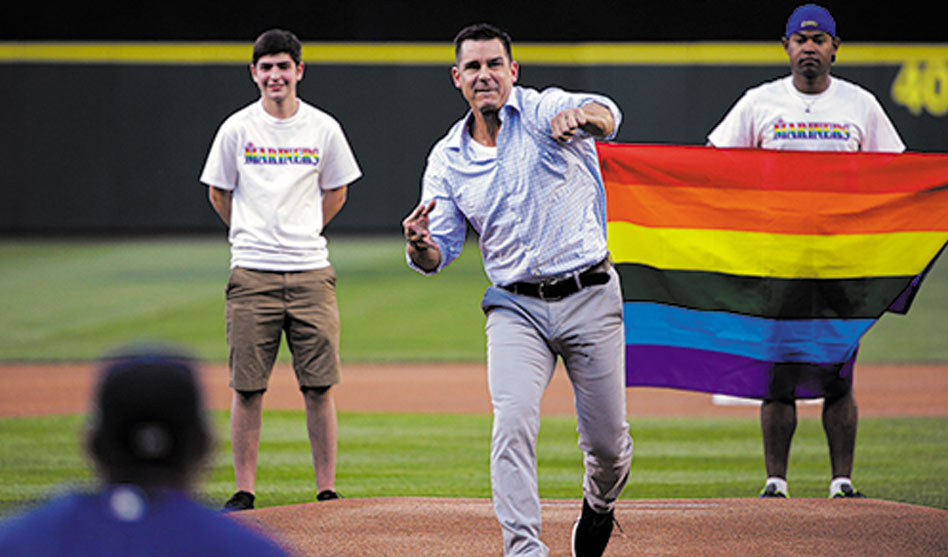
Irony will be at play when the Texas Rangers face off against the Houston Astros in the Space City team’s first annual Pride Night, dubbed “Baseball is for Everyone,” at Minute Maid Park in Houston on June 16.

The Rangers and the Astros entered this season as the last two holdouts among Major League Baseball’s 30 teams when it came to sponsoring Pride celebrations. Whether they win or lose against Houston, the Rangers will be the only team left not participating in Pride at game’s end. And to date there is no indication when, if ever, there will be such a celebration at Globe Life Field.

That is a question now on everyone’s mind.

The Rangers responded to Dallas Voice’s inquiries with a statement, issued by Executive Vice President of Communications John Blake, saying the team welcomes and respects everyone. But the statement did not mention Pride.

“Our commitment is to make everyone feel welcome and included in Rangers baseball,” Blake said in the statement.

“That means in our ballpark, at every game and in all we do — for both our fans and our employees. We deliver on that promise across our many programs to have a positive impact across our entire community.”

The situation is frustrating, says Rafael McDonnell, communications and advocacy manager for Resource Center in Dallas. He started lobbying the Rangers to become more inclusive in the area of LGBTQ matters in the spring of 2019 as part of a broader initiative directed at all professional sports teams in the Dallas-Fort Worth area. Representatives of the Rangers met at the Resource Center to learn about LGBTQ issues and to consult about what needed to be done. And the team responded favorably by adding sexual orientation and gender identity protections to employment policies and developing education programs aimed at curbing LGBTQ discrimination and harassment both internally and externally, McDonnell noted.

McDonnell also enlisted the help of Billy Bean, an openly gay retired professional baseball player who is now vice president and special assistant to MLB Commissioner Robert D. Manfred Jr. Bean lobbied the Rangers on LGBTQ issues, and the Rangers sought his help in the training of seasonal employees.

The Rangers stepped up to the plate on all points — with the exception of celebrating Pride during a home game, McDonnell noted. But the dialogue about Pride celebrations continues, according to both McDonnell and Blake.

“They’ve never indicated one way or the other,” McDonnell said. “A lot of groundwork has been laid, but we’re stranded on third base, wanting to make it home.”

The Chicago Cubs started the Pride tradition among MLB clubs in 2001, and their event is now called Out at Wrigley Field. Other teams followed Chicago’s lead and began adopting the practice. The LGBTQ sports publication Outsports reported in 2019 that only the Rangers and the Astros lagged behind.

Houston’s LGBT Chamber of Commerce started lobbying the Astros, and the team announced it would host a Pride celebration in 2020. The game was cancelled because of pandemic restrictions, so the first annual celebration will be this month.

Only two MLB players are known to have been openly gay: Glenn Lawrence Burke and Billy Bean.

Burke, who played for the Los Angeles Dodgers and the Oakland Athletics from 1976 to 1979, came out as gay to his team’s owners and teammates while he was still playing. Burke is credited with inventing the “high-five” tradition after he ran on the field to congratulate a player for hitting a home run. He came out publicly by saying, “They can’t ever say now that a gay man can’t play in the majors, because I’m a gay man and I made it.”

Burke died of AIDS-related causes in 1995, the same year that Bean retired from Major League Baseball. Four years later, in 1999, Bean revealed his sexual orientation.

The Pride Project analyzed social media responses to MLB’s Pride events nationwide in 2020 after the Outsports story was published. MLB’s Pride celebrations range from large productions to simple discounts on game tickets. The analysis showed that Pride events draw large numbers of LGBTQ fans to the games, including many who otherwise might not feel comfortable attending professional sporting events.

The bottom line is that teams benefit financially from the additional ticket sales, and the positive optics of helping to normalize a marginalized group may also help active team members become more comfortable coming out.

How professional sports teams approach Pride celebrations is of more critical importance than whether the event is staged or not, said Lisa Howe, vice president of memberships and programs for North Texas LGBT Chamber of Commerce, which has helped professional sports teams in the DFW area plan Pride celebrations. She noted that a “hush-hush strategy to sell lots of tickets to the gay people and hope no one beats them up in the parking lot” will backfire on the team.

“One good way to frustrate a lot of people is to sell a lot of tickets, and there are no rainbows and nothing on the jumbotron making announcements through the night,” Howe adds. “They need to anticipate pushback and be ready to say they are not afraid to put their brand on that to support other communities. They need to be the one doing the pushing and the marketing. That’s good when they take ownership of it.”

McDonnell pointed out that the news of the Rangers being the lone holdout on Pride among MLB teams has not fared well for the team in the sports world at large and among LGBTQ sports fans.

“Supporters of a Pride Night have really taken the team to task on social media,” he said. “It’s out there in the community that there is a demand for that. I’m wondering if they didn’t read the room right. Maybe they didn’t anticipate there would be so much frustration.”

But there is room for optimism that the Rangers will come around, McDonnell added. Other sports teams, including the Dallas Mavericks, Dallas Stars, Dallas FC and Dallas Wings, host Pride celebrations. All of Dallas’ professional sports teams, including basketball, baseball, football, soccer and hockey carry language in their employment policies addressing LGBTQ people, and Dallas appears to be the only major market that can boast that, McDonnell said.

“I’m hoping it will give [the Rangers] pause to reconsider,” he said. “That’s ultimately my hope.”

West End Musical Celebration is an all-star evening of theatrical treats – review – Gay Times Magazine


Photography: Bonnie Britain

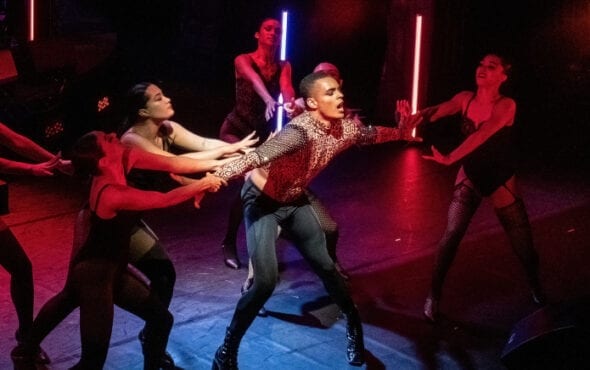
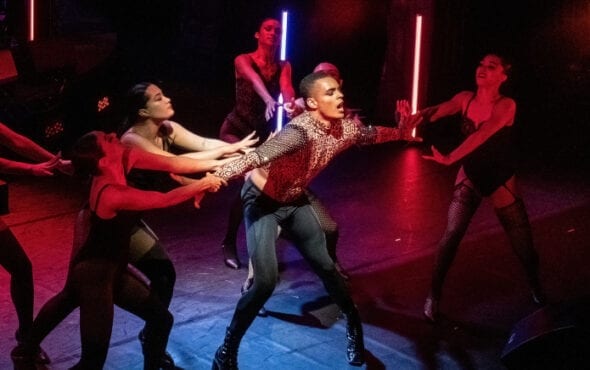
The celebratory evening of West End musicals, hosted and co-produced by Shanay Holmes, has opened at London’s Palace Theatre.

This show has been a long time coming, but we’re glad we finally got to see it. Originally billed as a West End Musical Christmas, it was cancelled at the 11th hour following the closure of London’s theatres in mid-December. Now rebranded as the West End Musical Celebration, the show brings together a whole host of West End talent – Layton Williams, Alice Fearn, Trevor Dion Nicholas and more besides – for a celebratory evening of music from London’s biggest shows. It provides a lighthearted evening of fun entertainment and it’s genuinely great to hear these numbers performed live again.

Proceedings begin nicely with an upbeat rendition of Hairspray classic ‘You Can’t Stop the Beat’ by our host Shanay Holmes – it’s a great arrangement with an excellent live band and some fab backing vocalists. After that is perhaps a bit of a pacing misstep with a couple of ballads which bring the energy right back down again. After that, though, the pace picks up with Layton Williams delivering a raunchy rendition of ‘Sex Is in the Heel’ from Kinky Boots, while Alice Fearn garners a standing ovation – before we’ve even reached the interval – for her superb performance of Wicked’s ‘Defying Gravity’.

There’s not really too much of a theme or narrative going on here – aside from a brief Disney segment which sees Trevor Dion Nicholas deliver a divine ‘Friend Like Me’ from Aladdin and Alice Fearn return to the stage for a show-stopping ‘Let It Go’ from Frozen – it’s mostly a disparate collection of songs from musicals of different genres and eras. But that’s fine by us – the quality of the vocalists and the band still make the evening quite the treat.

Photography: Bonnie Britain

11 Fashion Brands Giving Back For Pride Month – The Zoe Report

0

As you continue to celebrate the LGBTQ+ community for Pride Month, it’s important to note that it takes more than flying rainbow flags or posting on Instagram to show support. In addition to watching LGBTQ+ movies and understanding the group’s history through books like The Stonewall Reader, you can shop from some fashion brands that are giving back this month. It’s important to recognize, too, that even though many companies are donating to charities and organizations, this is all just a start. Continue to check in with the brands you love, and hold them accountable, on how they’re supporting the LGBTQ+ community outside of June.

In addition to browsing the brands, below, also support small and local LGBTQ+-owned businesses like New York’s Bluestockings Cooperative or Black Boy Knits year round. It helps to research and think through where you’ll spend your money as you’ll want that brand’s values to reflect yours. Ahead, TZR rounded up a tightly edited list of brands to shop, which are donating 100% of its merch proceeds from their Pride-adjacent collections to foundations like The Marsha P. Johnson Institute, The Trevor Project, and It Gets Better Project.

These organizations are crucial to supporting and championing LGBTQ+ individuals. Should you not need another yoga mat or rainbow-colored jewelry piece, you can just make direct donations to the foundations of your choosing. Some more suggestions for where to donate directly include social rights groups like Trans Women of Color Collective or GLAAD (Gay & Lesbian Alliance Against Defamation).

We only include products that have been independently selected by TZR’s editorial team. However, we may receive a portion of sales if you purchase a product through a link in this article.

Quay

To celebrate and uplift those in the LGBTQ+ community, the Australian eyewear brand teamed up with The Trevor Project for its limited-edition Pride collection. One hundred percent of the proceeds from sales of this rainbow-colored range will go towards helping prevent suicide among the LGBTQ+ youth, with a total donation of up to $100,000.

Alo Yoga

This year, Alo Yoga released a Pride collection called Love Is Love. The brand is giving 100% of the sales proceeds from the limited-edition capsule to The Trevor Project — a national leader in providing crisis intervention and suicide prevention services to lesbian, gay, bisexual, transgender, queer, and questioning young people under the age of 25.

Stuart Weitzman

In celebration of Pride month, the Jill Biden-approved footwear brand released a new, limited-edition sneaker in partnership with the It Gets Better Project — a nonprofit that seeks to uplift, connect, and empower LGBTQ+ youth through things like media programming and community-based service providers. To support the effort, the brand will be donating 100% of net profits from the sneaker sales.

Awe Inspired

Fine jewelry brand Awe Inspired tapped Pose star Indya Moore to be the face of its latest Pride campaign, which honors the legacy of Marsha P. Johnson, who was one of the prominent figures in the Stonewall uprising in 1969. To go along with the imagery inspired by the prolific Black trans rights activist, the brand released a new Goddess Necklace. One hundred percent of the proceeds from the sales will go to The Marsha P. Johnson Institute to support its mission in protecting and defending the human rights of Black transgender people.

Victoria Beckham

In celebration of Pride 2021, designer and Spice Girl alum Victoria Beckham created a limited-edition VVB T-shirt and pouch. Both items bear the title of the iconic Spice Girls debut single ‘Wannabe,’ which celebrates its 25-year anniversary this year. For the third year in a row, the brand is donating 100% of sales profits from its limited-edition Pride capsule to the Albert Kennedy Trust, an organization that works to combat LGBTQ+ youth homelessness in the United Kingdom.

CLIQUE

To address the issue of LGBTQ+ communities having worse health outcomes than their peers due to stigma and discrimination, the activewear brand partnered with Sweat With Pride — a nonprofit that provides essential physical, mental, and sexual health services for the LGBTQ+ community. As part of this partnership, the brand released a limited-edition sweatshirt designed by artist Oliver Cain, who is a proud member of the LGBTQ+ community. One hundred percent of the sales profits will go towards supporting the organization.

Fiorucci

For the month of June, Fiorucci will be donating 100% of profits from the Cosmic Waters Print bucket hat to Mermaids. It is one of the leading LGBTQ+ charities in the U.K. that provides resources to transgender, nonbinary and gender-diverse children, young people, and their families. The organization offers helpline services, local community groups, and other events.

This sustainability-focused jewelry brand has pledged to donate 100% of all proceeds from its Equality collection to The Trevor Project. This charitable collection is full of love and equality motifs while the pieces themselves are handmade with recycled materials.

Mavi

Mavi has pledged to support not one but two LGBTQ+ charitable organizations: the Ali Forney Center and Egale Canada, which helps the homeless LGBTQ+ youths and the queer community in Canada. The gender-fluid capsule dubbed All For Love consists of two denim jackets, an oversize crop tee, an oversize crew tee, a denim tote, and rainbow-printed accessories like bandanas, scrunchies, and socks. One hundred percent of net proceeds from the collection’s sales from June to August will go towards the two organizations.

Fox & Bond

For the month of June, LA-based jeweler Fox & Bond will donate 100% of sales proceeds from the Rainbow Starburst Ring to the National Queer and Trans Therapists of Color Network — an organization that works to transform mental health for queer and trans people of color.

Fossil

Fossil is celebrating Pride month by releasing a charitable, limited-edition timepiece with rainbow flag-inspired indexes. The watch can also be easily customized to your liking — just pick one (or a few) of the 10 available watch straps from the vibrant assortment. One hundred percent of the proceeds from sales will go to The Trevor Project.

Creating a Literary Culture: A Short, Selective, and Incomplete History of LGBT Publishing, Part II – lareviewofbooks

THE FIRST PART of this three-part series examined gay and lesbian literary output between 1940 and 1980, a period which can be summarized as almost nonexistent — a handful of books, most of them unheralded and quickly forgotten except by lesbian and gay readers for whom they were a lifeline. But it was a lifeline made of barbed wire; up until the 1970s, these books that had to conform their vision to the prevailing view of homosexuality as pathological or criminal if they ever hoped the find their way into a reader’s hands. There were few happily-ever-afters, even if writers tried to push small moments of triumph through the censors and gatekeepers. The gay and lesbian protagonists of books published in this period were lucky to escape with their lives. The emergence in the 1970s of a mass movement for lesbian and gay rights, one that conceived of such legal protections as basic civil and human rights, changed the perception of homosexuality that had dominated the culture, literary and social, of the prior decades. The evolving view of gay and lesbian people — as people, as a culture — was the fuse that, once lit, created an explosion of gay and lesbian literature between 1980 and 1995. The match that lit the fuse was AIDS.

¤

The Golden Age (1980–1995)

Between 1940 and 1980, books by gay and lesbian writers comprised a nearly undetectable part of the corpus of American literature. But in the decade and a half that followed, there was a vast outpouring of gay and lesbian literature. When readers held Leslie Feinberg’s Stone Butch Blues (1993, Firebrand Books) or the anthology Bi Any Other Name: Bisexual People Speak Out (1991, Alyson Publications, edited by Loraine Hutchins and Lani Kaʻahumanu), they caught glimmers of an expanded queer literature. The growing gay and lesbian political and cultural assertiveness in the face of attacks by religious bigots and right-wing Republicans accounts for some of this growth, but the single most important factor was the AIDS crisis. The epidemic not only galvanized the lesbian and gay community, but media coverage of that community’s suffering and heroism in the face of the devastating virus began to transform public opinion of this hitherto despised minority and created an interest — and a market — for its stories.

Before the advent of Amazon and the consolidation of American publishing into five big corporate houses, the annual American Bookseller Association expo was publishing’s equivalent of Coachella. It attracted hundreds of publishers and thousands of booksellers, authors, and readers over a long weekend where the publishers presented their forthcoming books. From the late 1980s and into the 1990s, gay and lesbian publishers planted the rainbow flag at the ABA. Joanne Passet’s biography of Naiad Press founder Barbara Grier, Indomitable, recounts the moment when Katherine V. Forrest, a Naiad author, “saw [an] entire aisle at ABA featuring gay pride flags flying from the booths for Alyson Books, Cleis Press, Firebrand Books, Naiad Press and Seal Press [and] felt tears of joy.”

All the publishers Passet names, except Alyson, were exclusively lesbian. The lesbian presses, which began to emerge out of the second-wave feminist movement of the 1970s, were rooted in a community that had constructed its own cultural infrastructure, one that included newspapers, magazines, bookstores, music festivals, and women’s studies programs. Powerfully supported by the lesbian community, these presses were, from the start, mission-driven and operated largely outside the mainstream literary world. These characteristics helped secure an autonomy that allowed them to publish without regard to the cultural and economic vagaries that swayed New York publishing.

Lesbian small presses launched and nurtured the careers of major lesbian writers. The first of these, Daughters, Inc., founded by partners June Arnold and Parke Bowman in 1971, published Rita Mae Brown’s classic novel Rubyfruit Jungle. Among the most impressive of the other early presses was Firebrand Books, established in 1984 by Nancy K. Bereano. Bereano published one of Dorothy Allison’s first books, the short story collection Trash; Alison Bechdel’s Dykes to Watch Out For; and Leslie Feinberg’s Stone Butch Blues, a founding work of transgender literature. She also published Black fiction writer Jewelle Gomez and Black poet Cheryl Clarke. Short-lived but vastly influential was Kitchen Table: Women of Color Press (1980–1992), founded by Barbara Smith and Audre Lorde. Among Kitchen Table’s titles were the 1983 second edition of the anthology This Bridge Called My Back edited by Cherríe Moraga and Gloria Anzaldúa, which introduced the concept of intersectionality; Smith’s Home Girls: A Black Feminist Anthology; and Lorde’s I Am Your Sister: Black Women Organizing Across Sexualities. Naiad Press was home to many popular writers like Forrest, a genre-crossing novelist who became one of the best-selling lesbian writers of her generation, and Canadian writer Jane Rule, whose 1964 novel Desert of the Heart was republished by Naiad and became the basis of the acclaimed film Desert Hearts. Naiad, which emerged as the largest of the lesbian presses, was run by Barbara Grier, an energetic and controversial figure in the lesbian and gay publishing world.

No one questioned Grier’s commitment to lesbian literature. As “Gene Damon,” she compiled the most definitive bibliography of lesbian books then available, The Lesbian in Literature, first published in 1967, then updated in 1975, and finally reprinted in 1981 under her own name. Before beginning Naiad Press in 1973, Grier wrote for and eventually became editor of The Ladder, the publication of the Daughters of Bilitis, which evolved from a secret, social group to the first national organization for lesbians. She built Naiad into the largest and most profitable lesbian press, but she was also criticized for the quality of the books she published.

Grier was unapologetic about Naiad’s routine fare of “romances, mysteries, a few Westerns and works of science fiction, all featuring lesbian heroines and happy endings.” Her biographer observes that she “eschewed the ‘women’s studies’ direction because of her commitment to working-class readers and to ‘the girl out there who had no place else to go.’” When Bereano criticized Naiad for “scal[ing] down” the reach of lesbian publishing, Grier replied, “Yeah, I publish for the sixteen-year-old reader.” (Grier was a mentor to Bereano, as she was to other lesbian publishers, and they had a long and cordial relationship.)

Grier understood that a literary culture consists of more than its greatest works or its greatest writers and that, especially for gay and lesbian readers, the books that readers love are the ones they most identify with, and that those books are not necessarily the ones enshrined in the academic canon. Moreover, as she once told Forrest, she published the books she needed to publish because they allowed her to publish the books she wanted to. Those included Jane Rule’s works, reprints of the Ann Bannon books, Highsmith’s The Price of Salt as well as Gale Wilhelm’s Torchlight to Valhalla and We Too Are Drifting, thus returning to print key volumes in lesbian literary history. She also launched the career of Sarah Schulman, who would become one of the most distinguished queer writers of her generation, by publishing Schulman’s first novel, The Sophie Horowitz Story. Grier took serious risks, too, publishing Pat Califia’s Sapphistry, a book about lesbian sexuality that contained a chapter on sadomasochism which, as Grier’s biographer observes, “foreshadowed broader conversations about sexuality that would become known as the ‘feminist sex wars’” of the late 1980s.

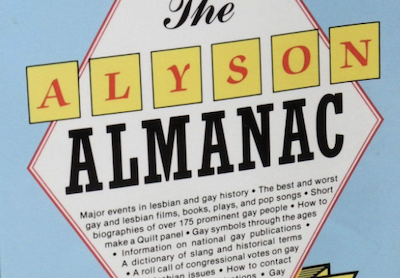
Grier’s gay counterpart — and temperamentally her polar opposite — was Sasha Alyson, the reserved and laconic founder of Alyson Publications. Like Naiad, Alyson Publications was a general interest publisher that published everything from coming-out novels to memoirs and biographies (including an important biography of gay founding father, Harry Hay), to mysteries and gay vampire fiction, to works about BDSM and a series of “Alyson Almanacs” that were compilations of all things gay and lesbian, including short biographies of historical figures and glossaries of slang.

Like Naiad, Alyson’s long, eclectic list included some important firsts, among them the first novels by Black gay writers Larry Duplechan, Steven Corbin, and James Earl Hardy. At a time when gays and lesbians were still demonized as pedophiles, Alyson published the first queer children’s books, including Lesléa Newman’s Heather Has Two Mommies, which was for years one of the most banned books in the country according to the American Library Association. Sasha Alyson also personally initiated the publication of You Can Do Something About AIDS, a collaborative publishing industry project in the form of a 126-page book with a foreword by Elizabeth Taylor that was distributed free in bookstores. A civic-minded person of great integrity, Alyson was recognized far beyond the confines of gay and lesbian publishing when, for example, in 1994 he and his company were named “Publisher of the Year” by the New England Booksellers Association. (Alyson currently works with a children’s literacy project in Laos called Big Brother Mouse, which he founded in 2003.)

The gay and lesbian publishing boom did not go unnoticed by the New York publishing industry. In the late 1970s, gay male writers found homes in the New York houses with the publication of novels by writers including Andrew Holleran, Larry Kramer, and Edmund White. However, it was in the ’70s that interest in gay writers (and they were mostly gay men) really picked up steam. This was abetted by the advocacy of two extraordinary gay editors: Michael Denneny at St. Martin’s Press and David Groff at Crown.

Denneny came to New York from Chicago in 1971 “mainly to be gay,” he said in a 2014 interview. In 1976, he co-founded Christopher Street, a magazine that covered culture and politics for its nearly 20-year run. That cost Denneny his job at Macmillan Publishers; he then moved to St. Martin’s Press where, as an openly gay editor, he would oversee, among other books, the publication of Randy Shilts’s And the Band Played On, the groundbreaking history of the AIDS epidemic, and a celebrated line of gay fiction published under the Stonewall Inn Editions imprint.

At Crown, Groff, also a distinguished poet, published, among many other books, the final novels of AIDS memoirist Paul Monette, Frank Browning’s The Culture of Desire: Paradox and Perversity in Gay Lives Today, books that addressed the AIDS epidemic, and boundary-pushing works exploring then-outré topics such as gay and lesbian parenting and being gay and Christian. Groff was also instrumental in founding the Publishing Triangle, a publishing-industry-led literary organization that promoted gay and lesbian visibility through panels and workshops, a lending library, a newsletter, and annual awards for, among other categories, lifetime achievement in LGBTQ literature. The organization continues to this day.

In a 1993 essay in Poets & Writers, Groff was upbeat about the gay and lesbian boom among New York publishers during that time, attributing it to the emergence of “an ever-growing audience out there eager for the facts, entertainment, stories, education, and self-definition that gay and lesbian books can provide.” Groff pointed out the unique and crucial role books played in a community that otherwise had few or no representations of itself in other cultural platforms: “We don’t really have movies, television, or music to call our own,” he said. “[M]ostly what we have is books. Gay and lesbian books sell so consistently because we need them so urgently.”

The phenomenal surge of gay and lesbian literature in the 1980s and 1990s, at small presses and big ones, would not have been possible without a reading audience and distribution channels that brought the books to those readers. As noted above, lesbian presses benefited from the existence of women’s bookstores and newspapers that started up in the 1970s. They were joined in the 1980s by a chain of independent gay and lesbian bookstores and the explosive growth of the gay and lesbian presses.

Craig Rodwell, a veteran of the homophile movement, opened the first gay bookstore, the Oscar Wilde Memorial Bookshop, in 1967 in Greenwich Village. By 1990, there were gay bookstores in all the major cities, including A Different Light, with locations in Los Angeles, New York, and San Francisco; Giovanni’s Room in Philadelphia; Glad Day in Boston; Lambda Rising in Washington, DC; and Unabridged Bookstore in Chicago. But these bookstores were not confined to the usual urban suspects — there were also gay bookstores in Minneapolis; New Orleans; Nashville; Greensboro, North Carolina; and Atlanta; among other places. In his 1993 essay, Groff estimates there were by then a hundred gay, lesbian, and feminist bookstores that stocked gay and/or lesbian books, shops that were “part of a larger network of up to twelve hundred bookstores in the U.S. and Canada.” (Moreover, as the boom in gay and lesbian books continued into the early 1990s, the big chains like Borders and Barnes & Noble would see profitability in having sections, although maybe no more than a couple of shelves, dedicated to gay and lesbian books.)

In both large and small cities, these bookstores functioned not simply as retailers but as informal community centers. They provided forums for readings and meetings, and they kept books on their shelves for much longer than other independent bookstores. Groff noted in his Poets & Writers essay that the rate of return from bookstores for lesbian and gay trade paperbacks “can be lower than five percent whereas nongay trade paperbacks have return rates of up to seventy percent.”

The bookstores were the original safe spaces for queer people. Dorothy Allison remembers the first time she went into Oscar Wilde as a “baby dyke.” The gay man behind the counter kept his eyes on her because, she thought, he was afraid she was a shoplifter

but actually he was admiring my leather jacket. That was a tiny but wonderful bookstore. Without gay and lesbian bookstores, and the many feminist bookstores of my youth, I would never have found my people, my community, never had the encouragement and commentary of other gay and lesbian writers. I would not be who I am without those voices, those closely watching eyes, those critical and understanding perspectives.

In 1987, the owners of Washington’s Lambda Rising began publication of The Lambda Book Report, the only literary journal dedicated solely to reviewing gay and lesbian books. Two years later, they initiated the Lambda Literary Awards to recognize excellence in gay and lesbian literature. Both the review and the awards were later turned over to an independent nonprofit, the Lambda Literary Foundation, which continues to flourish.

As with bookstores, there was also an explosive proliferation of gay and lesbian newspapers across the country and, again, this growth was not limited to major coastal cities. Dozens of newspapers from Sacramento (Mom … Guess What) to Boston (Gay Community News, founded in 1973) provided space for dozens of book review columns. In practical terms, that meant that, while a straight, first-time novelist might receive a handful of reviews, a gay or lesbian debut might get dozens from newspapers across the nation that spoke specifically and directly to the writer’s potential audience.

The AIDS epidemic brought both the culmination and the beginning of the end of the queer literary spring of the 1980s and 1990s. AIDS heightened the community’s visibility and, in a way, forced the straight population to take a side: either with men and women compassionately and courageously responding to a lethal disease, or with those who called that disease the righteous judgment of God. In this heightened and emotional cultural moment, when gay and lesbian writers bore witness to actual life-and-death struggles on the most simultaneously granular and broad level, they became the writers de jour. The New York houses, sensing a vast untapped audience of readers, began to sign gay and (some) lesbian writers as never before.

This flurry of activity produced some brilliant writing about the epidemic and gay life. In books like Paul Monette’s Borrowed Time and David B. Feinberg’s Eighty-Sixed, gay writers, many of them, like Monette and Feinberg, infected with the virus, wrote for their lives. These books, affirming and furious, could not have been more different from their 1950s ancestors. It was a heady time for gay and lesbian writers, readers, publishers, and editors, culminating in the OutWrite conferences of the early 1990s that drew together hundreds of queer literati. Ultimately, the epidemic produced a literature as significant to American letters as the literature of the Harlem Renaissance; it marked the arrival of a hitherto marginalized community that was finally free to speak of its experience in its own voices, and prominent in that movement were the voices of Black gay and lesbian writers including Joseph Beam, Assotto Saint, Essex Hemphill, Audre Lorde, Cheryl Clarke, Sapphire, and Jewelle Gomez, among others.

My own experience is illustrative of that time. When I finished writing my first novel, a mystery with a gay defense lawyer named Henry Rios, in 1985, I submitted it to 13 New York publishers. This was an era when even big publishers would consider unagented or “over the transom” manuscripts. I was roundly rejected by all of them. Most of the rejections were form letters, but a handful of editors sent personal notes, all which said, in effect, “Good book, but there’s no audience for it.” A friend told me about Alyson Publications and suggested I try my luck there. I sent in the manuscript of The Little Death, and it was accepted for publication almost by return mail. The reader who sent the note — not Sasha Alyson, but an assistant — said he’d stayed up all night reading the book.

Published as a trade paperback original, The Little Death was reviewed in the mystery book column of The New York Times by a critic who complimented the author for his “dignified” handling of the “homosexual” theme. No other Alyson book had ever been reviewed in the Times, and the book’s success led me to write a second book with the same character, titled Goldenboy, published by Alyson in 1988. That book was reviewed in the expanding network of gay and lesbian media, including the then-influential magazine The Advocate. Goldenboy was also the first of my novels that dealt with AIDS, a theme that became central to the remaining books in the series.

Following publication of Goldenboy, I was approached by a New York literary agent, the late Jed Mattes, a gay man who would come to represent a number of other gay writers. Jed told me that if I agreed to continue to write more Henry Rios books, he would get me a New York publisher. Though I had not set out to be a mystery writer, I agreed. He negotiated a two-book deal with Harper & Row (now HarperCollins), and from there I moved to Putnam, which published my books until 2000 when I began a 15-year break from publishing and the literary world.

My jump from a small gay press to a New York house was not unique. A number of other lesbian and gay writers, including Katherine V. Forrest, Sarah Schulman, Dorothy Allison, and Larry Duplechan, also made the transition. Publication by the big houses gave our books the kind of exposure and distribution the small presses were unable to provide, but we also became cogs in a corporate publishing machine. When I worked with Sasha Alyson, I knew I was part of a larger mission; with the New York publishers, I felt like an employee, and a pretty low-ranking one at that. (My editor at Putnam, a perfectly affable man, was Tom Clancy’s editor, so I knew my place in that food chain.) While my books were widely reviewed by the mainstream press — a review in People magazine generating more excitement among my friends than reviews in The New York Times — my audience remained primarily gay and lesbian. Sometime in the early 1990s, a straight literary agent told me in passing that if Henry Rios was straight, my books would sell 10 times what they were then selling, and this was a perfect encapsulation of big publishing’s priorities, not just then, but always.

The big gay boom did not last. The big publishers were the first to bail out when gay and lesbian books failed to meet their economic expectations. As early as 1993, Groff was firing warning shots. “For all the brouhaha over lesbian and gay book-publishing triumphs, there is still a low ceiling on that success,” he cautioned. “Few hardcovers can exceed sales of 20,000 copies and few promise to assemble a large enough audience to be a lead title for a mainstream publisher, with the attendant publicity and promotion that could attract new queer and straight readers alike.” In a 2020 email, he parted the curtains and showed what had been going on behind the scenes at the big houses. “At the New York houses we were under great pressure: every single book we published that succeeded or failed became an immediate and weighty metric indicating the viability or futility of the entire LGBTQ category,” he explained. “No other genre of book endured that same reflex of dubiousness and dauntedness.”

Denneny was less circumspect. In a conversation after he’d left publishing, he told me that as soon as the New York houses realized queer books weren’t the Golden Calf they’d imagined, publishers, many of whom had held their noses as they published these titles, couldn’t dump them fast enough. By the mid-1990s, contracts were being canceled and, more grimly, writers were dying of AIDS, including Monette and Feinberg.

Around this time, too, gay bookstores began to disappear, driven out of business first by the big bookstore chains, Borders and Barnes & Noble, and then by Amazon. The gay and lesbian presses also began to contract, a process accelerated by the spread of the internet. The small presses continued to publish, though in diminishing numbers, as they changed hands or went out of business entirely. Barbara Grier retired and Naiad closed up shop, sending much of its backlist to Bella Books. Sasha Alyson sold Alyson Publications in 1995 and it changed hands again in 2008 before disappearing entirely. Nancy Bereano retired in 1994 and Firebrand Books ceased publication. Both Denneny and Groff left publishing to become respected freelance editors. By 2000, the Golden Age was over.

¤

Michael Nava is the author of a groundbreaking series of novels featuring gay Latino criminal defense lawyer Henry Rios.

¤

Banner image: “Giovanni’s Room book store” by chrisinphilly5448 is licensed under CC BY-SA 2.0. Image has been cropped.

Companies Tout Gay Rights During Pride, Give to Anti-LGBT Politicians – Yahoo Entertainment

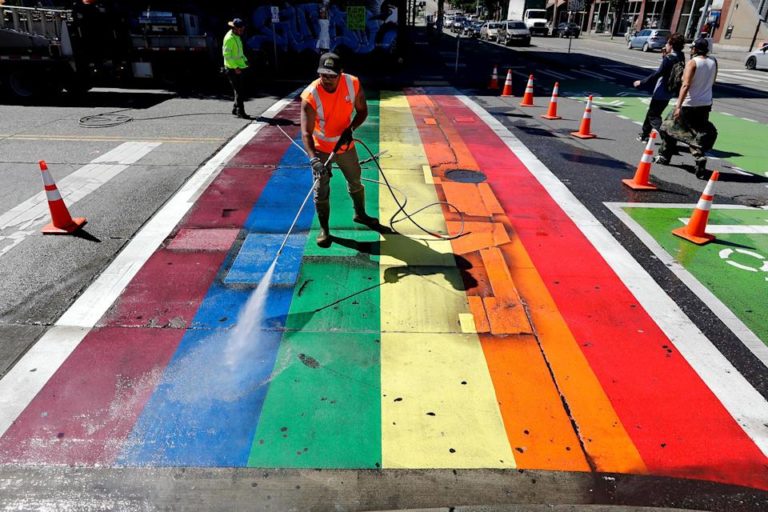
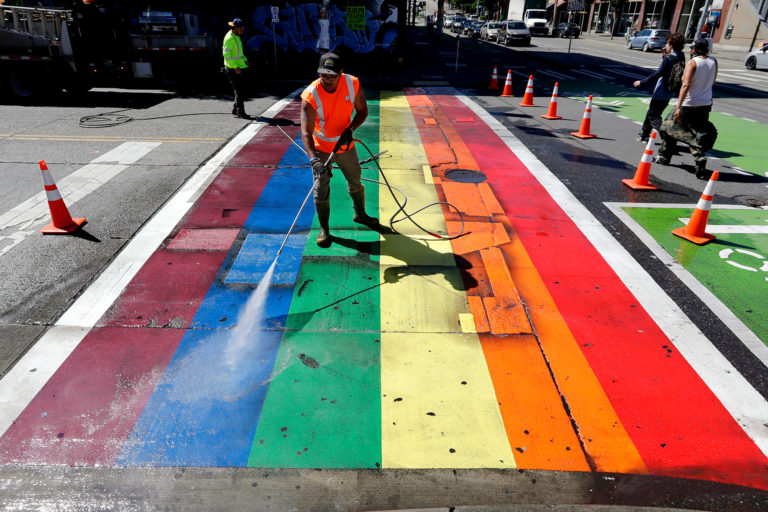
LGBTQ Pride Seattle - Credit: Elaine Thompson/AP

LGBTQ Pride Seattle – Credit: Elaine Thompson/AP

It’s pride month, which means corporations are tripping over themselves to come out as allies of the LGBT community — even those corporations that are actively standing in the way of legislation that would expand protections for the members of that community. But a growing number of activists and lawmakers are calling those companies out for talking out of both sides of their mouths when it comes to gay rights.

Even as polling shows more Americans than ever — 76% according to PRRI — favor laws that would protect lesbian, gay, bisexual, and transgender Americans from discrimination, 2021 is shaping up to be a record-breaking year for anti-LGBT legislation at the state level. The organization Corporate Accountability Action has launched a campaign to highlight corporate donations to anti-LGBTQ legislators in Arkansas, Florida, Mississippi and Tennessee.

More from Rolling Stone

AT&T is among the worst offenders. The telecom giant, whose social media pages are presently bedazzled with rainbow banners and badges, has boldly claimed it “believe[s] we have a moral and business obligation to engage on the fundamental issues of equality and fairness.” But, according to data gathered by the National Institute on Money in Politics and compiled by Corporate Accountability Action, AT&T has made at least 327 donations totaling $204,350 to 133 anti-LGBTQ legislators. (AT&T declined to comment on the report.)

AT&T isn’t alone. General Motors — which boasts of being “first automaker to run an LGBTQ-specific ad” — made 63 donations totaling $51,000 to 35 anti-LGBTQ legislators, according to Corporate Accountability Action’s research. (GM did not respond to a request for comment.) The Coca-Cola Company claims to show its support for the gay community by doing everything “from supporting LGBTQI pride parades to running rainbow-colored billboards.” Meanwhile, Corporate Accountability Action found Coke and its affiliated PAC have made 28 donations totaling $9,550 to 23 anti-LGBTQ legislators. Asked about the gifts, a representative for Coca-Cola noted that the donations in question occurred before the company “updated our political contributions criteria” in the fall of 2020, declaring explicitly that “candidates will not be eligible for a political contribution from The Coca-Cola Company or the Coca-Cola PAC if they have made egregious remarks” on a range of topics that including the “LGBT community.” (Coke “paused” political giving in response to the January 6th attack on the U.S. Capitol.)

The beer giant Anheuser-Busch professes a commitment to “promoting inclusion and diversity across our business and supporting the communities we stand by whether through impactful partnerships or empowering our teams.” But the company has made 48 donations totaling $35,350 to 29 anti-LGBTQ legislators, according to the group. (Anheuser-Busch did not respond to a request for comment.) NBCUniversal — celebrating Pride Month with oodles of queer content on its platforms and channels — made 16 donations totaling $24,000 to 11 anti-LGBTQ legislators. (NBC Universal did not respond to a request for comment either.)

But it’s not just local lawmakers standing in the way of progress for the gay community. The U.S. Senate has the opportunity this month to pass the Equality Act, a law that would federally prohibit discrimination on the basis of sex, gender identity, or sexual orientation — if enough Republicans get on board to pass it. The Equality Act first passed the House back in 2019, but then-Senate Majority Leader Mitch McConnell (R-KY) refused to bring it to the Senate floor for a vote.

Rep. Pramila Jayapal (D-WA) has been highlighting the hypocrisy of those corporations offering lip service in support of gay rights, while also offering material support to McConnell. “AT&T donated $56,295 to Mitch McConnell’s 2020 campaign — while he was actively blocking the Equality Act. But what a great Pride Twitter banner,” Jayapal tweeted last week. She went on to call out American Airlines (which donated $46,617 to Mitch McConnell’s 2020 campaign), Walmart ($150,000 to McConnell and other GOP senators), and the defense contractor Raytheon (whose PAC gave $18,500 to McConnell’s campaign).

Jayapal and the others have a good reason to speak up: because it works. As Sasha Issenberg, author of “The Engagement: America’s Quarter-Century Struggle Over Same-Sex Marriage,” has written, gay marriage is legal today because of similar pressure activists applied more than a decade ago. “They demonstrated that shaming and shunning could amount to more than an online pile-on and serve as a potent tactic for political change,” Issenberg wrote recently.

Senate Majority Leader Chuck Schumer (D-NY) has vowed to have a vote on the Equality Act this month. If all 50 Democrats support the bill — and it’s not a sure thing, as Sen. Joe Manchin, the lone Democrat who has not signed on as a co-sponsor of the bill, expressed reservations about the legislation when it passed the house two years ago — 10 Republicans would still need to sign on for the measure to pass.

Best of Rolling Stone

Companies Tout Gay Rights During Pride, Give to Anti-LGBT Politicians – Rolling Stone

It’s pride month, which means corporations are tripping over themselves to come out as allies of the LGBT community — even those corporations that are actively standing in the way of legislation that would expand protections for the members of that community. But a growing number of activists and lawmakers are calling those companies out for talking out of both sides of their mouths when it comes to gay rights.

Even as polling shows more Americans than ever — 76% according to PRRI — favor laws that would protect lesbian, gay, bisexual, and transgender Americans from discrimination, 2021 is shaping up to be a record-breaking year for anti-LGBT legislation at the state level. The organization Corporate Accountability Action has launched a campaign to highlight corporate donations to anti-LGBTQ legislators in Arkansas, Florida, Mississippi and Tennessee.

AT&T is among the worst offenders. The telecom giant, whose social media pages are presently bedazzled with rainbow banners and badges, has boldly claimed it “believe[s] we have a moral and business obligation to engage on the fundamental issues of equality and fairness.” But, according to data gathered by the National Institute on Money in Politics and compiled by Corporate Accountability Action, AT&T has made at least 327 donations totaling $204,350 to 133 anti-LGBTQ legislators. (AT&T declined to comment on the report.)

AT&T isn’t alone. General Motors — which boasts of being “first automaker to run an LGBTQ-specific ad” — made 63 donations totaling $51,000 to 35 anti-LGBTQ legislators, according to Corporate Accountability Action’s research. (GM did not respond to a request for comment.) The Coca-Cola Company claims to show its support for the gay community by doing everything “from supporting LGBTQI pride parades to running rainbow-colored billboards.” Meanwhile, Corporate Accountability Action found Coke and its affiliated PAC have made 28 donations totaling $9,550 to 23 anti-LGBTQ legislators. Asked about the gifts, a representative for Coca-Cola noted that the donations in question occurred before the company “updated our political contributions criteria” in the fall of 2020, declaring explicitly that “candidates will not be eligible for a political contribution from The Coca-Cola Company or the Coca-Cola PAC if they have made egregious remarks” on a range of topics that including the “LGBT community.” (Coke “paused” political giving in response to the January 6th attack on the U.S. Capitol.)

The beer giant Anheuser-Busch professes a commitment to “promoting inclusion and diversity across our business and supporting the communities we stand by whether through impactful partnerships or empowering our teams.” But the company has made 48 donations totaling $35,350 to 29 anti-LGBTQ legislators, according to the group. (Anheuser-Busch did not respond to a request for comment.) NBCUniversal — celebrating Pride Month with oodles of queer content on its platforms and channels — made 16 donations totaling $24,000 to 11 anti-LGBTQ legislators. (NBC Universal did not respond to a request for comment either.)

But it’s not just local lawmakers standing in the way of progress for the gay community. The U.S. Senate has the opportunity this month to pass the Equality Act, a law that would federally prohibit discrimination on the basis of sex, gender identity, or sexual orientation — if enough Republicans get on board to pass it. The Equality Act first passed the House back in 2019, but then-Senate Majority Leader Mitch McConnell (R-KY) refused to bring it to the Senate floor for a vote.

Rep. Pramila Jayapal (D-WA) has been highlighting the hypocrisy of those corporations offering lip service in support of gay rights, while also offering material support to McConnell. “AT&T donated $56,295 to Mitch McConnell’s 2020 campaign — while he was actively blocking the Equality Act. But what a great Pride Twitter banner,” Jayapal tweeted last week. She went on to call out American Airlines (which donated $46,617 to Mitch McConnell’s 2020 campaign), Walmart ($150,000 to McConnell and other GOP senators), and the defense contractor Raytheon (whose PAC gave $18,500 to McConnell’s campaign).

Jayapal and the others have a good reason to speak up: because it works. As Sasha Issenberg, author of “The Engagement: America’s Quarter-Century Struggle Over Same-Sex Marriage,” has written, gay marriage is legal today because of similar pressure activists applied more than a decade ago. “They demonstrated that shaming and shunning could amount to more than an online pile-on and serve as a potent tactic for political change,” Issenberg wrote recently.

Senate Majority Leader Chuck Schumer (D-NY) has vowed to have a vote on the Equality Act this month. If all 50 Democrats support the bill — and it’s not a sure thing, as Sen. Joe Manchin, the lone Democrat who has not signed on as a co-sponsor of the bill, expressed reservations about the legislation when it passed the house two years ago — 10 Republicans would still need to sign on for the measure to pass.

Gay Agenda • June 11, 2021 – Dallas Voice

The Gay Agenda

Have an event coming up? Email your information to Managing Editor Tammye Nash at nash@dallasvoice.com or Senior Staff Writer David Taffet at taffet@dallasvoice.com by Wednesday at 5 p.m. for that week’s issue.

The Gay Agenda is now color-coded: Red for community events; blue for arts and entertainment; purple for sports; green for nightlife and orange for civic events and holidays.

Every Monday: THRIVE

Resource Center’s THRIVE Support Group for people 50 and older meets virtually from 11:45 a.m.-1 p.m. led by a SMU Intern from their counseling program. Email THRIVE@myresourcecenter.org to request the link.

Every Tuesday: Totally Tuesdays

A night of totally fetch throwbacks hosted by Marissa Kage. Masks required. 11 p.m. at The Round-Up Saloon, 3912 Cedar Springs Road.

Weekly: Frontrunners

Meet in Lee Park where the old statue stood on Wednesdays at 7:15 p.m. and Saturdays at 9 a.m. for a one-hour walk/run on the Katy Trail.

Biweekly: Hope Cottage Foster Parent Information Meeting

Hope Cottage holds information meetings for those interested in becoming foster parents. The meetings are held alternately on Saturdays at 10 a.m. and Thursdays at 6 p.m. For information email Clyde Hemminger at chemminger@hopecottage.org.

JUNE

June 11-13: Hamlet Project

Shakespeare Dallas presents Hamlet Project, a world premiere performance event where actors perform a one-person interpretation of Hamlet with 16 actors given only 24 hours to prepare prior to curtain at Samuell-Grand Amphitheatre, 6000 E. Grand Ave. at 8:15 p.m.

June 11: Name, gender change clinic

UNT College of Law and Resource Center hold a name and gender change clinic via Zoom. Register at Resource Center’s Facebook events page. Facebook.com/events/2341757352621789/?acontext=%7B%22event_action_history%22%3A[%7B%22surface%22%3A%22page%22%7D]%7D.

June 11: Bleach’s birthday bash

At 9 p.m. at Urban Cowboy, 2620 E. Lancaster Ave., Fort Worth.

June 11-Aug 22: Tomoo Gokita: Get Down

Dallas Contemporary presents Japanese artist Tomoo Gokita’s first North American museum exhibition: Get Down. Dallas Contemporary, 161 Glass St. DallasContemporary.org.

June 11-17: Rooftop Cinema

Summer series of outdoor films at Dallas Heritage Village, 1515 S. Harwood St. June 11: The Princess Bride. Texas Chainsaw Masscacre. June 12: Dirty Dancing, Scary Movie. June 13: The Notebook. June 14: Grease. June 15: Pretty Woman. June 16: Fight Club. June 17: Legally Blonde. Tickets at RooftopCinemaClub.com/heritagevillage.

June 12: Queer Reads

Queer Reads is an online book club meets the second Saturday of every month from 6:30-7:30 p.m. Register at dallaslibrary.librarymarket.com/events/queer-reads-book-club-0.

June 12: Ashley Brundage book signing

Ashley Brundage is a trans woman and former executive director of the Tampa LGBT Chamber of Commerce. She’ll be in Dallas promoting her new book Empowering Differences at Sue Ellen’s, 3014 Throckmorton St. EmpoweringDifferences.com.

June 12: OutFTW field day and picnic

Out Fort Worth alphabet mafia field day and picnic at 10 a.m. at Trinity Park, Fort Worth.

June 12: Denali

RuPaul’s Drag Race star Denali appears at 9 p.m. at Urban Cowboy, 2620 E. Lancaster, Fort Worth.

June 12: Big Barre with Alonzo King

TITAS presents Big Barre with Alonzo King, an outdoor ballet class for everyone, at 10:30 a.m. at Sammons Park, 2403 Flora St. Free.

June 13: Summer Hot Boy

No cover before midnight for Summer Hot Boy at Area 111, 111 Oak Lawn.

June 13: Catholic Pride

New Ways Ministries is hosting Catholic LGBTQ Pride with an interactive prayer service on Zoom from 2-3 p.m. central time. Register at NewWaysMinistry.org.

June 13: DIFFA Picnic in the Park

DIFFA presents a picnic in the park that includes a picnic blanket with a space for up to four people a DIFFA-curated picnic meal with wine and spirits, adult snow cones, entertainment by DJ Jen Miller and surprise performances. 1-4 p.m. at Klyde Warren Park. $300 for four. Tickets at one.bidpal.net/diffapicnic/welcome.

June 13: Downtown Tyler Drag and Pride Walk

Dress in Drag and walk the Tyler Downtown Square. Sign-up for the Talent Showcase. Drag and Pride Walk at 10:30 a.m. Talent show at noon. Downtown Tyler on the Square.

June 13: Glamazon Prime Pride Drag Brunch

Join the cast as launch Glamazon Prime drag brunch from noon-3 p.m. at Urban Cowboy, 2620 E. Lancaster Ave., Fort Worth. Tickets at eventbrite.com/e/glamazon-prime-pride-drag-brunch-tickets-150815775043.

Through June 13: Hedda Gabler

Undermain Theatre presents a virtual performance of Henrik Ibsen’s Hedda Gabler. $20. Undermain.org.

June 15: Stonewall Democrats of Dallas

In person meeting at 6:30 p.m. at the Round-Up Saloon, 3912 Cedar Springs Road. Zoom attendance also offered. StonewallDemocratsofDallas.org.

June 15-17: DEI Conference

The Texas Diversity Equity & Inclusion Conference virtually brings together LGBT Chamber member businesses and other certified businesses, DEI professionals, supplier diversity professionals, employee resource group members and more.

June 15-26: A Solitary Man: The Music of Neil Diamond

Selling over 10 million records worldwide with 38 top 10 hits, Neil Diamond is one of the best-selling musicians of all time. From halls of fame to lifetime achievements, Diamond’s career has spanned six decades and reaped dozens of awards. Casa Manana, 3101 W. Lancaster Ave. Fort Worth. Ticket start at $65 and can be purchased at CasaManana.org.

June 16: GLFD

Gay and Lesbian Fund for Dallas members and friends will have a private, virtual conversation with Working: a Musical production costume designer Michael Heath Waid. GLFD will attend the July 15 performance. 5:30 p.m. GLFD.org.

June 17: It Doesn’t Get Chedder than This

LiefWalk presents a virtual cheese tasting with Oak Lawn’s Scardello Artisan Cheese. $40 with a portion benefiting LifeWalk. Wine will be available to purchase day of event. ScardelloCheese.com/product/private-cheesemonger-s-faves-lifewalk-6-17-2021/2845.

June 18: Federal Club

HRC DFW Federal Club cocktails and conversation as members and guests meet virtually. DFWFederalClub.org for details.

June 18: Pride Party +

Virtual kickoff of Dallas Arts District’s Pride Party + with Terry Loftis as Master of Ceremonies, Miss Dallas Southern Pride, Porsche Paris, Dezi 5, and Miss Southern Pride, Kennedy Davenport. 6:30-7:30 p.m. Vimeo.com/showcase/prideparty

June 18: Name and gender change workshop

Lambda Legal discusses what the process looks like in Texas to secure state and federal identity documents. Lawyers can receive CLE credit. Meeting via Zoom. LambdaLegal.org.

June 18: Crystal Methyd

RuPaul’s Drag Race star Crystal Methyd appears at 9 p.m. at Urban Cowboy, 2620 E. Lancaster, Fort Worth.

June 18: The History of Juneteenth

Lunch & Learn, a virtual presentation about the annual celebration of emancipation from slavery in the United States. Join Dr. George Keaton, Jr., Founder and Executive Director of Remembering Black Dallas and the Dallas Holocaust and Human Rights Museum for a discussion of the history of Juneteenth, its particular significance in Texas, and how the holiday has evolved over the last 150 years. DallasHolocaustMuseum.secure.force.com/ticket/?_ga=2.159861565.1288647804.1621266823-1628326263.1593529452#/events/a0S6e00000e9hKOEAY

June 18: Music in the Park

Brianne Sargent & Friends String Trio performs at 8:15 p.m. at Samuell-Grand Amphitheater, 6200 E. Grand Ave. Tickets at ShakespeareDallas.org.

June 18-20: Juneteenth Unity Weekend 2021

Hosted by Dallas Southern Pride. Free. Sheraton Suites Market Center, 2101 N. Stemmons Freeway is the host hotel. Code DSP for $89 rate. Ultimate Mega Party at Gilley’s Dallas, 1135 S. Lamar St. on Saturday from 10 p.m.-3 a.m.

June 18-24: Rooftop Cinema

Summer series of outdoor films at Dallas Heritage Village, 1515 S. Harwood St. June 18: The Breakfast Club, Friday the 13th. June 19: Love Jones, Get Out. June 20: Breakfast At Tiffany’s. June 21: Ferris Bueller’s Day Off. June 22: The Greatest Showman. June 23: Pulp Fiction. June 24: The Great Gatsby. Tickets at RooftopCinemaClub.com/heritagevillage.

June 18-Sept. 5: Jurassic World: The Exhibition

You’ve seen the films. Now experience them in real life at Jurassic World: The Exhibition. Educational, immersive, interactive and most of all, awesome, the Exhibition will thrill audiences of all ages as they come face to face with these mighty and sometimes vicious creatures. Grandscape, 5752 Grandscape Blvd, The Colony.

Through June 19: Rusty Scruby

Gay artist Rusty Scruby has a solo exhibit called Comfort at Cris Worley Fine Arts, 1845 E. Levee St. Suite 110. Open house on May 15 from noon-4 p.m. CrisWorley.com.

June 19: Music in the Park

Bobby Sparks, Cure for Paranoia and The Grays perform at 8:15 p.m. at Samuell-Grand Amphitheater, 6200 E. Grand Ave. Tickets at ShakespeareDallas.org.

June 19: Pride Party +

Pop-up performances on the Sammons Park Community Stage including Kennedy Davenport, Uptown Players, Bandan Koro and Dezi 5 from 3-5 p.m. Programming at the Crowe Museum of Asian Art, Dallas Museum of Art and Nasher Sculpture Center. 11 a.m.-7 p.m. Full schedule at DallasArtsDistrict.org/pridepartyplus.

June 20: Pride Party +

Virtual and on-site programming from the Crowe Museum of Asian Art, Dallas Museum of Art and Nasher Sculpture Center. from 11 a.m.-5 p.m. Full schedule at DallasArtsDistrict.org/pridepartyplus.

June 20: Teen Pride

Art activities, live performances, advocacy training free for ages 13-19 from 11 a.m.-3 p.m. at the Dallas Museum of Art.

Through June 20: Frida Kahlo: Five Works

Five works by Frida Kahlo from a private collection including four paintings and a drawing will be on display in the atrium on level 4 at the Dallas Museum of Art, 1717 N. Harwood St. DMA.org.

June 22: Get Centered tour

Virtual Resource Center tour streams for free at 5 p.m. Registration required. MyResourceCenter.org.

June 23: Inspiring Inclusion

North Texas Commission presents Inspiring Inclusion in n Evolving World. Join Wendy John, head of global diversity and inclusion at Fidelity Investments for a “less talk, more action” session on why inclusion (for all) matters. 11 a.m. via Zoom. Register at form.jotform.com/211545298862161.

June 24-Sept. 25: Becoming featuring Valerie Gillespie
Becoming is an aesthetic exploration of the truth and illusion behind the often times unfortunate actions that stem from human nature. African American Museum, Fair Park. AAMDallas.org.

June 25: Lessons from our community

Lessons from our community: Stories about the fight for equality at 5 p.m. at Liberty Lounge,515 S. Jennings Ave., Fort Worth.

June 25: Divine Miss Diva Show

Return of the Devine Miss Diva Show at 11 p.m. at Club Changes, 2637 E. Lancaster Ave., Fort Worth.

June 25-July 1: Rooftop Cinema

Summer series of outdoor films at Dallas Heritage Village, 1515 S. Harwood St. June 25: Mean Girls, House Party. June 26: Closed. June 27: Coming To America. June 28: The Goonies. June 29: Dirty Dancing. June 30: Love & Basketball. July 1: Independence Day. Tickets at RooftopCinemaClub.com/heritagevillage.

June 26: Musical Moments

Coalition for Aging LGBT presents a virtual concert series featuring LGBTQ artists and allies the last Saturday of the month at 3 p.m. To register, visit cfa.lgbt/musicalmoments.

June 26: Trinity Pride

A hybrid celebration will consist of a live stream of Virtual Trinity Pride Fest on Facebook Live as well as at official Trinity Pride Partner locations throughout Fort Worth at 7 p.m.

June 26-Sept. 12: Men of Change: Power. Triumph. Trusth
This powerful, immersive exhibition uses art, photography, stories, quotes and historical materials to affirm the power of the African American journey and, ultimately, the American experience. Men of Change profiles revolutionary men – Muhammad Ali, James Baldwin, Ta-Nehisi Coates, W.E.B. Du Bois, Kendrick Lamar, Lebron James and more – who have altered the history and culture of this country. African American Museum, Fair Park. AAMDallas.org.

June 27: Turtle Creek Chorale

The Turtle Creek Chorale returns to live performance with Holidays Interrupted at 8 p.m. in the Fair Park Band Shell at Fair Park. $30. Tickets at TurtleCreekChorale.com.

June 27-Sept. 5: Buddha, Shiva, Lotus, Dragon

The Kimbell Art Museum presents Buddha, Shiva, Lotus, Dragon: The Mr. and Mrs. John D. Rockefeller 3rd Collection at Asia Society, a collection of sculptures, bronzes, ceramics and metalwork. Kimbell Art Museum, 3333 Camp Bowie Blvd., Fort Worth. KimbellMuseum.org.

June 30: AIDS Walk South Dallas

Tenth anniversary AIDS Walk South Dallas 5K run/walk kicks off at 8 a.m. This year’s theme “Intensifying The Fight for Health and Rights” extends the mission which is to inspire, educate and galvanize the community of South Dallas and surrounding areas to continue to curb the spread of HIV/AIDS and assist those impacted. MLK Jr. Community Center, 2922 MLK Jr. Blvd. From $25.

June 30: Austin & Nashville “Pride in Local Music”

The Austin and Nashville LGBT chambers of commerce join forces to produce the second Pride in Local Music, a livestream event at 6 p.m. streamed at PrideInLocalMusic.com.

June 30: Ty Herndon

Dallas’ Ty Herndon hosts For Love and Acceptance, an online event that includes the Brothers Osborne, Kristin Chenoweth, Terri Clarke, Brooke Eden and more at 7 p.m. Central on CMT’s Facebook and YouTube channels and at F4LA.org/concert.

June 30-July 4, July 8-11, July 15-18 and July 22-24: The Complete Works of Shakespeare (Abridged)

Shakespeare Dallas presents parodies of the plays of William Shakespeare performed in comically shortened form by three actors at Samuell-Grand Amphitheatre, 6000 E. Grand Ave. at 8:15 p.m.

JULY

July 2-3: Rooftop Cinema

Summer series of outdoor films at Dallas Heritage Village, 1515 S. Harwood St. July 2: Stand By Me, Friday. July 3: The Sandlot. Wet Hot American Summer. Tickets at RooftopCinemaClub.com/heritagevillage.

July 3-Sept. 4: Together

The MAC presents its 23rd annual membership exhibition, Together, in its new home in The Cedars. The MAC, 1503 S. Ervay St. The-MAC.org.

July 4: Independence Day

Through July 4: The Music Man

Theatre Three presents a 10-person, boutique production of The Music Man outdoors at Coppell Senior Center

345 W Bethel Road, Coppell on June 3–13, in Oak Lawn at Union Coffee Shop, 3705 Cedar Springs Road from June 16–27 and Texas Discovery Gardens, 3601 MLK Blvd. on June 30– July 4. Tickets are $75 for a 2-person socially distant square. Theatre3Dallas.com.

July 8: PFLAG Dallas

Virtual support meeting for parents, family and friends of LGBTQ people meets the second Thursday of the month at 7 p.m. Register for link at PFLAGDallas.org.

July 9-10: Lucky Leaf Cannibis Hemp CBD Expo

Educational sessions and live demos. More than 100 CBD and hemp exhibitors. Irving Convention Center, 500 W. Las Colinas Blvd., Irving. 10 a.m.-5 p.m. LuckyLeaf Expo.com.

July 10: Queer Reads

Queer Reads is an online book club meets the second Saturday of every month from 6:30-7:30 p.m. Register at dallaslibrary.librarymarket.com/events/queer-reads-book-club-0.

July 10-Aug. 28: Juried exhibition

Contemporary 2D and 3D works selected by juror Caleb Bell, curator at the Tyler Museum of Art, will be included in the Texas Juried Exhibition at Artspace111, 111 Hampton St., Fort Worth. By appointment. ArtSpace111.com.

July 15: Working: A Musical

Gay and Lesbian Fund for Dallas attends the Dallas Theater Center production of Working: A Musical at 8:30 p.m. at Annette Strauss Square, 2403 Flora St. GLFD.org.

July 16: Federal Club

The history of LGBTQ in North texas, Part 2. Dr. Stephen Pounders discusses the history of the AIDS crisis in North Texas. For information, visit DFWFederalClub.org.

July 16: Name and gender change workshop

Lambda Legal discusses what the process looks like in Texas to secure state and federal identity documents. Lawyers can receive CLE credit. Meeting via Zoom. LambdaLegal.org.

July 16: Cheers to Summer

Virtual beer tasting benefiting LifeWalk hosted by Texas Ale Project. $40 ticket includes a sex pack of Texas Ale Project beers, souvenir glass and more. Eventbrite.com/e/lifewalk-virtual-beer-tasting-tickets-154605580453.

Through July 10: Lonesome Dove: Photos by Bill Wittliff

Lonesome Dove — Larry McMurtry’s epic novel of two aging Texas Rangers who drive a herd of stolen cattle 2,500 miles from the Rio Grande to Montana to found the first ranch there — truly captured public imagination. The Lonesome Dove Miniseries, which first aired on CBS in 1989, lassoed an even wider audience. Capturing the sweeping visual imagery of the original miniseries, the Lonesome Dove exhibition presents classic images taken during filming by Bill Wittliff, renowned photographer, writer, and executive producer of Lonesome Dove. The images, however, are worlds apart from ordinary production stills, depicting an extraordinary union of art, literature, and history. Dupree Lobby, Irving Arts Center, 3333 North MacArthur Blvd., Irving.

Through July 24: Confederate Currency: The Color of Money

The exhibition investigates the importance of slavery in the economy of the South. Artist John W. Jones has researched and documented 126 images of slavery depicted on Confederate and Southern States money. The juxtaposition of the framed Confederate currencies, which the acrylic paintings inspired the slave images on the currencies, makes a very powerful statement on the contributions of enslaved Africans to the American economy. African American Museum, Fair Park. AAMDallas.org.

Through July 25: Cubism in Color: The Still Lifes of Juan Gris

First U.S. exhibit of cubist Juan Gris in 35 years with more than 40 of his paintings and collages. Dallas Museum of Art, 1717 N. Harwood St. DMA.org.

July 27: Name and gender change workshop

Lambda Legal discusses what the process looks like in Texas to secure state and federal identity documents. Lawyers can receive CLE credit. Meeting via Zoom. LambdaLegal.org.

AUGUST

Aug. 3: Name and gender change workshop

Lambda Legal discusses what the process looks like in Texas to secure state and federal identity documents. Lawyers can receive CLE credit. Meeting via Zoom. LambdaLegal.org.

Aug. 3-Sept. 5: Wicked

Dallas Summer Musicals is back with a return of the musical Wicked, a look at what happened in Oz from a different angle. The Music Hall at Fair Park. DallasSummerMusicals.org.

Aug. 12: PFLAG Dallas

Virtual support meeting for parents, family and friends of LGBTQ people meets the second Thursday of the month at 7 p.m. Register for link at PFLAGDallas.org.

Aug 13: Name and gender change workshop

Lambda Legal discusses what the process looks like in Texas to secure state and federal identity documents. Lawyers can receive CLE credit. Meeting via Zoom. LambdaLegal.org.

Aug. 20-21: New Media Artworks

New media artworks by Refik Anadol and Quayola commissioned by Fort Worth will premiere as the first of four major public art projects at Will Rogers Memorial Center. Free.

Aug. 24: Get Centered tour

Virtual Resource Center tour streams for free at 5 p.m. Registration required. MyResourceCenter.org.

Aug. 29: Songs of Strength and Survival

The Turtle Creek Chorale Small Ensemble Showcase sings about the healing power of live music that was absent as we made our way through the pandemic. Cathedral of Hope, 5910 Cedar Springs Road. Tickets at TurtleCreekChorale.com.

Aug. 30: Name and gender change workshop

Lambda Legal discusses what the process looks like in Texas to secure state and federal identity documents. Lawyers can receive CLE credit. Meeting via Zoom. LambdaLegal.org.

SEPTEMBER

Sept. 3: Name and gender change workshop

Lambda Legal discusses what the process looks like in Texas to secure state and federal identity documents. Lawyers can receive CLE credit. Meeting via Zoom. LambdaLegal.org.

Sept. 9: PFLAG Dallas

Virtual support meeting for parents, family and friends of LGBTQ people meets the second Thursday of the month at 7 p.m. Register for link at PFLAGDallas.org.

Sept. 14-July 10, 2022: Slip Zone: A New Look at Postwar Abstraction in the Americas and East Asia

Featuring works from the Museum’s collection, Slip Zone charts the significant innovations in painting, sculpture, and performance that shaped artistic production in the Americas and East Asia in the mid-20th century. Dallas Museum of Art, 1717 N. Harwood St. DMA.org.

Sept. 14-July 10, 2022: Bosco Sodi: La fuerza del destino

Installed in the Museum’s Sculpture Garden, this exhibition features approximately 30 sculptures by Mexico City-born, New York City-based artist Bosco Sodi. The artist’s large-scale spherical and rectangular sculptures are created from clay sourced at his studio in Oaxaca. Dallas Museum of Art, 1717 N. Harwood St. DMA.org.

Sept. 24: Awards luncheon

The LGBT Chamber’s 2021 Business & Community Excellence Awards Luncheon.

Sept. 24: Wynonna Judd and Cactus Moser

Wynonna Judd and Cactus Moser perform live at The Kessler, 1230 W. Davis St. Tickets at Prekindle.com.

Sept. 24-26: Dallas Black Pride

Sept. 24-26: LGBTQ Outdoorfest

LGBT Outdoors camping weekend will feature hands-on outdoors workshops and that magic community building that can only take place outdoors around a campfire. Rainbow Ranch in Groesbeck.

Sept. 25: North Texas Pride “Come As You Are” Festival

North Texas Pride Foundation brings the community together to celebrate Pride in diversity. Sponsor and vendor booths, food and beverage, give aways, adult and kid activities, bands, DJ, dancing and entertainment. 11 a.m.-7 p.m. Saigling House, 902 E. 16th St., Plano. Free.

Sept. 25: Texas Latinx Pride Fest 2021

Live entertainment and special guests from 3-9 p.m. in Reverchon Park, 3501 Maple Ave.

Sept. 25-Jan. 9: Anila Quayyum Agha: A Beautiful Despair

Introducing a dozen new ornate works by the multidisciplinary artist, Anila Quayyum Agha: A Beautiful Despair will open this fall at the Amon Carter Museum of American Art (the Carter). The exhibition debuts the latest evolution of Agha’s luminous lantern-like sculptures—two site-specific installation pieces commissioned by the Carter—alongside a corresponding series of drawings that elevate practices traditionally assigned as female handiwork, such as embroidery. Amon Carter Museum, 3501 Camp Bowie Blvd., Fort Worth. Free. CarterMuseum.org.

OCTOBER

Oct. 3: LifeWalk

Prism Health is hoping for an in-person walk this year.

Oct. 14: PFLAG Dallas

Virtual support meeting for parents, family and friends of LGBTQ people meets the second Thursday of the month at 7 p.m. Register for link at PFLAGDallas.org.

Oct. 17-Feb. 6, 2022: Van Gogh and the Olive Groves

Co-organized by the DMA and the Van Gogh Museum in Amsterdam and making its world premiere at the DMA, Van Gogh and the Olive Groves is the first exhibition dedicated to Vincent van Gogh’s important olive grove series, created between June and December 1889 during his stay at the asylum of Saint-Rémy-de-Provence. Reunited for the first time, the paintings reveal Van Gogh’s passionate investigation of the expressive powers of color and line, and his choice of the olive groves as an evocative subject. The exhibition highlights exciting new discoveries about the artist’s techniques, materials, and palette that emerged from a collaborative conservation and scientific research project covering all 15 paintings in the series. Dallas Museum of Art, 1717 N. Harwood St. DMA.org.

Oct. 20: Andrea Bocelli

Legendary tenor Andrea Bocelli brings his Believe World Tour to Dallas. 7:30 p.m. at American Airlines Center. Tickets at ATTPAC.org.

Oct. 22-24: Ben Folds

Ben Folds performs solo piano and orchestral performances he’s dubbed his “In Actual Person Live For Real Tour.” Meyerson Symphony Center, 2301 Flora St. BenFolds.com.

Oct. 26: Get Centered tour

Virtual Resource Center tour streams for free at 5 p.m. Registration required. MyResourceCenter.org

NOVEMBER

Nov. 1: Bianca Del Rio

RuPaul’s rag Race champion Bianca Del Rio brings her Unsanitized Comedy Tour to Dallas. Majestic Theater, 1925 Elm St. Tickets and info at TheBiancaDelRio.com.

Nov. 3: Enrique Iglesias and Ricky Martin

Enrique Iglesias and Ricky Martin tour comes to American Airines Arena. Tickets through Ticketmaster.com.

Nov. 4-7: National Strength Conference

Sixth National Strength Conference for men living with HIV. $50. Dallas Marriott Suites, 2493 N. Stemmons Freeway. AIDSWalkSouthDallas.com.

Nov. 6: Alton Brown: Beyond the Eats

Author and Food Network star Alton Brown visits the Theatre at Grand Prairie with “more cooking, more comedy, more music and more potentially dangerous science stuff” for two hours of entertainment including “things i’ve never been allowed to do on TV.” Tickets go on sale March 5 at 10 a.m.

Nov. 11: PFLAG Dallas

Virtual support meeting for parents, family and friends of LGBTQ people meets the second Thursday of the month at 7 p.m. Register for link at PFLAGDallas.org.

Nov. 13: Black Tie Dinner

Nov. 21: Transgender Day of Remembrance

Nov. 23: Get Centered tour

Virtual Resource Center tour streams for free at 5 p.m. Registration required. MyResourceCenter.org.

Nov. 25: Thanksgiving

DECEMBER

Dec. 1: World AIDS Day

Dec. 9: PFLAG Dallas

Virtual support meeting for parents, family and friends of LGBTQ people meets the second Thursday of the month at 7 p.m. Register for link at PFLAGDallas.org.

Dec. 17-19 Sure Stars Shining

The Turtle Creek Chorale wraps up its 41st season with a return to Moody Performance Hall for its holiday concert. Tickets at TurtleCreekChorale.com.

Dec. 18-April 17: Sandy Rodriguez in Isolation

A selection of new works on paper conceived by the Los Angeles–based painter during her Joshua Tree Highlands Artist Residency in Southern California at the height of COVID-19. The exhibition features more than 30 landscapes, protest scenes, maps, and botanical studies, created using Rodriguez’s hand-processed inks and watercolors, which she derived from plants and mineral pigments native to the region. Amon Carter Museum, 3501 Camp Bowie Blvd., Fort Worth. CarterMuseum.org.

Dec. 25: Christmas

Dec. 31: New Year’s Eve

JANUARY

Jan. 1: New Year’s Day

FEBRUARY

Feb. 18-20: Queer History South conference

QHS brings together archivists, historians, librarians, educators, students and community members invested in preserving and researching Southern LGBTQ history to talk best practices, network, and have a great time celebrating the rich and diverse histories of LGBTQ people in the US South. Dallas and Denton. InvisibleHistory.org/qhs.
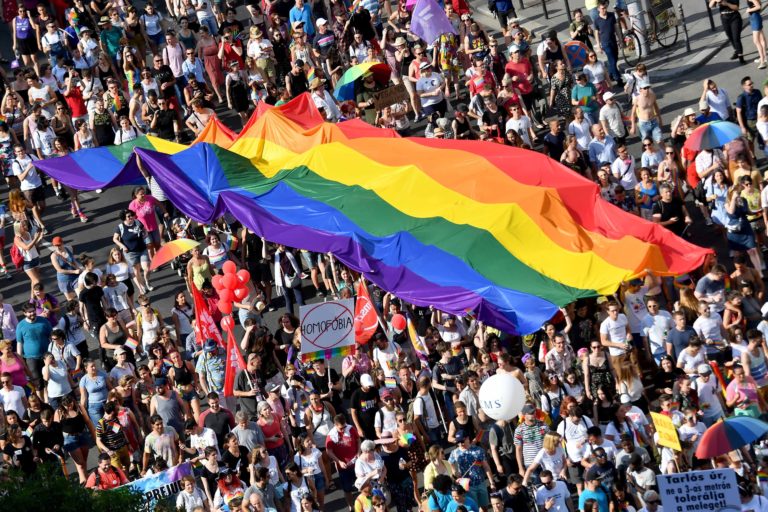
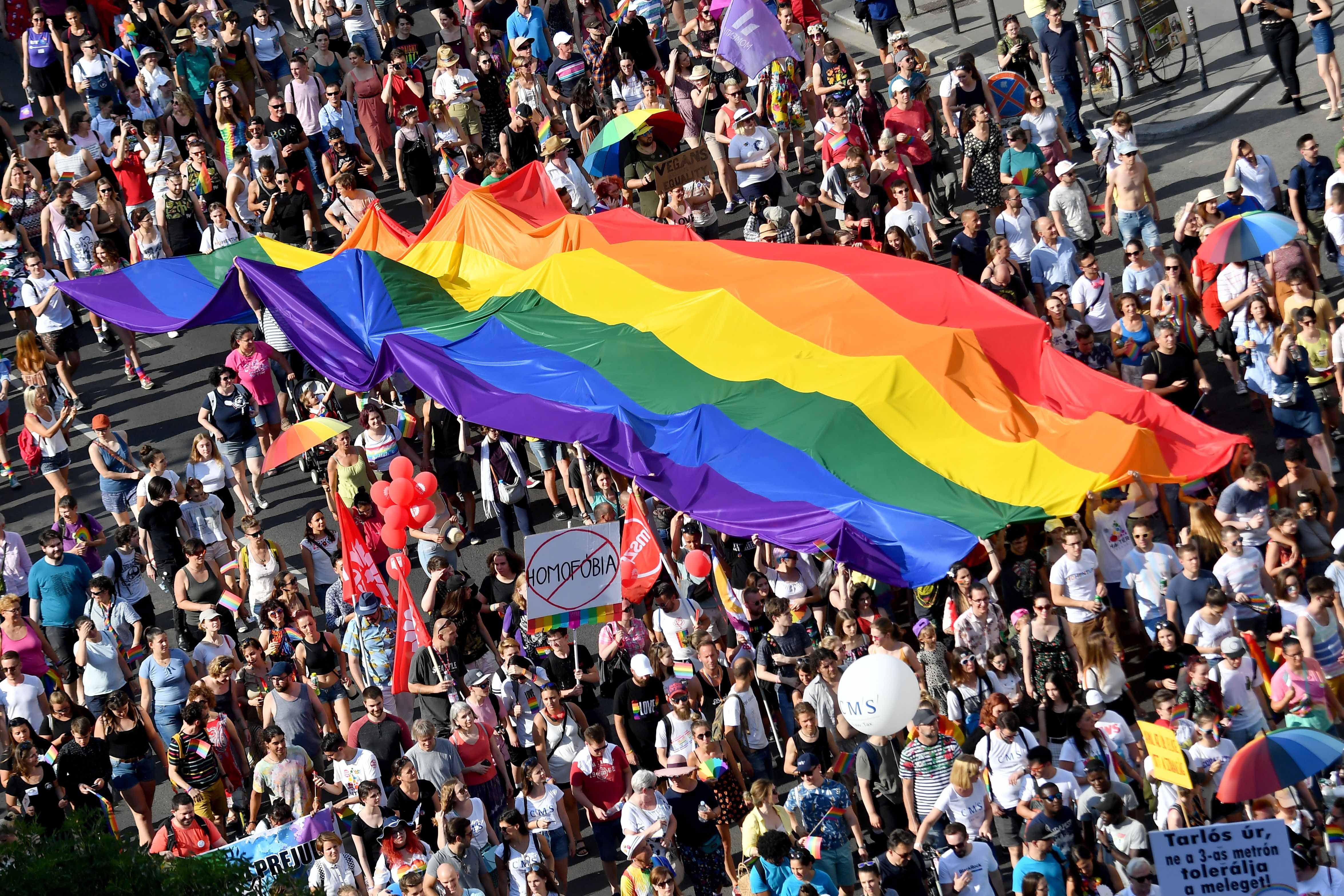
Here are the best UK uni cities for a big gay night out – The Tab

Get ready to bump into all your exes, all your shags and all your exes’ shags

The pandemic has been a tough time for LGBTQ+ nightlife, so as lockdown is lifted it’s more important than ever to support your local gay club and pile in on the double vodka cranberries.

Now is the time to get back the Rain On Me dances you were robbed of, the G-A-Y smoking area chats you missed and the one night stands with someone all your exes have already slept with.

So if you want to avoid the straight’s awkward dancing and more importantly Calvin Harris, here are the best places in the UK for a big gay night out:

London

This was always going to be the obvious place to start and for good reason. London’s giant size means it packs in just about every LGBTQ+ venue you could hope for. In Charing Cross you’ll find Heaven, the enormous gay superclub which has hosted just about every gay icon from Madonna to Cher and Lady Gaga.

London’s gay district, Soho is absolutely full of bars and pubs including Ku, The Yard and She (the only lesbian bar in London).

Outside the centre, East London is home to the more alternative Dalston Superstore and the LGBTQ+ stripclub, Metropolis. To the South you’ll find London’s oldest gay venue, The RVT which has been a bastion of drag since the 50s.

Manchester

London’s biggest gay scene rival is easily Manchester. Canal Street and the Gay Village have been the beating heart of Manc’s gay scene for decades. The setting of Russell T Davies’ groundbreaking Queer As Folk series, the village has been a safe place for LGBTQ+ people through some of the worst times. Resisting police raids in the 80s, the Village has only gotten stronger.

G-A-Y Manchester, the Northern counterpart to its London sisters lights up the entrance to Canal Street and is the best place to go for a playlist filled with all your favourite pop icons.

Manchester’s biggest advantage over London is how close together its venues are. Within one night you can easily stumble into a dozen different clubs and bars from Via to Cruz 101 and Manc’s lesbian venue, Vanilla.

Brighton

Along with Manchester and London, Brighton Pride makes up the ‘grand slam’ trio of UK prides.

Famed for being the most inclusive and LGBTQ+ friendly city in the UK, Brighton does the absolute most to make you feel loved and accepted. Albeit smaller than a lot of the other cities on this list, if there’s one thing Brighton does well it’s being gay.

Revenge is Brighton’s main gay venue and it’s hard to move without accidentally elbowing someone necking off.

Plus if you pass out chunning or miss the last train back you get to enjoy a night on the beach, just make sure to watch for when the tide comes in.

Birmingham

Brum’s Gay Village along Hurst Street is constantly alive with drag queens, questionable karaoke and the occasional annoying hen-do.

The Nightingale club would definitely make Florence blush but it remains Birmingham’s biggest and best gay venue. Missing meanwhile is well, hard to miss. With its giant building-sized rainbow flag that acts as the gate to the Village.

Liverpool

Manchester’s smaller but just as feisty cousin, you’re guaranteed to bump into someone you know and a few you’ve shagged but don’t really know. The night should always start in the iconically named, Superstar Boudoir.

After that GBar is open all the way until 8am on Saturdays, leading to some lovely interactions between vomit drenched clubbers and the morning joggers.

Bristol

Trendy and full of students, Bristol is buzzing and colourful. Definitely up there as one of the most welcoming and progressive cities, you’ll never feel out of places.

Slightly embarrassingly though Bristol does only have one proper gay club, OMG. Yet if you want a dance floor filled with weird dancing cages and enough 2000s hits to rival G-A-Y, then it’s great fun. Just remember not to overestimate your soberness if you decide to get up onto one of the raised platforms.

Newcastle

Geordie gays get all the pleasures of most other gay scenes and for about half the price. Powerhouse is the quintessential Newcastle gay club, open till 5am on Saturdays.

Once you’ve gone out in Newcastle’s Pink Triangle area, you’ll never want to pay £12 for a watery London cocktail again.

Cardiff

If you’ve just finished watching the film Pride and drying your eyes after, you might be longing for some Welsh gays. In which case, Cardiff is the perfect centre of Welsh gay life. If you’re on Churchill Way, Cardiff’s gay hub, head to The Kings for a cheap early pint – before staggering across the street to Cardiff’s main gay club, Pulse to continue the night.

Glasgow

For the best gay nightlife in Scotland there’s nowhere better than Glasgow. The Riding Room (not like that) and Polo Lounge are your best bets for cabaret nights in the city – and following on from Lawrence Cheney’s Drag Race win there’s clearly nowhere better for it. Meanwhile, Delmonicas, Katie’s Bar and Speakeasy form a lovely trio of gay bars around John Street.

The Tab’s Pride reporting series is putting a focus on highlighting LGBTQ+ issues and celebrating queer voices across UK campuses.

If you or someone you know has been affected by this story you can contact Switchboard, the LGBTQ+ helpline, on 0300 330 0630 or visit their website. You can also find help through The Mix

If you’ve got a story you’d like to tell us – whether it’s an incident of homophobia on campus, an experience you’d like to share, or anything you think we should hear, get in touch in confidence by emailing [email protected]

Read more from The Tab’s Pride series:

How to help a friend who has just come out to you, by LGBTQ+ young people

Unis aren’t actually abandoning Stonewall, in Pride Month, over a trans rights controversy

• Take this quiz to find out how much you actually know about LGBTQ+ history

Toronto’s first gay sports bar has permanently closed – blogTO

Toronto’s first gay sports bar has sadly closed permanently, quietly slipping out of existence during the pandemic.

Sincere Realty vice president and broker Margaret Liu confirmed that in late September 2020 she was asked to lease 31 St. Joseph St. where Striker Sports Bar had been, the city’s first ever LGBTQ+ sports bar. The space is up for lease.

She says at that time it went up for lease, the bar was already closed and the tenant had left, and that she never had a chance to meet with the owner.

The bar’s last public social media post was in March 2020.

striker toronto

Striker aimed to provide an inclusive environment as a sports bar. Photo by Hector Vasquez.

The watering hole had a reputation as one of the best sports bars in the city, and was owned by Oliver Williams and Vince Silva. It was known as a welcoming environment for queer sports fans as well as a safe space for women to watch sports.

Not only were they Toronto’s first gay sports bar, they were also the first in Canada to have a “Frost Rail,” a strip on the bar covered in a thin layer of frost where you could keep your drink cold.

Williams confirmed the closure with blogTO. 

Chiefs’ Willie Gay Jr. talks working alongside rookie LB Nick Bolton – Yahoo Sports

The Kansas City Chiefs have added another young talent to their linebacker room this past draft to grow the position. Last season the franchise also added Willie Gay Jr. in the draft, who plans on taking another step forward in his young career alongside the 2021 draft pick Nick Bolton.

The unquestioned leader of the Chiefs’ linebacker room is veteran Anthony Hitchens, but it doesn’t mean everyone else can’t help the incoming rookies. The second season for Gay Jr is essential as he is expected to take a more significant role. The former Mississippi State linebacker shared his thoughts on rookie Bolton and hopes for the upcoming season during Thursday’s press conference.

“We talk every day,” Gay Jr. said. “I’m not a rookie, but this is my second year this is his first year. We’re both still fresh in this thing, so I teach him the game as much as I can because I’m still learning from guys like Hitch (Anthony Hitches) and Ben (Niemann), and Dorian (O’Daniel), and all those older guys. So whatever I learn, I pass it down to him. Whatever I’ve been through, I pass it down to him, and we continue to stay close. I’m learning him, he’s learning me, so it’s a good connection we have.”

As Gay Jr. enters Year 2, he will have to adjust to playing more consistent snaps. He recorded 39 tackles and one sack in his rookie campaign before missing Super Bowl LV due to injury. He commented on the differences between his rookie year, which had an abbreviated offseason due to COVID-19, and the current offseason workouts.

“Well, of course, it was tough for us guys that came in last year,” said Gay Jr. “To only see the playbook for the first time during training camp, it was hard. To get that head start right now in OTAs and minicamp, it’s definitely helping a lot. I’m catching on to the things that I didn’t catch onto last year. I learned the basics, now it’s the small details that make good great. It’s coming along pretty good.”

The Chiefs’ defense is constantly looked at as the team’s weak spot due to the explosive offense. Each season since Steve Spagnuolo took over as defensive coordinator, the defense has shown significant improvement. With a new duo of young and talented linebackers heading into 2021, the expectations for the unit are rising.