Home Blog Page 77

How authoritarians use gender as a weapon | Op-ed | sentinelsource.com – The Keene Sentinel

0

Last month, Hungary and Poland successfully got the term “gender equality” removed from a European Union social summit in Portugal. In March, President Recep Tayyip Erdogan pulled Turkey out of the Istanbul Convention, a legally binding Council of Europe treaty to tackle violence against women and hold perpetrators to account. In Azerbaijan, authorities have used a smear campaign to target women’s rights activists.

Such stories abound, yet commentators rarely connect them to broader trends. Experts rightly anguish over rising authoritarianism. Yet they have spent relatively little time looking at one of the authoritarians’ favorite wedge issues: gender.

This strategy is as old as authoritarianism itself. Dictators are adept at using fear — focused on foreigners, cultural change or minorities — to divide and distract. They are happy to exploit traditional hierarchies to this end. Gender differences come in especially handy.

Take the issue of domestic violence. Vladimir Putin’s Russia has scaled back numerous domestic violence laws, while India’s aspiring strongman Narendra Modi has fought against criminalizing marital rape. Male coercion within the family mimics the power structure of the authoritarian state itself. Dissenters are silenced; perpetrators enjoy impunity. Society is divided — men are above women, the state above men. Erdogan has complained that the Istanbul Convention criminalization of marital violence threatened the order and sanctity of marriage. Women’s advocates warn that this will solidify women’s status as second-class citizens — not to mention cost lives.

Similarly, some authoritarians use “honor cultures” to drive women out of political life, removing a potential challenge to one-man rule. Women in politics the world over describe a litany of sexualized threats, often carried out by state security services or police. Releasing video recordings of female leaders and activists’ personal lives, as is happening in Azerbaijan today, can be a highly effective tactic for forcing women out of the public sphere. One Azerbaijani activist attempted suicide in 2020 after being harassed online and having her personal life exposed.

The appeal to “conservative values,” which often centers on gender issues, can have devastating effects. Russia has used this tactic with particular success in Georgia, where it has depicted feminism and LGBTQ rights as “anti-Georgian.” This has helped to further a narrative of alleged Western decadence, thus attempting to undermine the country’s aspirations to join the E.U. and NATO, a goal front and center to Russia’s hybrid efforts. The idea was not to focus on a pro-Russian narrative quite yet but first to build an anti-Western one.

The Kremlin created and circulated content featuring Scandinavian countries forbidding the use of “he” and “she” pronouns, images of gay pride rallies in Germany with men in drag, or narratives of young career women eschewing marriage. These efforts have produced tangible results. Georgia embedded a heterosexual marriage clause in its 2018 constitution — even though no one in the country had been demanding same-sex marriage. The country fell right into Russia’s trap, and illiberalism scored a victory. Public opinion polls showed that more than 40 percent of Georgians believed NATO dictates that candidate countries adopt “Western cultural values.” Make no mistake: Gender is a national security issue.

The United States has also been the target of Russia’s efforts to create and amplify divisive narratives. At the Alliance for Securing Democracy, we have tracked Russian state-backed narratives that target democracies. Americans should be aware, for example, that Russian information operations, including at least 15 articles on the topic from RT over the last two months alone, are fueling the domestic movements to ban trans girls and women from competing in women’s sports. Russian state-backed media has also often combined gender issues with other favored narratives such as criticism of elites, the mainstream media, “identity politics,” and “wokeness” or political correctness.

We need to wake up to the reality that the steady drip of authoritarian attacks related to gender is a strategy, not a series of one-off events. Authoritarians are fanning existing embers of intolerance and misogyny by targeting women in public life, condoning domestic violence and launching culture wars around the LGBTQ community. Strongmen benefit from a caste system in society to ensure their control and to weaken safeguards against suppression and violence.

To defend against this threat, we must carefully pick through information and events with a gender lens. Disinformation monitoring groups can track and expose gendered narratives. Journalists can be trained to limit the amplification of authoritarian themes. To help inoculate democratic institutions, the establishment of parliamentary gender equality committees, such as those of Denmark, India, Georgia and the Dominican Republic, can scrutinize legislation to protect against discriminatory impacts.

Going on the offense is also critical. Pre-emptive narratives about a tolerant, liberal and just national identity are key, such as Estonia’s deployment of “elves” to play offense against the trolls.

Yet building resilience to authoritarian tactics involves complex challenges. Too often, citizens reward strongmen for stoking these divisions with an election win. This is a long-haul struggle. We cannot lose heart.

Laura Thornton is director of the Alliance for Securing Democracy of the German Marshall Fund of the United States. Thornton has lived for 25 years around the world, working on democracy, elections and human rights.
Pride Month puts spotlight on rights of LGBTQ people – Northwest Arkansas Democrat-Gazette

It’s Pride Month, and gay Americans should have a lot to celebrate: A new president who has pledged to advocate for LGBTQ people, an easing of a pandemic that has disrupted their communal activism and increasing public acceptance of their basic rights, including record-high support for same-sex marriage.

Instead, the mood is somewhat bleak. Congress has so far failed to extend federal civil rights protections to LGBTQ people. Pandemic-related concerns are still disrupting the usual exuberant Pride festivals. And a wave of anti-transgender legislation in Republican-governed states has been disheartening

“The same week I’m seeing all the ‘Happy Pride’ announcements, I received multiple calls from friends about trans kids having to navigate entering psychiatric hospitals because they were suicidal and self-harming,” said M. Dru Levasseur, a transgender attorney who is director of diversity, equity and inclusion for the National LGBT Bar Association.

On June 1, the start of Pride Month, Florida Gov. Ron DeSantis signed a bill making his state the eighth this year to ban transgender girls from competing in girls’ sports at public schools. Arkansas, one of those eight states, also has enacted a law banning gender-confirming medical treatments, like hormones and puberty blockers, that greatly reduce the risk of suicide in trans youth.

The trans community already faces a disproportionate level of violence. At least 28 trans and gender nonconforming people have been killed so far this year in the U.S. — on track to surpass the previous one-year high of 44 such killings in 2020.

Activists’ concerns extend beyond transgender issues. For many, the top political priority is passage of the Equality Act, which would extend federal civil rights protections to LGBTQ people. It was approved by the Democratic-controlled U.S. House and is backed by President Joe Biden, but it probably needs at least 10 Republican votes to prevail in the closely divided Senate — and so far has no GOP co-sponsors.

Tyler Deaton, who advises a conservative group called the American Unity Fund that supports LGBTQ rights, believes enough Republican votes can be found if language is drafted to ensure the Equality Act doesn’t infringe on religious freedom.

Amid the disappointment, Pride festivities are proceeding, but many have been subject to downsizing, postponement and — in some cases — controversy.

The Pride parades in San Francisco and Los Angeles have been canceled for a second year in a row, due to uncertainty about covid-19 restrictions. Organizers are offering smaller in-person events this month.

Philadelphia has scrapped its large-scale parade; there are plans for a festival instead on Sept. 4. Chicago’s parade has been rescheduled for Oct. 3. In New York, most events for NYC Pride will take place virtually, as they did last year, though some in-person activities are planned.

Some recent developments have encouraged the LGBTQ community — the overturning of a Trump administration ban on transgender people joining the military; the ground-breaking appointments of Pete Buttigieg, who is gay, as transportation secretary, and Dr. Rachel Levine, who is transgender, as assistant secretary of health.

But to many activists, these developments are offset by setbacks to transgender rights.

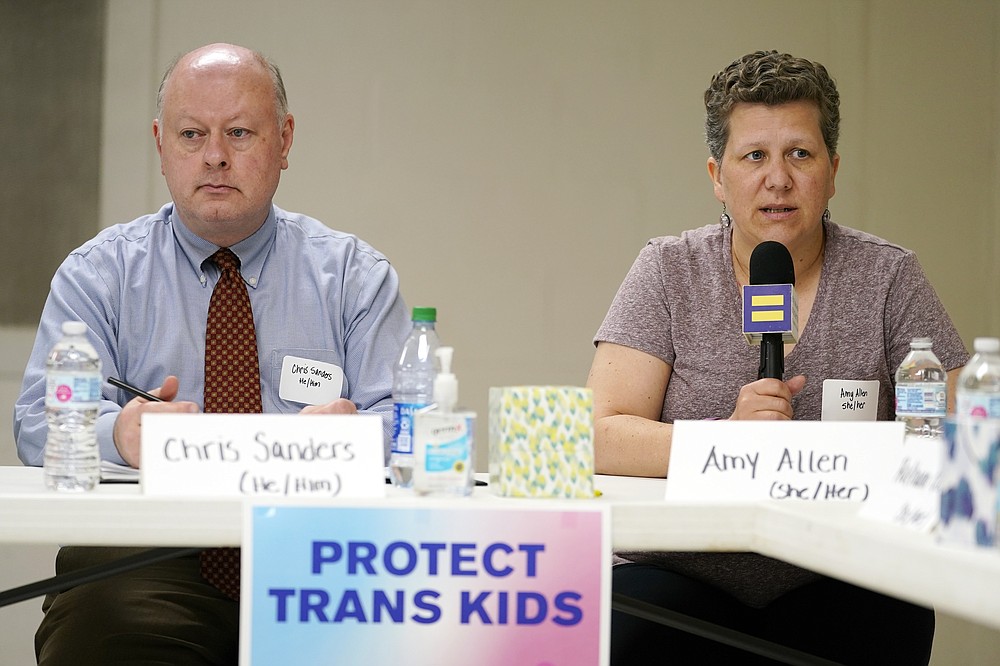
Amy Allen, mother of a 14-year-old transgender boy in the suburbs of Nashville, Tenn., said her family is dismayed by the multiple anti-trans bills winning approval in Tennessee — including one exposing public schools to lawsuits if they let transgender students use multi-person bathrooms or locker rooms that don’t reflect their sex at birth.

It’s worrisome enough, Allen said, that she and her husband — who have roots in the Northeast — are considering relocating there if Adam’s situation worsens.

Information for this article was contributed by Emily Leshner of The Associated Press.

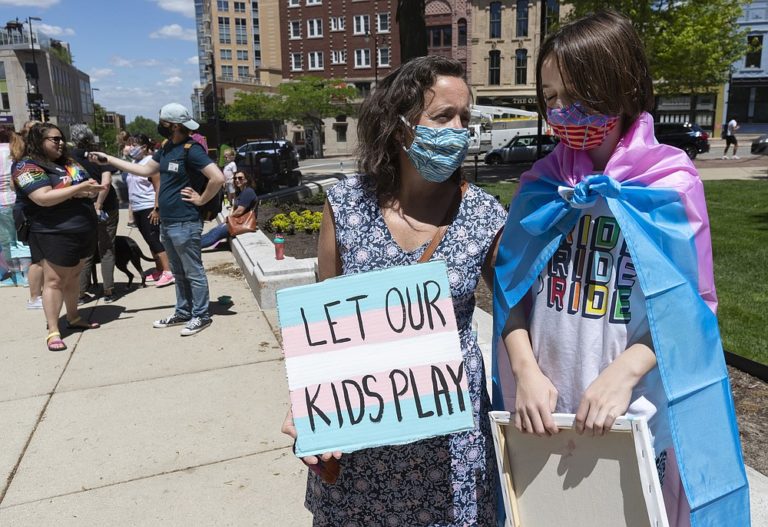
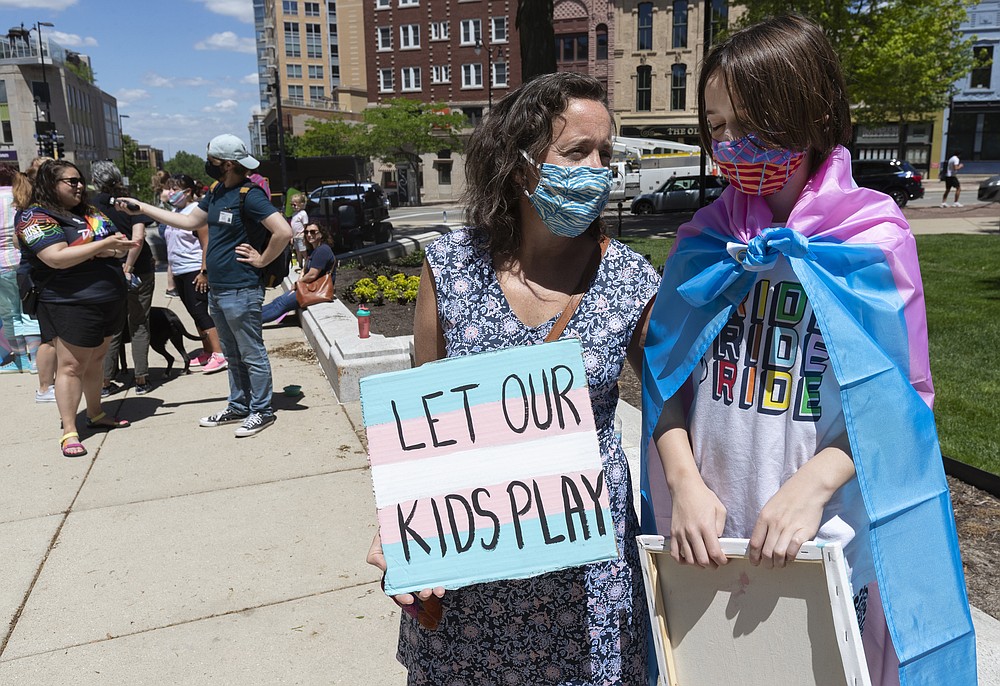
FILE - In this Wednesday, May 26, 2021 file photo, Maddy Niebauer and her 10-year-old transgender son, Julian, from Middleton, Wis., take part in a rally for transgender rights at the Capitol in Madison, Wis. Republicans who control the state Legislature are holding hearings Wednesday on legislation that would ban transgender athletes from competing in girls' and women's school sports — a proposal opposed by nearly 20 groups, including the statewide body that oversees high school sports. (Mark Hoffman/Milwaukee Journal-Sentinel via AP, File)=WIMIL

FILE – In this Wednesday, May 26, 2021 file photo, Maddy Niebauer and her 10-year-old transgender son, Julian, from Middleton, Wis., take part in a rally for transgender rights at the Capitol in Madison, Wis. Republicans who control the state Legislature are holding hearings Wednesday on legislation that would ban transgender athletes from competing in girls’ and women’s school sports — a proposal opposed by nearly 20 groups, including the statewide body that oversees high school sports. (Mark Hoffman/Milwaukee Journal-Sentinel via AP, File)=WIMIL
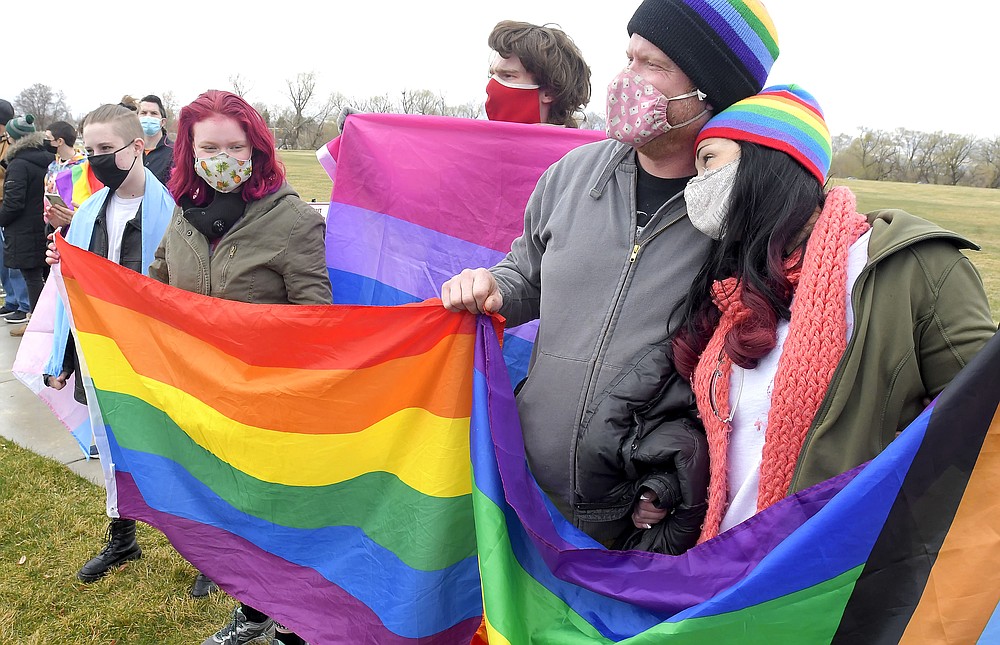
FILE - In this Wednesday, April 14, 2021 file photo, members of the Olsen and Thorell family hold pride flags during a rally in support of LGBTQ students at Ridgeline High School in Millville, Utah. Students and school district officials in Utah are outraged after a high school student ripped down a pride flag to the cheers of other students during diversity week. A rally was held the following day in response to show support for the LGBTQ community. (Eli Lucero/The Herald Journal via AP, File)/The Herald Journal via AP)

FILE – In this Wednesday, April 14, 2021 file photo, members of the Olsen and Thorell family hold pride flags during a rally in support of LGBTQ students at Ridgeline High School in Millville, Utah. Students and school district officials in Utah are outraged after a high school student ripped down a pride flag to the cheers of other students during diversity week. A rally was held the following day in response to show support for the LGBTQ community. (Eli Lucero/The Herald Journal via AP, File)/The Herald Journal via AP)
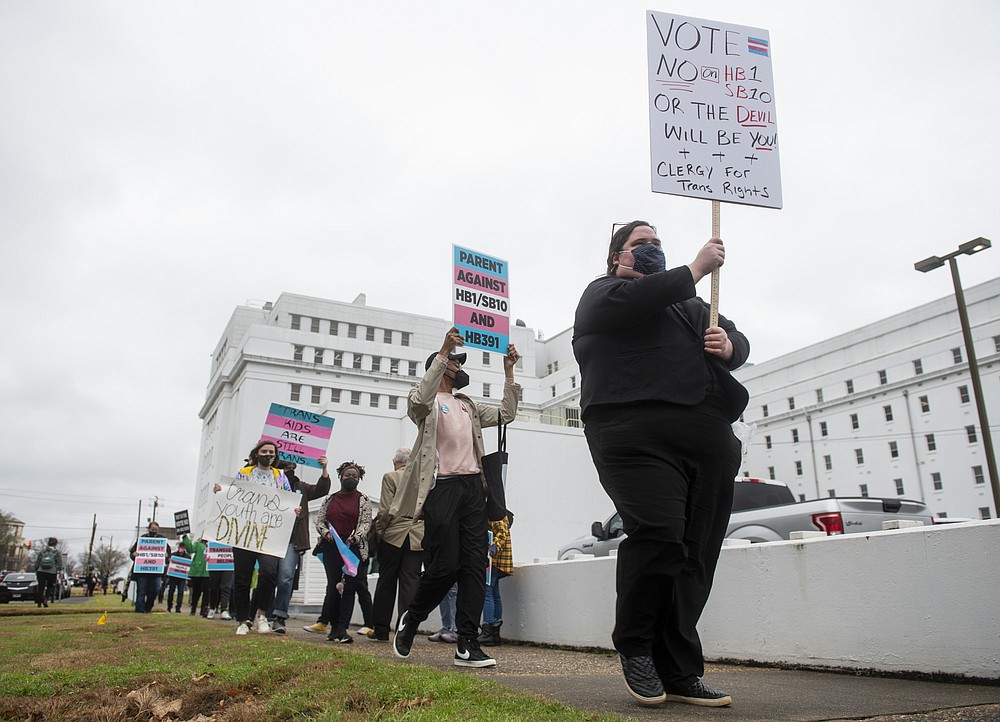
FILE - In this Tuesday, March 2, 2021 file photo, protestors in support of transgender rights march around the Alabama State House in Montgomery, Ala. Pride Month celebrations in the U.S. are taking place under unusual circumstances in June 2021, with pandemic-related concerns disrupting many of the usual festivities and political setbacks dampening the mood of LGBTQ-rights activists. (Jake Crandall//The Montgomery Advertiser via AP, File)=ALMON

FILE – In this Tuesday, March 2, 2021 file photo, protestors in support of transgender rights march around the Alabama State House in Montgomery, Ala. Pride Month celebrations in the U.S. are taking place under unusual circumstances in June 2021, with pandemic-related concerns disrupting many of the usual festivities and political setbacks dampening the mood of LGBTQ-rights activists. (Jake Crandall//The Montgomery Advertiser via AP, File)=ALMON
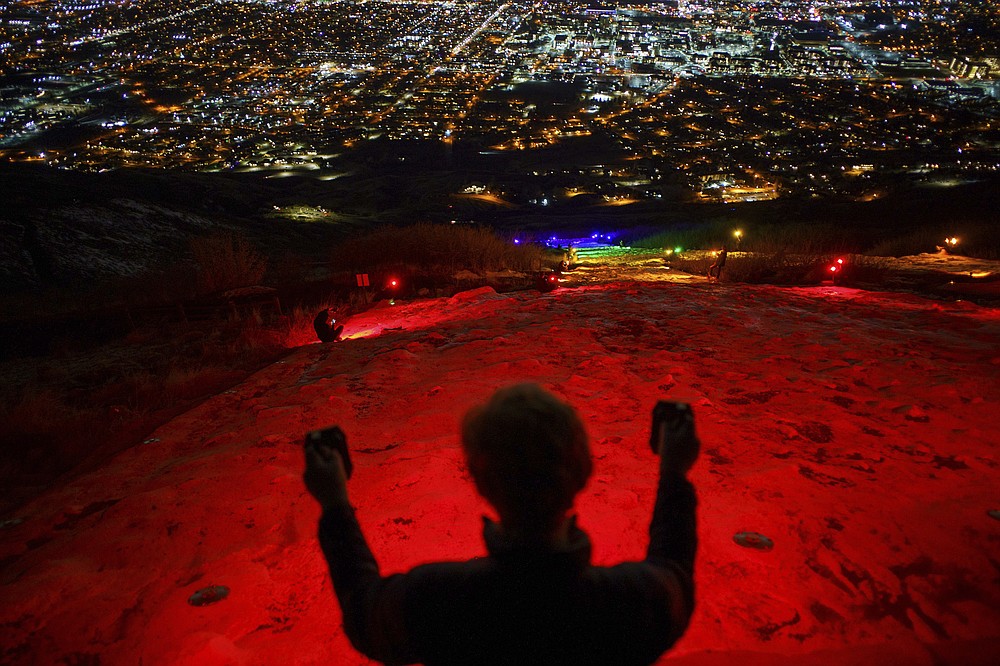
FILE - In this Thursday, March 4, 2021. file photo, a group of people, including many BYU students shine Pride colors on the Y on the mountain above BYU in Provo, Utah. Students at Brigham Young University illuminated the letter "Y" on a mountain overlooking the Provo campus on Thursday with rainbow colors in a display meant to send a message to the religious school. (Trent Nelson/The Salt Lake Tribune via AP, File)

FILE – In this Thursday, March 4, 2021. file photo, a group of people, including many BYU students shine Pride colors on the Y on the mountain above BYU in Provo, Utah. Students at Brigham Young University illuminated the letter “Y” on a mountain overlooking the Provo campus on Thursday with rainbow colors in a display meant to send a message to the religious school. (Trent Nelson/The Salt Lake Tribune via AP, File)
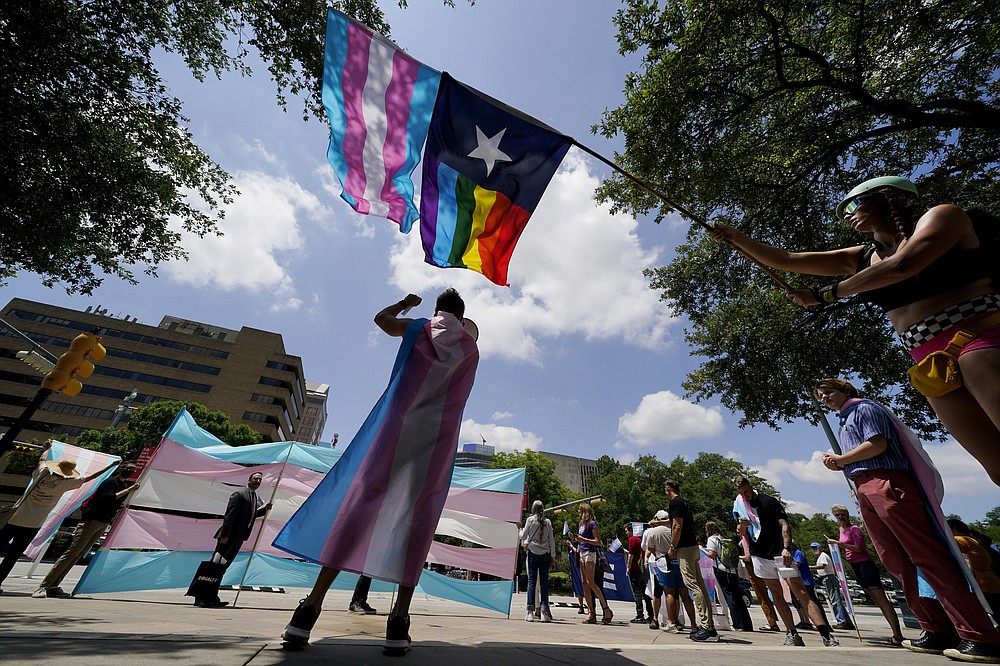
FILE - In this Thursday, May 20, 2021 file photo, demonstrators gather on the steps to the State Capitol to speak against transgender-related legislation bills being considered in the Texas Senate and Texas House in Austin, Texas. Pride Month celebrations in the U.S. are taking place under unusual circumstances in June 2021, with pandemic-related concerns disrupting many of the usual festivities and political setbacks dampening the mood of LGBTQ-rights activists. (AP Photo/Eric Gay, File)

FILE – In this Thursday, May 20, 2021 file photo, demonstrators gather on the steps to the State Capitol to speak against transgender-related legislation bills being considered in the Texas Senate and Texas House in Austin, Texas. Pride Month celebrations in the U.S. are taking place under unusual circumstances in June 2021, with pandemic-related concerns disrupting many of the usual festivities and political setbacks dampening the mood of LGBTQ-rights activists. (AP Photo/Eric Gay, File)
FILE - In this Friday, May 21, 2021 file photo, Amy Allen, the mother of an eighth grade transgender son, speaks at a Human Rights Campaign round table discussion on anti-transgender laws, in Nashville, Tenn. Allen says her family is dismayed by the multiple anti-trans bills winning approval in Tennessee – including one exposing public schools to lawsuits if they let transgender students use multi-person bathrooms or locker rooms that don't reflect their sex at birth. At left is Chris Sanders, Tennessee Equality Project executive director. (AP Photo/Mark Humphrey, File)

FILE – In this Friday, May 21, 2021 file photo, Amy Allen, the mother of an eighth grade transgender son, speaks at a Human Rights Campaign round table discussion on anti-transgender laws, in Nashville, Tenn. Allen says her family is dismayed by the multiple anti-trans bills winning approval in Tennessee – including one exposing public schools to lawsuits if they let transgender students use multi-person bathrooms or locker rooms that don’t reflect their sex at birth. At left is Chris Sanders, Tennessee Equality Project executive director. (AP Photo/Mark Humphrey, File)
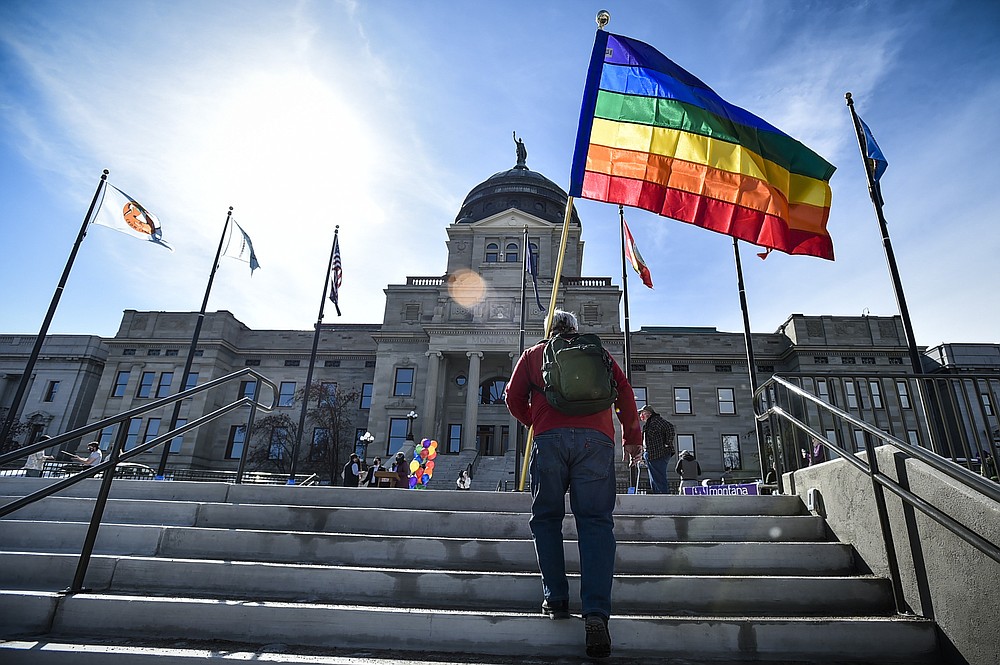
FILE - In this March 15, 2021, file photo, demonstrators gather on the steps of the Montana State Capitol protesting anti-LGBTQ+ legislation in Helena, Mont. Gov. Greg Gianforte signed a bill Friday, May 7, 2021, banning transgender athletes from participating in school and university sports according to the gender with which they identify, making Montana one of several Republican-controlled states to approve such measures in 2021. (Thom Bridge/Independent Record via AP, File)=MTHEL

FILE – In this March 15, 2021, file photo, demonstrators gather on the steps of the Montana State Capitol protesting anti-LGBTQ+ legislation in Helena, Mont. Gov. Greg Gianforte signed a bill Friday, May 7, 2021, banning transgender athletes from participating in school and university sports according to the gender with which they identify, making Montana one of several Republican-controlled states to approve such measures in 2021. (Thom Bridge/Independent Record via AP, File)=MTHEL

School of Rock’s ‘gay kid’ didn’t come out because of internalised homophobia – PinkNews

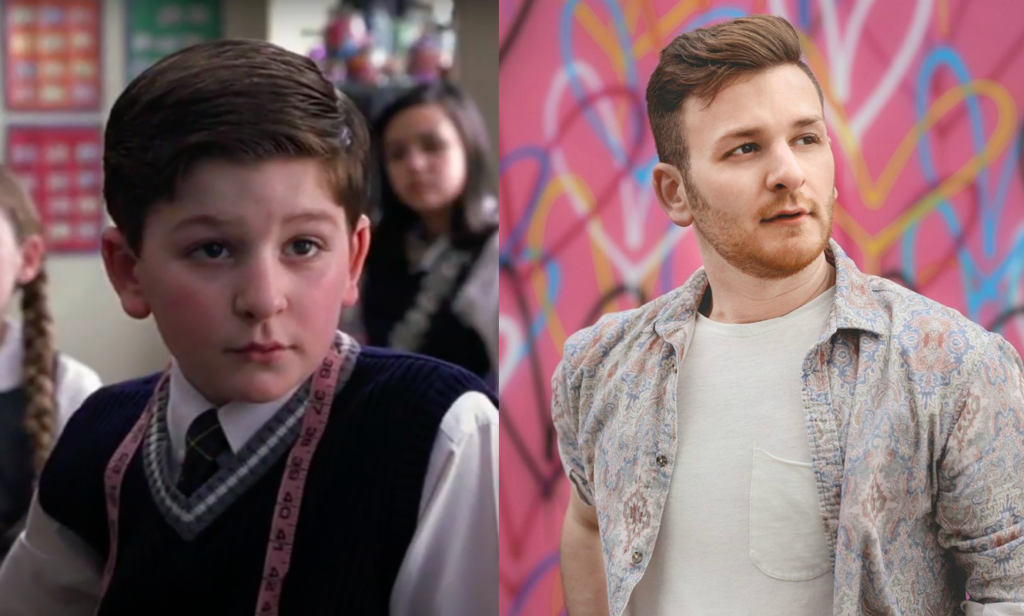
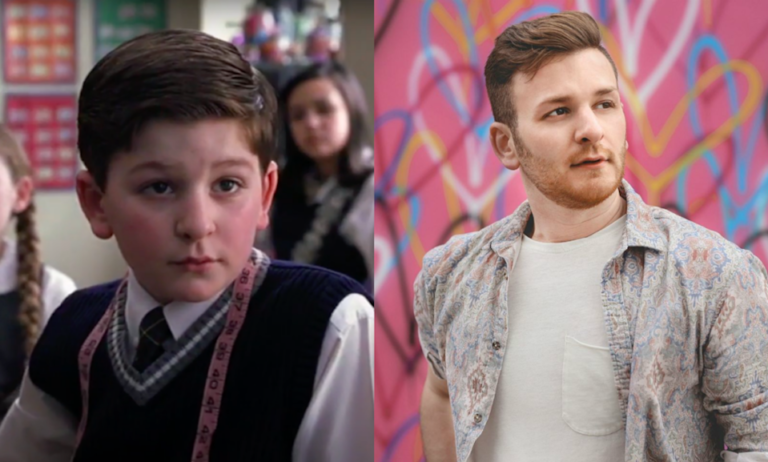
Brian Falduto starred in School of Rock. (YouTube and Brian Falduto/ Facebook)

Brian Falduto, who played Billy in School of Rock, has said being labelled “the gay kid” in the hit film delayed his coming out by years.

Falduto played a sassy kid obsessed with costume design and style in the 2003 hit film – but cruel comments from other children encouraged him to stay in the closet until his senior year of college.

Speaking on the Cooper and Anthony show, Brian Falduto – who now works as a life coach – admitted he was “in so much denial” about his sexuality after starring in School of Rock that coming out didn’t feel like an option.

“Think about it: I was in the fifth grade when this movie came out and I was called gay, and then someone told me that’s not cool, so I was just like, ‘Oh, OK then, I’m not gay.’

“That message came to me so often that my denial had to come so often, so I was denying it before I even got notion of the idea of what it was. So by the time I realised I was potentially gay I was already homophobic towards myself essentially.”

He continued: “In college I met a ton of gay people, and I was like, ‘This is awesome, and they’re great.’ But it still wasn’t an option for me.

“I was so far in denial, which I think that’s one of the reasons I got into life coaching in my older age a little bit too – because it’s just so fascinating to me how the mind works and how it locks into these different conditioning and behaviour patterns just because of one thing you told yourself 14 years ago. It’s really crazy.”

School of Rock star Brian Falduto was targeted by homophobic bullies

This is not the first time Falduto has opened up about the struggles he faced growing up gay – in 2018, he told NowThis Entertainment that he was mocked by bullies in school because of his School of Rock character, which he said producers changed to fit his “unfiltered” self because they “liked so much what I was bringing to the room”.

“That audition process was me at my most authentic, and I got noticed because I stood out. And then I spent the rest of my life trying to not stand out.”

He explained: “All I knew at the time was that being gay was bad. It was meant to be insulting if someone in your fifth grade class of boys called you gay, it was not cool. So I instantly shut it down.”

School of Rock’s ‘gay kid’ didn’t come out because of internalised homophobia – Yahoo Eurosport UK

Brian Falduto, who played Billy in School of Rock, has said being labelled “the gay kid” in the hit film delayed his coming out by years.

Falduto played a sassy kid obsessed with costume design and style in the 2003 hit film – but cruel comments from other children encouraged him to stay in the closet until his senior year of college.

Speaking on the Cooper and Anthony show, Brian Falduto – who now works as a life coach – admitted he was “in so much denial” about his sexuality after starring in School of Rock that coming out didn’t feel like an option.

“Think about it: I was in the fifth grade when this movie came out and I was called gay, and then someone told me that’s not cool, so I was just like, ‘Oh, OK then, I’m not gay.’

“That message came to me so often that my denial had to come so often, so I was denying it before I even got notion of the idea of what it was. So by the time I realised I was potentially gay I was already homophobic towards myself essentially.”

He continued: “In college I met a ton of gay people, and I was like, ‘This is awesome, and they’re great.’ But it still wasn’t an option for me.

“I was so far in denial, which I think that’s one of the reasons I got into life coaching in my older age a little bit too – because it’s just so fascinating to me how the mind works and how it locks into these different conditioning and behaviour patterns just because of one thing you told yourself 14 years ago. It’s really crazy.”

School of Rock star Brian Falduto was targeted by homophobic bullies

This is not the first time Falduto has opened up about the struggles he faced growing up gay – in 2018, he told NowThis Entertainment that he was mocked by bullies in school because of his School of Rock character, which he said producers changed to fit his “unfiltered” self because they “liked so much what I was bringing to the room”.

“That audition process was me at my most authentic, and I got noticed because I stood out. And then I spent the rest of my life trying to not stand out.”

He explained: “All I knew at the time was that being gay was bad. It was meant to be insulting if someone in your fifth grade class of boys called you gay, it was not cool. So I instantly shut it down.”

HIV is no longer a death sentence. But decades-old stigma persists. – NBC News

In 2014, Deondre Moore, who was 19 at the time, decided to get an HIV test while he and his friends were at a nightclub in Houston. 

Moore wanted his friends to get tested, “so I knew that the best way to do so was to lead by example and do my test first,” he said. He was tested earlier that year, and had recently been in what he thought was a monogamous relationship with a man he was in love with, so he wasn’t worried about the results.

“They tested me for HIV, I knew it would come back negative,” he said. “Went to the back, ready to hear my results, and he said, ‘Your test came back positive.’”

Moore said he “made up a whole scenario” in his head about why he thought the test result was wrong. But just over a week later, a doctor at the student health clinic at Sam Houston State University, where he was a freshman, confirmed the result. 

“The doctor walked in, and very quickly got it out of the way. And he said, ‘Mr. Moore, I’m sorry to tell you, but our test confirmed that you do have HIV,’” he recalled. “What I heard the doctor say was, ‘Yeah, you are going to die.’”

Now 26, Moore takes just one pill a day — an antiretroviral treatment that makes the virus undetectable and untransmittable to others. It’s not a cure, but it means that, unlike a few decades ago, people like Moore can live long, healthy lives. 

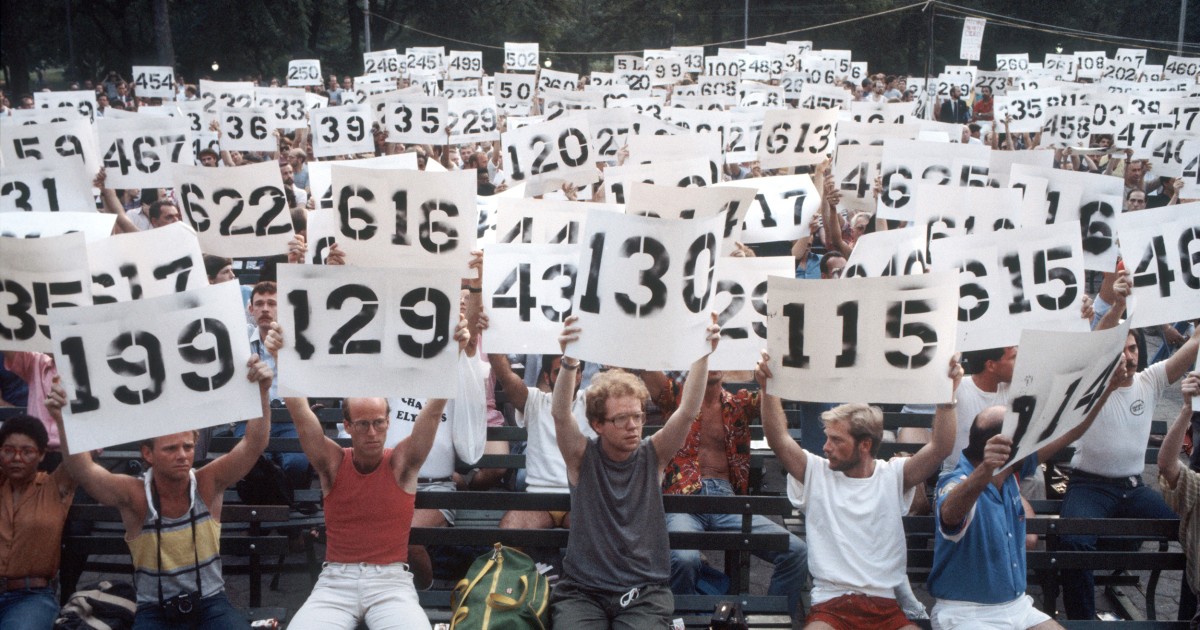
Treatment for HIV has come a long way since June 1981, when the Centers for Disease Control and Prevention published its first scientific report describing the disease now known as AIDS in its Morbidity and Mortality Weekly Report. But advocates say there’s still more work to be done. Stigma surrounding HIV is persistent, and the virus disproportionately affects gay and bisexual men of color, particularly Black men, due to inequality in a variety of areas. 

Advocates want to see better health education in schools, better access to health care and, ultimately, an end to the epidemic.

A lack of education — and more HIV cases among young people

Moore’s mother, Kathleen Wingate, said that she didn’t personally know anyone who was living with HIV prior to her son’s diagnosis, so she didn’t know anything about it. Going to his doctor’s appointments with him helped a lot, she said. 

The doctor explained to her that she couldn’t contract HIV from hugging her son, kissing him or sharing food and drinks with him. 

“And I always thought, ‘Oh, if he touches me … If somebody touches you, you’re going to get it.’ I’ve heard that,” Wingate said. But the doctor told her that if Moore took one pill every day for the rest of his life, he could live to 90 or 100 years old.

Misinformation and stigma persist in part because of poor sex education across the country, said J. Maurice McCants-Pearsall, director of HIV and health equity at Human Rights Campaign. 

He noted that young people ages 13 to 24 are overrepresented in new HIV diagnoses, with the age group making up 21 percent of the category in 2018, according to the CDC. Young gay and bisexual men account for 83 percent of all new diagnoses in the age group, and young Black gay and bisexual men make up 42 percent of new diagnoses among young queer men.

“And then we have to ask the question, well, why is that?” McCants-Pearsall said. “Well, there’s a direct correlation with a lack of sexual health education and HIV in young folks between the ages of 13 and 24. That’s undeniable.”

He said HIV’s impact on Black and brown people is also due to social determinants of health, which he said aren’t being addressed for communities of color. “It’s not just enough to give someone a blue magical pill and say, ‘Oh, this is going to prevent you from contracting HIV,’” he said. “No, we have to have comprehensive health care for folks, then address all their needs from mental health to behavioral health services, to increased access to medical treatment and/or prevention services … equal access to educational, employment opportunities, housing.”

Legislation also plays a role. Thirty-seven states criminalize exposing someone to HIV, according to the CDC. McCants-Pearsall said 11 states have laws that make it a felony to spit or bite someone if you have HIV, “even though we know the science tells us that it is not possible to transmit HIV through saliva.”

Twenty-five states also criminalize one or more behaviors that pose low risks for HIV transmission, he said. The penalties for violating these laws can include prison time: 18 impose sentences of up to 10 years, seven states impose sentences of 11 to 20 years, and five states impose a sentence of 20 years “and this is not based off of behavior motivated by intent to harm,” McCants-Pearsall said. 

“This is based off of you not disclosing your status or merely the perceived exposure to HIV, and that’s ridiculous, totally ridiculous,” he said.

Ending the epidemic

Thom Kam, 65, was diagnosed with HIV in 1992. He used all natural and alternative therapies to boost his immune system until 1996, when he was hospitalized and officially had AIDS. At that time, the result of a six-month study showed that a combination of three drugs was effective at containing HIV. 

“And I did that regimen eight hours every day around the clock on an empty stomach for three years, which was 4,000 plus doses without missing a single one,” he said. “But I knew how lucky I was. I knew how lucky I was to actually be able to do that … really grateful. And so I did and embraced it for myself and for all the other guys who hadn’t had the opportunity.”

In the ‘80s and the ‘90s, he said, he never thought it would get to this point, when one pill a day can make HIV undetectable. “I didn’t know if we could or not,” Kam said. “It was one big dark tunnel, and there was no light at the end.”

Treatments have improved, but Moore said HIV has been around for 40 years, and there’s no cure or vaccine. He added that about a year and a half into the Covid-19 pandemic, however, multiple vaccines exist.

“I think it just speaks to who’s mostly affected, and who was mostly affected then,” he said. Because the HIV epidemic disproportionately affected queer men, and Black and brown people, “no one cared, no one listened,” he said.

But that is not a view that Dr. Anthony Fauci, the nation’s top infectious diseases expert, shared.

Fauci, director of the National Institute of Allergy and Infectious Diseases, who was a leading researcher during the AIDS epidemic in the 1980s, said the fact that there’s a Covid-19 vaccine and no HIV vaccine is “a scientific issue” and “has nothing to do with effort.” 

“We have spent literally billions of dollars on an HIV vaccine. No doubt,” he told NBC News in response to a question in May. What makes a vaccine successful is when the body makes an adequate immune response to a pathogen to clear it and prevent the person from being infected with the same pathogen again.  

“That completely is different for HIV, because for reasons we still can’t explain, the body does not make a good immune response against HIV,” he said. “And that’s the reason why we never see clearance of the virus from the body of someone who’s been infected spontaneously.” 

As advocates work to end the epidemic or wait for a cure, they continue to fight misconceptions. Among the most common is that HIV is a death sentence, and it is not, McCants-Pearsall said. Another is that if a person is HIV positive, it means “they did something wrong.”

“No one did anything wrong,” he said. “We have free choice. I can love who I want to love, how I want to love them, whenever I want to love them. There’s no shame in that. I did nothing wrong.”

Follow NBC Out on TwitterFacebook & Instagram

Commentary: LGBTQ Americans have the right to raise children – Press Herald

In coming weeks, the Supreme Court will issue its opinion on an important case affecting the right of LGBTQ people to become foster and adoptive parents. The case is Fulton v. City of Philadelphia, and the background is simple. Fulton is the last name of Sharonell Fulton, a foster parent representing Catholic Social Services. Catholic Social Services would like to center its services on religious beliefs that would exclude LGBTQ people and still receive government-funded contracts. Philadelphia wishes to cancel its contract unless the agency complies with federal laws on equal rights.

Like Fulton, I am a Catholic foster parent, and I know that Fulton’s reasons for fostering are those that motivate every parent. From a place of mutual respect, I must advocate for my own family. I hope the Supreme Court rules against Catholic Social Services and allows Philadelphia to discontinue any contracts that are not equitable for all.

Catholic Social Services claims religious freedom is at stake. However, agencies can already exercise religion privately and do so in every state, including Maine. Today, there are kids who cannot access my home. After getting licensed, I learned some districts receive referrals from a Protestant program and attempted to register with that program. I was denied because I wasn’t part of their church and I’m unmarried. As a straight, stable, employed homeowner with a strong support system, I found this agency’s pleas for homes ludicrous, knowing they had prioritized religion over the safety of kids. If the court rules in favor of Catholic Social Services, the decision of who can parent will increasingly connect to the private practices of agencies within any region. Impacts may be further reaching than just foster care and adoption. In November, EdWeek advised superintendents nationwide that this case has potential for disruptions of church and state balances across social services, including education and health care.

Catholic Social Services has argued to the Supreme Court that agency social workers “wouldn’t know how to evaluate” a gay couple. To imply that Catholic social workers can’t recognize the value of an LGBTQ prospective parent plays to ignorant stereotypes about Catholic small-mindedness. To imply that parenting should be evaluated differently depending on sexuality is homophobic and offends many families within the Catholic Church – including my own family tree, which proudly includes some rainbow branches.

Since 2014, consistent polls by both secular and Catholic entities show that majority of Catholics – over 50 percent – support marriage equality. I hope this majority, and the Supreme Court (a bench stacked with Catholics) would also stand in support of parenting equality.

My children’s stories include a tween abandoned by his family the day he came out as gay. LGBTQ youth are at higher risk for self-harm and suicide within America’s foster care system. Catholic Social Services claims to serve all children regardless of orientation. How could they serve this child equitably with their current policies? The child welfare best practice of matching kids with homes that understand them is impossible if a system blackballs the homes who will understand them the best.

By siding with LGBTQ rights at the surface of this case, the Supreme Court has the opportunity to address the underlying priority – to create a foster care system that opens doors to as many loving homes as possible, so that every child can someday find a family who loves them for who they are.


Use the form below to reset your password. When you’ve submitted your account email, we will send an email with a reset code.

filed under:

Kamala Harris is the first sitting VP to have marched in an LGBTQ pride parade – Business Insider

  • Vice President Kamala Harris participated in a Pride parade in Washington, DC, on Saturday.
  • She and second gentleman Doug Emhoff greeted marchers and wore “love is love” and “love first” shirts.
  • Harris called for the Senate to pass the Equality Act, which passed in the House earlier this year.
  • See more stories on Insider’s business page.

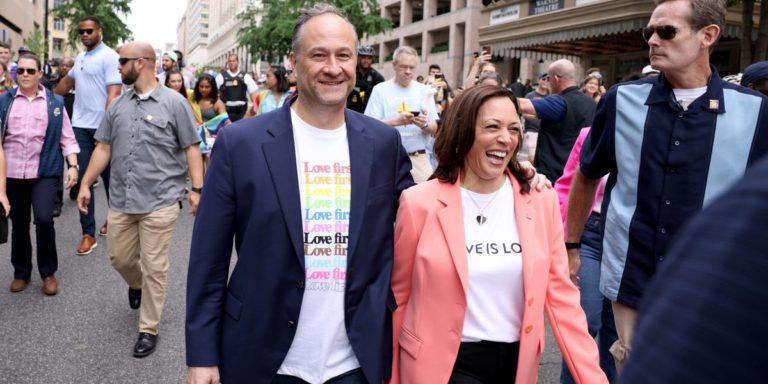
Kamala Harris on Saturday became the first sitting vice president to have marched in a pride parade. 

She and husband Doug Emhoff attended the Capital Pride Walk in Washington, DC. Harris wore a shirt with the slogan “love is love” imprinted on it, while Emhoff’s said “love first” 11 times in multiple colors, resembling a rainbow. 

“Happy Pride,” Harris told other marchers, according to WRC-TV, an affiliate of NBC News.

She also called for the government to pass the Equality Act, which would ensure federal protections for LGBT people. So far, the House has passed the Equality Act, but it’s unclear whether the Senate will take it up. Harris also issued words of support for trans people.

“We need to make sure that our transgender community and our youth are all protected. We need, still, protections around employment and housing,” Harris said, according to WRC-TV. “There is so much more work to do, and I know we are committed.”

In numerous remarks, the Biden-Harris administration has indicated the LGBT community has its full government support.

Earlier in June, for example, in recognition of pride, the White House said “no one should face discrimination or harassment because of who they are or whom they love.”

“The President has the back of LGBTQ+ people across the country and will continue fighting for full equality for every American – including through continuing to urge the U.S. Senate to pass the Equality Act and provide overdue civil rights protections to LGBTQ+ people and families across the country,” the White House statement continued.

Chicago LGBT Hall of Fame Seeks Members for Selection Committee Rick Karlin Jun 11, 2021 9 – Chicago Daily Herald

The Chicago LGBT Hall of Fame, celebrating its 30th anniversary, invited the LGBTQ+ community to nominate individuals, organizations, businesses, and allies for the 2021 Chicago LGBT Hall of Fame and the response was tremendous. The Chicago LGBT Hall of Fame now has a slate of possible inductees for the 2021 Hall of Fame. A selection committee, comprised of Individuals inducted into the Chicago LGBT Hall of Fame, will review the slate of candidates and select the candidates in a meeting on July 17. Anybody inducted into the LGBT Hall of Fame as an Individual is entitled to serve on the selection committee. Those interested in participating should send an e-mail to outreach@LGBTHallofFame.org by July 1. The names of the inductees for 2021 will be released on or before July 19, 2021.

The ceremony for inductees will be held on Tuesday, October 5 at the Chicago History Museum. The Chicago LGBT Hall of Fame was founded in 1991 as the Chicago Gay & Lesbian Hall of Fame. Its purpose then, as now, is to honor people and entities, nominated by the community, who have made significant contributions to the quality of life or well-being of the LGBT community in Chicago. It is the first city-sponsored hall of fame dedicated to LGBT people, organizations, and allies in the United States.

From its founding in 1991 until 2016 the Gay & Lesbian Hall of Fame relied on support from the City of Chicago. The city ceased funding the Gay & Lesbian Hall of Fame in 2016 as part of then-mayor Rahm Emanuel’s cost-cutting programs. At that time, it was rechristened the Chicago LGBT Hall of Fame and has since been supported and maintained by the Friends of the Chicago LGBT Hall of Fame, a 501c3 not-for-profit organization, with approval from the City of Chicago.

The first Chicago Gay & Lesbian Hall of Fame ceremony took place during Pride Week and was held at Chicago City Hall. Mayor Richard M. Daley hosted the ceremony and afterward, photos of the inductees were displayed in City Hall. The Hall of Fame has no physical facility but maintains a website, which allows anyone to visit the Hall of Fame at any time. Traditionally, the City of Chicago has displayed the Hall of Fame materials during induction periods.

For more information, visit the organization’s website, chicagolgbthalloffame.org/ or its Facebook page, https://www.facebook.com/groups/56108152083.

Chicago LGBT Hall of Fame Seeks Members for Selection Committee – Chicago Daily Herald

The Chicago LGBT Hall of Fame, celebrating its 30th anniversary, invited the LGBTQ+ community to nominate individuals, organizations, businesses, and allies for the 2021 Chicago LGBT Hall of Fame and the response was tremendous. The Chicago LGBT Hall of Fame now has a slate of possible inductees for the 2021 Hall of Fame. A selection committee, comprised of Individuals inducted into the Chicago LGBT Hall of Fame, will review the slate of candidates and select the candidates in a meeting on July 17. Anybody inducted into the LGBT Hall of Fame as an Individual is entitled to serve on the selection committee. Those interested in participating should send an e-mail to outreach@LGBTHallofFame.org by July 1. The names of the inductees for 2021 will be released on or before July 19, 2021.

The ceremony for inductees will be held on Tuesday, October 5 at the Chicago History Museum. The Chicago LGBT Hall of Fame was founded in 1991 as the Chicago Gay & Lesbian Hall of Fame. Its purpose then, as now, is to honor people and entities, nominated by the community, who have made significant contributions to the quality of life or well-being of the LGBT community in Chicago. It is the first city-sponsored hall of fame dedicated to LGBT people, organizations, and allies in the United States.

From its founding in 1991 until 2016 the Gay & Lesbian Hall of Fame relied on support from the City of Chicago. The city ceased funding the Gay & Lesbian Hall of Fame in 2016 as part of then-mayor Rahm Emanuel’s cost-cutting programs. At that time, it was rechristened the Chicago LGBT Hall of Fame and has since been supported and maintained by the Friends of the Chicago LGBT Hall of Fame, a 501c3 not-for-profit organization, with approval from the City of Chicago.

The first Chicago Gay & Lesbian Hall of Fame ceremony took place during Pride Week and was held at Chicago City Hall. Mayor Richard M. Daley hosted the ceremony and afterward, photos of the inductees were displayed in City Hall. The Hall of Fame has no physical facility but maintains a website, which allows anyone to visit the Hall of Fame at any time. Traditionally, the City of Chicago has displayed the Hall of Fame materials during induction periods.

For more information, visit the organization’s website, chicagolgbthalloffame.org/ or its Facebook page, https://www.facebook.com/groups/56108152083.

The gay lifestyle can be harmful | Letters To The Editor | starbeacon.com – The Star Beacon

One of the main problems in the Corinthian church was the growing sin of immorality (Chapter 5). Immorality = any sexual activity outside of the God ordained marriage between one man and one woman.

The word ‘tolerant’ has taken on a new meaning, as to what we are to be tolerant of in our society today. The Bible is very clear as to what followers of Christ are to tolerate and of what we are to be intolerant. I Corinthians 5:9-10; 6:9-10 couldn’t be more clear, that the practice of “homosexuality” is not accepted by God. After a commissioners meeting, I asked politely one of the organizers of the June 5 event what he thought the passage in I Corinthians 6 meant. He had no response for me.

The main point of this letter is to inform the readers that since the Supreme Court ruling for ‘“Gay marriage” a huge amount of health issues have become epidemic.

Frankly, Christians are expected to overlook Gen. 19; Lev. 18; Ezekiel 3, 33; Rom. 1; 1 Cor. 5:9-10. 6:9-10 and Gal. 5:19-21. We can’t. There is hope through Jesus Christ. Mt. 11:28-30 and John 3:16!

The U.S. Dept of Health and Human Services has published a resource kit addressing the growing health issues faced by the LGBT population. First is the abbreviated list of terms issued in this 100-page publication. I have left out the definition for personal reasons. EPh 5:12.

Bi gender, FTM, genderqueer, MTF, transgender, transsexual, two-spirit, crossdresser, drag king and queen, gender expression, passing, transition, bisexual, coming out, gay, lesbian, MSM, outing, queer, sexual orientation, WSW to name a few.

These are health issues that are more prevalent with heterosexual individuals.

Cancers including breast, oral, throat and anal.

Obesity.

Mental health-multiple psychiatric disorders.

Suicide due to emotional stress — 2 1/2 times higher.

Substance abuse.

Sexually transmitted diseases such as HIV/AIDS; gonorrhea, chlamydia.

Hepatitis A, B, C virus.

Huge increase in syphilis.

I share this prayerfully because I have seen this lifestyle  destroy marriages and individuals. There is help for those who want out of this lifestyle. I make myself available or call Meier clinic 1-888-725-4642.

Yours in Christ.

Terry Wolcott

Jefferson

Queen Elizabeth honors key women in UK’s rapid vaccine drive | News, Sports, Jobs – Evening Observer

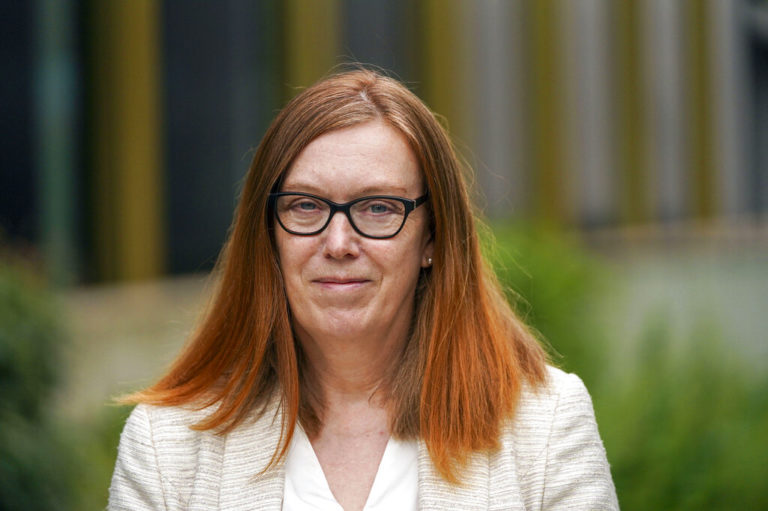
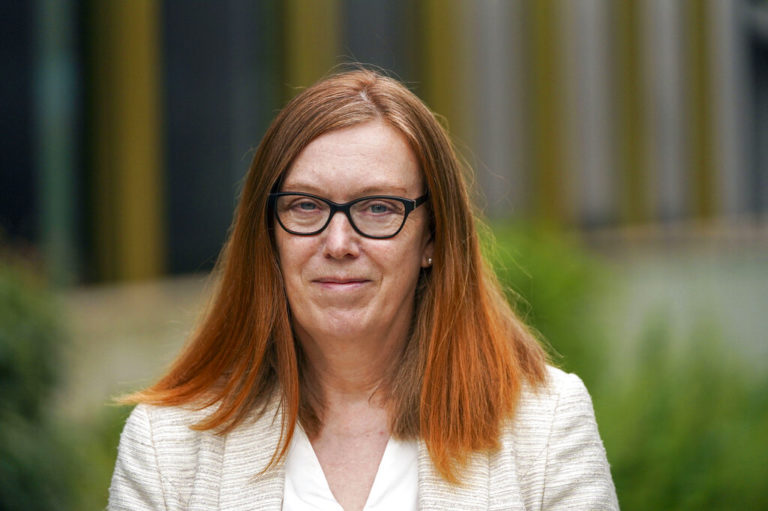
Sarah Gilbert, professor of vaccinology at Oxford’s Jenner Institute and Nuffield Department of Clinical Medicine, poses for a photo in Oxford, England, Friday June 11, 2021. Queen Elizabeth II has used her birthday honors list to celebrate those at the forefront of the U.K.’s rapid rollout of coronavirus vaccines over the past few months, which has been credited with turning around the country’s pandemic response. Two of the most high-profile women in the vaccination drive, Professor Sarah Gilbert of the University of Oxford, and venture capitalist Kate Bingham, the former head of the U.K. Vaccines Taskforce, have been recognized with damehoods in the list that was published late Friday. (Steve Parsons/PA via AP)

LONDON (AP) — Queen Elizabeth II has used her birthday honors list to celebrate those at the forefront of the U.K.’s rapid rollout of COVID-19 vaccines over the past few months, which has been credited with turning around the country’s pandemic response.

Two of the most high-profile women in the vaccination drive, Professor Sarah Gilbert of the University of Oxford, and venture capitalist Kate Bingham, the former head of the U.K. Vaccines Taskforce, have been recognized with damehoods in the list published late Friday.

Gilbert was instrumental in the development of the vaccine being manufactured by pharmaceutical company AstraZeneca, while Bingham has been widely lauded for the country’s successful vaccine procurement program.

Though the U.K. has seen Europe’s highest virus-related death toll, with nearly 128,000 people having lost their lives, the vaccination program has been deemed as one of the world’s speediest and most coherent rollouts.

In December, a 90-year-old British grandmother became the first person in the world to be given the Pfizer vaccine outside of a trial. Since then, around 61% of the U.K. population has received at least one dose of vaccine, while about 43% has had two. The rollout, which has primarily been based on age, was earlier this week extended to 25- to 29-year-olds.

Also honored are a multitude of specialists from across the scientific community for their efforts in developing vaccines, running clinical trials, delivering testing and tracking coronavirus infections. The selfless work of people to help others during the pandemic, from running free taxis for key workers to making bottles of hand sanitizer, was also recognized by the 95-year-old monarch.

Of the 1,129 people receiving honors, 62% are being recognized for community work, with nearly a quarter recommended for their activities during the pandemic.

One of those was 25-year-old Rhys Mallows, who was awarded a British Empire Medal for helping to repurpose Mallows Bottling, a Welsh firm, to produce more than one million bottles of hand sanitizer following a deal with a Scottish distiller. He estimates that around 81 million hands have been sanitized.

“We’re not scientists, but we really felt that if we can give people little bullets to protect themselves, then it’d make a big difference,” he said.

Siblings John Brownhill and Amanda Guest were also awarded the British Empire Medal for setting up Food4Heroes, which delivered more than 200,000 meals to the National Health Service.

“You see in a time of crisis the strengths of humanity I think”, Brownhill said.

The honors list is also a record-breaking one in terms of diversity, with 15% of recipients from an ethnic minority background. Meanwhile, 9% of those honored had a disability and 5% identified as LGBT. More women, 50.2%, than men feature on the list, for the first time since 2015.

The winners are chosen by civil servants’ committees based on nominations from the government and the public. The awards are usually given out by the queen or a senior royal acting in her place during investitures at Buckingham Palace, but the pandemic has changed all that, not least because the queen has been living at Windsor Castle.

The honors list also celebrates the achievements of people in the limelight.

In the world of sport, Manchester City footballer Raheem Sterling was awarded an MBE, beoming a member of the Most Excellent Order of the British Empire for his efforts to promote racial equality in sport.

His award coincides with the start of the European Championship, in which Sterling is set to feature for England. In matches ahead of the tournament, England players have been booed by fans for taking the knee as a gesture against intolerance

His England teammate, Liverpool captain Jordan Henderson, was also awarded an MBE after he raised 4 million pounds ($5.7 million) for the NHS from fellow Premier League footballers.

England’s former coach, Roy Hodgson, and ex-tennis star and broadcaster Sue Barker were both awarded a CBE, which makes them Commanders of the Order of the British Empire

In the world of entertainment, actor Jonathan Pryce, who will play the queen’s late husband Prince Philip in the final seasons of Netflix’s royal drama The Crown, was knighted. And veteran performer Engelbert Humperdinck was also awarded an MBE for services to music.

“That the U.K. continues to honor those that work in the arts acknowledges the great contribution artists make to the way we live our lives,” Pryce said.

Lulu, the veteran singer, was also awarded a CBE alongside keyboardist and songwriter Rick Wakeman, whose career has seen him collaborate with a varied bunch — from David Bowie to Black Sabbath.

The youngest recipient was 21-year-old Amika George, founder of the FreePeriods campaign, who was made an MBE for services to education after campaigning against period poverty.

Among the oldest recipients was 95-year-old Sylvia McKeegan, who was honored with a BEM for her decades of support for the elderly, new mothers, and children in Londonderry, Northern Ireland.

McMullen: A young, gay leader Claire Murashima holds on to her faith at Calvin University – The Ledger

June is designated as Pride Month, in which gay, lesbian, bisexual and transgender people celebrate their identities and remind society they should be entitled to respect, equality and freedom from discrimination. These forms of sexual identity historically have been rejected by traditionalists, whose views are often undergirded by religious doctrine.

The Catholic Church, conservative Protestants, the Latter-day Saints (Mormons), Orthodox Jews and conservative Muslims all have varying degrees of strictures against non-heterosexual partnerships. There are reasons based in scriptures and past tradition for those taboos, but the unfortunate result is an antagonism between LGBTQ people and religious traditionalists that frequently devolves into little more than name-calling.

To be sure, traditionalists often have exercised more judgment than charity in their dealings with LGBTQ persons and caused a lot of harm. And yet, perhaps understandably, the LGBTQ community has resorted to labeling as hate speech any traditional view without trying to understand important religious principles at stake.

So it is refreshing to learn of one courageous young gay woman who has held to her faith while occupying a position of leadership at a conservative Christian college, which responded with a measure of good will. According to an article by Religion News Service, Claire Murashima was the first openly gay student body president at Calvin University in Grand Rapids, Michigan, and graduated in May. Calvin is affiliated with the Christian Reformed Church, a small denomination that traces its heritage to the Dutch Reformed tradition and officially teaches that “homosexual practice” is “incompatible” with the will of God. LGBTQ persons are not allowed to hold faculty positions.

This would seem to be a formula for controversy, but Calvin, although conservative, has a reputation for being thoughtful and open to discussion. For her part, Murashima took a strategic approach. According to RNS, she did not come out publicly until after she was elected student body president and made the decision not to be in a relationship during her tenure.

More:McMullen: Opposing Trump means the end for a Southern Baptist leader

More:McMullen: ‘Minari’ is uplifting story of salvation and humanity

More:The ‘God beat’ loses two of its best religion journalists

“I wasn’t trying to do anything revolutionary or harmful to Calvin,” Murashima told the news service. “I mainly came out so people could look to me and know they didn’t have to give up their faith if they’re in the LGBTQ community.”

Murashima came out in an editorial published in the student newspaper in October, which she shared in advance with the university president, a chaplain, and several deans and professors.

“I didn’t want to catch anyone off guard,” she said. “I wanted to share my story and not undermine them. My question was not, ‘Should I do this?’ but ‘How should I do this?’”

Cary McMullen

The response was mostly support, mixed with polite disagreement and conversation. There was one small unauthorized protest, which was met with a silent counter-protest. According to RNS, a professor with traditional views invited her to his home for dinner.

No doubt there are some LGBTQ activists who would denounce Murashima for denying her full identity by abstaining from a same-sex relationship and would have wanted her to take more provocative action. And there are likely some within the Christian Reformed Church who are indignant that Calvin allowed her to hold the office.

But the actions taken by both Murashima and Calvin strike me as remarkably mature. Murashima could have stayed in the closet, but she chose to embrace her identity without denying her faith or embarrassing the school. Calvin could have reacted dogmatically, demanding that she renounce her identity or resign, but it chose instead to recognize Murashima’s sincerity and responded with tolerance.

LGBTQ people of faith are finding more welcome these days. Reform Judaism, as well as the so-called mainline Protestant churches such as the United Church of Christ, the Presbyterian Church (USA) and the United Methodist Church, currently or in the near future will allow same-sex relationships. In the Catholic Church, Pope Francis has signaled a more welcoming posture, and even among conservative Protestants, same-sex relationships are not the flashpoint for a younger generation that they were 20 or 30 years ago.

Claire Murashima’s experience at Calvin indicates that even in a traditionalist bastion, it is possible for both sides to treat each other with charity and respect. That is a sign of hope that the fires of antagonism can be cooled and a little more understanding can prevail.

Cary McMullen is a retired journalist and former religion editor at The Ledger.

Brenda Lucas: Community news for Saturday, June 12 | Features/Entertainment – Huntington Herald Dispatch

54TH: George and Gloria Hanna, longtime members of St. George Greek Orthodox Church and special friends, are being sent warmest congratulations and sincere best wishes on their 54th wedding anniversary, which was celebrated Friday. May their lives be richly blessed and their love grow stronger as they work toward No. 55.

SPEAKER: Matthew Terry, missionary to Liberia, West Africa, speaks during the morning service Sunday, June 13, at Westmoreland Baptist Church.

CLASS: Hospice of Huntington’s virtual six-week class on “The Nature of Grief: Healing and Honoring the Seasons of Life” concludes at 1 p.m. Tuesday, June 15. Virtual event participants receive call-in numbers and log-in links upon registration.

GRADS: Pea Ridge United Methodist Church salutes four graduates from local educational facilities. They are George McPhail Jr., West Virginia University; and Maggie McPhail, Ty Stull and Heidy Taylor, all Cabell Midland High School. As these young men and women move into life’s next chapter, may God bless them in their walk and future endeavors.

SISTER: Although Deloris “Jeannie” Grieco was a little annoying sometimes in our childhood, I loved (and continue to love) every bit and piece of her as she has become a blessing. This friend, hero, confidante and “baby” sister celebrates a birthday Sunday, June 13. Remember, sister, age is just a number — enjoy your special day and the others following.

GREETINGS: It’s like Harold Hill, of Barboursville, was given a second life … he was very ill, underwent serious surgery and is back to selling used cars again. Knowledgeable in the car world, Harold celebrates another birthday Sunday, June 13. May it be a great one filled with love, happiness, good health and fond memories.

68TH: Pastor Jim Franklin and his wife, Phillis, of Mooresville, North Carolina, celebrate their 68th wedding anniversary Monday, June 14, with nearly 50 of those years heard on “Songs in the Night” broadcast on WEMM-FM 107.9. At 92 years old, the former Milton, Huntington and Lesage resident and pastor of various local churches still refers to his wife as “my beautiful bride.” May this Christian couple never walk alone as they travel toward the 70-mark in two years.

NAMED: Caleb Evan Spry, of Fort Gay, pre-biological/pre-medical illustration major at Iowa State University, was one of more than 10,500 students named to the dean’s list for the spring semester. To be eligible, students must have earned a grade point average of at least 3.50 on a 4.0 scale, while carrying a minimum of 12 credit hours of graded coursework.

THREE: Carrie and Robbie Parsons of Forrest Burdette Memorial United Methodist Church in Hurricane, West Virginia, had three daughters graduating from educational institutions this year. KrisAnna Parsons graduated from Winfield High and plans to attend Marshall University. Carly Miller and Claire Miller graduated from Marshall University with a BS in nursing. Congratulations, ladies, on this accomplishment.

TODAY’S BIRTHDAYS: Buddy Beckett, Helen McClure, Harriet Tucker, Debbie Ayers, Jr. Barnhouse, Larry Courtright, Bailey Fearing, Casey Adkins, Brooke Powers, Kay Hall, Gus Meade, Rhonda Williams, Elizabeth Streets, Lamont Davis nears 50 at 48, Lynwood Adkins celebrates the mid-70 mark at 75, Fran Howard, Karen Vassar, the Rev. Jim Shepherd, Joyce Bunch, Abigail Hensley, Hampton Hettlinger, Teague Christopher True.

TODAY’S ANNIVERSARIES: Michael and Lynn Cooper, Mike and Susan McClung, Chris Branam and Cathy Slemp, Rick and Trudy Elam celebrate No. 50.

SUNDAY’S BIRTHDAYS: Maudie Karickhoff, Barry Brookshire, Josh Martin, Alma Johnson, the Rev. Fred and Pat McCarty share same birthday, Josh Dibble turns 56, Kaitlin Phlegar, Kevin Dennison, Peggy Roach.

SUNDAY’S ANNIVERSARIES: Gary and Becky Cooper, Russ and Debbie Lingenfelter, Dennie and Carolyn Starts.

MONDAY’S BIRTHDAYS: Teresa Abraham, Rhonda Scragg, Norman McClure, Janet Wallace, George Smith, Brian Cunningham, Haleigh Berry, Brian Knisely, Bethany Spurgeon, Melissa McDaniels, Hannah Clay turns 24, Debby Midkiff, Elmer Harshbarger, Michael Sellards, Josh McGlone, Anna Reynolds, Edward Hinson.

MONDAY’S ANNIVERSARIES: Bob and Doris Roberts, Charles and Lesley Shumaker (2003), Debbie and David Adkins.

CHUCKLE: Chuck was horrified when his wife told him that their 6-year-old son wasn’t actually theirs. Apparently, he needs to pay more attention during school pickup.

Send items to Brenda Lucas, P.O. Box 596, Ona, WV 25545; fax to 304-526-2857; or email to bklucas53@aol.com.

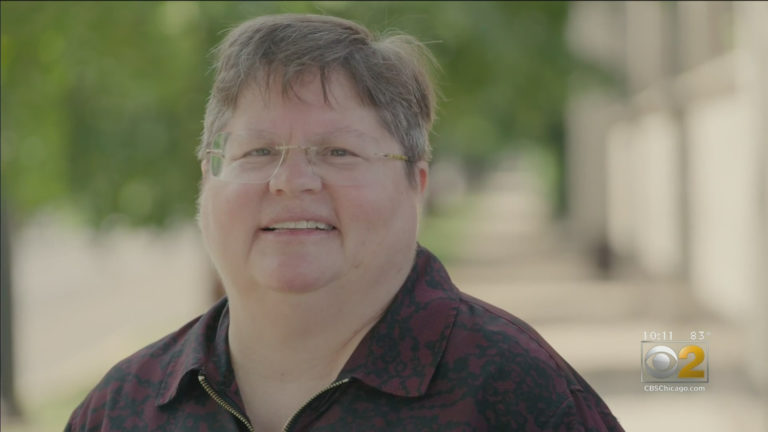
Chicago Pride History Makers: Tracy Baim, Founder Of The Windy City Times – CBS Chicago

CHICAGO (CBS) — It was 40 years ago this month that the first man was officially diagnosed with something that would one day be called HIV/AIDS. Tracy Baim did more than tell the fight-for-rights story in Chicago.

“To me, pride is community,” she said.

READ MORE: Chicago Weather: Chance Of Storms Saturday

Despite her stature, she’s a giant.

“Our society will be hurt if we lose the voices of the marginalized that are mostly represented in community media,” she said.

A community media evangelist, she saved the Chicago Reader, but also co-founded the Windy City Times.

Baim’s Windy City Times was cover-to-cover ‘need to know’ for the queer community.

“Back then it was gay press or no press,” she said. “This is when mainstream media was still badly covering us, when they covered us at all, as pedophiles. That moment in Chicago we were working on two parallel issues. One was HIV/AIDS and then also the Gay Rights Ordinance.”

The year of the paper’s launch was 1985.

Ald. Cliff Kelly introduced what was call the Gay Bill of Rights. Mayor Harold Washington first put it to a vote. Mayor Eugene Sawyer signed it into law.

The three Black men were pivotal players in a decade-long fight to give queer Chicago protection in jobs, housing and more.

“And within 25 years, we have an openly gay mayor, right?” said Baim.

The Times, in return, bolstered support for such allies.

“Our role was to inform, educate and document,” she said.

READ MORE: 1 Killed, 9 Others Injured In Mass Shooting On South Side

After the ordinance, the Times became a constant column in what became a war — AIDS.

“Most people thought they weren’t going to get out of this alive,” Baim said.

Some gay men told CBS 2’s Brad Edwards that in the 80s the Windy City Times was the place to get information about where to get treatment, and the Windy City Times saved lives.

“All these publications, in a pre-Internet era, saved lives,” Baim said.

And with her Pentax Film camera, she became an archivist of faces not to be forgotten, including Robert Ford, a popular publisher; Dr. Ron Sable, who came within votes of becoming the city’s first openly gay public official; playwright Scott McPherson. Soon after Baim clicked their photos, they were all gone due to AIDS.

Baim was bold enough to use her real name in her byline.

“I knew that my career was going to be limited no matter what,” she said.

A laborious couple of decades later, with gay marriage and an openly gay mayor, in September 2020, on its 35th anniversary, the Windy City Times did its last print edition.

A laborious couple decades later — with gay marriage, an openly gay mayor — in September 2020, on it’s 35th anniversary, the Windy City Times did it’s last print edition.

Defining pride is not easy for Baim, who used the question, like her paper, to teach, to outreach.

“Pride isn’t about the outside world,” she said. “It’s about the inside. The homophobia we face in our families does the most damage to our lives. When some pastor calls me out as being a dyke, it doesn’t hurt me, but if I had grown up in a family that doesn’t accept me, I would be a different person.

Chicago is lucky her story started right.

MORE NEWS: Chicago Weather: Mostly Hot And Sunny; Scattered Storms Bring Rain, Cooler Temps For Some

The Windy City Times continues online and is an occasionally printed insert in the Chicago Reader.

Queen Elizabeth honors key women in UK’s rapid vaccine drive | News, Sports, Jobs – Fort Dodge Messenger

Sarah Gilbert, professor of vaccinology at Oxford’s Jenner Institute and Nuffield Department of Clinical Medicine, poses for a photo in Oxford, England, Friday June 11, 2021. Queen Elizabeth II has used her birthday honors list to celebrate those at the forefront of the U.K.’s rapid rollout of coronavirus vaccines over the past few months, which has been credited with turning around the country’s pandemic response. Two of the most high-profile women in the vaccination drive, Professor Sarah Gilbert of the University of Oxford, and venture capitalist Kate Bingham, the former head of the U.K. Vaccines Taskforce, have been recognized with damehoods in the list that was published late Friday. (Steve Parsons/PA via AP)

LONDON (AP) — Queen Elizabeth II has used her birthday honors list to celebrate those at the forefront of the U.K.’s rapid rollout of COVID-19 vaccines over the past few months, which has been credited with turning around the country’s pandemic response.

Two of the most high-profile women in the vaccination drive, Professor Sarah Gilbert of the University of Oxford, and venture capitalist Kate Bingham, the former head of the U.K. Vaccines Taskforce, have been recognized with damehoods in the list published late Friday.

Gilbert was instrumental in the development of the vaccine being manufactured by pharmaceutical company AstraZeneca, while Bingham has been widely lauded for the country’s successful vaccine procurement program.

Though the U.K. has seen Europe’s highest virus-related death toll, with nearly 128,000 people having lost their lives, the vaccination program has been deemed as one of the world’s speediest and most coherent rollouts.

In December, a 90-year-old British grandmother became the first person in the world to be given the Pfizer vaccine outside of a trial. Since then, around 61% of the U.K. population has received at least one dose of vaccine, while about 43% has had two. The rollout, which has primarily been based on age, was earlier this week extended to 25- to 29-year-olds.

Also honored are a multitude of specialists from across the scientific community for their efforts in developing vaccines, running clinical trials, delivering testing and tracking coronavirus infections. The selfless work of people to help others during the pandemic, from running free taxis for key workers to making bottles of hand sanitizer, was also recognized by the 95-year-old monarch.

Of the 1,129 people receiving honors, 62% are being recognized for community work, with nearly a quarter recommended for their activities during the pandemic.

One of those was 25-year-old Rhys Mallows, who was awarded a British Empire Medal for helping to repurpose Mallows Bottling, a Welsh firm, to produce more than one million bottles of hand sanitizer following a deal with a Scottish distiller. He estimates that around 81 million hands have been sanitized.

“We’re not scientists, but we really felt that if we can give people little bullets to protect themselves, then it’d make a big difference,” he said.

Siblings John Brownhill and Amanda Guest were also awarded the British Empire Medal for setting up Food4Heroes, which delivered more than 200,000 meals to the National Health Service.

“You see in a time of crisis the strengths of humanity I think”, Brownhill said.

The honors list is also a record-breaking one in terms of diversity, with 15% of recipients from an ethnic minority background. Meanwhile, 9% of those honored had a disability and 5% identified as LGBT. More women, 50.2%, than men feature on the list, for the first time since 2015.

The winners are chosen by civil servants’ committees based on nominations from the government and the public. The awards are usually given out by the queen or a senior royal acting in her place during investitures at Buckingham Palace, but the pandemic has changed all that, not least because the queen has been living at Windsor Castle.

The honors list also celebrates the achievements of people in the limelight.

In the world of sport, Manchester City footballer Raheem Sterling was awarded an MBE, beoming a member of the Most Excellent Order of the British Empire for his efforts to promote racial equality in sport.

His award coincides with the start of the European Championship, in which Sterling is set to feature for England. In matches ahead of the tournament, England players have been booed by fans for taking the knee as a gesture against intolerance

His England teammate, Liverpool captain Jordan Henderson, was also awarded an MBE after he raised 4 million pounds ($5.7 million) for the NHS from fellow Premier League footballers.

England’s former coach, Roy Hodgson, and ex-tennis star and broadcaster Sue Barker were both awarded a CBE, which makes them Commanders of the Order of the British Empire

In the world of entertainment, actor Jonathan Pryce, who will play the queen’s late husband Prince Philip in the final seasons of Netflix’s royal drama The Crown, was knighted. And veteran performer Engelbert Humperdinck was also awarded an MBE for services to music.

“That the U.K. continues to honor those that work in the arts acknowledges the great contribution artists make to the way we live our lives,” Pryce said.

Lulu, the veteran singer, was also awarded a CBE alongside keyboardist and songwriter Rick Wakeman, whose career has seen him collaborate with a varied bunch — from David Bowie to Black Sabbath.

The youngest recipient was 21-year-old Amika George, founder of the FreePeriods campaign, who was made an MBE for services to education after campaigning against period poverty.

Among the oldest recipients was 95-year-old Sylvia McKeegan, who was honored with a BEM for her decades of support for the elderly, new mothers, and children in Londonderry, Northern Ireland.