Home Blog Page 61

Landmark LGBT Ruling Has Expansive Reach at Work and Beyond – Bloomberg Law

The legal impact of the U.S. Supreme Court’s year-old expansion of LGBT worker rights has stretched into a wide range of employment discrimination areas and driven attempts to push legal boundaries in education and health care.

More than 300 cases have cited to the high court’s decision in Bostock v. Clayton County, Ga., in the past year, according to Bloomberg Law’s BCITE analysis tool. These include litigation outside of the LGBT realm, with one of the more prominent issues focusing on how employees prove race, age, and other discrimination.

An ongoing lawsuit against Whole Foods Market Inc., for example, has raised Bostock in the context of whether workers who wore Black Lives Matter face masks and attire were unlawfully disciplined because of race.

The ruling under Title VII of the 1964 Civil Rights Act also has been used to bolster arguments in favor of “intersectional” bias claims that involve two or more statuses protected by federal law, or brand new claims such as caste discrimination or immigration-status bias.

“The next question is, what is the effect on other areas of the law?” asked Todd Anten, a partner at Quinn Emanuel Urquhart & Sullivan LLP, who has represented companies that support LGBT workers. “How has Bostock had its tendrils in other places? There have been many.”

Title VII’s sex discrimination protections also parallel several other statutes, including in education and health care. The Biden administration has backed interpretations that would expand Bostock to these spheres. The ruling also could influence litigation against a wave of anti-transgender legislation in conservative states, attorneys and academics say.

“The Supreme Court decision put an end to litigation around who was covered under Title VII, but the areas that are open are about whether the definition of sex will carry over to other areas,” said Minna Kotkin, a law professor and director of Brooklyn Law School’s Employment Law Clinic.
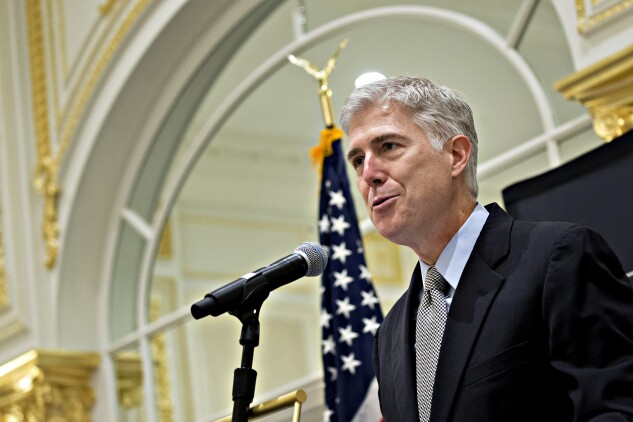
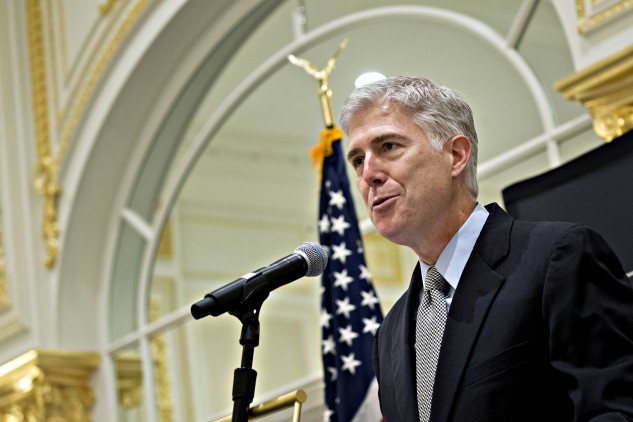
U.S. Supreme Court Justice Neil Gorsuch

Andrew Harrer/Bloomberg via Getty Images

Proving Discrimination

Justice Neil Gorsuch’s majority opinion in Bostock explored discrimination “because of sex,” an analysis that attorneys say can influence how workers prove bias based on race, color, national origin, religion, age, and other characteristics.

Gorsuch acknowledged that Congress allowed workers to meet a less stringent standard in Title VII discrimination cases by showing that a protected trait was one of several motivating factors leading to a firing, discipline, or other adverse employment action.

But he also discussed a stricter standard known as “but for” causation, which applies in Title VII retaliation cases, as well as bias claims under the Age Discrimination in Employment Act and other laws. This means workers must establish they wouldn’t have been fired without their employer’s bias.

“One of the under-appreciated features of the opinion is what the ‘but for’ causation standard means,” said Sandra Sperino, a University of Cincinnati law professor who’s written extensively on discrimination law. “I think courts will continue to look at the case for clarification of other statutes.”

Some lower courts have interpreted “but for” to mean discrimination must be the sole cause of an adverse act. Gorsuch noted that there can be multiple causes under but-for causation, Sperino said, adding that a year is too early to see the full effect reflected in opinions.

Two appeals courts, however, declined to extend Bostock’s “but-for causation” analysis outside the context of Title VII. The U.S. Court of Appeals for the Sixth Circuit earlier this year ruled that an older bank teller needed to prove that her age was the sole cause of her termination.

In a Voting Rights Act case in the Second Circuit, the court rejected the causation standard, saying that Congress’ intent was clear that it shouldn’t require a showing of racial animus to prove that a policy disenfranchised minority voters.

“So far we have seen very few decisions, not as many as we’d like, to reassess when you prove your case ‘but for’ your sex,” said Greg Nevins, senior counsel with Lambda Legal, an LGBT civil rights organization. “That has the potential to simplify employment law and get rid of a bunch of hurdles and tests for workers.”

Gorsuch also discussed intersectional or “sex-plus” claims in the court’s opinion without expressly using those terms. Instead, he raised hypothetical situations, including an employment policy calling for the firing of female workers who are fans of the Yankees.

The Tenth Circuit used this framing in ruling that older men and women can sue their employers based on a combination of sex and age. In a recent paper from the American Bar Association on the impact of Bostock, academics and attorneys predicted that this type of case could be useful for discrimination cases brought by caregivers.

State Law Challenges

In the wake of Bostock, Nevins of Lambda Legal said several federal appeals courts have ruled in favor of transgender plaintiffs who were raising claims of sex discrimination in health care, schools, and sports—all outside of the employment realm.

These have come as several conservative state legislatures passed laws prohibiting transgender students from competing on sports teams that align with their gender identity, targeting bathroom policies at schools, and limiting medical benefits.

“There are important ramifications for transgender and gay individuals beyond the Title VII context,” said Cathryn Oakley, the Human Rights Campaign’s state legislative director and senior counsel.

HRC and the American Civil Liberties Union have threatened to file or already have filed lawsuits against what they view as anti-transgender legislation.

Bostock could play a role in this litigation to support arguments that LGBT worker protections can extend to students. It’ll depend on the specific legal challenge, Nevins said.

Even if the ruling isn’t cited, it may still be influential, said Brooklyn Law School’s Kotkin. Bostock has parallels to cases outside of the workplace context involving transgender students or individuals, she said.

“It’s the most obvious argument moving forward in areas where transgender students are excluded,” she said.

How Apex Legends is doing diversity right – Dexerto

As the world celebrates Pride Month in 2021, there aren’t many developers out there in the gaming industry that actively work to promote and include the LGBTQI+ community. However, Respawn Entertainment have become the gold standard with Apex Legends.

Identity has been something I’ve always struggled with. My Catholic all-girls school taught me to find a straight white male, get married, and have kids. But, I knew for years that wasn’t to be my destiny.

Back in the good (or not so good) ol’ days, LGBTQI+ representation in real life was pretty scarce, so there wasn’t much to educate yourself with. Instead, I turned to video games; specifically Dragon Age Origins.

Advertisement

With the system letting you romance whoever you liked pending their sexuality, I found myself ignoring the likes of the handsome Alistair or charming Zevran, and instead falling head over heels for the mysterious Morrigan and sharpshooting Liliana. Only many years later did it dawn on me just how much the game shaped my understandings of queer culture, as well as my place within it.

While LGBTQI+ characters appear in thousands of titles these days, there’s one specific game that stands out to me as getting it right, and that’s Apex Legends. So, let’s take a deep dive into why Apex is hitting the diversity nail on the head.

Advertisement

Apex Legends Valkyrie
Respawn Entertainment

The newest Legend to join the Apex roster, Valkyrie, is an openly gay woman.

Not a stereotype in sight

One thing that most LGBTQI+ people condemn is societal assumptions of how they should act. Gay men should be flamboyant and overly feminine, whereas gay women should be much more masculine. Bisexuals get “the best of both worlds,” while non-binary and trans people are entirely left out of the debate.

What Apex Legends does so well is normalizing what it means to be gay. If you didn’t know Gibraltar was a gay man, or Loba was a bisexual woman, you probably wouldn’t know, the same way that if you look at someone in the street, you have no clue what their sexuality is.

Advertisement

Respawn have artfully crafted Legends’ voice lines and characterizations to let you know their identity, but it doesn’t feel forced. All of these Legends are real people (except Pathfinder) despite their insane abilities. They’re people we can empathize and resonate with.

That’s what makes Apex stand out above the rest.

Apex Legends Bloodhound
Respawn Entertainment

Technological tracker Bloodhound is one of the game’s most popular characters.

Bloodhound isn’t a dude – shock horror

If you get a game without a Bloodhound, then something has gone very, very wrong. The androgynous Technological Tracker sits at the top of the Apex Legends food chain, but their presence is somewhat revolutionary.

Bloodhound is a non-binary character and therefore doesn’t identify as male or female. While most assume they are male, their voice actor, Allegra Clarke, is indeed a woman. Various effects are used to scramble her voice, but it’s proof that Apex isn’t too bothered about gender boundaries.

Advertisement

Bloodhound’s prowess within the game means that they’ve become iconic, and for a lot of non-binary people the character is a symbol that they’re finally getting included in wider media and popular culture.

Bloodhound is mowing down gender binaries left, right and center, just like they’re mowing down your entire team in-game.

Loba Apex Legends tactical
Respawn Entertainment

Our favorite High Society queen is a bisexual woman.

Every color of the rainbow

Another thing that Apex does well is representing every color on that iconic rainbow flag. We’ve got gay, pansexual, bisexual, and non-binary characters all traversing the Outlands. That’s how it should be.

It’s easy for a developer to throw in a gay character and call it a day, but Respawn have represented almost the entire LGBTQI+ spectrum. There’s someone for everyone to look up to, and that’s where Apex triumphs.

Advertisement

While the Apex Games may be a far cry from our current reality, the game itself has its feet firmly planted on the ground.

Respawn Entertainment

Polynesian defender, Gibraltar, represents a minority within a minority.

But who cares about sexuality in video games?

We’ve all seen those comments asking: “Who cares if they’re gay, it’s a video game. Stop bringing real-life issues into games smh.”

Well, we care.

To borrow the words of Ben Prendergast, the man behind our favorite pansexual Aussie, Fuse: “It’s a really interesting time in popular culture, and Apex Legends and gaming, in general, is beautifully progressive on that front.

“Having representation is crucial to normalizing our differences and breaking the toxic cycle of hate. A lot of people don’t realize how strongly our opinions are informed by popular culture, when a great film, TV, or game paints a fairer picture it seeps into our daily lives.”

Related News


Loba’s voice actor, Fryda Wolff, echoes Ben’s sentiment: “Representation matters! Rather than including a singular token character to embody tired stereotypes and calling it a day, Respawn has made extensive efforts to create a wide range of LGBTQ characters across the gender and sexuality spectrums.

“While it’s special that Apex Legends does it, including LGBTQ characters should be average and expected of all fictional worlds. Providing a myriad of gender and sexuality inclusive characters is an early step towards normalizing diversity in fiction.”

Apex Legends Fuse
Respawn Entertainment

Ben Prendergast: “Fuse is such a salt-of-the-earth character, accepting of everyone as they are, and ready to play with anyone.”

When I was a kid, I needed a Fuse to look up to, a Loba to enchant me, a Valkyrie to prove that the sky wasn’t the limit, a Gibraltar to teach me freedom is a feeling, a Bloodhound to blow gender stereotypes out of the water.

Playing Apex as an adult has forced me to grapple with my own sexuality, and I’ve come out of the other side stronger. I’m jealous of the new gamer generation because they’re growing up with such a wealth of knowledge and inspiration that I didn’t have.

When young people look at Apex, they see that it’s okay to be the person that you’re meant to be, whoever that is. They see that it’s okay to be proud of yourself, believe in yourself, be yourself.

And that is how Apex is doing diversity right.

Global Fertility Services Market (2020 to 2027) – by Procedure, Service and End-user – Stockhouse

0

Dublin, June 15, 2021 (GLOBE NEWSWIRE) — The “Fertility Services Market by Procedure, Service and End User: Global Opportunity Analysis and Industry Forecast, 2020-2027” report has been added to ResearchAndMarkets.com’s offering.

The global fertility services market generated $20,388.61 million in 2019 and is projected to reach $25,709.64 million by 2027, growing at a CAGR of 15.9% from 2020 to 2027. Fertility services are treatments that assist in treating infertility in patients. In vitro fertilization (IVF), surrogacy, artificial insemination, and others are different forms of infertility services, which aid couples with infertility problems, single mothers, and the lesbian, gay, bisexual and trans (LGBT) community to procreate.

The global fertility services market is expected to witness a substantial growth in the future, owing to high incidence of infertility cases, emerging trend of delayed pregnancies among women, rise in technological advancements in fertility procedures, and increased rate of gamete donations. Furthermore, rise in health awareness on fertility issues, availability of fertility treatments, increase in disposable income, and favorable reimbursement policies further augment the market growth.

Recent innovations in IVF technology, such as embryoscope and capsule IVF, are projected to boost the demand for fertility devices in the future. However, strenuous maintenance issues, high cost of devices; multiple pregnancies, i.e., the delivery of twins, triplets, and others, associated with fertility treatments; and ethical considerations are projected to hinder the market growth. Moreover, rise in new fertility clinics and increase in same-sex marriages are projected to offer lucrative growth opportunities in future. In addition, rise in fertility tourism is expected to provide ample growth opportunities especially in the developing economies.

The global fertility services market is classified into procedure, service, end user, and region. By procedure, the market is divided into IVF with intracytoplasmic sperm injection (ICSI), surrogacy, IVF without ICSI (intracytoplasmic sperm injection), intrauterine insemination (IUI), surrogacy, and others. By service, it is categorized into fresh non-donor, frozen non-donor, egg & embryo banking, fresh donor, and frozen donor. By end user, the market is segmented into fertility clinics, hospitals, surgical centers, and clinical research institutes. By region, the market is analyzed across North America, Europe, Asia-Pacific, and LAMEA.

Key Benefits

  • The study provides an in-depth analysis of the fertility services market, and the current trends and future estimations to elucidate the imminent investment pockets
  • It presents a quantitative analysis of the market from 2019 to 2027 to enable stakeholders to capitalize on the prevailing market opportunities
  • Extensive analysis of the market based on procedures, services, and end users assists to understand the trends in the industry
  • Key players and their strategies are thoroughly analyzed to understand the competitive outlook of the market

Key Topics Covered:

CHAPTER 1: INTRODUCTION

CHAPTER 2: EXECUTIVE SUMMARY

CHAPTER 3: MARKET OVERVIEW
3.1. Market definition and scope
3.2. Key findings
3.2.1. Top investment pockets
3.2.2. Top winning strategies
3.3. Porter’s five force analysis
3.4. Government regulations
3.4.1. U.S.
3.4.2. Europe
3.5. Market dynamics
3.5.1. Drivers
3.5.1.1. Continuous decline in fertility rates
3.5.1.2. Delayed pregnancies in women
3.5.1.3. Technological advancements with respect to fertility treatment
3.5.2. Restraints
3.5.2.1. High treatment costs of ARTs in developed countries
3.5.2.2. Inadequate reimbursement policies
3.5.3. Opportunity
3.5.3.1. Rise in fertility tourism
3.6. COVID-19 impact on the fertility services market
3.7. Number of fertility service centers

CHAPTER 4: FERTILITY SERVICES MARKET, BY PROCEDURE
4.1. Overview
4.1.1. Market size and forecast
4.2. IVF with ICSI
4.2.1. Key market trends, growth factors, and opportunities
4.2.2. Market size and forecast
4.3. IUI
4.3.1. Key market trends, growth factors, and opportunities
4.3.2. Market size and forecast
4.4. IVF without ICSI
4.4.1. Key market trends growth factors, and opportunities
4.4.2. Market size and forecast
4.5. Surrogacy
4.5.1. Key market trends, growth factors, and opportunities
4.5.2. Market size and forecast
4.6. Others
4.6.1. Key market trends, growth factors, and opportunities
4.6.2. Market size and forecast

CHAPTER 5: FERTILITY SERVICES MARKET, BY SERVICE
5.1. Overview
5.1.1. Market size and forecast
5.2. Fresh non-donor
5.2.1. Market size and forecast
5.3. Frozen non-donor
5.3.1. Market size and forecast
5.4. Egg & embryo banking
5.4.1. Market size and forecast
5.5. Fresh donor
5.5.1. Market size and forecast
5.6. Frozen donor
5.6.1. Market size and forecast

CHAPTER 6: FERTILITY SERVICES MARKET, BY END USER
6.1. Overview
6.1.1. Market size and forecast
6.2. Fertility clinics
6.2.1. Market size and forecast
6.3. Hospitals
6.3.1. Market size and forecast
6.4. Surgical centers
6.4.1. Market size and forecast
6.5. Clinical research institutes
6.5.1. Market size and forecast

CHAPTER 7: FERTILITY SERVICES MARKET, BY REGION

CHAPTER 8: COMPANY PROFILES
8.1. APOLLO HOSPITALS ENTERPRISE Ltd.
8.1.1. Company overview
8.1.2. Company snapshot
8.1.3. Operating business segments
8.1.4. Product portfolio
8.1.5. Business performance
8.1.6. Key strategic moves and developments
8.2. CARE FERTILITY GROUP Ltd.
8.2.1. Company overview
8.2.2. Company snapshot
8.2.3. Operating business segments
8.2.4. Product portfolio
8.2.5. Key strategic moves and developments
8.3. CAROLINAS FERTILITY INSTITUTE
8.3.1. Company overview
8.3.2. Company snapshot
8.3.3. Operating business segments
8.3.4. Product portfolio
8.4. CITY FERTILITY
8.4.1. Company overview
8.4.2. Company snapshot
8.4.3. Operating business segments
8.4.4. Product portfolio
8.4.5. Key strategic moves and developments
8.5. FERTILITY ASSOCIATES LIMITED
8.5.1. Company overview
8.5.2. Company snapshot
8.5.3. Operating business segments
8.5.4. Product portfolio
8.6. GENEA LIMITED
8.6.1. Company overview
8.6.2. Company snapshot
8.6.3. Operating business segments
8.6.4. Product portfolio
8.6.5. Key strategic moves and developments
8.7. MEDICOVER GROUP (MEDICOVER FERTILITY and FIRST EGG BANK)
8.7.1. Company overview
8.7.2. Company snapshot
8.7.3. Operating business segments
8.7.4. roduct portfolio
8.7.5. Business performance
8.8. MONASH IVF GROUP LIMITED
8.8.1. Company overview
8.8.2. Company snapshot
8.8.3. Operating business segments
8.8.4. Product portfolio
8.8.5. Business performance
8.8.6. Key strategic moves and developments
8.9. PROGYNY INC.
8.9.1. Company overview
8.9.2. Company snapshot
8.9.3. Operating business segments
8.9.4. Product portfolio
8.9.5. Business performance
8.9.6. Key strategic moves and developments
8.10. VIRTUS HEALTH
8.10.1. Company overview
8.10.2. Company snapshot
8.10.3. Operating business segments
8.10.4. Product portfolio
8.10.5. Business performance
8.10.6. Key strategic moves and developments

For more information about this report visit https://www.researchandmarkets.com/r/4s93jm

 CONTACT: ResearchAndMarkets.com Laura Wood, Senior Press Manager press@researchandmarkets.com For E.S.T Office Hours Call 1-917-300-0470 For U.S./CAN Toll Free Call 1-800-526-8630 For GMT Office Hours Call +353-1-416-8900 

Primary Logo

Why Do Parents Think Prepubescent Sexual Grooming Is Pro-LGBT? – The Federalist

Desmond Napoles emerges from behind the curtain onto the red carpet catwalk stretched between crowds of onlooking adults who hoot and holler as the entertainer swirls pink-tinged hair and hips seductively. Desmond is an 11-year-old boy. His parents smile approvingly from the front row of the “Good Morning America” set.

“I’m very proud of him. I’m proud that he’s found his path so early,” says the father of the boy, who is known by his drag queen stage name Desmond is Amazing, in an interview for the 2018 segment. “My greatest joy in this is just seeing Desmond happy,” his mother adds.

The juvenile star plops down on a chair in front of the studio audience, and the hosts surprise him with secret drag queen guests, who shower the child with gifts and praise for being “inspirational,” “brave,” and “courageous.”

Thanks to the help of his parents and our LGBT-obsessed culture, Desmond, who is now a young teen, has amassed quite the following and market, with more than 160,000 followers on Instagram, Pride merchandise, media hits, and magazine photoshoots, and now even a book and an original song debuted in April called “We Are Amazing.”

“If you can just let go of that, and just love your child unconditionally as you should, no matter what … there really isn’t a problem,” Desmond’s mother declared in a different television interview that year.

Contra the drag child’s mother, there is a problem, and it’s a big one. There’s nothing inspirational, brave, or courageous about a child being lauded for sexual divergence. Children are by nature shameless and imaginative in ways that make dressing up in vibrant clothing and face paint adventurous and innocent. These displays become brave and inspirational only after their parents or other adults opt to capitalize on them.

Led by children like Desmond and Jazz Jennings, whose parents are at best complicit and at worst goading, or by celebrity parents such as Dwayne Wade and Gabrielle Union who have publicly endorsed the gender confusion of their children, the sexualization of children has been accelerating for the better part of a decade. A brick of misguided approval and ignorance on the cultural gas pedal threatens to plunge the whole perverted enterprise right off a cliff.

We deserve it — because at the core of all the rainbow flag-waving and “love is love is love” sloganeering is the sick reality that any Pride activism involving children is the result of adults sexualizing them, fetishizing them, and exploiting them for political or social gain. When a parent posits that their child’s happiness is more important than their security and a drag queen heralds a kid’s gender whims as brave and inspiring, they project their perverted sexual ethics on a generation of innocents who become casualties of the culture war. Children don’t think in terms of sexuality and gender expression, meaning divergence from the biological binary isn’t a “statement” or an “identity” — until an adult decides to market it as such.

The body count is increasing, which is why a 2018 Desmond segment is so relevant today. It’s instructive about how adults have propelled this issue. If it isn’t Blues Clues forcing gender dogma down the throats of pre-schoolers in the form of an animated drag queen co-opting a familiar tune for a messed-up Pride parade song, it’s a real-life drag queen rapping about the colors of the rainbow flag for the kids on Nickelodeon.

Last month, a TikToker proudly posted a video of adults in New York City encouraging a little girl to twerk and cheering as the tiny child gyrated for their amusement. This is to say nothing of the adults who celebrate the genital mutilation and sterilization of kids.

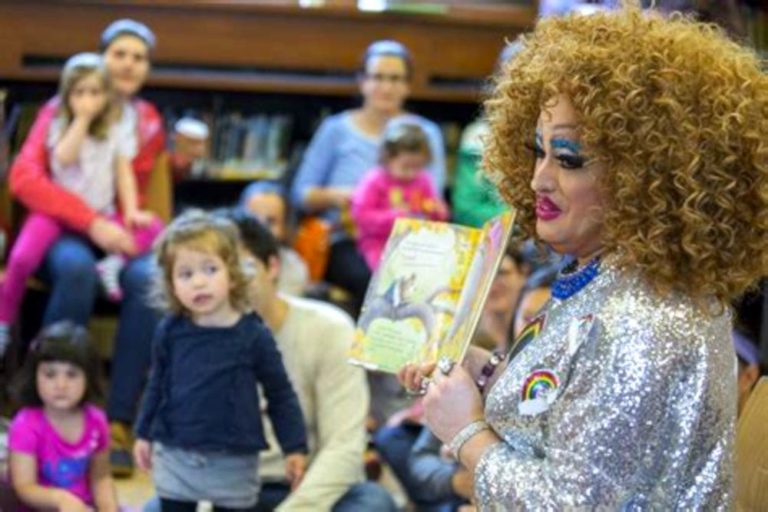
Same-sex couples began adopting and commissioning the artificial production of kids without regard for children’s parenting needs, drag queens began reading to tots in public places, Facebook fast-tracked the so-called gender lexicon, schools started referring to students by their preferred pronouns regardless of parents’ wishes, and worst of all, doctors who took the Hippocratic Oath began castrating minors. Children are paying the price for all of it.

In one New York City private school, a video shown to first-graders talked explicitly about masturbation. In the cartoon, created for five- and six-year-olds, cartoon characters talk about touching themselves “because it feels good.”

“Hey, how come my penis gets big sometimes and points up in the air?” a young boy cartoon character says in the video.“Sometimes I touch my penis because it feels good.”

“Sometimes when I’m in my bath or when mom puts me to bed, I like to touch my vulva too,” a young girl character replies.

This type of sexualized content for children, branded deceptively under “education,” is truly masturbatory for adults. In inculcating sexual curiosity in prepubescent minds, they’re really stroking their own interests and deriving pleasure from the resulting ideological stimulation of children — often against the will of their parents — which they believe serves their political and social ends.

If they can sexualize kids before their parents have a chance to instill a mature and moral sexual ethic, progressive leaders can mold them into more promiscuous adults who give a thumbs-up to scientifically untethered gender theory and approve of hedonistic policy.

Conservatives love to talk about the culture war, and for very good reason, but we shouldn’t allow the sexual exploitation of innocent children to become an imprecise political talking point under the banner of “LGBT issues.” Two consenting adults in the bedroom is an “LGBT issue.” Parents pimping out their children for entertainment and political points is a disgusting league all its own.

Aside from merely keeping their offspring alive, parents have one primary job: to instill truth in their children. Up is up and down is down, 1+1=2, boys and girls are different — and eventually, boys are girls are marvelous sexual beings who reproduce for human flourishing.

Too many modern parents have left this job of instilling truth to schools and peers, and it’s creating a generation of sexualized children raised by amoral educators who scoff at traditional values and morality and affirm minors who agree to parrot the left’s preferred political ideology. It isn’t enough for parents not to sexualize their childrenIn not actively fighting against the exploitation of our youth, we become complicit in it and therefore grant approval and legitimacy.

In Romans 1, Paul warns Christians against a litany of sexual sins, including same-sex gratification. He says, “And since they did not see fit to acknowledge God, God gave them up to a debased mind to do what ought not to be done.” In the list of transgressions, he includes “inventors of evil” and goes on to say: “Though they know God’s righteous decree that those who practice such things deserve to die, they not only do them but give approval to those who practice them.”

Don’t give approval to those who invent sexually debased content that seeks to consume our children by becoming numb to it. Actively fight against it, lest we be destroyed — as a country that pimps out its own children for entertainment and political points deserves to be.

The Elemental Appeal of Goldschläger, A ’90s Icon | Wine Enthusiast – Wine Enthusiast Magazine Online

0

When industry veteran Bo Wayne, 54, got his first bartending gig in 1993 at a gay bar in New York City’s East Village, it was “the city of Goldschläger,” he says, referring to the Swiss cinnamon liqueur’s prominence.

“There was a time where we were constantly doing shots of Goldschläger,” he adds, with perhaps a trace of nostalgia.

By the time Wayne left New York City for a decade-long stint in Los Angeles in 1997, Goldschläger was still going strong. And then, suddenly, it vanished.

At least that’s how it seemed to Wayne, who muses about its seeming disappearance in the early 2000s.

“I just thought that it was no longer being made,” he says.

Except, it doesn’t appear there was ever a break in production. (Diageo, the company that owned Goldschläger during this period, didn’t respond to a request for comment.) It seems the public’s thirst for Goldschläger simply waned, as other spirits and cocktail trends gained traction.

Nonetheless, Goldschläger’s reputation looms large in the minds of those who came of age in its heyday.

Going for the gold

Los Angeles-based travel, food and drink writer Katherine Alex Beaven, 40, doesn’t recall the very first time she was introduced to Goldschläger, but she remembers being impressed by it in high school.

“We all thought it was extremely fancy because of the gold flecks,” says Beaven.

Brooke Herron, 41, owner of Local Food & Drink, a digital marketing company in Sonoma, also admits she was underage when she first discovered Goldschläger.

“I honestly think it was simply the fact that a bottle on the shelf at the liquor shop had gold flakes in it,” says Herron of the spirit’s appeal. She and her friends would joke that they should “go for the gold.”

Goldschlager
A gold-flecked bottle of Goldschläger / Photo courtesy Goldschläger

Although spirits bottles are often eye-catching, Goldschläger commands attention. The liqueur is packaged in a clear glass bottle with a long neck and a bulbous body. In addition to the gold flakes that float inside the bottle, gold details dominate the packaging, from the gold bottle top to the official-looking round, gold medallion on its front.

In 2018, Sazerac, which owns more than 450 global spirits, added Goldschläger to its portfolio. Asked why the company acquired it, Julia Watson, Sazerac’s brand director says, “For the gold, of course.”

Goldschläger, a German word which “refers to the gold-leaf makers who beat bars of soft gold into wafer-thin sheets,” according to the description on Sazerac’s website, is described as containing “feather-light, palatable gold flakes.”

The liqueur was produced in Switzerland until the 1990s, when it was purchased by Diageo, a British multinational beverage company. Production moved to Italy briefly before it returned to Switzerland. Today, it’s produced in Montreal, says Watson.

Shot in the dark

Raven Adrian, 37, remembers being entranced by Goldschläger’s packaging.

“It was mesmerizing to shake the bottle and watch the pretty flakes,” she says. Plus, it was easy to drink, even though it burned enough to feel “hardcore.”

Seemingly everyone had it in their liquor collection, says Adrian, and it played a prominent role in a seven deadly sins-themed party she hosted for her friend’s 21st birthday some 16 years ago. It involved a game with something called the “penalty of wrath,” where a shot of Goldschläger, Absolut Peppar and a drop of tabasco were offered as punishment.

Adrian hasn’t had Goldschläger since that epic party, she says, but “would love to revisit it as an after-dinner sipper now.”

“We were hardcore. Why waste time chilling it?” —Bo Wayne, bartender

Mike Driscoll, a former social studies teacher, keeps Goldschläger stocked at his bar, Founding Fathers Pub in Buffalo. It hasn’t been a big seller for decades, Driscoll says, but he finds it tasty mixed with an Irish cream liqueur like Baileys.

When Goldschläger ruled the shot scene, Wayne used it to make something called an Oatmeal Cookie. Versions can be found online, but a popular iteration includes Bailey’s Irish Cream, butterscotch schnapps, and, of course, Goldschläger.

On occasion, Wayne also mixed the cinnamon liqueur with cranberry juice or Dr. Pepper.

Ancient goldschlager
The German word “goldschläger” refers to someone who beats gold into thin sheets / Photo by Alamy

Beaven and her friends mostly did shots. They really enjoyed the taste, she says. “Slightly sweet and cinnamon-y with a kick that would light a fire in the back of your throat.”

Herron also recalls the intense cinnamon flavor, but it’s not with any particular fondness. Following one particularly Goldschläger-soaked night, it took years before she could tolerate cinnamon-flavored gum or candy, she says.

These days, cinnamon chewing gum is bearable, but “I still will not touch any cinnamon-flavored alcohol to this day,” says Herron.

Wayne believes that chilling the spirit is a good way to decrease its harsh burn, but that wasn’t a priority for the hard-drinking East Village crew he was serving in the ‘90s.

“We were hardcore,” he says. “Why waste time chilling it?”

Where is it now?

Goldschläger can be found at retailers and restaurants around the country, says Watson. She’s unable to disclose actual sales figures, however.

This is news to Wayne, who says he can’t remember the last time he saw Goldschläger in a bar. After it “disappeared,” people started shooting Jägermeister, says Wayne. He doubts anyone still shoots Goldschläger.

In fact, he says that the shots scene, though not obsolete, isn’t what it once was, thanks to a thriving cocktail culture and more options.

Wayne says that people still shoot Jägermeister and other spirits, like Fireball. Neither is on the menu at Spanish Diner, the bar/restaurant on Manhattan’s Far West Side where he tends bar.

Still, Goldschläger is far from extinct. In fact, this March, Sazerac introduced a new iteration, Goldschläger 107. At 107 proof, a nod to the spirit’s original 100-plus proof formula, it seems distinctly hardcore.

‘Americans in Spain’ at Milwaukee Art Museum a travel-friendly show about romantic fascination with Old World – Milwaukee Journal Sentinel

0

American artists traveled to Spain in the 19th century to copy Old Masters, study Islamic architecture and drink in the sunlight. But they didn’t always relinquish their romantic tropes about the España of “Carmen,” matadors and dancers.

“Americans in Spain: Painting and Travel, 1820–1920,” a new exhibit at the Milwaukee Art Museum, captures this mixture of close observation and fantasy in 120-some works, more than half of them paintings. It includes well-known American artists John Singer Sargent, Mary Cassatt and Robert Henri.

The exhibit was jointly organized by the Milwaukee Art Museum and the Chrysler Museum of Art in Norfolk, Va.

Fittingly, for MAM’s first big exhibit following the brunt of the COVID-19 pandemic, “Americans in Spain” is very much a show about travel. 

American artists visiting Spain studied paintings by Old Masters at the Prado Museum in Madrid, such as Jusepe De Ribera’s “Saint John the Baptist in the Desert” (1641). Velazquez’s portrait “Queen Mariana of Austria” was a popular subject; Robert Henri’s 1900 copy is included here.

Brandon Ruud, MAM’s Abert Family curator of American art, also credits the writing of Washington Irving in drawing Americans to Spain, particularly his book “Tales of the Alhambra” (1832). While the author of “Rip Van Winkle” spent several years in Spain, Ruud described his tales set there as “fanciful.” Still, they stoked American imaginations about Spain’s Islamic past. A visitor can see that fascination in William Merritt Chase’s “The Moorish Warrior” (1876). (His studious face contemplating a weapon makes me think of Worf on “Star Trek: The Next Generation.”)

Other must-see works in the exhibit:

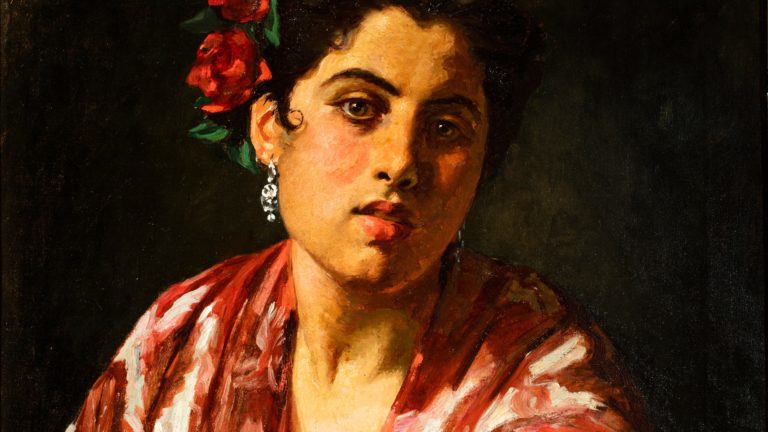
  • Mary Cassatt’s “Spanish Girl Leaning on a Window Sill” (ca. 1872), a newly discovered painting held by a private collector in Madrid. It’s one of several striking paintings in this show by Cassatt, who spent a formative spell in Seville.
  • Walter Gay’s “Cigarette Girls, Seville” (1895), based on a real tobacco factory and tourist attraction where young women rolled cigarettes, but seen through a romantic filter. 
  • José Jiménez Aranda’s “Figaro’s Shop” (1875), a Spanish painter’s gently humorous and beautifully lit scene of a game at checkers at the barber’s shop.
  • Ignacio Zuloaga y Zabaleta’s “My Uncle Daniel and His Family” (1910). Like Aranda, the Spanish painter Zuloaga was popular with American audiences. This stunning group portrait, like other works by Americans and Spaniards in this show, includes references to art of the painting. (Some museum staff jokingly refer to this painting as “the Addams Family,” for its combo of goth-friendly black garb and animated facial expressions.) 

Wall texts for this exhibit are in both English and Spanish. A free related app, “Americans in Spain,” available from the Apple and Google stores, discussed 36 works from the exhibit in English and Spanish, in both textual and audio forms. 

Contact Jim Higgins at jim.higgins@jrn.com. Follow him on Twitter at @jhiggy.

IF YOU GO

“Americans in Spain: Painting and Travel, 1820–1920” can be seen through Oct. 3 at the Milwaukee Art Museum, 700 N. Art Museum Drive. For hours and ticket info, go to mam.org/visit. Masks required. Tickets are for timed entry. 

How LGBTQ Travel Has Improved Over the Years – TravelPulse

0

Sometime in the early 1990s, my boyfriend Angel and I made one of our first road trips together, from New York City to Boston. En route, we stopped at a major hotel chain that we’d reserved by phone a few days earlier (yes, people actually called to make reservations back then). At the reception desk, the desk clerk reviewed the reservation on her monitor and frowned.

“There seems to be some mistake,” she said. “It looks like you accidentally reserved only one bed. But no problem, I’ll find you a room with two.”

“No, that’s OK,” I said. “We only need one bed.”

The clerk looked like I’d just given her a very difficult math problem to solve. “Are you sure?”

MORE LGBTQ

“Yes, I’m sure.”

It was a hassle, but we ended up with the room that we’d reserved. The next morning, we completed our trip in a rental car, for which we had paid an extra fee because we were two unrelated adults living together, since we didn’t have the legal right to marry.

Ah, the joys of traveling while gay in the 20th century.

As a travel writer, I dealt with some discomfort during the early years of my career as well. I began working as an editor and journalist in the mid-1990s at the company now known as Northstar Travel Media, the parent company of TravelPulse. It’s always been a great place to work; I was open about my sexual orientation and received nothing but support from coworkers. But I sometimes felt compelled to withhold personal information when dealing with some tourism and travel industry executives, and also when visiting certain destinations known for having decidedly anti-gay laws.

The publishing industry has provided a perfect platform to explore and document the travel industry’s progress with the LGBTQ market. While working full-time at TravelAge (now a sister publication to TravelPulse) in the 1990s, I wrote some of the magazine’s first reports about the growth of LGBTQ tourism. And while I still felt hesitant about discussing my orientation in some destinations, I was also happily surprised at the openness and acceptance in others. Even in the late 20th century, Brazilian tourism officials, for example, talked about LGBTQ people as a market as acceptable and desirable as any other.

Today, the biggest players in nearly every segment of travel and tourism make it a stated goal to treat every customer equally, regardless of orientation or gender identity. Angel and I got married in 2015, by the way, but even before then, many rental car companies had already begun offering spousal rates for couples living at the same address. U.S. airlines, meanwhile, tout their support of LGBTQ causes as well as the supportive work environments they provide for employees.

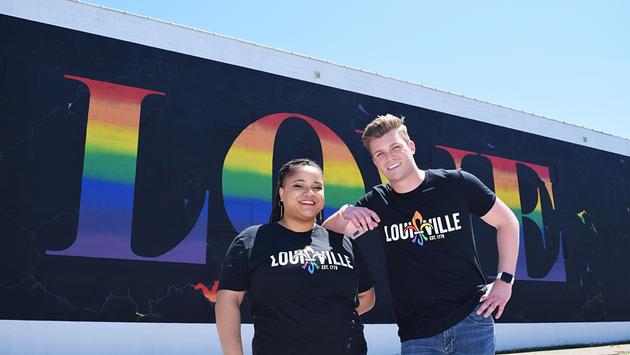
Many destinations have also come a long way. Back in the 20th century, few tourism officials would dare to publicly position their cities as “gay friendly.” Today, LGBTQ travelers are more represented than ever in marketing and ad campaigns — and not just in obvious places like San Francisco and New York City; you’ll also find robust LGBTQ travel sections on the websites of destinations like Louisville and the Quad Cities. The world has gotten wider when it comes to welcoming LGBTQ travelers.

Louisville's LGBTQ campaign
Louisville’s LGBTQ campaign. (photo via Louisville CVB)

Of course, the travel industry isn’t motivated solely by altruism as it seeks to curry favor with LGBTQ travelers. Money talks, and this community can be an especially loyal group of customers. According to the 24th annual LGBTQ Tourism & Hospitality Survey, released by Community Marketing & Insights in December 2019, the average LGBTQ traveler took four roundtrip flights and spent 11 nights in paid accommodations in the previous year.

The top U.S. destinations for LGBTQ travelers, based on the percentage of survey respondents who’d traveled within the previous 12 months, were New York City, Chicago, Las Vegas, Los Angeles and San Francisco. Canada and Mexico both scored impressively for international travel, while the top overseas destinations were Great Britain, France, Spain, Germany and Italy for men, and Great Britain, France, Italy and the Netherlands for women.

The fact that 70 percent of survey respondents considered all major hotel brands as “LGBTQ welcoming” creates an interesting challenge for hoteliers: how to stand out in a field where nearly everyone wants the business of LGBTQ travelers.

Notice I said nearly everyone. Confused hotel receptionists like the one we encountered in Massachusetts in the 1990s are few and far between, of course, thanks to extensive training programs offered by major hotel companies. This year, in fact, Marriott International was named, for the eighth time, as one of the nation’s top corporations for LGBTQ equality, with a perfect 100 percent score on the Human Rights Campaign’s 2021 Corporate Equality Index.

Still, LGBTQ travelers need to be careful when making travel plans. Just this year, a gay male couple claimed that an upscale Mexico beach resort refused to host their destination wedding, and the hotelier has since refused to comment. It’s no wonder that there’s still a market for exclusively LGBTQ hotels and tour operators — and for travel industry suppliers to publicly declare their interest in serving the LGBTQ market. No one wants to feel uncomfortable or unaccepted when they travel.

Huge crowd voices feelings in response to board member’s anti-LGBT comments – Meadville Tribune

HAYFIELD TOWNSHIP — Three weeks after a PENNCREST School Board member referred to an LGBT-themed library display as “totally evil,” approximately 175 people came out on Monday to the first board meeting held in the aftermath of the controversy.

Anyone who expected board member David Valesky to dial back his comments critical of about a half-dozen books displayed in anticipation of June being Pride Month, however, was disappointed — and they will likely remain disappointed.

During the meeting, Valesky spoke repeatedly to explain his opposition to an anticipated tax increase that the board will vote to approve on Wednesday, but he did not address the controversy that resulted when he wrote in reference to the book display, “Besides the point of being totally evil, this is not what we need to be teaching kids. They aren’t at school to be brainwashed into thinking homosexuality is okay. Its [sic] actually being promoted to the point where it’s even ‘cool.’”

In an interview following the meeting, Valesky told the Tribune, “I definitely do plan to follow up” on the controversy during the board’s voting meeting, which takes place Wednesday instead of the usual Thursday.

“I’m not taking anything back, but I guess I would like to clarify on it,” Valesky said. “I don’t regret anything I said.”

The controversy has provoked an online petition calling for Valesky and board Vice President Luigi DeFrancesco to be removed from office. Both men shared a Facebook post that drew attention to the LGBT-themed books, which were part of a larger display of approximately 70 books on various themes.

DeFrancesco shared the post without comment; Valesky stated, in part, “This is not what we need to be teaching kids. They aren’t at school to be brainwashed into thinking homosexuality is okay.”

By late Monday the petition at Change.org, which was open to people around the world, not just district residents, had more than 4,500 signatures.

The audience drawn to the meeting largely by the controversy was approximately 20 times larger than that of a typical PENNCREST board meeting. While those members of the public did not hear from Valesky on the topic, the board did hear directly from six members of the public and indirectly from many more.

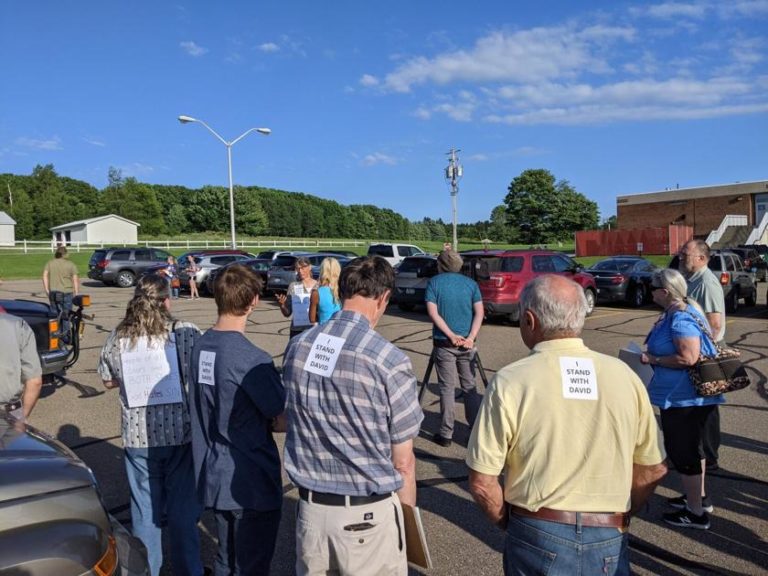
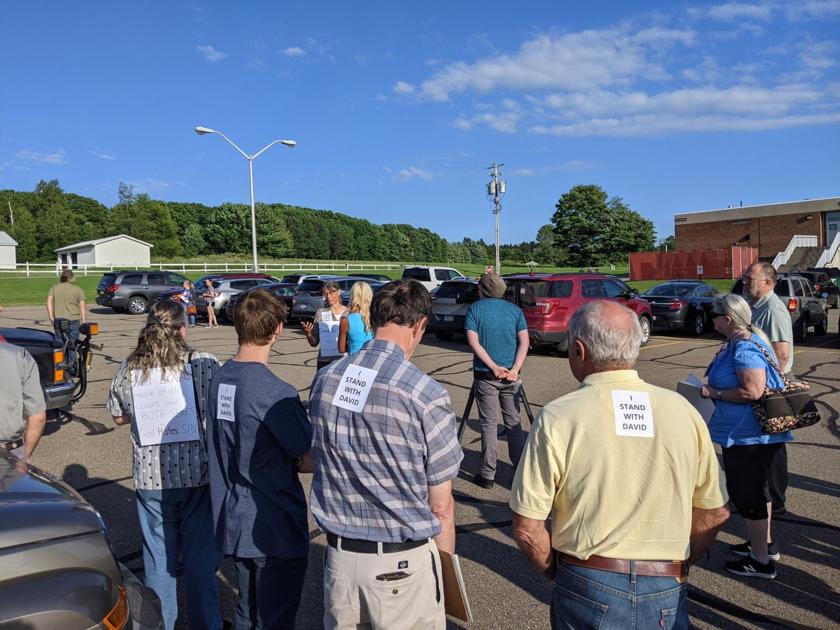
Several dozen audience members displayed their support for Valesky by wearing large stickers affixed to their clothing with the phrase “I stand with David” in all-caps. About two dozen more showed their opposition to Valesky’s comments and support for gay rights with various signs, T-shirts and other pride symbols.

Four speakers voiced their support for the library staff that had created the display of books at Saegertown Junior-Senior high, for gay students in the district and for freedom of expression generally. Two of the speakers were critical of the display and said that the apparent endorsement of a “worldview” represented by the books was inappropriate in a public school.

Rising Saegertown sophomore LaWrynn Edwards, the social media editor for Saegertown Pride Alliance, a club at the school, cited the Constitution’s guarantees of freedom of expression and equal protection under the laws in addressing the board and calling on them to represent all students in the district.

“Public schools cannot single out students that are LGBTQ+ for negative treatment,” she said.
Saegertown English teacher Stacey Hetrick told the board that “books are not evil.”

“The only problem with books is when people perceive a threat that doesn’t exist and behave accordingly.

“If you don’t want your child to read particular books, then your child will not sign out those books,” Hetrick said. “As a parent you have control over them. Books sitting on top of a shelf are a threat to no one.”

Centerville resident Ryan Weingard said he had not followed the controversy on social media but had read about it in the news and had not seen “any people being called evil.” Instead, Weingard said, “people are confusing a worldview with a personal attack.”

“I would encourage the school board to return to foundational principles in what you bring before our children,” Weingard added. “The principles of the Christian worldview are in fact what this nation was founded upon. It’s what sustained the nation.”

Superintendent Timothy Glasspool said that 12 speakers are already registered to address the board at its Wednesday meeting. Regarding Valesky’s comments about the book display, Glasspool noted that in making the comments Valesky did not speak for the board and said he did not anticipate the board taking any action. The display, Glasspool added, remained in place until the library closed at the end of the school year.

In response to numerous issues, including the social media controversy, a disagreement with Valesky over the proposed tax increase, and board member absences from recent meetings and district graduations, board member Jeff Brooks proposed a retreat that could allow members to work through some of their differences.

“It’s embarrassing to be a part of this school board the way we’re operating and the way we’re doing things,” Brooks said.

Mike Crowley can be reached at (814) 724-6370 or by email at mcrowley@meadvilletribune.com.

‘As a Black, Gay Physician, I’ve Survived In America By Embracing My Anger’ – Newsweek

I’m pretty sure time has stopped. Or maybe it’s simply that my heart has been forced to cease its beating. I feel as though I’m watching myself from afar, observing my eyes widen as they read the word before me over and over and over. Six letters strung together to form one of the most destructive words in the English language. One of the most painful words in any language.

“N—–.”

I sit at our kitchen table, a freshman in high school. A gay, African American male, about to go to a high school dance, reading the word sent over instant messenger by two of my classmates. Part of my heart breaks. The word used specifically to remind Black people of their supposed place in society. I’m not that word but now I am viewed as that word. I’ll never have the luxury of forgetting this first that I never wanted; this first that I did not deserve.

Alone at the table, I ignore the crack that word causes within. Instead, I give in to the fury that is bubbling up within. Something inside me twists permanently.

As I reflect on this moment in 2021, a year after the heart-shattering murder of George Floyd sparked national and international outcry, I’m inevitably reminded of how much it took to activate parts of our society into caring about Black people and the atrocious treatment we have faced for so long.

I’m also reminded of my relationship with anger as a Black, gay male living in America; a country where righteous anger as a minoritized person can lead to your death; a country where simply being born Black, simply existing with the “wrong” skin color can mean you don’t make it to adulthood.

Sadly, that online message wasn’t the last time I was called the n-word in high school. Far from it. It happened so many times I was forever on-guard. It was the same with homophobic slurs. And though I had friends, I kept the verbal assaults to myself because of the shame. I believed I was the problem.

As a young teenager, anger consumed me. There were times I felt as though I was a receptacle overflowing with the malice others had, without my consent, shoved into me. I had experienced depression and suicidal thoughts that began in seventh grade due to bullying and lack of acceptance, and so, to survive high school, I transformed myself.

I did what I could to control the pitch of my voice and I limited my expressive hand motions. I learned quickly to be friends with the “right” people, and how that somehow protected me. Blending in naturally was a luxury I didn’t have, but I tried my hardest. When I came out officially junior year it did help because people couldn’t gossip as much, asking, “Is he or isn’t he?” or “Of course he is, just look at him!” But the self-loathing remained.

Then I ran.

At age 18, I left Seattle and flew across the country to college in the hopes that it would be a fresh start; a place where I could not only study science, but openly express who I truly was. I hoped it would be a place where I could let go of anger.

Within the first weeks I was rejected from a fraternity because I was gay. Some fraternity brothers later told me how my being openly gay had led to me being “blacklisted” by two people in the fraternity at the end of voting for bids. Staff got involved. I had to relive what had happened and was told they would handle it.

Eventually, it was relayed back to me by staff that the fraternity claimed I hadn’t gotten a bid because I “didn’t get along with other people.” I was told the best that could be done was to have the fraternity brothers do “sensitivity training.”

I went on to have panic attacks—though I wouldn’t know what crying during exams or feeling unable to breathe was actually called until medical school—and failed all my first exams. I was sure I was going to fail college. At times, I sat in the shower contemplating suicide.

I furiously vowed to become friends with every person on campus. I would show those who said I “didn’t get along with people” that they had messed with the wrong Black, gay person. I succeeded in making friends, but that didn’t stop the panic attacks, the suicidal thoughts or the nightmares where I woke screaming and crying. But, harnessing my fury helped me survive.

And those friends in college saved my life. Each one shared their own stories and anger. Whether it was the treatment of women in science, racism, homophobia, xenophobia, societal inequities; we sat in the chaos of the world together. They validated my feelings as I validated theirs. Just as importantly, they encouraged me to be a better person. That happened in the little moments when we stayed up with each other until dawn talking, when sharing our stories united our hearts. It was the bigger moments when friends publicly called out others for homophobic slurs, or when I then realized I could speak up against such words too. It was two friends taking the time to sit me down one day during the summer after freshman year and saying, “You can do better. We see such power in you, and you can help others. We know you’re hurting, your anger is valid, but you can also be so much more.”

These people told me they loved me for me.

By the time I entered graduate school to study biological engineering in 2013, my anger had abated and my depression had dissipated. Now when I heard the n-word or a homophobic slur, I often rolled my eyes before taking the person to task. I set boundaries with more ease. During those two years of graduate school, I felt I was living in America as my true self: a Black, gay man who was also seen as so much more. I was known for being gay and that was seen as a beautiful aspect of my overall self. I dated—a lot. I wore crimson pants to classes and lab and I was no longer afraid to be truest myself. I mentored younger classmates and worked to improve the lives of minoritized friends on campus. I had the life I had always wanted.

And yet, less than six months later, after matriculating into medical school in the fall of 2013, I was drowning. I became class president and immediately heard some of the most disgusting and disparaging comments about myself and other minoritized students I’d ever heard in my entire life. I heard them from classmates and faculty. It felt like high school all over again and it seemed that who I was—a Black, gay man—could not exist within the medical system.

Why were my classmates allowed to use discriminatory words, but the second I calmly spoke up for myself or others, it caused “friction”? Why were my words to administrators about these issues ignored by many, while white colleagues who actually made the comments were continuously praised? Why was I unprofessional for advocating for people as class president, but white colleagues being racist was fine? Near the end of my third year of medical school, I realized I could no longer excuse the imbalance. As a Black, gay man in America, it was not my job to forever subdue my anger. I chose to use it and it empowered me.

Once, a white classmate who had used the n-word during our first months of medical school said that dealing with me was like dealing with a patient exhibiting mania. I spoke with them privately and made it clear that kind of joking was not acceptable. But having to constantly set limits hollowed me out. By the time I left medical school, I felt like a shell of the person who had been flourishing at graduate school.

I longed to return to that sense of strength and confidence, but residency had other plans. First it was being called the name of the only other Black physician in our program. Then I received a grading far below others. I strongly believe this was because I had told my attending that how she was asking questions—a process in medicine known as “pimping” where senior medical staff sometimes ask difficult questions during rounds to embarrass— was causing me to have panic attacks, amongst other instances of her biases playing out. I was called unprofessional for not wearing a tie, but I observed as white attendings would openly disparage me and other minoritized trainees. Only three months in I grasped that I’d chosen the wrong university.

Dr. Chase Anderson embraced anger to survive
Dr. Chase Anderson during the his time as a doctor in residency. Anderson had managed his anger before and again turned it into a powerful tool to shield him.
Dr. Chase Anderson

Because I had managed my anger before and turned it into a powerful tool to shield me, I began to do so again. I mapped out what I could change. I worked on helping one senior staff member see how toxic the environment was, and a year after I began training they apologized for how they had purposefully ignored my words about discriminatory events, and for the hand they had in them. After that, we had weekly meetings where we spoke about how to change the training program to benefit minoritized trainees, and implemented many of those changes.

At the end of three years, I made the choice to graduate early and start my fellowship in child and adolescent psychiatry elsewhere. Now, almost a year into fellowship in California, I’m happy and I’m healing. Being at a university that supports my voice and who I am as a person, has changed my life.

Dr. Chase Anderson embraced anger to survive
Dr. Chase Anderson is now almost a year into fellowship in California. He describes himself as “happy and healing.”
Dr. Chase Anderson

That fury that was once overwhelming has mainly faded. There are times it flares, appropriately so: when I read about Asian Americans experiencing higher rates of depression and anxiety because of bigotry around coronavirus. When literary agents say that the memoir I wrote about medical school, to help the minoritized, “isn’t for them,” sometimes with racially-charged comments. Watching our government debate if people “deserve” a living wage. But, overall, my mind is calmer. I feel supported and I ride the wave when those moments happen. I remember that I can do something about some of these inequities; I can engender change. I have the strength and power to help other minoritized people have a different journey and a different relationship with anger.

I am now a qualified physician able to work with adolescents and kids around their anger and their feelings. We sit together and they learn how to navigate their rage in a space where they aren’t alone, where their anger is validated, and we speak about how to safely express their righteous ire. I have the opportunity to hold their feelings with them and help them figure out how to move forward while embracing all parts of who they are and how to stay safe in this world.

And that makes my personal journey eternally worth it.

Chase T.M. Anderson MD is a fellow in child and adolescent psychiatry at The University of California, San Francisco. You can follow him on Twitter @ChaseTMAnderson.

All views expressed in this article are the author’s own.

If you have thoughts of suicide, confidential help is available for free at the National Suicide Prevention Lifeline. Call 1-800-273-8255. The line is available 24 hours every day.

LGBT+ youth more than twice as likely to be sexually harassed than their straight peers – Yahoo Eurosport UK

LGBT+ youth are more than twice as likely to experience sexual harassment compared to their straight peers, according to a heartbreaking survey highlighting the experiences of queer youth.

The study, commissioned by youth charity Just Like Us, questioned 2,934 pupils aged 11 to 18 across the UK about the experiences of young people growing up in the UK in 2021. Of these pupils, 1,140 identified as LGBT+.

According to the distressing survey, LGBT+ young people are more likely to experience sexual harassment. Shockingly, seven per cent of LGBT+ young people reported experiencing unwanted sexual touching over the last 12 months, compared to two per cent of straight youth.

Of the LGBT+ youth who reported such vile harassment, bisexual young people reported higher rates of experiencing unwanted sexual touching. One in 10 (10 per cent) bisexual young people reported unwanted sexual harassment. This compared to six per cent of pansexual and lesbian young people and five per cent of gay young people.

The grim report also revealed that LGBT+ youth are twice as likely to have been bullied in the past year. Two in five (43 per cent) of queer young people said they were bullied in contrast to 21 per cent of their non-LGBT+ peers.

LGBT+ young people are significantly more likely to have seen homophobic bullying than non-LGBT+ pupils (46 per cent versus 26 per cent). Queer youth are also three times as likely to have seen transphobic bullying (33 per cent compared to 10 per cent) or biphobic bullying (26 per cent versus nine per cent).

One in five (18 per cent) LGBT+ pupils didn’t tell anyone they had been bullied and only 21 per cent told a teacher at their school. Shockingly, only a third (33 per cent) of queer pupils said there is a clear process for reporting anti-LGBT+ bullying in school.

Dominic Arnall, chief executive of Just Like Us, said their survey “has revealed some horrifying news” that LGBT+ pupils are “disproportionately struggling”. But Arnall said that sending “positive messages” about queer acceptance “goes hand-in-hand with positive outcomes for all pupils”.

Sadly, half of the pupils (48 per cent) have had little to zero positive messaging about being LGBT+ at school in the last 12 months. A third (30 per cent) said their school has only put out positive messages about being LGBT+ once or twice while a fifth (18 per cent) received no positive messaging at all.

The Just Like Us report was sponsored by JP Morgan and was conducted by Cibyl, an independent student market research consultancy group.

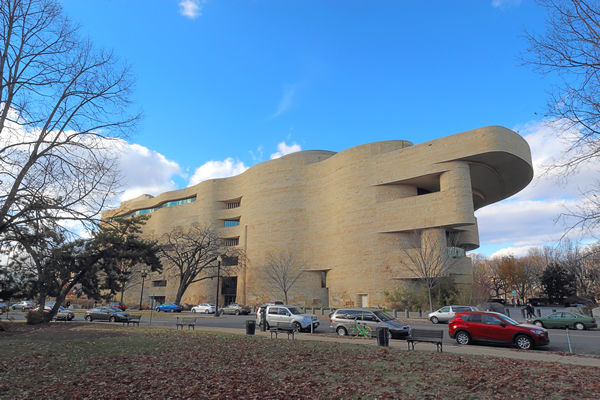
National Museum of the American Indian celebrates Pride – Washington Blade

Friday, June 4

DC Public Library will host “DISdance Pride Edition — Still We Dance” at 6:30 p.m. Show your Pride by dancing with the Library’s Freegal music collections. You can dance to one or all 30-minute playlists. Post a video or photo of you and your crew dancing or lip-syncing to Instagram and tag DC Public Library on Instagram using the tags #DCPLDanceParty and #StillWeDance. DC Public Library will share its favorite videos and crown the video with the most likes the virtual Queen of Pride. You can find all four Pride playlists on Freegal with the names Still We Lead, Still We Live, Still We Laugh, and Still We Love. 

Friday Tea Time,” a social hour for older LGBTQ+ adults, begins at 2:00 p.m. on Zoom. For access to the Zoom link and more information, contact [email protected].

Saturday, June 5

Join Prince George’s County Memorial Library System for “Viewer’s Advisory: Rainbow Cartoons” virtually at 11 a.m. This event will dive into a discussion on positive and problematic LGBTQ+ representation in cartoons, anime, and graphic novels for teens and tweens.

Cheverly Pride will host a car parade at 3 p.m. The parade begins at the Community Center for a flag raising, some words of welcome, and a remembrance for lives that have been lost. Cars will proceed from there in a parade (decorations encouraged and a prize will be awarded) to the Legion, with a quick stop at Legion park to raise another flag. At the Legion there will be food, music, and fun. For more information, visit Cheverly Village online.

Sunday, June 6

The DC Center for the LGBT Community, TERRIFIC, Inc., Capitol Hill Village, and the DC Department on Aging and Community Living (DACL) will host a virtual drag show and discussion panel moderated by Devon Trotter at 2 p.m. The event will begin with performances by Pussy Noir and Blaq Dynamite followed by a conversation with them moderated by Devon Trotter. For more information, reach out to [email protected].

Virtual Travel Adventure Show has an LGBTQ travel segment at 5 p.m. The event will explore top vacation options from around the world catering specifically to the LGBTQ community at the Virtual Travel & Adventure Show. You’ll find thousands of vacation options from top destinations, cruise lines and tour operators, expert travel content, and thousands of dollars in travel savings all in one place. The event is free and tickets are available online on Eventbrite. For more information, visit virtual.travelshows.com.

Queen City Kings Drag will host “Flame: A Worldwide Pride Show” virtually at 9 p.m. This event will feature 16 performers who were selected from a worldwide pool of submissions to entertain and inspire. Be prepared to laugh, cry, party, and rejoice when drag artists Interrobang the Dragon, Dik Carrier, Lottie Flick, Semicolon, Rye, Fannie Fullenweider, Fox Squire, Black Battie, Mercury Divine, Just JP, Nick D’Cuple, Nitrix Oxide, Perka $exx, Shea Hazard, Camden Summers, and Fly-Guy Shawn hit the virtual stage with Myster E as your host. For more information, visit the Facebook event page

Monday, June 7

The Center Aging Coffee Drop-In will still take place virtually at 10 a.m. via Zoom. LGBT Older Adults (and friends) are invited to have friendly conversations about current issues they might be dealing with. For more information, click here.

Join the DC Center for their virtual job club, a weekly job support program to help job entrants and seekers, including the long-term unemployed, improve self-confidence, motivation, resilience and productivity for effective job searches and networking. The event begins on Zoom at 6 p.m. For more information, email [email protected]

Tuesday, June 8

Meryl Wilsner on “Something to Talk About,” co-presented with DC Public Library, will be hosted virtually at 7 p.m. Author Meryl Wilsner will discuss their work and hit debut novel, “Something to Talk About” (2020), with staff from PGCMLS and DC Public Library in commemoration of LGBTQ+ Pride Month. More information is available here.

The Trans Support Group will be at 7 p.m. on Zoom. All who identify under the trans umbrella or are unsure, and seek to continually reinforce our principles of respect, acceptance and protection through ongoing input from our attendees are welcome to attend. Email [email protected] to access the Zoom link. 

Wednesday, June 9

Join Prince George’s County Memorial Library System for “Lenny Duncan ‘United States of Grace’ with Teddy Reeves” virtually at 7 p.m. United States of Grace is a love story about America, revealing the joy and resilience of those places in this country many call “the margins” but that Lenny Duncan has called home. The event will be livestreamed on Youtube and Facebook on the @PGCMLS account. For more information, click here.

Join the DC Center for their virtual job club, a weekly job support program to help job entrants and seekers, including the long-term unemployed, improve self-confidence, motivation, resilience and productivity for effective job searches and networking. The event begins on Zoom at 6 p.m. For more information, email [email protected]

Thursday, June 10

Join The Residences at Thomas Circle for “Let’s Flamingle!” at 4 p.m. on 1330 Massachusetts Ave., N.W. This event will celebrate silver pride with a rooftop barbecue. Guests are encouraged to dress as flamboyantly as they can. To RSVP, contact Denise by calling 202-628-3844 or send an email to [email protected].

FreeState Justice will host a storytelling night virtually at 6 p.m.  The event will include LGBTQ storytellers who will provide personal takes on what Pride means to them. Tickets are available on Eventbrite. General admission to this event is free, however, you can donate $10 to the organization through the Eventbrite link as well. For more information, visit freestate-justice.org.

LI’s Eddie Liu talks history-making ‘Kung Fu,’ more – Newsday

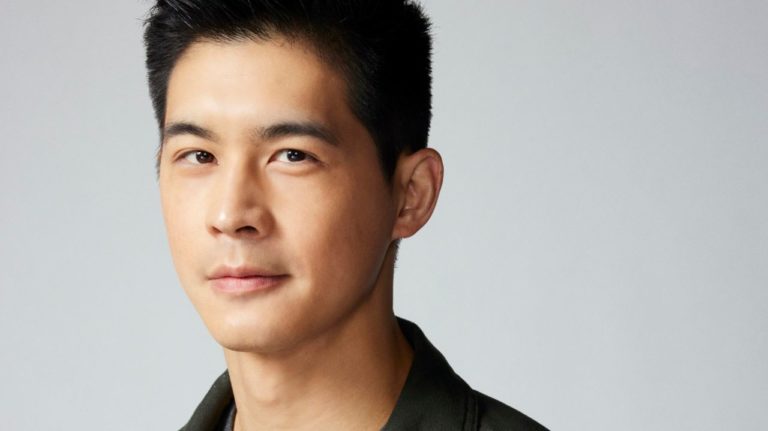
To become a working actor is hard enough — but one who is the son of immigrants from China and who grew up in Commack? That has its own set of complications, indeed. Eddie Liu, 30, is that son and that actor, star of the CW freshman hit “Kung Fu” — a very loose reboot of the 1972 martial arts western starring David Carradine, which wraps its first season June 30.

Set in the present day, it stars Olivia Liang as Nicky, a law school dropout and vigilante whose love interest is Henry (Liu), also a martial arts (Tai Chi) expert.

Then, there is this: “Kung Fu ” is the first drama on a commercial network with an all-Asian cast.

Born in Queens, raised in Commack, Liu went to Hofstra, later studied acting at the William Esper, then got modeling gigs while working as a professional trainer near home. Then came Hollywood, where he booked guest spots on a few shows, including “NCIS: LA,” and a three-episode arc on “Silicon Valley.” Until “Kung Fu,” the big break was Mindy Kaling’s Netflix roman-a-clef, “Never Have I Ever.”

Newsday’s Verne Gay spoke with Liu recently about his journey from Commack into the TV history books.

What did mom and dad do job-wise? They ran a jewelry business together [Ideal Jewelry by Jasmes, in the Gateway Plaza Mall in Patchogue], still do, so I kind of grew up behind the counter a little bit [where] I just kind of learned how to talk to grown-ups, build rapport, gain simple people skills. It’s actually really helped me along the way.

What was Commack High like for you?

I was so busy and looking back it feels like a bit of a rat race. I think we were all caught up in the whirlwind of trying to be as impressive as you could be — to get into the best school, get the best job, succeed as much as you can. That’s a very common experience for children of immigrants.

Any idea what you wanted to do at the time?

I really felt like I wanted to be a guidance counselor. I took career tests and a lot of results pointed towards either social or educational — either helping people or working specifically with people. Something like entertainment?! Nah, that’s crazy …

At Hofstra you studied …?

Public relations. I had the gift of gab [but] I remember a sociology professor talking about authenticity and the take-away was, ‘what does it mean to be authentic to yourself?’ and that resonated [and] I definitely felt like ‘OK, this is my window of opportunity to really explore find what I want to do …’ Then by chance, someone recommended me to a nearby acting studio.

What next?

[Then] as graduation approached, I booked a P.C. Richard commercial. The Great Recession was happening and job prospects looked awful, but I just couldn’t escape the thought that I wanted to be an actor — but it was also like, how do I justify this to my parents who are paying for school and I’m about to pull a 180 and flip everything on its head. I was terrified to tell them.

How did they react?

My mom was fully supportive but dad had trepidations. He was very very cognizant of the lack of Asian representation on the screen so he was really concerned for me.

Your dad is a wise man. There weren’t many opportunities.

Very very little [but] at the time back then, people were telling me — including later my manager — ‘hey, it’s changing. Your time is coming. Just hang in there.’

That’s a lot of pressure on you — from your parents’ expectations and the simple fact that Hollywood had a long, long way to catch up. How did you navigate that in your head?

A friend gave me advice I’ll never forget. She could tell it was laying down heavily on me and she was like, you know, ‘if everybody you care about was gone tomorrow, what would be the first thing you did for yourself?’ It sounds morbid but I also knew what she had been dealing with — the idea of mortality because she had just lost her mother to ovarian cancer. I realized I just didn’t want to be the guy five years down the road who got the job he was supposed to get but deep down hated himself for not going after the thing he really wanted. I didn’t want to carry that resentment.

OK, acting school, modeling, commercials, personal trainer…what was the Big Break when you finally got you out to L.A.? The first big thing was ‘SIlicon Valley’ — just had a few speaking lines and it was recurring, but I got to [even] pitch a joke to the showrunner Mike Judge. I was like, holy [Jeez], I just collaborated with Mike Judge!

“Kung Fu” of course is a hit. What does it all mean — for you personally?

It’s been an opportunity on so many levels — and of course Asian representation. I definitely felt that lack [of representation growing up] to the point that it was almost normal for me not to see myself [on TV]. We’ve had a white heteronormative male lens on the world because that’s what’s been presented to us and that has been ‘ normal’ for as long as we’ve known, and to now change that and to have the chance to shift that paradigm and break the mold? It’s such a gift.

Did you ever expect it to happen this quickly?

It’s simultaneously surreal and yet it feels right. But there is a constant ebb and flow between having a hard time believing that this is a gift just to do this job and also being able to take that ball and run with it. Yes, we deserve to be here, yes, we belong and — by the way — yes, you should watch our show because you’ll have fun watching.

But it’s really given me the opportunity to reconnect with my heritage. I grew up in a white suburban town in Long Island, and the environment around me didn’t make me feel safe to own that heritage. I can’t say that’s other people’s fault, but I do regret not taking more of an initiative to take ownership myself — to be more prideful in who I am and where I came from.

From Commack to ‘Kung Fu’: Eddie Liu talks being cast in new CW show, more – Newsday

To become a working actor is hard enough — but one who is the son of immigrants from China and who grew up in Commack? That has its own set of complications, indeed. Eddie Liu, 30, is that son and that actor, star of the CW freshman hit “Kung Fu” — a very loose reboot of the 1972 martial arts western starring David Carradine, which wraps its first season June 30.

Set in the present day, it stars Olivia Liang as Nicky, a law school dropout and vigilante whose love interest is Henry (Liu), also a martial arts (Tai Chi) expert.

Then, there is this: “Kung Fu ” is the first drama on a commercial network with an all-Asian cast.

Born in Queens, raised in Commack, Liu went to Hofstra, later studied acting at the William Esper, then got modeling gigs while working as a professional trainer near home. Then came Hollywood, where he booked guest spots on a few shows, including “NCIS: LA,” and a three-episode arc on “Silicon Valley.” Until “Kung Fu,” the big break was Mindy Kaling’s Netflix roman-a-clef, “Never Have I Ever.”

Newsday’s Verne Gay spoke with Liu recently about his journey from Commack into the TV history books.

What did mom and dad do job-wise? They ran a jewelry business together [Ideal Jewelry by Jasmes, in the Gateway Plaza Mall in Patchogue], still do, so I kind of grew up behind the counter a little bit [where] I just kind of learned how to talk to grown-ups, build rapport, gain simple people skills. It’s actually really helped me along the way.

What was Commack High like for you?

I was so busy and looking back it feels like a bit of a rat race. I think we were all caught up in the whirlwind of trying to be as impressive as you could be — to get into the best school, get the best job, succeed as much as you can. That’s a very common experience for children of immigrants.

Any idea what you wanted to do at the time?

I really felt like I wanted to be a guidance counselor. I took career tests and a lot of results pointed towards either social or educational — either helping people or working specifically with people. Something like entertainment?! Nah, that’s crazy …

At Hofstra you studied …?

Public relations. I had the gift of gab [but] I remember a sociology professor talking about authenticity and the take-away was, ‘what does it mean to be authentic to yourself?’ and that resonated [and] I definitely felt like ‘OK, this is my window of opportunity to really explore find what I want to do …’ Then by chance, someone recommended me to a nearby acting studio.

What next?

[Then] as graduation approached, I booked a P.C. Richard commercial. The Great Recession was happening and job prospects looked awful, but I just couldn’t escape the thought that I wanted to be an actor — but it was also like, how do I justify this to my parents who are paying for school and I’m about to pull a 180 and flip everything on its head. I was terrified to tell them.

How did they react?

My mom was fully supportive but dad had trepidations. He was very very cognizant of the lack of Asian representation on the screen so he was really concerned for me.

Your dad is a wise man. There weren’t many opportunities.

Very very little [but] at the time back then, people were telling me — including later my manager — ‘hey, it’s changing. Your time is coming. Just hang in there.’

That’s a lot of pressure on you — from your parents’ expectations and the simple fact that Hollywood had a long, long way to catch up. How did you navigate that in your head?

A friend gave me advice I’ll never forget. She could tell it was laying down heavily on me and she was like, you know, ‘if everybody you care about was gone tomorrow, what would be the first thing you did for yourself?’ It sounds morbid but I also knew what she had been dealing with — the idea of mortality because she had just lost her mother to ovarian cancer. I realized I just didn’t want to be the guy five years down the road who got the job he was supposed to get but deep down hated himself for not going after the thing he really wanted. I didn’t want to carry that resentment.

OK, acting school, modeling, commercials, personal trainer…what was the Big Break when you finally got you out to L.A.? The first big thing was ‘SIlicon Valley’ — just had a few speaking lines and it was recurring, but I got to [even] pitch a joke to the showrunner Mike Judge. I was like, holy [Jeez], I just collaborated with Mike Judge!

“Kung Fu” of course is a hit. What does it all mean — for you personally?

It’s been an opportunity on so many levels — and of course Asian representation. I definitely felt that lack [of representation growing up] to the point that it was almost normal for me not to see myself [on TV]. We’ve had a white heteronormative male lens on the world because that’s what’s been presented to us and that has been ‘ normal’ for as long as we’ve known, and to now change that and to have the chance to shift that paradigm and break the mold? It’s such a gift.

Did you ever expect it to happen this quickly?

It’s simultaneously surreal and yet it feels right. But there is a constant ebb and flow between having a hard time believing that this is a gift just to do this job and also being able to take that ball and run with it. Yes, we deserve to be here, yes, we belong and — by the way — yes, you should watch our show because you’ll have fun watching.

But it’s really given me the opportunity to reconnect with my heritage. I grew up in a white suburban town in Long Island, and the environment around me didn’t make me feel safe to own that heritage. I can’t say that’s other people’s fault, but I do regret not taking more of an initiative to take ownership myself — to be more prideful in who I am and where I came from.

Don’t let gays sideline ‘natural people’: Junius Ho – RTHK – RTHK

0

Pro-establishment lawmaker Junius Ho said on Tuesday that he does not discriminate against sexual minorities, but they can’t be encouraged in case “natural people” are sidelined.

His comments follow an apparent rebuke from Chief Executive Carrie Lam, who blasted lawmakers for their “divisive” comments about next year’s Gay Games, which are due to be held in Hong Kong.

During a discussion in the Legislative Council last week, Ho said the event will bring “dirty money” to the city, while Holden Chow from the DAB party warned that the games could affect social stability.

Without naming any names, Lam said at her pre-Exco meeting press briefing on Tuesday that she could not condone the “regrettable” remarks of lawmakers who had become “a bit emotional”.

Asked about the CE’s response to the saga, Ho denied he had been emotional and said his attitude had not changed.

“My attitude has always been founded on a good basis. I do what I believe. I haven’t changed my attitude a bit…I stated my position quite clear,” he said.

Ho added that Hong Kong cannot let sexual minorities sideline the heterosexual majority.

“They are called ‘sexual minorities’, they are just a small part of the population. We respect them, but we can’t encourage them. We don’t discriminate against them, but that doesn’t mean such trends should be supported or encouraged,” he said.
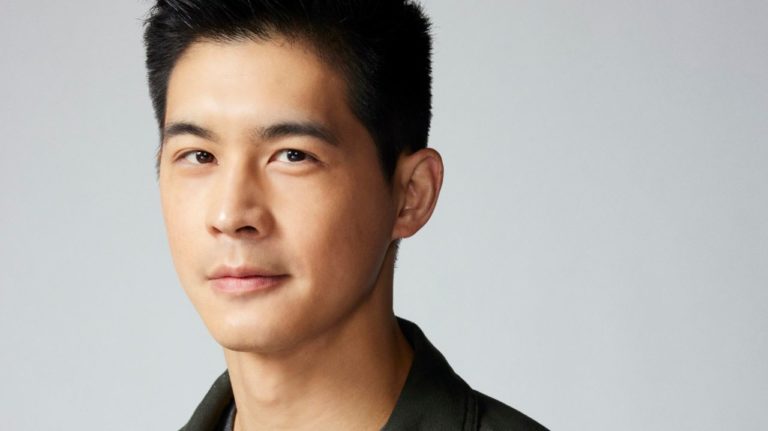
The lawmaker said “natural people” reject those of the same sex, adding “we have to make clear one thing, we shouldn’t sideline the mainstream.”

Opinion | Pride offers LGBTQ youth opportunities for community – Washington Blade

0

MYTH: Being gay is a “choice”

Americans are evenly split on whether sexual orientation is a choice, or is determined by nature, according to a 2015 Pew Research Center survey, with roughly 40 percent of respondents on either side. But, the percentage of people who believe that sexual orientation is not a choice has nearly doubled over the past few decades, up from about 20 percent when the Los Angeles Times conducted a similar poll in 1985.

The myth has powerful legal ramifications: the strongest argument anti-gay activists can make to remove accommodations for discrimination against the LGBTQ community is the claim that LGBTQ people were not born into their sexuality, “choosing” instead to be a part of marginalized groups.

FACTS: A 2019 study by Andrea Ganna, et al published in Science looked at the genes of 492,664 people and concluded that “same-sex sexual behavior is influenced by not one or a few genes but many.”

Based on this and other evidence, most researchers have concluded that sexuality is determined by a combination of environmental, emotional, hormonal, and biological components, making sexual orientation not a choice but instead controlled by a variety of uncontrollable factors.

While there is no consensus about what combination of factors produces sexual orientation at the individual level, The American Psychological Association notes that “most people experience little or no sense of choice about their sexual orientation.”

MYTH: Gay relationships don’t last

This idea of homosexual couples not taking their relationships/partners as seriously as heterosexual couples derives, in part, from the history of gay couples not being able to affirm their commitment to each other legally.

FACTS: Several studies have been published refuting this myth, which included tens of thousands of gay, lesbian, and straight participants and their partners who provided feedback about the stability of their relationships.

A 2017 study of homosexual and heterosexual couples by researchers at Bowling Green State University found that different-sex and female same-sex couples had more stability in their relationships than male same-sex couples. BGSU concluded that this is because gay and bisexual men are exposed to more stressors that lead to problems in their relationships.

Research by UCLA psychologist Ilan Meyer has found that female same-sex couples prioritize emotional intimacy more than male same-sex couples, which resulted in their ability to support the partnership longer.

A pair of studies published in the journal Developmental Psychology in 2008 showed that same-sex couples are just as committed as heterosexual couples in their romantic relationships. One, by researchers at the University of Illinois at Urbana-Champaign, found that there was no difference in the level of commitment or relationship satisfaction between homosexual and heterosexual couples, and even found that lesbian couples were “especially effective at resolving conflict.”

MYTH: Bisexuality and pansexuality are the same thing.

For many people, bisexual is used as a catch-all term for anyone who is not heterosexual or homosexual. But in reality, there are many different forms of sexuality.

FACTS: Though both involve someone being attracted to more than one gender, bisexual and pansexual are not synonyms.

Bisexual people define their sexuality on the basis of romantic attraction to two sexes; hence the prefix “bi.” However, bisexuality has different conditions for each person. One bisexual male may be 30% attracted to men and 70% attracted to women. Or a bisexual female may be attracted evenly to both genders.

But gender categories are not limited to “male” and “female,” which allows for people to identify as nonbinary, or genderqueer, which means they do not identify as either male or female gender.

Bisexuals may or may not be romantically attracted to nonbinary people but even if they are, they are still considered bisexual. Nonbinary people also can identify as bisexual if they are attracted to male, female or nonbinary people as well.

Pansexuality relates to being attracted to all people regardless of their sexual orientation. This also includes agender people; those who do not identify with any gender. Though pansexual people are attracted to all genders, they are not attracted to every person. Personality, physique, morals, etc. also matter to pansexual people too.

MYTH: Same-sex parenting is harmful to children

The belief that heterosexual couples — and preferably married ones — make better parents, is deeply embedded in the belief systems of many Americans, for both political and religious reasons. Some advocates of this viewpoint, including many with a political or religious agenda, have opposed changing state policies to allow same-sex parenting and adoption.

FACTS: Statistics show that limiting parenting to heterosexual couples leaves many children out altogether rather than being adopted and fostered by gay couples who could give them the opportunity to thrive.

“Same-sex couples are seven times more likely than different-sex couples to be raising an adopted or foster child,” a UCLA Williams Institute brief concluded in July, 2018. It showed that between 2014 and 2016, among couples raising children, 2.9 percent of same-sex couples were raising foster children, compared to .4 percent of same-sex couples.

Adoption and fostering laws vary by state, but every year thousands of children age out before getting adopted or fostered, having long-term effects on their mental health. Only three percent of those who age out will earn a college degree. Seven out of 10 females who age out will become pregnant before the age of 21, according to the National Foster Youth Institute.

Divorce can have harmful effects on children. A 2020 HealthLine article lists depression, substance abuse, future issues in the child’s own relationships, and more. Rather than bash the parents for splitting up, however, the article offers ways to help children adjust. The same counsel can be given to children of gay parents when and if they experience bullying or anxiety.

MYTH: People who transition will regret it later in life

Arguments against gender confirming procedures, such as surgery and hormones, include the idea that there could be negative effects on the person receiving the treatment and that they may change their mind.

FACTS: Studies show that hormone therapy and surgery often help people who identify as transgender learn to love their bodies and greatly improve their mental well-being.

A 2017 study led by a team of Dutch researchers showed that gender dysphoria and body dissatisfaction plummeted after these procedures. The depression and “lower psychological functioning” that patients experienced before the procedure were all caused by the discomfort they felt in their own bodies, the researchers concluded. Hormone-based and surgical interventions improved body satisfaction among these patients.

A 2016 systematic review published in Neuropsychiatric Disease and Treatment found that estrogen hormone therapy positively affects the emotional and mental health of male-to-female transgender individuals. Patients reported a decrease in depression, feeling happier and more confident in their bodies, and fewer symptoms of dissociative issues.

A 2021 analysis of a 2015 survey published in JAMA Surgery found that transgender and gender-diverse people (TGD) who had gender-affirming surgeries “had significantly lower odds of past-month psychological distress, past-year tobacco smoking, and past-year suicidal ideation compared to TGD people with no history of gender-affirming surgery.”

“Deciding to transition was one of the most important and difficult decisions I have ever made,” Arin Jayes, 30, a non-binary trans man wrote in an email.

“I didn’t truly know it was right until after I did it. This statement may seem radical and scary. It’s a bit existential, even, because it took a leap of faith,” he said. “One may ask, “Why on earth would you do something so permanent if you weren’t sure?” As someone who has been there, I can say that if it doesn’t feel right, you know. It is important to trust yourself and your bodily autonomy.”