Neilson Barnard/GettyIt’s no secret that rappers have a long-running love affair with jewelry. More than a fashion statement, artists’ bling is a flex, a status symbol, a token of brotherhood, and most importantly, a screaming message of success.While gold chains and expensive watches have been common accessories for hip-hop artists ever since they burst onto the scene in the late 1970s, rappers’ jewelry game has risen to new heights with diamond-encrusted grills, iced-out Rolexes and Pateks, bl
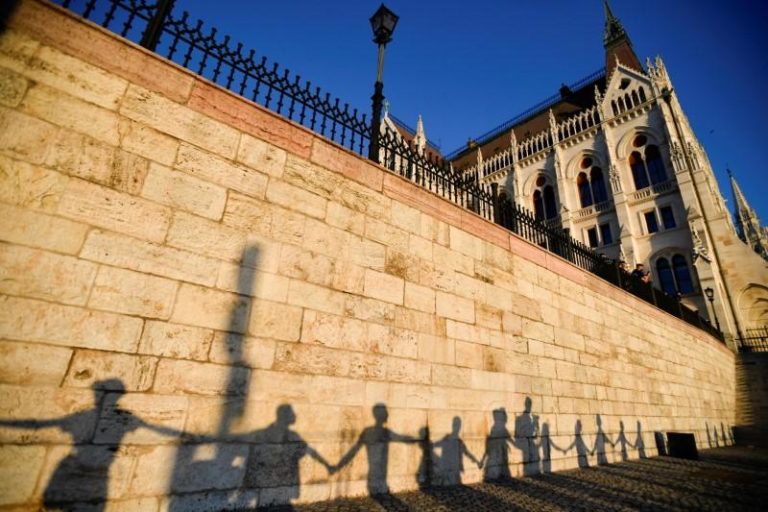
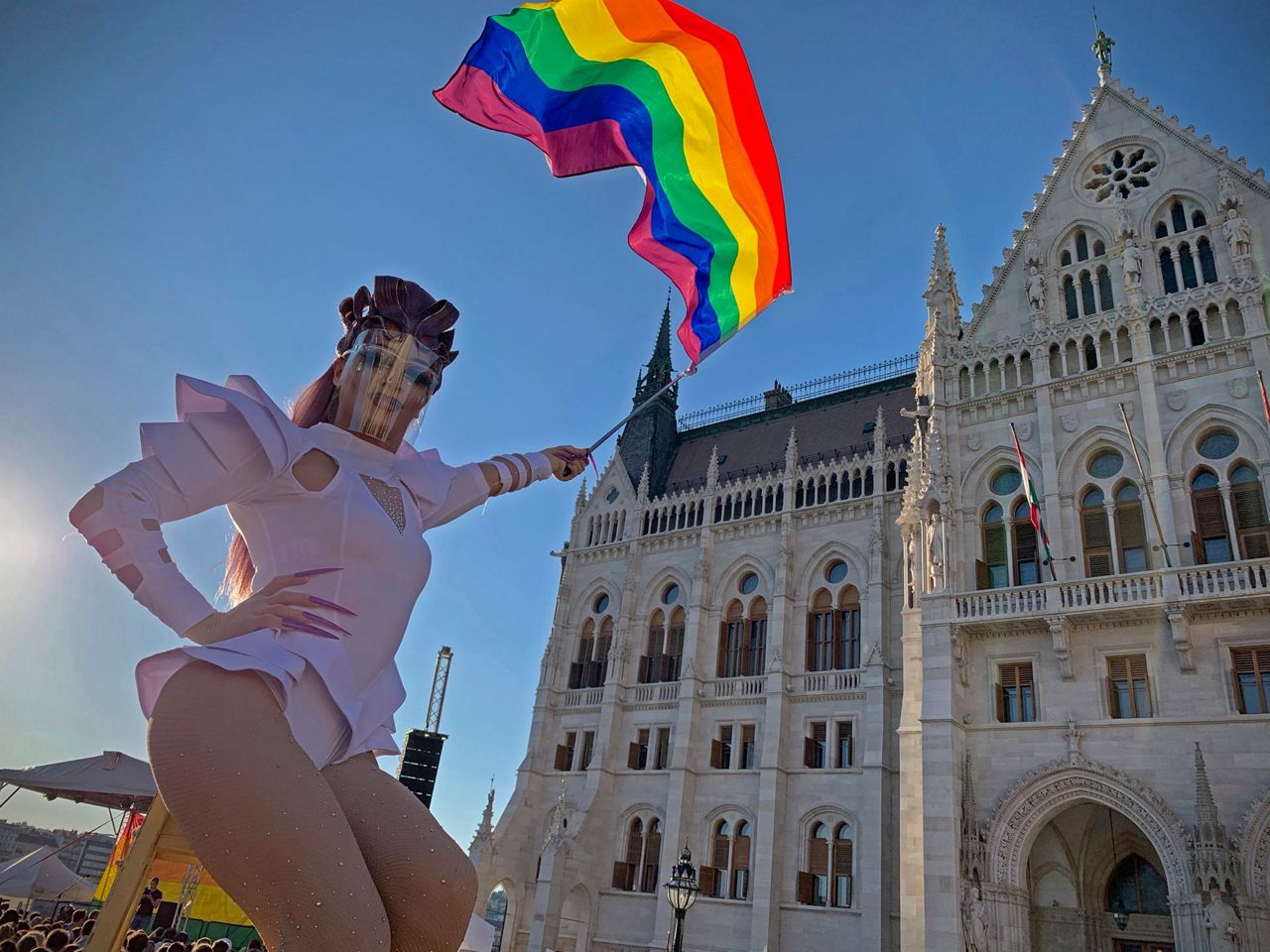
BUDAPEST — Hungary’s Parliament voted on Tuesday to adopt legislation that would increase sentences for sex crimes against children, but critics say the law is being used to target the country’s L.G.B.T. community ahead of crunch elections for Prime Minister Viktor Orban next year.
Last-minute changes to the bill, which was prompted by public outrage after a series of sex scandals involving governing party and government officials, included restrictions against showing or “popularizing” homosexuality and content that promotes a gender that diverges from the one assigned at birth.
Mr. Orban’s critics say the changes were made to target the country’s L.G.B.T. community in an effort to rally support from his conservative base and shift the focus away from the failures of his administration ahead of elections in 2022.
The new rules, unexpectedly added to the bill by government-aligned lawmakers last week, require the labeling of all content that might fall into that category of “not recommended for those under 18 years of age.” Such content would be restricted for media like television to the hours between 10 p.m. and 5 a.m. The restrictions extend to advertisements and even sexual education, which the law would restrict to teachers and organizations approved by the government. The bill would also create a public database of sex offenders.
Mr. Orban has increasingly presented himself as a protector of traditional Christian values, although that image has been undermined somewhat by the sex scandals involving officials and allies of his Fidesz party over the past few years.
Last year, a Hungarian diplomat in Peru was convicted of possession of child pornography and handed an $1,800 fine and a suspended prison sentence after being brought home and charged in Hungary. That case, which sparked the public pressure on the legislature to enact stricter sentencing for pedophilia crimes, was just one in a series of scandals that has undermined public faith in Mr. Orban’s government.
Before Hungary’s 2019 municipal elections, a series of video clips released online by an anonymous source showed a prominent Fidesz mayor participating in an orgy on a yacht.
The following year a Fidesz lawmaker in Brussels was detained after trying to escape out of a window and down a drainpipe when the police raided a party being held in violation of Covid restrictions that Belgian news media described as an all-male orgy.
The last-minute additions to the legislation were criticized by human rights groups, including Foundation for Rainbow Families, which promotes legal equality for all Hungarian families with children.
“Fidesz does this to take the public conversation away from major happenings in the country,” said Krisztian Rozsa, a psychologist and board member with the foundation, citing corruption and the government’s responses to the pedophilia scandal and the coronavirus pandemic.
Content providers such as RTL Klub, Hungary’s largest commercial television station, and the Hungarian Advertising Association have come out against the new law, saying the rules restrict them from depicting the diversity of society.
“Children don’t need protection from exposure to diversity,” said Lydia Gall, a senior researcher with Human Rights Watch. “On the contrary, L.G.B.T. children and families need protection from discrimination and violence.”
Linking the L.G.B.T. community to pedophilia is a tactic that may score Mr. Orban and his party points with conservative rural voters, many of whom, spurred on by a steady stream of government propaganda, see the government as a bulwark against the cosmopolitan liberalism symbolized by opposition political figures in the capital.
Last year, the Fidesz-controlled Parliament enacted legislation that effectively bars gay couples from adopting children in Hungary through a narrow definition of the family as having to include a man as the father and a woman as the mother.
Shaken by a bungled response to the coronavirus pandemic, a foreign policy pivot toward China and Russia that has angered his partners within the European Union, and increasing international isolation, Mr. Orban is facing a tough election campaign against a six-party opposition alliance.
Balint Ruff, a political strategist, said the move to target the L.G.B.T. community was a “cynical and evil trap.” He added: “It’s a method used in authoritarian regimes to turn their citizens against each other for their own political gain.”
It is not uncommon for someone who has spent their whole life in rural Hungary to have never met an openly gay person, Mr. Ruff said, adding that by inundating rural voters with conspiracies about gay propaganda taking over the world, Mr. Orban has found an effective tool for mobilizing voters.
“The theme of the campaign will be liberal homosexual Budapest versus the normal people,” he said.
By not supporting the new law, the opposition would be branded supporters of pedophilia for the duration of the campaign, Mr. Ruff said. But supporting the bill would betray more liberal voters who find linking pedophilia and the L.G.B.T. community deplorable.
For those whose families are directly impacted by such laws, the effects hit closer to home.
Mr. Rozsa, from the Foundation for Rainbow Families, said he was worried that bullying and exclusion among Hungarian teenagers would increase against those not seen as heterosexual — and also feared the implications of the governing party’s move for the children of same-sex couples who attend public schools.
“Our kids are also going to be targeted,” Mr. Rozsa said. “Our kids have same-sex parents.”
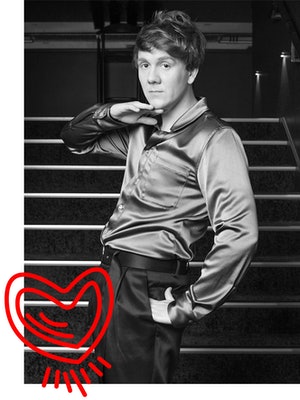
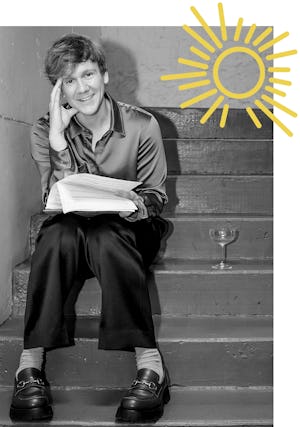
“I have to warn you, I’m so terrible at these Pride questions. I’ve never done one of these interviews and not finished with the journalist a bit mad at me,” comedian Josh Thomas tells Bustle while sitting on a house boat in Mildura, Australia, just one day after the Season 2 finale of his series Everything’s Gonna Be Okay. “I’m just really bad at talking about being gay for some reason, which is weird because it’s all I’ve done for the last 15 years, and it’s Pride Month! Everyone wants you to be so proud or whatever, but I’m just gay. I don’t think about it that much.”
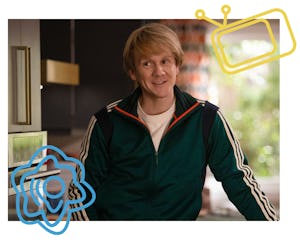
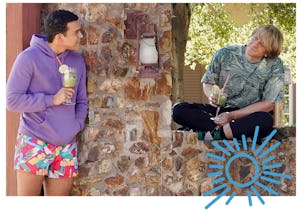
His witty, heartfelt series — which 34-year-old Thomas created, wrote, produced, and starred in — tells the story of a gay entomologist named Nicholas, who becomes the guardian of his two half-sisters after the death of his father, the eldest of which is on the autism spectrum. Since its release in 2020, the show has been lauded for its realistic, thoughtful approach to unique family dynamics, neurodiverse characters, and sexuality.
It is thrilling that [my TV show] gets played in all kinds of places where gay people wouldn’t otherwise get the chance to hang out with other gay people … it plays in countries where it’s illegal to be gay. It gets pirated in countries where it’s illegal to have gay content on TV. So that’s nice.
On this June day, he’s found himself in a state of lockdown limbo: After renting the house boat, the region of Victoria he was staying in was put under lockdown due to the coronavirus pandemic, and then, his home city of Melbourne imposed its own restrictions. Thomas has been making the best out of limbo by fishing for carp, making trips to the grocery store, and reflecting on Everything’s Gonna Be Okay. Thomas admits that the decision to create a TV show starring neurodiverse, queer characters comes from a desire to make content that he “would want to watch” on screen.
“It is thrilling that [the show] gets played in all kinds of places where gay people wouldn’t otherwise get the chance to hang out with other gay people,” he says. “And not just in rural areas, but all over the world; it plays in countries where it’s illegal to be gay. It gets pirated in countries where it’s illegal to have gay content on TV. So that’s nice.”
The show also parallels Thomas’ own life. In April, he posted a note on Instagram to share that he is an autistic person. “I’ve decided to share this with everyone because the range of autistic people and characters we see in the media is very slim, when the autism spectrum is huge and varied,” he wrote. “So here I am: another version of an autistic person for people to see.”
For Thomas, coming out as autistic felt “similar” to his experience coming out as gay. “There’s the same, familiar feeling of this burden on the person of coming out to explain it to the other people, which is annoying,” he reveals. “You tell people and they have all these questions and then you have to do all of this work for them to help them understand. That felt really familiar.” It also came with a subset of worries, especially when it came to whether or not he would be accepted. “I just got this feeling of being the new kid at school. Or that you’re not gay enough, or this time I felt like maybe I wasn’t autistic enough,” he says. “But otherwise, both times coming out was great. You say it and then everyone’s nice and then you get to live a more authentic life. It’s way better.”
His personal advice for overcoming those doubts? “Oh, I just thought about it and then I ignored it,” he cheekily explains. “All the fears I had before I came out, they were overshadowed by the fact that I needed to tell people I was gay otherwise no boys would know that I was available. And that was more important than my fears of how it would affect my career or my homophobic aunties. You just accept that those things are scary and then set them aside. It’s good to be yourself.”
Josh Thomas Q&A
What advice would you give to your 16-year-old self?
16-year-old me was so stupid. At the time I was dating girls. I dated a bunch of girls before I came out and I liked it. As far as being gay, [the 16-year-old me] was working it out, it’s fine. I wish I was nicer in high school; I was bullied sometimes, and I would bully people as a reaction. It took me the whole of high school to work out that it’s so much better to be sweet to people or just ignore them. There’s no reason to try to pull someone down even if they’re being a monster to you. It’s better to just move on and find something positive to do with your time.
As far as being gay goes, I do regret not having sex with a boy when I was 16. I feel like that would’ve been really fun. If I was a 16-year-old now, I’d say, “Go have sex with a boy and be fun.” I didn’t have sex with a boy until I was 19. I was having sex with girls and that was fun too. “Have more fun. Be sweet to people. And suck more d*ck while you’re young.” That’s just the advice I’d give myself, not necessarily the advice I’m giving 16-year-old readers! They should be doing whatever they think is responsible and good.
Freeform/ABC
Adam Faison and Josh Thomas play lovers in Everything’s Going To Be Okay.
A lot of people wish that they could’ve had a whirlwind romance when they were young. Is that what you’re describing?
Yes! The intensity of teenage romance! I always experienced that with girls and it would’ve been fun to do with a boy, but you can never do it. Maybe when my boyfriend comes home I’ll just be very dramatic.
Where do you see yourself 16 years from now?
When I look to the future, I always want to be doing what I’m doing right now. When I was 25, I was going to all of these parties, staying up until 6 a.m., doing these drugs, and thought,“I don’t want to ever feel like I’m too old to do this.” But now I’m 34 — I don’t need to see the sunrise. Every year I come home from a party half an hour earlier. I think maybe in 16 years I’ll be on a weird farm with really dirty hands — turn my back on show business and live off the land. It’s not what I want to do, it just feels like the energy I’m spiraling toward. I feel like I’ll cut off all of my relationships and just be that guy that lives in the woods and just sort of chops wood and eats roadkill.
What is your proudest moment as a member of the LGBTQ+ community?
Once I took home seven boys from the same party. It was like this big, gay party that was right next to my house. There were three couples and they had all kind of hooked up, so we were like,“Hey, we’ve got ourselves a squad let’s go.” And then I said, “My house is next door.” So that I guess is one of them. Getting to tell a wide range of queer stories that connect with people in different countries who wouldn’t otherwise get to hang out with gay people is another … mostly the seven guys thing.
What LGBTQ+ charity do you love and why?
I lived in Los Angeles and the Los Angeles LGBT Center have done a lot of good stuff for people. They gave me a PEP once; they were really nice about that. Appreciated that.
Who inspires you in the LGBTQ+ community?
I don’t really care about famous people. I look to my friends. [My publicist] Courtenay just messaged me, she’s a lesbian, and she’s got three kids that she raises — I don’t know how she does that. My friend Simon, he’s fun. My friends that go to brunch and get drunk with me inspire me.
Where and how are you celebrating Pride in 2021?
I’m on this boat, aren’t I? We got here a week after Mildura Pride, so I don’t know what happened, but I missed it. My Pride Month is me trying to catch carp, doing two more interviews, and then I’m out of tinned corn so I’ll go up to the grocery store. I guess people in America are celebrating Pride Month for real and going to real parties now that they’re vaccinated. I’m not going to be able to do that. It’s going to be me and the carp.
As with many things in life, good makeup typically starts with a good foundation. Makeup primers are what makeup artists and beauty influencers alike rely on to smooth uneven texture, keep excessive oil at bay, and keep makeup products from creasing. Whether you’re looking for a mattifying primer to keep your skin looking fresh or a luminizing primer to attain that fresh, dewy glow, read on for professional makeup artists and beauty editors to reveal their go-to makeup primers.
Seattle Dating Scene features readers’ thoughts and stories about what it’s like to date in Seattle.
For our next feature, follow this prompt: Have the perfect meet-cute story? Or a great first date? In under 500 words, tell us how you met your significant other, and send in your story and a photo.
By Thursday, June 24, please email your submissions to dating@seattletimes.com, or submit them via Instagram direct message to @dating_in_seattle, and they may be printed in a future edition of The Mix.
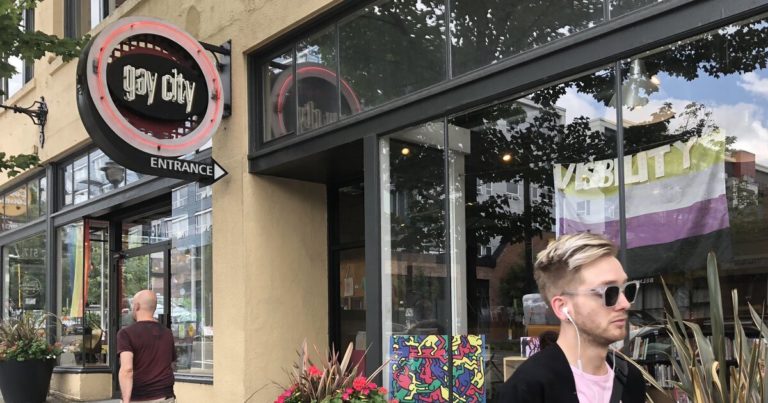
In this special column, Marina Resto, who runs the lively @Dating_in_Seattle Instagram account,talks to Melvin Givens of Gay City, an organization that’s served Seattle’s LGBTQ+ community for over 25 years.
Meet Melvin Givens, the Director of Marketing and Communications at Gay City. In honor of Pride Month, we wanted to highlight Gay City, and learn more about the organization’s history with Seattle’s LGBTQ+ community. Here’s what Givens had to say about how to build a community, health and safety, volunteering, and a love story involving a Circuit City TV stand.
Answers have been edited for spelling and clarity.
Seattle historically has been known for its sizeable LGBTQ+ community, how has that changed over the years?
Advertising
Seattle joins Portland and San Francisco as the top cities with the largest LGBTQ+ populations. In various publications, Seattle has been considered “one of the best places for queer people to move.” And that has not changed to this day.
We still hear stories from our community about folks moving to Seattle in search of a more affirming community than their originating city or town. Or they discover the greater number of resources and employment opportunities available to them here, regardless of their gender identity.
We’ve heard a few sweet stories about people meeting their partners at Gay City events. Do you know of any success stories, romantically or platonically of people meeting through Gay City?
We have heard many romance stories from people meeting while volunteering or visiting Gay City. There’s one special story that comes to mind though: Last summer we created space for a queer couple to host a small wedding ceremony, just for the couple, an officiant and two staff as witnesses.
Years ago, a man sold his (now) partner a $300 TV stand from Circuit City, and from that transaction their relationship grew. Our staff who witnessed the ceremony raved about how lovely it was to bear witness to their love.
“With the COVID-19 pandemic, we wanted to make sure we were legally able to support one another if one of us gets sick,” they said.
Advertising
And they still have the TV table today.
What is the importance of this community, and what kinds of resources do you offer to LGBTQ+ folks in Seattle?
Gay City is often one of the first welcoming locations for LGBTQ+ folks moving to and visiting Seattle. As an agency centering on LGBTQ+ health equity, we realize several factors impact a person’s well-being. Through our resource program, we engage with people and connect them to the affirming resources they need, from rental assistance to health insurance.
Soon, we’ll be partnering with a community-driven resource called Connect2 Community. This support system unifies health and social service organizations around King County, so whether people need things like access to HIV testing or housing assistance, they can find it all in one place.
Amid the pandemic, how have you maintained a sense of community? How have you done outreach?
Gay City has maintained a sense of community by adjusting services to meet our community’s needs. When the pandemic started, we launched virtual services where possible, and introduced new digital programming to bring our community together.
We launched a virtual COVID-19/vaccination awareness campaign featuring affirming resources and assistance, online healthcare navigation appointments, and increased access to telemedicine for clinic participants.
Advertising
But, one of the leading concerns we identified during COVID-19 was the need for community. We responded to the call by introducing Queer Community Conversations (QCC Live), a monthly Facebook Livestream focusing on the work of organizations serving and creating supportive spaces for Black, Indigenous and people of color.
Our Youth Advisory Council also launched Queer N’ Teen Instagram Live Chats, a digital community-building space for LGBTQ+ youth to discuss mental health support.
Where can people go to learn more about sexual health and safety?
Most Read Life Stories
Sexual health is the heart of our work at Gay City. During the pandemic, we noticed a series of positive STD cases. As folks reconnect and meet new intimate partners, we encourage everyone to be safe.
Looking at the CDC’s projection for HIV and STIs, we know that these illnesses disproportionately impact LGBTQ+ people. We want to eliminate that risk. That’s why our Wellness Center provides free anonymous and confidential HIV/STI testing four days out of the week.
People can schedule appointments for HIV/STI testing and PrEP with our compassionate, diverse, and multilingual testers at gaycity.org/appointments. We also can connect community members with virtual health services such as telemedicine or at-home HIV Testing.
For those needing immediate support, Gay City also provides free condoms available near our front door. Accessible to all. No questions asked.
How can people support the LGBTQ+ community right now?
It’s more important now than ever to support LGBTQ+ services. Since the COVID-19 pandemic, we have seen the vital need for affirming health services.
As we enter the Pride season, we recognize Give OUT Day, the only national time of giving, specifically for the LGBTQ+ community. Giving occurs from now through June 30. All donations uplift services for LGBTQ+ folks and their intersections.
Marina Resto Marina Resto is a freelance writer for The Seattle Times, and a side-hustle Cupid. Slide into her Instagram DM’s here: @dating_in_seattle.
BUDAPEST (Reuters) – Hungary’s parliament passed legislation on Tuesday that bans the dissemination of content in schools deemed to promote homosexuality and gender change, amid strong criticism from human rights groups and opposition parties.
Hardline nationalist Prime Minister Viktor Orban, who faces an election next year, has grown increasingly radical on social policy, railing against LGBT people and immigrants in his self-styled illiberal regime, which has deeply divided Hungarians.
His Fidesz party, which promotes a Christian-conservative agenda, tacked the proposal banning school talks on LGBT (lesbian, gay, bisexual and transgender) issues to a separate, widely backed bill that strictly penalises paedophilia, making it much harder for opponents to vote against it.
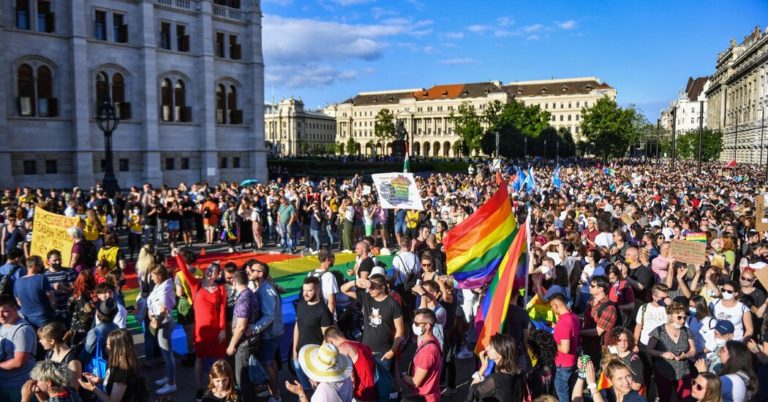
The move, which critics say wrongly conflates paedophilia with LGBT issues, triggered a mass rally outside parliament on Monday, while several rights groups have called on Fidesz to withdraw the bill.
Fidesz lawmakers overwhelmingly backed the legislation on Tuesday, while leftist opposition parties boycotted the vote.
Under amendments submitted to the bill last week, under-18s cannot be shown any content that encourages gender change or homosexuality. This also applies to advertisements. The law sets up a list of organisations allowed to provide education about sex in schools.
RESTRICTIONS
Gay marriage is not recognised in Hungary and only heterosexual couples can legally adopt children. Orban’s government has redefined marriage as the union between one man and one woman in the constitution, and limited gay adoption.
Critics have drawn a parallel between the new legislation and Russia’s 2013 law that bans disseminating “propaganda on non-traditional sexual relations” among young Russians.
Poland’s conservative ruling party Law and Justice (PiS), Fidesz’s main ally in the European Union, has taken a similarly critical stance on LGBT issues. Budapest and Warsaw are at odds with the European Union over some of their conservative reforms.
The European Parliament’s rapporteur on the situation in Hungary, Greens lawmaker Gwendoline Delbos-Corfield, slammed the new law on Tuesday: “Using child protection as an excuse to target LGBTIQ people is damaging to all children in Hungary.”
Orban has won three successive election landslides since 2010, but opposition parties have now combined forces for the first time and caught up with Fidesz in opinion polls.
(Reporting by Gergely Szakacs; Editing by Gareth Jones)
St. Sukie de la Croix didn’t set out to be one of the prolific custodians of gay bar history in Chicago. “I was listening to these two old guys in a bar, and they were wearing this old leather and they were arguing about the exact address of some old bar that wasn’t there anymore,” he remembers. “I went to my publisher and said, ‘Can I do a column?’” That was 1997. For six years, the British-born de la Croix published weekly 1,000-word columns documenting the Windy City’s gay nightlife scene for local paper. A book, “Chicago Whispers: A History of LGBT Chicago Before Stonewall,” followed in 2012.
Turning barflies’ memories of the city’s shuttered gay and lesbian bars into publishable reports posed challenges, and de la Croix often found himself trying to reconcile conflicting contributions. And when the self-deputized historian found himself too close to a source, things could get complicated. “I had to be careful with some of the things I actually put in the paper,” recalls de la Croix. “I had some great stories I couldn’t print. When you get picked up by a very famous mob leader in Chicago, and you give him a blowjob in the back of his car… I mean, it hurt me not to put the story in the paper.”
The mob may have relinquished Chicago’s gay and lesbian bars from the vise-like grip it established on those businesses (and their New York City counterparts, too) during Prohibition. But archiving the history of the LGBTQ+ community’s beloved third places across the country hasn’t gotten any easier since de la Croix began his work some 30 years ago. Patrons’ recollections have gotten foggier; photos and fliers have faded; funds for preservation work are perennially tight. That was all true before the coronavirus pandemic put an unheard-of strain on the country’s hospitality industry, and believe it or not, that didn’t make collecting and preserving these vital American drinking histories any easier for the career scholars, authors, filmmakers, and hobbyists across the country trying to do so. “It’s been a strange time to try to do this research,” says Lucas Hilderbrand, a professor of film and media studies at the University of California-Irvine who is working on a book about gay bar history.
For Pride Month, VinePair interviewed eight gay and lesbian bar archivers around the country about the challenges and urgency they’re currently facing in documenting America’s gay and lesbian bars while they still can. Their work spans media, discipline, and geography, but each shares the common goal of collecting the memories and materials that animated American LGBTQ+ nightlife in its heyday. As one put it, these bygone bars are “phantoms of the past.” Here’s a look at the effort to immortalize them — and the challenges archivists face along the way.
“It’s like those books have been burned”
The first thing you must understand about the effort is that it’s urgent. “I don’t know if there’s going to be, 30 years from now, a category that we call gay bar or the lesbian bar,” muses Frank Perez, author and co-founder and president of the LGBT+ Archives Project of Louisiana. If the past 30 years are any indication, he has reason to worry. After a brief uptick in the late ‘70s and early ‘80s, the total number of gay and lesbian bars in the United States crested around 2,000 locations, according to research published by Oberlin associate professor of sociology Greggor Mattson based on listings in the Damron Guides, a prominent LGBTQ+ nightlife guidebook series published annually throughout the back half of the 20th century. This data is incomplete, as Mattson himself notes, but it paints a picture directionally, and that direction is unmistakably downward. The sociologist’s figures indicate the country has lost 45 percent of gay and lesbian watering holes since 1977 — and those were only the locations well established enough to be indexed in the first place.
”There has indeed been a decline, the decline has been accelerating,” Mattson, who operates the Twitter handle @WhoNeedsGayBars, tells VinePair. According to his audit, the total number of listings tumbled over 14 percent between 2017 and 2019 alone. The causes for each closure vary, but there are common themes. “They’re competing with the internet, they’re competing with gentrification, they’re competing with assimilation, they’re competing with [the fallout from] Covid,” says Erica Rose, a filmmaker and co-founder of the Lesbian Bar Project, a documentary film effort. When the pandemic hit, Rose and Elina Street put together a short video to draw attention and raise funds for America’s few remaining lesbian bars. (The exact number of lesbian bars still standing is also a source of debate, but it’s low. LBP now says there are 21 still operating throughout the U.S. By contrast, Mattson found 162 listed in 1977.)
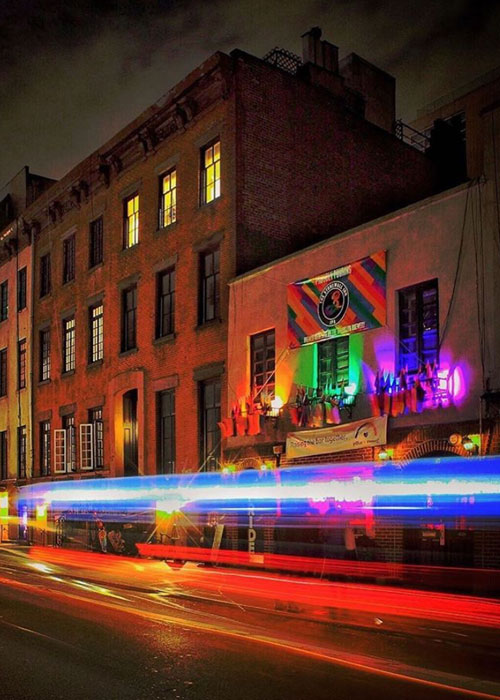
The pandemic has only exacerbated these factors, putting brutal financial pressure on already beleaguered gay and lesbian bars across the country. Even the most famous watering holes are not exempt: In May 2021, The New York Times reported that the iconic Stonewall Inn itself was struggling with mounting bills after a year-plus of pandemic. “If Stonewall, the most iconic L.G.B.T.Q. bar in the world, is facing an uncertain future, then think about everybody else,” its co-owner said.
Whenever a gay or lesbian bar’s uncertain future turns to a certain demise, the clock starts ticking to capture information about it before it disappears into the ether. “There’s sort of a rush to preserve things,” says Mattson, and these ad-hoc efforts are often pioneered not by trained historians but by patrons hustling to immortalize memories of a place they loved. “Sometimes a Facebook group gets set up, and then people run around scanning their photos or just taking photos of their [old] photos with their phones.” These ad-hoc social media efforts can be troves, but only for those professional archivists who know about them — or are on social media in the first place. “Most regional historical societies are underfunded and understaffed, so unless they happen to have some LGBT person on their staff who’s a member of these Facebook groups, I don’t know that these things make it into the formal record,” Mattson says.
Relying solely on digital platforms to share these memories and materials puts them at risk: A group’s administrator could suddenly delete it, or the platform might rejigger its settings, rendering it inaccessible. “You’re dependent upon a corporate entity whose job it is to make money for shareholders,” he says, pointing to Yahoo’s abrupt 2009 obliteration of GeoCities — a major early-aughts repository of LBGTQ+ content and community — as a cautionary tale. (Incidentally, the search portal was also behind the controversial 2018 purge of Tumblr’s NSFW content, which was criticized for driving off queer bloggers and artists using the platform.)
Still, a digital outpouring is better than nothing. For gay and lesbian bars that closed in the distant, Facebook-free past, no such nostalgia flurry is forthcoming. If the shutdowns aren’t documented at the time, either by social or traditional media (more on that in a moment) archivists must mine the memories of patrons who were actually there. And given that gay and lesbian bars were at their statistical height four decades ago, those patrons are, by default, getting on in years.
Dr. Marie Cartier, a queer studies lecturer at California State University-Northridge and UC-Irvine, estimates that of the 102 sources she interviewed for her seminal 2013 book on lesbian bar history, “Baby, You Are My Religion,” at least a third have since died or been afflicted with age-related declines in cognition. “For the 30 or so who have passed, or have dementia or other illnesses and wouldn’t be able to be interviewed [anymore], it’s like those books have been burned,” she says.
“How do we find people?”
Between fading memories, patrons passing away, and the ongoing threat of closure, capturing stories from America’s gay and lesbian bars is tedious, detail-oriented work. “The biggest obstacle is getting the information about the bars, getting the interactions, getting people to say, ‘Yeah, I lived in Des Moines, Iowa in 1968 and there was this bar there, and here’s the information,’” says Art Smith, the amateur archivist behind GayBarchives.com, a gay and lesbian bar logo indexing project. During the pandemic, he estimates he spent 10 to 12 hours a day trying to track down original graphics and signage; to date, he’s indexed some 1,300 logos of bars from 49 states.
This gets at another challenge: In the absence of testimony from drinkers who were actually there, it’s not always easy for archivists to figure out where “there” was on a map. “A lot of the [gay and lesbian bars] that Damron listed … those cities have grown and developed since then,” agrees Dr. Amanda Regan, a co-project director of Mapping The Gay Guides, a project to digitize every published edition of Damron’s Address Books.
More often, the people who drank at old gay and lesbian bars move, making it that much harder to collect their oral histories. This is especially true for queer of color communities that formed on what were once the fringes of a metropolitan area but have since been absorbed and gentrified. “These are communities that have been so obscured or marginalized from record,” says Stacy Macias, Ph.D., an assistant professor at California State University-Long Beach’s department of Women Gender and Sexuality Studies, whose work has explored the history of bygone lesbian nightlife in greater Los Angeles’s “east of east” communities. “The archives are living, but they’re not in any form you can walk into, like a library.” Particularly when said library has been scattered to the wind, displaced by gentrification or drawn elsewhere by jobs or family. Once former patrons move on, tracking them down becomes a challenge in itself, says Macias. “How do we find these people? It’s often through personal connection, doing research based on finding someone randomly from a Facebook photo. … The methods have to be really creative.”
Some archivers, like de la Croix and Smith, lean heavily on their social media audiences to track down one-time patrons of this or that gay or lesbian bar. But while digital platforms can be powerful communication tools, they’re not without shortfalls. There are concerns around security and stability, as Mattson noted. And for archivists whose work relies on forging personal connections with sources to coax detail-rich personal memories of parties past, “social media is just not an adequate substitute for what you get in-person,” says Macias.
Credit: Gay Barchives
Contemporary media are limited, and mostly offline
Archivists who focus their efforts on written rather than oral history face a different issue: a winding, incomplete, and often analog paper trail. The availability of contemporary media about gay and lesbian nightlife is hit or miss. “The primary place these bars were advertised and that these scenes were documented was in the gay press, and many of those were local and were often very short-lived,” says Hilderbrand. Those periodicals that managed to publish regularly still struggled to adapt to the online age like the bars that often advertised in their pages. “We’re talking about years when people were printing in underground publications that may in some cases [have] only lasted a year or two, and certainly were never scanned or archived online,” says Smith, who himself ran a gay nightlife publication in Atlanta for a few years in the ‘80s. “That’s been a huge challenge.”
This is even truer for richer, more modern forms of media like video. “We had to build a world through archival” footage, says Rose of the Lesbian Bar Project. “A lot of these bars weren’t photographed, they weren’t documented” except by their patrons, so the pair relied heavily on what stills they were able to source from the crowd. The two tell me that they’re aware of no centralized archive for gay and lesbian bar video footage, and that relevant clips were scarce in the databases of major archiving houses. “We had a lot of community support,” adds Street.
To conduct research for his upcoming book, Hilderbrand has relied on the University of Southern California’s ONE National Gay & Lesbian Archives, the largest repository of LBGTQ+ materials in the world, as well as visits to smaller, regional archiving projects and historical societies across the country. But the pandemic forced him to pause those visits, and much of the archived content isn’t online. “The vast majority of material is still on paper in an archive and those have been closed to the public,” he says.
Digital access to the physical media that has been preserved is a widespread obstacle, and one that Dr. Regan, along with her MGG co-founder Dr. Eric Gonzaba and their research team, are working to partially solve. The project’s goal is to scrape the information from each physical Damron volume to populate an easy-to-use national database of gay and lesbian bars from years past. The portal currently includes some 34,000 entries pulled from Damron guides published between 1965 and 1981. Users can sort the bars from location and years of operation to type of business and “amenities” (a shorthand that the guides’ late, prolific author, Bob Damron, used to describe what potential patrons could expect to encounter there). In April 2021, MGG received a three-year grant from the National Endowment for the Humanities to archive another 100,000 gay and lesbian bar locations listed in Address Books published from 1981 to 2000.
Still, even for MGG, accessing the physical materials will be a challenge: The only full collection of Damron guides in existence is housed at ONE’s archives. “A year and a half ago we were like, ‘Oh, we’ll just fly out to USC and spend a couple days in the archives, making scans [but that’s] no longer possible,” says Regan, the project’s digital lead. Instead, MGG will collaborate with ONE and a team at the University of Washington to digitize the guides there now that the NEH funding has kicked in.
Of course, securing and digitizing the Damron guides doesn’t make the information they contain infallible. “They are the longest-running, but they’re shaped by Damron’s biases, and he’s a white guy from San Francisco,” says Regan. For example, there are very few locations in Damron’s early guides demarcated for women. “This could be because there were not very many lesbian bars, but more likely it is because that’s sort of a blind spot for him. … You also sort of see this in the way that he talks about African-American bars,” she adds.
Such is the double-edged sword of doing history by available media — it sheds light on some aspects of the scene while obscuring others through omission. And when the media in question is less prominent than the prolific Damron guides, it’s often absent from archives entirely. “There’s overwhelming documentation of white gay and lesbian bars, but there’s very little archival documentation of Black and Latinx bars,” says Hilderbrand. “Many archivists themselves are white, so they [tend to] collect from their communities.” As a result, party flyers, newsletters, and ephemera related to queer communities of color and the bars that served as their community hubs may never have been preserved in the first place.
Credit: The Stonewall Inn
One man’s trash is another’s treasured bar history
When it comes to gay and lesbian bar archiving, another more emotionally fraught barrier looms: The people who own the materials that would help them paint a fuller picture of America’s LGBTQ+ nightlife landscape of yore aren’t always forthcoming with them. Sometimes, this is due to the simple reality that closing a bar sucks. “People don’t keep the ledgers from failed businesses,” says Mattson, who has interviewed around 100 gay and lesbian bar managers and owners. It’s a turning point no small-business owner wants to come to terms with, let alone make public. “You get very little in terms of documentation of what the inside [operation] of the bars was like,” echoes Hilderbrand.
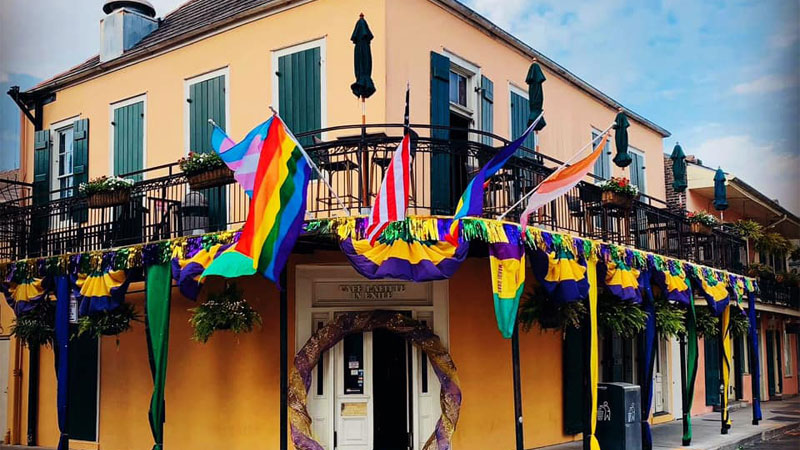
Even when bars are still open, their owners are not always amenable to the idea of forking over sensitive documents. “In archiving our history, one of the biggest challenges is the bar owners,” says Perez, who in addition to his touring and archival work, has authored a half-dozen books about New Orleans, including a history about the city’s — some say the country’s — oldest gay bar, Cafe Lafitte in Exile. “If a bar is still open and active, they don’t necessarily want all their records [archived and published]. … That’s not something they’re going to willingly give up.” In his work with the LGBT+ Archives Project of Louisiana, Perez has contemplated the strategy of asking owners at New Orleans’ still-open gay bars to sign letters of intent to earmark their files for archiving if or when they close. If a gay or lesbian bar owner “backs out through the exit” (to use Mattson’s analogy) without such an agreement in place, those materials may just wind up in the trash.
Complicating matters, patrons and owners alike may not consider things like invoices and ephemera to be worth saving, says Macias. “Someone who ran a [gay or lesbian] bar for like five or 10 years in little El Monte, Calif., 30 miles east of downtown L.A., isn’t gonna know [that archives would want their materials.] They’re selling all of their stuff off to try to make a little profit at the end of their business closing.” Value is in the eye of the beholder, after all, and all too often the holders of coveted pieces of gay and lesbian bar history don’t see them as such. “Our communities — the queer of color, the queer Latina, the Latina lesbian, gay, Latino [communities] in East L.A. and East of East … oftentimes don’t even understand our value in the present,” she continues. “They don’t imagine that they’re holding [historical] ‘prizes,’ these rich documents that can fill the gaps historically.”
“Sometimes people don’t realize what needs to be preserved,” agrees Perez. “Part of my job is convincing people: ‘Hey, that poster of a drag show from 30 years ago, you may not think is important, but it is. ’” (Another part of his job — and all archivists’ jobs, really — is finding funds to actually preserve these items once obtained. “We just need money to do what we do,” says Perez.)
Dr. Cartier has come across a related disconnect in her own work. “So many of the people that I interviewed were surprised that I thought that their stories about bar culture were important, because bars have been denigrated [in this country] as a lower-class meeting place,” she says, adding that holding dual citizenship in both the U.S. and Ireland has influenced her perspective on the vital community nature of the bar as an institution. To her, a gay or lesbian bar is “a church, a community center, … a lifeline to the creation of identity.” Ephemera and memories about the experiences and relationships formed there are “so precious,” she continues, but because pub culture doesn’t feature as heavily in broader American drinking culture, “we tend not to see the bar as what it is for gay people.”
Credit: The Cafe Lafitte
Looking ahead
These days, Sukie de la Croix has traded Chicago’s severe winters for the warm embrace of Palm Springs, Calif. (“Where homosexuals go to die,” as he puts it.) He quit drinking in 2008, but his professional connection to the gay bars and their history remains intact: He’s currently working on an encyclopedia of Chicago gay bars with a co-author, Chicago LGBTQ+ press veteran Rick Karlin. It’ll be his last book. “I just want to document what’s never been documented so that in 100 years, when there are no gay bars around and people can’t even grasp the concept of a gay bar, at least there’s a book that tells them what happened — and all the fun things that happened in bars.”
These include ass-painting and banana-swallowing contests, both of which he recently discovered took place at Chicago bars of yore. “God, I wish I’d been there,” he says, wistfully.
Will there be more ass-painting and banana-swallowing in the future? Hard to say. Macias, at UCLA, wonders if the post-pandemic surge might bring about renewed interest in those gay and lesbian bars that remain for drinkers who spent the last year cooped up and reading about their demise. Art about those joints and beloved bygone businesses (of which thereis agrowingcatalog) could fuel that turn. “Some of these bars are now getting referenced in poetry, in films, as these phantoms of the past, and I think there’s increasing interest in how to revive or take the actual spaces where they existed,” she says. “Maybe not revive them as a bar, but … to keep something intact in relation to them.”
As for those gay and lesbian bars that are still in business, and reopening after the pandemic, the hope is that storytelling about their past will keep them intact in the future. “We just want to make sure we document and honor spaces that are also changing, and really accompany them through these changes and let people know that they’re still there and still available,” says the Lesbian Bar Project’s Street. In early June, LBP released a more in-depth documentary and reopened its donation page to allow drinkers across the country to support America’s remaining lesbian bars — because if there’s one thing that holds true across archival work and bar ownership, it’s that funds are always tight, and appreciated.
On June 28, 1969, New York City police conducted a raid on the Stonewall Inn, a popular gay bar in Greenwich Village. The raid was ostensibly because the place lacked a liquor license—authorities didn’t often approve them for gay bars—but it was the latest in a long line of actions taken specifically to persecute the LGBTQ community.
Officers started arresting people, and when one hit his detainee, onlookers began to hit back. The police were forced to barricade themselves inside the bar as the mob grew in force and number, kicking off a series of protests that lasted for several days. The so-called “Stonewall Riots” (or “Stonewall Uprising”) weren’t the first time the country’s LGBTQ community had fought openly against systemic oppression and violation of human rights; in fact, the first gay rights campaign in the U.S. dates back to 1924. But the Stonewall Riots made an especially lasting impression, and Greenwich Village locals held a march to mark the anniversary in 1970. The theme was “gay pride,” and the LGBTQ communities of Chicago, San Francisco, and Los Angeles also organized events for the occasion.
Though the Stonewall Riots helped usher in a new era of LGBTQ activism and “Gay Pride” became the slogan for an increasingly global movement, the U.S. didn’t recognize that significance at the national level until 1999. In June of that year, President Bill Clinton commemorated the 30th anniversary of Stonewall by declaring June as “Gay and Lesbian Pride Month.” Ten years later, President Barack Obama issued another proclamation updating its title to “Lesbian, Gay, Bisexual, and Transgender Pride Month.”
“As long as the promise of equality for all remains unfulfilled, all Americans are affected. If we can work together to advance the principles upon which our Nation was founded, every American will benefit,” he wrote [PDF]. “During LGBT Pride Month, I call upon the LGBT community, the Congress, and the American people to work together to promote equal rights for all, regardless of sexual orientation or gender identity.”
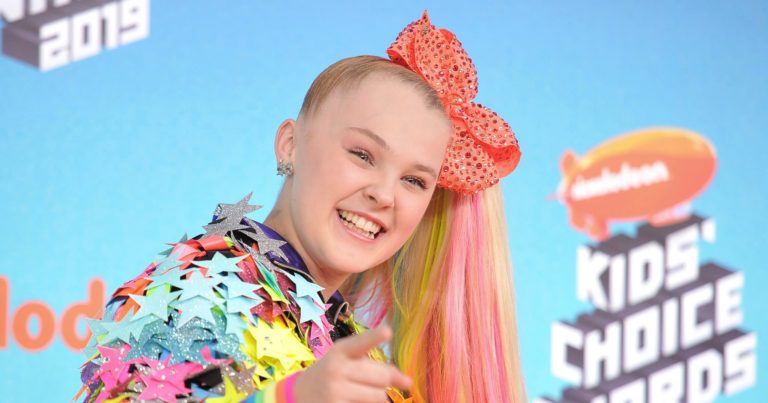
The former Dance Moms star revealed in January 2021 that she is a member of the LGBTQ+ community. At the time, Siwa uploaded a photo in which she was wearing a black t-shirt that read, “Best. Gay. Cousin. Ever.”
“Personally, I have never, ever, ever been this happy before and it feels really awesome,” Siwa told viewers. “I’ve been happy for a little bit now. It’s just so, so, so awesome.”
Shortly after coming out, the “Kid in a Candy Store” songstress appeared on a February 2021 episode of The Tonight Show Starring Jimmy Fallon and revealed that she had “the most amazing, wonderful, perfect, most beautiful girlfriend in the whole world.
While speaking with host Jimmy Fallon, the singer explained that “10 minutes before” she was “crying” on the phone with her girlfriend. “She’s like, ‘What’s wrong with you?’ And I was like, ‘I’m just so happy because now I get to share what makes me the happiest with the world, and it makes my heart so happy,’” she recalled.
At the time, Siwa kept her significant other’s identity under wraps, but eventually shared that Florida teen Kylie Prew had stolen her heart.
Prior to becoming a couple, the duo met on a cruise ship and eventually went from being best friends to something more.
“We were just hanging out and then I was like, ‘Woah, this girl is fun,’” Siwa said during an interview with J-14 in December 2020 about the first time they met. “I was like ‘You are insane, and I love you to death.’ So, I met my best friend last year on Christmas Eve, actually.”
“People are going to say it’s not normal, but nothing is normal,” Siwa said in a January Instagram Live. “Literally not one thing about anybody is normal and it’s OK not to be normal, it’s OK to be a little different, it’s OK to be a little weird, strange, different. That’s something we should never, ever be afraid of. That’s something we should be proud of. … I’m the happiest I’ve ever been, that’s what matters.”
Scroll through the gallery below to see what Siwa has said about coming out and her relationship:
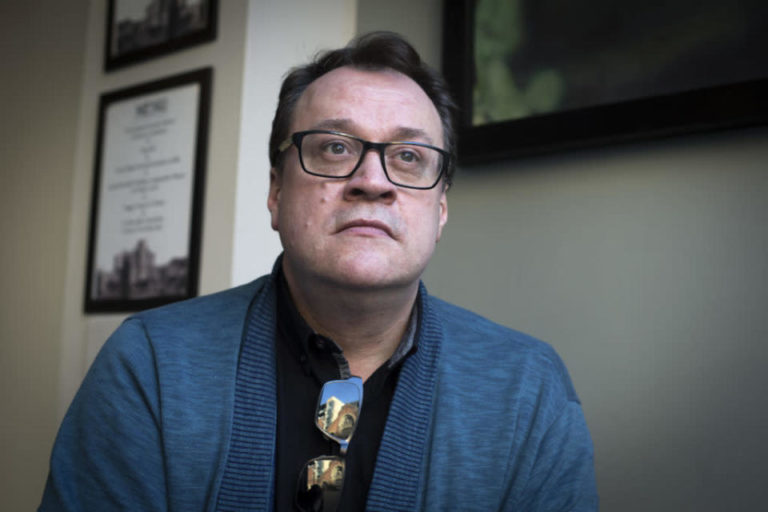
British television screenwriter and director Russell T Davies. (Getty/Colin McPherson)
Russell T Davies has explained that equality laws posed a challenge when he set out to cast queer actors in queer roles in It’s a Sin.
The screenwriter made waves ahead of the premiere of his Channel 4 series when he revealed that he specifically set out to cast gay actors in gay roles.
But doing so wasn’t always easy because he wasn’t allowed to ask actors how they identified.
“We made a decision at the beginning of the production, a decision I’d been heading toward for a couple years, to cast gay as gay entirely, or as entirely as we possibly could, which turned out to be entirely,” Davies told IndieWire.
“That’s an interesting decision because, obviously, you’re not allowed to ask whether an actor is gay or not. That’s a very good employment law… that stops the head of a supermarket banning lesbians from being on the tills.
“But what it creates is a circumstance where we could just be open and say, ‘We’re gay. This is gay. Come join us.’”
Davies and his casting director Andy Pryor got around this roadblock by putting out a message that their door was open and prospective actors were welcome to share their experiences if they chose to.
That policy ended up working in their favour, and It’s a Sin ended up breaking new ground with its queer cast.
Russell T Davies struggled to get It’s a Sin off the ground
Elsewhere in the interview, Davies reflected on the challenge he faced in getting a network to commission It’s a Sin – but he insisted television executives’ trepidation wasn’t down to homophobia.
The acclaimed Queer as Folk writer noted that he had previously created Cucumber in 2015 and Years and Years in 2019, both of which followed gay men.
“I suspect there were people quite rightly at Channel 4 going, ‘Another gay male experience? Shouldn’t we be looking at lesbian stories? Transgender stories? Genderfluid, neutral, binary stories? That’s a very good impulse. That makes sense…
“We just had to be patient to wait for the right commissioner to fall into the right office at the right time. It didn’t make me angry.”
It’s a Sin quickly became a hit when it aired on Channel 4 in January. The series later debuted on HBO Max in the United States.
Russell T Davies has explained that equality laws posed a challenge when he set out to cast queer actors in queer roles in It’s a Sin.
The screenwriter made waves ahead of the premiere of his Channel 4 series when he revealed that he specifically set out to cast gay actors in gay roles.
But doing so wasn’t always easy because he wasn’t allowed to ask actors how they identified.
“We made a decision at the beginning of the production, a decision I’d been heading toward for a couple years, to cast gay as gay entirely, or as entirely as we possibly could, which turned out to be entirely,” Davies told IndieWire.
“That’s an interesting decision because, obviously, you’re not allowed to ask whether an actor is gay or not. That’s a very good employment law… that stops the head of a supermarket banning lesbians from being on the tills.
“But what it creates is a circumstance where we could just be open and say, ‘We’re gay. This is gay. Come join us.’”
Davies and his casting director Andy Pryor got around this roadblock by putting out a message that their door was open and prospective actors were welcome to share their experiences if they chose to.
That policy ended up working in their favour, and It’s a Sin ended up breaking new ground with its queer cast.
Russell T Davies struggled to get It’s a Sin off the ground
Elsewhere in the interview, Davies reflected on the challenge he faced in getting a network to commission It’s a Sin – but he insisted television executives’ trepidation wasn’t down to homophobia.
The acclaimed Queer as Folk writer noted that he had previously created Cucumber in 2015 and Years and Years in 2019, both of which followed gay men.
“I suspect there were people quite rightly at Channel 4 going, ‘Another gay male experience? Shouldn’t we be looking at lesbian stories? Transgender stories? Genderfluid, neutral, binary stories? That’s a very good impulse. That makes sense…
“We just had to be patient to wait for the right commissioner to fall into the right office at the right time. It didn’t make me angry.”
It’s a Sin quickly became a hit when it aired on Channel 4 in January. The series later debuted on HBO Max in the United States.
A few hundred pages. That’s how many pages writer Jack Guinness has devoted to queerness, inviting celebrities to contribute essays about their favorite queer icons in “The Queer Bible” (Dey St., 320 pp.)
We know what you’re thinking: How? How could one possibly contain the many (many!) multitudes of the LGBTQ community into a mere few hundred pages?
While the book couldn’t accomplish that, it comes close,celebrating queer heroes past and present, bold and beautiful, acerbic and astounding, people as different as George Michael, RuPaul and James Baldwin. Prepare yourself to fall into queerness quicksand.
The quotes below stood out as some of the most impactful – and just in time for Pride Month:
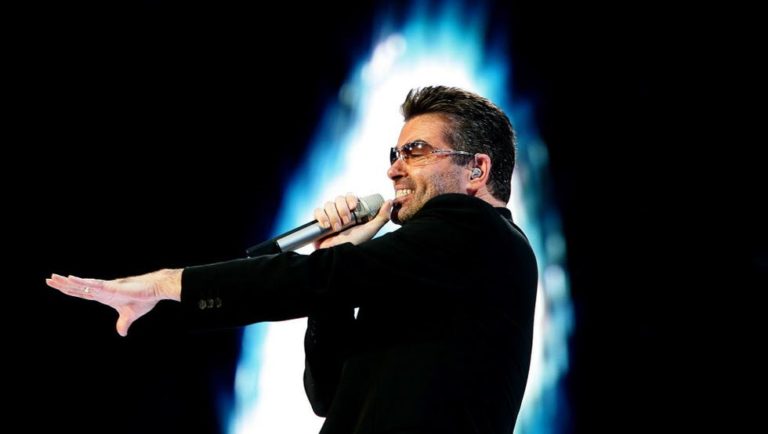
George Michael
Journalist Paul Flynn wrote a sprawling essay on musical sensation George Michael – though one quote (queerly) stood out about his albums “Listen Without Prejudice Vol. 1” and “Older.”
“Pick a song, any song, from those two records,” Flynn writes. “Pluck it on a guitar. Hum it aloud. Musically, it is The Beatles, The Stones, Sinatra, The Bee Gees and Stevie Wonder conjoined, punctuated by deferential references to them all. Lyrically, it is the tale of every gay man’s transcendence from the man he was taught to be to the man he was meant to be.”
David Bowie
We don’t want to think about a world in which David Bowie didn’t challenge heteronormativity.
“He problematized, destabilized or deconstructed heteronormative ideas of masculinity, gender and sexuality,” journalist Freddy McConnell writes. “He not only challenged but obliterated our notions of who was allowed to be a mainstream pop and rock culture icon.”
Divine
You likely know drag queen Divine by only that name. Singer Elton John penned a moving piece celebrating both Divine and the person out of drag, Glenn (Harris Glenn Milstead), who died of heart failure in 1988.
“For me, Glenn’s death will always feel tied up with the height of the AIDS epidemic,” John writes. “It isn’t just the coincidence of the timing, at the height of the pandemic. His life and career were cut short just as he was breaking into the mainstream, on the eve of his acceptance as Glenn. That feeling of lives being cut short, abbreviated at the precise moment they were blossoming, was commonplace. It was simultaneously heart-breaking.”
We can thank “Drag Race” host and trailblazing drag queen RuPaul for the creation of “The Queer Bible,” really.
Guinness, who edited the collection, says of iconic drag queen: “RuPaul inspired me to create ‘The Queer Bible’; to create something beyond myself, something real. A platform for others to tell their stories in their own voices. A space and community for the next generation, who can joyously celebrate our culture and educate us about evolving concepts of gender and politics.”
Adam Rippon
Olympians Gus Kenworthy and Adam Rippon made history at the 2018 Olympics as two out gay men. Kenworthy reflected on his friendship with Rippon in a piece for the bible.
“It was a moment I’ll never forget for the rest of my life. The first time an openly gay man walked into a Winter Olympics opening ceremony – and it was not just a man, it was two,” Kenworthy writes.
‘Paris Is Burning’
Twirl into ballroom culture and watch “Paris Is Burning,” though familiarize yourself with criticism surrounding it, too.
“”Paris Is Burning’ ignited a spark in me,” model and activist Munroe Bergdorf writes. “It encouraged me to look further into Black queer history. It was the beginning of my awakening of self and community. Then I realized it was a Black trans woman that started the whole (expletive) thing! They fought for the rights that so many of the modern queer community enjoy today.”
‘Queer Eye’
Leave it to “Queer Eye” star Tan France to provide a poignant quote on the importance of gay friendship.
“As gay men, our friends are to a large extent more important to us than our family,” France writes. “They are the ones who mold who we are at a time when our identity might feel under attack. We become a product of our friendship circle.”
Sontag’s 1964 essay “Notes on ‘Camp'” helped explain the term “camp” to journalist Amelia Abraham (and, obviously, many others). Think of it as “love of the unnatural: of artifice and exaggeration,” per Sontag. John Waters’ films (“Hairspray,” “Pink Flamingos”) are campy, for example.
“In camp, I felt like I had inherited a special gift, a secret language, a very particular kind of humor,” Abraham writes. “Camp felt like a weapon to use against the world when I might find myself up against homophobia – a source of joy in difficult times.”
James Baldwin
A book called “The Queer Bible” perhaps could only have ended with words on the magic of writer James Baldwin.
“I am lucky, so, so lucky to have been able to consult James Baldwin, to know that others have been angry, before me; others have thought about white supremacy and how it affects all our lives, before me; thought about what it means to be gay in the Black community and in the Church, before me,” writes British novelist Paul Mendez. “He is the writer who has perhaps had the greatest impact on my life, and as I have not yet read every word he has written, it thrills me to think that there is more inspiration, more affirmation, still to come.”
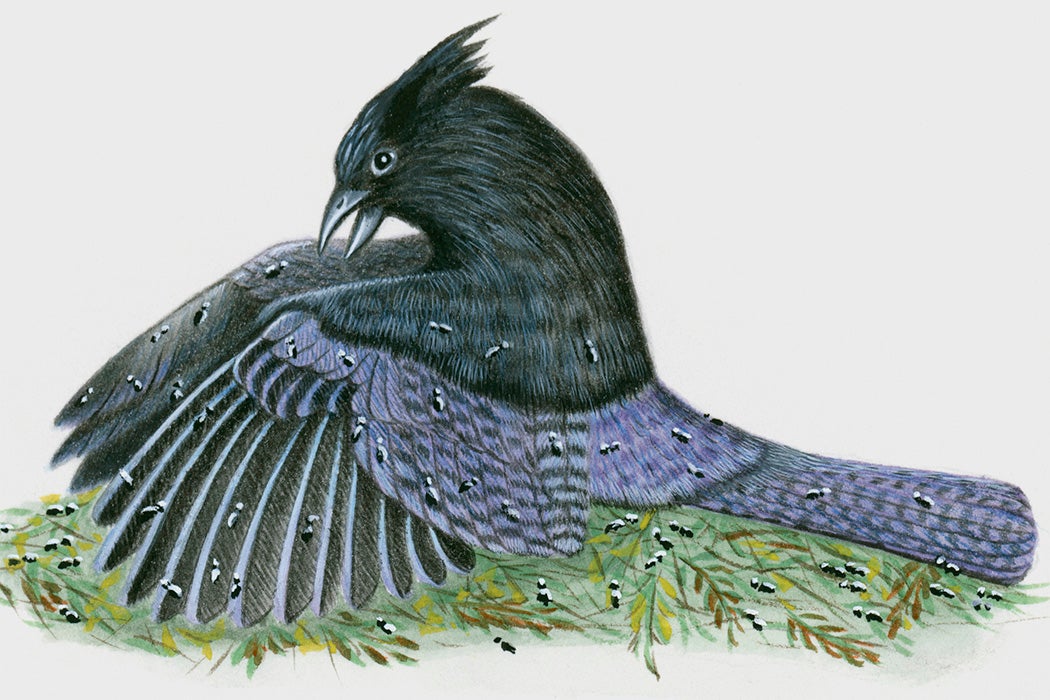
Fancy an ant bath? (CBC News) by Cathy Kearney When a photographer spotted an apparently healthy crow covered in ants, he was confused. But scientists say “anting,” intentionally putting ants on their feathers, is perfectly normal bird behavior, even if humans don’t know for sure why they do it.
Gay liberation road trip: An oral history (Harper’s Bazaar) by Hugh Ryan In 1970, five gay liberation activists drove across the country, spreading the word about an upcoming Black Panther convention. Historian Hugh Ryan collects their memories of communal life, drugs, fast food, and revolutionary dreams.
Why bring viruses into labs? (The Conversation) by Jerry Malayer Why would scientists mess with potentially dangerous viruses in their laboratories anyway? It’s true that there are risks to this work, but there are also very serious risks to not finding out everything we can about biological hazards.
Black preschools, white preschools (Culture Study) by Anne Helen Petersen US preschools are highly segregated by race and class. That affects the experiences kids have, regardless of programs’ educational quality.
What is church for? (Christianity Today) by Lyman Stone Christian parents generally want church to help their kids figure out how to make good choices and be happy. For youth ministers more concerned about the transcendental aspects of religion, that can be a challenge.
Got a hot tip about a well-researched story that belongs on this list? Email us here.
BUDAPEST, Hungary (AP) — Lawmakers in Hungary passed legislation Tuesday that prohibits sharing with minors any content portraying homosexuality or sex reassignment, something supporters said would help fight pedophilia but which human rights groups denounced as anti-LGBT discrimination.
The conservative ruling party of Hungarian Prime Minister Viktor Orban introduced the legislation, which is the latest effort to curtail the rights of gay men, lesbians, bisexual and transgender people in the central European nation.
Hungary’s National Assembly passed the bill on a 157-1 vote. The ruling Fidesz party has a parliamentary majority, and lawmakers from the right-wing Jobbik party also endorsed the measure. One independent lawmaker voted against it.
All other opposition parties boycotted the voting session in protest. Human rights groups had denounced the measure strongly, seeing it as a tool that could be used to stigmatize and harass residents because of their sexual orientations and gender identities.
Some human rights officials have compared it to the so-called gay “propaganda” law passed by Russia in 2013 which human rights officials say has become a tool to harass sexual minorities.
“On this shameful day, the opposition’s place is not in the parliament but on the streets,” Budapest Mayor Karacsony wrote on Facebook.
Lawmaker Gergely Arato, of the Democratic Coalition parliamentary grouping, said the changes violate the standards of parliamentary democracy, rule of law and human rights.
The legislation, presented last week by Fidesz, was on its face primarily aimed at fighting pedophilia. It included amendments that ban the representation of any sexual orientation besides heterosexual as well as sex reassignment information in school sex education programs, or in films and advertisements aimed at anyone under 18.
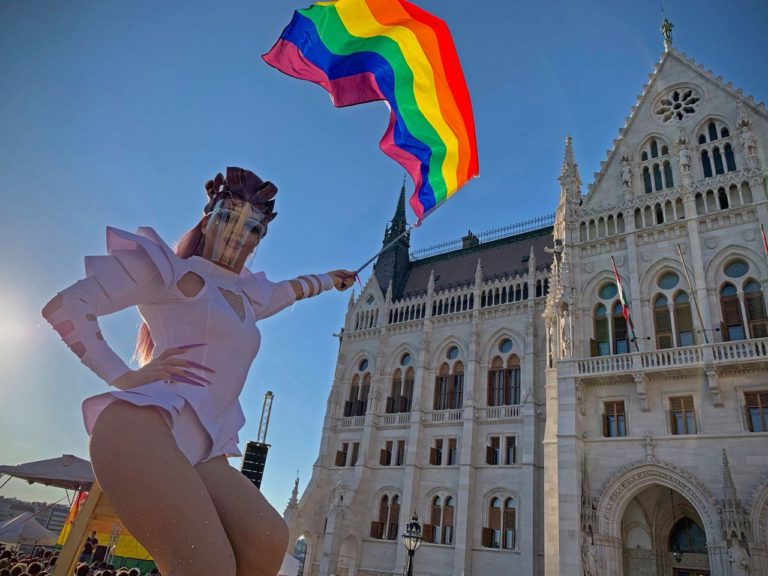
Thousands of LGBT activists and others held a protest in Budapest on Monday in an unsuccessful effort to stop the legislation from passing.
Dunja Mijatovic, the commissioner for human rights at the Council of Europe, the continent’s leading human rights body, also had asked Hungarian lawmakers to reject the legislation, saying it reinforced prejudice against LGBT people.
The Fidesz party also successfully championed a law making it impossible for transgender people to legally change the gender markers on their identity documents. Human rights officials say that puts them at risk of humiliation when they need to present identity documents.
“Today’s decision in #Hungary’s parliament represents another severe state discrimination against #LGBTIQ people,” Deputy Foreign Minister Michael Roth of Germany tweeted Tuesday after the new legislation passed. “This law goes against everything we regard as our common European values. Full solidarity and support for LGBTIQ people in Hungary.”
Copyright 2021 The Associated Press. All rights reserved. This material may not be published, broadcast, rewritten or redistributed without permission.