Home Blog Page 52

Working-class Black and brown trans ballroom scene birthed contemporary gay culture – People’s World

Working-class Black and brown trans ballroom scene birthed contemporary gay culture

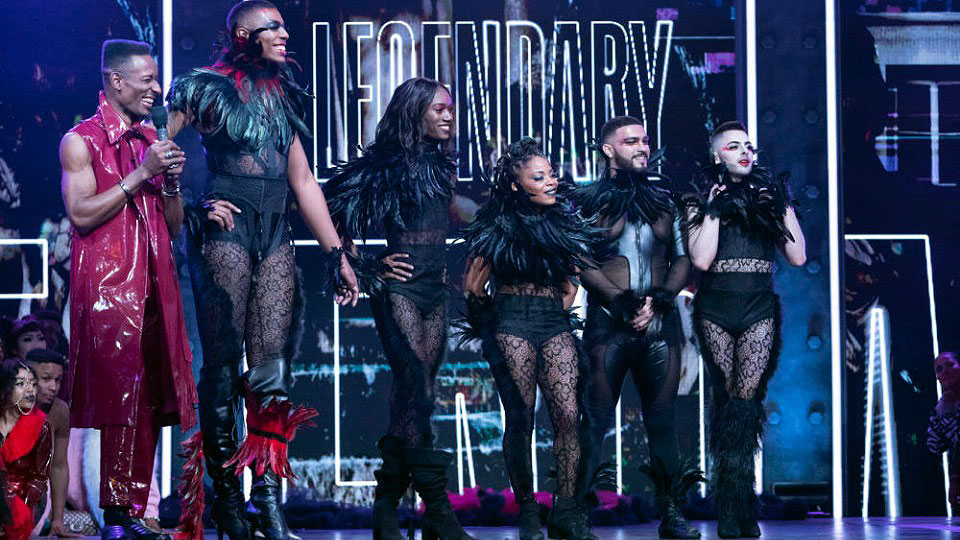
The House of Escada. | Courtesy of HBO Max

In honor of Pride Month, it’s important to highlight the working-class roots of the LGBTQ liberation movement in the United States. While a popular show like RuPaul’s Drag Race has made it to mainstream television, appearing on VH1 and Paramount+ and streaming endlessly on Netflix, we cannot forget where LGBTQ culture came from. Much of what is now seen as everyday gay pop culture and lingo has roots in the Black and brown transgender-dominated ballroom scene of New York City.

A lot of what passes as mainstream (middle class) white LGBTQ culture in gay bars across the United States today simply wouldn’t exist without the pioneering experience of the working-class ballroom scene led by trans women of color.
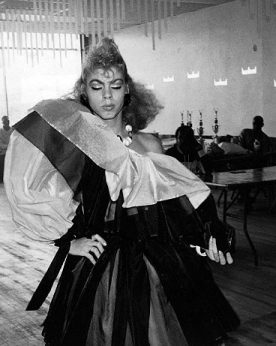
Famed performer Paris Dupree in a scene from the 1990 documentary, ‘Paris is Burning.’ | UCLA Film and Television Archive

The LGBTQ ballroom scene in New York City has its roots in the 1960s and ’70s. According to urban legend, famed drag performer Paris Dupree brought a copy of Vogue magazine to a Harlem ballroom scene, turned through its pages, and began imitating the poses that white celebrities made in the glossy photos. And thus, a new dance form was born: voguing.

Soon enough, “houses,” or chosen families of Black and brown LGBTQ youth across Harlem, Washington Heights, and the Bronx, formed as their biological families rejected them for living their truth. Homeless transgender women and gay/bisexual men forced to make a living by turning to sex work were welcomed into these houses and taught to “walk” and vogue in the ballroom scene as a form of entertainment and self-expression.

As the number of ballroom houses grew, so did the “categories” that entertainers walked and danced in. For example, the category known as “Butch Queen Vogue Femme” was (mostly) men voguing in a feminine manner against other dancers in that same category. The same would go for the category known as “Face,” where individuals of all gender identities compete to show how confident they are with their beauty and structure by walking down the runway selling it to judges.

Twilight Estrada

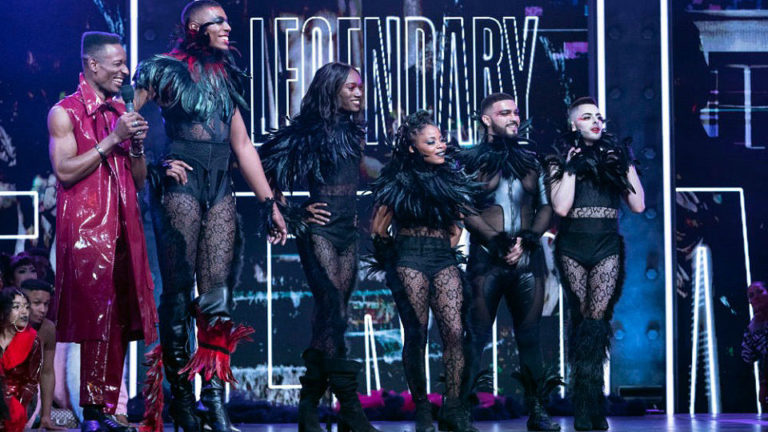
One particular member of the ballroom scene known for his performance in the “butch queen vogue femme” category and star of the first season of HBO Max’s hit show Legendary, Justin “Twilight” Escada, sat down with People’s World to discuss a bit of ballroom history and their role in the contemporary ballroom scene.

“I was 24-years-old when I walked my first ball as a member of the House of Escada,” Twilight says. “I come from humble beginnings. I was raised in Nashua, New Hampshire, by a single working-class mother and have been attending balls in New York City since I was a teenager… I had watched America’s Best Dance Crew on MTV as a teenager and that’s where my desire to vogue was born. I was deeply inspired by Leiomy Maldonado and Prince Mugler on this particular television show.”

Leiomy Maldonado, a well-known icon in the ballroom scene, starred alongside her now co-star, Deshaun Williams, on America’s Best Dance Crew in 2010 as members of Vogue Evolution, a Black and Latinx dance team which exposed ballroom to mainstream culture for the first time in nearly 20 years. (The first being Madonna’s 1990 release of her hit single, Vogue, and Jennie Livingston’s documentary Paris is Burning.)

Twilight taught themself to vogue after watching America’s Best Dance Crew and the 1990 documentary Paris is Burning. Twilight eventually found themself rooming with London Escada, the regional New England “mother” of the House of Escada, in Boston. Escada asked Twilight to officially join the house, which was originally called the House of Evangelista (coincidently, the same name used for the house of the protagonists on the FX and Netflix series Pose) founded in 1996. Ballroom houses are often named after fashion icons or designer name brands. For example, Linda Evangelista was a model for the brand Escada, hence the connection between the two names of the house to which London and Twilight belong.
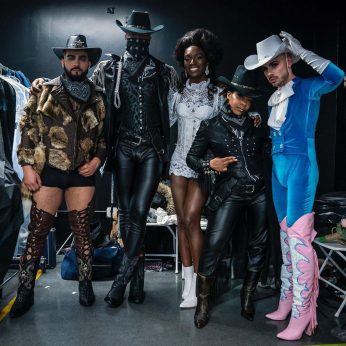
The House of Escada on ‘Legendary.’ Twilight Estrada is at right. | HBO Max

Twilight helped teach vogue classes together with London Escada at Emerson College in Massachusetts and made the cover of the Boston Globe, a feat which gained them the attention of a talent scout looking for dancers for the HBO Max ballroom dance competition show Legendary, which was filmed during the first three months of 2020 just before the pandemic. The House of Escada made it to the top three and was recognized by the judges for being the most family-like house in terms of their respect, love, and relationship to one another.

“I feel honored to have been on the show and to have been a part of a culture and movement founded by Black and brown transgender women. I am a guest in the ballroom community for being a white kid from New England, but seeing all of the love and support for me and my house has really been a humbling moment that has reassured me of my career and proven to me that I’m a part of something and accepted,” Twilight told the World.

When asked about what they would say to young LGBTQ folks who feel oppressed, shy, silenced, or embarrassed about who they are, especially if they are inspired or interested in ballroom culture, Twilight replied: “There is support waiting for you. Find your way to it. Live your truth. Be 100% yourself. It will take time, but you are not alone, and we find strength together in this struggle.”

This Pride Month, we must reflect on where the LGBTQ movement came from and how it has evolved over time. While white-dominated gay bars often sport their blonde-wigged drag queens and Madonna songs, we must remember that contemporary mainstream LGBTQ culture wouldn’t exist as it is without those of the ballroom community who came first and opened the door. We must honor their memory and continue their legacy.

As Twilight Escada put it, “Ballroom has a space for everybody, even categories for cis-gender women…. It’s a space where we can be who we are and while the struggles against racism and homophobia and transphobia are separate, they come together in ballroom.”


CONTRIBUTOR

Maicol David Lynch

Ed Department: Title IX Protects Gay and Transgender Students – The 74

TALKING POINTS

Get essential education news and commentary delivered straight to your inbox. Sign up here for The 74’s daily newsletter.

Title IX’s protections against sexual discrimination and violence extend to gay and transgender students, the U.S. Department of Education announced Wednesday in an interpretation of the 2020 U.S. Supreme Court ruling in Bostock v. Clayton County. (The full notice is embedded below)

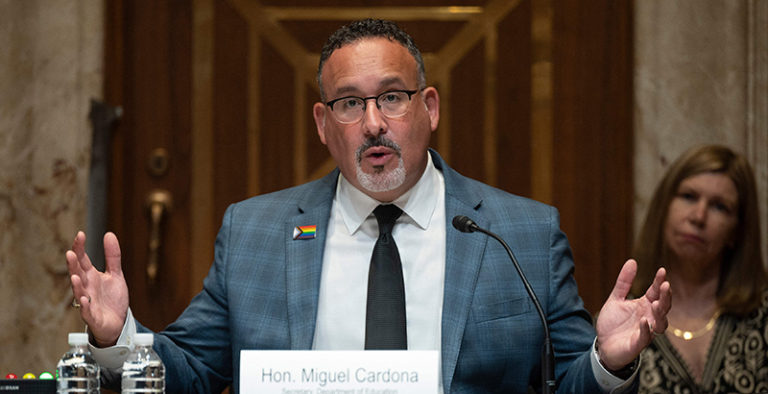
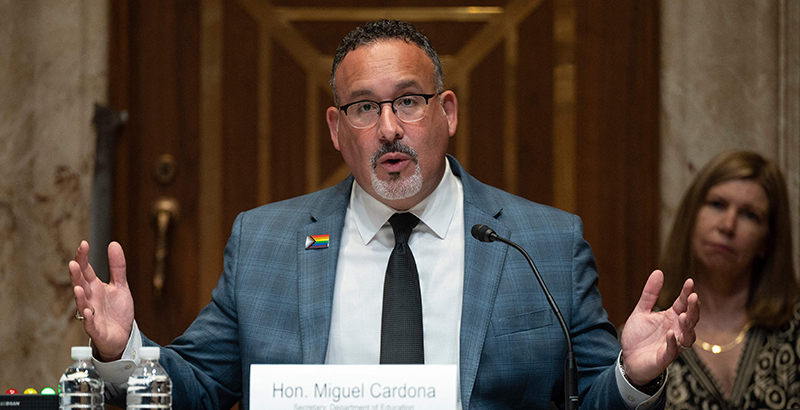
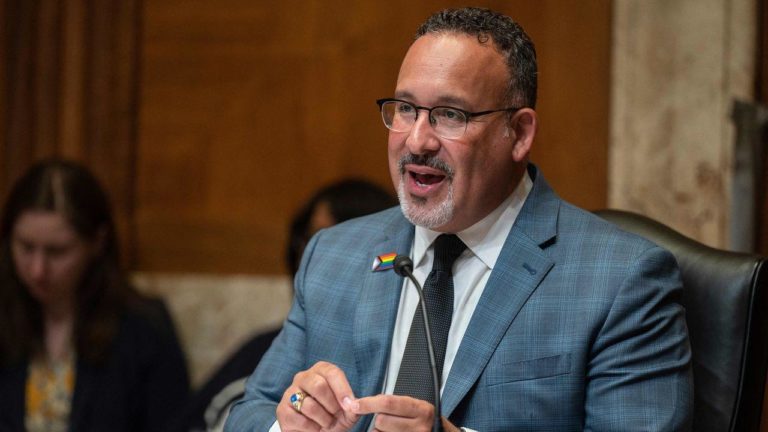
Acting on statements Education Secretary Miguel Cardona has made since he was nominated, the department’s notice reinforces that “on the basis of sex” includes sexual orientation and gender identity. The few tense moments Cardona has had in hearings before Congress so far have involved questions from Republicans over whether transgender girls should be allowed to compete against biological girls in high school and college sports.

Related

‘It’s So Hard’: As Trans Bans Spread, Experts Weigh How to Balance Fairness and Inclusion in High School Sports

“Today is an important milestone in the struggle to recognize the rights of LGBTQ+ students, one that we mark with pride,” Suzanne Goldberg, acting assistant secretary for civil rights, wrote in a blog post.

Last week, the department’s Office for Civil Rights held a five-day public comment period on a revamped Title IX rule, and stressed that officials were especially interested in hearing from those who have experienced harassment because of sexual orientation and gender identity.

Related

Deja Vu as Ed Department Once Again Revisits the Contentious Landscape of Title IX

In a statement, Congressman Bobby Scott, a Democrat from Virginia and chair of the House education committee, said “LGBTQ students will have strong and clear legal protections from discrimination in schools, and a safe learning environment.”

According to The New York Times, it’s unclear how the notice will impact states that have passed legislation banning trans students from competing against girls.

Today’s full release:

Related

Sign up for The 74’s newsletter

Submit a Letter to the Editor

European Union to investigate Hungary over anti-LGBT law – Euronews

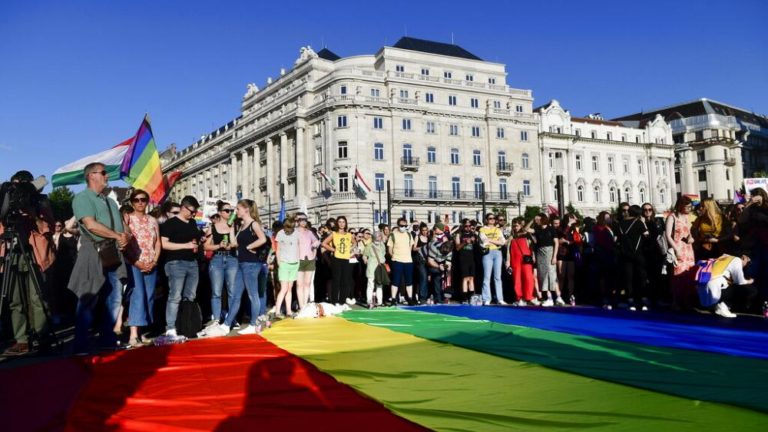
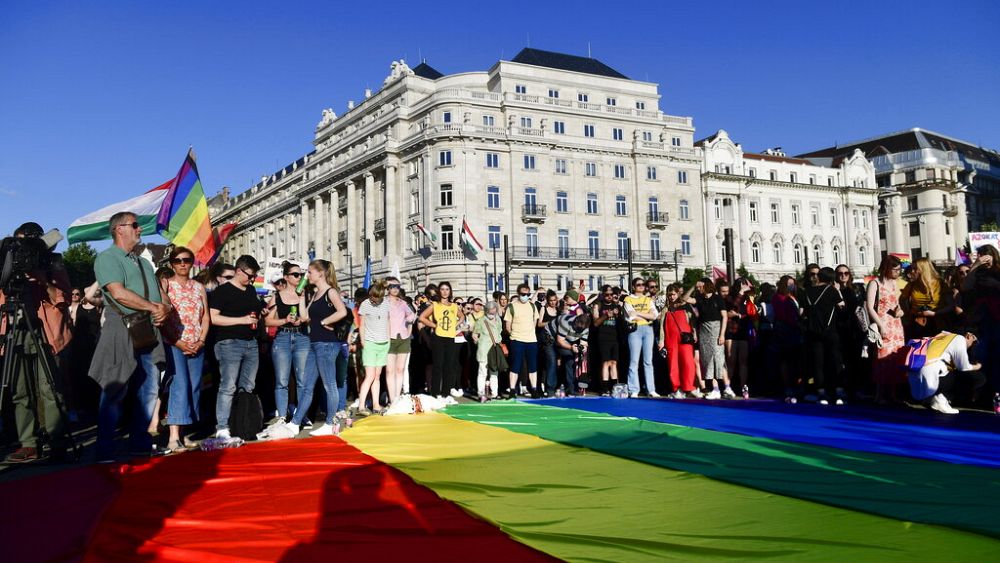
Hungary is being investigated by the European Commission over a new law that bans the sharing of content that portrays homosexuality or sex reassignment with people under the age of 18.

The law, which was introduced by Fidesz, the movement of Hungarian Prime Minister Viktor Orban, will target educational materials at schools and TV shows that target minors and has been described as a broad-based attack on the country’s LGBT community ahead of a crucial election in 2022.

It will also include a searchable register of convicted pedophiles and an increase in penalties for those convicted for child sex offences. “No one can get away with atrocities with light punishments and parole,” said Csaba Domotor, Fidesz state secretary, on June 15.

But while the law was presented as primarily targetting pedophilia, it included amendments that will ban teachers from including discussion of homosexuality and transgender issues, as well as films or television advertisements of doing so.

The president of the European Commission, Ursula von der Leyen, confirmed on Wednesday that the bill would be investigated by the European Union. It is the latest in a number of attacks that the ruling Fidesz party and Orban have made on the LGBT community in recent months.

Asked for comment, Hungary’s Ministry for Foreign Affairs referred Euronews to a tweet by government spokesperson Zoltan Kovacs.

Speaking to AP on Tuesday, NGOs and human rights organisation condemned the law, which was passed by a vote of 157-1 after opposition groups boycotted parliament in protest.

“(It) also clearly infringes the right to freedom of expression, human dignity, and equal treatment,” the groups, which include Amnesty International Hungary, said in a statement.

LGBT Students Covered Under Landmark Anti-Discrimination Law | Bloomberg Government – Bloomberg Government

The Education Department issued guidance making clear that LGBT students are protected under Title IX, a 1972 law that prohibits discrimination on the basis of sex in schools that receive federal support.

Wednesday’s move is the agency’s latest reversal from the Trump administration, which scrapped 2016 guidance protecting those students and said it would leave the issue up to the states. President Joe Biden in an executive order directed agencies that a U.S. Supreme Court decision from last year on LGBT workplace rights should be interpreted to apply to areas like schools, housing, and immigration.

In that decision, Bostock v. Clayton County, the high court ruled that workplace discrimination protections under Title VII of the 1964 Civil Rights Act cover LGBT workers. Courts have frequently interpreted the reasoning in Title VII decisions to apply in Title IX cases as well.

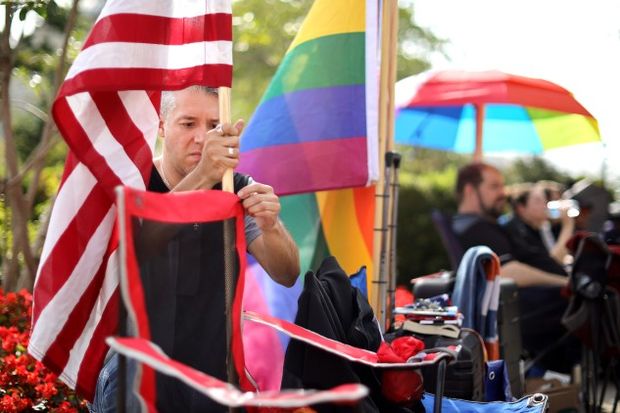
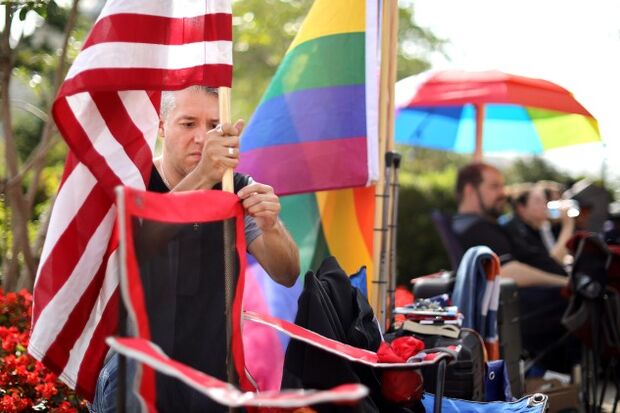
Photographer: Chip Somodevilla/Getty Images

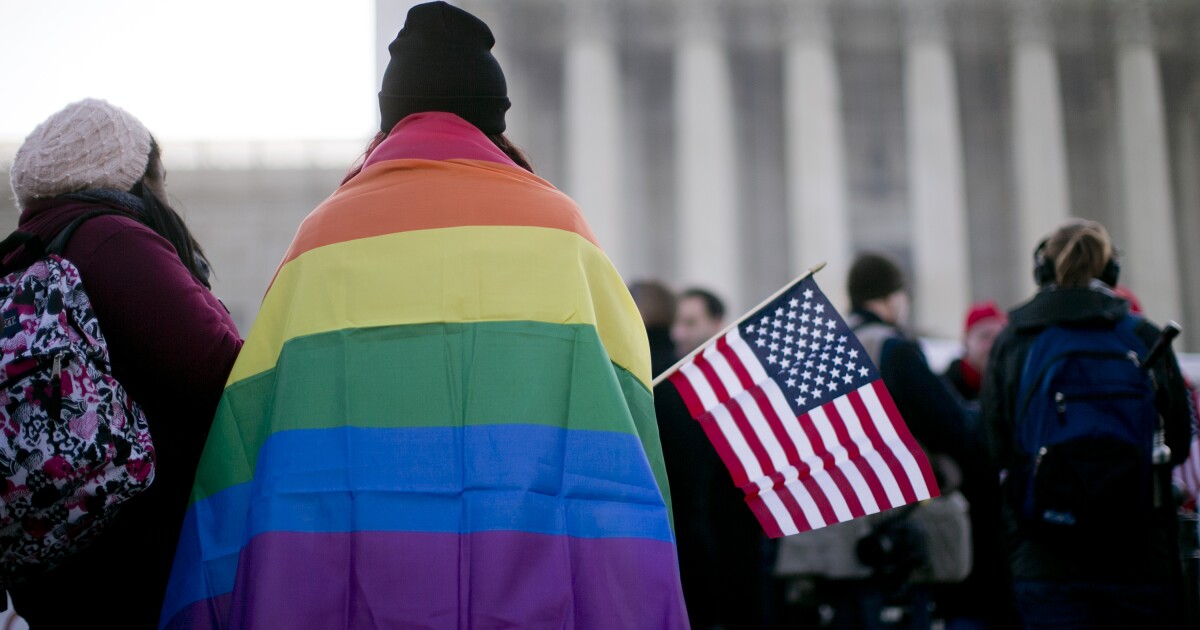
Eddie Reynoso of San Diego, Calif., attaches an American flag his chair while waiting in line outside the U.S. Supreme Court to hear arguments in Bostock v. Clayton County in October 2019.

“The Supreme Court has upheld the right for LGBTQ+ people to live and work without fear of harassment, exclusion, and discrimination—and our LGBTQ+ students have the same rights and deserve the same protections,” Education Secretary Miguel Cardona said in a statement. “I’m proud to have directed the Office for Civil Rights to enforce Title IX to protect all students from all forms of sex discrimination.”

Restrictions in States

Cardona issued the guidance as the rights of LBGT students have been targeted in scores of states across the country. Several states have passed laws restricting transgender students’ ability to participate on school sports teams matching their gender identity—efforts that have received backing from national religious conservative groups.

Transgender School Athletes Barred in Growing Number of States

LGBT advocates, meanwhile, are pushing the Senate to pass legislation to codify protections for LGBT people in areas like housing and employment. The House passed the bill, known as the Equality Act (H.R. 5), by a 224-206 vote in February.

The Education Department this month held a series of hearings on the enforcement of Title IX, the first step toward rewriting Trump administration regulations governing the response to sexual misconduct in schools. New Title IX regulations could encompass issues such as protections for transgender students.

Rep. Bobby Scott (D-Va.), chair of the House Education and Labor Committee, said the guidance will offer strong and clear protections from discrimination in schools, and safer learning environments.

“This announcement reflects our shared commitment to providing all students a safe and welcoming environment, and it aligns the Education Department’s interpretation of civil rights law with the definition established by the Supreme Court last year,” he said in a statement.

To contact the reporter on this story: Andrew Kreighbaum in Washington at akreighbaum@bgov.com

To contact the editors responsible for this story: Anna Yukhananov at ayukhananov@bloombergindustry.com; Sarah Babbage at sbabbage@bgov.com

Gay imam, trans priest and lesbian rabbi to present classes on diversity and faith to school kids – Yahoo Eurosport UK

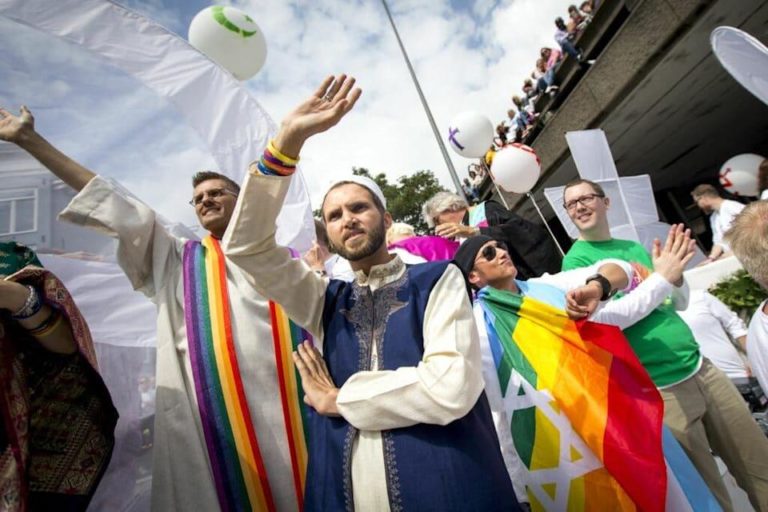
A gay imam, a trans priest and a lesbian rabbi are set to teach UK school kids about diversity and faith as part of School Diversity Week.

School Diversity Week (21 to 25 June) is run each year during Pride month by LGBT+ youth charity Just Like Us, to make schools “safer, happier and more welcoming for pupils who may be LGBT+ or have LGBT+ families”.

The charity runs masterclasses throughout the week, catering to various age groups, and on Wednesday (23 June), three classes will tackle issues of faith and being LGBT+.

Among those teaching will be gay imam Ludovic Zahed, founder of the first European inclusive mosque in Paris, trans Church of England priest Canon Rachel Mann, and lesbian rabbi Anna Posner.

Posner will run a masterclass on what does Judaism says about sexual orientation and gender identity, while Zahed and Mann will take part in an interfaith panel titled “Can you be a person of faith and LGBT+?” for kids aged 11 to 16.

Posner, rabbi of the LGBT- inclusive synagogue Beit Klal Yisrael in London, told the Jewish Chronicle: “It’s really important we have these kinds of conversations. A lot of people and students when they think of religion think of the LGBT+ community being excluded.

“For thousands of students to know that there’s an imam, a priest and a rabbi who are saying actually you’re OK – that’s a really important message to hear.

“It is possible to be religious and LGBT+ – you can have both of those identities together.”

School Diversity Week is free to sign up for, and is open to all UK primary schools, secondary schools and colleges, and on the final day of the week, students are encouraged to dress up in the colours of the Progress Pride Flag.

Alongside the masterclasses, Just Like Us offers a toolkit of resources to schools which can be implemented across the curriculum, at all key stages.

Utah state attorney sorry for email rant to LGBT councilman – RiverBender.com

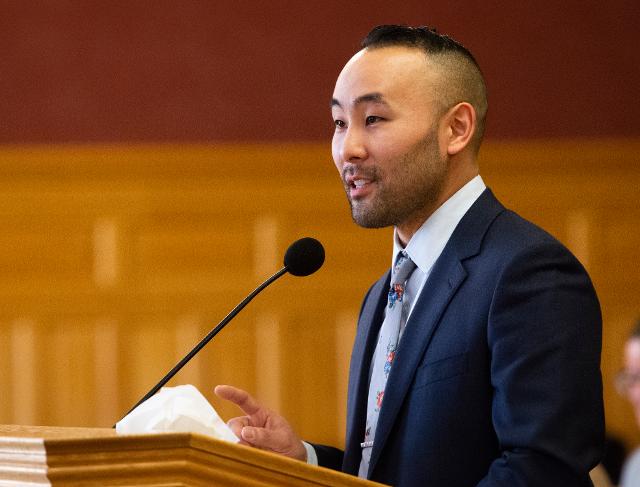
SALT LAKE CITY (AP) — A Utah state attorney angry about being awakened from a nap has apologized for sending an expletive-laden email to an LGBT politician campaigning to be the first Asian American person elected to the Salt Lake City council.

Assistant Utah Attorney General Steven Wuthrich told Darin Mano he hated him and his family, then threatened to “do everything in my power to see you will never get elected to any office higher than (a) dog catcher.”

He sent the email after Mano knocked on his door Saturday looking for someone else living there who is a registered voter, either Wuthrich’s wife or roommate, Mano told the Salt Lake Tribune.

Mano was appointed to the City Council and is now campaigning to be the first Asian American officially elected. Mano is also a member of the LGBTQ+ community and a father of four. He told Fox13-KSTU he was shocked and disturbed by Wuthrich’s message.

“It was hard not to wonder why that email was so particularly aggressive,” said Mano.

Wuthrich apologized in a statement Tuesday, saying he regrets the “ferocity and language” of the email and does not wish any harm to Mano or his family.

“I am taking steps to examine my reaction and find ways to ensure nothing like this ever happens again,” he said.

The Utah attorney general’s office has said officials take the situation seriously and are determining next steps.

Utah state attorney sorry for email rant to LGBT councilman – wpta21.com

SALT LAKE CITY (AP) — A Utah state attorney angry about being awakened from a nap has apologized for sending an expletive-laden email to an LGBT politician campaigning to be the first Asian American elected to the Salt Lake City council. Assistant Utah Attorney General Steven Wuthrich told Darin Mano he hated him and his family and threatened to end his political career. Mano was appointed to his post and is now on the campaign trail. Mano is also a member of the LGBTQ+ community and a father of four. Wuthrich said Tuesday he regrets the ferocity and language of the email. The attorney general’s office has said it’s examining the situation. 

What Does the Gay Wage Gap Mean for LGBTQ+ Families? – Yahoo Lifestyle

An abstract image illustrating wage inequality.

An abstract image illustrating wage inequality.

Getty Images.

The Supreme Court’s recognition of same-sex marriage in 2016 impacted a number of LGBTQ+ families. After all, the social institution of marriage works to empower LGBTQ+ parental rights by creating legal ties between partnered queer parents and their children. Following this ruling, married same-sex couples gained financial benefits previously reserved for opposite-sex couples-from health insurance to spousal support to the ability to file joint tax returns. But gay marriage equality can only do so much when a wage gap persists for LGBTQ+ earners-many of whom are parents.

According to the UCLA LGBT Demographic Data Interactive, although only 9% of the LGBTQ+ community were unemployed in 2019, 15% of them were uninsured, 25% had income under the poverty threshold for a family of four ($24K), and 27% experienced food poverty.

RELATED: The LGBTQ Community’s Struggle for Paid Parental Leave is Real

The wage gap breakdown

According to research from Prudential Financial: The LGBT Financial Experience, 2016-2017, on average, bisexual men earned $85,084 per year, heterosexual men earned $83,469, gay men earned $56,936, heterosexual women earned $51,461, lesbian women earned $45,606 and bisexual women earned $35,980. (Data on non-binary, transitioning, or genderqueer peoples’ earnings are scarce, but hopefully the next Census will change this).

Plus, the usual gender and race income gaps remain within the LGBTQ+ community, with women earning less than men, and Black women earning less than white women. The National Black Coalition for Justice (NBCJ) also found that gay and bisexual men, the highest earners of the LGBTQ+ community, do experience a wage penalty, earning 10%-32% less than heterosexual men (when studies were controlled for education, occupation, and location).

Bisexual men earned $85,084 per year, heterosexual men earned $83,469, gay men earned $56,936, heterosexual women earned $51,461, lesbian women earned $45,606 and bisexual women earned $35,980.

Why does sexual orientation affect wages?

According to Trenton D. Mize, sociology professor at Purdue University, someone’s sexual orientation could be a “hidden and unobservable characteristic to employers with an unconscious bias towards observable cues”-that ultimately makes an employer low-ball that person’s salary ask. Just being single can reduce income-an effective marriage-and-parent premium that also impacts men and women differently.

The National Transgender Discrimination Study found that 78% of transgender and gender-nonconforming employees had experienced harassment or discrimination at work. That survey also found that although transgender workers were more highly educated than cisgendered workers, their unemployment rate was double that of the general population-and 25% of trans folks had been fired because of their gender identity.

Mize found that LGBTQ+ people also face assumptions of lower competence. Sexual orientation remains an unprotected status in most states; no federal law prohibits discrimination in the workplace on this basis. However, further to Bostock v. Clayton County, the proposed Equality Act (H.R. 5/S. 393) would amend the 1964 Civil Rights Act-thus making discrimination based on sex/sexual orientation unlawful.

RELATED: The ‘Motherhood Penalty’ is Real and It Robs Moms of Career Advancement

How pay disparities affect LGBTQ+ families

According to the latest census data, there were 543,000 same-sex married couple households in 2019, 469,000 same-sex unmarried partner households, and 191,000 children living with same-sex parents.

The Prudential study found that LGBTQ+ respondents were creative when trying to save for retirement, life and health insurance, and estate planning-yet many are thwarted by both policy and discrimination. They are concerned about employment protection for partners, inflation, unpaid debt, wage inequality, job insecurity, and pension survivor benefits. The pandemic and a stagnant economy compound this: Mid-pandemic, 41% of LGBTQ+ respondents felt they were struggling financially, particularly millennials and generation X. Meanwhile, 25% of LGBTQ+ millennial respondents were unemployed or experienced long-term leave.

Also according to Prudential, LGBTQ+ respondents owned fewer retirement accounts-despite comparable access to workplace plans. Only half of them had a checking, savings, or money market account, or certificates of deposit.

What makes queer family life more costly?

To start a family, many in the LGBTQ+ community choose to pay for IVF treatment or pursue a costly surrogacy (or two). LGBTQ+ parents may struggle to obtain Assisted Reproductive Technology coverage, as it is typically for people diagnosed with infertility. Despite the Affordable Care Act, employee benefits such as insurance are not available for all. In addition, second-parent adoption is the only option for many queer couples starting a family.

RELATED: Is the Extreme Cost of IVF in America Really Necessary?

Jasmine Higgins, co-host of podcast Infertilidad Latina, explains to Parents that “LGBTQ+ individuals and couples face disproportionate financial burdens. In our experience, when we put our home on the market-we knew our home’s worth, and were offered significantly lower by a few realtors, because we were an interracial lesbian couple. We sought another opinion via Zoom, where we did not show our faces, and the value was increased by $175K. The only difference was hiding our identities-and somehow the offer changed.”

Higgins adds that “LGBTQ+ families also have family-building expenses to save for-be it IVF, surrogacy, or adoption. Insurance and employers rarely cover these expenses, and it therefore puts most LGBTQ+ couples in a financial strain trying to start a family. From lower property value estimates [to] lack of coverage for family building, I believe LGBTQ+ families are hindered from saving for retirement and managing to thrive when the odds of fair treatment and health coverage limit our ability to save for the future.”

We knew our home’s worth, and we were offered significantly lower…because we were an interracial lesbian couple. We sought another opinion via Zoom, where we did not show our faces, and the value was increased by $175K. The only difference was hiding our identities.

The 2021 FertilityIQ Workplace Index revealed an 8% growth among large employers that introduced or enhanced fertility, adoption, or fostering benefits. However, a number of companies made reductions to their coverage of more costly approaches, such as surrogacy, which benefits a great many in the LGBTQ+ community. Adoption assistance, similarly, dramatically trailed fertility assistance-and LGBTQ+ employees were the most impacted.

The Debt-Free Guys (John Schneider and David Auten) run a financial advice blog and the and Queer Money podcast, which targets the gay community. Schneider tells Parents that he advises queer folks “to keep our debt levels low, have emergency savings, live by a budget, save and invest. The more savings and investments we have…the more flexibility we have to leave an employer or industry that won’t pay or treat us fairly.”

“It’s true that creating this flexibility is harder when we’re paid less,” Schneider adds. “But it’s also true that it’s not always about how much we earn-but how we use what we earn. We know LGBTQ folks who earn $40,000 a year and have more in retirement savings and have traveled the world, and those who have multiple six-figure incomes with tens of thousands in debt living paycheck-to-paycheck.”

More actionable advice from Schneider, for queer families? “In the workplace, join or create an LGBTQ employer business group to help your business connect with the LGBTQ community and to push the concerns of LGBTQ employees, including pay discrimination, up the chain of command,” he urges. “Likewise, join leadership organizations, such as OutLeadership, that are trying to put more LGBTQ people in C- and E-Suites-because in time, we can make the sexual orientation and gender identity pay gap go away.”

Why are bisexual women bearing the brunt, financially?

A 2018 Buzzfeed survey found that bisexual men and women outnumber gay men and lesbian women in the U.S. (46% of the LGBTQ+ community identify as bisexual, 32% as gay, 16% as lesbian, 1% as asexual, 1% as straight, and 1% as queer or otherwise self-describing). But until recently, wage discrimination against bisexual women in particular has been conflated with discrimination against gay women. In 2016, Mize’s research uncovered that bisexual women earned between 9% and 17% less less than heterosexual women-according to his study published in the American Sociological Review.

“It’s not any of the traditional suspects, like differences in educational credentials, occupational selection, or anything else,” Mize explains. Simply, “bisexual women are reporting that others treat them with less respect-and other indicators that suggest they are being stigmatized. In other work of mine, I have shown that bisexual people face uniquely disadvantaging stereotypes-so these reports of feeling stigmatized correspond closely with the stereotypes people have of the group.”

“I have done some unpublished analyses of more recent data, and the findings are the same… I see no evidence in the data yet that the bisexual wage gap has narrowed,” he adds.

What’s the way forward?

As Mize mentions, cultural attitudes are changing. A 2019 Gallup Poll found that 93% of people think that gay and lesbian people should have equal rights in terms of job opportunities; for bisexual, transgender, and gender non-conforming folks, it may be a longer battle. A 2019 Gallup Poll also found that 53% of people thought new civil rights laws were needed to reduce discrimination against lesbian, gay, bisexual, and transgender people.

Thankfully, it seems that more and more individuals-as well as institutions and initiatives such as Equal Pay Day-are supportive of the changes that are needed to eliminate the LGBTQ+ wage gap.

Even Mize, with all his damning research and knowledge, is not without hope. “I think we will see progress as younger generations age into the labor market-and particularly into management roles,” he says. “Prejudicial attitudes toward sexual minorities…are markedly lower among younger generations. So, I strongly suspect the trend over the long-term will be towards more equality of labor market outcomes.”

Biden administration extends Title IX protections to transgender students – Yahoo News

0

The Department of Education on Wednesday announced that protections outlined under Title IX extend to gay and transgender students, a departure from the Trump administration’s interpretation of the federal civil rights law.

Why it matters: The decision comes in light of the Supreme Court’s ruling last year affirming that gay and transgender people are protected under the Civil Rights Act. It comes during a Biden administration review of Title IX, the 1972 law that prohibits sex-based discrimination at schools that receive federal funding.

Stay on top of the latest market trends and economic insights with Axios Markets. Subscribe for free

What they’re saying: “Students cannot be discriminated against because of their sexual orientation or their gender identity,” Education Secretary Miguel Cardona told the New York Times.

The big picture: President Biden signed an executive order in March directing the Education Department to review Title IX and revise several controversial provisions put in place by the Trump administration, as part of a broader effort to reverse such laws throughout the federal agencies.

  • The new stance on the law is the opposite of the Trump administration’s position, which held that the law “prohibits discrimination on the basis of sex, not gender identity,” an Education Department spokesperson told BuzzFeed News in 2018.

  • The Trump administration issued a memo during its last weeks that stated LGBTQ students were not covered by Title IX.

The department’s Office of Civil Rights will now open investigations into allegations of people being discriminated against because of their sexual orientation or gender identity.

Between the lines: It is unclear how the new interpretation will impact legislative efforts by Republicans aimed at transgender youth, including legislation that prohibits transgender girls from competing on sports teams that do not match the gender they were assigned at birth.

What to watch: Cardona, who is in the process of reviewing the law, told the Times, “We are in the process now of synthesizing that information as we go to the next steps of actually developing our rules.”

Like this article? Get more from Axios and subscribe to Axios Markets for free.

Grindr prioritizes LGBTQ employees in new partnership with Included Health – Employee Benefit News

In a continued effort to expand healthcare offerings for the LGBTQ community, concierge healthcare provider Included Health partnered with the world’s largest social networking app for gay, bi, trans and queer people — Grindr.

As an employer-sponsored, free healthcare benefit, Included Health helps LGBTQ employees and dependents find clinically and culturally competent care. The partnership offers Grindr’s LGBTQ employees and their loved ones access to dedicated care coordinators who can help them find supportive, affirming healthcare providers and navigate challenges in the healthcare system.

“This partnership will help provide our LGBTQ employees with a positive experience by helping them find highly competent and compassionate healthcare providers,” said Grindr’s vice president of people, Heidi Schriefer, said in a press release. “Together, Grindr and Included Health can work toward creating a more inclusive space for the LGBTQ community in the U.S. healthcare system.”

Read more: ‘A basic human right’: Why your benefits may be failing your LGBTQ employees

Grindr employees will have a dedicated care coordinator who gets to know them and understands their unique healthcare needs. The coordinators will identify and evaluate healthcare providers, coordinate appointments and authorizations, navigate insurance issues and support members with any health and wellness needs — whether it’s finding insurance coverage for gender-affirming surgery or finding a doctor that celebrates a patient’s decision to use PrEP, an antiviral medication most often used as a preventative measure against HIV/AIDS.

“It just makes sense from our two organizations,” says Colin Quinn, CEO and co-founder of Included Health. “One, to raise the visibility of this issue for the community and two, to put pressure and ask other employers to do the same.”

Fifty-six percent of LGBTQ people report they have experienced discrimination by a healthcare provider and 29% of transgender people have been refused healthcare because of their gender identity, according to data provided by Included Health. That in turn can lead to distrust and healthcare avoidance — the LGBTQ community is 2-3 times more likely to avoid care compared to straight and cisgender populations.

Read more: LGBTQ workers feel excluded from benefits conversations, but employers can change that

For Quinn, this partnership is the affirmation he was seeking from the very community he set out to help. He says he feels hopeful that this idea can grow past individual partnerships and become commonplace in the healthcare industry.

“[Grindr] understands the need and the importance of a service like Included Health to further support their LGBTQ employees,” he says. “So it’s almost like somebody from within the community is recognizing and seeing and validating the importance of this.”

Atlanta Gay Men’s Chorus Performs A New Summer Show, ‘YAAAAAAS Broadway!’ | 90.1 FM WABE – WABE 90.1 FM

The Atlanta Gay Men’s Chorus will lift your spirits this weekend with their new summer concert “YAAAAAAS Broadway!

“City Lights” host Lois Reitzes spoke with artistic director Don Milton about this virtual concert. The songs performed in the show will be from various Broadway shows.

“Well, what’s better than a gay men’s chorus singing Broadway songs?” laughed Milton.

He continued, “Probably nothing, right?! It is one of those stereotypes that is fully embraced. We wanted to have this joyful concert, and I found that a lot of people right now are releasing the albums and the projects they’ve been writing during the pandemic, and there’s a lot of melancholy, but there’s a lot of optimism in the air right now, and this concert has that.”

The concert will be available to stream online June 18 and 19 at 8 p.m.

Official program:

  • “A Little More Mascara” from “La Cage aux Folles”
  • “Magic to Do” from “Pippin”
  • “Broadway, Here I Come” from “Smash”
  • “Before the Parade Passes By” from “Hello, Dolly!”
  • “Sabbath Prayer” from “Fiddler on the Roof”
  • “You Will Be Found” from “Dear Evan Hansen”
  • “Gaman” from “Allegiance”
  • “Don’t You Want to Come Home” from “Second Chance”
  • “Home” from “The Wiz”
  • “Dancing Queen” from “Mama Mia”
  • “We Dance” from “Once on This Island”
  • “What Is This Feeling” from “Wicked”
  • “For Now” from “Avenue Q”
WABE brings you the local stories and national news that you value and trust. Please make a gift today.Donate Now

Opinion | Reopen or Stay Closed? Which Is More Prudent? – The New York Times

0

To the Editor:

Re “‘Momentous’: New York and California Open” (front page, June 16):

Many businesses will be thrilled to have the restrictions lifted. There are, however, at least a couple of caveats.

First is that New York and California are not isolated. People are free to travel from all the other states to visit their restaurants, theaters, stadiums, etc. States such as Arizona and Texas have 38 percent vaccination rates, but their residents are free to travel here.

The vaccines work well, but mild cases are still described in vaccinated individuals. We do not know when vaccine protection will wear off, and producing boosters will be a huge task as we try to help the world.

As a vaccinated New Yorker, I feel fairly safe at the moment. I just don’t know when I should allow my paranoia to return. Dr. Anthony Fauci likely has similar concerns, as should Gov. Andrew Cuomo.

Unfortunately, only time will tell. As evidence for why we should be concerned, the flu typically kills between 20,000 and 40,000 people in the United States annually, and we have been vaccinating for years and have many manufacturers and an easy-to-store vaccine.

Josh Torgovnick
New York
The writer is a neurologist.

To the Editor:

Re “Canada Should Reopen Its Border,” by Serge Schmemann (Opinion essay, June 12):

It’s all very well for Americans like Mr. Schmemann to feel that Canada owes them free rein to cross the border, but most Canadians are unconvinced, for good reasons.

First and foremost, Covid-19 is not gone yet, and the relatively low rate of full vaccinations here makes it dangerous for a majority of Canadians, especially given the more virulent variants.

Second, while half of Americans over 12 may be fully vaccinated, the other half aren’t, and a significant number of them refuse to be — to the point of buying fraudulent “proof” of vaccination to avoid it. Unless there is a centralized system that permits verification, there is no way for our border guards to distinguish a good counterfeit from the real thing.

Finally, Canada’s relative success at keeping cases and mortality low has depended on our majority’s willingness to comply with public health restrictions. While these will probably be relaxed as more of us are fully vaccinated and case counts decline, we must reserve the right to crack down quickly where new outbreaks occur.

Much as tourist-dependent businesses here want the border open, Americans should understand that though we like having visitors, we don’t want them at a cost in Canadian lives and health.

Opinion Conversation Questions surrounding the Covid-19 vaccine and its rollout.

Judyth Mermelstein
Verdun, Quebec

To the Editor:

Thank you for the excellent special section on the Pentagon Papers (June 13). I loved reading about the role that The Times played in their publication, but there is a little-known story about the role that Beacon Press had that I think adds to this important history.

Founded in 1854, Beacon Press is the publishing arm of the Unitarian Universalist Association. Its mandate is to publish books that concern social justice and human rights.

Fifty years ago I was a young editorial assistant there when Arnold Tovell, our editor in chief, called us all in for an emergency meeting. He explained that some papers had come to the press via a man named Daniel Ellsberg. These were classified documents about the war in Southeast Asia.

Arnold was going to ask us to do something that was possibly treasonous and potentially dangerous, and we could all go to jail. We each had to decide if we wanted to take the risk. The task: to photocopy the hundreds of pages of what would become known as “The Senator Gravel Edition” of the Pentagon Papers and help organize them for immediate publication.

We knew through Arnold that many pages had gone to The Times, but Mr. Ellsberg was also asking Beacon Press for help. We were asked to work through the night and to keep this a secret, and we were free to say no and go home. But I don’t think anyone left that night or the next night.

In stealth we photocopied. We also read what we were copying. Not that we should have been surprised that our government had consistently lied, had performed actions that could be considered war crimes against civilians, and had kept all of this hidden from the American people in the name of national security.

Thus a small army of editorial assistants, editors, designers and secretaries helped bring the Pentagon Papers to light. I have had many exciting and rewarding moments in my life, but perhaps those heady days 50 years ago stand above all the rest.

When I think of those days, I cannot ignore how the same issues resonate for us today as we continue to fight for freedom of information and a free press. And Beacon, along with The New York Times, fought to preserve the very roots of our democracy. Its role is also important to remember.

Mary Morris
Brooklyn
The writer is the novelist and travel memoirist.

To the Editor:

Re “Lisa Banes, 65, Vibrant Actress in ‘Gone Girl,’ ‘Cocktail,’ TV Shows and the Theater” (obituary, June 16):

Lisa Banes, a brilliant actress, was killed in a hit-and-run by someone riding a motorized scooter who ran a red light.

The mayoral candidates promise to make the streets safer for riders of two-wheeled vehicles, but they also need to address pedestrian safety. I am always on high alert for bicycles, motorbikes and scooters riding in the wrong direction on one-way streets, whizzing past me on the sidewalk, running red lights and cutting me off in crosswalks.

Finding alternatives to automobile traffic is a worthy goal, but not if pedestrians become sacrificial lambs.

To the Editor:

Re “Some Catholic Parishes Help L.G.B.T.Q. Community Feel at Home” (news article, June 6):

As a gay Catholic priest for more than a dozen years before resigning from active ministry, I have experienced firsthand the deep faith and devotion among L.G.B.T.Q. Catholics. In my role as a parish priest, I helped numerous Catholics overcome their guilt and pain over their orientation and validated their deep love for their Catholic faith.

Nearly 28 years after my resignation, Pope Francis and many bishops and priests are providing a more compassionate outreach to gay Catholics.

Jesus was also criticized by the religious authorities of the day in his outreach to those thought to be outcasts of religious institutions. L.G.B.T.Q. Catholics affirm what we have always felt and known in our hearts, that we are faithful members of the church.

John E. Lazar
Wilton Manors, Fla.

To the Editor:

Re “Saving Our Local News Outlets,” by Sarah Bartlett and Julie Sandorf (Opinion guest essay, May 24):

Increasing the newsstand price, shrinking content, reducing newsprint size or favorable government subsidies will not be enough to ensure the survival of daily newspapers.

Most cities and suburbs are down to one newspaper. They have to deal with increasing costs for newsprint, delivery and distribution along with reduced advertising revenues and declining readership.

Financial challenges have also resulted in fewer resources being devoted to investigative reporting and a greater reliance on wire service stories. As a result, original newspaper content continues to shrink. This puts even more pressure on the remaining reporters.

There is intense competition among international, state, county, city, business, sports, entertainment and other sections of newspapers. Neighborhood news can usually be found only in a weekly community-based paper.

There are still many like me who have a continued thirst for news provided by newspapers.

Larry Penner
Great Neck, N.Y.

Maidenhead duo launch LGBT fitness business – Photo 1 of 1 – Maidenhead Advertiser

A Maidenhead couple have launched a new fitness business venture which aims to provide a no-judgement space for members of the LGBT community.

LGBT FIT is the brainchild of elite transformation coaches Rachael Capper and Isabella Beni, who have both worked in the fitness sector for more than a decade.

The pair offer services such as personal and nutrition coaching, pilates and meditation for their clients, with the overall aim of their business being to enable people to feel confident.

Speaking to the Advertiser, Rachael and fiancé Isabella say that this kind of service is tapping into a niche sector, adding there was a limited amount of fitness resources for the LGBT community available beforehand.

The couple are pleased that acceptance and awareness of the community has grown in recent times, with big corporations such as GymShark and Coca Cola keen to support LGBT FIT during Pride month – which takes place in June.

“We are creating an online community where people can feel confident, get advice and work out,” Rachael and Isabella said. “Some people might not feel comfortable in a commercial gym setting.

“It is not just about looking good on the outside, because you might feel like garbage on the inside.”

LGBT FIT has been in operation for a few months but Rachael and Issy have been in the game for longer than that – both have 16 years’ experience in the fitness industry.

Live group calls and a Facebook support group add to the resources available to people on their own fitness journeys.

“It has been very well received,” the pair added. “We have had a lot of people express an interest; it has taken off really well.

“Nowadays as things are more accepted there is a much bigger demand for this as people become more confident.

“Our mission is to have people feel confident not just in the skin they are in but in who they are.”

Rachael and Issy have big plans for LGBT FIT and hope to let those further afield from the Maidenhead area know about their latest business mission.

“We are just looking to grow really big online,” they said. “We want to help people far and wide, be on TV, go to events, do everything.”

To enquire about Rachael and Issy’s services and for more information, visit www.lgbtfitonline.com

Republican States Have Already Enacted 19 New Anti-Trans Laws This Year – HuffPost

State lawmakers across the country have introduced at least 171 pieces of legislation that target the rights of transgender people this year, according to a new legislative database compiled by the Progressive Caucus Action Fund, a grassroots group that opposes the bills.

At least 19 of the bills ― 13 that specifically target trans people and six more that could more broadly hurt LGBTQ rights ― have already become law.

“We’re only six months into 2021 and it’s already been a devastating year for protecting transgender people,” said Ricardo Pacheco, a researcher at the Progressive Caucus Action Fund who compiled the database. “The expectation that quite a few more of these will pass in the next few months.”

Republican lawmakers have introduced the vast majority of the bills, both in states the GOP controls and those where Democrats hold majorities. Ten states, all with Republican legislative majorities and governors, have enacted new anti-trans laws this year. Four other bills have passed through GOP legislatures but have been vetoed by governors.

The push for anti-trans laws has intensified as part of a broader Republican culture war against the basic and individual rights of women, Black people, immigrants and LGBTQ people. Right-wing lawmakers believe they can weaponize trans rights — and people’s very right to exist as trans — as a wedge issue. This has exhausted activists and had demonstrably negative mental health effects on members of the trans community, said Dr. Ruadhán Woods, a  trans and queer organizer for Hometown Action, a group in Alabama that opposed an anti-trans bill that became law in that state.

“There’s just a lot of helpless feelings,” Woods told HuffPost. “People in our community really are looking for support and solidarity, and for representation in the government. And the fact that legislation is actively trying to essentially erase trans kids from being able to get support, and really criminalize existing … The morale is extremely low, even though the bar has been low for a long time.”

“We see all of this debate and all of this discussion about what being trans means for sports, and what being trans means for health care,” they said, “and most of us are just sick of the debate, because this is really a question of rights.”

The aggressive nature of the GOP’s effort to restrict trans rights is on full display in the database, as are the ways that effort has changed. The so-called “bathroom bills” that were once in vogue as Republicans tried to block trans people from using restrooms and public facilities that correspond with their gender identity have largely given way to other types of legislation.

This year, Republicans are largely taking aim at trans students’ ability to play scholastic sports that correspond with their gender identity, a push that has largely targeted trans girls and women in high school and college. Lawmakers have introduced 76 bills aiming to limit trans people’s participation in sports, according to the database, and such bills make up roughly 45% of all anti-trans legislation introduced this year. 

It’s clear that the anti-trans bills that are centered around sports really just want sports to be something that trans people don’t participate in.
Ruadhán Woods, Hometown Action in Alabama organizer

Seven states with Republican legislatures ― Alabama, Arkansas, Florida, Mississippi, Montana, Tennessee and West Virginia ― have enacted such laws. North Dakota Gov. Doug Burgum (R) and Kansas Gov. Laura Kelly (D) vetoed similar bills after they were passed by GOP legislatures. South Dakota Gov. Kristi Noem (R) also vetoed a bill barring trans youth from playing school sports that match their gender identity — but later signed two executive orders doing just that.

Those bills have largely sought to vilify trans identity, and curtail the right of trans women and girls to play sports against cisgender athletes. Republicans have touted the laws as a way to protect women’s sports and Title IX, the federal law meant to guarantee equal access to education and sports participation for women. They have adopted the mantle even though many conservatives have long been skeptical of Title IX and efforts to bolster women’s equality in sports, and despite the fact that many GOP lawmakers have been unable to point to incidents of trans women and girls taking spots away from cisgender athletes.

“We see all of this debate and all of this discussion about what being trans means for sports, and what being trans mea


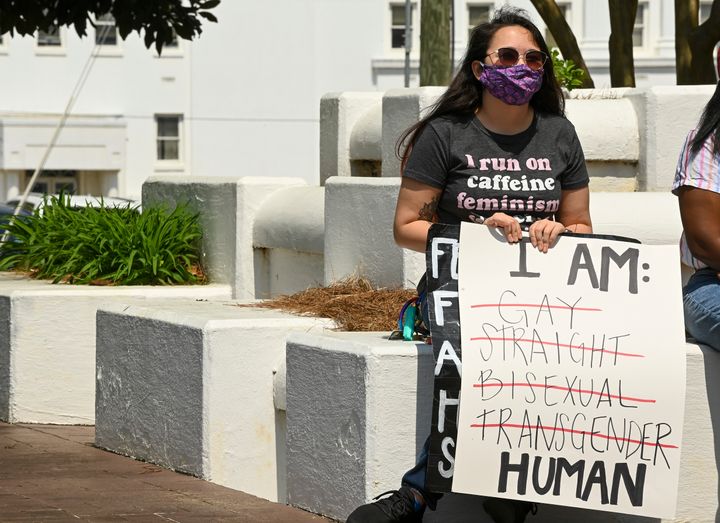
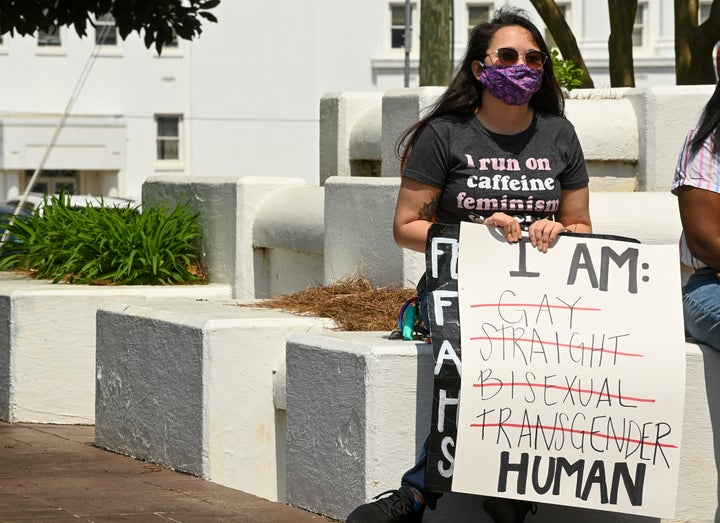
“We see all of this debate and all of this discussion about what being trans means for sports, and what being trans means for health care,” Ruadhán Woods (not pictured), a trans rights organizer in Alabama, told HuffPost. “And most of us are just sick of the debate, because this is really a question of rights.”

Activists, education experts and health professionals have for years pointed to evidence that increasing sports participation could bolster mental health, self esteem and other health and education outcomes for trans youth. But no amount of pushback, data or discussion about trans athletes or their basic right to play sports has swayed Republicans.

“It’s clear that the anti-trans bills that are centered around sports really just want sports to be something that trans people don’t participate in,” Woods said from Alabama, where Gov. Kay Ivey (R) signed one such bill into law in April. 

Legislation targeting trans peoples’ ability to access health care and treatment make up the second largest share of bills under consideration in state houses across the country. Republican lawmakers have introduced 51 such bills this year, according to the database. 

Three have become law, including two in Arkansas, where one new law allows doctors and medical professionals to refuse health care treatment to trans and LGBTQ youth if doing so would violate the professionals’ religious beliefs. Another bill that Gov. Asa Hutchinson (R) signed into law allows medical professionals to refuse to provide gender affirming treatments ― including puberty blockers ― to trans youth. 

Health care organizations, including the American Academy of Pediatrics, have decried the laws, saying they will deny essential medical care to kids and thrust the government into conversations that should be “between clinicians, patients and families about what’s best.”

Similarly restrictive bills failed to pass in other states, including Alabama, where Hometown Action and other groups rallied opposition to it. A new Tennessee law initially prohibited medical professionals from providing hormone treatments to “pre-pubertal” minors, but was later amended. This year’s rash of sports-related bills, however, followed Idaho’s passage of the first such law in 2020, so Arkansas’ health care law may only pave the way for the spread of legislation like it in future sessions. 

Tennessee Republicans have passed at least two bills that are similar to the “bathroom bills” that many GOP states sought in recent years. One requires businesses that have multi-person bathrooms or locker rooms to post signs if they let trans people use bathrooms of their choice; another allows students and teachers to refuse to use such facilities at school if trans people are allowed to use them, and requires schools to provide those students and staff separate bathrooms to use.

Tennessee — which adopted a law barring trans youth from participating in sports — also passed a broader anti-LGBTQ law that requires schools to inform parents ahead of any classroom discussion about gender identity or sexual orientation, and allows parents to opt students out of any such class.

The Progressive Caucus Action Fund’s database includes the latter law in its count, along with others that have passed in Montana, North Dakota and South Dakota that more broadly restrict LGBTQ rights on religious freedom or free speech grounds. Oklahoma Republicans approved a new law that prohibits mandatory diversity training “regarding gender identity, sexual orientation, race stereotyping and sex stereotyping.” The broader laws, LGBTQ advocates say, provide an example of how the GOP’s culture war legislation can often target multiple groups at once, including LGBTQ people, Black people, Native Americans and women.

Most state legislative sessions have ended and more GOP proposals failed than passed, even in red states like Arizona, Kentucky, South Carolina and Texas. But it’s still possible that more anti-trans laws could pass in Ohio and other states where lawmakers are still in session. 

The legislative onslaught has already had negative effects on trans youth: A common view among trans people, Woods said, was that they weren’t surprised by efforts to target their rights in Alabama and nationwide “because nobody cares about our community anyway, so we just have to care for each other.”

“That’s a very sad and tragic thing for most young people to have already embraced or come to understand,” Woods said. “So for me, it’s more than just fighting legislation. It’s really fighting for community members to be able to be represented and for our rights to be protected and upheld.” 

House Democrats passed the Equality Act, major legislation to protect LGBTQ rights, in February, but it faces long odds in th


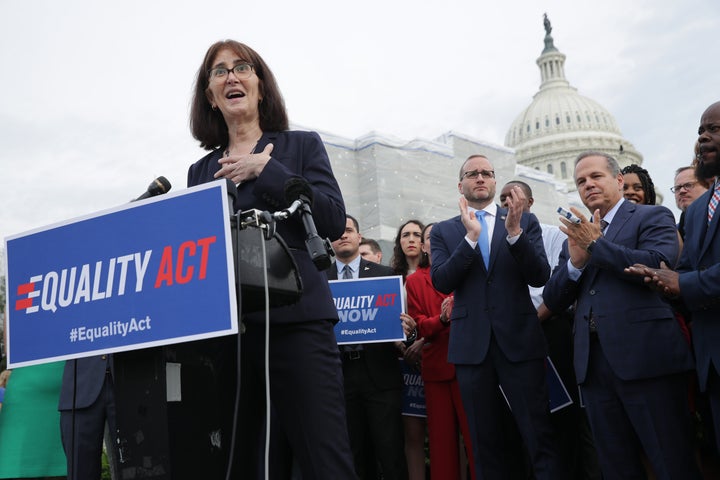
House Democrats passed the Equality Act, major legislation to protect LGBTQ rights, in February, but it faces long odds in the Senate thanks to Republican opposition. 

Legal challenges could ultimately thwart some of the new laws. Last year, a federal court ruled that an Idaho law barring trans women and girls from participating in sports that match their gender identities was unconstitutional. The ruling is subject to an appeal that the 9th U.S. Circuit Court of Appeals heard in early May. 

Civil rights groups have already filed legal claims against several other new laws passed this year. Progressives and LGBTQ rights groups are also pushing Senate Democrats to pass the Equality Act, a bill that would amend the Civil Rights Act of 1964 to prohibit discrimination based on sexual orientation and gender identity in public facilities, education, employment and other areas, and help preempt many of the new state laws.

Democrats in the House of Representatives passed the Equality Act in February, but prospects for the bill’s ultimate approval in the Senate, where it must overcome Republican opposition and the legislative filibuster, are dim.

“That’s where the next push needs to be,” Pacheco said. “It’s not necessarily just reacting to what states are doing, but it’s being proactive and it’s being preemptive by passing the Equality Act to make sure that LGBT youth and trans youth in our communities have those protections.”

But the nature of attacks on trans rights, Woods said, makes it clear that one piece of federal legislation won’t be enough. Efforts to curb those rights are likely to continue, and there’s no silver bullet argument or piece of legislation that can fully stop them when “the majority of people who are making these decisions are doing a really intentional job of not listening to the voices of the people who are most affected,” Woods said. So even if the Equality Act passes, there will “still be a lot of work to do” to create the cultural, social and political shifts necessary to fully protect trans people nationwide, and convince lawmakers and the public to see trans rights through the lens of basic human rights. 

“We have people actively working against our community’s existence,” they said. “This is going to take some time and there is a lot of work left to do for people who insist on pushing trans identity and rights into a position of debate.”

Anti-LGBT+ Republican gives worst explanation for ‘accidental’ donation to ‘death to gays’ hate preacher – Yahoo Eurosport UK

Republican lawmaker Louie Gohmert says a huge donation by his campaign to a vastly anti-LGBT+ pastor by mistake because he meant to send the funds to a singer with a similar name.

The Daily Beast reported the Louie Gohmert for Congress Committee sent $5,500 to hate pastor Steven Anderson’s church in Arizona.

Gohmert’s office claimed it hired a Christian singer named Steve Amerson and accidentally sent the funds to Anderson’s Faithful Word Baptist Church.

Anderson has made numerous anti-LGBT+ remarks in the past and even once called for the execution of gay people by stoning. He made international headlines in 2016 after he applauded the Pulse massacre, horrifically saying “there 50 less paedophiles in this world”.

In 2020, the American pastor claimed that the catastrophic Australian bushfires were the “judgment of God” for “banning and deporting preachers of the Gospel”, where he had been banned from Australia the year before. He has since been banned from multiple countries for his anti-LGBT+ and hate-filled rhetoric.

Officials working for the Texas Republican reportedly registered the “donation” to an organisation in Tempe, Arizona called “Anderson Ministries”. The Daily Beast said there is no group by this name registered in the state, but the address in the filing matches that of Anderson’s church.

Aryeh Tuchman, the associate director at the Anti-Defamation League’s Center on Extremism, questioned the motives behind why Gohmert’s “mysterious” donation was made. He described Steven Anderson to The Daily Beast as an “incredibly antisemitic, incredibly homophobic” individual. Despite this, Tuchman said, Anderson’s movement now has 30 houses of worship.

“He is a highly problematic individual who pumps antisemitism, hatred and bigotry into the rhetoric, the preachings and the teachings of these other churches,” Tuchman said.

Connie Hair, Gohmert’s chief-of-staff, insisted to The Daily Beast that the money was for an appearance by the Christian singer at a December fundraiser. She added the mistake was because of an incorrect internet search by Gohmert’s treasurer, William Long.

“That’s who it was written to and Louie gave it to him, and when Bill Long got the check and the charge, he searched ‘Anderson Ministries’ instead of ‘Amerson’,” Hair said. “Bill Long is amending our filing.”

However, Long told The Daily Beast that the money to “Anderson Ministries” was “probably” intended for the Faithful Word Baptist Church. But he claimed he was unfamiliar with the church or its leader.

Steven Anderson’s wife, Zsuzsanna, told The Daily Beast that the pastor was unavailable for comment, and she couldn’t verify whether the church had received the funds from Gohmert’s campaign.

“We can neither confirm nor deny that such a donation was made to our ministry,” she said. “We don’t follow the donations closely and don’t see the urgency of setting aside the time on a very busy week to look into the financial records.”

Louie Gohmert also has a long history of making incredibly anti-LGBT+ remarks. He previously claimed same-sex marriage was redundant because such relationships can’t “sustain life” because gay people would “die off” if put on a desert island. In 2013, he bizarrely claimed that equal marriage would force churches to hire “cross dressers” and “Satan worshippers”.

He has also compared gay rights advocates to Nazis in the past and argued that gay people shouldn’t serve in the military because they will need massages.