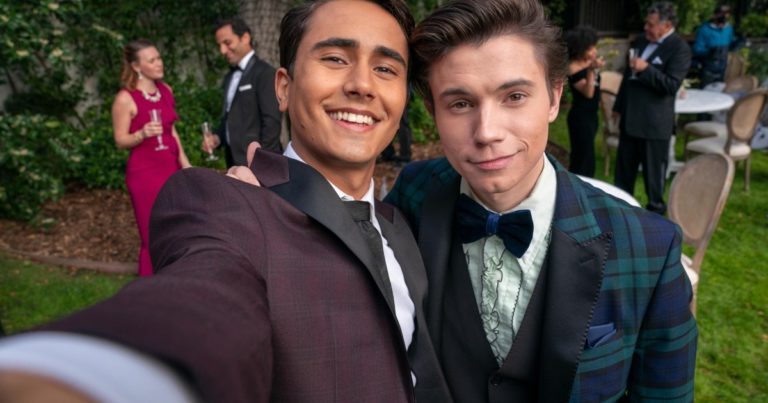
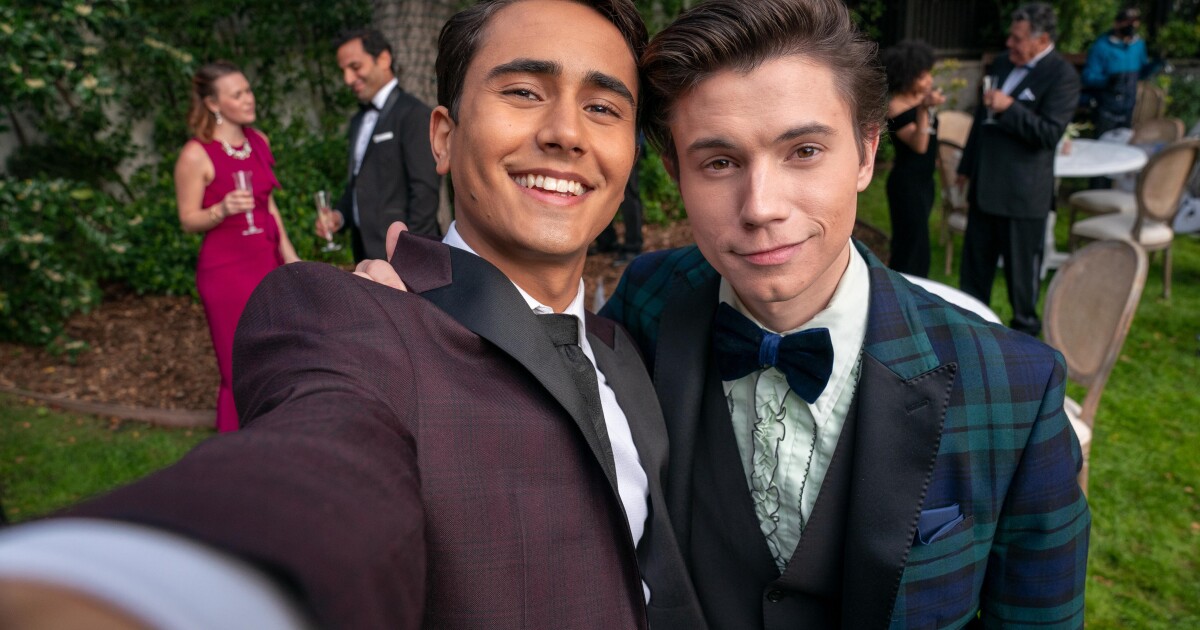
Michael Cimino, the straight star of Hulu’s gay-themed coming-of-age series “Love, Victor,” says he has been attacked by some in the LGBTQ community and even some of his own family members. He said the former went as far as threatening his life.
In a new interview with Attitude, Cimino — who plays the titular Victor — says: “I got some homophobic comments — I kind of expected that to happen. I didn’t expect it from my own family members, though.”
He added, “Some of them reached out, saying, ‘You used to be so cool; now you’re so gay.’ I chalk it up to ignorance. People have that programming and they often don’t have to evolve and try to push past that.”
The 21-year-old Las Vegas native is of Puerto Rican and Italian-German descent and has spoken before of the racism he faced growing up. But he told IndieWire in a 2020 interview that his community had its own issues with prejudice.
Advertisement
“It’s weird … [the Latinx community] is liberal when it comes to things about Latinos, but when it comes to gay rights, it’s like, eh, question mark,” Cimino said in the interview. “We need to change the narrative on that, right away. Because that’s not right. You can’t just be for some issues that concern your people but not all of them. Just because someone’s sexuality is different than yours, that does not mean that they’re not part of your community.”
In the Attitude interview, Cimino said, “There’s nothing wrong with being gay. That ignorance is often something that’s been passed on from generations prior. I always approach that [by saying], ‘These are normal people that are struggling and they shouldn’t have to struggle.’”
Cimino has said in multiple interviews that he has been warned against taking gay roles for fear of typecasting. Meanwhile, the young actor has also faced fierce blowback for taking a role that an out gay actor might have played.
“I’ve definitely had some criticism from the LGBT community for being in the role… I’ve had death threats, which is horrible. But the show is important to me. The messages of hate — I came into it knowing that would happen, regardless of how good I was,” he told Attitude, which did not detail the threats or their sources.
“But there are some straight actors who play gay characters, who are all about supporting LGBT rights while they’re promoting their project, but once they’re done, a year later, it’s kind of forgotten.
“That’s not how [to] be an ally, that’s not how you support LGBT rights. If you’re not an actual ally, then what are you doing?”
Advertisement
Straight actors playing gay roles has been the subject of debate for some time, often hinging on Hollywood’s history of forcing gay actors into the closet in real life and offering only limited chances to explore the humanity of gay characters on-screen.
In an interview with the Sunday Times, straight-identifying actor Richard E. Grant, who received an Oscar nomination for playing a gay character in “Can You Ever Forgive Me?,” said: “I’ve always had that concern … The transgender movement and the #MeToo movement means, how can you justify heterosexual actors playing gay characters? If you want someone to play a disabled role, that should be a disabled actor.”
In a Bustle interview, Emmy winner Darren Criss essentially agreed. Criss, who has famously played queer characters including Andrew Cunanan in “The Assassination of Gianni Versace: American Crime Story” and Hedwig in “Hedwig and the Angry Inch” onstage, said he wouldn’t take gay roles anymore, because “I want to make sure I won’t be another straight boy taking a gay man’s role.”
Advertisement
Oscar winner Cate Blanchett, however, told the Hollywood Reporter, “I will fight to the death for the right to suspend disbelief and play roles beyond my experience.”
Blanchett, who received one of her Oscar nominations as one of the leads in the lesbian love story “Carol,” framed it as essential to the art and task of acting.
“Part of being an actor to me, it’s an anthropological exercise. So you get to examine a time frame, a set of experiences, an historical event that you didn’t know anything about,” she said in 2018.
Advertisement
For his part, Cimino told Attitude: “It’s an honor to play Victor, and a big responsibility. I went in with the pure intent to represent that correctly.”
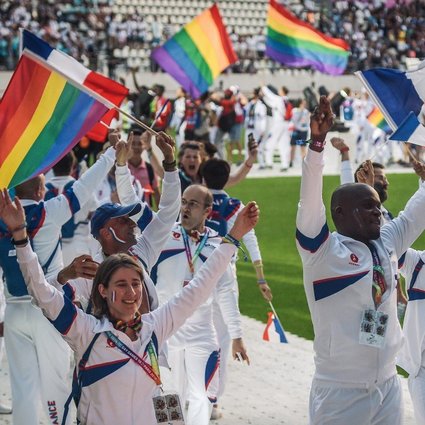
The French team march onto the field during the opening ceremony of the 2018 Gay Games at the Jean Bouin Stadium in Paris on August 4 that year. The Hong Kong edition in 2022 will feature 36 sporting events, expected to attract 12,000 participants and 75,000 spectators, and generate about HK$1billion in the local economy. Photo: AFP
It was the typical chatter for my dad – today, dressed in his Sunday best polo shirt and khakis – with what could have been my tíos. He was asking questions, sharing anecdotes and following up with his signature “I don’t know what to say next”: “No, pos ‘ta cabrón.“
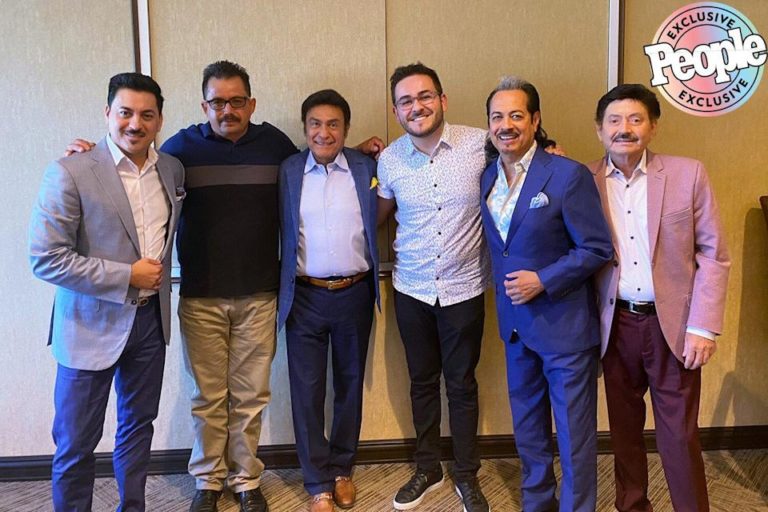
Today, my dad wasn’t cracking open a Modelo with my tíos, though. He was sitting next to me as we spoke to Jorge, Hernán, Luis and Óscar of Los Tigres Del Norte – arguably the most iconic regional Mexican band ever. (They’re the Mexican Beatles if you will.)
I got in touch with Los Tigres’ team after tweeting that they’d be “a dream interview,” but the reason for our get-together wasn’t a typical PEOPLE Q&A. I was here to thank them, alongside my dad, for playing a role in my coming out with their song “Era Diferente,” a track they released several years ago that tells the story of a dad with a lesbian daughter.
Yeah, that Los Tigres – the group that sings about la reina del sur and her cartel escapades and “La Jaula de Oro” about being stuck in America as undocumented immigrants – also has a song about the LGBT experience. They even won a GLAAD Award for it.
“It fills me with pride and satisfaction that our work has helped bring you two closer,” Jorge, the group’s leader, told my dad and me. “Seeing you two happy and smile makes me want to keep doing positive things with the group.”
Growing up, Los Tigres were on repeat at home. My dad never had an aux cord in his car so I’d illegally download songs onto a USB and put it in the beloved stereo that was probably worth more than his beat-up work truck. On days when my mom had to work early, my dad would drive me to school an hour before the bell rang blasting “Pedro y Pablo” and “Jefe de Jefes.”
At the time, I hated it. It was embarrassing to roll up to school with the sounds of accordion blasting through the windows. But the tracks gave my dad a sense of belonging. As I’ve grown older, I’ve learned to appreciate, love and sing along to the rich, beautiful stories on the corridos that remind my dad of the life he left behind in Mexico.
On road trips, I’d queue up a medley of the group’s hits, playing the ones I know my dad loved to hear. The classics. He’d bob his head to the beat, sing along even if he was offtune and sometimes tear up when the lyrics got kind of personal. (My dad is a very sensitive man.)
But during a road trip several months after I first came out in 2019, I decided to add “Era Diferente” or “She Was Different” to the mix, which follows a dad as he realizes that his daughter doesn’t like any of the men courting her and instead buys flowers for her female best friend. My dad had never heard the song before.
“Dicen que el vuelo ideal es paloma y palomo / Y les parece rara otra forma de amor,” the group croons on the corrido‘s chorus. “Yo solo pienso que existen corrientes de aire / Y cada quien que aspire su viento mejor.”
The English translation doesn’t really match the beauty of the lyric, but: “They say the ideal flight is of a male and female dove and they find other kinds of love strange. I only think that there are air currents, And each of us can fly with the wind that suits us best.”
As I played the track during our road trip, my dad started bopping his head and whistling along like he would with any other Tigres song. I knew he was listening closely to the lyrics and it surprised me to not see a negative reaction.
To me, that small gesture – the head bopping and whistling – was the first time he ever accepted my sexuality, even if I had come out months before. I held back tears that day knowing that even though we didn’t talk about it, my dad loved me and would soon accept me for who I am.
—–
Up until our chat with Los Tigres, my dad and I had never talked about what he felt when I came out. And, in front of his idols, he decided to open up, pausing to hold back his own tears.
“Me cayó como balde de agua fría,” he told the group. “It felt like a bucket of cold water was dropped on me.”
“I didn’t know what was happening. He came up to me and said, ‘Papi, I need to talk to you,'” he recalled. “When he told me he was gay, it really hurt. I walked out of the room and my wife came up to me and said, ‘Where are you going? How are you going to turn your back on your son?'”
“I thought, if I don’t treat my son well, they’re going to treat him worse on the street,” he added. “As a father, what does one want for his kids? Pues, the best. And so I decided I couldn’t turn my back on my son.”
I remember that day vividly. I had come out to mom earlier that day and she told me, “Either you tell your dad or I will.” So, after the longest dinner of my life, I shared my truth.
After my dad returned from outside, he walked in to the house with his arms wide open for a hug. “Siempre te voy a amar, mi chiquito. Nada más cuídate mucho,” he told me. “I’m always going to love you, little one. Just take care of yourself.”
From that point on, we never touched the subject again. Until in front of Los Tigres. At our chat, I thanked the group for what they had done for me and my dad. Although we had always had a close relationship, we had grown even closer since I came out.
The group talked to us about the significance of the song.
“In the ranchito where we grew up, gay people suffered tremendously,” said Hernán. “But now, it’s easier to talk and sing about these things. It must have been a relief for you to share with your family what you were feeling.”
“When we make songs, we try to bring a positive influence,” added Luis. “We had heard so many songs that referred to the gay community, but they would do so in a teasing way. We didn’t want that. We wanted to make a song that was sensitive and touched upon the realities of gay people.”
And now, several years after coming out to my parents, I was sitting in a conference room thanking them for what their song did for me. It gave me that feeling of acceptance that every LGBTQ kid wants to feel after sharing their truth.
After saying goodbye and taking our photos, my dad and I left and we just sat in my car in silence, soaking in what had just happened. As I pulled out, I turned on the radio. “La Puerta Negra” was playing.
The Boston Gay Men’s Chorus just announced a collaboration with Disney Concerts for a new experience called Disney PRIDE in Concert.
Music selected for the concert includes songs from Mary Poppins, The Little Mermaid, The Lion King, Coco, Zootopia, Wreck-It Ralph, and Disney Parks.
Visual elements will be incorporated into the performance, which includes the 250-member choral group and a 20-piece orchestra.
Chad Weirick has arranged the music and the show’s book was written by Bill Casey and Tom Choinski, which includes song introductions that explain how they relate to the LGBTQ+ experience.
The production is scheduled for June 25-26, 2022 at Boston Symphony Hall. Tickets will go on sale in early 2022.
After its Boston debut, Disney PRIDE in Concert will be made available as a licensed production through Disney Concerts.
Reuben M. Reynolds, III, BGMC’s Music Director: “Disney movies and musicals have long resonated deeply in the LGBTQ community because they often mirror our experiences in a society that hasn’t always welcomed us. Characters are often struggling to fit in and to accept themselves, they long for a love that feels unattainable, they’ve lost their family of origin and had to create a new one, yet they persevere and find joy in life. They express their alienation, desire, and determination in beautiful songs that have given solace and empowerment to generations of LGBTQ people. Naturally, we’re overjoyed at the chance to make the thematic connections between the Disney canon and the LGBTQ experience explicit by infusing the music with the stories of our lives.”
Craig Coogan, Executive Director of the Boston Gay Men’s Chorus: “Disney PRIDE in Concert will likely be the first in-person performance of the Boston Gay Men’s Chorus in two years. We think it’s the perfect way to come out of the pandemic to thank our singers, patrons and fans who have been so patient and supportive during the hiatus. We are grateful to partner with Disney and share their commitment to showcasing the voices and stories of diverse communities, a value that is so close to our hearts, we’re coming back in a spectacular way. We can’t wait to perform this concert for audiences and have the show become part of the songbook for choruses around the world.”
All throughout Pride month, songs beloved by largely LGBTQ+ audiences like Madonna’s “Vogue,” Robyn’s “Dancing On My Own,” Kylie Minogue’s “Can’t Get You Out Of My Head,” and more receive immense play at queer nightclubs and celebratory festivals. While those tracks are undeniably queer anthems, it’s important to note that they come from straight artists who are considered “gay icons” for their allyship rather than actual LGBTQ+ musicians themselves. During June, it’s imperative to spend an equal if not greater amount of energy amplifying the work of artists who identify as lesbian, gay, bisexual, transgender, queer, intersex, asexual, etc. — and it’s even more crucial to keep supporting such individuals long after their dedicatory month comes to a close.
Luckily, countless LGBTQ+ musicians have dropped incredible material since the beginning of 2021. From Lil Nas X’s pole-sliding, Satan-grinding, chart-topping viral hit “MONTERO (Call Me By Your Name)” to Hayley Kiyoko’s ’00s-influenced bop “Found My Friends” and Orville Peck’s country-tinged cover of Lady Gaga’s “Born This Way,” artists have unapologetically embraced their identities in songs and music videos, offering relatability and visibility to listeners in the community. So get ready to update your playlist; here are 17 new songs by queer artists to stream this Pride month and every month going forward.
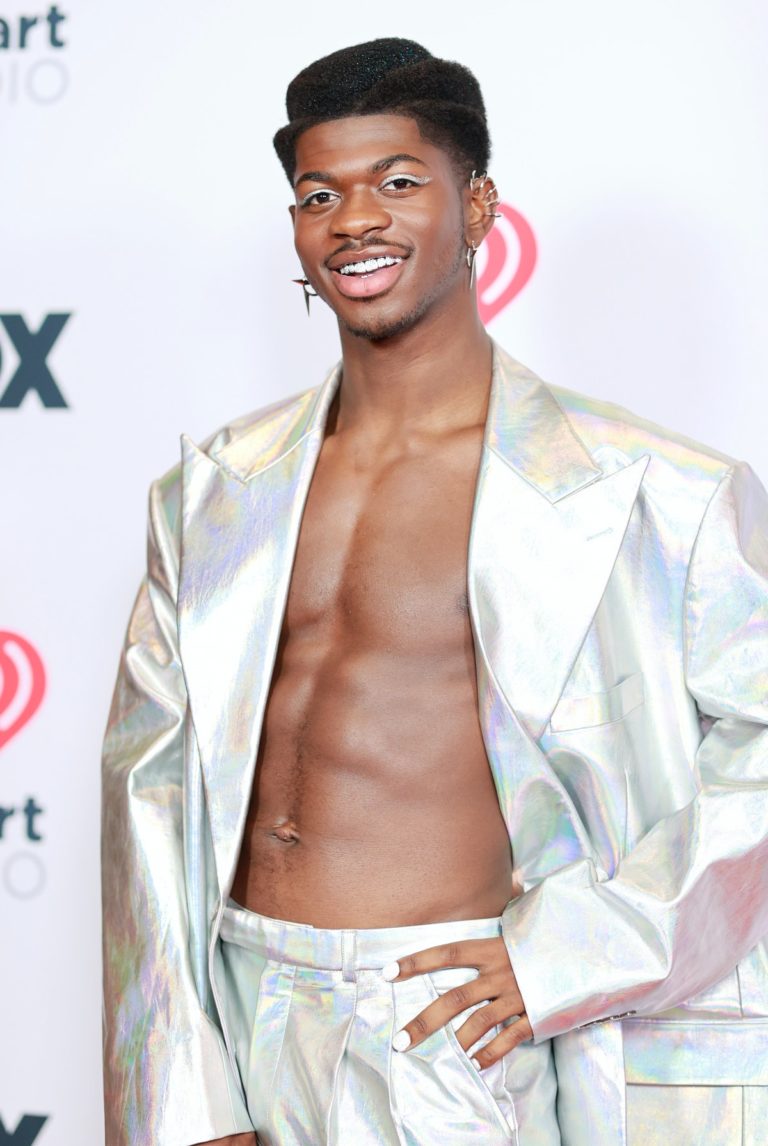
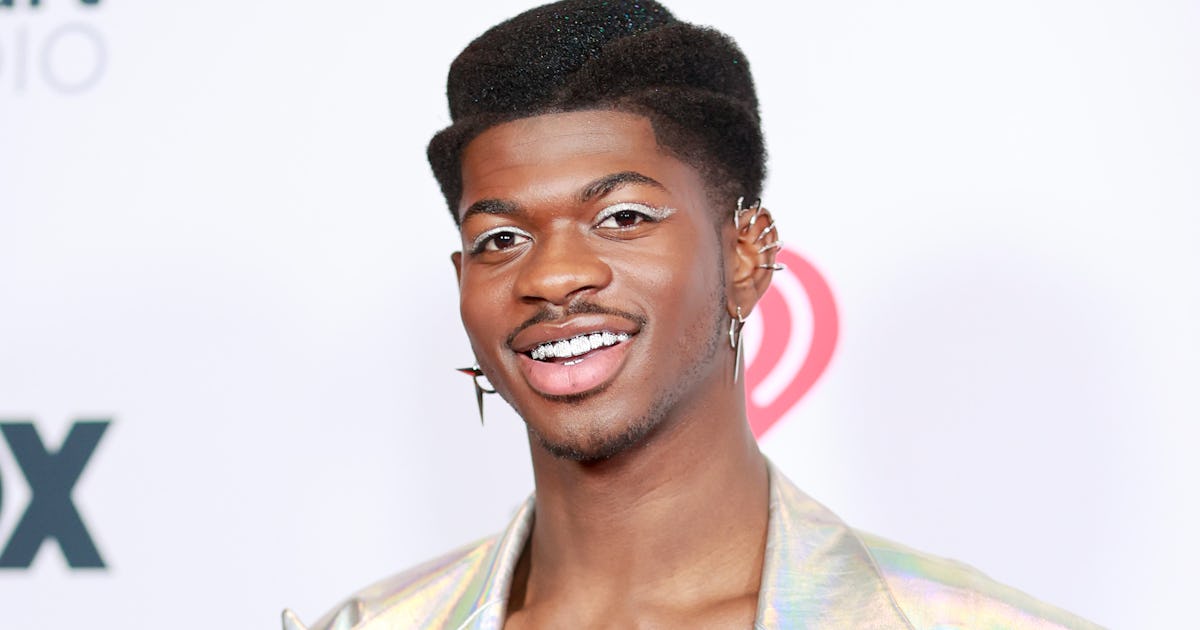
Lil Nas X, “MONTERO (Call Me By Your Name)”
King Princess, “House Burn Down”
Having mastered the art of writing about heartbreak through songs like “1950” and “Talia,” King Princess has continued her streak of top-tier emo bangers with “House Burn Down,” a fan-favorite song she released in June after performing it for years. With lyrics that capture the feeling of sticking out a bad relationship as you wait for it to crash and burn, the musician has fans ready to hear the rest of her to-be-announced sophomore record.
Years & Years & Kylie Minogue, “Starstruck”
Fresh off of his showstopping role in Channel 4 and HBO Max’s heartbreaking It’s A Sin, Years & Years frontman Olly Alexander recruited the legendary Kylie Minogue for a remix of his latest single, “Starstruck.” Featuring a pulsating disco-tinged beat fit for Dua Lipa’s Future Nostalgia, the explosive track hears Alexander and Minogue raving about a crush as though they’re an A-list celebrity.
Rebecca Black, “Worth It For The Feeling”
Since publicly coming out as queer last year, Rebecca Black has been releasing bop after bop leading up to her forthcoming project Rebecca Black Was Here. Accompanied by a sensual, Queen of Hearts-inspired visual, her latest single “Worth It For The Feeling” recalls a real-life surprise reunion with an ex-girlfriend that developed into a second (and short-lived) romantic fling.
Dorian Electra, “Ram It Down (feat. Mood Killer & Lil Mariko)”
The latest single from their 2020 project My Agenda, Dorian Electra’s“Ram It Down” uses a sexual innuendo to comment on homophobes’ frequent requests for LGBTQ+ people not to display their so-called “lifestyle” in their faces. By the end of the raucous, high-energy track, Electra and their collaborators Mood Killer and Lil Mariko simply refuse to hide their queer identities, noting that they will “ram it down [your] throat.”
Bebe Rexha, “Sacrifice”
Bebe Rexha’s ’90s Eurodance-inspired “Sacrifice” was aptly released as nightclubs were starting to reopen after lockdown, as it’s literally guaranteed to get you sprinting to the dancefloor within its first few seconds. Accompanied by a ridiculously fun vampiric music video featuring Rexha sacrificing a man in order to party, this track is perfect to soundtrack your next night out.
Orville Peck, “Born This Way (The Country Road Version)”
Billboard described Orville Peck as “the masked gay crooner revitalizing classic country’s spirit,” which sums up why he was the perfect choice to cover Lady Gaga’s “Born This Way (The Country Road Version),” which she originally recorded for the deluxe version of Born This Way in 2012. In addition to bringing true yee-haw energy to the track, Peck updated the bridge’s lyrics to be more inclusive for 2021, swapping the words “chola” and “orient” for “Asian” and “Latinx.”
Slayyyter, “Troubled Paradise”
The title track from her debut album, “Troubled Paradise” marks Slayyyter’s transition from viral act to bonafide pop star with infectious dance production and clever lyricism about a relationship gone sour. “Reminisce on the days when you were mine,” she sings, recalling sweeter days with a lover when a simple activity like “watching lightning strike” was satisfactory.
Tinashe, “Pasadena (feat. Buddy)”
A charismatic summer jam, Tinashe’s“Pasadena” boasts bright, bouncy production and features a Micaiah Carter-directed video shot in picturesque Californian settings. With simple lyrics about romantic flings in the sunny state (“Hands in the wind, racin’ out to the coast / Feelin’ free, don’t get better than this”) and an arousing verse from Compton-born rapper Buddy, the track is perfect to bump at your next outdoor event.
WILLOW, “Transparent Soul (feat. Travis Barker)”
The Aces, “Don’t Freak”
On their latest single, “Don’t Freak,” Utah-born pop-rock band The Aces explore the awkward, painful experiences and feelings that follow the end of a relationship. Members Katie Henderson, McKenna Petty, Alisa Ramirez, and Cristal Ramirez reference the dramatic haircuts, uncomfortable run-ins, and inevitable overthinking that come with any breakup, queer or otherwise.
Hayley Kiyoko, “Found My Friends”
This infectious bop from Hayley Kiyoko, dubbed “Lesbian Jesus” by her fans, could’ve been a Backstreet Boys or *NSYNC single for its simple, repetitive, made-for-choreography bridge: “I just wanna dance with you tonight.” Released as the first single from her forthcoming sophomore album, “Found My Friends” details an all-too-relatable feeling of reuniting with friends after a long, anxiety-inducing period of being apart.
Clairo, “Blouse”
Clairo’s first single back from a two-year hiatus, “Blouse” features production from Jack Antonoff and background vocals from the ever-elusive Lorde — a favor Clairo returned by providing harmonies on “Solar Power.” With lyrics directed towards someone whom the musician is interested in but only acknowledges her body rather than her personality, “Blouse” is a powerful statement coming from the 22-year-old artist as she begins rolling out her sophomore album.
Bronze Avery, “Happy With Nothing (feat. Kevin McHale)”
LA-based musician Bronze Avery recently teamed up with former Glee actor Kevin McHale for “Happy With Nothing,” a bop about being satisfied without a new romance to move onto after an unfavorable one came to a close. The song’s sweet, bright music video features Avery meeting up with McHale for friendly comfort and support after the relationship’s end.
Demi Lovato & Ariana Grande, “Met Him Last Night”
Victoria Monet, “F.*.C.K.”
Having helped craft hit songs for Grande, Fifth Harmony, Chloe x Halle and more, Grammy-nominated musician Victoria Monet knows a thing or two about clever songwriting. On the downtempo R&B track “F.*.C.K.,” her first single since 2020’s critically-acclaimed Jaguar EP, she redefines the swear word to stand for “Friend You Can Keep” as she sings about a platonic bond that includes casual sex.
Regard, Troye Sivan, & Tate McRae, “You”
This song of the summer contender features ultra-catchy lyrics about the difficulty of getting over a lover and continuing to return to the relationship. “When I try to fall back, I fall back to you,” Troye Sivan sings on the club-ready “You” by DJ Regard that also features pop newcomer Tate McRae and has already reached No. 2 on Billboard’s Hot Dance/Electronic Songs chart.
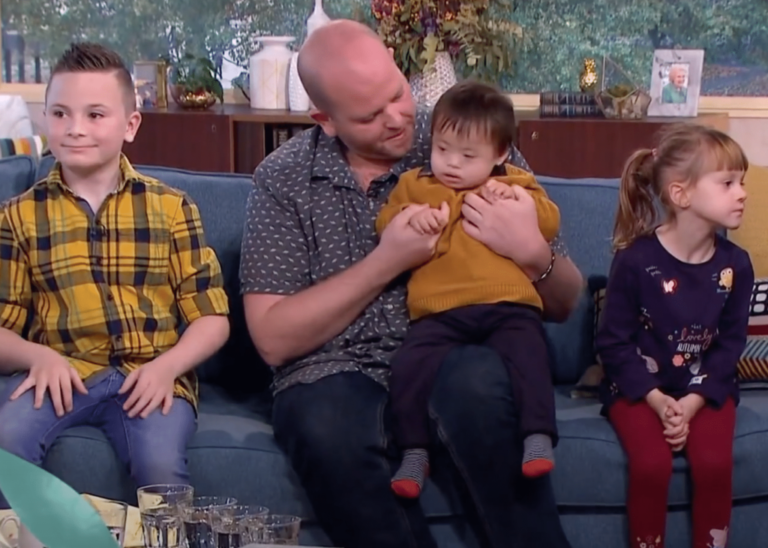
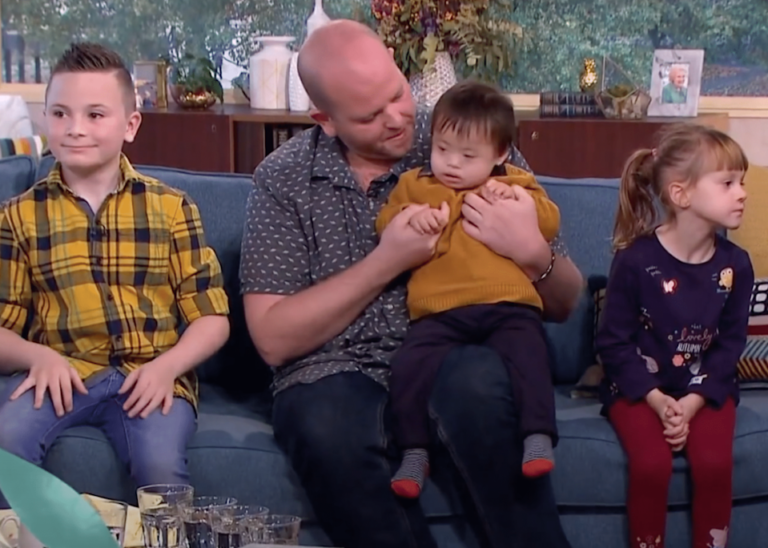
Ben Carpenter with his six adopted children. (YouTube/ This Morning)
A single gay man who said he’s “always dreamed” of a big family has just adopted his sixth child with a disability.
Ben Carpenter, 37, from Huddersfield worked in the care sector before he adopted his first child when he was just 21 years old.
He told the Daily Mail: “I’ve always known what I wanted. I never wanted to become a biological dad because being a parent is so much more than that.”
Adopting children who had disabilities and additional mental and physical needs was important to him, he said, because they “were the most vulnerable and the ones that were most in need of a loving and caring home”.
In 2015, the British Association for Adoption and Fostering (BAAF) estimated that while 25 per cent of all looked-after children have a disability, this number skyrockets to 40 per cent for children waiting on the adoption register.
His first child Jack, who is now 14, has autism, and soon Ben started his family he adopted Ruby, now 11, who has complex needs.
“I had a lot to prove at such a young age,” he said.
“I needed to show that I was mature enough and could offer these kids what they needed.”
After adopting Ruby, Ben was asked by the adoption agency whether he would adopt his daughter’s biological sister Lily, who is deaf.
His fourth child was six-year-old Joseph, who has Down’s syndrome, and his fifth child was Teddy, who had Cornelia de Lange syndrome, a rare genetic disorder.
Tragically, Teddy passed away from sepsis in November, 2019, which was unrelated to his disability.
Ben said: “I was devastated and I felt guilty for a while because I kept wondering if there was something I could have done to fix it.
“Before Teddy passed away, I had been contacted to see if I would consider another child. It was a little boy with severe brain issues.
“I had said yes, but when Teddy passed I needed to put the process on hold to allow myself to grieve.”
Last year, although still grieving his son, Ben said: “I realised that this little boy also needed me.”
In April of that year, the gay dad adopted his sixth child, Louis, whose needs to use a wheelchair because of his disability.
He explained: “I had always dreamed about having a big family and I am so happy that my kids are a part of it and that they have so many siblings.
“I often sit and imagine them all at each other’s weddings.
“They are all so supportive of each other’s needs and I am so proud that I have created a happy, loving and stable environment for them to grow up in.
“As much as I have changed their life, they have also changed mine.”
Ben is currently raising money for a multi-sensory room, which “will help the children with sensory issues, developmental disabilities and learning difficulties”, via JustGiving.
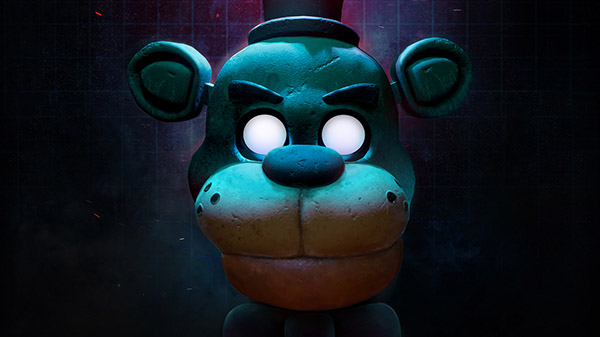
Scott Cawthon, creator of the Five Nights At Freddy’shorror game series, has announced that he will retire from game development to focus on personal pursuits. The announcement was posted on Cawthon’s official website, and vaguely referenced some responses he had gotten over the last week. This comes just four days after he made a “last post” on the FNAF subreddit where he stated that “maybe it’s better that [he] get canceled and retire.”
Cawthon has been embroiled in a controversy over the past few weeks. Twitter users found out he had donated thousands of dollars to politicians and political candidates with transphobic and homophobic political views. These politicians included Mitch McConnell (to whom he donated $5000), Tulsi Gabbard (another $2500), and even former president Donald Trump.
According to Cawthon’s Reddit post, after the information got out he started “trending on Twitter for being a homophobe, getting doxxed, with people threatening to come to [his] house.” In defense of his political contributions, Cawthon stated that the candidates he supported “included men, women, white people, black people, republicans, and democrats.” While he stated that he supported Trump “because [he] felt he was the best man to fuel a strong economy and stand up to America’s enemies abroad,” he failed to mention how these candidates would frequently propose and support legislation denying the LGBT community basic human rights.
Instead of supporting candidates that did protect the LGBT community, Cawthon stated:
Even if there were candidates who had better things to say to the LGBT community directly, and bigger promises to make, I believed that their stances on other issues would have ended up doing much greater harm to those communities than good.
In his retirement announcement, Cawthon states that he has seen “tremendous love and support over this last week, a lot of which has come from the LGBTQ community.” He adds that, while he will be retiring, the Five Nights At Freddy’s series will still continue. “Someone else will eventually be running the show,” Cawthon states, and that person will be “someone of [his] choosing, and someone that [he] trust[s].”
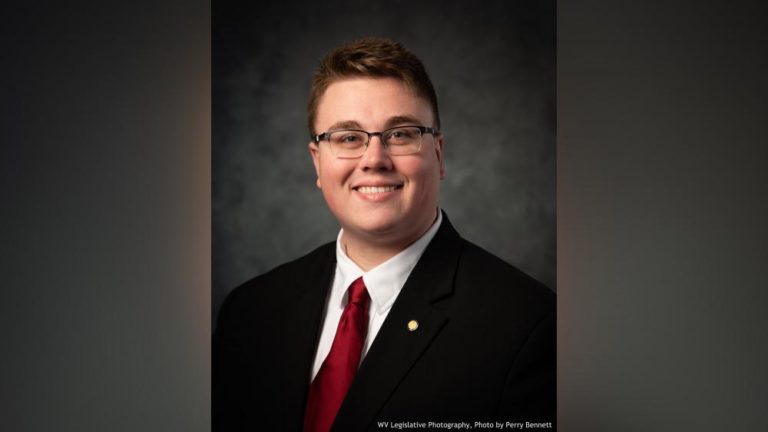
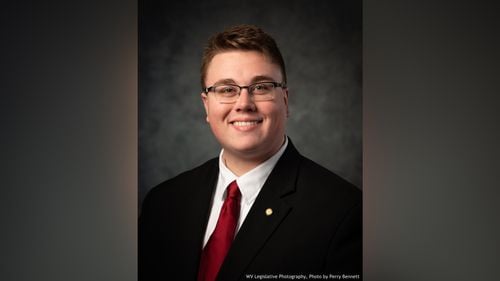
(CNN) — This young West Virginia lawmaker wants everyone to know: It’s possible to be both a conservative Republican and gay.
Joshua Higginbotham, a member of the West Virginia House of Delegates, has been in office for five years. On Sunday, he came out as gay on social media.
“Nothing has changed, other than now you know this about my personal life,” he said. “I’m still the same guy you’ve voted for in six elections.”
He didn’t come out before, he explained, because there were members of his family who did not know. He was concerned they would disown him if they found out, but they were ultimately 100% supportive, he said.
“We made a decision as a family to be more open about it and make it public, because there’s nothing wrong with it,” he said. “I’m not ashamed of it; I’m not embarrassed by it. It’s just part of who I am.”
The 24-year-old lawmaker also reassured his constituents that he is still a Christian and conservative Republican, and his sexual identity doesn’t change that.
Congressional Republicans and conservative activists are celebrating “stunning” victories after GOP lawmakers successfully derailed pro-abortion and LGBT-related bills in the U.S. House of Representatives.
The House held votes on the Equal Access to Contraception for Veterans Act and the LGBTQ Business Equal Credit Enforcement and Investment Act Tuesday.
In both cases, lawmakers voted on whether to “suspend the rules and pass” the bills. According to the Congressional Research Service, “when a bill or some other matter is considered ‘under suspension,’ floor debate is limited, all floor amendments are prohibited, and a two-thirds vote is required for final passage.”
While the CRS describes the suspension of the rules as “a procedure that the House of Representatives often uses on the floor to act expeditiously on relatively noncontroversial legislation,” opponents of the bills do not believe that they are “noncontroversial.”
According to the Congressional Budget Office, the Equal Access to Contraception for Veterans Act would “eliminate copayments that the Department of Veterans Affairs (VA) charges to veterans who receive contraceptive items from the Veterans Health Administration.”
However, the conservative Christian activist organization Family Research Council warned that the Equal Access to Contraception for Veterans Act would have “increased insurance coverage to 100 percent for all FDA-approved forms of contraception for veterans.”
“This includes ‘emergency contraceptives’ like Plan B and Ella, which act as abortifacients by preventing implantation or ending the life of an embryo before implantation,” wrote Family Research Council President Tony Perkins, a leading social conservative activist. “American taxpayers should not be forced to pay for abortifacient drugs, but that is exactly what H.R. 239 mandates.”
Ultimately, 240 members of Congress supported the Equal Access to Contraception for Veterans Act, leaving it far short of the two-thirds threshold needed for passage. Every House Democrat voted for the measure, along with 22 Republicans.
The LGBTQ Business Equal Credit Enforcement and Investment Act would “amend the Equal Credit Opportunity Act to require the collection of small business loan data related to LGBTQ-owned businesses.” As currently written, the Equal Credit Opportunity Act is designed to “facilitate enforcement of fair lending laws and enable communities, governmental entities, and creditors to identify business and community development needs and opportunities of women-owned, minority-owned, and small businesses.”
The LGBTQ Business Equal Credit Enforcement and Investment Act would insert the phrase “LGBTQ-owned” after every use of the term “minority-owned” in the existing law and expand the definition of “sex” in the document to include “sexual orientation and gender identity.”
In the roll call vote, the bill received the support of 247 lawmakers. Perkins lamented the “alarming number of Republicans” who voted for both bills.
Reps. Mike Bost, R-Ill.; Rodney Davis, R-Ill.; Brian Fitzpatrick, R-Penn.; Carlos Gimenez, R-Fla.; Tony Gonzales, R-Texas; Anthony Gonzalez, R-Ohio; John Katko, R-N.Y.; Young Kim, R-Calif.; Adam Kinzinger, R-Ill.; Nancy Mace, R-S.C.; Nicole Malliotakis, R-N.Y.; Mariannette Miller-Meeks, R-Iowa; Dan Newhouse, R-Wash.; Jay Obernolte, R-Calif.; Tom Reed, R-N.Y.; Maria Elvira Salazar, R-Fla.; Michelle Steel, R-Calif.; Fred Upton, R-Mich.; and Jeff Van Drew, R-N.J.; supported both bills.
Reps. Dan Crenshaw, R-Texas; Kevin McCarthy, R-Calif.; and Lisa McClain, R-Mich.; supported the Equal Access to Contraception for Veterans Act while opposing the LGBTQ Business Equal Credit Enforcement and Investment Act.
Reps. Ken Calvert, R-Calif.; Tom Cole, R-Okla.; Mario Diaz-Balart, R-Fla.; Tom Emmer, R-Minn.; Andrew Garbarino, R-N.Y.; Mike Garcia, R-Calif.; Ashley Hinson, R-Iowa; David Joyce, R-Ohio; Patrick McHenry, R-N.C.; Greg Murphy, R-N.C.; Peter Meijer, R-Mich.; and David Valadao, R-Calif.; supported the LGBTQ Business Equal Credit Enforcement and Investment Act while opposing the Equal Access to Contraception for Veterans Act.
In an interview with Breitbart News, Rep. Andy Biggs, R-Ariz., the chairman of the conservative House Freedom Caucus, described the defeat of both bills as a “stunning” development and a “leverage point to try to restore the balance” on Capitol Hill.
He predicted that “if you start taking some of these down, It gives you leverage points so the Democrats come back to us and say ‘alright, let’s make a deal.”
“It’s what our base wants us to do,” he added. “That it worked is good. Now we need to make it work on a regular basis, and if we do that, things are going to change up.”
Biggs accused the Democrats of trying to “change all the rules and traditions of the House” to “force all of their agenda … down our throats.”
“Our position has always been that we have to fight on every issue,” Biggs said. “That’s why we ask for roll call votes on the suspension votes because we want transparency for the American public …”
In most cases, legislation can pass the House of Representatives with a simple majority. This has enabled Democrats, who have a narrow majority in the lower chamber, to pass progressive legislation with ease despite accumulating little to no Republican support.
Such legislation includes a bill to make Washington, D.C. a state, the Equality Act seeking to codify discrimination protections for the LGBT community into federal law and the For the People Act, which would increase federal oversight of the way states conduct federal elections.
Most legislation in the U.S. Senate requires 60 votes to pass. Since Democrats only have a narrow 50-50 majority in the upper chamber, with Vice President Kamala Harris casting the tie-breaking vote, Democrats need to secure the support of 10 Republicans to pass most legislation.
Additionally, one Senate Democrat, Joe Manchin of West Virginia, has announced his opposition to the For the People Act and the D.C. statehood bill as well as the elimination of the 60-vote rule, an idea that has been floated by Democrats seeking to pass progressive legislation approved by the House without Republican support. As a result of the makeup of the Senate and current Senate rules, the progressive legislation has failed to pass the upper chamber thus far in the 117th Congress.
I thought long and hard about how to approach this autobiographical examination of a gay kid in the ‘80s and ‘90s growing up in a pastoral, rural, farming and bedroom community. As I sat down to write this opus — having a background in media relations, interacting with bureau chiefs and beat reporters alike at all of Canada’s majors on everything from the events of September 11 to lifestyle-based product launches—with degrees in public relations, history/art history and certificates in human resources and journalism, I have written for CEOs and the most senior leaders of a variety of domestic and global companies and NGO/As. My words and speeches have been said by, and my press releases attributed to, many people in business, government and national publications. I thought this would be easy. It was not.
It was not for a variety of reasons, the least of which being the feelings of inadequacy and shame that this notion of coming clean, publicly, would mean. To be clear, it’s not the shame of being a gay man, it is shame based on the lengths I took to cover it up. The lies I told myself and others—everything from unwanted teenage pregnancy to everything I said about myself for many years, were lies. I created a narrative of what I thought it took to be liked by someone, anyone—when the truth was revealed I paid the price, overwhelming loneliness.
This is on me. When you are different, intrinsically you feel as though you need to be someone else to fit in. For me this came with the complete disregard for the line between fantasy and reality. I didn’t care, as long as I wasn’t the gay kid. If I was someone else and had all the material things that made people popular on the teen TV shows of the day, I could negotiate my way into at least one birthday party, to which everyone in my class was invited except me. Another strike against me: A deep sense of self-loathing that only further festered my self-hatred and being discovered deepening my humiliation…I own it, it is much a part of my past as learning to drive, or how to ride a bike.
I often wonder if things would have been different if I felt able to be my authentic self, instead of burying the real me behind a disingenuous presumption of who I thought I had to be. It wasn’t until my mid-to-late-20s, and multiple failed relationships, that I was really able to put these toxic behaviours and acts of self-sabotage to bed, once and for all. I am worthy of friendship. Just me. No lies, no exaggerations, no filter. I deserve to be accepted. Just like the lyrics in my favourite song, by my favourite band, The Smiths’ “How Soon is Now?”
I often wonder if things would have been different if I felt able to be my authentic self, instead of burying the real me behind a disingenuous presumption of who I thought I had to be
I am human, and I deserve to be loved. Just like everybody else does.
Ironically, what I am most ashamed of are not the lies. They just represent my deeply flawed attempts at self-preservation. It is not standing up for myself when it really mattered. Instead, I hid. I accepted that my life would always be dodging punches and punchlines. Both of which I endured, telling no one. I knew three things for certain: I was unlikeable; I was unlovable; and, being a pariah, talking to me could be the death of one’s standing in one’s clique. But I was smart. I was a gifted writer, photographer, horticulturist, musician and designer. I was fast with my words. I used my laugh, wit and self-deprecation as defense mechanisms. I was loud, disruptive and never let the opportunity for double entendre to slide. That said, my verbal retaliations rarely landed as I hoped. Not because they were without wit, but because they were incomprehensible for a 12-year-old bully to understand, frequently leading to a worse beating than I probably would have received if I’d said nothing.
What I endured was relentless bullying from Grade 1 straight through graduation. There was no one to turn to, no one to act in my defense. Sadly, these experiences were not confined to other students, but also teachers.
Being goosed, and having my ears played with in front of the class by a teacher in Grade 7; having another teacher constantly telling me to “be a man” and stop swinging the bat “like a girl” in gym class. Being so afraid to use the washroom at school for fear of being beat up, that I would hold in my urine the entire day until I got home. This is what my day-to-day school life was like. I should have said something, but who would have listened to the weird kid that didn’t really fit in? Instead, I became an asshole — to myself, and to everyone around me.
As a “walking student,” I lived in fear every day as I walked back and forth to school from Grade 5 to Grade 8. Getting to school was easy, getting home was a different story. I learned to be sneaky. Hiding in supply closets and classrooms until the bus students left, many of whom were my biggest tormentors. Things got so bad I no longer went home for lunch, not even when I could make the trip on my bike in 15 minutes. The walk to the isolated bike rack provided ample opportunity to be verbally tormented, punched, or worse.
I vividly remember being caught walking with my best friend in grade school, being approached by two of the cool kids on their bikes, and me trying to protect his reputation, blurting out after a sleepover at my house, “We’re just collecting things for a church sale.” It was also the moment I understood true friendship, possibly for the first time, when after they rode away he said, “You didn’t have to do that, you’re my friend.” It was the same friend that guaranteed me safe passage to school every day. I used to walk to his house and wait for him to walk, or ride our bikes, the remainder of the way… until things changed, when he left for another school in Grade 8. I was on my own.
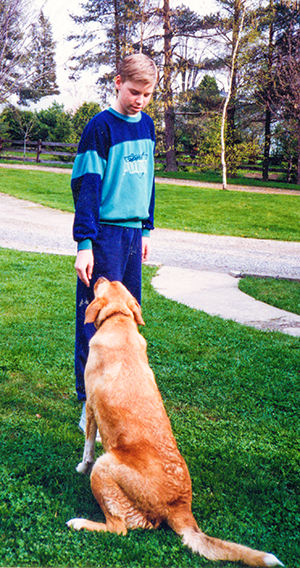
The author at 14, with Zack, the family’s retriever. COOK FAMILY
Once entering high school, things didn’t change that much. Again I hid, sometimes in the library, sometimes in the far corners of the school, where I knew I wouldn’t be found. I read incessantly, periodicals primarily. In the first three years of high school, I read every issue of National Geographic, Punch and The New Yorker. I developed a love for words, differing opinions, tongue-in-cheek humour, and at times irreverent sarcasm. It was also where I first read about Gay Related Immune Deficiency (GRID), later renamed HIV/AIDS.
As the world was waking up to ravages of the AIDS epidemic in the gay community, it became additional fuel to the bullying fodder. A girl in my Grade 11 geography class, hell-bent on putting me in my place, announced loudly, “You’re such a fag, I hope you get AIDS and die.” I cried, whether or not anyone saw the tears, I cried. Again, no response from the teacher in the moment, but she did ask me after class if I was okay. I ended up crying in the department head’s office during the break, mortified that I’d have to cross the campus, tear-soaked. The student’s mother was a teacher at the school, likely leaving her protected from any culpability. In fact, it’s probably long forgotten, with no recollection of the event itself, but not by me. I remember the words, the patterns of hate, the sharpness, and how they have the power to wound, like a serpent’s fangs. Some cuts take longer to heal than others, some stay open for nearly 30 years.
I wanted to know everything there was to know about AIDS. If it was trying to kill me, I would do what I could to stop it. At the advice of a friend, whose mother I believe was its Executive Director, I became the biggest and youngest volunteer at AIDS Niagara. Anytime they needed anyone even to answer the phones I was there, learning how to avoid what was most certainly my fate, while supporting those who were suffering from the disease in any way I could. This included starting a group at E. L. Crossley — the Association for Futures at Risk (AFAR)— with a like-minded friend (who, in the years since has done amazing work internationally related to HIV/AIDs education), to share the risks related to AIDS with the broader high school community through speakers and action.
When AIDS Niagara asked for volunteers to work their booth at Gay Pride in Toronto in 1993, I leapt at the opportunity. For the first time I realized it was okay to be who I was, that I wasn’t alone. I had hope. So much so that I came out as bisexual to my OAC Sociology class later that year. The elation was short lived. I was officially “the fag of the class of ’94,” the target of jokes and receiver of slanders — including having Tyler Cook sucks Moose Cocks spray-painted across the entrance and exit of the school parking lot. Few people said anything to me that day, but those who did probably saved my life. I never thanked them for these acts of kindness until recently.
When I left for university, I purposefully chose Mount Allison, a small liberal arts university with some of the strictest admissions standards in the country, located in the marsh between New Brunswick and Nova Scotia. As a polymath, and chronic over-achiever, it was a great fit. While my parents were proud that I was accepted, they expressed dismay that it was the only school of the 12 post-secondary institutions to which I was accepted that did not offer me a full or partial scholarship. My decision-making criteria were clear. I chose Mount A for the sole reason that no one I knew was aware that it existed, let alone would apply to go there. At no time was this more evident than during the Crossley graduation proceedings, when the head of guidance announced, “Tyler Cook, Ontario Scholar, will be attending Mount, Dal, someplace out east.” Initially I considered it nothing more than another slap from the school designed to educate me but lacking the ability to support and protect me. Only later was I able to interpret this moment as a victory. I had found my freedom.
Growing up is hard. Growing up as a member of the LGBTQ2+ community in the ‘80s and ‘90s in Fonthill was nothing short of a nightmare. You learn a lot of things, a lot of things that are really tough for any kid to process. Each thing you learn, while it hurts so badly at the time, benefits you later.
■ You learn first and foremost never to trust anyone; then you build self-reliance and inner strength to keep moving and eventually you learn to trust people again.
■ You learn, and begin to think that you’re the issue; then you realize it’s not you, it’s them, and you forgive, and feel sorry for your tormentors.
■ You learn to be ashamed of yourself and everything about you; then you find your truth, you grow, and you leave that version of yourself behind.
■ You learn how easy it is to commit suicide, you try several times and you fail (only because your mom calls at just the right time; or dad comes home from work earlier than usual and finds you with empty prescription pill containers and alcohol); then you realize, once you leave the town, life is actually worth living.
■ You learn what it feels like to have your Grade 8 teacher ask your friend, another student, if “Tyler is gay,” then your friend tells that it’s okay if you are.
■ You learn what it’s like to be slandered in your high school yearbook, you learn that hate speech is a hate crime; then you don’t make an official or public complaint because you know what it is like to have your name dragged through the mud. I quote directly, “Flamers, like Tyler Cook.” This does not mean that even 28 years later personal apologies from the school board, the school, the yearbook’s faculty advisor, and the individual(s) are not due, because they are.
■ You learn that running away to avoid any possibility of running into someone from your home town is your only option for a fresh start; then you find yourself, and a group of friends you never had growing up that don’t care about your past, and they become your family.
■ You learn to lie, and tell stories, so you make telling other peoples’ stories your career and you become successful (using a variety of pseudonyms) to allow you to neglect your own; until you become comfortable in clearly articulating your past.
■ You learn what it’s like to be talked about; then you fight back with humour, sarcasm and words, written, spoken or otherwise.
■ You learn that who you are has the propensity to impact others in your family who also experienced bullying; then they stand up for you and you understand the value of family.
■ You learn what it’s like to have no one to protect you and feel that you will never be loved; then you meet the love of your life, you marry him and you finally feel safe (I love you Jason).
I promised myself that unlike in my usual writings, I wouldn’t name names. That doesn’t seem fair. My name is someone’s pet peeve in a yearbook. My picture, the only one with a “special” orientation, mimicking my own. I am not naming names, but I will leave breadcrumbs, just enough so you know who you are, and so you can think about how your words and actions nearly killed me, not just once, but many times—that is if you choose to care. And I do believe that is your choice.
Growing up gay in Fonthill was hell, or the closest possible thing to it — to this day I only go back out of familial obligation and for no other reason. What it taught me was how to survive on my own, and to love myself when no one else would. It also taught me to be a better person. A kinder person with boundless empathy for the hurt and the marginalized, with a profound sense of social justice. I am not sure that I should be grateful for the experience, but I’m sure I would be a lessor human without it.
What I am grateful for is that at the end of it all, as hard as it was on my brothers, my family didn’t care I was gay; I am grateful that my marriage has outlasted those of my tormentors—and I now know what being loved is really like; and I am grateful that those LGBTQ2+ kids growing up today are more accepted and that many don’t have to face what I did every day for 18 years.
This is why we need Pride. It’s not about the corporate monetization of diversity and inclusion efforts—although those symbols of acceptance would have greatly helped 15-year-old me walking around the Pen Centre, downtown St. Catharines, or Welland. Pride enables me to focus on the fact I survived. I survived when many times my survival appeared untenable to me—it was going to be AIDS, some drunk high school student who thought it would be fun to beat up the gay kid, or me just not being able to make it through another day. I am a proud husband and son; uncle and brother. I have pride and no one will ever take that from me again. ◆
Share your story of growing up LGBTQ+ in Niagara. Email [email protected]
A single gay man who said he’s “always dreamed” of a big family has just adopted his sixth child with a disability.
Ben Carpenter, 37, from Huddersfield worked in the care sector before he adopted his first child when he was just 21 years old.
He told the Daily Mail: “I’ve always known what I wanted. I never wanted to become a biological dad because being a parent is so much more than that.”
Adopting children who had disabilities and additional mental and physical needs was important to him, he said, because they “were the most vulnerable and the ones that were most in need of a loving and caring home”.
In 2015, the British Association for Adoption and Fostering (BAAF) estimated that while 25 per cent of all looked-after children have a disability, this number skyrockets to 40 per cent for children waiting on the adoption register.
His first child Jack, who is now 14, has autism, and soon Ben started his family he adopted Ruby, now 11, who has complex needs.
“I had a lot to prove at such a young age,” he said.
“I needed to show that I was mature enough and could offer these kids what they needed.”
After adopting Ruby, Ben was asked by the adoption agency whether he would adopt his daughter’s biological sister Lily, who is deaf.
His fourth child was six-year-old Joseph, who has Down’s syndrome, and his fifth child was Teddy, who had Cornelia de Lange syndrome, a rare genetic disorder.
Tragically, Teddy passed away from sepsis in November, 2019, which was unrelated to his disability.
Ben said: “I was devastated and I felt guilty for a while because I kept wondering if there was something I could have done to fix it.
“Before Teddy passed away, I had been contacted to see if I would consider another child. It was a little boy with severe brain issues.
“I had said yes, but when Teddy passed I needed to put the process on hold to allow myself to grieve.”
Last year, although still grieving his son, Ben said: “I realised that this little boy also needed me.”
In April of that year, the gay dad adopted his sixth child, Louis, whose needs to use a wheelchair because of his disability.
He explained: “I had always dreamed about having a big family and I am so happy that my kids are a part of it and that they have so many siblings.
“I often sit and imagine them all at each other’s weddings.
“They are all so supportive of each other’s needs and I am so proud that I have created a happy, loving and stable environment for them to grow up in.
“As much as I have changed their life, they have also changed mine.”
Ben is currently raising money for a multi-sensory room, which “will help the children with sensory issues, developmental disabilities and learning difficulties”, via JustGiving.
CW: This article references violence to Black and LGBTQ+ individuals and communities.
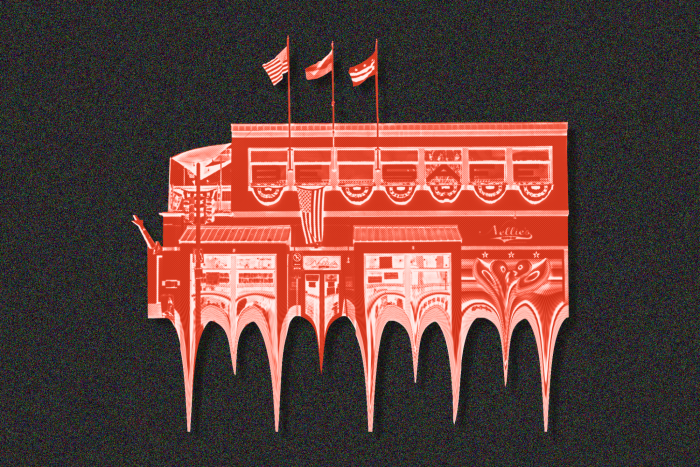
Protesters gathered in front of Nellie’s Sports Bar on June 13, calling for the local community to boycott the well-known gay bar after a video posted to Twitter the night before showed security dragging a Black woman down the stairs on her back. Though the services of the security personnel have since been terminated, this incident was just the latest in a string of reported racist incidents at the popular U Street bar. A “block party” to boycott Nellie’s will be held outside the bar Friday, June 18, beginning at 7 p.m.
The woman in the video, later identified as 22-year-old Keisha Young, was shown to be dragged head-first down the stairs at the front of the bar as security personnel pulled her by her arms and, according to her lawyer, her hair. Young and those who can be seen trying to pull the security off and protect her, later identified as her cousins, are pushed out the door, as other patrons yell “Oh my God.”
The spread of the video, just one version of which has garnered nearly 230,000 views at the time of publication, sparked outrage among local residents, who organized a protest outside the bar Sunday evening, condemning Nellie’s violence against Black patrons and perceived unwillingness to protect Black women. Some protestors then moved to the purported home of white bar owner Douglas Schantz, who was not at the bar during the protest. According to Nee Nee Taylor, a co-conductor with Harriet’s Dreams (a Black-led community defense organization), Schantz did not have plans to visit the bar.
At the protest, Young spoke to John Henry of WUSA and said that while Nellie’s security justified removing her because she brought in an outside drink, she wasn’t the person they were initially targeting. “They was trying to get some other people out because somebody else brought a bottle in there and somehow I got mixed up in the altercation because I looked like somebody else and I got hit and dragged down the steps,” Young, who went to Nellie’s to celebrate Pride weekend with her friends, said to WUSA. “I didn’t do nothing wrong.”
According to reporting by Washington City Paper, Young’s family is pursuing a civil claim against Nellie’s to hold them liable for assault. Their attorney, Brandon Burrell, has requested Nellie’s release the full video of the night to the public. “The actions of Nellie’s staff were not justified. Any ambiguity concerning what happened that night can be dispelled by Nellie’s releasing the video surveillance,” he wrote in a statement.
Young, who went to the hospital the day after the incident, is also raising money for medical bills, therapy, and legal fees. “I am aching all over my body, I can’t walk straight because my hip is in pain. I’ve been struggling to sleep this whole situation got me anxious,” her GoFundMe reads. “I’m just happy that it didn’t escalate too far and that I’m still here in my pain and grief still able to tell my story and get justice.” The GoFundMe had raised $14,904 out of a goal of $75,000 at the time of publication.
On Sunday evening, the protestors surrounded the bar, informing potential patrons about what had happened the night before. For many, the goal was not just justice for Young, but an overall reckoning with Nellie’s role in the queer community.
“Nellie’s security felt that it was okay to escort one of their Black woman patrons out of the club by dragging her by her hair,” Taylor told journalist Chuck Modi during the protest. “So we ask the people to protest and boycott Nellie’s because the owner, who is a white man, don’t care about Black women. If he cared, he would come out here and be concerned about what security done to a Black woman in his club.”
Nellie’s sits at the corner of U St and 9th, in Ward 1, a historically Black and Latinx area, though low-income residents have been displaced in recent years due to an inflow of richer, often whiter, residents. Nestled between Shaw, which has historically been a Black cultural and economic hub in the city, and Howard, a historically Black university, it’s also just a few blocks north of Ward 6, which has experienced the most rapid gentrification and displacement of any area in the city.
To Preston Mitchum, former frequenter and policy director at URGE, Nellie’s actions are even more concerning when put in the context of this vicinity. “It’s particularly disheartening to have this experience on U St, where we know Black communities have predominated,” he told the Voice.
“Nellie’s has been taking Black dollars from Black people for years without investing in Black communities, without investing in Black people, without caring about our bodies and our humanity.”
Mitchum, who is Black and gay, frequented the bar in 2016, before noticing how differently Black and white patrons were treated. According to him, if there was a fight or disruption at the bar among Black queer men the staff would not attempt to de-escalate the situation themselves, leaving that up to patrons, or would just kick out the disturbance or call the police. In contrast, Mitchum said, if white patrons were harassing Black patrons or fighting amongst themselves, the staff would do everything possible to de-escalate. These disparate patterns of behavior could have had long-term impacts for Black patrons, who are more likely to be arrested and brutalized when the police are involved.
At the time, he met with the owner, Schantz, to discuss what he had observed, and wrote a letter following the meeting, after which Mitchum said little changed.
Monday night, Nellie’s posted a statement to social media announcing they terminated the services of the security vendor.
“We offer a heartfelt apology to all who witnessed the horrific events of this past weekend. No matter what behavior occurred prior, nothing warrants mistreating, and disrespecting, one of our guests,” the statement reads. “What we can say is we have heard the concerns of the BIPOC and LGBTQ communities. Nellie’s will be closed this week as we evaluate this regrettable situation, though we will continue to pay all non-security staff their normal wages.” A previous statement announcing the bar had launched an investigation into the matter has since been deleted.
This statement did not address the long-standing concerns around resistance to change that some protestors raised about Nellie’s, according to Mitchum. “What we’re actually understanding from Nellie’s is that they’ve been racist,” Mitchum said at the protest. “Let’s not be confused about who actually owns and operates Nellie’s. It is us. It is our bodies on the line every single day.”
At the protest, Mitchum also accused Nellie’s of relying on the business of Black patrons and gentrifying the local community while failing to care for its Black employees and patrons. He cited an incident when a Black employee was sent to the hospital as a result of work at the bar and received little attention from management. Similar concerns and examples were shared via Twitter from several accounts. “Nellie’s does not care about Black bodies, they care about Black dollars,” he declared. “We do not need this racist white establishment, we need to reclaim our spaces.”
He added the violence against Young showed the intersection of Nellie’s preferences towards white men as patrons. “This was not just racism, this was misogynoir,” he said, as the crowd erupted into chants of “protect Black women.” Misogynoir refers to discrimination directed at Black women as a result of their intersecting racial and gender identities.
Pointing at letters in the window reading “Black lives matter,” he reminded the crowd that only a few years earlier, the bar flew a Blue lives matter flag, signifying a deep disconnect with the realities of Black life in the local community. Indeed, the police presence at the protest was noticeable, as a line of cops stood in front of the bar, though no videos show protestors attempting to harm the physical property. To Mitchum, it was another sign of Nellie’s putting “property over people.”
This history, combined with the fact that, according to Mitchum, the bar has not apologized to Young, has led him to urge patrons to continue boycotting the bar after they reopen.
“Nellie’s need to close indefinitely. This is not an issue of a security guard. This is an issue of ownership,” he told the Voice. “It became crystal clear that even after I thought that they would make some changes, hire more Black, queer, trans staff, invest in more things related to diversity, equity and inclusion, watch out for more sexual assault and harassment at their bars, deescalate conflict as opposed to ensuing violence and kicking out patrons, all of these things led me to the clear understanding that shutting down for a week is not going to help that establishment.”
To Georgetown students, many of whom frequent the bar, his message was clear: Don’t go.
“We will never need a place that has justified its violent behavior ever,” Mitchum said. “It says more about us, than them, when we are willing to spend our hard-earned money at places that don’t care about us.”
When Young was asked by WUSA what she hoped happened to the establishment, she was similarly steadfast.
LOVETTSVILLE, VA — Several LGBT Pride flags have been stolen or damaged this week in Lovettsville, according to the Loudoun County Sheriff’s Office. The flags were targeted as Lovettsville’s LGBT community celebrates Pride Month.
The incidents occurred from Monday, June 14, to Wednesday, June 16 in the town of Lovettsville. The Loudoun County Sheriff’s Office said they are investigating to see if the incidents are related.
On Monday, June 14, two Pride flags were damaged at residences on East Pennsylvania Avenue and South Loudoun Street in Lovettsville, according to the sheriff’s office. The two flags were later stolen from the South Loudoun Street location.
Find out what’s happening in Leesburg with free, real-time updates from Patch.
The sheriff’s office said anyone in the area should check their exterior cameras for activity from 3:30 p.m. to 4:30 p.m. on Monday and from 8:50 p.m. on Tuesday to 8:30 a.m. on Wednesday.
Another incident targeting Pride flags occurred between Tuesday night and Wednesday morning on nearby Berlin Turnpike. There, authorities said three Pride flags were stolen.
Find out what’s happening in Leesburg with free, real-time updates from Patch.
In a letter to residents, Lovettsville Mayor Nate Fontaine condemned the targeting of LGBT residents. “To have property destroyed targeting members of our community is horrible and can be frightening for those targeted,” he wrote. “For the individuals who committed these crimes, know that your bigoted efforts to terrorize members of our community will not stand.”
Loudoun County Sheriff Mike Chapman said the incidents are being taken seriously. “The Loudoun County Sheriff’s Office will not tolerate this kind of behavior in our county and these incidents will be fully investigated,” he said.
The sheriff’s office did not disclose whether the incidents are being treated as hate crimes. In 2019, the most recent available data only recorded two hate crimes based on sexual orientation in Loudoun County. Virginia recorded a total of 27 hate crimes against LGBT people in 2020, according to Virginia State Police.
Fontaine said the people responsible for stealing the Pride flags are trying to tell others how to live. “They are destroying property, in particular Pride flags, that is meant to remind folks that we have the freedoms to love who we love, that no one should force ideas on others, and that love is integral to life, liberty and the pursuit of happiness.”
Anyone with information about the crimes is encouraged to contact Detective Carpenter of the Louduon County Sheriff’s office at 571-577-3072 or by emailing jennifer.l.carpenter@loudoun.gov. Tips can also be submitted to Deputy First Class Edney at 571-291-1703.
At the end of his letter, Fontaine said LGBT people will always be welcome in Lovettsville. “Know that there are many of us in the community who stand with you and will always be supportive, inclusive, and that together we will continue to live up to the motto, ‘The Town that Begins with Love.'”
Former campus archivist William Benemann was going through the Social Protest Collection in the Bancroft Library when he came across a mimeographed form from 1970 written by campus’s Gay Student Union. The form asked former California governor Ronald Reagan to attend the first openly gay dance on campus after he told a KQED reporter that he hadn’t been invited.
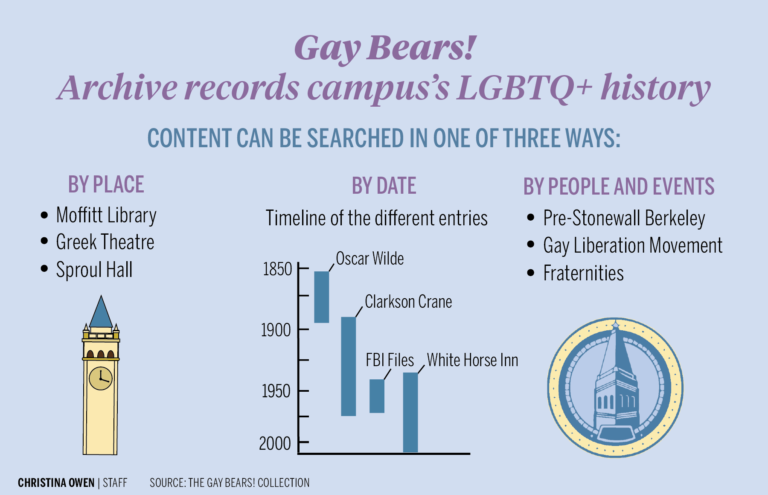
This story and many others are chronicled in the Gay Bears! The Hidden History of the Berkeley Campus website, hosted on the University Archives domain. Benemann and former UC career staff member Steven Finacom spent years gathering information before creating the site together with former campus faculty Mary Scott in 2002.
“As gay men, we are particularly fascinated by the LGBTQ aspects of campus history, and for years we have e-mailed each other back and forth whenever we run across something that might be a reference to gay life at Cal,” Benemann said in an email. “We each had (physical) folders full of information we had gathered, so we divided the stories evenly.”
According to Benemann, they initially wanted to build a physical museum showcasing UC history but ran into financial difficulties.
Finacom said they also considered publishing an LGBTQ+ focused issue of a campus historical journal but finally settled on creating an independent website that could be updated with new information.
Benemann and Finacom found stories and material for the website from their own research, interviews and leads from conversations with former faculty members. All stories on the website pertain to campus’s LGBTQ+ history and are organized by people and events, dates and places.
“For today’s readers, it’s probably a bit like a collection of UC-centric Wikipedia pages,” Finacom said in an email. “Each page gives some history, some context, some references, and is, most importantly, a jumping off point for further research.”
Benemann noted that the website was never meant to be comprehensive, but rather a starting point for anyone curious about the topic.
The website features one of the earliest openly gay ASUC senators, an accomplished yet little known female philanthropist, a closeted gay Republican activist and a 1920s novel showing hidden pieces of campus life, among many other stories and artifacts.
“There is also an amusing aspect to the name of the website. “Gay Bears!” was a natural choice because it’s a play on words on the slogan, “Go Bears!”, which every Cal student knows,” Finacom said in his email. “I like to think that occasionally a gay man searching for a hook-up or affinity group might end up on our website accidently and learn something about history.”
Finacom added that he hopes users of the site recognize the continuity of history. He said for every LGBTQ+ student running for office today, there is a history of similar efforts dating back to the 1950s or 1960s.
The site contains stories up through the late 20th century, according to Finacom. He noted that there are many remaining stories about campus LGBTQ+ history not in the archives, such as the story of three gay men simultaneously writing opinion columns for The Daily Californian in the 1990s.
“I would strongly urge students to build their own website to record campus LGBTQ history and preserve current events,” Benemann said in his email. “Our site might be a good model of the types of topics that could be explored, but there is no reason to cram new stuff into an old framework.”
The site is no longer being actively updated, making it an “artifact in time,” according to Finacom. Benemann stressed, however, that the site still offers a lot to current students.
The Reagan story is one of Benemann’s favorites on the website, he added, partly because the copied invitation reminded him of his love for archives.
“A half-sheet of mimeographed paper is not something that anyone ordinarily would consider a treasure, not something that ought to be collected and preserved for posterity, but because someone back in 1970 did just that, I was able to connect in a tangible way to those gay activists sitting at a table in Sproul,” Benemann said in his email. “It was an opportunity to touch hands across time with the brothers and sisters who came before me.”