The owners of an LGBT+ clothing line have firmly distanced themselves from the far-right hate group the Proud Boys after members appropriated its line of iconic yellow kilts.
Members of the group descended on Washington on 12 December for a pro-Trump march which quickly descended into a violent brawl. Twenty-three were arrested and four people were hospitalised with potentially life-threatening stab wounds, the Washington Post reported.
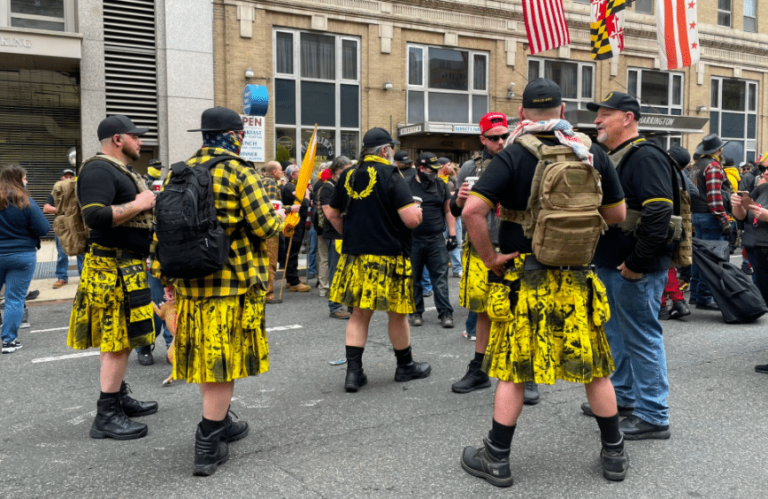
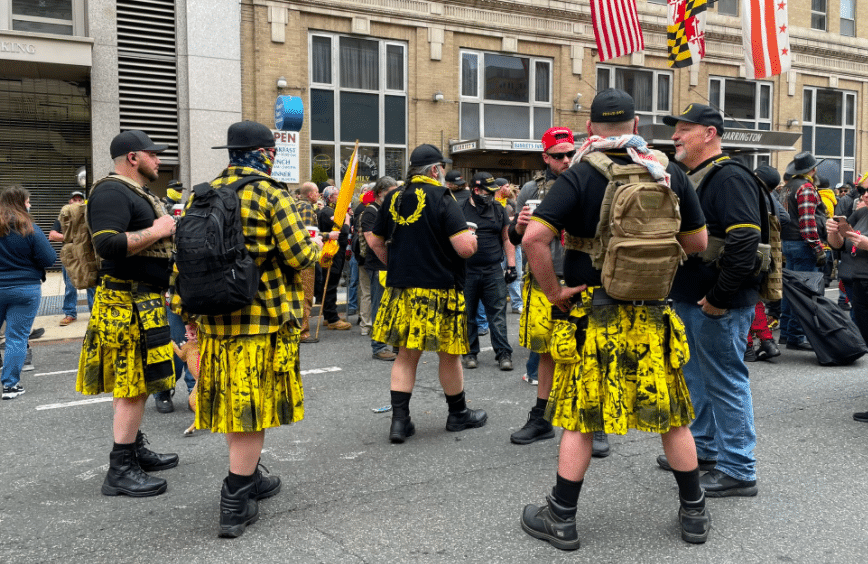
An enduring image of the march quickly circulated on social media: five Proud boys gathered in matching yellow and black kilts, along with their unofficial uniform of Fred Perry merchandise.
It was a sight that horrified owners of the online store Verillas, which instantly recognised the clothing as part of their line of unique modern kilts.
“In the first moments I thought we were doomed,” Verillas’ VP of marketing, Justin La Rose, told Dazed.
“I was looking at the scope of the replies and despairing at our lack of size and lack of voice. I had no idea how it could have happened – I felt like our views were transparent from our site.”
Verillas makes its pro-LGBT+ ethos abundantly clear and even sells kilts in rainbow, Trans Pride, and Bi Pride colourways. “It was insane to me that folks in that group could have used our stuff,” La Rose added.
Proud Boys kilt-maker ‘turns tainted money into something good’.
It’s not clear why the Proud Boys have chosen this moment to wear manly yellow skirts, but some speculated it could be an attempt to highlight their connections with the Ku Klux Klan through their Scottish heritage.
Regardless of their reasoning, Verillas was determined to sever any ties with the group. The company’s first instinct was to “turn the tainted money into something for good”, and within the hour it had turned the situation around.
“Disgusted to see members of a fascist terrorist organisation wearing our products,” it tweeted.
“We’re LGBTQIA+ owned, operated, designed and lived. We’re against everything they stand for. I see $750 of our gear in that picture, and I just gave $1000 to the NAACP to redirect hate to love.”
Disgusted to see members of a fascist terrorist organization wearing our products. We’re a LGBTQIA+ owned, operated, designed and lived. We’re against everything they stand for. I see $750 of our gear in that picture, and I just gave $1000 to the NAACP to redirect hate to love. pic.twitter.com/der8zVSo7M
As Allister Greenbrier, owner of Verillas, explained: “It felt existentially wrong to be associated with that group of people and the first thing I realised is that taking gains from them was unacceptable.
“We weren’t satisfied with neutralising the situation, we had to counter it.”
The black and yellow kilt has now been discontinued.
Across men’s sports in general, there are few openly gay athletes. In the four North American major leagues — the N.F.L., the N.B.A., the N.H.L. and M.L.B. — there are no active players who publicly identify as L.G.B.T.Q., though a handful of former athletes have come out in recent years. If a team signs Ryan Russell, a free agent who came out as bisexual in 2019, he would be the second active, openly gay or bisexual N.F.L. player ever.
In women’s sports, there are many prominent gay players, including the soccer star and World Cup champion Megan Rapinoe and her fiancée, the W.N.B.A. all-star Sue Bird.
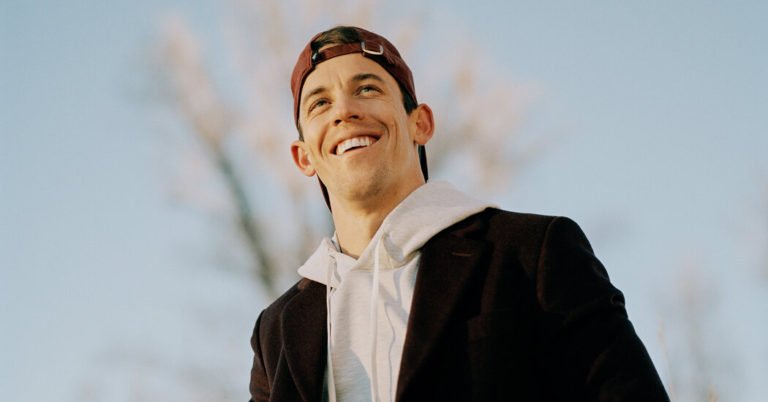
Roberts said a hyper-masculine vibe permeated Alpine skiing and put pressure on him to conform, especially when competing in Europe, where Alpine skiers are big celebrities.
While on the World Cup ski circuit from 2015-19, Roberts said he found himself in an atmosphere that almost encouraged womanizing. Instead, he opted for his hotel room, alone.
“There’s this idea that being a professional skier in Europe, you’re garnering the attention of women and you’re almost a little bit larger than life,” he said.
He and others also said an insular nature in the sport may discourage people from coming out.
“I think it’s vital to understand the broader atmosphere around Alpine skiing — it’s got its own unique ecosystem,” said Chris French, founder of Ski Bums, the world’s largest L.G.B.T.Q. skiing and snowboarding club. “It’s rural, it’s remote and it’s overwhelmingly white and wealthy. It’s got its own tourism, real estate, products and services — even media.”
Raised in the skiing hotbed of Steamboat Springs, Colo., Roberts does not remember strapping on his first pair of skis. He was barely 2.
HONG KONG — The kingdom of Bhutan prides itself on maximizing “gross national happiness,” but it doesn’t always feel that way to members of the country’s L.G.B.T. community.
Stigma and discrimination are rife, activists say, and it’s common for gay people to be blackmailed. “These are the issues that don’t get talked about, but this is the reality,” said Tashi Tsheten, a founding member of the local advocacy group Rainbow Bhutan.
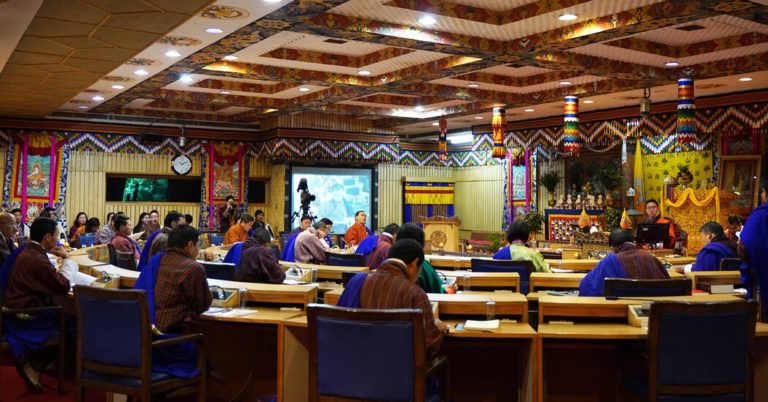
This week, however, lawmakers in the Himalayan country voted to amend a line from Bhutan’s penal code that criminalizes “sodomy or any other sexual conduct that is against the order of nature,” previously treated as a reference to gay sex.
The move, which still needs the king’s approval to become law, was the latest example of an Asian government loosening restrictive laws governing the private lives of L.G.B.T. people.
Bhutan’s new law, which passed both houses of Parliament on Thursday, “folds Bhutan into the global momentum toward recognizing equality for lesbian, gay, and bisexual people,” said Kyle Knight, a senior researcher in the L.G.B.T. rights program at Human Rights Watch who has written about the law.
However, he added, “Bhutan still has significant work to do to ensure that the rights of people who have been long marginalized on the basis of their sexual orientation or gender identity are fully protected.”
Bhutan’s penal code was introduced in 2004, four years before this Buddhist-majority nation of 800,000 people held its first elections as part of a transition from absolute monarchy to constitutional democracy. Much of the code was adopted from criminal laws in the United States, according to a recent analysis by the legal scholars Dema Lham and Stanley Yeo.
The parts about sodomy and “unnatural sex,” though, are identical to language in other penal codes around South Asia that was copied from the Indian Penal Code, a law introduced in the 1860s by the British colonial authorities, said Mr. Tsheten, the Bhutanese activist. Individuals charged with “unnatural sex” acts in Bhutan would be subject to penalties consistent with a petty misdemeanor.
The campaign to amend anti-gay language in Bhutan’s penal code did not involve much direct lobbying from L.G.B.T. activists, Mr. Tsheten said, in part because formally registering a gay rights advocacy group in the country could be interpreted to mean that you were “standing up for criminals.”
Instead, he said, it grew out of an effort to help the Health Ministry prevent H.I.V. in the country’s gay community. “What we did was just show people in Bhutan that we exist,” he said.
The ministry became an ally because it recognized that the penal code’s reference to “unnatural sex” could prevent gay and bisexual men from seeking H.I.V. treatment. And when the penal code came up for review last year, Finance Minister Namgay Tshering — who had previously worked at the Health Ministry and the World Bank — stood up in Parliament to insist that the outdated language be repealed.
“My primary reason is that this section is there since 2004 but it has become so redundant and has never been enforced,” Mr. Tshering said. “It is also an eyesore for international human rights bodies.”
When Bhutan’s lawmakers voted on Thursday to amend the penal code’s reference to “unnatural sex,” Pema Dorji, an L.G.B.T. activist who was sitting in the chamber, was so nervous that he could not watch.
“I just closed my eyes,” said Mr. Dorji, a founding member of the advocacy group Queer Voices of Bhutan. “I was looking at the floor the whole time as I waited for them to raise their hands.”
Ugyen Wangdi, a lawmaker on a panel considering the changes, told Reuters on Thursday that 63 of Bhutan’s 69 lawmakers had voted to amend the penal code. The other six were absent.
The language about “unnatural sex” will reman in the code, Mr. Tsheten said, but will now be followed by a sentence clarifying that “homosexuality between adults” does not meet that definition.
He said that while the amended language “opens up a lot of doors” for Bhutan’s L.G.B.T. community, there would be no shortage of homophobia to overcome. Gay friends of his who have been blackmailed, for example, have been forced to change schools or start new social media profiles.
“You get a very hostile sense,” he said, “that your friends or colleagues would not be supportive if you came out.”
State legislators across the country already have started filing bills for their 2021 sessions that would target the rights of transgender youth.
Transgender rights activists are preparing to fight what is expected to be a flurry of proposed state laws threatening young people’s access to gender-affirming healthcare and their ability to participate in sports according to their gender identity.
Altogether, 19 state legislatures failed to pass bills earlier this year that would have outlawed — and in some cases criminalized — gender-affirming healthcare for transgender youth. And 16 out of 17 states failed to pass bills restricting transgender youth participation in sports.
Undeterred, legislators have begun filing the proposals again.
“Legislatures are starting early and are extra cruel this year despite the pandemic,” tweeted Chase Strangio of the American Civil Liberties Union, who keeps track of anti-transgender bills across the nation. “The judiciary is even more hostile, so we need to stop these bills from passing.”
However, the U.S. Supreme Court recently refused to consider a petition from parents who objected to a decision by a school district in Oregon to allow a transgender boy to use the boys’ bathrooms and locker room. But that doesn’t necessarily mean the court endorsed the school district’s actions, as the Supreme Court usually accepts only about 80 cases each year out of 7,000 to 8,000 petitions it receives.
Alabama, Texas and Missouri eye limits on transgender youth healthcare
As Strangio reported, the first bill introduced into the Alabama House of Representatives for 2021, HB1, is a bill that makes it a felony for doctors to provide such healthcare to youth. It refers to these treatments as “dangerous and uncontrolled human medical experimentation that may result in grave and irreversible consequences” to the physical and mental health of patients.
In Texas, proposed legislation would classify such healthcare as child abuse.
And a bill in Missouri would revoke the licenses of medical professionals who provide such healthcare, while subjecting parents to investigations for child abuse.
“Denying best practice medical care and support to transgender youth can be life-threatening,” Strangio has written. “It has been shown to contribute to depression, social isolation, self-hatred, risk of self-harm and suicidal behavior, and more.”
States also look to ban transgender sports participation
In addition to healthcare, proposals would keep transgender youth from participating in sports according to their gender identity. The first of those for the 2021 legislative session has been introduced in Tennessee.
Carl Charles
“I think this year is poised to be particularly bad,” said Carl Charles, a staff attorney with Lambda Legal, an organization that fights for civil rights for the LGBT community. “But I think we have the power to change that.”
Out of dozens of bills introduced around the country in 2020, Idaho was the only state to pass into law restrictions on intersex and transgender children from participating in sports. None of the bills regarding transgender healthcare passed.
Hence, Idaho became the first and only state to ban transgender female athletes from participating in women’s sports.
According to the statement of purpose that accompanied the bill, it was to “ensure that opportunities continue for girls and women competing in athletics. Boys and men will not be allowed to participate on girls or women’s teams, as defined by their inherent differences that are physiological, chromosomal and hormonal.”
Judge blocks Idaho sports law
The ACLU sued to block the Idaho law, called the “Fairness in Women’s Sports Act,” and federal Judge David C. Nye issued a preliminary injunction preventing it from being enforced.
The judge noted that the law differs from “the policies of elite athletic bodies that regulate sports both nationally and globally — including the National Collegiate Athletic Association and the International Olympic Committee — which allow transgender women to participate on female sports teams once certain specific criteria are met.”
Nye also noted that the law contains a provision allowing “a currently undefined class of individuals to challenge a student’s sex.”
The judge added, “If the sex of any female student athlete — whether transgender or not — is disputed, the student must undergo a potentially invasive sex verification process. This provision burdens all female athletes with the risk and embarrassment of having to ‘verify’ their ‘biological sex’ in order to play women’s sports. Similarly situated men and boys — whether transgender or not — are not subject to the dispute process because Idaho’s law does not restrict individuals who wish to participate on men’s teams.”
Nye wrote that evidence from medical experts demonstrated that transgender women who undergo hormone therapy have no physiological advantage over other women athletes. The judge concluded that the law is likely unconstitutional.
The state has appealed the ruling. The state argues that males have physiological advantages in sports, and that it’s unfair to allow biological males to participate in female sports.
Several states filed a brief in support of the state of Idaho in the appeal: Nebraska, Alabama, Alaska, Arkansas, Indiana, Kansas, Kentucky, Louisiana, Mississippi, Montana, Oklahoma, South Carolina, Texas and West Virginia.
The states’ brief says they have an interest in providing “the best way to promote equal opportunities for female student-athletes and to ensure fairness in women’s high-school and college sports.”
Other states tried in 2020 and may try again
Several, but not all, of those states had bills introduced in their legislatures in 2020 to restrict healthcare for transgender youth or prevent them from playing in sports according to their identified gender. With the exception of Idaho’s, none of the bills became law.
Altogether, 16 additional legislatures considered bills restricting transgender athletes’ participation in sports while 15 states considered bills restricting gender-affirming healthcare for transgender youth, according to a tally kept by the ACLU.
Charles said the bills failed for a variety of reasons. In some cases, advocates fought hard against them and succeeded in securing the votes against them. In others, the bills failed to get committee hearings.
“The appetite to continue on with such a targeted attack on children was not very palatable,” Charles said. Some questioned “why are we criminalizing doctors who treat children? Folks in the medical community were also taking a stand.”
Charles said some bills were derailed by the pandemic, which took the wind out of legislative sessions across the country.
Yet with the pandemic still raging, the bills are coming back in some places.
“While thousands of people don’t have enough food to eat,” Charles said, “instead of helping people, we have legislators … trying to do harm.”
For example, Charles, who is transgender, said it’s false that children are being given irreversible treatments without regard for consequences. He said it’s a stereotype that all transgender youth are given sex hormones as soon as they come out as transgender.
He said youth are commonly given puberty blockers, which have been shown not to cause harm. “All it does is give young people time and delays puberty, essentially, until they have time, and they are ready and decide, with doctors, that cross sex hormones are appropriate for them.”
He said it’s “really troubling” that these youths’ private healthcare decisions are being “discussed by strange adults in state legislative houses. … Like anyone undergoing any kind of medical treatment for any purpose, a person’s healthcare is private.”
Charles said the backers of these bills are “at best, incredibly misinformed, or at worst, cruel.”
Contact Elaine Silvestrini at Elaine@legalexaminer.com. Follow her on Twitter at @WriterElaineS.
My prom was OK but I had hoped it would be more fun. So, too, with “The Prom.”
Just as “Singin’ in the Rain” works best as a movie, the hilarious but insider-y musical “The Prom” made more sense on Broadway, since it skewers stage egos.
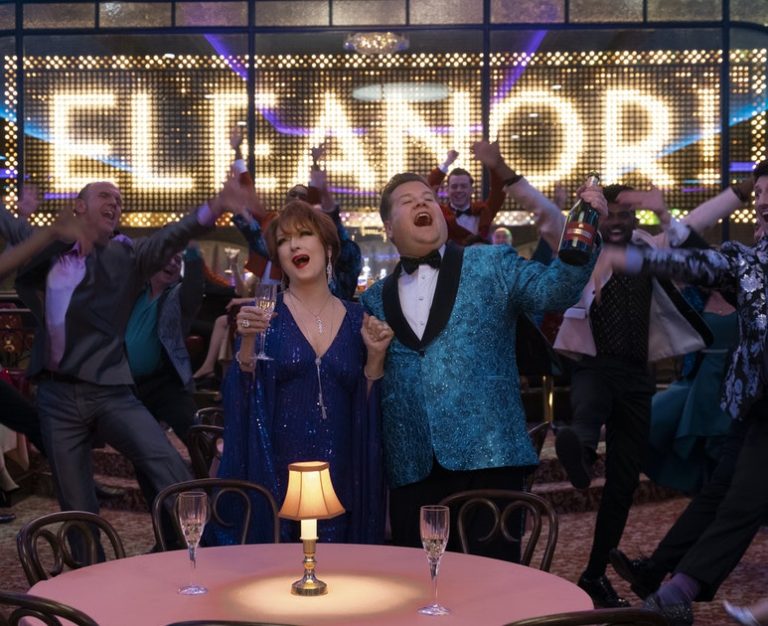
Meryl Streep and James Corden star as narcissistic show people. They’re belting out a number that celebrates how they are “Changing Lives” by playing little-known historical figures Eleanor and Franklin Roosevelt, when they get the bad news that their show “Eleanor!” is a bomb. Needing good PR, they pivot to a story from Twitter about an Indiana high schooler whose prom was canceled because she wanted to bring a female date. So they gather some friends to make her a prom.
Streep, wearing a J. Roy Helland-created wig that splits the difference between Liza and Patti, is a self-deprecating performer anyway, and she embraces the chance to poke holes in her own ego, incorporating jazz hands and popped-hip poses in even the most casual moments. Nicole Kidman, as a dancer who’s never made it out of the chorus, has less to do, but her walk, with “Fosse hands” swaying back and forth behind her butt, is a thing of beauty.
Corden, who’s straight, has caused controversy for his caricature of a gay showbiz vet who embraces the chance to make over a drab Midwestern teenager. I think he’s fine — it’s an affectionate caricature, and his performance resembles that of the (gay) actor who originated the role on Broadway — because he approaches lines such as “I’m as gay as a bucket of wigs” with care and wit.
As director, Ryan Murphy situates “The Prom” in a space that looks like the real world if it had a few more sequins and follow spots. But he’s not good at dance sequences; the performers’ legs are out of frame and when we want to see Streep executing the finale’s athletic choreography, we can’t see her at all. Also, whereas the stage version had the perfect balance of sentiment and sarcasm, Murphy tips the movie too much toward the former.
The problem is what Chad Beguelin and Bob Martin have added to their script in adapting it for the movie. They’ve given the three leads the kind of big, dramatic monologues that fill in back stories but are really here to attract top actors who are eager to dive into meaty material.
Those scenes play fairly well — although Corden’s weepy take on his family turning their backs on him is over the top — but they run counter to the fizzy fun of the production numbers, they supply redundant information we could have guessed, and they throw off the balance of “The Prom,” which is supposed to be about the Indiana teen whose name I have not mentioned because the movie constantly forgets about her.
As a result, a movie that’s supposed to poke fun at showbiz egos ends up catering to them instead.
Chris Hewitt • 612-673-4367
The Prom ⋆⋆½ out of four stars Rating: PG-13 for suggestive references and language.Streaming: Netflix.
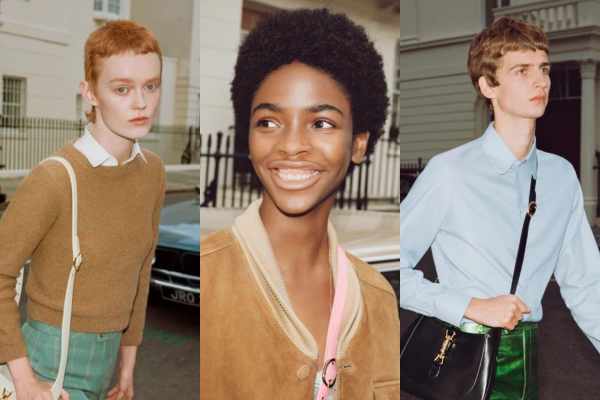
In a welcome shift towards more gender-inclusive representation in the fashion industry, and a historic first for the designer brand, Gucci has introduced a “for them” section to their annual gift guide which draws from their entirely non-binary collection of clothing and apparel.
In the description for the collection, titled “The MX Project,” Gucci asserts that it “set out to deconstruct preconceived binaries and question how these concepts relate to our bodies.”
Gucci MX launched a few months ago and positioned itself as a “gender-fluid” collection, however there were critiques leveled at the brand’s reliance on slim, androgynous models to display the clothing, and the fact that most of the products were already previously available to purchase.
When users access the website’s gift guide page they have a choice between the options, “for her,” “for him,” and for the first time ever: “for them.”
“The house’s collections emphasize the dissolving lines of the gender divide in the name of self-expression,” Gucci’s website states. “Playing with the constructive nature of gender, the MX project underlines the performative nature of what we wear, presenting masculinity and femininity as relative concepts.”
However, Gucci’s move hasn’t been without criticism. Designer and writer José Criales-Unzueta took to Instagram to both applaud and critique the move, writing, “This is the first time in my time in the industry I see a brand do this.”
“I bring this up because it’s a very interesting, and smart, approach at an ‘inclusive’ online Holiday gifting experience,” Criales-Unzueta added.
However, he was also critical of the brand’s intention, adding, “It is of course…an empty capitalist ‘diversity and inclusion’ gesture, and it is safe to say that it is most likely born out of a merchandising strategy to appeal to Gen Z and Millennial queer shoppers rather than a heartfelt effort to make the community feel included.”
Ultimately, Criales-Unzueta concluded, “I find that it ends up having both effects: it both correctly approaches and includes a demographic that is always excluded in Holiday gifting, and it exposes product in yet another way that makes it even easier to shop.”
Users were similarly split on the intent and impact of the move, with one person noting, “I mean it’s definitely nice to have an option since I never have one, but does suck that the ‘them’ section is a photo of multiple people instead of a non-binary model.”
These are challenging times for news organizations. And yet it’s crucial we stay active and provide vital resources and information to both our local readers and the world. So won’t you please take a moment and consider supporting Metro Weekly with a membership? For as little as $5 a month, you can help ensure Metro Weekly magazine and MetroWeekly.com remain free, viable resources as we provide the best, most diverse, culturally-resonant LGBTQ coverage in both the D.C. region and around the world. Memberships come with exclusive perks and discounts, your own personal digital delivery of each week’s magazine (and an archive), access to our Member’s Lounge when it launches this fall, and exclusive members-only items like Metro Weekly Membership Mugs and Tote Bags! Check out all our membership levels here and please join us today!
“Why do you hate gay people?” asks Andrew Rannells in “The Prom,” the Netflix movie about Broadway actors who try to help a lesbian teen attend her school dance.
The students around him assert that, despite their condemnation of their queer classmate, they’re good people. It’s just that they’re Christian, and their religion considers homosexuality a sin. (Premarital sex, masturbation and divorce are also called deplorable, but that’s different, right?)
The scene then kindly highlights the hypocrisy of gay-hating Christians, and genuinely bridges what some real-life Bible thumpers consider an insurmountable ideological divide. How so? By quoting the Good Book itself in the show-stopping number “Love Thy Neighbor.” And a spectacular dance break in the middle of a mall doesn’t hurt.
“I love that this song basically says you can’t cherry-pick what you believe of this religion, which is supposed to be rooted in kindness,” says director Ryan Murphy. “Growing up, I was a gay kid, going to Catholic school in a small town, being told I was going to rot in hell. I remember saying to my parents at a very early age, ‘Doesn’t God love everybody?’”
Advertisement
Advertisement
VIDEO | 04:33
Andrew Rannells sings “Love Thy Neighbor” in Netflix’s ‘The Prom’
The show-stopping moment has been in the works for a decade — long before the material would become a feature film, also starring Meryl Streep, James Corden, Nicole Kidman, Kerry Washington and Keegan-Michael Key.
The creators of the original stage musical needed the story’s liberals and conservatives to realistically inch toward a common ground. The character who attempts to facilitate is Trent, an actor who graduated from Juilliard and “really, really loves to hear himself talk,” says lyricist Chad Beguelin. (Rannells has firsthand experience: “I did date someone who went to Juilliard, and he would definitely drop it into conversation all the time. It is a real thing.”)
Throughout what composer Matthew Sklar calls “a white guy gospel song” in the vein of theologically minded musicals “Godspell,” “Jesus Christ Superstar” and “Children of Eden,” Trent spends the verses pointing to transgressions the teens commit, and forgive, on a daily basis.
He then reminds them that, according to Jesus, “Thou shalt love thy neighbor as thyself” is one of the two greatest commandments. In other words, “‘Love thy neighbor’ trumps them all” — a line repeated throughout the catchy chorus.
Advertisement
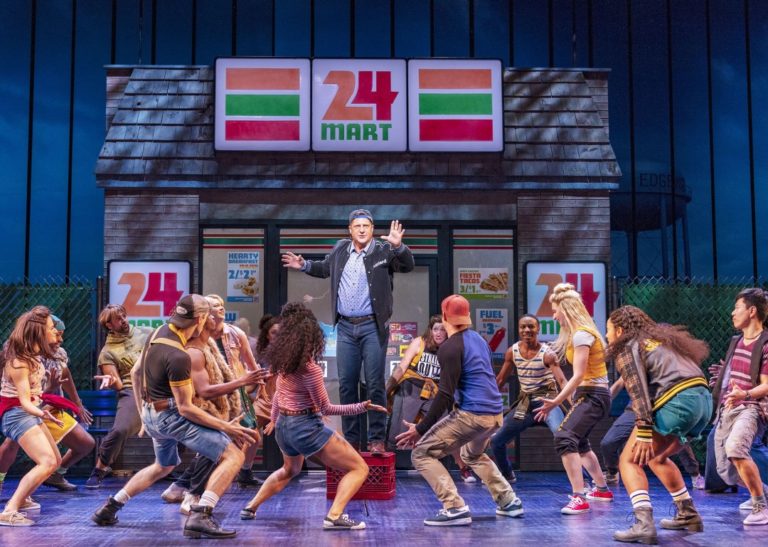
Christopher Sieber performed “Love Thy Neighbor” in “The Prom” onstage.
(Deen van Meer)
The show was in the midst of its pre-Broadway tryout in Atlanta when Donald Trump was elected president in 2016. “A producer asked us if we were gonna change the lyrics,” recalls Sklar. “It’s a song about being understanding and loving to others, and it has his name in it, over and over again. The irony was too good, we were like, ‘Let’s leave it.’”
Onstage, the number had Trent (Christopher Sieber) preaching to loitering teens in a 7-Eleven-ish parking lot. “We couldn’t do that in the movie because 7-Eleven turned us down and wouldn’t let us use their [branding],” says Murphy.
Instead, the moment unfolds in a mall, the watering hole of suburban adolescents; specifically, the Northridge Fashion Center (standing in for the film’s Indiana setting), with an escalator that leads to an eye-catching fountain. (Murphy obsessed over a shot in which the camera pans to a set of suspended jumbotrons which, at one angle, resemble a massive cross.)
Casey Nicholaw, who also directed the stage show, choreographed the entire routine around the fountain, which was reprogrammed, repainted and outfitted with platforms. He even got Rannells to do a jazz split — a throwback to his breakout role in “The Book of Mormon,” their previous collaboration.
“Dancing is certainly not a skill that I have,” admits Rannells. “I was 41 at the time, trying to keep up with these dazzling 20-year-old dancers doing backflips. I had to sit down a few times, because Peepaw needs a break!”
“Thankfully, no one slipped,” said Casey Nicholaw of choreographing the song’s routine around a fountain.
(Netflix)
The spectacle showcased upwards of 100 people, not counting locals simply strolling through the mall, which remained open throughout the shoot. It was filmed in February, when government-mandated shutdowns were still weeks away. Since then, “crowd scenes have become the new pornography,” says Murphy.
Though the lyrics of “Love Thy Neighbor” haven’t changed from stage to screen, some introductory dialogue satirizing Fox News was left unshot at the last minute. “We didn’t want to alienate anybody from the message of the movie,” Murphy explains.
The creative team isn’t necessarily nervous about a backlash from conservative viewers, who expressed outrage when the show’s Macy’s Thanksgiving Day Parade performance in 2018 brought the broadcast its first same-sex kiss. Rannells and Nicholaw braced themselves for a similar reaction when “Mormon” debuted, “but there wasn’t as much pushback as we expected, because we were talking about being kind to each other,” says Nicholaw. “And it’s hard to argue with that, especially if the product is good.”
Advertisement
The song and dance “might change some minds or at least put some questions in people’s heads and give them something to think about,” says Rannells. “The golden rule of ‘treat people how you’d like to be treated’ is somehow, miraculously, the one everyone forgets, even though it’s the most basic.
“This song is really just saying, try to be nice people, you know? Don’t be a dick,” he adds with a laugh. “That was the alternate title. Apparently, that’s too controversial though.”
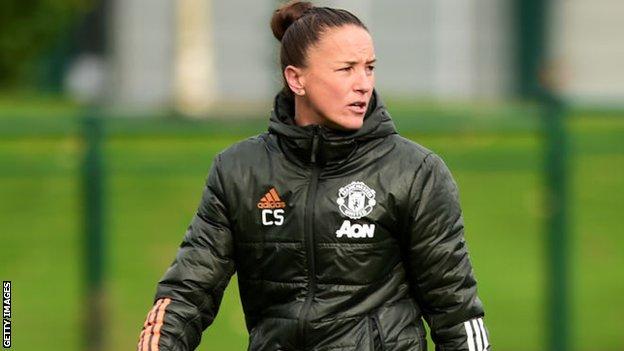
Casey Stoney’s side are unbeaten in the Women’s Super League this season and sit top of the table
Manchester United manager Casey Stoney says the language used when talking about LGBT rights is “really important” as the club prepares to show its support for the Rainbow Laces campaign.
The captains of both the men’s and women’s teams will wear rainbow armbands for this weekend’s games.
Stoney, who came out as gay publicly for the first time in 2014, says she does not like the word ‘acceptance’.
“Why should my life just be accepted?” said former England captain Stoney.
“It’s like I have to be accepted by society and I don’t like it. It’s not the right word to use if we’re talking about equality and human rights and just loving another human being. It should be the most normal thing in the world.
“The language we use is really important because we live in a world where anybody can say anything on social media. Young people use different language than I did. They throw certain terms around and use the word ‘gay’ in a derogatory way.
“When I hear people say sexuality is a ‘life choice’ you obviously don’t know enough about it because if you knew enough about the life you have to live and certain choices you have to make and the way you are prejudiced against and stereotyped, then it’s not an easy life to live so why would you choose it?”
Stoney said “you can only understand it if you live it” when discussing prejudices other minority groups go through, adding it is important for people to “choose to educate yourself”.
“I want to educate myself all the time so I’m not ignorant, I don’t use the wrong language and to make sure I understand and empathise with the difficulties that people face day-to-day so I’m not a part of that,” she added.
“And actually, not just accepting that I’m not part of it, but challenging it every single day to say that’s not right and we need to be better.”
Non-heterosexual minority men have a greater risk of poor bone health than heterosexual men, and this risk appears to be independent of lifestyle and psychosocial factors, suggests a study published in the American Journal of Human Biology.
Surprisingly, the study did not find that non-heterosexual minority women were more likely to experience poor bone health.
People belonging to sexual minorities are known to be at greater risk of several adverse health outcomes and this has been attributed to a greater prevalence of unhealthy lifestyle factors, such as smoking, among this population, as well as the significant stresses they have experienced related to the stigma associated with their sexuality. However, there has been little research looking at whether sexuality has any impact on bone health using assessments of bone mineral density measures or fracture risk.
To examine the association between bone health and sexuality, researchers combined data on 3,243 adults from the 2007 to 2008, 2009 to 2010, and 2013 to 2014 cycles of U.S. National Health and Nutrition Examination Survey, which included dual-energy X-ray absorptiometry (DXA) assessments. The participants included 253 sexual minority people (53 lesbian/gay, 97 bisexual, and 103 same-sex experienced) and 2990 heterosexuals. Their average age was 36 years.
Sexual orientation-based comparisons were made for a number of bone health indicators, including z-scored bone mineral density in the lumbar spine (L1-4 vertebrae) and proximal femur (femoral head, greater trochanter, and intertrochanteric line), bone mineral content in the femur and spine, and osteoporosis risk.
James Gibb from the department of anthropology at the University of Toronto in Canada said: “Sexual orientation-based disparities in bone mass were observed across all anatomical sites. This effect was due to differences between heterosexual and gay men and persisted in linear regressions after adjusting for risk factors.”
Specifically, the results showed that gay men, but not bisexual men or sexual minority females, had lower z-scored bone mineral density values in their trochanter, intertrochanter and femoral neck regions. The analysis also showed differences in femoral and femoral neck bone mineral content between heterosexual and gay men (P = 0.02), and in femoral, femoral neck and spinal bone mineral content between heterosexual and bisexual women (P = 0.05).
Minority stress is considered a major contributing factor in health disparities experienced by sexual minority people, and understanding the role of lived experiences and stress physiology in shaping variability in bone health will enable policymakers to design more effective public health policy and interventions, Dr. Gibb said.
In the light of that, he added, the finding that bisexual women had higher bone mineral content than heterosexual and other sexual minority women was “surprising.”
“Although statistically nonsignificant, lesbian and bisexual females in our sample consistently display better indicators of bone mass compared to heterosexual and same sex experienced women,” he said. “Our finding that bisexual women, and to a lesser extent lesbian women, have better bone health than other female participants, warrants further investigations.”
Cannabis consumption was associated with lower femoral bone mineral content suggesting that behavioral factors likely have an impact on bone health outcomes, he said, and moderate depression was significantly associated with bone mineral density independent of sexuality.
“Characterizing the unique socioeconomic, psychosocial, and ecological risk factors that result in an increased vulnerability to poor bone health among sexual minority people is important for designing therapeutic and public health interventions for this community, especially as the population of sexual minority older adults grows,” Dr. Gibb added.
“This research may help identify ways in which public health professionals and government officials can construct health policies and interventions that may reduce the risk for negative health consequences experienced by sexual minorities by identifying critical periods of development early in their life.”
One of the things that is abundantly clear in “Funny Boy” is that identity is complicated. In this gay coming-of-age story set during the lead-up to the Sri Lankan civil war, director Deepa Mehta ambitiously juxtaposes a teenage love story with rising political tensions and ethnic violence in a film that is ultimately about thriving and sometimes just surviving as someone deemed “different.”
Based on the Lambda Award-winning 1994 novel by Sri Lankan Canadian author Shyam Selvadurai, who also co-wrote the adaptation with Mehta, “Funny Boy” is Canada’s official selection to compete in the international feature category at the 2021 Academy Awards. (And as an Array Releasing acquisition, “Funny Boy” comes with acclaimed filmmaker Ava DuVernay’s stamp of approval.)
At the center of the story is Arjie, a boy from a well-off Tamil family who would rather dress up as a bride for pretend weddings with the girls than play cricket with the boys. Portrayed as a “precocious and wonderful” 8-year-old by Arush Nand, Arjie doesn’t understand why his parents insist on pushing him toward activities he hates but figures out it has to do with people calling him “funny.”
The only adult on his side is his Radha Aunty (Agam Darshi), who encourages Arjie and insists there is nothing “bad” about the young boy just being himself. It is through Radha’s own defiant love story that audiences who may not be familiar with Sri Lankan history and politics are introduced to the tensions between the Tamils, an ethnic minority, and the Sinhalese majority. And it is not long after that the film offers its first glimpse of brutal anti-Tamil violence.
Advertisement
It is once this context is established that the film jumps forward nine years to follow a now 17-year-old Arjie, played by Brandon Ingram, as he falls for Shehan (Rehan Mudannayake), an attractive Sinhalese boy he meets at school. And despite it being a crime to be gay in Sri Lanka both then and now, Arjie and Shehan’s relationship shyly but surely blossoms.
It’s both precious and refreshing when queer characters in coming-of-age stories fall in love without having to overcome any inner turmoil over their identities, so Arjie and Shehan’s story is plenty heartwarming. But as “Funny Boy’s” narrative weaves in the escalating violence between the Tamils and Sinhalese in their town, the comparative lack of urgency (outside of familial disapproval) makes their love story almost secondary by the end.
The stakes between a romantic relationship and systemic violence, where people are being killed because of their ethnicity, are completely different, so that’s not a bad thing. And the juxtaposition helps to show how oppression and prejudice and expectations are not always straightforward.
“Funny Boy” is a specific story that serves to shed light on the experiences of marginalized people, so it would be remiss not to recognize that it has sparked some prerelease backlash and important discussions over Tamil representation and language from members of the Tamil diaspora. But for someone fairly unfamiliar with the Sri Lankan civil war, “Funny Boy” makes the history accessible and relevant in our own incredibly polarized times.
During the depths of the pandemic, all 1,400 Orangetheory Fitness studios around the world went dark. The future looked bleak for this fitness brand known for its intense indoor workout classes, along with the entire gym industry.
But Orangetheory survived. And now it’s pushing ahead on expansion plans.
It was a scramble, but the privately held company kept its studios afloat by helping them tap Covid-19 relief funds, renegotiate with landlords and launch alternative workout options including a virtual app.
“Without that really tough partnership and working together, we might not have been able to sustain the whole year,” Dave Long, Orangetheory co-founder and CEO, told CNN Business.
That was the fear earlier this year, said Long, who recalled the spring as a “high-stress period every single day.” Rival fitness brands including Gold’s Gym, 24 Hour Fitness and the owner of New York Sports Club all filed for bankruptcy.
With rent payments piling up, Orangetheory franchisees furloughed their studio staff and corporate headquarters laid off 20% of its workforce. Member accounts were “frozen” as gym rats turned to Peloton, took up running or turned their homes into makeshift gyms.
Long and his team got to work on a virtual workout app while helping studio owners access government aid and negotiate deals with their landlords.
Months later, despite the worsening pandemic, about 90% of Orangetheory 90% studios are open in some capacity, relying on social distancing, masks, cleaning, smaller classes and outdoor workouts where weather permits.
Orangetheory is optimistic enough about the future that it’s opened nearly three dozen studios since August, most of them in the United States. Some of these were slated to open this spring and summer but were delayed by health restrictions.
“We always were confident that if any fitness brand could pull through, we would be the one,” Long said.
‘Hunkering down’
Launched in 2010, Orangetheory has issued more than 1,000 franchise licenses in 11 countries. The brand is known for its high-intensity, hourlong workouts. Members wear heart rate monitors as they use rowing machines, treadmills and free weights, and screens throughout the studio display everyone’s heart rates.
Despite the new studio openings, though, Orangetheory itself is hardly running “all out,” as the company’s trainers would put it.
Depending on the location, between 20% and 40% of membership accounts remain frozen. Orangetheory still has about 10% fewer corporate jobs than before the pandemic. And it faces new new challenges as state governments relaunch health restrictions.
“We know we’re not out of the woods yet. There might be another three or four months of really hunkering down,” Long said.
PPP helped — but more aid is needed
To get through the crisis, some gym owners have reliedon help from the federal government. Orangetheory franchisees took out forgivable loans from the Paycheck Protection Program, which lent more than $500 billion to small businesses between April and August. However, PPP stopped taking applications in August.
“It was definitely a helpful stopgap. Unfortunately, because of the length of what’s happened, it really wasn’t enough,” said Long. “Another round would not just sustain Orangetheory, but fitness brands in general through another wave.”
Though coronavirus vaccines could be authorized within days, Long said Orangetheory is modeling very conservatively for 2021. The goal is for revenue to total 55% to 65% of 2019 levels.
“We’ll still be in a position to bounce back even if this extends through the back half of next year,” Long said.
Can virtual training substitute for in-person workouts?
To get through the winter, Orangetheory will lean heavily on technology.
In Canada, the company recently rolled out OT Live, a virtual platform that allows members to get real-time training and motivation from coaches who can see their workouts and even their heart rates. Members can choose who in the virtual class can see them.
“It gives you the same flavor and feel of being in a studio,” said Long. “Our bread-and-butter is live coaching. Members want to be accountable for a certain time and be motivated and supported.”
OT Live, which costs the same amount as a regular class, is launching in California next amid the return of health restrictions there. Long said the long-term strategy is to bundle virtual classes as part of the regular membership.
As for in-person classes, Orangetheory is stepping up cleaning procedures, requiring social distancing, shrinking class sizes and strongly urging members to wear masks in studios.
Wearing masks could make an already challenging fitness routine that much tougher, so Long said members are encouraged to “slowly ease” back into their workouts with them.
“We’re giving people options so if they don’t feel safe to come back, they can just wait for as long as they need to until they feel ready,” he said.
Orangetheory is betting people will eventually overcome their health concerns, especially as they look for release.
“The last nine months have been the most stressful time of most people’s lives,” Long said. “People need exercise and wellness more than ever.”
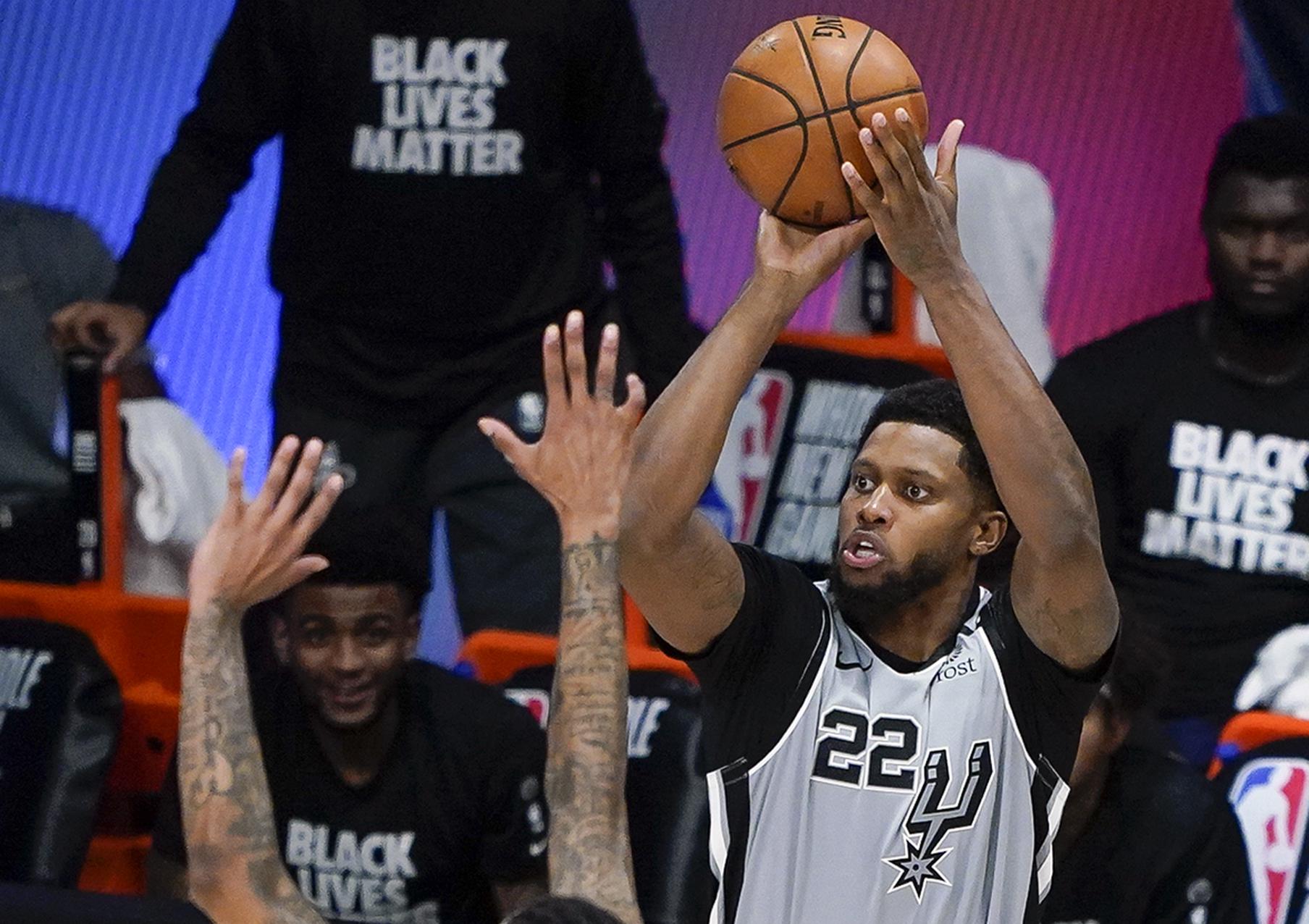
It doesn’t take a battery of medical professionals to determine Rudy Gay showed up to Spurs camp in the best shape of his life.
The eye test will do just fine.
“He’s already thrown down a couple of monster dunks,” guard Patty Mills said. “Which is a small glimpse of what we’ll get this season.”
According to the 34-year-old Gay, his looks are not deceiving.
He said he dropped 10 pounds since the Spurs left the Orlando, Fla., bubble in August, intent on entering his 15th NBA season ready to run alongside the Spurs’ youth movement.
“As you get older and play longer, you try to become as mobile as possible,” Gay said. “Me bulking up would probably not be conducive to what this game is going to. I ended up losing weight and I feel good and ready to go.”
Gay is coming off a season in which he averaged 10.8 points, matching his rookie season in Memphis for the fewest of his career. He did most of that damage off the Spurs’ bench, making 62 of his 67 appearances as a reserve.
Gay was reborn during the NBA reboot, however, emerging as the Spurs’ third-leading scorer in seven appearances in Orlando at 17.9 points per game.
Heading into the offseason, Gay took steps to keep that momentum going. He changed his workout routine, with less focus on one-on-one isolations skills and more attention toward remaining lighter and mobile.
“I wear my Apple Watch every day to see how many calories I have burned, stuff like that,” Gay said. “It’s not just basketball shape, but shape in general. The more you sit around, the more you get used to sitting around and not doing anything. I didn’t want to get into that habit.”
Gay split his offseason between San Antonio and his home in Baltimore. He said boredom spawned from COVID-19 restrictions in both locales worked to his favor.
“You are sitting in the house all day, you have no choice but to work out,” Gay said. “Luckily, I have a facility in Baltimore where I spend a lot of time. COVID put a damper on a lot of things, but then it made me focus on what is important — my family, my health and my body.”
Gay’s teammates have noticed the difference on the cusp of his fourth season in San Antonio.
“He’s looking great, to be honest,” Mills said. “He has dropped some weight and is moving freely.”
For Gay, the idea is to remain relevant in the modern NBA — both for the Spurs this season and into the offseason when he is set to become a free agent.
A lifelong small forward, Gay sees his future as a small-ball power forward or center — positions he manned for the Spurs in Orlando.
“You have to go with the times,” Gay said. “I changed my training, changed my diet, changed my mindset, everything. You have got to be open to do anything.”
Eubanks steps up
for wildfire relief
Inspired by socially-minded teammates like Mills, Spurs forward Drew Eubanks spent part of his offseason raising money for wildfire relief in his native Oregon.
Eubanks, 23, partnered with apparel company Portland Gear to sell “Heart for Oregon” T-shirts. Profits from the $30 shirts went to the Oregon Food Bank, which also pledged to provide 60 free meals to needy families for each shirt sold.
Eubanks said the fundraising effort went well.
“I had a lot of support,” Eubanks said. “I had a lot of people I didn’t expect to hear from who said, ‘Hey, I just bought a shirt, bought 10 shirts for my family.’ It was great to see the support I had that I didn’t know I had, from all over the country.”
Preseason games
will be televised
All three of the Spurs’ preseason games will be televised locally, the team announced Wednesday.
Saturday’s opener against Oklahoma City, scheduled for 6 p.m. at the AT&T Center, will be carried on Fox Sports Southwest. Games at Houston on Dec. 15 and 17 are scheduled to be televised on KMYS.
Please provide your email address to receive an email when new articles are posted on .
We were unable to process your request. Please try again later. If you continue to have this issue please contact customerservice@slackinc.com.
Gay, lesbian and bisexual individuals had more adverse childhood experiences than their heterosexual counterparts in the United States, according to study results published in Journal of Clinical Psychiatry.
Further, these individuals were at higher risk for comorbid substance use and mental health disorders.
“Our study is the first nationally representative study to investigate the relationships among sexual orientation, adverse childhood experiences (eg, physical abuse) and comorbid substance use and mental health disorders (eg, alcohol use disorder and mood disorder) in the U.S.,” Sean Esteban McCabe, PhD, of the Center for the Study of Drugs, Alcohol, Smoking and Health at the University of Michigan School of Nursing, told Healio Psychiatry.
Sean Esteban McCabe
The investigators sought to evaluate the links between adverse childhood experiences and comorbid DSM-5 substance use and mental health disorders among individuals who identified as lesbian/gay, bisexual, unsure, discordant heterosexual and concordant heterosexual. They analyzed data collected in households via structured diagnostic face-to-face interviews of 36,309 U.S. adults aged 18 years or older who were included in the 2012 to 2013 National Epidemiologic Survey on Alcohol and Related Conditions-III.
Results showed the highest prevalence of adverse sexual experiences and comorbid substance use and mental health disorders among gay, lesbian and bisexual individuals, especially bisexual women. A total of 43.8% of bisexual women reported four or more adverse childhood experiences, and 38% of bisexual women reported comorbid mental health and substance use disorders. According to results of multivariable regression analyses, adverse childhood experiences, comorbid substance use and mental health disorder had a curvilinear relationship. Further, gay, lesbian and bisexual individuals had a higher adverse childhood experience mean vs. concordant heterosexual participants. Most individuals in this population with high levels of adverse childhood experiences had comorbid substance use and mental health disorders.
“Our study provides compelling evidence that sexual minorities are exposed to more adverse childhood experiences and are at greater risk for comorbid substance use and mental health disorders than heterosexuals in the U.S.,” McCabe said. “The findings highlight the importance of screening for adverse childhood experiences in clinical settings. Clinicians working with patients exposed to high levels of adverse childhood experiences are recommended to evaluate for comorbid substance use and mental health disorders, especially among sexual minorities. The findings also reinforce the importance of effective trauma-informed interventions to treat comorbidities in patients exposed to multiple adverse childhood experiences so they can thrive in life.”