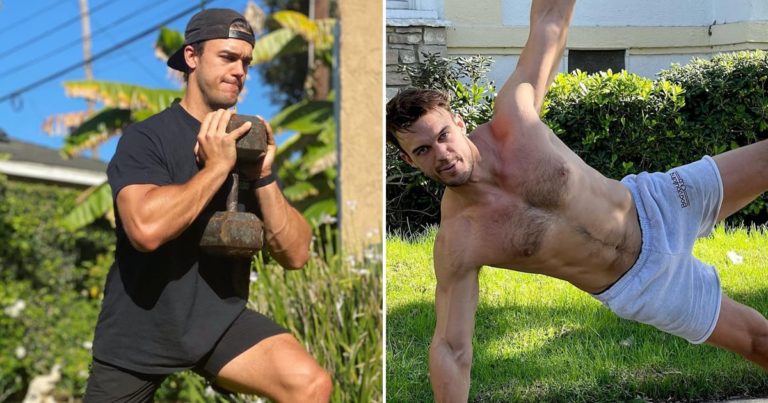
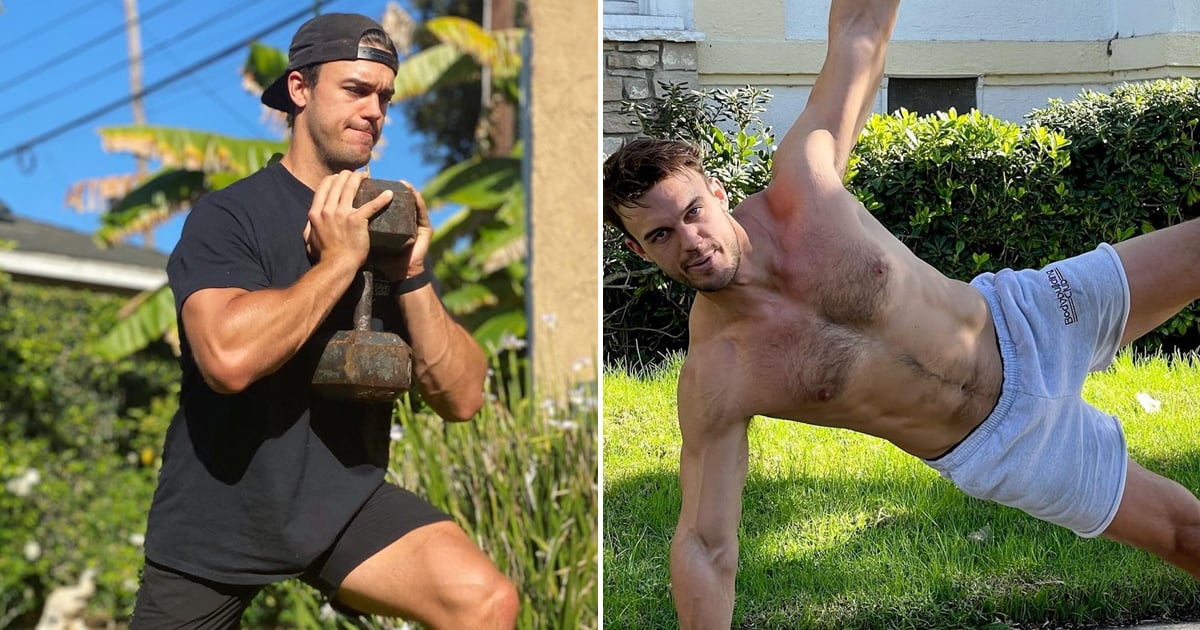
There’s no denying that this season of The Bachelorette is unlike any season before. While Bachelor Nation was able to witness Clare Crawley find love and is excited to see Tayshia Adams do the same, there’s something about this group of men that feels different. The contestants on this season have opened up about deep trauma, been candid about mental health struggles, and undoubtedly showed Crawley and Adams who they are beyond what meets the eye . . . especially Ben Smith. The 30-year-old Army veteran from California bared the depths of his past on national television, and immediately, Bachelor Nation applauded his conversations with Adams.
Smith said he was “very scared” to share these issues, but once he did, we saw a side to him that is so beyond the surface-level conversations previous seasons of the reality series entailed. He shared that he had an eating disorder for 15 years of his life and it eventually led him to taking up a career in health and wellness to help others who may be struggling. The following week, in another vulnerable conversation, he revealed that he had attempted suicide twice. Discussing these heavy topics with a partner takes courage, and doing it on television adds another layer to that, but Smith has used his platform to let people know that they’re not alone, and fans are so appreciative.
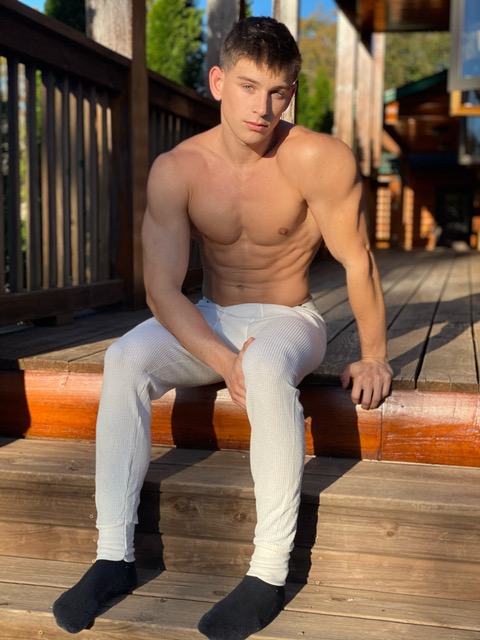
He’s a fitness coach and the founder of Bodybuilding Club, which focuses on fitness and nutrition as a way to fuel clients, not restrict diets. He’s often sending inspirational messages to his followers, and the workout content is serious motivation. “I’m slowly realizing that being vulnerable is cool,” he wrote in a post. “I’m proud of you, immensely thankful for your support, and grateful to have you by my side. Wherever you are, I see you, I’m with you, and I love you a lot. Please be open, accepting, and give yourself the grace that you most certainly deserve. Keep going bb, we’re in this together.” Smith has been so open about his life and struggles, and his Instagram reaffirms that recovery, whether it’s physical or emotional, is possible. Check out some of his most impressive Instagram workout videos ahead and see how strong he is.
If you or someone you know is struggling with disordered eating or an eating disorder, the National Eating Disorder Association (NEDA) has resources available, including a 24/7 helpline at 1-800-931-2237. You can also text “NEDA” to 741741.
If you or a loved one are experiencing suicidal ideation or are at risk, the National Suicide Prevention Lifeline has several resources and a 24/7 lifeline at 1-800-273-8255.
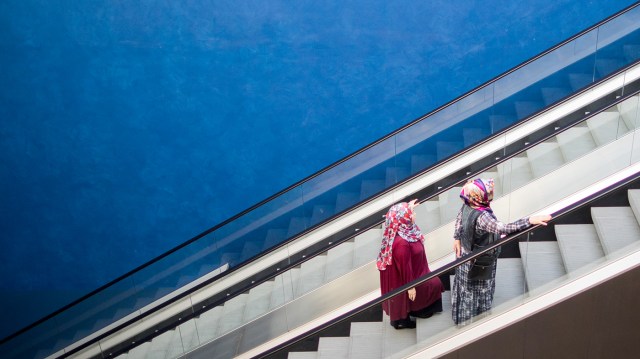
Religious restrictions around the world often target women, who in many countries face censure because their clothing is considered too religious – or not religious enough. These restrictions frequently take the form of social harassment by individuals or groups, but also sometimes involve official government actions.
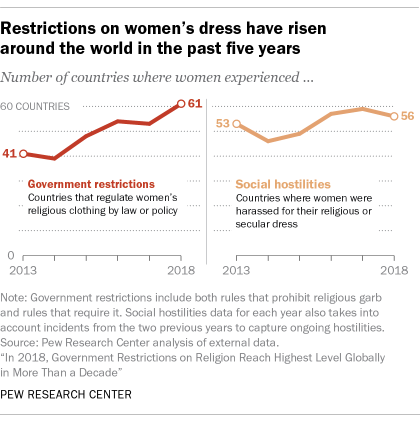
Women in 56 countries experienced social hostilities – that is, harassment from individuals or groups – due to clothing that was deemed to violate religious or secular dress norms, according to the sources analyzed for a recent Pew Research Center study of 198 nations. Social harassment can range from verbal abuse to physical violence or killings motivated at least in part by the target’s religious identity; incidents for this measure took place between 2016 and 2018.
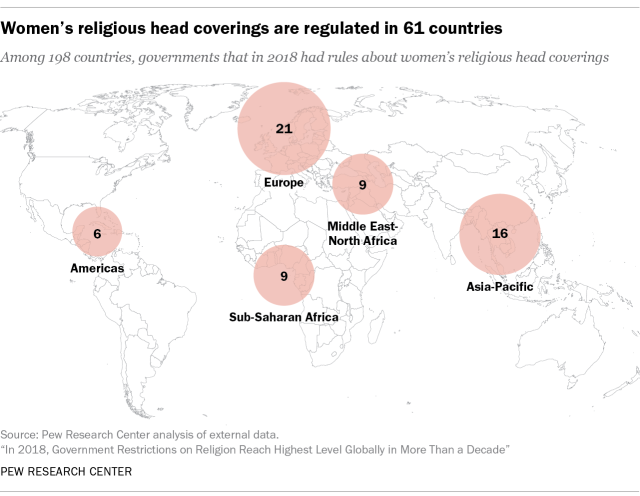
Meanwhile, women in 61 countries faced government restrictions on dress – specifically, regulations on their head coverings. This measure covers rules that were in place or incidents that occurred in 2018.
The number of countries where women faced social hostilities and government-imposed restrictions related to their dress has risen in the five most recent years of the study.
Pew Research Center measures government regulations and social hostilities tied to religious symbols and women’s clothing as part of an annual series that analyzes the extent to which governments and societies around the world impinge on religious beliefs and practices. The most recent report in this series, the Center’s 11th annual, is part of the Pew-Templeton Global Religious Futures project, which analyzes religious change and its impact on societies around the world.
To measure global restrictions on religion in 2018 – the most recent year for which data is available – the study rates 198 countries and territories by their levels of government restrictions on religion and social hostilities involving religion. The new study is based on the same 10-point indexes used in the previous studies.
The Government Restrictions Index measures government laws, policies and actions that restrict religious beliefs and practices. The GRI comprises 20 measures of restrictions, including efforts by government to ban particular faiths, prohibit conversion, limit preaching or give preferential treatment to one or more religious groups.
The Social Hostilities Index measures acts of religious hostility by private individuals, organizations or groups in society. This includes religion-related armed conflict or terrorism, mob or sectarian violence, harassment over attire for religious reasons, or other religion-related intimidation or abuse. The SHI includes 13 measures of social hostilities.
To track these indicators of government restrictions and social hostilities, researchers combed through more than a dozen publicly available, widely cited sources of information, including the U.S. State Department’s annual reports on international religious freedom and annual reports from the U.S. Commission on International Religious Freedom, as well as reports from a variety of European and UN bodies and several independent, nongovernmental organizations. (See Methodology for more details on sources used in the study.)
Social hostilities
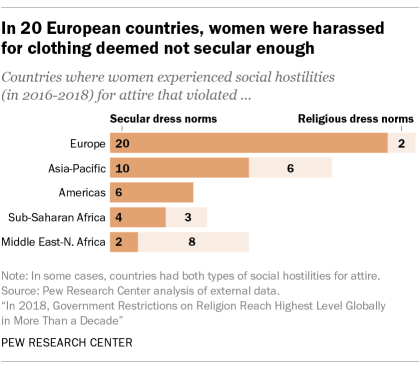
In 42 of the 56 countries where sources indicated that social harassment took place between 2016 and 2018, women were targeted for violating secular dress norms, such as by wearing a hijab or other religious garb. In 19 countries, women were harassed for not adhering to religious dress codes, such as by not wearing head coverings or dressing in other ways deemed offensive to religious norms. (In five countries in the study — Germany, India, Indonesia, Israel and Russia — women experienced both types of harassment.)
In four of the five regions covered in the study, social harassment for overly religious clothing was more common than harassment for overly secular clothing. The exception was the Middle East and North Africa, where women more commonly faced harassment for clothing deemed too secular.
Europe had the most countries where women faced social hostilities for violating dress norms, with incidents recorded in 20 countries, or 44% of the 45 nations in the region. In all of these cases, Muslim women faced discrimination, physical violence and other forms of abuse for wearing head coverings. In Denmark, for example, a driver refused to cede a parking space to a Muslim woman in 2018 because she was wearing a headscarf. And in Germany, a woman hit a Muslim woman and tried to remove her headscarf.
The Asia-Pacific region had the second-most countries with such incidents, with women facing harassment for violating dress codes in 14 of the region’s 50 nations, or 28%. In 10 of these countries, women were harassed for clothing that was deemed too religious, whereas in six countries, they experienced harassment for attire that was considered too secular (in two countries – India and Indonesia – both types of harassment occurred). In Malaysia, for instance, police in 2018 arrested a man who admitted to assaulting a woman because she was not wearing a headscarf. And in Kyrgyzstan in 2016, billboards sparked debate over religious dress in the country by displaying photos of women in various forms of Islamic dress with the caption “Oh, poor nation, where are we headed?” The displays were seen as a commentary on the spread of foreign and overly religious dress customs in the country.
Women faced social hostilities for violating dress codes in seven countries in sub-Saharan Africa and six countries in the Americas. In sub-Saharan Africa, women were harassed for violating secular dress codes in four countries, and for violating religious dress codes in three. In parts of Kenya, for example, a teacher’s union reported in 2018 that female teachers were required to wear hijabs, while in Liberia, Muslim women reportedly experienced workplace discrimination for wearing headscarves.
In the Middle East and North Africa, eight of 20 countries saw harassment for overly secular attire, while two countries saw it for overly religious clothing. In Israel, for instance, a group of Orthodox Jewish men in 2018 were seen chasing and yelling at a girl for dressing that they perceived as “immodest.” In Qatar, a Muslim woman in 2016 was criticized for appearing on a news program without a hijab.
Government restrictions
Official rules about the wearing of religious symbols – such as hijabs for women and beards for men – are another form of religious restriction observed around the world. In the vast majority of countries where such restrictions were recorded in 2018, they targeted head coverings for women.
Every region had at least some rules about women’s headdress. Europe had the most countries where women’s head coverings were restricted by the government, with instances in 21 of 45 countries. In Norway, for example, the government passed a ban on face-covering clothing at educational institutions, preventing students and teachers from wearing niqabs and burqas in schools and daycare centers. The country continued to ban religious headwear and other religious symbols from being worn with police uniforms, but allowed religious headwear in the military.
Governments regulated women’s headdress in 16 countries in the Asia-Pacific region, nine in the Middle East and North Africa, nine in sub-Saharan Africa and six in the Americas. In Australia, for instance, a judge did not allow a woman to wear a niqab in the court’s public spectator gallery during her husband’s trial on charges of terrorism. In Turkey, by contrast, students and parents claimed a school principal in the city of Urfa threatened that female students would receive failing grades if they did not wear head coverings.
In some countries, governments have specific rules for the type of religious clothing women should wear. In Iran, for example, the government requires all women to adhere to “Islamic dress” standards in public, including covering their hair and bodies in loose clothing.
Virginia Villais a research assistant focusing on religion research at Pew Research Center.
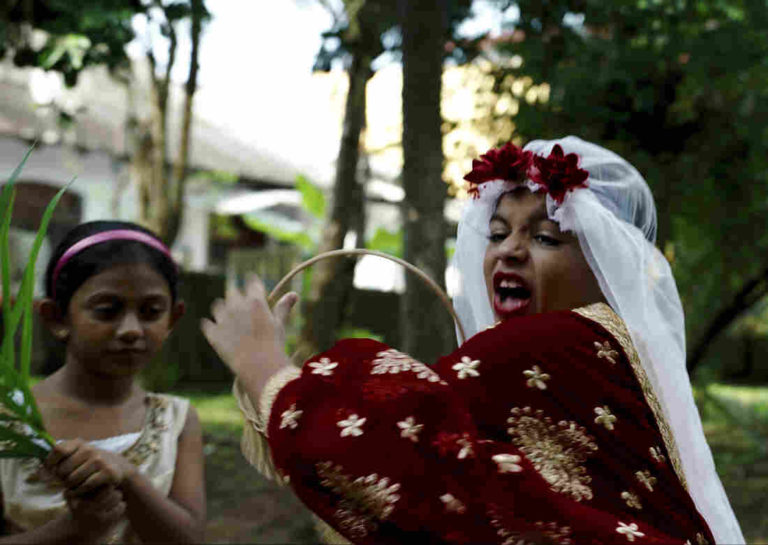
Arush Nand plays the young Arjie at his make-believe wedding in Funny Boy. ARRAY hide caption
toggle caption
ARRAY
Arush Nand plays the young Arjie at his make-believe wedding in Funny Boy.
ARRAY
In the opening pages of the 1994 Canadian novel Funny Boy, a young Sri Lankan boy named Arjie refuses to play cricket with the boys as his father insists. He’d rather bedazzle in bridal reds and join the girls’ make-believe wedding.
Novelist Shyam Selvadurai‘s gay coming of age novel became a critical and commercial sensation in Canada when it was first published, enduring as a pioneering story of queerness, politics, and South Asian history. As the new film adaptation opens with the sound of the ocean — establishing the lush seafront tropical landscape of Sri Lanka — a group of girls run across the screen, with Arjie’s veil billowing in the wind, gender non-conforming and proudly leading the way.
Funny Boy is directed by Oscar-nominated filmmaker Deepa Mehta, who has previously explored what it means to be an outsider in South Asian culture in a trilogy of acclaimed and controversial historical dramas: Fire, Earth and Water. Like author Shyam Selvadurai, Mehta is also an immigrant to Canada and she says it was Selvadurai’s interwoven narrative of being both a migrant and a queer outsider in his own culture that made it such a powerfully layered story of selfhood.
“It felt like a double whammy,” she says. “Not only was it about what it’s like to leave your homeland but it combines the feeling of looking different with actually being different all your life, which was queer. It was something I’d never read before.”
Funny Boy tells Arjie’s coming of age story as a privileged Tamil young man against the backdrop of the late 1970s and 1980s, as ethnic tensions between Sri Lanka’s Sinhalese majority and Tamil minority explode into full blown conflict. As Arjie falls in love with a queer Sinhalese classmate, he’s forced to confront the hardening borders and violence of ethnic difference. The devastating Sri Lankan civil war lasted for more than two decades and displaced generations, including author Shyam Selvadurai’s own blended Tamil-Sinhalese family who went to Toronto as refugees in 1983. Selvadurai says although he found his creative community in Canada among fellow queer immigrant writers, he never came across published novels that reflected their experience.
Filmmaker Deepa Mehta and author Shyam Selvadurai collaborated on the screenplay for Funny Boy. ARRAY hide caption
toggle caption
ARRAY
“Our story needed to be told and I thought there was nothing for me, so I thought, ‘Wouldn’t it be wonderful to give a young Sri Lankan or South Asian queer writer a book where they could see themselves’…so that was the start of the novel,” Selvadurai says.
Mehta says she first read Funny Boy 24 years ago around the same time she released her own breakthrough queer drama Fire. That film told the story of two unhappily married Delhi housewives who defy both tradition and laws in the act of love. The film’s lesbian relationship was a groundbreaking subject for mainstream South Asian cinema and the film’s release ignited violent backlash from conservative groups.
As cinemas burned in India amid protests and debates over the film’s themes, Mehta became known as a critical and brave feminist voice in world cinema, says queer cinema scholar B. Ruby Rich. “The impact of that film was such that it entered the curriculum for feminist classes, film classes, globalization classes in all kinds of places around the world,” she says.
Mehta says her intention wasn’t to make a “lesbian story” but to explore the boundaries of women’s lives and freedom in her culture. “It is what is expected of women or what is expected of men, what is expected of us as human beings,” she says. “Why can’t we be what we want to be…and that’s what intrigues me.” Selvadurai says because of Mehta’s queer politics and filmmaking skills he knew she could do justice to his own Funny Boy. “I really knew she was the person for it. I mean I gave them the rights to the movie for a dollar,” he says.
Despite the fact that homosexuality is illegal in Sri Lanka and the trauma of the civil war remains a deeply sensitive subject, Mehta and her international cast were able to shoot Funny Boy entirely on location — amid the homes and lush coastline of the tropical island nation. Although official filming permissions were rescinded and returned over a tumultuous production year in 2019, Mehta describes the entire process as a miraculous triumph, especially given filming was completed before the coronavirus pandemic closed international borders.
“Funny Boy’s” trailer ignited controversy in the Tamil diaspora
ARRAYYouTube
But ever since the first trailer for Funny Boy appeared online, some in the Tamil diaspora have attacked Mehta for casting non-Tamil and non-Sri Lankan actors in major roles and for Tamil dialogue delivered with audibly foreign accents. Although she has had some of the dialogue re-recorded by native Tamil speakers in weeks leading up to the release, the controversy around casting and representation has continued online and the attacks against Mehta have grown more personal and pointed. Selvadurai says while he thinks it’s okay not to like the film and disagree with the casting choices, he’s found the online outrage against the film both “violent and disrespectful.”
Mehta, who has had film sets in addition to cinemas attacked in the past, says she never sets out to court controversy and wonders whether she’s just a “sucker for punishment.” Mehta says that for her, the collaboration with Selvadurai was born of a desire to better understand the roots of Sri Lanka’s sectarian conflict and the possibility of reconciliation through love across lines.
“Why do I make the films I make? I do make them because I’m curious. I’m curious about things I really want to know more about. Why do we hang on to hatred? We have to heal. The world just can’t carry on the way it is right now,” she says. As for the debate around her filmmaking choices, she says while she may not have made a perfect film, “I do feel that a conversation is essential to have. Let them see the film, let the dialogue and the healing begin, if they wish it.”
Funny Boy is being distributed by filmmaker Ava DuVernay’s ARRAY films, which focuses on bringing movies from underrepresented artists to wider audiences. As the film adaptation arrives on Netflix this month, Funny Boy has already been selected to represent Canada as the country’s official Oscar entry. Selvadurai says writing — and sharing — Arjie’s story helped him heal from the wounds he carried to Canada as a refugee, and as a young gay man, and he hopes the film can do the same for others.
“The beginning of talking about trauma is telling the story, and I really hope that the film opens up the story for our community,” he says.
A gay Muslim man embarks on a cross-cultural romance in “Breaking Fast,” a new comedy due out in early 2021.
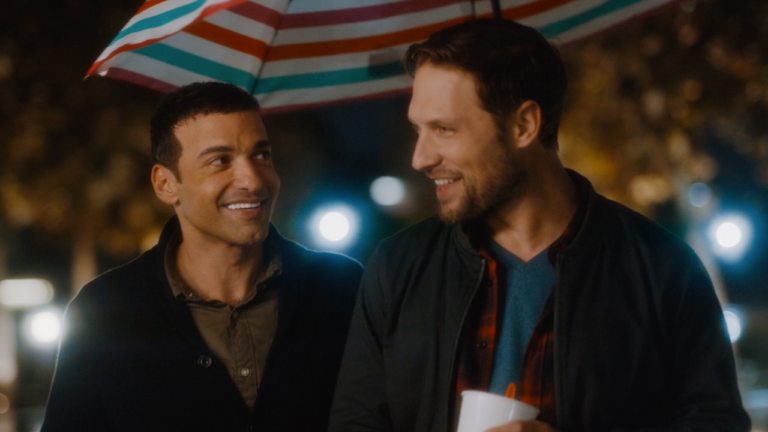
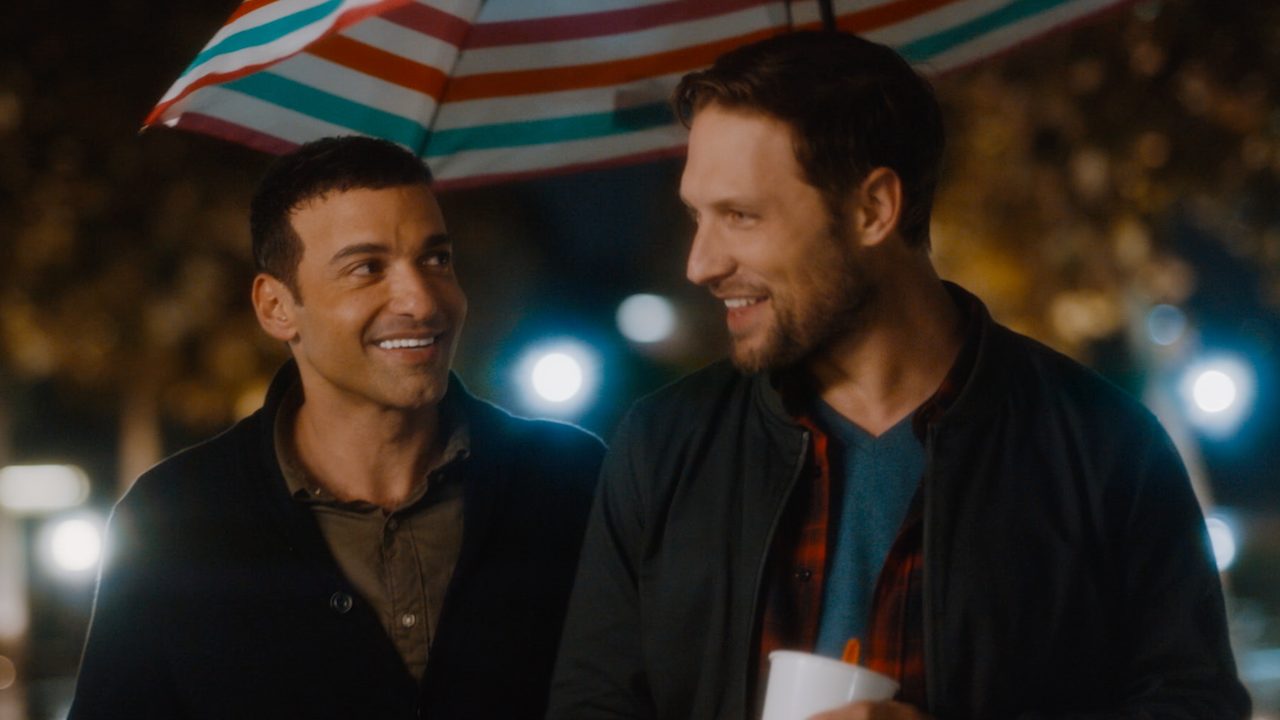
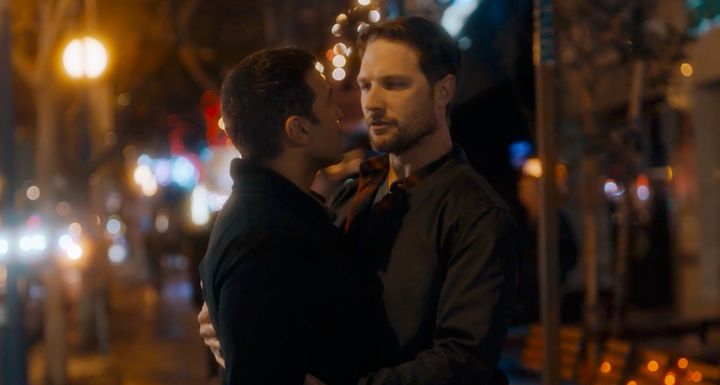
Set in Los Angeles during the Islamic holy month of Ramadan, “Breaking Fast” follows Mohammad, or Mo (played by Haaz Sleiman), a Muslim doctor who is reeling from a recent heartbreak. One birthday party meet-cute later, he finds himself falling for Kal (Michael Cassidy), an aspiring actor.
Unfortunately for Mo, the timing of the meeting presents numerous challenges, and he must navigate his feelings for Kal while honoring Ramadan, during which Muslims must abstain from eating, drinking and engaging in sexual activity from dawn to sunset.
Haaz Sleiman (left) and Michael Cassidy star in “Breaking Fast,” due out Jan. 22.
In an interview with Entertainment Tonight, director and co-writer Mike Mosallam said he sees his film as an homage to classic romantic comedies, albeit with a queer intersectional twist.
“I wanted to make a movie that would star Julia Roberts, if, in fact, she was a gay, Muslim, Arab man living in West Hollywood, California,” Mosallam said. In a separate interview, he added, “My intention is to tell a story that speaks to the nuances of daily life and treats identity ― religious, sexual, gender and otherwise ― as harmonious lenses by which individuals interact with the world.”
Early reviews of “Breaking Fast” have been positive. One critic called the movie “an entirely pertinent tale in a world that still struggles with the idea that a man can be gay and Muslim without feeling torn between the two,” while another applauded Mosallam and Seth Hauer’s script for “pushing back against its generic confines.”
Sleiman, whose credits include “Nurse Jackie” and “Jack Ryan,” was praised for turning in an “endearingly neurotic” performance.
“Breaking Fast” will be available digitally and on demand on Jan. 22.
RELATED…
Calling all HuffPost superfans!
Sign up for membership to become a founding member and help shape HuffPost’s next chapter
With constant financial uncertainty being one of the only constants this year, OnlyFans has become one of the most polarizing and profitable ways for a number of people to support themselves & get publicity for their their projects. RuPaul’s Drag Race All Stars winner Shea Coulee and Real Housewives of New York City star Sonja Morgan both have even started OnlyFans pages in an effort to simply get their brand out there. While philanthropy doesn’t typically go hand in hand with OnlyFans, 24 year-old Reno Gold is making a point to change that. He recently pledged (via video) to donate 100% of his OnlyFans earnings from December 1-7th to the Elton John AIDS Foundation, and he fulfilled that commitment. He raised $27K from new subscriptions, messages and tips and subsequently, donated the funds he committed to.
Raised most of his life in Reno, Nevada (hence his stage name, Reno. Gold was added because he mistakenly thought Nevada was the gold state, finding out too late that it’s actually the silver state). Recalling a happy Christian home with both parents and two older sisters present, Gold’s father worked as an appraiser and his mom worked various jobs, and they attended church weekly. School challenging for Reno; he had learning issues and was held back & put into special education classes. He did excel in sports, especially gymnastics, becoming a national champion in tumbling. At 18, while a senior in high school, he started dancing at strip clubs, then eventually turning to webcamming. The page was slow to take off, but the more he focused on the quality of his work and being consistent with content distribution, the more he saw more money coming in.
Photo Courtesy-Project Publicity
The page started to truly take off when he began cross promoting on YouTube as well as marketing his personality as much as his body “On OnlyFans, I post sizzling male on male duo scenes with imaginative storylines and funny scripts so my subscribers get a taste of my sense of humor and personality. I also post uncensored demonstration videos on scrotox injections (botox in the scrotum), male douching and manscaping.” His YouTube channel is for strictly PG-rated content, often sharing his likes, dislikes, hopes, and dreams. He does however, admit that one of his biggest fears is getting older in the sex industry. With that in mind, he is stacking the decks in his favor “I’m investing in real estate and renting them out,” he explains. “So far, I’ve purchased five properties, all in cash.” He plans to exit the business in six years, when he’s 30. “I want to have enough properties under my belt and just manage them and live off of that.”
Reno keeps his operation and his circle tight. He scouts and books his own scene locations, handles, wardrobe, toys, and photographers for still shot images. “It’s about quality and quantity” Gold says. He posts a new professional quality nude shot daily, a 15-20 minute minute solo scene weekly, and two duo scenes a month. Gold’s mother is his manager, & he has started college funds for his niece and nephew. Gold also is a portrait artist, working in charcoal and graphite. He is currently drawing his most liked nudes from OnlyFans.
“Sex work is really no different from any other kind of job in today’s digital age and I’m no different than most other guys in their twenties,” Reno Gold concludes. “I wake up, hit the gym, work all day creating and distributing content, order Uber eats and then wrap it all up with Rick and Morty or some other cartoon before bed.”
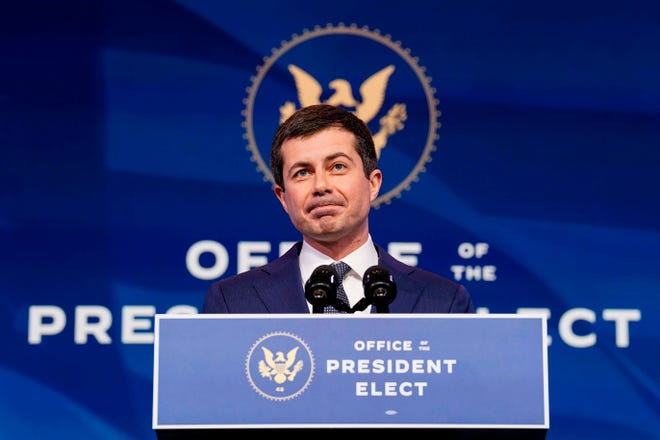
Now, he’s making history again as the first openly gay man to be nominated to a Cabinet role, with President-elect Joe Biden tapping Buttigieg this week as his pick for U.S. Transportation secretary.
As Buttigieg accepted the nomination Wednesday afternoon, he recalled how as a 17 year old in Indiana, he watched the experience of James Hormel, who President Bill Clinton nominated as ambassador to Luxembourg in 1998 — an appointment Senate Republicans balked at for two years in protest.
“I can remember watching the news… (and) seeing a story about an appointee of President Clinton named to be an ambassador attacked and denied a vote in the Senate because he was gay – ultimately able to serve only by a recess appointment,” he said. “And I learned something about some of the limits that exist in this country when it comes to who is allowed to belong. But just as important, I saw how those limits could be challenged.”
Two decades later, he said, he thought about whether other teens might be watching now, wondering whether and where they belonged in the world – “or even in their own family. And I’m thinking about the message that today’s announcement is sending to them.”
Buttigieg, who ran against Biden for president before dropping out of the race and endorsing him, often campaigned to great enthusiasm with his husband, Chasten Buttigieg, by his side. In a statement issued Tuesday, Biden said he hoped Buttigieg would lead “with focus, decency and a bold vision. He will bring people together to get big things done.”
Buttigieg, 38, would also be the first millennial Cabinet member, representing a demographic more likely to identify as LGBTQ compared with older Americans. About a fifth of millennials identify as LGBTQ, compared with 7% of Boomers, according to a 2017 GLAAD survey.
“This will be a historic milestone for LGBTQ visibility,” said GLAAD president/CEO Sarah Kate Ellis in a statement posted on Twitter, noting that should the former South Bend, Indiana, mayor be confirmed by the Senate, he would become the first openly gay Cabinet secretary in U.S. history.
“Pete’s experience and skills as a leader, manager and brilliant communicator, combined with his heartland roots and his unqualified commitment to diversity and equality, will improve the lives of all Americans,” Ellis said.
Kevin Jennings, CEO of Lambda Legal, called Buttigieg’s nomination a landmark accomplishment.
“If you’re not at the table, you’re probably on the menu,” Jennings said in an interview, noting that gay Americans died by the tens of thousands without high-level representation during the AIDS crisis of the 1980s. “Now we have someone at the table to make sure our community does not get ignored, and who literally is there to make sure the trains run on time.”
Buttigieg’s ascension in U.S. politics comes after complaints by LGBTQ activists that civil rights have eroded under the Trump administration, including the Department of Defense prohibiting trans individuals from military service; the Department of Education rolling back protections for LGBTQ students; and the Department of Labor allowing contractors to ignore federal anti-discrimination laws if at odds with their religious beliefs.
LGBTQ leaders also fear the number of conservative judges appointed by Trump could reverse the community’s civil-rights gains and health care protections.
Erin Uritus, CEO of Out & Equal, a nonprofit dedicated to workplace equality, said Buttigieg “embodies the best in public service.”
“Every workplace deserves our leadership,” Uritus tweeted Tuesday afternoon. “This administration is demonstrating that visibility and expertise matter. For the first time ever, LGBTQ Americans can see a Cabinet-level position filled by an open member of the community.”
Meanwhile, the Log Cabin Republicans, an organization representing LGBT conservatives, were quick to note that Buttigieg would not be the first openly gay man to serve in a Cabinet-level role.
“Facts are facts,” the group tweeted in pointing out that that distinction fell to Richard Grenell, who served as both an ambassador and acting director of national intelligence under President Donald Trump. However, Grenell was not formally confirmed by the Senate.
Buttigieg, deployed to Afghanistan as a lieutenant in the U.S. Navy Reserve, came out as gay while serving as South Bend mayor in 2015, saying he had felt for years that he could be out or in politics, but not both.
His nomination as Transportation secretary, said LGBTQ Victory Institute president Annise Parker, “is a new milestone in a decades-long effort to ensure LGBTQ people are represented throughout our government – and its impact will reverberate well beyond the department he will lead.”
In a statement issued Tuesday, Parker added that the appointment would fulfill one of her group’s goals for the incoming administration, which in addition to nominating an openly LGBTQ person as a Cabinet member include nominating an LGBTQ person to the U.S. Supreme Court.
Tony Vedda, president and CEO of the North Texas LGBT Chamber of Commerce, said he hoped Buttigieg is appreciated as much for the skills and perspective he brings to the Cabinet role as for his status as a gay man, though he acknowledged that Buttigieg’s visibility could help break down stereotypes.
“He’s a smart guy, and certainly the youngest person in the Cabinet, so he’s bringing some new ideas,” Vedda said. “It’s a very positive thing for the community and lets people see that we are like the rest of society, complete individuals, and being LGBT is just part of who we are.”
“Will his appointment change hearts and minds? It could. But if we’ve learned one thing from the outgoing administration, it’s that prejudice is alive and well in this country. So for all the positive gains that the LGBT community has made over the last 10 years, there really is a need for vigilance and for us to continue to have to prove ourselves.”
Rick Chavez Zbur, executive director of Equality California, the state’s largest statewide LGBTQ+ civil rights organization and among the first such groups to support Buttigieg’s presidential campaign, said Buttigieg’s nomination filled him with hope and pride.
“I want LGBTQ+ young people across the country to see Secretary Buttigieg and know that the sky is the limit,” Zbur said in a statement.
Recounting how others throughout history – such as U.S. Army astronomer Frank Kameny – had been fired in decades past for their sexual orientation or gender identity, Zbur praised Biden and Vice President-elect Kamala Harris for “shutting the door forever on that painful legacy and sending a clear message to LGBTQ+ people everywhere that we deserve a seat at every table and belong in every hall of power.
“Today, more than ever,” Zbur said, “we are proud to be on Team Pete.”
The Rev. Neil Thomas of Dallas’ Cathedral of Hope, a historically and predominately LGBT congregation in Dallas, recalled how Buttigieg visited the church early last year to listen to church members’ concerns as he ran for president. Thomas praised Buttigieg for staying for nearly two hours, which was twice the scheduled time.
“I am confident – and delighted – that Americans will now get to experience the leadership, intelligence, passion and inclusion of Transportation Secretary Pete Buttigieg in our collective daily life that we in Dallas experienced for two amazing hours in February 2019,” Thomas said.
Jennings, of Lambda Legal, said that while Buttigieg’s nomination is significant, it doesn’t mean the community can be complacent.
“We’re not one and done,” Jennings said. “That’s tokenism, and we shouldn’t look to one person to represent an entire community. That’s unfair to them, and too large a task for anyone.”
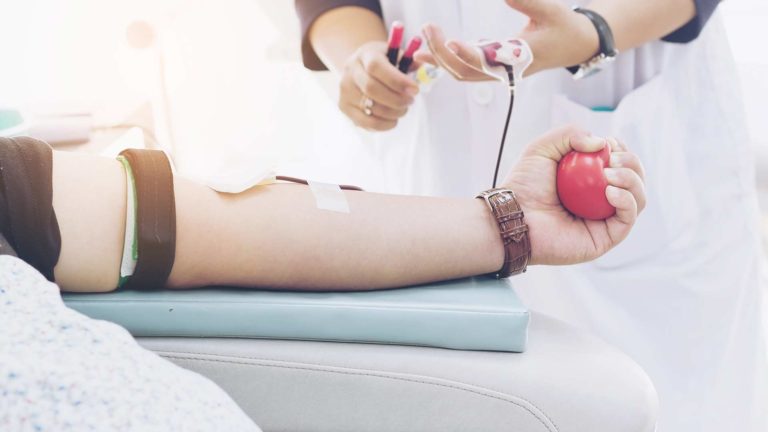
NEW YORK — The FDA is now sharing new details on a study that could lead to the removal of longtime restrictions on blood donations by gay or bisexual men.
The agency exclusively shared with ABC News that the goal is to gather and present data for review by late 2021.
The first-of-its-kind pilot study, ADVANCE: Assessing Donor Variability And New Concepts in Eligibility, calls for a groundbreaking collaboration between three of the nation’s largest blood centers, Vitalant, OneBlood and the American Red Cross, along with LGBTQ+ community centers nationwide.
The research is intended to conclude whether donor deferral can be based on individual risk assessments rather than blanket rules.
“The FDA remains committed to considering alternatives to time-based deferral by generating the scientific evidence that is intended to support an individual risk assessment-based blood donor questionnaire,” an FDA spokesperson told ABC News.
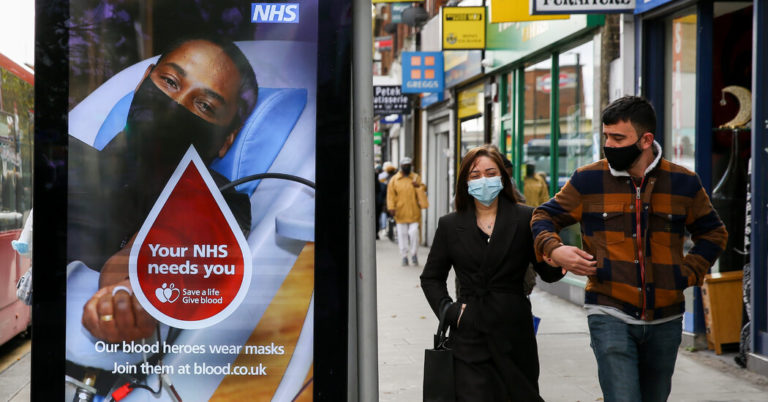
Earlier this week, the UK announced it would ease restriction on gay men giving blood.
The new criteria, hailed as “landmark change,” according to Health and Social Care Secretary Matt Hancock, will instead focus on individualized risk-based assessments. The revised policy is designed to show that there’s no impact on the safety of blood donated in the U.K.
So far, there is no response from either party on whether a blood shortage crisis in the U.S. would warrant this study/program be prioritized or expedited.
There was also no response from the FDA on claims the medical community say its current policy is discriminatory in nature.
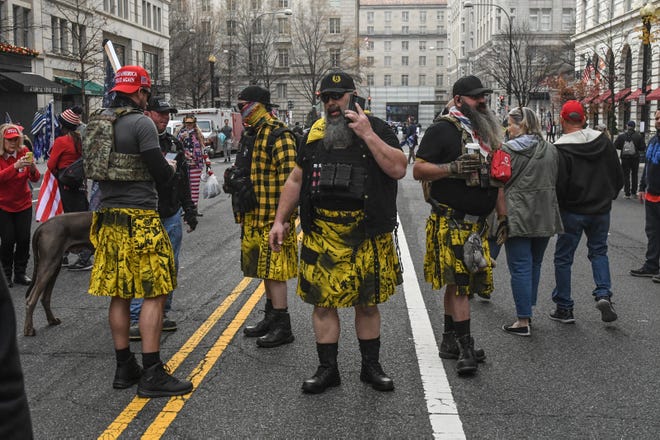
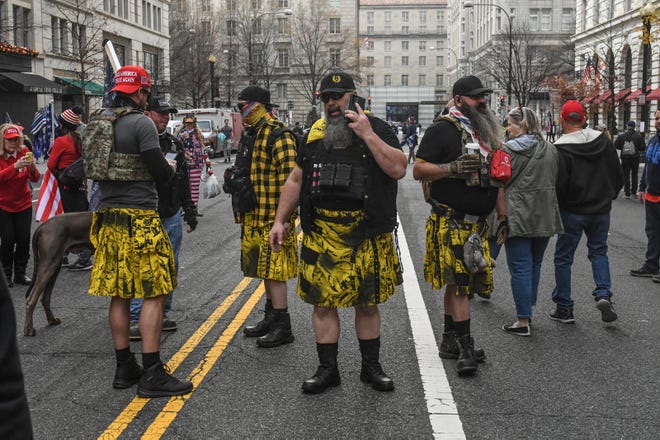
The photo sparked horror among Verillas employees.
It was a picture that showed members of the Proud Boys, designated as a hate group by the Southern Poverty Law Center, a liberal advocacy organization, wearing black and yellow kilts designed by the clothing company.
Justin LaRose, the brand’s vice president, said he feared the LGBTQ-owned company’s clothes were being co-opted by a group whose message Verillas is “directly against.”
Verillas responded to the photo on Twitter. The company said it was “disgusted” to see the Proud Boys wearing its clothes during a rally against the 2020 presidential election results last weekend in Washington, D.C.. It also pledged to donate $1,000 to the NAACP after seeing about $750 worth of its merchandise in the photo.
“We’re against everything they stand for,” Verillas said about the Proud Boys in a tweet.
What followed was an outpouring of support.
LaRose said he originally feared Verillas – a small Virginia-based company with 10 people that’s been around since 2014 – wouldn’t have the voice or the reach to stop the Proud Boys from “getting the first say” about their clothes.
“Almost immediately, like within an hour, people were behind us and they were amplifying our message because they recognized how small we are and how little power and how little say we had in the situation to begin with,” LaRose told USA TODAY on Wednesday.
He added, “It was relieving, it was empowering and it felt amazing.”
Kilts on Verillas range in price from about $45 for a half kilt to roughly $500. The brand has several LGBTQ+ Pride designs, too. Other things for sale include hoodies, boots, a tunic and fairy wings.
“We want as open and inclusive as possible about fashion,” La Rose said, adding “We want to represent all forms of the human body in an amazing and flattering way and we want to be as inclusive as possible for anybody who identifies any which way they please.”
Another clothing company has already denounced the Proud Boys. Members frequently wear black and yellow Fred Perry polo shirts, according to the Anti-Defamation League. In September, the brand released a statement saying it “does not support and is in no way affiliated with the Proud Boys.”
Verillas’ owner Allister Greenbrier told the BBC that Verillas has removed the yellow and black kilt design from its website.
“I can’t control who buys my product, but if they’re buying our product, they’re putting their money towards a good cause and I think they won’t be too happy when they find out they accidentally bought from a company that’s really fighting for the opposite of what they believe in,” Greenbrier told the BBC.
Verillas is thankful for the support, LaRose said.
“What we’re working on now is, now that we have this support and we have this voice, how to use it in the right way,” he said. “We just hope we have some time and can do some good.”
The Proud Boys gained notoriety during the presidential election. President Donald Trump, when asked to denounce white supremacists during the first debate against Democratic nominee Joe Biden, told the Proud Boys to “stand back and stand by.”
The 20 Queer Q’s series (from our sister publication, Pride) seeks to capture LGBTQ+ individuals and allies in a moment of authenticity. We get to know the subjects, what makes them who they are, and what they value.
The goal of these intimate conversations is to leave you, the reader, feeling like you just gained a new friend, a new perspective, and that you learned something new about or saw a different side of someone — maybe someone that you don’t see online, but someone that’s maybe like you.
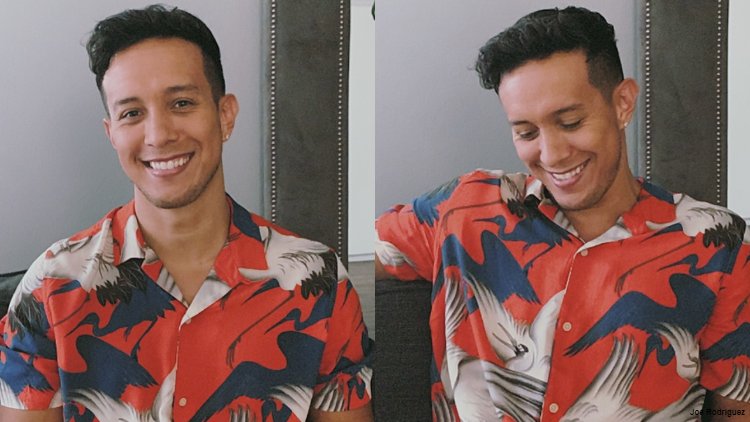
In this new #20QueerQs, get to know HIV activist and fitness expert, Raif Derrazi. Learn about advice he has for queer youth, what self-love means to him, how we can better remember our history, and more!
Name: Raif Derrazi
Age: 35
Preferred Pronouns: He/Him
Sexually Identifies As: Gay
What do you love about the LGBTQ+ community?
I love our willingness to be pioneers and curious trailblazers of gender, sexuality, and self-expression.
What are your thoughts on PrEP?
PrEP is a fantastic option we can add to our tool belt to combat HIV transmission. There’s a fear that endorsement of PrEP means people are going to run around carelessly having sex, no longer fearing HIV, and not caring about the other STIs. That may be true for some, but the answer isn’t to deny its importance. Most people want to respect their bodies and make healthy choices. Education and community empowerment initiatives are the key, not suppression.
Do you think it’s hard to make queer friends?
I do have some difficulty making queer friends, but I could say the same about non-queer folks as well. I’m in favor of fewer friends with deeper connections.
What does Pride mean to you?
Pride means fully embracing who we are without judgment, including our imperfections. That doesn’t mean walking around with a beaming smile. You can be full of pain, tears streaming down your face, beaten, bruised, clothes in tatters, and yet still hold your head high with Pride.
Who is someone you consider to be an LGBTQ+ icon?
Peppermint. I got to know Peppermint as her assistant and now we’re close friends and co-produce projects together. She has taught me so much about the LGBTQ+ community, being trans, drag artistry, advocacy, activism, and navigating it all with grace and humility.
What advice you have for LGBTQ+ youth?
Many of the things that make you feel ‘othered’ and weird are often your gifts to the world. But people are often ruled by fear and don’t know how to appreciate them
Do you believe in love?
I believe in love like I believe in gravity. It’s fundamental to existence, just like physics.
Favorite drink to order at a bar?
Whiskey Diet with a lime.
What are the values that you look for in an ideal partner?
I look for honesty above all and goodness in their heart. They don’t have to be perfect, but they do have to be always working to grow.
Fill in the blank: Love is _______.
The purpose of life.
Is there an LGBTQ+ TV show or movie that has had a great impact on you?
Angels in America…I remember I was like 18 years old in my living room, it was airing late at night, and I was so enraptured. I was on my knees, inches away from the TV screen, tears streaming down my face. I had never felt so acknowledged and visible in the media before. It was dealing with terribly real issues that I was struggling with inside too.
What is the title of the current chapter of your life?
“On the Verge of Greatness.” Ooh…I have to battle my inner critic saying, “Who are you to say that about yourself?!” My response: “Hush, child.”
A night in or a night out?
I’m such a hermit. I’m way too comfortable being inside for days at a time without seeing sunlight. I have to encourage myself to get out and enjoy not being home. Once I’m out, I definitely enjoy myself.
What can we do better to remember our history?
I think it’s more than just any one thing, like reading a book or taking a class. As a society, holistically, our values have to evolve. Part of that is ageism. We value things and people that are new and young, but our elderly population is growing and they have so much experience and wisdom to pass on.
What does self-love look like?
Self-love looks like never compromising your greatness and simultaneously humbling yourself enough to know that you’re not born great…you got “werq” to do.
Sunrise or sunset?
God, I love a beautiful California sunset…but lately, my appreciation for sunrises is skyrocketing as I’m learning to wake up earlier and be more productive with my days.
What is your preferred method of self-care?
Working out is my favorite, favorite, favorite way to love on myself. It’s cathartic, I’m pushing myself to new limits, I get to see my progress in the mirror, it makes me feel alive and awake, and it improves my overall health…what’s not to love? It was also my big conquest over my AIDS diagnosis…like a big ‘F you!’ I’m in charge here.
What’s your favorite way to start your day?
My favorite thing to do when I wake up is kind of a guilty pleasure. I know it’s not the best thing, but I just enjoy it too much. I grab a cup of coffee, sit in front of my computer before the sun has come up, and browse the news headlines of the day. Politics, the economy, financials, world news. I could easily spend hours doing that every day if I didn’t control myself.
Would you call yourself self-assured?
In general, yes, I am self-assured. But let me tell you, you do not want to be in my head sometimes. It is a battle between self-doubt and self-assurance with a thin margin in favor of self-assurance.
What value/quality has being queer given you? What have you gained?
Being queer has taught me how to be courageous enough to be different and how to have compassion for people who are misunderstood or highly judged.
This article was written by Joe Rodriguez and was originally published on Plus magazine’s sister publication, Pride.com, as part of its 20 Queer Q’s series.
Britain announced on Monday that it would loosen restrictions on blood donation by gay and bisexual men beginning next year, a shift in policy called “landmark” by the government and hailed by activists who have long fought rules they described as discriminatory.
The change will take effect next summer after the recommendations of a health committee that said a blanket ban on sexually active gay or bisexual men donating blood should be lifted. The government accepted the recommendations, saying the changes would not affect the safety of the blood supply.
“This landmark change to blood donation is safe and it will allow many more people, who have previously been excluded by donor selection criteria, to take the opportunity to help save lives,” Britain’s health secretary, Matt Hancock, said in a statement on Monday.
The current rules stipulate that “all men must wait three months after having oral or anal sex with another man before donating.”
A statement released on Monday by the National Health Service removes the three-month barrier and says that gay and bisexual men who have had the same sexual partner for more than three months will be allowed to donate if there is no known exposure to a sexually transmitted infection and they are not using drugs to stop the spread of H.I.V., the virus that causes AIDS.
The new rules will apply across England, Wales, Scotland and Northern Ireland.
“This opens up so many new donors for N.H.S. Blood and Transplant, leading to more lives being saved,” Stuart Andrew, a Conservative Party lawmaker and member of a parliamentary group that advocated for a review of the blood donation criteria, wrote in The Times of London on Monday.
Mr. Andrew described how he had previously been excluded from donating blood “based on who I am and who I love,” and he heralded the change in restrictions as “one of the most pioneering policies for blood donation anywhere in the world.”
In Britain, activists had been campaigning for years for a new policy. Around the world, similar restrictions have caused anger among gay-rights activists, who describe them as stigmatizing. Some men who have sex with other men even claimed that they gave blood anyway, out of frustration with the laws.
“We have for so many years felt as if we were dirty,” Ethan Spibey, the founder of FreedomToDonate, a British activist group, said by phone. The group led a coalition that campaigned for equal blood donation and worked closely with the government on the overhaul.
“This policy is a fundamental shift toward recognizing people are individuals,” Mr. Spibey added, saying he hoped it would “have ripple effects around the world for potentially millions of gay and bi men.” For the first time, he added, “people are being assessed on their sexual behavior, not their sexuality.”
Mr. Spibey said he began campaigning to lift the restrictions in 2014, a few years after he was turned away from the blood bank because of his sexual orientation. He had been inspired to donate after his grandfather underwent lifesaving surgery, requiring several pints of blood.
The new guidelines will apply to any person identifying as male who has sex with other men.
France, Italy and Spain also have relaxed rules on blood donations for gay or bisexual men. The restrictions were largely introduced in the 1980s during the AIDS epidemic, when global authorities feared spreading H.I.V. through the blood supply.
Since then, however, new H.I.V. infections have become rarer in Western countries, and screening has vastly improved. Activists and many health experts have long said the laws surrounding men who have sex with other men are antiquated and reinforce harmful stigma.
In 2017, Britain changed the time frame for gay and bisexual men to abstain from sex before donating from one year to three months, citing this as a safe buffer to ensure any blood donated would not be infected. But the health committee found that the three-month rule was unnecessary for gay and bisexual men who had not engaged in risky sexual behavior.
“This change to a more individualized approach is more appropriate and nuanced and helps to destigmatize H.I.V.,” said Deborah Gold, the chief executive of the National AIDS Trust, an H.I.V. rights organization in Britain.
In January, the N.H.S. said it needed more young men to start giving blood, citing a serious gender imbalance among donors.
“Lots of gay and bisexual men want to be able to do their part and donate blood and feel like they are making that contribution,” Ms. Gold said. “This change is good for them and good for people more widely to have more safe blood in the blood supply.”
The United States and Australia still require men who have sex with other men to wait three months after having sex before donating blood. Both announced changes to their rules in April, after thousands of community blood drives were canceled because of the coronavirus pandemic, and global blood supplies plummeted. By some estimates, more than one million donations were lost in the United States alone.
Medical professionals, however, have said the changes did not go far enough, with a group of more than 500 doctors, researchers and public health specialists in the United States signing a letter calling on the authorities to eliminate the constraints.
“We are not advocating for relaxing standards that would compromise the safety of our blood supply,” the doctors wrote. “Instead, we advocate for scientifically driven standards that uphold the utmost safety of the blood supply and simultaneously promote equity and reverse historical discrimination in blood donation.”
Around the world, activists said that Britain’s move was a good start, but that there was more work left to be done.
Jay Franzone, a Texas-based campaigner who in 2017 abstained from sex to call attention to the laws in the United States, said in a phone interview on Sunday night, “This policy is rooted in that fear of H.I.V.” He described the U.S. restrictions as a “ridiculous policy.”
“This is encouraging news, but this isn’t new science,” he added of the changes in Britain. “I look forward to the day where our policy changes in America, and our policy decisions, aren’t guided by homophobia and fear.”
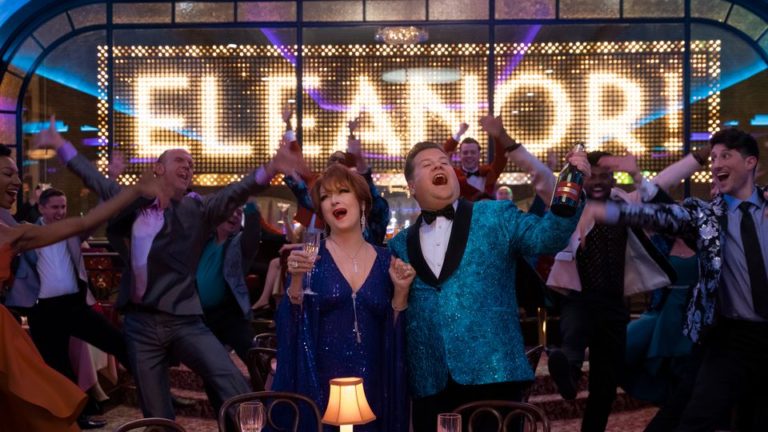
Last week, Netflix released Ryan Murphy’s latest musical comedy, The Prom. With lead roles from Meryl Street, Nicole Kidman and Kerry Washington, it was bound to get a ton of attention. But since the release, all anyone is Googling is whether or not James Corden is gay. That’s right, James Corden’s sexuality has become a focal point for viewers, notably because he played a gay character in the show.
According to Google Trends, ‘James Corden sexuality’ and ‘James Corden gay’ are both major search terms right now. It seems that since playing Barry Glickman, a Broadway actor plagued by the traumatic memory of coming out to his parents and a subsequent pained relationship with his father, many have come to question James Corden’s sexuality.
In fact, James Corden is straight and married to Julia Carey with whom has three children. In 2017, speaking of his days starring in The History Boys with Dominic Cooper, he talked at length about his dating days with Playboy. ‘If you’re young, straight, English and in the hottest play in New York City, you’re gonna get laid. That’s it,’ he said. ‘I’d basically pick up the women Dominic didn’t want, but I was more than happy with that.’
This won’t come as a surprise to most, who have seen James Corden’s life played out in the press for years. So why are so many people obsessed with searching for James Corden’s sexuality? Perhaps it’s sheer ignorance, with people unable to see a straight man play a gay character without assuming he must have come out. Or perhaps it’s people wondering why on earth a straight man is playing a gay character in the first place.
If you’ve seen the reviews, that’s certainly the question critics are asking. Because, in a film that is literally the experiences LGBTQ+ people, it seems starkly tone-deaf not to cast one of the many incredible gay male actors in Hollywood instead of a straight man.
For Guy Pewsey, Grazia’s celebrity director, it’s not necessarily that a straight man was cast in the role of Barry, but that Corden did it so disrespectfully. Throughout the film, he plays to archaic stereotypes with camp, feminine and flamboyant behaviour that only serves to perpetuate tropes that actually have nothing to do with sexuality.
‘I have no issue with a straight man playing a gay character on paper. Essentially, acting is all about being someone else. But gay men are not cast as straight men,’ Guy explained. ‘The moment that actors like Alan Cumming or Rupert Everett came out as bisexual or gay, they became typecast. Neither have achieved the success that their talent demanded, simply because they were not seen as bankable as romantic leads or action stars. So, while that issue still remains, it seems fair to address the imbalance by giving gay actors the few gay roles that are on offer in Hollywood.
‘If you are going to cast straight people in gay roles, the least you can do is ensure a sensitive, appropriate portrayal,’ Guy continues. ‘Josh O’Connor was incredible as a young gay farmer in God’s Own Country. Colin Firth was so moving in A Single Man. Neither reverted to stereotypes or offensive cliches. From the moment that James parades down the set with a lisp and a limp wrist, it’s obvious that he didn’t respect the community he was representing.’
Nathan Higham-Grady, Grazia’s picture director agrees. While he does think campness should still be celebrated on screen, he would rather have seen someone who can bring authenticity to the role instead.
‘I have no problem with femme gay men being portrayed on screen and I think it’s really important that we don’t suddenly forget that campness is a huge, glorious part of queer culture that should be celebrated,’ he says. ‘But why not give Daniel Levy, Billie Porter, Matt Bomer, Billie Eicher, Ben Wishaw the chance to take on that part? There are so many wonderful gay actors that could have brought a level of authenticity to that role. Instead James Corden just parodies what he thinks a camp gay man is and it’s often so much more smart, clever and nuanced than this caricature.’
Perhaps then, James Corden’s role hasn’t necessarily inspired people questioning his sexuality, but just how absolutely awful he was at portraying one he has no authentic experience of. At the very least, here’s hoping the interest makes casting directors think twice next time.
“Aggressively flamboyant,” “homophobic,” “stereotypical” and “grossly inappropriate” are a few words people have used to describe James Corden’s performance in Netflix’s “The Prom.”
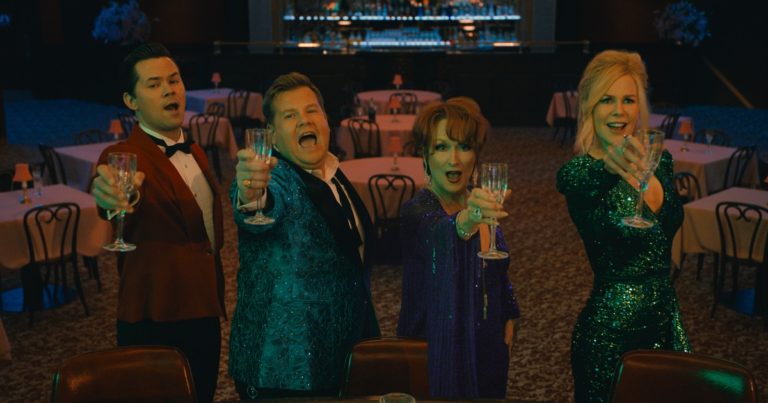
The “Late Late Show” host, who identifies as straight, stars in the Ryan Murphy vehicle as Barry Glickman, a gay Broadway actor who teams up with others in the theater industry to help a teenager take her girlfriend to their high school prom.
Corden’s controversial casting in the movie musical, which premiered Dec. 4 on Netflix, has reignited a long-running debate as to whether straight and cisgender performers should be hired to play LGBTQ+ characters — especially because the comedian’s portrayal has been widely panned as offensive to the community it represents.
“So … we couldn’t get a gay man to play James Corden’s role in #TheProm ?” tweeted James Fishon. “They were all too busy? Do we still think it’s kosher to have non-LGBTQIA people playing aggressively flamboyant, stereotypical gay characters? Does anyone ever learn?”
Advertisement
The unrepentant violence that is James Corden doing a homophobic portrayal of a gay man in a musical about gay rights.
— you haven’t met the new me yet (@MajorPhilebrity) December 12, 2020
“The unrepentant violence that is James Corden doing a homophobic portrayal of a gay man in a musical about gay rights,” wrote comedian Phillip Henry.
Representatives for Corden, Murphy and Netflix did not respond Monday to The Times’ requests for comment.
Several on Twitter offered alternative casting choices for the lead role of Glickman, including Nathan Lane and Tituss Burgess, both of whom are gay and have starred in several Broadway productions. Many also lauded Andrew Rannells, a gay actor and Tony nominee, for his “Prom” turn opposite Corden as Juilliard graduate Trent Oliver.
“James corden being cast in the Prom while Tituss burgess is living and thriving is a crime to humanity. You could’ve had tituss, TITUSS!!!!” tweeted @Eulalia_Rosalia, along with a gif of Burgess’ “Unbreakable Kimmy Schmidt” character saying, “What white nonsense was that?” on the Netflix series.
“Why on earth would they hire James Corden … a British, straight, TV show host that cant sing … to play a gay American Broadway actor … next to the amazing Andrew Rannells, who fits the role perfectly??” wrote @TheCritic_101.
In her commentary on Netflix’s move to cast major Hollywood names over seasoned Broadway performers, The Times’ Ashley Lee noted that the role of Glickman was originated “to Tony-nominated acclaim by [Brooks] Ashmanskas, an out gay theater mainstay, and yet becomes ‘aggressively charmless’ when played by Corden.” Netflix’s movie version also stars Meryl Streep, Kerry Washington, Keegan-Michael Key and Nicole Kidman.
Advocates for authentic casting argue that tapping LGBTQ actors for such roles not only leads to more respectful and accurate representation onscreen but also opens doors for performers from marginalized groups in the entertainment industry.
Advertisement
“#TheProm is another example of Ryan Murphy choosing to go for gasps instead of focusing on a strong subject matter,” tweeted film critic Liam De Brún.
“James Corden’s performance is grossly inappropriate. It’s not brave playing a gay man, in fact you stole the role from a member of the LGBTQ community.”
See more reactions to Corden’s “Prom” performance below.
Advertisement
#TheProm is another example of Ryan Murphy choosing to go for gasps instead of focusing on a strong subject matter. James Corden’s performance is grossly inappropriate. It’s not brave playing a gay man, in fact you stole the role from a member of the LGBTQ community. pic.twitter.com/9JSdrsONSi
So… we couldn’t get a gay man to play James Corden’s role in #TheProm ? They were all too busy? Do we still think it’s kosher to have non-LGBTQIA people playing aggressively flamboyant, stereotypical gay characters?
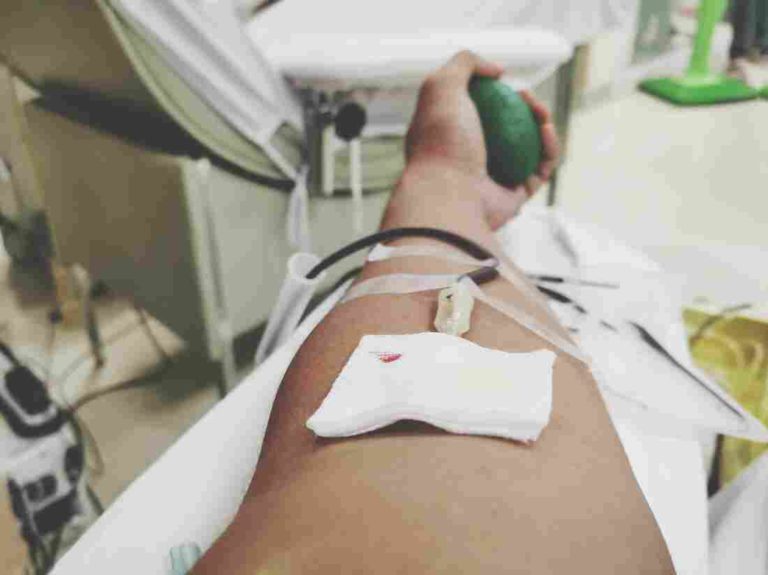
The U.K. announced new rules for blood donation that are defined by individual behaviors, rather than sexuality and gender. Piyanat Booncharoen / EyeEm/Getty Images/EyeEm hide caption
toggle caption
Piyanat Booncharoen / EyeEm/Getty Images/EyeEm
The U.K. announced new rules for blood donation that are defined by individual behaviors, rather than sexuality and gender.
Piyanat Booncharoen / EyeEm/Getty Images/EyeEm
Britain has announced changes that will allow more gay and bixsexual men to donate blood – a major victory for campaigners who had sought changes to the rules they said treated all gay and bi men as posing an increased risk of infection.
Previously, the government’s donor policy dictated that men who have sex with men had to abstain for three months in order to donate.
The new rules do away with asking about gender and sexuality, and instead focus on individual behaviors to assess risk. The changes will go into effect in summer 2021.
Under the new policy, anyone who has the same sexual partner for more than three months — irrespective of gender or sexuality— will be eligible to donate, so long as there is no known exposure to a sexually-transmitted infection or use of the HIV prophylaxes PreP or PEP.
“Donors will no longer be asked to declare if they have had sex with another man, making the criteria for blood donation gender neutral and more inclusive,” the National Health Service explains. “A set of other deferrals will also be introduced for the other higher risk sexual behaviours identified, such as if a person recently had chemsex [using drugs to enhance sex], and updated for anyone who has had syphilis.”
The policy change should help an effort by the NHS to get more men to donate blood. In January, the public health body set a target to get 26% more male blood donors, noting a significant gender imbalance among donors. “This is a concern because men have higher iron levels, and only men’s blood can be used for some transfusions and products,” it explained.
The changes announced Monday were made on the recommendations of a working group called FAIR (For the Assessment of Individualised Risk), which brought together U.K. blood services and LGBT organizations to see if sexual behaviors could be an effective method of assessing individual risk of STIs, which can be transmitted via blood transfusions.
FAIR’s evidence review found that “people with multiple partners or who have chemsex are the most likely to have blood-borne sexual infections; a strong link between HIV and a history of syphilis or gonorrhea; and receiving anal sex was identified as the easiest way to acquire a sexual infection from a partner.”
Su Brailsford, Associate Medical Director at NHS Blood and Transplant and chair of FAIR, said the changes are “just the beginning” of assessing blood donation eligibility in a more individualized way.
“Patients rely on the generosity and altruism of donors for their lifesaving blood. We are proud to have the safest blood supply in the world and I’m pleased to have concluded that these new changes to donor selection will keep blood just as safe,” she said in a statement.
The U.K. health secretary also trumpeted the new policies. “This landmark change to blood donation is safe and it will allow many more people, who have previously been excluded by donor selection criteria, to take the opportunity to help save lives,” Matt Hancock said in a statement. “This is a positive step and recognises individuals for the actions they take, rather than their sexual preference.”
Beginning in 1985, the U.K. had a lifetime ban on blood donations from men who have sex with men. From 2011 in most of the U.K., gay men were permitted to donate after 12 months of abstinence. In 2017, the U.K. changed that deferral period to 3 months.
The organization Freedom To Donate had pushed for the policies to change.
“This is just huge,” Ethan Spibey, the group’s founder, said in an interview with Sky News.
He said his grandfather had a major operation where he needed eight pints of blood, and Spibey wanted to repay the donors’ generosity. He said his heart sank when he looked at the questionnaire to donate blood, and realized he would be barred from doing so: “I felt guilty, I just felt shame.”
Spibey said they worked since 2014 to campaign for “not just a fair and equal policy, but one which can unlock potentially thousands of safe donors in a way that allows gay and bisexual men to donate and be judged as people, not on the basis of their sexuality.”
In 2015, the U.S. lifted its lifetime ban on men who have sex with men from donating blood — a policy that had been in place since 1983.
The U.S. Food and Drug Administration announced in April that it was relaxing its rules on blood donations by men who have sex with men, shortening the required period of abstention before donating from 12 months to 3 months.
Two weeks later, more than 500 doctors, public health specialists and researchers sent a letter to the FDA objecting that the changes had not gone far enough, and advocated for a policy focused on specific high-risk behaviors rather than sexuality and gender.
The Red Cross said in June that it was facing a drastic shortage of blood amid the coronavirus pandemic, which has led to the cancellation of blood drives and a “staggering” drop in supply.
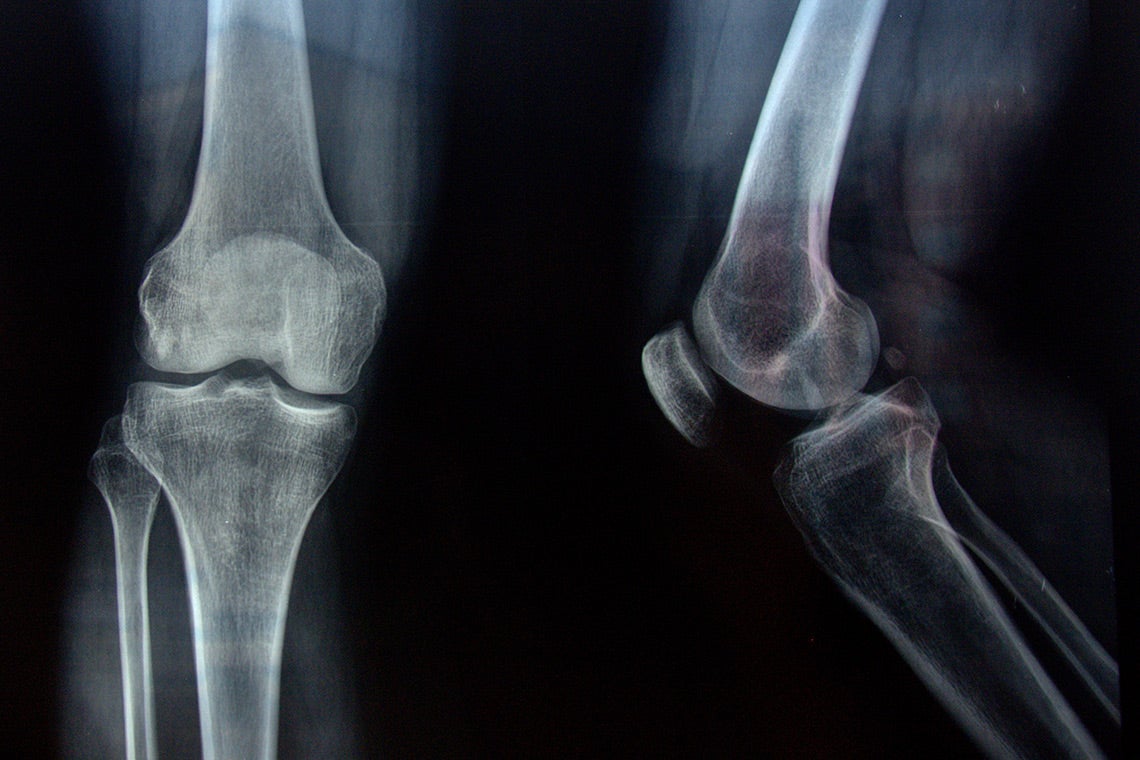
A new study by a University of Toronto researcher has found disparities in bone health that are associated with sexual orientation, with gay men in particular being at a greater risk.
“We found that gay men, and to a lesser extent bisexual men, have lower bone mineral density relative to heterosexual men,” says James Gibb, a biological anthropologist and visiting scholar in U of T Scarborough’s department of health and society. “While more research has to be done, what this suggests is that gay men are potentially at a greater risk of osteoporotic fracture as they get older.”
Gibb, who recently completed his master’s degree in U of T’s department of anthropology in the Faculty of Arts & Science, said the likely culprit is discrimination.
“It’s not that sexual orientation on its own is responsible for this disparity in bone health, rather it’s lifestyle and stress associated with sexual minority status that is possibly driving these differences.”
The study, done in collaboration with Eric Shattuck, an assistant professor at the University of Texas at San Antonio, looked at bone health data from 3,243 participants in the U.S. National Health and Nutrition Examination Survey. They found that sexual orientation was associated with disparities in bone mass across the spine and femur, the areas in which bone mineral density was measured as part of the survey. The finding was independent of known risk factors for poor bone health such as tobacco use, alcohol consumption and illicit drug use.
Bone mineral density is an important measure of bone strength, with minerals like calcium and phosphorus playing a vital role in bone strength. Gibb says those with higher bone mineral content generally have stronger bones, while lower bone mineral density results in weaker bones. That puts the the latter group at a greater risk of fracture.
He says the root cause may come down to discrimination. Gay men in the U.S. and elsewhere typically experience higher levels of discrimination and depression, which can have an effect on bone health. People suffering from depression have higher levels of cortisol in their body which, especially if chronically released, is bad for bones because it can interfere with the cellular mechanisms that build and repair them. While cortisol levels were not measured as part of the study, Gibb says it’s one possible avenue for future research.
“There’s an association between depression and bone mass, which past research has found independent of sexual orientation. But we also know that sexual minorities tend to have higher rates of depression,” he says.
Among women they found the opposite: lesbian and bisexual women had better bone mineral content than heterosexual women. Gibb says this is despite the fact that lesbian and bisexual women experience a number of elevated risk factors for lower bone mass such as lower income, higher weight, increased depression severity and tobacco consumption compared to heterosexual women.
“Our findings suggest that sexual minority men, but not women, are at an elevated risk for poor bone health,” says Gibb, whose research looks at how discrimination can affect human health.
“This suggests there could be some yet unexplained factors contributing to increased resilience in bone health among lesbian and bisexual women that warrants further research.”
Gibb says there’s been some past research looking at how certain HIV medications can impact bone health, but that this is the first to look at bone health from a public health perspective.
“Bone health is crucial. You need a healthy skeleton to perform all sorts of physical activities because your muscles pull on the skeletal system and that’s the lever that allows you to move,” he says.
“Ensuring everyone has strong, healthy bones is an important way to make sure people are able to achieve a better overall quality of life, especially as they age.”