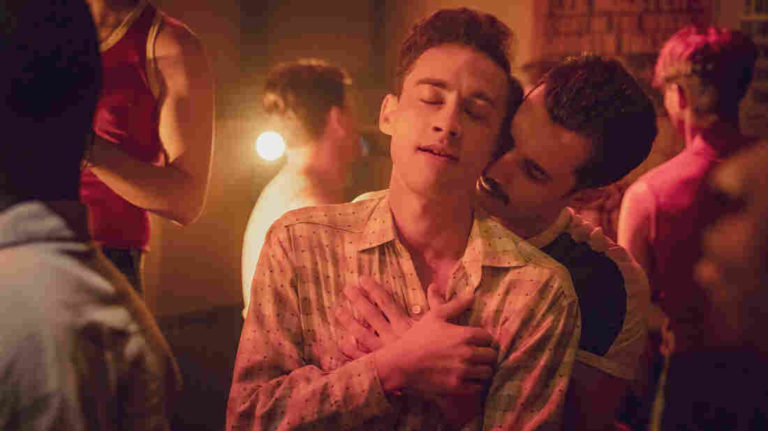
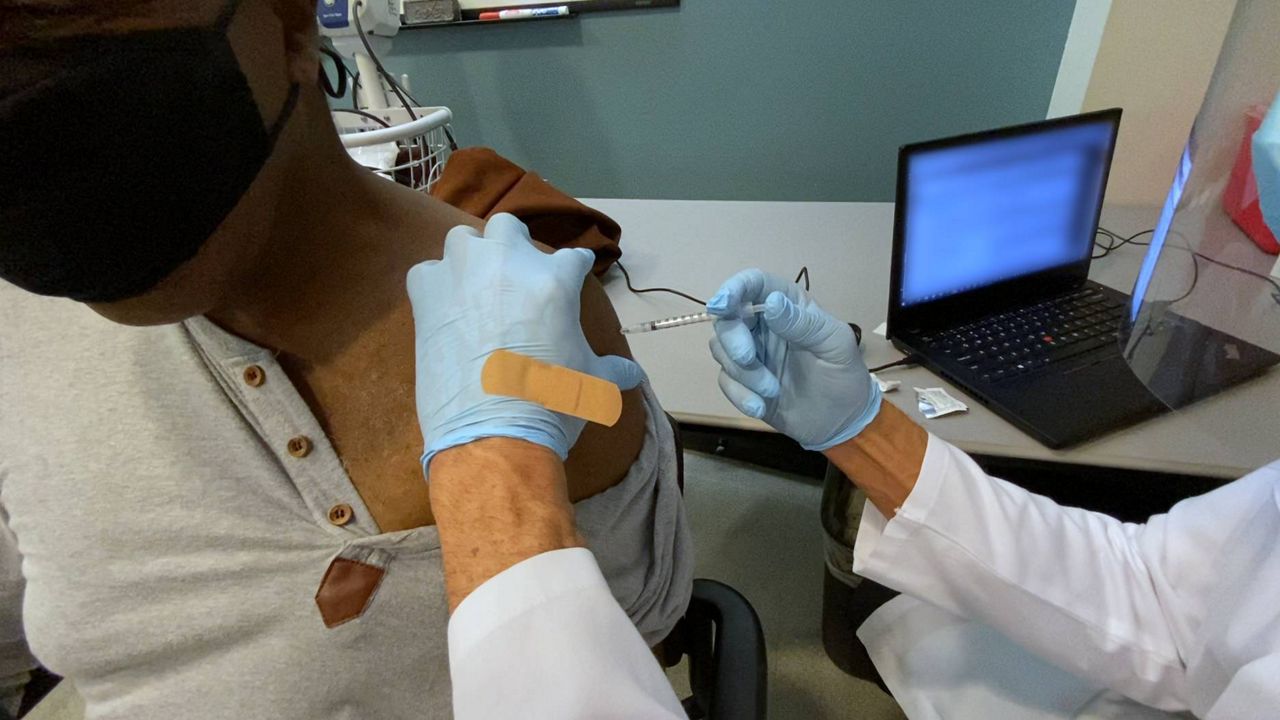
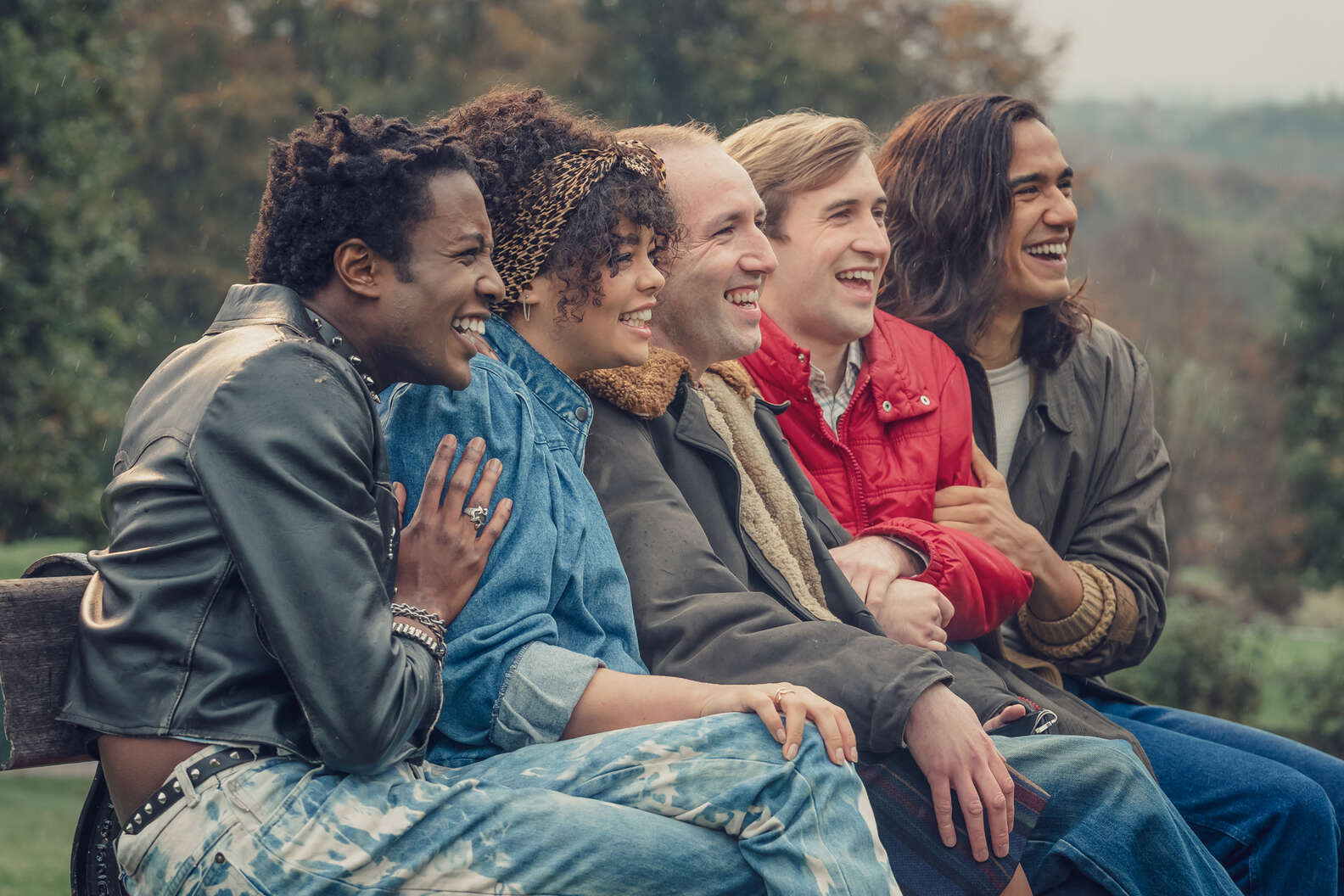
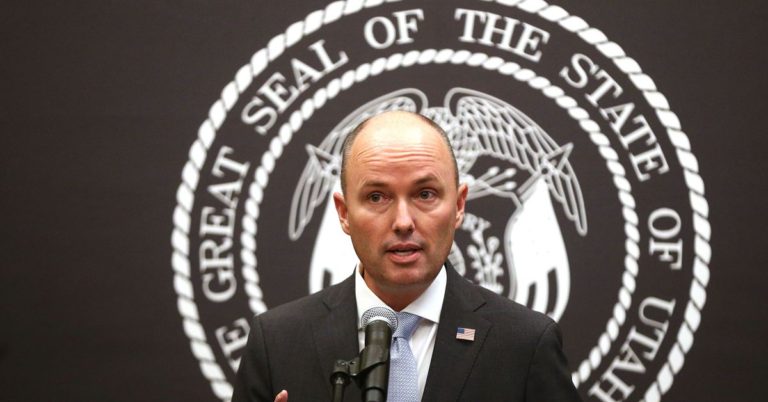
Olly Alexander as Ritchie Tozer in It’s a Sin. Ben Blackall/HBO hide caption
toggle caption
Ben Blackall/HBO
Olly Alexander as Ritchie Tozer in It’s a Sin.
Ben Blackall/HBO
Sporting a smile that lights up the overcast sky, It’s a Sin’s Ritchie Tozer can barely contain his excitement. He and his father are on board a ferry, leaving their home on the Isle of Wight behind. Ritchie, played by Years & Years frontman Olly Alexander, isn’t elated just because he’s leaving for college. No — before long, he’ll be in London and out of the closet, bathed in strobe lights, soaked in sweat and surrounded by throngs of dancing men in the city’s storied Heaven nightclub. It’s 1981, and like so many others, Ritchie is finally free. Even as rumors of a “gay cancer” or “gay plague” blow into London from New York, the dancing continues … and then the dancefloor crowd starts to thin.
Because of years of discrimination, shame and death, the Ritchie Tozers of the world — almost 40 years on — are largely unknown to young queer people today. The new five-episode miniseries It’s a Sin conjures their memories and connects them to a new generation.
Creator Russell T. Davies tells Morning Edition’s Noel King that for him, the show is deeply personal. “I was the same age as the lead characters,” Davies says. “I was 18 in 1981. That’s the age I left home. That’s the age you become yourself and this is what I’ve dramatized.”
The 57-year-old Welsh creator of 1999’s Queer as Folk and former showrunner of 2005’s Doctor Who reboot says he doesn’t remember exactly when he first heard rumors of the virus we now know to be HIV, but it didn’t take long for the Oxford student to realize that virus, and the disease it caused, would change his life forever.
“It only really crystallized for me in 1983 when I bought a copy of a magazine called Him. I secretly bought it as a little student, secretly buying his gay magazine, all kind of ashamed and excited all at once, like you do,” Davies said. “It was a bright summer’s day. I was in Oxford. I was a student. The sky was so bright blue. And I read the cover walking home and it said, ‘AIDS, death plot, panic.’ And I literally stopped dead. And I remember thinking, ‘oh, this is real.'”
Just as in the show, Davies recalls making the trek from Oxford to London for blowout parties with friends in a flat they dubbed the Pink Palace.
“When I came to write this, I drew from my friends, as then the rumors of this virus became closer, as it became real, as people started falling ill, then, the partying didn’t stop, but it became much deeper and richer as lives were at stake. So, these friends of mine ended up being the ones either falling ill or being the ones holding hands, being at the bedsides, starting fundraising.”
With It’s a Sin, Davies captures the tragic irony of an era where gay men were just starting to enjoy some amount of freedom after hard-fought battles for liberation, only to be ravaged by an unseen viral predator. This almost-memoir is as fast-paced as the neon nightlife of 1980s London, but as the story progresses, the AIDS crisis closes in with horror movie flair, until even the audience is infected with a sense of dread.
HIV/AIDS is far from just a gay man’s disease, but as its first victims — predominantly gay men — started filling up ICUs and morgues, a backlash against them ensued. And it reverberated well beyond the turbulent decade It’s a Sin portrays.
Olly Alexander, who’s 30, has been open about being a victim of anti-gay bullying growing up, says his school experience was definitely influenced by that backlash.
“You know, I was still at school under Section 28, which was really, I think, a direct response to the AIDS crisis by the conservative government to ban any mention of LGBT people in schools,” he recalls. “You know, now that I’m looking back, I realize what a huge impact that had on me as I was coming to terms with my own sexuality and the word gay and AIDS were used as jokes in the playground. It took me many, many years to begin to uncover what happened in this period of history.”
The character of Ritchie Tozer is similar to Alexander, in that both moved to London at a young age with dreams of stardom — but unlike Alexander, Ritchie is brash and overconfident, and that overconfidence leads him down the path of AIDS denialism.
YouTube
Though Ritchie might be the fiercest denialist in the series, it’s clear that at least at the outset, most of It’s a Sin’s gay characters can’t be bothered to stop the party. Flush with the vibrance of youth, they wave off concerns as conspiracy theory.
Sensing the impending wave of infections, older gay men try, to no avail, to warn their younger counterparts, but their advisory posters are rejected from gay bars and their worries are shunned as simply attempts to deprive a younger generation of their newfound sexual freedom.
The only sympathetic ear these older gay men seem to find is that of the character Jill, played by Lydia West. Jill is a straight woman living in the Pink Palace with her gay friends, and though we don’t learn much about her personal story, she does a lot of the show’s emotional labor — whether it’s phonebanking, protest organizing or holding the hands of the abandoned and dying — and she does it all with little recognition.
Russell T. Davies says that was purposeful.
“I think she is very put upon. I think I wouldn’t be doing my job if I wrote gay men as saints all the time and you see great pressure being put on her,” he says. “I know a million women like that. This is based on my real life friend Jill. [It’s a Sin] is critical of the load gay men put upon her. I think that’s very typical. I’m glad you can be critical of them because I think it is clearly meant to be like that.”
Davies, though, reserves his most stinging critique for the society that failed these young men. It’s a Sin portrays the crisis as it felt at the time — a series of disappearances. Parents would get word their children were sick and they’d whisk them back home, sometimes literally burning all of the artifacts of their gay lives in the process. One day your friends are vibrant and present, and the next they’ve vanished.
“That’s what happened. All kids go to the big city. Back then people started falling ill, either they didn’t know why or if they did know why it was considered to be shameful,” Davies remembers. “I wrote five hours of drama and this friend of mine summed it up in one line better than I ever could’ve. She said, ‘we sent our gorgeous friends home to their childhood bedrooms to die while their families tried to hide them from the neighbors.'”
Davies says he had friends whose fates still remain a mystery to him.
“There are still people I know and I think about to this day, I wonder if they died. My friend Eddy, I don’t know where Eddy is, I don’t know if he died, and it’s very interesting that I’ve never gone to look him up because part of me doesn’t want to know,” he says. “I think ‘no, no, no leave Eddy where he was, leave him. Maybe he’s happy somewhere. Good old Eddy. Lovely boy.'”
It’s clear how Davies feels about that time of his life and his friends from back then, and after watching It’s a Sin it’s hard not to come away feeling just as connected to his characters. Not just their trauma, but their joy and ultimately their resolve.
Davies says that since the show began airing on the U.K.’s Channel 4, he’s seen feedback from younger gay men — living in today’s world of advanced preventative HIV medicine and relative freedom — who are outraged “that such a world ever existed.” In no insignificant way, the series is filling in the historical gaps for a generation deprived of a full accounting for the era’s sins.
Olly Alexander says his generation owes “everything really” to Davies’s, and It’s a Sin helps crystalize that. “Growing up gay, one of the things that’s difficult is it can be really hard to find your elders … You really have to find [them] … for yourself and it can be tricky, but I know for me, building those bridges has been one of the most profound experiences of my life.”.
It’s a Sin is now streaming on HBO Max.
This story was edited for radio by Scott Saloway and adapted for the Web by Petra Mayer.
The LGBTQ population in the U.S. has been historically affected disproportionately by poverty, lack of health insurance, unemployment, and poorer mental and physical health compared with non-LGBTQ people.
The COVID-19 pandemic has only made those challenges worse.
“Economic effects of COVID-19 have been enormous on LGBTQ people, so it’s not just a viral reality,” says Dr. Perry Halkitis, dean of Rutgers’ School of Public Health, whose research focuses on LGBTQ populations. “It’s a social reality. It’s an economic reality. It’s a psychological reality.”
Moreover, LGBTQ people of color face additional risks and vulnerabilities, compared with their white counterparts, study after study has shown. While the news media has covered disparities brought to light by the pandemic among racial and ethnic minorities, there has been less coverage of the LGBTQ population.
“We know these disparities exist. We know they’re out there, but I’m not reading about it,” says Tari Hanneman, director of the Health & Aging Program at the Human Rights Campaign Foundation, an advocacy organization focused on the LGBTQ community. “There’s an old saying, ‘If you don’t count us, we don’t count.’ So it’s kind of the same thing: if journalists aren’t writing about us, it’s almost like we’re not existing.”
It’s also important to note the dearth of government data about LGBTQ people.
Most government data collection efforts focused on COVID-19 do not include sexual orientation and gender identity measures, including the U.S. Census Bureau’s Household Pulse Survey and other state and federal death and disease tracking efforts.
The lack of data hinders “efforts to incorporate the needs of LGBT populations into COVID-19 recovery efforts,” says a February report by the Williams Institute, a public policy research institute based at the UCLA School of Law focused on sexual orientation and gender identities issues.
Journalists can use academic research to better understand and report on the impact of the pandemic on LGBTQ communities. Here, we have selected seven studies and reports on this topic to help you get started.
(Note: Both LGBT and LGBTQ are acceptable acronyms, according to Associated Press style, which Journalist’s Resource follows. We have chosen to use LGBTQ, unless a study indicates otherwise.)
This report draws on one the most recent surveys on the impact of the pandemic on LGBTQ communities. Data are from a nationally representative survey of 12,000 adults conducted by Ipsos between August and December 2020, with 842 respondents identifying as LGBT.
The report finds that several months into the pandemic, LGBT adults were more likely to be laid off (12.4% vs. 7.8%) or furloughed from their job (14.1% vs. 9.7%), have problems affording basic household goods (23.5% vs. 16.8%) and were twice as likely to report having problems paying their rent or mortgage, compared with their non-LGBTQ peers.
It also highlights the disproportionate impact of the pandemic on LGBTQ people of color.
“LGBT people of color are more likely to experience the health and economic impacts of COVID-19 than non-LGBT White people,” the authors write, adding that they’re also more likely to get tested for COVID-19, practice social distancing and wear masks, compared with non-LGBT white people.
They add that LGBT people of color are more likely to have tested positive for COVID-19, to personally know someone who died of COVID-19, and to have experienced several types of economic instability as a result of the pandemic.
They write that the federal government should take into account the impact of the pandemic on LGBT people, specifically LGBT people of color, as it responds to the crisis and provides support to those most economically affected.
This timely report by Centers for Disease Control and Prevention’s Morbidity and Mortality Weekly Report, examines the disproportionate health impact of the pandemic on LGBTQ adults. The report uses the Behavioral Risk Factor Surveillance System survey — a nationwide health-related telephone survey — because the “current COVID-19 surveillance systems do not capture information about sexual orientation,” the authors write.
Researchers combined data from BRFSS surveys between 2017 and 2019, which included 24,500 individuals who identified as gay, lesbian or gay, or bisexual. The report notes that “although BRFSS includes a question on gender identity, the number of respondents identifying as transgender or nonbinary was too small for reliable estimates compared with the majority cisgender population.”
The report identifies several underlying health conditions that increase or might increase the risk for more severe COVID-19-related illness were more common among gay, lesbian and bisexual adults than those who identified as heterosexual.
Those self-reported conditions include cancer, kidney disease, chronic obstructive pulmonary disease, heart disease, obesity, smoking, diabetes, asthma, hypertension and stroke.
Moreover, “sexual minority adults who are members of racial/ethnic minority groups disproportionately affected by the pandemic also have higher prevalences of several of these health conditions than do racial/ethnic minority adults who are heterosexual,” the report shows.
The authors reiterate what other researchers have cited as the reasons behind disparities affecting LGBTQ people: “Because of their sexual orientation, sexual minority persons experience stigmatization and discrimination that can increase vulnerabilities to illness and limit the means to achieving optimal health and well-being through meaningful work and economic security, routine and critical health care, and relationships in which sexual orientation and gender identity can be openly expressed.”
The authors call for expanding sexual orientation and gender identity data collection to surveillance systems to help with decision-making during and after the pandemic.
This report is based on data from a polling series by NPR, the Robert Wood Johnson Foundation and the Harvard T.H. Chan School of Public Health, conducted between July 1 and Aug. 3, 2020, on more than 3,400 adults, 353 of whom identified as LGBTQ. Consistent with previous research, the poll found that LGBTQ respondents are twice as likely as non-LGBTQ respondents to have very low incomes.
The report, created by a nonprofit think tank, provides a wealth of data points that can help reporters compare the impact of the pandemic on LGBTQ and non-LGBTQ communities. It also provides data based on race, income and region of the country.
The report shows 66% of LGBTQ households reported serious financial problems compared with 44% of non-LGBTQ individuals. Nearly 40% said they weren’t able to get medical care or delayed getting medical care for serious problems, compared to 19% of non-LGBTQ households.
Meanwhile, 95% of Black LGBTQ survey respondents said they face one or more serious financial problems, compared with 70% of Latino LGBTQ households and 62% of white LGBTQ participants.
The report also shows that more than one in eight LGBTQ people have lost their health insurance coverage since the pandemic started. That’s more than twice the rate of non-LGTBQ people in the polling sample.
Also, more than one in four LGBTQ households have had serious problems affording medical care — again, twice the rate of non-LGBTQ households.
The report’s findings “point to the need for targeted assistance and explicit protections from discrimination as our country continues to weather the storm and looks to rebuild,” the authors write.
This study, based on a survey of 518 gay, bisexual and other men who have sex with men conducted between April and May 2020, aims to understand changes in sexual behavior of this group and access to HIV prevention options, including pre-exposure prophylaxis, also called PrEP.
The study finds that in the early days of the pandemic men reported an increase in the number of sex partners, although the increase in unprotected sex was small. It also finds the increase in sexual behavior during COVID-19 was associated with increases in substance use.
About one-third of the men reported that the pandemic had prevented them from accessing testing for HIV or sexually transmitted infections, the report finds.
The study also finds that nearly 95% of the respondents believed it was possible to contract COVID-19 through kissing, but about half or less believed it was possible to contract the virus through all other sex acts.
About 9% of people surveyed said the pandemic prevented them from accessing their PrEP prescription and nearly one-third said that about getting tested for HIV or other sexually transmitted infections.
“There is a clear need to continue to provide comprehensive HIV prevention and care services during COVID-19, and telehealth and other eHealth platforms provide a safe, flexible mechanism for providing services,” the authors write.
They add that sexual activity and substance use behaviors may be to some degree related to the stress of the pandemic, “and therefore services should consider addressing the mental health needs of those living on lockdown, and incorporate discussions and strategies for managing stress in the delivery of HIV prevention and care services.”
This commentary highlights structural, social and individual challenges faced by LGBTQ populations during the pandemic in the United States. It also includes recommendations to mitigate the psychological effects of the pandemic-related trauma on LGBTQ individuals.
The authors write that mental health disparities among LGBTQ individuals compared with their non-LGBTQ counterparts are related to social inequities, such as higher rates of poverty and lack of insurance.
“Ultimately, mental health burden among LGBTQ persons (e.g., PTSD, anxiety, depression, suicidality) may be exacerbated by the psychological impact of COVID-19 pandemic trauma and its intersection with dimensions of social inequality,” the authors write.
The commentary also points to the significant psychological threats facing LGBTQ elders due to stay-at-home orders earlier in the pandemic.
LGBTQ elders are twice as likely to be single and living alone, four times less likely to have children, and more likely to be estranged from their biological families compared with their heterosexual, cisgender counterparts, according to the commentary.
“This is highly concerning because social isolation, loneliness, and existing health and mental health concerns may be exacerbated among already-vulnerable LGBTQ elders as a result of COVID-19 pandemic trauma,” the authors write.
The authors encourage mental health therapists, social service providers, employers and other institutions serving LGBTQ individuals to move toward online delivery of services “to mitigate the mental health ramifications of COVID-19 psychological trauma and social isolation.”
The study, based on an online survey of 477 LGBTQ college students in the U.S., aged 18 to 25, shows that nearly half had immediate families that don’t support or know their LGBTQ identity and almost 60% were experiencing psychological distress, anxiety and depression during the pandemic.
“To overcome the high prevalence of frequent mental distress, anxiety, and depression among LGBT students, colleges and universities should ensure that LGBT students receive mental health support during the COVID-19 pandemic,” the authors write.
They recommend telehealth options with flexible hours and identity based virtual groups that help sustain a sense of community. They add that universities should “seek to eliminate any closure-related stressors by providing housing accommodations and financial resources to those expressing need.”
Finally, they write that health-care providers should be mindful of the mental health needs of LGBTQ college students who, due to campus closures, may have returned home to unsafe or unaccepting environments.
“Our study is one of few investigations identifying the mental health needs of LGBT college students during the COVID-19 pandemic, which are substantial based on our results,” the authors write.
In this paper, researchers call on public health practitioners to serve as proponents of the LGBTQ community and other marginalized populations and amplify the voices of those advocating for health equity.
“We must recognize the architecture of our social, political, and historical conditions as precedents that create material condition under which marginalized populations could be affected disproportionately by crises such as the COVID-19 pandemic,” the authors write.
Sexual and gender minority populations — the academic term referring to LGBTQ individuals — are less likely to seek care due to stigma, discrimination and economic factors that make medical care unaffordable for them, the authors explain.
They’re also affected disproportionately by poverty, lack of insurance and unemployment, while the pandemic could cause a higher burden of poor mental health in this population.
“A lack of cultural responsiveness among health care professionals has perpetuated health disparities, combined with limitations within the epidemiological surveillance system, which have resulted in challenges quantifying the impact of COVID-19 on marginalized populations,” the authors write.
They set out four priorities for immediate action to address the needs of LGBTQ individuals: cultural competency in hospitals and health systems; improvement of data collection at local, state and federal level to include LGBTQ populations; more research on the impact of the pandemic on this group; and the creation of disaster preparedness plans that explicitly include equity-focused initiatives.
The Substance Abuse and Mental Health Services Administration’s (SAMHSA) LGBT website includes national survey reports, agency and federal initiatives, and related behavioral health resources.
The Trevor Project is a national organization providing crisis intervention and suicide prevention services to LGBTQ youth.
The Williams Institute is a public policy research institute based at the UCLA School of Law focused on sexual orientation and gender identity issues.
The Human Rights Campaign is a national advocacy organization for LGTBQ individuals with many informational resources for the public and the media.
The Fenway Institute is a health policy organization that focuses on research, education and policy development on specific health needs of LGTBQ individuals and those living with HIV.
GLAAD is a media monitoring organization, founded as a protest against defamatory coverage of LGBTQ people. Its agenda has since extended to the entertainment industry and its portrayal of the LGBTQ population.
GLMA, previously known as the Gay & Lesbian Medical Association, is a national organization that uses the scientific expertise of a diverse multidisciplinary membership to inform and drive advocacy, education, and research.
It will become the first state-chartered community college in 27 years when it opens in the fall, at the earliest, and one of the first in the nation in the last decade.
The officials charged with building the two-year Erie County Community College say they are at an advantage because they have the lessons from other institutions to learn from and will be better positioned to create a school geared for the future.
But they’re also working in challenging times when postsecondary enrollment at both four-year institutions and community colleges has been on a downward trajectory. These declines have only worsened with the COVID-19 pandemic.
In the fall 2020 semester, college enrollment dropped 2.5%, or by about 400,000 students, according to The National Student Clearinghouse Research Center. That’s double the rate of decline as the fall 2019 semester, reported Inside Higher Education.
Worse, freshman enrollment at community colleges fell 13.1%, according to the NSCRC report.
“Community colleges have been particularly hard hit in terms of the pandemic for a number of reasons,” said Gay, who retired late last month as the vice president of strategic initiatives and chief of staff at the Community College of Philadelphia. “One of the reasons is that it has demonstrated the great disparity in access to education that we thought we were really solving by having open doors, but because everything went digital if you didn’t have digital access, if you didn’t have a computer, you didn’t have access to the internet, you were behind.”
Gay said a number of students were doing their online work at the college itself — not from home, or a library or someplace else.
“So when we closed, that cut off their access,” she said. “We have been down in enrollment. When we talk to students about why, why can’t you continue? What’s the problem? They say, ‘I can’t do online. I can’t do it with my children at home. I can’t do it with all the things that so many people were dealing with on top of all the other struggles they may have with finances and all of those things.’ So part of the enrollment problem is going to be that people are not as comfortable with online learning as we all probably think people are.”
Gay said those challenges will remain until the pandemic ends.
But once it does Erie County Community College Board of Trustees Chairman Ron DiNicola believes the college will be perfectly situated to help a community that has long been underserved due to the lack of the type of affordable, accessible education that community colleges offer. The Erie economy, he said, will be able to rebound more quickly with the college in place.
“Generally, community college enrollment is inversely proportionate to the economy,” he explained. “If the economy is booming, then enrollment tends to go down. When the economy is struggling, enrollment tends to go up for, I think, obvious reasons. What we have here, though, is we have an added element and that’s a pandemic that has essentially destroyed socialization. Education is a socialization process, so that really gets in the way.
“When we work our way out of the pandemic and we have a return to normalcy then we’re going to see a spike in participation,” he continued. “And that’s very important for us because we know that we’re facing secondary school interruptions that are going to be lasting in the sense that some of our young people are not getting the continuity that they need and they’re having gaps in their educational opportunities.”
First-year enrollment is projected at 156 full-time students, 523 part-time students and 267 students enrolled in a workforce development program. The college would have a dozen full-time staff members and 87 part-time instructors.
Tuition is projected to be $145 per credit, with fees of $22 per credit.
The college hopes to seat its first class in the fall, but several things still need to occur before that happens, including receiving approval of a 120-day plan from the Department of Education and finding a temporary location, among others.
The 120-day plan requires the college to propose a degree program for approval.
The board, in consultation with the Department of Education, has proposed an associate of arts degree, which is the basis for most of the transfer pathways to a four-year college and which would be the general education core of other applied-degree programs.
Once the state approves that program, the Erie County Community College board will be able to create other degrees, certificates, and programs.
These are program pathways the college will eventually offer:
Associate of arts
Engineering and manufacturing
Computer and information technology
Business and entrepreneurship
Liberal and creative arts
Tourism and hospitality
Math and science
Human services
Continuing education
The Pennsylvania Board of Education gave final approval to Erie County’s community college in July, more than three years after it was submitted. The inaugural seven-member Board of Trustees was appointed in September. Since then, they have secured a $10 million Redevelopment Assistance Capital Program grant from Gov. Tom Wolf, hired consultants to assist in the creation of the 120-day plan, retained a national search firm to find a permanent president and hired Gay as its interim.
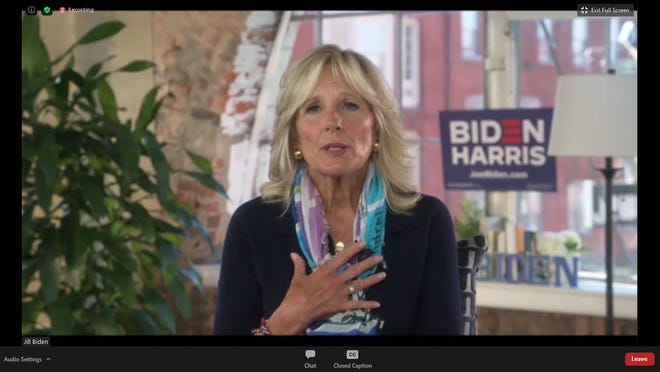
In September, First Lady Jill Biden, while campaigning for her husband President Joe Biden, held a virtual round table with Erie officials on community college education, touting the then-candidate’s plan to provide free community college tuition to Americans.
DiNicola believes that Biden’s position on education will benefit the institution as it takes shape.
“We now have a national commitment to fund community college, to make community college free for Americans,” he said. “Now, whether that gets acted upon quickly or not, the commitment, I think, indicates that we’re seeing an appreciation at a larger level for the importance of this kind of education to the overall education scheme in this country.”
Longtime HIV activist Andrew Spieldenner, PhD, will be the new executive director of MPact Global Action for Gay Men’s Health and Rights, effective March 1. An associate professor in the department of communications at California State University San Marco, Spieldenner, who is gay and living with HIV, has extensive experience in the nonprofit and advocacy worlds.
He’s currently the vice-chair of the United States People Living With HIV Caucus, an advocacy group known for the annual lobbying event AIDSWatch, and he is the North American delegate to the coordinating board of the Joint United Nations Programme on AIDS (UNAIDS). He’s also a POZ blogger.
We are thrilled to welcome our new executive director Andrew Spieldenner!
Spieldenner has worked within the HIV community for over three decades, including senior-level positions at the Latino Commission on AIDS, the Black AIDS Institute and the New York City health department. He now brings that experience to the global stage.
“I have long admired MPact’s role as a champion for the health and rights of gay and bisexual men around the world,” Spieldenner said in an MPact press release. “As a gay man living with HIV, I know how important it is to have advocates fighting on behalf of our communities at the global level. I am honored and thrilled to follow in Dr. George Ayala’s footsteps and to work with the board and staff to lead MPact’s next chapter.”
“Andy is an inspiring and energetic leader,” added MPact board chair Don Baxter. “His passion for elevating the voice of the global LGBTI community and his intersectional approach to public health policy has earned Andy the esteem of advocates around the world. The board and staff are excited to work with Andy as our new executive director and confident that MPact will be well positioned under his guidance to thrive in the years to come.”
Spieldenner is noted for approaching sexual health and human rights through the lens of racial justice. Since 2012, he has taught LGBTQ studies at the college level. In his new role, he will lead MPact as it develops plans to serve the global gay community.
“When I became a part of the people living with HIV community, I really understood how some rooms were built to exclude us, and that’s done purposefully,” he told POZ in a May 2020 profile. “As the epidemic has gone on, I’ve noticed that our voices have become less important to organizations.”
LOS ANGELES — Gaining access to the first dose of the COVID-19 vaccine is a welcomed relief for Roger Burnley.
What You Need To Know
Los Angeles LGBT Center acquired and will distribute 100 doses of the COVID-19 vaccine for its senior patients
LGBTQ+ individuals have faced discrimination and mistreatment in regards to their health care, according to a 2020 CAP Survey
Roger Burnley is relieved to have finally received the vaccine
He chose to receive his vaccine at the Los Angeles LGBT Center
“I don’t want to take a chance of anyone getting this [COVID-19], if I’m possibly carrying it which I don’t know because I haven’t been tested. Getting the first vaccine is going to give me a sense of protection,” Burnley said.
Although he could have tried signing up for his vaccination through any L.A. County site, he chose to receive his vaccine at the Los Angeles LGBT Center.
“I feel more comfortable here because this is where I come. This is where my doctor is, it is a familiar place. The safety of it felt good to me,” Burnley said.
The Center plans to distribute 100 weekly doses of the COVID-19 vaccine to its senior patients. The vaccinations were made available on the same day as House Democrats introduced the Equality Act in Congress that would ban discrimination against LGBTQ+ individuals.
Burnley, who identifies as a gay man, has been a patient with the Center for more than a decade. While he has not been discriminated against in a traditional health care setting, a recent survey by the Center for American Progress found 15% of LGBTQ+ Americans postponed or avoided medical treatments due to discrimination, and more than 1 in 10 individuals reported mistreatment by a doctor or a health care provider.
Related Stories
Dr. Ward Carpenter, the co-director of health services at the Center, shared that LGBTQ+ individuals have a long history of health care discrimination. That is why he said it is critical for the Center’s community health center to create access for their patients.
“So many of these folks are living with often no social supports at all. So, asking your granddaughter to help you get registered for the vaccine, this group of people, many of them don’t have that option,” Dr. Carpenter said.
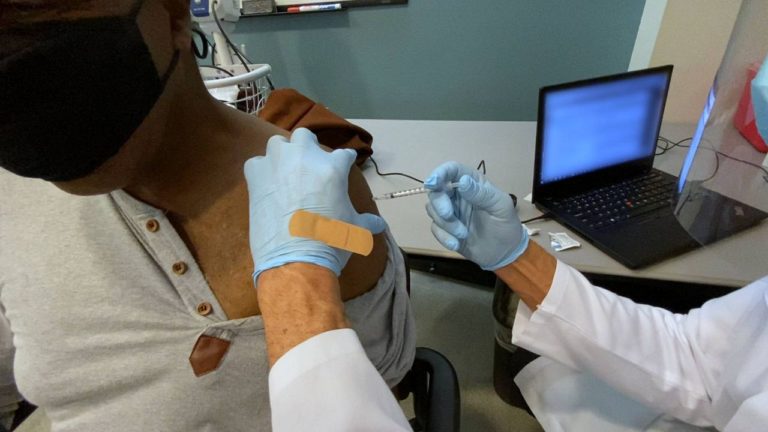
As the doctor preps Burnley’s arm for his first dose, he is preparing for the hope of seeing his loved ones that will eventually come with it.
“I can interact more. Eventually, I can kind of get back to life. My brother has many health conditions. I have not been able to see them. So after I’m fully immunized, I’m going to feel much more freedom,” Burnley said.
Until then, Burnley will continue taking precautions in hopes of safely reuniting with his loved ones soon.
The Human Dignity Trust (HDT), a charity composed of international lawyers championing LGBT rights, brought the case in 2011 on behalf of two individuals. Gareth Henry is a gay man, who, after facing police brutality and repeated attacks by homophobic gangs and mobs, sought asylum in Canada in 2008. Henry was beaten by a policeman while a crowd of 200 people stood by. Simone Edwards is a lesbian woman who was forced to flee Jamaica after being shot multiple times outside her house in 2008. The two perpetrators wanted to kill her and her brothers, one of whom is gay. After the government continually failed to protect them, Edwards was granted asylum in Europe.
The commission found the Jamaican government responsible for the violation of the rights to humane treatment, privacy, freedom of movement and residence, equal protection, and judicial protection, set down in the American Convention of Human Rights. It recommended that the Jamaican government provide full reparation, including economic compensation, to Henry and Edwards. It also called for homophobic laws to be repealed on an immediate basis (sections 76-79 of the Offenses Against the Person Act, 1864). There are no legal safeguards against discrimination in the country, and, for that reason, the commission called for an anti-discrimination legal framework. It recommended that the government gather statistical data on violence and discrimination based on gender identity and expression, sexual orientation, and body diversity; train public officials; and give a comprehensive sexuality education inclusive of sexual and gender diversity. It also called for applying the standard of due diligence.
Henry and Edwards had argued that the laws prohibiting “buggery,” or anal sex, and “gross indecency”—remnants of the colonial era—not just violate their rights, but also legitimize violence against LGBT persons.
“This is a major legal victory for Gareth, Simone and the entire LGBT community in Jamaica and the wider Caribbean, where nine countries continue to criminalise consensual same-sex intimacy,” said Téa Braun, Director of the HDT. “It is a highly significant step forward that must now accelerate the repeal of these stigmatising and discriminatory laws.”
It is the first decision by the commission to find that laws criminalizing LGBT people violate international law. Consequently, it sets a precedent for the Caribbean region.
The Department of Housing and Urban Development became the first federal agency to implement an executive order signed by President Joe Biden that outlaws discrimination against people based on gender identity and sexual orientation, according to a report in The 19th. HUD officials told reporters that, under the order, it will enforce the protections of the Fair Housing Act for LGBTQ+ people who are seeking housing, according to the report. Officials said that housing discrimination against LGBTQ+ people was “rampant,” and that HUD would begin investigating complaints related to discrimination based on gender identity and sexual orientation, the report says.
“HUD is the first agency to implement the measures in the January 20 executive order, a move that has as much symbolic meaning as it does practical significance,” the report says. “Before leaving office, President Donald Trump was on the brink of finalizing a HUD rule that would have allowed taxpayer-funded homeless shelters to turn away transgender people. LGBTQ+ advocates widely expect the Biden administration to withdraw it.”
Homelessness is widespread among queer youth and transgender communities, the report says. HUD’s new rule relies on an interpretation of the Fair Housing Act that includes protections for transgender people, rather than requiring a new law. The Department said it would investigate claims dating back to January 20, 2020, a year before Biden took office, according to a separate report in the Washington Post.
“What the Biden administration is doing now is incredibly important, doing right by some of the most marginalized people in the United States who need access to federal housing programs,” Mara Keisling, executive director of the National Center for Transgender Equality, told the Post.
Seattle Adopts New Limits on Natural Gas in Apartment Buildings
The Seattle City Council approved new rules limiting the amount of natural-gas infrastructure that can be included in newly constructed commercial buildings and apartment complexes that are taller than three stories, according to a report in the Seattle Times. The code changes will prevent developers from using natural-gas systems to heat space in new buildings and as replacements in older buildings, according to the report. They also ban natural-gas water-heating systems in new hotels and large apartment buildings, the report says. The changes are part of the city’s effort to reduce its greenhouse gas emission, and officials believe they will contribute a 12% reduction in emissions by 2050, when the city has committed to become carbon-neutral, according to the report.
Under the changes, natural-gas cooking systems will still be permitted in new buildings, but stoves will have to be placed near electrical outlets so that they can be converted to electric in the future, according to the report. As Next City reported earlier this year, some advocates have begun to push for replacing gas stoves with electric ones in service of both climate and respiratory-health goals. According to the Seattle Times, buildings contribute about a quarter of the city’s total greenhouse gas emissions. The changes give Seattle “one of the most forward-thinking energy codes in the country,” said Councilmember Dan Strauss, who sponsored the bill, according to the report.
L.A. Group Builds Unsubsidized Homeless Housing
A team consisting of “a market developer, a homeless service provider, a group of Los Angeles church leaders and a social-impact investment manager” is joining forces to build housing for people experiencing homelessness in Los Angeles, without subsidies from any government agencies, according to a report in the L.A. Times.
Their aim is to build 1,800 one-bedroom units for around $200,000 each — about half of what a typical affordable unit costs to build in California, according to the story. The team is “backed by a private equity fund that has topped $100 million and is still growing,” according to the report, with Kaiser Permanent, the healthcare conglomerate, contributing $50 million so far. The fund allows the developer to finance the units in one shot, rather than fundraising from various sources and securing tax credits and government support, which speeds the process, the story says. The units will have deed restrictions requiring that they maintain affordable rents for 55 years, according to the report. Homeless Health Care Los Angeles will identify tenants with housing vouchers and provide onsite mental and physical-health support services, according to the report.
“We have many clients that are sitting with a Section 8 voucher,” Mark Casanova, the group’s executive director, told the paper. “People have a certificate. They’re ready to find a unit. There aren’t enough units available.”
Kaiser Permanente is among a group of hospitals that have pledged $700 million to promote affordable-housing efforts, as Next City reported.
“We saw it as a very promising opportunity for innovation in the very low affordable housing space,” John Yamamoto, vice president for government relations and community health for Kaiser Permanente of Southern California, told the paper. “It presented an opportunity to produce more affordable housing at lower cost with less risk to the developer and to produce housing faster.”
Jared Brey is Next City’s housing correspondent, based in Philadelphia. He is a former staff writer at Philadelphia magazine and PlanPhilly, and his work has appeared in Columbia Journalism Review, Landscape Architecture Magazine, U.S. News & World Report, Philadelphia Weekly, and other publications.
Follow Jared.(JavaScript must be enabled to view this email address)
When I wear my Oculus Quest 2 headset, I look ridiculous, and I don’t care. Picture it: a thick, retro-futuristic set of goggles you strap to your head while holding two joysticks in your hands. Anyone watching you play VR games sees you gesticulating wildly and moving around in inexplicable ways while you experience EDM playing or poker chips clattering on a poker table or toxic-waste barrels exploding.
I’ve long been an early adopter of new technologies. I like gadgets, but VR never spoke to me. Until Silicon Valley could promise me a Holodeck experience, I was not interested in the virtual. And then a cable network sent me a VR headset as part of a promotion for a new show. I set the headset up (it requires no computer or cords) and immediately became absolutely obsessed.
Photo: Michael Murtaugh
Turns out, it is a lot of fun to spend time in a virtual reality, especially when reality is … a terrifying mess. However ridiculous I look, when I don the headset, the world falls away. And the virtual world is surprisingly immersive. The interface is intuitive, and the apps are a lot of fun. There’s Walkabout Mini Golf, an adorable mini-golf game that is unexpectedly convincing. The 18-hole courses are whimsical, and I don’t understand how it all works, but it genuinely feels like I am on a mini-golf course. (The game is also more fun with an adult beverage, just like in real life.) Superhot VR is a weird first-person shooter where you shoot amorphous figures on different levels. You have to dodge bullets and various enemy onslaughts, and the longer you play, the more you feel like Sydney Bristow handling your business. If you’re still unmoved, there is table tennis and bowling and workout apps. You can watch movies on Netflix, listen to music, travel to exotic places, attend concerts.
One of the things Oculus doesn’t emphasize nearly enough is how much of a workout you can get from most of these games. In Beat Saber, you hold two lightsabers and have to destroy flying boxes coming at you—the beats of the music indicate not just when to slash but also how. There is swinging, ducking, sliding from side to side, all while trying to keep up with the increasingly frenetic pace as you advance through higher levels.
Photo: Flutter Entertainment
But my favorite game is PokerStars VR. I’ve been playing poker for more than 20 years now. I played online when internet gambling was still legal. I played with fake money in bars when the poker craze swept the nation and suddenly poker was everywhere. Before the pandemic, I played a few times a month at the Hollywood Park Casino, and when I travel, I am always looking for a good poker room.
When I found PokerStars VR, I was desperately missing the casino, the seedy energy, the hours hunched over the poker table, flipping up the corners of my cards, surrounded by overly talkative men who always, always underestimated me. In VR, you can only use play money, but people take the game seriously. Really seriously. As in real life, it’s mostly men playing, and they still underestimate women. They talk endlessly. When they lose to a hand they disapprove of, they rant and rave about how terrible you are at poker. Two hands later, they play that same hand and act like they are making a genius move. There are fun people and assholes, and very, very strange folks.
The technology isn’t perfect, but after a few minutes of acclimating to the virtual environment, I believe I am at the poker table. You can buy all kinds of silly virtual props to play with at the table—cigars and cigarettes, an alien in a tiny UFO, guns, swords, a can of hair spray, a birthday cake. There is a core group of players, so lots of people develop friendships, and they create poker leagues and servers on Discord. If you top the weekly leaderboard, you can earn rings. Players who have won a ring or three wear them, flexing not so subtly. As a very competitive person, I’m always trying to get to the top of the leaderboard. I have yet to succeed. I’m a good poker player, but I am undisciplined, which does not work in my favor. Every Sunday night, the leaderboard resets. I tell myself that this is the week I am going to go for it, play my best poker. The vow is almost as convincing as virtual reality.
The playground under construction at Big Corkscrew Island Regional Park. TIM ATEN / NAPLES FLORIDA WEEKLY
Q: Heard anything about the outdoor gym and outdoor facilities that they were creating out near the Collier County fairgrounds? Can’t seem to find any info. — E.R., Golden Gate Estates
A: Outdoor fitness, sports and other recreational activities will abound this summer in Golden Gate Estates when the first phase of Big Corkscrew Island Regional Park opens. It’s under construction and targeted to launch in July at the end of 39th Avenue Northeast, the road off Immokalee Road that leads to the Collier County fairgrounds.
A fitness pavilion with outdoor exercise stations is one of many amenities coming to the park. “This is something that came to us after we began the design,” said Collier County Parks & Recreation Director Barry Williams, speaking last week at a town hall meeting for Commissioner Bill McDaniel. “It’s something we see in recreation and an outdoor trend — outdoor fitness. So, this is a very unique type of fitness that occurs in our park system. It is a high-intensity workout, if you’re familiar with that term. Having this amenity was very important to us. The cool thing about this amenity is it has an app for your smart phone that as you participate and interact with this, you are able to track your progress and how you’re doing.”
Above: A rendering of the Big Corkscrew Island Regional Park under construction in Golden Gate Estates. Right: A rendering of the aquatics center at the future Big Corkscrew Island Regional Park. COURTESY IMAGES
It’s going to be in front of the park’s aquatic center, which will sport waterslides, a 6,159-square-foot lap pool, a 4,040-square-foot family pool and a 557-square-foot wading pool. The 8,686 square-foot aquatic center building also has a 900-square-foot pool pavilion. Expect programs for water aerobics, aqua cycling and swim lessons.
“We worked very closely with the local high school, Palmetto Ridge High School. Their dive team, their swim team will use this facility as kind of their home pool. We’re very excited about that,” Mr. Williams said.
The initial phase of the park also includes four multipurpose fields, two with natural grass and two with artificial turf. They can be used for soccer, football, lacrosse and a variety of field games. Just north of that area are two baseball/softball fields and an off-leash dog park.
On the other end of the park are six pickleball, two tennis and two basketball courts. There’s also an oval event lawn with a stage and an 8,150-square-foot concession building. A 22,641-square-foot community center is set for local meetings and programs with two community rooms, two multipurpose rooms, a VPK daycare room and office space.
A sizeable playground features various slides, cable bridges, zip lines, monkey bars, climbing stations, ramps, and therapeutic, tire and strap swings. The hand-built playground also has solar-powered charging stations and lots of shade. A large, colorful castle for kids to explore serves as a centerpiece.
“Your kids are going to love it. It’s like no other playground I’ve ever seen,” Mr. Williams said. “It is probably our signature part of the park. It really is spectacular.”
Collier County is building a water treatment plant near the fairgrounds and a new regional park in Golden Gate Estates. TIM ATEN / NAPLES FLORIDA WEEKLY
The park also has nine picnic pavilions and a 10-foot-wide multi-use path for jogging, walking or bicycling that winds around the park’s perimeter.
The park’s second phase, expected to begin construction this fall, will have four more ball diamonds as well as more outdoor fitness stations, play areas, walking paths, concessions and picnic pavilions. A large lake will have a kayak and canoe launch.
Tanks for everything
Q: What is the purpose of the large tank being constructed next to the park construction near the fairgrounds. — John Kulbitskas, Golden Gate Estates
A: Under construction east of the Collier County fairgrounds, recycling center and future Big Corkscrew Regional Park, the large tank — actually two large tanks — are water storage tanks for what eventually will be a water treatment plant serving that fast-growing area.
“While we’re building the park, we’re also building our regional water sewer system to serve the countywide water sewer operations. More importantly, countywide water operations as the population grows,” said George Yilmaz, the county’s government facilities and utilities administrator. “What you’re seeing is the interim plant that we put there to make sure we’re meeting the demand and, also, we’re serving our current customers in this area.”
Moving forward and modernizing the regional system, the county has been able to discontinue the water plant of the former Orange Tree Utility Co., which served that immediate area until four years ago.
Eventually, the Northeast Water Reclamation Facility immediately east of the northern end of the park will be joined by the Northeast Water Treatment Plant farther east. The interim plant in Golden Gate Estates is targeted to be 60 to 90 percent completed in about 18 months, Mr. Yilmaz said. In the meantime, he said the county is working with neighbors there to make sure the plant has the appropriate buffers, berms and fencing.
“We want to make sure we are good neighbors,” he said. “We have proven we can be an invisible operation.”
The county has proven it can operate wastewater plants in even more populated areas. “This will be the third water plant and it will be the third wastewater plant, regional water reclamation plant,” Mr. Yilmaz said.
The other county plants — the North County and South County regional water treatment plants — are on Goodlette- Frank Road in North Naples and St. Andrews Boulevard in East Naples. Combined, the two plants have a total constructed capacity of more than 50 million gallons of drinking water per day.
The third plant is designed to increase the sustainability and reliability of water and sewer service in the entire county. Seeing the need for water and wastewater facilities in that region, county commissioners approved the water/wastewater master plan in 2001 and purchased the 216-acre Northeast utility property in 2003. ¦
— “Tim Aten Knows” is published each week in Naples Florida Weekly. Mr. Aten is managing editor of Gulfshore Business magazine. Email questions to TimAtenKnows@floridaweekly.com. Follow @TimAtenKnows on Facebook, Instagram, LinkedIn and Twitter.
The pandemic may spell the end of many gay bars, but apps and increased acceptance for LGBTQ people meant most were already on the rocks. Should we mourn their passing?
Gay Bar: Why We Went Out
Jeremy Atherton Lin
My favorite bar in San Francisco, Twin Peaks Tavern, is in danger of closing. Known as the glass coffin, for both its large plate glass windows and its older clientele, it was the first bar I went to when I moved to the West Coast in 2013 as a bright-eyed PhD student. Its Tiffany lampshades and cozy interior welcomed me in. Plopping myself onto one of its cushioned benches and looking out on Castro Street, I remember feeling overwhelmingly at home and embedded in queer history.
In a world in which queer people are ever more accepted and rigid identity categories make less and less sense, what is the purpose of gay bars? Do we still need them?
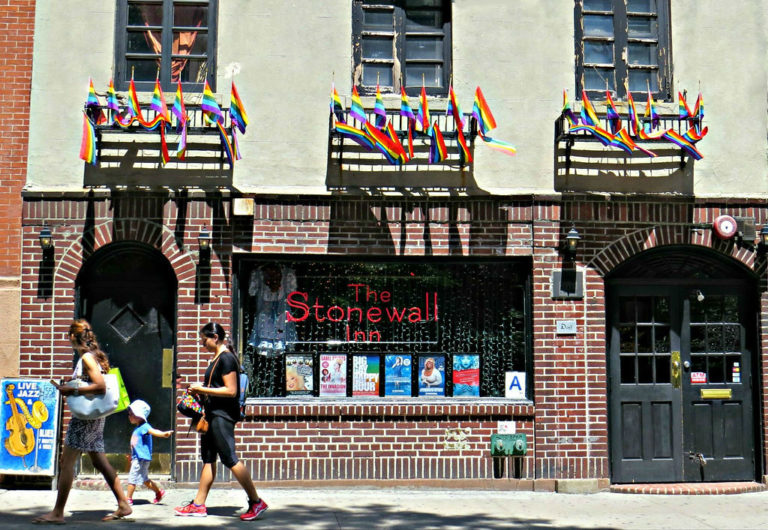
And not without reason. Mary Ellen Cunha and Peggy Forster, known as “the girls,” bought the bar in 1971. They installed massive windows, making it the first gay bar in the city, and perhaps even the country, to give passersby on the street a clear view of the people inside. In 2013 the San Francisco Board of Supervisors voted to give Twin Peaks landmark status, elevating it into the pantheon of queer sites that the government has officially recognized as culturally and historically significant. In recent years more and more gay bars have won similar recognition. Most famously, President Barack Obama designated the Stonewall Inn in New York City a National Monument in June 2016, honoring the site of the famous 1969 riots.
Today it feels like that history is slipping through our fingers. Gay bars around the country are going under. Greggor Mattson, a sociology professor at Oberlin College, found that 37 percent of U.S. gay bars closed between 2007 and 2019. In the entire country there are only fifteen lesbian bars left, a fact that spurred the creation of The Lesbian Bar Project in October of last year. The United States is not alone—European gay bars have been failing for some time now. Unsurprisingly, the pandemic has hastened these trends. Even before any of us knew what a coronavirus was, dating apps and the growing social acceptance of queerness had initiated gay bars’ global decline. In a world in which queer people are ever more accepted and rigid identity categories make less and less sense, what is their purpose? Do we still need gay bars?
These are the questions that haunt Jeremy Atherton Lin’s Gay Bar, a rumination on the place of the gay bar in Western culture. Part memoir, part history, part pornographic novel, Gay Bar is a gripping read. By turns raunchy and melancholic, it charts Lin’s coming out, his relationships, and his early adulthood as a gay man. But Lin also applies a critical eye to these memories, thinking about ways in which gay bars, even while serving as sites of community, can also exclude and isolate. Deploying queer history and critique in this intimate way, Lin does not offer readers any answers—that is not his goal. Rather, he paints a portrait of a culture in transition, of a new queer world emerging and an old one fading away.
• • •
The experience of reading Gay Bar is profoundly different, I suspect, depending on who you are. For straight readers it will undoubtedly shock. Lin’s memories are explicit, offering a window into a world that is still foreign, no matter how many Netflix series feature gay characters. For queer readers—and gay men in particular—Gay Bar will serve more as an invitation to reminisce about our own experiences. That was certainly the case for me, as Lin’s stories beckoned me into a haze of nostalgia.
As Lin chronicles, gay bars come in every possible shape and cater to every conceivable interest. Even after you come out as queer, there are myriad ways to further define your sexuality.
Gay Bar is organized in roughly chronological fashion, and each chapter is dedicated to Lin’s experiences in one of three cities: Los Angeles, London, and San Francisco. As the title suggests, Lin focuses on the gay bars he went to, interweaving these memories with reflections on queer history. Although Lin hails from California, London is undeniably at the heart of the book. It is the city where Lin has lived the longest as an adult. It is also the place that he, as a young man, invested with the hopes and desires of his youthful queerness, beginning with a rambunctious trip across Europe the spring after he graduated from university.
As Lin chronicles, gay bars come in every possible shape and cater to every conceivable interest. Many cities have a bar named the Eagle, for instance—these are leather bars that sprang up in the 1970s. At their height, Lin reports, there were around fifty of them. There were (and still are) bars for all kinds of specific groups or interests within the queer community. Provincetown, which turns into one of the gayest places on Earth every summer, enacts this diversity on a grander scale with themed weeks devoted to western dancing, women of color, bears, families, gay pilots, and so forth. The heterogeneity can, at times, be a little dizzying. Even after you come out as queer, there are myriad ways to further define your sexuality.
After AIDS ravaged the gay community, as Lin recounts, gay bars underwent an overhaul. Proprietors cleaned them up, banishing their dingy atmosphere that “put contamination in mind” (according to Amy Hoffman, the Stonewall Inn didn’t even have running water for cleaning dishes). The new clubs were “airy, glossy, continental,” and they commodified gay sexuality like never before. The London Eagle, for instance, has strayed far from its origins as a leather bar. Lin describes how it is now “a spot for healthy-looking men with neat beards and t-shirts with social media slogans.”
But there was also a backlash to this cleaning up and commodification. Bars sprang up to cater to the queers who did not fit the “Muscle Mary” mold. One such London bar, Popstarz, held a special fascination for Lin. On his cross-continental journey, he “imagined a pale and interesting boy awaited me” there. He “didn’t want to miss him.” Lin’s boy was indeed waiting for him. That night at Popstarz opened the door to the rest of his life.
Every gay bar, wherever it might be, offers a kind of horizon of possibility. “Gay bars are not about arriving,” Lin insists. “The best ones were always a departure.”
There is a long tradition in queer letters of projecting desire onto the foreign. The late American writer Paul Monette, whose memoir Becoming a Man won the National Book Award in 1992, described a one-night fling with an American sailor in a London apartment and the might-have-beens that rippled out from that one night. In 1976 the British novelist Christopher Isherwood remembered the in-hindsight-doomed Weimar Republic with the catchy formulation, “Berlin meant boys.” This Western queer gaze can also manifest in oppressive ways: Garth Greenwell has been criticized for his depictions of Eastern European gay men as exotic others. Colonial literature was, of course, full of depictions of Arabs, Indians, Japanese, and others, in which queerness and racism collided.
Nonetheless, most of us gay men lucky enough to travel probably have stories that capture this kind of imaginative desire. I lived in London between 2012 and 2013 while studying at the London School of Economics. The room I rented was in the East London neighborhood Shoreditch, the same neighborhood, funnily enough, where Lin lived in those years. With a jolt of familiarity, I realized we went to the same bars, perhaps even on the same nights. We might have known each other. In that year, I had my own one-night affair with an older man, a surgeon at a nearby hospital. My fling was only that, however, and like Monette I sometimes wondered what might have been.
In Lin’s estimation, every gay bar, wherever it might be, offers that same kind of horizon of possibility. “Gay bars are not about arriving,” he insists. “The best ones were always a departure.” It is a sentiment that will probably sound familiar to any gay man of my age—the excitement of going out and not knowing who you will meet or where you will end up. The thrill of going to Heaven in London or Berghain in Berlin is a visceral one.
And the possibility is not just imaginary. I recall going out with a grad school acquaintance to one of the divier bars in East London one snoozy weekday evening. I do not remember its name, but it is (or was) an old-school tavern with an eclectic clientele. That night it was quiet, just a few other people were there. But my acquaintance locked eyes with one of the other men there, a skinny, dark-haired twink. They left the bar together that night. They are now married.
• • •
Lin weaves queer pasts into his memories, revealing the ways in which history continues to resonate down into the present. Places where same-sex-desiring men gather have been around for a long time. Lin relates how a stretch of land along the Thames, where the large gay club Heaven is now located, turned into “a sanctum for gay sex” in the early modern era. The area is called the Adelphi, after a large, riverside housing development from the eighteenth century. Its vaulted archways became “a warren of vagrancy and cruising.” Lin reports that one police officer described the embankment as a “resort of persons of the Sodomite class.”
Places where same-sex-desiring men gather have been around for a long time. These detours through the past remind Lin’s readers that gay bars, like gay identity, have a history.
Imperial Berlin evolved into a haven for queer people in the late nineteenth century, long before Isherwood ever chronicled the city. In Gay Berlin historian Robert Beachy has described the city’s gay bars and the large balls where men danced in women’s clothing. In the United States, the 1920s ushered in a period when queers and straights frequented the same bars in a sort of solidarity against Prohibition. George Chauncey, Jr., contends in Gay New York that the ban on alcohol made the “criminalized demimonde of the speakeasies” possible, while the advent of motion pictures forced many Times Square theaters to turn to burlesque.
In California gay bars were only ruled legal in 1951, with the California Supreme Court decision Stoumen v. Reilly. It involved a bar named the Black Cat in San Francisco’s North Beach. While the court found the bar’s existence licit, it carved out a cavernous loophole that allowed police to continue harassing queer bar-goers. But the Black Cat survived, becoming, in the words of Allen Ginsberg, “the greatest gay bar in America,” a place that was “totally open, bohemian, San Francisco.” According to the poet, “All the gay screaming queens would come, the heterosexual gray flannel suit types, longshoremen.” These detours through the past remind Lin’s readers that gay bars, like gay identity, have a history. Their current incarnations, those “born” gay, are in many ways far more exclusionary than those which came before.
Lin mulls over those exclusions throughout Gay Bar. As a college student in Los Angeles, he partied at Axis, which had started life as Studio One. Lin mentions the club’s racist door policy, remarking that “a golden boy with a fake California license fared better than an immigrant from Asia with a valid green card.” Many of these bars also excluded women and trans people. I remember arguing with bouncers to let female friends into clubs with me when I was a student. Once inside, a certain “body fascism” often reigned, privileging men who look, act, and dress a certain way. “Maybe community,” Lin’s partner muses, “excludes inherently.”
Many gay bars had racist door policies that also excluded women and trans people. And, once inside, a certain body fascism often reigned, privileging men who look, act, and dress a certain way.
Of course, Lin is hardly the first to point out the ways in which the modern gay community is predicated on exclusion. In San Francisco he encountered Gay Shame, a group founded in Brooklyn in 1998 that prodded queers “to challenge institutions—marriage, military, marketplace—not endeavor to join them.” The group organized demonstrations from a “Goth Cry-In” to Gay Shame Awards, which allegedly concluded with a rainbow flag burning. Gay Shame was one of the more visible ways in which the queer community, such as it was, fractured along political, economic, and social lines in the 1990s and early 2000s.
When I lived in San Francisco from 2013 to 2019, Gay Shame was still going strong. Every once in a while, I would stumble out for my morning coffee and see their slogan “queers hate techies” spray-painted on the sidewalk. Similar to how Lin witnessed Gay Shame demonstrations, the graffiti aroused a certain discomfort. It was evident to me the damage the tech industry had done to the city. But it had not been some egalitarian paradise before. Lin notes the privileged gay men who had moved to San Francisco before the AIDS crisis: “these newly empowered gay men were territorial creatures. In the Castro, they were in their own way colonialist, displacing Irish Catholic families.” Cities change. Moreover, there are plenty of queer techies. I am friends with some of them, and it was never clear to me where they fit into that three-word catchphrase.
Nonetheless, gentrification is undoubtedly among the reasons gay bars are going under. As new communities move into the desirable parts of cities, including gay enclaves, old bars, cafes, and other businesses make way for luxury chains and third wave coffee shops. The bars that have been able to cater to their new, wealthier neighbors—at least the ones I know in Berlin and San Francisco—have thrived. Others have not.
As we all become more comfortable with the idea that gender and sexual identities are fluid, demarcating communities based on them seems superfluous.
But queer critique of identity is another of the reasons, Lin argues, that gay bars’ place is increasingly uncertain. As we all become more comfortable with the idea that gender and sexual identities are fluid, demarcating communities based on them seems superfluous. “To create inclusive spaces for these morphing identities,” Lin insists, “is an ambitious undertaking.”
Even as Lin ponders the artificial and exclusive nature of gay bars, a melancholic air hangs over the work. It is clear that he feels a certain sorrow at their passing. Moreover, if Lin’s book does have an argument, it is that we have gotten the significance of the gay bar backwards: their magic is not in the ways that they foster community, but in the ways that they explode it. The best bring people of different classes, races, genders, and sexualities together, expanding the bounds of social possibility and the lines of identity and belonging. “I went out for the tension in the room,” Lin writes, “Perhaps you could call a gay bar a galaxy: we are held together but kept from colliding by a fine balance of momentum and gravity. I miss, more than any notion of community, the orbiting.” But things change. Inevitably, they do.
• • •
The advent of sexual identities in the modern era has been at once limiting and liberatory. “A paradox of freedom and containment,” as Lin puts it. Identity gave us queer people language with which to describe ourselves, to find commonality, to fight for rights. It led to the repeal of sodomy laws across the Western world and to the advent of marriage equality. At the same time, these identities tell us how we should act in ways large and small. They tell us what we should like and who we should vote for. They tell us who is not like us, they narrow the range of sexual expression.
There is perhaps no more fitting encapsulation of this tension at the heart of sexuality’s history than the gay bar. Even as we go there to feel the embrace of community, we often feel isolated and alone.
There is perhaps no more fitting encapsulation of this tension at the heart of sexuality’s history than the gay bar. It would be wrong to deny that, for many, they have been a refuge. As Obama said after the 2016 Pulse Nightclub shooting in Orlando, they are “a safe haven, a place to sing and dance, and most importantly, to be who you truly are.” “We go out,” Lin writes, “to be gay.”
At the same time, they are also places that inform us that to be gay is to like a specific kind of music, that enforce certain norms of beauty, that all too often exclude those not masculine enough, wealthy enough, or white enough. Even as we go there to feel the embrace of community, we often feel isolated and alone.
Gay bars may, indeed, be a dying breed. Should we mourn their passing?
From prison, Antonio Gramsci memorably wrote, “The old world is dying and the new world struggles to be born.” There can be no doubt that the ways of thinking about gender and sexuality that seemed so fixed even when I was a teenager are rapidly changing. Yet, what might take the place of the gay bar is not clear. Queer people will undoubtedly still want to go out (after the pandemic has passed, at any rate). We will want to socialize, eat, drink, and flirt with strangers. Lin thinks today’s youth want “egalitarian, fair-minded, noncreepy environments, unlike the world outside—whereas clubs have often been microcosms of some of society’s worst qualities.”
I have no doubt that human sexuality will continue to express itself in a cacophony of desire. Sexuality has a history and will continue to, long after humans have forgotten the name of Stonewall.
No matter what takes the place of gay bars, however, I have no doubt that human sexuality will continue to express itself in a cacophony of desire. At the same time, I am under no illusion that some utopia lies waiting. While the gay bar may be dying, and I mourn the loss of these places that have meant much to me, I do not take it as a sign of either progress or revanchism. I take it as a sign that sexuality has a history and will continue to, long after humans have forgotten the name of Stonewall.
To fully appreciate how important Russell T Davies’ new series is, you need the bigger historical picture.
HBO Max
Around 10pm on Friday, January 22, Britain’s social media feeds were in the midst of an emotional onslaught. The first episode of It’s a Sin, writer Russell T. Davies’ anticipated miniseries set at the height of the AIDS crisis, had just finished airing on Channel 4, with millions realizing: This was a landmark moment for British TV. Among the online chatter, one sentiment kept returning time and time again, as gay men conjured the image of teenagers secretly watching the show at a low volume on their bedroom TV’s, remote in hand to change the channel in case their parents caught them watching something “gay.” The older generation had this experience themselves with Davies’ late ’90s series Queer as Folk when it originally aired, and now a new generation were repeating it—and on mainstream, prime time television to boot, arriving on a wave of hype and no sliver of controversy.
This immediate reaction to It’s a Sin, which has now become available outside of Britain via HBO Max, has lingered on my mind. For a show that comprehends the weight of the AIDS crisis and its impact on a group of friends over the course of a decade, why was the gut instinct to center the imagined response of younger closeted viewers? The answer to this question goes some way to explain why the show has been so groundbreaking in its home country, in a way that may get overlooked by international viewers; that nearly 40 years later, this is the first time a TV series had directly grappled with how the AIDS crisis devastated Britain’s gay community. A “culture of silence,” like the one depicted in the show, has only continued to persist, and that this series exists in any form is something approaching a miracle.
But more importantly, it’s a tribute to a lost generation of gay men, that presents their lives as more than just the sum of the tragedies inflicted upon them. There’s a refreshing boldness to a show about the gay community during this era that is so sex positive, removing the shame and stigma around their sex lives to tackle the bigger issues around how these men were unfairly treated by society. The history of AIDS remains under-discussed in the UK education system (if mentioned at all), so what better history lesson for younger gays than a show that wouldn’t dream of demonizing them, or attempt to scare them off sex altogether?
The series follows four friends over the course of the ’80s: Ritchie (Olly Alexander, the lead singer of synth-pop band Years & Years) and Jill (Lydia West), two aspiring actors who became friends at university, who move in with Roscoe (Omari Douglas), a flamboyant gay who moves out after having enough of his Nigerian family’s persistent stigma, and Colin (Callum Scott Howells) a shy Welsh boy who moved to the big city for an apprenticeship. We track the dramatic shifts in their friendship as AIDS goes from being treated as a conspiracy theory, its silence in the media causing those with stories from across the Atlantic to be snottily dismissed as cranks, to becoming an inescapable part of their lives.
The show has become Channel 4’s most successful drama launch of all time. An impressive statistic, considering the network rejected it at first—and consequently, only gave it the green light after slashing the episode count down from eight to five. The show resonating with the mainstream, proving itself not just to be of interest to queer audiences, is one of the year’s pleasant surprises.
It’s a Sin may be the first UK drama series to deal with how AIDS affected Britain’s gay community, but it’s not the first British drama to directly tackle the pandemic—the 1987 miniseries Intimate Contact claims that title. A relic now only found on the Internet Archive, it follows a straight man who contracts the disease after sleeping with a prostitute on a business trip to New York, and the prejudice he receives after he is hospitalized with pneumonia over a year later, and his status is publicly disclosed—think “social realist Dallas Buyers Club” and you’re halfway there. The three-part series earned positive reviews, but even in 1987, the New York Times TV critic (reviewing when it aired on HBO in the US) seemed baffled by how the gay community kept being sidelined in narratives about a pandemic disproportionately affecting them.
A year before that series aired, Margaret Thatcher’s Conservative government belatedly launched a public health campaign to raise awareness, terrifying millions using John Hurt’s voice telling audiences “don’t die of ignorance.” Nicolas Roeg, best known for seminal ’70s horror Don’t Look Now, was chosen to direct the TV campaign after advertising agency TBWA decided the best method would be to “scare people”—naturally, this was a success, with rates of sexually transmitted diseases sharply decreasing afterwards. But as shown by It’s a Sin, AIDS being brought into the mainstream that way only increased the stigma the gay community already had to contend with.
HBO Max
Towards the end of her tenure as Prime Minister, Thatcher’s government instated one of the most homophobic laws in British history, Section 28, banning schools from “promoting homosexuality” and “teaching of the acceptability of homosexuality as a pretended family relationship.” Of course, gay people were already invisible on the curriculum; one of the more memorable scenes in It’s a Sin involves a teacher’s imagined outburst at having to scan through an entire library’s worth of books, only to find no material newly deemed illegal. In fact, the only place gay people were visible during this era was in right-wing scaremongering, either via the tabloids (Britain’s most-read paper, The Sun, launched a campaign offering to buy one-way plane tickets to get gay couples to leave the country) or through the government themselves, with the Tories fighting an election campaign alleging Labour would let teachers read books about gay sex to young pupils.
When Russell T Davies’ breakthrough show Queer as Folk (later remade for Showtime) debuted in 1999, this stigma was still on display, the press hysterical over the frank depictions of men enjoying each other’s company. But it’s the controversy amongst gay viewers that proved more interesting, with a backlash at how the show avoided any reference to the AIDS crisis. This proved to be a recurrent trope for the writer; he broke new ground at introducing LGBT characters to the mainstream, even going so far as to create a popular spin-off of his Doctor Who revival centered around the bisexual Captain Jack Harkness, but seemed more preoccupied with upturning stereotypes rather than confronting larger issues. The closest he’s got to date was his underrated 2015 miniseries Cucumber, following the exploits of a middle-aged gay man who remains a virgin due to his fear of sex—at one point referencing a giant “iceberg,” like the one seen in Nicolas Roeg’s public health ad, as a representation of his phobia.
Which is why It’s a Sin is such a monumental series. If the British gay experience as seen through the eyes of Davies’ previous shows has depicted either buying into a culture of silence to enjoy a happy life or a subconscious self-loathing, then this series is the perfect corrective: a loving tribute to a lost generation of men which doesn’t see them as mere tragic figures, or their sex lives as things to be ashamed of. For younger generations, the first to be taught about same-sex relationships in schools, it is the depiction of gay history they need to see—whether they’re watching with the volume down, making sure their parents don’t catch them, or not.
Need help finding something to watch? Sign up here for our weekly Streamail newsletter to get streaming recommendations delivered straight to your inbox.
“As CEO he is a policy and opinion leader and it is critical that he understands the central importance of attracting and retaining talent to support our region’s world class businesses and institutions and the role inclusion plays in those efforts,” Knott said in a statement. “ This is essential to the job Mr. Chatfield was hired to do, and it is incumbent for someone in his position to clearly state what it is he’s supporting or not supporting.
“Moving forward, I want to see actual action from” him.
Pushback over community values
Knott told Bridge that she’d tried multiple times to meet with Chatfield while he was in the Legislature as she represented LGBT interests at Equity Michigan, but it didn’t happen until late December, Chatfield’s last month in the House, where he was term-limited from running again.
By then, the Fair and Equal Michigan ballot drive had collected enough signatures to reach the Legislature for approval, or get onto the statewide ballot in 2022. Chatfield, she said, approached her with a question about what compromises she’d accept for it to get into the lame-duck session that month.
“I wanted to see the (proposed) legislation before reacting,” Knott said. “… Ultimately, nothing happened.”
Two months later, Knott said she was shocked to see the announcement that Chatfield had been hired to represent business growth in the region, including Kalamazoo, which contributed about $10,000 per year toward the development group’s annual budget that, according to tax filings in 2018, included revenue of $5.4 million.
West Michigan has a reputation for conservatism, Knott said, but employers and major institutions in Kalamazoo serve the LGBT community and recognize their own roles in cultivating an inclusive community.
“They recognize that diversity, equity and inclusion is good for their bottom line,” Knott said.
After Chatfield’s hire, Knott proposed on Monday that the city commission withdraw funding, something that fellow commissioner Chris Praedel supported while saying during the meeting on Monday that the move was “not punitive,” but a reflection of community values.
Knott also set two other goals. The first is getting active support from Southwest Michigan First board members to press state officials to take legislative action.
The board “has a lot of power,” she said. “These are Fortune 500 CEOs. Their voices are heard in Lansing in ways so many of ours aren’t.”
The second is talking to Chatfield more about her concerns. Chatfield, who is making plans to move his family from Northern Michigan to Kalamazoo, said he’s willing to listen and to learn from the experience.
“I’m committed to building the necessary relationships to fulfill this role and help this company grow,” Chatfield said, “just like I did in the Legislature. I regularly worked with people on both sides of the aisle and I formed very meaningful relationships with some people who I disagreed with on various public policy issues. Through the meaningful relationships we understood each other, we learned from each other and I grew from it. I plan on taking that exact same mindset in this role here.”
Chatfield said his anti-gay marriage stance reflected the values of his district in Levering, about 25 miles north of Petoskey.
“I ran for office on multiple issues important to the district I represented,” he said. “My opinions on public policy at that time have no bearing on the role I play here.”
Among the people offering support and a bit of political cover to Chatfield this week was state Attorney General Dana Nessel, a Democrat and first openly gay person elected to statewide office in Michigan.
“Whatever his beliefs were when first arriving in Lansing,@LeeChatfield spent his time in the Michigan Legislature cultivating meaningful, respectful working relationships with me,@JeremyAllenMoss,@JonHoadley and others in the LGBTQ community.”
However, she added in a subsequent Tweet: “It’s long past time for him to recognize that discrimination against Michiganders and our families based on sexual orientation and gender identity is wrong, and that amending (civil rights law) to include these classes is good for Michigan businesses and good for our state.”
Board silence
Southwest Michigan First is among several Michigan regional economic development entities that are publicly and privately funded to work on job attraction efforts. It has a 64-member board of directors, led by Aaron Zeigler, president of Zeigler Automotive Group, who did not respond to an email from Bridge asking about the Chatfield hire. Members include U.S. Rep. Fred Upton, who declined to comment.
The Michigan Economic Development Corporation calls the regional groups it works with “critical partners” for the state’s business growth, and MEDC spokesperson Otie McKinley said that relationship will continue with Southwest Michigan First.
Chatfield replaces Ron Kitchens, who resigned in December after 15 years leading Southwest Michigan First. Kitchen earned about $750,000 per year, according to tax filings. Neither the company nor Chatfield would disclose his pay, but he said it was not as much as Kitchens.
Chatfield said he was hired after working with the Jorgenson Consulting national executive search firm and talking to the Southwest Michigan First search team and individual members of the board.
While he has no experience as an economic developer, Chatfield said his background in Lansing helped him gain similar skills through leading the state House, networking and fund-raising. He was eager to apply them outside of politics, he said.
“I emphasized my desire to be a part of an organization that wants to grow and impact lives in a nonpartisan way,” Chatfield said.
He added: “I instinctively enjoy working with people with different opinions.”
Chatfield, who said he currently has no political ambitions, said he was passionate about business retention and attraction as he crafted legislation in Lansing to encourage economic development.
The board as a whole did not vote on the hire, said Western Michigan University President Edward Montgomery, the only board member to respond among several contacted by Bridge Michigan.
Montgomery acknowledged Chatfield’s hire was not easily accepted in the community, though he said “a diverse and inclusive community will also come with a range of political perspectives.
“We believe the quality of life in our region is enhanced by our LGBTQ community,” Montgomery said in a written statement. “There is no equivocation or backing away from that commitment. We also expect the same of our partners, including Southwest Michigan First. We will judge this partnership not just by what is said but by what is done to promote a vibrant, inclusive community.”
Business leads on LGBT
Questions about Chatfield’s hire come as businesses increasingly recognize LGBT consumers as a powerful economic force and research shows companies with strong LGBT policies tend to innovate the most.
Research from the National Gay & Lesbian Chamber of Commerce said that the buying power from the national LGBT community reached $917 billion in 2015.
Workforce attraction and profitability also play into increased corporate attention, prompting the U.S. Chamber of Commerce Foundation to issue a report in 2019 that outlined routes and reasons for employers to consider their inclusion policies.
“Companies that adopt LGBT-inclusive practices tend to improve their financial standing, and do better than companies that do not adopt them,” it said. “Additionally, employees, regardless of their sexual orientation or gender identity, express greater job satisfaction at companies where these practices are in place.”
However, as of 2019, laws in more than half of the states — including Michigan — did not prohibit employment discrimination based on sexual orientation and gender identity.
“This means that being out as an LGBT individual at work in those states may be grounds for dismissal,” the report said.
Equality Michigan gained support from many leading businesses in Michigan as it pushed to change the state’s civil rights laws for LGBT inclusion. State business leaders advocated for the changes back in 2014, with corporations like Dow Chemical Co. and Whirlpool, which is based in St. Joseph, offering support.
At that time, many were following the lead of Business Leaders for Michigan, a nonprofit and nonpartisan organization focusing on the state’s business climate, The organization underscored its commitment to obtaining LGBT legal protections by contributing $100,000 in 2020 to the Fair and Equal amendment drive.
“A state that allows discrimination based on sexual orientation or gender will never be a Top Ten state,” then-President and CEO Doug Rothwell said at the time. (Editor’s note: Rothwell is a board member for the Center for Michigan, BridgeMichigan’s parent nonprofit)
Knott, of Equality Michigan, said the business efforts have resulted in real change. Whirlpool employees, for example, were supported by the company as theypersuaded St. Joseph in 2019 to join dozens of other Michigan municipalities in expanding nondiscrimination ordinances to include sexual orientation and gender identity protections.
“If you look at anchor institutions and businesses (in Southwest Michigan), you see a lot of support for equity, diversity and inclusion,” Knott said. “I’m proud of our region. We stand up for our people.”
Chatfield said he is up to the challenge. “My work,” he said. “is cut out for me.”
“I’m not in a place yet where I’m comfortable with the bill as it stands right now,” Cox told reporters during his monthly news conference with PBS Utah Thursday morning. “Those discussions are ongoing. We still have a lot of work to do.”
Cox then paused and teared up.
“These kids are … they’re just trying to stay alive,” Cox said. “There’s a reason none of them are playing sports … I just think there’s a better way. And I hope that there will be enough grace in our state to find a better solution.”
NEW: I press him for a yes or no on whether he’d sign @KeraBirk‘s bill
“I”m not in a place yet where I’m comfortable with the bill as it stands right now,” @GovCox says. “Those discussions are ongoing. We still have a lot of work to do.” #utpol#utleg
It’s not the first time Cox has positioned himself as an ally of the LGBT community. He went viral and made national headlines in 2016 after his heartfelt speech to honor the victims of the Pulse Nightclub massacre, a shooting at a gay bar in Florida that left 49 dead. In that speech, Cox apologized for at times not being “kind” to fellow high school students of his that he later found out were gay.
“I apologize for getting a little emotional,” Cox told reporters Thursday. “When you spend time with these kids, it changes your heart in important ways, and so I want to try to improve that message and see if we can’t find a better way to work together.”
Cox called the transgender youth sports legislation “one of the most complicated and difficult bills” facing lawmakers in the 2021 session, and said “people on both sides of the issue are actually right.”
“There’s a lot of passion, a lot of fiery rhetoric, a lot of name-calling on both sides of the issue,” the governor said, adding “there are biological advantages with your birth gender. Those are biological facts, and nobody disputes that at all. It is also a fact that women’s sports has had a disadvantage for many, many years. We’ve gotten better but we still have a ways to go.”
Cox’s comments come the day after the House voted to approve Rep. Kera Birkeland’s bill following heated debate. It now goes to the Senate for consideration.
Cox said he believes Birkeland’s bill is coming from a “genuine place of concern” and comments “demonizing” her for the bill aren’t helpful. But he also urged people to reflect on the issue if they haven’t met or talked with transgender kids.
“If you have not spent time with transgender youth, then I would encourage you to pause on this issue,” Cox said.
The governor added that Utah has “gotten really good on the LGBQ side of things” but “we’re struggling on the T side of things. And we will work hard on this. I’m still working with the sponsor, we have a meeting today to see if we can figure out a Utah way to solve this issue.”
Asked about Cox’s comments, Birkeland told the Deseret News in a text message “I look forward to learning what changes or language the governor is hoping for.”
HB302 is adamantly opposed by groups including Equality Utah and Democrats, who argue it’s “needlessly (targeting) youth who are already marginalized and vulnerable to mental anguish and suicide.”
The original version of that bill, Cox said, had “many, many flaws.” But he said the latest iteration of Shipp’s bill is “closer to what medical standards are now.”
“We had some conversations yesterday with Equality Utah and others on that very bill,” Cox said. “I had threatened to veto that bill before. … So, again, we have to be really, really careful anytime government gets in between doctors and families and patients.”
Troy Williams, Equality Utah’s executive director, said his group met with Cox on Wednesday “to discuss the very real dangers inherent in these two bills.”
“We know he is a champion for LGBTQ youth and that he will consider all the issues thoughtfully,” he said. “We will continue to work with lawmakers to ensure that Utah’s LGBTQ youth can soar and thrive.”
Cox’s comments mean if HB302 has a chance of becoming Utah law, it needs changes unless he decides to allow it to become law without signing it. However, it’s possible the bill might run into some trouble in the Senate, where legislative leaders have hinted it could be altered.
“I do believe it has some support in the Senate,” Senate President Stuart Adams, R-Layton, told reporters later Thursday. “But it may actually get altered so that the governor may sign it. I don’t know what will happen to it, but we’ll probably send it to a committee and take it through the process.”
Adams said there are “emotions on both sides” of the issue, and it puts lawmakers in a tough spot having to choose between being “compassionate” while addressing concerns of female athletes.
“I”m hearing from women athletes that are concerned about competing against those who maybe have capacity as men, I think they’re wondering how fair that is,” Adams said.
At the same time, Adams said, “we’ve prided ourselves in Utah in being compassionate and being considerate and trying to be inclusive.”
“And so it becomes very difficult when you have a piece of legislation like this,” Adams added. “So it’ll be very difficult to be able to be compassionate and inclusive and then also be considerate of those who have concerns about competing against perhaps male athletes.”
You know Hunter McGrady, 27, as a model, activist, and creator of the inclusive clothing line All Worthy at QVC, which is available in sizes XXS-5X. You may recognize her as the model on the cover of the fall 2019 issue of The Knot in a gorgeous wedding gown, just weeks after her own wedding (which was featured in The New York Times, NBD). Or you might know her as a model for the Sports Illustrated Swimsuit issue since 2018. And with 720,000 followers on Instagram, McGrady has used her platform to advocate for size inclusivity in fashion, and spread powerful messages of self acceptance.
But even with a life as seemingly glamorous as McGrady’s, she still isn’t immune from negative comments and trolls. “As a plus size woman, I am oftentimes under the microscope and really scrutinized for everything I do and regarding my body,” she told POPSUGAR. She said this ramps up after the Sports Illustrated Swimsuit issue comes out. Although the majority of comments she receives are “really wonderful,”, she still gets her fair share of vitriol.
“There’s always those messages that are pointing out my body. Pointing out how big it is, pointing out stretch marks and cellulite and this, that, and the other thing,” she said. Instead of getting hung up on the negativity, she prays for those people — “I always come from the rule of hurting people hurt people.”
It’s a topic she’s familiar with, which is why she’s speaking about fatphobia and the fat shaming she has experienced as a plus-size model at The BodCon, a virtual conference focused on body confidence and the movement towards radical self-acceptance. The conference, which is on Feb. 21, features keynote speakers Jameela Jamil and Sarah Nicole Landry (@thebirdspapaya on Instagram), and additional speakers including influencers, activists, and content creators such as Chrissy King, Allison E Lang, Lisa Schoenberger, Stevie Blaine, among dozens of others. The sessions include topics like cultural impact on body image, raising body confident kids, body confidence and fitness, and disordered eating and diet culture. There’s also a movement break and virtual networking session, and ends with a private concert from Miss Eaves.
How Hunter McGrady Celebrates Her Body
McGrady is vocal about body acceptance, but she said she’s not always body confident herself. She understands that body positivity isn’t always achievable for people who may have spent a lifetime speaking negatively to themselves and their body. “I think just being okay with who you are is the number one step. And then from there, you can build and speak positively about your body,” she said.
In the past, she was too hung up on the way her body looked, “the way it was shaped, the way it bent, the way my rolls were, the way I had no stretch marks versus stretch marks.” She eventually changed her thinking to focus on what her body does for her: her heart that’s beating for her all day, her lungs taking in oxygen, how she’s able to walk and explore the world. “You really get a new appreciation for your body.”
McGrady also credits positive affirmations for getting her into a better headspace, and has been doing them for more than 10 years. Some of her favorites are “I am enough,” and “I am worthy.” She writes them on Post-It notes, on mirrors, and keeps some in her car.
“I’m really encouraging women to take this time to learn to accept yourself, to try to learn to love every part of your body.”
Fitness is another way McGrady celebrates her body, and has been working out during the pandemic with the help of Peloton and the Mirror. She said working out used to be a punishment for her and something she dreaded. “I had to rewire my brain to do it for, more than anything, my mental health.” Now, she views exercise as something that gives her more energy, gets her heart pumping, and helps her sleep.
In fact, when McGrady started modeling, she weighed much less, but was incredibly unhealthy, eating in a calorie deficit and working out for hours a day. It was destructive, and her doctor was concerned.
“I always kind of scoff when people are like, ‘Oh, you’re promoting obesity. This is so unhealthy,’ she said. “The truth of the matter is I’ve never been healthier in my life.”
McGrady acknowledged that a lot of people are struggling right now, especially with the added stress of a pandemic on top of everything else. “I’m really encouraging women to take this time to learn to accept yourself, to try to learn to love every part of your body.”
Join Hunter McGrady at The BodCon presented by Knix on Feb. 21. Tickets are on sale now.