Home Blog Page 413

Study Investigates Types of Support Among Gay Men Living With, Without HIV – AJMC.com Managed Markets Network

0

Their findings were published in a recent issue of PLoS ONE, and they focused on the effects of 3 types of supportive relationships (primary only [n = 385], secondary only [n = 108], primary + secondary [n = 127]) as well as lack of support (n = 384). Primary relationships encompassed long-term, legal, or romantic commitments, and secondary relationships, friends, family, and sexual or former romantic partners.

“We recognized that little was known about the types of supportive relationships these men were had—whether they were in committed romantic relationships, or if they relied on other nonromantic partnerships, such as family and friends,” said lead author Matthew Statz, a third year medical student at Georgetown University School of Medicine, in a statement. “The importance of social support has been clearly established in the management of chronic illness, including HIV.”

The 1054 men who provided data for the study were participants in the Understanding Patterns of Healthy Aging Among Men Who Have Sex with Men substudy of the Multicenter AIDS Cohort Study, and they were enrolled in 1 of 4 periods: 1984 to 1985, 1987 to 1991, 2001 to 2003, and 2010 to present. The disease status groups were well balanced (51.9%, HIV negative; 48.1%, HIV positive), and most were non-Hispanic White (74.6%) and had some college education (88.0%). Their median (interquartile [IQR]) age was 62.0 (IQR, 56.0-67.0) years.

Overall, 95.3% of the participants had partnership data, with almost equal amounts reporting no primary or secondary partnerships (38.2%) or primary-only partnerships (38.3%). Both primary and secondary partnerships were reported by 12.6% and secondary-only partnerships by 10.8%.

Support type prevalence correlated with differing demographics:

  • Lower rates of primary-only partnerships were reported by men 62 years and older living with HIV who were Black non-Hispanic or Hispanic
  • Higher rates of secondary-only partnerships were reported by men 62 years and older living with HIV
  • Higher rates of neither type of partnership were reported by men 62 years and older living with HIV who were Black non-Hispanic

Rate differences dissipated when the investigators accounted for age, HIV status, race/ethnicity, and education level of men reporting both primary and secondary partnerships.

Analyses also revealed:

  • Having just a primary partnership was reported mostly by men with a median age of 61.0 (IQR, 57.0-66.0) who did not have HIV, were White non-Hispanic, and had some college education
  • Having just a secondary partnership was reported mostly by men with a median age of 64.5 (57.0-69.0) years living with HIV who were White non-Hispanic and had some college education
  • Having no partnerships was reported mostly by men with a median age of 61.0 (54.0-67.0) years living with HIV who were White non-Hispanic and had some college education
  • The overall median duration of a primary partnership was 33% shorter than a secondary partnership: 18.0 (IQR, 8.7-27.5) vs 24.0 (IQR, 12.0-35.0) years

The authors’ findings are especially critical because 66% of new HIV diagnoses are seen among men reporting male-to-male sexual contact and close to 60% of gay men older than 50 years are living with HIV.

“Perhaps most concerning,” they said, “was the prevalence of older gay men who reported having neither a primary nor secondary supportive relationship. Race, age, and HIV status were all independently associated with this category.”

In addition, the cumulative effects of aging, belonging to a sexual minority, and living with HIV have not been investigated in depth for how they affect supportive relationships. Of particular importance, the authors note, is that existing evidence links loneliness and major depression with “poorer adaptation to illness.”

Overall, men living with HIV were more likely to have just secondary, or no, support and statistically less likely to have a primary partner.

“Understanding how these men maintain psychological wellness as they age is contingent on accurate characterizations of the relationships on which they rely for their social and emotional support,” the authors concluded. “The data presented here could be used in subsequent work to further elucidate how such men distinguish between a primary or secondary partner and other supportive elements of their social networks.”

Future studies should aim to compare outcomes among men reporting primary partnerships before and after the Supreme Court legalized same-sex marriages in 2015 and how psychosocial resiliencies, loneliness, and other health outcomes—chronic illness management, social isolation, healthy aging—are affected by not having any supportive partnership

Reference

Statz M, Ware D, Perry N, et al. Primary and secondary supportive partnerships among HIV-positive and HIV-negative middle-aged and older gay men. PLoS ONE. Published online February 17, 2021. doi:10.1371/journal.pone.0245863

Ghana’s LGBT people live in fear and isolation – Deutsche Welle

DW News

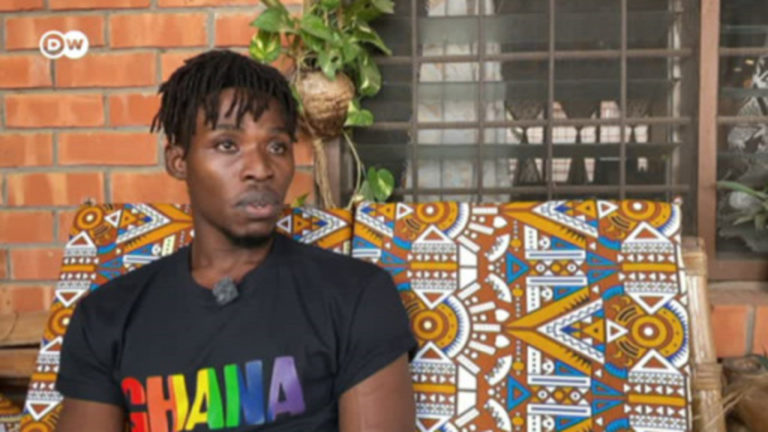
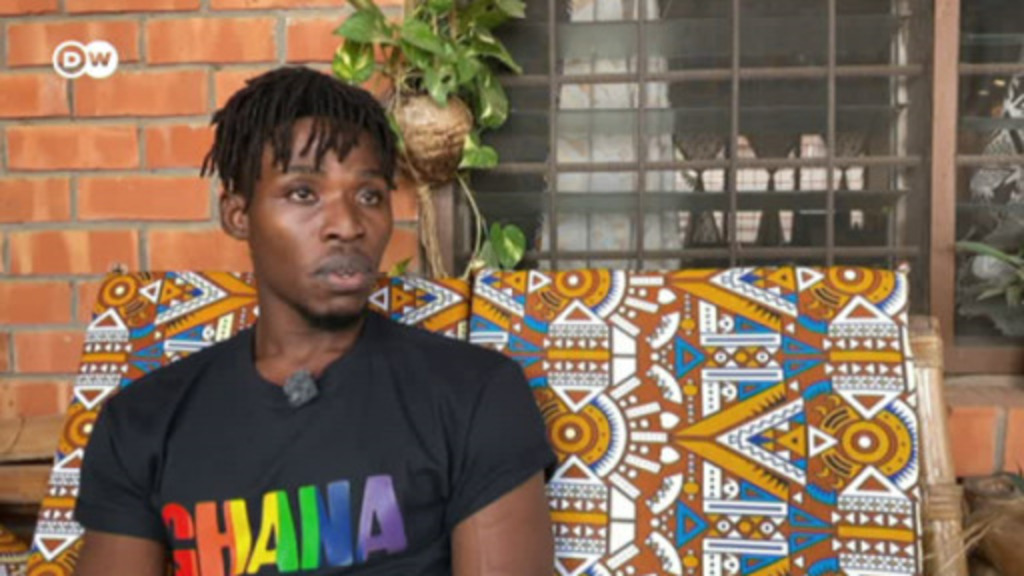
LGBT persons in Ghana are living in constant fear of being attacked in public because of their sexual orientation. Some are now speaking out pushing for their rights to be respected. DW’s Isaac Kaledzi met one of them.


Watch video
03:52

Meth has devastated the gay community for decades. A new treatment offers hope. – NBC News

0

“Do you want to be a 50-year-old meth addict?”

For Roger, the enormity of what he had lost during his nearly two decades of off-and-on methamphetamine use — and what more he had to lose — hit home hard when a man he was dating asked him that question.

Roger, who was 47 at the time, had already suffered a major ischemic stroke thanks to meth, the powerfully addictive stimulant that had long since taken over his life.

So when Roger, who is from Dallas and asked that his last name not be published for fear that meth’s stigma could hurt his career, heard that a study was looking for people like him to test a treatment for meth use disorder, he jumped at the chance.

“I woke up one day and I had no cravings,” Roger, now 50, recalled of the life-altering change he experienced only weeks into the clinical trial.

Just as the National Institute on Drug Abuse, or NIDA, has issued a report detailing the U.S.’s soaring rate of overdose deaths tied to meth, a national research team has reached a milestone by developing what its recent double-blind, placebo-controlled clinical trial has established is the first safe and efficacious medication-based treatment for addiction to the often ruinous stimulant.

While the treatment’s success rate, 14 percent, is modest and important questions remain about its potential for real-world use, the study’s publication in The New England Journal of Medicine last month has nevertheless raised hope in the addiction field that more research might build on its findings. In particular, investigators hope the benefits of the treatment’s two-drug combination of daily bupropion (the antidepressant Wellbutrin) and injections every three weeks of naltrexone (which is used to treat both alcohol and opioid use disorder) could be magnified if it is paired with evidence-based psychosocial support, like cognitive behavioral therapy.

The study’s lead author, Dr. Madhukar Trivedi, a psychiatrist at the University of Texas Southwestern Medical Center in Dallas, described meth addiction as “a very severe illness that affects the person’s health, employment, quality of life, their marriage, self-worth — and it is fatal.”

“For those people who benefit from this treatment, it is very likely to have a positive impact for their lives, as well as societally,” Trivedi said.

Methadone and buprenorphine have long been used to treat opioid use disorder — albeit woefully underused. But when it comes to treating people whose neural reward circuits have been hijacked by meth, there is no comparable approved prescription therapy. That gaping hole in addiction medicine has left the country especially unprepared to deal with a blooming crisis of meth use that, as the opioid epidemic hogs focus and funding, has blindsided small towns and rural communities in particular.

‘The next drug epidemic’

The estimated national population of people with meth use disorder increased by more than 45 percent from 2016 to 2018, from 684,000 to over 1 million, according to the Substance Abuse and Mental Health Services Administration. NIDA researchers estimated in a letter published in JAMA Psychiatry last month that from 2012 to 2018, the national meth-related overdose death rate rose nearly fivefold.

“We have got to find something to help these folks, because meth is becoming the next drug epidemic,” said Dr. Michael Mancino, a psychiatrist and addiction specialist at the University of Arkansas for Medical Sciences.

Once beaten back by major government efforts to clamp down on domestic meth lab production in the mid-2000s, the national meth scourge is surging today, driven by cheap imports funneling in from Mexico, the Drug Enforcement Administration has determined. NIDA’s director, Dr. Nora D. Volkow, said a substantial portion of meth’s growing use appears to be among people who also use drugs like heroin or fentanyl, who may look to stimulant drugs, a category that includes cocaine, to balance out opioids’ depressive effects, or who may take them when they cannot get access to opioids.

“It’s a major problem making the opioid crisis much more lethal than it was before,” Volkow said of the convergence of the drug epidemics.

In 2019, about 16,000 of the more than 70,000 estimated overdose deaths in the U.S. involved meth, and about half of those deaths also included opioids as a factor, according to the Centers for Disease Control and Prevention.

The national drug crisis has only worsened during the coronavirus pandemic. Research published in JAMA in September documented a spike after the first wave of government shutdowns in the use of meth, cocaine, fentanyl and heroin among those diagnosed with or at risk of substance use disorders.

Meth and the gay community

Meth has cast a heavy cloud over the gay community in particular for decades. The National Survey on Drug Use and Health estimated that in 2015, past-year meth use prevalence was more than four times higher among gay men compared to straight men — at 4.1 percent versus 0.9 percent. Research has found that the drug is closely linked to sexual risk-taking among men who have sex with men and that it has been a major driver of HIV transmission among this population.

In November, researchers at the City University of New York published findings in the Journal of Acquired Immune Deficiency Syndrome from an ongoing study of nearly 5,000 sexual and gender minorities who have sex with men and who are considered at risk of HIV infection. The study’s authors found that participants’ odds of contracting the virus during the study were four times higher among those reporting recent meth use and seven times higher among those reporting persistent use of the drug.

Research also suggests that for people who are living with HIV, like Roger, meth exacerbates the virus’s harm to the body.

Roger, who said he first started taking meth at gay “circuit” parties, said his use of the drug led him to stop going to the doctor and quit taking his HIV treatment a decade ago. His immune health plummeted, and even though he has been back on antiretrovirals since 2014, his T-cell count still has not quite risen back into the fully healthy range.

‘A tremendous signal of hope’

The new meth treatment study was funded by the NIDA, a division of the National Institutes of Health, and conducted in the clinical trials network the institute oversees. The study, which was conducted from 2017 to 2019, enrolled 403 adults who had used meth on at least 18 of the previous 30 days and expressed a wish to cut back or quit.

The study’s authors defined the regimen as effective if at least three-quarters of a participant’s urine screens for meth were negative during the last two weeks of each six-week phase of the trial.

To buttress adherence to the daily pill regimen, the participants were paid $3 every time they logged in to a video app and recorded themselves taking their daily bupropion. The study co-authors said in interviews that the method was likely to have been a driver of the study’s success, considering that previous studies reported lower bupropion adherence, and it could prove challenging to replicate in real-world practice.

Overall, 13.6 percent of the treatment group met the definition of a response, compared with 2.5 percent of the placebo group.

“I had a pipe in the house, I had meth in the house, and after two weeks I was not even looking at it,” Roger recalled of how well the treatment worked for him. “I’d been a daily user for years and years and years.”

Trivedi called the findings “very definitive” and emphasized that the treatment increased success fivefold.

Mancino was more tempered in his assessment, saying, “It’s certainly a start, but the important thing is that we don’t jump to conclusions and say, ‘Oh, here’s the answer.'”

Linda Dwoskin, a professor of pharmaceutical education at the University of Kentucky College of Pharmacy who is researching a novel compound meant to mitigate meth-taking and -seeking behaviors, called the results a “tremendous signal of hope” to families who have been devastated by loved ones’ use of the drug.

Trivedi hopes that a future study including people who use meth less than daily would yield a greater benefit. For now, Volkow said, the goal is to work with the Food and Drug Administration to design a trial that would seek to replicate the recent study’s results while providing the FDA with the data to consider approving the bupropion-naltrexone regimen for meth use disorder.

Dr. W. Brooks Gentry, chief medical officer of InterveXion Therapeutics in Little Rock, Arkansas, who is researching a monoclonal antibody designed to bind to meth and blunt its effects, praised the study’s finding that the treatment was also associated with an overall reduction in the percentage of positive meth urine samples.

In addition, those who received bupropion and naltrexone reported fewer meth cravings and improvements in their quality of life.

“If you can get any kind of reduction and you can get people’s lives to improve, that’s got to be viewed as success,” Gentry said.

Jessica Hulsey, founder and CEO of Addiction Policy Forum, a nonprofit that advocates for people with substance use disorders and their families, said the study sends a powerful message to researchers and pharmaceutical companies that “this is an area where medication development is possible.”

Trivedi and his colleagues speculated that bupropion, which acts on the neurotransmitters dopamine and norepinephrine, may have cushioned the emotional and neurological blow of meth withdrawal. And in theory, naltrexone reduced the euphoric effects of and cravings for meth.

However, Dr. Melissa Zook, a family and addiction physician in London, Kentucky, said the use of naltrexone would be problematic in her practice, because it cannot be combined with buprenorphine. All her patients who report taking meth also use opioids, and they have a strong preference for buprenorphine over naltrexone to treat opioid use disorder, so treating patients for both substance use disorders would present a contraindication.

In addition, the new study could not determine how the bupropion-naltrexone regimen might benefit people over terms longer than just six to 12 weeks.

But three years after the trial, Roger has been on a health kick, having gone vegetarian and gotten a trainer. While he is still taking the bupropion, last summer he stopped the naltrexone his doctor had prescribed to him off label once the study ended.

“Meth,” Roger said, “is not part of my plan.”

Follow NBC Out on Twitter, Facebook & Instagram

Gay men who ‘sound gay’ encounter more stigma and discrimination from heterosexual peers – EurekAlert

Gay men are more likely than lesbian women to face stigma and avoidant prejudice from their heterosexual peers due to the sound of their voice, a new study in the British Journal of Social Psychology reports. Researchers also found that gay men who believe they sound gay anticipate stigma and are more vigilant regarding the reactions of others.

During this unique study researchers from the University of Surrey investigated the role of essentialist beliefs — the view that every person has a set of attributes that provide an insight into their identity — of heterosexual, lesbian and gay individuals and whether these beliefs lead to prejudice and rejection towards others. Previous research in this area has shown that gay men’s and lesbian women’s experiences with stigma can lead to a higher likelihood of emotional distress, depression, and anxiety.

In the first part of the study, researchers surveyed 363 heterosexual participants to assess their essentialist beliefs regarding gay and lesbian individuals and asked a series of questions in regards to discreteness ( e.g. “When listening to a person it is possible to detect his/her sexual orientation from his/her voice very quickly”), immutability (e.g. “Gay/lesbian people sound gay/lesbian and there is not much they can do to really change that”) and controllability (e.g. “Gay/lesbian people can choose to sound gay or straight depending on the situation”).

Researchers also investigated whether participants held any prejudices (e.g. “I think male/female homosexuals are disgusting) and avoidant discrimination (e.g., “I would not interact with a man/woman who sounds gay/lesbian if I could avoid it”).

It was found that participants believed voice was a better cue to sexual orientation for men than for women, and their opinions on the discreteness, immutability and controllability of ‘gay-sounding’ voices was linked to higher avoidant discrimination towards gay-sounding men.

In the second part of the study researchers surveyed 147 gay and lesbian participants to examine their essentialist beliefs in relation to self-perception of sounding gay, and whether this led them to expect rejection and be more vigilant, e.g., trying to avoid certain social situations and persons who may ridicule them because of their voices.

Researchers found that gay men’s endorsement of beliefs that people can detect sexual orientation from voice (voice discreteness) and that speakers cannot change the way they sound (voice immutability) were associated with a stronger self-perception of sounding gay. Moreover, gay men who perceived their voices to sound more gay expected more acute rejection from heterosexuals and were more vigilant.

Dr Fabio Fasoli, Lecturer in Social Psychology at the University of Surrey, said: “What we have found is that people have stronger beliefs about the voices of gay men than lesbian women. In particular, beliefs that gay men and straight men have different voices that allow people to detect their sexual orientation was linked to stigmatisation, possibly explaining why some heterosexual individuals stigmatise gay-sounding men regardless of their sexuality. Understanding more about essentialist beliefs helps explain both the perpetration of stigma by heterosexuals and the experience of stigma by lesbians and gay men.

“It is clear from this study that voice and the perception of it are linked to stigma. This is important because it can have negative consequences for gay men’s wellbeing.”

###

Disclaimer: AAAS and EurekAlert! are not responsible for the accuracy of news releases posted to EurekAlert! by contributing institutions or for the use of any information through the EurekAlert system.

How has the Covid-test rule affected travel to Puerto Rico and the USVI? – Travel Weekly

0
Gay Nagle Myers

Gay Nagle Myers

Has there been any discernible impact on travel to the Caribbean as a result of the CDC ruling that requires Americans to take a Covid-19 test before they return to the U.S.?

I asked this question, and others, of Brad Dean, CEO of Discover Puerto Rico and Joseph Boschulte, the commissioner of tourism for the U.S. Virgin Islands.

These two destinations are territories of the U.S., which means that since U.S. travelers don’t actually leave the U.S., they do not have to produce proof of a negative Covid-19 test when they fly back to the mainland. 

Here are their answers:

Dean: While many months over the past 11 months have been hard, it seems we are finally turning a corner, but it would be too premature to say it is due specifically to the CDC ruling.

Travelers still must follow all local rules regarding Covid-19, including presenting a negative test result upon entry to Puerto Rico. However, by staying within the U.S., the trip becomes hassle free to an extent and provides ease of travel back to the mainland.

The CDC still recommends getting tested three to five days after arrival and staying home for seven days post-travel.

Entrance requirements vary by state, which may require some travelers to test on the island regardless of the CDC mandate.

Boschulte: We have definitely seen an impact. March bookings are looking strong. Leisure guests are now booking for May and June — the first time we’re seeing a glimmer in advance bookings.

We, too, are American. These new requirements do not apply to persons returning from the USVI to the U.S. mainland.

Q: Is the CDC ruling resulting in more business? Are future bookings reflecting a visitor increase that you can link to the CDC ruling?

Dean: According to TravelClick’s bookings [an online company that offers data-driven solutions to help hotels maximize revenues], the coming three-month booking pace is better than other destinations in the competitive set, as travelers feel safe with the current on-island protocols and airlines have retained seat capacity for February, March and April.

Boschulte: People are doing research and are realizing that the USVI is a safe and easy destination. Our airlift is strong, with Sun Country announcing service, Frontier coming in from Orlando and Miami, Delta expanding to four flights a week from Atlanta and JetBlue out of JFK four times a week.

Airlines pivot when they see demand building. They tell us “you bring us demand, we bring you flights.”

Q: Are Puerto Rico and the USVI promoting the CDC requirement to U.S. travelers?

Dean: Discover Puerto Rico is sharing the CDC requirements with travelers on our Travel Guidelines site to keep them informed of the ever-changing travel landscape.

Puerto Rico requires a negative Covid-19 test to enter, so we are still focused on encouraging responsible travel with the use of masks and social distancing.

The Luis Munoz Marin airport in San Juan will offer Covid-19 PCR tests at the airport for all travelers coming in or leaving the island.

The service is $110 and results are guaranteed electronically within 24 to 48 hours.  Travelers departing for the U.S. mainland are exempt from the Covid-19 test requirement, but those who still wish to get tested upon departure for the U.S. will be able to do so.

Boschulte: We had to do a bit of educating to clear up confusion that the USVI is an American overseas territory and, as such, travel to the USVI does not require a passport from U.S. citizens arriving from the mainland nor is a Covid-19 negative test required for departure back to mainland U.S.

Due to Covid-19, there are more travel protocols and restrictions in place than ever before. Travelers may be overwhelmed and confused by the different requirements.

My team has worked around the clock to clarify misunderstandings of the CDC travel requirements related to Covid-19. We always advise travelers to visit usviupdate.com for the latest details.

Q: Are your marketing strategies changing as a result of the new CDC requirement?

Dean: Our marketing strategy continues to be promoting responsible tourism. Through targeted ads, health and safety campaigns and strict enforcement by local partners, we can protect both our visitors and the people who call Puerto Rico home.

Boschulte: We continue to let the world know of our destination and our requirements through our travel portal, public service announcements and social media.

Covid has not gone away, and we will have concerns until cases subside.

Q: Where are your visitors coming from?

Dean: Due to restrictions on international visitors into the U.S., most of our visitors are from the mainland U.S., and this was true even before the pandemic. We expect this trend to continue as U.S.-based travelers look for a destination with an international feel without leaving the country.

Ease of re-entry given that Puerto Rico is exempt from the CDC testing requirement is a bonus.

Boschulte: Most of our travelers hail from the Southeast and Midwest, although the Northeast still is strong. We have consistent traffic from Thursdays to Sundays and then it tends to fall off a bit in midweek.

Q: Have vaccines arrived?

Dean: Vaccines are available to select groups, such as medical professionals and elderly residents in assisted living facilities. The Puerto Rican Health Department, along with the federal government, is overseeing the multi-phased vaccine rollout across the island.

Boschulte: Our vaccine program is on par with many states. We’ve encountered a bit of resistance among some Virgin Islanders regarding getting the vaccine, but we are encouraging them to do it.

MasterClass Recruits Roxane Gay for a Class on Writing for Social Change – InfoToday.com

0
Weekly News Digest

February 23, 2021 — In addition to this week’s NewsBreaks article and the monthly NewsLink Spotlight, Information Today, Inc. (ITI) offers Weekly News Digests that feature recent product news and company announcements. Watch for additional coverage to appear in the next print issue of Information Today. For other up-to-the-minute news, check out ITI’s Twitter account: @ITINewsBreaks.

CLICK HERE to view more Weekly News Digest items.


MasterClass Recruits Roxane Gay for a Class on Writing for Social Change

MasterClass announced that Roxane Gay is teaching Writing for Social Change for the platform. The press release states, “Through honest discussions around the intersections of race, sexuality, gender and other social justice issues, Gay will teach members how to own their identity, write about trauma with care and courage and hone their voice to contribute to the world in a positive way. Gay’s class is now available exclusively on MasterClass, where subscribers get unlimited access to all 100+ instructors with an annual membership.”

It continues:

By harnessing her distinguished perspective as an author and Black feminist—with an added layer of sharp humor—in her MasterClass Gay will show members a path for using the written word to make a positive impact in the world. Tapping her famous works as case studies, Gay will pull from her celebrated essay collection, Bad Feminist, to analyze her approach to writing as a cultural critic, and break down her memoir, Hunger, as an example of how to write trauma with care and courage. For members new to writing, Gay will provide candid and accessible insight into determining the right questions to ask themselves before putting pen to paper. More experienced writers will learn how to address purpose, voice and writer’s block, as well as navigate the business of writing and engaging with their audience on social media. 

For more information, read the press release.


Send correspondence concerning the Weekly News Digest to NewsBreaks Editor Brandi Scardilli


How ‘It’s a Sin’ on HBO Max repeats tired AIDS crisis tropes – Los Angeles Times

The following contains spoilers from the HBO Max limited series “It’s a Sin.”

Russell T Davies, creator of the acclaimed new limited series “It’s a Sin,” is a student of AIDS dramas. “I’m not saying I’ve seen everything,” he recently told the BBC, “but I probably have, because it interests me. It’s my life.”

Davies (“Queer as Folk, “A Very English Scandal”) has made a career of representing gay lives in Britain, but had never confronted HIV/AIDS head-on in his work, despite — or perhaps because of — coming of age in the early 1980s, just as the epidemic was decimating the gay community (along with many others).

“It’s a Sin,” now streaming in the U.S. on HBO Max, focuses on five young friends in London at the start of the AIDS crisis, and has become the most-watched drama ever on Britain’s Channel 4, where it premiered late last month.

Advertisement

Davies has contended that the epidemic — the subject of such prestigious American projects as “Angels in America” and “The Normal Heart” — has not properly been depicted in a British context. “You haven’t seen this,” he reportedly argued with British TV commissioners. As such, alongside well-documented indignities faced by people with AIDS — plates of food left outside hospital doors, families burning their children’s belongings after death — “It’s a Sin” features numerous signposts specific to Prime Minister Margaret Thatcher’s Britain. Among them are her government’s infamous “Tombstone” ad and its homophobic Section 28 policy forbidding the “promotion” of homosexual lifestyles in schools.

With a specifically British inflection, Davies vividly evokes a climate of fear that saw gay men painted as pitiful victims, or worse, as potential killers capable of spreading the virus into the “general population” via the blood supply or continued sexual activity. Though many groups were and remain affected by the virus, gay men were singled out in the press and forever associated with it. Queer British filmmaker Stuart Marshall identified the new and harmful media image of the gay “AIDS victim” in a 1990 essay: “the object of pity, scorn or contempt who mumbles in a dark corner about his regrets, his fears, the dreadful price he has paid for his sexual freedom and his inevitable and imminent demise.”

Lydia West as Jill in a British street scene in "It's a Sin."

Lydia West as Jill Baxter in “It’s a Sin.”

(Ben Blackall/HBO Max)

Watching Davies’ series more than 30 years later, as a person living with HIV myself, I see troubling vestiges of the same moralism: Certain tropes may have mutated since the days when headlines shouted “Britain Threatened by Gay Plague,” but they are no less pernicious for being less obvious or for coming from the pen of a gay creator.

In “It’s a Sin,” structures of blame and mysteries of transmission drive the narrative, recalling the sensational (and inaccurate) notion, at the center of gay journalist Randy Shilts’ bestselling AIDS history “And the Band Played On,” that the plague in the U.S. could be traced back to a sexually active gay flight attendant known as “Patient Zero.” This becomes apparent in the third episode when the innocent, seemingly virginal Colin (Callum Scott Howells) is mysteriously struck down with AIDS-related illness, and Davies’ script fixates on the question of how Colin contracted HIV. The identity of his sole sexual partner is revealed as a shocking plot twist through flashbacks of their sex, distastefully intercut with shots of the dying boy. Davies and his editor bring Colin’s story full circle, reducing him to one type of “AIDS victim”: the innocent naif, doomed from his first sexual encounter.

As the series proceeds, an economy of pleasure paid for by death recurs in the script. We watch the protagonist, Ritchie (Olly Alexander), joyously bonk half of London, only to see his sexual enthusiasm grow more ominous as the epidemic advances. Like Colin, he too regresses, first running from the reality of his HIV diagnosis back home to the Isle of Wight, an abject figure begging his (straight) high school crush for oral sex: “You could just lie back and close your eyes.”

Libertine Ritchie becomes the other side of the “AIDS victim” coin, lashing himself for his compulsive sexual behavior. By the time he’s in the hospital, Ritchie’s internalized so much homophobia that he implicates himself as his own Patient Zero for continuing, pathologically, to have unprotected sex: “I knew it was wrong and I kept on doing it. I wonder how many I killed?”

Advertisement

These two boys represent the sum total of people with AIDS to whom Davies grants major plotlines. After their deaths, it is up to their straight friend, Jill (Lydia West), to speak for them. In the final episode, Ritchie’s moralistic logic of blame isn’t refuted but turned toward a new target. Davies gives Jill a concluding speech to Ritchie’s mother that assigns blame for his crimes — “he killed people!” — not to his own agency but to the family that never taught him to properly love: “He was ashamed, he kept on being ashamed, he kept shame going by having sex with men, infecting them and then running away.” In a damning diagnosis of Ritchie and the wards “full of men who think they deserve it,” Davies, through Jill, paints a portrait of young men so crippled by homophobia that they lack any responsibility or ethics and pursue sex as a symptom of shame.

A group of people sit at a table talking, eating and drinking in a scene from "It's a Sin."

Callum Scott Howells as Colin, center, with Omari Douglas as Roscoe, right, in “It’s a Sin.”

(Ben Blackall/HBO Max)

Davies’ representation of the epidemic elicits pity rather than solidarity and ultimately offers a narrow, hopeless view of Britain’s queer community to its huge audience.

Advertisement

This selective history is only compounded by the series’ positioning as the first to tell the story of AIDS on British TV, when in truth experimental films about AIDS appeared on television there throughout the first decade of the epidemic, notably on Channel 4 itself. The network was established in 1982 with a remit to “appeal to tastes and interests not generally catered for” by existing British broadcasters, and the wide range of queer work it commissioned included Derek Jarman’s AIDS elegy “Blue” (1993) and Marshall’s AIDS activist films “Bright Eyes” and “Over Our Dead Bodies.” If Davies found time to resurrect the Tombstone ad and the 1980s version of “Doctor Who,” why couldn’t any of “It’s a Sin’s” lead quintet have been seen watching the gay anthology series “Out on Tuesday”?

Of course, those earlier programs were not “mainstream” in the way that “It’s a Sin” aims to be. They represented the queer and AIDS-affected population to itself, rather than to the “broader” population. Such exercises in outreach can be hugely valuable, but if they’re aimed at a mostly uninformed audience, with little knowledge of HIV, they carry an even heavier burden of representation.

The accepted formulation now is to speak of people living with HIV. That change in terminology has been prompted by the advent of effective medication, which remains accessible to far too few (even in the United States). But even back in the 1980s, as FX’s series “Pose” proves, people with HIV/AIDS spent time living, coping, speaking up and having sex.

In another of his ironic twists, Davies ends the series’ penultimate episode with Ritchie bleeding in the back of a van, on the verge of confessing his HIV status to his friends. “I wanted you to be the first to know … ,” he says haltingly, “I’m gonna live.” If only this series had spent more time showing us how that could happen.

Advertisement

‘It’s a Sin’

Where: HBO Max

When: Any time

Rating: TV-MA (may be unsuitable for children under the age of 17)

Apartment Dwellers, Grab Your Sneakers — This Ultrathin Treadmill Is a Game Changer – POPSUGAR

0

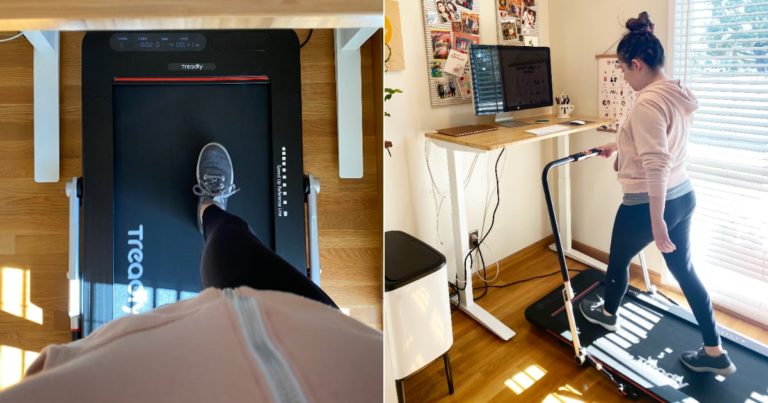
Before the pandemic hit in 2020, I’d get around the city where I lived and worked via walking or public transit, walking a minimum of 30 minutes a day, often more. Once we transitioned to working from home full-time, my single form of daily physical activity screeched to a halt and I spent months simply moving from a less-than-ideal office chair to the couch to the bed and back again. My sedentary lifestyle really came to a head in September when I started having terrible lower-back pain. In addition to physical therapy, daily stretches and exercises for my back, a new ergonomic desk chair, and a sit-stand desk, I desperately needed a new way to get moving again.

By the second day, I was sold, and by the end of week two, I was whipping out my credit card, because this treadmill has transformed my WFH life.

After reading reviews for desk bikes, stair steppers, the Peloton bike, and other at-home workout machines, I was most intrigued by compact treadmills I could use to walk while I work and stash away when I was done. I reached out to Treadly, and they sent me a Treadly 2 Pro ($849, originally $949) to test out for a couple weeks for review purposes. By the second day, I was sold, and by the end of week two, I was whipping out my credit card, because this treadmill transformed my WFH life; I feel happier and healthier than I have in a year. Keep reading to get the full review and check it out in action.

Buy it here: Treadly 2 Pro ($849, originally $949)

Pros

Easy to set up and use: The Treadly 2 Pro is low-maintenance right from the start with no assembly required. You literally just open the box, take it out, plug it in, and go. The app is user-friendly and straight-forward, setting up the Bluetooth was a cinch (it has a speaker, so you can play music while you work out), and the full setup, including moving the handrail up or down, takes under a minute.

An app for controlling speed and tracking progress: When the handrail is down, you control the speed of the treadmill with the easy-to-use app. There’s a manual setting, which is what I would use to walk while working at my standing desk, and an auto setting where your speed is controlled by where you’re walking on the treadmill (toward the top it speeds up, center keeps you at your current speed, and toward the back slows you down and eventually stops you). This app is also great for tracking your steps, miles, and fitness goals.

Unlimited walk time: Some other similar products out there automatically shut off after a certain amount of time, but the Treadly will keep going until you hit stop or get off (it’ll pause your workout if you get off of it while it’s moving).

Quiet while in use: For a treadmill, it’s relatively quiet; I can walk while watching TV and hear what people are saying in Zoom meetings (even participating while walking!). If you live in an apartment and worry about getting a noise complaint from your neighbors, it’s still a treadmill at the end of the day. My husband works in the room above me and says he knows when I’m using it but it doesn’t affect his workflow. I’m sure it would be more noticeable for someone below me, but because it’s mostly for walking, it’s not too disruptive.

Great for small spaces: The overall footprint isn’t much bigger than a yoga mat (plus, it’s only 3.7 inches tall!), which is awesome for storage if you live in an apartment or small home like I do. I’m 5’2″ and it’s the perfect length for my stride. It comes with wheels and rubber padding, so you can slide it under a bed or a sofa or store it upright. I’ve kept it in the hall closet up against the wall, and it barely takes up in any room.

Relatively light and easy to move: For gym equipment, the Treadly’s 77-pound weight is ultralight. But if you’re on the smaller side and don’t have a ton of arm strength, it takes some getting used to to maneuver around (especially around corners or through tight hallways). The wheels help a lot, and after a few days, I was able to move it around and lift it no problem. Lugging it up my stairs, however, still seems daunting.

Cons

Short cord: The cord on the Treadly is pretty short (a complaint brought up from some reviewers on the company site as well), which limited where I could plug it in. That said, the shorter cord wasn’t an issue when I had it under my standing desk, and I actually liked that it didn’t add to the pile of cords from my WFH setup.

Speed limits: While I purposely got it to walk while I was working, if you’re hoping to jog or run, the speed limits might be a downside. The max speed is 5 mph with the handrail up and only 3.7 mph with the handrail down.

Flawed auto-position speed control: My biggest issue has to do with the hands-free speed controls (aka auto mode) when the handrail is down. Every time I tried to slow down by walking on the bottom of the treadmill (the “slow zone”), it would just stop. So I usually use the app to control my speed.

Not easy to pause workout on app: The only downside with the app is there isn’t a “pause” button, so you either have to hit “stop” (which stops your session) or you have to switch to auto mode and then walk in the slow zone to trigger pause. Or you can just hop off while it’s moving and it’ll automatically enter pause mode.

Not great on thick carpet: I’ve only used the Treadly on my hardwood floor, but some reviewers have noted that it’s not great on carpet. According to the website, the Treadly 2 can be operated on both hard surfaces and low-profile carpets but isn’t recommended for use on thick or plush carpet.

The cost: While it is a piece of gym equipment, at $849 for the app-supported Treadly 2 Pro (listed price is $949) and $749 for the remote-controlled Treadly 2 Basic (listed price is $849), this is an investment purchase and more expensive than some of the other similar compact treadmills on the market right now. The 30-day return policy (keep the box!) and one-year warranty help with the sticker shock, and based on my experience, it’s a substantial, quality treadmill that will last longer than the cheaper models popping up on sites like Amazon.

Final Thoughts

Going into this, my goal was to find a low-impact workout that would fit into my current at-home lifestyle without being a disruption to my daily schedule. I know myself, and trying to carve out a separate time for fitness in addition to all my other interests, hobbies, and responsibilities wouldn’t have been sustainable. Being able to multitask while walking on this compact treadmill has been a total game changer.

I surprised myself with how fast I can walk while I work, and it’s the perfect way to get energized and warmed up every morning; I swear it helps get the creative juices flowing. In just two weeks, I walked 50 miles, which is such a huge accomplishment after I spent almost a year doing almost no physical activity. Walking is also easy on my lower back and more comfortable than standing or sitting for long periods of time.

One more note, on the website, there are some fun community components to the app as well as groups you can join, but many of these features haven’t been rolled out yet. I also don’t have any friends who own a Treadly (yet), so I’m not 100 percent sold on virtually working out with strangers. That said, I’m curious to explore the new features when the latest app version is released!

Ahead, you can see the Treadly 2 Pro in action and buy one for yourself if you’re interested! It’s currently $100 off the listed price.

LGBT+ History Month: Matthew Mitcham’s troubled path to historic Olympic gold – BBC News

  • By Nick Hope
  • BBC Olympic sports reporter

Video caption,

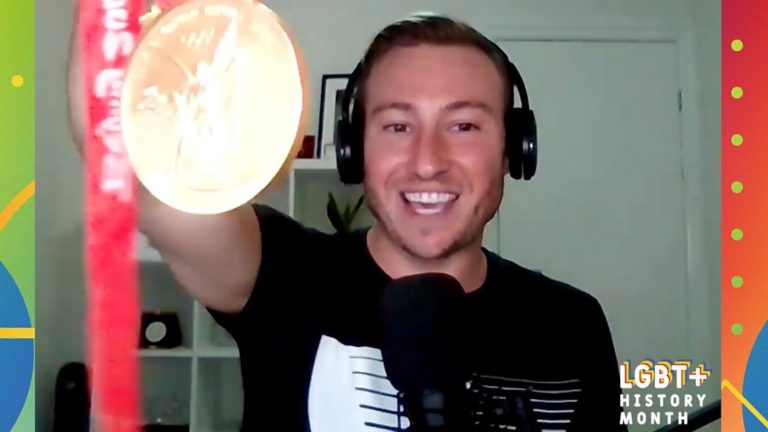
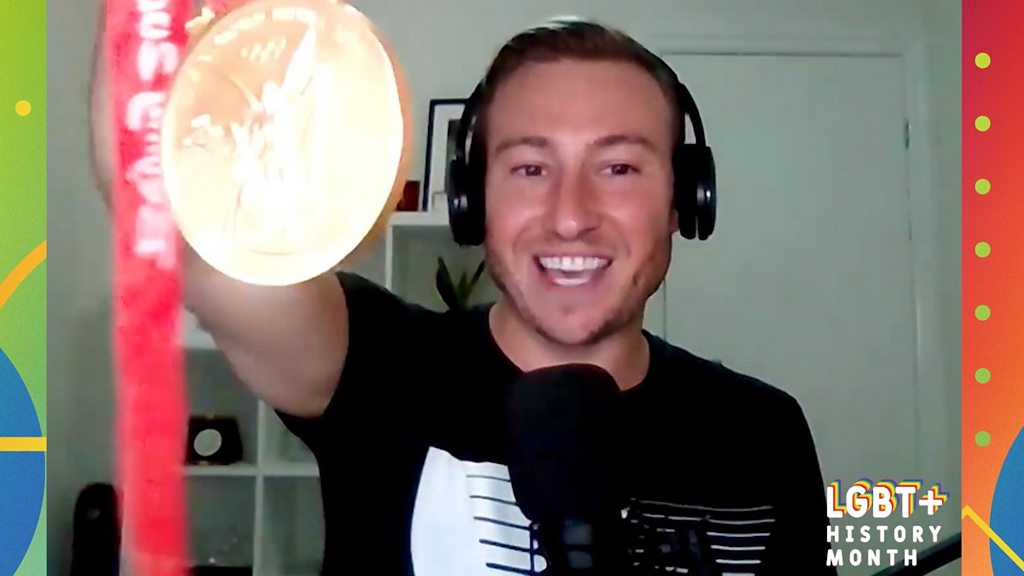
Matthew Mitcham on being the first openly gay male to win individual Olympic gold

Warning: This article includes references to drug addiction, suicide and mental health issues.

“Winning Olympic gold is the most extreme natural high you can ever experience,” says Matthew Mitcham, who then pauses, laughs and adds: “That’s why I became a drug addict!”

This light-hearted reaction may seem at odds with such a serious subject matter, but Australian former diver Mitcham is now a happily married man, fully at peace with his troubled past at the age of 32.

In January he celebrated being five years clean from the “crippling” daily drug and alcohol consumption he says drove him to consider taking his own life on more than one occasion.

He is also aware that, while the post-Games comedown – often referred to as ‘Olympic blues’ – was a key factor in his struggles, his problems really began long before.

His process of recovery has been helped most of all by reflection, looking back on the troubled path that led to a historic achievement – becoming the first openly gay man to win individual Olympic gold.

Mitcham had a challenging childhood. He craved an escape from the “neglect” he endured living in Brisbane with his mother, who struggled with mental health problems.

He also realised from a young age that he “liked boys”, but pressure from society, bullies and his Catholic convent primary school left him feeling “ashamed” of his sexuality.

“I was so scared of it that I would actually tie a rubber band around my wrist and every time I had a gay thought I would snap it, to try and associate pain and suffering with the gay thought. To try and train myself out of being gay,” he tells BBC Sport.

Diving was initially an escape, but having presented himself as straight to his team-mates for years, he began resenting the sport.

“I felt stuck not being able to be authentically me,” he says. “I didn’t want to admit I’d deceived people and lied for so long, which left me feeling alienated.

“Diving became this darkness which permeated the rest of my life. I really hated it, but I knew it was my one chance to be special, so I kept going, effectively on autopilot.”

This is how Mitcham slipped into depression. As a young teenager he would regularly self-harm, take drugs and binge-drink, despite “hating the taste” of alcohol.

“I would literally block my nose and drink, drink, drink because the aim wasn’t to get drunk, it was to throw up and pass out quicker than I did the week before,” he recalls.

“It was relief, escapism and a way of shutting my brain off for a few hours, but it kept escalating.”

Image source, Getty Images

Image caption,

Mitcham thought Olympic bronze was “beyond his wildest dreams” but went on to win gold in Beijing

At 18, Mitcham quit diving and spent a year doing “very unhealthy things” with his body, but he also grew more confident with his identity after being embraced by Brisbane’s LGBT+ community.

He admits it took him six months to stop hating diving. It was another three before he missed competing. Offered a chance to return in late 2006, he relocated to Sydney to make an official comeback, just 15 months before the Beijing Olympics.

“I cut out everything that was unhealthy – obviously the drugs and alcohol – but also junk food and soft drinks because I didn’t want to jeopardise a chance to reach my first Olympics,” he says.

“The problem was that I was still thinking about drugs every day.”

Mitcham did not plan to come out publicly, but inadvertently revealed he was living with his boyfriend during a pre-Games interview. After consulting friends, he gave the go-ahead for the article to be published.

“I was scared about the response, but going into the Olympics I didn’t want the Australian public to think of me one way – as straight – and then have to come out afterwards, feeling like I’d lied to them,” he says.

“I thought it might mean I had no supporters, but the response was fantastic and I gained this enormous colourful worldwide community. It’s honestly the best decision I’ve ever made.”

He smiles when he recalls the “mind-blowing” experience in Beijing and brings out his best Welsh accent to mimic Little Britain character Daffyd when describing himself as the “only gay in the village” at those Games.

The big day came on 23 August, 2008, the penultimate day of competition.

Image source, Getty Images

Image caption,

Matthew Mitcham struggled with addiction throughout his competitive diving career

Hosts China were expected to complete a clean sweep of the diving medals and secure their ‘lucky’ eighth gold with success in the men’s 10m platform event.

Mitcham had other ideas. With his final routine he set an Olympic record score for a single dive – 112 – to stun the home crowd.

“There have been other Olympic gold medallists since, and my Olympic record will be broken one day, but no-one will ever be able to take away the fact I was the first openly gay male Olympic champion,” he says.

“It was the most amazing feeling and my proudest achievement.”

Image source, Getty Images

Image caption,

Matthew Mitcham became the world’s first openly gay Olympic individual champion at Beijing 2008

Mitcham jokes that winning Olympic gold “magically” transformed his image, but in reality it did not make him happier.

Then aged 20, he enjoyed his success for a “matter of days” before discovering he was still ranked as world number two behind Chinese rival Zhou Luxin – the Olympic silver medallist – who had attained more success in the World Series.

“It shouldn’t have, but it sent me into a downward spiral of crippling self-doubt again because I’d had this obsession about being the best in the world,” says Mitcham.

“Being an Olympic champion made me feel even worse because I had no right to feel that way when I had the world at my feet.”

“Ashamed,” Mitcham slipped back into old habits. He became addicted to crystal meth. He hid his habit from those around him.

“Knowing I would be drug-tested at every competition I would detox from drugs for the weeks before competing and I’d go through these horrible withdrawals,” he recalls.

“They were so bad that I’d promise myself with every cell in my body that I was not going to use again, but I couldn’t ever keep the promise.

“It got dark. My self-esteem was shattered, at times killing myself seemed like the easiest way to deal with this but I finally took myself to rehab.”

Mitcham, incredibly, achieved the world number one ranking he craved in 2010, but injury problems saw him eliminated in the semi-finals at London 2012 and, although he would add a maiden Commonwealth title to his collection in 2014, he retired in early 2016.

Image source, @matthewmitcham88

Image caption,

Matthew Mitcham and Luke Rutherford married in early 2020

The Australian has been clean ever since and in February last year married his British partner Luke Rutherford.

“I’m really happy with how my life is, not least because I got married last year, so I’ve got a husband and he’s really good looking,” says Mitcham with a beaming smile.

“I’ve been hard on myself throughout my life, but I look back with kinder eyes now, and I’m proud of not only what I won but being able to do it all as an openly gay man, because of the oppression that is still felt in so many countries around the world.

“In Beijing there were 11 openly LGBT athletes and then there were over 20 at London 2012 and more than 40 in Rio 2016, so it’s doubling each Games.

“I’m pleased to have hopefully played a small part in that because visibility is so important.”

If you’ve been affected by issues raised in this article, there is information and support available on BBC Action Line.

Image source, Getty Images

Image caption,

Mitcham believes Tom Daley has made it “so much easier” for athletes to come out due to his public profile

Image source, Getty Images

Image caption,

Mitcham won Commonwealth gold at Glasgow 2014 in his last major competition for Australia

AG nominee Merrick Garland quizzed about transgender athletes – Outsports

Here they go again.

Just two weeks ago, two Republican senators — Rand Paul and Mitt Romney — turned a hearing to confirm the Secretary of Education into a lesson in transphobia. They challenged Dr. Miguel Cardona on his support of transgender female athletes to compete with cisgender girls and women.

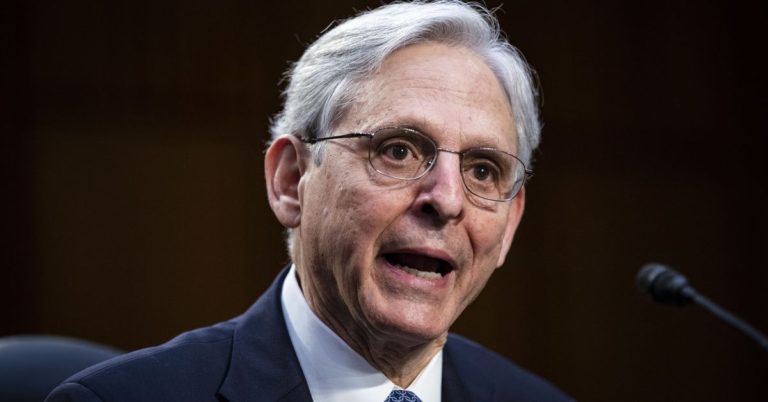
Today, Sen. John Kennedy of Louisiana played the same card at the confirmation hearing for Judge Merrick Garland, President Biden’s choice to lead the Department of Justice.

For his last question, Sen. Kennedy asked Judge Garland whether he agreed with a statement that was loaded with anti-transgender language.

“In my last 20 seconds, I’m gonna ask you if you agree with this statement: Uh. ‘Allowing’ — and I’m not suggesting you answer one way or another, I just want to know what you believe — ‘Allowing biological males to compete in an all-female sport deprives women of the opportunity to participate fully and fairly in sports and is fundamentally unfair to female athletes.’”

Judge Garland sighed, and then started to answer before he was interrupted by the Republican.

“This is a very difficult societal question that you’re asking me,” Garland began, “I know what underlies it.”

“I know, but you’re going to be Attorney General,” Kennedy said, smiling.

Smiling as well, Garland responded swiftly: “Oh, but I may not be the one who has to make policy decisions like that, not that I’m averse to it,” he said. “Look: I think every human being should be treated with dignity and respect.”

The judge paused, and then put his hand over his heart.

“That’s an overriding sense of my own character, but an overriding sense of what the law requires,” he said, pausing again. “The particular question of how Title IX applies in schools is one, in light of the Bostock case, which I know you’re very familiar with, is something I would have to look at, when I have a chance to do that. I’ve not had the chance to consider these kinds of cases in my career so far. But I agree this is a difficult question.”

Garland avoided calling trans girls and trans women the transphobic term, “biological males,” which American Civil Liberties Union attorney Chase Strangio has made clear was coined solely to oppress transgender people.

The Bostock case Garland referred to was last summer’s decision by the U.S. Supreme Court that provided guarantees to the LGBTQ community that we cannot be discriminated against in matters of employment. Legal scholars have debated whether that right could be applied beyond employment, but writing for the majority, Justice Neil Gorsuch — who filled the seat that President Barack Obama had nominated Garland to fill — seems to have answered that question: “Whether other policies and practices might or might not qualify as unlawful discrimination or find justifications under other provisions of Title VII are questions for future cases, not these.”

Watch Garland’s testimony about trans athletes in his testimony before the Senate Judiciary Committee by clicking here:

At other points in the hearing, Judge Garland declared he was not the president’s lawyer.

According to The New York Times, Garland also said that he would restore the mission of the department’s civil rights division, which during the Trump administration removed protections for transgender Americans and minorities, and eliminated policies intended to fight systemic discrimination.

“Communities of color and other minorities still face discrimination in housing, education, employment and the criminal justice system,” Garland said.

As for efforts to “defund” local police departments given the systemic history of injustice against Black people by officers. Garland said that he agreed with President Biden and would not “support defunding the police.”

LGBT+ History Month: Mike Beuttler – Formula 1’s only known gay male driver – BBC News

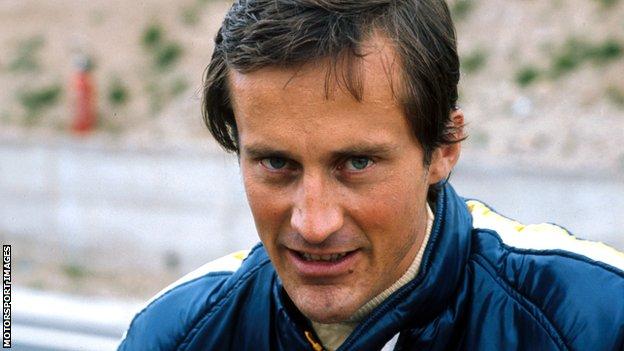
Former Formula 1 racing driver Mike Beuttler
Mike Beuttler scored five top-10 finishes in F1 between 1971 to 1973

Mike Beuttler raced against many of the all-time Formula 1 greats in the early 1970s – and then disappeared.

Even the British driver’s closest motorsport friends heard nothing from him over the final 14 years of his life.

Then, in late 1988, they learned from his family that he had died in Los Angeles of Aids, aged 48.

Beuttler remains the only known gay male driver to have competed at the highest level of motorsport.

He did so at a time when F1 was an especially macho environment. James Hunt, the 1976 world champion, famously had the phrase, ‘Sex, the breakfast of champions’ embroidered on his overalls and many drivers had reputations for being womanisers.

There were no organisations such as Racing Pride, which launched in 2019 to promote LGBT+ inclusivity in motorsport.

So how did his friends view him?

“Mike gave it absolutely everything on track – he wasn’t a natural talent but he worked hard,” former motorsport journalist and friend Ian Phillips told BBC Sport.

“I knew he was gay, but it didn’t matter in my world.”

The racing world of the 2020s is a very different place to that of the 1970s.

Matt Bishop, a Racing Pride ambassador and Aston Martin F1 chief communications officer, said: “In the early 1970s, people didn’t talk about being gay.

“In the United Kingdom, it was only in 1967 that homosexuality was legalised between two consenting adults in private.

“Why would Beuttler be out and proud? He wouldn’t. I don’t think the word ‘out’ really existed when he was racing.

“Beuttler did bring a girlfriend and different women to races, perhaps it was a convenient disguise, because it stopped the tongues wagging.”

Formula 1 driver Mike Beuttler (left) talks to his companion Anne Ries de Loen (right) stood beside a car at Brands Hatch
Mike Beuttler would often be accompanied by Anne Ries de Loen at races

‘Blocker’ Beuttler’s racing career

Beuttler raced in F1 for three seasons, from 1971 to 1973. As well as Hunt, he faced other world champions in Sir Jackie Stewart and Niki Lauda.

His path to the sport began to open up after he had success in the late 1960s in Formula 3 and then moved to Formula 2, most notably winning at Vallelunga in Italy in 1971.

Phillips met Beuttler in 1970, and got to know the driver well as he competed in Formula 2.

“He was quiet compared to Hunt or [British driver and motorcycle racer] Mike Hailwood and an incredibly friendly guy, but beneath that was a fierce determination and he took racing immensely seriously,” said Phillips.

Beuttler got the reputation of being a very rough racer, because he did not like being overtaken and would block anyone who got in his way – and the nickname ‘Blocker’ was born.

In 1971, Beuttler made his F1 debut at the British Grand Prix in a privately funded March car.

His career was financed by stockbroker friends and in 1972 he raced as a semi-works March driver, with Lauda and Ronnie Peterson as his team-mates at the Canadian Grand Prix.

“He probably wasn’t ready for F1 when he joined, but had a great team of backers,” said Phillips.

“He made up for it with his determination and every time he climbed out of the car you knew he had been at work – he was sweating and his eyes were bulging.”

Mike Beuttler racing at the 1973 Swedish Grand Prix, where he finished eighth
Mike Beuttler raced in 28 Grands Prix during his career

In 1973, Beuttler achieved his best-ever finish, seventh in the Spanish Grand Prix. Overall, he scored five top-10 finishes in his career.

But then the UK was plunged into financial turmoil by the 1973 oil crisis, and his team did not have the money to stay in the sport.

Aged 34, Beuttler retired from racing.

Ann Bradshaw, a motorsport PR consultant who first met Beuttler in the early 1970s, said: “There was no stigma with Mike, he was a nice gentle person – everyone knew he was gay, it wasn’t a secret and it was accepted.”

‘He just disappeared, completely’

After Beuttler left motorsport he moved to the USA, spending time in San Francisco and Los Angeles.

“I suspect it would have been easier for him to live the lifestyle he wanted in LA and San Francisco, whereas being gay in London was a more secretive thing,” said Phillips.

“He probably wanted to find his own generation where he could be open and free.”

Beuttler’s life in the USA remains a mystery, though there are reports he went into the business world.

“He just disappeared completely,” said Phillips. “I don’t know anyone who had any contact with him, apart from family.”

What is known is that Beuttler died of Aids on 29 December 1988.

“His sister phoned me when he died,” said Phillips.

“She phoned out of the blue one day and said, ‘I am the sister of Mike Beuttler and I am very sad to tell you that he died of Aids in LA.’

“He was such a nice bloke.”

‘LGBT+ people have always been part of motorsport’

Britcar Endurance Championship driver and Racing Pride co-founder Richard Morris holds up his helmet while leaning against a car
Britcar Endurance Championship driver and Racing Pride co-founder Richard Morris has had lots of support within motorsport after coming out as gay in 2018

Since Beuttler’s death, several motorsport drivers have come out as gay.

Le Mans class winner Danny Watts came out in 2017, a year after retiring, while in the W Series there is LGBT+ representation on track in fellow British drivers Abbie Eaton and Sarah Moore.

Richard Morris, co-founder of Racing Pride and a driver for the Praga team in the Britcar Endurance Championship, came out as gay in 2018, when already established in motorsport.

“I took my boyfriend to a race before I came out when I was racing in Formula Ford and he was there as my friend,” said Morris, 30.

“I had women around me at tracks who were my friends. Some people knew I was gay but I wasn’t out – I think that is very similar to Beuttler’s experience.”

Morris said coming out to the motorsport community has been a positive experience.

“I already had a boyfriend for seven or eight years but I had not told people in motorsport,” he said.

“You worry it might affect your relationship with mechanics, you worry you might get extra scrutiny on social media and you worry sponsors will think it is a risk.

“But my team was very supportive and lots of other drivers started putting Racing Pride stickers on their cars – it has been brilliant.”

Beuttler’s legacy

With LGBT+ people being more regularly accepted and celebrated in motorsport now, how is Beuttler remembered today?

“Regarding his position in the pantheon of LGBT+ sporting heroes, it is time he is rehabilitated,” said Bishop.

“If he was alive, he would have been interviewed about Section 28 and gay marriage.”

Section 28 was a law that affected England, Wales and Scotland, passed in 1988 by a Conservative government that stopped councils and schools “promoting the teaching of the acceptability of homosexuality as a pretended family relationship”.

There were mass protests by LGBT+ campaigners and the law was repealed in Scotland in 2000, before England and Wales did the same in 2003. Same-sex marriage became legal in England and Wales in March 2014, in Scotland in December 2014 and in Northern Ireland in January 2020.

“It is really interesting to look at Beuttler’s story now – it shows LGBT+ people have always been part of motorsport and they have been really successful,” said Morris.

“It also reminds us of the challenges faced.”

Entertainment Gay actor Derek Jacobi reflects on coming out to his mother decades ago Patrick Kelleher – PinkNews

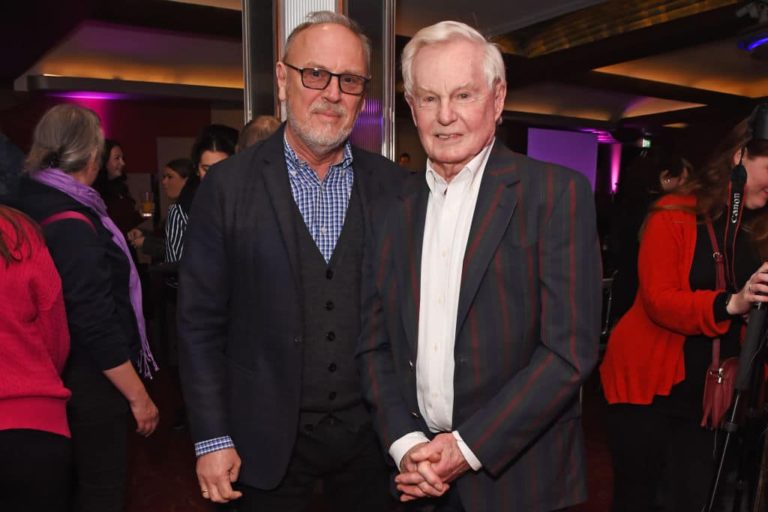
Sir Derek Jacobi (R) with his partner Richard Clifford. (Dave Benett/Getty Images)

Derek Jacobi has opened up about the incredible moment he came out as gay to his mother decades ago.

Jacobi, 82, told The Telegraph that he knew he was gay from an early age, and he eventually worked up the courage to tell his mother that he was attracted to men while he was a student in Cambridge.

His acting career began during his time in Cambridge, and it was there that he struck up a friendship with Ian McKellan in 1958. They have remained friends ever since.

“I knew I was gay very early on, although it wasn’t called gay back then,” the acclaimed actor said.

“I knew that I wasn’t into girls in the way that I should be. I dated girls, and we sat in the back row of the cinema, and I did all that I was supposed to do, but I wasn’t enjoying it.

“I confessed to my mother while I was at university and she very typically and sweetly said: ‘All boys go through this stage.’”

The Tony-award winning actor continued: “I was a loner for years, but I’ve been with my partner for 43 years, which is quite an achievement. It remains a stable and loving relationship. It was another piece of luck in my life.”

Derek Jacobi praised his parents as ‘wonderful’.

Elsewhere in the interview, Jacobi reflected on the similarities between the coronavirus pandemic and the Second World War, which marked the early years of his childhood.

“There’s a feeling with the pandemic that I am ending my life as I began it. I was born the year before the war broke out. In my early years, everyone was kind and lovely and helpful to each other, because they were all fighting this terrible war.

“It’s kind of happened again now. I hope it lasts. Somehow, in the war, it didn’t last once peace had come and we’d all settled down again.”

Derek Jacobi previously opened up about coming out to his parents in an interview with the Daily Mail in 2015.

In that interview, the actor said his mother insisted that being gay was just a phase.

“They were wonderful, my parents, not much was said but they kind of knew, they got it,” he said.

“I wasn’t open. I just lived my life and people responded to me.”

The toxicity of gay ‘tribes,’ especially on campus – Dailyuw

0

gay 'tribes'

Editor’s Note: A previous version of this article included references to the “LGBTQIA+” community and people. This was an overgeneralization of the article’s intended subject matter. Where appropriate, “LGBTQIA+” has been replaced with “gay” and “mlm (men loving men).”

In 2019, the University of Washington was voted the most LGBTQ+ friendly campus in the country by Campus Pride and BestColleges.com, according to seattlepi.com. Having never set foot on campus for a class or extracurricular activity due to the pandemic, I have no personal experience to tell me if this is true or not. 

Yes, I’ve worn a skirt or two down in the U-District and have not received backlash for upending present gender norms, but I have not encountered a dating or hookup experience while at the UW where this acceptance of difference was prevalent.

One specifically problematic aspect of these interactions comes in the form of “tribe” culture.

To educate straight and/or uninformed audiences: “Tribes” have been a way for gay men to divide men loving men (mlm) into groups based on body types. 

Some examples of this include “twinks,” which are often men with skinnier body types. There are also “bears,” a more muscular and hairy group of typically older men. 

These labels are mostly used in hookup culture, but they are also used as preferences that determine who folks in the community date as well. Beyond being just words, they become parameters of how self-perception is formed. 

I myself have fallen into the trap of being self-conscious when I gain weight. In the past, I’ve felt the pressure of wanting to fit into the ideal of a Timothée Chalamet body, even though I was more athletic. It happens to the best of us.

“In terms of tribes, I haven’t noticed anything specific in my interactions, but I do think everybody’s picky, especially in the gay community,” third-year undergraduate Daniel Piacitelli said. “With dating apps, everything is so visually oriented, and so it just invites so much criticism over body types. A lot of people [are] very specific about what they want, leaving everyone else at the wayside.”

The use of the word “tribe” itself is also inherently anti-Indigenous.

Over the last couple of years, it has been criticized for its appropriation of terminology describing Indigenous groups and African ethnic identities. The word being used to describe non-Native subcultures dates back to the counterculture movements of the 1960s and ‘70s. Should we really be able to claim a word thrust onto Indigenous populations for use by non-Indigenous populations –– especially as a means of division within a community? 

“I’ve never thought about it that way, [but] I can see it being problematic,” third-year undergraduate Liam Stone said. “I can see that, if I was an Indigenous person, that [using ‘tribes’] is problematic. But some of the intention behind the whole gay ‘tribe’ thing I feel is good, because it can show a celebration of all the diversity within the community. But there is a point where it becomes division and discrimination.” 

This discrimination runs deep not only in the gay community, but also in BIPoC queer communities –– an intersectional issue that we have seen, and begun to address, in recent years amid pursuing anti-racism efforts in the community. 

Especially when considering all that BIPoC (especially Black folks) have achieved, in and for gay culture, it’s downright despicable that they are the first to face the discriminatory effects of “tribes,” as well as every other toxic trait of the community.  

“There is a lot of fetishization, too,” second-year James Hu said. “There are certain body types that are exclusive, and by all means you’re allowed to have preferences, but when they are extremely exclusive it just doesn’t sit right.”

The preference of an exclusive body type — often of a straight-passing white male — has perpetuated discrimination in the community, and many of us have blood on our hands from contributing to this discrimination by using “tribes” to describe ourselves and our future partners. Though some see it as a form of unity and diversity, it can still bring hypocrisy.

“Intersectionality exists — you can be gay and the oppressor at the same time,” Hu said. “I know there’s a lot of issues. I feel like it’s definitely not talked about enough.” 

Gay people aren’t perfect, but we need to opt out of division based on how we look, and instead embrace the collective community. For “tribes” especially: With LGBTQIA+ history already existing in Indigenous cultures before Europeans colonized their lands, the use of this word as a descriptor for non-Natives has got to go. 

Reach writer Liam Blakey at opinion@dailyuw.com. Twitter: @LiamBlakey2

Like what you’re reading? Support high-quality student journalism by donating here.

Look Like 1.5 Million Bucks at City Gym – metrosource.com

0

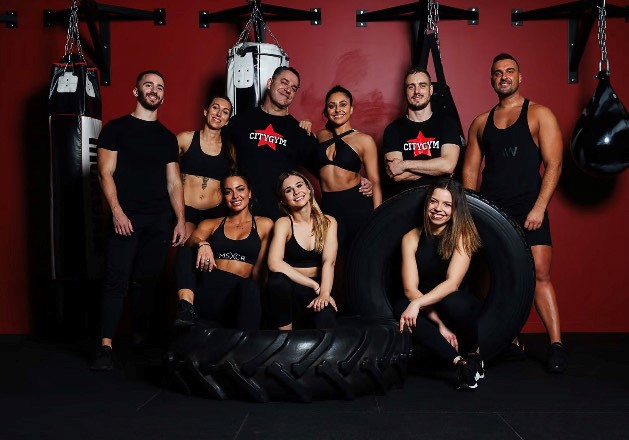
This damn pandemic #damndemic really messed with our workout routine. We miss the gym in all of its gay glory. The sauna, the cardio, the sauna, the weights, the sauna… did we mention that sauna? Please excuse our obsession, but we’re always curious to know what’s going on “down under” those towels.

Speaking of which, Australia handled Covid-19 better than many nations, averaging only a dozen new cases per day last month.

Due to their diligence, the Land of Oz was able to reopen the Emerald City, aka Sydney, in a robust manner. Salons, theaters and, most importantly, fitness centers embraced safety protocols to usher in 2021 with a sweaty grunt, and no establishment was more pumped than City Gym.

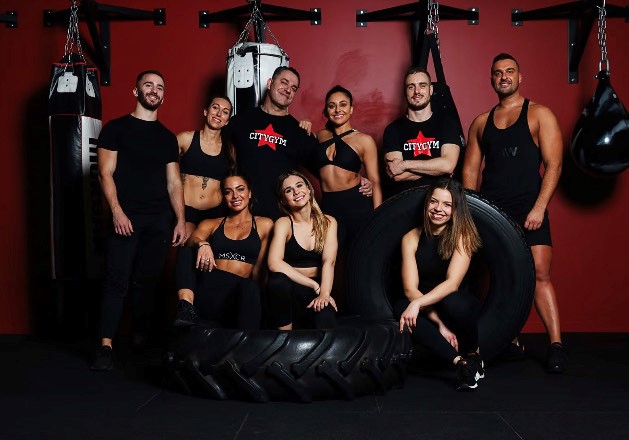
This queer fortress spent the majority of 2020 regrouping and renovating. With a price tag of 1.5 million dollars, City Gym’s macho makeover includes a wellness studio, boxing space, and upscale eatery.

Yum supreme!

The legacy of City Gym dovetails with the inception of Sydney’s Gay Mardi Gras celebration. Back in 1978, Bill Moore co-founded the hotspot as an “all-inclusive social space.” Over the ensuing decades, City Gym welcomed such chiseled luminaries as Arnold Schwarzenegger, Jane Fonda, and Christopher “The Blue Lagoon” Atkins.

At the dawn of the 21st century, however, tradition yielded to trendiness. Fitness fans flocked to newer, shinier athletic centers. According to City Gym’s own website:

“These years witnessed a mass exodus of long-term members, including our extended LGBTQI family, our staunch Group Fitness posse, our world-renowned bodybuilding crew and our loyal casual guests. Even some of our much-loved long-term staff members were calling it a day.”

But when Billy Kokkinis took over the man-tastic management of City Gym in 2017, he summoned its homo history. “Billy felt bound by his loyalty and he felt he owned the responsibility of preserving the institution that truly meant everything to him. Together with his business partner Andy Mamasioulas, Billy’s vision has been turned into reality. With the major refurbishment complete, the exclusive City Gym product is second to none. We welcome you to be a part of our City Gym family.”

In the spirit of family togetherness, let’s reminisce about the camaraderie of queer bonding with a vigorous stroll down memory lane, shall we? Here’s a beefy “before” look at the pre-renovation foundations of City Gym – we can’t wait to bask in its “after” glow.

Photo: Facebook @citygymsydney

Last modified: February 20, 2021

How this gay coach found his home in the world of women’s college basketball – Outsports

The turning point for Kevin DeMille came during his senior year of college. A team manager for the UConn women’s basketball team, he became close with many of the players, including Stefanie Dolson, who now plays center for the WNBA’s Chicago Sky. At the time, Dolson was figuring out her sexuality, and in turn, demanded authenticity from those around her.

For DeMille, that meant being openly gay around the team. At first, he was hesitant about overshadowing the players, but those anxieties dissipated when they welcomed him with open arms.

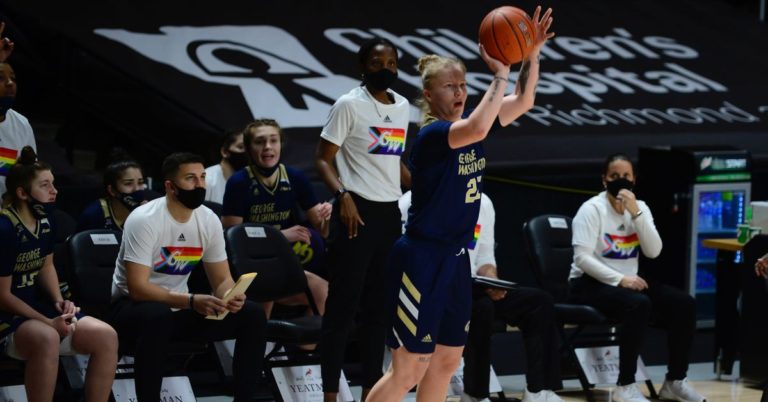
Ten years later, DeMille is on staff at George Washington University, serving as one of the team’s assistant coaches. He’s a visible gay face in the world of basketball and uses his platform to push LGBTQ causes. In other words, he’s elevating his voice. He says he wouldn’t be where he is today without the support of strong women.

“Women’s basketball is more communal than the men’s game at the college level, and certainly more accepting and more open, but it’s pioneered by the athletes,” he said. “That was always the hesitation for me. The players are the ones who drive all of this, and asking if there’s space for me in the women’s game. I just was fortunate to be around all of the right people, who made me realize it was OK to be who I was. In fact, to not be who I was would be a detriment to not just my own personal growth, but to my players.”

DeMille’s love for basketball comes from his mother. She was an elite coach at the high school level, and growing up, he played the game constantly. The UConn women’s team attracted him to campus, and within days of DeMille’s freshman year, he wanted to be part of the most successful program in the country.

So one day, he entered the team’s office, and asked how he could get involved. A few hours later, he was working out with Tina Charles. His career in women’s basketball had officially begun.

DeMille stayed on the Huskies staff for seven years, and grew every day.

“Spending seven years at UConn would make anyone want to work in women’s basketball,” he said. “I wanted to watch women’s basketball more than anything, but I feel like it’s just so much easier, these relationships were so much easier, these kids want to be coached so much more. It’s just so natural for me to be in the women’s game.”

Now entering his second decade in the women’s game, DeMille has learned the power of vulnerability. He’s found the only way to truly connect with players is to be your true self.

“The players are the best part of this job,” he said. “They are just young people with a dream. They act fearless, but they’re not. They’re looking for some guidance. So they inspire me in a lot of ways to truly be who I am.

“Me being authentically who I am — sharing about our boyfriend and life together — makes it clear to them that it’s OK to be vulnerable. Their vulnerability is accepted, celebrated and appreciated here. It’s only when we’re vulnerable that we can play better and get closer.”

With that spirit in mind, the George Washington women’s team dedicated their campaign to a “season of action,” hosting collection drives and fundraisers for community organizations throughout the year. On a daily basis, the Covid-19 pandemic threatens to take away the basketball portion of what his players do as college athletes.

But it can’t take away their platform.

“This season, we still don’t what it’s like to be like,” DeMille said. “It could get taken away at anytime. With all of that in my mind, and knowing this is going to be a challenging road to get to February, our GW players and GW staff wanted to make this season about more than basketball.”

One of the team’s initiatives this season was a Celebration of Pride. For a three-game stretch, DeMille and his players and their families donated $5 to the Trevor Project for every assist tallied and $2 to the DC Center for the LGBT Community for every forced turnover.

They raised over $1,000 for the Trevor Project, and $500 for the DC Center.

DeMille says they took their lead from the players and coaches around the WNBA, who used their season to advance social justice causes.

“Once we got back together in August, we’ve been trying to spend a lot more time educating each other about the importance of racial relations and racial equality, but making sure our players know that as college athletes, they have the ability to do so much more than just get good grades and win some basketball games,” he said. “They have a platform.”

In addition to LGBTQ causes, the GW women have supported Black Lives Matter, mental health awareness, and started a group to stop sexual violence at school.

With a campus in the heart of D.C., DeMille says it’s imperative for the program to represent more than basketball. When it comes to being a college athlete, the games are only part of the equation.

“The athletes at the highest level of the women’s game have set the tone,” he said. “They’re saying, ‘This is who we are, this is what our game stands for,’ so it’s important that athletic departments get on board with that. We are in a pretty consequential place, we’re four blocks north of the National Mall, and five blocks west of the White House. The fact that it permeates our athletic department is a no-brainer. Our kids want to make sure they can make a big impact when they leave here.”