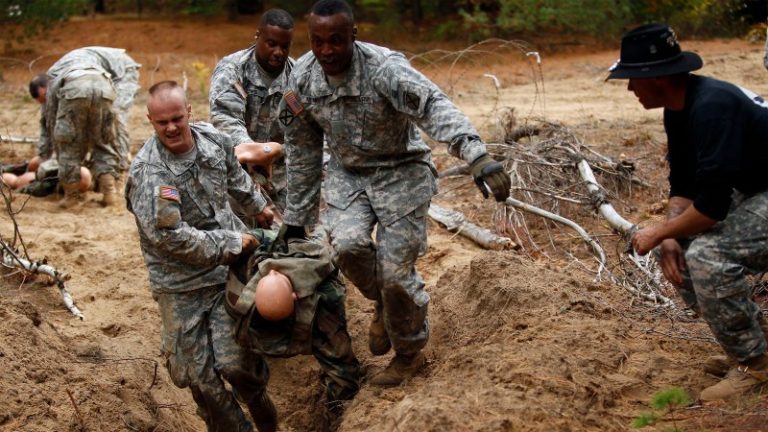
A fellow cavalryman watches as US Army soldiers carry a dummy during a field exercise in Fort Drum, New York September 29, 2010. (Lucas Jackson/Reuters)
In 2015, when the Obama administration moved to open all ground-combat arms to women, we warned that its obsession with social justice was taking precedence over combat readiness.
“A public and political class largely insulated from the realities of ground combat has become ignorant of its excruciating and unforgiving physical demands,” we wrote in a December 2015 editorial. “Prolonged infantry operations — including operations common in the War on Terror — place immense strains on the mind and body. Unit cohesion is critical, and physical breakdowns can be costly both to combat power and to unit morale.”
“Moreover,” we continued, “given how beholden the administration is to the Left, there is no reason to believe that it will hold firm on physical standards if few women prove capable of joining and — crucially — thriving in the infantry environment.”
The fact that this worry appears closer to being borne out under the Biden administration gives us no comfort, because the price will be a less capable and combat-ready fighting force, with potentially baleful consequences.
Recent reporting by Task & Purpose, a military-news outfit, reveals that Army brass is weighing whether to backtrack on the new gender-neutral Army Combat Fitness Test (ACFT) to instead include different evaluation metrics for men and women after early results indicated that as many as 65 percent of female soldiers were failing the test versus only 10 percent of men.
The new test, a replacement for the decades-old Army Physical Fitness Test and widely trumpeted as both gender-neutral and a better match for the physical demands of modern combat, comprises six events: a deadlift, a standing power throw (throwing a 10-pound medicine ball backwards over your head), push-ups, a drag-and-carry shuttle run, leg tucks (hanging from a pull-up bar and raising your legs to your chest), and a two-mile run. The test may not be perfect, but its stated purpose was to create a new meritocratic test for the new gender-neutral Army.
Those pushing for a fully gender-integrated military have long deployed conveniently shifting arguments to suit their purposes: “The standard will be the same for both men and women,” they told us when pushing for women in the combat arms. Indeed, as secretary of defense Ash Carter promised in 2015, “as long as they qualify and meet the standards,” women could serve in Army and Marine Corps infantry units, in the special forces, and in any other uniformed capacity.
Predictably, however, as women struggle to meet the physical demands necessary for combat, the advocates are calling for equality of outcomes.
The point here is not to disparage the American women who selflessly volunteer to wear their nation’s cloth, especially as many American women have found themselves down range under enemy fire in the last few decades. Rather, we criticize the mindless drift towards lowering the minimum standards required to ensure that a soldier is equipped to fight and win in combat.
Our point is that the Army is running into the obvious — and well-known — physical-performance differences that exist on average between men and women, even among physically fit men and women. The fact that American women sometimes found themselves in difficult circumstances during the War on Terror and performed admirably does not excuse policy-makers from the responsibility to design optimal — rather than feel-good — combat-readiness standards for a new era of competition with peer-threat adversaries such as China and a resurgent Russia.
The likes of Senators Kirsten Gillibrand (D., N.Y.) and Richard Blumenthal (D., Conn.) are focused on the “considerable concerns regarding the negative impact [the Army Combat Fitness Test] may already be having on so many careers” to the exclusion of the question of how differing physical standards will affect our combat arms. Indeed, the ACFT, rolled out last year — though scores were not meant to affect promotions until 2022 — is now on a congressionally mandated hold until the Pentagon studies whether the test is unfair to women.
America’s enemies are assuredly not so enraptured by the gender-equality revolution that they have embraced as national policy the weakening of their country’s defenses in the name of a radical-feminist ideology.
Only those who don’t know much about soldiering assume that 21st-century technology has reduced or eliminated the need for brute physical strength and toughness on the modern battlefield. To the contrary, today’s wars, if anything, require more strength and more endurance. Our fathers and grandfathers marched into battle with rifles, ammunition, and what they could stuff into an ALICE pack.
In the generations since, a soldier or Marine’s fighting load has grown heavier with the addition of body armor, radios, and a myriad of other gadgets, together with the batteries to power it all.
It’s not uncommon for a stout young American to march to the field with 100 or 120 pounds on his back: weapons and ammunition, grenades and mortar rounds, water and chow, flak, SAPI plates, and Kevlar helmet, tourniquets and bandages, night optics and range finders, a headlamp, batteries and more batteries, a map, compass, and protractor, note-taking gear, a sleeping system, tarp, and poncho liner, extra socks and warming layers, waterproofing bags, a toothbrush, a razor, and plenty of baby wipes, a blister kit, along with a bottle of Motrin and at least five cans of chewing tobacco. Oh, and don’t forget the extra boot laces.
Getting to the fight is, as the Marines will tell you, only the first part of the job description: “To locate, close with, and destroy the enemy” implies the ability to fight, kill, and win in unforgiving close combat only after you’ve completed the long hump to the killing fields.
And the real test comes when it’s not your gear or your weapons with which you must hump, but your buddy’s gear and your buddy’s weapons in addition to your own kit, or, worse, your buddy’s bleeding body, thrown across your shoulders, as you struggle under fire to get him off the X.
The Army is not a social-engineering NGO, a jobs program, or an institution set up to allow its members to achieve their highest self-actualization. It is an institution whose only purpose is to kill people and break things on the nation’s behalf. Any policy, however benignly intended — such as the arbitrary desire to increase the number of women in the Army — that interferes with the goal of attaining maximum lethality for the unit or individual is a betrayal of the nation and the soldiers — men and women — who volunteer to serve it.
If Democrats in Congress and the Biden administration insist on maintaining gender-integrated ground-combat units, the least they could do is assure the American people and the young Americans who will find themselves under fire, living through the worst day of their lives, that no standard was sacrificed on the altar of gender diversity and that they were put in the best possible position to fight and win.
Whether you love them or hate them, squats are a staple in most workout routines, and for good reason. But their booty-boosting abilities sometimes come with a side of knee pain that can prevent you from meeting your goals. POPSUGAR spoke to two experts to understand why your knees just never seem to be up for this butt-burning move.
Why Do My Knees Hurt When I Squat?
There are many potential causes of knee discomfort while squatting. But according to Jason Mulvaney, an NASM-certified corrective exercise specialist and performance enhancement specialist, and owner of Ascension Athletics in Dallas, TX, limited ankle and hip mobility are common culprits. “Unfortunately, our lifestyle involves mostly sitting at a desk, which doesn’t help us move in the most optimal way,” Mulvaney told POPSUGAR. He explained that, as our hips and ankles tighten, our natural movement patterns are compromised, and our knees often pay the price.
PJ Shirdan, an NASM-certified personal trainer and founding coach at FightCamp, explained that your body is a system. When there’s an issue with one part, it can negatively affect others. Shirdan said that knee pain while squatting could result from problems with the patellar tendon, anterior tibialis, hamstring, or quadriceps. Other possible culprits include incorrect form while squatting, improper footwear, too much weight, too many reps, or an inadequate warmup.
What Should I Do If I Experience Knee Pain While Squatting?
Both experts agree that checking your form is a must. (Here’s how to squat correctly.) Beyond that, it’s important not to ignore the pain. “People should always listen to their bodies and consult with their physician if knee pain persists,” Shirdan told POPSUGAR.
There are some tricks for more immediate relief as well. If the pain is stemming from tight calves, Mulvaney recommends putting some plates underneath your heels when squatting. He also suggested placing a box or bench underneath you to shorten your range of motion. Shirdan said to make sure you’re warming up properly (dynamic exercises are key), and that you’re wearing appropriate footwear for strength training. He added that you may also need to decrease the weight you’re squatting.
Quick fixes aside, preventing knee pain for the long run takes a more concerted and holistic effort. “You’ll need to keep up with your mobility and make sure you are on an exercise program that trains commonly neglected muscles such as the gluteus medius,” Mulvaney explained.
As the light at the end of the COVID-19 tunnel draws closer and closer, it’s time to start thinking about your next LGBT-friendly holiday destination – and there’s one country that easily beats the competition.
In 2020, Canada topped the Spartacus magazine Gay Travel Index, with the outlet naming it as its top queer-friendly destination.
The Gay Travel Index, published every year since 2012, ranks countries based on the degree to which they champion LGBT+ rights, and on how safe they are for LGBT+ people to travel to.
Coupled with its easy-to-navigate visa system (eTA Canada), it’s not difficult to see why Canada continues to be an extremely popular destination.
Canada leads the way in LGBT+ rights
The yearly Spartacus report informs potential travellers about the state of LGBT+ rights in 202 countries, and uses a points system.
Canada also scored highly for permitting adoption for LGBT+ couples, and for having equal rights on marriage and registered partnerships.
British Columbia became the first Canadian province to allow both joint and step-child adoption by same-sex couples in 1996. In 2011, Nunavut became the final province to legalise same-sex adoption, making it legal across the country.
In addition, religious influence on legislation concerning LGBT+ rights in Canada is limited.
The Canadian Charter of Rights and Freedoms explicitly states that religious freedom “is subject to such limitations as are necessary to protect public safety, order, health or morals and the fundamental rights and freedoms of others”.
The local population is generally positive about queer rights, and the country’s major cities have large LGBT+ communities.
Toronto’s Church and Wellesley neighbourhood in particular is known for its many bars, cafés and shops with a predominantly LGBT+ population.
Every year, Toronto hosts Pride Week. The heart of the LGBT+ community in Montreal is Le Village, a district in the city centre with many bars and restaurants and a lively nightlife.
In Vancouver and Ottawa – the country’s capital – you can find so-called Gay Villages, where the LGBT+ scene is very active.
The USA ranked 30 places below Canada
In the Spartacus report, different categories have different point scores, and a country can also score negative points, which are subtracted from their total score. Negative points are only awarded to countries that don’t even have elementary rights for LGBT+ people.
Countries that do have some very basic rights but lack important ones seen in higher-scoring countries get zero points.
The United States was ranked joint 31st place in the Gay Travel Index , despite being Canada’s direct neighbour.
Whereas Canada scored a perfect three in anti-discrimination legislation, the USA is stuck at a measly one. Worse yet, the USA received several negative points: for transgender rights, religious influence and murders. In other words, the USA still has a lot of catching up to do.
Strictly religious countries such as Chechnya (202, last place), Saudi Arabia (199) and Malaysia (190) were found at the very bottom of the index.
Very few of these countries even managed to score a single point across any of the categories, and instead received several negative points.
Travelling to Canada – how to apply for a visa
LGBT+ travellers making Canada their next holiday destination will need an eTA or a visa.
Most travellers choose to apply for an eTA Canada, avoiding the cumbersome visa application procedure.
The eTA is applied for online with a digital application form. Filling in the form takes only a few minutes.
After paying the application fee, the form is processed. In general, the application is approved within three days and the eTA is delivered by e-mail.
The eTA is valid for five years from the date of issue and can be used for multiple trips. An eTA will only expire before that if the passport used to apply for it expires prematurely.
Always check that the passport details you entered when applying for the eTA are still up-to-date. If you change passports, you will need to apply for a fresh eTA as well.
The presence in such relationships of positive elements, which are in themselves to be valued and appreciated, cannot justify these relationships and render them legitimate objects of an ecclesial blessing, since the positive elements exist within the context of a union not ordered to the Creator’s plan, the response said.
God does not and cannot bless sin: He blesses sinful man, so that he may recognize that he is part of his plan of love and allow himself to be changed by him, it said.
Francis has endorsed providing gay couples with legal protections in same-sex unions, but that was in reference to the civil sphere, not within the church. Those comments were made during a 2019 interview with a Mexican broadcaster, Televisa, but were cut by the Vatican until they appeared in a documentary last year.
While the documentary film fudged the context, Francis was referring to the position he took when he was archbishop of Buenos Aires. At the time, Argentina’s lawmakers were considering approving gay marriage, which he and the Catholic Church opposed.
Then-Cardinal Jorge Mario Bergoglio instead supported providing legal protections for gays in stable unions through a so-called law of civil cohabitation.
Francis told Televisa: Homosexual people have the right to be in a family. They are children of God.” Speaking of families with gay children, he said: You can’t kick someone out of a family, nor make their life miserable for this. What we have to have is a civil union law; that way they are legally covered.
NPR’s A Martinez talks to Jamie Manson, president of Catholics for Choice, and a member of the LGBTQ community, about Pope Francis’ statement that Catholic clergy can’t bless same-sex relationships.
A MARTINEZ, HOST:
LGBTQ Catholics won’t have priests blessing their same-sex marriages. The Vatican called on Catholics to welcome and respect LGBTQ people. However, it said in a statement approved by Pope Francis that Catholic clergy cannot bless same-sex unions, writing that God, quote, “cannot bless sin.” Jamie Manson is the president of the nonprofit Catholics for Choice and is a member of the LGBTQ community. Jamie, what was your reaction when you heard the Vatican’s statement?
JAMIE MANSON: Good morning, A. Well, obviously, it was a profound disappointment. This gives a sense that our love is inferior, that we cannot – that our love is not blessed by God. So it’s profoundly painful.
MARTINEZ: Now, to be clear, this is not a new position for the Catholic Church. They’re just restating what was already their position on same-sex relationships. But, Jamie, why do you think this statement now?
MANSON: Well, there was some murmurings in Germany by bishops that they were considering, how can we bless same-sex couples? So I think that put a lot of pressure on the Vatican. Also, the pope – there was a documentary last year – that the pope suggested support for civil unions. So I think the Vatican hates confusion, and they like to clarify things when things get a bit muddy. So I think that probably prompted this.
MARTINEZ: Did all that give you hope, though?
MANSON: Honestly, A, it didn’t. I’m a journalist. I was a journalist for 12 years. As a lesbian, I listened very closely to what the pope had to say about same-sex unions. And he always held onto this idea that a man and a woman in marriage is superior and is God’s plan for humanity. So in a way, I’m relieved because it was time for a bit of institutional honesty.
MARTINEZ: Does this make it official in your heart?
MANSON: I think it was always official, and I think that the pope liked the good press, to be quite honest with you. And, you know, but I think what’s painful is that he gave the sense that he’s a bridge builder, and he’s going to heal wounds. So I think that’s where the disappointment is coming from for a lot of people. And I think it’s justified because it was a mixed message for eight years.
MARTINEZ: Why do you think, ultimately, though, he’s hewing so close to his predecessors on doctrine on this?
MANSON: Because so many teachings about sexuality in the church depend on the main teaching here, and that has to do with natural law and the idea that sex must always create life. And if the church in any way deviates from that idea, it has to change its position on a lot of issues, including contraception, including even women priests. That teaching is based on this. So if they change one thing, the whole thing cascades, and I think that’s just too overwhelming for them.
MARTINEZ: And do you think that for the majority of Catholics in the world, that’s just too much to handle all at once?
MANSON: Well, I think that there’s a really important global context here because teachings – when the Vatican says things like this about same-sex love, same-sex unions, it actually has a very negative effect globally. It can promote hate speech. It can promote anti-LGBTQ policies, even violence. The church is a global political power, so there will be deep ramifications. And as is so often the case with these ideological battles, the vulnerable will be the most wounded and adversely affected.
MARTINEZ: So now that this has been said and done, do you think this might lead to lots of people leaving the church as a result of this?
MANSON: You know, my sense is that this will be a final blow for a number of Catholics who really had been holding onto hope because of Pope Francis. The media had such a love affair with him, and I think people were really holding on tight to the last threads of hope. And this could be the final blow.
MARTINEZ: Jamie Manson, president of the nonprofit Catholics for Choice. Jamie, thank you very much for your perspective.
NPR transcripts are created on a rush deadline by Verb8tm, Inc., an NPR contractor, and produced using a proprietary transcription process developed with NPR. This text may not be in its final form and may be updated or revised in the future. Accuracy and availability may vary. The authoritative record of NPR’s programming is the audio record.
Defense Secretary Lloyd J. Austin III on March 12 directed the Defense Department to “take steps to rescind any directives, orders, regulations, policies, or guidance” that doesn’t line up with President Joe Biden’s Feb. 4 memorandum that charged multiple U.S. government organizations with championing and safeguarding the human rights of lesbian, gay, bisexual, transgender, queer, and intersex (LGBTQI+) individuals by April 15.
In the same memo, Austin charged all parts of the Pentagon to analyze and report back on how the military is implementing Biden’s memo, and to recommend more ways they can help advance the population’s human rights.
“In accordance with the Presidential Memorandum, it is the policy of the DOD to pursue an end to violence and discrimination on the basis of sexual orientation, gender identity or expression, or sex characteristics, and DOD will lead by example in the cause of advancing the human rights of LGBTQI+ persons around the world,” Austin wrote.
Austin said the Defense Department will achieve this by:
Enhancing current initiatives to push back against foreign governments’ efforts to make being LGBTQI+ a crime
Initiating or supporting initiatives to tackle “discrimination, homophobia, transphobia, and intolerance on the basis of LGBTQI+ status or conduct”
Widening current efforts to make sure the department regularly engages “with governments, citizens, civil society, and the private sector” to advocate for the LGBTQI+ population’s human rights and tackle discrimination
Taking the potential impacts of DOD-funded programs on the human rights of all people (including the LGBTQI+ community) into account when deciding what to spend Pentagon funds on
LGBT athletes are discriminated against. This is a general statement and few think of what it really means and what exactly do LGBTQ athletes face in their professional careers or in student teams. In this article, we will do a research study to draw a conclusion of the current inclusive policies, reasons for homophobia, and transphobia towards gays, lesbian women, and trans individuals.
Basic study on the LGBTQ athletes in professional and student sports
Let’s start with facts. They come from the results of research dedicated to the relationship between the sports team members where at least one of the athletes or coaches openly claimed to be a representative of the LGBTQ social club. Athletes were surveyed on a range of questions regarding their identity and the attitude towards it in different sectors of society: work, college, university, family, special interest club, and, finally, a sports team. The results were not so positive as it becomes evident that there is much to change. What did the study show?
Being a queer person in public
It turned out that wide audiences still stay homophobic, and it seems to takes too long for most people to become tolerant towards male and female queer individuals. A homophobic attitude does make a negative impact on players, including even those who are still closeted. The main theses are the following:
Wide audiences still stay homophobic, and it seems to takes too long for most people to become tolerant towards male and female queer individuals.
The ‘gay’ and the ‘trans’ words hold a negative connotation in modern language and it is typical to use them for swearing. There is hardly a team where members are not abused by the word ‘gay’ which means they act poorly. The problem is not so wide in professional teams, but it is rather regular in almost any student team. This is not usually controlled by coaches of the teams;
The changes that are made within the problem of LGBTQ clubs in sports are not really elaborated and thoroughly thought of; it mostly concerns trans players;
Most people do not show their positive attitude towards gay male and female representatives, as well as trans players and coaches.
The reason why homophobia is so widespread in sports
The whole history of professional sports development was associated with men: women were not allowed to participate in Olympics until 1900 and were accepted for a very limited range of games. Sports were associated with masculinity, strength, and power traditionally inherent to men. A stereotypical image of an athlete created a reality in which a homosexual male player is discriminated against as being gay is related to feminine behavior which is unacceptable on the subconscious level even for those who believe they are tolerant and open-minded. What is more, the ‘wrong’ sexuality of an athlete can affect the whole attitude to them. A homosexual person is often thought of as having women’s treats which are also quite stereotypic like a lack of stamina or strength and thus is regarded as an ill-suited candidate for playing in a men’s team.
LGBTQ athletes: where does it start from?
Most of the discrimination against homosexual male athletes in sports leagues happens in college divisions. However, the biggest sports leagues like NFL are not much more friendly towards queer athletes. Many lesbian, gay, and bisexual student-athletes faced their first discrimination in high school. One of the most fears for a teenager is to be abused and this is why they tend to abuse others just to anticipate any attacks and harassment. When they discriminate against an LGBT student, they create somewhat like a defense that is supposed to protect them from anyone thinking they are gay, too. As sports remain a very patriarchal environment, and people there are supposed to interact very close to each other this results in sad consequences for athletes with non-traditional sexual orientation.
Queer woman cases research
While lesbian women are not as discriminated against in the real world and much less abuse is aimed at them in the show business world, sports remains a harsh atmosphere in this term. It all starts from actually the same stereotype about gender identity: an image of an athlete as a strong and masculine man is carried over to women. A self-confident, muscle-bound, and сompetitive woman associates with a lesbian so a strong belief about lesbian domination in sports teams exists. It is not in itself much of an issue, but the problem lays in the fact that queer women are vilified by media; their image is presented as aggressive and repellent. As a result. heterosexual athlete women start developing a feeling of disgust and hatred towards lesbians which leads to an unsound competition. In very simple words, women start thinking that their lesbian opponents infringe their rights and get their achievements in a non-fair way. They are so afraid of being thought of as lesbians, that discriminate against queer women almost unconsciously.
Abusive language like ‘this is so gay’ is usually associated with men and is supposed to be aimed toward men’s athletes. However, women are also attacked by insults regarding their too masculine appearance or behavior. A huge impact is made on this by the media who keep transmitting the reality of women’s soccer and other leagues as a totally lesbian culture. If you google ‘Women’s soccer’ the search results will show plenty of investigations of the sexual orientation of players instead of their achievements or personality or sports news. In addition, it is a direct way to objectivation: as being a lesbian is undoubtedly the subject of sexualization and a queer woman is usually associated with something erotical and porn-like, lesbian players constantly hear lewd comments about their private like or someone’s phantasies.
What does this lead to?
Lesbian, gay, bisexual, and transgender athletes naturally strive to protect themselves from objectivation, discrimination, rumors, and dirty jokes. This is why there are extremely few people in professional sports who claim their sexual orientation openly. Some would say it does not matter as only professional skills are important for reaching success, but if we deepen into the basic human psychology it is not actually true. When a person is forced to hide one of the main aspects of their life, while the others openly talk about their sexual relationship or families, it affects LGBT environment members in a way when they start to feel frustration and stagnation in sports. In addition, a constant fear of becoming disclosed and thus abused leads to a certain traumatic pattern that prevents even the most talented players to develop as athletes and they drop sports in the very beginning, leaving their university teams or opting for less significant professional LGBT leagues.
Homophobia in sports is just a consequence?
Wade Davis, one of the first NFL players who made a public coming out of himself as a gay claims that sports are an extremely homophobic area, but this is not a hallmark of the athlete’s community. According to him, the whole thing comes from the external society. In sports, it turns violent and reaches the maximum level but not takes its origins there.
Some insiders also note that open homophobia does not actually exist among the NFL, NBA, or NHL players. The main issue, in their opinion, lays in the prominent excessive accent made by male athletes on their heterosexualism. This makes LGBTQ athletes feel uncomfortable and remain outsiders in terms of plain communication.
LGBT men and their heterosexual teammates
We have mentioned that homophobia started from a locker, but this is mainly true for college games where people are not mature enough to behave consciously. When it comes to serious international teams, it is not about rumors or abuse anymore, but gay men are just excluded from the community. It is rather natural to discuss women, their appearances, and sex with them for athletes; this is actually the same psychological defense we have described before, but it just transforms in a different, more tolerant form. The main issue remains the same: women are viewed as weak and irrational beings, and male athletes try to do their best to show they can not have any women treats.
LGBT focused leagues and sports communities
In 2002, the Bingham Cup was created, becoming the first institution aimed at supporting the LGBT community in sports was organized in the USA. It was called the Federation of Gay Games, and in 1982 they created the first Gay Games. In 1981, another event for gay athletes took place in Calgary. It was established by another center, Apollo Friends in Athletics. In 1989, LGBT athletes from Europe gained support from a newly-formed Gay and Lesbian Sport Federation. Similar communities were also established in Australia, Canada, France, India, and Great Britain.
Criticism towards LGBT leagues
Athletics communities have become a kind of revolution for the inclusion of LGBT people and were obviously created to make a change in professional sport. However, many think that such football clubs and other leagues are not actually inclusive as, on the contrary, they separate LGBT people from the vast majority of athletics society and make them feel special in a negative sense. The main aim of LGBTQ inclusive policies should actually unite all team members, coaches, and every player no matter what their identities are. In addition, the athletic events organized by such organizations are not even half popular as traditional professional sports teams. For instance, if you search for athletic games or athletes on theSuperbetting.com website, you will not find any betting platforms that have options for wagering on LGBTQ sports. Thus, gay men’s and women’s athletics still stays in the grey zone.
What are the alternatives?
There is a range of organizations that make it their purpose to make a change in terms of the LGBTQ athletics environment and create a gay-positive atmosphere where anyone can be not afraid of coming out and making a career in professional sports teams without fear of being rejected. There is a RainBow Center, for instance, or the Gay and Lesbian Athletics center who puts the rights of LGBTQ people for playing professional football and other sport means among the top stars — no matter what their identities are. They strive for creating a basis for the new laws, educate people by publishing news and studies connected with LGBTQ culture, and become a psychological aid for people suffering from a homophobic atmosphere in sport.
Transgender issues
One of the biggest issues that are widely discussed in the world sports communities and the Human Rights Committee of the United Nations is the participation of transgender people in professional sports events. The question is rather problematic as different nuances and debates have to be considered before making any decisions. The level of discrimination here is actually the highest among the existing cases that concern the inclusion of LGBT+ social club representatives.
Discrimination starts with the fact that it is rather difficult for people to accept another gender identity not similar to the most traditional one. Thus, transgender men and women face issues since their very first steps in sports, when they are not allowed to use the lockers designated for boys or girls. Statistics and surveys show that almost every transgender girl was not welcome in the women’s locker in colleges. This is not the only issue, though as the subject is much more complicated when it comes to participation in the international and local championships.
Olympic committee on the transgender case
The main question here is if transgenders can be allowed to compete with people of traditional gender identity. Many woman athletes show their discontent with the need of playing or compete against another woman who has stronger physical abilities by design being a former male.
In 2003, the International Olympic Committee has officially allowed transgenders who have changed their sex to the participate in Olympics. They released a special document that offers a range of rules for a legit attendance of the Olympic Games for transsexual athletes.
How did a Committee make a change?
According to it, an athlete can participate in the event in case they went through gender reassignment before their pubertal development. This is easily explained: when a boy comes into a phase of puberty, they start to develop testosterone. This hormone makes bones and muscles stronger and gives the whole body more stamina than women have. Another option for transsexual people is to prove they underwent the hormone therapy during the period of two years after the sex affirmation even if they did it after the puberty period. The latest surveys show that hormone therapy taken for two years nullifies the effect of testosterone hormone on a biological man. In addition, the medication can also help to be assigned for a sports game on the international level for transgender people who have not made a realignment.
Debates on the transgender case
This decision of the Committee resulted in many disputes and displeasures in the sports community. People still doubted if a man who went under hormone therapy could perform equally to an average biological athlete woman. Endocrinologists claim that testosterone’s impact on the whole body can not be neutralized just by a two-year therapy. At least, a man’s skeleton system is usually stronger and harder than a woman’s. For instance, no hormones can change the fact that a man generally has a bigger chest capacity with gives him an immediate advantage over a woman when they compete in swimming. There are many other sustainable examples of sports where natural physical parameters matter so it is quite reasonable to divide sports into two divisions by gender.
How the transgender issue is solved
The opposition between equality and laws of nature makes it almost impossible to create an ultimate rule regarding transgender’s inclusion into professional sports. While the Olympic Committee is striving for making any general decisions for international competitions, the laws for internal events differ from country to country. For instance, to participate in any games in the USA, it is enough to claim yourself as a man or woman for athletes.
This can not be called a fair decision, but preventing transgender people from inclusion is impossible, too. This is why each case is currently considered separately. Some claim that the best option would be to establish special competitions for transgender people, but this goes apart from the basic definition of inclusion. Thus, this issue can not be solved at the moment and remains one of the main concerns of the athletic society.
Final words
There is still much to think of and still, much to change in terms of the public view on gay male and female athletes, and other members of the LGBTQ club including those who have non-typical gender identity — our whole patriarchal culture makes a great impact on LGBT people. There are already some positive results but it does not seem to become pretty normal for a player to possess themselves as LGBTQ in public. It may take years before a significant change will be evident in professional and college sports teams. The education is to start from the very early periods when people study at school or a university. It should include all the aspects from abusive language to gender studies as only a thorough elimination of illiteracy will become a solution in the end.
A gay man in space? Jon Carmichael may become the very first.
Earlier this month, photographer Jon Carmichael shared his desire to be a part of the first all-civilian mission to space called Inspiration 4, according to LGBTQ Nation.
“Hey @Twitter fam! There’s a chance I could be the first gay man to go to SPACE!” Carmichael tweeted. “Please watch my story for the #Inspiration4contest and RT – if this tweet takes off, I could too!
After seeing Carmichael’s tweet, actor George Takei wrote on Twitter, “First gay man to go to space? I certainly can relate to that dream! Jon’s story is truly inspired. To my LGBTQs and allies, can we make this young man’s day with a RT barrage? Let’s give it maximum warp and help send Jon on that mission!”
First gay man to go to space? I certainly can relate to that dream!
Jon’s story is truly inspired. To my LGBTQs and allies, can we make this young man’s day with a RT barrage? Let’s give it maximum warp and help send Jon on that mission! https://t.co/6gRM33DTVb
“I believe representation is important,” Carmichael later wrote when asked why being gay matters. “When I look back when I was a child/teenager who was terrified to come out, felt that I was less-than and would never amount to anything, had I seen an openly gay person being selected to go to space, it would’ve changed everything for me.”
I believe representation is important; when I look back when I was a child/teenager who was terrified to come out, felt that I was less-than and would never amount to anything, had I seen an openly gay person being selected to go to space, it would’ve changed everything for me.
The mission, which is meant to raise awareness and funds for St. Jude Children’s Research Hospital, will only have four crew members. In order to qualify for a seat, each of the crew members is meant to represent a “pillar” of inspiration. Jared Isaacman, a jet pilot who founded an e-commerce company and bankrolled the mission, will be the flight commander and represents “leadership.” Next, Hayley Arceneaux, a childhood cancer survivor who now works at St. Jude, represents “hope.” Meanwhile, the “generosity” position is meant to go to someone who has supported St. Judge. Then finally, the “prosperity” position is meant for an entrepreneur who has used Shift4Payments’ Shift4Shop platform to launch a business.
For Carmichael, who is from Las Vegas and is currently helping his mother fight both Hodgkins and non-Hodgkins lymphoma after surviving Stage 4 Hodgkins lymphoma five years ago, the mission is the perfect fit. If he gets to go, Carmichael would love to photograph the experience. You see, a love of photography and stars has been in his heart for years. Carmichael, who has photographed President Barack Obama, Lady Gaga, and Elton John, started taking professional photos when he was 20.
“I was going through a bit of a depression in my life because I had just come out, and I wasn’t received very well in circles I was in my life,” he told the Washington Blade. “So I ran away to L.A. to start a new life. And I suddenly fell in love with photography while I was there, and that sort of became my escape from my depression.”
A year ago, millions came together and witnessed one of the most beautiful moments in history. My dream was to capture this from a unique view to remind us of our place in the universe and to stay united in our humanity. Thank you @Twitter for sharing that vision. #eclipse108pic.twitter.com/AjSzf27xxQ
Then in 2017, Carmichael took a popular photo of the solar eclipse while riding a Southwest flight. Carmichael booked a flight from Portland, Oregon to St. Louis in order to get an in-air shot of the eclipse. The flight’s crew supported Carmichael by cleaning a window and even adjusting the plane’s flight pattern. The photographer then stitched together over 1,000 photos that he took quickly in the moment. The photo that surfaced from all that work led to a change in Carmichael’s career and interests.
With that in mind, it feels like Carmichael would be a great option for the space mission. But if he doesn’t get in, he’s already setting up other options. Carmichael is applying for Elon Musk and Japanese billionaire Yusaku Maezawa’s dearMoon Project. That mission will see eight international artists fly to the Moon. So no matter what, it looks like Carmichael is set on traveling and photographing the stars. We look forward to the day when his dream comes true.
Does the Catholic Church have the power to give blessings to same-sex unions? The answer is: Negative.
The Congregation for the Doctrine of Faith says it loves the sinner, but this does not mean the Church justifies a sin.
Catholicism sees the bond of marriage as a union between a man and a woman who are open to life and procreation.
In response to a “dubium” (doubt) question put to it, the Congregation for the Doctrine of Faith (CDF) of the Catholic Church said, “We cannot consider such blessings licit.” So, priests should not bless homosexual couples who ask for some type of religious recognition of their union, the CDF stated. Pope Francis “gave his assent” to the publication of its response to the dubium, confirmed the CDF.
The Church is not saying no to same-sex marriages. It is saying no to the pure eventuality that gay unions – be they de facto or de iure, sanctioned by a very secular public document as by a private agreement – can get any form of blessing from the Catholic Church which governs her people, but not at the cost of following the trends of the century, reported AGI.
“We love the sinner, writes the Congregation for the Doctrine of the Faith, but this does not mean that the Church justifies a sin.”
Cardinal Luis Ladaria, prefect of the former Holy Office and material writer of the denial of blessings and of the explanatory note participated in the announcement as well as Bergoglio himself who “in the course of an audience granted to the undersigned Secretary of the Congregation, was informed and gave his consent.” The secretary, for the record, is the archbishop of Cerveteri (Lazio region) Giacomo Morandi.
Sin cannot be blessed
In the traditional form of the question – the “dubium” – and of the answer, here is the question in summary. Dubium: “Does the Church have the power to give blessings to same-sex unions?” The answer was: “Negative.”
Detailed explanations follow summarized information as follows: “The blessing, in whatever form it may be, cannot be imparted in any way to a situation marked by sin, since one is not faced with a couple united by the bond of marriage understood as between man and woman and open to life and procreation. Indeed, not even one of these preconditions materializes. Blessing could be taken for a substitute form of recognition and equalization, so it cannot be.”
This is all despite the fact that “in some ecclesial spheres, projects and proposals of blessings for same-sex unions are spreading.” Of course, “these projects are not infrequently motivated by a sincere will to welcome and accompany homosexual people, to whom paths of growth in faith are proposed, so that those who manifest the homosexual tendency can have the necessary help to fully understand and realize God’s will in their life.”
But it is one thing to accompany, understand, and interact, and quite another to give the impression of equating, justifying, recognizing, and admitting.
“When a blessing is invoked on some human relationships, it is necessary that what is blessed is objectively and positively ordered to receive and express grace, according to the plans of God inscribed in Creation and fully revealed by Christ the Lord,” explains in a document signed by Cardinal Ladaria.
“Only those realities which are in themselves ordered to serve those designs are compatible with the essence of the blessing imparted by the Church.”
Therefore, “it is not permissible to impart a blessing to relationships, or even stable partnerships, which involve a sexual practice outside marriage (that is, outside the indissoluble union of a man and a woman open in themselves to the transmission of life), as is the case with unions between persons of the same sex.”
Of course, in some cases in these unions, real “positive elements, which in themselves are also to be appreciated and valued” can be recognized, but no – the ecclesial blessing is not: “these elements are found at the service of an unordered union to the design of the Creator.”
A substitute recognition
Another point follows, particularly delicate for the Church: “The blessing of homosexual unions would in a certain way constitute an imitation or a reference to analogy with the nuptial blessing.” That is: be careful not to make the blessing, given in good faith, the antechamber of the recognition of a marriage union.
This is why we cannot speak of “unjust discrimination” against homosexuals. The Church does not discriminate against them as such but limits herself to “recalling the truth of the liturgical rite and of what deeply corresponds to the essence “of the sacraments.”
“Everyone in the Church welcomes people with homosexual inclination with respect and delicacy, and will know how to find the most appropriate ways, consistent with ecclesial teaching, to proclaim the Gospel in its fullness.”
Homosexuals “recognize the sincere closeness of the Church and accept its teachings with sincere availability.” It is not “excluded that blessings are given to individuals with homosexual inclination” but on condition that “they manifest the will to live in fidelity to God’s revealed plans as proposed by ecclesial teaching.”
Because the crux (cross) of the matter is always the same: “We declare every form of blessing that recognizes their unions illicit,” because the Church “does not bless nor can it bless sin: it blesses the sinful man, so that he may recognize that he is part of her plan of love and allow himself be changed by Him.”
Like those of us old enough to remember it, director and programmer Adam Baran knows where he was the day of the attacks of the World Trade Center on September 11th, 2001. “I woke up late [in my NYU dorm] — I’m always a late sleeper — and my mom was calling me, ‘There’s this thing going on at the World Trade Center,’” Baran recalled to me over Zoom last week. Somewhat disoriented, he got up, looked through the window to see bedlam, put some clothes on, and headed as far away from the area as he could, until the police sent everyone back in the other direction. He grabbed his clothes and left, and that was effectively the last time he would engage with the World Trade Center. Well, until recently.
Courtesy of SXSW
Baran’s new short film “Trade Center,” which premiers at SXSW today, brought the filmmaker back to explore the building’s underground history as a spot for gay and queer men to cruise. Hooking up in bathrooms and beneath stairwells, business suits would convene with janitors; Wall Street types with “Jewish men with yarmulkes”; tourists with executives; and white collar with blue collar in a way that nearly transcended class and race, all away from prying eyes.
“Stop number one on a sex tour of the World Trade Center would be the men’s room on the lower level near the entrance to the PATH trains,” Miller recounts in the film, chronicling his arrival to New York in the 1970s, shortly after the modern gay liberation movement kicked off. Another voice corroborates, describing that “all the way in the back, where there were ten urinals” and that “in the middle of the day, there’d be five to seven guys just jerking off.” The film gives the impression that this kind of activity, which happened any time of day despite how bustling the building was, had been going on as long as WTC had alcoves to squirrel away in. Other hot spots included the beneath staircase leading to the parking lot, unused offices, storage rooms, rooms that required a key (which you could get from a horny employee). In these makeshift sex rooms, there was “every combination of guys there,” but everyone wanted to have sex with a suit, which made the 12th floor of the building a prime destination for hunting and cruising, requiring only the costume of your own suit, as there was no sign in procedure at the time.
How a Caribbean island and a Caribbean hotelier are coping with a second border closure at the height of the peak winter season is just one story, among many, during this pandemic.
The eight-square-mile French island of St. Barts, 22 miles southeast of St. Maarten, had reopened on June 22. But it wasn’t until the Caribbean’s Festive season swung into full gear that its visitor surge began to take off: More than 4,300 passengers arrived on commercial flights to the island between Dec. 19 and 31, only 17% fewer than the same period in 2019, according to figures released by the Collective de Saint Barthelemy.
The tiny Remy de Haenen airport recorded more than 200 aircraft arrivals and departures on Dec. 26 and 27 and Jan. 2, topping off with 247 on Jan. 3.
(For those who have never flown into St. Barts, it can be a white-knuckle experience. The landing strip is packed between two volcanic hills; aircraft brake within feet of sunbathers on the beach; the short strip can only accommodate 19-seater planes, and pilots need special training and a license to land there.)
It’s an island known for its high-end resorts, villas, fine dining venues and the A-list of celebrities who choose it to regularly celebrate the peak season. And the sudden announcement by the French government that St. Barts’ borders were closing to all visitors on Feb. 2 dealt a blow to the island’s upscale tourism product.
The announcement was precipitated by France shutting its continental borders on Jan. 30 to all non-EU visitors as it struggled to contain the spread of Covid-19. Three days later the ruling was expanded to include all French overseas territories, including those in the Caribbean — St. Barts, St Martin, Guadeloupe and Martinique — as well as French Polynesia.
This meant no visitors would be allowed to travel to St. Barts or any other French island until further notice.
St. Barts had accounted “for some cases, but thankfully we are not enduring any epidemic. We have managed to keep it at bay and the situation is well managed and under control,” according to a statement from Nils Dufau, president of the tourism board.
“However, independently of the will of our local authorities to keep St. Barts open, the French government has just decided to put in place new preventive measures against Covid-19 variants,” Dufau said.
St. Barts authorities began negotiations with the French government to ease the entry restrictions and to find an alternative solution to the closure.
“Our aim is to reopen the island’s borders as soon as possible,” Dufau said.
What the closure meant for the visitors on the island
I spoke with Marc Dobbels, managing director of Le Barthelemy Hotel & Spa, on Feb. 3, the day after the island officially closed to visitors.
The hotel, set on the quiet bay of Grand Cul-de-Sac on the northeastern side of the island, had reopened its 44 rooms and suites in October and had a full house on the day the news broke.
“Guests currently in house may stay until their departure date, or they can extend their stay. Their return travel arrangements will not be affected as departing flights are available,” Dobbels said at the time.
Guests holding future reservations were notified and travel advisor partners were alerted to the situation.
Dobbels emphasized that Covid safety protocols had been in place since reopening, including the testing of the entire staff every 15 days.
“We credit this, along with other common sense protocols, for the good news that Le Barth has not had a single reported case of Covid since we reopened,” he said.
I checked in again with Dobbels last week.
All of the
guests who were at the hotel when the French government shut down the border in
February stayed on until their original departure dates, and 20% of the guests extended their stay. Staff stayed
busy caring for the in-house guests; Dobbels said they were offered “long-stay gestures” like spa treatments and in-room dining.
People who held reservations after Feb. 2 were able to cancel for a refund or to postpone their trips for up to a year.
“It’s key for us to help our guests in such a special time,” he said. What matters most to us is the trust and loyalty our clients have in us. We always go the extra mile for them to feel supported in return as well.”
Dobbels said that his team had used the past month to enhance food and beverage offerings and to maintain the property and facilities.
“We invited the Red Cross volunteers for lunch at the hotel. These workers operated the open-air Covid-19 test center in St. Jean and did an amazing job,” he said.
No reopening date set
I asked him when he thought the border might reopen.
“We have good reasons to expect a border reopening by the end of March,” Dobbels said. “This depends upon the French government, even though St. Barts has managed the Covid situation extremely well with very few cases throughout.”
However, a recent announcement by the Prefet, a representative of the French government, confirmed that St. Barts would remain closed to nonessential travel (such as tourists) and no date was given for the reopening.
Meanwhile, more than 300 locals already have received the Pfizer vaccine, and the Astra-Zeneca vaccine now is available as well to inoculate a wider slice of the island’s population of 10,000.
Open-air test centers on the island are set up to handle the pre-departure Covid testing for visitors entering or returning to the U.S. per the new CDC requirement.
When St. Barts does reopen, travelers 10 years and over will need to present proof of a PCR test taken within three days of arrival. Antigen tests will no longer be accepted.
Visitors staying more than seven days will be tested on the eighth day using a rapid antigen test.
The annual St. Barts Bucket Regatta yacht competition, scheduled for later this month, has been canceled for the second year in a row.
Correction: All of the guests at Le Barthelemy Hotel & Spa when the government shutdown went into effect stayed through their original departure dates and 20% extended their stays even longer. Incorrect information about the number of guests staying appeared in an earlier version of this article.
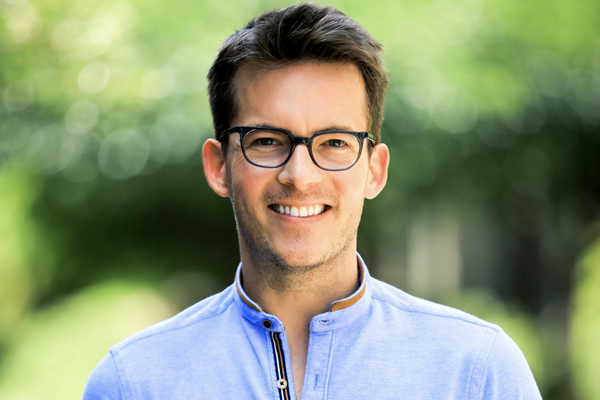
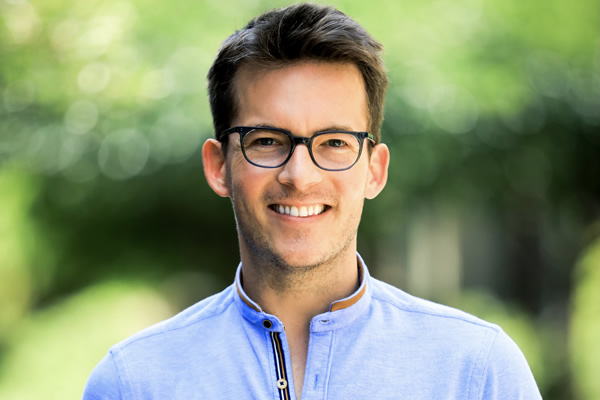
Jon Carmichael could become the first openly gay man to travel to space, and he says it’s “about time.”
An astrophotographer and pilot, Carmichael is applying to the Inspiration 4 program — the first all-civilian space mission. The trip will be led by pilot Jared Isaacman, the founder and CEO of Shift4 Payments, a company that supports e-commerce platforms.
The spacecraft will take four people to travel in Earth’s orbit for three to five days. The launch date has not been determined, but it will be no earlier than October.
Carmichael, 34, says he has had an interest in space since he was a kid.
“It’s my lifelong dream now to go to space, and it’s actually more realistic now,” he told the Washington Blade. “It actually could happen.”
He
loves to take photos of the Earth’s galaxy, the Milky Way, to connect people to
the “mesmerizing” experience often lost due to light pollution.
“We’ve really lost touch of that — that curiosity and that wonder,” he said “That’s why I like to go out of my way in the middle of nowhere away from light pollution and shoot these night sky images so that doesn’t get lost, so I can share that with others, so that people still can feel that inspiration.”
Carmichael’s application to the contest has been recognized by George Takei, the gay actor who played Hikaru Sulu in the original “Star Trek” series.
First gay man to go to space? I certainly can relate to that dream!
Jon’s story is truly inspired. To my LGBTQs and allies, can we make this young man’s day with a RT barrage? Let’s give it maximum warp and help send Jon on that mission! https://t.co/6gRM33DTVb
(Astronaut Sally Ride, the first American woman in space, was closeted most of her life. Details of her 27-year relationship with Tam O’Shaughnessy were only revealed after Ride’s death in 2012.)
Carmichael is based in Las Vegas and is helping his mother, who was recently diagnosed with Hodgkins and non-Hodgkins lymphoma after surviving Stage 4 Hodgkins lymphoma five years ago. She encouraged him to apply to Inspiration 4, he said.
The Inspiration 4 mission is also raising awareness and funds for St. Jude Children’s Research Hospital. Carmichael gifted prints of his piece, “108,” of the 2017 total solar eclipse to those who donated $50 or more to the hospital.
Each
person on the Inspiration 4 mission represents a “pillar” of leadership, hope,
generosity or prosperity.
Carmichael is applying for the prosperity seat, which is for an entrepreneur who has used Shift4Payments’ Shift4Shop platform to launch a business. The leadership seat is taken by Isaacman and the generosity seat is for an individual who has supported the St. Jude mission. Hayley Arceneaux, a physician assistant at St. Jude and pediatric cancer survivor, will take the hope seat.
The rest of the winners will be announced in late March.
Inspiration
4 isn’t the only space mission for which Carmichael is vying.
He’s been working on his application to the dearMoon Project, where eight artists from around the world can apply to take a trip to the moon in 2023. The mission is created and led by Japanese billionaire Yusaku Maezawa and Elon Musk.
“It
really will ignite a new era of the space race and excitement for space again,”
he said.
“Stardust”, a close-up of the center of the Milky Way Galaxy. (Photo
by Jon Carmichael)
Carmichael became fascinated with the total solar eclipse in his seventh grade geography class in Las Vegas.
“I
was so blown away by it,” he said. “Since that day, I was determined to see
this eclipse.”
Carmichael
in 2017 took career-changing images of the eclipse on a Southwest flight.
After losing an in-flight viewing party contest hosted by Alaska Airlines, he booked a flight from Portland, Ore., to St. Louis in order to be in the air while the eclipse was in its totality. When the flight crew found out about Carmichael’s story, the pilot cleaned a window for a clearer shot and even adjusted the plane’s flight pattern to help Carmichael capture as much of the eclipse as possible.
Carmichael stitched more than 1,000 photos together that he captured in the three minutes of totality to get the finished product. He said he worked more than 200 hours on the piece.
The
photo was unveiled privately at #OneTeam, a Twitter company event where
Carmichael was the substitute keynote speaker when Musk, the original
headliner, cancelled at the last minute. A self-proclaimed “Elon Musk fanboy,”
he was excited about the possibility of meeting him, but Carmichael said his
first speech in front of more than 1,000 people was a “beautiful
moment” that changed his life.
“Moral
of this story is things not happening for the better,” he said. “My entire
career is still around this eclipse image years later.”
The photo was later publicly unveiled on the first anniversary of the eclipse at Twitter’s New York office.
The 2017 solar eclipse from a Southwest flight. (Photo courtesy of Jon Carmichael)
Carmichael began photography at 20 when he moved to Los Angeles after coming out. Two years later, he made the passion a career, he said.
“I was going through a bit of a depression in my life because I had just come out, and I wasn’t received very well in circles I was in my life,” he said. “So I ran away to L.A. to start a new life. And I suddenly fell in love with photography while I was there, and that sort of became my escape from my depression.”
Former President Obama and Lady Gaga are among the celebrities whose pictures he’s taken, but Carmichael has been fascinated with space and documenting the universe since he was a kid. The astrophotography specialization was a hobby and he rarely shared this work with anyone, but he decided to formally print his work in his father’s honor after he passed away in 2013.
Carmichael’s
first buyer and collector was Elton John.
He
met John’s assistant at the Million Dollar Piano show at Caesars Palace in Las
Vegas while he was meeting another buyer in 2015.
From left: Jon Carmichael with Elton John (Photo courtesy of Jon Carmichael)
“We turned his entire living room into like a pop-up gallery,” said Carmichael. “He became my first collector because of this, and he was the reason that inspired me to actually follow this path.”
To Carmichael, the curiosity and mystery of space are what drive him. The unknowns, rather than terrifying him, inspire a connection to childhood and allow hardships “to disappear.”
“When
you are thinking about the universe, and you’re thinking about the reality of
where and who we are in the universe, it’s such a humbling experience,” he
said. “And that humility is what actually unites us because it gives us
all an ego check.”
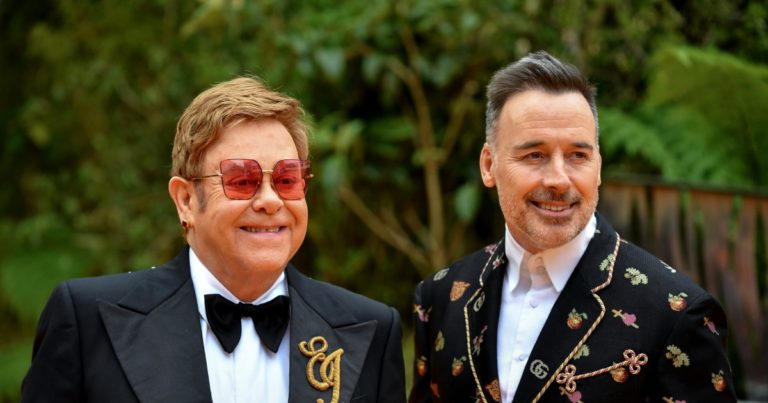
Elton John is blasting the Catholic Church as hypocritical after the Vatican decreed Monday that priests could not bless same-sex unions, because God “cannot bless sin.”
Apparently, the church isn’t as averse to earning money from a movie, “Rocketman,” that closes with scenes of the singer, his husband, David Furnish, and their two young children.
“How can the Vatican refuse to bless gay marriages because they ‘are sin’, yet happily make a profit from investing millions in ‘Rocketman’ — a film which celebrates my finding happiness from my marriage to David?? #hypocrisy,” John posted Monday on social media, including screen shots of articles about the decree and the film investment.
Advertisement
The Daily Beast discussed the investment in a 2019 story about a review of church finances that was ordered by Pope Francis. The probe focused in part on the Malta-based Centurion Global Fund, which reportedly draws two-thirds of its investments from the Vatican Secretariat of State. It’s about $78 million, the Beast said.
“[T]he most curious item on the report to come out so far,” the story said about documents that were reviewed by Italian newspaper Corriere della Sera, “is a $4.5 million expenditure recorded in February of this year related to finance for the 2019 films Men in Black: International and Elton John’s rather steamy biopic Rocketman, which portrays the entertainer’s drug problems and is the first studio movie to portray gay sex between men in an authentic way.
“While investing in mainstream entertainment is hardly sinful, the great contradiction is that the Catholic Church preaches to the devout that homosexuality is a sin.”
The Vatican maintains that LGBTQ people must be treated with dignity and respect but that gay sex is “intrinsically disordered.” Catholic teaching holds that marriage between a man and woman is part of God’s plan and is intended for procreation.
In its new document, the Vatican said questions had been raised in recent years about whether the church should bless same-sex unions in a sacramental way, particularly after the pope had insisted on the need to better welcome and accompany gay people in the church.
The Vatican stressed the “fundamental and decisive distinction” between gay individuals and same-sex unions, noting that “the negative judgment on the blessing of unions of persons of the same sex does not imply a judgment on persons.”
Advertisement
John and Furnish, now 73 and 58, respectively, met in 1993, had a civil union in 2005 and welcomed sons Zachary and Elijah via surrogacy in 2010 and 2013. The couple married in 2014 after it became legal in the U.K.
In the fantasy-musical biopic “Rocketman,” the timeline of John’s life is not beholden to reality, allowing the story to end with the 1983 release of the song “I’m Still Standing” despite showing John’s failed 1984 marriage to recording engineer Renate Blauel and using the singer’s 1990 rehab stint as a storytelling device.
And though Furnish was a producer, the 2019 feature contains no mention of the men’s lasting relationship until its final two images before the credits roll.
Advertisement
This is hardly the “Crocodile Rock” singer’s first criticism of organized religion.
“[T]here are so many people I know who are gay and love their religion,” John, a self-declared atheist, told a London newspaper in 2006. “From my point of view, I would ban religion completely. … Organized religion doesn’t seem to work. It turns people into really hateful lemmings and it’s not really compassionate.”
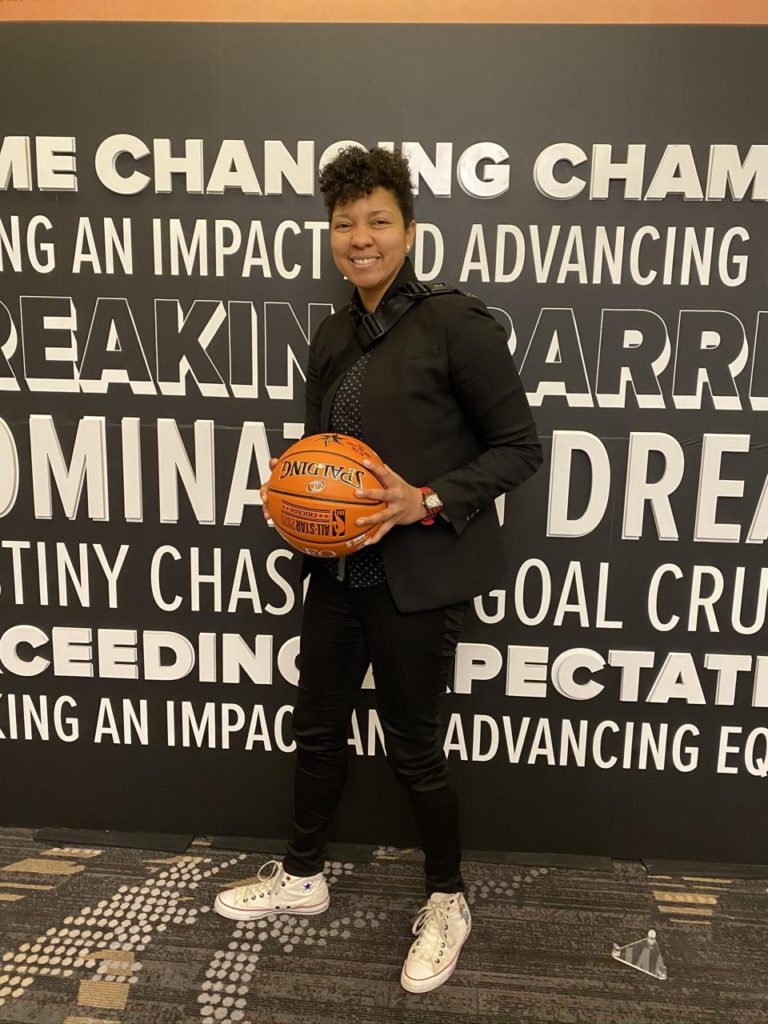
Ashland Johnson, founder of Inclusion Playbook, attends a partner NBA event, the Equality Forum, at … [+] 2020 NBA All-Star Weekend in Chicago, IL
Courtesy of Inclusion Playbook
Sports is a means to create a bridge where boundaries exist. Playing a sport assists in the development of empathy, respect and perseverance. In the early 2000s, institutions such as the United Nations began researching how sports directly affect social change movements. Throughout the years, professional athletes have used their platform to bring awareness to or voice their opinions on social injustice and a call-to-action for social change. Athletes from Martina Navratilova, one of the highest decorated women’s tennis players who disclosed her sexual orientation at the height of her career and advocates for equal rights, to LeBron James use their likeness and platform to move the needle towards equality. In May, the National Collegiate Athletic Association (NCAA) began offering a series of inclusion-focused online programs to build community and empower participants’ efforts on equity, diversity and inclusion initiatives on their campus.
Beyond professional athletes, organizations like the Inclusion Playbook, founded by Ashland Johnson, transform communities through sports.
The sports impact consultancy consists of a collaborative network of athletes, sports equity experts and social justice advocates who believe in the power of sports to transform individuals, communities and movements. Its work with sports leaders extends beyond the industry into government, education and social justice movements. The organization helps leverage its clients’ social responsibility resources and initiatives for greater returns. Its portfolio includes the NCAA, NBA and U.S. Olympics and Special Olympics.
One of the projects that Johnson and her team are working on is trans inclusion within sports. “When it comes to trans inclusion in sports, it’s piecemeal,” Johnson states. “The NCAA does have a policy for NCAA championships. But individual schools can have their own policies, same from state to state. So you have this small group, but a group that’s very vulnerable and that can benefit from sports, trans athletes, who are kept out of sports. It’s for several different arguments. A lot of them come from people in the women’s rights movement who don’t understand what being transgender means. This particular project is working with the Women’s Sports Foundation, National Women’s Law Center, and many women’s sports groups to educate them on trans inclusion in sports and then also working with LGBT groups to educate them about sports inclusion. Trans inclusion in sports looks different at different levels. It would be more of a unified pathway for young trans athletes who participate in sports.”
Johnson is a former NCAA Division One scholar basketball player. While working at a job in Georgia, her boss found out that she was gay and asked her to resign. At the time, it was legal in the state to fire a person based on sexual orientation. After speaking with the local American Civil Liberties Union, she agreed to use her situation as a case study to test Atlanta’s LGBTQ protection laws.
“After that experience,” the former student-athlete commented, “it made me think like I had done nothing to protect my own rights. One of the best ways to actually defend and protect your rights is to be a lawyer.”
MORE FOR YOU
That feeling prompted her to attend law school, focusing on civil rights law. She envisioned she’d work her way up in the LGBTQ space, strategizing how to move social justice forward in the southern states. Johnson started at the Women’s Law Center working on reproductive health. She then secured a policy council job at the National Center for Lesbians Rights. One of the programs she worked on involved Nike’s Be True campaign.
Ashland Johnson, founder of the Inclusion Playbook, at Nike Football Training Facility at Soweto … [+] Johannesburg, South Africa, visiting with partner Grassroots Soccer.
Courtesy of Inclusion Playbook
Johnson then had a stint at the Human Rights Campaign, where she realized that the sports landscape was one of the most effective ways to shift mindsets in the south. “Sports was one of those ways I could unite social justice and my other passions,” she explains. “One thing that was really missing in the social justice space is a real understanding of sports and athletics and an appreciation of what athletes can be for the social justice space. … What was really needed was a bridge between those spaces. After writing a few sports reports at the Human Rights Campaign, I decided what I wanted to do was spend at least a couple years cultivating this sports and social justice space in a more intentional way.”
As everyone did during the pandemic, Johnson pivoted her strategy because the USOPC and MiLB canceled their summits, two of the biggest minority pipeline programs in the sports industry. The majority of her contracts had been postponed indefinitely. To remain relevant and create value, she created a summer series for any young professional working in or interested in sports and social justice. The series included participation from major sports entities, including NFL, NBA and NASCAR.
As Johnson continues to pivot in her career and her business model, she focuses on the following essential steps:
Ask for help. It’s ok not to know everything. Asking others for guidance will save you time and money.
Trust yourself. Don’t let imposter syndrome hinder your momentum or success.
Let your passion and skill set drive you forward. First, discover what you’re good at and then find a space that ignites your passion.
“They [sports executives] usually get on board if you do it in incremental ways and show them the value of doing social justice work,” Johnson concludes. “It has been a lot easier in the last six months because I’m not doing the convincing myself; the athletes are.”
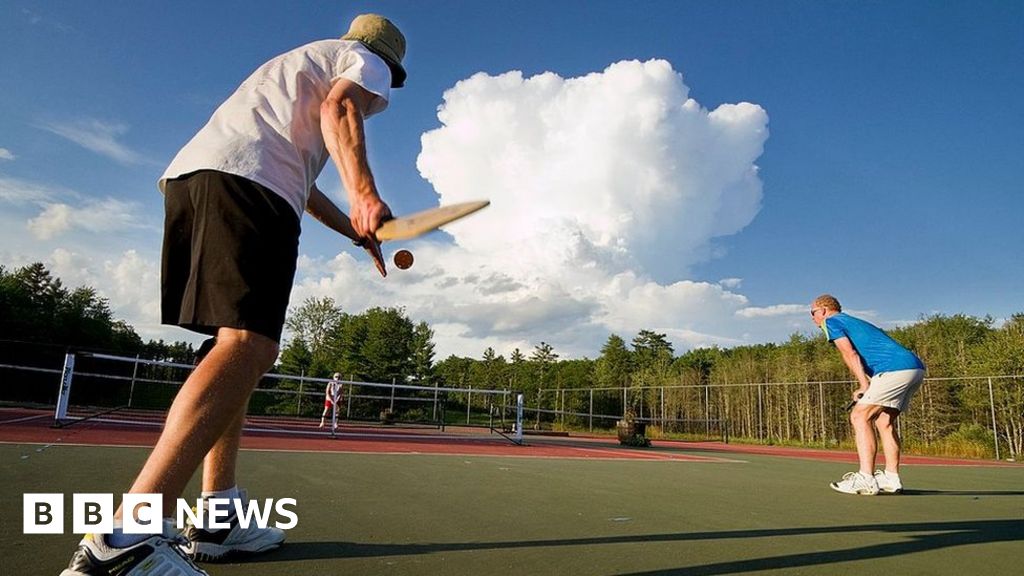
Pickleball is a mash-up of tennis, badminton and ping-pong. It can be played by singles or in pairs, either indoors or outside. The aim, like many racquet sports, is to get the ball over the net and prevent your opponent from hitting it back. The kitchen refers to the no-volley zone and dinking is a soft shot that sends the other player scrambling towards the net to reach the ball in time.