Home Blog Page 400

Cured: How mental illness was used as a tool against LGBT rights – BBC News

0

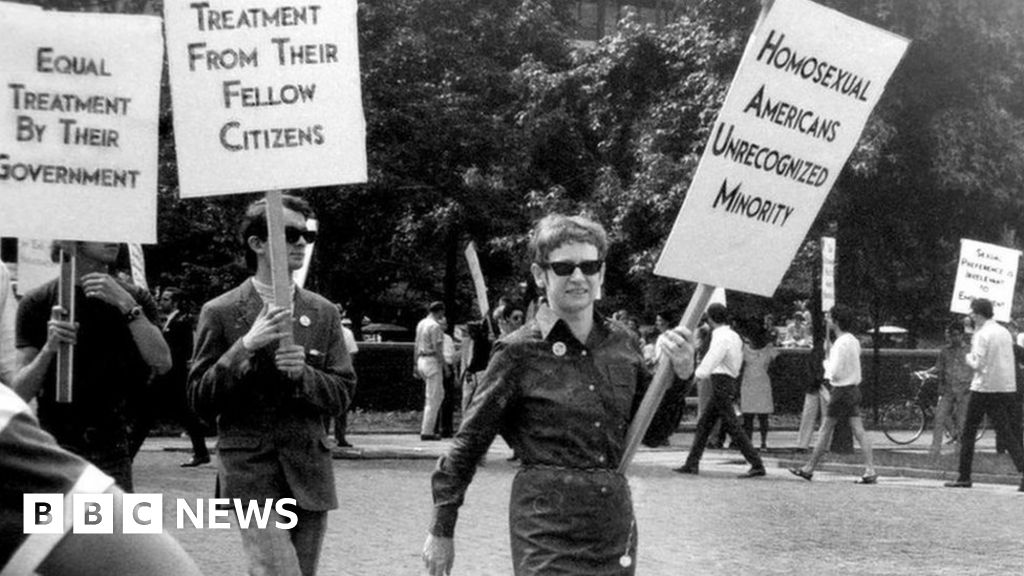
A police officer was filmed by station WTVJ in South Florida addressing school students in 1966 about the dangers of being near gay people. “They can be anywhere,” he tells them. “They can be policemen, they can be schoolteachers. And if we catch you with a homosexual, your parents are going to know about it first…”

On Deck: Am I A Lesbian? Gay Travel, Bi Erasure, Megan Rapinoe – Outsports

0

Hello and welcome to On Deck Circle for today, Thursday, March 25, 2021.

Your need to read time today is 2 minutes.

Today’s LGBTQ Sports History Highlight:

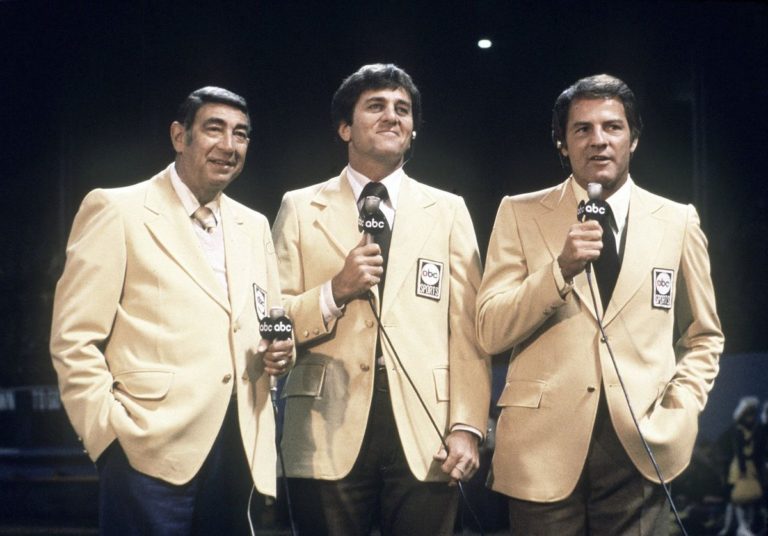
ABC’s Don Meredith - File Photos
Howard Cosell, left, Don Meredith. center, and Frank Gifford on ABC’s Monday Night Football.
ABC/Getty

On this day in 1918, sportscaster and homophobe Howard William Cohen was born. The varsity basketball player from Brooklyn’s Alexander Hamilton High School would change his last name to Cosell while attending New York University, claiming it was closer to the Polish name his family had before emigrating to America.

In 1991, he would write a book, What’s Wrong With Sports, and had this to say about gay athletes: “I don’t condone it (homosexuality), and you won’t find me marching in any gay rights parade.” He also wrote that during his 38 years in television, he worked with some bisexuals “who were excellent professionals and some who weren’t.” Despite his pompous, arrogant and otherwise controversial statements about, well, everything, he was inducted into the Sports Broadcasting Hall of Fame. Cosell died in 1995. My fondest memory of Cosell was watching him with Don Meredith and Frank Gifford on Monday Night Football, as my father joined the chorus all across America, shouting at the television, “Shut up, Howard!”

Cosell shares a birthday with Sir Elton John and the late Aretha Franklin. And me.


Today’s Outsports Headlines:

Collin Lillie points at the back of his jersey.
Collin Lillie.
UW-Oshkosh swimmer Quill is transgender.
Quill swims for UW-Oshkosh.
Shelby Weldon
Shelby Weldon
After finishing his initial trip in 41 days, Andrew Mortensen decided to keep riding, and raising money for a good cause.
Screenshot via Instagram

Other LGBTQ Sports stories making news…

by Vox contributor Katelyn Burns

Vox

At White House, Megan Rapinoe says she’s been ‘disrespected and dismissed because I am a woman’

LGBT groups want equality law in Japan before Tokyo Olympics


Today’s SB Nation’s top stories…

NCAA Womens Basketball: SEC Conference Tournament-Texas A&M vs Louisiana State
Texas A&M Aggies guard Jordan Nixon (5) shoots the ball the ball against the LSU Lady Tigers at Bon Secours Wellness Arena.
Dawson Powers-USA TODAY Sports

Top LGBTQ News…

Murders of Gay, Bi Men Show How Police, Media Fail the Queer Community

Justin Ling Reveals the Full Story of Gay Serial Killer Bruce McArthur

Bisexual Erasure: What It Is, Why It’s a Threat to Health, and How to Put an End to It

Bisexual (In)visibility in the LGBTQ+ Community

Am I A Lesbian? The Lesbian Masterdoc Is a Popular Source of Answers To This Elusive Question

Why I Embraced Looking ‘Like A Lesbian’

A walk in his shoes: A BYU administrator’s life as a gay Latter-day Saint


Today’s OutShout:

Thanks to out UCLA softball coach and ECA/GO!SPACE co-founder Kirk Walker for spreading the word about our survey! Watch Kirk’s TikTok video here:

If you’re an LGBTQ person in sports looking to connect with others in the community, head over to GO! SPACE to meet and interact with other LGBTQ athletes, or to Equality Coaching Alliance to find other coaches, administrators and other non-athletes in sports.


Social Media Spotlight:

LGBTQ sports icon Billie Jean King saluted Dr. Rachel Levine, an out trans woman, for her historic accomplishment in being confirmed to the be U.S. Assistant Secretary for Health and Human Services in the Biden administration. What a shame that every Republican except for Sens. Lisa Murkowski of Alaska and Susan Collins of Maine voted against her confirmation. Sad, but not surprising.

If you want your social media post to be included here, or to share one showcasing LGBTQ sports, email us the link at outsports@gmail.com or tag @Outsports on Instagram or Twitter!


Today’s Outsports Podcast:

Nearly every day of the week, Outsports has a new podcast for your enjoyment. Today, our Brian Bell unpacks his feelings in this new episode of LGBT In The Ring, around a week of events in pro wrestling that unfortunately touched on personal past traumas and internal struggles. Brian discusses the accusations against this week’s previously scheduled guest, Joshua Wavra, the Will Ospreay angle from NJPW’s New Japan Cup Final and why the personal connections to these events sent him into a mental health haze this week. It isn’t all dour though. Listen here:

This and all Outsports podcasts are available on Apple Podcasts, Google Podcasts, Spotify and on every platform where you find Outsports!


Today’s Sports Calendar:

MLB Spring Training:

Exhibition games are underway! Click here for MLB’s guide to your favorite teams’ schedules.


NHL:

Click here for ESPN’s schedule of men’s pro hockey action today.


NBA:

Click here for ESPN’s schedule of men’s pro basketball action today.


NCAAM:

Click here for ESPN’s schedule of men’s college basketball action today.


NCAAW:

Click here for ESPN’s schedule of women’s college basketball action today.


SOCCER:

Click here for ESPN’s schedule of soccer action today.


Share your thoughts in the comments below or email us at outsport@gmail.com

A new On Deck Circle posts every weekday morning on Outsports.com

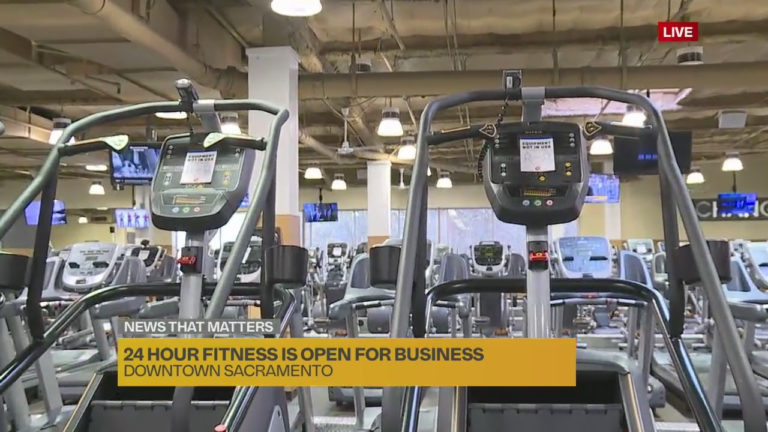
Open for Business: 24 Hour Fitness – KTXL FOX 40 Sacramento

0

SACRAMENTO, Calif. (KTXL) — California’s largest firefighting labor group is defending Gov. Gavin Newsom after a report showed he misled the public on some wildfire prevention efforts. 

California Professional Firefighters represents about 30,000 first responders across the state, and its president, Brian Rice, is adamant the governor is not to blame for what he says is a communication breakdown. 

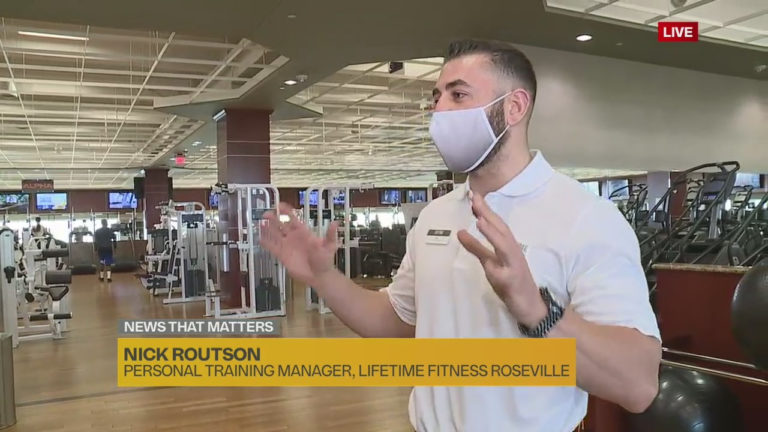
Open for Business: Lifetime Fitness – KTXL FOX 40 Sacramento

0

(NEXSTAR) — IKEA is under fire after one of its stores listed fried chicken and watermelon on a menu for its employees in celebration of Juneteenth, and now, the store manager is apologizing.

An Atlanta-based IKEA store sent an email to its employees about the celebration, telling them to watch for “a special menu” that would include fried chicken, watermelon, mac and cheese, potato salad, collard greens and candied yams, according to a picture of the email that was circulated on social media.

Study: Does the label “straight” worsen perceptions of gay people? – Big Think

0

The following article was originally published by our sister site, Big Think Edge.

Business leaders know they must prepare for technological upheavals in the years ahead. But keeping up-to-date on new technologies—to say nothing of understanding their complexities and forecasting those shifts—is an overwhelming task.

To help organizations find their footing, the CompTIA Emerging Technology Community releases an annual list of the top 10 emerging technologies. What makes this list special is that it focuses on “which emerging technologies have the most potential for near-term business impact.”

Here are CompTIA’s picks along with a quick encapsulation of each technology and some potential business use cases.

Artificial Intelligence

The holy grail of artificial intelligence research is general AI, a machine that is self-aware and commands intelligence equal to a person’s. These theoretical systems would be our intellectual equals—well, until v2.0 drops and we fall to a distant second.

Until then we have narrow AI, which are systems that perform very specific tasks. That may seem too limited, but narrow AI already powers systems like SPAM filters, Google Maps, and virtual assistants such as Siri. And its use cases are projected to diversify even more.

As Max Tegmark, physicist and machine-learning researcher, told Big Think in an interview: “What we’re seeing now is that machine intelligence is spreading out a little bit from those narrow peaks and getting a bit broader.”

Chatbots, logistics, self-driving cars, virtual nursing assistants, personalized textbooks and tutors, and even artificial creativity: These are just a few of the applications that narrow AI can improve or bring to light in the coming years.

5G and the Internet of Things

5G may not seem very exciting. We already have 4G, so what’s another G? But the difference will be exponential. 5G networks may ultimately be 100 times faster than 4G, allowing many more devices to connect, reducing latency to practically zero, and providing more reliable signals.

This wireless technology will provide the backbone for the internet of things (IoT), which will expand the power of the internet beyond computers and across a wide range of objects, processes, and environments. The IoT is the keystone technology for such futuristic scenes as smart cities, robot-driven agriculture, and self-driving highway systems.

For businesses, this one-two combo will continue recent trends and power them to the next level. Remote offices become more dependable under the 5G paradigm, and real-time data sharing of, say, live events or desktop captures will be seamless. As for the IoT, it helps remove intermediate steps that bog down productivity. Why have someone waste their time collecting data from the factory floor when the factory floor can collect, curate, and send it to them?

Serverless Computing

Serverless computing isn’t truly “serverless.” Sans tapping into some seriously dark arts, it’s impossible to provide computational resources without a physical server somewhere. Instead, this technology distributes those resources more effectively. When an application is not in use, no resources are allocated. When they are needed, the computing power auto-scales.

This technological shift means companies no longer need to worry over infrastructure or reserving bandwidth, which in turn promises the golden ticket of ease of use and cost savings.

As Eric Knorr, editor in chief of International Data Group Enterprise, writes: “One of the beauties of this architecture is that you get charged by the cloud provider only when a service runs. You don’t need to pay for idle capacity—or even think about capacity. Basically, the runtime sits idle waiting for an event to occur, whereupon the appropriate function gets swapped into the runtime and executes. So you can build out a big, complex application without incurring charges for anything until execution occurs.”

Biometrics

Biometrics allows a system to recognize users by biological markers such as their face, voice, or fingerprint. Many people already have one or several of these on their laptops and smartphones, but as the technology improves and becomes more ubiquitous, it may finally end the password paradigm.

Because most people have inefficient passwords, use the same one for every account, and never change them, hackers typically need only one hit to enjoy carte blanche over someone’s personal and professional data. Even those who do passwords correctly can find managing the system a nightmare.

For these reasons, biometrics promises much-needed security of sensitive data. A fingerprint is much more difficult to hack with raw computational power than a password, and that difficulty is increased by magnitudes when multiple markers are used in tandem.

Augmented/Virtual Reality

With hardware costs lowering, processing power increasing, and high-profile players such as Google and Facebook entering the game, virtual reality’s day may have finally come. And the more widespread acceptance of augmented reality apps in smartphones may make such technologies an easier sell moving forward.

The recently announced Microsoft Mesh and its competitors hope to capitalize on our new remote-work era. The concept combines these “mixed-reality” technologies to create virtual shared spaces that business teams can use to hold meetings or work on projects.

And Peter Diamandis, chairman and CEO of the XPRIZE Foundation, imagines this technology can revolutionize the customer experience in retail. Customers could, for example, try clothes on a virtual avatar or sit in their amphitheater seats before making a purchase.

Blockchain

It may be surprising that Bitcoin, the much-hyped cryptocurrency, didn’t make the list. But the technology’s online ledger, the blockchain, has supplanted the digital denomination as the rising business star.

Unlike traditional, centralized records, a blockchain is decentralized. The permanent record is not stored in one location but exists on nodes spread across the system. This design makes it difficult to lose records or tamper with them.

As tech entrepreneur Elad Gil told Big Think in an interview: “[Blockchain] systems are effectively censorship proof or seizure resistant. In other words, the government can’t come and take your asset if you’re in a country that has very bad governance, or it means that no third party can suddenly, accidentally erase your data, or you can’t hack a third party to access your data (although obviously, you can still hack a blockchain).”

This is why blockchain has caught the attention of organizations that need to store records (i.e., all organizations). And the potential use cases are impressive. Blockchain could be used by hospitals to store and share health records. It could underpin a secure online voting platform. It could track logistics across international supply chains. And, of course, there are numerous applications for cybersecurity, too.

Robotics

The first industrial robot punched the clock in 1962. Technological advancements have steadily widened robotics’ workforce representation since, and in the coming years, robots will continue moving from factories to First Street to perform rudimentary tasks such as cleaning and delivery.

Such advancements have kept the Luddite fires burning for more than a century now, so one challenge faced by organization leaders will be reassuring their teams that the robots aren’t here to replace them. In fact, as more people move into soft-skilled, human-focused jobs, they’ll likely find the transition a beneficial one.

“Introducing robots into a workplace can be a complex and dynamic undertaking. While it may start with workers feeling like their jobs are being threatened, the end result is a warehouse full of happier, healthier humans who remain the centerpiece of a competitive business,” writes Melonee Wise, CEO of Fetch Robotics, for the World Economic Forum.

Natural Language Processing

Natural language processing is a subfield of AI that aims to develop systems that can analyze and communicate through human language. Sound easy? If so, it’s only because you’re reading these words with a mind endowed by evolution with the gift of language.

Algorithms aren’t so lucky. They have trouble parsing the eclectic hodgepodge of symbols, gestures, sounds, and cultural cues that we use to express meaning and ideas.

“There’s an obvious problem with applying deep learning to language. It’s that words are arbitrary symbols, and as such they are fundamentally different from imagery. Two words can be similar in meaning while containing completely different letters, for instance; and the same word can mean various things in different contexts,” writes Will Knight for MIT Technology Review.

When algorithms finally crack language, the business use cases will be substantial. Think chatbots, virtual editors, market analysis, instant translation of live conversations, resume readers, and phone auto-attendants that don’t send every caller into a rage.

Quantum Computing

Quantum computing is “the exploitation of collective properties of quantum states, such as superposition and entanglement, to perform computation.” Translation: It solves problems faster and more accurately—in some cases, ones that stump even modern supercomputers.

While we shouldn’t expect the quantum PC any time soon, we can expect quantum computers to become the backbone for the emerging technologies listed above. These machines already exist today, and IBM has announced plans to build a 1,000 qubit version by 2023, a milestone physicist Jay Gambetta told Science would reflect an “inflection point.”

Adoption of this technology could make big data more manageable. It could cut costly and complex development time through speedy simulations and solve multivariable optimization problems with ease. Finally, it may make currently intractable problems manageable, such as those faced in the processing of natural language.

Quantum computing also illustrates why it’s important that organizational leaders don’t develop tunnel vision. To focus on one emerging technology or one model of the future is to risk your company’s well-being. It’s not a question of which technology will dominate, but the potentials each technology brings and how they may work together.

“The innovation that will be delivered by these technologies, especially as I said, when they’re leveraged in tandem, will be staggering over the next few years and will enable customer solutions that will actually have paradigm shifting impact for those that act on them,” Mike Haines, chair of the Emerging Technology Community’s executive council, said on the CompTIA Biz Tech podcast.

Navigating these technological shifts will certainly challenge business leaders for years to come. But by keeping an open mind to the possibilities, they can chart a path that predicts dangers and capitalize on these emerging technologies.

Make innovation central to your organizational culture with lessons ‘For Business‘ from Big Think Edge. At Edge, more than 350 experts, academics, and entrepreneurs come together to teach essential skills in career development and lifelong learning. Prepare for the future of work with lessons such as:

  • Make Room for Innovation: A Framework for Creating a Culture of Innovation, with Lisa Bodell, Founder and CEO, Futurethink
  • Worrying About the Robo-pocalypse Is a First-World Problem, with Bill Nye, the Science Guy, Mechanical Engineer, and TV Personality
  • How to Supercharge Collaboration: The 4 Benefits of Remote Teams, with Erica Dhawan, Collaboration Consultant and Co-Author, Get Big Things Done
  • Design for Good: How to Provide Products that Align with Consumer Goals—and Transform the Attention Economy, with Tristan Harris, Former Design Ethicist, Google, and Co-Founder, Center for Humane Technology
  • Confront Inefficiencies: Essential Questions for Examining Your Organization in an Honest Way, with Andrew Yang, CEO and Founder, Venture for America
  • Earn the Right to Win: Develop and Execute a Competitive Strategy, with Bill McDermott, CEO, ServiceNow, and Author, Winner’s Dream

Request a demo today!

Philadelphia meteorologist speaks out on discriminatory blood donation policy affecting him and the LGBTQ+ community – KGO-TV

0
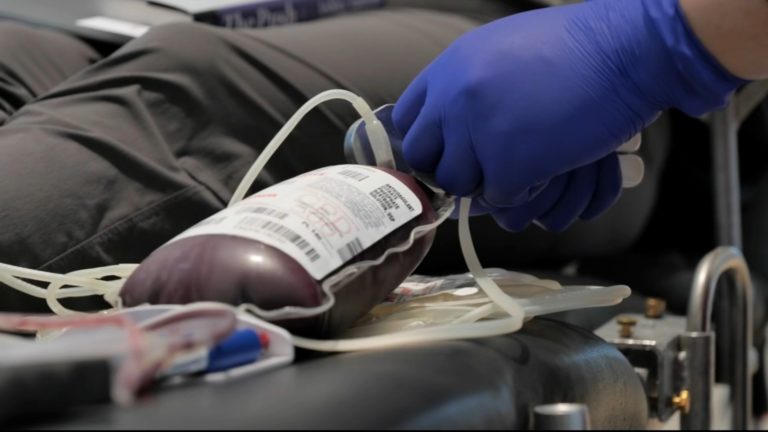
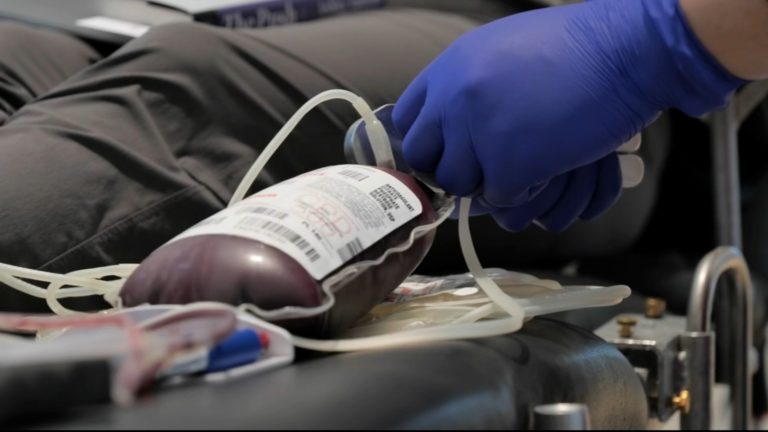
PHILADELPHIA — Blood donations are vital. But we’re digging deeper into a policy set by the FDA, that many see as discriminatory against the LGBTQ community.
Meteorologist Adam Joseph at our sister station in Philadelphia talked to their health reporter and registered nurse Ali Gorman about how that policy impacts him and millions of others.

“I want to help everyone as much as I can but someone is telling me I can’t because I am living the life I was born to live,” he said.

Joseph is speaking out about an FDA policy that restricts gay or bisexual men from donating blood unless they are abstinent for three months, that includes men like Adam, who has been in a monogamous relationship for 12 years. He and his partner Karl have built a family together.

“We look at our life with our two kids, yes we’re two dads but we’re living a life like any other straight couple,” Adam said. “You know we don’t go outside our marriage, we live happily together. “

He says as a gay male, he and many others are lumped into a stereotype that is discriminatory that all gay men have HIV.

The restriction on blood donations stems from a lifetime ban enacted in 1983 when the AIDS epidemic was unfolding.

Doctor Katharine Bar, an infectious disease expert at Penn Medicine, says we have come a long way scientifically since then. She says screening today of both the donor and the blood itself is incredibly sensitive.

The policy by the FDA has been updated. In 2015, it changed, allowing gay or bisexual men to donate if they abstain from sex with a man for 12 months. Last year, due to the pandemic, that time period went down to three months.

Doctor Bar says it’s a step in the right direction but still unreasonable and not based on science.

“It’s really judging people as a large group that you identify with as opposed to your individual risks,” she said. “I think we can continue to push to reassess this policy and hopefully have it be more science-based as opposed to historically-based.”

She says other countries have changed their policies.

The FDA recently launched a pilot study to assess evaluating individual risks instead of blanket restrictions.

The American Medical Association says there’s already enough evidence. In a statement, it urges the FDA to remove categorical restrictions.

Adam still tells others, donate blood if you can.

“It can save so many lives. Do it for me until I can walk in those doors and do it for all of you,” he said.

The American Red Cross is involved with the FDA study.

“The Red Cross remains committed to building an inclusive environment that embraces diversity for all those who engage with our lifesaving mission and does not believe blood donation eligibility should be determined by methods that are based upon sexual orientation,” the American Red Cross said in a statement.

Copyright © 2021 KGO-TV. All Rights Reserved.

Philadelphia meteorologist speaks out on discriminatory blood donation policy affecting him and the LGBTQ+ community – WABC-TV

0
PHILADELPHIA — Blood donations are vital. But we’re digging deeper into a policy set by the FDA, that many see as discriminatory against the LGBTQ community.
Meteorologist Adam Joseph at our sister station in Philadelphia talked to their health reporter and registered nurse Ali Gorman about how that policy impacts him and millions of others.

“I want to help everyone as much as I can but someone is telling me I can’t because I am living the life I was born to live,” he said.

Joseph is speaking out about an FDA policy that restricts gay or bisexual men from donating blood unless they are abstinent for three months, that includes men like Adam, who has been in a monogamous relationship for 12 years. He and his partner Karl have built a family together.

“We look at our life with our two kids, yes we’re two dads but we’re living a life like any other straight couple,” Adam said. “You know we don’t go outside our marriage, we live happily together. “

He says as a gay male, he and many others are lumped into a stereotype that is discriminatory that all gay men have HIV.

The restriction on blood donations stems from a lifetime ban enacted in 1983 when the AIDS epidemic was unfolding.

Doctor Katharine Bar, an infectious disease expert at Penn Medicine, says we have come a long way scientifically since then. She says screening today of both the donor and the blood itself is incredibly sensitive.

The policy by the FDA has been updated. In 2015, it changed, allowing gay or bisexual men to donate if they abstain from sex with a man for 12 months. Last year, due to the pandemic, that time period went down to three months.

Doctor Bar says it’s a step in the right direction but still unreasonable and not based on science.

“It’s really judging people as a large group that you identify with as opposed to your individual risks,” she said. “I think we can continue to push to reassess this policy and hopefully have it be more science-based as opposed to historically-based.”

She says other countries have changed their policies.

The FDA recently launched a pilot study to assess evaluating individual risks instead of blanket restrictions.

The American Medical Association says there’s already enough evidence. In a statement, it urges the FDA to remove categorical restrictions.

Adam still tells others, donate blood if you can.

“It can save so many lives. Do it for me until I can walk in those doors and do it for all of you,” he said.

The American Red Cross is involved with the FDA study.

“The Red Cross remains committed to building an inclusive environment that embraces diversity for all those who engage with our lifesaving mission and does not believe blood donation eligibility should be determined by methods that are based upon sexual orientation,” the American Red Cross said in a statement.

Copyright © 2021 WABC-TV. All Rights Reserved.

Equality Act Would Extend Civil Rights Laws To LGBTQ People Throughout U.S. – NPR

0

Charleston resident Tia Clark teaches tourists the coastal South Carolina tradition of catching blue crabs. She and her wife say the Equality Act would make it easier for them to adopt a child. Matt LeGault hide caption

toggle caption

Matt LeGault

Charleston resident Tia Clark teaches tourists the coastal South Carolina tradition of catching blue crabs. She and her wife say the Equality Act would make it easier for them to adopt a child.

Matt LeGault

Charleston native Tia Clark has learned to endure discrimination in conservative South Carolina, one of roughly two dozen states with few or no laws protecting LGBTQ people.

The 41-year-old fled a decades long career in the food and beverage industry, in part she says, because of discrimination by customers.

“I don’t want to be in this fight and for me, I fought my whole life,” says Clark.

So, she started her own business teaching tourists a coastal tradition: how to catch blue crabs. She never dreamed she could be her own boss. But she made it happen.

“That came from my tough skin of being a black, gay female living the South,” Clark says. She’s hopeful the Equality Act will become law and make life easier for others.

The Equality Act amends the 1964 Civil Rights Act to include LGBTQ people. It would make discrimination in housing, employment and public accommodations illegal. The bill first passed the U.S. House in 2019 but died in the Republican-controlled Senate. It passed the House again on Feb. 25.

Advocates have higher hopes this time around now that Democrats control the Senate and President Biden has indicated he would sign the bill into law. Now, the question is whether enough Republicans would support the legislation so that the Equality Act could withstand a filibuster by those opposed to LGBTQ rights.

Clark and her wife of 11 years, Katie Killham, would like to have children. But they’re discouraged by cases of LGBTQ couples being turned away from adoption and foster care agencies. They say the Equality Act could be life changing.

“I think I’d be willing to take on a foster care agency rather than just move on if I knew they legally had to treat us like everyone else,” Killham says.

The act would not only ban federally funded agencies from discriminating against same-sex couples, it would also exclude religious beliefs as a rationale for discrimination. And that has conservative religious leaders worried.

“I think when you take religious freedom off the table, you’re really kind of giving the Constitution the finger,” says Dave Wilson, president of the Palmetto Family Council, an organization he says takes a biblical view on issues. Wilson believes the Equality Act violates his First Amendment rights.

“I want my religious freedom and my ability as a Christian to be respected just as much as a transgender person wants to be respected as choosing to be transgender,” Wilson says.

Transgender people say it’s not a choice. It’s who they are. And many faith groups do support LGBTQ rights.

Claire Wofford, a political scientist at the College of Charleston, says the Equality Act could lead to a flurry of lawsuits in places where discrimination has been quietly tolerated.

“In South Carolina and other states like us, you are potentially on a collision course between equality and religious liberty,” Wofford says.

Wofford believes the issue of religious liberty will likely be decided by judges. She points to precedents where courts exclude religion as a defense for race-based discrimination.

“In certain instances the government interest is so important that it outweighs the right to religious liberty,” she says

If the Equality Act were to become law, one question courts would certainly be asked is whether the federal government has a compelling interest to protect LGBTQ individuals from discrimination in ways that make some conservative people of faith uncomfortable.

Chase Glenn believes it does. He’s the executive director of a Charleston based advocacy group Alliance for Full Acceptance. He’s also a married, transgender man with children.

“I think there’s an emotional toll that many LGBTQ people have experienced and carry with them,” says Glenn.

He’s keeping an eye on a slew of anti-LGBTQ measures in state legislatures across the nation. One in South Carolina would have removed people like him from a hate crimes bill.

“It’s the worry of what if I am discriminated against? What if someone finds me out?”

Glenn says such attempts are proof his community needs cohesive, federal civil rights protection.

Rachel Levine Is First Openly Transgender Official Confirmed by Senate – The New York Times

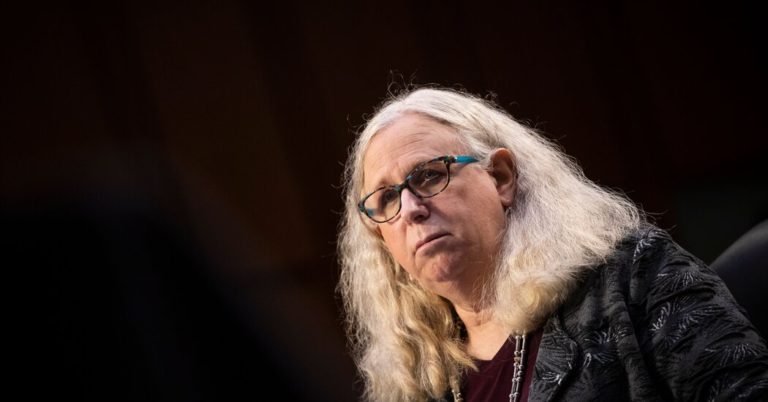
Dr. Rachel Levine, President Biden’s pick to be assistant secretary for health, made history on Wednesday by becoming the first openly transgender person confirmed by the Senate to a federal position, and immediately vowed to “promote policies that advance the health and well-being of all Americans” and to fight for transgender youth.

The Senate vote, 52 to 48, followed a contentious confirmation hearing that became a flash point in the battle over transgender rights. Dr. Levine, a pediatrician and former health secretary in Pennsylvania, will assume her post at the federal Health and Human Services Department at a challenging time, just as Mr. Biden is trying to lead the country out of the coronavirus crisis.

In a statement shared with The New York Times, Dr. Levine said she was “humbled” by the Senate’s approval and thanked the L.G.B.T.Q. community for its support.

“As Vice President Harris has said, I recognize that I may be the first, but am heartened by the knowledge that I will not be the last,” she wrote. “When I assume this position, I will stand on the shoulders of those who came before — people we know throughout history and those whose names we will never know because they were forced to live and work in the shadows.”

She said she wanted to address transgender youth in particular.

“I know that each and every day you confront many difficult challenges,” she wrote. “Sadly, some of the challenges you face are from people who would seek to use your identity and circumstance as a weapon. It hurts. I know. I cannot promise you that these attacks will immediately cease, but I will do everything I can to support you and advocate for you.”

Two Republicans, Senators Lisa Murkowski of Alaska and Susan Collins of Maine, crossed party lines to vote for Dr. Levine.

At her confirmation hearing before the Senate Health Committee, Dr. Levine was the subject of a tirade by Senator Rand Paul, Republican of Kentucky, who likened sex reassignment surgery to “genital mutilation” and demanded to know whether she supported such procedures for minors.

Her response — that transgender medicine is “a very complex and nuanced field with robust research and standards of care” — drew plaudits from Democrats who praised her for maintaining her calm, but criticism from conservatives who accused her of being evasive.

In a recent interview, Roger Severino, a champion of social conservative causes who ran the Health and Human Services Department’s civil rights office under President Donald J. Trump and met with Dr. Levine when considering whether to roll back transgender protections, called her a “divisive pick that goes contrary to President Biden’s promise of unity.”

But advocates for the L.G.B.T.Q. community were elated on Wednesday.

“At a time when hateful politicians are weaponizing trans lives for their own perceived political gain, Dr. Levine’s confirmation lends focus to the contributions trans people make to our nation and deflates absurd arguments calling for their exclusion,” said Annise Parker, a former mayor of Houston who now runs the L.G.B.T.Q. Victory Institute, which trains L.G.B.T.Q. people to run for public office.

What You Need to Know About Arkansas’s New Anti-LGBTQ+ Health Care Bill – Vogue.com

On Monday, SB 289—a bill that would allow doctors and other health care workers to deny nonemergency services based on religious, moral, or ethical objections—was delivered to the desk of Arkansas Republican governor Asa Hutchinson.

This bill might seem like an isolated case, but in reality it’s one of three proposed pieces of anti-LGBTQ+ legislation that are dangerously close to passing in Arkansas alone. (One of the other bills targets trans students’ sports participation, while the other bans trans youth from accessing gender-affirming health care.) While the bill might ostensibly be framed in terms of religious freedom, there’s genuine concern that it could be used to discriminate against LGBTQ+ patients. Get all the details on SB 289—and its potential ramifications for LGBTQ+ individuals across the country—below:

What is SB 289?

SB 289, also known as the Medical Ethics and Diversity Act, is a bill that—if passed—would allow health care institutions and providers to refuse care based on religious, moral, or ethical objections, even when medically necessary, except in emergency situations.

What effect would the passage of SB 289 have on Arkansas’s LGBTQ+ community?

Allowing health care providers to opt out of providing care based on religious, moral, or ethical objections could have devastating effects on LGBTQ+ patients, more than 50% of whom have already experienced some form of health care discrimination. One example offered by the Human Rights Campaign is that of a pharmacist who, if SB 289 became law, could legally refuse to fill prescriptions for birth control, PrEP, and antiretrovirals; similarly, a doctor could refuse to maintain hormone treatments for trans patients under their care.

What are SB 289’s next steps?

Now that the bill has passed the House, it’s up to Hutchinson to either sign or veto it; it’s worth noting that Hutchinson’s past stances on LGBTQ+ issues have included a 2015 statement disagreeing with the Supreme Court’s ruling that Arkansas be required to recognize same-sex marriage and a 2016 instruction to public schools to disregard an Obama-era directive to permit transgender students to use bathrooms and locker rooms consistent with their current gender identity.

How many people would this legislation affect?

While the bill could potentially affect all Arkansas residents, LGBTQ+ residents—who made up at least 3.3% of Arkansas’s total population in 2019—are likely to be disproportionately affected. Similar bills aimed at limiting the rights and protections of queer and trans Arkansans are already mobilizing protest from across the country.

No science to back blanket ban on trans women in sport: study – Reuters

LONDON (Thomson Reuters Foundation) – Each sport should decide for itself how to fairly regulate transgender women competing in women’s sport, rather than follow the blanket bans proposed in dozens of U.S. states, sports scientists said on Wednesday.

The International Federation of Sports Medicine (IFSM), which represents 125,000 physicians in 117 countries, said data is scant on the advantages or otherwise of trans athletes, but that each sport needed rules to meet its own physical demands.

The world of competitive sport is fiercely split over whether trans women hold an unfair advantage despite taking cross-sex hormones that lower their testosterone.

Trans men have sparked less controversy, as the extra strength that comes from testosterone taken for transitioning is widely seen as no barrier to safe and fair competition.

The global debate has united social conservatives and some top sportswomen against trans activists and supportive athletes.

Opponents say trans women have advantages gained in male puberty that are not sufficiently reduced by hormone treatment.

“All politics aside, all biases aside, science has to direct it,” said lead author Blair Hamilton, who researches trans athletes at Britain’s Brighton University.

Hamilton, who is trans, rejected suggestions that sportswomen like her will inevitably come to dominate female sport, adding that she plays in the seventh tier of British women’s football.

“I’ve played women’s sport now for four years,” said Hamilton, whose study backed testosterone limits for trans women in sport. “I’m not dominating the sport.”

Trans athletes are at the heart of a U.S. culture war, with bills to ban trans women and girls from competing in college and school sport under debate or passed in 29 states, according to Freedom For All Americans, an LGBT+ advocacy group.

Mississippi’s governor signed a ban into law this month, while Idaho passed a similar law last year that was eventually blocked by a federal court.

U.S. President Joe Biden has pushed for greater LGBT+ inclusion, signing an executive order in January that banned discrimination based on gender identity in bathrooms, changing rooms and school sports.

However, concerns about physical safety led World Rugby to ban trans women from international women’s games last year.

Male puberty provides a 10-50% physical advantage, dependent on the sport, with the gap widest in activities that use “muscle mass and explosive strength”, according to a 2020 review of existing studies by the University of Manchester and Sweden’s Karolinska Institute.

The muscular advantage enjoyed by trans women falls by about 5% after a year of testosterone-suppressing treatment, according to their research.

Reporting by Rachel Savage @rachelmsavage; Editing by Lyndsay Griffiths and Hugo Greenhalgh. Please credit the Thomson Reuters Foundation, the charitable arm of Thomson Reuters, that covers the lives of people around the world who struggle to live freely or fairly. Visit news.trust.org

North Carolina House members file bill on transgender students in sports – WXII12 Winston-Salem

Several North Carolina Republican legislators have filed a bill that would block transgender women and girls from joining women’s high school and college athletic teams, joining the culture-war tussle that has swept several states. Their bill, which would apply to middle and high schools and colleges, both public and private, comes as legislators in nearly 30 other states have proposed similar prohibitions.Bills in Idaho and Mississippi have become law, while others are being debated in several more state legislatures.A bill sponsor acknowledged he knew of no controversies in North Carolina when a transgender girl or woman had joined a team or competed in a sport designated for women.But it was important to be proactive in addressing the issue in North Carolina, said Rep. Mark Brody, a Union County Republican.It’s unclear if any transgender athlete is currently competing in the state, because that information is confidential. But this bill would change that. “I do not want to wait until biological females are pushed out of female sports, and all of their records are broken, scholarships lost and benefits of excelling are diminishing before this is addressed,” Brody said on Tuesday at a Legislative Building news conference.The North Carolina bill, filed on Monday, would require intramural and interscholastic teams to be designated as male or for men, female or for women, or co-ed.Teams and sports designated as female or women’s activities wouldn’t be open to the male students, and a person’s sex would be defined as based “solely on a person’s reproductive biology and genetics at birth.”The “Save Women’s Sports Act” also creates a legal cause of action for a “biological female student” to sue if she alleges suffering from a school violating the policy or retaliation from the school for reporting a violation.LGBT groups and Democratic allies have blasted such legislation. They say the measures discriminate against transgender people who are already vulnerable to bigotry and just want to compete in sports like anyone else. President Joe Biden signed an executive order that bans discrimination based on gender identity in school sports and elsewhere.Equality North Carolina said in a news release that the bill is rooted in “outdated generalizations about male and female bodies.”“Young people all across this state, regardless of gender identity, deserve the opportunity to experience the benefits of being part of a sporting community — especially when trans youth already face disproportionate barriers to success in learning environments,” Equality NC education policy director Rebby Kern said.But the bill’s supporters said physical differences between men and women are clear and women face little chance to succeed if they are forced to compete with transgender women or girls. The North Carolina High School Athletic Association does have a policy that allows transgender students to participate in athletics, but Brody argues the policy’s details lack transparency.In South Dakota, Gov. Kristi Noem issued last week a partial veto of a transgender sports bill and recommending to lawmakers that collegiate sports be excluded from the measure. Noem faced pressure from business interests to back off the legislation and social conservatives to embrace it.Tuesday’s news conference took place exactly five years after the General Assembly passed a law that in part required transgender people to use restrooms in many public buildings that corresponded to their sex at birth.The law, known as House Bill 2, drew national condemnation and prompted several large corporations and sports teams to relocate events to other states or reconsider expanding in North Carolina. That measure was partially repealed in 2017.This article contains information from The Associated Press.

Several North Carolina Republican legislators have filed a bill that would block transgender women and girls from joining women’s high school and college athletic teams, joining the culture-war tussle that has swept several states.

Their bill, which would apply to middle and high schools and colleges, both public and private, comes as legislators in nearly 30 other states have proposed similar prohibitions.

Advertisement

Bills in Idaho and Mississippi have become law, while others are being debated in several more state legislatures.

A bill sponsor acknowledged he knew of no controversies in North Carolina when a transgender girl or woman had joined a team or competed in a sport designated for women.But it was important to be proactive in addressing the issue in North Carolina, said Rep. Mark Brody, a Union County Republican.

It’s unclear if any transgender athlete is currently competing in the state, because that information is confidential. But this bill would change that.

“I do not want to wait until biological females are pushed out of female sports, and all of their records are broken, scholarships lost and benefits of excelling are diminishing before this is addressed,” Brody said on Tuesday at a Legislative Building news conference.

The North Carolina bill, filed on Monday, would require intramural and interscholastic teams to be designated as male or for men, female or for women, or co-ed.

Teams and sports designated as female or women’s activities wouldn’t be open to the male students, and a person’s sex would be defined as based “solely on a person’s reproductive biology and genetics at birth.”

The “Save Women’s Sports Act” also creates a legal cause of action for a “biological female student” to sue if she alleges suffering from a school violating the policy or retaliation from the school for reporting a violation.

LGBT groups and Democratic allies have blasted such legislation. They say the measures discriminate against transgender people who are already vulnerable to bigotry and just want to compete in sports like anyone else.

President Joe Biden signed an executive order that bans discrimination based on gender identity in school sports and elsewhere.

Equality North Carolina said in a news release that the bill is rooted in “outdated generalizations about male and female bodies.”

“Young people all across this state, regardless of gender identity, deserve the opportunity to experience the benefits of being part of a sporting community — especially when trans youth already face disproportionate barriers to success in learning environments,” Equality NC education policy director Rebby Kern said.

But the bill’s supporters said physical differences between men and women are clear and women face little chance to succeed if they are forced to compete with transgender women or girls. The North Carolina High School Athletic Association does have a policy that allows transgender students to participate in athletics, but Brody argues the policy’s details lack transparency.

In South Dakota, Gov. Kristi Noem issued last week a partial veto of a transgender sports bill and recommending to lawmakers that collegiate sports be excluded from the measure. Noem faced pressure from business interests to back off the legislation and social conservatives to embrace it.

Tuesday’s news conference took place exactly five years after the General Assembly passed a law that in part required transgender people to use restrooms in many public buildings that corresponded to their sex at birth.

The law, known as House Bill 2, drew national condemnation and prompted several large corporations and sports teams to relocate events to other states or reconsider expanding in North Carolina. That measure was partially repealed in 2017.

This article contains information from The Associated Press.

Celebrating 75 Years of Awe, Fun – grandstrandmag.com

Tiara Rivera of New York City struggled to take it all in. The first-time visitor to Myrtle Beach meandered the maze of the Gay Dolphin Gift Cove. She strolled in searching for a shot glass souvenir and, like so many others, quickly was overwhelmed—yet captivated—by the floor-to-ceiling displays and jam-packed shelves of nautical items, collectibles, shells and gadgets.

“It’s a lot. They even have a 10-foot gorilla,” she says, her cell phone capturing video of the store. “It’s like anything you can think of to go in any type of store. It’s crazy. It’s my first time here. The diversity of the things they sell in here is insane.”

And just like that, another customer converted. For 75 years, the iconic store on Myrtle Beach’s legendary Ocean Boulevard has entertained visitors—and locals, too—with its unmatched mash-up of souvenirs, trinkets and eclectic merchandise. The Gay Dolphin is almost as old as Myrtle Beach itself, with the business’ founding family also credited with helping the once quaint beach town evolve into the popular vacation destination it is today.

The Gay Dolphin is quintessential Myrtle Beach—quirky and offering something for everyone—and this year, celebrates its 75th anniversary under the same ownership of the Plyler family, which had the vision to blend souvenir hunting and entertainment under one roof.

“We do what nobody in his right mind would do,” says Buz Plyler, who operates the store his parents founded.

“I got lost in the Gay Dolphin.”

Step into the Gay Dolphin, and you’ll quickly catch on to what Plyler means. In addition to the traditional souvenir Myrtle Beach T-shirts, trinkets and taffy, this store is a one-of-a-kind treasure trove for unique gifts and collectibles, from a five-cent tiny shell to a massive $3,000 Big Foot statue—and everything in between.

The 30,000-square-foot store, which spans from the Boulevard to the boardwalk, features nine levels of floor-to-ceiling merchandise that seemingly never ends.

“That’s what made it so much fun,” says Myrtle Beach Mayor Brenda Bethune, who recalled going to the Gay Dolphin as a kid growing up in Myrtle Beach. “We didn’t have multi-story stores here. You get to explore all the different levels.”

Meander a few feet after entering from the Boulevard and you’ll encounter the store’s top seller: blue Myrtle Beach bicycle license plate tags featuring every name you can imagine. The tags, which sell for $2.98 each, consume an entire wall, a rolling ladder parked there for convenience in reaching the top rows. They’ve been a mainstay for 60 years, though new names regularly have been added.

As you walk through the store, don’t be surprised if your presence triggers a pitch from an automated Blackbeard pirate machine welcoming you to the Gay Dolphin and inviting you to come over to make a souvenir penny. Or an introduction from a mechanical Zoltar fortune teller machine ready to entertain by reading your future.

As it was always meant to be, the store is a haven for nautical merchandise, from an extensive and exotic shell collection to wall hangings and the popular shark tooth necklaces. As a kid getting merchandise for the store, Plyler took a shark tooth to a gold wire vendor, who fashioned it into a necklace. Plyler had the on-street promoters at the Gay Dolphin Amusement Park wear them, and before you knew it, the shark tooth necklace—still available at the Gay Dolphin today —became a must-have for visitors and even locals like Bethune, who used to walk to the Gay Dolphin from her family’s hotel just a few blocks away.

“It was neat because it was a place to go to get something really cool,” Bethune says. “You can still go in there and get a shark’s tooth necklace.”

But the store goes way beyond nautical. Go down a few stairs and you’ll see an Elvis striking his well-known performance pose. There are sections for Betty Boop, John Wayne and other characters and celebrities; dragons; fairies and jungle creatures. A large llama and Big Foot stand posed and ready for customers’ selfies. The Big Foot dons the store’s most popular T-shirt that proudly bears the words, “I got lost in the Gay Dolphin.”

“It’s my best seller in apparel,” Plyler says. “We just heard so many people say it so often.”

And it’s easy to do. A few steps here and there take you on an adventure through the sprawling store, and just when you think you’ve covered every inch of it, there’s another several stairs around a corner taking you to yet another section.

“You lose track of time and lose track of space, then five hours later…,” says Chris Walker, who owns Mad Myrtle’s Ice Creamery next door to the Gay Dolphin, Hi-Fi Coffee Bar and Nightmare Haunted House, all on Ocean Boulevard. “It’s still as unusual today as it was 75 years ago. It’s one of those homegrown successes that you can’t replicate.”

A visit to the Gay Dolphin has become a tradition during every beach trip for generations of tourists. Plyler recalls when destination research surveys showed that the Gay Dolphin had become much more than a store, it had become a go-to attraction.

“We had the most devoted customers,” says Plyler, adding that more than 20,000 people a day visit the store in the summer. “It makes you feel, even now, somewhat surprised. It’s rewarding. I’ve always been surprised at people’s devotion to the business.”

Bethune says it’s not just what’s inside the Gay Dolphin that makes it unique; the glass observation tower along Ocean Boulevard was a sight to marvel back in the ’60s—and still is today. While still eye-catching, the tower—with its winding staircase—closed to customers in the mid-2000s because of increased insurance risk.

“It is an icon in Myrtle Beach, and has gone through the test of time,” Bethune says. “It looks about like it did back then. The building itself is very unique. Almost everybody walks into the Gay Dolphin because it is such a unique building. It draws people in.”
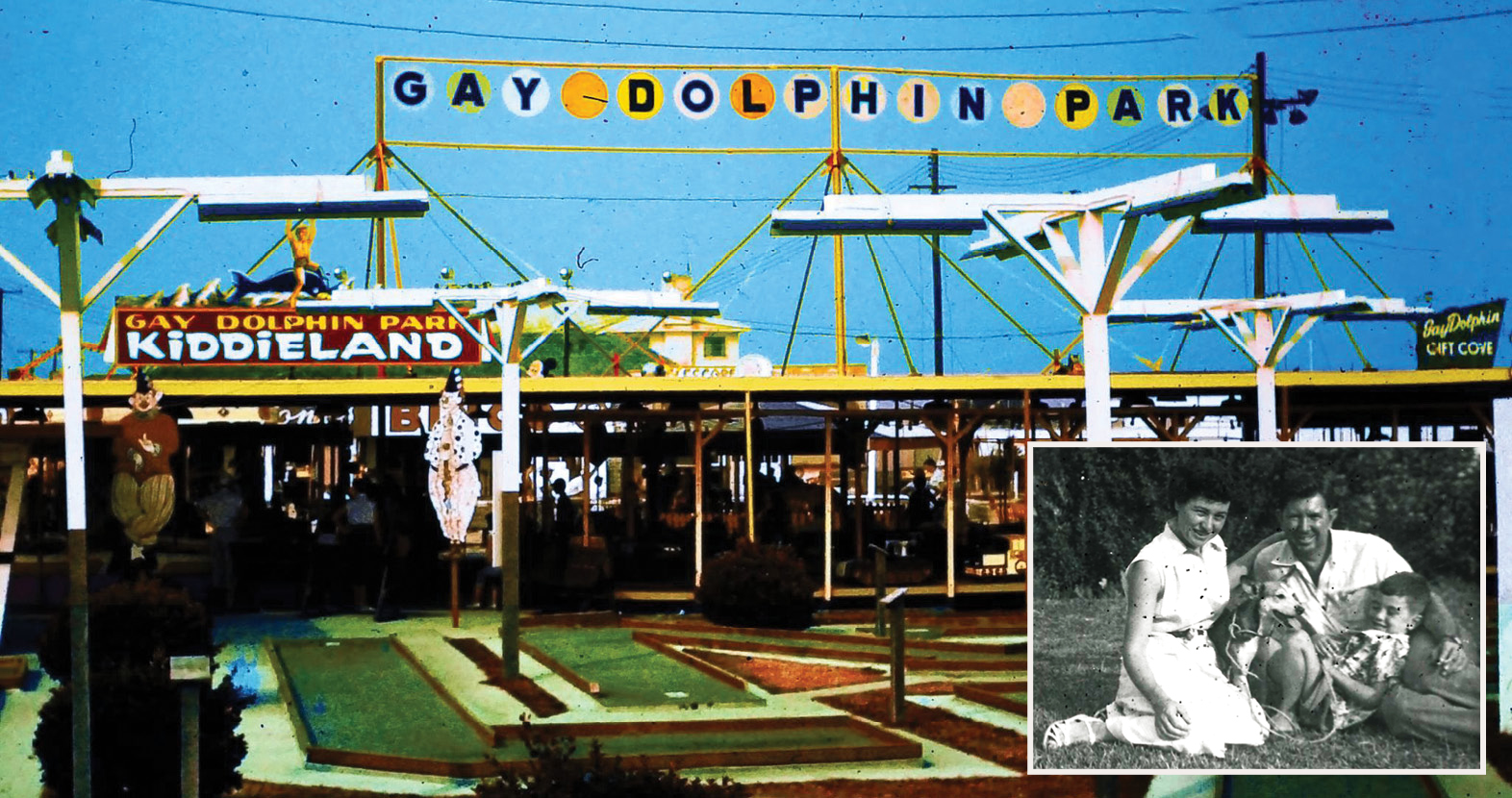
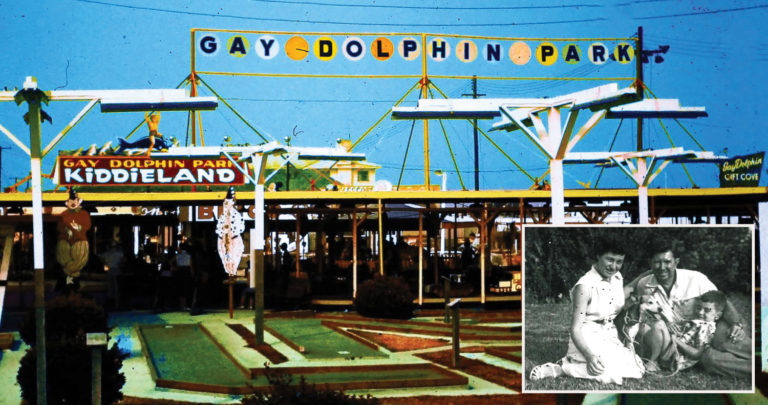
With their many businesses and vision for Myrtle Beach tourism, the Plyler family helped Myrtle Beach become the vacation destination it is today. (Inset) Justin Plyler, who founded the Gay Dolphin Gift Cove, is pictured with wife Eloise Plyler and son Buz Plyler, who runs the Gay Dolphin today, and their dog, Spot

The Beginning

While most folks know the Gay Dolphin for the way it is today, it had a modest beginning.

The Gay Dolphin started as a simple, 10- by 20-foot souvenir shop for the amusement park of the same name. Justin and Eloise Plyler, Buz Plyler’s parents, started the store, choosing a name that reflected its goal of being a place to make children happy in a spot just off the ocean where dolphins congregated.

The Gay Dolphin Amusement Park and Gift Cove quickly became known as the place to find unique entertainment, which some fans still remember and reminisce about today. Trained dogs would climb ladders, do tricks and slide down slides. A “buried alive” man made customers wonder how he could survive (there was a secret back door where he’d “escape” every night). Every summer, a new carnival-like act entertained and lured customers in.

Jones Bingo was popular for more than a decade, and the amusement park, which closed in the 1970s, was known for its Wild Mouse roller coaster. The Plylers also owned a number of other businesses, including a reptile show, Myrtle Beach’s first aquarium, a monkey exhibit, a miniature golf course and hotels.

“A big part of our success is giving people a good time,” Plyler says.

Changes—some made intentionally, others necessary to overcome unforeseen challenges—helped the Gay Dolphin evolve into what it is today. In 1954, Hurricane Hazel wiped out the Gay Dolphin, forcing them to rebuild the store in the current spot. It was built back in phases, starting with the oceanfront, then the basement and stockroom, then to the Boulevard where the iconic tower was added. Another hurricane, Hugo in 1989, caused extensive damage, taking the front off the store and causing roof damage that took months and creative solutions to repair. There’s also been economic recessions, other hurricanes that threatened the summer tourist seasons and, over the past year, a pandemic. But the Gay Dolphin always persevered.

“We’ve had a number of really tough obstacles to get around, but we managed to do it every time,” Plyler says. “We never had a situation that we didn’t think we could get through.”

Plyler, who grew up in the penthouse on top of the store, entered the business at an early age. While his dad secured the gadgets sold in the store and his mom arranged for the jewelry sold in the Gay Dolphin, Buz handled the rest. He found reliable suppliers of merchandise not found anywhere else in Myrtle Beach and, as he got older, traveled to shows in cities such as Miami and Los Angeles searching for unique merchandise to wow next season’s tourists. Plyler’s experience has influenced younger business owners on the Boulevard, including Walker, who started working in air brush shops along the Boulevard in the late 1980s.

“However old he is is how much experience he has,” Walker says. “He has the benefit of 70-plus years of experience in human nature. He’s down here. He hears what people want, what they are looking for. A secret of his success is being there and listening. He’s always in there doing inventory, ordering. He still works a 60-hour week minimum.”

Building Myrtle Beach Tourism

The Plylers didn’t just build successful businesses. Their vision helped Myrtle Beach grow into the destination it is today. Justin Plyler envisioned a reasonably priced destination that was so much fun people would come back every year. He helped start the Sun Fun Festival in 1951 featuring quirky games such as human checkers, entertainment, beauty pageants and events—a mainstay every June to jumpstart the summer tourist season.

In 2005, the city named the park beside the Myrtle Beach SkyWheel just a couple of blocks from the Gay Dolphin after Justin Plyler. Plyler Park is the site for concerts, entertainment, events and more.

“There’s no doubt the Plyler family was instrumental in tourism development in Myrtle Beach,” says Karen Riordan, president of the Myrtle Beach Area Chamber of Commerce. “I want to congratulate the Gay Dolphin for their staying power in Myrtle Beach for an amazing 75 years, and for being an important part of what makes Myrtle Beach so fun and special for families.”

Walker, president of the Oceanfront Merchants Association, credits Plyler with helping protect Boulevard businesses and making the area more of a year-round destination. In recent decades, the Gay Dolphin stayed open through the winter to help keep some of its employees working during the off season, inspiring others—including Walker—to do the same.

Walker and others hope the Gay Dolphin will be around another 75 years.

“To still be able to ride down Ocean Boulevard and see that building still there and operating—it makes you feel good,” Bethune says. “It makes you feel like home. Part of our past, still part of our future. It brings back memories of days gone by where we can celebrate the history we have. I hope it stays there just like it is. I don’t think they need to change a thing.”

Gay Dolphin Gift Cove
916 Ocean Blvd., Myrtle Beach, SC 29577
Sunday-Thursday, 9:30 a.m.-6:30 p.m.
Friday-Saturday, 9:30 a.m.-7:30 p.m.
(Summer hours are 9:30 a.m.-midnight, seven days a week.)
LGBTQ+ people in Kenya urgently need mental health support – University of Michigan News

There’s an urgent need for culturally appropriate mental and physical health services for sexual and gender minorities in Kenya, says a University of Michigan researcher.

“There’s still a lot of social stigma, a lot of violence around being gay or lesbian or transgender in Kenya,” said Gary Harper, professor of health behavior and health education at the U-M School of Public Health.

“While sexual and gender minorities have developed resilience processes that help protect them against negative effects of structural-level oppression, elevated rates of post-traumatic stress disorder, subclinical levels of psychological stress and depressive symptoms show community and policy-level interventions are also needed.”

Harper is co-author of a new study recently published in the International Journal of Environmental Research and Public Health. The study was conducted by researchers from U-M, the University of Nairobi and the University of California, Los Angeles; and grassroot organizers from the Western Kenya LBQT Feminist Forum and the Nyanza Rift Valley and Western Kenya LGBTI Coalition.

Harper and colleagues used a sample of 527 adults recruited from community venues to complete a cross-sectional survey, either on paper or online. In their analysis, the researchers used three sexual orientation and gender identity groups: (1) cisgender sexual minority women (25%), cisgender sexual minority men (64%) and gender minority individuals (11%).

Of the participants:

  • 53% reported clinically significant levels of post-traumatic stress disorder symptoms
  • 26% reported clinically significant levels of depressive symptoms
  • 11% reported clinically significant levels of psychological distress

“Over half of our sample reported significant levels of post-traumatic stress symptoms and that’s significant because, when we compared it to other studies that have been done in Kenya, the rates were much, much smaller in the general population,” Harper said. “Here, we’re talking about a large number of people who have experienced significant trauma.

“That only 11% of the people in our sample reported clinically significant levels of psychological distress was actually encouraging, as they were somewhat similar to what we’ve seen in some of the other sites with the general population—a little bit elevated but not as much as with depression.”

Harper said when looking at associations between experiences of violence and negative outcomes, they did find relationships between those who reported experiencing violence related to their sexual or gender minority status and people who reported post-traumatic stress symptoms.

“This relates to something called the minority stress model, which basically explains why we sometimes see higher rates of mental distress among LGBT populations, because LGBT people not only deal with the common everyday stressors that everyone else does, but on top of that, you have the additional stress of LGBT-specific discrimination,” he said.

Harper and colleagues believe this is the first study to look at all sexual and gender minorities in Kenya, including women, and are working with community organizations to use these data in grant proposals to get funding for mental health programs, as well as other services and programs that they need. They will also use the data to develop policy briefs to guide future policies and hope to work with the Ministry of Health and other government agencies to include sexual and gender minority people in the Kenya mental health policy.

“Considering that there is goodwill by the Kenyan government towards mental health, this publication will be a great advocacy tool to support greater inclusion of sexual and gender minorities, foster future mental health policy and financing, and emphasize the need for multisectoral and holistic approaches to mental health care for our communities,” said Caroline Rucah Mwochi, executive director of the Western Kenya LBQT Feminist Forum.

In addition to Harper and Rucah Mwochi, authors included Jessica Crawford, Katherine Lewis, Gabriel Johnson and Laura Jadwin-Cakmak of U-M’s School of Public Health; Daniel Peter Onyango and Cecil Okoth of the Nyanza Rift Valley and Western Kenya LGBTI Coalition; Manasi Kumar of the University of Nairobi: and Bianca D.M. Wilson of the University of California, Los Angeles.

More information:

Meet Marvel’s new gay teen superhero – South China Morning Post

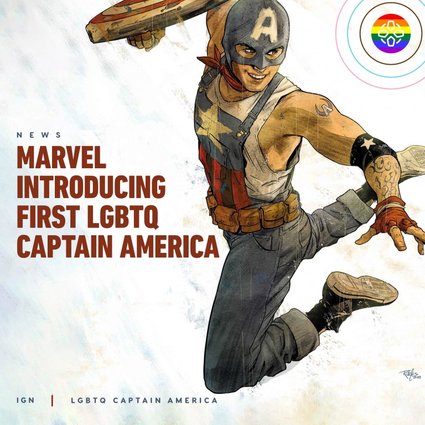
The United States of Captain America comic strips will introduce the superhero to a series of everyday heroes across the country, starting with Aaron Fischer, co-written by Joshua Trujillo with art by Jan Bazaldua, who is gay and will be released in honour of Pride Month in June. Photo: @IGN/Twitter The United States of Captain America comic strips will introduce the superhero to a series of everyday heroes across the country, starting with Aaron Fischer, co-written by Joshua Trujillo with art by Jan Bazaldua, who is gay and will be released in honour of Pride Month in June. Photo: @IGN/Twitter

The United States of Captain America comic strips will introduce the superhero to a series of everyday heroes across the country, starting with Aaron Fischer, co-written by Joshua Trujillo with art by Jan Bazaldua, who is gay and will be released in honour of Pride Month in June. Photo: @IGN/Twitter