Home Blog Page 388

Doctors Explain What Your Resting Heart Rate Should Be and Why It Matters – POPSUGAR

0

A lot of workouts focus on getting your heart rate up and reaching your target heart rate in order to burn fat, improve your endurance, and more. But what about when you’re not working out? Your resting heart rate is an important indicator of your overall health and physical fitness. POPSUGAR spoke to two experts to get the lowdown on just how low your heart rate should go.

Why Is My Resting Heart Rate Important?

Your resting heart rate is just as it sounds: it’s how fast your heart beats when you aren’t doing anything. “It is the heart rate required to pump the minimal amount of blood your body needs because it is at rest,” Nachiket Patel, MD, a board-certified interventional cardiologist in Arizona, told POPSUGAR.

Why does it matter? Your resting heart rate is an excellent way to gauge your cardiovascular health. “A lower resting heart rate usually means better physical fitness,” Dr. Patel explained. “Your heart muscle is more efficient and in better condition and does not have to work as hard to maintain adequate blood circulation throughout your body.”

What Should My Resting Heart Rate Be?

While it varies from person to person, there is an average range. “For most people, the resting heart rate is between 60 and 100 beats per minute, but often, people that are more active have a lower resting heart rate,” Megan Kamath, MD, a double board-certified cardiologist and assistant clinical professor of medicine at the David Geffen School of Medicine at UCLA, told POPSUGAR.

In general, lower is better, but Dr. Patel warned that how you feel is also important. A low resting heart rate coupled with dizziness, lightheadedness, fatigue, or shortness of breath may be a sign of an underlying issue that needs medical attention. On the other hand, if your resting heart rate is consistently high, he recommends you visit your doctor even if you feel fine.

Dr. Kamath and Dr. Patel explained that several factors can affect your resting heart rate, including age, caffeine, stress, anxiety, hormones, dehydration, infection, smoking, medications, and other medical conditions, like a history of heart disease, cholesterol, or diabetes. As always, talk to your doctor if your resting heart rate is out of the average range.

How Do I Find My Resting Heart Rate?

If you wear an activity tracker that monitors your heart rate, check it when you aren’t doing anything. If you don’t wear a tracker, don’t worry. Finding your resting heart rate is super simple — just follow these steps from Dr. Kamath:

  1. Find your pulse by placing two fingers on the thumb side of your wrist between the bone and the tendon.
  2. When you feel your pulse, use a watch to count the number of beats in 15 seconds.
  3. Multiply this number by four to calculate your beats per minute.

And voila! You’ve got your resting heart rate. If you don’t have a watch or clock with a second hand, you can use the stopwatch on your phone so you’re not trying to count your pulse for a full minute. Dr. Patel recommends checking your resting heart rate in the morning, preferably after a good night’s sleep and before any caffeine or stress sneaks into your system.

Trans Liberation? There’s No App for That – HarpersBAZAAR.com – HarpersBAZAAR.com

trans heath care apps, jes sklonik

Design by Ingrid Frahm

It’s almost certain that the small team at Euphoria.LGBT, a company that makes a suite of apps marketed to the transgender community called Solace, Bliss, and Clarity, didn’t expect the pushback they received when they announced a new round of venture capital funding, apparently raised by big players including Chelsea Clinton and LGBTQ+ investment firm Gaingels. The news was announced via an article on startup news site Built in Austin. And a tweet celebrating the news by Euphoria’s social media team quickly went viral, with hundreds of comments and retweets largely from trans people, who were not excited. I was one of them.

It’s unlikely that the advice to be found in a financial planning app will solve systemic problems

The suite of apps covers a few perceived needs that the trans community might have. Solace provides “information and resources to guide transgender people through whatever process of gender transition they desire.” It also features a paid “set of premium services” called Solace Plus, which as of writing this story appears to be a monthly subscription envelope containing a gift card depending on which gender you are; examples include makeup for women, a shave club for men, and, inexplicably, Starbucks for nonbinary people. The service may offer other things, but it is impossible to know without signing up for it. Bliss, which appears to be on the verge of launching, is an LGBTQ+-focused savings app, and Clarity is a “self tracker to help measure gender identity, gender expression, and attraction.”

The problem is that none of us, the targeted consumers, asked for these apps. Solace comes closest to fulfilling a real need—one does need information and resources to help with transitioning, whatever that means to the individual—but all that information already exists, or can be picked up by forming relationships with other trans people, either offline or on message boards going back to the early days of the Web, on Discord servers, and on resource pages curated by trans people and grassroots groups.

To understand our deep antipathy, it pays to know a little of American trans history

Though trans people do face higher unemployment and poverty rates than cis people overall, the reasons largely involve discrimination in housing, health care, education, and employment, as well as discrimination from blood family members. It’s unlikely that the advice to be found in a financial planning app, like not buying that latte, will solve such deep systemic problems or will make up for the exorbitant costs we are forced to pay out of pocket for gender-affirming surgeries, even with “good” health insurance. And a self-tracker, a.k.a. a specialized journal, only collates enormous amounts of personal information that can be tied to consumer profiles. Though Euphoria tweeted that it isn’t data mining, it also said in the same tweet that it isn’t requiring subscriptions. The Euphoria suite of apps is brand new; what happens when its VC backers demand ever higher returns on their investment?

The problem is that none of us, the targeted consumers, asked for these apps.

Euphoria.LGBT isn’t the first company attempting to market transition-related services directly to trans people that has received a largely negative response from the community—not even the first one this year. GenderFck, a life coaching service for trans people, received such an excoriation on Twitter and Instagram this winter and spring that it produced several nesting public statements attempting to clarify its business practices and positions, and redressing some of the critiques; the website previously contained language about how one might pay for the coaching services, which included asking friends and family for money, and selling personal possessions.

If we are to be included under the rainbow umbrella, we should receive genuine solidarity.

To understand our deep antipathy toward services such as these, it pays to know a little bit of American trans history and about the battle between assimilation and liberation within that movement. Writing for WHYY in Philadelphia on the occasion of the 50th anniversary of the gay rights movement (July 4, 2015), Cei Bell puts it succinctly. “The transgender movement, the ‘T’ in LGBT, happened in spite of, not because of, the gay rights movement.” Bell’s article is a solid introductory overview to the ways trans people have been consistently marginalized by the larger gay rights movement and written out of significant histories of that movement, despite our constant presence—to be a little flip about it, we were just too scary and challenging to straight people. (To participate in the Annual Reminders demonstrations in the summer of 1965, dated by most historians as the start of the gay rights movement, Bell pointed out that women had to wear skirts or dresses, and men had to wear pants, specifically as a counter to heterosexual narratives of gayness as deviance.) If you Google “the silent T,” you’ll find a good number of articles dating back decades with trans people and/or our cis queer allies demanding that if we are to be included under the rainbow umbrella—where we have always been—we should receive genuine solidarity.

There can be no trans justice without broader economic justice.

TIME declared in 2014 that we’d reached the “transgender tipping point,” the point at which society begins to arc toward the acceptance of trans people, but the reality is much less rosy. In 2018, Kai Cheng Thom wrote for them, “Four years after the so-called transgender tipping point, however, not much seems to have changed for the majority of trans people today. There is a strange disjunct between the social transformation that appears to have taken place in the media and the ongoing reality of violence, deprivation, and discrimination that trans people continue to experience.” Today, there is a stunning number of anti-trans bills going through state legislative processes across America; if anything, the backlash to trans “visibility” has only grown, including international reach for transphobic lobbying groups like the LGB Alliance.

Thom went on to make clear the difference between representation, hollow gestures, and genuine liberation. “To achieve trans liberation, we must turn our gaze to ending neoliberalism,” she wrote, a precept I fully agree with. There can be no trans justice without broader economic justice, and there can be no broader economic justice without understanding the many, many ways power attempts to divide and sanction us based on our demographics.

Euphoria.LGBT and GenderFck may be owned by trans people, but in attempting a grab for our dollars, capitalizing off our identities, and further boxing us into institutionalized narratives, they do us very, very wrong, right along with specious attempts at corporate pandering like a cookie declaring that we exist and a rebranded Mr. Potato Head. Those of us who have always depended on principles of genuine mutual aid to survive because we had no other choice, we refuse.

This content is created and maintained by a third party, and imported onto this page to help users provide their email addresses. You may be able to find more information about this and similar content at piano.io

Croatia Open For Tourism, Americans Welcome – One Mile at a Time

0

Many (especially in the US) are excited to plan post-vaccination trips. While I know many people are hoping to travel to Europe, we have no reason to believe that the most popular tourist destinations in Europe will open, like France, Germany, Italy, and Spain.

However, there is one often overlooked European Union country that’s already open to visitors, and which could be worth considering. This country is so easily able to make its own rules in this regard because it doesn’t belong to the Schengen zone yet.

In this post:

Croatia open to those who are vaccinated or test

Croatia is already open to visitors from around the world, with just a few requirements. For those coming from the US, you’re eligible to enter without having to quarantine if:

  • You’re fully vaccinated, meaning it has been at least two weeks since your last recommended dose
  • You present a negative PCR test result taken no more than 48 hours prior to arrival in Croatia, and if your test is older than 48 hours, you can get tested upon arrival and just quarantine until you get a negative result; if you stay in Croatia for an extended period of time, you’ll have to get tested again on your tenth day
  • You present proof of having recovered from coronavirus, in the form of a positive PCR or rapid antigen test, performed between 11 and 180 days ago

All tourists also have to provide “a certificate of paid accommodation.” In other words, you just need to be prepared to show proof you have a hotel or other accommodation booked.

Is it time to plan a trip to Croatia?

I’d love to hear from OMAAT readers who have are more familiar with travel to Croatia, both because I’m considering a trip there this summer, and because I’m sure other readers are as well.

While I flew through Croatia a couple of years ago, I’ve only visited the country once before, and I don’t even remember it much. I must have been 10 years old, or something, and was on a cruise with my mom. We spent a day in Dubrovnik, but again, that was a couple of decades ago, and I really don’t remember a whole lot, other than walking through the old town.

But yeah, Croatia seems pretty tempting, no? I’ve always found Croatians to be friendly in my travels, and the coastline along the Adriatic Sea is gorgeous.

The three most popular cities in Croatia for people to visit are Dubrovnik, Split, and Zagreb. I haven’t done that much research yet, but my initial thoughts are:

  • Dubrovnik seems like the obvious choice and could be awesome, especially since there probably won’t be cruise ship passengers this year
  • Split is also on the water, so if anyone has thoughts on Dubrovnik vs. Split, I’d love to hear them
  • Is Zagreb worth visiting compared to the other two cities, given that it’s inland, which on the surface has less appeal to me

It seems like the best potential hotel options would be Small Luxury Hotels of the World properties, which participate in the World of Hyatt partnership, allowing you to earn and redeem points.

For example, Hotel Excelsior seems like it might be one of the best hotels in Dubrovnik, and that participates in the partnership. Tiffany also had a good stay at the Sheraton Dubrovnik Riviera several years ago.

Hotel Excelsior Dubrovnik

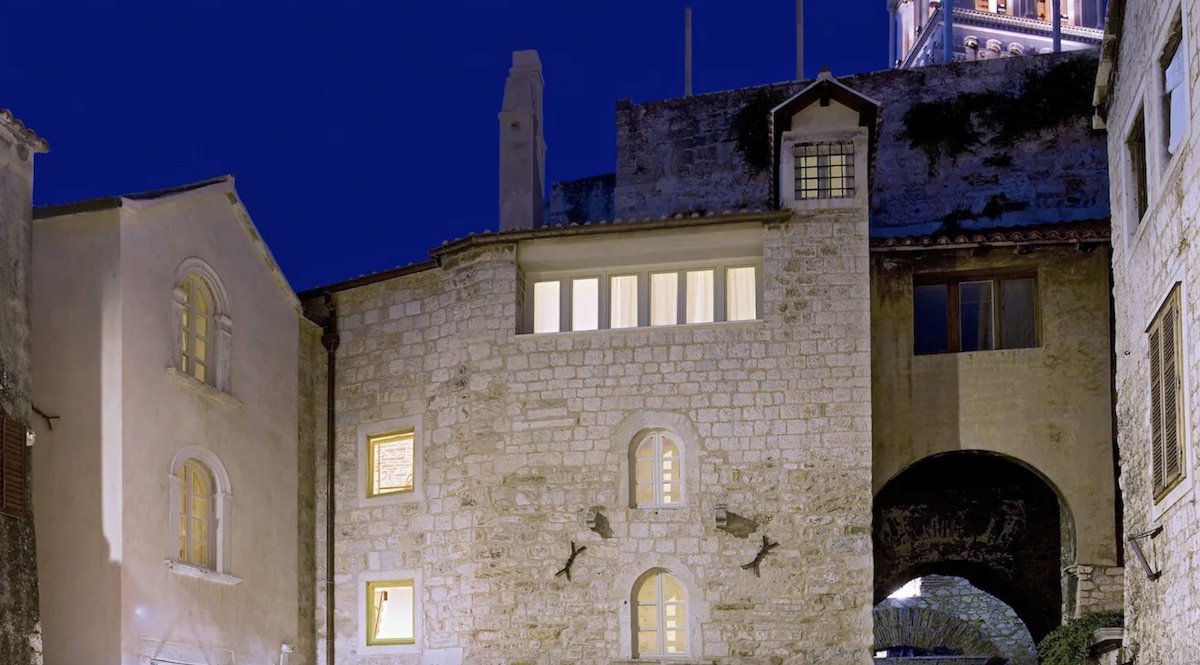
There are some other cool-looking properties, like Hotel Vestibul Palace, though looking at the property more closely, it seems like the cool design may be limited to the exterior.

Hotel Vestibul Palace Split

Bottom line

If you’re looking to travel to a European Union country this summer and want to be realistic, Croatia could be worth considering. The country is already open to visitors from around the world in conjunction with testing or proof of vaccination.

I only briefly visited Croatia as a kid while on a cruise, though I’m seriously considering a trip here this summer.

I’d love to hear from anyone who has been to Croatia more recently, and would welcome any tips on where to go, where to stay, and what to see (and I’m sure I’m not alone, because many OMAAT readers are presumably considering something similar).

Anyone considering a trip to Croatia anytime soon?

NCAA takes aim at states like Texas considering anti-transgender laws – The Texas Tribune

Tracking Trends: Here’s your guide to Lil Nas X receiving backlash for ‘Montero’ music video, blood shoes – The Post

Lil Nas X has rattled pearl-clutchers everywhere with his music video for his latest hit, “Montero (Call Me By Your Name).”

In this video, Lil Nas X makes a huge statement about his sexuality, embracing his identity as a gay man in a very tongue-in-cheek way by literally giving the devil a lap dance and calling out the idea that gay men and all queer people go to hell. 

The video was made in part as a response to people telling him to go to hell after he came out as gay. In response to the backlash, he tweeted “Y’all love saying we going to hell but get upset when I actually go there lmao.”

In addition, he tweeted about how he’s spent too long hating himself and his sexuality because of the consequences people fed him that would happen solely because he’s gay. 

“So I hope you are mad, stay mad, feel the same anger you teach us to have towards ourselves,” Lil Nas X continued in his post. “Y’all saying a gay n—a twerking on a CGI Satan is the end of times like slavery and the Holocaust didn’t happen. There is a mass shooting every week that our government does nothing to stop. Me sliding down a CGI pole isn’t what’s destroying society.”

Students who are fans of Lil Nas X believe all of the backlash from the video is because he’s gay, rather than the Satanic elements.

“He’s publicly gay now, and society can’t seem to cope with that,” Kaleb Gongwer, an Ohio University junior studying communications studies, said. “It’s a pattern we see in media: if it’s not straight and white and predominantly male, then there will usually be an issue with it, according to our country.”

Other students also feel it has everything to do with his sexuality.

“I don’t think he deserves the backlash he’s getting at all,” Katie Wilson, an OU freshman studying psychology, said in a message. “You can tell that he put a lot of time and thought into the video and it was his artistic vision. Art is so subjective and not for everyone and I feel like people understand that more with art forms like dance or sculptures but music and visual media is the same way. Of course people can have their opinions on it but I think it’s also important to be respectful of someone’s vision.”

With the music video and single came the idea of the infamous blood shoes. Lil Nas X partnered with MSCHF to create Satan Shoes, which were unauthorized and falsely associated with Nike, causing Nike to file a lawsuit. The shoes, with the promise that each had a drop of blood, sold to 666 people for $1,018 each.

Some students believe the shoes are why Lil Nas X is receiving the most backlash.

“I think he’s receiving backlash more over the shoes he created than the video (itself),” Wilson said in a message. “While people were upset about the representation of (Satan), (I’ve) seen a lot more uproar about him ‘selling (Satan) shoes.’”

That brings up the question: is it just the religious connotation that’s causing such uproar?

“I think he’s receiving so much backlash because Christian people probably feel he is mocking their religion or disrespecting it,” Tara Theaker, an OU freshman studying psychology, said in a message. “Also, I think the older generations don’t tend to look into the artistic side of videos and so they look at this video and see a man dancing on the devil and immediately classify him as a Satan worshipper or something like that.”

Theaker also noticed that most of the backlash she has seen is coming from older generations rather than younger ones.

“I also think my current generation is more accepting of the LGBTQ community and so we find a video like this somewhat normal whereas older generations get offended or think it’s something harmful,” Theaker said in a message.

As if the critical comments and shoe lawsuit weren’t enough, FKA Twigs and her “Cellophane” music video were brought into the mix.

Andrew Thomas Huang, director of the “Cellophane” music video, shared a side-by-side comparison of the two videos, where he highlighted the resemblance between both videos’ pole dancing choreography. He clarified that the video was not shade, and that though he is a fan of Lil Nas X, the artist should’ve shed light on the fact that the choreographer was the same for both videos and that he should’ve given credit to FKA Twigs and the “Cellophane” video creators. 

Lil Nas X ended up having several conversations with FKA Twigs to rectify the situation, and then posted on his Instagram spreading awareness of FKA Twigs and her team’s hard work. FKA Twigs responded as well, praising Lil Nas X for his maturity and for his artistry in the “Montero” video.

“I think that people say such demeaning things to gay people and when the gay people decide to act how others think they truly do, then they receive hate because it’s them actually confronting the nasty comments they have to face everyday,” Theaker said in a message.

Gongwer believes Lil Nas X knew he was going to get this backlash and was prepared for it. 

“I think that anyone who is a minority or of a minority cleavage, I think that they know ahead of time a lot of times what their consequences are,” Gongwer said. “It’s just a matter of whether or not you’re willing to make the move. He was, and he did it well. It’s going to take for more and more of those opportunities to arise for it to become normalized, so someone’s gotta start somewhere.”

Gongwer, Wilson and Theaker all agree that the song is a creative way for Lil Nas X to clap back at the haters, and they hope people listen to it and understand the true meaning and joking nature of it, rather than blowing it out of proportion.

“Stream the song because I think it’s a good song and I think that what he’s doing is healthy for what our society needs,” Gongwer said.

People can listen to “Montero (Call Me By Your Name)” on any music streaming service, or watch the video on YouTube. 

@rileyr44

rr855317@ohio.edu 

Travel – Asia’s isle of five separate genders – BBC News

0

The Indonesian island of Sulawesi sprawls like a drunken starfish in the western Pacific Ocean, its four emerald limbs reaching into the Celebes, Molucca and Flores seas. On its south-western tip sits the smog-choked port city of Makassar, long an important trading post and Indonesia’s eastern gateway to the world.

In the grey dawn I stood on the waterfront and watched the curved prows of prahu sailing ships proceed elegantly into the chaos of Paotere Harbour, here to unload their bounty of sea cucumbers, cuttlefish and other strange creatures of the deep. These vessels belong to the Bugis people, a seafaring society remarkable for its recognition of five separate genders.

Despite only numbering around six million in a country of 270 million, the Bugis are highly influential

“The Bugis have words for five genders,” explained Sharyn Graham Davies, an anthropologist at Monash University in Melbourne, Australia, “that map onto five ways of being in the world.”

The Bugis are the largest ethnic group in South Sulawesi. Their heartland is in Makassar and the rice-growing countryside north of the city, but their prowess as seafarers and traders established their influence across Indonesia and the Malay Archipelago (and struck fear into the hearts of European colonisers, who regarded them as ruthless pirates). Despite only numbering around six million in a country of 270 million, the Bugis are highly influential: prominent examples include Jusuf Kalla, two-time vice president of Indonesia; and Najib Razak, former prime minister of Malaysia.

“The Bugis are among the strongest ethnic groups in the archipelago, politically, economically and culturally,” said Sudirman Nasir, a Bugis who works in public health in South Sulawesi.

Davies explained that in Bugis society, makkunrai and oroani correspond to Western concepts of cis female and cis male. Calalai are born with female bodies but take on traditionally male gender roles; they may wear shirts and trousers, smoke cigarettes, wear their hair short and work manual jobs. Calabai are born with male bodies but take on female gender roles, wearing dresses and makeup and growing their hair long. “Many calabai work in beauty salons,” said Neni, a calabai from the village of Segiri, north of Makassar. “We also help to plan weddings and perform at wedding ceremonies.”

You may also be interested in:
The third gender of southern Mexico
The tiny island traded for Manhattan
The islands where women make the rules

Calabai do not impersonate women, Davies explained, but exhibit their own suite of feminine behaviours that would be frowned upon in makkunrai women, like wearing miniskirts, smoking and acting in a more outwardly sexualised manner. Within Bugis society, calabai and calalai people may be disapproved of in some quarters, but they are widely tolerated, even seen as playing an important role in society, and are generally not attacked or otherwise persecuted by their own community.

The fifth Bugis gender is bissu, which is considered neither male nor female but representative of the totality of the gender spectrum. Bissu, like calabai and calalai, display their identity through dress: they often wear flowers, a traditionally feminine symbol, but carry the keris dagger associated with men. Many bissu are born intersex, but the term has implications beyond biology. While Bugis gender is often described as a spectrum, bissu are deemed to be above this classification: spiritual beings who are not halfway between male and female, but rather embody the power of both at once.

“It is said that on their descent from heaven bissu did not split and become male or female, like most people,” Davies explained, “but remained a sacred unity of both.” As such, they are perceived as intermediaries between worlds and occupy a shaman-like role in Bugis religion.

A serene old lady and a clucking chicken were my travel companions in a battered sky-blue bemo (public minibus) as I left Makassar behind. As we rattled north, jagged shards of limestone karst, tufted with jungle, lurched skyward from the surrounding rice paddies. It was planting season, and we passed a field where a mechanical plough was being pushed along, preceded by a ritualistic parade of bissu, recognisable by their robes of red, gold and green and their headdresses adorned with colourful flowers. We drove on. The evening sun began to glow like coal, and the Bugis farmers, bending to tend the rice fields, cast hunched and lengthening shadows.

As darkness fell, we arrived in the town of Segiri, where I followed a throng of locals into a large wooden house. Five bissu were gathered in the centre of the room around a pile of rice. Fragrant incense smoke swirled in the near-darkness, and the sound of drums and chanting quickened to fever pitch as the bissu danced jerkily into a trance-like state. In unison, they unsheathed their keris daggers and began to stab the wavy blades into their own temples, palms, even their eyelids – seemingly not feeling any pain or barely even drawing a drop of blood. To undergo this ritual, known as ma’giri’, and come through it unharmed is seen as proof that the bissu have been possessed by the gods and are ready to give blessings. This ceremony, like the parade in the rice field, was geared towards ensuring a bountiful harvest; good health and successful pregnancies are among other outcomes hoped for from a bissu blessing.

“Becoming bissu is a call of the soul,” explained Eka, the head bissu in Segiri. “We travel at an early age to study with a senior bissu, and learn our secret language, Basa To Ri Langiq (Language of the Heavens), which only we can understand.”

In addition to granting blessings, Eka officiates at weddings. “The Bugis treat us very well,” Eka said. “They have to, because we oversee all the Bugis customs.”

Although their religious rituals and conception of gender are infused with pre-Islamic ideas, most Bugis are Muslims, many devoutly so. “There were complex interactions between Bugis values and Islamic teaching,” explained Nasir. “This led to forms of Islamic-Bugis syncretism.”

Since the mid-20th Century, wider Indonesian society has become less tolerant of non-binary ideas of gender

For example, as Davies explained, Bugis people often seek out bissu to bless a forthcoming hajj to Mecca. Many calalai and calabai struggle with their sexuality and sense of self, she also noted, believing that their lifestyle (which may include same-sex relations) is sinful according to Islamic belief, but also that they are the way they are because it was prescribed by Allah. For the same reason, they do not have a concept of being born in the wrong body; even though some calabai may undergo cosmetic procedures to make them look more feminine, they will not consider themselves to be women, as Davies discovered in her fieldwork.

Islam began to predominate across Indonesia in the 1400s, but for centuries the local people reconciled their variegated perception of gender with the new faith. “European sailors were writing about their reflections on gender diversity in South Sulawesi since at least the 1500s,” Davies explained. In 1848, the British colonialist James Brooke wrote in his journal: “The strangest custom I have observed is that some men dress like women, and some women like men; not occasionally, but all their lives, devoting themselves to the occupations and pursuits of their adopted sex.” Upon visiting South Sulawesi, Brooke was further surprised by the social equality he observed between women and men, a sentiment shared by his fellow imperialist Thomas Stanford Raffles.

A third gender known as waria (a portmanteau of wanita, meaning woman, and pria, meaning man) has long been acknowledged in societies across Indonesia. Since the mid-20th Century, however, wider Indonesian society has become less tolerant of non-binary ideas of gender, which has resulted in persecution towards calabai and bissu people in particular. Beginning in the 1950s, a wave of violent attacks started against the LGBTQ community.

“When Kahar Muzakkar’s Darul Islam rebellion movement wanted to establish an Islamic state in the 1950s, the bissu were arrested, tortured and forced to repent,” said Nurhayatai Rahman Mattameng, a Bugis philologist. Some bissu had their heads shaved so they could be publicly shamed; some were killed. “During the New Order era under President Suharto (1967-1998), there was an initiative called Operation Repentance,” Mattameng added. “All bissu people were forced to [renounce] To Latang, the ancestral religion of the Bugis, and choose one of the officially recognised religions in Indonesia instead.”

In 2001, Islamic extremists burned down the Makassar headquarters of GAYa Celebes, a gay rights organisation. In 2018, the Jakarta Post reported that transgender women were being rounded up and placed in detention centres in Indonesia’s capital city, as a “deterrent” to people identifying as waria.

“Bissu, calalai and calabai are experiencing a lot of stigma and discrimination, which is sadly increasing alongside the growing assertiveness of political Islam,” said Nasir. “At the societal level, there is a strong tendency towards an increased piety and puritanism, which could be compared to that of born-again Christians in the West. The future for these persecuted people is not very promising.”

Eka agreed that the future looks bleak. “The number of teachers with knowledge of the bissu ways is decreasing. So is people’s interest in living as calabai,” said Eka. “In the future, bissu will be threatened with extinction.”

Not everyone is so pessimistic about the future, however. There is help at hand in the form of Halilintar Lathief, a Bugis activist, artist and anthropologist. Lathief’s organisation, Latar Nusa, is fighting to revitalise bissu and calabai culture by preserving traditional literature and empowering them to harness the economic benefits of their traditional ritual roles by seeking paid work as bridal makeup artists, wedding planners and caterers and medicinal shamans.

“In the early days, the trauma of persecution they had faced meant no-one wanted to become or claim to be bissu,” Lathief said. “They were afraid of being arrested or killed; some were ashamed. Now, after several years, there are many more people who identify as calabai, and more who are proud to be called bissu.”

Our Unique World is a BBC Travel series that celebrates what makes us different and distinctive by exploring offbeat subcultures and obscure communities around the globe.

Join more than three million BBC Travel fans by liking us on Facebook, or follow us on Twitter and Instagram.

If you liked this story, sign up for the weekly bbc.com features newsletter called “The Essential List”. A handpicked selection of stories from BBC Future, Culture, Worklife and Travel, delivered to your inbox every Friday.

Gay athlete started an OnlyFans to feel sexy, and it’s working – Outsports

Nick Vallejo didn’t immediately feel better when he came out. Instead, he began questioning everything about himself, from his appearance to his faith. It was the darkest time of his life.

Six years ago, Vallejo was just at the start of his gay journey. He quit swimming at the University of Hawaii and moved back home to Southern California. Above all else, he needed a reset, spending the semester surfing in the Pacific and working as a lifeguard for the Los Angeles County Fire Dept.

With the support of family and close friends, Vallejo started to view life in a different way. He embarked on previously unimaginable activities, such as attending Coachella or galavanting around West Hollywood. Each new adventure brought him more confidence. Now, Vallejo wants to show himself off.

He started his own OnlyFans page last month.

“I just felt the most important thing for me to do was own myself,” Vallejo told me on this week’s episode of the Outsports podcast “The Sports Kiki.” “And I don’t know, maybe my future man can see that and be like, ‘Oh, this guy is hot. He’s confident. He knows what he likes. Come find me.’”

Vallejo shared his coming out story with Outsports in 2017. In it, he describes his tortured relationship with his sexuality. Coming from a religious Christian background, Vallejo originally suppressed his attraction to guys. He even got a tattoo on his right arm to prove he would devote himself to a pure life.

But soon, Vallejo’s pure life turned into a double life, and it was torturing him inside. Googling expeditions into the words “gay” and “homosexuality” only added to his ever-growing anxiety. He read stories about kids coming out, and then being abandoned and disowned.

For much of Vallejo’s life, swimming served as a way to channel his emotions, but when he transferred from his local community college to University of Hawaii at Manoa, that was no longer the case.

“I stopped swimming at the university because I felt a piece of me dying,” Vallejo wrote. “I felt as if I didn’t belong in the swimming pool anymore.”

Increasingly, Vallejo started to find solace in the ocean. Surfing allows Vallejo to enjoy himself, and after years of self-torment, he’s putting an emphasis on feeling good.

That brings us back to OnlyFans. It’s another place where Vallejo can be his authentic self.

“In my perspective, I don’t have enough sexy,” Vallejo said. “So I was just like, ‘Well, OnlyFans would be a great place to launch.’ Like, ‘Hey, this is my bedroom, or ‘this is where I am in life right now. This is what I look like.’ It’s not staged and planned. It’s all going with my flow of my timeline.”

Nick Vallejo
Vallejo says surfing is the most positive outlet for himself.
Photo by Connor Trimble

There are now more than 1 million content creators on OnlyFans, up from 120,000 in 2019. Earlier this year, I spoke with Chance Wheeler, another gay former college athlete, who says OnlyFans allows him to feel confident in his body.

Much like Vallejo, he came from a more conservative upbringing, and doesn’t want to hide his proclivities anymore.

“I have kinks, and I love them,” Wheeler said. “Like me being sexual, it was just a part of me that I had to accept, and learn. I don’t think nudity is bad. I think it’s a wonderful thing.”

Vallejo agrees, and doesn’t think enough people are willing to blend creativity with promiscuity. He views his OnlyFans page as another part of his artistic portfolio.

“If you own yourself and create yourself and project yourself into the world, people will buy that,” he said. “I don’t feel like there’s enough of that.”

And, as an undergraduate student in Santa Cruz, Calif., it wouldn’t hurt if Vallejo could use OnlyFans to connect with other attractive surfers, either. In the time of COVID-19, we need community more than ever

Right?

“I would love to see more creative, hot surfers doing OnlyFans,” Vallejo said. “Why not?”

Click here to check out this episode of our Outsports podcast, The Sports Kiki. You can also subscribe to the show on Apple’s Podcast page as well as on Google Podcasts, and wherever you’ll find Outsports podcasts.

You can follow Nick Vallejo on Twitter, Instagram and OnlyFans.

Correction: Nick Vallejo is an undergraduate student in Santa Cruz, Calif. A previous version said he is a graduate student.

Author Roxane Gay, Who Loves Art But Dislikes the Art World, Has Some Advice for Galleries: ‘Stop Being Terrible’ – artnet News

0

Roxane Gay has run out of wall space. The award-winning author and essayist, for whom art collecting is a newish venture, has, in just three years, amassed a formidable collection that inspires and delights. 

Last week, I called Gay at home to talk about her collection, which she has begun posting about occasionally on Twitter, where she’s also amassed a cult following of 830,000. Her online presence, her books Bad Feminist and Hunger, and her approach to collecting all share a keen sense of observation and an appreciation for strong points of view. 

Below, Gay opens up about toxic gallery culture, the pressures placed on creatives of color, Seth Rogen’s ceramics, and what visual art does and doesn’t do for her writing. 

Tell me about the beginnings of your relationship with visual art. Did you look at art a lot growing up?

I did. My mom was very big on cultural education and even though we never lived in cities, we always lived reasonably close to cities. When we lived in Virginia, we went to D.C., when we lived in New Jersey we went into New York, when we lived in New England, we went to Boston. So I grew up around art and my parents collect Haitian art. I remember thinking, “This is beautiful” or “this is weird” or “I could do that.” [laughs] A lot of times, we think we can do whatever “that” is, but the reality is that we don’t, and art exists for a reason; it’s a practice, and it always made me think. 

When and why did you begin collecting it? 

I’m very new to art collecting. I got into it because my wife, [writer, designer, and podcast host] Debbie Millman, is a very big collector. Like many people, I just thought that art went for the millions of dollars that you hear about in the news. But she showed me that there are lots of price points between zero and Basquiat. I started to explore and acquire pieces. And now it’s out of control. 
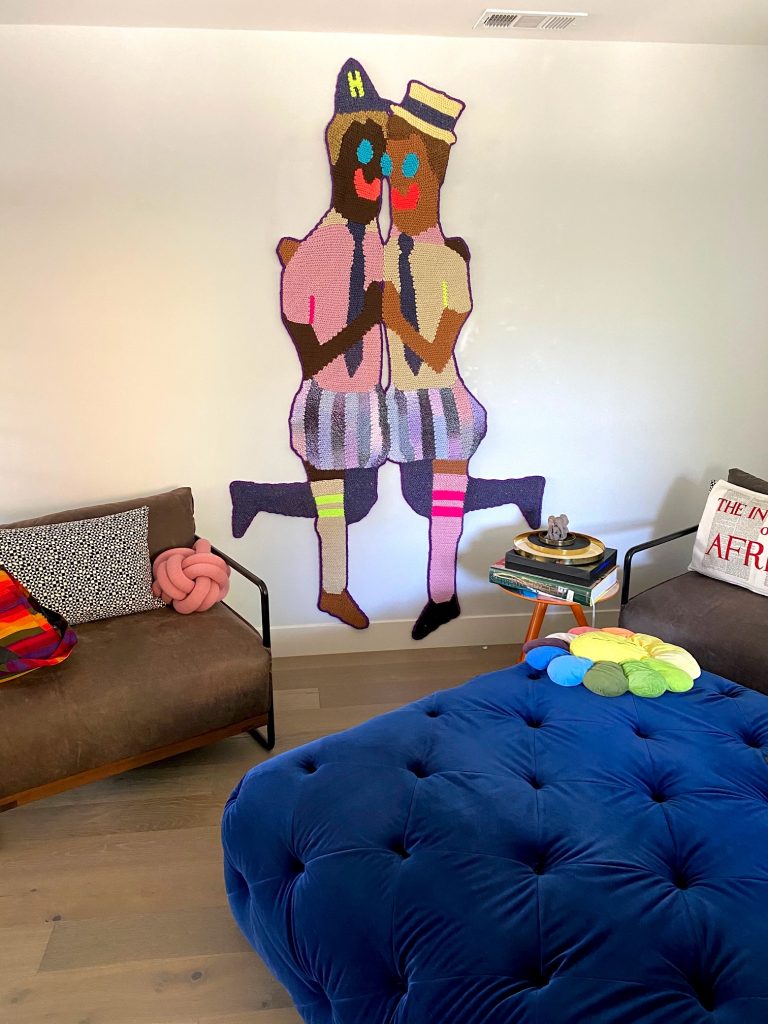
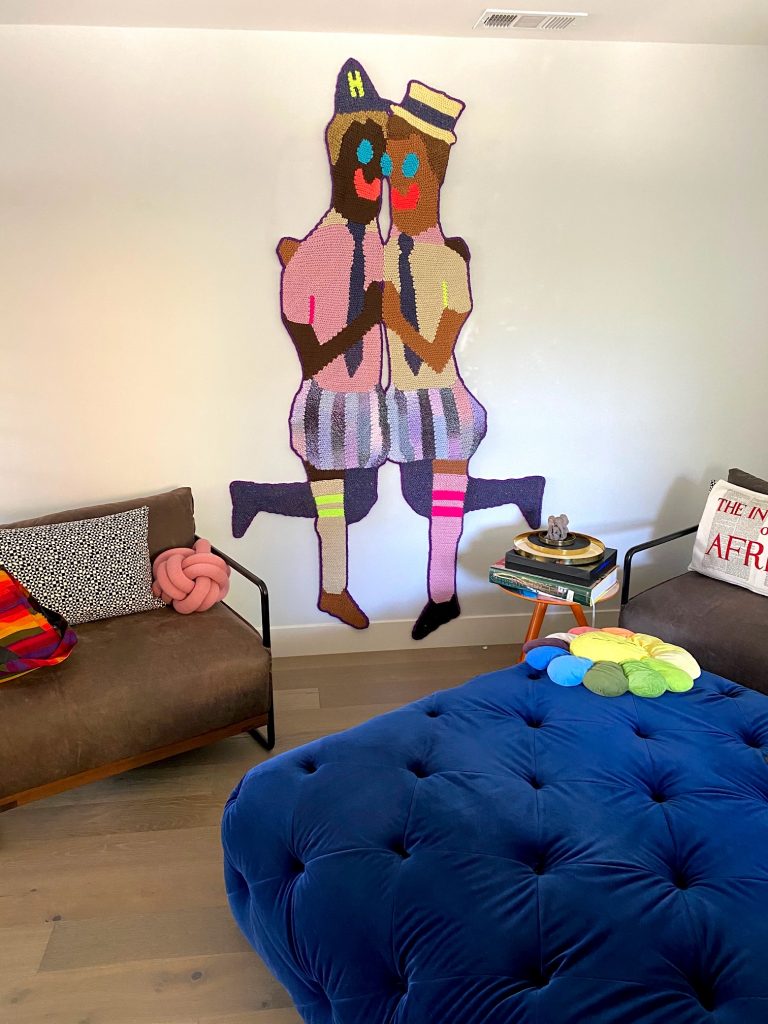
A work by Caroline Wells Chandler in Gay's home. Photo courtesy Roxane Gay.

A work by Caroline Wells Chandler in Gay’s home. Photo courtesy Roxane Gay.

What do you like to collect? 

I prioritize work by Black artists, and then women artists and queer artists and artists of color. And then the very, very last thing I collect is white men. I think I have one piece by a white guy. I mean, they’re fine… actually no, I have a couple pieces, but those are my priorities. 

It all started when we were in Paris on vacation and we went by a gallery on a walking tour that had this beautiful textile work by Caroline Wells Chandler. And I couldn’t remember the name of the artist or gallery, so I spent months trying to find it on Google Maps and calling up every gallery. I found out who they were and where to find them, so the first real piece I bought ended up being an amazing piece of theirs called Schoolbois. From there, it sort of snowballed. I have two great pieces from Alexandra Grant—we did a work trade—and then I have a piece by Jesus Rafael Soto, whose work I love. I have a Jenny Holzer sculpture. I have four pieces by Mickalene Thomas, who I think is excellent. I have some Marilyn Minter. I have a Barbara Kruger. Edwin Schlossberg and a Julian Opie. So those are the white guys… I actually just got a William Kentridge, who’s also a white guy, now that I think of it. 

I have a couple Julie Mehretus. I have a Kahlil Robert Irving. I just got a Brenna Youngblood. I’m very excited about that one, and trying to figure out where I’m going to put it. I’m kind of out of wall space, but I will figure it out. And my wife got me a Jenny Saville, who I’m a fan of. She also got me a Warhol print of an elephant, because I love elephants. There’s this great English artist named Emma Hopkins—I just got a piece from her that’s really cool. I have a Bisa Butler, who’s amazing. I love, love, love her work. And then I have a work by a young woman, Sadie Barnette, who renders pages from her father’s FBI files. I have a piece from Christo and Jeanne-Claude. I have a couple Lichtensteins—that’s my number one artist, even though I know it’s cliché. Whatever. I have some Hans Haacke. Tracey Emin. Tschabalala Self. I have a great piece by Yinka Shonibare, who’s lovely. 

That’s an incredible collection. 

It is. I mean, I’m proud of it. I just like what I like. And I get it, in some ways it’s an investment, but I actually don’t intend to do anything with them but display them. They just make me happy. 

I think that’s the best reason to collect.

I do, too.

I saw—I think—that you got a vase by Seth Rogen recently. Is that right?

[laughs] That is true, yes. I did. 

What’s the deal with Seth, do you think? Why is there so much hype around his work? 

I think that any time a celebrity can do something outside of their field and do it well, people are surprised because we tend to think that celebrities are merely what we know them for. And the reality is that he’s actually a very good ceramicist and he would be good whether or not he’s Seth Rogen. Also, he’s a guy, and at least for me, it’s like, “A man making art? Wow.” Because I tend to have a very low opinion of them. But not Seth, I think Seth’s wonderful. The work’s really good, it’s brightly colored, and I think he’s willing to put himself out there with his art despite the fact that people can be quite mean about it, which is weird. If he just wants to fucking smoke pot and make pots, let him do it. I think everyone should pursue an artistic ambition. You know, good for him. 

I think there’s also something almost vulnerable in how he began making those little weed pots in public and how he’s grown as an artist because he’s really put himself out there by showing he’s trying to do work beyond the schtick that got him into this, and it’s also technically more ambitious. The response to that, I agree, has been interesting—people would almost prefer him to stick to the schtick. 

Absolutely. 

I am interested to know if you have thoughts on how galleries can reach new collectors, particularly collectors of color, more effectively.

Oh, and I just remembered—I have a work by Lorraine O’Grady. I’m so thrilled about that one. 

I mean she is incredible. 

She is. She really, really is. 

In terms of galleries, I think that galleries can remove some of the snobbery around the gallery experience and stop acting like they don’t want to sell their art because that’s really off-putting. And for someone like me, who doesn’t know anything about the art world, when a gallery is off-putting, I just assume nothing is for sale. I’ll leave and go spend my money somewhere else. I think that attitude is really terrible. But I also think how they treat their employees is really terrible. I’m not particularly interested in spending my money in a place that exploits people. So I think just fixing themselves up would help—stop being terrible. 

Consumer education would go a long way, too. I don’t think that people understand that you can acquire art from $100 all the way up to $100 million. People should talk more about prints and what prints are and how they’re not just posters. [laughs] I think talking about supporting up-and-coming artists, and how it’s not a gamble but an investment in an artist’s practice, is incredibly useful. And I think doing outreach to various communities… I think they don’t do it because they want art to have this exclusivity around it and I don’t think that’s necessary. Art should be something that everyone can enjoy, and not only in museums. 

In your view and experience, how is literary gatekeeping similar or different to art-world gatekeeping? 

I think there are some similarities, but not many. At least in the literary world, if you have a pen and paper, you can write and you can get your work out there. Art practices require a little bit more in terms of resources… even just to make art, supplies are quite expensive. Writing is slightly more democratized, but in terms of being able to make a sustainable living from it, there are similarities—and the publishing world is as dominated by whiteness as art discourse. 

I’m thinking, too, of the advice you gave the anonymous person of color working for a classical music organization in your recent New York Times column, where you suggest they try to introduce work by classical composers of color to their colleagues and repertoire. In the wider cultural world, do you think the conversation is indeed shifting a little more toward the stories of people of color? Is that actually happening?

I think it’s happening, but I think we are doing the shift. We are not waiting for the conversation to shift to us, we are demanding the attention, as we should. It’s not happening as broadly and as quickly as we need it to, and I think that’s incredibly frustrating to a lot of people, but I think we have to continue demanding instead of waiting for these white gatekeepers to love and accept us. We have to find new ways of external validation that do not predicate themselves on white supremacy. We have to continue to support one another and make sure that we are mentoring up-and-coming writers and artists. When you achieve a certain level of success, you have to make sure you are doing everything in your power to ensure that you are not the only one in any room. 

It’s obviously not the job of people of color to try and make this world fairer and more equitable, which you write about often, but you’re also candid about the fact that, in practice, change happens in the uncomfortable moments when we have to look those issues in the face and raise them time and time again. Often, it does come down to people of color to not only initiate but continue those conversations to ensure they remain in the air. How do you reckon with this in your own work as a creative person—that it’s not your job to do this work, but the work must get done and you are, so to speak, good at it? 

I just try to have a sense of self-preservation in that it isn’t actually my job to do this work. My creative work has to take priority and unfortunately sometimes it doesn’t and that’s incredibly frustrating. So I have to always remind myself that someone has to do this work, but I am not the only person who has to do this work, and I do not have to do this work only. Because it’s actually just a fraction of what my creative process is. And so I just try to have a fine balance. 

*Loud meowing begins in the distance*

Is that your cat?

Yeah… 

Amazing. 

He is just meowing intensely at the street. 

Maybe something’s happening out there. 

Maybe.
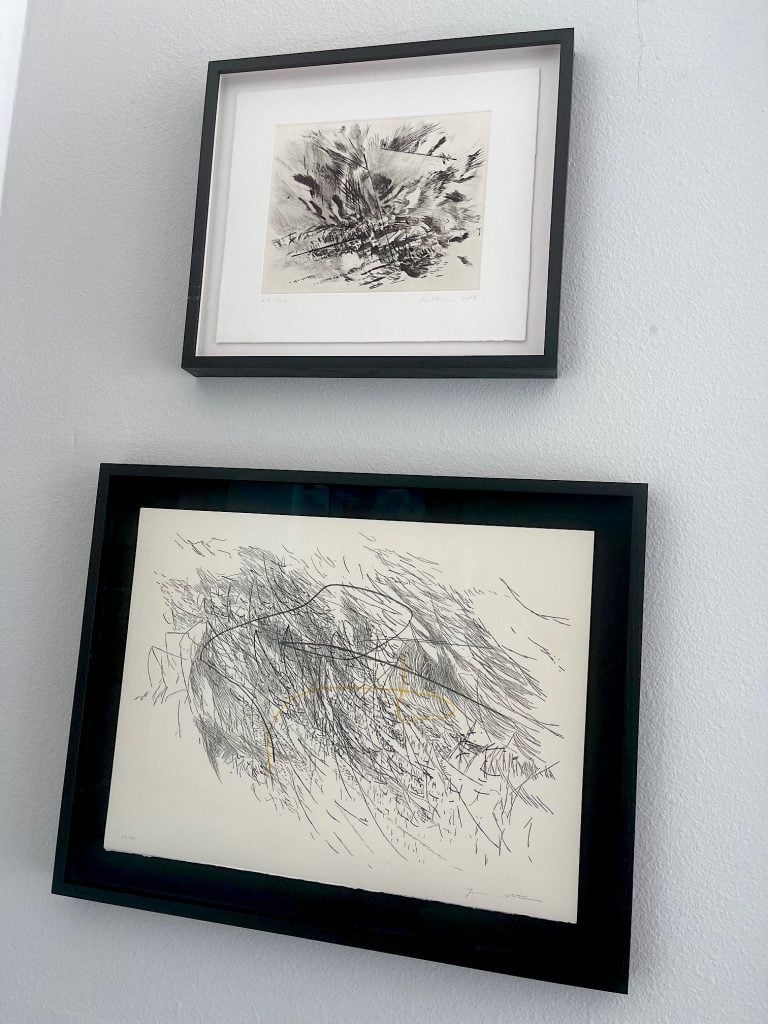
Two works by Julie Mehretu. Photo courtesy Roxane Gay.

Two works by Julie Mehretu. Photo courtesy Roxane Gay.

Recently, you shared on social media a not-so-nice experience that you had while trying to pick up an artwork at a gallery. Could you tell me a little more about that?

It was just one of those daily microaggressions… so in the grand scheme of things, don’t cry for me, it’s fine. 

I had bought a piece of art through a secondary gallery and I had told them I would be there to pick it up in the next two days, but I didn’t give a specific time. So they were expecting me broadly, but not at the specific time I showed up. And I just walked in and there was no one really at the front desk, but then I looked around the corner and there was a young woman sitting there who had watched me walk in and watched me stand there for a few minutes. It’s okay, but it was like… “Huh.” When she said, “How can I help you?” and I said, “I’m here to pick up some art,” she said, “For who?” And I was like, “Huh, alright. Of course. It certainly couldn’t be for me.”

In the end, I ended up tweeting about it, but I didn’t name the gallery because this woman was very young and this one person is not responsible for a system that does this kind of thing. I think people should be held accountable for their actions, but I do not think 800,000 people need to know who the specific person was. So later that day, I actually got an email from someone who was like, “Oh, I was reading about your experience with the gallery and I just thought, ‘Ugh those galleries are so terrible.’” And then she said, “Oh my god, I hope you weren’t picking up art at my gallery.” And it turned out I was. So she explained what happened and apologized and so that was good. Apparently, the young woman had just started working in a public-facing role and they’re not actually used to people picking up their own art, which… I still think microaggression was part of it, but I get it. 

It probably didn’t help, too, when she found out you were Roxane Gay. 

Oh, I don’t think she knew who I was. I’m just a writer. But you know, the explanation certainly made sense and I think it will never happen again. And that’s good. 

Are there other galleries where you’ve had similar experiences? I mean there’s a sort of cold culture to galleries on the whole, especially the ones in New York, but are there any other experiences that stand out?

There was one other gallery in Los Angeles, actually, where I walked in to look at some art and they had invited me to come, but the person who had invited me wasn’t there. So I was just standing there and I literally walked around for 10 minutes while the two gallery assistants watched, went back to work, and didn’t say a single word to me. So I just left and never bought art from there. 

Gallery people love to look at you and then look away. 

Yeah! And like, you’re probably working here for free! It’s just like, “What are you doing, friends?” This isn’t going to get you to the promised land. 
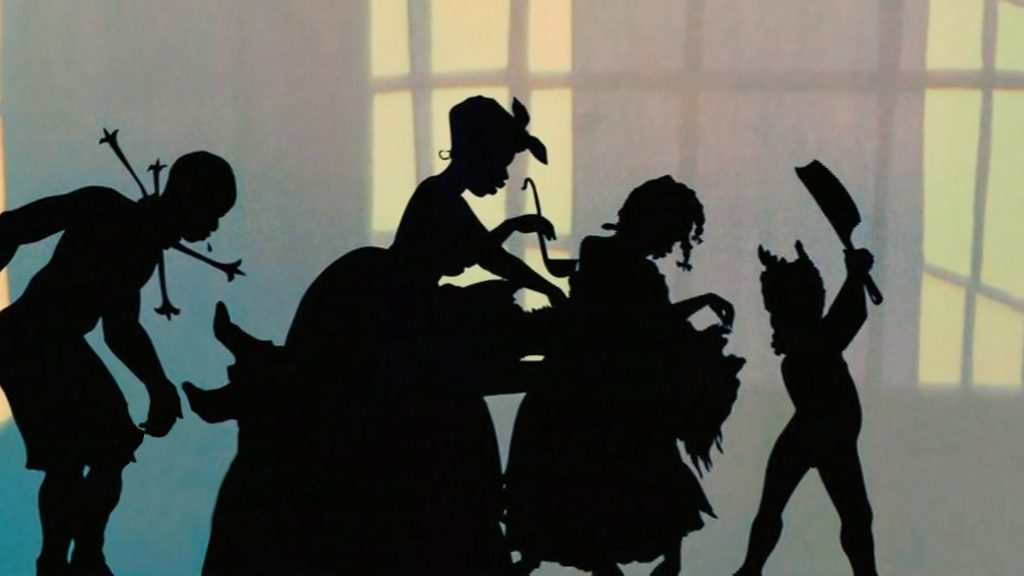
Kara Walker, Insurrectiokn! (Our Tools Were Rudimentary, Yet We Pressed On (2000). Photo: Courtesy of HBO.

Kara Walker, Insurrectiokn! (Our Tools Were Rudimentary, Yet We Pressed On (2000). Courtesy of HBO.

You have spoken about how artists like Kara Walker and Julie Mehretu have managed to inform your own creative process as a writer. In an interview, you said that you love how Walker prioritizes Black bodies and highlights, in your words, “the absurdity of some of the things Black bodies have been subjected to.” You also said her work challenges you. I’m wondering how, exactly, on both a personal and creative level. 

Well, I think her work is very provocative and very interesting. She works in caricature and she revels in the grotesqueries of racism and I love that she is willing to take risks that Black artists for many years were reluctant to do because their entry into the art world was so precarious and so tenuous that they could not take those kinds of risks. There are plenty of Black artists, to be clear, who have taken risks throughout art history, but she does it in a really cheeky way. There’s a lot of wit to her work. They’re funny to critique, but she really goes for it and I admire that about her. It certainly encourages me to go for it in the kinds of things that I do. 

In that same interview, you also said that “art doesn’t ask you to just react, but to move toward something different.” I’ve been thinking about that a lot. What exactly did you mean by that?

I think, ideally, art makes you want to learn more about whatever the artist is doing and seek out other art. I think good art can be more of a door to other things than a closed room. 

Can you think of a time when a visual artwork moved you toward something different?

Oddly enough, the artwork that really moved me toward something different was a piece by Jenny Saville at The Broad in Los Angeles. I can’t remember the name, but it was a piece of a glorious fat woman and I just loved seeing that kind of a body on an art canvas, taking up so much space in the gallery. It was prominently featured and really well hung. That just made me think, “Yeah, you don’t actually have to hide your body.” It was a celebration and rarely do we see… We see fat tolerance, but we don’t see fat celebration. So it just reshaped some of my thinking around fat bodies. 

You’ve been generous in your counsel and advice for how young writers can hone their craft to make it as true as possible, how they might use their writing for a greater good. Have you thought about how your writing advice might apply to young visual artists? 

The number one piece of advice I give to up-and-coming writers is to be relentless and to have a day job until you don’t need one, because it just frees you up if you’re not stressing about how to make ends meet. And you don’t have to live in New York. I would say the same thing to a young visual artist. You have to commit and take your practice seriously even when no one else will—and for most of your career, no one else will. And that’s okay… no, it’s actually not okay, but you can still make art despite that because you have a vision and it’s great and important to execute that vision. You don’t have to do it every day, but consistency is key to developing and expanding your craft.
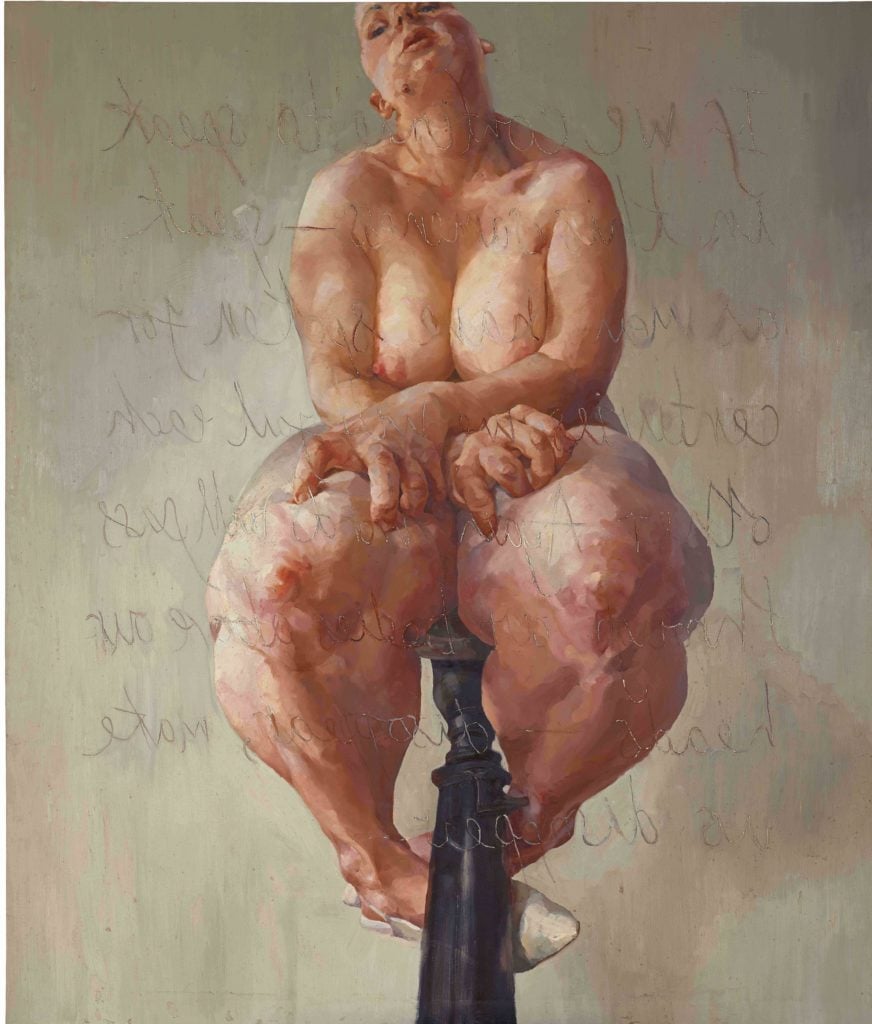
Jenny Saville, Propped (1992). Courtesy of Sotheby's.

Jenny Saville, Propped (1992). Courtesy of Sotheby’s.

I wanted to ask you about Debbie Millman, your wife, who as you mentioned is an avid art collector and also an artist and designer herself. What have you noticed about being part of a relationship between a writer and artist?

It’s great to be with someone who respects the need to make art and be creative and understands that sometimes it’s going to happen at inconvenient times, like in the middle of the night, which is when I do most of my writing. She’s so dedicated to what she does and it’s just really affirming. She’s also my number one fan—just a super cheerleader, because she knows what goes into making the work that I do and I also know what goes into her practice. So it’s very easy for me to be her number one fan. 

How did you hold up creatively in 2020? 

For the first part of 2020, I did not get much done creatively at all. I was like many people, just trying to figure out what the hell was going on and like… when was I going to die? My wife watched a lot of MSNBC and they have a very intense tone and it was just incredibly overwhelming, and so I didn’t really know how to write. I was also slowing down from basically six years of constant travel and touring and finally I had a minute to myself. That was the longest I’d been in one place since 2014. About six months in, I started writing regularly again and I don’t know that I finished anything, but I at least got going on some things that I long needed to get going on. 

Is there anything from that time that you want to take into your life moving forward, even if it’s just trying to be in one place for longer stretches when and if you can?

Definitely. Both my wife and I are rethinking how we live. Pre-COVID, especially in New York—we’re back and forth between New York and L.A.—we were going out all the time. I miss theater very, very much, but we want to slow down. I’m definitely still going to do speaking engagements, but I’m going to travel a lot less. At least I hope.      

Are you pro or anti-Zoom?

I’m over Zoom, but I also recognize what it has made possible. When COVID started, I instantly lost most of my income overnight and that was very scary. I was like, “Okay, I can make it a year.” Which, phew, thank god. [laughs] But then six months later, people were like, “Oh we can actually do events over Zoom.” I don’t think it’s a replacement for a live event and the energy and excitement that comes with that, but I do think that it is an acceptable substitute for now. When people want you to go to a place that’s really remote, it can be a great substitute. I think it’s going to be a balance between the two moving forward. 

When was the last time you went to a museum? 

Recently, I was writing a piece for the Frick about the rehanging at the Met Breuer building. That was a virtual tour, but I’m actually going physically this week. The last museum before that was the Louis Vuitton Foundation in Paris. 

If the world were COVID-free, what would be a perfect art-seeing day for you? Where would you go, who would you go with, and what might you do before and after?

I would definitely go with Debbie and I would probably go to MoMA, which is one of my favorite museums. I’ve actually never been to the Whitney…

Oh!

I know, right? I’d like to go to the Whitney. New York has so many museums, so the perfect day would be to go to two museums and see some interesting and challenging art and then go to a couple galleries. We actually live in Chelsea, so you can’t spit without hitting a gallery here. I loved Sikkema Jenkins gallery when I went. And then in Los Angeles, my favorite gallery is Roberts Projects. I hope I don’t hear a horror story about them now. But recently, we saw the Jeffrey Gibson show and then the Brenna Youngblood show and those were excellent. 

I’ve only heard good things about Roberts Projects, just for the record. 

Oh good. Because these days you find you enjoy someone and then you find out they’re an actual serial killer. 

Right. Like, “Okay, time to be done with this.” 

And I’m willing to make that sacrifice for the greater good. When you think about what bad actors cost people in harm, it’s not worth it at all. 
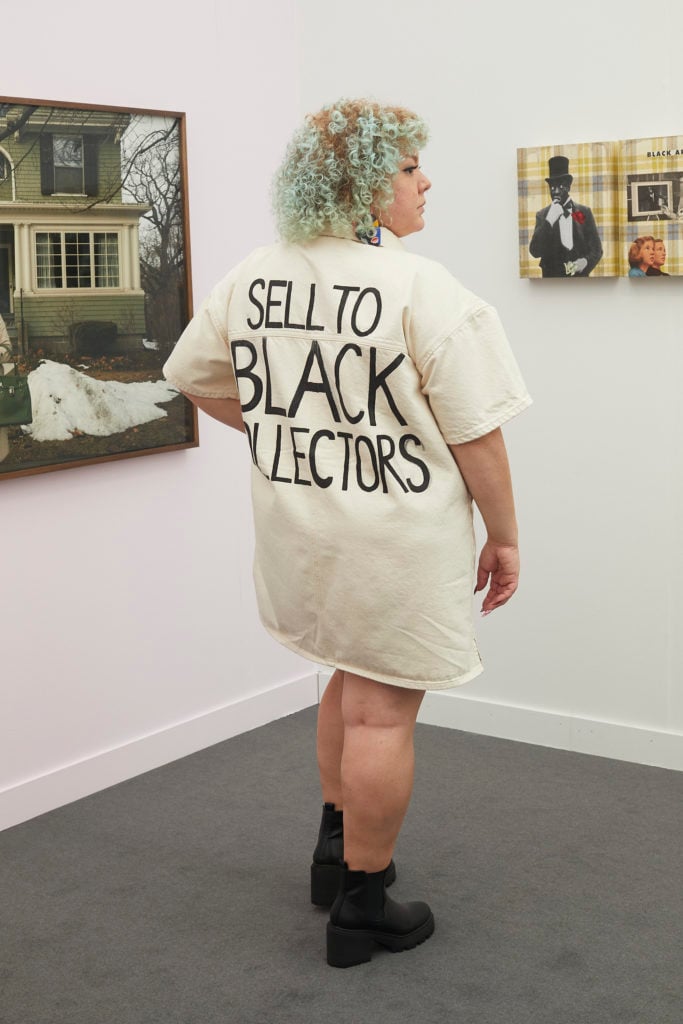
Photo by Jennelle Fong.

Artist Genevieve Gaignard at Frieze Los Angeles. Photo by Jennelle Fong.

Is there anything you want to end on?

I will just say I saw an image recently online that said “Sell to Black Collectors.” And I think the fact that that image needs to exist is an interesting thing and I think we need to talk more about the reluctance at times for artists to sell to Black collectors. Cause it’s like, “Wow… you’re going to block your own blessing?” It’s crazy, actually. Racism is crazy and it’s that powerful. 

Follow Artnet News on Facebook:
Want to stay ahead of the art world? Subscribe to our newsletter to get the breaking news, eye-opening interviews, and incisive critical takes that drive the conversation forward.


Why Is the Risk of Contracting HIV Higher in Gay Men? – Healthline

Approximately 1.2 million people in the United States had HIV as of 2018, according to the Centers for Disease Control and Prevention (CDC). About 14 percent of them didn’t know they even had the virus.

HIV is more common than average in men who have sex with men (MSM). In 2018, 69 percent of new HIV diagnoses were in gay men, bisexual men, or other MSM, per the CDC.

Here’s a look at why MSM have a higher risk of contracting HIV, as well as steps to prevent transmission.

HIV can be transmitted from person to person through contact with virus-containing:

  • blood
  • semen (including pre-seminal fluids, also known as “pre-ejaculate” or “pre-cum”)
  • vaginal fluids
  • rectal fluids
  • breast milk

Some people contract the virus when they have sex without a condom or other barrier method. However, this isn’t the only way to contract HIV.

The virus can be transmitted when someone with HIV shares needles, syringes, or other drug equipment with another person.

HIV can also be passed from a mother to child during pregnancy, childbirth, or breastfeeding.

Some people have contracted HIV after getting a blood transfusion or organ transplant that contained the virus. But because donor blood and organs have been routinely tested for HIV since 1985, the chance of this happening today is very low.

Around the world, MSM are 26 times more likely than average to contract HIV, reports UNAIDS.

In the United States, gay men, bisexual men, and other MSM account for the majority of new HIV diagnoses.

Among MSM, Black and Hispanic men are at higher risk than white men of contracting the virus, reports the CDC.

This may be because, according to a 2017 report, Black and Hispanic gay and bisexual men are less likely to take preventive medication. Other factors, such as unequal access to healthcare, may place some MSM at higher risk for HIV.

Because HIV is more common among MSM, those people are more likely to have sex with someone who has the virus.

Several other factors also raise the chances of transmission.

HIV can be transmitted through sex without a condom or other barrier method.

The chance of transmission is higher during anal sex without a condom or other barrier method, compared with vaginal sex without a condom or other barrier method.

This is because the skin around the anus is thinner than the skin around the vagina, so small tears are more likely to occur during anal sex.

Someone without HIV is more likely to contract the virus during anal sex if they are the “receptive” partner (that is, the partner whose anus is being penetrated by the penis).

Early diagnosis and treatment for HIV are important. Treatment with antiretroviral therapy prevents progression to AIDS. It can also reduce the virus to undetectable levels, at which point it can’t be transmitted to others.

The CDC recommends that MSM get tested for HIV at least once per year. People at higher risk of HIV may benefit from more frequent testing, every 3 to 6 months.

Not all MSM follow these recommendations. As a result, some may have HIV without realizing it. This can lead to delays in treatment and increase the chances of transmission.

As of 2018, approximately 1 in 6 gay and bisexual men with HIV didn’t know they had the virus, reports the CDC. In that same year, per the CDC, only 65 out of 100 gay and bisexual men with HIV received some sort of HIV care.

Some MSM don’t seek out testing or treatment due to homophobic stigma or fear of discrimination.

Medications are available to reduce your likelihood of getting HIV.

These include pre-exposure prophylaxis (PrEP) and post-exposure prophylaxis (PEP).

If someone without HIV is at higher risk of contracting the virus, taking PrEP on a daily basis significantly lowers that risk.

If someone without HIV has a possible exposure to the virus, they can take PEP within 72 hours. This greatly reduces the risk of transmission.

Despite the availability of these medications, usage remains low among gay and bisexual men, particularly those who are Black or Hispanic, according to the CDC.

In 2017, the CDC reports, PrEP was taken by:

  • 19 percent of Black or African American MSM
  • 21 percent of Hispanic or Latino MSM
  • 31 percent of white MSM

HIV is preventable. Here are a few ways to reduce the risk of transmission.

1. Use a barrier method during sex

Condoms and other barrier methods provide protection against HIV, as well as other sexually transmitted infections (STIs).

If you have HIV or another STI, get treatment and use a condom or other barrier method every time you have sex.

If you do not have any STIs, use a condom or other barrier method every time you have sex with someone who has an STI or unknown STI status.

Buy the right size condom for you and learn the proper way to use them.

2. Choose alternative sexual activities

Some activities carry a higher risk of HIV transmission than others.

The chance of transmission is high during anal sex without a condom or other barrier method.

The chance of transmission is low during oral sex or activities that don’t involve contact with bodily fluids.

3. Limit your number of sexual partners

The chance of HIV transmission increases with the number of sexual partners that a person has.

4. Get testing and treatment

If you’re an MSM, get tested at least once per year for HIV. Those who have sex with multiple partners or partners of unknown HIV status should get tested more frequently, every 3 to 6 months.

People who test positive for HIV should follow their doctor’s recommended treatment plan. Taking antiretroviral medication will lower the risk of complications and help prevent transmission.

It also helps to ask your sexual partners about their testing history and status.

5. Take PrEP or PEP

If you don’t have HIV, ask your doctor whether you should take PrEP to lower your chance of contracting the virus.

If you have sex without a condom or other barrier method with someone who has HIV or someone who might have HIV, ask your doctor about PEP. You must take PEP within 72 hours of a possible exposure and continue taking it for 28 days.

People who have HIV should encourage their partners to speak with their doctor about PrEP and PEP.

New HIV infections occur each year, with a large number affecting MSM.

Reduce your chances of contracting or transmitting the virus by using a condom or other barrier method during sex. Get regularly tested for HIV, and talk with sexual partners about their HIV status.

Antiretroviral medications are available to treat HIV. They help prevent transmission and lower the risk of complications from HIV.

Medications are also available to reduce the chances that someone without HIV will contract the virus after exposure.

NCAA warns state lawmakers against limiting transgender sports participation – Austin American-Statesman

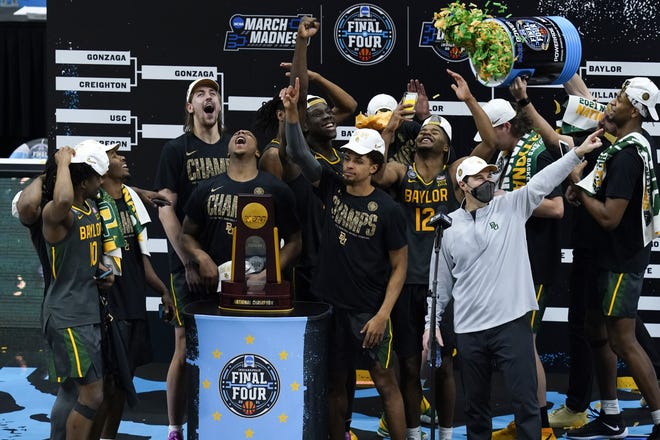
Baylor players and coaches celebrate after the championship game against Gonzaga in the NCAA men's college basketball tournament April 5 in Indianapolis. The NCAA is considering removing championships from states that enact laws limiting sports participation by transgender athletes.

In a statement supporting the inclusion of transgender athletes in sports, the NCAA Board of Governors warned state lawmakers Monday that actions to the contrary could result in the loss of championship games and events.

All student-athletes are expected to be treated with dignity and respect, the board said.

“Inclusion and fairness can coexist for all student-athletes, including transgender athletes, at all levels of sport,” the Board of Governors said. “We are committed to ensuring that NCAA championships are open for all who earn the right to compete in them.”

Texas is among 30 states weighing bills to ban transgender girls or women from participating in sports consistent with their gender identity, with governors in Mississippi, Arkansas and Tennessee signing such bills into law, according to the Human Rights Campaign, an LGBT rights organization tracking the legislation.

More:‘Bathroom bill 2.0’: Effort to bar transgender athletes in Texas schools gets hearing

The Texas Senate could vote as early as this week on Senate Bill 29, which would block transgender athletes from participating in grade school and high school sports outside of their “biological sex.”

SB 29 was designated as a priority by Lt. Gov. Dan Patrick, a Republican, and has 16 GOP senators as co-authors. After a Capitol hearing on SB 29 in which opponents, including many parents of transgender children, outnumbered supporters 4-to-1, the Senate State Affairs Committee advanced the bill on a party-line 5-2 vote with Republicans in favor and Democrats opposed.

The Texas House has taken no action on similar legislation, House Bill 4042, filed by Rep. Cole Hefner, R-Mount Pleasant.

Supporters of the transgender athlete bills argue that passage will protect competition and ensure fairness in girls sports, where they say transgender girls can have a physical advantage.

“Female athletes deserve their place in the record books for all of their hard work and dedication. We should not take that away from them,” said Sen. Charles Perry, R-Lubbock, author of SB 29.

Opponents of SB 29 say it and similar efforts are an attack on the humanity of transgender people, further stigmatizing them while denying access to the benefits of sports participation, including camaraderie, sportsmanship, discipline, health, leadership and team building.

More:Texas lawmakers tackle hot-button issues — from transgender athletes to voting restrictions

In its statement, the NCAA Board of Governors said it “firmly and unequivocally” supports giving transgender student-athletes the opportunity to compete in college sports.

“The NCAA has a long-standing policy that provides a more inclusive path for transgender participation in college sports. Our approach — which requires testosterone suppression treatment for transgender women to compete in women’s sports — embraces the evolving science on this issue,” the board said.

The NCAA requires that championships be held only where “hosts can commit to providing an environment that is safe, healthy and free of discrimination,” the board said, adding that members will “closely monitor” the states to determine whether championships can be welcoming and respectful of all participants.

Championship events can bring a multimillion-dollar boost to a state and local economy.

Asked if Texas risked the loss of NCAA events if SB 29 were signed into law, board spokeswoman Michelle Brutlag Hosick said: “The most important thing to note right now is that the NCAA Board of Governors has not made a decision regarding championships and will continue to monitor the situation.”

The board statement came less than two weeks after NCAA President Mark Emmert expressed similar concern over the transgender athlete bills, calling such legislation harmful to transgender students and contrary to the organization’s core values of inclusivity, respect and equal treatment.

In Texas, Republican lawmakers also have filed several bills seeking to ban puberty blockers and gender-affirming medical treatment for transgender youths. 

Two of those bills stirred strong passions during a Capitol hearing Monday, with supporters likening the treatment to child abuse while opponents, including transgender Texans and parents of transgender children, begged lawmakers to leave medical decisions to professionals and families who best know the issues in each case.

LGBT chamber sends letter to lawmakers opposing bills – NewsChannel5.com

0

NASHVILLE, Tenn. (WTVF) — More than 180 businesses and corporations signed a letter to state lawmakers opposing LGBTQ-related legislation Monday. The Nashville LGBT Chamber released the letter urging lawmakers to stop the pursuit of 15 bills. The chamber is targeting bills specifying transgender athletes, students and rules involving bathrooms.

Joe Woolley, CEO of the chamber, said it’s trying to keep bills that discriminate against LGBT people from being passed.

“We’re the state with the most anti-LGBT bills filed this year. We are the state that’s had the most anti-LGBT bills filed since 2017 and we’re also the state that has the most to lose,” said Woolley.

He also said he believes there will be a sharp economic impact if the state continues to pass legislation like this. Among the corporations signing the legislation are Amazon and Dell.

“Think of it this way, two-bathroom bills. We are the only state to have a bathroom bill filed this year and we’ve had two of them. Both of them are moving forward,” he said.

Woolley said he knows of two conventions that will pull out of Tennessee with the current bills being considered. He said he can’t name the conventions since their plans to relocate haven’t been finalized.

However, Monday, one group announced they wouldn’t be doing business in states with discrimination against transgender people. The NCAA said it would not hold championships in such states and released the following statement:

“When determining where championships are held, NCAA policy directs that only locations where hosts can commit to providing an environment that is safe, healthy and free of discrimination should be selected. We will continue to closely monitor these situations to determine whether NCAA championships can be conducted in ways that are welcoming and respectful of all participants. “

https://twitter.com/KyleHoranNC5/status/1381709794181021702?s=20

Nashville Mayor John Cooper also commented on the NCAA decision on Twitter.

https://twitter.com/JohnCooper4Nash/status/1381735260652716032?s=20

One local transgender woman also said the legislation reminds her of a time when youth were counseled if they believed they were a gender other than the sex they were born with.

“I didn’t know I was transgender at 5 or 6 because I didn’t know what that word was. I didn’t know what it meant,” said Olivia Hill, a Nashville native who transitioned shortly after her mother died. “When she passed away it really devastated me. And I started seeking counseling and when I did then me kind of came out. The counselor I was seeing just kind of labeled it as transgender. I never really thought about that.”

Hill said she remembers a psychologist telling her she had to act like a boy. And so, for a long time, she said she tried to be as manly as possible.

“I had a really hard time trying to figure out why they told me not to feel this way but I still felt this way,” she said.

Hill said whenever she sees new legislation aimed at the LGBTQ community, it lowers her pride in her home state.

“I’m really saddened by all of these bad laws because they’re targeting people like me where I can use the bathroom. They’re targeting the businesses to have to post signs that put an even larger target on me and them. Not accepting these kids is just horrible. It’s just absolutely horrible,” she said.

The bill to stop transgender girls from competing in middle and high school girls’ sports is already law. The other bills are still moving through committees.

Tech comedians are poking fun at their employers, drawing big followings – CNBC

Alexis Gay quit her job in tech to pursue comedy full-time amid the Covid-19 pandemic.

Images courtesy of Alexis Gay

When Alexis Gay had to present second quarter results to her team on a Zoom video call, she sat down and wondered how she could do it. She wanted to be transparent but she also wanted to be encouraging to her teammates who had worked so hard through unprecedented circumstances.

The second quarter of 2020 was one of the worst in years for many tech companies, as the Covid-19 pandemic sent the economy into a tailspin. As a senior manager at San Francisco-based digital company Patreon, Gay knew colleagues were still learning how to work remotely while the country was in crisis.

While rehearsing what she’d say, she couldn’t help but laugh.

Gay grew up wanting to be an actor, but found herself seven years into a tech job where she fully leaned into the industry’s hustle culture. And now, she found herself trying to do it with a straight face during a once-in-a-lifetime pandemic.

Before her meeting, she made a satirical video depicting how she’d approach a team.

“This is a learning quarter,” she said as she looked to the side of camera as if trying to convince herself of what she was saying. “These are unprecedented times,” she said in another cut. “But the team really dug deep!” she said in another cut, as if trying to encourage her team.

Her video immediately got tens of thousands of likes across various social media platforms. “I was tapping into that idea of like, ‘what are we going to say about Q2?” She laughed. 

Gay is one of several tech workers leaning on comedy to poke fun at their workplaces, where the quirks and qualms of employers grew more pronounced amid the pandemic. It’s the latest spin on a recent trend, where employees offer first-person accounts chronicling the dystopian nature of Silicon Valley work-life.

Often using quick-take comedic videos, workers are poking fun at recruiting strategies, diversity pledges and the industry’s homogenous makeup. Some have even begun making money from their followings, many of whom are millennials facing high rates of burnout, exacerbated during the Covid-19 pandemic. For some, it’s become a form of therapy.

From tech to comedy

In January 2021, as the pandemic raged through a winter surge, Gay took a leap and decided to pursue comedy full-time.

“The awareness of how uncertain the future was was a point driven home every day,” she said. “It felt like, the time is now because we simply don’t know what’s coming next.”

Since graduating college, Gay had worked tirelessly in various roles in tech, from marketing to sales to partnerships. She’s liked her jobs for the most part, she says.

“There was an excitement to being young and fresh in the start-up world,” she said. “This was a world where all I had to do was raise my hand and work hard. I showed up early, stayed late and did that whole deal. I became addicted to this idea that you can build and create something. Like, I was having an impact.” 

While working at San Francisco-based cloud company Twilio — although she liked the job — she realized she didn’t really care that much, she said.

“It was like, you work in tech, all your friends work in tech, you hang out on the weekends and talk about tech,” she said. “It felt like this homogenous routine.”

Gay then moved to another company that was closer to her heart: Creators making content. Her most recent role was at San Francisco-based Patreon, where she worked in creator partnerships. Around the same time, she joined a San Francisco improv group.

She launched another popular video in March 2021 called “every single park hang in San Francisco,” which drew industrywide attention. “Alexis continually captures the reality of our industry better than any @semil end of year post ever could,” tweeted Compound Ventures partner Michael Dempsey.

“She’s so spot on it’s terrifying,” another Twitter user stated. (Gay said Twitter works well for comedy — the short format writing makes prime real estate for zingers, and everybody in San Francisco tech is on the platform.)

Gay said her comedy isn’t meant to be anti-tech, though. “If anything this is self-deprecating humor,” she laughed. “For me, it’s poking fun at me and my friends and the fact that for seven years, this was the choice I made. “

Now, Gay is using the skills she learned in her tech roles to earn money from her videos on Instagram, Twitter and YouTube. She still does some consulting and panel moderating for conferences on the side, she said.

Gay is not the first to make the leap to a comedy career.

Sarah Cooper, a former Google user experience design lead, found huge success after she filmed a satirical commentary about what it’s like to work at Google and at a big tech company. She achieved global popularity in 2019 for her TikTok videos lip syncing to President Donald Trump. In 2020, she landed a Netflix deal for her own show, “Sarah Cooper: Everything’s Fine.” And, in March 2021, CBS ordered a pilot for a show based on her book “How to Be Successful Without Hurting Men’s Feelings.”

“What is so cool about seeing her mainstream success is that origin story of being a tech comedy person didn’t pigeonhole her later on so that’s been affirming,” Gay said.

Satire from a diverse perspective

Josh Ogundu, a product operations lead at TikTok and a startup advisor at accelerator Techstars L.A Cohort, makes videos about the reality versus expectation of working in tech.

The 28-year old posts videos to his account NaijaNomad, and has reached tens of thousands of viewers since the beginning of the year. He even got a shout out from show runner and “Billions” co-creator Brian Koppelman on Twitter.

He often pokes fun at companies’ multi-million-dollar diversity initiatives, recruiting practices and how when companies refer to “hiring” for certain roles, they often mean contractors, who usually don’t get the benefits and perks that regular employees enjoy.

TikTok product operations lead Josh Ogundu has grown in popularity as tech workers relate to his videos that take satire to the reality of working in tech.

Photo courtesy of Josh Ogundu

“What Big Tech says on the surface and what happens in practice is very different,” Ogundu said.

One of his videos, called “tech guy breaking into tech,” pokes fun at people who come from privileged background complaining about being an underdog. Another pokes fun at tech companies rewarding employees with Slack emojis, whiskey and, essentially, anything but compensation.

After the 2020 murder of George Floyd and subsequent racial justice protests, a string of tech companies pledged to do more to fight racial injustice.

Ogundo’s response: A parody video called “Tech founders talking about diversity in tech.” In it, Ogundu looks to the side of the camera with a disinterested face as if speaking to a crowd, and says, “At Big Tech BigCo, we pride ourselves on diversity….Due to our five-year $100 million pledge to diversify tech, we are able to hire five more people of color as contractors this year than in any previous year.”

He said he saw a gap in Silicon Valley satirical comedies, which focused on engineers but ignored the real challenges for people of color.

“For me, it’s having an outlet to talk about more serious topics by poking fun at it and opening it up for a broader conversation in a way that isn’t an attack on someone,” Ogundu said.

San Francisco-based Hallie Lomax sought a similar kind of honesty. A Lyft engineer who’s worked at various Silicon Valley tech companies, the 27-year-old started a digital comic strip called “At Work Comics” which she describes as “moments with people I am paid to talk to.”  

Lyft engineer Hallie Lomax has created digital comic strips depicting common workplace interactions.

Photo courtesy of Hallie Lomax

It began as a way to document her uncomfortable experiences during an internship at a tech company.

“This guy in my office would be weirdly flirty with me and I didn’t like it so I started posting using the hashtag #guyatwork did this thing.” During the pandemic, she revived her hobby of drawing she more or less abandoned before she got into tech as a software engineer during college. 

One comic from 2020 depicts a man on a video call saying “I want to make coffee but I don’t want to show you my house.” Another comic shows her working from her laptop from a small home when her dog begins mounting a nearby stuffed animal. “This is a hostile work environment,” the character is shown saying while staring at her dog.

Photo courtesy of Hallie Lomax

“It’s kind of like the opposite of a micro-aggression,” she said. “It’s these micro positive moments that add up over time to create an overwhelming feeling of positivity.”

They also help her reconcile being a Black woman in a homogenous tech industry, she said.

“I’ve had a lot of pretty weird, negative experiences, but with this, I have evidence that there are a lot of good times and positive relationships I’ve had with coworkers and some of them are even pretty good friends,” Lomax said. “The tech industry can be a very hard place to be, especially when you don’t necessarily feel like you’re a part of the ‘in’ groups, but if you can remember all of the good times you’ve had, it’s easier to look past it all.”

Lyft even asked Lomax to do a comic for its blog after coworkers took notice. 

The blog post, called “mentoring myself” features light-hearted drawings of her character talking to new trainees, recalling from her first days in tech “a crippling paranoia that you don’t have what it takes to succeed in the professional world.”

It shows a drawing of her in a penguin costume with the words “If I had a dollar for every time someone told me I had imposter syndrome, I’d question whether or not I deserved so much money.”

Millennial work anxiety

Rod Thill, a 30-year old sales worker for an e-commerce logistics company, saw his social media following explode to millions of followers in October 2020 after posting about Silicon Valley’s “grind” culture and the stresses of feeling inadequate during a time when workers can’t read their bosses’ expressions.

His TikTok name is @Rod and bio says “Anxious Millennial” with a tear drop emoji.

“Last April, I had a management change during a pandemic and I had never met them face-to-face,” Thill said. “When that happened, it intensified the anxiety. Reading communication has been really hard to do during this time.”

Thill’s breakout video came when he described millennials working with the irrational fear they’re going to get fired. “I am a pretty stellar employee and still feel like I’ll get fired for no reason,” he said.

He’s garnered over a million followers across platforms in months and is now doing sponsorships with brands like StitchFix, Lenovo and Wholly Guacamole. “Millennials love guac, so it fits in.”

Companies are now hiring Thill for happy hour events and awards nights. Now, he’s begun writing a TV script about millennials in startup culture and hired an agent. But he doesn’t plan on quitting his day job anytime soon.

Like Gay, Thill needed to be able to talk and laugh about the realities of workplace anxiety and an outlet like TikTok seemed perfect.

“Millennials, I think, like to just open up and check apps real quick,” said Thill, describing why he thinks he struck a chord with people. “Working in corporate America, time is money and breaks are amazing.”

American Jailed In Dubai For Legal Marijuana Use – One Mile at a Time

0

Dubai welcomes millions of visitors from abroad annually, and it’s known for being one of the most “open” places in the Middle East. It’s a destination that people go to party and have a good time, and a vast majority of the time people leave without issues.

However, that’s not always the case, and this is a good reminder of the risks…

In this post:

American hospitalized and then jailed in the UAE

The Daily Mail has the story of how a 51-year-old American man from Las Vegas traveled to Dubai in late February. He smoked marijuana in Las Vegas legally prior to his trip, and of course didn’t take any with him, since that’s highly illegal.

A day after arriving in Dubai, the man fell ill with pancreatitis and was hospitalized. He received emergency treatment, and a day prior to being discharged he was asked to provide a urine sample.

The urine sample showed traces of marijuana, which is illegal in the UAE. Per laws in the country, the hospital had to turn over those results to the police.

At that point the man was arrested by the police and thrown in jail for three days. While in jail, a vein where an IV had been placed as part of his treatment became infected, and the medicine he was prescribed also weren’t given to him by jail staff.

After being released from jail he was confined to his hotel, as prosecutors are still deciding whether to charge him, in which case he could be looking at up to three years in jail on drug charges. He’s not allowed to leave the country, as he’s apparently on the UAE’s “no fly list.”

As the man said in an interview:

“I was absolutely stunned to learn that I was being charged due to residual marijuana in my system. I smoked it legally back in America long before I even got on the plane.

I knew about Dubai’s strict drugs laws but never for one moment did I think something I legally did in my own country would lead to my arrest.

This has just turned into a complete nightmare. I never thought by going to hospital I would end up being thrown in a jail.”

These arbitrary laws are a problem

If you ask me, this is such an egregious enforcement of the law, and hopefully these charges get dropped. This is the general issue with traveling to a country that has strict laws that aren’t enforced a vast majority of the time.

It’s obviously one thing if he brought marijuana to the UAE, or consumed it while there. But instead he legally consumed it in the US prior to his trip.

I have to be honest — I’m familiar with the UAE’s laws in general, but I didn’t realize that consuming marijuana in a different country prior to visiting the UAE was illegal. Of course I can understand how the police would be concerned to find marijuana in someone’s system, but you’d think an explanation and potential search of someone would clear this up. Then again, this is a non-issue a vast majority of the time, since this only became a problem because the visitor was hospitalized.

And before someone starts talking about how “drugs” are bad and that this guy should have known better, let’s keep in mind that until late 2020 it was a criminal offense in the UAE to consume alcohol without an alcohol license.

Of course so many people in the UAE drink, but people weren’t prosecuted unless they were arrested for another offense. So it was another law that was enforced when it was convenient, but otherwise not.

And then there have been laws against using VPNs, laws against “writing bad words on social media,” or heck, laws against plane spotting.

Does this mean you shouldn’t travel to the UAE?

You might be saying “well how can you ever recommend anyone travel to the UAE when things like this happen?” It’s a fair question.

I’d counter that by sharing a story that a friend who is a flight attendant at Emirates once told me. She was working a flight to the US, and noticed that one of her colleagues seemed nervous the whole flight. She asked her if everything was okay. As it turns out, it was the flight attendant’s first time visiting the US, and she was terrified of her layover — she had heard about all the mass shootings in the US, and was scared that could happen to her.

And she’s not wrong. Ultimately is that any less of a risk than potentially violating a law in the UAE and actually being charged as a visitor? I’d say not. There are a few “viral” stories every year about people being jailed in the UAE for seemingly unbelievable reasons, but that’s about it.

So yes, you should always keep in mind the risks of traveling to foreign countries, and consider local laws. There’s reason to be concerned. But ultimately this impacts a tiny percentage of people, just as backwards policies in other countries also impact people.

The US has backwards drug laws as well

If the UAE wants to deport this person that’s fair. I think the main issue is the fact that he’s potentially looking at years at jail, which is on a different level.

It’s important to consider how backwards our laws in the US are against marijuana as well:

  • Smoking marijuana is legal in many US states
  • At the same time, you can be denied entry to the US if you admit that you’ve ever used “drugs”
  • In other words, a Canadian who has legally used marijuana in Canada years ago could be denied entry to the US for admitting that

Bottom line

An American man is potentially looking at a jail sentence of several years in Dubai after legally smoking marijuana in Las Vegas prior to his trip. This only became an issue because the man was hospitalized shortly after arriving in the country, and was forced to provide a urine sample.

It’s another reminder of the general risks of traveling to countries with different laws. These differences typically don’t pose any problems, until they do…

Annual Pride Awards Celebrate LGBT Staff and Students – The Emory Wheel

The Office of LGBT Life’s Annual Pride Awards streamed via the University’s YouTube channel on March 30. Over 250 students, staff and community members tuned into the award show. 

Director of the Office of LGBT Life Danielle Bruce-Steele kicked off the event with a brief introduction, describing how students and staff have persevered through what has been a very unusual year. 

“A year of darkness and uncertainty has slowly, and, sometimes haltingly, turned towards the light with a new sense of hope and urgency,” Bruce-Steele said. 

Jacqueline Veliz, program coordinator for the Office of LGBT Life, introduced the event’s keynote speaker, Alix Olson. Olson is an assistant professor of Women’s, Gender and Sexuality Studies (WGSS) at Oxford College and the co-director of the Studies in Sexualities program. She is also an award-winning film producer and editor and toured internationally as a spoken word poetry artist for over a decade prior to arriving at Emory. 

In her address, Olson emphasized the importance of asking queer questions about the world. 

“Queers get curious as survival,” Olson said. “We seek missing histories, we enter archives to find ancestors who grew sideways like us, we look for stories, so many stories … curiosity is our vitality. It keeps us finding and found.” 

Marche Simpson speaks at the 2021 Emory Pride Awards.

Associate Director of Outreach at Counseling and Psychological Services (CAPS) Jane Yang (98C) presented the Chestnut LGBT Person of the Year award to Tharyn Grant, a clinical social worker at CAPS. 

The Outstanding Transgender Advocate of the Year award, presented by Director of the Woodruff Scholars Program Margaux Cowden, went to the Woodruff Scholars Gender Affirming Items Project Group, which is made up of Ben Gilbert (21C), Henry Mangalapalli (22C), Gabe Harr-Siebenlist (21Ox), Sean Parker (22C) and Jackson Eckel (24C). 

The project, conceived as part of an equity design challenge, provides funds and support to help trans students access gender affirming clothing and cosmetic items. It launched on International Trans Visibility Day, which was on March 31.

PhD candidate Brent Allman (24G) received the Berl Boykin Fierce Leadership award, which was founded in honor of Berl Boykin, a journalist, advocate, poet and playwright. Allman has served as the president of the LGBT Graduate Coalition and the Queer Grad Discussions Group. He has also been part of the Emory Diversifying Graduate Education Program at Laney Graduate School.

Christine Liang (22N), a current student staff member at the Office of LGBT Life, received the Rev. Dr. Susan Henry-Crowe Keeping the Faith award. The award is named after the former dean of Spiritual and Religious Life. Current Dean of Spiritual and Religious Life Rev. Gregory McGonigle presented the award to Liang for her work on the Queerness and Spirituality Initiative between the Office of LGBT Life and the Office of Spiritual and Religious Life. 

Assistant Professor of WGSS Stu Marvel presented the Studies in Sexuality Essay Prizes for the student essay contest, which supports writing and scholarship on sexuality at the University. PhD Candidate Judges Tiara Jackson (22G) and Rohit Chakraborty (25G) gave Emma Kantor (21C) first place for her essay “Agents of Destruction: Sexual Assault Realization in Girls and I May Destroy You.” Hannah Risman (20Ox, 22C) received the runner-up award for her essay “Where Can the Queer Black Body Rest in America?” 

Associate Professor of History Michelle Armstrong-Partida and Director of Production and Assistant Professor of Film and Media Studies Dehanza Rogers judged the graduate essays. Elara Sherman (26G), PhD candidate in French and Italian, won first place for her essay “Birthing Monsters: Fetal Memorials, Horror Shows and Feminine Writing of the Clandestine Abortion.” Runner-ups were Sana Malik Noon (24G), PhD candidate in anthropology, for her essay “Women’s Muslim Subjectivity Beyond Piety and Promiscuity,” and Samantha Wrisley (23G), PhD candidate in WGSS, for her essay “The Effective Content of Normal Contempt: Misogyny is a Condition of Ambivalence.” 

President of Emory Pride Angel Barrueta (22C) named Nat Trejo (24C) the Emory Pride Member of the Year

“I’ve only been at Emory for a few months now, I’m a first-year,” Trejo said. “But I really feel like I have found a home here with the Emory Pride Organization and with Queer Emory.”

Paul Cruz (24C), who created the Queer and Trans Latinx Discussion Group with the Office of LGBT Life, received the GALA Leadership Award. The award was founded in 2009 and grants a student a $5,000 scholarship from the LGBT Scholarship Alumni Committee. 

Cruz, Liang and Ashley Rivas-Triana (21C) received the J. Michael Aycock Leadership Development Fund, which was founded to support leadership opportunities for LGBT students. The three recipients applied and were selected for the virtual Creating Change Conference sponsored by the National LGBT task force, which took place in January. 

Veliz returned to thank student staff and volunteers, as well as a group of 10 students who she called the “lifeblood” of the office. She also applauded volunteer facilitators for their work on virtual safe spaces this year and recognized the leaders of seven discussion groups, which include Queer and Asian, Queer Grads, Queer Men, Transforming Gender, Queer Trans Latinx, Queer Women and BlackOUT. 

Bruce-Steele congratulated the Lavender Graduation Class of 2021, Emory’s graduating LGBT students, and expressed her hopes for the year ahead. 

“Remember that this journey is a marathon, not a sprint,” Bruce-Steele said. “We must take care of ourselves and each other. That includes a little celebrating now and again.”

Supreme Court leaves major conservative cases waiting in the wings, from abortion to guns – USA TODAY

0

WASHINGTON – When Associate Justice Amy Coney Barrett took her seat on the Supreme Court in October, Democrats openly fretted about a lopsided conservative court unwinding years of precedent on abortion, gun control and other divisive issues.

Rather than handing conservatives a string of victories, the justices have – so far – left advocates on the right grasping for answers about why a number of pending challenges dealing with some of the nation’s biggest controversies have languished.

From an abortion case out of Mississippi to a scorching dispute between Texas and California pitting religious freedom against gay rights, the justices are sitting on several contentious issues that will wait until this fall – at the earliest – to get a hearing, assuming the court takes the cases at all.    

“There’s always a reason to kick the can down the road,” lamented Josh Blackman, a law professor at South Texas College of Law Houston. “These issues linger and fester if they don’t come to any sort of resolution. That’s sort of where we are.”

Activists react to SCOTUS abortion clinic ruling

A divided Supreme Court struck down a Louisiana law regulating abortion clinics on Monday, ruling the law requiring doctors who perform abortions have admitting privileges at nearby hospitals violates rights the court announced in Roe v. Wade. (June 29)

AP

When President Donald Trump nominated Barrett in September, Democrats warned her confirmation would tilt the court to the “far right,” noting it would have a 6-3 split between conservatives and liberals for the first time in decades. New York Sen. Chuck Schumer, the chamber’s Democratic leader, said Barrett’s confirmation would “alter the lives and freedoms of the American people while they stood in line to vote.”

In the months since then, the court‘s approach has been far less dramatic. It sided with churches and synagogues challenging COVID-19 restrictions but dismissed a battery of appeals by Trump and his allies seeking to change the outcome of the 2020 election. It jettisoned some controversial matters left over from the Trump administration and sidestepped others. 

Of 13 signed opinions published by the court this year, all but one put conservatives and liberals together in the majority that decided the case.

Part of that may be the result of the court’s rhythm – big, controversial cases tend to be decided closer to summer – and part of it may have to do with the appeals the court has taken or dismissed. Court observers speculate that Chief Justice John Roberts is eager to lower the temperature and steer the court around partisan controversies. 

Here’s a look at some of the red hot appeals waiting in the wings of the Supreme Court’s docket.  

First abortion case? 
Abortion rights demonstrators including Jaylene Solache, of Dallas, Texas, right, rally outside the Supreme Court in Washington, D.C., on March 4, 2020.

Abortion rights demonstrators including Jaylene Solache, of Dallas, Texas, right, rally outside the Supreme Court in Washington, D.C., on March 4, 2020.
Jacquelyn Martin, AP

Easily the most closely watched pending litigation at the court deals with Mississippi’s ban on most abortions after 15 weeks of pregnancy. 

Many conservatives have sought for more than a generation to either overturn the 1973 landmark Roe v. Wade decision that legalized abortion nationwide or at least chip away at it. Some see the Mississippi case as the first real test of the court’s resolve on the issue.

Walter Weber, senior counsel at the conservative American Center for Law and Justice
As Justice Byron White observed, ‘every time a new justice comes to the Supreme Court, it’s a different court.’

The justices have been weighing whether to hear the case for months.  

“It could be the first abortion case to be reviewed by the current set of justices,” noted Walter Weber, senior counsel at the conservative American Center for Law and Justice. “As Justice Byron White observed, ‘Every time a new justice comes to the Supreme Court, it’s a different court.’”

Some speculate the court is eager to avoid taking up such a controversial case for now. Others say the court is preparing to decide not to take the appeal and one or more of the conservative justices are busy writing a lengthy dissent from that decision. The unusual delay is a mystery that has vexed even some of the court’s closest observers. 

“Your speculation about why the court hasn’t yet indicated whether it will hear our challenge to Mississippi’s 15-week abortion ban is as good as mine,” said Hillary Schneller, senior staff attorney at the Center for Reproductive Rights. “But I do know that this should not be a hard case. This abortion ban violates nearly 50 years of Supreme Court precedent that holds states cannot enforce pre-viability abortion bans.”

The court is considering another abortion case on its so-called shadow docket, an appeal by Tennessee last week  to enforce a 48-hour waiting period before abortions are performed. That could be decided this spring.   

Texas v. California
Demonstrators for and against President Trump's Supreme Court nominee Amy Coney Barrett gather outside the Supreme Court on the first day of Senate confirmation hearings for Barrett on Monday, Oct. 12, 2020, in Washington D.C.

Demonstrators for and against President Trump’s Supreme Court nominee Amy Coney Barrett gather outside the Supreme Court on the first day of Senate confirmation hearings for Barrett on Monday, Oct. 12, 2020, in Washington D.C.
Hannah Gaber, USA TODAY

The Supreme Court is sitting on a dispute this term between the nation’s two most populous and perhaps most politically disparate states: California and Texas. The case once again underscores a tension in the law between religious liberty and gay rights.

California approved a state law in 2016 prohibiting taxpayer-funded travel to states that don’t explicitly prohibit discrimination on the basis of sexual orientation. Texas allows foster-care and adoption agencies to deny same-sex couples as parents if they object to gay marriage on religious grounds. Texas sued California last year, and the justices have been considering whether to take the case since January.

Attorneys general in California and Texas did not respond to questions about the case, but Texas told the court the California law could have huge economic consequences.   

“If this cycle of retaliation continues, it will leave a country divided into red and blue states: The former spend money only in other red states; the latter spend money only in the blue ones,” the Lone Star State’s lawyers told the court. 

California says it’s within bounds to set policies for how to spend taxpayer money. 

“The fact that California has balanced these sometimes competing concerns differently from Texas does not demonstrate that California acted irrationally or with animus toward religion,” it told the court in a filing last year. 

The suit has parallels to one of the biggest cases before the court this term, which will probably be decided this summer. In that suit, Philadelphia wants to prohibit what it says is same-sex discrimination by a Catholic foster care agency. The agency asserts it cannot screen same-sex couples to be parents because it opposes gay marriage on religious grounds. 

Guns on the outside
Gun rights advocates gather at Virginia's Capitol in Richmond to protest gun control bills in January 2020.

Gun rights advocates gather at Virginia’s Capitol in Richmond to protest gun control bills in January 2020.
Jack Gruber, USA TODAY

The court has sidestepped Second Amendment disputes for years, but experts predicted the justices are primed to pluck a gun rights case for consideration soon. If they decide the time is right, they’ll soon have several cases to choose from. 

When it struck down handgun bans in the District of Columbia and Chicago in 2008 and 2010, the court specifically gave a nod to the right to own a gun for lawful purposes, such as self-defense inside the home. Now the justices have before them a case questioning whether states may regulate the right to carry guns away from home.

Michael Jean, director of the office of litigation counsel for the National Rifle Association
You have a very wide split amongst the lower courts here on a question that seems to be very clear based on the text of the Second Amendment.

Two New York state residents sought a license to carry guns outside their homes but were denied because they didn’t meet the state’s requirement of having a “special need for self protection” beyond what’s required by the general public. Their lawsuit wound its way to the Supreme Court in December.  

Michael Jean, director of the office of litigation counsel for the National Rifle Association, said gun rights advocates hope the court will take up the New York case. Several of the justices indicated a desire to wade into the issue in recent dissents and with six potential votes in play, there’s a better chance conservatives can marshal a majority.

“You have a very wide split amongst the lower courts here on a question that seems to be very clear based on the text of the Second Amendment,” he said. “The text … says ‘keep and bear.’ Twin verbs meaning twin purposes of the right.”

Other cases question whether those convicted of nonviolent crimes should be banned from owning guns.   

Potentially working against taking up those cases: high-profile mass shootings in Georgia and Colorado last month that snapped Washington’s attention back to the partisan debate over gun rights. 

Return of affirmative action, transgender bathroom battles
In this March 7, 2017, file photo, rowers paddle along the Charles River past the Harvard University campus in Cambridge, Mass.

In this March 7, 2017, file photo, rowers paddle along the Charles River past the Harvard University campus in Cambridge, Mass.
Charles Krupa, AP

A handful of other controversial issues aren’t ready but are sitting on the horizon and could become blockbuster issues in the fall. Two such cases involve disputes that have been heard at the court before. 

A group opposed to affirmative action is trying to stop Harvard University’s consideration of race in its admissions process, alleging the school discriminated against Asian Americans to boost Black and Hispanic enrollment. 

The Supreme Court vacated an appeals court ruling in favor of Gavin Grimm's right to use the bathroom matching his gender identity.

The Supreme Court vacated an appeals court ruling in favor of Gavin Grimm’s right to use the bathroom matching his gender identity.
Steve Helber, AP

The Supreme Court narrowly upheld the admissions process at the University of Texas, Austin in 2016, but that opinion was penned by Associate Justice Anthony Kennedy, a consummate swing vote who retired. The court is far more conservative than it was five years ago. 

“This case is the kind of important individual rights dispute that this court has not hesitated to hear,” the anti-affirmative-action Students for Fair Admissions argued. “It isn’t just any university. It’s Harvard. Harvard has been at the center of the controversy over ethnic- and race-based admissions for nearly a century.”

Also back on the court’s docket: the fight over whether students may use a bathroom matching their gender identity. A Virginia school board wants the court to review its policy of requiring students to use bathrooms based on their sex assigned at birth or use private bathrooms. In 2019, the court declined to review a Pennsylvania school district’s policy allowing transgender students to use bathrooms consistent with their gender identity.

The Virginia school district, Gloucester County, framed the issue as being of critical “importance to the millions of students whose privacy rights are at risk, or to the legions of schools deprived of the freedom to make commonsense distinctions on the basis of sex.”

The American Civil Liberties Union, which has argued the other side of the case, blasted the school district for “digging in its heels.”

“Federal law is clear,” said Josh Block, a senior staff attorney at the group. “Transgender students are protected from discrimination.”

Published

Updated