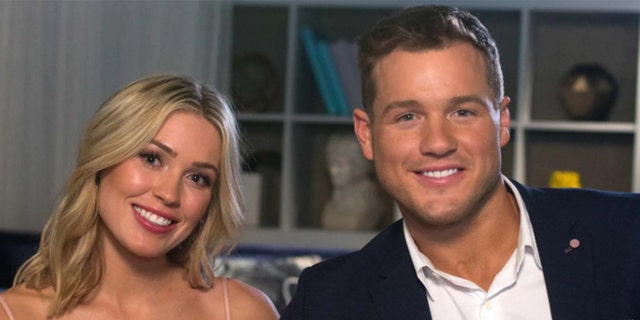
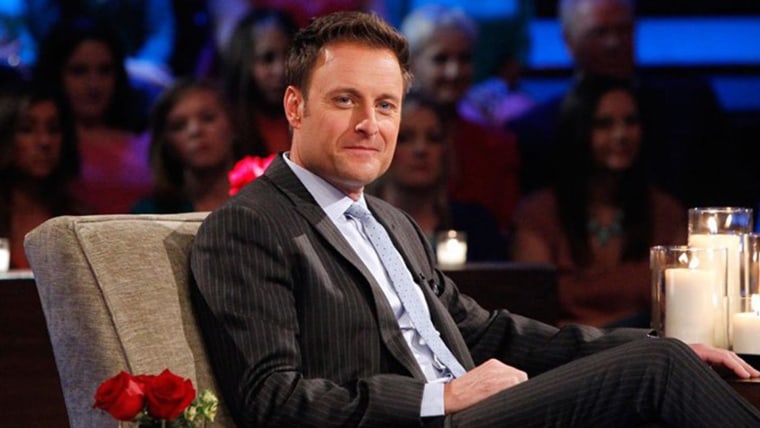
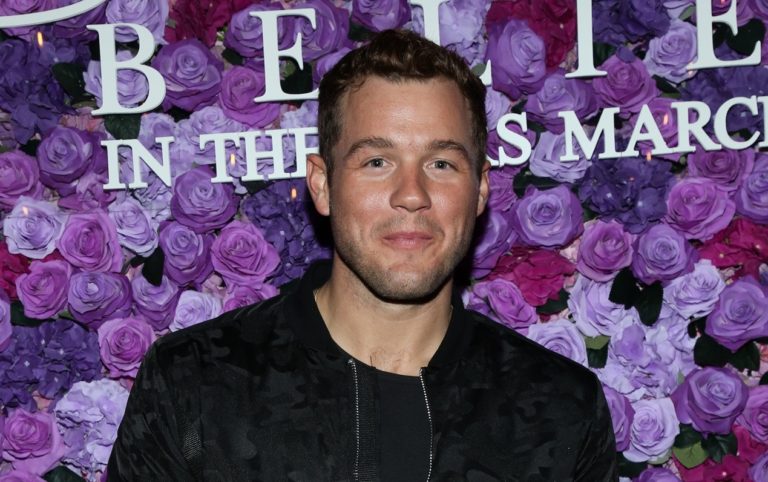
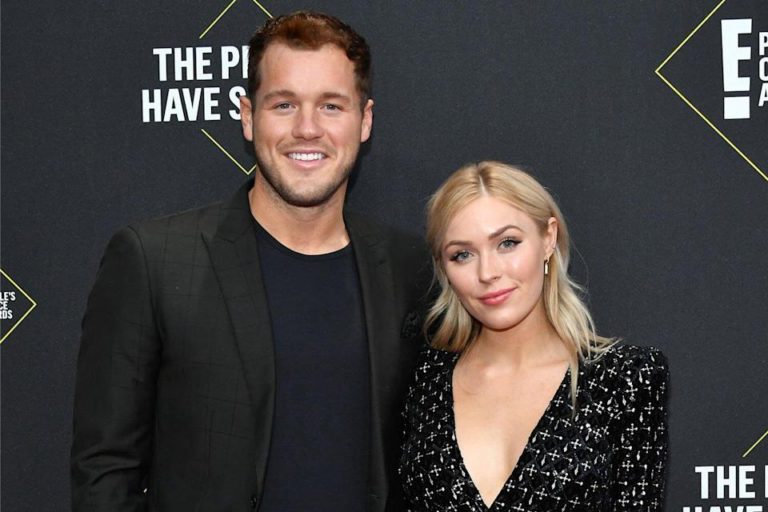
While “Bachelor” star Colton Underwood has opened up about his sexuality, his ex-girlfriend Cassie Randolph is vacationing in Mexico.
Underwood came out as gay in an interview with “Good Morning America” on Wednesday. The former “Bachelor” lead revealed he finally accepted his true sexual orientation “earlier this year” and had to take time to process it.
He also went on to issue a public apology to Randolph, who he offered his final rose to during season 23 of “The Bachelor.”
Cassie Randolph and Colton Underwood became an official couple during the season 23 finale of “The Bachelor.” (AP)
“It’s hard for me to articulate exactly what my emotions were going through that relationship with her, because I obviously had an internal fight going on,” Underwood, 29, said. “I would just say I’m sorry from the bottom of my heart. I’m sorry for the pain and emotional stress I caused.”
Randolph has yet to directly comment on Underwood’s bombshell interview, but she has expressed thanks to her fans in social media posts.
“Thank you everyone for all the kind comments and messages. It means so much,” Randolph, 25, wrote in an Instagram Story Friday, according to Deadline.
Randolph’s time-limited post also noted that she will taking a weeklong break from her YouTube channel.
Although fans will have to wait to hear from Randolph, the season 23 winner has posted two Instagram photos to her main feed, which show her vacationing in Cozumel.
Unlike many other “Bachelor” stars, Underwood and Randolph did not get engaged during their season finale in 2019. The couple eventually went their separate ways in May 2020, and for a time Randolph had a restraining order against Underwood following his “unsettling behavior.”
Throughout season 23, ABC highlighted Underwood’s virgin status as a storyline. Underwood told Robin Roberts from “Good Morning America” that he had refrained from sex because he hadn’t come to terms with his sexuality.
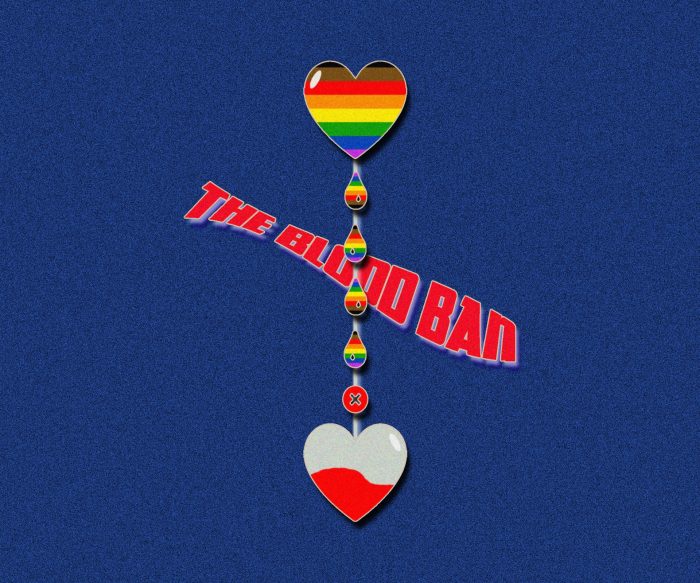
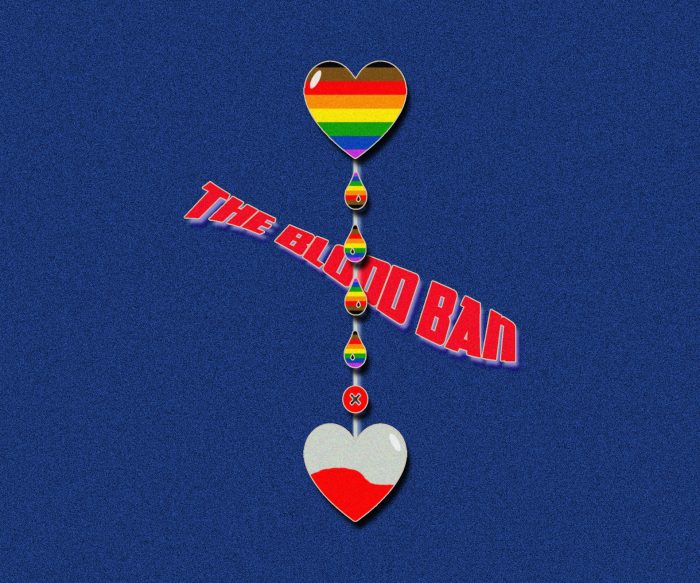
“Interested in donating blood?” This startling question presented itself as a storm of Red Cross pamphlets filled my high school’s library. I took one of the many leaflets and suddenly came to the realization that I had never donated blood before—I didn’t even know my own blood type! As a young and healthy teenager, I decided it was finally time to get my blood drawn; I had friends who donated every year, yet it never occurred to me that I could and should donate. So, I convinced a few of my friends to donate with me; we were to make an outing out of our donation. However, after some quick screening and routine paperwork at the in-school clinic, I was told I was ineligible to donate blood.
Terrified, my mind immediately concluded I had some blood illness I was not previously aware of. Nope. A Red Cross volunteer swiftly squashed my fear and informed me that I had been deferred due to my recent sexual relation with another man.
I was incredulous. Immensely confused, I promptly Googled, “Why can’t gay men donate blood?” while my heterosexual friends proceeded through the blood donation clinic without me. What I found shocked my 17-year-old self.
The FDA restrictions surrounding blood donations by men who have sex with men (MSM) originated in 1983. The ban was enacted in an effort to prevent blood bank contamination from undetectable HIV-infected blood. Although the measure was rather strident, the hysteria and lack of scientific knowledge in the early 1980s rationalized this exclusivist emergency measure. But despite the approval of new methods for screening blood in the late ’80s—namely the ELISA assay and its subsequent and substantial improvements—which ensure a near-perfectHIV detection rate, the FDA’s stance on MSM blood donations has not significantly wavered.
In 2002, the FDA approved testing that could detect an HIV infection within several weeks of exposure. Yet the lifetime ban still persisted, and it was not until 2015—only six years ago—that the ban morphed into a 12-month deferral. Now, MSM can only donate blood after abstaining from sexual activities for an entire year.
Since the FDA decision, arecent study reported there has not been a statistically relevant increase in the donation of HIV contaminated blood since the relaxing of the lifetime ban to a 12-month deferral period. More recently, the FDA shortened the deferral period to three months in response to the coronavirus pandemic. The Red Cross is reportedly pushing for this 3-month deferral to be an interim step between the 12-month deferral and the eradication of the ban, but the FDA has made no mention of this. Although three months seem generous relative to a yearly abstention for MSM, modern antigen HIV tests—which were approved for use in 2010—can nowyield positive results within seven days of infection. With more advanced and accurate HIV testing—in addition to the mandatory and rigorous screening of donated blood—it makes little sense for the FDA to continue to uphold any sort of deferral period for MSM.
The FDA still contests repealing the ban, claiming that MSM are intrinsically high risk—but it is important to remember that HIV does not exclusively affect gay men. Although there is a disproportionately high concentration of HIV in the homosexual community—69 percent of the 2018 HIV diagnoses were of gay or bisexual men—heterosexuals and drugs users can be (and still are) infected with HIV at significant rates. Logically, 31 percent of the 2018 HIV diagnoses were not MSM (who also didn’t inject drugs). Furthermore, gay and bisexual men are, in fact, more likely to seek HIV tests, and thus are more likely to be aware of their HIV diagnosis than other groups: 82 percent of HIV-positive gay men are aware of their status compared to 80 percent of drug users and 72 percent of heterosexuals. This asymmetrical testing phenomenon skews diagnosis data, implying that MSM have comparatively higher rates of HIV infections than they actually do. All this, in addition to the advent of Pre-Exposure Prophylaxis (PrEP), a daily pill which successfully prevents the transmission of HIV and is primarily used within the gay male community, should be enough to inspire some blood donation reform.
To be clear, I am not advocating for a complete overhaul of the pre-blood donation screening procedure for every individual; rather, I am looking for more nuance when it comes to screening homosexual and bisexual men. There are high-risk individuals and there are low-risk individuals, but the notion that all gay men are innately high risk is downright discriminatory and clearly homophobic. Low-risk individuals include gay men with long-term monogamous partners, men who take PrEP, and men who consistently wear condoms; these individuals should not be subject to a discriminatory FDA deferral period. This is especially relevant when blood, plasma, and COVID-19 antibodies are in high demand. Even now,gay men are still being arbitrarily turned away from participating in life-saving donations. A full repeal of the gay blood ban would increase blood supply by approximately 2 percent, a margin capable of saving hundreds of lives.
Not only would a revaluation—or removal—of the gay blood deferral be the most logical move given current world affairs, but it would also help destigmatize HIV, which has long been referred to as the “gay disease” and was even first known as GRID (gay-related immunodeficiency disease) by healthcare professionals. This institutionalized blood donation referral is based solely on an outdated prejudice which ascribes some level of endemic “gayness” to HIV and, in doing so, perpetuates damaging stereotypes.
I want to donate blood, and I want to help my fellow citizens. But I can’t do that until reform becomes a reality. End discriminatory laws. Repeal the deferral.
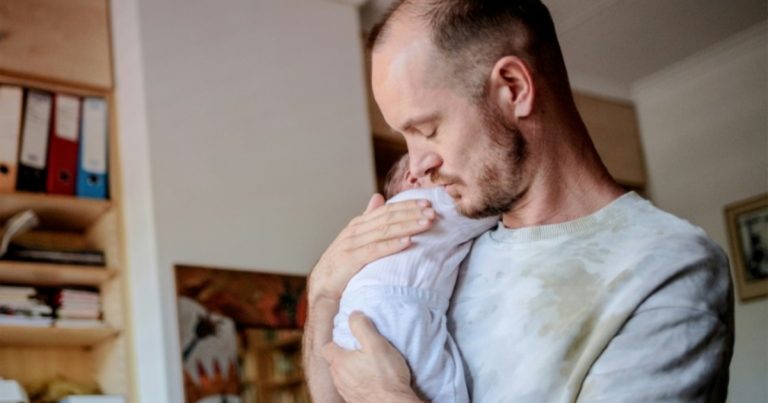
Now “I’m here in South Africa with the girls and cannot travel, cannot enter Namibia,” he said as the girls’ 70-year-old grandmother, Frauke Luehl, bottle-fed one while the other slept.
For now, a house in Johannesburg’s leafy suburb of Auckland Park is the girls’ temporary home.
Luehl and Delgado argue that there is no legal basis to require DNA proof of a biological relationship, and that they are being targeted and “discriminated” against because they are a same-sex couple.
“This requirement would never be asked from a heterosexual couple… (or) from a single mother who gave birth in South Africa, and comes to Namibia,” Luehl said.
Similarly, parents of adopted children would not be subjected to such requirements, he said.
But the Namibian government has rejected accusations of discrimination.
‘Outright rejection’
Home Affairs Minister Frans Kapofi “did not agree to a request to issue the twins Namibian travel documents, because their entitlement to Namibian citizenship by descent had not been determined,” the government said in a statement last month when the case was brought before the courts.
At the time, a crowd of activists rallied at a picket outside the court building in support of the twins.
In a separate case, the couple’s first child Yona — also born through surrogacy — is still fighting for Namibian citizenship.
When they proactively applied for the travel documents before the daughters’ birth they did not expect an easy ride.
“We were prepared… but not for this outright rejection by the Namibian government,” Luehl said.
Former “Bachelor” couple Cassie Randolph and Colton Underwood have been through many ups and downs but Underwood’s revelation on Wednesday that he is gay has been the most shocking twist of all in their very public relationship. On Friday, Randolph broke her silence on the stunning news in a post in her Instagram stories.
“Thank you everyone for all the kind comments and messages,” Randolph, 25, wrote on a link to her YouTube channel, which she usually updates weekly. ““And yes, some of you are asking about my youtube for this week. I decided to take the week off, but will have one again next week!!”
Cassie Randolph and Colton Underwood on Oct. 8, 2019.Jerod Harris / Getty Images for Tubi
Randolph and Underwood began their relationship on season 23 of “The Bachelor” in 2019 and broke up in May of 2020. Randolph announced their split in a since-deleted Instagram post.
“First off, I want to say this is one of the hardest things I have had to share as neither one of us is quite ready to talk about it yet,” she wrote. “However, because our relationship is such a public one, our silence on the matter has been speaking for us. Colton and I have broken up, but have decided to remain a part of each other’s lives,” she wrote next to a gallery full of photos of the pair.
March 13, 202100:38
On Friday, Randolph didn’t say anything further regarding Underwood’s announcement about his sexuality. The former Bachelor, 29, said that he came to terms with the fact that he is gay earlier this year after a lifetime of running away from the truth. He even spoke about suicidal thoughts he had, trying to grapple with his reality. Without directly addressing Randolph, Underwood thanked “The Bachelor” and the women he has dated for helping him come to this revelation about himself. The former NFL player was raised Christian and said the word “gay” always had a negative connotation for him.
Underwood, 29, did address Randolph during an interview on ABC’s Nightline. “I don’t know if I ever will get the chance to sit down and talk with her,” he said. “I would like to. I would like to say sorry for how things ended. And I messed up. I made a lot of bad choices.”
He continued, “I made mistakes in the end of that relationship. And I ruined the good memories we had by my actions and what I did to hold on to being straight, because I didn’t want to look myself in the mirror. So for that, I’m extremely, extremely sorry.”
After their split last year, Randolph filed a restraining order against Underwood saying he was stalking her. Randolph later had the restraining order lifted. There was no indication she knew about Underwood’s announcement before it happened on Wednesday, but in the end he did address his relationship with her, saying that he was in love with her and that he’s sorry from the bottom of his heart for any pain he may have caused.
In his own statement about their breakup last May, Underwood said that he was grateful for Randolph and her family getting him through his bout with coronavirus and that their decision to split came after “a lot of self-reflecting.”
Ronnie Koenig is a writer for TODAY.com, covering the food and pop culture beats. She also writes about health and wellness, parenting and relationships for NBC Better and TMRW x TODAY, serves as a senior editor for New Jersey Family, and contributes to The New York Times and Real Simple. She is a graduate of Barnard College and a mom of twins.
Former US Bachelor star and conventionally attractive corn-fed hottie Colton Underwood came out as gay this week in a Good Morning America interview.
The announcement was met with an outpouring of support and was immediately followed by the news that he is getting his own Netflix documentary about his coming out journey.
While it’s a big deal for a Bachelor star like Colton Underwood to come out, there are already calls for the documentary to be pulled, thanks to his treatment of his ex-girlfriend Cassie Randolph.
Amongst other things, Randolph claimed that Underwood planted a tracking device under her car, and would take “obsessive” walks near her parents’ house.
She also said she was “fearful for her safety” after spotting him in an alley outside her bedroom window. The order was later dropped, after the pair reached an agreement.
“I made mistakes in the end of that relationship. And I ruined the good memories we had by my actions and what I did to hold on to being straight, because I didn’t want to look myself in the mirror. So for that, I’m extremely, extremely sorry.”
Brett S. Vergara, who is a part of the Bachelor Diversity Campaign, put his thoughts in a Twitter thread, saying:
“First, I’m glad to see Colton more at peace and happy he can live more as his true authentic self. I’ll always be in support of that. That doesn’t excuse the abusive, manipulative, and literally illegal stalking behavior he displayed in his past relationship.”
He continued:
“The phrase “Hurt people hurt people” comes to mind — and while context sheds light on the situation, it does not excuse, change, or even minimize that hurt and pain caused by those actions. I’m hoping Cassie feels supported by those close to her today.”
Another Bachie fan account put it more succinctly, saying “Colton coming out doesn’t erase the fact that he stalked and terrorised his previous girlfriend.”
There are even calls for Netflix to cancel its upcoming documentary on Underwood’s coming out journey. The petition, which currently has more than 12,500 signatures, reads:
“Cassie is a victim of Colton’s abuse, and he does not deserve a platform in any way. Regardless of his sexuality, Colton should not be given a platform as a result of his abusive, manipulative, and dangerous behavior.”
Some are keen to see Colton Underwood return to TheBachelor as its first gay headliner. Whether or not that happens, at least we’ll always have Finding Prince Charming.
If you never saw it, the Logo show was a chaotic mess where a cluster of sex-starved bottoms were rounded up into a mansion and ordered to fight over an underwear model.
The travel blog Asher and Lyric published an updated 2021 list in March of the most dangerous countries for LGBTQ travelers, including countries and disputed territory within the Middle East.
“After 250+ hours of research, we’ve reviewed all countries’ individual laws and gathered data from a variety of trusted international sources to create the definitive ‘LGBTQ+ Travel Safety Index’ that will help you find the safest (and least safe) countries for your next trip abroad,” wrote the journalists Lyric and Asher Fergusson, who oversee the travel safety blog.
The world’s most dangerous country for the LGBTQ community is Nigeria while the safest country is Canada, according to the study.
Within the top 20 most dangerous nations across the globe, Saudi Arabia ranked second among Middle East and North African nations, followed by Oman (5), Qatar (8), UAE (9), Yemen (10), Sudan (13), West Bank and Gaza (14), Iran (15), Morocco (18), Egypt (19), and Algeria (20).
“As of now, 28 countries have marriage equality, and 16 countries provide civil unions or partnerships,” Asher and Lyric wrote. “Two countries – Bulgaria and Israel – do not allow marriage equality for their citizens but formally recognize marriages overseas.”
Israel does not criminalize same-sex relations in contrast to nearly all countries in the Middle East and North Africa regions.
Qatar’s Islamic regime, which imposes the death penalty on gays, is slated to host the FIFA World Cup football competition in 2022. Saudi Arabia and the Islamic Republic of Iran also execute gays and lesbians.
According to a 2008 British WikiLeaks cable, Iran executed between 4,000-6,000 gays and lesbians since its 1979 Islamic revolution. The Jerusalem Post reported in 2019 that Iran’s regime publicly hanged a man based on a violation of its anti-gay law.
The Post’s disclosure of the 2019 execution in Iran played a role in the US government’s launching of a campaign to decriminalize homosexuality across the world. Richard Grenell, the former US director for national intelligence and ambassador to Germany at the time, jumpstarted the international campaign to stop state-sponsored executions of gays.
Lyric and Asher explained the study’s methodology: “We looked at the top 150 most-visited countries in the world (by the number of incoming tourists) and then carefully examined LGBTQ+ rights for each country. We created our LGBTQ+ travel safety index based on a total of nine ranking factors. In this year’s update, we also added transgender legal identity laws which weren’t included in our original 2019 study.”
The nine factors are: Legalizes same-sex marriage, worker protections, protection against discrimination, criminalization of violence, adoption recognition, whether it is a good place to live, transgender legal identity laws, illegal same-sex relations and propaganda/morality laws.
On Wednesday, during a sit-down interview with Robin Roberts on Good Morning America, the former Bachelor star, 29, said he “came to terms” with his sexuality earlier this year after a long period of self-reflection.
While vacationing in Mexico with friends and family on Friday, Randolph, 25, shared a short post on her Instagram Story thanking “everyone for all the kind comments and messages.”
“It means so much,” she added.
Randolph went on to share that she will be posting a new video on her YouTube channel next week, although she did not specify whether she would be addressing Underwood’s interview. “And yes, some of you are asking about my Youtube for this week. I decided to take the week off, but will have one again next week!!” she wrote.
Underwood led season 23 of the ABC dating show in 2019, when he ultimately gave his final rose to Randolph — who was a contestant on the series — though they didn’t get engaged.
They continued dating after the cameras stopped rolling before later announcing their split in May 2020, two months after she helped nurse him back to health after he contracted COVID-19.
Months after the breakup announcement, Randolph filed a restraining order against Underwood in September, alleging that he placed a tracking device on her vehicle and that he had showed up to both her L.A. apartment and her parents’ house in Huntington Beach unannounced.
She claimed that on one occasion, Underwood loitered in the alley outside her bedroom window of her parents’ home at 2 a.m., and said that he started sending her alarming text messages.
RELATED VIDEO: The Bachelor: Greatest Seasons Ever: Cassie Randolph Talks Colton Underwood Split
On GMA, Underwood told Roberts, 60, that he was in love with Randolph during their relationship. “And that only made it harder and more confusing for me,” he said. “I loved everything about her.”
“It’s hard for me to articulate what my emotions were going through that relationship with her, because I obviously had an internal fight going on,” Underwood continued. “I would just say that I’m sorry from the bottom of my heart. I’m sorry for any pain and emotional stress I caused, I wish it wouldn’t have happened the way it did. I wish that I would’ve been courageous enough to fix myself before I broke anybody else.”
Want to get the biggest stories from PEOPLE every weekday? Subscribe to our new podcast, PEOPLE Every Day, to get the essential celebrity, entertainment and human interest news stories Monday through Friday.
During a Wednesday appearance on Extra, fellow Bachelor franchise alum Clay Harbor, shared that Underwood that he had opened up to him about his sexuality prior to the GMA sit-down. Harbor also said he asked Underwood about Randolph during their conversation.
“I asked him if he had told her, and at that time he had said he hadn’t and he didn’t know if he was going to tell her before or after the interview,” Harbor said. “Honestly, we didn’t go that in-depth on the Cassie stuff, kept it more on what will happen in the interview, what happens when people find out.”
Audiences have had the feels for Atlanta-bred crooner-rapper ILoveMakonnen since 2014. Known for a dreamy brand of club-hop, via such tracks as “I Don’t Sell Molly No More,” ILoveMakonnen got the attention of Drake with his song “Tuesdays,” and the superstar rapper later did a guest feature on a remix version. In short order, ILoveMakonnen was signed to Drake’s OVO Sound imprint.
But things went from rosy to rough as ILoveMakonnen found himself dissatisfied with the label’s view of his place and his music. He left dramatically and moved to OVO’s parent company, Warner Brothers (now Warner Records), in 2016, only to face similar obstacles.
For his 32nd birthday earlier this month, ILoveMakonnen gave himself a present: a new label (Own Timeless Magic) and a new album, “My Parade,” which returns the artist to the harmony–heavy soul and folk that he started his career with, independently, in 2011.
ILoveMakonnen wears his freedom well, as he first displayed when he came out as gay in 2017 — a brave public admission for an artist of any musical genre, let alone hip-hop. And with his newfound independence comes a refreshing frankness, which ILoveMakonnen demonstrated during a recent interview with Variety.
What were the circumstances under which your left Warner Brothers to start your label, Own Timeless Magic? Was your contract up?
No. My contract wasn’t up. I just wanted to get away from record labels, and go back to being independent since 2016. Warner Brothers and I — we tried to work it out, but, there just didn’t seem to be any interest there [in] me as an artist.
Yes. People who signed me left. The new people who came in really didn’t know about me. They were there to sign new acts. They had different priorities. It was a battle for about four years — me trying to leave, get independent and free, to create the music I wanted and put it out on my terms with the people I wanted to work with, without politics and the usual industry stuff. So I finally got released in September 2020, and started recording “My Parade” in October. But before I even signed with OVO Sounds and Warners in 2014, I wanted my own thing — to give my art to people the way they wanted it, and I wanted it. And now we’re here.
You started out at OVO, Drake’s imprint. What were your expectations in being an artist on the roster?
When I signed with OVO, I thought that they were interested in me as an artist, as ILoveMakonnen — what I do. I thought that they wanted me to be part of the OVO family. I was hoping that I would be collaborating with all the other artists on the label. But I guess that I rubbed everyone at OVO the wrong way because that never happened or seemed what they wanted. It all wound up as just politics without me ever talking to them. My manager at the time did that, talking to OVO’s head, Mr. Morgan. They didn’t mesh well. But when I met 40 [Noah Shebib], Oliver [El-Khatib, OVO co-founder], Mr. Morgan and Drake, we had a great relationship. We all sounded pretty cohesive in what we wanted to do together. When managers and representatives on both sides talked, however, communications got lost.
Suddenly, too, there was a situation with old tweets where you dissed Drake going back to, like, 2010.
I was young, online and saying wild stuff just to get attention — to get a reaction. Drake was mentioned, and someone brought them to his attention in 2015, posted them on the internet saying “Makonnen was saying shit about Drake.” “Drake, you should leave him.” That probably soured stuff. We never really spoke again after that. Then, when I released my second EP in November 2015, I got no support from OVO. They didn’t post about it. It was as if I wasn’t even on the label, as if I had been shelved. That hurt me a lot. I had no issue with them, and apologized for my old tweets and being young and dumb. So I left. But I was leaving OVO, Warners wanted to keep me. I found out that to be a conflict of interest as the OVO imprint is through Warner Brothers — like am I going to battle all of them now? I just wanted to make music, when and how I wanted to do it. It took five years to get my freedom back.
Concerning “Tuesday,” which Drake released as a remix: It’s yours and OVO’s biggest hit. You said in 2017 that “they needed a hot song. … That’s it.” Do you still believe that?
I mean, I don’t know. I haven’t talked to these people in years. Nobody’s ever reached out to me. But, that seems as if that was the reason. From me looking back and people telling me, they knew that I had a new wave, a new sound starting up, and they jumped on that to further their wave. They didn’t want to sustain and support me, only themselves. Besides, I only met Drake three times. We spoke maybe five times — never about my career, just about getting stuff done.
What influenced your new wave?
The Delfonics. Prince. Rick James. The Isley Brothers. American folk singers and songwriters of the 1960s. I like music that connects with the people of their times. That’s how I would like to connect with people now.
There have been rumors that you have executed some notable ghostwrites. Is that true?
That claim is wild. I’m not a big ghostwriter. I do my own thing. Most artists, though, really can’t do my style, so when it comes time for them to do that… I guess the ghostwriting thing didn’t turn out too well for me. I do feel as if I have influenced other writers. There are plenty of ghostwriters who thank me for knocking down doors with my style of music, and opening them up so that they can have chart-topping hits. Those opportunities haven’t come my way.
“My Parade” feels more open and free. Were you able to express everything you wanted?
I can go in any direction I want and feel supported by my producers while doing it. Before I took control, I was told to “dial into” this or that sound, or focus on a niche market. “My Parade” is all different genres. I wanted to share that, that I’m more than just “Tuesday,” or “I Don’t Sell Molly.” My hits. Everybody’s not in the club, or having a bad day. Everybody’s not going through a breakup. I haven’t been able to express all of me until now. I had to give people what my team wanted; not what I wanted. This new one has different vibes on every song — it’s a celebration of all my vibes.
Payday is a young, amazing talent and “Whoopsy” was fun to work on with her. We met in the studio through one of her producers, and immediately thought she was dynamic — a great writer who believed in what I wanted to do. Most time I’m freestyling, but she write-writes. We still have a few other songs we’re working on. She’s already a legend.
There are two back-to-back love songs — “All I Want to See” and “I Can See It in Your Eyes” — that stand apart from the rest of the album. Can you talk about their genesis?
“All I Want to See” is about me being a gay man but still going to the strip club, having fun, courting the girls, watching them dance. I’m from Atlanta, so that’s embedded in the culture there, no matter your sexual orientation. We all can enjoy the art of stripping and dancing. It’s about me telling a dancer that I’m not trying to offend her, instead that she’s inspiring me. I can’t be your man, but I can enjoy your art and beauty. “I Can See It in Your Eyes” is that jungle prowling thing — you see someone making eyes at you, eye-fucking me — and me responding. If we wind up making love, I wouldn’t be surprised. That vibe.
We don’t know exactly which mayor that is, as there seems to be several mayors like that. … Lil B has been a hero of mine from even before I came out with “Tuesday.” I wrote about him on my blog, and I sent him one of my first tracks and videos in 2010 and said that I’d love to work with him someday. He was encouraging: “Someday we’ll get to it.” I met him at his studio in the Bay Area in 2015, made three songs, and when I wrote “More Bitches,” I reached out. Sent it to him, and he sent it right back – not like other people you have to chase down. We were actually supposed to tour together in 2016, but it fell apart. Maybe once things get back to normal.
Your mom was an opera singer and created some of the graphics for “My Parade” — so an artist unto herself. Discuss the influence of the women in your life.
My family’s women have always been true matriarchs — the nucleus of everything, especially art. When I was younger, my grandmother, who was a piano teacher, would allow me to play between her students’ lessons. With my mom, she’s been a multi-format artist and painter, musician and crafter. They both gave me the strength to go forward. They make me want to go harder. If these women can take care of business — family, jobs, their own art — I could give at least half of that and do good. Women are my life force.
Michael J
You famously collaborated with the late Lil Peep on several projects. Can you share what it was like to work with him?
That was like working with a twin flame. We definitely vibed and connected. We were living together for a while and getting to know each other. That helped us form our own points of view on the same topics. They were the most authentic, real sessions. I remember traveling to London with him. We got a little drunk and he started singing my songs to me. So I started singing his songs to him right back, both of us crying. That was a real bonding moment so that we could get into the studio the next day and do some timeless stuff that I hope will be released soon.
You came out as gay in 2017, a rare occurrence in hip-hop, though that is changing thanks to the likes of yourself and Lil Nas X…
I feel like if you’re coming out in hip-hop, you have to be very brave. Understand that you’re doing this for so many people who are silent — not just for yourself. There’s a silent majority out there looking for someone to relate to, to speak for them, and be honest with them, Unfortunately with hip-hop, we have a lot of capping, lying and deceitfulness. … When I started hanging out with some of the bigger artists and heavyweights in the music industry, I felt sorry for many of them, and sad, because they could not be their true, honest selves. Now they’re just giving off weird vibes because they wanna do weird stuff that they don’t want everybody knowing about. But they’re out here doing it. Look, I’m from Atlanta –the Black gay capital of the world; the Mecca of hip-hop. I don’t understand why they aren’t being honest with themselves and their fans.
But you do understand.
I do understand. They want to be accepted and cool, and coming out as gay isn’t truly accepted or cool in the hip-hop community. But, in true hip-hop form, it is always about being honest, showing yourself and your art, and not caring what other people think. It’s about your individuality, and I wanted to stay true to the essence of hip-hop — for myself and for everyone younger. Think of those coming up and influenced by hip-hop; they’re constantly dealing with issues of sexuality without any support or experience. People look up to me. If I’m an influence to these kids — like Lil Peep told me — I don’t want to lead them on by lying.
It got to the point where I couldn’t take it no more. Too much lying and not enough straightforwardness. How could I expect people to be real with me when I couldn’t be real with them? So I just went ahead and did it to relieve the pressure off myself and hopefully it helped others. People have told me that it did help — that it’s given them the freedom and confidence to come out. Hip-hop needs that. It has for too long flirted with the gay community while also hating on the gay community. Openly gay people support hip-hop but openly gay people don’t get supported by the culture they support and help thrive. I want to be a voice and a face for those in the industry and outside the industry — to let them know that they can just “do you.” If I have to take all the flack for it, and have everybody be mad at me so that others can eventually come out and get celebrated, that’s fine. I just want to forward the culture and all of its people.
In an Instagram post Friday, singer-songwriter Angel Olsen came out as gay.
“My beau, I’m gay,” she captioned a series of photos that included her partner, a tattoo, loafers and a massive bear statue. Olsen accompanied the post with a photo of herself, golden hour sunshine beaming on her smiling face, on her Instagram story. It read, “I’m gay!!!”
Adele Thibodeaux, her partner, has photos of Olsen on their Instagram that date back to last December. A photo carousel from Valentine’s Day features Olsen kissing the top of their forehead. Thibodeaux is a writer credited with working on the HBO series “High Maintenance.”
A 2019 New York Times Magazine profile of the singer noted a significant interest in her sexual identity among her fan base, pointing out that “a great many” on Twitter “express the hope that Olsen is gay or at least bisexual,” based on readings of some of her songs. (The Times article parenthetically identified her as straight, but a “for now” quote from Olsen left the door open.)
At the end of March, Olsen announced “Song of the Lark and Other Far Memories” will be released May 7. The box set includes 2019 album “All Mirrors,” last year’s “Whole New Mess” and a bonus LP, “Far Memories,” which features remixes, alternate recordings and a cover of Roxy Music’s “More Than This.” Also included is a 40-page book filled with unseen photos, diary entries and memories from creating the albums. Only 3,000 copies will be available for sale.
Olson’s official statement about “All Mirrors” upon its release described it as being “about losing empathy, trust, love for destructive people… about walking away from the noise and realizing that you can have solitude and peace in your own thoughts, alone, without anyone to know it or validate it… about owning up to your darkest side, finding the capacity for new love and trusting change even when you feel like a stranger.”
WASHINGTON / VAN, TURKEY – For hundreds of lesbian, gay, bisexual and transgender Iranians who fled their homeland because of persecution for who they are, moving to Turkey was not a significant improvement.
Sexual and gender minorities say constant harassment and discrimination experienced in the host nation is forcing many of them to seek relocation to a third country.
A.R. is a 41-year-old transgender man who crossed into Turkey last year because of abuse from his community and Iranian authorities. Now residing in eastern Turkey’s Van province, he asked VOA to conceal his full name to avoid harassment by transphobic people in the host region.
“I really wished to find a peaceful life in Iran, but my goal was not fulfilled,” said A.R., who was born and raised in Tehran.
Having been assigned female at birth, A.R. attended an all-girls school as a teenager and found himself attracted to his classmates. His family deemed him mentally ill and forced him into a psychiatric hospital at age 20.
During 76 days of treatment at a Tehran facility, a doctor concluded that A.R. needed sex reassignment surgery. But the surgery was strongly rejected by his family, who first denied him any financial support and eventually disowned him.
“Because of my identity, I moved to different cities in Iran to work under disguise. Anytime my identity was being exposed, some people would have avoided me, and some others would have tried to sexually assault me,” he said.
Reassignment
In his mid-20s, A.R. underwent some female-to-male sex reassignment procedures in Qom, for which the risk of a botched surgery was high. After about three years, the government changed the gender section on his identification card.
That did not end the discrimination he faced in Iran, however. His gender transition made him ineligible for any government position and exposed him to ridicule by his community. At one point, he was physically assaulted by the Basij, a paramilitary linked to the Revolutionary Guard.
“I was told that I was corrupting society or that I had manipulated God’s work,” A.R. said, adding that the harassment forced him to flee Iran in June 2020. “I did not want to be seen as a parasite of society.”
Transgender people in Iran have the right by law to change their gender identity. In the mid-1980s, Ayatollah Khomeini in a fatwa legalized sex reassignment surgery in the country.
However, consensual same-sex sexual activity is punishable by death. The United Nations in February cited regular harassment, domestic abuse, torture, beatings and rape among the forms of widespread violation against the LGBT community in Iran.
According to the U.S. State Department’s 2020 Human Rights Report, the Iranian regime pressures not only transgender people but also nontransgender members of the LGBT community to undergo sex transition.
Protection in Turkey
Because of the pervasive abuse in Iran, many LGBT people have fled to neighboring Turkey, where their status is not a crime, as in Iran, but is considered taboo.
While there are no official data on the number of Iranian LGBT refugees in Turkey, over 1,400 Iranians in 2020 sought international protection from Turkey’s Directorate General of Migration Management.
Once approved by DGMM, most of the LGBT refugees reside in Turkey temporarily until their final resettlement to a Western country. Their relocation, however, is not always guaranteed because of reduced quotas in countries such as the United States and Australia.
“Only those with extreme vulnerability and meeting both UNHCR [U.N. High Commissioner for Refugees] global resettlement submission categories and criteria of each resettlement country will be considered for resettlement,” Selin Unal, a spokesperson for UNHCR Turkey, told VOA.
During their lengthy wait time for resettlement to a third country, LGBT refugees have to live in a province designated by DGMM and report to the authorities regularly.
Metin Corabatir, president of the Ankara-based Research Center on Asylum and Migration, told VOA that some LGBT refugees are placed in conservative cities, where they are often exposed to homophobic and transphobic hate.
‘They could not tolerate me’
Corabatir’s assessment was reiterated by Arsham Parsi, an Iranian gay activist who spent 13 months in Turkey after fleeing Iran in 2005.
“I personally was a refugee in Turkey. I was in Kayseri, and that was really bad. I was beaten up several times. My shoulder was dislocated because they could not tolerate me [even though] I did not tell anyone that I am gay,” Parsi told VOA.
Rights groups have reported growing anti-LGBT rhetoric among the Turkish public in recent years as the government has introduced more socially conservative policies that make LGBT people, whether refugees or Turkish citizens, more vulnerable.
Parsi, who leads the Canada-based International Railroad for Queer Refugees, said many LGBT Iranians report discrimination by DGMM officers who handle their refugee cases.
“We have a lot of reports [that] during the interviews, [LGBT Iranians] were told, ‘How come you can be gay? It is against God; it is against Islam.’ And then, they rejected their applications,” Parsi said.
Discrimination
The State Department’s 2020 human rights report noted that most LGBT refugees in Turkey were from Iran. It said they faced “discrimination and hostility from both authorities and the local population.”
Fariman Kashani, an Iranian nonbinary transgender activist, shared with VOA what LGBT Iranians have to endure in Turkey’s southwestern Denizli province: “I try my best not to look different when I go to streets. But if you do, they spit on your way. They are not good.”
In 2016, Kashani fled Iran after being expelled from a Tehran university. Despite being accepted for resettlement in Australia in 2020, Kashani remains stranded in Turkey because of coronavirus travel restrictions.
Kashani said “the biggest issue” for LGBT Iranians such as A.R. was the uncertainty of their refugee status: “They are worried about politics — if Turkey will send them back to Iran or if any country will open their borders.”
In July 2020, A.R. applied for international protection in Van province, bordering Iran. He soon found himself hounded by similar discriminatory experiences, mainly from other Iranian refugees.
“My only wish is to live like any human being and get out of this difficult situation,” said A.R., adding that he pleaded with the DGMM in February to transfer him to a safer Turkish city.
While moving to a more LGBT-friendly location would be an improvement, A.R. hopes to ultimately settle in Europe, where he said he would no longer be judged for his gender identity.
“I have suffered a lot, and I wish to have a peaceful life from now on,” he said.
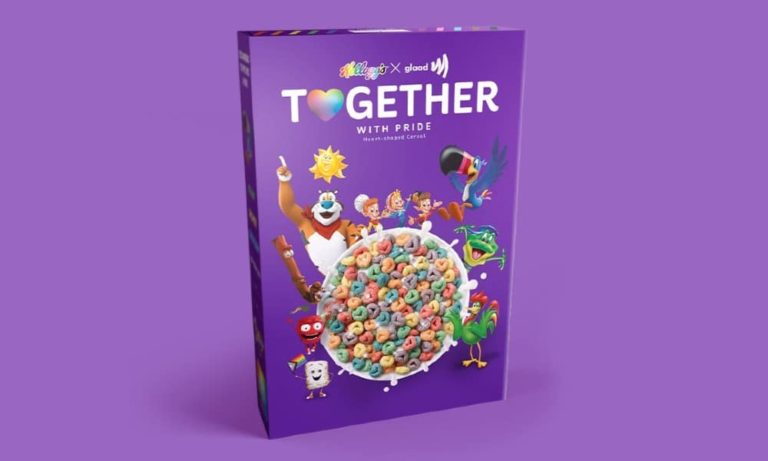
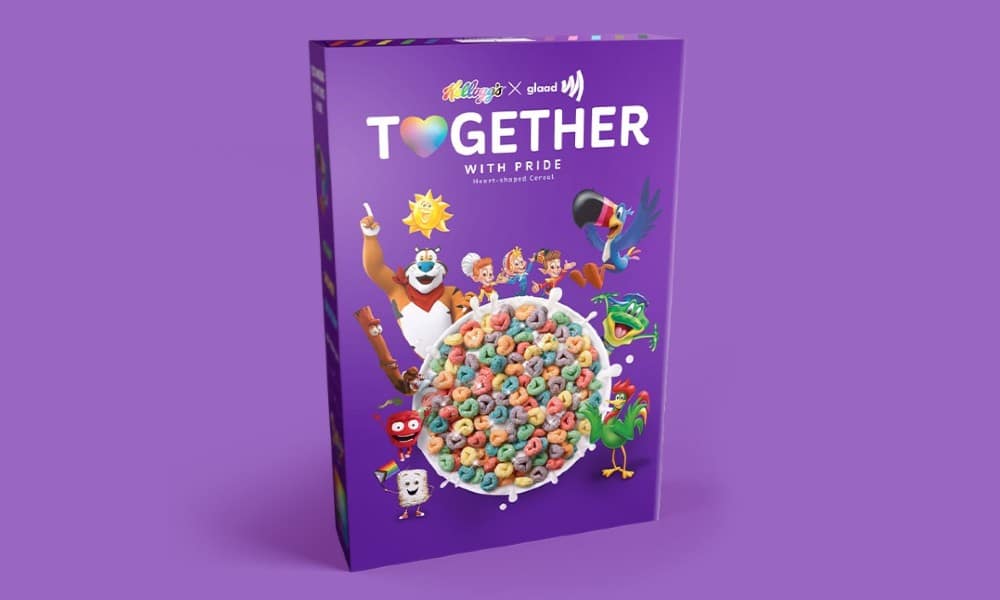
Are you a fan of breakfast and being gay? Then Kellogg’s has the cereal for you (Kellogg’s)
Kellogg’s is launching a limited edition LGBT-themed cereal in celebration of Pride, so you can start your day with the breakfast of champions: glitter.
The company teamed up with GLAAD to create the special cereal, “Together with Pride”, which is made of rainbow heart-shaped pieces and – yes – edible glitter.
The boxes will hit shelves this May, just in time for Pride month, and for each one sold Kellogg’s will donate three dollars to GLAAD to support their efforts to accelerate LGBT+ rights.
The 7.8-ounce boxes have a suggested retail price of around $4, and shoppers must upload a copy of their receipt to Kellogg’s Family Rewards to support the donation.
The box features a variety of familiar Kellogg’s characters – Tony the Tiger, Snap, Crackle and Pop, Toucan Sam and the frosted Mini Wheat – to “celebrate everyone having a seat at the breakfast table together,” Kellogg’s said.
It’s not the first time Kellogg’s has joined forces with the GLAAD. The two have a long-standing partnership after they created another Pride-themed breakfast, called “All Together Cereal,” in 2019.
Unlike their latest offering, the special edition boxes were only available online and retailed at a much pricier $19.99.
Each one contained six mini cereal boxes packaged inside one “to celebrate the belief that we all belong together”.
“The box brings together six of the famous Kellogg mascots and cereals inside the same carton as a symbol of acceptance no matter how you look, where you’re from or who you love,” the company said at the time.
Chief diversity officer Priscilla Koranteng added: “At Kellogg, we are firmly committed to equality and inclusion in the workplace, marketplace and in the communities where we work and live.
“We have long been allies and supporters of LGBTQ employees, their families and the community. For more than 100 years, Kellogg has nourished families so they can flourish and thrive, and the company continues to welcome everyone to the table.”
Gov. Laura Kelly just took an interesting tack on the Kansas Legislature’s bill prohibiting transgender girls from competing in girls’ athletics.
She calls it a job killer. Is she right?
Kelly noted that states like North Carolina have experienced companies moving out of, or refusing to relocate into their state due to discriminatory laws. Georgia’s restrictive new election laws have also generated calls for corporate boycotts.
The governor is alluding to an idea called the creative class, advanced in the early 2000s by urban studies professor Richard Florida. He argued that a new social class was beginning to shape American politics and society.
They combine college education, professional aspirations and socially-liberal values. The creative class questions traditional institutions. They are less likely to get married or go to church, for example.
They also reinvented the workplace. Increasingly, in the professional world you are judged on what you accomplished, not where you worked, what schedule you kept or how you dressed. Work facilities such as Apple, Google, and Microsoft headquarters incorporate coffee bars, gyms, outdoor recreational areas and child care centers.
Kansas City’s massive Cerner headquarters also has many of these. Long before the pandemic and Zoom, Florida envisioned more and more professionals working on laptops while sitting on park benches or in coffeehouses.
According to Florida, this new creative class celebrates tolerance. Even those not directly affected still perceive a community hostile to its Lesbian, Gay, Bisexual and Transgender neighbors as being equally hostile to the inventive, nontraditional new approaches to work, family and play embraced by creatives. It would also be unwelcome to their friends and family who are LGBT.
Non-inclusive communities would be passed over by employers because they could not recruit their creative, often (but not always) college-educated employees to move there.
A few years ago, Amazon announced after an intense competition that it was building a second headquarters in the Virginia suburbs of Washington, D.C. Even with generous tax breaks, that area has a much higher cost of doing business than many other possible locations. However, it offered the right mix — a transportation hub and a cosmopolitan metropolitan area attracting the creative class professionals that Amazon needs.
In some ways, the theory appears to fit Kansas. This state’s highest-growth locations are suburbs such as Johnson County, along with the larger college towns, Lawrence and Manhattan. Responsible for 25% of the state’s GDP, JoCo is represented by Sharice Davids, who is lesbian, one of the first Native American women elected to Congress and the state’s only Congressional Democrat.
Then again, Florida’s analysis has also faced withering criticism. Not all creative class workers are socially liberal. Also, workers still go where they can find jobs, particularly when jobs are scarce. There is also a cause-and-effect issue. Do more professionals make a place tolerant or vice-versa?
Finally, will creatives decide if they can live here based on the statewide environment or that of specific communities like Lawrence? Consider Austin, Texas. Austin is one of the nation’s premier creative class hubs, attracting many people who disagree with Texas’ statewide political climate.
To be clear: This “trans ban” is a completely unneeded attack on the personhood of trans girls.
It mandates discrimination based on fearmongering and ignorance about science. It is a blatant, politicized attempt to drive a wedge between advocates for girls’ sports and advocates for transgender rights.
However, the governor’s economic argument is not the strongest one against this bill. There are plenty of others.
Colton Underwood is fully embracing his life since coming out as gay earlier this week.
On Wednesday, the former Bachelor came out as gay on Good Morning America. Since his announcement, a clip from his season on the show where Billy Eichner appeared as a guest has resurfaced.
In the clip, which Billy reposted to his Instagram on Wednesday, shows him joking, “I’m gay. I know that’s a shock, Colton. And that, I think, you should look into. Maybe you’re the first gay Bachelor and we don’t even know!”
The comedian added in the caption, “Congrats @coltonunderwood. If you’re gay, be gay! I’ve been gay forever and I love it!”
And, it seems Colton loves it too. In the comments, the 29-year-old said, “Love you. Love this (now) and now I love being gay,” to which Billy responded: “See you at the club, Colton!”
Colton was the lead for Season 23 of ABC’s The Bachelor where he met and began dating Cassie Randolph. The two split May 2020.
A YouTube spokesperson told openDemocracy that the channel had been closed because its policy “prohibits content which alleges that someone is mentally ill, diseased, or inferior because of their membership in a protected group including sexual orientation”.
Regions Bank will close its Gay Street branch this summer, according to a letter sent to customers.
The branch, located in the Miller’s Building at 465 S. Gay St., will close 2 p.m. July 23.
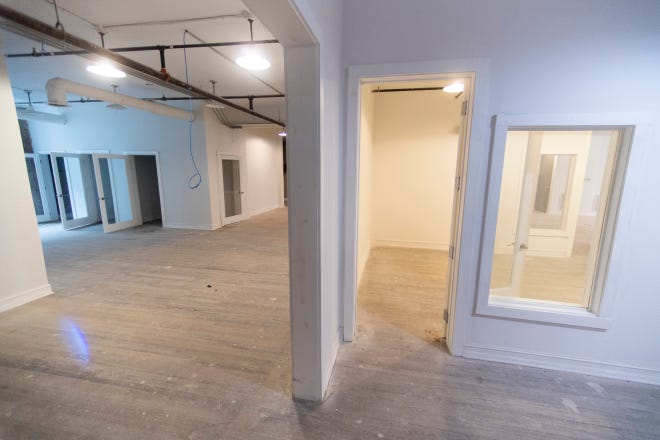
The bank is “substantially renovating” its branch at 1831 Cumberland Ave., which will reopen July 26. It’s located across from TENN Student Living.
“The Cumberland Avenue branch will become one of the most modern Regions locations in all of Tennessee,” a Regions Bank spokesperson said in an email Thursday.
Regions considered customer demand and volume as part of the decision.
In the new location, guests will be greeted by a Regions banker instead of joining a teller line. The branch will include video banking ATMs that feature live video connection to Regions bankers.
“Our Gay Street location will remain open until the nearby Cumberland Avenue renovation is complete, and our team will be available to answer customers’ questions one-on-one throughout the transition,” the Regions spokesperson said.
Customers who rent a safe deposit box at the Gay Street location must visit the branch by July 9 with both keys to remove belongings. If not, Regions officials will transfer remaining contents to a Regions Bank in Birmingham.
In an effort to keep customers safe, the bank suggested making an appointment by using the Regions mobile app or at regions.com.
The vacated Gay Street location will be available for lease this summer.
Regions also has a location at 9206 Park W. Blvd. in Cedar Bluff.
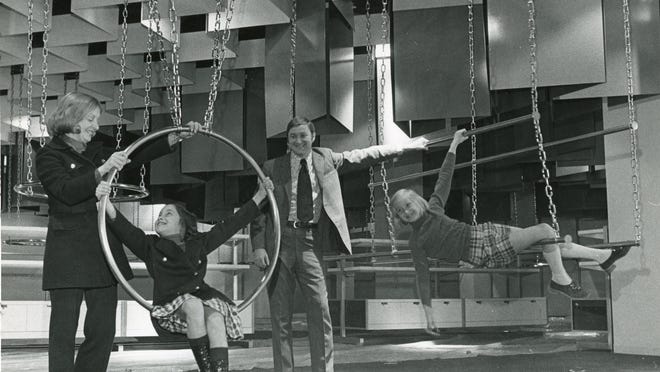
The oldest portion of the Miller’s Building has stood since 1905. The building was designed by R.F. Graf of Knoxville, according to Knox Heritage. Today the building includes Bliss and Tori Mason Shoes, Cruze Farm, KUB and other businesses.
Miller’s Department Store operated for almost 70 years and closed in 1972.
Business reporter Brenna McDermott can be reached at brenna.mcdermott@knoxnews.com. Follow along with her work on Twitter @_BrennaMcD. Support our local news efforts by becoming a Knox News subscriber.