This week read about Erin Kellyman coming out as queer, Disney parks catering to the LGBT community, and “The Simpsons” recasting controversial voice actors.
Erin Kellyman is Queer?!
Erin Kellyman is queer and shows no fear.
Kellyman stars in “The Falcon and the Winter Soldier,” being one of the few open queer actresses in the Marvel universe.
Kellyman’s girlfriend, Jordan O’Coy, is active on her Instagram, where the pictures of the two love birds are in a happy abundance.
Although it’s no secret that Kellyman is queer, some people may have not noticed it right off the bat.
In a viral Tweet, one user posted, “i can’t believe i only just found out erin kellyman has a girlfriend.” Well believe it, because Marvel has started to step its game up by introducing more LGBT characters in recent times.
Naturally once fans started figuring out, they took to Twitterto express the joy it brought them, to see one of their own staring in their favorite show.
Kellyman even went so far as to address her fans’ recent realization of her sexuality via an Instagram story, Pridereported.
“IDK why it took you gays so long,” Kellyman said.
Disney Plans for More Inclusivity
Pixabay.
The “most magical place on Earth,” just became that much more magical.
Disney parks are now including a pair of rainbow mouse ears for all. While it may seem like a small gesture, this is just the tip of the iceberg for the parks.
According to Out, “This is just the beginning as we continue to work toward a world where we all belong — including a more diverse and inclusive Disney Parks, Experiences and Products,” Josh D’Amaro, chairman of the park’s division, announced.
They’re not just catering to the LGBT community however, Out stated that Disney’s workers conducted a poll and found that “inclusivity was a key area of concern.”
Besides the colorful mouse ear hats, Disney will be having costumes in stock for people in wheelchairs, Out reported.
D’Amaro also said in a post on the Disneyparks website, “Our new approach provides greater flexibility with respect to forms of personal expression surrounding gender-inclusive hairstyles, jewelry, nail styles, and costume choices; and allowing appropriate visible tattoos.”
Disney is taking steps in their way of making everyone feel special, at the magical place where dreams come true.
“There’s more to do, but we’re committed to listening, learning and making meaningful improvements,” D’Amaro said.
‘Simpsons’ to Recast Controversial Voice Actors
Julio (right) with Smithers in “The Simpsons.” Credit: FOX.
The beloved and long-running show “The Simpsons” has received lots of backlash for its inappropriate use of voice actors who don’t match their character. However all that is about to change.
According to Pride, “The Simpsons” will “no longer have white actors voice non-white characters.”
This goes for characters of the LGBT community as well, such as Julio who is a gay Cuban character.
They have also done the same for the very controversial character Apu, who has been voiced by Hank Azaria.
American writer Matt Selman, who has been a consistent writer for “The Simpsons,” confirmed in a Twitterpost that Tony Rodriguez, a gay Cuban American actor, will voice Julio.
“Welcoming the hilarious Tony Rodríguez @TheTonyRodrig, throwing shade as Julio tonight on @TheSimpsons,” Selman tweeted.
Retired trans mixed-martial arts fighter Fallon Fox is set to have her story told on the big screen after Mark Gordon Pictures announced Tuesday that it is developing a biopic chronicling her life.
The combat sports trailblazer became the first out trans pro MMA fighter when she came out publicly in an Outsports article in 2013. The decision to do so came after a journalist threatened to out her publicly against her will after she began competing professionally. Fox endured waves of transphobic abuse from the MMA world after coming out as the sport reckoned with its first brush with trans identities. Multiple prominent UFC figures, including UFC president Dana White, deliberately misgendered her and hurled transphobic insults her way, yet Fox continued competing until her retirement due to injury in 2014.
The announcement of the film comes as more than 30 states debate legislation that targets trans girls and women that want to compete in sports as their identified gender. Fox’s experiences and perseverance speak to what the communities facing those trans-exclusionary measures are going through as those debates continue, but it also offers strength and insight.
“I’m really happy that this is in development,” Fox told Outsports. “This story needs to be told especially right now with what’s going on with all of the anti-trans legislation.”
“Fallon Fox is a remarkable woman and athlete who has withstood and achieved so much in her life and whose story is far too little known. She is a universal, living icon of strength and persistence,” producer Bonnie-Chance Roberts told Deadline.
The film is being written by husband and wife team T Cooper, who himself is trans, and Allison Glock-Cooper. The duo previously pointed the camera on trans experience in sports with the 2015 trans bodybuilding documentary Man Made.
“As transgender/LGBTQIA writers and creators, we know in our bones the inherent value in and necessity of telling stories from the inside out, rather than from the outside looking in,” the Coopers told Deadline. “We’re thrilled to be teaming with Mark Gordon Pictures to help bring Fallon’s undeniably powerful and relevant story to the screen.”
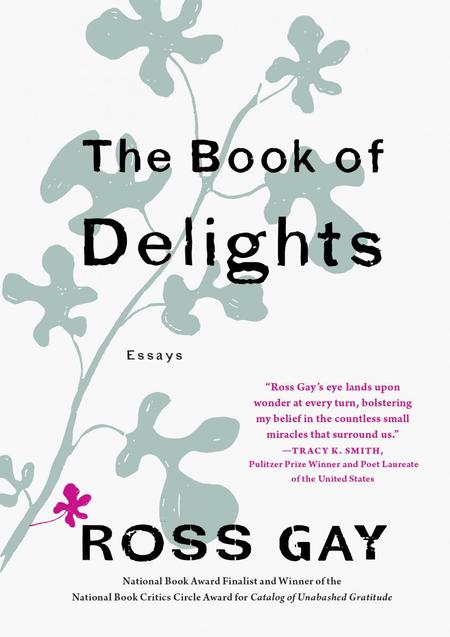
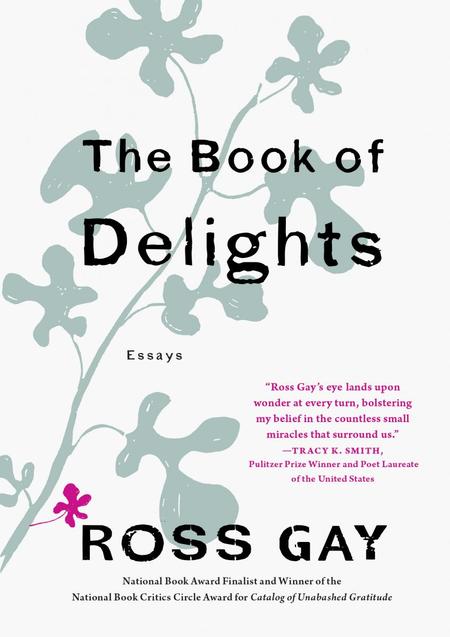
The 2021 Midwest Literary Walk is a virtual event on Saturday, April 24. Among the acclaimed authors speaking is Ross Gay, a 2015 National Book Awards finalist and author of “Against Which,” ”Bringing the Shovel Down” and “Catalog of Unabashed Gratitude.” He’ll be discussing his recent celebrated book, “The Book of Delights.” You can hear Gay speak at the event at 2:30 p.m. April 24.
“The word [delight] kind of sounds like what it means … almost like a lightbulb going off. There is something about curiosity … it’s connected to wonder.” —Ross Gay, author of “The Book of Delights”
Listen: Poet Ross Gay on why he expresses joy and love.
rossgay.net
Guest
Ross Gay is an award-winning poet. His most recent work is titled “The Book of Delights,” a book of essays written from experiences of delight over the course of a year. He says he was inspired from how the sound of the word made him feel. “The word [delight] kind of sounds like what it means … almost like a lightbulb going off. There is something about curiosity … it’s connected to wonder.”
In order to write purely from the heart, Gay says he set parameters for himself. “The process of writing the book was to [have these 3 rules]: write every day … write by hand … and write them quickly. I drafted these essays in 30 minutes,” he says.
“The Book of Delights” was written before the pandemic, but Gay says this year has given the work a new meaning. ”The book was published in February 2019, but there’s a different relationship to the book [now] because we have had to consider what it means to feel delight or joy or sorrow.”
The book also features essays on what it means to be a Black man. ”Any sort of limitation on what our emotional lives might be … I’m not gonna agree with. I feel delight, I feel joy, I feel gratitude … but I think part of what I learned over the course of this book … was noticing, articulating and sharing. That feels like survival.”
Web story written by Nora Rhein
Trusted, accurate, up-to-date
WDET is here to keep you informed on essential information, news and resources related to COVID-19.
This is a stressful, insecure time for many. So it’s more important than ever for you, our listeners and readers, who are able to donate to keep supporting WDET’s mission. Please make a gift today.
TAMPA, Fla. – Jason Licht is enjoying the perks that come with being the general manager of a reigning Super Bowl champion.
That includes the challenge of getting a late start on preparing for the NFL draft and not having a selection until the tail end of the first round as the Tampa Bay Buccaneers continue to get acclimated to what life’s like with Tom Brady.
“It’s a good problem to have,” said Licht, who already has had a successful offseason by making good on a bold promise to do whatever necessary in free agency to keep an all-star roster assembled around Brady. With all 22 starters from the Super Bowl returning, the Bucs find themselves in unfamiliar territory for a club that missed the playoffs 12 consecutive seasons before Brady’s arrival set a new course in March 2020.
For the first time in franchise history, Tampa Bay truly enters a draft without a need for immediate help at any position.
“It is really a feeling this year that literally just about any player at any position we could take,” Licht said before cutting himself short.
“I guess I’ll say I won’t take a kicker,” the GM added with a smile, mindful of recent draft-day blunders including Tampa Bay’s selection of Roberto Aguayo (second round, 2016) and Matt Gay (fifth round, 2019), both of whom were released after disappointing rookie seasons.
“But liberating is a probably a very good word’’ to describe what’s it’s like to be picking 32nd overall compared to the top 10. “It’s a luxury we can pick the player we think is going to be the best in two years instead of two games.”
And despite having no intentions of moving on from Brady, who signed a contract extension that’ll keep him in Tampa Bay for at least two more seasons, Licht and coach Bruce Arians have not ruled out selecting a quarterback at some point in the draft.
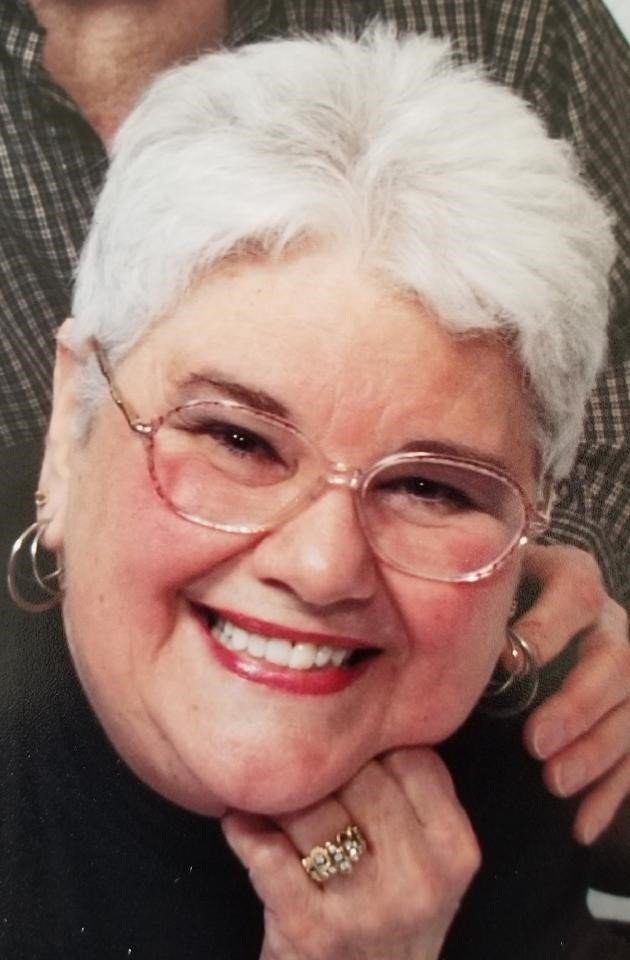
Juanita Mae Moody, 79, was born to Lenora Swift and Albert Abbruzzese Bruce in Fresno, Calif., March 29, 1942. On April 10, 2021, she passed away in the presents of her loving husband and four daughters. At the age of 13, she met John Moody who would become the love of her life. On July 28, 1956, Juanita and John married in Reno, Nev. Together they raised their daughters in Antioch, Calif. A women before her time, she led the effort to make social changes e.g. girls allowed to take woodshop at school, girls allowed to participate in organized school sports when girls were not offered this at the time, and gay rights within the church. This strength and these actions helped form the values and beliefs of her daughters. Juanita was a bold, courageous, and independent woman who loved life and created life through her multi-mediums of artwork. This was accomplished with the continual support of her husband. In the early 1970’s, while taking care of and raising her four daughters, she and John opened a pottery/ceramics business in Antioch, Calif. As a team, Juanita and John worked together to operate the business, with Juanita teaching pottery and ceramics classes while John ensured Juanita had everything she needed to accomplish this. In Juanita’s leisure time, she played tennis, both singles and mixed doubles with John. She returned to school and in 1983, earned an Associate of Arts Degree in Art from Los Medanos College in Pittsburg, Calif. At this time, she began to display and sell her artwork through various art shows. After raising their daughters, Juanita and John began a new adventure following John’s career path to Louisiana, and then to Wisconsin. There they played tennis together with Juanita continuing to do her art, while volunteering her time as a docent for a local museum. In 2004, when her husband, John retired, they moved to Winlock, Wash., on the West Coast, to be closer to their daughters and grandchildren. Juanita continued to create and explore her art with her art friends in her personal home art studio, and was an active member of ARTrails of Southwest Washington. She enjoyed her time gardening and was a member of the Winlock Circle One Garden Club. She loved supporting her husband as he competed in billiards, keeping score for the clubs he was involved in and cheering him on. It was also during this time in their lives that Juanita and John were once again able to gather with their entire family. These wonderful gatherings included weeks in Rouge River together in one SMALL house (daughters, son-in-law’s, grandchildren, great-grandchildren, and other family members, along with camping trips at Lake Cushman in tents and later a family cabin. Lovingly remembered by her family, Juanita Moody was laid to rest April 16, 2021, at Longview Memorial Park. Community Home Health & Hospice (1035 11th Ave., Longview, WA 98632) provided Juanita the comfort and care she needed while supporting her family through this difficult time. If you are so inclined, the family asks that a donation be sent to them in memory of Juanita Moody. If you would like to see Juanita Moody’s full obituary or add tributes, memories, or pictures go to www.long viewmemorial park.com.
The LGBTQ Center Long Beach has released a statement in response to the verdict following the George Floyd trial.
On May 25th, 2020 46-year-old George Floyd, an African American man, was murdered by police officer Derek Chauvin after a convenience store employee called 911 and told the police that Mr. Floyd had bought cigarettes with a counterfeit $20 bill.
The day after Floyd’s death, the Minneapolis Police Department fired all four of the officers involved in the episode. On May 29, the Hennepin County attorney, Mike Freeman, announced third-degree murder and second-degree manslaughter charges against Chauvin, the officer seen most clearly in witness videos pinning Floyd to the ground. Chauvin, who is white, kept his knee on Floyd’s neck for at least eight minutes and 15 seconds.
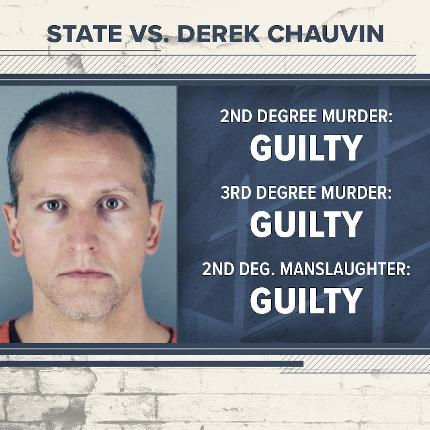
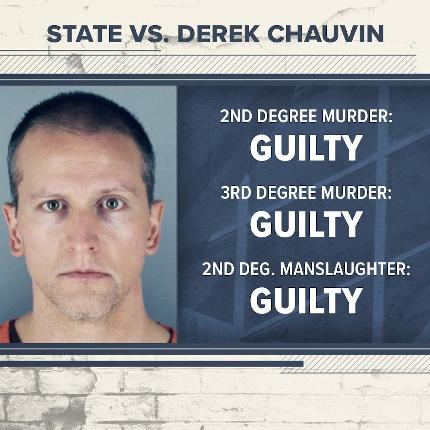
After almost a year since his murder former Minneapolis Police officer Derek Chauvin has been convicted on all charges in the death of George Floyd.
Chauvin faces up to 40 years in prison for second-degree murder, up to 25 years for third-degree murder and up to 10 years for second-degree manslaughter.
Carlos Torres, Executive Director of The LGBTQ Center Long Beach, had this to say about the verdict:
“We wholeheartedly agree with the jury’s decision today regarding the murder of George Floyd. But the great work needs to continue. For until equality is available to every man, woman and child, no matter what race or color, no matter their sexuality, no matter their gender, we are not a free people. Let us take hope in today’s decision to keep striving for equality and justice.
“We pledge that George Floyd’s life and his unseemly death will continue to drive us, unite us, and in the end, triumph together.”
For those of you who may need some support during this time, The Center is offering mental health services available at 562-434-4455 ext. 228 or by visiting www.centerlb.org.
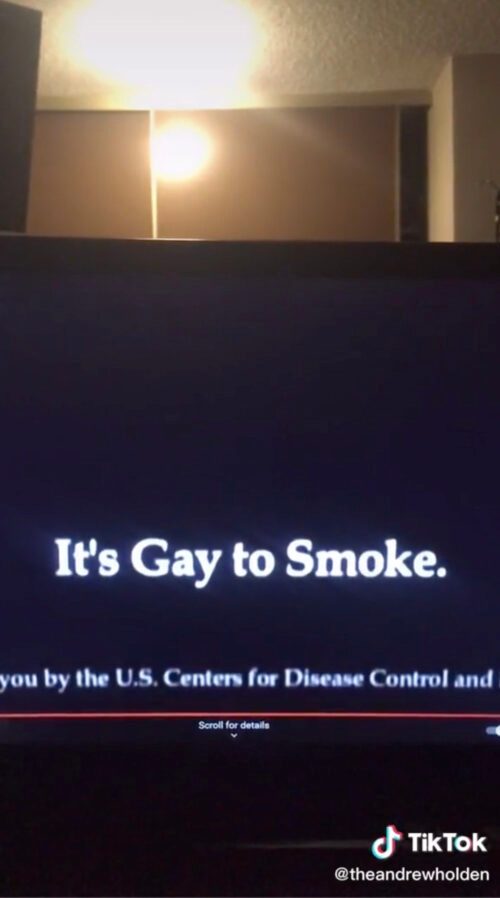
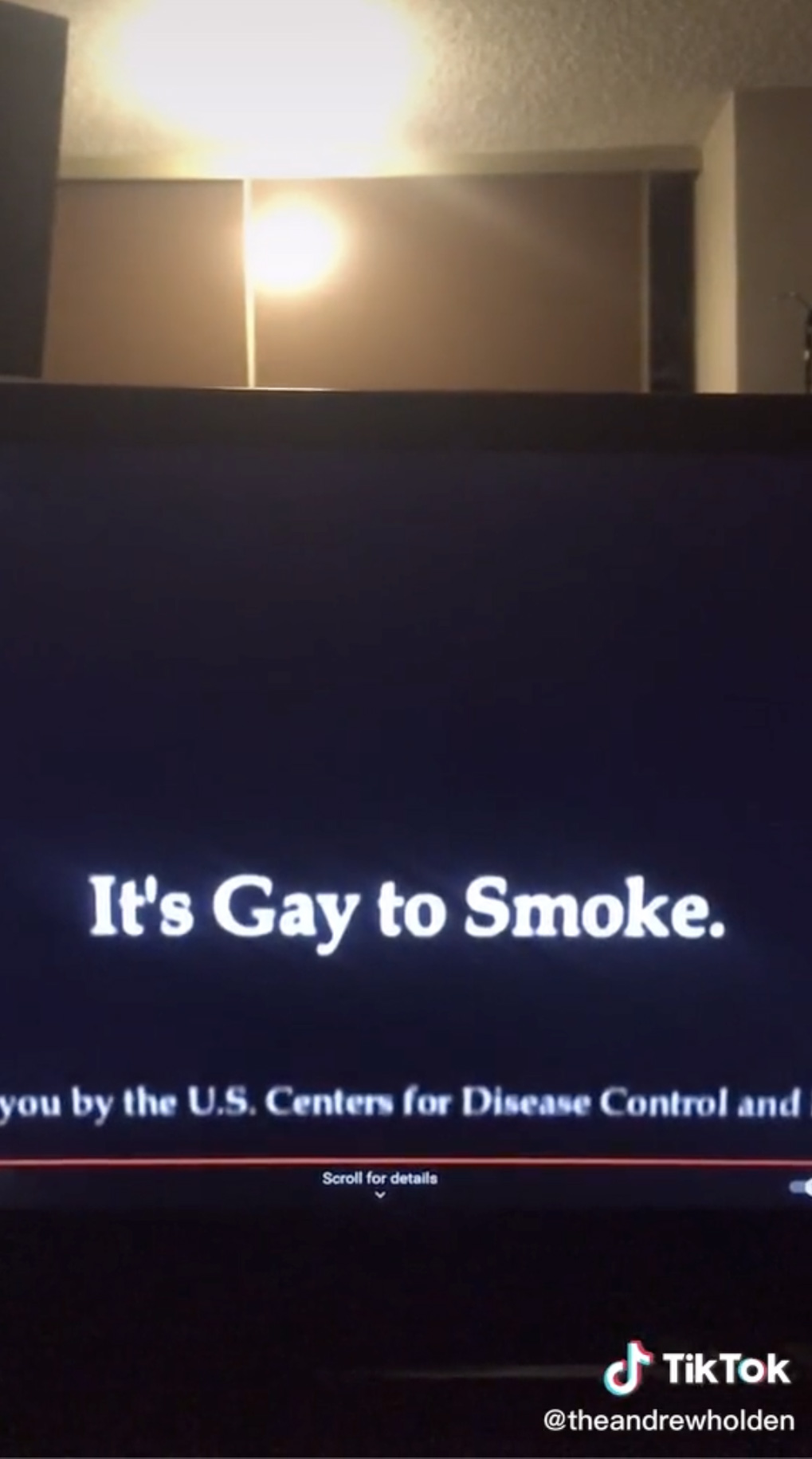
In mid-April 2021, a TikTok video purported to show an anti-smoking PSA that said, “It’s gay to smoke.” The end of the clip claimed: “Brought to you by the U.S. Centers for Disease Control and Prevention.”
The TikTok Video
“Show me an advertisement that wouldn’t be acceptable today,” began the TikTok video. It then showed a camera pointed at a screen that played the “It’s gay to smoke” clip.
In the purported PSA, two teenage boys smile at each other in a school hallway. They walk toward each other and almost touch faces. The two then back into a bathroom doorway and look to make sure no one else is around.
One of the boys whispers in the other’s ear. With their hands close to one another, the boy who whispered pulls cigarettes out of his pocket. The two then walk into the bathroom.
“Are they smoking, or are they gay?” asks the voice-over.
The end of the TikTok video.
The words “It’s gay to smoke” are followed by the mention of the CDC.
The Original YouTube Video
This was not a genuine public service announcement (PSA) from the Centers for Disease Control and Prevention (CDC).
The TikTok user pointed a camera at a screen to show the clip. He or she appeared to be careful to not reveal that it was playing a video in full-screen view from The Onion’s YouTube channel.
In other words, since The Onion is a satirical publication, the PSA originated as satire.
The Original Video
The Onion’s satirical video was uploaded more than 10 years ago in 2010. It has been viewed nearly 2.9 million times. Meanwhile, in less than a week, the TikTok video had been viewed more than 3.4 million times.
The original video showed the “Today Now!” logo in the bottom-left corner. This logo wasn’t shown in the TikTok video because someone had pointed a camera close to a screen to record it.
In sum, the purported CDC PSA that claimed “it’s gay to smoke” originated as satire from The Onion.
The brutal and mesmerizing new film takes place in South Africa in 1981, where 16-year-old Nicholas is coming to grips with his homosexuality in an environment that couldn’t be more hostile to it.
DAVE DAVIES, HOST:
This is FRESH AIR. Our film critic Justin Chang recently caught up with the new movie “Moffie,” which tells the story of a white South African teenager hiding his sexuality as a young soldier under apartheid in the early 1980s. You can stream it now on many major platforms. Here’s Justin’s review.
JUSTIN CHANG, BYLINE: The brutal and mesmerizing new film “Moffie” takes place in South Africa in 1981, when white teenage boys are conscripted to fight in the country’s border wars. The story follows a group of these young men as they endure the rigors of basic training and are sent to fight communist forces from neighboring Angola. But the conflict that most concerns the movie, adapted from Andre Carl van der Merwe’s autobiographical novel, is the one raging inside its 16-year-old protagonist, Nicholas. He’s coming to grips with his homosexuality in an environment that couldn’t be more hostile to it.
Nicholas, played by a quietly magnetic newcomer named Kai Luke Brummer, feels like an outsider from the start and not just because of his forbidden desires. He was born in England, as anyone can tell from his accent, and gets hazed by some of his more loutish comrades early on. But that’s nothing compared with the verbal and physical abuse dished out by their commanding officers, who make R. Lee Ermey in “Full Metal Jacket” look downright cuddly.
But Nicholas makes connections, too. He befriends another young man, Michael, who is quick to defend him against bullies. Nicholas forges a much more dangerous bond in secret one rainy night, when the young men are forced to dig trenches and sleep in them. Seeing Nicholas shiver miserably in the cold, another soldier, Dylan, gently persuades him to curl up next to him for warmth. What happens next is fairly tame as movies seductions go. Nothing more explicit is suggested than a few tender caresses and piercing glances. But it has a powerful effect on Nicholas.
In this military context, where physical touch is nearly always aggressive or violent, something as sweet as a hand brushing a cheek can feel positively revelatory. If Nicholas and Dylan don’t go much further, it’s because they know what could happen to them if they’re discovered. The title of the movie, “Moffie,” is a homophobic slur in Afrikaans. We hear it shouted over and over again in one early scene in which two other men, who were apparently caught having sex, are ritually humiliated in front of their unit. Later in the story, Dylan vanishes without explanation, and Nicholas fears that he’s been sent to the notorious Ward 22, where gay men are rumored to be sent for aversion therapy.
He approaches another soldier who’s been to Ward 22 and asks if he’s heard anything about Dylan.
(SOUNDBITE OF FILM, “MOFFIE”)
KAI LUKE BRUMMER: (As Nicholas) Ward 22.
UNIDENTIFIED ACTOR: (As character) Look; well, as riveting as this is, I think I’m going to…
BRUMMER: (As Nicholas) What was it like?
UNIDENTIFIED ACTOR: (As character) Why? You thinking about taking a holiday?
BRUMMER: (As Nicholas) I need to know if my friend’s there.
UNIDENTIFIED ACTOR: (As character) I hope for his sake that he’s not.
CHANG: “Moffie” was directed and co-written by Oliver Hermanus, a gay, biracial filmmaker who has made several dramas about violence and repression in South African society, though this is his first film set during apartheid. He’s said in interviews that while he was initially reluctant to tell a story about this era from the perspective of white men, he saw an opportunity to confront apartheid’s culture of hypermasculinity and its devastating impact on gay South Africans. Hermanus doesn’t ignore the ugly everyday reality of racial segregation, like when a group of soldiers on their way to basic training hurl abuse at a Black man on a train platform. In these moments, “Moffie” lays bare the horrors of a system in which different forms of prejudice coexist.
Hermanus is also well aware of the latent homoeroticism in this ruthlessly homophobic culture, and he floods “Moffie” with feverishly beautiful imagery of muscular young men at work and at play. At times, these images seem to evoke the lusty desert poetry of Claire Denis’ brilliant film “Beau Travail.” At another point, the movie pays sly homage to the volleyball scene in “Top Gun,” one of the most deliriously suggestive spectacles in American movies. But even amid such playful sensuality, “Moffie” never loses sight of the terror at the heart of Nicholas’ struggle. About halfway through the film, Hermanus throws in a shocking flashback to Nicholas’ childhood that shows us how shame and repression can take root at an early age.
For all that, “Moffie” isn’t entirely despairing. While far from romantic, it suggests that love can persist even in a world driven by hate. And while Nicholas is a fairly taciturn character – his silence is its own survival instinct – Brummer’s richly expressive performance shows us a young man quietly coming into a deeper understanding of himself. The movie ends on a note that somehow manages to be seductive, tragic and faintly hopeful all at once. Nicholas, like so many men in his situation, has been scarred by the system of apartheid, but there’s some consolation in knowing he will outlive it.
DAVIES: Justin Chang is film critic for the LA Times.
On Monday’s show, we speak with investigative reporter Michael Moss. His bestseller “Salt Sugar Fat” explored food companies’ aggressive marketing of highly processed, unhealthy foods. His new book examines the addictive properties of processed foods and the food giants’ efforts to keep us eating them. It’s called “Hooked.” I hope you can join us.
(SOUNDBITE OF ERROLL GARNER’S “YOU MADE ME LOVE YOU”)
DAVIES: FRESH AIR’s executive producer is Danny Miller. Our technical director and engineer is Audrey Bentham, with additional engineering support by Joyce Lieberman, Julian Herzfeld and Al Banks. Our interviews and reviews are produced and edited by Amy Salit, Phyllis Myers, Sam Briger, Lauren Krenzel, Heidi Saman, Therese Madden, Ann Marie Baldonado, Thea Chaloner, Seth Kelley and Kayla Lattimore. Our associate producer of digital media is Molly Seavy-Nesper. Roberta Shorrock directs the show. For Terry Gross, I’m Dave Davies.
(SOUNDBITE OF ERROLL GARNER’S “YOU MADE ME LOVE YOU”)
NPR transcripts are created on a rush deadline by Verb8tm, Inc., an NPR contractor, and produced using a proprietary transcription process developed with NPR. This text may not be in its final form and may be updated or revised in the future. Accuracy and availability may vary. The authoritative record of NPR’s programming is the audio record.
Before the last federal election, progressives tried to warn the voters of Langley and Cloverdale that the Conservative candidate was further to the right than some of her colleagues on the slate.
Tamara Jensen was a well-known anti-abortion activist and critic of Charles Darwin’s theory of evolution.
In addition, Jensen claimed that fears about rising greenhouse gas emissions amount to “scare mongering”.
That led to a demonstration on 176 Street in Cloverdale by activists trying to raise public awareness. In the end, it didn’t stop Jensen from being elected as the MP.
This week, Jensen is attracting ridicule and condemnation on social media for opposing legislation to prohibit forced conversion therapy on LGBT people.
In a speech to the House of Commons, Jensen told a story about a woman in Calgary who was “involved in lesbian activity” who struggled with self-worth and depression.
When the woman decided that she no longer wanted to continue with her “lesbian activity”, her parents supported her decision to seek therapy.
You can see how this is being greeted over Twitter.
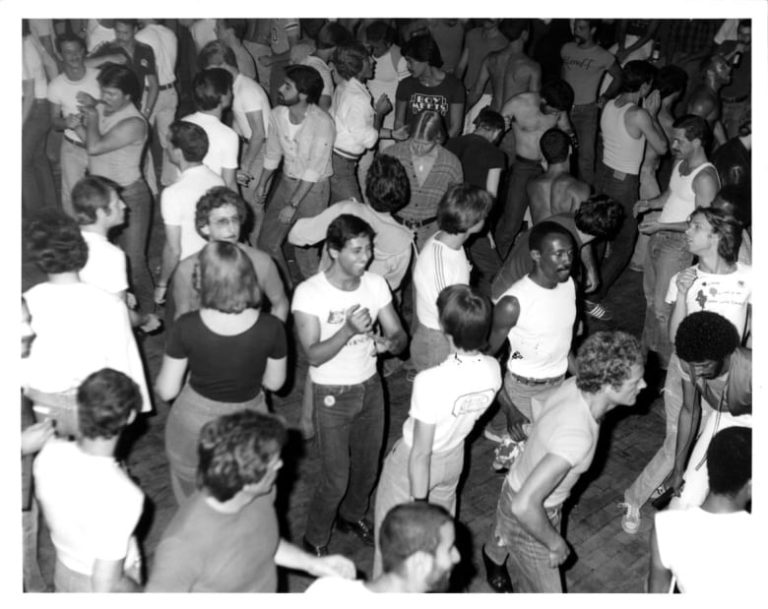
From Gay Bar: Why We Went Out. The night crowd at the re-opening of Studio One in Los Angeles, 1977. (Courtesy of ONE Archives at the USC Libraries, Los Angeles, and the estate of Pat Rocco)
Queeries is a weekly column by CBC Arts producer Peter Knegt that queries LGBTQ art, culture and/or identity through a personal lens.
Before the pandemic, the last time I went this long without going to a gay bar was before I was legal drinking age. And I know I’m not alone. For many of us living in places where we’ve been privileged enough to have gay bars be an integral — if complicated — part of our culture since we were brave enough or old enough to get in, the past year and counting has been a big departure from a routine in our social lives. But for a lot of us, I suspect it’s also left us wondering: what role did gay bars really play in our lives all that time anyway?
That’s a core question in Jeremy Atherton Lin’s vibrant debut book Gay Bar: Why We Went Out, a mix of memoir and historical document that explores the complex relationship both Atherton Lin and gay culture has had with the increasingly endangered habitat that is the gay bar. Released in February 2021, I initially purchased the book thinking it might fill a void left by its subject’s non-existence in my life since March 2020. But instead I became reminded of what a complicated, varied, often disappointing but equally necessary experience gay bars have always been for me. It also made me wonder what their future past the pandemic really looks like.
The cover of Gay Bar. (HBG Canada)
Exceptionally well-crafted, Gay Bar is both a book about Atherton Lin’s life and the gay bars each chapter focuses on (it jumps from London to Los Angeles to San Francisco). Its central question — as posed in its title — is given many, many answers over the course of its pages: “We go out to be gay.” “We go out to be on the inside.” “We go out to be nobodies.” “We go out to be real, which in gay argot can mean fake it.” “We did not go out to be safe. I didn’t, anyway. I went out to take risks.”
But ultimately, Atherton Lin realizes it may not really matter why we went out — what matters is that we did, and for so many of us, that has made us who we are, for better or worse.
Based in London, U.K., Atherton Lin conceived of the idea for the book in 2017. At that time, over half the gay bars in London had closed down in the previous decade, as they similarly had in major cities across the world thanks largely to a double-edged sword of gentrification skyrocketing rent and the rise of gay social apps like Grindr putting virtual gay bars in people’s pockets. At that time, the pandemic hadn’t even begun to make these establishments’ livelihoods all the more dire.
“That was just such a weird thing to experience — where there’s this sort of manifestation of your identity, supposedly, in a city that is lingering out,” Atherton Lin tells me over a video call. “So it made me kind of question what my relationship to those bars was.”
The structure of the book came as Atherton Lin started trying to remember his experiences in gay bars.
“It was always going to be a very personal thing,” he says. “I wound up writing it in a pretty condensed period of time because I wanted it to feel a little bit like there’s some lack of resolution, like you kind of feel when you’re at a bar or just kind of having passing thoughts.”
A photo from inside Toronto’s west end queer bar The Beaver in the 2010s. The bar closed due to COVID-19. (Andrew Kounitskiy)
Atherton Lin says that one of the things that stands out to him from the process of writing the book is how it put things in perspective in terms of “putting everything into into the context of a longer history.”
“It’s asinine that it would not have been at the forefront of people’s minds, but really the effect of the AIDS crisis on gay culture seemed to me to be very buried,” he says of his introduction to that culture in the 1990s. “I just thought about how disappointed I was in various facets of gay culture…. how icy it was in a lot of ways. The fact that that was a response to an epidemic.”
Atherton Lin says that, for him, doing that kind of revisiting led him to find “more of a sense of a longer history” with respect to his own relationship to gay culture.
“[It] shows you that it’s not all about your perspective and that something came before and something’s going to come after,” he explains. “That was the greatest revelation for me: a sense of acceptance about how you’re not going to be exactly the same as other homosexuals, despite the ‘homo.’ But you maybe are a piece of a kind of a legacy or cosmology. So I think that was a real kind of epiphany for me — of not feeling like I needed to think about identity in terms of an individualistic way, but to think about it in terms of the kind of amorphous historical way.”
Gay Bar author Jeremy Atherton Lin. ( Jamie Atherton)
The pandemic began as Atherton Lin was doing final edits of the book, and he wondered about whether to make changes to reflect this new and crippling chapter in the challenges facing gay bars’ survival.
“It was just too soon,” he says. “There was no way to know what the ramifications would be or how long it was going to last. And nobody foresaw this, you know?”
Even now, nobody really knows what’s going to happen to gay bars after “all of this” is over. Will there even be any gay bars left to reopen? My home bar — Toronto’s west end staple The Beaver — shut down permanently due to COVID last July, as have many, many others around the world. But Atherton Lin is pretty certain young queers will find a way, as they always do.
“I imagine it’s going to be kind of multifarious, you know, because I think that the kids are going to want to party and the kids are always going to find a way to party. Think about the aftermath of AIDS. In my book, I talk a lot about these kind of like, very anodyne and sterile bars, but at the same time, there was rave and underground culture and everything like that. So the kids are going to party.”
From Gay Bar: Why We Went Out. Chuck Arnett’s Tool Box mural in San Francisco, 1975. (Courtesy of photographer R. Michael Kelley)
What does concern Atherton Lin is our elders.
“I mean, I’m getting older myself,” he says. “So I thought a lot about that as the book came out and I was kind of forced into early retirement and we all just kind of sat back. I think of that old boozer in the centre of town at a bar where regulars have been going to for years. That means something in terms of the fact that it’s a part of the infrastructure of the city, of a given place, rather than always a kind of alternative to the infrastructure of that city.”
“So that is going to be interesting to see if that can be maintained for old gays and lesbians. I want to see them be able to go back onto their barstool — I mean, if that’s what makes them happy.”
Hear, hear.
Gay Bar: Why We Went Out is available for purchase at Toronto’s Glad Day Bookshop, which — like other independent bookshops everywhere — continues to need our support.
With the coronavirus pandemic, James sees treatments slipping under the radar once again. While the federal government poured $18.5 billion into vaccine research, only about $8.2 billion went to treatments. One drug that has gotten a lot of attention, hydroxychloroquine, has largely proved to be a dud. Even though half of all American adults have received at least one vaccine dose, research on COVID-19 treatments remains vital; tens of thousands of Americans are still hospitalized with the coronavirus, and better treatments might help them. Meanwhile, for COVID-19 long-haulers dealing with lingering effects of the virus, treatments may offer the best hope of a return to normalcy. With COVIDSalon, James is leaning into a notion that he and other veterans of the AIDS epidemic helped trailblaze in the ’80s: Patients can become experts on their own disease, and that starts with supplying them with the right information.
When James launched ATN, the situation was dire. In 1985, 8,406 Americans died of AIDS, nearly doubling the number of deaths from the year before. But few drug trials for AIDS were under way, and those that were rarely received mainstream coverage. Because doctors didn’t know how to treat the new disease, people with AIDS needed to research their own symptoms and, sometimes, plot their own course of care. Activist groups such as ACT UP “really promoted the idea of Let’s get this [treatment] information out there,” says Patricia Siplon, an AIDS activist and a political-science professor at Saint Michael’s College, but few people had the time or the ability, before the internet, to do the research. With the queer community left in the dark about how to address the epidemic, James started accessing a dial-up computer database that hosted new treatment research as well as reports from the FDA and drug companies. Every two weeks, he would condense his findings into a two-page newsletter.
After his newsletter started getting traction, James turned his San Francisco apartment into a makeshift newsroom. He and an assistant made copies a few blocks away, and mailed them out to subscribers one by one. Volunteers edited, fact-checked, and produced the newsletter at all hours. “When I needed to get to sleep at night, if they were still working, I would put a piece of cardboard over my face to block the light,” James said. He broke major news stories, including one about a steroid hormone, and directed people with AIDS to research trials, in which they could enroll and access experimental drugs.
ATN became the go-to source for lots of people looking for treatment news: By the early 1990s, the newsletter had amassed more than 7,500 subscribers, including both people with AIDS and medical professionals, powered by a staff of five plus James. Even after the highly effective “AIDS cocktail” arrived in 1996, James turned his focus to the steep cost of the available drugs before finally shutting down the newsletter in the summer of 2007 to work on other research.
The current coronavirus pandemic isn’t the only public health crisis afoot, according to Daniel Jacobson López, a postdoctoral associate in Pitt’s Graduate School of Public Health.
López says more than half of all gay and bisexual men will be sexually assaulted in their lifetimes. And for Black or Latino men, the scenario worsens—because they are frequently afraid to report the abuse and, if they do so, are often ignored or not given the resources they need.
“This is a public health crisis that isn’t getting enough attention,” said López.
In his own 2019 research project, funded by Pitt’s School of Social Work and the national Council on Social Work Education’s Substance Abuse and Mental Health Services Administration Doctoral Minority Fellowship Program, López set out to explore what factors gay Black or Latino men considered when reporting sexual assault, what barriers they encountered and how their identities affected the response from authorities.
Fears are justified
López interviewed 14 men from Miami, Houston, Los Angeles and other cities, and found their considerations about reporting to be many: concern about homophobia, racism, not being believed, not being supported, a fear of retaliation, knowing that many people believe a man should be able to fight off a rapist, and not having the long and sometimes complex court process explained to them.
And in fact, the men were right. “Their feelings were justified,” said López. “What they thought might happen actually did happen.”
The barriers frequently overlapped, as well. Were the men being dismissed because they were Black? Latino? Gay? Or all three?
“All people of color who belong to different groups always worry about this,” he said.
Cultural considerations often come in to play too, said López, explaining that Latino men are expected to have a certain machismo—tough, not showing emotion—coupled with a strong family loyalty, meaning that they may hesitate to report abuse by a spouse or other family member for fear of “betraying” them.
Many of these men are also the targets of anti-immigrant sentiment, said Lopez, and counselors and those who provide social services should keep that in mind.
“Be aware of that hesitancy and you should really commend them on their bravery for just walking in the door,” he said.
Looking forward
While there are new federal protections for LGBTQ individuals on the job—they cannot be fired for being gay—López said the federal protection laws for sexual assault survivors are a little different.
Aside from seeking legal relief, López said a number of things can help these victims, the first of which is simply believing what they have to say. Listen to them and do not judge.
“Just saying ‘I believe you, this should not have happened to you,’ can help them with the healing process. It goes a long way,” he said.
Carrie Benson, prevention and education coordinator for Pitt’s Sexual Violence Prevention and Education Office, calls López “a wonderful ally.”
“Our office works to promote a safer, more respectful campus environment that supports survivors,” she said. “In order to do this, we must understand how racism, homophobia and transphobia can impact the experience of a survival of sexual trauma.”
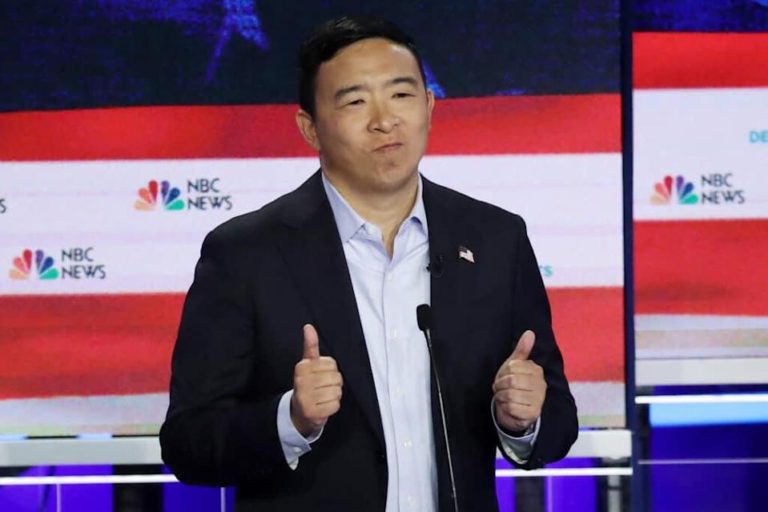
New York mayoral candidate Andrew Yang desperately tried to win the endorsement of a prominent Democratic LGBT+ group – and failed, hard.
On Wednesday (21 April) Yang was among several candidates interviewed by the Stonewall Democratic Club of New York City before voting on an endorsement.
He attempted to curry favour with the LGBT+ community but only managed to cause offence with a bizarre, “cringeworthy” speech that smacked of tokenism, members said.
“It was like he never met a gay person his life, even though he kept reminding us people on his staff were gay,” filmmaker Harris Doran, who attended the meeting, told NBC News. “It was like tokenizing us.”
Describing his great affection for LGBT+ people, Yang said: “I genuinely do love you and your community. You’re so human and beautiful. You make New York City special.
“I have no idea how we ever lose to the Republicans given that you all are frankly in, like, leadership roles all over the Democratic Party.
“We have, like, this incredible secret weapon,” he continued. “It’s not even secret. It’s like, we should win everything because we have you all.”
His speech struck many as “pandering and tone deaf,” according to members who spoke to the New York Times. “He was talking to us like we were children or aliens,” Doran said.
Yang made frequent, awkward references to “your community” and repeatedly cited gay members of his staff as apparent proof of his support for the group’s interests.
“Gay, gay, gay. Wow,” one member wrote in the chat for those watching the video, according to the Times.
He also expressed enthusiasm about the prospect of visiting Cubbyhole, a famous New York lesbian bar, as he’d be joined by the aforementioned gay staff.
“Well, first, let me say that if I go to Cubbyhole, I think I’m going to be accompanied by at least one of my two campaign managers who are both gay,” he suggested.
“So there’s like, a lot of, you know, familiarity with the community at the head of my campaign leading it.”
Multiple participants described Yang’s remarks as offensive, saying that members of the club who raised policy issues found his mention of gay bars off-putting.
“He came across like he was a tourist in New York and said he wanted to visit a gay bar,” Rose Christ, the president of SDNYC, told Politico.
SDNYC leaders complained that he did not address substantive issues that affect the community – such as the murders of trans women, inequitable access to health care and housing, and dangerous genital surgery on infants with intersex traits, to name a few.
Yang’s campaign managers defended his comments, but focused only on the subject of gay bars.
“If other campaigns want to minimise the importance of visiting and supporting LGBTQ businesses, they’re welcome to do so. But gay bars are an essential part of our City and its history,” they said in a statement to Politico.
“They are quite literally safe havens for our community, and keeping them here and open is critical. This is why Andrew has prioritised meeting with LGBTQ business owners who invited him in – because he understands that we need to protect and lift up those spaces if we want our recovery to be inclusive and meaningful.”
The group ended up endorsing Yang’s opponent, city comptroller Scott Stringer.
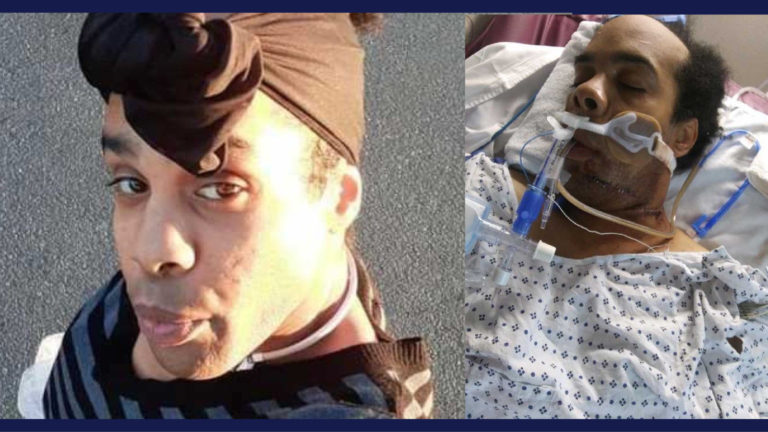
Police in Spotsylvania County, Virginia are under intense scrutiny after a sheriff’s deputy gave an out Black man a ride home after his car broke down, just to return minutes later and open fire, shooting him in the face.
32-year-old Isaiah L. Brown is currently fighting for his life in the intensive care unit of the hospital after being fired on and shot a 10 times. His siblings and community are outraged and a Black Lives Matter protest is scheduled for today.
The violent encounter reportedly began when Brown’s car broke down on his way home in the early morning of Wednesday, April 21. A white sheriff’s deputy encountered him at a gas station after 2 a.m. and gave him a ride to his home. His family saw the deputy drop him off.
“He was like, ‘Your brother is fine. He’s not in trouble. His car broke down and I gave him a ride,’” Brown’s brother Tazmon said.
But some time after that, police received a 911 call. Tazmon said that Isaiah just wanted a ride back to his car because he was worried about it being toed, but police state that this was a domestic disturbance report.
“At approximately 3:18 a.m., Wednesday April 21, 2021, a Spotsylvania Deputy was investigating a domestic disturbance in the 12200 block of Catharpin Rd in the western part of the county,” Major Troy Skebo wrote in the department’s statement.
A source told NBC Washington that Brown was in a dispute with a family member, and “was complaining about his brother.” So the same officer that dropped him off returned, less than an hour later.
“While conducting the investigation, a deputy encountered an adult male. During the course of that encounter, the deputy discharged his service weapon and the male suspect was struck,” the department’s statement said.
“The suspect is currently being treated at a local hospital.”
The Spotsylvania County Sheriff’s Office is referring to Brown as a “suspect” although he was the one who called 911. The department also declined to commit to releasing body camera footage from the shooting.
“At the request of Sheriff Harris, the Virginia State Police Bureau of Criminal Investigations Police Shooting Investigation Team will be investigating the incident,” that statement concluded. Their findings will be sent to the Fredericksburg Commonwealth’s Attorney for review as a special prosecutor.
The department declined to confirm or deny further details publicly.
“The sheriff’s deputy attempted to verbally engage Brown and it was during this encounter that the deputy discharged his service weapon. Brown was shot and the deputy immediately rendered medical aid,” Sgt. Coffey said.
Tazmon and Brown’s sister Yolanda are confused as to why the deputy opened fire.
“The officer just started shooting at him for no reason. I didn’t hear a warning shot. All I heard was ‘Hands up!’ one time. And all he had was his phone, so I know he put his hands up,” Tazmon said.
Both police and the family said that Brown was not armed at the time.
“I’m just still trying to figure out where he felt the threat at, to feel the need to shoot,” said Yolanda.
The family has hired a lawyer and contacted the NAACP. They have not yet issued any further statements.
The Black Lives Matter chapter for the Fredericksburg area said they will hold a march in protest Friday afternoon. The group and supporters will meet at 5:30 p.m. outside the Spotsylvania Courthouse.
On his Facebook page, Brown identified as gay. A home health care aide, Brown also shared gifts he received from family members of those he took care of and talked about his love for R&B music and food.
Isaiah Brown is in intensive care after a sheriff’s deputy shot him 10 times outside his home in Virginia yesterday.
Mr. Brown was unarmed, carrying just his cell phone. Bystanders say the deputy appeared to open fire without warning and for no reason.https://t.co/tDkvY4V4mS
Isaiah Brown was shot 10 times by a Spotsylvania County Sheriff’s deputy after he called for help. Our community deserves to know what happened to him.
32-year-old Isaiah Brown is in intensive care after allegedly getting shot ten times by an officer who gave him a ride home after his car broke down. Brown called 911 at home, and the same officer went back where they reportedly shot an unarmed Brown. #BlackNewsTonightpic.twitter.com/5CEVQjNNid
The House voted 60-to-39 to approve the conference committee’s report on House Bill 112, which would require high school and college athletes to compete based on their “biological sex.”
Several minutes later, the Senate approved the changes 27-to-23. If the bill passes final votes in both chambers Friday, it will be on its way to Gov. Greg Gianforte’s desk.
“We’re seeing a significant increase in crisis calls from individuals who are needing immediate mental services, we’re seeing an increase in people who are experiencing discrimination, on the job, and in housing.”
Reagor says he’s personally fielded calls for help, “although those calls can be hard to take, the calls that I’m more concerned about are the ones that I’m not getting.”
“I think there just needs to be more discussions about what the lives of these folks are like, I think that’s something that’s missed, is a lot of folks proposing these bills, they don’t know anything about the LGBTQ community.”
He said the bills are dividing issues, “I do see these causing further rifts between people that don’t necessarily understand the LGBT community.”
It’s a sentiment echoed by others, “they clearly just have no idea what they’re talking about,” said Forward Montana Issue Advocacy organizer Izzy Milch.
He told MTN News they are tired, “people have testified at all of these hearings trying to explain what life is like as a trans person in this state, and they’re just not interested in hearing that.”
They say, watching the legislature and hearing what our lawmakers say is taking a toll on their mental health,” so upsetting and traumatizing to listen to.”
Milch also said most people don’t have what they call the “dangerous attitudes” of some legislators, “but when it’s the people in power that are saying these things, it’s not easy to listen to.”
That’s why organizations across the state are stepping up outreach.
“To really make sure that people know that just because these bills are moving through the state legislature, doesn’t mean that they represent the views of all people in the state of Montana,” Reagor explained.
Milch said that knowledge will keep the LGBTQ+ community strong.
“Queer people, — and especially trans people — have this sort of special ability to imagine realities that are better than the ones that currently exist.And always be asking questions about why things are the way they are, and coming up with creative solutions to make the world a little bit more like we want it to be, and this is no exception, Milch told MTN News.
“I do feel really hopeful knowing that this community exists in Montana and will continue to work towards a place where we can all feel safe living,” Milch concluded.



:strip_exif(true):strip_icc(true):no_upscale(true):quality(65)/cloudfront-us-east-1.images.arcpublishing.com/gmg/Y2C5PDOTYVEPBFLOI3PXG2AYMU.jpg)