Home Blog Page 346

‘We should be celebrated – why not!’: Emma Dodds and Becky Morgan – Lesbian Visibility Week Q&A – Sports Media LGBT+

TV sports reporter Emma Dodds and professional golfer Becky Morgan posted to Instagram about their engagement last year – but they took “different routes” before arriving at their shared happiness. They tell Zoë Vicarage about their journeys and the need to spread a little joy in just being authentic…
By Zoë Vicarage

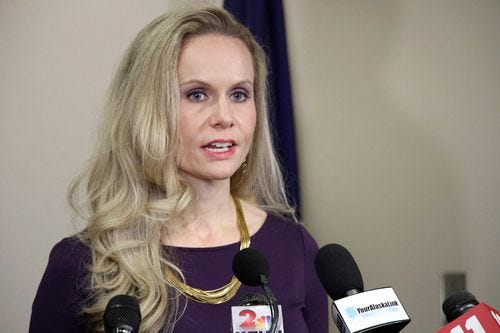
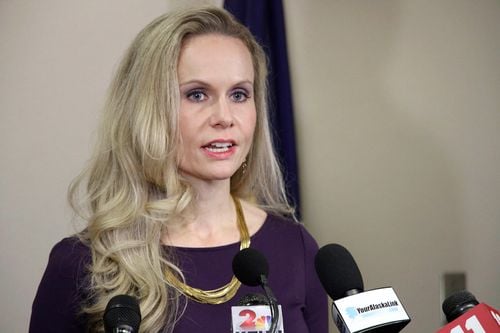
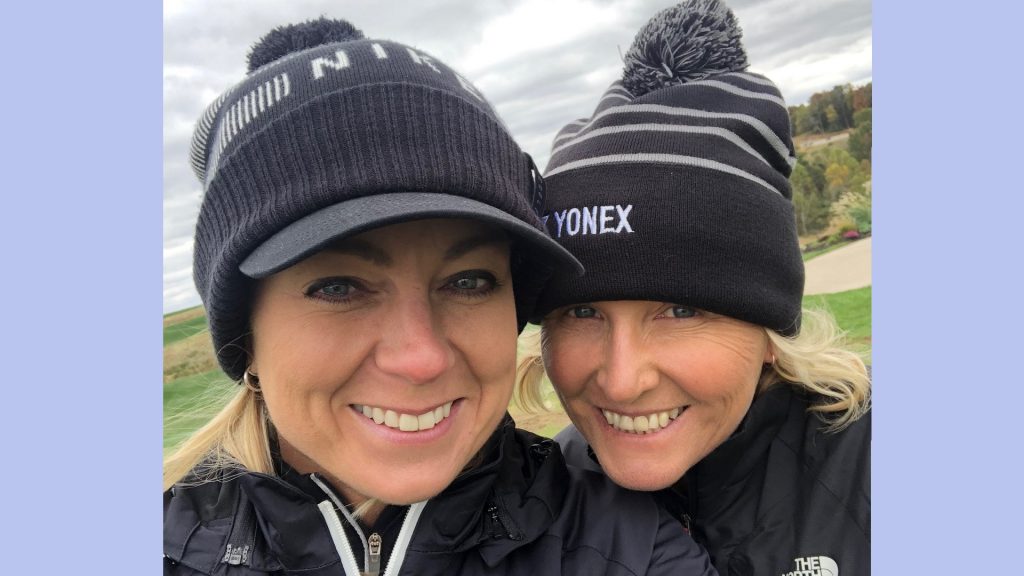
Emma Dodds and Becky Morgan are hoping other LGBTQ+ women feel more confident as a result of Lesbian Visibility Week

“Supporting LGBTQ+ women to be their true selves at work, at home and socially” – that’s a key objective of Lesbian Visibility Week, and it resonates strongly with Emma Dodds and Becky Morgan.

Emma has become a familiar face to many sports fans through her broadcasting work with BT Sport, Premier Sports and other channels, while her fiancée Becky is a professional golfer with experience on the LPGA Tour and the Ladies European Tour, winning the Hero Indian Women’s Open tournament in 2018.

Zoë Vicarage

They announced their engagement via Instagram in September 2020, having celebrated privately with friends and family earlier in the year, at a time when Emma was also hosting the Pride Active Conversations interview series for LEAP Sports Scotland, supported by Sports Media LGBT+ and Pride of the Terraces.

For LVW 2021, I spoke to Emma and Becky about their careers, their relationship, and what being ‘visible’ means for themselves and other LGBTQ+ women in sport…

ZV: Hi Emma and Becky! Thanks for joining us for this chat. Emma, let’s start with your work in the sports media industry. How did that begin and what was your journey?

Emma: I knew at school that I wanted to go into sport, and I had the option to go to the US and play basketball – but I’m probably not the best build to go and make a career out of that! I was doing work experience in local radio and I ended up getting a job at a station in my gap year. I used to do the traffic reports, deliver prizes for the events team, all sorts of nonsense – but I really enjoyed it. At the end of my year, I didn’t want to leave. There were graduates coming in that were shadowing me, so I figured having the job already was better than going to get the qualification.

Emma Dodds

I moved on to Rangers, and then I took a sideways step and worked for the record label Warner Music in Paris but did a little bit with PSG while I was there. I ended up coming back to the UK and that’s when I really started in TV, as Colin Davidson – who I’d known at Rangers – got me in at Setanta. I went in to be behind the scenes but one Thursday, he said to me ‘on Saturday, I want you to be the pitchside reporter. I didn’t tell you earlier because I knew you’d worry about it but go and do your thing’.

It was the best way it could happen as I didn’t have time to worry. I knew Scottish football anyway and the people involved so it was great. Credit to him for having the faith in me – I think everybody needs that person to give them a step at some point.

Unfortunately, Setanta later went into administration so I moved down to Sky Sports News in Leeds and then London. After that, I went to Dubai to be head of sport for the Arab Media Group – I was the first woman ever to do that role. Obviously, that needed a bit of consideration at the time, going to the Middle East, but I couldn’t speak highly enough of it. It was amazing, one of the best things I’ve ever done – I even got to cover the Melbourne Cup.

I did two-and-a-half years there and came back to work for BT. I know how lucky I am to have this role. I get to meet amazing people and talk to my heroes, basically. A favourite interview was with Dame Kelly Holmes, who I remember watching winning in Athens and screaming at my TV. She was just as cool as you’d imagine her to be and I thought at that point, ‘wow, I love my job’. There are sometimes people like Cristiano Ronaldo and David Beckham too, but I think when you get a footballer who’s that famous, they’re quite protected with what they want to say. With Dame Kelly, she was just so chatty, and it was incredible. Brett Lee was another favourite of mine.

The unusual people that I’ve got to interview are those I’ve found the most satisfying. I like people who want to chat and are not giving you the stock answers.

I heard Steven Gerrard sent you a birthday message recently…

He did, in October! Normally I’d have been working at a Rangers game, but it was my 40th and I took the day off. I’m not often speechless but I wasn’t expecting that! Steven was with Gary McAllister, who I used to work with at BT. It was really nice and, he didn’t reveal how old I was – I suspect he didn’t want to embarrass me!

Having been involved so closely with Rangers, you must be delighted they’ve finally won the league again…

It’s unbelievable. I remember when they went down to the depths of despair. For the people who worked there, lost their jobs, the fans… for everybody, it was such a hard period. To see them come back and end the dominance Celtic had has been amazing to watch. If you’re a fan of football, when you see how much hard work has gone in, you can appreciate what’s happened.

Becky, it’s been a different journey in the world of sport for you. How did you get into golf?

Becky: I started at the age of 12. I have a twin sister and our grandparents took us along to the local golf club, Monmouth GC. I loved it – my sister, not so much! – and I ended up going to university in the States on a golf scholarship. I did four years there, graduated, and came back. I stayed amateur for a couple of years and then I took the plunge to go pro.

Because I loved the States so much from college, I played over there solidly for the first 18 years of my career. In the last two or three years, I’ve come back to the European Tour, partly because I didn’t find myself as competitive in the States as I wanted to be. Even though the European Tour is good, the LPGA is the number one tour to play on. But moving back to the UK has worked out perfectly as I met Emma, and I’ve really enjoyed playing in Europe, probably more than I thought I would.

How much has golf changed in your time playing in it?

It’s so global now. When I was in the States, I just played in the States. We might venture out a couple of times a year to a few Asian events. Now it’s all over the place – the European Tour goes to Australia, China, Dubai, South Africa, Kenya… it’s a lot of travel which you have to enjoy if you want to keep doing it. Fortunately, I do.

Everyone is so good now. There used to be a handful of players that were brilliant but now the strength is so deep. It’s challenging but it’s good to be still involved in.

Becky played at the Dubai Moonlight Classic and Saudi Ladies International tournaments in 2020

How did the two of you meet and end up getting together?

Emma: We’d met a few times over the years at golf events but at one in particular, I was caddying for a friend who got paired with Becky. Becky’s twin sister was caddying for her and we all just had a hoot.

You’re spending 18 holes a day with someone and then in the confines of the hotel, we’d have dinner together and drinks. We just stayed in touch. It coincided with you [Becky] moving back here…

Becky: It might have played a small part in it – I’ll never tell her that though!

Emma: She realised she couldn’t live without me! Or was it me who realised I couldn’t live without you? It just went from there.

You’re both very visible on Instagram about your relationship. How important do you think that is to other LGBT+ individuals in sport?

Emma: I think it’s really important, I honestly do. Some people feel they have to come out and I probably felt I had to do that more than Becky. It took me a lot longer to say publicly who I was.

I’d always gone to great lengths to keep my private life private because I wasn’t ready. I think part of that was due to the industry I worked in. It wasn’t a case of making a public announcement, like I know some people do, but if you follow me on social media, you’ll know who I am now, and that was after a lot of challenges personally behind the scenes in dealing with my family, and speaking to various people.

For me growing up, there wasn’t that visibility. I didn’t see people who were like me and I often wonder if I did, would it have taken me so long to come out publicly? I don’t think it would have. I grew up in the countryside in Scotland and although I was into sport, I didn’t know of any women who were gay, except for Martina Navratilova who I would look up to. While there were others, I don’t feel it was that well known.

I feel now personally that I want to be visible. I’m comfortable with who I am, and I think there’s a responsibility for us to the younger generation to show it’s OK to be yourself., especially in certain industries.

Becky: In golf, it was probably a little easier for me. On tour, you’re just one giant family and most people know people’s business. Everyone knew who was gay and who wasn’t, and I just found it the most normal environment ever.

Aspects of it were trickier, such as trying to get endorsement deals and playing pro-am. I would avoid questions from certain people – I generally don’t answer much about my private life anyway. The first hole, you might be playing with four guys and one would ask, ‘so are you married?’ And I’d reply: ‘No’. That would be the end of the conversation and I wouldn’t elaborate.

Now, it’s changed a lot in the last few years. There are a few girls on tour who are quite visible, such as Mel Reid in America and Beth Allen on the European Tour. Sponsors probably would have been OK with it anyway but there were times in the past when you didn’t want to test that theory. Mel obviously has some pretty good sponsors and that’s helping everyone else to think, ‘if I can be myself, I’m still going to get an endorsement deal out of it’.

Have there been any challenges because of being more open?

Emma: I don’t get a lot of negativity for my sexuality on social media – I get more for being a woman in football than anything else. But I do get messages from youngsters saying, ‘I’m gay and I can’t come out’ or ‘thanks for being open’. I find that really important, even if it just helps one person. I know that’s such a cliche but again, just going back to the original point, I think about if I’d seen that visibility growing up.

I have a lot of friends now who are also lesbians. Seeing them living their lives and the way they socialise and circulate made me more comfortable. I was mid-30s when that ‘comfortable’ moment happened – it took me a lot longer than it should have and now that I’m happy to talk about it, I’m going to.

Was that one of your reasons for taking part in LEAP Sports’ Pride Active Conversations series last year? Did you feel you wanted to share your story to help others?

Emma: I hadn’t really thought about it before. Then I got approached about hosting the series and it really made me consider talking about myself publicly. Becky and I had a conversation about it – I was thinking, ‘is this something I want to do?’ and quickly realising it absolutely was.

The chats with all the guests that came on, I found them so inspiring and educational. Everybody has taken a different path and met challenges – some they’ve overcome, some they’re still facing. I just feel it’s important to have these conversations because nobody should feel alone or different.

Honestly, taking part in that series was one of the most rewarding and fulfilling things I’ve done. That might sound fickle, but I really enjoyed it, having conversations that I’ve never had before. In a world where diversity and inclusion are now such a key part of society, we’ve all got a responsibility to try and lead that.

That ties nicely into Lesbian Visibility Week. How do you view that as an awareness initiative going forward?

Emma: Social media especially puts so many demands on people – we’re all out there painting the perfect life and it’s nonsense. I hate social media as much as I love it, but I think for things like this Week, it’s brilliant. You can communicate with people you’ve never had day-to-day contact with, and you can get a message across and let people know there is a community whether you’re gay or bi, to say that ‘we are here’.

We should be celebrated – why not! I genuinely think it’s a great initiative and there’s so much good work going on across the board.

Becky: Both of our families have been 100 per cent behind us and we’ve not really had any hardships or tough conversations because everyone is so accepting. If knowing that helps anyone go up to their own parents or family members, then that’s great.

Emma: I also think this allows people to tell a story. I was just looking at some of the articles from last year – people who maybe wouldn’t have had the opportunity to discuss certain things that have led them to where they are in their lives.

At the end of the day, everybody knows themselves. We arrived at this point through totally different routes but it’s just about accepting yourself. That’s the first part of it and then knowing that there are so many other people out there like you, and who will be there to support you.
Do you think these weeks have become even more important during the pandemic when we can’t meet as a community?

Becky: We’ve been very fortunate that we live together, and we’ve been able to see each other all the time in the last year or so. But there must be so many girls out there that are struggling with this and have felt like they can’t talk to anyone. Mental health has been a huge issue throughout the pandemic so if you can get online and find something that helps you, it’s huge.

Emma: The LEAP series last year was also about having that interaction too. I imagine there’s a lot of people out there who can’t be themselves under their living conditions or where they’re at.

Emma, there are now several visible LGBTQ+ women in sports broadcasting and it seems very welcoming. How has that come about?

Emma: It’s true, there has been a massive shift. Back when I started, I’d say probably Clare Balding was the only person in my industry that I knew who was out.

When you walked into a press room 20 years ago, generally it was middle-aged white men. Since then, there’s been a massive focus on women in sport initially and that’s led into other forms of diversification which is brilliant. If you’re a young woman coming out of school or university that is gay or bi and who wants to pursue a career in journalism and broadcasting, the doors are open to you completely. It is such a welcoming community.

I’ve worked on productions that have been all women which back when I started out, I would never have thought would happen. We’re moving in the right direction. I want everybody to feel welcome.
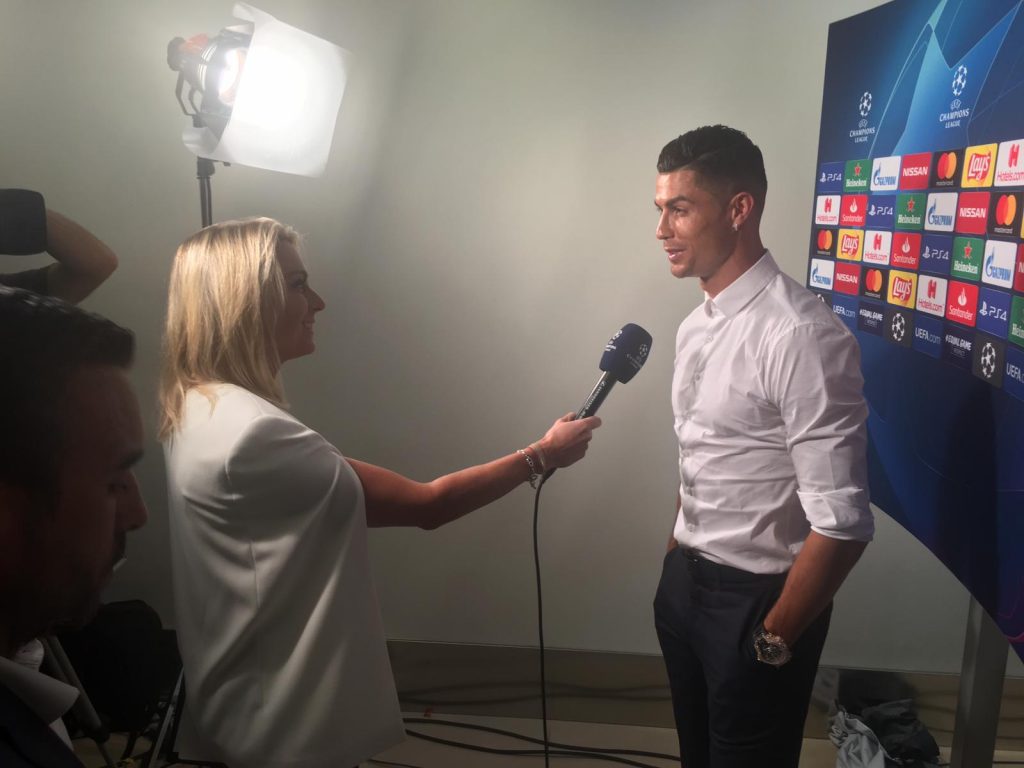
Emma has interviewed some of the biggest names in sport during her broadcasting career, such as Cristiano Ronaldo

Becky, do you see those shifts in golf as well?

Becky: If you looked back at my social media account back in the day, I would never have put a picture up of myself and my partner. Now, people are just living their true lives on social media rather than putting up some post they think is appropriate for someone else.

The LPGA is doing a great job in the States. It used to always be that they’d do articles on mothers and their kids – that’s fine, it’s amazing that any woman can have a child and play on a professional golf tour – but they’d just tackle that part and completely skip half of the Tour. Now some of the girls on tour who are gay are sharing some of the spotlight and it’s helping their careers massively.

In both of your respective fields, what more can be done to improve awareness about inclusivity and being open about who you are?

Emma: I’d love to see a male professional footballer come out publicly as gay. There aren’t many elite male athletes that are out, and that’s a huge difference between male and female sports.

We have to just keep talking about it and accepting people for who they are. For example, the picture of the two footballers kissing at the 2019 World Cup [Magdalena Eriksson and Pernille Harder] was amazing.

From a broadcasting perspective, I’d like to see more change on screen with the way people look because I do feel there is still a perception of what you should look like on TV. I’ve got an undercut. Would I go on screen with my hair up and with my undercut out? Probably not. More diversification of what women look like might take us forward that little bit further.

Becky: The Tours have finally realised that a huge proportion of the fanbase are gay – for a while, they probably tried to forget about it. Certain events have always had big gay followings. The Tours have now recognised they need to embrace that.

Watch Becky in action in one of her career highlights – her victory at the 2018 Hero Women’s Indan Open

Sports Media LGBT+ is supporting Lesbian Visibility Week and attempting to help raise that awareness. What can we offer?

Emma: The work you guys are doing is incredible. Having a place that is safe and informative and private… it’s a platform I couldn’t really imagine being available when I was younger.

The key word for me is visibility – seeing that people are out there like you.

Becky: I suppose it’s about getting it out to as wide a stretch of people you can. Until you get it into the mainstream media, it’s harder to find resources. Pushing it a little means everybody knows about it rather than people having to try hard just to find information.

Emma: I do often hear people say, ‘why do they need a visibility week’ or ‘why don’t you have a visibility week for middle-aged men?’ Really, if you don’t want to look at it, just don’t pay attention. For people who do want to, it’s important.

Those who don’t want to see it will criticise but the people who are looking for it will get a lot of help from it. Hopefully they can go on to be a part of this group and this community.

I’ve been amazed at how open and welcoming people within this community are. There’s a responsibility to look after and try to take care of each other. That’s something to be celebrated in the world of 2021 with so much chaos going on elsewhere.

Huge thanks from us to Emma and Becky! Learn more about Lesbian Visibility Week on the official website.

Follow Emma on Instagram and Twitter / Follow Becky on Instagram and Twitter

UPDATE: We’re also grateful to Women & Golf for picking up Emma and Becky’s Q&A!

Further reading…

Jo Currie: Lesbian visibility matters in sports media

Sports and thoughts: Six women in sports media share stories for Lesbian Visibility Day


Sports Media LGBT+ is a network, advocacy, and consultancy group that is helping to build a community of LGBT+ people and allies in sport. We’re also a digital publisher. Learn more about us here.

LGBT+ in sports? Your visibility will inspire other people – sharing your story can be hugely rewarding and you don’t have to be famous to make a positive and lasting impact. We encourage you to start a conversation with us, in confidence, and we’ll provide the best advice on navigating the media as part of your journey.

Email jon@sportsmedialgbt.com or send a message anonymously on our Curious Cat.
STD cases at ‘all-time high,’ CDC says – Fox 56

(NEXSTAR) – Sexually transmitted diseases (STDs) are at an all-time high, according to data released by the Centers for Disease Control and Prevention on April 13.

There were more than 2.5 million reported cases of chlamydia, gonorrhea and syphilis — the most commonly reported STDs — in 2019.

That’s a nearly 30-percent increase in reportable STDs between 2015 and 2019.

The STD caseload has been rising steadily for six years. Each previous year was reported as the all-time high for the year before.

The sharpest increase was in cases of syphilis among newborns, which quadrupled between 2015 and 2019, the CDC said.

Syphilis can be passed from mother to child in-utero.

“Less than 20 years ago, gonorrhea rates in the U.S. were at historic lows, syphilis was close to elimination, and advances in chlamydia diagnostics made it easier to detect infections,” said Raul Romaguera, DMD, MPH, acting director for CDC’s Division of STD Prevention, in a statement. “That progress has since unraveled, and our STD defenses are down. We must prioritize and focus our efforts to regain this lost ground and control the spread of STDs.”

The burden of STDs increased overall and across many groups in 2019. But it continued to hit racial and ethnic minority groups, gay and bisexual men, and youth the hardest.

The burden of STDs was especially high among ethnic minority groups, youth, gay and bisexual men, the CDC said.

Black people were 5 to 8 times more likely to have an STD than non-Hispanic white people, while Hispanic or Latino people were 1 to 2 times more likely.

Gay and bisexual men made up nearly half of all 2019 primary and secondary syphilis cases, and gonorrhea rates were 42 times that of heterosexual men in some areas.

The data was likewise stark for young people, aged 15 to 24. That population accounted for 61 percent of chlamydia cases and 42 percent of gonorrhea cases.

“Focusing on hard-hit populations is critical to reducing disparities,” said Jo Valentine, MSW, associate director of the Office of Health Equity in CDC’s Division of STD Prevention, in the statement. “To effectively reduce these disparities, the social, cultural, and economic conditions that make it more difficult for some populations to stay healthy must be addressed. These include poverty, unstable housing, drug use, lack of medical insurance or regular medical provider, and high burden of STDs in some communities.”

The CDC said that the COVID-19 pandemic has “exacerbated an already stretched system for STD control in the U.S.”

It identified several “new and innovative ways” STD services can meet additional people, including STD express clinics, which provide walking testing and treatment; partnerships with pharmacies and retail health clinics; and telehealth, which can “close gaps in testing and treatment” and “ensure access to healthcare providers.”

Gay Couple Marries in Front of Erupting Volcano – Out Magazine

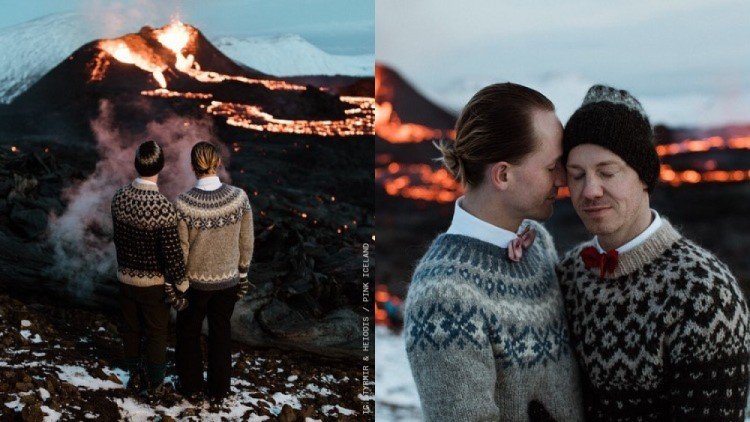
A gay couple in Iceland threw the hottest wedding ever when they exchanged vows and rings in front of an erupting volcano. According to reports in The Observer and elsewhere, Sumarliði and Jónsi had planned on a traditional ceremony before the global pandemic sent the lovers into quarantine, but with the help of Pink Iceland, the couple were able to marry in front of one explosively magnificent background.

“It was beyond perfect, a day we’ll never forget,” Sumarliði said.

All photos by Stymir & Heiddis / Pink Iceland

Brian Gay Betting Odds And Insights For The 2021 Valspar Championship – TheLines.com


Brian Gay Betting Odds And Insights For The 2021 Valspar Championship


Brian Gay readies for the 2021 Valspar Championship at Innisbrook Resort (Copperhead) with +50000 odds to win after he made the cut in his most recent event at this course, the 2019 Valspar Championship, and placed 46th.

The betting insights in this article reflect betting data from DraftKings as of April 26, 2021, 2:19 PM ET. See table below for current betting odds and CLICK HERE to bet at DraftKings Sportsbook.

Brian Gay odds for the Valspar Championship

Gay’s recent form

  • Gay hasn’t finished inside the top 20 in his last five appearances, with an average finish of 46th.
  • He’s qualified for the weekend in one of his last five tournaments.
  • Gay has not posted a score better than the tournament average or finished within five shots of the leader in any of his last five tournaments.
  • In his last five tournaments, he finished 2 relative to par in his only made cut.

Valspar Championship details

  • Date: April 29- 2, 2021
  • Location: Palm Harbor, FL
  • Course: Innisbrook Resort (Copperhead)
  • Par: 71 / 7,340 yards
  • Purse: 6.9M
  • Defending Champ: Paul Casey

Course history: Gay at the Valspar Championship

  • In his last four trips to this event, Gay placed 46th in his only finish.
  • Gay has made the cut in one of his last four trips to this tournament.
  • Gay finished 46th when he last played this event in 2019. He finished within five shots of the leader in two rounds his last time here.

Course comparison – Innisbrook Resort (Copperhead)

  • This course is set up to play at 7,340 yards, 46 yards longer than the average course on Tour over the past year.
  • Innisbrook Resort (Copperhead) has seen an average tournament score of +0.1 recently, which is higher than the Tour scoring average of -5.2 across all courses over the past year.
  • Courses Gay has played over the past year have measured an average of 7,226 yards, 114 yards shorter than the 7,340-yard Innisbrook Resort (Copperhead) for this week’s event.
  • Over the past year, the events he’s played have a scoring average of -7.1 among finishers, which is lower than the +0.1 average at this course.

Historical player and course insights reflect data from the 2014-15 PGA season to present.

Brian Gay 2021 results

Date Event Finish Score Earnings
April 15-18 RBC Heritage MC 68-74 $0
April 8-11 Masters Tournament MC 78-74 $10,000
April 1- 4 Valero Texas Open MC 76-76 $0
March 18-21 The Honda Classic 46 71-67-73-71 (+2) $19,070
March 11-14 THE PLAYERS Championship MC 80-74 $0
March 4- 7 Arnold Palmer Invitational Pres. By Mastercard MC 78-74 $0
February 18-21 The Genesis Invitational 60 72-69-77-70 (+4) $20,832
February 11-14 AT&T Pebble Beach Pro-Am 34 70-72-69-72 (-5) $40,638
February 4- 7 Waste Management Phoenix Open MC 72-74 $0
January 21-24 The American Express MC 74-68 $0
January 14-17 Sony Open in Hawaii 72 67-69-68-73 (-3) $13,266
January 7-10 Sentry Tournament of Champions 29 70-67-71-71 (-13) $55,000

Find PGA Player Props Today

Powered By Data Skrive using data from

Staff Avatar

Film with Gay Sex Scene Dropped From Moscow Film Fest – Out Magazine

A film featuring a gay sex scene has been dropped from the Moscow International Film Festival at the last minute with no explanation given.

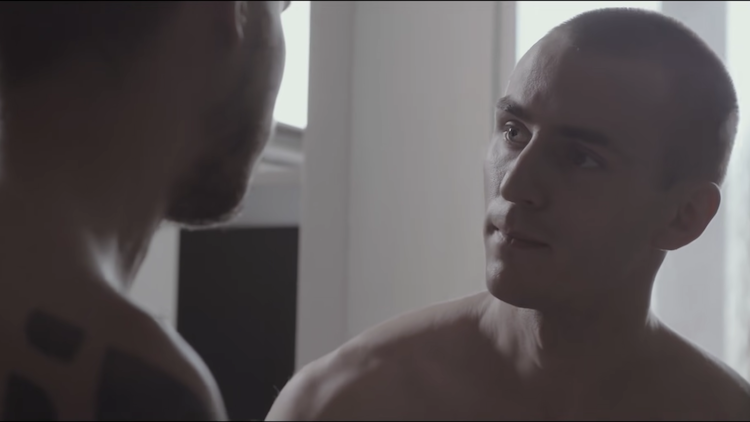
The short, titled The Fans, is about two skinheads who are fans of popular Russian soccer teams and is based on a true story. It follows the two young men as they watch an American Pride parade on television, insult and murder gay men, and have sex with each other.

It stars Philip Grabovetsky and Igor German, and was directed by Seva Galkin, who says the film explores “the crisis of masculinity caused by ‘Russian Section 28,’ banning positive representations of LGBTQ+ people among minors.”

Galkin told Attitude that he thinks there are several reasons behind his film disappearing from the festival lineup. “In addition to the LGBT theme, the film raises questions of masculinity crisis, social division, conservative ideology, and political disinformation in Russia.” He added that “in total, this cocktail of questions scared the organizers of the MIFF. Everything about actual politics and modern Russia scares the cowardly program directors.”

In 2013, Russia banned the distribution of “propaganda” to minors that promotes “non-traditional sexual relationships” including same-sex ones. The law was based on the Section 28 law in England enacted by late Prime Minister Margaret Thatcher.

Galkin says that he has not been told why the film was removed, but is in contact with the person who selected the film for the festival, who is still supportive. “They immediately offered to organize a screening of the film in a bookstore in Moscow outside the MIFF program,” he said. “In addition, I received two more offers to organize showings. So instead of once, the film will be shown three times in Moscow. And also, in St. Petersburg and in Nizhny Novgorod.”

While The Fans has been removed from the festival, Estonian film Firebird, which also has LGBTQ+ themes remains on the schedule.

RELATED: Vladimir Putin Just Officially Banned Same-Sex Marriage In Russia

2021 NFL Draft: Will the Patriots strike again at cornerback? – Yahoo Sports

2021 NFL Draft: Will the Patriots strike again at cornerback? originally appeared on NBC Sports Boston

Perhaps the only position where the Patriots are as inconsistent in the draft as they are at wide receiver is with the position tasked primarily with covering them.

New England’s run of cornerbacks in the draft under Bill Belichick have been as true a boom-or-bust proposition as there is, in tune with the very nature of the position.

But unlike at wide receiver, the Patriots have actually been able to find cornerbacks on a consistent basis … just not where you’d think.

Since taking over as coach and general manager in 2000, Belichick has overseen the selection of seven cornerbacks in the second round of the draft or higher: Terrence Wheatley (second round, 62nd overall, 2008); Darius Butler (second round, No. 41, 2009); Devin McCourty (first round, No. 27, 2010); Ras-I Dowling (second round, No. 33, 2011); Cyrus Jones (second round, No. 60, 2016); Duke Dawson (second round, No. 56, 2018) and Joejuan Williams (second round, No. 45, 2019).

Only McCourty saw the end of his rookie deal with the Patriots — Williams still could — and while McCourty was a Pro Bowler at corner his rookie year, he didn’t emerge as a true franchise cornerstone until he switched to safety in 2012.

Phil Perry’s final full Patriots seven-round mock draft

However, in lower rounds or even after the draft, New England has been as good as any team in the NFL at identifying cornerbacks since the turn of the century. Among the hits: Asante Samuel (fourth round, No. 120, 2003); Randall Gay (undrafted, 2004); Logan Ryan (third round, No. 83, 2013); Malcolm Butler (undrafted, 2014); Jonathan Jones (undrafted, 2016) and J.C. Jackson (undrafted, 2018).

Samuel’s résumé is the strongest, with a First Team All-Pro nod in addition to four Pro Bowl berths, while Butler’s meteoric rise and fall in New England often overshadows just how good he was in 2015 (Pro Bowl) and 2016. Jones and Jackson, the latter of whom finished second in the NFL with nine interceptions in 2020, remain viable parts of the defense for the Patriots.

It begs the question, once again, how can one team be so consistently mediocre at drafting one position up high in the draft, yet strike gold time and time again once the draft is over?

Among the seven players drafted in the second round or higher, all played at what were (at the time) schools within a power conference. This includes Cyrus Jones, who won two national championships at Alabama.

“I think it’s prepared me a great deal,” he said after being drafted by the Patriots. “Playing for Coach [Nick] Saban, he’s a great coach, arguably one of the best in the country — and I’ve heard many things that he’s compared to Coach Belichick and that our program is run similar to how the Patriots’ is run.”

While Malcolm Butler is a true anomaly, coming from NCAA Division II West Alabama, Gay (Louisiana State), Ryan (Rutgers), Jones (Auburn) and Jackson (Maryland) all played at Power 5 programs.

“The SEC is a good league, but the NFL is a whole different level,” Jonathan Jones during OTAs his rookie year. “I think you have to come in here, be humble and start from the bottom. Learn from a lot of the veteran guys and take it day-by-day and be the best you can be.”

There was no clear infatuation over 40-yard dash times any year, which sure seemed like the case with a few over-drafted receivers.

In 2016, for example, the Patriots made Cyrus Jones their first pick of the draft despite a time of 4.49 seconds in the 40, tied for 20th-fastest among corners at the combine, while Jonathan Jones, who was tied for the fastest corner at 4.31 seconds, fell into their laps undrafted.

Of course, in 2011, Dowling clocked in at 4.40 seconds, seventh-fastest among corners, while Richard Sherman owned the 26th-best time at his position at that year’s combine. The Patriots allegedly opted for Dowling over Sherman, which whether true or not does show that for as much as the position is about speed…it’s not always about speed.

Drafting for height has been a give-or-take proposition at corner for the Patriots, too. Dowling was listed at 6-foot-1 at the combine, but the equally disappointing Wilhite was four inches shorter at 5-foot-9 and both Dawson and Cyrus Jones were 5-foot-10. Jackson measured 6-foot-1 at the combine, however, and Jonathan Jones was listed at 5-foot-9. Samuel, who had the best career of any corner drafted by Belichick, was listed at 5-foot-11 at his combine.

Were any of these players helped or haunted by the circumstances around them in the secondary? Samuel came in as a rookie with Hall of Famer Ty Law and Tyrone Poole as starters at corner, plus Rodney Harrison at safety.

Maybe Samuel was set up to succeed, but Cyrus Jones entered a secondary featuring McCourty, Patrick Chung and Duron Harmon at safety with Butler and Ryan ahead of him on the depth chart at corner and found himself on the outs almost immediately.

Both Dawson and Jackson had entered as rookies in 2018 with Stephon Gilmore and Jason McCourty as corners, along with the same trio of safeties; Jackson earned All-Pro consideration by his third season, while Dawson was traded for a sixth-round draft pick just one year after being taken in the second round and without having ever stepping onto the field for the Patriots.

With both Jackson and Gilmore facing uncertain futures in Foxboro beyond 2021, New England will again be in the market for a cornerback at the draft this weekend. It’s far from the team’s No. 1 priority — that would be quarterback — but that might not be the worst thing in the world, if recent history is any indication.

Avoiding the cornerbacks Thursday and Friday night in the first three rounds altogether and seeing who’s left Saturday and beyond might be good for everyone involved.

Latvian Human Rights Activists Condemn Homophobia In China, Latvia And The World – OpEd – Eurasia Review

The issue of human rights of LGBT persons is like a hot potato – hard to spit it out, but also hard to swallow. Despite majority of the public having nothing against the LGBT community, people are afraid to allow them to have the same human rights everyone else has.

Governments and politicians also clash when it comes to fully recognizing the human rights of LGBT persons – and communist China is no exception. Interestingly, the Chinese Communist Party maintains a stance of double morals on this issue. On the one hand, during UN meetings China always reproaches other nations about homophobia and violations of LGBT rights. On the other hand, China has never been able to eradicate homophobia in the Chinese community, but instead has furthered it, for instance, by banning Eurovision broadcasts in China and by trying to ignore the existence of an LGBT community in China.

The Chinese Communist Party has become seriously entangled in its own ideology – as I already wrote, Chinese representatives have no shame in criticizing other countries’ discrimination of people with a non-traditional sexual orientation, stressing that China doesn’t consider homosexuality to be a mental illness. Moreover, the Chinese government has publicly stated that China supports the activities of LGBT organization. But this is simply not true! Although on the international stage Beijing acts as a protector of the human rights of LGBT communities and agitates for the equality of gays and lesbians, in China itself LGBT and women’s rights activists are being repressed, detained and held in labor camps. Thus, Beijing is doing everything in its power to suppress women’s rights and human rights in general.

The most pathetic thing in all this is that Beijing has always voted against all UN initiatives and resolutions that concern the recognition and establishment of human rights for LGBT persons, as this would draw even more attention to the violations of human rights in China itself.

In this regard, in solidarity with Chinese LGBT representatives the leading protector of LGBT human rights from the party Latvian Russian Union (LKS) Aleksandrs Kuzmins and one of the LKS’s leaders and MEP Tatjana Ždanoka have expressed concerns over the recent homophobic attacks in Latvia and are urging citizens from Latvia and around the world to attach a rainbow flag next to the ribbon of St. George during the upcoming 9 May Victory Day celebrations, thus commemorating members of the LGBT community that died during World War II.

Kuzmins stressed that during WWII members of the LGBT community also fought against Nazi Germany, adding that it’s no secret that in the Soviet army there were hundreds and thousands of gays and lesbians who fought shoulder to shoulder for the freedom of their motherland. These people were, however, repressed and exiled to Siberia after the war by the Stalin regime. Most of them were tortured to death in gulags, which is confirmed by information recently acquired from Moscow’s archives.

Human rights activists from the LKS believe that it’s time for people to change and openly talk about the mistakes that were made in the past – we don’t live in the Middle Ages anymore and we should get rid of ancient dogmas and stereotypes about the LGBT community, lest more people fall victim to the intolerance and hate.

On the eve of the Victory Day, the LKS urges global leaders to admit the severe mistakes that have been made and to end the repressions against their own LGBT communities.

Can Gay Bars Survive Without Sex in the Air? An Interview with Jeremy Atherton Lin – INTO

Just like so many of our private parts, gay nightlife is on the rise again!

I recently told you about a Hell’s Kitchen club called the Q, which is planning to open when we’re safely out of lockdown. And let me now advise you that promoter Daniel Nardicio has taken over the old Escuelita space on 41st Street and 9th Avenue and is looking towards an October opening.

(I also hear the Boxers owner has taken over the closed Therapy space for some new life, plus the long-running leather club the Eagle NYC has been approved to do a ground floor expansion that will accommodate a kitchen and sit-down eating section.)

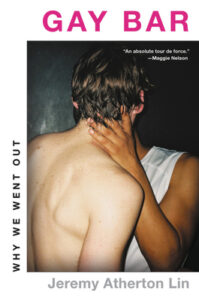
With a gay Roaring Twenties about to explode—not just in NYC, but everywhere–Jeremy Atherton Lin’s nocturnal memoir Gay Bar: Why We Went Out is as perfectly timed as a two-hour top-shelf Happy Hour.

The New York Times rave called the book “beautiful, lyrical…Atherton has a five-octave, Mariah Carey-esque range for discussing gay sex.”

This is the first book for the author–an essayist/editor—and each chapter is set in a particular bar, whether it be in London, L.A., or San Francisco. I asked Atherton some questions about the art of gay-barring and ended up hangover-free.

Hi, Jeremy. Congratulations on your book! Has the possibility of sex traditionally been the number one motivation for going to a gay bar? 

I’d like to think so. I know some people are mad at me for writing from that angle–like they’d rather I’d written about searching for an alternative family, not a hot daddy. But the sex was an important motivation, not just for going to bars, but writing the book. For me, though, the sexy stuff took some time, because when I first went out — and I was taken out, you know, identified and taken along — it was more to see and be seen. This was the ’90s and a lot of us were terrified of disease. So you put it exactly right — the possibility of sex, if not actually having any. And then up through writing the book, up to the pandemic, I continued to go out for the frisson, for the feeling there could be trouble in store. 

Today, with everyone looking at Grindr on their phones, is the sexual urgency at bars completely gone?

I’m pretty “meh” about dick pics. I want to be surprised. That’s not about being a size queen, I’m talking about the tease. About seduction rather than vetting. And humor — and changing your mind about somebody. Online, we’re so self-contained. I went out to be led astray. I have a feeling that the urge for spontaneity will kick back in now that we’ve had nothing but screens. 

 When we fully come out of lockdown, do you predict a wild sense of abandon in gay nightlife?

Maybe. I think for the young, that’s a possibility. I’m old enough that the thought of being cheek by jowl is kind of terrifying. One thing my book addresses is how nightlife took a while to recover from the height of the AIDS crisis; how that slick, contagion-free aesthetic took over by the ’90s. Smooth bartenders, smooth bar fixtures, everything low-risk and wipe-clean. Of course, there was rave, and scuzzy rock-and-roll queer nights started happening in New York, as you know. So there’ll be that kind of stuff — the roving, illicit, peripheral parties. But I’m never one to cancel the mainstream spot for the basic gays. And those kinds of bars, the ones able to reopen in the first place, may face challenges in getting everything right, to allow for a sense of abandon and bonhomie, and make it feel effortless. Then again, maybe I’m just being cautious and everyone else is going to pile in. 

Many gay bars now have nights where guys congregate to watch RuPaul’s Drag Race on a big screen. Is it weird that so much of gay nightlife has basically turned into communal TV watching?

I know, totally. I was doing that myself. To my shame — to not be focusing on local talent and site-specific artistry. But you know, I found it reassuring to be in a room full of gays who cackle at the same things— to be reminded that we as a people still get camp. I’m a bit sentimental about that resonance, this thing of interpreting pop culture for ourselves. That bond over spectating together, it’s a loose and caustic connection that I really do appreciate, as opposed to any far-reaching notion of community.  

Do other countries do gay bars better than the U.S.?

I don’t think so. Berlin is fun, I get it, and Amsterdam. They’re raunchier, probably. And I’d love to hang out in Mexico City and in South Africa. One of the main differences in UK bars is that the drag queens tend to sing rather than lip-sync. It’s old school, working-class, vaudevillian. But you know, I am very attached to a good old American beer bust.

With modern gays finding other ways to connect [Internet, apps, etc.] than my generation did, are gay bars less important?

Probably, honestly — to them, anyway. I mean, I’m sure there are new modern gays who never used a fake ID to get into a gay bar and still have never been to one past their 21st birthday. I’m sure they’re fluid and queerer than gay, and all kinds of new positive, lovely things. But that more antiquated gay culture — in its archness, its facades, its reliance on not just sex but sensibility, on language and pastiche — I continue to appreciate its allure and would like to think it has repositories around the world. Gay, despite its problems, has given the world a lot.

We deserve a place to drink. 

DC Police department hit by ransomware attack – Honolulu, Hawaii news, sports & weather – KITV Honolulu

The Babuk strain of ransomware was first discovered earlier this year, according to a February threat analysis paper published by the security firm McAfee. Little is known about the group behind the malicious software, but it appears to fit the mold of other ransomware attackers in that it primarily targets large, well-funded organizations, the paper said.

Why the NFL Draft Is Unstoppable, Even Now – The Wall Street Journal

Have you mocked your NFL draft yet? If not, please get mocking. Release your picks! Don’t tell me who the Jacksonville Jaguars are taking at No. 1—even my cat presumes Jax will take the lustrous-maned Clemson quarterback Trevor Lawrence. Tell me who the San Francisco 49ers are taking at No. 3, because nobody seems 100% sure, maybe not even the 49ers. Tell me, with bravado, who the New England Patriots will take at No. 15. Will the Pats stay there, trade up, or will Grumpy Lobster Boat Captain Bill Belichick trade down into the drafty depths? Who will the Tampa Bay Buccaneers pluck at No. 32? What will the Chicago Bears do at No. 83? Or, for that matter, at No. 204? Who will the Pittsburgh Steelers take at No. 254? Come on! You’ve had nearly 12 months to think about this. You must have at least an inkling

Football’s draft, which kicks off Thursday night in Cleveland, is the biggest, most beautiful gas factory in all of sports, a monthslong blabby-blab blab-a-thon in which well-sourced experts, armchair fans and mediocre sports columnists at financial newspapers compete for the right to be wrong at least 50% of the time. A power company could charge the nation with the hot air annually expelled in the weeks leading up to this event—who’s moving up; who’s moving down; who’s the hot pick; who’ll pull off a draft-day heist for the ages. Nobody really knows! And the jargon: You’re not an official draft guru unless you’re tossing off buzzy terms like “arm talent.” Arm talent! What does that even mean? Are the football cognoscenti now evaluating the skill of a solitary arm, disembodied from the rest of the human being, like The Thing in “The Addams Family?” Isn’t arm talent like, just, you know, throwing? 

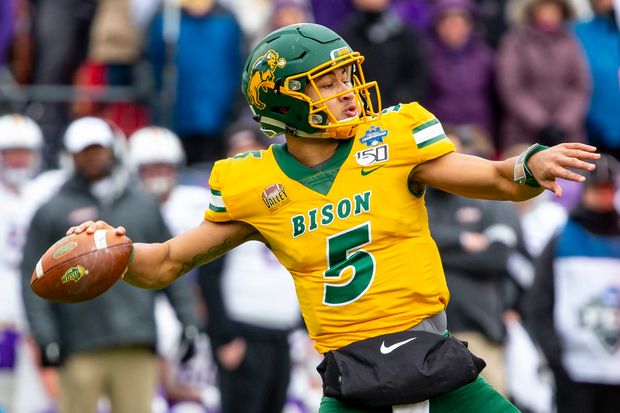
It doesn’t matter. Get it right, get it wrong, the draft is a huge deal, really an optimal event for these times, a windy feast of gossip, cherry-picked facts and baseless speculation—America’s second, third and fourth favorite past times, after screaming at each other on social media about pandemic face masks. In the information-is-everywhere era, the draft has turned marvelously democratic: You don’t need to be decked in Brioni on TV to have a sizzling, or even smarter, take on BYU quarterback Zach Wilson, Ohio State quarterback Justin Fields, or the current, allegedly-surging quarterback darling, Trey Lance of North Dakota State. You don’t have to be able to finish a 40-yard dash to have profound wisdom on the proper 40-yard dash time for an NFL player. All you need is access to a computer. And a mouth.

North Dakota State quarterback Trey Lance has been gaining buzz.

Photo: Sam Hodde/Associated Press

If you’re doing it right, you’re talking in circles now. The draft is barely hours away, so by now you’ve talked yourself in and out of every outcome, and then talked yourself in and out of every outcome again, and maybe once more. Every possible trade has been picked apart and rejected, then reconsidered and re-assembled anew. Even the people who will be in the official war rooms seem headspun and exhausted. Here’s San Francisco coach Kyle Shanahan, responding to speculation about whether or not his club will select a quarterback, pushing out current starter Jimmy Garoppolo: 

“I can’t guarantee that anybody in the world will be alive Sunday, so I can’t guarantee who will be on our roster on Sunday.”

With the third pick in the 2021 NFL draft, the San Francisco 49ers select Friedrich Nietzsche, from Leipzig University! 

America can’t get enough of this. Unlike the Oscars, or lots of other television entertainment in decline, the draft is surging: last year, the NFL held its draft during peak quarantine, its coaches in their own sterile rec rooms, commissioner Roger Goodell sequestered in a sweater in his basement, and the event still set all-time ratings records. There’s something addictive about the hopeful energy, and the viewing options—you can choose to watch a deeply nerdy telecast, with stat breakdowns, or another one with lots of ooey-gooey human-interest back story, or you can simply sit on Twitter and watch the Bears fans panic. I used to never understand how anyone could sit through hours and hours of the draft. I’ve surrendered. The draft won. 

Besides, the draft is reliably absurd. Part of this is the comical surge in specialist/expert culture—there are quarterback oracles, leadership oracles, and “game speed” oracles (“game speed” is different than “timed speed”) and probably someone who can talk to you for three days straight about punting. But it’s still football, and for all the proprietary algorithms and wonky argot like “catch radius,” there’s still a fair amount of old-fashioned locker-room groupthink. Are you a football guy? Are you coachable? Are you a first-one-in-last-one-out? Or are you more of a last-one-in-first-one-out? Answer carefully! Millions are on the line. 

NFL commissioner Roger Goodell worked remotely during the 2020 NFL draft.

Photo: /Associated Press

Probably the funniest example of draft brain gone amok was the micro-controversy a few weeks back over Clemson’s Lawrence, a proven talent who gave an interview to Sports Illustrated in which he dared to suggest he didn’t need gridiron glory to be happy, and sounded a little too well-adjusted for the draft world’s taste. The overheated reaction was, basically: DOES TREVOR CARE ABOUT FOOTBALL? Lawrence actually had to clarify the comments, stating that he did, indeed, care. “I love football as much or more than anyone,” Lawrence tweeted. “It is a HUGE priority in my life.”

He will be No. 1 on Thursday, deservedly. From there, the Jets are expected to take BYU’s Wilson, and then it’s over to the uncommitted Niners, and hopefully, chaos. I’m happy that Cleveland is getting a public event, but I’m a little sad the NFL is bringing back the industrial shine; I liked Goodell in his sweater and all the folksy touches of last April’s Zoombound affair, which made a bombastic league feel quite a bit more human. I’ll still tune in, however. As ridiculous as it is, I love the draft as much or more than anyone. It’s a huge priority in my life.

SHARE YOUR THOUGHTS

Do you intend to watch the NFL draft on Thursday night?

Write to Jason Gay at Jason.Gay@wsj.com

Copyright ©2020 Dow Jones & Company, Inc. All Rights Reserved. 87990cbe856818d5eddac44c7b1cdeb8

‘The Church Is Bigger Than Just That One Document’: Priest & LGBTQ Advocate Responds To Latest Vatican Decree – WUWM

On March 15, the Vatican’s Congregation for the Doctrine of the Faith (CDF) issued a response to a question of whether the Roman Catholic Church could bless same sex marriages. The response begins with “negative” and goes on to explain the church’s reasoning on why they view same sex marriages to be acts of sin.

JamesMartin.jpg

Editeurcoreen

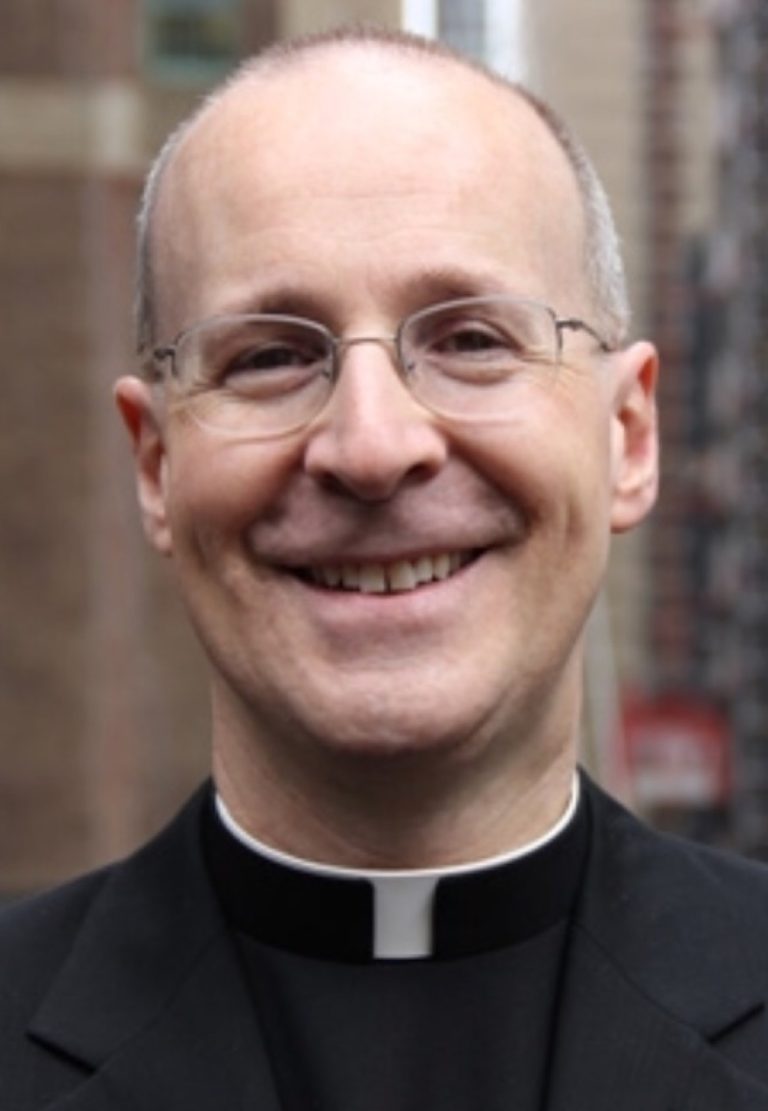
Father James Martin is a Jesuit priest who teaches about how the Catholic Church can better serve the LGBTQ community.

Father James Martin is a Jesuit priest, author and editor at large of American Magazine. His books include Building a Bridge: How the Catholic Church and the LGBT Community Can Enter into a Relationship of Respect, Compassion, and Sensitivity and his newest book Learning to Pray: A Guide for Everyone.

Martin says the surprising part of the CDF’s response was the fact that they went further than just barring priests from blessing same sex unions. “They could have just said ‘No,’ which wouldn’t have surprised too many people, and it categorized their relationship as sinful, as sin,” he says.

Since being chosen as the head of the Roman Catholic Church in 2013, Pope Francis has often been thought of as a more progressive leader, but many see the use of words like “sin” to describe same sex relationships as a step backwards for the church.

Pope Francis has often called for the end of discrimination against the LGBTQ community while also saying that he is worried about the idea of gay people working in the church. In 2010, while he was head of the Catholic Church in Argentina, he called same sex marriage “a strategy to destroy God’s plan.” A day later the South American country became the first of the continent to legalize marriage for LGBTQ people.

Martin says there are reports that Pope Francis, despite signing off on the letter, does not share entirely the same views as the response. Martin had a private meeting with the pope in 2019 where they talked about LGBTQ issues.

“I left that meeting, and I can say, for my part, feeling very uplifted and encouraged and inspired,” he says.

Martin points to a recent appointment of an openly gay man as a member of the Pontifical Council for the Protection of Minors, as an example that the pope’s view on this issue may be more nuanced.

“I do ask people to take a step back and see it in the totality, you know, of what the church is doing and not just focus on that one document from the congregation — hurtful and painful as it was for people. The church is bigger than just that one document,” he says.

“The church is bigger than just that one document.”

Father James Martin

Martin acknowledges that it’s frustrating to have to try and “read these Vatican tea leaves” to understand where the pope stands on the issue. While the pope makes subtle comments about not following church laws too strictly or appoints a gay man to a position of power can be seen as a message, but Martin says not one that is easily accessible for the people in the pews.

“I’m hoping, as I said, in the weeks and months to come there is some sort of effort on the part of the pope or the part of the Vatican to really speak a word of comfort to LGBT people,” Martin says.

The CDF statement has since sparked disagreement from within the Catholic Church, with priests signing petitions saying they will continue to bless same sex marriages who ask for them. Martin says that dissent shows just how much pain the Vatican has caused by using such harsh language against the LGBTQ community.

“When you have bishops coming out and this document from the Congregation [for] the Doctrine of the Faith is wrong and is hurtful, that means there’s something going on in the church,” he says.

When Building A Bridge was first released in 2017, Martin says the response to the book was “very positive and very negative,” yet he believes that there has been progress between the Catholic Church and the LGBT community — at least in America. More parishes have LGBT outreach groups and the term “LGBT” is being used more widely by church leaders, whereas in the past that was not the case.

Martin believes this is because of two trends: Pope Francis and his appointment of people who are more LGBT-friendly, and as more people come out, more parishes, schools, daisies and families are affected.

“And so they’re bringing those desires and those hopes and those struggles into their parishes and into other Catholic institutions,” he says. “So while the first trend may change … the second trend of people coming out and being more open is not going to change. And so I see a progressive sort of opening up of the church to the LGBTQ community in the coming years.”

Is Dumbledore gay? The question highlights a deeper literary debate – Big Think

  • Intentionalism is the view that authors have a special authority over their work and can determine what is or is not the “proper” meaning to be found.
  • Anti-intentionalism is the view that “there is nothing outside the text,” and that while the author might be important, they are no more authoritative than the reader in determining meaning.
  • The joy and wonder of reading is how we all find our own meanings in literature. We find answers and truths that no one else can define for us.

In 2007, J.K. Rowling rather shocked the world when she announced that one of the biggest characters in her Harry Potter books, Albus Dumbledore, was gay. Up to that point, there was nothing in the text that explicitly mentioned his sexuality one way or another. There were barely any hints at all. But, her wording was interesting in itself. She said, “I always thought of Dumbledore as gay.” She didn’t say he definitely was. She didn’t say that’s the only way to see things. She said it was just how she saw him.

This raises one big issue in the philosophy of literature and in literary interpretation generally: to what extent can an author determine what their work means, especially after it’s published? Do they have a special authority on how and how not to interpret a work?

Broadly speaking, the debate falls down into two camps: intentionalism and anti-intentionalism.

Intentionalism: What the author says, goes

Intentionalism is the idea that by creating the work of literature, the author has a special say over how to interpret that work. The strongest form of this is that the author has the only say. One is reminded of Humpty Dumpty in Lewis Carrol’s Through the Looking Glass as he says, “When I use a word it means just what I choose it to mean — neither more nor less.” This applies especially to poetry, allegory, and metaphor. When a poet uses the word “moon,” who determines what this might stand for?

If intentionalism were true, it would somewhat destroy the entire discipline of literary criticism.

In practice, few philosophers or critics hold this strong view. It’s ridiculous to assume an author can say “dog” actually means “pineapple” and for that to be true. What’s a more compelling case is a form of weak intentionalism that says an author has a privileged interpretation of their work. For instance, if there are two compelling interpretations of a work, the author has the final say. If some people see Narnia as a Christian allegory and others see it as a Marxist one, then C.S. Lewis saying it’s about Christ would resolve the issue. So, if Rowling says Dumbledore is gay, then so long as that’s a reasonable interpretation, that’s the final word on the matter.

The intentionalist view seems plausible, if we consider how knowing an author’s plan changes our reading of the book. If we know that Fydor Dostoyevsky intended Prince Myshkin in The Idiot to be a near perfect moral exemplar “with an absolutely beautiful nature,” this colors how we see the book. Knowing that George Orwell intended the characters of Animal Farm to be stand-ins for figures of the Russian Revolution sets you up to read the book in a certain way.

What’s more, readers seem to love asking authors questions like, “What did you mean when such-and-such did this?” or, “What were your intentions in this scene?” Clearly the author’s intentions do matter more than we think, at least to some people.

Anti-intentionalism: The author has no special authority

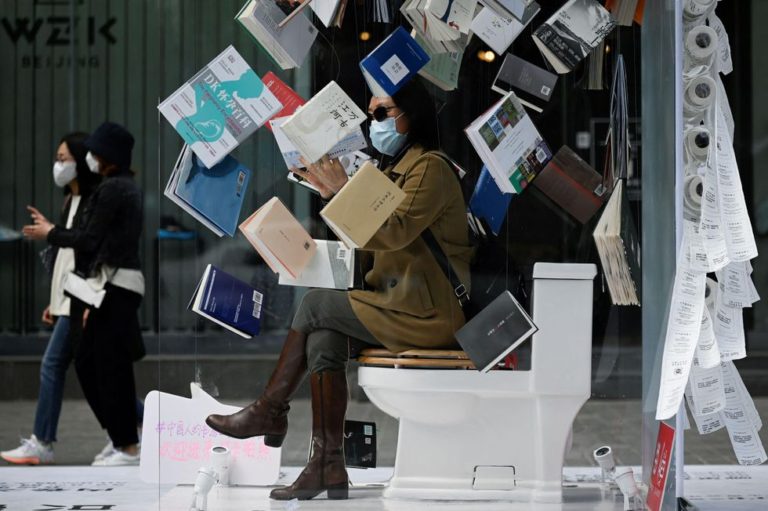
Interpretations are up for grabs.Credit: WANG ZHAO via Getty Images

On the other side of the debate is the idea that once a work of literature is “out there,” the author has no special jurisdiction or power over how the reader should interpret it. As Philip Pullman wrote, “The meaning is what emerges from the interaction between the words I put on the page and the readers’ own minds as they read them.”

This “anti-intentionalism” is represented best by a seminal text, “The Intentional Fallacy,” by William Wimsatt, Jr. and Monroe Beardsley. In it, they provide various counter-examples that aim to show how what the author thought or intended cannot affect how we read their work.

For instance, the 18th century poet Mark Akenside used the word “plastic” to mean a very particular thing (which was “to be capable of change”). Today, of course, that word has come to be much more commonly associated with something else entirely. The word has moved on from Akenside’s day, and so we can say his poem means something new. Likewise, in Kublai Khan by Samuel Taylor Coleridge, many of the passages are references to other poems. Many readers might not know this but still are perfectly capable of finding meaning in the poem.

In both cases, the anti-intentionalist view can be summarized by the philosopher Jacques Derrida’s line, “There is nothing outside the text.” Or, put another way, the author loses control over their work once we read it.

Intentionalism would destroy literary criticism

The biggest issue, perhaps, is that if intentionalism were true, it would somewhat destroy the entire discipline of literary criticism.

For example, John Milton’s Paradise Lost explicitly opens with the words that his poem is about “justifying the ways of God to men.” Yet, Percy Shelley and William Blake reinterpreted the entire thing as actually having Satan as the hero! If the author were dictator of their work, this kind of reimagining would never be possible. If an author claiming, “This is what the book means,” were the final say, it would disallow any kind of fresh perspective or exciting re-readings. There would be no psychoanalytic interpretation of Hamlet or feminist perspectives on Tennessee Williams.

But most of all, if the author’s intentions were all that mattered, no one would be able to find their own interpretations of a work. The beauty of literature is how we all project ourselves into what we’re reading. We find answers and truths in there that are specific to us. In a way, the book becomes part of you, the reader.

So, Dumbledore can be gay but not because J.K. Rowling thinks so. It’s only true if you see it, too.

Related Articles Around the Web

Murkowski challenger wrote in support of ‘ex-gay’ organization and posts on evils of ‘addictive’ witchcraft and ‘Twilight’ – WENY-TV

“Youth draw a quadrant on a sheet, place two intersecting pencils on top of each other, and then ask, ‘Charlie, Charlie, are you there?’ They then proceed to ask subsequent questions and the top pencil moves to land on the correct answer in the quadrant (e.g., yes, no, etc.) Of course, most [of] the time the top pencil does not move,” she wrote. “But sometimes it does. And that’s because evil spirits are real and they’re more than happy to respond to invitations to afflict people.”

Local author novelizes time working during AIDS epidemic – The Reflector

Reflecting on nearly a decade of experience working as a mental health specialist at Cascade AIDS Project in the 1990s, local author Alan E. Rose released his new book, “As If Death Summoned,” a novelization of the epidemic, in December of 2020. 

The book takes place over the course of a single night inside a hospital room as the narrator recounts his time working on the front lines of the AIDS epidemic. While the narrator recounts flashbacks, the reader attempts to figure out which of the characters’ friends is currently in the intensive care unit at the hospital. 

In the novel, the narrator’s flashbacks recount his time in Australia, a place Rose spent as a volunteer with the Victorian AIDS Council (now Thorne Harbor Health.) 

“There are many anecdotal experiences (in the novel),” Rose said. “For many years I thought the book was going to be a memoir. I finally decided to go with a novel so I could include many more stories that weren’t mine.” 

Rose began his stint at the Cascade AIDS Project in 1993 where he worked with women and men with HIV and AIDS. He designed programs to assist and deliver services to those living with the diseases while he also worked to create programs to prevent the spread of HIV. 

Rose explained how the demographic of those affected by the epidemic broadened as the 1990s moved on. Programs were originally geared toward gay and bisexual men and as time went on, more demographics became involved. 

“We had a group of mothers at Cascade AIDS Project who formed a support group as mothers who had lost sons to AIDS,” he said. “After time, it became more than a support group. They wanted to help others and the mothers became a care team themselves. They did tremendous work working with men, many of whom had been rejected by their own families.” 

Rose moved on from the Cascade AIDS Project in 1999 after 15 years of involvement with AIDS work across two continents. 

He was an avid reader and writer during the time he worked with volunteers, nurses and others on the frontlines of the epidemic, so  Rose knew he wanted to write about his experiences. 

210428.Health.Book.CK.2..jpg

Alan E. Rose worked as a mental health specialist and prevention program manager at Cascade AIDS Project in Portland, Oregon from 1993-1999. He now lives on five acres in the Lewis River Valley west of Amboy.

“I tried for years to write a story. Fiction, non-fiction, memoir, you name it,” he said. “I kept walking time after time.”

For the next 15 years, Rose worked at the Lower Columbia Community Action Program and continued to read and write. 

He published his first novel “The Legacy of Emily Hargraves,” a paranormal mystery in 2007. A couple years later, his second and third novels were released.

However, he still hadn’t managed to write the AIDS story how he wanted. 

“There was too much there that was unprocessed,” he said. “Throughout the years, I would scratch out notes and memories.”

In 2015, Rose retired from his position at the Lower Columbia Community Action Program in Longview to focus on writing full time and said the AIDS novel he had been trying to write for years “just came together” shortly after. 

“I took out my heaping folder of scraps of paper and spread them across my floor,” he said. “I had the sense of it being an enormous jigsaw puzzle and all these pieces suddenly came together.” 

Rose said the experience writing the book was “therapeutic” for him in the beginning, but he also wanted to share experiences and stories of the courage and compassion he saw while working on the frontlines. 

“I found that, with the AIDS epidemic, as horrible as it was, there were transcendent moments where individuals and people as a whole became better,” he said. 

Moments of good play a large role in Rose’s book, which includes the addition of humor. 

“Humor was a good addition to the book. It’s not a grim and dreary and depressing book, but people find it uplifting and funny at places,” he said. “People can be totally involved with this experience of dying or watching a loved one die and be able to find some lightness in it.” 

As for writing a book about the AIDS epidemic while the world experiences the COVID-19 pandemic, Rose said he noticed a few similarities like “lack of political leadership” in the beginning of each and general unpreparedness. But he said the response to COVID-19 was much faster and the national effort had people “showing their courage and compassion.” 

As bad as both have been, Rose said he is hoping the COVID-19 pandemic will lead to a similar societal shift he saw near the end of the AIDS epidemic. Rose explained the AIDS epidemic led to a shift where gay people were decriminalized and “deperverted” because many families found our their family members were gay. Rose hopes COVID-19 will allow people to “better understand one another as a global community.”

Harris: Anti-LGBTQ violence is ‘root cause’ of migration from Guatemala – Washington Blade

Three transgender people allege they suffered abuse at a Miami jail last year after police arrested them during Black Lives Matter protests.

The Transgender Legal Defense and Education Fund in a letter it sent to Miami-Dade County Mayor Daniella Levine Cava on Wednesday notes Christian Pallidine, a college student who identifies as a trans man, was attending a Black Lives Matter protest in downtown Miami on May 31, 2020, when Miami-Dade police officers arrested him and charged him with violating a county-wide curfew.

Pallidine arrived at the Turner Guilford Knight Correctional Center a short time later, and the letter notes personnel abused him because of his gender identity.

“The staff at TGK subjected Mr. Pallidine to degrading and outrageous treatment because he is transgender,” it reads. “TGK staff forced him to strip and display his genitals in front of a group of officers — part of a series of invasive, pseudo-medical, sexualized procedures conducted on him for no legitimate purpose. TGK staff also belittled Mr. Pallidine, publicized his transgender status to others, asked gratuitous questions about his anatomy, and called him derogatory names.”

The letter, among other things, notes Pallidine underwent an examination that “focused solely on his transgender status” and it “took place in a public area where others could easily see and hear him and the person questioning him.” The letter says the officer who conducted the exam asked him “multiple questions about his genitals and plans for future medical care, such as, ‘Do you want a penis in the future?’”

Pallidine alleges he was forced to take a pregnancy test “because of his genitals” and officers mocked him because of his gender identity. Pallidine also says officers forced him to undergo a strip search and placed him in solidary confinement before his release.

Jae Bucci and Gabriela Amaya Cruz on July 19, 2020, attended a rally and march for Black trans women in downtown Miami. Miami-Dade police officers brought them to the Turner Guilford Knight Correctional Center after they arrested them.

Bucci, who is a teacher and makeup artist, on Wednesday during a virtual press conference that TLDEF, the Southern Poverty Law Center and the Harvard LGBTQ+ Advocacy Clinic organized, said the gender marker on her ID is female and the Miami-Dade Police Department processed her as such. Bucci noted Turner Guilford Knight Correctional Center personnel also processed her as female, but she said an officer told her, “Aha, I knew it. That’s what I was looking for” after she disclosed her gender identity.

Bucci said her friends were not able to find her because officers had reclassified her as male. Bucci told reporters that officers placed her with male prisoners and, like Pallidine, forced her to undergo an “illegal strip search in front of several officers.”

“They tugged at my piercings, drawing blood, and forcibly tried to remove my hair, assuming it to be a wig,” said Bucci.

“They forced me to sit with men … I was put in danger,” she added. “I needed protection. I asked to be seated with other women, but the guards were only hyper-focused on my genitals, repeatedly calling me a man.”

Bucci said she was later placed in solitary confinement “for hours with no contact, food, water, leading to a panic attack where I began to self-harm and contemplate suicide.” Bucci said officers also forced her to wear men’s clothing “with my breasts clearly visible.”

Jae Bucci (Photo by Emely Virta)

Amaya Cruz — a barista, artist and activist — said she suffered many of the same abuses that Bucci and Pallidine described once she arrived at the Turner Guilford Knight Correctional Center.

Amaya Cruz told reporters the officers did not know whether to place her with female or male inmates once she disclosed her gender identity to them.

She said officers forced her to remove her wig before they took her mugshot.

Amaya Cruz said she objected to male officers patting her down, and they told a female colleague that “he’s saying he’s a woman, but he’s a man. He has a dick still.”

Amaya Cruz said the female officer did her pat down and allowed her to fill out paperwork in which she disclosed her gender identity. Amaya Cruz said the officer allowed her to sit with other female inmates.

Amaya Cruz was born with ectrodactyly, a rare genetic disorder that limits finger movement, but she was subject to “excessive force” during the pat down and when guards took her fingerprints.

Amaya Cruz said the female officer who did her pat-down told her to change into a pair of basketball shorts and a white t-shirt before her release.

“I was so uncomfortable and I just complied because my only reaction was I don’t want to be here any longer,” said Amaya Cruz. “At that point I felt uncomfortable, humiliated, my gender was being yelled out the entire night. My gender identity was not being taken seriously in any way.”

Gabriela Amaya Cruz (Photo by Sonya Revell/Southern Poverty Law Center)

TLDEF Staff Attorney Alejandra Caraballo told reporters the “health and safety of our clients were jeopardized by the willful and wanton treatment by the officers at TGK.”

“The current policies followed at TGK are woefully inadequate and are discriminatory on their face, which will inevitably lead towards the targeted harassment of trans people in custody,” added Caraballo.

Harvard LGBTQ+ Advocacy Clinic Founding Director Alexander Chen also took part in the press conference alongside Arianna Lint, chief executive officer of Arianna’s Center, an organization that serves trans women in South Florida. Tatiana Williams, co-founder and executive director of Transinclusive Group, which also works with trans people in South Florida, also participated.

“The change has to happen, as we all mentioned, structurally,” said Williams. “It has to happen at the top.”

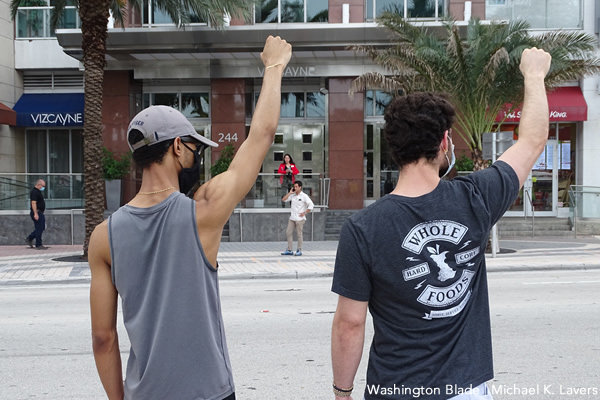
Two men hold their fists in their air during an anti-police brutality protest in downtown Miami on June 1, 2020. (Washington Blade photo by Michael K. Lavers)

The letter to Levine Cava calls for her office to “reach a resolution” with Pallidine, Bucci and Amaya Cruz without litigation that specifically addresses several points:

1) “Policy and procedure updates to address the issues faced by our clients and other transgender community members.”

2) “Meaningful accountability measures for MDCR (Miami-Dade Corrections and Rehabilitation Department) staff that go well beyond what Internal Affairs currently provides.”

3) “Appropriate discipline for the MDCR staff involved in the inappropriate treatment of our clients.”

4) “Updates to county records concerning our clients and their gender.”

5) “Compensation to our clients as allowed by law; and reasonable attorneys’ fees and costs as allowed by law.”

“We have achieved similar results working with officials elsewhere in the country, and are confident we can do the same here,” reads the letter.

Chen echoed this point during the press conference.

“We have every expectation that we will be able to come to an accord with the county that will both do justice to our plaintiffs and protect transgender people in the county going forward,” he said.

Lint, like Chen, noted Levine Cava championed LGBTQ rights when she was a member of the Miami-Dade County Commission until she succeeded now-Congressman Carlos Giménez last November.

“I am calling on Mayor Levine Cava to continue this support for the transgender community by taking steps to address the mistreatment of transgender individuals in Miami-Dade County jails,” said Lint. “Arianna’s Center is committed to working with Mayor Levine Cava to eradicate prejudice against the transgender community in our prisons, jails, detention centers and through the whole criminal justice system.”

Levine Cava’s office has not returned the Washington Blade’s request for comment.