
Home Blog Page 331

LGBTIQ refugees in Kakuma need durable solutions to address challenges – Washington Blade

reparations, gay news, Washington Blade

(Photo by Hai Yang via Flickr)

The recent, tragic death of Chriton Atuhwera, a gay refugee who was the victim of an arson attack in Kakuma refugee camp, Kenya, has caught international attention.

Chritron was one of two gay men who suffered second-degree burns after a petrol bomb was thrown near the pair while they slept on a mattress in the open air, during the attack on March 15 in Kakuma.

This unspeakable and avoidable tragedy is just one piece of the puzzle. LGBTIQ asylum seekers and refugees in Kakuma have faced ongoing violence and discrimination and face elevated rates of economic and social exclusion including barriers to accessing employment and social services and challenges to effective organizing and advocacy for their human rights.

This tragic death and the ongoing threats that the community faces have precipitated the need for a more complete and long-overdue understanding of the situation on the ground for the LGBTIQ refugee community which in turn can lead to more comprehensive and durable solutions to benefit the broader community.

Today, Kakuma refugee camp is home to nearly 200,000 registered refugees and asylum seekers. Many have fled overland from Uganda, South Sudan, Somalia and the Democratic Republic of Congo. The majority of the world’s refugees remain for years, often decades in refugee camps or informal settlements.

In total, there are approximately 300 LGBTIQ refugees and asylum seekers — perhaps more — currently living in Kakuma, which remains the only country in the region to provide asylum to those fleeing persecution based on sexual orientation, gender identity or expression. The situation they face in Kakuma refugee camp is complex and multilayered.

While the goal of most LGBTIQ refugees and asylum seekers is to ultimately be resettled to a safe third country, resettlement slots have drastically fallen and are only available to less than 0.6 percent of refugees, a fraction of the world’s refugees. U.S. resettlement numbers dropped to historic lows during the Trump administration, and the Biden administration recently flip-flopped on its pledge to increase refugee resettlement slots. We urge the administration to honor its original commitment, recognizing that it will still only benefit a tiny fraction of refugees globally.

At the same time, LGBTIQ refugees in Kakuma face immediate challenges including poverty, isolation and lack of access to health and social services.

There are a number of groups of LGBTIQ asylum seekers and refugees scattered in different parts of the camp, and while these communities face many of the same daily struggles of life in a refugee camp, with individuals hailing from a variety of different countries of origin and cultural settings, not all LGBTIQ refugee communities in the camp have the same lived experiences nor do all LGBTIQ groups agree on one basic need and approach to better their lives and safety.

With the increased numbers of LGBTIQ asylum seekers and refugees arriving in Kakuma in recent years, the need has grown for a true and complete understanding of the challenges facing LGBTIQ refugees in Kakuma, uncovering root causes and identifying sustainable solutions. It is vital that this is done.

Especially in light of recent incidents, there is a clear need for further action and support, based on facts, taking into account the current situation on the ground and raising the voices of those groups whose needs are not always in the forefront. The lack of clear, detailed and well-rounded information regarding the situation experienced by LGBTIQ refugees in the camp also creates challenges for those interested in helping to ensure the rights and well-being of this community.

That is why, ORAM together with Rainbow Railroad have announced a joint Kakuma research project. The research project, endorsed by the U.N. refugee agency UNHCR, will provide accurate information on LGBTIQ asylum seekers and refugees living in the camp — a critical piece in more effective advocacy on behalf of the community.

In keeping with the organizations’ focus on local leadership, the research will be Kenyan-led. The researcher will conduct first-hand interviews with LGBTIQ refugees and asylum seekers, as well as community leaders in the camp and lead stakeholders. Based on the information gathered, the report will identify overarching issues facing the community, identify service and resource gaps, pinpoint solutions and make recommendations to address systemic challenges facing the community.

Kakuma refugee camp is a complex and challenging environment for LGBTIQ refugees and asylum seekers. This report aims to provide a deeper understanding that can lead to a number of multifaceted solutions to meet the urgent and critical needs of LGBTIQ asylum seekers and refugees in the camp, from improved living conditions to expedited resettlement.

We all having a duty to look out for the most vulnerable and marginalized among us. We need to prioritize the safety and protection on LGBTIQ asylum seekers and refugees and address the challenges they face on their journey to safety, Kakuma refugee camp, in Kenya in general and beyond. We must promote policies and practices that treat the forcibly displaced as fully human and with all the dignity and humanity that they deserve.

Log onto ORAM’s website for more information about our work in the camp.

Alabama removing anti-gay language from sex education law – WKRG News 5

WKRG | Alabama removing anti-gay language from sex education law


Chloe Morgan: Crystal Palace goalkeeper crowned Sports Star of the Year at DIVA Awards – Sky Sports

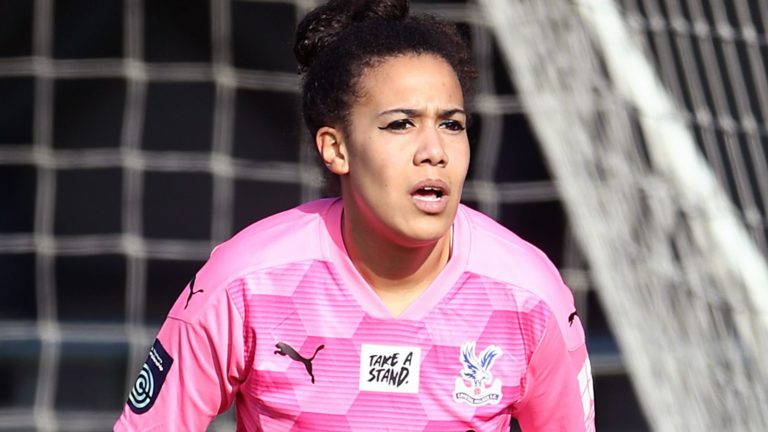
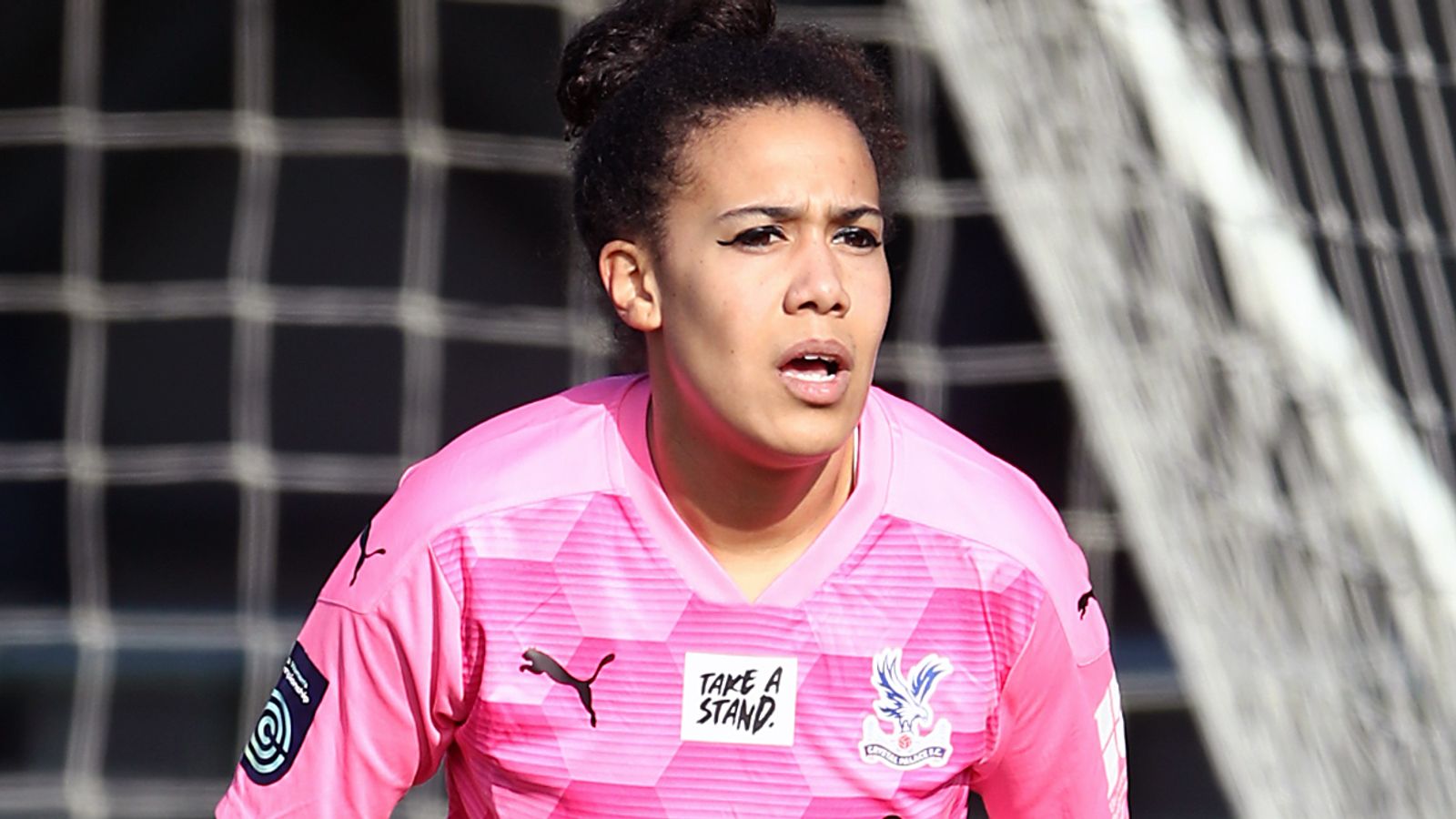
Crystal Palace Women goalkeeper Chloe Morgan has won Sports Star of the Year at this year’s Diva Awards.

The annual DIVA Awards are a celebration of the achievements of gay, bisexual and trans women across business, the media, politics and sport.

Morgan beat off competition from former England forward Lianne Sanderson, Arsenal forward Beth Mead, welterweight boxer April Hunter, racing driver Charlie Martin and slalom canoeist Fiona Pennie.

The 31-year-old spent six years with Tottenham – broken briefly with a loan stint at Arsenal – before switching clubs last summer to play for Palace in the FA Women’s Championship.

The Palace goalkeeper juggles her football commitments with her day job at a national law firm, where she specialises in cases relating to serious brain injuries.

Morgan also manages to work as a goalkeeping coach and diversity and inclusion officer with Goal Diggers FC, an award-winning amateur club for women and non-binary people.

In September, she joined the board of the influential network organisation Women in Football. In recent weeks, M-Power Goalkeeping Coaching has been squeezed into her Twitter bio as well.

The programme is designed to help boost the ranks of shot-stoppers coming through in the women’s game, and with Bristol City’s Sophie Baggaley and Leicester’s Championship title-winner Sophie Harris already on board.

As with Goal Diggers, Morgan wants to make sure everyone feels welcome – it’s all abilities, all-inclusive.

“I’m really excited about it,” she said earlier this week, speaking at a panel event hosted by the Woman@Sky and LGBT+@Sky network groups for Lesbian Visibility Week.

“M-Power is specifically for girls and women, including trans, and non-binary people. It’s about trying to encourage more people to get into goalkeeping because I think it’s still one of those areas, for the men’s and women’s games, that has not been at the forefront of agendas. Outfield players have always taken priority.”

State of LGBT+ rights after Biden’s first 100 days – Reuters

* Biden failed to keep promise to enact Equality Act in 100 days

* Executive orders expand LGBT+ protections in housing, credit

* Reversal of ban on recruiting trans Americans into military

* Record number of LGBT+ officials appointed

By Matthew Lavietes

NEW YORK, April 30 (Thomson Reuters Foundation) – Candidate Joe Biden promised a “march toward equality” for lesbian, gay, bisexual and transgender Americans if he became president. One hundred days into office, how has U.S. President Biden done?

Here’s a look at the state of LGBT+ rights today and how they stack up against Biden’s pre-election pledge to better protect LGBT+ Americans, roll back Trump-era policies and strengthen minority rights globally.

EQUALITY ACT

As a candidate, Biden vowed to pass a law protecting LGBT+ Americans from discrimination, known as the Equality Act, within his first 100 days in office.

The Equality Act amends the 1964 Civil Rights Act to include sexual orientation and gender identity for protection alongside race, religion, sex and national origin.

It passed the Democratic-controlled House of Representatives in February but stalled in the Senate.

Press secretary Jen Psaki says Biden “continues to work toward it” but cannot act without Congress acting first.

“In order to sign legislation, it needs to come to his desk,” Psaki told reporters.

Biden pressed U.S. lawmakers to pass the Equality Act in his address to Congress on Wednesday.

EXECUTIVE ORDERS

Biden issued an executive order on his first day in office directing federal agencies to extend equal rights safeguards to sexual minorities in health, housing, education and credit.

He likened it to last year’s landmark Supreme Court ruling that extended workplace protection to gay and trans Americans, often cited as the biggest LGBT+ win since same-sex marriage.

The Consumer Financial Protection Bureau in March and the Department of Housing and Urban Development in February made good on the directive, ensuring equal treatment for LGBT+ Americans in banking or when buying or renting a home.

However, the executive order fell short of barring discrimination in public spaces or government-funded services – areas earmarked for protection in the Equality Act.

That means the protections do not extend to places including restaurants, shops and public transport, as well as government-aided homeless shelters and adoption agencies.

TRANS MILITARY BAN

In his first month, Biden reversed Trump administration ban on recruiting trans Americans into the U.S. military.

In 2016, then-President Barack Obama allowed trans Americans to serve openly and receive medical care as they transitioned.

A year later, Trump partially reversed the order, banning new trans personnel from service.

“I’ve just been kind of stuck in this area of limbo for the past several years and it’s like now somebody has finally hit the play button,” said Nic Talbot, a trans man forced to drop out of the Army Reserve Officers’ Training Corps.

There are no official figures on trans Americans in the military, but the Rand Corp think-tank estimated in 2016 about 2,450 of 1.3 million active service members were trans.

TRANS RIGHTS

Republicans have introduced a record 175 trans rights-related bills in at least 32 states this year, according to Human Rights Campaign, the main U.S. LGBT+ advocacy group.

The bills largely aim to restrict trans children from competing in sports and receiving types of medical care which proponents of the measures say young people may later regret.

Biden made a nod to the slew of bills in his address to Congress on Wednesday.

“To all transgender Americans watching at home, especially the young people, you’re so brave. I want you to know your president has your back,” he said.

While the White House has limited ability to influence state legislation, some experts believe states’ moves are a reaction to a newly-elected Democrat president.

“It’s a way by Republicans at the state level to mobilize supporters using so-called wedge issues and especially cultural issues,” Gabriele Magni, a political scientist at Loyola Marymount University told the Thomson Reuters Foundation.

DIVERSE APPOINTMENTS

Biden has appointed to his administration a record number of LGBT+ officials in his first 100 days – at least 200 people – according to the LGBTQ Victory Institute, which backs LGBT+ candidates.

These include Pete Buttigieg, the first openly gay Cabinet secretary to be confirmed by the Senate, and Rachel Levine, the first openly trans federal official.

LGBT+ RIGHTS ABROAD

Candidate Biden vowed to “restore the United States’ standing as a global leader defending LGBTQ+ rights and development.”

In February, Biden issued a presidential memorandum directing U.S. agencies working overseas to combat the criminalization by foreign governments of LGBT+ people.

Secretary of State Antony Blinken last week authorized all U.S. embassies and consulates to fly rainbow flags, synonymous with the LGBT+ community, in tandem with the American flag – reversing a ban by the Trump administration during Pride month. (Reporting by Matthew Lavietes @mattlavietes; Editing by Katy Migiro, Lyndsay Griffiths and Hugo Greenhalgh; Please credit the Thomson Reuters Foundation, the charitable arm of Thomson Reuters, that covers the lives of people around the world who struggle to live freely or fairly. Visit news.trust.org)

West Virginia protects female school athletics | WORLD – WORLD News Group

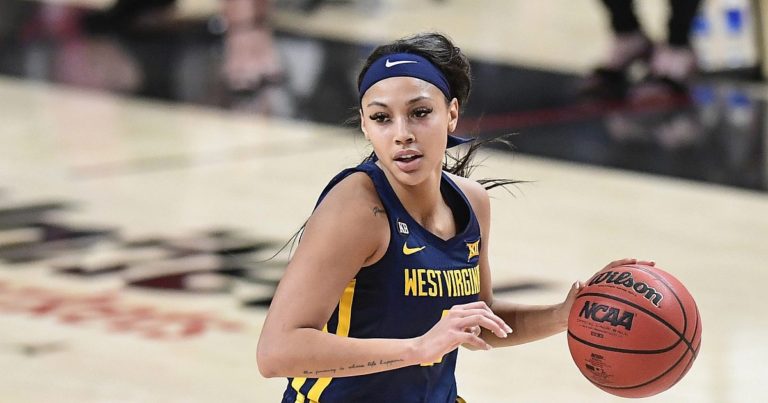
Republican Gov. Jim Justice signed a bill on Wednesday barring male athletes who identify as female from competing in girls’ and womens’ sports in middle schools, high schools, and colleges. The bill narrowly passed the state Senate, which added the college component. The House of Delegates then overwhelmingly approved it.

How will it fare on the national stage? Some lawmakers warned against the bill, noting that the NCAA could retaliate and decide not to hold college tournaments in the state. LGBT activists are pressuring the NCAA Board of Governors to refuse to schedule championships in states that limit women’s sports to female athletes. GOP lawmakers in Florida have sent a similar bill to the desk of Republican Gov. Ron DeSantis.

Dig deeper: Read Ray Hacke’s report on how courts might rule on similar laws.

Consider PrEP, hormonal therapy to address health disparities in LGBTQ patients – Healio

April 29, 2021

4 min read

Source:

McNamara M. LGBTQ Health: A Practical Approach. Presented at: ACP Internal Medicine Meeting; April 29-May 1, 2021 (virtual meeting).

Disclosures:
McNamara reports no relevant financial disclosures.


Marginalization and stigma are directly related to poor physical and mental health outcomes, according to a speaker at the ACP Internal Medicine Meeting, held virtually.

LGBTQ patients are among those who are affected, so Megan McNamara, MD, MS, a professor of medicine at Case Western Reserve University School of Medicine, offered practical tips that physicians can consider when treating these patients, including screening recommendations, when to prescribe preexposure prophylaxis (PrEP), how to manage patients receiving cross-sex hormone therapy, and more.

pills and injections for hormone therapy
A speaker at the ACP Internal Medicine Meeting offered practical tips that physicians can consider when treating LGBTQ patients.
Photo source: Adobe Stock.

Gay and bisexual men

Compared with heterosexual men, data show that gay and bisexual men have higher rates of psychological distress, tobacco use, alcohol consumption, HIV and other sexually transmitted infections (STIs), so it is important to screen for these risk factors and conditions, McNamara said. Most new HIV diagnoses occur among younger men who have sex with men (MSM) aged 13 to 34 years, according to CDC data. However, older patients are still at risk.

“In my own practice, most of my patients actually are older individuals, so, I want to make sure that I’m not thinking that they’re not at risk,” McNamara said. “Taking a thorough sexual history and assessing risk for HIV is as important in older people as it is in younger people.”

To prevent HIV in MSM, the CDC recommends offering PrEP to those who are HIV negative, had male sex partners within the past 6 months, are not in a monogamous relationship and had anal sex or a bacterial STI in the past 6 months. There are two PrEP regimens that are available in the United States: Truvada (emtricitabine/tenofovir disoproxil fumarate; FTC/TDF) and Descovy (emtricitabine/tenofovir alafenamide [F/TAF]; Gilead Sciences).

McNamara said both regimens are “equally effective” against HIV infection and have similar safety profiles. The “key difference,” she said, is that Descovy is safe for patients with an estimated creatinine clearance greater than 30 mL/min.

“The same is not true for Truvada,” McNamara said. “For Truvada, you have to have an estimated creatinine clearance greater than 60 mL/min to use it.”

Lesbian and bisexual women

Similar to MSM, according to McNamara, lesbian and bisexual women are disproportionately affected by psychological distress, tobacco use and heavy alcohol consumption. They are also more likely to be overweight or obese. McNamara cited data in the American Journal of Public Health that showed lesbian women had more than twice the odds of being overweight (OR = 2.69) or obese (OR = 2.47) compared with heterosexual women. Bisexual women also had slightly higher odds for being overweight (OR = 1.38) compared with heterosexual women.

In light of the data, McNamara said that physicians should assess lesbian and bisexual women for cardiovascular risk factors, “because we know increased rates of tobacco use, obesity and overweight can increase the patient’s risk for CVD.”

Other data show that lesbian and bisexual women are less likely to undergo cervical cancer screening, and lesbian women are less likely to complete an HPV vaccination series, so physicians should offer cervical cancer screening in accordance with current guidelines and discuss the benefits and risks of HPV vaccination in unvaccinated patients aged between 26 and 45 years, according to McNamara.

Transgender patients

When treating patients who are transgender, it is important to screen for mental health, which has been shown to be five times higher among transgender patients compared with the general population, as well as suicidality, which is nine times higher among transgender patients than the general population, McNamara said.

“I can tell you that in my own practice, these data ring true,” she said. “Many, many of my patients have attempted suicide, so it’s really something you want to think about right away.”

Physicians should also screen transgender patients for HIV, as their rate of new diagnoses was more than three times higher than the national average in 2017, according to McNamara. CDC data show that an estimated 44% of Black or African American transgender women and 26% of Hispanic and Latina transgender women have HIV compared with 7% of white transgender women.

Cross-sex hormone therapy is another important aspect of care — even “medically necessary” — for many transgender patients, McNamara said. There are clear benefits of the therapy, including improvements in quality of life, she added. Still, physicians should assess patients for contraindications, including pregnancy, unstable CVD and polycythemia for transmasculine cross-sex hormone therapy, and estrogen-sensitive cancer, end-stage liver disease and a history of venous thromboembolism (VTE) for transfeminine cross-sex hormone therapy, McNamara said.

She warned that transmasculine cross-sex hormone therapy is associated with an increased risk for erythrocytosis, but there are ways that physicians can help reduce this risk.

“Basically, you just want to keep the hematocrit less than the upper limit of normal,” she said. “In my institution, I try to keep the hematocrit less than 51%. Sometimes, I do have to decrease testosterone dosing to make sure that the patient doesn’t develop significant erythrocytosis.”

McNamara also recommended counseling patients who are interested in receiving transfeminine cross-sex hormone therapy about the risk for VTE. In addition, there have been recent concerns that transfeminine cross-sex hormone therapy may increase the risk for cerebrovascular accident, she added.

However, there are “significant consequences” to abruptly discontinuing cross-sex hormone therapy, including “significant emotional and mental distress,” she said. While patients should be advised about these risks, it does not mean they need to stop treatment unless they develop “an acute life-threatening medical condition” or a hormone-dependent malignancy, according to McNamara.

“The vast majority of patients who are treated with hormone therapy really consider it a life-sustaining treatment just like metformin or an [angiotensin-converting enzyme] inhibitor,” she said. “It’s important to consider cross-sex hormone therapy just as much as a factor in their everyday life as managing their diabetes or hypertension.”

Man shouting anti-gay slurs punches gay man on video in alleged hate crime – LGBTQ Nation

In what may have been an anti-gay hate crime, a man was caught on video punching another man in the back of the head outside of a CVS in Midtown Manhattan.

According to the New York Police Department (NYPD), the gay 24-year-old victim was walking into the CVS on 34th street and 8th avenue on April 24th, when the unknown attacker, who was shouting homophobic comments, assaulted the man on his way out of the store.

Related: School vice principal caught throwing beer at restaurant during transphobic rant

In the video released by the NYPD, the attacker can be seen winding up and swinging hard into the back of the victim’s neck, seemingly out nowhere as the victim simply attempts to walks by.

While the video has no sound, the NYPD confirmed that the attacker was making anti-gay remarks, saying things like, “fucking gays,” and “faggot.”

The attacker then fled the scene on foot.

The incident is being investigated by the NYPD’s Hate Crime Task Force.

“Baketopia” winner donates winnings to California Farmworker Foundation, L.A. LGBT Center – Daily Sundial

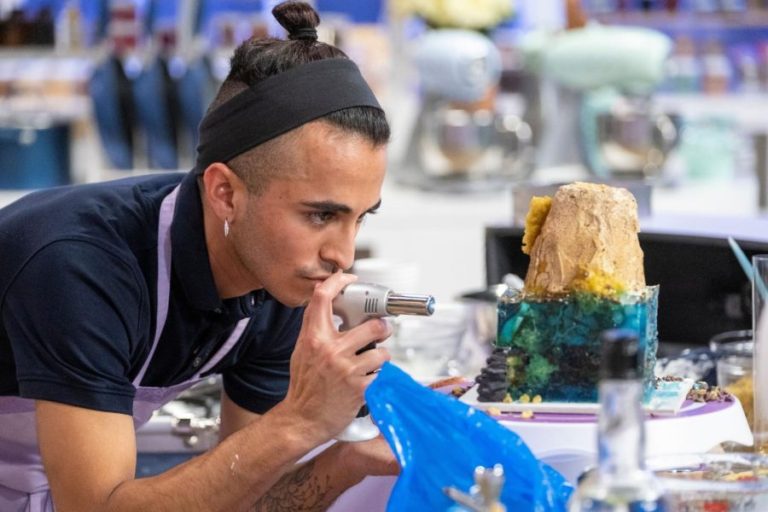
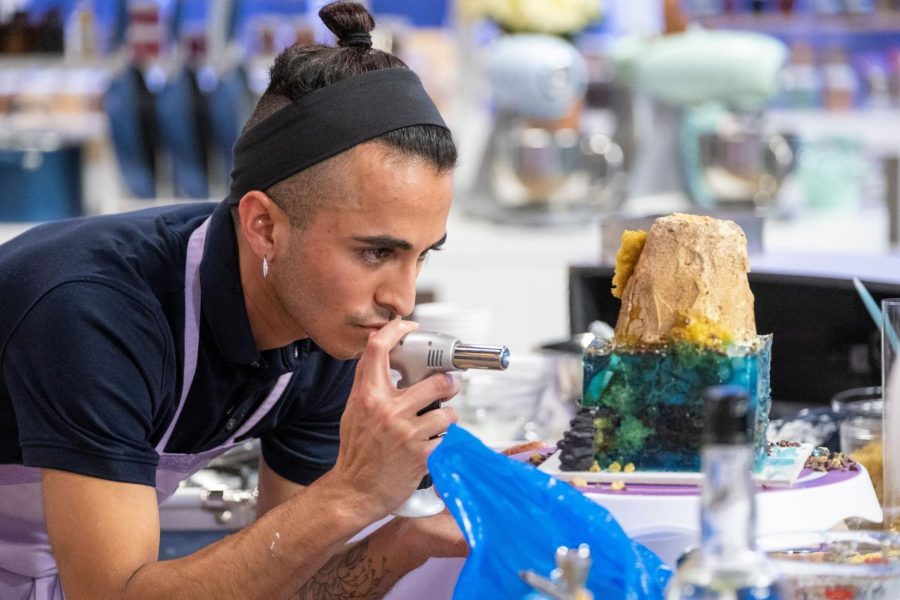
Gregory Rodriguez, the first winner of HBO Max Originals “Baketopia,” never imagined he would end up on a TV show. After four failed attempts at landing a position on shows like “Chopped” and other competitions, he began to lose hope.
He remembers being rejected by show producers for reasons that were out of his control. At times, he was told he was either under experienced or over experienced, among other things.
However, after his fifth try at auditioning, he found himself on the set of the show, and ultimately won the competition on “Baketopia.”

On March 25, HBO Max Originals debuted its first episode of the show. This competitive baking show has each contestant create a uniquely themed pastry for a chance to win a $10,000 cash prize.

The desserts are then judged by Rosanna Pansino, a baking social media influencer, and her two co-star judges, Timbo Sullivan and Donal Skehan.
Rodriguez, a chef with five years of professional experience, said the show was shooting all day from 6 a.m. to midnight.
“It was hectic,” he recalled of the competition and he had his doubts about succeeding on the show.
“I didn’t think I was going to win honestly. I really thought it wasn’t going to happen,” he said.
However, his prediction was wrong as he went on to win the grand prize.
During the competition, Rodriguez paid tribute to his grandparents’ home country of El Salvador; more specifically, Santa Ana, El Salvador by creating a cake that replicated the Santa Ana volcano.
The cake was based on stories that Rodriguez heard as a child from his grandparents and great grandparents. This would act as the inspiration for the winning cake.
“Santa Ana is a city that is not a place where they were raised in, but a city that was close by,” he said. “So, I still wanted to pay homage to my family. Based on their stories and their childhoods.”
Rodriguez created a passion fruit curd with a lychee compote and a Tahitian vanilla cake in the shape of the volcano.
As the judges evaluated Rodriguez’s cake, Pansino asked, “Does it do volcano things?”
Rodriguez would then awe the judges by adding dry ice, giving his volcano the illusion of an impending eruption.
“After watching my family see the premiere, I just saw my grandmother be so intrigued. She was like ‘That’s it. That’s how it looked,’” he said.
But what made this much more special to him was his ability to donate pieces of his earnings to two organizations he felt close to.
Rodriguez donated to the California Farmworker Foundation and to the youth at the Los Angeles LGBT Center. “Those two foundations that heavily positively weighted on my heart,” he said.
During the ending of the first episode, Rodriguez remembers that they cut out the second foundation that he would be donating to and only aired him stating the Los Angeles LGBT Center.
“I donated to two different foundations,” he said. “I was shocked they didn’t share the second one. They only aired one of them. But, the second foundation I chose was the California Farmworkers Foundation for agriculture.”
Rodriguez donated an estimated $600 to $700 between the two foundations.

“A little bit goes a long way, so of course I wanted to contribute to them,” he said.
He wanted to support farmers who were not getting paid very well during the pandemic and who had to work laborious hours under tough environments, such as the August Complex Fire in 2020.
“Without farmers, us chefs would not be able to have the best ingredients,” Rodriguez said. “We wouldn’t have the best of the best.”
As for his donation to the Los Angeles LGBT Center, Rodriguez wanted to give support to those in the community who do not have supportive families like himself and to those who are struggling with drug abuse, neglect and other negative outcomes.
With the rest of his earnings, he began to pay off bills, put some into savings and began purchasing more baking equipment to continue his venture as a pastry chef.
“I have so much equipment coming in. It is insane that I spend so much money on kitchen tools, believe it or not,” he said with a chuckle. “My mom’s like ‘Why haven’t you bought clothes?’ because the majority of my money goes downstairs into the kitchen, which I know it’s a bad habit.”
His dream of becoming a pastry chef started at five years old. He remembers making a boxed cake and knowing he wanted to pursue a career as a chef.
Now, Rodriguez will be the new pastry lead at the Agua Caliente Casino Resort at Rancho Mirage. One day he would like to have a storefront, but as an extrovert, he hopes to eventually travel the world with his career and take his art with him. His dream job location would be the Ritz Carlton in Perth, Australia.
As of now, he will be taking private orders if people would like to try one of his original cakes. He is booked from April to May, but will make himself available to take more orders starting in June.
The first episode of “Baketopia” is available on YouTube and available to stream on HBO Max.

States Expand Veterans Benefits to Former Service Members Kicked Out For Sexual Orientation – WSHU

Gay and lesbian military members have been able to serve openly since 2011, when the controversial “Don’t Ask, Don’t Tell” policy was repealed. But for some who were expelled for being gay before the repeal, their less than honorable discharge status means they can’t access vital veterans benefits. Now, states are passing laws to expand benefits to LGBT veterans.

Advocates for LGBT service members estimate as many as 114,000 were discharged for being gay between World War II and the repeal of “Don’t Ask, Don’t Tell.” Some of them received other than honorable discharges, cutting off their access to state and federal veterans benefits.

Rhode Island and New York have passed laws to restore state military benefits. Now, lawmakers in Connecticut, New Jersey and Colorado want to do the same thing.

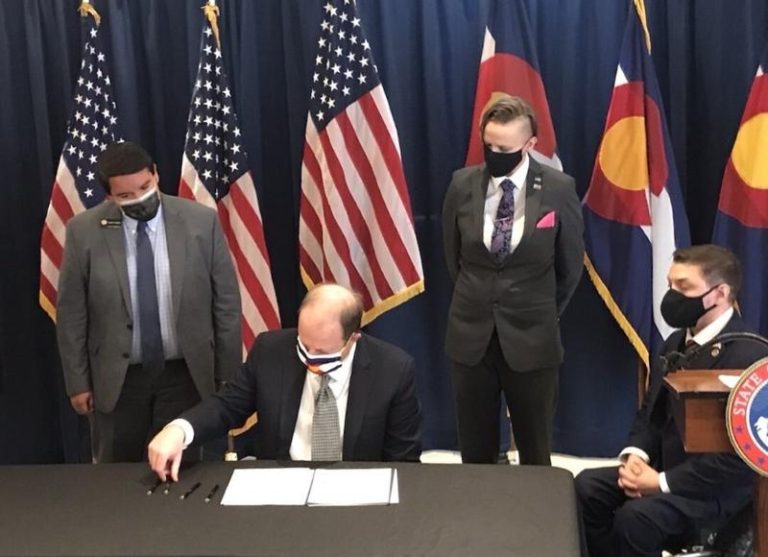
“This needs to be corrected at the federal level as well, but at least at the state level we were able to create this classification that if you are an LGBT veteran, and you received an ‘other than honorable’ discharge because of your sexual orientation or gender identity, then you deserve access to all of those state benefits,” Colorado Democratic state senator Dominick Moreno said. He helped write a new law that restores state benefits like education opportunities and military burials.

But that still leaves major benefits — like full VA health care and the GI bill — out of reach. States cannot upgrade military discharges on their own.

“Ultimately, it’s really a federal issue — particularly if people are seeking health care under TRICARE or if they’re seeking all those other benefits — that needs to happen at the federal level,” Moreno said.

Congress has considered a federal version of the state bills several times. It would offer blanket discharge upgrades to most veterans who were kicked out just for being gay. But it hasn’t gone anywhere.

“We’ve been fighting this fight for a really long time,” said Jennifer Dane, executive director of the Modern Military Association of America, an advocacy group for LGBTQ service members. “We put it in the National Defense Authorization Act every year, or at least try to, and then it gets to the Ways and Means Committee and it comes back usually that it’s too expensive.”

In Colorado, legislators who voted against the law had other problems with extending state benefits to veterans with less than honorable discharges. Republican Representative Richard Holtorf argued on the house floor that it would undercut discharge decisions the military has already made. And, rules are rules.

“The expectation for all service members is that you will follow general orders, you will follow command policy and command directives, you will follow the UCMJ as it is written at the time of the service,” Holtorf said.

That argument doesn’t work for Ashton Stewart. He runs a program called SAGEVets, helping older LGBT veterans in New York get access to benefits.

“Legislators are hiding behind the integrity issue,” Stewart said. “It’s because they don’t want to address the issue that’s really happening here, which is discrimination.”

Stewart helped craft New York’s Restoration of Honor law. He said as more states pass similar laws, he hopes it will pressure the federal government to make the same changes.

Connecticut lawmakers proposed a similar bill this year, which died in committee. State senator Cathy Osten said during a February interview that the bill wasn’t just about giving ex-service members what they deserve. It was part of a package of bills designed to attract — and keep — more veterans in Connecticut, home to the Coast Guard Academy and a submarine base.

“I’ve done a lot of different veterans bills to have Connecticut be more veteran-friendly, be considered one of the more veteran-friendly states,” Osten, an Army veteran, said. “We have the sub base here, we have a lot of people that come to Connecticut. I’d like them to stay here.”

Navy veteran Louis Miller from Bronx, New York, was kicked out for being gay in 1992. He said he didn’t try to upgrade his “other than honorable” discharge until recently.

“I knew I was fighting a losing battle,” Miller said. “I didn’t try, because I knew I couldn’t win.”

Now, Miller’s got one win — his application got one of the first approvals after New York’s law took effect last year.

“They [the military] gave me a bad piece of paper, but you can’t take away what I did there,” Miller said. “That’s inside of me. That’s my honor. You can’t take away my honor. What you took away was my recognition of it. The restoration of honor in New York state, that’s what it does: it gives me some recognition.”

And, it opens up access to dozens of state veterans benefits like tuition assistance and property tax breaks.

Miller said he’s always been proud of his service, and now he’s proud that New York State recognizes it, too.

This story was produced by the American Homefront Project, a public media collaboration that reports on American military life and veterans. Funding comes from the Corporation for Public Broadcasting.

Alabama removing anti-gay language from state’s sex education law – Chattanooga Times Free Press

MONTGOMERY, Ala. (AP) — Alabama will remove anti-gay language from the state’s sex education law that for decades said students should be taught that homosexuality is both socially unacceptable and illegal.

Alabama Gov. Kay Ivey signed the measure Tuesday into law after it was approved by the Alabama Legislature.

The bill, sponsored by Rep. Laura Hall, D-Huntsville, removes a section of the 1992 sex education law that directed that sex education programs should include “an emphasis, in a factual manner and from a public health perspective, that homosexuality is not a lifestyle acceptable to the general public and that homosexual conduct is a criminal offense under the laws of this state.”

The Alabama law will maintain the emphasis on abstinence in sex education. There will be a new requirement for parents to get notification when sexual education or human reproduction will be taught and to request materials.

The measure had been introduced for several years, but did not win final passage until this year.

The Southern Poverty Law Center applauded Ivey for signing the bill.

“Since 1992, state law has required that when sex education is taught in Alabama schools the instruction include language targeting ‘the homosexual lifestyle’ as illegal and immoral. This language is not only legally inaccurate, it encouraged further stigmatization and isolation of LGBTQ students,” Shay Farley, SPLC Action Fund Regional Policy Director, said in a statement.

The section of the 1992 law describing homosexuality as a criminal offense was a reference to the state’s anti-sodomy law, which has since been ruled unconstitutional. The U.S. Supreme Court in 2003 ruled that such laws were an invasion of privacy and unconstitutional.

Alabama schools no longer have to teach that being gay is unhealthy & illegal – LGBTQ Nation

Alabama Gov. Kay Ivey (R) has just signed a bill to repeal the state’s requirement that sex education in schools teach that homosexuality is unacceptable, unhealthy, and illegal.

“It was just trying to make the language appropriate and scientifically correct,” said state Rep. Laura Hall (D) about the bill she sponsored in the Alabama House. “That’s why we also changed some definitions or words.”

Related: Alabama Republican busted looking at trans adult pics online after voting against trans rights

Schools in the state don’t have to teach sex education. If they do teach it, however, the original 1992 law states that they have to include certain issues, including “An emphasis, in a factual manner and from a public health perspective, that homosexuality is not a lifestyle acceptable to the general public and that homosexual conduct is a criminal offense under the laws of the state.”

That language isn’t just discriminatory, it’s also out of date. Homosexuality isn’t illegal in Alabama anymore.

That requirement is now gone, even though the state will still require that sex education focus on abstinence until marriage and tell students that “abstinence from sexual intercourse outside of lawful marriage is the expected social standard for unmarried school-age persons.”

Still, the law is a feat for Alabama, one of the most conservative states in the country that just passed a bill to ban transgender girls from participating in school sports last week.

The state senate also passed a bill to criminalize doctors who provide gender-affirming care to trans people under the age of 19 and threatens them with up to 10 years in jail. The extreme measure would even ban psychotherapists from affirming a transgender minor’s gender.

Politicians from the state have made headlines in recent years for calling LGBTQ people “freaking queers,” and as recently as 2019, Republican lawmakers have tried to end marriage licenses entirely to stop marriage equality.

Hall said that to get her bill through the state house, she and her colleagues didn’t draw attention to the gay parts of the bill and instead made it about all the language being updated to be more accurate.

“We didn’t let it become a controversial part,” she said when her bill passed the state house last month with a 69-30 vote. “It was more emphasis on bringing it in line with terms that are being used today.”

Hall’s bill also updates terms used for sex education. It changes “AIDS” to “HIV”; “sexually transmitted diseases” to “sexually transmitted infections”; “unwanted pregnancy” to “unintended pregnancy”; and “the importance of self-control and ethical conduct pertaining to sexual behavior” to “delaying sexual activity and discouraging risky sexual behavior.”

“Ending state-mandated homophobia in sex ed is a hard-won fight by advocates who’ve been working toward this for years,” said Courtney Roark, the Alabama policy and movement building director for URGE, a reproductive rights organization. “This win is just one step in the direction of the sex ed we’d like to see in Alabama, which is sex ed that is comprehensive and LGBTQ+ affirming.”

According to Power To Decide, Alabama has the 10th highest teen pregnancy rate in the U.S.

Gov. Ivey signed the bill just as several civil rights organizations, including the ACLU, the ACLU of Alabama, and Lambda Legal are threatening to take the state to court if the legislature passes and the governor signs the bill to criminalize doctors who provide gender affirming care to trans youth.

“If Alabama lawmakers insist on passing this cruel, dangerous, and unconstitutional legislation into law, the state will immediately have a lawsuit to deal with,” said Carl Charles of Lambda Legal.

“The Alabama Legislature and Governor Kay Ivey need to consider the time and resources they will invest, not to mention the stain of discrimination that often means lost opportunity and investment and ask themselves if targeting the health care of children is truly worth it because we are prepared to make that investment in order to protect transgender youth, their families, and their doctors, in Alabama.”

Legislature revives, passes trans girl sports ban prompting fierce backlash – WMNF – WMNF

Share this:

Florida’s ban on transgender girls participating on girl’s teams died in the senate two weeks ago, but was revived and passed by both chambers late Wednesday as an amendment to a different bill. Members of the trans community now say Florida’s posturing to corporations and catering to a shrinking base is gambling with children’s lives.

LISTEN:

In the very best-case scenario, members of the trans community say comments like this:

“I embrace a child who would like to be trans. That’s their choice. If they’re LGBDT, LGB…Gay, they have that choice.”

From the bills senate sponsor, Lakeland Republican Kelli Stargel, are proof those backing the bill lack a fundamental understanding of what it means to be a member of the transgender and LGBTQ community.

‘You don’t just do that’

It is widely accepted that being gay or trans is not a choice as much as an acknowledgement of a deep and personal truth. One that’s often difficult to grapple with.

Emily Gray is a trans woman from Bay County.

“We don’t just wake up one day and say, ‘hey you know what would be fun, let me just lose half of my family and friends and see if I get murdered.’ You just don’t do that,” she said. “All to play on a female’s sports team and maybe get a scholarship? That’s silly. No one does that.”

Gray joined a press conference on Zoom Thursday urging Gov. Ron DeSantis to veto the bill that would block trans girls from playing girls sports in the state of Florida. Nearly identical bills authored by special interest groups have made their way through Republican-held state governments. A nearly identical law passed in Idaho has already been struck down federally. A Connecticut lawsuit seeking to block trans girls from playing on girls teams was also struck down by a federal judge.

‘Blood on your hands’

Stargel alleges the bill is meant to protect the safety and integrity of women’s sports because trans girls and women would have a competitive advantage, but there’s no evidence that’s true. In fact, one of the cisgender Connecticut girls who sued to block trans girls from her team beat the girl she was suing in a state championship race two days after the lawsuit was filed.

Sen. Stargel says she’s received harsh criticism for sponsoring the bill. Lakey Love of the Florida Coalition for Transgender liberation says those critics are right.

“People were calling her a witch and a bigot and a monster,” Love said. “And she is. What you are doing is transphobic. It makes you a witch, a bigot and a monster and you have blood on your hands.”

Gambling with lives

The sports community from the professional to scholastic level has largely spoken against the bill and its counterparts in other states. The NCAA recently said it won’t hold championships in states that ban trans athletes. And a group of more than 55 major corporations signed on to a letter denouncing the bills and indicating they’d reduce operations in states that pass them.

Shortly after the House version of the bill passed, Representative Chris Latvala Tweeted:

“The Fairness in Women’s Sports Act has passed the House and Senate and is now headed to the Governor. Your turn to do nothing, NCAA.”

Love says Latvala and other Republicans – who have recently decried corporate involvement in politics while at the same time accepting donations from corporations – are gambling with children’s lives.

“I can definitely say they’ve been playing poker with trans lives this whole time,” they said. “We’re gonna call your bluff because we’re gonna work with the NCAA and we’re gonna work with the corporations.”

A bitter promise

The mood on the call was somber but determined. Speakers from the ACLU, Southern Poverty Law Center, Women’s March of Florida, Florida Council of Churches and many more were blindsided by the rushed passage. And it’s not just the trans girls who they fear for. The bill doesn’t preempt participation but would block it if someone challenges an athlete’s gender.

Gray said that’s a dangerous standard.

“These bills that they try to pass to help cisgender women are actually just harming all women in general,” she said. “There are now cisgender women that look just a little too masculine or their hair is short and they’re getting turned away.”

Willow Leech, a trans woman and activist for trans rights offered one parting message to the bill’s supporters.

“My only message to them, to Sen. Stargel to Gov. DeSantis is a bitter promise. That we. Will. Fight,” she said. “We will fight for ourselves, we will fight for each other, we will fight for our children. And as with civil rights movements of the past, no matter how long it takes or how much we suffer along the way, we will endure and we will win.”

Legal challenges to the constitutionality of the bill are expected if Gov. DeSantis signs it into law.

Men in Crop Tops is the Summer Trend We Deserve – CR Fashion Book

0

As society as a whole shifts to a fluid and vibrant post-pandemic style, a distinct focus on body conscious and experimental styles have worked itself into the male wardrobe — and yes, that includes crop tops.

This content is imported from Instagram. You may be able to find the same content in another format, or you may be able to find more information, at their web site.

Stemming from athleticism and necessity, crop tops boomed during the ‘80s and ‘90s through an unlikely set of athletes, musicians, and actors. Making appearances in steamy Calvin Klein advertisements and blockbuster movies, the crop top exuded a sense of confidence and mobility that was synonymous with the era. Although the garment is considered as a traditionally feminine style for men to sport, it was originally the ultimate display of masculinity — with football players and track stars opting for the piece.

With perceptions of masculinity and aesthetics shifting over the past years, the garment quickly made its way out of men’s wardrobes in place of more subdued styles — skinny jeans, sleeveless shirts, and a sense of diminished layering. Though like every unmistakable garment, the crop top has slowly begun to work its way back into the popular style lexicon.

ck

Mark Wahlberg and Kate Moss for Calvin Klein

Instagram

prince

Prince at Wembley Arena, 1986

Instagram

Despite a shift to covered-up styles in the early 2000s, there was still a subset of mainly queer men who continued to dawn the midriff-baring top. Unfazed by gender-coded fashions and style, queer men transformed the style from its distinct aesthetic origins to a symbol of expression and unbridled fluidity.

Born out of that confidence was today’s gay popstars — Lil Nas X, Troye Sivan, Olly Alexander, to name a few — who have been unafraid to express their style on the big stage.

lil nas x

Lil Nas x at the 2020 Grammy Awards 

Getty Images

troye

Troye Sivan Backstage, 2019

Instagram

Though some still view the garment as inherently “feminine,” there has been a recent set of stylish male celebrities looking to explore the style. With society as a whole beginning to feel comfortable with the ever-changing fluidity of fashion, male celebrities, models, and figures have been increasingly comfortable wearing crop tops.

harry

Harry Styles in the “Watermelon Sugar” Video

YouTube

Along with an embrace from high-profile celebrities, crop tops have been featured across runways and presentations during the most recent fashion weeks. Dion Lee — the sexy Australian brand — featured a variety of equestrian-inspired crop tops for their Fall/Winter 2021 collection. Opting for a bedazzled iteration, Ludovic de Saint Sernin crafted a variety of midriff-free tops in keeping with the sexual fluidity of the brand.

instagram

Dion Lee Fall/Winter 2o21

Instagram

instagram

Ludovic de Saint Sernin Fall/Winter 2021 

Instagram

In a response to Gen Z fueled trends, luxury houses have been receptive to androgynous tailoring and silhouettes. Though many major brands have been hesitant to showcase the male midriff, many have been experimenting with more traditionally feminine silhouettes — see Versace’s exploration of color and pattern for Spring/Summer 2021 as well as Dior Men‘s mix of sheer and lightweight textiles. With dozens of high-profile figures within and adjacent to the industry sporting the crop, the garment’s relevance in the cyclical fashion world is back and here to stay.

Staffing a Hurdle as Lamont Proposes Expanded Childcare and Early Education – CT Examiner

Expanding access to early education and childcare is a linchpin of Gov. Ned Lamont’s plan to shore up the state economy using federal aid dollars, but advocates on the issue say that a longer-term approach will be needed to address statewide shortages of workers and affordable childcare — problems that predate the pandemic. 

Merrill Gay, executive director of the Connecticut Early Childhood Alliance, says he supports a legislative proposal that would provide student loan forgiveness for individuals who have spent four years working in childcare and a tax credit of between $500 and $1,500 for individuals who work in childcare settings. 

Both of these measures, as well as other provisions that would expand access to childcare subsidies, were stripped from the bill as it was moved between legislative committees. 

Gay said that the tax credits and the loan forgiveness are important if the state wants to retain high-quality childcare workers. 

“Early childhood is one of the lowest compensated professions in the workforce,” said Gay. 

Gay said that state funding for childcare programs hasn’t increased since 2015, even as the state minimum 

wage has increased every year. Because the programs can’t charge parents more for the childcare,  he explained, more experienced childcare workers are not receiving more pay.   

“Those programs are using what little they can to pay higher wages to their lowest paid employees, and higher paid, credential teachers haven’t gotten increases in wages,” said Gay. 

Gay said that the pandemic has exacerbated the problem, as a large number of women left the workforce to care for their children as they were forced to learn remotedly.  He said that many are now questioning whether or not they want to return to work. 

Mary Beth Bruder, professor of educational psychology in the Neag School of Education and director of the A.J. Pappanikou Center for Excellence at the University of Connecticut, said that staff was the most important component to a childcare program. 

“You have to start with high quality staff,” said Bruder. “I would say the most important [thing] is to have a well compensated workforce that would attract people to come and stay in the workforce.” 

Commissioner of the Office of Early Childhood Beth Bye agreed that one of the biggest challenges to early education is the availability of staff to care for the children. She told CT Examiner earlier this month that pay for childcare providers is so low that a person could double the salary by working in a public school.

Bye said before the pandemic, the state was short 50,000 slots for infants and toddlers.

“There are empty classrooms in Connecticut because there aren’t enough teachers,” she said. “Attracting and keeping staff is a huge problem right now in early childhood.” 

A barrier to advancement

On Monday, Lamont proposed putting aside $8.8 million to be spent in 2021 for increased subsidies for parents struggling to afford childcare and to provide free summer programs for preschoolers.

Lamont also proposed an additional $50 million for childcare subsidies for parents who are enrolled in a workforce development program or in higher education.

Elizabeth Fraser, director of public policy at the Connecticut Association for Human Services, said that the pandemic has highlighted just how important childcare is to keeping the economy going. 

The cost of childcare can negate any financial benefit a woman might receiving from working outside of the home, said Fraser

“It’s so expensive that their whole salary or more would go to childcare.”

In addition to tax credits and student loan forgiveness, legislation supported by Gay would make permanent subsidies to women who are working toward an advanced degree or are enrolled in a job training program. 

Gay said that tying childcare subsidies to work status creates a barrier for lower-income families.

“What it does is it just creates a barrier for people to advance,” said Gay. 

Temporary solutions

In addition to plans announced by Lamont, the state’s Office of Early Childhood will offer aid to childcare centers closed during the pandemic. 

Bye said in a press conference on Monday that $120 million in federal coronavirus relief funds will be directed toward “stabilization grants” for childcare providers. At least 25 percent of those funds must be used for compensating staff, either through increased wages, granting bonuses, or for assisting with healthcare and retirement costs. Bye said that a portion of these funds would also go directly to family childcare homes, which are mainly owned by women of color. 

These measures are expected to be temporary.

State Rep. Kathleen McCarty, R-Waterford, ranking member on the Education Committee and a member of the Appropriations Committee, said that she was very disappointed about the removal of the longer-term provisions from the childcare bill. She said she assumed that the bill was changed because the student loan forgiveness and the tax credits would have been too costly.  

A significant piece of the legislation that remains would allow organizations to establish family childcare homes in New Britain, Waterbury, Bridgeport, Stamford and New Haven. The bill also creates a task force to make recommendations on early childcare workforce development.

Gay said that the childcare homes were part of a pilot program his organization had been working on for a while. He said he envisioned the program as a business incubator that would give moms — and particularly non-English speakers — a space to create family childcare businesses. He said this could help address some of the shortages in infant and toddler care. 

 The revised bill still must be approved by the legislature before it is signed into law. 

“The best investment the state can make” 

Bye said that the Office of Early Childhood does plan to permanently increase the amount that accredited childcare centers receive through subsidies for low-income families to 75 percent of the market rate for childcare, which Bye said could also raise payments for childcare workers. 

Bye said the office intends to use $26 million in federal COVID funds to increase the payments this year, and that the governor has pledged to find other sources of funding going forward. 

She said that about 30 percent of all non-family child care providers, or 525 childcare centers, are currently accredited, and that she hopes this will convince more centers to pursue accreditation. 

The Appropriations Committee also included in its proposed budget $1.2 million for the years 2022 and 2023 to eliminate fees for parents of children in the “Birth to Three” program, an early intervention program for children with learning delays or disabilities. The budget also provides $450,000 each year to provide summer care for children turning three between May 1 and the start of the school year.  

Gay said that more needs to be done to make childcare affordable. He said he would ideally like to see the eligibility for childcare subsidies extend to families who make up to 85 percent of the state’s median income for eligibility — about $102,558 for a family of four. 

“It is very clear that the big problem with childcare is that there is not enough money in the system to make it affordable for parents,” he said. 

And the lasting benefits of childcare have been well-documented. 

Nobel Prize winner James J. Heckman, professor of economics and director of the Center of Economies for Human Development at the University of Chicago, has found that participating in early childhood programs increase high school and college graduation rates, decrease crime, increase the likelihood of employment and income levels and improve physical health. 

According to Bruder, early childhood education can make a huge difference in closing — or exacerbating — gaps in achievement. 

“When you’re taking away that foundation of equitable, high-quality early care and education … for portions of the population, they are starting off at a disadvantage,” said Bruder. 

Bruder said there should be no differentiation between childcare and early education, a statement that Bye agreed with. 

“High quality preschool is childcare and high quality childcare is preschool,” said Bye. She added, “It’s the best investment that the government can make.”

The Strange Rise of Adin Ross, Explained – Complex

Who the hell is Adin Ross?

It’s a question you may have asked yourself lately if you spend any time on rap social media pages, Twitch, TikTok, or YouTube. 

Adin Ross’ face is everywhere right now. In the past month alone, he has been involved in a beef with Polo G, had a public FaceTime conversation with Travis Scott, and welcomed the following rappers on his daily livestream: Lil Yachty, Sheck Wes, Lil Tecca, Blueface, YBN Almighty Jay, and Lil Tjay.

The 20-year-old Twitch streamer-turned-YouTuber got his start in the gaming world, but he’s aligned himself with hip-hop artists over the past couple months, forming a particularly tight bond with Sheck Wes and the Cactus Jack crew. 

Along with his sudden rise in fame, there has been controversy. Ross was temporarily suspended from Twitch when a guest on his show (YouTuber ZIAS) reportedly used homophobic slurs on air. And his most viral content revolves around immature “sus raps” and making gay jokes, which brings into question how he’s made it this far without attracting even more backlash and controversy (more on that later).

Adin Ross’ following grows each day, and he says he plans to become more heavily involved in the rap world as time goes on. If you haven’t come across him yet, it’s only a matter of time until he becomes an even more inescapable presence on your timelines—for better or worse. So how did this guy get so popular in the first place? Why are rappers always on his streams? How is he continuing to get more popular while making offensive gay jokes all the time? 

Here’s what you need to know about the strange rise of Adin Ross.