
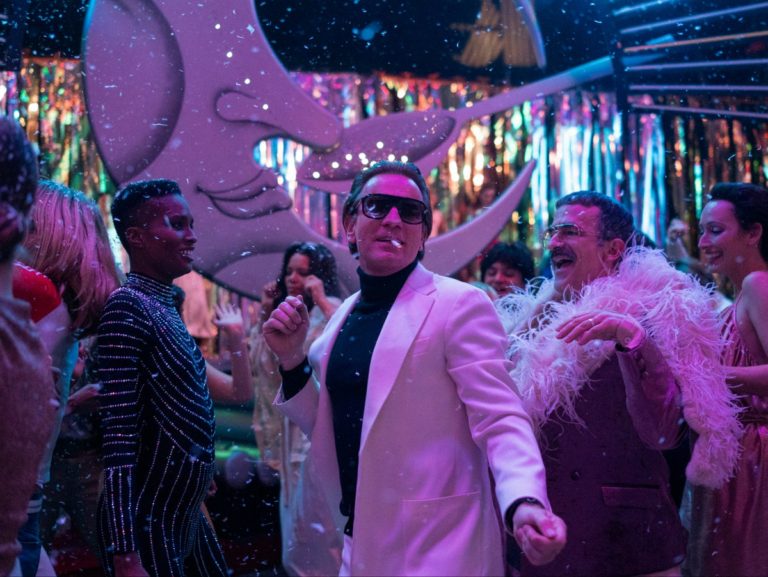

Ewan McGregor has defended his casting as gay fashion designer Halston in a new Netflix series.
The Trainspotting star will star in Halston as the titular influential designer best known for designing the pillbox hat worn by Jackie Kennedy at her husband’s inauguration. He died in 1990 of Aids-related cancer.
Speaking to The Hollywood Reporter, the actor addressed comments made by Pose star Billy Porter in 2019 that it was “enraging” seeing straight men praised for playing LGBTQ+ characters when gay men were rarely cast in the other direction.
Admitting that he was concerned that performing such a role in the limited series could cause a backlash, McGregor said: “I hear the discussion and I respect both sides of it, I really do.
“I haven’t walked in Billy Porter’s shoes. I don’t know what it’s like to lose out on parts when you might feel it’s to do with your sexuality. So I can only respect his point of view.”
The Scottish star then explained that he decided to take the role in Halston because sexuality wasn’t the main focus of the show.
“If it had been a story about Halston’s sexuality more, then maybe it’s right that gay actors should play that role,” he said.
With Krysta Rodriguez as Liza Minnelli
(ATSUSHI NISHIJIMA/NETFLIX)
“But in this case – and I don’t want to sound like I’m worming out of this, because it’s something I did think a lot about – I suppose ultimately I felt like it was just one part of who he was.”
Halston runs for five episodes on Netflix and has been executive produced by Ryan Murphy.
The issue of whether straight actors should play gay roles on screen has been hotly debated in recent years, with Russell T Davies casting many gay men in his Channel 4 series It’s A Sin.
“I’m trying to avenge hundreds of years of inequality,” Davies told The Independent. “The series has also unashamedly cast gay people in straight roles. I think that’s fine because, believe you me, from the age of eight we are studying straight people and how to fit in with them.”
Halston comes to Netflix on 14 May 2021.

This weekend, women’s football will take part in a four-day social media boycott as clubs and organisations across England make a stand against the rising cases of online abuse.
The blackout, which will last from April 30th until May 3rd, has united English football – along with other sports including tennis and cricket – to fight for a fairer, safer space online.
Aligning with the nationwide boycott, BT Sport have launched a new campaign, titled ‘Draw the Line’, aimed to help eradicate online abuse and discrimination from the game. Former England international turned pundit Rachel Brown-Finnis is one of the key individuals involved in the new movement.
“I’m hoping that the blackout this weekend and the introduction of this policy for BT’s ‘Draw the Line’ is a line in the sand whereas from this day forwards, it [online abuse] is not tolerated,” the ex-goalkeeper told GiveMeSport Women. “Not just not tolerated but made clear of how we action against it.”
Targeted abuse on social media is a huge stain on football as a whole. Both the men’s and women’s side of the sport is suffering heightened cases of hate messaging and cyber bullying. Footballing superstar siblings Lauren and Reece James were both recently subject to racial abuse.
Other prominent figures within the sport including Lianne Sanderson have shared the abhorrent messages of racist and homophobic nature they have received as of late.
Brown-Finnis admitted that she feels social media platforms have done “minimum at best” to fight against the astonishingly high volume of online abuse. She reflected on her own experiences, which involved a number of sexist tweets targeted at her punditry presence in the men’s game.
“I’ve been sent loads of tweets like ‘what do you know about men’s football?’ And stuff like ‘you should be in the kitchen’ or ‘you should be looking after the kids’.”
BT Sport’s ‘Draw the Line’ campaign is a multi-million pound movement aimed to combat hate speech and discrimination. Recent YouGov research revealed that half of the population has seen abuse take place on social media over the past year, with more than one in ten – over five million people – admitting that they had received online abuse themselves.
The statistics show that women receive more online abuse than men, with one in five women experiencing targeted abuse about their appearance. Additionally, 23 percent of individuals who identify as gay or lesbian have been trolled or abused over their sexual orientation online.
Brown-Finnis reflected on the level of online abuse present in the women’s game compared to when she was playing.
“People who watched women’s football would follow you on Twitter, so generally there would be positive comments and people supporting what you did and had a genuine admiration for what you did and who you were,” she said. “Whereas now, there’s a heck of lot more coverage than when I was playing and that is only going to have a knock on effect of people’s social media profiles being much bigger than what they used to be.
“With that, unfortunately it seems kind of pro rata that the more followers you have, the more people who may be on there [social media] just to abuse you.”
Whilst players, both past and present, continue to go public with their experiences of online abuse, their peers stand alongside them in the fight for action. Now, football as a whole will unite alongside other sports in the four-day social media boycott to firmly say enough is enough.
“We are a collective,” Brown-Finnis said of the women’s football community. “Over the last 15-20 years, we have collectively got women’s football to the profile that it has right now. Past players like myself, present players and future players are all a part of that and we are absolutely like a family.”
BT’s #DrawTheLine campaign will see BT Sport highlight the issue of online abuse and introduce an anti-online abuse policy, deleting, blocking or reporting hate and abuse on its channels. For more information visit bt.com/drawtheline
Everyone knows the way to cause a stir in an opinion piece is to go on a rant. But I want to do something different—I want to celebrate a change I waited to see for years. That’s how much better the industry is at publishing gay-themed fiction.
The last time I wrote a column for The Bookseller—in 2017—I argued that publishers were frightened of commercial fiction exploring gay themes and were failing to fulfil their duty to reflect British society in all its glorious diversity. I went on a bit of a rant. In fairness, it was a qualified rant. I drew on my experience as editor-in-chief of Attitude, the UK’s bestselling magazine for gay men, to argue there was a market for gay fiction—and that the mainstream, straight population would be receptive to it, as they’d demonstrated in other artforms.
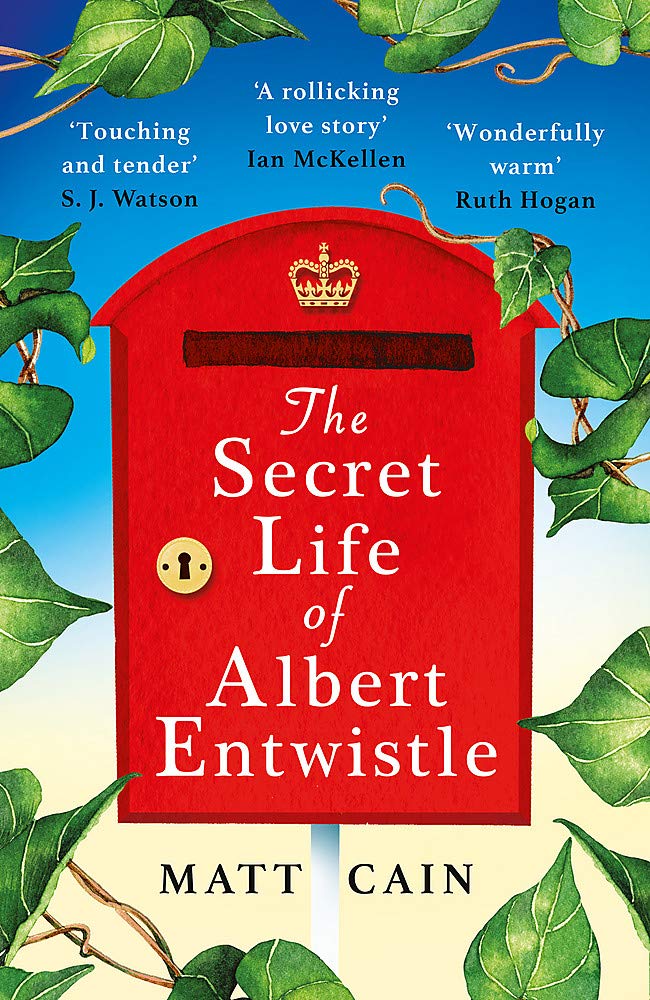
 A few months later I mounted a crowdfunding campaign for my own gay-themed novel, The Madonna of Bolton, which had been rejected by over 30 editors. It attracted widespread press coverage and the book became Unbound’s fastest crowdfunded novel ever. I did all this because I wanted to give publishing a kick up the backside. It’s only fair, then, that I take this opportunity to celebrate how much the situation has improved. For the first time, gay-themed literary fiction is complemented by a decent raft of commercial fiction, by the likes of Justin Myers, Graham Norton, Crystal Jeans, Kate Davies and Laura Kay. My own latest book, The Secret Life of Albert Entwistle (pictured right), is published by Headline on 27th May.
Albert Entwistle… is an up-lit novel about a lonely and secretly gay postman, who sets off in search of his lost love, a man he hasn’t seen for 50 years—and in the process learns to love his true self, engages with his community, and finally experiences happiness. One of my motivations for writing the book was to celebrate how much more accepting our society is now—and to make readers from all kinds of backgrounds feel proud of the role they have played in bringing about this change.
In tandem with this, I’d like to make everyone in publishing feel proud of the change they have helped bring about. Because the picture today is very different to the one I observed in 2017. Publicists and marketers are no longer frightened of gay-themed novels and know which outlets to target in order to bring them to the attention of the right readership. Booksellers are keen to stock gay-themed novels and arrange events with authors. Sales departments are channelling more and more resources into the launch of LGBTQ+-themed fiction. I’ve been buoyed by how many people have wanted to support my book, and by how much they want to see it succeed.
Perhaps the appetite for LGBTQ+ fiction has been bolstered by even more successes in other creative industries; “It’s a Sin” recently became Channel 4’s highest-rated drama in years, contributing to record growth of streaming service All 4, and the recent British series of “RuPaul’s Drag Race” has been so successful it’s credited with resurrecting BBC Three as a broadcast channel. Even the census this year was the first to formally ask the British population if they identify as L, G, B or T, proving that sexuality and gender identity really are part of mainstream conversation.
Even so, I detect a significant amount of caution and risk-aversion still lingering. Many LGBTQ+ authors complain of low-paid single-book deals; that they feel under pressure, frightened that if their first book doesn’t succeed, they won’t be given another chance. I also continue to hear the belief that intimacy or sex scenes between two male characters might work in literary fiction but would scare off readers of commercial fiction, as if they are not intelligent or open-minded enough to handle them. Even though “It’s a Sin” featured a lengthy montage of gay sex in its opening episode, and the Sir Elton John biopic “Rocketman”—which raked in nearly $200m at the box office—featured a sex scene that isn’t just intimate but also fun.
So, yes, things are much better and I absolutely want to celebrate that. But the battle still hasn’t been won. And if my first opinion piece was a kick up the backside, this is a call to arms.
We’re now in a time of reckoning. When it comes to representing gay life and experiences in the mainstream, are publishers going to do just enough to show willing and then retreat to their old practices? Or are they going to see this through and truly reflect that gloriously diverse world in which we live? I very much hope it’s the latter. After all, who is better placed to provoke further social change than the people who bring into the public imagination lives and experiences that are very different to their own, thereby challenging any outstanding prejudices and boosting the public’s capacity for empathy? What better way to use the special power of books than to change our world for the better?
Matt Cain was born in Bury and brought up in Bolton. He is an author, a leading commentator on LGBTQ+ issues, and a former journalist.
Matt Cain’s novel The Secret Life of Albert Entwistle (Headline, 27th May, 9781472275059, £16.99) follows 64-year-old Albert Entwistle, who has been a postman in a quiet town in northern England all his life. After finally realising its time to be honest about who he is, he must learn to ask for what he wants. And he must find the courage to look for George, the man that, many years ago, he lost—but has never forgotten.
The absence of the past is a terror, wrote Derek Jarman, in his essential 1993 diary-based book At Your Own Risk, in which he described the trauma of being left out of history, and of not seeing yourself depicted in TV in film, in stories. It’s something those of us in this industry, I imagine, understand is a profound and fundamental human need.
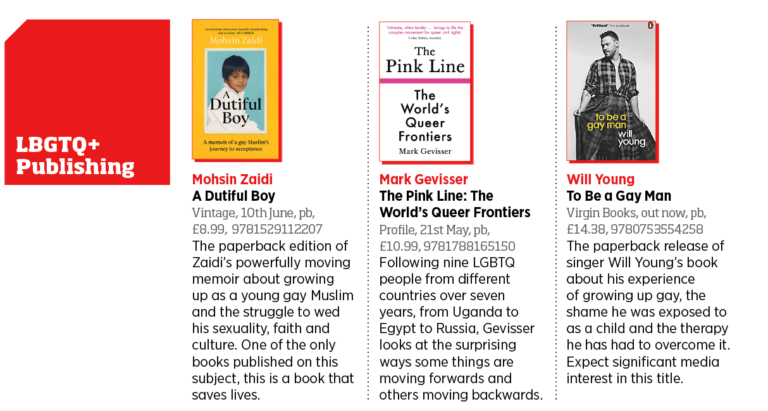
If you are straight, imagine what it’s like to have not had books and films that showed what it’s like to be you: no “Romeo and Juliet”, no “Casablanca”, no “Gone with the Wind”, no Adrian Mole and Pandora, no Bridget Jones and Mr Darcy, no Hermione and Ron, no pretty-much-every-book-ever-written which centres straight relationships in the narrative. I don’t think you could imagine. It’s horrendous. It makes you feel, at a very deep level, that there’s something wrong with you and who you are should be hidden way. It’s so painful writing that list, it makes me want to cry. It’s why in 2017, when the first studio film about a gay teen finding love was released, “Love Simon”, I sat and watched an audience of younger and older gay and lesbian folk weeping. If you are transgender, up until the past five years, it’s most likely you’ll have never seen characters like you in the mainstream. This does matter. As Mohsin Zaidi—author of one of the only books ever published about being gay and Muslim, A Dutiful Boy—explains so sensitively, representation can be a matter of life and death.
When I was a teenager, I went looking in the school library for any books about people like me. I was suicidal, desperate for the support I wasn’t getting in the real world, and I found none. Even if there had been relevant books, I wouldn’t have known because they weren’t talked about. Even E M Forster was so ashamed of his sexuality he made sure that Maurice wasn’t published until 1971, when he was in the ground. Twenty years later, studying Howards End for my A-Levels, a teacher asked why we were reading “that book written by a homosexual”. Even now, there are almost no books or films similar to those, with same-sex relationships at the centre. The ones I did start to read were depressing: everyone died of AIDS or suicide; no lesbian ever survived.

In the mid-Nineties I found Armistead Maupin’s Tales of the City series (first published in 1978), about the lives of normal twentysomething people—gay, straight and trans—and I raced through them all. Despite their iconic success, there has still not been another popular gay-themed series since. Is this really because there are no such stories, or writers to tell them?
Clearly not. Of course, lots of LGBT writers tell other stories but this has often been because, as has happened to countless colleagues, we are so used to being told to “de-gay” projects that we often pre-empt and self-censor. In 2012, when I was shopping the proposal for my first book, Straight Jacket, about gay mental health, one publisher complained that it didn’t have enough heterosexual people in it. “That’s the point,” I replied. “It’s about gay people and for gay people.” I wanted to explain that it would be like complaining The Female Eunuch didn’t have enough to interest men in it, but I didn’t.
There are hundreds of writers out there and books that could have made money for publishers. The lesbian author V G Lee springs to mind; one of the funniest and warmest writers in the UK, who has been shockingly under-supported by the industry. There are dozens more. An audience exists, but they need to be marketed to. The recent census will be fascinating. Let’s say 2% of the UK population identifies as LGBT. Would it not be reasonable for even half of one per cent of books published to be about LGBT stories? It makes commercial sense but also strikes to the heart of the publishing industry: what is it for if it cannot tell a diverse range of stories?
Over the past five years the industry has made significant efforts to change this situation. I’m proud to have been published by Penguin Random House, whose WriteNow initiative has actively sought to publish writing from underrepresented communities. Individuals are playing a part too. My second book PRIDE: The Story of the LGBTQ Equality Movement (Welbeck) was championed by Welbeck editor Isabel Wilkinson. Having a gay brother, she is conscious of the urgent need for publishers to platform diverse stories.
Today, as you can see from the round-up of new titles in this week’s Bookseller (30th April), what is notable is the number of YA novels and children’s picture books that are being published. This is important. I mean no disrespect at all, far from it, but over the past 20 years the industry has championed literary gay stories—some brilliant ones—but to my mind, most important is that we see our lives normalised in commercial fiction and non-fiction, especially for young people to see they are not alone. For all the prize-winners (many of which I love and own), what I really needed were teen romances such as Becky Albertalli’s Simon vs the Homosapiens (made into “Love, Simon”). Don’t hate me, it’s true. We were all teenagers once.
Widening representation
It’s heartening to see that on both sides of the Atlantic, work by Black gay voices are being published, such as Paul Mendez’s Rainbow Milk, Bernardine Evaristo’s Girl, Woman, Other, Dean Atta’s Black Flamingo and Brandon Taylor’s Real Life. But it’s still a drop in the ocean. Where do you turn to see yourself if you are a Black or Asian gay man? What if you are a lesbian or bi woman of colour? Publishers such as Jessica Kingsley are doing a stellar job publishing trans voices and it is heartening to see different books from trans authors hitting the mainstream this year, including more work from Juno Roche, Rhyannon Styles, Paris Lees, Monroe Bergdorf and Shon Faye. But it’s taken decades to get here. Will 2021 be a blip?
There also needs to be more ways to ensure the industry recognises what makes a hit in this area too. It’s unlikely many LGBT books will do J K Rowling business, but that doesn’t mean there aren’t breakout hits which should be celebrated. Straight Jacket, the first British title on the LGBT mental health crisis, has been, as far as I can see (sue me if I’m wrong), the most successful non-fiction non-celebrity LGBT book in the past decade, selling steadily for the past five years, provoking constant streams of reader emails and messages. But I’m not sure the industry knows it. I’ve not been asked for new ideas, even though readers constantly enquire about them.
I truly believe that one of the reasons Straight Jacket has resonated is because gay readers are so unused to being spoken to explicitly, directly about their own lives in an authentic voice. When The Bookseller asked publishers to submit details of LGBT-interest forthcoming titles, I noticed the majority were mainstream books which “slipped in” gay or trans characters.
That’s great in many ways. We should be popping up, as in life, but often you can hear the press release desperate not to put off the mainstream by pitching something as “a gay book”; often to the point where they don’t even mention it. I get it. But publishers shouldn’t be scared to commission books for LGBT audiences about specific issues that talk directly to us. If the idea is strong enough, then back it up with marketing and promotional support and big things can happen.
Today, we are moving into a time when centring LGBT characters won’t automatically put off mainstream audiences. I was shocked by the number of both gay and straight people who had no idea how horrendous the AIDS crisis was until “It’s a Sin” was screened. Rejected by multiple channels, it became one of Channel 4’s biggest hits ever. It’s a shame it was not a book that caused this cultural moment, but there are plenty more stories to be told. This is not just a blind spot that the publishing industry has. On TV, I have only ever seen one documentary on homophobic hate crime. The National Theatre is about to produce classic American AIDS play “The Normal Heart”, which will no doubt be brilliant, as was the last classic American AIDS play it produced several years ago, “Angels in America”. As Straight Jacket showed, AIDS is by no means the only huge issue that has impacted the gay community in the past 40 years. There are plenty of British writers who could write the next classic British “gay play”, but they are not commissioned.
A matter of Attitude
It cannot all be laid at the feet of the publishing industry. When I was editing Attitude magazine, I decided to run a piece of short fiction in every issue and asked for writers to submit work. Almost every one was bleak and unhappy. LGBT life does have its challenges, but when the industry tends to never commission commercial upbeat fiction, then perhaps writers think that’s how stories must be told. As Laura Kay, author of The Split, writes, lesbians deserve some happy endings.
Thankfully more of this is coming through. Picture books such as Nen and the Lonely Fisherman would have been impossible to imagine when I was younger. YA fiction such as that of Atta and Simon James Green, celebratory titles such as Jack Guinness anthology The Queer Bible, and novels such as Matt Cain’s gentle and charming The Secret Life of Albert Entwistle, would not have been published 10 years ago. The industry is evolving. It’s important to celebrate. There’s a way to go, but we are moving forward. Let’s keep doing so.
And don’t forget the lesbians. (The Well of Loneliness was a very long time ago).
Michael J. Stern
Has-been rock star Ted Nugent told the world last week that he has COVID-19. Nugent’s announcement was an oddity because he previously called the viral pandemic a “leftist scam to destroy” former president Donald Trump. As I watched Nugent’s Facebook Live post, in which he repeatedly hocked up wads of phlegm and spit them to the ground, I got emotional when he described being so sick he thought he “was dying.” But when he trashed the COVID-19 vaccine and warned people against taking it, I realized that the emotion I was feeling was not empathy, it was anger.
For the better part of a year, as the coronavirus racked up hundreds of thousands of American deaths, the flickering light at the end of the tunnel was herd immunity — the antibody force-shield that comes when enough people have survived the illness or have been vaccinated against it. “Go get vaccinated, America,” President Biden said in his speech to Congress this week, referring to the shot as “a dose of hope.”
Anthony Fauci, the nation’s top infectious disease doctor, suggested in December that if 75% to 85% of the population got vaccinated, we could reach herd immunity by June. And with herd immunity, we’d return to a measure of “normalcy,” meaning indoor dining, movie theaters and hugs.
But herd immunity is slipping away because a quarter of Americans are refusing to get the COVID-19 vaccine. Dr. Gregory Poland, director of the Mayo Clinic’s Vaccine Research Group recently said: “There is no eradication at this point, it’s off the table. …We as a society have rejected” herd immunity. Hmm, no! “We” have not rejected anything. A quarter of the country is ruining it for all of us.
It’s not just wacky former rockers who have put herd immunity out of reach. It is white evangelicals (45% say they won’t get vaccinated). And it is Republicans (almost 50% are refusing the vaccine). In Texas, 59% of white Republicans have said “no” to the vaccine. You can slap the euphemism “vaccine hesitancy” on the problem, but in the end the G.O.P., and the children of G.O.D., are perpetuating a virus that is sickening and killing people in droves.
A big part of the problem stems from the cultish relationship many evangelicals and Republicans have with former President Donald Trump. They absorbed his endless efforts to downplay the danger of the virus and turn public health precautions into a political freedom movement. But the time for analyzing why these human petri dishes have chosen to ignore the medical science that could save them, and us, is over. We need a different strategy. I propose shunning.
Biden’s wildly successful vaccine rollout means that soon everyone who wants a vaccine will have one. When that happens, restaurants, movie theaters, gyms, barbers, airlines and Ubers should require proof of vaccination before providing their services.
And it shouldn’t stop there. Businesses should make vaccination a requirement for employment. A COVID outbreak can shut down a business and be financially devastating. And failure to enforce basic health and safety measures is not fair to employees who have to work in offices, factories, and stores where close contact is required. Things should get personal, too: People should require friends to be vaccinated to attend the barbeques and birthday parties they host. Friends don’t let friends spread COVID.
Pro-life party:Where are the Republican COVID-19 heroes willing to risk their careers to save lives?
As I’m writing this I can almost see the Twitter rebuttals: “If people want to risk being microchipped by the deep state, they can protect themselves by getting a vaccine without making me do the same.” Nope. In its real life application, the vaccine is about 90% effective. Sure, that’s impressive, but if the roulette wheels makes you one of the unlucky 10%, it’s little consolation.
There have already been several thousand documented “breakthrough” cases of COVID-19 infections in people who have been vaccinated. Some have died. And with coronavirus variants popping up across the globe, for which the vaccine is less effective, we should expect to see more infections in vaccinated people.
Unwilling to miss an opportunity to flout common sense, Republican leaders from Florida, Pennsylvania, Wisconsin, Arkansas and other states want to prevent businesses from requiring customers to be vaccinated. Florida Gov. Ron DeSantis has already issued an executive order “prohibiting businesses from requiring patrons or customers to show vaccine documentation.”
There are decades of state laws that require vaccination before children can attend schools. There are seatbelt and helmet laws, no-texting-while-driving laws, and countless other laws that restrict individual freedoms to ensure safety for the public at large. Despite this, vaccine requirements designed to curb a global pandemic that has cost us more than 570,000 American lives is the hill on which Republicans want to die.
Are we about to hit a vaccine wall? If you have doubts about getting the COVID shot, reconsider.
When states pass these laws, designed to tell private companies how to run their businesses, there should be immediate legal challenges. Surely, if a bakery can refuse to provide its services to a gay couple getting married, they can refuse to bake a cake for people who choose to place themselves, the bakery staff and its customers at risk of contracting a deadly illness.
As a country, America has become too tolerant of half-witted individual autonomy that ignores the existential needs of the vast majority of its citizens. While writing this column I caught a TV promo for a new documentary in which Cher saves an elephant. It made me think of her performance in “Moonstruck.” Vaccine hesitancy? We need Cher to slap us in the face and tell us to “snap out of it.”
Michael J. Stern, a member of USA TODAY’s Board of Contributors, was a federal prosecutor for 25 years in Detroit and Los Angeles. Follow him on Twitter: @MichaelJStern1
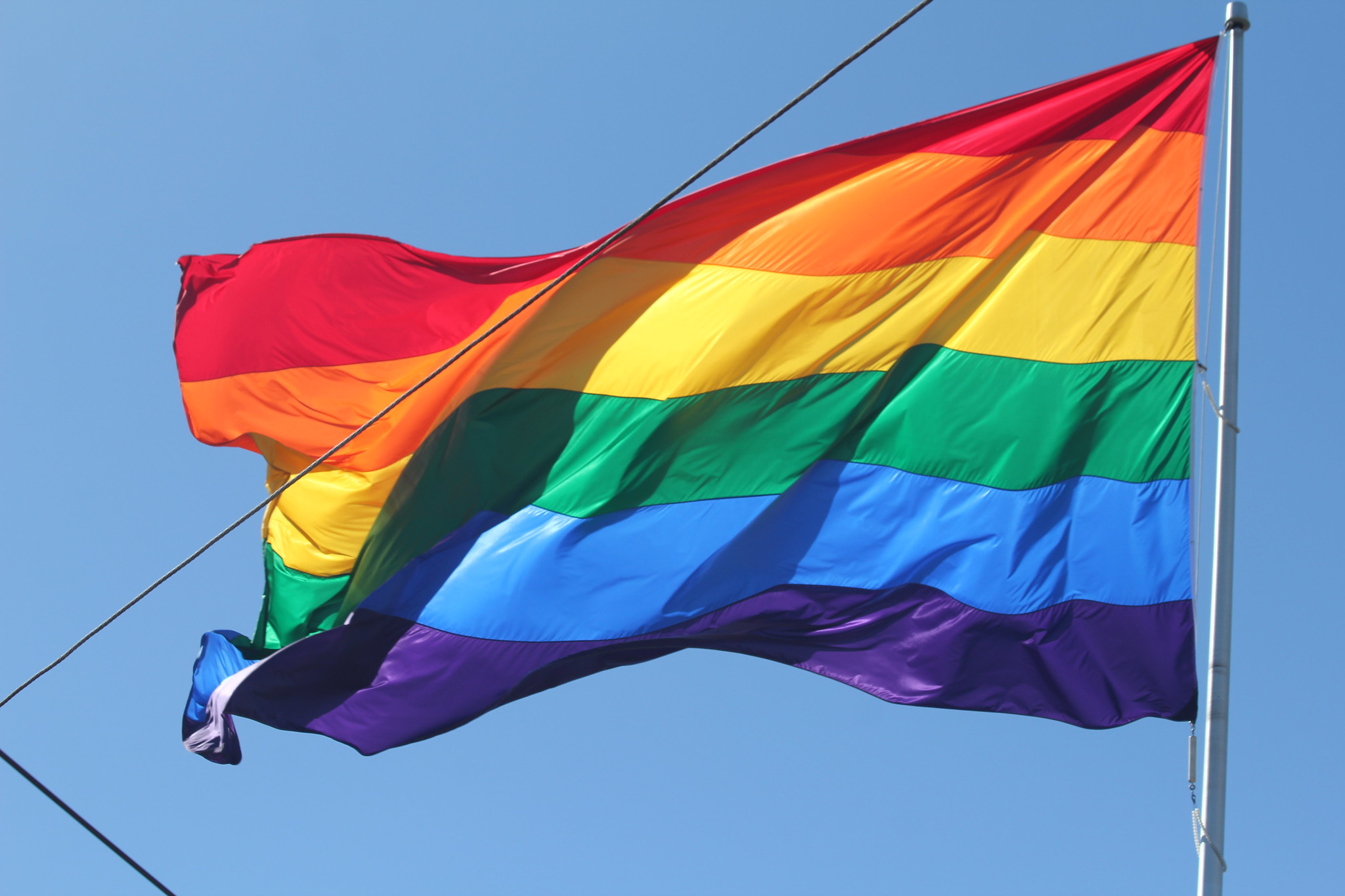
Toms River’s Exit 82 Theatre Company will host the third annual Toms River Pride festival June 13, celebrating the Jersey Shore region’s LGBT community, organizers said.
The theatre company is planning the celebration along with local partners. The Covid-19 compliant event will take place on Washington Street between Main Street and Hooper Avenue in Toms River’s Downtown District from 11 a.m. to 5 p.m., with live performances happening outdoors and at Exit 82 Theatre throughout the day. A drag show fundraiser to benefit Toms River Pride is scheduled for the evening of Saturday, June 12, with details to follow.
“As an Ocean County LGBTQ+ safe space, we’re proud that Toms River Pride has been embraced as a new, inclusive tradition in which all can partake,” event organizers and Exit 82 Theatre Company founders Billy Cardone and Keely Davenport said in an announcement. “With the privilege to celebrate comes a reminder that there is still work to be done to make our society more inclusive, like ensuring our transgender and [people of color] brethren are protected and valued.”
This year’s program includes the opening ceremony announcement of the inaugural Pride Advocate Award that, through a public nomination process, acknowledges New Jersey’s most impactful LGBTQ+ advocates and allies in the community. Throughout the day, the event will feature live entertainment and drag shows, family-friendly activities, partner activations, educational resources, and promotions by local businesses and restaurants downtown and across the county. Supporters are encouraged to participate in a Pride Month Visibility Campaign by displaying rainbow colors at home and on businesses, vehicles, boats and outfits for the month of June.
Those who wish to participate in Toms River Pride can attend with friends and family, become an official Pride Partner, Vendor or Sponsor, host a fundraiser or volunteer, make a Pride Advocate Award nomination, follow the @TomsRiverPride Facebook page for updates, join remotely via live-streamed shows, and make a donation to the host organization.
All participants must comply with the State of New Jersey’s COVID-19 guidelines.
More Information and Schedule:
Program (More Will Be Added):
Sponsors:
Partners & Vendors:
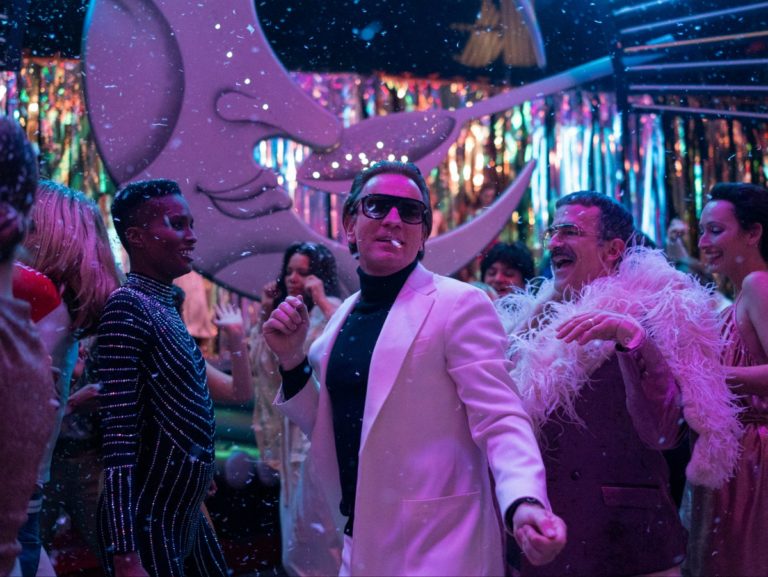
Ewan McGregor has defended his casting as gay fashion designer Halston in a new Netflix series.
The Trainspotting star will star in Halston as the titular influential designer best known for designing the pillbox hat worn by Jackie Kennedy at her husband’s inauguration. He died in 1990 of Aids-related cancer.
Speaking to The Hollywood Reporter, the actor addressed comments made by Pose star Billy Porter in 2019 that it was “enraging” seeing straight men praised for playing LGBTQ+ characters when gay men were rarely cast in the other direction.
Admitting that he was concerned that performing such a role in the limited series could cause a backlash, McGregor said: “I hear the discussion and I respect both sides of it, I really do.
“I haven’t walked in Billy Porter’s shoes. I don’t know what it’s like to lose out on parts when you might feel it’s to do with your sexuality. So I can only respect his point of view.”
The Scottish star then explained that he decided to take the role in Halston because sexuality wasn’t the main focus of the show.
“If it had been a story about Halston’s sexuality more, then maybe it’s right that gay actors should play that role,” he said.
With Krysta Rodriguez as Liza Minnelli
(ATSUSHI NISHIJIMA/NETFLIX)
“But in this case – and I don’t want to sound like I’m worming out of this, because it’s something I did think a lot about – I suppose ultimately I felt like it was just one part of who he was.”
Halston runs for five episodes on Netflix and has been executive produced by Ryan Murphy.
The issue of whether straight actors should play gay roles on screen has been hotly debated in recent years, with Russell T Davies casting many gay men in his Channel 4 series It’s A Sin.
“I’m trying to avenge hundreds of years of inequality,” Davies told The Independent. “The series has also unashamedly cast gay people in straight roles. I think that’s fine because, believe you me, from the age of eight we are studying straight people and how to fit in with them.”
Halston comes to Netflix on 14 May 2021.
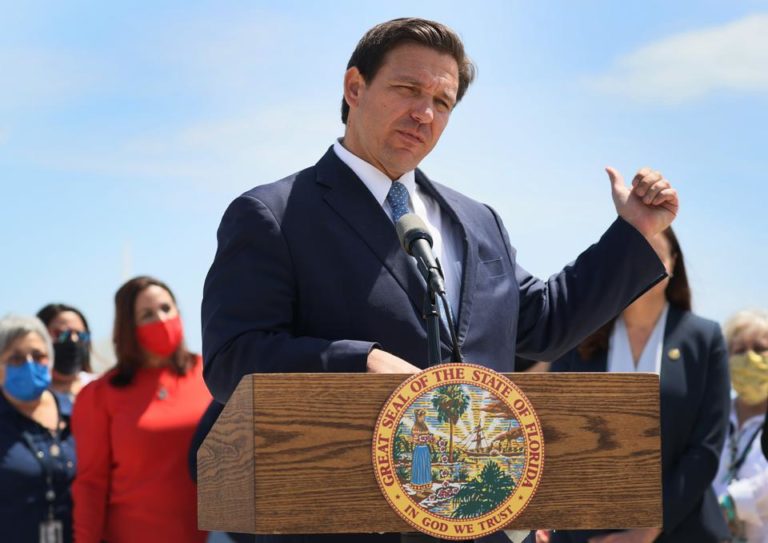

MIAMI, FLORIDA – APRIL 08: Florida Gov. Ron DeSantis speaks to the media about the cruise industry … [+]
Florida’s Republican Gov. Ron DeSantis told Fox News Thursday he will sign a bill into law that will ban every transgender female who wants to compete in school sports according to their gender identity, except for girls in elementary school. Trans boys and men will not be restricted in any way.
“We’re going to protect our girls,” DeSantis said at a town hall of Republican governors hosted by Fox’ Laura Ingraham, ignoring the fact that trans girls are girls. “I have a four-year-old daughter and a one-year old daughter. They’re both very athletic. We want to have opportunities for our girls. They deserve an even playing field, and that’s what we’re doing.”
Although it was thought to be dead, the transgender athlete ban was revived by State Senate Republicans and attached to Senate Bill 1028.
“This innocuous bill that had nothing to do with sports, nothing to do with transgender youth, now has language that categorically bans transgender young people in our state from playing sports that align with their gender identity,” Joe Saunders, Equality Florida political director, told WPLG-TV. “It was a shocking move that was clearly a backroom deal.”
“Yet another political tactic that highlights an ongoing lack of compassion and a willful ignorance of who transgender youth are and how this will cause harm,” trans man Nathan Bruemmer of St. Petersburg, Fla. told the Tampa Bay Times.
Until Friday, SB 1028 also contained a provision delaying Florida’s “name, image and likeness” legislation by a year.
College athletes and coaches, however, launched a campaign on Thursday to fight the delay of that provision, which would for the first time allow college athletes to earn money from autographs, commercials and the like. The line was something DeSantis had advocated for, allowing NCAA athletes to profit from their likeness and make product endorsements like pro athletes do.
MORE FOR YOU
State Senate Republicans provided a fix through a measure which amended SB 1028 to let the “name, image and likeness” provision kick in July 1, as originally planned.
No such heroic measures for trans girls and women. The only part of the original bill that was deleted was a provision allowing genital inspections of girls suspected of being transgender; that was replaced by inspections of birth certificates.
Once signed, Florida will be the eighth state in 2021 that has enacted a law restricting transgender women from playing in women’s sports. Similar bills in more than 30 states are under consideration.

WASHINGTON, DC – APRIL 28: U.S. President Joe Biden addresses a joint session of congress as Vice … [+]
President Joe Biden told Congress Wednesday night, “To all the transgender Americans watching at home — especially the young people, who are so brave — I want you to know that your president has your back.”
Biden’s senior adviser on LGBTQ+ issues was the first to declare last month, on the Trans Day of Visibility, that the administration will fight these new state bans.
“Any attempt to discriminate against trans kids or trans people is actually against the law and against nondiscrimination laws already on the books,” Reggie Greer said, as reported by The 19th. “We want to be an active part,” he added, of molding the national narrative on trans rights.
On Monday, the Ninth Circuit Court of Appeals will hear arguments in Hecox v. Little, the challenge to a ban on transgender students in school sports enacted by Idaho last year. The ACLU’s deputy director for transgender justice, Chase Strangio, will be arguing on behalf of a trans woman, Lindsay Hecox, who hopes to make the Boise State cross country team this fall.

Lindsay Hecox is suing Idaho’s governor for banning trans athletes like her.
One bright spot this week came from North Carolina, where a trans ban bill was set aside. It was just a few short years ago that North Carolina was hit hard by boycotts and public ridicule for a law that banned trans people from using public bathrooms that did not match the gender on their birth certificates.
This time around, however, the PBS NewsHour noted there is little to no backlash against states enacting trans bans.
Texas House Republicans are considering the most heinous of all bills thus far: A State Senate bill that brands gender transition for children “child abuse.”
They were unswayed by the moving testimony of a 10-year-old trans girl named Maya Stanton.
“I used to say, ‘I think God made a mistake and put me in the wrong body,'” she testified. “But now I realize God put me in this body for a reason, which was to teach people like you about diversity, tolerance and how people can be different.”
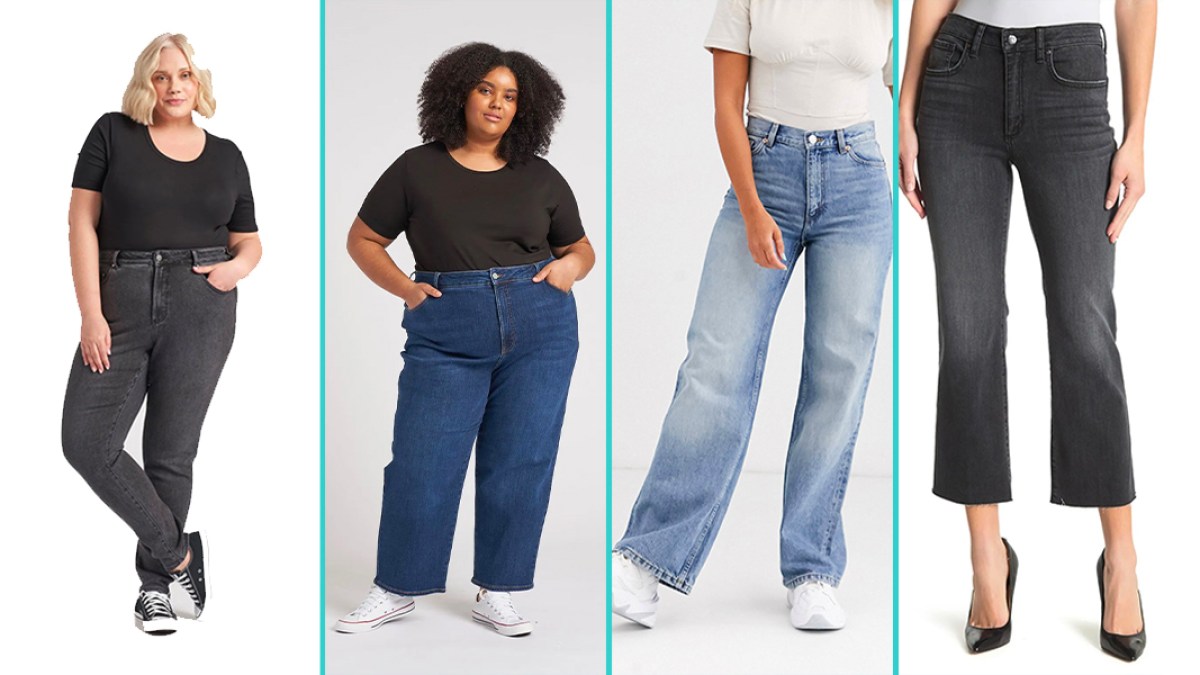
Have you recently found yourself staring into the vast abyss that is your closet or dresser or (let us be honest) floor, wondering what on earth clothes are? How do they go on a body? Why do they go on a body? We’ve been inside for a long time, and if you are anything like me, memories of anything approaching a personal style have slowly faded away, replaced by a rotating crop of sweats and novelty t-shirts.
Which is not to say a rotating crop of sweats is not a personal style — it’s not like I’m getting rid of any of mine, heaven forbid! But I do want to start thinking about adding some new things to the mix, so if you are also feeling that way, but worry that you have lost the ability to do so, you have come to the right place!
“So You Want To…” is a biweekly fashion guide, aimed to help you find the perfect looks for things like: exciting events (finally meeting that cutie you’ve been FaceTiming with for six months!), aesthetics and vibes (butch bottom summer!), pop culture personas (Fran Finecore!) and, well, whatever else I dream up!
For this first installation, I figured we’d keep it simple — a guide for some updated basics, with a rundown of the trends you can expect to see this summer. Think of it as a building block for our future forrays, yeah?
Here’s the thing about jeans: once you find a pair that works, it’s hard to go out of your way and try something new, because, well — shopping for jeans is the worst. But! If there was ever a time to get a little wild, it’s now!
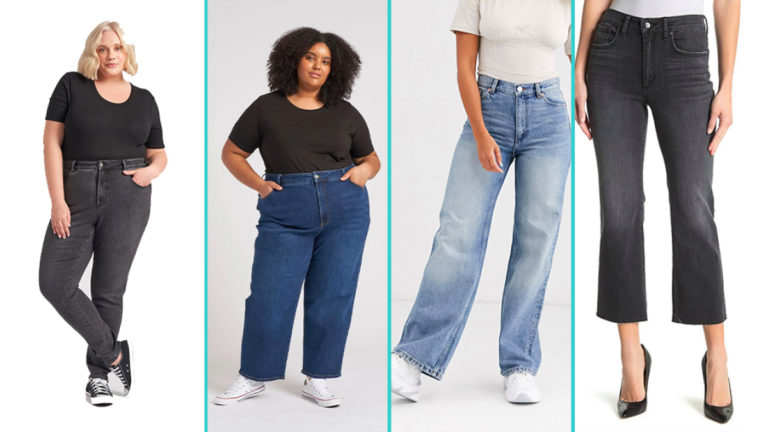
Some of you might be excited to see that we are slowly stepping away from the skinny jeans that have held a chokehold on Our Culture™ since the mid aughts, and that is true! If you are still dedicated to ’em, maybe try this high-waisted pair from Universal Standard? They are a touch more relaxed in the knee and hip, generally less binding then the skinnies of old. This straight leg pair, also from Universal Standard, speaks to my desire to introduce more structure while not being totally restrictive, perhaps they speak to you too? Prepare to see a blend of 90s and 70s styles this summer, as evidence by the high-waisted, light washed, baggy excellence of this pair from ASOS, and the cropped flare (flare!!!) on this black pair from Nordstrom Rack.
Did you think I was gonna say no more soft pants, like some kind of cruel fashion tyrant? Soft pants are here to stay, but I do want to update them a bit! Like these high-waisted joggers — casual and understated, and would pair effortlessly with any top or shoe you can imagine. I am also living for this athletic inspired moment (blame this image) and these side stripe joggers are, quite frankly, sick.
Also coming back with a vengeance is the pinstripe, if you can believe it. I am a little wary of it, if I am being honest, but this navy pair is compelling! And if you like your soft pants a little looser around the ankle, these twill pull pants will absolutely turn heads, even if you pair them with your silliest novelty t-shirt.
Remember what I said about the 90s? Prepare to see that influence in dresses big time this summer — note the baby doll ruffles on this green mini and to the oversized, Laura Ashley-esque florals on this black midi. Both of these would look incredible with a pair of Docs, but you know that. Are you not into dresses, but still want to throw on a single item that is breezy and cool? Hello neutral jumpsuit, I love you. Also! Overalls: They’re back! I think this black washed pair feels a bit more grown up than some of the others I’ve seen, but honestly? There is only one thing you must keep in mind when preparing to rock a pair of overalls: if you wear a yellow shirt under a denim overall, people will 100% assume you are very into Minions. Do with that what you will.
Are you looking to get into fun, all over patterns on shirts? Well, I have good news! For those who lean more masc, this bumblebee short sleeve dress shirt is delightful, and would look great with any of the jeans up top. The more femme inclined among us might be interested in this giraffe print top — it is a great way to lean into those 70s aesthetics! For those who aren’t afraid of a bit of skin, why not go fully off with this knitted tank? If baring the bod isn’t quite your style, that is A-OK because this black and white top is incredible and perfect for the warmer months ahead.
Remember shoes? They are the things that go on your feet when you — stay with me — leave the house. Wild, right? The trend for shoes right now is platforms and in a big way. I’m giving you two different options, a classic Van with a restrained bit of elevation as well as this cotton candy colored Baby Spice dream shoe. Both are guaranteed to have you (carefully) strutting your best stuff.
Craving a sandal? Well, I am a lesbian, so I always think Birkenstock’s are in style, and now it seems the world has finally caught up! If you already have a pair — I’m gonna go out on a limb and assume you do — why not try ones with metallic touches? Finally, I am entirely, absolutely obsessed with these loafers, they are making me think I should commit to a Miami Vice slash Robin Williams in The Birdcage energy this summer — maybe you should, too?
WHEW! How are we feeling? Excited? Inspired? Overwhelmed? All of the above? I’m starting to think that dressing myself might be possible after all!
If you have a vibe or a mood or an event you’d like to see a guide for, drop ’em in the comments!
 Stefana Avara
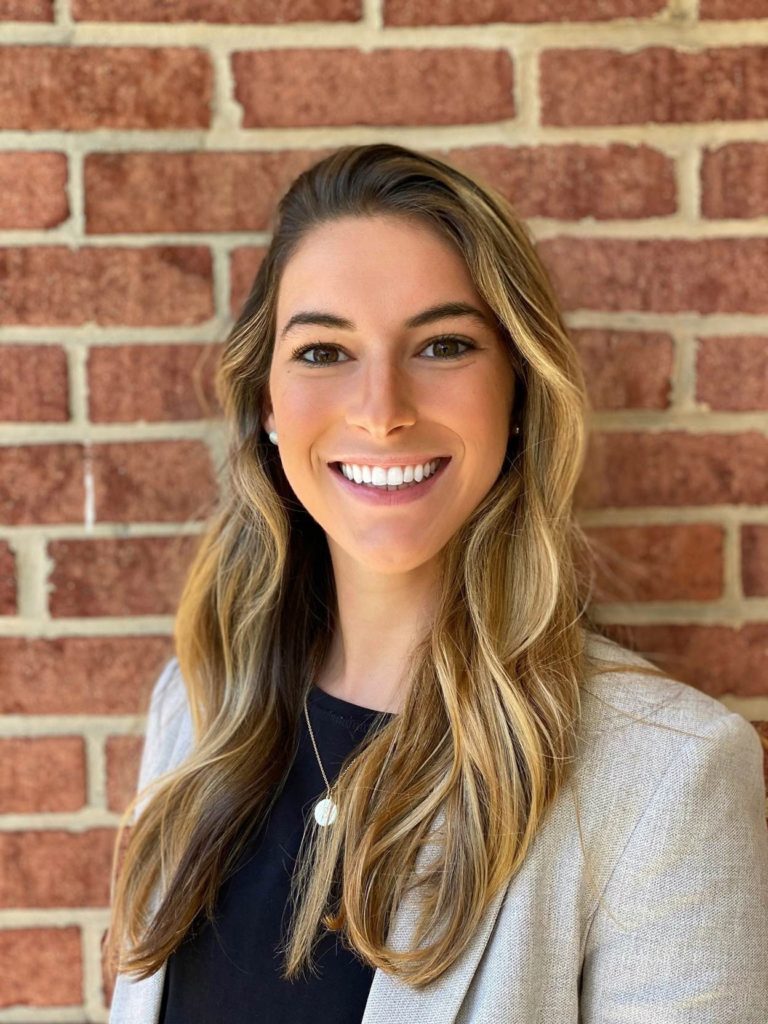
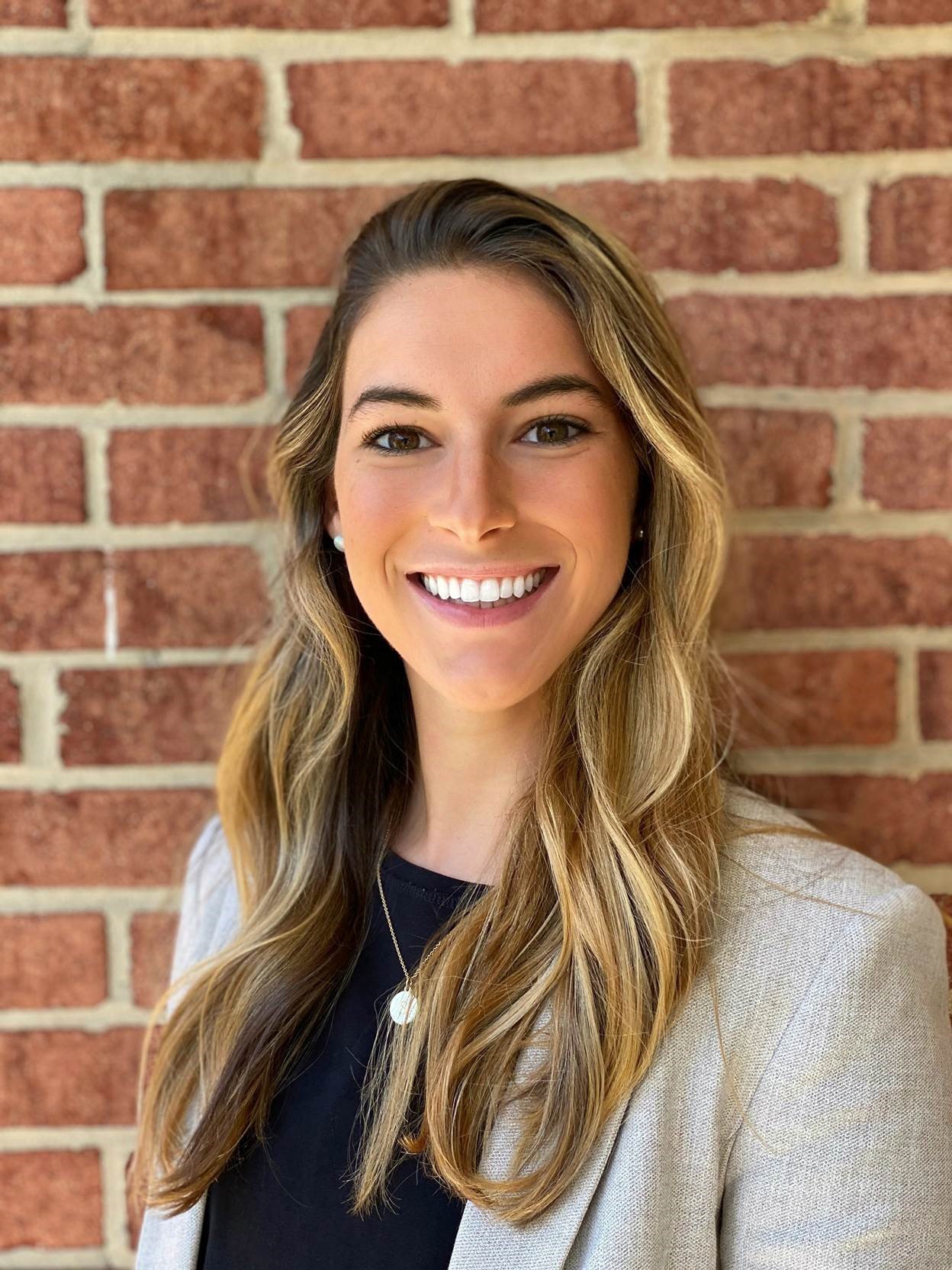
 Stefana Avara, a fellow in Ohio University’s Master of Sports Administration and Master of Business Administration Dual Degree (MBA/MSA), is dedicated to her roles as a fitness influencer and personal trainer. Her outstanding growth, hard work, and dedication were recognized by Business Insider, an American financial and business news website, who ranked her as #25 in their article “Meet 28 of the most popular fitness influencers on TikTok.”
Avara’s TikTok profile is focused on body positivity, and features a variety of workouts, helping women find their strength through fitness. She also serves as a mentor to young women around the world who seek advice about staying healthy and confident.
“I wanted to find an outlet where I could share the workouts that make me feel good and strong,” Avara explained. “As my platforms began to grow, I would get DMs from young girls asking me how they can lose weight, which made me feel bad that they have to grow up seeing perfectly posed and edited bodies on social media all the time. I started posting body positive content so that the women who follow me could see that you can work out every day and still have tummy rolls.”
In addition to being a student and fitness influencer, Avara is also a personal trainer and business owner. Through her business, Defining Active LLC, she works with more than 200 online clients each month and creates workout guides that help women reach their physical and mental goals. She also offers general fitness and wellness guides, selling more than 900 copies in over 23 different countries.
“I took a course at Ping my freshman year that prepared participants for the ACE Personal Training exam, and fell in love with the idea of helping people understand fitness as a holistic journey, not just focused on weight loss,” Avara said. “I took on my first clients in May 2020. At that time, I had 11,000 followers and 20 clients. This month, I have more than 500,000 followers and I average 200 personal training clients each month.”
Avara’s impressive following has given her the opportunity to work with popular brands, including Body Armor, Daily Harvest, Kiehls, 1stPhorm, and Bumble. This month, she will be working with Neutrogena for their “Skin Fit” product line.
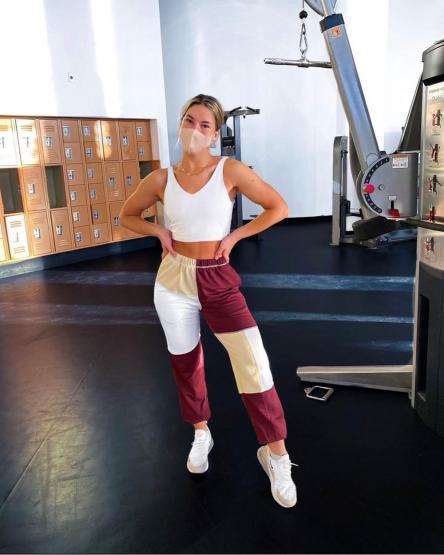
For the past two and a half years, Avara has been in the process of expanding her business even further as she prepares to launch Defining Active this summer, an affordable activewear line focused on flattering all body types.
“I’m excited to launch unique, personalized designs that compliment all body types and skin tones, and to have a broad range of influencers promoting Defining Active, including all races, body types, and members of the LGBTQIA+ community,” Avara said. “This industry frequently lacks inclusion, and I am honored and excited to have influencers on my team who can help support this community.”
Avara earned her Bachelor of Sport Management degree from Ohio University in 2020, and plans to graduate from the MBA/MSA dual program in 2023. She credits much of her growth, success, and business knowledge to the coursework and faculty at OHIO. She explained that she is appreciative of the skills she learned during her Quantitative Business Analysis courses because spreadsheets and organization are an essential part of her business and managing clients.
“The College of Business helped me develop professional communication skills that I use to negotiate brand deals, establish sponsored partnerships, and communicate with my clients. My undergraduate instructors taught me the importance of making thoughtful decisions rather than acting on temporary feelings,” Avara explained. “I never planned my influencer journey, but I am so excited about its growth.”
Avara is also grateful to have had the opportunity to work with and receive support from Matt Cacciato, the executive director of Ohio University’s AECOM Center for Sports Administration. While working as his assistant over the past year to complete her fellowship, Cacciato has supported her throughout her business journey and challenged her to grow professionally. Cacciato is just as thankful for Avara and her hard work, as he explained that she has been a tremendous asset to the center.
“It’s been a pleasure working with Stefana since last spring, as she is truly a seasoned professional with proven capabilities,” Cacciato said. “We were able to give her entire projects with confidence and she delivered admirably on our Stand Up & Cheer virtual 5K and FanMug social media campaign. Most importantly, Stefana’s kindness and poise were invaluable during these chaotic times, and her humility belies her personal success. I am so proud of her successes so far, and am excited to see what she continues to accomplish throughout the rest of her time at OHIO and beyond.”
Check out Avara’s fitness content on Instagram and TikTok!
Handle: @defining.fitness


Image Description: Irene and Seulgi from K-Pop girl group Red Velvet at a concert in 2016
CW: mental health issues and homophobia
Catchy songs, impressive choreography, well-produced music videos, creative concepts – if you have not at least heard of K-Pop by now, you must be truly living under a rock. South Korean “K-Pop idols”, or celebrities, have increasingly entered the Western music scene over the past couple of years, many of them achieving high rankings on the charts with songs written almost entirely in Korean.
As always when such trends emerge, they bring with them a large and diverse fanbase. In particular, many queer people feel drawn to the K-Pop genre, which is no surprise considering the androgynous way in which many idols are styled, large Twitter communities that make queer people feel welcomed, and the amount of support that idols have expressed in recent years. However, the K-Pop industry arguably remains a capitalist engine aiming to make money through fans, which is why problematic marketing techniques such as queerbaiting have surfaced.
Queerbaiting is, of course, not unique to K-Pop. Popular Western TV shows such as Sherlock hint at LGBTQ+ relationships to attract and profit off queer people and allies, yet do so without depicting and representing them fully as not to lose the support of homophobic audiences.
In K-Pop, queerbaiting can mainly be found in the form of homoerotic ‘fanservice’; this is not to be confused with non-promotional ‘skinship’, which is affection shown through the exchange of physical touch, sometimes among people of the same gender. While this may be construed as displays of romantic affection by some Western audiences, it is regarded as something completely normal in platonic relationships in South Korea.
However, the K-Pop industry arguably remains a capitalist engine aiming to make money through fans, which is why problematic marketing techniques such as queerbaiting have surfaced.
Although it is hard to tell the difference between skinship and fan service initiated by companies in many cases, there are still instances of queerbaiting in K-Pop media which specifically stand out as such. In reality shows, where K-Pop idols sometimes engage in challenges to promote their music, there have been a couple of problematic games, such as a ‘paper kissing game’, in which a piece of paper is passed from mouth to mouth and sometimes results in unintentional kisses between players. Seemingly harmless challenges like these are used to get LGBTQ+ fans invested in certain K-Pop groups.
In addition, questionable music videos such as Red Velvet’s ‘Monster’ arguably offer a problematic representation of lesbianism. At the centre of attention are the two female idols Seulgi and Irene, who are repeatedly shown in a tight embrace, and seem to almost kiss each other – but then don’t. Even the album cover features the two women in an intimate position, suggesting LGBTQ+ content where there actually is none.
While it may not have been the intention of the video or the idols themselves, the sensual touches in combination with erotic dance moves feed into the existing fetishization of lesbian couples. This kind of half-hearted representation and exploitation can leave us queer people feeling quite frustrated as we are not a marketing tool.
It is important to note that, in most cases, K-Pop idols themselves do not get a huge say in their ‘concepts’ – a combination of many aspects that make up their image, such as the genre of their songs, their styling, choreographies, storylines in music videos, and general aesthetic – or the kinds of games they participate in. Most of these decisions depend on how the record label they work for wants to promote them, making these companies the most problematic source of queerbaiting.
This kind of half-hearted representation and exploitation can leave us queer people feeling quite frustrated as we are not a marketing tool.
In addition, LGBTQ+ people remain marginalised and are not completely accepted in South Korean society even today. Sadly, there are still no laws to protect queer people from discrimination, and gay marriage has not yet been legalised.
Just like Western celebrities, idols take up quite an important role in Korean society and their platform enables them to influence their fans’ views on the LGBTQ+ community. However, many companies completely control what their idols are and aren’t allowed to do – publicly as well as personally – with many stars being on dating bans or under similar restrictions. This is why a lot of artists cannot speak up openly and only resort to subtle support, if at all.
Generally, I do see a positive trend of queerbaiting becoming less and less prevalent, while open support from K-Pop idols seems to be more and more frequent, making a large number of queer people feel very welcomed and represented. Knowing that it is not easy for our favourite artists to stand up for us turns every additional comment, however small it may be, into a success for our community.
Various artists have been spotted wearing clothes that draw attention to LGBTQ+ causes and waving our flag during concerts. Meanwhile, idol Sunmi has called herself the “LGBT queen” and expressed her support on Twitter.
There are some popular music videos, such Monsta X’s ‘All In’, that subtly feature a proper LGBTQ+ storyline and not just sensual touching in dance moves, giving us normalisation, rather than sexualisation or fetishisation. The girl group Dreamcatcher only produces gender-neutral songs, and one of their members, Yoohyeon, has previously covered the ‘Secret Love Song’ which highlights the struggles of forbidden queer relationships. RM, leader of the Grammy-nominated hit boyband BTS, has held a speech at the United Nations in 2018, validating the importance of gender identity: “No matter who you are, where you’re from, your skin colour, your gender identity, just speak yourself.” In addition, numerous idols have previously given encouraging messages to their LGBTQ+ fans. ATEEZ’s Hongjoong claims to get a particular inspiration and energy from his queer fans; Stray Kids’ Bang Chan has told a lesbian couple that they make him proud; the list goes on and on.
Generally, I do see a positive trend of queerbaiting becoming less and less prevalent, while open support from K-Pop idols seems to be more and more frequent
Finally, I’d like to point you towards my favourite queer artist, known under his stage name HOLLAND, who happens to be the first and only openly gay K-Pop idol. Coming out during his teens in South Korea, he was bullied in high school for being gay, which he retrospectively has described as having been extremely harmful for his mental health. He has mentioned that he later became what his younger self would have needed: a queer Korean artist representing queer Korean youth.
While his music often deals with self-love and self-acceptance, many of his music videos aim to normalise gay relationships. Because he wanted to write songs about being a gay man, this caused all the established labels to refuse to work with him, and he had to resort to crowdfunding. Sadly, his first single ‘Neverland’ (2018), which features him kissing another man, was marked as 19+ content and banned from being promoted on music shows.
Today, HOLLAND is a support system for LGBTQ+ fans all over the world. I was lucky to briefly meet him after a concert in 2019. When I told him how much his music and his cause meant to queer people struggling with mental health issues, he thanked me and replied that he was very proud of all of us. This is exactly the kind of support that we young queer people need in our lives. Although the K-Pop industry still has a long way to go in terms of queerbaiting and general acceptance, I hope that more and more artists will have the opportunity to openly support, and even personally represent, the LGBTQ+ community from now on.
Image Credit: 사요미 via Wikimedia Commons

Tiffany & Co. announced the debut of its first-ever men’s engagement ring.
Source: Tiffany PR
He said “yes.”
Tiffany & Co. announced Friday the debut of its first-ever men’s engagement ring, as it looks to tap into a new market for its high-end jewelry amid a rise in same-sex marriages globally and gender-fluid fashion trends.
The retailer, now owned by the luxury products group LVMH, has named the new line after the company’s founder, Charles Lewis Tiffany. The rings feature round-brilliant and emerald-cut diamonds that measure up to 5 carats.
Tiffany said its aspiration for the men’s engagement line was to offer products in support of love and inclusivity, while “paving the way for new traditions to celebrate our unique love stories and honor our most cherished commitments to one another.”
The design of the men’s ring is a departure from the traditional wedding band since it features a striking center diamond, Tiffany said.
Source: Tiffany PR
In 1886, Tiffany introduced its first solitaire diamond engagement ring for women. For decades since, couples have visited the jeweler’s stores around the world in search of engagement rings for women, as well as wedding rings. But Tiffany is looking to change that, as it embraces a new wave of couples more than a century later.
The design of the men’s ring is a departure from the traditional wedding band, since it features a striking center diamond, Tiffany said.
And with the new offering, Tiffany hopes it can find another solid stream of revenue growth. The company did more than $4 billion in jewelry sales last year, with women’s engagement rings representing about 26% of total revenue.
The French group and Louis Vuitton-owner LVMH completed its $15.8 billion acquisition of Tiffany in early January, following a bitter legal dispute. When LVMH reported its first-quarter financial results earlier this month, it said its watches and jewelry division’s sales rose by 138%, benefiting from the consolidation of Tiffany.
Starting next month, Tiffany said the men’s engagement rings will be available at select stores globally. They’re already available for sale online.


New data from the Centers for Disease Control and Prevention (CDC) show that reported annual cases of sexually transmitted infections (STIs) in the United States continued to rise in 2019, reaching an all-time high for the sixth year in a row. Gay and bisexual men, African-American people and young people had disproportionately high rates. And the latest figures don’t reflect the impact of the COVID-19 pandemic.
According to the CDC’s Sexually Transmitted Disease Surveillance 2019, the federal agency received more than 2.5 million reports of chlamydia, gonorrhea and syphilis, the three most common notifiable STIs (also know as sexually transmitted diseases, or STDs). This represents a nearly 30% increase since 2015.
“Less than 20 years ago, gonorrhea rates in the U.S. were at historic lows, syphilis was close to elimination and advances in chlamydia diagnostics made it easier to detect infections,” Raul Romaguera, DMD, MPH, acting director of CDC’s Division of STD Prevention, said in a press release. “That progress has since unraveled, and our STD defenses are down. We must prioritize and focus our efforts to regain this lost ground and control the spread of STDs.”
Chlamydia: More than 1.8 million cases of chlamydia were reported in 2019 (552.8 cases per 100,000 people), an increase of 3% since 2018 and nearly 20% since 2015. Cases rose among both men and women, in all racial/ethnic groups and in all regions of the country. Almost two thirds of cases were in adolescents and young adults.
Gonorrhea: 616,392 cases of gonorrhea were reported in 2019, an increase of more than 50% since 2015. Men had a higher rate and saw a greater increase (61%) than women (44%). What’s more, in over half of the cases, gonorrhea was resistant to at least one antibiotic.
Syphilis: 129,813 cases of syphilis were reported in 2019, an increase of more than 70% since 2015. This included 38,992 cases of primary and secondary syphilis, the most infectious stages. Here too, cases rose among both men and women, in all racial/ethnic groups and in all geographic regions. Gay and bi men accounted for a majority (57%) of cases. The sharpest increase was seen for congenital syphilis, or infection present in newborns at birth, which rose by nearly 300% during this period, reaching almost 1,870 cases (48.5 per 100,000 live births). The number of stillbirths and infant deaths related to syphilis also rose. Congenital syphilis reflects both a lack of timely prenatal care to diagnose the disease in pregnant women and failure to treat cases that are diagnosed.
Although all of these STIs are treatable, they can have serious health consequences if left untreated. While many people don’t have early symptoms, STIs can ultimately cause pelvic inflammatory disease, lead to infertility and result in pregnancy complications and infant death. Some STIs also increase the risk of HIV acquisition.
Not all STIs must be reported—and many people remain undiagnosed—so the actual overall burden is substantially higher than these figures indicate. A previous CDC analysis found that, in 2018, around one in five people in the U.S. had one of these three STIs, HIV, hepatitis B virus, genital herpes, human papillomavirus (HPV) or trichomoniasis.
Unequal Burden
While STD rates increased overall, some groups had a greater burden than others.
Gay and bi men were up to 42 times more likely than heterosexual men to be diagnosed with gonorrhea, and they accounted for nearly half of primary and secondary syphilis in 2019. Young people ages 15 to 24 accounted for more than half (55%) of reported STI cases, including 42% of gonorrhea cases and 61% of chlamydia cases.
Black people were five to eight times more likely; American Indians, Alaska Natives and Pacific Islanders were three to five times more likely; and Latinos were up to twice as likely as non-Hispanic white people to be diagnosed with STDs in 2019, according to the CDC.
As the report explains, these disparities likely are not attributable to differences in sexual behavior across ages and racial/ethnic groups, but rather reflect differential access to quality sexual health care and differences in sexual network characteristics. For example, in communities with a higher STI prevalence, there is a greater chance that a person will encounter a sexual partners who carries an STI.
“Focusing on hard-hit populations is critical to reducing disparities,” said Jo Valentine, MSW, associate director of the Office of Health Equity in CDC’s Division of STD Prevention. “To effectively reduce these disparities, the social, cultural and economic conditions that make it more difficult for some populations to stay healthy must be addressed. These include poverty, unstable housing, drug use, lack of medical insurance or [a] regular medical provider and high burden of STDs in some communities.”
During the COVID-19 crisis, many people may have had less sex while taking precautions to avoid contracting the coronavirus. But at the same time, medical services, including STI and HIV screening, treatment and partner services, have been curtailed, which could push rates higher. In fact, the reduction in STI services preceded the pandemic. According to a recent report from the National Academy of Sciences, Engineering, and Medicine, COVID-19 “has exposed weaknesses in public health preparedness due to weak infrastructure, an under-capacitated and under-resourced workforce and limited surge capacity.” Preliminary data suggest that many of these concerning trends continued in 2020.
Although many sexual health clinics have reopened, COVID-19 led to a shift to telehealth that may continue beyond the pandemic. TakeMeHome, for example, offers home delivery of free test kits for chlamydia, gonorrhea, syphilis and HIV. Swabs are used to collect throat and rectal samples, and blood samples are collected from a finger stick. The HIV test provides results in 20 minutes. Other samples are mailed to a lab for analysis, and results can be viewed online. Visit takemehome.org for more information in English and Spanish.
In additional to telehealth, the CDC has also identified other strategies to provide greater access to STI services, including “STD express clinics” that provide walk-in testing and treatment without a full clinical exam and partnering with pharmacies and retail health clinics. The new data also highlight the need for comprehensive sex education in schools.
“STDs will not wait for the pandemic to end, so we must rise to the challenge now,” Romaguera said. “These new data should create a sense of urgency and mobilize the resources needed, so that future reports can tell a different story.”
Click here for more news about STDs.
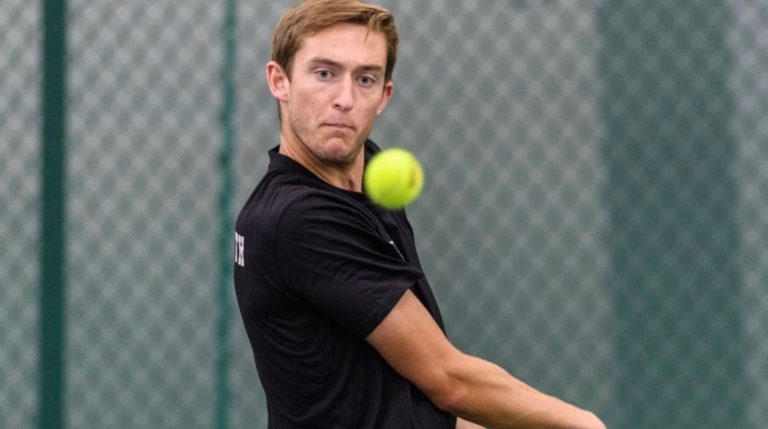
The Dartmouth athletic department recently received a poor mark in Athlete Ally’s Athlete Equality Index.
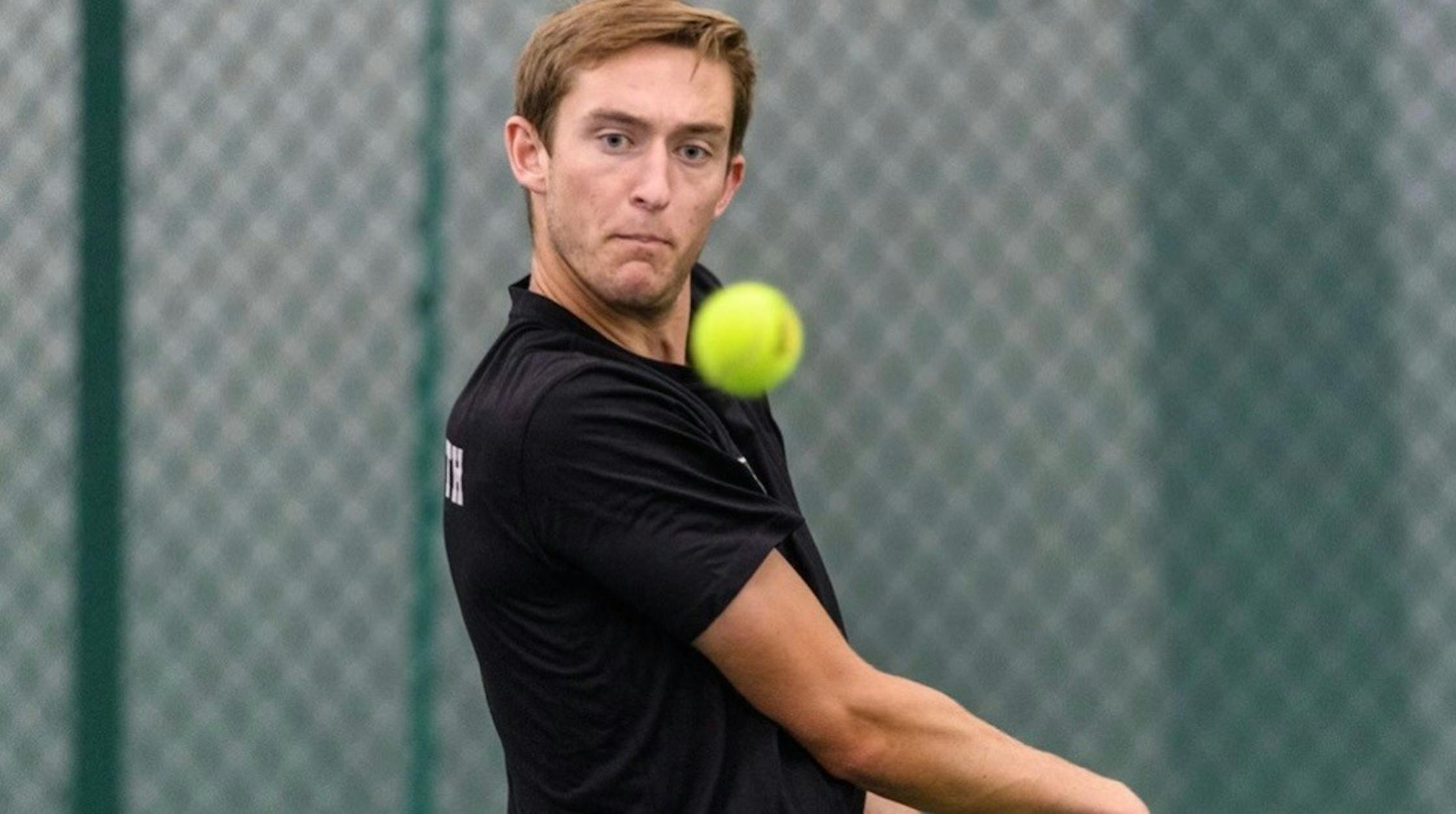
Tennis player John Speicher ’21 recently wrote an article in Outsports detailing his experience coming out at Dartmouth. Source: Courtesy of John Speicher ’21
The Dartmouth athletic department in March received a 40 out of 100 on the annual Athlete Equality Index score, a metric that evaluates LGBTQ+ inclusion policies and practices in NCAA Division I athletics. The score is compiled by Athlete Ally, a nonprofit organization which aims to end homophobia and transphobia in sports.
The AEI measures and ranks departments based on their nondiscrimination policy, trans inclusion policy, sexual harassment policy, fan code of conduct, collaboration with activist groups, LGBTQ+ educational resources and pro-LGBTQ+ training for staff and athletes. Athlete Ally takes all publicly accessible data found on each athletic department’s website into account when scoring a school.
While the AEI measures administrative policies that are made public by the athletic department, Athlete Ally does not survey student-athletes at the school to hear their experiences.
Olivia Goodwin ’21, a senior pole vaulter and long jumper who identifies as nonbinary and competes for the women’s track and field team, said that they have had a generally positive experience as a nonbinary student-athlete at Dartmouth.
“Since track is traditionally segregated into men and women, you kind of have to pick one,” Goodwin said. “For me, because I was assigned female at birth and I don’t take any hormone replacement therapy, I don’t have to worry about any of the NCAA eligibility rules regarding hormone changes. So for competitive reasons and because it makes my life more simple, I compete on the women’s team.”
Goodwin said that jumps coach Tim Wunderlich has done an effective job of emphasizing inclusion and making an effort to use correct pronouns.
“Coach has been awesome about it,” Goodwin said. “He still mis-pronouns me sometimes, but he’s really good at catching himself, and that’s really all I ask, is for that self awareness. I know that [my coach] respect[s] me and everyone messes up … it’s like, yeah, it’s gonna happen, but I don’t take it personally.”
Other student-athletes have echoed the belief that coaches work to establish an LGBTQ+ friendly environment. John Speicher ’21, a men’s tennis player who identifies as gay, recently published an article on Outsports — a sports website focusing on LGBTQ+ issues and athletes — encouraging other gay athletes to come out. He emphasized the importance of coaches in establishing an inclusive team environment.
“I think the big thing is coaches making sure that their language is very inclusive,” Speicher said. “The coach is the one constant thing that you have. The team is going to roll over every year with graduating seniors and incoming first-years, so making sure the coaches be considerate of what’s going on on the team is important.”
Speicher noted that tennis head coach Xander Centenari has also done well at creating an inclusive environment, including holding discussions with his players about team values on inclusivity and diversity. While Speicher noted that these conversations have never specifically been about gay acceptance, he emphasized that Centenari has established an environment inclusive of all identities. After publishing his article, Speicher said that Centenari sent him a text of support and then continued to treat him as he always had, which Speicher appreciated.
“If [the athletics department doesn’t] do something, it might be hard to know where the administration or the athletic department stands,” Speicher said. “[The athletics department has] been super supportive of me when I posted my article … but if you’re in the closet, you might not have that sort of support.”
Becca Wade ’22, a goalie on the women’s lacrosse team who identifies as bisexual, also felt that her coaches have been effective at establishing an inclusive environment. This past summer, Wade said that the team started having Zoom discussions about social justice issues. During one of the meetings, the coaches provided a platform for student-athletes identifying as people of color or as part of the LGBTQ+ community to share their experiences with teammates, according to Wade.
“It’s not like anyone has ever been negative on the team, but it is a different experience being on a mostly straight team,” Wade said. “After [we talked], a lot of teammates texted and were like ‘I didn’t realize this,’ or ‘I didn’t realize that you were experiencing these subtle things.’ … Continuing [those conversations] would be awesome.”
The Dartmouth Peak Performance team has worked with coaches to help them develop strategies to create an inclusive environment. Senior associate athletics director for DP2 Ian Connole explained the significance of this effort.
“By the things that [coaches] talk about in team meetings, by the questions they ask and by the people that they celebrate or tell stories of, we get this trickle-down effect of what’s accepted here,” Connole said. “Those things create a big piece of what happens within the sport culture, under the watch of the coach.”
According to Connole, Athlete Ally’s main issue with Dartmouth athletics was a lack of visibility of their policies on inclusivity. Currently, the department does not publish these policies on its website. Instead, the site features a statement that the “department embraces Dartmouth’s Principles of Community.”
Since Dartmouth’s poor result on the AEI, Connole said that he and DP2 have been working closely with Athlete Ally to increase the visibility of their own inclusivity policies. DP2 has developed a document that includes all of the athletic department’s policies aimed at fostering inclusivity, which will soon be published on the Dartmouth athletics site, according to Connole. As a result, Connole said he expects Athlete Ally to update the College’s score.
Goodwin said they think DP2 has improved its efforts this year to increase public support for LGBTQ+ players and issues. In its weekly newsletter to varsity student-athletes, DP2 has recently been including educational resources for all student-athletes regarding the LGBTQ+ athletic experience, such as a trans-inclusive webinar series.
Wade, however, said that she did not know about many of these initiatives and hopes that DP2 and the athletic department will make them more visible to the public.
“I had no idea they were working with Athlete Ally,” Wade said. “I get not making a big deal out of it, because sometimes singling out specific members because of their identity can potentially teeter in the wrong direction, but I think talking to teams and athletes about their input and using the student-athletes as resources would benefit everyone.”
Hoping to get student-athletes more involved, DP2 holds leadership workshops throughout the year, including a workshop on Inclusive Leadership. Connole added that the department’s long-term plan is to hold more educational events with the Race, Migration, and Sexuality Consortium of Studies for students next year.
“It’s basically bringing experts in to look at race, sexuality and their overlap with sport in society,” Connole said. “[Women’s, gender and sexuality studies] professor Eng-Beng Lim is one of our collaborators, and we’re coming together and we’re mixing things from the athletic culture, as well as the RMS consortium culture, to be able to put great resources and information out there for our student-athletes and staff.”
In order for these opportunities to be effective, Goodwin said that all student-athletes and coaches will need to take an interest in and actively participate.
“I do feel supported by my teammates, but I don’t really see many people on the team getting into advocacy or going to events and trying to learn more,” Goodwin said. “Like how teams are rewarded going to each others’ games, athletes could potentially be rewarded for going to events where they can learn about marginalized identities and what it means to be an ally.”