Home Blog Page 323

Gay Latvian paramedic dies after being burnt alive in horrific ‘homophobic attack’ – Yahoo Eurosport UK

A gay man from Tukums, Latvia, died of burns Wednesday (28 April) that nearly covered his entire body after a disgruntled neighbour allegedly doused him with flammable liquid.

Normunds Kindzulis, a 29-year-old medical assistant, suffered burns on 85 per cent of his body on 23 April in the sleepy, historic town filled with red-bricked churches and wood-carding mills.

But after a scuffle allegedly broke out in the apartment complex he lived in, he had his clothing soaked with fuel and was lit on fire in what advocates are urging the police to consider as a homophobic hate crime.

Another gay man suffered burns as he desperately sought to save Kindzulis as he was engulfed in a fire that razed the building.

Kindzulis was rushed to Riga, the capital of Latvia, for treatment. In a tragic turn, however, the European Pride Organisers Association confirmed on Twitter Wednesday that it had learned that Kindzulis had passed away.

He was, the group said, a “victim of [a] homophobic arson attack”.

According to Euractiv, local police initially refused to open an investigation, but Kindzulis’ death has brought an urgent need to do so.

“Bringing someone to the brink of suicide is also a crime,” officer Andrejs Grishins told reporters Thursday, the outlet said.

Kindzulis’s biography was once of strength and vigilance. He had received homophobic death threats in the past and fled to Tukums, which is some 70 kilometres from Riga.

But in the quiet town, he was met with all-too-familiar violence. He was physically assaulted at least four times.

The second victim told Tukums Independent News, a local newspaper, how the pair had reported to the authorities how their neighbour threatened and jeered at them in the five-story building they lived in.

“We reported these threats to both the police and the neighbour’s workplace, but there was no reaction,” he said.

“We had to wait for someone to be mutilated or killed.”

All the while on his social media accounts, Kindzulis raved about Eurovision, shared photos of his travels and camping trips around Latvia and cared for his cat.

His death has come to expose the fault lines of Latvia, an European Union member state that has long resisted recognising LGBT+ people.

The attack even attracted the attention of president Egils Levits, who tweeted that “there is no place for hate in Latvia”.

However, the Latvian parliament, the Saeima, overwhelmingly voted to tweak the constitution to define the family strictly as a “union of a male and female person” earlier this year.

Activists across the world paid tribute to Kindzulis which, to so many, not only signalled the depth of anger felt towards queer folk in Latvia but the very need for Pride and the LGBT+ rights movement itself.

Gay Latvian paramedic dies after being burnt alive in horrific ‘homophobic attack’ – Yahoo Movies UK

A gay man from Tukums, Latvia, died of burns Wednesday (28 April) that nearly covered his entire body after a disgruntled neighbour allegedly doused him with flammable liquid.

Normunds Kindzulis, a 29-year-old medical assistant, suffered burns on 85 per cent of his body on 23 April in the sleepy, historic town filled with red-bricked churches and wood-carding mills.

But after a scuffle allegedly broke out in the apartment complex he lived in, he had his clothing soaked with fuel and was lit on fire in what advocates are urging the police to consider as a homophobic hate crime.

Another gay man suffered burns as he desperately sought to save Kindzulis as he was engulfed in a fire that razed the building.

Kindzulis was rushed to Riga, the capital of Latvia, for treatment. In a tragic turn, however, the European Pride Organisers Association confirmed on Twitter Wednesday that it had learned that Kindzulis had passed away.

He was, the group said, a “victim of [a] homophobic arson attack”.

According to Euractiv, local police initially refused to open an investigation, but Kindzulis’ death has brought an urgent need to do so.

“Bringing someone to the brink of suicide is also a crime,” officer Andrejs Grishins told reporters Thursday, the outlet said.

Kindzulis’s biography was once of strength and vigilance. He had received homophobic death threats in the past and fled to Tukums, which is some 70 kilometres from Riga.

But in the quiet town, he was met with all-too-familiar violence. He was physically assaulted at least four times.

The second victim told Tukums Independent News, a local newspaper, how the pair had reported to the authorities how their neighbour threatened and jeered at them in the five-story building they lived in.

“We reported these threats to both the police and the neighbour’s workplace, but there was no reaction,” he said.

“We had to wait for someone to be mutilated or killed.”

All the while on his social media accounts, Kindzulis raved about Eurovision, shared photos of his travels and camping trips around Latvia and cared for his cat.

His death has come to expose the fault lines of Latvia, an European Union member state that has long resisted recognising LGBT+ people.

The attack even attracted the attention of president Egils Levits, who tweeted that “there is no place for hate in Latvia”.

However, the Latvian parliament, the Saeima, overwhelmingly voted to tweak the constitution to define the family strictly as a “union of a male and female person” earlier this year.

Activists across the world paid tribute to Kindzulis which, to so many, not only signalled the depth of anger felt towards queer folk in Latvia but the very need for Pride and the LGBT+ rights movement itself.

Conservatives claim to hate “cancel culture” — but it’s the heart of the right-wing agenda – Salon

You know who’s not canceled? The endless parade of conservative pundits and politicians complaining about “cancel culture.” You know who is canceled? George Floyd is canceled. Breonna Taylor is canceled. Ma’Khia Bryant is canceled. Andrew Brown Jr. is canceled. They are the true victims in America’s longest-running culture war. Anyone who tells you different is just gaslighting. You want “cancel culture”? America is plagued with cancel culture. And no one is more American than conservatives, as they never cease reminding you.

Despite earlier boutique appeal, the term “cancel culture” had only faintly registered with the broader public before the July Fourth holiday last year (Google trends), when then-President Donald Trump gave a speech at Mount Rushmore, warning of “a growing danger that threatens every blessing our ancestors fought so hard for,” and saying that his opponents’ “political weapons” included ”cancel culture’ — driving people from their jobs, shaming dissenters, and demanding total submission from anyone who disagrees.” 

Advertisement:

It was a ludicrous accusation coming from the man who’s signature line — “You’re fired!” — was the quintessential  expression of actually-existing cancel culture. More recently, Trump had been the main driver of the cancellation of NFL Colin Kaepernick, demanding not just that the NFL quarterback be fired, but driven from the country. That absurdity prompted CNN fact-checker Daniel Dale to post a list of people or institutions Trump had called out to cancel on Twitter over the years, ranging from corporations like AT&T, Apple and Macy’s to newspapers like the Dallas Morning News and the Arizona Republic to liberal commentators like Paul Krugman and Touré and even conservatives like Karl Rove, Rich Lowry, Charles Krauthammer and Jonah Goldberg. 

But now that Trump himself has been canceled by the votes of 81,268,924 Americans, “cancel culture” has become a go-to weapon of choice for Trumpian conservatives, fueled by a branded string of stories in conservative media, including the New York Post, Breitbart, the Daily Caller and the Daily Wire. With Trump himself no longer dominating news cycles 24/7, there’s a huge void to fill. Conservative “cancel culture” panic helps fill that void by providing a shared cookie-cutter framework to both fuel and give shape to that panic — which is in fact a genuine cultural panic about the white right’s loss of power to impose its worldview, and resulting judgments, on others. To hold onto power, conservatives are committed to building the “cancel culture” narrative, casting themselves as victims — along the lines of my December Salon story on perceived victimhood

A meaningfully meaningless term

Advertisement:

As Media Matters editor Parker Malloy argues, regarding the terms “cancel culture,” “woke” and “identity politics”: “Whatever real definitions these words had before they were co-opted by the right have been diluted to the point of meaninglessness.” For conservatives, that meaninglessness is a feature, not a bug. Those words mean whatever a right-wing accuser needs them to mean in the moment. They are talismanic terms, representing the very cultural power the right feels itself losing in today’s rapidly changing world. “Cancel culture” in particular has a profound Orwellian or even Nietzschean power: a transvaluation of values, transforming a moment of existential loss into one of triumph, at least for as long as we let them get away with it. 

There are, however, two modest constraints on meaning we can observe: the notions that cancel culture is something new, and that it comes exclusively from the left. The reality is exactly the opposite. For as long as culture has been changing, conservatives have tried to stop it by suppressing or demonizing anything that challenges their worldview. Not all conservatives, of course, and not in all ways. But this has been a central thrust of conservative thought, not just in the modern political era, when the terms “liberal” and “conservative” emerged, but as far back as ancient Greece, as Eric Alfred Havelock showed in “The Liberal Temper in Greek Politics.” 

In American history we can see dramatic examples of conservative cancel culture in the Alien and Sedition Acts, in the 4,743 post-Civil War lynchings to terrorize and suppress black political power, in the post-World War I Palmer Raids, in which 10,000 were arrested and 556 deported, in the McCarthy era, during which hundreds were imprisoned and 10,000 to 12,000 Americans lost their jobs — including the long-neglected anti-gay Lavender Scare — and in the FBI’s COINTELPRO Program, which targeted the 1960s civil rights and anti-war movements, labelling Martin Luther King Jr.’s SCLC as a Black nationalist “hate group.” Trump’s obsession with canceling people he fears fits squarely within this historical tradition. After all, his political mentor and second father-figure was Joe McCarthy’s lead investigator, Roy Cohn. We shouldn’t be the least bit surprised or confused by the cancel culture hysteria being promoted today as a front for the same evils it pretends to be fighting against. 

Advertisement:

Still, the term itself is new compared to this centuries-long history, so it warrants clarification. In early April, the Washington Post’s Clyde McGrady provided an excellent guide, “The strange journey of ‘cancel,’ from a Black-culture punchline to a White-grievance watchword.” McGrady offers a concise cultural history, from legendary songwriter/producer Nile Rodgers’ experience with a bad date, rendered into the 1981 Chic song “Your Love Is Cancelled” to its appearance in “New Jack City” a decade later to 2000s songs “Hustler’s Ambition” by 50 Cent and “I’m Single” by Lil Wayne and finally to Black Twitter.  

“Declaring someone or something ‘canceled’ on Twitter was not really an attempt to activate a boycott or run anyone from the public square,” McGrady explains. “Saying someone was ‘canceled’ was more like changing the channel — and telling your friends and followers about it — than demanding that the TV execs take the program off the air.” 

Advertisement:

It’s worth highlighting that Rodgers’ bad-date experience at the root of all this sprang from his working-class common man rejection of tossing his cultural weight around:

[A]t heart, he was still a humble kid whose parents had struggled with drug addiction and who felt fortunate to have made it as far as he did. So, when his date asked the maître d’ to remove people from a table so they could sit there instead, Rodgers bristled. … 

Her attempt to use his celebrity to push people around was a dealbreaker. “No, no, no, I don’t do that,” Rodgers remembered explaining. “I don’t play that card.”

In short, canceling everyday people in the way that conservatives portray “cancel culture” to work was the exact opposite of what motivated Rodgers to coin the term in the first place, as well as how it’s been used on Twitter. Think about that anytime you hear the term used.

You should also think of everything conservatives are doing — or trying to do — right now to cancel the views of those they disagree with. The following are just a few prominent examples. In each case, it’s about those who wield power “canceling” — or at least trying to cancel — those who would challenge them. Their efforts to cancel democracy at the ballot box (with 361 bills in 47 states as of March 24) and in the streets (81 anti-protest bills in 34 states as of April 21) are deadly serious threats to American democracy.

Advertisement:

But the right’s most persistent, long-running cancel-culture attacks center on education. As Fairness and Accuracy In Reporting noted on William F. Buckley’s death, “Buckley’s career began in 1951 with the publication of ‘God and Man at Yale,’ an attack on his alma mater that urged the firing of professors whom he felt were insufficiently hostile to socialism and atheism.” 

Cancel culture in education

In March, Boise State University abruptly suspended all 52 sections of a required general education course, “Foundations of Ethics & Diversity,” citing “allegations that a student or students have been humiliated and degraded in class on our campus for their beliefs and values.” Suspending 52 sections of a required course without investigation for perhaps a single student complaint is of course wildly out of bounds, as pointed out by John K. Wilson at the Academe blog

Advertisement:

Even if one instructor had done something terrible in one class, that would only justify (in the most extreme cases) suspending that instructor temporarily and finding a substitute to continue the class. It could not justify suspending all 52 classes in which there was no evidence of any misconduct.

Shedding light on the over-reaction, The Foundation for Individual Rights in Education reported, “The cancellation of the classes comes after more than a year of lawmakers’ efforts to rein in classes at Idaho universities and colleges.” But the legislature wasn’t acting on its own, as Wilson made clear:

The Idaho legislators are being pressured by right-wing nonprofits who demand censorship of liberal ideas on campus. A December 2020 report from the right-wing Idaho Freedom Foundation and the Claremont Institute declared that “eliminating social justice initiatives at Idaho’s universities is necessary for meaningful reform, as well as disrupting their ability to provide stable careers for social justice advocates.” The report called for the state legislature to act by “penalizing universities that continue to emphasize social justice education.” This report urged the state legislature to violate academic freedom and ban classes it deemed too liberal: “Direct the University to eliminate courses that are infused with social justice Ideology.” Leading right-wing think tanks are actively demanding a ban on courses based on their ideology. This is an example of conservative cancel culture far more extreme than anything pushed by left-wing activists. 

The report doesn’t just call for eliminating individual courses, however. It calls for the elimination of five whole departments — Gender Studies, Sociology, Global Studies, Social Work and History — that it claims are infused with “social justice” ideology. (A sixth blacklisted department has since been added: Criminal Justice.) Eight other departments (later updated to nine) are on a watch list of sorts, judged to be “social justice in training.” What conservatives want here is strikingly similar to what Viktor Orbán has done in Hungary, where he’s just announced the privatization of 11 public universities, to be run by political allies. 

Boise State’s recklessly illegal actions are just the tip of the iceberg. On April 15, Education Week reported that Republican lawmakers in eight states (including Idaho) have drafted bills restricting how teachers can discuss racism and sexism. “The bills use similar language as an executive order former President Donald Trump put in place to ban diversity trainings for federal workers,” it reported. 

Georgetown political scientist Donald Moynihan saw all this coming years ago. In a New York Times op-ed just before Trump took office, Moynihan — then at the University of Wisconsin — focused attention on what was really happening where he worked.

Advertisement:

“At least three times in the past six months, state legislators have threatened to cut the budget of the University of Wisconsin at Madison for teaching about homosexuality, gender and race,” his article began. All the discussions focused on the dangers of “political correctness” (the buzzword of choice before “cancel culture”) bore no relation to his own experience teaching at public universities in three states over 14 years. “Students can protest on the campus mall, demanding that policies be changed; elected officials can pass laws or cut resources to reflect their beliefs about how a campus should operate,” he wrote. “One group has much more power than the other.” 

I asked Moynihan about how he came to write that piece when he did. Here’s what he said: 

I was first engaged on speech issues when the then-governor of Wisconsin, Scott Walker, proposed to remove “the search for truth” from my university’s mission statement. (He would later claim it was a typo.) He then reduced tenure protections for faculty and new policies that would have made it easier to bring guns on campus. Republican politicians would talk about free speech on campus, but seemed to be intent on eroding the conditions to protect such speech. Politicians were also willing to target faculty members. The chair of the Assembly Higher Education committee started monitoring faculty syllabi and calling for the firing of faculty whose courses he did not like. 

That was when I spoke out…. It seemed deeply unfair that state officials would so blatantly use their power to determine what was, and what was not, acceptable speech. …

Soon after a Ben Shapiro talk was interrupted for about 10 minutes the legislature proposed and the conservative Board of Regents adopted a new set of policies that they said protected free speech but effectively forced campuses to punish students for protest. Our Board of Regents was almost uniformly conservative appointees who seemed to see it as their job to attack the institution they had been appointed to represent.

I’ll have more to say about Shapiro’s role below. But it’s part of a broader campaign. “Conservatives have been successful at demonizing the people who work on campus — faculty, staff and students — as threats to free speech,” Moynihan told me. “Attacking universities became a staple of the far right, propelled by an entire ecosystem of media funded by donors like the Koch or DeVos families, such as Campus Reform. [More on them below, too.] Tucker Carlson had a themed segment called ‘Campus Craziness.'”

 Worse than that, Moynihan said: 

Advertisement:

The mainstream media bought it. It wasn’t just on the right. Journalists at the Atlantic or writers in the New York Times told us that students were becoming dangerously intolerant, and faculty were brainwashing them. My op-ed in the Times was one of the few that pushed against that general narrative. The dominant narrative, even in places like the New York Times, was that conservative speech was being suppressed, and the students and faculty were the villains. Someone counted this! They found that over an 18-month stretch, there were 21 op-eds about the suppression of conservative speech but just three, including mine, on conservative threats to speech.

Remember: Moynihan’s op-ed ran just days before Trump took office, having made complaints about “political correctness” a recurrent campaign theme.  

“Once the general narrative was established, even trivial examples — students at Oberlin complaining about food names – were presented as serious and representative threats to speech,” Moynihan continued. “There were also a series of college tours by people like Milo Yiannopoulos, Ann Coulter and Ben Shapiro who said offensive things designed to enrage people, and then generated protests and interruptions that embellished their brands as fearless free-speech champions.” 

In March 2018, Sanford Ungar reported on results from the Georgetown Free Speech Tracker:

[M]ost of the incidents where presumptively conservative speech has been interrupted or squelched in the last two or three years seem to involve the same few speakers: Milo Yiannopoulos, Ben Shapiro, Charles Murray, and Ann Coulter…. In some instances, they seem to invite, and delight in, disruption.

At Vox, Zack Beauchamp put a finer point on it:

Advertisement:

What Ungar is suggesting here is that the “campus free speech” crisis is somewhat manufactured. Conservative student groups invite speakers famous for offensive and racially charged speech — all of the above speakers fit that bill — in a deliberate attempt to provoke the campus left. In other words, they’re trolling. 

Trolling takes other forms as well, as Alice Speri reported for the Intercept in early April. Her story carried the subhead, “Campus Reform and its publisher, the Leadership Institute, are siccing armies of trolls on professors across the country.” Campus Reform purports to expose “liberal bias and abuse on the nation’s college campuses,” but regularly relies on misrepresentation, first to elicit faculty comments and then to mis-report them, making them seem as sinister as possible.  “Over the last several years, Campus Reform has targeted hundreds of college professors,” Speri reported, “leading to online harassment campaigns, doxxing, threats of violence, and calls on universities to fire their faculty.” 

A Trinity College assistant professor, Isaac Kamola, “has tracked more than 1,570 stories posted on Campus Reform since 2020 and surveyed the 338 individuals they targeted.” He “found that at least 40 percent of respondents received ‘threats of harm’ following a Campus Reform article, mostly via email and social media.” She goes on to say, “Less than half the people surveyed by Kamola reported receiving support from their universities’ administrations, and more than 12 percent reported facing disciplinary action as a result of a Campus Reform story. Three people said they lost their jobs.”

In short, they were canceled. And no one put them on national TV to talk about it. That’s just one more way in which conservative gaslighting about cancel culture advances the very thing conservatives claim to be concerned about. 

“Having created the narrative of the intolerant liberal campus as a problem, conservative politicians could propose a solution,” Moynihan continued. “They could make a case for why their policing of speech on campus was actually protecting free speech. They effectively persuaded many that politicians should be trusted to monitor speech on campus, more than the people who lived on campus and have historically done a pretty good job of protecting speech.”

But none of this matched reality. “Wisconsin has a long history of protest and counter-protest on campus, some of it quite violent. The idea that students had suddenly become aggressive seemed clearly wrong to me,” Moynihan recalled. “These terms I kept hearing just did not fit with my experience with the students I engaged with. The gap between my lived experience on campus and what was being portrayed in the media was large.” 

At the same time, “I looked around the world and saw a very disturbing trend: Authoritarian governments in places like Hungary, Turkey and China were policing speech on campus as part of their effort to stifle dissent, using many of the same tools that U.S. state legislatures are adopting,” Moynihan said. “For example, a bill in Florida encourages students to record and monitor their professors to expose their views. What could be more chilling to speech in the classroom? This is the same tool that China uses to control universities: Student informers report any dissent against the party.”

Canceling democracy at the ballot box

Trump’s refusal to accept his defeat in the 2020 election was the epitome of attempting to cancel democracy. But it was only an intensification of processes already underway. Republicans have only won the popular vote for president once in eight elections since 1988. They have not represented a majority of voters in the Senate since 1996. Their $30 million REDMAP project in 2010 created the most sweeping partisan redistricting of the House in US history, as former Salon editor in chief David Daley recounted in “Ratf**ked.” Baseless claims of voter fraud have been repeatedly invoked in justifying and motivating voter suppression efforts. More broadly, a new study of state-level democratic backsliding since 2000 found that “Republican control of state government, however, consistently and profoundly reduces state democratic performance during this time period.”

Still, what’s happening now goes considerably further. A majority of Republicans refuse to believe Biden legitimately won the election, leading to an avalanche of new voter suppression bills — 361 bills in 47 states as of March 24, according to the Brennan Center, which reported:

Most restrictive bills take aim at absentee voting, while nearly a quarter seek stricter voter ID requirements. State lawmakers also aim to make voter registration harder, expand voter roll purges or adopt flawed practices that would risk improper purges, and cut back on early voting. 

Sharply underscoring the cancel culture motivations — the conflict between established state power and shifting public opinion — the report continued: “The states that have seen the largest number of restrictive bills introduced are Texas (49 bills), Georgia (25 bills), and Arizona (23 bills). Bills are actively moving in the Texas and Arizona statehouses, and Georgia enacted an omnibus voter suppression bill last week.”

The most infamous aspect of the Georgia law is its restriction on giving water to people waiting in long lines to vote. But as election law expert Rick Hasen explained in a New York Times op-ed, there’s something even more sinister involved, a “new threat of election subversion” that “represent[s] a huge threat to American democracy itself.” Specifically, “The Georgia law removes the secretary of state from decision-making power on the state election board,” which is aimed at Brad Raffensperger, who refused to “find” 11,780 votes to overturn Biden’s victory. “But the changes will apply to Mr. Raffensperger’s successor, too, giving the legislature a greater hand in who counts votes and how they are counted,” Hasen explained. 

It’s hardly an isolated case, he noted: “According to a new report by Protect DemocracyLaw Forward and the States United Democracy Center, Republican legislators have proposed at least 148 bills in 36 states that could increase the chances of cooking the electoral books.” More precisely, the press release says: 

Many of the bills would make elections more difficult to administer or even unworkable; make it more difficult to finalize election results; allow for election interference and manipulation by hyper-partisan actors; and, in the worst cases, allow state legislatures to overturn the will of the voters and precipitate a democracy crisis. If these bills had been in place in 2020, they would have significantly added to the turmoil of the post-election period, and raised the prospect that the outcome of the election would have been contrary to the popular vote.

This is what a real cancel culture crisis looks like. And it’s 100% conservative from top to bottom. There are of course some individual conservatives who strongly object — but nowhere near enough.

Canceling democracy in the streets

But democracy doesn’t begin and end at the polls. The First Amendment protects basic freedoms that make meaningful democracy possible, including “the right of the people peaceably to assemble, and to petition the Government for a redress of grievances.” Republicans have been busy trying to cancel our democracy on this front as well, with 81 anti-protest bills introduced in 34 states during the 2021 legislative session, “more than twice as many proposals as in any other year, according to Elly Page, a senior legal adviser at the International Center for Not-for-Profit Law,” the New York Times reported on April 21. (Those laws are tracked here.) 

“Republican legislators in Oklahoma and Iowa have passed bills granting immunity to drivers whose vehicles strike and injure protesters in public streets,” the Times reported. But that’s just the tip of the iceberg. “We’ve seen at least 15 bills introduced that would create new immunity for drivers who hit protesters with their cars,” Page’s colleague Nick Robinson told Democracy Now! on April 26. That just one of many objectionable features in a recently-passed Florida bill that Gov. Ron DeSantis signed while claiming it was as “anti-rioting.” The ACLU of Florida characterized it instead as “anti-protest.” Just three people would be enough to constitute a “riot” and 26 would constitute an “aggravated riot,” potentially facing long prison sentences.

“Under this new bill, let’s say you just go to a protest, and a handful of people kick over a trash can. Just by being part of that crowd, you can be arrested and prosecuted for rioting and face a felony,” Robinson explained. “Actually, under the law, no one actually has to commit any violence at all. If there’s just a danger to property, then people can be arrested for rioting.” 

In short, this a naked governmental power grab, meant to squelch popular protest, and aimed specificallyat Black Lives Matter protesters. How do we know? Florida lawmakers said as much, and they included a provision blocking any Florida city or county from cutting police budgets without explicit permission from the state. 

Conservative anti-protest cancel culture is nothing new, of course. The Palmer Raids were supposed to head off a Russian Revolution-style violent uprising, but only turned up a total of four pistols from thousands of arrests. More recently, Republican state lawmakers have focused on criminalizing climate activism, as the Brennan Center reported in March:

Since 2016, 13 states have quietly enacted laws that increase criminal penalties for trespassing, damage, and interference with infrastructure sites such as oil refineries and pipelines. At least five more states have already introduced similar legislation this year. 

The laws are based on post-9/11 national security legislation to protect vital physical infrastructure, “but most state critical infrastructure laws focus more narrowly on oil and gas pipelines,” the Center noted. “While protecting critical infrastructure is a legitimate government function, these laws clearly target environmental and Indigenous activists by significantly raising the penalties for participating in or even tangentially supporting pipeline trespassing and property damage, crimes that are already illegal.”

And there’s one final conservative cancel culture twist: the question of who’s calling the shots: 

Many laws are modeled on draft legislation prepared by the American Legislative Exchange Council, also known as ALEC, a powerful lobbying group funded by fossil fuel companies like ExxonMobil and Shell.

Cancel culture In Congress

Those are three broad areas where conservative cancel culture is both widespread and deeply dangerous to democracy. But that’s hardly the whole story. Consider what’s happened with two key Biden appointments, Vanita Gupta, for Associate Attorney General, and Kristen Clarke to head the DOJ Civil Rights Division. Both were subject to dishonest, racist right-wing smear campaigns, as CNN reported, and Gupta was confirmed 51-49, with just one Republican vote (Sen. Lisa Murkowski of Alaska) on April 21. Both were relentlessly portrayed as dangerous extremists, when they’ve actually been leaders of mainstream civil rights organizations — the Leadership Conference on Civil and Human Rights (Gupta) and Lawyers’ Committee on Civil Rights Under Law (Clarke). Both were attacked for supposedly being anti-police (no racial stereotyping there, right?) even though both had been endorsed by police organizations, including the Fraternal Order of Police (Gupta) and the Major Cities Chiefs Association (Clarke). 

The attacks on them were part of a broader pattern of attacks on nominees who are women and/or people of color, including Xavier Becerra (Health and Human Services), Deb Haaland (Department of Interior) and Neera Tanden (Office of Management and Budget). Becerra was confirmed 50-49 — with Sen. Susan Collins of Maine as his only GOP vote — while Tanden’s nomination was withdrawn. 

All this is simply accepted as normal now, but it’s prima facie evidence of a concerted conservative cancel-culture effort to stifle the voices of key Democratic constituencies. It’s visible in the broad reach of voter suppression efforts, of protest suppression efforts and curriculum suppression efforts as well. They’ve all but given up on advancing anything like a governing agenda. At the Atlantic, Ron Brownstein observed:

With their opposition to President Joe Biden’s infrastructure plan, Republicans are doubling down on a core bet they’ve made for his presidency: that the GOP can maintain support among its key constituencies while fighting programs that would provide those voters with tangible economic assistance. 

To accomplish that, they have to cancel reality itself. No problem — Republicans have been doing that for decades. The only difference now is that they’ve stopped doing anything else.
Game changer in Israeli soccer | The Associated Press – Business Mirror

RAMAT GAN, Israel—An Israeli soccer referee has come out as transgender and is living—and enforcing the rules of the game—as the only woman in the country’s top-shelf league.

Sapir Berman announced Tuesday she has received the support of her family, the local referees’ union and Israeli and international soccer officials. She said players and fans have begun to address her as a woman, even when they gripe about her calls on the field. On Sunday, Berman was the head referee for a playoff match between heavyweight teams Hapoel Haifa and Beitar Jerusalem.

It will be a marquee event on Berman’s life-long road to living, as she said Tuesday, as herself.

“I always saw myself as a woman, from a young age,” Berman, whose birth name was “Sagi,” told reporters at Ramat Gan Stadium, headquarters of the Israel Football Association.

“I realized society will not accept me, will not be on my side, so I continued like this for nearly 26 years,” she said.

Berman said that being involved in such a male-dominated profession made her hesitate to go public. But about six months ago, “I decided to come out and to show who I am, first of all to myself, for my soul,” she said with a smile.

Fans and players quickly took notice, she said, addressing her with the feminine form of Hebrew words—a change Berman chooses to see as a sign of respect for her decision to transition.

Israeli soccer officials stood behind Berman at Tuesday’s news conference in a room above the stadium’s playing field.

“We have a new referee, Sapir Berman,” the Israel Football Association tweeted. “We are so proud.”

Berman’s decision to come out, and stay on at the Israeli Premiere League, comes at a time when gay and transgender people are achieving higher profiles and acceptance in some parts of the world.

Last week, Caitlyn Jenner—an Olympic hero, reality TV personality and transgender rights activist—joined a growing list of candidates seeking to oust California Gov. Gavin Newsom from office.

And a British soccer referee came out as transgender in 2018. Lucy Clark, formerly known as Nick, has said she hopes to become a “game changer.”

“Look, it hasn’t been all roses and tinsel,” the 49-year-old Clark said in a telephone interview from her home in London. Once in awhile, she’ll get hecklers who might have had something to drink. And recently, Clark corrected someone who had wrongly identified her gender during a game, which didn’t go over smoothly.

But “overwhelmingly, it’s been a positive experience,” because most people accept the change and focus on the soccer, she said.

“You tell Sapir for me, they will” accept her transformation, Clark said. “When she sees her name on the program, and when Sapir goes out on to the pitch and the announcer announces that today’s men’s referee is Sapir, she’ll do brilliantly.”

There’s also troubling, or at least inconclusive, news around the world for transgender people, particularly on the legal front.

In the US, five states have passed laws or put in force other policies limiting the ability of transgender youths to play sports or receive certain medical treatment. There’s been a vehement outcry from supporters of transgender rights—but little in the way of tangible repercussions for those states.

Israel is generally progressive on LGBTQ rights, but some soccer matches are played in conservative communities. The match on Sunday that Bergman will lead is scheduled at Sammy Ofer Stadium in Haifa, one of the most tolerant areas of the country.

So far, Berman said, there have been no problems from fans. That’s notable, said one expert, because transgender people are generally socially accepted by Israelis. But the lack of heckling also can be credited to the early and unequivocal support of the IFA and other Israeli soccer institutions.

“It’s a good thing; it was a pre-emptive move on their part to send the signal of acceptance,” said Eran Globus, policy adviser and former chairperson of Jerusalem Open House for Pride and Tolerance. He said no men’s soccer players have come out as gay. “I think Sapir will be a beacon on that frontier.”

Israel is one of the world’s most progressive countries on LGBTQ rights, despite its image as a society struggling with religious coercion. Gay and transgender people can serve openly in Israel’s military and the Knesset, for example.

But Israel still has a way to go, Globus said. No transgender person has been elected to public office. And in several respects, the law trails behind the social inclusion of transgender Israelis. On several issues where gay rights are recognized, there have been no decisions on whether those rights apply to transgender people.

For Berman, the soccer world has been largely supportive. There are already players who address her as a woman, and at a recent youth match an angry parent used Hebrew’s feminine version of “Wake up, ref!” when complaining about a call.

“It shows me there’s change in society,” she said.

Image courtesy of AP

Elliot Page recalls panic attacks, collapsing after ‘Inception’ premiere due to gender dysphoria: ‘I lost it’ – Fox News

Elliot Page is opening up in more detail about dealing with gender dysphoria at the height of his fame as a child actor prior to his recent transition.

Page, now 34, gave his first televised interview since transitioning to Oprah Winfrey on Apple TV+. During the sit-down, released on Friday, the “Umbrella Academy” star recalled the frequent panic attacks he struggled with behind closed doors at movie premieres and glamorous after-parties.

Page specifically points to a moment where he “collapsed” at an after-party for “Inception.” The Christopher Nolan-directed film starring Page, Leonardo DiCaprio and Joseph Gordon-Levitt, was released in 2010.

“There was so much press, so many premieres all around the world,” Page reflected of the craze surrounding the movie’s release. “I was wearing dresses and heels to pretty much every single event.”

ELLIOT PAGE RELEASES HAPPY TEARS IN OPRAH WINFREY INTERVIEW ABOUT COMING OUT AS TRANSGENDER

Page said his manager “really believed she was helping me” by providing him several dress options to wear for the parties. However, Page now recalls it did the opposite.

“But we got back to the room and she was like ‘I have a surprise.’ I already had to wear a dress I already had picked out and I went in and there were three dresses laid out, like new dresses to maybe see, and I just like, I lost it,” Page said.

“It was like a cinematic moment, like the kind of thing that would be in a movie, you know?” Page told Winfrey. “That night after the premiere and at the after-party I collapsed and that was something that’s happened frequently in my life, usually corresponding with a panic attack.”

ELLIOT PAGE SAYS HE’S ‘FULLY WHO I AM’ IN FIRST INTERVIEW SINCE COMING OUT AS TRANSGENDER

Despite the hardships, Page has celebrated his transition in recent months in interviews in which he expresses he is now able to live authentically. Speaking to Winfrey, Page credited the “many trans women of color” for paving the way for others and putting “their lives on the line throughout history.”

Elliot Page and Emma Portner announced their divorce in January after three years of marriage. ‘After much thought and careful consideration, we have made the difficult decision to divorce following our separation last summer,’ a statement obtained by Fox News reads. ‘We have the utmost respect for each other and remain close friends.’

Elliot Page and Emma Portner announced their divorce in January after three years of marriage. ‘After much thought and careful consideration, we have made the difficult decision to divorce following our separation last summer,’ a statement obtained by Fox News reads. ‘We have the utmost respect for each other and remain close friends.’ (Lev Radin/Pacific Press/LightRocket via Getty Images)

“I’m grateful to have the access to the resources I have because I don’t know what would have happened if I didn’t,” said Page. “I don’t know how to say it other than it just feels more important than feeling scared in moments. It feels more important than if I have an overwhelming day. To me, it really simply feels like absolutely the right thing to do.”

Page first came out as transgender in December 2020 on Twitter.

CLICK HERE TO GET THE FOX NEWS APP

His announcement came six years after he publicly came out as gay at a conference in Las Vegas for educators and counselors who work with gay youth. In 2018, the star married partner Emma Portner although the two announced early in January they are divorcing.

In his initial statement, Page asked for “patience” as he navigates his transition. While admitting that his “joy is real,” the Hollywood star reminded fans that it’s also a “fragile” thing to come out.

Ahead of Page’s sit-down with Winfrey, he discussed how the transition has changed his life.

“The most significant difference is that I’m really able to just exist. I would imagine you’ll understand where I’m coming from — just exist by myself, like be able to sit with myself. Not have some constant distraction, all these things that aren’t conscious or aren’t even overly overt,” Page told the outlet.

CLICK HERE TO SIGN UP FOR OUR ENTERTAINMENT NEWSLETTER

“For the first time in I don’t even know how long, [I am] really just being able to sit by myself, be on my own, be productive and be creative. It’s such an oversimplification to say it this way, but I’m comfortable. I feel a significant difference in my ability to just exist — and not even just day to day, but moment to moment.”

Alabama removing anti-gay language from state’s sex ed law – WGHP FOX 8 Greensboro

Alabama removing anti-gay language from state’s sex ed law | myfox8.com


Philadelphia 76ers vs. San Antonio Spurs Live Score and Stats – May 2, 2021 Gametracker – CBS sports.com

0

The San Antonio Spurs will try to shrug off a gut-punch loss that set records for all the wrong reasons and refocus when they host the surging Philadelphia 76ers on Sunday in a key game for both squads.

The Spurs (31-31) head home after a calamitous 143-140 overtime loss in Boston on Friday that will be memorable because of what San Antonio didn’t do rather than what it did. In a crazy, up-and-down season influenced by COVID and a compressed, grueling schedule, Friday’s loss was the toughest to take.

San Antonio is in ninth place and still is in great position to make the Western Conference play-in mini-tournament.

The Spurs played near-flawless basketball for 30 minutes, building a 32-point second-quarter lead before settling for a 77-48 advantage at halftime. The Spurs made 71.4 percent of their shots from the floor, a season-best for a half, while their 77 points matched a season-high.

Boston roared back, as Jayson Tatum scored a franchise-high-tying 60 points, with the Celtics’ comeback going into the record books as San Antonio’s largest blown halftime lead ever and just the second time in NBA history that a team lost after being up by at least 29 points at the break.

“It’s a matter of experience, mental toughness, understanding that there are a lot of plays and that’s what the 48-minute game is all about,” Spurs coach Gregg Popovich said after loss. “People are going to make runs. You can’t let yourself get down … It’s a tough, tough lesson.”

DeMar DeRozan scored 30 points and distributed a career-best 14 assists for the Spurs in Friday’s loss. Dejounte Murray and Lonnie Walker IV added 24 points, Rudy Gay had 16 and Jakob Poeltl racked up 15 points and 10 rebounds.

“Give Boston credit – they played hard, but we can’t let a 32-point game get away from us,” DeRozan said. “Teams are going to come out and just let it all hang out. That’s what they did.”

The 76ers (42-21) travel to the Alamo City on the heels of a dominating 126-104 home win over Atlanta on Friday. Philadelphia will enter Sunday’ game in second place in the Eastern Conference, just off the pace set by Brooklyn.

Dwight Howard led the 76ers with 19 points and 11 rebounds off the bench, with Ben Simmons, Tobias Harris and Joel Embiid scoring 18 points each as Philadelphia swept a home back-to-back versus the Hawks.

Friday’s win, the 76ers’ third straight, featured double-figure scoring by six players in a third consecutive game in which Philadelphia was able to empty its bench for most of the final period.

“It came at a perfect time for us,” Philadelphia coach Doc Rivers said afterward. ”None of (the starters) had to stretch minutes. Now they’re good to go, which is great. The bench guys got great rhythm.”

The 76ers’ three-game streak (all at home) featured the largest cumulative margin of victory (plus-97 points) in franchise history according to Sixers.com.

Philadelphia’s recent surge can partially be attributed to the play of Simmons, who averaged 12.7 points, 4.3 rebounds and 5 assists in 22 minutes per game over the past three outings while shooting 78.2 percent from the floor. Simmons missed four straight games earlier in the month with an illness.

“Ben has been a tone-setter for us,” Rivers said. “He’s been absolutely amazing, I don’t know if it’s the best he’s played all year, but it’s close. He’s driving our team right now.”

Philadelphia won the first meeting with the Spurs this season, a 134-99 home victory on March 14.

–Field Level Media

Copyright 2021 STATS LLC and Associated Press. Any commercial use or distribution without the express written consent of STATS LLC and Associated Press is strictly prohibited.

Maine ends COVID-19 visitor testing and quarantine needs – Laredo Morning Times

0

PORTLAND, Maine (AP) — Effective Saturday, all states will be exempt from Maine’s COVID-19 travel requirements.

The state is exempting all states from testing and quarantine requirements but that could change based on the spread of variants, said Dr. Nirav Shah, director of the Maine Center for Disease Control and Prevention.

The policy change is based on a successful travel season last summer where there was little transmission of COVID-19 from visitors to Maine. The introduction of vaccines also played a role in the decision, he said.

If states see a spike in cases of highly contagious COVID-19 variants, Maine will reinstate quarantine and testing requirements, Shah said.

Regardless of the policy, it’s a good idea to be tested when returning to Maine from an out-of-state visit, he said.

___

MASSACHUSETTS

An annual gathering at the Massachusetts State House recognizing immigrants will take place virtually this year because of the pandemic.

The Massachusetts Immigrant and Refugee Advocacy Coalition says it’s 25th annual Immigrants’ Day will be held May 4 on Zoom and Facebook Live.

Boston Mayor Kim Janey, state Sen. William Brownsberger, state Rep. Ruth Balser, and Eva Millona, head of the MIRA Coalition, are among the featured speakers.

The event typically bringing hundreds of immigrants and refugees to the State House to meet with elected officials and advocate for their legislative priorities.

___

NEW HAMPSHIRE

An annual race for runners to the summit of Mount Washington is back on schedule this year.

The 60th Mount Washington Road Race is scheduled for June 19-20 up the steep 7.6-mile (12.2 kilometers) road to the 6,288-foot (1.9 kilometers) summit.

The women’s race will be held on the first day; the men’s race o the second. Last year’s race was canceled because of the coronavirus pandemic.

Runners come from all over the country for the race.

___

VERMONT

The Vermont Health Department is scheduling vaccine clinics at various colleges after the state opened up eligibility to out-of-state students this week.

There were also many open appointments at other sites this weekend and at college campuses in the coming days that are open to all eligible Vermonters aged 16 and older, said Human Services Secretary Mike Smith on Friday.

Clinics will be held at University of Vermont on Sunday, Middlebury College and Bennington College on Tuesday, St. Michael’s College on Thursday, Northern Vermont University in Lyndon on Friday and Castleton University next Saturday, May 8, he said.

People can make an appointment on the Health Department’s website or by calling 855-722-7878;.

Smith is also advising Vermonters to put their vaccination card in a safe place.

“I recommend taking a photo of it with your smart phone and keeping it handy as you may need it if you decide to travel,” he said Friday during the governor’s twice-weekly virus briefing.

Vermonters who lose their vaccination card can request a record of their vaccination from the state registry or from their health care provider.

To request a record through the registry, email vaxrecordrequest@vermont.gov or call 888-688-4667 option 3, he said.

Community helps gay man keep rainbow getaway | Lifestyle | postguam.com – The Guam Daily Post

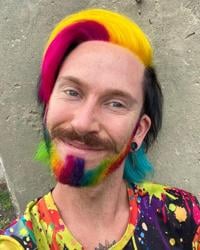
Mykey O’Halloran had finally saved enough money to buy a small beach house on Australia’s Phillip Island – and he’d settled on a color scheme he thought was perfect for it.

Community helps gay man keep rainbow getaway

A NOTE OF POSITIVITY: “The positive response filled my heart with love and made me feel supported and not alone,” Mykey O’Halloran said in regard to the support he received. Courtesy of Mykey O’Halloran

As a proud gay hair stylist whose Unicorn Manes salon specializes in rainbow-hued designs, O’Halloran has crafted hair to resemble tacos, cheeseburgers and fries. So he figured it made sense to give the beige, three-bedroom and attached guest bungalow rainbow stripes from top to bottom.

But after he moved into the house in February, a few of his neighbors in the island community, population 7,071, didn’t agree.

The evening of March 16, O’Halloran said, he heard somebody banging on his door. When he opened it, five angry men confronted him over his plan to paint his house with bright rainbow colors, he said.

“They’d heard about it through a conversation with the painter who was painting my kitchen,” said O’Halloran, 29. “They told me, ‘Don’t do it. Paint your house and see what happens, because next time we meet, it won’t be so nice.’ “

“One of them said I would make his house drop in value by $20,000 if I painted my house in ‘stupid’ colors,” he added.

The men shouted homophobic slurs, said O’Halloran, and one of them threatened to kill him if he went ahead with his rainbow project.

“I froze up inside and thought I was about to be seriously injured,” he said.

O’Halloran said he told the men he didn’t feel comfortable talking to them and shut the door. Then he phoned the police. One man was charged a few days later with unlawful assault and making threats to kill, according to a statement from Victoria Police.

O’Halloran decided to share his story about the unsettling experience on Facebook and other social media.

“I cried myself to sleep last night after feeling so invaded, homophobically attacked and threatened in my very own home,” he wrote.

O’Halloran also wrote that he was not going to allow anyone to bully him out of his island getaway. He would proceed with his plan to paint the house as a big rainbow.

Hundreds of people who read his post agreed, and they volunteered to help him paint it.

“For every rat bag like him, the island has a thousand others who welcome you,” one neighbor commented.

“You paint your house whatever colors you want to! I’m so sorry this happened to you!” commented a woman from Pennsylvania.

Within days, O’Halloran had a small army of volunteers lined up, and the Dulux paint company had donated 12 gallons of house paint in rainbow hues, he said.

On April 18, more than 100 people – including several children, a few home renovators and a couple of police officers – came to O’Halloran’s house and spent seven hours painting the home’s siding, deck and fence in stripes of blue, green, yellow, orange, purple and pink. One donor had eight surveillance cameras installed at O’Halloran’s house in case anyone threatens him again.

Hundreds of others chipped in about $7,750 for a fundraiser O’Halloran organized this month with local businesses to benefit the local community group Phillip Island Community and Learning Centre.

“The positive response filled my heart with love and made me feel supported and not alone,” O’Halloran said. “People were dropping by to shake my hand, say hello and welcome me to the neighborhood.”

Linda Wilson, a counselor who lives on the island and facilitates a “Rainbow Connect” support group for the LGBTQ community, was among those who picked up a paintbrush.

“When I heard about what had happened to Mykey, I felt it was important that I be involved and show solidarity and support for him,” said Wilson, 47.

“There was a lot of openheartedness there on the day [the house was painted], and someone volunteered their time with a barbecue to feed all who attended,” she added.

“When I heard about the awful reaction [Mykey] had faced, I threw myself into it wholeheartedly,” said Denni Slorach, 42, who runs a print shop in Grantville, Australia, about 25 miles from Phillip Island. She designed a rainbow house logo and stickers in support of the event.

“The day came from love and joy in life, and the finished house will be uniquely Mykey – a representation of his rainbow soul,” she said. “So many people said they thought it would look awful, but now that they’ve seen it, they’re pleasantly surprised by how well it turned out.”

O’Halloran couldn’t contain his delight when the last bright coat of paint had dried. He and others in the community are hoping to put on the island’s first pride parade.

“I know in my heart that I’m a good person, and I deserve inclusion and acceptance for how I wish to live my life,” he said.

“My message now is don’t let anyone else dull your sparkle, and always stay true to yourself.”

Tang! The space-age drink that’s still a worldwide staple – WTHITV.com

Tang! The space-age drink that’s still a worldwide staple

–> –> –> –> –>

Gay men recently diagnosed with HIV speak out about the stigma they face – Queerty

Dizz of rIVerse
Dizz of rIVerse (Photo: Supplied)

In countries such as the US and UK, HIV transmission rates have fallen greatly in recent years. Some governments are now aiming to end HIV transmission by 2030, thanks to advances in treatment and medication like PrEP.

However, this good news can sometimes belie the fact men continue to acquire HIV.

Queerty spoke to two such guys who recently decided to speak out about their diagnosis and how the news impacted them.

Dizz

Dizz, 36, lives in Toronto, Canada. He is a founding member of the independent pop/R&B music group, rIVerse.

“I received my HIV-positive diagnosis on September 14th, 2020. As we all know, 2020 was a very difficult and challenging year. For me personally, my self-destructive tendencies used to rise to the surface particularly when difficult moments lead to depression.

“Last year, I turned to those tendencies which involved pretty problematic behaviors. As a result of those behaviors, I knew it was necessary for me to get tested,” Dizz tells Queerty.

“While I knew I was at risk because of decisions I had made, the actual reality of receiving a positive diagnosis still came as a shock to me.

Dizz says he has long been “very aware” of the risks around acquiring HIV.

“Due to my mild OCD, I was hyper-aware of the risks, always used protection, and refused to engage in any sexual activity without it. I used to get tested regularly and took great care of my sexual health. I was very responsible when it came to practicing safe sex.

“When I initially received my positive diagnosis, I felt like I had died in that moment, and the person I was prior to my diagnosis no longer existed. I was blank-faced and detached, trying to make sense of the information I received. I was trying to understand what my life would look like moving forward.

“But since coming out, I’ve received so much love and support from my partner, friends, fans and chosen family. It was an emotional journey, but I quickly learned that being diagnosed with HIV was only one aspect of who I was and that I could still thrive and lead an exceptional and fulfilled life.”

Telling others was still difficult.

“After wandering the streets of Toronto for a while and digesting the information, the first person I needed to contact was my partner. I called him and shared the news which was a very difficult process because I was feeling a great deal of shame and embarrassment. I knew I had to overcome those feelings to be honest with him.

“Although I was very aware that I was deeply loved, I was still taken aback by the response that I received from my boyfriend which was one of complete support, encouragement, and understanding. This same response was then echoed by the other important people in my life with whom I shared the news.”

Related: Jonathan Van Ness on HIV stigma: “Rejection sucks”

Dizz says he has little time for negativity from others.

“To be honest, I am not one to pay much attention to the comments and opinions of others, particularly when they are negative ones. However, I released a video on my band’s YouTube platform sharing the news of my HIV status and there was an overwhelming amount of love but also a few comments that would be classified as discriminatory and rooted in stigma.

“I’ve been very privileged to be surrounded by so much love and support, but so many people have reached out to me with their stories of the hate and discrimination they’ve experienced and it’s been absolutely heartbreaking.

“As a society, we still have a lot of work to do when it comes to treating each other with love and acceptance and I think the first step comes from educating people about the realities of people living with HIV.”

What does he think can be done to help to tackle the stigma?

“The only thing that can be done to help tackle HIV stigma is living in your truth, sharing your truth, and spreading the facts about what living with HIV is like in this day and age, in hopes that others will be open enough to receive the information.

“We can’t control what others choose to think, but all that we can do as individuals is be truthful and state the facts: I am undetectable and I am in great health, thanks to the incredible HIV medications that are available to me.”

Dizz believes in taking care of both his mental and physical wellbeing.

“Steps I take to care for my mental health include reciting daily affirmations and mantras, taking time alone to ride my bike, and listening to music to clear my mind. Physically, I stay active every day through dance and working out.”

Dizz with his rIVerse bandmates
Dizz with his rIVerse bandmates (Photo: Supplied)

“My advice to gay/queer men reading this is if you are going to engage in sexual activity, please remember that there are many ways to enjoy yourself while still protecting yourself and others through the use of condoms and medications, such as PreP.

“More importantly, loving yourself and respecting yourself should be placed in high regard. Using such things as sex and promiscuity as coping mechanisms is not the healthiest way of dealing with issues.

“If you find yourself making decisions that are not in line with self-love and could potentially put you at risk, then I suggest you reach out to trusted friends, family, or professionals for support. Additionally, I’d like to empower everyone reading this to know your status. HIV is no longer the death sentence it once was. If you’re living with HIV, know that you can live a long, beautiful, happy, healthy life.”

rIVerse recently released their music video for ‘BaeBeeBoo’ from their critically acclaimed sophomore album, Poison IV. The band is currently preparing for a live, full-length virtual concert slated for Saturday May 29th, 2021. If you’d like to support their message of “representing the underrepresented” or donate to their upcoming show, please consider supporting their Go Fund Me

Related: 5 ways to get PrEP delivered to your doorstep

Marlon

Marlon Van Der Mark
Marlon Van der mark (Photo: Supplied)

Marlon Van der mark, 23, lives in Cardiff, Wales. He was diagnosed with HIV three years ago and made his status public earlier this year via a TikTok video.

“Three years ago I was rushed into hospital by ambulance with suspected septicemia. I felt really poorly and lost all feeling in my legs. I was in so much pain; my body was shutting down.

“I was in the hospital for about two and a half weeks. My partner at the time, my ex-partner, was HIV positive.”

Marlon believed they had been safe and says he was also scared to tell the doctors his partner was positive.

“I never really thought to myself that I could have it. I was in denial. Eventually, they tested for it and that’s when they found out.

“I genuinely never expected it. I was so scared and was crying. I just kept saying, ‘This can’t be happening to me!’ I knew nothing about HIV. I didn’t know about medication and stuff, so it was a big shock and I was petrified.”

“My ex-partner was the first person I ever met with HIV. I didn’t even know it still existed. You’re not taught about it in school. If you do hear about it, it’s always the older generation who have it. So, it was kind of like, ‘HIV, oh yeah, that doesn’t exist anymore.’ That is honestly what I thought.”

“He told me he was OK. He thought he was undetectable. He wasn’t on medication because he said he didn’t need medication. I didn’t know anything, so what was I going to say?”

After his diagnosis, Marlon told his ex but no one else.

“It wasn’t until three months ago that I actually told everyone. I denied it for a good two and a half years. It wasn’t until three months ago that I said, ‘Marlon, you’re HIV positive.’

“Obviously, in the gay community, people do bring the word ‘HIV’ up. In a lot of instances, someone says jokingly – and I don’t know what they find funny about it – something like, ‘Oh, don’t go sleeping around – you might catch HIV.’ If I used to hear that, it would really just ruin me completely because then it would make me think of it. I just denied it for so long.

“I was taking medication on and off. If I was with someone, I would be taking it. Because I would never put someone in the position that I was put into. When I was single, I stopped taking my medication because I’d rather the virus defeat me rather than carry on fighting something that was never going to go. That’s when I fell poorly again and realized I had to get back on them.

“It was selfish of me, really, now when I think about it, but I think I was so low and lost in myself that I didn’t see a reason to carry on. It wasn’t until about three months ago that I actually accepted it and said it out loud.

“Now it’s a completely new world for me. I went from someone being ashamed of it to someone who’s … not someone proud of the illness, but proud of living with it, and of being alive and having a normal life.

“I’ve also got to a place where I’m helping others. I watched [TV show] It’s A Sin, and that helped me a lot in a certain respect. It opened my eyes because I never knew how bad people were treated. It made me realize how selfish I was not to take my medication because people back then didn’t have that opportunity.

Related: President Biden vowed to end the HIV epidemic by 2025 – but how realistic is that goal?

Marlon is keen to point out how different HIV is today to the 1980s. It’s become a manageable condition. However, he says the stigma around the virus remains.

“I posted a video on Tik Tok saying my name and that I was HIV positive. At first, it was great. The support was fantastic. And then I posted another video and it blew up. Then it all started. I started getting death threats. I was told I needed to be castrated. I needed to be put in a gas chamber. People were sharing my videos saying, ‘Stay away from this guy, he’s spreading HIV. He’s spreading AIDS.’”

@marlon.xoxIt starts with me and my story 💔 #hivpositive #worldaidsday #hiv #itsasin #itsasinchannel4 #foryou #knowyourstatus #foryoupage #lgbt🏳️‍🌈 #gay #gays♬ Night Trouble – Petit Biscuit

Besides vile messages online, he says he’s experienced discrimination in real life.

“I’ve had people clubs go around to tell other people, ‘Don’t talk to him, don’t go near him, he’s got HIV.’ People cutting me down. I think people thought it gave them something to hold over me.”

Despite this, Marlon says talking about his status has proved unexpectedly rewarding. He now does work with the UK’s biggest sexual health non-profit: The Terrence Higgins Trust.

“I’m so glad I’m speaking out about this now because I’ve met some amazing people who have been literally on death’s door because they just can’t take it anymore. They’ve said that I’ve helped them and they know they’re not alone anymore. Because I’m also young, like them, they listen more. They know they’re not alone.”

Marlon now wants to see HIV talked about in school sex education classes, and for the media to talk about the reality of living with HIV today. He gets a full health check-up every six months and is now undetectable.

“As long as you take your medication, and go to the hospital and keep your appointments, you’re going to be OK.”

Marlon is now engaged. His new boyfriend is HIV negative. All he’d like now is for people not to be so quick to judge and to educate themselves about the virus.

“Don’t judge someone on something that you don’t know about. People assume that it’s because someone has slept around. Honestly, most times it’s not. And also, know that if HIV crosses your path, whether you get diagnosed or someone you know does, just remember that it’s not like it used to be. Things have changed. And you’re going to be OK either way. Don’t listen to the stigma. Don’t listen to anyone that has anything negative to say. Don’t let that bring you down.”

Related: Morris Singletary is using his own seroconversion story to help black gay men deal with HIV

Why Scottish parties’ LGBT pledges reignite hope for the community – The National

LOOKING back over the past 12 months and more, it can feel hard to find cause for hope amid so much bleakness. LGBT people in Scotland and the UK are among those who know that feeling best, as a backlash against our rights has enjoyed seemingly endless attention and support from a growing number of mainstream politicians, journalists, and even the Charity Commission. 

So, when a bit of good news comes along, like the commitment of all of Scotland’s five elected parties to banning conversion therapy in the next parliament, it’s worth taking a moment to bask in the potential of progress. 

It would be too easy to become downtrodden by the negativity which permeates the airwaves and saturates so much of our social media intake, but maybe, just maybe, the reality is more optimistic: Reactionary voices may be loud, but they don’t really have the kind of power they’d like us to believe.

READ MORE: Alyn Smith: Bigots must not stop us from banning conversion therapy across UK

Rather than being cowed into silence by the threat of pushback, the people behind the End Conversion Therapy Scotland campaign and their counterparts in England and Wales have spoken up and paved the way for the next step in the journey to true equality and dignity for LGBT people. 

The campaign has shone a light on deeply harmful practices which many of us were naive enough to believe could no longer be taking place in a supposedly progressive country in 2021. 

Defined as “forced conditioning” which “aims to change or suppress an individual’s sexual orientation, to repress or reduce their sexual attraction or behaviours, or to change an individual’s gender identity to match the sex they were assigned at birth”, it is shocking to learn that at least 7% of people in the UK have been offered this kind of treatment. 

It was reported just last year that half of Scotland’s eight dioceses and archdioceses promote conversion therapy groups under the banner of an organisation called Courage International. The Catholic Church denies that what Courage does should be described as conversion therapy, saying instead that it offers “pastoral support for those experiencing same-sex attraction who want to grow in holiness by living chaste lives”.

READ MORE: End Conversion Therapy Scotland welcomes cross-party pledge to end practice

Already, the Evangelical Alliance, of which 3500 churches across the UK are members, has asked the Government for a limited definition of conversion therapy which would protect exactly these kinds of activities on the basis of religious freedom. 

This calls to mind for me the 2018 film The Miseducation of Cameron Post, about a teenage girl’s experience in a Christian conversion therapy camp. A camp which, all things considered, appears relatively benign – if you forget the reason why they’re really there. 

In one powerful scene, a social worker inspecting the camp interviews the protagonist but insists he isn’t there to question the organisation’s mission, only whether or not they are abusing their wards. She responds defiantly: “How is programming people to hate themselves not emotional abuse?”.

This gets to the heart of the issue, because whatever way anti-LGBT organisations want to spin it, there is no ethical form of conversion therapy. There is no compassionate way to convince someone to hate themselves. 

READ MORE: Smearing LGBT people to stoke a culture war is a cynical brand of politics

A survey of people who had undergone conversion therapy in the UK found that almost two in three suffered mental health issues as a result, including self-harm and suicide attempts. This is the true impact of this kind of “therapy”.

Nobody can truly stop themselves being gay, or bisexual, or trans – they can only choose to deny themselves the right to an honest and happy life. The idea that supporting someone to do just that is anything less than wilfully harming another human being is derisible.

By inspiring support for banning these practices across Scotland’s political spectrum, campaigners have helped reignite that little bit of hope, that motivation to keep pushing forwards. And that’s exactly what we’ll need to make sure this commitment doesn’t become just another broken promise.

Understanding and Mitigating Health Inequities — Past, Current, and Future Directions – nejm.org

Over the past half-century, understanding of health and health care disparities in the United States — including underlying social, clinical, and system-level contributors — has increased. Yet disparities persist. Eliminating health disparities will require a movement away from disparities as the focus of research and toward a research agenda centered on achieving racial equity by dismantling structural racism.

In the 1970s, the same decade that the Institute of Medicine (IOM), now the National Academy of Medicine (NAM), was founded, researchers began to see a clear pattern of disparities in the health of Black people and other minority groups as compared with White people in the United States. More Black people than White people died from cancer, for example, even as more effective treatments became available, and American Indians had substantially higher rates of diabetes than White people.

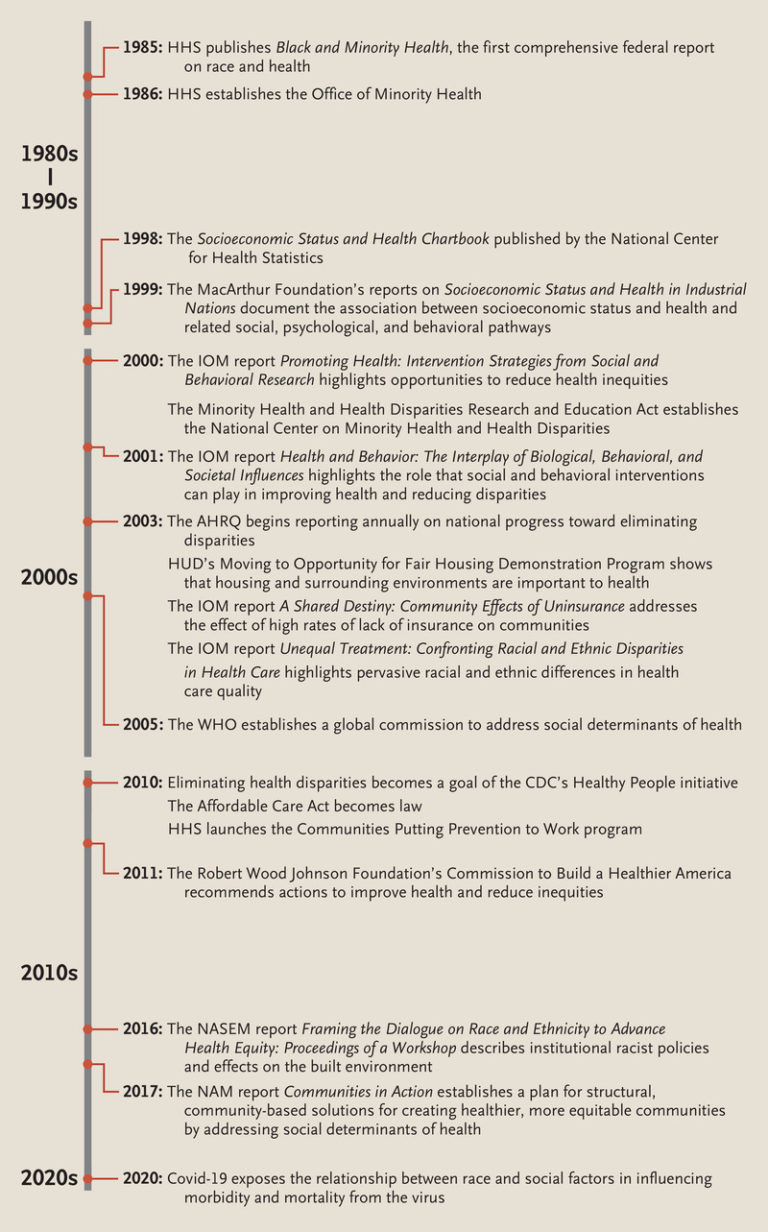
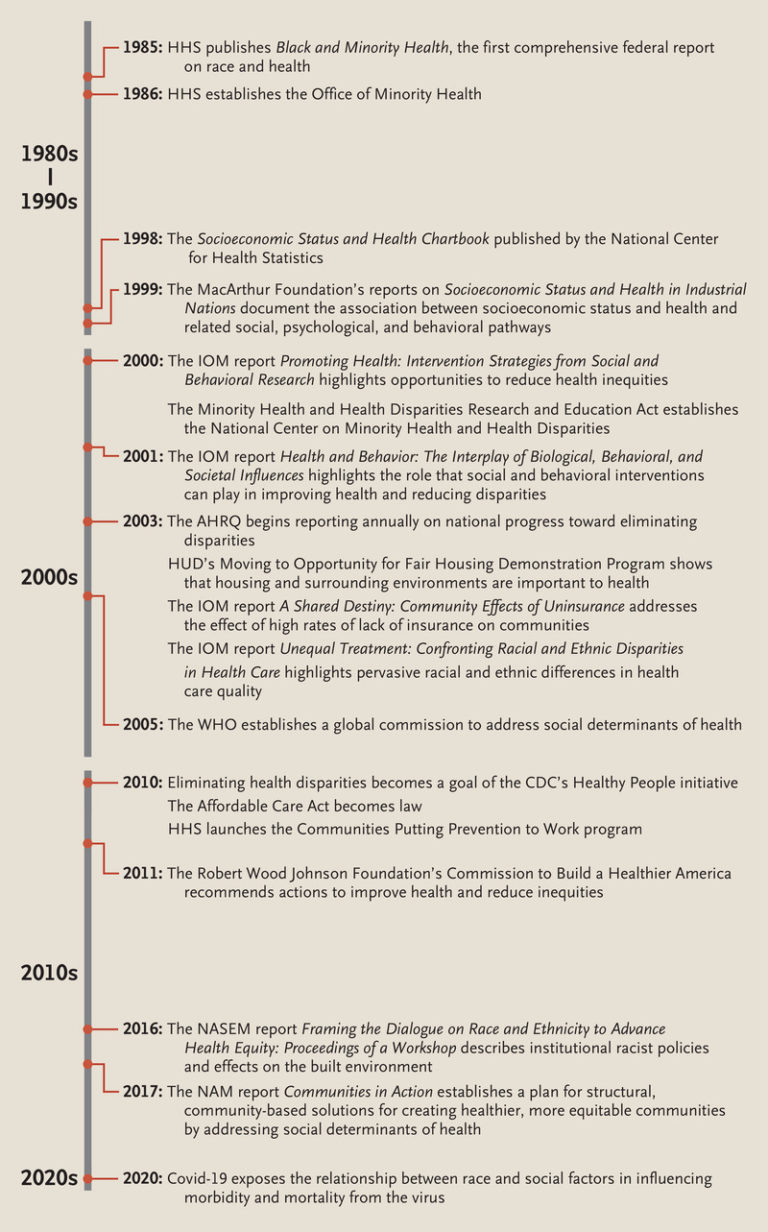
Publications and Events Related to Heath Disparities and Health Equity in the United States.

AHRQ denotes Agency for Healthcare Research and Quality, CDC Centers for Disease Control and Prevention, HHS Health and Human Services, HUD Housing and Urban Development, IOM Institute of Medicine, NASEM National Academies of Sciences, Engineering, and Medicine, and WHO World Health Organization.

In light of the clear need to understand the drivers of such disparities and to design effective interventions, in 1985, Department of Health and Human Services (HHS) Secretary Margaret Heckler released Black and Minority Health, the first U.S. government report to focus exclusively on the health of racial and ethnic minorities (see timeline). The report, which documented a higher burden of disease and lower life expectancy among Black and other minority populations than among White populations, called for enhanced data collection to design effective interventions. This report launched a new era of productive research and led to the 1986 formation of the Office of Minority Health, with the goal of improving the health of racial and ethnic minority populations by implementing new health policies and programs.

Although data collection on health disparities between Black and White populations began to improve after the Heckler report, data related to other marginalized populations remained scarce. Efforts were soon launched to collect data on health status and health care outcomes based on race, ethnic group, language, and other important characteristics. Beginning in 2003, the Agency for Healthcare Research and Quality reported annually on progress toward eliminating disparities. Improvements by private organizations and state agencies in collecting and analyzing data helped refine the reporting and understanding of factors associated with disparities. But disparities were not eliminated, and gaps in data emerged (and persist) regarding disparities faced by Asian and Latinx people; lesbian, gay, bisexual, transgender, and queer people; and people with disabilities.

The Socioeconomic Status and Health Chartbook, published by the National Center for Health Statistics in 1998, added an important dimension to the understanding of the basis of health disparities. The report explored for the first time the associations between health and socioeconomic status and between race and health for a broad range of outcomes. Like the Heckler report, the Chartbook led to a wellspring of new research. In 2000, the Minority Health and Health Disparities Research and Education Act established the National Center on Minority Health and Health Disparities, along with a dedicated research budget to explore strategies for advancing health equity.

Researchers turned next to drivers of health disparities within the health care system — chief among them unequal access. The IOM issued a six-volume series documenting the effects of lack of insurance on access to various types of care, from preventive services to care for chronic or potentially fatal illnesses, such as cancer and renal failure. The reports tied disproportionately low rates of health insurance among minority populations to low availability of community-wide health care services — and, in turn, to health disparities. These reports illuminated the way in which a community’s health status could be linked to its residents’ insurance status.

Congress also tasked the IOM with studying racial and ethnic disparities in quality of care, evaluating potential sources of these disparities, and recommending interventions. The resulting 2003 report, Unequal Treatment, explored the continuum of services from hospital-based care to rehabilitation and long-term, home-based, and outpatient care. One finding captured headlines: “Racial and ethnic disparities in healthcare exist and, because they are associated with worse outcomes in many cases, are unacceptable.” The report documented disparities in most clinical interventions — from basic interventions, such as pain management, to complex ones, such as cardiac revascularization. Although Unequal Treatment acknowledged the influence of socioeconomic factors on health outcomes, it did not explore specific linkages between socioeconomic status and health care or recommend solutions that integrated social and health care–related factors.

Another IOM report published around the same time, Promoting Health, did highlight the role that integrated social and behavioral interventions could play in improving health and reducing disparities. This idea began to shift researchers’ and policymakers’ focus to the community as the natural heart of strategies for reducing health disparities. In 2010, for example, HHS launched the Communities Putting Prevention to Work program, which partnered with 50 communities to reduce rates of obesity and tobacco use.

Twenty-five years after the Heckler report, researchers had made substantial progress in collecting and stratifying data on the basis of demographic dimensions, in understanding the relationship of socioeconomic status and inequitable health care access and quality with health outcomes, and in recognizing the necessity of structural change to achieve health equity. This potential has yet to be realized, however.

The research that emerged after the Heckler report made it clear that health disparities cannot be reduced by targeting individual clinical conditions. Instead, the field has turned toward the exploration of structural factors, such as the role that structural racism plays in segregating society and limiting opportunities for health and well-being, as essential to advancing health equity.

An important investigation demonstrating the effects of neighborhood on health was a randomized study led by the Department of Housing and Urban Development that gave families living in public housing vouchers to move to market-rate housing or remain in public housing. A decade after the intervention, people living in market-rate housing in high-income areas had lower rates of obesity and diabetes and higher levels of physical activity than those still living in public housing, and they reported improved mental health and well-being.1 Despite the study’s limitations, it demonstrated that housing and the surrounding environment matter.

More recently, economist Raj Chetty and colleagues showed that people living in places with more upward mobility have longer life expectancies than people living in places with less upward mobility.2 The benefit is greatest for high-income people, but the trend is consistent for all income levels. The characteristics of places with more upward mobility — social cohesiveness, educational opportunity, a strong middle class, and little racial segregation — mirror the social factors associated with greater health equity. In this vein, the 2017 NAM report Communities in Action established a plan for structural, community-based solutions for creating healthier, more equitable communities by addressing social determinants of health. The report did not address racism directly, but Chetty has also demonstrated that prospects for upward mobility are substantially constrained by race — a clear effect of racism.

Another structural factor that affects health disparities is insurance coverage. Jie Chen and colleagues were among the first scholars to publish research showing the positive effect of the Affordable Care Act (ACA) on disparities.3 According to their findings, after the law’s implementation, the likelihood of being uninsured decreased in all groups — and it decreased substantially in Black and Latinx populations, which previously had disproportionately high rates of being uninsured.3 The likelihood of delaying necessary care also dropped in all groups (and especially among people of color), as did the likelihood of forgoing care. The ACA, therefore, had positive effects on an important underlying contributor to health disparities — lack of access to care.

In 2020, two events increased public awareness of structural barriers to good health, particularly for racial and ethnic minorities, and could engender new interventions and policies. One of these events, the murder of George Floyd, an unarmed Black man, by police, sparked a massive cultural confrontation of structural racism and the systemic factors that cause Black people and other people of color to be sicker and die earlier than White people in the United States. The other event, the Covid-19 pandemic, sickened, hospitalized, and killed people of color at higher rates than White people because of many factors, including an increased risk of exposure, unequal access to testing and high-quality care, higher rates of medical conditions associated with poor outcomes, and less access to vaccination. These events could increase political will to address the structural racism that drives inequitable health outcomes — thereby creating an unprecedented opportunity for researchers, advocates, and policymakers.

Amid increased understanding of the effects of structural racism on health, research by one of us and by Dorothy Roberts,4,5 among other scholars, has led to a view of race and ethnic group as social constructs, not medical risk factors. This research suggests that addressing the effects of racism, ethnocentrism, homophobia, unequal treatment based on immigration status, and sexism on health will be beneficial for overall health status and outcomes. Going forward, improving the effectiveness of interventions aimed at mitigating individual and institutional bias, whether implicit or explicit, will be essential to advancing health equity.

Future progress will rely on putting all the pieces together. The past five decades have seen great strides in terms of understanding the nature and scope of health disparities, their socioeconomic and health care–related drivers, and the importance of dismantling structural racism as a path to achieving health equity. Researchers and policymakers increasingly understand that health solutions must target manifestations of structural racism — such as barriers to economic mobility, access to high-quality education and health care, and access to high-paying jobs — and the policies that allow racial inequities to persist. Health systems researchers should continue moving away from focusing on health disparities and toward looking at root causes: systems of structural racism. Only by addressing underlying structures will we get closer to a day when a person’s health prospects are no longer predicted by the social construct of race.

Understanding and Mitigating Health Inequities — Past, Current, and Future Directions | NEJM – nejm.org

Over the past half-century, understanding of health and health care disparities in the United States — including underlying social, clinical, and system-level contributors — has increased. Yet disparities persist. Eliminating health disparities will require a movement away from disparities as the focus of research and toward a research agenda centered on achieving racial equity by dismantling structural racism.

In the 1970s, the same decade that the Institute of Medicine (IOM), now the National Academy of Medicine (NAM), was founded, researchers began to see a clear pattern of disparities in the health of Black people and other minority groups as compared with White people in the United States. More Black people than White people died from cancer, for example, even as more effective treatments became available, and American Indians had substantially higher rates of diabetes than White people.

Publications and Events Related to Heath Disparities and Health Equity in the United States.

AHRQ denotes Agency for Healthcare Research and Quality, CDC Centers for Disease Control and Prevention, HHS Health and Human Services, HUD Housing and Urban Development, IOM Institute of Medicine, NASEM National Academies of Sciences, Engineering, and Medicine, and WHO World Health Organization.

In light of the clear need to understand the drivers of such disparities and to design effective interventions, in 1985, Department of Health and Human Services (HHS) Secretary Margaret Heckler released Black and Minority Health, the first U.S. government report to focus exclusively on the health of racial and ethnic minorities (see timeline). The report, which documented a higher burden of disease and lower life expectancy among Black and other minority populations than among White populations, called for enhanced data collection to design effective interventions. This report launched a new era of productive research and led to the 1986 formation of the Office of Minority Health, with the goal of improving the health of racial and ethnic minority populations by implementing new health policies and programs.

Although data collection on health disparities between Black and White populations began to improve after the Heckler report, data related to other marginalized populations remained scarce. Efforts were soon launched to collect data on health status and health care outcomes based on race, ethnic group, language, and other important characteristics. Beginning in 2003, the Agency for Healthcare Research and Quality reported annually on progress toward eliminating disparities. Improvements by private organizations and state agencies in collecting and analyzing data helped refine the reporting and understanding of factors associated with disparities. But disparities were not eliminated, and gaps in data emerged (and persist) regarding disparities faced by Asian and Latinx people; lesbian, gay, bisexual, transgender, and queer people; and people with disabilities.

The Socioeconomic Status and Health Chartbook, published by the National Center for Health Statistics in 1998, added an important dimension to the understanding of the basis of health disparities. The report explored for the first time the associations between health and socioeconomic status and between race and health for a broad range of outcomes. Like the Heckler report, the Chartbook led to a wellspring of new research. In 2000, the Minority Health and Health Disparities Research and Education Act established the National Center on Minority Health and Health Disparities, along with a dedicated research budget to explore strategies for advancing health equity.

Researchers turned next to drivers of health disparities within the health care system — chief among them unequal access. The IOM issued a six-volume series documenting the effects of lack of insurance on access to various types of care, from preventive services to care for chronic or potentially fatal illnesses, such as cancer and renal failure. The reports tied disproportionately low rates of health insurance among minority populations to low availability of community-wide health care services — and, in turn, to health disparities. These reports illuminated the way in which a community’s health status could be linked to its residents’ insurance status.

Congress also tasked the IOM with studying racial and ethnic disparities in quality of care, evaluating potential sources of these disparities, and recommending interventions. The resulting 2003 report, Unequal Treatment, explored the continuum of services from hospital-based care to rehabilitation and long-term, home-based, and outpatient care. One finding captured headlines: “Racial and ethnic disparities in healthcare exist and, because they are associated with worse outcomes in many cases, are unacceptable.” The report documented disparities in most clinical interventions — from basic interventions, such as pain management, to complex ones, such as cardiac revascularization. Although Unequal Treatment acknowledged the influence of socioeconomic factors on health outcomes, it did not explore specific linkages between socioeconomic status and health care or recommend solutions that integrated social and health care–related factors.

Another IOM report published around the same time, Promoting Health, did highlight the role that integrated social and behavioral interventions could play in improving health and reducing disparities. This idea began to shift researchers’ and policymakers’ focus to the community as the natural heart of strategies for reducing health disparities. In 2010, for example, HHS launched the Communities Putting Prevention to Work program, which partnered with 50 communities to reduce rates of obesity and tobacco use.

Twenty-five years after the Heckler report, researchers had made substantial progress in collecting and stratifying data on the basis of demographic dimensions, in understanding the relationship of socioeconomic status and inequitable health care access and quality with health outcomes, and in recognizing the necessity of structural change to achieve health equity. This potential has yet to be realized, however.

The research that emerged after the Heckler report made it clear that health disparities cannot be reduced by targeting individual clinical conditions. Instead, the field has turned toward the exploration of structural factors, such as the role that structural racism plays in segregating society and limiting opportunities for health and well-being, as essential to advancing health equity.

An important investigation demonstrating the effects of neighborhood on health was a randomized study led by the Department of Housing and Urban Development that gave families living in public housing vouchers to move to market-rate housing or remain in public housing. A decade after the intervention, people living in market-rate housing in high-income areas had lower rates of obesity and diabetes and higher levels of physical activity than those still living in public housing, and they reported improved mental health and well-being.1 Despite the study’s limitations, it demonstrated that housing and the surrounding environment matter.

More recently, economist Raj Chetty and colleagues showed that people living in places with more upward mobility have longer life expectancies than people living in places with less upward mobility.2 The benefit is greatest for high-income people, but the trend is consistent for all income levels. The characteristics of places with more upward mobility — social cohesiveness, educational opportunity, a strong middle class, and little racial segregation — mirror the social factors associated with greater health equity. In this vein, the 2017 NAM report Communities in Action established a plan for structural, community-based solutions for creating healthier, more equitable communities by addressing social determinants of health. The report did not address racism directly, but Chetty has also demonstrated that prospects for upward mobility are substantially constrained by race — a clear effect of racism.

Another structural factor that affects health disparities is insurance coverage. Jie Chen and colleagues were among the first scholars to publish research showing the positive effect of the Affordable Care Act (ACA) on disparities.3 According to their findings, after the law’s implementation, the likelihood of being uninsured decreased in all groups — and it decreased substantially in Black and Latinx populations, which previously had disproportionately high rates of being uninsured.3 The likelihood of delaying necessary care also dropped in all groups (and especially among people of color), as did the likelihood of forgoing care. The ACA, therefore, had positive effects on an important underlying contributor to health disparities — lack of access to care.

In 2020, two events increased public awareness of structural barriers to good health, particularly for racial and ethnic minorities, and could engender new interventions and policies. One of these events, the murder of George Floyd, an unarmed Black man, by police, sparked a massive cultural confrontation of structural racism and the systemic factors that cause Black people and other people of color to be sicker and die earlier than White people in the United States. The other event, the Covid-19 pandemic, sickened, hospitalized, and killed people of color at higher rates than White people because of many factors, including an increased risk of exposure, unequal access to testing and high-quality care, higher rates of medical conditions associated with poor outcomes, and less access to vaccination. These events could increase political will to address the structural racism that drives inequitable health outcomes — thereby creating an unprecedented opportunity for researchers, advocates, and policymakers.

Amid increased understanding of the effects of structural racism on health, research by one of us and by Dorothy Roberts,4,5 among other scholars, has led to a view of race and ethnic group as social constructs, not medical risk factors. This research suggests that addressing the effects of racism, ethnocentrism, homophobia, unequal treatment based on immigration status, and sexism on health will be beneficial for overall health status and outcomes. Going forward, improving the effectiveness of interventions aimed at mitigating individual and institutional bias, whether implicit or explicit, will be essential to advancing health equity.

Future progress will rely on putting all the pieces together. The past five decades have seen great strides in terms of understanding the nature and scope of health disparities, their socioeconomic and health care–related drivers, and the importance of dismantling structural racism as a path to achieving health equity. Researchers and policymakers increasingly understand that health solutions must target manifestations of structural racism — such as barriers to economic mobility, access to high-quality education and health care, and access to high-paying jobs — and the policies that allow racial inequities to persist. Health systems researchers should continue moving away from focusing on health disparities and toward looking at root causes: systems of structural racism. Only by addressing underlying structures will we get closer to a day when a person’s health prospects are no longer predicted by the social construct of race.