Home Blog Page 320

Gay janitor claims he was fired for reporting homophobic abuse – Queerty

via Shutterstock

Upsetting news out of Australia: a gay, former janitor has gone public with allegations that his co-workers harassed him about his sexuality. He further claims his employer fired him after reporting the abuse.

James “Jimi” Fuller, 29, landed a job as a cleaner for the city of Ipswich last year. In a new interview with The Queensland Times, Fuller says that after coming out to his co-workers, his job turned into a campaign of harassment over his sexuality. At one point, a co-worker referred to him as a “dirty f*g” as well.

Not long after, Fuller claims, his co-workers refused to work with him. Another co-worker also accidentally sent a text message to Fuller as part of a group chat reading “Let’s get Jimi the sack;” in other words, that his fellow janitors were plotting to get him fired.

Fuller then filed a complaint with his supervisors, which was co-sponsored by another employee that overheard the homophobic slur.

“They did a code of conduct training and bullying and harassment training after I put that complaint in,” Fuller said. “I just want what’s right and that’s to come and do my job and not be bullied. I was victimized and had things thrown at me.”

Related: That story about the Australian parliament gay sex tape leak just took another weird turn

Fuller’s employer responded with a letter dated March 23 that labeled his claims “unsubstantiated,” and, Fuller says, pressured him to withdraw the complaint altogether. He refused.

Not long after he received the letter, Fuller says his bosses reprimanded him for discovering a muddy footprint and fingerprints on a glass door at the Ipswich Art Gallery. Fuller had cleaned the area just hours earlier and notes that the gallery was open to the public at the time.

Then, just two weeks after he received the letter pressuring him to withdraw his claims of harassment, Fuller was fired. He continues to deny any wrongdoing.

“I do my job to the highest standard,” he told The Times. “I’ve got about 20 [references] from all the buildings that I cleaned which stated what a great cleaner I am. I said, you’re dismissing me over a fingerprint that was on a glass door … three-and-a-half hours after the building opened to the public.”

Fuller has now filed a suit with the Australian Fair Work Commission in hopes of getting his old job back. The city of Ipswitch, for its part, has declined to comment on the matter.

“While council always seeks to be transparent, this is an ongoing legal matter,” a city spokesperson said. “It would not be appropriate for council to make comment at this stage.”

The case remains ongoing.

Caitlyn Jenner labeled ‘traitor’ after saying women’s sports must be protected from transgender athletes – TheBlaze.com

Caitlyn Jenner, one of the most famous transgender people, said Saturday that transgender biological boys should not be allowed to compete in women’s sports.

Jenner commented on the controversial issues about one week after announcing she was running for governor of California. Jenner is seeking the office as a Republican in a special election that was triggered after activists gathered more than 2 million signatures to recall Gov. Gavin Newsom (D).

What did Jenner say?

Speaking with TMZ, Jenner said the issue boils down to fairness and protecting the integrity of women’s sports.

“This is a question of fairness,” Jenner, who won the gold medal for men’s decathlon at the 1976 Olympics, said.

“That’s why I oppose biological boys who are trans competing in girls’ sports in school. It just isn’t fair. And we have to protect girls’ sports in our schools,” Jenner added.

Jenner declined to answer a follow up question asking whether her perspective was “delegitimizing” of a transgender person’s identity.

However, Jenner later said on Twitter that her position is “clear.”

“I didn’t expect to get asked this on my Saturday morning coffee run, but I’m clear about where I stand. It’s an issue of fairness and we need to protect girls’ sports in our schools,” Jenner tweeted.

In response, Jenner was labeled a “traitor.”

  • “You are such a traitor @Caitlyn_Jenner So we need to ‘protect girls sports’ from other girls now? And fairness? Don’t you know how testosterone blockers work?” one person said.
  • “Can you please stop pretending to speak for anyone but yourself and your financial interests? Thanks,” another person said.
  • “The only trans girl who shouldnt be allowed to run with everybody else is you lol,” another person told Jenner.
  • “‘Equality for me, inequality for thee’ — Caitlyn Jenner,” another person mocked.

What are states doing?

Most LGBT activists say that gender identity, rather than biological sex, should be the determining factor for kids who play sports. However, there is widespread disagreement about that — and states are taking action to protect the integrity of women’s sports.

This year, numerous states have passed bills prohibiting transgender athletes from competing in sports that correspond with their gender identity, including: Alabama, Arkansas, Mississippi, Tennessee, and West Virginia. Florida will become the fifth state enact such a law, while South Dakota Gov. Kristi Noem (R) enacted an executive order on the issue.

Dozens of other states are considering similar legislation.

In response, LGBT activists are pressuring corporations to affirm their view of sexuality and gender, denouncing opposition to their perspective as “discrimination.” The Human Rights Campaign, for example, is even pressuring the NCAA to not hold events in states that enact legislation that protects women’s sports.

However, as the Associated Press noted, there has not been actual backlash against the bills, indicating the bills have won overall approval. Still, LGBT activists promise future repercussions.

“A lot of Americans are still getting to know trans people and they’re learning about these issues for the first time,” Rodrigo Heng-Lehtinen, deputy executive director of the National Center for Transgender Equality, told the AP. “Over time, they get to know their trans neighbors, they get outraged by these bans, and corporations respond … It’s just a matter of time.”

James Beard is a culinary legend. But this Tucson writer’s book probes his ‘tortured life’ – The Arizona Republic

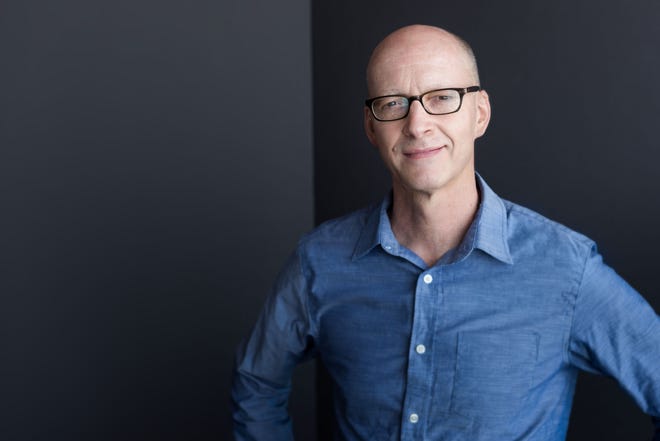
John Birdsall is an award-winning food writer who grew up in the Bay Area and now resides in Tucson.

With his new book, Tucson resident and award-winning food writer John Birdsall captures the duality of the late James Beard, one of the first high-profile food personalities in America, whose struggles as a closeted gay man influenced ideas about home cooking.

Over the course of five-plus years, Birdsall set out to write “The Man Who Ate Too Much: The Life of James Beard,” the definitive biography of a man who would brisk at being called a chef. Digging past Beard’s sanitized public image, Birdsall’s research portrays a complicated, and often lonely figure who helped shape American culinary culture.

Before moving to Tucson in 2020, Birdsall grew up in the Bay Area and cooked professionally for nearly two decades, starting with an apprenticeship at Greens Restaurant in 1983. He later transitioned into becoming a full-time writer and contributed to the San Francisco Sentinel, an LGBTQ weekly.

He later worked as a food critic and edited SF Weekly’s food blog. Birdsall has won two James Beard Awards for food and culture writing, in 2014 for “America, Your Food Is So Gay” printed in Lucky Peach magazine and in 2016 for “Straight-Up Passing” printed in queer food journal Jarry.

On May 5, Tucson-based organization Southern Arizona Senior Pride is hosting a free virtual event with Birdsall and Food Network star Ted Allen to discuss Beard’s legacy and fraught life.

The Arizona Republic spoke with Birdsall recently ahead of the event. (Answers have been edited and condensed for clarity.)

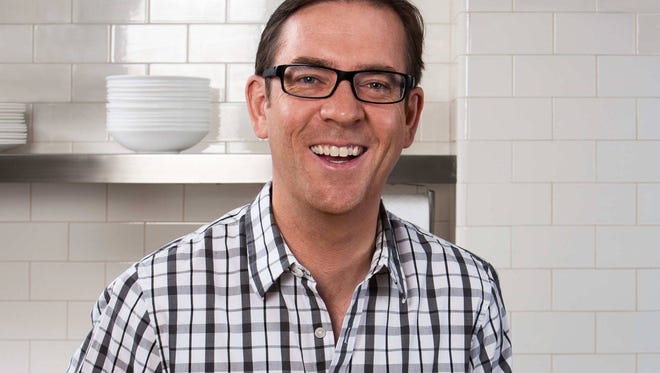
On May 5, Ted Allen, host of Food Network's "Chopped," will interview John Birdsall at a virtual event hosted by Southern Arizona Senior Pride.

‘I wanted to look at this lingering stigma of being queer in the kitchen’

Question: Why did you want to pursue this biography of James Beard? What part of Beard’s story did you relate to?

Answer: In the late 1960s I lived in a suburb outside San Francisco where my parents became close to a gay couple that lived nearby, Pat and Lou. I could tell from my parents’ conversations, not a lot of people around us accepted them.

What fascinated me about Beard was that similar experience — how privately it’s possible to live a really rich life, especially around food, but publicly, having a certain armor around your identity. That duality of public and private I grew up seeing in these neighbors that I loved was a really important part of my research into Beard’s life. I had an insight to those generations before the LGBTQ liberation movement, those struggles, and I felt a real emotional pull.

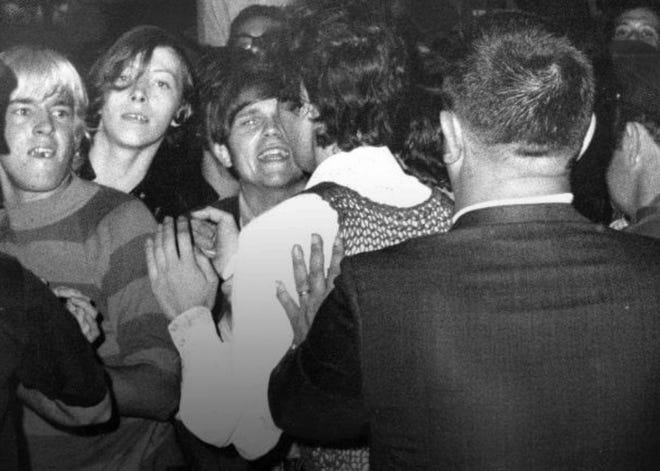
James Beard was in his 60s when the Stonewall riots of 1969 galvanized the LGBTQ rights movement.,

Q: In your article “Straight-Up Passing,” you talked about your 2009 idea to interview every gay and lesbian chef in San Francisco. But many chefs balked at getting involved. Why do you think that was?

A: I felt that a number of chefs I looked at, they felt being labeled that way would maybe limit the perception, make it seem like they weren’t serious chefs. Like it was acceptable to be out, but “it’s just part of who I am, not something I bring to work, it doesn’t define me.”

Fine dining has been about a chef’s personal expression and it was important for chefs to create food that expressed their resume, who they were, what they were exposed to growing up, experienced when they were younger. But somehow, being queer was off the table. I was interested in exploring that dynamic, why it didn’t seem to be a problem for straight fine dining chefs to talk about dishes they created for their spouse, feelings that went into a certain dish. I wanted to look at this lingering stigma of being queer in the kitchen. 

With a few people I spoke with, there was a sense that being too out was a type of activism. That in the culture of especially fine dining, it didn’t seem appropriate. Like it was either distracting or unprofessional or detracts from your art.. I had one chef say, “What would you want me to do? Garnish my plates with Pride flags?”

Q: Did you feel this way when you were working in the kitchen yourself?

A: I found myself hiding a lot, not choosing to talk about my private life. As a white gay cis man, trying to pass is an option that I know is not available for a lot of queer people in the kitchen. I should say, even though I wasn’t aware of what I was doing, I found it necessary to try to hide in key points, in certain jobs I had, certain people, certain crews that I would work with.

For me, it was a matter of just trying to be safe so that I could do my best work. There’s a lot of pressure in the industry to either conform or get out. That’s the sad thing for me.

‘There’s a sort of reckoning happening with the culture of food’

Q: For chefs and restaurateurs with a public platform, what kind of responsibility do they have to speak up on homophobia and discrimination in restaurants?

A: Absolutely there’s a responsibility. The sort of reckoning for gender and racial equality, and just representation in the industry, that feels more urgent to me now. In queer culture generally, queer and trans people are so diverse that it’s hard to talk about one queer experience in the kitchen. There are so many intersecting issues with queerness: gender, race, trans issues — it’s hard to talk about queer issues in isolation.

There’s a sort of reckoning happening with the culture of food in America, looking at whose cultures have been erased from the history of American food. I feel like queer people have figured out in some way, sometimes tortured ways, to survive in the industry. But many of us survived because we could act like the dominant, straight white culture of restaurants.

James Beard explains the finer points of stuffing a holiday bird during a demonstration at Sibley's in a benefit for Geva Theatre.

Q: Where does James Beard fit in with all this, leading up to the restaurant reckonings?

A: So much of James Beard’s experience was about accommodating a world, certainly in the food and media industry, that was very small and had very strong gatekeepers about what was possible. 

He was one of the first people in American food to create a really public identity around food. But he was also complicit in this culture of presenting this very conservative, straight, conventional face. For me, the story of James Beard becomes poignant after Stonewall in 1969. He’s older, almost in his 70s when Stonewall happens. You see him under pressure to reveal who he is, become part of this movement, but he’s not able to — there are editors, publishers, friends trying to protect him, there’s too much at stake.

‘The whole biography is based on the sense of speaking out’

Q: Being a food personality himself, what would Beard think of the rise of the “rock star” and celebrity chefs? Many high-profile chefs have been scrutinized in recent years.

A: I believe it was Ruth Reichl who coined the term “rock star chef.” There were these road trips with big-name, splashy fundraisers that would invite chefs from around the country: Alice Waters, Wolfgang Puck, Jeremiah Tower.

The visibility of high-profile chefs you see now started in the late 1970s. I think James would see the absurdity of it. This culture did eclipse him — he died in ’85. Nobody wanted a 70-something man as a cooking god and he always considered himself an amateur. He was an old-fashioned expert who by this time, was not seen as very exciting anymore.

Before this generation, restaurant chefs were nameless and faceless. Invisible men who worked behind the swinging door. Now they are in magazine profiles, people want a sense of their lifestyle. It definitely contributed to this culture of abuse in the kitchen. It made chefs sort of unaccountable. There was so much adulation for these chefs, how they treated people in the kitchen became invisible.

The James Beard Foundation canceled its awards for 2020 and 2021 amid concerns about lack of diversity and allegations against some nominees.

Q: We’ve spoken previously about the James Beard Awards (which is undergoing its own overhaul) and how he would have liked some aspects, but not others.

A: Part of my impetus for writing the Beard biography and earlier pieces, I was just so pissed off because I knew the homophobic culture of restaurants and the fact James Beard had a tortured life because of it. I looked around and essentially every chef wanted to win a James Beard Award as a sort of career peak. I just felt the injustice of it, people wanting to wear James Beard’s image around their neck, and so casually express homophobia with their staff.

And so I wanted to write about Beard’s sexuality and how that interacted with how he cared about food. All the things he created about food, how that influenced a broader sense of the 21st century. The whole biography is based on that sense of speaking out and wanting chefs and everybody in the food industry to realize the truth of the food culture they inherited.

Event: ‘In the Kitchen Closet’

When: May 5, 2021 from 10:00–11:15 a.m.

Where: Virtual

Cost: Free, but donations accepted to support Southern Arizona Senior Pride

Details: Ted Allen, host of Food Network’s “Chopped,” chats with award-winning food writer John Birdsall about the secret gay life of James Beard. Allen was the food and wine connoisseur on the Bravo’s original reality TV series “Queer Eye.”

There will be a 15-minute Q&A session. Register to attend online at soazseniorpride.org/event/in-the-kitchen-closet.

“The Man Who Ate Too Much: The Life of James Beard” is available for purchase on Bookshop.org.

Reach the reporter at Priscilla.Totiya@azcentral.com. Follow @priscillatotiya on Twitter and Instagram.

Subscribe to azcentral.com today to support local journalism.

The movement to legalize marijuana is finally finding success. Gay activism helped start it. – LGBTQ Nation

After years of the “War on Drugs” and nearly a century of staunch anti-marijuana policies, the United States is nearing full legalization of cannabis substances in medical and recreational form. Nearly half the country now lives in states where marijuana is legal.

All of this progress builds on decades’ worth of work by committed activists, with gay activists playing an outsized role in the push for legalization.

Related: Americans think marijuana is more “morally acceptable” than being gay

In 2021 alone, New York, New Mexico and Virginia have passed legislation that the possession or use of recreational cannabis is legal. Legislation is advancing in Louisiana, Minnesota and Rhode Island.

Last fall, voters in conservative states South Dakota, Mississippi and Montana all approved ballot measures to loosen restrictions on cannabis.

The U.S. House of Representatives has passed a bill legalizing cannabis, and Senate Majority Leader Chuck Schumer (D) has pledged to move ahead with the bill in the upper chamber, despite President Joe Biden’s (D) reluctance on the issue.

As with a lot of progressive policies, San Francisco was at the forefront of marijuana acceptance. The city’s large gay population wasn’t incidental to that cause. In many ways, it was the reason for it.

The push to decriminalize marijuana possession started in the 1970s. Before his assassination in 1978, Harvey Milk pushed a nonbinding ballot measure requesting the city district attorney to stop prosecuting marijuana possession and usage.

The effort to legalize marijuana ramped up considerable with the advent of AIDS in the 1980s. Treatments for the disease were poor at best.

Marijuana emerged as a legitimate treatment for pain and loss of appetite that were common with AIDS. Activist and hospital volunteer Brownie Mary toured the wards at San Francisco General Hospital, offering cannabis brownies to AIDS patients.

The person who did the most to push for legalization in the Golden Gate City, and eventually all of California, was Dennis Peron, who became known as the gay ‘father of medical marijuana.’

Peron was a Vietnam War vet who sold medical cannabis out of a storefront in the Castro. Seeing the benefits of cannabis for people with AIDS, Peron organized a statewide measure to legalize medical cannabis. That initiative passed in 1996 with more than three-quarters of the vote.
The issue was personal for Peron. His partner died from AIDS.

Having the largest state legalize medical marijuana was the start of broader acceptance for usage in all forms. While it wasn’t all that hard to get approved for medical usage, the move from legalizing medical cannabis, to legalizing recreational, became shortly inevitable.

Ironically, Peron opposed legalizing recreational marijuana, on the grounds that all usage was medicinal.

Years later, in a perfect pairing, the first ballot measures to legalize recreational marijuana in Colorado and Washington state both appeared at the same time as ballot measures to legalize marriage equality. Both measures passed handily in both states.

The speed in which attitudes changed around both issues is remarkably similar. At the turn of the century, about a third of voters supported legalizing cannabis and a third supported marriage equality. Both issues are now supported by two-thirds of Americans.

One significant split on the issues: a majority of evangelicals support cannabis legalization, while still opposing LGBTQ rights.

Changing societal attitudes is time-consuming work, as LGBTQ activists can attest to. It’s no wonder gay men like Dennis Peron applied those same lessons to the quest to legalize marijuana, and with the same winning effect.

From flyers to interior design, the total creativity of Willo Perron. An interview – Domus

At the beginning of my conversation with Willo Perron there is a moment of stall. The screen gasps, frozen, and the shy introductory words get lost. There is a corner of Canadian-born, LA-based creative director’s house where the internet connection is weak, which is reassuring. It is indeed heart-warming to apprehend that even one of the most influential creatives in the globe is affected by the same issues us, mortals, face daily.  

Apart from that, Willo looks like you’d expect him to: effortlessly cool. Sitting in a heavy (probably organic) cotton white crew-neck tee, a sophisticated mug in his hands and a patient, charming smile on his face, he could be your friend’s hip dad. He could be that kind of parent who, out of the blue, would surprise his kids’ pals by picking an original copy of De La Soul ‘Three Feet High and Rising’ or a scuffed original pair of Jordan’s out of the closet, proving them, not without a healthy dose of pride, that he’s been young and snazzy too. In all fairness, Willo – despite trying to persuade me that he leads a “totally normal life, with no paparazzi or anything like that” – has been through all of that and he still is – now more than ever – all over the pop culture that matters. Thus, it doesn’t surprise if halfway through our conversation he starts mentioning Beastie Boys and 1980s American club culture. 

Willo, in fact, cut his teeth running record shops and labels, throwing parties and designing flyers in his native city, Montreal, Canada, before being introduced to Kanye West in 2006 and starting, step by step, to take over the American pop culture, first solo and then in partnership with graphic designer Brian Roettinger since their 2011 collaboration on Jay-Z’s album ‘Magna Carta’.

Caitlyn Jenner: Transgender girls should not be allowed to play girls’ sports – Washington Blade

Three transgender people allege they suffered abuse at a Miami jail last year after police arrested them during Black Lives Matter protests.

The Transgender Legal Defense and Education Fund in a letter it sent to Miami-Dade County Mayor Daniella Levine Cava on Wednesday notes Christian Pallidine, a college student who identifies as a trans man, was attending a Black Lives Matter protest in downtown Miami on May 31, 2020, when Miami-Dade police officers arrested him and charged him with violating a county-wide curfew.

Pallidine arrived at the Turner Guilford Knight Correctional Center a short time later, and the letter notes personnel abused him because of his gender identity.

“The staff at TGK subjected Mr. Pallidine to degrading and outrageous treatment because he is transgender,” it reads. “TGK staff forced him to strip and display his genitals in front of a group of officers — part of a series of invasive, pseudo-medical, sexualized procedures conducted on him for no legitimate purpose. TGK staff also belittled Mr. Pallidine, publicized his transgender status to others, asked gratuitous questions about his anatomy, and called him derogatory names.”

The letter, among other things, notes Pallidine underwent an examination that “focused solely on his transgender status” and it “took place in a public area where others could easily see and hear him and the person questioning him.” The letter says the officer who conducted the exam asked him “multiple questions about his genitals and plans for future medical care, such as, ‘Do you want a penis in the future?’”

Pallidine alleges he was forced to take a pregnancy test “because of his genitals” and officers mocked him because of his gender identity. Pallidine also says officers forced him to undergo a strip search and placed him in solidary confinement before his release.

Jae Bucci and Gabriela Amaya Cruz on July 19, 2020, attended a rally and march for Black trans women in downtown Miami. Miami-Dade police officers brought them to the Turner Guilford Knight Correctional Center after they arrested them.

Bucci, who is a teacher and makeup artist, on Wednesday during a virtual press conference that TLDEF, the Southern Poverty Law Center and the Harvard LGBTQ+ Advocacy Clinic organized, said the gender marker on her ID is female and the Miami-Dade Police Department processed her as such. Bucci noted Turner Guilford Knight Correctional Center personnel also processed her as female, but she said an officer told her, “Aha, I knew it. That’s what I was looking for” after she disclosed her gender identity.

Bucci said her friends were not able to find her because officers had reclassified her as male. Bucci told reporters that officers placed her with male prisoners and, like Pallidine, forced her to undergo an “illegal strip search in front of several officers.”

“They tugged at my piercings, drawing blood, and forcibly tried to remove my hair, assuming it to be a wig,” said Bucci.

“They forced me to sit with men … I was put in danger,” she added. “I needed protection. I asked to be seated with other women, but the guards were only hyper-focused on my genitals, repeatedly calling me a man.”

Bucci said she was later placed in solitary confinement “for hours with no contact, food, water, leading to a panic attack where I began to self-harm and contemplate suicide.” Bucci said officers also forced her to wear men’s clothing “with my breasts clearly visible.”

Jae Bucci (Photo by Emely Virta)

Amaya Cruz — a barista, artist and activist — said she suffered many of the same abuses that Bucci and Pallidine described once she arrived at the Turner Guilford Knight Correctional Center.

Amaya Cruz told reporters the officers did not know whether to place her with female or male inmates once she disclosed her gender identity to them.

She said officers forced her to remove her wig before they took her mugshot.

Amaya Cruz said she objected to male officers patting her down, and they told a female colleague that “he’s saying he’s a woman, but he’s a man. He has a dick still.”

Amaya Cruz said the female officer did her pat down and allowed her to fill out paperwork in which she disclosed her gender identity. Amaya Cruz said the officer allowed her to sit with other female inmates.

Amaya Cruz was born with ectrodactyly, a rare genetic disorder that limits finger movement, but she was subject to “excessive force” during the pat down and when guards took her fingerprints.

Amaya Cruz said the female officer who did her pat-down told her to change into a pair of basketball shorts and a white t-shirt before her release.

“I was so uncomfortable and I just complied because my only reaction was I don’t want to be here any longer,” said Amaya Cruz. “At that point I felt uncomfortable, humiliated, my gender was being yelled out the entire night. My gender identity was not being taken seriously in any way.”

Gabriela Amaya Cruz (Photo by Sonya Revell/Southern Poverty Law Center)

TLDEF Staff Attorney Alejandra Caraballo told reporters the “health and safety of our clients were jeopardized by the willful and wanton treatment by the officers at TGK.”

“The current policies followed at TGK are woefully inadequate and are discriminatory on their face, which will inevitably lead towards the targeted harassment of trans people in custody,” added Caraballo.

Harvard LGBTQ+ Advocacy Clinic Founding Director Alexander Chen also took part in the press conference alongside Arianna Lint, chief executive officer of Arianna’s Center, an organization that serves trans women in South Florida. Tatiana Williams, co-founder and executive director of Transinclusive Group, which also works with trans people in South Florida, also participated.

“The change has to happen, as we all mentioned, structurally,” said Williams. “It has to happen at the top.”

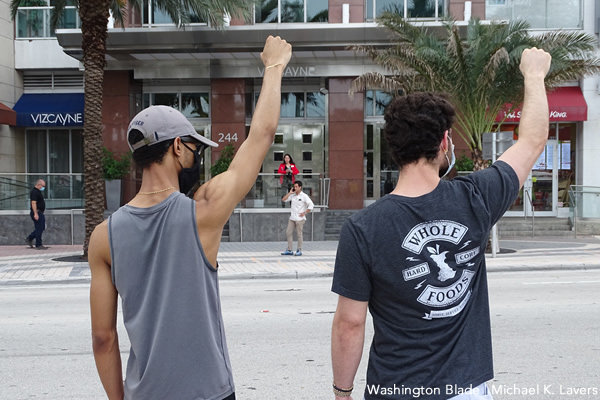
Two men hold their fists in their air during an anti-police brutality protest in downtown Miami on June 1, 2020. (Washington Blade photo by Michael K. Lavers)

The letter to Levine Cava calls for her office to “reach a resolution” with Pallidine, Bucci and Amaya Cruz without litigation that specifically addresses several points:

1) “Policy and procedure updates to address the issues faced by our clients and other transgender community members.”

2) “Meaningful accountability measures for MDCR (Miami-Dade Corrections and Rehabilitation Department) staff that go well beyond what Internal Affairs currently provides.”

3) “Appropriate discipline for the MDCR staff involved in the inappropriate treatment of our clients.”

4) “Updates to county records concerning our clients and their gender.”

5) “Compensation to our clients as allowed by law; and reasonable attorneys’ fees and costs as allowed by law.”

“We have achieved similar results working with officials elsewhere in the country, and are confident we can do the same here,” reads the letter.

Chen echoed this point during the press conference.

“We have every expectation that we will be able to come to an accord with the county that will both do justice to our plaintiffs and protect transgender people in the county going forward,” he said.

Lint, like Chen, noted Levine Cava championed LGBTQ rights when she was a member of the Miami-Dade County Commission until she succeeded now-Congressman Carlos Giménez last November.

“I am calling on Mayor Levine Cava to continue this support for the transgender community by taking steps to address the mistreatment of transgender individuals in Miami-Dade County jails,” said Lint. “Arianna’s Center is committed to working with Mayor Levine Cava to eradicate prejudice against the transgender community in our prisons, jails, detention centers and through the whole criminal justice system.”

Levine Cava’s office has not returned the Washington Blade’s request for comment.

On This Gay Day: Transgender pioneer Virginia Prince died on this day in 2009 – OUTinPerth

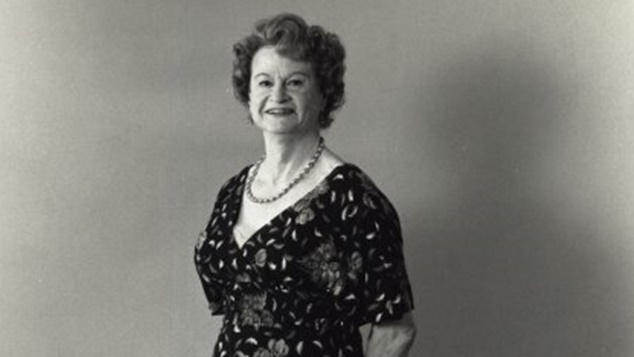
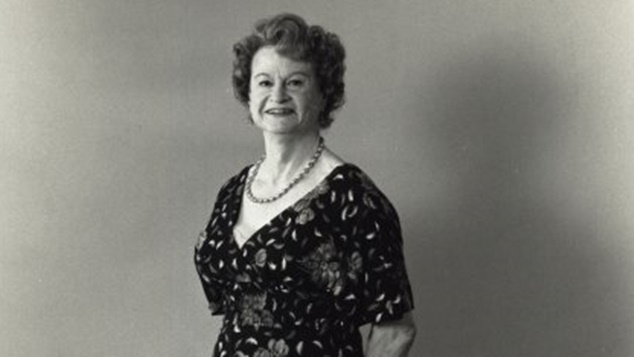
Virginia Prince was a pioneer for transgender recognition

Born in Los Angeles, California in 1912, Virginia Prince was assigned male at birth. From when she was 12 years old she used to often dress in women’s clothes, and began to pass as a female in public. When she was 18 she attended at Church Halloween Party as a woman, and won the first prize in a competition for best costume.

After training as a pharmacist, she married and had a son, but the relationship did not last because of her desire to dress as a woman. Her family were shocked when her divorce papers cited “transvestitism” – the term of the time – as the grounds for the divorce.

After consulting a psychiatrist, who advised her to just embrace the desire and accept who she was, Prince became more comfortable with her gender dysphoria. In 1960 she began publishing the magazine Transvestia. She started the project by getting 25 friends to donate $4 each to the start-up costs of the publication.

Sold by mail order, and through adult book stores, Transvestia published bi-monthly and 100 issues were created between 1960 and 1980. The magazine attracted readers from around the world.

With the magazine she rejected the notion that people who wished to live as a different gender were psychologically disturbed, and she was at the forefront of using the term transgender. However by the 1970’s she was criticised for her promotion of traditional family values and societal norms. She argued that homosexuals, and people who treated gender as a fetish, were not aligned with her views.

She passed away in 2009 in Los Angeles.

Image: copyright University of Victoria Libraries published under a CC BY-SA 4.0 license


You can support our work by subscribing to our Patreon
or contributing to our GoFundMe campaign.

Tags:

Man walks free despite admitting threatening gay couple – PinkNews

Alex Johnson was handed a 12 month community order for the homophobic abuse. (Envato Elements)

A man who threatened a gay couple at their home has walked away with a community service order and a fine after he produced a character notice from a gay friend in court.

Alex Johnson, 36, was handed a 12-month community service order and was ordered to pay a £120 fine after he targeted Steve Lanza and his partner Jason Smith at their home in Leek, Staffordshire.

During a hearing at North Staffordshire Justice Centre, Lanza said Johnson called them “gay b******s” when he turned up outside their home on 1 February, Metro reports.

Lanza said Johnson behaved “menacingly” and he believed the assailant was going to assault him.

Johnson finally left the couple alone after Lanza’s partner went to the window of their flat, which is above a clothes shop, and shouted back at him.

Court heard that Alex Johnson was ‘under the influence of drink and drugs’

Prosecuting, Ian Shaw told the court that Johnson was carrying a beer at the time of the incident and he was “struggling to walk”.

“It seemed quite clear that he was under the influence of drink or drugs,” Shaw said.

In a victim impact statement, Lanza said: “I have been targeted by a member of the public who I do not know at my home address.”

Lanza said he and his partner were made to feel welcome in Leek and were happy living in the community – but the homophobic abuse from Johnson left them on high alert.

The friend has never witnessed any discriminatory or homophobic behaviour from him. He’s attended gay events and clubs with Alex.

“Every time I hear a noise, I worry about what is going to happen,” Lanza said.

Defending Johnson, Angela Trafford said he was “ashamed” of his actions and insisted that he is not “homophobic”.

She went on to produce a “character notice from a friend who is gay”.

“The friend has never witnessed any discriminatory or homophobic behaviour from him. He’s attended gay events and clubs with Alex.”

Johnson pleaded guilty to using threatening words and behaviour to cause distress during the hearing. He was also instructed to complete 15 days rehabilitation as part of his sentence.

Man who threatened same-sex couple walks free after gay friend comes to his defence: ‘He’s attended gay events’ – Yahoo Eurosport UK

A man who threatened a gay couple at their home has walked away with a community service order and a fine after he produced a character notice from a gay friend in court.

Alex Johnson, 36, was handed a 12-month community service order and was ordered to pay a £120 fine after he targeted Steve Lanza and his partner Jason Smith at their home in Leek, Staffordshire.

During a hearing at North Staffordshire Justice Centre, Lanza said Johnson called them “gay b******s” when he turned up outside their home on 1 February, Metro reports.

Lanza said Johnson behaved “menacingly” and he believed the assailant was going to assault him.

Johnson finally left the couple alone after Lanza’s partner went to the window of their flat, which is above a clothes shop, and shouted back at him.

Court heard that Alex Johnson was ‘under the influence of drink and drugs’

Prosecuting, Ian Shaw told the court that Johnson was carrying a beer at the time of the incident and he was “struggling to walk”.

“It seemed quite clear that he was under the influence of drink or drugs,” Shaw said.

In a victim impact statement, Lanza said: “I have been targeted by a member of the public who I do not know at my home address.”

Lanza said he and his partner were made to feel welcome in Leek and were happy living in the community – but the homophobic abuse from Johnson left them on high alert.

The friend has never witnessed any discriminatory or homophobic behaviour from him. He’s attended gay events and clubs with Alex.

“Every time I hear a noise, I worry about what is going to happen,” Lanza said.

Defending Johnson, Angela Trafford said he was “ashamed” of his actions and insisted that he is not “homophobic”.

She went on to produce a “character notice from a friend who is gay”.

“The friend has never witnessed any discriminatory or homophobic behaviour from him. He’s attended gay events and clubs with Alex.”

Johnson pleaded guilty to using threatening words and behaviour to cause distress during the hearing. He was also instructed to complete 15 days rehabilitation as part of his sentence.

Gay refugee ‘ambushed’ by homophobe and left with broken leg: ‘I feel like the world has rejected me’ – Yahoo Eurosport UK

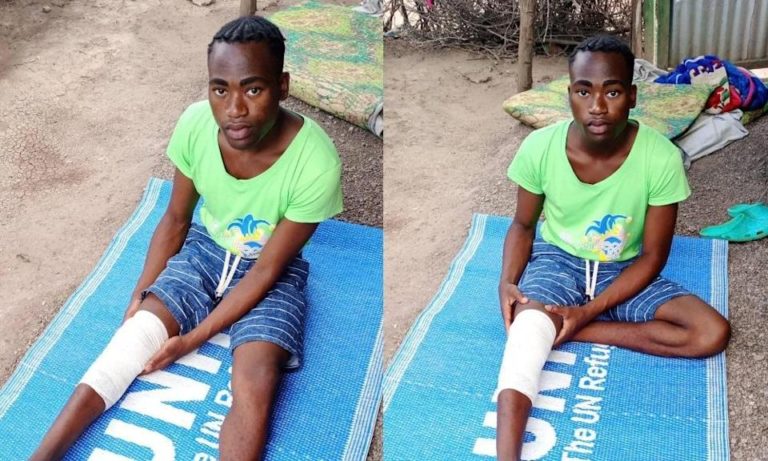
A gay refugee in Kakuma, Kenya, was left with a shattered knee after a homophobe “ambushed” him Wednesday morning (28 April).

As Canary Murungi walked on foot to the shops in the Kakuma Refugee Camp at 11am, a fellow refugee from Sudan spotted him, he told PinkNews.

“He ambushed me,” he said, “and questioned why I am a homosexual. He then violently pushed me, causing me to reinjure my right leg.”

Medics at the camp’s clinics have given Murungi “ibuprofen and Panadol”, a brand of paracetamol. He is now desperately searching for a physiotherapist to alleviate his agony, he said.

For Murungi, it’s almost like Groundhog Day. More than a year ago, he suffered a near-identical attack which left him with “broken bones and dislocated joints”.

“I was attacked, beaten and thrown into a long ditch,” Murungi recalled of the March 2020 incident.

“I am in deep pain. I have no help. It has been horrible.”

At the time, he grappled with whether to use “all the cash” he had on him to pay for a physiotherapist. Until then, all Murungi could do was pour warm water on his leg to tend to the pain.

It was only in September that Murungi no longer needed crutches to walk around. Now his recovery has been thrown into jeopardy.

Such scenes are an all too common sight in Kakuma, a small, impoverished town in northwestern Kenya and the site of one of the largest refugee camps in the country.

(PinkNews

(PinkNews

The camp is co-managed by the United Nations High Commissioner for Refugees, the Kenyan government and the Kenyan Department of Refugee Affairs.

Dozens of queer refugees have been stuck in a violent and murky limbo for years in Kakuma. Each day presents with it increasingly difficult decisions.

Lodging in rickety shelters made of ribbed metal roof panels, reinforced plastic or tents made of tarpaulin sheets, LGBT+ camp residents speak of a life of hunger, limited medical resources and a spectre of violence that haunts them every day.

And for many, their story is the same.

Born in Uganda, they fled from a life of hardship and homophobia to neighbouring Kenya, often with few possessions besides the clothing they wore, to be placed at Kakuma by the immigration authorities.

But in the camp, terror has gripped them. Just weeks before Murungi was assaulted, he and the around 130 other LGBT+ refugees living in block 13 of the camp were grieving.

Chriton “Trinidad Jerry” Atuhwera, described by residents as a “proud trans man”, died of the injuries he sustained after a gang lobbed incendiary devices at his shelter.

His death only compounded the seemingly endless fear the refugees feel.

Many have sparred with gangs of anti-LGBT+ refugees and nearby town locals who have raped them, stabbed them, pelted them with rocks, struck them with sticks and stones and threatened to kill them on an almost daily basis.

Refugees have said they sleep in shifts to keep watch, and this vigilance is deeply eroding the hope they first held coming into the camp.

Now, the refugees are urging people to donate to their GoFundMe as well as to a donation page set up by the Australian activist group, Human in Need.

“Kakuma is brutal,” Murungi said.

I have felt so much pain, I feel like the world has totally rejected me because I have gone through so much homophobia.”

Denver’s changing suburbs: The future is older and more racially and ethnically diverse – The Denver Post

0

Denver’s suburbs will be home to a more ethnically diverse population and a lot more aging Baby Boomers by 2040, even as the metro area’s growth slows from the torrid pace it has kept since the 1990s.

“Age is an important factor,” State Demographer Elizabeth Garner said of older people, adding that Colorado as a whole saw the second-fastest growth rate of seniors in the nation last decade. “These folks aren’t leaving — they’re staying here.”

Despite metro Denver’s slower growth over the next 20 years, it is still expected to see another 1.1 million people settling down and calling it home during that time. And a lot of those new additions will be people of color, continuing a trend that is already underway.

Every metro county except Denver has become less white over the last 20 years, according to the U.S. Census Bureau, with Adams County leading the way. Its white population dipped under 50% in 2019, while the Latino segment eclipsed 40%.

In the next 10 years, the demographer’s office pegs expects growth across metro Denver for Latinos at nearly 30% over the next 10 years, Asians at 36% and the Black population at 13%. Population growth among non-Hispanic whites? Just 4%.

“A larger share of our young adults are people of color, who are giving birth to a more diverse population,” Garner said, adding that the increases aren’t from “current migration but rather migration during the 1990s that was driven by our fast economic growth and demand for workers.”

Rocio Duran lives and works from ...

Kathryn Scott, Special to The Denver Post

Rocio Duran stands near her home in Commerce City on April 23, 2021. Duran recently moved to this new subdivision in the northern section of the city.

“Here to thrive”

Rocio Duran is a 47-year-old immigrant from Bogota, Colombia, who runs her own executive coaching firm. Since moving to Colorado in 2012, Duran has been all over the western suburbs, calling Lakewood, Golden and Arvada home.

It was a “happy accident” — a need to be closer to Denver International Airport for her husband’s work-travel needs — that brought her family to a home in Commerce City last year.

Pointing out the window to the tidy houses lining her street, just beyond the roar of nearby E-470, Duran said one neighbor is an interracial family, one is from Venezuela, one is white and another is a gay couple.

“I really like the idea of living in a really diverse community,” she said. “I see these new neighborhoods as places to create more diverse and strong communities.”

Helen H. Richardson, The Denver Post

LEFT: Barber DB Mendes cuts Diego Leo’s hair at Mountain Fades Barbershop in Commerce City on April 28, 2021. RIGHT: Milenee Esteves takes a selfie with her boyfriend Jesus Morales as they wait to be seated for dinner at El Jardin Mexican restaurant in Commerce City the same day.

Not only is Adams County the most diverse of Denver’s suburban counties, but Commerce City itself is almost 50% Latino, according to demographic data from the Denver Regional Council of Governments. Adams County is also home to the northern stretch of Aurora, where one in five residents is foreign-born and more than 160 languages are spoken in its school district.

The state demographer’s office projects the county’s Latino population to overtake the white, non-Hispanic population in the coming decade by about 30,000 people — a growth rate of 35% versus 6% for white residents.

“We are not here to survive — we are here to thrive,” Duran said.

The age-old desire to make it in America and “be self-sustaining” is the same for the current generation of immigrants as it has been for generations past, said Maria Zubia, director of community outreach for Kids First Health Care in Adams County.

The relentless escalation in Denver’s home prices in the last several years has helped push thousands of Latinos into more affordable communities like Aurora, Commerce City, Thornton, Lakewood and Sheridan — each of which now has Latino populations exceeding 20%.

“Housing is the biggest issue for many families, regardless of race,” Zubia said.

It was for Servando Calderon when he was looking to move out of Denver 18 years ago. The owner of Servando’s Shop towing business settled on Commerce City, which was “cheap enough for us.”

Helen H. Richardson, The Denver Post

From left to right: Keila Flores, 14, Allison Menchaca, 10, Mibsam Flores, 11, and David Quirino, 12, left, swing outside of Monaco Elementary school in Commerce City on April 28, 2021.

The 45-year-old father of three said life was a challenge at the beginning because of gang activity in his neighborhood, which is near the Suncor refinery. He remembers his sons being forbidden from wearing red to school because of possible gang affiliation.

“Back in the day, it was tough,” said Calderon, who is originally from Mexico.

But he and his wife emphasized the importance of school, and his two sons are now at Colorado State University, one studying computer science and the other electrical engineering.

“For them being the first generation in our family to go to college, their mom and I are so proud,” Calderon said. Despite the refinery smell, which “never goes away,” he said, Commerce City is “a quiet and nice place.”

Undoubtedly, cultural and language barriers make things more challenging for suburban Latinos, said Maria Gonzales, who founded and heads Adelante Community Development in Commerce City to advise Latino business owners and entrepreneurs.

But, she said, “once we know how the system works, then we know.”

“We’re being resilient. We’re very hopeful, we’re optimistic,” she said. “The future is going to be Latino.”

Priscilla and Ken Stenman have found ...

Kathryn Scott, Special to The Denver Post

Priscilla and Ken Stenman, pictured on April 23, 2021, have found their home at the Holly Creek Retirement Community in Centennial. The couple moved into their unit eight years ago and enjoy living in the suburbs, close to their children and grandchildren.

“We got too old”

Priscilla and Ken Stenman moved to Denver’s suburbs eight years ago, when they could no longer maintain their beloved Evergreen mountain home.

“We got too old,” Priscilla Stenman said matter-of-factly while sitting next to her husband, a former Lutheran pastor, in a conference room at the Holly Creek Retirement Community in Centennial.

Click to enlarge

Priscilla, who is 84 and a year older than her husband, still drives. That allows the couple — at least pre-pandemic — to get to the light rail station and take the train to downtown Denver to attend the symphony. They also visit their three children and eight grandchildren, who live in the area.

“I’ve never really felt like we’re bound here,” she said.

The Stenmans represent a fast-growing cohort: The demographer’s office projects that people ages 80 to 84 will leap in population between now and 2030 by 83.4% — the fastest rate by far of any age bracket in Colorado.

All told, the number of 65-and-up residents in Colorado is estimated to grow by 39% by 2030, wildly outpacing any other age group in the state.

“We are seeing a growth in the 65-plus (demographic) due to the large number of Baby Boomers we attracted primarily in the 1970s and 1980s,” said Garner, the state demographer. “They have worked and lived here and now for the most part are retiring here.”

She cautions their growth trajectory is based on a lower baseline population than other age groups in Colorado. By comparison, millennials, who are between their mid-20s and late 30s are the state’s most plentiful demographic slice, with nearly 1.3 million members.

Still, the expected 10-year jump to as many as 1.2 million 65-and-up Colorado residents has Jayla Sanchez-Warren, director of the regional council of governments’ Area Agency on Aging, wondering what it means for “the way we’ve always done business?”

“The big (areas of concern) are housing and transportation and access to health care,” she added, which will differ depending on where and how seniors are living — be it at an assisted care facility, a retirement home or the house in which they raised their children.

Gretchen Lopez, 73, lives by herself in a home she bought in Castle Rock seven years ago. The Long Island, New York, native moved here from Ohio to be close to family and plans on making the house her “forever home.” Lopez, a former teacher, likes living in a place where her neighbors are in various age ranges and in different stages of life.

The Castle Rock development is seen ...

AAron Ontiveroz, The Denver Post

Homes in Castle Rock are pictured on Tuesday, June 11, 2019.

“For those of us who want to live in an intergenerational community, a retirement home doesn’t work for me,” she said. “Every day I know I’m going to see the two little boys across the street and I love kids. Young people bring a fresh type of energy.”

Aging in place is something Karie Erickson, executive director of Aging Resources of Douglas County, hears about a lot. And there’s a strong pull to do so, she said.

“If you’ve been in your home for 40 years, it’s comfortable,” Erickson said. “Not only do you have your memories, but you know what’s in your cupboard. When you move to a new setting, that produces a lot of stress.”

But it can spell loneliness and isolation for those no longer safe to drive, she said, and then “you quickly become dependent.” That’s especially true for seniors living in the large swath of Douglas County that is not served by the Regional Transportation District’s bus and rail network.

“I know there will be that day when I have to hang up the car keys — and I’m dreading it,” Lopez said.


Click to enlarge

Open Thread: Rudy Gay can’t fail – Pounding The Rock

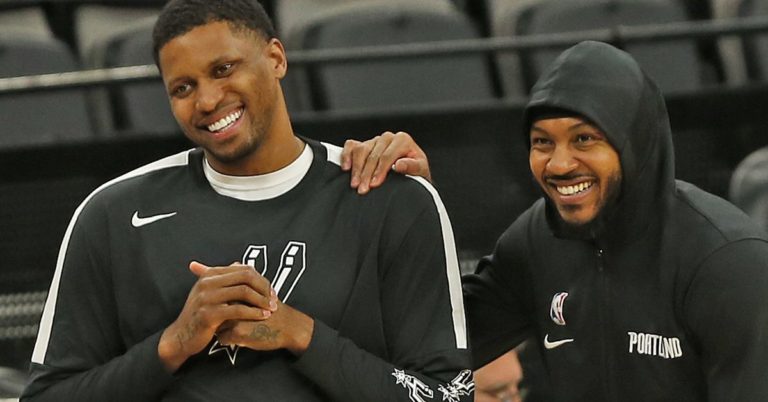
Rudy has played for 4 different teams in his career, but for the last 4 seasons he’s been a critical cog for the Silver and Black. This week, he became one of the top 100 scorers in NBA history, passing up Buck Williams on Friday. Next up is Elton Brand, and with 33 points to go, Rudy should easily pass him this season.

Rudy has been a main scorer for most of his career, but the 2020-2021 season could be the first time in his 14 years that he hasn’t started a game, but he’s still been productive this year, averaging 11.2 pts, slightly more than last year’s 10.8. Even though he’s not as quick at the age of 34 as he was earlier in his career, he has a bag of tricks that he’s learned over the years to get open, and he’s still counted on by the Spurs to keep the bench squad afloat with his scoring and veteran leadership with a lineup that often consists of three young players along with him and Patty. Both of those guys will be free agents at the end of this season, so it will be interesting to see if the Spurs bring Rudy back for another tour. What do you think?

Finally, some Rudy-based music:


Welcome to the Thread. Join in the conversation, start your own discussion, and share your thoughts. This is the Spurs community, your Spurs community. Thanks for being here.

Our community guidelines apply which should remind everyone to be cool, avoid personal attacks, not to troll and to watch the language.

Onir: I’m making a sequel to I Am called We Are, but like the original, I’m told ‘it’s too gay’, even by OTT platforms – Hindustan Times

It’s been a decade since Onir’s national award-winning anthology film, I Am, released to critical acclaim, but the filmmaker confesses that making it in the first place was a big challenge.

He reasons, “Each story was supposed to be separate film, but I realised it was impossible to finance any of it. I was constantly told by studios and platforms, ‘There’s no viewer for it’. Just out of stubbornness, I remember putting out a post on Facebook, that ‘I want to make this story, the first one is on child sexual abuse, if you believe this film needs to be made, either contribute by paying money and becoming co-owner, or volunteer to work for the film’. Ultimately, the film happened when all industry doors were shut.”

The 51-year-old adds that when it comes to financing a film, backers are “brutally honest” and say it upfront what they expect from a film.

“When it comes to meeting and talking, people are very forthright. For My Brother Nikhil, they told me, ‘Aisa nahi ho sakta ki Sanjay Suri ke character ko Bipasha Basu ke character se AIDS ho jaaye?’ (It was a same-sex story). I remember doing distribution work for Daman, way back in 2000. Some distributor told me, ‘Achha, ek hi rape hai, aur woh bhi husband ne kiya? Aur rape nahi hai?’ This is the industry we belong to,” he reveals.

After I Am was complete and Onir was showing it to studios, he was told that people aren’t ready for this kind of a “controversial” film. And surprisingly, the filmmaker says this continues even today, despite the arrival of OTT platforms where there’s said to be freedom of expression.

“I’ve decided to make a sequel to I Am called We Are, which celebrates queer rights. Every platform I’ve discussed it with, has said no. For them, instead of box office, it’s eye balls. It’s too gay for them. Everyone wants to do something LGBTQI as long as it’s in their comfort zone. A lot of people are homophobic. If they do something in that space, they think they’re doing social service or the world a favour,” rues Onir.

I Am went on to win two National Awards — Best Hindi film and Best Lyrics. However, it didn’t feature at mainstream awards, and Onir can never forget that.

“Why should one be surprised? My Brother Nikhil never won any industry awards. Why? Give me one reason. I Am travelled the world, it was never recognised here (in India). Right now, my co-producer for We Are is from Canada. Before that, it was pitched to different platforms as a very powerful film I’ll be making. Unlike I Am, it’s not dark. They still don’t want to (release it),” he concludes.

SHARE THIS ARTICLE ON

Former Razorback runner talks about coming out as transgender – Arkansas Times

NIKKI HILTZ: From her time as a runner for the Razorbacks.

It turns that there has been at least one instance of a transgender person competing in athletics in Arkansas, though none was cited as the legislature passed anti-transgender legislation.

Advertisement

NBC Sports tells the story of Nikki Hiltz, a champion middle-distance runner for the Arkansas Razorbacks who completed a college career in 2018, turned pro and now competes on the world stage.

The 2019 season marked a breakthrough in my career. I felt confident and it showed in my results: I PR’d in the 1500m four times and represented the U.S. at the 2019 World Championships.

But ahead of one race, I remember hearing the announcer say, ‘Women’s 1500 meters, first call,’ and having to remind myself, ‘Oh yeah, that’s me.’

The playing field can be a very gendered place. While everyone – regardless of their profession – is navigating a binary world, sports are built on that binary.

For that reason, I found myself starting to resent my sport. I felt like track was forcing me into a gender identity that didn’t feel representative. But I also didn’t feel like I had another option, other than waiting for my career to end so I could come out and be open about my gender identity.

Last year, when the world shut down and I couldn’t compete, I had a lot more time for self-discovery.

Over the summer, I held a virtual 5k to raise money for the Trevor Project, an organization that provides crisis intervention and suicide prevention services to lesbian, gay, bisexual, transgender, queer, and questioning youth.

And four runners used the race to come out.

Those four runners made me realize that this is an event I want to host every year. So ahead of this year’s virtual 5k – (Mark your calendars for July 17!) – I recorded podcast episodes with each of them.

After the very first conversation, I realized I was ready to share my truth.

I finally had the context and language to tell the rest of the world, ‘Hi I’m Nikki and I’m transgender.’

Being transgender means my gender identity doesn’t align with the sex I was assigned at birth.

The best way I can explain my gender is as fluid. Sometimes I wake up feeling like a powerful queen and other days I wake up feeling as if I’m just a guy being a dude, and other times I identify outside of the gender binary entirely.

Right now, they/them pronouns feel the most affirming to me.

And just to clear up a few misconceptions: While some trans people do have gender-affirming surgery, that’s not what makes you trans. Identifying as trans just means that your gender identity doesn’t align with the sex you were assigned at birth.

In other words: I’m not changing who I am, I’m just showing up as myself. This is who I’ve been my entire life.

Coming out as trans wasn’t my first experience with coming out.

In 2017, I came out about my sexuality. Gay marriage had just been legalized two years earlier, and while homophobia certainly persists today, being gay was generally accepted.

But coming out as trans in 2021? The world is a really scary place for trans people right now

The as-told-to article then delves into the Arkansas legislature’s recent spate of anti-transgender legislation.

Advertisement

Last week – despite pleas from doctors, social workers, and the trans community – the Arkansas state legislature passed HB 1570, a bill that makes it illegal for trans youth to receive gender-affirming health care.

I imagine what I would have felt like had this law passed in 2016, when I first arrived at Arkansas. For two years, I represented a state that I now wouldn’t feel safe visiting.

That’s actually a big part of the reason I decided to come out. Because the issue isn’t trans people, but transphobia.

I’m a firm believer that visibility and vulnerability are essential to creating inclusive spaces.

I’d offer Robin Lundstrum, Leslie Rutledge, and Missy Irvin, to name three, as evidence to the contrary given the wrenching testimony as they legislated discrimination against transgender children over pleas from transgender people, their parents and medical professionals.

The NCAA has rules on transgender competition (it’s allowed, but with rules, which include for women at least a year of testosterone suppression treatment.) But the story raises the question of how to know when the rules should be enforced. I’ve inquired what Arkansas knew, if anything, about Nikki Hiltz’s story and its reaction now that it’s gone public

Advertisement

Undoing 4 years of ‘damage’: LGBTQ advocates on Biden’s first 100 days – NBC News

Finn Cooper, who lives in Cincinnati, volunteered for the Michigan Democratic Party to call voters in the swing state on behalf of the Biden-Harris presidential campaign in the months leading up to the election.

Cooper, who uses gender-neutral pronouns, said they supported Joe Biden’s message on LGBTQ rights.

“I thought he seemed like a good candidate — much better than Trump, of course, and I do think he has done infinitely better than Donald Trump on these issues,” Cooper, 20, said. “At the administration level, I think he’s done well. The problem I think more comes down to the legislative things and working with Congress. I don’t think enough of that has happened.”

LGBTQ rights activists generally agree that Biden has accomplished many of the things he said he’d do for the community in the first 100 days of his presidency, most of them through executive orders. A new GLAAD poll of 800 lesbian, gay, bisexual, transgender and queer adults found that 78 percent said Biden is doing an excellent or good job as president. But some, like Cooper, expected more from him.

Despite Biden’s executive actions to protect LGBTQ people, Cooper noted that states are still considering a record number of anti-LGBTQ bills, particularly bills that target transgender youth. Cooper said they’d like to see the president work harder to get the Equality Act through the Senate so LGBTQ people actually have far-reaching legislative protections from discrimination.

“All across the country there are so many state legislatures that are passing these awful, awful anti-LGBTQ laws, particularly anti-trans laws, and he’s not really doing a lot,” Cooper said. “Literally they haven’t passed any national laws, but also just like as president, he’s not speaking out.”

The Biden administration has been better on LGBTQ rights than the Trump administration, Cooper said, but that’s not enough.

“Just because it’s better doesn’t make it good,” they said.

From day one, a ‘commitment to equality’

There are many ways the Trump administration’s “nefarious, anti-LGBTQ policy” has been woven into the government, according to Sharon McGowan, chief strategy officer and legal director of Lambda Legal, an LGBTQ legal advocacy organization.

“We know that it is going to take some time to root all of that out,” she said.

McGowan said the Biden administration has shown a “commitment to LGBTQ equality” from day one by quickly moving to reverse the previous administration’s policies targeting LGBTQ Americans. For example, she said, he issued an executive order on the first day of his presidency recognizing the Supreme Court’s landmark 2020 decision in Bostock v. Clayton County, Georgia, which established that LGBTQ people are protected from employment discrimination under Title VII of the Civil Rights Act of 1964.

That executive order has since had ripple effects, because it directed federal agencies with protections from sex discrimination to also protect people from discrimination based on sexual orientation and gender identity. The Department of Housing and Urban Development announced in February that LGBTQ people will now be protected from discrimination under the Fair Housing Act as a result of Biden’s order. The announcement meant that, for the first time in history, LGBTQ people were clearly protected from housing discrimination by federal law.

The executive order also expanded the sex discrimination protection of Title IX of the Education Amendments of 1972 to include gender identity and sexual orientation.

Also in the first days of his presidency, Biden reversed Trump’s ban on transgender people enlisting in the military and rescinded Trump’s executive order barring residents and refugees from several majority-Muslim countries from entering the United States — a move advocates say is important to those fleeing persecution in countries where homosexuality is still illegal.

‘His administration looks like America’

Biden released an executive order on his first day in office to advance racial equity, and his administration has hired people who understand the “nuances and intersections” of communities of color and LGBTQ people, said Victoria Kirby York, deputy executive director of the National Black Justice Coalition.

“The fact that the equity-based orders that he put out included multiple marginalized identities that intersect in a person was huge, because often people have to pick and choose what part of themselves they think is being discriminated against, and sometimes it’s the coming together of all of it,” she said. “It’s not just because I’m a woman or just because I’m Black, but because I’m a Black woman that I’m experiencing a particular form of discrimination, and that kind of nuance in policymaking only happens when you have diverse representation at the decision-making tables.”

In fact, Biden has appointed a record number of LGBTQ officials to serve in his administration, including White House deputy press secretary Karine Jean-Pierre, deputy communications director Pili Tobar, Secretary of Transportation Pete Buttigieg and the first openly trans federal official to be confirmed by the Senate, Dr. Rachel Levine, the assistant secretary of health.

He has also nominated Shawn Skelly to serve as the assistant secretary of defense for readiness. If confirmed by the Senate, she would be the highest-ranking openly trans Pentagon official, The Washington Post reported.

“The president’s very serious about making his administration look like America,” Mara Keisling, executive director of the National Center for Transgender Equality, said. “He’s way out ahead of where the Obama administration was, and probably most importantly, he’s shown us that he’s serious. He’s shown us that he cares. We now have a president who’s not going to use us for target practice.”

Waiting for follow-through

On some issues, advocates are still waiting for Biden to fulfill his promises. One of the most notable was his promise to sign the Equality Act — which would grant LGBTQ people broad protections from discrimination in housing, employment, education, public accommodations, credit and jury service — into law in the first 100 days of his presidency.

Though the House passed the bill in February, it has since stalled in the Senate in part due to the filibuster, which requires 60 members, a supermajority, of the chamber to end debate on a measure to move it to a vote.

During a White House press briefing earlier this month, press secretary Jen Psaki said Biden “continues to work toward” passing the Equality Act, but “in order to sign legislation, it needs to come to his desk.”

He also called for the Senate to pass the bill in his first joint address to Congress on Wednesday.

McGowan said Biden should continue to draw attention to the fact that the Equality Act is popular: Three-quarters of Americans support nondiscrimination protections for LGBTQ people, according to recent data from the Public Religion Research Institute.

“It’s going to continue to be important for President Biden to use his bully pulpit and to use his position of leadership to speak out about LGBT equality as not some issue that only some small group of people care about — but something that is so central to the moral fabric of our country,” McGowan said. “That’s the kind of thing that then creates the pressure that leads to us being able to get to the 60 votes that should very easily be there for something like the Equality Act.”

In addition to the Equality Act, advocates would like Biden to deliver on his campaign promise to support state and federal efforts to give nonbinary people access to an X gender marker on IDs, including passports.

McGowan said Lambda Legal has led a yearslong lawsuit to help nonbinary people have access to an X gender marker on their passports. In May 2020, the 10th U.S. Circuit Court of Appeals overturned a lower court’s decision in favor of Lambda Legal’s client and ordered the State Department to consider their passport application again.

Now that Biden is in office and Lambda Legal’s case is back at the State Department, McGowan said the group is hoping “we will get the answer that we should have gotten the first time.”

Kirby York said she would also like to see the administration take more action to study and prevent anti-trans violence, adding that reports of violence have reached a new record high. The American Medical Association released a statement in 2019 declaring fatal attacks against trans people an epidemic. Last year surpassed 2019’s number, with 44 trans people reported killed, according to the Human Rights Campaign. So far in 2021, at least 17 transgender people have been killed, with more than half of them Black trans women.

“There’s been a naming of the issue by different elected officials, including President Biden and Vice President Kamala Harris, but there’s been, to my knowledge, no specific initiative or task force even designed to address these numbers,” Kirby York said.

Addressing anti-transgender violence was a key campaign issue for Biden. In October, he criticized the Trump administration for its “dehumanizing government actions and rhetoric” that he said fueled “the flames of transphobia” that lead to violence.

In March, he issued a presidential proclamation on Transgender Day of Visibility, saying, “The crisis of violence against transgender women, especially transgender women of color, is a stain on our Nation’s conscience.”

Kirby York hopes that once Biden has filled all the open positions in his administration, he’ll start to directly address the issue.

‘What does having my back mean?’

Some advocates say the rise in anti-trans violence is in part due to state legislative “attacks” on trans people. So far in 2021, at least 144 bills targeting transgender people have been introduced in state legislatures across the country, according to the Human Rights Campaign.

As of Friday, nine anti-LGBTQ bills have been signed into law in 2021, putting the year on track to “become the worst year for state legislative attacks against LGBTQ people in history,” Human Rights Campaign President Alphonso David said during a news conference last week.

Seven states — Arkansas, Mississippi, Tennessee, Alabama, West Virginia, South Dakota and Idaho — have banned transgender athletes from competing on school sports teams that align with their gender identity.

Arkansas is also the first state in the country to ban gender-affirming medical care for trans minors, though the bill was opposed by major medical organizations such as the American Medical Association and the American Academy of Pediatrics.

Biden affirmed his commitment to protecting LGBTQ youth in schools through his executive order on Title IX, and he spoke to trans people directly during his Wednesday address to Congress: “To all transgender Americans watching at home — especially the young people who are so brave — I want you to know your president has your back,” Biden said.

But some trans advocates say it’s not enough.

“I’m very thankful for this. But what does having my back mean? Like, if the bills pass in Texas will you keep them from putting my mom in jail?” tweeted Kai Shappley, a 10-year-old transgender girl who testified before the Texas Legislature against a bill that would make it a felony for doctors and parents to provide gender-affirming care such as hormones or puberty blockers to trans minors.

McGowan said she thinks Biden is giving the Department of Justice and Department of Education “breathing room” to figure out how they want to address the state bills, but, she added, “I certainly would never say that the president could not do more.”

She’s hopeful the administration will “kick it into high gear” in the coming months. She said Biden’s choice of civil rights attorney Vanita Gupta as associate attorney general makes her optimistic.

“There’s a lot of work to do and a lot of damage to be undone, and so it has been very gratifying to see people tapped for these positions who have deep knowledge around working in the federal structures to promote civil rights and promote LGBTQ equality,” she said.

Follow NBC Out on Twitter, Facebook & Instagram