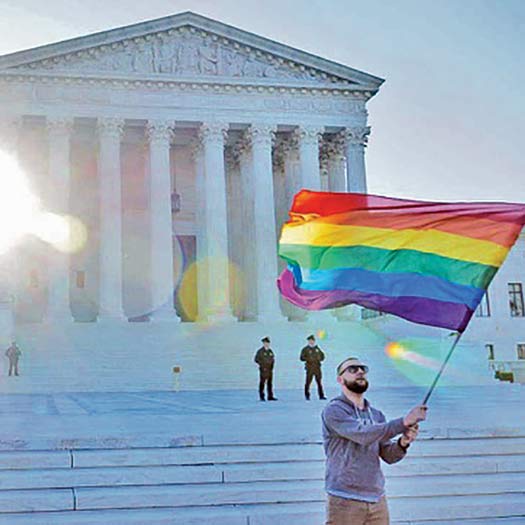
Rainbow flag waves in Washington D.C. at the U.S. Supreme Court. Photo by Scott Drake
The U.S. Supreme Court will not review an appeal brought by a female West Point cadet who says the federal government should be liable. On May 3 the court refused to hear the case on appeal. The West Point cadet says she sustained injuries from a sexual assault at the U.S. military academy.
The cadet, identified in court documents as Jane Doe, said she was raped on campus and subjected to constant sexual harassment. She sued the government after the academy failed to adhere to mandatory Defense Department regulations governing the military’s response to sexual assaults.
Studies of sexual assault in the military are limited, but one survey of veterans found that 31 percent of lesbian and bisexual former servicemembers indicated they had been sexually assaulted in the military compared to 13 percent of heterosexual women veterans.
In a brief supporting Jane Doe’s appeal, the Modern Military Association of America (formerly known as OutServe) joined several other women’s groups to urge the Supreme Court accept the appeal and overturn a 1950 decision that has barred lawsuits similar to Doe’s.
The Federal Tort Claims Act allows individuals to sue the federal government over certain injuries sustained on federal property or caused by federal employees. But efforts to combat sexual assaults in the military have been running up against a 1950 U.S. Supreme Court ruling—in Feres v. U.S.—that held that members of the military cannot sue for injuries “incident to service.”
In Doe’s case, the military argued that the injuries Doe sustained from being raped on campus were “incident to service.”
The MMAA brief argued that the Feres decision should not be used to excuse government culpability for sexual assault injuries received while attending a military academy. The brief argued that the Feres ruling is giving a “free pass” to sexual assailants at military academies. It noted that sexual minority servicemembers account for even higher numbers of the victims, including male servicemembers who identify as gay or bisexual.
“Specifically, LGBT service members (6.3% of women and 3.5% of men) were more likely to indicate experiencing sexual assault than non-LGBT service members (3.5% of women and 0.3% of men),” said the article in the journal of Sexual Research Social Policy. “The prevalence rates of sexual assault were estimated at 4.5% for LGBT service members compared to 0.8% for non-LGBT service members.”
Justice Clarence Thomas was the lone dissent on the court’s refusal to take the appeal. He noted that, had Doe been a civilian contractor visiting the academy campus when she was raped, she could have brought her claims for injuries.
“Feres was wrongly decided; and this case was wrongly decided as a result,” said Thomas in a two-page dissent. Thomas said he was concerned that the student’s “rape is considered an injury incident to military service.”
Acting Solicitor General Elizabeth Prelogar’s brief to the Supreme Court had argued that, as a cadet at West Point, Jane Doe was an “active duty member of the Army” and faulted Doe for not pressing claims against the cadet who raped her. But Prelogar did not mention that, to press claims against her assailant, Doe would have had to disclose her own identity as a victim of sexual assault. Prelogar urged the court not to revisit Feres “after having been woven into the statutory fabric for more than 70 years.” She also argued that dismissal of Doe’s claims “reflects the appropriate degree of ‘judicial deference to Congress and the Executive Branch in matters of military oversight.’”
To accept an appeal for review, at least four justices must agree to hear the case.
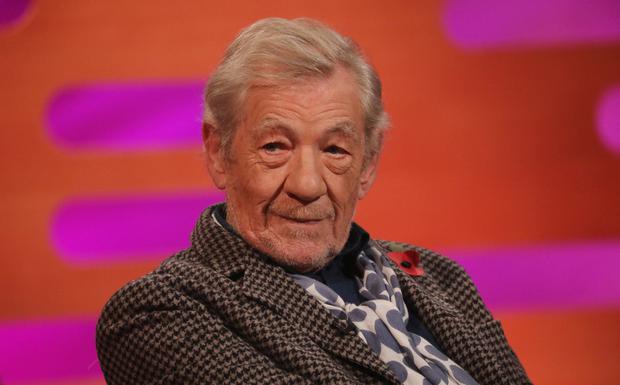
Sir Ian McKellen is appearing on The Jonathan Ross Show (Isabel Infantes/PA)
Sir Ian McKellen is appearing on The Jonathan Ross Show (Isabel Infantes/PA)
Discussing the period after he came out, Sir Ian said: “I [have] never stopped talking about it since. Made up for lost time.
“It changes your life utterly. I discovered myself.
“And everything was better. My relationships with my family, with friends, with strangers, and my work got better as I wasn’t hiding anymore.
“Up to that point, my acting had really been about disguise and then, when I could feel I was myself, it came about telling the truth, which was much more interesting.”
Sir Ian said his “dilemma” about coming out when he was younger was that if he was openly gay he “could have risked being prosecuted”.
Sir Ian McKellen said his work had improved after he was honest about his sexuality (Ian West/PA)
Sir Ian McKellen said his work had improved after he was honest about his sexuality (Ian West/PA)
Sir Ian also told the programme why he has not written an autobiography.
“I put aside six or nine months to write it – it was for an awful lot of money which was basically the attraction,” he said.
However, Sir Ian said there was “a list of the chat shows, including this one, that I would be expected to appear on, all over the world, right across the States, South America, Australia”.
“That would take a year of my life, longer than to write the book,” he said.
“I said I don’t have enough time. So I gave them the money back.”
He added: “I wanted to start with my parents, why did they decide to have me, just before the Second World War, they must have discussed this and thought about this.
“It’s too late to ask them and I can’t quite imagine.
“I got rather teary thinking about them as young people and wishing I’d known more about them. That was another reason why I rather went off the idea.”
A bill banning transgender girls from participating in school sports and competitions struggled to gain traction.
Senate bill 29 was taken to the Texas House Public Education Committee on Tuesday (May 4), but failed to achieve enough votes to pass.
The Texas House Public Education Committee is made up of six Democrats and seven Republicans, however, the bill fell short of a single vote in a 6-5 outcome.
Bill 29 has fallen under heavy scrutiny and criticism from LGBTQ+ groups as it calls to prevent public school students from competing in athletic competitions “based on biological sex”.
Dutton, a Houston Democrat, told Hearst Newspapers that the bill would not pass a vote earlier last month.
“That bill is probably not going to make it out of committee,” Dutton said. “We just don’t have the votes for it … But I promised the author that I’d give him a hearing, and we did,” he said.
Rep. Cole Hefner, the author of bill 29, argued the proposed legislation was in defence of protecting women’s sporting rights.
“I believe this bill is critically important to protect fair play in women’s sports,” Hefner said.
Following the news of the vote, Democrat Rep. Mary González said legislators must ensure the bill doesn’t move forward.
“We don’t need this piece of legislation,” González said. “The consequences of the legislation could go literally off the rails, and that’s not going to be helpful to the House, to the future and most importantly to kids.”
A refugee, who is living in the UK, was forced to flee his home in Iraq after being badly beaten and thrown in prison three times for being gay.
The 32-year-old man, who wished to remain anonymous, told Leeds Livethat he grew up in the city of Sulaymaniyah, in the Kurdistan Region, in northern Iraq. He has been living in Leeds for a month now, and he said cried when he arrived in the UK because he was “in a safe country”. The man said he is a “very strong person”, but it’s still “not easy to talk about what happened”.
“I had a very very bad life, I [was in a] bad situation with bad suffering,” he said. “Three times I was [put] in prison just for the reason that I’m gay.”
He said nobody “accepted you” or “supported you” if someone came out as part of the LGBT+ community. The man said he was subjected to horrific abuse when he lived in Sulaymaniyah. He said people called him “stupid”, “sick” or “street boy” and people would spit in his face or threaten to tell other people that he was gay.
The man told Leeds Live he was arrested one time for just sitting in a park that was “known for gay people”. He said the police came and started “slapping me all over and kicking me” before demanding the man humiliate himself and ask to be forgiven.
“Then, he [the police officer] say I must kiss his shoes and ask to be forgiven, but he kicked me again,” he said.
The man said he lived in constant fear of further abuse and confrontation by the police. He said “being gay” in the region is “worse than murder” because he felt it’s “one of the most dangerous places to be gay”. The man added that some people believe gay people should be put in jail or given the death sentence simply for existing.
“They will arrest you, they will attack you and they will insult you,” he explained. “And nobody can support your life never, nobody can accept [your] life never ever.”
The gay refugee told Leeds Live he felt like he had no other option but to flee Iraq because his life “was always at risk” and he “couldn’t live” with “having to lie” about his sexuality. But he said he still faces abuse in the UK, and he wants other people to “know the suffering refugees have been through”.
“Just a week ago, I was in the garden, and an English man swore at me and told me to ‘get out of my country’, but he doesn’t know,” he said.
He continued: “I want people to know about our situation and our lives so that more people will help gay refugees.
“I want all of the world and the UK to know the dangers in Iraq.”
He said people are in disbelief when he shares his story because people here can “go to bars, hug and touch without fear”, but, in Iraq, it’s “all ‘no no no’”. The man said the UK feels like a “new world” where he can “finally be myself and not be at risk or live in fear”.
Gay people are subject to widespread discrimination in Iraq
According to Equaldex, gay marriage is not recognised in the country, and LGBT+ people do not have any legal protections against discrimination in housing or employment.
In April, VOA News reported that Kurdish security forces in Sulaymaniyah reportedly arrested “at least eight gay men”. The government denied targeting the group and said it was part of an effort to crack now on prostitution.
However, the US Consulate General in Erbil, Iraq, tweeted that it was monitoring the events in Sulaymaniyah “that seem to be targeting members of the LGBTI community for arrest”.
Members of the LGBT+ community told VOA that the arrests blanketed the community in a sense of fear. One activist said they don’t feel like they are “part of the Kurdish society” because “there is so much discrimination against the LGBTQ community”.
“You don’t feel like there is room for you,” they explained. “It has unfortunately reached a level that most of the LGBTQ members are leaving the country.”
This diamond ring is expected to fetch up to $38 million
Location: Hong Kong
The 15.81 carat Sakura Diamond is the largest of its kind to be auctioned
and is named after Japan’s cherry blossoms
It will go under the hammer at Christie’s on May 23
(SOUNDBITE) (English) CHRISTIE’S ASIA PACIFIC DEPARTMENT OF JEWELRY, CHAIRMAN, VICKIE SEK, SAYING:”The Sakura Diamond is fancy vivid purple-pink, internally flawless with type 2A certificate. This is the largest purple-pink diamond to ever appear in auctions. The color is so strong saturated, with no graining in the stone, therefore, there is internally flawless clarity which is very rare in a pink diamond.”
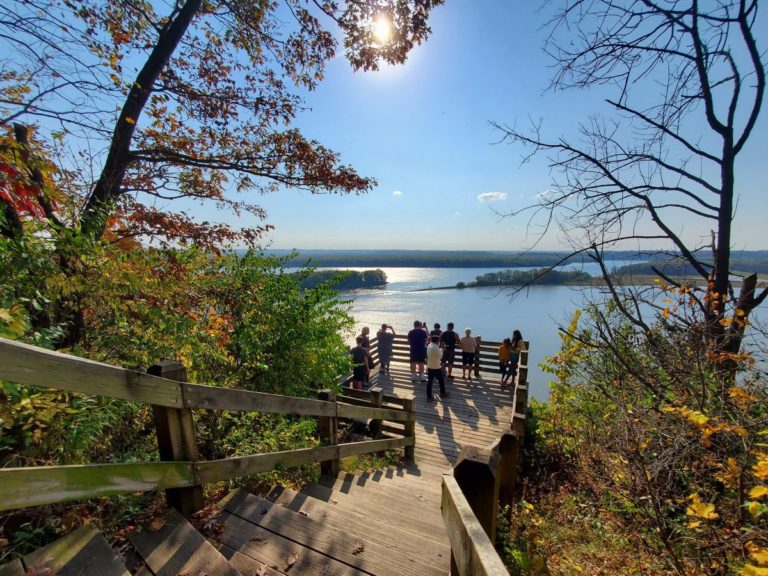
South of Savanna, along the Great River Road, past the only stoplight in Carroll County, an army of bikers — dressed in requisite black leather jackets and cycle club T-shirts — throng Poopy’s (1030 Viaduct Road, Savanna; 815-273-4307; poopys.com), a wildly popular place where the camaraderie is enhanced by the musicians performing on an outdoor stage, and, of course, plenty of beer.
A Taiwan court ruled in favour of a Taiwanese-Macanese gay couple on Thursday in a legal test case greeted by activists as a first step towards getting full recognition of same-sex unions with foreigners.
Taiwan is at the vanguard of the burgeoning gay rights movement in Asia and became the first place in the region to legalise marriage equality in 2019.
Over 5,700 same-sex couples have wed since then but there are still some restrictions that heterosexual couples do not face.
Under current rules, Taiwanese can marry foreigners — but only those from countries where same-sex marriage is also recognised.
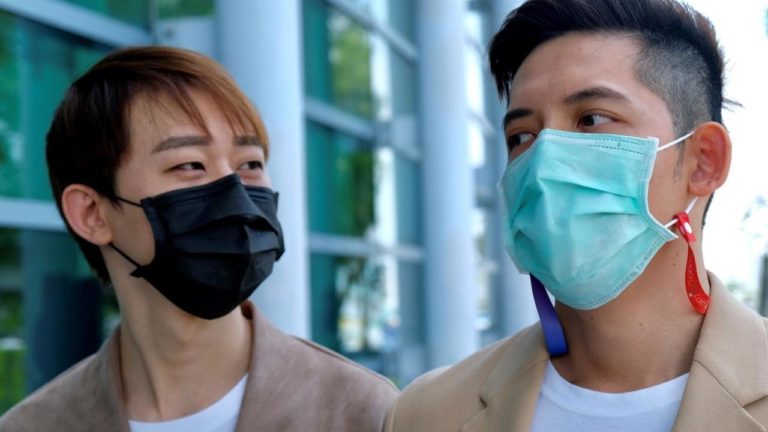
On Thursday, the Taipei High Administrative Court revoked a government office’s 2019 decision to reject the marriage registration of Ting Tse-yen and his partner Leong Chin-fai from Macau. Activists hailed the reversal as an “initial success”.
In Taiwan, marriages must be recorded at local household registration offices to be deemed legal.
It is the first time a court has directly ordered the household registration office to record an international same-sex marriage, according to their lawyer Victoria Hsu.
While the ruling sets a precedent it will not apply to other international same-sex couples, Hsu said, as she urged the government to amend the law to avoid multiple legal battles.
“The freedom of marriage is a basic right that should be fully protected instead of having to go through a case-by-case review,” Hsu said.
Leong, 33, and Ting, 29, co-founded a group to assist Taiwanese whose partners are from countries where same-sex marriage is not legal, including Japan, Thailand, China and Vietnam.
“Today’s ruling is not the end, it’s a process and a small milestone,” Leong told AFP.
“We hope in the future all international same-sex couples can register their marriages directly rather than having to go to courts.”
Taiwan is home to a thriving LGBT community and a record 200,000 people attended a pride march in Taipei in 2019 to celebrate the legalisation of same-sex marriages.
That legalisation came about after Taiwan’s top court ruled that denying same-sex couples the right to marry was discriminatory and unconstitutional.
But the issue of same-sex marriage proved deeply divisive and the law contained restrictions pushed for by conservatives, including more limited adoption rights.
That’s what Kimberly Vasquez Arciliares remembers most about Penélope Díaz Ramírez, with whom she often shared the drag stage in San Juan. After shows, the two would hit the clubs and chatter about life, comparing the clinics they’d visit for hormone treatments as transgender women in Puerto Rico.
“She was an excellent drag queen, and an amazing lip-syncer and choreographer, too,” Vasquez said. “She was in the process of transitioning, and trying to live her true life as a female.”
On April 13, 2020, Diaz was found beaten and hanged at a men’s correctional facility to which she’d been wrongfully assigned in Bayamon, becoming the ninth of what would be 44 transgender killings in the USA and its territories lastyear. It was the country’s deadliest year on record.
Nowhere has the crisis been more pronounced than in Puerto Rico, where 12 transgender victims, most of them women, were killed in a two-year span. The violence comes amid a shifting national debate on transgender rights and moves by the territory to deal with its long history of brutality against women.
Puerto Rico’s transgender community and its allies blame the killings on a mix of religious fundamentalism, transphobia, indifference from authorities and lingering economic effects of the COVID-19 pandemic and Hurricane Maria.
“The transgender community is the most discriminated within the LGBT community, and Puerto Rico is no exception,” said Carmen Yulín Cruz Soto, San Juan’s mayor from 2013 until last year. “There’s still a lot of conservative, religiously motivated thought. Legislators are too concerned about people’s sex lives, when they should be concerned about protecting people’s rights to live their lives the way they want.”
Activists said action is urgently needed. Transgender killings in the USA are on rapid pace to exceed last year’s record violence. There have been 20 cases – most recently the death of Keri Washington, 49, who was found dead May 1 in Clearwater, Florida.
President Joe Biden has taken steps to ensure federal protections for transgender rights and reassure the LGBTQ community that he is on their side. In his address April 28 to Congress, he called on lawmakers to pass the Equality Act, which seeks to ban discrimination based on sex, sexual orientation and gender identity. GOP lawmakers in dozens of states are pushing bans on transgender rights.
‘Your President has your back’: President Biden addresses transgender Americans
President Joe Biden urged Congress to pass the Equality Act to protect transgender Americans’ rights.
Associated Press, USA TODAY
Puerto Rico accounted for six of last year’s 44 transgender killings. The victims ranged in age from 19 to 33. Most were shot multiple times. Two were burned in a car. One was stalked and killed on her birthday, the incident coldly documented on social media.
Only one case produced arrests, and it was handled not by Puerto Rican police but by the U.S. Department of Justice, which is prosecuting it under federal hate crime charges.
Police, activists said, don’t treat such crimes seriously, consistently misgendering victims of violence, failing to collect data about anti-LGBTQ offenses and rarely applying hate crime laws.
Diaz’s case is one of many tragic examples, they said.
“They didn’t follow protocols, and they sent her to a men’s prison,” said Pedro Julio Serrano, executive director of Puerto Rico Para Tod@s, an LGBTQ advocacy group in San Juan. “That murder could have been prevented.”
In 2017, a study of transgender women led by University of Puerto Rico researchers foundthat high levels of violence against women were compounded by the island’s weak infrastructure and poor methods of tracking such crimes.
“Intolerance toward transgender people in Puerto Rico is rooted in a strong Judeo-Christian religious heritage,” the researchers wrote.
Sheilla Rodriguez-Madera, among the University of Puerto Rico study’s lead authors and a public health professorat Florida International University, said that independent of its political relationship with the United States, Puerto Rico is essentially part of Latin America, a heavily Catholic region that has traditionally opposed LGBTQ rights.
In that sense, she said, the killings there should be considered “not as isolated events but as part of a pattern of systematic elimination of trans individuals in the Latin American region.”
Last year, 82% of the world’s 350 transgender killings took place in Central and South America, according to Transrespect vs. Transphobia Worldwide, which compiles such annual data. More than half of all cases happened in Brazil.
In San Juan, Vasquez, 42, knows she has been luckier than many: Born and raised in Ponce, on Puerto Rico’s south coast, she enjoyed her parents’ support for her passion for dance and her early sense of female identity. She began her transition, earned a degree in fashion design and works as a case manager for Arianna’s Center, a transgender support agency in San Juan.
Living as a transgender woman has meant negotiating constant hurdles and hurtful experiences. The spate of fatal violence has put Vasquez and others in Puerto Rico’s community on edge. Never have the feelings of hate felt so pronounced, she said.
She and others live cautiously, waiting until after dark to go out. It’s easier to blend in, to live as themselves without feeling conspicuous. Vasquez remains vigilant in public and calculating about where she goes, careful about how she expresses herself, speaking in low volumes, accentuating a female tone.
“I almost feel like I have to wear a costume,” she said. “To be, in a sense, unseen. So I don’t get hurt.”
In the USA and Puerto Rico, Black and brown transgender women are most often killed.
Since 2013, of the 200-plus instances of fatal violence against transgender or gender nonconforming people tallied by LGBTQ advocacy group Human Rights Campaign in the USA and its territories, nine in 10 victims were transgender women. Black transgender women accounted for two in three deaths overall.
“It is clear that fatal violence disproportionately affects transgender women of color,” HRC noted in a report in January. “The intersections of racism, transphobia, sexism, biphobia and homophobia conspire to deprive them of necessities to live and thrive.”
Salvadoran transgender migrant Sasha observes the International Transgender Day of Visibility (TDOV) at “La Casa de Colores” shelter in Juarez, Mexico, on March 31.HERIKA MARTINEZ, AFP via Getty Images
Alphonso David, president of the Human Rights Campaign, blames the rising violence on the anti-LGBT policies and rhetoric of the Trump administration.
“The reasons we are seeing increased attacks on transgender and gender-nonconforming people is because they have been demonized and demoralized by the White House of the last four years,” David said. “When you stigmatize and dehumanize people, it’s much easier for others to do the same.”
By pushing regulations that deny the humanity of transgender people by blocking access in health care, housing and employment, David said, “it provides license to others who take action based on their biases. Lawmakers are directly responsible. They’re pretending transgender people don’t exist.”
The same forces are at work in Puerto Rico, said Victoria M. Rodríguez-Roldán, a trans woman and native of the island. Political rhetoric has emboldened others to act out, she said, while those in power look the other way.
“Trans people don’t see that the government is on their side,” said Rodriguez-Roldan, senior policy manager for AIDS United, a Washington-based agency dedicated to ending the HIV epidemic.
Scant information about the island’s LGBT population exists, but executive director Wilfred Labiosa of Puerto Rico’s Waves Ahead, which serves older LGBT adults, said academic and organizational studies suggest that LGBT people comprise up to 9% of the population inlarger cities such as San Juan, Ponce and Mayaguez. The agency is working to compile specific data about the island’s trans population, he said.
Cruz, the former San Juan mayor, said the city’s efforts to support the transgender community – including the launch of Puerto Rico’s first trans-focused health clinic and a community event called the Trans Goofy Games – did not sit well with some.
“We faced veiled resistance,” said Cruz, a fellow for leadership initiatives at Mount Holyoke College in South Hadley, Massachusetts. “People would call and tell me, ‘Don’t do it. We’ll lose the conservative vote.’ Some saw my solidarity with the LGBT community and would say, ‘Oh, it must be because she’s a lesbian.’ Because God forbid someone actually feel some empathy.”
Public opinion surveys about LGBT issues on the island are also scarce, though Latin Americans tend to be more conservative regarding social and sexual mores. In 2014, a Pew Research Center study focused on religion found that aside from a handful of countries such as Uruguay and Argentina, a majority of people in Latin America strongly opposed gay marriage, including 55% of Puerto Ricans.
“We’re about 10 years behind the U.S. in terms of attitudes and public consciousness,” said trans activist Joanna Cifredo, executive director of San Juan’s LGBTQ-focused True Self Foundation. Puerto Ricans haven’t had the degree of exposure to homegrown transgender celebrities that mainland Americans have had with people such as Laverne Cox and Caitlyn Jenner, she said.
“In the U.S., it’s a lot more mainstream,” Cifredo said. “There’s a culture of LGBT student clubs there, and here in Puerto Rico, that’s almost nonexistent. There’s a lack of safe places for queer people.”
Like Vasquez, Cifredo and her transgender friends take precautions when they go out, traveling in clusters of two or three.
“Rarely do you see trans women by themselves,” Cifredo said. “We carpool. We avoid public transportation as much as possible. Whenever I drop off my friends and drive home, I don’t stop for gas or anything. I try to keep to myself and not draw attention.”
Some transgender rights advances have been made over the past decade. In 2013, Puerto Rico banned job discrimination based on gender identity or sexual orientation, then gained same-sex marriage rights with a U.S. Supreme Court decision in 2015.
The past five years have seen laws passed allowing transgender individuals to change their driver’s licenses and birth certificates to update their names and gender markers.
As part of their attempts to stymie a bill that would ban conversion therapy, some lawmakers tried to submit amendments to the measure that would prohibit transgender youth from receiving gender-affirming care. Cifredo said she doesn’t believe those amendments will survive the bill’s final version.
Such efforts, she said, are “bullying on behalf of the state. They basically sanction the violence that we experience. And it has serious consequences. All the trans people murdered here in Puerto Rico over the last year – not one of them had reached my age. And I’m 34.”
Joanna Cifredo, executive director of San Juan’s True Self Foundation.
All the trans people murdered here in Puerto Rico over the last year – not one of them had reached my age. And I’m 34.
Puerto Rico’s most recent transgender killing victims included Samuel Edmund Damián Valentín, a young trans man found shot multiple times along an expressway in metropolitan San Juan in January.
Six more took place in 2020.Along with Diaz, there was Michelle “Michellyn” Ramos Vargas, a transgender woman in her mid-30s, who was found shot Sept. 30 in the southwestern city of San German.In the small northwestern city of Moca, Yampi Méndez Arocho, 19, a trans man who loved the NBA’s Miami Heat, was killed March 5, 2020.
Serena Angelique Velázquez Ramos, 32, and Layla Pelaez Sánchez, 21, were killed April 21, 2020, in Humacao, allegedly by two men who said they had partied and had sex with the women before discovering their transgender identities. According to an affidavit, the women were shot in their car, which was then set ablaze.
It was the slaying on Feb. 24, 2020, of a homeless transgender woman who called herself Alexa that most shook the community for its audacity, cruelty and, within the tightknit trans community, a sense that it could have happened to anyone.
Wow. Bad Bunny (@sanbenito) wore a skirt on the @FallonTonight with a sweater that read “they killed Alexa, not a man with a skirt” Alexa was transgender woman in Puerto Rico ridiculed & killed, on her birthday, by murderers who videotaped the crime & posted it on social media. pic.twitter.com/i2iBAmdVK5
The 27-year-old was often pictured inothers’ social media posts walking the streets with her purse and brandishing a handheld mirror that advocates said she used to monitor potential threats behind her.
In February, someone called police to claim Alexa was using the mirror to spy on people in the women’s restroom at a McDonald’s in Toa Baja, west of San Juan. Officers responded and chose not to arrest her – but the exchange, captured on video,went viralonline as she was painted as a community threat, then stalked.
Video footage captured in the early morning hours and posted online relayed the voices of young men mocking her in the darkness, followed by the sounds of gunfire. Alexa was found shot multiple times. It was her birthday.
More than a year later, police have yet to charge anyone with the murder.
“It was recorded,” Cruz said. “They hunted her down. And that speaks to somebody thinking they can get away with anything, when they feel there’s no accountability.”
Serrano, of Puerto Rico Para Tod@s, said the tepid law enforcement response is reflective of theculture of the Puerto Rico PoliceDepartment, which was accused by the U.S. Department of Justice a decade ago of constitutional violations, including use of excessive force during routine police activities, unreasonable force in response to public demonstrations and unlawful searches and seizures.
“They really don’t care about these cases,” Serrano said.
The Puerto Rico Police Department did not follow through on requests to provide information about the killings or about how police are trained to deal with the transgender population.
Issues cited by transgender activists in Puerto Rico echo complaints leveled at U.S. police departments, including misidentification of victims by past names or incorrect gender.
“A lot of these victims are misgendered when the incidents are written down on police reports,” said Jesse Garcia, who chairs the League of United Latin American Citizens’ LGBTQ affairs committee. “Relatives who claim the bodies sometimes use the wrong gender because of shame or because they don’t want the attention.”
Gabriela Hernandez, executive director of the nonprofit New Mexico Dream Team, takes part in a protest June 6, 2018, outside a U.S. Immigration and Customs… Gabriela Hernandez, executive director of the nonprofit New Mexico Dream Team, takes part in a protest June 6, 2018, outside a U.S. Immigration and Customs Enforcement office in Albuquerque, N.M., over the death of Roxsana Hernandez, a Honduran transgender woman who died in U.S. custody. Authorities say she developed symptoms of pneumonia, dehydration and complications associated with HIV.Mary Hudetz, AP
Some said such errors can’t be completely chalked up to unawareness or procedural limitations that probably contribute to the undercount of transgender killings.
“Those are calculated ways to express that you do not value an individual’s gender identity,” said University of West Virginia sociology Ph.D. candidate Rayna Momen, a nonbinary transgender person who has studied violence against the U.S. transgender community with colleague Lisa Dilks.
“When you truly do not value an entire population, even when it comes to the most brutal violence, the priority to prosecute crimes to the fullest extent is just not there,”Momen said.
A suffering economy has played a role in the violence experienced by transgender people, who typically find work opportunities limited because of employer bias. That situation has been worsened by a pandemic – and in Puerto Rico, the residual effects of Hurricane Maria, the Category 4 storm that struck the island in 2017.
“It has thrown people into lines of work that put them in danger,” said LULAC’s Garcia. “When people are let go from jobs, transgender people are probably the first to go, and they don’t have access to the same kinds of jobs that others do because of their appearance or who they are.”
Joanna Cifredo, a transgender activist in Puerto Rico, calls for leaders to declare a state of emergency regarding gender-based violence at a rally in September 2020 outside the Governor’s Mansion.Stephanie Rojas Rodriguez
Bamby Salcedo, a Guadalajara-born trans activist in Los Angeles, knows that path from experience. She left Mexico at 16 to join her father in the USA, and when that didn’t work out, she found herself on the streets, beginning to embrace her feminine identity but caught up in harmful and dangerous activities that landed her in jail multiple times before she set herself right.
Salcedo founded TransLatin@ Coalition, an organization focused on the needs of transgender immigrants and refugees from Mexico and Latin America and is a well-known speaker and advocate who has spoken at the White House and at the U.S. Conference on HIV/AIDS.
“We’re pushed to street economies in order to survive,” Salcedo said. “That’s where you find community, on the streets with older girls who mentor and support you. But we’re also criminalized because of who we are. And when we are victims of violence and try to get help from the police, we’re blamed. They tell us, ‘If you weren’t that way, then that wouldn’t happen to you.’ We get convicted by our society every day.”
Alexa Rodriguez, a trans Puerto Rican activist.
I ended up on the streets doing sex work for survival, for food and to pay my rent. That is what trans women face, and those things put us in danger.
Alexa Rodriguez, a longtime Puerto Rico resident living in Baltimore, said that before she gained the right to change her name on her driver’s license as a trans, she was rejected by employers put off by the incongruity between her ID and her appearance.
“They were like, is this real or fake? They were biased by how they saw me,” said Rodriguez, who directs Trans-Latinx DMV, an advocacy agency serving Maryland, Virginia and the District of Columbia. “So I ended up on the streets doing sex work for survival, for food and to pay my rent. That is what trans women face, and those things put us in danger.”
Rodriguez is married and has a home and a car.
“Now I have what everybody has,” she said. “I’m part of regular society.”
People display transgender pride outside the Stonewall Inn during a rally June 28, 2019, to mark the 50th anniversary of the Stonewall Riots in New York.ANGELA WEISS, AFP via Getty Images
In late January, days after Angie Noemi González, a nurse and mother of three, was found dead in a ravine, Puerto Rican Gov. Pedro Rafael Pierluisi Urrutia proclaimed a state of emergency.
It was a measure long demanded by women’s rights advocates upset by violence against women on the island – including the slaying in September of a 20-year-old woman abducted by men who pulled up in a white van as she waited outside her home to be picked up by a friend. Police waited four days to act on the report.
More recently, the body of Keishla Rodriguez, 27, who was pregnant, was found Saturday in a San Juan-area lagoon. Félix Verdejo, a former Olympic boxer, turned himself in to authorities Sunday and is charged in connection with the crime.
Transgender activists persuaded the governor to include the community in the executive order that accompanied his declaration; the order pledged new and improved programs to prevent gender-based violence and support its victims. It created a government position and committee of officials, academics and community advocates to oversee the effort.
Though the moves don’t go as far as LGBTQ rights protections undertaken in California, New York and Massachusetts, Labiosa of San Juan’s Waves Ahead said they mark a bold step forward – if they pan out. He and others in the community are taking a wait-and-see approach.
“That’s the pattern here: Committees are set up, and nothing comes out of that committee,” he said.”
Alexa Rodriguez, a trans woman born in Puerto Rico, is director of Trans-Latinx DMV, an agency serving the transgender Latinx community in Maryland, Virginia and the District of Columbia.Alexa Rodriguez
Advocates said more needs to be done. Schools need to teach kids to respect gender diversity, they maintain, and government and law enforcement leaders need to make sure hate crimes are prosecuted accordingly.
The Human Rights Campaign is prodding the Biden administration to create a task force or advisory council to address anti-transgender violence. Hate crime laws differ from state to state, or don’t exist at all, so definitions and data collection vary, “and that’s kind of the problem,” HRC’s David said. “We need to have some federal oversight.”
Rodriguez, of TransLatinx DMV, said Latina transgender women have for too long remained “a minority inside another minority.”
“When people in power raise their voices, they can have an impact, and in this case, people need to raise their voices for us,” she said.
As a trans woman accepted by her community, Rodriguez said she finally has an opportunity to succeed, and she’s surviving.
“I’m 45 years old, and I’m still alive,” Rodriguez said. “And that’s an achievement.”
That’s what Kimberly Vasquez Arciliares remembers most about Penélope Díaz Ramírez, with whom she often shared the drag stage in San Juan. After shows, the two would hit the clubs and chatter about life, comparing the clinics they’d visit for hormone treatments as transgender women in Puerto Rico.
“She was an excellent drag queen, and an amazing lip-syncer and choreographer, too,” Vasquez said. “She was in the process of transitioning, and trying to live her true life as a female.”
But on April 13, 2020, Diaz was found beaten and hanged at a men’s correctional facility to which she’d been wrongfully assigned in Bayamon, becoming the ninth of what would be 44 transgender killings in the United States and its territories lastyear. It was the country’s deadliest year on record.
Nowhere has the crisis been more pronounced than in Puerto Rico, where 12 transgender victims, most of them women, were killed in a two-year span. The violence comes amid a shifting national debate on transgender rights and moves by the territory to deal with its long history of brutality against women.
Puerto Rico’s transgender community and its allies blame the killings on a mix of religious fundamentalism, transphobia, indifference from authorities and lingering economic effects of the COVID-19 pandemic and Hurricane Maria.
“The transgender community is the most discriminated within the LGBT community, and Puerto Rico is no exception,” said Carmen Yulín Cruz Soto, San Juan’s mayor from 2013 until last year. “There’s still a lot of conservative, religiously motivated thought. Legislators are too concerned about people’s sex lives, when they should be concerned about protecting people’s rights to live their lives the way they want.”
Activists said action is urgently needed. Transgender killings in the United States are on rapid pace to exceed last year’s record violence, with 20 cases so far – most recently the death of 49-year-old Keri Washington, who was found dead May 1 in Clearwater, Florida.
President Joe Biden has taken steps in recent months to ensure federal protections for transgender rights and reassure the LGBTQ community that he is on their side. In his April 28 address to Congress, he called on lawmakers to pass the Equality Act, which seeks to ban discrimination based on sex, sexual orientation and gender identity. His policies come as GOP state lawmakers in dozens of states are pushing bans on transgender rights.
‘Your President has your back’: President Biden addresses transgender Americans
President Joe Biden urged Congress to pass the Equality Act to protect transgender Americans’ rights.
Associated Press, USA TODAY
Puerto Rico accounted for six of last year’s 44 transgender killings. The victims ranged in age from 19 to 33. Most were shot multiple times. Two were burned in a car. One was stalked and killed on her birthday, the incident coldly documented on social media.
Only one case has produced arrests and it was handled not by Puerto Rico police but by the U.S. Department of Justice, which is prosecuting it under federal hate-crime charges.
Police, activists said, don’t treat such crimes seriously, consistently misgendering victims of violence, failing to collect data about anti-LGBTQ offenses and rarely applying hate crime laws.
Diaz’s case is one of many tragic examples, they said.
“They didn’t follow protocols and they sent her to a men’s prison,” said Pedro Julio Serrano, executive director of Puerto Rico Para Tod@s, an LGBTQ advocacy group in San Juan. “That murder could have been prevented.”
Waiting until dark to go out to avoid violence
A 2017 study of transgender women led by University of Puerto Rico researchers foundthat high levels of violence against women were compounded by the island’s weak infrastructure and poor methods of tracking such crimes.
“Intolerance toward transgender people in Puerto Rico is rooted in a strong Judeo-Christian religious heritage,” the researchers wrote.
Sheilla Rodriguez-Madera, among the University of Puerto Rico study’s lead authors and now a public health professorat Florida International University, said that independent of its political relationship with the United States, Puerto Rico is essentially part of Latin America, a heavily Catholic region that has traditionally opposed LGBTQ rights.
In that sense, she said, the killings there should be considered “not as isolated events, but as part of a pattern of systematic elimination of trans individuals in the Latin American region.”
Last year, 82% of the world’s 350 transgender killings took place in Central and South America, according to Transrespect vs. Transphobia Worldwide, which compiles such annual data. More than half of all cases happened in Brazil.
In San Juan, Vasquez, 42, knows she has been luckier than many: Born and raised in Ponce, on Puerto Rico’s south coast, she enjoyed her parents’ support for both her passion for dance and her early sense of female identity. She eventually began her transition, earned a degree in fashion design and now works as a case manager for Arianna’s Center, a transgender support agency in San Juan.
While living as a transgender woman has meant negotiating constant hurdles and hurtful experiences, the spate of fatal violence has put Vasquez and others in Puerto Rico’s community on edge. Never have the feelings of hate felt so pronounced, she said.
She and others live cautiously, waiting until after dark to go out. It’s easier to blend in, to live as themselves without feeling conspicuous. Vasquez remains vigilant in public and calculating about where she goes, careful about how she expresses herself, speaking in low volumes, accentuating a female tone.
“I almost feel like have I have to wear a costume,” she said. “To be, in a sense, unseen. So I don’t get hurt.”
In the United States and Puerto Rico, it’s Black and brown transgender women who are most often killed.
Since 2013, of the 200-plus instances of fatal violence against transgender or gender nonconforming people tallied by LGBTQ advocacy group Human Rights Campaign in the United States and its territories, nine in 10 victims were transgender women. Black transgender women accounted for two in three deaths overall.
“It is clear that fatal violence disproportionately affects transgender women of color,” HRC noted in a January report. “The intersections of racism, transphobia, sexism, biphobia and homophobia conspire to deprive them of necessities to live and thrive.”
Salvadoran transgender migrant Sasha, poses for a picture during the International Transgender Day of Visibility (TDOV) at “La Casa de Colores” shelter, in Ciudad Juarez, Chihuahua state, Mexico, on March 31, 2021.HERIKA MARTINEZ, AFP via Getty Images
Alphonso David, president of the Human Rights Campaign, blames the rising violence on the anti-LGBT policies and rhetoric of the Trump administration.
“The reasons we are seeing increased attacks on transgender and gender-nonconforming people is because they have been demonized and demoralized by the White House of the last four years,” David said. “When you stigmatize and dehumanize people, it’s much easier for others to do the same.”
By pushing regulations that deny the humanity of transgender people by blocking access in areas like health care, housing and employment, David said, “it provides license to others who take action based on their biases. Lawmakers are directly responsible. They’re pretending transgender people don’t exist.”
The same forces are at work in Puerto Rico, said Victoria M. Rodríguez-Roldán, a trans woman and native of the island. Political rhetoric has emboldened others to act out, she said, while those in power look the other way.
“Trans people don’t see that the government is on their side,” said Rodriguez-Roldan, now senior policy manager for AIDS United, a Washington, D.C.-based agency dedicated to ending the HIV epidemic.
An attendee to a memorial for Jaida Peterson wears a T-shirt with her photo on it Friday, April 9, 2021, at Tuckaseegee Park in Charlotte,… An attendee to a memorial for Jaida Peterson wears a T-shirt with her photo on it Friday, April 9, 2021, at Tuckaseegee Park in Charlotte, N.C. Peterson, a transgender woman, was found dead in a hotel room on Easter Sunday, April 4.David T. Foster III, AP
Scant information about the island’s LGBT population exists, but executive director Wilfred Labiosa of Puerto Rico’s Waves Ahead, which serves older LGBT adults, said academic and organizational studies suggest that LGBT people comprise up to 9% of the population inlarger cities such as San Juan, Ponce and Mayaguez. The agency is also working to compile specific data about the island’s trans population, he said.
Cruz, the former San Juan mayor, said the city’s efforts to support the transgender community – including the launch of Puerto Rico’s first trans-focused health clinic and a community event called the Trans Goofy Games – did not sit well with some.
“We faced veiled resistance,” said Cruz, now a fellow for leadership initiatives at Mount Holyoke College in South Hadley, Massachusetts. “People would call and tell me, ‘Don’t do it. We’ll lose the conservative vote.’ Some saw my solidarity with the LGBT community and would say, ‘Oh, it must be because she’s a lesbian.’ Because God forbid someone actually feel some empathy.”
Public opinion surveys about LGBT issues on the island are also scarce, though Latin Americans tend to be more conservative regarding social and sexual mores. A 2014 Pew Research Center religion-focused study found that aside from a handful of countries such as Uruguay and Argentina, a majority of people in Latin America strongly opposed gay marriage, including 55% of Puerto Ricans.
“We’re about 10 years behind the U.S. in terms of attitudes and public consciousness,” said trans activist Joanna Cifredo, executive director of San Juan’s LGBTQ-focused True Self Foundation. Puerto Ricans haven’t had the degree of exposure to homegrown transgender celebrities that mainland Americans have had with people like Laverne Cox and Caitlyn Jenner, she said.
“In the U.S., it’s a lot more mainstream,” Cifredo said. “There’s a culture of LGBT student clubs there, and here in Puerto Rico, that’s almost non-existent. There’s a lack of safe places for queer people.”
Like Vasquez, Cifredo and her transgender friends take precautions when they go out, traveling in clusters of two or three.
“Rarely do you see trans women by themselves,” Cifredo said. “We carpool. We avoid public transportation as much as possible. Whenever I drop off my friends and drive home, I don’t stop for gas or anything. I try to keep to myself and not draw attention.”
In this June 1, 2015 photo, a journalist views a Vanity Fair tweet about Caitlyn Jenner, featured on the July cover of the magazine. Caitlyn… In this June 1, 2015 photo, a journalist views a Vanity Fair tweet about Caitlyn Jenner, featured on the July cover of the magazine. Caitlyn Jenner, the transgender Olympic champion formerly known as Bruce, unveiled her new name and look in a Vanity Fair cover shoot — drawing widespread praise, including from the White House.MLADEN ANTONOV, AFP/Getty Images
Some transgender rights advances have been made over the last decade. In 2013, Puerto Rico banned job discrimination based on gender identity or sexual orientation, then gained same-sex marriage rights with the U.S. Supreme Court’s 2015 decision.
The last five years have seen laws passed allowing transgender individuals to change their driver’s licenses and birth certificates to update their names and gender markers.
But as part of their attempts to stymie a bill that would ban conversion therapy, some lawmakers tried to submit amendments to the measure that would prohibit transgender youth from receiving gender-affirming care. Cifredo said she doesn’t believe those amendments will survive the bill’s final version.
Such efforts, she said, are “bullying on behalf of the state. They basically sanction the violence that we experience. And it has serious consequences. All the trans people murdered here in Puerto Rico over the last year – not one of them had reached my age. And I’m 34.”
Joanna Cifredo, executive director of San Juan’s True Self Foundation.
All the trans people murdered here in Puerto Rico over the last year – not one of them had reached my age. And I’m 34.
Puerto Rico’s most recent transgender killing victims included Samuel Edmund Damián Valentín, a young trans man found shot multiple times along an expressway in metropolitan San Juan in January.
Six more took place in 2020.Along with Diaz, there was Michelle “Michellyn” Ramos Vargas, a transgender woman in her mid-30s, who was found shot Sept. 30 in the southwestern city of San German.In the small northwestern city of Moca, Yampi Méndez Arocho, a 19-year-old trans man who loved the NBA’s Miami Heat, was killed March 5, 2020.
Serena Angelique Velázquez Ramos, 32, and Layla Pelaez Sánchez, 21, were killed April 21, 2020, in Humacao, allegedly by two men who said they had partied and had sex with the women before discovering their transgender identities. According to an affidavit, the women were shot in their car, which was then set ablaze.
But it was the Feb. 24, 2020, slaying of a homeless transgender woman who called herself Alexa that most shook the community for its audacity, cruelty and, within the tight-knit trans community, a sense that it could have happened to anyone.
Wow. Bad Bunny (@sanbenito) wore a skirt on the @FallonTonight with a sweater that read “they killed Alexa, not a man with a skirt” Alexa was transgender woman in Puerto Rico ridiculed & killed, on her birthday, by murderers who videotaped the crime & posted it on social media. pic.twitter.com/i2iBAmdVK5
The 27-year-old was often pictured inothers’ social media posts walking the streets with her purse and brandishing a handheld mirror that advocates said she used to monitor potential threats behind her.
In February, someone called police to claim that Alexa was using the mirror to spy on people in the women’s restroom at a McDonald’s in Toa Baja, west of San Juan. Officers responded and chose not to arrest her – but the exchange, captured on videowent viralonline as she was painted as a community threat and then stalked.
Ultimately, video footage captured in the early morning hours and also posted online relayed the voices of young men mocking her in the darkness, followed by the sounds of gunfire. Alexa was later found shot multiple times. It was her birthday.
More than a year later, police have yet to charge anyone with the murder.
“It was recorded,” said Cruz, the former mayor. “They hunted her down. And that speaks to somebody thinking they can get away with anything, when they feel there’s no accountability.”
Serrano, of Puerto Rico Para Tod@s, said the tepid law enforcement response is reflective of theculture of the Puerto Rico PoliceDepartment, which a decade ago was accused by the U.S. Department of Justice of constitutional violations, including use of excessive force during routine police activities, unreasonable force in response to public demonstrations and unlawful searches and seizures.
“They really don’t care about these cases,” Serrano said.
The Puerto Rico Police Department did not follow through on requests to provide information about the killings or about how police are trained to deal with the transgender population.
But issues cited by transgender activists in Puerto Rico echo complaints leveled at police departments in the United States, including misidentification of victims by past names or incorrect gender.
“A lot of these victims are misgendered when the incidents are written down on police reports,” said Jesse Garcia, who chairs the League of United Latin American Citizens’ LGBTQ affairs committee. “Relatives who claim the bodies sometimes use the wrong gender because of shame, or because they don’t want the attention.”
Gabriela Hernandez, executive director of the nonprofit New Mexico Dream Team, holds up an image Wednesday, June 6, 2018, in Albuquerque, N.M, of a Honduran transgender woman who died while in U.S. custody.Mary Hudetz, AP
Some said such errors can’t be completely chalked up to unawareness or procedural limitations, likely contributing to the undercount of transgender killings.
“Those are calculated ways to express that you do not value an individual’s gender identity,” said University of West Virginia sociology Ph.D. candidate Rayna Momen, a non-binary transgender person who has studied violence against the U.S. transgender community with colleague Lisa Dilks.
“When you truly do not value an entire population, even when it comes to the most brutal violence, the priority to prosecute crimes to the fullest extent is just not there,”Momen said.
A suffering economy has also played a role in the violence experienced by transgender people, who typically find work opportunities limited because of employer bias. That situation has been worsened by a pandemic – and, in Puerto Rico, the residual effects of Hurricane Maria, the Category 4 storm that struck the island in 2017.
“It has thrown people into lines of work that put them in danger,” said LULAC’s Garcia. “When people are let go from jobs, transgender people are probably the first to go, and they don’t have access to the same kinds of jobs that others do because of their appearance or who they are.”
Joanna Cifredo, a transgender activist in Puerto Rico, at a rally outside the governor’s mansion calling for leaders to declare a state of emergency regarding gender-based violence in September 2020.Stephanie Rojas Rodriguez
Bamby Salcedo, a Guadalajara-born trans activist in Los Angeles, knows that path from experience. She left Mexico at 16 to join her father in the United States, and when that didn’t work out found herself on the streets, beginning to embrace her feminine identity but caught up in harmful and dangerous activities that landed her in jail multiple times before she set herself right.
Salcedo eventually founded TransLatin@ Coalition, an organization focused on the needs of transgender immigrants and refugees from Mexico and Latin America, and is a well-known speaker and advocate who has spoken at the White House and at the U.S. Conference on HIV/AIDS.
“We’re pushed to street economies in order to survive,” Salcedo said. “That’s where you find community, on the streets with older girls who mentor and support you. But we’re also criminalized because of who we are. And when we are victims of violence and try to get help from the police, we’re blamed. They tell us, ‘If you weren’t that way, then that wouldn’t happen to you.’ We get convicted by our society every day.”
Alexa Rodriguez, a trans Puerto Rican activist.
I ended up on the streets doing sex work for survival, for food and to pay my rent. That is what trans women face, and those things put us in danger.
Alexa Rodriguez, a Puerto Rican-born trans woman now living in Baltimore, said before she gained the right to change her name on her driver’s license, she was rejected by employers put off by the incongruity between her ID and her appearance.
“They were like, is this real or fake? They were biased by how they saw me,” said Rodriguez, who now directs Trans-Latinx DMV, an advocacy agency serving Maryland, Virginia and the District of Columbia. “So I ended up on the streets doing sex work for survival, for food and to pay my rent. That is what trans women face, and those things put us in danger.”
Rodriguez is now married, with a home and a car.
“Now I have what everybody has,” she said. “I’m part of regular society.”
In late January, days after Angie Noemi González, a nurse and mother of three, was found dead in a ravine, Puerto Rico Gov. Pedro Rafael Pierluisi Urrutia proclaimed a state of emergency.
It was a measure long demanded by women’s rights advocates upset by brutal violence against women on the island – including the September slaying of a 20-year-old woman abducted by men who pulled up in a white van as she waited outside her home to be picked up by a friend. Police waited four days to act on the report.
More recently, the body of 27-year-old Keishla Rodriguez, who was pregnant, was found Saturday in a San Juan-area lagoon. Félix Verdejo, a former Olympic boxer, turned himself in to authorities Sunday and is charged in connection with the crime.
Transgender activists persuaded the governor to include the community in the executive order that accompanied his declaration; the order pledged new and improved programs to prevent gender-based violence and support its victims. It also created a government position and committee of officials, academics and community advocates to oversee the effort.
While the moves are not as progressive as LGBTQ rights protections undertaken in states such as California, New York and Massachusetts, Labiosa of San Juan’s Waves Ahead said they mark a bold and significant step forward – if they pan out. He and others in the community are taking a wait-and-see approach.
“That’s the pattern here: Committees are set up and nothing comes out of that committee,” he said.”
Alexa Rodriguez, a trans woman born in Puerto Rico, is now director of Trans-Latinx DMV, an agency serving the transgender Latinx community in Maryland, Virginia and the District of Columbia.Courtesy of Alexa Rodriguez
Advocates said more needs to be done. Schools need to teach kids to respect gender diversity, they maintain, and government and law enforcement leaders need to make sure hate crimes are prosecuted accordingly.
The Human Rights Campaign, meanwhile, is prodding the Biden administration to create a task force or advisory council to address anti-transgender violence overall. With hate-crime laws differing from state to state, or not existing at all, definitions and data collection vary, “and that’s kind of the problem,” HRC’s David said. “We need to have some federal oversight.”
Rodriguez, of TransLatinx DMV, said Latina transgender women have for too long remained “a minority inside another minority.”
“When people in power raise their voices, they can have an impact, and in this case, people need to raise their voices for us,” she said.
As a transwoman accepted by her community, Rodriguez said she finally has an opportunity to succeed, and she’s surviving.
“I’m 45 years old and I’m still alive,” Rodriguez said. “And that’s an achievement.”
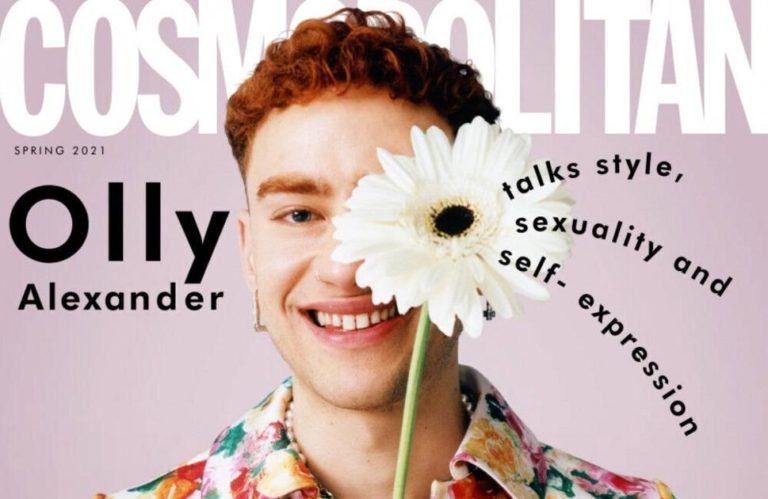
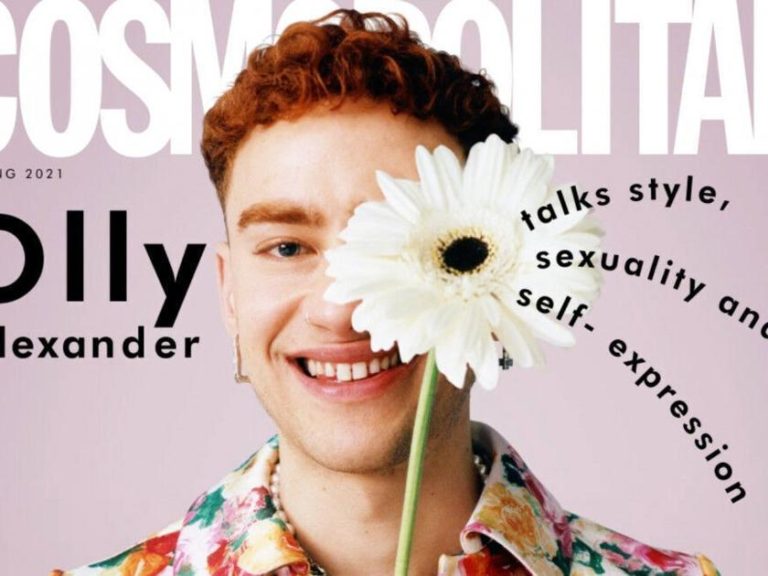
Olly Alexander “respects” Harry Styles’ commitment to gender-fluid fashion.
The Years and Years frontman thinks it is great how the One Direction star doesn’t care “what ‘a traditional man’ should wear” as he praised Harry for “expressing” himself.
He said: “He just looks so good. It’s undeniable. I really respect his commitment to having fun, being playful and not caring what ‘a traditional man’ should wear.
“Gender-fluid fashion has been around forever, but seeing it in a more mainstream context is cool. I’m all for guys getting to express themselves, no matter what their sexuality.”
And the 30-year-old singer also opened up about a time he was told that what he was wearing was not “appropriate” for TV as he slammed those who were “uncomfortable” with him asserting his sexuality.
Speaking to the Spring issue of Cosmopolitan magazine, he added: “There have been questions from people (not on my team) going, ‘That might not be appropriate.’ I had an occasion where I was wearing a pair of chevron trousers on a TV show. In rehearsals, a comment came back, saying, ‘We think the chevrons are highlighting Olly’s crotch. Does he have a different pair?’ Nobody would ever think that about this pair of trousers. We blew up and they backed down. So the chevrons went on TV and nobody said a f****** thing. It makes me angry. I’m a gay guy and I want people to know that, but it’s interesting to see how quickly people become uncomfortable when you want to assert your own sexuality.”
Olly Alexander “respects” Harry Styles’ commitment to gender-fluid fashion.
The Years and Years frontman thinks it is great how the One Direction star doesn’t care “what ‘a traditional man’ should wear” as he praised Harry for “expressing” himself.
He said: “He just looks so good. It’s undeniable. I really respect his commitment to having fun, being playful and not caring what ‘a traditional man’ should wear.
“Gender-fluid fashion has been around forever, but seeing it in a more mainstream context is cool. I’m all for guys getting to express themselves, no matter what their sexuality.”
And the 30-year-old singer also opened up about a time he was told that what he was wearing was not “appropriate” for TV as he slammed those who were “uncomfortable” with him asserting his sexuality.
Speaking to the Spring issue of Cosmopolitan magazine, he added: “There have been questions from people (not on my team) going, ‘That might not be appropriate.’ I had an occasion where I was wearing a pair of chevron trousers on a TV show. In rehearsals, a comment came back, saying, ‘We think the chevrons are highlighting Olly’s crotch. Does he have a different pair?’ Nobody would ever think that about this pair of trousers. We blew up and they backed down. So the chevrons went on TV and nobody said a f****** thing. It makes me angry. I’m a gay guy and I want people to know that, but it’s interesting to see how quickly people become uncomfortable when you want to assert your own sexuality.”
Olly Alexander “respects” Harry Styles’ commitment to gender-fluid fashion.
The Years and Years frontman thinks it is great how the One Direction star doesn’t care “what ‘a traditional man’ should wear” as he praised Harry for “expressing” himself.
He said: “He just looks so good. It’s undeniable. I really respect his commitment to having fun, being playful and not caring what ‘a traditional man’ should wear.
“Gender-fluid fashion has been around forever, but seeing it in a more mainstream context is cool. I’m all for guys getting to express themselves, no matter what their sexuality.”
And the 30-year-old singer also opened up about a time he was told that what he was wearing was not “appropriate” for TV as he slammed those who were “uncomfortable” with him asserting his sexuality.
Speaking to the Spring issue of Cosmopolitan magazine, he added: “There have been questions from people (not on my team) going, ‘That might not be appropriate.’ I had an occasion where I was wearing a pair of chevron trousers on a TV show. In rehearsals, a comment came back, saying, ‘We think the chevrons are highlighting Olly’s crotch. Does he have a different pair?’ Nobody would ever think that about this pair of trousers. We blew up and they backed down. So the chevrons went on TV and nobody said a f****** thing. It makes me angry. I’m a gay guy and I want people to know that, but it’s interesting to see how quickly people become uncomfortable when you want to assert your own sexuality.”
Work your lower legs with fitness YouTuber Maddie Lymburner, and this intense, five-minute, dancer-inspired calves challenge. Don’t worry! No prior dance experience or equipment is needed for this quick bodyweight workout. Halfway through, you’ll be breathing heavy and feeling your leg muscles shaking — it’s amazing how these exercises work so fast! If this intense workout isn’t hard enough, Lymburner said you could always hold some lightweight dumbbells in your hands. After this workout, ease some of the soreness by stretching your calves, quads, and hamstrings with these leg stretches.
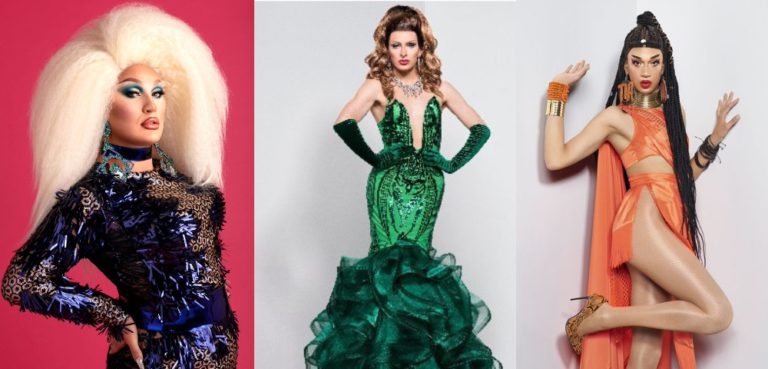
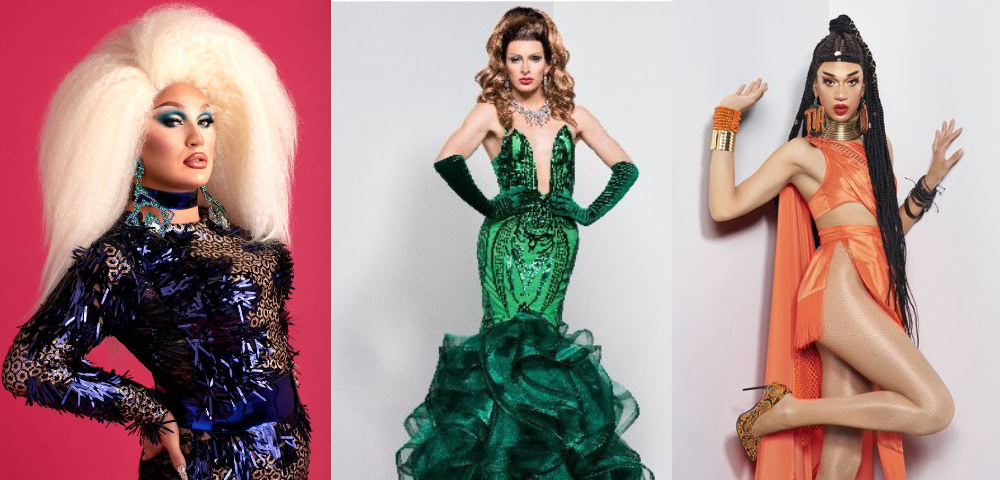
London’s long standing gay institution Heaven Night Club, which opened in 1979, has been the target of a sickening bomb hoax, all while stars of RuPaul’s Drag Race UK were inside rehearsing for the upcoming performance Drag Queens Of Pop on Monday.
Following a tip off to Metropolitan Police, officers moved to evacuate the venue and nearby Charing Cross Station in an abundance of caution. Veronica Green, Tia Kofi, The Vivienne and Shania Pain have all been confirmed as at the venue rehearsing at the time of the incident.
Drag Queens Targeted?
With the venue having been closed to the public due to lockdown since late last year, it is believed it was a targeted attack as several of the stars of the hit reality tv show had tagged the venue in recent social media posts.
Confirming the news to The Sun, a source at the venue said “The drag queens had been rehearsing for their upcoming show Drag Queens of Pop and had been posting on social media that they were at Heaven.”
“The door was later found to be open and it seemed like someone had got in during the rehearsals. It seemed like a targeted attack because, due to Covid restrictions, the place is usually empty. But it appeared someone knew they were there and planted the hoax package.”
Though it turned out to be a hoax, venue owner Jeremy Joseph said in a twitter post “Whoever made that call is nothing but a sick individual.”
In his post Joseph also said of terrifying ordeal that “There had been a bomb threat and everyone was evacuated, except poor me, as we waited for police dogs to arrive,”
“As the venue has been in lockdown apart from rehearsals, I had to walk round with the police and sniffer dogs to check the venue, in the meantime Charing Cross station, Villier Street & Craven Street, all evacuated.”
“I’m not going to lie, it was frightening, but I can’t praise the police dog team enough, they were amazing, they have to enter a building, not knowing if a threat is real or a hoax.”
Following the incident, The Vivien further confirmed the incident, saying “We were up in rehearsal and police stormed in. [They] informed us that we had to evacuate the venue, because there’d been a bomb scare. Somebody had phoned the police… knowing that we were at the venue rehearsing.”
“The police were absolutely amazing. They made us feel so safe. It’s such a shame after lockdown and everybody dying to get back to work and back on stage, we’re finally there.”
Investigations Underway
Tia Kofi, retweeting Joseph’s original post added that “Today was a terrifying experience. A bomb threat was called in while rehearsing for Drag Queens of Pop with @THEVIVIENNEUK @veronicaqween and @ShaniaPain1.”
Today was a terrifying experience. A bomb threat was called in while rehearsing for Drag Queens of Pop with @THEVIVIENNEUK@veronicaqween and @ShaniaPain1. The police evacuated us and closed down the whole area. We’re all safe but shaken up. Thank you for all the kind messages 🧡 https://t.co/ZkF9nyIqKF
“The police evacuated us and closed down the whole area. We’re all safe but shaken up. Thank you for all the kind messages.”
A spokesperson for Met police has said via statement that “the circumstances in which the item was found suggest that it was part of an intentional hoax and an investigation is under way to identify the person or persons responsible.”
“There is no indication, at this early stage, of a particular motive but that will form one of the key lines of enquiry for officers as their investigation continues.”
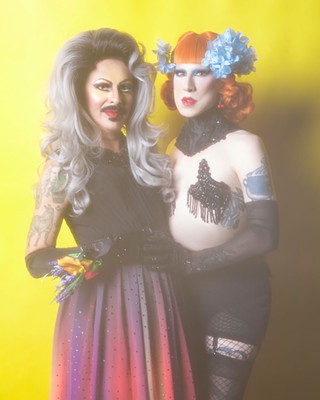
Austin’s drag mamas Bulimianne Rhapsody and Louisianna Purchase host Poo Poo Platter’s “Mother” show Sunday (Photo by JXN Art / Courtesy of Bulimianne)
Today, Thursday, May 6, marks the 14 month anniversary since Austin officials first declared a local state of disaster for the COVID-19 crisis. For many, these last 426 days have taken much – lives, jobs, businesses, security, mental health – and the pandemic is still a part of our lives (and most likely will be for some time). Although the future isn’t entirely in focus yet, this month’s queer happenings have got me feeling hopeful not only about the here and now but also what lies on the horizon. Here are but a few of the latest queer-centric news and announcements I’ve got locked on my gaydar. Cheer Up Charlies Rebirth Day Weekend:Maggie Lea and Tamara Hoover‘s much-loved queer haven is reopening for the first time since the start of the pandemic on Sat.-Sun., May 15-16. Capacity and hours will be limited to help keep things COVID-cautious and safe; stay tuned for more info… Calling Black, Brown, and Trans Queer Artists: The QTs at The Little Gay Shop are now accepting submissions for three shows in June to honor Pride Month – Black Queer Joy, Brown Queer Joy, and Trans Joy. All mediums are accepted, and submissions close on Friday, May 14, at midnight (email contact@thelittlegayshop.com for more)… Did Someone Say Pride Month? With June less than a month away, Qmmunity is keeping its eyes out for any Pride events. Austin’s and Nashville’s queer business chambers are joining forces once again to host Pride in Local Music on Wednesday, June 30, in celebration of the cities’ LGBTQIA musicians. Like last year, the show will be livestreamed, but this year there will be watch parties at a few local gay bars, according to the FB event page. Meanwhile, Austin’s “official” Pride – that is, Austin Pride – hasn’t yet released any plans regarding a parade and festival this August…
2 To Do
Saving Face Movie Night Catch Alice Wu’s queer classic, Saving Face, a romantic comedy following Chinese American surgeon Dr. Wilhelmina Pang and her experience coming out to her family. Free beer from Oddwood Ales. Sat., May 8, 7:30pm. The Little Gay Shop, 828 Airport. $15-20. www.linktr.ee/thelittlegayshop.
Mother Hush now baby, don’t you stress, the PPP grrrls are gonna fill your mommy complex. Grab some blankets and chairs for this outdoor drag show hosted by Austin’s drag mommas Bulimianne Rhapsody and Louisianna Purchase. Each “campsite” holds up to four people! Sun., May 9, 3-6pm. The Little Gay Shop, 828 Airport. $50 per campsite. www.fb.com/poopooatx.
Hey Jellie Ellie Erickson and Jenny Hoyston take the stage. Thu., May 6, 7-11pm. The Far Out Lounge & Stage, 8504 S. Congress. $10.
Harry’s Dark Bar Opening OCH is turning the lights down for y’all to turn up in celebration of the Fourth Street fixture’s new bar-within-a-bar. Fri.-Sat., May 7-8, 10pm. Oilcan’s, 211 W. Fourth. No cover.
Frida Friday ATX Bidi Bidi Brunch Brunch The Frida Friday babes celebrate all mamas with their Mother’s Day market, featuring 25 artisan vendors, live DJs, and an outdoor photo booth. Sat., May 8, 11am-3pm. Veracruz All Natural, 2505 Webberville Rd. www.fb.com/fridafridayatx.
Gina Chavez Austin Music Award winner and queer Latinx pop songstress Gina Chavez plays an open-air and socially distant concert. Sat., May 8, 7pm. Haute Spot, 1501 E. New Hope Dr., Cedar Park. $30-50. www.ginachavez.com.
RuPaul’s Drag Race‘s Olivia Lux The Drag Race Season 13 queen comes to Fourth Street for one night only. Sun., May 9, 7 & 10:30pm. Oilcan’s, 211 W. Fourth. $10.
Out Youth Adult Grief Support Group Adults (ages 18 & up) experiencing any kind of grief are invited to join this safe space. Email cece.flores@outyouth.org to sign up. Thursdays, 5:30-7pm. Online. Free. www.outyouth.org.
A version of this article appeared in print on May 7, 2021 with the headline:Qmmunity: It’s Gonna Be Gay