Home Blog Page 291

Ohio becomes latest state to propose transgender sports ban – Kentucky Today

By FARNOUSH AMIRI Report for America/Associated Press

COLUMBUS, Ohio (AP) — Transgender girls would be banned from participating in female sports teams in high school or college in two bills introduced by Republican lawmakers in Ohio, which became the latest state to take up the contentious debate.

The proposals, titled the Save Women’s Sports Act, would require schools and higher education institutions in the state to designate “separate single-sex teams and sports for each sex.”

“In most instances, when young women are forced to compete against young men in athletic competition, it places them at a fundamental disadvantage,” GOP Rep. Reggie Stoltzfus told members of the House education committee last week. “A disadvantage that threatens their athletic achievement and even collegiate scholarship prospects.”

The bills’ sponsors say it is an effort to maintain fairness and protect the integrity in women’s sports in Ohio, though none of the lawmakers have pointed to a single instance where this has been an issue in the state.

These proposals make Ohio the latest state to join the national debate over how transgender athletes can compete in high school and college sports, causing an outpouring of criticism from those in the transgender community and advocates.

If the bills passed, “trans people would lose opportunities and face higher risk factors, such as mental health struggles, substance dependency, and suicidal ideation,” Eliana Turan, the director of development for the LGBT Community Center of Greater Cleveland, told The Associated Press. “If we are going to talk about saving women and girls, let’s save all women and girls, trans females included.”

Idaho passed its law last year, and more than 20 states have considered such proposals this year. Bans have been enacted in Alabama, Arkansas, Mississippi, Tennessee and West Virginia. Florida lawmakers passed a bill, and South Dakota’s governor issued an executive order.

But while GOP lawmakers across the country take up the issue, in almost every case, sponsors of the proposals cannot cite a single instance in their own state or region where such participation has caused problems, according to an analysis by The Associated Press in March.

The same is true for the sponsors of the two bills in Ohio.

When asked during a committee hearing last week how many 12- and 13-year-old girls have had scholarships revoked due to being outperformed by transgender females, GOP Rep. Jena Powell, the other chief sponsor, mentioned a case specifically in Connecticut, but none in Ohio.

“Across the nation, there are girls who used to hold championships that are now held by biological males, which strips scholarship opportunities, medals, advancement in the sport,” said Powell, a Republican from western Ohio.

The organization in charge of making those determinations in the state, the Ohio High School Athletic Association, said that is not true in Ohio. Since the fall of 2015, the association has ruled in 48 cases of transgender students applying to compete and there have been only 11 transgender female approvals.

“Those 11 approvals have resulted in no disruption of competition regarding competitive equity and they have not caused any loss in female participation, championships or scholarship opportunities,” Tim Stried, a spokesperson for the association, said in a statement. “The OHSAA is confident that our policy, which is based on medical science, is appropriate to address transgender requests and works for the benefit of all student-athletes and member schools.”

The OHSAA doesn’t track participation after approval, so it is unclear to say how many of those transgender students have gone on to compete.

Committee members last week also expressed concern for the mental health impacts that both sides of the issue may experience.

“There is so much more wound up in this particular bill than just physiological advantage,” Democratic Rep. Mary Lightbody said. “This bill will harm the mental health of some of Ohio’s most vulnerable children.”

The lawmakers supporting the passage of the proposal said that is not their intention. But advocates say regardless of intent, the proposals would have irreparable harm.

“(These bills) would hurt trans women and girls by invalidating their identities, normalize and promote transphobic bullying, and effectively prevent trans youth from partaking in the natural human right of athletic participation,” Turan said.

Ex-health minister Lord Fowler says gay sex bans must be struck down to end HIV – PinkNews

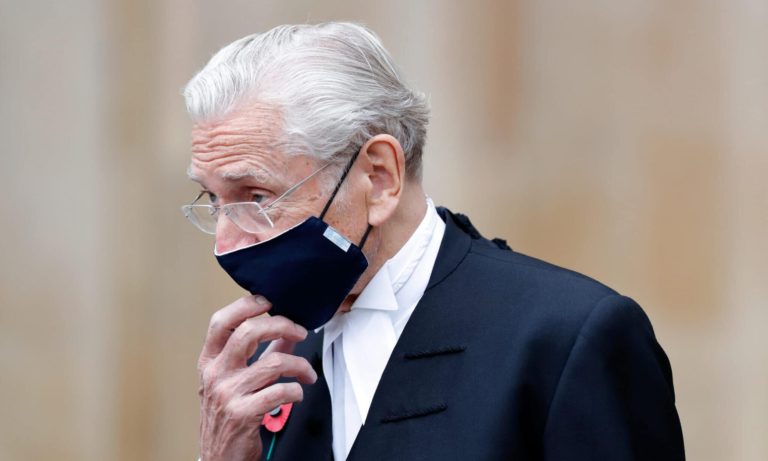
Norman Fowler has taken up an ambassadorial role at UNAIDS. (Max Mumby/Getty)

Former British health minister Norman Fowler says scrapping gay sex bans worldwide is a necessary step in the fight against HIV.

Fowler, health minister under Margaret Thatcher and more recently, speaker of the House of Lords, announced in February he was turning his attentions to the fight against HIV.

As he takes up a new role with UNAIDS, Fowler told the Thomson Reuters Foundation that gay sex bans must be struck down if the world is to end new HIV transmissions.

He said that such bans “have a vast effect upon any population” in terms of HIV transmission because “it means they don’t come forward for testing and it means that they come forward far too late for testing”,

Fowler added: “The issue of AIDS remains a very central one, and although it may not be as evident in Europe, it certainly remains very evident in whole swathes of the world.”

Fowler has recently joined United Nations organisation UNAIDS as an ambassador, where he will focus on tackling HIV and AIDS while the COVID-19 pandemic continues.

One of the three focuses of his new role is ending punitive laws against LGBT+ people. His other focuses will be ensuring unversal access to health care and ensuring girls can finish secondary school and benefit from a reduced risk of HIV.

UNAIDS executive director Winnie Byanyima said in a statement: “We can beat AIDS, but only through bold action by leaders.

“Lord Fowler is respected as a great parliamentarian and courageous leader across the world. He has delivered bold change to fight AIDS, and can help other leaders to do the same.”

Fowler said in the statement that he is “determined to see the end of AIDS, and to see the end of the inequalities that stand in the way of the end of AIDS.”

He has already voiced concerns about combatting AIDS while public health remains focused on COVID-19:

“There’s a real danger that the world is going to forget about the crisis and problem of AIDS because obviously the COVID issue is foremost in people’s minds,” he said.

“But the fact is that AIDS – in spite of all the heroic efforts that have been made over the past 20 years – remains an enormous problem.”

Fowler was secretary of state for health under Margaret Thatcher, where he oversaw the UK’s first HIV awareness programme in the 1980s.

“I’m afraid that [Thatcher] was what these days might be called a sceptic on this whole area,” he told the Thomson Reuters Foundation.

“Her position was quite near to a number of the religious leaders who simply said, as much as they said anything, that we should be pursuing a ‘moral’ campaign.”

Fowler voted for Section 28, the reviled law banning the “promotion” of homosexuality in schools and by local authorities. He told Reuters: “That was a mistake, and I’ve never made any bones about that.”

Vermont becomes 13th state to officially ban evil gay and trans panic defences – PinkNews

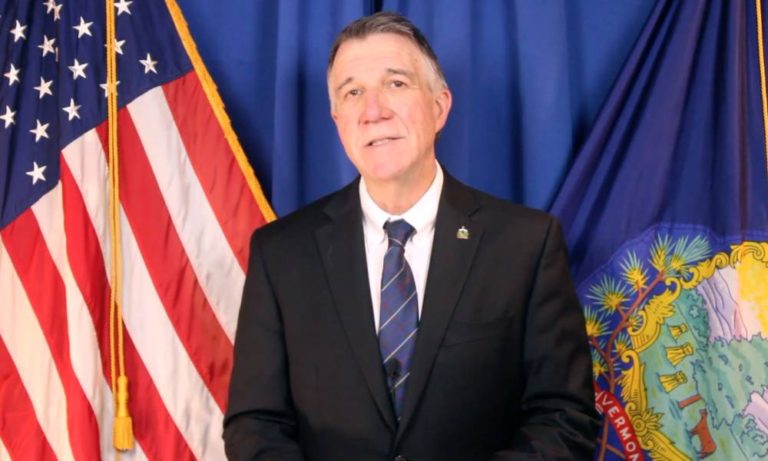
Republican governor of Vermont Phill Scott signs legislation on 5 May 2021 that prohibits the use of the LGBT+ “panic” defence in the state. (YouTube/Gov. Phil Scott)

Vermont has banned gay and trans panic defences, marking a major victory for the state’s LGBT+ community.

Republican governor Phil Scott signed H 128 into law on Wednesday (5 May) after the state legislature nearly unanimously passed it earlier this year. The legislation prohibits the usage of a victim’s gender identity or sexual orientation as a justification for the criminal actions of a defendant.

The decades-old legal strategy, commonly known as the LGBT+ “panic defence”, asks a jury to find that a victim’s sexual orientation or gender identity is to blame for another person’s violent reaction, including murder. It can also be used to lessen charges or shorten the sentences of a defendant.

Scott said in a video message posted on YouTube that the ban on panic defences will send a “message to Vermonters that your identity should never be an excuse for someone to cause you harm”. He also added the bill will “make sure a victim’s sexual orientation or gender identity can’t be used to defend or justify a criminal act or lower a sentence”.

“While this effort is a step in the right direction, we know there is still more work to do to ensure all Vermonters regardless of identity feel safe and protected in our state, and I look forward to continuing our work together in the future,” Scott said.

He also acknowledged the hard work of the LGBTQIA Alliance of Vermont and the Pride Center of Vermont, who have “been advocating for change and equality for years”.

Democrat representative Taylor Small, who is the state’s first openly trans legislator, celebrated the historic moment for Vermont on Twitter. She said she is “grateful for the unanimous support of both the legislative and executive branches in effectively passing H 128”.

Vermont joins 12 other states as well as Washington DC in banning the LGBT+ “panic” defence. The other states which prohibit the use of LGBT+ “panic” legal defences include California, Illinois, Rhode Island, Nevada, Maine, Connecticut, Hawaii, New York, New Jersey, Washington, Colorado and Virginia.

Maryland lawmakers signed legislation to outlaw the “panic” defence earlier this year. The bill passed its third reading 47-0 this month. The measure is still awaiting Republican governor Larry Hogan’s signature, according to the Washington Blade.

Cleveland Families Face Obstacles Fighting Lead Poisoning During Pandemic – ideastream

By Roman Sardo-Longo, Lal Tluang, Tam Chau, and TerNay Gay, Urban Health Media Project

Since his two-year-old son’s routine blood test in November showed the child had been lead poisoned, Charrell Reed and his family have felt like prisoners in their apartment on Cleveland’s West Side.

Reed, 27, who works as a subcontractor for a home renovation company, knows how dangerous lead can be: he and his sister were poisoned as children, and their uncle, Darrick Wade, has been crusading against the toxin since his son, Demetrius, was exposed in public housing in the 1980s and died at age 24.

Using his uncle’s connections, Reed was able to get a lead expert to test the paint in the apartment, confirming their suspicion that the heavy metal, which can cause irreversible neurological and other health effects, was there. 

And yet, Reed said he feels stuck. Even though he knows the lead is there, he hasn’t been able to get any help cleaning it up from his landlord or city health officials, partially because of the pandemic.

The pandemic has made diagnosing lead poisoning and fixing hazards in homes even more difficult than it’s always been, as families are skipping pediatric appointments out of fear, and some lead inspectors and short-staffed health departments have had to delay or halt in-home work. 

In the first five months of 2020, 34% fewer children in the United States were tested compared with the same period in 2019, according to the Centers for Disease Control and Prevention. In Ohio, 51% fewer children were tested for blood lead levels in May 2020 compared to May 2019. Much of the drop has been attributed to people’s fears of being exposed to COVID-19, choosing instead to postpone routine doctor visits. 

While testing began picking up again as pandemic restrictions eased, experts worry that many children fell through the cracks — either never getting tested, or, if they did, ending up on a list of backlogged cases for overtaxed health departments to inspect.

The pandemic made it harder for families to get their homes tested for lead, and to get the help they need to make repairs when a source of the poisoning is identified in the home, particularly during the first few months of the shutdown. The CDC reported that local health departments across the country were struggling to conduct in-home lead investigations and other home visits due to staffing shortages and fears of exposure to the coronavirus. 

The city of Cleveland declined to comment on its lead poisoning prevention efforts during the pandemic. 

For Reed’s family, as for many others who face the same situation, the inability to get help from people qualified to clean up the lead in a safe way has convinced them the family just needs to move, as quickly as possible. 

“If I can’t get [them] to work with me the correct way, then we’ll just leave [if] it’s going to be a continuing problem,” Reed said. “That’s the main task, just hit the road. If we can be up out of here tomorrow, we are going tomorrow.”

Trying to find help

Reed’s personal experience with lead poisoning made him very attentive to a potential problem — when he moved into his apartment last spring, he immediately asked his landlord, repeatedly and to no avail, to fix the peeling paint he saw on the window sills. 

He tried to keep his two-year-old son away from the area, and got him tested for lead at his annual well visit, just as he had a year earlier and according to recommendations from health experts. 

Yet despite his knowledge and initiative, Reed’s family still hasn’t received any help. Though he knows better — lead is impossible to see, and spreads throughout homes in tiny dust particles that are difficult to clean up completely — he still blames himself. 

People like Reed are the reason Yvonka Hall helped co-found the Cleveland Lead Safe Network in 2016. 

“In Cleveland about 90% of our homes are lead impacted,” Hall said. “And in our first-ring suburbs, it’s about 80%.” In 2019, roughly 1,000 children were poisoned by lead in Cuyahoga County, with another 750 in the city of Cleveland. 

In Hall’s eyes, the solution to the reluctance to get children tested at the doctor’s office is to bring the testing closer to parents by having mobile testing stations travel to impacted neighborhoods. Hall believes the city can afford this service: “You got the money, do the work…There’s no work being done.”

Mobile testing would begin to address the problem that Dr. Aparna Bole has seen throughout the pandemic – parents not bringing their babies and young children in for regular doctor’s appointments. As a pediatrician at the University Hospitals Rainbow Center for Women and Children in Cleveland, Bole also is concerned that children have been inside the home more than usual, due to remote learning and other social isolation measures.

Exposure at such a young age can have lifetime neurological consequences that can manifest into lower academic performance, Bole said; high lead levels also have been linked to other health issues later in life, and even adult criminal behavior.

“The pandemic is exacerbating some of these housing-related exposures,” Bole said. “I see a lot of kids in very, very suboptimal child care situations because parents have no choice.” 

Resources exist to help people once they find out their house has lead or that their child has high lead levels. More needs to be done, however, to prevent the lead exposure in the first place, “instead of testing the kid’s blood, finding out they’re poisoned, and then trying to address the problem,” she said.      

A law passed in 2019 by the city of Cleveland requires all landlords to pay for private inspections and secure lead-safe certificates for their rental units. The law also requires additional disclosures to renters and homebuyers about whether a home has an identified lead hazard.

The new law went into effect on March 1, 2021, and is being gradually rolled out by zip code.                  

For now, a combination of education and in-home preventive measures is the next best way to reduce chances of exposure to lead.

As Director of Training and Healthy Homes for Environmental Health Watch, an environmental justice organization based in Cleveland, Akbar Tyler sees firsthand the condition of homes where children have been spending all their time during the pandemic. Tyler conducts home inspections and teaches residents how to keep their kids safer when there is lead in the home. 

The first line of defense, Tyler says, is to eliminate the most common sources of lead – flaking paint and dust. The second line of defense is to keep floors and other surfaces clean of dust, which can contain tiny particles of lead that are easily transferred from hand to mouth by babies and toddlers. The last line of defense is good nutrition; calcium- and iron-rich diets make it harder for bones, joints and soft tissue to absorb lead during the 30 days or so that it stays in the blood.  

“Eliminating the hazard in a safe way is the way to stop children from getting poisoned,” he said.

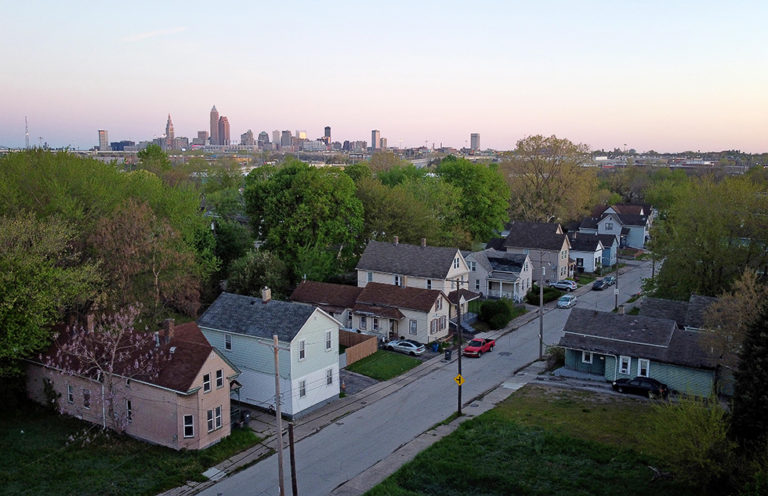
A line of houses on a Cleveland street.

It’s estimated that 80% of Cleveland’s older housing stock contains lead paint, making most city homes a potential source of poisoning, especially for babies and toddlers. [Tim Harrison]

The struggle of identifying the hazard of lead – through a blood test, a home inspection, or both – and figuring out what to do next, have been more than many parents can bear, especially during a pandemic. As people like Reed have discovered, community resources and health department interventions that should be available often don’t arrive until too late.

“A lot of parents, they blame themselves,” said Hall, “‘What could I have done to prevent this from happening to my child?’” Like Reed, the only thing that many families can do to immediately help their children is move, and hope to find a lead-free home, she said.

That’s exactly what Reed and his family plan to do, even if it means breaking the lease, because the longer they stay in their apartment, the more his son’s health is at risk, he said.

“When you have kids, you need to protect them every step of the way,” Reed said. “I just want to get up out of here immediately more than anything…Me, the wife, and the kids, go.”

Sardo-Longo, Tluang, Chau, and Gay are high school students at The School of One in Cleveland and North High School in Akron, Ohio. They were participants in Urban Health Media Project’s workshop, “Home Sick: How Where We Live Impacts Health” in Spring of 2021.

Ohio becomes latest state to propose transgender sports ban – Associated Press

COLUMBUS, Ohio (AP) — Transgender girls would be banned from participating in female sports teams in high school or college in two bills introduced by Republican lawmakers in Ohio, which became the latest state to take up the contentious debate.

The proposals, titled the Save Women’s Sports Act, would require schools and higher education institutions in the state to designate “separate single-sex teams and sports for each sex.”

“In most instances, when young women are forced to compete against young men in athletic competition, it places them at a fundamental disadvantage,” GOP Rep. Reggie Stoltzfus told members of the House education committee last week. “A disadvantage that threatens their athletic achievement and even collegiate scholarship prospects.”

The bills’ sponsors say it is an effort to maintain fairness and protect the integrity in women’s sports in Ohio, though none of the lawmakers have pointed to a single instance where this has been an issue in the state.

ADVERTISEMENT

These proposals make Ohio the latest state to join the national debate over how transgender athletes can compete in high school and college sports, causing an outpouring of criticism from those in the transgender community and advocates.

If the bills passed, “trans people would lose opportunities and face higher risk factors, such as mental health struggles, substance dependency, and suicidal ideation,” Eliana Turan, the director of development for the LGBT Community Center of Greater Cleveland, told The Associated Press. “If we are going to talk about saving women and girls, let’s save all women and girls, trans females included.”

Idaho passed its law last year, and more than 20 states have considered such proposals this year. Bans have been enacted in Alabama, Arkansas, Mississippi, Tennessee and West Virginia. Florida lawmakers passed a bill, and South Dakota’s governor issued an executive order.

But while GOP lawmakers across the country take up the issue, in almost every case, sponsors of the proposals cannot cite a single instance in their own state or region where such participation has caused problems, according to an analysis by The Associated Press in March.

The same is true for the sponsors of the two bills in Ohio.

When asked during a committee hearing last week how many 12- and 13-year-old girls have had scholarships revoked due to being outperformed by transgender females, GOP Rep. Jena Powell, the other chief sponsor, mentioned a case specifically in Connecticut, but none in Ohio.

“Across the nation, there are girls who used to hold championships that are now held by biological males, which strips scholarship opportunities, medals, advancement in the sport,” said Powell, a Republican from western Ohio.

ADVERTISEMENT

The organization in charge of making those determinations in the state, the Ohio High School Athletic Association, said that is not true in Ohio. Since the fall of 2015, the association has ruled in 48 cases of transgender students applying to compete and there have been only 11 transgender female approvals.

“Those 11 approvals have resulted in no disruption of competition regarding competitive equity and they have not caused any loss in female participation, championships or scholarship opportunities,” Tim Stried, a spokesperson for the association, said in a statement. “The OHSAA is confident that our policy, which is based on medical science, is appropriate to address transgender requests and works for the benefit of all student-athletes and member schools.”

The OHSAA doesn’t track participation after approval, so it is unclear to say how many of those transgender students have gone on to compete.

Committee members last week also expressed concern for the mental health impacts that both sides of the issue may experience.

“There is so much more wound up in this particular bill than just physiological advantage,” Democratic Rep. Mary Lightbody said. “This bill will harm the mental health of some of Ohio’s most vulnerable children.”

The lawmakers supporting the passage of the proposal said that is not their intention. But advocates say regardless of intent, the proposals would have irreparable harm.

“(These bills) would hurt trans women and girls by invalidating their identities, normalize and promote transphobic bullying, and effectively prevent trans youth from partaking in the natural human right of athletic participation,” Turan said.

___

Associated Press writer Andrew Welsh-Huggins in Columbus and Lindsay Whitehurst in Salt Lake City, Utah, contributed to this report. Farnoush Amiri is a corps member for the Associated Press/Report for America Statehouse News Initiative. Report for America is a nonprofit national service program that places journalists in local newsrooms to report on undercovered issues.

Longford man who enjoys cross-dressing says activity is ‘a sad secret’ for many – Newstalk

A Longford man who enjoys cross-dressing believes people have misconceptions about the activity.

Cross-dressing refers to wearing clothes not usually associated with one’s gender.

Seo, who is from the midlands county, explained to Lunchtime Life that people put those who engage in cross-dressing “in boxes” and make assumptions about them.

“It’s not something I say I am, it’s just something I do,” he said.

“I’m just a regular guy but I happen to like clothes that are normally worn by women, a bit like the guy in Scotland who likes to wear the kilt.

“I would like to be classed as a guy but still have that feminine side.

Seo believes there are misconceptions about crossdressing and that many people don’t understand it when they see someone dressed in clothing not usually associated with their gender.

“Just like orientation, you have people on different spectrums,” he stated.

“One person can crossdress because it’s gender dysmorphia maybe in the sense that they want to change genders.

“You have another category of person who would be LGBT, it’s just another form of expression, just playing around with that moment of femininity or a different kind of way for a period of time.

“Other people who crossdress could be straight and for them, it’s just about the clothes.”

Image by rgergely from Pixabay

He added: “I would be pretty much straight, I’m just attracted to women, but at the same time I like the clothes, I like how they look on a woman

“Women have the creativity to say, ‘Well today I’m wearing jeans and tomorrow I feel like wearing a skirt’, but with guys we don’t have that, you wear the jeans, you wear the shorts, that’s it.”

Seo enjoys the creativity of clothing and describes the garments as “art”.

“People, and especially men, need to understand that clothes are basically art and fashion, they’re not an invitation to anything, they’re creativity, art, playing around with texture and form,” he said.

“What a person chooses to associate that with, that’s their interpretation or their perception, you’re just a canvas basically.

He believes it is easier to experiment in a big city where having fun with fashion is easier with the anonymity that an urban environment brings.

He began experimenting with his clothing choices while living in an urban area, but he now lives in a rural part of Longford.

“It’s not a thing you can do in a rural area because in a rural area, there are more traditional values and then there’s the family thing, my family would be aware, but oftentimes families don’t like the attention to difference,” Seo said.

“If somebody’s different, people are thinking others are talking, what would they think.”

He added that it’s “a pity” he’s not able to experiment with how he dresses as much now that he lives in a rural area, and that for others who want to crossdress but can’t, it’s “a sad secret”.

“In my work setting, there would be a feeling that [cross-dressing] would affect business,” he added.

“I think it’s more disappointing and sad rather than anything else, and I think that’s what cities do, they offer you the opportunity to be yourself and to express yourself.

“Of course I will always be aware there are people who don’t like difference, who don’t like people challenging their awareness.”

People make assumptions about others who experiment with how they dress and “put them into boxes”, he said, but he believes it is important to be honest with yourself and those around you.

Main image: File photo. Credit: Irenna86 from Pixabay

EU ‘Gender’ Clash at Summit in Portugal – Courthouse News Service

A view of the Crystal Palace on Thursday, May 6, 2021, which will be the venue of an upcoming EU summit in Porto, Portugal. (AP Photo/Francisco Seco)

PORTO, Portugal (AFP) — Poland and Hungary battled on Friday to exclude the term “gender” from the final conclusions of an EU summit devoted to promoting equality and fighting poverty in Europe, diplomats said.

The fight is a recurring one in EU official circles, with the culturally conservative governments in Warsaw and Budapest seeing the term as ideologically loaded and creating space to promote rights for LGBT people.

“Poland always underlines how important legal clarity is, and that we should stick to treaty regulations,” a Polish official said on condition of anonymity.

“The Treaty of the European Union very clearly refers not to gender equality but to equality between women and men,” the official added.

In the latest version of the draft conclusions, set to be adopted on Saturday, the leaders agreed to “promote equality and fairness for every individual in our society”.

The draft, seen by AFP, adds that the EU will “work actively to close gender gaps in employment, pay and pensions”. 

This was seen as a small victory for countries that took up the fight against the eastern Europeans. 

“On the one hand, Hungary and Poland did not want the term ‘gender’, while on the other hand, for Finland, Austria and Spain, the term ‘gender equality’ was non-negotiable,” a diplomat said. 

“We finally found a compromise solution.”

Poland’s populist government has compared the struggle for LGBT equality to communism in terms of the alleged threat it poses to national values.

In Hungary, the government has sharpened its anti-LGBTQ rhetoric in recent months, with Prime Minister Viktor Orban demanding in October that the community should “leave our children alone”.

___

© Agence France-Presse

Left wants explanation over police text that calls LGBT a pathology – The First News

Dziemianowicz-Bąk said that “it was unacceptable that the police, who are obliged to protect all citizens irrespective of their sexual orientation, irrespective of their gender identity, and irrespective of who they are, discriminates against these people.” Maciej Kulczyński/PAP

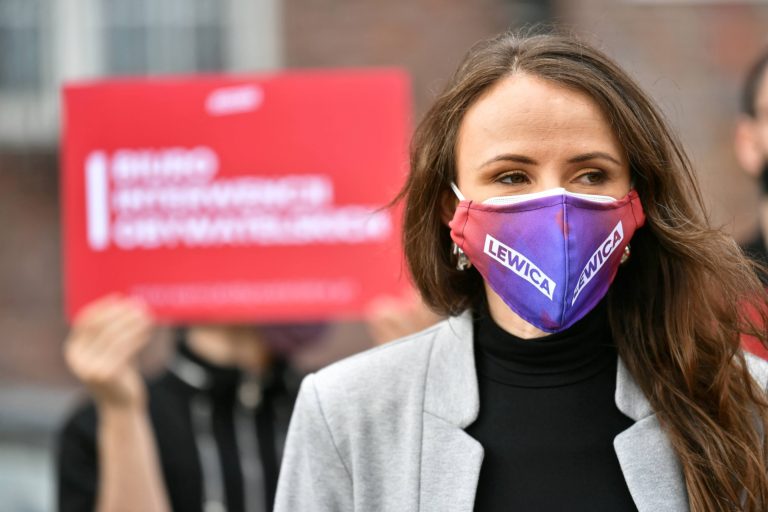
The parliamentary caucus of The Left political grouping has asked Poland’s police chief for an explanation as to why a new textbook for police officers lists the transgender and LGBT community among social pathologies.

Left politicians also demanded an explanation from the police training centre which had published a textbook with the title “Social pathologies, selected problems”.

“Apart from such social pathologies like drug addiction and beggary, the textbook also speaks about the LGBT community,” Agnieszka Dziemianowicz-Bąk, a Left MP, told a press conference in the Sejm (lower house) on Friday.

“In particular, transgender and gender-queer people have been described in the textbook as examples of social pathology,” she said.

The MP stated that the LGBT community was neither an ideology nor social pathology. “These are people who are being exposed to harm, violence and discrimination.”

Dziemianowicz-Bąk said that “it was unacceptable that the police, who are obliged to protect all citizens irrespective of their sexual orientation, irrespective of their gender identity, and irrespective of who they are, discriminates against these people.”

The MP stated that The Left had long fought for the rights of the LGBT community and repeated that it was waiting for an explanation about the book.

Mass media reported earlier that the ombudsman had also lodged a complaint.

The scandal surrounding the handbook could further tarnish Poland’s reputation when it comes to LGBT affairs.

Last year a number of local councils made headlines around the world when they declared themselves LGBT free zones. Przemysław Czarnek, the education minister, also came under fire after he said LGBT people “were not equal to normal people” and compared “LGBT+ ideology” to Nazism.

The United Right coalition, which holds power in Poland, has been accused of scapegoating LGBT people, and sexual and reproductive health activists for political ends, under the rubric of attacks on “gender ideology.”

It has also been charged with treating efforts to advance gender equality and end discrimination as attacks on “traditional” family values.

Skittles Pride packs give up rainbow for LGBT community – PinkNews

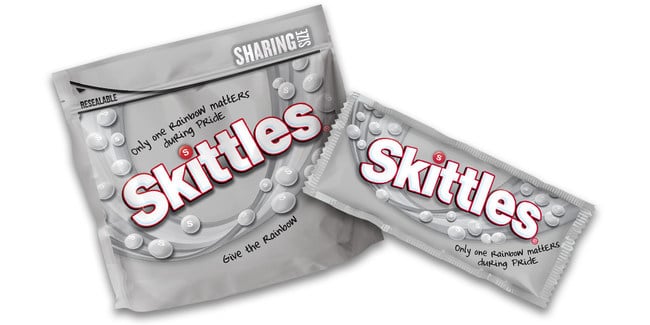
Skittles Pride packs will be available in the US from mid-May. (Mars Wrigley)

As Pride season approaches, Skittles has announced that it will be giving up it’s rainbow again because “only one rainbow matters”.

The limited edition Skittles packs, which were sold in the US for the first time last year, have all-grey packaging and candy and are set to return mid-May.

Although the sweets will be without their rainbow colours, they will still feature the original flavours of strawberry, orange, grape, green apple and lemon.

Skittles, owned by Mars Wrigley, will donate up $1 per pack purchased during Pride month (June) to LGBT+ rights organisation GLAAD, up to $100,000.

Sarah Long, chief marketing officer for Mars Wrigley North America, said in a statement: “Skittles is passionate about advocating for the LGBT+ community, which is why we have chosen to bring back Skittles Pride Packs as a symbol of our cemented efforts and support for the community.

“Through the return of Skittles Pride packs, we emphasise our commitment to not only being a great place to work, where all associates can feel seen and accepted, but also our commitment to people in our communities by continuing to shape a world that is connected, caring and celebratory.

“We are thrilled to continue our partnership with GLAAD to support the important work they do year-round.

“Skittles giving up their rainbow means so much more than just removing the colours from our Skittles packs, and we’re excited to use our platform to do our part in driving visibility for the LGBT+ community, creating better moments and more smiles.”

GLAAD senior director John McCourt added: “For another year, Skittles is giving up its traditional rainbow colours for Pride Month, highlighting its ongoing commitment to supporting and uplifting the LGBT+ community.

“Visibility from beloved brands like Skittles has a powerful and unique opportunity to reach parents and young Americans with calls to stand with LGBT+ people during Pride month and beyond.

“The proceeds from the Skittles Pride packs will help to support GLAAD’s culture-changing work and programs, including our ongoing efforts to work through media to combat anti-LGBT+ discrimination.”

Though the grey Skittles packs only debuted in the US in 2020, similar campaigns have run in the UK and other countries for several years.

Originally the packaging and sweets were white, which prompted complaints about the apparent use of whiteness to denote equality.

Opinion | Biden’s big gay opportunity – Washington Blade

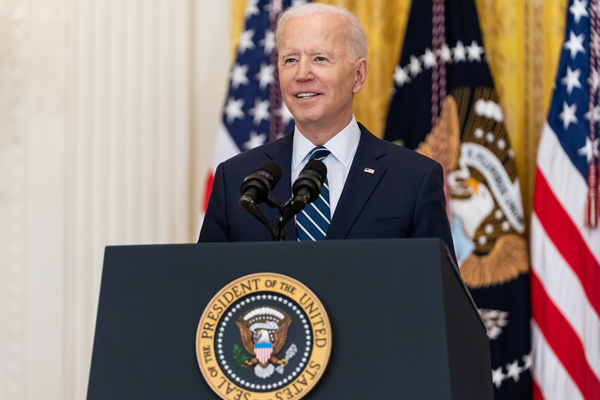
President Joe Biden faces many tough challenges. Foreign adversaries are preparing to test him, rancorous political divisions confront him at home where COVID-19 has ravaged the American economy and spirit. With Washington gridlock threatening to block his most ambitious plans, opportunities for legacy achievements may prove scarce.

Still, in one critical area, Biden can earn an honored place in history: LGBTQ rights. Of all major contemporary American political figures, Biden has been the quickest to take a stand for our rights. He is the best friend LGBTQs have yet had in the White House. I do not say so lightly, I am a lifelong Republican.

From day one, Biden began rolling back the biased policies promoted by Donald Trump’s Marginalizer-in-Chief, Mike Pence. Much damage remains to be undone, especially because the media and many Democrats have gone easy on Pence and his cronies. But Joe himself got off to a fast start placing qualified LGBTQ officials in highly visible positions, including his Cabinet. Secretary of State Tony Blinken set the tone early by flying the rainbow flag at U.S. embassies and naming a special envoy for LGBTQ rights. What a welcome change to have an administration proud of, rather than wary of, its LGBTQ supporters.

Yet much more needs to be done to rid this nation of the cruel blights of LGBTQ stigma and marginalization. There can be neither equality nor equity for people who are systematically stigmatized and marginalized. The cruelty of these violations is evident in a suicide rate among LGBTQ youth five times that of youth in the general population.

A national commission studying patterns, causes, and consequences of LGBTQ stigma, marginalization, and bullying could help awaken Americans to the damage from the prejudices many of us still face. Indeed, older LGBTQs who feel comfortably protected, have a special obligation to defend gay youth who remain vulnerable.

Stigmatization is worse for minority LGBTQs who bear a double burden of bias. BGLM!–Black Gay Lives Matter! Stigma impedes HIV testing and treatment; one consequence is a shocking rate of new HIV-AIDS infections among people of color four times the rate among whites.

Even as we pursue our national struggle to end racial bias, America must recognize our equal moral obligation to expose and repudiate our ugly history of LGBTQ stigmatization and marginalization. How do we stop these evils? Most crucial, we must pass a muscular Equality Act that protects the rights and dignity of all LGBTQs wherever they live in America.

Yet to pass it soon, we must avoid “poison pills” that may doom it to failure. Protection for LGBTQ youth is urgent. Better a bill we can pass now giving us 90% of what we all need, than a failed bill promising 100% of what some wish for.

Education is essential. Students must learn about the sufferings of LGBTQ people and our contributions to humanity and to America. All should be told about LGBTQ civil rights heroes like Bayard Rustin, Harvey Milk, and Barbara Jordan, scientists and thinkers like Alan Turing, George Washington Carver, and Plato, writers like Walt Whitman, James Baldwin, and Henry James, composers like Aaron Copland, Samuel Barber, and Billy Strayhorn, and artists like Michelangelo, Georgia O’Keefe, and Frida Kahlo—the full list is much longer.

Formal recognition of the sufferings and achievements of LGBTQ people is long overdue. As a starter, let’s build an Equality Museum on the Mall to celebrate LGBTQ Americans. No politician has yet ventured to suggest building one; their omission reinforces our marginalized state. President Biden could make history by stepping up.

Although Biden himself has made a strong start on LGBTQ rights, it is a serious mistake for the Democrats to take the gay vote for granted. Polls indicate Trump’s share rose from 16% in 2016 to 28% in 2020. LGBTQs followed a normal tendency to divide more evenly between the parties. In the 2020 campaign Democrats avoided reminding voters that

Trump’s number two, Mike Pence, has been America’s number one stigma super spreader. At the same time, on the QT, they reassured closet Pences among their own. They took us for granted assuming all LGBTQs are Woke Groupthinkers.

In the next election, more LGBTQs who agree with Republicans on issues like Iran, immigration, or taxes will vote GOP if the Democrats fail to raise their ante for us. More Democrats need to follow the leadership Biden is showing on LGBTQ issues.

Biden himself has a big opportunity to become America’s president for LGBTQ rights. But to grasp that opportunity, he will need aggressive initiatives to end stigmatization, celebrate our contributions, and make a crystal clear national commitment to full equality for all LGBTQ peoples.

James Driscoll, Ph.D., is a longtime Republican-Libertarian AIDS activist whose most recent book is ‘How AIDS Activists Challenged America.’

‘We’re still here’: Historic gay bars in Palm Springs see light at the end of the tunnel – Desert Sun

Bartenders at Chill Bar are slinging drinks — a vodka soda here, a couple “margarita martinis” there — beneath two glittering, life-size mannequins suspended from the ceiling.

Outside, a group of women in all pink and matching cowboy hats arrive on the back of a bar bike. Up the street, a server at Hunters offers up a tray of neon Jello shots to customers sitting on the patio. Masks, occupancy limits and social distancing aside, it could be any pre-pandemic Friday night on Arenas Road, an entire block lined with gay bars and businesses in downtown Palm Springs. 

“Some people we haven’t seen for about a year and a half,” said 57-year-old Tony Lawrence, sitting with his partner and two friends outside Quadz bar. “It’s like, ‘My god, you’re still alive.’”

Palm Springs has long been one of the most popular LGBTQ destinations in the country. Despite more than a year of on-and-off closures and fluctuating health mandates, at least six of the seven bars on Arenas Road are open again. The only question mark is Stacy’s Palm Springs, which has been open intermittently, but appears to have been closed for the last few weeks. The bar’s owner could not be reached for comment. 

In other parts of California and across the country, some gay bars haven’t been as lucky. San Francisco and Los Angeles, for example, have seen several famed establishments go under; The Stud, San Francisco’s oldest LGBTQ bar, was one of the first to announce it was shuttering last May. 

Many bar owners on Arenas are now cautiously optimistic that there’s an end in sight.

Riverside County moved to the orange level of California’s four-tiered, color-coded reopening framework in April, meaning bars that don’t serve food can now be open outside with modifications. Establishments that serve meals can open indoors with a capacity limit of 50% or 200 people, whichever is less. The state plans to get rid of its tier system all together on June 15, given the vaccine supply is adequate and hospitalizations remain low.

Rob Giesecke, the owner of Chill Bar Palm Springs, partially credits his business’ survival to the tight-knit community that came together and “formed ranks” around the historic street. Customers sat in outdoor patios in 120-degree heat when they could have stayed home. Some started GoFundMe pages for Arenas bars. 

Because of those loyal customers and friends, “we are still here,” Giesecke said.

“For the LGBT community, we are dependent on our chosen families,” he said. “These bars are more than just drinking places for people; this is where the community comes together.”

Josh Snyder, left, and Alex Ordoubegian of San Diego share a kiss at Quadz Palm Springs on Arenas Road in Palm Springs, Calif., on Friday, April 30, 2021.

Josh Snyder, left, and Alex Ordoubegian of San Diego share a kiss at Quadz Palm Springs on Arenas Road in Palm Springs, Calif., on Friday, April 30, 2021.
Taya Gray/The Desert Sun

Three decades of history on Arenas

Exactly 30 years ago, in 1991, the first gay bar opened up shop on Arenas. 

Named Streetbar, the business was followed by roughly a dozen others over the next three decades. Up until the 1990s, most local bars specifically for LGBTQ patrons had been concentrated in neighboring Cathedral City, which was unincorporated until 1981 but only a few miles from the heart of Palm Springs. 

“Gay establishments used to stay off of the main streets, out of the way,” Bob Mellen, co-owner of the Vista Grande Resort, a gay resort hotel in Palm Springs, told The Desert Sun in 1996. “Now we feel more welcome so we don’t have to hide as we used to.” 

Rob Giesecke, owner of Chill Bar Palm Springs
These bars are more than just drinking places for people; this is where the community comes together.

David Farnsworth, now the co-owner and general manager of Streetbar, started working at the business in 2000. Then, Palm Springs was firmly a seasonal destination, and was often quiet from June to October. Arenas relied on local foot traffic rather than tourists. 

“We’re like a gay community center bar. Local gay men treat this as their living room,” Farnsworth said of Streetbar. “It’s been ground zero for them for forever.” 

But maintaining that familial atmosphere has sometimes been challenging in the era of coronavirus. There are standard COVID-19 rules for customers, like ordering food with drinks, staying 6 feet apart and wearing a mask if “in motion” — not to mention the fact that they are nearly impossible to enforce, Farnsworth said. 

And keeping a bar, even a beloved one, from going under in 2020 was often touch-and-go. Streetbar was forced to close last March, then reopened for just 12 days in June before being shut down again under new county guidelines.

Farnsworth eventually applied for an emergency loan. Then the bar got to be about six months behind in rent. All told, he estimates it will take three to five years to get back on solid financial footing and pay back the loan.

George Parizk hangs out at Streetbar in Palm Springs, Calif., on Friday, April 30, 2021.

George Parizk hangs out at Streetbar in Palm Springs, Calif., on Friday, April 30, 2021.
Taya Gray/The Desert Sun

Streetbar also had to alter its offerings dramatically. Though the bar had never served food before the pandemic, that was the only way it could open last fall under the state’s most-restrictive purple tier. 

At one point, Farnsworth was at an Alcoholic Beverage Control office when an employee informed him that the bar had to serve substantial meals, not just prepackaged food, either in Streetbar’s own kitchen or through a contract with a restaurant. 

“And I just burst into tears. I was just at the end of my rope, I had no money,” he said. “I had to go sit in my car for about a half-hour and collect myself, then go back in and say, ‘Okay, I’m really sorry, I’m going to send you flowers.’”

A big reason Streetbar is still in business is due to its staff, Farnsworth said. He’s known some of the guys for nearly 20 years. They’ve come in on their days off, put up tents in the parking lot to meet outdoor requirements, and now work three different patio areas and generally “do everything,” he said. 

“I’ve been very fortunate that I’ve had this team of people who are so dedicated and so together and such a family,” he said. “We’ve really held each other up. They’re an unbelievable group of people.” 

A group of women arrive on Arenas Road via bar bike in Palm Springs, Calif., on Friday, April 30, 2021.

A group of women arrive on Arenas Road via bar bike in Palm Springs, Calif., on Friday, April 30, 2021.
Taya Gray/The Desert Sun

‘One of the toughest’ years of business

Across the road from Streetbar, Alex Ordoubegian and Josh Snyder were sipping drinks outside at Quadz on Friday. The couple, from San Diego, were visiting Palm Springs for a long weekend. 

“It’s a gay safe place, where you have a good feel of community here,” Ordoubegian said of Palm Springs. “That’s why I think all of us from San Diego come out here.” 

Next to the young couple was Tony Lawrence and his group, who live in the Palm Springs area and have been frequenting the Arenas bars for many years; two friends in the circle were in their 80s. Until recently, when he was vaccinated, Lawrence and his friends had been hosting patio cocktail parties rather than going out to the bars. 

“It’s really liberating,” he said of being on Arenas again. “You feel an element of safety now because people are being vaccinated, but you’re still cautious, you’re still careful in crowds. We generally stick with our own circle.”

WANT TO SUPPORT AMANDA’S WORK? If you would like to make a personal, tax-deductible contribution to her position, you can make a donation online through Report for America.

Quadz owner Jim Osterberger calls Arenas the “gay soul” of Palm Springs.

“When things started to open up a bit, there was so much pent-up demand that people wanted to go and do something again, and enjoy the company of their friends,” he said. 

Other gay bars in California haven’t been able to reap the benefits. Four storied gay bars in Los Angeles shut down permanently in the past year. Many others have not been able to reopen yet, like The New Jalisco Bar in LA, which has been closed for more than 12 months.  

Though steadier business is now returning to Arenas, Osterberger said 2020 was “one of the toughest” years of the 16 that he’s owned the bar. Like Streetbar, Quadz became a pseudo-restaurant to keep the doors open, Osterberger said, which meant installing pizza ovens, refrigeration and other expensive alterations.

“When this is over, I don’t want to ever want to make a pizza or serve another piece of food again,” Osterberger said. “We opened as a bar. That’s what we specialize in.” 

Osterberger says he tries to be optimistic about reopenings, but after so many months of changing tiers and conflicting mandates from the state, that’s tough to do. As for the tier system sunsetting in June, “I’ll believe it when I see it,” he said.

Tony Lawrence, center, socializes at Quadz Palm Springs on Arenas Road in Palm Springs, Calif., on Friday, April 30, 2021.

Tony Lawrence, center, socializes at Quadz Palm Springs on Arenas Road in Palm Springs, Calif., on Friday, April 30, 2021.
Taya Gray/The Desert Sun

Adaptability in 2020, future of Arenas

Palm Springs has always been a popular destination, said Masio Winston, part-server/bartender and part-manager at Chill Bar. But as vaccines roll out and regulations loosen, Winston said he’s seen the city become even more of a haven for tourists. 

“I’m sweating because I’m thinking about all the people who are outside,” he said during a whirlwind break Friday night, as temperatures hovered around 102 degrees. “It feels like more people want to be here than we can actually have seats for.” 

Chill Bar has brought back DJs and opened a back room with socially distant “cabanas,” owner Giesecke said, but other nightlife entertainment like go-go dancers has not yet returned. The bar also had to build out its own kitchen last year. Fortunately, the previous business in the space was a restaurant, so some kitchen infrastructure remained. 

Palm Springs: Chill Bar owners get approval for planned nightclub downtown

Eating out: Indoor dining resumes, but patio service seen as here to stay

Riverside County could move into California’s least-restrictive yellow tier in a few weeks, if coronavirus metrics improve. Bars that aren’t serving meals could then open inside at 25% capacity or 100 people, whichever is fewer. Restaurants still must be at 50% capacity indoors.

For now, the Chill Bar atmosphere is slightly changed from early 2020, but not necessarily in a bad way, Giesecke said. A willingness to be adaptable has been key in surviving as a business, he said. 

“Before, when we were inside, you were in a nightclub and you were dancing,” he said. “Now you’re outside and you can be under the stars, and you’re still listening to great music, you’re eating great food.”

Arenas bar owners have ideas for the future of the area. Streetbar co-owner Farnsworth, for one, is in favor of designating the street pedestrian-only and planting a rainbow arch on either end.

But there’s also a simple joy in merely making it to 2021, and for Streetbar, its 30-year anniversary. 

“We made it,” Farnsworth said. “We made it.”

Contact Amanda on Twitter at @AmandaCUlrich or by email at amanda.ulrich@desertsun.com. 

Want to support Amanda’s work? 

Desert Sun reporter Amanda Ulrich is a Report for America corps member with the GroundTruth Project, an independent, nonpartisan, nonprofit news organization dedicated to supporting the next generation of journalists in the U.S. and around the world.

Report for America, funded by both private and public donors, pays for half of her salary. It’s up to The Desert Sun to find the other half, through local community donors, benefactors, grants or other fundraising activities.

If you would like to make a personal, tax-deductible contribution to her position, you can do so by:

  • Making a one-time donation online via this link: https://bit.ly/2ZyPlAc
  • Making a recurring monthly donation via this link: https://bit.ly/2ITMITH
  • Donating by check, payable to “The GroundTruth Project.” Send it to Report for America, The Desert Sun Campaign, c/o The GroundTruth Project, 10 Guest Street, Boston, MA 02135. Please put The Desert Sun/Report for America in the check memo line.

NCAA reaches a key moment as transgender laws multiply – Daily Mountain Eagle

By ERIC OLSON
AP Sports Writer

The NCAA has reached a delicate moment: It must decide whether to punish states that have passed laws limiting the participation of transgender athletes by barring them from hosting its softball and baseball tournaments.

Legislation requiring athletes to compete in interscholastic sports according to their sex at birth has been introduced in dozens of states this year, and governors have signed bills in Alabama, Arkansas, Mississippi, Tennessee and West Virginia. The Arkansas, Mississippi and West Virginia laws also cover college sports teams.

The NCAA Board of Governors issued a statement April 12 saying it “firmly and unequivocally supports the opportunity for transgender student-athletes to compete in college sports.”

“When determining where championships are held, NCAA policy directs that only locations where hosts can commit to providing an environment that is safe, healthy and free of discrimination should be selected,” the board added. “We will continue to closely monitor these situations to determine whether NCAA championships can be conducted in ways that are welcoming and respectful of all participants.”

Last week, the NCAA announced a preliminary list of 20 schools being considered to host the early round of the NCAA softball tournament; the 16 regional sites will be announced when the field is unveiled May 16. The 20 potential regional sites for baseball will be announced next week and that list will be pared to 16 on May 31.

Three of the possible softball hosts — Alabama, Arkansas and Tennessee — are in states with signed transgender sports bans.

“This is kind of where the rubber meets the road for the NCAA,” said Mac McCorkle, a Duke University professor of public policy.

Karen Weaver, a former college field hockey coach and athletic administrator now on the faculty at Penn, called the NCAA statement as “wishy washy as you can get.”

Weaver said the NCAA is in a precarious position because of separate, highly charged issues that are likely to impact its bedrock amateurism model: it is depending on Congress to create legislation allowing athletes to make money on use of their name, image or likeness. The Supreme Court also is considering a case weighing whether the NCAA’s prohibition on compensation for college athletes violates federal antitrust law.

The NCAA’s statement on transgender sports bans was “carefully worded,” Weaver said, “and I think it’s a tenuous time to be taking any kind of stance that might be viewed as political because they’re trying to craft their future in the Congress and Senate with the NIL legislation.”

“They’re trying to not tick off any potential folks who might vote for something that benefits the NCAA the most,” Weaver said.

Jeff Altier, the NCAA Division I Baseball Committee chairman and the athletic director at Stetson, said last month that his committee had been given no directive to exclude any school from consideration for hosting a regional.

Altier referred other questions to the NCAA. Gail Dent, spokeswoman for the Board of Governors, did not respond to questions about the NCAA’s willingness to pull events out of states with bans.

“It’s surprising the NCAA would say one thing, that they are monitoring it, and then select site locations that are in areas of the country that are doing anti-trans, anti-LGBTQ legislation,” said Shane Windmeyer, founder and executive director of Campus Pride, a national organization advocating for safer college environments for LGBT students.

Windmeyer said the NCAA’s Office of Inclusion has been an ally. He said Campus Pride and similar organizations have received grants from the NCAA to fund diversity and inclusion summits and other programming.

The NCAA has had policies in place since 2011 that allow for transgender participation in sports. Testosterone suppression treatment is required for transgender women to compete in women’s sports.

Last year, following the Southeastern Conference’s lead, the NCAA announced it would not hold championship events in Mississippi unless a depiction of the Confederate flag was removed from the state flag. The Mississippi Legislature acted swiftly to remove the symbol.

In 2016, the NCAA made good on its threat to pull championship events out of North Carolina in response to the “bathroom bill,” which required transgender people to use restrooms according to their sex at birth and not their gender identity. Greensboro lost first- and second-round games in the men’s basketball tournament in 2017; they were moved to Greenville, South Carolina. The law was repealed before the NCAA could take away more events.

“When they got involved with the bathroom bill in North Carolina, that was, in my opinion, a bold step for them,” Weaver said. “I’m not seeing that same enthusiasm right now.”

The NCAA traditionally selects baseball and softball regional sites based on a team’s performance as well as quality of facilities and financial considerations. This year, potential sites were pre-determined because each must be evaluated for its ability to meet the NCAA’s COVID-19 protocols.

Four of the top five teams in this week’s D1Baseball.com Top 25 — No. 1 Arkansas, No. 2 Vanderbilt, No. 4 Mississippi State and No. 5 Tennessee — ordinarily would be considered shoo-ins to be regional hosts. The four schools confirmed to The Associated Press they submitted bids to host but declined interview requests on the topic of the NCAA’s decision.

Since 2000, the home team has won 67.5% of baseball regionals and there is money to be made, too. A University of Arkansas study showed baseball fans visiting the Fayetteville area spent about $2 million during a three-day regional in 2018, excluding cost of tickets and in-stadium purchases.

The NCAA is limiting attendance to 50% of stadium capacity at its spring sports championships because of the pandemic, so the windfall won’t be as great this year.

For now, everyone waits to see the next step on site selections from the NCAA, which has referred all questions to the Board of Governors statement.

“Speaking as a consultant, you can say to the NCAA, ‘Oh well, you made this problem, you shouldn’t have said anything,'” McCorkle said. “I don’t know how they navigate it, but I don’t think there’s any way to have avoided this.”

‘An Environment of Hate’? – Shepherd Express

On March 16, a young white gunman went on a killing spree in suburban Atlanta. Six of his eight victims were Asian American women. Police were hesitant to declare it a hate crime; the gunman denied racial motivation and claimed sexual obsession as his reason, yet he chose Asian women.

The Atlanta murders are among the latest in a sequence of deadly, highly publicized crimes that targeted specific groups. On October 27, 2018, a young white gunman slipped into a synagogue during morning services and killed 11 worshippers. On June 12, 2016, a young Muslim inspired by ISIS entered a gay nightclub in Orland, Florida and killed 49 clubgoers. On June 17, 2015, a young white gunman entered a Black church in Charleston, South Carolina and killed nine congregants. And on August 5, 2012, a white gunman killed six Sikhs worshipping at their Oak Creek, Wisconsin temple. Although hate crimes have always occurred and few become headlines or are even reported, the verbal and physical abuse of groups targeted by white supremacist and other violent movements rose disturbingly after 2016.

Official hate crime tallies are slow in coming and never record the full extent of the problem, yet they provide a useful measure. According to the FBI, although the total number of hate crimes dipped slightly to 7,120, violent hate incidents reached a 16 year high in 2018 with 4,571 assaults. In 2019 numbers for violent and other hate crimes climbed again, totaling 7,314, including 51 murders.

Many hate crimes are never reported to the FBI. Most don’t end in homicide, and many acts of hate against targeted groups aren’t crimes at all. “Often to the victim, it is difficult to distinguish between hate crimes, bias and prejudice while it is happening to you—I would use the example of a Native woman being called in public a ‘Pocahontas,’” said Marin Webster Denning, a member of the Oneida Nation and lecturer at UW-Milwaukee’s School of Continuing Education. “We use the language of hate violence rather than hate crimes because not all hate is prosecutable and we do not want the focus to be on law enforcement,” explained Kathy Flores, anti-violence program director for Diverse & Resilient, a nonprofit dedicated to the health, safety and wellbeing of Wisconsin’s LGBTQ population. But the headline-grabbing hate violence seen on television news is usually criminal, and over the past year, much of it has been directed against at people whose heritage is identified or misidentified as of Chinese.

Friends of the Shepherd

Help support Milwaukee’s locally owned free weekly newspaper.

LEARN MORE

Asian Americans

In 1889 Chinese immigrants in Milwaukee were targeted by a race riot spurred by a Milwaukee Sentinel report of white girls lured into sex trafficking by Asian entrepreneurs. It was one of many anti-Chinese riots that occurred in cities such as Seattle, Los Angeles and across the U.S. during that period.

The Center for the Study of Hate & Extremism recently compared anti-Asian hate crimes (as reported to the police) in America’s largest cites. According to the report, hate crimes fell in some cities from 2019 to 2020 but soared in others. San Jose, Dallas and Houston saw numbers rise dramatically since the arrival of COVID.

There is a long history of anti-Asian racism in the United States,” said Alexa Alfaro, spokesperson for the AAPI Coalition of Wisconsin. “It is not new, and this is not the first time Asian Americans have been used as scapegoats during medical, political, and economic crises… We saw similar attacks on the Asian American Pacific Islander (AAPI) community in 2003 during the SARS outbreaks. The previous administration’s rhetoric only amplified longstanding biases towards Asian Americans.” 

Did the election of Trump result in the immediate rise of prejudice against Asian Americans—or did the rise in hate crimes begin in 2020 in response to the idea that COVID “came from China”?

“The number of recorded incidents has increased significantly since the beginning of the pandemic, but prejudice against Asian Americans has long persisted,” Alfaro continued. “Part of the problem is that racism against Asian Americans goes largely unacknowledged and widely tolerated. It is rarely explicitly confronted. The diversity within the Asian American community can make it hard to capture the nuanced racism. However, with the pandemic paired with the politician’s rhetoric, we saw an unprecedented scenario where all the different Asian communities were equally affected by the racism… Words matter, especially those of the president. Trump’s inflammatory rhetoric helped fuel racist attitudes toward Asian Americans and created an environment of hate.”

Alfaro cites growing reports of harassment since the beginning of the pandemic. “Lucky Liu’s, a local restaurant, shut down temporarily due to growing xenophobia and verbal attacks toward their staff members,” she said. “We also know that harassment and hate incidents in the AAPI community go underreported. Several factors have contributed to underreporting. One of the most significant issues is the lack of adequate and accessible reporting and tracking systems. Communities don’t always know where to report and language barriers can make reporting inaccessible. Some communities do not have trust in the authorities and don’t see reporting as particularly useful.”

What can Milwaukeeans—and Milwaukee’s civic leaders—do to combat the problem?

“Name it as a hate crime and publicly condemn anti-Asian racism,” Alfaro said. “Report anti-Asian incidents that you personally witness, rather than turning a blind eye… Support legislation that includes the teaching of Asian American history. Similar to many non-white communities, our history has been left out of Wisconsin public school curriculums. Take the time to personally learn about the depth of anti-Asian sentiment in the U.S., such as the invisibility of the 19th century Chinese railroad workers, the Chinese Exclusion Act of 1882, the internment of Japanese Americans during World War II, and the murder of Vincent Chin by Detroit auto workers in 1982, up to the present, where the ‘model minority myth’ has resulted in Asian Americans being positioned against other communities of color.”

Jews

Jews were the original “others” in Western civilization. Jews were expelled from some nations, forced into ghettos on others. Wild charges hurled against them in medieval Europe included spreading the Plague as a way of killing Christians and murdering Gentile children as part of Passover rituals. America became one of the refuges for Jews fleeing persecution, but Old World bigotry had migrated ahead of them to the New World. By the middle of the last century, Jews were comfortably established in the U.S., yet prejudice against Jews never entirely abated.

According to Rabbi Hannah Wallick, the Milwaukee Jewish Federation’s vice president for outreach, anti-Semitism has remained a steady factor in American society, but anti-Semites have become more emboldened over the past four years. Citing a recent Anti-Defamation League study, she said, “overall antisemitic attitudes have not changed significantly but the recent uptick in incidents shows that more of these individuals feel more willing and comfortable expressing it openly and through acts of violence and hate speech.”

Wallick does not pin responsibility directly on Trump but sees the situation in the U.S. as part of global trends. “Hate is on the rise here in our country and throughout the world,” she said. “One reason may be antisemitic groups use of social media to subtly spread their conspiracies and consequently, their followers feeling emboldened to speak their hate more freely. Even a person who would never join a hate group will begin to repeat some of their arguments and talking points after enough exposure.”

She added, “Hate is a larger issue than any political administration or figure. We are seeing a worldwide pendulum swing and we need to work together and stand up for one another and to combat it.” 

Milwaukee’s Jews have been confronted by the spike in anti-Semitic incidents. The 2020 Audit of Anti-Semitic Incidents by the Jewish Federation’s Community Relations Council show “an overall increase in incidents and some troubling trends,” in Wisconsin, including “99 reported and corroborated incidents, a 36% increase in from 2019.” Some online comments quoted in the audit include “Jews are responsible for organizing violent protests all over the country” along with the usual rants that Jews control the country’s banks and media.

Wallick explains: “Over the past several years we have seen the largest increase in outward expressions of antisemitism, especially online. This has included harassment of Jewish political and community leaders and organizations. We have seen vandalism of Jewish organizations and synagogues, often including swastikas and references to the Holocaust. In our schools, we have seen an overall upward trend of Holocaust jokes and harassment of Jewish students through hateful comments.”

Latinos

In 2016 on Milwaukee’s South Side, a white man opened fire on his Puerto Rican neighbors after shouting at them to “go home.” He killed a father in front of his son and continued shooting, killing a Hmong couple. He was charged with three first degree counts of intentional homicide but not with a hate crime.

The hate crime statistics for Milwaukee appear to be low. According to FBI records, compiled from reports by local law enforcement agencies, only two hate crimes based on race or ethnicity were committed in Milwaukee in 2019. For Christine Neuman-Ortiz, executive director of Voces de la Frontera, a community organization focused on immigrant and workers’ rights, “one problem is getting hate crimes recognized as hate crimes.” In 2017, Voces helped organize Milwaukee’s “Day Without Latinos” to protest Sheriff David Clarke’s Trump-inspired plan to crack down on immigration.

Regardless of official numbers, Neuman-Ortiz has witnessed “an increasing trend of emoldenment of racism that occurred under the Trump administration” She links the issue to America’s worsening problems with guns and mental illness. “Trump’s rhetoric emboldened people who are unstable and armed to act on their racism,” she continued. “The problem was there but Trump ginned up his base by explicitly inviting violence, by explicit approval of white nationalism and white nationalist violence, by the forced separation of children at the border and the delight in cruelty. The administration’s attacks and degradation of Black Lives Matter, immigrants and refugees goes hand in hand with hate crimes. His administration was relentless.”

As for Joe Biden, “there is a difference, clearly, in attitude and rhetoric on immigration, on Black Lives Matter, and his condemnation of anti-Asian violence,” Neuman-Ortiz said, “but we need to keep organizing and recognize the weakness of Democrats with corporate leanings that allow the status quo to go on.”

One positive outcome from four years of Trump is that his rhetoric is that various social justice “movements have intersected,” Neuman-Ortiz said. “The critical fight ahead is to hold the Biden administration accountable to his promises on institutionalized racism and immigration reform. He has good policy answers but needs to be courageous and get the job done.”

LGBTQs

Under the 1964-1984 regime of Chief Harold Breier, the Milwaukee Police Department operated on a color-coded system. The MPD patrolled a sharply segregated black-white city; the department’s Red Squad kept tabs on leftists and its vice squad maintained an extensive set of “Pink Cards,” mini-dossiers on people suspected of being gay. Milwaukee’s gay bars, subjected to periodic police raids, were located in the Third Ward and Walker’s Point, industrial districts in those years that were otherwise desolate after sundown.

The MPD compiled some of its Pink Cards by taking down license plate numbers from cars parked in those neighborhoods at night. If you got pulled over for something, they might ask, “What were you doing parked on Broadway and Erie?”

In recent years social acceptance of LGBTQ people has risen dramatically, but so have acts of homophobia. Diverse & Resilient Kathy Flores blamed Trump for encouraging the spike. “Words matter. Policies and actions matter, too,” she said. “The former administration used disparaging language against marginalized community members that fueled followers to act in horrendous ways. This was evident all throughout the Trump administration and after the election of a new administration. One only has to watch footage of the January 6 insurrection to see the presence of Confederate flags to see the white supremacy on display. Those who uphold the Confederate flag are often not just racist and antisemitic, but they have proven time and time again to be anti-LGBTQ as well.”

She added that that hate violence against the LGBTQ community—especially people of color—“rose as the rhetoric from this administration rose.”

However, exact figures remain impossible to establish. “The statistics in Milwaukee are reported by the FBI and local law enforcement. However, those numbers are vastly underreported,” Flores said. “In a one year period alone, when the FBI released its numbers of anti-LGBTQ hate violence, those numbers did not include all the survivors we have worked with because most of our survivors do not wish to report to law enforcement for fear of racism and anti-LGBTQ sentiment that sometimes come from Milwaukee Police.” 

According to surveys compiled by PrideFest, 34% of respondents answered that they had experienced hate violence, a number that rises to 86% for trans people. “The strain of hypervigilance is seen in negative health and mental health outcomes,” Flores continued. “General stress theory in addition to minority stress theory demonstrate that toxic levels of stress—when the stress is chronic and exceeds an individual’s coping capacity—leads to higher levels of physical illness, depression and anxiety, and suicidal ideation. Actual violence against Trans people and the constant threat of violence is debilitating and directly impedes Trans individuals from showing up in their homes, in schools and workplaces and in the community as their whole complete selves.”

Muslims

Islamophobia became noticeable in Milwaukee during the Iran hostage crisis (1979-1981) when resentment against that country’s theocracy spilled over into resentment against Muslims. Islamophobic incidents rose and fell with geopolitics in the last century and spiked with 911. Bigots identified Muslims as well as Southern and Western Asians of all faiths as culpable for the fall of the Twin Towers.

The situation levelled under President Barack Obama. According to Janan Najeeb, president of the Milwaukee Muslim Women’s Coalition, Obama “stood out against hatred and the broad brushing of an entire faith or ethnicity, however he did not visit mosques and was careful not to be seen with Muslim crowds because he had been labeled as a ‘closet Muslim’ by many of the extreme Republicans. I do wish he had instead responded to their bigotry. The only reason they called him a Muslim and pushed the idea he was not born in the U.S. is because they could not come out and say, ‘We will not accept a black man as president,’ whereas no one called them out for spewing Islamophobic rhetoric.”

The rise of Trump changed the situation, with Muslims across the country and in Milwaukee reporting a rise in Islamophobia. “Under Trump, there have been times it has surged past the levels of anti-Muslim sentiment experienced right after 9-11,” Najeeb said. “The irresponsible rhetoric of both Trump and many of those he put in power—such as well-known Islamophobes like Steve Bannon and others—lead to real acts of violence. The Muslim Ban added to the ‘othering’ of Muslims.”

Trump “was absolutely responsible for the spike,” she continued. “He ran on an anti-Muslim and anti-immigrant platform, he used it to deflect attention from all of his corrupt and shameful behavior. He rewarded his base, the ‘Armageddon Christians’ and the anti-Muslim Jewish extremists, with policies they wanted such as the Muslim Ban and declaring Syria’s Golan Heights and Palestinian East Jerusalem as now owned by Israel—as if it is his to give away. His supporters believe in a racist god, a god that hates the same people they do,  and Muslims, blacks, immigrants, etc. are their main target, so he catered to them.”

Muslim women wearing the hijab (headscarf) have especially been targeted and, Najeeb added, “make up 85% of the victims of anti-Muslim hate because they are obvious.  Followed by Sikh men who wear a turban,” even though Sikhs are not Muslim. “There are some Muslim women that stopped wearing hijab out of fear of attacks.”

It may be too early to tell, but has Joe Biden’s election changed the situation? “It is clear that President Biden is much more presidential, I think many people feel the potential for change is there. President Biden has appointed some Muslims to his administration, and he is clearly aiming for a more representative government. I hope he really works with progressives because they were instrumental in helping him win. However, as Muslims we encourage everyone to remain vigilant, Islamophobia is real.  If the insurrection at the Capitol taught us anything, it is that because of Trump, there are thousands of radicalized white supremacists who have become mainstreamed.”  

Native Americans

During the 19th century the U.S. brutally expelled the Ho-Chunk (Winnebago) and Ojibwe native to Wisconsin and forced them onto reservations in Minnesota and Nebraska, actions that today would be called ethnic cleansing. However, many Native Americans kept returning to the homeland, living as fugitives until reservations were established, diminished and remote parcels of land whose treaty rights were often ignored.

“People can even take a gun and shoot at us with no repercussions,” said Denning. He’s not referring to incidents from 150 years ago but to a 2021 decision by a Vilas County judge. Last year in northern Wisconsin a white man opened fire on Ojibwe spearfishers. He was allowed to plead guilty to use of a firearm while intoxicated and handed a modest fine.  

“I cannot speak for all Natives in Milwaukee but can only represent my experience in the larger community,” Denning continued. “One issue is that municipalities self-report hate crimes to the FBI,” inevitably leading to underreporting. “As a person, in the late four years I had my life threatened and home threatened to be burned down. This according to the folks that uphold our laws is free speech.”

Denning’s most recent encounter with white supremacists occurred during the debate over changing the Menomonee Falls High School “Indian mascot,” and was enabled by the internet. “Someone took drone footage above our home, listed the address and invited people to engage in their hate,” he said.

What role did the Trump factor play in acts of physical or verbal abuse against Native Americans? “That one person like former President Donald Trump be held accountable for hate crimes today, or the past five years misses the point,” Denning answered. “Hate has always been here, and we have always been targets of hate since 1492. The contribution the president made was to commodify the racial divide, leverage it for a transactional vote based in fear. The final movement was to provide a social environment that would allow for existing hate to be seen and owned by the perpetrators with little consequence—and even when it was clear that white terrorism became a clear threat to American democracy and the foundation of our country—there is complicity at the highest levels.”
Backstage Apothecary proves essential for wellness | Entertainment | montgomerynews.com – Montgomery Newspapers

Essential oils – typically distilled from aromatic plants like lavender, lemon, peppermint, bergamot and eucalyptus – have been around for centuries. Ancient Egyptians used them for embalming and mummification. Medical icon Hippocrates supposedly advised patients in ancient Greece “healing begins with an aromatic bath and daily massage,” and contemporary proponents believe essential oils relieve ailments that range from headaches to insomnia.

Phoenixville’s Kate Fossner, stage manager at People’s Light theater in Malvern, began sharing her go-to oils with exhausted fellow thespians to help them relax and re-energize during particularly stressful productions.

“We’d been doing our Pantos, a Christmas show which can be pretty grueling…with a pretty hectic schedule,” Fossner recalls. “I had discovered essential oils through my acupuncturist and started doing my own research to learn more about them. I knew how much they helped me, so when our actors were feeling sick or extra tired during Pantos season, I’d mix up an oil blend to help them feel better.”

Happily, those blends did exactly that, and – buoyed by her colleagues’ collective thumbs-up and her own growing knowledge base – Fossner slowly created an assortment of all-natural home and body products. In a nod to its and her theatrical roots, the line evolved into a private label called The Backstage Apothecary, currently available online and Saturdays at the Phoenixville Farmers’ Market.

The brand features handmade body butter, roll-ons, sprays and mists, bar soap, foaming hand soap, salt scrubs, wellness blends and beard oils…each, a simple fusion of fragrant, chemical-free ingredients.

According to Fossner, olfactory honest underpins the collection.

“You’re actually smelling the peel of an orange or lavender,” she says. “I want people to know exactly where each of these (products) came from, so I don’t use any chemical additives or preservatives. I don’t want people to looking at a label and wondering what really went into making what’s inside the bottle.”

So far, response has been positive although Fossner says she’s not looking to make a financial killing or retire her Actors’ Equity Association resume anytime soon.

“At first, it was basically just friends and theater connections,” she says. “I created the website in 2018, right before Christmas, so being around the holidays helped sales. This is really something I’m doing for fun…and because it’s something I really believe in. I joined the farmers’ market this year, so that’s allowed me to reach different people. And the farmers’ market community has been great…very supportive.”

There was one glitch along the way – a respiratory virus that coincided with the birth of daughter Liza in 2015 and decimated Fossner’s sense of smell for five years.

“I got it back last year, which was ironic given that it was right about the time that so many people were losing their sense of smell from COVID,” she says. “Mine came back little by little and actually came and went over the course of one year. So I was still making blends, but I was doing that with a lot of help from the cast members at People’s Light and my wife, Lily.

“Even with that, it’s…been very satisfying. I’ve always loved helping people, making them feel better even if it’s in some small way – helping them sleep better or even just bringing a smile to their face when they wash their hands. The simple pleasures.”

Backstage Apothecary items, including Lily Fossner’s pure cotton face masks, can be ordered at www.backstageapothecary.com or purchased in person at the Phoenixville Farmers’ Market, located at 200 Mill Street, under the Gay Street Bridge along the French Creek Trail, Saturdays between 10 a.m. and noon. The weekly market also features local farmers and artisan food producers, craftsmen, artists and providers of other sustainable products and services. Additional details are posted at www.phoenixvillefarmersmarket.org.

Dutch Catholic Church ranks poorly in Europe for LGBTI inclusion – NL Times

Dutch Catholic Church ranks poorly in Europe for LGBTI inclusion | NL Times