Home Blog Page 284

A trans journalist tells lawmakers: ‘There’s nothing to fear, let the girls play’ – Outsports

I don’t expect you to understand me or the reasons that brought me to where I am today.

Hell, I didn’t understand it for most of my 70 years.

Head doctors wrestle with it and other people with medical degrees of a different stripe aren’t certain what to make of it, either.

But here’s something you should understand: There’s nothing to fear.

I’m not a threat to your way of life, your religion, your job, your children, your family pet, your home or the company you keep. I won’t let my pooch poop on your lawn without scooping up the leavings in a doggy bag, I won’t park in your handicap spot, and I won’t crank up my music so loud that you can’t sleep at night, whether I’m playing Sinatra, Streisand or Neil Young and Crazy Horse.

I don’t know any transgender individual who thinks differently, the possible exception being Caitlyn Jenner, who’s actually more of a menace to the trans community than the general population.

In return, I ask just one thing: Don’t exclude me.

Don’t tell me I can’t live in your apartment building. Don’t tell me I can’t be your co-worker. Don’t tell me I can’t kneel in your temple. Don’t tell me I can’t break bread and drink in your local watering hole. Don’t tell me I can’t shop at your market. Don’t tell me I can’t join your slo-pitch team.

In short, don’t tell me I don’t belong.

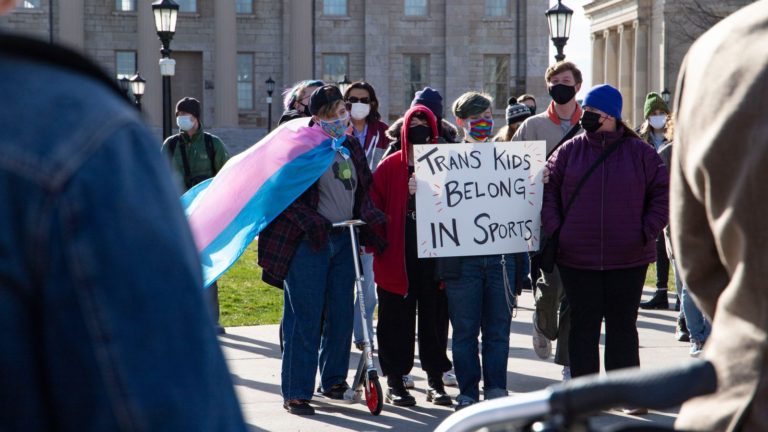
Yet this is what’s happening today, most notably in the United States, where numerous politicos of a sharp conservative tilt have mounted a crusade to prevent transgender females from sharing the playing fields of the nation with cisgender girls and women.

The anti-transgender constituency talks like there exists a sizable squadron of very large, very hairy, ape-ish men just waiting to dab on a little lipstick and mascara, convinced that’s the surest route to the top step of an Olympic Games medal podium, whereupon they can look down on their cisgender opponents, vanquished and lying in tattered ruins at the side of the track.

“It’s unfair,” goes their rallying cry.

Except there’s no evidence to support any notion that a male-to-female transition has ever made someone a superior athlete.

Let me tell you something about a male-to-female transition.

When I started taking hormones, the top of my head was five feet, 6.5 inches above the ground. Today it’s 1.5 inches closer to the ground. I was 138 pounds at the outset and soon dropped to 129, just one serving of chicken and dumplings heavier than my playing weight at age 18.

I was in my fifties and worked as a cleaner at a nightclub at the time, and had no difficulty with the heavy grunt work, easily hauling hefty bags of garbage up two flights of stairs to the dumpster and casually swishing a sopping-wet mop across the sticky, syrupy floors. In short order, however, I often couldn’t pull the garbage bags out of the bins, let alone lug them upstairs, and that chore became part of the barman’s duties. The wet mop, meanwhile, soon felt like it was attached to an ATM machine.

Trust me when I tell you hormones and the dramatic drop in testosterone levels are an energy and strength-siphoning bit of business.

For example, I was skilled enough to play in the Manitoba Junior Hockey League at age 18. Yet had I transitioned then, there was scant chance I would have been physically capable of competing with testosterone-fueled boys/young men aged 16 to 20. Actually, forget scant chance. Based on my transition experience, it simply would not have been doable, except perhaps in my mind.

The alternative, of course, would have been to join a female league, except they were non-existent back then. They exist today.

Jessica Platt was permitted to suit up with the Toronto Furies of the now-defunct Canadian Women’s Hockey League, and her on-ice impact was negligible, with just two goals and three points in 49 games. Unfairness wasn’t an issue. There was nothing to fear.

Is it possible for a transgender female to come along and dominate her sport? Absolutely. Just as tall females dominate, just as big-boned females dominate, just as females with above-normal testosterone readings (see: Semenya, Caster) dominate, just as females with big feet and wide wing spans dominate. It’s never been one-size-fits-all on the playground, and never will be.

That applies to life.

Being transgender shouldn’t disqualify any girl/woman or boy/man from her/his pursuits, nor should it cloud anyone’s judgment and become a roadblock.

Again, leaning into my lived experience to provide an e.g., when I was inducted into the Manitoba Sports Writers & Sportscasters Roll of Honour the group’s president, Ted Wyman, informed me that my gender “wasn’t an issue. It never came up in our discussion.” They let me know that my body of work indicated that I belonged, and I applauded them for that. Still do.

And isn’t that something we all seek? Acceptance and belonging?

So let the girls belong and play.

Celebrate a return to travel with these 7 must-see destinations – telegraphherald.com

0

At airports across the country, security checkpoints are newly abuzz. Car rentals are selling out. Gas prices are rising as road trips rev up.

Travel search website Kayak is seeing a steady rise in queries for summer travel. As more Americans get fully vaccinated, they are casting aside cabin fever, and for the first time in more than a year, acting on their visions of vacations.

This will be the summer to dive into America — maybe literally, in one of our oceans or lakes.

Travel to many overseas destinations remains restricted. Returning to the U.S. from any other country requires a negative COVID-19 test. The Centers for Disease Control and Prevention issued a green light, then quickly shifted it to yellow when it clarified that while fully vaccinated people can travel, the agency doesn’t recommend it.

Meanwhile, airlines facing a loss of business travelers are aiming their fleets at leisure destinations this summer. The situation means that domestic travel is hot.

Fortunately, Americans can hike across a glacier, watch the sunrise from atop a volcano, loll in Atlantic or Pacific waves and roam fascinating back roads — and never leave the country.

We’ve pulled together our top picks for summer 2021, from east to west. Some of these destinations are easier than ever to get to, serviced by new airline routes. All offer what many travelers are seeking: Wide-open spaces or restorative outings in nature. See you on the road.

Glacier National Park

After you drive for hours under Montana’s Big Sky, the Rockies suddenly, stunningly appear like a wall on the horizon. Dubbed “The Crown of the Continent,” regal Glacier National Park is where snow-capped Matterhorn peaks, Pacific rainforest, northern woods and arid plains collide; where grizzlies, black bears, mountain goats, moose and elk coexist.

In summer, melting snow fields form cascades down stark cliff walls, feeding blue-green glacial lakes. (Those waters flow in three directions: To the Pacific and Arctic oceans and the Gulf of Mexico.) It might take a lifetime to explore all of this on the nearly 700 miles of trails — but you can start.

Established in 1910, the country’s eighth national park got a tourism boost as Minnesota’s James J. Hill sought to promote it as “America’s Switzerland,” forging a rail link between St. Paul and Seattle and building Swiss chalet-style lodges that bustle today.

In 1932, the park opened the 50-mile Going-to-the-Sun Road, one of America’s great drives with hairpin turns, stone bridges and tunnels and vertigo-inducing lookouts. A visitor center at chilly Logan Pass marks the Continental Divide. With advance reservations required this summer, and the glaciers disappearing due to climate change, this might be the year to dive deeper into Glacier than ever before.

Don’t miss: A vintage Red Bus Tour on Going-to-the-Sun Road; hiking the Many Glacier trails; a stay at the classic Lake McDonald Lodge; a drink at the backcountry Northern Lights Saloon.

Note: An advance ticket, or a reservation for an in-park service — lodging, camping, boat rides, guided hikes, horseback rides, bus tours or park shuttles — is required to enter Going-to-the-Sun Road from May 28-Sept. 6. Tickets ($2) have been released online up to 60 days in advance starting at 9 a.m. on April 29. A park pass ($35-$80) also is needed (nps.gov/glac).

As the most remote and wild place within the United States, the 49th state tops many bucket lists, even those not zeroing in on the U.S. In Alaska, visitors can trek on an ancient glacier, kayak along shoreline dotted with wildlife in the Inside Passage, hang with bear at Katmai National Park and Preserve and marvel at the immense beauty of Denali, North America’s highest peak.

The state remains the Last Frontier, occupied by more moose and bear than humans. The rugged landscape and lively fishing towns are unlike anywhere elsewhere in the country or beyond, and a visit there is as easy as hopping on a plane. No passport, no currency exchange, just unfettered adventure.

Summertime, when the weather turns warm and the sun barely sets, if at all, marks a great time to visit. And this summer could be exceptional. Fewer cruise visitors will be disembarking at port towns, making Alaska’s wide open spaces more open than ever.

Whether cruises sail to Alaska from Seattle this summer remains an open question since current law requires stops in Canada, and that country has banned cruise ships. A legislative push to change the law is underway but several cruise lines already have written off their 2021 Alaska cruises. For adventure seekers and wildlife lovers, Alaska promises an extra chill getaway in 2021.

Don’t miss: This summer, visitors in private vehicles will be able to gaze at Denali practically in its shadow. Denali National Park is offering access to a rest stop 15 miles closer to the famed peak than in previous years. A limited number of the Teklanika Road Permits became available on April 20 at recreation.gov.

Note: Visitors should arrive with a negative COVID-19 test and register with the state or receive a test upon arrival and maintain social distancing until they receive their results.

U.S. Virgin Islands

With three main islands and 50 smaller cays, there is a lot to see in the USVI. Why not go island-hopping via ferry or flight and get a taste of them all? Better yet, charter a boat, and sail this paradise in the Antilles. St. Thomas, the most popular entry point, has a little of everything: White sand beaches, rocky hills, luxury resorts and dining and shopping in the port town of Charlotte Amalie.

Next door, St. John is the quieter isle, home to Virgin Islands National Park with its jungle hiking, snorkeling and the acclaimed beach at Trunk Bay. Farther south, St. Croix is bigger and broader and formed from coral — and it’s the home of Cruzan Rum, served throughout the islands.

A Caribbean escape often is a winter pursuit, but the U.S. Virgin Islands have a few things going for them right now: Hurricane season won’t arrive until June (though the peak period is August through October). They’re open to Americans with a negative COVID-19 test, and you won’t need a test to return.

The U.S. territory has had fewer cases per capita than every state but Hawaii, and they’d like to keep it that way, with a strict mask mandate, even on beaches. The isles also have made great progress in rebuilding after the devastating hurricanes Irma and Maria in 2017, when many hotels were destroyed. And with the usual cruise traffic curtailed, you just might have more of the beach to yourself.

Don’t miss: Locally sourced Caribbean chowder and curries; climbing the historic 99 Steps on St. Thomas; hiking at Virgin Islands National Park; snorkeling or diving at Buck Island Reef; horseback riding on St. Croix.

Note: Visitors must submit proof of a negative COVID-19 test, taken within five days of arrival, at usvitravelportal.com.

Martha’s Vineyard

The Kennedys and Obamas famously visited Martha’s Vineyard, but so did Grant, Coolidge, Franklin Roosevelt, Nixon and Clinton. Sure, that is rarefied presidential air — but it’s the salty air that counts. Most visitors to this triangular island just south of Massachusetts’ Cape Cod come for the beaches and the laid-back lifestyle, away from the mainland.

But they also get protected woods and marshes, villages of gingerbread cottages and clapboard mansions, harbors lined with working fishing boats and towering sailboats and a sandwich that defines summer in New England, the lobster roll. It is a beachy escape enveloped in pure Americana.

Six distinct villages dot the island. Based on old seafaring terms borrowed by islanders, the towns are either up-island or down-island. For the nautically naive, up-island means west and down-island means east, because the whaling ships that once dominated the harbor “headed up” when traveling west.

Up-island towns include Chilmark, West Tisbury and Aquinnah, where the Gay Head Lighthouse marks the westernmost spot. Down-island places include Edgartown, the oldest town; Oak Bluffs, an early enclave for freed slaves and now the island’s tourist hub, and Vineyard Haven.

Don’t miss: For a nighttime sugar fix, head to the back door of Back Door Donuts, in Oak Bluff, where doughnut business by day is conducted in the storefront, but out the back door at night, a quirky, long and delicious tradition. Martha’s Vineyard Agricultural Society hosts the annual Livestock Show & Fair, slated for Aug. 19-22 in West Tisbury.

Note: Not all beaches are open to the public and all are carry-in and carry-out, which means you take your trash with you when you leave. Visitors to Massachusetts who have been fully vaccinated or have had a negative COVID-19 test 72 hours before arrival are good to go; others are urged to quarantine for 10 days.

Sleeping Bear Dunes National Lakeshore

Get a new perspective on the Great Lakes — from 450 feet above the shores of Lake Michigan. Towering bluffs of sand along 65 miles of Michigan coastline are the most famous feature of Sleeping Bear Dunes, now celebrating its 50th anniversary as a national lakeshore a year late due to the pandemic.

As you ascend the aptly named Dune Climb to one of many panoramic overlooks, it’s easy to see why these wind-carved mounds reminded the Anishinaabe of a giant ursine slumberer.

With all that sand, you can almost always hike to your private stretch of beach, most refreshingly under the July and August heat. Take a canoe out on one of two rivers, the inland Loon Lake or — for experienced paddlers — turquoise Lake Michigan itself.

To get even more socially distant, ride the ferry from Leland, Mich., to the park’s Manitou Islands (aka the two legendary “cubs” of Sleeping Bear). The 15,000-acre North Manitou is a newly designated wilderness area with backcountry campsites and miles of trails. The smaller South Manitou has visible historic shipwrecks and (ironically) the park’s only lighthouse, an 1872 beauty.

Thirty miles across Lower Michigan’s “Little Finger” is Traverse City, the Cherry Capital, also known for wine, beer, restaurants and quality of life. The National Cherry Festival is set for July 3-10.

Don’t miss: Stargazing under truly dark skies; searching for (but not taking home) Michigan’s famous Petoskey stone, a fossilized coral; inland lakes, bogs and streams; brewery hopping in Traverse City.

Note: Michigan has had the country’s highest rate of COVID-19 cases in April. Check media and government reports for the latest information before traveling.

Mississippi Blues Trail

When Robert Johnson sold his soul to the devil at a crossroads in Clarksdale for a chance to play the blues, as legend has it, he chose well. The town in the Mississippi Delta now has more juke joints than any other in the region, and it is home to the Delta Blues Museum.

It also IS at the heart of a land rich in alluvial soil and the musical tradition born of poverty and pain that came to be the root of so much American music, the Delta blues. Jazz, rock, country: all these musical genres owe some debt to the musical inspirations that sprung from this region in the 1920s and ’30s. It has influenced the likes of Woody Guthrie, Elvis Presley, the Beatles and Bob Dylan.

The Blues Highway, aka Route 61, passes through small towns and by important sites roughly parallel to the Mississippi River, but the Blues Trail best represents the importance of the entire region in the realm of musical history. It is a constellation of markers concentrated on the river’s alluvial plain.

Among the more than 100 places with markers are Ground Zero Blues Club and the Delta Blues Museum in Clarksdale, Club Ebony and the B.B. King Museum in Indianola, Dockery Farms in Cleveland and the Blue Front Café juke joint in Bentonia. In Tunica, the Gateway of Blues Museum is not far from the Hollywood Cafe, where fried green tomatoes, catfish and pecan pie are on the menu.

Don’t miss: Check out the 44th annual Mississippi Delta Blues and Heritage Festival, slated to take place in Greenville, Miss., Sept. 18.

Hawaii’s second-largest island tops the list of places Americans want to visit post-vaccine, according to a survey from flight-deal website Scott’s Cheap Flights. One of the top reasons: It’s pure tropical paradise, a dot in the Pacific, but still part of the U.S.

More than 120 miles of shoreline and 80 sandy beaches ring the island, while colorful fish dart among the coral reef just offshore. There’s sheltered Kapalua Bay, with gentle waves; Napili Bay, great for snorkeling; and Makena Beach, where body surfers ride the waves.

In winter, Hawaii’s verdant landscape and relative warmth soothe winter-weary travelers, but summer just could be the best time to go. From April through November, the islands see less rain and warmer temperatures.

Before you settle into the new time zone, wake up early one day and watch the sun rise atop Haleakala, the largest dormant volcano in the world. From above the clouds, and with the ocean in the distance, it feels like you’re on top of the world. And since you’re on vacation in Hawaii, you are.

Don’t miss: If you can pull yourself away from the stunning beaches, consider a trip upcountry, which has a goat farm, a lavender farm and quiet towns. Consider looking for a hotel that engaged with a program called Malama, which means “care for” in the native language. Visitors volunteer by planting trees or making Hawaiian quilts for needy elders. At some hotels, the reward is a free extra night.

Note: Across Hawaii, travelers must show proof of a negative COVID-19 test taken within 72 hours of departure to the islands or quarantine for 10 days. Maui officials now require a free rapid test upon arrival at Maui’s airport for anyone on trans-Pacific routes, including from the mainland.

Visitors also must download the AlohaSafe Alert app, an exposure notification app, on their mobile phones or face a mandatory 10-day quarantine.

Trail Blazers overcome slow start in romp over Spurs – INQUIRER.net

Portland Trail Blazers

Enes Kanter #11, CJ McCollum #3, Damian Lillard #0, Rondae Hollis-Jefferson #2 and Norman Powell #24 of the Portland Trail Blazers celebrate during the second quarter against the San Antonio Spurs at Moda Center on May 08, 2021 in Portland, Oregon. Steph Chambers/Getty Images/AFP (Photo by Steph Chambers / GETTY IMAGES NORTH AMERICA / Getty Images via AFP)

Damian Lillard scored 30 points in three quarters of action and CJ McCollum added 27 as the Portland Trail Blazers rolled to a 124-102 win over the visiting San Antonio Spurs on Saturday in a game with serious playoff implications for both teams.

The Trail Blazers were slow out of the gate in the second game of a home back-to-back but found their footing late in the first quarter. Portland led by 10 points at halftime, by 15 after three quarters, and by as many as 26 points in the final period even with Lillard on the bench.

ADVERTISEMENT

The win was the third straight for the Trail Blazers (39-29) and their seventh in eight games. Portland is currently sixth in the Western Conference standings, a half-game behind idle Dallas for the fifth spot with four games remaining on its regular-season schedule.

Norman Powell tallied 18 points for the Trail Blazers, with Jusuf Nurkic hitting for 17 and nine rebounds. Robert Covington pulled down 11 rebounds in the win.

DeMar DeRozan paced the Spurs with 20 points while Lonnie Walker IV scored 18, Dejounte Murray racked up 15 points and Rudy Gay scored 11. San Antonio (32-35), playing the second game of a road back-to-back, dropped its sixth game in its past seven outings.

The Spurs, who have five games left to play, still have a near-lock on the 10th spot in the standings and the final position in the 7-10 play-in game for the final two places in the postseason.

Lillard paced all scorers with 21 points at intermission, with McCollum adding 11 as the Trail Blazers improved to 37.7 percent shooting after their ragged first period.

DeRozan led San Antonio with 16 points and Walker pumped in 10 over the first two periods.

ADVERTISEMENT

The Trail Blazers pushed their advantage to as many as 16 points in the third quarter and were up 90-75 heading into the final period after Lillard poured in Portland’s final six points. Nurkic was a huge factor in the third quarter as well, scoring 13 points, many on pick-and-roll passes from Lillard.

Portland played without veteran reserve Carmelo Anthony, who was held out with sprained right ankle.

RELATED STORIES

Read Next

EDITORS’ PICK

Don’t miss out on the latest news and information.

Subscribe to INQUIRER PLUS to get access to The Philippine Daily Inquirer & other 70+ titles, share up to 5 gadgets, listen to the news, download as early as 4am & share articles on social media. Call 896 6000.

For feedback, complaints, or inquiries, contact us.

Rudy Gay with a deep 3 vs the Portland Trail Blazers – Yahoo Canada Sports

The Canadian Press

Reilly Smith’s first career hat trick lifts Vegas to 4-1 win

LAS VEGAS — Reilly Smith got his first career hat trick, Marc-Andre Fleury made 20 saves, and the Vegas Golden Knights defeated the St. Louis Blues 4-1 on Saturday night. Chandler Stephenson also scored for the Golden Knights, who moved into a tie with the Carolina Hurricanes for the most points (80) in the NHL. Vegas extended its home winning streak to a season-high seven games. The Golden Knights meet the Colorado Avalanche on Monday in a matchup of the West Division’s top two teams, with the division title still up for grabs. Fleury, fresh off a victory that gave sole possession of third place on the career wins list, has won eight straight games — none of which he has allowed more than two goals in. Colton Parayko scored St. Louis’ lone goal. Rookie Ville Husso, making just his 16th career start and third against the Golden Knights, made 25 saves. For the second straight night against the Blues, it was Smith opening the scoring with a close-range shot at the doorstep to give Vegas a 1-0 lead. Shortly thereafter, former Blue Alex Pietrangelo picked off a pass and led a rush into the offensive zone, then delayed just long enough before feeding a gem to Stephenson for a one-timer past St. Louis’ rookie netminder. The Blues struggled to find any sort of offensive rhythm, as they didn’t get their first shot on goal until 16 minutes in and were outshot 10-3 in the first period. The three shots on goal tied for the fewest allowed by the Golden Knights in one period this season. Nothing changed in the second as the Blues managed just four shots. Fortunately for them, their final attempt came when Parayko stripped Shea Theodore with a nifty stick lift behind the net and beat Fleury with a backhand past his blocker to breathe life into St. Louis just before the end of the period. Smith got his second goal of the game on a power play in the third period, when he chipped home his own rebound, and notched his third with an empty netter with 48 seconds left in the game. UP NEXT St. Louis: Visits Los Angeles on Monday night. Vegas: Hosts Colorado on Monday night. — More AP NHL: https://apnews.com/hub/NHL and https://twitter.com/AP_Sports W.G. Ramirez, The Associated Press

Portland 124, San Antonio 102 | Sports | titusvilleherald.com – Titusville Herald

FG FT Reb
SAN ANTONIO Min M-A M-A O-T A PF PTS
DeRozan 30:55 6-15 8-8 0-2 4 2 20
Johnson 23:00 2-4 2-2 0-2 1 2 6
Poeltl 27:39 3-6 0-0 0-5 0 3 6
Murray 27:08 7-16 1-2 1-4 5 4 15
Walker IV 28:01 7-14 0-0 2-8 1 3 18
Vassell 21:09 4-5 0-0 1-7 0 3 9
Gay 21:07 3-11 3-4 1-4 2 2 11
Mills 20:07 2-10 0-0 0-2 1 2 5
Eubanks 12:50 0-1 0-0 0-1 1 2 0
Dieng 6:53 0-3 0-0 0-0 1 0 0
Jones 6:09 1-3 0-0 1-1 0 0 2
Samanic 6:09 2-4 3-3 1-4 0 1 7
Weatherspoon 5:06 0-1 3-4 0-0 1 0 3
Bates-Diop 3:47 0-0 0-0 0-0 0 0 0
Totals 240:00 37-93 20-23 7-40 17 24 102

Percentages: FG .398, FT .870.

3-Point Goals: 8-30, .267 (Walker IV 4-6, Gay 2-8, Vassell 1-2, Mills 1-6, Johnson 0-1, Samanic 0-1, Weatherspoon 0-1, Dieng 0-2, Murray 0-3).

Team Rebounds: 10. Team Turnovers: None.

Blocked Shots: 5 (Gay 2, Poeltl 2, Eubanks).

Turnovers: 7 (Mills 2, Murray 2, DeRozan, Eubanks, Walker IV).

Steals: 6 (DeRozan 2, Gay, Jones, Mills, Poeltl).

Technical Fouls: None.

FG FT Reb
PORTLAND Min M-A M-A O-T A PF PTS
Covington 28:37 1-5 0-0 2-11 1 1 3
Powell 30:59 6-13 4-4 1-6 1 3 18
Nurkic 20:43 8-15 1-4 6-9 5 1 17
Lillard 31:15 8-17 10-10 1-4 8 1 30
McCollum 32:37 10-21 3-4 1-5 2 1 27
Simons 27:18 3-8 2-2 1-6 0 3 9
Kanter 21:33 1-5 2-2 3-9 2 1 4
Hollis-Jefferson 14:19 1-1 0-2 1-3 2 1 2
Little 13:34 3-4 0-0 1-3 0 0 6
Elleby 5:06 2-3 0-0 0-0 0 1 4
Giles III 5:06 0-2 0-2 0-5 2 1 0
Leaf 5:06 1-2 0-0 0-1 1 0 2
Blevins 3:47 1-1 0-0 1-1 0 1 2
Totals 240:00 45-97 22-30 18-63 24 15 124

Percentages: FG .464, FT .733.

3-Point Goals: 12-34, .353 (Lillard 4-9, McCollum 4-9, Powell 2-5, Covington 1-4, Simons 1-4, Elleby 0-1, Giles III 0-1, Little 0-1).

Team Rebounds: 6. Team Turnovers: None.

Blocked Shots: 6 (Covington, Giles III, Kanter, McCollum, Nurkic, Simons).

Turnovers: 8 (Simons 3, Giles III, Little, McCollum, Nurkic, Powell).

Steals: 3 (Covington, Kanter, McCollum).

Technical Fouls: None.

San Antonio 26 21 28 27 102
Portland 27 30 33 34 124

A_1,939 (19,393). T_2:07.

Global Whipping Cream Market Top Positioning Key Player Analysis and Competitive Landscape 2021-2027 – The Courier – The Courier

Global Whipping Cream Market

The Whipping Cream Market Report is intended to function as a supportive means to assess the Whipping Cream market along with the complete analysis and clear-cut statistics related to this market. In other words, the report would provide an up-to-date study of the market in terms of its latest trends, present scenario, and the overall market situation. Further, it will also help the clients in decision-making by presenting knowledgeable data about the global Whipping Cream market to them.

In addition, the report will take account of the top players [Rich Graviss Products Pvt. Ltd., Hanan Products Co. Inc., GCMMF-Amul, Conagra Brands-Reddi Wip, Gay Lea Foods Co-operative Ltd., Cabot Creamery, Borden Dairy Company, Gruenewald Manufacturing Company Inc., Narsaria’s, Granarolo S.p.A] of the Whipping Cream market. In this section, the report will provide insights such as product pictures & specifications, market share, contact details, sales, and company profiles.

Get Free PDF Report Sample Copy of the Report (Including Covid-19 Impact Analysis): https://www.syndicatemarketresearch.com/sample/whipping-cream-market

Our Research Analyst offers Free PDF Sample Report copy as per your Research Requirement, also including impact analysis of COVID-19 on Whipping Cream market Industries

Don’t miss out on business opportunities in Whipping Cream Market. Speak to our analyst and gain crucial industry insights that will help your business growth while filling Free PDF Sample Reports

Advantage of requesting FREE Sample PDF Report Before purchase to know about:

  • To split the breakdown data by regions, type, manufacturers, and applications.
  • To analyze and research the global Whipping Cream status and future forecast, involving, production, revenue, consumption, historical, and forecast.
  • To identify significant trends, drivers, influence factors in global and regions.
  • To present the key Whipping Cream manufacturers, production, revenue, market share, and recent development.
  • To analyze competitive developments such as expansions, agreements, new product launches, and acquisitions in the market.
  • To analyze the global and key regions market potential and advantage, opportunity, and challenge, restraints, and risks.

The Whipping Cream market report will be fragmented into the different section to make it more comprehensible. After the initial brief synopsis of the Whipping Cream market, the report will present the assessed market dynamics for the forecast period (2021-2027). Further, the report will depict the key factors driving or restraining the expansion of the Whipping Cream market. In addition, it also entails the most significant trends that are capable of shaping the growth of the global Whipping Cream market during the projected period.

Furthermore, it states the opportunities and risks that market players or companies need to mull over while taking any business-related long-term decisions. The report also broadly presents the previous and prevailing market development trends like partnerships, mergers & acquisitions, collaborations, and so on.

Key highlights of the Whipping Cream market report:

  • Industry trends analyses.
  • Estimated growth rate of the Whipping Cream market.
  • COVID-19 impact on the revenue streams of the Whipping Cream market players.
  • Statistics of the total sales volume and overall market revenue.
  • In-depth information about the main dealers, distributors, and traders.
  • Pros and cons of the direct and indirect sales channels.

>>> Fill Free for Inquiry of this report: https://www.syndicatemarketresearch.com/inquiry/whipping-cream-market

In the succeeding section, the report aims to describe the global Whipping Cream market size (in terms of value and volume) and also assess its distinct segments by Types [Dairy, Non-dairy] and by Application [B2B, B2C] along with their sub-segments. The report also segregates the global market based on region and its overview in the past years and estimates for the forecast period. In addition, it also entails the quantitative as well as qualitative aspects of the Whipping Cream market in relation to each region and country encompassed within the assessment.

Regions Covered in the Global Whipping Cream Market:

  • North America (USA, Mexico, and Canada)
  • South America (Brazil, Argentina, etc.)
  • Europe (Germany, Russia, UK, Italy, France, Turkey, etc.)
  • Asia-Pacific (Japan, China, Philippines, Korea, India, Indonesia, and Australia)
  • The Middle East and Africa (GCC Countries, Egypt and South Africa)

The report includes the precise forecasts and calculations for the growth of each segment and sub-segment of the global Whipping Cream market. This scrutiny can assist the clients to grow their business by steering at competent niche markets.

The report gives answers to the following:

  • What strategies are followed by key players to fight this Covid-19 situation?
  • What are the key drivers, opportunities, challenges, and risks of the market will face surviving?
  • Which are the leading market players in the Whipping Cream industry?
  • What is the predicted compound annual growth rate (CAGR) of the global market during the forecast period (2020-2026)?
  • What will be the expected value of Whipping Cream market in the during the forecast period?

Impact of COVID-19:

Last but not the least, we all are aware of the ongoing coronavirus pandemic and it still carries on impacting the expansion of numerous markets across the world. However, the direct effect of the pandemic varies based on market demand. Though some markets might observe a decrease in demand, several others will carry on to stay unscathed and present potential expansion opportunities.

Thus, our Whipping Cream market report will be presenting a detailed study of the market along with the impact of COVID-19 on the global Whipping Cream market.

Browse Detailed Report with TOC, Visit Here: https://www.syndicatemarketresearch.com/market-analysis/whipping-cream-market.html

Note – In order to provide a more accurate market forecast, all our reports will be updated before delivery by considering the impact of COVID-19.

(*If you have any special requirements, please let us know and we will offer you the report as you want.)

Read Our Other Trending Blogs:

https://www.openpr.com/news/2246384/global-hydroxychloroquine-market-manufacturers

https://melvinasmarketblogs.blogspot.com/2020/11/global-catering-software-market-by.html

About Syndicate Market Research:

At Syndicate Market Research, we provide reports about a range of industries such as healthcare & pharma, automotive, IT, insurance, security, packaging, electronics & semiconductors, medical devices, food & beverage, software & services, manufacturing & construction, defense aerospace, agriculture, consumer goods & retailing, and so on. Every aspect of the market is covered in the report along with its regional data. Syndicate Market Research committed to the requirements of our clients, offering tailored solutions best suitable for strategy development and execution to get substantial results. Above this, we will be available for our clients 24×7.

Contact Us:
Syndicate Market Research
244 Fifth Avenue, Suite N202
New York, 10001, United States
Email ID: sales@syndicatemarketresearch.com
Website: https://www.syndicatemarketresearch.com/
Blog: Syndicate Market Research Blog

SNL’s Bowen Yang and comedian Joel Kim Booster talk about their “life changing” friendship – Gay Times Magazine

“There’s a sort of thing that happens, especially when you’re a double minority, that really makes you feel [alone], especially when your socialized to believe you’re the only one. Your friendship has been life-changing to me.”

I feel the same, Yang replied. “With you, it was very, very natural.”

Later on in the episode, Yang and Booster talk about navigating their queer and Asian identities.

“It might be fair to say that at first consideration, it feels like they’re identities that are somewhat at odds with each other,” Yang explained.

“In terms of Western gay identities, which in a lot of ways sort of devalues Asian people or sort of puts Asian people in their weird purgatorial status in the gay community.

“That feels like it’s at odds with my Asian identity, which in a lot of weird, bizarre ways is also messaged something like, ‘You don’t be gay, don’t be gay.’

Yang goes on to explain that having these two identities has helped make his skin a “little thicker.”

These two are friendship goals.

Watch a clip of the podcast below and listen to the full episode on 88rising Radio.

I am gay but the idea of bedding a woman is becoming more appealing… – The Sun

DEAR DEIDRE: I’VE started to get curious about sex with women.

I’m a gay guy of 34, out since I was 19.

I am a gay man but I have started to get curious about bedding a woman

1

I am a gay man but I have started to get curious about bedding a woman

Get in touch with Deidre today

My team and I are working safely from home but we are here to help you as always.

I’ve only had sex with men, so why have I spent the past few months thinking about taking a woman to bed?

The idea is becoming more and more appealing.

I know I shouldn’t use some woman as a guinea pig – and what if I lose my bottle at the last minute?

DEIDRE SAYS: It is normal for people to fantasise about both men and women, so don’t worry.

The question is whether you make those thoughts a reality.

Many only work out their sexual identity by experimenting and this is healthy too.

While it would be wrong to use a woman simply for sex, there is no harm in having sex with a woman if it feels natural at the time.

Many believe our sexuality is fluid, so don’t hurry to classify yourself.

That can lead to unhappiness and feelings of being trapped.

I am sending you my support pack Bisexual Worries, which has more guidance.

NEXT IN TODAY’S DEAR DEIDRE I left our Whatsapp group as my stepchildren aren’t welcoming my daughter

READ DEIDRE’S NEW PHOTO CASEBOOK Eddie has realised he has a drinking problem since his wife died

Harry Styles breaks down gender conventions as he clutches Gucci handbag in campaign video with James Corden

Guidance to schools on transgender acknowledgement ‘breaches law’ – The Times

Schools that support a child’s wish to switch gender without informing their parents are potentially breaching the law, according to a respected Scottish lawyer.

Guidance adopted by about half of Scotland’s 32 local authorities advises schools to respect a transgender pupil’s privacy and suggests that parents need not be told if their child wishes to be treated as a member of the opposite sex.

A mother in Scotland who discovered that her daughter was being affirmed as a boy at school without her knowledge has sought legal opinion from Aidan O’Neill, a respected lawyer who is a QC at the English and Scottish bars.

O’Neill argues that the guidance, published four years ago by the charity, LGBT Youth Scotland (LGBTYS), is flawed.

His view, drawn

Dare you brave the mirt? (Yes, the man skirt) – The Times

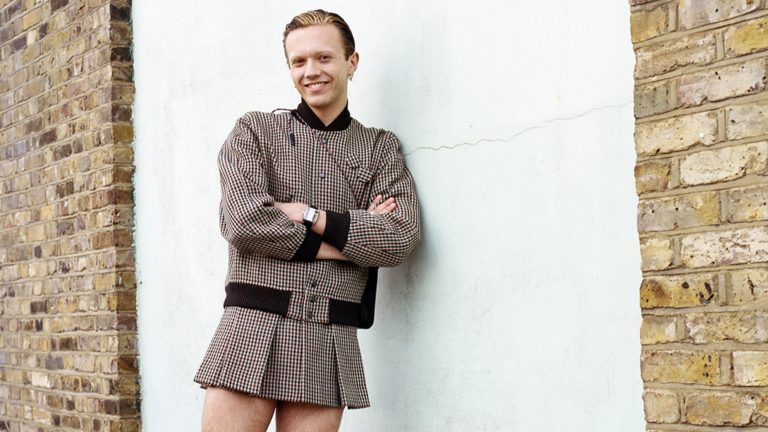
The moment I step out of my front door in a Stefan Cooke skater skirt, I hear a woman’s voice from the queue at the bakery next door: “I wish I had your legs!” My friend who I’d facetimed before leaving the house had said the same thing, but unfortunately that’s not everyone’s reaction when, as a guy, you set foot outside in a skirt. While I’m in the corner shop, I realise the owner is filming me with her phone. The same afternoon I see a mother and her daughter laughing out of their car window and some others can’t help but rapidly turn away as I walk past them. I choose to take it as a compliment.

Working in fashion I’m more likely

Near or far foursome celebrate mum’s day – 7NEWS.com.au

Each year on December 7, Gay Weir would lovingly make and decorate four birthday cakes without fail.

With three of her precious quadruplets now no longer so close to home, her baking skills are a little less in demand. But geographical separation aside, their love for her this and every Mother’s Day is strong.

In 1973, then 31-year-old Gay and dairy farmer husband Malcolm became parents to the ‘fab four’: Fiona, Suzy, Tim and Naomi.

A month premature, they were the first quadruplets born at Wollongong Hospital in 150 years, and Gay was dubbed by local media the unofficial mum of the year.

While Suzy and her family are an easy drive away, jazz trumpeter Tim resides in Melbourne and Naomi lives in Hong Kong after stints in Germany, Singapore and Sri Lanka.

“We’ll Facetime them and then prepare something delicious here for Sunday lunch and make the day about mum,” Fiona told AAP of their Mothers Day plans.

‘Here’ is the idyllic seaside Buena Vista Farm at Gerringong on the NSW south coast, a property that’s been in the Weir family since 1859.

It’s run by Fiona and husband Adam as a sustainable primary production operation complete with laying hens, honey bees, meat chickens, beef cattle and free-range pigs, geese and ducks.

They also operate a market garden and commercial kitchen, and sell their produce at the local farmer’s market.

Sunday lunch will likely consist of farm-to-plate roasted chicken with goat’s cheese and a “really lovely” beetroot and walnut salad.

“Mum will really love that,” Fiona said.

“Mother’s Day has its own kind of special echo in which I’m thinking about my beloved mum and she’s thinking about hers.

“I know it’s a day that is tricky for people and that not all relationships can be celebrated but I’m grateful to celebrate this day with my mum and listen to that echo, particularly here on this old family farm with a long history of beloved mums.”

Fiona says her mum has always made a big deal about her and her siblings’ birthday.

“She made the four birthday cakes and still does if we’re all here. She and dad also get on the phone early to catch everyone depending on where they are in the world and which time zone they’re in.

“So Mother’s Day I guess has become a way of celebrating a pretty remarkable lady.

“I’m conscious that the others do feel that separation from her on the day but I’m just lucky I can be here with her.”

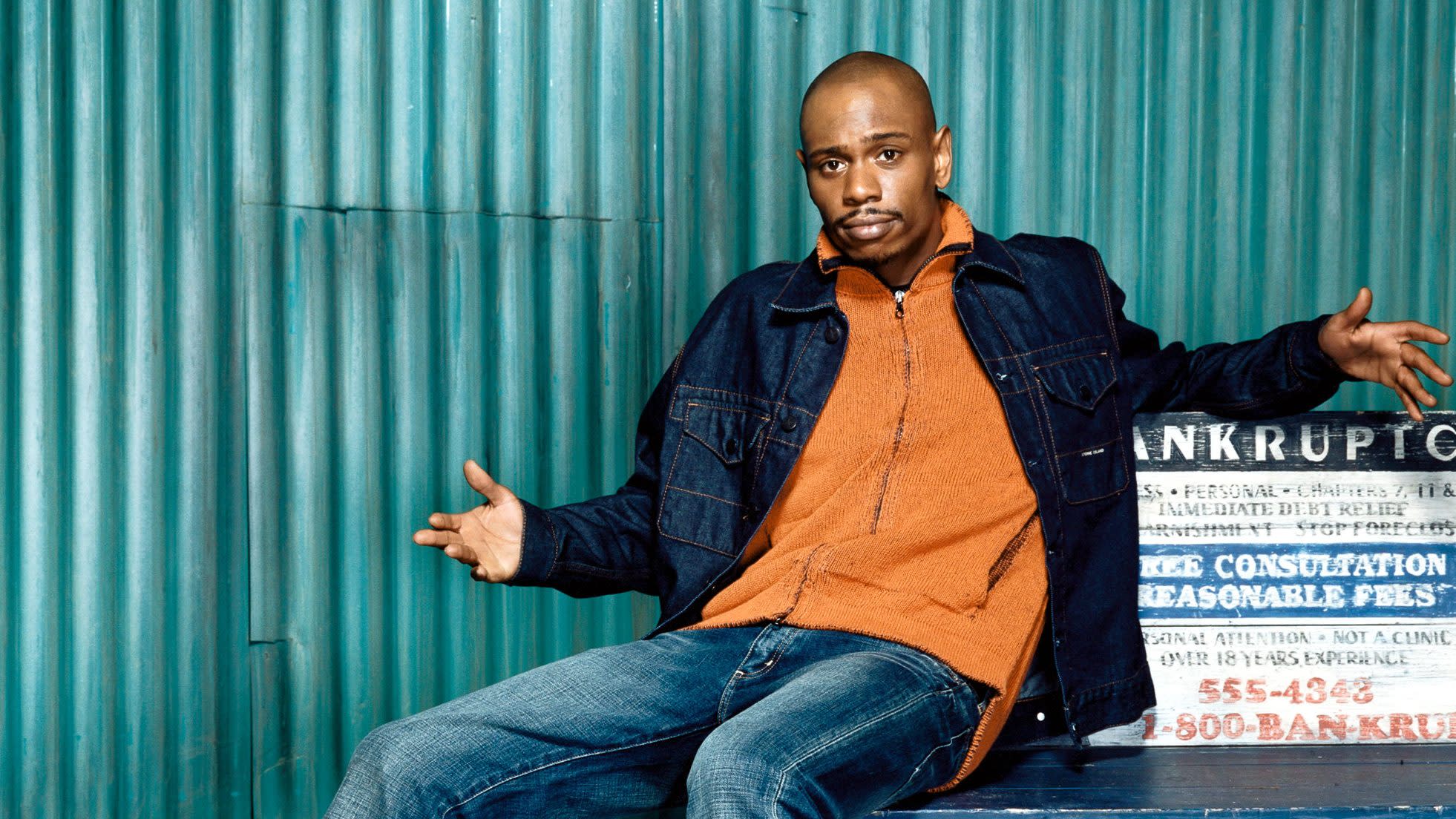
Dave Chappelle Talks About Elon Musk ‘SNL’ Appearance, Tells Joe Rogan He “Used To Buy Weed” From Idris Elba – Yahoo Eurosport UK

Dave Chappelle opened up to podcaster Joe Rogan Friday, talking freely about his career and the state of the world over three hours.

The podcast covered Elon Musk on SNL, cancel culture, the global pandemic, gay rights, the post-Trump America, and in one special revelation, buying weed from Idris Elba. The full interview can be heard on Spotify.

More from Deadline

Chappelle brought up Elba while talking about how to treat service people with kindness, because you never know what the future has in store for them. He then used Idris Elba as an example.

“Idris Elba, the famous actor, used to be a security guard at [comedy club] Caroline’s …” Chappelle said. “I used to buy weed from him.”

Other highlights:

On Elon Musk’s guest hosting on Saturday Night Live:

Chappelle admitted he was puzzled by all the fuss.

“No one is woke enough,” Rogan said. “They can’t appreciate the fact that you’re dealing with one of the most brilliant men that’s ever lived.”

Chappelle recalled his interactions with the Tesla CEO, describing him as “incredibly kind.”

“I teased him about being the richest man on earth, and he took it with good humor,” Chappelle said. “What’s funny, I had hung out with him years ago, after I quit Chappelle’s Show. … We hung out on a tour bus, and he says to me that night … ‘I met you before.’ I’m like, ‘Well, I have no recollection.’ He looked kinda hurt.”

Chappelle suggested he understood why some people were put off by Musk’s behavior.

“Like you said, no one can be woke enough,” the comedian said. “I’m torn, because I like a warrior for a good cause, but I’m really into tactics. You’re not gonna nag people into behaving … In fact, if you continue with this tone, even if you’re right, you’ll be very hard to hear.”

On why he walked away from $50 million at the height of Chappelle’s Show:

“What was so remarkable when I walked away from the show is that it was against incentive, so people couldn’t understand it at the time,” he told Rogan. “‘It was so much money. How could you do that?’ Blah, blah, blah. But you know, if I had taken that money and finished the show, I would’ve gotten the money, but might’ve never been the same.
“I never seen these things before; I didn’t see anyone else do this and get back up … it was a wild experience,” he continued. “The way people close to you react to it, like I… failed or ruined my life. And, you know, when you’re cold, that phone don’t ring that often, and I had over a decade of sitting in that choice but I didn’t languish in that experience. I started doing stand-up for much better reasons than making it.”

On gay rights and the fight for equality:

“It’s not like these things (violence and injustices) happen less often because—people had to do things to make these things happen less often [change],” Chappelle said. “It didn’t happen organically just like, ‘OK, man, that’s enough murder for us.’ People had to do some shit. Gay marriage—people had to be made aware of how people were struggling. One of the great things of that movement is when everybody started coming out of the closet and everyone realized, ‘Oh, like, five of my best friends are gay’ … and you realize you like this person more than you like whatever prejudice you carry around.”

On Kevin Hart:

“First of all, who the f**k works harder than that guy?” Rogan said.

“Nobody. Not me. Fuck that …” Chappelle said, before Rogan highlighted Hart’s ever-growing list of projects. “And he’s relentlessly kind, and everyone that works with him looks elated and happy. He’s not a tyrant. He’s like hanging out with a self-help book or some shit. He just makes you feel good … It’s impossible not to like him. And, in fact, in my mind, he’s a great case scenario that a good person can do well in life, because there are some cynics who believe they can’t.”

Best of Deadline

Sign up for Deadline’s Newsletter. For the latest news, follow us on Facebook, Twitter, and Instagram.

Dave Chappelle Talks About Elon Musk ‘SNL’ Appearance, Tells Joe Rogan He “Used To Buy Weed” From Idris Elba – Yahoo Entertainment

National Review

From a Shot in the Arm to a Shot in the Foot — Biden’s Vaccine Blunder

Just in case its tax plans were not evidence enough that the Biden administration has little understanding of the value of incentives, its proposal that intellectual-property protections should be waived in the case of COVID-19 vaccines bolstered the message that no economically productive deed should go unpunished. The New York Times provided some background: The United States had been a major holdout at the World Trade Organization over a proposal to suspend some of the world economic body’s intellectual property protections, which could allow drugmakers across the globe access to the closely guarded trade secrets of how the viable vaccines have been made. But President Biden had come under increasing pressure to throw his support behind the proposal, drafted by India and South Africa and backed by many congressional Democrats. Scroll a little further down to see that wicked Uncle Sam had not exactly been alone in taking this position: Support from the White House is not a guarantee that a waiver will be adopted. The European Union has also been standing in the way, and changes to international intellectual property rules require unanimous agreement. Ms. Tai said the United States would participate in negotiations at the World Trade Organization over the matter, but that they would “take time given the consensus-based nature of the institution and the complexity of the issues involved.” And speaking of the EU, here (via The Guardian) are some arguments from Germany: Angela Merkel’s government came out against a waiver on Thursday. “The US suggestion for the lifting of patent protection for Covid-19 vaccines has significant implications for vaccine production as a whole,” a government spokeswoman said. “The limiting factors in the production of vaccines are the production capacities and the high-quality standards and not patents,” she added, arguing that the companies were already working with partners to boost manufacturing capacity. “The protection of intellectual property is a source of innovation and must remain so in the future.” Just because these comments are coming from Angela Merkel’s government doesn’t mean that they are incorrect. Return to the New York Times and scroll even further down to see that the U.K. is also listed among “other opponents” of the idea. But Elizabeth Warren, predictably, was thrilled by the announcement, and, of course, didn’t waste the opportunity to talk about “billions.” Yahoo!Finance: The news came in the middle of a Yahoo Finance interview with Massachusetts Senator Elizabeth Warren. “Fantastic!” she said upon learning the news, raising her hands in the air in a double fist pump. . . . “I’m delighted.” Shares of COVID-19 vaccine makers Moderna (MRNA), and BioNTech (BNTX) were down by as much as 8% and 6%, respectively, in morning trading on Thursday. Asked earlier in the interview about a potential patent waiver, Warren said that “this is not a time to be protecting the multi-billions of dollars in profits for these companies.” Well, if we’re talking time and billions, as Tom Chivers noted in the Post, there is also an October 2020 presentation by Michael Kremer, a Nobel Prize–winning economist, in which Kremer noted that the World Bank had estimated a $12 trillion loss in 2020–2021 because of COVID-19, implying a roughly $500 billion “gain from accelerating vaccine development by one month,” and that was before factoring in “mortality and health losses.” The sell-off in stock prices did not earn the companies’ shareholders much sympathy from Representative Mark Pocan, a Democrat, who tweeted: It’s almost as if Big Pharma relies on keeping life-saving medicine inaccessible. Some might say that, when it comes to making lifesaving medicine available, Big Pharma had done quite a bit, and in an astonishingly short time. Perhaps it’s worth adding, as Kimberley Strassel did in the Wall Street Journal, that “Moderna spent 10 years developing its mRNA technology, and only this week turned its first profit.” Or maybe read this from Moderna in October (my emphasis added): While the pandemic continues, Moderna will not enforce our COVID-19 related patents against those making vaccines intended to combat the pandemic. Further, to eliminate any perceived IP barriers to vaccine development during the pandemic period, upon request we are also willing to license our intellectual property for COVID-19 vaccines to others for the post pandemic period. So much for “inaccessible.” As at Friday’s close, the Moderna share price had recovered a little, but it remained well off where it was trading before the administration announced its support for a waiver. The same was true of shares in BioNtech and Pfizer. Returning to that New York Times story, it was not surprising to read this: Stephen J. Ubl, the president and chief executive of the Pharmaceutical Research and Manufacturers of America, called the announcement “an unprecedented step that will undermine our global response to the pandemic and compromise safety.” “This decision will sow confusion between public and private partners, further weaken already strained supply chains and foster the proliferation of counterfeit vaccines,” he said in a statement, adding that the move would have the effect of “handing over American innovations to countries [could, I wonder, China be one of those?] looking to undermine our leadership in biomedical discovery.” The pharmaceutical industry has argued that a suspension of patent protections would undermine risk-taking and innovation. “Who will make the vaccine next time?” Brent Saunders, the former chief executive of Allergan, which is now part of AbbVie, wrote on Twitter. But that these comments were not surprising did not make them incorrect. Writing in Capital Matters, Alden Abbott: Patent rights were key to the unprecedentedly rapid development and rollout of COVID-19 vaccines in 2020. A number of highly successful COVID-19 vaccines (including the Moderna and Pfizer vaccines) came about due to earlier innovative mRNA research that was spurred by patents. Indeed, patent experts recently indicated that patent-inspired “mRNA vaccines could open the door for the approval of other mRNA-based medicines, creating a wide range of new markets.” This point was underlined by Matthew Lesh in CapX: We are on the cusp of technologies that could end pestilence. But doing so will take efforts to understand viral threats, prepare vaccines, undertake early-stage testing and develop manufacturing and logistics in advance. This investment simply won’t happen unless vaccines are also profitable. Abbott: Significantly, patents have not affected the mass production of important COVID-19 vaccines. As former U.S. Patent and Trademark Office chief Andrei Iancu explains, vaccine makers already have entered into a web of agreements with countries around the world, and “almost every factory on the planet that can make these vaccines is already doing so.” In an editorial, the Wall Street Journal added some numbers: Pfizer and BioNTech this week said they aimed to deliver three billion doses this year, up from last summer’s 1.2 billion estimate. Moderna increased its supply forecast for this year to between 800 million and a billion from 600 million. AstraZeneca says it has built a supply network with 25 manufacturing organizations in 15 countries to produce three billion doses this year. And (my emphasis added): AstraZeneca and Novavax have leaned heavily on manufacturers in India to produce billions of doses reserved for lower-income countries. But India has restricted vaccine exports to supply its own population. IP simply isn’t restraining vaccine production. Back to Abbott: Patents are needed to provide the future financing that is critical to incentivize the huge amount of R&D needed to bring forth new medical treatments that improve the lives of millions. Developing new drugs and vaccines is very risky and costly. The cost of developing a new prescription medicine with marketing approval has risen to an average $2.6 billion, and the rate of success in clinical trials has dropped to 12 percent, according to a Tufts Center for Drug Development study. Also, because of the length of regulatory delays and drug trials, the actual period of patent protection for the few highly profitable pharmaceutical products is often relatively short. That places a premium on obtaining significant financial returns during the quite limited patent term. In sum, a waiver of COVID-19 patent rights would send a signal that pharma-related patents are undependable, potentially starting a ripple effect of reduced investment in drugs and vaccines throughout the health-care system. The long-term effect would be a reduction of future health-care quality and outcomes. A waiver could also generate near-term health-care harms for millions of individuals affected by the COVID-19 pandemic. It could do this by reducing quality-control efforts of new COVID-19 vaccine producers not subject to the oversight of patent holders. Norman Baylor, the former head of the Food and Drug Administration’s Office of Vaccine Research and Review, recently pointed out: “There are hundreds of process steps involved in the manufacturing of vaccines, and thousands of check points for testing to assure the quality and consistency of manufacturing. One may transfer the IP, but the transfer of skills is not that simple.” Absent quality assurance, the incidence of ineffective or harmful vaccine administrations could rise significantly, directly harming individuals and potentially disincentivizing many individuals from obtaining vaccine shots. There is certainly an argument that yet more could be done speed up vaccine production even more quickly. As CapX’s Lesh pointed out: This would save lives and be in our own interest, delivering a faster global economic recovery while reducing the threat of vaccine-resistant strains arising. That goal is so important that we should be willing to pay whatever it takes, including making sure all the companies involved make a healthy profit, to speed up the process . . . However, in Lesh’s view, the administration’s move was “a lazy, virtue signaling stunt rather than a meaningful solution.” It is hard to disagree. And even if the waiver doesn’t go through, the signal sent by the administration’s proposal, whether it’s the contempt for private property, the disdain for the power of incentive, or the willingness to trash (another) successful American industry (remember the steps that have been taken against fracking) is unlikely to be forgotten — with results that will inhibit American innovation, throw away American jobs, and, in due course, cost lives, not just in America, but all over the world. Of course, no one should doubt for a moment, to quote Katherine Tai, the United States Trade Representative, that the pandemic is a “global crisis” and that these are “extraordinary circumstances.” But at a time when the White House is also touting a climate “emergency” as another global crisis, the implied reassurance that this is a one-off is less than reassuring, and as for the means by which the administration is proceeding, well . . . Strassel in the Wall Street Journal: The move is also in keeping with the administration’s attitude that Congress exists solely to rubber-stamp its spending proposals. Congress has spent decades wrangling over the contours of patent protections, producing bipartisan legislation from the Bayh-Dole Act of 1980 and the Hatch-Waxman Act of 1984 to the Leahy-Smith Act of 2011. Mr. Biden proposes to disregard all these laws with the wave of an executive memo to the WTO—much as he has already been governing by dubious executive orders on immigration, mask mandates, pipeline cancellations, and healthcare. Mr. Biden will use Congress when reconciliation makes it convenient. But what Congress won’t give him, he will decree unilaterally. This is not where this country should be. This is not what this country should be. The Capital Record We released the latest of a series of podcasts, the Capital Record. Follow the link to see how to subscribe (it’s free!). The Capital Record, which appears weekly, is designed to make use another medium to deliver Capital Matters’ defense of free markets. Financier and NRI trustee David L. Bahnsen hosts discussions on economics and finance in this National Review Capital Matters podcast, sponsored by National Review Institute. Episodes feature interviews with the nation’s top business leaders, entrepreneurs, investment professionals, and financial commentators. In the 16th episode David Bahnsen talked to Larry Kudlow about tax rates, energy policy, and more. But what David and Larry really talked about was an economic system based on incentives. And the Capital Matters week that was . . . The week began with Joseph Sullivan (our chart guy) arguing that the Trump tax overhaul did boost investment: After the Trump administration’s corporate-tax cuts, investment’s share of GDP was the highest it had been in the last four quarters of any business cycle since 1990. Its average level over the four quarters leading up to the COVID-19 contraction in Q2 2020, 13.16 percent, was 3.63 percentage points higher than in the business cycle’s first quarter, Q2 2009, when it was 9.53 percent. Yes, the elevated level of investment in the late stages of the Dotcom boom that became a bust in Q2 2001 comes close at 3.42 percent . . . We published an excerpt from Steven Koonin’s new book, Unsettled: What Climate Science Tells Us, What It Doesn’t, and Why It Matters. Here’s an excerpt from the excerpt: I’m a scientist — I work to understand the world through measurements and observations, and then to communicate clearly both the excitement and the implications of that understanding. Early in my career, I had great fun doing this for esoteric phenomena in the realm of atoms and nuclei using high-performance computer modeling (which is also an important tool for much of climate science). But beginning in 2004, I spent about a decade turning those same methods to the subject of climate and its implications for energy technologies. I did this first as chief scientist for the oil company BP, where I focused on advancing renewable energy, and then as undersecretary for science in the Obama administration’s Department of Energy, where I helped guide the government’s investments in energy technologies and climate science. I found great satisfaction in these roles, helping to define and catalyze actions that would reduce carbon-dioxide emissions, the agreed-upon imperative that would “save the planet.” But then the doubts began . . . Kevin O’Connell and Alexander Salter discussed great-power competition on the final frontier: Great power competition is back, and it’s headed to the stars once again. On one side is an international coalition led by the United States, committed to exploration and commercial development. On the other side are the rogue nations of Russia and China. Russia’s glory days in space are behind it, but it still has the capacity to harm U.S. interests. China, on the other hand, is an up-and-coming space power determined to increase its sphere of influence both on the earth and above it. This past October, eight nations — the U.S., Australia, Canada, Italy, Japan, Luxembourg, the United Arab Emirates, and the United Kingdom — signed the Artemis Accords, a cooperative agreement for the peaceful uses of outer space. Russia and China were decidedly unimpressed. They recently signed a memorandum of understanding to partner on the construction of a lunar research base. Since President Biden reaffirmed American commitment to the Artemis Accords as a foundation for future moon missions, the Russia–China agreement is a clear challenge to the vision of the U.S. and its allies. Realpolitik is a basic fact of international relations. We can’t eliminate it. But we can mitigate it, by creating governance institutions for space that incentivize governments to play nice. What we need is a clear and effective property-rights regime for celestial resources . . . Matt Weidinger explained how government “allowances” are the new welfare: Washington seems to have developed an “allowance” fetish, and it has nothing to do with parents paying their kids for completing chores: A number of new government “allowances” would distribute boatloads of taxpayer money to tens of millions of households. First came a proposal, which is now law, to temporarily convert the long-standing federal child tax credit into what supporters call a “child allowance.” As implied by the name change, the new payments have little to do with whether a parent pays taxes. This year, parents don’t need to have paid taxes at all to collect an annual allowance of up to $3,600 per child. In fact, the only parents not eligible for the allowance are the relative few high earners who pay the most federal income taxes. According to the New York Times, “more than 93 percent of children — 69 million” will benefit from the new federal giveaway . . . Jessica Hornik Evans reported from her grocery store: The self-serve olive bar is back at my supermarket. The one-way signs have been removed from the aisles. The cashiers are no longer required to clean the belt between customers. After a year of so much loss and misery, little restorations mean a lot . . . Jerry Bowyer asked some awkward questions: My firm, Bowyer Research, created a database of the companies in which we are invested that were listed by the Human Rights Campaign as Equality Act endorsers. I then signed up for the annual meetings of those companies and have been attending them. I have been asking each company in turn, via the proper, formal question-submission processes at the start of each meeting, to explain their support for this law. So far, I have attended and asked that question of Exelon, Cigna, Ameriprise, and Corning. What happened? My questions were simply ignored. It’s actually worse than that. In the case of Exelon, after several other shareholder questions were read and addressed, it was suggested that there were no more questions. And in the case of Cigna and Corning it was stated, at least arguably (the forthcoming release of meeting records will allow readers to decide for themselves), that there were no further questions, even though mine was still unaddressed. In other words, not only was my question thrown down the memory hole, the memory hole was thrown down another memory hole . . . Robert VerBruggen discussed the latest turn in the “Mommy Wars”: For couples with young kids, work and child care can be incredibly fraught topics. There are no perfect options, just trade-offs that different couples, with different values and different work situations, evaluate differently. Sometimes it makes the most sense for both parents to work while the kids go to day care; other times it’s best for one parent to stay home or work part-time; still other couples are able to rely on family members to watch the kids rather than using day care. Joe Biden’s American Families Plan would plop the government’s thumb heavily on one side of the scale, using taxpayer money to massively subsidize child care for the working and middle classes. Stay-at-home parents, who watch their own kids so no one else has to, would no longer pocket the resulting savings for their families. This is far outside the proper role of government, contrary to the values of many American parents, and quite possibly harmful to kids . . . But Ramesh Ponnuru took issue with one aspect of Robert’s argument: Robert VerBruggen makes a strong case against Biden’s child-care proposal, and I agree with all of it except for one aside. While the proposal stacks the deck against families with “stay-at-home” parents (who are mostly mothers), he writes that other existing policies are unfair in the opposite direction: “In some ways the status quo is quite favorable to stay-at-home parents, who, for example, get an especially good deal from Social Security and Medicare.” Policies that transfer money to these one-earner married couples are dwarfed in size, though, by policies that strongly tend to transfer money away from them, making them subsidizers rather than subsidized on net. And there are also policies that, while not transfering resources among households, have a bigger negative economic effect on large households (e.g., modern child-safety seat requirements) . . . Iain Murray made the case that labor law should adapt to the gig economy — not the other way around: The idea that a master-servant relationship with an employer is somehow best for the worker remains prevalent. This has been the motive behind various attempts, most notably California’s AB5 bill, to forcibly convert gig workers into employees. The effect of these attempts has been to sweep up many traditionally freelance jobs that survived the legislation of the 1930s into an employment relationship. This is what helped doom the California attempt. Voters recognize that some people do not want an employment relationship and gravitate towards freelance work — which would not exist in an employment-only world. So many people were affected by AB5’s broad brush that California voters rejected AB5 by a large majority in a ballot initiative. Yet Secretary Walsh’s remarks indicate that the Biden administration might attempt to repeat AB5’s mistakes. The PRO Act, for instance, which President Biden has touted as an essential part of his infrastructure package, aims to make all gig-economy and freelance workers eligible for unionization, a first step on the road to AB5 and the imposition of a master-servant relationship neither the workers nor the platforms want. Instead of trying to force everyone into an outdated model, Secretary Walsh and his department should be looking at how work has changed, and should provide the president with proposals to send to Congress that reflect those changes. Veronique de Rugy examined a case of cronyism: It is rare that we taxpayers get to see how crony deals are made in Washington. But what follows is an example provided to us by the Export-Import Bank. Bear with me while I give you some background. In January, ExIm announced a deal extending a 90 percent guarantee of a $50 million supply-chain-finance facility from Greensill Capital to Freeport LNG Marketing, LLC, a Texas-based company. The loan was extended through supply- chain-finance (SCF) provider Greensill. This came on the tail of a massive $4.7 billion ExIm deal to support the development and construction of an LNG project in Mozambique. Leading up to this project, the U.S. Liquefied Natural Gas (LNG) industry warned it would be hurt by its own government giving a leg up to a foreign LNG projects, and ExIm analysts warn the agency of security concern in the country that could lead to the demise of the project (that means the loss of taxpayers’ money). That didn’t matter . . . Marc Joffe took issue with the idea of a postal bank: Absent a large taxpayer-funded subsidy to offset the losses associated with providing more favorable terms on these loans, the market for a postal bank would be considerably smaller than the 63 million figure Senator Gillibrand cites. And even if there is a legitimate need to provide better access to these services, other institutions are stepping in to serve prospective users of a postal bank. Over the last few years, a group of venture-capital-backed firms have formed to tackle the needs of unbanked individuals. These “neobanks” do not have physical branches but are available to customers 24/7 through smartphone apps. The leading neobank, Chime, has raised $1.5 billion in venture capital and is valued at $14.5 billion. It offers an online account with a debit card and without fees, minima, or credit checks. Chime has several well-funded competitors including Dave, N26, and Varo. Even Robinhood, the online stock brokerage catering to younger customers, is now providing cash-management services . . . As mentioned above, Alden Abbott was unimpressed by Joe Biden’s proposed waiver of intellectual-property rights for COVID-19 vaccines: Waiving intellectual property protections (including patents) for COVID-19 vaccines, which, as U.S. trade representative Katherine Tai announced Wednesday, the Biden administration supports, will if implemented prove disastrous for American innovation — and detrimental to public health as well . . . Brian Riedl reacted to some of the reaction to the disappointing jobs number: When Congress spends trillions and the economy responds positively, they credit the stimulus spending and claim that we should have done even more. When Congress spends trillions and the economy does not respond, the same advocates assert that the stimulus spending must have been too small, and Congress should double down on spending and debt. In this framework, the case for stimulus spending is non-falsifiable. Every possible economic outcome is considered proof that stimulus works. A similar thing happened during the 2008–2009 “Great Recession.” President Obama’s $800 billion stimulus bill did not end the recession – the economy was already out of recession by the summer of 2009, before more than a small fraction of the law had even been implemented . . . Charles Cooke was not that surprised by the jobs shortfall: A lot of people said they were “shocked.” But why, exactly? Did they believe that Joe Biden had rendered gravity optional? This is what you get when you pay people not to work. It’s what you get when you send check after check after check to people who, were they permitted to, would be perfectly capable of regaining employment. It’s what you get when you allow the teachers’ unions to shut down the schools ad nauseam, and put working parents in a long-term bind. There is nothing magical about 2021, or about Joe Biden, or about this set of legislators and appointees and special interests. The same rules apply to them that applied to their predecessors. You can’t spend what you don’t have. You can’t tax and spend your way to prosperity. And human beings cannot be programmed out of responding to clear incentives. Call your plans whatever you want — Build Back Better, Modern Monetary Theory, Fairness, the Left-Handed Teacup Initiative — it doesn’t matter. Reality doesn’t care about branding . . . And nor, I think, was Noah Williams: Over the past couple months there have been increasing numbers of reports of businesses having trouble hiring, particularly in the restaurant industry. This industry was hit hardest by the pandemic, due to mandated closures, capacity restrictions, and shifts in dining behavior. It is also the largest sector employing low-wage labor, which puts it in direct competition with enhanced unemployment benefits. Although job openings had grown, and new online job listings were well above pre-pandemic levels, the reports and surveys pointing toward labor shortages and hiring difficulties were dismissed as anecdotal. That all ended with the April employment report. Where should policy go? As is often the case, states are leading the way. Over the past week two states, Montana and South Carolina, have opted out of the federal unemployment expansions. Of these, Montana’s decision to roll four weeks of the federal unemployment expansions into a re-employment bonus, which provides a direct incentive to return to work, seems the most promising. Previous trial programs have found that re-employment bonuses shorten unemployment durations, generate social gains by putting workers back to work, and even reduce the cost of unemployment programs. Robert Smullen and Jonathan Williams turned their attention to New York’s woes: Even when the COVID-19 pandemic becomes a distant memory, Americans will still be paying for the record-breaking government debt incurred by government overspending — the vast majority of which unfortunately had little or nothing to do with pandemic-induced health-care needs. After all, while the pandemic negatively affected every American in some way, it was thankfully not an existential threat to the free world — and it did not require World War II levels of national debt to keep Americans on their feet. Yet New Yorkers, more so than any others in the country, are on the verge of feeling the true weight and cost of the pandemic. New York tax and fiscal policy has not gone unnoticed. Indeed, as thousands and counting have left the Empire State, the U.S. Census recently reported that New York will lose one seat in the 2020 congressional reapportionment. As demographers now attempt to sort out some discrepancies between the annual Census estimates this past decade, which in recent years showed even more of a loss, and the actual new numbers, one thing is crystal clear: New York’s population continues to grow at a substantially slower pace than the nation as a whole. The real long-term problem in New York is its embrace of big-government-style tax and spending. It is difficult to comprehend, but New York’s budget for 2021 was more than twice as much as Florida’s, despite having only 2 million fewer residents . . . Robert Brooks underlined the importance of shareholder primacy: Companies are owned by their shareholders and hence should be solely managed based on the fiduciary trust granted to managers. Operating a company on behalf of any other stakeholder is a breach of fiduciary duty. Obviously, treating employees, customers, and suppliers with integrity and respect is simply fulfilling managers’ fiduciary duty as it results in direct benefits to the shareholders. But shareholders should actively push back against managers who pursue ideological goals at the expense of their businesses, not only because it will hurt their wallets, but because it undermines the shared premises necessary to a functioning economy. If the heft of large shareholders proves insurmountable in attempts to influence management, an alternative is to allocate capital toward only those businesses with a demonstrable commitment to shareholder primacy. The more power that Americans cede to ideologically driven asset managers, the more likely we are to sacrifice the tremendous gains in wealth and technology provided by traditional values . . . To sign up for the Capital Letter, follow this link.

Indiana Court Dismisses Lawsuit Filed By Gay Catholic Teacher – Legal Reader

An Indiana court has dismissed the lawsuit filed by a gay teacher who claimed he was dismissed from his position at a Catholic high school after marrying another man.

According to The Indianapolis Star, Joshua Payne-Elliott worked as a world language and social studies teacher at Cathedral High School from 2006 until 2019.

Joshua, notes The Star, married Layton Payne-Elliot, a teacher at the Brebeuf Jesuit Preparatory School, in 2017. Shortly after the couple wed, the Archdiocese of Indianapolis requested that Brebeuf terminate Layton’s employment.

However, Brebeuf refused, leading the Archdiocese to threaten that it would strip the preparatory school if its Catholic status. However, Brebeuf resisted and filed suit; their case is still awaiting appeal.

Becket attorney and vice president Luke Goodrich, who represented the Archdiocese, said the court’s decision to dismiss Joshua Payne-Elliott’s lawsuit is a victory for religion liberty.

“If the First Amendment means anything, it means the government can’t punish the Catholic Church for asking Catholic educators to support Catholic teaching,” Goodrich said. “This has always been a very simple case, because the Supreme Court has repeatedly affirmed the freedom of religious schools to choose teachers who support their religious faith.”

Becket said that the Archdiocese of Indianapolis took two years—from the couple’s wedding in 2017 until 2019—to decide its reactions to the men’s marriage. In 2019, the Archdiocese directed Cathedral High School and Brebeuf to fire both men.

The men’s civil marriage, stated the Archdiocese, violated the Church’s teachings and views on gay marriage.

The Payne-Elliotts had argued in their lawsuit that their employment contracts did not include a “morality clause” mandated by the Archdiocese at some schools.

Archbishop Charles Thompson later explained that Joshua Payne-Elliott was not fired for being attracted to men, but for entering into a same-sex civil marriage.

“In this particular case we’re dealing with, those are ministers in our Church. Teachers, guidance counselors, other leaders, leaders of the schools and other leaders in the archdiocese are bound to live out these principles,” Thompson said.

Consequently, the Archdiocese demanded that both Joshua and Layton Payne-Elliott be removed from their positions.

“Every Catholic school teacher in the Archdiocese signs an agreement to uphold the Church’s teachings in word and deed. The teacher here was dismissed after he entered a same-sex union in knowing violation of this agreement and of millennia of Catholic teaching,” Goodrich wrote on Twitter.

Goodrich and Becket also explained the arguments they used to support the Catholic Church’s position.

“Church Autonomy, which protects internal religious governance,” “Expressive Association, which protects the ability to form groups to express a message,” and “The Ministerial Exception, which protects the freedom to choose religious leaders,” Goodrich wrote.

“It is important that courts consistently uphold the right of religious groups to operate by their religious principles,” he added. “Choosing who teaches in a religious school is a religious decision. Today’s order ensures that those decisions will be made by churches, not governments.”

Sources

Indiana supreme court tosses out lawsuit against Indianapolis archdiocese

Lawsuit from fired Cathedral High teacher over same-sex marriage is dismissed

School reports its chaplain for telling pupils they’re allowed to disagree with LGBT teaching – Daily Mail

A school secretly reported its chaplain to the anti-terrorism Prevent programme after he delivered a sermon defending the right of pupils to question its introduction of new LGBT policies.

The Reverend Dr Bernard Randall told pupils at independent Trent College near Nottingham that they were allowed to disagree with the measures, particularly if they felt they ran contrary to Church of England principles.

Among them was a plan to ‘develop a whole school LGBT+ inclusive curriculum’.

Having decided that Dr Randall’s sermon was ‘harmful to LGBT’ students, the school flagged him to Prevent, which normally identifies those at risk of radicalisation.

Police investigated the tip-off but advised the school by email that Dr Randall, 48, posed ‘no counter terrorism risk, or risk of radicalisation’.

Derbyshire Police confirmed that the case ‘did not meet the threshold for a Prevent referral’.

The Reverend Dr Bernard Randall, pictured above, 48, told pupils at independent Trent College near Nottingham that they were allowed to question the introduction of new LGBT policies

The Reverend Dr Bernard Randall, pictured above, 48, told pupils at independent Trent College near Nottingham that they were allowed to question the introduction of new LGBT policies

But in a disturbing development, Dr Randall, a former Cambridge University chaplain and Oxford graduate, claims that the school later told him that any future sermons would be censored in advance.  

He also claims that he was warned his chapel services would be monitored ‘to ensure that… requirements are met’. Dr Randall was later dismissed. He is suing for discrimination, harassment, victimisation and unfair dismissal and his case is due to be heard next month. ‘My career and life are in tatters,’ he said.

Campaigners said the case was one of the most extraordinary of its kind and raised disturbing questions about freedom of speech. Former Education Minister Sir John Hayes said, if the claims are proved, the school had ‘behaved appallingly’.

Dr Randall’s sermon, delivered in the school chapel on June 21, 2019, was prompted, he says, by concerns from pupils about an organisation called Educate & Celebrate, run by Dr Elly Barnes, which was invited to ‘embed gender, gender identity and sexual orientation into the fabric’ of the school. 

In it, he said: ‘You should no more be told you have to accept LGBT ideology, than you should be told you must be in favour of Brexit, or must be Muslim.’ But he stressed the ‘need to treat each other with respect’. Several days later, he will tell the tribunal, he was called to a meeting and told the sermon was inflammatory, divisive and ‘harmful to LGBT pupils’.

Dr Randall only learned about the Prevent referral because it was mentioned in documents given to him ahead of a disciplinary hearing. ‘I had visions of being investigated by MI5, of men knocking down the front door,’ he said.

Trent College has a ‘Christian ethos’ and Dr Randall was appointed in 2015 to provide pastoral care, share the Christian faith and lead services in the school’s chapel.

But he claims he found himself increasingly sidelined as the school began implementing the Educate & Celebrate programme.

The MoS can also reveal that in legal proceedings against the school it will be claimed: 

  • Teachers were urged to chant ‘Smash heteronormativity’ during a training session;
  • Dr Randall was excluded from discussions about the programme when he said some of its beliefs were contrary to Christian values; 
  • Educate & Celebrate demands schools adopt a gender neutral uniform policy and believe children should not refer to each other as ‘boys’ and ‘girls’ to avoid offending transgender pupils; 
  • Dr Randall was reported to the local authority designated officer, apparently because the school felt he might be a risk to children. 

Toby Young, of the Free Speech Union, said: ‘This is a fantastic sermon, reminding us no one has a monopoly on moral truth. For Bernard Randall to lose his job as a result of this sermon is scandalous.

‘What’s so depressing about his treatment is the message it sends to the pupils. The central theme of his sermon is that children shouldn’t be afraid to think for themselves. But the message the school has sent is the opposite. Schools should be teaching children how to think, not what to think.’

Andrea Williams, chief executive of the Christian Legal Centre, which is supporting Dr Randall, said: ‘Who are the extremists in this story? The partisan agency who teach young children that they can be born in the wrong body, or the school chaplain moderately presenting what the Christian church has taught about marriage, sex and gender for the past 2,000 years?’

The College declined to comment.

‘You should no more be told you have to accept LGBT ideology than be told you must be in favour of Brexit’: The sermon that cost a school chaplain his livelihood 

By The Reverend Dr Bernard Randall, Chaplain at Trent College

I have a theory about Brexit. It seems to me that people who voted to leave the European Union voted for largely political reasons – to do with democratic self-determination; and people who voted to remain did so for largely economic reasons – to do with prosperity and jobs.

Of course I’m simplifying here, and both sides claim to consider both, but it seems to me that which set of ideas, which ideology, takes priority determines which way many people voted.

And while we can easily discuss facts, and try to find the truth behind factual claims, ideals aren’t true or false in the same way.

And so the problem with the often very heated and unpleasant debate ever since the referendum is that people haven’t managed to cope with there being two competing sets of ideals – two ideologies.

Now when ideologies compete, we should not descend into abuse, we should respect the beliefs of others, even where we disagree. Above all, we need to treat each other with respect, not personal attacks – that’s what loving your neighbour as yourself means.

By all means discuss, have a reasoned debate about beliefs, but while it’s OK to try and persuade each other, no one should be told they must accept an ideology. Love the person, even where you profoundly dislike the ideas. Don’t denigrate a person simply for having opinions and beliefs which you don’t share.

There has been another set of competing ideals in the news recently. You may have heard of the protests outside a Birmingham primary school over the teachings of an LGBT-friendly ‘No Outsiders’ programme.

In a mostly Muslim community, this has been sensitive, because many parents feel that their children are being pushed to accept ideas which run counter to Islamic moral values.

Christian ethos: Trent College (pictured above) near Nottingham, which claimed that Dr Randall’s 2019 school sermon was ‘harmful to LGBT pupils’ and flagged him to Prevent

Christian ethos: Trent College (pictured above) near Nottingham, which claimed that Dr Randall’s 2019 school sermon was ‘harmful to LGBT pupils’ and flagged him to Prevent

And in our own school community, I have been asked about a similar thing – and the question was put to me in a very particular way – ‘How come we are told we have to accept all this LGBT stuff in a Christian school?’ I thought that was a very intelligent and thoughtful way of asking about the conflict of values, rather than asking which is right, and which is wrong.

So my answer is this: There are some aspects of the Educate and Celebrate programme which are simply factual – there are same-sex attracted people in our society, there are people who experience gender dysphoria, and so on.

There are some areas where the two sets of values overlap – no one should be discriminated against simply for who he or she is: That’s a Christian value, based in loving our neighbours as ourselves.

All these things should be accepted straightforwardly by all of us, and it’s right that equalities law reflects that.

But there are areas where the two sets of ideas are in conflict, and in these areas you do not have to accept the ideas and ideologies of LGBT activists. Indeed, since Trent exists ‘to educate boys and girls according to the Protestant and Evangelical principles of the Church of England’, anyone who tells you that you must accept contrary principles is jeopardizing the school’s charitable status, and therefore it’s very existence.

You should no more be told you have to accept LGBT ideology than you should be told you must be in favour of Brexit, or must be Muslim – to both of which I’m sure most of you would quite rightly object.

I am aware that there will be a good few in our community who will have been struggling, if they feel they are being told that they must accept ideas which run counter to their faith – or indeed non-faith – based reasoning about the world.

So I want to say to everyone, but especially to those who have been troubled, that you are not obliged to accept someone else’s ideology. You are perfectly at liberty to hear ideas out, and then think, ‘No, not for me’.

There are several areas where many or most Christians (and, for that matter, people of other faiths, too), will be in disagreement with LGBT activists, and where you must make up your own mind. So it is perfectly legitimate to think that marriage should only properly be understood as being a lifelong exclusive union of a man and a woman; indeed, that definition is written into English law.

You may perfectly properly believe that, as an ideal, sexual activity belongs only within such marriage, and that therefore any other kind is morally problematic. That is the position of all the major faith groups – though note that it doesn’t apply only to same-sex couples.

And it is a belief based not only on scripture but on a highly positive view of marriage as the building block of a society where people of all kinds flourish, and on recognising that there are many positive things in life more important than sex, if only we’d let them be.

This viewpoint is recognised by many people as extremely liberating. And it’s an ethical position which could also be arrived at independently of any religious text, I think.

In other areas you are entitled to think, if it makes more sense to you, that human beings are indeed male and female, that your sex can’t be changed, that although the two sexes have most things in common, there are some real, biologically based differences between them overall. And if you think that, you would be in accord not only with the tradition of most Christians, and other faiths, but much of the biological and psychological sciences too.

You are entitled, if you wish, to look at some of the claims made about gender identity and think that it is incoherent to say that, for example, gender is quite independent of any biological factor, but that a person’s physiology should be changed to match his or her claimed gender; or incoherent to say that gender identity is both a matter of individual determination and social conditioning at the same time, or incoherent to make claims about being non-binary or gender-fluid by both affirming and denying the gender stereotypes which exist in wider society.

And if these claims, which do seem to be made, are incoherent, then they cannot be more than partially true. Yet truth is important as we try to make decisions about the consequences of these ideas.

And you might reasonably notice that some LGBT activists will happily lie about gender identity being a legally protected characteristic (which it isn’t), and from that observation wonder whether there are other areas where their relationship to truth is looser than might be ideal.

But, by way of contrast, no one has the right to tell you that you must lie about these matters, to say things you sincerely believe to be false – that is the tactic of totalitarianism and dictatorship.

On a more positive note, Christians will want to have a discussion about human identity which focuses on the things we all have in common, rather than increasingly long lists of things which might divide.

You might be concerned that if you take the religious view on these matters you will be attacked and accused of homophobia and the like. But remember that religious belief is just as protected in law as sexual orientation, and no one has the right to discriminate against you or be abusive towards you.

Remember too that ‘phobia’ words have a strict sense of extreme or irrational fear or dislike, like arachnophobia, fear of spiders, or triskaidekaphobia, fear of the number thirteen – well, there’s nothing extreme about sharing your view with the Church of England, established by law, and of the majority of the world’s population who belong to these faiths.

Nor is it irrational to hold these views, since they can be based both on secular reasoning and on scriptures – and if, on other grounds, you are sure that the scriptures reflect the mind of God, then they provide the very best reasons possible for anything.

But ‘homophobia’ and ‘transphobia’ have come to be used in a looser sense to mean often simply, ‘You disagree with me and I’m going to refuse to listen to you, and shame you to shut you down’. In other words, they have sometimes come to be terms of abuse, used in a dictionary-definition, bigoted and bullying way. You can safely ignore these uses, although that takes real moral courage, I know.

And you may think that LGBT rights are different somehow, because no one chooses to belong to the varied groups represented by these ideas. To which I would remind you that equalities law does not recognise that distinction – all equalities are in fact equal.

So, all in all, if you are at ease with ‘all this LGBT stuff’, you’re entitled to keep to those ideas; if you are not comfortable with it, for the various especially religious reasons, you should not feel required to change.

Whichever side of this conflict of ideas you come down on, or even if you are unsure of some of it, the most important thing is to remember that loving your neighbour as yourself does not mean agreeing with everything he or she says; it means that when we have these discussions there is no excuse for personal attacks or abusive language.

We should all respect that people on each side of the debate have deep and strongly held convictions. And because, unlike Brexit, this is not a debate which is subject to a vote, it is an ongoing process, so there should be a shared effort to find out what real truth looks like, and to respect that that effort is made honestly and sincerely by all people, even if not everybody comes up with the same answers for now.

Charity that wants to ban use of ‘boys and girls’

By Michael Powell for The Mail on Sunday 

Taxpayers have paid out £250,000 to Educate & Celebrate to fund its mission to make schools more LGBT friendly.

The charity’s website says that it has worked in thousands of schools in the UK since 2012, running workshops and teacher training days. It also distributes books and lesson plans.

It was criticised in 2017 over a book it published that critics said promoted the use of puberty-blocker drugs for children as young as 12. The book for primary school pupils told the story of Kit, who used the drugs to transition from female to male. At the time, former Tory Party chairman Lord Tebbit said: ‘It is damaging to children to introduce uncertainty into their minds.’ 

Activist: Former music teacher Dr Elly Barnes, above, who runs and founded the Educate & Celebrate inclusion programme. She was made an MBE for her charity work in 2016

Activist: Former music teacher Dr Elly Barnes, above, who runs and founded the Educate & Celebrate inclusion programme. She was made an MBE for her charity work in 2016

Prescribing puberty-blocker drugs to children has become highly controversial and was effectively banned by High Court judges last year for most minors unless a court order had been obtained. This followed dire warnings from medics that the drugs were a ‘live experiment’ on hundreds of children.

Another of the charity’s guidebooks also controversially advises teachers that it is OK to help children get treatment for gender dysphoria – feeling you are the wrong sex – without telling their parents. The charity also advocates banning the use of the terms ‘boys’ and ‘girls’ in the classroom and encourages children to replace ‘he’ and ‘she’ with the gender-neutral terms ‘they’ and ‘zie’.

Schools are charged £1,200 to take part in its Pride In Inclusion Awards. To achieve Gold, they have to pay a further £1,000 over two years and introduce 30 LGBT-friendly policy changes – including hosting a fundraising day for the charity.

The charity was founded by former music teacher Dr Elly Barnes, who was made an MBE for her charity work in 2016.

She has links to the Socialist Workers Party and is a member of Schools OUT, a pressure group started by a Left-wing group of gay teachers in the 1970s. Last year, Dr Barnes attended a protest outside a meeting of a feminist group called Labour Women’s Declaration, who believe demands for rights from transgender pressure groups infringe the rights of women.

The charity’s chair of trustees is activist Julie Bremner, a Cabinet Office civil servant who has joined scores of Left-wing marches.

‘The hall was full of teachers chanting “Smash heteronormativity” (the view that attraction to the opposite sex is the norm). I felt uncomfortable’: Ex-Cambridge college chaplain on how his new job to guide young people became an Orwellian nightmare

By Ian Gallagher for The Mail on Sunday 

A Monday morning, just before the start of term, and the teaching staff of Trent College are in the dining hall, chanting two-word slogans. It occurs to the school chaplain, the Reverend Dr Bernard Randall, sitting near the front, that the woman on whose every word they hang, Elly Barnes, possesses the fervour of a revivalist preacher. To others, the event might also seem redolent of a rally in a totalitarian state.

Dr Barnes runs an organisation called Educate & Celebrate. Standing at a lectern, she demonstrates with growing zeal how to ‘embed gender, gender identity and sexual orientation into the fabric’ of the school.

The next slogan, the syllable-crammed exhortation SMASH HETERONORMATIVITY flashes up on a giant screen and the teachers dutifully repeat it. Usually applied negatively, the term refers to the attitude that opposite sex attraction is the norm.

Reported: Dr Bernard Randall, pictured above, a 48-year-old Oxford graduate, says Christians cannot speak their mind

Reported: Dr Bernard Randall, pictured above, a 48-year-old Oxford graduate, says Christians cannot speak their mind

Today, in an interview with The Mail on Sunday, Dr Randall recalls that as others chanted he remained silent, deeply troubled by what he felt was the ‘revolutionary Marxist’ flavour of the language and the sentiments expressed.

‘The chanting was frankly bizarre and I felt uncomfortable,’ he says. ‘It was all very cleverly put together though – her rhetorical skills were impressive.

‘She started off slowly with general things about anti bullying and diversity, which no one could object to. But then the focus moved to gender identity and an introduction to the language of trans.

‘And there seemed to be an emphasis on instruction rather than suggestion.’

He found it embarrassing that Dr Barnes was giving teachers stickers bearing her group’s rainbow logo when they answered questions correctly.

When she overheard Dr Randall explaining the meaning of ‘cis-gender’ to an unenlightened colleague (it refers to someone who identifies with the sex into which they were born), he was offered a sticker. He declined.

Today Dr Randall is without a job, his career in jeopardy. He pinpoints that day in September 2018 as the start of his troubles, although at the time he had no idea of the dark way in which events would unfold.

Certainly he could never have foreseen that his opposition to some, by no means all, of Educate & Celebrate’s creed would put him on a collision course with the school leadership team, in particular the deputy head, Jeremy Hallows, who is responsible for ‘pastoral’ matters in the school, and ‘designated safeguarding lead’ Justine Rimington.

Or that Ms Rimington would secretly report him to the Government’s anti-terrorism programme, Prevent, after he delivered a sermon that, he says, moderately and carefully presented the Christian viewpoint on identity questions.

‘I was terrified when I found out,’ recalls Dr Randall. ‘I had visions of being investigated by MI5, of men coming to my house at dawn and knocking down the front door. What was I supposed to tell my family? It was crazy.

‘I had gone to such lengths in the sermon to stress we must respect one another no matter what, even people we disagree with. I am not ashamed to say I cried with relief when I was told that the report to Prevent was not going to be taken further.’

Sitting in his clerical garb, Dr Randall doesn’t betray obvious signs of being a terrorist, extremist or radicalising firebrand.

The bespectacled 48-year-old Oxford graduate does fit the popular notion of a school chaplain however. Tolerant, kind, patient, he projects the right mixture of authority and benevolence.

Ordained in the Church of England, he is welcoming of people from all faiths and none. When in 2015, having answered an advert in the Church Times, he joined Trent College, an independent boarding school near Nottingham with a Christian ethos, he brought intellectual vigour to the role.

Previously, he was chaplain at Christ’s College, Cambridge, and the college’s director of studies for theology. What appealed about the new role – a ‘parish priest for the school community’ – was that it involved working with pupils of all ages.

‘I thought that if I could see a whole cohort through from preschool to sixth form, that would be a lovely thing to do,’ he says.

With some justification, head teacher Bill Penty remarked that the pastoral and spiritual care of the pupils was in safe hands.

Given what happened later, it is worth noting what Dr Randall claims his agreed role entailed. He would ‘share the Christian faith, and raise awareness of the spiritual dimension to life, and of spiritual and moral values which remain important whether we subscribe to a particular faith or not’.

The new chaplain settled in well. He taught classics and religious studies and ran an extra-curricular philosophy group.

In 2018, the school invited Educate & Celebrate – a group that goes into primary and secondary schools to give lessons on ‘gender diversity’ – to help staff navigate a changing world in which a kaleidoscope of alternative terms are used to describe gender and sexuality.

Dr Barnes does not favour, for instance, the terms ‘boys’ and ‘girls’ lest they discriminate against transgender pupils. Not that they got down to such specifics on the 2018 training day.

‘I had concerns beforehand but reserved judgment because I believe in freedom of speech,’ recalls Dr Randall.

Above all it was the focus on gender identity that bothered him, ‘the blurring of the biological distinctions between men and women’.

He says: ‘They were importing this identity politics kind of way of approaching things which comes from Marxist and postmodern roots which is fundamentally atheist.

‘They were bringing in this atheist worldview into a Christian school and my job as I saw it was to speak up a little bit about some of the difficulties that might raise.’

Dr Randall claims he was particularly aggrieved to hear Dr Barnes claim that ‘gender identity’ – an individual’s sense of having a particular gender – was a ‘protected characteristic’ under the Equality Act so at a suitable juncture he discreetly took her aside and pointed out this wasn’t the case.

He also took issue with what he says was her claim that as many people are born ‘intersex’ – in which a person may have genitalia or chromosomes from both sexes – as are born with ginger hair. He says after a short discussion she conceded that the data on the subject wasn’t reliable.

Dr Barnes did not respond to requests for comment.

Afterwards, Dr Randall raised concerns about how some of the ideas clashed with certain Christian beliefs and values.

He says he was assured by the school that he would be involved in any decision-making on whether the school would implement the programme.

This, he said, allayed his fears.

During another training session in January 2019, Dr Randall claims that he learned a decision had been made to pursue the Educate & Celebrate programme in full.

This involved trying to meet 30 targets to achieve ‘gold’ standard status. Dr Randall claims that one was the instruction for ‘all departments and faculties to ‘embed LGBT+ Inclusive lessons’.

Others included ‘holding a fundraiser for Educate & Celebrate’ and putting up an LGBT display in key areas of the school, ‘including reception, hall, theatre, corridors and library’. Despite previous assurances, he says that he was told that he had not been included in discussions ‘because he might disagree with it’.

Unsurprisingly Dr Randall was angry that he had been sidelined.

The school pressed ahead with the LGBT programme but Dr Randall says he was never consulted on how, for instance, it might be tailored to fit with the school’s stated position in support of ‘the Protestant and Evangelical principles of the Church of England’.

Around June 2019, Dr Randall says he was approached by a pupil who asked him: ‘How come we are told we have to accept all of this LGBT stuff in a Christian school?’

Others he talked to were similarly ‘upset, concerned or confused’ by the issues, he claims.

‘It was a school tradition that during the summer term pupils give me ideas for sermons,’ he says.

‘So I decided to address the school on some of the issues raised by pupils about Educate & Celebrate. Normally I speak off the cuff, but I decided to write this sermon – Competing Ideologies – beforehand because of the sensitivity of the subject matter.’

In one contentious passage he said that it is ‘perfectly legitimate to think that marriage should only properly be understood as being a lifelong exclusive union of a man and a woman; indeed, that definition is written into English law’.

Though he neglected to say that same-sex marriage was made law in 2013, he would later point out that he was referring to Church of England Canon Law, which has the force of statute law.

Dr Randall claims that the following week, he was pulled into a meeting and told the sermon had hurt some people’s feelings and undermined the LGBT agenda.

He was also told that it was ‘offensive’ to describe Dr Barnes as an ‘LGBT activist’, despite her describing herself as a ‘DIVA Activist of the Year’ on her Twitter profile at the time.

At one point he was challenged about a conversation in the staff room some years earlier.

He says: ‘I was overheard having a conversation about the appropriateness of a boy transitioning and then being in a girls’ boarding house.

‘And I think I said something along the lines of how it might cause difficulties and parents not being totally happy. That this conversation was recalled four years later was staggering.’

From then on the chaplain says he was a ‘marked man’.

Dr Randall then discovered by accident that he had been reported to Prevent and claims he was only casually told it would not be taken any further.

‘I came to another disciplinary meeting with many questions – one of them being, “Do you think the Church of England is a terrorist organisation?”

‘When it came to this point I was told, “No, er, we probably should have told you that the Prevent referral didn’t meet the threshold.”’

Following an investigation and disciplinary hearing, Dr Randall was sacked for gross misconduct but reinstated on appeal.

However, he claims he was told that he must comply with 20 conditions regarding future sermons.

He was reportedly banned from broaching ‘any topic or expressing any opinion (in Chapel or more generally around School) that is likely to cause offence or distress to members of the school body’.

Another stipulation was that ‘you will not publicly express personal beliefs in ways which exploit our pupils’ vulnerability.’

Future sermons had to be approved in advance, with a staff member observing to ensure each stipulation was met, he claims.

‘I see what has happened to me in Orwellian terms,’ he says.

‘I was doing the job I was employed to do. I wasn’t saying anything that I should not have been able to say in any liberal secular institution.

‘Everyone should be free to accept or reject an ideology. Isn’t that what liberal democracy means?’

Dr Randall will claim in his legal proceedings that life was made intolerable for him and that the school refused to reinstate his teaching timetable. In December, he was made redundant.

He says: ‘My story sends a message to other Christians that you are not free to talk about your faith. It seems it is no longer enough to just “tolerate” LGBT ideology.

‘You must accept it without question and no debate is allowed without serious consequences.

‘Someone else will decide what is and what isn’t acceptable, and suddenly you can become an outcast, possibly for the rest of your life.’