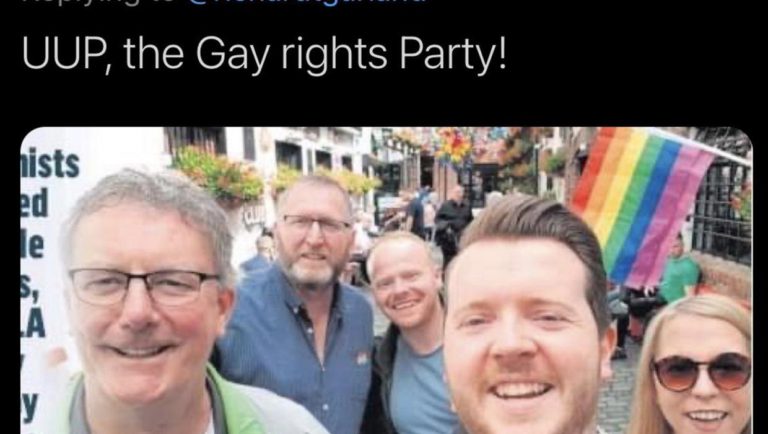
The TUV has faced a backlash after appearing to criticise UUP members for attending a gay pride event in Belfast.
tweet from the TUV Fermanagh page posted a picture of several UUP members including MLAs Mike Nesbitt and Doug Beattie, posing for a picture at a previous event with the caption: “UUP, the Gay rights Party!”
UUP office manager Stephen McCarthy, who was also in the picture, replied: “Listen @TUVFermanagh if you’re sitting on a Sat night thinking about gay rights & tweeting pictures of some of the finest men in the UUP maybe you need a chat. Not with me, I think you’re a dick. But do talk about it.”
Referencing a recent Stormont vote on gay conversion therapy, he added: “Thanks to (Doug Beattie) your [sic] not even at risk of being cured!”
The TUV Fermanagh account has since been deleted, and the party has yet to respond to a request for a comment.
Several other UUP members quickly took to Twitter to say they were more than happy to have attended the event.
Doug Beattie, seen by many as the likely new party leader, said: “What a great bunch of people, a lovely day and wonderful picture. We are a union of people.”
UUP councillor Michael Palmer, who has previously spoken publicly about being gay, commented: “I and many others joined the UUP for its inclusion of LGBT people. So many unionists wonder why pro-union voters aren’t voting for unionist parties and then make tweets like this. LGBT people will be crucial to maintaining the union. That needs to be remembered.”
Last month, MLAs passed a motion proposed by the UUP calling for a ban on gay conversion therapy “in all its forms”.
The main UUP motion was not supported at the time by the DUP or TUV.
TUV leader Jim Allister had said he had no problem condemning “gruesome practices historically associated with conversion therapies” but said he objected to any attempts to “criminalise preaching in accordance with the sexual ethics that are set forth in holy scripture”.
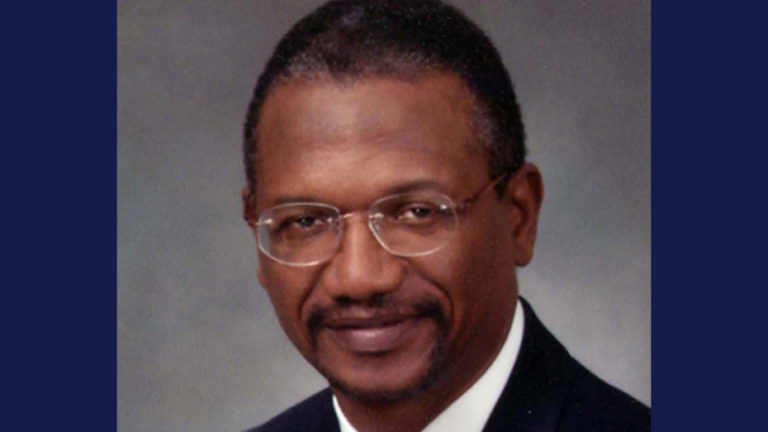
Gardner Gay’s passing has been publicly announced by Washburn-McReavy Funeral Chapels Glen Haven Chapel in Crystal, MN.
Legacy invites you to offer condolences and share memories of Gardner in the Guest Book below.
The most recent obituary and service information is available at the Washburn-McReavy Funeral Chapels Glen Haven Chapel website.
Published by Legacy on May 9, 2021.
Legacy.com reports daily on death announcements in local communities nationwide. Visit our funeral home directory for more local information, or see our FAQ page for help with finding obituaries and sending sympathy.
It’s a sunny morning in Johannesburg and a cautiously optimistic yet tense Phillip Lühl is eating breakfast at a table in a relative’s home. “The waiting is the worst,” he says, barely lifting his eyes from his phone. His sleepy newborns coo from a nearby room.
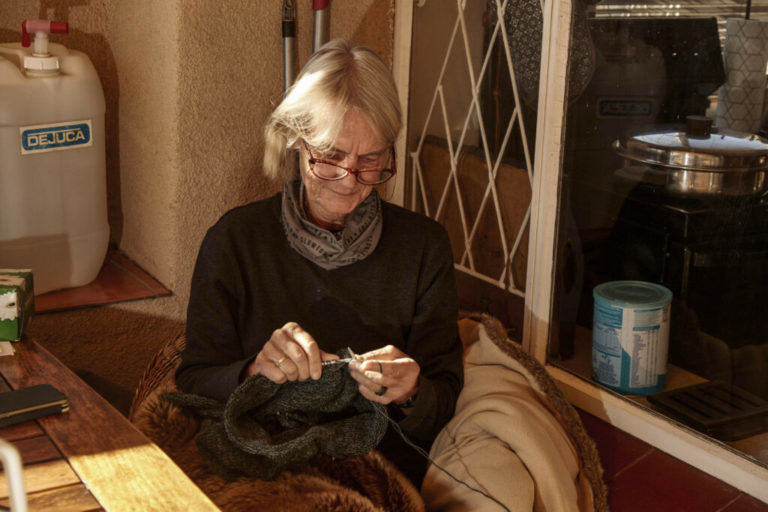
Phillip’s mother, Frauke, is sitting on the balcony anxiously busying herself with knitting, an activity she punctuates occasionally by smoking a cigarette and staring out over the city. Meanwhile in Windhoek, Namibia, Phillip’s husband Guillermo Delgado readies himself for court, where he expects to hear whether the judge will allow his family to come home.
Welcoming a baby is a special moment for any family, most especially for Phillip and Guillermo, a same-sex couple whose newborn twin daughters, Maya and Paula, were born via surrogacy on 13 March. Phillip flew to South Africa, where the twins were born, to be present at the birth and bring them home.
Phillip Lühl’s mother, and grandmother to the twins knits in a family member’s home a few hours before the family is due to hear the ruling from the High Court of Namibia on whether the Lühl-Delgado family can be reunited, Johannesburg, South Africa. The twins, who were born through surrogacy in South Africa, have not been granted travel documents to enter Namibia, where their other father, Guillermo and older brother, Yona, anxiously await their arrival. Photograph: Chris de Beer-Procter
Unfortunately, in this case what would usually be a time of excitement and celebration for new parents is politically fraught and painful for Phillip and Guillermo. This is because the couple live in Namibia, where their marriage is not legally recognised, and their three children’s citizenship is up in the air. And so, starting a family has instead been filled with years of bureaucratic battles, court dates, disappointment and yes, waiting …
Phillip and Guillermo’s legal troubles started in 2019, when their first child, Yona, was born, also through surrogacy in South Africa. The Namibian ministry of home affairs refused to grant Yona his citizenship through descent, even though Phillip is a fifth-generation Namibian and Yona’s birth certificate, which was issued by South Africa’s high court, states clearly that Phillip and Guillermo are the sole parents.
“That’s when the whole DNA story came up — they say that they require proof of a genetic link between myself and the children,” Phillip tells me between bites of his breakfast.
Phillip and Lühl connects with his husband just moments after hearing that the High Court of Namibia has declined to intercede on their behalf, Johannesburg, South Africa. The family has only been able to communicate through devices since the birth of their daughters. Photograph: Chris de Beer-Procter
Namibian authorities have claimed that such a biological link is a prerequisite for citizenship by descent, even though there is no such written law in Namibia’s constitution or Children’s Act. Complicating matters further is the fact that Namibia has no laws surrounding surrogacy.
“This is, of course, not a thing heterosexual couples have to deal with. And what about adoption? They keep saying it’s not about our marriage, just that biologically two men cannot have children, hence … here we are,” says Phillip.
The state’s argument regarding a biological link is further undermined by a provision in Namibia’s Child Protection Act, which acknowledges that a heterosexual couple may, in fact, use in vitro fertilisation using double (sperm and egg) donation.
As Uno Katjipuka, the family’s lawyer, points out, “in that case, there would be no genetic link for such a couple, and their children would still be granted citizenship.”
While their three children do, in fact, have a genetic link to the couple, they refuse to take a DNA test on principle. “We reject the notion that this link makes only one of us the parent,” says Phillip.
The department of home affairs said in a statement on the case that “it was not clear whether one of the parents was indeed Namibian so as to satisfy the requirements of Article 4(1)(2) of the Namibian Constitution which requires a “parent-child link”.
Upon reading the constitution, it is not evident that such a link is required. “That is what they claim but that is not what the constitution says. The court will have to interpret the constitution in this regard,” says Katjipuka.
The couple’s son’s citizenship case, the outcome of which will invariably affect the status of Maya and Paula, is due to be heard in August of this year. But, the battle for now is to bring Paula and Maya home to Windhoek where their father and older brother eagerly await their arrival.
Since Guillermo does not have permanent residency in Namibia, it was deemed necessary that he and Yona wait in Namibia while Phillip fetched the twins.
Guillermo’s residency has been an additional cause of uncertainty for the family. “They resist his every application. His permanent residence was declined, his domicile declined, and even his work visa was declined. It’s a constant struggle,” says Phillip.
Since the birth of the twins, the family have only been able to interact over devices. Zoom calls and videos are the closest they have come to being together since Phillip arrived in South Africa in early March. Today is no different. As they await judgment, Phillip takes calls from family, friends, their lawyer and media organisations that will report the outcome. All the while, the twins require feeding and changing.
Soon, a team of three journalists arrive from the BBC. Clad in masks, they greet the family and begin filming, occasionally asking questions.
“You don’t have to be a supporter of gay rights to understand that this is messed up,” Phillip reflects as the clock turns slowly towards 10.30am, the expected time of judgment. He says that this is why he and Guillermo chose to share their story, to take part in “the interviews and all this stuff”.
In some senses, their decision has paid off. While the fight for their rights may not be easier for it, their case has drummed up surprising support in Namibia and internationally. On 25 March, the day of their first court appearance regarding the twins’ emergency travel documents, the streets of Windhoek saw demonstrations of support for the couple. Protesters waved pride flags and held signs reading supportive slogans such as “We belong” and decrying the “minister of homophobic affairs”.
“It feels a bit strange because previously we were just going about our lives, working as architects and as of two weeks ago, we’ll be known for this. Since international media have covered it, it’s reached all corners of the globe,” Phillip says.
The movement towards gay rights has gained momentum in Namibia, partly due to significant efforts by organisations such as Namibia Equal Rights Movement. In fact, the court is due to hear several other cases involving same-sex couples in the next year.
Carli Schickerling, who is representing four such couples in cases involving domicile, says that the last time a significant gay rights case was argued in Namibia was in 2000.
“The argument wasn’t technically about gay rights but the judge compared homosexuality to bestiality. And that is where we were,” she says.
“It was a very disappointing judgment, but that was 20 years ago and things have changed. Since then we’ve ratified various international conventions, which then have become part of our legislation,” says Carli.
Several of those conventions specifically ratified the right to sexual orientation and not to be discriminated against on that basis.
In the case of the twins, she reflects that it was heartwarming to see the support on the streets. “There were even people who aren’t a part of the LGBTQ community there. There weren’t even any haters.”
She adds that given Namibia’s progress towards equal protections under the law, the time is as right as any to bring these cases forward.
While the twins sleep peacefully, the judgment arrives. Denied. The court has rejected their appeal for emergency travel documents. Phillip smiles, jovial in disbelief. His mother’s face drops into her hands.
“That was unexpected,” Phillip says to Guillermo once he manages to get him on the phone.
“I was sincerely expecting something more humanitarian,” Guillermo responds.
We soon find out that the judge has claimed that the matter is out of the jurisdiction of the high court and that ruling in their favour would be judicial overreach.
Phillip is baffled by the verdict: “You mean that upholding human rights is not in the jurisdiction of the court? It doesn’t make sense.”
Katjipuka jumps onto the call. “What this means is that the judiciary would be slipping into the realm of the executive,” she explains.
The court has argued that the couple should have applied first to home affairs for the travel documents. “Phillip and Guillermo absolutely did things the right way,” Uno tells me several days later once she has had a chance to read the full judgment. “Because Yona’s citizenship case is still outstanding, they wrote to home affairs informing them of the upcoming birth of the twins. They asked for the travel documents for the twins pending the outcome of Yona’s case.”
The response from the minister of home affairs was clear. No.
“The argument is disingenuous at best,” Katjipuka adds. The department has refuted any accusations of discrimination or homophobia, claiming that the minister did not issue travel documents based on the fact that their entitlement to citizenship by descent has not yet been determined.
Phillip shows his husband Guillermo their sleeping daughters just moments after finding out that they will not be reuinted soon, Johannesburg, South Africa. Photograph: Chris de Beer-Procter
“They’re coming up with technicalities,” Phillip explains. “[The decision] continues to paint the picture of utter resistance to any inch of progress on equal rights,” he tells the BBC journalists as they interview him. He’s visibly deflated now that the decision has sunk in. He won’t be returning home in the next few days as he had hoped.
Soon, the journalists leave. A sombre air has befallen their temporary home, as Phil and Frauke continue the loving work of regular nappy changes, quietly warming up bottles of milk, making another pot of coffee.
The pair is a practised team by now and each moves seamlessly between rocking and feeding, Zoom calls with family and continued interaction with the media.
The busy work seems to be a welcome distraction for Phillip, who struggles to describe how he feels. There doesn’t seem to be time for such reflection.
Now it’s on to the next attempt to return home. The couple has made a formal application for the travel documents to Namibian home affairs, as requested by the high court. They await a decision.
A state representative of the Texas House has reintroduced and passed a bill out of committee that would ban trans youth in the entire state from participating in sports as their gender identity.
The proposal had previously been introduced in the House Education committee after passing the Texas Senate, but stalled — until Rep. Harold Dutton, Jr. (D), upset that a bill that he championed also died in committee, decided to revive it, in spite of his colleagues who are LGBTQ allies and previously worked to end the proposal.
When Senate Bill 29, which requires “interscholastic athletic team sponsored or authorized by a school district or open-enrollment charter school” to only allow participants to take part in sports under their “biological sex,” initially did not pass the committee.
When it first came to a vote on May 4, one Republican member was absent, leading to the proposal not having enough votes to pass. Dutton abstained from voting on it.
But when an unrelated bill introduced by Dutton didn’t pass, he decided to use trans youth as a pawn to further his agenda.
His bill would give Texas Education Commissioner Michael Morath the ability to take control of a school district that fails to meet state-designated academic standards, even allowing him to remove school board members. When it was introduced to the House, it failed in part because of Rep. Alma Allen (D), who is also on the Public Education committee.
According to the Texas Tribune, Rep. Lina Ortega (D) reported that Dutton said to her “something to the effect of, ‘Because of what you did, SB 29 is coming back up.’”
“I don’t know how big this problem is,” he said, referring to trans youth participation in sports. “I wish I did, because I’d be in a better position to make this vote. But I will tell you this, the bill that was killed last night affected far more children than this bill ever will.
“So as a consequence,” he said right before the vote, “the chair moves that Senate Bill 29 as substituted be reported favorably to the full House with the recommendation that it do pass.”
In the reintroduced edition, Dutton added an amendment for the ban to last a total of six years.
BREAKING: The Texas Legislature continues to push legislation targeting trans kids. #SB29, an anti-trans bill, has now passed out of committee and is one step closer to the House floor.
If you live in the state, text SB29 to 472-472 now.
the previously stalled ban on trans students competing in youth sports advances in the Texas legislature because one Democrat on the committee wanted to punish other dems who opposed it after they voted against a completely different bill he was pushing https://t.co/HM0PezLPqL
If it passes the House, it will go back to the Senate for amendments to be approved, then Texas Gov. Greg Abbott (R) for his signature or veto. Texas Lt. Gov. Dan Patrick (R) championed the proposal through the Senate, and the Abbott administration has already signaled it would support the bill becoming law.
Rep. Diego Bernal (D), also on the Education committee, condemned his Democratic peer for his actions.
“The vote, bringing it back up, was used as a form of retaliation by the chairman,” he said, adding that it is “soul-crushing.”
Ricardo Martinez, the CEO of Equality Texas, said in a statement, “we are already hearing from parents of transgender children who now realize their kids’ lives and dignity were used as a legislative bargaining chip. It is an incomprehensible betrayal to see a Democrat, who heard desperate testimony from children and parents, take this incredibly harmful action out of sheer vindictiveness toward his Democratic colleagues.”
The ACLU of Texas’s policy and advocacy strategist, Adri Perez, said that Senate Bill 29 “will open the door for discrimination towards any child who does not fit the gender norms expected of them.”
This really needs to be underscored: Harold Dutton, a Democrat, was in his feelings today because one of his bills died so in retaliation he took his resentment out on trans kids. https://t.co/9eiID9Q5BI
All Texas kids deserve our compassion and protection. SB 29, which prevents trans youth from participating in sports, is a discriminatory piece of legislation that hurts Texas children. Join us in continuing to fight for the wellbeing of all young Texans! #txlegepic.twitter.com/O1waqrPF4Y
— Texas House LGBTQ Caucus (@txlgbtqcaucus) May 7, 2021
Colorado Springs PoliceLast summer, former Colorado Springs attorney Jean-Joseph Danger Le Chiffre found out he hadn’t been included in his father’s will and was apparently furious.So, police allege, he schemed a plan with his mom, Marcella Sandoval, that he thought would be foolproof.Le Chiffre would kill his father, Gilbert Sandoval, and his 78-year-old mother would then claim she did it in self defense. Marcella, who was estranged from Gilbert, would then become her husband’s beneficiary and pledged to split the fortune with her son.But 55-year-old Le Chiffre, who was born Patrick Joseph Sandoval and legally changed his name to the Bond villain from Casino Royale some time before the slaying, apparently didn’t count on two things going wrong.Philly DA Candidate Forced to Address Paralegal Found Dead in His MansionAt a court hearing on Friday, covered by The Colorado Springs Gazette, police outlined their case against Le Chiffre and Sandoval for the first time, including the missteps that eventually tripped the pair up.In late July, Le Chiffre and Marcella carried out their plan, according to police. Marcella coaxed her estranged husband into the basement of a home they co-owned, where Le Chiffre was waiting with a baseball bat. He allegedly beat Gilbert to death. Police say they found the bloodstained, cracked Louisville Slugger next to his body.After his father died, Le Chiffre used a knife to cut his mother’s arms and hands to make it look like she had been attacked, officials said. He left the knife next to his father’s body.But, police said during the half-day hearing on Friday, investigators were immediately suspicious when they attended the murder scene and had to physically escort Marcella around the house because she was in such poor health.How, they wondered, could the 78-year-old woman have beat a man to death with a baseball bat, and withstood a knife attack, if she couldn’t even stand up on her own?Then, possibly as part of a plea deal, Marcella turned on her son and decided to become a state witness. In an August court deposition, she described the lengthy planning that went into the killing. “She was tired of how Gilbert treated her, was part of it, and the other part was financial—that Mr. Le Chiffre had been cut out of the will,” detective Marcus Lehmkuhl said at the time.Pandemic ‘Chaos’ Led Wife to Kill Estranged Hubby’s New GF: DefenseBut, in yet another twist, Le Chiffre’s public defender suggested in the Friday hearing that Le Chiffre’s brother, former Colorado Springs cop Mark Sandoval, had got in their mom’s head and manipulated her recollection of events. His attorneys also disputed the alleged motive, saying Le Chiffre could have still claimed a share of his father’s inheritance, and claimed there was no physical evidence connecting him to the scene.At the end of Friday’s hearing, Judge Chad Miller concluded that there was likely enough evidence to convict Le Chiffre of first-degree murder, and he ordered Le Chiffre to be held without bond. Le Chiffre has pleaded not guilty to all charges.As part of her deal with police, Marcella Sandoval was charged with accessory to murder. She pleaded guilty last year and faces two years on probation, according to court documents.Read more at The Daily Beast.Get our top stories in your inbox every day. Sign up now!Daily Beast Membership: Beast Inside goes deeper on the stories that matter to you. Learn more.
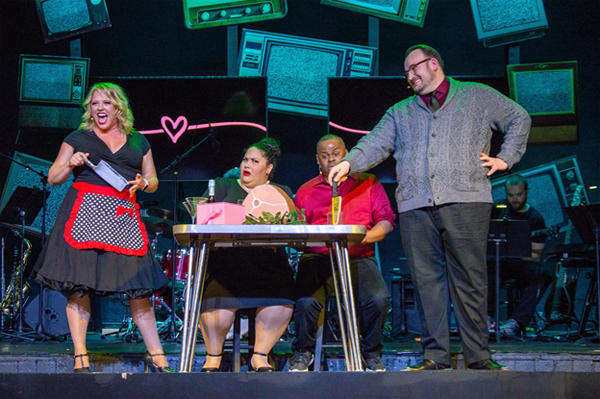
The big news about ”I Love You, You’re Perfect, Now Change,” playing at Cohoes Music Hall weekends through May 23, is that it’s the first area indoor theater production in over a year. The good news is that though the material is inconsistent, it’s a well-performed, swiftly directed effort that provides a lot of laughs.
“I Love You…” is a lighthearted evening of comedy and song that will warm the heart of anyone who loves theater. The cast of four is relentless in its energetic desire to make the audience laugh. This is a hard-working, talented quartet that is asked to create almost 60 characters in a two-hour period and make them distinctive and funny. Most work well, a few miss completely, and others are moderately entertaining. However, overall, it’s admirable work.
Besides being funny, the cast sings well. Except in rare cases, the score plays a supporting role in the comic skits, but when a song merits a great voice and lyrical sensitivity – the performers deliver.
Molly Rose McGrath is terrific with “I Will Be Loved Tonight,” and Dashira Cortes scores with the comic lament “Always a Bridesmaid.” Brandon Jones finds the tender beauty in “Shouldn’t I Be Less in Love With You,” and Marc Christopher’s needy machoism makes “On the Highway of Love” both funny and revealing.
“I Love You, …” is essentially a revue consisting of 19 scenes, performed in two hours. The first act is about mostly cloddish people trying to romance equally shallow individuals. It’s filled with clownish stereotypes and skits. Though humorous, how much revelation can you expect to find in bits titled “A Stud and a Babe,” “Why? “Cause I’m a Guy,” or “The Lasagna Incident”? Thankfully, director Michael LoPorto sets a brisk pace so that the hic-cups in the material do not seriously impede the production.
The second act, which is far more sensitive than the first, shows how marriage and children can bring maturity and caring to almost anyone who stops being self-centered.
When the comedy of the second act becomes human-based the transformation is rewarding as when Jones and Christopher capture the comedy and sincerity of two gay men who become overprotective parents. Indeed, the blending of hurt and laughter is epitomized with McGrath’s sensitive monologue in which a self-affirming, divorced woman records a painfully truthful online dating video.
Despite the numerous high spots there were a few “early-in-the-run” problems, most of which are correctable. The four-piece band led by music director Brian Axford is, by regulation, socially distant on stage. It’s awkward, but except for the sound occasionally drowning out a lyric, the group does great work with the wide variety of musical styles in the piece.
Too, there are times the cast pushes too hard trying to make weak material funnier than they are written. I suspect that part of the problem was performing to an audience that is limited to 50 people in a space that seats over 300. The opening night’s audience’s energy was rather reserved, which is likely to change as the cast builds confidence through live performances. It’s nice to know a good show likely will get even better.
“I Love You, You’re Perfect, Now Change” is ideal for anyone looking for escapist entertainment. It’s certainly worth trying to get one of the limited tickets of 50 per performance. Produced by Playhouse Stage, it plays at Cohoes Music Hall, Friday through Sunday until May 23. For tickets and information go to playhousestage.org or call 518-434-0776.
Bob Goepfert is theater reviewer for the Troy Record.
The views expressed by commentators are solely those of the authors. They do not necessarily reflect the views of this station or its management.
GENEVA – The United Nations Office of the High Commissioner for Human Rights is calling on Uganda to amend a bill to ban same-sex relations that it says would violate human rights standards and undermine public health.
The bill passed by the Ugandan Parliament this past week, but not yet final, has been under development since 2015 and gone through several significant changes. Human rights officials say they are deeply troubled by this latest iteration, which would criminalize entire groups of people.
Under the bill, they note consensual same-sex relations would be harshly punished, as would sex workers and those infected with HIV.
A spokesman for the U.N. high commissioner, Rupert Colville, notes the bill’s punishment for consensual same-sex relations has been reduced to 10 years in jail instead of life imprisonment. Nevertheless, he says the Sexual Offences Act raises serious human rights concern.
“The fact remains that such relations are still criminalized. This, in a country where stigma, discrimination, and violence against people based on their sexual orientation and gender identity is widespread and often committed with impunity, given that victims are frequently too afraid to report any attack against them,” he said.
Colville says other alarming provisions in the Act include mandatory and forced HIV testing of defendants.
“Such provisions not only violate Uganda’s human rights obligations and also risk undermining public health, leaving people afraid to come forward for essential testing and treatment, and so affecting critical HIV prevention and treatment efforts. They are also risking further fueling HIV in Uganda and sub-Saharan Africa,” he said.
UNAIDS, the Joint U.N. Program on HIV/AIDS, says it fears driving people infected with HIV underground will undo much of the progress Uganda has made in reducing the impact of the disease. Since 2010, it says, AIDS-related deaths have fallen by 60% and new HIV infections have dropped by 43%.
Colville says the bill provides much needed protection on sexual violence, which is something women’s groups and gender-based violence groups have advocated for some time. However, the bill in general, he says, does not comply with international law and standards, and must be amended.
Whether crafting her own comedy showcase Gays R Us or writing for the brilliant (and terribly missed) sitcom One Day At A Time, Erin Foley is following in the footsteps of people like Judy Gold and Wanda Sykes. She’s also paying the opportunities that she has been given forward, and offers burgeoning comedians the opportunity to showcase their own talents in a truly safe space. I sat down to chat with this comedic gem about her podcast Sports Without Balls, her experience writing for the force of nature that is Rita Moreno, and how being forced to change up how she delivers her comedy this past year was totally a game-changer for her as a comedian.
Michael Cook: Tell me about Gays R Us and how it has become such a fantastic showcase for comics…
Erin Foley: I started Gays R Us in 2007-2008 at The Hollywood Improv when I moved to Los Angeles. There was a fantastic show that I hope will come back called Homocomicus at Gotham Comedy Club and I wanted to do the West Coast version. There is rarely a show just for the queer community. I have been headlining clubs all over the country and it’s straight crowds. That is fine, but I have been in crowds where the comic is performing & there are the three or four terrible gay jokes; It’s so annoying. Even when I headline, I primarily work with two straight guys and I tell them “hey just take out your gay jokes because I’m headlining” and they tell me they don’t; meanwhile I know that they do, so I tell them to “just take them out”.
Gays R Us is to have a full packed house for the LGBT community and fun straight people of course, and they can just take the night off. They’re not gonna have a performer on stage and the punch line is going to be some terrible gay joke. If there are six or seven comics, ninety percent will be queer-identified or a really fun straight lady and I really don’t have to worry about anything. It just kept going, I do it monthly at the Hollywood Improv. It has been an absolute joy, a really fun night.
MC: How did the pandemic contribute to you deciding to change up the game for your comedy?
EF: When the world stopped, there were a couple months of “what do we do now”? A lot of people were doing shows online, and I wasn’t sure how it was going to work; I just really missed it though. I did a show originally on a different platform and figured out how to work it, then went over to RushTix a couple months ago and that is like the varsity of online shows, they are amazing. It’s a little bit wonky online, seeing and hearing people, but I have gotten such wonderful feedback. Everyone just needs a night of laughing; it’s almost like turning on the television and you get this live and interactive “what is happening” show and they love it, so I am going to keep doing it.
MC: How much of a culture shock has it been for you to have to leave the stage for such an extended period of time?
EF: It does feel weird, although I won’t lie there are a lot of silver linings. I was really burned out from being on the road and traveling, doing these clubs Thursday through Sunday. Taking a break has been amazing. I think it has been really good for my stand up; now when I do it, I really want to do it. The first four or five months I was legitimately doing stand-up in a closet, which is really funny. That’s how we started out, with a sheet in the background. It has obviously evolved, I only book A-talent and I take it very seriously; it is very professionally done. I try to put the best product forward and RushTix has been amazing to partner with.
MC: Who are you own comedic influences and who sparked you to get into comedy?
EF: I got very lucky, since I started off in New York City. It is the best standup in the world in New York City. When I started out, I just started following two people around; Judy Gold, who I am now friends with which is the crowing achievement in my standup career. The other one was Jim Gaffigan, I loved his observational humor. He would close out “bringer shows” that I would do, I had to bring three people to get up for six or seven minutes and he would always close out the show at Gotham Comedy Club, that is how I got to know his humor. The other person that has had the most influence on me is Wanda Sykes. She would come to New York and I would sneak into the back of Caroline’s and see her perform. We have mutual friends out here and she would drop by a show that I do in Silver Lake working on new material and I could not believe that Wanda Sykes was ten feet away from me. I have gotten to know her personally now and she is just amazing. Her love of standup and her joke writing, she is number one for me. She is a champion; the gold medal of comedy.
MC: You were a writer on the criminally underrated and gone too soon One Day At A Time. What was that experience like?
EF: I joined in Season 4 when the show moved to PopTv, we wrote out thirteen episodes and they aired seven. I just assumed that it was going to come back and we would start filming again. It was one of those things where the pandemic stopped it and then the network blew up. There was a CBS/Viacom merger; ten episodes aired on CBS and then it just ended. I just thought that of all the crap that is on television for seven seasons, this show was wonderful, heartwarming and so funny. I am still not over it, I have to say that was a dream job and I felt lucky to be a part of it.
MC: Writing for an entertainment icon like Rita Moreno, it probably does not get much better than that
EF: She hugged me and wrapped her leg around me and I thought “I can die now” (laughs)! Her documentary comes out soon also. Let me just say, she and Justina Machado were the greatest one-two punch ever. They were just as lovely off-camera and the whole time you’re like “I’m pitching jokes for Rita Moreno“. It was unreal, it was just awesome.
MC: Going from standup comedy to sitcom writing is truly a completely different animal. As a creative, where do you think you thrive the most?
EF: I think when I was younger, stand up was the be all, end all for me, but now it has shifted. I’ll always love standup and I’ll always want to do standup. I think the collaboration and the writing for sitcoms is now what I am the most excited and obsessed about. For me, the same joy comes from writing a joke and having Rita Moreno deliver it and everyone laughing, that to me was a game changer. It was equally wonderful and satisfying and I dont have to travel, I can just got down the street. I have co-worklers, I have good good hours, the game has now changed. Besides my sweet Gays R Us baby, I am going to do whatever I can to get back into a room.
MC: Your podcast Sports Without Balls is all sports from your completely unique perspective. Have you always had such a deep passion for sports?
EF: It is sort of like, if I had a parallel life, I would just do everything in sports. I would be a funny sports reporter or a professional athlete. Playing sports my whole life, my partner Sara tells me that I am no fun when I watch sports. I get so heated, and my mood changes she says.I get insane about it. I love it and at the same time, I am trying at the same time, I am trying to champion a woman’s sports project that I have been working on. Anything that I can do for women in sports is awesome, I wish I had more days.
MC: Lack of sports was very challenging; my own partner was mourning the loss of Duke Basketball and March Madness at the beginning of the pandemic.
EF: I know! I It was, I think when they sort of came back with the National Women’s Soccer League, the NBA and the WNBA, I think that is when I realized how much I missed it. I felt alive again!
MC: What do you think you want to do now that the world is opening up and traveling is feasible possibility? What do you think is different for you?
EF: I think what is different is that I used to want to go to work and go out around the clock and burn the candle at both ends; now it’s like “do I ever want to go out again” (laughs)? I have such a new appreciation for time; maybe not having one hundred friends, and five really great friends and spending the most amount of time with them. I think my perspective has really changed on how to spend time. Also, really honing in on what I want to do. That is to stay in LA and write, do my standup and make sure I do my Gays R Us. But stepping into a bar and getting a gin and tonic, I can’t wait. Not taking those moments for granted also; I think there are a lot of silver linings. I don’t think its dramatic to say that people are changed forever and I hope that it is in a good way.
Rev Dr Bernard Randall(Photo: Christian Legal Centre)
A school chaplain lost his job at a Christian school and was reported to the government’s counter-terrorism watchdog, Prevent, after telling students they were not compelled to “accept an ideology they disagree with”, his lawyers say.
Rev Dr Bernard Randall, 48, is taking Trent College to court for discrimination, harassment, victimisation and unfair dismissal.
He says he preached a sermon on the biblical view of gender identity and same-sex relationships after being approached by students who were confused and upset by some of the material being taught in a new LGBT-inclusive curriculum at the school.
The curriculum was introduced at the independent school after a visit by Dr Elly Barnes, founder of Educate & Celebrate, an LGBT+ education charity.
Dr Barnes held training with staff on how they could “embed gender, gender identity and sexual orientation into the fabric of your school”, he says.
Dr Randall said he became alarmed when staff were instructed during the training session to chant “smash heteronormativity”, and told that gender identity is a protected characteristic under the Equality Act.
He says that when he raised concerns, he was told by the head teacher that he would be involved in any decision on whether the school would implement the Educate & Celebrate programme, but he discovered at the following staff training day in January 2019 that it had already been adopted.
When he asked why he had not been included in discussions, he says it was because he “might disagree”.
In a sermon called ‘Competing ideologies’, Dr Randall presented the Christian view on gender identity, encouraged debate and told the students, aged 11 to 17, that no characteristic in the Equality Act was more protected than another.
He also told the students that they could make up their own minds about gender identity and sexuality.
The following week, he was told that his sermon had hurt people’s feelings and that he was being suspended pending an investigation. He was also reported to Prevent, which deals with terrorism threats, and the Local Authority Designated Officer (LADO), the point of contact for child protection allegations.
In August 2019, he was informed by the school that he was being dismissed for gross misconduct.
Although his dismissal was overturned on appeal, he says he was forbidden from speaking on topics “likely to cause offence or distress to members of the school body”, and was told not to “publicly express beliefs in ways which exploit our pupils’ vulnerability”.
He says the school also required that he submit a draft sermon in advance for approval and that an observer be present during services.
Dr Randall said he was “terrified” and unabled to sleep when he found out he had been reported to Prevent.
What was I supposed to tell my family? Being reported as a potential terrorist, extremist and a danger to children are arguably the worst crimes you could be accused of,” he said.
“When I found out that they had reported me without telling me, my mind was blown trying to comprehend it. I had gone to such lengths in the sermon to stress that we must respect one another no matter what, even people we disagree with. I am not ashamed to say that I cried with relief when I was told that the report to Prevent was not going to be taken further.
“Yet I ended up being told that I had to support everybody else’s beliefs, no matter what, while my Christian beliefs, the Church of England’s beliefs, were blatantly censored.”
He continued, “I don’t think the Church of England is an extremist organisation.
“I was doing the job I was employed to do. I wasn’t saying anything that I should not have been able to say in any liberal secular institution. Everyone should be free to accept or reject an ideology. Isn’t that what liberal democracy means?”
Dr Randall was placed on furlough during the first national lockdown in March 2020 but was later made redundant last December.
“My story sends a message to other Christians that you are not free to talk about your faith. It seems it is no longer enough to just ‘tolerate’ LGBT ideology,” he said.
“You must accept it without question and no debate is allowed without serious consequences. Someone else will decide what is and what isn’t acceptable, and suddenly you can become an outcast, possibly for the rest of your life.
“I one hundred per cent see what has happened to me in Orwellian terms. Truth matters, but increasingly powerful groups in our society do not care about the truth.
“My career and life are in tatters. I believe that if this is the Cross that I have to carry to help prevent others from experiencing the same as me, I have no choice but to pursue justice.”
East Midlands Employment Tribunal is expected to hear his case from 14 June.
Andrea Williams, chief executive of the Christian Legal Centre, which is defending Dr Randall said: “When an ordained Church of England minister can’t give a simple sermon in a Church of England school without being reported as an extremist and hounded out of his job then who is safe?
“For many years Bernard Randall has worked in education motivated by his love for God and others.
“When someone like him is pursued and punished it’s an attack on us all. It’s time to stand up and speak up for these freedoms.
“Is this the kind of behaviour we expect from those with the care and protection of our children?
“Now is the time for ordinary people to wake up and contend for vital freedoms.
“All those that said it couldn’t happen – punishing and criminalising a Christian minister for preaching from the bible – need to take a long, hard look at the story of Bernard Randall.
“Who are the extremists in this story? The moderate school chaplain with an intelligent, mild mannered and thoughtful sermon or Educate and Celebrate encouraging staff to smash heteronormativity?”
Rachael Ray is known for her bubbly personality and her quick rise to fame as a major star on The Food Network. As someone who has built her lifestyle brand and public persona around home life, she has also provided fans a glimpse or her own personal life in many ways.
Viewers get to peek inside Ray’s home and kitchen. These moments of private spaces help fans feel even more connected to the star who has a reputation for being approachable and making cooking accessible to home chefs without a lot of experience.
Her personal life also includes sharing adorable details about her love for her husband, but in a recent podcast, she reveals that it wasn’t quite love at first sight.
Ray grew up around family members working in the food industry, and she soon followed in their footsteps. As Biography.comexplains, she got her start in the entertainment business by starting “30 Minute Meals” classes at a gourmet food store.
Soon, her accessible and convenient lessons had gotten enough attention to land her a spot on a local television network.
The Food Network caught wind of this successful programming and offered Ray the chance to bring her lessons to a much wider audience. 30 Minute Meals premiered in 2001 and ran for more than a decade before wrapping up in 2012 and then getting rebooted in 2019.
Ray has enjoyed other shows on the network as well including $40 a Day and Rachael Ray’s Tasty Travels. She expanded her lifestyle empire by launching a magazine called Every Day with Rachael Ray in 2005. She’s had dozens of cookbooks and is a staple among the celebrity chef world.
More than 15 years ago, Ray wed John Cusimano, and the pair have often given fans an adorable glimpse at their love for one another. Ray’s friend had been trying to nudge her into a relationship with Cusimano for a while, and that included inviting both of them to a birthday party.
The pair found each other in a crowded room and ended up talking into the night. As Ray puts it, “we have talked every day since the night we met.” Neither had considered themselves on a traditional path when it came to marriage, but they changed their tunes when they found one another.
They were married in a Tuscan castle in 2005, and they are open about the fact that marriage isn’t always easy.
“If John is being an a–hole, I tell him, then I feel better. And John does the same thing. We share a great sense of humor which helps. We yell to get it out, then move on. We kiss, cut up vegetables, and John makes cocktails,” Ray explained.
It’s also notable that while Ray is a famous chef, Cusimano is also accomplished in the kitchen and pulls his own weight on the cooking duties.
Rachael Ray’s first impression of her husband wasn’t accurate
While Ray and Cusimano clearly hit it off and found one another interesting from the first day they met, Ray’s first impression of her future husband wasn’t exactly accurate. The pair talked with Justin Long on his podcast Life is Short with Justin Long, and Ray revealed that she first thought her husband was gay and even had plans to set him up with another man.
“You’re an excellent cook. When I first met John he told me what he made for dinner the night before and I was gonna set him up with a male friend of mine because he said he wasn’t a chef and I just assumed he was a very handsome gay man,” Ray told Long.
Cusimano cut in with a laugh, “Later that night I proved to her I was straight.”
“Oh. You did not. You’re such a liar,” Ray laughed back.
As Long prodded to find out just what Cusimano had said that made Ray assume he was gay, he remembered the moment in question: “I made tilapia with tomatillos. And I made a maque choux spilling out of an avocado.”
COLUMBUS, Ohio (AP) — Transgender girls would be banned from participating in female sports teams in high school or college in two bills introduced by Republican lawmakers in Ohio, which became the latest state to take up the contentious debate.
The proposals, titled the Save Women’s Sports Act, would require schools and higher education institutions in the state to designate “separate single-sex teams and sports for each sex.”
“In most instances, when young women are forced to compete against young men in athletic competition, it places them at a fundamental disadvantage,” GOP Rep. Reggie Stoltzfus told members of the House education committee last week. “A disadvantage that threatens their athletic achievement and even collegiate scholarship prospects.”
The bills’ sponsors say it is an effort to maintain fairness and protect the integrity in women’s sports in Ohio, though none of the lawmakers have pointed to a single instance where this has been an issue in the state.
These proposals make Ohio the latest state to join the national debate over how transgender athletes can compete in high school and college sports, causing an outpouring of criticism from those in the transgender community and advocates.
If the bills passed, “trans people would lose opportunities and face higher risk factors, such as mental health struggles, substance dependency, and suicidal ideation,” Eliana Turan, the director of development for the LGBT Community Center of Greater Cleveland, told The Associated Press. “If we are going to talk about saving women and girls, let’s save all women and girls, trans females included.”
Idaho passed its law last year, and more than 20 states have considered such proposals this year. Bans have been enacted in Alabama, Arkansas, Mississippi, Tennessee and West Virginia. Florida lawmakers passed a bill, and South Dakota’s governor issued an executive order.
But while GOP lawmakers across the country take up the issue, in almost every case, sponsors of the proposals cannot cite a single instance in their own state or region where such participation has caused problems, according to an analysis by The Associated Press in March.
The same is true for the sponsors of the two bills in Ohio.
When asked during a committee hearing last week how many 12- and 13-year-old girls have had scholarships revoked due to being outperformed by transgender females, GOP Rep. Jena Powell, the other chief sponsor, mentioned a case specifically in Connecticut, but none in Ohio.
“Across the nation, there are girls who used to hold championships that are now held by biological males, which strips scholarship opportunities, medals, advancement in the sport,” said Powell, a Republican from western Ohio.
The organization in charge of making those determinations in the state, the Ohio High School Athletic Association, said that is not true in Ohio. Since the fall of 2015, the association has ruled in 48 cases of transgender students applying to compete and there have been only 11 transgender female approvals.
“Those 11 approvals have resulted in no disruption of competition regarding competitive equity and they have not caused any loss in female participation, championships or scholarship opportunities,” Tim Stried, a spokesperson for the association, said in a statement. “The OHSAA is confident that our policy, which is based on medical science, is appropriate to address transgender requests and works for the benefit of all student-athletes and member schools.”
The OHSAA doesn’t track participation after approval, so it is unclear to say how many of those transgender students have gone on to compete.
Committee members last week also expressed concern for the mental health impacts that both sides of the issue may experience.
“There is so much more wound up in this particular bill than just physiological advantage,” Democratic Rep. Mary Lightbody said. “This bill will harm the mental health of some of Ohio’s most vulnerable children.”
The lawmakers supporting the passage of the proposal said that is not their intention. But advocates say regardless of intent, the proposals would have irreparable harm.
“(These bills) would hurt trans women and girls by invalidating their identities, normalize and promote transphobic bullying, and effectively prevent trans youth from partaking in the natural human right of athletic participation,” Turan said.
___
Associated Press writer Andrew Welsh-Huggins in Columbus and Lindsay Whitehurst in Salt Lake City, Utah, contributed to this report. Farnoush Amiri is a corps member for the Associated Press/Report for America Statehouse News Initiative. Report for America is a nonprofit national service program that places journalists in local newsrooms to report on undercovered issues.
An Iranian gay man was brutally murdered and beheaded by his family in a horrific “honour killing” after they found out he was gay.
Alireza Fazeli-Monfared, 20, was reportedly murdered by his brother and cousins on Tuesday (4 May) after they discovered the Iranian military exempted him from service because of “sexual depravities”.
At around 7pm on Tuesday evening, Alireza spoke to his mother on the phone for the last time, his best friend Aghil Abyat told Iran Wire.
Shortly afterwards, his half-brother arrived at Alireza’s residence and said their father needed to see him. Alireza was taken by car to the village of Borumi, near the capital of Ahvaz, where his brother and cousins murdered and beheaded him, before dumping his body by a tree.
Alireza had been planning to flee Iran and join his boyfriend as a refugee in Turkey before his death. His partner, activist Aghil Bayat, told Iranian LGBT+ network 6rang that the killers called Alireza’s mother directly after the murder and told her where to find his body.
Alireza’s mother was “hospitalised with shock” following the murder, Bayat said. He later told Radio Zamaneh that Alireza’s killers have been arrested.
LGBT+ people are often targeted with violence by family members in Iran
In a statement, 6rang hit out the the military exemption process that allowed Alireza’s family to identify his sexuality.
“Alireza’s killing as a result of his sexual orientation being stated on his military service [exemption] card has once again provided proof for our warning several years ago about the risks caused by the military service exemption process for gay Iranian men and underlines the need for legislation to prevent these safety risks,” 6rang said in a statement shared on Instagram, which was translated by Iran International.
The advocacy group had previously warned that the exemption process allows law enforcement officials, the judiciary, employers and educational institutions to “identify gay men with only one glance at the military service exemption card”.
The process endangers members of the LGBT+ community in Iran, where homophobia and transphobia are rife.
Meanwhile, BBC Persian reported on Friday (May 7) that it had acquired audio recordings of Alireza saying he was in danger from family members and that he was planning to flee Iran.
Women and LGBT+ people are often targeted in so-called “honour killings” under the belief that they have brought shame or dishonour on the family.
A 2019 study in The Journal of Interpersonal Violence found that anti-gay “honour violence” is still used and encouraged around the world.
A report compiled by 6rang in 2020 found that six in 10 queer people in Iran have been assaulted by family members, while almost half have been sexually assaulted in public.
Same-sex sexual conduct is illegal in Iran and can be punishable by death or life imprisonment, and any display of LGBT+ identities is strongly condemned.
Readers affected by the issues raised in this story are encouraged to contact Samaritans free on 116 123 (www.samaritans.org) or Mind on 0300 123 3393 (www.mind.org.uk). Readers in the US are encouraged to contact theNational Suicide Prevention Line on 1-800-273-8255.
An Iranian gay man was brutally murdered and beheaded by his family in a horrific “honour killing” after they found out he was gay.
Alireza Fazeli-Monfared, 20, was reportedly murdered by his brother and cousins on Tuesday (4 May) after they discovered the Iranian military exempted him from service because of “sexual depravities”.
At around 7pm on Tuesday evening, Alireza spoke to his mother on the phone for the last time, his best friend Aghil Abyat told Iran Wire.
Shortly afterwards, his half-brother arrived at Alireza’s residence and said their father needed to see him. Alireza was taken by car to the village of Borumi, near the capital of Ahvaz, where his brother and cousins murdered and beheaded him, before dumping his body by a tree.
Alireza had been planning to flee Iran and join his boyfriend as a refugee in Turkey before his death. His partner, activist Aghil Bayat, told Iranian LGBT+ network 6rang that the killers called Alireza’s mother directly after the murder and told her where to find his body.
Alireza’s mother was “hospitalised with shock” following the murder, Bayat said. He later told Radio Zamaneh that Alireza’s killers have been arrested.
LGBT+ people are often targeted with violence by family members in Iran
In a statement, 6rang hit out the the military exemption process that allowed Alireza’s family to identify his sexuality.
“Alireza’s killing as a result of his sexual orientation being stated on his military service [exemption] card has once again provided proof for our warning several years ago about the risks caused by the military service exemption process for gay Iranian men and underlines the need for legislation to prevent these safety risks,” 6rang said in a statement shared on Instagram, which was translated by Iran International.
The advocacy group had previously warned that the exemption process allows law enforcement officials, the judiciary, employers and educational institutions to “identify gay men with only one glance at the military service exemption card”.
The process endangers members of the LGBT+ community in Iran, where homophobia and transphobia are rife.
Meanwhile, BBC Persian reported on Friday (May 7) that it had acquired audio recordings of Alireza saying he was in danger from family members and that he was planning to flee Iran.
Women and LGBT+ people are often targeted in so-called “honour killings” under the belief that they have brought shame or dishonour on the family.
A 2019 study in The Journal of Interpersonal Violence found that anti-gay “honour violence” is still used and encouraged around the world.
A report compiled by 6rang in 2020 found that six in 10 queer people in Iran have been assaulted by family members, while almost half have been sexually assaulted in public.
Same-sex sexual conduct is illegal in Iran and can be punishable by death or life imprisonment, and any display of LGBT+ identities is strongly condemned.
Readers affected by the issues raised in this story are encouraged to contact Samaritans free on 116 123 (www.samaritans.org) or Mind on 0300 123 3393 (www.mind.org.uk). Readers in the US are encouraged to contact theNational Suicide Prevention Line on 1-800-273-8255.
Apex Legends has received widespread praise for its inclusion of a diverse character pool, incorporating a number of LGBTQIA characters into the game. Here, we take a look at every LGBTQIA Legend in the game currently.
Since its release, though, Apex Legends has championed in-game diversity, with a number of LGBTQIA characters.
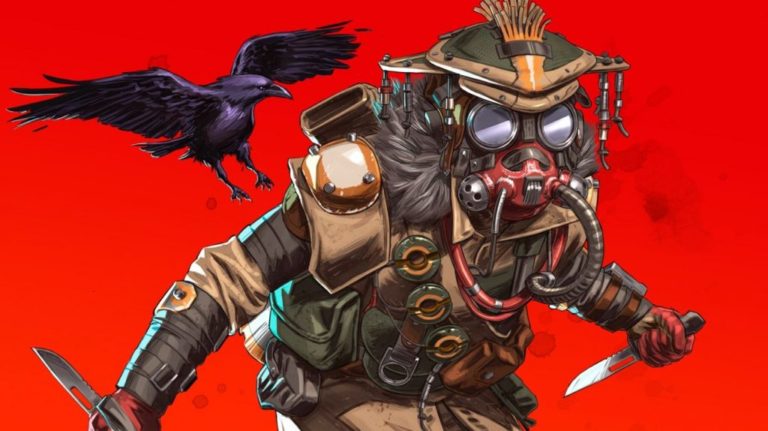
Bloodhound
Respawn Entertainment
Bloodhound has been in Apex Legends since its launch.
First up is Bloodhound, who has been confirmed as non-binary. They’ve been in Apex Legends since launch back in February 2019, and can be a real thorn in the side of enemies due to their Beasts of the Hunt ultimate ability. Bloodhound’s origins were revealed in Stories from the Outlands episode ‘The Old Ways’.
Advertisement
Gibraltar
Respawn Entertainment
Gibraltar is Apex’s own gentle giant.
Another of the battle royale’s launch characters, Gibraltar is Apex Legends’ gentle giant. He’s also been confirmed as gay by Apex Legends writers.
Prior to his inclusion in the Apex Games, he and his boyfriend Nikolas stole his father’s motorcycle, but became trapped by a mudslide. While his father returned to save them both, it is said to be the incident that taught Gibby how to properly care for others.
Loba
Respawn Entertainment
Loba is another legend who identifies as LGBTQIA.
Loba dropped in Season 5, a deeply complex character mourning the loss of her parents after they were brutally killed by Revenant. Former Respawn writer Tom Casiello has also confirmed she is bisexual.
Advertisement
Her voice lines are by far the most flirtatious of any character, adding to her unapologetic attitude.
Fuse
Respawn Entertainment
Fuse hails from Salvo – a fringe planet on the outskirts of the Outlands.
Fuse is another late addition to the Apex party, dropping in Season 8. The eccentric Australian is pansexual – meaning he is attracted to people of all genders.
Valkyrie
Respawn Entertainment
The new Legend Valkyrie in Apex Legends.
The final character on this list is Apex Legends’ newest Legend, Valkyrie. The Soaring Aviator has been confirmed as lesbian by Respawn. In fact, speaking of Valkyrie and her sexuality, Tom Casiello said: “I kind of love that she owns her sexuality outright and isn’t ashamed of it.”
That rounds off all the confirmed LGBTQIA+ characters in Apex Legends. The remaining characters are not necessarily straight, they just haven’t had their sexualities clearly confirmed by Respawn Entertainment. For example, there are many rumors that Mirage is questioning.
Advertisement
Back when Apex Legends launched, community manager Jay Frechette said: “Having a diverse cast is super important. You want everyone to have someone they can connect to”. None of that sentiment has changed.
We will continue to update this list as and when it needs changing.