
Home Blog Page 271

High School Musical Star Joshua Bassett Shares ‘Coming Out Video’ After ‘Driver’s License’ Love Triangle – YourTango

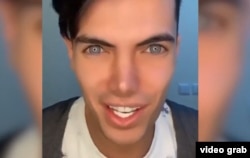
Joshua Bassett gushed about Harry Styles in an interview that he labeled his “coming out video.”

The “High School Musical: The Series” star spoke for all of us when he praised Styles as “charming” and “hot,” before slipping in that his comments may be an indication of his sexuality.

“I think he’s a nice guy, doesn’t say too much, but when he talks, it matters,” said Bassett of the former One Direction star who has also hinted at his own queer identity in his music and style.

Is Joshua Bassett gay?

In the interview, Bassett was asked by fans what he admires most about Styles. He complimented his acting, singing, and fashion.

“He’s just cool … who doesn’t think Harry Styles is cool?” he asked. “Also, he’s hot, you know? He’s very charming, too. Lots of things.”

“This is also my coming out video, I guess,” he concluded, leading fans to speculate on Bassett’s sexuality.

RELATED: Harry Styles & The Myth That ‘Manly Men’ Will Save This Country

Bassett didn’t explicitly identify whether he was gay, bisexual, pansexual, or queer, nor did he necessarily even mean what he said.

Some social media users accused the 20-year-old of queerbaiting, though this is somewhat unfair and could invalidate his coming out.

Others argued that the backlash was biphobic as it’s possible Bassett is not attracted to just one gender.

Either way, it is important to note that Bassett does not owe anyone any further explanation of his sexuality, nor is it fair to label him.

Bassett didn’t clarify his comments in the interview but his ease in mentioning coming out could be an important message for LGBTQ youths, that stresses that coming out doesn’t have to be intimidating.

Bassett, is a member of Gen Z, is part of the “queerest generation ever.”

One in 6 Gen Z members openly identifies as LGBTQ, higher than any previous generation.

Joshua Bassett addressed his sexuality on social media after the interview.

As speculation began to swirl, Bassett took to Instagram to speak to his fans and critics who had responded to the interview. 

“My entire life people have told me my sexuality. People have shamed me for things they know nothing about. I want to say thank you to those of you who stand for love and acceptance,” Bassett wrote. “Toxicity, hatred and negativity say less about the subject but say far more about those who spew it.”

He said that in 2021, we need to embrace more change and growth, and stated that he wouldn’t let haters get to him any longer.

Again, Bassett did not explicitly label himself and sent a message to fans that they don’t have to label themselves either. 

“Love who you love shamelessly. It’s ok to still be figuring out who you are. Life’s too short to let ignorance and hatred win. I choose love,” he concluded. 

Did Joshua Bassett and Sabrina Carpenter break up?

Bassett’s love life has been the source of much speculation since late 2020.

Subscribe to our newsletter.

Join now for YourTango’s trending articles, top expert advice and personal horoscopes delivered straight to your inbox each morning.

When Bassett’s “High School Musical” co-star and rumored ex Olivia Rodrigo released her track “Driver’s License,” many speculated it was about Bassett.

Bassett was rumored to be dating Sabrina Carpenter, who is believed to be “that blonde girl” that Rodrigo was singing about.

RELATED: Is Sabrina Carpenter & Joshua Bassett’s Collab A Response To Olivia Rodrigo’s ‘Drivers License’ — Or Great PR?

The viral track ignited a gripping trifecta of songs from Bassett, Carpenter, and Rodrigo that are all rumored to be about one another.

However, Bassett has always come to the defense of both women and fought off the speculation of a feud.

“I hope people don’t forget the value that [Olivia] and Sabrina bring to the world outside of the drama,” he has said. “And I hope people will look at the depth of who they are instead of just the surface-level gossip”

Bassett and Rodrigo returned to filming the series together, shortly after the drama unfolded.

Bassett and Carpenter, meanwhile, do not appear to have been seen together recently, so it is unclear if the pair are still together — or if they ever were.

RELATED: Inside The Conspiracy Theory That Taylor Swift And Harry Styles Committed Vehicular Manslaughter Together

Trending on YourTango:

Alice Kelly is a writer living in Brooklyn, New York. Catch her covering all things social justice, news, and entertainment. Keep up with her on Twitter for more.
Gay Iranian man dead in alleged ‘honor killing,’ rights group says – NBC News

Ali Fazeli Monfared, a 20-year-old gay Iranian man, was allegedly killed in an “honor killing” by some of his male family members after they found out he was gay, according to an LGBTQ rights group in Iran and Turkey.

Fazeli Monfared, who was known as Alireza by friends and family, lived in a city in southwest Iran. He had applied for an exemption from compulsory military service so he could leave the country and move to Turkey to live with his close friend, Aghil Bayat, according to 6Rang, the Iranian Lesbian and Transgender Network.

Though homosexual conduct is criminalized in Iran, part of the military exemption law allows gay and transgender people to receive a medical exemption from service for their identity. The law states, in part, “a person can be freed from his military service duties, if he is ‘mentally ill’ (homosexual).”

Fazeli Monfared received an exemption card in the mail from the Islamic Revolutionary Guard Corps after disclosing his homosexuality, but one of his male relatives found it and discovered he was gay, according to 6Rang. The organization reported the relative had previously told Fazeli Monfared’s father that the young man had dishonored the family due to the way he dressed.

BBC Persian reported Friday that it received audio recordings of Fazeli Monfared saying his family had threatened his life.

After finding the exemption card, a group of male relatives took Fazeli Monfared to a rural village near Ahvaz on May 4 and killed him, Shadi Amin, executive director of 6Rang, told NBC News. The card, and the exemption for homosexuality as a disease, put Fazeli Monfared in danger, she said.

“We think that because of his gender expression and his behaviors, they knew that he is homosexual, but it was proof that shows he wants to leave the country, and he is a gay man,” Amin said. “We are trying to use this story to challenge the Iranian government … to remove this paragraph [in the exemption law] and the reason on the exemption cards.”

Bayat told 6Rang the alleged killers had called Fazeli Monfared’s mother and told her where to find her only son’s beheaded body.

Though 6Rang first reported that police arrested the three men involved in Fazeli Monfared’s death, Amin said that isn’t accurate and no arrests have been made. She said police told Fazeli Monfared’s mother they made arrests in the case to calm her down.

But Amin said she thinks arrests will be made in the case because Fazeli Monfared comes from a wealthy family, and his father is angry about his death. She added that though Iran criminalizes homosexual conduct, it isn’t illegal to be gay. If Fazeli Monfared’s alleged killers had caught him having sex with a man, then they might receive lesser punishments for his death.

Iran is one of an estimated 11 countries where same-sex sexual acts are punishable by death, according to the International Lesbian, Gay, Bisexual, Trans and Intersex Association, and one of almost 70 countries where it is criminalized, according to Human Rights Watch, an international human rights group based in New York. In Iran, punishments for homosexual conduct range from 31 to 100 lashes to death, according to Human Rights Watch.

Iranian Foreign Minister Mohammad Javad Zarif defended the country’s death penalty punishment for homosexual conduct during a press conference in June 2019. “These are moral principles regarding the behavior of people in general,” he said at the time, according to German broadcaster Deutsche Welle.

There are no statistics or records of the number of anti-LGBTQ “honor killings” — which are perpetrated by relatives who feel the LGBTQ person has brought “dishonor” to the family — that happen in Iran or other countries that criminalize homosexuality, Tara Sepehri Far, who investigates human rights abuses in Iran and Kuwait for Human Rights Watch, told NBC News.

She said Fazeli Monfared’s case highlights the importance of the role of the family in LGBTQ people’s lives when the state criminalizes who they are.

“In the context that the LGBT community is not protected by law — and there’s actually a serious threat to their rights and even safety — the role of the family is becoming even more important,” Sepehri Far said, adding that if you’re coming from a family that accepts you, you can have access to safer spaces and communities.

According to a 2020 survey from 6Rang, nearly 63 percent of Iranian LGBTQ people reported experiencing violence perpetrated by their nuclear family.

The military exemption cards increase that risk of violence and discrimination from family, employers, law enforcement or anyone else who could find the person’s exemption card, Amin said.

“When they have it in their pocket, it is like a ticking bomb for them,” she said.

The process of receiving an exemption is also itself dangerous, Sepehri Far said, because it forces someone to come out as LGBTQ to the government.

“Exposing that to the very same authorities who, in theory, have the authority to arrest and prosecute you is very risky,” she said.

Amin said other countries should pressure Iran to remove the law criminalizing homosexuality and the death penalty “because this is the reason why the families, they allow themselves to have the right to violate their children.”

Follow NBC Out on Twitter, Facebook & Instagram

Horrific Killing Of Young Gay Man Puts Plight Of Iran’s LGBT Community In Spotlight – Radio Free Europe / Radio Liberty

His name was Alireza Fazeli Monfared and he was only 20 years old.

Fazeli Monfared was homosexual and due to the difficulties he faced because of his sexual orientation, was about to flee his native Iran for Turkey.

But he was reportedly killed by his family members before he could leave the southwestern province of Khuzestan after they accused him of dishonoring the family.

Fazeli Monfared’s killing has put the plight of Iran’s LGBT community in the spotlight amid concerns that this will not be the last suspected case of so-called honor killings of homosexuals in the Islamic republic.

“There’s no guarantee that this won’t happen again until our society becomes educated and informed,” Arsham Parsi, a Toronto-based, Iranian gay-rights activist and head of the International Railroad for Queer Refugees, told RFE/RL.

Killed For Being Gay

Fazeli Monfared was reportedly killed on May 4 by his half-brother and cousins who, according to some reports, beheaded him and dumped his body under a tree near the provincial capital of Ahvaz. They reportedly called his mother to tell her where to find him.

The Iranian Lesbian and Transgender Network 6rang said in a May 7 statement that Fazeli Monfared’s half-brother learned about his sexual orientation after seeing his military service exemption card. In Iran, homosexuals are allowed to skip military duty due to “mental disorders.”

Even before he was killed, Fazeli Monfared had complained to friends about threats from his relatives due to his sexual orientation.

In an audio recording obtained by the BBC, Fazeli Monfared said that his family had threatened to kill him and that he was planning to flee Iran to seek asylum in Norway or Sweden.

Fazeli Monfared’s partner, activist Aghil Abyat, told RFE/RL that he was due to travel to Turkey on May 8 to join him.

“He had told me that he had been threatened by his half-brother,” he said.

‘Lively’ And ‘Very Happy’ Man

Abyat described Fazeli Monfared as a “lively” and “very happy” young man who liked to travel, listen to music, and post videos on TikTok. His Instagram posts also suggest an interest in fashion.

Parsi, who had in recent weeks interacted with Fazeli Monfared on Clubhouse, said the young man had complained about family pressure and intolerance in society.

“He didn’t clearly say that he had been threatened with murder because if he had done so I would have contacted him privately since we take these issues very seriously, but he spoke about his family not accepting him and the pressure families put on homosexuals,” Parsi told RFE/RL.

Monfared had complained about family pressure and intolerance in the weeks leading up to his death.


Monfared had complained about family pressure and intolerance in the weeks leading up to his death.

Members of Iran’s gay community are forced to hide their sexual orientation, often leading double lives due to fear of persecution by the state, which criminalizes homosexual acts, while society views homosexuality as a disease.

Many in the lesbian, gay, bisexual, and transgender (LGBT) community are shunned by their families who view them as a stain on the family’s honor.

Homosexuality is punishable by death in Iran but proving that a sexual act has taken place is not easy and requires the testimony of four adult men.

Horrific Punishments, Abuse

Parsi said the LGBT community is “extremely vulnerable” while being exposed to horrific punishment and harassment.

“On the one hand, the establishment has laws that includes the death penalty and stoning for homosexuals, on the other hand their families do not accept them, neither does the society,” he said. “If something happens to them at work or school, if they get abused or raped, they don’t have anywhere to turn to.”

Fazeli Monfared’s murder has sent a chilling message to Iran’s gay community, reminding them of the dire threats they face.

“Today, I received the 86th message from [a homosexual inside Iran] who said this could have been us,” said Parsi, adding that “the fear homosexuals experience is real and must be taken seriously.”

Berlin-based human rights activist Kaveh Kermanshahi said the killing has shocked many.

“Whoever has gone through similar problems can relate and go through the trauma again, they have been reminded of their hardships,” said Kermanshahi, who came out only after leaving Iran several years ago.

“The reasons for not coming out are many more than those in favor of coming out,” he said.

“I was politically active, I was active in the human rights sphere, I was also a journalist faced with the risk of arrest, which happened. Due to of all these issues I had decided that [my sexuality] should not be revealed,” Kermanshahi added.

Honor Killings Often Unreported

Both Kermanshahi and Parsi believe that a large number of killings in Iran due to someone’s sexual orientation go unreported.

“Queers who have been in contact with these people fear reporting or investigating the cases because they can be outed in the society therefore these cases often happen in silence,” Kermanshahi said.

“When it comes to uxoricide, we have women’s rights activists who highlight these cases,” he said. “But in Iran we don’t have the possibility of queer activists working actively therefore it is possible that other cases — like [Fazeli Monfared’s] murder and [gay suicides] — are not being reported.”

In 2017, 6rang reported that a 23-year-old transsexual identified as Siavash was killed in Khorramabad in western Iran by his father who, according to the report, committed suicide afterward.

“Apparently the sexual identity of Siavash was not acceptable to the family at all,” 6rang said.

Parsi said in 2004 that a local newspaper reported the killing of a member of Iran’s gay community by his father in a northern Iranian village.

“It never became clear whether the father was arrested and punished,” he said.

According to a 2020 poll published by the 6rang advocacy group, 62 percent of LGBT members surveyed had said that they had experienced one or more forms of violence by their immediate family. Nearly 30 percent of them complained of sexual violence, while 77 percent said they had been subjected to physical violence.

The pressure and persecution force many members of Iran’s LGBT community to flee the country, while many others undergo gender-reassignment surgery.

From Halton Catholic Schools Supporting Students to a Lithuanian Artist Raising Funds for LGBT Groups, This Week in Int’l LGBT News – SouthFloridaGayNews.com

This week read about Catholic schools in Canada standing up for LGBT students when the board voted to not fly Pride flags, and Erikas Malisauskas using homophobic tweets to raise money for LGBT groups in Lithuania.

Halton Catholic Schools Support LGBT Students After Board Denies Pride Flags

After the school board trustees voted on Monday not to fly the Pride banner at its schools in June, all nine high schools in the Halton Catholic School Board District wrote tweets of inclusion, equality, and diversity.

Kirsten Kelly, the Burlington student trustee on the board stated that the fight to fly the flag isn’t over yet.

According to CBC, Kelly started a petition to support flying the Pride flag that has gained over 18,000 signatures in a two-week span.

“They brought it up because many students don’t feel safe in their own school environments because of the homophobia and the transphobia from staff and students alike,” Kelly told CBC. “Having a Pride flag up would be a symbolic show of support from our Catholic community that shows that we care, we listen and we acknowledge you.”

Lithuanian Artist Uses Homophobic Tweets to Raise Funds for LGBT Groups

Artist

Photo of the project via www.neapykantosdebesis.It.

A Lithuanian artist has raised over $6,000 USD for LGBT groups by selling digital collages of homophobic messages that were sent to parliament members who campaign for gay rights.

According to Channel News Asia, these collages, created by Erikas Malisauskas, are made up of 400 offensive messages put together in the shape of a cloud.

The messages were intended for Tomas Raskevičius, a well-known figure in Lithuania and the first gay rights leader elected to parliament.

Though he isn’t a member of the LGBT community, Malisauskas was shocked by the degree of violence directed at Raskevičius and the LGBT community as a whole.

“My goal was to monetise the hate speech,” Malisauskas told Channel News Asia. “Now everyone who wrote the hateful messages to LGBT people has contributed money towards LGBT causes.”

Court Throws Out Gay Teacher’s Discrimination Lawsuit Against Indianapolis Archdiocese – Indiana Public Media

News Contact IPM News

Indiana Public Media News

“item” : [ {“label” : “t”, “mp3” : “as”, “startingDate” : “1568692800000”, “endingDate” : “1569124800000”} , {“label” : “h”, “mp3” : “k”, “startingDate” : “1568001600000”, “endingDate” : “1568433600000”} ] }}

{ “lightboxes”: { “tv” : [ {“url” : “https://indianapublicmedia.secureallegiance.com/wtiu/WebModule/Donate.aspx?P=WTIUMCLB&PAGETYPE=PLG&CHECK=2T6mTyo6yYtDgsQprWuZNm3L5BYddGq6PVAl6UEf65g%3d”, “img” : “https://indianapublicmedia.org/images/banner-images/3-14-21-wtiu-lightbox.jpg”, “startingDate” : “1615698000000”, “endingDate” : “1615780740000”} , {“url” : “https://indianapublicmedia.secureallegiance.com/wtiu/WebModule/Donate.aspx?P=TIUEARTHLB&PAGETYPE=PLG&CHECK=ohRaEfrlFYXTcKryE%2buaGL1YhDw50SikSh2nq0qouhg%3d”, “img” : “https://indianapublicmedia.org/images/banner-images/4-22-21-wtiu-earthday-lightbox.jpg”, “startingDate” : “1619064000000”, “endingDate” : “1619150340000”} ], “radio” : [ {“url” : “https://indianapublicmedia.secureallegiance.com/wtiu/WebModule/Donate.aspx?P=WFIUFDLB&PAGETYPE=PLG&CHECK=tAXekcDG%2flizvLEFSbjC6m3L5BYddGq6PVAl6UEf65g%3d”, “img” : “https://indianapublicmedia.org/images/banner-images/3-22-21-wfiu-lightbox.jpg”, “startingDate” : “1616385600000”, “endingDate” : “1616471940000”} , {“url” : “https://indianapublicmedia.secureallegiance.com/wtiu/WebModule/Donate.aspx?P=WFIUFDLB&PAGETYPE=PLG&CHECK=tAXekcDG%2flizvLEFSbjC6m3L5BYddGq6PVAl6UEf65g%3d”, “img” : “https://indianapublicmedia.org/images/banner-images/3-23-21-wfiu-lightbox.jpg”, “startingDate” : “1616472000000”, “endingDate” : “1616504700000”} , {“url” : “https://indianapublicmedia.secureallegiance.com/wtiu/WebModule/Donate.aspx?P=WFIUFDLB&PAGETYPE=PLG&CHECK=tAXekcDG%2flizvLEFSbjC6m3L5BYddGq6PVAl6UEf65g%3d”, “img” : “https://indianapublicmedia.org/images/banner-images/3-24-21-wfiu-lightbox.jpg”, “startingDate” : “1616504760000”, “endingDate” : “1616644740000”} , {“url” : “https://indianapublicmedia.secureallegiance.com/wtiu/WebModule/Donate.aspx?P=WFIUFDLB&PAGETYPE=PLG&CHECK=tAXekcDG%2flizvLEFSbjC6m3L5BYddGq6PVAl6UEf65g%3d”, “img” : “https://indianapublicmedia.org/images/banner-images/3-25-21-wfiu-lightbox.jpg”, “startingDate” : “1616644800000”, “endingDate” : “1616731140000”} , {“url” : “https://indianapublicmedia.secureallegiance.com/wtiu/WebModule/Donate.aspx?P=WFIUFDLB&PAGETYPE=PLG&CHECK=tAXekcDG%2flizvLEFSbjC6m3L5BYddGq6PVAl6UEf65g%3d”, “img” : “https://indianapublicmedia.org/images/banner-images/3-26-21-wfiu-lightbox.jpg”, “startingDate” : “1616731200000”, “endingDate” : “1616817540000”} , {“url” : “https://indianapublicmedia.secureallegiance.com/wtiu/WebModule/Donate.aspx?P=WFIUFDLB&PAGETYPE=PLG&CHECK=tAXekcDG%2flizvLEFSbjC6m3L5BYddGq6PVAl6UEf65g%3d”, “img” : “https://indianapublicmedia.org/images/banner-images/3-27-21-wfiu-lightbox.jpg”, “startingDate” : “1616817600000”, “endingDate” : “1616903940000”} , {“url” : “https://indianapublicmedia.secureallegiance.com/wtiu/WebModule/Donate.aspx?P=WFIUFDLB&PAGETYPE=PLG&CHECK=tAXekcDG%2flizvLEFSbjC6m3L5BYddGq6PVAl6UEf65g%3d”, “img” : “https://indianapublicmedia.org/images/banner-images/3-28-21-wfiu-lightbox.jpg”, “startingDate” : “1616904000000”, “endingDate” : “1616990340000”} , {“url” : “https://indianapublicmedia.secureallegiance.com/wtiu/WebModule/Donate.aspx?P=WFIUFDLB&PAGETYPE=PLG&CHECK=tAXekcDG%2flizvLEFSbjC6m3L5BYddGq6PVAl6UEf65g%3d”, “img” : “https://indianapublicmedia.org/images/banner-images/3-29-21-wfiu-lightbox-am.jpg”, “startingDate” : “1616990400000”, “endingDate” : “1617047940000”} , {“url” : “https://indianapublicmedia.secureallegiance.com/wtiu/WebModule/Donate.aspx?P=WFIUFDLB&PAGETYPE=PLG&CHECK=tAXekcDG%2flizvLEFSbjC6m3L5BYddGq6PVAl6UEf65g%3d”, “img” : “https://indianapublicmedia.org/images/banner-images/3-29-21-wfiu-lightbox-pm.jpg”, “startingDate” : “1617048000000”, “endingDate” : “1617058800000”} , {“url” : “https://indianapublicmedia.secureallegiance.com/wtiu/WebModule/Donate.aspx?P=FIUATC50LB&PAGETYPE=PLG&CHECK=CQ7h0VUtgunT9g%2f%2b%2byIiqb1YhDw50SikSh2nq0qouhg%3d”, “img” : “https://indianapublicmedia.org/images/banner-images/5-3-21-wfiu-npr-50th-lightbox.jpg”, “startingDate” : “1620014400000”, “endingDate” : “1620187140000”} ] }}

{ “item” : [ {“label” : “t”, “mp3” : “as”, “startingDate” : “1568692800000”, “endingDate” : “1569124800000”} , {“label” : “h”, “mp3” : “k”, “startingDate” : “1568001600000”, “endingDate” : “1568433600000”} ] }

Religious conversion therapy left gay man suicidal – PinkNews

Gary opened up about his experience of conversion therapy. (Envato Elements)

A gay man was “traumatised” and experienced relentless suicidal thoughts after enduring 18-months of religious conversion therapy.

Gary, from Lurgan in Northern Ireland, told RTÉ Radio 1’s Today with Claire Byrne show that he sought conversion therapy in 2010 due to his intense feelings of shame about his sexuality.

He quickly found a number of religious-based organisations on Google that claimed they could help him overcome his same-sex sexual desires.

Looking back, he now feels that religious leaders tried to “brainwash” him into thinking there was something wrong with him and that he needed to be fixed.

“I was there on Google, ‘Can I be gay and a Christian?’ ‘Is there a way to change my sexuality?’ And those Google searches were done over and over again, right throughout my early 20s,” Gary told the programme on Tuesday (11 May).

At the time, Gary was “quite depressed” and was “still very much struggling” with his sexual identity. He had started to feel “very isolated and alone” when he approached one of the religious organisations he found online.

“They said there was good hope that I could turn to live a heterosexual life, and they said that, yes, I could live quite happily without same-sex attraction, as they called it, or homosexuality,” Gary explained.

Over the course of 18 months, he went to group therapy as well as one-on-one sessions with religious leaders. He also worked through “materials” looking at “biblical examples of sexuality”.

In those sessions, Gary and other queer people were told that what they were feeling was “wrong”.

Leaders on the programme “brainwashed” him and tried to get him to believe that it was possible to change his sexual orientation.

‘Manipulative’ conversion therapy left Gary ‘depressed’ and ‘completely stuck’

The group therapy was “very manipulative on reflection,” Gary said, explaining that the idea was to have “other people with the same struggles” affirming the same anti-gay message.

Gary was made to believe that he would “change” if he fully engaged with the programme. “Otherwise, you’re not a success,” he said.

Looking back, Gary said he felt “cross, lost, and very upset” following the experience. “I felt completely stuck by it. It was just a very distressing time.”

When asked if it was traumatising, Gary replied: “Very much so. I think like a lot of traumas, I try my best not to relive it but try my best to talk about it.”

He continued: “The things that we were made to share, the stories that were personal to us, the stories about your sexuality, being told that that’s wrong, having it affirmed that it’s wrong is really just so, so damaging.”

Gary said he was traumatised “every time” he went to a conversion therapy session. By the end of the process, he was “completely lost” and no longer knew he who he was because his identity had been “torn down”.

Needless to say, efforts to change his sexuality failed. Gary became “very depressed” and had suicidal thoughts “almost on a daily basis” by the end of the process.

He started drinking alcohol “every night just to get to sleep” and “to get rid of the thoughts” that he didn’t want to think about.

Gary added: “It is happening today still. There is going to be someone that gets prayed with today. That prayer whose words will say that your homosexuality is wrong, that will refer to it as a demon, they’ll try to cast it out.”

Following his traumatic ordeal, Gary sought legitimate counselling to help overcome his depression. He is now a practicing GP and married his partner – who is also called Gary – in 2016.

Gary recounted his experience as the UK prepares to ban conversion therapy.

The UK government recommitted to outlawing the practice on Tuesday (11 May), announcing that a public consultation will take place before legislation is brought forward.

Meanwhile, conversion therapy is a devolved issue for Northern Ireland. The Assembly voted overwhelmingly in favour of a motion calling for the pseudoscientific practice to be banned in April.

Communities minister Deidre Hargey has confirmed that her department is working on legislation to outlaw the practice in Northern Ireland.

Readers affected by the issues raised in this story are encouraged to contact Samaritans free on 116 123 (www.samaritans.org) or Mind on 0300 123 3393 (www.mind.org.uk). Readers in the US are encouraged to contact the National Suicide Prevention Line on 1-800-273-8255.

Gay man shares harrowing experience of religious conversion therapy: ‘It was manipulative brainwashing’ – Yahoo Eurosport UK

A gay man was “traumatised” and experienced relentless suicidal thoughts after enduring 18-months of religious conversion therapy.

Gary, from Lurgan in Northern Ireland, told RTÉ Radio 1’s Today with Claire Byrne show that he sought conversion therapy in 2010 due to his intense feelings of shame about his sexuality.

He quickly found a number of religious-based organisations on Google that claimed they could help him overcome his same-sex sexual desires.

Looking back, he now feels that religious leaders tried to “brainwash” him into thinking there was something wrong with him and that he needed to be fixed.

“I was there on Google, ‘Can I be gay and a Christian?’ ‘Is there a way to change my sexuality?’ And those Google searches were done over and over again, right throughout my early 20s,” Gary told the programme on Tuesday (11 May).

At the time, Gary was “quite depressed” and was “still very much struggling” with his sexual identity. He had started to feel “very isolated and alone” when he approached one of the religious organisations he found online.

“They said there was good hope that I could turn to live a heterosexual life, and they said that, yes, I could live quite happily without same-sex attraction, as they called it, or homosexuality,” Gary explained.

Over the course of 18 months, he went to group therapy as well as one-on-one sessions with religious leaders. He also worked through “materials” looking at “biblical examples of sexuality”.

In those sessions, Gary and other queer people were told that what they were feeling was “wrong”.

Leaders on the programme “brainwashed” him and tried to get him to believe that it was possible to change his sexual orientation.

‘Manipulative’ conversion therapy left Gary ‘depressed’ and ‘completely stuck’

The group therapy was “very manipulative on reflection,” Gary said, explaining that the idea was to have “other people with the same struggles” affirming the same anti-gay message.

Gary was made to believe that he would “change” if he fully engaged with the programme. “Otherwise, you’re not a success,” he said.

Looking back, Gary said he felt “cross, lost, and very upset” following the experience. “I felt completely stuck by it. It was just a very distressing time.”

When asked if it was traumatising, Gary replied: “Very much so. I think like a lot of traumas, I try my best not to relive it but try my best to talk about it.”

He continued: “The things that we were made to share, the stories that were personal to us, the stories about your sexuality, being told that that’s wrong, having it affirmed that it’s wrong is really just so, so damaging.”

Gary said he was traumatised “every time” he went to a conversion therapy session. By the end of the process, he was “completely lost” and no longer knew he who he was because his identity had been “torn down”.

Needless to say, efforts to change his sexuality failed. Gary became “very depressed” and had suicidal thoughts “almost on a daily basis” by the end of the process.

He started drinking alcohol “every night just to get to sleep” and “to get rid of the thoughts” that he didn’t want to think about.

Gary added: “It is happening today still. There is going to be someone that gets prayed with today. That prayer whose words will say that your homosexuality is wrong, that will refer to it as a demon, they’ll try to cast it out.”

Following his traumatic ordeal, Gary sought legitimate counselling to help overcome his depression. He is now a practicing GP and married his partner – who is also called Gary – in 2016.

Gary recounted his experience as the UK prepares to ban conversion therapy.

The UK government recommitted to outlawing the practice on Tuesday (11 May), announcing that a public consultation will take place before legislation is brought forward.

Meanwhile, conversion therapy is a devolved issue for Northern Ireland. The Assembly voted overwhelmingly in favour of a motion calling for the pseudoscientific practice to be banned in April.

Communities minister Deidre Hargey has confirmed that her department is working on legislation to outlaw the practice in Northern Ireland.

Readers affected by the issues raised in this story are encouraged to contact Samaritans free on 116 123 (www.samaritans.org) or Mind on 0300 123 3393 (www.mind.org.uk). Readers in the US are encouraged to contact the National Suicide Prevention Line on 1-800-273-8255.

TGFS: It’s Virtual, With 1 Exception – UC Davis

Thank goodness for a Thank Goodness for Staff celebration this year that isn’t completely virtual.

With an easing of COVID-19 restrictions in our region, TGFS organizers saw an opportunity to treat staff to a drive-in movie, Friday (May 21). Not exactly an in-person event with people from outside your household, but close enough!

HERE COMES THE SUN

Your 2021 TGFS Logo Contest winner is Mark Deamer of Information and Educational Technology, where his responsibilities include web/graphic design and communications. About the logo, which appears at the top of this page, Deamer explained: “The sun peeking out of the cloud represents new days and new hope ahead.” Thank you for your optimism, Mark, and congratulations.

You may have already read or heard about the movie night, as announced by Staff Assembly last week. Since then, there have been some updates:

  • Your choices are now The Lego Movie on one screen and The Goonies on another at the West Wind Drive-In in Sacramento. Both are rated PG.
  • There is no longer a requirement for a Daily Symptom Survey.

See complete details, including health and safety guidelines and the registration link below.

The movie event will close out a week of virtual TGFS activities, May 17-21, including the Kickoff Event with Chancellor Gary S. May, Talent Show, Scavenger Hunt, professional development opportunities, pilates class and Petting Zoo(m)! TGFS is organized annually by Staff Assembly and normally includes a picnic, which has now been canceled two years in a row because of the pandemic.

Still, the organizers are making the best of the situation, providing a variety of free activities during which staff can “connect with each other, learn something new and have fun.” Staff members have been granted two hours of release time during their workweek to participate in TGFS events.

On top of all that, Staff Assembly is presenting gifts to all Davis campus staff “as a token of our appreciation for everything you do to make UC Davis great.” You can choose one of three UC Davis-branded gifts: bamboo cutting board, ball cap, or a reusable food storage bag and straw. Supplies of each gift are limited. See the TGFS Giveaways webpage for information on how to order and how to pick up your gift or have it sent by mail.

In addition, UC Davis Stores has these deals for staff: free shipping on orders exceeding $25, and special discounts on campus-produced goods (olive oil, coffee and honey), UC Davis-imprinted apparel and more. See all the specials and complete details here. Sales of UC Davis Staff T-shirts will support Staff Assembly’s annual Staff and Staff Dependent Scholarship programs. Shop in person or online.

Kickoff event

Former UCLA staff member Shola Richards will address UC Davis staff at TGFS.

The TGFS Kickoff, for staff from the Davis and Sacramento campuses, is scheduled from 4 to 5 p.m. Monday (May 17), featuring remarks by Chancellor May and a keynote by Shola Richards, speaking on “Unstoppable Resilience: The Keys to Staying Strong During Any Crisis.”

Richards worked in training at UCLA Health for more than 11 years, the last five as the director of training and organizational development, before founding The Positivity Solution website and, more recently, Go Together Global, a consulting company with a mission to “change the world simply based on how we treat each other at work.”

Another special guest

Yosimar Reyes

The Latinx Staff and Faculty Association invites all to their general meeting, noon-1 p.m. Wednesday, May 19, featuring Yosimar Reyes, poet and public speaker. Born in Guerrero, Mexico, and raised in Eastside San Jose, Reyes explores the themes of migration and sexuality in his work. The Advocate named Reyes one of “13 LGBT Latinos Changing the World” and Remezcla included Reyes on its list of “10 Up-and-Coming Latinx Poets You Need to Know.”.

Talent Show

Staff members are invited to demonstrate their talents by way of photos or original videos in one or more of four categories: art (photography, painting, drawing, writing, etc.), culinary (recipes, cooking demonstration), movement (dance, sports tutorial) and music (sing, play an instrument, write music). Entries will be posted for staff voting May 15-21, with prizes to the top vote-getter in each category.

If you have already entered, great! If not, you better hurry: The deadline is Wednesday (May 12). See the TGFS Talent Show webpage for complete information. And look to the same page next week to see the entries and vote for your favorites.

Scavenger Hunt

There is no preregistration for this event. Tasks will be released daily via the Staff Voice e-newsletter and added to the TGFS website. Each item you find and report will serve as an entry into a raffle for a pair of AirPods.

Professional development

  • 5 Clues to Your Talents — Interactive workshop, 1-2 p.m. Tuesday, May 18
  • Mentorship and Networking Panel — Featuring staff from around campus who are involved in various networking/mentoring programs. 10-11 a.m. Thursday, May 20

Other activities

  • Full Body Pilates With Campus Recreation — Part of the Aggies-at-Home series of free classes on Facebook Live. 4-5 p.m. Tuesday, May 18.
  • Rainbow’s Reign: Queer and Trans Mixer — All are welcome for trivia, conversation and community focused on LGBTQ staff experiences. Hosted by the Chancellor’s Committee on Lesbian, Gay, Bisexual, Transgender, Queer, Intersex and Asexual Issues. 4-5 p.m. Wednesday, May 19.
  • Thank Goodness for Teamsters — Games, prizes and Teamster bling for all CX and K3 unit members. Noon-1 p.m. Friday, May 21. Register in advance.
  • Drawing Class With the Student Art Club — For artists and nonartists, this family-friendly beginners class will focus on plants and flowers. 3-4 p.m. Friday, May 21.

Registration

Sign up for the drive-in movie at the link in the box below. Unless otherwise noted, register for other TGFS activities here. More information is available on Staff Assembly’s TGFS webpages.

The drive-in movie and gifts are for Davis campus staff only; all other TGFS activities are open to all UC Davis staff.

AT A GLANCE: DRIVE-IN MOVIE

HEALTH AND SAFETY
  • Only members of the same household in each car.
  • Wear face coverings at all times when outside your vehicle.
  • No games or other activities outside your car.
  • No alcohol.

A previously announced requirement for an approved Daily Symptom Survey has been dropped. Still, if you are not feeling well, please stay home.

A Gay Doctor on Convincing Doubters to Get Vaccinated – Advocate.com

I’ve been teaching at a New York City college for almost five years, and I’m still in touch with a number of my former students. Many reach out for career advice, or help on getting a job, or wanting a letter of recommendation, and I’m always happy to oblige.

However, I was caught off guard recently when a former student told me that he decided not to get the COVID-19 vaccine. This person reads my column and knows that I’ve written a lot about the pandemic during the last year, including speaking to a number of medical experts including Dr. Fauci, Dr. Mike Osterholm and science writer Laurie Garrett. The student assumed that I was the closest thing to an “expert” that they could find, and I sensed he was challenging me about his decision.

My immediate answer was, “Get the damn vaccine!” The student did not respond to my strong command, and I’m worried that I might have missed an opportunity to convince him otherwise?

I’m wondering if many of us have friends, relatives or even partners who are hesitant to get the vaccine, and when confronted with that uncertainty, are we left trying to figure out how to provide the right response?

Vaccine rates have started to fall precipitously, with the pace of daily inoculations falling 35 percent from their highest levels just a couple of weeks ago. Some still lack access to the vaccine, others have just not got around to getting one, and many are either still wavering or adamantly saying it’s not for me. And many are confused, afraid or feel slighted.

The New York Times reported this week about LGBTQ+ people feeling invisibile with regard to how COVID data is accrued.

The Times also said, “Communities of color and other marginalized groups have faced some of the most severe coronavirus outcomes, yet have received a smaller share of vaccines. L.G.B.T.Q. people could face similar problems but may be overlooked because they aren’t counted.”

The vaccine debate is likely to be raging for the next few months. President Biden is determined to have 70 percent of Americans vaccinated by July 4. The argument seems to be, unfortunately, a political one. Nearly 60 percent of U.S. adults have now received at least one shot, according to a recent poll, but a whopping 45 percent of Republicans say they did not plan to get vaccinated, while two-thirds of Democrats have already been vaccinated.

Why is there so much hesitancy and controversy around these life-saving and life-alerting vaccines? Is the Biden administration doing enough to convince wavering Americans to get vaccinated? And how do you go about changing the mind of someone you know who is opposed to getting the shot?

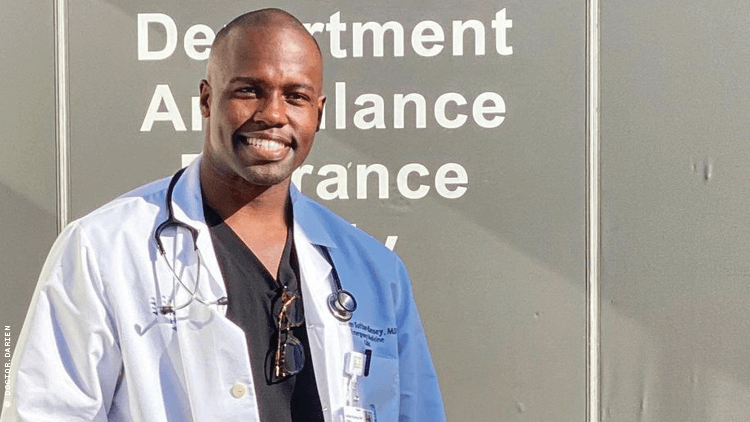
I reached out to out ABC News Medical Contributor Dr. Darien Sutton for some help getting answers to these questions. First, why all the debate and why all the waffling?

“Throughout the pandemic, there has been a consistent environment of fear and misinformation, instigated from the previous administration, and it all started at the beginning when people often felt there were too many mixed messages and too many signals. Eventually it became more and more difficult to make decisions about how to deal with the virus,” Dr. Sutton explained.

“With the change in administrations in January, we have been given more straightforward information and  more relevant data that has helped unionize the message. So, while things have changed, it doesn’t negate where we started. All the confusion created a lot of deliberation, and increased deliberation time periods, and this has resulted in a more elongated and difficult process about whether or not to get the vaccine.”

The Biden administration has been more honest and upfront, but will they be able to sell the vaccine across party lines across the country? Right now, it seems the message is that you can get back to normal sooner if you just get these shots?

“Yes, you can tell patients what they can do with the vaccine versus what they cannot do,” Sutton said. “However, I think patients want to hear answers to questions about what’s in it for them. Specifically, how does it benefit them in their personal lives? I think people don’t care as much about going to the movies again, for example, versus getting assurance that the vaccine is safe, effective and useful.”

Is that the answer then to the quandary about trying to convince someone to get the vaccine? Push its safety and effectiveness? “I think it’s important to listen and ‘ask’ the undecided first what is the basis of their concern,” Sutton believes. “Is it fear? Is it fear of reaction? Is it fear of getting sick and not having health care to get treatment.”

After you’ve heard out the person’s concerns, Dr. Sutton said the next thing you should do is “tell.” “You need to tell the person that the vaccine has been proven to be effective, protective, and it prevents person to person transmission, so there’s less chance to spread the virus, and as such it will keep you, and your loved ones, out of hospital and not cause financial burdens. After that, you need to just give the person space to think about their decision.”

I told Dr. Sutton about my former student, who is Black, and that it seems tricky to push him on something he seems sensitive about. “I’m having the same issue with my own family,” he revealed. “I come from a large Black family that remains hesitant and was raised in an environment where medicine is not trustworthy.”

“Historically, you have instances like the Tuskegee experiment for example, or in Puerto Rico with women and birth control, where minorities and poorer communities were used as guinea pigs. Many Black families and people of color feel they were used for research that benefited privileged white communities, so there’s a whole history there that has resulted in disinclination and unwillingness.”

On top of all this hesitation, understandable in some circumstances, comes the news that a booster shot might be required later this year or early next. Did Dr. Sutton feel that was the case? That we would all have to queue up again for another round of shots?

“It’s hard to say. We’re still closely following the efficacy rates and ranges of the first vaccines. What we’re seeing is that it has been effective in bolstering the immune system, and we’re hopeful that it will remain durable and long lasting and protect against other variants.”

Sutton theorized that the COVID-19 vaccine might be what’s referred to as a repetitive vaccine, similar to the annual flu shot that most of us get each fall and winter.

Finally, the CDC has said that Americans could be almost back to normal by this summer, July specifically. Did Sutton concur with that optimistic outlook? “Yes,” he quickly agreed. “People ask me all the time if we will have to go into lockdown again, and I don’t think that will happen.”

“We have done a great job of vaccinating those 65 and over, and others who were more susceptible to the disease. And we’ll ramp up vaccinations for teens and children in the next few weeks. As we know, young people were commonly asymptomatic transmitters of the virus, so as they get vaccinated, we’ll see further reductions in transmissions. All of this means that we will decrease the chances of our hospitals being overrun again, and that most of us will start to resume a normal way of life.”

John Casey is editor at large for The Advocate.

Margo Robbie Wants To Bring Poison Ivy To The DCEU – ScreenCrush

Suicide Squad actress Margot Robbie wants Poison Ivy to join the DC Extended Universe just as much as fans do. Robbie, who plays Harley Quinn in the DCEU, has proven herself to be an indispensable part of the franchise. As her character’s future unfolds on screen, Robbie is enthusiastic about bringing Harley Quinn’s partner in crime to the silver screen.

Harley Quinn and Poison Ivy have been linked together in the DC comics for a long time. Sometimes, they’re nothing more than friends. Other times, they’re romantically involved. And still other times, they’re something in between. In HBO Max’s Harley Quinn animated TV series, there’s some serious chemistry between the two characters. It makes fans wonder if that same dynamic could be explored in a live-action realm.

“Trust me, I chew their ear off about it all the time,” Robbie told Den of Geek. “They must be sick of hearing it, but I’m like, ‘Poison Ivy, Poison Ivy. Come on, let’s do it.’ I’m very keen to see a Harley-Poison Ivy relationship on screen. It’d be so fun. So I’ll keep pestering them. Don’t worry.”

Back in 2018, Robbie had voiced her wish for a Harley Quinn/Poison Ivy relationship to PrideSource. “If you read the comics you know that Poison Ivy and Harley have an intimate relationship,” she said. “I’ve been trying to—I would love to have Poison Ivy thrown into the universe, because the Harley and Poison Ivy relationship is one of my favorite aspects of the comics, so I’m looking to explore that on screen.”

In addition to being one of Hollywood’s highest-paid actresses, Robbie started her own production company, LuckyChap Entertainment, back in 2014. Since then, she’s produced films including the Harley Quinn-focused Birds of PreyI, Tonya, and Promising Young Woman. She might just be one of the DCEU’s greatest assets, and that means her desire to link up Harley Quinn and Poison Ivy could come to fruition sooner than we think.

Gallery — LGBTQ Superheroes in Marvel & DC Comics:

Human Rights Watch Submission to the Universal Periodic Review of Singapore – Human Rights Watch

Introduction

  1. Human Rights Watch submits the following information regarding Singapore’s implementation of recommendations received and accepted following its second Universal Periodic Review (UPR) in 2016. The major human rights issues raised in this submission are a continuation of many of the concerns raised during the last review.  While Singapore agreed to improve its legal instruments in the field of human rights and social protection[1] and to further include international human rights norms into its national legislation,[2] there has been very little progress in this regard. The government continues to use overly broad laws restricting freedom of speech to prosecute critical speech or to label it as false or “fake,” and the right to peaceful assembly remains severely restricted.
  2. Capital punishment remains mandatory for certain drug offenses and is still in effect for a wide range of other crimes. Use of corporal punishment, such as caning, continues to be standard practice within the criminal justice system, and in many instances is mandatory.
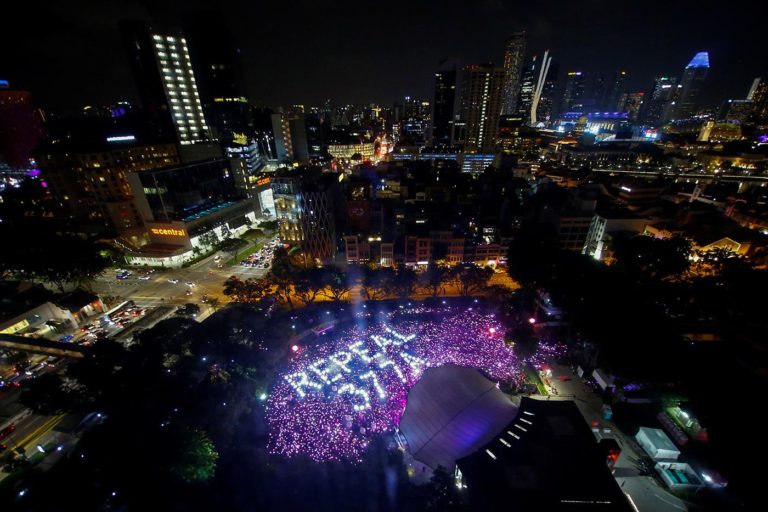
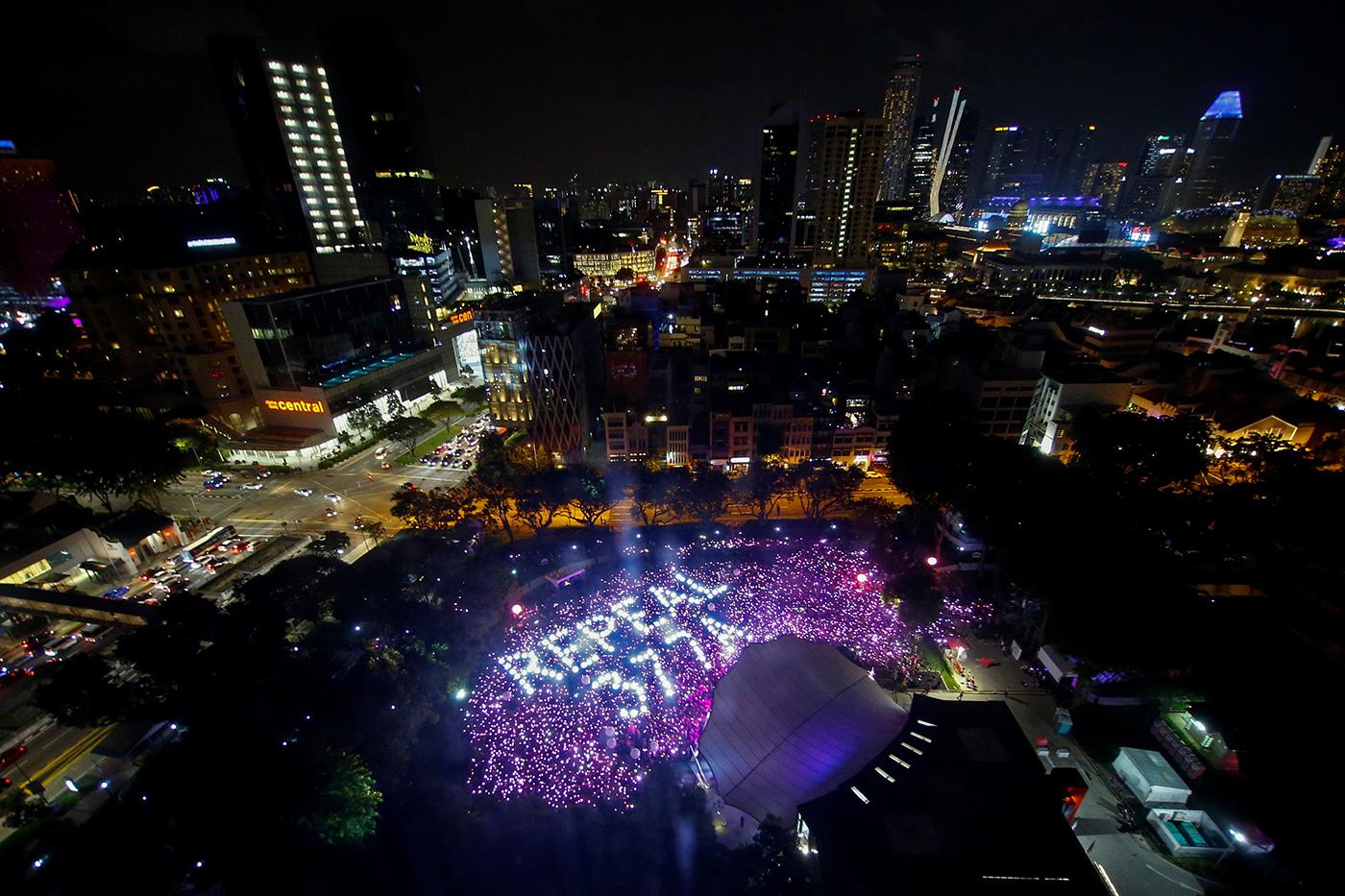
  3. Lesbian, gay, bisexual and transgender (LGBT) rights remain under threat in Singapore due to criminal code section 377A, despite a growing trend globally to decriminalise consensual same-sex conduct.

Freedom of Expression and Peaceful Assembly

  1. At its 2016 review, Singapore accepted recommendations to “adopt legislative measures to permit the realization of peaceful demonstrations and promote freedom of expression” and “ensure that freedom of opinion and expression are encouraged and protected, including for individuals and organizations communicating via online public platforms.”[3] It has clearly not done so.  Not only has the government continued to use existing laws to imprison or fine those speaking critically of the government,[4] it has enacted new laws further restricting online speech. 
  2. In 2019, Singapore enacted the Protection from Online Falsehoods and Manipulation Act (POFMA), which allows a minister to declare that online content is “false” and order a “correction notice” be placed on the relevant pages.[5] Failure to comply can be punished with blocking the social media pages in Singapore, and up to 12 months in prison and a S$14,000 fine (US$10,192)[6] for the author of the falsehood. As of July 1, 2020, POFMA had been invoked at least 50 times, primarily against content critical of the government and its policies. Correction notices have been issued to independent media outlets such as The Online Citizen and New Naratif, as well as opposition politicians and activists.
  3. Those speaking critically of the judiciary face charges of contempt.  A lawyer who posted a critical poem on his Facebook page after the execution of a client was fined S$6000 (US $4,368) for contempt and costs of S$6000 ($US 4,368).  In August 2020, Li Shengwu, a relative of Prime Minister Lee Hsien Loong, was ordered to pay a fine of S$15,000 (US$10,920) or serve a week in jail for a private Facebook post to the judiciary as “pliant.”
  4. The Administration of Justice (Protection) Act, which came into force in October 2017, provides penalties of up to S$100,000 ($US72,800) and three years in prison for several forms of contempt of court, including the archaic offense of “scandalizing the court,” a form of contempt that has been repeatedly used against those alleged to have criticized Singapore’s judiciary.  Moreover, contempt is made an “arrestable” offense – an offense that permits suspects to be subjected to warrantless searches and arrests.  In March 2020, the Court of Appeal upheld the conviction of activist Jolovan Wham[7] under that law for stating on Facebook that “Malaysia’s judges are more independent than Singapore’s for cases with political implications.” The court also upheld the conviction of John Tan, vice-chairman of the opposition Singapore Democratic Party, for posting on social media that Wham’s prosecution “only confirms that what [Wham] said is true.”
  5. Government officials also use civil defamation law to sue their critics. Singapore defamation law, in contrast to defamation laws in many other countries, does not provide a qualified privilege for criticism of government officials and other public figures, and the damages plus legal costs awarded in cases involving public figures are often cripplingly high. In December 2018, Prime Minister Lee Hsien Loong filed defamation charges against blogger Leong Sze Hian after he shared an article on his Facebook page alleging that Prime Minister Lee had links to the Malaysian 1MDB financial scandal. In September 2019, Prime Minister Lee sued editor Terry Xu for civil defamation after The Online Citizen published claims made against Lee by his siblings about the disposition of the home of Lee Kwan Yew.
  6. The government maintains strict restrictions on the right to peaceful assembly through the Public Order Act, requiring a police permit for any “cause-related” assembly held in a public place, or in a private venue if members of the general public are invited.  The definition of what is treated as an “assembly” is extremely broad.  Persons who fail to obtain the required permits face criminal charges. On August 20, 2020, the Court of Appeal upheld the constitutionality of the Public Order Act’s licensing requirement for a permit to hold public assemblies.  Under tightened restrictions put in place in October 2016, the government now considers the mere presence of a foreigner during an assembly to be unlawful participation that can result in criminal penalties for both the foreigner and the event organizer.
  7. Activist Jolovan Wham was convicted of organizing a public assembly without a permit for allowing Hong Kong activist Joshua Wong to speak at an indoor event without obtaining a permit for a foreigner to speak.[8] Wham is also facing charges under the Public Order Act for holding a vigil outside Changi Prison in July 2019 for a death row inmate, and for co-organizing a silent protest on the Singapore subway to commemorate the thirtieth anniversary of the arrest and detention of 22 activists and volunteers under the Internal Security Act in 1987
  8. Even solo protests are treated as assemblies under the Public Order Act. In October 2018, artist Seelan Palay was convicted of conducting an “illegal assembly” for standing alone outside Parliament in October 2017 with a piece of art commemorating former political prisoner Chia Thye Poh.[9]
  9. Singapore should:
  • Repeal the Protection from Online Falsehood and Manipulation Act (POFMA).
  • Amend the Administration of Justice (Protection) Act to enable full discussion of matters of public interest as follows:

    -Repeal section 3(1)(a) of the Administration of Justice (Protection) Act to abolish the offense of “scandalizing the judiciary.”

    -Amend section 3(1)(b) of the act to narrow the restriction on statements that “prejudge” a pending proceeding to those that create a substantial risk that the course of justice in the proceedings in question will be seriously impeded or prejudiced, and to make the rule equally applicable to the government and to private citizens.

    -Repeal section 3(4) of the act to eliminate the government’s discretion to make even prejudicial statements about ongoing proceedings when the government determines it is “in the public interest” to do so.

    -Amend section 13 of the act to give the author of allegedly contemptuous content notice and an opportunity to be heard before the court makes a determination whether such content must be removed.

  • Revise Singapore’s civil defamation law to require public figures to prove that the defendant knew the allegedly defamatory information was false, give preference to the use of non-pecuniary remedies such as apology, rectification, and clarification, and ensure that any pecuniary awards are strictly proportionate to the actual harm caused.
  • Amend the Public Order Act to specifically recognize the government’s obligation to facilitate peaceful assemblies as follows:

    -Amend the definition of “public assembly” and “public place” to exclude gatherings held indoors.

    -Amend section 5 and repeal section 7 of the POA to eliminate the requirement for a permit for an assembly or procession.

    -Amend section 5 to require advance notice of an assembly only if it will involve, for instance, more than 50 people and of a procession only if it will involve, for instance, more than 10 people. The purpose of the notice requirement should be to allow the authorities to take steps to facilitate the assembly and should not function as a de facto request for authorization.

    -Amend section 5 of the act to provide an explicit exception to the notice requirement for spontaneous assemblies where it is not practicable to give advance notice.

Criminal Justice

  1. Singapore did not accept recommendations that it establish a moratorium on the use of the death penalty, end the use of mandatory death penalty sentences, or abolish the death penalty.[10] The death penalty remains mandated for many drug offenses and certain other crimes. There is little transparency on the timing of executions, which often take place with short notice.[11]  Since 2016, Singapore has executed at least 25 people, most for drug offenses.  In 2017, Singapore executed Malaysian national S. Prabagaran for drug offenses despite a pending application to refer the case to the International Court of Justice. In May 2020, a court sentenced a man to the death penalty in a proceeding using Zoom video conferencing.
  2. At the 2016 UPR, Singapore further did not accept recommendations to abolish the punishment of caning, which amounts to torture under international law.[12] Corporal punishment remains common in Singapore, and for medically fit males ages 16 to 50, caning is mandatory as an additional punishment for a range of crimes, including drug trafficking, violent crimes (such as armed robbery), and even some immigration offenses.
  3. Singapore should:
  • Impose an immediate moratorium on implementation of the death penalty, with a view to complete abolition of the death penalty.
  • Abolish the use of all forms of corporal punishment as a legal penalty.

Migrant Rights 

  1. During its last UPR, Singapore accepted a number of recommendations to adopt comprehensive legislation protecting the rights of migrant workers.[13] However, foreign migrant workers remain subject to labor rights abuses and exploitation through debts owed to recruitment agents, non-payment of wages, restrictions on movement, confiscation of passports, and sometimes physical and sexual abuse. Foreign women employed as domestic workers are particularly vulnerable to abuse.  In March 2019, a couple were sentenced to three years in prison and made to pay S$10,000 ($US7,280 in compensation to their former domestic worker for mentally and physically abusing her during her employment.
  2. Work permits of migrant workers in Singapore are tied to a particular employer, leaving them extremely vulnerable to retaliation if they complain about wages or working conditions. Foreign domestic workers, which are covered by the Employment of Foreign Manpower Act rather than the Employment Act, are effectively excluded from many key labor law protections, such as limits on daily work hours and mandatory days off. In June 2019, Singapore was one of only six governments voting to abstain from new International Labour Organization (ILO) Convention No. 190 against violence and discrimination in the workplace.[14]
  3. Many migrant workers in Singapore are housed in crowded dormitories, with up to 20 people sharing a room and communal bathrooms. While Singapore had initial success in controlling Covid-19 infections in the country, a surge of cases among foreign migrant workers in early April led the government to put all dormitories on lockdown, restricting the movements of almost 300,000 workers. While some “essential” workers were moved, the bulk of the migrants were confined to hot, overcrowded rooms with little ventilation, leaving them at risk of infection. As of August 13, 52,516 dormitory residents had tested positive for the coronavirus, making up more than 90 percent of all cases in Singapore. 
  4. Singapore should:
  • Amend the Employment Act to include domestic workers to ensure that they have adequate legal protection.
  • Ratify ILO Convention No. 190: Eliminating Violence and Harassment in the World of Work.
  • Ratify the International Convention on the Protection of the Rights of All Migrant Workers and Members of Their Families.

Sexual Orientation and Gender Identity 

  1. During its last UPR, many countries recommended that Singapore decriminalize consensual same-sex relations, but Singapore rejected them all[15] and continues to criminalize consensual sexual relations between men under criminal code section 377A.  In March 2020, the Singapore High Court upheld the legality of section 377A, ruling that the law is “not so patently unreasonable” that it cannot stand.  The criminalization of same-sex activity continues to have serious negative impact on the lives of Singapore’s LGBT population.
  2. The Media Development Authority effectively prohibits all positive depictions of LGBT lives on television or radio. In June 2017, the Advertising Standards Agency asked a shopping center to remove the phrase “Supporting the Freedom to Love” from a promotional ad for the 2017 annual Pink Dot festival on the grounds it “may affect public sensitivities.”
  3. Associations of more than 10 people are required to register with the government, and the Registrar of Societies has broad authority to deny registration if he determines the group could be “prejudicial to public peace, welfare or good order.” The Societies Act makes express reference to “gender,” “sexual orientation,” and “human rights” as grounds for denying the registration of a group. The Registrar of Societies has refused to allow any LGBT organization to register as a society on the ground that “it is contrary to the public interest to grant legitimacy to the promotion of homosexual activities or viewpoints.”  The Accounting and Corporate Regulatory Authority has refused to allow T Project, which supports the transgender community in Singapore, to register as a not-for-profit company on grounds that doing so would be “against national security or interest.” The group’s appeal against the Registrar of Companies’ rejection of their application was turned down in November 2017.
  4. Singapore should:
  • Abolish section 377A of the Penal Code.
  • Amend or repeal all rules and regulations that restrict positive depictions of LGBT lives, including section 11(d) of the film classification guidelines, which prohibits films that “promote or justify a homosexual lifestyle.”
  • Amend or repeal all laws and regulations governing registration of societies, companies and charities to make clear that working for the rights of the LGBT community should not be considered against national security” or “contrary to the public interest.”

Acceptance of International Norms

  1. Singapore ratified the International Convention on the Elimination of All Forms of Racial Discrimination on November 27, 2017, which is only the fourth core human rights convention it has ratified.  However, Singapore has not ratified other key human rights conventions.
  2. Singapore should:
  • Accede to all core human rights conventions. It should also ratify the Rome Statute of the International Criminal Court.
 

[1] Recommendation 166.58. All paragraph cites are to United Nations General Assembly, Human Rights Council, Report of the Working Group on the Universal Periodic Review: Singapore, A/HRC/32/7, https://documents-dds-ny.un.org/doc/UNDOC/GEN/G16/078/42/PDF/G1607842.pdf (April 2016).

[2] Recommendation 166.59

[3] Recommendations 166.89 and 166.202

[5] See Human Rights Watch, “Reject Sweeping ‘Fake News’Bill, news release, April 3, 2019, https://www.hrw.org/news/2019/04/03/singapore-reject-sweeping-fake-news-bill

[6] Using exchange rate .728, the average over the reporting period.

[10] Recommendations 166.156-166.168.

[12] Recommendations 166.169-166.172.

[13] Recommendations 166.94, 166.79, 166.137.

[15] Recommendations 166.68-166.77.

School choice an answer to CRT, LGBT activism – The Pathway

On April 19 I testified before the Missouri House of Representatives General Laws Committee. I was surprised at how little some committee members knew about the highly controversial 1619 Project being pushed by the New York Times. The 1619 Project teaches children that America was not founded in 1776, but rather in 1619 when a group of slaves (historians dispute they were slaves) arrived to North America.

The 1619 Project has been roundly criticized by liberal American historians for a multitude of gross inaccuracies. The Princeton historian Sean Wilentz, a Democrat who supported the impeachment of President Donald Trump, has been among the harshest critics. Others include Brown University’s Gordon Wood, considered a preeminent historian of the American Revolution and Princeton’s James McPherson, the nation’s most highly regarded historian on the Civil War.

Despite widespread criticism, many school districts are starting to use the 1619 Project in their history curriculum (Kansas City for one). Rewriting, or destroying, a nation’s history is a characteristic of Marxist ideology. “Take away a nation’s history and it is more easily persuaded,” stated Karl Marx.

The 1619 Project comes along just as “critical race theory” (CRT) invades public schools. Carol Swain, the former (black) professor of political science and law at Vanderbilt University, offers a definition of CRT: “Critical race theory is an analytical framework to analyze institutions and culture. Its purpose is to divide the world into white oppressors and non-white victims. Instead of traditional forms of knowledge, it holds up personal narratives of marginalized minority ‘victim’ groups (blacks, Hispanics, Asians) as evidence (considered irrefutably by its nature) of the dishonesty of their mostly white heterosexual oppressors.” This explains the tearful reaction a St. Louis mother expressed while testifying before the General Laws Committee, April 19: “My little boy came home from school and said, ‘Momma, why am I a racist?’” The room sat in stunned silence.

Meanwhile, the homosexual lifestyle – along with transgenderism – is extolled in public schools. Some Missouri public school systems are building restrooms that must be shared by both sexes. We are not far from having men sharing locker rooms with girls – and competing against them in athletics. When State Rep. Chuck Basye, R-Rocheport, introduced a bill that would prohibit men from competing with women in school sports, transgendered people supported by the Kansas City and St. Louis Chambers of Commerce packed the committee hearing room in opposition. Sadly, Basye’s bill is unlikely to pass this session.

All this is happening during a pandemic that has forced children into virtual classes at home. This has robbed them of their friends and extra-curricular activities. Suicides among Missouri children are rising.

Jesus talked about taking proper care of children, warning against causing them to sin (Matt 18). I think about how churches hold ceremonies dedicating our new born to the Lord. Yet, we turn around and subject them to these sinful endeavors in government schools largely because there has been no alternative – until now.

While profoundly dangerous curriculum issues persist, the Missouri General Assembly, after more than a decade of fighting with teacher unions and liberal school superintendents, has finally acted. It recently passed House Bill 349, creating “Empowerment Scholarship Accounts” (ESAs). This school choice bill allows students to receive scholarships from non-profit organizations for private – even religious – school tuition or related expenses, including those for homeschooling. Donors to the ESA program would get a state tax credit of up to 50 percent of the amount given.

The legislation affects only students in charter counties or cities with more than 30,000 people. The amount for school transportation will be increased as a means of compromising with rural districts traditionally opposed to ESAs.

“This is a bill that is good for kids. It provides another option,” said Sen. Andrew Koenig, R-Manchester, the sponsor of the bill in the Senate.

Southern Baptists have often been split on the issue of school choice. Public school supporters believe our Christian witness is needed in schools. Churches are filled with public school teachers, who are loved and supported. Opponents have expressed concerns about government “strings” being attached to any school choice measure, fearing it could force religious schools to compromise their faith. But ESAs do not do that. The money donated does not go to the government, but to a non-profit administrator, who awards the scholarships and allows the donor to receive a tax credit.

“Year after year, I’ve seen this bill die and to finally get it across the finish line it’s personally a proud moment,” said House sponsor State Rep. Phil Christofanelli, R-St. Peters. It is an even more important moment for Missouri parents and their children.

Warsaw to run shelter for LGBT+ people – The First News – The First News

The new hostel in the Polish capital will be run by the Lambda Warsaw Association, an organisation which for over 20 years has been supporting lesbian, gay, bisexual, and transgender people. Olivier Hoslet/PAP/EPA

Warsaw will open an intervention hostel for LGBT+ people who have become homeless.

The establishment of the hostel comes at a time when the Polish state has been accused of fostering an environment of intolerance towards sexual minorities.

The United Right coalition, which holds power in Poland, has faced accusations of scapegoating LGBT people, and sexual and reproductive health activists for political ends, under the rubric of attacks on “gender ideology.”

Posting on social media, Warsaw’s deputy mayor Aldona Machnowska-Góra said: “The Capital City of Warsaw is a place open to everyone. We want everyone to have equal rights and opportunities, feel good and, above all, to be safe.”Aldona Machnowska-Góra/Facebook

The new hostel in the Polish capital will be run by the Lambda Warsaw Association, an organisation which for over 20 years has been supporting lesbian, gay, bisexual, and transgender people.

“The Capital City of Warsaw is a place open to everyone. We want everyone to have equal rights and opportunities, feel good and, above all, to be safe,” Warsaw’s Deputy Mayor Aldona Machnowska-Góra wrote on social media announcing the result of the tender.

“The facility will provide not only safe shelter for LGBT+ people who have lost their homes, but also the necessary psychological, legal and social support to enable them to stand on their own two feet,” she added.

The Lambda Warsaw Association, together with the Trans-Fuzja Foundation, ran the first intervention hostel for LGBT+ people in Poland in 2025-2016

Machnowska-Góra added: “The facility will provide not only safe shelter for LGBT+ people who have lost their homes, but also the necessary psychological, legal and social support to enable them to stand on their own two feet.”Aldona Machnowska-Góra/Facebook

“We have sheltered dozens of people who found themselves in a difficult life situations. We are happy that we will be able to help again in this way, because we know how much such a place is needed in Warsaw and how many people are waiting for it,” Lambda wrote on its website.

The establishment of the facility will fulfil one of the provisions of the so-called “Warsaw LGBT+ Declaration” signed in 2019 by Rafał Trzaskowski, Warsaw’s mayor. The document envisages a fast-track aid mechanism for LGBT+ and anti-discrimination education. It also covers such areas as: safety, education, culture and sport, administration, as well as work.

The declaration is in contrast to controversial local authority resolutions against sexual minorities. In Poland, dozens of small towns have declared themselves “LGBT free zones.”

Queen Elizabeth II announces government will ban “ex-gay” conversion therapy – LGBTQ Nation

Queen Elizabeth II has announced that the government will outlaw “ex-gay” conversion therapy, the dangerous psychological technique meant to “cure” a person of homosexuality.

While the practice has been discredited by every major medical association, the religious right continues to promote the technique despite the increased risk of suicide and depression by participants.

Related: The man behind ex-gay “conversion therapy” started out trying to make autistic children “normal”

“Measures will be brought forward to address racial and ethnic disparities and ban conversion therapy,” the Queen said during her nine-minute speech to Parliament.

“As a global leader on LGBT+ rights, this government has always been committed to stamping out the practice of conversion therapy,” Liz Truss, Minister for Women and Equalities, added after the speech. Truss confirmed the government would move forward on the measure.

“We want to make sure that people in this country are protected, and these proposals mean nobody will be subjected to coercive and abhorrent conversion therapy. Alongside this legislation, we will make new funding available to ensure that victims have better access to the support they need.”

Earlier this year, the American Psychological Association issued a statement condemning a variant of the technique meant to “cure” transgender people.

“There is a growing body of research that shows that transgender or nonbinary gender identities are normal variations in human expression of gender,” said APA President Jennifer F. Kelly in a statement. “Attempts to force people to conform with rigid gender identities can be harmful to their mental health and well-being.”

Create LGBT-friendly places for work: group – 台北時報

  • By Sherry Hsiao / Staff reporter

The Taiwan Tongzhi (LGBTQ+) Hotline Association yesterday urged employers to create more gender-friendly workplace environments, saying that transgender people continue to face many problems at work.

Taiwan has legalized same-sex marriage and is a model for gender equality in Asia, the association said.

However, a survey it conducted with the Taiwan Equality Campaign last year showed that 53.1 percent of companies have yet to implement any gender-friendly measures or make an attempt to create a LGBT-friendly workplace, the association said.

One of the main issues faced by transgender people is that they often have trouble finding a job, association secretary-general Tsai Ying-chich (蔡瑩芝) told a news conference in Taipei, citing reports it has received from transgender people.

Many transgender people write down on their resumes or job applications forms the gender that is recorded on their national identification cards, the association said.

However, because the photographs on their resumes or applications might not match that gender description, transgender people might not be able to find an ideal job or even get an interview, it said.

Another issue is that in some work environments, transgender people might not be able to access the bathroom that matches their gender identity, it said.

It added that some workplace environments not only require workers to wear a uniform, but also have different styles of uniform for male and female employees.

This forces transgender workers to wear a uniform that does not correspond with their personal gender identity, it said.

Some managers ask other employees in the company whether they would be willing to work with a transgender colleague or announce in advance that a transgender person would be joining the company, resulting in everyone in the workplace knowing they are transgender even in cases where other people might not have had questions about their gender based on their appearance, it said.

Taiwan has been discussing the need for gender-friendly workplaces for many years, but in the past the focus has been on women and gay or lesbian groups, Democratic Progressive Party Legislator Fan Yun (范雲) said.

She said she would urge government agencies to promote more inclusive measures, such as having companies remove the gender question on their job application forms or giving applicants the option of choosing “other” as a response.

The association called for greater public awareness of the need for transgender-friendly workplaces ahead of the International Day Against Homophobia, Transphobia and Biphobia on Monday next week.

The association said it would invite people to upload photographs of themselves wearing clothing in light blue, pink and white — the colors of the transgender pride flag — onto Facebook or Instagram on Monday with the hashtag #517我挺跨, the characters of which mean “I support the transgender community,” to show their support, it said.

Comments will be moderated. Keep comments relevant to the article. Remarks containing abusive and obscene language, personal attacks of any kind or promotion will be removed and the user banned. Final decision will be at the discretion of the Taipei Times.