Home Blog Page 266

Lawmaker urges Malta to stop criminalising women who seek abortions – Thomson Reuters Foundation

0

Surprise bill tabled by Marlene Farrugia in Catholic Malta seeks to remove criminal sanctions for women who seek abortions

By Emma Batha

LONDON, May 12 (Thomson Reuters Foundation) – A Maltese lawmaker made history on Wednesday by calling for the decriminalisation of abortion in the Mediterranean island, which has one of the world’s strictest bans.

In the first such move to amend the country’s tough abortion laws, independent MP Marlene Farrugia presented a bill which would remove criminal sanctions for women who seek terminations.

“It’s a historic moment,” said Lara Dimitrijevic, a lawyer and director of the Women’s Rights Foundation which campaigns on abortion rights in Malta.

“It is not legalising abortion, but it is a very important first step.”

Malta is one of five countries in the world that outlaw abortion in all circumstances, even when a woman’s life is at risk. The others are El Salvador, Nicaragua, Dominican Republic and Vatican City.

Procuring an abortion, or helping someone to do so, is punishable by up to three years in jail under Malta’s criminal code.

A doctor carrying out a termination faces up to four years in prison and a permanent ban on practising medicine.

Abortion opponents in the Catholic country say life begins at conception. But campaigners say the law does not stop women having terminations and Malta must stop criminalising them.

The online newspaper MaltaToday described the bill as “a bolt from the blue”, adding Farrugia was not known as a pro-choice politician.

Dimitrijevic said the surprise bill had immediately sparked a huge outpouring of support on social media and many people had started gathering outside parliament.

There is no date for when the bill will be debated in parliament.

Although prosecutions are rare, campaigners say the law impacts women’s health and creates a climate of fear and silence.

Abortion has long been a taboo issue in Malta, but attitudes are becoming more liberal in the country, which has legalised same-sex marriage and banned gay conversion therapy.

“Social attitudes are changing, particularly among the young, and the Catholic Church does not have the influence it once had,” Dimitrijevic said.

Campaigners estimate 300 to 500 women in Malta seek abortions every year. Many buy pills online while others travel overseas for terminations, mostly to Britain and Italy.

With the COVID-19 lockdown preventing most travel, Dimitrijevic said more women had resorted to buying abortion pills online, which can be dangerous if they need medical support and leaves them open to prosecution.

Women on Web, a Canadian organisation providing abortion pills by post following online consultations, said it shipped 220 sets of pills to Malta last year.

About 60 women a year travel from Malta to Britain for an abortion, according to UK government data.

Others pay about 2,000 to 3,000 euros ($2,400 to $3,620) for an abortion in the Italian island of Sicily, to its north, via a “tour guide” who takes them to a “clinic” after meeting them off the ferry or plane, according to campaigners.

They say such abortions are probably illegal under Italian law, which states terminations can only be performed in public hospitals.

Related stories:

Abortion rights hotspots in 2021 as Argentina grants approval

FACTBOX – Abortion rights in Europe

Abortion in a lockdown: India says ‘yes’ but women wonder how

($1 = 0.8287 euros) (Reporting by Emma Batha @emmabatha; Editing by Katy Migiro. Please credit the Thomson Reuters Foundation, the charitable arm of Thomson Reuters, which covers the lives of people around the world who struggle to live freely or fairly. Visit http://news.trust.org)

Our Standards: The Thomson Reuters Trust Principles.

German Catholics to bless gay unions despite Vatican ban – NBC News

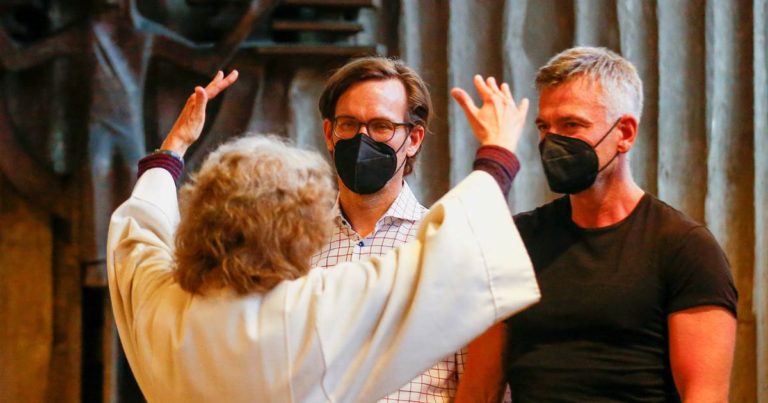
BERLIN — Germany’s powerful Catholic progressives are openly defying a recent Holy See pronouncement that priests cannot bless same-sex unions by offering such blessings at services in about 100 different churches all over the country this week.

The blessings at open worship services are the latest pushback from German Catholics against a document released in March by the Vatican’s orthodoxy office, the Congregation for the Doctrine of the Faith, which said Catholic clergy cannot bless same-sex unions because God “cannot bless sin.”

The document pleased conservatives and disheartened advocates for LGBTQ Catholics around the globe. But the response has been particularly acute in Germany, where the German church has been at the forefront of opening discussion on hot-button issues such as the church’s teaching on homosexuality as part of a formal process of debate and reform.

The dozens of church services celebrating blessings of gay unions are the latest escalation in tensions between conservatives and progressives that have already sparked alarm, primarily from the right, that part of the German church might be heading into schism.

Germany is no stranger to schism: 500 years ago, Martin Luther launched the Reformation here.

Pope Francis, who has championed a more decentralized church structure, has already reminded the German hierarchy that it must remain in communion with Rome during its reform process, known as a “synodal path.”

In Berlin, the Rev. Jan Korditschke, a Jesuit who works for the diocese preparing adults for baptism and helps out at the St. Canisius congregation, will lead blessings for queer couples at a worship service May 16.

“I am convinced that homosexual orientation is not bad, nor is homosexual love a sin,” Korditschke told The Associated Press in an interview Friday. “I want to celebrate the love of homosexuals with these blessings because the love of homosexuals is something good.”

The 44-year-old said it is important that gays and lesbians can show themselves within the Catholic Church and gain more visibility long-term. He said he was not afraid of possible repercussions by high-ranking church officials or the Vatican.

“I stand behind what I am doing, though it is painful for me that I cannot do it in tune with the church leadership,” Korditschke said, adding that “the homophobia of my church makes me angry and I am ashamed of it.”

The head of the German Bishops Conference last month criticized the grassroots initiative for gay blessings which is called “Liebe Gewinnt” or “Love Wins.”

Limburg Bishop Georg Baetzing said the blessings “are not suitable as an instrument of church political manifestations or political actions.”

However, Germany’s powerful lay organization, the Central Committee of German Catholics, or ZdK, which has been advocating for gay blessings since 2015, positioned itself once more in favor of them. It called the contentious document from Rome “not very helpful” and explicitly expressed its support for ”Love Wins.”

“These are celebrations of worship in which people express to God what moves them,” Birgit Mock, the ZdK’s spokeswoman for family affairs, told the AP.

“The fact that they ask for God’s blessing and thank him for all the good in their lives — also for relationships lived with mutual respect and full of love — that is deeply based on the Gospel,” Mock said, adding that she herself was planning to attend a church service with gay blessings in the western city of Hamm on Monday in which she would pray for ”the success of the synodal path in which we, as a church, recognize sexuality as a positive strength.”

The ZdK has been taking part in the “synodal path” meetings for more than a year with the German Bishops Conference. They are due to conclude in the fall. The meetings include talks about allowing priests to get married, the ordination of women and a different understanding of sexuality, among other reforms. The process was launched as part of the response to revelations of clergy sexual abuse.

“We’re struggling in Germany with a lot of seriousness and intensive theological discourses for the right path,” Mock added. “Things cannot continue the way they did — this is what the crimes and cover-ups of sexual abuse showed us.”

“We need systemic changes, also regarding a reassessment of the ecclesiastical morality of sexuality,” Mock said.

Follow NBC Out on Twitter, Facebook & Instagram

New York Times’ Mara Gay roasted for claiming Dave Rubin’s show ‘regularly hosts white supremacists’ – Fox News

Liberal New York Times editorial board member Mara Gay was roasted Tuesday for claiming in an interview that commentator Dave Rubin “regularly hosts white supremacists” on his show “The Rubin Report.” 

Gay, a frequent critic of conservatives and Republicans on MSNBC, made the claim during the newspaper’s editorial endorsement interview with Democratic New York City mayoral candidate Andrew Yang, in which she also incorrectly labeled the show as “The Dave Rubin Show.”

NEW YORK TIMES’ MARA GAY MOCKED FOR ATTACKING ‘RACIST TWITTER MOB’ FOLLOWING MSNBC MATH FIASCO

“Over the years, you’ve built your brand by frequently doing radio and other appearances with right-wing media personalities. At times you said that the Democratic Party should gravitate away from identity politics. You’ve supported automating fast-food workers at times. Why appear on shows like “The Dave Rubin Show,” who regularly hosts white supremacists?” Gay asked Yang in the interview. 

Gay provided no evidence to support her claim, nor did she name anyone who appeared on Rubin’s show that she considered to be a white supremacist. 

Yang responded that he was willing to go on any show while he was running for president and that he wasn’t aware any such guests appeared on the platforms at the time he was doing interviews on them.

RACISM ALLOWED DONALD TRUMP ‘FREE REIN TO TERRORIZE THE AMERICAN PEOPLE FOR FOUR YEARS’: MSNBC ANALYST

Rubin himself took to Twitter, roasting Gay for the claims, and asked her to name the white supremacists that appeared on his show. Rubin, who once worked for the left-wing outlet The Young Turks, has interviewed controversial right-wing figures such as Milo Yiannopoulos and Paul Joseph Watson.

“Can you name a few white supremacists I’ve had on my show? Like legit white supremacists, not just people you don’t like so you call them that. Also the show is called ‘The Rubin Report.’ I look forward to the apology and retraction. Thanks,” Rubin wrote. 

BIG TECH HAS THE POWER TO ‘MANIPULATE’ AND ‘CONTROL THE MESSAGE’: DAVE RUBIN

Rubin continued going after Gay, even offering her a free subscription to his show. Gay has yet to respond to the criticism, or to provide any evidence supporting her claims against the show as of Wednesday.

CLICK HERE TO GET THE FOX NEWS APP 

Gay is known for her memorable mistake on MSNBC last year when she believed billionaire Michael Bloomberg could have provided $1 million to every American with the $500 million he spent on his failed presidential campaign. The actual amount was less than $2 per person.

The Times editorial board did not endorse Yang, the frontrunner in the Democratic mayoral primary, electing to go with Kathryn Garcia.

The Eugenics Roots of Evangelical Family Values – Religion & Politics

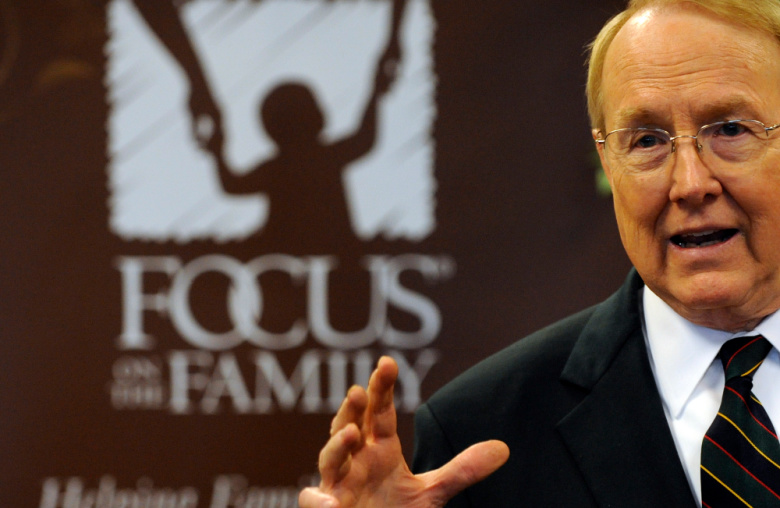
James Dobson (RJ Sangosti/The Denver Post/Getty Images)

Beth Moore is still making waves. On April 7, soon after announcing her departure from the Southern Baptist Convention, she took to Twitter to proclaim complementarianism “a doctrine of MAN” and to beg forgiveness for supporting the theology of male headship. “I could not see it for what it was until 2016,” she wrote. (Moore later clarified that she hasn’t totally abandoned complementarianism; rather, she disapproves of how the doctrine became supreme.)

Conservative evangelicals were swift to rebuke her, quoting scriptural commands for women to “remain quiet” and expressing regret that Moore was “running to embrace the world.” Others applauded her for acknowledging how complementarianism is derived from human culture, not divine law. The latter critique is also described in a recent wave of academic books that argues that complementarianism and its corollaries—”purity culture” and “family values”—are based on a foundation of sexism and white supremacy. Within this wave is Beth Allison Barr’s Making Biblical Womanhood: How the Subjugation of Women Became Gospel Truth, which examines how figures like James Dobson “sanctified” the nineteenth-century “cult of domesticity” demanding women’s piety, purity, submission, and domesticity.

There is another, lesser known source of inspiration for modern white evangelicals and Dobson, in particular: eugenics. And this specific history helps to explain how procreative, heterosexual marriage became enshrined as the single-most important moral duty for some evangelicals—one that believers are enticed to pursue from a young age and then to perform at all costs, including physical and psychological harm.

Eugenics, a program to improve the “quality” of the human population, gained popularity in the early twentieth century, when more than 30 states enacted laws authorizing the forced sterilization of the “unfit”—poor, disabled, immigrant, and otherwise socially undesirable persons. Eugenics and evangelicalism have long been thought to be antithetical, as evangelicals largely opposed sterilization. (As Christine Rosen explains in Preaching Eugenics: Religious Leaders and the American Eugenics Movement, evangelicals were not inclined to support any practice that grew out of bogeyman Charles Darwin’s evolutionary theory, nor were they as enthusiastic about social reform as were the liberal Protestants who endorsed eugenics—their focus was on saving souls.) But the evangelicals-versus-eugenics framing is too simple. Evangelicals fervently supported other eugenics programs, including anti-miscegenation laws, stringent immigration restrictions, and even so-called “responsible breeding.” The Rev. Billy Sunday once ranted about the last at a 1917 revival, citing the famous case studies of the “Juke” and “Edwards” families to stress the impact of heredity. (Eugenicists claimed the pseudonymous Jukes were a long line of criminal degenerates, while the descendants of the revivalist preacher Jonathan Edwards were virtuous and well-bred.) A New York Times writer marveled that “the scientific aspect of his sermon … overshadowed the denunciations of sin.” Sunday, after all, had a reputation for rebuffing modern science.

Evangelicals even more firmly embraced eugenics after World War II, as sterilization advocates shifted focus to the other side of the eugenics coin: “positive eugenics.” Positive eugenics aimed to increase the breeding of the “fit” (able-bodied, middle-class whites), providing a far more respectable face for the movement, which had become imperiled by scientific criticism and the rise of the unpopular Nazi party. This modernized form of eugenics gelled with racist notions of Christian dominion, which avowed segregationist and eugenicist R.J. Rushdoony would popularize in the 1960s and 70s.

One positive eugenicist who particularly shaped religious conservatives was Californian Paul Popenoe, a central figure in my recent book, The Unfit Heiress: The Tragic Life and Scandalous Sterilization of Ann Cooper Hewitt. Popenoe had been one of the most prolific advocates for the segregation and forced sterilization of people whom he deemed to be “waste humanity,” even inspiring leaders of the Third Reich before the time came for him to rebrand as a defender of patriarchal, procreative marriage. In 1930, Popenoe, an atheist, opened the American Institute of Family Relations (AIFR) in Los Angeles to improve marital harmony and remove what he thought to be obstacles to white reproduction, such as rape, masturbation, pornography, female frigidity, and feminist yearnings. Over the next several decades, Popenoe counseled white couples on the importance of strict gender-norms and same-race marriage, training psychologists, clergymen (many Baptist and Mormon), and youth group leaders—his new allies in the racial betterment project—to do the same. According to Hilde Løvdal Stephens, author of Family Matters: James Dobson and Focus on the Family’s Crusade for the Christian Home, he instructed counselors to use “heredity” and “interpersonal compatibility” as codes for race, especially when his views on race began to go out of vogue.

Popenoe encouraged women to make themselves sexy for their husbands, let domestic violence slide, and look out for their man’s ego and sexual needs. Knowing that some women were sexually reticent, he hired Dr. Arnold Kegel to develop a treatment. (“Kegels” were born.) Popenoe explored methods to suppress homosexual desire, such as electroshock therapy, though it’s not clear if his institute ever used this technology. The man dubbed “Mr. Marriage” also gave considerable attention to clients’ temperaments. One of his first-generation eugenics colleagues, Roswell Johnson, abetted these efforts. Johnson, who’d previously crafted intelligence tests to identify and weed out the “feebleminded,” developed an extensive personality test for assessing compatibility, an adaptation of which is popularly used by Christian marriage experts today.

Popenoe expanded his reach when he began to author a column based on real-life clients for Ladies’ Home Journal and make television appearances. He hosted the syndicated Divorce Hearing and was a regular guest on the conservative evangelical and right-wing media mogul Art Linkletter’s House Party on CBS. Before his death in 1979, he helped give rise to a cottage industry of Christian sex and marriage guides, including Herbert Miles’ 1967 Sexual Happiness in Marriage; J. Allan Peterson’s anthology The Marriage Affair, which put Popenoe’s patriarchal marital ideals alongside those of Billy Graham and Tim LaHaye; and Tim and Beverly LaHaye’s 1976 The Act of Marriage: The Beauty of Sexual Love. (All of these books cited the eugenicist.)

Beyond pushing run-of-the-mill gender essentialism and the constant, careful management of women’s bodies and personalities, Christian marriage manuals helped normalize marital misery—a phenomenon well captured by another of LaHaye’s titles, How to Be Happy Though Married. They often portrayed marriage as groan-worthy, but “worth it,” laying the groundwork for Gary Chapman’s 1992 Five Love Languages, which has become a perennial bestseller. In The Tragedy of Heterosexuality, scholar Jane Ward notes that books like Chapman’s foreshadowed more contemporary Christian mega-church events, which similarly ask individuals, particularly women, to reinvent themselves for the sake of lifelong unity. (One can’t help but also think of the recently gone-viral video of a Baptist pastor who berated wives for “letting themselves go.”)

Of course, adapting eugenicists’ notions of hygienic and well-adjusted marriage isn’t inherently racist; and as Ward notes, secular culture, too, drew upon positive eugenics. Mid-century television programs like I Love Lucy and The Honeymooners made comedy of marital discontent, while ads stressed the importance of maintaining trim figures, skin bleaching, douching, and even modifying one’s demeanor, where necessary. But the eugenicist-evangelical alliance manifested in a present culture that idealizes white reproduction, stokes fear of non-white reproduction, and blames a lack of marital morality for problems actually wrought by sexism and white supremacy.

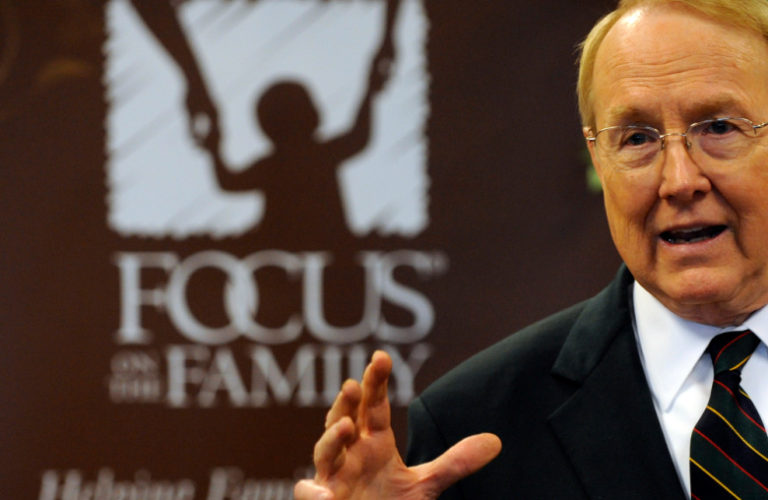
This phenomenon may be best illustrated by the tracing the trajectory of psychologist James Dobson, author of many child-rearing and marriage manuals; founder of the hugely influential para-church organization Focus on the Family (FoF); and former host of the so-named radio program. FoF was formed in 1977 to promote the same ideals as AIFR—heterosexual marriage and conservative gender norms—in addition to creationism, school prayer, and other culture war imperatives.

Prior to launching his pro-marriage empire, Dobson went to work for Popenoe—a detail conspicuously missing from journalist Dale Buss’s authorized biography of him. As the eugenicist’s assistant, he authored numerous publications on male/female differences and the dangers of feminism. Like his mentor Popenoe, who wrote the forward to his first book, Dobson viewed homosexuality and feminism as grave threats to the family, seeming to rank crises like domestic abuse much lower. (In his 1983 Love Must Be Tough, he even questioned the innocence of abuse victims, recalling a woman at his church who supposedly baited her husband to hit her so she’d have a bruise to show off to the congregation.)

Post-AIFR, Dobson’s extensive output for mostly white audiences was sprinkled with expressions of anxiety about interracial marriage and non-white reproductive trends, as Popenoe’s had been. Whereas Popenoe advised “marrying your own,” FoF discouraged crossing the color line, claiming concerns about compatibility. And whereas Popenoe fretted about the prolific reproduction of the lower classes, particularly Mexican Americans in California, FoF devoted much attention in the 90s and early 2000s to Black welfare dependency and out-of-wedlock births. Now-FoF President Jim Daly even invoked the infamous Moynihan Report, which suggested that the welfare state had contributed to the disintegration of the Black family in impoverished areas. In a copublication of Political Research Associates and the Women of Color Resource Center, political scientist Jane Hardistry has noted that by carefully avoiding overt statements of the inferiority of people of color, organizations like FoF managed to spread the idea that African Americans constituted the bulk of welfare recipients (they do not); obscure racial and gender discrimination as causes of poverty; and tout white Christian norms as the solution to any and all social ills.

Dobson, who retired from FoF in 2009 and now hosts the radio program Dr. James Dobson’s Family Talk, has repeatedly betrayed his personal anxieties about a dark-skinned takeover. After visiting the southern border in 2019 at the Trump administration’s invitation, he claimed to fear “illiterate,” “unhealthy,” “violent criminals” would “bankrupt” and “take down” America, if not controlled. Popenoe’s protégé has also coupled comments about immigration with myths of declining birth rates in America, as have Christian-right activists behind a slew of books and films predicting the end of white civilization. (It may have been Ben Wattenberg’s blatantly eugenicist 1987 book The Birth Dearth: What Happens When People in Free Countries Don’t Have Enough Bodies that first popularized such notions of cultural and genetic suicide; Ward notes that this text explicitly influenced the political rhetoric of 90s conservatives like Pat Robertson, Pat Buchanan, and Dan Quayle.) Dobson often appeals to his opposition to abortion as some sort of proof of his anti-racism. But in framing abortion as Black genocide, he once again infantilizes women of color by pretending they have no agency.

The interplay between secular eugenicists and religious conservatives utterly contradicts the latter’s claims to reject godless culture, which may be why Popenoe’s son thought the allyship between his father and people like Dobson so curious. Reflecting on his parent’s later years in a publication of the secular think-tank Institute of American Values, David Popenoe remarked, “My father was no more religious than ever, but [religious persons] were his new professional and ideological allies and protegees.” But beyond this revealing secular-religious collaboration, such history reveals how fears of racial decay have shaped the conservative imagination of morality. Eugenicist fears of white replacement have rendered marriage non-negotiable, even in cases where marriage requires, in Ward’s words, “a significant amount of performativity.” African Americans who veer off-script are blamed for any social and economic hardships they may experience; and whites who do so are also dehumanized.

The Popenoe-Dobson legacy still reverberates loudly within corners of white evangelical culture, where sexual abuse is still rampant and married women face pressure to quietly endure because of the stigma of divorce. Some married women are shamed for not wanting to have a “quiverfull” of children, especially in circles where ideas of white decline pervade everyday conversation. In some cases, teens and young adults are threatened with disease and lifelong sexual frustration if they do not “save” themselves for heterosexual marriage, which is sold as the be-all, end-all of earthly life. The “abstinence-only” message, rooted as much in fears of race-mixing as STDs, teaches that girls are either pure or utterly wanton—there is no in-between. Some gay evangelical youth and college students are still subjected to conversion therapy, which many medical professional associations have deemed ineffective and harmful.

Under the mantle of outbreeding “inferior” people, these conservative messages and mores have sanctioned many harms. Beth Moore is right to look around and note that much of what passes for God’s plan today is devastatingly “of man.” In the case of complementarianism and family values, evangelicals have taken up a fight with humanity’s worst designs.

Audrey Clare Farley is a historian of twentieth century American fiction and culture. She holds a PhD in English literature and is the author of The Unfit Heiress: The Tragic Life and Scandalous Sterilization of Ann Cooper Hewitt. Her writing has appeared in The Atlantic, The New Republic, The Washington Post, and many other outlets. Follow her @AudreyCFarley.

5 Queer Things to Do: Drag Fest, Gay Glamping and More – pride source.com

Listen, queers, we know you’ve been thirsty for a Hot Gay Summer™ since the one that didn’t happen in 2020. While I can’t promise you that you’ll be able to safely flaunt those quarantine cakes — yes, I see you — everywhere you want, there are still safe entertainment options that exist during the hellscape that is this pandemic. From gay glamping to drag shows to a bit of Pride history, here are five queer things you can do right now.

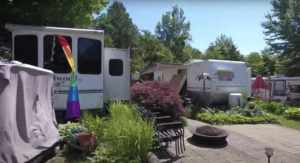
CampIt. Screenshot via YouTube.

1. Go Glamping With the Gays
As Michigan continues to thaw out, it’s natural to want to go outside again — maybe even stay for a few days. You can do so safely at the CampIt Outdoor Resort in Fennville (which is inclusive, unlike other, more infamous, anti-trans Michigan campgrounds). CampIt has 33 acres of campground packed with amenities to accommodate any of your everyday needs outdoors. And since CampIt provides camping with a queer twist, there’s no shortage of events like Prom Night “Into the Woods” Weekend (May 21 through 23), Leather Fetish Kink Weekend (June 4 through 6) and LGBT Music Festival Weekend (June 18 through 20). And if raw nature gets to be too much for you, the LGBTQ-affirming (and shopping-friendly) towns of Saugatuck and Douglas are only 10 minutes away.
Learn about pricing and make reservations throughout the rest of the year at campitresort.com.
Courtesy Photo.

2. Brush Up on Your Queer History with FX’s ’PRIDE’ Docuseries
In this original FX docuseries, six LGBTQ+ film directors explore the heroism and heartbreak that both defined the history of the gay rights movement and changed the face of the nation. Episodes of the series span the 1950s Lavender Scare, the 1990s “culture wars,” the civil rights movement and the nationwide battle for marriage equality. See perspectives from well-known figures like Black lesbian womanist Audre Lorde and Bayard Rustin, a Black gay rights and political activist. You’ll also get to know lesser-known heroes of the movement, like lesbian march organizer and activist Madeleine Tress and gay videographer and early vlogger Nelson Sullivan — each of whom paved the way for modern-day LGBTQ+ rights.

Watch the premiere on Friday, May 14, 8 p.m., or stream it on Hulu the day after.

DJ Tanzer. Courtesy photo.

3. Get Your Instant Disco Fix
Disco is back, and it’s Australian. “Disco Instamatic” is the work of queer singer, composer, artist and disco DJ Tanzer in collaboration with Australia’s queer screen culture magazine Sissy Screens. Streamable now, this movin’ and groovin’ installation blends Tanzer’s brand-new song “Deep Fried Disco” with drag, dance and visual art. And Tanzer isn’t the only artist it showcases. Viewers will see the work of 20 fellow artists who will explore how their identities have informed their work.
“’Disco Instamatic’ is a glamorous time capsule that captures, elevates and amplifies the icon within. In a breathless, glittering moment, the viewer can come face to face with a superstar, in a vignette as intimate as it is dazzling,” Tanzer says.
Buy tickets online and learn more at tanzertanzertanzer.com.

Jan Sport. Courtesy photo.

4. Shantay, Stay Awhile for Digital Drag Fest 2021
Seeing a drag queen-studded lineup featuring icons Latrice Royale, Trixie Mattel, Jinkx Monsoon and Monet X Change back-to-back is possible in more than just a fever dream thanks to Digital Drag Fest 2021. Back again this year with all-new content, you can watch your favorite queens werq unique, 45- to 60-minute online shows over two weekends without leaving your house.
“I’m so excited to be bringing ‘Yes We Jan’ RIGHT to your home! We’ve been through a lot this last year, and right now, with normalcy in sight, we need one more final push to get us there! And I’m the hype-JAN to do it!,” Jan Sport tells Between The Lines. “This show is all about self-love, acceptance and empowerment, so what are you waiting for!?”

The show plays May 21-23 and May 28-30. Purchase tickets and merch at sessionslive.com/DigitalDragFest.

“A Night at Switch n’ Play.” Screenshot via Vimeo.

5. Catch a (Virtual) Queer Movie
Originally founded in 1988, Newfest was a direct response to the AIDS epidemic plaguing New York at the time. Then, the festival highlighted subversive queer media; today, it has survived to create a global platform for LGBTQ+ creators to do so from around the world. For those looking to take in a monthly dose of topical queer culture, NewFest Presents might just be the thing.
According to event organizers, “Our curated monthly series features topical documentaries and narrative films that reflect the wide range of LGBTQ+ identities, giving audiences an opportunity to experience our stories and stay connected to the community through screenings and conversations with filmmakers and LGBTQ+ leaders.”
This month’s film is “A Night at Switch n’ Play,” a behind-the-scenes look at one of Brooklyn’s most popular queer live shows with a Q&A moderated by drag legend Sasha Velour.

Each month’s featured film is live on the first Thursday of the month and remains available to stream throughout the following weekend. Each screening includes a Q&A. Learn more about non-member pricing and joining benefits at newfest.org/join.

Gal Gadot Says She Worries for Her Family and Friends Amid Israeli-Palestinian Crisis – E! NEWS

Gal Gadot‘s said her “heart breaks” following the recent violence in Jerusalem, which stems from a clash between the Israeli police and Palestinian protestors.  

Earlier this week, an Israeli airstrike, which destroyed an apartment building in Gaza, killed 30 Palestinians, including 10 children and three Israelis, per NBC News. As tensions continue to escalate during the more than a century long conflict, the Wonder Woman star, who is Israeli, penned a note on Instagram regarding the recent attacks. 

“My heart breaks. My country is at war. I worry for my family, my friends. I worry for my people,” she began the post. “This is a vicious cycle that has been going on far too long. Israel deserves to live as a free and safe nation. Our neighbors deserve the same. I pray for the victims and their families, I pray for this unimaginable hostility to end, I pray for our leaders to find the solution so that we could live side by side in peace.” 

She concluded the post with, “I pray for better days.” 

Gay Chinese filmmaker Will Zang has a dilemma in ‘The Leaf’ – San Francisco Examiner

Since immigrating to the Bay Area from China in 2013, local filmmaker and movie marketer Will Zang has worked feverishly to make a name for himself in the industry.

He has crew credits on the documentaries “The Fabulous Allan Carr,” “The Untold Tales of Armistead Maupin” and “Unsettled: Seeking Refugee in America” and produced a handful of his own films, including 2019’s award-winning “Dress Up Like Mrs. Doubtfire.”

But in March 2020, as shelter-in-place orders took effect in California, grinding productions to a halt and forcing movie theaters to close, Zang was unemployed and unsure of his next move.

Should he remain in the Bay Area amid rapidly rising anti-Asian sentiment or return to China where he wouldn’t be able to live openly as a gay man?

“For nearly seven to eight months, I was jobless,” says Zang. “I truly felt hopeless because of the uncertainty of my future in the U.S.”

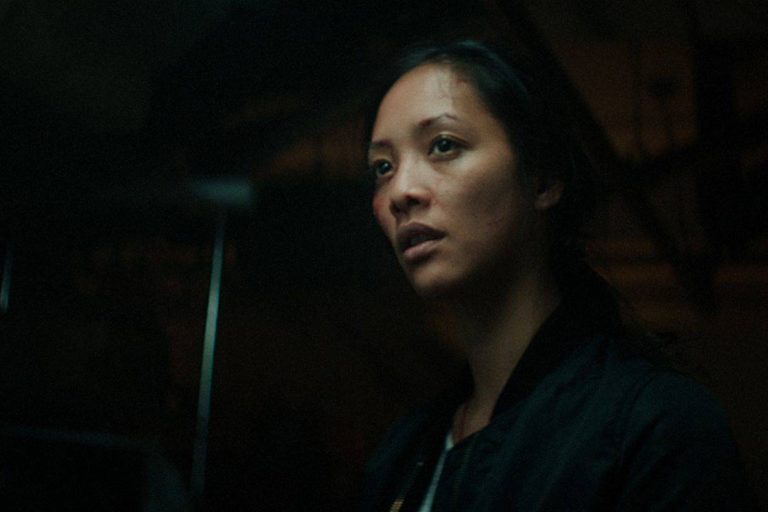
He makes his anxiety palpable in his latest film, “The Leaf,” premiering May 13 at the Center for Asian American Media’s 11-day film festival CAAMFest in the “Out/Here” shorts program, which is offered virtually throughout the event. CAAMFest programming includes dozens of films either live streamed, on demand and/or at the Fort Mason Flix drive-in.

Zang never speaks in the four-minute hybrid doc, which documents his painful struggle as a gay Asian immigrant during the pandemic. He gets his feelings across using footage of a desolate San Francisco during quarantine, troubling COVID-19-related news reports and worried-sounding WeChat messages from the his faraway family and friends following Donald Trump’s disturbing comments about the “Chinese virus.”

Since COVID-19, Zang hasn’t had to look as far as Washington for anti-China and anti-Chinese comments. He’s heard them from his very own friends in the Bay.

“It’s very sad to see the virus not just killing people, but even dividing people,” says Zang. “I started questioning, ‘Am I still welcome here?’”

He also wondered how long he could afford to stay in The City.

In one scene, while searching for remote employment opportunities online, he receives voice messages from Beijing, where he’s told the virus is under control and he can easily get a job in the movie industry (China is the world’s second-largest film market after Hollywood.)

But if he were to return to his native country, Zang says he’d be forced back into the closet or risk public ridicule and the loss of work opportunities.

“Currently in China, being gay or queer is still not widely accepted culturally,” he says. “People would expect me to be a ‘normal’ man, getting married and having kids.”

His family makes clear in one voicemail in the film that they, too, expect him to settle down — preferably near them.

“You are like a leaf, and you have no roots overseas,” a friend adds in another message. “Your parents are still at home and no matter what, you can still count on them.”

Zang says their collective insistence that he move back both touched and confused him, making him temporarily second-guess his decision to stay in the US.

“[Ultimately] I feel I am more in the middle and rooted in two countries in different ways,” he says. “I am embraced by the liberal environment in the Bay Area, and on the other side, I am clear that I am still Chinese and feel more culturally connected to my Chinese friends.”

Zang, who remains in The City marketing movies for fellow indie filmmakers, says he hopes “The Leaf,” set to play more festivals in June, will impress the right people so he can secure funding for future projects.

It would be a dream for the moviemaker to someday inspire as many people with his art as his LGBTQ forebears like Armistead Maupin did with his “Tales of the City” novels or as producer Allan Carr did with “Grease.”

“I feel one thing I do share with them is I am also very dedicated, driven and focused on my own career,” says Zang. “I hope one day I could use my own works to influence more people.”

IF YOU GO

CAAMFest

Where: Online and at Fort Mason Flix, 2 Marina Blvd., S.F.

When: May 13-23

Tickets: Some talks are free; online screenings $10 per program; $50-$90 for drive-in screenings; $50 for festival pass

Contact: https://caamfest.com/2021

Evan Jackson Long’s “Snakehead,” about a woman who makes her way in New York’s Chinatown after arriving via a human smuggler, screens online at CAAMFest with a talk by the director on May 22. (Courtesy photo)

Evan Jackson Long’s “Snakehead,” about a woman who makes her way in New York’s Chinatown after arriving via a human smuggler, screens online at CAAMFest with a talk by the director on May 22. (Courtesy photo)

Select highlights

Opening night: “Try Harder!” is director Debbie Lum’s profile of San Francisco’s Lowell High School, where most students are high achieving and Asian American, but often feeling like they’re not doing well enough. 6:30 and 9:15 p.m. May 13 at Fort Mason

Closing night: “Americanish,” directed by Iman Zawahry, tells the story of two sisters in Jackson Heights, Queens and their fresh-off-the-boat cousin trying to earn the love and respect of the matriarch of their family. 5 p.m. May 23 online

Centerpiece documentary: “Manzanar, Diverted: When Water Becomes Dust,” directed by Ann Kaneko, details an intergenerational and diverse community of Native American, Japanese American and environmentalist women as they fight for their land and their rights. 6 p.m. May 16 online

Centerpiece narrative: “Snakehead,” by Evan Jackson Leong, takes viewers to New York’s Chinatown where Sister Tse (Shuya Chang) arrives by a snakehead, a human smuggler, fights to stay alive, and goes from surviving to thriving. 7 p.m. May 22 online; preceded by 6 p.m. conversation with the director, whose hit film “Linsanity,” about the rise of basketball player Jeremy Lin from his home in Palo Alto to being an NBA star, screens virtually

Spotlight: Comedian-honoree Margaret Cho appears in conversation with the premiere of “Koreatown Ghost Story,” a supernatural horror tale based on a Korean ritual starring Cho and Lyrica Okano. 4 p.m. May 16 online

Hong Kong Cinema Showcase: “Happy Together,” Wong Kar-Wai’s seminal film starring Leslie Cheung and Tony Leung as lovers fighting to keep their relationship together screens at 6:30 p.m. May 15 at Fort Mason; in a separate program, “The Way We Keep Dancing,” directed by Adam Wong, about the lives of artists struggling to survive in the changing Kowloon Industrial District, screens at 9:15 p.m. May 15 at Fort Mason

Out/Here Shorts: Six films, including “The Leaf,” make up the 62-minute program of stories from LGBTQ+ communities, online from May 13-23

ChinaMovies and TVSan Francisco

If you find our journalism valuable and relevant, please consider joining our Examiner membership program.
Find out more at www.sfexaminer.com/join/

Va. GOP governor nominee opposes transgender-inclusive youth sports – Washington Blade

The American Civil Liberties Union of D.C. and the D.C. Public Defender Service filed a class action lawsuit on May 11 on behalf of a transgender woman being held in the D.C. Jail on grounds that the city violated its own Human Rights Act and the woman’s constitutional rights by placing her in the men’s housing facility at the jail.

The lawsuit charges that D.C. Department of Corrections officials violated local and federal law by placing D.C. resident Sunday Hinton in the men’s unit at the D.C. Jail against her wishes without following a longstanding DOC policy of bringing the decision of where she should be placed before the DOC’s Transgender Housing Committee.

The committee, which includes members of the public, including transgender members, makes recommendations on whether a transgender inmate should be placed in either the men’s or the women’s housing unit based on their gender identity along with other considerations, including whether a trans inmate’s safety could be at risk. Under the policy, DOC officials must give strong consideration to the recommendations of the committee.

The lawsuit, which was filed in U.S. District Court for the District of Columbia, says the committee has not met or acted on any trans-related jail housing matter since January 2020.

It says Hinton was taken to the D.C. Jail on April 26 after a judge ordered her held following an arrest for an alleged unarmed burglary in which she attempted to take $20.

It notes that the Department of Corrections has a “default” policy of placing transgender inmates in either the male or female housing unit at the D.C. Jail and other city detention holding facilities based on the inmate’s “anatomy.” If a female transgender inmate is anatomically male, the inmate – barring other mitigating circumstances – is placed in the male housing facility under the default policy. Similarly, a male transgender inmate who is anatomically female is placed by default in the women’s housing unit under the DOC policy.

“DOC’s policy of focusing on anatomy rather than gender identity is both discriminatory and dangerous,” the ACLU says in a statement released on the day it filed the lawsuit on Hinton’s behalf. “It forces trans individuals, particularly trans women, to choose between a heightened risk of sexual violence and a near-certain mental health crisis,” ACLU attorney Megan Yan said in the statement.

Yan was referring to yet another DOC policy that sometimes gives a transgender inmate placed in a housing unit contrary to their gender identity the option of being placed in “protective custody,” which the lawsuit calls another name for solitary confinement. The ACLU and the Public Defender Service have said solitary confinement in prisons is known to result in serious psychological harm to inmates placed in such confinement.

“Because DOC’s unconstitutional policy exposes every transgender individual in its custody to discrimination, degradation, and risk of sexual violence, Ms. Hinton seeks, on behalf of a class of similarly situated individuals, a court order that strikes down DOC’s unlawful focus on anatomy as the touchstone for its housing decisions regarding transgender individuals,” the lawsuit states.

It further calls on the DOC to use “gender identity, not anatomy, as the default basis for housing assignments” for transgender inmates and to provide all trans individuals a prompt hearing by the DOC Transgender Housing Committee.

It calls for the DOC to be required to implement the recommendations of the Housing Committee “so that each person is housed as safely as possible and without discrimination.”

In addition to the lawsuit, Hinton’s attorneys filed an application for a temporary restraining order to immediately require the DOC to transfer Hinton to the D.C. Jail’s women’s housing facility. The attorneys also filed a motion for a preliminary injunction to stop the DOC from using a transgender person’s anatomy as the default or sole criteria in making housing assignments at the jail.

In response to a request from the Washington Blade, DOC spokesperson Dr. Keena Blackmon sent the Blade a DOC statement responding to the lawsuit.

“The Department of Corrections is dedicated to the safety and security of all residents in its care and custody,” the statement says. “DOC is committed to following its policies and procedures relating to housing transgender residents,” it says. “Ms. Hinton recently arrived in DOC custody and, per the agency’s COVID-19 protocols, was placed into single-occupancy quarantine for 14 days.”

The statement adds, “Once that quarantine ends, Ms. Hinton will go before the Transgender Housing Committee to determine her housing based on safety needs, housing availability, and gender identity. D.C. DOC is sensitive to Ms. Hinton’s concerns and will continue to ensure that its residents’ needs are met.”

DOC spokesperson Blackmon didn’t immediately respond to a follow-up question from the Blade asking why the Transgender Housing Committee has not met for over a year, which the ACLU has said resulted in all transgender female inmates being placed in the male housing facility.

Blackmon also couldn’t immediately be reached for a second follow-up question asking for DOC’s response to the lawsuit’s claim that DOC officials told Hinton’s lawyers that she was being placed in the men’s housing facility because she was anatomically male.

The lawsuit says the DOC default policy of placing Hinton in the jail’s male housing unit violates the D.C. Human Rights Act, which bans discrimination based on gender identity. The act has been interpreted to mean private businesses or the city government cannot prevent a transgender person from using facilities such as bathrooms or locker rooms that are in accordance with their gender identity.

D.C. Superior Court records show that Hinton has been arrested a total of 24 times in D.C. between 2006 and 2018. All except three of those arrests are listed as misdemeanor offenses, with just three listed as alleged felony offenses. One of the arrests is listed as a traffic offense.

In nearly all of the prior arrests, the court records identify Hinton by her birth first name, with her last name of Hinton used in all of the arrest records.

The burglary offense for which Hinton was charged on April 26 of this year and for which she is currently being held the D.C. Jail would  normally not result in a defendant being held in jail while awaiting trial. The fact that Hinton is being held rather than released pending trial suggests her prior arrest record may have prompted a judge to order her incarceration.

ACLU attorney Yan, who is among the attorneys representing Hinton in the lawsuit, said Hinton’s prior arrest record should not be a factor in the lawsuit.

“We don’t think any of the underlying things are relevant to her claim in this lawsuit, which is based on her identity and the fact that her constitutional and statutory rights to be free from discrimination are being violated,” Yan said. “At the end of the day, Sunday is a transgender woman and she’s a woman and she deserves to be held according to her gender identity as she desires.”

New sober LGBT space set to open in London during Pride month – PinkNews

The new sober LGBT+ venue will be hosted by Glass House Brick Lane. (Instagram/glasshousebricklane)

London is set to get a new sober space for LGBT+ people, opening in the east of the capital during Pride month.

One of the organisers working to shape and programme the new space is Aisha Shaibu, who explained that the decision to make the entire venue sober was because not only are there a lack of LGBT+ spaces in London, but there’s an absolute dearth of any that are not alcohol-focused.

“I realised how a lot of people – who don’t drink, who don’t surround their lives by alcohol – felt marginalised,” Aisha told PinkNews. “And it was a shame that those people couldn’t access the same events in the same spaces that we did.”

The as-yet-unnamed space in London’s Shoreditch will prioritise women, people of colour and trans and non-binary people.

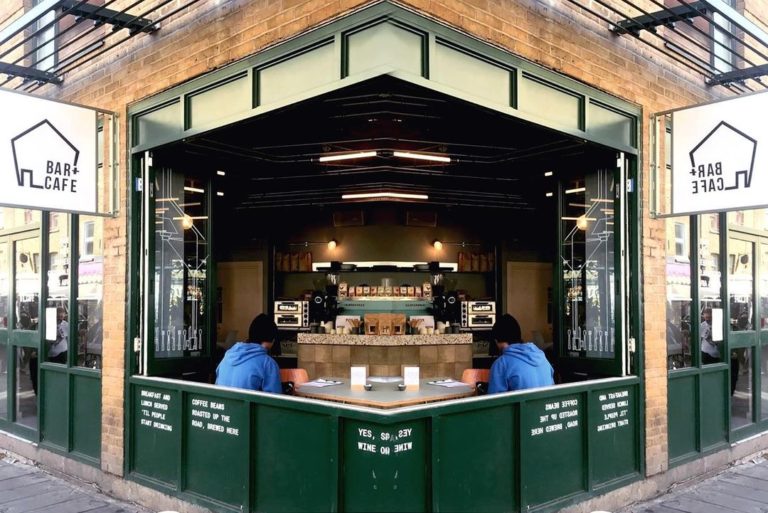
Attached to bar and cafe Glass House Brick Lane, it will will include a bookshop and cafe, a downstairs events space and podcast-recording studios that will – if podcasters choose – broadcast live to the rest of the venue.

“So [customers] could be just sitting there, listening to cool conversation that are going on from queer people within the community,” Aisha said.

She wants the space to attract queer travellers visiting London, who would usually be directed by Google to visit Soho.

“Even if you are a gay man, Soho isn’t the most welcoming if you don’t look a particular way, if you’re not the tall guy with a six pack,” she said. “People can often have difficult experiences.

“It’s not as diverse as it should be. It can be quite exclusive. It excludes a lot of Black and POC communities. This is why it’s important to make a space that is focused on us, but also to ensure we are sustaining the venue through tourism as well.”

The bookshop and cafe will open in June, although a date is yet to be set for the launch. The bookshop will initially stock 1,500 titles, mostly new books, from a range of writers focusing on marginalised experiences.

Over the summer, the events space will open, too – it’s almost ready, with stair lifts currently being installed so all parts of the venue are accessible to wheelchair users.

“We’re hoping to bring in a variety of event organisers within the community, specifically queer women, those who are non-binary, and those who are Black or POC,” Aisha said. “Because we know, and I know, that’s the community that struggle the most in terms of accessing space.”

LGBT+ customers can look forward to cabaret, poetry, live music and workshops once the events space opens.

Research earlier this year found that 79 per cent of women and non-binary people agree that gay men have more visibility and are better catered to by London’s LGBT+ venues.

Aisha is director of the queer social enterprise Moonlight Experiences, which is crowdfunding to create an international queer culture network. Those who are interested in getting involved with the new sober LGBT+ space in Shoreditch can sign up here.

NAMI in conversation about managing mental health – Washington Blade

WASHINGTON, D.C. – People around the world have struggled for more than a year while stuck at home for school and work. But this physical and social isolation has taken a particularly tough toll on LGBTQ+ youth, data and interviews show. 

That’s because the pandemic cut many gay and transgender youth off from the places and spaces where they feel free to be themselves and forced them to spend a lot more time with family members who may not accept them.

“A lot of my friends are in the closet…and being stuck at home, they can’t really get out into the world,” said K.C. Elowitch, a 14-year-old transgender student in Rockville, Md. “At school, they were able to do whatever they wanted and be whoever they wanted. Now being stuck at home with [their families] is a lot more stressful.”

Elowitch was one of 11 young people, ages 14 to 22, who participated in a recent LGBTQ+ youth mental health focus group hosted by the Urban Health Media Project, a Washington-area nonprofit that trains diverse high school students from under-resourced communities to do multimedia health and social issue journalism. 

Elowitch’s experience was echoed by others in the focus group. 

“I was in a bad place when I was closeted,” said Wendy Nichols, a 22-year-old trans woman who began transitioning last summer. “Not just mentally, but literally and physically.” 

Living with transphobic parents made it “hard to be comfortable with myself,” said Nichols. 

Wendy (left) is shown with her twin brother (right)

Focus group members honed in on topics that make it hard to be LGBTQ+, including: 

  • A lack of positive and realistic representation of LGBTQ+ youth in media;
  • Being misdiagnosed in doctor’s offices and being treated unfairly due to sexuality, along with other health inequities; and
  • The impact of strict religious beliefs about sexual orientation and gender identity.

Participants were encouraged to share openly, and were led through the 90-minute discussion by professionals, and fellow members of the LGBTQ+ community. The focus group was co-moderated by Heidi Ellis and Josh Rivera. Ellis, who identifies as lesbian, was a senior adviser at the U.S. Environmental Protection Agency in the Obama administration and now runs her own advocacy and consulting company. Rivera, Money & Consumer Editor at USA TODAY, is gay and chairs the newspaper’s diversity committee.  

The focus group participants talked about what they would like addressed by the media and what they would like to see change. They emphasized topics such as safety, gender identity, and safely coming out to others.

Roman Sardo-Longo, a 16-year-old trans male who joined the virtual focus group from Cleveland, said having more LGBTQ+ representation in the media could help other young people more easily accept peers like him.

“It took me a while to come out [as trans] because I was terrified that my friends would not understand, that they weren’t gonna get it, that they would think it was a weird thing they would have to accommodate for,” he said.

Others shared their experiences with religious beliefs that oppose  LGBTQ+ identity and sexuality. 

Tris Buchanan, a DC high school senior, is shown in a recent selfie.

Tris Buchanan, 17, lives in Washington, D.C., and identifies as gender-fluid. Buchanan’s parents’ Christian religion played a big role in their struggle to come out.  

“Some die-hard Christians…say God does not like gays, God doesn’t like anyone who’s part of the LGBTQ community,” said Buchanan. “Homophobes use the Bible and use God as excuses.”

Nichols, who also grew up in a conservative Christian household in Texas, said the concept of “toxic masculinity” also greatly affected her as she was growing up. 

“I was told, ‘Men don’t cry,’ ” said Nichols. “I grew up with that and it skewed my views.” 

When Nichols was 16, she finally decided to tell her family she identified as a woman. Her late mother, who had struggled with mental illness since a serious brain injury in a car crash, took Nichols for a drive and threatened to drive them both into the river if her daughter didn’t retract the statement. So Nichols did. 

But last June at 21, Nichols began transitioning to a female by taking hormones she got off the Internet. She didn’t have health insurance and lived nearly five hours from the nearest health care provider who would treat her.  After her father died of cancer last August, she moved to the Washington, D.C., area to live with a friend she met online. 

When that didn’t work out, Nichols became homeless and called the LGBTQ+ youth shelter Casa Ruby. There, she found comfort with others like her and within two months, was connected to the transitional housing where she can now live for the next 18 months, if needed. She begins a new job as a receptionist in early May. 

Nichols, who struggles with substance use and what she believes is depression, said she’s feeling more hopeful than ever that “one day I can overcome it all.” 

“The future seems so bright now,” she said. “I’m not stuck in a place where I couldn’t be myself or dreading the next bad thing as I did for most of 2020 when I was preparing for my father to pass away.” 

UHMP also just completed a workshop on the relationship between housing and health, including LGBTQ+ youth homelessness in D.C. and Baltimore. That story will run soon in the Blade. Another reporting workshop this summer will explore youth mental health, with a special focus on the LGBTQ+ and Black, Indigenous and People of Color (BIPOC) communities. UHMP is seeking applications for 20 high school students to attend.

UHMP is also pursuing reporting on topics proposed by the young people who attended the focus group. Two participants are working on a story about the additional challenges faced by LGBTQ+ youth with learning disabilities. 

Jojo Brew, 18, is a DC high school senior and photographer.

Jojo Brew, an 18-year-old trans male in Washington, D.C., who participated in the focus group, believes the LGBTQ+ community should produce positive content on social media sites such as Instagram in order to raise awareness and promote understanding of gender and sexuality issues.

To that end, he’s begun interviewing and photographing other LGBTQ+ teens in the D.C. area for visual articles and social media posts and told a little of his own story for Instagram. Brew is also helping plan a June 18 LGBTQ+ event co-hosted by UHMP in Washington, where he hopes young people who may not be out can be “one with the community” even if they don’t speak publicly.  

Having that exposure to other LGBTQ+ people, they’d realize they aren’t the only ones going through a tough time,” said Brew. “They want to be heard and feel some type of love.” 

Brew was recently awarded a Children’s Defense Fund fellowship grant to chronicle the sense of community in Southeast Washington and is working with UHMP to capture and share the stories of LGBTQ+ youth in the D.C. area. 

UHMP is looking for LGBTQ+ people of all ages who are willing to be interviewed about youth mental health. We’d like to hear from youth and adults on all topics, including the impact of the reactions of community, government, parents, religious organizations and peers to youth gender and identity. What helped you weather challenges that could help the next generation?  Let us know at [email protected] 

Vanessa Falcon is a UHMP intern and senior at Miami Lakes Educational Center in Florida. Jayne O’Donnell, former health policy reporter at USA TODAY, is UHMP’s founder.

Netflix lands Tribeca gay conversion therapy doc ‘Pray Away’ – Screen International

Pray Away

Netflix has acquired global rights to upcoming Tribeca Festival world premiere and gay conversion documentary Pray Away.

Ryan Murphy and Jason Blum are among executive producers on the title, which was invited to screen at Tribeca and Telluride last year before the pandemic scuppered plans.

It will premiere at Tribeca on June 16 prior to debuting on the platform in August.

Kristine Stolakis made her feature directorial debut on Pray Away, which follows former leaders of the “pray the gay away” movement as they contend with the aftermath of their actions.

Meanwhile a survivor seeks healing and acceptance after more than a decade of trauma.

Jessica Devaney, Anya Rous, and Stolakis served as producers.

Blumhouse Television served as executive producer on the feature and partnered with Murphy prior to bringing the film to Netflix.

The streamer collaborated with Murphy on documentary A Secret Love, and Blum and Murphy worked together on The Normal Heart.

They are executive producers alongside Jeremy Gold, Marci Wiseman, Mary Lisio, Amanda Spain, Daniel J. Chalfen, Jim Butterworth, Katy Drake Bettner, Johnny Symons, Julie Parker Benello, Patty Quillin, Nion McEvoy, Leslie Berriman, Regina K. Scully, and Alexis Martin Woodall.

‘I’m angry about homophobia in my church’: Why this German Jesuit is going against a Vatican decree against blessing gay unions – America Magazine

It was not a decision he came to overnight, but when the German Jesuit Jan Korditschke heard the anger and pain felt by L.G.B.T. Catholics in the wake of the Vatican’s March letter, in which priests were barred from blessing same-sex couples because God “cannot bless sin,” he knew he had to do something.

“I’m angry about homophobia in my church, and I also feel kind of ashamed because of that,” Father Korditschke told America. “And I feel an urge to speak out on behalf of L.G.B.T. Catholics in our communities.”

Father Korditschke said he has met many L.G.B.T. Catholics through his work as head of the Archdiocese of Berlin’s adult baptism program, the equivalent of the Rite of Christian Initiation of Adults in the United States. He said he encountered same-sex couples committed to the church and came away “impressed by their faith and their spiritual depth.” Some of those same couples expressed disappointment when the Vatican statement seemed to “disqualify or devalue those relationships,” he said.

Father Korditschke: “I’m angry about homophobia in my church, and I also feel kind of ashamed because of that. And I feel an urge to speak out on behalf of L.G.B.T. Catholics in our communities.”

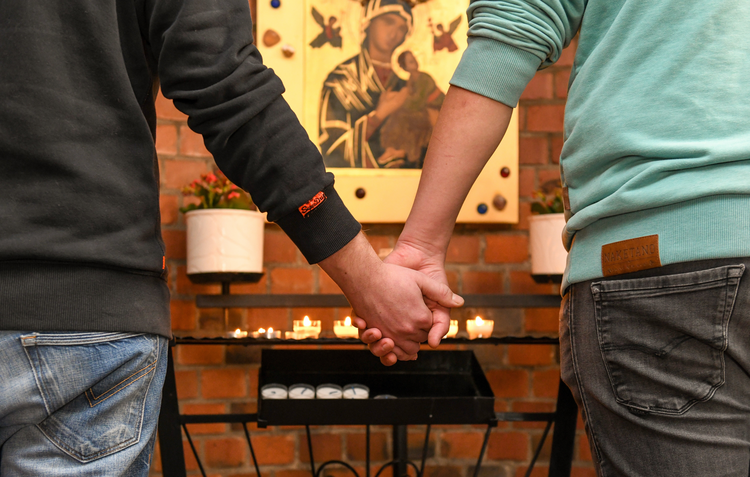
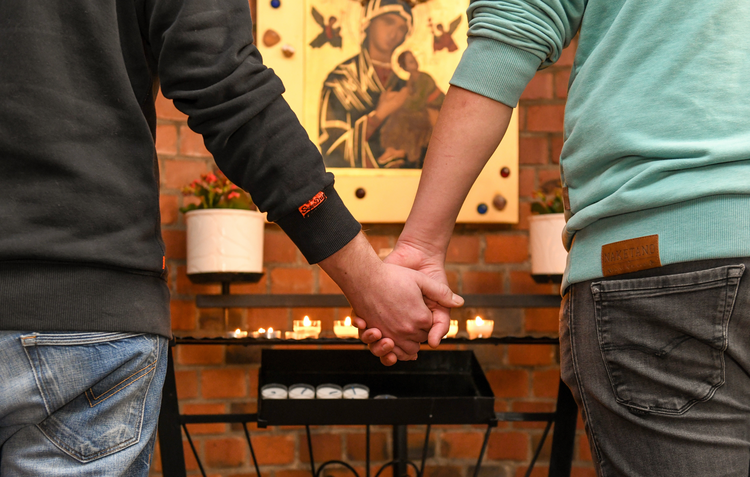
He prayed about how best to respond and then received permission from his local superior to participate in a movement taking place in about 100 churches throughout Germany this week, in which priests and lay ministers will bless same-sex couples. On Sunday, the 44-year-old Father Korditschke will hold a ceremony at a Jesuit parish in Berlin for any couple, gay or straight, who seeks a blessing from the church.

Should any same-sex couple attend Sunday’s service—Berlin churches have already offered a handful of blessing opportunities beginning last weekend—Father Korditschke said he will “acknowledge and appreciate that their love is something good, give thanks to God for this love because it is good, praise God for this love and ask God to protect this love and strengthen it and guide it.”

[Related: ‘The love of homosexuals is something good’: German Catholics to bless gay unions, defying Vatican ban]

German church leaders and theologians had been discerning for years how to incorporate L.G.B.T. people into the life of the church, including floating the idea that a blessing of same-sex couples, one distinct from marriage, could be a way to be more welcoming. As part of a synodal process that began in 2020, aimed at addressing a range of challenges facing the church, some German bishops have been pushing for a plan that would allow priests in their dioceses to bless same-sex couples even if other dioceses around the world prohibited them.

On Sunday, Father Korditschke will hold a ceremony at a Jesuit parish in Berlin for any couple, gay or straight, who seeks a blessing from the church.

The letter from the Congregation for the Doctrine of the Faith effectively quashed that idea.

The head of the German Bishops’ Conference last month criticized the grassroots initiative for gay blessings, which is called “Liebe Gewinnt” or “Love Wins.” Limburg Bishop Georg Baetzing said the blessings “are not suitable as an instrument of church political manifestations or political actions.”

But Germany’s powerful lay organization, the Central Committee of German Catholics, or ZdK, which has been advocating for gay blessings since 2015, positioned itself once more in favor of them. It called the contentious document from Rome “not very helpful” and explicitly expressed its support for ”Love Wins.”

“These are celebrations of worship in which people express to God what moves them,” Birgit Mock, the ZdK’s spokeswoman for family affairs, told the AP.

Limburg Bishop Georg Baetzing said the blessings “are not suitable as an instrument of church political manifestations or political actions.”

The ZdK has been taking part in the “synodal path” meetings for more than a year with the German bishops. They are due to conclude in the fall. The meetings include talks about allowing priests to get married, the ordination of women and a different understanding of sexuality, among other reforms. The process was launched as part of the response to revelations of clergy sexual abuse.

Some Catholic pundits have warned that the German blessings could lead to schism—the fact that the services are taking place in the reformer Martin Luther’s home nation is an analogy seemingly just too good to resist—but Father Korditschke says such fears are overstated.

“There are different opinions, there is conflict and there is a plurality of theologies and ways of living a spiritual life,” he said. “I think this is not a problem, but this is a feature of our being Catholic. The Catholic Church is not a uniform totality without any differences. There is room for a diversity of different cultures, different theologies.”

“I want to contribute to a church where L.G.B.T. people can fully participate and offer all their talents and their capabilities and be fully part of the life of the church.”

He said this reality “can cause tensions and conflicts” and added it’s the job of Catholic thinkers “to develop a culture of dealing with these conflicts.”

At his parish, located in a middle-class section of Berlin, Sunday Mass seeks to be welcoming, and worship is supplemented with Ignatian spirituality workshops and religious discussion groups. Father Korditschke said it is important for priests who support L.G.B.T. Catholics to speak out and take a stand. Ultimately, he said, he decided despite the risks, he is blessing same-sex couples because in their relationships he sees love.

“I want to contribute to a church where L.G.B.T. people can fully participate and offer all their talents and their capabilities and be fully part of the life of the church,” he said. “Their love is something good. That’s the basic thing that everything comes down to, that I don’t believe that their love is sin.”

Material from the Associated Press was used in this report.

More from America

There are still a few chances to catch a game – Plumas County Newspapers

By Mari Erin Roth

Portola freshman, Tanner Carr, comes across home plate to score his fourth Tiger home run of the day May 10 in Quincy. QHS sophomore catcher Aiden Powers awaits the ball at home plate. Photo by Mari Erin Roth

Tiger v. Trojan baseball

Quincy High School junior, Jacob McAllister, pitches for the Trojans May 10 in a tough battle with the Portola Tigers in Quincy. Photo by Mari Erin Roth
Portola junior Alyssa Ross tries to make it to first before the ball but Quincy first baseman, Vivian Theilman-Gifford has the ball safely in her mitt. Photo by Mari Erin Roth

Colton Underwood Came Out After Visiting A Gay Spa And Getting Blackmailed – BuzzFeed News

The Bachelor star Colton Underwood has revealed in a new interview with Variety that he only decided to publicly come out as gay last month after being blackmailed.

Underwood announced his sexuality in an April 14 Good Morning America interview, telling host Robin Roberts that he had done a lot of self-reflection during the pandemic.

“[The pandemic] probably made a lot of people look themselves in the mirror and figure out who they are and what they’ve been running from or what they’ve been putting off in their lives,” he said. “And, for me, I’ve ran from myself for a long time — I’ve hated myself for a long time.”

“I’m gay, and I came to terms with that earlier this year and have been processing it,” he said.

But what he didn’t tell GMA was that he didn’t make the decision to come out entirely on his own terms.

In an interview with Variety published on Wednesday, Underwood said that last year he had visited a Los Angeles spa whose clientele is mostly gay men.

Underwood, whose virginity was widely promoted when he appeared on The Bachelor in 2019, insisted he was at the spa “just to look” and that he “should have never been there.”

But after visiting the spa, he said he received an email from an anonymous source who claimed to have taken nude photographs of Underwood at the venue.

Terrified of being outed, he forwarded the email to his publicist and began having an honest conversation about his sexuality.

Underwood talked in great detail with Variety about the shame he felt while questioning his sexuality as a religious teenager in a conservative Midwest family.

He said he’d secretly rented Brokeback Mountain using a friend’s Blockbuster video card to hide it from his family, but that his father had once discovered gay porn in his browser history.

“By the time I realized that I was gay, I didn’t want to be gay,” he said.

He also revealed that he had hooked up with men, but not had sex with a man, prior to first appearing on The Bachelorette in 2018. He’d also used the gay dating app Grindr under an alias.

“I remember feeling so guilty, like ‘What the hell am I doing?’” Underwood said. “It was my first time letting myself even go there, so much so that I was like, ‘I need The Bachelorette in my life, so I could be straight.’”

In the full Variety interview, Underwood also discussed his relationship with ex-girlfriend Cassie Randolph, who won his season of The Bachelor but later filed and then dropped a restraining order against him.

Underwood apologized to Randolph in the interview but insisted he was never physically abusive to her.

Instead, he described feeling tormented during their relationship because he knew deep down he was gay.

“I never want people to think that I’m coming out to change the narrative, or to brush over and not take responsibility for my actions, and now that I have this gay life that I don’t have to address my past as a straight man,” Underwood said.

Read the full interview with Variety here.

Colton Underwood Said He Came Out After Being Blackmailed For Visiting A Gay Spa – BuzzFeed News

The Bachelor star Colton Underwood has revealed in a new interview with Variety that he only decided to publicly come out as gay last month after being blackmailed.

Underwood announced his sexuality in an April 14 Good Morning America interview, telling host Robin Roberts that he had done a lot of self-reflection during the pandemic.

“[The pandemic] probably made a lot of people look themselves in the mirror and figure out who they are and what they’ve been running from or what they’ve been putting off in their lives,” he said. “And, for me, I’ve ran from myself for a long time — I’ve hated myself for a long time.”

“I’m gay, and I came to terms with that earlier this year and have been processing it,” he said.

But what he didn’t tell GMA was that he didn’t make the decision to come out entirely on his own terms.

In an interview with Variety published on Wednesday, Underwood said that last year he had visited a Los Angeles spa whose clientele is mostly gay men.

Underwood, whose virginity was widely promoted when he appeared on The Bachelor in 2019, insisted he was at the spa “just to look” and that he “should have never been there.”

But after visiting the spa, he said he received an email from an anonymous source who claimed to have taken nude photographs of Underwood at the venue.

Terrified of being outed, he forwarded the email to his publicist and began having an honest conversation about his sexuality.

Underwood talked in great detail with Variety about the shame he felt while questioning his sexuality as a religious teenager in a conservative Midwest family.

He said he’d secretly rented Brokeback Mountain using a friend’s Blockbuster video card to hide it from his family, but that his father had once discovered gay porn in his browser history.

“By the time I realized that I was gay, I didn’t want to be gay,” he said.

He also revealed that he had hooked up with men, but not had sex with a man, prior to first appearing on The Bachelorette in 2018. He’d also used the gay dating app Grindr under an alias.

“I remember feeling so guilty, like ‘What the hell am I doing?’” Underwood said. “It was my first time letting myself even go there, so much so that I was like, ‘I need The Bachelorette in my life, so I could be straight.’”

In the full Variety interview, Underwood also discussed his relationship with ex-girlfriend Cassie Randolph, who won his season of The Bachelor but later filed and then dropped a restraining order against him.

Underwood apologized to Randolph in the interview but insisted he was never physically abusive to her.

Instead, he described feeling tormented during their relationship because he knew deep down he was gay.

“I never want people to think that I’m coming out to change the narrative, or to brush over and not take responsibility for my actions, and now that I have this gay life that I don’t have to address my past as a straight man,” Underwood said.

Read the full interview with Variety here.