Home Blog Page 179

These Brands Are Actually Donating to LGBTQIA+ Causes During Pride Month – CR Fashion Book

ugg, pride capsule, pride month 2021, june, june 2021, lil nas x

Ugg

June is Pride Month, and these 19 brands are stepping up and giving back to the LGBTQIA+ community.

Pride Month originated as a way to commemorate the Stonewall Riots in New York City that ended in June of 1969. The Stonewall Riots were spontaneous demonstrations by the gay community in response to a police raid at the Stonewall Inn in Greenwich Village. A tipping point in the Gay Liberation Movement, the community initially commemorated the Stonewall Riots for a day in the end of June, but it has since evolved to a month-long commemoration.

It takes more than flying rainbow flags, turning logos rainbow-colored, or posting an Instagram picture to show support now. While some brands are continuing to be an ally to the LGBTQIA+ community, many are taking it a step further and donating to philanthropic causes to pledge their support. Check out these fashion & beauty brands below that are donating to LGBTQIA+ causes for Pride Month.

1 Ugg

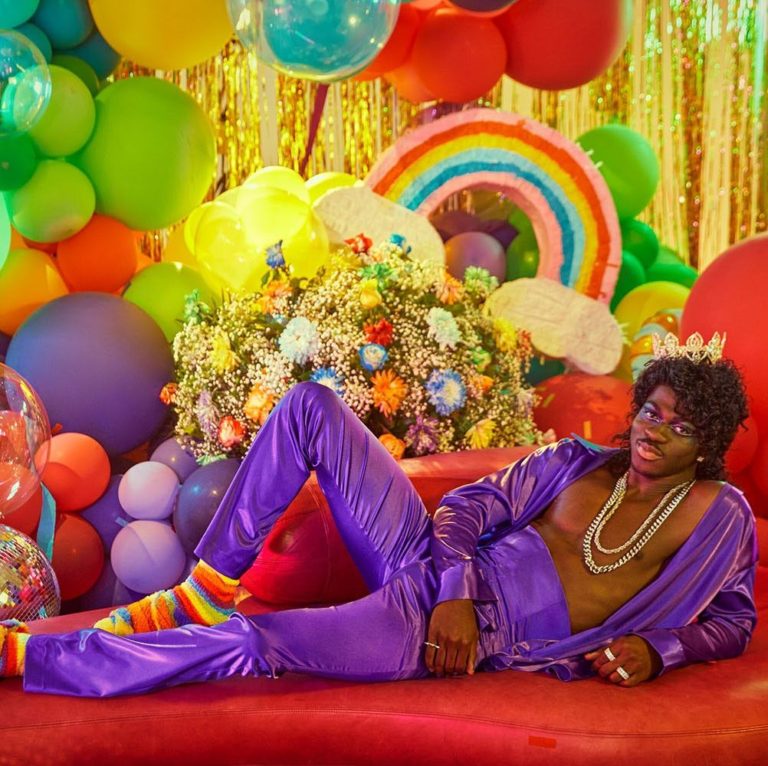
Ugg announced its Pride capsule complete with fuzzy slippers, sweatshirts, and T-shirts. In addition to hosting a PROUD Prom with Pacific Pride Foundation for the fifth year, Ugg is also donating $125,000 to GLAAD. This year’s virtual prom included names like Lil Nas X and Hari Nefis to celebrate inclusivity with the LGBTQIA+ and allied youth from Santa Barbara and surrounding California coastal communities.

2 Michael Kors

Michael Kors’ Pride capsule features this special-edition T-shirt. All proceeds from the sale of the gender-neutral T-shirt will be donated to OutRight International throughout the month of June.

3 Ralph Lauren

Ralph Lauren released its Pride capsule and announced that 100 percent of the purchase price of the polo shirt will be donated to the Stonewall Community Foundation, while 25 percent of the purchase price of several other pieces will be donated. The brand also announced its first Pride eyewear campaign, which will donate 25 percent of the purchase price to the Stonewall Community Foundation as well.

4 NYX

NYX Professional Makeup is celebrating ballroom for this year’s Pride Month. Its Pride 2021 Collection includes highlighters, liners, and a palette all dedicated to the boldness and confidence of ballroom. The brand is making a donation to the Los Angeles LGBT Center.

5 Ouai

Celebrity hairstylist Jen Atkin’s hair care brand just launched its St. Bart’s Scalp and Body Scrub that’s perfect for celebrating the beginning of summer and all the vacations we’ve been missing the last year. The brand is donating $20,000 to the Los Angeles LGBT Center.

6 Grigri

Beaded accessories brand Grigri is celebrating Pride Month with a a limited-edition #LOVEWINS capsule. The LGBTQ+-owned brand has created a hand-beaded phone strap and T-shirt; 20% of the net proceeds will go to ItGetsBetter.Org, a charity focused on supporting and normalizing sexuality.

7 Reebok

The sneaker brand has teamed up with House of Ninja to create a special campaign highlighting the fierceness of ballroom. Reebok is donating $75,000 to the Sylvia Rivera Law Project as well.

8 Teva

In addition to a $35,000 donation to the Human Rights Campaign Foundation, the sandal brand created a unisex Pride capsule that includes rainbow sandals.

9 Dr. Martens

The brand reinvented its iconic 1461 Oxford Loafer for Pride, with the classic black leather loafer now including some rainbow stitching, rainbow laces, and a rainbow flag. Dr. Martens is also donating $100,000 to The Trevor Project.

10 Herbivore

Herbivore founder Julia Wills dedicated the brand’s Prism collection to the LGBTQ community. This year, the brand is donating $1 for each Prism product sold to The Trevor Project with a minimum commitment of $75,000 in 2021.

11 Kate Spade

Kate Spade’s Pride Month capsule, The Rainbow Collection, is centered around the rainbow motif. The collection includes totes, cosmetic bags, an AirPods case, and a sweater, and the brand will be donating 20 percent of profits to The Trevor Project for the second year in a row.

12 Touchland

The perfect buy right now as we continue to constantly sanitize our hands, Touchland’s Rainbow Collection includes eight hand sanitizers to keep us stocked up. Throughout the month of June, 10 percent of sales from the Rainbow Collection will go to the Miami-based Pridelines Community Center.

13 Starface

14 Harry’s

Harry’s teamed up with several members of the LGBTQ+ community, including Jonathan Van Ness, to distribute 100% of the profits of Harry’s Shave With Pride set to charities that are meaningful to them. Some of the charities include GLSEN, GLAAD, and True Colors Fund.

15 Bombas

Bombas created a Pride capsule including rainbow socks, T-shirts, and underwear. For each item purchased from this collection, an item will be donated to an organization helping those experiencing homelessness in the LGBTQ+ community, including organizations like Casa Ruby and Mozaic.

16 Olay

Olay is launching a limited-edition version of its Regenerist Micro-Sculpting Cream, as well as two gift sets, for Pride Month this year. The brand is also donating $75,000 to The Trevor Project and supporting iHeart Radio and P&G’s Can’t Cancel Pride, a celebration to raise visibility and funds for the LGBTQ+ community.

17 Gap

Gap is celebrating Pride with a collection of items ranging from T-shirts to hats designed by artists within the Gap Collective community. Alongside this collection, the brand is donating $50,000 to GLAAD.

18 Leland Francis

This Leland Francis Ruby Gertrude Apothecary Pansy Candle was created to give back to the community. The name is a reclamation of the term pansy, and the candle is inspired by the flowery plant. Net profits from the sale of each candle will be donated to GLSEN.

19 The Accessory Junkie x Satchel Lee

This collaborative line includes 15 pieces including jewelry and bags. Pieces are made to order and will be available to shop on The Accessory Junkie’s website starting June 1. The collection supports The Human Rights Campaign with 15 percent of total sales from select items in the collection being donated to HRC.

This content is created and maintained by a third party, and imported onto this page to help users provide their email addresses. You may be able to find more information about this and similar content at piano.io

These Fashion And Beauty Brands Are Donating to LGBTQIA+ Causes During Pride Month – CR Fashion Book

ugg, pride capsule, pride month 2021, june, june 2021, lil nas x

Ugg

June is Pride Month, and these 19 brands are stepping up and giving back to the LGBTQIA+ community.

Pride Month originated as a way to commemorate the Stonewall Riots in New York City that ended in June of 1969. The Stonewall Riots were spontaneous demonstrations by the gay community in response to a police raid at the Stonewall Inn in Greenwich Village. A tipping point in the Gay Liberation Movement, the community initially commemorated the Stonewall Riots for a day in the end of June, but it has since evolved to a month-long commemoration.

It takes more than flying rainbow flags, turning logos rainbow-colored, or posting an Instagram picture to show support now. While some brands are continuing to be an ally to the LGBTQIA+ community, many are taking it a step further and donating to philanthropic causes to pledge their support. Check out these fashion & beauty brands below that are donating to LGBTQIA+ causes for Pride Month.

1 Ugg

Ugg announced its Pride capsule complete with fuzzy slippers, sweatshirts, and T-shirts. In addition to hosting a PROUD Prom with Pacific Pride Foundation for the fifth year, Ugg is also donating $125,000 to GLAAD. This year’s virtual prom included names like Lil Nas X and Hari Nefis to celebrate inclusivity with the LGBTQIA+ and allied youth from Santa Barbara and surrounding California coastal communities.

2 Michael Kors

Michael Kors’ Pride capsule features this special-edition T-shirt. All proceeds from the sale of the gender-neutral T-shirt will be donated to OutRight International throughout the month of June.

3 Ralph Lauren

Ralph Lauren released its Pride capsule and announced that 100 percent of the purchase price of the polo shirt will be donated to the Stonewall Community Foundation, while 25 percent of the purchase price of several other pieces will be donated. The brand also announced its first Pride eyewear campaign, which will donate 25 percent of the purchase price to the Stonewall Community Foundation as well.

4 NYX

NYX Professional Makeup is celebrating ballroom for this year’s Pride Month. Its Pride 2021 Collection includes highlighters, liners, and a palette all dedicated to the boldness and confidence of ballroom. The brand is making a donation to the Los Angeles LGBT Center.

5 Ouai

Celebrity hairstylist Jen Atkin’s hair care brand just launched its St. Bart’s Scalp and Body Scrub that’s perfect for celebrating the beginning of summer and all the vacations we’ve been missing the last year. The brand is donating $20,000 to the Los Angeles LGBT Center.

6 Grigri

Beaded accessories brand Grigri is celebrating Pride Month with a a limited-edition #LOVEWINS capsule. The LGBTQ+-owned brand has created a hand-beaded phone strap and T-shirt; 20% of the net proceeds will go to ItGetsBetter.Org, a charity focused on supporting and normalizing sexuality.

7 Reebok

The sneaker brand has teamed up with House of Ninja to create a special campaign highlighting the fierceness of ballroom. Reebok is donating $75,000 to the Sylvia Rivera Law Project as well.

8 Teva

In addition to a $35,000 donation to the Human Rights Campaign Foundation, the sandal brand created a unisex Pride capsule that includes rainbow sandals.

9 Dr. Martens

The brand reinvented its iconic 1461 Oxford Loafer for Pride, with the classic black leather loafer now including some rainbow stitching, rainbow laces, and a rainbow flag. Dr. Martens is also donating $100,000 to The Trevor Project.

10 Herbivore

Herbivore founder Julia Wills dedicated the brand’s Prism collection to the LGBTQ community. This year, the brand is donating $1 for each Prism product sold to The Trevor Project with a minimum commitment of $75,000 in 2021.

11 Kate Spade

Kate Spade’s Pride Month capsule, The Rainbow Collection, is centered around the rainbow motif. The collection includes totes, cosmetic bags, an AirPods case, and a sweater, and the brand will be donating 20 percent of profits to The Trevor Project for the second year in a row.

12 Touchland

The perfect buy right now as we continue to constantly sanitize our hands, Touchland’s Rainbow Collection includes eight hand sanitizers to keep us stocked up. Throughout the month of June, 10 percent of sales from the Rainbow Collection will go to the Miami-based Pridelines Community Center.

13 Starface

14 Harry’s

Harry’s teamed up with several members of the LGBTQ+ community, including Jonathan Van Ness, to distribute 100% of the profits of Harry’s Shave With Pride set to charities that are meaningful to them. Some of the charities include GLSEN, GLAAD, and True Colors Fund.

15 Bombas

Bombas created a Pride capsule including rainbow socks, T-shirts, and underwear. For each item purchased from this collection, an item will be donated to an organization helping those experiencing homelessness in the LGBTQ+ community, including organizations like Casa Ruby and Mozaic.

16 Olay

Olay is launching a limited-edition version of its Regenerist Micro-Sculpting Cream, as well as two gift sets, for Pride Month this year. The brand is also donating $75,000 to The Trevor Project and supporting iHeart Radio and P&G’s Can’t Cancel Pride, a celebration to raise visibility and funds for the LGBTQ+ community.

17 Gap

Gap is celebrating Pride with a collection of items ranging from T-shirts to hats designed by artists within the Gap Collective community. Alongside this collection, the brand is donating $50,000 to GLAAD.

18 Leland Francis

This Leland Francis Ruby Gertrude Apothecary Pansy Candle was created to give back to the community. The name is a reclamation of the term pansy, and the candle is inspired by the flowery plant. Net profits from the sale of each candle will be donated to GLSEN.

19 The Accessory Junkie x Satchel Lee

This collaborative line includes 15 pieces including jewelry and bags. Pieces are made to order and will be available to shop on The Accessory Junkie’s website starting June 1. The collection supports The Human Rights Campaign with 15 percent of total sales from select items in the collection being donated to HRC.

This content is created and maintained by a third party, and imported onto this page to help users provide their email addresses. You may be able to find more information about this and similar content at piano.io

Dear Colleague: CDC Releases New HIV Surveillance and Supplemental Surveillance Reports – AIDS.gov blog

Cross-posted from Centers for Disease Control and Prevention

CDC Logo

May 27, 2021

Dear Colleague,

Today, the Centers for Disease Control and Prevention (CDC) published three new reports using HIV surveillance data: Estimated HIV Incidence and Prevalence in the United States, 2015–2019 (PDF, 3 MB); Monitoring Selected National HIV Prevention and Care Objectives by Using HIV Surveillance Data—United States and 6 Dependent Areas, 2019; and Diagnoses of HIV Infection in the United States and Dependent Areas, 2019. To improve data interpretation and utility, these reports all feature data from the same timeframe: 2015-2019. HIV prevention partners can use these reports to monitor trends, determine successes, identify gaps in HIV prevention, and help direct prevention efforts and resource allocation.

HIV Incidence and Prevalence Report: Key Findings*

CDC estimates of annual HIV infections in the United States show hopeful signs of progress in recent years. CDC estimates show new HIV infections declined 8% from 2015 to 2019, after a period of general stability. Overall, estimated annual infections fell from 37,800 in 2015 to 34,800 in 2019; much of this progress is likely due to larger declines in recent years among young men who have sex with men (MSM). From 2015 to 2019, the number of HIV infections among MSM decreased 9% overall and infections among young MSM aged 13-24 years declined 33% overall, with declines in young MSM of all races, although young Black/African American and Hispanic/Latino MSM continue to be severely and disproportionately affected. In terms of overall race/ethnicity, while HIV infections were somewhat lower in 2019 among African American, Hispanic/Latino, and white persons than in 2015, none of these declines were statistically significant—but, together, they contributed to an overall national-level decline. The South also continues to be disproportionately affected, accounting for more than half of new HIV infections in 2019. The number of HIV infections in 2019, compared with 2015, remained stable among persons who inject drugs (PWID), due likely in part to the ongoing opioid crisis. Finally, the estimated percentage of diagnosed infections among persons living with HIV at year-end 2019, compared with 2015, increased 2%. At year-end 2019, an estimated 1.2 million persons aged 13 years and older were living with HIV infection, including about 13% of persons whose infection had not been diagnosed.

Monitoring Report: Key Findings**

Data suggest the progress seen in recent years is likely linked to increased uptake of key prevention and treatment strategies in recent years, such as pre-exposure prophylaxis (PrEP) and ongoing treatment and care, which are necessary to maintain viral suppression. These trends are encouraging although substantial gaps remain. Data on PrEP coverage published today show that in 2019, nearly 285,000 or 23% of people eligible for PrEP were prescribed it. This level of PrEP coverage represents substantial progress. CDC previously reported that in 2015, roughly 3% of persons eligible for PrEP were prescribed it. In addition, in 2019, 66% of people with diagnosed HIV were virally suppressed (in 45 U.S. jurisdictions)—in 2015, only 60% were virally suppressed (in 38 U.S. jurisdictions). New CDC data also show that in 2019, 81% of people with diagnosed HIV were rapidly linked to care within one month of diagnosis (in 45 U.S. jurisdictions). This is important because it can shorten the time to viral suppression, which helps people stay healthy and virtually eliminates the chance of onward transmission. In 2015, only 75% of people with diagnosed HIV were rapidly linked to care (in 38 U.S. jurisdictions). These data are encouraging. However, the nation will need to achieve 50% PrEP coverage and 95% rapid linkage to care and viral suppression to reach the goals outlined in the Ending the HIV Epidemic in the U.S. (EHE) initiative.

Addressing continued disparities will also be crucial, as data show that HIV prevention and treatment services are still not reaching the groups who could benefit most. Black/African American persons continue to face rates of infection that are more than 8 times as high as white persons, and Hispanic/Latino persons face rates almost 4 times as high, in large part because these populations experience the greatest barriers to accessing prevention and care services. For example, in 2019, only 8% of Black/African American and 14% of Hispanic/Latino persons who were eligible for PrEP were prescribed it, compared to 63% of white persons. Additionally, in 2019, just 61% of Black/African American and 65% of Hispanic/Latino persons with diagnosed HIV were virally suppressed, compared to 71% of white persons.

HIV Surveillance Report—Diagnoses: Key Findings***

In 2019, 36,801 persons received a diagnosis of HIV infection; from 2015-2019, HIV diagnoses decreased by 9% in the United States and 6 dependent areas. Specifically, the number of HIV diagnoses decreased among males and females; Black/African American, white, and Asian persons; multiracial persons; persons aged 13-24 years, 35-44 years, and 45-54 years; heterosexuals; and among MSM overall. HIV diagnoses increased among transgender males and females, white transgender persons, and transgender persons aged 25-34 years and 35-44 years. HIV diagnoses also increased among American Indian/Alaska Native persons; MSM aged 30-34 years, 55-59 years, and 60-64 years; and PWID overall, with notable increases occurring among white PWID, likely due to concentrated HIV outbreaks among this group associated with the opioid crisis. Diagnoses remained stable among persons aged 25-35 years; persons aged 55 years and over; Hispanic/Latino persons; Native Hawaiian/other Pacific Island persons; and among MSM who inject drugs.

Overall, these reports suggest improvements in linkage to care, viral suppression, and increased PrEP use are likely contributing to recent progress. However, the reports also signal an urgent need to expand and improve HIV prevention, care, and treatment for groups who could most benefit. Intensified efforts are particularly needed in the South and among disproportionately affected populations like transgender persons, Black/African American and Hispanic/Latino MSM, and gay and bisexual men, overall. We must also work to improve access to prevention services for people who inject drugs, a population for whom progress continues to be threatened by the nation’s opioid epidemic. Through the EHE initiative, CDC is working with partners to accelerate progress by delivering key prevention strategies in innovative ways to populations hardest hit by HIV—for example, by expanding the use of telemedicine and HIV self-test kits. Ensuring that health equity is centered in all the work we do and expanding innovative approaches that optimize health and close gaps in HIV prevention, care, and treatment will position us for future success in the post-pandemic landscape.

Thank you for your continued support for HIV prevention in the United States.

Sincerely,

/Demetre Daskalakis/
Demetre Daskalakis, MD, MPH
Director
Division of HIV/AIDS Prevention
National Center for HIV/AIDS, Viral Hepatitis, STD, and TB Prevention
Centers for Disease Control and Prevention
www.cdc.gov/hiv

*Due to reporting delays, estimates for 2019 are likely the most unstable and should be interpreted with caution.

**Please use caution when interpreting PrEP data. Different data sources were used in the numerator and denominator to calculate PrEP coverage. Please also note that it is difficult to assess progress in PrEP, linkage to care, and viral suppression from year-to-year due to differences between years in the number of jurisdictions with complete data reporting.

***The increase in diagnoses among transgender persons overall is partly attributed to the increase among white transgender persons. Although the population size is small, diagnoses among white transgender persons increased 123% (from 43 in 2015 to 96 in 2019).

How Anti-Trans Bills Evoke Culture Wars Of The 90s : Consider This from NPR – NPR

AUDIE CORNISH, HOST:

There’s something you hear over and over again in the debate over transgender athletes in school sports, or rather something you don’t hear.

(SOUNDBITE OF ARCHIVED NPR BROADCAST)

CORNISH: Have you had a single example of a transgender child trying to gain unfair competitive advantage?

JIM JUSTICE: No, I have not.

CORNISH: Last month, West Virginia governor, Jim Justice, signed a bill banning trans women and girls from school sports. But when we asked him about it, he could not cite a single example of a trans athlete in his state gaining an unfair advantage.

(SOUNDBITE OF ARCHIVED NPR BROADCAST)

CORNISH: Then why sign such a bill?

JUSTICE: Because evidently, it is out there and…

CORNISH: You heard the same thing in Louisiana…

(SOUNDBITE OF ARCHIVED RECORDING)

BETH MIZELL: I’m not aware of any, Mr. Chairman. I’m not aware of any.

CORNISH: …Where State Senator Beth Mizell called a bill banning trans female athletes preemptive.

(SOUNDBITE OF ARCHIVED RECORDING)

CLEO FIELDS: So it’s not a problem in Louisiana now?

MIZELL: Not in Louisiana.

CORNISH: And in Georgia, a lawyer from the conservative Christian advocacy group Alliance Defending Freedom, one of the driving forces behind many proposed trans athlete bans, struggled to answer this question from state Senator Elena Parent.

(SOUNDBITE OF ARCHIVED RECORDING)

ELENA PARENT: How many girls in Georgia have been denied opportunity because of transgender athletes?

MATT SHARP: Yeah. So obviously, there’s not a lot of statistics on that, but I go back to the…

CORNISH: The lawyer, Matt Sharp, mentioned one case from several years ago in Connecticut.

(SOUNDBITE OF ARCHIVED RECORDING)

PARENT: So there are none in Georgia?

SHARP: Again, I don’t have any…

PARENT: OK, thank you.

SHARP: …Hard data on that.

CORNISH: It’s not just those three states. Back in March, the Associated Press reached out to lawmakers in more than 20 states who had proposed bills to ban transgender female athletes from school sports. In almost every case, sponsors of those laws could not cite a single instance in their own state or region where trans participation caused a problem.

(SOUNDBITE OF ARCHIVED NPR BROADCAST)

JUSTICE: But in my opinion – and this is just how I feel – absolutely I think that it would disadvantage girls that are trying to compete and have worked so hard. And so I just can’t do that.

CORNISH: CONSIDER THIS – there’s evidence that the attention on trans female athletes might be a solution in search of a problem. And to many in the LGBTQ community, it’s just another chapter in a familiar story.

(SOUNDBITE OF MUSIC)

CORNISH: From NPR, I’m Audie Cornish. It’s Thursday, May 27.

It’s CONSIDER THIS FROM NPR. Even though several lawmakers have failed to cite examples of trans female athletes, there are a few notable cases. And we mentioned one, the one out of Connecticut.

(SOUNDBITE OF TV SHOW, “GOOD MORNING AMERICA”)

LINSEY DAVIS: Terry Miller and Andraya Yearwood, dominating the competition at the girls track and field championships in Connecticut.

CORNISH: A couple of years ago, two trans girls performed really well at the state track and field championships. Some cisgendered athletes filed a lawsuit challenging the state policy that allowed trans athletes to compete in the first place.

(SOUNDBITE OF TV SHOW, “THE INGRAHAM ANGLE”)

CHELSEA MITCHELL: I definitely think that the current policy is very unfair and that there needs to be something done to restore fairness.

CORNISH: Now, that was one of them, Chelsea Mitchell, on Fox News about a year ago. Just last month, a federal judge dismissed the lawsuit, ruling that the students involved had graduated, and so the issue was moot. The cisgendered athletes involved have signaled they’ll appeal. And the same debate has erupted in Idaho, which passed the nation’s first ban on transgender student athletes last year.

(SOUNDBITE OF ARCHIVED NPR BROADCAST)

MADISON KENYON: What I’m fighting for is to preserve the integrity in women’s sports and to make sure that it’s a fair playing field.

CORNISH: Madison Kenyon, who runs track and field at Idaho State. She raced several times against a transgender woman athlete named June Eastwood from neighboring Montana. Kenyon finished pretty far back in the pack, so it’s not like Eastwood bumped her off the podium. Still, she told NPR…

(SOUNDBITE OF ARCHIVED NPR BROADCAST)

KENYON: To step on the field and have it not be fair and to get beat by someone who has advantages that you’ll never have no matter how hard you train, it’s so frustrating.

(SOUNDBITE OF MUSIC)

CORNISH: Idaho’s ban on trans female athletes is on hold until a U.S. appeals court rules on the issue. And we’ve got a link to a report about that by our colleague Melissa Block that’s in our episode notes. But throughout these debates, arguments about fairness have gotten more attention than arguments about science. And that’s what Joanna Harper is focused on.

(SOUNDBITE OF ARCHIVED NPR BROADCAST)

JOANNA HARPER: My official title is Ph.D. researcher at Loughborough University.

CORNISH: Harper is a scientist in the middle of a debate between those who want to ban trans athletes and those who want blanket inclusion so that any person who identifies as female can play women’s sports. Harper says the science points to a middle ground.

(SOUNDBITE OF ARCHIVED NPR BROADCAST)

HARPER: In most sports, after hormone therapy, it is perfectly reasonable to allow trans women to compete against cisgender women.

CORNISH: Harper explained why to NPR’s sports correspondent Tom Goldman.

(SOUNDBITE OF ARCHIVED NPR BROADCAST)

TOM GOLDMAN: The therapy, Harper says, can make the playing field more level even though trans women still can retain advantages like strength and size after transitioning. She believes hormone therapy should be required at high levels of sport, and that restriction angers some on the other side.

HARPER: There are people who consider me a traitor to trans people.

GOLDMAN: What she is is a pioneer in transgender research, which Harper never intended to be. Seventeen years ago, she started taking pills to add estrogen and block testosterone as part of her transition from male to female. She also prepared to change athletically. At one time, she was ranked among the top male distance runners in her native Canada.

HARPER: Within nine months of starting hormone therapy in 2004, I was running 12% slower.

GOLDMAN: Which both bothered her as a competitor and intrigued her as a scientifically curious person. So she started collecting data. She got race times from eight transgender women before and after hormone therapy. One of the effects of reducing testosterone is reducing hemoglobin, which carries oxygen-rich red blood cells throughout the body. It provides fuel for endurance athletes. And with less, the athletes slow down, which is what happened in Harper’s study. Collectively, the women were more than 10% slower after therapy.

HARPER: And that’s an important number because that’s the difference between serious male distance runners and serious female distance runners – 10- to 12% sort of range.

GOLDMAN: In 2015, she published her data in the first paper on transgender athletes. She then wrote the book “Sporting Gender” and helped sports organizations like the International Olympic Committee craft policies in the middle – inclusive of transgender female athletes and restrictive by requiring them to undergo hormone therapy. Dr. Eric Vilain, a Washington, D.C.-based geneticist and expert on sex differences, said Harper’s research has been groundbreaking.

ERIC VILAIN: Looking at data on trans athletes, I don’t see that there is any kind of fear to have that suddenly the world of sports is going to be topsy-turvy and very unfair for all women out there.

GOLDMAN: It’s harder to assess the impact with younger trans athletes. High schoolers develop at different rates, making it tough to create one-size-fits-all rules. Plus, the numbers are so small. Harper says transgender people make up less than 2% of the population, and trans kids are one-sixth as likely as cisgender kids to go out for school sports. Still, the debate rages, and Harper’s goal of pulling people toward the middle continues. Since 2019, she’s been at Loughborough University, a prominent sports science school in England. Harper says the science of transgender athletes still is in its infancy. She’s broadening her research to different sports, fueled by a personal mantra – more data will lead to better policies.

(SOUNDBITE OF MUSIC)

CORNISH: NPR’s sports correspondent Tom Goldman.

(SOUNDBITE OF MUSIC)

CORNISH: To people in the LGBTQ community, the recent wave of anti-trans state laws in the form of trans female athlete bans or laws outlawing gender-affirming health care – it’s all part of a movie they’ve seen before. We’re talking about the culture wars of the 1990s, when religious conservatives warned of a, quote, unquote, “gay agenda” and President Clinton signed the Defense of Marriage Act, a law that barred federal recognition of same-sex marriages until the Supreme Court overturned it in 2013.

(SOUNDBITE OF ARCHIVED NPR BROADCAST)

YANCE FORD: It was really sobering to see how easily a nation could be turned against a community that had so little power.

CORNISH: Yance Ford is one director of a new documentary miniseries called “Pride” on FX. Ford, a trans man, did an episode for the series all about the culture wars of the 1990s and what those years tell us about today. At the time, Ford was just in college.

(SOUNDBITE OF ARCHIVED NPR BROADCAST)

FORD: And I remember not having the word transgender. I didn’t have a word for how I felt and for who I knew myself to be.

CORNISH: Ford’s documentary of that era highlights a pivotal moment – Pat Buchanan’s speech at the Republican National Convention in 1992.

(SOUNDBITE OF ARCHIVED NPR BROADCAST)

PAT BUCHANAN: There is a religious war going on in this country. It is a cultural war as critical to the kind of nation we shall be as the Cold War itself.

CORNISH: It came to sound like the opening salvo to the culture wars over the rights of gay Americans.

FORD: And it signified Buchanan’s successful push of the Republican Party further to the right. Buchanan knew that he was going to be able to add several planks to the Republican platform, and most of his planks, unfortunately, were anti-queer, anti-poor, anti-people of color. So it was really important, I think, to give our audience a sense of where that phrase first came from and in the context in which it emerged.

CORNISH: You have activists in the documentary talking about their experience at that time. One of them, Olga Talamante, talks about the idea of feeling some relief after the election of Bill Clinton.

(SOUNDBITE OF DOCUMENTARY, “PRIDE”)

OLGA TALAMANTE: There was a sense of relief and a sense of excitement. Yay. So we got a Democrat – let’s put it that way (laughter) – in the White House. I think there was a level of complacency where we did not keep up the on-the-ground pressure.

CORNISH: Can you talk about what kind of president Clinton came to be when it came to LGBT rights?

FORD: I think that for Bill Clinton himself admit (ph) that he was wrong about gays in the military, he was wrong to sign the Defense of Marriage Act, says everything that you need to know about his impact on the LGBTQ community during his presidency and frankly, the damage that his support of those policies and positions did at the time.

CORNISH: The U.S. has a president in Joe Biden who has tried to be forthright in entering the conversation, especially about trans youth. I think in his address to Congress, he said something along the lines of, you know, I see you.

(SOUNDBITE OF ARCHIVED RECORDING)

PRESIDENT JOE BIDEN: To all transgender Americans watching at home, especially young people, you’re so brave. I want you to know your president has your back.

CORNISH: How do you hear that moment, given what you’ve learned the last time around?

FORD: That moment has to be seen through the prism of the four years of the Trump presidency and its assault on the rights and the lives of the LGBTQ community. And President Biden saying out loud to transgender youth, I see you, is a good first step. But we are starting from such a low point that President Biden needs to do more. He must do more.

CORNISH: Is there another risk of complacency? I mean, many people have argued that that happened for other kinds of progressive issues under Obama.

FORD: I would say yes, 100%. I don’t think, however, that complacency is an option during the Biden administration. And I think it’s because – what we see now, all of these trans bills are being introduced around the country, is because the culture warriors who would have us disappear are very agile at locating power, accumulating power, and then using that power to attack us.

CORNISH: It feels like this is a different time, even for LGBT activism, meaning you have trans activists on magazine covers. And the kind of mainstreaming and focus and the idea of it seems kind of less foreign than it was in the ’90s. What are some of the things that are different about this moment that you think are new things to consider?

FORD: Well, I think that visibility and the fact that members of the LGBTQ community, we make the culture, right? We make popular culture. The challenge is that people want the things that we make, but they don’t want us. And so we can have as many magazine covers, as many award-winners, as many history-makers as possible. You know, Demi Lovato came out as nonbinary. That’s going to be a huge impact on so many young people who identify as trans or nonbinary. And yet the rights and the access to health care for those young people will still be threatened because there is not an equivalent political presence or political force from our community that would help to protect these kids and would have as big an impact in policy as we do in culture.

(SOUNDBITE OF MUSIC)

CORNISH: Yance Ford directed Episode 5 of the “Pride” series on FX.

(SOUNDBITE OF MUSIC)

CORNISH: It’s CONSIDER THIS FROM NPR. I’m Audie Cornish.

Copyright © 2021 NPR. All rights reserved. Visit our website terms of use and permissions pages at www.npr.org for further information.

NPR transcripts are created on a rush deadline by Verb8tm, Inc., an NPR contractor, and produced using a proprietary transcription process developed with NPR. This text may not be in its final form and may be updated or revised in the future. Accuracy and availability may vary. The authoritative record of NPR’s programming is the audio record.
Legendary gay rights pioneer Kay Lahusen passes at 91 – LGBTQ Nation

0

“Hellooo, Michael! It’s Kay!” For the last six years, that telephone greeting from gay rights pioneer Kay Lahusen has brought me joy at least once every couple of weeks; sometimes twice in one day; for she has been one of my heroes from the moment I became an activist nearly half a century ago. For many years, she used the name Kay Tobin because people had trouble pronouncing Lahusen. With her death this week at 91, I can think of only one other approaching her stature still with us. In my heart I kneel down.

Kay 1969 Annual Reminder Nancy M. Tucker, Courtesy ONE National Gay & Lesbian Archives at the USC Libraries.

We were introduced remotely by her friend David Carter, author of the definitive book on the Stonewall riots, after he spoke at the 2015 LGBT Veterans Day Observance next to the grave of my friend Leonard Matlovich in Congressional Cemetery in Washington, D.C., that I organized. The event included the dedication of a Veterans Administration cenotaph in memory of Leonard’s mentor, Kay’s longtime friend and comrade-in-arms, WWII veteran and, as David put it, the father of the modern gay rights movement Frank Kameny. Frank and I became friends after I moved to D.C. in 1977 and became one of Leonard’s roommates. She wanted to thank me for organizing the celebration, and we immediately bonded over our mutual love of the history of the fight for gay rights.

She was impressed by how much I knew of the contributions to the movement by her and her late partner of 46 years, Barbara Gittings, including that she had played a much larger role than Barbara’s more public image led people to believe. And that I am so afraid of something happening to my copy of her very rare 1972 paperback, The Gay Crusaders, that I take it with me whenever I travel. It was the first collection of interviews and biographies of the “men and women who are shaping America’s newest sexual revolution.”

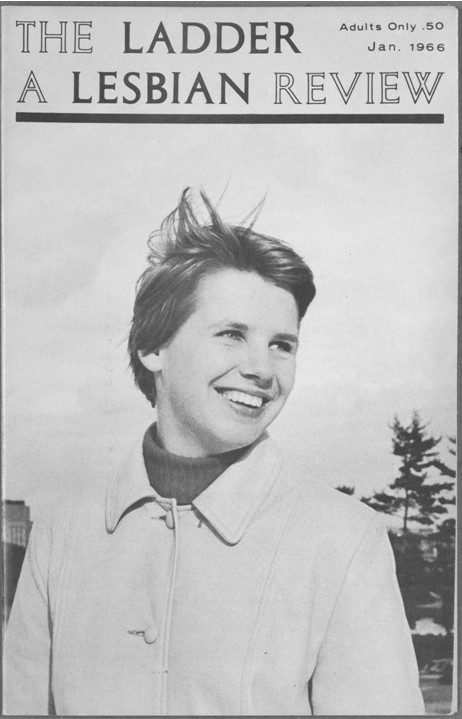
Among the 15 profiled, partners Phyllis Lyon and Del Martin remain best known for cofounding America’s first lesbian group, the Daughters of Bilitis (DOB), in San Francisco in 1955. However, it was DOB’s magazine, The Ladder, that propelled the group’s positive message to lesbians around the world, particularly after Barbara and Kay took over producing the magazine in 1963. Kay wanted to change the name to A Lesbian Review but DOB’s board would only approve adding that as a subtitle so Barbara and Kay kept making the font larger.

In 1964, in addition to contributing articles, Kay brought the magazine’s covers themselves out of the closet, too. From its inception, only drawings or photos of women in shadows had appeared on the cover. But, first, with a donated photo of a woman from Indonesia, then with Kay’s own photos, lesbian women began showing their faces on its covers. And the next year, Kay, the world’s first out gay photojournalist, would begin documenting the movement’s growing militancy.

Lilli Vincenz – Mattachine Society of Washington Fair Use

During our conversations all these decades later, she still marveled at how no one else was as interested as she was in photographing the early organized group protests (which many gays, including many DOB members, initially disapproved of – “only dirty, unwashed rabble do that”). The first Annual Reminder on July 4th, 1965, in front of Independence Hall in Philadelphia. July 31st, Barbara’s 33rd birthday at the Pentagon. The third picket of the White House that October 23rd. While Barbara joined Frank in organizing the protests, event after history-making event, year after year, Kay was there with her camera; often carrying a picket sign, too.

She and Barbara were close friends with Jack Nichols, cofounder with Frank of the independent Mattachine Society of Washington (MSW) in 1961, and his lover, Lige Clarke. Kay encouraged them to found GAY in 1969, the first biweekly community newspaper for which she contributed photos and articles.

“Estimates of the New York crowd varied from 5,000 to 10,000, with the higher figure being applied to the final, huge gathering for a Gay-In in Central Park. In addition, thousands of spectators lined the three mile parade route.” – Kay Tobin, GAY, July 20, 1970.

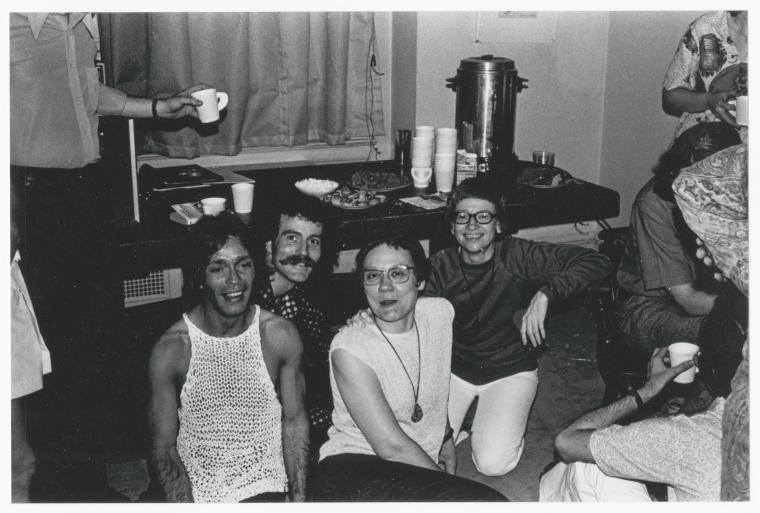
Lige Clarke, Jack Nichols, Barbara Gittings, Kay Lahusen 1972 Courtesy Kay Lahusen

In December 1969, Kay was one of the cofounders of Gay Activists Alliance (GAA) and both photographed and participated in some of their “zaps” or surprise confrontations with public figures. She’s said to have been among those who pounded on the roof of the limousine of former Supreme Court Justice Arthur Goldberg, then running for New York governor, after he told them he had more important things to do than talk about gay rights. He eventually released a supportive statement.

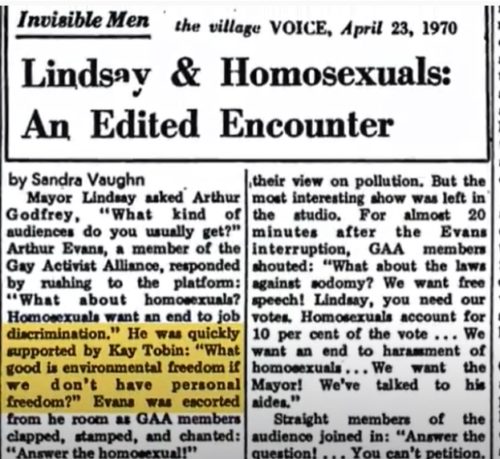
She had been called a “fascist” by someone in the Gay Liberation Front simply for wearing a “Lindsay for Mayor” button. After his reelection, he became a frequent target of GAA, and Kay was one of those who zapped him.

After years of other gay groups bowing to psychiatry’s insistence that being gay was a sickness in the hope it would at least gain their support for “tolerance,” MSW adopted an anti-sickness statement in 1965, declaring that homosexuality was just as good as heterosexuality. By 1971, Barbara and Frank were leaders of the movement to convince the American Psychiatric Association (APA) to remove homosexuality from its manual of mental disorders. Frank outraged APA convention attendees when he took over the microphone during a zap, trumpeting “Psychiatry is the enemy incarnate. Psychiatry has waged a relentless war of extermination against us. You may take this as a declaration of war against you.” He and Barbara also disrupted a convention lecture on aversion therapy and forced an exhibitor to stop selling aversion therapy slides.

At the 1972 convention, Barbara, Frank, and Kay set up their own exhibit called “Gay, Proud, and Healthy: The Homosexual Community Speaks” featuring photos of loving gay and lesbian couples by Kay. But what most rocked the attendees that year, and changed history, was entirely Kay’s idea.

Barbara and Frank had been invited to appear on a panel called “Psychiatry: Friend or Foe to Homosexuals – A Dialogue.” As Barbara recalled, “Kay said, ‘This isn’t right. You have two psychiatrists pitted against two gays. What you really need is someone who’s both.”

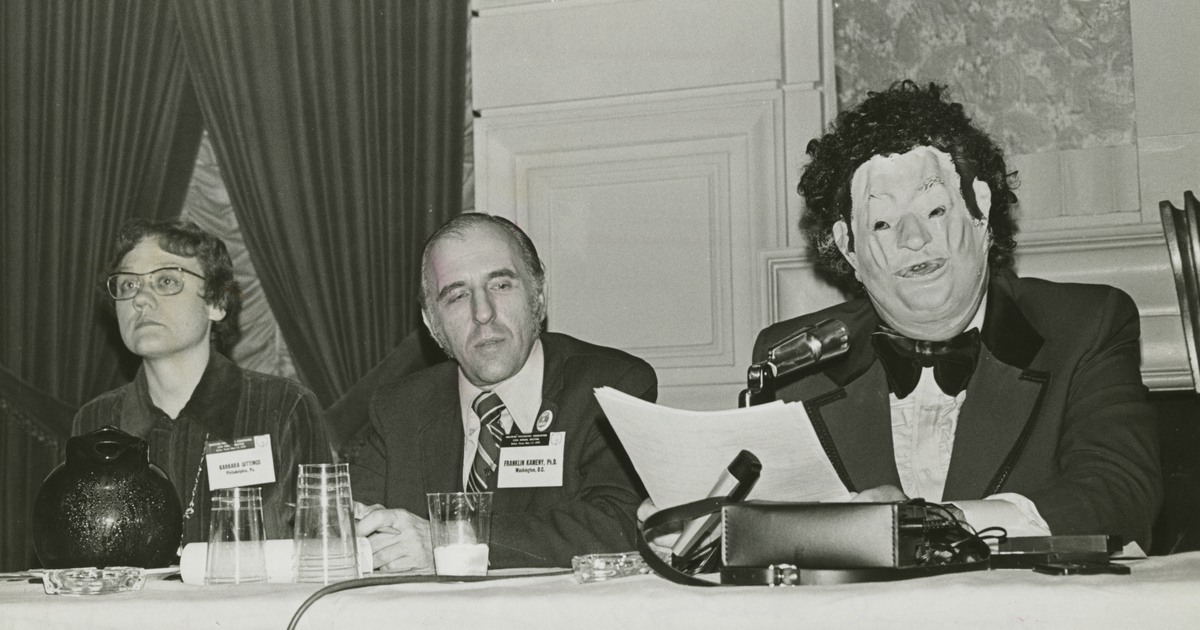
Several publicly closeted gay psychiatrists they approached refused, fearing estrangement from their straight colleagues and the loss of their careers. Finally Dr. John Fryer agreed to participate but only if he could be heavily disguised and use a voice-altering microphone. Kay’s photos document his bazaar appearance but his remarks moved many in the audience unlike anything else had. “I am a homosexual. I am a psychiatrist. Much like the black man with light skin, who chooses to live as a white man, we cannot be seen with our real friends, our real homosexual family, lest our secret be known, and our dooms sealed. . . .”

Barbara Gittings, Frank Kameny, Dr. John Fryer, 1972 APA Convention Kay Tobin Lahusen, Courtesy Manuscripts and Archives Division, New York Public Library.

The next year, APA’s Board of Trustees voted to declare that homosexuality is not a sickness, and it was affirmed by a membership vote in 1974. The victory from which all other victories have flowed was the result of Kay insisting that we must speak for ourselves.

The years passed, honors and awards piled high, and the life partners became senior citizens while remaining activists. Unable to legally marry, they convinced AARP to give them a couple’s membership entitling them to less expensive health insurance. Barbara joked about opening a “Lavender Light Years Retirement Home” where residents would rock and ask each other, “Do you remember when we picketed the White House?”

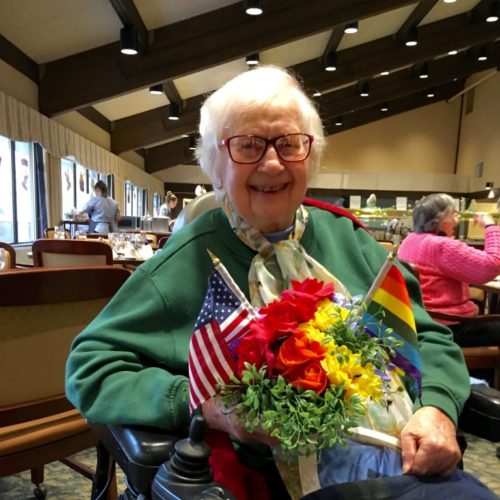
After they moved into an assisted living facility shortly before Barbara’s death from cancer in 2007 despite years of excruciating chemotherapy, they came out to their new neighbors in the facility newsletter. While dependent upon an electric wheelchair to get around, Kay regularly hosted “the gay table” in the dining room which she crowned with her own small rainbow and American flags and shared with a handful of other out residents; something she deeply missed after the Covid-19 pandemic forced distancing from others and eating meals in her room.

Courtesy Eric Marcus, Making Gay History

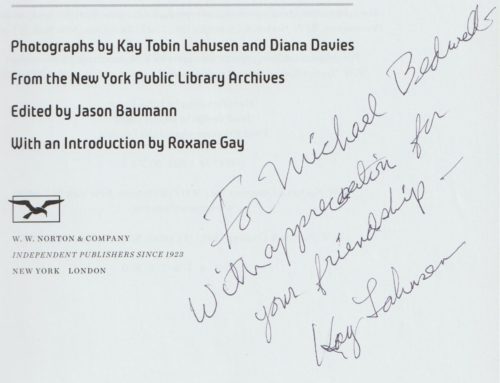
Soon after our calls began she sent me an autographed copy of Tracy Baim’s biography of Barbara on which she collaborated and, of course, supplied photos. Two years ago an autographed copy of Love and Resistance: Out of the Closet into the Stonewall Era featuring photographs by her and Diana Davies arrived, and she was very eager for me to see the new documentary in which she appears, Cured, about the APA battle. Being shown at various film festivals and Pride events, it will be broadcast on PBS this fall.

Repeatedly she urged me to decide where to donate my own movement memorabilia, and some of our last conversations were about her trying to decide which institution to leave the many remaining photos and documents and books which filled her room. Had she managed to frame the “Pete for President” t-shirt I sent her? Who will get that now, and the letter he sent her last year on her 90th birthday, and the Time magazine cover of him and Chasten she had taped to her door for all passers-by to see?

What amazed me from our first conversation eight years after Barbara’s death and four years after Frank’s through our last was how positive she remained, how engaged she was with current events – “Michael! What do you know about . . . ?” How humble she remained while praising others. How she could make us both laugh about something that happened the day before or sixty years ago.

I was about to mail her a small stained glass rainbow flag to hang in her window for Pride Month when I heard she’d passed. Now it will hang in my window and catch the light of my multi-hued memories of her. And I’ll watch yet again the video on YouTube of the 1968 Annual Reminder filmed by Lilli Vincenz that a Philadelphia TV station asked Kay to narrate in 2015, and I’ll still tear up at the point where she says, “That’s me” as her image appears on screen. As I did yesterday replaying some voice mails I’d saved. “Take care, Sweetheart, and call me back.”

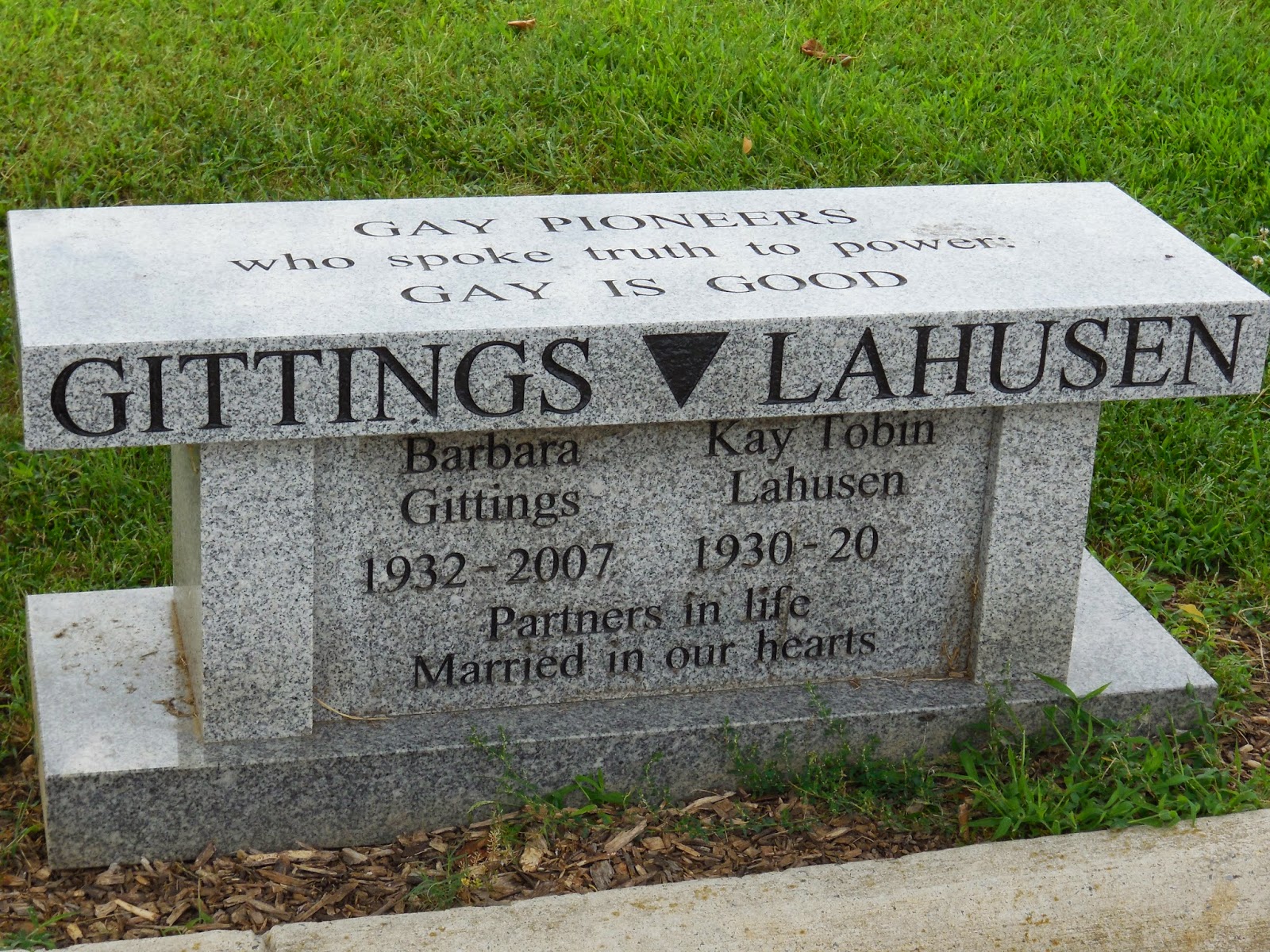
And the next time I visit Leonard’s grave and Frank’s cenotaph I’ll put some flowers on Barbara and Kay’s memorial bench nearby where their ashes will finally rest together after Kay kept Barbara’s next to her bed all these years. “Gay is good” is the motto Frank coined in 1968, and being gay and lesbian and Bi and transgender is all the better today because of what these three did so many yesterdays ago.

Michael Bedwell Collection

A memorial service will be held when the pandemic allows. In lieu of flowers, Kay requested contributions to William Way LGBT Community Center, 1315 Spruce Street. Philadelphia, PA, 19107  or Kennett Area Community Service, P.O. Box 1025, Kennett Square, PA, 19348 for their local food cupboard.

Audio interviews with Kay and Barbara by Eric Marcus, Making Gay History, here and here.

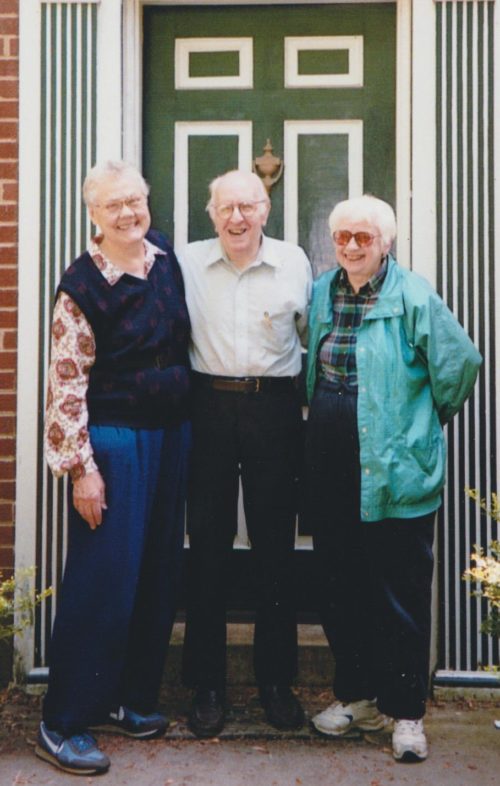
Barbara, Frank, and Kay.
They spoke Truth to Power. Courtesy of Jim Oakes.

.Remember your roots, your history, and the forebears’ shoulders on which you stand.

Marion Wright Edelman.

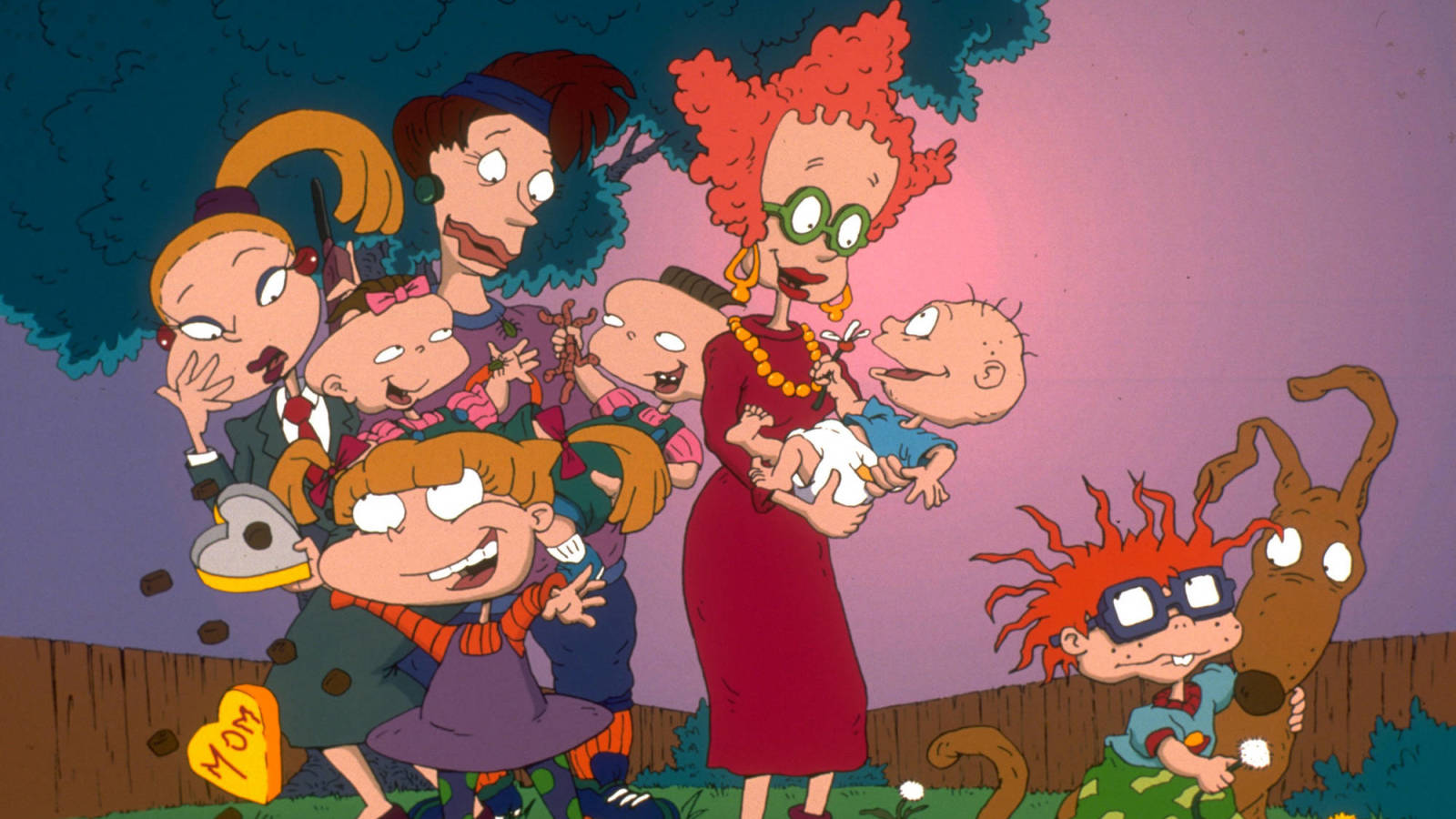
Betty In Rugrats Reboot Will Be Gay – WTRF

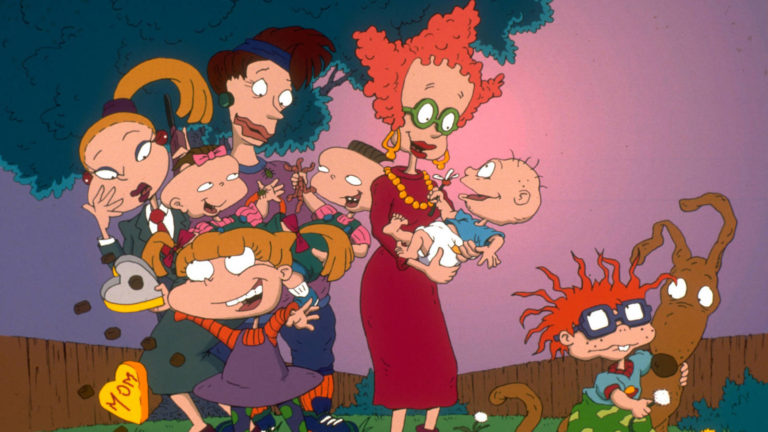
(WTRF) Betty, in Rugrats, best known for being the mom of Phil and Lil, will be an openly gay woman in the new Rugrats reboot according to The A.V. Club.

Betty’s sweater will apparently be wearing a Gemini sweater instead of the classic ‘female’ symbol sweater.

The voice of Betty is voiced by gay actor Natalie Morales.

Morales told the A.V Club that anyone who watched the original show may have had an inkling Betty was a member of the alphabet mafia.”

Rugrats premieres on Paramount+ on May 27

Betty to be openly gay single mom in ‘Rugrats’ reboot series – Yardbarker

Paramount Plus’ CGI-animated Rugrats revival series can’t compare to the original Rugrats—’90s nostalgia can rarely truly be duplicated—but in the case of Betty DeVille, being different this time around is the point.

Betty was and still is the mother to twin babies Phil and Lil. In the original, she was married to Howard. Now, Betty is openly gay and voiced by queer actor Natalie Morales.

Morales shared an exclusive statement with The A.V. Club about Betty’s more authentic character development because “anyone who watched the original show may have had an inkling Betty was a member of the alphabet mafia”:

Betty is a single mom with her own business who has twins and still has time to hang out with her friends and her community, and I think it’s just so great because examples of living your life happily and healthily as an out queer person is just such a beacon for young queer people who may not have examples of that. And yeah, Betty is a fictional cartoon, but even cartoons were hugely influential for me as a kid and if I’d been watching Rugrats and seen Betty casually talking about her ex-girlfriend, I think at least a part of me would have felt like things might be okay in the future.”

In the first episode of the revival series, which debuted on Paramount Plus today (May 27), Betty is seen wearing her same iconic wardrobe and tossing the football around with the babies’ dads. Later in the episode, Betty tosses out a gay joke with Didi Pickles before mentioning her “one ex-girlfriend who still kind of scares me.”

Kay Tobin Lahusen, Gay Rights Activist and Photographer, Dies at 91 – The New York Times

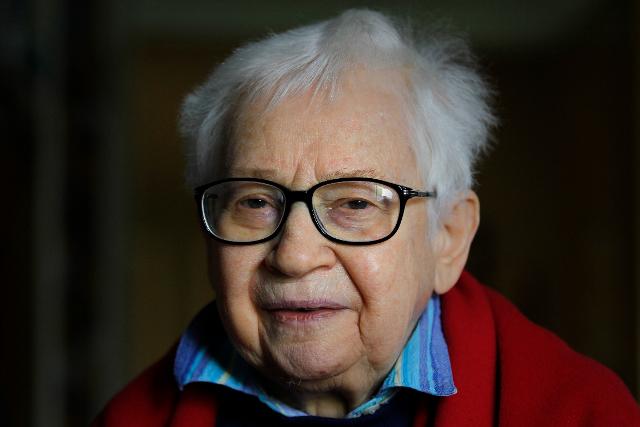
Kay Tobin Lahusen, a prominent gay rights activist whose photographs documented the movement’s earliest days and depicted lesbians who were out when they were virtually absent from popular culture, died on Wednesday in West Chester, Pa. She was 91.

Her death in a hospital, was confirmed by Malcolm Lazin, a longtime friend and the executive director of the Equality Forum, an L.G.B.T.Q. civil rights group.

Ms. Lahusen and her longtime partner, Barbara Gittings, were at the forefront of the lesbian rights movement, determined to make whom they loved a source of pride rather than shame.

They were early members of the Daughters of Bilitis, the first national lesbian organization, and soon spoke out about their sexuality and their demands for equality at a time when gay rights groups were less vocal. In the 1960s, they helped organize protests at a National Council of Churches meeting, the Pentagon and the White House well before the Stonewall uprising in Greenwich Village in 1969, a pivotal event for the gay rights movement.

They helped lesbians realize that they were not alone by producing The Ladder, a newsletter published by the Daughters that was the first nationally distributed lesbian journal in the United States.

Ms. Gittings was The Ladder’s editor, and Ms. Lahusen became an important contributor, writing under the surname Tobin, which she had picked out of the phone book, she said, because it was easy to pronounce, unlike Lahusen (pronounced la-HOOZ-en). She also photographed many of the earliest gay rights protests, providing important documentation of a period when many gay people chose to remain in the closet.

“Occasionally somebody would bring a camera to a picket, but I was the only one who went at it in a sustained way,” Ms. Lahusen said in an interview for this obituary in 2019.

Some of her protest photographs appeared in The Ladder’s inside pages; with few gay people wanting their faces to appear in a magazine, let alone on the cover, the journal’s covers were given over to illustrations. “I said, ‘What we really need are some live lesbians,’ and we couldn’t find any,” Ms. Lahusen said.

By the mid-1960s, however, Ms. Lahusen had persuaded some women to pose for cover portraits, among them Ernestine Eckstein, an African American lesbian activist who picketed the White House for gay rights in 1965, and Lilli Vincenz, who was discharged from the Women’s Army Corps after she was outed.

In a 1993 interview with Outhistory.org, Ms. Lahusen described her goal then as “taking our minority out from under wraps, and what you might call the normalization of gay.”

As the 1960s wore on, Ms. Lahusen and Ms. Gittings came to believe that the Daughters of Bilitis’ approach was too conciliatory, that it was more focused on signaling respectability than fighting for equal rights. “It was all aimed at reforming laggard lesbians,” she said.

They began to work outside the organization, finding common cause with gay rights activists like Franklin Kameny.

Ms. Lahusen helped Mr. Kameny and Ms. Gittings lobby the American Psychiatric Association to remove homosexuality from its list of mental illnesses, in part by persuading a practicing psychiatrist to testify about being gay at the organization’s national convention in Dallas in 1972. The psychiatrist, Dr. John E. Fryer, addressed the association under the name Dr. H. Anonymous, wearing a mask and a wig so that he would not face professional repercussions.

Ms. Lahusen photographed him, fully costumed, with Ms. Gittings and Mr. Kameny. The next year the association removed homosexuality from the Diagnostic and Statistical Manual for Mental Disorders.

Ms. Lahusen’s photographs offer a rare visual record of the gay rights movement’s earliest days. Many of them are now in the New York Public Library’s archive and were a major part of the 2019 exhibition “Love & Resistance: Stonewall 50,” which celebrated the 50th anniversary of the uprising.

Marcia M. Gallo, a social movement historian and the author of “Different Daughters: A History of the Daughters of Bilitis and the Rise of the Lesbian Rights Movement” (2006), described Ms. Lahusen in an interview as “one of the key foundational organizers and chroniclers of the L.G.B.T.Q. movement from the ’60s on.”

Ms. Gallo said that Ms. Lahusen had been eager to speak about the earliest days of the movement, and that she and Ms. Gittings had organized a gay lunch-table group at the care facility where they lived in Kennett Square, Pa.

“She was organizing into her 90s,” Ms. Gallo said.

Katherine Lahusen was born on Jan. 5, 1930, in Cincinnati. She was adopted soon afterward by her grandparents George and Katherine (Walker) Lahusen and grew up in Cleveland. Her grandfather sold cable for a steel company; her grandmother was a homemaker.

Katherine first realized that she was attracted to women when she was barely a teenager, developing crushes on actresses like Katharine Hepburn. It was the 1940s, and many Americans viewed gay people as deviants. But Ms. Lahusen refused to internalize society’s prejudices.

“I decided that I was right and the world was wrong and that there couldn’t be anything wrong with this kind of love,” she was quoted as saying in “Different Daughters.”

She went to a private elementary school and graduated from Withrow High School in Cincinnati in 1948. She followed a girlfriend to Ohio State University, where she majored in English and planned to become a teacher.

Ms. Lahusen graduated in 1952 and moved in with her girlfriend. But the girlfriend soon had second thoughts about their relationship.

“She believed that we couldn’t have a good life together,” Ms. Lahusen said. “She wanted to have a white picket fence and a hubby, and she wanted to have children.”

Ms. Lahusen moved to Boston in the mid-1950s and took a job there as a researcher at The Christian Science Monitor while struggling to find a companion. She learned of the psychiatrist Richard C. Robertiello, who had written the book “Voyage From Lesbos: The Psychoanalysis of a Female Homosexual” (1959).

“I thought, ‘I don’t want to be cured, but I do want to find out how to meet other lesbians,’” Ms. Lahusen recalled in 2019. “I had the impression there were others in Paris, but I didn’t know any locally.”

She made an appointment with Dr. Robertiello, who showed her a copy of The Ladder. She wrote to the publication and in time met Ms. Gittings, who had founded the New York chapter of the Daughters of Bilitis in 1958.

Ms. Gittings became her partner, and they lived together for decades in Philadelphia, where an apartment they shared early on was honored with a historic marker in 2016.

Ms. Gittings and Ms. Lahusen supported their activism by working different jobs, Ms. Lahusen as a waitress and in a music store. In 1972 she and Randy Wicker published “The Gay Crusaders,” one of the first collections of interviews with prominent gay rights figures.

Ms. Gittings died in 2007, before the Supreme Court legalized same-sex marriage in 2015.

[Read Ms. Gittings’s obituary in The Times]

No immediate family members survive.

Ms. Lahusen said she was overjoyed by how far gay rights had come, but she cautioned young activists against complacency.

“I think some of these advances, as wonderful as they are, are being taken for granted, even now,” she said. “They need to be codified into law.”

Photojournalist, gay rights pioneer Kay Lahusen dies at 91 – RiverBender.com

FILE – In this May 10, 2012 file photo, Kay Lahusen poses for a photograph in Kennett Square, Pa. Lahusen, a pioneering gay rights activist who chronicled the movement’s earliest days through her photography and writing, has died. She was 91. Known as the first openly gay photojournalist, Lahusen died Wednesday, May 26, 2021, at Chester County Hospital outside Philadelphia following a brief illness, according to Founds Funeral Home. (AP Photo/Matt Rourke, File)

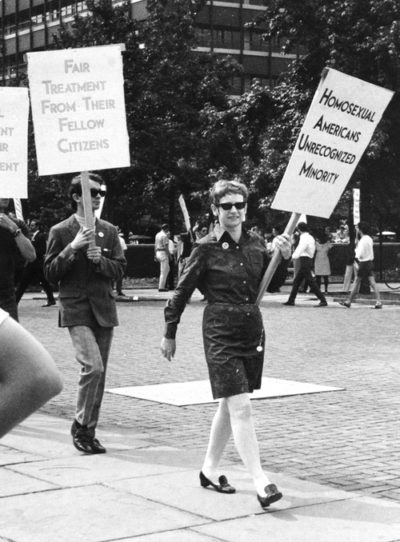
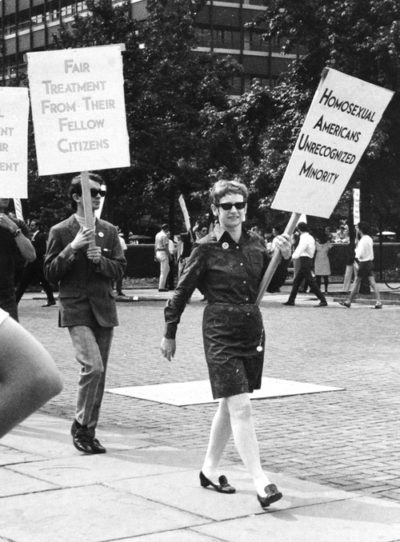
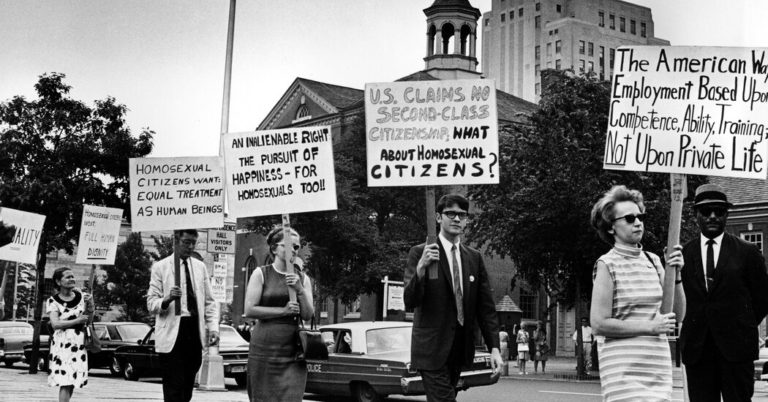
FILE- In this July 4, 1967, file photo, Kay Tobin Lahusen, right, and other demonstrators carry signs calling for protection of homosexuals from discrimination as they march in a picket line in front of Independence Hall in Philadelphia. Lahusen, a pioneering gay rights activist who chronicled the movement’s earliest days through her photography and writing died Wednesday, May 26, 2021. She was 91. (AP Photo/John F. Urwiller, File)

FILE – In this May 10, 2012 file photo, Kay Tobin Lahusen poses for a photograph with a portrait of her late partner Barbara Gittings, in Kennett Square, Pa. Lahusen, a pioneering gay rights activist who chronicled the movement’s earliest days through her photography and writing, has died. She was 91. Known as the first openly gay photojournalist, Lahusen died Wednesday, May 26, 2021, at Chester County Hospital outside Philadelphia following a brief illness, according to Founds Funeral Home. (AP Photo/Matt Rourke, File)

Kay Lahusen, a pioneering gay rights activist who chronicled the movement’s earliest days through her photography and writing, has died. She was 91.

Known as the first openly gay U.S. photojournalist, Lahusen died Wednesday at Chester County Hospital outside Philadelphia, following a brief illness.

Together with her partner, the late activist Barbara Gittings, Lahusen advocated for gay civil rights years before the 1969 Stonewall uprising in New York helped launch the modern LGBTQ era. She captured widely published images of some of the nation’s first protests.

Lahusen “was the first photojournalist in our community,” said Mark Segal, a friend of more than 50 years and founder and publisher of the Philadelphia Gay News. “Practically every photo we have of that time is from Kay.”

Lahusen photographed a series of gay rights demonstrations held in front of Philadelphia’s Independence Hall each July 4 from 1965 to 1969 — and was a marcher herself, carrying signs that said “First Class Citizenship for Homosexuals” and “End Official Persecution of Homosexuals.” She documented gay rights protests at the White House and the Pentagon.

“Whatever the Founding Fathers envisioned as the rights and privileges of our citizens, we wanted for ourselves as well,” she told WHYY for a 2015 commemoration. “Somebody had to get out and show their face in public and proclaim things and be aggressive.”

Lahusen’s life partner, Gittings, was one of the nation’s most prominent lesbian activists and co-organizer of the “Annual Reminder” pickets in Philadelphia.

They had met in 1961 at a picnic held by Daughters of Bilitis, the first known lesbian organization in the U.S. whose East Coast chapter Gittings had founded. Lahusen was arts editor and shot groundbreaking cover photos of gay women for the group’s national publication, The Ladder, which Gittings edited.

Lahusen also was a founding member of the Gay Activists Alliance and photographed that group’s protests, called “zaps.” She was there for Philadelphia’s first gay pride march in 1972. Under the pseudonym Kay Tobin, she co-authored a 1972 book, “The Gay Crusaders,” which profiled the movement’s early leaders.

Lahusen and Gittings also took part in the campaign that led to the American Psychiatric Association’s 1973 decision to drop homosexuality from its list of mental disorders.

Lahusen and Gittings were a couple for 46 years. After Gittings’ 2007 death, Lahusen spent her later years in a retirement home in Kennett Square, where she gave interviews, helped maintain Gittings’ legacy and kept alive the history of the early gay civil rights movement.

“Stonewall was not the first thing, that’s what she would tell you,” said her friend, Judith Armstrong. “The history is there and the history she definitely wanted to be preserved. … She wanted the story to be out there.”

The New York Public Library houses an extensive collection of Gittings and Lahusen’s papers and photographs.

Tennessee anti-Trans business bathroom law; penalties could apply – Los Angeles Blade

WEST HOLLYWOOD – In its third annual survey released late last week, The Trevor Project found that well over two-thirds of the 35,000 LGBTQ youth ages 13–24 across the United States interviewed reported that the affects of the coronavirus pandemic has largely negatively impacted their lives.

“The past year has been incredibly difficult for so many LGBTQ young people because of multiple crises, from the COVID-19 pandemic to the hostile political climate and repeated acts of racist and transphobic violence. This data makes clear that LGBTQ youth face unique mental health challenges and continue to experience disparities in access to affirming care, family rejection, and discrimination., ” Amit Paley, CEO & Executive Director of The Trevor Project told the Blade in an emailed statement.

“We are proud that this survey sample is our most diverse yet, with 45% being LGBTQ youth of color and 38% being transgender or nonbinary. The data speaks to the wide variety of experiences and identities held by LGBTQ youth across the country, and emphasizes the need for comprehensive, intersectional policy solutions to confront systemic barriers and end suicide,” he added.

The Trevor Project also noted that this year’s survey reflected a wider sense of diversity, with 45% of LGBTQ youth survey being of color and 38% being transgender or nonbinary. The study highlights that only 1 in 3 LGBTQ+ youths live in an affirming home. It also shows the impact of discrimination on the mental health of LGBTQ+ youths of color.

According to the report, 42% of LGBTQ youth seriously considered attempting suicide in the past year, including more than half of transgender and nonbinary youth. Additionally, 12% of white youth attempted suicide compared to 31% of Native/Indigenous youth, 21% of Black youth, 21% of multiracial youth, 18% of Latinx youth, and 12% of Asian/Pacific Islander youth.

Statistically, LGBTQ+ youth are more at risk for depression and suicide than their heterosexual peers. A contributing factor is the lack of an affirming home space or environment. More than 80% of LGBTQ youth stated that COVID-19 made their living situation more stressful — and only 1 in 3 LGBTQ youth found their home to be LGBTQ-affirming.

“These findings are extremely concerning as they highlight many distinct factors that contribute to LGBTQ youth suicide risk. But we encourage lawmakers, public health officials, and youth-serving organizations to focus on the protective factors illuminated in the data, which point to best practices on how to better support LGBTQ young people,” Dr. Amy Green, Vice President of Research at The Trevor Project, the licensed clinical psychologist who oversaw the survey said.

“Once again, we find that LGBTQ-affirming spaces and transgender-inclusive policies and practices are consistently associated with lower rates of attempting suicide. The past year has been really difficult for so many of us, but we also know that LGBTQ youth in particular are facing unique challenges,” said Green.

Key Findings include:

94% of LGBTQ youth reported that recent politics negatively impacted their mental health.

70% of LGBTQ youth stated that their mental health was “poor” most of the time or always during COVID-19.

48% of LGBTQ youth reported they wanted counseling from a mental health professional but were unable to receive it in the past year.

30% of LGBTQ youth experienced food insecurity in the past month, including half of all Native/Indigenous LGBTQ youth.

75% of LGBTQ youth reported that they had experienced discrimination based on their sexual orientation or gender identity at least once in their lifetime.

Half of all LGBTQ youth of color reported discrimination based on their race/ethnicity in the past year, including 67% of Black LGBTQ youth and 60% of Asian/Pacific Islander LGBTQ youth.

13% of LGBTQ youth reported being subjected to conversion therapy, with 83% reporting it occurred when they were under age 18.

Transgender and nonbinary youth who reported having pronouns respected by all of the people they lived with attempted suicide at half the rate of those who did not have their pronouns respected by anyone with whom they lived. Trans and nonbinary youth who were able to change their name and/or gender marker on legal documents, such as driver’s licenses and birth certificates, reported lower rates of attempting suicide.

LGBTQ youth who had access to spaces that affirmed their sexual orientation and gender identity reported lower rates of attempting suicide. An overwhelming majority of LGBTQ youth said that social media has both positive (96%) and negative (88%)impacts on their mental health and well-being.

“The Trevor Project is the largest suicide prevention organization for LGBTQ youth, but even we do not know how many LGBTQ youth die by suicide each year because that data is simply not collected systematically,” Green said and added; “This third annual survey aims to fill the gaps in the limited research we do have on LGBTQ youth mental health and suicide risk as a means to raise public awareness and improve public health interventions.”

To read the full report go here: https://www.thetrevorproject.org/survey-2021/?section=Introduction

If you are an LGBTQ young person, please know that you are never alone and The Trevor Project is here to support you 24/7.

Need Help? We are here for you 24/7: 1-866-488-7386 | Text | Chat

UCSF Joins National Collaborative to Study COVID-19 Outcomes for LGBTQ People – UCSF News Services

Researchers from the UCSF School of Nursing have joined a newly launched national collaborative to study the impacts of COVID-19 on members of the lesbian, gay, bisexual, transgender and queer communities. 

The We Count Collaborative aims to bring together data on more than 45,000 LGBTQ patients from five federally qualified health centers (FQHCs) that specialize in reducing barriers to care for LGBTQ populations, to help bridge the knowledge gap about COVID-19 health experiences in this community. They will be collaborating with The PRIDE Study, a long-term national LGBTQ+ health study led by researchers at Stanford University in partnership with UC San Francisco.  

“We don’t know enough yet about the impact of COVID-19 on LGBTQ+ people, because we haven’t been counted in most national COVID-19 data collection,” said Annesa Flentje, PhD, who is director of the UCSF Center for Sexual and Gender Minority Health and associate director of The PRIDE Study. “This collaborative brings together frontline health organizations and community-engaged researchers focused on LGBTQ+ health to fill these gaps in knowledge and inform policy that can improve the lives of LGBTQ+ people.”

A February 2021 report by the Centers of Disease Control and Prevention (CDC) found that sexual minority people experience higher rates of underlying illnesses that are related to severe outcomes of COVID-19, including higher adjusted prevalence of asthma, cancer, heart disease, smoking and stroke than the general population. The report underscored the need for understanding how overlapping social stigmas and discrimination can cause illness, and how public health policies can intervene to stop the spread of disease.

FQHCs participating in the initiative include Whitman-Walker Institute, Callen-Lorde Community Health Center, CrescentCare, Howard Brown Health and the Los Angeles LGBT Center. The health centers have been on the front lines of COVID-19 response and are uniquely positioned to collect real-time data that is crucial for this project and future public health policy.  

About The PRIDE Study: The Population Research in Identity and Disparities for Equality (PRIDE) Study is a community-engaged, online, national, longitudinal, dynamic, prospective, cohort study of self-identified LGBTQ+ people. Founded in 2017 to counteract the lack of data describing the health-related needs of LGBTQ people, The PRIDE Study engages, recruits, and enrolls adults living in the United States who identify as LGBTQ+ to collect and report demographic, physical, mental, and social health data and outcomes. The PRIDE Study is based in Palo Alto, California and is a study of Stanford University School of Medicine in partnership with the University of California, San Francisco. 

About UCSF: The University of California, San Francisco (UCSF) is exclusively focused on the health sciences and is dedicated to promoting health worldwide through advanced biomedical research, graduate-level education in the life sciences and health professions, and excellence in patient care. UCSF Health, which serves as UCSF’s primary academic medical center, includes top-ranked specialty hospitals and other clinical programs, and has affiliations throughout the Bay Area.

From Ex-Frat Members Attacking LGBT Safe House to NYC Pride Un-Banning Then Re-Banning Cops, This Week in Across the Country – SouthFloridaGayNews.com

This week read about ex-frat members terrorizing students in an LGBT safe house at a university in Pennsylvania, and New York Pride un-banning cops then re-banning them from participating in the parade.

Ex-Frat Members Attack LGBT Safe House

Students at Bucknell University are calling on their administration to take permanent action after a physical attack on the campus LGBT affinity house earlier this month.

Fran’s House Residential Adviser Tyler Luong wrote in a letter that residents were preparing for finals as members of Tau Kappa Epsilon, a fraternity that was banned by the university in 2018 for violating hazing policies, surrounded the house, beating on doors and windows, urinating on the porch, and demanding that the students let them in. He also described how the campus Public Safety department arrived late, ignored the residents of the house and shook hands with the offenders.

In a May 14 letter sent to students, Bravman wrote, “We cannot erase the ugliness and subsequent trauma of last night’s transgression against the students of Fran’s House and, implicitly, many others, but we can commit to addressing it in a way that protects LGBTQ Bucknellians and better ensures their safety in the future.”

The university has banned the seniors who participated in the attack from the school’s graduation ceremony, but Fran’s House residents said they want to see the house become a permanent LGBT safe house.

Cops Un-banned, then Re-banned from NYC Pride

cops

NYC Police. Photo via PublicDomainPictures.net.

Just days after Heritage of Pride organizers announced that uniformed NYPD officers were banned from NYC pride until 2025, members voted to allow the Gay Officers Action League (GOAL) to march in uniform.

Shortly after, the executive board voted to overturn the decision, standing in their initial ruling to keep armed and uniformed offices out of the parade “in an effort to be mindful and focus on our mission of creating safe space for marginalized communities,” according to a letter sent to HOP membership.

The board wrote, “The NYPD, and policing across America, is fundamentally flawed. These are institutions that started as slave patrols, and continue to oppress Black, Brown, Indigenous, POC, LGBTQ individuals, and individuals who stand at the intersections of these identities.”

GOAL President Brian Downey told Gay City News, “We are still disappointed with the executive leadership of Heritage of Pride and their stance on our participation.”

The first pride marches were protests in response to violent attacks by NYPD officers on queer communities of color, and the board said the abuse hasn’t stopped, citing 2020 attacks on queer protestors last summer following George Floyd’s death. The board plans to schedule another meeting to discuss the issue.

Louisiana Legislature sends transgender sports ban to governor’s desk – Louisiana Illuminator

Transgender
Trans Pride flags | Ted Eytan via Flickr CC BY-SA 2.0

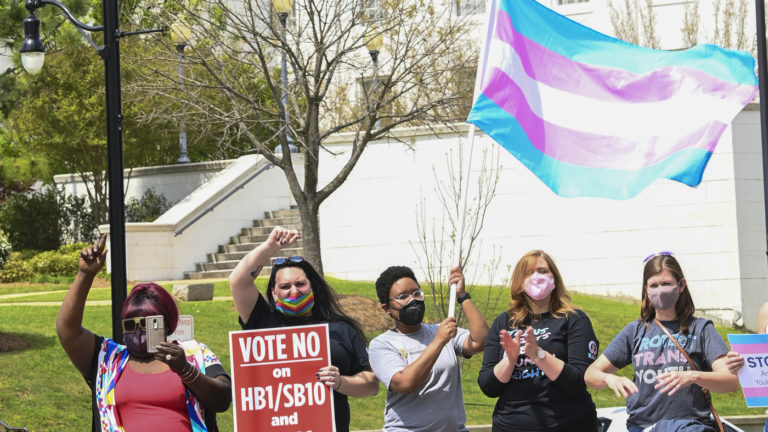
The Louisiana Legislature has voted for a ban on transgender women and girls participating in women and girls sports. Both the House and Senate voted overwhelmingly in support for House Bill 156. The chambers passed the measure with over two-thirds of lawmakers in favor, a veto-proof majority.

Conservative lawmakers stood up and cheered when the bill passed in the House Thursday. It has been several years since conservatives have been able to get a new restriction on the gay, lesbian, bisexual or transgender community through the Louisiana Legislature.

Gov. John Bel Edwards has already vowed to veto the legislation, but there is an open question about whether legislators will still be in session when that happens. If they are, lawmakers are much more likely to push a veto override that would allow the bill to become law.

Edwards, a Democrat, has 10 days from when he receives the bill to veto it and 12 days from when he receives the bill to notify the Legislature of his veto — at which point the lawmakers could attempt a veto override. But it’s not clear whether the lawmakers will still be in session when the opportunity for a veto override occurs. If they are, the legislation would stand a much better chance of becoming law. 

The Legislature doesn’t adjourn until June 10, so there’s a possibility that Edwards will be forced to veto the legislation while lawmakers are still in session. It’s unclear when the governor might receive the bill. The legislative procedural process may delay the governor receiving the bill until early next week, which could mean he wouldn’t have to veto the legislation before the lawmaking session adjourns. That would make it much more likely that the veto would stand.

Lawmakers do have the opportunity to attempt a veto override outside of the regular legislative session. They can vote to call themselves back into a special session in Baton Rouge to do veto overrides, but that is less likely. In the modern history of Louisiana, lawmakers have never called themselves back to Baton Rouge for a veto override session once their regular session has adjourned.

This is a developing story. Please check back with us later to see an updated version. 

Photojournalist, gay rights pioneer Kay Lahusen dies at 91 – WOKV

Kay Lahusen, a pioneering gay rights activist who chronicled the movement’s earliest days through her photography and writing, has died. She was 91.

Known as the first openly gay U.S. photojournalist, Lahusen died Wednesday at Chester County Hospital outside Philadelphia, following a brief illness.

Together with her partner, the late activist Barbara Gittings, Lahusen advocated for gay civil rights years before the 1969 Stonewall uprising in New York helped launch the modern LGBTQ era. She captured widely published images of some of the nation’s first protests.

Lahusen “was the first photojournalist in our community,” said Mark Segal, a friend of more than 50 years and founder and publisher of the Philadelphia Gay News. “Practically every photo we have of that time is from Kay.”

Lahusen photographed a series of gay rights demonstrations held in front of Philadelphia’s Independence Hall each July 4 from 1965 to 1969 — and was a marcher herself, carrying signs that said “First Class Citizenship for Homosexuals” and “End Official Persecution of Homosexuals.” She documented gay rights protests at the White House and the Pentagon.

“Whatever the Founding Fathers envisioned as the rights and privileges of our citizens, we wanted for ourselves as well,” she told WHYY for a 2015 commemoration. “Somebody had to get out and show their face in public and proclaim things and be aggressive.”

Lahusen’s life partner, Gittings, was one of the nation’s most prominent lesbian activists and co-organizer of the “Annual Reminder” pickets in Philadelphia.

They had met in 1961 at a picnic held by Daughters of Bilitis, the first known lesbian organization in the U.S. whose East Coast chapter Gittings had founded. Lahusen was arts editor and shot groundbreaking cover photos of gay women for the group’s national publication, The Ladder, which Gittings edited.

Lahusen also was a founding member of the Gay Activists Alliance and photographed that group’s protests, called “zaps.” She was there for Philadelphia’s first gay pride march in 1972. Under the pseudonym Kay Tobin, she co-authored a 1972 book, “The Gay Crusaders,” which profiled the movement’s early leaders.

Lahusen and Gittings also took part in the campaign that led to the American Psychiatric Association’s 1973 decision to drop homosexuality from its list of mental disorders.

Lahusen and Gittings were a couple for 46 years. After Gittings’ 2007 death, Lahusen spent her later years in a retirement home in Kennett Square, where she gave interviews, helped maintain Gittings’ legacy and kept alive the history of the early gay civil rights movement.

“Stonewall was not the first thing, that’s what she would tell you,” said her friend, Judith Armstrong. “The history is there and the history she definitely wanted to be preserved. … She wanted the story to be out there.”

The New York Public Library houses an extensive collection of Gittings and Lahusen’s papers and photographs.

Texas Lt Gov calls for special legislative session to ban trans teens from playing school sports – LGBTQ Nation

Texas Lt. Gov. Dan Patrick (R) is determined to spend taxpayer dollars denigrating transgender student athletes.

The far-right politician is calling on Gov. Greg Abbott (R) to call a special session of the legislature in order to pass a bill that would ban trans students from participating in school sports.

Related: Texas Lt Governor insinuates Beto O’Rourke is gay on live television

The proposed law died in the state’s House after Democrats pulled out the stops to run out the clock on several pieces of controversial legislation, including the attack on trans youth. Supporters waved the trans flag when the clock struck midnight and the time expired.

Patrick also wants the legislature to take up two other bills. One would prevent towns and cities from using taxpayer funds to pay for lobbyists to represent their interests in the state capitol. Another would punish social media companies for “censoring” Texans.

Abbott rebuffed Patrick’s grandstanding, saying it was premature to say the bills were completely dead for the session and that Republicans should “work together to get important conservative legislation to my desk.”

The internet was quick to point out that Patrick’s interests lay more in attacking teenagers and Twitter than protecting citizens who’ve been battered by the pandemic and severe weather over the past months. While landlords, employers, and working parents suffer, Patrick is focused on 13-year-old gymnasts and Facebook pages.

Patrick is possibly best known outside of the state for his nonstop attacks on the LGBTQ community. A religious right devotee, Patrick has been behind practically every legislative attack and gleefully promoted them in front of the cameras.