According to actor John McCrea (who starred in the drag musical Everybody’s Talking About Jamie), Artie was originally envisioned as a drag queen but wound up with a David Bowie-era glam-rock aesthetic instead. He’s a minor figure in the story, running a vintage clothing store in London. And while the film doesn’t directly state that he’s queer, it’s pretty clear from his mannerisms and a conversation he has with Cruella, when she asks how people react to his appearance. “Some abuse and insults,” Artie quips. “But I like to say that ‘normal’ is the cruelest insult of them all.”
Basically, his introductory scene consists of Cruella rolling up to a total stranger and casually asking, “Hey, do you experience homophobic harassment?” Artie then becomes one of her sidekicks, helping with the fashion side of her rebellious quasi-criminal operation.
Disney has been talking about its First Canon Gay Character for the better part of the last decade, and literally every time they flub it so hard that they just try the same announcement again in the next movie forever into infinity.
— Trung Lê Capecchi-Nguyễn (@Trungles) May 26, 2021
Mark my fucking words they’re gonna give Ursula an extent tragic backstory about how singing killed her mom or whatever and make one of the eels “Disney’s first gay character” by having him wink at a Male fish or sebastian
The “first gay character” cycle is partly fueled by Disney’s own PR campaigns, based around the idea that queer representation is uniquely impactful in a Disney movie. Considering Disney’s ubiquity as a brand, that’s arguably true for children’s entertainment. But it’s absurd to suggest that Artie is meaningful representation. He follows a stereotype we’ve seen in numerous mainstream films already: a flamboyantly-dressed gay man whose sexuality is rendered coyly apolitical and irrelevant. He exists to help the protagonist have a makeover. Complicating the issue, he appears in a specific setting (1970s London) where many straight men were adopting androgynous fashion choices and elements of queer culture. So he remains in the realm of plausible deniability.
Disney has a long history of included queer-coded characters in children’s cartoons, primarily villains. Ursula, Jafar, and Hades are all famous examples, and Cruella De Vil can be interpreted as queer-coded as well. She had a henpecked, subservient husband in the original novel, but the Disney adaptations portray her as single. She’s a predatory foil to Roger and Anita, a boringly wholesome hetero couple.
In the 1996 live-action 101 Dalmatians, Glenn Close’s Cruella arrives like an alien interloper in Roger and Anita’s house. Outlandishly clad in red, black and white, she sows discord into their comfortable beige existence. “Oh, poor thing!” she exclaims in disgust, when Roger announces that Anita is pregnant. She’s the natural enemy of the nuclear family, openly horrified by the idea of having a baby.
Glenn Close’s gleeful unpleasantness is very entertaining. That’s why she’s such an iconic villain. By comparison, the new Cruella is being criticized for sapping the fun out of her theatrically evil persona. The movie attempts to make her sympathetic, resulting in a widely-derided tragic backstory. Disney wanted to make a Cruella film without any sense of edginess or danger, overlapping with the studio’s milquetoast approach to gay characters.
Disney’s idea of queer representation is a character whose main role is to simply exist onscreen. In the near future, this tokenism will expand to bigger roles like a same-sex couple among the ensemble cast of Marvel’s Eternals. But above all, queer Disney characters must be as uncontroversial as possible. That’s why they have minimal narrative impact, contrasting with the problematic-yet-beloved roles for classic queer-coded villains. In independent dramas like The Favourite (Emma Stone’s last star vehicle) we’re allowed to see queer character who are weird, unpleasant and complicated. This has been true for decades. But Disney’s offerings are shaped by corporate constraints. Characters like Artie continue to get a lot of publicity thanks to Disney’s dominance over Western pop culture, but as always, you’re not going to find satisfying queer representation in a film like Cruella.
Gavia Baker-Whitelaw is a staff writer at the Daily Dot, covering geek culture and fandom. Specializing in sci-fi movies and superheroes, she also appears as a film and TV critic on BBC radio. Elsewhere, she co-hosts the pop culture podcast Overinvested. Follow her on Twitter: @Hello_Tailor
TALLAHASSEE, Fla. (AP) — Florida’s Republican governor signed a bill Tuesday barring transgender girls and women from playing on public school teams intended for student athletes identified as girls at birth, plunging the state into the national culture debate over transgender rights.
“In Florida, girls are going to play girls sports and boys are going to play boys sports,” Gov. Ron DeSantis said as he signed the bill into law at a private Christian academy in Jacksonville that would not be subject to the law. “We’re going to make sure that that’s the reality.”
The new law, sure to be challenged as unconstitutional, inflames an already contentious discussion unfolding nationally as Republican-controlled states move to limit the rights of LGBTQ people, whose advocates were especially frustrated that the legislation was signed on the first day of Pride Month.
The NCAA, which oversees college athletics, has said it has “a long-standing policy that provides a more inclusive path for transgender participation in college sports.” The NCAA currently requires transgender women to get treatment to lower their testosterone levels before they can compete in women’s sports.
When the Florida Legislature was considering the measure in April, the NCAA said it would commit championship games to “locations where hosts can commit to providing an environment that is safe, healthy and free of discrimination.”
High-profile athletic events, such as football bowl games and basketball tournaments, generate millions of dollars for local communities.
Advertising
The measure approved by the GOP-led Legislature takes effect July 1. It says a transgender student athlete can’t participate without first showing a birth certificate saying she was identified as a girl when she was born. It’s not clear whether athletes must show their birth certificates, or only those whose gender is questioned. The proposal allows another student to sue if a school allows a transgender girl or woman to play on a team intended for students identified as female at birth.
The final wording of the “Fairness in Women’s Sports Act” stripped away some of its most contentious elements, including a requirement that transgender athletes in high schools and colleges undergo testosterone or genetic testing and submit to having their genitalia examined.
But the legislation signed by the governor advances an underlying principle asserted by supporters: Biological differences make it unfair for athletes identified as boys at birth to compete on teams for girls and women. The law would not bar female athletes from playing on boys or men’s teams.
Human Rights Campaign President Alphonso David said the new law would not only harm transgender girls. “All Floridians will have to face the consequences of this anti-transgender legislation — including economic harm, expensive taxpayer-funded legal battles, and a tarnished reputation.”
Democrats and LGBTQ advocates said the law is discriminatory and will be challenged in court as unconstitutional.
“This is yet another hate-driven attack from the governor and Republican legislators, and it’s insulting that they’ve staged this morning’s photo-op on the first day of Pride Month,” said state Sen. Shevrin Jones. “At the end of the day, transgender kids are just kids.”
Advertising
The ban was tucked at the last minute of the legislative session into a measure allowing public universities and colleges to sponsor charter schools — a point the governor did not mention during the bill signing. It was the transgender athletes provision that was front and center in Tuesday’s rhetoric.
“This bill is very simply about making sure that women can safely compete, have opportunities and physically be able to excel in a sport that they trained for, prepared for and work for,” said state Sen. Kelli Stargel, a Republican who championed the bill.
“This is nothing about anybody being discriminated against,” she said. “It’s solely so that women have an opportunity to compete in women’s sports.”
The Florida law mirrors an Idaho law, the first of its kind when enacted last year, that is now mired in legal challenges. GOP governors in Arkansas, Mississippi and Tennessee recently signed similar measures.
Efforts by conservatives to restrict rights of gay, lesbian and transgender people have spawned numerous battles in key arenas — not only in legislatures and courtrooms but also across the economy, and critics warned of looming consequences.
According to a 2017 Associated Press study, North Carolina stood to lose $3.8 billion over a dozen years because of a so-called “bathroom bill.” Those losses were averted when a 2019 settlement kept the state from barring transgender people from using bathrooms that conformed to their gender identity.
Advertising
“Let me say very clearly: In Florida, we’re going to do what’s right to stand up to corporations, they are not going to dictate the policies in this state,” DeSantis said while flanked by students at the religious school. “We will stand up to groups like the NCAA who think that they should be able to dictate the policies in different states. Not here, not ever.”
A Connecticut track athlete, Selina Soule, joined the Florida governor at the news conference to talk about how she failed to advance in competitions because she competed against transgender athletes. She called it unfair.
That Soule was from out of state was not lost on critics who contend that the matter was not an urgent one for Florida, noting that just 11 athletes applied for screening by the Florida High School Athletic Association since adopting its transgender participation policy in 2013.
“This is not out of need or necessity,” said Orlando Gonzales, the executive director of SAVE, a South Florida gay rights advocacy group, during a news conference. “This is really just to throw red meat out there to really rally the base of people who are anti-LGBT.”
Researchers at Stanford Medicine launched a new online course that aims to address a gap in medical education when it comes to LGBTQ+ health, which has historically focused on HIV and AIDS prevention and education, and has often misrepresented or ignored other needs of this patient population.
The interactive course, “Teaching LGBTQ+ Health,” is co-led by Michael Gisondi, MD, vice chair of education for Stanford Department of Emergency Medicine; Timothy Keyes, a Stanford medical student; Shana Zucker, a Tulane medical student; and Delia Bumgardner, instructional designer for Stanford EdTech.
Gisondi spoke with me recently about the course and why the team has devoted nearly two years to the passion project.
Why is this course needed and who should take it?
I first learned about queer health not in medical school, but while volunteering at a gay and lesbian health clinic in Washington, D.C., in 1991. It was a different time. I remember being nervous about wearing an “Embrace Diversity” T-shirt from the clinic in public because it might generate a negative response.
None of the schools I attended offered training in LGBTQ+ health. The same was true for my current colleagues. Though they are compassionate, intelligent and dedicated physicians and nurses, they cannot teach what they do not know. Our medical students need to have this information.
The course is designed to teach physicians, nurses, pharmacists, social workers and advanced health providers and prepare them to teach others. But the material is suited for a broad audience, too. Patients and others who took the course have provided feedback about how it helped them learn more about the LGBTQ+ community.
What does the course cover that isn’t traditionally covered in medical school?
For the LGBTQ+ population, patient access to health care and the quality of care received are impacted by language choice, discrimination, mental health concerns and other unique factors.
So the course covers LGBTQ+ health vocabulary — terms such as gender, sexual orientation and queer — social and behavioral determinants of queer health, and disease prevalence and prevention. It also teaches strategies for how to share the information taught in the class with others.
The idea is for health professionals to learn about caring for LGBTQ+ individuals in ways that are welcoming and sensitive to their health needs, concerns, and experiences, without assuming their concerns center on HIV and sexual health. A medical school curriculum that solely presents queer patients in the context of HIV/AIDS overlooks the reality that the LGBTQ+ community leads rich, happy lives.
We use animated and interactive case studies of bisexual, gay and non-binary gender patients to teach the best approaches to physical exams and health assessments for the LGBTQ+ population, as well as how to make clinical settings more welcoming and how to use appropriate pronouns.
How will you ensure that course material remains up-to-date ?
Timothy and Shana are founding members of the Medical Student Pride Alliance, a national organization that supports local medical school affinity groups, including our Stanford LGBTQ-Meds, a student led activist and social organization that raises awareness about queer health issues.
By collaborating with these organizations, we were able to partner with students from the alliance to review course content and offer feedback from the queer community. LGBTQ+ students served as voice actors for the many fictional patients in our clinical cases. The entire curriculum is evidence-based and representative of current norms in the LGBTQ+ community.
We plan to update the course’s content and lessons every two to three years based on feedback about what resonated, what participants learned, what was missing, and how the process could be refined, among other things.
How did the course design and interactive elements develop?
Delia and Stanford EdTech were critical partners, and it became a passion project for their team. They brought our curriculum to life through storyboarding, character design, narrations and editing, and identified tools that would make the course interactive.
One of my favorite parts of the course is a mockup of a physician’s office with different clickable hot spots — when you click on things like the restroom or a magazine, you learn how to modify your office to create a more inclusive environment. All course assets, such as clinical cases and quizzes, are downloadable for educators to use.
What’s next?
The course will soon be available on platforms such as Coursera and through the American Medical Association, translated into different languages, and disseminated as broadly as possible. I want to change the world with this course.
Anthony Varona, former dean of the University of Miami School of Law. Courtesy photo
Legal educators in South Florida and across the country have risen to the defense of ousted University of Miami law dean Anthony Varona, calling on campus leaders to reconsider their decision to push him out of the job and questioning whether his firing was motivated by bias.
Both the Society of American Law Teachers (SALT) and the Association of American Law Schools’ Section on Minority Groups have issued letters in recent days condemning Varona’s firing and raising questions about the real reason he was dismissed. Meanwhile, the law school’s tenured faculty and the university’s faculty senate adopted resolutions saying that University President Julio Frenk’s unilateral decision to fire Varona without consulting the law professors ran afoul of shared governance principles.
Michigan Attorney Gen. Dana Nessel, Ferndale mayor Melanie Piana, and other high-profile Michiganders will tend bar in Ferndale on June 5, in an event to celebrate Pride Month.
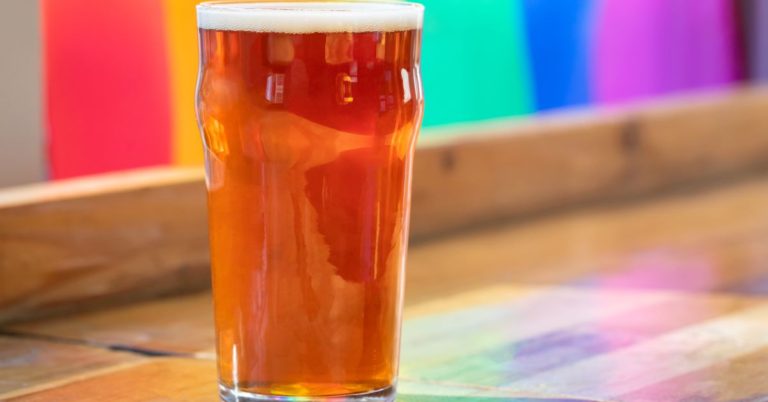
A portion of proceeds from the purchases of Ferndale Proud Sour, a fruited beer produced by EMBC, will be donated to Ferndale Pride, an organization that recognizes and promote pride for the LGBTQ and ally communities.
The Beertenders
12-2 p.m. David Coulter, Oakland County Executive 2-4 p.m. Dana Nessel, Michigan Attorney General 4-6 p.m. Jim Shaffer, Jim Shaffer Real Estate 6-8 p.m. Melanie Piana, Ferndale mayor 8-10 p.m. Julia Music, executive director of Ferndale Pride
June 1 marks the start of Lesbian, Gay, Bisexual, Transgender and Queer (LGBTQ) Pride Month, normally celebrated with street events, festivals, and parties. The first Pride, the 1969 Stonewall Uprising, was led by Black transgender women and was a tipping point for the gay liberation movement in the United States. The Ferndale Pride Street Festival, one of the largest events held in Oakland County, normally marks the month but has been postponed to Oct. 2. The celebration hasn’t been held since 2019.
Motor City Pride, Michigan’s largest Pride festival, has been posted from June 5-6 to Sept. 18-19 at Detroit’s Hart Plaza. Organizers moved the parade and marketplace with the hopes that the city will be fully reopened and will have reached herd immunity by fall.
Ferndale Project is at 567 Livernois, southwest of downtown Ferndale. B. Nektar is at 1511 Jarvis.
(NEW YORK) — Every summer in the United States, the lesbian, gay, bisexual and transgender community comes together for a monthlong celebration of love, diversity, acceptance and unashamed self-pride.
Here’s everything you need to know about LGBT Pride Month:
What is LGBT Pride Month?
The month is meant to recognize the sweeping impact that LGBT individuals, advocates and allies have on history in the United States and around the globe, according to the Library of Congress.
When is it?
LGBT Pride Month is celebrated every year in June.
The month of June was chosen for LGBT Pride Month to commemorate the riots held by members of the LGBT community against a police raid that took place at the Stonewall Inn in New York City on June 28, 1969.
The so-called Stonewall riots were a “tipping point” for the gay liberation movement in the United States, according to the Library of Congress. The uproar also paved the way for the modern fight for LGBT rights.
Previous U.S. presidents have, on several occasions, officially declared June as LGBT Pride Month.
How do people celebrate LGBT Pride Month?
LGBT Pride Month events draw millions of participants from around the world each year. Typically, there are monthlong celebrations and in-person gatherings that take place across the nation, including pride parades, marches, parties, concerts, workshops and symposiums. Memorials are also often held for members of the LGBT community who have lost their lives to hate crimes or HIV/AIDS.
The rainbow LGBT flag is prominently displayed throughout the month. Gilbert Baker, an American artist, gay rights activist and U.S. Army veteran, created the flag in 1978 as a new symbol for the gay and lesbian political movement at the suggestion of his friends and colleagues, including Harvey Milk, a San Francisco city supervisor and the first openly gay elected official in California. Milk was assassinated later that year.
According to Baker’s website, the colors of the LGBT flag each have a meaning: red for life, orange for healing, yellow for sunlight, green for nature, blue for harmony and violet for spirit.
Baker died at the age of 65 on March 31, 2017, though his rainbow flag remains an iconic, powerful symbol for LGBT pride.
This year’s LGBT Pride Month will be celebrated differently due to the coronavirus pandemic, but after the virus canceled nearly every in-person event in 2020, many are back this year. All 50 U.S. states have started to lift stay-at-home orders and other restrictions imposed to curb the spread of the novel coronavirus as vaccinations increase and cases decrease.
Still, some of the LGBT events will be a mixture of in-person and online events.
What LGBT Pride Month events will take place this year?
A number of official events that would normally be held in various cities across the nation throughout the month will now be taking place online. Here are some of the more prominent celebrations:
Boston Pride will host a series of virtual events throughout the month, including the raising of the rainbow pride flag on June 4 at noon and the annual Pride Lights on June 8 to commemorate those affected by the HIV/AIDS pandemic. The annual Quincy Pride event will take place in-person on June 6 at noon. There will also be a Pride Night at Fenway Park for the Red Sox game on June 10.
While the Pride Parade will not be held, Los Angeles announced its first in-person Pride event will take place on LGBTQ+ Night at the Dodgers game on June 11. A second in-person event will also be held at the Hollywood Forever Cemetery, when Cinespia presents an LGBTQ+ Movie Night on June 26. Los Angeles ABC station KABC-TV will air a “Thrive with Pride Celebration” special on June 12 at 9 p.m.
The New York City Pride Rally will take place virtually on June 25, while the Pride March, normally the biggest in the nation, will also take place virtually on June 27. However, the organizers say there will be “as to-be-determined in-person elements” of the parade.
San Francisco Pride will be hosting two movie nights on June 11 and 12 at Oracle Park. The first night will feature the new film In the Heights, based on the Lin-Manuel Miranda musical, while the musical Everybody’s Talking About Jamie, which isn’t set to premiere on Amazon Prime until September, will screen on the second night.
Chicago Pride announced it will hold its annual parade in October, once restrictions further ease. But they will still have a number of events in June, including Pride in the Park on June 26 and 27 at Grant Park, featuring a number of soon-to-be-named national musical performers.
Seattle Pride will hold a series of virtual events on June 26 and 27, including concerts, performances and panels.
RODNEY BLOCK FRIDAY 6/4. Wildwood Park for the Arts. 8 p.m. $25.
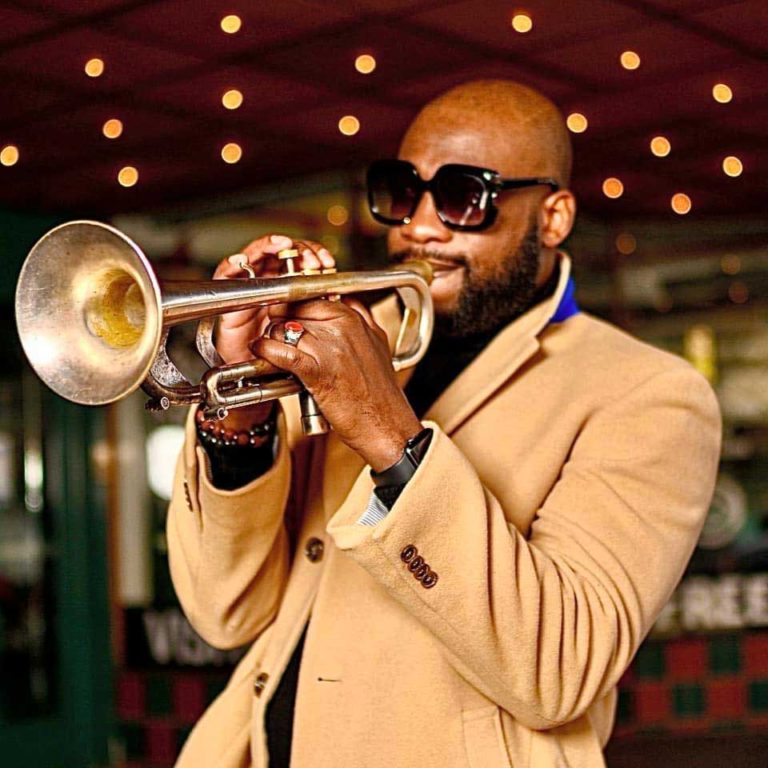
“Everybody is multi-dimensional,” trumpeter and bandleader Rodney Block told us. “If you see me today, I have on khakis and Oxford shoes and a button-up shirt and a jacket. This is professional Rodney Block. But if you catch me on the weekend, I may have on a tank top, and I have tattoos. I have a septum piercing. I have a nose piercing. That’s another dimension of me.” Maybe that multidimensionality is what made it inevitable that a musician like Block, who works by day in pharmaceutical and medical sales, would adopt alter egos for himself as his music has shifted shapes over the years — “Black Superman,” for example, a moniker Block adopted a few years back. His forthcoming record is called “Percival Jenkins,” and it takes its name from Andre 3000’s character in the film “Idlewild,” who Block sees as a kindred spirit. “I really identify with him; he’s a music guy, but he’s kinda nerdy. He loves his music.” Expect to be charmed; Block in any of his dimensions is ever adept at breaking the ice in a room (or on Wildwood’s verdant grounds, in this case) with sheer charisma and lyricism; he’s the sort of performer whose even-keeled energy seems to emanate from the bell of his trumpet and set audiences at ease. Admission is $25, and soda, wine and beer options are available at Wildwood’s donation-based bar. Dress is picnic casual. Bring blankets and chairs and grab tickets at wildwoodpark.org. In case of rain, the show moves to the park’s pavilion. And if you can’t catch Block this time around, catch him the following evening at The Library in the Little Rock River Market for a show celebrating the birthday of Block’s keyboardist, Andre Franklin, on June 17 in Fort Smith for the city’s Levitt Amp Music Series, or here in Little Rock on July 4 at Pops on the River, where Block’s performance precedes the annual riverside concert by the Arkansas Symphony Orchestra.
Advertisement
Also at Wildwood: Classical music fans, mark your calendar for Friday, June 25, when soprano Kelly Singer gives a sunset concert of “Mostly Mozart, with a little Von Trapp” at Wildwood’s Butler Gazebo. Get tickets at wildwood.org.
TAILS AND TUNES THURSDAY 6/3, 6/10, 6/17, 6/24. Little Rock Zoo. 6 p.m. $13 admission for adults, $10 admission for children 3-12, $3 parking.
Advertisement
Every Thursday night in June, the Little Rock Zoo is trotting out some of its fauna for after-hours fun, with wine, beer and food vendors onsite and live music at the Civitan Elephant Stage from 6 p.m.-9 p.m.: Cliff and Susan Erwin Prowse, June 3; The Rodney Block Collective, June 10; The Juice, June 17; and Off the Cuff featuring vocalist LaSheena Gordon, June 24. Sidle up to the omnivorous sloth bears, feed the fish and admire the alpacas until 9 p.m., when all sensible animals quit their revelry and get some shut-eye.
PRIDE GAY-LLERY WALK FRIDAY 6/4. Downtown Hot Springs. Free-$30.
Advertisement
From Emergent Arts, the Hot Springs LGBT Alliance, Central Theater and the PrideHawks — the student-led gay-straight alliance at National Park College — comes the Pride Gay-llery Walk, a Friday night stroll through downtown Hot Springs. Meet up at Emergent Arts at 5 p.m. for Pride-themed crafts, face painting and refreshments, and to see the “Equilateral Project,” a multi-media art installation created by the PrideHawks and art students at National Park College in celebration of Pride Month. At 6:30 p.m., congregants will follow the sidewalks down Whittington Avenue and onward down Bathhouse Row and to the lawn at the Arlington Hotel, where Superior Bathhouse Brewery will sell you some of the best beer in the state (if you ask us). At 8 p.m., the Mr. and Miss Spa City Pride Pageant commences at Central Theater; get tickets on Eventbrite by searching “Spa City Pride Pageant.” Let’s face it, the best way to counter a hate-filled 2021 legislative session is through community, visibility and maybe some rainbow-hued pageantry; this event boasts all of the above.
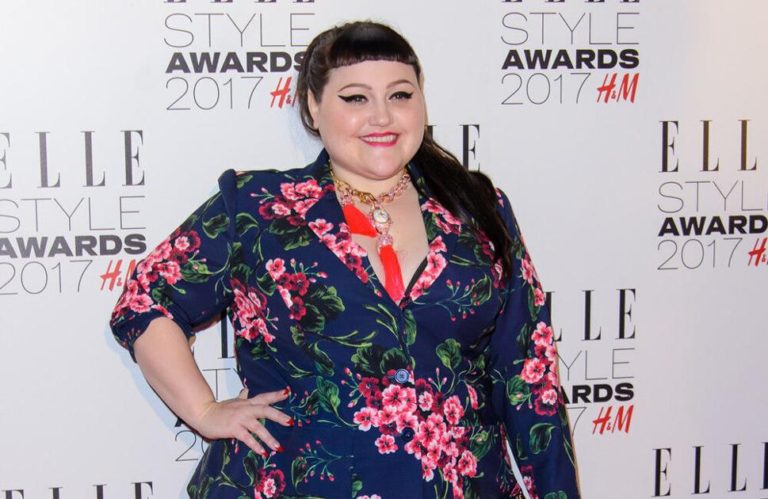
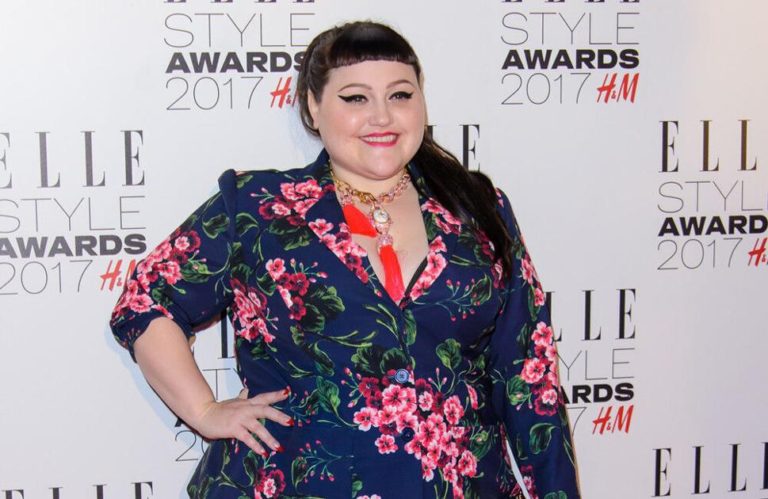
When Beth Ditto gained fame in his band Gossip, he felt that he had a duty to make other queer children in the small town look proud.
The “Standing In the Way of Control” singer grew up in the Southern Baptist Convention of Arkansas. This area is part of what is known as the “Bible Belt,” a region of the southern United States where socially conservative Christianity is strong. Role in society and politics.
Beth moved from her parents’ home, where she lived with her mother and six siblings at the age of 13, to live with her aunt. To help other LGBTQ teenagers who may be experiencing the same discrimination she faced.
Write in the article TheGuardian.com“From an early age I wanted to do something that would help others, but I just didn’t know what it was. After I left Arkansas, things looked clearer. Bible Belt below the Mason-Dixon line – a place that always reminds me that God sees and judges you – that I can get f ** to other queer kids in the small town I had a duty to show * When I started gossip, this was the message I wanted to convey – I don’t think I’d escape the situation where I felt wrong, ugly, ugly, or going to hell. It’s easier than you are. The world is bigger than you think, you are queer, you are yourself, you can be happy. “
Beth, 40, has never been completely satisfied with being a “role model” for the LGBTQ community, but she is happy to accept the title.
Musicians are also pleased to see more gay, trance and non-binary stars openly than they were when she was growing up.
She said: “I don’t think” role models “was a comfortable term for me. I’m not always saying things the right way, especially because I’m not from an academic background. We are just human beings, movements evolve and continue to learn (and who would like to quote what they said at the age of 21 at the age of 40?) .. I had to make music to make a living and I had to do it to be openly queer, fat and femme.
“In the 2000s, there weren’t as many queer role models as they are today. We were especially open about gender.” That’s how we think about gender in the most amazing way. I think we still need more. It’s not over yet. We need to make more trans-gender men visible. More colored women’s trans-gender, more colored people I need more trans-gender men of the species. “
When Beth Ditto gained fame in his band Gossip, he felt that he had a duty to make other queer children in the small town look proud.
The “Standing In the Way of Control” singer grew up in the Southern Baptist Convention of Arkansas. This area is part of what is known as the “Bible Belt,” a region of the southern United States where socially conservative Christianity is strong. Role in society and politics.
Beth moved from her parents’ home, where she lived with her mother and six siblings at the age of 13, to live with her aunt. To help other LGBTQ teenagers who may be experiencing the same discrimination she faced.
Write in the article TheGuardian.com“From an early age I wanted to do something that would help others, but I just didn’t know what it was. After I left Arkansas, things looked clearer. Bible Belt below the Mason-Dixon line – a place that always reminds me that God sees and judges you – that I can get f ** to other queer kids in the small town I had a duty to show * When I started gossip, this was the message I wanted to convey – I don’t think I’d escape the situation where I felt wrong, ugly, ugly, or going to hell. It’s easier than you are. The world is bigger than you think, you are queer, you are yourself, you can be happy. “
Beth, 40, has never been completely satisfied with being a “role model” for the LGBTQ community, but she is happy to accept the title.
Musicians are also pleased to see more gay, trance and non-binary stars openly than they were when she was growing up.
She said: “I don’t think” role models “was a comfortable term for me. I’m not always saying things the right way, especially because I’m not from an academic background. We are just human beings, movements evolve and continue to learn (and who would like to quote what they said at the age of 21 at the age of 40?) .. I had to make music to make a living and I had to do it to be openly queer, fat and femme.
“In the 2000s, there weren’t as many queer role models as they are today. We were especially open about gender.” That’s how we think about gender in the most amazing way. I think we still need more. It’s not over yet. We need to make more trans-gender men visible. More colored women’s trans-gender, more colored people I need more trans-gender men of the species. “
A report of a vehicle speeding on East Irving at Maple and Elm streets was investigated. 7:11 a.m.
A business in the 300 block of South Sandusky Avenue reported a suspicious person in the area. 10:21 a.m.
Officers spoke to a man acting suspicious in the Southern Lights shopping area. 12:12 p.m.
Officers assisted Juvenile Court. 12:38 p.m.
Officers checked possible child abuse on Rogers Street. 12:45 p.m.
Officers investigated a domestic dispute in the Bucyrus Plaza area. 1:09 p.m.
A resident in the 300 block of Emerson Street reported damage after a tree fell on her vehicle. 2:11 p.m.
Officers responded to a disturbance in the 600 block of East Warren Street. 2:59 p.m.
A disturbance in the 600 block of East Warren Street was reported. 3:37 p.m.
Officers assisted the Bucyrus Fire Department in the Hopley Avenue and Whetstone Street area. 3:53 p.m.
Officers assisted with a vehicle lockout in the 1700 block of Whetstone Street. 4:42 p.m.
A residential alarm was reported in the 100 block of West Kilborne Drive. 5:18 p.m.
A disturbance was investigated in the 300 block of Lawn Street. 6:45 p.m.
Officers responded to a breaking and entering in the 300 block of Hopley Avenue. 9:41 p.m.
A traffic citation was issued in the 400 block of North Sandusky Avenue. 9:57 p.m.
Officers made a pickup in the 1800 block of East Mansfield Street. 10:27 p.m.
A motorist was given a verbal warning for an equipment violation in the area of West Mansfield and Sears streets. 11:02 p.m.
Officers investigated a disturbance in the 800 block of East Rensselaer Street. 11:23 p.m.
Officers investigated a suspicious vehicle in the 400 block of North Sandusky Avenue. 11:48 p.m.
A motorist was given a verbal warning for driving within lanes in the area of East Warren Street and Sandusky Avenue. 11:51 p.m.
Saturday
INCIDENTS
Officers investigated a disturbance in the 1700 block of Whetstone Street. 12:20 a.m.
Officers investigated a complaint of loud music in the 800 block of Rogers Street. 12:21 a.m.
Officers cited a motorist for speed in the 1600 block of Marion Road. 12:46 a.m.
A disturbance was investigated in the 100 block of Washington Square. 1:25 a.m.
A disturbance was investigated in the 400 block of West Mansfield Street. 1:48 a.m.
A 911 hang up call in the 100 block of Heritage Circle was investigated. 3:59 a.m.
Officers assisted with a vehicle lockout in the 300 block of West Mansfield Street. 8:40 a.m.
Officers assisted with a vehicle lockout in the 600 block of South Sandusky Avenue. 10:18 a.m.
A false alarm was received in the 300 block of South Sandusky Avenue. 10:19 a.m.
Officers responded to a disturbance in the 200 block of East Mary Street. 11:04 a.m.
A theft complaint was made after someone broke into a vehicle in the 300 block of Iron Street. 11:21 a.m.
A crash was investigated in the 1400 block of Fairview Avenue. 11:30 a.m.
Officers investigated a theft in the 300 block of Iron Street. 11:35 a.m.
Officers investigated a crash in the 500 block of Tiffin Street. 12:24 p.m.
A 911 hang-up call was reported in the 400 block of Wallace Avenue. 3 p.m.
Officers assisted a person experiencing mental health issues in the 700 block of Gay Street. 3:01 p.m.
A welfare check was requested in the 500 block of South Sandusky Avenue. 3:25 p.m.
Officers responded to an alarm in the 1200 block of Ohio Drive. 3:30 p.m.
Officers assisted Portsmouth EMS in the 1000 block of East Warren Street. 3:41 p.m.
A residential alarm was reported in the 600 block of East Warren Street. 4:03 p.m.
Officers assisted Portsmouth EMS in the 200 block of East Mary Street. 5:10 p.m.
Officers assisted Portsmouth EMS in the 100 block of West Mansfield Street. 5:33 p.m.
Officers unlocked a vehicle in the 800 block of Clay Street. 6:40 p.m.
A motorist was assisted in the Grandview Drive and Whetstone Street area. 7:21 p.m.
Officers responded to a private property crash in the 1800 block of East Mansfield Street. A citation was issued. 7:50 p.m.
Officers investigated a disturbance in the 900 block of Hopley Avenue. 8:42 p.m.
Officers assisted a a person experiencing mental health issues in the 700 block of Gay Street. 10:13 p.m.
Officers investigated a juvenile complaint in the 500 block of South East Street. 10:19 p.m.
A motorist was given a verbal warning for an equipment violation in the 1900 block of Hopley Avenue. 10:35 p.m.
Officers performed a welfare check in the 100 block of Williams Street. 10:39 p.m.
Officers assisted EMS in the 800 block of East Rensselaer Street. 11:08 p.m.
Officers investigated a disturbance in the 300 block of Arch Drive. 11:20 p.m.
Officers investigated a loud music complaint in the 800 block of South East Street. 11:48 p.m.
ARREST
A 35-year-old man was arrested on a warrant out of Crawford County Sheriff’s Office. He was transported to the Crawford County Justice Center. 10:56 p.m.
Sunday
INCIDENTS
A motorist was given a verbal warning for an obstructed view violation in the 500 block of West Mansfield Avenue. 12:09 a.m.
A motorist was given a verbal warning for equipment in the Poplar and Mary Street area. 12:18 a.m.
A motorist was given a verbal warning for loud exhaust in the 200 block of East Mansfield Street. 12:33 a.m.
Officers investigated a report of a disturbance in the 400 block of West Mansfield Street. 12:34 a.m.
Officers assisted a man experiencing mental health issues in the 700 block of Gay Street. 12:36 a.m.
A verbal warning was given to a motorist for improper turn Mary and Lane Street intersection. 1:15 a.m.
Officers attempted a welfare check in the 1500 block of North Sandusky Avenue. 1:32 a.m.
Officers assisted the Ohio Highway Patrol in the 500 block of South Walnut Street. 1:57 a.m.
Officers issued a verbal warning Southern and Walnut for manner of driving. 2:19 a.m.
Officers investigated a report of a disturbance in the 700 block of Gay Street. 2:45 a.m.
A false alarm was received in the 700 block of Gay Street. 3:09 a.m.
Officers investigated a disturbance in the 700 block of Gay Street. 3:28 a.m.
Officers investigated a disturbance in the 700 block of Gay Street. 3:49 a.m.
A verbal warning was given for speed in the 1500 block of North Sandusky Avenue. 4:18 a.m.
Officers assisted a man experiencing mental health issues in the 700 block of Gay Street. 4:33 a.m.
A motorist was given a verbal warning for headlights in the 700 block of Tiffin Street. 4:34 a.m.
Officers secured a vehicle that found with an open door in the 200 block of Whetstone Street. 5:03 a.m.
Officers assisted a man experiencing mental health issues in the 700 block of Gay Street. 5:52 a.m.
Officers attempted to find a man making suicidal threats in the 800 block of Elm Street. 6:48 a.m.
A domestic dispute was investigated in the Bucyrus Plaza area. 10:52 a.m.
Officers did a welfare check in the 900 block of Woodlawn Avenue. 1:11 p.m.
Officers assisted with a vehicle lockout in the 1000 block of East Beal Avenue. 1:28 p.m.
A medical alarm was received in the 1000 block of Laura Avenue. 1:34 p.m.
Officers investigated a report of a theft in the 100 block of West Mansfield Street. 2:31 p.m.
A property damage crash was investigated in the 400 block of Sears Street. 2:42 p.m.
Officers removed a trespasser in the 100 block of West Mansfield Street. 3:57 p.m.
Officers assisted a person experiencing mental health issues in the 700 block of Gay Street. 4:44 p.m.
Officers responded to a reported disturbance in the 700 block of Gay Street. 5:04 p.m.
A disturbance was reported in the 1800 block of East Mansfield Street. 5:58 p.m.
Officers spoke with a person on station. 6:11 p.m.
A disturbance was investigated in the 1700 block of Marion Road. 7:55 p.m.
A two vehicle non-injury crash was investigated in the 1500 block of North Sandusky Avenue. 8:10 p.m.
Officers assisted Ohio Highway Patrol in the area of West Mary and Jump streets. 8:59 p.m.
A report of fireworks being set off in the West Charles Street area was investigated. 9:21 p.m.
ARRESTS
Officers arrested a subject for DUI at Lane and Plymouth streets. The man was released to a sober party. 2:30 a.m.
Officers assisted Portsmouth EMS in the 1500 block of North Sandusky Avenue. A 27-year-old man was arrested and transported to the Crawford County Justice Center, pending court appearance. 4:02 p.m.
Monday
INCIDENTS
Officers investigated a disturbance in the 1700 block of Marion Road. 12:11 a.m.
Officers investigated a disturbance in the 1500 block of Woodlawn Avenue. 12:50 a.m.
Officers investigated a disturbance in the 600 block of North Sandusky Avenue. 1:26 a.m.
Officers investigated a loud music complaint in the 900 block of Tiffin Street. 1:53 a.m.
Officers investigated a suspicious vehicle in the area of Aumiller Park. 2:08 a.m.
A subject reported his bike stolen in front of Kroger. 12:56 p.m.
Officers investigated a disturbance in the 1700 block of Marion Road. 3:28 p.m.
Officers investigated a disturbance in the 800 block of Wilbur Street. 3:44 p.m.
Officers investigated a report of vandalism in the 400 block of East Warren Street. 4:41 p.m.
A false alarm was reported in the 2300 block of Kerstetter Road. 4:59 p.m.
Officers investigated a disturbance in the 1800 block of Marion Road. 5:08 p.m.
Officers investigated a disturbance in the 2000 block of Marion Road. 6:03 p.m.
Officers investigated a report of someone riding a dirt bike in the roadway in the area of Reid and Ethel streets. 6:40 p.m.
Officers investigated a disturbance in the 900 block of Earl Street. 7:01 p.m.
Officers investigated a disturbance in the 500 block of Prospect Street. 7:36 p.m.
Officers picked up a syringe in the area of Hopley and Prospect streets. 8:31 p.m.
Officers assisted Mansfield Police Department in the 900 block of Faustina Avenue. 10:16 p.m.
A person experiencing mental issues was assisted in the Waterford Glen area. 10:18 p.m.
A disturbance was investigated in the Washington Square area. 10:48 p.m.
Officers investigated a juvenile complaint in the 1200 block of Teddy Avenue. 11:02 p.m.
Officers checked the 700 block of Gay Street following a report of possible gun shots. 11:13 p.m.
A disturbance was investigated in the area of Cullen Avenue and Robinhood Drive. 11:33 p.m.
ARREST
A 57-year-old man was arrested on a charge of misusing 911. He was issued a minor misdemeanor citation. 2:05 p.m.
Tuesday
INCIDENTS
Officers attempted to serve a warrant in the West Oakwood and Sandusky Avenue area. 12:02 a.m.
A reckless driver was reported in the South Lane Street and Woodlawn Avenue vicinity. 12:19 a.m.
Officers responded to a disturbance at Washington Square. 12:31 a.m.
Tristen Torrez, 14, said that he wore the LGBT+ pride flag around his shoulders to come out as openly gay
(WTOL11)
Video footage has revealed the moment a gay teenager in Ohio was beaten by one of his peers while wearing an LGBT+ Pride flag to celebrate his identity.
Tristen Torrez, 14, told WTOL11, that he wore the pride flag around his shoulders to his school in Defiance City last week to celebrate his identity and come out as openly gay.
“This was my official way of saying I was gay and not trying to hide it,” Tristen told the broadcaster in an appearance with his mother.
“I was wearing it to state a message, and state just because one person is who they are, proud of who they are, doesn’t mean others shouldn’t be proud of who they are,” he said.
In the broadcaster’s exclusive clip, a student, who has not been identified, approaches Tristen from behind and throws him down onto a set of bleachers while ripping the flag from around his shoulders and throwing it at him.
“He’s so used to the bullying it was kind of nothing to him, but to me, it was heartbreaking,” Brianne Torrez, Tristen’s mother, said.
The 14-year-old said that the student didn’t say anything ahead of the incident and claimed that he poured water on him and “choked” him during the incident.
“He hit me with the flag that I was wearing, after ripping it off my neck,” Tristen explained. He added that he heard someone had been dared to attack him.
“Someone told me it was because I said a racial slur, which was completely false,” he told the station, “some people said it was because I’m gay and just to do it anyway.”
The 14-year-old said he did not know the student. Footage of the incident was posted across a number of social media platforms, according to WTOL11, and quickly gained attention.
Defiance City Schools superintendent Bob Morton told the outlet that the district was aware of the situation, adding it had been “dealt with swiftly” by the school and local law enforcement.
“Situations like this are taken seriously. We appreciate you bringing it to our attention,” he reportedly added.
The Independent has contacted Defiance City Police Department regarding the incident.
Beth Ditto felt as though she had “a duty to show other queer kids from small towns” that they could be out and proud once she found fame with her band Gossip.
The ‘Standing in the Way of Control’ singer grew up in a Southern Baptist area of Arkansas, which makes up part of what is known as the ‘Bible Belt’, a region of the Southern United States in which socially conservative Christianity plays a strong role in society and politics.
Beth – who moved out of her family home, which she shared with her mother and six siblings, to live with her aunt when she was just 13 – struggled to come out as a lesbian due to her Christian upbringing and she felt it was her responsibility to help other LGBTQ teenagers who might be experiencing the same discrimination she faced.
Writing in an article for TheGuardian.com, she said: “From a young age I wanted to do something that involved helping others, but I just didn’t know what it would be. Once I left Arkansas, I saw things more clearly. I saw that coming from a place in the Bible belt, below the Mason-Dixon line – a place where you’re being constantly reminded that God is watching and judging you – I had a duty to show other queer kids from small towns that it is possible to get the f*** out of there. When we started Gossip, this was the message I wanted to put out – that it’s easier than you think to escape situations that make you feel wrong or ugly or gross, or like you’re going to hell, that the world is bigger than you think, that you can be queer and be yourself and be happy.”
Beth, 40, has never fully comfortable being a “role model” to the LGBTQ community but she us happy to accept that title.
The musician is also pleased that there are now so many more openly gay, trans and non-binary stars than when she was growing up because it is so important that they are visible.
She said: “I’d say ‘role model’ was never a comfortable term for me, because I haven’t always said stuff in the right way, especially as I don’t come from an academic background. I’ve also changed my mind over the years; we’re only human and movements evolve and we keep learning. (Besides, who wants to be quoted when they’re turning 40 about something they said when they were 21?) But I’m very lucky I got to make music for a living, and I got to do it being openly queer, being fat and being femme.
“In the 2000s, there weren’t so many queer role models as there are today. We’ve especially opened up in terms of gender – the number of people who publicly identify as trans and non-binary is growing and that’s got to expand the way we think about gender in the most amazing way. But I think we still need more. We’re still not done. We need more trans men to be visible. More trans women of color. More trans men of color.”
Pride Month is here, but in Las Vegas the centerpiece event will have to wait until the fall: the Las Vegas Pride Festival will be held on Oct. 8 and 9.
That doesn’t mean the party won’t go on in Vegas, though. After all, it’s always “party on” in Sin City, and the LGTBQ scene is as vibrant as ever in June and beyond.
• While the Las Vegas festival is on hold until the fall, suburban Henderson is hosting its inaugural Pride Festival on June 5. Presented by the International Cultural Movement for Equality, the event will include live music and food vendors at the Hilton Lake Las Vegas Resort & Spa. The weekend will include a Welcome Party with a Mr./Miss Gay Pride Pageant on June 4 and a drag brunch on June 6.
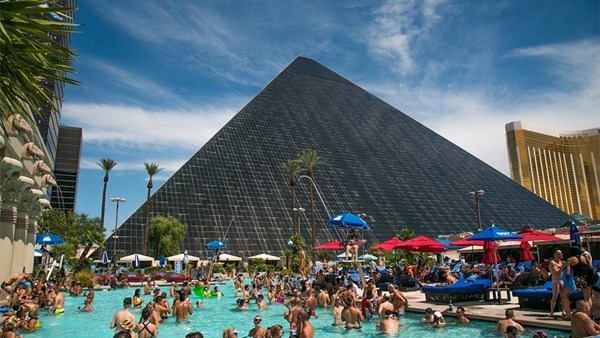
• Temptation Sundays at Luxor Hotel and Casino, the Strip’s only weekly LGBTQ-focused pool party, opened its 11th season last month and will run through September.
Temptation Sundays at Luxor, the Strip’s only weekly LGBTQ-focused pool party, opened its 11th season last month and will run through September.
• Gold Spike in downtown Las Vegas hosts Drag Queen Bingo every second and fourth Thursday of the month. Hosts Angel Phoenix, Asia King Adour and London Adour call the letters and numbers with sass.
• Flex Cocktail Lounge, east of the Strip, has been serving the LGBTQ community for more than 20 years with nightly entertainment, drink specials and Thursday-night Drag-aoke.
Also off the Strip:
• FreeZone Nightclub and Bar features upbeat music, nightly karaoke pool tables and occasional drag shows.
• The Garage, modeled after an auto body shop, has pool tables, shuffleboard and darts.
• The Garden Las Vegas, an intimate and chic lounge bar by gay nightlife guru Eduardo Cordova in downtown Las Vegas’ Arts District, hosts a drag brunch every Saturday and Sunday.
• Piranha Nightclub hosts nightly revelry. Hamburger Mary’s on East Flamingo Road is another popular spot for the LGBTQ community.
Some big events are planned for late summer, as well:
• From Aug. 25 to 30, Tuscany Suites and Casino will host Smokeout 2021, a celebration of gay men who are also cigar and pipe aficionados, bikers or leathermen. The week will include activities, excursions and parties.
• The Nevada Gay Rodeo Association’s Big Horn Rodeo will be Sept. 17 to 19 at Horseman’s Park. Events will include bull riding, cattle roping and barrel racing.
For decades, athletes from around the world have gathered at the Olympics and Paralympics to compete in the largest sporting event, a celebration of athletic achievement laced with messaging around hope, inspiration and inclusion.
But it hasn’t always been safe or acceptable to be LGBTQ and to compete. Instead, hiding parts of oneself was part of the game.
Take, for instance, the story of Canada’s Mark Tewksbury, who won a gold medal in swimming in Barcelona in 1992. It wasn’t until six year later that Tewksbury felt comfortable enough to publicly acknowledge he was gay, and then faced repercussions for doing so — for example, he immediately lost a six-figure contract as a motivational speaker.
There is still a price to pay for being gay in sports today.
There are many places around the world where it’s not safe and in some cases even illegal to be openly gay. In Iran, for example, LGBTQ people are sometimes killed for being gay, lesbian or trans.
But in Canada, where athletes are pushing boundaries and creating inclusive spaces, it has never been easier to be out, proud and authentic in the field of play.
The story of Olympic cyclist and skier Georgia Simmerling and soccer goalkeeper Stephanie Labbé is a powerful example of just how far being LGBTQ has come over the years.
They first met at the 2016 Rio Olympics, where both won bronze medals, and just months later they entered a relationship and have been together ever since. Now, as they prepare to compete in their final Olympics in Tokyo, they’re doing it as partners, and they’re each other’s support system.
“It’s been unbelievable to come to the last part of my career with her and to have the support that I have from her every day,” Simmerling told CBC Sports from Milton, Ont. “She’s amazing. She gets me. She understands what I’m going through.”
‘She’s brought inspiration’
Simmerling is with the cycling team in Ontario, while Labbé is in Sweden playing with her club team. The two have spent most of their relationship apart, finding pockets of time together — the life of elite athletes in a relationship.
“She’s been an incredible addition to the already crazy life I’ve lived,” Labbé told CBC Sports from Malmö, Sweden. “From the moment I met her, she’s brought inspiration. The strength of that girl’s character and mind is something I aspire to.
“She is so confident in who she is and has taught me so much about self-worth.”
Simmerling, 32, was born and raised in Vancouver, a city that was more accepting of LGBTQ people compared to where Labbé grew up in rural Alberta. Simmerling says her family, friends and sporting community always had her back.
“I’m extremely lucky that I’ve always been supported by my family, teammates and coaches,” Simmerling said. “I never really had a coming-out story. I told my parents and family and friends, but it wasn’t a big deal.
“I know I’m extremely lucky to have that, because that’s not the case for everyone.”
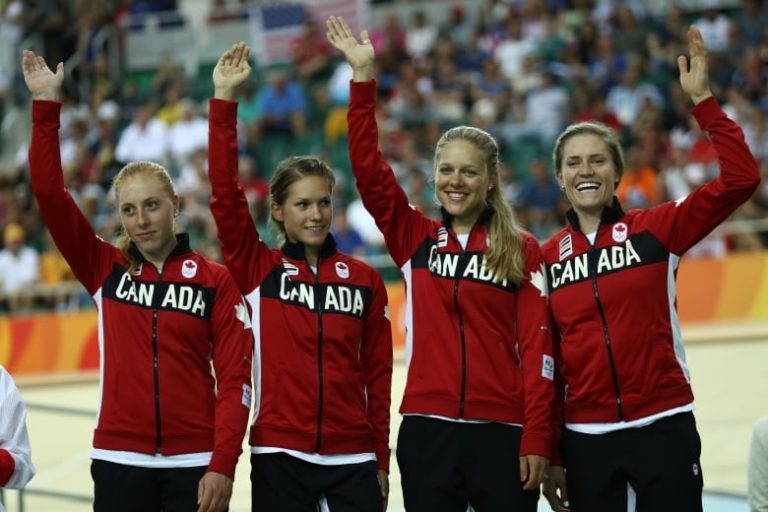
Simmerling, far right, after winning bronze as a member of Canada’s pursuit cycling team at the Rio Olympics. (Getty Images)
‘Didn’t see gay people’
It wasn’t the same experience for Labbé, 34, a self-described country girl.
“I didn’t have the exposure. I didn’t see gay people or hear about them. My family didn’t know any. It wasn’t something I thought was reality. The only gay person I knew was [TV personality] Ellen DeGeneres,” Labbé said of her upbringing near Edmonton. “When I finally told my family, that was super-challenging and super-hard. I remember how emotional that was.
“They didn’t want to talk about it for the longest time. I’m so proud of them [now]. I feel like I’ve rocked their world and they’ve grown so much.”
Despite their drastically different backgrounds, they’ve found each other and are on a remarkable journey together. Two gay athletes, partners, who speak vulnerably, openly and bravely about their experiences.
“It’s powerful to be out and to be a gay athlete,” Simmerling said. “I try to be my true, authentic self every day. If I can inspire, motivate or help any other athlete, whether they’re gay, straight, trans, whatever, I’m happy and proud to do so.”
I just want to live my life genuinely and authentically. I don’t want to hide who I am and want to be accepted fully for all that I am.– Stephanie Labbé
Labbé says Simmerling has been a huge help in her being able to speak her truth and fully accept all that she is.
“She’s inspired me to tell others what I’m capable of and give me a voice,” Labbé said. “I just want to live my life genuinely and authentically. I don’t want to hide who I am and want to be accepted fully for all that I am.”
Sport inclusion website
In time for Pride Month, the Canadian Olympic Committee (COC), along with many other sport groups, has launched a new sport inclusion website. It’s a support and resource space for national, provincial and territorial, local and club sport organizations who are working to make their spaces more equitable and inclusive for those who identify as LGBTQ.
“Making sport truly inclusive and accessible for all takes education, resources, expertise and concerted effort from all levels in the system,” said David Shoemaker, CEO of the COC.
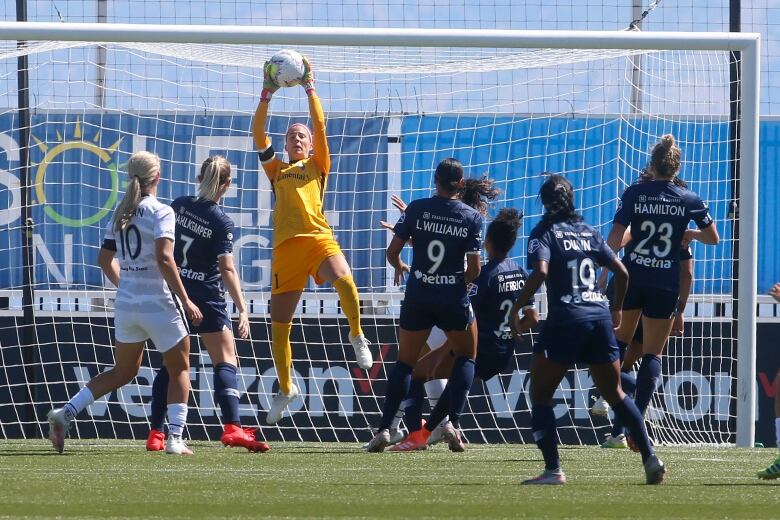
Labbé makes a save as goalkeeper for the North Carolina Courage of the National Women’s Soccer League during the Challenge Cup in 2020. (Associated Press)
The website was created by the LGBTQI2S+ Sport Inclusion Task Force. The group was founded during the 2015 Pan Am Games in Toronto and is guided by the COC, Professional Golfers Association of Canada, Canadian Women & Sport, the faculty of kinesiology at the University of Calgary and Challenge Accepted Collective.
The group has four key objectives: making sports organizations at all levels in Canada aware of how LGBTQI2S+ inclusion is part of making sport safer and free from mistreatment; making sure sport organizations have the capacity to make sport safer and more welcoming; ensuring groups take meaningful action to make sport safer; and generally making sure sport is safer and more welcoming for all who are LGBTQI2S+.
Simmerling and Labbé point to the work the COC and other groups in Canada have done to make sure they, along with many other athletes who are openly gay, feel represented, safe and included.
“We’re slowly shifting and slowly moving to a place of global acceptance, but at the same time we know there are many parts of the world that are so deeply rooted in homophobia. We still have a long way to go,” Simmerling said. “What better place than Canada to step up and be leaders. It would be extremely hypocritical if we weren’t.
“We can do more. People can look to us for resources and we can be role models on this.”
‘The movement has progressed’
Labbé says the national women’s soccer team is more united than ever, especially in the wake of teammate Quinn publicly coming out as trans.
WATCH | Quinn on breaking binary barriers in sport:
Canadian national soccer team member Quinn speaks with Anastasia Bucsis about coming out, pronouns, and how the sports world can become more inclusive. 8:28
“We’re all just trying to find this way in this world. The movement has progressed. It’s continuing to inspire people to be themselves and allow them the freedom to live without judgment,” Labbé said. “I’ve always felt safe, especially in the national team environment. And I think specifically more recently, our team has done a really good job having open, vulnerable conversations that weren’t always there in the past.”
This is the second Pride month during the pandemic. Once again, the parades won’t take to the streets, the parties and celebrations will be limited and communities won’t be able to gather in the ways they have in the past. Then it’s on to the Olympics and Paralympics shortly after in July and August.
These Games will likely see more openly gay, lesbian and trans athletes competing than ever before. Despite the lack of overt activism on this issue, due mainly to restricted movement and gatherings during the pandemic, athletes more than ever understand their important role in creating space and safety for the LGBTQ community.
Simmerling and Labbé will be doing their part in Tokyo. Together. As partners.
“I just think about being able to tell this story to our kids one day. It’s so special to share this moment with her,” Labbé said.





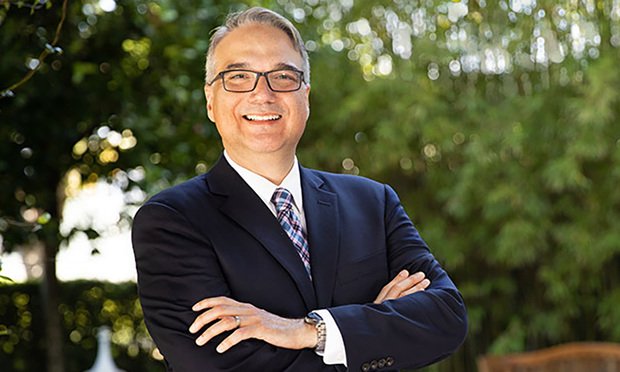
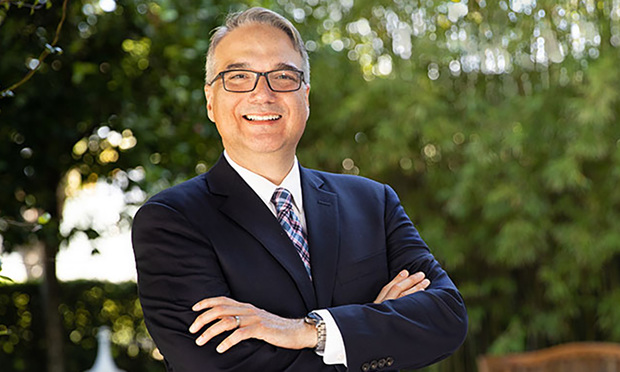 Anthony Varona, former dean of the University of Miami School of Law. Courtesy photo