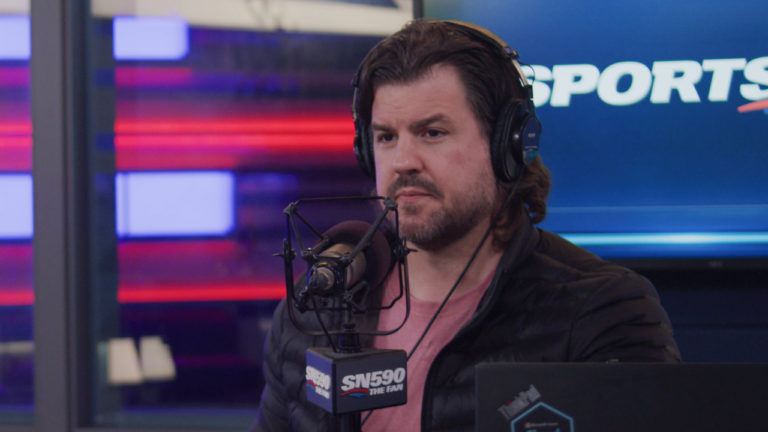
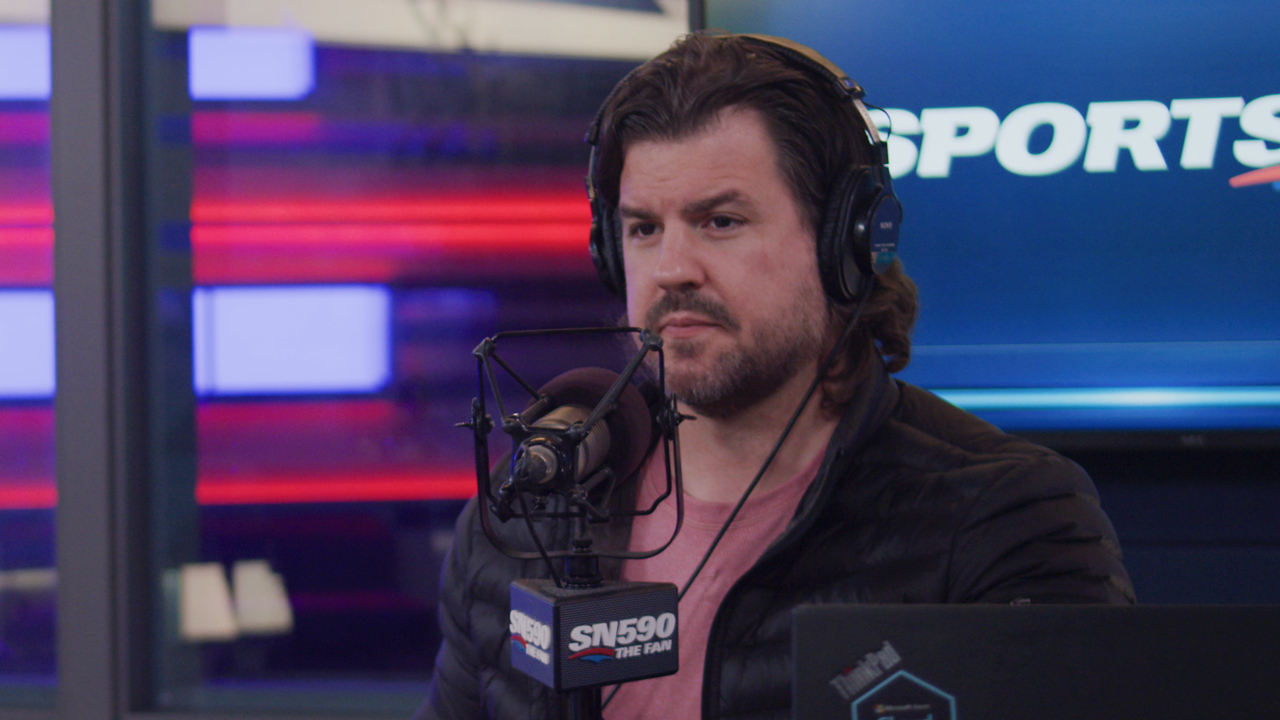
Through strength and support of his family and peers, Scott MacArthur bravely became one of Canada’s only openly gay sports broadcasters in 2019. Sportsnet presents “Outfield: The Authentic Scott MacArthur”. His coming out story and how he’s paving the way for the next generation of LGBTQ+ broadcasters.
June is Pride Month, and Canadians can take pride in knowing that the country has been ranked one of the best in the world for LGBTQ+ travel.
Although there have been major changes in laws and norms for same-sex marriage and the rights of LGBTQ+ people, public acceptance remains divided in many countries.
The report compared 34 countries across eight key indicators of LGBTQ+ friendliness, such as societal acceptance, marriage rights, and gender identity laws.
Based on these indicators, Canada received 7th spot out of 34 and a travel index score of 95.5 out of 100 points.
Canada comes seventh behind Sweden, Netherlands, Spain, France, United Kingdom, and Germany.
Here’s a look at the 20 Best Countries for LGBTQ+ Travel in 2021, according to the survey:
Sweden
Netherlands
Spain
France
United Kingdom
Germany
Canada
Australia
Brazil
Argentina
South Africa
Italy
Israel
United States
Czech Republic
Mexico
Greece
Poland
Slovakia
Philippines
Canada also has established the following gay-friendly laws and rights:
Sexual activity for same-sex couples has been legal since 1969.
Marriage rights were legal in some provinces and territories since 2003, nationwide since 2005.
Adoption rights were legal in some provinces and territories since 1996, nationwide since 2011.
Military service rights were legal since 1992; Includes transgender people.
Banned all anti-gay discrimination in Manitoba and Ontario since 2015, and Vancouver and Nova Scotia since 2018.
Gender identity laws within all of Canada since 2017.
Domestic partnerships in Nova Scotia (2001); Civil unions in Quebec (2002); Adult interdependent relationships in Alberta (2003); Common-law relationships in Manitoba (2004).
So if you are part of the LGBTQ+ community, Canada may be the perfect travel destination for your next adventure.
The LGBTQ+ market is currently the fastest-growing consumer market in the U.S. and is on target to grow by millions in the U.S. in the next few years as GenZennials and Millennials identify as LGBTQ+ in more significant numbers than previous generations. Kantar Consulting and Hornet.com labeled the LGBTQ+ community, which includes the young queer people and identity-fluid individuals previously unseen and not catered to by marketers, “the $1 trillion blindspot.” Even though the buying power of LGBTQ+ people in 2016 totaled $1 trillion—which is on par with African-American and Hispanic consumers in America—ad revenue targeted at LGBTQ+ consumers remains only a fraction of the totals seen by other minority groups. Despite this market growth, according to a recent GLAAD study in collaboration with Procter & Gamble, a meager 1.8% of all advertising on mainstream media in 2020 represented LGBTQ+ people.
LONDON, UNITED KINGDOM – 2019/07/02: Rainbow coloured Pride Month store sign displayed on a window. … [+] Many retail stores in the capital’s shopping heartland of the West End are currently decorated in rainbow colours, supporting Pride. An annual celebration of the LGBT community, Pride culminates in the LGBT Pride parade in London, attracting many thousands of visitors to the capital, with a colourful, vibrant and eccentric procession through the city. (Photo by Keith Mayhew/SOPA Images/LightRocket via Getty Images)
SOPA Images/LightRocket via Getty Images
Despite the optics, given recent gains in social acceptance of LGBTQ+ lives, this lack of visibility may be less about bias and exclusion and more about inexperience, uncertainty, and risk aversion. Authentic representation of LGBTQ+ identities is a complex challenge for marketers. According to GLAAD’s Visibility Project, 78% of advertisers and 31% of agency executives agree that achieving adequate representation is a challenge due to “nuances” in the LGBTQ+ community. Representation across gender and sexual identity within the advertising industry is so outside the realm of consciousness that those numbers are impossible to find. This lack of representation within the advertising and brand-building industries points to a troubling culture gap between LGBTQ+ consumers and the marketers who are tasked with empathizing with their pain points and solving their problems. Marketers are aware that they do not have the cultural expertise to effectively target this consumer population and believe that it’s better to stay out of the game than to play it poorly. Within the ranks of the advertising industry, 81% of executives and 41% of agency leaders believe inauthentic depictions of LGBTQ+ consumers carry a stronger risk of a backlash than no representation at all. Brands will have a particularly large price to pay if LGBTQ+ consumers see them as “rainbow-washing” or “virtue-signaling”—slapping rainbows on corporate logos and making statements supportive of the LGBTQ+ community without taking any real action—which often occurs during this LGBTQ+ Pride month of June. Young LGBTQ consumers, especially, are not afraid to loudly call out brands on social media for “co-opting Pride” for profit.
Given the lack of expertise and representation that exists within the advertising industry, it is not surprising that 66% of LGBTQ+ individuals said they do not see their lifestyle represented in advertising, and 51% say they wish they could see more advertising with families like theirs (Horbelt, 2018).
NEW YORK, NEW YORK – JUNE 18: The Nordstrom lits up in pride colors on June 18, 2020 in New York … [+] City. The annual event, which sees millions of attendees, marks it’s 50th anniversary since the first march following the Stonewall Inn riots. (Photo by Alexi Rosenfeld/Getty Images)
Getty Images
In this first of a series of articles designed to provide marketers with insight into the complex LGBTQ+ consumer population, let’s begin by identifying what every marketer must know to avoid reductionism, negligence, or misrepresentation that have marred many previous efforts to tap the $1T Blindspot.
MORE FOR YOU
The LGBTQ+ population is growing rapidly. An estimated 5.6% of Americans identify as lesbian, gay, bisexual, transgender, or queer, according to a new Gallup report. That’s up from 4.5% in 2017, the last year polling on the issue was conducted by the organization.
The LGBTQ+ population is not one consumer market. The “diverse by design” membership of the LGBTQ+ community, that evolved through decades of the LGBTQ+ social movement to maximize power and influence, defies the segmentation principles underlying its designation as a singular “LGBTQ+ market.” At its simplest demographic levels, the LGBTQ+ population includes individuals who vary based on sex/gender, sexual orientation, and gender identity. Designating the entire LGBTQ+ population as a market segment assumes that every member of the segment possesses a common set of preferences and behaviors. Despite the proclamations of eager LGBTQ+ agencies, there is no singular LGBTQ+ “market.”
Representing one letter does not represent all LGBTQ+. Since the dawn of the politically-motivated “Dream Market” in the 1990s, white, affluent, gay males could expect to see themselves in gay print magazines and online portals, in national ad campaigns in these media, and, increasingly, in mainstream media, particularly television and news media, while advertisers left the rest of the LGBTQ+ population, including all people of color, out in the cold. The Ls, Bs, Ts, and Qs were expected to see themselves represented by advertising to white gay males and be thankful for the visibility. Alternately, marketers were unapologetically pursuing the gay male dollar and had little regard for the rest. However, as societal stigmatism continues to erode, and as political battles for civil rights become less definitive of the LGBTQ population, individuals within the LGBTQ population have distinct identities that they now expect marketers to authentically represent.
Clarify advocacy and representation In recent years, some advertisers have shifted away from “representing” all LGBTQ+ consumers with images of gay males towards advertising that highlights the struggles of transgender individuals. This is necessary visibility and social change work as 2020 saw at least 37 transgender and gender non-conforming people violently killed, more than any other year since HRC began tracking this data in 2013 (Roberts 2020). However, while companies that take a stand for social justice will be appreciated by LGBTQ+ individuals, this advertising may not be considered personally representative by the vast majority of LGBTQ+ individuals. Marketers must clarify the strategic objectives of their advertising with a clear understanding of how advocacy and representation require distinct activation.
Queer women (LBQ) are the largest population but continue to be neglected. For decades, the advertising industry has neglected female members of the LGBTQ+ population with a bias towards gay males; this even though females are more likely than males to identify as LGBTQ+. In the recent Gallup Poll, women are 30% more likely than men to identify as LGBTQ+ (6.4% to 4.9%), and over 70% are more likely to say they are bisexual (4.3% to 2.5%). Within the marketplace, lesbians remain one of the least well-represented consumers in advertising. Despite the fact that a greater number of lesbian couples have children than do gay men, gay men actually tend to be more frequently portrayed with families compared to lesbian couples.
Generational differences in LGBTQ+ identity are real. While the vast majority of Gen-X (76%) and Baby Boomers (84%) are only attracted to the opposite sex, Gen-Z (52%) shows an almost even split between those who are attracted exclusively to the opposite sex and those who are not. Increasing numbers of people per successive generation identify as LGBTQ+, including a high 31% of Centennials, compared to only 8% of Boomers in the 2021 Gallup poll. According to a recent Ipsos report, Among the progressing generations, more LGBTQ+ people are choosing to identify as “fluid” rather than “non-fluid” (meaning gay or lesbian) as members of Gen-Z are far more likely than previous generations to be plurisexual or attracted to more than one sex. Forty-six percent of Gen-Z and 34% of Millennials express attraction to both sexes or identify as plurisexual, embracing identities of sexual fluidity that create a stark contrast to the 14 – 22% of older generations who do likewise.As with their sexual identities, young people are moving away from a binary representation of gender, a significant shift from previous generations. Gen-Z and Millennials also have far less binary ideas of gender than older generations and expect this to be replicated in the marketplace. According to Fusion magazine’s Massive Millennial Poll, 50% of people between the ages of 18 and 34 agreed with the statement “Gender is a spectrum, and some people fall outside conventional categories.” Younger generations appear more likely to identify in terminology that falls outside those previously traditional binaries and weave together their sexual and gender identities in a manner that is distinct from previous generations. Gen-X, Baby Boomers and the Silent Generation developed their identities in an environment of societal stigmatism that limited identity exploration and expression.
Gender flexing isn’t new While an increasing number of younger LGBTQ+ Americans are living out loud in the fluid and dynamic space between all of these constructs, in reality, LGBTQ+ people have always tended to gender flex. Early research in the field dating back to Freud’s Inversion Theory in 1910 described gay men and lesbians as “sexual inverts”—implying that homosexuality was in some sense the reversal of “normal” sex. Research in the 1990s provided a more nuanced perspective on the intersectionality of sexual identity and gender identity. Gay males and lesbians tend to hold no less of their own-sex traits than do heterosexuals. As such, rather than Freud’s binary notion of “gender-bending,” researchers found that LGBTQ+ people tend to “gender flex.” While gay men tend to be more feminine than heterosexual men, they are no less masculine than them; similarly, while lesbians tend to be more masculine than heterosexual women, they are no less feminine. Hence, while Gen-Z and Millennials tend to use labels that proclaim the fluidity of their gender identity, Gen-X and Baby Boomers primarily label themselves “gay” or “lesbian” and “man” or “woman” but gender flex in practice. Most likely, older generations express their gender through clothing, mannerisms, personal style, and other means of codification rather than by adopting a specific gender and sexuality identification and label.
13 July 2019, Bavaria, Munich: A sign with the inscription “70 + Countries Outlaw LGBTIQ People” … [+] hangs on a festive car that runs through the city centre with the Christopher Street Day Parade. Photo: Peter Kneffel/dpa (Photo by Peter Kneffel/picture alliance via Getty Images)
picture alliance via Getty Images
To be LGBTQ+ is to embrace diversity, reject social constructs, and face adversity with resilience. To represent this authentically, marketers will need to commit to doing the work involved in understanding the complexity of fluid but labeled identities within the new LGBTQ+ marketplace while honoring the sensibilities of older generations of LGBTQ+ consumers. They will need to question the patriarchal lens that has driven the first four decades of the “Dream Market,” recognize that it is not a market but a population with a range of segmentation possibilities, and understand that visibility without authentic representation isn’t good enough.
To truly represent and resonate with LGBTQ+ consumers, advertisers have to fight, walk, or dance (#can’tcancelpride) in the shoes of all LGBTQ+ consumers rather than just chasing the pot of gold at the end of the gay male or, more recently, binary rainbow.
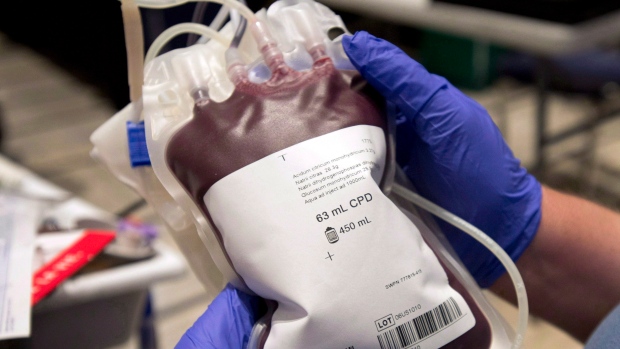
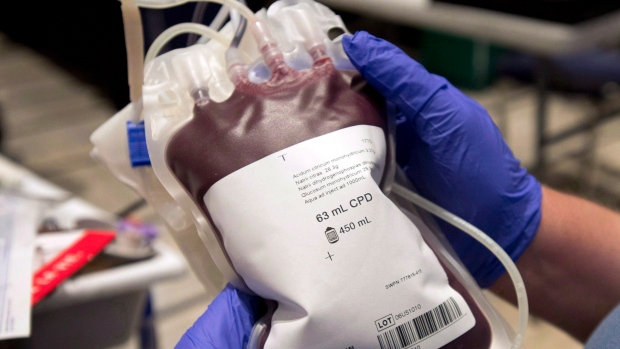
OTTAWA — Amid ongoing questions about why the policy that prohibits sexually active gay men as well as some other folks in the LGBTQ2S+ community from donating blood has been slow to evolve, new documents state that Health Canada has ordered two-year intervals between when the donor screening criteria could be updated.
This request from the federal health agency—which regulates Canada’s blood donor agencies Canadian Blood Services (CBS) and Hema-Quebec—was detailed in court submissions from both Health Canada and Canadian Blood Services.
Between 2013 and 2019, Canada’s blood donation policy as it pertains to donations from gay and bisexual men as well as certain trans folks who have sex with men has changed three times, gradually evolving from a five-year ban on giving blood to the current three-month deferral period. In each instance, at least two years passed between updates.
The policy started in 1992 as an outright lifetime ban following the tainted blood scandal that played out in the 1980s and 1990s and saw thousands of Canadians infected with HIV after receiving donor blood.
In reference to the 2013 change that saw the then-lifetime ban knocked down to a five-year deferral period, CBS said in its submission that following that update, Health Canada “required a minimum of two years of post-implementation monitoring before it would consider further changes” to the blood donation policy.
And in pointing to the 2019 policy change—the latest evolution putting the deferral period at three months—CBS said that as was the case before, the non-profit blood donation organization was told it had to wait “at least two years” before presenting a further request to update the blood donor screening criteria. The waiting period is “to ensure the safety of the blood supply has continued to be maintained,” according to CBS.
“As before, when Health Canada approved the change in the deferral period, it required mandatory post-implementation monitoring to continue for at least two years after the change to assess the impact of the shorter deferral on the safety of the blood supply, and to be reported to Health Canada on an annual basis,” said CBS in what’s called a “Statement of Particulars.”
“Upon Health Canada’s approval of each of these policy changes, CBS states that Health Canada required it to monitor any impacts of the policy change and collect two years’ worth of data prior to making any further incremental reduction to the deferral period,” reads the document.
The document sets out CBS legal position in the ongoing Canadian Human Rights Commission court battle over the blood ban. It was filed by the Canadian Human Rights Commission as an intervener in the federal government’s fight to halt a tribunal from probing a human rights complaint alleging Health Canada discriminated against Christopher Karas on basis of sexual orientation by prohibiting him from donating blood.
Further, in its own “Statement of Particulars” in the case, Health Canada confirmed that after the 2013 change the agency imposed the requirement for two years of post-implementation monitoring before it would review any further proposals to update the policy.
The agency’s documents show that post-implementation monitoring was done with the 2016 and 2019 updates to the blood ban. CTVNews.ca has asked Health Canada for comment.
For years advocates have questioned why the federal government has been incrementally shortening and not outright eliminating the deferral period preventing men who had sex with men, or the “MSM” community as some have coined it, from donating blood unless they’ve been abstinent for a certain period of time.
There is research ongoing that both Health Canada and CBS have said will inform future policy changes, with a moving target for this work’s completion sometime this year. This post-implementation monitoring may be part of this research, but in recent extensive comments to CTVNews.ca, neither Health Canada nor CBS mentioned it explicitly.
The evolutions to the policy over the last several years were the result of Health Canada approving regulatory submissions from CBS and Hema-Quebec, which included risk modelling showing it would be safe to change the blood donor screening criteria, narrowing the window of time that has to pass between a sexual encounter and donating blood.
According to CBS as of last month, in the nearly two years since the waiting period went from one year to three months, based on its monitoring, the agency has “not seen an increase in the risk of transmissible disease.”
As has been the case for some time, every blood donation in Canada is tested for HIV.
Under current testing capabilities, HIV can be detected in a “window period” of approximately nine days after infection. Advocates have suggested updated lifestyle-focused screening questions and eligibility would be determined based on behaviour, rather than outright eliminating certain LGBTQ2S+ donors who are sexually active.
“The rate of HIV in our donors remains extremely low, and Canada continues to have one of the safest blood supplies in the world,” said Canadian Blood Services spokesperson Delphine Denis in a recent comment to CTVNews.ca.
At the heart of the contention over the current policy is what appears to be a struggle over who has the power to change it. It’s this debate that is currently playing out in court as part of Karas’ case, which his lawyer said has been further bolstered by this evidence.
“It goes to show that the inquiry at the Human Rights Tribunal is having its intended effect: that is to reveal further evidence of how Health Canada is implicated in the process of developing donor selection criteria that excludes gay men. We anticipate that if the Tribunal is allowed to continue in its inquiry, more evidence will emerge showing how Health Canada is a critical and necessary actor in the development of the gay blood ban,” said Gregory Ko, a partner with Toronto firm Kastner Lam, in an email to CTVNews.ca.
Calls for the federal government to step in and force a change to Canada’s Blood Regulations, which are under the purview of Health Minister Patty Hajdu, have been met by a Health Canada argument that the agency has a “limited role” to intervene in Canadian Blood Services’ work unless it’s a pressing matter of blood safety.
The Liberals’ position as of late—after vowing without condition that their government would eradicate the ban—is that it’s waiting on the blood donation organizations to request a further blood policy change, which CBS could do as of this month as the two-year interval will have passed.
OPPOSITION PUSHBACK
In addition to advocacy groups continuing to call for the blood ban to be ended, the Liberals are facing increasing pressure from both sides of the political spectrum to make good on their two-time campaign commitment.
Opposition MPs have pointed to the fact that more than a dozen other countries currently have no deferral period for donations from men who have sex with men, in calling for Canada to make the change to a behaviour-based screening process.
On Tuesday, to mark the beginning of Pride month, Conservative MPs Eric Duncan and Michelle Rempel Garner called for Health Minister Patty Hajdu to take action to remove the “blatantly discriminatory” ban by the end of the month.
“It is long past due for the federal government to put an end to the stigma and discrimination that men who have sex with men face in this country,” said Duncan. “It’s nothing short of virtue signalling to go out during an election campaign, twice, and promise men that you would end it, and now claim it’s out of your hands and you can’t make that change. If you couldn’t make the change, why did you promise it in the first place?”
The MPs presented a draft order they suggested could be enacted by Hajdu today to “start the process of removing the ban,” by updating the Food and Drug Act to impose a ministerial authorization outlawing the restrictive policy.
“We believe that there is enough room for the minister to act on this within the existing regulatory structure,” Rempel Garner said. This is a position Hajdu has previously pushed back on.
“If she does not believe it’s adequate, she has an obligation to explain what gaps in the legislation exist, and take immediate action to rectify that. The federal government cannot be allowed to skate by on thin talking points, suggesting that they can’t make the change,” said Rempel Garner. “The federal government is the regulator on this issue, they have the power to introduce legislation if they have to, to make changes.”
In an email, Cole Davidson, a spokesperson for the minister, said that “Hajdu has asked blood operators about their timeline for submission and has offered to discuss any additional supports that may be required for CBS and Hema Quebec to develop a behaviour-based donation model.”
Pac-12 to celebrate the impact of LGBTQIA+ student-athletes, coaches, and legends from throughout the Conference of Champions in June and all year long
SAN FRANCISCO – The Pac-12 Conference is beginning its celebration of Pride Month by announcing its partnership with LGBT SportSafe, an organization that helps athletic leadership champion a culture of respect and inclusion through policy-making, inclusion training, and public awareness initiatives. While June is Pride Month, the Pac-12 is committed to celebrating and supporting LGBTQIA+ student-athletes, coaches and staff throughout the year, augmented by its partnership with LGBT SportSafe.
The Pac-12 has been consulting and working with members from the organization for the last year leading up to the partnership, and LGBT SportSafe has also partnered with several Pac-12 member institutions. The LGBT SportSafe organization was developed to create an infrastructure for athletic administrators, coaches and sports leaders to support LGBTQ inclusion in collegiate sports (along with high school and professional sports). Through the partnership, LGBT SportSafe will serve as a resource to provide training to educate coaches, athletic administrators and staff on best practices and policies in creating an LGBTQIA+ inclusive athletic community.
“LGBT SportSafe is thrilled to partner with the Pac-12 Conference,” said Dr. Eric Lueshen, LGBT SportSafe Co-Founder and Director. “As the first Power Five conference to go all-in on inclusion, this sends a powerful message across the country and will certainly change the landscape of collegiate sports. We’re looking forward to building out this partnership even more in the coming year as we begin working with all of the Pac-12 institutions.”
“The Pac-12 Conference takes PRIDE in our LGBTQIA+ student-athletes, coaches, staff, fans and community,” said Pac-12 Commissioner Larry Scott. “We stand in solidarity with those that embrace individuality, diversity and equality. Inclusion is a core value at the Pac-12 and its member universities. All human beings should be treated with respect and dignity and should be able to live without fear, regardless of who they are or whom they love.”
In addition to the partnership, the Pac-12 has also created a committee that includes coaches and administrators from across the league to focus on building community for the Conference’s LGBTQIA+ student-athletes, coaches and staff. The committee will work to share information and best practices from the 12 campuses, host events, and educate and celebrate a climate of inclusion, belonging and respect for the LGBTQIA+ community.
“I’m so excited and proud of the Pac 12 for making LGBTQ+ inclusion efforts such a priority,” said UCLA softball assistant coach Kirk Walker. “The Pac-12 and its schools have long been leaders in social justice issues and it is time for the Conference to be a vocal and visible leader on LGBTQ+ inclusion in sports. Since coming out in 2005, it has been my passion to raise awareness and visibility across the country on this issue. The history of LGBTQ+ sports icons is steep in the Pac-12 conference with the likes of Dave Kopay, Esera Tuoalo, Jason Collins, Layshia Clarendon, Ryan O’Callaghan, and many other professional and elite athletes who identify as LGBTQ+.”
“In just my two years with Washington State, it has been awesome to see the strength of our community both in Pullman and within the Pac-12,” said Washington State women’s rowing assistant coach Sam Clifford. “The Cougar Pride Student Athlete Alliance was a group the department both needed and welcomed with open arms. On a more global scale, the Pac-12’s various social justice initiatives and student-athlete-centered approach are a great foundation. In June and throughout all months, LGBTQIA+ support, transparency and education are critical in discussions and progress in social justice.”
The Pac-12 will celebrate Pride Month with several events, including an educational webinar about the history of Pride that will be open to all student-athletes, coaches and staff of the Pac-12. Additionally, a Pac-12 Pride t-shirt and “Popsocket” phone accessory featuring a Pride flag-themed Pac-12 logo will be sold on the Pac-12’s team shop and a league-wide PSA featuring content from across the Conference to celebrate what each university is creating to celebrate Pride in both June and throughout the year will air across Pac-12 Networks as well as the Conference’s social and digital platforms.
Members of the LGBT SportSafe team and the LGBTQIA+ Pac-12 Committee will work with LGBTQIA+ student-athlete groups as well to ensure all members of this invisible minority community feel seen, heard and supported.
For more information about the Pac-12’s LGBTQIA+ Committee, please visit pac-12.com/impact.
About LGBT SportSafe
The LGBT SportSafe Inclusion Program was founded by Dr. Eric Lueshen and Nevin Caple to create an infrastructure for athletic leadership to support LGBTQ inclusion in college, high school, and professional sports. LGBT SportSafe launched in partnership with University of Oregon, Northwestern University and University of Nebraska, using an innovative framework, the 3-Peat Model, to help administration champion a culture of respect and inclusion. The 3-Peat Model addresses the importance of Programming, Policy and Public Awareness at all levels of sport, while offering incentives to institutions, teams and leagues that reach inclusion goals. Member institutions that actively engage in inclusion will be awarded a Gold, Silver or Bronze medallion for the athletic department website and marketing materials in order to create external visibility around their inclusion efforts. Sports-specific inclusion programming tailored to the needs of each institution is offered through virtual and on-campus workshops for coaches, staff, administrators and student‐athletes. For more information on LGBT SportSafe, please visit https://lgbtsportsafe.com/.
About Pac-12 ImPACt
Pac-12 ImPACt is the social activism arm of the Pac-12 Conference, seeking to do what the name implies – make an impact in the communities and lives of Pac-12 student-athletes, member institutions and society at large. The focus of Pac-12 ImPACt is to harness the power of sport to build awareness, identify solutions and provide leadership to promote initiatives across the social activism landscape, particularly those that encourage a culture of diversity and inclusion, support sustainability efforts and fuel the pioneering spirit of the West Coast. Pac-12 ImPACt creates and supports transformational policies, programs, resources and services designed to strengthen our university communities from the inside out, spreading the messages of inclusion and empowerment by celebrating diversity, fostering fairness and good sportsmanship, and working towards the ultimate goal of equitable opportunities and outcomes for all. Launched in 2012, Pac-12 ImPACt is headquartered in the Pac-12 Conference office in San Francisco, California. For more information on Pac-12 ImPACt, please visit Pac-12.com/impact.
About the Pac-12 Conference
The Pac-12 Conference has a tradition as the “Conference of Champions,” leading the nation in NCAA Championships in 54 of the last 60 years, with 536 NCAA team titles overall. The Conference comprises 12 leading U.S. universities – the University of Arizona, Arizona State University, the University of California, Berkeley, the University of California at Los Angeles (UCLA), the University of Colorado, the University of Oregon, Oregon State University, Stanford University, the University of Southern California, the University of Utah, the University of Washington and Washington State University. For more information on the Conference’s programs and member institutions, please visit Pac-12.com/conference.
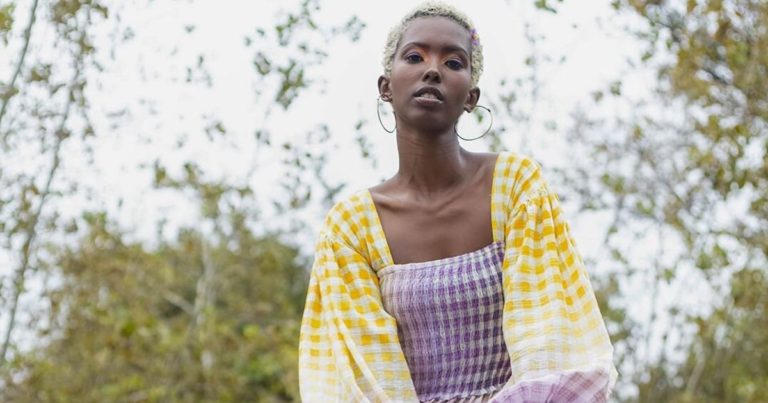
Looking back on summer 2020, we can’t help but realize how much learning we still had to do about the brands we were shopping. Since last June, we’ve researched and uncovered a handful of small shops and labels that are not just transparent about their production methods and sustainability efforts but also willing to donate to charities that could use support year round — not only during a pandemic. That’s why we have very good reason for purchasing all the items on the list ahead. We don’t just think the dresses, tees, accessories, swimwear, and home decor here is stylish, we also know the full story behind where the pieces came from — that’s part of the reason we were attracted to them in the first place!
This June, we’re more psyched than ever to celebrate Pride Month with clothing from collabs that give proceeds to LGBTQ+ organizations, and we’re mixing in a handful of other products — from BIPOC-owned sites and vintage capsules — that all speak to our personal style and better the rest of the world, too. Scroll to shop POPSUGAR Fashion’s editor must haves for June 2021, and bookmark the designers and companies you’re interested in so you can learn more about their ethos before you check out.
Looking back on summer 2020, we can’t help but realize how much learning we still had to do about the brands we were shopping. Since last June, we’ve researched and uncovered a handful of small shops and labels that are not just transparent about their production methods and sustainability efforts but also willing to donate to charities that could use support year round — not only during a pandemic. That’s why we have very good reason for purchasing all the items on the list ahead. We don’t just think the dresses, tees, accessories, swimwear, and home decor here is stylish, we also know the full story behind where the pieces came from — that’s part of the reason we were attracted to them in the first place!
This June, we’re more psyched than ever to celebrate Pride Month with clothing from collabs that give proceeds to LGBTQ+ organizations, and we’re mixing in a handful of other products — from BIPOC-owned sites and vintage capsules — that all speak to our personal style and better the rest of the world, too. Scroll to shop POPSUGAR Fashion’s editor must haves for June 2021, and bookmark the designers and companies you’re interested in so you can learn more about their ethos before you check out.
Through Issenberg’s illumination of the donors, activists and attorneys on both sides of the saga, another aspect of the battle for marriage equality becomes starkly clear: its whiteness. Obama plays an important role, certainly, but nearly all of the individuals at the core of the narrative — dozens of them — are white. Issenberg doesn’t shy away from examining the role of race in electoral politics (the loss of the Black vote against Proposition 8, he concludes, was merely the symptom of a more widespread messaging problem), but we don’t learn why, exactly, queer Black activists were such a rarity in the upper echelons of the marriage fight.
They have long told us the reasons: In addition to broader racism and transphobia within the mainstream gay rights movement, marriage was always primarily a white, cisgender issue. “Gay marriage? Please,” wrote Jasmyne Cannick, a Los Angeles-based political strategist and journalist, after the passage of Proposition 8. “The white gay community is banging its head against the glass ceiling of a room called equality, believing that a breakthrough on marriage will bestow on it parity with heterosexuals. But the right to marry does nothing to address the problems faced by both Black gays and Black straights. Does someone who is homeless or suffering from H.I.V. but has no health care, or newly out of prison and unemployed, really benefit from the right to marry someone of the same sex?”
As Issenberg points out, some lesbian feminists like the lawyer and activist Paula Ettelbrick offered early alternatives to marriage, including “making room in our society for broader definitions of family.” In the midst of the post-Baehr conservative backlash, however, detractors found themselves in what Ettelbrick called the “very odd” position of defending marriage against the religious right, thereby tacitly embracing the cause. But despite Issenberg’s nuanced coverage of other intra-movement squabbles, “The Engagement” bypasses several vital critiques of marriage; any book that covers Sullivan’s “Virtually Normal” should also present the arguments of Urvashi Vaid’s “Virtual Equality” (her book is cited briefly), Michael Warner’s “The Trouble With Normal” and Martha Fineman’s “The Neutered Mother, the Sexual Family, and Other Twentieth-Century Tragedies,” to name a few.
In his postscript, Issenberg recognizes that the fight for gay marriage left much of the L.G.B.T.Q. community behind. “Transgendered Americans were certainly no better off than they had been,” he writes. This admission raises the question: What was lost in spending untold millions of dollars on same-sex marriage instead of a more expansive form of queer liberation? Given that queer and trans people of color had been offering alternative visions of freedom since the beginning of L.G.B.T.Q. organizing, what if we had instead focused on the most marginalized members of our community, those who put their bodies on the line at the Stonewall riots of 1969? What if, before pursuing marriage, we had first provided housing to American youth experiencing homelessness, up to 40 percent of whom identify as queer? If we had funneled our resources to protect and elevate Black trans women, who are now facing an epidemic of violence?
In the era of de-Trumpification, the L.G.B.T.Q. community has the opportunity to consider what it can and must accomplish now that marriage equality has granted tax and social privileges only to those able and willing to join that institution. Meanwhile, Issenberg leaves us with a valuable lesson: We must pick our battles wisely, for they dictate not just our rights, but also the limits of our political imagination.
One week after cases spiked on Martha’s Vineyard to 55 positive results of COVID-19, they were back down to 26 total cases for the Island last week, according to an expanded report released Monday by the Island boards of health.
Of those 26 cases, 19 were from Martha’s Vineyard Hospital, four were at the TestMV site, 2 by the Wampanoag Tribe of Gay Head (Aquinnah), and one from another unspecified provider. Twelve of the cases were symptomatic, 9 were asymptomatic, and five were unknown.
That brings the total number of cases to date to 1,581 with 1,499 of them confirmed with positive test results, according to the data. The cases involved 769 males and 730 females.
Newer positive cases continue to involve young people with more than half 14 individuals under 29. Eight of the cases were for individuals 10 and younger.
Dukes County and Nantucket counties continue to have the highest COVID-19 positivity rate in the state, according to data from the state Department of Public Health.
As of May 27, the two Islands have had a combined 2,917 positive cases since testing began in March 2020. Between May 9 and May 27, the Islands have had a 5.28 percent positivity rate. The next highest is Bristol County with a 2.39 percent positivity rate. State data combines Dukes and Nantucket in its weekly COVID reports. The boards of health report states that Dukes County alone continues to have the highest positivity rate in the state.
Tisbury remains the only Massachusetts municipality in the state’s “red” or highest COVID risk category due to having 30 cases in the past two weeks and a positivity rate of 6.86 percent.
With Tisbury’s population just over 4,000, the number of cases needed to designate it as highest risk is 25. The state’s seven-day average of percent positivity is 0.8 percent. Towns with less than 10,000 residents are considered the highest risk for COVID-19 transmission if they have had more than 25 cases.
Oak Bluffs has the highest positivity rate with 8.51 percent. Edgartown is second with a 7.67 percent positivity rate, followed by Tisbury with 6.25 percent, and West Tisbury with 4.58 percent. Chilmark and Aquinnah are both at zero percent.
The Island has reported nine COVID clusters, including an October wedding (eight cases), Cronig’s Market (19 cases), a Bible study group (11 cases), M.V. Hospital (five cases), Project Headway (four cases), King’s barbershop (eight cases), Shirley’s Hardware (all six staff), the Barn Bowl & Bistro (nine cases), and Cardboard Box (three). A cluster is defined as more than two people from different families or households with a shared source of infection.
As of Tuesday, the hospital has administered 18,658 tests, with 1,074 positive results. There have been 17,576 negative tests and zero pending results.
As of Monday, TestMV, which is located in the parking lot at Martha’s Vineyard Regional High School, has now administered 38,238 tests, with 375 positive results, 37,733 negative results, and 130 tests pending.
The town of Aquinnah has conducted 456 self-administered tests, of which two have come back positive, 454 negative, and no pending results.
The Martha’s Vineyard public schools have administered 43,662 tests. Of those, 18 have tested positive.
The Wampanoag Tribe of Gay Head (Aquinnah) has reported a total of 14 positive cases of COVID-19.
Due to how tests are conducted, there can be a discrepancy between the number of positive individuals and the number of positive tests reported.
At the start of the 52nd commemoration of the Stonewall riots, the first openly gay state attorney general said there is plenty to celebrate this Pride Month, while also recognizing the work still left in the fight to advance LGBTQ+ equality.
“I am always both heartened by how far we have come and also really mindful of the work that we still need to do across this country so that people really feel equality as it is meant to be felt both under the law and in society,” Massachusetts Attorney General Maura Healey said Tuesday on CBSN.
“We are on a path towards greater equality,” she said. “We will get there someday.”
Healey mentioned the historic LGBTQ+ representation seen in President Joe Biden’s administration as milestones to celebrate. Openly LGBTQ+ people working in the current administration include Transportation Secretary Pete Buttigieg, Assistant Secretary of Health Rachel Levine, and White House principal deputy press secretary Karine Jean-Pierre — who last week became the first openly gay person to hold a White House press briefing.
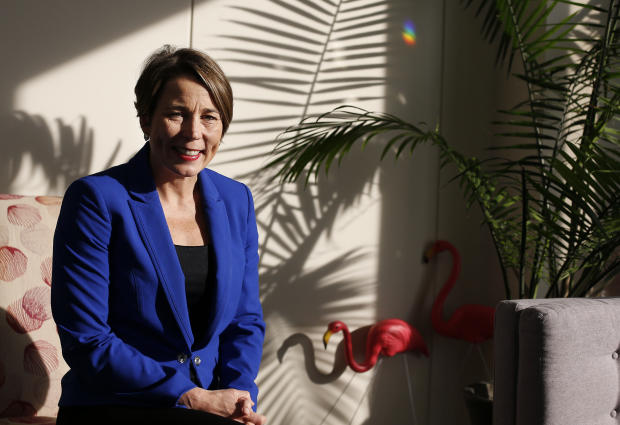
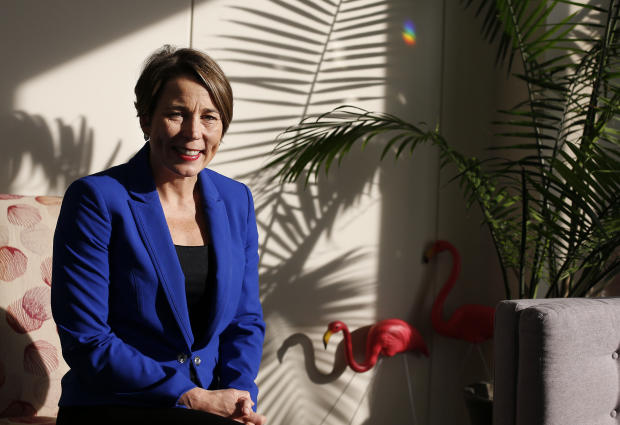
Massachusetts Attorney General Maura Healey inside her office in Boston on February 5, 2019. Jessica Rinaldi/The Boston Globe via Getty Images
“Seeing is believing,” Healey said. “The way that we actually develop the most informed laws and policies and regulations for our government, whether it is the local, state or federal level, is by having a government that truly reflects the people that it is there to serve.”
Healey, who also serves as co-chair of the Democratic Attorneys General Association, said she has seen firsthand the impact LGBTQ+ representation in government has on the gay community.
“When I’m out and about and I meet a young person from the LGBTQ community and they or their parents come up and say: ‘Hey, you give us hope. You make me think that I can be or do anything I want to be.’ That is because they see someone doing something that for a while seemed to be off-limits or unobtainable,” Healey said.
The chief lawyer mentioned that LGBTQ+ youth suffer at disproportionately higher rates of suicide, homelessness and COVID-19. According to the Anxiety and Depression Association of America, “LGBTQ youth are particularly at risk for mental health disorders because they face many adversities, including bullying, difficulty coming out to friends and family members, hate crimes, lack of support, and fear of stigma and discrimination.”
Healey vowed to fight for them as attorney general.
“Just stay strong and believe in yourself,” she said. “As we look back to history, draw on inspiration and energy from those who have come before, who have persevered and have overcome, and think about that and use that to affirm who you are.”
Healey came into office in 2015 and is up for reelection in 2022. Before becoming Massachusetts attorney general, she played professional basketball in Austria.
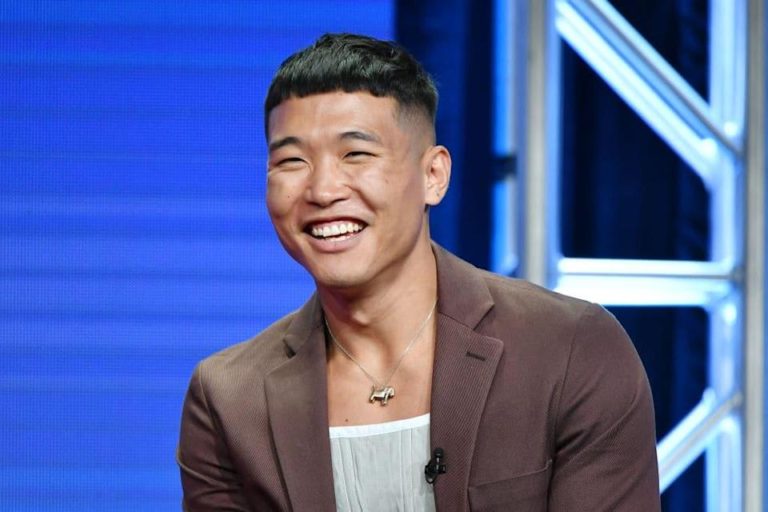
Joel Kim Booster thinks gay male comedians don’t break through in the same way Ellen DeGeneres did because people don’t like thinking about sex between men.
“The question is always asked, why hasn’t there been a gay male Ellen or something like that,” Joel Kim Booster said.
He said that it’s “definitely true” that gay male comedians haven’t broken through on the comedy scene in the same way that the likes of DeGeneres, Wanda Sykes and Tig Notaro have.
“I think part of it is a general discomfort with the way that gay men have sex. I think that it’s really hard to look at a gay man and not think about anal.”
Joel Kim Booster knows a ‘successful’ gay male comedian who’s still in the closet
However, Joel Kim Booster thinks America could see a gay male comedian break through in the future.
“I could see it happening,” he said. “And actually I do know at least one uber-successful stand-up comedian that’s closeted right now.
“And he doesn’t come off as gay and he doesn’t talk about his life in the same way that I do.”
Elsewhere in the interview, Booster explained why he doesn’t have much interest in becoming a major breakthrough comedian – and he reflected on how the comedy scene is changing.
“Because of the internet, and because it’s so easy to find your niche audience, it’s made it more difficult for somebody to break through with broad appeal.
“And I don’t necessarily want to have broad appeal. I don’t necessarily need or want to be for every single person. I’m not looking to be as relatable as John Mulaney is to millions and millions of people because it’s just not me.
“I’m never going to be the comedian that everyone in middle America is flocking to see. And I’m OK with that. I’ve made my peace with that. Because I’ve found a pretty great, dope audience that likes my s**t.”
Joel Kim Booster thinks gay male comedians don’t break through in the same way Ellen DeGeneres did because people don’t like thinking about sex between men.
“The question is always asked, why hasn’t there been a gay male Ellen or something like that,” Joel Kim Booster said.
He said that it’s “definitely true” that gay male comedians haven’t broken through on the comedy scene in the same way that the likes of DeGeneres, Wanda Sykes and Tig Notaro have.
“I think part of it is a general discomfort with the way that gay men have sex. I think that it’s really hard to look at a gay man and not think about anal.”
Joel Kim Booster knows a ‘successful’ gay male comedian who’s still in the closet
However, Joel Kim Booster thinks America could see a gay male comedian break through in the future.
“I could see it happening,” he said. “And actually I do know at least one uber-successful stand-up comedian that’s closeted right now.
“And he doesn’t come off as gay and he doesn’t talk about his life in the same way that I do.”
Elsewhere in the interview, Booster explained why he doesn’t have much interest in becoming a major breakthrough comedian – and he reflected on how the comedy scene is changing.
“Because of the internet, and because it’s so easy to find your niche audience, it’s made it more difficult for somebody to break through with broad appeal.
“And I don’t necessarily want to have broad appeal. I don’t necessarily need or want to be for every single person. I’m not looking to be as relatable as John Mulaney is to millions and millions of people because it’s just not me.
“I’m never going to be the comedian that everyone in middle America is flocking to see. And I’m OK with that. I’ve made my peace with that. Because I’ve found a pretty great, dope audience that likes my s**t.”
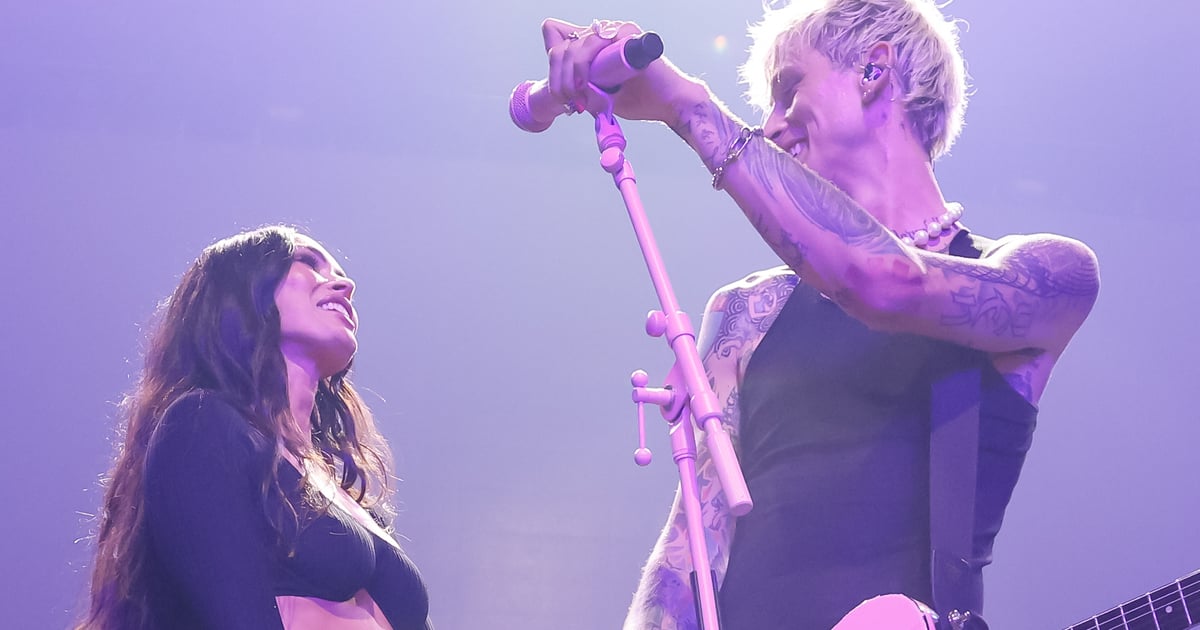
For their night out in Westfield, IN, Megan chose a long-sleeved underwire bra top that flaunted her toned abs and paired it with trendy split-hem jeans and black mule heels by celebrity-adored footwear brand Amina Muaddi. Meanwhile, MGK subtly matched her in a black tank top, metallic pants, chunky-soled boots, and a pearl necklace. Seeing as Megan’s whole outfit cumulatively cost more than $1,000, we tracked down a few similar pieces to re-create her look at a more wallet-friendly price point. Shop every item ahead after admiring her ab-baring outfit in all its glory.
One night, Don Jackson, 38, had a dream that changed everything.
In the dream, he was approached by a man he recognized, a doctor who had killed himself after losing his medical license for coming out as gay. The doctor held out his hand, and Jackson took it. “Come, I will show you a place,” the doctor said.
A place. So simple, but it sounded majestic and urgent.
Jackson had long been outraged by the discrimination he and others felt for being gay, which had pushed him into activism and journalism. His byline frequently showed up in the underground papers that were the beating heart of the movement, and he was a worthy recipient of the vision that now unfurled before him.
The dreamscape transformed, and now he and the deceased doctor were on a mountaintop together. “I looked down into a little valley,” Jackson would recall, “and saw the tightly clustered town on a little river, its pastel-colored buildings glowing in the brilliant sun.”
He woke. It was a light-bulb moment. A place could be real and life-changing. It was one of those moments you remember for the rest of your life, when your whole past, your pain and pleasures, all your experiences and hopes, snap into clarifying focus, and you know at once what to do next. It was one of those moments moving from sleep to wakefulness, where the first thing you do is grope for a pencil before a shimmering idea slips away.
“I conceived the idea of the gay colony,” Jackson said, a utopia and “a quicker way to freedom.” A place where gay men and women could live without fear of discrimination.
Jackson needed a setting to match his vision. He had his eye on Alpine County, chosen for the simple reason that it was the least-populous county in California, with a shade under 500 residents—and fewer than 400 registered voters. If enough homosexuals moved there, Jackson reasoned, they could install their own government and establish a “gay symbol of liberty, a world center for the gay counterculture, and a shining symbol of hope to all gay people in the world.”
A turning point for Jackson’s activism had come months earlier on October 31, 1969—Halloween—when he and about 40 other gay men were peacefully protesting at the San Francisco Examiner building against a recent article that described homosexuals as “semi-men with flexible wrists and hips.” As they marched, a plastic container filled with black ink was dropped on their heads from the top of the building. The protesters used the spilled ink to put their handprints on the building and were arrested for “malicious mischief.”
The seeds were planted that something better could be out there when Jackson read a manifesto called “Refugees from Amerika” by Carl Wittman, who argued that for homosexuals to be truly free, “we must govern ourselves, set up our own institutions, defend ourselves, and use our own energies to improve our lives.”
Now Jackson needed people who could help turn the idea into reality. Though an introvert by nature, Jackson was a good listener and a deep thinker, and that made him the flag-bearer for this promised land. Tall and fit and a little shy in a way that came across as distinguished rather than weak, Jackson unveiled his plan to gay activists at the West Coast Gay Liberation Conference in Berkeley, California, on December 28, 1969. Encouraged by a the positive response, he began working with gay rights groups in the Bay Area to recruit volunteers to become the first pilgrims into Alpine County.
At first, Jackson planned to keep word of the project inside the gay community. “If I’d had my druthers,” he later said, “we’d have moved in quietly, as artists and writers, establishing a colony, and then announced the gay takeover as a fait accompli on the day the election returns came in.”
But then, in the summer of 1970, on one of his regular trips to Los Angeles, Jackson mentioned the project to Morris Kight.
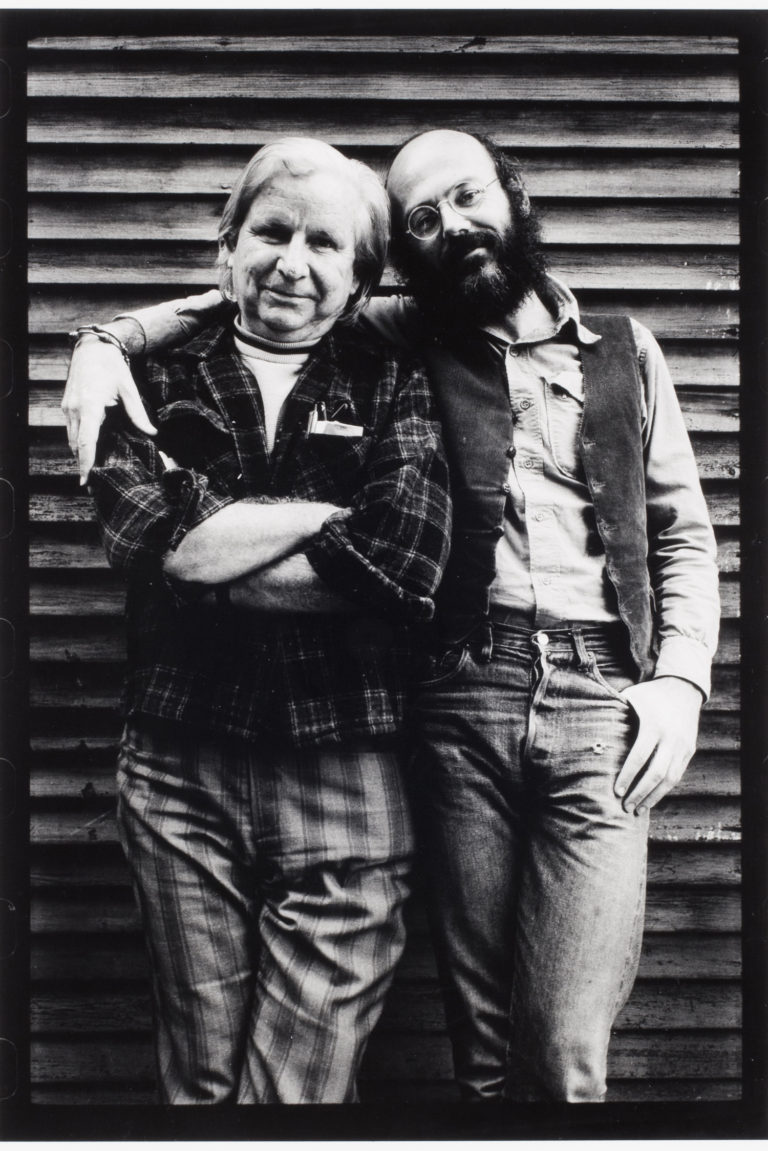
Morris Kight (left) and Don Kilhefner, 1970. Kight, founder of the Los Angeles Gay Liberation Front, and Kilhefner, the group’s office manager, promoted journalist Don Jackson’s vision of colonizing Alpine County in rural northern California with gays from L.A. Jackson was aghast when he discovered the duo never believed in the plan and used it as a publicity stunt to promote gay rights.
Kight was a 50-year-old force of nature, a labor organizer and peace activist from Comanche County, Texas, who moved to Los Angeles in 1958 and immersed himself in what was then the rather staid “homophile” movement. Kight radicalized the movement by founding the Committee for Homosexual Freedom, which, in 1969, became the Los Angeles Gay Liberation Front, the third local chapter of GLF after New York City and Berkeley. Instantly recognizable by his thick, snow-white hair, Kight was a natural-born showman with sharp elbows.
But his devotion to the cause was absolute. Kight had been wanting to shine a light on gay rights issues like discrimination in jobs and housing. The gay takeover of a small, rural, and reactionary county in the California mountains could certainly do that.
“I thought, wait a minute,” Kight later recalled, “Don Jackson has a capital idea, and we must capitalize on it.”
Kight convinced Jackson to go public with his campaign. Respecting Kight as an elder statesman in the movement, Jackson agreed to publish an essay about his dream, which appeared in the Los Angeles Free Press, an underground paper.
On October 19, a phone call came into GLF’s office. The ringing was heard by Don Kilhefner, 32, who was usually at the office. In fact, he lived there. Raised in a Mennonite family in central Pennsylvania, he moved to California after college. In the summer of 1970, he became homeless when the car he had been living in got towed. He got permission to sleep on the couch in GLF’s office, becoming, by default, the group’s office manager.
On the other end of the line was Lee Dye, a reporter for the Los Angeles Times who covered health and science. His beat included gay issues, since, at the time, homosexuality was widely considered a mental illness.
“I hear there’s this thing called the Alpine County project. What’s that all about?’” Dye asked.
GLF had tried to get the Times to cover the story, but the paper was notoriously averse to reporting on gay issues. And Kilhefner was inspired by Jackson’s vision and approach. “I liked him because it was clear to me he was very intelligent, not a grandstander, diligent in his research, carried a certain humility that I speculate came from a sense of inner authority,” Kilhefner recalls. “Our conversations always had substance to them, no grandiosity, no bullshit, no pretending.”
With the reporter on the line, Kilhefner thought on his feet. “Oh my God, what a coincidence! We’re having a news conference tomorrow morning on just that subject!” He gave the office address at 577½ North Vermont Avenue.
In case Dye actually showed up, Kilhefner needed help to prepare. He hastily recruited two GLF organizers to stage an improvised presser at the office. Jackson couldn’t attend, but no matter. The move fit with GLF’s way of operating. “We were prepared to act at a moment’s notice,” Kilhefner says.
The office was in a second-floor apartment in a dilapidated two-story house in East Hollywood, “an old dowager of a building that had dignity,” as Kilhefner recalls. The aesthetic of the offices was very 1970s radical: photographs of Huey Newton, Frederick Douglass, and Che Guevara hung on the walls alongside a raised-fist poster. In a corner stood a small forest of picket signs, ready-made for any occasion: police brutality, anti-war demonstrations, gay rights marches. For the presser, they arranged chairs in front of a poster reading Gay People’s Victory! The following morning, Tuesday, October 20, Kilhefner and his two fellow speakers outlined the audacious plan to turn Alpine County into a “refuge where homosexuals can live without harassment.” Already, 479 homosexuals had volunteered to make the move. Once they met the 90-day residency requirement, the new gay majority would call a special election to replace the district attorney, county supervisors, and sheriff. The GLF, they explained, had by this point launched two “expeditions” to Alpine County and planned to begin the “migration” in less than three months, on January 1, 1971. The new arrivals would “live off the fat of the land”—as well as the $2 million in federal and state funding the county received annually. They predicted Alpine County would become a “mecca for homosexuals” as well as “straight curiosity seekers.”
“[It] will not be just a male society,” Kilhefner said. “Many of our sisters will join us.” Among those who’d already enlisted were doctors, lawyers, and teachers, he said. “We are still searching for two nurses, and we need one civil engineer to serve as director of roads.”
“It would mean gay territory,” Kilhefner continued, echoing Jackson’s original dream. “It would mean a gay government, a gay civil service, a county welfare department that made public assistance payments to refugees from persecution and prejudice. It would mean the establishment of the world’s first museum of gay arts, sciences, and history, paid for with public funds.”
“Just imagine what a great place that would be for summer rock concerts,” Kilhefner said, adding that eventually the group hoped to expand the concept across the country: “Almost any state in the union has an Alpine.”
Having explained all this, they looked out at the pool of reporters—one reporter, to be exact, Lee Dye. His story appeared in the Times the next day under the headline “Homosexuals Describe Plan to Take Over Alpine County.”
After that, Kilhefner remembers, “all hell broke loose.”
Alpine County erupted. It did not have a single traffic light but was suddenly the eye of a cultural storm. “Naturally, we’ll do everything we can to prevent anyone taking over our county,” Hubert Bruns, a rancher and chairman of the Alpine County Board of Supervisors, told the San Francisco Examiner when the news broke. “We have a real nice county here. We don’t know what we’re going to do if they succeed. We’ll try anything.”
The population of the county had settled to about 500 since the year 1900, when a boom in silver mining ended. The residents were proverbially hardy souls who reveled in the county’s spectacular scenery, rugged terrain, isolation, and harsh winters. Alpine County was also notable for its conservatism. In the 1964 presidential election, Barry Goldwater won the county with 57 percent of the vote. That was the highest percentage of votes Goldwater received among California’s 58 counties.
Now the New York Times, the Wall Street Journal and wire services around the country picked up the story of the Alpine County project. “The residents of Alpine County are not amused,” Time noted in an article titled “Gay Mecca 1.” When the residents of the until-then obscure region tuned in their TVs to a special featuring Bob Hope, they found him talking about their county: “They had one demonstration up there, and the cops had to break it up, and instead of mace, they sprayed them with Chanel No. 5.” The residents of Alpine had suddenly been put on the national stage by a group trying to wipe them off the map.
On Wednesday, October 21, 1970—the day after the GLF press conference in Los Angeles—chairman Bruns, three additional supervisors, and District Attorney Hilary Cook made the four-hour drive from Markleeville to Sacramento, the state capital, to plead with Governor Ronald Reagan for help in repelling the gay invaders. The officials met with Reagan’s assistant legal affairs secretary, Richard Turner, who gave them bad news: if the homosexuals followed the letter of the law, Turner explained, there was no way to stop them.
“The people are very upset,” Bruns told a reporter after the meeting. “They”—the homosexuals—“will receive a hostile reception when they come.” Bruns added that “apples and peaches don’t grow well” in Alpine County’s cool mountain climate. “No fruit is very welcome up in our particular county.”
The reaction continued to darken and soon became threatening. A sign on the highway was defaced to read: watch for deer—hit a queer.
On the opposite side of the continent, extremist radio personality Carl McIntire was following the news about Alpine County with special interest. On his daily radio program, The 20th Century Reformation Hour (which was actually half an hour), McIntire announced he would be organizing a counterattack if GLF took over Alpine County.
McIntire, an ultraconservative fundamentalist preacher from Collingswood, New Jersey, was heard on hundreds of stations nationwide and raked in more than $3 million in small contributions from listeners every year. Broadcasting from the studios of WXUR, a radio station he owned in Media, Pennsylvania, McIntire railed against “communism, liberalism, racial integration, sex education, evolution and water fluoridation,” according to the Los Angeles Times. Critics complained that McIntire’s program was “highly racist,” “anti-Semitic,” “anti-Negro,” and “anti-Roman Catholic,” and in July 1970, the FCC revoked WXUR’s license for violating the agency’s fairness doctrine and failing to “keep . . . attuned to the community’s needs and interests.” But McIntire had appealed the ruling, and in October he was still on the air. “Homosexuality,” he would say, “must be met by the Gospel, and the attempt to dignify and legalize it will further corrupt society.”
“The day of silence has passed,” McIntire said of the Alpine County project, “and it is unthinkable that the Christians of the United States should sit by and permit a county to become a homosexual estate to embarrass this nation before the world . . . A new order, established after they have repudiated our system of morality, could very well become the first U.S. atheist and Communist county.”
McIntire promised to move enough of “our Christians” to Alpine County to keep the homosexuals from “obtaining majority control.” McIntire said his recruits would live in trailers and work as “missionaries.”
Don Jackson, dubbed the “Father of the Alpine Project” by the Los Angeles Free Press, was busy organizing an ad hoc coalition of activists that would come to be known as the Alpine Liberation Front (ALF), to pave the way for a smooth migration. According to scholar Jacob D. Carter, ALF formed committees to “organize farm communes, bee-keeping, a melodrama-theater beer-hall project, a crafts pleasure fair, ski resort, free clinic, free school, utilities, communications, housing, and consumers’ co-op.” ALF also published a pamphlet filled with information about Alpine County’s climate, economy, government and history.
While Jackson was busy in the Bay Area, on November 1, more than a hundred people crammed into the GLF’s Los Angeles office, separating into five committees. “Accumulation of money, material and personnel for the actual migration will be put into effect by these committees,” the group’s newsletter, Front Lines, reported, “with the enthusiastic support of much of the gay community around the country and the world.”
“The lid really blew off the establishment’s teapot when the GLF-LA told the world about the plans for taking over the tiny county of Alpine, California,” the newsletter boasted in an article titled “Alpine Co. Here We Come!” “Everyone in the State power structure from Ronnie Reagan to the Board of Supervisors of Alpine to ‘Dr.’ Carl McIntire . . . have been running around like lunatics trying to find some legal (or even not so legal) way to prevent the takeover of the otherwise insignificant area by gays.”
Carolyn Weathers, a Gay Liberation Front member, recalls her excitement “to be like pioneers in covered wagons and take over Alpine County.”
USC
Carolyn Weathers, a member of the group, remembers the excitement of a chance to “be like the pioneers in the covered wagons and take over Alpine County.” Weathers marveled at the energy of these packed Alpine County planning meetings. At one session, a burly man with a bushy beard sat in the corner, nimbly sewing a large blanket, the needle moving with remarkable speed. “Our brothers and sisters who go to Alpine are going to need our help in getting through the first winter,” he suddenly announced. “So come on, sisters, get busy helping me sew blankets!” And then he put his head back down and resumed sewing.
With group leaders such as Kight and mastermind of the impromptu press conference, Kilhefner, often busy on urgent business, the ranks had to rise up to prepare for the move. GLF volunteers fanned out across the city’s gay neighborhoods handing out flyers to recruit “Alpioneers.” They collected donations in a miniature covered wagon on Hollywood Boulevard, and collection jars were placed in gay bars all over the city.
GLF also received offers of support from outside the gay community. Economic Research Associates, the firm that had helped analyze the impact of Walt Disney World on the Orlando area, offered its services, and the California Libertarian Alliance endorsed the project.
“Your main resources are the freedom you offer plus the environment you are locating in,” Dana Rohrabacher, one of the libertarian group’s founders and later speechwriter to then-President Reagan, wrote in a letter to GLF. “The economic goods are perfect for some kind of a combination ski gambling resort.”
From the San Francisco hub of the project, Jackson wrote Kight frequently with updates and advice and included some flattery for the elder statesman of gay activism. “The people giving interviews should be rotated,” he wrote in one letter. “The younger longhairs are best for relating to the younger Gay Lib types, but you should do some of the interviews to give dignity to the project. Your name won’t have to appear in the press very many more times before you are listed in Who’s Who.”
As media attention increased, Jackson’s vision for the project expanded. “Events have changed my concept of what Alpine will be,” he wrote in another letter to Kight. “It has grown into a bigger issue than just Gay Lib or even just Gays. Now, I visualize it [as] a liberated territory, a bastion of liberty in the statist sea, based on the basic libertarian doctrine that a person has a right to do anything he wishes so long as he doesn’t harm anyone else.”
Gaytopia would be a starting point. “I visualize [ALF] growing into a national organization,” Jackson wrote. “The liberation of Alpine for Gays will be only its first objective; it will go on to liberate other cities, counties and states for the people—counties for Indians, counties for Hippies, counties for any oppressed people who want to free themselves from the oppression of the ancient regime. The Alpine Liberation Front can become a major thing in the history of the nation.”
But Jackson worried about the effects of the publicity surrounding the project. He later said he feared it was making the project “appear unreal.”
Back in the High Sierra, 5,500 feet above sea level, residents of Alpine County were busy forming committees of their own. At a daylong meeting at the single-story courthouse in Markleeville, their county seat, on Thursday, November 12, Hubert Bruns, the chairman of the board of supervisors, called the proposed takeover “the most crucial problem any county has faced, perhaps, since the Civil War,” and compared GLF’s tactics to Hitler’s. “Possibly these people are victims of persecution, and we will help them if we can,” Bruns said, “but not by allowing them to take over Alpine County. We hope to convince the people in Los Angeles this is not a good place for them to live.”
Nor was Carl McIntire’s proposal any better received in Alpine County than GLF’s. Many residents now felt they were caught between two opposing forces far beyond their control. Their home had become an early battleground in what would come to be known as the culture wars.
Rumors were going around that rich homosexuals were already gobbling up property in the county, hoping to open “gay resorts.” Some residents wanted to invite Joe Conforte, the owner of the notorious Mustang Ranch brothel across the border in Sparks, Nevada, to open a branch in Markleeville, presumably to somehow counteract the influx of gays.
Residents formed committees that day. One would prepare emergency legislation to dissolve the county by merging it with neighboring El Dorado County if necessary. Another would “prepare a plan for maintenance of law and order.”
Chris Gansberg, the chief of Markleeville’s volunteer fire department, was confident that the county’s harsh winter weather, when temperatures of -20° Fahrenheit were not uncommon, would deter the would-be settlers. “An invasion by 500 people in January would create a land office business for the undertaker,” Gansburg said. “It could not be done with any degree of success.”
An NBC News crew covered the meeting, and a very serious report from tiny Markleeville aired the following night on the NBC Nightly News amid updates on the Vietnam War and student protests.
The anticipation of colliding worlds would come to a head on Thanksgiving Day, when an advance party from the Los Angeles office of the GLF arrived. Steve Beckwith, Rod Gibson, and June Herrle had made the seven-hour drive from Los Angeles to the remote mountain town near the Nevada border to “test the temperature and savor the landscape and report back to [GLF] on conditions.” They were accompanied by a handful of journalists.
Wrapped in scarves and heavy coats against the late autumn chill, with buttons reading alpine or Bust pinned to their lapels, Beckwith, Gibson, and Herrle—two hirsute men and a small woman with short hair—collected soil samples and recorded the temperature. At Egger’s, a general store and Chevron station, they bought a loaf of bread, a bag of potato chips, and a bottle of wine for lunch. Besides Egger’s, the visitors could glimpse a forlorn hotel with a restaurant and bar, a coffee shop, and a post office—and not much else. The general store’s owner, Gus Egger—who was also a county supervisor and had lived in Markleeville since 1947—was unperturbed by his unusual customers, though he wondered how they’d make a living once they got to Alpine County.
Beckwith, Gibson, and Herrle posed for photographs on the steps of the county courthouse that would, they hoped, soon be the seat of the world’s first all-gay government. Across the street, they held an impromptu press conference in a small memorial plaza with a fountain that commemorated a former county sheriff. Perhaps they noticed the promise of its inscription: “Devoted to Duty—Loyal to Community—Friendly to His Fellow-Men.”
“We want to show the local residents that homosexuals are just plain people like everybody else,” Beckwith told the reporters.
The next day, Beckwith, Gibson, and Herrle met with Alpine County Sheriff Stuart Merrill in front of Egger’s. Beckwith proposed a meeting with local residents, but Merrill was having none of it. He had already tired of the publicity the project was attracting. “Absolutely not,” the sheriff said. “The people of Alpine County haven’t time to attend any meetings. They are tired of being pestered by you people.” It is possible Merrill also had not been pleased to hear about the plan to have a gay sheriff.
“You’re not going to tell us what to do!” Beckwith shouted in response. “We want to come into this county peacefully, but we are going to come in, no matter what you say.”
GLF had scheduled the visit over the long Thanksgiving weekend partly for the symbolism. These young, radical homosexuals saw themselves as modern-day pilgrims, intent on escaping political and social persecution and eager to find a new land of independence and opportunity.
GLF members, including Kight (farleft)and Kilhefner (third from right) celebrate outside the Farm in West Hollywood after forcing the owner to rescind the no-touching rule prevalent at gay bars in 1970.
The scheduled start date of the migration was January 1971. Alpine County held its collective breath. Then a mammoth blizzard dumped more than three feet of snow in the mountains, temporarily cutting the town off from the outside world.
McIntire’s minions did not show up to try to stop the Alpine pilgrims. In fact, his hold on his enterprises was slipping. In a year’s time, McIntire lost his appeal of the FCC’s revocation of his radio station’s license. His empire crumbled, and his ministry never recovered.
But the new year brought a far darker obstacle. There had been threats, including, reportedly, by the Ku Klux Klan, but the real danger to the project ended up coming from within. Gibson, one of the Thanksgiving Day pilgrims to Markleeville, discovered evidence that the upper echelons of GLF in Los Angeles had never had any intention of providing the continuing support the project would need to be completed. It was all a lie, a clever stunt. Gibson was furious when he learned that “an elite group of [GLF] members”—namely Kight and Kilhefner—were simply using the project to generate publicity and were in effect lying to the gay community as well as the establishment press while leaving to “those who thought the project to be valid . . . the monumental task of making it come off.” Gibson wrote in a letter exposing the hoax, “The ends will never justify the means when it entails using peoples’ hopes and dreams.”
Ultraconservative radio host Carl McIntire used his nationally syndicated program to denounce GLF and threatened to relocate hundreds of his listeners to Alpine County to offset the influence of the gay pilgrimage.
Getty Images
Jackson who had literally dreamed up the idea, was devastated. He had been in almost constant contact with Kight, never imagining that he Kight had no intention of implementing the plan. He felt betrayed, and he never forgave Kight for leading him on.
“Kight didn’t want to risk ruining the scheme if he let Jackson in on his real intention to use Alpine County solely as an agitation and propaganda tool,” explains Kight biographer Mary Ann Cherry in Morris Kight: Humanist, Liberationist, Fantabulist. “Their relationship never recovered from the betrayal that Jackson experienced when Kight backed away from the Alpine dream . . . Kight bruised more than a few personalities and made some serious enemies on the road to gay liberation.”
Kilhefner, now 82 and still active in the gay rights movement in Los Angeles, admits the ploy, describing the Alpine County project today as “agitprop.”
“We weren’t doing it because we were serious,” he says. “We would do things to get the Man’s attention so we could get our issues out there. It was a serious attempt to get into the media some knowledge of the gay movement, that gay people were everywhere.”
Kilhefner explains that the announcements at the press conference on October 20, 1970, were complete balderdash—he and the others present just made it up as they went along. “The press conference was a Potemkin village,” Kilhefner says. There had never been 479 volunteers lined up to move to Alpine County, much less doctors, lawyers, and teachers. As far as he was concerned, there would be no migration on January 1, 1971—or ever. It was an unexpected turn when the project took on a life of its own, and GLF’s rank and file began planning for the move in earnest. And in order to maintain the ruse—to keep generating publicity—GLF’s leadership had to keep the rest of the group in the dark. “It was meant as political theater,” Kilhefner says, “but some people took it seriously.”
Weathers, one of those people, now recalls how “people felt used” when they found out the project was phony. “Many of us were upset that it had been fake,” she says.
“I feel like the Alpine stunt was a publicity stunt a bit along the lines of a Lee Atwater dirty trick that went too far,” Del Whan, who joined GLF in early 1970, said. “Many gay people took the plan to set up a gay county seriously, however, and were very upset when they eventually realized that Morris was just making waves to stir up public attention for gay civil rights.” She worries that the Alpine County project overshadows GLF’s genuine accomplishments, such as organizing the first Gay Pride parade in Los Angeles.
Once the hoax was exposed, planning for the Alpine County project came to a screeching halt. Though true believers may have been able to follow through without their leadership, the effort was demoralized. The hoax may have hastened the group’s demise. Disenchanted members drifted away, and by the end of 1972, the Los Angeles Gay Liberation Front was no more.
But Kilhefner has no regrets. “I saw immediately it probably would go nowhere because the 10 to 12 people involved were largely talkers not organizers, and they had no driven, resourceful, fire-in-the-belly leader. Both Morris and I kept those thoughts to ourselves and never criticized the Alpine Project in any way, always taking the position that we support you in your attempt to make it happen; however, never did we put any time or effort into it. And it died a natural death.”
As a publicity stunt, however, Kilhefner says the Alpine County project was spectacularly successful. “It opened a lot of people’s eyes. Because we weren’t begging for acceptance. What we were saying was, ‘Fuck that shit. We’re here, we’re queer, we’re part of the society, and we’re becoming politically aware. We’re fighting back. We won’t take it anymore.’ That’s the legacy of the Alpine County project.”
In Alpine County itself, if the nuances were unclear, the residents could see their new neighbors were simply not showing up. Sheriff Stuart Merrill told a reporter, “I think they have given up.”
Perhaps the most notable twist, though, was that the position of many in Alpine County had changed. When still preparing for the influx, a committee had been formed to “see to the Gays’ welfare.” “Homosexuality is as old as heterosexuality,” Ruth Jolly, the county health officer, had commented. “That it is undesirable may be argued, but to talk of invading this county is sickness.”
Some residents also pointed out that an influx of new residents, whatever their sexual orientation, would raise property values, increase the tax base, and boost local businesses. “I hope they come,” one merchant said. “Hell, 500 more people up here, and my business would triple. Of course, I will sell to them. I’m open to the public aren’t I?” Several prominent citizens, including the school superintendent and the county welfare director, ended up expressing support for the project. Gibson, by the end of his Thanksgiving mission, had even felt “re-inspired” by positive interactions.
Following up on the abortive Alpine County project in 1975, the Los Angeles Times reported that the endeavor had “raised the consciousness of at least one resident”: Hubert Bruns, the county supervisor who once had likened GLF’s tactics to Hitler’s. “I don’t think they’re as dangerous as we thought at the time,” Bruns told the paper. Bruns also said he “had come to realize there were probably homosexuals already living in Alpine County,” though, he added, “none are ‘out of the closet’ that I know of.” The strangest fact about the relocation project may be that it really could have worked had it not died of a collective broken heart.
Today, the population of Alpine County is about 1,100. It’s still California’s least-populous county, but it has become decidedly more gay-friendly than it was in 1970.
After the Alpine County project fell apart, Jackson turned his attention to creating a gay utopia in a tiny San Diego County town called Bankhead Springs. But that project, known as Mount Love, unraveled, too. Jackson’s byline disappeared from the pages of the underground papers in the mid-1970s. He dropped out of sight. “He just kind of disappeared from the organized, radical gay community,” Kilhefner says. “I consider him one of the pioneering warriors of early Gay liberation—an essential voice. I honor him.”
Maj. Gen. Tammy Smith, who retired this week after 35 years of service, and her wife, Tracey Hepner, during Smith’s retirement ceremony. During her last assignment, Smith was the special assistant to the assistant secretary of the Army for manpower and reserve affairs. (Photo Credit: Courtesy photo )VIEW ORIGINAL
WASHINGTON — Since Maj. Gen. Tammy Smith, the military’s highest-ranking openly gay officer, came out in 2012, she has tried being an example of living authentically while also being a beacon of visibility to other Soldiers and their families.
It’s been nearly a decade since the “Don’t Ask, Don’t Tell” policy, or DADT, was repealed. The policy banned lesbians, gay men and bisexuals from serving in the military. Since then, Smith has gotten married, has been promoted not once but twice, and made history after coming out as a member of the LGBT community.
This week, Smith, who was special assistant to the assistant secretary of the Army for manpower and reserve affairs, retired after 35 years of service.
In 2012, her promotion to brigadier general grabbed news headlines. The general never sought to make history that followed her decision to include her wife, Tracey Hepner, during the promotion ceremony. It terrified her to come out as gay in such a public way, but she felt a responsibility to do it, she said.
On a personal level, she thought, “Why wouldn’t I include my wife in my promotion?” she said. After all, it is not uncommon for Soldiers to celebrate promotions with their loved ones.
The promotion ceremony
Smith held her ceremony a year after the repeal of DADT. The entire event flipped everything Smith ever thought on its head. Smith used to think, “How do we keep our lives a secret?” she said. For the first time, it wasn’t a secret. The journalists made sure of it.
Smith knew showing the world she loved Hepner wouldn’t be easy. But, she hoped it would “signal to other families they shouldn’t be afraid to have their families around them,” she said. “I had trepidation and although I didn’t go running into it, I knew it was the right thing to do.”
As difficult as it was for her, coming out publicly as gay “may not have been as easy for someone who was at a lower rank,” Smith said in an interview last week.
On paper, the ceremony followed all the standard protocols for such an event. Friends and family gathered, she raised her right hand and repeated all the lines asked of her. Then, at the heart of the event, two individuals that Smith loved pinned on her stars.
In her case, those individuals were her dad and Hepner, a woman who before DADT was repealed, she couldn’t openly love.
The ceremony did not start until four in the afternoon. By three, the initial news articles published. It was official. The Army leader who spent decades keeping her life a secret was publicly out to the entire world.
During the ceremony, Smith also noticed a public affairs officer briefing a three-star general about the news headlines. Knowing the Army was actively monitoring the media about her personal life may have been a minor detail, but it brought the weight of the situation into focus, she said.
The couple hadn’t told their families anything about the event being any different from other promotion ceremonies. As much as they longed to be treated like everyone else, they weren’t yet.
Before they could be, the married couple had to take that first step of publicly declaring their love, while also giving visibility to the LGBT community. Smith walked into the event terrified but hopeful that once it was over, the same event kind of event could be easier for the next person.
“Visibility helps people rid their minds of stereotypes held about a person or group of people,” she said.
According to Smith, to see someone of a different group, such as the LGBT community, and associate them as “a real person,” she said, helps replace the stereotypes some people may have in their mind.
Smith’s fears of a negative public outcry never came that day, or in the years that have followed, she said. In fact, they still receive positive messages each day.
“It’s rare for Tracey or me not to hear from someone in a formation, or a family member [to a service member], or someone who knows someone in the military, either wanting to tell us about what they have read about us, or how we inspired them, or even asking us questions about their daughters getting married to another woman, wanting to do everything right for the wedding,” Smith said.
Maj. Gen. Tammy Smith and her wife, Tracey Hepner, during an Army event. During her last assignment, Smith was the special assistant to the assistant secretary of the Army for manpower and reserve affairs. (Photo Credit: Courtesy photo)VIEW ORIGINAL
People first
It’s that positive direction toward acceptance that Smith also believes the Army is moving to, she said.
When Army leaders say people first, “it’s more than a slogan,” she said. “The Army is moving toward a place it has always been moving toward, and that is you can’t deny competent people. You can’t deny a good work ethic.
“The Army is taking the time to put a strategy behind what it means to put people first,” she added. “[The Army] wants you to feel included in this organization, so you want to stay and continue on this team.”
Soldiers reflect the diverse society they swore to defend, Smith said.
“As an all-volunteer force, Soldiers who come in reflect the type of people that live in our society, and I had the benefit of a 35-year view on this,” she said. “When I came in during the 80s, things were different for women and gay people, and now in 2021, the societal rules are different again.”
‘Honest and authentic’
One of the most rewarding parts of being married in the Army has also been the simplest joys. Things that may be trivial to others have meant the world to her and Hepner. One example has been living in on-post housing among other military families who are “going about their regular Army lives every single day,” she said.
“I have seen many changes over the 35 years that I have had the privilege to serve,” she said. “I think the change has been positive, and it has strengthened our military. It has made it more accessible, because of the society for which we serve. I like the direction that we are heading with our people.”
Through her experience, Smith has understood not only how to accept who she is but also become an authentic version of herself, she said.
“There’s a journey that takes place between first acknowledgment and being honest [with yourself],” she said. “People must find comfort and push back some of that internalized homophobia, and build a bit on the journey between honest and authentic.”
Smith has been on that journey for a decade following her choice to publicly come out, and “now I feel very comfortable in my authenticity,” she said.
“You don’t know how much pain you’re in until you are no longer in it,” said Hepner, who cofounded the Military Partners and Families Coalition, an organization that supports LGBT military partners and their families.
“We lived under the constraints of the law and it was painful,” Hepner said, regarding life before the policy was repealed. “I wish everybody could feel what it’s like to live authentically.”
That isn’t the case for everyone, she said. Many young Soldiers come into the Army at various points in that journey to living authentically. They may wonder if they can be honest with who they are and gauge where they are on the journey from honest to authentic.
“Overall, the Army is a place where you can do that,” Hepner said. “But, we can’t forget that even though the Army is inclusive, each person is still [somewhere] on that individual journey.”