An ITV boss has claimed that including gay contestants on Love Island is a “logistical difficulty” because of the format of the dating show.
The UK is gearing up for a new season of Love Island this summer after it was cancelled last year due to COVID-19. The creators of the hit ITV show have promised this year’s cast will be more diverse than ever. But apparently, this will not extend to any LGBT+ representation on Love Island.
ITV commissioner Amanda Stavri told Radio Times that the show’s creators have wanted to “encourage greater inclusivity and diversity” and addressed the “quite a few rumours” about possibly including gay Islanders.
But she said the “main challenge” to furthering LGBT+ representation is the “format of Love Island“. Stavri said: “There’s a sort of logistical difficulty, because although Islanders don’t have to be 100 per cent straight, the format must sort of give [the] Islanders an equal choice when coupling up.”
Love Island involves a group of contestants – also known as Islanders – living in isolation in a villa. To survive, the Islanders must be coupled up with another contestant. But throughout the show, Islanders can choose to remain with their current partner or swap.
She argued other ITV dating shows like The Cabins offers “much more sexual diversity” because the formats “don’t have as much restrictions as Love Island“.
“So we’re very sort of mindful of that across our programming on ITV and dating series,” Stavri said. “But that’s the difficulty with Love Island.”
Love Island has been slammed by fans for its lack of inclusivity and representation on the show. The reality show has had bisexual contestants in the past, but fans have wanted to see more LGBT+ and same-sex couples on the series for a while.
A source told The Sun in May that Love Island bosses wanted bisexual or pansexual contestants to make up 40 per cent of the upcoming series cast. The source said this year is the first that “finding contestants with more fluid sexuality has been part of the briefing”.
Fans of the show had divided reactions to Stavri’s comments. Some said the idea that queer people would represent a “logistical difficulty” for Love Island should be the hint that the format needs to be revamped.
TV critic Scott Bryan said part of him “understands” Stavri’s comments, but “part of me gets so irritated by this too”.
“On principle, nowhere should be blocked off on TV because your sexuality,” Bryan wrote. “It’s 2021. If it’s causing a problem, change the show to make it work babes.”
Alexandra Pollard, deputy culture editor for The Independent, wrote on Twitter: “If your format only works with straight people maybe rethink the format?
“Do a lil spider diagram, have a lil think.”
But writer Jason Okundaye said there is “something about the contrived heterosexuality of Love Island which makes it entertaining to watch”. He added that he liked how Love Island “allows me to be up in the personal business of these messy, deeply heterosexual couples”.
SCOR announced that Olivier Gay has been appointed chief executive officer for SCOR Canada Reinsurance Co., succeeding Paul Christoff, effective June 11, 2021.
Olivier Gay
Gay will continue to serve as chief underwriting officer for SCOR Canada and will report to John Jenkins, CEO of Reinsurance Operations for the Americas. In this expanded role, Gay will oversee all facets of the Canadian operations and drive the superior level of service that SCOR Canada delivers for its clients.
Gay joined SCOR in 2010 and has held positions of increasing responsibility, including chief underwriting officer for SCOR Canada Reinsurance. Prior to relocating to Canada, he served as deputy chief financial officer for the SCOR Asia-Pacific region, based in Singapore. Before that, he worked in the Paris office for SCOR Global P&C as the head of Capital Management & Financial Analysis and as chief accounting officer.
He is a French citizen and a graduate of the French Business School of Nantes, where he obtained a master’s degree with a major in corporate finance and business administration.
Stay on top of the latest market trends and economic insights with Axios Markets. Subscribe for free
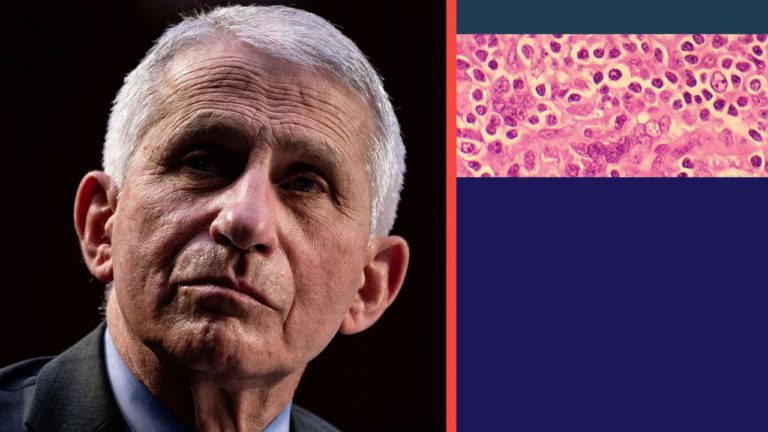
Flashback: A good portion of Fauci’s long career has been directed at tackling the global AIDS epidemic, which started to appear as a mysterious illness in June 1981.
“I’m probably one of the few individuals who was there from the very first day that we realized we were dealing with a new disease,” Fauci tells Axios. He says he remembers “very, very clearly” hearing about an unusual pneumonia found in five young gay men who had unusually low white blood cells called CD4.
At first he thought it was a fluke. But he quickly realized it was something more significant, when there were reports in July 1981 of 26 cases in L.A., San Francisco and New York City, also in gay men.
Those patients “not only had the same pneumocystis pneumonia, but also Kaposi’s sarcoma, a strange kind of cancer, again only seen in immunosuppressed people, as well as a number of other opportunistic infections.”
Fauci decided to pivot his career and “devote myself to studying this strange disease that did not yet have a name, and certainly did not have an etiology.”
He pulled together a small team at NIH and began admitting patients seriously ill with the disease.
“That began a 40-year journey that I’m still on, because even though it’s been sidetracked a fair amount by COVID-19, HIV/AIDS is still one of the most important things.”
But, “the first few years were the darkest years of my medical career, because I was working countless hours taking care of desperately ill young men,” Fauci says.
“To be honest with you, I still have post-traumatic stress about it, ” Fauci describes. Part of the issue, he says, is prior to AIDS research, he had enjoyed several successes in curing some unusual and fatal autoimmune diseases.
“I was the guy who developed the therapy to save their lives. … Then I go to HIV in 1981–1985, and to my horror, all of them died and all of them were young men. It was very, very traumatic.”
When scientists discovered in 1986 the first therapy that gave some temporary help to patients, AZT, “it was like all of a sudden, the clouds moved away and the sun started shining.”
However, the virus quickly developed resistance, Fauci says.
They began testing combinations of drugs and in 1996 there was a “major, major, major breakthrough in HIV treatments” via a triple-combination drug that started with a protease inhibitor and was able to dramatically diminish the level of virus in a person’s blood.
Since then, multiple drug treatments have been developed, and researchers were able to whittle the therapy down from 28 separate pills a day to one pill a day, and early treatment began to mean patients “could resume a normal life.”
Scientists also developed a very effective pre-exposure prophylactic drug for people at risk of HIV called PrEP that can reduce the risk of someone getting HIV from sex by around 99%.
What’s next: A vaccine for HIV remains elusive — and it’s not for lack of trying, Fauci says. But, “we may get a home run. … I believe we will get there, but it may not necessarily be with a highly effective vaccine. It may be with a combination of things.”
Stay on top of the latest market trends and economic insights with Axios Markets. Subscribe for free
Flashback: A good portion of Fauci’s long career has been directed at tackling the global AIDS epidemic, which started to appear as a mysterious illness in June 1981.
“I’m probably one of the few individuals who was there from the very first day that we realized we were dealing with a new disease,” Fauci tells Axios. He says he remembers “very, very clearly” hearing about an unusual pneumonia found in five young gay men who had unusually low white blood cells called CD4.
At first he thought it was a fluke. But he quickly realized it was something more significant, when there were reports in July 1981 of 26 cases in L.A., San Francisco and New York City, also in gay men.
Those patients “not only had the same pneumocystis pneumonia, but also Kaposi’s sarcoma, a strange kind of cancer, again only seen in immunosuppressed people, as well as a number of other opportunistic infections.”
Fauci decided to pivot his career and “devote myself to studying this strange disease that did not yet have a name, and certainly did not have an etiology.”
He pulled together a small team at NIH and began admitting patients seriously ill with the disease.
“That began a 40-year journey that I’m still on, because even though it’s been sidetracked a fair amount by COVID-19, HIV/AIDS is still one of the most important things.”
But, “the first few years were the darkest years of my medical career, because I was working countless hours taking care of desperately ill young men,” Fauci says.
“To be honest with you, I still have post-traumatic stress about it, ” Fauci describes. Part of the issue, he says, is prior to AIDS research, he had enjoyed several successes in curing some unusual and fatal autoimmune diseases.
“I was the guy who developed the therapy to save their lives. … Then I go to HIV in 1981–1985, and to my horror, all of them died and all of them were young men. It was very, very traumatic.”
When scientists discovered in 1986 the first therapy that gave some temporary help to patients, AZT, “it was like all of a sudden, the clouds moved away and the sun started shining.”
However, the virus quickly developed resistance, Fauci says.
They began testing combinations of drugs and in 1996 there was a “major, major, major breakthrough in HIV treatments” via a triple-combination drug that started with a protease inhibitor and was able to dramatically diminish the level of virus in a person’s blood.
Since then, multiple drug treatments have been developed, and researchers were able to whittle the therapy down from 28 separate pills a day to one pill a day, and early treatment began to mean patients “could resume a normal life.”
Scientists also developed a very effective pre-exposure prophylactic drug for people at risk of HIV called PrEP that can reduce the risk of someone getting HIV from sex by around 99%.
What’s next: A vaccine for HIV remains elusive — and it’s not for lack of trying, Fauci says. But, “we may get a home run. … I believe we will get there, but it may not necessarily be with a highly effective vaccine. It may be with a combination of things.”
The diverse and conflicting ideologies in the emerging coalition shaped by MK Yair Lapid were brought into focus Thursday when Meretz chair MK Nitzan Horowitz said that his progressive party’s coalition agreement with Lapid’s Yesh Atid includes a commitment to advance LGBT rights, while the leader of the Islamist Ra’am party vowed to oppose any such legislation.
Lapid on Wednesday informed President Reuven Rivlin he was able to form a government in which he and Yamina chief Naftali Bennett will switch off as prime minister, positioning themselves to replace Israel’s longest-serving leader Benjamin Netanyahu as premier.
However, Lapid’s coalition of center, left, and right-wing parties, as well as the Islamist Ra’am party, has yet to be confirmed by a Knesset vote, and its members are still at odds on some issues.
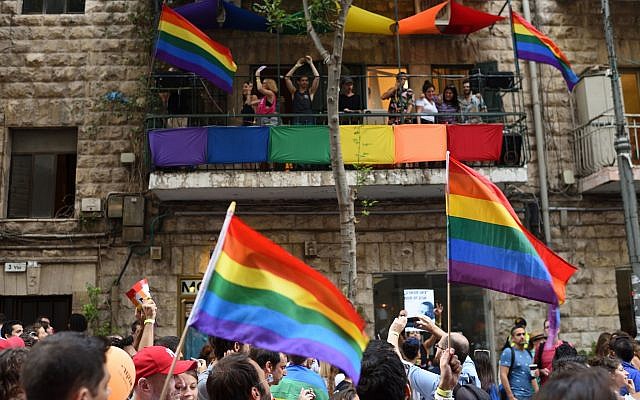
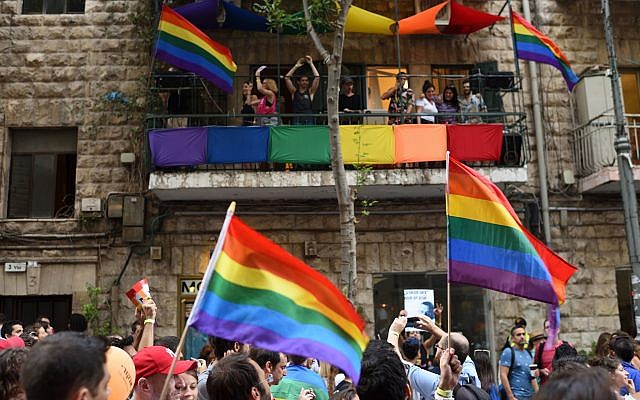
Speaking to Army Radio on the eve of the Jerusalem Pride Parade, Meretz leader MK Nitzan Horowitz said that his party’s coalition agreement with Yesh Atid, one of the first that Lapid signed as he built his potential government, includes “a clear commitment to advance the rights of the LGBT community in Israel.”
“It was agreed to recognize the status of unmarried couples, including partners of the same sex, as married,” said Horowitz, who is openly gay. “Those are things we insisted on and they are in our agreement.”
Participants in Jerusalem’s Gay Pride Parade, August 2, 2018. (Gili Ya’ari/Flash90)
He said Meretz will advance LGBT rights in “every way possible” in the coming government.
Though he admitted “there are a lot of difficulties” in the path to finalizing the coalition, Horowitz said the “visions and the goal overcome all the obstacles.”
Horowitz’s pledge appeared to run counter to the coalition agreement signed with Islamist party Ra’am, according to which LGBT initiatives will be frozen.
MK Walid Taha in the Knesset, November 19, 2019. (Olivier Fitoussi/Flash90)
Shortly after Horowitz’s interview with Army Radio, the station spoke with Ra’am MK Walid Taha.
Taha praised the new coalition, saying it is based on “the many things over which there is no disagreement,” but added, “We won’t support anyone forcing on us values that our community doesn’t believe in.”
Later, Army Radio spoke to Ra’am leader MK Mansour Abbas, who said he was not aware of any coalition commitment to advance LGBT rights.
“I don’t know about that, I didn’t see it in the basic guidelines [for the coalition] nor in the agreements,” Abbas said.
Asked if he would oppose the measures that Horowitz had raised, Abbas responded: “Without a doubt. We are a party with a religious background, all of our positions on the matter are drawn from the faith itself.”
Mansour Abbas, head of the Ra’am party seen after signing the coalition agreement, at the Maccabiah village in Ramat Gan on June 2, 2021. (Avshalom Sassoni/Flash90)
“But we need to consider every matter separately,” he allowed, and noted that parties are granted, in some circumstances, the freedom to vote according to their guiding principles. He said that such matters would be dealt with in coalition agreements.
“There is no doubt that the path is difficult,” Abbas said of the efforts to finalize the coalition, but expressed optimism that it would happen.
He added that there were still efforts to bring other MKs into the coalition, including from Ta’al, another Arab party, headed by MK Ahmad Tibi, that is part of the Joint List alliance.
Abbas said that Netanyahu, who had tried to enlist Ra’am to back his own ultimately failed efforts at building a coalition, had spoken with him in recent days, including on Wednesday, but would not specify what was discussed.
“You can imagine what he said,” was all Abbas would say.
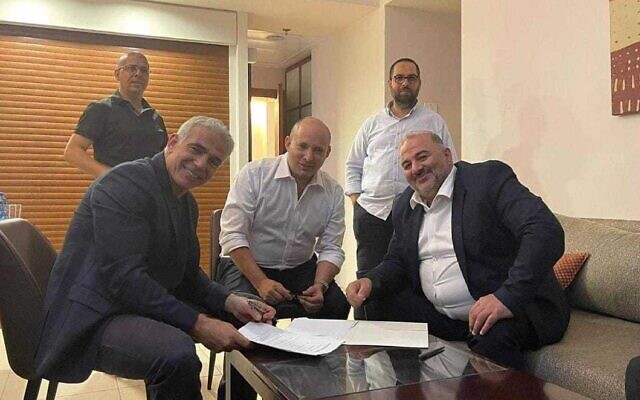
Yesh Atid leader Yair Lapid (L), Yamina leader Naftali Bennett (C) and Ra’am leader Mansour Abbas sign a coalition agreement on June 2, 2021 (Courtesy of Ra’am)
The agreement came together after Abbas threw his support behind the would-be government late on Wednesday night, setting up his Islamist party to be the first Arab party in decades to be part of a ruling coalition.
Under the terms of the new coalition, Bennett is to serve as prime minister until September 2023, when Lapid will take over from him until the end of the Knesset term in November 2025.
Despite Lapid’s declaration that a coalition had been formed, it remained unclear that the prospective “change government” will make it past the finish line. It is set to include 61 of the 120 MKs — the narrowest possible majority. And an MK from Bennett’s Yamina, Nir Orbach, earlier on Wednesday night announced he could vote against the new coalition, a move that could potentially doom the prospective razor-thin government.
The final coalition agreements have yet to be formally released and negotiations are expected to continue until the swearing-in later this month.
If the emerging government is sworn in, Israel will have a new prime minister for the first time since 2009. Along with the over 12 consecutive years he has served as premier since then, Netanyahu was also prime minister for three years in the late 1990s.
Israel has been mired in political deadlock since the Knesset dissolved in December 2018, with the four rounds of elections held since then failing to result in a decisive majority for either Netanyahu or his rivals. Besides fighting for his political survival, Netanyahu is currently on trial in three corruption cases.
ITV has divided viewers with its reasoning for excluding gay people from appearing on Love Island.
The reality show, which sees straight couples partnering up, is returning this month, but ITV commissioner Amanda Stavri has shut down speculation that there will be any gay contestants, saying the move would present a “logistical difficulty”.
Stavri told Radio Times: “The line-up will be announced within time and it goes without saying that we want to encourage greater inclusivity and diversity.
“In terms of gay Islanders, I think the main challenge is regarding the format of Love Island. There’s a sort of logistical difficulty, because although Islanders don’t have to be 100 per cent straight, the format must sort of give [the] Islanders an equal choice when coupling up.”
Stavri said that there is “more sexual diversity” on the channel’s other realty series, The Cabins.
“The formats don’t have as much restrictions as Love Island. So we’re very sort of mindful of that across our programming on ITV and dating series. But that’s the difficulty with Love Island.”
Stavri’s comments have divided viewers, with one describing them as “a tired, uninspired and lazy take”, and others thinking ITV should simply create a gay version of the hit series.
Find a selection of reactions below.
Iain Stirling will return to narrate the new show, which will be presented by Laura Whitmore when it returns on 28 June.
Speaking about this years group of contestants, Stavri said: “We’ve got a big sort of pool at the moment and we need to sort of work out who to put in the opening line-up and who sort of to hold back, you know as a bombshell – we need the bombshells!”
The Virginia Tourism Corporation (VTC) will be updating its current “Virginia is for Lovers” Pride Heart logo and adopt the Progress Pride Flag design that reflects the many different identities within the queer community. VTC initially introduced the Virginia is for Lovers Pride logo in 2016, with the traditional red heart being replaced with a rainbow heart.
The new design better acknowledges both the diversity of the people and cultures that make up Virginia’s tourism industry including business owners and communities, and vendors involved in the arts, food, beverages, music, and culture. The flag’s design will also more accurately represent the travelers that come to Virginia to explore the history, outdoors, restaurants, Pride festivals and events, and their favorite queer-centric attractions.
Longtime LGBTQ community advocate Sheila Alexander-Reid, who has served since 2015 as director of Mayor Muriel Bowser’s Office of Lesbian, Gay, Bisexual, Transgender, and Questioning Affairs, is stepping down from her city job in mid-July.
Alexander-Reid told the Washington Blade she will take a few weeks of accumulated leave beginning June 15 to recuperate from follow-up knee surgery before officially leaving her current job to take on a new role as a private sector consultant in the area of workplace bias and diversity training.
She said will announce the name of the private sector company she will be joining as a senior vice president when she begins her new job in mid-July.
Among her duties at the Mayor’s LGBTQ Affairs Office has been to lead the office’s staff in providing LGBTQ related diversity or competency training for D.C. government employees at all city agencies.
According to the office’s website, other activities it carries out include connecting LGBTQ residents with city services they may need, advocating on behalf of programs and policies that benefit the lives of LGBTQ residents, providing grants to community-based organizations that serve the LGBTQ community and LGBTQ homeless youth; and host events that “enrich, promote, and bring together” the LGBTQ community in D.C.
“That work is always going to be part of who I am,” Alexander-Reid said. “But now I will be expanding on that work to look at racial equity and gender bias as well as LGBTQ bias,” she said. “I feel like I will be doing the same work but in a different format.”
Prior to starting her job at the mayor’s office, Alexander Reid served as Vice President of Strategic Initiatives at the Washington Blade, Director of Strategic Engagement at the Washington City Paper, and Founder and Executive Director of the D.C. based Women in the Life Association. She has also served as host of Inside Out, a local FM LGBTQ radio show.
Alexander-Reid noted that when she began work at the LGBTQ Affairs Office in late January 2015, less than a month after Bowser took office as mayor, the office consisted of two full-time employees, including her, with a budget of $209,000. In the current fiscal year 2021, the office now has four full-time employees and two additional detailed employees, from the Department of Health and Department of Human Services. The mayor is proposing a budget of $561,000 for the office for fiscal year 2022.
“I would be remiss if I didn’t say what a pleasure it has been to work for Mayor Bowser,” said Alexander-Reid. “I was excited to work for her and I don’t regret it for one second. “It’s been an amazing journey and I appreciate her having faith in me.”
She said she expects an interim director to be named to run the office in mid-July while a search is conducted for a permanent director.
A Texas man pleaded guilty yesterday to federal hate crime charges in the U.S. District Court for the Northern District of Texas.
According to court documents, Daniel Jenkins, 22, of Dallas, pleaded guilty yesterday to a federal hate crime and two other charges in connection with his involvement in a scheme to target gay men for violent crimes, announced Assistant Attorney General Kristen Clarke of the Justice Department’s Civil Rights Division, Acting U.S. Attorney for the Northern District of Texas Prerak Shah, and FBI Special Agent-in-Charge Matthew J. DeSarno of the Dallas Field Office. Jenkins is the last of four defendants to plead guilty to charges stemming from the scheme.
Jenkins pleaded guilty to one hate crime count, one count of conspiracy to commit hate crimes, kidnapping, and carjacking, and one count of use of a firearm during and in relation to a crime of violence.
“The Department of Justice and the Civil Rights Division are committed to confronting the scourge of hate-based violence gripping communities across our nation,” said Assistant Attorney General Kristen Clarke of the Justice Department’s Civil Rights Division. “We denounce hate-based violence in all of its forms, including violence targeting individuals based on sexual orientation and gender identity. We will continue to diligently investigate and prosecute violent, bias-motivated crimes to the fullest extent. As noted by Attorney General Garland, we stand ready to use every tool in our arsenal to address the rise in hate and we will work to hold perpetrators of hate-motivated violence accountable.”
“These defendants brutalized multiple victims, singling them out due to their sexual orientation. We cannot allow this sort of violence to fester unchecked,” said Acting U.S. Attorney Prerak Shah of the Northern District of Texas. “The Department of Justice is committed to prosecuting hate crimes. In the meantime, we urge dating app users to remain vigilant. Unfortunately, predators often lurk online.”
“Investigating hate crimes is one of the FBI’s highest priorities because of the devastating impact they have on families and communities,” said FBI Dallas Special Agent in Charge Matthew DeSarno. “We are committed to the pursuit of offenders and holding them accountable for perpetrating these harmful crimes. No one should have to live in fear of violence because of who they are, where they are from or what they believe. We will continue working with our law enforcement and community partners to detect and prevent violent incidents motivated by hate or bias. We also urge the public to report any suspected hate crimes to the FBI and local law enforcement.”
According to court documents filed in connection with his guilty plea, Jenkins admitted that he and his co-conspirators used Grindr, a social media dating platform used primarily by gay men, to lure gay men to a vacant apartment and other areas in and around Dallas for robbery, carjacking, kidnapping, and hate crimes over the course of approximately a week in December 2017. Jenkins admitted that he and his co-conspirators held victims against their will; pointed a handgun at victims and took their personal property, including their vehicles; and traveled to local ATMs to withdraw cash from the victims’ accounts. Jenkins further admitted that he and his co-conspirators physically injured at least one victim and taunted the victims based upon the co-conspirators’ perception of the men’s sexual orientation.
In March 2019, Michael Atkinson pleaded guilty to conspiracy and kidnapping charges in connection with this case. In December 2019, Daryl Henry and Pablo Ceniceros-Deleon pleaded guilty to a federal hate crime and other charges in connection with this case. Sentencing for these three defendants is set for June 23.
Daniel Jenkins’ sentencing is set for Oct. 6. Pursuant to the terms of the plea agreement, Jenkins faces a sentence of up to 26 years in prison.
The FBI’s Dallas Field Office conducted the federal investigation; a separate criminal investigation is being conducted by the Dallas Police Department. Special Litigation Counsel Rose E. Gibson and Trial Attorney Kathryn Gilbert of the Justice Department’s Civil Rights Division along with Assistant U.S. Attorney Nicole Dana of the Northern District of Texas are prosecuting the case.
Virgin Radio has announced it is launching a station for the LGBT community (PA)
Virgin Radio has announced it is launching a dedicated station for the LGBT community.
Virgin Radio Pride UK will be broadcast from June 7 until the end of September, the company said.
It will address issues such as trans-rights, gay adoption, living with HIV and helping parents understand LGBT subjects, according to Virgin.
The line-up of presenters will include Tia Kofi, Matt Cain, Emma Goswell, Debbie Ryan, Phil Clifton, Shivani Dave, Vicki Blight and Stephen Sullivan.
The hosts will be joined in conversation by celebrity guest contributors, Virgin added.
Watch: London landmarks are lit in rainbow colours for Pride Month
The station will also partner with Pride marches around the country, as well as LGBT organisations.
Programming includes documentaries on being bisexual in 2021, how the LGBT community shapes dance music and a weekly magazine show from Cain titled The Sunday Roast.
Vicki Blight is among the presenters for the new LGBT station (Jonathan Brady/PA)
Virgin Radio Pride UK will largely play pop-dance and pop-R&B from the last 20 years, the broadcaster said.
Drag queen and RuPaul’s Drag Race UK star Kofi said: “I’m so excited to be part of the launch for this incredible new LGBTQ+ station.
“We have created something made by queer people for queer people and beyond, and it’s going to be amazing! Get ready for the ultimate Friday night pre-party with me, as well as some sensational content from across the LGBTQ+ community.”
You can listen to Virgin Radio Pride UK from June 7 on DAB in London, online or via the Virgin Radio app.
Watch: Queen’s Platinum Jubilee to be celebrated with national events
D.C. Mayor Muriel Bowser announced at a news conference on Monday that a continuing trend of significantly lower numbers of coronavirus cases and deaths in the city has enabled her to fully lift capacity and other restrictions on most businesses, including restaurants and places of worship, on May 21.
The mayor said bars and nightclubs will be allowed to increase indoor capacity from the current 25 percent to 50 percent on May 21, with all capacity restrictions for bars and nightclubs to be removed on June 11.
The mayor’s announcement came after representatives of the city’s nightlife businesses, including the city’s gay bars and restaurants, expressed concern that D.C. had yet to lift its capacity restrictions beyond 25 percent while surrounding jurisdictions in Maryland and Virginia had already lifted most restrictions.
“On May 21, restrictions on public and commercial activity, including capacity limits, types of activities, and time restrictions, will be lifted,” the mayor’s directive says.
It says restrictions for bars and nightclubs would continue at a 50 percent capacity from May 21 through June 11. The directive says restrictions for large sports and entertainment venues would also continue from May 21 to June 11, which includes a requirement such events apply for a waiver of the restrictions on a case-by-case basis.
“On June 11, capacity limits and restrictions will be lifted on those venues that cannot fully reopen on May 21,” the directive says.
In response to a question at the news conference, Bowser said the June 11 date would essentially end all restrictions on nightclubs and bars, including the current requirement that they close at midnight rather than the pre-epidemic closing times of 2 a.m. on weekdays and 3 a.m. on weekends.
In a development that could have a major impact on plans for D.C.’s LGBTQ Pride events, the mayor’s revised health directive announced on Monday includes the lifting of all capacity restrictions on large outdoor and indoor sports and entertainment events beginning on June 11.
That change would remove restrictions that have, up until now, prevented D.C.’s Capital Pride Alliance from holding its annual Pride Parade and Festival in June during Pride Month.
Capital Pride Executive Director Ryan Bos told the Washington Blade shortly after the mayor’s announcement that Capital Pride is assessing its options for expanding its current plans for in-person events in June.
“We will definitely be celebrating Pride in June,” Bos said. “We just received this information as well. So, we will be getting further information,” he said. “We have not been informed that they will be issuing any permits yet, so at this time we are moving forward with our original plans for doing things.”
Bos was referring to a city requirement for obtaining permits for street closings and use of other public spaces for events such as a parade or street festival. He said existing plans, among other things, call for an informal parade of cars and other vehicles on June 12 that will drive throughout the city to view homes and businesses that will be decorated with Pride displays such as signs, photos, and other symbols of Pride.
Those familiar with the city’s past Pride events don’t think there will be enough time for Capital Pride to organize the traditional large parade and street festival in time for June. But Capital Pride officials have talked about holding a possible parade and festival in October, and the lifting of the capacity restrictions announced by Bowser on Monday would likely make that possible.
In addition to lifting all capacity restrictions on May 21 for restaurants, the mayor’s May 21 timeframe for lifting restrictions includes these additional venues and events:
Weddings and special events
Business meetings and seated conventions
Places of worship
Non-essential retail
Personal services
Private at-home gatherings
Libraries, museums, galleries
Recreation Centers
Gyms and fitness centers
Pools
Office space
Schools
Childcare
“We’re very pleased that over the last several days, we have seen our case spread, our community spread numbers, venture out of the red into the yellow and fast approaching the green,” Bowser said in referring to a health department chart that shows the changes in coronavirus cases in the city.
“You might remember that our daily case rate peaked in January at 45.9. And today you can see it’s down to 6.6,” she said at her news conference on Monday.
“Throughout this process I have said how proud I am of D.C. residents and businesses who have responded, who have followed health guidance and have worked together to help protect our community throughout the pandemic. And we see it in these numbers today,” she said.
“Containing the virus will continue to require all of us to be focused on maintaining a robust health system,” the mayor said, adding that while over 200,000 D.C. residents have been fully vaccinated since December 2020, “many more thousands” still need to be vaccinated. “Vaccines are free and available on demand at walk-up sites across the District,” she said.
The mayor also noted that the city will continue to require residents and visitors to use a mask in accordance with existing and updated guidance set by the U.S. Centers for Disease Control and Prevention.
Mark Lee, coordinator of the D.C. Nightlife Council, an association that represents restaurants, bars, nightclubs and other entertainment venues, said the mayor’s directive on May 10 leaves some details to be addressed but will open the way to bring nightlife businesses back to life.
“What we do know is that on Friday, May 21, businesses begin returning to normal operations and, three weeks later, on June 11, all restrictions for all businesses in the District will end,” Lee said. “It’s a day we’ve long awaited and one that will save much of our community enterprise from financial ruin.”
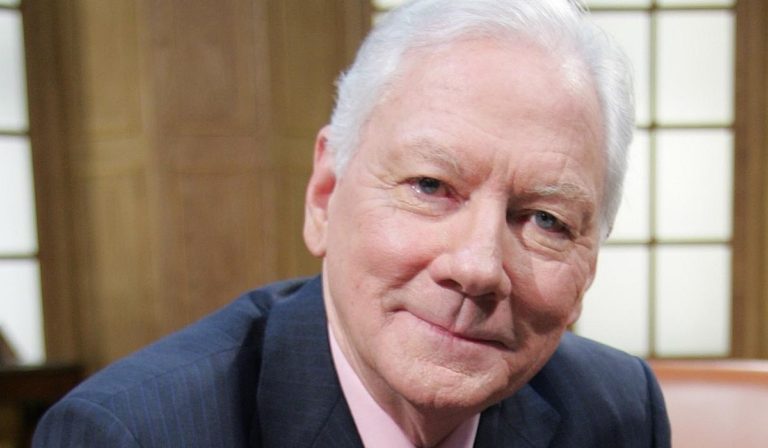
Viewers have heaped praise on Dear Gay, the ‘wonderful’ documentary about the late broadcasting icon Gay Byrne.
Dear Gay aired on RTE One on Wednesday night, sending many viewers into a state of admiring nostalgia about the broadcaster’s decades-long career.
The documentary centred on the tens of thousands of letters sent to Gay by members of the public over the course of some 30 years, many of which acted as catalysts to overhaul Irish society and enacted huge change in individual lives.
Viewers have heaped praise on Dear Gay, the ‘wonderful’ documentary about the late broadcasting icon Gay Byrne. Pic: RTE
Drawing on letters stored in the RTE archive and missives cherished in homes across the country, Dear Gay records the broadcaster’s evolution into a national confessor, agony aunt and lifeline for thousands of listeners.
The letters ranged from commentary on politics and daily life in Ireland to profoundly intimate stories of crumbling marriages before the legalisation of divorce; the persecution of unmarried mothers; and the prejudice and stigma levelled against members of the LGBTQ community before the decriminalisation of homosexuality.
Dear Gay combined original recordings of Gay reading letters aloud and interviews with their authors, who reflected on the personal and social changes instigated by their missives.
Drawing on letters stored in the RTE archive and missives cherished in homes across the country, Dear Gay records the broadcaster’s evolution into a national confessor, agony aunt and lifeline four thousands of listeners. Pic: Independent News and Media/Getty Images
Dear Gay was received warmly by Irish viewers, with many taking to Twitter to heap praise on the programme.
One viewer wrote: ‘Gay Byrne was an empathetic broadcasting genius who dragged a reluctant official Ireland into the light, and revealed that the trouble with sweeping things under the carpet is that it is still there. Gay gave a voice to the marginalised, the forgotten and the voiceless. Bravo.’
Another Twitter user reflected on the memories triggered by the documentary, stating: ‘What a wonderful programme. Never forget that music in the morning, the Gay Byrne hour, and I in the kitchen with my Dad, God rest his soul. Unreplaceable Gay was. [sic]’
Dear Gay was received warmly by Irish viewers, with many taking to Twitter to heap praise on the programme. Pic: Brian Lawless/PA Archive/PA Images
In a similar vein, a third tweet read: ‘My entire childhood flashes before me at those radio recordings of Gay…The voice of a nation and the heart of a generation.’
One viewer described Dear Gay as a ‘beautiful trip down memory lane’, while another tweeted: ‘Thoroughly enjoying this remarkable programme from the women of Ireland and their heartbreaking stories; Gay was truly a brilliant listener.
‘His daughters are two very fine, decent human beings.’
Outside of my home, Gay Byrne was my first influence, and it was a big influence … I learnt about the real world on his show, and lived for school holidays when I could listen in. He’s the reason I work in tv/radio 💙#DearGaypic.twitter.com/5xTtARQktl
Imagine for one brief moment that Gay Byrne had not been that voice for the Women of Ireland & so many people never got that opportunity to voice their truth. It’s unimaginable 😕 #IrelandsSurvivors THANK U #TruthMatters#DearGay
— Brigid ☘ 💙💚All views are my own. (@Brid_PA) June 2, 2021
My Gay Byrne moment happened one day when as a young mother I listened to an elderly man speak fo the first time of his abuse. As I listened it was my story he was telling, my hurt he was sharing. I rang my Mum. It was the beginning of our healing. #DearGay#AboveWater
— Tric kearney…mythoughtsonapage (@trickearney) June 2, 2021
A further tweet stated: ‘Just watching a show about Gay Byrne, I honestly don’t think Ireland North or South has ever produced a better natural broadcaster. The presenting was natural and about the subject RIP Gay.’
Another viewer wrote: ‘When we look back at the grim dark ages of the 60s, 70s and 80s of Catholic Ireland, we can see how far we’ve come. Gay Byrne had a lot to do with that.’
PHOTO PROVIDED
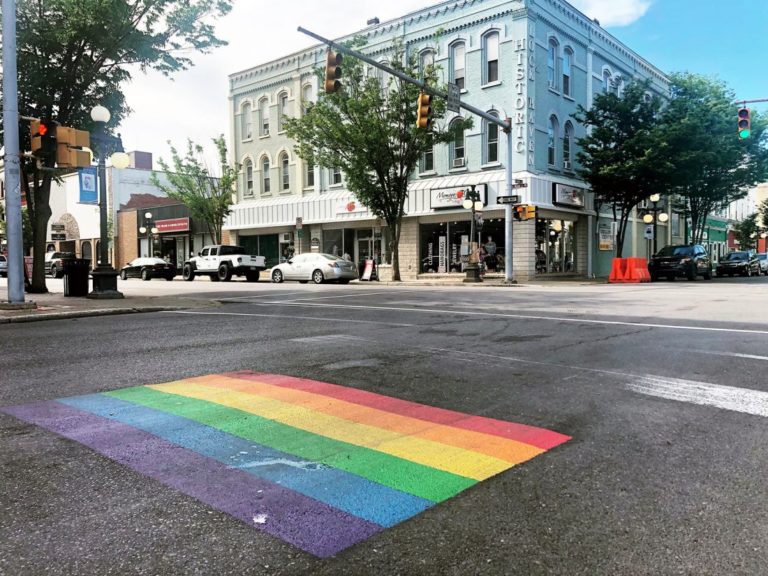
One of four LGBTQ pride flags is painted in front of a stop bar at the intersection of Grove and Main streets.
LOCK HAVEN — A new advocacy group wants to help educate and advocate for local members of the LGBTQ+ community.
The Clinton County LGBTQ Network was formed in July 2020 by Ms. Reynolds, a member of the community and an advocate for inclusivity. (Reynolds prefers to not have her first name published)
Reynolds previously chaired Lock Haven University’s LGBT commission and served on the Gender and Sexuality Alliance (GSA) advisory committee. During the early days of the COVID-19 pandemic, Reynolds felt Clinton County needed some sort of LGBT organization.
“I just felt there was a lacking in the community… a lacking of something organized because there are a lot of LGBT folks in the community,” she explained.
Reynolds reached out to some people throughout the county and formed a 13-person advisory board for the organization.
“These are people from all over Clinton County — business owners, educators from the university, educators from the high school and middle school… some people in government. So pretty much we have all facets. Some are allies and some are in the LGBT community,” Reynolds said.
Reynolds explained that the goal of the network is to educate and advocate for inclusivity in the county.
“Our goal is to educated, advocate and help people live their authentic lives. Because after living in the closet for a number of years, let me tell you it is not a fun place to be,” Reynolds said.
The network was quiet during the fall and winter months, only organizing lead hikes each month. But they made a stir in the community when Lock Haven City Council approved placing pride flags near the stop bars on Vesper and Grove streets where they intersect with Main Street.
“We worked with the city, it was really easy. I would encourage other entities, organizations that if they want something like that to just ask. That’s literally all I did. I went to the city and asked how we can celebrate pride. And they gave me a bunch of options. They were really easy to work with,” Reynolds said.
The flags were placed on the roadways a few days before the start of June, traditionally celebrated as Pride Month throughout the nation and world.
Reynolds said there were two different reactions — a positive and a negative.
“We had incredible acceptance from allies, from people in the community… people saying they were crying when they saw them because they were so excited to see representation in the community… and all the way to ‘you’re an abomination and you’re going to hell.’”
Following some of the criticism for the rainbows, Reynolds and other members of the network’s advisory board put together a six point response to some of the most common issues people had with the flags.
One of the biggest was that taxpayer money was used for the rainbows.
“Let me make it very clear, we have paid for the paint which cost less than $50. And it was paid for by a private donor through the network. Taxpayer dollars didn’t have anything to do with this,” Reynolds said.
She encouraged anyone from other organizations who would like to celebrate an event, like Breast Cancer Awareness Month in October, to reach out to the city and see what they could do.
“They were very easy to work with,” she emphasized.
Although there were negative comments, according to Reynolds the positive far outweighed them.
“I will say the amount of people who private messaged us and commented on our posts and shared our posts was astronomical,” she said. Reynolds noted that the post on their Facebook page was shared 438 times and reached 43,000 people.
“The outpouring of positive far out weighed the bad,” she said.
The pride flags painted on the streets of Lock Haven served as a kick off event for the network.
The network is holding a gift card basket raffle fundraiser with over a dozen gift cards to local businesses valued at more than $400. They include the Broken Axe Brewhouse, Alaceus, Momoyo Otsu, A Little Bird, Simone’s Bakery, Avenue 209 Coffee House, It Is What It Is, Main Street Grill, Odd Fellas, Data Bits, Skeleton Key Boutique and more.
Tickets can be purchased by emailing cclgbtq@yahoo.com or messaging the network on their Facebook or Instagram pages — Clinton County LGBTQ Network.
The cost is $5 per ticket or 3 for $12. A Venmo account has been set up so people can enter and pay virtually, Reynolds said.
For those who’d prefer purchasing tickets in person, the network will have a booth at the Best of Clinton County event on Saturday, June 26.
“Our table is going to be outside of Data Bits. We’re going to have tickets available for the fundraiser. It’s going to be drawn that day. We’re also going to have fun rainbow things, an email sign up for a newsletter and we’ll have a list of events also,” Reynolds said.
Beyond the Best of Clinton County, the group hopes to start a volleyball league in Riverview Park this summer, hold open mic nights at Avenue 209 and a few happy hours as well.
Reynolds, who is a safe zone trainer, is also offering free training sessions for allies who would like to learn and understand the LGBT community more.
“Basically it’s teaching you LGBT 101. What do the letters mean? What is that whole alphabet soup? What does it mean to be an active ally? Why is it important to have a safe space? The difference between gender and sexuality. That’s a big one. Because you have a lot of misinformation out there and a lot of that is done by people who see something on Facebook and they don’t know the science behind it,” she explained.
Reynolds said she’s completed training with Americorp Vista, the Clinton County Democrats and Central Mountain Middle and High School administration.
“Living your authentic lives, I think that is what we strive for. And unfortunately, people can’t live their authentic lives until other people are educated. Whether that be a family member, a teacher, a business person,” Reynolds said.
For P99, viewers can watch the seven PelikuLAYA titles: Masahista by Brillante Mendoza, I Love You, Thank You by Charliebebs Gohetia, Mga Gabing Kasing Haba ng Hair Ko by Gerardo Calagui, Miss Bulalacao by Ara Chawdhury, Ang Huling Cha-Cha ni Anita by Sigrid Andrea P. Bernardo, Ned’s Project by Lem Lorca, and Best. Partee. Ever by HF Yambao.
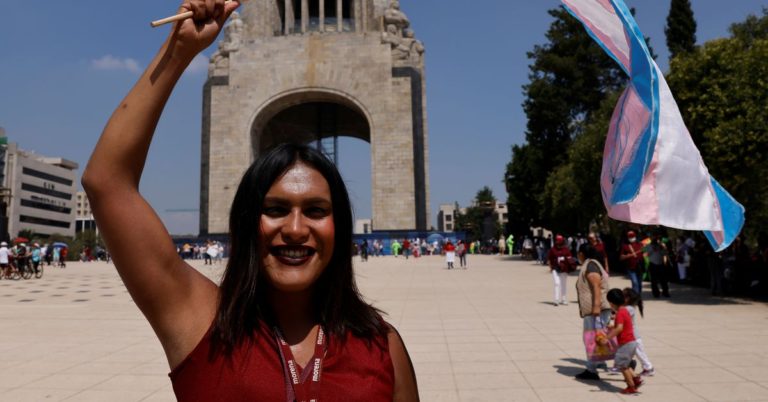
Gay, lesbian and transgender candidates are competing for votes in Mexico’s midterm election, aiming to upset politics as usual in the largely Roman Catholic, socially conservative Latin American country.
A total of or 117 candidates, or nearly 2% of more than 6,000 hopefuls running for office on Sunday who responded to a survey by national electoral institute INE, identified as part of the LGBT community.
About 21,000 local and national races are being contested in the vote, including 15 governorships and all 500 seats in the lower house of Congress, in a pivotal election for the agenda of leftist President Andres Manuel Lopez Obrador during the second half of his six-year term.
Mexico’s political parties were already required to nominate equal numbers of men and women, and new INE rules adopted last January added the obligation to also nominate candidates from vulnerable groups, including the LGBT community.
Like others aiming for jobs in politics, LGBT candidates are emphasizing public safety and the economy, but also specific obstacles for those who are often marginalized.
“That’s exactly why I want to serve in Congress, to fight discrimination everywhere and shake things up with a representative voice,” said Maria Garcia, a transgender candidate for Congress in Mexico City.
Garcia is running under the banner of the ruling National Regeneration Movement (Morena) of Lopez Obrador, who has seldom championed LGBT causes and has sided with conservatives on same-sex marriage.
Gay activist-turned-candidate Aurelien Guilabert said the need to tackle a growing number of hate crimes targeting LGBT people helped motivate him to run for the capital’s local congress.
“We’re suffering through one of the worst crises,” he said.
Guilabert is with the Citizen Movement (MC) party. According to the INE survey, nearly 32% of the LGBT candidates running on Sunday are from the party, the highest percentage of any party.













/cloudfront-us-east-2.images.arcpublishing.com/reuters/6UZZZWCAY5K4RI5BLYYU34BPUQ.jpg)