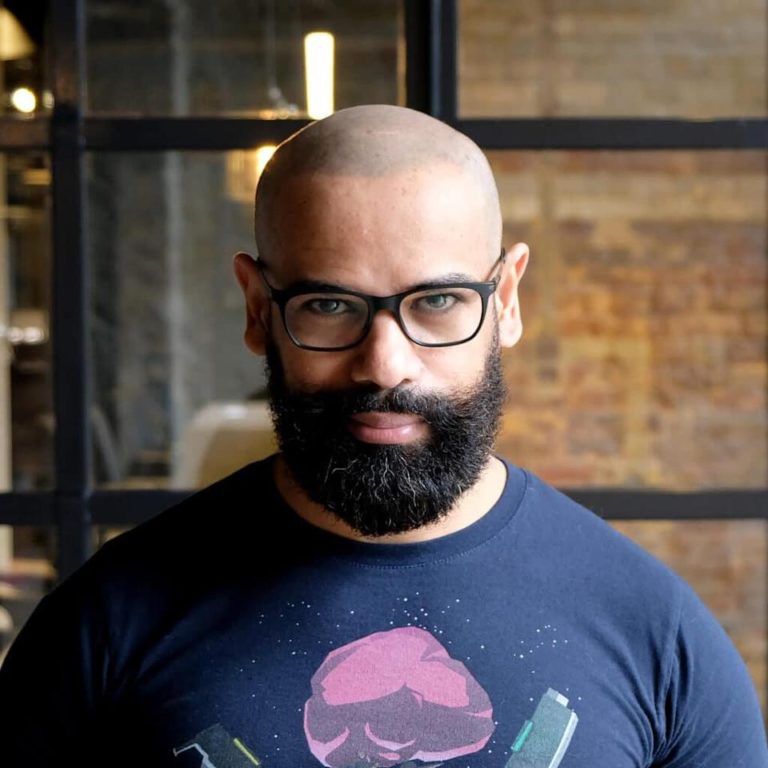
Dan Bernardo, founder of Playtra Games, understands the power of video games. Playing Final Fantasy VII as a child was the first piece of media that made him sob.
And it’s that mantra of making people feel something that’s at the core of the developer’s forthcoming debut, Grid Force.
“We don’t want to create a piece of media that patronises people, we want to create a piece of media that makes people feel something,” he says. “And then this will hopefully feed internal questioning of why I feel the way I feel and try to find a better path of how to live.”
With Grid Force, Playtra Games are partnering with LGBT+ non-profit the It Gets Better Project to support LGBT+ youth through video games.
In tangible terms, that means including the project logo in the game with a direct link to get help and support. The end of game development will also include a charity fundraiser to pass on any proceeds.
But through strong representation, video games can inherently support LGBT+ people. And with Grid Force, Bernardo and his team are creating a game that thrives on inclusivity.
The aim of Playtra Games is to create video games with a social message. And at the core of Grid Force is the idea of “what makes you a valid person? What makes you a heroine? What makes you special?”
Grid Force. (Playtra Games)
Inspired by the Megaman Battle Network games, Grid Force has battles that take place on (what else?) a grid. Players can switch between multiple characters as they move around the grid in real time, shooting at enemies on the opposing side.
Those characters are all women – all 45 of them – and together they reflect “the spectrum of female heroines, where anyone from any walk of life, of any kind of personality, can identify themselves”.
“All of us had a female, a very strong female person, who taught each one of us messages about perseverance and survival,” says Bernardo, explaining how the team decided on the all-female cast.
“We decided it has to be a story about female experience.”
That of course meant hiring a female writer and female artist to ensure authenticity. The result is a diverse mix of women in the game, each with their own story to tell. And those stories are key to the experience.
“Each one of these characters has her own story and her own reasons to join your cause. So it’s about going around the world, trying to understand the story of these women and trying to connect with them,” says Bernardo.
“And so the idea is, I’m not trying to get the most powerful unit that I can, but I’m trying to make friends or try to understand what makes these people tick.”
That of course includes LGBT+ stories as part of the narrative. But the game isn’t aimed solely at an LGBT+ audience. First and foremost, the game is about having fun. From there, it’s a way of subtly teaching players to accept and understand different perspectives.
“What the team feels very strongly is we are living in a time where people stop talking to each other, they stop listening to each other. It’s not seeing other people’s perspectives,” says Bernardo.
“So the idea of the game is to allow people who play the game to identify themselves, or understand the people they don’t like and then create some kind of connection. That is much easier to do in a video game because you are actually making decisions yourself.
“We want people to play the game because the game is fun and then get something out of this at the end of the day.”
It’s also a game about love, in many forms. “We explore the fraternal love, the motherly love and the romantic love, and how those things evolve with time and how you sometimes feel that you are in your family and you are alone, but actually you have points of connection with different people,” says Bernardo.
Grid Force. (Playtra Games)
Bernardo understands well why representation matters. He grew up in a slum in the Brazil of the 90s that was “a very homophobic, very misogynistic, very sexist place”. And as a Black, gay man he’s struggled not only with a lack of representation in video games, but with a lack of support in the industry.
Growing up, he was always the villain when playing with friends “because there was nobody that looked like me, there was nobody that I could find myself with”. Adam from Streets of Rage was the first time he recognised himself in a game, a huge moment for him.
“This is an emotional thing, you feel included, you feel part of the conversation, you don’t feel ashamed of what kind of stories are told about you,” he says.
It’s the leadership of games companies that needs to change, in Bernardo’s view. Developers may have good intentions with representation, but they lack diversity in key positions to ensure authenticity.
“There is curiosity, but there’s no understanding,” he says. “Like, I want to explore the stories. But I don’t really care what it means to other people.”
He’s also seen obstacles in funding, due to his background. That’s a large reason why Playtra Games will be self-publishing Grid Force. And by hiring a diverse team, he hopes to be part of a shift in the industry.
“There’s a lot of interest in the industry right now about diversity, but not enough effort to open the doors to these people. So there’s a lot of conversation, but very little action,” he says.
What would that action be? “Understanding that there’s a reason why there are much more qualified, white male developers,” he says.
Too often people from minority backgrounds are not afforded the same opportunities. That’s something the industry needs to be mindful of. And the result will be a wealth of new stories being told.
“I suspect that even the white straight audiences will enjoy something new.”
Grid Force will be released in early 2022. Check out the trailer below and add to your Steam wishlist here.
For more gaming news, follow Gaymeo on Facebook. You can also email us with any news or tips on Gaymeo@pinknews.co.uk
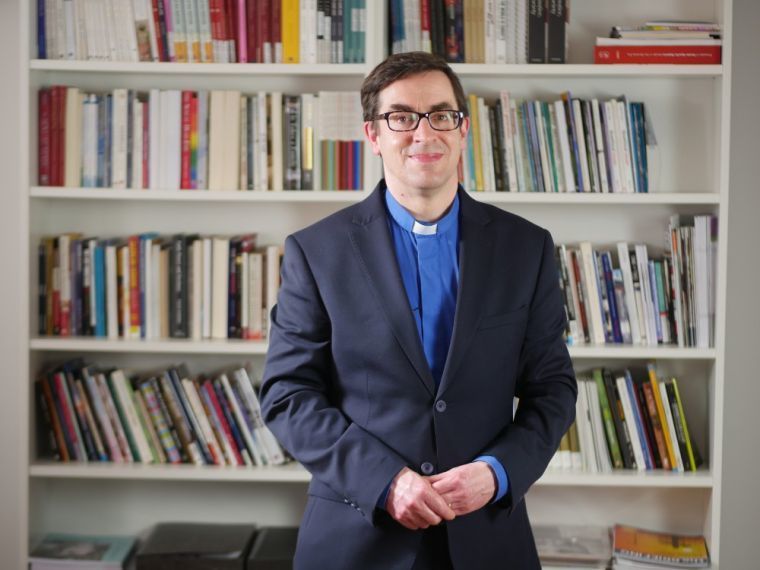
A school chaplain who was fired from his job and reported to the government’s counter-terrorism watchdog for delivering a sermon questioning the school’s LGBT policies, says in a media interview that his world “fell apart” after he was accused of being a terrorist.
The Rev. Bernard Randall, 48, told Premier Christian News that he discovered that he had been referred in 2019 to the counter-terrorism watchdog, Prevent, as he was going through the documentation related to the disciplinary action over his sermon at Trent College, a Church of England school.
“It’s not as if they sat me down and said, ‘This is what we feel we have to do.’ I found that, as it were, by accident and all of a sudden, my world falls apart because I’m being accused of being a terrorist, which is just about the worst thing you can accuse anybody of in our society on the basis of I knew not what. It was just extraordinary,” Randall is quoted as saying.
He was dismissed from school for gross misconduct and reported to the counter-terrorism program after he told students, aged 11 to 17, that they were not compelled to “accept an ideology they disagree with.” He also told the students that they could make up their own minds about gender identity and sexuality.
In the 2019 sermon, he referred to a new LGBT-inclusive curriculum at the school because he was asked by a student to talk about it, he says.
The teaching material from the “Educate and Celebrate” curriculum was adopted after a visit by Elly Barnes, founder of Educate & Celebrate, an LGBT education charity. The material aims to “equip you and your communities with the knowledge, skills and confidence to embed gender, gender identity and sexual orientation into the fabric of your organization.”
Although the police ruled that he was not a “counter-terrorism risk” or at “risk of radicalization” in his case two years ago, the chaplain said that being thought of as a terrorist “is still a wound.”
Randall recalled, “Fortunately, it was only a few days before the disciplinary hearing where I was given a chance to ask questions, and I said as part of that, ‘Do you think the Church of England is a terrorist organization?’ to which the (headteacher) said, ‘Well, no. And oh, we probably should have told you that Prevent referral came back with no further action required.’”
His dismissal was also overturned on appeal, but he said earlier that he was forbidden from speaking on topics “likely to cause offense or distress to members of the school body,” and was told not to “publicly express beliefs in ways which exploit our pupils’ vulnerability.”
Despite the prolonged trauma, the chaplain said he has become more vocal as a Christian.
“The bizarre thing about being reported to Prevent, which is supposed to tackle violent extremism, is that it has pushed me a bit toward being more radical about the importance of free speech. It’s not violent extremism, but it’s made me much more aware of that as an issue. It’s slightly ironic, I’m now more likely to speak about it than I was before,” he said.
“I think, as a Christian in particular, speaking about truth is really important, as Jesus said, ‘I am the way the truth and the life.’”
Randall has taken Trent College to court for discrimination, harassment, victimization and unfair dismissal.
For members of the LGBTQ community, living authentically has been historically out of reach. This affects not just a sense of self and overall happiness, but the opportunity to start businesses that celebrate and serve the community of which they are a part. Revisiting the origins of Pride reminds us of how far we’ve come.
On June 28, 1970, the very first Pride events took place in cities across the United States, marking the one-year anniversary of the Stonewall Uprising. Also called the Stonewall Rebellion, this event was the result of ongoing police raids of the Stonewall Inn, a historic LGBTQ bar in NYC’s East Village. Every June, people across the world honor the legacy built by those who led the LGBTQ community for the right to exist authentically and openly as themselves.
At the time of the Stonewall Uprising, for decades after it was not safe to be openly queer, forcing countless individuals to live in the margins of society. Queer people, particularly trans women of color, still face legal battles and social biases, and are uniquely impacted by the effects of climate change.
But today members of the LGBTQ community are the leaders and entrepreneurs leading industries and movements across the globe, many starting in their own communities. So this June, we’re celebrating queer-owned, vegan, and sustainable businesses that are making a positive impact on their communities, on animals, and on the planet.
FOOD
For every community, restaurants are the heart center—safe spaces to build connections, share stories, and make memories. Sharing food was, and still is, a meaningful part of LGBTQ history. In the 1950s, potlucks became a cornerstone of queer women’s spaces when the Daughters of Bilitis, a lesbian organization, began holding secret meetings over coffee in San Francisco, Regina Gattuso wrote for Atlas Obscura. Over the next few decades, queer potlucks are synonymous with much-needed togetherness and solidarity.
Although LGBTQ acceptance has improved, many, particularly trans women of color, still face violence as well as housing and food insecurity, so potlucks still remain an important part of the community. Today, there are many business owners who have had the privilege of proudly celebrating their indentity, while creating a space that’s welcoming for everyone. Here are some of our favorites.
The Greenwood, based in Edinburgh, Scotland, was founded by friends Oskar Hansen and Zak Riding to answer the need for a safe, sober, queer cafe in the city.
Most queer venues in the urban center of the country, are centered around alcohol. “We also want to make the point of providing a space for queer people under 18 who miss out on the social space of nightclubs due to the presence of alcohol and everything that comes with it,” Zak and Oscar told the Daily Record in July 2020.
The restaurant features a plant-based menu, including choices like falafel wraps, soups, smoothie bowls, and pastries. It also offers groceries and acts as a center for local art, which is available for purchase.
Vintage Vegan Diner is a Las Vegas-based company that delivers ready-made food. | Vintage Vegan Diner
Launched by couple Autumn (known as Tumn) and Taylor Riley-Parhar in May 2020 during the pandemic, Vintage Vegan Diner is a Las Vegas-based company that delivers ready-made food.
“It’s crucial to bring veganism to all communities and to break stigmas that veganism is something that looks like a certain person,” the founders told LIVEKINDLY in December 2020. “Especially in communities of color, lower-income communities, and inner cities where food deserts are so prevalent, it’s vital to make veganism an option.”
Its delivery service is now national, delivering dishes such as barbecue tofu bites, lemon pepper tofu, sliders, and sweet treats like egg-free cookie dough, across the country. Vegas locals even have the option to purchase meals from a vending machine.
Based in Brooklyn, Seitan Rising is a woman-owned, queer vegan cafe. | Seitan Rising
Based in Brooklyn, Seitan Rising is a woman-owned, queer vegan cafe that specializes in deli sandwiches, pastries, and cakes. The establishment is the brainchild of two local vegan pop-ups; Pisces Rising, which makes cakes and pastries, and Seitan’s Helper, which makes plant-based meat. At the cafe, you’ll find a pastry case full of cinnamon buns, cakes, danishes, and more as well as huge sandwiches stacked with housemade plant-based deli meats.
The bakery-cafe is unapologetically queer woman and worker-owned, so the four people you see working there throughout the day are the actual owners, who each bring their own experiences of working in the famously cutthroat NYC food and restaurant industry for years. Seitan Rising values every member of its team, and taking care of them; the cafe goes on weeks-long seasonal breaks in order to give employees much-needed physical and mental rest.
Married couple Keirsten and Alissa Straiter started selling homemade vegan doughnuts at pop-ups in 2013. They opened their vegan diner and doughnut shop, Glory Doughnuts, in Frederick, Maryland, in 2015 after realizing that it was something missing from their neighborhood. Beyond doughnuts, the Straiters draw from classic sweets and comfort foods like cinnamon buns and vegan sausage, egg, and cheese sandwiches.
“It was pretty early on that we knew that we wanted to create a cool spot where everyone felt welcome,” Alissa explained in a 2018 video. “A place where we could hang out and call our second home. A gathering place for people to enjoy our treats.”
Audubon, New Jersey-based cafe LesbiVeggies is a Black and queer-owned vegan cafe founded by Brennah Lambert who wanted to share her love of plant-based food with her community. She began her business three years ago, when a family member asked her to cook for them. It was a hit, and led to more people in the community requesting her culinary talents, so Lambert started a meal prep service, which eventually evolved into a restaurant.
Lambert, who has no formal culinary background, specializes in comfort foods like eggplant parmesan, tostadas, peach cobbler pancakes, and chipotle lime cauliflower wings. The name, LesbiVeggies, is a nod to her identity as a Black queer woman.
“I feel like me throwing that out there . . . promotes inclusivity,” Lambert told the Courier Post. “I want people to feel that this is a very open environment, a very welcoming environment. I don’t want any one person to feel misplaced, so I feel like that’s what it means to me with people coming in my place.”
This company was founded by former punk rock drag queen and body piercer Cyrus Ichiza. | Ichiza Kitchen
Founded by former punk rock drag queen and body piercer Cyrus Ichiza, Ichiza Kitchen is a small Pan-Asian restaurant based in Portland, Oregon. Born in Guam, chef Ichiza moved to San Francisco at age 23. There, he found community in drag culture and worked as a piercer. Today, he runs Ichiza Kitchen with his partner, Ryan, where they have created an inclusive space for all identities. A vegetarian since age 15, Ichiza cares deeply about sustainability and creating plant-based versions of his grandmother’s Filipinx-Pacific recipes. Dishes include vegan chicken adobo, chili oil wontons, lumpia (Filipino spring rolls), and more.
FASHION & Home
For most people, the way we dress is an expression of ourselves. But, the fashion industry is notoriously binary in how it separates clothing by two genders: men and women. Despite the fact that an article of clothing has no gender, you will rarely find dresses in the men’s department just as you’re not likely to find loud, floral print button-up shirts without a fitted cut in the women’s department. And while women’s fashions have historically adopted more masculine-inspired looks, it’s far more acceptable for a woman to don a suit than it is for a man to wear a skirt.
For anyone who doesn’t fall neatly in line with the gender norms for how a man or a woman should dress, or for those who don’t count themselves as either of those, shopping for clothing can be anxiety-inducing. Finding the right clothing can not only invoke gender euphoria, but it can also be life-saving. Queer spaces have helped raise awareness of the joy that comes from being able to live authentically. This line of thinking also extends beyond the community. Personal style should be just that — personal, not determined by gender norms, no matter who you are.
The brands on this list all offer something unique — jewelry, swimsuits, streetwear, and undergarments — all break the fashion binary. But, they have all found an audience in people from all walks of life.
Al Sandimirova is the founder of this New York City-based sustainable fine jewelry brand. | Automic Gold
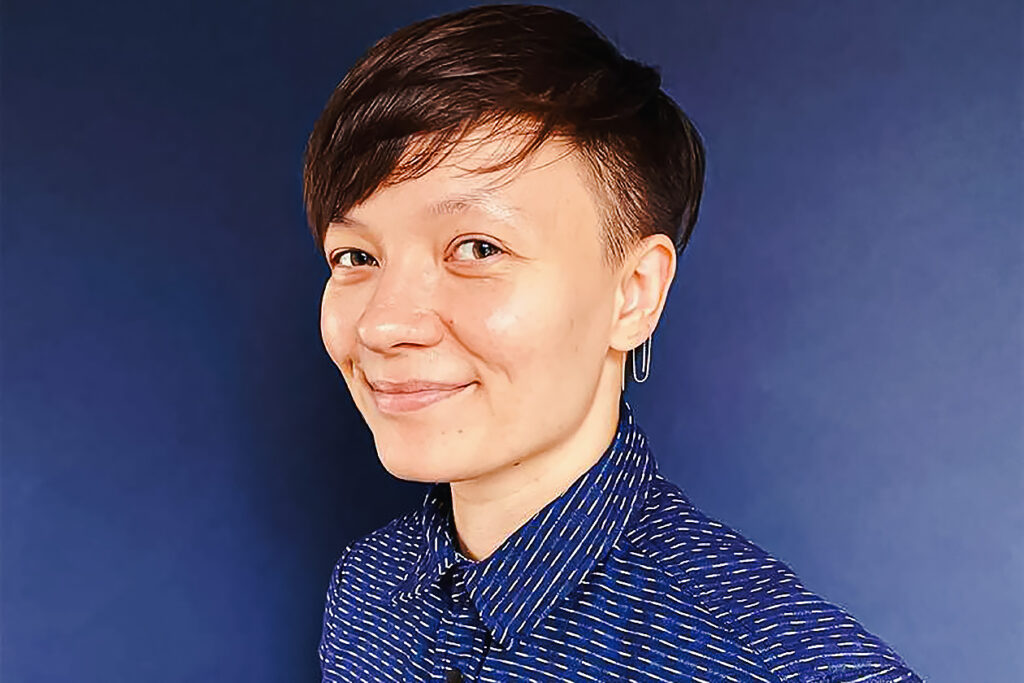
Al Sandimirova, the founder of New York City-based sustainable fine jewelry brand, Automic Gold, didn’t speak a lick of English when they first came to the U.S. in 2009. Sandimirova, who is non-binary, fled their home country because it posed a danger to them as an LGBTQ person. They had no money and on top of that, the U.S. was in the midst of an economic crisis.
With no money and no work experience, they began repairing and re-selling old gold jewelry. During that time, they began creating custom pieces for theirself that fit their more masculine style. These pieces caught the eye of a friend, who ordered 15 pairs of earrings for Hanukkah presents. It was then that Sandimirova realized that perhaps there was a market for an inclusive, unisex jewelry brand.
Automic Gold creates its jewelry by hand using precious metals that have been reclaimed from old electronics and jewelry. It features size-inclusive, non-cis, non-white models and will never photoshop or retouch models.
Named after its founder, Nicole Zizi Studio creates gender-free streetwear staples using organic cotton and recycled polyester. Its garments are hand-made in small batches following fair-trade standards. In addition to hoodies, sweatpants, and t-shirts, the brand has also recently launched cactus leather cross-body bags using animal-free leather made by Mexico-based startup, Desserto.
This brand carries one-piece androgynous swimsuits. | Beefcake
The idea for Portland, Oregon-based brand Beefcake Swimwear was born when founder Mel Wells’ “masculine-of-center” roommate wanted a 1920s-style mens’ swimsuit. In 2017, after two years spent prototyping and seeking out ethical manufacturers, Wells launched her brand on Kickstarter.
The one-piece androgynous swimsuits draw heavily from the cut of 1920s mens’ swimsuits. Only instead of being made from wool, they’re made from recycled polyester. The suits are produced in small batches at a local factory that pays fair wages. Most orders are packed and shipped by Wells or her wife. Wells founded Beefcake Swimwear with an LGBTQ audience in mind, but she says that the brand has captured the hearts people of all genders, ages, and sizes.
Origami Customs is a slow-fashion underthings brand for all genders. | Origami Customs
Origami Customs is a slow-fashion underthings brand for all genders based in Montreal. Founder Rae Hill created the brand believing that our garments should fit our body, not the other way around. With the planet in mind, Origami Customs implements a closed-loop process and works with sustainable fabrics. This includes deadstock, locally milled, recycled polyester, and regenerative fabrics. Everything is designed and sewn in Montreal.
The company ethos includes not only good environmental stewardship, but also good social works. It donates to multiple non-profits, including the Native Women’s Shelter of Montreal, Black Lives Matter Toronto Freedom School, and charities that support sex workers, refugees, and low-income communities.
Although Origami Customs notes that it makes undergarments for all genders, it specializes in making gender-affirming clothing, like binders and shapewear. The company also donates these to LGBTQ charities, which provide them to trans folks experiencing gender dysphoria — which, for many, can be life-saving.
Otherwild is a Los Angeles-based, queer woman-owned store and design studio. | Otherwild
Otherwild is a Los Angeles-based, queer woman-owned store and design studio. Owner Rachel Berks founded the studio in 2012 with the intention of centering high-quality handmade goods made by individuals. It now offers apparel, art, home goods, as well as refillable cleaning and personal care products. According to the website, the company is dedicated to producing goods made within an ethically-sourced supply chain and “to manifest a countercultural relationship to exploitative, extractive and excessive consumer capitalist culture.”
The company launched Anotherwild Fund, a grant program that supports BIPOC LGBTQ makers in the disciplines of apparel, ceramics, low/zero-waste goods, and more.
BEAUTY
The beauty industry, like fashion, is binary. Makeup is marketed mainly towards cis women. Shampoos, conditioners, deodorants, and razors that serve the same function are inexplicably divided into products for men and women. Each item for purchase seems to follow a specific color code that further signals which gender should buy what.
But also like fashion, beauty products have no gender — they simply exist. The brands here are just a handful of the ones that are making the beauty industry more accepting and inclusive. One that no longer mandates how individuals should present themselves based on the gender that they were assigned at birth. These brands stand by the ethos that anyone is welcome to use, or not use, whatever beauty regimen they please.
This gender-free brand caters to “queer bodies, non-binary bodies, trans bodies, and more BIPOC bodies.” | Noto Botanics
After a (self-described) “mini-life crisis” vacation to Thailand, Gloria Noto returned to California inspired and excited to create a new career path for herself. Following 12 years of experience as a makeup artist, she founded the beauty and body care company, Noto Botanics. The gender-free brand caters to “queer bodies, non-binary bodies, trans bodies, and more BIPOC bodies,” she notes on the website.
Not only does it cater to, and represent, the LGBTQ+ community, but it supports them too. Its “giveback product” is its moisture-rich, body hair conditioning Agender Oil. A percentage of the profits go towards a rotation of organizations. These include the LGBT Youth Center, Planned Parenthood, and The Okra Project.
This cruelty-free cosmetics brand was created in retaliation to the sexism. | Fluide
Isabella Giancarlo and Laura Kraber created cruelty-free cosmetics brand Fluide in retaliation to the sexism and lack of appreciation they felt in their previous careers. It is radically inclusive; every product is designed for, and modelled on, people of all genders, backgrounds, and races. Plus, many of them are multi-use. Take its Universal Crayon, for example. The creamy and colorful formula is designed for “anyone, anywhere” from the lips, to the eyelids, to the cheeks.
The brand is also mission-driven, and routinely partners with non-profit organizations that focus on LGTBQ health and advocacy.
Founded by Nina Zika and David Krause, cruelty-free beauty brand Alder New York is all about creating simple, high-quality, high-performing skin and hair care products for all skin types, skin tones, and all genders. Each of its products, like its radiance-boosting and skin texture improving Everyday Face Cleanser, were designed to be completely uncomplicated, but leave you wanting more as soon as you get to the end of the bottle.
The women- and queer-owned brand is no stranger to giving back to the community either. Last June, it pledged 10 percent of the proceeds from its Everyday Skincare Set to the Ali Forney Center. The organization helps to protect and house LGBTQ+ youths who are experiencing homelessness.
Founded by Jessica Blackler, vegan brand Jecca Blac was first created to cater to the trans community. Blackler, a former makeup artist, found that many trans clients felt overlooked by the beauty industry. So, she founded her own beauty brand to make a difference. Now, Jecca Blac creates gender-free, high-quality cosmetics for everyone. Products like its long-lasting Correct & Conceal palette offer medium to full coverage on skin discoloration. This helps customers cover up everything from redness to beard shadow.
Building a community is also important to Jecca Blac. Last year, it hosted the 2020 Trans Festival in Covent Garden, London. The event, which will take place again in 2021 and hosts panels, speakers, activists, and influencers, is dedicated to creating a safe space for the trans community.
LIVEKINDLY is here to help you navigate the growing marketplace of sustainable products that promote a kinder planet. All of our selections are curated by the editorial team. If you buy something we link to on our site, LIVEKINDLY may earn a commission.
For some time now, there has been a cry about the representation the LGBTQ+ community gets in mainstream cinema. While there has been misguided portrayals in Dostana (2008) or Mastizaade (2016) or so many other where it’s used as a tool for comic relief and mockery, there’s also Fire (1998) or Aligarh (2016) or Margarita with a Straw (2015), that have dealt with the subject matter with utmost sincerity, sensitivity and maturity.
“We still have a very long way to go… there should definitely be many more stories and many more characters which really explore the LGBTQ world in cinema,” says filmmaker Alankrita Shrivastava, who has explored the subject matter in her movies.
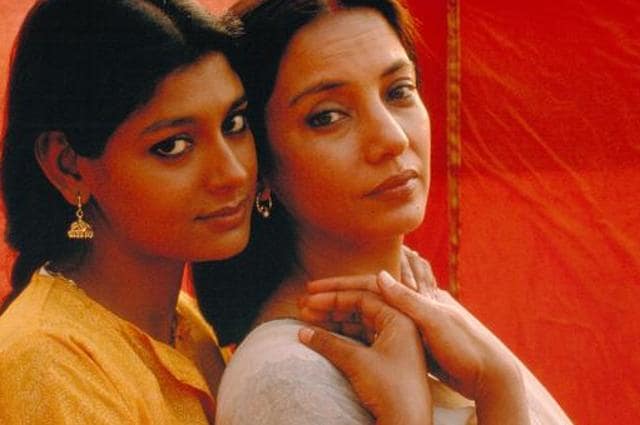
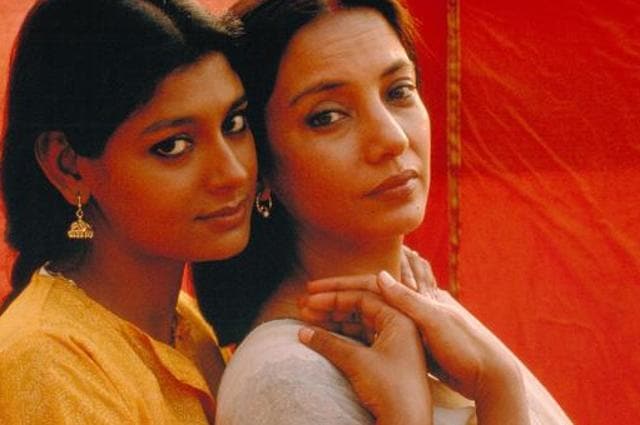
A still from Fire, starring Shabana Azmi and Nandita Das.
She adds, “I don’t think it has to be a central conflict point of a film but at least have characters. We really need to take big step forward. It’s very important to be empathetic and sensitive in the portrayal and just normalising it. I’m not into the whole caricature trend of treatment of such characters.”
Gazal Dhaliwal, the screenwriter of Ek Ladki Ko Dekha Toh Aisa Laga (ELKDTAL; 2019), a coming-of-age same-sex romantic comedy, says when it comes to cinema, shopping around scripts with LGTBQ themes is difficult.
“There’s still enough content that’s going around which only uses the LGBTQ + community as comedy. We are far from the ideal world,” she adds.
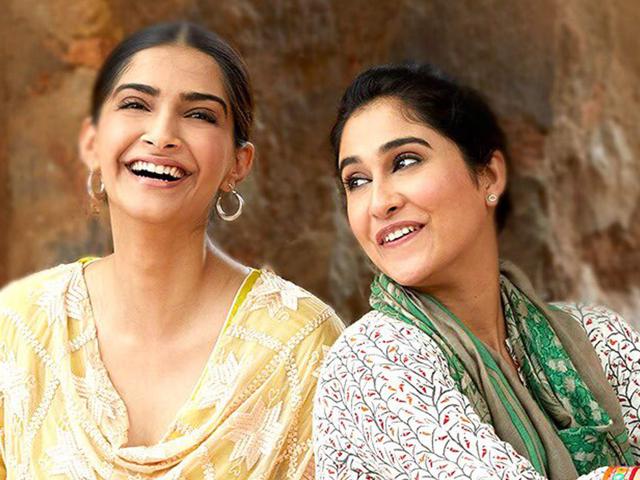
Sonam Kapoor and Regina Cassandra in Ek Ladki Ko Dekha Toh Aisa Laga
COMMERCIAL NAMES HELP
There have been many films made sporadically over the years, but mostly they remained in the niche area, and could never really get mainstream attention. However, last year, when Ayushmann Khurrana starred in romantic comedy ,Shubh Mangal Zyada Saavdhan(SMZS )about a gay couple, it was lapped up by the audiences and danced its way to the box office. And many feel that having known stars helps attract audiences.
“Earlier, no big star was willing to do these films, so access remained niche. It was heartening to see that Ayushmann did the film. It showed the community in a very positive light,” says Dhaliwal, adding, “What’s happening now is that the conversation is coming into the ‘commercial cinema’. That’s where things are really encouraging because this cinema has a wider reach. ELKDTAL had stars like Sonam Kapoor and Anil Kapoor and it helped.”
SMZS director Hitesh Kewalya is happy that he was able put a flag at a place, which is seen as a benchmark and he credits Khurrana for being instrumental in achieving that. “Kudos to him for taking it up and showing that a film like this can be done with a star, and can also be a commercial success. Once you have something that works, then it has a positive impact on everyone and it becomes a reference point,” he explains.
MINDSET NEEDS TO CHANGE EVERYWHERE
A still from My Brother…Nikhil
My Brother…Nikhil (2005) filmmaker Onir opines that what happened in films before the 2018 historic judgment was much more path-breaking, and he insists that Bollywood filmmakers need to be more forthcoming.
“The last really good LGBTQI+ film that I can think of in recent times was Aligarh. None after 2018 pushed the envelope. I don’t see them challenging, they’re always comfortable, and sometimes ridiculous,” he says, pointing at the “much better stuff” happening in regional cinema, particulary in Bengali cinema.
“Then there was Tamil film like Super Deluxe (2019). Even Marathi cinema has addressed this subject in the past. There’s much more happening in regional cinema than Hindi films,” says Onir.
A still from Aligarh
Calling out the problematic stuff that continues to be made for TV, Dhaliwal says it hinders the overall progress.
“There’s Kapil Sharma’s comedy show with so many jokes around the community. It’s a day-to-day viewing for people and supposed to be funny. But, nobody realises how it affects the psyche and makes people think that queer representation is something to be made fun of. TV has the widest reach and it sends out the wrong message, that bothers me,” she laments.
For Kewalya, who himself had been brought up in the atmosphere of biases and homophobic culture, it was important to show the community in the right light through his film.
“I don’t belong to the community but I have many friends and collaborators. So, through my film, I questioned the prude middle-class of our country. I’m happy that conversations began about sexuality and freedom of choice each human being deserves,” he shares.
OTT HAS EXPANDED THE CANVAS
The gaps in theatrical films have been beautifully filled by content on the web where many path-breaking projects have shown a true representation of the community.
Shrivastava, whose web projects Bombay Begums and Dolly Kitty Aur Woh Chamakte Sitare explored the LGBTQ aspect, agrees that we’ve had some great content on OTT. “Made in Heaven (featuring Arjun Mathur as gay) was a breakthrough in terms of the representation. Even the recent anthology Ajeeb Daastaans. May be theatrical projects are reluctant because of the whole thing about censorship,” she notes.
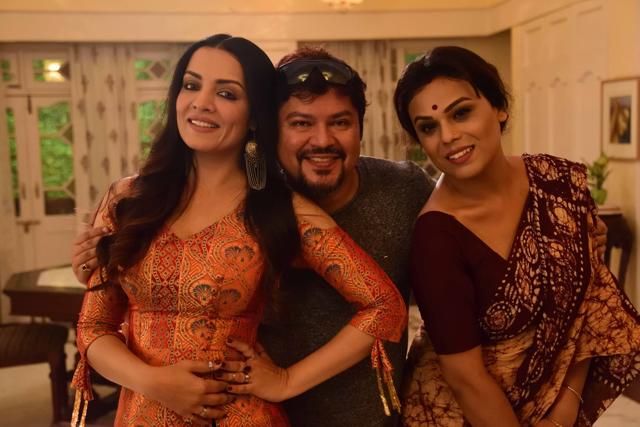
Filmmaker Ram Kamal Mukherjee and the cast of Celina Jaitly and Shree Ghatak.
Talk of real representation and filmmaker Ram Kamal Mukherjee had cast a transgender artiste, Shree Ghatak, for his web short film ,Season’s Greetings.
“Indian cinema hasn’t done justice to the LGBT community. What we’ve to realise is that the community isn’t just garish, loud people… there’s clichéd representation in films, which provide comic relief to the homophobic lot. People appreciated me for casting Shree Ghatak. She was treated at par on the sets and had everything that any other actor would get,” says Mukherjee.
The act bans discrimination in housing, employment and public accommodations based on gender, race, religion, even marital status. Which meant a restaurant in Florida couldn’t refuse to serve someone because they’re divorced, but it could refuse to serve someone because they’re gay.
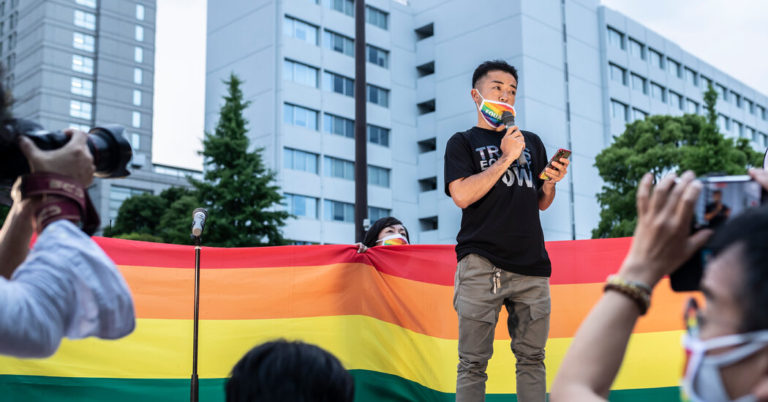
TOKYO — When Fumino Sugiyama, then a fencer for the Japan women’s national team, decided to come out to one of his coaches as a transgender man, he wasn’t sure what to expect.
What followed shocked him in its brutality.
“You’ve just never had sex with a real man,” the coach responded, and then offered to perform the deed himself, according to a letter that Mr. Sugiyama wrote last fall to Thomas Bach, the president of the International Olympic Committee.
Mr. Sugiyama, 39, who is now an activist, wanted to give Mr. Bach an unvarnished picture of the deeply entrenched discrimination in Japan, particularly in the rigid world of sports. He also hoped Mr. Bach would lobby the Japanese government on a bill protecting gay and transgender rights. Doing so, Mr. Sugiyama wrote, could shield “the next generation of athletes from what I experienced.”
But now, with the Tokyo Olympics less than two months away, hopes for the bill are running out. While a bipartisan committee advanced a draft of the measure, even its modest goal of labeling discrimination “unacceptable” has proved too much for conservative lawmakers, who have blocked consideration of the bill by the full Parliament.
What was supposed to be a first step toward equality has instead revealed once again the strong opposition to L.G.B.T.Q. rights from traditional family-values politicians in the governing Liberal Democratic Party. One member, during discussion of the measure, said that gay and transgender people “go against the preservation of the species.” Another said it was “absurd” that transgender women were “demanding” to use women’s bathrooms or were winning track-and-field medals.
The reaction shows just how far Japan has to go to fulfill one of the principles of the Olympic charter: that discrimination of any kind must be eliminated.
Japan ranks second to last in gay and transgender rights among the nearly 40 wealthy nations in the Organization for Economic Cooperation and Development. It is the only member of the Group of 7 industrial powers that has not legalized same-sex unions. And no athletes scheduled to compete for Japan at the Games have come out as gay or transgender, choosing instead to remain closeted, advocates say, because of fear of a backlash from fans or sponsors.
“It is very embarrassing,” said Kyoko Raita, a member of the Tokyo 2020 organizing committee’s executive board and a professor of sports history at Chukyo University.
The bill’s sponsor in the governing party, Tomomi Inada, a former defense minister, said in a video posted on Twitter that she would not give up until the current parliamentary session ended in mid-June.
“With this Olympic opportunity, let’s try to create this law,” Ms. Inada said in an interview. “If we miss this opportunity, it will be difficult.”
Even if it ekes through, some activists say, the bill is too watered down to have much effect. The measure stops short of prohibiting bias altogether in a society where gay and transgender people are often afraid to disclose their sexuality or gender identity.
“I really think the bill has no meaning,” said Shiho Shimoyamada, one of a tiny handful of elite athletes in Japan who have publicly come out as gay.
“If people say, ‘I understand what it means to be L.G.T.B.Q. but it’s a problem for the team,’ there is no one who can judge these discriminatory practices” as illegal, said Ms. Shimoyamada, 26, a club soccer player who played professionally in Germany for two years.
She said Japan’s sporting community was particularly inflexible and intolerant, hampered by traditional expectations of femininity and masculinity. According to a survey by the Japan Sport Association, more than 40 percent of athletes who identify as gay, bisexual or transgender said they had heard someone make discriminatory remarks.
Airi Murakami, 31, a former women’s national rugby team member who came out as gay in April, said she had been bullied as a high school basketball player for dating a fellow teammate. For years, she struggled with feelings of guilt and shame.
“Voicing that you are part of the L.G.B.T.Q. community” is difficult, Ms. Murakami said.
As hard as being openly gay may be in Japan’s conformist society, in some ways public attitudes have evolved more quickly than those of the country’s political leaders.
Close to two-thirds of those surveyed by researchers at Hiroshima Shudo University in 2019 supported marriage equality, up from just over half four years earlier. Nearly 90 percent supported laws banning discrimination against gay and transgender people.
In some respects, Japan has long had a fluid concept of gender and sexual orientation. Gay social life thrives in a large nightlife district in the Shinjuku neighborhood of Tokyo, and Japan has a celebrated tradition of cross-gender performing art forms like Takarazuka, Noh and Kabuki.
But such cultural acceptance does not always translate into political support for equal rights.
“To insist on politicized sexual identity is grating to the ears of people who are more conservative,” said Jennifer Robertson, a professor emerita of anthropology at the University of Michigan who grew up in Japan. “They may have a friend who has sex with a same-sex partner, but they are not wanting them to be mainstreamed.”
Critics say the I.O.C. acted too late — the clause was not added until after the Sochi Games — and doubt that the Olympics’ visibility will help much in Japan, either.
“It is a false hope that the Olympics will bring more equality to the hosting nation,” said Satoko Itani, an associate professor of sports, gender and sexuality at Kansai University. (As in Japan, conservatives in South Korea, which hosted the Winter Olympics in 2018, have blocked legislation to protect sexual minorities).
In Japan, the Olympic organizers have offered only moderate support for gay and transgender rights.
In one of Seiko Hashimoto’s first acts after becoming president of the Tokyo organizing committee, she visited Pride House Tokyo, a center set up to support the gay and transgender community during the Olympics and beyond. (Her predecessor, Yoshiro Mori, never visited.)
Organizers acknowledge that their efforts in support of gay and transgender rights are modest and said they could not lobby the government on the pending bill. “In terms of sexual minorities, understanding has not progressed as far as the West,” said Nobuyuki Sugimoto, who handles human rights issues for the committee.
Mr. Sugimoto said the designers of the uniforms for Olympic volunteers incorporated advice to make the clothing unisex, although photos of uniforms for medal presenters revealed this past week showed men in pants and women in skirts. He said he did not know of anyone among the organizing committee’s staff of thousands who was out publicly. (Mr. Sugimoto seemed unaware that the committee spokeswoman who sat in on the interview with him was out as bisexual.)
A more concerted push may come from the corporate community. A group of global companies signed a letter in support of the gay and transgender rights bill, including Olympic marketing partners like Coca-Cola and Intel.
Moriaki Kida, chief executive of the consulting company EY Japan, said that even if the current bill did not sufficiently expand L.G.B.T.Q. rights, it would be a good start. Just to see Japan’s governing party discussing gender diversity, he added, is something “which I would have never imagined 10 years ago.”
Mr. Sugiyama, the retired fencer, said he, too, would accept incremental steps. In his response to Mr. Sugiyama’s letter, Mr. Bach, an Olympic gold medalist in fencing, did not address Japan’s bill. He said the I.O.C. was crafting a voluntary nondiscrimination framework that was a “work in progress.”
“I am glad he is cheering on inclusivity in sports,” Mr. Sugiyama said. “I am a realist. If we are aiming for 120 percent, I would still settle for 80 percent, or even 20 percent, because it would still be a step forward.”
By Caroline Moynihan – Lethbridge Public Library on June 5, 2021.
A year ago, we were in the throws of the pandemic, learning to adapt to a new reality that none of us could have really even begun to imagine. When Lethbridge Public Library first closed its doors, staff immediately came together to see what we could offer our customers when physical access to our buildings was not an option. One such service was the Surprise Me bags. How do the Surprise Me bags work? Customers go to our website and fill out a form, putting in what types of materials they want, some favourite authors, or subjects they are interested in, and we take it from there – filling the bags with 10 items related to the information included on the forms. Staff really enjoy picking out the titles they think customers will enjoy, and the bags are available for all ages and all reading levels. Some of the requests we’ve had, and some of the titles we’ve included are… One request was for adult fiction titles that included the topics of feminism, gender-diverse characters, sci-fi, books that have really cool monsters or creatures in them, books with strong women in them, books that have LGBTQ+ romance or themes. We offered as one of the titles, “The House of Impossible Beauties” by Joseph Cassara. This title follows a cast of gay and transgender club kids navigating the Harlem ball scene of the 1980s and ’90s, inspired by the documentary “Paris Is Burning.” It is a tragic story of love, family, and the dynamism of the human spirit. When customers fill out Surprise Me requests we encourage them to put as much or as little information as they wish, but sometimes that can make it hard to narrow down recommendations, such as the request we received for medieval fiction, inheritance cycle, and Clive Cussler thrillers. This is where we dig a little deeper because the types of books this customer enjoys are quite specific. One of the titles we included in this Surprise Me bag was “A Burnable Book” by Bruce W. Holsinger. This, medieval historian Holsinger’s first novel, explores royal power and dissent in 14th-century England. Probably one of the hardest requests we had was for 19th-century history books, sewing 1890’s historical clothing, Victorian cookbooks, Victorian-era commonplace books, Victorian etiquette, history of 1800’s clothes, and… how to survive in the wilderness. We had to think a bit on this one, but were able to offer “Victorian Needlework Techniques and Designs” by Flora Klickmann and “Survival Wisdom & Know-how” by Amy Rost. Lethbridge Public Library staff love putting these requests together, so please visit lethlib.ca to get your own Surprise Me bag, and challenge our staff with your requests.
By Caroline Moynihan – Lethbridge Public Library on June 5, 2021.
A year ago, we were in the throws of the pandemic, learning to adapt to a new reality that none of us could have really even begun to imagine. When Lethbridge Public Library first closed its doors, staff immediately came together to see what we could offer our customers when physical access to our buildings was not an option. One such service was the Surprise Me bags. How do the Surprise Me bags work? Customers go to our website and fill out a form, putting in what types of materials they want, some favourite authors, or subjects they are interested in, and we take it from there – filling the bags with 10 items related to the information included on the forms. Staff really enjoy picking out the titles they think customers will enjoy, and the bags are available for all ages and all reading levels. Some of the requests we’ve had, and some of the titles we’ve included are… One request was for adult fiction titles that included the topics of feminism, gender-diverse characters, sci-fi, books that have really cool monsters or creatures in them, books with strong women in them, books that have LGBTQ+ romance or themes. We offered as one of the titles, “The House of Impossible Beauties” by Joseph Cassara. This title follows a cast of gay and transgender club kids navigating the Harlem ball scene of the 1980s and ’90s, inspired by the documentary “Paris Is Burning.” It is a tragic story of love, family, and the dynamism of the human spirit. When customers fill out Surprise Me requests we encourage them to put as much or as little information as they wish, but sometimes that can make it hard to narrow down recommendations, such as the request we received for medieval fiction, inheritance cycle, and Clive Cussler thrillers. This is where we dig a little deeper because the types of books this customer enjoys are quite specific. One of the titles we included in this Surprise Me bag was “A Burnable Book” by Bruce W. Holsinger. This, medieval historian Holsinger’s first novel, explores royal power and dissent in 14th-century England. Probably one of the hardest requests we had was for 19th-century history books, sewing 1890’s historical clothing, Victorian cookbooks, Victorian-era commonplace books, Victorian etiquette, history of 1800’s clothes, and… how to survive in the wilderness. We had to think a bit on this one, but were able to offer “Victorian Needlework Techniques and Designs” by Flora Klickmann and “Survival Wisdom & Know-how” by Amy Rost. Lethbridge Public Library staff love putting these requests together, so please visit lethlib.ca to get your own Surprise Me bag, and challenge our staff with your requests.
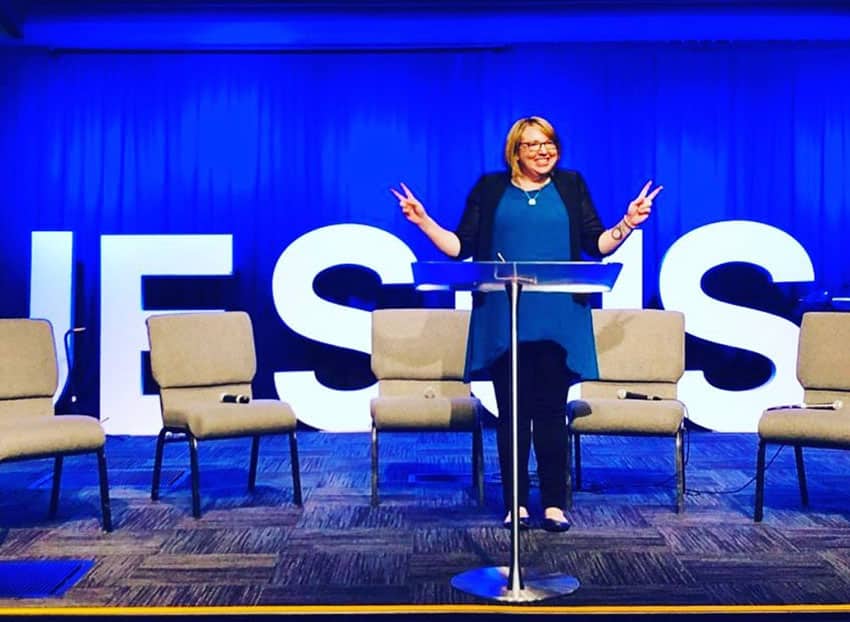
From pain and hurt to finding Jesus and the Church, Rhianne tells an inspiring story of her life. Photo: supplied
I am an Aboriginal woman, raised by parents who were Catholic in name but neither of them practiced their faith.
I recall attending a local Catholic church with my Nana as a small child. Other than that, I knew no-one who was religious.
One of the darkest moments of my life was being sexually abused by a close family member for four years as a teenager.
Depression
Entering into adulthood was pure hell for me. I was desperate to find resolution around my sexual trauma.
I fell into deep depression. I had no idea of my identity, and I just wanted to disappear.
I was 25 years old when I first disclosed my childhood abuse to my mother shortly before her death from cancer.
Abuse and sexuality
If I hadn’t had a strong bond with my mum, I don’t know who else I would have been able to tell. Even today, I may never have found freedom from my burning secret.
I was so desperate for my voice to be heard. I needed compassion and tender counsel. I didn’t need further rejection as I questioned my sexuality and identity, or the political and police interference now enabled by legislation in several states in Australia.
My abuse grossly affected my sexuality. After my mother’s death, I got engaged to several women, the last being for three and a half years which was a deeply abusive relationship. This led me to become addicted to drugs.
My abuse grossly affected my sexuality. After my mother’s death, I got engaged to several women, the last being for three and a half years
Same-sex relationships
When this lesbian relationship eventually ended, I found Islam which led me into more abusive relationships, only this time with several men, one of whom I actually married.
I was still same-sex attracted but again trapped in another strain of co-dependency, this time with behaviours which further degraded me.
The suicide rate among Aboriginal youth is disturbing. It screams of the destructive pain so many precious young people experience.
Restricting personal journeys
I often ask myself: what pathways are open today to an Aboriginal child where she or he can disclose abuse, question identity and sexual attraction, and be helped to make their own healthy choices? Every avenue to prayer, therapy and counsel which is proven to work, even if only for a minority, must be left open.
If an Aboriginal child or adult senses that legislation might affect therapy or prayer, those wounded will stay away from even beginning recovery. Their ability to reach out and to speak up, especially about abuse, might never happen.
However, politicians are queuing up to condemn therapy and prayer linked to sexuality and gender. This will have a long-term effect of degrading women and children. We will be the ones most assaulted by new legislation which rips dignity away from girls and women as, for example, men who self-identify as trans-women compete in female sport.
… politicians are queuing up to condemn therapy and prayer linked to sexuality and gender. This will have a long-term effect of degrading women and children.
Politicians are being conned
By ignoring bodily differences, politicians also reject common sense and threaten every female toilet, shower block, women’s shelter and women’s healthcare when they choose to ignore the blatantly evident biological and chromosomal differences between males and females.
I have felt further despair and retraumatised by anti-therapy and anti-prayer legislation rising up across our nation. But turning my life to Jesus and finding a home within the Catholic Church are bringing me hope.
I am fortunate that the Christian community has been helping me to face my past. I am learning to invite Jesus into my pain so as to find newness of life. He is teaching me not to be afraid of anything.
“By ignoring bodily differences, politicians also reject common sense and threaten every female toilet, shower block, women’s shelter and women’s healthcare when they choose to ignore the blatantly evident biological and chromosomal differences between males and females,” writes Rhianne. Photo: 123RF
Jesus – and Mary, a Mother
Amazingly, Jesus gave me a dream about his Mother, Mary. I have spent years trying to deal with the grief of my mother’s death, and suddenly Jesus gives me his Perfect Mother to walk alongside me, to love me, and to help me not only heal but to trust more deeply in God. I am now excitedly involved in the RCIA course.
Our nation needs less mental illness, fewer addictions and suicides. It needs laws which respect God and permit people to grow up and to make decisions for themselves.
It is regrettable that past support is being reported to have hurt a few people. But present support is saving my life and the lives of many others. We have no idea how many more lives it has already saved and might just save in the future.
Gratitude for welcome in the Catholic community
I am grateful that my life and my story have been welcomed into the Catholic community and that knowing Jesus is helping me to find ever greater security in my identity.
The Catholic Weekly thanks Rhianne for having the courage to share her story.
A Ghana court kept a group of LGBTQ activists in custody on Friday, their lawyers said, in a case that advisors to the UN’s Human Rights Council likened to arbitrary detention.
Advertising
The suspects in the recent case — 16 women and five men — were arrested for “unlawful assembly” last month in Ho, in Ghana’s southeastern Volta region.
They were remanded in custody and after their arrest, the hashtag #ReleaseThe21 was trending on social media.
“The judge hasn’t given a ruling, and has adjourned to give the ruling next week,” Julia Selman Ayetey, one of the group’s attorneys said, after a hearing on Friday, adding she hoped bail would be granted at the next hearing on Tuesday.
“But the bail has been denied previously, so the prosecution can continue with their investigation.”
Police said they had detained the activists while they attended a conference.
Rights group Rightify Ghana said the meeting was about empowering LGBTQI activists, including giving them para-legal training to document rights abuses.
Gay sex is a crime in the West African country and members of the LGBTQI (lesbian, gay, transgender, queer and intersex) community face widespread discrimination.
🗣️ “We cannot condone a situation where people attend a workshop on rights only to be arrested and have those very human rights they were learning about be trampled upon,” said Julia Selman Ayetey, a lawyer for the defendants#ReleaseThe21#FreeThe21https://t.co/WQ7FgSowZm
An expert panel advising the UN’s Human Rights Council called on Friday for their release, expressing “deep” concern about detention that it said was based on discriminatory grounds, including sexual orientation.
“All evidence available to us points to the fact that they were detained while they were peacefully exercising their rights to freedom of expression, peaceful assembly and association,” their statement said.
“The Government of Ghana must release them immediately and unconditionally.”
In February, Ghana security forces shut down the office of an LGBTQ rights group in the capital Accra after politicians and religious leaders called for its closure.
The rights controversy comes at a sensitive time for President Nana Akufo-Addo, who wants to attract African-Americans and the Ghanaian diaspora through his programme “The Year of Return”, which encourages people to return to their ancestral country.
The Ghanian leader reaffirmed his position in March, saying: “It will not be under the presidency of Nana Addo Dankwah Akufo-Addo that same-sex marriage will be legal”.
Actor Idris Elba, model Naomi Campbell and designer Virgil Abloh are among those who signed an open letter of support for LGBTQ Ghanaians earlier this year, expressing “profound concern” at the situation they face.
This report from KARK on Chick-fil-A’s interest in developing the former McDonald’s at 7th and Broadway is the tip of what could be a lively debate.
Advertisement
The report says, for one thing, without further details, that “adjustments will be made” for traffic.
They will be needed. Broadway, already lined with fast food outlets, is a traffic hazard most hours of the day already, with left turns in and out of establishments problematic. At popular meal times, the business can be fierce. See the relocated McDonald’s and its crammed drive-through a block south at Sixth Street, on the west side of Broadway.
Advertisement
Can Chick-fil-A do better on Broadway than it does on West Markham Street, across from Park Plaza (where a rebuild is underway for temporary respite from the daily traffic nightmare)?
There’s another potential angle brewing.
Advertisement
The Chick-fil-A plan calls for taking the whole half a block bounded by Broadway, Seventh and Spring. This would include removing the old McDonald’s and commercial buildings along the south side Seventh east of the old McDonald’s all the way to the southwest corner of Spring Street and Seventh. This would mean the loss of a building (Ciao Baci was a long-time tenant) that contributes at least a bit to what’s left of the historic fabric of downtown. It would also eliminate parking spaces and contribute to traffic concerns for the Child Development Center at Eighth and Spring operated by First United Methodist Church. A traffic engineer for Chick-fil-A has tried to allay those concerns. The engineer also included this map of some changes to address concerns on Spring Street. Here’s the full traffic study.
Given that 7th and Broadway is already zoned for a fast food place (with problem traffic, it’s worth noting), it will be hard to prevent another one. But the traffic problems on Markham, and those that already exist on Broadway, should be carefully considered. The loss of another row of older buildings is worth a mention, though it might not be a strong argument.
It is where historic preservationists and the Quapaw Quarter Association come in. Patricia Blick, director of the QQA, says:
The concerns I’ve gotten are associated with the demolition and also the impact the additional traffic will have on FUMC’s Child Development Center. As you would expect, the QQA doesn’t support the demolition of historic buildings. The property on 7th Street, while aged, has been pretty heavily compromised. At this point, the building has been changed so much and the lack of material integrity is so great, that it would probably not be eligible for listing on the National Register of Historic Places under the criterion for craftsmanship. It might be eligible under other criteria, ie, for associations with national trends, or a significant person, but since it has lost so much historic fabric, and is not recognizable as the historic structure it was, National Register listing is a challenge. And National Register listing is a necessity to pursue state and federal rehabilitation tax credits which makes development of historic buildings economically feasible. I understand that previously there was an effort to evaluate the 7th Street Corridor for a small National Register historic district, but this lacked enough property owner support to move ahead with a district. Even if a district had been established, the building we are talking about would probably not be a contributing resource in the district. National Register listing would not prevent demolition, but would validate the significance of the property and establish that it is worthy of preservation.
The old McDonald’s building is not historically significant.
I would suggest an additional concern with the new enterprise is how the new building will be sited on its lot. Its siting is dictated by the way they will operate, as primarily a drive-thru. Historically, we would have the buildings up to the street, not pushed back. But along this strip of Broadway, that old pattern of having the buildings up to the street was already abandoned. So, they are following the new trend of a large set back.
TO BE RAZED: Building on Seventh.
Advertisement
My feelings are personal. For one thing, better fried chicken is already available two blocks down the street at Popeye’s.
Another factor is politics. The chain stopped contributing to anti-gay organizations in 2019, after an uproar over its spending in support of bigotry. But new reporting says Dan Cathy, the owner of the chicken chain, is among the billionaires behind a dark money campaign trying to defeat the proposed federal Equality Act, to prevent discrimination against LGBT people. This is irrelevant to planning decisions. But Litte Rock has declared itself by ordinance a city that doesn’t discriminate against LGBTQ people in its own employment and won’t do business with vendors that do. (This became a big deal when San Antonio refused to rent to the chain at its airport. It ultimately decided to avoid the location. Little Rock, on the other hand, couldn’t wait to get the chain open at the Little Rock airport several years ago.)
Cathy, as an individual, was exempted from the company’s pledge not to support anti-LGBTQ causes. Justin Kirkland of Esquire had this to say about that:
To say that Cathy isn’t Chick-fil-a and that Chick-fil-a isn’t Cathy is asinine, especially considering America’s recent inability to separate man from business. A man’s product is as good as the man himself.
Beyond that, I don’t have any more words for Chick-fil-a, to be honest, because as Maya Angelou famously said, “When someone shows you who they are, believe them the first time.” I don’t go to Red Lobster looking for Italian food, and I don’t go to Chick-fil-a looking for moral high ground. I don’t care how friendly they are. I don’t care how “good” the chicken is (especially when Popeyes, Zaxby’s, and Raising Cane’s are right there). The people who own Chick-fil-a have an anti-LGBTQ agenda, and that was ingrained in the company for a good long while.
Remember when Mike Huckabee created a Chick-fil-A Appreciation Day for its opposition to equal treatment of LGBT people? Remember when congressional candidate Tim Griffinhad a tailgate picnic featuring Chick-fil-A goods to show he was on board with the anti-LGBT agenda? And when Republican sycophants gleefully filled social media with yuks about it? I do. And I won’t forget the nastiness, now a matter of law in multiple ways thanks to the Arkansas Republican legislature.
Here’s a Google street view photo of the old McDonald’s, with the one-story older buildings along Seventh behind it.
As New York’s hospitals filled with pneumonia patients last spring, Dr. Michael Gottlieb flashed back to the earliest days of another mysterious illness.
For months, Gottlieb had vainly treated a young man with an unrelenting fever. The man developed pneumonia from a usually harmless virus and his mouth was covered with a fungus that made it hard for him to swallow or eat.
Another young man soon turned up with similar symptoms. Then, over the course of a few months, three more previously healthy Los Angeles men came down with the same constellation of problems.
Dr. Michael Gottlieb displays a model of an HIV-infected cell during an interview Friday, June 1, 2001, at the Synergy Hematology-Oncology Medical Associates, Inc. office… Dr. Michael Gottlieb displays a model of an HIV-infected cell during an interview Friday, June 1, 2001, at the Synergy Hematology-Oncology Medical Associates, Inc. office in Los Angeles. Gottlieb published a brief note in a weekly report put out by the Centers for Disease Control on June 5, 1981, noting the odd cases of five homosexual men who had contracted a form of pneumonia normally found only in those with severely weakened immune systems. The report, largely ignored, was the first official notice of what is now recognized as AIDS.Damian Dovarganes, AP
As he watched them die, Gottlieb was both concerned and intrigued. At 33, he was roughly the same age. Their care became personal as well as professional.
Gottlieb and several colleagues contacted the Centers for Disease Control, which asked them to write up their findings. On June 5, 1981, exactly 40 years ago, their report was published,describing the cases of these five, young gay men whose immune systems had suddenly stopped protecting them, defying every treatment Gottlieb and others tried.
COVID-19 has done its work faster – infecting at least 172 million people and killing 3.7 million of them in less than 18 months.
But those who were around for the earliest days of AIDS say the parallels are unmistakable: a deadly pneumonia, a virus that seemed to target certain communities though none was immune, people unknowingly infecting loved ones, friends and strangers.
Like Gottlieb, many of the doctors and researchers whose career paths were defined by AIDS are now treating COVID-19 patients.
“You start from ground zero and then you build the plane as you’re flying it,” Gottlieb said of treating both diseases in their early days. “There was this sense of helplessness, of winging it, of doing the best you can with less than adequate tools and learning as you went.”
Dr. Michael Gottlieb
There was this sense of helplessness, of winging it, of doing the best you can with less than adequate tools and learning as you went.
The differences between the diseases are striking, too.
While COVID-19 was identified and brought to public attention within weeks, the first report of AIDS likely lagged years behind symptomatic cases, and diagnostic tests took five years to develop.
The human immunodeficiency virus that causes AIDS wasn’t identified until 1983, two years after that first official record; researchers released the detailed genetic code of the SARS-CoV-2 virus in January 2020, less than a month after it came to global attention. With that code in hand, scientists immediately began developing highly effective COVID-19 vaccines, a triumph that still escapes HIV researchers.
“There’s really an extraordinary difference in the pace of reaction to these pandemics,” said Dr. Bruce Walker, a Harvard physician-scientist who has spent decades treating HIV–positive patients and working to better understand the disease.
In this May 21, 1990 file picture, Scotty McQuown of San Francisco, left, weeps in front of a makeshift memorial to AIDS victims during the… In this May 21, 1990 file picture, Scotty McQuown of San Francisco, left, weeps in front of a makeshift memorial to AIDS victims during the seventh annual International AIDS Candlelight Memorial in San Francisco. Up to 20,000 people gathered in front of San Francisco’s City Halll to remember those lost to the disease and those still fighting it.Bill Beattie, AP
The hopelessness and desperation of HIV/AIDS struck deep and hard, first among gay men, and then across the world’s poorest communities, including in the United States.
With COVID-19, racial and socioeconomic disadvantages became quickly evident, with lower-income communities of color disproportionately affected. But it also spread far and fast, touching nearly every community on all seven continents.
Dr. Julie Gerberding was a young medical intern in San Francisco when the first AIDS patients began arriving: first one, then three, then 12. By the time she finished her intern year in June 1982, nearly all her patients had some manifestation of AIDS, and she often learned how to treat them by asking what they needed.
Later, as a federal official, she helped respond to the first SARS epidemic in 2002 and then, in 2009, while head of the CDC, she helped the country prepare for the H1N1 flu pandemic.
With COVID-19, she’s seeing history repeat itself.
“We’ve watched a lot of the same issues play out over and over again,” said Gerberding, now executive vice president and chief patient officer at Merck. She describes an “unwillingness to accept that something new and important has emerged and could get a whole lot worse.”
Though both pandemics are far from over globally, in the United States, officials talk about ending HIV/AIDS within a decade with medications and prevention measures. Vaccines and public health efforts have cut COVID-19 infections here by more than 90% since January’s peak.
“For those who are skeptical of science and we’ve heard a lot about that in COVID,” Gottlieb said, “we might look to HIV as evidence that science does work.”
The greatest accomplishment of HIV science was the medications that turned the virus from a death sentence into a chronic, manageable disease.
The first one, azidothymidine or AZT, a repurposed cancer drug approved in 1987, was only slightly helpful. Side effects of AZT and other early drugs were considered worse than the disease, like being on chemotherapy every day for life.
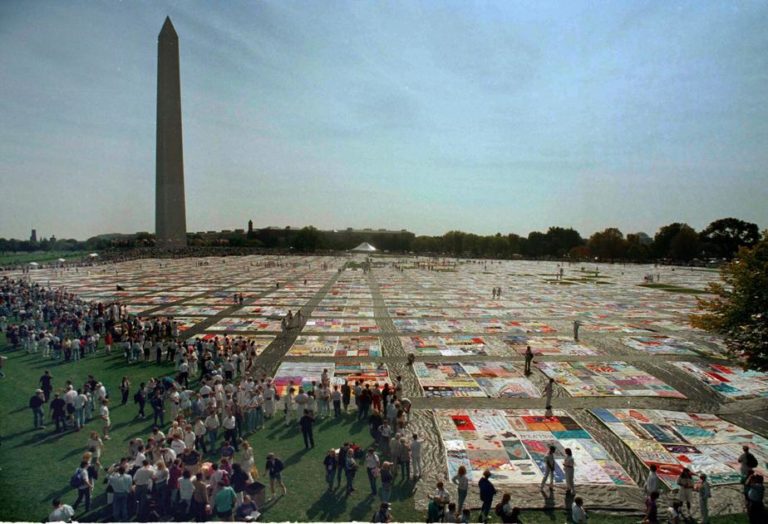
In this Saturday, Oct. 10, 1992 file picture, volunteers and others walk on the 21,000 panel Names Project AIDS Memorial Quilt in Washington.Shayna Brennan, AP
Just a few years later, in 1989, Daria Hazuda joined the search for HIV/AIDS medications.
At one of her first scientific meetings, researchers presented the triple-combination drugs that would transform treatment. “People were astonished,” Hazuda said. “I remember sitting in the audience thinking: ‘I’d better find something else to work on. This has been solved.'”
But then, as she recalls it, a doctor stood up and told his colleagues: “Look at what we’re asking our patients to do.” People had to swallow a fistful of pills three times a day. They suffered horrible side effects. “Now that we know it’s possible, let’s go back and do it right,” Hazuda remembers him saying.
That idea – that real people have to live every day with the drug therapies she developed – became a driving force in her career, Hazuda said. At drug company Merck, she went on to help create the drug Isentress, the first of a new class called integrase inhibitors, which were less toxic and easier for patients to manage.
Daria Hazuda, vice president, Infectious Diseases for Merck, has been working to develop treatments for HIV/AIDS since 1989, including Isentress, the first integrase inhibitor.Cimmino, Merck Visual Communications
Now vice president for infectious diseases at Merck, Hazuda hopes to keep improving the medications, working toward one pill a week instead of a day, or long-term injectables that would last three months or even a year.
It’s still a challenge, she said to reach everyone who needs treatment or could be helped by taking the same drugs to prevent infection.
“It’s fascinating to see how far we’ve come and how far we still need (to go),” Hazuda said.
For Bruce Richman, the revelation that would change his life came in 2012. He had been diagnosed with HIV in 2003, and though he took his medication faithfully – four pills a day – he considered himself a disease vector, toxic even.
“I had given up the concept of being intimate without fear,” Richman said. “The idea that I could pass on HIV to somebody was just too much.”
Bruce Richman, founder of U=U
With COVID, I think people are going to understand a little bit of what it’s like to be afraid of passing on a virus to the people you love. People with HIV had lived with that fear for decades.
Nine years after his diagnosis, he was finally told that because he took his HIV medications reliably, his viral loads were undetectable. That meant he couldn’t pass on HIV.
The finding so moved him that he’s dedicated his life since to getting the message out: undetectable equals untransmittable, or “U=U.”
Public health officials often avoided telling patients, worried it would make HIV-positive people think they didn’t need their medications or make them vulnerable to other sexually transmitted diseases.
Richman, founding director of the Prevention Access Campaign, believes it’s far more powerful to let people know they are not dangers to society, just as people vaccinated against COVID-19 are relieved to know they can no longer make others sick.
“With COVID, I think people are going to understand a little bit of what it’s like to be afraid of passing on a virus to the people you love,” he said. “People with HIV have lived with that fear for decades.”
Walker already had spent years watching his patients waste away from AIDS when a healthy-looking man bounded into his office one day in 1994 asking how long he had left to live. The man had been infected 15 years earlier but had defied every expectation of his death sentence.
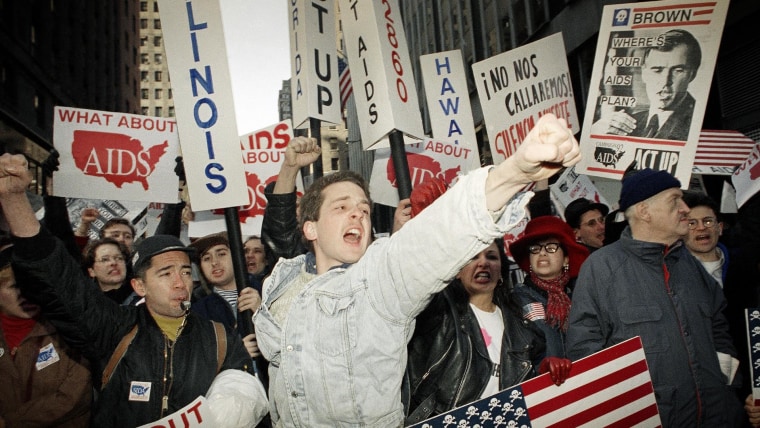
In this Thursday, Sept. 14, 1989 file picture, protestors lie on the street in front of the New York Stock Exchange in a demonstration against the high cost of the AIDS treatment drug AZT.Tim Clary, AP
Walker realized the man’s immune system somehow kept HIV in check without medication. That launched Walker on a decadeslong quest to understand people he calls “elite controllers,” whose bodies seem to know how to control HIV.
In 2009, with a $100 million philanthropic donation, Walker founded the Ragon Institute of MGH, MIT and Harvard, an interdisciplinary scientific institute aimed at unraveling the mysteries of the immune system. One of its steering committee members is credited with developing Johnson & Johnson’s COVID-19 vaccine.
Now, Walker, who continues to direct the institute, believes he understands how elite controllers contain and even eliminate the virus.
He and his colleagues have designed a vaccine with the idea of providing recipients the power of an elite controller.
“We don’t have proof we can do that yet, but we have a really strong rationale for this,” Walker said.
The vaccine will be based on the mRNA technology proven through COVID-19 vaccines, and will target areas of the virus that can’t mutate. Walker hopes to begin testing it within a year.
Phill Wilson was 24 in 1981 when his swollen lymph nodes suggested he had been infected. His formal diagnosis didn’t come until 1986, delayed by five years because of a lack of testing. His doctor said he had six months to live.
Phill Wilson, who has been HIV+ for 40 years
I am alive today because I personify what happens when people with HIV/AIDS have the love and support we need and deserve from family and friends.
He kept an address book in those days before cellphones. Every time a friend died of AIDS, Wilson would put a checkmark next to that person’s name. He lost the address book around 1987, he estimates. By then, he had added 220 checkmarks.
His own partner died in 1989. “While it was absolutely devastating to lose Chris, he was not the only loss that day (to AIDS).”
Wilson said he still hasn’t completely come to terms with the grief.
“This went on from 1982 to 1997 – that’s 15 years of that kind of intense dying,” he said. “It was impossible to process it or to process any one death, no matter how close that death was to you.”
President Bill Clinton meets with lesbian and gay leaders in 1992, including AIDS activist Phill Wilson (at right with back to camera), who founded the Black AIDS Institute.White House
In 1997, Wilson ended up in an intensive care unit in Los Angeles, connected to tubes and unable to speak. His mother flew in from Chicago expecting to watch him die. Instead, he got his first doses of protease inhibitors, the drugs that transformed the fight against HIV/AIDS.
“Dorothy landing in Oz and all of a sudden the world is in Technicolor … that’s what protease inhibitors were like,” Wilson said. He bounced back “like Lazarus.”
He attributes his long-term survival with HIV to many factors including luck, a focus on living rather than dying, periodic medication vacations in the early days to avoid drug resistance, and his large extended family.
“I am alive today because I personify what happens when people with HIV/AIDS have the love and support we need and deserve from family and friends,” he said.
Early on, Wilson decided to become an activist and co-founded the Black AIDS Institute.
Raniyah Copeland is now the group’s president and CEO, calling attention to the fact that both COVID-19 and HIV/AIDS have disproportionately affected people of color.
Raniyah Copeland, president and CEO of the Black AIDS Institute
What we see is a widened disparity of HIV, which is part of what makes this 40-year-moment hit so hard. We’ve come so far, yet we’re in the same place as we were 40 years ago when we look at who is being most impacted.
Over half of new HIV cases in the U.S. are in Southern states where many people have limited access to health care, Copeland said
“What we see is a widened disparity of HIV, which is part of what makes this 40-year-moment hit so hard,” she said. “We’ve come so far, yet we’re in the same place as we were 40 years ago when we look at who is being most impacted.”
Wilson was an early adopter of medications, trying nearly every new HIV drug as it came on the market. He doesn’t even remember how many pills he had to pop every day at the height, but thinks it was somewhere between 10 and 15, each of which had its own requirement for before a meal or after, “all sorts of crazy regimens.”
Now, he said, he takes nearly as many medications, but only one is to keep his HIV under control. The rest, he said, are because he’s a 65-year-old man: “I have lived far past my expiration date.”
Aging with HIV has become a key focus of another activist, Jayson Duley, 56, who has been HIV-positive for 20 years.
Jayson Duley has been HIV+ for 20 yearsJayson Duley
Duley, director of global security for a software company, said his view of HIV/AIDS has changed with the decades.
As a young man, discovering his sexuality, he saw AIDS as a death sentence. His own diagnosis came after treatments had turned it into a chronic infection, and he has lived through a number of improvements in those medications.
Envisioning the next 20 years, he’s hoping treatments will continue to improve, offering longer-term protection. Maybe vaccines will even provide a cure.
But in the meantime, data suggests HIV-positive people age faster than normal, developing high cholesterol and blood pressure and heart issues at younger ages, though it’s still unclear whether that’s from the virus or the medication.
“Aging with HIV is scary,” Duley said. “Aging with HIV is our next challenge.”
For his part, Michael Gottlieb, now at APLA Health in Los Angeles, said he’s satisfied with the trajectory of his career. He has been caring for patients for more than 40 years.
In 2020, he began treating HIV-positive patients with COVID-19, who all fared well. “I’ve been able to save some lives,” he said. “That’s been the most satisfying thing.”
Contact Karen Weintraub at kweintraub@usatoday.com.
Health and patient safety coverage at USA TODAY is made possible in part by a grant from the Masimo Foundation for Ethics, Innovation and Competition in Healthcare. The Masimo Foundation does not provide editorial input.
Former Los Angeles Lakers player Magic Johnson, who tested positive for HIV virus, was a keynote speaker at an international symposium on AIDS in Tokyo in 1993.Shizuo Kambayashi, ASSOCIATED PRESS
June 5, 1981: First official description of the illness that would become known as HIV/AIDS.
Sept. 24 1982: The mysterious ailment was named acquired immunodeficiency syndrome, or AIDS by the Centers for Disease Control.
May 20, 1983: French researchers announce the discovery of the virus that causes AIDS and name it human immunodeficiency virus or HIV.
December 1984: Ryan White, a 13-year-old from Indiana, is diagnosed with HIV/AIDS after a blood transfusion. White died in April 1990, just before he would have graduated from high school. The Ryan White Comprehensive AIDS Resources Emergency (CARE) Act, passed in August 1990, provides health care for HIV-positive people who cannot afford their medications.
Oct. 2, 1985: Actor Rock Hudson died of AIDS and his friend the actress Elizabeth Taylor became an AIDS advocate
March 1987: The cancer drug azidothymidine or AZT was approved for use in AIDS patients. It offered only marginal benefit over placebos, said Dr. Michael Gottlieb, who was involved in a clinical trial, but it was proof that a drug could act against the virus.
December 1995: The first of a new class of drugs called protease inhibitors, called saquinavir, was approved. Combined with AZT and a similar drug, these drug “cocktails” began to lower the viral load of people with HIV to undetectable levels, though the regimen was difficult to follow.
Nov. 15, 2007: Raltegravir (Isentress), the first drug of a class called integrase inhibitors was approved and became a component of combination therapy.
July 16, 2012: The drug Truvada was approved for pre-exposure prophylaxis, or PrEP, in which healthy people take antiretroviral drugs to reduce their risk of catching HIV.
For Eric Sawyer, the 40th anniversary of the first scientific report that described AIDS as a new disease brings up “a dichotomy of feelings.”
When Sawyer, who was living in New York, first began exhibiting symptoms of HIV in 1981, he said he was urged by his friend, the late activist and playwright Larry Kramer, to begin seeing “a doctor who’s also gay, who is seeing patients with this disease.”
That same year, across the country, a young physician named Michael Gottlieb and his colleagues at UCLA wrote in an official Centers for Disease Control and Prevention report about patients diagnosed with a lung infection common in what would come to be called AIDS.
“In the period October 1980-May 1981, 5 young men, all active homosexuals, were treated for biopsy-confirmed Pneumocystis carinii pneumonia at 3 different hospitals in Los Angeles, California. Two of the patients died,” the report, published on June 5, 1981, in the CDC’s Morbidity and Mortality Weekly Report, stated.
Eric Sawyer attends the “Love & Resistance: Stonewall 50” event at New York Public Library on Feb. 14, 2019.Patrick McMullan / Getty Images file
Sawyer, now 67, recalled being told by a doctor, at just 32, to put his affairs in order.
“In addition to being elated that I have survived for 40 years with this illness, I also have a certain degree of survivor’s guilt,” Sawyer, a founding member of AIDS activist group ACT UP New York, told NBC News. “Why me? Why did I deserve to survive when so many of my friends and a couple of my boyfriends died really horrible, ugly deaths at very young ages?”
Four decades after the CDC published the now-historic report, long-term survivors like Sawyer, as well as HIV/AIDS activists and doctors, are reflecting on their experiences on the front lines of the crisis and warning of the inequities that have allowed it — which has killed an estimated 34.7 million people globally since the epidemic began, according to UNAIDS — to persist.
Oct. 19, 201601:05
“AIDS in the United States is not over, and especially it’s not over in the Global South or around the world,” said Jawanza James Williams, the director of organizing at VOCAL-NY, a nonprofit that helps low-income people impacted by HIV and AIDS. “There’s a sort of tendency to talk in the past tense, as if HIV and AIDS, as an epidemic, has been ended in the States, and it erases the realities and the experiences of Black people, of brown people, or poor people, people that are uninsured, and it really misses the mark.”
People of color are disproportionately impacted by HIV, according to the CDC. Of new HIV diagnoses in the U.S. in 2018, Black Americans accounted for 42 percent and Latinos accounted for 27 percent.
‘Something clicked’
Gottlieb’s encounters with the patients he would end up documenting in his June 5, 1981, CDC report started with one gay man “whose immune system was kind of totaled by something.” Then, within a month, there were three patients just like the first, he recalled. They were all between the ages of 29 and 36.
“Something clicked. There’s something going on that is very unusual and needs to be reported to someone,” said Gottlieb, now an HIV and internal medicine specialist at Los Angeles-based APLA Health, a network of Federally Qualified Health Centers that serve LGBTQ people and people impacted by HIV.
While the CDC uses the date of the report to mark the start of the HIV/AIDS epidemic, “that’s not factually correct,” Gottlieb said.
Related
Prior to 1981, evidence suggests that Robert Rayford, a 15 year-old boy, died in St. Louis in 1969 from a condition later identified as AIDS.
Later in the 1970s, there were accounts of individuals becoming sick with parasites or what was then called “Gay bowel disease,” “and it probably was HIV, but we didn’t know it,” Dr. Howard Grossman, a primary care physician specializing in HIV treatment and prevention, told NBC News.
For activists and survivors, the history of the HIV crisis transcends a linear timeline that can forget the nuance of human experience, according to Ted Kerr, a writer and organizer whose work focuses on HIV/AIDS.
“My No. 1 fear is that people will think that HIV started 40 years ago, and what that does is it suggests that HIV begins when the United States government says it begins,” Kerr said. “Actually for me, it begins when someone’s journey with HIV starts. So, the history of HIV starts tomorrow for somebody when they get their HIV diagnosis. HIV started in 1969 for the Rayford family in St. Louis when Robert died, and, of course, that also includes the June 5 article from the CDC.”
‘New homosexual disorder’
As a gay man in medical school in New York in the early 1980s, Grossman, now the medical director of Midway Specialty Care Center in Wilton Manors, Florida, said the first stories he heard of people getting what would eventually be known as AIDS were imbued with “judgment” about drug use and promiscuity.
In an article from May 1982, The New York Times referred to the disease as a “new homosexual disorder.” A month later, in NBC News’ first report on the mysterious illness, “Nightly News” anchor Tom Brokaw reported that a new study found “the lifestyles of some male homosexuals has triggered an epidemic of a rare form of cancer.”
June 17, 198201:52
When Grossman attended a packed meeting convened by Larry Kramer and the newly formed Gay Men’s Health Crisis in 1983, “that was when people realized something really bad was going on,” he said.
As a medical resident in a Brooklyn hospital that same year — when much of the public still thought this mysterious illness primarily affected gay men — Grossman saw intravenous drug users, people of Caribbean descent and women who, in retrospect, he believes were exhibiting symptoms of AIDS.
Less than a decade later, Ivy Kwan Arce, a long-term survivor of AIDS and an ACT UP member, said she encountered disbelief when she asked her doctor for an HIV test after seeing an ACT UP poster that said, “Women don’t get AIDS. … They just die from it,” with fine print recommending that women with multiple sexual partners or who are drug users get tested.
After Kwan tested positive, she had to retest because the attitude was that “maybe the test was wrong.” She ended up at an ACT UP meeting at The Lesbian, Gay, Bisexual & Transgender Community Center.
At the time, the CDC’s definition of AIDS excluded medical conditions experienced by women who were later known to have the disease, causing the government to undercount the number of women who had died due to AIDS-related complications. Kwan participated in activism that pushed the government to expand the definition of AIDS to include specific conditions for women, alongside Katrina Haslip, an HIV/AIDS activist and fellow ACT UP member who died in 1992 from complications of AIDS, according to a New York Times obituary.
June 2, 202105:56
Kwan had been working as a graphic designer, but when her workplace found out she was HIV positive, she said they announced her diagnosis to her co-workers, forbade her from using the bathroom and asked for a calendar of her menstrual cycle before she was eventually fired.
More than 30 years after her diagnosis, Kwan said, the narrative for women living with HIV/AIDS “has not changed a whole lot.”
Jawanza James Williams, who was diagnosed with HIV at 23, said various communities that were responding to the crisis early on have been erased from AIDS history.
“It suggests that somehow Black folks, brown folks, women, trans people weren’t on from day one, responding with love to this crisis and still are,” he said.
Looking back to move forward
When Williams was diagnosed with HIV in 2013, he said he thought about the more than 30 years that had lapsed since President Ronald Reagan first publicly said the word “AIDS” in 1985. By the end of that year, the U.S. had more than 16,000 reported cases of the then-fatal illness.
For Williams, his diagnosis was also a moment of realization.
“It wasn’t some unique sexual behavior,” Williams, now 31, said of why he contracted the virus. Instead, he said he realized it was because of systemic reasons — such as race, location and class — and his close proximity to communities that are disproportionately impacted by HIV/AIDS.
Members of AIDS activist group ACT UP hold up signs of George W. Bush, Ronald Reagan, Nancy Reagan, Jesse Helms and others with the word “Guilty” stamped on their foreheads, along with a banner stating “Silence Equals Death” at a protest at the FDA headquarters on Oct. 11, 1988, in Rockville, Md.Catherine McGann / Getty Images file
While there is currently an effective HIV-prevention drug available for those at risk of contracting HIV, and a pill with few side effects that can treat those who are already living with the virus, Sawyer does not want the public to overlook the hundreds of thousands of people around the globe who contract HIV and die from AIDS-related complications annually. In 2020, an estimated 1.5 million people became newly infected with HIV, and 690,000 people died from AIDS-related illnesses, according to global statistics from UNAIDS.
“That’s far too many people dying and far too many people getting infected with what is a fatal disease if you don’t get access to the latest medical interventions and the latest medications,” said Sawyer, a co-founder of Housing Works, an organization working to end the dual crisis of homelessness and AIDS.
For Sawyer, the 40th anniversary of the historic June 5, 1981, report is a moment to recognize the lessons that “AIDS should have taught us.”
“It’s time we start caring about the health of everyone on this planet,” he said.
Editor’s Note: This story by Patti Singer was originally published in 2016. We republish it to acknowledge the 40th anniversary of the first cases that would be linked to HIV/AIDS in a now historic edition of the CDC’s Morbidity and Mortality Weekly Report released June 5, 1981.
At the time, Dr. William Valenti was an infectious disease physician at the University of Rochester. Now Senior Vice President for Strategic Advancement, Chief of Innovation, Co-Founder, and Staff Physician at Trillium Health, he said in a statement Friday;
“Something about it was troubling – it was a cluster of cases in gay men. This was during a time when people rarely talked about sexual health or sexually transmitted infections. It would eventually become a global pandemic,” Valenti recalled.
“There was no turning back. There was a constant stream of new patients. The learning curve was steep. It was very much like COVID – we were getting new information on a daily basis,” said Dr. Valenti.
He hopes to see the end of HIV/AIDS in his lifetime. “I’m cautiously optimistic about a real cure – a vaccine to prevent it, or a way to eliminate it from the body after early detection and treatment,” Valenti said.
Original Story:
Somewhere — if he could just put his hands on it — is the article that changed his life.
In one of the 60 or so boxes Dr. William Valenti already has provided to posterity, or maybe in the 10 boxes still in his office, sits the June 5, 1981, report from the Centers for Disease Control and Prevention about five gay men with infections that overwhelmed their immune systems.
“Right from the beginning with HIV, AIDS as it was first known, you knew there was a story to be told,” said Valenti, who has been providing care to people with the disease ever since it was first identified.
Valenti said he’s careful with what he tosses, then in the next breath admitted he’s less meticulous with how he saves things.
Fortunately for anyone who wants to know about Rochester’s response to AIDS, Valenti’s papers EW cataloged at the Rochester Medical Museum and Archives, housed at the Rochester Academy of Medicine at 1441 East Ave.
“At this stage of my career, what it means to me is you know, we almost did it,” said Valenti, standing at the shelves, his hands resting on two of the boxes. “I feel like this is what it took to get to the finish line, or even begin to talk about the finish line.”
The collection contains presentations and articles written by Valenti, who was among the first doctors in the country to treat people with HIV/AIDS. Most of the material comes from 1985 to 1999, and it includes journal articles, publications from international AIDS conferences, videos, photos and medical and pop culture books about the disease. Valenti said he did not keep diaries, but the collection does have his annotated appointment books and personal items such as letters, speeches and awards.
While a Google search might be able to turn up some of the documents, the Valenti Collection puts them in one place. The catalog is expected to be online by the end of the year, but the collection will need to be viewed in person.
“I think it should appeal to people who have a social conscience and are looking at how society responds to the HIV epidemic,” said Dr. Steve Scheibel, who co-founded the Community Health Network with Valenti in 1989.
“As Bill would say, there are lessons to be learned,” said Scheibel, now director of research at Borrego Health in southern California. “It would be a shame if we didn’t have that history … to learn our lessons earlier as opposed to learning them later.”
Valenti was overseeing the infection prevention program at Strong Memorial Hospital when he read the CDC article.
“All of a sudden, because I had been dealing with exotic or interesting diseases, when HIV came along it wasn’t characterized, nothing was known, nothing was clear,” he said. “So I got interested and started seeing patients after it was first described.”
Valenti said his professional and personal circles accepted the need to help treat individuals who were stigmatized in other circles because of the disease.
“Something as frightening as a fatal illness that kills young people can be pretty disabling,” Valenti said. “What we were doing gave people some kind of focal point to participate in the response.”
Valenti is writing a memoir about the first 10 years of AIDS, which he expects to self-publish in time for World AIDS Day.
“I think about the patients and their families,” he said. “In the early days, it seems like everyone came to an appointment with their mother. A lot, a lot of mothers. A lot of families in the early days, families’ lives interrupted.”
He recalled weeks in which he attended multiple funerals, and remembered fundraising efforts that would help people with AIDS. Community Health Network saw 76 patients its first year. It is now Trillium Health, which also provides primary care to lesbian, gay, bisexual and transgender individuals.
For several years, Valenti’s papers had been at the AIDS Resource Library at Monroe Community College, where they were used by students in the health professions. Around 2006, the collection came to the Rochester Medical Museum and Archives, the historical repository for Rochester Regional Health, according to director/curator of collections Kathleen Britton.
“The best way to describe it is, he emptied his file cabinet,” she said.
Britton had the files put in alphabetical order, but they sat idle until a visit by Evelyn Bailey, who chronicles gay history as chairwoman of the Gay Alliance of Genesee Valley project Shoulders to Stand On.
“I was after Bill Valenti to get his papers and to get his archives in order for years,” she said. “When you ask who in Rochester is identified with the AIDS epidemic, it’s Bill. His papers document a history. It’s so thorough and so precise and exact.”
Britton applied for and received a $3,500 state grant, which allowed her to hire Aime Alscheff to arrange the collection. Valenti was on the staff of the former St. Mary’s Hospital, which qualified his collection for archiving by Rochester Regional Health.
“Part of what’s interesting for me and what is going to help illustrate to people who weren’t around when this epidemic broke, is how big and how scary it was,” said Britton, 46, who was a teenager when AIDS appeared.
While the collection bears his name, Valenti said the documents represent the work of thousands of people, particularly those at the heart of the crisis.
“I think about the patients,” Valenti said. “I learned from every one of them. It’s been a privilege, it really has.”
PSINGER@Gannett.com
On September 25th there will be a 90-minute program broadcast on RCTV and Facebook Live that includes the full reading of the play, Unfinished Business, based on Dr. Valenti’s book about the early days of the HIV/AIDS epidemic.
On June 5, 1981, a curious report appeared in the Center for Disease Control’s weekly public health digest: Five young, gay men across Los Angeles had been diagnosed with an unusual lung infection known as Pneumocystis carinii pneumonia (PCP) — and two of them had died.
It was the first time that acquired immunodeficiency syndrome (AIDS) — the devastating advanced-stage of HIV infection that would go on to claim the lives of more than 32 million people globally — was reported in the US.
Days after the initial report hit the newspapers, the CDC learned of many more such cases in gay men. Not only did those men have PCP, they also had other secondary infections, among them a rare and aggressive cancer known as Kaposi’s sarcoma (KS).
Recommended for you
About a month after that first report, the write-up in the CDC’s Morbidity and Mortality Weekly Report counted 26 gay men across New York and California with those diagnoses — a number that would increase exponentially.
Saturday marks the 40th anniversary of the nation’s first reported cases of AIDS. More than 700,000 people in the US have died of the disease since then — and though medical advancements have drastically changed the prognosis for HIV/AIDS patients, there remains to this day no cure.
President Joe Biden released a statement marking the anniversary and noting the work the US has done to combat the illness at home and around the globe.
He said he’s asked Congress to provide $670 million to fight new HIV cases by increasing treatment, expanding the use of preexposure prophylaxis and ensuring equitable access to treatment.
“In honor of all those we have lost and all those living with the virus — and the selfless caregivers, advocates, and loved ones who have helped carry the burden of this crisis — we must rededicate ourselves to reducing HIV infections and AIDS-related deaths,” the President said in the statement.
“We must continue empowering researchers, scientists, and health care providers to ensure equitable access to prevention, care, and treatment in every community — particularly for communities of color and the LGBTQ+ community.”
Here’s a look back at how the AIDS epidemic unfolded.
Activists drove the early response
The early years of the AIDS epidemic were an uncertain and unsettling time.
LGBTQ communities were losing friends and loved ones to the disease, one after another — with little idea as to how or why. All the while, it seemed society had turned a blind eye.
“Can you imagine what it must be like if you had lost 20 of your friends in the last 18 months?” Larry Kramer, famed AIDS activist and co-founder of the Gay Men’s Health Crisis, said in a 1983 interview with the “Today” show.
“No cause, no cure, people in hospitals. It’s a very angry community.”
President Ronald Reagan’s administration paid little attention to the epidemic, with four years going by before Reagan made a public mention of AIDS.
Exchanges between Reagan’s press secretary and reporters in 1982 and 1983 indicate that the nation’s top officials and mainstream society viewed the disease as a joke, and not an issue of great concern.
That stemmed from the perception of AIDS as a “gay plague” — a condition thought to be tied to the lifestyles and behaviors of gay men, even though cases had also been reported in women, infants, those with hemophilia and people who injected drugs.
In a recently published interview with the New England Journal of Medicine, AIDS researcher Alexandra Levine spoke of “the horror of watching as society as a whole turned its back on this suffering, the horror of watching as many of my own colleagues refused to help, refused to care, refused to act as the professionals they were supposed to be.”
As politicians and government entities proved slow to act, activists took matters into their own hands, doing what they could to combat homophobia and stigma and make sure their communities received the public health information they needed.
Created by Michael Callen and Richard Berkowitz, it was one of the first times that gay men were advised to use condoms during sex with other men, according to an exhibit by the National Library of Medicine. Though the two are widely considered to be pioneers of safe sex, many in the gay community at the time criticized their work as “sex negative.”
Black gay and lesbian organizations, meanwhile, fought back through poster campaigns against misconceptions that AIDS primarily affected White gay men.
Scientists struggled to understand AIDS
Scientists and physicians were struggling to understand what caused the disease and how it spread — making the process of finding a treatment all the more challenging.
Dr. Anthony Fauci, who became director of the National Institute of Allergy and Infectious Diseases at the height of the AIDS epidemic, refers to that period of his career as the “dark years.”
“I went from a person who was seeing patients with other diseases and developing cures and adequate therapies for them in the early part of my career, to every day taking care of people who inevitably were going to die, usually within a short period of time,” he said in a recent interview with CNN.
It was an experience shared by many clinicians who cared for early AIDS patients: Feeling as though there was nothing they could do to stop the suffering.
“You were really putting Band-Aids on hemorrhages for a while,” Fauci added.
In the absence of viable treatments, Gerald Friedland, who worked on early AIDS cases at Montefiore Medical Center in the Bronx, recalled how he focused on empathy.
“The onslaught of death and dying of young men and women was beyond ‘usual professional commitments’ and terribly hard,” he said in a recently published interview with the New England Journal of Medicine. “But I learned how to become skilled at providing people with a ‘decent death.'”
Therapies came in the late ’80s and ’90s
The tide started to turn in the late ’80s and ’90s, as more effective therapies became available and transformed what it meant for an individual to live with HIV.
Another important change also happened that year.
After pressure from activists fighting for their community’s survival, the FDA issued new regulations around clinical drug trials — making it possible for patients to access experimental, potentially life-saving therapies without having to wait years for official agency approval.
By the late ’80s and ’90s, public perception of HIV/AIDS was also starting to shift — thanks in part to high-profile activists and celebrities.
One of those activists was Ryan White, an Indiana teenager who contracted AIDS in 1984 through contaminated needles while being treated for hemophilia. He experienced discrimination in his community after his diagnosis, even being denied entry to his middle school. As White spoke publicly about his experiences and his family challenged his treatment in court, he became one of the early public faces of the disease.
Princess Diana was also instrumental in shattering stigmas and myths around the illness, famously photographed visiting HIV/AIDS patients in hospital wards and shaking hands with them without gloves.
And in 1991, NBA star Earvin “Magic” Johnson revealed he had been diagnosed with HIV — his identity as a straight, Black man helped demonstrate that anyone could contract the disease.
“We now are giving drugs to people who are living with HIV — not only do these save their lives and give them essentially a normal lifespan, but you can prevent them from infecting other people,” Fauci told CNN on June 1.
Richard Chaisson, a physician who helped lead the fight against AIDS at Johns Hopkins University Hospital in the late ’80s and ’90s, described the feeling to the New England Journal of Medicine.
“Desperation changed to hope. Hope changed to belief, and belief changed to joy,” he recalled. “So many patients returned home from the ship of the doomed and went back to living near-normal lives.”
In 2010, researchers announced yet another exciting development: A study had found that taking a daily dose of HIV drugs reduced the risk of infection for men who had sex with other men. In 2012, the FDA approved the use of pre-exposure prophylaxis (PrEP) for adults at high risk of infection — one of the most significant milestones of the epidemic.
As new treatments for HIV/AIDS have made the diagnosis more manageable and even help prevent infection, public health challenges remain.
There are disparities in access to treatment, and Black and Hispanic Americans are disproportionately affected by HIV. Resistance to HIV/AIDS medications has also become increasingly common.
Some researchers and clinicians began to shift their attention and efforts elsewhere after the toll of the early years, according to the New England Journal of Medicine. And despite the US setting a goal in 1997 to find an HIV vaccine within 10 years, four decades later, there is still no vaccine or cure.