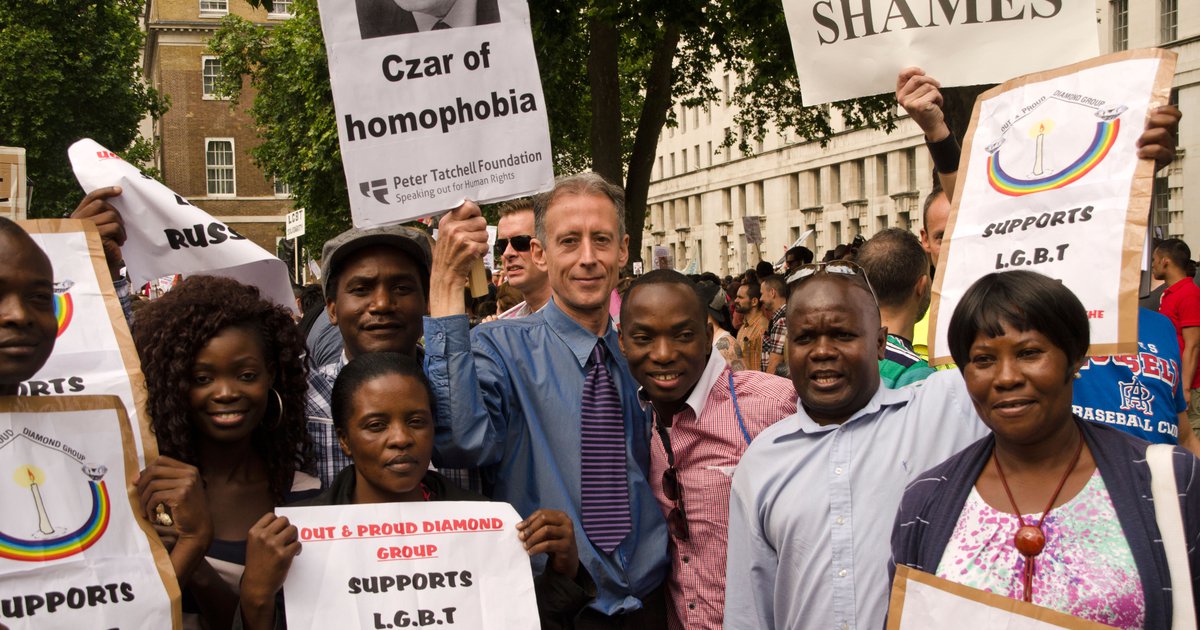
LGBT people around the world do not owe their freedoms to Peter Tatchell – but if you watched Netflix’s new documentary, you might think they do.
‘Hating Peter Tatchell’, released last month with the backing of Elton John, tells the story of the celebrated – and controversial – British LGBT rights activist and his campaigning over half a century. But by excluding diverse voices and crucial context, the film fails to reflect the wider story of this period – and unfortunately presents Tatchell as a sort of ‘white saviour’ rescuing queer people everywhere.
This could have been a much richer and more empowering film. Instead, watching it left me frustrated for three main reasons.
1. Missing voices
An almost entirely white and male British cast of interviewees, including famous gay actors Stephen Fry and Ian McKellen, reflect on Tatchell’s 50-plus years of campaigning and civil disobedience for LGBT rights in the UK and internationally.
We hear Tatchell talk about his protests in more than a dozen countries, and watch as he prepares to travel to Russia ahead of the 2018 football World Cup, to draw attention to Putin’s anti-LGBT policies. But we hear very little from the people he defends. Grassroots victories are eclipsed by British celebrities’ second-hand stories.
Who explains the human cost of the backlash against sexual rights in Putin’s Russia? Fry. Russian LGBT people appear in footage of arrests and homophobic assaults. But they are in the background, as if they are only props in Tatchell’s story. The only Russian activist we hear from is thanking Tatchell for his help.
2. Missing context
The 1980s was a “horrendous period” for LGBT people in the UK, Tatchell recalls. The HIV epidemic escalated anti-gay discrimination, while Margaret Thatcher’s Conservative government introduced Section 28, a law that banned the so-called ‘promotion’ of homosexuality in schools. “Police were persecuting us, not protecting us,” Tatchell says, referring to the surge in arrests of gay and bisexual men.
What’s missing here is any reflection of racial justice struggles at the time. In the 1980s, to expect police protection was a privilege not shared by all. The black civil rights movement is cited only briefly, when we hear Tatchell say it inspired him and that he “adapted their ideals, values and methods to my own human rights work”.
There’s no mention of how anti-LGBT discrimination intersects with racial or gender-based oppression, which continues to leave black trans women particularly at risk of violence. Also pushed off screen are other UK civil rights struggles that took off in the 1980s, from disability rights to industrial action by miners.
3. White saviourism?
In 2001, Tatchell ambushed the Zimbabwean dictator Robert Mugabe in a hotel lobby, attempting a dramatic citizen’s arrest on ‘charges’ of torture. “Zimbabwean human rights defenders asked if I would try and do something to raise international awareness about the abuses of the Mugabe regime,” he explains in the film.
As with its coverage of Tatchell in Russia, the documentary gives us only one scene in which we hear directly from the Zimbabwean activists. And again, it is a clip in which local campaigners are thanking the white British man. The work they have done over the years to fight for their rights in their own country is entirely invisible.
In another scene, we see Tatchell campaigning outside a London mosque. “We’re trying to encourage solidarity between Muslim people and gay people,” he explains. There are numerous groups in London led by people of colour that are building such solidarity within their own communities – but you wouldn’t know it from the film.
Jerusalem Chief Rabbi Shlomo Amar, the former Sephardic chief rabbi of Israel, used harsh language to describe the LGBT community in Israel last week.
During a sermon on Thursday, the day of the Jerusalem Pride Parade, Amar compared the LGBT community to animals and mocked religious participants who take part.
“They did the abomination parade, which they are supposedly proud of,” Amar said in remarks first reported by the Kan public broadcaster. “Wild animals don’t behave this way,” he added.
“We have reached this disgrace, this debasement, this corruption, that there are people who are called religious, who wear a kippa” who take part in the parade, Amar said. “If only they would take it off, if only they would eat pork rather than do this action.”
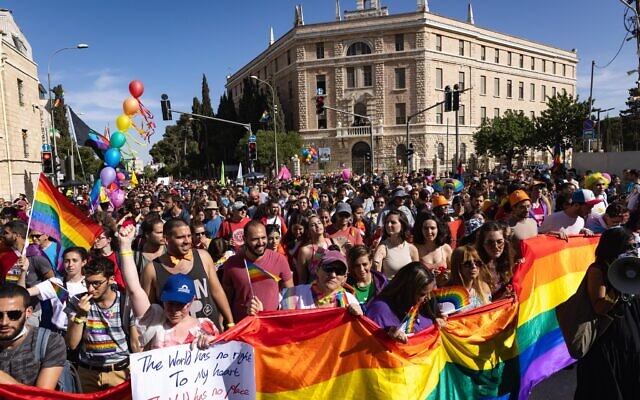
Thousands of people take part in the annual Gay Pride Parade in Jerusalem, June 3, 2021. (Olivier Fitoussi/Flash90)
Alon Shachar, the executive director of the Jerusalem Open House for Pride and Tolerance, slammed Amar’s remarks.
“Jerusalem Chief Rabbi Amar chose to incite against and demean the LGBT community, instead of sending a message of tolerance and inclusion,” said Shachar. “The abomination here is not the parade, but the tenure and oppressive positions that Amar expresses.”
Shachar said there is “no place in Israeli public life for a chief rabbi who holds these views, even less so one whose job is funded by taxpayers.” He invited Amar to march with the Jerusalem Pride Parade next year: “If only spiritual leaders like Rabbi Amar could engage in bringing people together with love instead of inciting them with hatred.”
“There are people who call themselves religious who also fell into that trap,” he said at the time in reference to gay people. “They aren’t religious. It would be better if they cast off their kippah and Shabbat [observance] and show their true faces… With their bodies they sin against the Jewish people,” he said, using a Talmudic phrase meaning they are irreligious.
Some 7,500 people marched in Jerusalem’s annual pride parade Thursday evening, chanting for equality and holding aloft brightly painted signs supporting LGBT rights. More than 3,000 police officers secured the highly charged event, six years after a deadly attack on participants.
Right wing activists demonstrate against the annual Gay Pride parade in Jerusalem, on June 3, 2021. (Noam Revkin Fenton/Flash90)
The event demanding LGBT equality began with a ceremonial prayer for Shira Banki, who was stabbed to death by an ultra-Orthodox extremist during the 2015 parade when she was 16 years old. As thousands filled the capital’s streets, a small demonstration protesting the parade was held by members of the far-right and anti-gay Lehava organization.
Many streets in the capital’s city center were closed and the thousands of police officers on duty secured the parade’s route. The 2.5-kilometer (1.55 miles) march, from the city’s Liberty Bell Park to Independence Park, began at 2:30 p.m., signaling the start of pride month events in Israel.
The annual event is a highlight for the city’s vibrant LGBT community, which is often overshadowed by Tel Aviv’s gay-friendly persona and beset by religious and political tensions ever-present in the capital.
SPRINGFIELD — Columbiana High School graduate and Kent State junior golfer Jared Wilson gave it good shot Monday.
Wilson was among 685 players seeking 54 spots in nine qualifiers across eight states to fill the field for the U.S. Open, which starts June 17 at Torrey Pines in San Diego.
A two-time Ohio high school state champion in 2016 and 2017, Wilson was seven strokes from a U.S. Open spot at the Springfield Country Club in Ohio.
He shot a 144 with rounds of 73-71 to tie for 30th place. Wilson was 4-over par, including 3-over for the the last seven holes. He tied for third among amateurs.
Wilson won a local qualifying tournament at Beechmont Country Club near Cleveland on May 4.
Sahith Theegala gained the seventh and final U.S. Open berth (137). Other qualifiers from Springfield include Carson Schaake (131), Robert Shelton (134), Bo Hoag (134), Brian Stuard (135), Troy Merritt (135) and Dylan Meyer (137). Hoag tied for 13th at the Memorial in Columbus on Sunday.
Schaake also was medalist at his local qualifying and will be making his Open debut.
“I need to get ready for Torrey,” he said. “There’s some mammoth holes out there. I’ve got to get my game in shape, but I’m ready for it.”
Already facing a long day, Rickie Fowler found the road even tougher Monday in 36-hole qualifying as he tried to avoid missing the U.S. Open for the first time in 11 years.
He played his opening round at Brookside in 1-over 73, which was halted for three hours because of heavy rain and thunder, meaning he likely would need at least a 65 at The Lakes to have any chance.
Fowler wasn’t going down without a fight. He was 4 under for his round — 3 under for the qualifier — through 13 holes when it was too dark to continue because of the rain delay.
As if the longest day wasn’t long enough, Fowler and several others had to return Tuesday morning. Fowler probably needed at least three birdies over his last five holes to keep his hopes alive for returning to the U.S. Open.
Fowler is coming off a tie for eighth in the PGA Championship and a tie for 11th at the Memorial, his best two results of the year. He already has missed the Masters from falling well outside the top 50 in the world.
Chez Reavie was assured of getting through after rounds of 65-67.
Three-time major champion Padraig Harrington was on the bubble, needing at least two birdies over his last five holes. Former Masters champion Charl Schwartzel made a big surge, 6 under through 14 holes on his round at the tougher Brookside course and in reasonable shape to get one of the 16 spots in Columbus.
Former PGA champions Keegan Bradley and Jason Dufner each shot 72 at Brookside and finished at 5-under 131. That was tied for 16th, though likely to leave them out.
The delay caused other problems. The first round didn’t end until close to rush hour, and the courses are 13 miles apart. Fowler had to deal with traffic, leaving him time to park, grab a hot dog, hit a few putts and head back out.
Henry Lee of Canada was the last player to tee off. He had a half-eaten hamburger resting on his golf clubs as he teed off at 5:45 p.m.
Ohio had another qualifier an hour away in Springfield, which had no such weather delays.
Branden Grace went from a fourth-place finish at the Memorial to an early start in Jupiter, Florida, and he parred the final hole at The Bear’s Club to earn one of six spots available. Grace chose to play in Florida because it’s his home course.
Patrick Rodgers led all qualifiers in Florida. Also getting through was Luis Gagne, who shared low amateur honors in the 2018 U.S. Open at Shinnecock Hills.
Rick Lamb made an 8-foot birdie putt on the fourth extra hole — 40 holes for the day — to claim the fifth and final spot in Atlanta.
In the New York qualifier, Cameron Young led four players who earned spots. Young recently won back-to-back weeks on the Korn Ferry Tour. Another qualifier was Andy Pope, who now has qualified for the U.S. Open for the fifth time in his last six tries. Pope didn’t get a chance last year when the COVID-19 pandemic forced the USGA to do without qualifying.
Wilson Furr made it to his first U.S. Open when he least expected it. He played poorly while trying to qualify for the PGA Tour event this week at Congaree in South Carolina. He was an alternate for the U.S. Open qualifier at Long Cove Club in Hilton Head and thought about not even showing up. It was a good thing he did. Four players withdrew, and Furr had a tee time.
He had rounds of 67-70 and was among five players who earned spots. The last one went to Akshay Bhatia, who made a par on the second extra hole of a 3-for-1 playoff.
“I told my buddy last night, ‘If I get in this thing, I’m getting through,’” Furr said.
Taylor Pendrith of Canada tied for 23rd at Winged Foot last September in his U.S. Open debut and gets another crack at it. He led the four qualifiers at the Maryland site.
Joe Highsmith, part of Pepperdine’s national championship team last week, earned one of the two spots in Washington state. The other qualifier was in Los Angeles.
England did not have a qualifier this year because of travel restrictions related to the COVID-19 pandemic. The USGA instead created a special points list from the last three European Tour events. Marcus Armitage won in Germany and earned one of the 10 spots.
When the qualifiers are over, the U.S. Open will have 155 players. One spot is reserved in case a player were to win a second PGA Tour event since last June. Four players at the Palmetto Championship at Congaree had that chance — Brian Gay, Hudson Swafford, Martin Laird and Richy Werenski.
Laird was on the verge of making it through the Columbus qualifier.
Estate agencies still have a long way to go before LGBT staff feel it’s safe to reveal their sexuality, a leading former agent now working in proptech has said.
Michael Wood (pictured) is a member of LGBT+ property professional network Freehold who works for a leading property software firm but spent several years working at several high profile London estate agencies.
He says the ‘lad culture’ and inappropriate comments about gay people at some of these agencies meant he had to hide his sexuality before landing a job at an LGBT friendly employer.
“In my home country of South Africa it was normal to be out,” he says. “But arriving in London and beginning work at one estate agency pushed me back into the closet.
“Many of the people were very white, male and straight or at least that’s the way they portrayed themselves.
“The culture of making jokes – ‘oh that’s so gay’ type of thing made me, within the first day of arriving, decide not to reveal my sexuality, and also a manager made inappropriate remarks about ‘how gay’ a colleague was.
“I had to be careful about how I spoke about my personal life – and keep it general and high level. It wasn’t very LGBT friendly. It’s why I left that company.”
Wood says he finally found a more accepting culture at JLL. He says the company was proactive in promoting an internal culture of making LGBT colleagues feel comfortable and confident enough to speak up if necessary.
“But although I headed up several initiatives within the company including getting it into the Stonewall Top 100employers list which is compiled from the Workplace Equality Index, I was aware that the prejudice was still there and the unwanted comments were still being thrown around the office.
“They didn’t stop to think that some of their colleagues might be closet LGBT, which only reinforced an atmosphere where they didn’t want to come out.”
Wood says that, to create change, LGBT staff need allies within the workplace who are willing to stand up and call out bad behaviour.
“By not calling out stupid remarks, you’re contributing to the problem yourself,” he says.
“Until we all start doing that, we’re going to lag behind the rest of society.”
Rickie Fowler watches his putt on the first hole during the final round of the Memorial golf tournament, Sunday, June 6, 2021, in Dublin, Ohio. (AP Photo/Darron Cummings)
COLUMBUS, Ohio — Already facing a long day, Rickie Fowler found the road even tougher Monday in 36-hole qualifying as he tried to avoid missing the U.S. Open for the first time in 11 years.
Fowler was among 685 players seeking 54 spots in nine qualifiers across eight states to fill the field for the U.S. Open, which starts June 17 at Torrey Pines in San Diego.
He played his opening round at Brookside in 1-over 73, which was halted for three hours because of heavy rain and thunder, meaning he likely would need at least a 65 at The Lakes to have any chance.
Fowler wasn’t going down without a fight. He was 4 under for his round — 3 under for the qualifier — through 13 holes when it was too dark to continue because of the rain delay.
As if the longest day wasn’t long enough, Fowler and several others had to return Tuesday morning. Fowler probably needed at least three birdies over his last five holes to keep his hopes alive for returning to the U.S. Open.
Fowler is coming off a tie for eighth in the PGA Championship and a tie for 11th at the Memorial, his best two results of the year. He already has missed the Masters from falling well outside the top 50 in the world.
Chez Reavie was assured of getting through after rounds of 65-67.
Three-time major champion Padraig Harrington was on the bubble, needing at least two birdies over his last five holes. Former Masters champion Charl Schwartzel made a big surge, 6 under through 14 holes on his round at the tougher Brookside course and in reasonable shape to get one of the 16 spots in Columbus.
Former PGA champions Keegan Bradley and Jason Dufner each shot 72 at Brookside and finished at 5-under 131. That was tied for 16th, though likely to leave them out.
The delay caused other problems. The first round didn’t end until close to rush hour, and the courses are 13 miles apart. Fowler had to deal with traffic, leaving him time to park, grab a hot dog, hit a few putts and head back out.
Henry Lee of Canada was the last player to tee off. He had a half-eaten hamburger resting on his golf clubs as he teed off at 5:45 p.m.
Ohio had another qualifier an hour away in Springfield, which had no such weather delays. Carson Schaake finished at 9-under par to lead the seven players who advanced to Torrey Pines. Schaake also was medalist at his local qualifying and will be making his Open debut.
Branden Grace went from a fourth-place finish at the Memorial to an early start in Jupiter, Florida, and he parred the final hole at The Bear’s Club to earn one of six spots available. Grace chose to play in Florida because it’s his home course.
Patrick Rodgers led all qualifiers in Florida. Also getting through was Luis Gagne, who shared low amateur honors in the 2018 U.S. Open at Shinnecock Hills.
Rick Lamb made an 8-foot birdie putt on the fourth extra hole — 40 holes for the day — to claim the fifth and final spot in Atlanta.
In the New York qualifier, Cameron Young led four players who earned spots. Young recently won back-to-back weeks on the Korn Ferry Tour. Another qualifier was Andy Pope, who now has qualified for the U.S. Open for the fifth time in his last six tries. Pope didn’t get a chance last year when the COVID-19 pandemic forced the USGA to do without qualifying.
Wilson Furr made it to his first U.S. Open when he least expected it. He played poorly while trying to qualify for the PGA Tour event this week at Congaree in South Carolina. He was an alternate for the U.S. Open qualifier at Long Cove Club in Hilton Head and thought about not even showing up. It was a good thing he did. Four players withdrew, and Furr had a tee time.
He had rounds of 67-70 and was among five players who earned spots. The last one went to Akshay Bhatia, who made a par on the second extra hole of a 3-for-1 playoff.
“I told my buddy last night, ‘If I get in this thing, I’m getting through,’” Furr said.
Taylor Pendrith of Canada tied for 23rd at Winged Foot last September in his U.S. Open debut and gets another crack at it. He led the four qualifiers at the Maryland site.
Joe Highsmith, part of Pepperdine’s national championship team last week, earned one of the two spots in Washington state. The other qualifier was in Los Angeles.
England did not have a qualifier this year because of travel restrictions related to the COVID-19 pandemic. The USGA instead created a special points list from the last three European Tour events. Marcus Armitage won in Germany and earned one of the 10 spots.
When the qualifiers are over, the U.S. Open will have 155 players. One spot is reserved in case a player were to win a second PGA Tour event since last June. Four players at the Palmetto Championship at Congaree had that chance — Brian Gay, Hudson Swafford, Martin Laird and Richy Werenski.
Laird was on the verge of making it through the Columbus qualifier.
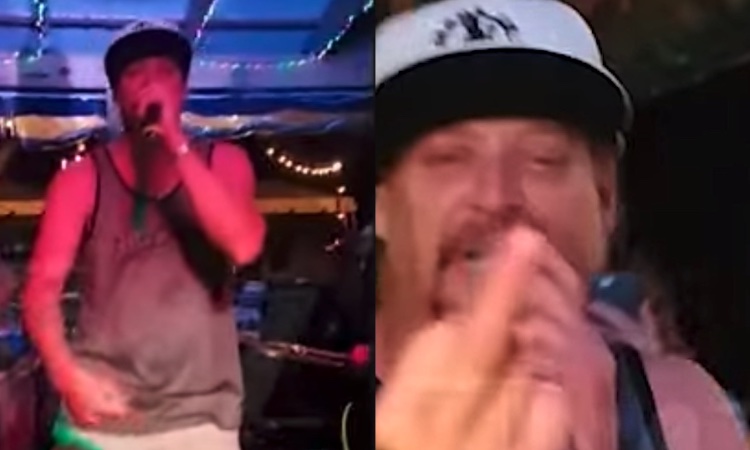
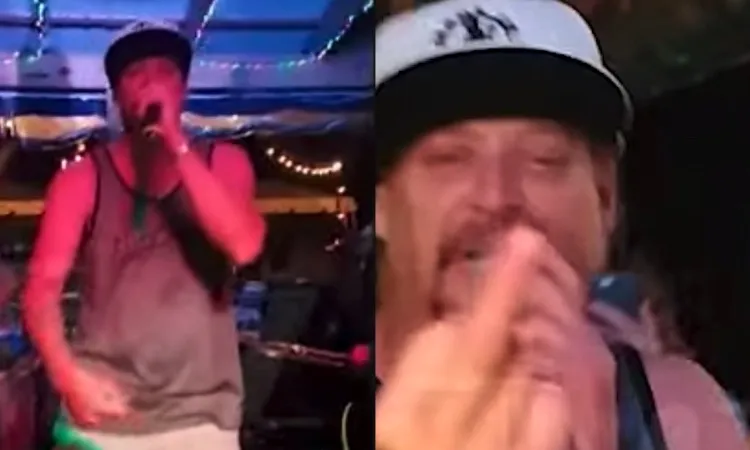
Grainy footage from Kid Rock’s performance at FishLipz Bar this weekend.
Kid Rock dropped a homophobic slur during a live show in Tennessee over the weekend — and didn’t seem too apologetic about it.
The slur was actually filmed by the person Kid Rock was ranting against, specifically for filming his performance on an iPhone. As revealed by — you guessed it — TMZ, the clip starts with Kid Rock railing against the attendee before calling him a ‘f—king f—got’ while grabbing his crotch.
The rant occurred at the FishLipz Bar & Grill in Smithville, Tennessee, which apparently had a no-smartphone filming policy (at least for that show). It’s unclear if that policy was being imposed by FishLipz Bar, Kid Rock, or both, though the blatant violation occurred just steps off the stage and led to the outburst.
“F—k your iPhone, yeah!” Kid Rock (whose real name is Robert Ritchie) started, while giving his middle finger to the camera during the middle of a song. Then, while grabbing his crotch, Kid Rock sang, “You can post this, you can post this, you can post this right here.”
Recognizing the juicy footage (that was later sent to TMZ), the person continued to film. Which of course led to more juicy footage. “You f—king f—gots with your iPhones out!” Ritchie continued. The episode sounds like classic Kid Rock, though the timing couldn’t be worse, occurring just one week into LGBT Pride Month. Whether Rock was aware of that celebration is unclear, though festivities and pride flags have been going full steam for at least a week.
Of course, this isn’t the first outburst from Ritchie, though it’s unclear if there will be ramifications this time around.
Back in 2019, the singer had some choice insults for Oprah Winfrey and Joy Behar during an extremely drunken performance at his Big Ass Honky Tonk Rock N’ Roll Steakhouse. The comments, which were profanity-laced and graphically sexual in nature, led to a massive backlash, including a public rebuke from the Michigan National Action Network. Kid Rock eventually shut down his Made In Detroit restaurant under heavy pressure.
For Ritchie, the latest incident also appears to be part of an ongoing tirade against political correctness. Back in 2015, the singer questioned why the using the word ‘gay’ in a derogatory sense was suddenly off-limits. “If someone says you can’t say ‘gay’ like that you can tell them to go f–k themselves,” Rock defiantly told The Guardian.
SPRINGFIELD — Columbiana High School graduate and Kent State junior golfer Jared Wilson gave it good shot Monday.
Wilson was among 685 players seeking 54 spots in nine qualifiers across eight states to fill the field for the U.S. Open, which starts June 17 at Torrey Pines in San Diego.
A two-time Ohio high school state champion in 2016 and 2017, Wilson was seven strokes from a U.S. Open spot at the Springfield Country Club in Ohio.
He shot a 144 with rounds of 73-71 to tie for 30th place. Wilson was 4-over par, including 3-over for the the last seven holes. He tied for third among amateurs.
Wilson won a local qualifying tournament at Beechmont Country Club near Cleveland on May 4.
Sahith Theegala gained the seventh and final U.S. Open berth (137). Other qualifiers from Springfield include Carson Schaake (131), Robert Shelton (134), Bo Hoag (134), Brian Stuard (135), Troy Merritt (135) and Dylan Meyer (137). Hoag tied for 13th at the Memorial in Columbus on Sunday.
Schaake also was medalist at his local qualifying and will be making his Open debut.
“I need to get ready for Torrey,” he said. “There’s some mammoth holes out there. I’ve got to get my game in shape, but I’m ready for it.”
Already facing a long day, Rickie Fowler found the road even tougher Monday in 36-hole qualifying as he tried to avoid missing the U.S. Open for the first time in 11 years.
He played his opening round at Brookside in 1-over 73, which was halted for three hours because of heavy rain and thunder, meaning he likely would need at least a 65 at The Lakes to have any chance.
Fowler wasn’t going down without a fight. He was 4 under for his round — 3 under for the qualifier — through 13 holes when it was too dark to continue because of the rain delay.
As if the longest day wasn’t long enough, Fowler and several others had to return Tuesday morning. Fowler probably needed at least three birdies over his last five holes to keep his hopes alive for returning to the U.S. Open.
Fowler is coming off a tie for eighth in the PGA Championship and a tie for 11th at the Memorial, his best two results of the year. He already has missed the Masters from falling well outside the top 50 in the world.
Chez Reavie was assured of getting through after rounds of 65-67.
Three-time major champion Padraig Harrington was on the bubble, needing at least two birdies over his last five holes. Former Masters champion Charl Schwartzel made a big surge, 6 under through 14 holes on his round at the tougher Brookside course and in reasonable shape to get one of the 16 spots in Columbus.
Former PGA champions Keegan Bradley and Jason Dufner each shot 72 at Brookside and finished at 5-under 131. That was tied for 16th, though likely to leave them out.
The delay caused other problems. The first round didn’t end until close to rush hour, and the courses are 13 miles apart. Fowler had to deal with traffic, leaving him time to park, grab a hot dog, hit a few putts and head back out.
Henry Lee of Canada was the last player to tee off. He had a half-eaten hamburger resting on his golf clubs as he teed off at 5:45 p.m.
Ohio had another qualifier an hour away in Springfield, which had no such weather delays.
Branden Grace went from a fourth-place finish at the Memorial to an early start in Jupiter, Florida, and he parred the final hole at The Bear’s Club to earn one of six spots available. Grace chose to play in Florida because it’s his home course.
Patrick Rodgers led all qualifiers in Florida. Also getting through was Luis Gagne, who shared low amateur honors in the 2018 U.S. Open at Shinnecock Hills.
Rick Lamb made an 8-foot birdie putt on the fourth extra hole — 40 holes for the day — to claim the fifth and final spot in Atlanta.
In the New York qualifier, Cameron Young led four players who earned spots. Young recently won back-to-back weeks on the Korn Ferry Tour. Another qualifier was Andy Pope, who now has qualified for the U.S. Open for the fifth time in his last six tries. Pope didn’t get a chance last year when the COVID-19 pandemic forced the USGA to do without qualifying.
Wilson Furr made it to his first U.S. Open when he least expected it. He played poorly while trying to qualify for the PGA Tour event this week at Congaree in South Carolina. He was an alternate for the U.S. Open qualifier at Long Cove Club in Hilton Head and thought about not even showing up. It was a good thing he did. Four players withdrew, and Furr had a tee time.
He had rounds of 67-70 and was among five players who earned spots. The last one went to Akshay Bhatia, who made a par on the second extra hole of a 3-for-1 playoff.
“I told my buddy last night, ‘If I get in this thing, I’m getting through,’” Furr said.
Taylor Pendrith of Canada tied for 23rd at Winged Foot last September in his U.S. Open debut and gets another crack at it. He led the four qualifiers at the Maryland site.
Joe Highsmith, part of Pepperdine’s national championship team last week, earned one of the two spots in Washington state. The other qualifier was in Los Angeles.
England did not have a qualifier this year because of travel restrictions related to the COVID-19 pandemic. The USGA instead created a special points list from the last three European Tour events. Marcus Armitage won in Germany and earned one of the 10 spots.
When the qualifiers are over, the U.S. Open will have 155 players. One spot is reserved in case a player were to win a second PGA Tour event since last June. Four players at the Palmetto Championship at Congaree had that chance — Brian Gay, Hudson Swafford, Martin Laird and Richy Werenski.
Laird was on the verge of making it through the Columbus qualifier.
SPRINGFIELD — Columbiana High School graduate and Kent State junior golfer Jared Wilson gave it good shot Monday.
Wilson was among 685 players seeking 54 spots in nine qualifiers across eight states to fill the field for the U.S. Open, which starts June 17 at Torrey Pines in San Diego.
A two-time Ohio high school state champion in 2016 and 2017, Wilson was seven strokes from a U.S. Open spot at the Springfield Country Club in Ohio.
He shot a 144 with rounds of 73-71 to tie for 30th place. Wilson was 4-over par, including 3-over for the the last seven holes. He tied for third among amateurs.
Wilson won a local qualifying tournament at Beechmont Country Club near Cleveland on May 4.
Sahith Theegala gained the seventh and final U.S. Open berth (137). Other qualifiers from Springfield include Carson Schaake (131), Robert Shelton (134), Bo Hoag (134), Brian Stuard (135), Troy Merritt (135) and Dylan Meyer (137). Hoag tied for 13th at the Memorial in Columbus on Sunday.
Schaake also was medalist at his local qualifying and will be making his Open debut.
“I need to get ready for Torrey,” he said. “There’s some mammoth holes out there. I’ve got to get my game in shape, but I’m ready for it.”
Already facing a long day, Rickie Fowler found the road even tougher Monday in 36-hole qualifying as he tried to avoid missing the U.S. Open for the first time in 11 years.
Fowler already missed the Masters this year after falling well outside the top 50 in the world.
He played his opening round at Brookside in 1-over 73, which was halted for three hours because of heavy rain and thunder, meaning he likely would need at least a 65 at The Lakes to have any chance.
Branden Grace went from a fourth-place finish at the Memorial to an early start in Jupiter, Florida, and he parred the final hole at The Bear’s Club to earn one of six spots available. Grace chose to play in Florida because it’s his home course.
Patrick Rodgers led all qualifiers in Florida. Also getting through was Luis Gagne, who shared low amateur honors in the 2018 U.S. Open at Shinnecock Hills
The delay meant the Columbus qualifier, the largest of the nine sites that featured the most PGA Tour players, would not finish until Tuesday morning. Chez Reavie was firmly in front and likely to finish before darkness.
Three-time major champion Padraig Harrington was right on the bubble heading to the back nine at The Lakes, while others trying to get through included former PGA champions Keegan Bradley and Jason Dufner.
The delay caused other problems. The first round didn’t end until close to rush hour, and the courses are 13 miles apart. Fowler had to deal with traffic, leaving him time to park, grab a hot dog, hit a few putts and head back out.
Henry Lee of Canada was the last player to tee off. He had a half-eaten hamburger resting on his golf clubs as he teed off at 5:45 p.m.
Ohio had another qualifier an hour away in Springfield, which had no such weather delays.
Wilson Furr made it to his first U.S. Open when he least expected it. He played poorly while trying to qualify for the PGA Tour event this week at Congaree in South Carolina. He was an alternate for the U.S. Open qualifier at Long Cove Club in Hilton Head and thought about not even showing up. It was a good thing he did. Four players withdrew, and Furr had a tee time.
He had rounds of 67-70 and was among five players who earned spots. The last one went to Akshay Bhatia, who made a par on the second extra hole of a 3-for-1 playoff.
“I told my buddy last night, ‘If I get in this thing, I’m getting through,’” Furr said.
Taylor Pendrith of Canada tied for 23rd at Winged Foot last September in his U.S. Open debut and gets another crack at it. He led the four qualifiers at the Maryland site.
Qualifiers in New York and Atlanta were being decided in playoffs, with two more on the West Coast in Los Angeles and Washington state.
England did not have a qualifier this year because of travel restrictions related to the COVID-19 pandemic. The USGA instead created a special points list from the last three European Tour events. Marcus Armitage won in Germany and earned one of the 10 spots.
When the qualifiers are over, the U.S. Open will have 155 players. One spot is reserved in case a player were to win a second PGA Tour event since last June. Four players at the Palmetto Championship at Congaree had that chance — Brian Gay, Hudson Swafford, Martin Laird and Richy Werenski.
Laird was still in the mix at the Columbus qualifier.
LGBTQ legislators in Colorado have a message for you: Black and trans lives matter. As Republican-led statehouses across the nation seek to gin up controversy around transgender youth, state representatives Leslie Herod and Brianna Titone continue to push progressive legislative change in Colorado, from a first-in-the-nation policy that ended qualified immunity for police to becoming the 11th state in the nation to ban the gay panic defense. We asked them both what’s next for LGBTQ rights, what drives them, and what leaders inspire them today.
Representative Leslie Herod is a member of the Colorado House of Representatives serving the 8th district. Photo courtesy of Caring For Denver
Leslie Herod
5280:We’re coming up on one year since the passing of Colorado’s historic Enhance Law Enforcement Integrity bill, which brought sweeping reforms to policing in Colorado. What are your thoughts, a year after it was signed into law? Leslie Herod: Last year was a year of reckoning for Colorado; for Black folks, people of color, as well as white folks who are dealing with their whiteness in this country. But people are still dying. And so a year later, I look back on that bill and think, That was great work, but there’s more work to do in the movement for Black lives. It’s not just about law enforcement accountability; it’s also about humanizing Black people, seeing our humanity, having compassion for our communities and celebrating us. This country is not quite there yet, so we have so much more to do. And so the bill has given us momentum to continue the work of dismantling so many aspects of white supremacy that this country was built on.
Where do you think Colorado is in the fight for LGBTQ rights and equality? As the chair of the Black Caucus and a member of the LGBTQ Caucus, I do feel like our struggles are very different, but for me and others, they are intersectional. I believe the LGBTQ movement has made progress, so much so that we’re able to talk about more complex issues. So it’s not just about marriage equality or non-discrimination. It’s about asking questions on a deeper level. How does anti-bullying legislation affect the school to prison pipeline? Have we, as legislators, made the right decisions, or do we need to bring in more diverse and dynamic conversations to get there? I’m concerned that some in the LGBTQ movement feel like their work is done, and it’s not. We still have far too many homeless youth on the streets and too many LGBTQ people who are incarcerated or who are underemployed or unemployed. We don’t talk enough about stigma, around HIV or sex work. And so I think one of my roles is to really push those conversations. So when we talk about liberation, we should talk about it in the sense of liberation for Black folks, but also as true liberation for the entire LGBTQ community, and we’re not there yet.
Speaking of stigma, last year Governor Jared Polis signed into law the HIV Infection Prevention bill, expanding access to pre-exposure prophylaxis, or PrEP, which is a daily pill for HIV-negative people to prevent HIV infection. The bill removed one crucial barrier, allowing pharmacists to consult and prescribe it to those who seek it out. Why didn’t we hear much about that? What I found interesting with the PrEP issue is that because I chose to sponsor it—as a member of both the Black and queer communities, it kind of became something that people couldn’t argue against. The question never was whether it would pass or not, but instead it was making sure the policy was nuanced. We know that lack of access to PrEP is structural, but also deeply stigma-based. And I think having a Black queer person leading the effort helped. Having a gay governor didn’t hurt, either.
Attempts to rollback trans rights are sweeping statehouses across the country. What have your conversations been like with colleagues from across the aisle? First, I will say that’s a nonstarter in Colorado. We will not be rolling back any efforts to ensure that LGBTQ people are able to live their full and vibrant lives in the ways that they choose to. Second, I’m familiar with a white conservative Republican who proposed a bill that targeted LGBTQ youth and their access to mental health care. I remember being disappointed because I considered this colleague a friend. I never said anything to him. I figured, Hey, he believes what he believes. I continued to work with him on other issues. Later, I received a letter from him apologizing for supporting a bill that caused so much hurt. He said it was his biggest mistake in all his time as an elected official. That had a huge impact on me because it shows that we never know who we’re moving. It’s not my intent to always try to fight or move transphobic, homophobic people. I want to make sure the policies are right, and get the votes how I get them, but I’m not going to argue with you about whether or not I deserve to live or to exist, or love who I want to love. I think that also shows why we have to be at the table. It’s about who changes just by getting to know us.
Why have kids figured so prominently in recent pushback against transgender rights, including bills prohibiting trans girls and women from participating in sports? I think it’s a tactic they found that works by making people feel like they’re not really transphobic or homophobic, they’re just doing what’s right for their children. It’s similar to the bathroom panic, but now they’re saying that your kid will lose out on sports, and I think they’re finding an opening there for conversations with folks who are protective of their children. But we’re also seeing more trans youth come out younger and it’s hard for them. Not only do we have to think beyond just fighting bad policies, we need policies in place to support these youth with mental health and protection from bullies. Since COVID-19 shifted classes online, trans youth are feeling safer in those virtual environments than they did in their schools. That should be a red flag to us all that we need to do more work.
What does it mean to you to be a queer person of faith? My faith is what grounds me and gives me hope in the future. I’m lucky to belong to the Episcopalian Church here in Denver, where my pastor is a Black gay man. I had not experienced that before, and I’m proud to see Colorado moving in that direction. I feel like my faith helps me to check in with myself around what true equity is; what it means to treat your neighbor as yourself. I want to walk in a way that sees the good in people, lifting up those who others will leave behind. That’s what centers my work and pushes me forward to fight for queer kids or folks with disabilities. It’s where my conviction to say, Stop shooting people on the streets and make sure that the unhoused are housed, comes from. My faith offers me time, solitude, and reflection, so that I can do my job better and become a better person.
What leader or icon do you find yourself thinking about most these days? I feel Maxine Waters has really become a queer icon. Auntie Maxine is rockin’ it out and just being like, Here’s who we are, here’s what we’re doing, and we will fight for everybody, unapologetically. I’m so in love with that! And then Kehlani, because…neck tattoos and rainbow hair. I’m just loving her journey on TikTok. It’s hilarious and so fascinating!
Favorite queer bar to frequent? I’ve got to tell you, Denver is missing a BIPOC-centered hangout. In my younger days, I used to go to 60 South and do drag. It was a whole community and I’m hoping that we can build something like that again for the younger folks.
Representative Brianna Titone is a member of the Colorado House of Representatives serving the 27th district. Photo courtesy of Ashleigh Vlieger
5280: We’re coming up on one year since the passing of the Gay or Transgender Panic Defense Bill. (The bill bars defendants from blaming their violent acts on their victims’ sexual or gender identities.) As one of the bill’s sponsors, what are your thoughts on the legislation one year since its passage? Brianna Titone: It’s hard to say what kind of direct impact a bill like this is going to have, because if people aren’t able to use that defense anymore, we’re not going to see it show up. But I know for a fact that when I discuss this particular topic to LGBTQ youth, they’re really excited that here in Colorado, they feel more protected, and a bit safer. So it definitely was well received in the community, for sure. And since that bill passed, a couple other states have brought forth similar legislation. I’ve worked with Virginia House Delegate Danica Roem on her bill (which passed in April) and with Vermont state Representative Taylor Small on one that just passed on May 5. Colorado showed them how bipartisan this kind of protection can be.
What’s next for Colorado in the fight for transgender rights? There are a lot of things, document wise, that still haven’t been fully addressed, specifically in Jude’s Law. Marriage certificates are one of them. So, say you’re married to your partner, and later you come out as being trans, a [new] marriage certificate is usually issued, but it dates the marriage as beginning on the new date that you received it. It essentially erases your marriage to that person prior to their coming out, because it doesn’t have the original data on it. Some people may think, Well, who cares? But to a lot of people, it’s a big deal. So there’s a few things like that.
In terms of health care coverage, trans people have been fighting for mandated insurance coverage for facial feminization surgery. [Insurance] argues that the procedure is purely cosmetic. But really it’s about safety for trans people who don’t want to stand out. If they have a very masculine face, they want to soften it to avoid standing out and they aren’t targeted. When they walk into a job interview, they’re going to be treated a little more fairly. If they’re on the street, they’re probably not going to get harassed by people as much. Colorado has done a pretty good job addressing health care and workplace discrimination. We’ve done almost everything. Now we’re just trying to identify where we need to fill the gaps at this point.
LGBTQ organizations in Colorado have described 2020 as a landmark year for pro-LGBT legislation. What do you make of the backlash this year, as more than 30 states have introduced more than 100 bills meant to curb transgender rights? The whole climate of politics has become hostile. And it’s gone to these really divisive places that pit people against one another. This particular issue around trans people is an easy fight to pick because there’s not a lot of trans people in elected office and at the table. [Colorado Republicans] did try the same kinds of stuff last year here and they didn’t do it again this year. I was kind of surprised that they didn’t rerun those bills, again, being that everybody else across the country has. But these kinds of things aren’t new, they’re recycled tactics dating back to the 1950s and ’60s, when it was gay men who were the targets of discrimination and police harassment. The Stonewall uprising was a response to that. And then it was about lesbian people in your locker rooms. And when lesbian people were largely accepted, they made trans people the enemy.
Why are lawmakers so concerned with trans youth specifically? There’s a surge of young people coming out as trans, not because it’s popular or cool. It’s because there’s people like Laverne Cox and Danica Roem and me, to a lesser degree. We’re being visible and making people feel safe to want to come out. And because people feel like they can, because they have allies who are fighting for them, and people like them, who are starting to become elected officials or doctors or teachers and everything else, those young trans people feel they don’t have to be afraid of who they are anymore. And since that movement has started, these old tropes emerge. An attack on trans youth in any place is an attack on trans youth everywhere, and I’m not going to stand for that. And it’s really so sad that these kids who just want to live their lives are being used as political pawns right now.
What does it mean to you to be a queer person of faith? As a kid growing up in the Catholic Church, the positive messages of ‘Love your neighbor’ and ‘Jesus is love’ got ingrained in me. I subscribe to that in my life. But the Catholic Church has demonstrated over the years that they don’t like LGBTQ people, they don’t like trans people; how can you possibly go along with something that’s contradictory to what the teachings are? I’ve been thinking a lot about the way Native American people have looked to the Earth and their environment as being a part of what God is. My wife is Jewish, and I participate in those religious ceremonies with her. I also appreciate the Interfaith Alliance of Colorado for making faith more inclusive in the way I think it should always be.
How does that inform your response to political arguments like religious freedom? On Trans Day of Visibility, I brought the first trans person to lead prayer on the floor of the General Assembly. I thought that was very important because a lot of LGBTQ people, especially trans people, are finger-pointed to be godless people. And that’s not true at all. People can be trans and be leaders in the faith community. But when I brought Nicole Garcia [the first Latina transgender person to be ordained as pastor in the Evangelical Lutheran Church of America] to the chamber to lead the prayer, many Republicans just left the room. That showed a kind of hypocrisy of liking your religion but not anybody else’s. Religious freedom does not give people carte blanche to force other people to do what their religion dictates. But that’s what a lot of people in religious groups would like to think. And because they have a lot of power in governments all across the country, including the federal government, they believe that they can dictate their religious values on everybody. That’s not what religious freedom is really about in the Constitution. It’s about you being able to have your religion the way you want, and me being able to have a religion that I want. And that’s fine. But my religion and my existence as a trans person doesn’t impinge on your ability to practice your faith.
What leader or icon do you find yourself thinking about most these days? Vice President Kamala Harris is somebody I’ve been thinking a lot about lately, especially since seeing her and House Speaker Nancy Pelosi standing behind President Joe Biden during a Joint Session of Congress. That was really inspiring, because she represents a lot of intersectional identities. And that’s an important step in opening the floodgates for even more diversity in political leadership.
Favorite queer bar to frequent? I don’t really go out much! New Image Brewing Company in Arvada. I used to have constituent events there and invite people down for a beer. One cool place in Denver is called Diebolt Brewery. They’re launching a new beer for Pride and donating proceeds to charities. I always appreciate that they take it upon themselves to go above and beyond to be really good allies. Trans people need allies more than ever, and when folks—especially business leaders—step up, it makes a big difference.
How do you fix higher rates of substance abuse and mental health issues among queer young people? The Youth Pride Coalition’s new Pride Toolkit is a good place to start.
Tiny La Grange, Texas—population 4,632—offers its young residents only a fraction of the extracurricular activities of, say, nearby Austin. Nevertheless, teenager February Hall discovered connection and community through the Boy Scouts of America, achieving the rank of Life Scout (the notch below Eagle). Then Hall came out as bisexual, and their troop expelled them.
Announcing their sexuality cost Hall, who is also transgender, their church and other social supports, too. Soon, Hall says, “I could only find community sharing cigarettes and getting my hands on any substance available.”
Now in recovery, Hall, 25, has since moved to Colorado, where they lead an opioid-prevention program for AmeriCorps in Boulder—and, for the past two years, has helped the Youth Pride Coalition (YPC) address substance abuse and mental health among LGBTQ youth in the Denver area, a mission that’s resulted in a new Pride Toolkit designed to help adults shape a safe community for queer and questioning kids. “All of my teenage experiences,” Hall says, “contribute to my work with the Pride Coalition.”
Created five years ago through a Colorado Department of Public Health and Environment (CDPHE) grant, the YPC is officially part of Denver Public Health. Doled out over five years in annual installments of $330,000 (some of the money also goes toward another, unrelated initiative), the grant supports YPC’s efforts to prevent queer youth in the state from sliding into the substance-abuse and mental-health abyss. It’s a trap that ensnares young people in the LGBTQ community at a disproportionately higher rate—according to CDPHE’s 2019 Healthy Kids Colorado Survey, “gay or lesbian (14.8 percent) and bisexual (9.8 percent) youth are more likely to have used prescription pain medicine without a doctor’s prescription in the last month than heterosexual youth (6.1 percent).”
The same report noted that LGBTQ youth in Denver are more likely to report that a feeling of sadness or hopelessness has prevented them from participating in extracurricular activities—and far more likely to have considered attempting suicide during the previous year.
To decide on the best course of action, the YPC invited a spectrum of community members—from parents to nonprofit leaders to school staff—to join its board. Crucially, several young people joined, too, and were paid for their time. “We wanted to make sure that the people most impacted are the ones affecting the change,” says Jessie Shay, a local public health consultant, social worker, and member of the YPC coalition. “They knew what they needed.”
What they needed, it turned out, was what Hall had in the Boy Scouts, and lost when they came out: Supportive adults in extracurricular spaces—but ones who understand how to be LGBTQ-affirming (meaning they not only accept queer youths, but encourage their participation). Organizations such as the Denver nonprofit Art From Ashes, which teaches struggling young people how to express themselves through art, already excel at making all kids feel welcome, Shay says, but not all extracurricular leaders have developed those skills to facilitate better LGBTQ youth health.
Although efforts to assess the needs of queer youth have been stifled by a lack of data, some research does support the benefits of having supportive adults to turn to. In 2011 the Gay, Lesbian, and Straight Education Network (GLSEN), a New York City-based nonprofit, published a survey that included the positive impacts of supportive educators on LGBTQ students. Three-fourths of the kids who said they didn’t have supportive educators at school felt unsafe there; that number dropped to just half for the pupils who had many supportive educators (six or more) in their lives. The latter also felt more a part of the school community and exhibited higher academic aspirations.
What’s more, the survey found that schools with comprehensive policies that addressed bias-based bullying and harassment reported fewer incidents of homophobic remarks. Hopefully, the YPC’s work will expand those advantages beyond the walls of the classroom.
The YPC determined the best way to achieve universal support of queer youth at the extracurricular level would be to provide high-quality educational resources to adult leaders of existing organizations. So the board got to work assembling vetted information on gender-affirming organizations in Colorado, and its members pored over strategies and research on preventing LGBTQ youth suicide and bullying.
The result of all that research launched on June 1. The Pride Toolkit—which is intended primarily for adults who have a role in mentoring queer young people, such as teachers or coaches, but can be accessed and used by anyone—includes three parts. The first, “Queer Youth Support Database,” is a listing of 75 LGBTQ-supportive organizations in Colorado, from Mile High Behavioral Health, a behavioral health counseling network in Denver and Aurora, to the Denver Mayor’s LGBTQ Commission, which advocates for queer issues.
The second part of the Toolkit, “Strategies and Research: LGBTQ Youth Suicide and Bullying,” links to the CPDHE’s Maternal and Child Health program’s suicide and bullying prevention guide as well as research reinforcing the disproportionate trauma young queer people face. The third, “Resources for Working With LGBTQ Youth,” is a catchall for resources that don’t align perfectly with the first two, including links to GLAAD, the Human Rights Campaign, and One Colorado, an LGBTQ advocacy group in Denver.
Despite the Toolkit’s publication, however, YPC’s mission is just beginning. The group recently received another five-year grant from CDPHE to continue strengthening its resource network—because caring for Colorado’s most vulnerable is a continuous mission. “Prevention work is really, really slow,” Hall says. “It’s gradual. We just hope this Toolkit can be part of the process.”
Lots of parents today wouldn’t think twice about sitting their kids down in front of the Disney Channel or Cartoon Network. And that, conservatives warn, is exactly the problem. Like so many other moms and dads, they’re expecting the same kind of harmless storylines they watched in the ‘70s and ‘80s. What their children are seeing is anything but.
Say goodbye to the regular plot lines of “Blue’s Clues” and “Scooby-Doo”—and say hello to a 21st-century lesson in transgenderism, sex, homosexuality, nonbinaries, and drag queens.
That’s the new reality of radical programming on some of America’s favorite shows—especially, parents are discovering, during June, which is Pride Month. Loveable animals like Arthur and My Little Pony have been commandeered by the far left for lessons that would make most adults’ jaws drop.
In the latest example on “Blue’s Clues,” real-life drag queen Nina West sings a Pride Parade song to the tune of “The Ants Go Marching”—except the lyrics have been replaced with “LGBTQ buzzwords such as ‘ace’—which stands for ‘asexual’ —as well as ‘queer,’ ‘bi,’ ‘pan,’ ‘allies,’ and ‘kings and queens,’” TheBlaze warns.
Blue and friends watch their two-mom floats go by while rainbow and transgender flags dot the colorful landscape.
This is just the beginning of Nickelodeon’s full-blown assault on mainstream morality. “SpongeBob SquarePants” has already stepped into the LGBTQ world, so, according to TMZ, “it’s really not that much of a stretch for them to get Blue onboard, too.” The goal, the outlet says, is to take “proactive steps to teach kids about different family structures in a fun, catchy way that appeals to young children.” And unfortunately, these networks aren’t the only ones.
Breitbart ticked off 13 shows that are blatantly pushing this indoctrination on children, including some surprising favorites such as “Adventure Time” (Cartoon Network), “DuckTales” (Disney), “My Little Pony” (Discovery Family), “Arthur” (PBS), “The Loud House” (Nickelodeon), “Clarence” (Cartoon Network), “She-Ra and the Princesses of Power” (Dreamworks), “Andi Mack” (Disney), “Steven Universe” (Cartoon Network), “Star vs. the Forces of Evil” (Disney XD), and “Gravity Falls” (Disney).
And yet, despite this complete activist takeover of children’s programming, LGBT extremists still insist they have “a long way to go.”
“But at least nowadays,” their Pride websites brag, “there’s so much amazing LGBTQ+ representation in animated children’s shows, giving a whole new generation of young, queer kids the much-needed representation and visibility they need!”
Like so many other Netflix and PBS shows, producers seem dead set on turning wholesome, family friendly stories into a weapon of indoctrination. And they’re doing it under the guise of children’s programming. In the case of longtime favorites such as Disney and “My Little Pony,” beloved franchises are being distorted to promote a radical, 21st-century LGBT agenda.
So what can parents do? First off, don’t assume that any form of secular entertainment is safe from this type of storyline. Watch these programs with your kids if you can or check them out in advance. Click over to organizations such as the Parents Television Council, MovieGuide, or One Million Moms for resources or reviews.
But the most important piece of advice is this: Don’t take anything for granted. If you’re a mom or dad who’s concerned about the messages Hollywood is sending your kids, don’t assume that just because it’s the Disney Channel or because it’s called ABC Family or PBS, that the show is innocent or family friendly.
Especially in the month of June.
Originally published in Tony Perkins’ “Washington Update,” which is written with the aid of Family Research Council senior writers
The Daily Signal publishes a variety of perspectives. Nothing written here is to be construed as representing the views of The Heritage Foundation.
Have an opinion about this article? To sound off, please email [email protected] and we’ll consider publishing your edited remarks in our regular “We Hear You” feature. Remember to include the URL or headline of the article plus your name and town and/or state.
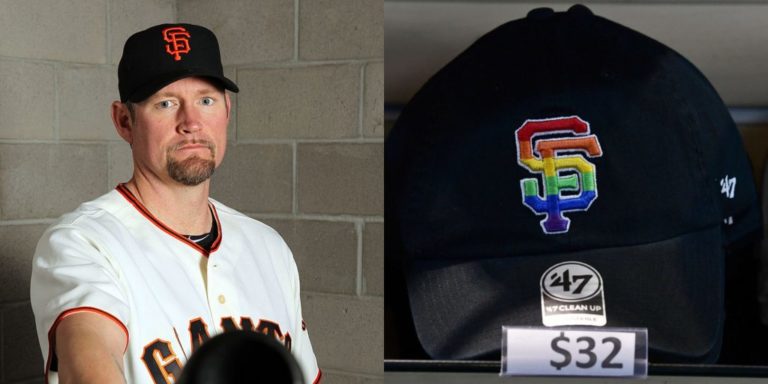
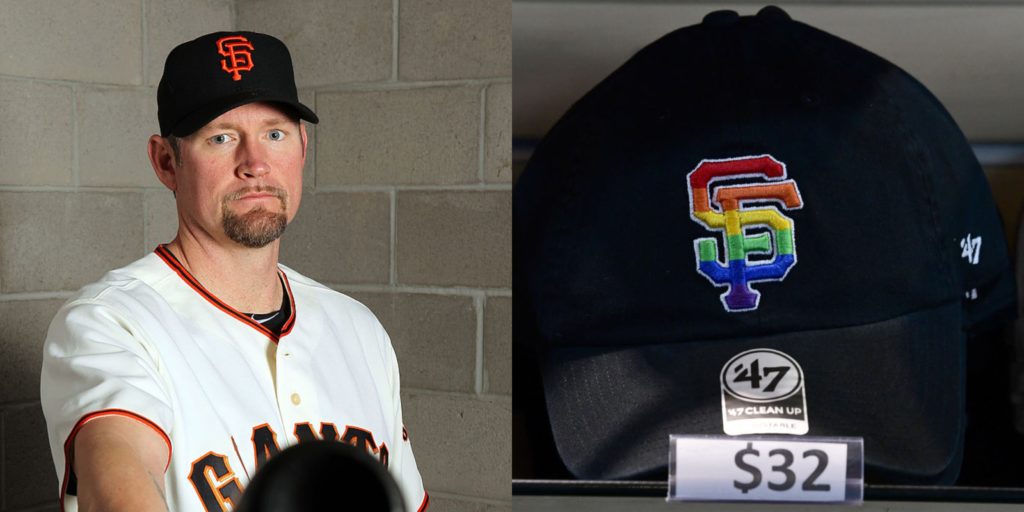
Last week, it was announced that the San Francisco Giants will become the first Major League Baseball team to play in Pride uniforms, which is what they did when they took on the Chicago Cubs over the weekend.
Manager Gabe Kapler told The Associated Press on Tuesday that he’s “very proud that the San Francisco Giants are taking this step.”
“Very proud to be part of it,” Kapler continued. “Looking forward to the impact and the support that we can provide for the LGBTQ+ community.”
It was a decision along with the Little League doing the same that really upset Aubrey Huff. What he said about it last week:
When @LittleLeague is promoting gay pride you know we are living in some fucked up times.
You want to be gay as an adult…go fucking nuts! But don’t subject innocent kids to this bullshit!
Highest suicide rates are amongst gay, & transgender youth!
As the Giants noted in a statement, “The 11 colors of the new Pride logo are emblematic of the Progress Pride Flag and signify inclusion and progression with the six pride colors – red (life); orange (healing); yellow (sunlight); green (nature); blue (serenity); purple (spirit); and black and brown to recognize LGBTQ+ people of color and light blue, pink and white to recognize people who are transgender.”
UK on Thursday: keep the peace in Ireland, Boris. Biden is expected to warn UK Prime Minister Boris Johnson not to implement Brexit in any way that establishes a hard border between Northern Ireland (which is part of the UK) and the Republic of Ireland which is an EU member. Doing so could jeopardize the increasingly fragile peace that has held there since the 1998 Good Friday accords. Johnson wants a juicy post-Brexit trade deal with Washington and can’t afford to ignore Biden’s warnings.
A G7 weekend: vaxes and taxes. Beyond the expected fence-mending with once-jilted allies, Biden is looking to rally rich countries to send more vaccines to low and middle-income countries — though the US itself has been slow to act. The group of the world’s seven most advanced democracies will also discuss ways to ensure broader adoption of their recent proposal to set a global corporate minimum tax, a vision pushed by Biden.
NATO summit: what’s it for? At the first NATO summit since 2018, members will be relieved to see a US president who doesn’t trash the value of the alliance itself, but more important is whether they can answer NATO’s existential question: what is the alliance’s mission for the 21st century? With the Afghanistan operation winding down, NATO is now crafting a new purpose as, variously, a cyber alliance, a climate security pact, and a cautious counterweight to China.
Bonus meeting! Talking Turkey. Biden will also sit down with Turkish President Recep Erdogan. US-Turkey ties are strained over Erdogan’s purchase of advanced weapons from Russia and US concerns about Ankara’s human rights record. Biden also arrives just weeks after recognizing the Armenian genocide, a move that enraged the Turkish government. But is there a way they can cooperate on Syria or post-withdrawal Afghanistan?
EU-US Summit: a foreign policy for whom now? At the first US-EU summit since 2014, the main focus will be trade and technology, two areas where Biden isn’t actually looking to snap back to pre-Trump norms. In fact, Biden has left in place Trump’s steel tariffs on the EU, in part because the “Kid from Scranton” has a lot of support from steel country. But more broadly, Biden is pushing what he calls a “foreign policy for the middle class” that will prioritize US companies, workers, and suppliers in ways that could rankle Europe. And there are ongoing disputes about transatlantic norms on digital privacy and taxation of tech companies.
Meeting with a “killer.” Expect an icy air when Biden closes his trip at a sit-down with Russian President Vladimir Putin, whom he has accused of murder. Biden has taken flak for meeting with Putin, particularly in the wake of several major recent crimes by criminal hackers that Washington says are based in Russia, and Moscow’s support for the Belarusian state hijacking of a Ryanair flight last month. But Biden’s team says they merely want a “stable and predictable” relationship with a cantankerous Kremlin: cooperating where they can, butting heads where they must.
Hanging over this entire trip will be two big issues.
First, China. Brussels and Washington agree on pushing back against China’s unfair trade practices and human rights abuses, and Biden — unlike his predecessor — wants to work with allies to shape a united front on that. And amid growing diplomatic tensions with Beijing, Europe recently stalled ratification of a massive and long-negotiated EU-China trade and investment pact that Washington doesn’t like.
But Biden has to tread carefully with European leaders, who are reluctant to be forced to “choose sides” in anything that looks like a new cold war. After all, many EU countries — particularly smaller and less wealthy ones — are eager to boost their economies with help from Chinese investment and technology.
Second, just how “back” is America really? The Europeans will be relieved to see Biden, but they’ll also be skeptical. The 2016 election showed how quickly things can change in US foreign policy. And while nobody knows the odds of Trump(ism) returning to the White House in 2024, in a deeply polarized United States where the former president is still popular, it’s entirely possible. Add the fact that it’s not clear who will be running Germany or France by the end of next year either, and you’ve got a lot of uncertainty hanging over the world’s most militarily and economically powerful alliance.
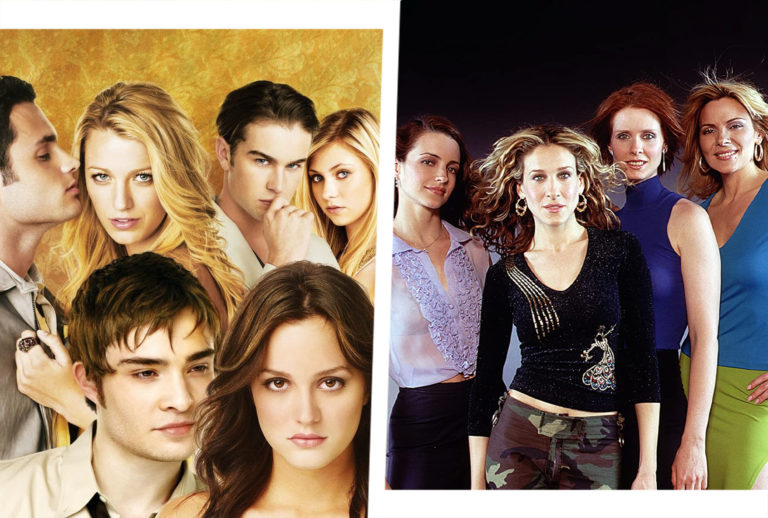
If the resurgence of popular ’90s and 2000s fashion trends hasn’t made it abundantly clear that this is the era of nostalgia, look no further than the much-hyped reboots of HBO’s “Sex and the City,” which ran from 1998 to 2004, and the CW’s “Gossip Girl,” from 2007 to 2013.
The “Gossip Girl” reboot is set to air next month, while the “Sex and the City” sequel series, called “And Just Like That,” has yet to receive a release date. Both shows will pick up years after where their original iterations left off, although unlike “And Just Like That,” the new “Gossip Girl” will feature an entirely new cast of actors and characters, attending the same elite private schools in the Upper East Side as their predecessors.
As two of the most iconic TV franchises set in New York City, both reboots could be some of the most hotly anticipated new shows this year. But as they relaunch in a transformed political and cultural milieu from when they first aired, both shows have their work cut out for them to not make the same mistakes on race, class, and other identity-related matters.
For those who haven’t watched the original “Gossip Girl,” which made stars out of main cast members Blake Lively, Leighton Meester, Penn Badgley, Chace Crawford, and others, I’ll let the summary of the series, from when the show was on Netflix, speak for itself: “Rich, unreasonably attractive private school students do horrible, scandalous things to each other. Repeatedly.” The “Gossip Girl” reboot takes place in the present day, 13 years after the show first aired, with a notably more diverse cast of fresh faces taking on the elusive Gossip Girl in the age of social media.
As for the original “Sex and the City,” the classic HBO series followed the unfiltered dating lives of four, 30something, female best friends living in New York City, each with personalities so distinct that more than 20 years since the show first aired, women around the world still identify as “Carries,” “Samanthas,” “Charlottes” or “Mirandas.” “And Just Like That” follows the women’s shared friendship now that they’re in their fifties — sans Samantha (Kim Cattrall), who has not-so-secretly been in conflict with Sarah Jessica Parker, who plays Carrie, for years.
What worked 15 to 20 years ago, however, isn’t necessarily going to work now — this means it will be crucial for both reboots to reconsider how they’ve previously portrayed matters of class, race, and gender and sexuality, and adapt to where we are today. Here are Salon’s hopes for how these shows can make the reboots fit our modern sensibilities.
Addressing their class privilege problems
If either reboot is going to make it in a time of increasingly — and justified — anti-capitalist sentiment, stemming from rising, massive economic inequities, they’ll have to sharply reexamine their portrayals of class from their original versions. The original “Gossip Girl” curiously functioned as both scathing critique and perpetuation of class privilege, somehow poking fun at and condemning the teens’ exorbitant wealth, while also calling on audiences to sympathize with them. The entire premise of “Gossip Girl” is to give ordinary people a glimpse into the lives of problematic, ultra-wealthy young people, and it certainly delivers. But there are a couple problems the reboot should avoid — namely, presenting rich people who do horrible things and get away with it as something we should cheer for. Think: Serena van der Woodsen’s (Lively) mother’s avoidance of prison-time for lying that a boarding school had raped Serena in season 4, or Chuck Bass (Ed Westwick) avoiding accountability for his creepy, predatory treatment of women and girls — whenever the main characters used wealth, privilege and connections to dodge accountability, this was treated as something fans should celebrate.
Another glaring blindspot of the original “Gossip Girl” is the portrayal of the Humphrey family as poor and relatable, despite how Dan (Badgley) and Jenny (Taylor Momsen) are the children of a former rockstar who can afford a giant Brooklyn loft. Hopefully, the new “Gossip Girl” will A) not glorify how economic privilege allows the ultra-wealthy to perpetually evade consequences, and B) accurately portray its token relatable, middle-class characters as actually middle class.
While “Sex and the City” wasn’t overtly about class privilege, the show’s premise certainly wouldn’t be possible without it. Charlotte (Kristin Davis) comes from tremendous generational wealth, while Carrie (Parker) simply has an unrealistic amount of money for a weekly newspaper sex columnist with some pretty asinine takes. Carrie is somehow able to afford hundreds of designer shoes from writing one article per week. Hopefully, “And Just Like That” will be more honest about the economic realities of working in media, and the infamous NYC cost of living.
We need stories that meaningfully tackle racial identity
When it comes to race and representation, both shows are glaringly nearly entirely white, a setup that’s no longer tolerated in 2021. While both reboots have announced the casting of several people of color, it will be crucial for these characters’ racial identities to be explored in a meaningful way beyond being token best friends. For example, in “Gossip Girl,” Chuck and Nate (Crawford) both have relationships with Raina (Tika Sumpter), a Black woman, but the implications of her identity in a predominantly white social scene are never even touched upon. Similarly, Vanessa (Jessica Szohr), a main character in the early seasons, is biracial, and her racial identity in a world of white wealth is never explored, either.
In “Sex and the City,” it’s simple: the show is about rich white women with rich white women problems. The few times the show wades into race are all cringe-inducing — especially in Season 3, when Samantha says, “I don’t see color. I see conquests,” of a Black man she’s interested in.
As the adaptation of Netflix’s “Bridgerton” showed, putting more characters of color on the screen doesn’t happen in a vacuum, and how the show deals with race is also crucial to better representation.
We need queer representation — and less problematic relationships, in general
On gender and sexuality, both original series are rife with their own problems they should take care to avoid in reboots. “Sex and the City,” in particular, was repeatedly biphobic, with Carrie dumping a male partner for being bisexual, and dismissing bisexuality as a new, young people’s trend. Later, the women are shocked and disapproving of Samantha’s relationship with a woman, and even initially dismiss it as a ploy for attention. In one Season 3 episode, Samantha misgenders and treats a group of neighborhood Black trans women particularly atrociously, supposedly for comedic effect. Meanwhile, the show’s sole, queer supporting characters are two rich, white men who are basically caricatures of ’90s and 2000s stereotypes about gay men.
To its credit, “Gossip Girl” portrays an openly gay leading support character (Connor Paolo) who’s fully embraced and supported by those around him, and has several normal, healthy romantic relationships. But to fully live up to where we are today, the “Gossip Girl” reboot should feature queer identity and relationships beyond the tangential — which its writers are already promising they’ll deliver. And, speaking of romance and relationships, hopefully the reboot will no longer romanticize adult men and even teachers dating or hooking up with high school students, this time around.
“Gossip Girl” and “Sex and the City” are two of the most well-known and beloved shows of the late ’90s and 2000s, synonymous with fashion, glamour and biting, witty dialogue. But both shows are also products of their time — a time of little to no quality representation of people of color and LGBTQ folks. But today, amid increasingly deadly wealth inequality, an uprising for racial justice, and rapid proliferation of anti-trans state legislation, these franchises can’t afford to make the same mistakes in their highly anticipated reboots.
“Gossip Girl” will begin streaming on HBO Max on July 8. HBO has yet to announce a release date for “And Just Like That.”
Some owners of D.C. gay bars have said Mayor Muriel Bowser’s announcement on May 10 that the city’s restaurants and bars could resume operations at full capacity and return to pre-pandemic operating hours on May 21 caught them by surprise.
After several months of business shutdowns followed by a partial reopening with strict limits of only 25 percent of the normal number of customers inside bars and restaurants, a ban on standing in bars or being served while sitting at a barstool, the mayor’s reopening order left many bars and restaurants short on servers and bartenders.
But nearly everyone associated with D.C. gay bars who spoke with the Washington Blade — including owners, employees, and customers — have said they were ecstatic to see a full reopening after more than a year of COVID-related restrictions and hardship.
“We didn’t really open at a 100 percent capacity,” said John Guggenmos, co-owner of the D.C. gay bars Trade and Number 9, immediately after Mayor Bowser issued her full reopening order. Like other bar owners, Guggenmos said Trade and Number 9 had to bring back employees who had to be let go due to the shutdowns and operating restrictions over the past year.
“But you know, seeing people again, hearing the stories of some of the struggles they went through, and our customers just talking to each other and saying how glad they are to be back gave us a sense of our community and how much we are more than just four walls and some chairs and music,” Guggenmos said.
Dito Sevilla, who works as bar manager at the 17th Street restaurant Floriana, and as longtime host of the restaurant’s lower-level space known as Dito’s Bar, said the May 21 lifting of COVID restrictions has returned business to pre-pandemic levels.
“We were not fully staffed on day one either,” Sevilla told the Blade. “Everyone had to work a little extra,” he said. “And that was OK with them because they had gone without working for so long that working some extra shifts that week wasn’t going to hurt anyone. They were thrilled to do it.”
Doug Schantz, owner of the U Street, N.W. gay sports bar Nellie’s, said he too was caught off guard by the short advance notice of the mayor’s May 21 full reopening of restaurants and bars but like other bar owners said he is pleased that the full reopening has come to D.C.
He said Nellie’s put in place a “soft” reopening on May 21, with operations limited to his second-floor space that has a roof deck and he continued to close at midnight instead of the resumption to normal closing times with the mayor’s order at 2 a.m. on weekdays and 3 a.m. on weekends.
Schantz said he timed his full reopening to take place this weekend to coincide with the kickoff of the city’s LGBTQ Pride events. And by July 1, he said, Nellie’s will resume its popular drag brunch.
“We’re taking it one step at a time, but so many people were happy to be back,” he said. “They want to be back to normal.”
David Perruzza, owner of the Adams Morgan gay sports bar Pitchers and its adjoining lesbian bar A League of Her Own, said he and his regular customers, many of whom continued to show up at the two bars during the height of the pandemic restrictions, are delighted over the full reopening. Like several of the other bar owners, Perruzza said he will continue to operate outdoor seating under the “streetery” program the city established when indoor seating was initially banned and later resumed at just 25 percent capacity.
One COVID-related rule remaining in place for bars and restaurants, which is expected to be lifted soon, is the requirement that bars and restaurants obtain a name and phone number for at least one person entering as part of a group and for each individual entering for contact tracing purposes in the event someone tests positive for COVID on the day the customer was present. The city’s Alcoholic Beverage Regulation Administration, which initiated the requirement during the height of the pandemic, was expected to end the requirement in the next few weeks, according to sources familiar with ABRA.
In addition to the full reopening of bars and restaurants on May 21, the city has cleared the way for the full resumption of large indoor and outdoor events on June 11, including parades and sports stadiums. That development has prompted D.C.’s Capital Pride Alliance, the group that organizes the city’s LGBTQ Pride events, to add to this week’s Pride events a June 12 Pride Walk, which will begin at Dupont Circle at noon and travel to Logan Circle before heading south to Freedom Plaza, where a rally will take place.
“The excitement has been palpable since bars and restaurants in D.C. recently reopened at full capacity and without limit or activity restrictions,” said Mark Lee, coordinator of the D.C. Nightlife Council, a local trade association representing bars, restaurants, and nightclubs.
“The enthusiasm is especially evident at LGBT venues, with long lines common after a long period of shutdowns and slowdowns,” Lee said. “The celebration will expand on June 11 when nightclub-licensed dance clubs fully reopen, and large music venues begin hosting tour acts and special shows in the coming days.”
But Lee said a “flip side” to the reopening celebrations is the reality that many bars, restaurants, and nightclubs must grapple with a massive debt burden of back-rent owed to landlords that threatens their survival.
Lee and others point out that the forced shutdowns and capacity restrictions that these mostly small businesses have faced during the pandemic resulted in a drastic reduction in revenue that forced them to rely on local D.C. and federal COVID moratoriums on evictions for commercial and residential tenants. With the moratoriums ending, the businesses must now repay the back rent owed that Lee says often exceeds $100,000 or more.
“That’s why the D.C. Nightlife Council and the Restaurant Association of Metropolitan Washington are urging Mayor Bowser and the D.C. Council to utilize a small portion of the city’s federal relief monies to create a Rent Relief Fund for local establishments facing unsustainable past-due lease obligations,” Lee said.
Perruzza said that in addition to facing back rent payments related to the pandemic, he and other bar and restaurant owners had to pay D.C. property taxes under their lease agreements at a time when their revenue was greatly suppressed from the pandemic. He said he believes he will be able to cope with the rental payoff, but the relief fund proposed by Lee and others would be immensely helpful for his and other struggling small businesses.
Bowser and members of the D.C. Council have said they were considering the relief proposal.
“We’re thankful for the support the community showed throughout the pandemic and the eagerness to want to get back to us,” said Guggenmos of Trade and Number 9. “We are thrilled and it’s great seeing everyone, but it doesn’t mean the sleepless nights are over,” he said in referring to the rental debt and other COVID-related expenses that his clubs continue to face.
Among the other D.C. gay bars whose representatives or customers said they are pleased over the reopening at full capacity include Uproar, Dirty Goose, JR.’s, Larry’s Lounge, Window’s, Annie’s Paramount Steakhouse, Duplex Diner, and Freddie’s Beach Bar in Arlington, Va.
Lee said the downtown D.C. nightclub Sound Check at 1420 K St., N.W., was scheduled to resume its weekly Avalon Saturday “gay” nights on June 12. Before being put on hold during the pandemic, the event featured drag shows and dancing.