Home Blog Page 106

Same-sex marriage sees record-high support in U.S., poll finds – CBS News

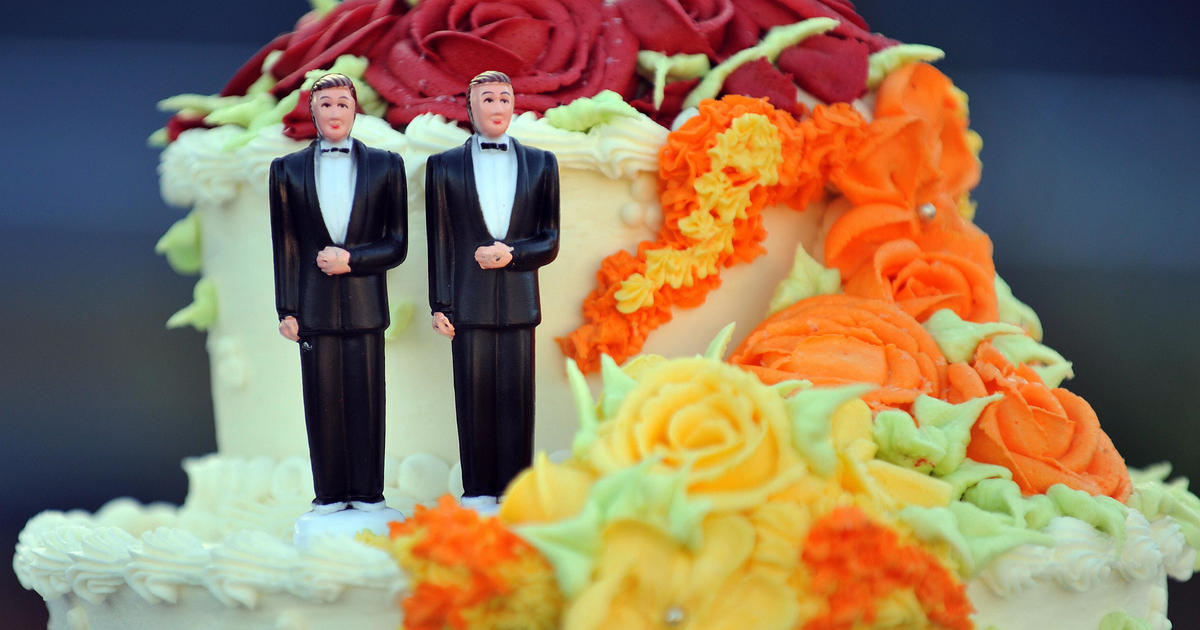
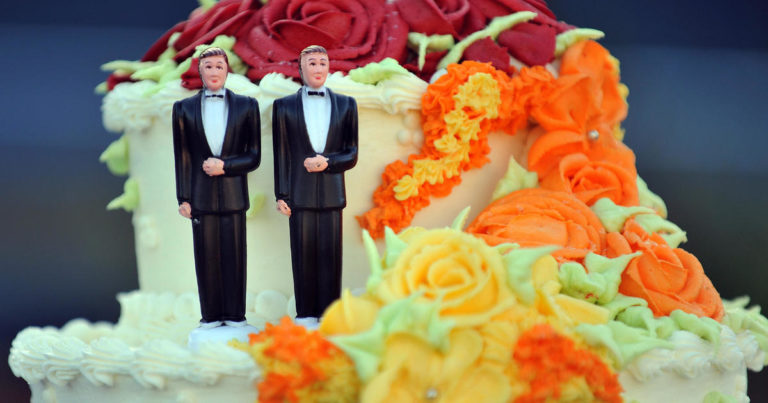
Support for same-sex marriage in the U.S. has reached a new high of 70%, according to a poll published Tuesday by Gallup. The percentage, which is the highest reported figure in the company’s history of conducting the poll, marks a 10-point increase from 2015, when the Supreme Court ruled for same-sex marriages to be recognized across all 50 states. 

“As more Americans see and know LGBTQ people and couples, they see our relationships are as loving, as valuable, and as worth protecting as any straight marriage,” Barbara Simon, the head of news and campaigns at the Gay and Lesbian Alliance Against Defamation (GLAAD), said in a statement. “It shows undeniable forward progress for LGBTQ acceptance.”

When Gallup first conducted its survey in 1996, only 27% of Americans said they believed marriages between same-sex couples should be recognized by the law as valid. Support has consistently increased over the years, and in 2011, the majority of Americans for the first time said gay marriage should be legally recognized. 

Gallup says the newest rise in support is largely driven by shifting views among Republicans. For the first time ever, Republicans, who have historically been the party group reporting the least amount of support for marriage equality in Gallup’s polls, showed majority favor with 55% in 2021. That’s a nearly 10% increase from last year, when only 44% of Republicans approved of legal recognition for same-sex marriage, the company reported. 

Eighty-three percent of Democrats, meanwhile, voiced support, maintaining a level seen in recent years. “This could suggest that support for gay marriage has reached a ceiling for this group, at least for now,” Gallup wrote. 

The data, which was calculated through a random sample of phone interviews with about 1,000 adults throughout the country last month, also showed that all age groups are the most supportive they have ever been. Young adults aged 18 to 34 had the highest number of supporters with 84%. Seventy-two percent of middle-aged adults between the ages of 35 and 54 were in favor, and 60% of older adults 55 and older said same-sex marriages should be legally recognized as valid. 

“Older U.S. adults, who were once holdouts in support for gay marriage, now come down on the same side of the issue as young adults,” the study stated. 

Earlier this year in a routine update from Gallup, 5.6% of U.S. adults reported that they identified as LGBT. Within the community, more than half identified as bisexual, a quarter said they are gay, 11.7% identified as lesbian, and 11.3% identified as transgender. One in every six adults born between 1997 to 2021 considered themselves to not be straight, the company found. 

Since the Supreme Court issued its decision in Obergefell v. Hodges in 2015, legislative challenges to marriage equality have relaxed, but other laws that affect the LGBTQ community have been introduced and passed throughout the country. Lawmakers in 27 states have proposed legislation that would ban transgender athletes from competing in school sports that match their identity, receiving backlash from advocacy groups who say the restrictions are unconstitutional. 

This month, the Senate may have a chance to pass the Equality Act, a House-passed bill that would enshrine legal security for LGBTQ Americans, including protections to cover federally funded programs, employment, housing, loan applications, education and public accommodations.

Simon of GLAAD said the country’s latest record-breaking support for marriage equality “should lead to the next obvious step to protect every LGBTQ American from discrimination in other areas of society” which would be enacting the Equality Act. 

“Historic support for our families should be a clear signal to every U.S. Senator that the time has come to pass the Equality Act,” Simon said. “The Senate should join the overwhelming majority of Americans in supporting laws that make our families and our country safer and stronger.”

Suze Orman: ‘Being Gay Has Been the Foundation of My Success’ – NextAdvisor

We want to help you make more informed decisions. Some links on this page — clearly marked — may take you to a partner website and may result in us earning a referral commission. For more information, see How We Make Money.

  • Tune in to NextAdvisor on Thursday, June 24 for a livestreamed interview with Suze Orman in celebration of Pride Month
  • The personal finance icon will open up about her experiences as a gay woman breaking into the misogynistic finance industry of the 1980s
  • She’ll also answer your burning money questions about saving, investing, crypto, and more

Suze Orman never wanted to be known as the lesbian money lady. 

“I wanted to be known as the money lady who was also a lesbian,” she says. “Big difference.” 

And she doesn’t tailor her financial advice for gay audiences. Whether you’re gay or not, she believes, the mechanics of saving, investing, and building wealth are the same. “Money has no sexuality, no preference, nothing,” Orman says. 

But her sexuality is hardly irrelevant. In fact Orman, now 70, says the strength she derived from being a gay woman was the most important factor in her unlikely rise from a 29-year-old waitress making $400 a month to one of the most powerful and influential voices in finance. 

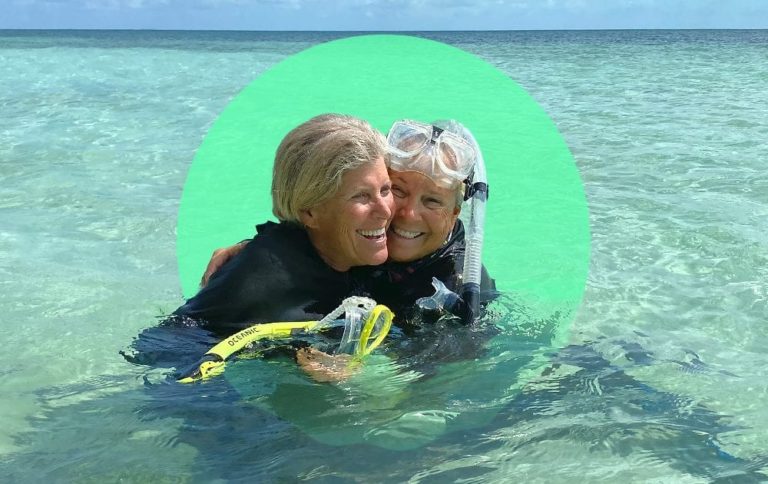
“Being gay has been the foundation of my success,” Orman told NextAdvisor in advance of an upcoming digital event celebrating Pride Month. On June 24, Orman will join NextAdvisor for a one-hour livestreamed conversation about her experiences as a gay woman breaking into—and ultimately conquering—the male-dominated finance industry. In a rare joint appearance, she’ll be joined for part of the interview by Kathleen “KT” Travis, her wife and partner of 20 years. 

Standing in Her Truth

In 1980, Orman became one of the first female stockbrokers in the Oakland office of wealth-management firm Merrill Lynch—a world away from her previous gig waiting tables at the Buttercup Bakery. She was a novice at investing, surrounded by men in a testosterone-driven culture. Some of the men expected sexual favors in exchange for leads, she recalls. 

It was the fortitude she developed from growing up gay that allowed her to compete with and ultimately outperform those male colleagues, Orman says. “What allowed me to be strong is because I had already had to be strong as a lesbian,” she says. “And therefore I was like, ‘You ain’t coming near me.’”

Orman was born in 1951 on the South Side of Chicago. She struggled at school with a speech impediment and an unusually slow development in reading. Kids teased her for being a lesbian before she even knew what the word meant, she says. Her parents never approved of her sexuality, but her mother eventually pretended to, she says.

None of that mattered. “I was unapologetic” about being gay, Orman says. By her 20s, she had decamped to the liberal community of Berkeley, California, where she lived in a women’s house, went to gay bars, and wasn’t afraid to walk down the street holding hands with her girlfriend. She got to know the people behind Olivia Records, the pioneering women’s music label, and grew into her identity as a lesbian. “It was the greatest part of my life, before my life became Suze Orman,” she says. “The greatest part of my life was being gay.”

Rich, Beyond Dollars

From then on, Orman never hid her sexuality, whether in the boardroom of Merrill Lynch or in the office of her book publisher in the early 1990s, when she signed the deal that would begin a run of nine #1 New York Times-bestselling titles. 

Technically speaking, she came out publicly in a 2007 New York Times article in which she called herself a “55-year-old virgin” because she had never slept with a man. But anyone who had done business with Suze Orman knew that she was gay. “I always told people,” she says. “I just think it’s important that you really stand behind your identity against all odds.” 

In her upcoming conversation with NextAdvisor, Orman will open up about her uncompromising fight to preserve her identity as a gay woman while achieving unprecedented success in an industry not known for diversity or inclusivity. She’ll give her best advice for LGBTQ+ individuals trying to build wealth while also reckoning with systemic inequalities and unwelcoming spaces. Then, joined by her wife KT Travis, she’ll get personal about the relationship she says has made her rich beyond dollars.

Join us on June 24 for a livestreamed conversation with Suze Orman about life, money, and standing in one’s truth. Sign up here.

Supreme Court rules against lawyer disciplined for anti-gay slur – coloradopolitics.com

The First Amendment does not protect a Colorado attorney from being disciplined for using an anti-gay slur to describe a judge, the state Supreme Court ruled on Monday.

While acknowledging the professional misconduct rule for lawyers does serve to censor speech that is permissible in other contexts, the justices determined there was a well-established, compelling interest in regulating the language of attorneys.

The rule “protects clients and other participants in the justice system from discrimination and harassment. There is no question that a lawyer’s use of derogatory or discriminatory language that singles out individuals involved in the legal process damages the legal profession and erodes confidence in the justice system,” wrote Justice Melissa Hart in the Court’s opinion.

Robert E. Abrams, who was representing a couple in a dispute against a contractor, reported that former Arapahoe County District Court Judge Phillip Douglass attacked him verbally during a case management conference in March 2016. Abrams left the hearing feeling that he could not represent his clients before a jury if the judge treated him that way at trial.

After the couple expressed concern, Abrams explained over email that “I probably remind [Douglass] of someone who beat him up [when he] was a fat kid and now that he’s a big fat judge he gets even w/ the bullies. Maybe he just hates Jews, who knows?”

Then, Abrams wrote that while he was handling a related case, “I was getting yelled at by Fatso [Douglass]. The judge is a gay, fat, [f-g], now it’s out there.” Abrams, during his disciplinary hearing, later said his comments were a “street read” on Douglass, and claimed he was calling the judge a “sissy,” rather than commenting on his sexual orientation.

In 2019, the Office of Attorney Regulation Counsel filed a complaint alleging Abrams violated a rule regarding client billing, as well as the rule deeming it misconduct if a lawyer behaves in a way that engenders “bias against a person on account of that person’s race, gender, religion, national origin, disability, age, [or] sexual orientation.”

Although Abrams argued he was not acting out of bigotry, and a three-member hearing board for the Presiding Disciplinary Judge agreed there was no evidence of that, the board determined Abrams violated the rule.

“This rule does not regulate bigotry; it regulates behavior,” the board concluded.

In reaching its decision, the board was unpersuaded by Abrams’s explanation that he was calling the judge a “sissy,” instead finding that he knew the slur referred to a gay man. It ordered Abrams to complete 18 months of probation in lieu of suspending his license. He also needed to attend ethics training, plus eight hours of cultural awareness and sensitivity education.

Abrams appealed to the Supreme Court, and his lawyers asserted the hearing board’s decision was intended to “demean Abrams by improperly attacking his psyche and unfairly suggesting he is a bad lawyer who is psychologically flawed.” Abrams further argued the disciplinary action against him impaired “his right to speak freely in Colorado and as a citizen of the United States of America.”

It “seems appropriate and needed,” he added, for the Supreme Court to give lawyers a list of words that are unacceptable to use.

Justin P. Moore, assistant regulation counsel, responded that the First Amendment does not provide attorneys with an “impermeable cloak” to protect their comments. He referenced the Supreme Court’s 2019 censure of former Court of Appeals Judge Laurie A. Booras, who privately called her colleague — a Latina judge — a “little Mexican,” using it as an example of the First Amendment not protecting biased comments.

According to the Supreme Court, in nearly 30 years, only four other attorneys have received sanctions for violating the rule against biased speech. Those instances involved lawyers employing sexist language, using the term “ghetto” in reference to a Black client’s child and making “overtly sexual comments” to a judge. Abrams’s slur against Douglass, Hart wrote, was “exactly the type of conduct” the rule was meant to curb.

The Court determined the rule was neither so broad nor vague that it failed to put lawyers on notice about what type of conduct was barred. The justices also believed the Presiding Disciplinary Judge did not abuse his authority by limiting favorable testimony about Abrams’s past interactions with the LGBTQ community.

“We agree with the hearing board’s conclusion that proof of a violation of this Rule does not require the People to demonstrate that an attorney actually harbors bias against a person on the basis of a protected classification,” Hart explained. “The Rule only addresses the attorney’s outward behavior; it does not attempt to police whether a lawyer privately holds prejudicial beliefs.”

Ann Stanton, president of the Colorado LGBT Bar Association, said this was the first time a lawyer had received public discipline for anti-gay comments, and the case illustrated a persistent need to eradicate bias in the legal profession.

“The conduct described in this disciplinary action is abhorrent. But the facts of this case reflect an all-too-familiar reality to many of us LGBTQ attorneys: anti-LGBTQ bias persists in the legal community today,” she said. “Whether it’s in the form of microaggressions, overt harassment, or discrimination, many of us have experienced some form of implicit or explicit bias in this profession on account of our sexual orientation or gender identity.”

Abrams and his attorneys did not immediately respond to a request for comment.

Jeremy Pope’s Next Film Role Is As a Gay Marine OUT – Out Magazine

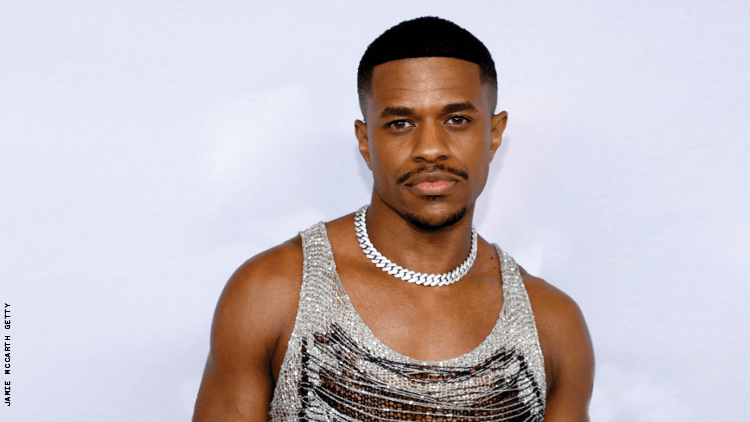
Jeremy Pope’s Next Film Role Is As a Gay Marine

Out cover star Jeremy Pope has scored his next big role!

Deadline reports that Pope is set to star alongside our favorite mom Gabrielle Union in The Inspection, an upcoming drama based on an autobiographical story from first-time narrative filmmaker Elegance Bratton.

Most plot details are being kept under wraps for now, but from what we do know, The Inspection is about a young gay man (Pope) who enlists in the Marines, desperate to win his mother’s (Union) approval.

Bratton is a filmmaker and photographer who recently won a Spirit Award and Outfest honors for his documentary Pier Kids, which aired as a part of PBS’s POV documentary series, about Black, homeless queer and trans youth who live on the Christopher Street Pier in New York City. Bratton himself used to be one of those youths, living on the pier for a decade after leaving home at the age of 16.

The Inspection is being produced by Effie T. Brown (Dear White People) for Gamechanger Films alongside A24.

“Elegance brings authenticity, heart and a fresh perspective to this compelling autobiographical story and we are thrilled to have Jeremy Pope and Gabrielle Union on board to bring it to life,” Brown said Monday. “I’ve long admired the excellent work of our partners at A24 and it’s exciting for Gamechanger to partner with a company that is equally committed to bringing diverse and captivating stories to the forefront of entertainment.”

Pope is in the middle of an explosion into superstardom. In 2019, he became the sixth person in Tony Award history to receive nominations in two categories for separate performances the same year when he was nominated for Best Actor in a Leading Role in a play for Choir Boy and Best Featured Actor in a Musical for Ain’t Too Proud, for which he was also nominated for a Grammy.

Last year, he starred in Netflix’s Hollywood, which earned him an Emmy nomination for Outstanding Lead Actor in a Limited Series or Movie. He’s also starred in One Night in Miami as Jackie Wilson, and appeared in the final season of Pose.

Pope is also set to star in Scandalous!, an upcoming film being directed and co-written by Janet Mock about the interracial relationship between celebrities Sammy Davis Jr. (Pope) and Kim Novak.

The young actor already has Emmy, Tony, and Grammy nominations, and we don’t think an Oscar is far behind.

RELATED | 10’s Across the Board: Why Pose Deserves Every 2021 Emmy Nomination

Jeremy Pope’s Next Film Role Is As a Gay Marine – Out Magazine

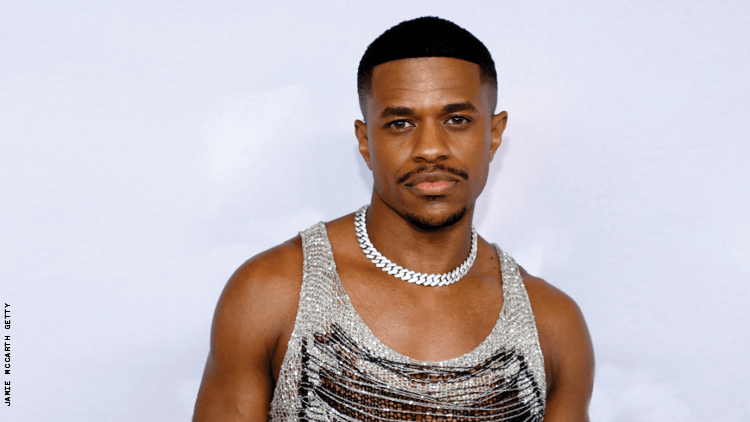
Jeremy Pope’s Next Film Role Is As a Gay Marine

Out cover star Jeremy Pope has scored his next big role!

Deadline reports that Pope is set to star alongside our favorite mom Gabrielle Union in The Inspection, an upcoming drama based on an autobiographical story from first-time narrative filmmaker Elegance Bratton.

Most plot details are being kept under wraps for now, but from what we do know, The Inspection is about a young gay man (Pope) who enlists in the Marines, desperate to win his mother’s (Union) approval.

Bratton is a filmmaker and photographer who recently won a Spirit Award and Outfest honors for his documentary Pier Kids, which aired as a part of PBS’s POV documentary series, about Black, homeless queer and trans youth who live on the Christopher Street Pier in New York City. Bratton himself used to be one of those youths, living on the pier for a decade after leaving home at the age of 16.

The Inspection is being produced by Effie T. Brown (Dear White People) for Gamechanger Films alongside A24.

“Elegance brings authenticity, heart and a fresh perspective to this compelling autobiographical story and we are thrilled to have Jeremy Pope and Gabrielle Union on board to bring it to life,” Brown said Monday. “I’ve long admired the excellent work of our partners at A24 and it’s exciting for Gamechanger to partner with a company that is equally committed to bringing diverse and captivating stories to the forefront of entertainment.”

Pope is in the middle of an explosion into superstardom. In 2019, he became the sixth person in Tony Award history to receive nominations in two categories for separate performances the same year when he was nominated for Best Actor in a Leading Role in a play for Choir Boy and Best Featured Actor in a Musical for Ain’t Too Proud, for which he was also nominated for a Grammy.

Last year, he starred in Netflix’s Hollywood, which earned him an Emmy nomination for Outstanding Lead Actor in a Limited Series or Movie. He’s also starred in One Night in Miami as Jackie Wilson, and appeared in the final season of Pose.

Pope is also set to star in Scandalous!, an upcoming film being directed and co-written by Janet Mock about the interracial relationship between celebrities Sammy Davis Jr. (Pope) and Kim Novak.

The young actor already has Emmy, Tony, and Grammy nominations, and we don’t think an Oscar is far behind.

RELATED | 10’s Across the Board: Why Pose Deserves Every 2021 Emmy Nomination

Is weed gay?: An abbreviated cultural history – Leafly

Is weed gay?: An abbreviated cultural history | Leafly


Loading…

LGBTQIA+ people and cannabis enthusiasts share similar experiences when it comes to legal progress, political challenges, and a continued quest for equality.


Weed is not attracted to other same-sex weed. A nug cannot have a gay wedding. A joint does not identify as genderqueer. An edible cannot talk with me about the new L Word: Generation Q.

However, weed is core to the experience of many queer people. In fact, one study says that queer people consume cannabis at higher rate than straight and cis people.

In this series, part of Leafly’s celebration of Pride month, we’ll explore some of the connections between queer people and cannabis in terms of history, health, culture. 

Long before modern attempts to further queer rights, queer people existed. Cultures across the world began mentioning the presence of a third gender, two-spirit individuals, and other alternate gender presentations centuries ago.

Egyptian royal manicurists Niankhkhnum and Khnumhotep depicted in an intimate nose-touching posture in 2400 B.C.

In ancient societies like Greece, Rome, and Egypt, it wasn’t unheard of for same-sex pairs to be depicted together in a romantic sense in art or mythology or even buried together. And while it’s hard to draw direct conclusions from the little information we have about queer people in ancient society, there is mention of queer people in visual arts and literature going back thousands of years.

  • 1688: Japan’s first gay bar opens
  • 1790s: Monaco, The Kingdom of Prussia, Luxemburg, and Belgium decriminalize sodomy
  • Late 1800s and early 1900s: the concept of a “Boston marriage”, or the long-term partnership between two women, appears in American high society.

But despite centuries of existence, many modern religions and societies struggled to accept LGBTQIA+ people – perpetuating false ideas that they were dangerous or morally corrupt.

Cannabis has a history just as ancient. People in Central Asia have known about its power, including it in tales since as early as 2737 B.C. Cannabis seeds have been found in the graves of shamen in both China and Siberia as early as 500 B.C. And we also know there is a vibrant history of edible usage during the Islamic Golden Age.

Related

Weed rituals: a cross-cultural connection to calm

Hemp played a vital role in helping America become an industrial and agricultural powerhouse from its inception. But eventually, taxation and fear won over.

The US government passed legislation like the 1937 Marijuana Tax Act and The Controlled Substance Act of 1970 – leading to federal cannabis prohibition. Once cannabis was criminalized in this way, it was easy for many people to write weed off as a danger.

Both the LGBTQIA+ community and cannabis have more than their ancient history in common. They have been unfairly demonized in the public forum, where cannabis prohibition and anti-LGBTQIA+ policy have been used as moral imperatives instead of intentional political choices.

Closeup of Cannabis female plant in flowering phase
(Adobe)

The shift towards the more fair and compassionate treatment of both cannabis users and queer people has been a welcome change in recent years.

Nearly two decades after the Defense of Marriage Act was signed in 1996, gay marriage became nationally legal. But only after a string of states legalized it on their own. While gay marriage isn’t the only issue facing LGBTQIA+ people, its legalization helped speed up other protections for queer people for things like housing, employment, parenting, and medical care.

Weed has followed a similar blueprint towards national legalization, with an increasing number of states legalizing either medical or recreational cannabis. There’s pressure on the current administration to consider a path forward for national legalization, and the passage of every state’s cannabis program helps provide cannabis users with more protection and care. Sound familiar?

Hate goes up in smoke

Friends wearing colorful accessories and makeup share a bowl of cannabis
(Cannaclusive)

Today, the majority of Americans support both the rights of queer people and comprehensive cannabis legalization. 76% of Americans say they are pro-LGBTQ+, while 68% of Americans support cannabis legalization.

Related

Dear Joe Biden: Here’s the data, now it’s time to embrace marijuana legalization

We’ve got a long way to go, but it’s important to celebrate the little victories and appreciate activists in both cannabis legalization and LGBTQIA+ rights. They are the people that have helped us get to where we are today. 

The future is brighter, safer, and more just for cannabis users and for queer people, as long as we never stop fighting for what’s right and never stop confronting the work we still need to do as a community and as a country.

C. Merten's Bio Image

C. Merten

C. Merten is a Chicago-based writer, creative, and cannabis enthusiast. Their passions include breakfast, 70’s music, pina coladas, and getting caught in the rain.

View C. Merten’s articles

Melina Duterte & Ellen Kempner On Bachelor, ‘The Sopranos’ & Friendship – NYLON

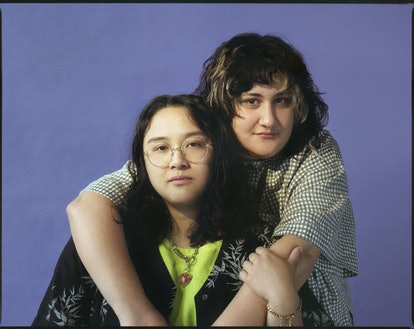
Bachelor’s debut album, Doomin Sun, is filled with the kinds of confessions you could only feel comfortable speaking out loud to a friend. Whether it’s about anxious spiraling, wet dreams, unrequited crushes, or the existential dread of the inevitable End Times — it’s all laid out here in bracing, tender honesty.

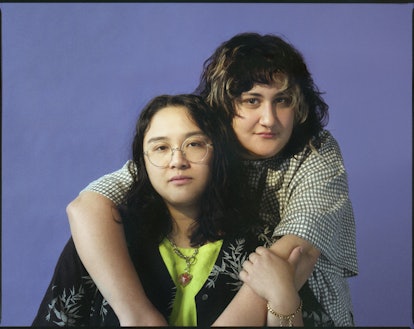
It makes sense: The two brains behind the band, Palehound’s Ellen Kempner and Jay Som’s Melina Duterte — two celebrated indie rock musicians in their own right — are best friends above anything else, a synergy that fueled the creation of their first body of work together, Doomin Sun, out now. Written over the course of several hangs — but primarily during a feverish two weeks between stints of watching The Sopranos at an AirBnB in Topanga — the album is a testament to how much braver we all feel going through life when someone else is weathering it all too, right beside you.

Ahead of the record’s release, Duterte and Kempner phoned in from their respective coasts to chat about the album, their love of The Sopranos, and, most importantly, their friendship.

Tonje Thilesen

NYLON: Bring me back to when you met in a Sacramento green room back in 2017. What were everyone’s first impressions?

Kempner: My first impression of Melina was that she was extremely kind and welcoming to us. Palehound was opening for Jay Som, and I was really nervous because I was a huge Jay Som fan. I did that thing where I paced around the venue, like, “Should I go back there and say hi? I’m not sure. Would that be weird?” And then I did, and I just remember Melina opened her arms when I walked in the room. That was the gesture, and I was like, Oh, yes, this is my friend.

Duterte: Weren’t we sound checking and then you came in and we were like, “Aaaaaah!” Screaming?

Kempner: Yes, you’re probably right. I think I was still nervous after that because I wasn’t sure what your vibe was, or if that was all you. You just never know with people. Sometimes people seem like they’d do something like that and then they’re rude later.

Duterte: I thought you were awesome and so nice. We just got to talking and immediately bonded over being queer. We just talked about gay stuff within the first, like, 15 minutes? That usually solidifies a friendship.

Kempner: Larz, who’s in Palehound, who is also queer — I just remember the three of us in a huddle in the green room. Basically yelling about being gay.

“Sometimes it’s just really fun to be with your friends and make something that’s built on like, I dunno, the foundation of love and friendship.”

NYLON: How did the topic of recording a full project together come up?

Duterte: After our initial mini tour, we got pretty close for obvious reasons and we kept in touch. Eventually Ellen came to L.A. because she was visiting her partner’s family and wanted to make music with me, and we decided to write music at my house. That was our first time hanging out one-on-one, and we were both so nervous, being so cute around each other because we didn’t know each other that well.

Kempner: I still remember driving to your house being really nervous. I remember you opening the door and us both giggling and doing small talk. I was like, Ok, it seems like we are both on the same page. Then we went to your bedroom and saw your studio and you were just so cool. And you let me sit on your bed! I was like, “Word.”

Duterte: I think we drove out to get coffee too, and I was like, “This is where I go to get coffee everyday!”

Kempner: Oh yeah, I remember that. That was cute. That was a good ice breaker.

Duterte: And then we wrote a song about wet dreams, which was the ultimate ice breaker.

Kempner: And here we are. [Both laughing.]

Duterte: Honestly, that really established our friendship in the most vulnerable way.

Kempner: We hung out that time and got closer, decided we wanted to write together and had eight months or something until we actually did again because both of us were touring and the holidays. We ended up going to Big Sur to my aunt’s house, thinking it would be a big inspirational [thing] where we were going to come out of it with a million songs. What actually happened was that we just ate chocolate croissants and took acid and played three riffs.

[Both laugh.]

Kempner: I have this amazing picture where we were on acid and we picked carrots from my aunt’s garden, and I have this picture of Melina with two handfuls of carrots just looking so happy.

Duterte: I feel like we really got to know each others’ music tastes [during that trip] because we kept showing each other music that meant a lot to us. We were like, “What did you listen to in middle school?” And we’d go through the past and connect that way. We were also really high.

Kempner: We went deep. I learned a lot about Melina’s childhood and vice versa. We finally got to hang, and we really got to know each other and that was amazing. I feel so grateful for that week, but we did not write any songs, really.

Duterte: Yeah we forgot to record “Sand Angel.”

Kempner: On the very last day, as we were checking to make sure we didn’t leave anything behind as we were locking up the [Topanga] AirBnB, we were like, “Oh my god! We forgot to record ‘Sand Angel,’ the one song that was written going into this.” So that’s why we have the demo version on the album.

Duterte: But that just shows how much fun we were having, because if you think about it, we were doing stuff every day for two weeks. What was our schedule like, Ellen?

Kempner: Our schedule was pretty pathetic. We woke up at 11 every day, and we would have a smoke downstairs, drink a Yerba Mate, and eat some yogurt or something. And then record for like six hours and then be done. And then be ready to watch TV for like four hours.

Duterte: And watch The Sopranos.

Kempner: Yeah, we watch a lot of Sopranos, Melina’s on the last season. Dude, do you think you’re going to keep on watching it or do you think you’re going to wait for me to finish it?

Duterte: I think I might wait for you because I’m simply so busy this month that when you come here it’s more of a reason to watch. I want to wait for you because you don’t spoil anything and you also don’t answer my questions when I ask you to spoil things for me.

Kempner: I just don’t look at you. I stare blankly ahead.

“There were no rules to this.”

NYLON: Were there any hurdles in the making of the album? How did you talk them through?

Kempner: There was not a lot of deep discussion about anything. Things happened really easily, I can’t emphasize that enough. We really would start with the music and riff and jam on something, and usually either Melina would have lyrics that were written, or I would go write lyrics and she would go write lyrics, and we would talk about them afterwards. I think both of us really respected each other’s expression and intention behind the lyrics of the songs.

Duterte: I think the experience reminded me that not every album or every body of work that you make has to be full of conflict or challenges. Honestly, it’s refreshing to feel that way because musicians are looked at as these really depressed people that are doing this as this cathartic way to move throughout their life. Sometimes it’s just really fun to be with your friends and make something that’s built on, I dunno, the foundation of love and friendship.

Kempner: It really reminded me of playing in a band in high school and how fun that is to have someone to play with and how cool it feels to be able to play music together. There’s not very much ego or foresight going in, outside of just hanging out. Having music as a career since I was young sort of robbed me of that experience for a while. All of a sudden, I did have to think about not the business perspective exclusively, but that was part of it. And to be aware of an audience and to be aware of expectations.

Duterte: I feel like the business part is a huge part of our jobs too, because it really connects to the way we even make music. Like you said, when you’re young and you get into this sort of stuff, you’re really wide-eyed and think that you have to give parts of yourself. You sacrifice certain parts of you that you want to keep sacred in a way, like even having to always talk about yourself, you’re always thinking about yourself all the time… I just lost my train of thought so you can keep talking.

Kempner: I know exactly what you’re trying to say and what you are saying, which is knowing there’s an expectation, knowing there’s an audience, knowing that your shit will be listened to and that you will have a team of people who make money off of what you do. That obviously changes creative processes. I guess having that so young, I’m very grateful for that — but it also robbed me of more experiences like this one, I think, which is music just as fun without that expectation.

Duterte: There were no rules to this.

Kempner: Yeah, no rules. Even though we have the label and everything, and there was a lot of expectations — more so for this than other things, in some ways. I think the fact that we had each other made that so much easier and made it easier to forget that. Even this interview, you know, we’re just having fun talking about each other, talking about the Sopranos.

Duterte: What is your favorite part of being my best friend and why do you love me so much?

Kempner: Awww.

Duterte: I’m just kidding you don’t have to answer, that was a joke.

Kempner: It’s everything. I love randomly FaceTiming you and you pick up and your face is really close to the camera and we just start laughing and scream. We laugh scream a lot.

Duterte: I love when you really nail all of my moods now. You understand my morning moods. I’ll get a little cranky and I’ll be like, “I’m hungry! Why don’t you do that, why don’t you do that?” And Ellen’s like, “Okay, we got to get Melina some food. We gotta get some coffee and a bagel!”

Kempner: And then after she finishes eating she has her little black out moment where she gets really tired for a second, and then she perks back up.

Duterte: We love each other.

Doomin’ Sun is out now via Polyvinyl.
Former site of Detroit’s longest-running gay health spa, TNT Health Club, in foreclosure – Detroit Free Press

The former site of TNT Health Club, one of Detroit’s first gay health clubs, is in foreclosure and heading to auction.

The former health club at 13333 W. Eight Mile is now listed under a Jim Short Construction Inc. on the Wayne County Treasurer’s foreclosure list. Their dues in back taxes are $36,167.09, and the auction on the property will be taking place this fall.

More: View Detroit properties at risk of tax foreclosure in this year’s Wayne County auction

More: Here are 10 places to pick strawberries

Former site of TNT Health Club in November of 2020.

TNT Health Club shut down in summer 2018 and was open longer than another gay bathhouse in the city. Some of the amenities offered at TNT while it was still in business were that of a heated swimming pool, a whirlpool, a steam room, Finnish sauna, weight room, and movie lounges.

Gay bathhouses were created out of a need for exclusively gay spaces, especially somewhere hidden from outside scrutiny and bigotry. After the AIDS crisis in the 80s, TNT was apparently the last one standing out of all the other establishments in the area. 

9 Most Gay-Friendly Countries In Europe – TravelAwaits

0

Europe is a sought-after destination for many travelers. It’s also a place where those of us in the LGBTQ+ community have many choices to explore safely. 

While researching places to travel, many people in the LGBTQ+ community look for sources to explore their options for safe, welcoming, and interesting destinations. One source providing great information is the IGLTA website, the world’s leading network of LGBTQ+ welcoming tourism businesses. They worked with Destination Pride to develop a database that makes it easy to see how countries rank for LGBTQ+ travelers based on thousands of data points that include marriage equality laws, LGBTQ+ laws, census data, and real-time social media sentiment. 

When searching the database, users may find it surprising that many European countries and cities rank higher than many states and cities in the United States.

“There’s a misconception that LGBTQ+ travel is one size fits all, but in fact, our community of travelers has the entire range of interests, from culture, nature, and gastronomy to history, great architecture, and nightlife – the same as any other traveler,” said IGLTA President/CEO John Tanzella. “What unites us is the desire to find destinations that both complement our interests and feel safe and welcoming. That’s why Europe has so much to offer LGBTQ+ travelers: it has all of the culture, sights, and natural beauty combined with some of the most well-established and far-reaching LGBTQ+ rights in the world.”

Armed with this important data, those of us in the LGBTQ+ community can safely choose places to explore in Europe and around the world. 

Keeping all that in mind, here are just some of the most gay-friendly countries in Europe where LGBTQ+ travelers can enjoy a safe visit.

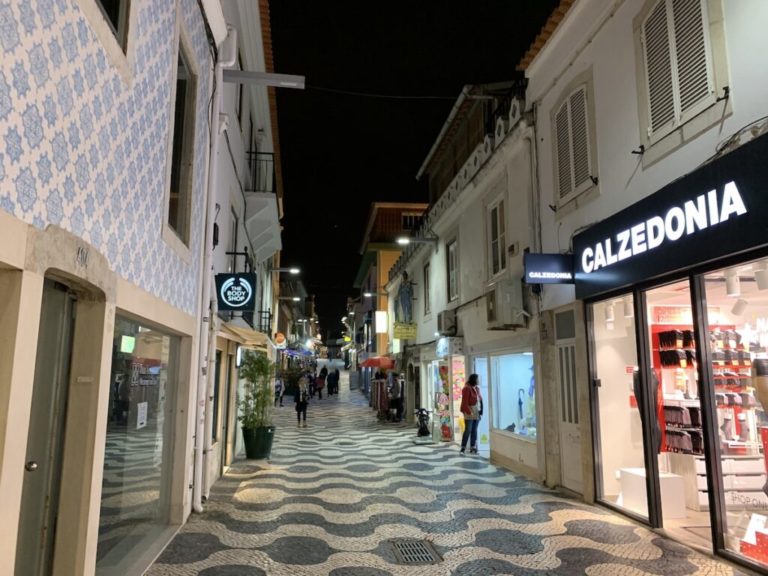
Cascais, Portugal.
Sue Reddel & Diana Laskaris

1. Portugal

We must put our adopted country on top of the list. Portugal was one of the first European countries to approve gay marriage in 2010, and the Portuguese constitution bans discrimination of LGBTQ people. The 2019 Eurobarometer public opinion poll said that 74 percent of the Portuguese people supported same-sex marriage. 

Both of the largest cities, Lisbon and Porto, have a good-sized LGBTQ+ community. For gay-friendly neighborhoods, check out the Principe Real and the Barrio Alto areas in Lisbon. Lisbon also has a very popular and well attended Gay Pride Festival and parade and the international Queer Lisboa Gay and Lesbian Film Festival every year, too. 

Portugal, the oldest nation-state on the Iberian Peninsula, is a country rich in culture and history. Its people are friendly and welcoming, and it has 1,100 miles of coastline, gorgeous views, great wine, and abundant seafood too. 

Belgian waffles.
Sue Reddel & Diana Laskaris

2. Belgium

Belgium was the second European country to legalize gay marriage and the second to decriminalize same-gender relationships all the way back in 1795. They were also the first European country to pass transgender and anti-discrimination laws

Events like Belgian Pride Brussels and the Unicorn Festival in Antwerp are fun reasons to visit this land of tasty chocolate, mussels, and beer. The vibrant city of Brussels offers lots of nightlife and restaurants to enjoy.

Alcala Gate in Madrid.
Javitouh / Shutterstock.com

3. Spain

Spain is at the top of many must-visit lists, and we need to include it on this list as well. The Spaniards are friendly, open-minded, and incredibly welcoming. Spain legalized homosexuality in 1979 and legalized gay marriage in 2005, becoming the third nation in Europe to do so. 

Night owls will want to check out the “Movida” which happens between midnight and four in the morning in most of Spain’s big cities. That’s when the party really gets started especially Thursdays through Saturdays. 

In Madrid, the gay scene is busy in the Chueca area, and MADO, the Madrid Pride celebration, is one of the biggest in Europe. Barcelona has the Gaixample, a hot spot for the LBGT+ community. Ibiza, Valencia, Sitges, and Benidorm also have gay-friendly areas too.

Spain offers great beaches, art museums, wonderful Spanish food, and a lot more.

Tourists in Nice, France.
LoAnn Holden, IGLTA

4. France

It may come as no surprise that France has long supported gay relationships. Homosexuality was legalized in 1791. In 2013, Gay marriage was legalized, and LGBT persons were allowed to serve openly in the French armed forces. 

Check out the Marais arrondissement for its popular gay scene. There are many wonderful, welcoming LGBTQ+ restaurants, bars, and cafes to meet up with tourists and locals alike. 

Be sure to visit other welcoming cities outside of Paris like Toulouse, Marseille, Lyon, Montpelier, and Nice, too. Large and lively Pride celebrations occur annually in Paris, Lyon, and Marseille.

5. Italy

Many people have travel to Italy high on their wish list. The art, culture, architecture, design, and amazing food make it attractive to LGBTQ+ travelers as well. 

LGBTQ+ rights in Italy have made some inroads. A civil union law was passed in 2016 that provides many of the same rights as marriage. 

The “Gay Street” in Rome may be small, but it’s ideally located near the fascinating Colosseum. Here you’ll find a festive scene with bustling restaurants, bars, and nightlife. Milan, famous for its design and fashion labels, is also home to a large LGBTQ+ community. Florence, Venice, Turin, and, of course, the Amalfi coast all have wonders worth exploring as well. 

Pubs in Ireland.
Sue Reddel & Diana Laskaris

6. Ireland

Ireland may seem like a rather conservative country, but it became the first European nation to legalize gay marriage by a popular vote in 2015. 

Walk in Oscar Wilde’s footsteps in Dublin and explore the Irish Queer Archive at the National Library of Ireland with its collection of LGBTQ+ materials and literature. Dublin, Cork, and Galway plan annual Pride Events and have many bars and nightclubs to visit. Like all the locals we met in Ireland, the Irish LGBTQ+ community happily share their stories.

We think Ireland is an underestimated destination with much to offer LGBTQ+ travelers and everyone else. Its beautiful countryside and friendly people, historic architecture, delicious food, and world-famous beverages will delight and surprise visitors looking for a special place.

7. Luxembourg

It may be the smallest country in the European Union by population, but the tiny country of Luxembourg is a charming place to visit. It’s also one of just a few countries to have an elected leader that is an openly LGBT+ person. Xavier Bettel was elected as prime minister in 2013 and re-elected in 2018. He was the first European Union leader to have a same-sex marriage. LGBTQ+ people enjoy the same rights as non-LGBT couples. A poll done in 2019 said the 87 percent of Luxembourgers believed gay, lesbian, and transgender people should have the same rights as heterosexuals.

We visited Luxembourg during our honeymoon road trip through Europe and loved it. Packed with delicious restaurants, bars, and shops, it’s the perfect size to wander freely and have fun. It’s also a good spot to include while exploring other European countries like Germany, Belgium, and France. 

8. Austria

Home to Vienna, one of our favorite cities, Austria is a beautiful gay-friendly destination. Gay marriage was legalized in 2019 and Austria also recognizes a non-binary gender.

The cosmopolitan city of Vienna welcomes the LGBTQ+ community with the Vienna Pride and Rainbow Parade. Themes like “Stay safe, stay proud” and annual events like Queering the Belvedere and Queer History Tour highlight the significance of LGBTQ+ people to this great and creative place.

Vienna’s fabulous coffee houses are an important part of Viennese culture. Their delightful elegance and delicious pastries beckon visitors to relax, refresh, and enjoy the local scenery. Along with the stunning architecture and art scene, Vienna’s musical heritage is a draw for many LGBTQ+ travelers and others who enjoy its diverse cultural pleasures.

9. Malta

While it may not be as familiar to many, Malta is a small archipelago in the central Mediterranean Sea that’s also an extremely popular LGBTQ+ destination. It’s known for a dynamic gay community that is happy to connect with travelers to ensure their stay is fun and trouble-free. 

Malta has consistently received high marks for LGBTQ+ rights and is considered by many to be the most progressive country in Europe.

The sun and beach life are big draws. But there are many historical and cultural interests as well. Malta has over 7,000 years of history to explore, including temples, museums, forts, and several UNESCO World Heritage sites. 

They even have a website for the LGBTQ+ community and special gay guide to Malta website to help visitors plan a trip to Malta. Pretty exciting for a country of just about 500,000 people. Perhaps that’s why they receive over two million overnight visitors a year.

Pro Tip: Time a visit to arrive during Pride celebrations or special events to take advantage of all the local happenings and have a much more memorable experience. 

Unfortunately, there are still countries around the world where LGBTQ+ people are persecuted. Many of those places have gay communities that also need support. For LGBTQ+ travelers and allies who choose to travel to any of these countries, please reach out to the local queer community for information, advice, and guidance before traveling. 

As we mentioned, these are just a few of the most gay-friendly countries in Europe. Be sure to check the IGLTA website for more ideas and recommendations for additional destinations in Europe and the rest of the world. 

Related Reading: 

Brendan Fay: A loud voice in the gay rights movement reflects on his journey as a – Spectrum News NY1

As Pride month celebrations kick off, one activist is sharing his journey of activism since moving to New York City and how it’s helped pave the way for the LGBTQ community today.

“What the LGBTQ community of New York City gave me was the freedom to live and to love as myself,” said community activist, Brendan Fay.


What You Need To Know

  • Brendan Fay moved to New York City from Ireland in 1984
  • When he left Ireland, being gay was a criminal offense
  • He’s been a voice for the gay community as well as other human rights issues

Fay lives in Astoria with his husband Tom.

He moved to New York City from Ireland to study at St. John’s in 1984.

“I was so excited about the thought of coming to America,” he said. “In the 1980s, in the Ireland that I left, it was still a criminal offense to be gay,” Fay said.

In New York, Fay began to feel free but it wasn’t easy – even when he attended his first Pride march.

“This is going to be the day that will change my life,” Fay said. “Stepping onto Fifth Avenue cause for the first time in my life in broad daylight, I was coming out as gay. Then the screams began, the rage happened. ‘Go back to where you came from,’ somebody threw beer cans.”

It was at that Pride march where Brendan’s spirit of activism for his community was born.

“There’s a beautiful community that is celebrating what I was told,” Fay said. “What I had been told all my life to be ashamed of all my life.”

Brendan was a voice in the marriage equality movement. He says he helped organize the first rally for the right to marry at City Hall in February of 1998.

In 2003, before it was legal in the United States, the marriage laws in Canada changed.

Brendan and his husband were one of the first gay couples to cross the border and get married. He then helped organize the “Civil Marriage Trail Project,” where he led other gay couples into Canada to do the same.

One of those couples was Edie Windsor and her wife Thea Spyer.

“Little did we know there was a profound moment of history taking place in that small hotel room, the Sheraton, in the Toronto airport,” explained Fay.

Fay also fought for the LGBTQ right to March in St. Patrick’s Day Parades.

“I’ve been arrested everywhere,” he said. “I said to Tom, I’m going to apply for a parade permit. And we’re going to build a parade that will be dedicated in a spirit and love. “St. Pat’s For All,” said Fay.

Fay said he is grateful for the community New York City gave him and he will keep being loud for them.

“I want our city, our society, our schools, our churches, our mosques, our synagogues to be a place where everyone can flourish. Life is short. We need to celebrate and to love and to give each other hope,” Fay said.

Legendary thespian Derek Jacobi weighs in on straight actors playing queer roles – PinkNews

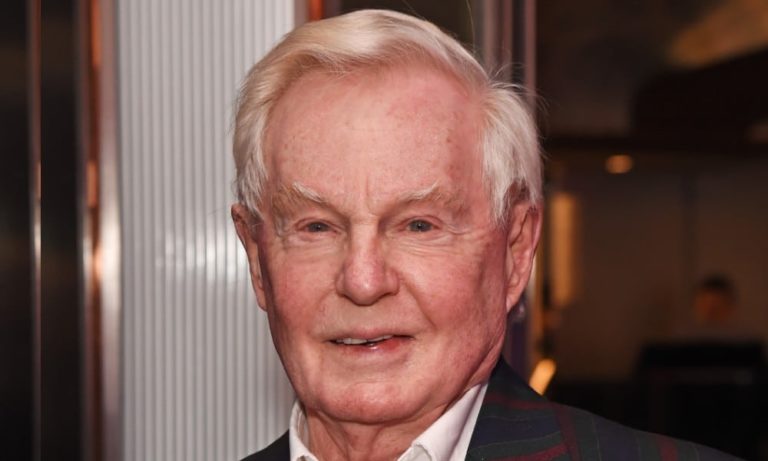
Sir Derek Jacobi at the Acting For Others’ Golden Bucket Awards 2020 on March 13, 2020 (Dave Benett/Getty)

Acclaimed actor Sir Derek Jacobi has weighed in on the long-simmering debate over whether straight, cis actors should play LGBT+ people in film and television.

The legendary gay thespian, 82, is best known for his classical roles as well as for playing the Duke of Windsor in The Crown, the archbishop of Canterbury in The King’s Speech and The Master in Doctor Who.

More recently he was namechecked in Russell T Davies’ show-stopping AIDS drama It’s a Sin, a series in which his husband Richard had a minor role.

“Ian McKellen called me up and said, ‘I don’t know which is more prestigious, to be in something or namechecked in something,’” he told the Independent.

At the time Davies was facing heavy criticism for insisting on “authentic” casting of queer characters, saying: “You wouldn’t cast someone able-bodied and put them in a wheelchair, you wouldn’t Black someone up. Authenticity is leading us to joyous places.”

Jacobi, however, did not agree that LGBT+ roles should be restricted to LGBT+ actors. “Absolutely not,” he said simply. “I don’t think you have to be gay to be gay.”

It’s a position he shares with many other long-established stars, including Stanley Tucci, a straight actor who’s played gay roles in Supernova and The Devil Wears Prada.

“For so many years, gay men and women have had to hide their homosexuality in showbusiness to get the roles they wanted – that’s the problem here,” Tucci said in an interview with Attitude. “Anybody should be able to play any role that they want to play – that’s the whole point of acting.”

Unfortunately, the question of whether straight actors should play gay characters is likely to continue while access to film roles remains unequal across the board.

A 2020 GLAAD report found that although representation of white gay men is constantly improving in major studio films, representation of other queer people is dismal, and trans and non-binary characters were found to be non-existent in major studio releases from 2019.

When those few roles are given to straight actors rather than LGBT+ ones, it throws up an additional barrier to queer people being able to tell their own stories on the big screen.

Derek Jacobi remained tight-lipped on the matter, saying he prefers to stay out of controversial issues.

“[At awards ceremonies] they always want you to say something political or original. I prefer to keep my mouth shut,” he said. “I’ve seen the terrible things it does to those who open their mouths too wide.

“I’ve never been a political animal. Most actors are. I’ve never marched for anything.”

Watch Trailer For Simone Biles Docuseries Simone vs Herself – POPSUGAR

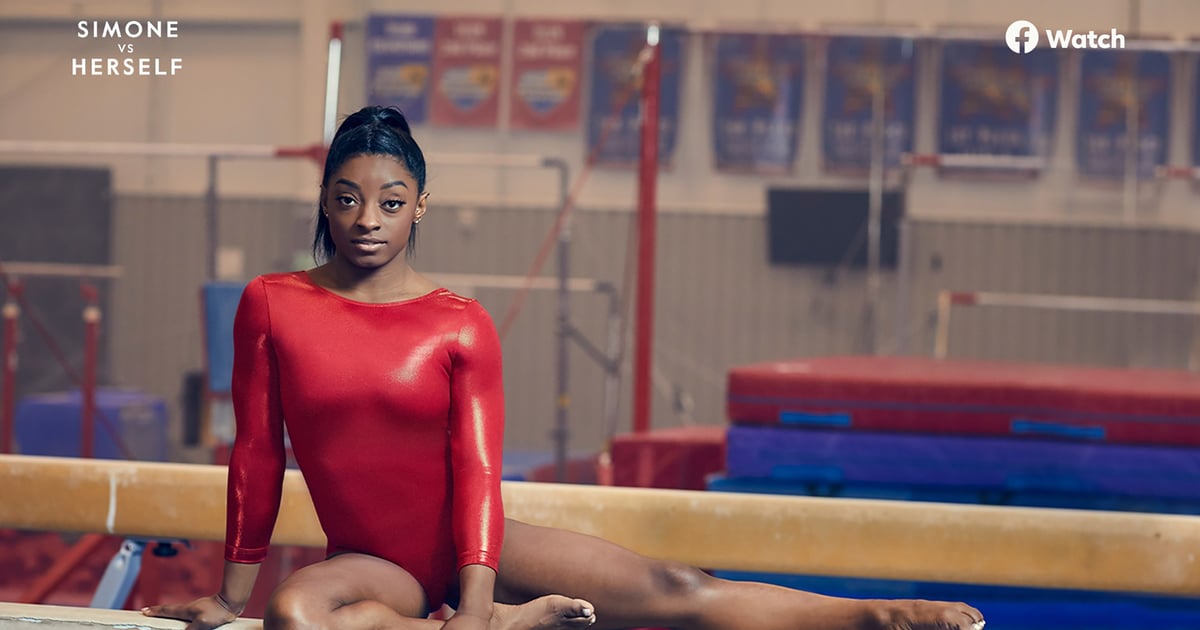
Simone Biles is unquestionably one of the greatest athletes of all time — she has four gymnastics moves named after her and keeps breaking records. So if you are just as curious as we are to get a peek behind the curtain of the GOAT and her training, the 19-time World Champion and four-time Olympic gold medalist is starring in the third season of the Facebook Watch Versus series: Simone vs Herself. It’s a fitting title since she’s in a league of her own in women’s gymnastics.

The seven-episode docuseries will give viewers an exclusive look into the challenges Biles faced after the Olympics were postponed, forcing her to push her career an extra year so she could compete in Tokyo in 2021. The series also looks back at how Biles has dealt with the incredibly high expectations of being such an elite athlete and her journey to being not only the best gymnast she can be, but one of the best gymnasts of all time.

Biles said, “My gymnastics career has been filled with a lot of ups and downs despite what a lot of people may think, and, in a lot of ways, my career has felt like I’ve been trying to prove myself to others.” She said that one of the biggest reasons she wants to come back for the Tokyo Olympics is “to challenge myself to be the best Simone I can be for me and, no matter the outcome, share with my fans the process and approach I am taking along the way in the hope that it may help inspire others to be the best version of themselves, too.”

Produced by Religion of Sports and directed by Gotham Chopra, Simone vs Herself premieres Tuesday, June 15, exclusively on Facebook Watch — we can’t wait! The first five episodes will run in the lead-up to this summer’s Olympic Games, and the final two episodes will air later this summer. For more details and to receive updates on Simone vs Herself, head over to the Versus on Watch Facebook Page and if you’re not already a member, join The Official Simone Biles Fan Group.

Image Source: Facebook Watch

Reading Royals partners with Met-Ed to support LGBT Center of Greater Reading – 69News WFMZ-TV

READING, Pa. | In partnership with Met-Ed, a First Energy Company, the ECHL Reading Royals, a proud affiliate of the Philadelphia Flyers, announced Tuesday its plans to collect donations for the LGBT Center of Greater Reading.

Starting in the summer of 2021, The LGBT Center of Greater Reading said it is launching its Art Collaborative, an initiative to inspire LGBT youth and the community at large, to develop, build, and grow their level of self-esteem through the arts.

As a celebration of Pride Month and in support of this new program, the Royals and Met-Ed announced they will call on fans, fellow employees, and community members to contribute various art supplies to support this initiative.

“Met-Ed is proud to continue our partnership with the Reading Royals to further our commitment in creating a more equitable, diverse and inclusive community. Our ongoing collaborative partnership with the LGBTQ Center of Reading and the Reading Royals reflects this commitment to our core values and the greater Reading & Berks County community.” stated David Turner, manager of Regional External Affairs at Met-Ed.

They say donations will be collected through the month of June at the Reading Royals Lion’s Den Team Store at any time from Monday-Thursday, 9 a.m. to 2 p.m., the Santander Arena Box Office on Tuesdays and Thursdays at 10 a.m. to 2 p.m., and the Met-Ed Headquarters on Pottsville Pike.

In addition, donations can be dropped off at the Reading Royals booth at Art on the Avenue in West Reading on Saturday, June 19, officials stated.

This initiative is one of several in the partnership between the Royals and Met-Ed this year, according to their joint announcement.

Since November, the partnership has assisted nine local non-profits by volunteering time, raising funds and supplies, and building awareness. For more information on those initiatives and to learn more on how to participate, visit their website.

The Real History of ‘LGBT Pride Month’ – Lifehacker Australia

Pride Month is more than a colourful parade or a series of parties (though those are great, too) — it’s the commemoration of the people who came before us that made these celebratory events possible.

Why is Pride in June?

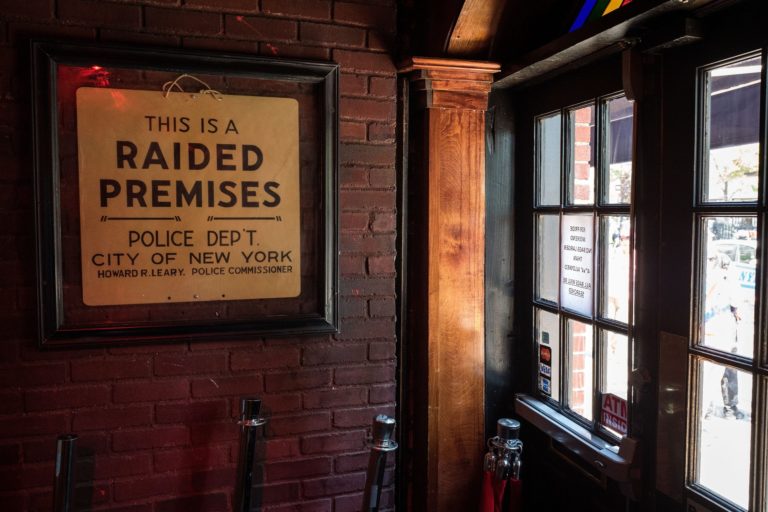
If you’ve ever wondered why Pride is in June, it’s pretty simple: Pride, which has blossomed into a global phenomenon in recent years, owes its roots to a watering hole and refuge for the LGBTQ community, which, on a pivotal summer night, became the site of the Stonewall rebellion. The riots took place during the early hours of June 28, 1969 at the Stonewall Inn — an event that many historians now credit as the turning point for the pro-LGBTQ movement (though many LGBTQ communities in other major cities had already begun to organise by this time).

Photo: Drew Angerer, Getty Images Photo: Drew Angerer, Getty Images

Before the riots, the Stonewall Inn was a safe haven for individuals in the LGBTQ community during the ‘60s. Then, it was a nightclub with no running water, drinks were made with alcohol that was rumoured to be stolen, and patrons were required to sign a guestbook to give Stonewall the appearance of “exclusivity,” though many used aliases. The Stonewall Inn’s owners even extorted its rich customers by threatening to “out” them, which soon became a more profitable business than serving drinks.

Police raids were common during this time, too. Officers often harassed, arrested, and discriminated against the bar’s patrons. This was indicative of the time’s broader social climate, especially in New York state, which enforced a law that revoked the liquor licenses of any bar that served LGBTQ customers. Stonewall operated beneath the fray, however: Like many gay bars in Greenwich Village, Stonewall was owned by the Genovese Crime Family, which opportunistically sought profit by catering to the LGBTQ community when the law forbade others.

To stave off the impact of frequent raids, Stonewall’s owners cut an under-the-table deal with the police, exchanging cash for tips on forthcoming raids; the police also turned a blind eye to the bar’s lack of a liquor licence, a badge of legitimacy that was typically not granted to bars that served LGBTQ clientele. (Stonewall operated as an “open bottle bar,” meaning customers were technically supposed to bring their own hooch).

What was the Stonewall Rebellion?

During the early hours of June 28, police conducted another raid on the bar. The events of that night are mostly a puzzle made up of different personal accounts, and you’ve likely read conflicting facts about how exactly the riots started. According to a 1989 interview with Sylvia Rivera, a transgender activist who was at Stonewall that night, it started as any other raid.

“The police came in,” Rivera said. “They came in to get their payoff as usual. They would come in, padlock the friggin’ door … This is what we learned to live with at that time. We had to live with it. We had to live with it until that day.”

It was, per History’s retelling, a typical crackdown, with the NYPD arresting 13 people, “including employees and people violating the state’s gender-appropriate clothing statute (female officers would take suspected cross-dressing patrons into the bathroom to check their sex).”

On this night in June, however, the bar’s patrons fought back and a crowd formed outside the Stonewall, throwing cans, bricks, and other objects at the police who were forced back into the bar for protection. Many different sources attribute transgender activists, Marsha P. Johnson and Rivera, among the first to begin the rebellion. (Johnson later said she had joined the riots while they were already underway. Still, she played an important role according to many personal accounts.)

Sylvia Rivera at a march in 1994 (Photo: Justin Sutcliffe, AP) Sylvia Rivera at a march in 1994 (Photo: Justin Sutcliffe, AP)

What is Pride today?

In the months following the rebellion, at least four different LGBTQ organisations formed in solidarity, including the Gay Liberation Front, the Gay Activists Alliance, Radical Lesbians, and the Street Transvestite Action Revolutionaries (formed by Johnson and Rivera). This was hardly a first: The first gay rights organisation in the country’s history, the Society For Human Rights, was established in 1924, while just four years before Stonewall, the first American gay rights march took place in Philadelphia when around 40 LGBTQ activists rallied in Philadelphia outside of Independence Hall on July 4, 1965.

Precisely a year after the riots, the Gay Liberation Front organised the first Christopher Street Liberation Day March (later known as the Gay Pride March), along the street where Stonewall Inn is located. Similar marches took place in cities across the globe shortly thereafter, giving rise to the events of Pride Month as we know them now. Still, Pride wasn’t officially recognised as such for over 30 years; former President Bill Clinton eventually declared June “Gay and Lesbian Month” in 1999. Former President Barack Obama expanded this moniker to become more inclusive in 2009 with “LGBT Pride Month.”

By 2016, Obama designated the Stonewall Inn a national monument, too. “Stonewall will be our first national monument to tell the story of the struggle for LGBT rights,” he said in a statement. “I believe our national parks should reflect the full story of our country, the richness and diversity and uniquely American spirit that has always defined us.”

Photo: Spencer Platt, Getty Images Photo: Spencer Platt, Getty Images

In recent years, the pivotal role of people of colour and transgender individuals during the riots, including DeLarverie, Johnson, and Rivera, has come more to the forefront of the conversation, reversing some of the whitewashed, cisgender-focused narratives of what happened that night.

Today, what was once a one-day parade has expanded into a month-long series of Pride events around the world. These days, Pride has been thoroughly mainstreamed, with major corporations lending solidarity in the form of sponsorships, albeit with a dose of cynicism at times. Many cities also hold memorials to remember LGBTQ individuals who died from AIDS/HIV.

This June is especially significant in that it marks the 50th anniversary of the Stonewall Inn rebellion, with New York City hosting World Pride for the very first time, the only global Pride event.

How to celebrate Pride

If you want to find events around you, you should do an online search for local Pride events or organisations and remember to honour those figures who’ve paved the way for LGBTQ people everywhere; one way to do this is to support pro-LGBTQ causes, like the Sylvia Rivera Law Project, which seeks to empower and provide legal resources to low-income people and people of colour who are transgender, intersex or gender non-conforming. Pride is a time for hard-earned celebration, but it’s also a time to reflect on the work of those who came before us, and strategize for how much farther we still have to go.

Focus on Board Diversity | Wyrick Robbins Yates & Ponton LLP – JDSupra – JD Supra

At the state level, corporate laws have not traditionally mandated board composition, but some state legislatures are taking action in this area. California enacted a law in 2018 requiring that public companies headquartered in the state have at least two female directors by the end of 2021 (three if there are six or more directors). In 2020, California enacted another law that requires public companies headquartered in the state to have at least one director (more depending on the size of the board) on their board who is from an underrepresented community, which is defined as “an individual who self‑identifies as Black, African American, Hispanic, Latino, Asian, Pacific Islander, Native American, Native Hawaiian, or Alaska Native, or who self‑identifies as gay, lesbian, bisexual, or transgender.” Fines for noncompliance are authorized in the amounts of $100,000 for the first violation and $300,000 for each subsequent violation. Washington state also has a gender diversity law for public companies, and a number of other states are considering such legislation. North Carolina has not enacted any such laws to date.

Last but not least, private parties are also exerting their influence on issues of diversity, equity, and inclusion. Institutional investors with large ownership positions in companies are pushing for more transparency on these issues and may vote their shares against management’s proposals at annual shareholder meetings if they are not satisfied with a company’s response. Service providers are also adopting diversity policies applicable to their clients and customers. Most notably, Goldman Sachs has a policy that it will only underwrite initial public offerings in the United States and Europe of companies that have at least two diverse board members.